
INTERPROFESSIONAL LEARNING OBJECTIVES FOR STROKE CARE INTRODUCTION
|
|
|
- Sheena Hopkins
- 9 years ago
- Views:
Transcription
1 INTERPROFESSIONAL LEARNING OBJECTIVES FOR STROKE CARE INTRODUCTION Supporting Interprofessional Education through Shared Learning Opportunities APRIL 2007

2 Interprofessional Learning Objectives for Stroke Care Introduction 2007, Heart and Stroke Foundation of Ontario and Hamilton Health Sciences. All rights reserved. No portion of this resource may be reproduced, stored in a retrieval system, or transmitted, in any form or by any means, electronic, mechanical, photocopying, recording, or otherwise without prior written permission from the Heart and Stroke Foundation of Ontario and Hamilton Health Sciences. Published by: Heart and Stroke Foundation of Ontario 2300 Yonge, Street, Suite 1300 P.O. Box 2414 Toronto, ON M4P 1E4 Tel: ; Fax: [email protected] This resource was prepared with input from a number of health professionals who have reviewed the information to ensure its suitability. However, the information contained herein is for reference only and should not be relied upon exclusively. The Heart and Stroke Foundation of Ontario and Hamilton Health Sciences and other contributing organizations and health professionals assume no responsibility or liability arising from the reader s failure to become informed about the practice guidelines applicable to their area or profession. In addition, the Heart and Stroke Foundation of Ontario and Hamilton Health Sciences assume no responsibility or liability arising from any error in or omission from this publication or from the use of any information or advice contained in this publication. No endorsement of any product or service is implied if other agencies or persons distribute this material. Funding for the development of this Guide was provided by the Ministry of Health and Long-Term Care and the Heart and Stroke Foundation of Ontario. The development and pilot testing phases of the project were completed by the Regional Stroke Program of Hamilton Health Sciences, in Central South Ontario. Interprofessional Learning Objectives for Stroke Care Introduction,

3 Why would the Interprofessional Learning Objectives for Stroke Care be of interest to you? If you are a registered health professional working with stroke survivors who wishes to identify what knowledge, skills, attitudes, and values are important to the provision of best practice stroke care OR If you are interested in identifying learning areas of interest/priority that may inform a professional development learning plan or interprofessional team learning activity If you are an educator with interest and/or responsibility for providing continuing education for staff who work with stroke survivors OR OR If you are a manager of health care services that provide care to stroke survivors and support continuing education and interprofessional education in your program you may find the Interprofessional Learning Objectives for Stroke Care Tools essential to guiding your personal learning and continuing education activities. The objectives of the Interprofessional Learning Objectives for Stroke Care resource are to: Give healthcare professionals working with stroke survivors a framework for learning. Establish guidelines for knowledge and skill development related to stroke care for all eight regulated health professionals. Form the foundation for learning plans for ongoing individual professional development. Support self-directed learning. Support interprofessional education and collaborative practice through shared learning opportunities. Support knowledge translation and the integration of best available evidence into practice. Interprofessional Learning Objectives for Stroke Care Introduction,

4 A number of tools have been developed to assist individual practitioners and clinical teams, educators and managers with using the Interprofessional Learning Objectives for Stroke Care. For more information on the development of the learning objectives, the process undertaken, evaluation findings and recommendations, see the Interprofessional Learning Objectives for Stroke Care Report. The tools include: Shared Learning Objectives Discipline-Specific Learning Objectives Self-Evaluation Tool: an assessment tool to help users gauge their progress in each learning area. Learning Plan Template: a tool for tracking/monitoring CE activities and informing managers of educational goals. PowerPoint Presentation: provides an overview of the project, the Learning Objectives, and recommendations for use based on the pilot experience. Intended to assist educators or identified facilitators with introducing the resource to clinical teams and key stakeholders. All of these tools are available at SECTION 1: INTRODUCTION The Interprofessional Learning Objectives for Stroke Care are learning objectives related to stroke across 16 key learning areas and relevant to eight regulated health disciplines. The Shared Learning Objectives identify the knowledge, skills and values that are important to all health professionals who provide care to stroke survivors in various settings across the continuum of care, regardless of discipline. The Discipline-Specific Learning Objectives identify the knowledge, skills and values that are important for each of the health professions. The eight professional groups include: nursing, physiotherapy, occupational therapy, social work, speech-language pathology, registered dietetics, registered respiratory care and pharmacy. Interprofessional Learning Objectives for Stroke Care Introduction,

5 The shared and discipline-specific learning objectives were developed across 16 Learning Areas related to stroke care: Principles of Stroke Care Anatomy and Physiology of Stroke Cardiovascular and Respiratory Effects Psychosocial Effects Communication Independence in Mobility and Prevention of Complications of Immobility Routine Activities of Daily Living Instrumental Activities of Daily Living Cognitive, Perceptual and Behavioural Changes Following Stroke Sexuality Nutrition Dysphagia Skin Care Continence Management Primary and Secondary Stroke Prevention Transition Management SECTION 2: SHARED LEARNING OBJECTIVES FOR STROKE CARE Shared learning objectives for stroke care are core learning objectives that are intended to articulate the knowledge, skills and value base that is important to all health professionals working with stroke survivors across the continuum, regardless of discipline. These shared learning objectives form the foundation for the development of discipline-specific learning objectives for regulated health professionals. This section provides a description of each of the 16 learning areas related to stroke care as outlined above. See Shared Learning Objectives for Self-Evaluation Tool to review the specific shared learning objectives. Learning Area 1: Principles of Stroke Care Rehabilitation defined: impairment, activity and participation Enablement: principles and practice Client -centered care: principles and practice, setting client-centered goals Evidence-based practice Interdisciplinary team models Cultural competency Interprofessional Learning Objectives for Stroke Care Introduction,

6 Learning Area 2: Anatomy and Physiology of Stroke What is stroke Assessment and diagnostics How stroke affects the body: functions controlled by the brain Common effects of stroke Basics of medical management: medications, co-morbidities (e.g., hypertension, diabetes) Learning Area 3: Cardiovascular and Respiratory Effects Impact of stroke on cardiac and respiratory systems Cardiac conditioning Airway management Learning Area 4: Psychosocial Effects Initial reaction Common emotions experienced post-stroke Psychosocial issues faced by the stroke survivor and his/her caregiver Caregiver coping Depression and emotional changes post-stroke Social support programs (e.g., funding, caregiver relief) Learning Area 5: Communication Specific communication impairments: speech (apraxia, dysarthria), language (aphasia), social interaction impairments, cognitive-communication deficits Communicating with a stroke survivor Essential characteristics of successful communication partners Post-stroke problems that make communication difficult Communication strategies (e.g., alternative/ augmentative strategies to enhance communication ability) Learning Area 6: Independence in Mobility and Prevention of Complications of Immobility Positioning Handling Moving the stroke survivor Functional mobility: transfers, wheelchair, bed, stairs Adaptive devices Interprofessional Learning Objectives for Stroke Care Introduction,

7 Learning Area 7: Routine Activities of Daily Living Grooming: set up, physical guidance, encouraging use of the affected limb, cueing, encouraging effort Bathing: assistive devices, set up, transfers Dressing: positioning, set up, cueing and guiding, adaptive devices and clothing Toileting: using a commode, assistive devices Feeding and eating: positioning and assistive devices Environmental assessment/adaptations Learning Area 8: Instrumental Activities of Daily Living Financial management, banking Shopping Household management Meal preparation Medication management Driving, community mobility, reintegration Returning to work or leisure activities Environmental assessment/adaptation Learning Area 9: Cognitive, Perceptual and Behavioural Changes Following Stroke Cognition defined Attention and concentration impairments Memory impairment Executive functioning impairments Impulsivity Impaired insight and judgment: what you can do to help Perseveration, inability to sequence and impaired problem-solving ability Apraxia Visual/perceptual problems: time awareness, visual and auditory neglect, body neglect, body processing, body scheme neglect and apraxia Vision problems Changes in personality Loss of emotional control, withdrawal, aggression, amotivation, frustration, social judgment, confusion, disinhibition, uncooperative behaviour Safety issues Learning Area 10: Sexuality Sexuality defined Changes in sexuality and relationships post stroke Interprofessional Learning Objectives for Stroke Care Introduction,

8 Sensitivity to allow discussion of issues related to sexuality Learning Area 11: Nutrition Reducing the risk of dehydration and malnutrition after stroke Alternative feeding methods Therapeutic diet Learning Area 12: Dysphagia Dysphagia: defined Feeding strategies: proper positioning of the stroke survivor Reducing the risk of aspiration Dysphagia diet The importance of dental/oral hygiene Education regarding risks and dysphagia management Learning Area 13: Skin Care Risks of skin breakdown Preventing skin breakdown Learning Area 14: Continence Management Normal bladder/bowel function and age-related changes that affect continence Continence problems Symptoms of bladder/bowel dysfunction Incontinence due to cognitive, language and mobility problems Psychosocial reaction to incontinence Bladder retraining/bowel management Reducing the risk of urinary tract infections Learning Area 15: Primary and Secondary Stroke Prevention Primary stroke prevention Secondary stroke prevention Five main warning signs of stroke Transient ischemic attacks Risk factors for stroke Lifestyle modification to prevent stroke: healthy eating, smoking cessation, exercise Learning Area 16: Transition Management Transition management Stroke survivor care needs and the discharge planning process Interprofessional Learning Objectives for Stroke Care Introduction,

9 Facilitating effective transitions along the continuum of care Community services SECTION 3: DISCIPLINE-SPECIFIC LEARNING OBJECTIVES FOR STROKE CARE Discipline-specific learning objectives were developed for 16 learning areas that are important for eight regulated health professions working with stroke survivors across the continuum. The professions, in alphabetical order, are: Nursing Occupational Therapy Pharmacy Physiotherapy Registered Dietetics Respiratory Therapy Social Work Speech-Language Pathology Table 1 presents an overview of the interdisciplinary learning objectives for stroke care by each of these regulated professions. See Discipline Specific Self-Evaluation Tools to review the discipline specific learning objectives. Interprofessional Learning Objectives for Stroke Care Introduction,

10 Table 1: Overview of Interprofessional Learning Objectives for Stroke Care by Regulated Profession Learning Area Nursing Occupational Therapy Pharmac y Registered Dietetics Respiratory Therapy Social Work 1. Principles of Stroke Care No No No No No No No No 2. Anatomy and Physiology of Yes Yes Yes Yes Yes Yes No Yes Stroke 3. Cardiovascular and Respiratory Yes Yes Yes Yes Yes Yes No Yes Effects 4. Psychosocial Effects Yes Yes Yes Yes Yes Yes Yes Yes 5. Communication Yes Yes Yes Yes Yes Yes Yes Yes 6. Independence in Mobility and Prevention of Complications of Immobility 7. Routine Activities of Daily Living 8. Instrumental Activities of Daily Living Yes Yes No Yes No No No Yes Yes Yes Yes Yes Yes No No Yes Yes Yes Yes Yes Yes No Yes Yes 9. Cognitive, Perceptual and Yes Yes Yes Yes Yes Yes Yes Yes Behavioural Changes Following Stroke 10. Sexuality Yes Yes Yes Yes No Yes Yes Yes 11. Nutrition Yes Yes No Yes Yes No Yes Yes 12. Dysphagia Yes Yes Yes Yes Yes No Yes Yes 13. Skin Care Yes Yes Yes Yes Yes No No Yes 14. Continence Management Yes Yes Yes Yes Yes No Yes No 15. Primary and Secondary Stroke Yes Yes Yes Yes Yes Yes No No Prevention 16. Transition Management Yes Yes Yes Yes Yes Yes Yes Yes Physiotherapy Speech- Language Pathology Interprofessional Learning Objectives for Stroke Care Introduction,

11 SECTION 4: TOOLS Self-Evaluation Tool The Self-Evaluation Tool incorporates all of the learning objectives across the 16 learning areas into one document. There is a modifiable Self-Evaluation Tool for the Shared Learning Objectives and one for each discipline for the Discipline-Specific Objectives. Individuals or groups may print only the learning areas of interest to simplify the process and time to complete. The tool is available at and can be modified. The Learning Plan Template The results of the self-evaluation will enable professionals to identify their learning needs and incorporate these into a learning plan. Using this learning plan, individual professionals can regularly review their learning activities and progress. This can be done in collaboration with an expert resource person, such as a mentor/preceptor, educator, or clinical lead where possible. Learning Plans may be incorporated into established evaluation activities, for example, linked with professional college requirements, peer mentoring activities and organizational learning evaluation processes. The Learning Plan Template is available at Interprofessional Learning Objectives for Stroke Care Introduction,

Rehabilitation Nurses: Champions for Optimizing Stroke Rehabilitation Across the Continuum of Care
 Rehabilitation Nurses: Champions for Optimizing Stroke Rehabilitation Across the Continuum of Care Presenters Sandra Melchiorre RN, MN, ACNP, CNN (c) Regional Stroke Acute Care Advanced Practice Nurse,
STROKE REHABILITATION RESOURCE GUIDE
 STROKE REHABILITATION RESOURCE GUIDE INTRODUCTION The intent of the Stroke Rehabilitation Guide is to enable stroke care providers seeking information related to the rehabilitation of the stroke survivor
Q: Rehabilitation Nursing
 Q: Rehabilitation Nursing Alberta Licensed Practical Nurses Competency Profile 163 Priority: One Competency: Q-1 Apply the Rehabilitation Process Q-1-1 Q-1-2 Q-1-3 Q-1-4 Q-1-5 Q-1-6 Demonstrate knowledge
STROKE REHABILITATION RESOURCE GUIDE
 STROKE REHABILITATION RESOURCE GUIDE INTRODUCTION The intent of the Stroke Rehabilitation Resource Guide is to enable stroke care providers seeking information related to the rehabilitation of the stroke
ISSUED BY: TITLE: ISSUED BY: TITLE: President
 CLINICAL PRACTICE GUIDELINE PROFESSIONAL PRACTICE TITLE: Stroke Care Rehabilitation Unit DATE OF ISSUE: 2005, 05 PAGE 1 OF 7 NUMBER: CPG 20-3 SUPERCEDES: New ISSUED BY: TITLE: Chief of Medical Staff ISSUED
Good Samaritan Inpatient Rehabilitation Program
 Good Samaritan Inpatient Rehabilitation Program Living at your full potential. Welcome When people are sick or injured, our goal is their maximum recovery. We help people live to their full potential.
TORONTO STROKE FLOW INITIATIVE - Outpatient Rehabilitation Best Practice Recommendations Guide (updated July 26, 2013)
 Objective: To enhance system-wide performance and outcomes for persons with stroke in Toronto. Goals: Timely access to geographically located acute stroke unit care with a dedicated interprofessional team
Stroke Rehab Across the Continuum of Care in Quinte Region
 Stroke Rehab Across the Continuum of Care in Quinte Region Adrienne Bell Smith Manager of Rehab Therapies QHC Karen Brown Manger Client Services, Hospital Access South East CCAC Disclosure of Potential
O: Gerontology Nursing
 O: Gerontology Nursing Alberta Licensed Practical Nurses Competency Profile 145 Competency: O-1 Aging Process and Health Problems O-1-1 O-1-2 O-1-3 O-1-4 O-1-5 O-1-6 Demonstrate knowledge of effects of
ALBERTA PROVINCIAL STROKE STRATEGY (APSS)
 ALBERTA PROVINCIAL STROKE STRATEGY (APSS) Stroke Systems of Care Key Components APSS Pillar Recommendations March 28, 2007 1 The following is a summary of the key components and APSS Pillar recommendations
SAM KARAS ACUTE REHABILITATION CENTER
 SAM KARAS ACUTE REHABILITATION CENTER 1 MEDICAL CARE Sam Karas Acute Rehabilitation The Sam Karas Acute Rehabilitation Center is a comprehensive and interdisciplinary inpatient unit. Medical care is directed
National Stroke Association
 CHAPTER 1 WHERE TO BEGIN? Your loved one has just survived a stroke. A great deal of information will be coming at you at once. Focus on the stroke survivor s immediate needs. This section outlines important
PURPOSE OF THE SELF-ASSESSMENT TOOLS:
 Geriatric Rehab Definitions Framework Self-Assessment Tool Outpatient/Ambulatory Geriatric Rehab INTRODUCTION: In response to a changing rehab landscape in which rehabilitation is offered in many different
Adult Speech-Language Pathology Services in Health Care
 Adult Speech-Language Pathology Services in Health Care How do speech-language pathologists (SLPs) help people? SLPs work with people who have trouble speaking listening reading writing thinking swallowing
Task 1: Use the nursing process to incorporate models and theories into nursing practice.
 CRRN examination content outline Below are the domains with related tasks and knowledge and skill statements. Beginning in 2014, renewing CRRNs will be required to validate that each professional development
The road to recovery. The support available to help you with your recovery after stroke
 The road to recovery The road to recovery The support available to help you with your recovery after stroke We re for life after stroke Introduction Need to talk? Call our confidential Stroke Helpline
Rehabilitation Therapies
 Bluebonnet Medical Rehabilitation Hospital Rehabilitation Therapies 512-444-4835 or 800-252-5151 www.texasneurorehab.com Austin, Texas What Sets Us Apart Rehabilitation Therapies Physical Therapy - Neuromuscular
NICE: REHABILITATION AFTER STROKE GUIDELINE. Sue Thelwell Stroke Services Co-ordinator UHCW NHS Trust
 NICE: REHABILITATION AFTER STROKE GUIDELINE Sue Thelwell Stroke Services Co-ordinator UHCW NHS Trust Content About me! NICE Rehabilitation after Stroke to include background, remit and scope, guideline
Hamilton Health Sciences Integrated Stroke Model of Care. Rhonda Whiteman, Stroke Best Practices Coordinator, Hamilton Health Sciences
 Hamilton Health Sciences Integrated Stroke Model of Care Rhonda Whiteman, Stroke Best Practices Coordinator, Hamilton Health Sciences Integrated Stroke Model of Care Goals To provide a more comprehensive
TORONTO STROKE FLOW INITIATIVE - Inpatient Rehabilitation Best Practice Recommendations Guide (updated January 23, 2014)
 TORONTO STROKE FLOW INITIATIVE - Inpatient Rehabilitation Best Practice Guide (updated January 23, 2014) Objective: To enhance system-wide performance and outcomes for persons with stroke in Toronto. Goals:
Hamilton Health Sciences Acquired Brain Injury Program
 Overview of Program The Acquired Brain Injury (ABI) Program at the Regional Rehabilitation Centre, Hamilton General Hospital serve the rehabilitation needs of adults with acquired brain injuries and their
Stroke Rehabilitation - Evidence Based Practice
 Stroke Rehabilitation - Evidence Based Practice Section 1 1) What percent of stroke patients are left with moderate functional impairment? a) 25% b) 40% c) 55% d) 70% 2) Which is not a component of the
Test Content Outline Effective Date: October 25, 2014. Psychiatric and Mental Health Nursing Board Certification Examination
 Board Certification Examination There are 175 questions on this examination. Of these, 150 are scored questions and 25 are pretest questions that are not scored. Pretest questions are used to determine
Rehabilitation Integrated Transition Tracking System (RITTS)
 Rehab Criteria The patient must have a physical impairment requiring rehabilitation OR have a known cognitive impairment requiring ongoing rehabilitation support or services. The patient is medically stable:
Behaviour Management: Partnering To Bridge The Continuum. Presented by: Nancy Boaro, MN, CNN(C), CRN(C) Karey-Anne Fannon, BA, BST, RRP.
 Behaviour Management: Partnering To Bridge The Continuum Presented by: Nancy Boaro, MN, CNN(C), CRN(C) Karey-Anne Fannon, BA, BST, RRP Objectives Review some of the behaviours exhibited by patients with
Post-Acute Rehab: Community Re-Entry After Stroke? Sheldon Herring, Ph.D. Roger C. Peace Rehab Hospital Greenville Hospital System
 Post-Acute Rehab: Community Re-Entry After Stroke? Sheldon Herring, Ph.D. Roger C. Peace Rehab Hospital Greenville Hospital System 2014 Neurocognitive Deficits After Stroke: The Hidden Disability Sheldon
40P. Rehabilitation and Sub-Acute Care YEARS OF CARING FOR SENIORS! Centre Avenue Health & Rehab Facility. 970-494-2140 Locally Owned!
 Centre Avenue Health & Rehab Facility A Skilled Nursing Facility Specializing in: Rehabilitation and Sub-Acute Care 815 Centre Avenue Fort Collins, Colorado 80526 970-494-2140 Locally Owned! 40P L U S
Test Content Outline Effective Date: February 6, 2015. Cardiac-Vascular Nursing Board Certification Examination
 Effective Date: February 6, 2015 Board Certification Examination There are 175 questions on this examination. Of these, 150 are scored questions and 25 are pretest questions that are not scored. Pretest
Importance of Integrating Stroke Rehabilitation Across the Continuum of Care
 Importance of Integrating Stroke Rehabilitation Across the Continuum of Care Dori Tooke, MHA, PT, CSCS Manager-Inpatient Rehab Program St. Luke s Medical Center Milwaukee, WI Disclosure Nothing to disclose
Occupational Therapy Treatment for People with Cognitive Limitations: Position paper
 Occupational Therapy Treatment for People with Cognitive Limitations: Position paper Background The purpose of a position paper is to present the professional stance regarding a given topic. The Senior
How To Care For A Disabled Person
 Henry Ford Macomb Hospitals Inpatient Rehabilitation Patient and Family Handbook Welcome At Henry Ford Macomb Hospitals, our goal is to help you become as independent as possible while achieving your
Provincial Rehabilitation Unit. Patient Handbook
 Provincial Rehabilitation Unit Patient Handbook ONE ISLAND FUTURE ONE ISLAND HEALTH SYSTEM Welcome to Unit 7, the Provincial Rehabilitation Unit. This specialized 20 bed unit is staffed by an interdisciplinary
Dedicated Stroke Interprofessional Rehab Team. Mixed Rehab Unit. Dedicated Rehab Unit
 Outpatient & Community I n p a t I e n t Stroke Rehab Definition Framework Institutional Setting Inpatient Rehab in Acute Care or Rehab Hospitals* Acute Care Integrated Specialized Units Transitional Care
Is It Time for In-Home Care?
 STEP-BY-STEP GUIDE Is It Time for In-Home Care? Helping Your Loved Ones Maintain Their Independence and Quality of Life 2015 CK Franchising, Inc. Welcome to the Comfort Keepers Guide to In-Home Care Introduction
CONSUMER INFORMATION GUIDE: ASSISTED LIVING RESIDENCE
 CONSUMER INFORMATION GUIDE: ASSISTED LIVING RESIDENCE 1 TABLE OF CONTENTS Introduction 3 What is an Assisted Living Residence? 3 Who Operates ALRs? 4 Paying for an ALR 4 Types of ALRs and Resident Qualifications
PARTNERSHIP HEALTHPLAN OF CALIFORNIA POLICY / PROCEDURE:
 PARTNERSHIP HEALTHPLAN OF CALIFORNIA POLICY/PROCEDURE Policy Number: MCUP3003 (previously UP100303) Reviewing Entities: Credentialing IQI P & T QUAC Approving Entities: BOARD CEO COMPLIANCE FINANCE PAC
SPINAL CORD MEDICINE HANDBOOK FOR PATIENT AND FAMILY
 SPINAL CORD MEDICINE HANDBOOK FOR PATIENT AND FAMILY Frazier Rehab and Neuroscience Center 220 Abraham Flexner Way Louisville, Kentucky Copyright 2007 (866) 540-7719 (Toll Free) (502) 582-7495 www.spinalcordmedicine.com
PATIENT CARE TECHNICIAN/NURSING ASSISTANT 270 Hours/12 Months/Mentor Supported/Instructor Led
 COURSE OUTLINE Course Description PATIENT CARE TECHNICIAN/NURSING ASSISTANT 270 Hours/12 Months/Mentor Supported/Instructor Led This in-depth curriculum could help individuals learn important fundamental,
Patient s Handbook. Provincial Rehabilitation Unit ONE ISLAND HEALTH SYSTEM ONE ISLAND FUTURE 11HPE41-30364
 Patient s Handbook Provincial Rehabilitation Unit ONE ISLAND FUTURE ONE ISLAND HEALTH SYSTEM 11HPE41-30364 REHABILITATION EQUIPMENT USED ON UNIT 7 During a patient s stay on Unit 7, various pieces of
Test Content Outline Effective Date: February 9, 2016. Family Nurse Practitioner Board Certification Examination
 February 9, 2016 Board Certification Examination There are 200 questions on this examination. Of these, 175 are scored questions and 25 are pretest questions that are not scored. Pretest questions are
Scope and Standards of Practice for The Acute Care Nurse Practitioner. American Association of Critical-Care Nurses
 Scope and Standards of Practice for The Acute Care Nurse Practitioner American Association of Critical-Care Nurses Editor: Linda Bell, RN MSN Copy Editor: Anne Bernard Designer: Derek Bennett An AACN Critical
Multiple Sclerosis (MS)
 Multiple Sclerosis (MS) Purpose/Goal: Care partners will have an understanding of Multiple Sclerosis and will demonstrate safety and promote independence while providing care to the client with MS. Introduction
London Specialist Inpatient Rehabilitation Referral & Assessment Form (Version 4.2: September 2014)
 London Specialist Inpatient Rehabilitation Referral & Assessment Form (Version 4.2: September 2014) Please complete all sections in order to avoid delays processing referral. Section A. Patient Details
FRAZIER REHAB INSTITUTE SCOPE OF THE STROKE REHAB PROGRAM
 FRAZIER REHAB INSTITUTE SCOPE OF THE STROKE REHAB PROGRAM Introduction to Frazier The Frazier Rehab Stroke Rehab Program provides comprehensive services to the individual who has experienced a stroke and
Insights into Quality Improvement. Key Observations 2014-15 Quality Improvement Plans Long-Term Care Homes
 Insights into Quality Improvement Key Observations 2014-15 Quality Improvement Plans Long-Term Care Homes Introduction Ontario has now had close to four years of experience with Quality Improvement Plans
What is vascular dementia?
 alzheimers.org.uk What is vascular dementia? Vascular dementia is the second most common form of dementia after Alzheimer s disease. It is caused by problems in the supply of blood to the brain. This factsheet
General Medical Rehabilitation
 General Medical Rehabilitation Serving adult patients (18 years and over) who have encountered a rehabilitation condition such as loss of limb, orthopedic injury, stroke, or cardiac/pulmonary/general deconditioning
PART I DEPARTMENT OF PERSONNEL SERVICES 6.281 STATE OF HAWAII 6.286... 6.287 6.298 Class Specifications for the
 PART I DEPARTMENT OF PERSONNEL SERVICES 6.281 STATE OF HAWAII 6.286................................................................ 6.287 6.298 Class Specifications for the Series Definition: OCCUPATIONAL
The JOURNEY OF ELDERCARE
 The JOURNEY OF ELDERCARE ELDERSPEAK Glossary Terms commonly used by Professionals in Aging Acute v. Chronic Acute - care delivered in a hospital that is usually shortterm and recuperative. Chronic - condition
Outpatient/Ambulatory Rehab. Dedicated Trans-disciplinary Team (defined within Annotated References)
 CARDIAC The delivery of Cardiac Rehab is unlike most other rehab populations. The vast majority of patients receive their rehab in outpatient or community settings and only a small subset requires an inpatient
How To Run An Acquired Brain Injury Program
 ` Acquired Brain Injury Program Regional Rehabilitation Centre at the Hamilton General Hospital Table of Contents Page Introduction... 3-4 Acquired Brain Injury Program Philosophy... 3 Vision... 3 Service
Memory, Behaviour, Emotional and Personality Changes after a Brain Injury
 Memory, Behaviour, Emotional and Personality Changes after a Brain Injury The consequences of a brain injury on any individual, family or relationship are far reaching. A brain injury not only impacts
Adult Foster Home Screening and Assessment and General Information
 Office of Licensing and Regulatory Oversight Resident information Resident s name: Resident s current address: Resident s current living situation: Resident s current primary caregiver: Adult Foster Home
Good end of life care in care homes
 My Home Life Research Briefing No.6 This briefing sets out the key findings of a research review on good end of life care in care homes undertaken by Caroline Nicholson, in 2006, as part of the My Home
Institutional Setting. Home / Residential
 Outpatient & Community I n p a t I e n t Spinal Cord Injury Rehab Definition Framework Institutional Setting Inpatient Rehab in Acute Care or Rehab Hospitals* Acute Care Integrated Specialized Units Transitional
KIH Cardiac Rehabilitation Program
 KIH Cardiac Rehabilitation Program For any further information Contact: +92-51-2870361-3, 2271154 [email protected] What is Cardiac Rehabilitation Cardiac rehabilitation describes all measures used to
SECTION B THE SERVICES COMMUNITY STROKE REHABILITATION SPECIFICATION 20XX/YY
 SECTION B THE SERVICES COMMUNITY STROKE REHABILITATION SPECIFICATION 20XX/YY SECTION B PART 1 - SERVICE SPECIFICATIONS Service specification number Service Commissioner Lead Provider Lead Period Date of
Inpatient Rehabilitation Guidebook
 Inpatient Rehabilitation Guidebook Welcome to Alta Bates Summit Medical Center s Regional Rehabilitation Program Our experienced and caring team will provide you with outstanding care as you begin your
The Complete list of NANDA Nursing Diagnosis for 2012-2014, with 16 new diagnoses. Below is the list of the 16 new NANDA Nursing Diagnoses
 The Complete list of NANDA Nursing Diagnosis for 2012-2014, with 16 new diagnoses. Below is the list of the 16 new NANDA Nursing Diagnoses 1. Risk for Ineffective Activity Planning 2. Risk for Adverse
Health Professionals who Support People Living with Dementia
 Clinical Access and Redesign Unit Health Professionals who Support People Living with Dementia (in alphabetical order) Health Professional Description Role in care of people with dementia Dieticians and
NICE Pathways bring together all NICE guidance, quality standards and other NICE information on a specific topic.
 Rehabilitation for movement difficulties after stroke bring together all NICE guidance, quality standards and other NICE information on a specific topic. are interactive and designed to be used online.
What is aphasia? Aphasia is a language disorder. It can cause problems with. Thinking (cognitive) skills are usually good.
 Adult Aphasia What is aphasia? Aphasia is a language disorder. It can cause problems with understanding speaking reading writing Thinking (cognitive) skills are usually good. What causes aphasia? Aphasia
Caregivers and Stroke
 Caregivers and Stroke Taking care of your loved one and yourself The Caregiver s Role As the primary caregiver for a stroke survivor, you are a very important part of the recovery process. While this role
Restorative Care. Policy, Procedures and Training Package
 Restorative Care Policy, Procedures and Training Package Release Date: December 17, 2010 Disclaimer The Ontario Association of Non-Profit Homes and Services for Seniors (OANHSS) Long-Term Care Homes Act
What is Home Care? Printed in USA Arcadia Home Care & Staffing www.arcadiahomecare.com
 Printed in USA Arcadia Home Care & Staffing www.arcadiahomecare.com Home Care: What does it mean to you? For some people it may mean having only occasional help with the laundry, grocery shopping, or simple
This Policy is intended to be a qualified long-term care insurance contract under section 7702B(b) of the Internal Revenue Code.
 Administrative Offices: 165 Court Street Rochester, NY 14647 1-800-544-0327 GROUP LONG-TERM CARE INSURANCE CERTIFICATE OUTLINE OF COVERAGE State of Tennessee Employee and Retiree Long-Term Care Insurance
2016 AGING SERVICES PROGRAM DESCRIPTIONS
 2016 AGING SERVICES PROGRAM DESCRIPTIONS Contents Adult Day Services... 2 Assisted Living... 2 Person-Centered Long-Term Care Community... 3 Home and Community Services... 3 Case Management... 4 Independent
Official Course Outline
 Official Course Outline Discipline Prefix: NUR Course Number: 27 Course Title: Nurse Aide I Credit Hours: 4 Lecture Hours: 2 Clinical Hours: Lab Hours: 4 Contact Hours: 6 Studio Hours: Course Description
How To Cover Occupational Therapy
 Guidelines for Medical Necessity Determination for Occupational Therapy These Guidelines for Medical Necessity Determination (Guidelines) identify the clinical information MassHealth needs to determine
Quality Measures for Long-stay Residents Percent of residents whose need for help with daily activities has increased.
 Quality Measures for Long-stay Residents Percent of residents whose need for help with daily activities has increased. This graph shows the percent of residents whose need for help doing basic daily tasks
UW MEDICINE PATIENT EDUCATION. Your Care Team. Helpful information
 UW MEDICINE PATIENT EDUCATION Your Care Team Helpful information In this section: You: The Patient Medical Staff Nursing Staff Allied Health Professionals Support Staff Peer Mentors for People with Spinal
Test Content Outline Effective Date: January 29, 2013
 Board Certification Examination There are 200 questions on this examination. Of these, 175 are scored questions and 25 are pretest questions that are not scored. Pretest questions are used to determine
ACUTE INPATIENT REHABILITATION GUIDELINE
 ACUTE INPATIENT REHABILITATION GUIDELINE Inpatient rehabilitation facilities promote rehabilitative health care services rather than general medical and surgical services. Rehabilitation is defined as
CENTER OF EXCELLENCE IN REHABILITATION SERVICES. Policies Standards Survey Process
 CENTER OF EXCELLENCE IN REHABILITATION SERVICES Policies Standards Survey Process INTRODUCTION The CIHQ Center of Excellence in Rehabilitation Services program recognizes specialized inpatient rehabilitation
PT, OT, and SLP Services and the International Classification of Functioning, Disability, and Health (ICF) Mapping Therapy Goals to the ICF
 PT, OT, and SLP Services and the International Classification of Functioning, Disability, and Health (ICF) Mapping Therapy Goals to the ICF Disclaimer Contents of this presentation are for educational
Patient and Family Education (PFE)
 Patient and Family Education (PFE) Overview Patient and family education helps patients better participate in their care and make informed care decisions. Many different staff in the organization educate
Restorative Nursing Teleconference Script
 Slide 1 Slide 2 Slide 3 Maintaining independence in ADLs and mobility is very important to most of us. In fact, functional decline can lead to depression, withdrawal, social isolation, and complications
INPATIENT REHABILITATION GUIDE
 INPATIENT REHABILITATION GUIDE ON THE COVER Bayfront s rehabilitation team has helped thousands take a first step for the second time. WELCOME TO BAYFRONT REHABILITATION CENTER Often, a successful ending
Certified Nursing Assistant Essential curriculum- Maryland Board of Nursing
 Certified Nursing Assistant Essential curriculum- Maryland Board of Nursing Module I Orientation/Introduction A. Identify general information pertaining to the nursing assistant course B. List requirements
Progression MIDDLE STAGE. What is Alzheimer s disease?
 Progression MIDDLE STAGE This document is one in a five-part series on the stages of Alzheimer s disease and is written for the person with the disease, their family and caregivers. The middle stage of
Second Year Fall. Spring
 Occupational Therapy Program Curriculum (3+3 Students = OTFY courses; first year only.) Please note, course descriptions are updated periodically. First Year Fall Credits GMOT 6110/OTFY 4110 Functional
Career Options for Direct Service Workers in Maine
 Career Options for Direct Service Workers in Maine Maine s Career Options in the field of Direct Service Work (Specialized Content) Homemaker Homemakers assist individuals with household or personal care
How To Become A Personal Support Worker
 PROGRAM OBJECTIVES The Personal Support Worker program prepares students to deliver appropriate short or longterm care assistance and support services in either a long-term care facility, acute care facility,
All about stroke. English fact sheet. How do I recognise the signs of stroke? What is a stroke? Call StrokeLine 1800 STROKE (1800 787 653)
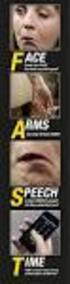 What is a? A happens when the blood supply to the brain is interrupted. Blood contains oxygen and important nutrients for your brain cells. Blood may stop moving through an artery because it is blocked
Therapy Functional Reassessment: It s a good thing. Objectives. Oasis-not just a requirement 3/19/2012. Vicki D. Gines PT DPT CEEAA
 Therapy Functional Reassessment: It s a good thing Missouri Alliance For Home Care Annual Conference 2012 Vicki D. Gines PT DPT CEEAA Objectives State how Oasis ties to Therapy evaluations State key components
North Bay Regional Health Centre
 Addictions and Mental Health Division Programs Central Intake Referral Form The Central Intake Referral Form is used in the District of Nipissing by the North Bay Regional Health Centre s Addictions and
Objectives. Maintenance Myths. Maintenance Therapy in Home Health. Cindy Krafft PT, MS. Define the medical necessity of maintenance therapy
 Maintenance Therapy in Home Health Cindy Krafft PT, MS Director of Rehabilitation Consulting Services President Home Health Section APTA Objectives Define the medical necessity of maintenance therapy Understand
One step closer to home
 One step closer to home Post-hospital short-term rehabilitation and sub-acute care at The Valley View Center for Nursing Care and Rehabilitation Helping to ensure a smooth transition Prior to discharge,