
Pesticide residues in food 2009
|
|
|
- Priscilla Wright
- 9 years ago
- Views:
Transcription
1 Pesticide residues in food 2009 Evaluations Part I Residues FAO PLANT PRODUCTION AND PROTECTION PAPER 198 Sponsored jointly by FAO and WHO Joint Meeting of the FAO Panel of Experts on Pesticide Residues in Food and the Environment and the WHO Core Assessment Group on Pesticide Residues Geneva, Switzerland, September 2009 WORLD HEALTH ORGANIZATION FOOD AND AGRICULTURE ORGANIZATION OF THE UNITED NATIONS Rome, 2010

2 Monographs containing summaries or residue data and toxicological data considered at the 2009 JMPR, together with recommendations, are available upon request from FAO or WHO under the title: Pesticide residues in food 2009 Evaluations Part I: Residues FAO Plant Production and Protection Paper The designations employed and the presentation of material in this information product do not imply the expression of any opinion whatsoever on the part of the Food and Agriculture Organization of the United Nations or of the World Health Organization concerning the legal or development status of any country, territory, city or area or of its authorities, or concerning the delimitation of its frontiers or boundaries. This report contains the collective views of two international groups of experts and does not necessarily represent the decisions or the stated policy of the Food and Agriculture Organization of the United Nations or of the World Health Organization. INTERNATIONAL PROGRAMME ON CHEMICAL SAFETY The preparatory work for the toxicological evaluation of pesticide residues carried out by the WHO Expert Group on Pesticide Residues for consideration by the FAO/WHO Joint meeting on Pesticide Residues in Food and the Environment is actively supported by the International Programme on Chemical Safety (IPCS). IPCS is a joint venture of the United Nations Environment Progamme, the International Labour Organization and the World Health Organization. One of the main objectives of IPCS is to carry out and disseminate evaluations of the effects of chemicals on human health and the quality of the environment. ISBN All rights reserved. FAO encourages reproduction and dissemination of material in this information product. Non-commercial uses will be authorized free of charge upon request. Reproduction for resale or other commercial purposes, including educational purposes, may incur fees. Applications for permission to reproduce or disseminate FAO copyright materials and all other queries on rights and licences, should be addressed by to [email protected] or to the Chief, Publishing Policy and Support Branch, Office of Knowledge Exchange, Research and Extension, FAO, Viale delle Terme di Caracalla, Rome, Italy. FAO and WHO 2010

3

4 iii CONTENTS pages List of participants...v Abbreviations...ix Use of JMPR reports and evaluations by registration authorities...xiii Introduction...xiv Monographs BENALAXYL (155) 1/...1 BUPROFEZIN (173)...63 BOSCALID (221)...99 CHLORPYRIFOS-METHYL (090) 1/ CYPERMETHRIN (118) FENBUCONAZOLE (197) FLUOPICOLIDE (235) 2/ HALOXYFOP (194) and HALOXYFOP-P 1/ HEXYTHIAZOX (176) 1/ INDOXACARB (216) METAFLUMIZONE (236) 2/ METHOXYFENOZIDE PARAQUAT (057) PROCHLORAZ (142) PROTHIOCONAZOLE (232) SPIRODICLOFEN (237) 2/ ZOXAMIDE (227) / 2/ Evaluated for the Periodic Review Programme of the Codex Committee on Pesticide Residues. New compound.

5

6 v LIST OF PARTICIPANTS 2009 JOINT FAO/WHO MEETING ON PESTICIDE RESIDUES GENEVA, SEPTEMBER 2009 FAO Members Dr Ursula Banasiak, Federal Institute for Risk Assessment, Thielallee 88-92, D Berlin, Germany Professor Eloisa Dutra Caldas, University of Brasilia, College of Health Sciences, Pharmaceutical Sciences Department, Campus Universitário Darci Ribeiro, Brasília/DF, Brazil Mr Stephen Funk, Health Effects Division (7509P), United States Environmental Protection Agency, 1200 Pennsylvania Avenue NW, Washington DC 20460, USA Mr Denis J. Hamilton, Principal Scientific Officer Biosecurity, Department of Primary Industries and Fisheries, PO Box 46, Brisbane, QLD 4001, Australia Mr David Lunn, Senior Programme Manager (Residues Plants), Export Standards Group, New Zealand Food Safety Authority, PO Box 2835, Wellington, New Zealand (FAO Rapporteur) Dr Dougal MacLachlan, Australian Quarantine and Inspection Service, Australian Government Department of Agriculture, Fisheries and Forestry, GPO Box 858, Canberra, ACT 2601, Australia Dr Bernadette Ossendorp, Centre for Substances and Integrated Risk Assessment, National Institute of Public Health and the Environment (RIVM), Antonie van Leeuwenhoeklaan 9, PO Box 1, 3720 BA Bilthoven, Netherlands (FAO Chairman) Dr Yukiko Yamada, Deputy Director-General, Food Safety and Consumer Affairs Bureau, Ministry of Agriculture, Forestry and Fisheries, Kasumigaseki, Chiyoda-ku, Tokyo , Japan WHO Members Professor Alan R. Boobis, Experimental Medicine & Toxicology, Division of Investigative Science, Faculty of Medicine, Imperial College London, Hammersmith Campus, Ducane Road, London W12 0NN, England Dr Vicki L. Dellarco, Office of Pesticide Programs (7501P), United States Environmental Protection Agency, 1200 Pennsylvania Avenue NW, Washington, DC 20460, USA (WHO Rapporteur)

7 vi Participants Dr Helen Hakansson, Institute of Environmental Medicine, Karolinska Institutet, Unit of Environmental Health Risk Assessment, Box 210, Nobelsväg 13, S Stockholm, Sweden Professor Angelo Moretto, Department of Environmental and Occupational Health, University of Milan, International Centre for Pesticides and Health Risk Prevention, Luigi Sacco Hospital, Via Stephenson 94, Milan, Italy (WHO Chairman) Dr Roland Solecki, Chemical Safety Division, Steering of Procedures and Overall Assessment, Federal Institute for Risk Assessment, Thielallee 88-92, D Berlin, Germany Dr Maria Tasheva, Consultant, National Service for Plant Protection, Ministry of Agriculture and Food, 17 Hristo Botev Bul Sofia, Bulgaria Secretariat Dr habil. Árpád Ambrus, Hungarian Food Safety Office, Gyali ut 2-6, 1097 Budapest, Hungary (FAO Temporary Adviser) Mr Kevin Bodnaruk, 26/12 Phillip Mall, West Pymble, NSW 2073, Australia (FAO Editor) Dr Katie Calp, Pest Management Regulatory Agency, Health Canada, 2720 Riverside Drive, AL 6605E Ottawa, Canada (WHO Temporary Adviser) Ms Gracia Brisco, Food Standards Officer, Joint FAO/WHO Food Standards Programme, Nutrition and Consumer Protection Division, Food and Agriculture Organization of the United Nations, Viale delle terme di Caracalla, Rome, Italy (Codex Secretariat) Dr Ian Dewhurst, Chemicals Regulation Directorate, Mallard House, King s Pool, 3 Peasholme Green, York YO1 7PX, England (WHO Temporary Adviser) Dr William Donovan, United States Environmental Protection Agency, MC 7509C, Washington, DC 20460, USA (FAO Temporary Adviser) Mr Makoto Irie, Plant Product Safety Division, Food Safety and Consumer Affairs Bureau, Ministry of Agriculture, Forestry and Fisheries, Kasumigaseki, Chiyoda-ku, Tokyo , Japan (FAO Temporary Adviser) Dr Debabrata Kanungo, Additional DG, Directorate General of Health Services, Ministry of Health and Family Welfare, West, Block No. 1, R.K. Puram, New Delhi, India (WHO Temporary Adviser)

8 Participants vii Dr Katerina Mastovska, Eastern Regional Research Center (ERRC), Agricultural Research Service (ARS), United States Department of Agriculture, 600 E. Mermaid Lane, Wyndmoor, PA 19038, USA (FAO Temporary Adviser) Dr Jeronimas Maskeliunas, Food Standards Officer, Joint FAO/WHO Food Standards Programme, Nutrition and Consumer Protection Division, Food and Agriculture Organization of the United Nations, Viale delle terme di Caracalla, Rome, Italy (Codex Secretariat) Dr Heidi Mattock, 21 bis rue du Mont Ouest, Tignieu-Jameyzieu, France (WHO Editor) Dr Douglas B. McGregor, Toxicity Evaluation Consultants, 38 Shore Road, Aberdour KY3 0TU, Scotland (WHO Temporary Adviser) Dr Rudolf Pfeil, Toxicology of Pesticides and Biocides, Federal Institute for Risk Assessment, Thielallee 88-92, D Berlin, Germany (WHO Temporary Adviser) Dr Xiongwu Qiao, Shanxi Academy of Agricultural Sciences, 2 Changfeng Street, Taiyuan, Shanxi , China (Vice Chairman of CCPR) Ms Jeannie Richards, 15 bis rue Georges Musy, Saint Remy, France (FAO Temprary Advisor) Dr Prakashchandra V. Shah, United States Environmental Protection Agency, Mail Stop: 7505P, 1200 Pennsylvania Avenue NW, Washington DC 20460, USA (WHO Temporary Adviser) Mr Christian Sieke, Federal Institute for Risk Assessment, Thielallee 88-92, D Berlin, Germany (FAO Temporary Adviser) Dr Angelika Tritscher, Food Safety and Zoonoses (FOS), International Programme on Chemical Safety, World Health Organization, 1211 Geneva 27, Switzerland (WHO Joint Secretary) Ms Trijntje van der Velde, National Institute of Public Health and the Environment (RIVM), Antonie van Leeuwenhoeklaan 9, PO Box 1, 3720 BA Bilthoven, Netherlands (FAO Temporary Adviser) Dr Gerrit Wolterink, Centre for Substances & Integrated Risk Assessment, National Institute of Public Health and the Environment (RIVM), Antonie van Leeuwenhoeklaan 9, PO Box 1, 3720 BA Bilthoven, Netherlands (WHO Temporary Adviser) Ms Yong Zhen Yang, Plant Protection Service (AGPP), Food and Agriculture Organization of the United Nations (FAO), Viale delle Terme di Caracalla, Rome, Italy (FAO Joint Secretary)

9 viii Participants Dr Midori Yoshida, Section Chief, Division of Pathology, Biological Safety Research Center, National Institute of Health Sciences, Ministry of Health, Labor and Welfare, Kamiyoga, Setagaya-ku, Tokyo , Japan (WHO Temporary Adviser) Dr Jürg Zarn, Swiss Federal Office of Public Health, Nutritional and Toxicological Risks Section, Stauffacherstrasse 101, CH-8004 Zurich, Switzerland (WHO Temporary Adviser)

10 Abbreviations ix ABBREVIATIONS (Well-known abbreviations in general use are not included. Specific abbreviations for pesticide degradation products, etc., may be used in the monographs and these are either identified where first used or in a table within the monograph. Two-letter codes for pesticide formulations are given in the Manual on development and use of FAO and WHO specifications for pesticides, 1 st Ed., FAO Plant Production and Protection Paper 173, FAO, Rome, 2002.) ACN ADI AFID ai AR ARfD AUC acetonitrile acceptable daily intake alkali flame-ionization detection or detector (equivalent to TSD, forerunner of NPD) active ingredient Applied radioactivity acute reference dose area under the curve for concentration time BBCH BMDL 10 bw Biologische Bundesanstalt, Bundessortenamt and Chemical industry. benchmark-dose lower 95% confidence level body weight CA CAC CAS CCN CCPR CCRVDF CEC CI CV Chemical Abstracts Codex Alimentarius Commission Chemical Abstracts Services Codex classification number (for compounds or commodities) Codex Committee on Pesticide Residues Codex Committee on Residue of Veterinary Drugs in Food cation exchange capacity chemical ionization coefficient of variation (RSD) d DAT DCM DFG DT 50 DT 90 2D-TLC dw days days after (last) treatment dichloromethane Deutsche Forschungsgemeinschaft time for 50% decomposition (i.e., half-life) time for 90% decomposition two dimensional thin layer chromatography dry weight

11 x Abbreviations ECD EI EPA eq electron capture detection or detector electron-impact (ionization), now more usually electron ionization Environmental Protection Agency (usually US EPA) residue expressed as ai equivalent F 1 F 2 FAO FID FPD first filial generation second filial generation Food and Agriculture Organization of the United Nations flame-ionization detection or detector flame-photometric detection or detector GAP GC GC-NPD GEMS/Food GLP GPC GSH good agricultural practice(s) gas chromatography; the detector system used is usually also abbreviated as a suffix gas chromatography coupled with Nitrogen-Phosphorous detector Global Environment Monitoring System Food Contamination Monitoring and Assessment Programme good laboratory practice (i.e. the defined system, not in the general sense) gel-permeation chromatography glutathione HPLC HPLC-MS HPLC-UV h HR HR-P high-performance liquid chromatography high-performance liquid chromatography mass spectrometry high-performance liquid chromatography with UV absorption detection hour highest residue in the edible portion of a commodity found in trials used to estimate a maximum residue level in the commodity highest residue in a processed commodity calculated by multiplying the HR of the raw commodity by the corresponding processing factor IEDI IESTI IPCS IR ISO ITD IUPAC international estimated daily intake international estimate of short-term dietary intake International Programme on Chemical Safety infrared spectroscopy International Organization for Standardization ion-trap detector or detection International Union of Pure and Applied Chemistry JECFA Joint Expert Committee on Food Additives

12 Abbreviations xi JMPR JMPS Joint Meeting on Pesticide Residues Joint FAO/WHO Meeting on Pesticide Specifications LC LC-MS LOAEL LOAEC LOD LOQ LSC liquid chromatography liquid chromatography mass spectrometry lowest-observed-adverse-effect level lowest-observed-adverse-effect concentration limit of detection limit of quantification liquid scintillation counting or counter M MID MRL MS MSD MS/MS molar = mole/l multiple ion detection (mass spectrometric) Maximum Residue Limit. MRLs include draft MRLs and Codex MRLs (CXLs). The MRLs recommended by the JMPR on the basis of its estimates of maximum residue levels enter the Codex procedure as draft MRLs. They become Codex MRLs when they have passed through the procedure and have been adopted by the Codex Alimentarius Commission. mass spectrometry or mass spectrometric detector (suffix to GC- or LC-) mass-selective detection or detector tandem mass spectrometry NOAEL NMR NPD no-observed-adverse-effect level nuclear magnetic resonance nitrogen/phosphorus detector OECD om Organization for Economic Co-operation and Development amount of organic matter in soil PES PF PHI ppm P ow post extracted solids processing factor pre-harvest interval parts per million (used only with reference to the concentration of a pesticide in a diet, in all other contexts the terms mg/kg or mg/l are used) octanol water partition coefficient RAC r.d. RfD raw agricultural commodity relative density (formerly called specific gravity) reference dose (usually in phrase acute RfD )

13 xii Abbreviations RSD precision under repeatability conditions (measurements within one day or one run) expressed as relative standard deviation (= coefficient of variation) SD SPE STMR STMR-P standard deviation solid-phase extraction (may also describe a post-extraction clean-up process) supervised trials median residue supervised trials median residue in a processed commodity calculated by multiplying the STMR of the raw commodity by the corresponding processing factor t TAR TLC TRR TMDI TSD tonne (metric ton) total applied (or administered) radioactivity thin-layer chromatography total radioactive residue theoretical maximum daily intake thermionic specific detection or detector (equivalent to AFID, forerunners of NPD) USDA US FDA UV US Department of Agriculture US Food and Drug Administration ultraviolet (radiation) W WHO the previous recommendation is withdrawn, or withdrawal of the existing Codex or draft MRL is recommended World Health Organization

14 xiii USE OF JMPR REPORTS AND EVALUATIONS BY REGISTRATION AUTHORITIES Most of the summaries and evaluations contained in this report are based on unpublished proprietary data submitted for use by JMPR in making its assessments. A registration authority should not grant a registration on the basis of an evaluation unless it has first received authorization for such use from the owner of the data submitted for the JMPR review or has received the data on which the summaries are based, either from the owner of the data or from a second party that has obtained permission from the owner of the data for this purpose.

15 xv INTRODUCTION The Report of the Joint Meeting of the FAO Panel of Experts on Pesticide Residues in Food and the Environment and the WHO Core Assessment Group (JMPR), held in Geneva, September 2009, contains a summary of the evaluations of residues in foods of the various pesticides considered, as well as information on the general principles followed by the Meeting (JMPR, 2009). The present document contains summaries of the residues data considered, together with the recommendations made. The Evaluations are issued in two parts: Part I: Residues (by FAO); Part II: Toxicology (by WHO). For those interested in both aspects of pesticide evaluation, both parts and the Report containing summaries of residues and toxicological considerations are available. Some of the compounds considered at the Meeting were previously evaluated and reported on in earlier publications. In general, only new information is summarized in the relevant monographs but reference is made to previously published evaluations, which should also be consulted. In the case of older compounds which are re-evaluated as part of the periodic review programme of the CCPR, a review of all available data, including data which may have previously been submitted, is carried out. Compounds evaluated for the first time are indicated by a single asterisk and those evaluated in the CCPR periodic review programme by double asterisks in the Table of Contents. Summaries of recommended MRLs, STMR and HR levels and assessments of dietary intake, are published as Annexes 1, 3 and 4 in the Report, and reference is made to this report. The name of the compound appearing as the title of each monograph is followed by its Codex Classification Number in parentheses. References to previous Reports and Evaluations of Joint Meetings are listed in Annex I. Acknowledgements The monographs in these Evaluations were prepared by the following participants in the 2008 JMPR, for the FAO Panel of Experts on Pesticide Residues in Food and the Environment: Dr. Á. Ambrus, Dr U. Banasiak, Dr E. Dutra Caldas, Dr W. Donovan Dr S. Funk, Mr D. J. Hamilton, Mr M. Irie, Mr D. Lunn, Dr D MacLachlan, Dr K. Mastovska, Dr B. Ossendorp, Mr C. Sieke, Dr T. van der Velde-Koerts, Dr Y. Yamada, Note. Any comment on residues in food and their evaluation should be addressed to the: Plant Production and Protection Division Food and Agricultural Organization Viale delle Terme di Caracalla Rome, Italy Reference JMPR, Pesticide residues in Food Report of the Joint Meeting of the FAO Panel of Experts on Pesticide Residues in Food and the Environment and the WHO Core Assessment Group on Pesticide Residues, Geneva, Switzerland, September WHO and FAO, Rome, 2009.

16

17 FAO TECHNICAL PAPERS FAO PLANT PRODUCTION AND PROTECTION PAPERS 1 Horticulture: a select bibliography, 1976 (E) 2 Cotton specialists and research institutions in selected countries, 1976 (E) 3 Food legumes: distribution, adaptability and biology of yield, 1977 (E F S) 4 Soybean production in the tropics, 1977 (C E F S) 4 Rev.1 Soybean production in the tropics (first revision), 1982 (E) 5 Les systèmes pastoraux sahéliens, 1977 (F) 6 Pest resistance to pesticides and crop loss assessment Vol. 1, 1977 (E F S) 6/2 Pest resistance to pesticides and crop loss assessment Vol. 2, 1979 (E F S) 6/3 Pest resistance to pesticides and crop loss assessment Vol. 3, 1981 (E F S) 7 Rodent pest biology and control Bibliography , 1977 (E) 8 Tropical pasture seed production, 1979 (E F** S**) 9 Food legume crops: improvement and production, 1977 (E) 10 Pesticide residues in food, 1977 Report, 1978 (E F S) 10 Rev. Pesticide residues in food 1977 Report, 1978 (E) 10 Sup. Pesticide residues in food 1977 Evaluations, 1978 (E) 11 Pesticide residues in food Index and summary, 1978 (E F S) 12 Crop calendars, 1978 (E/F/S) 13 The use of FAO specifications for plant protection products, 1979 (E F S) 14 Guidelines for integrated control of rice insect pests, 1979 (Ar C E F S) 15 Pesticide residues in food 1978 Report, 1979 (E F S) 15 Sup. Pesticide residues in food 1978 Evaluations, 1979 (E) 16 Rodenticides: analyses, specifications, formulations, 1979 (E F S) 17 Agrometeorological crop monitoring and forecasting, 1979 (C E F S) 18 Guidelines for integrated control of maize pests, 1979 (C E) 19 Elements of integrated control of sorghum pests, 1979 (E F S) 20 Pesticide residues in food 1979 Report, 1980 (E F S) 20 Sup. Pesticide residues in food 1979 Evaluations, 1980 (E) 21 Recommended methods for measurement of pest resistance to pesticides, 1980 (E F) 22 China: multiple cropping and related crop production technology, 1980 (E) 23 China: development of olive production, 1980 (E) 24/1 Improvement and production of maize, sorghum and millet Vol. 1. General principles, 1980 (E F) 24/2 Improvement and production of maize, sorghum and millet Vol. 2. Breeding, agronomy and seed production, 1980 (E F) 25 Prosopis tamarugo: fodder tree for arid zones, 1981 (E F S) 26 Pesticide residues in food 1980 Report, 1981 (E F S) 26 Sup. Pesticide residues in food 1980 Evaluations, 1981 (E) 27 Small scale cash crop farming in South Asia, 1981 (E) 28 Second expert consultation on environmental criteria for registration of pesticides, 1981 (E F S) 29 Sesame: status and improvement, 1981 (E) 30 Palm tissue culture, 1981 (C E) 31 An eco climatic classification of intertropical Africa, 1981 (E) 32 Weeds in tropical crops: selected abstracts, 1981 (E) 32 Sup.1 Weeds in tropical crops: review of abstracts, 1982 (E) 33 Plant collecting and herbarium development, 1981 (E) 34 Improvement of nutritional quality of food crops, 1981 (C E) 35 Date production and protection, 1982 (Ar E) 36 El cultivo y la utilización del tarwi Lupinus mutabilis Sweet, 1982 (S) 37 Pesticide residues in food 1981 Report, 1982 (E F S) 38 Winged bean production in the tropics, 1982 (E) 39 Seeds, 1982 (E/F/S) 40 Rodent control in agriculture, 1982 (Ar C E F S) 41 Rice development and rainfed rice production, 1982 (E) 42 Pesticide residues in food 1981 Evaluations, 1982 (E) 43 Manual on mushroom cultivation, 1983 (E F) 44 Improving weed management, 1984 (E F S) 45 Pocket computers in agrometeorology, 1983 (E) 46 Pesticide residues in food 1982 Report, 1983 (E F S) 47 The sago palm, 1983 (E F) 48 Guidelines for integrated control of cotton pests, 1983 (Ar E F S) 49 Pesticide residues in food 1982 Evaluations, 1983 (E) 50 International plant quarantine treatment manual, 1983 (C E) 51 Handbook on jute, 1983 (E) 52 The palmyrah palm: potential and perspectives, 1983 (E) 53/1 Selected medicinal plants, 1983 (E) 54 Manual of fumigation for insect control, 1984 (C E F S) 55 Breeding for durable disease and pest resistance, 1984 (C E) 56 Pesticide residues in food 1983 Report, 1984 (E F S) 57 Coconut, tree of life, 1984 (E S) 58 Economic guidelines for crop pest control, 1984 (E F S) 59 Micropropagation of selected rootcrops, palms, citrus and ornamental species, 1984 (E) 60 Minimum requirements for receiving and maintaining tissue culture propagating material, 1985 (E F S) 61 Pesticide residues in food 1983 Evaluations, 1985 (E)

18 62 Pesticide residues in food 1984 Report, 1985 (E F S) 63 Manual of pest control for food security reserve grain stocks, 1985 (C E) 64 Contribution à l écologie des aphides africains, 1985 (F) 65 Amélioration de la culture irriguée du riz des petits fermiers, 1985 (F) 66 Sesame and safflower: status and potentials, 1985 (E) 67 Pesticide residues in food 1984 Evaluations, 1985 (E) 68 Pesticide residues in food 1985 Report, 1986 (E F S) 69 Breeding for horizontal resistance to wheat diseases, 1986 (E) 70 Breeding for durable resistance in perennial crops, 1986 (E) 71 Technical guideline on seed potato micropropagation and multiplication, 1986 (E) 72/1 Pesticide residues in food 1985 Evaluations Part I: Residues, 1986 (E) 72/2 Pesticide residues in food 1985 Evaluations Part II: Toxicology, 1986 (E) 73 Early agrometeorological crop yield assessment, 1986 (E F S) 74 Ecology and control of perennial weeds in Latin America, 1986 (E S) 75 Technical guidelines for field variety trials, 1993 (E F S) 76 Guidelines for seed exchange and plant introduction in tropical crops, 1986 (E) 77 Pesticide residues in food 1986 Report, 1986 (E F S) 78 Pesticide residues in food 1986 Evaluations Part I: Residues, 1986 (E) 78/2 Pesticide residues in food 1986 Evaluations Part II: Toxicology, 1987 (E) 79 Tissue culture of selected tropical fruit plants, 1987 (E) 80 Improved weed management in the Near East, 1987 (E) 81 Weed science and weed control in Southeast Asia, 1987 (E) 82 Hybrid seed production of selected cereal, oil and vegetable crops, 1987 (E) 83 Litchi cultivation, 1989 (E S) 84 Pesticide residues in food 1987 Report, 1987 (E F S) 85 Manual on the development and use of FAO specifications for plant protection products, 1987 (E** F S) 86/1 Pesticide residues in food 1987 Evaluations Part I: Residues, 1988 (E) 86/2 Pesticide residues in food 1987 Evaluations Part II: Toxicology, 1988 (E) 87 Root and tuber crops, plantains and bananas in developing countries challenges and opportunities, 1988 (E) 88 Jessenia and Oenocarpus: neotropical oil palms worthy of domestication, 1988 (E S) 89 Vegetable production under arid and semi arid conditions in tropical Africa, 1988 (E F) 90 Protected cultivation in the Mediterranean climate, 1990 (E F S) 91 Pastures and cattle under coconuts, 1988 (E S) 92 Pesticide residues in food 1988 Report, 1988 (E F S) 93/1 Pesticide residues in food 1988 Evaluations Part I: Residues, 1988 (E) 93/2 Pesticide residues in food 1988 Evaluations Part II: Toxicology, 1989 (E) 94 Utilization of genetic resources: suitable approaches, agronomical evaluation and use, 1989 (E) 95 Rodent pests and their control in the Near East, 1989 (E) 96 Striga Improved management in Africa, 1989 (E) 97/1 Fodders for the Near East: alfalfa, 1989 (Ar E) 97/2 Fodders for the Near East: annual medic pastures, 1989 (Ar E F) 98 An annotated bibliography on rodent research in Latin America , 1989 (E) 99 Pesticide residues in food 1989 Report, 1989 (E F S) 100 Pesticide residues in food 1989 Evaluations Part I: Residues, 1990 (E) 100/2 Pesticide residues in food 1989 Evaluations Part II: Toxicology, 1990 (E) 101 Soilless culture for horticultural crop production, 1990 (E) 102 Pesticide residues in food 1990 Report, 1990 (E F S) 103/1 Pesticide residues in food 1990 Evaluations Part I: Residues, 1990 (E) 104 Major weeds of the Near East, 1991 (E) 105 Fundamentos teórico prácticos del cultivo de tejidos vegetales, 1990 (S) 106 Technical guidelines for mushroom growing in the tropics, 1990 (E) 107 Gynandropsis gynandra (L.) Briq. a tropical leafy vegetable its cultivation and utilization, 1991 (E) 108 Carambola cultivation, 1993 (E S) 109 Soil solarization, 1991 (E) 110 Potato production and consumption in developing countries, 1991 (E) 111 Pesticide residues in food 1991 Report, 1991 (E) 112 Cocoa pest and disease management in Southeast Asia and Australasia, 1992 (E) 113/1 Pesticide residues in food 1991 Evaluations Part I: Residues, 1991 (E) 114 Integrated pest management for protected vegetable cultivation in the Near East, 1992 (E) 115 Olive pests and their control in the Near East, 1992 (E) 116 Pesticide residues in food 1992 Report, 1993 (E F S) 117 Quality declared seed, 1993 (E F S) 118 Pesticide residues in food 1992 Evaluations Part I: Residues, 1993 (E) 119 Quarantine for seed, 1993 (E) 120 Weed management for developing countries, 1993 (E S) 120/1 Weed management for developing countries, Addendum 1, 2004 (E F S) 121 Rambutan cultivation, 1993 (E) 122 Pesticide residues in food 1993 Report, 1993 (E F S) 123 Rodent pest management in eastern Africa, 1994 (E) 124 Pesticide residues in food 1993 Evaluations Part I: Residues, 1994 (E) 125 Plant quarantine: theory and practice, 1994 (Ar) 126 Tropical root and tuber crops Production, perspectives and future prospects, 1994 (E) 127 Pesticide residues in food 1994 Report, 1994 (E)

19 128 Manual on the development and use of FAO specifications for plant protection products Fourth edition, 1995 (E F S) 129 Mangosteen cultivation, 1995 (E) 130 Post-harvest deterioration of cassava A biotechnology perspective, 1995 (E) 131/1 Pesticide residues in food 1994 Evaluations Part I: Residues, Volume 1, 1995 (E) 131/2 Pesticide residues in food 1994 Evaluations Part I: Residues, Volume 2, 1995 (E) 132 Agro-ecology, cultivation and uses of cactus pear, 1995 (E) 133 Pesticide residues in food 1995 Report, 1996 (E) 134 (Number not assigned) 135 Citrus pest problems and their control in the Near East, 1996 (E) 136 El pepino dulce y su cultivo, 1996 (S) 137 Pesticide residues in food 1995 Evaluations Part I: Residues, 1996 (E) 138 Sunn pests and their control in the Near East, 1996 (E) 139 Weed management in rice, 1996 (E) 140 Pesticide residues in food 1996 Report, 1997 (E) 141 Cotton pests and their control in the Near East, 1997 (E) 142 Pesticide residues in food 1996 Evaluations Part I Residues, 1997 (E) 143 Management of the whitefly-virus complex, 1997 (E) 144 Plant nematode problems and their control in the Near East region, 1997 (E) 145 Pesticide residues in food 1997 Report, 1998 (E) 146 Pesticide residues in food 1997 Evaluations Part I: Residues, 1998 (E) 147 Soil solarization and integrated management of soilborne pests, 1998 (E) 148 Pesticide residues in food 1998 Report, 1999 (E) 149 Manual on the development and use of FAO specifications for plant protection products Fifth edition, including the new procedure, 1999 (E) 150 Restoring farmers seed systems in disaster situations, 1999 (E) 151 Seed policy and programmes for sub-saharan Africa, 1999 (E F) 152/1 Pesticide residues in food 1998 Evaluations Part I: Residues, Volume 1, 1999 (E) 152/2 Pesticide residues in food 1998 Evaluations Part I: Residues, Volume 2, 1999 (E) 153 Pesticide residues in food 1999 Report, 1999 (E) 154 Greenhouses and shelter structures for tropical regions, 1999 (E) 155 Vegetable seedling production manual, 1999 (E) 156 Date palm cultivation, 1999 (E) 156 Rev.1 Date palm cultivation, 2002 (E) 157 Pesticide residues in food 1999 Evaluations Part I: Residues, 2000 (E) 158 Ornamental plant propagation in the tropics, 2000 (E) 159 Seed policy and programmes in the Near East and North Africa, Seed policy and programmes for Asia and the Pacific, 2000 (E) 161 Silage making in the tropics with particular emphasis on smallholders, 2000 (E S) 162 Grassland resource assessment for pastoral systems, 2001, (E) 163 Pesticide residues in food 2000 Report, 2001 (E) 164 Seed policy and programmes in Latin America and the Caribbean, 2001 (E S) 165 Pesticide residues in food 2000 Evaluations Part I, 2001 (E) 166 Global report on validated alternatives to the use of methyl bromide for soil fumigation, 2001 (E) 167 Pesticide residues in food 2001 Report, 2001 (E) 168 Seed policy and programmes for the Central and Eastern European countries, Commonwealth of Independent States and other countries in transition, 2001 (E) 169 Cactus (Opuntia spp.) as forage, 2003 (E S) 170 Submission and evaluation of pesticide residues data for the estimation of maximum residue levels in food and feed, 2002 (E) 171 Pesticide residues in food 2001 Evaluations Part I, 2002 (E) 172 Pesticide residues in food, 2002 Report, 2002 (E) 173 Manual on development and use of FAO and WHO specifications for pesticides, 2002 (E S) 174 Genotype x environment interaction Challenges and opportunities for plant breeding and cultivar recommendations, 2002 (E) 175/1 Pesticide residues in food 2002 Evaluations Part 1: Residues Volume 1 (E) 175/2 Pesticide residues in food 2002 Evaluations Part 1: Residues Volume 2 (E) 176 Pesticide residues in food 2003 Report, 2004 (E) 177 Pesticide residues in food 2003 Evaluations Part 1: Residues, 2004 (E) 178 Pesticide residues in food 2004 Report, 2004 (E) 179 Triticale improvement and production, 2004 (E) 180 Seed multiplication by resource-limited farmers - Proceedings of the Latin American workshop, 2004 (E) 181 Towards effective and sustainable seed-relief activities, 2004 (E) 182/1 Pesticide residues in food 2004 Evaluations Part 1: Residues, Volume 1 (E) 182/2 Pesticide residues in food 2004 Evaluations Part 1: Residues, Volume 2 (E) 183 Pesticide residues in food 2005 Report, 2005 (E) 184/1 Pesticide residues in food 2005 Evaluations Part 1: Residues, Volume 1 (E) 184/2 Pesticide residues in food 2005 Evaluations Part 1: Residues, Volume 2 (E) 185 Quality declared seed system, 2006 (E F S) 186 Calendario de cultivos América Latina y el Caribe, 2006 (S) 187 Pesticide residues in food 2006 Report, 2006 (E) 188 Weedy rices origin, biology, ecology and control, 2006 (E S)\ 189/1 Pesticide residues in food 2006 Evaluations Part 1: Residues, Volume 1 (E) 189/2 Pesticide residues in food 2006 Evaluations Part 1: Residues, Volume 2 (E) 190 Guidance for packing, shipping, holding and release of sterile flies in area-wide fruit fly control programmes, 2007 (E)

20 191 Pesticide residues in food 2007 Report, 2007 (E) 192 Pesticide residues in food 2007 Evaluations Part 1: Residues, 2008 (E) 193 Pesticide residues in food 2008 Report, 2008 (E) 194 Pesticide residues in food 2008 Evaluations, 2008 (E) 195 Quality declared planting material Protocols and standards for vegetatively propagated crops, 2009 (E) 196 Pesticide residues in food 2009 Report, 2009 (E) 197 Submission and evaluation of pesticide residues data for the estimation of maximum residue levels in food and feed, 2009 (E) 198 Pesticide residues in food 2009 Evaluations Part 1: Residues, 2010 (E) Availability: November 2010 Ar Arabic Multil Multilingual C Chinese * Out of print E English ** In preparation F French P Portuguese S Spanish The FAO Technical Papers are available through the authorized FAO Sales Agents or directly from Sales and Marketing Group, FAO, Viale delle Terme di Caracalla, Rome, Italy.

Pesticide residues in food 2008 EVALUATIONS 2008 PART I RESIDUES. Joint FAO/WHO Meeting on Pesticide Residues
 194 Pesticide residues in food 2008 Joint FAO/WHO Meeting on Pesticide Residues 194 The annual Joint Meeting of the FAO Panel of Experts on Pesticide Residues in Food and the Environment and the WHO Core
Pesticide residues in food 2010
 Pesticide residues in food 2010 Evaluations Part I - Residues FAO PLANT PRODUCTION AND PROTECTION PAPER 206 Sponsored jointly by FAO and WHO Joint Meeting of the FAO Panel of Experts on Pesticide Residues
Pesticide residues in food 2006
 Pesticide residues in food 2006 Evaluations Part I Residues FAO PLANT PRODUCTION AND PROTECTION PAPER 189/1 Sponsored jointly by FAO and WHO Joint meeting of the FAO Panel of Experts on Pesticide Residues
1.1 Declaration of interests...2 2. General considerations...3
 CONTENTS List of participants...iii Abbreviations...vii Use of JMPR reports and evaluations by registration authorities...xi REPORT OF THE 2009 JOINT FAO/WHO MEETING OF EXPERTS...1 1. Introduction...1
184/1. Pesticide residues in food 2005. Evaluations Part I Residues FAO PLANT PRODUCTION AND PROTECTION PAPER. Sponsored jointly by FAO and WHO
 Pesticide residues in food 2005 Evaluations Part I Residues FAO PLANT PRODUCTION AND PROTECTION PAPER 184/1 Sponsored jointly by FAO and WHO Joint meeting of the FAO Panel of Experts on Pesticide Residues
Pesticide residues in food 2008
 Pesticide residues in food 2008 Joint FAO/WHO Meeting on Pesticide Residues FAO PLANT PRODUCTION AND PROTECTION PAPER 193 Report of the Joint Meeting of the FAO Panel of Experts on Pesticide Residues in
FAO Manual on the Submission and Evaluation of Pesticide Residues Data PREFACE
 FAO Manual on the Submission and Evaluation of Pesticide Residues Data PREFACE The revised first version of the FAO Manual published in 2002 incorporated additional information from the JMPR Reports of
CHAPTER 7 ESTIMATING DIETARY INTAKE OF PESTICIDE RESIDUES
 CHAPTER 7 ESTIMATING DIETARY INTAKE OF PESTICIDE RESIDUES CONTENTS Background Long-term dietary intake Short-term dietary intake Handling of cases where JMPR estimates of dietary intake exceed the ADI
WORKING GROUP ON MRLs IN BREW. Intersessional Meeting of the Intergovernmental Group on Tea Rome, 5-6 May 2014
 WORKING GROUP ON MRLs IN BREW Intersessional Meeting of the Intergovernmental Group on Tea Rome, 5-6 May 2014 INTERSESSIONAL MEETING OF THE FAO IGG ON TEA, ROME, ITALY, 5-6 MAY, 2014 REPORT OF THE WORKING
Amidosulfuron SANCO/1101/08 rev. 1 20 January 2008. EU Limited
 EUROPEAN COMMISSION HEALTH & CONSUMER PROTECTION DIRECTORATE-GENERAL Directorate E Safety of the food chain Unit E.3 - Chemicals, contaminants, pesticides Amidosulfuron SANCO/1101/08 rev. 1 20 January
CARBARYL (8) First draft was prepared by Dr Arpad Ambrus, Hungarian Food Safety Office, Budapest, Hungary
 Carbaryl 1 CARBARYL (8) First draft was prepared by Dr Arpad Ambrus, Hungarian Food Safety Office, Budapest, Hungary EXPLANATION Carbaryl residues were last evaluated by the JMPR in 2002 when a number
Improving food security
 From feeding a population expected to reach nine billion by 2050 to looking after soil, water and natural habitats our world s farmers face increasing challenges. What s more, they re under greater pressure
Risk Assessment in Chemical Food Safety. Dept. of Food Safety and Zoonoses (FOS) http://www.who.int/foodsafety/en/
 Risk Assessment in Chemical Food Safety Dept. of Food Safety and Zoonoses (FOS) http://www.who.int/foodsafety/en/ Risk Analysis Paradigm Internationally Scientific data analysis Risk Assessment WHO & FAO
CONTENTS. 1. Introduction 1
 i The designations and the presentation of material in this information product do not imply the expression of any opinion whatsoever on the part of the Food and Agriculture Organization of the United
IPCS INTERNATIONAL PROGRAMME ON CHEMICAL SAFETY
 IPCS INTERNATIONAL PROGRAMME ON CHEMICAL SAFETY ILO UNEP Environmental Health Criteria 240 Principles and Methods for the Risk Assessment of Chemicals in Food Chapter 2 RISK ASSESSMENT AND ITS ROLE IN
Global. losses. waste
 Study conducted for the International Congress SAVE FOOD! at Interpack2011 Düsseldorf, Germany Global f o o d losses a n d f o o d waste extent, causes and prevention Study conducted for the International
GUIDE TO GOOD PRACTICE IN CONTRACT LABOUR IN FORESTRY
 GUIDE TO GOOD PRACTICE IN CONTRACT LABOUR IN FORESTRY GUIDE TO GOOD PRACTICE IN CONTRACT LABOUR IN FORESTRY Report of the UNECE/FAO Team of Specialists on Best Practices in Forest Contracting UNECE/FAO
Available study programs at Czech University of Life Sciences Prague
 EU subject code University subject Name of course/program Mobility Language Homepage 1,1 1,1 Environmental Engineering in Agriculture II Rural Communication and Extension 1,1 Tropical Forestry and Agroforestry
RISK MANAGEMENT FOOD SAFETY
 FAO FOOD AND NUTRITION PAPER NUMBER 65 RISK MANAGEMENT AND FOOD SAFETY Report of a Joint FAO/WHO Consultation Rome, Italy, 27 to 31 January 1997 ISSUED BY THE FOOD AND AGRICULTURE ORGANIZATION OF THE UNITED
PHYTOSANITARY CERTIFICATION SYSTEM
 ISPM 7 INTERNATIONAL STANDARDS FOR PHYTOSANITARY MEASURES ISPM 7 PHYTOSANITARY CERTIFICATION SYSTEM (2011) Produced by the Secretariat of the International Plant Protection Convention FAO 2011 ISPM 7 Phytosanitary
GUIDELINES FOR THE VALIDATION OF ANALYTICAL METHODS FOR ACTIVE CONSTITUENT, AGRICULTURAL AND VETERINARY CHEMICAL PRODUCTS.
 GUIDELINES FOR THE VALIDATION OF ANALYTICAL METHODS FOR ACTIVE CONSTITUENT, AGRICULTURAL AND VETERINARY CHEMICAL PRODUCTS October 2004 APVMA PO Box E240 KINGSTON 2604 AUSTRALIA http://www.apvma.gov.au
GUIDELINES ON THE USE OF MASS SPECTROMETRY (MS) FOR IDENTIFICATION, CONFIRMATION AND QUANTITATIVE DETERMINATION OF RESIDUES CAC/GL 56-2005
 CAC/GL 56-2005 Page 1 of 6 GUIDELINES ON THE USE OF MASS SPECTROMETRY (MS) FOR IDENTIFICATION, CONFIRMATION AND QUANTITATIVE DETERMINATION OF RESIDUES CAC/GL 56-2005 CONFIRMATORY TESTS When analyses are
Pesticide residues in food 2006
 Pesticide residues in food 2006 Joint FAO/WHO Meeting on Pesticide Residues FAO PLANT PRODUCTION AND PROTECTION PAPER 187 Report of the Joint Meeting of the FAO Panel of Experts on Pesticide Residues in
3.2 Extent of food losses and waste
 4 3. Extent of food losses and waste 3.1 Food volumes produced Figure 1 illustrates the 2007 production volumes of all commodity groups in their primary form, including animal feed products (which are
Integrated Pest Management
 Chapter 2 Integrated Pest Management In This Chapter Keywords After learning the information in this chapter, you will be able to: 1. Define Integrated Pest Management (IPM). 2. List and describe the 5
The Global Crop Protection Database
 The Global Crop Protection Database www.agrobase-logigram.com 1 Free Trial Ask for a free trial by sending us an e-mail to [email protected] or visit www.homologa-new.com for more information.
No. 6 GRAIN CERTIFICATION
 No. 6 GRAIN CERTIFICATION Version 1 This edition published May 2015 Australian Grain Industry Code of Practice http://www.graintrade.org.au/node/670 Technical Guideline Document No. 6 Grain Certification
Research to improve the use and conservation of agricultural biodiversity for smallholder farmers
 Research to improve the use and conservation of agricultural biodiversity for smallholder farmers Agricultural biodiversity the variability of crops and their wild relatives, trees, animals, arthropods,
Trade Advice Note on. Glyphosate. in the product. Roundup Ready Herbicide by Monsanto (APVMA Product Number 54112)
 Trade Advice Note on Glyphosate in the product Roundup Ready Herbicide by Monsanto (APVMA Product Number 54112) Australian Pesticides and Veterinary Medicines Authority For further information contact:
Investment in agricultural mechanization in Africa
 Investment in agricultural mechanization in Africa Executive summary Conclusions and recommendations of a Round Table Meeting of Experts Co-organized by: Food and Agriculture Organization of the United
Total Income from Farming in the United Kingdom. First estimate for 2015
 28 April 2016 Total Income from Farming in the United Kingdom First estimate for 2015 This release presents the first estimate of Total Income from Farming for the United Kingdom for 2015. Total Income
Providing Safe and Effective Pest Management Solutions for Specialty Crop Growers
 2008 Year in Review Providing Safe and Effective Pest Management Solutions for Specialty Crop Growers 2008 IR-4 Accomplishments IR-4 Data Led To... Food Use In 2008 the US Environmental Protection Agency
Humidtropics Kiboga/Kyankwanzi Soybean production training
 Humidtropics Kiboga/Kyankwanzi Soybean production training Makerere University and Humidtropics collaboration Soybean Seed production Training of Kiboga-Kyankwanzi platform members in Soybean Seed Production
Pest Management Centre Agriculture and Agri-Food Canada
 Pest Management Centre Agriculture and Agri-Food Canada Pesticide Risk Reduction and Minor Use Programs Ken Campbell Global Minor Use Summit Rome, Italy December 6, 2007 Responding to Grower Need Access
AGRONOMY (NEW REGULATION)
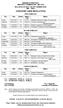 AGRONOMY (NEW REGULATION) Friday 08.05.2015 F.N STA 611 Statistical Methods & Design of Experiments Saturday 09.05.2015 F.N COM 615 Computer Applications for Monday 11.05.2015 F.N AGR 611 Modern Concepts
2) Relevance for environmental policy... 2. 4) Data sources and reporting... 4 5) References at the international level... 4
 F- 4: Pesticide consumption 1) General description... 2 1.1) Brief definition... 2 1.2) Units of measurement... 2 1.3) Context...2 2) Relevance for environmental policy... 2 2.1) Purpose... 2 2.2) Issue...
COMMISSION IMPLEMENTING DECISION
 20.3.2014 Official Journal of the European Union L 82/29 COMMISSION IMPLEMENTING DECISION of 18 March 2014 on the organisation of a temporary experiment providing for certain derogations for the marketing
Outline. What is IPM Principles of IPM Methods of Pest Management Economic Principles The Place of Pesticides in IPM
 Improving Control Systems in Thailand for Plant and Plants Products Intended for Export to the European Union co-funded by the European Union and Thai Department of Agriculture Preharvest Use of Pesticides
Pesticide residues in food 2004 FAO PLANT PRODUCTION AND PROTECTION PAPER
 Pesticide residues in food 2004 FAO PLANT PRODUCTION AND PROTECTION PAPER 178 Report of the Joint Meeting of the FAO Panel of Experts on Pesticide Residues in Food and the Environment and the WHO Core
The agro-ecological transition at INRA
 The agro-ecological transition at INRA Olivier Le Gall Nouvelles orientations pour la recherche agronomique Montpellier, Agropolis International, 10Sep13 #nora13.01 The agro-ecological transition at INRA
Academic Offerings. Agriculture
 Academic Offerings This section contains descriptions of programs, majors, minors, areas of concentration, fields of specialization, and courses. Semesters following course titles indicate when each course
Major/Specialization. B.Sc. Degree
 B.Sc. Degree Extension and Extension and Forestry and Forest Reclamation of Arid & Mountainous Regions Agronomy & with two specializations Landscape Design Aquatic Ecology Fish Processing Forestry and
Shifts and emerging trends in commodity production and trade flows
 Shifts and emerging trends in commodity production and trade flows Mathilde Douillet, FARM, Cirad (France) QUNO workshop «New Framework for Trade and Investment in Agriculture» 22 January 2014 Trends in
Crop production. 0 5 10 15 million ha. 0 5 10 15 20 million tonnes PART 1. CHART 7: Harvested area of the most important crops in Central Asia (2010)
 PART 1 Crop production is the most important crop in the region of Europe and Central Asia. More than 80 million hectares of land are dedicated to growing wheat, of which 240 were produced in 2010. is
Stevia rebaudiana Bertoni plants and dried leaves as Novel Food
 Stevia rebaudiana Bertoni plants and dried leaves as Novel Food Summary of the Application and Specifications of the EUSTAS Quality Label EUSTAS, Maladeta, nº 20, 22300 BARBASTRO, Huesca, SPAIN July 5
FAO SPECIFICATIONS FAO PLANT PROTECTION PRODUCTS. THIRAM tetramethylthiuram disulphide
 AGP: CP/82 FAO SPECIFICATIONS FAO PLANT PROTECTION PRODUCTS THIRAM tetramethylthiuram disulphide FOOD AND AGRICULTURE ORGANIZATION OF THE UNITED NATIONS Rome, 1979 DISCLAIMER 1 FAO specifications are developed
Tailoring solutions for a region of diversity Global Press Conference 2013
 Tailoring solutions for a region of diversity Global Press Conference 2013 Vincent Gros Senior Vice President, BASF Crop Protection Europe, CIS, Central Asia, Africa and Middle East October 2 nd, 2013
Update Project Chapter 3: Analytics and Specifications Draft May 2008 PRINCIPLES AND METHODS FOR THE RISK ASSESSMENT OF CHEMICALS IN FOOD
 Update Project Chapter : Analytics and Specifications Draft May 0 0 0 0 0 PRINCIPLES AND METHODS FOR THE RISK ASSESSMENT OF CHEMICALS IN FOOD CHAPTER. CHEMICAL CHARACTERIZATION, ANALYTICAL METHODS AND
REPUBLIC OF KENYA VACANCY IN THE MINISTRY OF INTERIOR AND CO-ORDINATION OF NATIONAL GOVERNMENT
 REPUBLIC OF KENYA PUBLIC SERVICE COMMISSION Our Vision To be the lead service commission in the provision, management and development of competent human resource for the Public Service. Our Mission To
Study in Chinese Academy of Agricultural Sciences (CAAS)
 Study in Chinese Academy of Agricultural Sciences (CAAS) Founded in 1957, one of the three Academies of Sciences of the People s Republic of China, the Chinese Academy of Agricultural Sciences (CAAS) is
Le processus de surveillance de résidus de pesticides aux Royaume-Uni
 The UK Pesticide Residue Monitoring Process Le processus de surveillance de résidus de pesticides aux Royaume-Uni Docteur Ian Brown Président du comité indépendant de résidus r de pesticide The UK Pesticide
Risk Assessment of Pesticides Residue by JMPR - To set ADI and ARfD-
 The FAO Regional Training Course: Strengthening Capacity of Data Collection and Generation for Food Safety Risk Analysis Support to Capacity Building and Implementation of International Safety Standards
OILSEEDS AND OILSEED PRODUCTS
 3. COMMODITY SNAPSHOTS OILSEEDS AND OILSEED PRODUCTS Market situation Global oilseeds production in the 214 marketing year (see glossary for a definition of marketing year) reached record levels for the
EASYPol Module 148. DrumNet An Enterprising Third Party Transaction Manager
 EASYPol Module 148 DrumNet An Enterprising Third Party Transaction Manager DrumNet An Enterprising Third Party Transaction Manager by Ron Kopicki, World Bank Investment Officer, Washington DC, USA and
Have Recent Increases in International Cereal Prices Been Transmitted to Domestic Economies? The experience in seven large Asian countries
 Have Recent Increases in International Cereal Prices Been Transmitted to Domestic Economies? The experience in seven large Asian countries David Dawe ESA Working Paper No. 08-03 April 2008 Agricultural
September 19, 1984 FOOD PRODUCTION AND DIRECTION GÉNÉRALE, SECTION INSPECTION BRANCH PRODUCTION ET INSPECTION PESTICIDES DES ALIMENTS TRADE MEMORANDUM
 Agriculture Canada September 19, 1984 T-1-245 FOOD PRODUCTION AND DIRECTION GÉNÉRALE, SECTION INSPECTION BRANCH PRODUCTION ET INSPECTION PESTICIDES DES ALIMENTS TRADE MEMORANDUM RE: Guidelines for Developing
-1 7.04 Propagules adapted to wind dispersal n. -1 7.05 Propagules water dispersed n
 Australia/New Zealand Weed Risk Assessment adapted for Florida. Data used for analysis published in: Gordon, D.R., D.A. Onderdonk, A.M. Fox, R.K. Stocker, and C. Gantz. 2008. Predicting Invasive Plants
FAO SPECIFICATIONS FOR PLANT PROTECTION PRODUCTS FOOD AND AGRICULTURE ORGANIZATION OF THE UNITED NATIONS
 FAO SPECIFICATIONS FOR PLANT PROTECTION PRODUCTS AGP:CP/313 METAMITRON FOOD AND AGRICULTURE ORGANIZATION OF THE UNITED NATIONS Rome, 1994 Group on Pesticide Specifications FAO Panel of Experts on Pesticide
EUROPEAN COMMISSION DIRECTORATE-GENERAL FOR HEALTH AND FOOD SAFETY COMMISSION STAFF WORKING DOCUMENT 1
 EUROPEAN COMMISSION DIRECTORATE-GENERAL FOR HEALTH AND FOOD SAFETY Safety of the Food Chain Pesticides and Biocides COMMISSION STAFF WORKING DOCUMENT 1 Basic Substance Calcium hydroxide SANCO/10148/2015
Determination of Pesticide Residues in Drinking Water Using Automated Solid-Phase Extraction and Gas Chromatography with Nitrogen Phosphorus Detection
 Determination of Pesticide Residues in Drinking Water Using Automated Solid-Phase Extraction and Gas Chromatography with Nitrogen Phosphorus Detection Application Note 1097 Liu Qian, Zheng Hongguo and
May 31, 2002 CERTIFIED MAIL. Ronald Landis, Ph.D. Landis International 3185 Madison Highway PO Box 5126 Valdosta, GA 31603-5126. Dear Mr.
 UNITED STATES ENVIRONMENTAL PROTECTION AGENCY WASHINGTON, D.C. 20460 OFFICE OF PREVENTION, PESTICIDES AND TOXIC SUBSTANCES May 31, 2002 CERTIFIED MAIL Ronald Landis, Ph.D. Landis International 3185 Madison
Pesticide residue analysis: New Trends. Michal Godula, Ph.D. EU Marketing Manager Food Safety & Environmental Thermo Fisher Scientific
 Pesticide residue analysis: New Trends Michal Godula, Ph.D. EU Marketing Manager Food Safety & Environmental Thermo Fisher Scientific Why pesticide analysis? Extensively used in agriculture to control
JOINT FAO/WHO FOOD STANDARDS PROGRAMME. CODEX ALIMENTARIUS COMMISSION Twenty sixth Session Rome, Italy, 30 June - 05 July 2003
 ALINORM 03/24A JOINT FAO/WHO FOOD STANDARDS PROGRAMME CODEX ALIMENTARIUS COMMISSION Twenty sixth Session Rome, Italy, 30 June - 05 July 2003 REPORT OF THE THIRTY-FIFTH SESSION OF THE CODEX COMMITTEE ON
Status and trends in perception of Organic vegetable and fruit production in China
 Chinese-Danish Networking Status and trends in perception of Organic vegetable and fruit production in China Yuhui Qiao Dr. Associate Professor Department of Ecology and Ecological Engineering China Agricultural
Food Safety Risk Analysis
 Food Safety Risk Analysis PART I An Overview and Framework Manual Provisional Edition FAO Rome, June 2005 The views expressed in this publication are those of the author(s) and do not necessarily reflect
PESTICIDE USE IN IRRIGATED CROPS AND ITS EFFECT ON HUMAN AND ANIMALS HEALTH AND ENVIRONMENT
 PESTICIDE USE IN IRRIGATED CROPS AND ITS EFFECT ON HUMAN AND ANIMALS HEALTH AND ENVIRONMENT Background Pest problems is more pronounced in agricultural ecosystem where the natural balance of host and pests
Decision Document E92-02
 Agriculture Canada Food Production and Inspection Branch Direction générale, Production et inspection des aliments Pesticides Directorate Direction des pesticides Decision Document E92-02 PRODUCT MANAGEMENT
ETHYLENETHIOUREA, ETU (108)
 351 ETHYLENETHIOUREA, ETU (108) EXPLANATION Ethylenethiourea (ETU) is a metabolite and decomposition product of the ethylenebis(dithiocarbamate) (EBDC) fungicides. It was first evaluated in 1974, and MRLs
WHO/SDE/WSH/03.04/91 English only Diquat in Drinking-water
 WHO/SDE/WSH/03.04/91 English only Diquat in Drinking-water Background document for development of WHO Guidelines for Drinking-water Quality World Health Organization 2004 Requests for permission to reproduce
codex alimentarius commission FOOD AND AGRICULTURE ORGANIZATION OF THE UNITED NATIONS
 codex alimentarius commission FOOD AND AGRICULTURE ORGANIZATION OF THE UNITED NATIONS WORLD HEALTH ORGANIZATION JOINT OFFICE: Viale delle Terme di Caracalla 00100 ROME Tel.: +39(06)57051 Telex: 625825-625853
PROPOSED UPDATED TEXT FOR WHO GOOD MANUFACTURING PRACTICES FOR PHARMACEUTICAL PRODUCTS: MAIN PRINCIPLES (JANUARY 2013)
 January 2013 RESTRICTED PROPOSED UPDATED TEXT FOR WHO GOOD MANUFACTURING PRACTICES FOR PHARMACEUTICAL PRODUCTS: MAIN PRINCIPLES (JANUARY 2013) DRAFT FOR COMMENTS Please address any comments on this proposal
(SPECIFIC PROCUREMENT NOTICE - SPN)
 Apply for PhD and MSc Graduate Scholarships in the Cassava value chain, under the project Support to Agricultural Research for Development of Strategic Crops in Africa (SARD-SC), funded by the African
Speaker Summary Note
 2020 CONFERENCE MAY 2014 Session: Speaker: Speaker Summary Note Building Resilience by Innovating and Investing in Agricultural Systems Mark Rosegrant Director, Environment and Production Technology Division
Pesticide residues in food 2005
 Pesticide residues in food 2005 FAO PLANT PRODUCTION AND PROTECTION PAPER 183 Report of the Joint Meeting of the FAO Panel of Experts on Pesticide Residues in Food and the Environment and the WHO Core
Partnerships and Opportunities in Agricultural Research
 Partnerships and Opportunities in Agricultural Research 1890 Land-Grant Universities Association of Research Directors 16 th Biennial Research Symposium April 11, 2011 Edward B. Knipling Administrator
Curriculum Policy of the Graduate School of Agricultural Science, Graduate Program
 Curriculum Policy of the Graduate School of Agricultural Science, Graduate Program Agricultural Science plans to conserve natural and artificial ecosystems and its ideal of "Sustainable coexistence science"
Distance learning program for agricultural education in Southern Africa. Mungule Chikoye, Krishna Alluri, Richard Siaciwena, and Rainer Zachmann *
 Distance learning program for agricultural education in Southern Africa Mungule Chikoye, Krishna Alluri, Richard Siaciwena, and Rainer Zachmann * Abstract The Commonwealth of Learning (COL) in collaboration
I. RECOMMENDED PRACTICES BASED ON GOOD AGRICULTURAL PRACTICES (GAP) AND GOOD MANUFACTURING PRACTICES (GMP)
 CAC/RCP 51-2003 Page 1 of 8 CODE OF PRACTICE FOR THE PREVENTION AND REDUCTION OF MYCOTOXIN CONTAMINATION IN CEREALS, INCLUDING ANNEXES ON OCHRATOXIN A, ZEARALENONE, FUMONISINS AND TRICOTHECENES CAC/RCP
Risk Assessment for Food Safety in Hong Kong
 TECHNICAL TRAINING ON RISK ANALYSIS FOR Delhi, SAARC India, COUNTRIES June 17-21, 2013 FAO RAP, Bangkok, Thailand Quality Council of India Risk Assessment for Food Safety in Hong Kong Dr CHOW chor-yiu
Presentation Outline. Introduction. Declining trend is largely due to: 11/15/08
 State of the Cotton Industry and Prospects for the Future in Ghana Presented By Mr. Kwaku Amoo-Baffoe November, 2008 Presentation Outline Introduction Institutional Arrangement for Cotton Production in
Rural developments in Latin America, 1930-2015. Michiel Baud CEDLA
 Rural developments in Latin America, 1930-2015 Michiel Baud CEDLA Export-orientation, 1870-1930 Expansion agrarian frontier Agrarian monocultures Replacement of traditional large landowners New forms of
U.S. SOYBEAN SUSTAINABILITY ASSURANCE PROTOCOL
 US SOYBEAN SUSTAINABILITY ASSURANCE PROTOCOL A Sustainability System That Delivers MARCH 2013 Since 1980, US farmers increased soy production by 96% while using 8% less energy US SOYBEAN SUSTAINABILITY
VOLUNTARY GUIDELINES ON THE GOVERNANCE OF TENURE. At a glance
 VOLUNTARY GUIDELINES ON THE GOVERNANCE OF TENURE At a glance VOLUNTARY GUIDELINES ON THE GOVERNANCE OF TENURE At a glance FOOD AND AGRICULTURE ORGANIZATION OF THE UNITED NATIONS Rome, 2012 The designations
How To Declare 2013 The International Year Of Quinoa
 June 2011 C 2011/INF/18 Rev.1 E CONFERENCE Thirty-seventh Session Rome, 25 June - 2 July 2011 Proposal by the Government of Bolivia for an International Year of Quinoa Executive Summary This document presents
Guidance on Efficacy information in the core submission and national Addenda Anses DGAl
 Guidance on Efficacy information in the core submission and national Addenda Anses DGAl 1 Joint presentation by the French authorities : Anses, french Agency, for food, environmental, and occupational
CURRICULUM VITAE : AHMED HUSSEIN EL-HENEIDY
 CURRICULUM VITAE NAME : AHMED HUSSEIN EL-HENEIDY DATE OF BIRTH : 25 APRIL 1946 CITIZENSHIP : EGYPTIAN COUNTRY OF RESIDENCE: EGYPT ADDRESS : P. O. Box # 915, P. Code 11728, MAADI, CAIRO, EGYPT E-mail Address:
Costa Rica's Ag Biotechnology Situation and Outlook
 THIS REPORT CONTAINS ASSESSMENTS OF COMMODITY AND TRADE ISSUES MADE BY USDA STAFF AND NOT NECESSARILY STATEMENTS OF OFFICIAL U.S. GOVERNMENT POLICY Required Report - public distribution Date: GAIN Report
AGRICULTURAL SCIENCES Vol. II - Crop Production Capacity In North America - G.K. Pompelli CROP PRODUCTION CAPACITY IN NORTH AMERICA
 CROP PRODUCTION CAPACITY IN NORTH AMERICA G.K. Pompelli Economic Research Service, U. S. Department of Agriculture, USA Keywords: Supply, policy, yields. Contents 1. Introduction 2. Past Trends in Demand
Exporting Artichokes: Egypt
 4 Exporting Artichokes: Egypt GENERAL INFORMATION Implementing Institution: National Research Centre (NRC) Head: Prof. Hany El-Nazer Details of Institution: Address: : National Research Centre, El-Tahrir
Guidance for Industry
 Guidance for Industry Q2B Validation of Analytical Procedures: Methodology November 1996 ICH Guidance for Industry Q2B Validation of Analytical Procedures: Methodology Additional copies are available from:
Member States Factsheets I T A L Y CONTENTS. Main figures - Year 2014 59 685 227 inhabitants Area 302 069 km 2
 January 2015 Member States Factsheets I T A L Y CONTENTS Main figures 2014 1. KEY DATA 2. POPULATION & ECONOMY 3. FINANCIAL ASPECTS 4. ECONOMIC ACCOUNTS 5. AGRICULTURAL TRADE 6. FARM STRUCTURE 1 2 3 4-5
1. Title Management of fruit fly problems in the South Pacific Region
 A. SUMMARY 1. Title Management of fruit fly problems in the South Pacific Region 2. Duration 1986-1994 (Southeast Asia) 1991-present (Pacific region) 3. Objectives All countries in Southeast Asia and the
CONTENTS. 1. List of Figures 2. List of Tables. 3. Abbreviations 4. Absrtact. Chapter 1 Introduction 1-44
 CONTENTS 1. List of Figures 2. List of Tables 3. Abbreviations 4. Absrtact Chapter 1 Introduction 1-44 1.1 Introduction to Pesticides 1.1.1 Pesticides Use 1.1.2 Creating Awareness 1.1.1.1 New Alternatives