
THE ILLINOIS WORKERS COMPENSATION COMMISSION. Personnel Practice & Procedures. Michael E. Rusin
|
|
|
- Merryl Walsh
- 9 years ago
- Views:
Transcription
1 Rusin Maciorowski & Friedman, Ltd. THE ILLINOIS WORKERS COMPENSATION COMMISSION Personnel Practice & Procedures 2008 Michael E. Rusin Rusin Maciorowski & Friedman 10 South Riverside Plaza, #1530 Chicago, IL (312) Rusin 10 South Maciorowski Riverside Plaza & Suite Friedman, 1530 Ltd. Chicago, Illinois South Riverside Plaza Suite Fax: Chicago, Illinois Fax: Direct dial four digits Michael E. Rusin John West A. Galen Maciorowski Green Drive Street 5123 P.O. Suite Stephen Box 104 J. 985 Friedman 5118 Urbana, Champaign, Gregory Illinois G. Vacala* Illinois Daniel W. Arkin 5115 Fax: Randall R. Stark 5117 Kenneth N. Marshall Daniel South East R. Main Egan Lewis Street Lane 5224 Suite Mark A 8 P. Rusin 5120 Carbondale, Theodore J. Powers Illinois Gregory A. Rode 5220 Fax: Stuart M. Pellish 5131 Joseph A. Marciniak Joseph N. Casciato 5134 Direct Circuit dial Court Judge, four Cook County digits Michael E. Rusin (retired) 5119 John A. Maciorowski 5123 Stephen J. Friedman 5118 Sarah M. Abrams 5127 Gregory G. Vacala* 5298 Matthew T. Amedeo 5138 Daniel W. Arkin 5115 Rodney C. Bashford 5295 Randall R. Stark 5117 Joseph P. Basile 5126 Kenneth N. Marshall 5299 Heather L. Boyer 5124 Daniel R. Egan 5224 Brent W. Halbleib* 5125 Mark P. Rusin 5120 William J. Harrington 5128 Theodore J. Powers 5137 Julie M. Kamps 5139 Gregory A. Rode 5220 Allison Hill McJunkin 5227 R. Mark Cosimini (Champaign) (Urbana) Michael C. Milstein 5132 Kelly M. Moore 5223 James Joseph C. Barrow** 5138 Nadine N. Neue Casciato Maxwell H. Brusky 5126 Ivan Circuit Nieves Court Judge, Cook County 5136 Amber M. Clark 5295 Cristina C. Nolan* (retired) 5129 Todd H. Fox 5227 Edward R. Tomkowiak 5122 Brent W. Halbleib* 5125 James C. Barrow** 5138 Adam C. Hawkins** 5128 Maxwell 2506 H. Brusky 5126 Michael Galen J. Kartsounis Drive 5130 Amber Suite M. Clark 5295 Joseph 104 A. Marciniak 5225 Steven Champaign, R. Dyki 5226 Joseph A. Namikas Illinois Todd H. Fox 5227 Nadine Neue 5222 Brent Fax: W. Halbleib* 5125 Melville Nickerson 5223 Jessica F. MacLean 5133 Cristina C. Nolan* 5129 Joseph R. Mark A. Cosimini Marciniak 5225 Stuart M. Pellish 5131 Joseph Supervising A. Namikas Partner 5139 Robert P. Sabetto 5221 Nadine Terry E. Neue Schroeder 5222 Douglas J. Sullivan 5127 Ivan Nieves 5136 Edward R. Tomkowiak 5122 Cristina C. Nolan* 5129 Thomas E. Margolis (Carbondale) Stuart 239 South M. Pellish Lewis Lane 5131 Farrah L. Anderson (Carbondale) Lucas Suite M. A Rothaar 5132 Robert Carbondale, P. Sabetto Illinois * Also licensed in Missouri Douglas J. Sullivan 5127 ** Also licensed in Indiana Edward Fax: R. Tomkowiak 5122 Terry Thomas E. E. Schroeder Margolis (Champaign) Thomas Supervising E. Margolis Partner (Carbondale) Farrah L. Anderson Hagan (Carbondale) Sarah K. Tripp * Also licensed in Missouri ** Also licensed in Indiana * Also licensed in Missouri

2 THE ILLINOIS WORKERS COMPENSATION COMMISSION Introduction and History Personnel, Practice and Procedure 2008 The Illinois Workers' Compensation Act was initially codified in Over the next 60 years very few changes in the statute were made. However, in 1975, the Act was drastically revised to favor employees and benefit levels were significantly increased. Additional rights were given to employees that had never existed before. Some of those rights were limited or reduced in subsequent statutory amendments in 1980, 1984 and The amendments of 1989, however, were primarily procedural. In 1994, the face of the legislature changed drastically. For the first time in 20 years, Republicans gained control of both the Illinois House and Senate and the Governor s mansion. In 1995, the legislature approved and the Governor signed a major bill involving tort reform. Some changes in the Workers' Compensation Act were included in that bill, but those changes related to the employer's civil liability, not its workers' compensation liability. It was expected that workers' compensation reform would soon follow. In the spring of 1995, a major reform bill was crafted by Senate Republicans and passed in the Senate. However, the bill stalled in the House and was never even called for a vote. Consequently, the Senate bill died. In 1998, a new Republican Governor, George Ryan, was elected, but workers compensation was not a priority for him. His brief four year tenure was overshadowed by scandals which occurred during the time he was Secretary of State. He did not seek re-election and the scandal doomed Republican candidates in the 2002 and 2006 elections. Governor Ryan was eventually tried and convicted of accepting bribes. During Ryan s tenure, minor statutory changes were made. In 1999, Section 3, subsection 17(b) was amended to allow the corporate officers of any corporation, not just small businesses, to elect to withdraw from coverage under the Workers Compensation Act. Two minor pieces of legislation were passed in 2000 and became effective January 1, An amendment to Section 4(a) (1) allowed employers to provide workers compensation coverage for their employees by joining a group workers compensation pool. However, joining the pool does not allow the employer to avoid liability if the pool goes bankrupt. A new section, Section 10.1, was added. It provided that the parties by agreement in a settlement contract can stipulate that the settlement proceeds represent a long term proration of benefits at a rate lower than the rate previously paid in the case. The rate set forth in the contract becomes controlling in the case. (This provision was intended to avoid -2-

3 claims by the Social Security Administration for a credit against the compensation paid in an effort to reduce the social security disability benefits to which a claimant might be entitled.) In November, 2002, Democratic Governor Rod Blagojevich was elected and the Democrats won control of both houses of the legislature for the first time since Consequently, we expected major changes in 2003 in the statute, the rules and Workers Compensation Commission personnel. Surprisingly, there were no major changes in the statute in 2003, but personnel changes were dramatic. The Governor presented and the legislature passed legislation abolishing the terms of the entire Workers Compensation Commission effective July 1, This gave the Governor the right to appoint all new commissioners. Major personnel changes occurred. Sometimes changing the personnel is even more important than changing the law. Major statutory changes were proposed in the spring session of 2004 and eventually passed in the spring of The bill became effective July 20, 2005 with many provisions taking effect on February 1, The legislation was purportedly the result of a compromise. However, in fact it is an employee favorable bill. Benefits were increased in many respects. The number of weeks for PPD was increased by 7.5%, minimum rates were increased substantially and a medical fee schedule was implemented. The Commission was increased from 7 to 10 members, adding a third panel of Commissioners to hear appeals. Personnel The Illinois Workers Compensation Commission is an administrative agency created by the authority of the Workers' Compensation Act of the State of Illinois. By statute, the Commission has ten members. The members of the Commission are appointed by the Governor and approved by the Illinois Senate. Three of the members are designated as employee representatives, three are employer representatives, and three are independent. One of the independent representatives is appointed as Chairman. The Chairman has the responsibilities of chief administrator and executive officer. The Chairman has general supervisory authority over all Workers Compensation Commission personnel, including arbitrators and commissioners. He also serves as Chairman of the Self-Insurers Advisory Board. This is the organization which approves and regulates the security bonds of selfinsured employers. The Chairman is the final authority on all administrative matters including but not limited to the assignment and distribution of cases and the assignment of commissioners to the two panels. As a general rule, the Chairman does not participate in the decision-making process with respect to individual cases. However, he is allowed to participate in the event of an absence by a commissioner on a temporary basis. The Act requires that a commissioner must meet certain qualifications to be appointed. To qualify to be appointed as a commissioner, an individual must meet one of the following qualifications: -3-

4 1. Be a licensed attorney in the State of Illinois; 2. Have served as an arbitrator of the Workers Compensation Commission for at least three years; or 3. Have at least four years of professional labor relations experience. Currently, the members of the Commission are as follows: 1. Dennis Ruth - Chairman (term expires 2011) 2. Kevin Lamborn, Employer (2011) 3. Nancy Lindsay, Employer (2009) 4. Mario Basurto, Employer (2009) 5. Paul Rink, Independent (2011) 6. James DeMunno, Independent (2009) 7. Yolaine Dauphin, Independent (2009) 8. Barbara Sherman, Labor (2009) 9. Molly Mason, Labor (2009) 10. David Gore, Labor (2009) The Chairman and virtually all the commissioners changed with the election of Governor Blagojevich, a Democrat. He ousted all Republican appointments and replaced them in August, The Chairman, Dennis Ruth, is a former plaintiff s attorney from southern Illinois. His agenda has been to force more trials and increase awards to workers. He has worked to make the Commission more worker friendly but has also improved the Commission s efficiency and website. The nine members of the Commission other than the Chairman are further divided into three panels of three commissioners each. It is the individual three-member panels that review the cases which are appealed from the arbitrators. A decision by two of the three members of the panel becomes a decision of the Commission. The Act does provide that an en banc hearing before all ten commissioners may be requested. However, it is rare for such requests to be made and even rarer for such a request to be granted. Panel A consists of Commissioners Mason, Rink and Lindsay. Panel B is composed of Commissioners Sherman, Dauphin and Lamborn. Panel C is composed of Commissioners Gore, DeMunno and Basurto. If there is a temporary opening (as a result of sickness, resignation, etc.) at the Commission level, an arbitrator can be appointed to serve as a commissioner on a temporary basis. An arbitrator can serve as a commissioner for up to six months. The panel assignment of a case is determined by the commissioner to whom the case is assigned on review. The review process will be described later in the procedure section of this memorandum. The first line hearing officers are called arbitrators. There are currently 36 arbitrators. There are 16 arbitrators assigned to the Chicago (Cook County) trial calls. There are 18 arbitrators assigned to the Downstate trial calls. The Chairman has pushed the arbitrators to encourage more hearings and fewer settlements. The arbitrators currently assigned to the Chicago trial call are as follows: -4-

5 1. Kathleen Hagan 2. Gilberto Galicia 3. Paula Gomora 4. Gerald Jutila 5. Joseph Prieto 6. Brian Cronin 7. Edward Lee 8. Maureen Pulia 10. Milton Black 11. Robert Williams 12. Charles DeVriendt 13. David Kane 14. Richard Peterson 15. Kurt Carlson 16. Robert Lammie (pro se and emergency arbitrator) The Downstate arbitrators with the hearing locations they handle are as follows: 1. Peter Akemann Geneva, Rockford 2. George Andros - Woodstock, Ottawa 3. John Dibble Whittington/Herring 4. Gregory Dollison Joliet, Kankakee 5. Anthony Erbacci Waukegan 5. Robert Falcioni Bloomington, DeKalb 6. JoAnn Fratianni ½ Wheaton 7. James Giordano Rockford 8. Leo Hennessy Joliet 9. Douglas Holland Clinton, Rock Island, Galesburg, Rock Falls 10. Jacqueline Kinnaman Geneva 11. Stephen Mathis - Springfield, Mattoon 12. Andrew Nalefski Collinsville, Carlinville 13. Neva Neal Peoria 14. Peter O Malley Wheaton 15. Jennifer Teague Carlyle, Belleville 17. Jeffrey Tobin Quincy, Jacksonville, Lawrenceville, Mt. Vernon, Taylorville 18. Ruth White Danville, Urbana, Decatur All of the arbitrators are now experienced in the workers compensation arena. There have been no new appointments since Approximately half of the arbitrators were appointed in The remainder of the arbitrators has been in the position for many years. Once appointed, very few arbitrators resign from the position until retirement. Almost all of the newer appointments are attorneys. Most of them worked as petitioner s attorneys or as a petitioner s representative at the Commission. The new appointments in September, 2003 were Peter O Malley, Maureen Pulia, George Andros and Richard Peterson. The appointments in December, 2003 were Kurt -5-

6 Carlson, Paula Gomora and Jennifer Teague. Arbitrators O Malley and Pulia had been working as law clerks for the Commission. Arbitrator Andros had worked for several different law firms doing both plaintiff and defense work. Arbitrator Peterson has no prior workers compensation experience. Arbitrators Carlson, Gomora and Teague were all petitioners attorneys. The new appointments in 2004 for Chicago were Milton Black, Charles DeVriendt and Gerald Jutila. All three men worked as petitioner s attorneys before their appointment. Arbitrators Black and DeVriendt are from Chicago and Arbitrator Jutila is from Waukegan. The appointments in 2004 for the Downstate venues are Jacqueline Kinnaman, Robert Lammie, Jeffrey Tobin and Greg Dollison. All are attorneys except for Arbitrator Dollison. Arbitrator Dollison has worked at the Commission for many years as a clerk in various roles, most recently as coordinator for the administrative assistants to the commissioners. He is a certified paralegal. Arbitrator Kinnaman previously worked as an attorney for the AFSME, the state municipal employee union and then as an employee representative commissioner for many years. Arbitrator Tobin was a petitioner s attorney in central Illinois. Arbitrator Lammie was a defense attorney. He is essentially the only arbitrator appointed who had a defense background rather than a plaintiff s background. We have many arbitrators now. The Commission had been short-handed at the arbitration level from 1998 to With the new appointments the Commission is actually overstaffed. There was no need for all the new appointments. The positions are funded by the Governor s new tax on employers, not general revenue funds. The Governor wanted to change the complexion of the arbitrators by appointing more employee friendly arbitrators, but he couldn t fire the existing arbitrators like he fired the commissioners. Instead, he chose to diminish the significance of the existing arbitrators by hiring 15 new arbitrators most of whom worked primarily as petitioner s attorneys or petitioner s representatives. Each arbitrator has an individual style. For several years the Commission was moving toward a uniform set of procedures for the arbitrators to follow in hearing cases, but despite several proposals from the arbitrators' association, no published rules were ever established for handling cases. However, in 2003 Chairman Ruth published a series of memoranda instructing the arbitrators how to handle their trial calls. All arbitrators are required to try cases where the parties are ready for trial, rather than hear pretrial conferences. The arbitrators are no longer evaluated on how many cases they resolve, but rather on their number of trials. Chairman Ruth has strongly demanded that the arbitrators try cases rather than encourage settlement negotiations. The arbitrators are required to grant trial dates to all parties requesting a trial date on a call date no matter how many cases are set on any particular day. Moreover, at the downstate calls all arbitrators are required to appear every day of each downstate call and try cases. Parties are allowed to agree to trial dates on any day of the arbitrator s cycle. The arbitrator is required to proceed to trial on those dates if the parties appear and are ready for trial. Effective starting in 2005, Chairman Ruth made another major change at the arbitration level by changing the length of the continuance dates at the status call. For the past 10 years at least, all cases on the status call have been continued for 90 days. Now cases are continued only 60 days. This means cases will appear on the status call up to 6 times a year instead of only 4 times. Since trial dates can only be requested when the case -6-

7 appears on the trial call, this change gives petitioners greater rights and opportunities to request trial dates. Each of the commissioners has a hearing room and office in Chicago. All commissioners receive case assignments of appeals from the Chicago arbitrators. Each commissioner also is assigned to handle downstate reviews. The commissioners and their downstate review assignments are as follows: 1. Dauphin - Aurora, Urbana 2. DeMunno Joliet, Galesburg 3. Rink Collinsville, Mt. Vernon 4. Lamborn Rockford 5. Sherman Geneva 6. Mason - Decatur, Waukegan 7. Gore Ottawa, Rock Island 8. Basurto - Springfield 9. Lindsay Quincy, Peoria WORKERS COMPENSATION COMMISSION PROCEDURES Accident and claim reporting. There are few requirements for filing documentation of accidents and injuries with the Workers Compensation Commission. The few requirements that do exist are not currently enforced. That may change in the future as the Commission improves its computer system for documenting accidents and payments. Section 6 of the Illinois Workers' Compensation Act requires all employers to maintain accurate records of job injuries. The employer is required to file a report with the Commission with respect to all injuries which cause the loss of more than three scheduled work days. In the event of permanent disability, a further report is required. The Commission is required by statute to create the reports which are to be filed by employers. Currently, there are only two reports prepared by the Commission which an employer is required to complete. They are the Form 45, the Employer's First Report of Injury, and the Form 85, the Employer's Supplementary or Final Report of Injury. The first report is to be completed at the time the accident is initially reported to the Commission. There are no published rules as to when the supplementary or final report is to be completed. Many employers complete and mail in that report when compensation is first paid and again when the last payment of compensation is made. However, there is currently no enforcement of the filing requirements. The Commission currently is a reactive not a proactive administrative agency. It does not become involved in any case until an application is filed. It takes no action with respect to any employer filings. Case Filing and Assignment. A case file begins at the Commission with the filing of an Application for Adjustment of Claim. There are no filing fees. A claimant does not need to be represented -7-

8 by an attorney before the Commission. However, very few claimants represent themselves. If a claim is filed by an attorney, an attorney representation agreement must also be filed. By statute, attorney's fees are set at no more than 20% of the recovery. Case numbers are assigned at the WC Commission office in Chicago. However, there are satellite Commission offices in Collinsville, Rockford, Peoria and Springfield. Any Commission filings can be submitted at any of the five WC Commission office locations. However, all files are kept at the Chicago office. Documents filed at the Commission are entered in the computer system but are not routinely placed in the file. Once a case is filed, it is immediately assigned a case number. The case is then assigned to an arbitrator. The arbitration assignments are made initially based on the alleged location of the accident listed on the application. If the accident allegedly occurred in the State of Illinois, the case is assigned to an arbitration hearing location closest to the accident site. If the accident allegedly occurred outside the state of Illinois and petitioner is an Illinois resident, the case is assigned to a hearing location closest to petitioner's home address. If the accident occurs outside the State of Illinois and petitioner is not a resident of Illinois, the case is assigned to a hearing location closest to the respondent's address. If the accident occurred outside the State of Illinois and neither party resides in Illinois, the case is assigned to the Chicago trial call. All accidents which occur in Cook County are assigned to the Chicago arbitration call. Once a case is assigned to the Chicago arbitration call, it is randomly assigned to one of the 15 arbitration status calls. All other cases where the accident occurred outside Cook County are considered downstate cases and are heard by the various downstate arbitrators. In downstate cases, the arbitrator for a particular area hears all cases for accidents occurring within the geographic region. There is virtually no way to request a change of venue from an arbitrator unless a party can show that an arbitrator has a pecuniary ($$) interest in the outcome of the case. The only other way to obtain a change of venue is if the arbitrator rejects a proposed settlement contract. If the parties submit a proposed settlement contract and the arbitrator rejects it, the arbitrator cannot subsequently hear evidence in the case. Requests for change of venue based on alleged bias or prejudice are routinely disallowed. A change of venue is not allowed simply because a party refuses to settle a case after a pretrial wherein the arbitrator recommends a particular settlement. Status Calls and Continuances. Once a case is filed and an arbitrator is assigned, the case is placed on the arbitrator's next available status call, generally 30 days later. A computerized notice of hearing is sent to both parties. That notice is the only notice as to a status date that is sent by the Commission. After that, employers are not given any notice by the Commission as to any future hearings. The Chicago arbitrators have one status call per month. Each arbitrator's status call is on a different day, and the status call occurs at 2:00 p.m. During the status call, all cases on the call are either dismissed, set for trial, or continued. Continuances are regularly given -8-

9 for two months (60 days) for all cases. (Exception if continuance date falls on a vacation month the case is continued four months). After an arbitrator hears his status call, the arbitrator then hears and rules on any routine motions (such as motions to consolidate or voluntarily dismiss). Contested motions are normally set for argument on a trial day. The Chicago arbitrators have 10 trial dates per month. The first trial date usually begins seven days after the status call. The remaining trial days follow consecutively (except for weekends and holidays). The one-week time lapse between the trial call and the trial dates helps both parties because it gives some time to get ready for trial. The parties need time to notify clients and witnesses and issue trial subpoenas. Cases involving petitions for immediate hearing under 19(b) and 19(b-1) are set for hearing on any day during the arbitrator's trial call and are given preference for trial on the trial day. The system is different for the downstate arbitrators. Most downstate arbitrators have a trial cycle per month for each location. Most downstate arbitrators begin hearing cases on the trial call days. Since many of the downstate arbitration calls involve only one or two hearing dates per month, cases must be heard on the status call date. If the case cannot be reached on the call date itself, the arbitrator may set the case over until the following day or a later day during the same trial cycle. As indicated above, the downstate arbitrators are now required to attend every day of their trial cycle. This allows parties to select a trial date later in the arbitrator s schedule even a month or more prior to the hearing. Once a case is assigned to an arbitrator's status call, unless a trial date is requested, the case is generally continued at two-month intervals (four month interval if a vacation month intervenes) for a total of three years. Once a case is over three years old based on the date of filing, it goes "above the red line or above the trial line." Cases above the red line are required to be set for trial or dismissed for want of prosecution. If a case is more than three years old, in order to obtain a continuance, the petitioner must request a continuance in writing from the arbitrator at least one week before the status call. Depending on the arbitrator, requests for continuances made orally are frequently granted. The following cases will go above the red line this year: December 1, all remaining 2004 cases. March 1, case numbers 05 WC or less; June 1, case numbers 05WC or less; September 1, case numbers 05 WC or less; December 1, all remaining 2005 cases or older According to the published rules, petitioner can request that a case be set for trial only when the case appears on the status call. Petitioner can request a trial date if the case is not on the printed trial call if a petition for immediate hearing is involved (or permanent total and death cases). According to the rules, the employer does have a limited right to request a trial date. However, absent cooperation from petitioner's attorney, it is difficult for the employer to get a case set for trial and tried. The Workers Compensation Commission rules provide that an employer may request a trial date if petitioner has been back to work and has not received medical treatment for six months. However, even if both facts are true, most arbitrators are reluctant to grant the employer a firm trial date. Virtually all arbitrators -9-

10 refuse to dismiss a case which is less than three years old even if petitioner fails to appear for a scheduled trial. Most arbitrators, if the case is less than three years old, will simply return the case to the trial call (essentially grant a two month continuance). Some arbitrators will push cases to trial. If petitioner fails to appear when a case is set for trial, some arbitrators will reset the case in 30 days. If petitioner fails to appear on the specially set date, the case can be dismissed. Generally, on trial days all cases involving petitions for immediate hearing ( 19(b) or 19(b-1) are heard before any other cases. This means cases involving only permanent partial disability are pushed to the end of the trial call. As indicated, unless a case involves a petition for immediate hearing under 19(b), petitioner can request a trial date only during a month when the case appears on the printed status call. Consequently, if a case is not on the status call, petitioner cannot request a trial date. If petitioner has filed a petition for immediate hearing under 19(b) or petition for approval of medical expenses under 8(a), petitioner can request a trial date during any status call. Recent changes in the act have expanded a petitioner s right to file a petition for immediate hearing. Petitioner can now file a petition for immediate hearing if he is claiming: 1. Current TTD or 2. Past due TTD greater than 12 weeks or 3. Current or past medical bills or 4. Prospective medical treatment If petitioner has filed a petition for immediate hearing under 19(b-1), the Commission will set a pretrial date on the morning of the arbitrator s status call day. Petitioner cannot set his own pretrial or trial date pursuant to a 19(b-1) petition. In order to request a trial date validly, petitioner is required to serve respondent or its agent with a completed request for hearing form by certified mail at least 15 days prior to the status call date. Failure to serve the request for hearing timely can serve as a basis for a denial of the request for trial. Alternatively, a request for trial can be premised on the service of a notice of motion for trial. Please note that the arbitrator will not force petitioner to prove the 15-day notice requirement prior to setting a trial date. The employer can enforce the requirement only by appearing and objecting to the erroneous motion. Once a case is more than three years old, it can be set for trial without notice. When an old case appears on a status call day, petitioner can simply request and obtain a trial date without notice. The rules do require petitioner to notify the employer of the trial date. Trials on Arbitration. In Chicago, once a case is assigned a trial date, the parties are required to appear on the morning of trial. On trial dates, each Chicago arbitrator will normally have 30 to 50 cases set for trial. On a trial date, the arbitrator determines the order in which the cases will proceed that day. Frequently, the attorneys who announce early that they are ready to proceed go first. Routinely, many of the cases that are set for trial are settled, dismissed, or continued. Unfortunately, there is no way prior to the trial date to determine the order that -10-

11 the cases will be heard that day or to determine which cases will in fact be going ahead. Some arbitrators will allow cases to be given a special setting to arrange for the appearance of multiple witnesses. Each downstate arbitrator uses his own system for hearing cases. The Chairman s new rules will make the hearing process downstate more uniform. For the big trial calls, the status call day will be similar to a Chicago status call. The arbitrator will go through all the cases and assign cases on different days during the trial days available that month. For the smaller calls, the arbitrator will still hold a status call but it will be briefer. Thereafter, the arbitrator will handle motions and settlements and then commence hearing cases that day. Generally, cases are only given a trial date during the arbitrator's trial cycle for that month. Sometimes an arbitrator will assign a trial date outside that month's trial cycle if the case has been partially tried or if the case will require an extensive hearing with multiple witnesses. The rules provide that once an arbitrator starts an arbitration hearing, he must complete it within 60 days. However, that rule is not strictly followed. All of the rules are somewhat different when the case involves a petition for immediate hearing under 19(b) or 19(b-1). Those cases allegedly involve claimants who are disabled from working and not receiving benefits. Therefore, those cases take precedence over all other cases. It is imperative that cases involving petitions for immediate hearing are referred to counsel as quickly as possible because the arbitrators press those cases for disposition quickly and infrequently grant continuances. This is especially true for the downstate arbitrators who have few trial dates per month. Frequently, petitioner's attorney may file his application and petition for immediate hearing on the same date. If those documents are filed 15 days before the arbitrator's status call, petitioner's attorney can request a trial date. Such a circumstance could occur even before the Workers Compensation Commission has sent out its first notice of hearing. Such tactics work an injustice on the employer, but they are permissible under the rules. Sometimes, an employer is better off if the claimant files a 19(b-1) petition rather than a 19(b) petition since the statute mandates at least a 30-day delay for the employer to prepare its case before being forced to trial on a 19(b-1) petition. It is mandatory that the parties present all of their evidence before the arbitrator at the arbitration hearing. No additional evidence can be presented on appeal to the Workers Compensation Commission. The statute provides that "no additional evidence can be introduced by the parties on review." Therefore, it is critical to collect all possible evidence and present it at the hearing before the arbitrator. There is simply no second chance to offer additional evidence discovered after the arbitration hearing. If a party discovers evidence after the arbitration hearing and prior to the issuance of the decision, the party must petition the arbitrator to reopen proofs to offer the additional evidence. Exceptional good cause must be given for an arbitrator to reopen proofs. The arbitrator holds an evidentiary hearing similar to a bench trial before a circuit judge. At the evidentiary hearing before the arbitrator, the rules of the Commission and the Illinois Rules of Evidence apply. The Illinois Code of Civil Procedure does not generally apply to workers' compensation hearings. There are no discovery rules or procedures with respect to Illinois workers' compensation. The Workers Compensation Commission rules do not provide for discovery depositions, interrogatories, or requests for -11-

12 production. There is no voluntary discovery in Illinois workers compensation litigation. To a great extent, hearings before the Industrial Commission are still trials by ambush. Unless a case involves a 19(b-1) petition, there is no requirement that either party identify its witnesses prior to trial, or produce its evidence before trial. The Chairman is insisting on more trials. He is instructing the arbitrators to deny continuances to employers who claim lack of time to prepare for trial. More frequently, the arbitrators are refusing to grant continuances. Most arbitrators insist that the parties be ready to complete a hearing on the date that it is started. In the event medical depositions are necessary, virtually all arbitrators require the parties to complete all medical depositions prior to the commencement of the arbitration hearing. Frequently, issues arise concerning subpoenas and depositions. Any party can issue a Workers Compensation Commission subpoena. However, subpoenas are only returnable before the arbitrator. There is no right to have a subpoena returnable before a notary public or a court reporter (although this is a common practice). In order for a subpoena to be valid, according to the rules, it must be personally served and accompanied by an appropriate witness and mileage fee. Although the rules require personal service, most arbitrators hold that certified mail service is sufficient. In the event a proper subpoena is served, it must be honored. The rules do provide for an enforcement mechanism in the circuit court for failure to comply with a validly issued Workers Compensation Commission subpoena. Frequently, petitioner's attorneys will issue a subpoena for an employer's file or an employer's insurance carrier's file. The employer or the carrier should never turn over its file in response to a subpoena without first having the file reviewed by an attorney to withhold those documents and materials which are irrelevant or privileged. The attorney cannot force production of the file prior to trial. All witnesses must testify live and in person unless a deposition has been agreed to by the parties and the arbitrator. It is rare to take lay witness testimony by deposition. Deposition testimony is only allowed by agreement or by order to the Commission. There is no absolute right to take an evidence deposition of a doctor. However, most doctor testimony is presented via evidence deposition. If the parties do not agree to take a deposition, a party can petition for an order from the Commission to take the deposition (known as a motion for dedimus potestatem). Petitioner's attorney cannot simply serve the employer with a notice of deposition and expect respondent or its carrier to appear for the deposition. However, if petitioner's attorney does get an order from the Commission granting the right to take the deposition, petitioner's attorney has the absolute right to proceed with the deposition and the employer will be precluded from cross-examining the physician if it fails to appear at the scheduled time. Although the Illinois Rules of Evidence apply to arbitration hearings, the rules are interpreted broadly in favor of claimants. This is especially true with respect to medical treatment records. Recent changes in the Act make medical records admissible over a hearsay objection. Section 16 of the Act now states The records, reports, and bills kept by a treating hospital, treating physician, or other treating healthcare provider certified to as true and correct by the provider shall be admissible There shall be a rebuttable presumption that any such records, reports, and bills received in response to Commission -12-

13 subpoena are certified to be true and correct. This provision does not apply to reports prepared by treating providers for use in litigation. This means that treating medical records are admissible over any hearsay objection. However, the employer can object to any reports prepare for litigation. This means that the employer must be prepared to defend against claims for unreasonable and unnecessary medical treatment. This is especially true where the treatment records include diagnostic test results and where the medical treatment records have been reviewed by an employer's examining physician. The most significant tools which can be used by the employer to investigate and defend claims are the subpoena power and the right to independent medical examinations under 12 of the Workers' Compensation Act. The employer can use the subpoena power to demand records or testimony from any individual or organization provided that the information requested is relevant to a determination in the workers' compensation proceeding. The employer can obtain copies of a petitioner s medical records using a Workers Compensation Commission subpoena with payment of a $20.00 witness and a mileage fee. A medical provider may not charge the employer per page copy fees if a subpoena is issued. However, a medical provider can charge per page copy fees in response to a request for records by a claimant or an authorized attorney as a result of a state statute which became effective September 1, A medical provider or hospital since 2007 may charge no more than a $22.84 handling charge plus $.86 per page for the first 25 pages, $.57 per page for pages 26-50, and $.29 per page for all pages over 50 plus actual shipping costs. (735 ILCS 5/8-2001). The provider can charge $1.43 per page for microfilm records and reasonable costs for duplicating films. The statute will apply to an insurance company s request for records if a medical authorization has been obtained. The employer has an absolute right to an independent medical examination under 12. The employer's right to request a medical examination under 12 is not specifically limited. However, the request must be reasonable. Certainly, an employer cannot request a weekly independent medical examination of petitioner. However, a request for a repeat examination every two or three months depending on the nature of the claim is not unreasonable. An employer is always entitled to a final medical evaluation and, if the request is made timely, an employer is entitled to a second opinion prior to surgery. If an exam is requested, the employer must advance travel expenses and pay lost wages, if any. The recent changes in the Act also created a medical fee schedule. All medical treatment rendered on and after February 1, 2006 is subject to the Medical Fee Schedule contained in Section 8.2 of the Act. This section limits a medical provider s recovery in WC cases. This section prohibits balance billing for amounts charged to petitioners in excess of the fee schedule. Importantly, the Act also allows an employer the absolute right to Utilization Review in Section 8.7. Employers should take advantage of that right. The Act provides: Utilization techniques may include prospective review, second opinions, concurrent review, discharge planning, peer review, independent medical examinations, and retrospective review. Moreover, the Act provides that an employer cannot be penalized for denying any medical treatment denied based on a UR report. -13-

14 Some employers also retain private investigators to do activity checks and perform surveillance. Surveillance evidence is admissible before the arbitrator. However, if such evidence is to be worthwhile, it is critical that the surveillance person be able to identify petitioner. Any surveillance video or photos must be of sufficient clarity and proximity for identification. In order to be worthwhile, surveillance evidence must be convincing. It must show petitioner to be dishonest in his claim of disability to convince the Workers Compensation Commission to terminate benefits. Prior to the commencement of an arbitration hearing, the parties must complete a request for hearing form, also known as a stipulation sheet. At the conclusion of the evidence, the arbitrator requires that both parties submit a proposed decision on forms supplied by the Workers Compensation Commission. The proposed decisions must be drafted in a form which can be adopted by the arbitrator. Frequently, the arbitrator simply signs one or the other of the proposed decisions submitted by the parties, thereby adopting it as his decision. The arbitrator should issue a decision in 30 days but it frequently takes several months to receive an arbitration decision. Appeals from the Arbitrator to the Workers Compensation Commission. After a party receives the decision of the arbitrator by certified mail, the party has 30 days from receipt of the decision within which to file a petition for review to the Workers Compensation Commission. If an appeal or petition for review is not filed, the decision of the arbitrator becomes the decision of the Commission and is final. If an appeal is filed, a transcript of the arbitration proceedings is prepared and the case is then assigned a return date on review. There are no hearings on review scheduled since no evidence can be submitted on review. On or before the return date on review, the appealing party must file an authenticated arbitration transcript with the Workers Compensation Commission. Once the authenticated transcript is submitted to the Commission, the appealing party or parties have 30 days within which to file a brief as to the issues appealed. The non-appealing party has 15 days thereafter to file a response brief. Reply briefs are not permitted. All issues for which an appeal is taken must be raised in the petition for review and in the brief submitted to the Workers Compensation Commission Once the briefs are filed, the case is then scheduled for oral arguments. If the case involves only the nature and extent of the injury (PPD), oral arguments are denied. If the appealing party fails to file a timely brief, oral arguments are denied. Most oral arguments involving petitions for immediate hearing are now scheduled within 30 to 60 days after the briefs are filed. Oral arguments involving non-emergency cases are generally set in the range of twelve (12) months. Oral arguments are heard by the Commission only in Chicago and Springfield. As a general rule, cases heard by the arbitrators north of central Illinois are argued in Chicago. Cases tried in southern Illinois are argued in Springfield. After oral argument, each panel of commissioners meets and reaches its decision. The Commission then issues a decision and opinion on review. Alternatively, if the arbitrator has rendered a good, complete decision, the Commission may simply adopt the findings of the arbitrator as its own. Commission decisions are numbered and published. They are intended to be precedential and serve as guidelines for future decisions. -14-

15 In the event a case is tried and a decision is issued, the employer must make all payments awarded in the decision directly to petitioner or if represented to petitioner s attorney. It is important to remember that payments for medical services awarded by the Commission must be paid to petitioner and petitioner must then pay the medical providers. Prior to an order by the Commission, the employer can pay medical bills directly to the providers. However, once an order is entered requiring payment of the bills, the payment for the bills must be made to petitioner. Once a case is tried, the employer should not make any payments as to disputed TTD or medical until a decision is issued or else risk a dispute as to credit. If a case is tried and a decision entered and paid, the employee retains certain additional rights under the Workers' Compensation Act. Those rights are set forth in 8(a) and 19(h) of the Workers' Compensation Act. Section 8(a) describes petitioner's medical rights. If a case is tried to decision and not settled, petitioner retains his right to reasonable, necessary and causally related medical care arguably for life. Section 19(h) provides that within 30 months from the date of the decision, petitioner may file a claim for increased disability if he can prove a material change in his condition. If a 19(h) petition is filed, petitioner's right to claim an increase is not limited only to increased permanent disability. Petitioner can claim additional temporary total disability even though a case has been tried on the issue of permanent disability. Please note that in a 19(h) hearing, the Workers Compensation Commission can transform a specific loss award to one for permanent total disability. Appeals from the Workers Compensation Commission to the Courts. Either party may appeal the decision of the Workers Compensation Commission to the circuit court of the county where the petitioner resides or where the accident occurred. The parties have only 20 days from receipt of the decision within which to file an appeal to the courts. The time to appeal runs from the date the Workers Compensation Commission decision is received. If an appeal is to be filed by the employer, the decision to appeal must be made quickly. The employer, in order to perfect an appeal, must file an appeal bond with the circuit court. The employer's bond must be signed by a director or officer of the employer. The employer s attorney may not sign a bond on behalf of the employer. In addition, it must be issued by a surety approved by the circuit clerk of the county where the case is being appealed. Once an appeal is filed in the circuit court, the Commission then prepares a transcript of all the proceedings and sends it to the circuit court. The procedures for hearings in the various circuit courts depend upon local practice. In most circuit courts, once an appeal is filed and the Workers Compensation Commission has certified its transcript, the parties are required to appear before the circuit judge and set a briefing schedule and argument date. Oral arguments before the circuit judges tend to be lengthy and detailed. Frequently, after oral arguments, an oral ruling is made by the circuit judge and a brief order is entered. In other circuits, especially in the Circuit Court of Cook County, the case is taken under advisement and a detailed written decision is prepared by the circuit judge. From the decision of the circuit judge, either party may appeal within 30 days to the Workers Compensation Commission Division of the Appellate Court. The rules for appeal are set forth in the Workers' Compensation Act and the Illinois Supreme Court Rules. The -15-

16 circuit court prepares a transcript of all proceedings and certifies it to the appellate court. A new briefing schedule is set and oral arguments are scheduled before the appellate court. Oral arguments are generally held in Chicago and Springfield. The standard of review before the courts is different from the standard of review before the Commission. Essentially, the Commission's review of an arbitrator's decision is unlimited. The arbitrator's decision does not have a precedential effect on the Workers Compensation Commission. The Commission can accept or reject the arbitrator's decision as it sees fit. The standard of review before the courts is significantly different. The courts are required to adopt the Commission's factual determinations unless the court finds that the Commission's findings of fact are contrary to the "manifest weight of the evidence." As to legal issues, the court's jurisdiction is unlimited. The court can accept or reject the Commission's legal determinations at will. Generally, the Workers Compensation Commission Division of the Appellate Court has been claimant-friendly as to issues involving factual disputes. It is extremely rare to see the Appellate Court reverse a Commission decision rendered in favor of a claimant on a factual basis. Frequently, however, the Appellate Court has overturned a Commission denial of benefits on the basis that the Commission's decision factually is contrary to the manifest weight of the evidence. The Appellate Court has reversed many decisions from the Commission denying benefits even where the Workers Compensation Commission felt the claimant was dishonest. On the plus side, the Appellate Court has in several cases restricted the applicability of the Workers' Compensation Act in ruling that not all workplace injuries are compensable. The Illinois courts have specifically rejected the concept of positional risk. The Appellate Court has required that in order for a workplace injury to be compensable, the injury must arise out of a risk inherent in the workplace and not common to the general public. For example, a knee injury which occurred when an employee stepped off a normal curb on his employer's premises was held not compensable. An employee who turned in his chair at work and suffered a back injury was held not to be entitled to compensation. If an employee is injured as a result of a risk common to that of the general public, the accident is not compensable. As a general rule, it is uncommon to obtain a reversal of a Workers Compensation Commission decision in the Appellate Court. It is more likely that a reversal will occur at the Appellate Court level if the issue involved is a legal one rather than one based on factual disputes. There is a limited right of appeal from the Appellate Court to the Supreme Court. A party may only petition for leave to appeal to the Supreme Court if one of the Appellate Court judges certifies the matter to the Supreme Court as one of importance. It is rare for an appellate judge to certify a case based only on the amount of the award. A significant legal issue must generally be involved. Even if the matter is certified by an appellate judge to the Supreme Court, a party must still file a petition for leave to appeal which then must be accepted by the Supreme Court. There are only a few cases a year that make it past the appellate court level to the Illinois Supreme Court involving workers' compensation cases. Settlements. -16-

17 As an alternative to a hearing before the Commission, the parties can agree to settle any dispute and enter into a lump sum settlement agreement. There is a standard form lump sum settlement contract. The terms of settlement may vary. We normally draft settlement language which closes out all rights and all reinjuries up through the date of the settlement agreement. As a general rule, lump sum settlement contracts close out a case for good. In Illinois, it is possible to enter into a full, final and complete settlement agreement closing out a case forever. All settlements, however, in order to be valid and enforceable, must be approved by an arbitrator or a commissioner. A settlement agreement which is not approved by the Commission does not close out a claimant's rights. In fact, according to 23 of the Workers' Compensation Act, if an employer purports to make a settlement with an employee and does not get Workers Compensation Commission approval, the employer may never raise a limitations defense against a subsequent claim for that accident. Consequently, a settlement agreement without Workers Compensation Commission approval leaves the potential of the case open for the remainder of the claimant's life. If an application is filed and a settlement is reached, the settlement can only be approved by the arbitrator to whom the case is assigned. If a settlement contract is presented to the assigned arbitrator and rejected, the parties may seek approval from a commissioner as assigned by the Chairman of the Workers Compensation Commission. Frequently, the employer reaches a settlement agreement with the employee before the employee seeks legal representation. There is an established procedure for obtaining settlement contract approval in pro se cases. The same type of settlement contract is used. However, in order to obtain settlement contract approval, it is required that the claimant appear before the arbitrator. The arbitrator reviews the settlement contract and medical records and makes sure that the settlement is a fair one and that petitioner understands the rights he is waiving. To obtain settlement contract approval once a settlement agreement is made between an employer and an unrepresented employee, the matter must be referred to defense counsel for the preparation and filing of a draft lump sum settlement agreement. Once the settlement contract is drafted, we arrange for a settlement hearing before the Chicago pro se arbitrator or the Downstate arbitrator assigned to the region where the accident occurred. The Chicago pro se arbitrator hears settlements daily. The Downstate arbitrators hear pro se settlement on their status call day and on any of their trial dates. On rare occasions, normally only when petitioner resides out state, the arbitrators will approve pro se settlements without requiring petitioner's appearance. At the pro se settlement hearing, the attorney must present not only the petitioner and the settlement contracts, but the attorney must also present medical records detailing the injury and showing the extent of petitioner's medical condition. Frequently, some arbitrators are reluctant to approve settlement contracts because of concerns with the need for future medical care and concerns that the amount of the settlement is insufficient. However, if a settlement is rejected by an arbitrator, and petitioner is still willing to accept the settlement despite the rejection, the attorney may proceed to the Chairman's office and request assignment of the settlement contract to a commissioner. The commissioner may then -17-

18 consider the settlement and approve or reject it. However, an attorney may not bypass the arbitration level and seek Commission approval first. Unless there are special terms in the settlement contract, settlements are normally full, final and complete. They include a waiver as to all future medical rights and all future claims for increased disability. The terms of settlement should detail the degree of permanent disability sustained by petitioner. Pursuant to 8(e)(17), an employer is entitled to credit in all future cases for the amount of permanent disability sustained by petitioner. The credit provisions apply to all percentage losses with respect to "members." There is no specific credit provision for losses incurred under 8(d) (2) for loss of use of the man as a whole. Under current law it is possible that petitioner could sustain multiple injuries and receive multiple awards to the man as a whole without credit. Section 8(e) (17), however, provides protection to the employer for partial loss of use of a member. The employer's credit is based on the percentage loss of use set forth in the settlement agreement or decision. It is not based on the amount of money the employee receives. Emergency Hearings (Petitions for Immediate Hearing under 19(b-1)). In the event petitioner is claiming temporary total disability and medical expenses and has not returned to work, he may seek an emergency hearing on an expedited basis under 19(b-1) of the Act. A 19(b-1) petition is not appropriate if petitioner has returned to work and is seeking only past and unpaid TTD. A 19(b-1) petition is not appropriate if petitioner is working and seeking an award for past or future medical expenses. In order to file a 19(b-1) petition, petitioner must be currently off work and demanding current TTD benefits. In order to avail himself of an expedited hearing, the employee must file a special petition entitled "Petition for Immediate Hearing under 19(b-1)." The claimant must attach to his petition all medical records and exhibits he plans to offer at trial plus a medical authorization. The filing requirements for this petition are unusual. At least 15 days prior to filing, the petition, along with all of its attachments, must be sent to the employer. After the employee files his petition, he must send notice of the filing to the employer. Once the employer receives notice that the petition has been filed, either from the employee or the Commission, the employer must file a written response within 15 days. The employer must attach to its response all of the documents it plans to offer into evidence along with a list of its witnesses. If an employer does not file its response timely, the employer is precluded from offering evidence before the arbitrator and may only cross-examine petitioner and petitioner's witnesses. Consequently, it is critical that the employer file its response timely. If a response is not filed timely, the case is lost. In disputed cases where a petition for immediate hearing is expected, it is therefore vitally important to get attorney involvement as soon as possible. After a 19(b-1) petition is filed, the Commission schedules a pretrial conference on the morning of the arbitrator's next available status call. The pretrial may be set even before the employer s response is due. The parties must appear for a pretrial conference at that time and discuss and resolve as many issues as possible. If a case cannot be resolved at the pretrial conference, it is set for trial during the arbitrator's next trial cycle. -18-

19 The rules are somewhat different downstate and again vary among arbitrators. Some downstate arbitrators hold pretrial conferences on 19(b-1) petitions and force the cases to trial the same day. Other arbitrators hold pretrial conferences and then set the cases for trial at the arbitrator s next downstate call location. At the downstate calls, the 19(b-1) pretrials and trials are not always heard at the same arbitration location to which the case is initially assigned. The case can be set and heard at any of the arbitration locations handled by that particular arbitrator. In 19(b-1) cases, there is no requirement that the arbitrator actually hold the trial in the location where the case was initially assigned. According to the rules, proofs must be closed at the arbitration level within 60 days from the date of the filing of the petition. Frequently, the time constraints cannot be met and the arbitrator will force the employee to dismiss and refile his petition on the first day of the arbitration hearing. Such a procedure gives greater leeway to the parties and the arbitrator in completing the case. Once the arbitration decision is rendered, either party can file an appeal within 30 days. From the date of the filing of the appeal, the appealing party has another 15 days within which to file its brief. The non-appealing party has 15 days within which to file a response brief. The matter is then set for oral argument on an expedited basis. Permanent disability cannot be an issue in a 19(b-1) hearing. By statute, the Commission is required to file its decision within six months from the date of the original filing of the petition for immediate hearing. However, if the Commission does not file its decision timely, the decision is not automatically invalid. All emergency hearings are not held pursuant to 19(b-1). Most attorneys now present petitions for immediate hearing under 19(b) only. The arbitrators still give such petitions priority and many times a claimant can get his case heard faster before the arbitrator by merely filing a 19(b) petition rather than a 19(b-1) petition. Most claimants' attorneys prefer to proceed under 19(b) since there is no requirement that the employee disclose his witnesses or his medical evidence before trial. A 19(b-1) petition does require disclosure of all evidence to be offered by petitioner at trial. Moreover, the new Act provides that the Commission is to establish rules and procedures to resolve all 19(b) cases within 180 days. Therefore, we primarily see 19(b) petitions whenever a petition for immediate hearing is filed. Calculating and Paying Workers Compensation Commission Decisions. The Workers' Compensation Act sets forth a framework of weekly compensation benefits to be paid an employee following an industrial injury. In calculating the timeliness of benefits, it must be remembered that TTD benefits accrue before PPD benefits accrue. Consequently, in making payment on a decision, one should calculate the TTD awarded from the date of the accident and then begin to accrue the PPD benefits thereafter. If the employee is represented by counsel, all payments should be made to the attorney with drafts being made payable to petitioner and his attorney. In that way, disputes concerning attorney fees can be eliminated. When paying an Workers Compensation Commission decision there is frequently a requirement that interest be paid. Pursuant to 19(n) of the Workers' Compensation Act, -19-

20 interest must be paid on all arbitration decisions on the amount of compensation accrued as of the date of the arbitrator's decision at the rate set forth in the arbitrator's decision. Interest must be paid when the employer appeals. Interest need not be paid when the employee appeals and the Commission decision confirms or decreases the arbitrator's decision. There have been numerous court decisions concerning the calculation of interest on appeal. The decisions are difficult to interpret and follow. As a general rule, 19(n) interest applies to compensation accrued prior to the arbitrator's decision. The Interest Code applies to compensation accrued between the arbitrator's decision and the Commission decision. CONCLUSION Major changes have occurred in the Illinois workers compensation system in the last few years. A substantial revision to the Illinois Workers Compensation Act took place in The new Act dramatically increased benefit levels. The number of weeks awarded for PPD for extremities increased. New minimum rates were placed into effect that are extremely high. Maximum rates increased also, especially for wage differential awards. It is important to double check the date of accident when handling any case to see whether the new Act or the old Act applies. Most of the changes went into effect February 1, Significant changes have also occurred with respect to medical bills. The medical fee schedule now applies to all medical treatment incurred February 1, 2006 and after. Therefore, all medical bills must be repriced pursuant to the Illinois fee schedule. Since the Democrats took control of the Commission in 2003, many personnel have changed. The Governor and his designated Chairman have worked hard to make the Commission more employee-friendly, and they have worked to increase the number of trials before the Commission and the number of decisions rendered. The Illinois Workers Compensation Act still remains a balance between employer and employee rights. Although there can be abuse in the system, intelligent employers who carefully administer claims can avoid excessive and unreasonable payments. Employers have to use the tools at their disposal to protect against abuses in the system. Copyright by Michael E. Rusin 2007 W:\DOCS\9999\02\ DOC -20-

WORKERS COMPENSATION FRAUD: YOU HAVE TO SEE IT TO BELIEVE IT
 Rusin Maciorowski & Friedman, Ltd. 10 South Riverside Plaza Suite 1530 Chicago, Illinois 60606-3833 312-454-5110 Fax: 312-454-6166 www.rusinlaw.com WORKERS COMPENSATION FRAUD: YOU HAVE TO SEE IT TO BELIEVE
INITIAL CONSIDERATIONS FOR THE PETITIONER AND RESPONDENT IN WORKERS COMPENSATION CASES INTRODUCTION: THE COMMISSION
 INITIAL CONSIDERATIONS FOR THE PETITIONER AND RESPONDENT IN WORKERS COMPENSATION CASES INTRODUCTION: THE COMMISSION The Workers Compensation Act provides an administrative law remedy for employees who
RULES GOVERNING PRACTICE BEFORE THE ILLINOIS WORKERS COMPENSATION COMMISSION LAST CHANGED JULY 6, 2010
 RULES GOVERNING PRACTICE BEFORE THE ILLINOIS WORKERS COMPENSATION COMMISSION LAST CHANGED JULY 6, 2010 RULES GOVERNING PRACTICE BEFORE THE ILLINOIS WORKERS' COMPENSATION COMMISSION INDEX PART 7010 Section
Key Provisions of Tennessee Senate Bill 200 Effective July 1, 2014, through July 1, 2016
 2014 Construction of Statute Definition of Injury (Causation) Revises Section 50-6-116, Construction of Chapter, to indicate that for dates of injury on or after July 1, 2014, the chapter should no longer
The Non-Lawyers Guide to Hearings before the State Engineer
 The Non-Lawyers Guide to Hearings before the State Engineer The information provided here contains general information about how to represent yourself in a hearing. This information is to help you prepare
IN THE SUPREME COURT OF THE STATE OF ILLINOIS
 M.R. 3140 IN THE SUPREME COURT OF THE STATE OF ILLINOIS Order entered February 16, 2011. (Deleted material is struck through and new material is underscored.) Effective immediately, Supreme Court Rules
PRO SE SETTLEMENTS: PREVENTING THE INJURED WORKER FROM SEEKING LEGAL REPRESENTATION. Daniel R. Egan
 PRO SE SETTLEMENTS: PREVENTING THE INJURED WORKER FROM SEEKING LEGAL REPRESENTATION Daniel R. Egan Rusin Maciorowski & Friedman 10 South Riverside Plaza, #1530 Chicago, IL 60606 (312) 454-5110 July, 2003
2013 IL App (5th) 120093WC-U NO. 5-12-0093WC IN THE APPELLATE COURT OF ILLINOIS FIFTH DISTRICT WORKERS' COMPENSATION COMMISSION DIVISION
 NOTICE Decision filed 08/20/13. The text of this decision may be changed or corrected prior to the filing of a Petition for Rehearing or the disposition of the same. 2013 IL App (5th 120093WC-U NO. 5-12-0093WC
VIRGINIA ACTS OF ASSEMBLY -- 2015 SESSION
 VIRGINIA ACTS OF ASSEMBLY -- 2015 SESSION CHAPTER 585 An Act to amend and reenact 38.2-2206 of the Code of Virginia and to amend the Code of Virginia by adding in Article 7 of Chapter 3 of Title 8.01 a
EMPLOYEES GUIDE TO APPEALING A WORKERS COMPENSATION CLAIM DENIAL
 EMPLOYEES GUIDE TO APPEALING A WORKERS COMPENSATION CLAIM DENIAL Appeals of workers compensation claim denials are handled by the Labor Commission s Adjudication Division. If you disagree with the claim
SMALL CLAIMS RULES. (d) Record of Proceedings. A record shall be made of all small claims court proceedings.
 SMALL CLAIMS RULES Rule 501. Scope and Purpose (a) How Known and Cited. These rules for the small claims division for the county court are additions to C.R.C.P. and shall be known and cited as the Colorado
General Information on Representing Yourself in a Workers Compensation Case
 General Information on Representing Yourself in a Workers Compensation Case Idaho Industrial Commission PO Box 83720 Boise, ID 83720-0041 Telephone: (208) 334-6000 Fax: (208) 332-7558 www.iic.idaho.gov
S.B. 88 126th General Assembly (As Introduced)
 Elizabeth Dominic Bill Analysis Legislative Service Commission S.B. 88 126th General Assembly (As Introduced) Sens. Coughlin, Goodman BILL SUMMARY Requires the Superintendent of Insurance to establish
No. 1-10-1602WC IN THE APPELLATE COURT OF ILLINOIS FIRST DISTRICT WORKERS COMPENSATION COMMISSION DIVISION ) ) ) ) ) ) ) ) ) ) ) ) )
 NOTICE Decision filed 06/27/11. The text of this decision may be changed or corrected prior to the filing of a Petition for Rehearing or the disposition of the same. Workers' Compensation Commission Division
COMMONWEALTH OF MASSACHUSETTS JUVENILE COURT DEPARTMENT JUVENILE COURT RULES
 COMMONWEALTH OF MASSACHUSETTS JUVENILE COURT DEPARTMENT JUVENILE COURT RULES FOR THE CARE AND PROTECTION OF CHILDREN Rule 1. Scope of Rules These rules apply to all actions in the Juvenile Court Department
INDEX TO RULES GOVERNING PRACTICE BEFORE THE ILLINOIS WORKERS' COMPENSATION COMMISSION
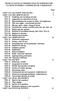 INDEX TO RULES GOVERNING PRACTICE BEFORE THE ILLINOIS WORKERS' COMPENSATION COMMISSION Page PART 7010 ACCIDENT REPORTING 3 PART 7020 PRE-ARBITRATION 3 7020.10 Docketing and numbering of cases 7020.20 Application
ILLINOIS OFFICIAL REPORTS
 ILLINOIS OFFICIAL REPORTS Appellate Court Travelers Insurance v. Precision Cabinets, Inc., 2012 IL App (2d) 110258WC Appellate Court Caption TRAVELERS INSURANCE, Plaintiff-Appellee and Cross-Appellant,
HAWAI`I REVISED STATUTES CHAPTER 672B DESIGN CLAIM CONCILIATION PANEL. Act 207, 2007 Session Laws of Hawai`i
 HAWAI`I REVISED STATUTES CHAPTER 672B DESIGN CLAIM CONCILIATION PANEL Act 207, 2007 Session Laws of Hawai`i Section 672B-1 Definitions 672B-2 Administration of chapter 672B-3 Design claim conciliation
State of Delaware Industrial Accident Board
 State of Delaware Industrial Accident Board Rules Department of Labor Office of Workers Compensation 4425 N. Market street Wilmington, DE 19802 Phone (302)761-8200 Fax (302)761-6601 December 12, 2011 Rule
CIVIL TRIAL RULES. of the COURTS OF ORANGE COUNTY, TEXAS. Table of Contents GENERAL MATTERS. Rule 1.10 Time Standards for the Disposition of Cases...
 CIVIL TRIAL RULES of the COURTS OF ORANGE COUNTY, TEXAS Table of Contents GENERAL MATTERS Addendum to Local Rules Rule 1.10 Time Standards for the Disposition of Cases...2 Rule 1.11 Annual Calendar...3
MEMORANDUM. October 1,2008. Emergent Medical Care, Contact Person, Enforcement and UEF Rule Proposals
 DEPARTMENT OF LABOR AND WORKFORCE DEVELOPMENT JON S. CORZINE PO BOX 381 DAVID J. SOCOLOW Governor TRENTON, NEW JERSEY 08625-0381 Commissioner MEMORANDUM October 1,2008 To: All Judges, Attorneys and Case
INDIANA FALSE CLAIMS AND WHISTLEBLOWER PROTECTION ACT. IC 5-11-5.5 Chapter 5.5. False Claims and Whistleblower Protection
 As amended by P.L.79-2007. INDIANA FALSE CLAIMS AND WHISTLEBLOWER PROTECTION ACT IC 5-11-5.5 Chapter 5.5. False Claims and Whistleblower Protection IC 5-11-5.5-1 Definitions Sec. 1. The following definitions
The practice and procedure governing hearings pursuant to this Part shall be made by a Policy.
 Universal Market Integrity Rules Rules & Policies 10.8 Practice and Procedure The practice and procedure governing hearings pursuant to this Part shall be made by a Policy. POLICY 10.8 - PRACTICE AND PROCEDURE
2014 IL App (1st) 130250-U. No. 1-13-0250 IN THE APPELLATE COURT OF ILLINOIS FIRST JUDICIAL DISTRICT
 2014 IL App (1st) 130250-U FIFTH DIVISION September 12, 2014 No. 1-13-0250 NOTICE: This order was filed under Supreme Court Rule 23 and may not be cited as precedent by any party except in the limited
GUIDELINES FOR ATTORNEYS TAXATION OF COURT COSTS IN THE SOUTHERN DISTRICT OF OHIO
 GUIDELINES FOR ATTORNEYS TAXATION OF COURT COSTS IN THE SOUTHERN DISTRICT OF OHIO The purpose of these guidelines is to explain the standard and customary practices of the Clerk s Office of the United
Any civil action exempt from arbitration by action of a presiding judge under ORS 36.405.
 CHAPTER 13 Arbitration 13.010 APPLICATION OF CHAPTER (1) This UTCR chapter applies to arbitration under ORS 36.400 to 36.425 and Acts amendatory thereof but, except as therein provided, does not apply
No. 1-09-0991WC IN THE APPELLATE COURT OF ILLINOIS FIRST JUDICIAL DISTRICT WORKERS' COMPENSATION COMMISSION DIVISION
 NOTICE Decision filed 06/15/10. The text of this decision may be changed or corrected prior to the filing of a Petition for Rehearing or the disposition of the same. Workers' Compensation Commission Division
What to Expect In Your Lawsuit
 What to Expect In Your Lawsuit A lawsuit is a marathon not a sprint. Stewart R. Albertson. There is a saying that the wheels of justice move slowly. That is as true today as when it was initially stated.
2013 IL App (1st) 120898-U. No. 1-12-0898
 2013 IL App (1st) 120898-U FOURTH DIVISION March 28, 2013 No. 1-12-0898 NOTICE: This order was filed under Supreme Court Rule 23 and may not be cited as precedent by any party except in the limited circumstances
The New Jersey Workers Compensation Process from a Defense Attorneys Perspective. TRICO JIF Planning Retreat
 The New Jersey Workers Compensation Process from a Defense Attorneys Perspective Presented to: TRICO JIF Planning Retreat Benjamin F. Smith, Esq. 856 761 3773; [email protected] July 31, 2015 Overview How
2015 IL App (3d) 130003-U. Order filed February 5, 2015 IN THE APPELLATE COURT OF ILLINOIS THIRD DISTRICT A.D., 2015
 NOTICE: This order was filed under Supreme Court Rule 23 and may not be cited as precedent by any party except in the limited circumstances allowed under Rule 23(e(1. 2015 IL App (3d 130003-U Order filed
991. Creation of division of administrative law. 992. Applicability; exemptions; attorney fees; court costs
 LOUISIANA REVISED STATUTES, TITLE 49 CHAPTER 13-B. DIVISION OF ADMINISTRATIVE LAW PART A. ADMINISTRATIVE LAW 991. Creation of division of administrative law The division of administrative law, hereafter
19:13-2.1 Who may file
 CHAPTER 13 SCOPE OF NEGOTIATIONS PROCEEDINGS Authority N.J.S.A. 34:13A-5.4d, 34:13A-11 and 34:13A-27. SOURCE AND EFFECTIVE DATE R.2011 d.238, effective August 11, 2011. See: 43 N.J.R. 1189(a), 43 N.J.R.
NO. 4-09-0753 Filed 6/21/10 IN THE APPELLATE COURT OF ILLINOIS FOURTH DISTRICT ) ) ) ) ) ) ) ) PRESIDING JUSTICE MYERSCOUGH delivered the opinion of
 NO. 4-09-0753 Filed 6/21/10 IN THE APPELLATE COURT OF ILLINOIS FOURTH DISTRICT CHARLES DALLAS, Plaintiff-Appellee and Cross-Appellant, v. AMEREN CIPS, Defendant-Appellant and Cross-Appellee. ) ) ) ) )
History of the Workers' Compensation Court For the Senate Joint Resolution No. 23 Study
 History of the Workers' Compensation Court For the Senate Joint Resolution No. 23 Study Prepared for the Revenue and Transportation Interim Committee by Megan Moore, Legislative Research Analyst Legislative
Illinois Official Reports
 Illinois Official Reports Supreme Court Ferris, Thompson & Zweig, Ltd. v. Esposito, 2015 IL 117443 Caption in Supreme Court: FERRIS, THOMPSON AND ZWEIG, LTD., Appellee, v. ANTHONY ESPOSITO, Appellant.
In the Missouri Court of Appeals Western District
 In the Missouri Court of Appeals Western District STEVE AUSTIN, Appellant, v. JOHN SCHIRO, M.D., Respondent. WD78085 OPINION FILED: May 26, 2015 Appeal from the Circuit Court of Clinton County, Missouri
SMALL CLAIMS DIVISION INFORMATION
 SMALL CLAIMS DIVISION INFORMATION PARTIES The individual or corporation who initiates an action is known as the plaintiff. The individual or corporation against whom an action is brought is known as the
Appeal Bonds, Sureties, and Stays
 Appeal Bonds, Sureties, and Stays Appellate Lawyers Association April 22, 2009 Brad Elward Peoria Office The Effect of a Judgment A judgment is immediately subject to enforcement and collection. Illinois
In force as of 15 March 2005 based on decision by the President of NIB ARBITRATION REGULATIONS
 In force as of 15 March 2005 based on decision by the President of NIB ARBITRATION REGULATIONS Contents I. SCOPE OF APPLICATION... 4 1 Purpose of these Regulations... 4 2 Applicability to different staff
INTRODUCTION. test. In order to be compensable, an injury must occur in the course of employment and the
 Rusin Maciorowski & Friedman, Ltd. SLIPS, TRIPS, FALLS AND OTHER ASSORTED MISHAPS AT WORK THE CATERPILLAR DOCTRINE Almost 20 years later Michael E. Rusin Rusin Maciorowski & Friedman, Ltd. 10 South Riverside
HB 2845. Introduced by Representative Patterson AN ACT
 REFERENCE TITLE: state false claims actions State of Arizona House of Representatives Fiftieth Legislature Second Regular Session HB Introduced by Representative Patterson AN ACT AMENDING TITLE, ARIZONA
Workers Compensation: A Response To the Recent Attacks on the Commission s Authority to Suspend A Claimant s Benefits
 Workers Compensation: A Response To the Recent Attacks on the Commission s Authority to Suspend A Claimant s Benefits by Charles F. Midkiff Midkiff, Muncie & Ross, P.C. 300 Arboretum Place, Suite 420 Richmond,
IN THE CIRCUIT COURT THIRD JUDICIAL CIRCUIT MADISON COUNTY, ILLINOIS PART FIVE - LAW DIVISION AMENDED COURT RULES
 IN THE CIRCUIT COURT THIRD JUDICIAL CIRCUIT MADISON COUNTY, ILLINOIS PART FIVE - LAW DIVISION AMENDED COURT RULES RULE 1. MEDIATION IN MALPRACTICE CASES In order to alleviate the burden to the parties
AN ANALYSIS OF SEC. 10 OF THE ILLINOIS WORKERS' COMPENSATION ACT
 CALCULATING AVERAGE WEEKLY WAGE UNDER ILLINOIS WC LAW: AN ANALYSIS OF SEC. 10 OF THE ILLINOIS WORKERS' COMPENSATION ACT 2004 Michael E. Rusin Rusin Maciorowski & Friedman, Ltd. 10 South Riverside Plaza,
HP0868, LD 1187, item 1, 123rd Maine State Legislature An Act To Recoup Health Care Funds through the Maine False Claims Act
 PLEASE NOTE: Legislative Information cannot perform research, provide legal advice, or interpret Maine law. For legal assistance, please contact a qualified attorney. Be it enacted by the People of the
NEW JERSEY ADMINISTRATIVE CODE Copyright 2013 by the New Jersey Office of Administrative Law
 5:23A-1.1 Title; authority; scope; intent (a) This chapter, which is promulgated under authority of N.J.S.A. 52:27D-124, 52:17D-198, 40A:14A-43, 40A:14B-76 and 40:55D-53.2a, shall be known as, and may
Boulder Municipal Court Boulder County Justice Center P.O. Box 8015 1777 6 th Street Boulder, CO 80306-8015 www.bouldercolorado.
 Boulder Municipal Court Boulder County Justice Center P.O. Box 8015 1777 6 th Street Boulder, CO 80306-8015 www.bouldercolorado.gov/court JURY READINESS CONFERENCE INSTRUCTIONS You have set your case for
LAFOURCHE PARISH FIRE PROTECTION DISTRICT #3 CIVIL SERVICE BOARD RULES RULE I
 LAFOURCHE PARISH FIRE PROTECTION DISTRICT #3 CIVIL SERVICE BOARD RULES MEETING OF THE BOARD: RULE I SECTION 2: SECTION 3: SECTION 4: SECTION 5: SECTION 6: The board shall hold one regular meeting within
CHAPTER 42A HEARINGS AND APPEALS. Act shall mean the Casino Control Act, N.J.S.A. 5:12-1 et seq.
 CHAPTER 42A HEARINGS AND APPEALS SUBCHAPTER 1. GENERAL PROVISIONS 19:42A-1.1 Definitions The following words and terms, when used in this chapter, shall have the following meanings, unless the context
10 LC 36 1527 A BILL TO BE ENTITLED AN ACT
 House Bill 1101 By: Representatives Coan of the 101 st, Marin of the 96 th, Smith of the 129 th, Horne of the 71 st, Dawkins-Haigler of the 93 rd, and others A BILL TO BE ENTITLED AN ACT 1 2 3 4 5 6 7
IN THE WORKERS COMPENSATION COURT OF THE STATE OF MONTANA 2015 MTWCC 13. WCC No. 2015-3545 CAR WERKS, LLC. Petitioner. vs. UNINSURED EMPLOYERS FUND
 IN THE WORKERS COMPENSATION COURT OF THE STATE OF MONTANA 2015 MTWCC 13 WCC No. 2015-3545 CAR WERKS, LLC Petitioner vs. UNINSURED EMPLOYERS FUND Respondent/Third Party Petitioner vs. JAMES E. GAWRONSKI
Josephine County, Oregon Board of Commissioners: Jim Riddle, Jim Raffenburg, Dwight Ellis
 Josephine County, Oregon Board of Commissioners: Jim Riddle, Jim Raffenburg, Dwight Ellis APPEAL APPLICATION Hearings Officer or Planning Commission Decision (Fee: $1250) PLANNING OFFICE Michael Snider,
S T A T E O F M I C H I G A N WORKERS COMPENSATION APPELLATE COMMISSION V DOCKET #96-0089 OPINION
 RICHARD P. BELLANT, PLAINTIFF, 1998 OPINION #328 S T A T E O F M I C H I G A N WORKERS COMPENSATION APPELLATE COMMISSION V DOCKET #96-0089 STATE OF MICHIGAN, DEPARTMENT OF CORRECTIONS, SELF INSURED, DEFENDANT.
SENATE BILL 1486 AN ACT
 Senate Engrossed State of Arizona Senate Forty-fifth Legislature First Regular Session 0 SENATE BILL AN ACT AMENDING SECTION -, ARIZONA REVISED STATUTES, AS AMENDED BY LAWS 00, CHAPTER, SECTION ; AMENDING
Civil Suits: The Process
 Jurisdictional Limits The justice courts have exclusive jurisdiction or the authority to hear all civil actions when the amount involved, exclusive of interest, costs and awarded attorney fees when authorized
CHAPTER 7 UNIFORM COUNTY BOARD OF EQUALIZATION PRACTICE AND PROCEDURE RULES
 CHAPTER 7 UNIFORM COUNTY BOARD OF EQUALIZATION PRACTICE AND PROCEDURE RULES Section 1. Authority. These Uniform County Board of Equalization Practice and Procedure Rules are promulgated by authority of
The Employers Guide to. Pennsylvania s Workers Compensation Law
 The Employers Guide to Pennsylvania s Workers Compensation Law Table of Contents About this Guide. 3 The Pennsylvania Workers Compensation Act: An Overview for the Pennsylvania Employer....4 Your Duties
If you have been involved in a work-related accident, there are a lot of things that you absolutely need to know.
 WORK-RELATED INJURIES SPECIAL REPORT Dear Friend: If you have been involved in a work-related accident, there are a lot of things that you absolutely need to know. Workers compensation is a statutory right
RE: HF No. 173, 2009/10 Gary Timm v. Meade School District 46-1 and Associated School Boards of South Dakota Worker s Compensation Trust Fund
 March 29, 2011 James D. Leach Attorney at Law 1617 Sheridan Lake Road Rapid City, SD 57702-3783 Jessica L. Filler Tieszen Law Office Prof. LLC PO Box 550 Pierre, SD 57501 Letter Decision and Order RE:
Counsel must be fully familiar with the Uniform Civil Rules for the Supreme Court 22 NYCRR Part 202.
 JUSTICE GERALD E. LOEHR, J.S.C. Rockland County Supreme Court 1 South Main Street New City, New York 10956 Courtroom 1 Tel: (845) 483-8343 Fax: (845) 708-7236 Staff Bruce J. Pearl, Principal Law Secretary
STATE OF LOUISIANA COURT OF APPEAL, THIRD CIRCUIT 03-987 **********
 STATE OF LOUISIANA COURT OF APPEAL, THIRD CIRCUIT 03-987 LAWANDA THEODILE VERSUS RPM PIZZA, INC. ********** APPEAL FROM THE OFFICE OF WORKERS' COMPENSATION - # 4 PARISH OF LAFAYETTE, NO. 03-02178 SHARON
CRIMINAL INJURIES COMPENSATION COMMISSION - GUAM OPERATIONAL RULES AND REGULATIONS
 CRIMINAL INJURIES COMPENSATION COMMISSION - GUAM OPERATIONAL RULES AND REGULATIONS [Prepared by the Office of the Attorney General of Guam in coordination and with approval of the Criminal Injuries Compensation
Workers Compensation and Seniors
 Chapter 10 Workers Compensation and Seniors Gregory B. Cairns, Esq. Cairns & Associates, P.C. SYNOPSIS 10-1. Workers Compensation 10-2. Benefits Available 10-3. Filing a Workers Compensation Claim 10-4.
2013 IL App (3d) 120130-U. Order filed September 23, 2013 IN THE APPELLATE COURT OF ILLINOIS THIRD DISTRICT A.D., 2013
 NOTICE: This order was filed under Supreme Court Rule 23 and may not be cited as precedent by any party except in the limited circumstances allowed under Rule 23(e)(1). 2013 IL App (3d) 120130-U Order
2015 IL App (5th) 140554-U NO. 5-14-0554 IN THE APPELLATE COURT OF ILLINOIS FIFTH DISTRICT
 NOTICE Decision filed 08/13/15. The text of this decision may be changed or corrected prior to the filing of a Petition for Rehearing or the disposition of the same. 2015 IL App (5th 140554-U NO. 5-14-0554
Rights & Obligations under the Nebraska Workers Compensation Law
 Nebraska Workers Compensation Court Information Sheet: Rights & Obligations under the Nebraska Workers Compensation Law NEBRASKA WORKERS COMPENSATION COURT OFFICIAL SEAL What is workers compensation? Workers
2015 IL App (1st) 141985-U. No. 1-14-1985 IN THE APPELLATE COURT OF ILLINOIS FIRST JUDICIAL DISTRICT
 2015 IL App (1st) 141985-U No. 1-14-1985 NOTICE: This order was filed under Supreme Court Rule 23 and may not be cited as precedent by any party except in the limited circumstances allowed under Rule 23(e)(1).
IN THE SUPREME COURT OF TENNESSEE SPECIAL WORKERS COMPENSATION APPEALS PANEL AT KNOXVILLE May 29, 2012 Session
 IN THE SUPREME COURT OF TENNESSEE SPECIAL WORKERS COMPENSATION APPEALS PANEL AT KNOXVILLE May 29, 2012 Session AMY MCGHEE v. TOTS AND TEENS PEDIATRICS, ET AL. Appeal from the Chancery Court for Campbell
IN THE SUPREME COURT OF TENNESSEE SPECIAL WORKERS' COMPENSATION APPEALS PANEL KNOXVILLE, MAY 1999 SESSION
 IN THE SUPREME COURT OF TENNESSEE SPECIAL WORKERS' COMPENSATION APPEALS PANEL KNOXVILLE, MAY 1999 SESSION FILED August 27, 1999 Cecil Crowson, Jr. Appellate Court Clerk ROBERT JONES CUMBERLAND CIRCUIT
IN THE CIRCUIT COURT OF THE NINTH JUDICIAL CIRCUIT, IN AND FOR ORANGE COUNTY, FLORIDA
 IN THE CIRCUIT COURT OF THE NINTH JUDICIAL CIRCUIT, IN AND FOR ORANGE COUNTY, FLORIDA PROGRESSIVE AMERICAN INSURANCE COMPANY, CASE NO.: 2014-CV-000079-A-O Lower Case No.: 2012-SC-002127-O Appellant, v.
PART III Discovery. Overview of the Discovery Process CHAPTER 8 KEY POINTS THE NATURE OF DISCOVERY. Information is obtainable by one or more discovery
 PART III Discovery CHAPTER 8 Overview of the Discovery Process Generally, discovery is conducted freely by the parties without court intervention. Disclosure can be obtained through depositions, interrogatories,
Compulsory Arbitration
 Local Rule 1301 Scope. Compulsory Arbitration Local Rule 1301 Scope. (1) The following civil actions shall first be submitted to and heard by a Board of Arbitrators: (a) (b) (c) (d) Civil actions, proceedings
Workers' Compensation Commission Division Filed: June 19, 2007. No. 1-06-2395WC
 NOTICE Decision filed 06/19/07. The text of this decision may be changed or corrected prior to the filing of a Petition for Rehearing or the disposition of the same. Workers' Compensation Commission Division
IN THE COURT OF APPEALS OF INDIANA
 FOR PUBLICATION ATTORNEY FOR APPELLANT: TODD I. GLASS Fine & Hatfield Evansville, Indiana ATTORNEYS FOR APPELLEES: MARK F. WARZECHA DAVID E. GRAY Bowers Harrison, LLP Evansville, Indiana IN THE COURT OF
HON. GEORGE E. PATAKI, in his official capacity as Governor of the State of New York, et al.,
 UNITED STATES DISTRICT COURT SOUTHERN DISTRICT OF NEW YORK ------------------------------------------------------------X JOHN DOE, RICHARD ROE, AND SAMUEL POE, individually and on behalf of all other persons
Reports or Connecticut Appellate Reports, the
 ****************************************************** The officially released date that appears near the beginning of each opinion is the date the opinion will be published in the Connecticut Law Journal
GENERAL INFORMATION FOR UNREPRESENTED INJURED WORKERS ABOUT THE WORKERS COMPENSATION HEARING PROCESS FREQUENTLY ASKED QUESTIONS
 GENERAL INFORMATION FOR UNREPRESENTED INJURED WORKERS ABOUT THE WORKERS COMPENSATION HEARING PROCESS FREQUENTLY ASKED QUESTIONS 1. Where can I get information about the hearing process?... 2 2. Where else
History: Add. 1971, Act 19, Imd. Eff. May 5, 1971; Am. 1976, Act 89, Imd. Eff. Apr. 17, 1976.
 MOTOR VEHICLE ACCIDENT CLAIMS ACT Act 198 of 1965 AN ACT providing for the establishment, maintenance and administration of a motor vehicle accident claims fund for the payment of damages for injury to
TITLE 18 INSURANCE DELAWARE ADMINISTRATIVE CODE 1. 900 Consumer Rights. 901 Arbitration of Automobile and Homeowners' Insurance Claims
 DELAWARE ADMINISTRATIVE CODE 1 900 Consumer Rights 901 Arbitration of Automobile and Homeowners' Insurance Claims 1.0 Purpose and Statutory Authority 1.1 The purpose of this Regulation is to implement
Sangamon County Circuit Clerk s Office. Small Claims Court Manual. Updated March 2008
 Sangamon County Circuit Clerk s Office Small Claims Court Manual Small Claims Court Manual 1 The purpose of this guide is to explain, in simple language, the workings of the Small Claims Court in Sangamon
: : before this court (the Court Annexed Mediation Program ); and
 UNITED STATES BANKRUPTCY COURT SOUTHERN DISTRICT OF NEW YORK - - - - - - - - - - - - - - - - - - - - - - - - - - - - - - - - - - - - In re: ADOPTION OF PROCEDURES GOVERNING : MEDIATION OF MATTERS AND THE
2015 IL App (1st) 141310-U. No. 1-14-1310 IN THE APPELLATE COURT OF ILLINOIS FIRST JUDICIAL DISTRICT
 2015 IL App (1st) 141310-U FIRST DIVISION October 5, 2015 No. 1-14-1310 NOTICE: This order was filed under Supreme Court Rule 23 and may not be cited as precedent by any party except in the limited circumstances
OKLAHOMA (CURRENT SYSTEM)
 OKLAHOMA (CURRENT SYSTEM) 1) MAKE-UP / STRUCTURE The Oklahoma Workers Compensation Court has exclusive jurisdiction (OWCC) over work related injury claims unless the employer fails to carry insurance and
Supreme Court of the United States
 No. 11-1197 ================================================================ In The Supreme Court of the United States --------------------------------- --------------------------------- VERNON HADDEN,
The Commonwealth of Massachusetts Department of Industrial Accidents. For injured workers
 The Commonwealth of Massachusetts Department of Industrial Accidents For injured workers WHAT IS WORKERS COMPENSATION? The Massachusetts Workers Compensation system is in place to protect you if you are
MAINE REVENUE SERVICES PROPERTY TAX DIVISION PROPERTY TAX BULLETIN NO. 10
 MAINE REVENUE SERVICES PROPERTY TAX DIVISION PROPERTY TAX BULLETIN NO. 10 PROPERTY TAX ABATEMENT AND APPEALS PROCEDURES REFERENCE: Title 36 MRSA, Sections 583, 706, 841-849 and 1118 Issued July 2010; Replaces
LOUISIANA WORKERS COMPENSATION LAW CHANGES 2012
 LOUISIANA WORKERS COMPENSATION LAW CHANGES 2012 The following is a summary of the 2012 legislative amendments to the Louisiana Workers Compensation Act. The major law changes were at the urging of the
CALIFORNIA FALSE CLAIMS ACT GOVERNMENT CODE SECTION 12650-12656
 CALIFORNIA FALSE CLAIMS ACT GOVERNMENT CODE SECTION 12650-12656 12650. (a) This article shall be known and may be cited as the False Claims Act. (b) For purposes of this article: (1) "Claim" includes any
FALSE CLAIMS ACT STATUTORY LANGUAGE
 33 U.S.C. 3729-33 FALSE CLAIMS ACT STATUTORY LANGUAGE 31 U.S.C. 3729. False claims (a) LIABILITY FOR CERTAIN ACTS. (1) IN GENERAL. Subject to paragraph (2), any person who (A) knowingly presents, or causes
Rules of the City of New York Title 61 - Office of Collective Bargaining Chapter 1 - Practice and Procedure
 Rules of the City of New York Title 61 - Office of Collective Bargaining Chapter 1 - Practice and Procedure 1-01 Definitions 1-02 Representation Proceedings 1-03 Collective Bargaining 1-04 Mediation 1-05