
Procedure for the Recycling Material and Disposal of Waste from Laboratories
|
|
|
- Kenneth Hood
- 9 years ago
- Views:
Transcription
1 Procedure for the Recycling Material and Disposal of Waste from Laboratories Document Control Document Created by v1.0 Shane McAteer 26/01/2011 Updates V3.5 Paul Monk 29/10/2013 V4.1 Gary Stratmann 08/01/16 1
2 Introduction This document outlines the procedures for segregation, collection and disposal of waste from laboratories. It is a legal requirement to segregate non-hazardous from hazardous wastes. Incorrectly disposing of hazardous waste via a non-hazardous waste stream or non-hazardous waste via a hazardous waste stream could both lead to legal and financial penalties dependent upon the severity of the noncompliance. Underpinning this document are UCL s commitments to three core values: the prevention of pollution, compliance with legislative requirements and continual improvement. All future risk assessments and revisions to existing risk assessments must include consideration of storage, handling, movement and disposal of wastes under the following conditions: Normal operation (ie routine laboratory activities) Abnormal operation (ie laboratory clearance) Emergency circumstances (ie spillage) This procedure seeks to provide a comprehensive guide as to how to dispose of laboratory wastes at UCL. If Service Users are unclear about any item of waste or aspect of this procedure they should contact the Customer Service Centre (by raising a Service Request at or by ing [email protected] to arrange an assessment by the UCL Waste Manager. The list of parties involved with the Disposal of Laboratory Wastes referred to in this document. All waste producers have a legal responsibility to ensure that waste is produced, stored, transported and disposed of without harming the environment. This is your duty of care. UCL Facilities and WorkplaceServices, a department with in UCL Estates Division, supplies a wide range of business support services such as cleaning, domestic and special waste management, security, mail services and telephony services. Waste managers working from within UCL Facilities and Workplace Services have the responsibility to advise waste producers and manage waste contractors and suppliers in delivering required service standards. 2
3 Contractors and suppliers are employed to deliver safe and compliant; collection, transport and disposal of wastes produced by UCL as requested by Facilities and Workplace Services waste managers. 3
4 Contents Classification of Laboratory Wastes Hazardous Laboratory Wastes Chemical Wastes Clinical Wastes Radioactive Wastes Laboratory Wastes of Unknown Hazard Non-Hazardous Laboratory Wastes Laboratory Recyclables Glass from Laboratories Non-Recyclable Wastes Disposal of Miscellaneous Items Polystyrene Boxes Coolant Packages/Dry Ice Large Packaging Batteries and Toner Cartridges Laboratory Equipment Gas Cylinders Waste Reporting Training Satellite Estate 4
5 Classification of Laboratory Wastes Laboratory wastes are classified as hazardous or non-hazardous and each has different procedures for disposal. Hazardous Laboratory Wastes Hazardous wastes are listed below and must be disposed of in accordance with the relevant procedures: Chemical Wastes see Chemical Wastes Procedure Clinical Wastes see Clinical Waste Procedure Radioactive Wastes see Radioactive Waste Procedure Laboratory Wastes of Unknown Hazard. If it is not clear whether an item of waste is hazardous or not it must be segregated from other wastes by the Service User and labelled as being hazardous whilst investigation is carried out to establish the proper disposal route. This is done by contacting the Customer Service Centre (by raising a Service Request at or by ing [email protected] to arrange for an assessment of the item. The UCL Waste Manager will contact the Service User and arrange for an assessment to be undertaken. It may be that an assessment by correspondence or by telephone may be adequate, however if the waste requires specialist disposal it may be necessary for the UCL Waste Manager to arrange for a visit by competent contractors. Non-Hazardous Laboratory Wastes Laboratory Recyclables 1. The majority of non-hazardous materials discarded from UCL s laboratory activities are recyclable (as mixed dry recyclables). These materials include (but are not limited to): Packaging for lab consumables Paper Hand towels Pipette tip boxes Cardboard Other dry non-hazardous laboratory wastes 2. The locations of the bins will be agreed between the Service Users and the UCL Waste Manager as will the Laboratory Waste Collection Point(s) where the full bags will be left. 3. Clear bag bin liners are supplied via the soft services contract. It is the responsibility of Service Users to fit the liners to the bins. 4. When the Laboratory Recycling bins become full, it is the responsibility of the Service Users to: remove the clear bag bin liners 5
6 tie the bin liners so that the bags are sealed and the waste cannot fall out place the sealed bags in the Laboratory Waste Collection Point. In some cases this may be in the laboratory itself but in the majority of cases this point will be in the corridor. 5. The O&G staff will remove this waste from the Laboratory Waste Collection Point throughout the day and place it in the building s Designated Waste Collection Point. 6. The waste is now treated in accordance with the protocol Office Recyclables (section 3) in the UCL Material Recycling and Waste Disposal Procedure. Glass from Laboratories 1. Glass may arise from laboratories from a number of sources: Laboratory glassware (eg Pyrex) Chemical/solvent bottles (eg Eurobottles, Winchesters) 2. Any glassware that is contaminated with hazardous materials, and which cannot reasonably be decontaminated, must be disposed of as Hazardous Laboratory Wastes. 3. Disposal of laboratory glassware: a. If laboratory glassware has been broken into small pieces (so as to constitute a sharps hazard) it should be disposed of by Service Users in a laboratory sharps bin. b. Larger items of laboratory glassware (which don t constitute a sharps hazard) should have any metal, rubber or plastic fittings removed before being put carefully into one of the green glass recycling bins located around the UCL estate. c. Glass bottles (including chemical and solvent bottles) may be returned to the supplier for reuse or recycling if the supplier offers this service. If this is the case then the Service User must follow the instructions provided for this service by the supplier. d. Otherwise the glass bottles must be recycled or disposed of in accordance with the flow chart below. 6
7 Drain and residues in waste solvent container Solvent miscible with water Dispose of clean cap to Laboratory Recycling bin Yes No Fill container with water. Is the solvent volatile Water flushed down sink Yes ws Leave open in a ventilated area eg fumehood. No Dry container by blowing air into it in a fumehood Invert and drain container to dryness Remove any labels or hazard warnings Glass: glass recycling bins Metal or Plastic: Laboratory Recycling bins 7
8 Non-Recyclable Wastes 1. Given that eating and drinking are prohibited in laboratories, nearly all non-hazardous laboratory wastes will be recyclable. 2. The non-hazardous laboratory wastes which are not recyclable will be dry and so not spoil the mixed dry recyclables. 3. For these reasons, non-recyclable non-hazardous laboratory wastes should be disposed of in the Laboratory Recycling bins. 4. The Materials Recovery Facility will handle small quantities of nonrecyclable non-hazardous laboratory wastes appropriately. Disposal of Miscellaneous Items Polystyrene Boxes 1. Polystyrene boxes must be free from hazard prior to disposal. 2. Any dry ice or coolant bags must be removed and disposed of in accordance with the section Coolant Packages/Dry Ice below. 3. Small polystyrene boxes can be placed in a bin bag and left for collection by O&G staff. 4. Large polystyrene boxes must taken to the Laboratory Waste Collection Point. 5. The waste sub-contractor will handle polystyrene boxes appropriately. Coolant Packages/Dry Ice 1. Coolant Packages (gel bags) a. Must be free from hazard prior to disposal. b. Must be at (or near to) ambient temperature prior to disposal in order not to cause cold burns. c. Service Users dispose of coolant packages/gel bags as Hazardous Laboratory waste if the instructions on the packages/bags state this to be the appropriate disposal method. d. If the instructions on the coolant packages/gel bags do not state that they are hazardous for disposal, they should be put into a Laboratory Residual waste bin. e. The Materials Recovery Facility will handle non-hazardous coolant packages/gel bags appropriately. 2. Dry Ice a. Must be handled with care in order not to cause cold burns. b. Must be placed in an appropriate container at ambient temperature in a fume cupboard or other safe area where it will sublime. Large Packaging 1. Large packaging must be clean and free from hazard prior to disposal. 2. Once free from hazard, all hazard warning symbols must be obliterated. 3. All inner packaging should be removed and either a. Be placed in a Laboratory Recycling bin, or 8
9 b. Be put into a clear bag and taken to a Laboratory Waste Collection Point. 4. Outer packaging should be folded and taped closed so as to reduce the volume of material to be handled, and then taken to a Laboratory Waste Collection Point. Batteries and Toner Cartridges 1. Batteries and Toner Cartridges should be recycled in accordance with the relevant protocol in the UCL Material Recycling and Waste Disposal Procedure: Batteries Toner Cartridges Laboratory Equipment 1. Unwanted laboratory equipment must be free from chemical, biological or radiochemical hazard prior to reuse, recycling or disposal. 2. Some laboratory equipment contain components which are not obvious, or are so hazardous, to non-laboratory staff as to require specialist disposal eg liquid scintillation counters which may contain radioactive sources, microtomes which may contain very sharp knives. Service Users requiring the disposal of such equipment must first contact the Customer Service Centre (by raising a Service Request at or by ing [email protected] to arrange for an assessment of the item. The UCL Waste Manager will contact the Service User and arrange for an assessment to be undertaken. It may be that an assessment by correspondence or by telephone may be adequate, however if the waste requires specialist disposal it may be necessary for the UCL Waste Manager to arrange for a visit by competent contractors. 3. If the unwanted laboratory equipment is in good working order, then it should be disposed of in accordance with the protocol Reusable Items in the UCL Material Recycling and Disposal Procedure. 4. If the unwanted laboratory equipment is not in good working order, then it should be disposed of according to the relevant protocol in the UCL Material Recycling and Waste Disposal Procedure: Hazardous WEEE Non-Hazardous WEEE Bulky Items Gas Cylinders 1. Unwanted gas cylinders should be returned to the supplier that they were obtained from by the department. This is important as often suppliers will charge rental on the cylinders and once they leave the department they become more difficult to track down and return. 2. Should the department be unable to return the cylinder to the supplier then they should contact the Customer Service Centre (by raising a Service Request at 9
10 requests/) or by ing to arrange for a collection. 3. The cylinder will then be collected by the on-site BOC team or Mitie and stored in one of the gas cylinder cage stores around site. 4. The UCL Waste Manager will then arrange for the cylinders to be removed by a competent contractor sub-contracted to MITIE Waste. 5. The contractor will then arrange for the cylinders to be repatriated to their correct suppliers or emptied of all gas and then recycled as scrap metal. Waste Reporting The types of waste disposed of, quantity of each waste stream and the method by which it is disposed is reported on a monthly basis by the relevant contractor. Training All Facilities staff & Contractors handling laboratory materials are trained to perform all their waste related duties by O&G, MITIE or BOC as appropriate to the waste they collect. Records of training are available via these contractors. UCL Departmental users can find information regarding all waste disposal on UCL s waste website. Satellite Estate For areas of the college that are remote from the core campus, there may be some local arrangements in place for the collection and storage of waste. 10
/ Clinical Waste & Offensive Waste Disposal Procedures
 / Clinical Waste & Offensive Waste Disposal Procedures Document Control Document Created by Last Updated by Shane McAteer 26/01/2011 Paul Monk 29/10/2013 1 Introduction This clinical and offensive waste
LOCAL ARRANGEMENTS FOR WASTE DISPOSAL (MAIN SITE)
 LOCAL ARRANGEMENTS FOR WASTE DISPOSAL (MAIN SITE) 30 Appendix B The Chemicals Technician, Dr Mimi Nguyen, can be contacted by telephone (83337) or e-mail ([email protected]) for help or advice
LOCAL ARRANGEMENTS FOR WASTE DISPOSAL (BEGBROKE SITE)
 37 Appendix C LOCAL ARRANGEMENTS FOR WASTE DISPOSAL (BEGBROKE SITE) The Chemicals Technician is your point of contact for enquiries regarding waste disposal at Begbroke. She is not based at Begbroke on
School Of Medicine & Biomedical Sciences. Waste Management Policy
 School Of Medicine & Biomedical Sciences. Waste Management Policy Introduction The management and disposal of waste has become highly regulated over the past few years. As a result every employee and student
LABORATORY WASTE DISPOSAL GUIDELINES
 WHS Unit LABORATORY WASTE DISPOSAL GUIDELINES Contents 1 Introduction... 2 2 Scope... 2 3 Definitions... 2 4 General Principles... 3 5 Laboratory Procedures... 4 5.1 Summary of Waste Disposal... 9 6 Special
Disposal of chemical waste must be regarded as an integral part of all research projects and teaching programs involving chemical use.
 1. Purpose and Objectives This procedure provides information on the generation, collection, storage and disposal of chemical waste to ensure: that the collection, storage and disposal of chemical waste
Laboratory Biosafty In Molecular Biology and its levels
 Laboratory Biosafty In Molecular Biology and its levels Workshop 16-17 Oct..2012 Guidelines Does not mean optional Laboratory Biosafety The Laboratory Biosafety Manual is an important WHO publication
Decommissioning and clearance of laboratories
 Health and Safety Services Safety Note 65 Decommissioning and clearance of laboratories This Safety Note provides guidance to Schools on the decommissioning and clearance of laboratories prior to handing
11. The key for waste management Waste segregation
 11. The key for waste management Waste segregation 11.1 Segregation at the place of origin The background idea Segregation means the separation of the entire waste generated in a hospital in defined, different
Hazardous Waste Procedures. Faculty of Science University of Ottawa
 Hazardous Waste Procedures University of Ottawa Contents Hazardous Materials Waste Overview:... 3 Regulations:... 3 General requirements related to packaging waste:... 4 Table 1: List of Appropriate Waste
School of Chemistry and Chemical Biology Hazardous Waste Management Plan
 School of Chemistry and Chemical Biology Hazardous Waste Management Plan SOPs for the disposal of hazardous waste generated in the School of Chemistry and Chemical Biology Updated 29/11/12 Page 1 Contents:
Laboratory Waste Disposal
 Laboratory Waste Disposal 1. Purpose This guideline details the procedures to follow in disposing of hazardous waste that is generated in the laboratory in order to minimise risks associated with the disposal
Recycle whatever can be recycled according to the DHMC Recycling Program! See the intranet site or the last page of this document for details.
 Environmental Programs at DHMC are more than just recycling and waste management programs, although these are cornerstones of the Program. Waste and pollution prevention means we re trying to make less
7. Chemical Waste Disposal Procedures
 7. Chemical Waste Disposal Procedures Substances that Can and Cannot be Disposed of via Sink Drains or in Regular Solid Refuse Containers 1. It is prohibited to pour down a sink or floor drain, or place
Guide on the Segregation, Packaging, Labelling and Storage of Laboratory Chemical Wastes for Schools
 APPENDIX II Guide on the Segregation, Packaging, Labelling and Storage of Laboratory Chemical Wastes for Schools (Prepared by Environmental Protection Department) 1. Introduction The Waste Disposal (Chemical
Queen s University Environmental Health & Safety
 April 2009 1 SOP-CHEM-01 Introduction The Queen's policy statement on Environmental Management outlines the University s commitment to the protection of the environment through the implementation of an
Autoclave Safety. Autoclaves are sterilizers using high pressure and high temperature steam. The potential safety risks for the operators are:
 Autoclave Safety Purpose: Sterilization refers to the complete killing of all living organisms, including spores. Common sterilization techniques include the application of wet heat, dry heat, chemicals,
BOSTON COLLEGE ENVIRONMENTAL HEALTH AND SAFETY LABORATORY GUIDE FOR RENOVATIONS, REMODELS, MOVES AND TERMINATIONS
 BOSTON COLLEGE ENVIRONMENTAL HEALTH AND SAFETY LABORATORY GUIDE FOR RENOVATIONS, REMODELS, MOVES AND TERMINATIONS I. Policy for Termination of Laboratory Use of Hazardous Materials The Principal Investigator
What to Recycle with NYC Dept. of Sanitation
 What to Recycle with NYC Dept. of Sanitation http://www.nyc.gov/html/nycwasteless/html/recycling/recycle_what.shtml Recycling is one of the simplest and most effective ways you can reduce your carbon footprint.
5: Types of Hazardous Waste
 1. Introduction THE TEXAS A&M UNIVERSITY SYSTEM HEALTH SCIENCE CENTER CHAPTER XI HAZARDOUS WASTE DISPOSAL Hazardous waste disposal is governed by the EPA and the TCEQ through State and Federal regulations.
Examples of Hazardous Wastes produced by the University include:
 Introduction This guidance document outlines how hazardous waste should be managed and disposed of from University of Kent premises at the Canterbury and Medway campuses. Further information about collection
City of Cardiff Council Commercial Waste Service
 City of Cardiff Council Commercial Waste Service Don t throw your money away. Reduce waste. REDUCE - REUSE - RECYCLE - 02920 717501 CONTENTS 1) Introduction... Page 1 2) Our services... Page 2 2a) Waste
RADIATION CONTROL TECHNIQUE #2 INSTRUCTIONS FOR PREPARATION OF RADIOACTIVE WASTE FOR DISPOSAL
 RADIATION CONTROL TECHNIQUE #2 INSTRUCTIONS FOR PREPARATION OF RADIOACTIVE WASTE FOR DISPOSAL I. PURPOSE: To establish a standard procedure for preparing Radioactive Waste and Radioactive Mixed Waste (RMW)
Waste Management System.
 Waste Management System. Procedure for the collection and storage of Fisher Packaging for recycling Corporate Procedure: CP-WMS 003 Authorised by: Charlotte Winnert Issue number: Two Date of issue: 4 th
Biosafety Level 2 (BSL-2) Safety Guidelines
 BLS-4 Biosafety Level 2 (BSL-2) Safety Guidelines BSL-3 BSL-2 BSL-1 BSL-2 builds upon BSL-1. If you work in a lab that is designated a BSL-2, the microbes used pose moderate hazards to laboratory staff
April 2015. Chemical Waste Guide
 April 2015 Chemical Waste Guide Guides 1. Obtaining Chemical Waste Disposal Tags 2. Chemical Waste Disposal Tags 3. Lab clean Out Operations 4. Waste Containers 5. Contaminated Debris 6. Ethidium Bromide
Waste Management. Course Description
 Waste Management Course Description After completing this training course you will be familiar with the correct handling and disposal of waste materials generated through the provision of PoCT (Point of
THE SAFE DISPOSAL OF CLINICAL/DOMESTIC WASTE
 Section V THE SAFE DISPOSAL OF CLINICAL/DOMESTIC WASTE The Trust is currently reviewing the requirements of the recent guidelines Health Technical Memorandum Safe Management of Healthcare Waste (HTML 07-01).
THE DISPOSAL OF HEALTHCARE WASTE BY NHS GRAMPIAN FROM ACUTE HOSPITAL WARDS
 THE DISPOSAL OF HEALTHCARE WASTE BY NHS GRAMPIAN FROM ACUTE HOSPITAL WARDS Arrangements for the Collection and Disposal of Healthcare Waste NHS Grampian provides a range of healthcare waste disposal services
Waste Management Policy
 University of Sussex Waste Management Policy May 2007 1 University of Sussex Waste Management Policy Contents 1. Introduction 2. Policy Statement 3. Policy Objectives 4. Application 5. Organisation and
Berea College Chemical waste/product Management Guide. October 2014
 Berea College Chemical waste/product Management Guide October 2014 Chemical Waste Chemical waste is generated in many locations across campus. Chemical waste is generated in laboratories, from painting
Environmental. and. Health Chemical Safety CHEMICAL WASTE DISPOSAL
 U n i v e r s i t y o f C a l i f o r n i a Environmental Health Chemical Safety and Safety Update S a n F r a n c i s c o pub# CSU8 CHEMICAL WASTE DISPOSAL What is chemical waste? A waste is chemical
UNIVERSITY OF MARYLAND, BALTIMORE COUNTY HAZARDOUS WASTE DISPOSAL GUIDELINES
 UNIVERSITY OF MARYLAND, BALTIMORE COUNTY HAZARDOUS WASTE DISPOSAL GUIDELINES I. Introduction The intention of these guidelines is to provide UMBC employees with an understanding of Federal and State hazardous
Chemical Waste Disposal
 Chemical Waste Disposal Summary/Purpose: The Chemical Waste Disposal Policy details the minimum requirements and procedures to dispose of Chemicals and Hazardous Waste. Disposal Information and Procedures
School of Chemistry and Chemical Biology Hazardous Waste Management Plan
 School of Chemistry and Chemical Biology Hazardous Waste Management Plan SOPs for the disposal of hazardous waste generated in the School of Chemistry and Chemical Biology Page 1 Contents: Overview...
TEXAS TECH UNIVERSITY HAZARDOUS WASTE PROGRAM DEPARTMENT OF ENVIRONMENTAL HEALTH AND SAFETY
 TEXAS TECH UNIVERSITY HAZARDOUS WASTE PROGRAM DEPARTMENT OF ENVIRONMENTAL HEALTH AND SAFETY 1 TABLE OF CONTENTS I II III IV V VI VII INTRODUCTION CHEMICAL HAZARDOUS WASTE 1. Definition 2. Characteristics
Chemical Waste Policy Duke University/Medical Center October 10, 2010
 Supplement Q Chemical Waste Policy Duke University/Medical Center October 10, 2010 PUBLISHED BY Occupational Environmental Safety Office Environmental Programs Division Phone (919) 684-2794 Fax (919) 684-2422
Each has the following responsibilities under this SOP:
 Page.: 1 1. Purpose The Standard Operating Procedure (SOP) for sharps disposal was developed by the Department of Environmental Health & Safety in accordance with the University s Policy Statement on Health
Revised 4-3-2012 EHS Biosafety. 1 Select appropriate containers/bags for autoclaving.
 Requirements for Decontamination by Autoclaving Summary: Steam sterilization (autoclaving) is one of the most effective methods for decontaminating biohazardous material. Autoclaves use saturated steam
Introduction BIOMEDICAL WASTE
 Page 1 of 4 Title: Chemical Waste Disposal Guidelines-Research Program or Department: Research Document Type: PROCEDURE Effective Date: January 01,2015 Author Steven Hayes Next Review Date: January 01,2016
CHEMICAL SPILL MANAGEMENT GUIDELINES
 WHS Unit CHEMICAL SPILL MANAGEMENT GUIDELINES Contents 1 Purpose... 2 2 Scope... 2 3 Definitions... 2 4 Roles and Responsibilities... 2 5 General... 2 6 Defining Major or Minor Spill... 3 7 Major Spill
Your Recycling and Refuse Service Standards
 Your Recycling and Refuse Service Standards for Lewisham What are Service Standards? Service Standards set out the standards that residents can expect from the Council regarding both recycling and refuse
Appendix H Managing Biohazardous Waste SOP
 Biohazardous waste is managed under the State of Rhode Island s Regulated Medical Waste Regulations (Regulation DEM-OWM-MW-1-2009, amended July, 2010). http://www.dem.ri.gov/pubs/regs/regs/waste/medwaste10.pdf
2.3. The management in each HCF shall be responsible for ensuring good waste management practices in their premises.
 1. PURPOSE Health-care activities lead to production of medical waste that may lead to adverse health effects. Most of this waste is not more dangerous than regular household waste. However, some types
University of California, Santa Barbara Environmental Health and Safety. Hazardous Waste Minimization Plan
 University of California, Santa Barbara Environmental Health and Safety Hazardous Waste Minimization Plan 1. Introduction The University of California, Santa Barbara (UCSB) Hazardous Waste Minimization
Appendix H IBC Managing Biohazardous Waste SOP
 Biohazardous waste is managed under the State of Rhode Island s Regulated Medical Waste Regulations (Regulation DEM-OWM-MW-1-2009, amended July, 2010). http://www.dem.ri.gov/pubs/regs/regs/waste/medwaste10.pdf
UNH SAFETY AUDIT Office of Environmental Health and Safety
 UNH SAFETY AUDIT Office of Environmental Health and Safety Administrative Information Customized for each location. Ensure contact information on door caution signs is up to date. Doors YES NO N/A 1. The
A Guide to the Handling and Disposal of Medical Waste Contents
 A Guide to the Handling and Disposal of Medical Waste Contents Introduction... 2 Definitions... 2 Medical waste... 2 Biological waste... 2 Solid Waste... 2 Types of Medical Waste... 3 Human Blood and Blood
Hazardous and Regulated Waste Management Plan Purpose
 Hazardous and Regulated Waste Management Plan Purpose Purpose This Hazardous and Regulated Waste Management Plan describes the chemical and biological waste management practices at Normandale Community
The Environment Team. A-Z Guide. to Waste & Recycling. www.le.ac.uk/environment
 The Environment Team A-Z Guide to Waste & Recycling www.le.ac.uk/environment 2 UNIVERSITY OF LEICESTER ENVIRONMENT TEAM Welcome...to the University of Leicester s A-Z Guide to Waste and Recycling. Over
C ampus Building Recycling Guide
 C ampus Building Recycling Guide email: [email protected] Message from the President According to the Environmental Protection Agency, about 80 percent of what Americans throw away is recyclable, yet
Biohazardous Waste Disposal. Table of Contents
 1 of 6 The purpose of these guidelines is to ensure compliance with legislation related to the disposal of biohazardous waste. Table of Contents 1. Definitions... 1 2. Biohazardous waste assessment...
Revision 5. Calvin College Medical Waste Management Plan. Date: Health and Safety
 Calvin College Medical Waste Management Plan Prepared by: Date: Environmental 6/10/1 Health and Safety Approved By: Date: Revision 1.0 Policy The following medical waste management plan has been established
INSTITUTIONAL POLICY AND PROCEDURE (IPP)
 HOSPITAL NAME INSTITUTIONAL POLICY AND PROCEDURE (IPP) Department: Manual: Section: TITLE/DESCRIPTION POLICY NUMBER HAZARDOUS WASTE: HANDLING AND DISPOSAL EFFECTIVE DATE REVIEW DUE REPLACES NUMBER NO.
WASTE MANAGEMENT. This document is applicable to all staff and students of the premises of the Department of Medicine.
 WASTE MANAGEMENT INTRODUCTION So as to maintain and promote a safe and healthy workplace, efforts should be made to ensure that staff, students and visitors meet government regulations concerning hazardous
North Carolina State University Emergency Facilities Closure Checklist- Part I
 North Carolina State University Emergency Facilities Closure Checklist- Part I Unplanned or spontaneous events often disrupt daily operations on campus. In the event that an incident may interrupt your
The following sections provide hazardous waste safety guidelines and procedures. This section covers the following topics:
 13. The following sections provide hazardous waste safety guidelines and procedures. This section covers the following topics: TOPIC PAGE 13.1 Hazardous Waste and Texas State University... 13-2 13.2 Definitions...
Medical Waste Management Issues in Asia
 Medical Waste Management Issues in Asia C. Visvanathan Environmental Engineering & Management Program Asian Institute of Technology Thailand 1 [email protected] Web: http://www.faculty.ait.ac.th/visu/ Asia
Tufts Environmental Health and Safety April 2010
 7. HAZARDOUS WASTE 7.1 Hazardous Chemical Waste The Resource Conservation and Recovery Act (RCRA) of 1976 gave the Environmental Protection Agency the authority to regulate the generation, transportation,
FACT SHEET : Using Autoclaves Safely
 CSULA Environmental Health and Safety Biosafety Office FACT SHEET : Using Autoclaves Safely Most science research laboratories on campus require the use of autoclaves. The primary purpose of the autoclave
University of Otago. Laboratory Biohazard Waste Disposal. Guidelines
 University of Otago Laboratory Biohazard Waste Disposal Guidelines Approved by the IBSC on the 25 th January, 2011 1. Scope... 2 2. Definition... 3 3. Responsibilities... 4 4. Labelling... 4 5. Approved
Waste Management Guidance
 Waste Management Guidance 1 Contents Page 1. Introduction 3 2. Legislation 3 3. How to use this guide 4 4. Effective use of resources 4 5. Waste categories 5 6. Waste to be recycled A to Z 5 7. Non hazardous
PHARMACEUTICAL AND CHEMICAL WASTE MANAGEMENT
 Medicines and Medical Devices Agency of Serbia PHARMACEUTICAL AND CHEMICAL WASTE MANAGEMENT Ivana Bozic, MSc Health, Safety and Environment ISWA Beacon Conference, Novi Sad, 08 10 December 2010 458, Vojvode
Hazardous Waste Procedures
 Hazardous Waste Procedures Hazardous waste is defined as a waste, or combination of wastes, which because of its quantity, concentration, or physical or chemical characteristics may pose a substantial
Cleaning of Laboratories
 Cleaning of Laboratories Introduction Within the University cleaning staff are usually provided by Support Services Division of the Estates and Buildings Department, but arrangements may vary on different
Biomedical. Waste Management Guide
 Biomedical Yale Environmental Health & Safety Waste Management Guide Yale University Office of Environmental Health & Safety 135 College Street, Suite 100, New Haven, CT 06510 Updated April 2011 Telephone:
Hazardous Materials Disposal Handbook Biohazardous Waste
 Created by: Stuart Elle Date: September 10, 2009 Revised by: Hazardous Materials Disposal Handbook Biohazardous Waste n/a Date: n/a 1. Introduction... 2 1.1. Purpose... 2 1.2. The Role of Hazardous Materials
Latifa MOUHIR Department Process Engineering and Environment Faculty of Science and Technology Hassan II University. Mohammedia. Morocco.
 Latifa MOUHIR Department Process Engineering and Environment Faculty of Science and Technology Hassan II University. Mohammedia. Morocco. E mail: [email protected]. INTRODUCTION MEDICAL AND PHARMACEUTICAL
HAZARDOUS WASTE SATELLITE ACCUMULATION MANAGER RESPONSIBILITIES
 INTRODUCTION This program applies to Eastern Washington University (EWU) personnel who work with chemicals and generate chemical waste in performance of their job duties. Chemicals may pose a threat to
Infectious Waste Management Plan
 Infectious Waste Management Plan Infectious Waste Management Plan USC Health & Safety Programs Unit 777-5269 POLICY: A. In keeping with the University of South Carolina's policy of providing protection
When Completed - Fax to (410) 704-2993
 Revised 2/12 Date: / / Hazardous Chemical Waste Disposal Request Page of Requestor: Phone #: Email: Department: Building & Room #: Item # Description of Waste Chemicals Quantity Container Size & Type Comments
Biological Safety Program
 Risk Management & Safety Main Office, Wyoming Hall Phone: (307) 766-3277 Fax: (307)766-6116 Regulated Materials Management Center Phone: (307)766-3696 Fax: (307)766-3699 Web: www.uwyo.edu/ehs Email: [email protected]
Disposal of Pharmaceuticals, and their empty containers, in the Workplace
 Disposal of Pharmaceuticals, and their empty containers, in the Workplace Prepared by Bio-Team Mobile LLC There is a lot of misinformation being circulated about disposal of pharmaceuticals ever since
Hazardous Waste Determination and Management Plan
 Hazardous Waste Determination and Management Plan Prepared By: Triumvirate Environmental Developed: November 2014 Updated: Program Approval Associate Vice President of Public Safety & Administrative Services
Department of Public Works. Recycling policy for buildings and civil infrastructure
 Department of Public Works Recycling policy for buildings and civil infrastructure A whole-of-government recycling policy for buildings and civil infrastructure Policy statement The Queensland Government
Waste Management Policy
 HEALTH AND SAFETY ISSUES Waste Management Policy Policy No: 39 Date of issue: October 1998 Review Dates: August 2001, December 2003, July 2008 Date to be Reviewed: July 2010 Page 1 of 13 Date of Issue:
HANDLING OF RADIOACTIVE WASTES
 XIII. HANDLING OF RADIOACTIVE WASTES The disposal of all radioactive waste is regulated by the CNSC, which specifies that a strict accounting be made of all radioactive waste generated. The CNSC has also
Training on Standard Operating Procedures for Health Care Waste Management Swaziland 12 May, 2011
 Training on Standard Operating Procedures for Health Care Waste Management Swaziland 12 May, 2011 Safe Infectious Waste Handling and Transport Objective Waste Overview Roles and Responsibilities of Waste
Here s your rubbish and recycling guide
 Here s your rubbish and recycling guide Why are we changing? It s time to see our waste for what it can be a valuable resource. Aucklanders are already great recyclers, sending more than 100,000 tonnes
Hazardous Materials Disposal Manual
 Hazardous Materials Disposal Manual Date Created: 2013-04-08 Revision #: 1 Revision Date: 2014-12-17 Created By: Stuart Elle Revised By: Angel Chung Table of Contents Table of Contents... 1 1. OVERVIEW...
Beware that ordinary prescription glasses do not provide adequate protection. This is also true with poorly fitting safety glasses.
 Ethidium Bromide Introduction Ethidium bromide (EtBr) is widely used for visualization of nucleic acids in electrophoretic gels. EtBr forms fluorescent complexes, by intercalation of DNA, which are readily
A Guide to Managing Your Biological Waste at the University at Albany
 A Guide to Managing Your Biological Waste at the University at Albany Section 1 - What you need to know: Definition: "Regulated Medical Waste (RMW) shall mean any of the following waste which is generated
Sort it! Bag it! Tote it! Recycle it!
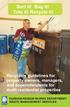 Sort it! Bag it! Tote it! Recycle it! CA RD BOA RD / BOXBOARD Recycling guidelines for property owners, managers, and superintendents for multi-residential properties DURHAM REGION WORKS DEPARTMENT WASTE
RADIOACTIVE WASTE MANAGEMENT PLAN
 RADIOACTIVE WASTE MANAGEMENT PLAN Copies of this plan will be made available to all members of the campus community with the potential to generate radioactive waste. Contents I. Purpose II. Regulatory
Level I Inspection Guidance Document 2014
 Level I Inspection Guidance Document 2014 LEVEL I Required Weekly Checklist Note: Items listed in the Level I Required Weekly Checklist are to be inspected weekly. For Satellite Accumulation Areas, it
Do you know how to dispose of hazardous waste?
 Do you know how to dispose of hazardous waste? for Hertfordshire Electrical items Electrical appliances form the fastest growing waste stream in the UK today. These items are becoming increasingly short-lived
Better Recycling - Less Waste Your Sustainable Campus Initiative
 Better Recycling - Less Waste Your Sustainable Campus Initiative Frequently Asked Questions (FAQs): Why change the way we manage waste? Why have individual desk bins been removed? What if I don t have
Decontamination and Waste Management www.biosecurity.sandia.gov
 Decontamination and Waste Management www.biosecurity.sandia.gov SAND No. 2006-3684C Sandia is a multiprogram laboratory operated by Sandia Corporation, a Lockheed Martin Company, for the United States
Policies. Prep Room Policies
 Introduction INTRODUCTION The Microbiology Prep Room is located in 531A Life Sciences Building. The telephone number is 372-8609. It is open from 7:30 a.m. to 4:30 p.m. during the fall and spring semesters.
A TO Z RECYCLING GUIDE
 All containers must be empty No need to rinse, just scrape clean No hazardous chemical containers Keep recycling loose - no plastic bags A TO Z RECYCLING GUIDE GLASS Bottles Cosmetic jars Jars Medicine
Fundamental Autoclave Techniques
 Fundamental Autoclave Techniques Version 3, September 2010 Veronika Tatarinoff GSBmE University of NSW Brandy Nelson University of Kentucky The following information is directed at aseptic/sterile surgical,
The University of Texas at San Antonio Office of Environmental Health, Safety and Risk Management. Part A. Biological Waste Management Safety Plan
 The University of Texas at San Antonio Office of Environmental Health, Safety and Risk Management Part A Biological Waste Management Safety Plan i. SIGNATURE PAGE This Biological Waste Management Safety
Chemotherapy Spill Response:
 Chemotherapy Spill Response: Antineoplastic Spills Outside Of A Fume Hood Lisa Hudley, RN Training Coordinator Safety & Environmental Compliance William Guess Director Safety & Environmental Compliance
GOVERNMENT NOTICES GOEWERMENTSKENNISGEWINGS
 4 No. 37654 GOVERNMENT GAZETTE, 23 MAY 2014 GOVERNMENT NOTICES GOEWERMENTSKENNISGEWINGS DEPARTMENT OF HEALTH DEPARTEMENT VAN GESONDHEID No. R. 375 23 May 2014 THE NATIONAL HEALTH ACT, 2003 (ACT NO. 61