
BLUNT TORSO INJURY FROM IMPACT OR DECELERATION HAS ABDOMINAL SOLID ORGAN TRAUMA UNTIL PROVEN OTHERWISE
|
|
|
- Kory Summers
- 9 years ago
- Views:
Transcription
1 Abdominal and Pelvic Trauma In the primary survey, the circulation part includes thinking about the abdomen as a source of occult hemorrhage The OBVIOUS THING is a penetrating abdominal injury Generally speaking: ANY BLUNT TORSO INJURY FROM IMPACT OR DECELERATION HAS ABDOMINAL SOLID ORGAN TRAUMA UNTIL PROVEN OTHERWISE The likelihood of organ injury is GREATER when the airbag goes not deploy In blunt trauma, this is the breakdown of organ damage frequency: o 40-55% = the spleen o 35-45% = the liver o 5-10% = small bowel o There is a 15% incidence of retroperitoneal hematoma in patients who end up needing a laparotomy In stab wounds: o 40% = liver o 30% = small bowel o 20% = diaphragm o 15% = colon In gunshot wounds: o 50% = small bowel o 40% = colon o 30% = liver o 25% = abdominal vascular structures o Likelihood of major abdominal injuries decreases markedly if the weapon was a shotgun and the shooter was more than 3 metres away o PHYSICAL EXAMINATION: History should suggest how much insult the abdomen had suffered INSPECTION: o Looking for tenderness, obvious wounds, and hematoma. o Look for perineal hematoma, scrotal hematoma, blood in the vagina or urethra AUSCULTATION o NO BOWEL SOUNDS = ILEUS = MAYBE DUE TO HEMATOMA PERCUSSION AND PALPATION o Mainly looking for a pregnant uterus o Peritonitis from hematoma or ruptured viscus o Tenderness due to organ injury ASSESS PELVIC STABILITY o Manually compress the iliac spines to see if the pelvis opens like a book.
2 ASSESS THE PERINEUM, URETHRA AND RECTUM o Rectal exam: a high riding prostate = urethral disruption o Blood in rectal exam = colonic perforation gluteal examination: for penetrating injuries ADJUNCTS TO PHYSICAL EXAMINATION NG tube: Aspirate gastric contents to prevent aspiration If there is blood in the aspirate, there may be oesophageal or gastric rupture Urinary catheter: If there is blood in the urethra, DO NOT ATTEMPT THIS if the patient is unable to void, a suprapubic catheter may need to be inserted under ultrasound guidance Xrays of the chest and abdomen Abdominal films are useless Chext Xrays will show you subdiaphragmatic gas, if they are erect In a supine patient, you are better off CT scanning them than getting laterals FAST ultrasound Scans are obtained of the pericardial sack,hepatorenal fossa, splenoreal fossa, and pelvis or pouch of Douglas A SECOND SCAN NEEDS TO BE PERFORMED IN 30 MINUES Accuracy is comparative to that of DPL Diagnostic Peritoneal Lavage Contraindicated if there is an impending laparotomy Think twice in the obese patient, the cirrhotic, and the coagulopath If gas, blood or food is aspirated in the lavage LAPAROTOMY If blood is not aspirated immediately, 1000ml of saline is infused and then drained out again. Lavage is positive if: o There is > 100,000 RBCs pr cubic mm o There is > 500 WCCs per cubic mm o There is bacteria on Gram stain CT of the abdomen and pelvis For stable patients with no indications for immediate laparotomy Most surgeons would do a laparotomy if the CT finds free fluid With contrast, the kidneys and ureters should light up; if one kidney does not, it may have a renal artery rupture or massive parenchymal disruption Urethrography A small amount of contrast is injected up the urethra The pelvic Xray should show you if there is urethral disruption Penetrating Injuries STABBING: If there is any sign of peritonism, hemodynamic instability, or if you can see the fascia, they need a laparotomy.
3 Otherwise 33% of stab wounds to the anterior abdomen do not penetrate the peritoneum, so you can explore them under local: follow the wound track and see if you can feel bowel through the wound. If you cant explore the wound, its probably still time for a laparotomy. GUNSHOT: EEVERYONE needs a laparotomy. The bullet tracks are too unpredictable. THORACOABDOMINAL LOWER CHEST WOUNDS You cant explore these under local, or you might cause a pneumothorax Stab wounds here tend to cause small diaphragmatc tears; so laparotomy or laparoscopy tend to be the best exploratory measures ANTERIOR ABDOMINAL WOUNDS: WHICH IS BETTER: DPL OR LOCAL EXPLORATION? o DPL has a sensitivity of 90%, and exploration plus serial examination over a 24hr period has a sensitivity of 94%. o This is only true for patients who are HEMODYNAMICALLY SABLE POSTERIOR WOUNDS: CT vs. Serial examination o Triple phase CT assesses the integrity of the colon. o Accuracy of CT vs serial physical examinations is about the same, but the CT doesn t take 24 hrs o Occasionally, BOTH miss the injury. Hence, you have follow-up. WHO GETS A LAPAROTOMY? Blunt abdominal trauma with o Hemodynamic instability o Clinical findings suggestive of peritoneal bleeding o Positive FAST o Positive DPL Penetrating abdominal trauma with hypotension Any gunshot wounds to the abdomen Any evisceration Penetrating trauma with bleeding from the NG tube, genitals or rectum Any trauma with peritonitis Free air under the diaphragm Diaphragmatic rupture CT evidence of hollow or solid organ injury
4 SPECIFIC PROBLEMS DIAPHRAGM INJURIES o the left hemidiaphragm is most commonly injured in blunt trauma o most of the time it s the posterolateral left hemidiaphragm o most of the time it s a 5-10cm tear o most of the time, the xray is abnormal DUODENAL INJURIES o frequently, bicyclist vs. handlebars, or unrestrained driver vs. steering wheel o NG aspirate may contain blood or may not o Chest Xray free air may appear o double contrast CT confirms the injury PANCREATIC INJURIES o Again, direct epigastric blow eg. bicyclist vs. handlebars o The first 8 hours is the crap-time: Double contrast CT wont pick it up this early Amylase and lipase may be normal at this stage o Surgical exploration is pretty much the only way you ll find out. GENITOURINARY INJURIES o Associated with direct injuries to the back or flank, especially those that result in bruising o Hematuria in a trauma patient suggests it o Hematuria in a trauma patient with an episode of shock suggests other abdominal injuries, not just limited to the urinary tract o Blunt renal injury can be treated non-operatively in 95% of cases o RENAL INJURIES WHICH DO NOT CAUSE HEMATURIA: o Thrombosis of the renal artery o Disruption of the renal pedicle due to deceleration trauma o Both are rare and picked up on CT o Urethral injuries usually mean pelvic fracture Those posterior (above the urogenital diaphragm) are usually associated with numerous other serious injuries Those anterior (below the urogenital diaphragm) may be a stand-alone injury resulting from a straddle impact SMALL BOWEL INJURIES o this is usually the consequence of deceleration o a lumbar vertebral distraction (Chance fracture) and seat-belt sign are associated o torn intestine = not much bleeding; also not much free subdiaphragmatic air o may not be picked up on CT or early ultrasound o this is the one injury which DPL is most accurate test
5 PELVIC FRACTURES AND ASSOCIATED INJURIES o With a pelvic fracture, there are 4 places you could be bleeding from Fractured Bone Pelvic venous plexus Pelvic arteries Extrapelvic sources o Once you see this, the fracture must be reduced with a compression device or sheet CLASSIFICATION OF PELVIC FRACTURE AP compression Motor vehicle accident or fall from a great height Symphysis pubis and sacrum may be fractured With disruption of the posterior ligamentous complex, there is bleeding from the pelvic venous plexus or iliac arteries, and the pelvis is unstable Lateral compression Results in a lateral rotation of the crushed hemipelvis This causes it to intrude into the pelvic organs However, this puts pressure on the pelvis, and so there is LESS BLEEDING in this fracture Vertical shear Dislocates the sacroiliac joint and causes major pelvic instability Combination of all 3 may occur SIGNS OF PELVIC FRACTURE Hematoma of the flank, scrotum, or perianal area Laceration of the vagina or rectum Mechanical instability of the pelvic ring MANAGEMENT OF A PELVIC FRACTURE the idea is to close the pelvic volume, causing internal rotation of your limbs wrap the pelvis in a sheet tightly there are also pelvic splints and compressors etc EARLY TRANSFER Diagnostic peritoneal lavage o OPEN TECHNIQUE Decompress the stomach and bladder with the appropriate catheters Use local with adrenaline, to reduce blood contamination Anaesthetize in midline just below the umbilicus Cut vertically, and dissect down to the peritoneum Make a small nick in the peritoneum and insert a small peritoneal catheter Advance the catheter into the pelvis Aspirate If there is no gross blood, infuse 1 liter of normal saline Aspirate some more after agitating the abdomen Send the fluid for cell count: >100,000 RBCs or >500 WCCs is abnormal
6 - o CLOSED TECHNIQUE Decompress the stomach and bladder with the appropriate catheters Again, you anaesthetize the area just below the umbilicus Elevate the skin with forceps Insert the needle through the abdominal wall. You will feel resistance as the needle encounters the fascia Use the Seldinger technique: insert the lavage catheter via a guidewire Aspirate and lavage as above o
Aehlert: Paramedic Practice Today PowerPoint Lecture Notes Chapter 50: Abdominal Trauma
 Aehlert: Paramedic Practice Today PowerPoint Lecture Notes Chapter 50: Abdominal Trauma Chapter 50 Abdominal Trauma 1 Describe the epidemiology, including morbidity, mortality rates, and prevention strategies,
United States Department of Transportation National Highway Traffic Safety Administration Paramedic: National Standard Curriculum 1
 UNIT TERMINAL OBJECTIVE 4-8 At the completion of this unit, the paramedic student will be able to integrate pathophysiologic principles and the assessment findings to formulate a field impression and implement
CHAPTER 5 PELVIC FRACTURES AND CRUSH INJURIES OF THE BLADDER 113
 PELVIC FRACTURES AND CRUSH INJURIES OF THE BLADDER 113 CHAPTER 5 PELVIC FRACTURES AND CRUSH INJURIES OF THE BLADDER GU Tract Ch 2 Ch 3 Ch 4,5 Ch 6,7,8,11 Ch 8,9 Ch 8,9 Ch 8,10 Structure Kidney Ureter Bladder
TRAUMA SURGERY Dr. Michal Cheatham Orlando Regional Health PGY-4
 ROTATION LIAISON: INSTITUTION: LEVEL(S): TRAUMA SURGERY Dr. Michal Cheatham Orlando Regional Health PGY-4 I. GENERAL INFORMATION The General Surgery Department at Orlando Regional Health has three full
Emergency Ultrasound Course
 Emergency Ultrasound Course Dr Justin Bowra ED Course Manual 2: EFAST Extended Focused Assessment with Sonography in Trauma JUSTIN BOWRA 1 The Questions: 1. Is there free fluid (FF) a. In the pleural space?
PERITONEAL (ABDOMINAL) PARACENTESIS
 PERITONEAL (ABDOMINAL) PARACENTESIS Indications 1. To determine the cause of ascites. 2. To determine if ascites is infected. 3. For therapeutic removal of fluid: (a) (b) When distention is pronounced
.org. Fractures of the Thoracic and Lumbar Spine. Cause. Description
 Fractures of the Thoracic and Lumbar Spine Page ( 1 ) Spinal fractures can vary widely in severity. While some fractures are very serious injuries that require emergency treatment, other fractures can
ENT Emergencies. Injuries of the Neck. Registrar Dept Trauma and emergency Medicine Tygerberg Hospital
 ENT Emergencies Injuries of the Neck Registrar Dept Trauma and emergency Medicine Tygerberg Hospital Neck Injuries Blunt and Penetrating Trauma Blunt Injuries Blunt trauma direct/indirect Trauma to larynx
REGIONAL INJURIES (LECTURE III) INJURIES TO SPINE, NECK, CHEST, ABDOMEN AND PELVIS.
 REGIONAL INJURIES (LECTURE III) INJURIES TO SPINE, NECK, CHEST, ABDOMEN AND PELVIS. LEARNING OBJECTIVES At the end of this lecture, last in the series of regional injuries, the students will be knowing
Abdomen X-Ray (AXR) Collimation is ideally from diaphragms to lower border of the symphysis pubis and the lateral skin margins.
 Abdomen X-Ray (AXR) Collimation is ideally from diaphragms to lower border of the symphysis pubis and the lateral skin margins. LMP of child-bearing age female patients should be checked. 1. Acute abdomen
EXPERIENCE WITH 41 CASES OF RUPTURE OF URINARY BLADDER IN SHIRAZ
 Volume 3 Number 1,2 Bahar & Tabestan 1368 Spring & Summer 1989 EXPERIENCE WITH 41 CASES OF RUPTURE OF URINARY BLADDER IN SHIRAZ A.A. KHEZRI, M.D. From the Department of Urology, Shiraz University of Medical
Thoracolumbar Fratures R1: 胡 家 瑞 指 导 老 师 : 吴 轲 主 任
 Thoracolumbar Fratures R1: 胡 家 瑞 指 导 老 师 : 吴 轲 主 任 Patient Data Name: 苏 XX Gender: Female Age:47 years old Admission date: 2010.06.09 Chief complaint Fell down from 4-54 5 meter tree and lead to lumbosacral
Bladder reconstruction (neo-bladder)
 Bladder reconstruction (neo-bladder) We have written this leaflet to help you understand about your operation. It is designed to help you answer any questions you may have. The leaflet contains the following
Urinary Diversion: Ileovesicostomy/Ileal Loop/Colon Loop
 Urinary Diversion: Ileovesicostomy/Ileal Loop/Colon Loop Why do I need this surgery? A urinary diversion is a surgical procedure that is performed to allow urine to safely pass from the kidneys into a
Vanderbilt University Medical Center Division of Trauma & Surgical Critical Care. Clinical Management Guideline: Standard Trauma Resuscitation
 Vanderbilt University Medical Center Division of Trauma & Surgical Critical Care Clinical Management Guideline: Standard Trauma Resuscitation Global Communication is the key to a well organized and efficient
Laparoscopic Anatomy of the Pelvis
 2 Laparoscopic Anatomy of the Pelvis Intra-Abdominal Anatomy of the Male Pelvic Region Bladder Medial Umbilical Ligaments Lateral Umbilical Ligaments Spermatic Cords Iliac Vessels Ureters Seminal Vesicular
Eating, pooping, and peeing THE DIGESTIVE SYSTEM
 THE DIGESTIVE SYSTEM Ingested food is not technically in the body until it is absorbed so it needs to be: Mechanically and chemically reduced Transported by the blood to the cells Large portions are not
Gunshot wounds. Warning: This presentation has extremely graphic pictures! Richard P. Kness, EMT- P
 Gunshot wounds Warning: This presentation has extremely graphic pictures! Richard P. Kness, EMT- P Objectives After this lesson the student will be able to: List scene safety issues Describe procedures
BERGEN COMMUNITY COLLEGE DIAGNOSTIC MEDICAL SONOGRAPHY PROGRAM Division of Health Professions DMS 213 SYLLABUS
 BERGEN COMMUNITY COLLEGE DIAGNOSTIC MEDICAL SONOGRAPHY PROGRAM Division of Health Professions DMS 213 SYLLABUS Course Title: DMS 213 - Abdominal Sonography 2 2 lec. 3 lab. 3 credits (5 hours) Required
Spine and Spinal Cord Injuries. William Schecter, MD
 Spine and Spinal Cord Injuries William Schecter, MD Anatomy of the Spine http://education.yahoo.com/reference/gray/fig/387.html Anatomy of the spine 7 cervical vertebrae 12 thoracic vertebrae 5 lumbar
Women s Health Laparoscopy Information for patients
 Women s Health Laparoscopy Information for patients This leaflet is for women who have been advised to have a laparoscopy. It outlines the common reasons doctors recommend this operation, what will happen
Guidelines for the Insertion of Suprapubic Catheters
 Guidelines for the Insertion of Suprapubic Catheters Sharepoint Location To be completed by Sharepoint Administrator Sharepoint Index Directory To be completed by Sharepoint Administrator Sub Area To be
Ultrasound Billing CPT Codes Summary and Notes
 Ultrasound Billing CPT Codes Summary and Notes CPT codes for ultrasound examinations are considered to be complete studies unless specified as limited studies in their code definitions. A limited study
6/3/2011. High Prevalence and Incidence. Low back pain is 5 th most common reason for all physician office visits in the U.S.
 High Prevalence and Incidence Prevalence 85% of Americans will experience low back pain at some time in their life. Incidence 5% annual Timothy C. Shen, M.D. Physical Medicine and Rehabilitation Sub-specialty
Mechanism of Injury 1
 Mechanism of Injury 1 Objectives At the end of this lecture the participant will be able to: Describe the importance of the mechanism of injury in history taking of the trauma patient. Identify patterns
Focused assessment of sonography in trauma
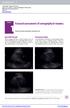 Chapter1 Focused assessment of sonography in trauma Patricia Fermin and John Christian Fox Epicardial fat pad When imaging the heart, careful attention must be made in identifying any surrounding fluid.
Coding Companion for Urology/Nephrology. A comprehensive illustrated guide to coding and reimbursement
 Coding Companion for Urology/Nephrology A comprehensive illustrated guide to coding and reimbursement 2013 Contents Getting Started with Coding Companion...i Integumentary...1 Arteries and Veins...15 Lymph
Urinary tract and perineum
 9 Urinary tract and perineum Key Points 9.1 9.1 THE URINARY BLADDER URINARY RETENTION Acute retention of urine is an indication for emergency drainage of the bladder The common causes of acute retention
How To Perform Da Vinci Surgery
 Facing a Hysterectomy? If you ve been diagnosed with early stage gynecologic cancer, learn about minimally invasive da Vinci Surgery The Condition: Early Stage Gynecologic Cancer A variety of gynecologic
The main surgical options for treating early stage cervical cancer are:
 INFORMATION LEAFLET ON TOTAL LAPAROSCOPIC RADICAL HYSTERECTOMY (TLRH) FOR EARLY STAGE CERVICAL CANCER (TREATING EARLY STAGE CERVICAL CANCER BY RADICAL HYSTERECTOMY THROUGH KEYHOLE SURGERY) Aim of the leaflet
Low Back Injury in the Industrial Athlete: An Anatomic Approach
 Low Back Injury in the Industrial Athlete: An Anatomic Approach Earl J. Craig, M.D. Assistant Professor Indiana University School of Medicine Department of Physical Medicine and Rehabilitation Epidemiology
Laparoscopic Assisted Vaginal Hysterectomy
 Department of Obstetrics and Gynecology, Chang Gung Memorial Hospital at ChiaYi 嘉 義 長 庚 紀 念 醫 院 婦 產 科 Clinical Guideline Laparoscopic Assisted Vaginal Hysterectomy By Dr. CJ Tseng Laparoscopic assisted
Radiation Therapy for Prostate Cancer
 Radiation Therapy for Prostate Cancer Introduction Cancer of the prostate is the most common form of cancer that affects men. About 240,000 American men are diagnosed with prostate cancer every year. Your
Cardiac and Pulmonary Issues in the Elite Athlete. Keep Your Edge Hockey Sports Medicine 2015 Toronto August 28-30 2015
 Cardiac and Pulmonary Issues in the Elite Athlete Keep Your Edge Hockey Sports Medicine 2015 Toronto August 28-30 2015 THORACIC EMERGENCIES Hockey related thoracic trauma is blunt Injury to the boney
ANTERIOR LUMBAR INTERBODY FUSION (ALIF) Basic Anatomical Landmarks: Anterior Lumbar Spine
 (ALIF) Anterior In human anatomy, referring to the front surface of the body or the position of one structure relative to another Lumbar Relating to the loins or the section of the back and sides between
PERCUTANEOUS PD CATHETER IMPLANTATION SYSTEM
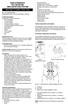 Place on Patient s Cranial Border of the Pubic Symphysis IMPLANTATION STENCIL Classic Exit Cuff Site PERCUTANEOUS PD CATHETER IMPLANTATION SYSTEM INSTRUCTIONS FOR USE VP 511 and VP-511M Implantation System
Dr Dan Gill Department of Radiology Windsor Regional Hospital Oxford Medical Imaging Erie St Clair Radiology
 Dr Dan Gill Department of Radiology Windsor Regional Hospital Oxford Medical Imaging Erie St Clair Radiology -5000 Olympic athletes and team officials -1350 Paralympic athletes and team officials -82
III./8.4.2: Spinal trauma. III./8.4.2.1 Injury of the spinal cord
 III./8.4.2: Spinal trauma Introduction Causes: motor vehicle accidents, falls, sport injuries, industrial accidents The prevalence of spinal column trauma is 64/100,000, associated with neurological dysfunction
Certified Athletic trainers should follow a 10-step process of evaluation for orthopedic injuries, which includes but is not limited to:
 Acute Care Policy Acute Care Policy and Procedures Athletic training students within Winona State University s Athletic Training Education Program have the opportunity to evaluate acute athletic injuries
Acute abdominal conditions Key Points
 7 Acute abdominal conditions Key Points 7.1 ASSESSMENT AND DIAGNOSIS Referred abdominal pain Fore gut pain (stomach, duodenum, gall bladder) is referred to the upper abdomen Mid gut pain (small intestine,
Traumatic injuries SPINAL CORD. Causes of Traumatic SCI SYMPTOMS. Spinal Cord trauma can be caused by:
 Traumatic injuries SPINAL CORD Jennie Trkulja RN, BScN, ENC (c) Causes of Traumatic SCI Spinal Cord trauma can be caused by: MVC (most injuries) Gunshots Falls Stabbings Assaults Industrial accidents Sports
Acute Abdominal Pain: Other causes
 Acute Abdominal Pain: Other causes Vishal Gupta, MCh Associate Professor Deptt Surg. Gastroenterology KGMU Definition Acute abdominal pain: Presentation of previously undiagnosed abdominal pain Lasting
Urinary Incontinence. Anatomy and Terminology Overview. Moeen Abu-Sitta, MD, FACOG, FACS
 Urinary Incontinence Anatomy and Terminology Overview Moeen Abu-Sitta, MD, FACOG, FACS Purpose Locate and describe the anatomy of the Female Urinary System Define terminology related to Incontinence Describe
Differential diagnosis of abdominal pain. Lakatos Péter László
 Differential diagnosis of abdominal pain Lakatos Péter László Precise anamnesis Physical examination are prognosticated to the cause of the pain Anamnesis Sudden pain Perforation Mesenteric infarction
Functional Human Morphology (2040) & Functional Anatomy of the Head, Neck and Trunk (2130)
 Functional Human Morphology (2040) & Functional Anatomy of the Head, Neck and Trunk (2130) Gastrointestinal & Urogenital Systems Recommended Text: TEXTBOOK OF ANATOMY: ROGERS Published by Churchill Livingstone
Consumer summary Minimally invasive techniques for the relief of stress urinary incontinence
 ASERNIP S Australian Safety and Efficacy Register of New Interventional Procedures Surgical Consumer summary Minimally invasive techniques for the relief of stress urinary incontinence (Adapted from the
X-Plain Abdominal Aortic Aneurysm Vascular Surgery Reference Summary
 X-Plain Abdominal Aortic Aneurysm Vascular Surgery Reference Summary Ballooning of the aorta, also known as an "abdominal aortic aneurysm," can lead to life threatening bleeding. Doctors may recommend
Laparoscopy and Hysteroscopy
 AMERICAN SOCIETY FOR REPRODUCTIVE MEDICINE Laparoscopy and Hysteroscopy A Guide for Patients PATIENT INFORMATION SERIES Published by the American Society for Reproductive Medicine under the direction of
PELVIS. 2007 Lippincott Williams & Wilkins S59 BONE: PELVIS (6) Location: Pelvic ring (61)
 PELVIS BONE: PELVIS (6) Location: Pelvic ring (61) Types: A. Lesion sparing (or with no displacement of) posterior arch (61-A) B. Incomplete disruption of posterior arch, partially stable (61-B) C. Complete
Ovarian Cystectomy / Oophorectomy
 Cystectomy and Ovarian Cysts Ovarian cysts are sacs filled with fluids or pockets located on or in an ovary. In some cases, these cysts need to be removed surgically. Types of Cysts Ovarian cysts are quite
A PRINTED copy of this guideline may not be the most recent version. The OFFICIAL version is located on IHNET at the Policies & Procedures Home Page
 A PRINTED copy of this guideline may not be the most recent version. The OFFICIAL version is located on IHNET at the Policies & Procedures Home Page IX0200: Prevention & Control of Catheter Associated
Get the Facts, Be Informed, Make YOUR Best Decision. Pelvic Organ Prolapse
 Pelvic Organ Prolapse ETHICON Women s Health & Urology, a division of ETHICON, INC., a Johnson & Johnson company, is dedicated to providing innovative solutions for common women s health problems and to
Spine University s Guide to Cauda Equina Syndrome
 Spine University s Guide to Cauda Equina Syndrome 2 Introduction Your spine is a very complicated part of your body. It s made up of the bones (vertebrae) that keep it aligned, nerves that channel down
If you or a loved one have suffered because of a negligent error during spinal surgery, you will be going through a difficult time.
 If you or a loved one have suffered because of a negligent error during spinal surgery, you will be going through a difficult time. You may be worried about your future, both in respect of finances and
Urinary Incontinence (Involuntary Loss of Urine) A Patient Guide
 Urinary Incontinence (Involuntary Loss of Urine) A Patient Guide Urinary Incontinence (Urine Loss) This booklet is intended to give you some facts on urinary incontinence - what it is, and is not, and
X-Plain Subclavian Inserted Central Catheter (SICC Line) Reference Summary
 X-Plain Subclavian Inserted Central Catheter (SICC Line) Reference Summary Introduction A Subclavian Inserted Central Catheter, or subclavian line, is a long thin hollow tube inserted in a vein under the
Urinary Tract Infections
 1 Infections in the urinary tract are relatively common. These infections are often referred to as bladder infections. They are also known as UTI s or urinary tract infections. When an infection is confined
Spine Trauma: When to Transfer. Alexander Ching, MD Director, Orthopaedic Spine Trauma OHSU
 Spine Trauma: When to Transfer Alexander Ching, MD Director, Orthopaedic Spine Trauma OHSU Disclosures Depuy Spine Consultant (teaching and courses) Department education and research funds Atlas Spine
I TRAUMI DEL BACINO E DELL ADDOME INFERIORE
 I TRAUMI DEL BACINO E DELL ADDOME INFERIORE Dr. Luca Ansaloni, MD USC Chirurgia I Ospedale Papa Giovanni XXIII, Bergamo Lower Abdomen Trauma Hemodynamically Unstable Pelvic Trauma Results of the First
School of Diagnostic Medical Sonography Course Catalog
 School of Diagnostic Medical Sonography Course Catalog 2 School of Diagnostic Medical Sonography Course Schedule Our program provides a broad base of education and performance- based clinical experience
Palm Beach Obstetrics & Gynecology, PA
 Palm Beach Obstetrics & Gynecology, PA 4671 S. Congress Avenue, Lake Worth, FL 33461 561.434.0111 4631 N. Congress Avenue, Suite 102, West Palm Beach, FL 33407 Urinary Tract Infection About one of every
2. Does the patient have one of the following appropriate indications for placing indwelling urinary catheters?
 A. Decision to Insert a Urinary Catheter: 1. Before placing an indwelling catheter, please consider if these alternatives would be more appropriate: Bladder scanner: to assess and confirm urinary retention,
Spinal Cord and Bladder Management Male: Intermittent Catheter
 Spinal Cord and Bladder Management Male: Intermittent Catheter The 5 parts of the urinary system work together to get rid of waste and make urine. Urine is made in your kidneys and travels down 2 thin
The Anatomy of Spinal Cord Injury (SCI)
 The Anatomy of Spinal Cord Injury (SCI) What is the Spinal Cord? The spinal cord is that part of your central nervous system that transmits messages between your brain and your body. The spinal cord has
Abdominal Injuries. Chapter 17
 Abdominal Injuries Chapter 17 Abdominal Injuries Introduction Changing patterns of warfare coupled with improvements in protective body armor have combined synergistically to decrease truncal and abdominal
Vaginal prolapse repair surgery with mesh
 Vaginal prolapse repair surgery with mesh Your doctor has recommended a vaginal reconstructive procedure using mesh to treat your condition. The operation involves surgery to reattach the vagina to its
BIOLOGY 453 - COMPARATIVE VERT. ANATOMY WEEK 9, Abdominal Circulation (Cats) & Urinary Systems of Mammals
 BIOLOGY 453 - COMPARATIVE VERT. ANATOMY WEEK 9, Abdominal Circulation (Cats) & Urinary Systems of Mammals Assignments Readings Kardong & Zalisko Chapter 8:164-166, 168-171 & Chapter 9: 179, 181-183 Presentation
Surgery for oesophageal cancer
 Surgery for oesophageal cancer This information is an extract from the booklet Understanding oesophageal cancer (cancer of the gullet). You may find the full booklet helpful. We can send you a free copy
INTERNATIONAL TRAUMA LIFE SUPPORT
 INTERNATIONAL TRAUMA LIFE SUPPORT NEEDLE DECOMPRESSION OF TENSION PNEUMOTHORAX Roy Alson, MD, PhD, FACEP, FAAEM and Sabina Braithwaite, MD, MPH, FACEP INTRODUCTION The purpose of this document is to update
Injury Law Center OTHER INJURIES
 Injury Law Center Note: This information is provided to give you a basic understanding of the injury. It is not intended as medical advice. You should consult a qualified medical provider. OTHER INJURIES
Sonography for Trauma
 Sonography for Trauma Christine Butts and Justin Cook 9 KEY POINTS Focused abdominal sonography for trauma (FAST) is sensitive and specific for the detection of intraperitoneal free fluid, but it has poor
AMS Sphincter 800 Urinary Prosthesis
 AMS Sphincter 800 Urinary Prosthesis AMS Sphincter 800 AMS Sphincter 800 AMS Sphincter 800 The device is implanted in the body and cannot be seen. The cuff can be placed at the bulbous urethra or at the
Infection Prevention & Control Team. Your urinary catheter & how to care for it 0151 430 2452 / 0151 430 1384. Patient Information Leaflet
 Contact details Infection prevention team - 0151 430 2452 This leaflet can be made available in alternative languages/formats on request. Infection Prevention & Control Team 0151 430 2452 / 0151 430 1384
Urinary Tract Emergencies
 Urinary Tract Emergencies David Holt, BVSc, Diplomate ACVS University of Pennsylvania School of Veterinary Medicine, Philadelphia, PA Urinary tract emergencies requiring surgery include trauma induced
Common Regional Nerve Blocks Quick Guide developed by UWHC Acute Pain Service Jan 2011
 Common Regional Nerve Blocks Quick Guide developed by UWHC Acute Pain Service Jan 2011 A single shot nerve block is the injection of local anesthetic to block a specific nerve distribution. It can be placed
THE KIDNEY. Bulb of penis Abdominal aorta Scrotum Adrenal gland Inferior vena cava Urethra Corona glandis. Kidney. Glans penis Testicular vein
 29 THE KIDNEY 9. Recurrent urinary tract infections Recurrent urinary tract infections The urinary tract consists of the urethra, the bladder, the ureters, the kidneys and in men the prostate gland. An
Vivian Gonzalez Gillian Lieberman, MD. January 2002. Lumbar Spine Trauma. Vivian Gonzalez, Harvard Medical School Year III Gillian Lieberman, MD
 January 2002 Lumbar Spine Trauma Vivian Gonzalez, Harvard Medical School Year III Agenda Anatomy and Biomechanics of Lumbar Spine Three-Column Concept Classification of Fractures Our Patient Imaging Modalities
Contact your Doctor or Nurse for more information.
 A spinal cord injury is damage to your spinal cord that affects your movement, feeling, or the way your organs work. The injury can happen by cutting, stretching, or swelling of the spinal cord. Injury
Preparing for your laparoscopic pyeloplasty
 Preparing for your laparoscopic pyeloplasty Welcome We look forward to welcoming you to The Royal London Hospital. You have been referred to us for a laparoscopic pyeloplasty, which is an operation using
GU Assessment, Diagnosis and Case Studies. Jami Windhorn, RN BSN SOAR Session #7
 GU Assessment, Diagnosis and Case Studies Jami Windhorn, RN BSN SOAR Session #7 GU System Kidneys: Ultrafiltration of the blood, maintain water and electrolyte homeostasis Pelvicalyceal systems: urine
PATIENT CARE MANUAL PROCEDURE
 PATIENT CARE MANUAL PROCEDURE NUMBER VII-E-5 PAGE 1 OF 7 APPROVED BY: CATEGORY: Tri-site Nursing Policy and Procedures Review Committee Body Systems; Genitourinary 1.0 GOALS To influence patient care providers
Chapter 6. Hemorrhage Control UNDER FIRE KEEP YOUR HEAD DOWN
 Hemorrhage Control Chapter 6 Hemorrhage Control The hemorrhage that take[s] place when a main artery is divided is usually so rapid and so copious that the wounded man dies before help can reach him. Colonel
Laparoscopic Ventral Rectopexy
 Laparoscopic Ventral Rectopexy Patient information leaflet What is a laparoscopic ventral rectopexy? It is a keyhole operation, performed whilst you are asleep; the rectum is suspended back into its normal
Basic ATLS. The Primary Survey. Jason Smith MD DMI FRCS(Gen.Surg) Consultant Surgeon
 Basic ATLS The Primary Survey Jason Smith MD DMI FRCS(Gen.Surg) Consultant Surgeon Trauma - expression comprising a spectrum of severity of mechanical violation of tissues, from a little scratch to a multiply
These rare variants often act aggressively and may respond differently to therapy than the more common prostate adenocarcinoma.
 Prostate Cancer OVERVIEW Prostate cancer is the second most common cancer diagnosed among American men, accounting for nearly 200,000 new cancer cases in the United States each year. Greater than 65% of
Blood in the urine (hematuria)
 Blood in the urine (hematuria) Hematuria refers to the presence of blood in the urine. It is important to investigate the cause of hematuria because rarely, it is caused by a serious condition, such as
URINARY CATHETER CARE
 URINARY CATHETER CARE INTRODUCTION Urinary catheter care is a very important skill, and it is a skill that many certified nursing assistants (CNAs) must know. Competence at providing urinary catheter care
LAPAROSCOPIC OVARIAN CYSTECTOMY
 LAPAROSCOPIC OVARIAN CYSTECTOMY Information Leaflet Your Health. Our Priority. Page 2 of 5 About this information This leaflet is for you if you have a cyst on one or both ovaries and are considering surgery.
Abdominal Pain. Charles Henley, DO, MPH Department of Family Medicine. OSU College of Osteopathic Medicine (Revised 9/2002)
 Abdominal Pain Charles Henley, DO, MPH Department of Family Medicine OSU College of Osteopathic Medicine (Revised 9/2002) Common Causes of Abdominal Pain Infants - colic, gastroenteritis, constipation,
How To Use An Ultrasound For Medical Research
 Scan for mobile link. General Ultrasound What is General Ultrasound Imaging? Ultrasound is safe and painless, and produces pictures of the inside of the body using sound waves. Ultrasound imaging, also
Incontinence. What is incontinence?
 Incontinence What is incontinence? Broadly speaking, the medical term incontinence refers to any involuntary release of bodily fluids, but many people associate it strongly with the inability to control
X-Plain Inguinal Hernia Repair Reference Summary
 X-Plain Inguinal Hernia Repair Reference Summary Introduction Hernias are common conditions that affect men and women of all ages. Your doctor may recommend a hernia operation. The decision whether or
Emergencies in Post- Bariatric Surgery Patients
 Emergencies in Post- Patients Disclosures Dr. Birnbaumer has no financial disclosures Diane M. Birnbaumer, M.D., FACEP Professor of Medicine University of California, Los Angeles Senior Clinical Educator
INJURY SEVERITY SCORING
 INJURY SEVERITY SCORING Injury Severity Scoring is a process by which complex and variable patient data is reduced to a single number. This value is intended to accurately represent the patient's degree
INTRAPERITONEAL HYPERTHERMIC CHEMOTHERAPY (IPHC) FOR PERITONEAL CARCINOMATOSIS AND MALIGNANT ASCITES. INFORMATION FOR PATIENTS AND FAMILY MEMBERS
 INTRAPERITONEAL HYPERTHERMIC CHEMOTHERAPY (IPHC) FOR PERITONEAL CARCINOMATOSIS AND MALIGNANT ASCITES. INFORMATION FOR PATIENTS AND FAMILY MEMBERS Description of Treatment A major difficulty in treating
Extremity Trauma. William Schecter, MD
 Extremity Trauma William Schecter, MD Approach to the Evaluation of the Patient with an Extremity Injury Blood Supply Skeleton Neurologic Function Risk for Compartment Syndrome? Coverage (Skin and Soft
Retrospective Review of Intra Abdominal Injuries Sustained in a Tertiary Teaching Hospital
 American Journal of Medicine and Medical Sciences 2015, 5(1): 26-30 DOI: 10.5923/j.ajmms.20150501.06 Retrospective Review of Intra Abdominal Injuries Sustained in a Tertiary Teaching Hospital Azhar Amir