
Tirexine Safety Tips - A Guide to Safe Driving
|
|
|
- Amber Charles
- 5 years ago
- Views:
Transcription
1 Things that can increase the time you take to cross railway tracks include: the weight and length of your truck dragging brakes laws and rules against shifting gears rough crossing surfaces approach grades the angle of crossing. Before you begin to cross, be certain there s room for your vehicle on the other side of the tracks. Stopping on the tracks is extremely dangerous. You must not shift gears while crossing railroad tracks. Watch for humpback crossings Over time, humps can form at railway crossings and present a danger to many low-clearance vehicles because: low bed trailers may hang up on the crossing surface or the rails low-hanging trailer appliances (for example, dolly wheels and tool boxes) may catch on the rail. Crossing more than one track Take extra caution when crossing more than one track. There may be other trains. Don t assume that the train you can see is the only one in the area. Railway crossings at rural roads Pay extra attention when you cross railway tracks in rural areas because: approach grades may be steeper snow banks may be higher brush can affect visibility there are fewer automated warning systems there may be more humpback crossings. The truck driver stopped at this controlled railway crossing because the red light was flashing. The driver must not cross the tracks until it s safe. Remember, it takes larger, heavier vehicles much longer to cross railroad tracks than smaller, lighter vehicles. 50

2 chapter 3 basic driving skills Acts of nature No matter how well you prepare yourself and your vehicle, there will always be conditions beyond your control. These include weather conditions and the hazards brought on by darkness. Animals on the road In Yukon, animals on the road are a major hazard. Crashing into a large animal can cause damage and injury, not just to the animal, but to you and your passengers. To help prevent a collision with an animal: Watch for animal crossing signs. Slow down in these areas. Slow down and use caution when you see wildlife on or near a highway, so you can react in case it crosses your path. Be alert, especially at dusk or dawn. Look for sudden, unusual spots of light on the roadway at night. This may be the reflection of your headlights off an animal s eyes. Take extra caution in spring and fall vegetation growth in the ditches along the side of the road in spring is an attractive source of forage for many wildlife species, and in fall, many animal species are on the move during the mating season. Remember that wild animals often move in herds. If you see one animal, there may be more. If an animal is directly in front of you: Check your rear-view mirror to see if there s a vehicle behind you. Assess the risks and decide on an action. Can you stop safely? Would vehicles behind you be able to stop safely? Can you steer around the animal? Would it be better to hit the animal and risk a crash? Slow down but resist the urge to slam on your brakes. This could send your vehicle out of control. Leave a wide margin when you drive around an animal. A frightened animal may run in any direction. If the animal is large and you can t stop in time, brake firmly and steer to strike the animal at an angle. Let up on the brake pedal just before hitting the animal. This will cause the front of your vehicle to rise and reduce the chance that the animal will come through the windshield. Weather conditions Good drivers ensure their vehicle is properly equipped for weather hazards and know when conditions are too dangerous to risk driving. To adjust to ice, sleet or snow, you need to: Get the feel of the road when you start out. At a slow speed, test the steering and brakes for control. 51

3 driving tip Make sure you know how to use your vehicle s heater and defroster controls. Some heater defrosters have a position to allow for recirculating the air in the vehicle s interior. But don t use this position in cold weather it can cause windows to fog up. Reduce your speed to suit ice or snow conditions. Put on chains if necessary. Apply light pressure to your brake. Avoid moving the steering wheel in a quick or erratic manner. Keep your windows and windshields clear, inside and out. Maintain wiper blades and lights in good working order. Use the heater/defroster controls to avoid windows fogging. Be sure you can see and be seen. Be sure your ventilation is good and your exhaust system has no leaks. Stay alert for hazards ahead of your vehicle, including pedestrians, cyclists, ice patches, bridge surfaces, blind intersections, snow plows and graders. Night driving You can t see as far in the dark. Travel at a speed that allows you to stop within the distance you can see even if it s below the posted speed limit. Most headlights illuminate the highway for only 100 m on high beam and less on low beam. Poor weather, glare and fatigue will reduce how far you can see. Adjust your speed for the conditions. Even when you travel at the legal speed you can overrun your lights. For example, a large, loaded truck travelling on a highway at 80 km/h can take more than 100 m to stop further than your high beams will allow you to see under good conditions. Slow down to ensure you can see problems developing in time to stop. Some tips for driving at night: Reduce your speed after sunset. Remember, your vision isn t as efficient as it is in daylight. Ensure your lights are clean and working see and be seen. Use parking lights only for parking. It s illegal to drive at night using only parking lights. Switch your lights from high beam to low beam at least 150 m away from any vehicle you re approaching or following to reduce glare on the eyes of other drivers. Don t flash your lights at drivers who forget to switch their lights from high beam to low beam. Instead, slow down and focus your eyes on the right edge of the road to watch for pedestrians and obstacles. These two vehicles are approaching each other at night in opposite directions with their lights on low beam. 52

4 chapter 3 basic driving skills Driving on a flat tire may cause more damage including a tire fire and could mean you will have to replace the tire rather than have it repaired. Tires that have caught fire could spread to your truck or trailer. Vehicle safety Keep your vehicle in top condition at all times. Your tires, wheels and lights need to be in good working order. Tires and wheels Don t drive a vehicle with its tires, wheels or rims in poor condition it s extremely dangerous and illegal. Inspect your tires, wheels and rims before every trip. Tire pressure If you reduce a tire s air pressure when it s warm, you may upset the cooling balance and cause the tire to generate more heat. When the amount of contact between the tire and the road surface is reduced, steering control is also reduced. The rolling of your wheels as you drive cause your tires to flex, creating friction and generating heat. Usually, tires release this heat to the air around them. If your tires are the correct size and are correctly inflated, and if your vehicle is not overloaded, the heat generated by your tires shouldn t cause any problems. If your tires are not properly inflated at the start of a trip, you risk tire damage or even a blowout because of excessive heat buildup. A major cause of failure in recapped (retread) tires is underinflation. If your tires are underinflated, your load is too heavy or you re driving too fast, your tires will flex more. More flexing means more heat. Too much flexing can cause your tires to overheat and the tire air pressure to increase. If this pressure rises too high, your tires could burst. Manufacturers put a load rating on their tires. Check what these ratings are for your tires. Keep the weight of your vehicle and load below the rating for any individual tire or any group of tires on a single axle. Check and adjust tire pressure when tires are cool. Use a tire pressure gauge. If a tire has the correct pressure when it s cool, it will generate a normal amount of heat during use. This will reduce the amount of wall flexing, which also keeps heat buildup under control. Tire wear driving tip Driving at 110 km/h can reduce tread life by 20 per cent compared to driving at 90 km/h. The faster you drive, the more fuel you will use. Improperly inflated tires also cause your tires to wear out more quickly and may reduce the amount of steering control you have. Overinflating a tire causes excess wear in the centre part of its tread. An overinflated tire has less tread surface in contact with the road surface. Less contact between your tire and the road means less traction. Underinflating a tire causes excess wear on the outer edges of its tread. In wet conditions, an underinflated tire will not squeeze the water out from between the tire and the road as well as a properly inflated tire and has a greater chance of riding on a film of water (hydroplaning). 53

5 Tire condition Never operate a vehicle that has bald or damaged tires. Tires are defective if they: Various types of tire wear patterns. have any tread damage, including cuts, cracks or snags, that are longer that 2.5 cm (1 in) and deep enough to expose the ply cords have less than 3 mm (1/8 in) of tread on a front tire or 1.6 mm (1/16 in) of tread on a rear tire and are being used on a vehicle with a GVW of 5,500 kg or more have less than 1.6 mm (1/16 in) of tread and are being used on a trailer Ensure the tread depth on your tires conforms to the standards set out in the Motor Vehicle Act Regulations. have less than 3.5 mm (3/16 in) of tread in the case of a winter tire. For more details on tire requirements, consult the Motor Vehicle Act Regulations. Tire problems Here are some common tire problems: too much or too little air pressure use a gauge to ensure correct pressure tire wear check for tread depth and tread recap separation cuts, abrasions, exploding cord, sidewall separation or bulges tires in contact with each other or tires in contact with any part of the vehicle cracked or leaking valve stems a mixture of different sizes or radial and bias-ply tires being used on the same axle these can be mixed on the same vehicle but not on the same axle (not a recommended practice). Note: If you change a tire, stop after a short while and check that the wheel nuts are tight. Always use a torque wrench to tighten and check wheel nuts. 54

6 chapter 3 basic driving skills Wheel separations are usually caused by loose wheel fasteners or broken wheels/rims, or by wheel bearing failure. Rust streaks on the rim may indicate a loose lug nut or cracks in the rim. Disk wheel problems Check your wheels before every trip. If you have disk wheels, don t drive if you find: loose or missing lug nuts stripped studs cracks in the rim. If you find any of the following, investigate and decide whether immediate attention is needed: metal or paint flakes around the nuts may indicate wheel movement oil or grease leaks from the hub if you see oil or grease, check the brake drum area to see if there s oil or grease on the brake pad. Cast spoke wheel problems Check your wheels before every trip. If you have cast spoke wheels, don t drive your vehicle if you find: missing or loose nuts or rim clamps cracks on the rims or hubs. If you find any of the following, investigate and decide whether there s a problem that needs immediate attention: mismatched, bent or cracked lock rings oil or grease leaks from the hub if you see oil or grease, check the brake drum area to see if there s oil or grease on the brake pad wear on the rim near the clamp or a valve stem that s too close to a spoke may indicate that the rim has shifted rim damage could allow the tire to lose pressure or come off. Brake failure warning devices All vehicles using air or vacuum brakes must be equipped with warning devices that will warn the driver if the air-pressure or vacuum system fails. Braking systems Every motor vehicle must be equipped with at least two separate braking systems. One of these systems must be mechanical, for example a ratchet and pawl (notched wheel) or spring brake mechanism. If the foot (primary) brakes fail, the driver must use the emergency (mechanical) brake, which requires more time and distance to stop the vehicle. 55

7 For more detailed information on the proper and legal use of flashing lights, please contact your local weigh scale. Contact numbers are found in the back of this manual. Flashing lights Flashing lights may be mounted and used on motor vehicles under the following conditions: red flashing lights are used only on emergency vehicles red and blue flashing lights are used only on law enforcement vehicles amber or an amber and blue combination flashing lights are used on construction vehicles, snow removal equipment, sanding trucks, tow trucks, pilot cars and vehicles that are required by permit to use them, such as some oversize vehicles or vehicles carrying oversized loads (see chapter 5, skills for driving trucks and trailers). A police vehicle has both red and blue flashing lights. driving tip Recommended safety equipment: flags or flares fire extinguisher first aid kit. You never know when you might need it. Only approved warning devices should be used to mark the location of disabled vehicles. Disabled vehicles Any vehicle is a hazard when it s parked on the side of a road. Large vehicles present more significant hazards. In most cases, drivers are required to put out approved warning devices when they park their commercial vehicles at the side of the road in an area that isn t designated for parking. These commercial vehicles must carry approved warning devices: all vehicles with a seating capacity of more than 10 passengers all commercial vehicles with an overall width of more than 2.3 m all commercial vehicles with a load width of more than 2.3 m. When parked in the dark, these commercial vehicles must have a minimum of two warning devices. During daylight hours, the minimum for approved warning devices is: two red flags that measure at least 30 cm by 30 cm, or two warning devices that have been approved for daylight use including flares, fuses and reflectors. At night, you may use flares, fuses, reflectors and red lanterns. If your vehicle becomes disabled: move it as far off the travelled portion of the highway as possible place warning devices approximately 30 m ahead and 30 m behind the disabled vehicle. Note: It s a good safety practice to place additional warning devices further than 30 m from your vehicle. 56

8 chapter 3 basic driving skills If your vehicle becomes disabled, park as far off the road as possible. Place warning devices 30 m ahead and 30 m behind the vehicle. 30 m 30 m Personal safety Commercial vehicle drivers must be concerned with their personal safety to protect themselves and others on the road. This section covers information on carbon monoxide poisoning, seatbelts and head restraints, cellphone use, fatigue and impairment, and vehicle and cargo fires. Carbon monoxide poisoning Carbon monoxide poisoning is an ever-present danger when you operate a motor vehicle. It can seep into a driving compartment and make you dizzy or drowsy. Too much of it will make you pass out, which will almost inevitably result in a crash if you re driving. It can kill you if you continue to breathe it in after you pass out. Carbon monoxide is especially dangerous because it s odourless, colourless, tasteless and difficult to detect. It s in the exhaust of every motor vehicle. Because it s so difficult to tell when it s present, always check your exhaust system to ensure that exhaust fumes aren t entering the driver s compartment of your vehicle. Never run your engine in a closed garage. Don t follow any vehicle too closely, and maintain a safe distance between your vehicle and the one in front of you when you re stopped at traffic lights or stop signs. If you feel dizzy or drowsy while driving, pull over to the side of the road. Stop. Get out and get plenty of fresh air. It s estimated that the correct use of a lap and shoulder belt system reduces the likelihood of death in a motor vehicle crash by 50 per cent. Seatbelts There s no question seatbelts save lives. Transport Canada estimates that wearing seatbelts has saved an estimated 2,400 lives and prevented 55,000 injuries in the past 10 years. Drivers who get in and out of their vehicles frequently as part of their work may be exempt from wearing seatbelts while they re driving at 40 km/h per hour or less. Exemptions include inner-city delivery, bus and emergency vehicle drivers. From a safety perspective, wearing a seatbelt always makes sense. During a crash, seatbelt systems reduce the risk of occupants striking the interior of the vehicle, colliding with other passengers or being ejected. If you re belted in, you re much less likely to become injured or knocked out in a collision. Staying conscious gives you a better chance of getting out of your vehicle quickly if it catches fire or lands in water. Even during normal driving conditions, a seatbelt can help you maintain better control on rough roads or during collision-avoidance manoeuvres. 57

9 Many people think they can protect themselves in a collision. You can t hold yourself back during a collision, no matter how strong you are. Thousands of kilograms of force work against unbelted persons during the rapid deceleration that takes place during a crash. Adjust your seatbelt correctly by: placing the lap belt low over the pelvis, not over the soft stomach area make sure it s snug ensuring the shoulder strap is snug across the chest Wear your seatbelt correctly to provide maximum protection. never placing the shoulder strap under the arm or behind the back removing all slack. Airbags and head restraints Most large trucks aren t equipped with airbags and head restraints. Even if your vehicle s equipped with airbags, you must wear your seatbelt. Airbags can seriously injure unbelted occupants. You must allow at least 25 cm (10 in) between your breastbone and the airbag unit in the steering wheel. This distance will minimize the risk of injury if the bag deploys. If your vehicle has head restraints, it s important to adjust them to fit correctly. This will reduce the risk of neck and back injuries during a rear-end crash. Raise the head restraint so the top is at least level with the top of your ears; higher is even better. crash fact Cellphone use while driving is the number one cause of distracted driving. Cellphones and other devices Research shows that using a cellphone or other electronic communication device while driving significantly increases the risk of crashing. All drivers in Yukon are prohibited from using hand-held electronic devices while driving. Drivers are prohibited from operating or holding hand-held cellphones or other electronic devices, sending or reading s and/or texts. Commercial drivers are permitted to use hands-free cellphones and devices that only require touching a single button to activate or deactivate, and where that single button is located in a fixed and secure location. This includes 58

10 chapter 3 basic driving skills pre-programmed or voice-activated GPS devices. Two-way radios and mobile data terminals are also permitted. Even if you need to make or receive a hands-free call, it s safer to pull over to the side of the road as soon as it s safe to do so. Impairment As a professional driver, your life and the lives of others depend on your ability to remain alert and fully functioning when you re behind the wheel. Yukon has tough drinking and driving laws. Penalties can add up quickly even if it s the first time you re caught. For more information on Yukon s impaired driving laws, go to If you re convicted of impaired driving and you caused a crash, the cost of your vehicle insurance will increase. Alcohol, illicit drugs (for example, marijuana and cocaine), and even some prescribed drugs or stay-awake tablets can reduce (impair) your ability to function safely. You risk a lot by driving impaired. There are penalties under Yukon s Motor Vehicle Act and under the Criminal Code of Canada. More immediate and severe penalties apply if: you re caught driving with a blood-alcohol content (BAC) between.05 and.08 per cent, or your BAC is above.08 per cent, or you refuse to provide a breath sample. As well, the penalties become more severe for repeat offences. Note: You may be prohibited if a police officer considers your ability to drive to be affected by alcohol or drugs. You don t have to have a BAC level of over

11 Situation A peace officer believes on reasonable grounds that the driver of a motor vehicle has consumed alcohol or otherwise introduced into their body any alcohol, drug, or other substance in such a quantity as to impair the driver s physical or mental ability to operate a motor vehicle (24 hour roadside suspension). You ll lose your driver s licence immediately for 24 hours You may lose your vehicle for 24 hours BAC reading over.08/refuse to give breath or blood sample You ll lose your driver s licence for 90 days You ll pay all related vehicle towing and storage fees You may have your vehicle impounded for a minimum of 30 days If charged and found guily under the Criminal Code of Canada, you will: Lose your licence for one year (first conviction) Be fined ($1000 minimum) Be prohibited from driving (one year minimum) You could also be jailed You drive while you are suspended/disqualified or do not hold a valid driver s license You ll lose your driver s licence for 90 days You ll pay all related vehicle towing and storage fees You may have your vehicle impounded for a minimum of 30 days Note: Drivers with three or more impaired driving offences will have their licence disqualified indefinitely. 60

12 chapter 3 basic driving skills Criminal Code penalties If you re convicted of a Criminal Code driving offence, you re looking at some very serious penalties which could include lifetime driving prohibitions and time in jail. Driving while impaired or Blood Alcohol Content (BAC) over.08 or refusal to provide sample Prohibition from driving Fine 1 st Offence 1 3 years $1,000 and up 2 nd Offence 3 rd Offence 2 5 years No maximum 3 years lifetime No maximum Impaired driving causing bodily harm Up to 10 years No maximum Impaired driving causing death Up to lifetime No maximum Jail 0 5 years 30 days 5 years 4 months 5 years Up to 10 years Up to life imprisonment If you drive while prohibited, you may face significant penalties including a stiff fine and jail. Other costs of impaired driving Besides the penalties listed above, there are other costs involved if you are caught riding or driving while impaired: Money If you re convicted of impaired driving and you cause a crash, your insurance claim may be denied, including claims for damage that you might cause to your vehicle, or to other people or property. You could be responsible for paying these costs. As well, your insurance rates will increase and you ll receive a driver penalty bill. Job An impaired driving conviction can prevent you from holding certain jobs. Travel An impaired driving conviction could create problems for you when travelling to certain countries, including the U.S. and Mexico. Vehicle impoundment In addition to impounding vehicles operated by impaired drivers, police can also impound the vehicle you re driving if you re caught committing any of the following offences: driving while unlicensed driving while suspended or prohibited driving without insurance Police can immediately impound the vehicle for 30 days, which could escalate to 60 days or more for repeat offenders. The owner is then required to pay the vehicle towing and storage fees to get their vehicle back. It s important for vehicle owners to understand that they are responsible for making sure that only licensed drivers use their vehicles. For example, if an employer allows a prohibited or unlicensed driver use of a company vehicle, the vehicle could be impounded. 61

13 Prescribed and over-the-counter drugs Using medication when you drive is particularly risky. Antihistamines, sedatives, tranquilizers and even some cold remedies can cause drowsiness and decreased alertness. Read the warning on the label for any side effects that may impair your ability to drive safely. Check with your pharmacist or physician if you have any questions. Certain combinations of medications can also affect your driving ability. Fatigue Long road trips and driving day after day can easily fatigue you. Over time this can lead to chronic fatigue. Stay-awake tablets may keep you physically awake but they don t necessarily reduce mental fatigue, which affects your ability to make good decisions. There s no safe substitute for proper rest or sleep. If you re relying on stimulants like coffee to stay awake, or if you re having trouble sleeping, you re likely suffering from fatigue. Pull over in a safe location and get some sleep. To help yourself get enough rest and stay alert, follow the hours of service regulations set by the National Safety Code (see chapter 7, hours of service requirements) and be sure to get enough sleep every 24 hours. Emotions Your emotions can prevent you from focusing on the task of driving. Safe driving demands your full attention at all times. Arguments at home or at the terminal, annoyance with other drivers, illness or financial problems are some of the things that can distract you from the important job of driving. Your safety and your livelihood depend on your ability to stay calm and focused when you re behind the wheel. There s no room in the cab for road rage or any other distracting emotion. If your vehicle has a fuel leak, a peace officer may order your vehicle out of service until the leak is repaired. Diesel fuel is toxic don t touch it or clean it up with a cloth. Fire To help prevent fires in and around your vehicle: Never start a vehicle with a fuel leak. Repair the leak and use an appropriate absorbing material to soak up the spilled fuel. Dispose of your cleaning material properly. Shut off engines when refuelling vehicles. Keep the nozzle of the fuel hose in contact with the filler pipe on your vehicle at all times when refuelling to ground the connection. If there s a ground strap, also connect it to the filler pipe. Don t smoke in garages or near fuelling areas. Never throw cigarette butts out of cab windows they could blow back into tarps or loads. Check your tire pressure often. Soft tires build heat and can cause a fire. If your vehicle had a tire that was soft or flat when you last moved it, make sure the tire is cool. Check the pressure before the vehicle is moved again. If you must move the vehicle, the tire should be removed and replaced. 62

14 chapter 3 basic driving skills Ensure all your vehicle s brakes, including the parking brake, are fully released when your vehicle is moving. Dragging brakes generate heat which can ignite grease in the hubs when the vehicle stops. Check your hubs and brake drums often for overheating. It s always a good idea to keep a fire extinguisher in your vehicle. Some commercial vehicles are required to carry firefighting equipment. Firefighting You must be properly trained before you carry any dangerous goods. Fighting a fire requires quick thinking and fast action. If your vehicle carries firefighting equipment, check it daily. Make sure you know how to use any fire extinguishers you carry and what types of fires they can extinguish. Learn any fire hazards associated with your vehicle or with the loads you carry. To reduce the risk at a fire, follow these general guidelines: Don t risk your own life. Fuel fires can spread quickly or explode. Tell the first spectator to call the fire department. Warn others if there is any danger of an explosion, or exposure to toxic substances. Tell them to keep at a safe distance. Assess the situation and decide whether it s safe to take any further action: If a fire is on a combination unit, disconnect the tractor from the trailer and separate the units. Do this only if it doesn t put you in danger. Fight fires with the wind at your back if possible. This reduces the chances of being asphyxiated. If the fire is in the electrical system, disconnect the battery cables. When a vehicle is in a crash, shutting off switches and disconnecting battery cables can prevent fuel fires. If a fire starts under the hood, direct the extinguisher from underneath the vehicle or through the radiator. Don t open the hood to fight the fire. Use your extinguisher to put out the flames, but try to keep some extinguishing fuel in reserve in case of flare-ups. Don t use water on gasoline or oil fires. Water will spread these fires. Use an appropriate extinguisher, sand or dirt to smother them. Fire extinguishers There are two main categories of fire extinguishers: multi-purpose dry chemical extinguishers and carbon dioxide (CO 2 ) extinguishers. The multipurpose dry chemical extinguishers are easier and safer to use, but the CO 2 extinguishers are more effective. Multi-purpose dry chemical extinguishers are available in two classes. If its cylinder is marked BC, it can be used to put out grease, oil, gasoline and electrical fires. If its cylinder is marked ABC, it will also put out Class A fires such as paper, cloth, etc. CO 2 extinguishers are extremely effective but should never be used in an enclosed space. You could smother yourself if you use these in a confined space. You could also blister your skin. 63

15 Vehicles required to carry fire extinguishers One fire extinguisher must be carried on: all public passenger vehicles all school buses the fire extinguishers must meet Canadian Standard Association (CSA) Standard D250. Vehicles transporting explosives must carry two fire extinguishers. Review questions 1. What rule should you follow to maintain a safe following distance when operating a taxi, ambulance or a van? 2. What rule should you follow to maintain a safe following distance when operating a bus, truck or truck-tractor and semi-trailer? 3. Why should a commercial vehicle travel in the right (slower) lane of traffic? 4. As your speed increases, the length of your danger zone increases. What other conditions increase the length of your danger zone? 5. What determines the amount of off track a vehicle will have? 6. Why is it dangerous to allow the rear wheels of your vehicle to cross the centre line of the roadway when you negotiate a left turn or curve? 7. What are the risks of running rear wheels over curbs when making sharp turns to the right? 8. What precautions must you take before and while you re making a turn? 9. What special precautions must the driver take when it s necessary to block off more than one lane of traffic to negotiate a sharp turn? 10. What should a driver do before entering a narrow bridge from a curved approach? 11. What are some of the steps you can take to help avoid crashes when backing up? 12. Describe how and when you upshift and downshift. 13. How can the area of air turbulence around your vehicle endanger other users on the road? 14. As a professional driver, what can you do to help other drivers safely pass your vehicle? 15. Which vehicles must stop at all uncontrolled railroad crossings? 16. What are the dangers of driving a vehicle with underinflated tires? 17. How does the Motor Vehicle Act Regulations define a defective tire? 18. What do you do if your commercial vehicle becomes disabled? 19. Which types of commercial vehicles are required to carry fire extinguishers? 64

GENERAL KNOWLEDGE PRACTICE TEST
 GENERAL KNOWLEDGE PRACTICE TEST 1. Driving under the influence of any drug that makes you drive unsafely is: a. Permitted if it is prescribed by a doctor b. Against the law c. Permitted if it is a diet
SMART RIDE SAFE RIDE. What you need to know to operate an ATV in Ontario
 SMART RIDE SAFE RIDE What you need to know to operate an ATV in Ontario B The All Terrain Vehicle, or ATV as it s commonly called, is a very popular year-round utility and recreational vehicle, that offers
Cycle Safety. Some tips on safer cycling. Údarás Um Shábháilteacht Ar Bhóithre Road Safety Authority
 Cycle Safety Some tips on safer cycling Údarás Um Shábháilteacht Ar Bhóithre Road Safety Authority Be safe For further information on safe cycling, please look at the Rules of the Road website at www.rulesoftheroad.ie
1. When the roads are slippery, you should make turns as gentle as possible.
 GENERAL KNOWLEDGE KEY FACTS CDL 1. When the roads are slippery, you should make turns as gentle as possible. 2. The heavier a vehicle or the faster it is moving, the more heat the brakes have to absorb
WINTER DRIVING. This information supplied by the Federal Emergency Management Agency and the NJ Office of Emergency Management.
 SAFE WINTER DRIVING This information supplied by the Federal Emergency Management Agency and the NJ Office of Emergency Management. DID YOU KNOW??? The leading cause of death during winter storms is transportation
Atlanta, Georgia Road Test
 1. When driving your car Into traffic from a parked position, you should: A. Sound your horn and pull Into the other lane. B. Signal and proceed when safe. C. Signal other traffic and pull directly into
AHIS Road safety project Student Council THINK!
 AHIS Road safety project Student Council 2013 THINK! Today, we drive safer cars on safer roads; decades of advertisements and public information campaigns have made most of us safer drivers. Improvements
Talking Points. About Roadway Users
 General facts regarding the driver: Talking Points About Roadway Users Motor vehicle crashes are the leading cause of death in the U.S. for people ages 6-33. They annually account for more than 1 million
15-Passenger Van Safety Awareness Program. Environmental Health & Safety Department 570-662-4906
 15-Passenger Van Safety Awareness Program Environmental Health & Safety Department 570-662-4906 Course Objective The objective of this presentation is to increase the safety awareness of passenger van
The State Government recognises. areas, and regulates bicycle
 cycling & THE LAW rules introduction for roads The State Government recognises The cycling South Australian as a legitimate Road Traffic form of Act including transport the Australian and an increasingly
 Think Before You Drive is a global road safety initiative of the FIA Foundation, Bridgestone Corporation and motoring clubs worldwide. FIA Foundation for the Automobile and Society www.fiafoundation.com
8. WHAT EVERY MOTORCYCLIST MUST KNOW
 8. WHAT EVERY MOTORCYCLIST MUST KNOW It is an offence to carry passengers on the handle bars, frame or tank of the motorcycle. It is also an offence to cling to or attach yourself or your vehicle to any
FMCSA Webinar Nov.18th to Examine Large Truck Crash Fatalities Involving Pedestrians & Bicyclists. New Technology for Better Fleet Management
 In This Issue: FMCSA Webinar Nov.18th to Examine Large Truck Crash Fatalities Involving Pedestrians & Bicyclists Help Prevent Roadway Accidents involving Pedestrians How to Steer Clear of Accidents with
12 & 15- Passenger Van Defensive Driver Training
 12 & 15- Passenger Van Defensive Driver Training NHTS-national Highway Traffic Safety Administration Recognizes that 12-15 passenger vans (include driver) are similar type vehicle and offer the same hazards
general, accidents caused by misjudging
 Unit 3: The Effect of Natural Forces on your Vehicle Page 1 of 11 Purpose: Acquaint the student with some of the natural forces acting on a vehicle while stopping, maneuvering, and during a crash. Explain
Adverse Driving Conditions. Adverse Driving Conditions
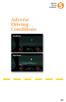 Adverse 5 Adverse 133 5 Adverse This chapter contains information regarding driving in poor conditions. It provides you with information on the following: nighttime driving driving in the rain, snow, or
This section deals with mandatory and optional equipment for your vehicle as well as suggestions for safer road use.
 3. EQUIPMENT This section deals with mandatory and optional equipment for your vehicle as well as suggestions for safer road use. 3.1 Lights No person shall drive a vehicle on a highway at nighttime or
DEFENSIVE DRIVING. It s an Attitude
 DEFENSIVE DRIVING It s an Attitude RLI Design Professionals Design Professionals Learning Event DPLE 155 July 15, 2015 RLI Design Professionals RLI Design Professionals is a Registered Provider with The
Trailer safety. Required equipment Maintenance Safe operation Trailer classification
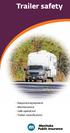 Trailer safety Required equipment Maintenance Safe operation Trailer classification Trailer safety Towing a utility trailer, camper trailer or boat trailer?* Inside, you ll find tips about these important
Driver Certification
 Driver Certification Environmental Health & Safety/Risk Management Department of Campus Operations 300 College Park Dayton, Ohio 45469-2904 937-229-4503 Agenda: Part I: Review of UD Driver Certification
Section 15. transportation of children in vehicles. Regulation 51. of Children in Vehicles. 15. Transportation
 15. Transportation of Children in Vehicles Section 15 Regulation 51 transportation of children in vehicles Section 15 Regulation 51 TRANSPORTATION OF CHILDREN IN VEHICLES This regulation explains the policy
Bicycle Riding. WHAT ARE the. One Final Note... It is against the law to ride a bicycle under the influence of alcohol and/or drugs. (21200.
 One Final Note... It is against the law to ride a bicycle under the influence of alcohol and/or drugs. (21200.0 VC) Bicycle Riding WHAT ARE the CALIFORNIA HIGHWAY PATROL CHP 909 (12/11) OPI 013 94 75015
SAFE CYCLING GUIDE. 6th Edition
 SAFE CYCLING GUIDE 6th Edition BEFORE SETTING OUT A WELL-MAINTAINED BICYCLE is key A Check tire pressure B Check that the chain does not slip C Check the brakes D Check lights and reflectors: 3 4 1 5 2
Scientific Issues in Motor Vehicle Cases
 Organized by Larry Coben and Jim Ronca, lawyers at Anapol Schwartz. 2011 All Rights Reserved. Scientific Issues in Motor Vehicle Cases Reconstruction and Crashworthiness The attorneys who call on accident
Checklist and Tips for Safe Winter Driving
 Know Your Car Every vehicle handles differently; this is particularly true when driving on wet, icy, or snowy roads. Take time now to learn how to best handle your vehicle under winter weather driving
Bicycle riding is a great way to get into shape
 Bicycle riding is a great way to get into shape and have fun. To remain safe on Illinois roads, it is important to follow the same traffic safety laws that govern vehicle drivers. No amount of bicycle
ve been rolling Here, s to you, Oregon riders! You, , s no wonder for longer than you, ve been walking, so it
 THE BICYCLIST S 1 the bicyclist s survival guide ride safely. the way to go. 2 Here, s to you, Oregon riders! You, ve been rolling for longer than you, ve been walking, so it, s no wonder you feel right
SAFE CYCLING GUIDE. 7th Edition
 SAFE CYCLING GUIDE 7th Edition BEFORE SETTING OUT A Check tire pressure B Check that the chain does not slip C Check the brakes D Check lights and reflectors: 1 A WELL-MAINTAINED BICYCLE is key 3 4 5 Adjust
Sharing the road safely
 6 sharing the road in this chapter Sharing the road safely Pedestrians Cyclists Motorcycle riders Passenger vehicles Large vehicles School buses Public transit buses Emergency vehicles Emergency workers
Motor Vehicle Fatalities Accepted by the Workers Compensation Board
 Motor Vehicle Fatalities Accepted by the Workers Compensation Board Year to date, numbers as of January 1, 2008 to December 31, 2008 The fatalities listed represent motor vehicle fatalities that have been
HOW TO PREPARE FOR YOUR MARYLAND NONCOMMERCIAL CLASS C DRIVER S TEST
 ` HOW TO PREPARE FOR YOUR MARYLAND NONCOMMERCIAL CLASS C DRIVER S TEST A portion of your noncommercial driving test will be conducted on a closed course to test your basic control of the vehicle, and a
1. Barrier Median 2.Curbed Median 3.Grass Median 4. Painted Median 5. None
 Format for Detailed Accident Investigation Report Road Divided By: 1. Barrier Median 2.Curbed Median 3.Grass Median 4. Painted Median 5. None Temporary Traffic Control Zone 1. None 2.Construction zone
Sample Written Program For. Vehicles/Fleet
 Sample Written Program For Vehicles/Fleet 1 Vehicle Safety Program Table of Contents I. Purpose II. Policy III. Responsibilities IV. Training V. Vehicle Inspection VI. Driving Safely VII. Reviewing Drivers
Level 2 Award in Safe Driving at Work
 Level 2 Award in Safe Driving at Work Student notes (sample) www.britsafe.org Membership Training Qualifications Audit and Consultancy Audit and Policy Consultancy and Opinion Policy Awards and Opinion
A Guide to Safe Bicycling in Hawai i
 A Guide to Safe Bicycling in Hawai i Sharing the Road: A Guide to Safe Bicycling in Hawai i What Motorists & Bicyclists Should Know Everyone has the right to be safe on Hawai i s roads. Law of the Splintered
Defensive Driving While Towing a Trailer By Elizabeth Koncki, Maryland Department of Agriculture
 Defensive Driving While Towing a Trailer By Elizabeth Koncki, Maryland Department of Agriculture Many of you have heard the term defensive driving, but maybe you may have not been taught the method or
20 Tips for Safe Driving
 20 Tips for Safe Driving www.libertymutualinsurance.com Liberty Mutual 20 Tips What s Your Driving Skill Level? As you can see, this national survey 1 found that drivers rated themselves highly. The tendency
Bicycle Safety Quiz Answers Parental Responsibilities
 Bicycle riding is a great way to get into shape and enjoy the outdoors. To remain safe on Illinois roads, it is important to follow the same traffic safety laws that govern vehicle drivers. No amount of
Chapter 4 DEFENSIVE DRIVING
 Chapter 4 DEFENSIVE DRIVING Chapter 4 Table of Contents Chapter 4 DEFENSIVE DRIVING... 4-1 DEFENSIVE DRIVING... 4-3 Positioning The Bus... 4-3 When Making a Turn at an Intersection... 4-3 Making the perfect
Safety-conscious Drivers Prevent Crashes. Defensive Driving: Managing Visibility, Time and Space. Improve Your Defensive Driving Skills
 Defensive Driving: Managing Visibility, Time and Space Motor vehicle travel is the primary means of travel in the United States. With all the benefits that come along with mobility, there are thousands
chapter 3 basic driving skills
 chapter 3 basic driving skills When curving to the left, keep the front wheels close to the right edge of the lane to keep your driver s side rear wheels out of the next lane of traffic. Curve ahead slow
15-Passenger Van Safety Frequently Asked Questions & Recommendations for Safe Operation
 15-Passenger Van Safety Frequently Asked Questions & Recommendations for Safe Operation Mississippi Institutions of Higher Learning Safety and Loss Control FY 20 0 6 Page 1 of 7 15-Passenger Van Safety
20 Tips for Safe Driving
 Helping People Live Safer, More Secure Lives Since 1912 Thank you for considering Liberty Mutual for your insurance needs. As one of the leading providers of auto, home and life insurance in the United
DRIVING TEST POSSIBLE QUESTIONS & ANSWERS.
 DRIVING TEST POSSIBLE QUESTIONS & ANSWERS. Question 1. What shape and colour is a warning sign? Diamond Shape - Yellow and Black Question 2. When should you not drive? While under the influence of alcohol,
GET IT IN WRITING. PARENTS ARE THE KEY TO SAFE TEEN DRIVING. LEARN HOW.
 GET IT IN WRITING. Don t just talk about safe driving; set your family s own driving rules and get your teen to agree to them in writing through a Parent-Teen Driving Agreement. Put a copy of your agreement
PART I TRAFFIC VIOLATIONS
 PART I TRAFFIC VIOLATIONS A. MOTOR VEHICLE STATUTES N.J.S.A. 39:3-4 Driving or parking unregistered motor vehicle 39:3-9a Failure to notify change in name $22 39:3-9a Failure to endorse license $42 39:3-10
87-A DISTRICT DIVISION MOST COMMON TRAFFIC CIVIL INFRACTION VIOLATIONS
 87-A DISTRICT DIVISION MOST COMMON TRAFFIC CIVIL INFRACTION VIOLATIONS Revised as of 04/2016 Misdemeanor violations may require a hearing date at which time fine and costs will be assessed. Section Code
YOUR GUIDE TO INTRA-TOWN CYCLING
 YOUR GUIDE TO INTRA-TOWN CYCLING Content 04 Introduction 05 Attire Before you set off 06 Safety Checklist for Bicycle 07 Maintenance 08 Preventing Bicycle Theft What to look out for on the way 10 Signs
Document Name: Driving Skills. Purpose: To outline necessary driving skills required to maximize driving safety.
 Document Name: Driving Skills Date Created: 8 October 2013 Date Reviewed: 4 February 2014 Date Approved: 29 July 2015 Purpose: To outline necessary driving skills required to maximize driving safety. Overview:
Tips for Safer Driving
 Fleet Management Fleet Management Introduction Improvements in technology will continue to help bring auto accident numbers down, but the bottom line remains that most car accidents are the result of human
New Driver & Coach Practice Guide
 New Driver & Coach Practice Guide Welcome to Driving in Maryland Dear Coach and Rookie Driver: For the Rookie Driver: Congratulations. In getting your Learner s Instructional Permit, you have just completed
Driving and your Teen an 8 Step Guide for Parents
 Driving and your Teen an 8 Step Guide for Parents #DriveSafer Learning to drive is a rite of passage; a sacred experience between parent and teen. Helping your son or daughter on their journey doesn t
Massachusetts Private Passenger Automobile Statistical Plan Appendix C Traffic Law Violations
 The following abbreviations are used in Appendix C: M.G.L. c., Chapter and Section of the Massachusetts General Laws CMR Code of Massachusetts Regulations The following out-of-state incidents are to be
211 CMR: DIVISION OF INSURANCE 21 APPENDIX A: TRAFFIC LAW VIOLATIONS. The following abbreviations are used in Appendix A:
 211 CMR: DIVISION OF INSURANCE 21 APPENDIX A: TRAFFIC LAW VIOLATIONS The following abbreviations are used in Appendix A: "M.G.L. c., ", " CMR ", Chapter and Section of the Massachusetts General Laws Code
Contents. 1. What types of car restraints are available? 3. 2. Buying a car child seat- checklist 5. 3. Tips for fitting car seats 6
 Child Car Safety Contents 1. What types of car restraints are available? 3 2. Buying a car child seat- checklist 5 3. Tips for fitting car seats 6 4. How to use car seats 6 5. Legislation for child safety
ENACTED BY LEGISLATURE: MAY 20, 2002 CITE AS: 6 HCC 8-16. 1. Authority. See basic document (Occupational Safety and Health Program Act).
 HO-CHUNK NATION CODE (HCC) TITLE 6 PERSONNEL, EMPLOYMENT AND LABOR CODE SECTION 8 OCCUPATIONAL SAFETY AND HEALTH PROGRAM ACT OF 2002 SUBSECTION 16 FLEET SAFETY ENACTED BY LEGISLATURE: MAY 20, 2002 CITE
What You Should Know About 15-Passenger Vans
 What You Should Know About s Why should I read this guide? This document provides licensing, registration, and other safety information for owners and operators of 15-passenger vans in the Northwest Territories.
Vehicle Standards Instruction (General 18.0) Projecting Loads Released January 2014
 Vehicle Standards Instruction (General 18.0) Projecting Loads Released January 2014 This Vehicle Standards Instruction (VSI) has been produced to explain the requirements for transporting projecting loads
Section 14. Forklift Safety Contents 14.1 Operator Safety
 Section 14. Forklift Safety Contents 14.1 Operator Safety... 14-1 14.2 Inspection and Maintenance... 14-2 14.3 Handling the Load... 14-3 14.4 Fueling Liquefied Petroleum (LP) Gas Forklifts... 14-3 14.5
Emergency Response Guide
 Emergency Response Guide Honda CNG Vehicle Prepared for Fire Service, Law Enforcement, Emergency Medical, and Professional Towing Personnel by American Honda Motor Co., Inc. Contents Key Components 1
Bicycle Safety Enforcement Action Guidelines
 Introduction Bicycle Safety Enforcement Action Guidelines People ride bicycles for many different reasons: fitness, recreation, or for transportation. Regardless of the reason for riding, bicyclists young
Emergency Response. Prepared for Fire Service, Law Enforcement, Emergency Medical, and Professional Towing Personnel by American Honda Motor Co., Inc.
 Emergency Response Guide 2013 Prepared for Fire Service, Law Enforcement, Emergency Medical, and Professional Towing Personnel by American Honda Motor Co., Inc. Introduction This guide has been prepared
Carolina Road Driving School Sample Test Questions
 Carolina Road Driving School Sample Test Questions 1. A driver's license is required for which of the following? 1. Sitting in the driver's seat of a car while the engine is running. 2. Steering a car
Model Fleet Safety Program Short
 TM Model Fleet Safety Program Short CORPORATE HEADQUARTERS 518 EAST BROAD STREET COLUMBUS, OHIO 43215 614.464.5000 STATEAUTO.COM TM Disclaimer: The information contained in this publication was obtained
DUI CLIENT INTERVIEW SHEET
 DUI CLIENT INTERVIEW SHEET Date: I. PERSONAL INFORMATION Full Name: Age: DOB: Race: Sex: Referred by: Current Address: City: State: Telephone Number(s): (H) (W) (C) (O) How long resident of county: Marital
CLASS B PRE-TRIP INSPECTION STUDY GUIDE
 Miami School 3790 NW 11 th St. Miami, Fl 33126 305-649-5344 La Belle School 250 E. Cowboy Way La Belle, Fl 33935 863-675-0755 STRAIGHT TRUCK FRONT OF VEHICLE CLASS B PRE-TRIP INSPECTION STUDY GUIDE Chock
FACT SHEET 5 Road Safety. Takapuna Grammar School International Department
 If you own a car, you should obtain at least third party insurance. A reminder that the roads outside of the main highways can be narrow and windy. You must drive really carefully. Takapuna Grammar School
INFANT AND CHILD CAR SAFETY
 INFANT AND CHILD CAR SAFETY Infants and children should always ride in child safety seats that meet standards established by the National Highway Traffic Safety Administration (NHTSA) of the U.S. Department
What Every Driver Must Know Review Assignment
 What Every Driver Must Know Review Assignment 1. Who is the Michigan Secretary of State? What services does the Secretary of State office offer? What days and hours is your local Secretary of State branch
Secure Them for Life. Child safety seats. From infant seats to seat belts, everything you need to know to ensure your child s safety.
 Secure Them for Life Child safety seats From infant seats to seat belts, everything you need to know to ensure your child s safety. It s the law In a vehicle, children whose sitting height is less than
Videos for Safety Meetings
 Videos for Safety Meetings 2474 2005, ERI Safety Videos OPERATING ELECTRIC PALLET JACKS SAFELY This easy-to-use Leader s Guide is provided to assist in conducting a successful presentation. Featured are:
Drinking, Drugs & Health
 Chapter 6 Drinking, Drugs & Health Drinking, Drugs & Health 103 104 104 106 106 107 107 108 Effects of Alcohol How Much is Too Much? Drinking and Driving Good Hosts and the Drinking Driver Designated Drivers
USING THE MOBILE PHONE WHILE DRIVING. Using a mobile phone while driving can significantly impair a driver s:
 USING THE MOBILE PHONE WHILE DRIVING Is it dangerous to use the phone while driving? Driving is a complex task, requiring drivers to use and coordinate a number of skills. Any lapse in concentration increases
What Every Young Michigan Bicyclist Must Know
 What Every Young Michigan Bicyclist Must Know A Guide for Youth Tips for Riding Your Bicycle Legally and Safely Meet the LMB Safety Kids Sprocket Madison Hub Spokes Chase Ryder What Every Young Michigan
Teaching Your Teen to Drive
 MetLife Auto & Home Teaching Your Teen to Drive Without driving each other crazy! Dear Parent/Guardian, One of the best ways for you to influence your teen s driving habits is to sit in the copilot seat
Problem Prevention Checklist. What to Do When Your Vehicle Breaks Down. The AAA Guide to Personal Safety
 Problem Prevention Checklist Properly maintained vehicles seldom become disabled. If something does go wrong, certain safety equipment and supplies are helpful. Here are some suggestions: What to Do When
Beginner s Permit. Survival Guide. Compliments of. (843) 263-5023 www.123drivedrivingacademy.com [email protected]
 Beginner s Permit Survival Guide Compliments of (843) 263-5023 www.123drivedrivingacademy.com [email protected] Please use this study guide to assist you in studying for your written knowledge
Motorcycles. Motorcycles
 8 177 8 This chapter contains information on how to obtain a motorcycle driver s licence. It also provides safety information for the operation of a motorcycle. 178 Anyone who lives in Nova Scotia and
towing a recreational trailer what you need to know
 towing a recreational trailer what you need to know towing a recreational trailer what you need to know 2015, 2002 Insurance Corporation of British Columbia All rights reserved. No part of this publication
J & Z Automotive Repair www.jandzauto.com 1451 Teaneck road, Teaneck, NJ 07666
 J & Z Automotive Repair www.jandzauto.com 1451 Teaneck road, Teaneck, NJ 07666 Office: 201-833-8398 E-mail: [email protected] Monthly Maintenance Checklist Taking your vehicle to your Gemini Automotive
CHAPTER 5: LAWS AND RELATED ISSUES
 CHAPTER 5: LAWS AND RELATED ISSUES This chapter will provide information you need to know about Pennsylvania laws and important related issues. For more information on Pennsylvania laws please visit www.dmv.state.pa.us,
3. Bead OVERHEATING FROM EXCESSIVE BRAKING... 82 CHAFER DAMAGE... 83 HEAT BURST... 84
 Index for each Part of Tires 1. Tread NORMAL TREAD WEAR.................................................... 57 UNEVEN TREAD WEAR (SHOULDER)........................................ 58 UNEVEN TREAD WEAR
New York Bicycling Pocket Guide
 New York Bicycling Pocket Guide Prepared by the New York Bicycling Coalition About This Guide Getting around by bike is good for one s health and wallet, and the environment. But many people aren t sure
Professional Truck Driver Training Course Syllabus
 Professional Truck Driver Training Course Syllabus The curriculum standards of this course incorporate the curricular recommendations of the U. S. Department of Transportation s Federal Highway Administration
DRIVING IN NEW ZEALAND
 DRIVING IN NEW ZEALAND PAGE PAGE PAGE PAGE PAGE 2 ENGLISH 7 13 19 25 ESPAÑOL (SPANISH) PORTUGUÉS (PORTUGUESE) FRANÇAIS (FRENCH) DEUTSCH (GERMAN) PAGE PAGE PAGE PAGE PAGE 36 (TRADITIONAL CHINESE) 41 (JAPANESE)
CAR DAILY VEHICLE PRE CHECKS INFORMATION. Page 1 of 6
 Page 1 of 6 CAR DAILY VEHICLE PRE CHECKS INFORMATION There are approximately 2.5 million vehicles in national fleet in Ireland. As vehicles age they are subject to wear and tear and unless attended to
15GAL STEEL OIL DRAIN WITH 110V PUMP
 15GAL STEEL OIL DRAIN WITH 110V PUMP OWNER S MANUAL WARNING: Read carefully and understand all ASSEMBLY AND OPERATION INSTRUCTIONS before operating. Failure to follow the safety rules and other basic safety
TP 14840E (10/2008) SAFETY TIPS WINTER DRIVING. You, your vehicle and winter driving
 TP 14840E (10/2008) SAFETY TIPS WINTER DRIVING You, your vehicle and winter driving Prevent problems before they occur: Top 10 tips 1. Get your vehicle ready for winter in the fall. 2. Install four matching
Code of Conduct for Commercial Drivers
 Code of Conduct for Commercial Drivers RoadDriver 2011 Safe Use of Vehicles Watch your Speed Drive within the speed limit at all times. You should drive at speeds that are safe for the conditions, recognising
Put the Brakes on Speeding
 Put the Brakes on Speeding The risks of driving too fast The costs and consequences Tips to maintain a safe speed Speed kills There s no doubt about it driving over the speed limit is dangerous. It puts
Commentary Drive Assessment
 Commentary Drive Assessment Time start: Time finish: Candidate s Name: Candidate s Email: Date of Assessment: Location: Candidate s Supervisor: Supervisors Contact Number: Supervisors Email: Assessor s
WEEKLY SAFETY MEETING All Euramax Subsidiaries SEAT BELTS. Safety Meeting Contents. Meeting Notice. Leaders Guide. Employee Handout.
 Safety Meeting Contents Meeting Notice Leaders Guide Employee Handout Employee Quiz Meeting Sign-In Sheet Employee Puzzle PRIOR TO THE WEEKLY MEETING: - Post the meeting notice by the timeclock - Read
The. Graduated Licensing. System in Ontario. What s NEW! Increasing penalties for not following licence conditions
 The Graduated Licensing System in Ontario What s NEW! Graduated Licensing Increasing penalties for not following licence conditions Fully licensed drivers Zero alcohol condition for all drivers 21 and
New Jersey Bicycle Laws
 39:1-1 Words and phrases defined Right-of-way means the privilege of the immediate use of the highway. Traffic means pedestrians, ridden or herded animals, vehicles, streetcars, and other conveyances either
BIKE BASICS. The AAA Guide to a Great Ride
 BIKE BASICS The AAA Guide to a Great Ride FREEDOM ON WHEELS Bicycles can be considered symbols of independence and freedom. They are also fun, providing riders a greener, healthier form of transportation.
Auto Accident Questionnaire
 Auto Accident Questionnaire Patient s Name: Date Of Accident: Date: Social History: (please complete the following, check all boxes that apply) Are you: Married Single Divorced Widowed # of Children: #