
IPPR speech Pension reform in the public services
|
|
|
- Toby Stephens
- 9 years ago
- Views:
Transcription
1 IPPR speech Pension reform in the public services 23 June 2011 Good morning everybody. Can I start by thanking the IPPR for giving me this opportunity to say a few words about pension reform in the public services and also to thank the Institute for the way it engaged with the work of the Commission I recently chaired? I am grateful to you. Pension reform, never far from the top of the list of politically sensitive issues, has once again burst into the headlines. And this time they are not very good ones. After the publication of my Final Report in March, negotiations had begun between Ministers and the TUC on whether the reforms I proposed could form the basis of a new agreement. An agreement that would help us sustain good quality defined benefit pensions in the public services, whilst at the same time addressing the legitimate concern of taxpayers about their rapidly rising cost. Today, the talk is of provocations, disruption and industrial action. Amidst all of this noise, I want to begin my remarks today with some comments on why reform is necessary. Because it is important not to lose sight of the problem that we are trying to fix. We should be clear about one thing. There is a problem. Britain is becoming an ageing society and pension reform in the public sector, began by the last labour Government, did not in my view keep pace with the accelerating nature of these profound demographic changes. Here are some 1

2 examples from the major public sector schemes which I hope will put this into context. In the year I was born, 1955, it was estimated that teachers would live on average until they were 76. Today that figure is 89 and still rising. In that same year, 1955, it was thought that a woman retiring from the NHS would live another 20 years. By 2004 this had risen to 28 years and by 2010 it was estimated that it would rise to 32 years. In 1983, civil servants were expected to live until they were nearly 80. In 2010 that figure had increased to 88. Put simply, we have not been putting enough aside to deal with these extra costs. Taken together, the cost of providing public service pensions has increased by a third in the last decade alone. These additional costs have been met by taxpayers, not scheme members. So my first and fundamental conclusion was that we needed to get the system into a fairer and more sustainable balance, because I do not believe we could have gone on as were. Incidentally, neither did the trades unions. They had agreed a mechanism to address these rising costs and re distribute between employers and employees. I want to say more about this in a minute. So my first responsibility was to try and find a way to sustain good quality pensions that could set a high standard of adequacy and fairness, but which against this background of rising costs could also be more affordable over the long term to taxpayers. This remains the key challenge going forward. We need a better balance so that public service pensions do not become an unsustainable burden on public finances and the wider economy whilst minimising the risk that public service workers will need to rely on means tested welfare benefits in retirement. We should do all we can to avoid this outcome, which would undermine any sense of personal responsibility to save 2

3 for your retirement one of the great things that public service pension schemes have achieved to date with the vast majority of people in the public services contributing to employer sponsored schemes. That is the context. But we also need perspective. The fact that we are rapidly becoming an ageing society probably does represent probably the biggest policy challenge facing this generation. But it does not have to mean the end of the world as we know it. So my first conclusion was that there was a way in which we could strike this better balance. We did not have to take the advice of some and simply pursue a scorched earth policy a race to the bottom. Pensions in the public sector are not, after all, as gold plated as some claimed. Most pay out less that 6000 a year. We should try and find a way to avoid reducing the value of these benefits any further. In my view therefore, there is an alternative that avoids the injustice of forcing increasing numbers of public service workers into poverty when they retire. But it does involve some hard choices. Not everyone shares my analysis. That is clear. Some say that the rising cost of providing these pensions has been exaggerated. That the costs are due to come down over the long term and that in any event, cap and share will put the system onto a more sustainable footing for the future. My response is this. The costs increases are real and are set to continue for some time. It is true that my report contained a summary of the predictions going forward which show a gradually falling share of GDP being taken up in meeting these pensions costs. But we must avoid torturing the data until it confesses. My report was very clear on this point. These long term assumptions on the share of GDP are highly sensitive to assumptions about the 3

4 size of the public sector workforce, earnings growth and the implementation of reforms. My conclusion was that the public could not be sure that schemes will remain sustainable in the future. Given how wide of the mark we have been over many years, I do not think we should bet the house on one set of assumptions. That was certainly the view of the recent report from the Public Accounts Committee. I welcome cap and share. It marked a turning point in the debate. People recognised that we could not go on asking taxpayers to take all of the longevity risk inherent in DB schemes. But it would also be a mistake in my view to argue that cap and share deals with all of the problems we face. It does not. Many schemes are not covered by cap and share at all. Even when they are it is an untried system that may not be sustainable if rising longevity costs are mainly borne by increasing pension contributions or cutting benefits. It does not address the recent increase in costs. I am not clear that it will provide coherent results and therefore leaves too much risk and uncertainty with taxpayers. So my second fundamental conclusion was that if we are to maintain DB in the public sector then we needed a better mechanism for re distributing risk. And not just longevity risk. Final salary schemes leave all of the salary risk with taxpayers. In my view this is neither reasonable nor sustainable. All DB schemes involve a certain amount of cross subsidy. I have no problem with this in principle. It is common in any risk sharing arrangement. But what is unacceptable in my view is the fact that final salary schemes involve those on low and middle incomes subsidising the higher pensions of those who earn the most. Those at the top have their pensions subsidised by those at the bottom. This just cannot be justified any longer. 4

5 That is why I have recommended a move to a career average scheme which will ensure a better match between pension contributions and pension payments. This recommendation is not about saving money. It will just be a fairer system to scheme members. Ministers will still have to decide how generous they want this scheme to be. I hope a way will be found to make the new CARE schemes of broadly equivalent value to the present schemes. This is something that Danny Alexander spoke about last week. I am glad he made these comments. I hope it will address the real concerns that people have that reform really means the same thing as slash and burn. It must not. Using a measure of income indexation as I have proposed will also help maintain the real value of a person s contributions into such a scheme. Some of the other reform options I considered, particularly lump sum accrual systems could have offered an equally good solution. But they are much more complicated to describe and run the real risk of being mis described as a form of defined contribution. I did not want to run these implementation risks. My conclusions present enough of a challenge as it is. My report therefore made one further vital recommendation. But the key shock absorber the best way we can deal fairly with the rising costs of life expectancy without having to slash scheme benefits or put up contributions even more than is being proposed, is to increase retirement ages and ensure they keep in step with longevity increases going forward. This is not a work till you drop proposal. I want there to be maximum flexibility about when people can elect to retire. And a lot will depend on a person s accrued rights under the existing schemes. Someone in the mid 50 s today will not be affected very much if at all by the changes I have proposed. This is right and proper. We have to treat people closest to retirement fairly and sensitively. However the way 5

6 we have approached this issue up to now has been to only ask those joining the public services to work longer. Where is the inter generational fairness in this approach? Why should the baby boomers pass the cost and burden of change entirely onto to those who come behind us? I fully understand that this is a very difficult choice to confront people with. But this issue is coming down the track at us whether we like it or not and we can t afford to duck it or fudge it. It will require us all to re think the balance of our adult lives we spend in work and how much we can look forward to spending in retirement. There are powerful lifestyle choices than are involved in this. At present, someone retiring from the public services at the age of 60 will probably spend about 45% of their adult life in retirement up from about a third in the 1980 s. This is unsustainable. If my proposals are accepted then people can still expect to spend more than two decades of their lives in retirement. I do not think this is unreasonable. If we are prepared to make these changes then I believe we can put the sustainability of public service pension schemes onto a much stronger footing. Hopefully we will not need to make any further changes as we go along. But just in case we do, there needs to be a ceiling set for the amount that employers (the taxpayer) can be asked to contribute. If these reforms have any chance of succeeding then people need to know that they are being treated fairly. We have seen this week the anger that has been triggered on the state pension when older women feel the finishing line is being put back at the last minute with very little time to adjust. So there should be full and proper consultation and discussion with the trades unions. That is how we do things in Britain the public would take a very dim view of any government that fails to honour this basic requirement. We must try and avoid 6

7 the confrontation and division that marked previous decades and must not turn the clock back. There must also be full protection of accrued rights. And here I have taken the widest interpretation open to me. So I am proposing we retain the link to a person s final salary at the moment of retirement to value their pension entitlement in the final salary schemes, not their final salary at the point these schemes close to future accruals. This should help smooth the transition. This will be very important too, in helping establish a baseline of fairness. We should go the extra mile here. The barriers to successful reform are substantial. Ministers will, I hope, in particular listen very carefully to concerns that have been expressed about the proposed increases to pension contributions in the Local Government Pension Scheme. Employers and trade unions have put forward some substantial arguments that there might be better options open to us that can achieve the same affect without running a high risk of an increase to drop out rates. I hope these are given serious consideration. In my Interim Report, I argued that there was a clear rationale for increasing member contributions across the pay as you go schemes. I stand by that judgement for the reasons I set out in October. It was properly a matter for Ministers to decide by how much these contributions should rise. As I said at the time, there must also be a careful examination of the implications of any possible increase in opt out rates in these schemes as well. There is also the issue of Fair Deal. We need to tread carefully here and search for a creative solution that allows new providers to come into the public sector and generate innovation and improvements in value for money, but does not 7

8 move us back to the bad old days when every outsourcing deal seemed to involve industrial action and allegations that low paid workers were seeing their wages and conditions cut even further. Moving to a new career average system across the public sector will certainly help remove much of the risk inherent in final salary schemes and which is now becoming an obstacle to new providers coming forward. New providers could still be asked to provide a comparable scheme to that currently on offer but switch to a career average scheme when this has been agreed in the present negotiations. We have to avoid a new race to the bottom here. Negotiations must be seen to be genuine and open. Ministers have said that they accept my recommendations as a basis for consultation. I fully understand that there should always be room for manoeuvre in any consultation. I hope people stay at the table and look for an agreement. There is a lot at stake. Over 12 million people depend on these pensions for some or all of their retirement income. We have to get this right. People are fearful about the future. There is mistrust. It can only be overcome by being straight with people about the case for change, treating people fairly and by reaching a sensible agreement that offers the prospect of sustaining good quality pension schemes for the future. All of these things are possible, as long as we are willing, all of us, to face the hard choices that lie ahead. None of this is going to be easy. The road already looks strewn with barriers and barricades. It is not made any easier by the fearfully technical nature of much of the discussion which leaves most people unsure about what is on offer and what it means for them. Ministers can help by setting out how generous they want these new schemes to be. The sooner they can do this the better. 8

9 Today we are deep in the controversy of what reforms to make and how we should go forward. Perhaps the best way for me to end is on a note of consensus not a bad word in politics. I hope we can all agree that a benchmark of any decent society is how it treats its pensioners especially the most vulnerable. I hope everyone involved in the negotiations would share this view, and will look to ensure that public service pensions continue to set the gold standard for pension provision in our country. That is very much in line with what my reform proposals are designed to achieve. Ends 9

Principles and key features of required reform
 3 Principles and key features of required reform Given the realities outlined in Chapters 1 and 2 the Pensions Commission believes that minor changes in policy, tinkering with the present system, will
OECD Insights Human Capital: How what you know shapes your life
 OECD Insights Human Capital: How what you know shapes your life Summary in English The world of work has seen enormous change over the past couple of decades. Manufacturing jobs account for an ever smaller
The Cypriot Pension System: Adequacy and Sustainability
 Cyprus Economic Policy Review, Vol. 6, No. 2, pp. 49-58 (2012) 1450-4561 49 The Cypriot Pension System: Adequacy and Sustainability Philippos Mannaris Aon Hewitt Abstract The fundamental objective of pension
GUIDE TO RETIREMENT PLANNING FINANCIAL GUIDE. Making the most of the new pension rules to enjoy freedom and choice in your retirement
 GUIDE TO RETIREMENT PLANNING Making the most of the new pension rules to enjoy freedom and choice in your retirement FINANCIAL GUIDE WELCOME Making the most of the new pension rules to enjoy freedom and
Strengthening the incentive to save: a consultation on pensions tax relief. Response to the consultation document published on 8 July 2015
 Strengthening the incentive to save: a consultation on pensions tax relief Response to the consultation document published on 8 July 2015 Grant Thornton UK LLP (Grant Thornton) has considered the proposals
Age 75 Annuities Consultation. Response from Dr. Ros Altmann 9 th September 2010
 Age 75 Annuities Consultation Response from Dr. Ros Altmann 9 th September 2010 The Government has issued a consultation on its proposals to reform the Age 75 rules for mandatory annuity purchase from
Are Government Pensions Unfair On the Younger Generation?
 Are Government Pensions Unfair On the Younger Generation? Public and private sector pensions used to be broadly comparable, but now they are worlds apart in terms of take- up and the benefits they pay.
NHS Pension Scheme retirement flexibilities
 NHS Pension Scheme retirement flexibilities Part 1: Factsheets A factsheet on the mutual basis of the NHS Pension Scheme This factsheet provides background information on the mutual basis of the NHS Pension
REACHING HIGHER REFORMING STUDENT LOANS TO BROADEN ACCESS TO POSTGRADUATE STUDY BRIEFING. Rick Muir October 2014 IPPR 2014
 BRIEFING REACHING HIGHER REFORMING STUDENT LOANS TO BROADEN ACCESS TO POSTGRADUATE STUDY Rick Muir October 2014 IPPR 2014 Institute for Public Policy Research ABOUT IPPR IPPR, the Institute for Public
PENSIONS POLICY INSTITUTE. Case studies for the Runnymede Trust
 Case studies for the Runnymede Trust Case studies for the Runnymede Trust Introduction 1 Case studies 4 Appendix 16 Acknowledgements and contact details 17 A PPI Technical Paper Published by the Pensions
The Future of Australia - An Accounting Analysis
 What is an intergenerational report? An intergenerational report assesses the long term sustainability of Commonwealth finances. It examines the impact of current policies and trends, including population
Canada s Retirement Security Crisis. National Union of Public and General Employees (NUPGE) Ottawa, Canada: January 2012
 Canada s Retirement Security Crisis National Union of Public and General Employees (NUPGE) Ottawa, Canada: January 2012 MYTH1 Most public sector employees have a gold-plated pension. No, in fact the far
retirement planning the retirement you want Heineken UK Flexible Retirement Plan
 my retirement planning the retirement you want Heineken UK Flexible Retirement Plan Contents Get an overview of the Heineken UK Flexible Retirement Plan What is the Flexible Retirement Plan? 4 Your benefits
New Zealand Superannuation and KiwiSaver
 New Zealand Superannuation and KiwiSaver Dr Brian McCulloch Green Paper on Pensions Learning from International Experience Conference Dublin, May 29 th, 2008 The New Zealand policy framework is built
To download Labour s Business Manifesto: A Better Plan for Business, please click here
 To download Labour s Business Manifesto: A Better Plan for Business, please click here Ed Miliband, Leader of the Labour Party, in a speech launching Labour s Business Manifesto, said: Thank you, Margaret,
New High Earner Tax in the UK Applies to US Pension Plan Contributions and Accruals
 MEMORANDUM TO CLIENTS May 13, 2010 RE: New High Earner Tax in the UK Applies to US Pension Plan Contributions and Accruals For a number of years, the UK has had a relatively generous annual contribution
Summer 2015. Mind the gap. Income protection gap study Western Europe
 Summer 2015 Mind the gap Income protection gap study Western Europe Foreword There is growing awareness of the pension gap, but most people underestimate an even greater risk to their standard of living:
Pension Sustainability
 Pension Sustainability Making public sector pensions more secure and affordable gov.pe.ca/pensionplans Minister s message Prince Edward Island s two large public sector pension plans, the Civil Service
THE EMERGING RETIREMENT CRISIS
 THE EMERGING RETIREMENT CRISIS PART ONE Ontarians Rank Retirement Income Security as a Top Concern 1 // THE EMERGING RETIREMENT CRISIS: PART ONE Letter from Jim Keohane, HOOPP Dwindling pension coverage
Response (Revised) To the Ministry of Labour s consultation paper on Mandatory Retirement. Donna Marie Kennedy President
 Response (Revised) To the Ministry of Labour s consultation paper on Mandatory Retirement Donna Marie Kennedy President Greg Pollock General Secretary September 2004 TABLE OF CONTENTS 1. Introduction.................................................1
Meeting the needs of an ageing population
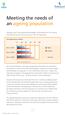 insurance services Meeting the needs of an ageing population Arguably, one of the greatest demographic achievements of this century has been the almost continuous rise in UK life expectancy. Life Expectancy
The Oracle My Pension Plan. Giving you the power to choose
 The Oracle My Pension Plan A Flexible Retirement Plan from Standard Life Giving you the power to choose Contents 03 Welcome 04 Benefits to you 06 Why should you join? 08 The state won t keep you warm 10
Early Childhood Ireland Low Pay Commission Submission
 Early Childhood Ireland Low Pay Commission Submission Who we are We are the largest and most representative early childhood membership organisation in Ireland. A registered charity, we provide a broad
E U R O P E A N E C O N O M I C A R E A
 E U R O P E A N E C O N O M I C A R E A S T A N D I N G C O M M I T T E E O F T H E E F T A S T A T E S 22 February 2016 SUBCOMMITTEE IV ON FLANKING AND HORIZONTAL POLICIES EEA EFTA Comment on possible
Age, Demographics and Employment
 Key Facts Age, Demographics and Employment This document summarises key facts about demographic change, age, employment, training, retirement, pensions and savings. 1 Demographic change The population
LGPS 2014 - FREQUENTLY ASKED QUESTIONS
 LGPS 2014 - FREQUENTLY ASKED QUESTIONS THE BACKGROUND TO LGPS 2014 Why is another new scheme being introduced? The Coalition government came to power with a clear agenda to change public sector pensions,
IMPLEMENTING THE RESTRICTION OF PENSIONS TAX RELIEF: NAPF SUBMISSION TO THE HMT/HMRC CONSULTATION
 IMPLEMENTING THE RESTRICTION OF PENSIONS TAX RELIEF: NAPF SUBMISSION TO THE HMT/HMRC CONSULTATION Executive Summary The NAPF welcomes the Coalition Government s decision to adopt a tax regime based principally
Can Equity Release Mechanisms fund long term care costs? Desmond Le Grys
 2001 Health Care Conference Can Equity Release Mechanisms fund long term care costs? Desmond Le Grys 1 Introduction 1.1 Scope This paper attempts to explain why equity release products have rarely been
BIBA response to DEFRA consultation on Securing the future availability and affordability of home insurance in areas of flood risk.
 S:\Wp\Files\Current\Grane\Nicol\2013\July 8 August 2013 Flood Insurance Consultation Department for Environment, Food and Rural Affairs 3 rd Floor, Zone C, Nobel House 17 Smith Square London SW1P 3JR Dear
STATEMENT FROM THE NATIONAL REFORM SUMMIT
 STATEMENT FROM THE NATIONAL REFORM SUMMIT Australia is a wealthy country that can have an even more prosperous future shared by everyone. We believe in sustainable economic growth and the creation of high-quality
Universities Superannuation Scheme 2014 Actuarial Valuation
 Universities Superannuation Scheme 2014 Actuarial Valuation A consultation on the proposed assumptions for the scheme s technical provisions and recovery plan October 2014 Contents Introduction 3 Background
Retiring from the Family Business Last update: October 27, 2011
 Summary Retiring from the Family Business Last update: October 27, 2011 If you are the owner or a major partner in a small business, your retirement concerns are more complex than most people s. It is
A super waste of money
 A super waste of money Redesigning super tax concessions April 2015 ISSN 1836-9014 Matt Grudnoff Policy Brief About TAI The Australia Institute is an independent public policy think tank based in Canberra.
Restriction of pensions tax relief: a discussion document on the alternative approach
 Restriction of pensions tax relief: a discussion document on the alternative approach July 2010 Restriction of pensions tax relief: a discussion document on the alternative approach July 2010 Official
Submission to the inquiry into the provisions of the Higher Education and Research Reform Amendment Bill 2014
 Submission to the inquiry into the provisions of the Higher Education and Research Reform Amendment Bill 2014 The University of Melbourne 1. Introduction The University of Melbourne welcomes the opportunity
Below normal pension age on exit one month s pay for each year of service up to 21 months.
 Civil Service Compensation Scheme Q&A December 2010 The new Civil Service Compensation Scheme (CSCS) which takes effect on 22 December 2010 sets out the level of compensation that Departments can pay their
How To Get A New Nhs Pension Scheme
 NHS pension scheme changes: rules and benefits comparison The new arrangements for NHS pensions mean that from 1 April 2008 there will be two schemes: The current updated. This will continue to be a final
Society of Actuaries in Ireland Pensions - Delivering by Design. A Time for Change Liam Quigley. 3 rd April 2007
 Society of Actuaries in Ireland Pensions - Delivering by Design A Time for Change Liam Quigley 3 rd April 2007 What s new in benefit design A time of great change except in relation to benefit design Defined
The Money Charity is the UK s leading financial capability charity.
 The Money Charity is the UK s leading financial capability charity. We believe that being on top of your money means you are more in control of your life, your finances and your debts, reducing stress
BUSINESS MILEAGE CHANGES FREQUENTLY ASKED QUESTIONS
 BUSINESS MILEAGE CHANGES FREQUENTLY ASKED QUESTIONS Question 1 What has prompted these changes? 2 Are all staff affected by these changes? Who is most affected by these changes? 3 What are the current
Policy Brief June 2010
 Policy Brief June 2010 Pension Tension: Understanding Arizona s Public Employee Retirement Plans The Arizona Chamber Foundation (501(c)3) is a non-partisan, objective educational and research foundation.
Rebuttal Report of Ian H.. Altman, FSA
 In re EI Paso Energy Corporation Pension Plan Rebuttal Report of Ian H.. Altman, FSA Altman & Cronin Benefit Consultants, LLC 100 Pine Street, Suite 1500 San Francisco, CA 94111 Expert Report of Findings
The Future of Social Security: 12 Proposals You Should Know About
 The Future of Social Security: 12 Proposals You Should Know About Strengthening Social Security AARP s You ve Earned a Say is working to make your voice heard about the future of Social Security. For more
Limits to tax relief and tax-free benefits
 TAX LIMITS FINAL SALARY AND CAREER REVALUED BENEFITS SECTIONS Limits to tax relief and tax-free benefits Introduction Pension benefits earned by individuals in the UK, which qualify to receive tax relief,
Limits to tax relief and tax-free benefits
 TAX LIMITS FINAL SALARY AND CAREER REVALUED BENEFITS SECTIONS Limits to tax relief and tax-free benefits Introduction Pension benefits earned by individuals in the UK which qualify to receive tax relief
Adjusting to a Changing Economic World. Good afternoon, ladies and gentlemen. It s a pleasure to be with you here in Montréal today.
 Remarks by David Dodge Governor of the Bank of Canada to the Board of Trade of Metropolitan Montreal Montréal, Quebec 11 February 2004 Adjusting to a Changing Economic World Good afternoon, ladies and
Pension Saving and Retirement Insecurity: The case of Australia. Mike Rafferty University of Sydney
 The New Paradox of Thrift -Mandatory Pension Saving and Retirement Insecurity: The case of Australia Mike Rafferty University of Sydney Outline The GFC, pensions and the vulnerabilities of financialized
British Steel Pension Scheme: Public Consultation Response from the Pension Protection Fund
 British Steel Pension Scheme: Public Consultation Response from the Pension Protection Fund Summary The PPF recognises the Government s commitment to securing a sustainable future for the UK steel industry
Supporting our teachers
 Recognise. Respect. Value. Policy direction overview Discussion paper two Better schools Better future Supporting our teachers We can all recall a teacher who made a difference a teacher who inspired us,
Submission of the Ontario Human Rights Commission to the Ministry of Labour Regarding the Consultations on Ending Mandatory Retirement.
 Submission of the Ontario Human Rights Commission to the Ministry of Labour Regarding the Consultations on Ending Mandatory Retirement September 2004 This submission is in response to the Ministry of Labour
Strengthening the incentive to save: a consultation on pensions tax relief. RESPONSE FROM ICAS TO HM Treasury
 Strengthening the incentive to save: a consultation on pensions tax relief RESPONSE FROM ICAS TO HM Treasury 30 SEPTEMBER 2015 CA House 21 Haymarket Yards Edinburgh EH12 5BH [email protected] +44 (0)131
FLINTSHIRE COUNTY COUNCIL FLINTSHIRE COUNTY COUNCIL REPORT BY: HEAD OF HUMAN RESOURCES AND ORGANISATIONAL DEVELOPMENT
 FLINTSHIRE COUNTY COUNCIL REPORT TO: FLINTSHIRE COUNTY COUNCIL DATE: WEDNESDAY, 30 APRIL 2014 REPORT BY: HEAD OF HUMAN RESOURCES AND ORGANISATIONAL DEVELOPMENT SUBJECT: LOCAL GOVERNMENT PENSION SCHEME
Retirement Income Coalition
 2005 Pre-Budget Submission STRENGTHENING THE VOLUNTARY PILLAR OF CANADA'S RETIREMENT INCOME SYSTEM SEPTEMBER 2004 TABLE OF CONTENTS Page Introduction 1 Unfinished Business 2 Middle Income Canadians Affected
Managing debt owed to central government
 Report by the Comptroller and Auditor General Cross-government Managing debt owed to central government HC 967 SESSION 2013-14 14 FEBRUARY 2014 4 Key facts Managing debt owed to central government Key
Strategic Employee Onboarding: First Impressions Are Everything
 ONBOARDING Strategic Employee Onboarding: First Impressions Are Everything Cornerstone OnDemand Whitepaper Series 2007 Cornerstone OnDemand, Inc. All Rights Reserved. Table of Contents Onboarding: More
PENSIONS POLICY INSTITUTE. Tax relief for pension saving in the UK
 Tax relief for pension saving in the UK This report is sponsored by Age UK, the Institute and Faculty of Actuaries, Partnership and the TUC. The PPI is grateful for the support of the following sponsors
Immigrants and Immigration: Answering the Tough Questions
 Immigrants and Immigration: Answering the Tough Questions But they came here illegally! Response 1: That assumes the system works. The immigration system has not been reformed in decades to meet the real
RESOLVING DISPUTES AT WORK: New procedures for discipline and grievances A GUIDE FOR EMPLOYEES
 RESOLVING DISPUTES AT WORK: New procedures for discipline and grievances A GUIDE FOR EMPLOYEES This guide tells you about new rights and procedures you must follow if you have a grievance in work are facing
10 Tips to Education Assistance Program Excellence
 10 Tips to Education Assistance Program Excellence White Paper by Heidi Milberg Director of Business Development General Physics Corporation www.gpworldwide.com General Physics Corporation 2011 As with