
A Problem-Based Learning Approach to Incorporating Nutrition into the Medical Curriculum
|
|
|
- Steven Lindsey
- 9 years ago
- Views:
Transcription
1 A Problem-Based Learning Approach to Incorporating Nutrition into the Medical Curriculum Marilyn S. Edwards, Ph.D., R.D. * and Gary C. Rosenfeld, Ph.D. * Department of Internal Medicine and Department of Integrated Biology and Pharmacology University of Texas Medical School Houston, Texas Abstract: Problem Based Learning (PBL) provides a unique opportunity for medical students to learn nutrition principles in the context of evidence-based clinical cases. At the University of Texas Medical School at Houston (UTMSH), PBL is a major component during the second year of the four year undergraduate medical curriculum. A recent review of forty-two clinical cases has shown that over half of the cases include nutrition-specific objectives related to diagnosis, therapy, prognosis, or disease prevention. Thus, these PBL cases provide students the opportunity to study a broad range of nutrition topics in a clinically relevant context. The students nutrition knowledge is evaluated using clinically-oriented, multiple-choice questions. In order for students to develop fully their competency in clinical nutrition topics, they are also provided a foundation in basic nutrition principles. This report describes a comprehensive approach through a casebased curriculum to help prepare students in their pre-clinical years for the nutritional care of patients in their clerkships, residency, and as practicing physicians. Keywords: medical nutrition education, nutrition in problem-based learning, evidence-based nutrition education, case-based curriculum Numerous recommendations have been made for the inclusion of nutrition in the medical curriculum. Early leaders in the field of medical nutrition education, including Young, 1 Weinsier, 2 and Winick 3 proposed and published core nutrition competencies for medical students, and other physicians, including Feldman 4 and Kushner, 5 have recognized the importance of teaching nutrition in a clinically relevant format. In the 1990s, the American Medical Student Association established the Nutrition Curriculum Project and later published a national consensus report on the essentials of nutrition education in medical schools. 6 However, less has been written about the specific methods and strategies for incorporating nutrition into the education and training of medical students. A national survey conducted in 2004 by Adams et al 7 indicates that most information about nutrition continues to be taught in the individual basic science courses and, therefore, is not specifically identified with the discipline of nutrition. However, with the recently created nutrition subscore for the Step 1 U.S. Medical Licensing Examination (USMLE) by the National Board of Medical Examiners (NBME), 8 it is imperative that nutrition be recognized as a scientific discipline within the medical curriculum by both medical educators and students. As more U.S. medical schools move toward a problem-based learning, case-based approach to preparing students for their clinical years of training, nutrition can be taught in an identifiable and clinically relevant evidence-based format. 9,10 The purpose of this article is to provide an overview of the requirements for integration of nutrition into the preclinical curriculum using a problem-based learning format that enables students to incorporate nutrition into their patient care. Background Problem-based learning (PBL) has been widely adopted in U.S. medical schools and is believed to be highly effective for knowledge acquisition and clinical performance PBL is a case-based and evidencebased learning strategy that builds on linkages between basic science and clinical knowledge. Clinical cases are generally organized around organ systems. A basic premise of PBL is that it utilizes a deductive process that parallels the steps used most commonly in the evaluation and care of patients (Figure 1). This student-centered approach, in which small groups of students meet with a faculty facilitator, includes the steps of information gathering, problem identification, the judicious application of diagnostic tests, evaluation and interpretation of data, management decisions or therapy and intervention, and 1

2 Figure 1. The PBL Process. Nutrition objectives and learning issues may arise at any point in the case. outcomes monitoring. Students begin by developing a comprehensive written list of the patient s problems derived from a careful consideration of the medical history, physical examination, and laboratory tests. A differential diagnosis is generated by the students based on hypotheses developed from a discussion of the medical history. As laboratory data become available in the case, students can modify their hypothesis and become more focused on a specific diagnosis. Students are required to identify and complete learning issues for each case that may be related to diagnosis, etiology, therapy, or prognosis. When nutrition is integrated into a PBL case, students develop an appreciation of the integral role of nutrition in the clinical management of the patient before they enter their clinical clerkships. At the University of Texas Medical School at Houston (UTMSH), PBL was introduced into the curriculum in Over the past twelve years, more than forty PBL cases have been developed by UTMSH faculty working groups composed of physicians, basic scientists, and medical educators. More than half of these cases contain nutrition issues and objectives related to the diagnosis, treatment, or prevention of a disease. Nutrition learning issues are frequently identified as either risk factors for disease, as assessment parameters, or in many cases, as an essential part of the therapy and management of the patient. Students may choose to conduct an in-depth study of nutrition issues which are brought back to the group in written format and discussed. Groups of eight students meet with a faculty facilitator for two-hour sessions three days each week throughout the second year. The PBL curriculum has become immensely popular with both faculty and students at the UTMSH. Our medical school graduates over 200 students each year, many of whom continue their medical training in residency programs in primary care, primarily internal medicine, family medicine, and pediatrics. Nutrition Instruction Prior to PBL At our institution we have found it to be beneficial for the students if basic nutrition competencies are introduced during the first year pre-clinical didactic curriculum. These nutrition competencies are listed in Table 1, most of which are covered in Biochemistry or 2

3 Table 1. Nutrition Competencies Required for Successful Integration of Nutrition into PBL Macronutrients daily requirements and substrate utilization Micronutrients functions, food sources, deficiency and toxicity Energy requirements and components of caloric expenditure Protein requirements and nitrogen balance calculations RDA and DRI rationale and application Criteria for a healthy diet U.S. Dietary Guidelines Diet history taking Principles of nutrition assessment anthropometrics, biochemical, clinical, and dietary Appropriate use of nutritional supplements Vegetarianism Introduction to Clinical Medicine (ICM) during the first year. For example, students are taught the criteria for a healthy diet so that they understand the daily requirements of macronutrients, micronutrients, and energy. Students are expected to develop clinical skills for taking a diet history as part of the patient interviewing and medical history learned in ICM. When students master the core nutrition competencies and understand the components of a healthy diet they can move on to the application of nutrition principles in the context of a clinical case including recognition of nutritional problems that are exhibited by the patient. Nutritional assessment is another important pre-requisite for successful completion of PBL cases. These principles are learned through both a first year ICM course and a Physical Diagnosis course that is taught concurrently with PBL. Incorporating Nutrition into PBL Once a PBL case is developed, information concerning nutrition can be incorporated into the case s medical history, review of systems, and laboratory data. Examples of cases with nutrition content in the UTMSH curriculum are listed in Table 2. For each case, specific objectives are developed. Examples of nutrition objectives for a patient with coronary artery disease are shown in Table 3. Students are not given the case objectives until the case review is finished. However, the faculty facilitators do use the objectives as a guide to help students complete the appropriate learning issues. It is important that each case include the patient s height and weight, BMI, history of weight gain or loss, and information about usual eating habits. In some instances, it is appropriate to include a 24-hour dietary recall or a food group analysis which could indicate deficiencies or excess of energy or certain nutrients. Relevant nutrition information provided in each PBL case should lead students to more focused learning issues on nutrition which can be completed as homework and shared with the whole group. A facilitator guide for each case contains an explanation of nutrition issues in each case. Evaluation and Assessment of Nutrition Knowledge In a medical curriculum where nutrition is integrated rather than taught as a separate required course, it is important to evaluate students on nutrition knowledge and clinical skills so that they recognize nutrition as an Table 2. PBL Cases with Nutrition Content in the UTMSH Curriculum Cardiovascular Block dyslipidemia, hypertension Endocrine Block obesity, diabetes, thyroid disease Gastrointestinal Block GERD, PUD, IBD, chronic liver disease Rheumatoid and Neuromuscular Disease Block Renal Block CRF, ESRD dietary management Cancer Cases risk factors, prevention, nutritional support during cancer therapy Pediatrics Cases CF, failure to thrive, normal patterns of growth in early childhood and adolescence, nutritional anemias Osteoporosis Case prevention and treatment HIV, AIDS Case nutritional support 3

4 Table 3. Examples of Nutrition Objectives in a PBL Case: A Patient with Coronary Artery Disease. List the coronary risk factors (modifiable and fixed) and understand the effect of nutritional factors on serum cholesterol. Define a blood lipid profile and know the total cholesterol, LDL cholesterol, HDL cholesterol, and triglyceride levels that constitute desirable, borderline high, and high ranges for CAD risk. Define saturated fat, cholesterol, polyunsaturated fat, monounsaturated fat, trans fatty acids, and omega-3 fatty acids. List the major food sources of the different fats and know the effect of a diet containing these fats on blood cholesterol. Give the current recommendations of the AHA and percentages of fats in the AHA Step 1 and 2 Diets. Describe the effect of a high carbohydrate diet on serum triglycerides. Identify commonly used nutritional supplements for prevention and treatment of CAD and important part of their medical training. A pre-test of nutrition knowledge during the first week of class was initiated as a pilot in 2000 followed by a post-test at the end of PBL in the second year. Students were informed in advance of the post-test, however, because it was not an integral component of their PBL evaluation and final grade, students did not prepare well for the exam and subsequently performed poorly on the post-test. We are currently assessing the curriculum and making plans to implement a nutrition knowledge survey and post-test in that would reflect specific competencies needed prior to clinical clerkships in the third year. An exam consisting of clinical scenarios should also help students prepare for the Step 1 of the U.S. Medical Licensing Examination. It is important that both nutrition knowledge and clinical skills be reinforced during the clerkships particularly in internal medicine, family medicine, pediatrics, ob/gyn, and surgery. The availability of the Association of American Medical Colleges Graduation Questionnaire makes it possible to examine students attitudes about the time devoted to nutrition in the medical curriculum in comparison to all U.S. medical schools (16). the UTMSH, we have followed this data over the past decade and have seen a significant improvement in the percentage of students who responded that nutritionrelated instruction was adequate. In 2000, only 10% of UTMSH students reported that time devoted to nutrition was appropriate compared to 24% nationally. By 2005, the percentage of UTMSH students reporting appropriate time devoted to nutrition was 46% compared to 47% nationally (Figure 2). The improvement in the students perception of instruction time devoted to nutrition can be partly attributed to PBL but is also based on the addition of nutrition lectures to several basic science courses taught prior to or concurrently with PBL and in the Internal Medicine clerkship. In addition, students have the opportunity to enroll in nutrition electives during the first, second, and fourth year of the curriculum. Lessons Learned and Future Directions We have learned that PBL offers several advantages for teaching nutrition in the medical curriculum. First, students are guided in the clinical application of nutrition in patient care both in the prevention and treatment of disease. Second, nutrition is taught in an evidence-based format as cases are updated to include new clinical guidelines and data from recent clinical trials. Third, students see how nutrition is integral in the overall care of the patient and identify with the role of the physician as a member of the health care team. Fourth, discussion of nutrition issues during cases reinforces students interest in maintaining a healthy diet and in prevention of chronic disease. Fifth, discussions in the small group setting provide an opportunity for students to become comfortable in presenting nutrition information and preparing for patient interactions during clinical clerkships. At While the advantages of PBL are clear, we must also recognize that there are certain limitations of PBL with regard to developing students competency in nutrition. These include the availability of faculty role models for nutrition in patient care, the need for encouragement by PBL facilitators for students to complete in-depth nutrition learning issues, and the institution s reinforcement of pre-testing and post-testing of nutrition knowledge. Facilitators have an opportunity to meet with case writers in the overview meetings and ask questions about particular nutrition issues in each PBL case. Depending on the dynamics of the individual PBL groups, nutrition competency may not be achieved by all students at the same level. However, the exposure 4

5 UT-Houston All Schools Figure 2. Association of American Medical Colleges Graduation Questionnaire Percentage of Students at UT- Houston compared to all U.S. medical schools who responded that curriculum time devoted to nutrition was appropriate from 2000 to to nutrition in a case-based format should enable all students to develop basic proficiency in this area as they continue in their medical training. Conclusion Nutrition knowledge and clinical skills are important components of medical education and clinical practice. Using a problem-based learning approach for integration of nutrition can have a positive outcome for the students and reinforces the need to include nutrition in the management and care of patients. At the UTMSH students are introduced to core nutrition competencies and clinical skills in the first year didactic courses which allow them to apply nutrition in a clinically relevant format for the PBL cases. Nutrition assessment and clinical nutrition guidelines are reviewed during the Internal Medicine clerkship in the third year. Evaluation of students nutrition knowledge and clinical skills remains a challenging area and one that deserves careful consideration and planning. Acknowledgments The authors would like to acknowledge the efforts of faculty facilitators and working group members at the UTMSH who devote many hours of their time to the instruction of students in PBL. We recognize Alberto Puig, M.D. from the Department of Internal Medicine and the University of Texas Health Science Center Vision Committee for their input into the PBL process (Figure 1). We also acknowledge the students who recognize the importance of nutrition in patient care and who are dedicated to completing in-depth learning issues on nutrition topics during PBL. Supported by grant #KOHL04326 (Nutrition Academic Award) from the National Heart, Lung, and Blood Institute of the National Institutes of Health. The content of this manuscript was presented at the Evidence-Based Medical Nutrition Symposium sponsored by the American Society for Clinical Nutrition in San Diego, CA April 2, References 1 Young, EA, Weser E, McBride HM, Page CP, and Littlefield JH. Development of core competencies in clinical nutrition. Am J Clin Nutr 1983:38; Weinsier RL, Boker JR, Brooks CM, et al. Priorities for nutrition content in a medical school curriculum: a national consensus of medical educators. Am J Clin Nutr 1989;50: Winick M. Nutrition education in medical schools. Am J Clin Nutr 1993;58: Feldman EB. Educating physicians in nutrition a view of the past, the present, and the future. Am J 5

6 Clin Nutr 1991;54: Kushner RF, Thorp FK, Edwards J, Weinsier RL, and Brooks CM. Implementing nutrition into the medical curriculum: a user s guide. Am J Clin Nutr 1990;52: Essentials of nutrition education in medical schools: a national consensus. American Medical Student Association s Nutrition Curriculum Project. Acad Med 1996;71(9): Adams KM, Lindell KC, Kohlmeier M, and Zeisel SH. Status of nutrition education in medical schools. Am J Clin Nutr 2006;83(suppl):941S- 4S. 8. Hark LA. Lessons learned from nutrition curricular enhancements. Am J Clin Nutr 2006;83(suppl):968S-70S. 9. Hark LA and Morrison. Development of a casebased integrated nutrition curriculum for medical students. Am J Clin Nutr 2000;72(suppl):890S- 7S. 10. Tobin BW. Nutrition in the basic medical sciences curriculum: An introduction to generalist physician training through problem-based learning. Nutri Today 32(2), 54-62, Colliver JA. Effectiveness of problem-based learning curricula: research and theory. Acad Med 2000;75(3): Kaufman DM and Mann KV. Achievement of Students in a Conventional and Problem-Based Learning (PBL) Curriculum. Adv Hlth Sci Educ 1999;4: Donner RS and Bickley H. Problem-based learning American medical education: an overview. Bull Med Libr Assoc 1993;81(3): Association of American Medical Colleges. Educating Medical Students: Assessing change in medical education. AAMC, Washington, D.C., Galey WR. What is the future of problem-based learning in medical education? Adv Physiol Educ 275:12-15, Association of American Medical Colleges. Medical school graduation questionnaire. (accessed March 1, 2006). Correspondence Marilyn S. Edwards, Ph.D., R.D. Department of Internal Medicine Division of Gastroenterology, Hepatology, and Nutrition University of Texas Medical School 6431 Fannin, MSB Houston, Texas

UCSF Kidney Transplant Symposium 2012
 UCSF Kidney Transplant Symposium 2012 Nutrition Fitness in Kidney Transplant Mary Ellen DiPaola, RD, CDE UCSF Outpatient Dietitian Goal of Nutrition Fitness for Transplant Nutritional guidance of pre-
Graduate and Postdoctoral Affairs School of Biomedical Sciences College of Medicine. Graduate Certificate. Metabolic & Nutritional Medicine
 Graduate and Postdoctoral Affairs School of Biomedical Sciences College of Medicine Graduate Certificate in Metabolic & Nutritional Medicine Graduate Certificate Metabolic & Nutritional Medicine Purpose
EXERCISE SCIENCE AND NUTRITION
 EXERCISE SCIENCE AND NUTRITION BEAU GREER, PH.D., CSCS, DIRECTOR Phone: 203-396-8064 Fax: 203-365-4723 Email: [email protected] Program Rationale The program offers graduate level study in exercise
Protein Intake in Potentially Insulin Resistant Adults: Impact on Glycemic and Lipoprotein Profiles - NPB #01-075
 Title: Protein Intake in Potentially Insulin Resistant Adults: Impact on Glycemic and Lipoprotein Profiles - NPB #01-075 Investigator: Institution: Gail Gates, PhD, RD/LD Oklahoma State University Date
Master of Physician Assistant Studies Course Descriptions for Year I
 FALL TERM COURSES: Master of Physician Assistant Studies Course Descriptions for Year I PHAC 7230 Fundamentals in Pharmacology for Health Care I Credit Hrs: 3 This course will build on foundational knowledge
Detailed Course Descriptions for the Human Nutrition Program
 1 Detailed Course Descriptions for the Human Nutrition Program Major Required Courses NUTR221 Principles of Food Science and Nutrition Credit (Contact) Hours 2 CH(2 Theory) Prerequisites Course Description
GRADUATE PROGRAMS IN HUMAN NUTRITION COURSE DESCRIPTIONS 2014-2015
 GRADUATE PROGRAMS IN HUMAN NUTRITION COURSE DESCRIPTIONS 2014-2015 The following table shows the planned course offerings for the 2014-2015 academic year. Courses are subject to change. Summer 2014 Fall
NUTR& 101 General Nutrition
 NUTR& 101 General Nutrition Instructor: Jill Emigh Email Address: [email protected] Phone: (509) 527-4558 Course Description (taken from the WWCC catalog) The study of food and nutrients and the application
Master of Science in Human Nutrition ONLINE AND ON CAMPUS WEEKEND PROGRAMS
 Master of Science in Human Nutrition ONLINE AND ON CAMPUS WEEKEND PROGRAMS A Dynamic Program Established in 1977, University of Bridgeport s Master of Science in Human Nutrition distinguished itself from
CLINICAL NUTRITION (Curriculum Code HOND-CNU40)
 Department of Nutrition, Food Studies, and Public Health 35 West 4th Street, 10th Floor New York, NY 10012-1172 MASTER OF SCIENCE (M.S.) DEGREE IN NUTRITION & DIETETICS with a Concentration in CLINICAL
A. Course Proposal for GE Natural Science (HUMN NTR 2210, The Science of Human Nutrition)
 A. Course Proposal for GE Natural Science (HUMN NTR 2210, The Science of Human Nutrition) I. COURSE DESCRIPTION HUMN NTR 2210, The Science of Human Nutrition, is proposed as a 3 credit semester equivalent
Foods and Nutrition Published on Programs and Courses (http://www.upei.ca/programsandcourses)
 Discover the diverse role of foods and nutrients in human health. Overview Intimate class sizes, experienced professors, and real world application meet in the Bachelor of Science in at the University
Adult Weight Management Training Summary
 Adult Weight Management Training Summary The Commission on Dietetic Registration, the credentialing agency for the Academy of Nutrition and Dietetics Marilyn Holmes, MS, RDN, LDN About This Presentation
University of Southern California, Coordinated Program in Nutrition and Dietetics Leonard Davis School of Gerontology Master of Science Degree:
 University of Southern California, Coordinated Program in Nutrition and Dietetics Leonard Davis School of Gerontology Master of Science Degree: Nutrition, Healthspan and Longevity The Master of Science
Effects of macronutrients on insulin resistance and insulin requirements
 Effects of macronutrients on insulin resistance and insulin requirements Dr Duane Mellor RD Assistant Professor in Dietetics, The University of Nottingham, UK Outline of Discussion Issues of determining
Appendix: Description of the DIETRON model
 Appendix: Description of the DIETRON model Much of the description of the DIETRON model that appears in this appendix is taken from an earlier publication outlining the development of the model (Scarborough
Department of Nutrition and Food Sciences (NFSC)
 107 Department of Nutrition and Food Sciences (NFSC) Chairperson: Professors: Associate Professor: Assistant Professors: Lecturers: Instructors: Research Associate: Visiting Professor Olabi, Ammar Hwalla,
Pantesin Effective support for heart healthy cholesterol levels*
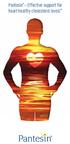 Pantesin Effective support for heart healthy cholesterol levels* { Pantesin Effective support for heart healthy cholesterol levels* Many health-conscious adults keeping a watchful eye on their cholesterol
Master of Science in Kinesiology
 Master of Science in Kinesiology Administrative Unit The Office of Graduate Studies and Research administers this program through the Kinesiology faculty in the Department of Kinesiology, College of Arts
Certificate Course in Woman & Child Nutrition
 Certificate Course in Woman & Child Nutrition The aims and objectives of this course are: Section 1 Understand various stages throughout lifecycle of women Describe Nutritional requirements throughout
Graduate Certificate Pre-Med Program Course Descriptions For Year 2015-2016 FALL
 Graduate Certificate Pre-Med Program Course Descriptions For Year 2015-2016 FALL COURSE TITLE: BIOCHEMISTRY COURSE NUMBER: 5104 This course emphasizes biochemical compounds, processes and systems, designed
Listen to your heart: Good Cardiovascular Health for Life
 Listen to your heart: Good Cardiovascular Health for Life Luis R. Castellanos MD, MPH Assistant Clinical Professor of Medicine University of California San Diego School of Medicine Sulpizio Family Cardiovascular
1.1 Title of Proposed Minor: Minor in Nutritional Sciences
 Attachment 6 RECOMMENDATION OF THE DEPARTMENTS OF BIOMEDICAL SCIENCES AND KINESIOLOGY TO ESTABLISH A MINOR IN NUTRITIONAL SCIENCES I. PROGRAM IDENTIFICATION 1.1 Title of Proposed Minor: Minor in Nutritional
NUTB 316 ADVANCED MEDICAL NUTRITION THERAPY MNSP Tufts University, Friedman School of Nutrition Science and Policy
 NUTB 316 ADVANCED MEDICAL NUTRITION THERAPY MNSP Tufts University, Friedman School of Nutrition Science and Policy SUMMER 2015 (May 20, 2015 - August 16, 2015) Instructors: Kathy Prelack, PhD, RD [email protected]
School Nutrition Policy Background
 School Nutrition Policy Background Overview: From what s offered in lunch lines to what s stocked in vending machines, schools are in a powerful position to influence children s lifelong dietary habits.
Margarines and Heart Disease. Do they protect?
 Margarines and Heart Disease Do they protect? Heart disease Several studies, including our own link margarine consumption with heart disease. Probably related to trans fatty acids elevate LDL cholesterol
BSc (Hons)/MSc Nutritional Sciences - SC527 (Under Review)
 BSc (Hons)/MSc Nutritional Sciences - SC527 (Under Review) Specific Titles: BSc (Hons) /MSc Nutritional Sciences BSc (Hons) Nutritional Sciences (Specialisation: Dietetics) 1. Rationale and Objectives
CLINICAL NUTRITION (Curriculum Code GECNU002) 40 credits
 Steinhardt School of Culture, Education, and Human Development DEPARTMENT OF NUTRITION, FOOD STUDIES AND PUBLIC HEALTH 411 Lafayette Street, 5 th Floor New York, NY10003 MASTER OF SCIENCE (MS) DEGREE IN
Dietary Composition for Weight Loss and Weight Loss Maintenance
 Dietary Composition for Weight Loss and Weight Loss Maintenance Bridget M. Hron, MD Instructor in Pediatrics, Harvard Medical School Staff Physician in Gastroenterology & Nutrition and New Balance Foundation
Preventive Care Recommendations THE BASIC FACTS
 Preventive Care Recommendations THE BASIC FACTS MULTIPLE SCLEROSIS Carlos Healey, diagnosed in 2001 The Three Most Common Eye Disorders in Multiple Sclerosis Blood Pressure & Pulse Height & Weight Complete
CHAPTER V DISCUSSION. normal life provided they keep their diabetes under control. Life style modifications
 CHAPTER V DISCUSSION Background Diabetes mellitus is a chronic condition but people with diabetes can lead a normal life provided they keep their diabetes under control. Life style modifications (LSM)
Course description 9/712. Introductory Level Courses. EXSC1001. Foundations of exercise science (6 credits)
 The University of Hong Kong Institute of Human Performance Major / Minor in Exercise Science For non-exercise&health Students admitted to 4-year curriculum (2014-2015 and thereafter) Course description
TYPE 2 DIABETES MELLITUS: NEW HOPE FOR PREVENTION. Robert Dobbins, M.D. Ph.D.
 TYPE 2 DIABETES MELLITUS: NEW HOPE FOR PREVENTION Robert Dobbins, M.D. Ph.D. Learning Objectives Recognize current trends in the prevalence of type 2 diabetes. Learn differences between type 1 and type
Exercise Science Concentration In the Biomedical Sciences Program
 Exercise Science Concentration In the Biomedical Sciences Program Contact: Bill Brewer, MLS, CES Director of Exercise Science Rochester Institute of Technology CBET Office 75-3161 153 Lomb Memorial Drive
Nutrition for Health and Human Performance
 Nutrition f Health and Human Perfmance Mission: The Master s of Science degree track in Exercise Physiology entitled "Nutrition f Health and Human Perfmance" was designed to develop an interface between
Medical Education in the United States, in the United Kingdom and in Japan. Nayuta Saito. The Jikei University School of Medicine. Anes 140.
 Medical Education in the United States, in the United Kingdom and in Japan Nayuta Saito The Jikei University School of Medicine Anes 140.01 Rotation: June 9 - July 3, 2008 I am a medical student in Tokyo,
Primary Care Management of Women with Hyperlipidemia. Julie Marfell, DNP, BC, FNP, Chairperson, Department of Family Nursing
 Primary Care Management of Women with Hyperlipidemia Julie Marfell, DNP, BC, FNP, Chairperson, Department of Family Nursing Objectives: Define dyslipidemia in women Discuss the investigation process leading
Coronary Heart Disease (CHD) Brief
 Coronary Heart Disease (CHD) Brief What is Coronary Heart Disease? Coronary Heart Disease (CHD), also called coronary artery disease 1, is the most common heart condition in the United States. It occurs
Chapter 5 NUTRITION EDUCATION AND COUNSELING. Jamie Stang and Mary Story
 Chapter 5 NUTRITION EDUCATION AND COUNSELING Jamie Stang and Mary Story One of the keys to effective nutrition education and counseling of teenagers is a good understanding of normal adolescent psychosocial
MASTER S OF SCIENCE IN HUMAN NUTRITION AND FUNCTIONAL MEDICINE FAQs
 MASTER S OF SCIENCE IN HUMAN NUTRITION AND FUNCTIONAL MEDICINE FAQs PROGRAM FEATURES What makes this program unique and different from other dietetics and nutrition programs? The University of Western
Health Benefits of Grass-Fed Products
 Health Benefits of Grass-Fed Products As you will see, products from pastured animals are ideal for your health. Similar to wild game, they contain the amounts and kinds of nutrients that your body "expects"
Certified Nutritionist Career Information. The Four Different Types of Nutritionist Specialties
 Certified Nutritionist Career Information A certified nutritionist will work with clients who desire to eat a healthier diet in order to lose weight or improve their overall health. The job of the nutritionist
How To Treat Dyslipidemia
 An International Atherosclerosis Society Position Paper: Global Recommendations for the Management of Dyslipidemia Introduction Executive Summary The International Atherosclerosis Society (IAS) here updates
QUESTIONS FOR The Commonwealth Medical College
 Page 1 QUESTIONS FOR The Commonwealth Medical College PROCESS OF CURRICULUM REDESIGN Why did you redesign your curriculum? What were your goals? What was the timeframe? What lessons were learned while
DOW UNIVERSITY OF HEALTH SCIENCES School of Public Health PROGRAM SPECIFICATION BACHELOR OF SCIENCE IN NUTRITION
 DOW UNIVERSITY OF HEALTH SCIENCES School of Public Health PROGRAM SPECIFICATION BACHELOR OF SCIENCE IN NUTRITION PREAMBLE: International ranking on the basis of health indicators places Pakistan at the
Sue Flocke, PhD Eileen L. Seeholzer, MD MS Heidi Gullett, MD MPH
 Sue Flocke, PhD Eileen L. Seeholzer, MD MS Heidi Gullett, MD MPH Brigid Jackson, MA Samantha Smith, MA Elizabeth Antognoli, PhD Sue Krejci, MBA Peter J. Lawson, MA MPH MBA Practice-based Research Network
Bariatric Patients, Nutritional Intervention for
 SKILL COMPETENCY CHECKLIST Bariatric Patients, Nutritional Intervention for Link to Dietitian Practice and Skill Standard Met/Initials Prerequisite Skills Competency Areas Knowledge of how to conduct a
Facts About Peripheral Arterial Disease (P.A.D.)
 Facts About Peripheral Arterial Disease (P.A.D.) One in every 20 Americans over the age of 50 has P.A.D., a condition that raises the risk for heart attack and stroke. Peripheral arterial disease, or P.A.D.,
Triglycerides: Frequently Asked Questions
 Triglycerides: Frequently Asked Questions Why are triglycerides important? The amount of triglycerides (or blood fats) in blood are one important barometer of metabolic health; high levels are associated
Pediatrics. Specialty Courses for Medical Assistants
 Pediatrics Specialty Courses for Medical Assistants 7007 College Boulevard, Suite 385 Overland Park, Kansas 66211 www.ncctinc.com t: 800.875.4404 f: 913.498.1243 Pediatrics Specialty Certificate Course
Body Composition & Longevity. Ohan Karatoprak, MD, AAFP Clinical Assistant Professor, UMDNJ
 Body Composition & Longevity Ohan Karatoprak, MD, AAFP Clinical Assistant Professor, UMDNJ LONGEVITY Genetic 25% Environmental Lifestyle Stress 75% BMI >30 OBESE 25-30 OVERWEIGHT 18-25 NORMAL WEIGHT 18
Healthy People 2020 and Education For Health Successful Practices for Clinical Health Professions
 Interprofessional Introduction to Prevention Victoria S. Kaprielian, MD Duke University ABSTRACT: Faculty from four Duke University health professions programs developed a vision for interprofessional
The Canadian Association of Cardiac
 Reinventing Cardiac Rehabilitation Outside of acute care institutions, cardiovascular disease is a chronic, inflammatory process; the reduction or elimination of recurrent acute coronary syndromes is a
Goal 2. To produce humanitarian physicians with high moral and ethical standards.
 THE ASK CURRICULUM The central challenge of the modern medical curriculum is to educate future physicians who will continue to learn throughout their careers. The curriculum of the Robert Wood Johnson
Doctor of Physical Therapy (DPT) Degree Program
 SCHOOL OF PUBLIC HEALTH NEW YORK MEDICAL COLLEGE VALHALLA, NY 10595 Doctor of Physical Therapy (DPT) Degree Program The Department of Physical Therapy offers a professional Doctor of Physical Therapy (DPT)
NCPACE BIOL 1322 Syllabus Nutrition Pathways
 NCPACE BIOL 1322 Syllabus Nutrition Pathways Course Description This is an introduction to human nutrition. Topics will include classes, sources, and function of nutrients; digestion and absorption; and
The University of Queensland School of Medicine Ochsner Clinical School
 The University of Queensland School of Medicine Ochsner Clinical School UQ School of Medicine, Brisbane A New Global Medical Education Paradigm The University of Queensland School of Medicine Ochsner Clinical
Master of Science in Vision Science and Investigative Ophthalmology MVSIO
 Master of Science in Vision Science and Investigative Ophthalmology MVSIO Global Leadership in Eye Care, Vision Research and Ophthalmology Education Bascom Palmer Eye Institute is pleased to introduce
College of Pharmacy. Pharmacy Practice and Science
 520 SPECIAL TOPICS IN PHARMACY LAW. (2) Discussion of the legal framework and special legal issues in pharmacy practice. Topics will include application of antitrust laws to pharmacy, patent and trademark
Smaller Waistlines, Sharper Minds, Stronger Bones and Healthier Hearts?
 Telephone: (212) 986-9415 Fax: (212) 697-8658 www.teausa.org 362 5th AVENUE, SUITE 801, NEW YORK, NY 10001 Smaller Waistlines, Sharper Minds, Stronger Bones and Healthier Hearts? New Findings Released
Nutrition. September 2001. Module Descriptor. www.fetac.ie
 The Further Education and Training Awards Council (FETAC) was set up as a statutory body on 11 June 2001 by the Minister for Education and Science. Under the Qualifications (Education & Training) Act,
Dietetic Internship Program. About the Program
 Dietetic Internship Program About the Program About the school Established in 1969, The University of Texas School of Public Health improves and sustains human health by providing education in the basic
NCPACE BIOL 1322 Syllabus Nutrition Pathways
 NCPACE BIOL 1322 Syllabus Nutrition Pathways Course Description This is an introduction to human nutrition. Topics will include classes, sources, and function of nutrients; digestion and absorption; and
Course description. Introductory Level Courses. EXSC1001. Foundations of exercise science (6 credits)
 1 The University of Hong Kong Institute of Human Performance Major / Minor in Exercise Science For non-exercise&health Students admitted to 4-year curriculum (2013-2014) Course description Introductory
Medical School 2014-2016 Catalog Addendum
 Medical School 2014-2016 Catalog Addendum MEDICAL SCHOOL 2014-2016 CATALOG ADDENDUM BOOKLET INDEX OF CHANGES Tuition and Fees Effective Fall 2015 MD Program, Page 18 MS Program, Page 38 MD Academic Organization
CURRICULUM VITAE SHELDON OLIVER WATTS, PHD, MPH
 CURRICULUM VITAE SHELDON OLIVER WATTS, PHD, MPH [email protected] RESEARCH INTERESTS Chronic diseases and their risk factors in vulnerable populations; special interest in children, immigrants,
Nutrition education for adolescents: Principals' views
 Asia Pac J Clin Nutr 2011;20 (1):87-94 87 Short Communication Nutrition education for adolescents: Principals' views Wai Ling Theresa Lai-Yeung PhD Department of Health and Physical Education, Hong Kong
Teaching Health Policy and Politics in U.S. Schools of Public Health
 Teaching Health Policy and Politics in U.S. Schools of Public Health DEBORAH R. McFARLANE and LARRY J. GORDON INTRODUCTION MOST public health activities in the United States are funded by the public sector.
Primary Care Guidance Program: Non-Alcohol related Fatty Liver Disease (NAFLD) Guidance on Management in Primary Care
 Primary Care Guidance Program: Non-Alcohol related Fatty Liver Disease (NAFLD) Guidance on Management in Primary Care This advice has been developed to help GPs with shared care of patients with Non- Alcohol
Are Questions the Answer? The Effect of Popular Study Resources on USMLE Step 1 Performance
 Are Questions the Answer? The Effect of Popular Study Resources on USMLE Step 1 Performance Jacob Johnson, M.D. 1,2 *, Eric Jordan, M.D. 1,3 *, William Burton Ph.D. 1, Sharon Silbiger, M.D. 1 1 Albert
Master of Science. Public Health Nutrition
 Department of Clinical Sciences and Nutrition Master of Science in Public Health Nutrition Full-Time and Part-Time Taught Modular Masters Programme Module Descriptor Outlines 1 Short Module Descriptors
College of Education. Rehabilitation Counseling
 * 515 MEDICAL AND PSYCHOSOCIAL ASPECTS OF DISABILITIES I. (3) This course is designed to prepare rehabilitation and mental health counselors, social works and students in related fields with a working
YOUR GUIDE TO. Managing and Understanding Your Cholesterol Levels
 YOUR GUIDE TO Managing and Understanding Your Cholesterol Levels Our goal at the Mercy Health Heart Institute is to help you be well. Our experienced team includes cardiologists, cardiovascular surgeons,
A Calorie is a Calorie Or is It? 6 th Biennial Childhood Obesity Conference, June 30, 2011
 A Calorie is a Calorie Or is It? 6 th Biennial Childhood Obesity Conference, June 30, 2011 Jeff S. Volek, Ph.D., R.D. Human Performance Laboratory Department of Kinesiology University of Connecticut Storrs,
ENTERAL. Sincerely, Professor Ferdinand Haschke, MD Chairman Nestlé Nutrition Institute. American Society for Parenteral and Enteral Nutrition
 ENTERAL It is with pleasure that I invite you to apply for the 2010 2011 Nestlé Institute Enteral. This competitive and prestigious award is designed to provide an unparalleled educational and clinical
Academic Program Requirements
 Academic Program Requirements The program of study is planned by the student in consultation with his/her advisor, and includes the following areas: Core courses, Guided Electives, and Master s Thesis
Doctor of Pharmacy/Master of Public Health Joint Degree Program
 Rationale Doctor of Pharmacy/Master of Public Health Joint Degree Program The Master of Public Health (MPH) program is designed to prepare students to become effective leaders, practitioners, researchers,
Nutrient Reference Values for Australia and New Zealand
 Nutrient Reference Values for Australia and New Zealand Questions and Answers 1. What are Nutrient Reference Values? The Nutrient Reference Values outline the levels of intake of essential nutrients considered,
WHAT DOES DYSMETABOLIC SYNDROME MEAN?
 ! WHAT DOES DYSMETABOLIC SYNDROME MEAN? Dysmetabolic syndrome (also referred to as syndrome X, insulin resistance syndrome, and metabolic syndrome ) is a condition in which a group of risk factors for
Isagenix Clinical Research Summary Suk Cho, Ph.D., Eric Gumpricht, Ph.D., David Despain, M.Sc.
 Isagenix Clinical Research Summary Suk Cho, Ph.D., Eric Gumpricht, Ph.D., David Despain, M.Sc. UIC study finds subjects on Isagenix products lost more body fat, lost more visceral fat, showed greater adherence,
GRADUATE RESEARCH PROGRAMMES (MSc and PhD) AY2015/2016 MODULE DESCRIPTION
 GRADUATE RESEARCH PROGRAMMES (MSc and PhD) AY2015/2016 MODULE DESCRIPTION CORE MODULES CO5102 Principles of Epidemiology (for both MSc and PhD) This module introduces students to the tools for describing
American Psychological Association D esignation Criteria for Education and
 American Psychological Association D esignation Criteria for Education and Training Programs in Preparation for Prescriptive Authority Approved by APA Council of Representatives, 2009 Criterion P: Program
Beating insulin resistance through lifestyle changes
 Beating insulin resistance through lifestyle changes This information is relevant to people at risk for type 2 diabetes, those who already have type 2 diabetes, pre- diabetes, polycystic ovary syndrome
Why are Carlson FISH OILS (and Calamari Oils) important for me?
 The Eskimo Paradox Years ago, scientists were perplexed with the healthy arteries of the Greenland Inuit (Eskimo) population. Although their diet was rich in fatty foods such as salmon, whale, and seal