
A Guide for the Septic System Owner
|
|
|
- Lillian Gallagher
- 10 years ago
- Views:
Transcription
1 A Guide for the Septic System Owner

2 A GUIDE FOR THE SEPTIC SYSTEM OWNER: WASTEWATER TREATMENT 101 Chances are, you play a number of roles in life: spouse, friend, child, parent, homeowner, career person. But if you have a septic tank, you have one more very important role. A septic system is a mini water treatment plant. So, in a very practical way, you are your own wastewater treatment manager and are responsible for its operation and maintenance. While many homeowners don t give a second thought to what happens once something goes down the drain, safeguarding the treatment process of your septic system is essential. Why? The primary reason is to protect the health of your family, the community and the environment. Septic systems are designed to hold, treat and dispose of household wastewater. The liquid portion leaves the system and may eventually reach groundwater or surface water, depending on local hydrology, which may be your source of drinking water. Household wastewater contains bacteria, viruses, household chemicals and excess nutrients such as nitrates, all of which can cause health problems. Chemicals improperly released through a septic system can also pollute the local water sources you and your community use for drinking water, commercial and/or recreational activities. Preventing drinking water contamination at the source makes good sense in terms of public health, economics and environmental awareness. Other reasons to take your role seriously include maintaining costs and property values. Failed septic systems are expensive to repair or replace. They can also cause property values to decline. For these reasons, it s important that you educate yourself about what should and shouldn t be disposed of through your septic system (also called on-site wastewater treatment facilities ). This easy-to-follow guide is designed to help you meet this responsibility in an easy and effective manner. By following a few simple steps, you and your septic system should get along just fine and have many productive years of working together. LET'S GET STARTED. 1

3 GETTING TO KNOW YOUR SEPTIC SYSTEM What is a Septic Tank? Wastewater from toilets, sinks, showers, washing machines and other drains flow from the household sewer drain into an underground septic tank near your house. The tank is typically a large volume, watertight tank made of concrete or fiberglass. While relatively simple in construction, the septic tank provides a number of important functions through a complex interaction of physical and biological processes. Simply put, the septic tank: Receives wastewater from the house; Separates solid waste from liquid waste; Stores separated solid wastes; and, Passes the liquid wastes out of the tank for final treatment and disposal. A septic tank is often designed with a 1,000-gallon liquid capacity. In Arizona, the size of the tank is legally determined by the number of bedrooms and/or number of water fixtures in the home. Arizona requires a center wall, making two compartments in the tank. What accumulates in the Septic Tank? The main function of the septic tank is to remove solid waste from liquid waste. The process relies on gravity and time to naturally separate the wastewater into three layers: Scum - Substances lighter than water (oil, grease, fats) float to the top, forming a layer on top of the water. Sludge - Substances heavier than water (soil, unconsumed food particles) settle to the bottom of the tank and form a sludge layer. Effluent - This is the wastewater left between the scum and sludge layers. The effluent flows through the tank outlet to the drainfield where natural treatment occurs. Inspection/Pump Out Ports Inlet - Sewage enters from the house Scum Effluent Outlet - Treated wastewater goes to distribution box and drainfield 2 Septic Tank Sludge

4 How long does the effluent stay in the Septic Tank? In order for adequate separation of solids to occur, the effluent needs to spend an adequate amount of time in the tank. This is referred to as retention time and is a function of the water volume in the tank and the volume of wastewater coming into the tank. Ideally, the retention time should be two to four days and not less than 24 hours. As sludge and scum accumulate in the tank, the retention time is reduced. If solids are not pumped out often enough, the effluent will not spend enough time in the tank to adequately separate the solids. Any solids flowing out of the tank with the effluent can result in clogged pipes and gravel in the drainfield, one of the most common causes of septic tank failure. Newer systems are often equipped with an effluent filter which will help, but not completely prevent, this problem. Such filters are relatively inexpensive and can quickly be installed or retrofitted. In many Arizona counties, effluent filters are required on new tank installations. Any solids flowing out of the tank...can result in clogged pipes... Where does the water go after it leaves the tank? After the effluent leaves the tank, it flows into a natural soil absorption system, commonly referred to as the drainfield. In Arizona, most drainfields are a series of parallel, underground perforated pipes on top of gravel. The drainfield allows the effluent to percolate slowly into the surrounding soil. Most of the actual wastewater treatment in a septic system occurs in the soil beneath the drainfield. As effluent enters and flows through the tiny pores in the soil, many of the bacteria that can cause disease are filtered out by small grains of sand and clay. Some of the smaller microorganisms, like viruses, adhere to clay particles in the soil and eventually die. The soil can also retain certain chemicals, such as phosphorus and some forms of nitrogen. 3

5 Where do the scum and sludge end up? Over time, the floating scum and submerged sludge accumulate in the tank and must be removed by a qualified septic tank contractor. Frequency varies from one household to another and can only be determined by routine septic tank inspections. Once you understand how the system filters and treats water, it is easier to understand the importance of keeping your septic system in proper working order. When properly constructed and maintained, septic systems can provide years of safe, reliable service. Septic tanks can provide years of safe and reliable service. 4

6 THE CARE AND FEEDING OF YOUR SEPTIC TANK There are numerous ways to minimize the potential negative impact of septic systems on the environment. These include caring for the quality of water in your system (household waste disposal), paying attention to the quantity of water in the system (water conservation) and ensuring the system is inspected and maintained regularly. Household Waste Disposal - Pay Attention to What Goes Down the Drain! Household Cleaning Products Most experts agree that the normal use of household cleaning products will not harm the system. Large amounts of certain chemicals, however, may interfere with the breakdown of wastes in the tank or could clog the drainfield. You also need to keep in mind that the products you use may eventually find their way into local water sources. Consider using biodegradable alternatives for routine cleaning chores. Oxidized bleach, borax, vinegar and baking soda are less hazardous alternatives to common household cleaning products. Cooking Oils and Fats These harden after disposal and can block the septic tank inlet, causing sewage back-up into the house. Dispose of them separately by using a glass jar for skimmed off fat and putting it in the trash, rather than down the drain. Chemicals Chemicals like paints, solvents and pesticides should never be dumped down the drain. These will not be treated sufficiently to prevent contamination of water that returns to your local groundwater and/or surface water. Dispose of these items through local household waste disposal days. Never let wash water from latex paint on brushes or rollers go down the drain and into the septic system. Garbage Disposals The use of a garbage disposal can also affect your septic system by adding to the amount of suspended solids entering the tank. Septic systems are intended to treat and dispose of human wastes and wash waters, not garbage. Trash The following need to go in the trash, not in the septic system: coffee grounds, dental floss, disposable diapers, cat box litter, cigarette butts, chewing tobacco, sanitary products, plastics, facial tissues and paper towels. Drains Drains should be equipped with strainers or other filtration devices to reduce the amount of food particles, hair and lint entering the system. Toilet Paper Use moderate amounts of white toilet paper. Some dyes used in toilet paper are difficult for bacteria to break down. 5

7 Water Conservation It s important to not overload the system. The septic tank is designed to hold incoming wastewater for a certain time period so that solids have time to settle and lighter portions can rise to the top. By conserving water, you can ensure that the water is flowing in and out of the tank in a regular, balanced fashion. In most households, toilet flushing is the largest indoor user of water, followed by bathing, laundry and dishwashing. Here are some tips: Consider installing water conserving devices such as low-flow toilets, showerheads and faucets. Avoid marathon showers and other large uses that can send big surges of wastewater into the system. Try to space out wash loads over the course of a week instead of running many loads in one day. Ideally, no more than two loads of laundry (one in the morning and one in the evening) should be done a day. Wash only full loads in the dishwasher. Do not route chlorine-treated water from swimming pools and hot tubs into your septic system. Visit for other water conservation tips. Annual inspections of your septic system are recommended to ensure that it is working properly and to determine when the septic tank should be pumped. 6

8 Regular Inspection Annual inspections of your septic system are recommended to ensure that it is working properly and to determine when the septic tank should be pumped. This extends the life of a septic system and helps you avoid unnecessary and expensive repair and replacement costs. Space to record service visits is included at the end of this booklet. A thorough septic system inspection will include: Locating the system Even a professional may have trouble locating your system if the access to your tank is buried. Once you know where your system is, sketch a map to save time on future service visits. Space for a sketch of your system is included on the worksheet at the end of this booklet so you can keep everything together in one handy place. Uncovering the manhole and inspection ports This may entail some digging in your yard. Flushing the toilets This is done to determine if the plumbing going to the system is working correctly. Measuring the scum and sludge layers As a general rule, if the scum layer is within three inches of the bottom of the inlet, the tank should be pumped. If the sludge depth is equal to one third or more of the liquid depth, the tank should be pumped. Checking the tank and drainfield The contractor will check the condition of the baffles or tees, the walls of the tank for cracks and the drainfield for any signs of failure. Remove the solids from the tank as needed Most tanks need to be pumped every three to five years, depending on the size of the tank, daily flow of wastewater into the tank and use of a garbage disposal. There are many septic tank additives (starters, feeders and cleaners) on the market today that claim to improve the performance of your septic system. However, there is little evidence that these products will prevent septic system failure or will improve performance. To the contrary, some could actually harm your system. 7

9 BEING SENSITIVE TO THE NEEDS OF YOUR DRAINFIELD The final treatment of wastewater occurs in the soil beneath the drainfield. The beneficial bacteria in the soil need air to live and to ensure adequate treatment of the effluent. Therefore, the soil must remain uncompacted, unsaturated and undisturbed. The biomat is a thin layer of fine solids, dead bacteria and soil bacteria that forms where the sewage meets the soil. This biomat layer regulates how fast liquid passes out of the trench or mound into the soil. Once the wastewater is through the biomat layer and passes through approximately three feet of unsaturated soil, harmful pathogens have been destroyed. In order to keep this system working naturally and properly, follow a few key tips: Avoid overloading The soil treatment system can become clogged by overloading with water and solids. The same things that keep your septic tank running properly will also do the same for your drainfield. (see page 6) Maintain your septic tank Adding dirty water to the soil treatment system forces the biomat to become thicker than desired. This thickened layer slows the soil s ability to accept water, requiring more soil area than would normally be necessary. (see page 5) Don t compact the soil Driving heavy vehicles on the drainfield can cause damage. Soil treatment depends on the soil being undisturbed. Direct drainage away from the drainfield Runoff from the roof, driveway and other impermeable surfaces should be directed away from the drain field. In doing so, you will prevent accumulating water in the drainfield. 8

10 Drainfield Soil Septic Tank Treatment Once the wastewater passes through approximately three feet of unsaturated soil, harmful pathogens have been destroyed. dwater 9

11 LANDSCAPING THE DRAINFIELD It s also important to ensure the proper planting over a drainfield. Plants help with oxygen exchange and evaporation in the drainfield area. Covering the drainfield with plastics, bark, gravel or patio blocks won t give your septic system the same benefits as planting. Although grass is often recommended in other parts of the country, here in the desert native and drought tolerant plants with shallow root systems are a better choice. Native grass seed blends and native wildflower seed mixes that are well suited for planting over the drainfield are available through local growers. You ll find many small perennials, groundcovers and shallow-rooted succulents are also available that will enhance the landscape and provide the various benefits of plantings. Large trees and shrubs with invasive or deep roots can damage or break pipes. Consider the mature size of trees and shrubs when planting and locate them outside the drainfield. The following list of plants offers a variety of suggested plantings for drainfield landscaping. Don t overwater plants and please make sure plantings are consistent with any zoning restrictions and Codes, Covenants & Restrictions. Plants bearing fruit and/or vegetable gardens must not be placed over the drainfield. Bunch Grasses Blue Grama (Bouteloua gracilis) Sideoats Grama* (Bouteloua curtipendula) Mexican Thread Grass (Stipa tenuissima) Groundcovers Katie Ruellia (Ruellia brittoniana Katie ) Red Spike Ice Plant (Cephalophyllum Red Spike ) Trailing Gazania (Gazania rigens) 10

12 Tufted Evening Primrose (Oenothera caespitosa) Perennials Angelita Daisy (Hymenoxys acaulis) Blackfoot Daisy* (Melampodium leucanthum) Firecracker Penstemon (Penstemon eatonii) Parry s Penstemon* (Penstemon parryi) Paper Flower* (psilostrophe cooperi) Desert zinnia (Zinnia acerosa) Prairie zinnia (Zinnia grandiflora) Succulents/Accents Squid Agave (Agave bracteosa) Queen Victoria Agave (Agave victoriae-reginae) Blue Elf Aloe (Aloe Blue Elf ) Dawe s Aloe (Aloe dawei) Partridge Breast Aloe (Aloe variegata) Desert Milkweed (Asclepias subulata) Yellow Bulbine (Bulbine frutescens) Spruce Cones (Tephrocactus articulatus) * plants approved for use in areas zoned under Scottsdale s Environmentally Sensitive Lands Ordinance (ESLO) 11

13 KEEP AN EYE OUT FOR POTENTIAL PROBLEMS How do you know if your septic system is failing? Consider the following... Toilets backing up into the house. Slow drains. Sewage or effluent seeping into the house. The water will have a noticeable odor. Effluent ponding on the ground surface in the area of the drainfield. A sewage odor and overly lush vegetation may accompany effluent. Grass should not be unusually green over the septic field. Water from your well or your neighbor s well has a foul odor. Well water analysis indicates contamination. Safety, Safety, Safety... Operating a septic system is not without risk. Be aware of potential problems and always exercise these safety precautions. Never enter the septic tank. The tank has a manhole for cleaning and inspection from the outside only. The tank contains very little oxygen and has high levels of hydrogen sulfide, methane, carbon dioxide and other life-threatening gases. Never use electrical lights, appliances or tools in or close to the 12 water or wet ground near the septic tank or drainfield. This can result in explosion or electrical shock. Always remember that the liquid and solid contents of the septic system are capable of causing infectious disease. After working on any part of the septic system, always wash hands thoroughly with soap and warm water. Change clothes before coming into contact with food or other people. Keep vehicles and other heavy equipment away from the septic system. The tank and other components may collapse due to weakness from corrosion. Never smoke near septic tank openings. Potentially combustible gases such as methane may be present. Keep children and other spectators away from the septic system when it is being cleaned or excavated. If there is a smell of sewer gas in your home, immediately call a plumber or other qualified person to identify the source and correct it. If the gas smell is very strong, evacuate until the problem is corrected and the gases are removed. Above all, do not smoke. Be sure to shut off the stove and any appliances that could cause a spark and ignite the gas.

14 Septic System Location Using the box below to represent the property, sketch the location and dimensions of your septic system. Show the location of the house, septic tank and drainfield. 13

15 Annual Maintenance Review Records of the maintenance performed on the system should be kept together with the permit, location map and other pertinent documents. These records must be passed on to subsequent homeowners if the property changes ownership. If the house is sold, the septic tank may need to be pumped at the time of the sale. For additional information on transfer of ownership, visit: rmits/wastewater or call the Arizona Department of Environmental Quality at (602) Source Water Protection Source water is untreated water from streams, rivers, lakes or underground aquifers which is used to supply private wells and public drinking water. Preventing contamination of drinking water supplies is an important mission of the Environmental Protection Agency (EPA) and the Arizona Department of Environmental Quality (ADEQ). ADEQ s Source Water Protection Program is designed to protect drinking water sources from becoming contaminated. The program provides a mechanism through which ADEQ and local communities throughout Arizona can protect both surface and groundwater drinking water sources. Using information that is now available about source water and drinking water, citizens can learn about the challenges of protecting drinking water quality and also take an active role in protecting drinking water. To learn more about source water protection, visit: EPA: ADEQ: 14

16 If you have questions about source water protection and are curious as to whether your septic system is within a designated source water protection area, contact your local water supplier. This brochure was produced by the City of Scottsdale, in conjunction with the Arizona Department of Environmental Quality (ADEQ) and the U.S. Environmental Protection Agency (EPA). Funding was provided by an EPA grant to support its efforts to protect watersheds and sources of drinking water. We hope you have found this handbook useful and wish you the best of luck in successfully maintaining your septic system and becoming a first-rate Water Treatment Manager! 15

17 SEPTIC TANK MAINTENANCE RECORDS MAINTENANCE COMPANY DATE Scum/Sludge Measurements Scum/Sludge Measurements Scum/Sludge Measurements Scum/Sludge Measurements Scum/Sludge Measurements 16

18 Maintenance Receipts

19 Water Quality Water Resources 8787 E Hualapai Scottsdale, AZ July 2005/GR00?

Septic Tank Maintenance Information
 Septic Tank Maintenance Information This section has been adapted from materials developed by the Rouge RAP Advisory Council On-site Septic Subcommittee, which included representatives from Oakland, Wayne
A HOMEOWNERS GUIDE ON-SITE SEWAGE MANAGEMENT SYSTEMS
 GEORGIA DEPARTMENT OF HUMAN RESOURCES ENVIRONMENTAL HEALTH SECTION A HOMEOWNERS GUIDE TO ON-SITE SEWAGE MANAGEMENT SYSTEMS March 12, 2002 WHAT IS AN ON-SITE SEWAGE MANAGEMENT SYSTEM An on-site sewage management
Properly maintaining your septic system will help reduce the. It s Your Septic System. Homeowner s Guide. Here s How to Take Care of It
 Homeowner s Guide for Maintenance and Care of On-Site Sewage Systems It s Your Septic System Here s How to Take Care of It Properly maintaining your septic system will help reduce the possibility of health
Septic System. Responsibility! Is Your. You should know that:
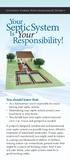 Southwest Florida Water Management District Septic System Your Is Your Responsibility! PIPE SEPTIC TANK DRAIN FIELD SOIL You should know that: As a homeowner you re responsible for maintaining your septic
SEPTIC SYSTEM. Taking care of your. ... what you need to know
 Taking care of your SEPTIC SYSTEM... what you need to know For more information, please call: WATER & WASTE MANAGEMENT PROGRAM (909) 387-4666 Visit our web site: www.sbcounty.gov/dehs A:\Septic System
Septic Records and Maintenance Guidelines
 1 Septic Records and Maintenance Guidelines Proper design, installation, and maintenance of your septic system will maximize your system's life. It will prevent failures that can be unsightly, foul-smelling,
septic systems What is a Septic System? How does a Septic System Work?
 septic systems What is a Septic System? A septic system is a private sewage treatment system. They are common in rural areas where there are no municipal sewage pipes for homes, farms, businesses or other
Frequently Asked Questions about Septic Systems
 What is a septic tank? Where is my septic tank located? Do septic tanks last forever? What should and should not go into my septic tank? How can I tell if my septic tank is working properly? Why should
Homeowners and Home Buyers Guide to Wells and Private Sewage Systems
 Homeowners and Home Buyers Guide to Wells and Private Sewage Systems What every homeowner should know about living with a well and a private sewage system. YOUR ENVIRONMENTAL SYSTEMS Out of sight out of
Understanding and Caring for Your Septic System
 Understanding and Caring for Your Septic System Summit County Public Health 1867 W. Market Street Akron, Ohio 44313 330-926-5600 www.scphoh.org The purpose of a home's subsurface septic system is to dispose
Assessing Your Septic System
 THE UNIVERSITY OF TENNESSEE AGRICULTURAL EXTENSION SERVICE SP508 D TENNESSEE Home A Syst Assessing Your Septic System George F. Smith, Professor, Agricultural Economics & Resource Development Martha W.
ALL YOU NEED TO KNOW...
 ALL YOU NEED TO KNOW... What do you know about your septic tank system? For the purposes of this booklet, a septic tank system refers to any kind of on-site sewage management system including traditional
Septic Systems and Their Maintenance
 Septic Systems and Their Maintenance Why Use a Septic System? Septic systems are used when sewage treatment plants are not accessible. They safely treat and dispose of wastewaters produced in the bathroom,
WHAT YOU NEED TO KNOW...
 A GUIDE TO OPERATING & MAINTAINING YOUR SEPTIC SYSTEM WHAT YOU NEED TO KNOW... The way you treat your septic system will influence how long the system lasts and how well it functions. If you own or rent
Nature's Cleaning Process
 Nature's Cleaning Process Students learn how a septic system cleans wastewater by performing an experiment. Level(s): 6-8 Subject(s): Physical Science, Chemistry, Life Science Virginia SOLs: 6.5 f, g;
What Is An On-Lot Sewage Disposal System?
 What Is An On-Lot Sewage Disposal System? Most rural homes and communities in Monroe County are not served by a public sewer system. In order to dispose of the wastewater (sewage) generated by homes and
SEPTIC SYSTEMS. 1. Building sewer connects the building plumbing to the septic tank.
 SEPTIC SYSTEMS Who Has A Septic System? Approximately 30 percent of Connecticut s population is served by on-site subsurface sewage disposal systems (a.k.a. septic systems). This means a large percentage
So... now you own a septic system
 So... now you own a septic system More than million homes, encompassing almost percent of the U.S. population, dispose of domestic wastewater through onsite (unsewered) systems. According to the American
MAINTAINING YOUR SEPTIC SYSTEM by Wrentham Board of Health Ravi Nadkarni, Chairman William R. Domey, Agent
 INTRODUCTION MAINTAINING YOUR SEPTIC SYSTEM by Wrentham Board of Health Ravi Nadkarni, Chairman William R. Domey, Agent To most people, a septic system (or a cesspool) is out of sight and out of mind.
You and Your Septic Tank
 You and Your Septic Tank A Guide to the Proper Operation and Maintenance of a Septic Tank System INTRODUCTION In South Florida, our sole source of drinking water is just a few feet beneath the surface
KY-A-Syst for the Home Environmental Stewardship for Homeowners. Household Wastewater: Septic Systems and Other Treatment Methods
 IP-69 KY-A-Syst for the Home Environmental Stewardship for Homeowners Household Wastewater: Septic Systems and Other Treatment Methods Why Should You Be Concerned? Household wastewater carries dirt, soap,
Looking after your Septic Tank System
 Looking after your Septic Tank System Name: Bought to you by Address: File this in your property file. 0800 TO FLUSH Call 0800 TO FLUSH 1 What do you know about your septic tank system? Just like your
Homeowner s Guide to Maintaining a Sewage Treatment System
 Homeowner s Guide to Maintaining a Sewage Treatment System Warren County Combined Health District 416 South East Street Lebanon, OH 45036 513-695-1220 Sewage Treatment Systems Septic Tank and Soil Absorption
Do your Part Be SepticSmart!
 Do your Part Be SepticSmart! A Homeowners Guide to Septic Systems TM U.S. Environmental Protection Agency A Homeowners Guide to Septic Systems www.epa.gov/septicsmart 2 Maintaining Your Septic System:
YOUR SEPTIC SYSTEM UNCOVERED
 YOUR SEPTIC SYSTEM UNCOVERED By Raymond King District Director of Environmental Health It s underground where you can t see it. You don t really understand how it works. When it doesn t work your toilets
31. ECO-INFO -- SEPTIC SAFE PROTECT YOUR HEALTH AND ENVIRONMENT YOUR SEPTIC PUMP-OUT SYSTEM with SELF ASSESSMENT TROUBLE SHOOTING GUIDE
 31. ECO-INFO -- SEPTIC SAFE PROTECT YOUR HEALTH AND ENVIRONMENT YOUR SEPTIC PUMP-OUT SYSTEM with SELF ASSESSMENT TROUBLE SHOOTING GUIDE Edited 21/12/01 Wyong Shire Council has many non sewered areas that
ON-LOT SEWA G E S Y S T E M S
 ON-LOT SEWA G E S Y S T E M S An Owner s Manual Chester County Health Department Bureau of Environmental Health Protection TABLE OF CONTENTS Page What is an on-lot sewage system 1 Types of on-lot systems
Septic System Care & Maintenance
 Septic System Care & Maintenance A User s Guide for Home/Cottage Owners Spring 2003 Preventing Septic Failure & Malfunction How many of us know how our septic system works, or think we know? We expect
FREQUENTLY ASKED SEPTIC SYSTEM QUESTIONS
 FREQUENTLY ASKED SEPTIC SYSTEM QUESTIONS What is an OSSF (On-Site Sewage Facility)? This is the term used when referring to "septic systems". What is septic system? A septic system is a method of dealing
Septic Systems Maintenance:
 Septic Systems Maintenance: A typical septic system consists of two basic components: a septic tank and an underground disposal field. Wastewater flows from the house to the septic tank. Effluent, after
Septic Systems How They Work and How to Keep Them Working
 Septic Systems How They Work and How to Keep Them Working PO Box 9300, 49 Exeter Street, Portland, Maine 04104-9300 (207) 780-4820 www.cascobayestuary.org 201 Main Street, Suite 6, Westbrook, Maine 04092
860-7668 KNOWING AND MAINTAINING YOUR SEPTIC SYSTEM. Carleton Pumping Services We look forward to hearing from you! DON T PANIC!
 DON T PANIC! WE LL SAVE YOU FROM YOUR PROBLEMS... Drain Cleaning Pipe Locating Water Jetting Maintenance Camera Inspect ion Plumbing KNOWING AND MAINTAINING YOUR SEPTIC SYSTEM 860-7668 Carleton Pumping
OFFALY COUNTY COUNCIL Comhairle Chontae Uibh Fhailí
 OFFALY COUNTY COUNCIL Comhairle Chontae Uibh Fhailí HOMEOWNER S GUIDE AND MAINTENANCE RECORD FILE FOR WASTEWATER TREATMENT SYSEMS Houses located in rural areas, not served by public sewers, depend on either
On-site Sewage Disposal Systems A HOMEOWNER S GUIDE
 On-site Sewage Disposal Systems A HOMEOWNER S GUIDE May 2013 Table of Contents Introduction page 3 Private Sewage Disposal Systems.page 3 Background Check of your System..page 3 Maintaining your System.
Avoiding an expensive
 Avoiding an expensive Understanding and maintaining your septic system Selecting or maintaining a septic system is a consideration most people do not have to worry about when they live in town. But if
Operation and Maintenance Guide for Homeowners
 LAGOON SEWAGE TREATMENT SYSTEMS It s Your On-Site System Operation and Maintenance Guide for Homeowners OKLAHOMA DEPARTMENT OF ENVIRONMENTAL QUALITY ENVIRONMENTAL COMPLAINTS AND LOCAL SERVICES P.O. Box
Septic System Owner s Manual
 Septic System Owner s Manual Sponsored by: copyright 2013 No part of this publication may be reproduced without our consent. www.callbrownies.com Brownie s Septic and Plumbing has provided quality service
St. Joseph, Missouri Water Protection Homeowners Guide to Your Sewer
 St. Joseph, Missouri Water Protection Homeowners Guide to Your Sewer Out of Sight, Out of Mind: Don t wait until you have a problem to maintain your private lateral sewer line. Keeping Excess Water Out
'A GREASE TRAP TREATMENT PERFECT FOR RESTAURANT GREASE TRAPS. RESTAURANTS WILL SAVE BIG MONEY ON GREASE TRAP MAINTENANCE.'
 1 of 6 3/7/2013 9:41 AM AUTO DOSE SYSTEM SEPTIC TANK TREATMENT SEPTIC BLOG BIO-FLO MOBILE VERSION SEPTIC TANK CARE GREASE TRAP PRODUCTS SEPTIC TANK ENZYMES GREASE TRAP CLEANER ABOUT US CLASSIC VERSION
Help protect our special places by maintaining your septic tank
 Help protect our special places by maintaining your septic tank BC3136 A septic tank guide Help protect our special places Rural Auckland is a special place, but the remoteness also means that many homes
Septic System Owner s Manual
 Septic System Owner s Manual How your septic system works and how to keep it working for you and the environment CORPORATION Innovative Environmental Products and Solutions Since 1970 Table of Contents
SEPTIC TANK SYSTEMS. Single purpose septic tank receives toilet wastes (blackwater) or sullage (greywater) only.
 SEPTIC TANK SYSTEMS There are three common types of septic tank systems in Tasmania Single purpose septic tank receives toilet wastes (blackwater) or sullage (greywater) only. Dual purpose (or all-waste)
402-475-2462. Septic Maintenance Brochure How to Care for your Septic System And Lagoon
 Septic Maintenance Brochure How to Care for your Septic System And Lagoon Check out our website at www.southwickliquidwaste.com Jason and Jaime Kubik (owners) 105 Locust Street Hickman, NE 68372 402-475-2462
Understanding Septic Tank Systems
 Understanding Septic Tank Systems Sewage and effluent can contain a variety of human disease-causing microorganisms and parasites. Disease can be spread to humans from this material by direct contact or
CERTIFIED SEPTIC EVALUATION PREPARED FOR MATT HASHEM 1673 MT. MAJOR HWY, ALTON, NH 03810
 DATE: May 31, 2013 N.H. LICENSED DESIGNER OF SUBSURFACE DISPOSAL SYSTEMS 216 Hill Road Phone & Fax: 934-6206 Franklin, NH 03235 Cell: 393-3085 CERTIFIED SEPTIC EVALUATION PREPARED FOR MATT HASHEM 1673
Septic System Management Plan for Below Grade Systems
 The goal of a septic system is to protect human health and the environment by properly treating wastewater before returning it to the environment. Your septic system is designed to kill harmful organisms
Homeowner s guide to septic system maintenance
 Homeowner s guide to septic system maintenance This booklet is a product of the Lower Meramec Planning Effort Brush, Fox and LaBarque, Hamilton and Kiefer, Grand Glaize and Fishpot Watersheds in the Lower
Courtesy of Infiltrator Systems, Inc.
 Courtesy of Infiltrator Systems, Inc. What s Inside... The Residential Septic System: Your Onsite Wastewater Treatment Plant...Page 1 The Infiltrator Chamber System: Today s Modern Solution...Page 4 Dear
Septic System Owner s Manual
 CORPORATION Innovative Environmental Products and Solutions Since 1970 Septic System Owner s Manual How your septic system works and how to keep it working for you and the environment Table of Contents
This chapter helps you evaluate
 HOME*A*SYST Home Assessment System Chapter 11. Managing Household Wastewater: Septic Systems and Other Treatment Methods This chapter helps you evaluate your septic system and pinpoint risks before they
A Guide for Delaware Homeowners about On-Site Wastewater Treatment and Disposal Systems
 D N R E C A Guide for Delaware Homeowners about On-Site Wastewater Treatment and Disposal Systems On-Site Wastewater Treatment and Disposal Systems How to Obtain a Site Evaluation, Septic Permit and a
An Onsite Wastewater Treatment System Owner s Manual
 Missouri Department of Health and Senior Services An Onsite Wastewater Treatment System Owner s Manual Recommended Guidelines for Operation and Maintenance Version 1.0 Effective Date: August 1, 2014 Table
A Guide to the Proper Care and Maintenance of Your Onsite Wastewater Treatment System COURTESY OF INFILTRATOR WATER TECHNOLOGIES
 SEPTIC SYSTEM OWNER S MANUAL A Guide to the Proper Care and Maintenance of Your Onsite Wastewater Treatment System COURTESY OF INFILTRATOR WATER TECHNOLOGIES CONGRATULATIONS... What s Inside Page 3 The
Source Water Protection Practices Bulletin Managing Sanitary Sewer Overflows and Combined Sewer Overflows to Prevent Contamination of Drinking Water
 United States Office of Water EPA 916-F-01-032 Environmental Protection (4606) July 2001 Agency Source Water Protection Practices Bulletin Managing Sanitary Sewer Overflows and Combined Sewer Overflows
WASTEWATER TREATMENT OBJECTIVES
 WASTEWATER TREATMENT OBJECTIVES The student will do the following: 1. Define wastewater and list components of wastewater. 2. Describe the function of a wastewater treatment plant. 3. Create a wastewater
City of Green Bay Department of Public Works Engineering Department
 City of Green Bay Department of Public Works Engineering Department The Difference Between Sanitary & Storm Sewers Contact Information: Department of Public Works City Hall 100 North Jefferson Street,
Maintenance Guidelines For Homeowners
 ON-SITE WASTEWATER SYSTEMS Maintenance Guidelines For Homeowners PROTECTING YOUR HEALTH, YOUR ENVIRONMENT, YOUR INVESTMENT PRODUCED BY: SWANS-SIG The Small Wastewater And Natural Systems Special Interest
A Guide to Owning & Maintaining a Septic System in the St. Albans Bay Watershed
 A Cleaner Bay Starts at Home A Guide to Owning & Maintaining a Septic System in the St. Albans Bay Watershed What s Inside Purpose of this Guide... 1 For More Information... 1 How it Works... 2 Maintaining
Comfortspec Home Inspection Services
 Cover Page SEPTIC SYSTEM INSPECTION REPORT 12345 Inspection prepared for: Satisfied Client Real Estate Agent: Happy Agent - The Best Realty Date of Inspection: 10/2/2012 Time: 10 am Age of Home: Built
Onsite Wastewater Treatment & Disposal-System Maintenance
 February 2009 Onsite Wastewater Treatment & Disposal-System Maintenance At one time an onsite waste water system was little more than a concrete tank and a pump that would take all the waste created in
Lance DeClue, REHS Environmental Health Specialist II County of San Diego Department of Environmental Health
 Lance DeClue, REHS Environmental Health Specialist II County of San Diego Department of Environmental Health Basic OWTS system design and function OWTS maintenance OWTS failures & repairs OWTS-STS (Supplemental
CITY OF GOLDEN DEPARTMENT OF PUBLIC WORKS, ENVIRONMENTAL SERVICES DIVISION
 CITY OF GOLDEN DEPARTMENT OF PUBLIC WORKS, ENVIRONMENTAL SERVICES DIVISION Grease, So What's the Problem? Does your facility produce grease? All commercial cooking facilities generate Fats, Oil, and Grease
If you have a Septic tank with pump out, this guide is for you.
 If you have a Septic tank with pump out, this guide is for you. Acknowledgments Cartoons by Fran Lowe NSW Department of Local Government 2000 As a septic system owner you are responsible for ensuring that
THURSTON COUNTY SEPTIC TANK PUMPERS' MANUAL
 THURSTON COUNTY SEPTIC TANK PUMPERS' MANUAL PREPARED BY: Environmental Health Division, Thurston County Public Health and Social Services Department WITH FUNDING FROM: The Puget Sound Water Quality Authority
Understanding and Living With Your Septic System
 Chapter 9 Understanding and Living With Your Septic System Rural versus urban sewage treatment One of the big difference between rural and city life is how sewage is dealt with. Cities usually have community
The Town of Lakeshore Basement Flooding Information to Residents
 The Town of Lakeshore Basement Flooding Information to Residents The following information is intended for residents that have homes connected to Municipal storm and sanitary sewers. However, rural residents
Buying or Selling a Home with an Onsite Wastewater System
 Summer 2011 Vol 22, No. 1 Small Community Wastewater Issues Explained to the Public Buying or Selling a Home with an Onsite Wastewater System failing septic systems should be a priority for every community
Homeowner s GUIDE. to living with a well and septic system. Northeast Colorado. Health. Department. Replacement System. Leach Field. Septic Tank.
 Homeowner s GUIDE to living with a well and septic system Northeast Colorado Health Department Replacement System Leach Field Septic Tank Well Congratulations on the purchase of your new home. Living in
To many people, a home s plumbing system is perceived as being extremely
 Chapter 1 Understanding Plumbing In This Chapter Knowing what you re getting yourself into Touring residential plumbing systems To many people, a home s plumbing system is perceived as being extremely
WASTEWATER TREATMENT AND DISPOSAL BY ON-SITE WASTEWATER TREATMENT SYSTEMS
 In large areas of Lake County, properly functioning onsite wastewater treatment systems (septic systems) are essential for the protection of the public health, the environment and property values. Throughout
 Septic System Report On:
 Alberta Onsite Wastewater Management Association Installer Training Program
 Alberta Onsite Wastewater Management Association Installer Training Program OWTS 100 Overview and Principles of Wastewater Treatment Systems Brief Review of All Types of Systems 1. Know the general principles
Sewer and Stormwater Back-ups Policy Adopted by Council October 4, 2010
 Sewer and Stormwater Back-ups Policy Adopted by Council October 4, 2010 A. Purpose The purpose of this policy is to explain how and why sewer or stormwater backups occur, what to do in the event a homeowner
HOW A SEPTIC SYSTEM FUNCTIONS
 New Milford Septic Services Old Fashioned Service Modern Technology Since 1940 Licensed Septic Installers and Cleaners 226 Pumpkin Hill Road New Milford, CT 06776 860-354-5492 HOW A SEPTIC SYSTEM FUNCTIONS
Phosphorus. Phosphorus Lake Whatcom Cooperative Management. www.ecy.wa.gov/programs/wq/nonpoint/phosphorus/phosphorusban.html
 Phosphorus Phosphorus Brochure Lake Whatcom Cooperative Management Reducing Phosphorus Website Washington State Department of Ecology www.ecy.wa.gov/programs/wq/nonpoint/phosphorus/phosphorusban.html Nutrients
On Site Treatment Systems
 On Site Treatment Systems Introduction In cases where houses require to be located in the countryside,(i.e. where no sewerage is available),it is necessary to provide a specific on-site treatment system
A HOMEOWNER S GUIDE. to SEPTIC SYSTEMS
 What s Inside 1 2 3 3 7 8 Ô Your Septic System is Your Responsibility Septic System Dos and Don ts Rules and Regulations How Does It Work? Why Should I Maintain My Septic System? How Do I Maintain My Septic
Septic System Function and Maintenance
 Your Septic System Millions of suburban and rural New York residents depend on septic systems to treat and dispose of household wastewater. The purpose of a septic system is to store, distribute, and treat
INDEX. Introduction 3. The Septic System 3. What Does The Septic Tank Do? 4. Where It All Goes 5. Problems 7. Some Dontʼs 8
 1 INDEX Introduction 3 The Septic System 3 What Does The Septic Tank Do? 4 Where It All Goes 5 Problems 7 Some Dontʼs 8 Management of Your On-Site System 9 Tank Maintenance 9 Disposal Field Area 10 Appendix
Georgia Department of Public Health. Georgia Onsite Sewage Management Systems. Background and Use of Onsite Wastewater Treatment Systems in Georgia
 Georgia Department of Public Health Georgia Onsite Sewage Management Systems Background and Use of Onsite Wastewater Treatment Systems in Georgia Background On-site sewage management systems are designed
Indiana State Department of Health Construction Guidelines for Gravity and Flood-Dose Trench Onsite Systems
 Indiana State Department of Health Construction Guidelines for Gravity and Flood-Dose Trench Onsite Systems The septic tank-absorption field sewage treatment system is composed of two major elements; the
Septic Savvy. How to care for your Residential Septic System H o u s e h o l d I n f o r m a t i o n K i t
 Septic Savvy How to care for your Residential Septic System H o u s e h o l d I n f o r m a t i o n K i t This information kit is designed to help residents understand the importance of monitoring and
DESCRIPTION OF STORMWATER STRUCTURAL CONTROLS IN MS4 PERMITS
 DESCRIPTION OF STORMWATER STRUCTURAL CONTROLS IN MS4 PERMITS Phase I MS4 permits require continuous updating of the stormwater system inventory owned and operated by the MS4. They also include inspection
Septic Tank Use & Maintenance Tips
 Yellowhead County Hamlet of Cadomin Septic Tank Use & Maintenance Tips This guide gives an overview of the responsibilities for property owners in Cadomin. For Seasonal, Permanent & Vacationing Cadomin
National Precast Concrete Association
 National Precast Concrete Association NOTES 1. This manual does not claim or imply that it addresses any safety-related issues associated with its use. Operation and maintenance of precast concrete grease
Who is responsible for making sure that wastewater is treated properly?
 WASTEWATER TREATMENT What is wastewater? Wastewater is water that has been used and must be treated before it is released into another body of water, so that it does not cause further pollution of water