
Pennsylvania Field Guide. Common Invasive Plants in Riparian Areas
|
|
|
- Norah Park
- 10 years ago
- Views:
Transcription
1 Pennsylvania Field Guide Common Invasive s in Riparian Areas

2 Caution: Be careful when using pesticides as a method to contr invasive plants. Make sure any products used are approved for the specific site location of the invasive plant; especially if the plants being contrled are located near water. Always flow directions and heed all precautions on the labels. Additional Resources: Illustration Credits: Expect as noted, all illustrations by Jan Caulfield Parts, Types and Positions of Leaves illustration courtesy of PA Department of Conservation and Natural Resources, Bureau of Forestry Photographic Credits: All photographs in this publication were used with the permission of the photographers. Except as noted, all photographs taken by Deborah J. Rudy and Rebecca J. Wertime, Alliance for the Chesapeake Bay. Photographs of Glossy Buckthorn and Winged Euonymous downloaded with permission from October 2003, Invasive.org- Invasive and Exotic Species of North America. Copyrighted by the University of Georgia. Photograph of Garlic Mustard courtesy of The Nature Conservancy. The views expressed herein are those of the author and do not necessairly reflect the views of EPA, DEP, or any of its subagencies. Funding provided by: The Pennsylvania Department of Environmental Protection through Section 319 of the federal Clean Water Act administered by the U.S. Environmental Agency Printed May 2004

3 Introduction Invasive plant species are plants introduced from outside of an ecosystem with characteristics that help them dominate and limit the diversity of species within the invaded area. Their threat lies in an ability to spread aggressively and reproduce prifically, easily out-competing native plants for light, space and nutrients. Introduction of an invasive plant species can quickly result in a reduction of native plant species and of habitat for native wildlife. Once established, invasive plants are extremely difficult to contr and restoration of the natural ecosystem can require large amounts of financial and labor resources. Early detection and rapid response is the best and most cost effective approach to contrling invasive plant species. Exotic invasive plant infestations can also threaten the plution prevention functions of riparian vegetation because an infestation typically results in diminished values, such as soil hding capacity, nutrient uptake capacity and habitat. The plants featured in this Field Guide have been selected as some of the most significant invasive plant species found in riparian and wetland areas in Pennsylvania. Species were selected after surveying conservation professionals working to restore and maintain native riparian systems in Pennsylvania. The The Alliance for for the the Chesapeake Bay Bay is is a a regional, non-profit organization that that builds consensus and and fosters partnerships for for the the protection and and restoration the of restoration the Bay and of its the rivers. Bay and its rivers.

4 Glossary Achene: Small, dry fruit with single seed. Aril: Fleshy, exterior covering of some seeds. Biennial: Herbaceous plant with two year life cycle. Bract: Modified leaf arising below a flower or inflorescence. Drupe: Fleshy or pulpy fruit with hard stone containing a single seed. Heartwood: Central, dark cored portion in a tree trunk. juncture: Connection between leaf and stem. Lenticel: Small gas-exchange openings in the cork of a woody stem. Ligule: In grasses, ring of hairs at the junction between sheath and blade. Lobe: Rounded segment of a leaf, forming part of a larger structure. Midrib: Central vein of a leaf. Node: Segment of stem to which leaf is attached. Noxious Weed: A plant determined by Pennsylvania law to be injurious to public health, crops, livestock, agricultural land or other property. Ocreae: Pair of stipules joined in a tubular sheath around the stem. Palmately: Leaves with four or more lobes radiating from a single point, resembling a human palm with outstretched fingers. Pappus: Feathery whorl covering the fruit/seed for dispersal by wind. Perennial: Herbaceous plant living more than two years. Petie: Stalk between the leaf and stem. Rhizome: Creeping underground stem. Rosette: Circular cluster of leaves radiating from the stem at ground level. Sapwood: Outer, light cored region of secondary xylem. Stipule: Small, leaf-like growth at the base of a leafstalk. Vegetative reproduction: Asexual reproduction, using vegetative tissues. Xylem: Water conducting tissue of plants.

5 Structur ucture

6 Tall perennial rhizomatous grass Hlow stems Occasional multiple branches Grows 3-16 feet in height Brackish and freshwater marshes Wet and riparian areas Herbaceous Common Reed Phragmites australis Narrow with stiff, sharp points Smooth edges Grows alternately on top half of stem Up to 12 inches long by 1 inch wide Connection between stem and leaf (ligule) has a ring of fine, silky hairs Purplish-brown plumes fading to tan Blooms in late June Primarily vegetative through rhizomes Seed spread by wind Look-alike s Common reed is similar in appearance to Giant reed (Arundo donax), another non-native grass that is considered to be invasive in some areas. The plumes of Arundo are covered with soft, whitish hairs. Common Reed is very hard to contr once established. Cutting done near the end of July for several years to diminish plant vigor has proved successful. Cut shoots should be removed to prevent resprout. Application of an aquatic form of glyphosate has also been found to be successful and should be done after the plumes have developed. Research into biocontr is being conducted.

7 Herbaceous Garlic Mustard Alliaria petiata Co season biennial herb First year plant is a low evergreen rosette Second year plants grow 2-3½ feet tall and develop single or multiple branched stalks Second year growth begins in early spring and dies back by late June Shady to partly shady areas Prefers moist soil. Heart or triangular shape with sharply toothed edge Measures 1-3 inches long and wide Arranged alternately on stalk Gives off garlic odor when crushed Small, white with four petals Clustered at the top of stalks Blooms April-May in Pennsylvania Seed Shiny, black, in slender erect pods Matures in May Seed developes even on cut flowering plant Prific and persistent seeds Look-alike s First year plants are similar in appearance to other rosette-forming plants such as viets (Via sp.), White avens (Geum canadense) and Bittercress (Cardamine spp). Garlic mustard can be distinguished by its strong garlic odor and second year bloom. Cutting plant near ground level is recommended. Pulling has the potential to disturb the soil and create an avenue for additional infestations. Burning and herbicides have been used effectively. Seeds mature on flowering cut plants so plants should be disposed of in plastic bags and sent to a landfill. Seeds remain viable for several years.

8 Herbaceous Japanese Knotweed Pygonum cuspidatum Upright, bushy perennial Grows to ten feet Forms dense thickets, dies back at first frost leaving bamboo-like debris Stems are smooth, reddish brown, swlen at leaf junctures creating a zig-zag appearance along stem. In sun or shade near water, low-lying or waste areas,d railroad beds Broad ovals to triangular with smooth edge Grows in alternate arrangement 4-6 inches long by 3-4 inches wide Blooms late summer on female plants Long spikes, white to green-white Seed Shiny, small, triangular Primarily through vigorous, deep rhizomes Small rhizome segments spread infestation through flooding or fill dirt Highly viable seed dispersed by wind/water Look-alike s Jaspanese knotweed and Giant knotweed (Pygonum sachalinense) are similar and are known to hybridize. Japanese knotweed leaves are squared off at the base and 4-6 inches long, while those of Giant knotweed are heart shaped and up to 12 inches long. Japanese knotweed is very difficult to contr. It can regenerate from small segments of rhizomes left in the ground. Pulling young plants can be effective if entire root system is removed. Cutting and covering with weed mats may kill small infestations. Application of systemic herbicide is most effective if done two weeks before fall frost. Combined cutting in June and spraying of plant in fall is recommended. Any contr must be repeated over a number of years to be successful.

9 Upright annual grass Resembles small bamboo plant Mature plants can grow to 2-3 feet sprawls along ground Low moist areas of sun to deep shade Spreads rapidly through disturbed or overbrowsed areas Herbaceous Japanese Stilt Grass Microstegium vimineum Pale green with a narrow lance shape Arranged in a sparse, alternate pattern Measures up to 3 inches Has a distinctive silver midrib that separates the leaf into unequal halves Pale green spikes at tip of the plant Appears in September and October Fruit/Seed Yellowish to reddish grain Matures in fall, shortly after flowering By numerous seeds which remain viable for at least 3 years Spreads vegetatively at joints along stem Look-alike s Japanese stilt grass is similar in appearance to several native grasses including Virginia cutgrass (Leersia virginica) and Pennsylvania smartweed (Pygonum persicaria). Its silvery midrib is a unique identification characteristic. Stilt grass may be hand pulled. Mowing or cutting with a weed whacker when plants are in bloom will prevent seed production. If mechanical methods are not feasible, targeted herbicide application may be appropriate. Seed bank remains viable for three to five years. Pre-emergent contr agents can reduce seed germination.

10 Herbaceous Lesser Celandine Ranunculus ficaria Small flowering perennial herb 4-12 inches tall Emerges in mid to late winter forming a low-growing loose rosette dies back by June Moist forested floodplains Shiny with smooth, sometimes wavy edges Dark-green and heart to kidney shaped Arranged alternately along the stem Leaves have long peties Measures inches long and wide Yellow with 8-12 petals Appears in March and April Single flower at top of plant on delicate stalk Primarily through bulblets and tubers Bulblets grow along the leaf stalks Small,cream cored bulblets are easily dislodged from plant by foot traffic and flooding Tubers can be scattered by disturbance also reproduces by seed Look-alike s Lesser celandine is similar in appearance to Marsh marigd (Catha palustris). Marsh marigd can be distinguished by the shallow toothing of its leaf edges and its flowers which lack petals. s can be hand pulled or dug. Systemic herbicides can also be used with caution. Herbicide application should be done early in the season to avoid injury to native plants.

11 Herbaceous Purple Loosestrife Lythrum salicaria Tall upright herbaceous perennial Has a square or 6-sided woody stem usually covered by downy hair Grows from 3-10 feet high Mature root can support more than 30 stems Varied wetland areas, ditches, stream edges, marshes Prefers wet soil but can grow in dry upland areas Whorled and opposite with a smooth edge Lance shaped and stalkless Heart-shaped leaves at the plant s base Showy purple spikes Individual flowers have five to seven petals Blooms from June to September Attracts many plinators Small, numerous seeds dispersed by wind/water Vegetatively along underground stems Small infestations can be hand pulled preferably before seed set. Spot treat with herbicide for der plants using glyphosate formulated for either water or upland. Herbicide applications tend to be more effective when done late in the season. Several beetle species have been approved by the USDA for biogical contr of loosestrife. Biocontr is recommended for large infestations. Contact Pennsylvania Department of Agriculture for additional information: Mailing address: Botany/Weed Program, Department of Weed Industry, 2301 N. Cameron Street, Harrisburg, PA ;

12 Herbaceous Reed Canary Grass Phalaris arundinacea Tall perennial rhizomatous grass Forms a dense rhizome system in the soil Grows 2-9 feet tall Has erect, hairless, sometimes hlow stems Among first grasses to appear in spring Cultivated as a forage crop in some areas Wetlands, waterways and wet areas Narrow, gradually tapering Measures 3-10 inches long Flat, rough on both sides, smooth edges Appears May to mid-june Green to purple erect clusters Fades to beige over time Seed Small and shiny brown By prific seed as well as vigorous vegetative reproduction in rhizomes Look-alike s Reed canary grass is similar in appearance to non-native Orchard grass (Dactylis glomerata) which has wider leaf blades and narrower flower clusters. Bluejoint grass (Calamagrostis canadensis) also looks similar before flowering. Twice yearly mowing can be effective in encouraging competition from natives and weakening plant. Mowing must be repeated for several years. Herbicides have also been found to be effective.

13 Herbaceous Spotted Knapweed Centaurea maculosa Short-lived perennial or biennial Grows to 4 feet in height Single or multiple branched, wiry stems Stems topped by a sitary flower head Seedlings form a rosette the first year Fields, roadsides and stream banks Leaves on rosettes are up to six inches long Deeply lobed Leaves of mature plant are alternate has fine hairs on top that become courser at edges Size varies with leaves becoming smaller toward the top of the plant head is egg-shaped with black tips on the bracts, creating a spotted effect Plume at top of head is pink to purple Approximately 1 inch wide Seed Small seeds dispersed by wind, water and foot or vehicle traffic Through numerous seeds Seeds viable for at least eight years Look-alike s Spotted knapweed is similar in appearance to Cornflower (Centaurea cyanus) and Corn cockle (Agrostemma githago). It can be distinguished from these by its much more deeply lobed leaves. Mowing or cutting within ten days of flower heads opening prevents seed development that season. Four insect species have been introduced to contr the plant, including root boring moths, seedhead moths, seedhead gall flies and seedhead weavils. Herbicide has also been used successfully. Repeated treatments are necessary because of the long life of the seed.

14 Herbaceous Thistle - Canada & Bull Cirsium arvense/cirsium vulgare Both are Pennsylvania noxious weeds Erect branching stems topped by flowers Mature plants stand feet tall Bull thistle grows taller than Canada Canada thistle is a perennial Bull thistle is a biennial - first year plant forms a rosette of lance shaped, spine tipped leaves; second year plant develops a stem by mid-summer Pastures, rangeland and disturbed non-forested areas Alternate spiny, oblong to lance-shaped leaves with toothed edges Bull thistle has course hairs on the upper surface and softer whitish hairs below Disk shaped flowers -1 inch in diameter head surrounded by spiny bracts in Bull thistle, spineless bracts in Canada thistle Pink to purple in Canada thistle Reddish pink to purple in Bull thistle Appears from June to early fall Seed Flattened and brown attached to feathery pappus that allows it to float in the wind Abundant seed Canada thistle also spreads vegetatively by creeping rhizomes Cutting before seed set will contr spread of Bull thistle. Repeated cutting of Canada thistle will eventually weaken and exhaust root system. Targeted application of systemic herbicide such as glyphosate may be appropriate.

15 Vine English Ivy Hedera helix L. Evergreen woody vine Climbs and acts as a ground cover Vines develop root-like structures enabling them to adhere to trees and walls Vines can reach 12 inches in diameter Woodlands, forest edges and fields Full sun to full shade Varies in shape but is palmately lobed Shiny, dark green with smooth edge Arranged alternately on vine. Measures up to 4 inches Small, green-white Umbrella-shaped clusters s in fall if plant has sufficient light Fruit Matures in spring Round, blue/black in cor Eaten by birds Through seed dispersed by birds Look-alike s Boston ivy (Parthenocissus japonicus) is very similar in appearance but is deciduous. English ivy is evergreen. Hand pulling is effective. should be bagged and removed. Roots remain alive after removal of above ground portions of plant. Systemic herbicide can be applied to cut stems to kill roots.

16 Vine Japanese Honeysuckle Lonicera japonica Woody perennial climbing vine Evergreen in mild climates Stems and leaves sometimes covered with fine, soft hairs Sun to shade Disturbed areas including fields, forests, wetlands, barrens Oblong to oval with a smooth edge or in a slightly lobed shape Opposite arrangement along the stem size inches long Small, fragrant, tubular-shaped Grows in pairs along stem at leaf junctures Blooms late April through July or later Creamy white, turning yellow with age Fruit Appears in late summer to fall Small, black, round berry Contains many seeds Abundant seed spread by birds and wildlife Vegetatively along runners at leaf junctions and along underground rhizomes Look-alike s The native vine honeysuckles, Trumpet honeysuckle (Lonicera sempervirens) and Twining honeysuckle (L. dioica), can be distinguished from Japanese honeysuckle by their red to orange flowers and berries. The last two leaves of new growth of both natives are joined at their bases along the stem in a cuplike shape. Repeated pulling of entire root system can be effective. If the plant is hanging from a tree, tie roots up at shoulder height. Monitor for new plants frequently. Frequent mowing, twice a year in July and September, can limit growth and spread. Systemic herbicides have also proved effective.

17 Annual climbing or trailing vine Grows 2-8 feet during season Covered with barbs that irritate skin Forms dense mats covering existing plants Occasionally grows as a perennial River banks, stream banks, forest edges, abandoned fields, open disturbed areas Vine Japanese Hops Humulus japonicus Palmately lobed with 5-9 lobes Measures between 2-4 inches Edges are toothed Dull green cone-shaped spikes 2-3 inches Appears in midsummer. Fruit Small yellow-brown achenes Numerous small seeds in late summer and early fall Seed spreads along waterways Look-alike s Similar in appearance to Wild cucumber (Echinocystis lobata), hops can be identified by its downward pointing hooked barbs. It also does not have tendrils as E. lobata does. Can be hand pulled. Remove before it sets seed in August-September. May resprout from unpulled root or re-root from pulled plant so remove pulled plant from site. Glyphosate can be used as well. The seedbank is exhausted in approximately three years.

18 Trailing annual vine Delicate stem contains sharp, downward pointing barbs Grows rapidly forming dense mats blanketing other vegetation Distinctive, small, round, funnel shaped structure (ocreae) encircles stem at intervals. Sun to part shade Moist well-drained soils Disturbed areas such as wood edges, wetlands and stream banks. Vine Mile-a-Minute Pygonum perfiatum Alternate, light green (occasionally reddish) Triangular to heart-shaped, smooth edges Barbs on underside Measures 1¼ to 3 inches at base Small, white and inconspicuous Emerges from the ocreae late June until fall. Fruit Small, segmented berry Cor varies: metallic blue, white, green Contains small, round, black, shiny seed Through numerous seeds disbursed by birds and water Mile-a-minute can be removed by hand with protective clothing to avoid barbs. Young seedlings do not have barbs. Repeated removal throughout the summer is necessary, as new seedlings will emerge. Mowing throughout the summer will also restrict flowering. Seed stock lasts several years. Herbicidal soap has been used successfully and requires repeated treatments throughout the summer.

19 Deciduous, woody, perennial vine Produces a dense mass of vines Can blanket all vegetation within infested area Woodland edge, woodlands Shade terant but found more often in sun Oval-shaped and glossy Finely toothed edge 1-3 inches long and wide Alternate arrangement along vine Vine Oriental Bittersweet Celastrus orbiculatus Small and greenish Emerges in clusters along stems at leaf axils Blooms in spring Fruit Green to yellow berries form in September Outer fruit splits open to show red/orange arils that contain seeds Berries are eaten by many species of bird By prific seeds in late spring Vegetatively through root suckers and along stems above ground Look-alike s The native climbing bittersweet (Celastrus scandens) is very similar in appearance, but it flowers at the tips of vines rather than along stems at leaf axils. Bittersweet can be hand pulled by the roots. Place plants that have already set fruit in a garbage bag and remove from site. Systemic herbicide, either glyphosate or triclopyr, can be applied directly to cut stem to kill root system.

20 Shrub Common Privet Ligustrum vulgare Fast growing deciduous shrub Grows to 15 feet tall Smooth gray-brown bark Multiple branches Commonly used landscape plant naturalizes in areas of full sun to part shade Simple oval to elliptical 1-2½-inches long Dark green, glossy,waxy appearance Smooth edge Grows in opposite arrangement along stem Turns purplish in fall Grows in clusters at the end of branches Small, white with a strong scent Fruit Small, blue-black berries Appears in late summer-early fall Seed is widely dispersed by birds and other wildlife Look-alike s Inkberry (Ilex glabra) is similar in appearance but it has alternate leaf arrangement and is evergreen. Privet is deciduous with opposite leaves. Entire plant including roots can be dug out if plants are small. This method will disturb the soil producing an avenue for additional infestations. will resprout from remaining roots. Cut larger plants and paint stumps with systemic herbicide like glyphosate.

21 Shrub Exotic Bush Honeysuckles Lonicera: L. maackii, L. morrowii, L. tatarica, L.standishii s Woody deciduous shrub Multi-stemmed, oppositely branched Grows from 6-15 feet in height Sun to part shade Forest edges and disturbed areas Elliptical or lance shaped with a smooth edge 1-2½ inches long Opposite leaf arrangement Small, fragrant, tubular Grows in pairs along stem at leaf junction Blooms in May Creamy white, pink or crimson in cor Fruit Matures in September Cor: red to orange Popular with birds By seed dispersed by birds and small mammals. Look-alike s Fruit of the native bush honeysuckles are blue or black rather than red or orange. The exotic honeysuckles tend to leaf earlier than natives and retain leaves later in the season and their flowers have a hairy style (stalk between stigma and ovary). Hand removal of seedlings and small plants is effective but requires monitoring for new sprouts. Repeated cutting will eventually diminish plant vigor and kill the shrub, although winter cutting will encourage vigorous re-sprouting. Treatment with systemic herbicides late in the growing season is effective.
22 Shrub Glossy Buckthorn Rhamnus frangula Fast growing deciduous shrub or small tree Grows to feet s out very early in the year Retains leaves late into growing season Gray-brown bark with a speckled appearance, due to light cored lenticels Distinctive winter appearance with hairy terminal buds and curving or arching twigs Cut stems show distinctive yellow sapwood and pink heartwood Full sun to shade Favors damp locations Oval and shiny between 1-3 inches long Edges are smooth and slightly wavy Appears on female plants in May 5-petaled, greenish-white Appears in clusters along stem Fruit/Seeds Red ovals turning purplish-black when ripe Eaten by birds Fruit appears on the plant July-September Prific seed is spread by birds Look-alike s Glossy buckthorn is similar in appearance to two smaller native shrubs, Alder buckthorn (Rhamnus alnifia) and Lance-leafed buckthorn (Rhamnus lanceata). The native buckthorns have bud scales in the winter and hairless twigs. The plant resprouts vigorously when cut. Hand pulling of smaller plants can be successful but disturbed soil can cause seed germination. Cutting and treating of stumps in fall with glyphosate has been successful. of seedlings will be necessary in subsequent years.
23 Shrub Japanese Barberry Berberis thunbergii Small, dense deciduous shrub Grows 2-8 feet in height Grey/brown bark with grooved brown branches Thorns at the leaf nodes Bright yellow wood when bark is scratched Full sun to shade including forest, open woodlands, wetlands and meadows Small (1/2 to 1 ½ inches long) Bright green and oval to spatula-shaped Smooth edge Arranged alternately on the stem Appears in mid-april to May Clusters of small pale yellow flowers along stem Fruit/Seed Egg-shaped shiny red berries Approximately 1/3 inch long Appears from July to October Persists on shrub throughout the winter Berries are eaten by small mammals and birds Seed spread by animals; vegetatively s can be hand pulled while wearing thick gloves to protect skin from sharp thorns. Repeated cutting or mowing has been successful as has treatment with systemic herbicides.
24 Shrub Multiflora Rose Rosa multiflora Thorny, perennial shrub with arching stems Grows to approximately 13 feet tall Can form large dense hedges as it spreads Fields, forests, prairies and riparian areas. Compound Divided into five to eleven leaflets with sharply toothed edges Fringed or hairy structure at leaf stipuls Grows in clusters Small, white to pinkish-white, fragrant, five-petal flowers Appears May-June Fruit Reddish, fleshy, known as rose hips Develops during the summer Remains on plant through winter Provides food for birds and wildlife Through numerous seed spread by birds Vegetatively on sprouted tips of arching canes Look-alike s Several plants including pasture rose (Rosa carina), swamp rose (Rosa palustris) and Allegheny blackberry (Rubus allegheniensis) are similar in appearance. Multiflora rose can be distinguished by the pair of fringed bracts found at the base of each leaf stalk and upright stems. Hand pulling of young plants can be successful. Larger plants can be cut or mowed repeatedly (3-6 times during growing season) to weaken and eventually kill. Cut stumps or resprouted stump may be treated with systemic herbicide to kill roots. Herbicide treatment is most effective late in the growing season.
25 Shrub Winged Euonymus or Burning Bush Euonymus alata Multi-stemmed, woody shrub Grows to over 15 feet tall Stems have distinctive tan to brown rectangular, corky wings Develops bright red fiage in fall Popular landscape plant Full sun to shade Forests and scrublands Opposite arrangement Elliptical with a finely toothed edge Measures from 1½ to 3 inches long Small, yellowish green, inconspicuous Blooms in clusters late April-June Fruit/Seed Dark red, oblong capsule splits to reveal bright orange-red Eaten and dispersed by birds Vegetative through root shoots and seed Look-alike s Similar in appearance to other euonymus including strawberry bush (Euonymus americana) which does not have the winged stems. Winged euonymus is also similar in appearance to saplings of native sweetgum (Liquidambar styraciflua) that have winged stems but lobed leaves. Seedlings can be hand pulled. Repeated cutting or cutting with treatment with systemic herbicides can be effective.
26 Shrub/T ub/tree Autumn Olive and Russian Olive Elaeagnus umbellata & Elaeagnus angustifia L. Shrub or small tree Autumn ive grows to 20 feet Russian ive grows to 30 feet with twigs often covered with thorns Full or part sun Can survive in very poor soils Elliptical to lance-shaped Smooth edge Arranged alternately along the stem Distinctive silvery-green scaling on lower surface Fragrant, light yellow trumpet shaped Appears in clusters Early spring on Autumn ive June to July on Russian ive Fruit Appears along stem Small, pink or red, round drupe on Autumn ive Dry, yellow, mealy fruit on Russian ive Eaten by many species of birds and some mammals Through copious seed dispersed by wildlife Russian ive can spread vegetatively Hand pulling of young plants is possible. Burning, cutting or girdling can encourage vigorous re-growth. Cutting flowed by herbicide application has been found to be effective.
27 Tree Norway Maple Acer platanoides Deciduous tree with broad, rounded crown Grows to 90 feet tall Bark of young trees is smooth, gray brown becoming black and furrowed with age Thrives in poor, compacted soils Forests and fields Palmately lobed with 5 to 7 lobes and long, pointed teeth Dark green leaf is broader than long Bright yellow-green Appears in early spring before leaves Fruit Matures during the summer as pairs of winged blades Each blade contains one seed Seed dispersed by wind and water also spreads vegetatively along roots Look-alike s Norway maple is similar in appearance to many maples especially sugar maple (Acer saccharum). Norway maple has a distinctive milky white sap that oozes out of leaf veins and stalks when broken and turns yellow late in the fall. Sugar maple leaves display a distinctive shade of orange-red in autumn. Hand pull seedlings. Repeated cutting or cutting flowed by herbicidal treatment on resprouts can be effective.
28 Tree Princess Tree Paulownia tomentosa Deciduous tree with a rounded crown and heavy branches Grows to 60 feet tall Bark is rough, gray-brown with smooth shiny patches Stems are ive to dark brown and hairy Disturbed woods, stream banks and steep rocky slopes Large, paired, 5-12 inches long Heart shaped to oval, occasionally appearing shallowly three-lobed Velvety texture on underside Appears in early spring before leaves emerge Large, showy, upright clusters of purple, tube-like flowers Fruit Appears in clusters in late summer Hard, oval capsules 1-1½ inches long Filled with numerous small, winged seeds Green, maturing to brown Matures in fall Remains on tree through winter Through numerous seeds dispersed by wind and water Tree can produce 20 million viable seeds Look-alike s Paulownia resembles the native Catalpa (Catalpa speciosa). Catalpa leaves are whorled around the stem and have a more pointed tip. In summer, slender green pods resembling cigars form on Catalpa. Hand pulling is effective for young seedlings. can resprout from root fragments. Repeated cutting or cutting flowed by herbicidal treatment on resprouts can be effective.
29 Tree Tree-of-Heaven Ailanthus altissima Grows over 80 feet tall Single trunk with rounded crown gives off strong distinct odor when cut, similiar to peanut butter Bark is thin, light gray to brown Large, heart-shaped leaf scars Thrives in disturbed soil, poor soil Roadside, forest and field edges Leaves Compound, opposite leaflets Smooth with glandular teeth near base Between 1-4 feet in length Arranged alternately on branch s Yellow-green, grows at ends of branches Appears in June Fruit Twisted, oblong inches long Light-green, drying to tan or pink Seeds often remain on tree through the year Prific seed with high germination rate Vegetatively by root shoots and suckers Look-alike s Several plants are confused with Tree-of-heaven including staghorn sumac (Rhus typhina) distinguished by its fuzzy, reddish brown leaves and stems, ash (Fraxinus species) distinguished by opposite leaves, and black walnut (Juglans nigra L.) distinguished by its toothed leaves and large green fruits. Seedlings can be hand pulled. Girdled or cut trees will re-sprout vigorously. Glyphosate can be applied as a fiar spray, stump treatment, injection or with the hack and squirt method. Most effective when applied during growing season. Basal bark treatment with the chemical Triclopyr is also very effective particularly when done in the fall. There is antedotal evidence that copper roofing nails driven into the trunk can kill the tree.
Japanese Knotweed (Polygonum cuspidatum) Japanese honeysuckle (Lonicera japonica)
 Japanese Knotweed (Polygonum cuspidatum) Japanese Barberry (Berberis thunbergii) Photo: www.emmitsburg.net Description: Aggressive plant that forms thickets 3-6 feet tall. Stems are hollow and bamboo-like.
Invasive Tree Species
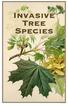 Invasive Tree Species A Contents Invasive Tree Species................. 1 Removal Permit Process.............. 2 Mitigation......................... 3 Identification Guide: Norway maple - Acer platanoides............
North Shore Community Garden Society Plants to Avoid
 North Shore Community Garden Society - Plants to Avoid Page 1 North Shore Community Garden Society Plants to Avoid Japanese Polygonum Kno tw eed Cuspidatum Rhizomatous, semi-woody, herbaceous perennial
JAPANESE KNOTWEED. What is Japanese Knotweed?
 JAPANESE KNOTWEED What is Japanese Knotweed? Japanese Knotweed (botanical name Fallopia japonica) was introduced into Britain from Japan in the early 1800 s. It was originally grown as an ornamental plant,
Common Name: AMERICAN BARBERRY. Scientific Name: Berberis canadensis Miller. Other Commonly Used Names: none. Previously Used Scientific Names: none
 Common Name: AMERICAN BARBERRY Scientific Name: Berberis canadensis Miller Other Commonly Used Names: none Previously Used Scientific Names: none Family: Berberidaceae (barberry) Rarity Ranks: G3/S1 State
Dichotomous Keys for the Arboretum Walk. Plant List
 1 Dichotomous Keys for the Arboretum Walk Plant List Common name 1. Pin oak 2. Sweet gum 3. Red maple 4. Bur oak 5. River birch 6. Black cherry 7. Tulip poplar 8. Kentucky coffeetree 9. Catalpa 10. Honeylocust
Controlling Invasive Plants and Animals in our Community
 Controlling Invasive Plants and Animals in our Community PROVIDED BY THE WILDLIFE COMMITTEE What makes a plant or animal invasive? When a plant or animal from another region of the world (usually Europe
Trees help us experience connections with our natural heritage and with our most deeply held spiritual and cultural values.
 REASONS FOR PLANTING TREES Shade from trees cools hot streets and parking lots and drive ways. Cities are "heat islands" that are 5-9 degrees hotter than surrounding areas. Trees and shrubs add beauty
The Basics of Tree Pruning
 The Basics of Tree Pruning By John Ball, Forest Health Specialist and Aaron Kiesz, Urban and Community Forestry Specialist Until the end of the 19 th century, trees were not a common sight in many parts
Plant Structure, Growth, and Development. Chapter 35
 Plant Structure, Growth, and Development Chapter 35 PLANTS developmental plasticity = ability of plant to alter form to respond to environment Biological heirarchy Cell basic unit of life Tissue group
Laboratory Broadleaf Weed Identification
 1 Tips for Identifying Broadleaf Weeds Laboratory Broadleaf Weed Identification The cotyledon is an important identifying characteristic for broadleaf weeds. Shape and position of leaves, presence of pubescence
Best Management Practices for Control of Non-Native Invasives April 2009
 Best Management Practices for Control of Non-Native Invasives April 2009 Park Planning and Stewardship Division Natural Resources Stewardship Section MONTGOMERY COUNTY DEPARTMENT OF PARKS THE MARYLAND-NATIONAL
Making and using keys Teacher Guidance
 Teacher Guidance Activities in earlier sections should have laid foundations that lead children to these more complex activities, in which they apply their observation and sorting skills to the practical
How To Plan A Buffer Zone
 Backyard Buffers Protecting Habitat and Water Quality What is a buffer? A buffer (also called a riparian buffer area or zone) is the strip of natural vegetation along the bank of a stream, lake or other
Why Should I Care. Invasive Plants?
 Why Should I Care About Invasive Plants? HOW INVASIVE PLANTS IMPACT HUNTING, FISHING, BOATING, GARDENING, HIKING, BIKING, HORSEBACK RIDING, AND OTHER RECREATIONAL ACTIVITIES IN THE MIDWEST Invasive plants
Care of Mature Backyard Apple Trees
 Education Center and Info Line practical solutions to everyday questions Toll free Info Line 1-877-398-4769 M-F 9 AM - 2 PM Care of Mature Backyard Apple Trees Introduction Backyard apple trees can be
Summary of Pre- and Post-Project Vegetation Survey Results
 3921 East Bayshore Road Palo Alto CA 94303-4326 tel 650.962.9876 fax 650.962.8234 www.acterra.org [email protected] Introduction Summary of Pre- and Post-Project Vegetation Survey Results Acterra Stewardship
Grade 4 Title: My Name is Magnolia Whittney McCray
 Grade 4 Title: My Name is Magnolia Whittney McCray Student Learning Objective(s): The students will understand why Magnolias are a type of evergreen. The students will create a story based on the information
Post-Wildfire Clean-Up and Response in Houston Toad Habitat Best Management Practices
 Post-Wildfire Clean-Up and Response in Houston Toad Habitat Best Management Practices Purpose The purpose of this document is to provide guidance and recommendations for minimizing potential impacts to
Best Lawns News. Late Spring 2014 Edition Virginia Cooperative Extension Prince William Unit. Featured in This Issue
 Best Lawns News Late Spring 2014 Edition Virginia Cooperative Extension Prince William Unit Featured in This Issue Stilt Grass 2 National Arboretum s Grass Roots Exhibit 4 Grub Control 5 All content was
DEVELOPMENT GUIDELINES OAK TREES CARE AND MAINTENANCE
 DEVELOPMENT GUIDELINES OAK TREES CARE AND MAINTENANCE This guide will offer basic information for the preservation and maintenance of oak trees as a part of an overall landscape use. Unfortunately, oak
Fertilizer, Weed Control, Grubs, and General Application Questions
 Lawn Care FAQ s Fertilizer, Weed Control, Grubs, and General Application Questions Why do we have so many weeds? Dandelions in particular, weeds in general, do not seem concerned about how long lawn has
Weed I.D. and Management
 Weed I.D. and Management featuring 10 common weeds Test your skills Bill Curran Penn State University Weed identification Most people want to know the names of (and how to control) the weeds they encounter
Integrated Management of Invasive Thistles in Oklahoma
 Oklahoma Cooperative Extension Service Integrated Management of Invasive Thistles in Oklahoma EPP-7318 Case Medlin Extension Weed Specialist Pat Bolin IPM Coordinator Oklahoma Cooperative Extension Fact
Integrated Weed Management in Portland Parks
 Urban Pest Management Course February 6, 2013 Integrated Weed Management in Portland Parks Commissioner Nick Fish www.portlandparks.org Director Mike Abbaté Commissioner www.portlandparks.org Jim Francecsconi
Invasives. Degree of Invasiveness Key 1 = primary concern 2 = secondary concern 3 = weed. Plant botanical name Degree of Plant common
 Invasives Degree of Invasiveness Key 1 = primary concern 2 = secondary concern 3 = weed Plant botanical name Degree of Why? Plant common invasiveness name Autumn olive Elaeagnus umbellate 1 Difficult to
Invasive Species Jeopardy
 LESSON FOURTEEN: INVASIVE SPECIES JEOPARDY Duration: One 45-minute class period Objectives: To test students knowledge of exotic invasive plant species taught in this unit. Prepare in advance: Practice
Project on the Eradication of the Weed Wedelia trilobata from Niue. Pest Management in the Pacific Programme
 Project on the Eradication of the Weed Wedelia trilobata from Niue Pest Management in the Pacific Programme (Component 7: Cook Islands, Niue and Tokelau) Progress Report INTRODUCTION Wedelia trilobata
Cercis Ruby Falls. www.planthaven.com. Origin: Redbud breeding program at NCSU Species: Cercis canadensis Protection Status: US PPAF
 Cercis Ruby Falls Origin: Redbud breeding program at NCSU Protection Status: US PPAF Key Features Unique weeping habit. Full crown of foliage at the top. Large heart shaped purple leaves. Attractive reddish-purple
Invasive Plants. A Field Identification Guide to. in Michigan s Natural Communities
 A Field Identification Guide to Invasive Plants in Michigan s Natural Communities A resource for public land managers, land stewards and volunteers engaged in conserving & restoring Michigan s native plant
o d Propagation and Moon Planting Fact Sheet
 o d Propagation and Moon Planting Fact Sheet Propagation Propagation is actually quite simple and requires very little effort on your part. Most seeds are ready to go, complete with all the nutrients and
Flowers; Seeds enclosed in fruit
 Name Class Date Chapter 22 Plant Diversity Section Review 22-1 Reviewing Key Concepts Short Answer On the lines provided, answer the following questions. 1. Describe the main characteristics of plants.
The Wonderful World of Wetlands BINGO
 The Wonderful World of Wetlands BINGO Time: 10-15 minutes to create Bingo board; 5-10 minutes to play one-round of Bingo Scituate Reservoir Watershed Education Program 17 Smith Ave Greenville, RI 02828
Why Fruit Trees Die D. B. Meador, Extension Specialist (retired) University of Illinois
 Why Fruit Trees Die D. B. Meador, Extension Specialist (retired) University of Illinois Occasionally, fruit trees decline and often die. Diseases affecting the leaves, fruit, and twigs of fruit trees usually
Vascular Plants Bryophytes. Seedless Plants
 plant reproduction The Plants Vascular Plants Bryophytes Liverworts, Hornworts, Mosses lack roots and specialized tissues grow in moist, shady areas All have sieve cells and tracheids Seedless Plants Ferns
April s Featured Plants
 Genus: Geum (Avens) Genus of about 50 perennials, mostly with dense clusters of hairy leaves Geum chiloense Species originating from Island of Chiloe, Chile which enjoys a cold, wet climate. These plants
Pruning Fruit Trees. Develop strong tree structure. This should begin when trees are planted and continue each year thereafter.
 Agriculture and Natural Resources Pruning Fruit Trees Extension Horticulture Arkansas Is Our Campus Visit our web site at: http://www.uaex.edu Fruit trees should be pruned every year to maintain their
Public Utility District #1 of Jefferson County Vegetation Clearance Policy And Specifications
 Jefferson County PUD Company Policy Policy No. Date: Public Utility District #1 of Jefferson County Vegetation Clearance Policy And Specifications Purpose The purpose of this policy statement and these
Growing Cocoa Beans. Growing Region
 Growing Cocoa Beans All chocolate begins with cocoa beans, the fruit of the cacao tree (also called a cocoa tree). Scientists know that the cacao tree originated somewhere in South or Central America.
Two Main Precautions Before You Begin Working
 Pruning Mango Trees Roy Beckford, Ag/Natural Resources Agent, UF/IFAS Lee County Two Main Precautions Before You Begin Working 1. Mango peel and sap contain urushiol, the chemical in poison ivy and poison
Milk Thistle BACKGROUND INFORMATION. King County Noxious Weed Control Program BEST MANAGEMENT PRACTICES. Impacts and History.
 BEST MANAGEMENT PRACTICES Milk Thistle Silybum marianum Asteraceae Class A Noxious Weed Eradication Required Legal Status in King County: Milk thistle is a Class A Noxious Weed (non native species that
Integrating Bird Conservation and Natural Resources Management: Best Management Practices. Jennifer Devlin, City of Portland, Environmental Services
 Integrating Bird Conservation and Natural Resources Management: Best Management Practices Jennifer Devlin, City of Portland, Environmental Services When to Plan Disturbance: August 1 January 31 best time
Tree and forest restoration following wildfire
 Peter F. Kolb (PhD) MSU Extension Forestry Specialist Adj. Assistant Professor Forest Ecology School of Forestry, University of Montana, Missoula, MT 59808 Tel. (406) 243-4705, e-mail: [email protected]
3. INNS growing wild in my neighbourhood along river, railway, road etc. what to do?
 Japanese knotweed and property Case studies 1. My neighbour has INNS growing on their land what can I do? If there is Japanese knotweed growing on private land next to your garden the legislation does
Wildlifer 2013 Managing Wildlife on Private Lands
 Master Wildlifer 2013 Managing Wildlife on Private Lands Greg Yarrow, Chair and Professor Natural Resources School of Agricultural, Forest, & Environmental Sciences Clemson University Clemson, South Carolina,
Frequently asked Questions about Weeds
 Frequently asked Questions about Weeds Q: Why do I have so many weeds in my yard? A: Some combination of the following factors will contribute to high weed populations: A large number of weed seeds or
Identifying Pennsylvania Trees. Pennsylvania Forest Stewardship Program
 Identifying Pennsylvania Trees Pennsylvania Forest Stewardship Program Tree Identification In this presentation you will learn to identify trees using the Summer Key to Pennsylvania Trees. Trees can be
WEED MANAGEMENT LEARNING OBJECTIVES
 C 6 H A P TE R WEED MANAGEMENT LEARNING OBJECTIVES After completely studying this chapter, you should: Be able to define a weed and its four stages of development. Understand the differences between annual,
Dry Bean Types and Development Stages
 Dry Bean Types and Development Stages Two basic plant growth habits are found in dry edible bean: determinate (bush) or indeterminate (vining or trailing). Cultivars may be classified according to plant
GENERAL WATERING & CARE GUIDE
 GENERAL WATERING & CARE GUIDE Between 30-60 percent of water applied to lawns and gardens is never absorbed by the plants. Water is often wasted because it is applied too quickly and runs off, evaporates
Apricot Tree Prunus armeniaca
 Apricot Tree Prunus armeniaca Up to 25-30 tall x 15-20 wide or partial shade 10 degrees F. General: The Apricot Tree is a subspecies of the peach and dates back 3,000 years to northeastern China. Apricots
Restoring Land and Planting Trees
 198 11 Restoring Land and Planting Trees In this chapter: page Preventing erosion...200 Story: NGO workers learn about erosion from farmers... 201 Restoring damaged land...202 Natural succession...202
Ecologically based weed management! Chuck Mohler! Cornell University!
 Ecologically based weed management! Chuck Mohler! Cornell University! Outline! Understanding weeds! Behavior of wandering perennials! Tillage and emergence cues! Life and death of weed seeds in the soil!
The OPAL Biodiversity Survey
 The OPAL Biodiversity Survey By The Open University with Hedgelink Introduction Biodiversity is the variety of life. Hedgerows can be important havens for this, both in the countryside and in our cities.
CRP Mid-Contract Management Option: Integrated Wildlife Management (645)
 CRP Mid-Contract Management Option: Integrated Wildlife Management (645) Conservation Practice Job Sheet ID - CRP, JS-20 Revised August 2013 The purpose of mid-contract management activities is to enhance
Writing a Dichotomous Key to Wildflowers
 Writing a Dichotomous Key to Wildflowers Objectives: 1. Understand how to use and make dichotomous keys. 2. Understand common terminology of plant morphology. 3. Learn to recognize some fall wildflowers.
A DISCOVERY REGARDING THE DEATH OF ASH TREES IN THE PLYMOUTH AREA
 A DISCOVERY REGARDING THE DEATH OF ASH TREES IN THE PLYMOUTH AREA As you are probably aware, we have seen a significant amount of dying ash trees in the Plymouth, Canton, Northville area. This prompted
FORESTED VEGETATION. forests by restoring forests at lower. Prevent invasive plants from establishing after disturbances
 FORESTED VEGETATION Type of strategy Protect General cold adaptation upland and approach subalpine forests by restoring forests at lower Specific adaptation action Thin dry forests to densities low enough
After the Storm: Caring for Your Trees
 Montana State University Extension Service Peter Kolb (PhD) MSU Extension Forestry Specialist School of Forestry, University of Montana,Missoula, MT 59812 Tel. (406) 243-4705; e-mail: [email protected]
runing & Orchard Renewal
 P runing & Orchard Renewal Richard G. St-Pierre, Ph.D. (January 2006) The Basics Of Pruning & Orchard Renewal Pruning is defined as the art and science of cutting away a portion of a plant to improve its
Prepared By: Tom Parker Geum Environmental Consulting, Inc.
 Prepared By: Tom Parker Geum Environmental Consulting, Inc. Topics covered: Definition of riparian and floodplain restoration Floodplain attributes as a basis for developing criteria for restoration designs
Identification and Prevention of Frost or Freeze Damage By Linda Reddick, Kingman Area Master Gardener
 KINGMAN IS GROWING! COLUMN Identification and Prevention of Frost or Freeze Damage By Linda Reddick, Kingman Area Master Gardener Again this year we have been experiencing some very cold weather, with
GREAT INFESTATIONS. Connecticut s Response to Green Invaders
 GREAT INFESTATIONS Connecticut s Response to Green Invaders The second biggest threat to Connecticut s natural environment is invasion by alien plants and animals. (The top threat is loss of habitat to
What you need to know about the management of. the Emerald Ash. Borer (EAB) Guidelines for hiring tree care services to manage urban trees
 What you need to know about the management of the Emerald Ash Borer (EAB) Guidelines for hiring tree care services to manage urban trees What is an Emerald Ash Borer? This booklet has been designed for
Reference: Remediation Plan for Areas of Vegetation Removal at the Cedar Point Wind Farm
 Stantec Consulting Ltd. 1-7 Southgate Drive, Guelph ON N1G 4P5 June 4, 215 File: 169679 Attention: St. Clair Region Conservation Authority 25 Mill Pond Crescent, Strathroy, ON N7G 3P9 Dear, In early 215,
The Simple Truth: We Can t Live Without Them
 The Great Pollinator Partnership poster has been reproduced as part of a cooperative effort of the North American Pollinator Protection Campaign to raise awareness of the importance of pollinators to our
Division of Forestry
 Guidelines for Managing Sites with Ash To Address the Threat of Emerald Ash Borer On Forestry-Administered Lands BACKGROUND The ash genus (Fraxinus) in Minnesota comprises some 900 million trees and is
Clean, Drain, Dry! Activity
 Clean, Drain, Dry! Activity Students participate in hands on activity that demonstrates the ways in which aquatic plants and other nuisance species may be accidentally introduced or spread to new locations.
KINGMAN IS GROWING! COLUMN
 KINGMAN IS GROWING! COLUMN THE INTRIGUING AGAVE BY LINDA REDDICK, KINGMAN AREA MASTER GARDENER An Agave is a tough, easy-care succulent that can add style to your garden, tolerate less than ideal conditions
Tree Trimming Tips and Tricks
 Tree Trimming Tips and Tricks Start with Professionals Mistakes can be costly for you and your tree. Professionals who know about trees can help you get started with the right tree in the right place.
The Fennel Battle on MCB Camp Pendleton: Partnerships and Techniques in Combating the Invasion
 The Fennel Battle on MCB Camp Pendleton: Partnerships and Techniques in Combating the Invasion Todd Easley and Deborah Bieber Land Management Branch MCB Camp Pendleton, CA Carl Bell U.C. Cooperative Extension
PREVENTING PEST DAMAGE IN HOME LAWNS
 PREVENTING PEST DAMAGE IN HOME LAWNS Quick Tips Summary Use mixed grass seeds rather than a single variety Fertilize with composted organics or slow-acting synthetic products Keep soil at ph 5.8 6.5 Keep
by Erik Lehnhoff, Walt Woolbaugh, and Lisa Rew
 Designing the Perfect Plant Activities to Investigate Plant Ecology Plant ecology is an important subject that often receives little attention in middle school, as more time during science classes is devoted
CHAPTER III: CURRENT RESOURCE MANAGEMENT CAPABILITIES, ISSUES, THREATS, AND PROGRAM NEEDS
 CHAPTER III: CURRENT RESOURCE MANAGEMENT CAPABILITIES, ISSUES, THREATS, AND PROGRAM NEEDS A. Introduction to the Appalachian Trail Resource Management Program This section identifies current management
Woodlands Management Plan. (Draft June 2011) A. Definition of Woodlands Areas vs. Landscaped Areas of Parkfairfax
 Woodlands Management Plan (Draft June 2011) I. Background A. Definition of Woodlands Areas vs. Landscaped Areas of Parkfairfax The woodlands are defined as those wooded areas of Parkfairfax which are left
A Visual Guide to Detecting Emerald Ash Borer Damage
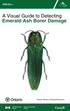 cfs.nrcan.gc.ca A Visual Guide to Detecting Emerald Ash Borer Damage Ontario Ministry of Natural Resources Library and Archives Canada Cataloguing in Publication A visual guide to detecting emerald ash
NUTRIENT DISORDERS IN TREE FRUITS
 PNW 121E NUTRIENT DISORDERS IN TREE FRUITS A Pacific Northwest Extension Publication Washington Idaho Oregon NUTRIENT DISORDERS IN TREE FRUITS By Nels R. Benson, Soil Scientist and Horticulturist (retired),
Ten Easy Ways to Kill a Tree
 DIVISION OF AGRICULTURE RESEARCH & EXTENSION University of Arkansas System Agriculture and Natural Resources FSA5011 Ten Easy Ways to Kill a Tree (And How to Avoid Them) H. Christoph Stuhlinger University
Exhibit Inquiry. Rainforest. Aug 11
 Exhibit Inquiry Exhibit Inquiry Have students look for the following exhibits related to living things during their visit to the Ontario Science Centre: Where to go: (Level 6) What it's about: Tropical
Plants have organs composed of different tissues, which in turn are composed of different cell types
 Plant Structure, Growth, & Development Ch. 35 Plants have organs composed of different tissues, which in turn are composed of different cell types A tissue is a group of cells consisting of one or more
Preserving Wild Ginseng in Minnesota
 Note: This digital document was adapted from Smith, W. R. 1993. Preserving Wild Ginseng in Minnesota. Minnesota Natural Heritage Program, Minnesota Department of Natural Resources. 7 pages. Preserving
1 SEEDLING QUALITY. Seedling quality
 Seedling quality Quality versus quantity A nursery manager s most important goal is to produce quality trees. Quality is more important than quantity. It is a common mistake in nurseries to concentrate
Why hire an arborist?
 Why hire an arborist? Spring is fast approaching and that means gardens to attend and flowers to plant, but what about your trees? Now is the best time to hire an arborist to maintain your trees before
NORTH COUNTY TRANSFER CENTER METRO Contract Numbers 01756/01862 100% - DESIGN DEVELOPMENT SECTION 32 90 13 NEW PLANTING MAINTENANCE
 SECTION 32 90 13 NEW PLANTING PART 1 - GENERAL 1.01 INTENT A. The intent of the landscape maintenance program is to maintain the landscape areas (lawn and shrub plantings) in a vigorous, healthy and attractive
Tree Landscape Planting
 City of Pierre Tree Landscape Planting The value of Woody Plant Landscaping Locally Adapted Species List Tips for Successful Planting Pierre Ordinances Public Needs to Know Community Tree Statistics: Trees
4th GRADE MINIMUM CONTENTS-NATURAL SCIENCE UNIT 11: PLANTS
 PLANT BITS 4th GRADE MINIMUM CONTENTS-NATURAL SCIENCE UNIT 11: PLANTS There are four main parts to a plant. They are the root, stem, leaf and flower. Each part has an important task to do in the life of
Virginia Gardener http://www.hort.vt.edu/envirohort
 The Virginia Gardener http://www.hort.vt.edu/envirohort Name Help Sheets: Things Plants Need There are certain things that every living thing needs in order to live and grow. Just like you, plants need
V I N E W E E D S OF MISSOURI. Integrated Pest Management. Plant Protection Programs. College of Agriculture, Food and Natural Resources
 Integrated Pest Management V I N E W E E D S OF MISSOURI Plant Protection Programs College of Agriculture, Food and Natural Resources Published by MU Extension, University of Missouri-Columbia $6.00 IPM1021
Tree Diversity Activity
 Tree Diversity Activity A Classroom Activity from The National Arbor Day Foundation You and your class may have participated recently in the Vote for America s National Tree, an historic opportunity for
Palm Trees for Landscapes in Tulare & Kings Counties Suggested by Nancy Gravender, UC Master Gardener
 Palm Trees for Landscapes in Tulare & Kings Counties Suggested by Nancy Gravender, UC Master Gardener MEDIUM-SIZED PALM TREES (10-25 Ft. Tall) FAN PALMS: Guadalupe Palm (Brahea edulis) Grows to 20 ft.,
When you buy a high-quality tree, plant it correctly, and treat it properly, you and your tree will benefit greatly in many ways for many years.
 Buying High-Quality Trees When you buy a high-quality tree, plant it correctly, and treat it properly, you and your tree will benefit greatly in many ways for many years. When you buy a low-quality tree,
Backyard Buffers that Work for People and Nature by Restoring Ecological Function
 Backyard Buffers that Work for People and Nature by Restoring Ecological Function What is a Wetland Buffer? A wetland buffer is a simple land management practice that is employed by municipalities to protect