
EFFECTS OF GENETIC SELECTION AND EXPERIENCE ON POLICE DOG BEHAVIOR
|
|
|
- Rudolph Morrison
- 9 years ago
- Views:
Transcription
1 EFFECTS OF GENETIC SELECTION AND EXPERIENCE ON POLICE DOG BEHAVIOR by Sandy Bryson ABSTRACT Police dog service requires canines that are balanced in social, play, search and aggression behavior as well as physically healthy. Selecting for one or a limited number of genetic traits, such as extraordinarily high energy and aggression, can result in behavior that is counterproductive to police work. In addition to genes, life experience and training determine adult dog behavior. Dogs with inadequate human socialization, fear reaction, or conflicted training may perform patterned behavior in a controlled environment yet react inappropriately or dangerously to the novelties of street work. GENETIC SELECTION Law enforcement agencies need reliable sources for police dog candidates. Adult dogs that are physically or behaviorally deficient, or that have had previous training and experience incompatible with police service, especially as juveniles, will probably be unreliable police dogs. Candidate selection involves performance testing as the measurement of the individual for particular features. This might be a subjective assessment on overall type, an objective physical measurement, or task performance testing, including obedience and working trials (Willis, 1991). Desirable police dog candidates are physically sound, mature adults that exhibit balanced traits in social behavior, play behavior (retrieve, tug), search (predatory behavior), and aggression. Aggression is actually a complex matrix of genetic traits with variable levels of influence, including predation, dominance, possessiveness, protectiveness, intraspecific aggression, punishment, pain-elicited response, and fear. While trainers concur that police dog service requires an appropriate level of aggression, agencies must keep in mind that if a breeder selects for one trait, many other traits will be affected. It is often difficult to predict which traits will be changed (Grandin, 2000). There is a clear difference between the dominant or assertive alpha dog and a fighting dog, such as the pit bull terrier. These animals have been deliberately selected for an ability and eagerness to fight, and to this degree are unlike most other breeds of dog in which, as with the wolf, intraspecific aggression tends to be ritualized more often than serious. It is possible that the behavior patterns of pit bull terriers have been altered by selection to a degree that is not seen in other breeds, even those in which assertive

2 animals are relatively common. Such alteration of behavior would be a direct result of selection for fighting prowess (Willis, 1999). Fighting breeds appear to have a much higher tolerance of pain, which may be mediated by peculiarities in neurotransmitters or opiate receptor sites. A single anecdotal report of unusual responsiveness to morphine and naloxone in a pit bull (Brown et al., 1987) suggests that there may be physiological differences in the breed, although no definitive studies have been reported in the literature. In addition to a lowered threshold for attack and higher pain thresholds in many fighting animals, selection for fighting has apparently resulted in the disruption of normal communication in individuals from recent fighting lineages. Dogs from fighting lineages have been under selective pressures that suppress or eliminate accurate communication of aggressive motivation or intent. Public health officials, animal control agencies, and humane societies have been documenting an unrecognized epidemic. A growing number of [dog bites man] cases have been brought before the courts. In the U.S., settlements in excess of $1 million and imprisonment of dog owners on charges of manslaughter have not been uncommon. A significant proportion of fatal and severe bites have been attributed to a relatively small number of breeds including pit bulls and Rottweilers (Lockwood, 1995). Police agencies should be aware that malinois have recent pit bull ancestry, in varying percentages depending upon the lines. Some German shepherds abroad have recently been bred with pit pulls and sold for police service in the U.S. under different breed names. Any or all of the influences outlined above can help to account for biological predisposition of a dog toward aggression. Additional biological factors that can influence the tendency toward aggression include the animal s age, sex, reproductive status (intact vs. spayed or neutered) and overall health. However, the likelihood that a particular individual will bite is also strongly influenced by many environmental variables including the training of the animal, the extent of its socialization to people (especially children), the quality of the animal s supervision and restraint, and the behavior of the victim (Lockwood, 1986). Although no definitive studies have been conducted, reports from police officers and trainers indicate incidents of excessive aggression, often without warning, by some police dogs against handlers, handlers families, other officers, suspects, and the general public. These dogs have exhibited the inability to self-modulate their behavior, particularly under stress. These dogs have typically disregarded their handler s verbal commands and physical actions to control their behavior. SOCIALIZATION WITH HUMANS Normal, friendly interaction between police dogs and the public, and with fellow officers is necessary to maintain canine sociability and reliability. On duty, the police dog requires normal human interaction during part of the shift to prevent human aversion conditioning. Off duty, in addition to time allocated for resting, feeding and play exercise, the police dog needs normal social interaction with the family (Hart, Bryson, et al, 1994).

3 Some vendors and trainers have advocated, or required by contract with agencies, rigorous separation of the police dog from contact with the public, family members, or both. Dogs that cannot safely participate in normal interactions with humans are a liability to the handler, the family, the law enforcement agency, and the community. FEAR BEHAVIOR Neural reactivity is a heritable trait. Fear reactions reside in the amygdala, the brain s fear center, and are difficult or impossible to change. Animals rarely get over an initial fear reaction to a new experience (Grandin, 2000). A large scientific literature brings into focus the impact of fear and anxiety in the organization of a variety of fundamental behaviors. Fear and anxiety behaviors compete with, and exert an inhibitory effect on, behavioral patterns motivated by other systems (Heird et al., 1986). For instance, in domestic canines, fear-related reactions may affect learning in dogs. In spite of their captivity, thousands of generations after natural selection has relaxed, domestic animals continue to exhibit antipredator (prey) strategies and express fear-related reactions similar to those of free-living populations of wild animals (Broom, 1981). According to Gray (1979), fear-producing stimuli can be classified into five subdivisions: 1) Dangers the animal has learned to avoid, such as electric shock 2) Stimuli that will evoke an unlearned (genetic) fear response, such as a hissing hose (snake). 3) Novel stimuli, one of the most potent experimental conditions that cause negative emotions of fear and anxiety, such as a suspect attacking a police dog or sudden loud noise. 4) Physical characteristics linked to the presentation of the event, such as sudden or fast-moving stimuli. 5) Stimuli [perceived to] arise from conspecifics, such as alarm calls or screams. The emotional states of fear and anxiety in animals can only be inferred indirectly from observable and measurable behaviors emitted by the individual. Depending on the specific characteristics of the real or potential threat, behavioral activities associated with negative emotions and responses vary greatly. The behavioral patterns of animals can even be contradictory. For example, active defense reactions (attack, threat), active avoidance reactions (flight, hiding, escape), or movement inhibition (immobility) can all be viewed as expressing a state of fear or anxiety (Boissy, 1998). Fear-producing stimuli may also affect other patterns of behavior. Archer (1979) observed that the effects vary and depend on the emotional intensity of the threatening event. When the level of fear is low, the activity in which the animal is engaged may be enhanced. In contrast, when fear is intense, behavior can be disturbed or totally inhibited. Intermediate degrees of fear usually lead to a conflict between the expression of fear and the activity in which the individual is engaged. Conflict between an intense emotional state and a positive motivation may result in displacement activity. Conflict between

4 motivations may also provoke an intermediate activity characterized by the alternation between the expression of two types of behavior (Boissy, 1998). Analyzing fear and aggression in a police dog candidate, or a dog already in service, may be difficult if the canine s genetic and developmental histories are not available. The dog that exhibits normal behavior when engaged in familiar, patterned activity may become fearful when challenged by the stress of law enforcement. That fear may be expressed overtly, or disguised as aggression or displacement activity. If the fear manifests, for example, as a conflict between motivations, such as the revere (bark and hold) in an intense emotional state (assisting an arrest), the dog s behavior will be unreliable TRAINING CONFLICTS Initial police dog training requires a comprehensive program to build an effective officer-dog partnership (Hart, Bryson, et al, 1994). Departments that must allocate initial training time attempting to develop basic behavior compatible with police service, or that must spend maintenance training remediating or reinforcing basic police dog concepts have little or no time to advance their capabilities in elective areas, such as evidence search or tracking. As with other animals, including humans, adult dog behavior is shaped primarily by juvenile experiences and resists change. Police dog candidates should be trained from puppyhood to respond to handler commands socialization, play, and search commands as well as obedience and, later, the suspect apprehension commands. The young dog s behavior shaping program should include realistic exercises conducted according to a variable schedule of reinforcement. Heeling on a calm, level playing field is different, for example, from responding to the officer s commands in the distracting, obstructive environment of the real world. Motivated by positive reinforcement in constantly changing circumstances, the dog learns to focus on the handler s commands as behavior cues instead of relying on patterned behavior that leaves him, in unusual circumstances, clueless. This evolves into a dog that will respond to directional signals while searching and to verbal commands during an arrest. Bite and hold originated as a training term to describe the dog maintaining a firm, secure grip on the training equipment. The term was not meant to describe the police dog generally. Law enforcement requires that dogs bite calmly, not munch repeatedly or rip like sharks. Even bark and hold trained dogs are taught to bite and hold onto the person. Bark and hold means hold at bay. These two meanings of hold are sometimes confused. This confusion has created the misperception that dogs trained to bark and hold will not bite suspects and are therefore safer or a more reasonable use of force. Neither is true. The sport of schutzhund bark and hold, also called the find and bark, find and hold, detect and hold, detect and bark, circle and bark, search and bark, reasonable force, minimum force, harass and delay, detain and distract, or revere, basically refers to the sport dog s behavior upon locating a person. The dog is supposed to bark at the person, or exhibit behaviors that include barking, until permitted to bite. Permission to

5 bite comes from 1) the person s behavior, such as overt movement, or 2) handler command. Police tactics contraindicate this procedure, as do basic principles of behavior. The sport technique puts the dog in prolonged conflict with his instincts or drives. Once a conditioned stimulus is established, such as barking, it becomes a reinforcer (Pryor, 1984). The bark is a sign of excitement (Mackenzie, 1996) that for most dogs is self-reinforcing. Barking behavior is recognized as a vocal alarm, the natural precursor to biting. Linking barking and biting in sequence creates a strong behavior chain. A common flaw in stimulus-controlled behavior is anticipation: Once the cue is learned, the subject becomes so eager to offer the behavior that it acts before the cue has actually been given (Pryor, 1984). Once the bark and hold behavior is chained with the bite, the dog anticipates the bite and jumps the chain, or short-circuits the barking, in order to make the preferred physical contact. If trained to find and bark, the high-energy, high-aggression type dog apprehending a suspect will be alert to every opportunity to go from barking to biting. These dogs often nudge or nip suspects to induce a response, circle the suspect to induce movement, or react to the stare challenge, which dogs innately regard as an invitation to attack. During an apprehension, the dog with fear-based responses will either flee (selfeliminating for police dogs) or try to bite as quickly as possible and resist release because the familiar act of biting provides security. For this type dog, barking and holding a person at bay is more challenging than the physical contact. The dog whose aggression stems from fear is unreliable. Even the dog with balanced genetic instincts or drives constantly pushes the envelope of the bark and hold in order to achieve the bite. It is difficult to maintain the integrity of the chain to ensure reliable police dog performance. These common reactions show why the bark and hold behavior sequence is not appropriate for police service. Corrective measures are limited to timeouts (impractical for police work) or negative reinforcement that typically has short-term effect. The dog s behavior is unpredictable and therefore unreliable. Ironically, withholding the bite acts as a powerful reinforcer in this behavior chain. Street experience tends to increase the unreliability of the find and bark behavior chain, because real suspects do not behave in ways that reinforce the desired behavior. In fact, typical suspect behavior, such as movement, eye contact, sound, or a combination of these responses, tends to incite the dog s biting reaction, thereby further shortening the behavior chain. Rescue dogs, such as urban disaster dogs, that are required to perform a bark alert should never be permitted to chain the barking with biting, even in a different context. Accidental bites have occurred with schutzhund dogs trained for rescue, where the stimulus of the emergency situation elicited biting a person at the scene. Dog sports like schutzhund are very high maintenance routines, requiring constant reinforcement of patterned behavior. Criminals are not playing a game and do not act according to a set of rules. On the street if conflict arises between patterned behavior training and police work, the dog must pay attention to his handler and obey the handler s commands. Frequently, the sport-trained dog disregards his handler.

6 Police officers are often forced to make split-second judgments about the amount and type of force that is necessary in a particular situation, in circumstances that are tense, uncertain and rapidly evolving. The police officer is responsible for making the decision about deploying the dog as well as directing and controlling him. There are situations where the officer calls the dog off a moving suspect, for example, a frightened but compliant suspect, without allowing the dog to bite. There are situations where the officer directs the dog to apprehend a suspect who is not moving but who still presents a threat to the officer or others. The officer decides, not the dog. Law enforcement agencies and most law abiding citizens have regarded police dogs as valuable detection and enforcement partners since the early 1900s. In the 1960s 80s, law enforcement dog trainers evolved police dog training from the European sport dog model to the present, more reliable police dog model where the officer directs and controls his canine for reasonable deterrent effect, detection efficiency, and safety. The courts have concurred, and a significant body of law enforcement experts with substantial field experience have testified to that effect (Bryson, 2001). The United States Police Canine Association advocates handler controlled police dogs. These training and deployment issues are not trivial. They have created uncertainty in officer response on the street and in court. The find and bark used with police operations has created interagency conflict and public misunderstanding. Dog vendors exert economic pressure on law enforcement agencies to use sport-trained dogs for police work. In 2001, the U.S. Department of Justice recommended that agencies adopt a find and bark policy (requiring a dog to bark, rather than bite). References Archer, J. (1979). Behavioural aspects of fear. In Fear in Animals and Man, W. Sluckin, ed., pp New York: Van Nostrand-Reinhold. Boissy, A. (1998). Fear and fearfulness in determining behavior. In Genetics and the Behavior of Domestic Animals, ed. Temple Grandin, pp Orlando, Florida: Academic Press, Inc. Broom, D. M. (1981). Biology of Behaviour. Cambridge: Cambridge University Press. Brown, S. A., Crowell-Davis, S., Malcom, T. & Edwards, P. (1987). Naloxone-responsive compulsive tail chasing in a dog. Journal of the American Veterinary Medical Association, 183, Bryson, S. (2001), Police Dog Tactics, 2 nd. Ed., Calgary: Detselig Enterprises, Ltd., 455 pp. Grandin, T. (2000). The animal mind. San Rafael: Guide Dogs for the Blind, Inc. Grandin, T. (1995). Thinking in Pictures. New York: Doubleday. 6.

7 Gray, J. A., (1987). The Psychology of Fear and Stress 2 nd ed. Cambridge: Cambridge University Press. Hart, L., Bryson, S., Zasloff, R., Christensen, S. (1996). Police K-9 Team Study: The Friendly Force. In Police Dog Tactics, Sandy Bryson, pp. 2,3. New York: McGraw-Hill, Inc. Heird, J. C., Whitaker. D. D., Bell, R. W., Ramsey, C. B., and Lokey, C. E. (1986). The effects of handling at different ages on the subsequent learning ability of 2-year-old horses. Applied Animal Behaviour Science 15, Lockwood,, R (1986). Vicious dogs. The Humane Society News, 31(1), 1-4. Lockwood, R. (1999). The ethology and epidemiology of canine aggression. In The Domestic Dog, ed. James Serpell, pp Cambridge: Cambridge University Press. Mackenzie, S. A. (1996). Decoys and Aggression. Calgary: Detselig Enterprises, Ltd. Pryor, K. (1984). Don t Shoot the Dog! New York: Bantam Books. Willis, M..(1991). The German Shepherd Dog: A Genetic History. New York: Howell Book House. Willis, M. B. (1999). Genetic aspects of dog behaviour with particular reference to working ability. In The Domestic Dog, ed. James Serpell, pp Cambridge: Cambridge University Press. 2000, 2002 by Bryson and Associates. All rights reserved.

Who is Hector Hernandez
 517-712-5012 Who is Hector Hernandez Hector L. Hernandez is an author, former law enforcement officer, speaker and trainer. Located in U.S.A. He has over 20 years of experience and is recognized as the
Solving the Problem of Dog Bites
 Solving the Problem of Dog Bites Breed Bans A program to prevent dog bites must be legal, fair and effective. Breed bans are unfair Penalize thousands of good dog owners to penalize a handful of irresponsible
USE OF FORCE. Attorney General's Use of Force Policy. Issued April 1985 Revised June 2000
 USE OF FORCE Attorney General's Use of Force Policy Issued April 1985 Revised June 2000 Preface The provisions of this revised policy are a product of the collective efforts and judgment of the New Jersey
CITY OF TOPEKA City Attorney s Office
 CITY OF TOPEKA City Attorney s Office Jackie Williams, CITY ATTORNEY City Hall, 215 SE 7 th St., Room 353 Kyle G. Smith, Assistant city Attorney E mail: [email protected] Topeka, KS 66603 3914 Tel.: (785)
U.C. Riverside Police Department Policy Manual Use of Force
 300.1 PURPOSE AND SCOPE This policy provides guidelines on the reasonable use of force. While there is no way to specify the exact amount or type of reasonable force to be applied in any situation, every
ASSISTANCE & SERVICE ANIMALS FOR TENANTS WHO ARE PERSONS WITH DISABILITIES
 ASSISTANCE & SERVICE ANIMALS FOR TENANTS WHO ARE PERSONS WITH DISABILITIES This article was developed by the Fair Housing Partners of Washington to educate tenants who are persons with disabilities about
Police Service Dogs Asset or Liability? Terry Fleck Deputy Sheriff II / Canine Handler El Dorado County Sheriff, California
 Police Service Dogs Asset or Liability? Terry Fleck Deputy Sheriff II / Canine Handler El Dorado County Sheriff, California Police service dogs (K-9) are an asset for law enforcement. Since the introduction
(b) Safeguard and protect property of Taylor County citizens,
 Chapter 54 Animal Control Regulations Page 1 of 7 CHAPTER 54 ANIMAL CONTROL REGULATIONS 54.01 PURPOSE. (1) The purpose of this chapter is to: (a) Regulate and control dogs, cats, and other animals within
Mallary Paoli. Oregon State University University Honors College May 2012
 Mallary Paoli Oregon State University University Honors College May 2012 Why pit bulls? Worked at a dog kennel from 2007-2009 Observed people s reactions to a pit bull Thesis Question Is there a significant
PREVENTING THOSE BAD BEHAVIORS. Biting, Nipping & Jumping Up
 PREVENTING THOSE BAD BEHAVIORS. Biting, Nipping & Jumping Up THE PROBLEM WITH PUPPY AND DOG AGGRESSION Probably the most challenging aspect of working with aggression in dogs is that it often starts when
Advanced Back Tie Training for Patrol Dogs
 Advanced Back Tie Training for Patrol Dogs By Jerry Bradshaw, Tarheel Canine Training, Inc. photos by Britney Pelletier ( All product photos courtesy of elite k-9 www.elitek9.com ( Many trainers do developmental
Greenville, SC Police Department GENERAL ORDER Subject Force Response
 Greenville, SC Police Department GENERAL ORDER Subject Force Response Number 200A6 Type Operational Effective Date September 20, 2011 Amends/ Rescinds 200A5 Pages 1 of 11 Re-evaluation Annual-January References
Okami Study Guide: Chapter 7
 1 Chapter in Review 1. Learning is difficult to define, but most psychologists would agree that: In learning the organism acquires some new knowledge or behavior as a result of experience; learning can
DOG BITE INVESTIGATE WORKSHEET CITY OF WAYCROSS ANIMAL CONTROL
 DOG BITE INVESTIGATE WORKSHEET CITY OF WAYCROSS ANIMAL CONTROL Agency: Case Number: Bite level classification: Date: Time: Location of attack: Number of dogs involved in the attack: Nature of location
A Brief Explanation of Applied Behavior Analysis. conditioning to identify the contingencies affecting a student s behavior and the functions of the
 A Brief Explanation of Applied Behavior Analysis Applied Behavior Analysis is the procedure for using the principles of operant conditioning to identify the contingencies affecting a student s behavior
Operant Conditioning
 LP 6B Operant Conditioning: Reinforcements and Punishments 1 Operant Conditioning Operant conditioning (instrumental conditioning): A learning process in which the consequences of an action determine the
Agency Liability Issues for Law Enforcement K-9. By Terry Fleck
 Agency Liability Issues for Law Enforcement K-9 By Terry Fleck I m often asked by agency supervisors and administrators about their liability exposure when they supervise or administrate a K-9 unit. Upon
ADI Minimum Standards and Ethics
 1 ADI Minimum Standards and Ethics Assistance Dogs International has developed minimum standards and ethics which all member and candidate programs must follow. This is agreed upon when organizations join
Classical vs. Operant Conditioning
 Classical vs. Operant Conditioning Operant conditioning (R S RF ) A voluntary response (R) is followed by a reinforcing stimulus (S RF ) The voluntary response is more likely to be emitted by the organism.
Thomas Zane, Ph.D., BCBA- D. dogs are trained to provide assistance to persons with visual impairments to
 Science, Fads, and Applied Behavior Analysis: A Syndicated Column by: Thomas Zane, Ph.D., BCBA- D Institute for Behavioral Studies at The Van Loan School of Graduate and Professional Studies, Endicott
Feasibility and Implications of a Breed Specific Animal Services By-law. Enforcement Division. Current Legislation - Dog Owners Liability Act
 DATE: March 11, 2003 TO: FROM: SUBJECT: ORIGIN: BACKGROUND: COMMENTS: Chairman and Members of the General Committee Meeting Date: April 2, 2003 Janice M. Baker, CA Commissioner of Corporate Services and
QUICK REFERENCE GUIDE. Workplace Violence. What You Need to Know to Protect Yourself and Your Employees
 QUICK REFERENCE GUIDE Workplace Violence What You Need to Know to Protect Yourself and Your Employees Types of Workplace Violence: 2 Workplace Violence While the motivation and circumstances of each incident
To ensure appropriate and acceptable use of defensive equipment and use of force by law enforcement personnel.
 54 - USE OF FORCE Law enforcement personnel may use the level of control, which is reasonably necessary to perform their duties. In many situations, law enforcement personnel can gain control without the
Behavioural Therapy A GUIDE TO COUNSELLING THERAPIES (DVD) Published by: J & S Garrett Pty Ltd ACN 068 751 440
 Behavioural Therapy A GUIDE TO COUNSELLING THERAPIES (DVD) Published by: J & S Garrett Pty Ltd ACN 068 751 440 All Case Histories in this text are presented as examples only and any comparison which might
Agent Simulation of Hull s Drive Theory
 Agent Simulation of Hull s Drive Theory Nick Schmansky Department of Cognitive and Neural Systems Boston University March 7, 4 Abstract A computer simulation was conducted of an agent attempting to survive
High Point University Pet Policy
 High Point University Pet Policy The High Point University Office of Student Life believes that pets can provide both companionship and a sense of community for students living on campus, and as such allows
Chapter Fourteen. Emotion, Reward, Aggression, and Stress
 Chapter Fourteen Emotion, Reward, Aggression, and Stress EMOTIONS! Emotions generally include a Physical component, and a Subjective component or quality, and a Valence Emotions a product of Evolution?
Dog Law Northern Ireland
 DOG LAW NORTHERN IRELAND This information is intended as a guide and is not to be taken as legal advice. If you have a specific query, you should take advice from a specialist Solicitor or contact your
B: It turns over garbage cans or waste containers, or otherwise causes garbage or waste to be scattered on property other than its owners;
 TOWN OF SUGAR HILL DOG ORDINANCE Pursuant to the authority conferred by New Hampshire Revised Statutes Annotated, Chapter 31:39, in order to promote the general welfare of the citizens of the Town of Sugar
THAT S NOT MY DOG An overview of dog liability in British Columbia
 THAT S NOT MY DOG An overview of dog liability in British Columbia by Krista Prockiw Clark Wilson LLP tel. 604.643.3105 [email protected] www.cwilson.com TABLE OF CONTENTS 1. INTRODUCTION...1 2. BASES FOR
Understanding Dogs Temperament in Dogs Its Role in Decision Making
 Understanding Dogs Temperament in Dogs Its Role in Decision Making by Dr. Radcliffe Robins What is meant when we speak about the temperament of a dog? This term is very often used, but very little understood
FACTORS. Protected species Killed inhumanely. Animals might have died if not rescued. Organised team Commercial purpose Sophistication
 ANIMALS OFFENCE Causing unnecessary suffering by omitting to do any (1911 Act) Offences contrary to the Wildlife and Countryside Act 1981) Abandonment (Abandonment of Animals Act 1961) Dog Worrying Livestock
Interest in Animal Communication. Structural properties. Birds 3/3/10. Assume human language evolved
 Interest in Animal Communication Assume human language evolved Identify properties in common with other communication systems Need communication model that captures the salient features of human communication
MEMORANDUM. 1.) Under Michigan s dog bite statute, is a young girl considered lawfully on the property
 MEMORANDUM To: Sue Attorney, Attorney at Law From: Trish Dilliner Re: Our client, Chester Bigwig, File No. 2009 89 Date: March 12, 2009 I. Issues 1.) Under Michigan s dog bite statute, is a young girl
HALIFAX REGIONAL MUNICIPALITY BY-LAW NUMBER D-100 RESPECTING THE REGISTRATION AND REGULATION OF DOGS
 HALIFAX REGIONAL MUNICIPALITY BY-LAW NUMBER D-100 RESPECTING THE REGISTRATION AND REGULATION OF DOGS BE IT ENACTED by the Council of the Halifax Regional Municipality as follows: Short Title 1 This By-law
MUNICIPALITY OF THE COUNTY OF KINGS
 For By-Law information contact the Municipal Clerk Tel: (902)690-6133 Fax: (902)678-9279 E-mail: [email protected] BY-LAW # 71A DOG BY-LAW DEFINITIONS 1. In this By-Law: (f) (g) "Corporate
Kennel Syndrome Kennel Syndrome
 Kennel Syndrome Often times people adopt dogs from shelters or humane organizations and base their opinions on what they see at the shelter as to the dogs overall personality / temperament. You see a calm,
Quarantine Laws and Dog Bite Prevention For Service Professionals Also Featuring: Animal Neglect and Cruelty
 Quarantine Laws and Dog Bite Prevention For Service Professionals Also Featuring: Animal Neglect and Cruelty QUARANTINE means strict confinement Purpose of Quarantine to determine is the biting animal
Dog Behavior Problems Aggression Diagnosis and Overview
 Humane Society of Missouri 1201 Macklind Ave, St Louis, MO, 63110 Phone: 314-951-1534 Website: http://www.hsmo.org/vetcenter Dog Behavior Problems Aggression Diagnosis and Overview Though aggression can
CRIMES AGAINST ELDERLY ONLINE
 CRIMES AGAINST ELDERLY ONLINE PRESENTED BY: DPS Law Enforcement Academy Santa Fe, New Mexico Date: 1 GOALS Students will learn the purpose of the Resident Abuse and Neglect Act. Students will learn how
CHAPTER 2015-131. Committee Substitute for House Bill No. 71
 CHAPTER 2015-131 Committee Substitute for House Bill No. 71 An act relating to service animals; amending s. 413.08, F.S.; providing and revising definitions; requiring a public accommodation to permit
POLICE SERGEANT. CITY OF SONORA JOB DESCRIPTION Amended 05-06-2002/09-19-2005/06-20-2011/07-01-2013/01-21-2014
 CITY OF SONORA JOB DESCRIPTION Amended 05-06-2002/09-19-2005/06-20-2011/07-01-2013/01-21-2014 POLICE SERGEANT DEFINITION A Police Sergeant supervises, assigns, reviews and participates in the work of sworn
Police Service Representative. [Communications Division] (Class Code 2207) Competency List. Cognitive
![Police Service Representative. [Communications Division] (Class Code 2207) Competency List. Cognitive](/thumbs/30/14484165.jpg "Police Service Representative. [Communications Division] (Class Code 2207) Competency List. Cognitive") Police Service Representative [Communications Division] (Class Code 2207) Competency List Cognitive 1. Ability to rapidly and efficiently organize numerous pieces of information into a logical sequence
Police Service Representative [Communications Division] (Class Code 2207) Competency List Cognitive 1. Ability to rapidly and efficiently organize numerous pieces of information into a logical sequence
Crisis Intervention Incidents (CRITICAL)
 Policy 435 City of Sunnyvale Department of Public Safety 435.1 PURPOSE AND SCOPE This policy provides guidelines for interacting with those who may be experiencing a mental health or emotional crisis.
Aggression: Problems with Definitions
 Aggression: Problems with Definitions Any act which harms? Any intent to harm? Verbal violence? Failure to reward? Withholding reward or affection? Withholding treatment? Biting kicking punching? Using
AP Psychology 2008-2009 Academic Year
 AP Psychology 2008-2009 Academic Year Course Description: The College Board Advanced Placement Program describes Advanced Placement Psychology as a course that is designed to introduce students to the
Creating Dialogical Space in Working with Domestic Violence. Justine van Lawick
 Creating Dialogical Space in Working with Domestic Violence. Justine van Lawick Dynamic of Domestic violence Children in the middle Children that witness the violence of their parents Fighting parents
The Fiscal Impact of Breed Discriminatory Legislation in the United States. Prepared for Best Friends Animal Society
 The Fiscal Impact of Breed Discriminatory Legislation in the United States Prepared for Best Friends Animal Society By John Dunham and Associates, Inc. April 17, 2012 Best Friends Animal Society: Kindness
Bullying. Take Action Against. stealing money. switching seats in the classroom. spreading rumors. pushing & tripping
 switching seats in the classroom stealing money Take Action Against Bullying spreading rumors pushing & tripping U.S. DEPARTMENT OF HEALTH & HUMAN SERVICES Substance Abuse and Mental Health Services Administration
EMOTIONAL DISTURBANCE
 I. DEFINITION "Emotional disturbance" means a condition exhibiting one or more of the following characteristics over a long period of time and to a marked degree that adversely affects a child's educational
PSYCHOTHERAPY. MODULE -V Social and Applied Psychology OBJECTIVES 24.1 MEDICAL MODEL. Psychotherapy. Notes
 MODULE -V Psychotherapy 24 PSYCHOTHERAPY In the previous lesson, you were told about psychological disorders. Psychologists have tried to understand the causes of abnormal behaviour, and the best way to
LEARNING. Chapter 6 (Bernstein), pages 194-229
 LEARNING Chapter 6 (Bernstein), pages 194-229 What is LEARNING? LEARNING is the adaptive process through which experience modifies preexisting behavior and understanding; relatively permanent change in
THE CORPORATION OF THE CITY OF SAULT STE. MARIE BY-LAW 98-211
 PAGE 1 OF 7 THE CORPORATION OF THE CITY OF SAULT STE. MARIE BY-LAW 98-211 LICENSING: (R.1.2.4.) A by-law for licensing dogs, for requiring the registration of dogs and for prohibiting the running at large
Suspects with developmental disabilities & the criminal justice system. The Developmentally Disabled Offenders Program
 Suspects with developmental disabilities & the criminal justice system The Developmentally Disabled Offenders Program Intellectual Disabilities In 80% of people diagnosed with Intellectual Disabilities,
Brain Injury: Stages of Recovery
 Brain Injury: Stages of Recovery Recovery after brain injury is a process that occurs in stages. Some people move quickly through the stages, while others make slow, but steady gains. The Rancho Los Amigos'
POLICE OFFICER. 4. Work in partnership with the District Attorney s Office to obtain and file criminal complaints on arrested subjects.
 POLICE OFFICER Class specifications are intended to present a descriptive list of the range of duties performed by employees in the class. Specifications are not intended to reflect all duties performed
PSYCHOLOGY AND PROJECT MANAGEMENT
 PSYCHOLOGY AND PROJECT MANAGEMENT Human aspects of the project management Ver 1.0 2 360 Degree Approach of IT Infrastructure Projects PSYCHOLOGY AND PROJECT MANAGEMENT Abstract Project Management usually
Guidelines for Preventing and Dealing with Bullying Issues
 Guidelines for Preventing and Dealing with Bullying Issues Stapleford School aims to value all its members, to give all the opportunity to learn, act fairly and celebrate differences between individuals.
TREATING CANINE SEPARATION ANXIETY
 TREATING CANINE SEPARATION ANXIETY UNDERSTANDING CANINE SEPARATION ANXIETY: CSA problems represent forms of social and place hyper-attachments. Separation distress is found naturally in many canid species,
Using Individual Behaviour Support Plans
 Using Individual Behaviour Support Plans An individual behaviour support plan, which documents supports and strategies based on students unique and individual characteristics, will benefit students with
Fort Bend County. Roy L. Cordes, Jr. Fort Bend County Attorney
 Fort Bend County Roy L. Cordes, Jr. Fort Bend County Attorney Law Enforcement Meeting Provide overview of legal issues Describe the administrative process triggered by dangerous dogs Answer questions Why
Walking a Tightrope. Alcohol and other drug use and violence: A guide for families. Alcohol- and Other Drug-related Violence
 Walking a Tightrope Alcohol and other drug use and violence: A guide for families Alcohol- and Other Drug-related Violence Alcohol and other drug use and family violence often occur together. Families
Between Orest Strynatka, claimant, and Alison Forbes, defendant. [2002] B.C.J. No. 2589 2002 BCPC 481. North Vancouver Registry No.
![Between Orest Strynatka, claimant, and Alison Forbes, defendant. [2002] B.C.J. No. 2589 2002 BCPC 481. North Vancouver Registry No.](/thumbs/27/10950369.jpg "Between Orest Strynatka, claimant, and Alison Forbes, defendant. [2002] B.C.J. No. 2589 2002 BCPC 481. North Vancouver Registry No.") Page 1 Case Name: Strynatka v. Forbes Between Orest Strynatka, claimant, and Alison Forbes, defendant [2002] B.C.J. No. 2589 2002 BCPC 481 North Vancouver Registry No. 0113258 British Columbia Provincial
Page 1 Case Name: Strynatka v. Forbes Between Orest Strynatka, claimant, and Alison Forbes, defendant [2002] B.C.J. No. 2589 2002 BCPC 481 North Vancouver Registry No. 0113258 British Columbia Provincial
Quick Reference Guide: Working with Domestic Violence
 Quick Reference Guide: Working with Domestic Violence Excerpt from Child Welfare Practices for Cases with Domestic Violence Oregon DHS Created by PSU, Child Welfare Partnership for Training Purposes Only
Accidental / Unintentional Police Service Dog Bites & Their Relationship to Fourth Amendment Liability
 Accidental / Unintentional Police Service Dog Bites & Their Relationship to Fourth Amendment Liability By Terry Fleck Recently, there has been a debate over accidental / unintentional police service dog
How to Respond to a Dog Bite Incident
 How to Respond to a Dog Bite Incident The following is a Press Kit prepared by the American Rottweiler Club to help local clubs and individuals respond to the negative publicity associated with a dog bite
Off-Leash Training & Progressive Use of Electronic Collar by Jerry Bradshaw President, Tarheel Canine Training, Inc.
 Off-Leash Training & Progressive Use of Electronic Collar by Jerry Bradshaw President, Tarheel Canine Training, Inc. October 8, 2003 This article is copyrighted original work and may not be reproduced
Information Guide. Do you know dog law? www.thekennelclub.org.uk
 Information Guide Do you know dog law? www.thekennelclub.org.uk www.thekennelclub.org.uk Animal Welfare Why do I need to know about dog law? As a responsible dog owner, you need to know about dog laws
Psychological First Aid Red Cross Preparedness Academy 2014
 Caring for Survivors of Trauma and Disaster: An Introduction to Psychological First Aid Biographical Information Rev. William F. Engfehr III LutheranChurch MissouriSynod DisasterResponseChaplain Senior
Administrative Procedure
 Durham Catholic District School Board The Board Administrative Procedure Title: Use of Service Dogs by Students in Schools Procedure #: AP434-7 Administrative Area: Policy Reference: Operations Accessibility
Policy Title: Service and Assistance Animals, Animal Mascots, and Pets
 Policy Title: Service and Assistance Animals, Animal Mascots, and Pets Category: University Policy Policy Owner: Title IX Coordinator/Equity and Inclusion Policy Specialist Review Period: Annually Effective
A guide to living with Urban Coyotes
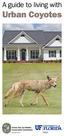 A guide to living with Urban Coyotes Living with coyotes ThinkStock Coyotes are found throughout Florida. This adaptable animal belongs to the dog family and resembles a small German shepherd. In Florida,
ANGUS COUNCIL COMMUNITIES COMMITTEE 12 APRIL 2016 COUNCIL TENANTS PET POLICY REPORT BY HEAD OF PLANNING AND PLACE
 AGENDA ITEM NO 10 REPORT NO 149/16 ANGUS COUNCIL COMMUNITIES COMMITTEE 12 APRIL 2016 COUNCIL TENANTS PET POLICY REPORT BY HEAD OF PLANNING AND PLACE ABSTRACT This report seeks approval for the creation
Welcome to Reaseheath College
 Welcome to Reaseheath College Reaseheath College is a leading specialised land based college based in Nantwich, Cheshire. The College has 330 hectares of farms, parklands, lake, woodland and sports facilities,
Legislative Council Panel on Administration of Justice and Legal Services. Restorative Justice for Juveniles Offenders. Victim Participation
 LC Paper No. CB(2)1618/06-07(02) For information Legislative Council Panel on Administration of Justice and Legal Services Restorative Justice for Juveniles Offenders Victim Participation Purpose This
The policy of the Metropolitan Police Department is to take the appropriate enforcement action to handle animal related calls for service.
 GENERAL ORDER DISTRICT OF COLUMBIA Title Animal Complaints and Reporting Animal Bitings Series / Number GO OPS 401.07 Effective Date Distribution September 3, 2004 A Replaces / Rescinds General Order 401.7
Homeland Security and Protective Services CIP 43.9999 Task Grid
 1 Secondary Task List 100 EXPLAIN AND PERFORM SAFETY PROCEDURES 101 Demonstrate knowledge of the rules of conduct for the school and classroom. 102 Identify safety and standard operation procedures. 103
Policy for the Protection of Elders and Dependent Adults
 Called to Right Relationship Policy for the Protection of Elders and Dependent Adults The Episcopal Diocese of California www.diocal.org/safechurch Policy for the Protection of Elders and Dependent Adults
Evolutionary Perspective: Wrap Up
 Psych 305A: Lecture 18 Evolutionary Approach Wrap Up The Cognitive Approach Part I Learning and Behaviorism 1 Evolutionary Perspective: Wrap Up 2 1 Importance of Good Financial Prospect When Selecting
STRICT LIABILITY VS. THE ONE BITE RULE
 MISSOURI DOG BITES - STRICT LIABILITY VS. THE ONE BITE RULE In most cases, the dog bite rule followed in each state is recognized as one of two theories: strict liability or the one bite rule. These two
CRIMINAL LAW & YOUR RIGHTS MARCH 2008
 CRIMINAL LAW & YOUR RIGHTS MARCH 2008 1 What are your rights? As a human being and as a citizen you automatically have certain rights. These rights are not a gift from anyone, including the state. In fact,
Proactive Strategies for Promoting a Safe and Respectful Workplace
 Proactive Strategies for Promoting a Safe and Respectful Workplace Index Risks at Work... 1 2 Solutions at Work...3 CPI at Work...4 Tips at Work: Attention to Safety... 5 11 Tip #1: Promote a Workplace
LINDA LANTIERI EXPERT IN SOCIAL AND EMOTIONAL LEARNING
 SUNDAY, March 20, 2011 Diario de Mallorca LINDA LANTIERI EXPERT IN SOCIAL AND EMOTIONAL LEARNING She has been a school principal in Harlem and has helped children and adults solve their conflicts in over
Briefing by Usdaw Cuts to Criminal Injuries Compensation for Victims
 Briefing by Usdaw Cuts to Criminal Injuries Compensation for Victims Usdaw is the Union for Shop, Distributive & Allied Workers. We have over 420,000 members working mainly in retail, but also in distribution
BASIC BEHAVIOR CONCEPTS: Here are some basic behavior concepts that can help you as you get to know your bird.
 What an exciting day! You have welcomed a new parrot into your home. Having a parrot as a companion can be an incredibly rewarding experience. The following information is designed to help you create a
LAW-ENFORCEMENT RECORDS and the FREEDOM OF INFORMATION ACT
 LAW-ENFORCEMENT RECORDS and the FREEDOM OF INFORMATION ACT Law-enforcement agencies in Virginia continue to enjoy one of the broadest exemptions for releasing information in all of the states. The Virginia
Preventing Substance Abuse. How to Deal with Chemical Dependency
 Preventing Substance Abuse & How to Deal with Chemical Dependency For every ten people who consume alcohol or drugs in this country, at least one becomes chemically dependent. Addiction has an exponential
FUNCTIONAL ASSESSMENT: HYPOTHESIZING PREDICTORS AND PURPOSES OF PROBLEM BEHAVIOR TO IMPROVE BEHAVIOR-CHANGE PLANS
 APDT Journal Sept 2009 Susan G. Friedman, Ph.D. Word Count: 2,427 Biographical Sketch: Susan G. Friedman, Ph.D., is a psychology professor at Utah State University, specializing in applied behavior analysis
East Haven Police Department
 East Haven Police Department Type of Directive: Policies & Procedures No. 410.2 Subject/Title: Issue Date: Preliminary Criminal Investigations July 29, 2014 Effective Date: References/Attachments: N/A
Glossary Of Terms Related To The Psychological Evaluation Pain
 Glossary Of Terms Related To The Psychological Evaluation Pain Excerpted From The BHI 2 Manual By Daniel Bruns and John Mark Disorbio 2003 by Pearson Assessments. All rights reserved. Addiction: A chronic
IN THE COURT OF COMMON PLEAS OF CARBON COUNTY, PENNSYLVANIA CIVIL ACTION LAW
 IN THE COURT OF COMMON PLEAS OF CARBON COUNTY, PENNSYLVANIA CIVIL ACTION LAW SCOTT WESCOTT, III, : Plaintiff : : vs. : No. 09-3500 : BRENDA WHITE, : Defendant : Robert G. Bauer, Esquire Richard D. Adamson,
The court has before it the defendants' motion for partial summary judgment on
 STATE OF MAINE YORK, ss. SUPERIOR COURT CIVIL ACTION DOCKET NO. CV-1O-116 '/ '/),c _,,~ LINDA LONG, Plaintiff v. ORDER ALAN ORZECHOWSKI, et a1., Defendants BEFORE THE COURT The court has before it the
Options for dog population management: Where do you start?
 Options for dog population management: Where do you start? Improving animal welfare in shelters: a practical approach Warsaw, 12 April 2014 Alexandra Hammond-Seaman RSPCA mission The RSPCA will, by all
The After Action Review
 The After Action Review (AAR) is a post-shift team discussion that incorporates and integrates both technical information and human factors. The AAR... Is the primary tool for incorporating the action
German Shepherd Puppy Contract
 German Shepherd Puppy Contract Emerald Wolf K9 Puppy Purchase Contract & Bill of Sale This agreement is made, and hereby entered into, on this day of, 201 by and between Emerald Wolf K9 (hereafter referred
A. Learning Process through which experience causes permanent change in knowledge or behavior.
 Woolfolk, A. (2010). Chapter 6: Behavioral Views of Learning. In A. Woolfook (Ed.), Educational psychology (11th ed.). Columbus, OH: Pearson/Allyn & Bacon. This chapter begins by defining learning and
 ASSESSMENT ON THE EFFICACY OF SKUDO IN ELIMINATING ECTOPARASITES AND ON ITS EFFECTS ON DOGS HEALTH. Investigator: Prof. Dr. Gisele Zoccal Mingoti Veterinary Medicine State University Paolista (Unesp) Araçatuba