
Structural Bonding for Lightweight Construction
|
|
|
- Octavia Tucker
- 9 years ago
- Views:
Transcription
1 Materials Science Forum Vols (2009) pp Online at : (2009)Trans Tech Publications, Switzerland Online available since 2009/Apr/17 Structural Bonding for Lightweight Construction Martin Hornung 1,a and Michael Hajj 2 Keywords:structural bonding, structural adhesive, structural foam, lightweight construction Abstract The demand for safer, lighter and more fuel efficient vehicles has led to the market entry of light weight construction, with the use of advanced high strength steels, engineering plastic and light weight metals. Maximum weight savings potential will be limited if these are used in isolation. Chemistry based structural adhesives and foams enable the intelligent use of all three weight saving methodologies to overcome the problems of safety, quality and high processing cost. Introduction Historically, conventional steel has been the structural backbone of vehicle construction. To achieve increasing demands for safer and quieter vehicles, often heavy structural steel components are designed to meet the crash and durability criterion. The effect is heavier and less fuel efficient vehicles. What is the value of a one kilogram weight saving? Data from a literature review showed that, for vehicles with internal combustion engine, a 10% curb weight reduction is equal to 4.5 to 6% increase in fuel efficiency. A very detailed analysis of three vehicle classes and two driving cycles based on simulation was presented in the same paper [1]. It was described that an average increase in fuel efficiency of 6.7% could be achieved by 10% curb weight reduction and by re-sizing of the powertrain at the same time. To elaborate, a 140 kilogram body weight reduction for an upper middle class car is equal to about 1,150 fuel cost saving over the lift of a vehicle( kilometer lifetime travel, 1.2 / liter gasoline, average fuel consumption 9.6 liter / 100 kilometer [2]). A further benefit of less fuel consumption is emission reduction of global warming pollutants. This is pivotal in meeting the increasing stringent global emissions targets. Current public perception of alternative fueled vehicles is that they are small, underpowered and operable only over short distances. One way to overcome all these perceptions is by reducing vehicle body weight. But having lighter vehicles the competitiveness of alternative engines will become more favorable. In recent times the competitiveness of OEM s and Governmental demands for safer, lighter and more fuel efficient vehicles has led to the market entry of light weight construction. The three main concepts for vehicle weight reduction are with the use of : 1. Advanced high strength steel (AHSS):Body in white (without closures) weight reduction is possible up to 17 to 25% with the use of AHSS in combination with optimized steel design [3]. Critical applications such as A-pillar and B-pillar reinforcements allowing thinner gauges AHSS to be used whilst maintaining or improving crashworthiness. 2. Engineering plastics {sheet molded composites (SMC) or carbon fibre reinforced polymer (CFRP): Weight saving of up to 30% are achievable when compared to equivalent steel design, in application of underbody shields, exterior body panels, spare wheel wells and semi-structural components [4].

2 All rights reserved. No part of contents of this paper may be reproduced or transmitted in any form or by any means without the written permission of the publisher.(trans Tech Publications Ltd, Switzerland, (ID: /04/09, 08:27:55))

3 50 Light Metal Technology Light weight metals such as aluminum and magnesium. Body in white (without closures) weight reduction is possible between 21 and 40% for aluminum using recent methods of design [3]. The potential weight saving listed above are achieved while using each methodology exclusively. The methodologies however are not mutually exclusive, therefore maximum weight savings potential will be possible only through intelligent combination of all three concepts. However, whether one concept or combinations of all three concepts are used in the design of a car body, maximum weight saving will be limited by safety / quality requirements (energy absorption and stiffness of body structure, risk of galvanic corrosion due to dissimilar metals) and the need of process cost control (stamping operations of AHSS, joining of dissimilar substrates with the difference in thermal expansion). The main target for this paper is to demonstrate how the use of Henkel s chemistry based structural materials, such as structural adhesive and structural foam can, on the one hand, contribute to further weight savings, and, on the other hand, maintain today s vehicle safety / quality level and support process cost control. Fundamentals - Mechanical Stiffness, durability and energy absorption of vehicle components are limited by loss their section integrity under quasi-static or dynamic load. Spot weld points can crack or local cracks and local buckling deformation can occur. These failure modes can be avoided / improved by reducing stress maxima, e.g. at spot weld points (Figure 1A) and by broadening the deformation area of car body components, e.g. B-pillar side impact (Figure 1B) Figure1. A)Increased energy absorption of lap shear test specimen by combination of spot welding and adhesive bonding [5] and B) elimination of local bucking due to broadening of the deformation area [6]. Chemistry based structural material have been developed by Henkel to increase or maintain stiffness,

4 durability and energy absorption of vehicle components by keeping the same weight or even reduce weight. Henkel s structural solutions can be separated into two basic categories: structural adhesives and structural foams. Structural adhesives must be able to form and sustain a strong bond between the adherends in various environmental conditions over a long period of time. While for pure stiffening applications the modulus of the adhesive is most important mechanical parameter a combination of high modulus and high flexibility is a key for adhesives applied to improve vehicle component behavior under high strain rates.

5 Materials Science Forum Vols Figure 2. Differences in mechanical properties for Stiffening (only) Adhesives and for Impact Resistant Adhesives. The concept of different mechanical properties for Stiffening Adhesives and for Impact Resistant Adhesives is visualized in Figure 2. Figure 3. Typical curve for compression strength of structural foam commercialized by Henkel. Both parameters are important for optimum distribution of stress, optimum energy transfer between outer panel and carrier and broadening of the deformation area. Structural foams are usually not applied as pumpable adhesives but as preformed parts. The preformed parts may be fashioned using structural foam alone, or a structural carrier, made of metal

6 or plastic, may be used in conjunction with the foam. The design of these parts depends on the inner shape of the cavity into which they are inserted and the resulting body loads they are intended to augment. When exposed to high temperatures (150 to 200 C over min 15 min), such as those in an automotive E-coat oven, the structural foam starts to expand forming a strong bond between the outer skins of the cavity or between the outer skin of the cavity and the carrier of the foam. In case a static or dynamic load is applied, energy is transferred between the outer skins or the outer skin and the carrier maximizing reinforcement contribution. Key parameters for structural foams are compression strength (see Figure 3) and adhesive strength.

7 52 Light Metals Technology 2009 Galvanic corrosion is an issue for joint dissimilar metals in presence of an electrolyte (like salty water). Electrons can flow to the metal nobler than the other and accelerate corrosion of the vehicle part made of the less noble metal. Cured adhesives usually have excellent isolating properties and prevent flow of electrons. Therefore, joining of dissimilar metals by the use of structural adhesives is a tool to avoid galvanic corrosion and to improve the mechanical properties of the metal structure at the same time. Experimental Data - How They Work Together The three main design tools currently utilized, for vehicle body weight reduction, are the application of AHSS, engineering plastics and light weight metals. All three concepts have been studied in combination with Henkel s chemistry based structural materials: either as idealized box beams, as case studies with real parts or as commercialized solutions within customer projects. The studies have been partially carried out as physical tests and as simulation, respectively. Steel / Advanced High Strength Steel and Henkel s Structural Solutions Steel and structural adhesives The combination of spot welding and adhesive bonding (weld-bonding), has been shown in previous publications, to increase the torsional stiffness of hat sections by 20%. A reduction in number of spot welds of 50 % was possible without losing the beneficial effect of the adhesive [7]. In addition, the positive benefit of weld-bonding on the fatigue durability of lap shear test specimen has been tested (Henkel internal report). Recent box beam testing has provided additional insight into the benefits of using structural adhesives. The study evaluated hat section box beams in 3 point bending, and compared spot welding only to bonding only. Additionally, two different structural adhesives were compared; one adhesive was designed only for stiffness while the other was developed to provide improved impact performance. Figure 4 shows that under 45 deg impact, the energy absorption of the box beams increased significantly in case an impact resistant structural adhesive has been used for joining the steel. For the same impact energy, the displacement of the beam bonded using impact resistant structural adhesive has been reduced significantly. The weight increase of the box beam due to the application of the adhesive was 20 g or 0.5 % of the spot welded box beam without adhesive.

8 Figure 4. Energy absorption and displacement of steel box beams under 45 deg impact depending on joining method: spot welding versus bonding with stiffening adhesive (no spot welding applied) versus bonding with impact resistant adhesive (no spot welding applied).

9 Materials Science Forum Vols The reason for the improved result is the increased energy absorption of the steel panels by elimination of local weld flange separation (see Figure 5). Figure 5. Weld flange separation and energy absorption at 130 mm deflection for box beam joined by spot welding only and joined by bonding using an impact resistant adhesive (no spot welding applied). Steel and structural foam Three point bending tests of idealized box beams reinforced with structural foam have been carried out. The flanges have been joined using spot welding. In 45 deg impact tests, box beams reinforcement by structural foam showed much higher energy absorption than spot welded only box beams. For the same impact energy, the displacement of the beam reinforced using structural foam has been reduced significantly about 45 % (see Figure 6). The weight increase of the box beam due to the application of the structural foam was 200 g or 5 % of the spot welded only box beam. The box beams reinforced with structural foam also showed local weld flange separation (equivalent to result for spot welding only box beam shown in Figure 5). As demonstrated above, local weld flange separation is limiting the energy absorption capabilities of the test section. Consequently, by additional application of impact resistant adhesive in the form of weld bonding, a further increase in energy absorption of the structural foam reinforced box beam is possible.

10 Figure 6. Energy absorption and displacement of steel box beams under 45 deg impact: spot welding only versus reinforcement with structural foam plus spot welding.

11 54 Light Metals Technology 2009 The functionality of structural foam to increase energy absorption has been explained by simulation and physical testing [6]. In the example described, the energy is transferred between the outer skin and the reinforcement panel of a B-pillar. This energy transfer is maximizing the energy absorption of the reinforcement panel and is preventing local buckling deformation (see Figure 7). The solution described has been applied on a vehicle with about 6 Kg/car weight reduction and equal crash performance compared to the steel only solution. Figure 7. Increase of energy absorption of reinforcement panel and eliminated local buckling by reinforcement using structural foam due to energy transfer between outer skin and reinforcement panel [6]. Engineering Plastics and Henkel s Structural Solutions Using Henkel s structural solutions, engineering plastics can be used in conjunction with structural foam as an alternative to steel reinforcements. A simulation study has bas carried out to show the potential weight savings by using structural foam and nylon carriers (Figure 8). Multiple steel parts have been replaced by three parts with structural foam on nylon carriers, one steel part was upgraded in quality, and another steel part was significantly downgraded in quality. By these means, a weight saving of 12.5 Kg/car was achieved. The performance regarding 40 % front offset crash, IIHS side impact crash, IIHS side pole crash and roof crush has been maintained within 5 % of the reference steel solution. In addition to reduced weight, the solution developed in the study also showed reduced investment costs and improved processing. The three part per side solution reduced the steel part count, eliminated the need for many stamping dies and removed over 200 spot welds from the assembly. The parts were designed to be pinned into place within the assembly, without additional fixtures, a process that could be done either manually or robotically. The added flexibility allows the part to be fastened to the inner or outer panel of the section at various stages of assembly, even at a tier supplier.

12 Materials Science Forum Vols Figure 8. Henkel case study: weight reduction and process simplification achieved due to the use of structural foam on nylon carrier. Light Weight Metals and Henkel s Structural Solutions Light Weight Metals and Henkel s Structural Solutions In modern light weight construction vehicles, alternative materials are used to replace steel to reduce car body weight. To study the effect of light weight metals like aluminum and magnesium on energy absorption under dynamic load, the steel reinforcement of box beams has been replaced and dynamic 45 deg impact 3 point bending tests have been carried out. The energy absorption and the weight of box beams made by using 1.4 mm 590 MPa steel, 2.0 mm aluminum and 2.0 mm magnesium as reinforcement panel, respectively, has been compared (Figure 9). The box beams have been assembled by using impact resistant structural adhesive only. No additional joining method has been applied.

13 Figure 9. The energy absorption and the weight of box beams made by using 1.4 mm 590 MPa steel, 2.0 mm aluminum and 2.0 mm magnesium as reinforcement panel. In case of aluminum as reinforcement panel, a weight reduction of about 18.5 % per box beam goes along with a 10.7 % drop in energy absorption.

14 56 Light Metals Technology 2009 Conclusions The information summarized in this paper highlights the benefits of using chemistry based structural materials, like structural adhesive and structural foam as strategic tool in modern car body construction. Basing on a mass optimized vehicle using AHSS, further mass elimination is possible by replacement or down gauging of steel elements while vehicle safety / quality level can be maintained after optimization. Synergistic effects and therefore increased potential in weight reduction can be achieved by combination of structural foams with structural adhesives. Process cost can be reduced, e. g. by simplified stamping processes due to down gauging of AHSS elements or downgrading of steel quality. Application of chemistry based structural materials offer the opportunity of joining dissimilar materials. Therefore, e.g. steel reinforcements / foam carriers can be replaced with plastic, aluminum or magnesium. In case of joining dissimilar metals the risk of galvanic corrosion can be minimized due to the electrically isolating character of cured adhesives. Therefore, it can be concluded, that the use of chemistry based structural materials enables innovative design and engineering scenarios which are needed to meet the future requirements in vehicle manufacturing. References [1] Wallentowitz, H., Wohlecker, R., Johannaber, M. and Espig, M. Determination of weight elasticity of fuel economy for conventional ICE vehicles, hybrid vehicles and fuel cell vehicles, Forschungsgesellschaft Kraftfahrwesen mbh Aachen, Body department, June 2007 [2] From average value of 623 data for Volkswagen Passat type vehicles with 66 to 220 KW [3] Wallentowitz, H., Wohlecker, R., and Henn, R. Communication module mass reduction, Forschungsgesellschaft Kraftfahrwesen mbh Aachen, November 2006 [4] From Innovation Driving Automotive SMC, Jan 2007 [5] International Iron and Steel Institute: Bonding of high strength steel [6] Ishida, K., Fukahori, M., Hanakawa, K., Tanaka, H., and Matsuda, K. Development of a technique to strengthen body frame with structural foam, No , SAE 2001 World Congress [7] Hornung, M., Doba, T., Agarwal, R., Butler, M., and Lammerschop, O. Journal of the Adhesion Society of Japan, 44, 258, 2008

15 Materials Science Forum Vols Light Metals Technology 2009 doi: / Structural Bonding for Lightweight Construction doi: / References [1] Wallentowitz, H., Wohlecker, R., Johannaber, M. and Espig, M. Determination of weight elasticity of fuel economy for conventional ICE vehicles, hybrid vehicles and fuel cell vehicles, Forschungsgesellschaft Kraftfahrwesen mbh Aachen, Body department, June 2007 [2] From average value of 623 data for Volkswagen Passat type vehicles with 66 to 220 KW [3] Wallentowitz, H., Wohlecker, R., and Henn, R. Communication module mass reduction, Forschungsgesellschaft Kraftfahrwesen mbh Aachen, November 2006 [4] From Innovation Driving Automotive SMC, Jan 2007 [5] International Iron and Steel Institute: Bonding of high strength steel [6] Ishida, K., Fukahori, M., Hanakawa, K., Tanaka, H., and Matsuda, K. Development of a technique to strengthen body frame with structural foam, No , SAE 2001 World Congress [7] Hornung, M., Doba, T., Agarwal, R., Butler, M., and Lammerschop, O. Journal of the Adhesion Society of Japan, 44, 258, 2008

Reviewing Lightweighting Strategies for Low Budget Mass-Market Vehicles: What Combinations of Materials Will Deliver the Best Return on Investment
 Reviewing Lightweighting Strategies for Low Budget Mass-Market Vehicles: What Combinations of Materials Will Deliver the Best Return on Investment Presented by Jinkui Yang, Chrysler Group LLC Contents
Great Automotive Designs Enabled By Advances in Adhesive Bonding
 Great Automotive Designs Enabled By Advances in Adhesive Bonding Mansour Mirdamadi and Greg Korchnak Dow Automotive Presentation Outline Classification of adhesive systems for body structure applications
Application of Adhesives and Bonded Joint Design in Improving Vehicle Structure Performance
 Application of Adhesives and Bonded Joint Design in Improving Vehicle Structure Performance Mansour Mirdamadi Mustafa Ahmed Matt Turpin Alan Robinson Dow Automotive Presentation Outline Structural adhesives
The Synergy TM Door A New Approach to Lightweight Steel Doors
 The Synergy TM Door A New Approach to Lightweight Steel Doors Paul Schurter, Tim Lim, ArcelorMittal Mansour Mirdamadi, Dow Automotive Outline Background Approach Structural Performance Targets Synergy
Structural Bonding of Lightweight Cars. Crash durable, safe and economical
 Bonding of Lightweight Cars Crash durable, safe and economical Without the use of bonding technology, modern lightweight designs would hardly be feasible especially when it comes to bonding dissimilar
PLASTIC/METAL HYBRID TECHNOLOGY. Innovative Design Solutions for Structural Performance with Weight and Cost Reduction
 PLASTIC/METAL HYBRID TECHNOLOGY Innovative Design Solutions for Structural Performance with Weight and Cost Reduction LANXESS Corporation Unites Plastic and Metal to Help Manufacturers Create Products
Design Optimization Case Study: Car Structures. Mark Carruth
 Design Optimization Case Study: Car Structures Mark Carruth 1. INTRODUCTION Crash structures are used in transport vehicles such as cars and trains to protect the occupants and reduce the risk of serious
Lightweighting and steel technologies in the all-new 2016 Chevrolet Malibu 2017 Buick LaCrosse
 Lightweighting and steel technologies in the all-new 2016 Chevrolet Malibu 2017 Buick LaCrosse v2 Terry A. Swartzell Underbody System Architect General Motors Company May 11, 2016 AGENDA The new sedans
Lightweighting: How Adhesive Tapes Contribute to Weight Reduction in Automotive Production Processes
 Lightweighting: How Adhesive Tapes Contribute to Weight Reduction in Automotive Production Processes Presented by: Amy Kaus Senior Applications Solution Engineer tesa tape, inc. www.tesatape.com/industry/automotive
L I S A - Lightweight Structural Applications Based on Metallic and Organic foams
 L I S A - Lightweight Structural Applications Based on Metallic and Organic foams Project duration 2/2002-1/2005 European Commission, Fifth Framework Program GROWTH ; G5RD-CT-2001-00484 9 partners 1 LISA
CRASH ANALYSIS OF AN IMPACT ATTENUATOR FOR RACING CAR IN SANDWICH MATERIAL
 F2008-SC-016 CRASH ANALYSIS OF AN IMPACT ATTENUATOR FOR RACING CAR IN SANDWICH MATERIAL Boria, Simonetta *, Forasassi, Giuseppe Department of Mechanical, Nuclear and Production Engineering, University
w w w. a u t o s t e e l. o r g
 Great Designs in Steel is Sponsored by: AK Steel Corporation, ArcelorMittal Dofasco, ArcelorMittal USA, Nucor Corporation, Severstal North America and United States Steel Corporation LIGHTWEIGHTING AUTOMOTIVE
Practical application of thermoplastic composites for body-in-white application development: A collaborative approach between DuPont and Renault
 Practical application of thermoplastic composites for body-in-white application development: A collaborative approach between DuPont and Renault Gérard Liraut, Expert Leader Polymères, Charactérisation
High-Tech Plastics for Lightweight Solutions
 High-Tech Plastics for Lightweight Solutions Julian Haspel, High Performance Materials, Global Application Development Mobility Days Prague, November 22nd 2012 Agenda Plastic / metal hybrid technology
How To Make A Lightweight Hot Stamping
 Innovative Materials and Technologies for Vehicle Construction Oliver Hoffmann, Hannover, 24.4.2012 ThyssenKrupp Group Structure 7 business areas including Steel Europe ThyssenKrupp Steel Europe Elevator
Joining techniques for lightweight constructions in heavy vehicles
 Joining techniques for lightweight constructions in heavy vehicles Flanders DRIVE Index: Flanders DRIVE 1 Joining techniques for lightweight constructions 2 Project partners 3 5 lightweight challenges
Advanced Vehicle Structure Collision Repair Technologies
 Advanced Vehicle Structure Collision Repair Technologies Steve Marks I-CAR Tech Centre Who Is I-CAR? Inter-Industry Conference On Auto Collision Repair - Not-For-Profit - Develop and Deliver Collision
ROHACELL Triple F. Complex shaped PMI Foam Cores for highly efficient FRP Composite
 Complex shaped PMI Foam Cores for highly efficient FRP Composite ROHACELL Triple F Sandwich Fabrication for low to - A Novel Particle Foam high volume applications SAMPE tesdr. Kay Brazil Conference 2015
Great Designs In Steel 2008
 Great Designs In Steel 2008 Advanced Vehicle Design and Advanced High Strength Steel Collision Repair Issues Steve Marks Industry Support Manager I-CAR Tech Centre What Is I-CAR? Inter-Industry Conference
SEISMIC RETROFITTING TECHNIQUE USING CARBON FIBERS FOR REINFORCED CONCRETE BUILDINGS
 Fracture Mechanics of Concrete Structures Proceedings FRAMCOS-3 AEDIFICA TIO Publishers, D-79104 Freiburg, Germany SEISMIC RETROFITTING TECHNIQUE USING CARBON FIBERS FOR REINFORCED CONCRETE BUILDINGS H.
The Application of Multiphase Steel in the Body-in-White
 The Application of Multiphase Steel in the Body-in-White Dr.-Ing. Markus Pfestorf BMW AG 1. Demands on materials 2. Functionality 3. Mechanical data of sheet materials 4. Material grade application 5.
Efficient Assembly And Joining: Reversible Bonded Joints Using Nano-ferromagnetic Particles
 Efficient Assembly And Joining: Reversible Bonded Joints Using Nano-ferromagnetic Particles ACC Automotive Team Increase P&PC in automotive Provide transformative innovations www.plastics-car.com Concept:
Precision Miniature Load Cell. Models 8431, 8432 with Overload Protection
 w Technical Product Information Precision Miniature Load Cell with Overload Protection 1. Introduction The load cells in the model 8431 and 8432 series are primarily designed for the measurement of force
ALLOY 6022 SHEET. Higher Strength with Improved Formability SUPPLYING THE WORLD S BEST
 SUPPLYING THE WORLD S BEST DESCRIPTION 6022 is a heat treatable low copper, Al-Si-Mg sheet alloy developed by Alcoa to satisfy the needs of automotive manufacturers for closure panels, such as a hood,
The new Audi TT Coupé. Life Cycle Assessment
 The new Audi TT Coupé Life Cycle Assessment Content Foreword Life cycle assessment what s involved Life cycle assessment the boundaries Life cycle assessment the effect categories Lightweight construction
Fire-Damage or Freeze-Thaw of Strengthening Concrete Using Ultra High Performance Concrete
 Fire-Damage or Freeze-Thaw of Strengthening Concrete Using Ultra High Performance Concrete Ming-Gin Lee 1,a, Yi-Shuo Huang 1,b 1 Department of Construction Engineering, Chaoyang University of Technology,Taichung
A Study of Durability Analysis Methodology for Engine Valve Considering Head Thermal Deformation and Dynamic Behavior
 A Study of Durability Analysis Methodology for Engine Valve Considering Head Thermal Deformation and Dynamic Behavior Kum-Chul, Oh 1, Sang-Woo Cha 1 and Ji-Ho Kim 1 1 R&D Center, Hyundai Motor Company
Body Structure Light-Weighting at Cadillac
 Body Structure Light-Weighting at Cadillac Warren J. Parsons Engineering Group Manager Body Structures General Motors Company LAST YEAR--WHAT S AN ATS?? VEHICLE OVERVIEW ATS AWARDS AND ACCOLADES Popular
Abaqus Technology Brief. Automobile Roof Crush Analysis with Abaqus
 Abaqus Technology Brief Automobile Roof Crush Analysis with Abaqus TB-06-RCA-1 Revised: April 2007. Summary The National Highway Traffic Safety Administration (NHTSA) mandates the use of certain test procedures
Foam Injection Molding:
 Foam Injection Molding: Unique Process Solutions for Light Weighting Automotive Plastic Parts Steve Braig President & CEO Trexel, Inc. AGENDA Technology Overview > Chemical Foaming > Physical Foaming Foamed
Predictive Modeling of Composite Materials & Structures: State-of-the-Art Solutions and Future Challenges.
 Predictive Modeling of Composite Materials & Structures: State-of-the-Art Solutions and Future Challenges. Roger A. Assaker [email protected] www.e-xstream.com Short Abstract Computer Aided Engineering
Industry. Rail Leading Innovation in a Dynamic Industry. Sika Services AG
 Rail Leading Innovation in a Dynamic Industry 1 Content 4 3 1 Direct Glazing_3 Interior Bonding_7 Exterior Component Bonding and Sealing_5 Interior Sealing and Fire Resistance Application_9 2 Floor Bonding_11
Influence of Crash Box on Automotive Crashworthiness
 Influence of Crash Box on Automotive Crashworthiness MIHAIL DANIEL IOZSA, DAN ALEXANDRU MICU, GHEORGHE FRĂȚILĂ, FLORIN- CRISTIAN ANTONACHE University POLITEHNICA of Bucharest 313 Splaiul Independentei
The new Audi R8. Life Cycle Assessment
 The new Audi R8 Life Cycle Assessment Audi R8 the life cycle assessment Audi has compiled a detailed life cycle assessment for the Audi R8 Coupé V10 plus 5.2 FSI quattro 449 kw S tronic** (hereinafter:
ADHESIVE BONDING PERFORMANCE OF GA COATED 590 MPa TENSILE STRENGTH STEELS
 ADHESIVE BONDING PERFORMANCE OF GA COATED 590 MPa TENSILE STRENGTH STEELS Susan Wolf ArcelorMittal Global R&D East Chicago Acknowledgements Chann Cheng, Benda Yan, Jayanth Chintamani, ArcelorMittal Global
Material Optimization and Weight Reduction of Drive Shaft Using Composite Material
 IOSR Journal of Mechanical and Civil Engineering (IOSR-JMCE) e-issn: 2278-1684,p-ISSN: 2320-334X, Volume 10, Issue 1 (Nov. - Dec. 2013), PP 39-46 Material Optimization and Weight Reduction of Drive Shaft
Carbon Fiber Composites Low Cost Materials & Manufacturing Options
 Carbon Fiber Composites Low Cost Materials & Manufacturing Options George Husman Zoltek Companies, Inc. September 13, 2012 1 Carbon Fiber Markets All China Hexcel Formosa SGL Cytec AKSA Others 2011 Estimated
Application Example: Automotive Testing: Optical 3D Metrology improves Safety and Comfort
 Application Example: Automotive Testing: Optical 3D Metrology improves Safety and Comfort Measuring System: PONTOS, ARAMIS, TRITOP, ATOS, GOM Touch Probe Keywords: Automotive, Crash Testing, static and
How To Make A Lightweight Car
 Lightweight solutions Multi-material constructions Flanders DRIVE Index: Flanders DRIVE 1 Need for cost-efficient lightweight solutions 2 Multi-material constructions as a valuable solution 3 Our expertise
Field Damage Inspection and Static Load Test Analysis of Jiamusi Highway Prestressed Concrete Bridge in China
 Advanced Materials Research Vols. 163-167 (2011) pp 1147-1156 Online available since 2010/Dec/06 at www.scientific.net (2011) Trans Tech Publications, Switzerland doi:10.4028/www.scientific.net/amr.163-167.1147
Crash Analysis of Car Cross Member Bumper Beam
 Crash Analysis of Car Cross Member Bumper Beam G.Yedukondalu Asst. Professor K L University Guntur Dt.-522502, India [email protected] Dr. A. Srinath UGC Research Awardee Professor Mechanical
B.TECH. (AEROSPACE ENGINEERING) PROGRAMME (BTAE) Term-End Examination December, 2011 BAS-010 : MACHINE DESIGN
 No. of Printed Pages : 7 BAS-01.0 B.TECH. (AEROSPACE ENGINEERING) PROGRAMME (BTAE) CV CA CV C:) O Term-End Examination December, 2011 BAS-010 : MACHINE DESIGN Time : 3 hours Maximum Marks : 70 Note : (1)
In-situ Load Testing to Evaluate New Repair Techniques
 In-situ Load Testing to Evaluate New Repair Techniques W.J. Gold 1 and A. Nanni 2 1 Assistant Research Engineer, Univ. of Missouri Rolla, Dept. of Civil Engineering 2 V&M Jones Professor, Univ. of Missouri
Chapter 5 Bridge Deck Slabs. Bridge Engineering 1
 Chapter 5 Bridge Deck Slabs Bridge Engineering 1 Basic types of bridge decks In-situ reinforced concrete deck- (most common type) Pre-cast concrete deck (minimize the use of local labor) Open steel grid
DUCTILE DAMAGE PARAMETERS IDENTIFICATION FOR NUCLEAR POWER PLANTS EXPERIMENTAL PART. Antonín PRANTL, Jan DŽUGAN, Pavel KONOPÍK
 DUCTILE DAMAGE PARAMETERS IDENTIFICATION FOR NUCLEAR POWER PLANTS EXPERIMENTAL PART Antonín PRANTL, Jan DŽUGAN, Pavel KONOPÍK Škoda JS a.s., Pilsen, Czech Republic, EU, [email protected] COMTES
The University of Birmingham (Live System)
 The University of Birmingham (Live System) Behaviour of Structural Insulated Panels (SIPs) under both short-term and long-term loadings Yang, Jian; Rungthonkit, Prathan Document Version Author final version
Automated Strength Analysis Processes for Aircraft Structures
 Automated Strength Analysis Processes for Aircraft Structures Automatisierte Festigkeitsanalyseprozesse für Flugzeugstrukturen Univ.-Prof. Dr. Martin Schagerl Overview Structure Build-Up Structure Design
Laboratory Report P12850.03.09. Simulated Wind Uplift Testing of Adhered Single-Ply Roofing Systems in accordance with FM Standard 4470, Appendix C
 Simulated Wind Uplift Testing of Adhered Single-Ply Roofing Systems in accordance with FM Standard 4470, Appendix C Prepared for: 2100 River Edge Parkway, Suite 175 Atlanta, GA 30328 Date of Issuance:
8 EXTRA LIGHT GRC SANDWICH ELEMENTS FOR ROOFING IN INDUSTRIAL BUILDINGS
 8 EXTRA LIGHT GRC SANDWICH ELEMENTS FOR ROOFING IN INDUSTRIAL BUILDINGS MARICA DELLA BELLA and DIEGO CIAN Precompressi Centro Nord S.p.A., Italy SUMMARY: Secondary roofing elements, complementary to the
Automotive Engineered Attachment Systems
 Automotive Engineered Attachment Systems (TR-12721) Technical Data Sheet Acrylic Foam RT8000 Series General Information : The acrylic Foam RT8000 Series, which is made by a special process, has a superior
HexWeb CR III Corrosion Resistant Specification Grade Aluminum Honeycomb
 Corrosion Resistant Specification Grade Aluminum Honeycomb Description 5052 and 5056 expanded aerospace grade aluminum honeycomb materials are available in a wide selection of cell sizes and foil gauges.
EDEXCEL NATIONAL CERTIFICATE/DIPLOMA MECHANICAL PRINCIPLES OUTCOME 2 ENGINEERING COMPONENTS TUTORIAL 1 STRUCTURAL MEMBERS
 ENGINEERING COMPONENTS EDEXCEL NATIONAL CERTIFICATE/DIPLOMA MECHANICAL PRINCIPLES OUTCOME ENGINEERING COMPONENTS TUTORIAL 1 STRUCTURAL MEMBERS Structural members: struts and ties; direct stress and strain,
May Newsletter An insight into our Upright design
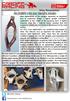 May Newsletter An insight into our Upright design Mass optimisation of the uprights represents an important area in suspension design, a lighter upright contributes significantly to the weight of the unsprung
ME349 Engineering Design Projects
 ME349 Engineering Design Projects Introduction to Materials Selection The Material Selection Problem Design of an engineering component involves three interrelated problems: (i) selecting a material, (ii)
EUROLAB 25 years. The role of metrology and testing to characterize materials and products. EUROLAB 25th Anniversary Seminar
 EUROLAB 25 years The role of metrology and testing to characterize materials and products April 9, 2015, Odense Danmark 1 Origin of Conformity Assessment The New Approach for the European Economic Community
DETERMINATION OF TIME-TEMPERATURE SHIFT FACTOR FOR LONG-TERM LIFE PREDICTION OF POLYMER COMPOSITES
 DETERMINATION OF TIME-TEMPERATURE SHIFT FACTOR FOR LONG-TERM LIFE PREDICTION OF POLYMER COMPOSITES K. Fukushima*, H. Cai**, M. Nakada*** and Y. Miyano*** * Graduate School, Kanazawa Institute of Technology
METHOD OF STATEMENT FOR STATIC LOADING TEST
 Compression Test, METHOD OF STATEMENT FOR STATIC LOADING TEST Tension Test and Lateral Test According to the American Standards ASTM D1143 07, ASTM D3689 07, ASTM D3966 07 and Euro Codes EC7 Table of Contents
Innovative materials and solutions for automotive components
 Innovative materials and solutions for automotive components D Aiuto Fabio CRF GML Metals Department ANFIA 28 April, 2016 Index Material overview Material development Twip characterization Fiat Panda front
Lightweight structures with new car technologies
 Lightweight structures with new car technologies Julian Haspel Application Development, LANXESS Business Unit Semi-Crystalline Products Automotive Days Poland October 27-28, 2011 LANXESS A premium supplier
CLICKBOND FASTENER OVERVIEW:
 Infastech Pty Ltd A.B.N. 98 000 482 986 A.C.N. 000 482 986 891 Wellington Road, Rowville, Victoria, 3178 Telephone: (03) 9765 6400 Fax (03) 9765 6444 CLICKBOND FASTENER OVERVIEW: The CLICKBOND fastening
Fracture and strain rate behavior of airplane fuselage materials under blast loading
 EPJ Web of Conferences 6, 6 42017 (2010) DOI:10.1051/epjconf/20100642017 Owned by the authors, published by EDP Sciences, 2010 Fracture and strain rate behavior of airplane fuselage materials under blast
Repair of Fatigued Steel Bridge Girders with Carbon Fiber Strips
 2004-02 Final Report Repair of Fatigued Steel Bridge Girders with Carbon Fiber Strips Technical Report Documentation Page 1. Report No. 2. 3. Recipients Accession No. MN/RC 2004-02 4. Title and Subtitle
International Forum on Pressure Vessels for Hydrogen and Natural Gas Vehicles
 International Forum on Pressure Vessels for Hydrogen and Natural Gas Vehicles COMPOSITE TANK TESTING, CERTIFICATION, AND FIELD PERFORMANCE Beijing September 27-29, 2010 Joe Wong 0 POWERTECH Hydrogen &
Use of Continuous Fiber Reinforced Engineering Plastics: The Seat Pan of the Opel Astra OPC
 Use of Continuous Fiber Reinforced Engineering Plastics: The Seat Pan of the Opel Astra OPC Jörg Schnorr, BASF SE, Dr. Ralf Langendorf, Adam Opel AG, Rüsselsheim, Jordan Kurikov, BASF SE, Ludwigshafen
Composite Design Fundamentals. David Richardson
 Composite Design Fundamentals David Richardson Contents A review of the fundamental characteristics of composites Stiffness and Strength Anisotropic Role of fibre, matrix and interface Composite failure
Flexible Rolling of Tailor Rolled Blanks - innovative light weight design in steel -
 Flexible Rolling of Tailor Rolled Blanks - innovative light weight design in steel - Dr.-Ing. Michael Rehse Muhr und Bender KG Tailor Rolled Blanks - a light weight design opportunity - Flexible Rolling
Itemized RAI Responses
 Itemized RAI Responses Question 1-1: Justify the use of a tapped bar or equivalent with a helicoil insert. This justification should specifically address any reduction in packaging performance from the
4.461: Building Technology 1 CONSTRUCTION AND MATERIALS FALL TERM 2004 SCHOOL OF ARCHITECTURE AND PLANNING: MIT
 4.461: Building Technology 1 CONSTRUCTION AND MATERIALS Professor John E. Fernandez FALL TERM 2004 SCHOOL OF ARCHITECTURE AND PLANNING: MIT Concrete and Composites Stadelhofen Station Zurich Santiago Calatrava
APE T CFRP Aslan 500
 Carbon Fiber Reinforced Polymer (CFRP) Tape is used for structural strengthening of concrete, masonry or timber elements using the technique known as Near Surface Mount or NSM strengthening. Use of CFRP
How to reduce the cure time without damaging the rubber compound during injection molding?
 How to reduce the cure time without damaging the rubber compound during injection molding? 0Introduction This article aims at analyzing the rubber injection process and highlighting the limits that prevent
Weight Measurement Technology
 Kistler-Morse (KM) introduced bolt-on weight measuring systems three decades ago. These devices featured Walter Kistler s invention, the Microcell. Over the years, many improvements were made to the Microcell
Following Nature s Lead for Ultimate Design Efficiency The ACP Process as Applied to FSV
 Following Nature s Lead for Ultimate Design Efficiency The ACP Process as Applied to FSV Akbar Farahani, Ph.D, ETA Inc. Jody Shaw, U. S. Steel Abstract The shapes and configurations of nature are wildly
Redux Film Adhesives, Foaming Films, Primers and Liquid Shims. About HEXCEL
 About HEXCEL Hexcel is the largest US producer of carbon fibre; the world s largest weaver of structural fabrics; the number one producer of composite materials such as prepregs, film adhesives and honeycomb;
Numerical modelling of shear connection between concrete slab and sheeting deck
 7th fib International PhD Symposium in Civil Engineering 2008 September 10-13, Universität Stuttgart, Germany Numerical modelling of shear connection between concrete slab and sheeting deck Noémi Seres
RPV - RP - RA air handling units
 APPLICATIONS Heating, ventilation, cooling >> FACTORIES >> WAREHOUSES >> HALLS >> DISTRIBUTION CENTRES >> COMMERCIAL PREMISES >> PLACES OF WORSHIP RPV - RP - RA air handling units www.reznor.eu RPV - RP
Welding of Plastics. Amit Mukund Joshi. (B.E Mechanical, A.M.I.Prod.E)
 Welding of Plastics Amit Mukund Joshi (B.E Mechanical, A.M.I.Prod.E) Introduction Mechanical fasteners, adhesives, and welding processes can all be employed to form joints between engineering plastics.
LightCab Technology concept International Panel, SAE Congress 2013, 8 th October 2013. Jörg Ohlsen, CEO EDAG
 LightCab Technology concept International Panel, SAE Congress 2013, 8 th October 2013 Jörg Ohlsen, CEO EDAG LightCab Technology concept 1 Drivers LightCab Challenges and conceptual formulation 2 Product
CARBON/DYNEEMA INTRALAMINAR HYBRIDS: NEW STRATEGY TO INCREASE IMPACT RESISTANCE OR DECREASE MASS OF CARBON FIBER COMPOSITES
 26 TH INTERNATIONAL CONGRESS OF THE AERONAUTICAL SCIENCES CARBON/DYNEEMA INTRALAMINAR HYBRIDS: NEW STRATEGY TO INCREASE IMPACT RESISTANCE OR DECREASE MASS OF CARBON FIBER COMPOSITES J. G. H. Bouwmeester*,
Fatigue Performance Evaluation of Forged Steel versus Ductile Cast Iron Crankshaft: A Comparative Study (EXECUTIVE SUMMARY)
 Fatigue Performance Evaluation of Forged Steel versus Ductile Cast Iron Crankshaft: A Comparative Study (EXECUTIVE SUMMARY) Ali Fatemi, Jonathan Williams and Farzin Montazersadgh Professor and Graduate
Phosphoric Acid Anodized Aluminum Honeycomb
 Phosphoric Acid Anodized Aluminum Honeycomb Description 02 and 06 expanded aerospace grade aluminum honeycomb materials are available in a wide selection of cell sizes and foil gauges. The HexWeb CR-PAA
Technical Notes 3B - Brick Masonry Section Properties May 1993
 Technical Notes 3B - Brick Masonry Section Properties May 1993 Abstract: This Technical Notes is a design aid for the Building Code Requirements for Masonry Structures (ACI 530/ASCE 5/TMS 402-92) and Specifications
INTERNATIONAL ASSOCIATION OF CLASSIFICATION SOCIETIES. Interpretations of the FTP
 INTERNATIONAL ASSOCIATION OF CLASSIFICATION SOCIETIES Interpretations of the FTP CONTENTS FTP1 Adhesives used in A or B class divisions (FTP Code 3.1, Res A.754 para. 3.2.3) June 2000 FTP2 Pipe and duct
2009-12-23 ICS: 93.160. Strengthening retrofitting of reinforced concrete structures by gluing of fibre reinforced polymeric fabrics (FRP fabrics)
 36888 ежглеяис тгс йубеямгсеыс (теувос еутеяо) 20091223 ICS: 93160 150114010801:2009 H HELLENIC CHNICAL SPECIFICATION (FRP ) Strengthening retrofitting of reinforced concrete structures by gluing of fibre
INVESTIGATION OF VISCOELASTICITY AND CURE SHRINKAGE IN AN EPOXY RESIN DURING PROCESSING
 TH INTERNATIONAL CONFERENCE ON COMPOSITE MATERIALS INVESTIGATION OF VISCOELASTICITY AND CURE SHRINKAGE IN AN EPOXY RESIN DURING PROCESSING T. Shimizu *, H. Koinuma, K. Nagai Mitsubishi Heavy Industries,
TBi Industries 4 1. 0. RoboMIG TBi Robot welding torches 1 YEAR ON TCP. Air and water cooled. Also for robots with integrated cable assemblies
 TBi Industries RoboMIG TBi Robot welding torches Air and water cooled Also for robots with integrated cable assemblies Stable design for reliable 1 YEAR ON TCP IEC 60974-7 4 1. 0 Engineering the details
NVH TECHNOLOGY IN THE BMW 1 SERIES
 NVH TECHNOLOGY IN THE BMW 1 SERIES (Presented by) A. Fleszar LMS Americas J. Florentin, F. Durieux LMS International T. Yamamoto, Y. Kuriyama Nippon Steel Corporation CONTENTS Introduction Hybrid Interior
Background text Webasto Car Roof Systems: More Air and Light While Driving
 Background text Webasto Car Roof Systems: More Air and Light While Driving Table of Content Webasto Car Roof Systems: More Air and Light While Driving... 2 1. Roof Systems and the Expertise of the Market
Economic Mass Producible Mirror Panels for Solar Concentrators
 Abstract G, G. Burgess, K. Lovegrove and A. Luzzi Centre for Sustainable Energy Systems Australian National University, Canberra 2 Australia E-mail: [email protected] The Centre for Sustainable Energy
Cerobear Spindle Bearings for Machine Tool Applications
 Cerobear Spindle Bearings for Machine Tool Applications Cerobear Spindle Bearings About CEROBEAR Committed to the abbreviation CEramic in ROlling BEARings, CEROBEAR GmbH is the renowned world leader in
Experimental assessment of concrete damage due to exposure to high temperature and efficacy of the repair system
 MATEC Web of Conferences 6, 06002 (2013) DOI: 10.1051/matecconf/20130606002 C Owned by the authors, published by EDP Sciences, 2013 Experimental assessment of concrete damage due to exposure to high temperature
CNG & Hydrogen Tank Safety, R&D, and Testing
 > Powertech Labs Inc. CNG & Hydrogen Tank Safety, R&D, and Testing 012.10.2009 Presented by Joe Wong, P.Eng. PRESENTATION OBJECTIVES Present experience from CNG in-service tank performance. The process
Detailing of Reinforcment in Concrete Structures
 Chapter 8 Detailing of Reinforcment in Concrete Structures 8.1 Scope Provisions of Sec. 8.1 and 8.2 of Chapter 8 shall apply for detailing of reinforcement in reinforced concrete members, in general. For
SuperLIGHT-CAR - the Multi-Material Car Body
 SuperLIGHT-CAR - the Multi-Material Car Body Lutz Berger, Micha Lesemann, Christian Sahr Institut für Kraftfahrzeuge - RWTH Aachen University, Aachen, Germany Simon Hart, Richard Taylor ARUP, Solihull,
Numerical Analysis of the Moving Formwork Bracket Stress during Construction of a Curved Continuous Box Girder Bridge with Variable Width
 Modern Applied Science; Vol. 9, No. 6; 2015 ISSN 1913-1844 E-ISSN 1913-1852 Published by Canadian Center of Science and Education Numerical Analysis of the Moving Formwork Bracket Stress during Construction
RRIM DESIGN MANUAL ADDENDUM FOR EXTERIOR BODY PANELS
 RRIM DESIGN MANUAL ADDENDUM FOR EXTERIOR BODY PANELS Published by the Automotive Composites Alliance (ACA), formerly the SMC Automotive Alliance. 2004 by Automotive Composites Alliance Published: June,
Optimising plate girder design
 Optimising plate girder design NSCC29 R. Abspoel 1 1 Division of structural engineering, Delft University of Technology, Delft, The Netherlands ABSTRACT: In the design of steel plate girders a high degree