
GAO. Federal and State Universal Service Programs and Challenges to Funding TELECOMMUNICATIONS
|
|
|
- Emory Davis
- 9 years ago
- Views:
Transcription
1 GAO February 2002 United States General Accounting Office Report to the Ranking Minority Member, Subcommittee on Telecommunications and the Internet, Committee on Energy and Commerce, House of Representatives TELECOMMUNICATIONS Federal and State Universal Service Programs and Challenges to Funding GAO

2 United States General Accounting Office February 2002 TELECOMMUNICATIONS G A O Accountability Integrity Reliability Federal and State Universal Service Programs and Challenges to Funding Highlights Highlights of GAO , a report to the Ranking Minority Member, Subcommittee on Telecommunications and the Internet, Committee on Energy and Commerce, House of Representatives. Why GAO Did This Study GAO was asked to provide an overview of current federal and state universal service support programs and to discuss the potential impact of emerging Internet-based voice communications on how these programs are funded. The longstanding goal of universal service affordable residential telephone service for all Americans has resulted in a variety of federal and state support programs. Over the years, these programs have evolved as the telephone industry s structure changed and universal service benefits were extended to new groups, such as schools and libraries. What GAO Found Federal and state universal service programs have helped make telephone service affordable to a wide range of beneficiaries: low-income and hearing- and speech-impaired customers; schools, libraries, and rural health care providers; and rural localities where the costs of providing telephone service are high. The funding mechanisms for these programs generally depend on the revenues of telecommunications carriers. The emergence of new Internet-based voice communications may pose challenges to how these programs are funded in the future. Federal universal service programs are funded by mandatory contributions made by telecommunications carriers and certain other providers of telecommunications. The amount of the carriers contributions is a percentage, approved by FCC, of their interstate and international telecommunications revenues. Carriers can and often do pass these costs to their customers. State universal service programs, which supplement the federal programs, also can be funded with fees that are passed on to consumers. In addition, states promote universal service through various rate-setting strategies, such as setting business rates significantly higher than residential rates in order to subsidize residential customers. Under current federal regulations, revenues from Internet services are not included in the calculations for universal service contributions. Although this new technology is not widespread yet, it may eventually become an attractive alternative and could affect the revenue base from which universal service programs are funded. Some industry analysts question the long-term viability of the current funding mechanisms for universal service and believe that these mechanisms should be reassessed in light of the changing telecommunications environment. FCC agreed with the information presented in the report. Universal Service: Current Funding Mechanisms and Beneficiaries This is a test for developing highlights for a GAO report. The full report, including GAO's objectives, scope, methodology, and analysis is available at For additional information about the report, contact Peter Guerrero ( ). To provide comments on this test highlights, contact Keith Fultz ( ) or [email protected].

3 Contents Letter Appendix I Appendix II Background Five Federal Programs Are Designed to Further Universal Service States Implement a Variety of Programs Designed to Further Universal Service States Use Several Rate-Setting Mechanisms to Promote Affordable Basic Local Telephone Service Converging Communications Technologies Pose Long-Term Challenges to Federal Funding of Universal Service Conclusion Scope and Methodology Agency Comments Description of Sample Design, Local Telephone Rates, and Estimated Costs of Providing Service Subsidies in Local Telephone Rates Sample Design for Gathering Local Telephone Rate and Cost Data Local Telephone Rates The Cost of Providing Local Telephone Service and FCC s Hybrid Cost Proxy Model Aggregate Results of Survey of Public Utility Commissions Appendix III State-Level Universal Service Programs 47 Appendix IV Local Telephone Rates 49 Appendix V GAO Contacts and Staff Acknowledgments 60 GAO Contacts 60 Acknowledgments 60 Tables Table 1: Summary of the Federal Universal Service Programs 8 Page i

4 Table 2: Presence of State-Level Universal Service Programs for Each State and the District of Columbia 47 Table 3: Residential and Single-Line Business Monthly Tariff Local Telephone Rates for Sampled Places by State 49 Figures Figure 1: Universal Service Funding Mechanisms and Beneficiaries Figure 2: State-Level Universal Service Programs in all 50 States and the District of Columbia Figure 3: Average Residential Rates and Estimated Costs for Suburbs and Rural Places (Percent Difference from Central City) Figure 4: Average Monthly Single-Line Business and Residential Local Telephone Rates for Central City, Suburb, and Rural Places Abbreviations ETC FCC IP MSA NECA TRS USAC eligible telecommunications carrier Federal Communications Commission Internet Protocol Metropolitan Statistical Area National Exchange Carrier Association Telecommunications Relay Services Universal Service Administrative Company Page ii

5 United States General Accounting Office Washington, DC February 4, 2002 The Honorable Edward J. Markey Ranking Minority Member Subcommittee on Telecommunications and the Internet Committee on Energy and Commerce House of Representatives Dear Mr. Markey: Universal service traditionally has meant providing residential customers with affordable, nationwide access to basic telephone service. Two factors pose challenges for achieving universal service. First, low-income households subscribe to basic telephone service at lower levels than households with higher incomes. For example, while approximately 94 percent of all households have telephone service, only 80 percent of households with incomes below $5,000 have telephone service. Second, as population density decreases, the cost of providing basic telephone service increases. Rates based on cost would be higher for customers in rural areas than for customers in more densely populated areas. As a result, universal service programs traditionally targeted support to low- income customers and customers in rural and other areas where the costs of providing basic telephone service are high. Through the Telecommunications Act of 1996, the Congress extended universal service support to include services for eligible schools, libraries, and rural health care providers. Universal service programs are generally funded through mandatory contributions from telecommunications companies. However, 6 years after the 1996 act, emerging technologies pose challenges for long- term funding of these programs. Because of your interest in universal service policy, you requested that we provide information on (1) the federal universal service programs and how they operate; (2) the state universal service programs and how they operate; (3) how states set local telephone rates among various types of customers and services to promote affordable service and how rates and costs vary across urban, suburban, and rural areas; and (4) how telephone service via Internet-based technology is developing and its potential impact on funding universal service programs. To respond to the first objective, we interviewed officials from the Federal Communications Commission (FCC) and two not-for-profit organizations that administer the day-to-day operations of federal universal service Page 1

6 programs within FCC s framework of orders and rules. We also reviewed relevant documents regarding the funding and operation of the federal universal service programs. To assess state-level universal service programs, we surveyed 51 public utility commissions in all 50 states and the District of Columbia regarding their universal service programs. We asked the commissions whether their states operated various universal service programs and how those programs are funded. We received responses from all commissions. For the third objective, we asked the commissions about various aspects of their rate-setting mechanisms and about the rates for local telephone service in a sample of places throughout each state. In addition, we used a model developed by FCC that provides estimates of the cost of providing local telephone service to discern how cost varies across urban, suburban, and rural areas. Finally, to respond to the fourth objective, we conducted semi-structured interviews with industry participants and academics familiar with the development of telephone service via Internet-based technology and researched the technical and regulatory aspects of the provision of these services. Our scope and methodology are discussed in more detail at the end of this letter. Background Title 1 of the Communications Act of 1934 sets forth the nation s telecommunications policy, including making communication services available so far as possible, to all the people of the United States. Early efforts by FCC, state regulators, and industry to promote universal service generally began in the 1950s. 1 At that time, increasing amounts of the costs associated with providing local telephone service were recovered from rates for long distance services. This had the effect of lowering local telephone rates and raising long distance rates, which was intended to make basic local telephone service more affordable. Because American Telephone and Telegraph Company (AT&T) provided both nationwide long distance service and local telephone service to approximately 80 percent of the nation s telephone subscribers, universal service was largely promoted by shifting costs between different customers and services. 1 In 1949, the Congress amended the Rural Electrification Act (REA) to authorize the REA Administrator to make low-interest loans to extend and improve telephone service in rural areas. Page 2

7 Following the divestiture of AT&T s local telephone companies in 1984, 2 FCC made several changes to universal service policy. First, the costs associated with local telephone service could no longer be shifted internally within AT&T. FCC therefore implemented federal access charges fees that long distance companies pay to local telephone companies to originate and terminate long distance telephone calls over the local telephone network. Access charges were intended to not only recover the cost of originating and terminating long distance telephone calls over the local telephone network, but also to subsidize local telephone service. Second, FCC initiated several federal programs that targeted support to low-income customers to bring the rates for basic telephone service within their reach. At this time, federal universal service programs were for the most part funded through charges imposed on long distance companies. Twelve years after divestiture, the Congress made significant changes to universal service policy through the Telecommunications Act of First, the 1996 act provided explicit statutory support for federal universal service policy. Second, the 1996 act extended the scope of federal universal service beyond the traditional focus on low-income consumers and consumers in rural and high-cost areas to include eligible schools, libraries, and rural health care providers. Third, the 1996 act altered the federal mechanism for funding universal service. Every telecommunications carrier providing interstate telecommunications services was required to contribute to federal universal service, unless exempted by FCC; and their contributions were to be equitable, nondiscriminatory, and explicit. In addition, FCC was authorized to require any other providers of interstate telecommunications to contribute if the public interest so requires. Contributions from both sources are deposited into the federal Universal Service Fund, from which disbursements are made for the various federal universal service programs. Both the federal and state governments implement universal service programs. This dual federal-state implementation of universal service 2 In 1974, the Department of Justice (DOJ) brought an antitrust suit against AT&T, alleging that the company was engaging in anticompetitive behavior. DOJ and AT&T entered into a consent decree that required AT&T to divest its local telephone companies. Page 3

8 arises from sections 2(b) and 254 of the Communications Act of At the federal level, FCC has issued numerous orders to implement the universal service reforms enunciated in the 1996 act. The Universal Service Administrative Company (USAC) 4 administers, on behalf of FCC, the day-to-day operations of federal universal service programs, although FCC retains responsibility for overseeing the operations of the programs and ensuring compliance with its rules. At the state level, public utility commissions generally regulate local telephone rates and rates for intrastate long distance services. Additionally, these commissions implement many universal service programs initiated at the state level. Five Federal Programs Are Designed to Further Universal Service At the federal level, universal service programs target support to high-cost areas, schools and libraries, low-income customers, and rural health care providers. In addition, another program Telecommunications Relay Services (TRS) administered by the National Exchange Carrier Association (NECA) furthers universal service by providing hearing- and speech-impaired customers with functional equivalent access to telephone services. 5 USAC and NECA administer two funds, the Universal Service Fund and the Interstate TRS Fund, respectively, into which specified companies deposit contributions and from which USAC and NECA distribute funds for the High Cost, Schools and Libraries, Low Income, Rural Health Care, and TRS programs. In the year 2000, NECA and USAC disbursed 6 approximately $4.45 billion for the five federal programs. NECA disbursed $47 million to the 11 providers that offer interstate TRS. USAC disbursed approximately $4.4 billion for the four programs that it administers. To receive universal 3 Section 2(b) assigns responsibility for intrastate telephone rate setting to state governments. Section 254 directs both FCC and the states to take the steps necessary to promote universal service. 4 USAC is a subsidiary of the National Exchange Carrier Association (NECA). NECA was, at one point, the temporary administrator of the federal universal service programs. 5 The TRS program is mandated in title IV of the Americans with Disabilities Act and is codified in section 225 of the Communications Act of While not included in section 254 of the Communications Act with other universal service programs, we nonetheless include the TRS program in our discussion of universal service because the program helps to make telephone service available to individuals who otherwise might not receive service. 6 USAC reports the amount paid to and due to service providers, while NECA reports payment obligations. We refer to both as disbursements when reporting the program amounts for the year Page 4

9 service support from USAC, a common carrier must be designated as an eligible telecommunications carrier (ETC). 7 State commissions have the primary responsibility for making the ETC designation. Section 214(e)(1) of the act requires that, to be designated an ETC, the common carrier must (1) offer the services that FCC identified as eligible for universal service support throughout the service area for which the designation is received; 8 (2) advertise the availability of those services; and (3) use at least some of its own facilities to deliver those services. In addition to ETCs, Internet service providers and equipment vendors can receive support from USAC for Internet access and internal connections associated with the schools and libraries program. Federal universal service programs and TRS are not funded with annual appropriations; rather, funding comes from mandatory contributions made by various telecommunications companies pursuant to the act. 9 These contributions can be, and it appears that many of these contributions are, passed on to customers, sometimes in the form of a line item on customers monthly telephone bills. For the TRS program, NECA generally collects funds from every common carrier that provides interstate telecommunications services, based on each carrier s interstate end-user telecommunications revenues. For the federal universal service programs, USAC collects funds from telecommunications carriers and certain other providers of interstate telecommunications, based on these providers interstate and international end-user telecommunications revenues, in accordance with FCC regulations. 10 There are several exceptions to FCC s contribution regulations for the federal universal service programs. Based on interim guidance from FCC, wireless providers may elect to contribute 7 In some instances, providers of eligible services without an ETC designation can receive support from USAC for the Schools and Libraries and Rural Health Care programs. 8 These services include single-party service; voice grade access to the telephone network; Touch-Tone service or its equivalent; access to emergency services, operator services, long distance service, and directory assistance; and toll limitation service. 9 Funding also comes from certain other non-common carrier providers of interstate telecommunications that FCC has required to contribute by regulation because the public interest so requires. 10 On a quarterly basis, USAC estimates the funding necessary for the four programs that it administers and the total interstate and international end-user telecommunications revenues. Based on these estimates, FCC approves a contribution factor that is applied to each telecommunications carrier s interstate and international end-user telecommunications revenue from the previous 6 months to determine its contribution. Page 5

10 based on certain safe harbor percentages. 11 These safe harbor percentages range from 1 to 15 percent, depending on the type of service provided. FCC also has implemented rules and guidelines meant to reduce administrative burdens for interstate companies whose annual contributions would be less than $10,000. These companies are not required to make contributions to USAC. Furthermore, companies with interstate end-user telecommunications revenues that constitute less than 8 percent of their combined interstate and international end-user telecommunications revenues are required to make contribution to USAC, based on their interstate revenues only. Some companies, who currently are treated as providers of information services, are not required to make contributions to universal service. For example, providers of some new technologies that are beginning to substitute for traditional interstate telecommunications services, such as telephone service via Internet-based technology, are not required to contribute to universal service, as shown in figure 1. Figure 1: Universal Service Funding Mechanisms and Beneficiaries Source: GAO analysis of FCC and NECA documents. 11 The safe harbor percentages are intended to approximate the carrier s percentage of interstate and international end-user telecommunications revenue. Page 6

11 In table 1, we provide a summary of the federal universal service 12 programs. 12 The Rural Utilities Service (RUS) in the Department of Agriculture also operates two programs that provide telecommunications-related assistance. RUS operates a loan program to provide funding to build and maintain rural telephone systems and a grant and loan program for distance learning and telemedicine. Page 7

12 Table 1: Summary of the Federal Universal Service Programs Programs and subprograms Program description Administrator Intended beneficiaries (1) High Cost Assists customers living in high-cost, rural, USAC All customers living in highor remote areas through financial support to cost, rural, or remote areas telephone companies, thereby lowering rates for local and long distance service. High-Cost Loop Support Assists rural local telephone companies with high local loop costs. Support provided for the intrastate portion of the local loop. High-Cost Support Assists non-rural local telephone companies with high costs, based on FCC s Hybrid Cost Proxy model of forward-looking costs. Support provided for the intrastate portion of the costs. Local-Switching Support Assists local telephone companies serving 50,000 or fewer customers. Support provided to offset a portion of the local switching costs. Long-Term Support Assists local telephone companies subject to rate-of-return regulation that participate in NECA s Common Line Pool with high local loop costs. Support provided for the interstate portion of the local loop. Interstate Access Support Assists local telephone companies subject to price-cap regulation with high costs. Support provided for the interstate portion of the network. Interstate Common Line Assists local telephone companies subject Support to rate-of-return regulation with high costs. Support provided for the interstate portion of the network. (2) Schools and Libraries Assists eligible schools and libraries through USAC Public and private (Federal E-Rate Program) discounted telecommunications and kindergarten through 12th information services. Discounts available for grade schools with local and long distance telephone service, endowments less than $50 Internet access, and internal connection million; libraries whose projects (e.g., wiring and networking schools budgets are not part of a and libraries). Discounts are between 20 school s budget and 90 percent. Page 8

13 Eligibility How support reaches beneficiaries Service provider Based on size and cost characteristics of the companies providing service to customers Support allows eligible telephone companies to charge lower telephone rates than otherwise would be available to customers in high-cost, rural, or remote areas. ETC Rural companies with local loop costs exceeding 115 percent of the national average Non-rural companies in states with a statewide average cost per line that exceeds 135 percent of the national average Support allows rural companies to charge lower rates for intrastate services (e.g., local telephone rates). Support allows non-rural companies to charge lower rates for intrastate services (e.g., local telephone rates). Amount paid or due to service providers in 2000 $2.22 billion Small companies serving Support allows small companies to charge 50,000 or fewer customers lower rates for intrastate services (e.g., local telephone rates). Support allows companies subject to rate- of-return regulation to charge lower rates for interstate access services. Rate-of-return regulated companies that participate in NECA s Common Line Pool Price-cap regulated companies with high costs Support allows companies subject to price Program took effect July 1, cap regulation to charge lower rates for 2000 interstate access services. Rate-of-return regulated companies with high costs Support allows companies subject to rateof-return regulation to charge lower rates for Program adopted October 11, 2001, for implementation on interstate access services. July 1, 2002; funding not included in total for High Cost programs Based on economic Eligible companies are reimbursed for Providers of local $1.65 billion disadvantage of the population providing discounted services to schools and long distance served by the school or library and libraries. services; Internet as measured by the number of access services; students eligible to participate and internal in the national school lunch connections program and designation of the location of the school or library as urban or rural Page 9

14 Programs and subprograms Program description Administrator Intended beneficiaries (3) Low Income Assists qualifying low-income consumers USAC Low-income consumers through discounted installation and monthly telephone services and free toll limitation service. Link-Up Reduces installation fees for qualifying lowincome consumers. Installation fees are reduced 50 percent, up to $30. On tribal lands, an additional $70 is available. Lifeline Support Reduces monthly fees for qualifying lowincome consumers. Depending on matching support from the state, monthly fees are reduced between $5.25 and $ On tribal lands, an additional $25 reduction per month is available. Toll Limitation Service Provides free blocking/limitation service to low-income consumers to prevent or limit the amount of long distance telephone calls. (4) Rural Health Care Assists health care providers located in rural USAC Citizens and health care areas through discounts for providers in rural areas telecommunications services. Discounts are provided to make rates for facilities in rural areas reasonably comparable to those in nearby urban areas. (5) Telecommunications Relay Assists hearing- and speech-impaired NECA Hearing- and speech-impaired Services (TRS) customers through communications customers and customers assistants relaying the content of calls wishing to communicate with between users of text telephones and users hearing- and speech-impaired of traditional telephones. TRS is intended to customers provide functionally equivalent access to the telephone network for hearing- and speech-impaired individuals. Page 10

15 Amount paid or due to Eligibility How support reaches beneficiaries Service provider service providers in 2000 Based on the consumer s Carriers receive support to provide ETC $523 million income or factors directly related to income, with criteria established by the state, unless the state does not have a program, in which case eligibility is based on participation in one of several federal programs discounted or free services for low-income consumers. Carriers are reimbursed for providing discounted installation services. Carriers are reimbursed for providing discounted telephone service. Carriers are reimbursed for providing toll limitation service. Public and not-for-profit health Companies are reimbursed for providing Providers of $5 million care providers located in rural discounted services to eligible rural health telecommunications areas care providers. services Companies receive support to provide relay Providers of TRS $47 million (Obligated) service. Note 1: USAC is the Universal Service Administrative Company. Note 2: NECA is the National Exchange Carrier Association. Note 3: ETC is Eligible Telecommunications Carrier. Note 4: Rural local telephone companies are generally smaller and serve fewer customers than nonrural local telephone companies. Note 5: The local loop is the connection between the telephone company s facility and the customer s premises. Note 6: A switch is a piece of equipment that routes telephone signals between users. Page 11

16 Note 7: NECA s Common Line Pool is a mechanism where NECA submits a single, averaged tariff for interstate access charges to FCC on behalf of typically small local telephone companies. NECA distributes the revenues derived from the access charges paid for by long distance companies and end-user subscriber line charges (SLC) to participating companies. Source: GAO s analysis of FCC, USAC, and NECA information. States Implement a Variety of Programs Designed to Further Universal Service In addition to the federal programs, state governments implement a variety of programs designed to further universal service. In figure 2, we illustrate the number of states, including the District of Columbia that implement various universal service programs, based on our survey of public utility commissions (see app. III for program availability by state); we only considered state programs that are independent of or supplement a similar federal program. 13 Some state-level programs target similar beneficiaries as the federal programs, including deaf and disabled customers, low-income customers, and schools and libraries. There are several reasons for this. First, FCC ensures that TRS services are available, sets minimum standards, and certifies state-level TRS programs. Second, the federal Lifeline Program for low-income customers provides additional matching support for state-level programs. In addition, some states also have programs for high-cost and small local telephone companies and state communications networks that allow schools, libraries, government, and community facilities to receive discounted services. 13 For example, the federal Lifeline Program provides support to customers in all states. However, for purposes of reporting the number of states with a Lifeline Program, we only include states that have an independent program or provide additional funding beyond the federal funding. Page 12

17 Figure 2: State-Level Universal Service Programs in all 50 States and the District of Columbia Source: GAO s survey of public utility commissions (May Sept. 2001). We found that state governments use a variety of approaches to implement state-level universal service programs. Public utility commissions implement many of the programs we identify in figure 2. In our survey of commissions, the two most common approaches that state governments use to fund state-level universal service programs are (1) a fee or tax levied directly on consumers and (2) a fee or tax levied on telecommunications or other service companies that the companies are permitted to pass on to consumers. Page 13

18 States Use Several Rate-Setting Mechanisms to Promote Affordable Basic Local Telephone Service In addition to state-level universal service programs, there are several ratesetting mechanisms that public utility commissions use to subsidize various aspects of local telephone service. These rate-setting mechanisms subsidize rural, residential, and basic telephone service. These subsidies are made possible through rates set for urban and business telephone service as well as rates set for vertical services such as caller identification (caller ID) and call waiting. Many States Use Geographic Rate Averaging and Value-of-Service Pricing to Promote Lower Local Telephone Rates in Rural and High-Cost Areas Geographic rate averaging and value-of-service pricing are intended to promote lower rates in rural and high-cost areas. With geographic rate averaging, customers across a geographic area pay the same local telephone rate, although rates for residential customers are generally different than rates for business customers. These geographic areas can be either small or large, in some instances there is a single geographic area for the entire state. If the geographic area is large, customers in areas where the cost of providing service is low, typically urban areas, will pay rates higher than they would if the area was small and only included customers with low costs. Conversely, customers in areas where the cost of providing service is high, typically rural areas, will pay rates lower than they would if the area was small and only included customers with high costs. With value-of-service pricing, local telephone rates are based on the number of customers that can be called with local telephone service. In rural areas where there are fewer customers to call, rates are set at a relatively low level because the perceived value of the local telephone service is lower than in more populous areas where there are greater numbers of customers to call with local telephone service. We found that state regulators use both geographic rate averaging and value-of-service pricing in setting local telephone rates. In our survey of public utility commissions, 15 commissions report that local telephone rates are the same throughout the service territory of the largest local telephone company in their state. That is, there is a single, large geographic area over which the commission averages local telephone rates. Among other commissions, 19 report that local telephone rates for the largest local telephone company are the same in areas with a similar geographic size or number of lines, thereby implying that there are multiple geographic areas over which the commission averages local Page 14

19 telephone rates. 14 In 40 states where one or more local telephone companies have multiple geographic areas over which regulators average rates, 22 commissions report using value-of-service pricing to establish the relative rates for different geographic areas. Thus, local telephone rates in some states will be lower in rural and less populous areas, relative to rates in urban areas. The relationship between local telephone rates and estimates of the cost of providing service in central city, suburban, and rural places illustrates the influence of geographic rate averaging and value-of-service pricing. In figure 3, we illustrate how local telephone rates and the estimated cost of providing service for suburban and rural places differs from the rates and estimated costs for central city places. 15 We gathered these data from public utility commissions and FCC s Hybrid Cost Proxy Model (see app. I for a discussion of our sample design, rate data, and FCC s model). There is no statistical difference in residential local telephone rates between central city, suburban, and rural places. However, the estimated cost of providing local telephone service, as measured by FCC s model, increases significantly from central city places to suburban and especially rural places. The estimated cost of providing local telephone service is approximately 61 percent higher and 195 percent higher in suburban and rural places, respectively, than in central cities. The results in figure 3 are consistent with geographic averaged rates and value-of-service pricing local telephone rates on average do not appear to be highly related to the differences in the cost of providing service. 14 The remaining state commissions reported two different types of geographic averaging. Nine commissions reported that rates for the largest local telephone company are set the same within broad geographic areas (e.g., urban, suburban, and rural). The remaining eight commissions reported that some other type of geographic averaging approach was used for the largest local telephone company in their state. 15 We classified places in Metropolitan Statistical Areas (MSA) as either central city or suburb. The Census Bureau reports a central city for each MSA. We classified all other places within an MSA, excluding the central city, as suburbs. We classified rural places as those outside an MSA. Page 15

20 Figure 3: Average Residential Rates and Estimated Costs for Suburbs and Rural Places (Percent Difference from Central City) Source: GAO s survey of public utility commissions (May Sept. 2001) and GAO s analysis of FCC s Hybrid Cost Proxy Model. Single-Line Business Rates Exceed Residential Rates in Most States Local telephone rates for single-line business customers are almost uniformly set above rates for residential customers. In our survey of public utility commissions, all states except Wyoming report that single-line business rates are higher than residential rates. 16 In figure 4, we report the average residential and single-line business local telephone rates for central city, suburb, and rural places (see app. I for a discussion of our sample design and rate data). For every type of place, average single-line business rates are approximately twice as high as residential rates. Conversely, the cost of providing service is not likely to be significantly different between business and residential customers. 17 Thus, these results 16 In Wyoming, business and residential local telephone rates are the same. 17 Business customers are generally located closer to the telephone company s facilities than are residential customers. This would imply that the cost of providing service to the average business customer is less than that for the average residential customer. Alternatively, most business telephone calls occur during busy hours (e.g., 10:30 a.m. to 11:30 a.m.). This concentration of telephone calls during the busy hours necessitates more switching capacity than would otherwise be necessary and implies higher costs associated with business customers. These effects most likely offset each other. Page 16

21 indicate that single-line business customers are subsidizing residential local telephone service because their rates are approximately twice as high as residential customers rates for local telephone service while the cost of providing the service is most likely to be similar. Figure 4: Average Monthly Single-Line Business and Residential Local Telephone Rates for Central City, Suburb, and Rural Places Note: These are the monthly local telephone tariff rates. The rates do not include the Federal Subscriber Line Charge, which was capped at $5.00 per month for each primary residential and single-line business line, federal and state surcharges to fund universal service programs, federal and state taxes, and long distance charges. Source: GAO s survey of public utility commissions (May Sept. 2001). Vertical Services Often Subsidize Basic Local Telephone Service Many public utility commissions establish rates for vertical services to subsidize basic local telephone service. Vertical services are options that customers can add to their basic local telephone service. Examples of vertical services include caller ID, call waiting, and conference calling. In our survey of public utility commissions, 40 commissions reported that they regulate the rates for vertical services, and 32 of these commissions reported that rates for vertical services are set above the cost of providing the service to subsidize basic local telephone service. Page 17
22 Intrastate Long Distance Access Charges May Also Subsidize Local Telephone Service Some public utility commissions use intrastate long distance access charges to subsidize local telephone service. This subsidy can benefit local telephone service by allowing the local telephone company to cover the costs not recovered from local rates. Twenty-three commissions reported setting intrastate access charges above cost to subsidize basic local telephone service, while 21 commissions reported that intrastate access charges do not subsidize basic local telephone service. 18 Converging Communications Technologies Pose Long-Term Challenges to Federal Funding of Universal Service The last decade has seen a rapid increase in the use of digital technologies and Internet Protocol (IP) networks for communications. Applications now exist to convert traditional analog voice services to digital, to break the digital voice into packets, and to send the voice packets over the Internet or other IP networks. However, under the current regulatory structure, providers of these IP voice services do not have to contribute to the Universal Service Fund for the IP voice services. Therefore, as these new voice services gain popularity, concerns exist of whether federal funding levels for universal service might eventually decline. In addition, there is much debate about whether the current federal regulatory framework for funding universal service with its reliance on interstate telecommunications revenues is appropriate for digital communications, where voice, video, and data are carried in the same manner over networks that lack intrastate/interstate designations. IP Telephony Is a Small but Growing Service in Both Business and Residential Markets In the last few years, Americans have increasingly been communicating through applications, such as , that make use of the Internet or IP networks. Some of these applications allow for real-time voice communications, much like a traditional telephone call. Several different names have been applied to these applications, including IP telephony, voice over IP (VoIP), Internet telephony, packet voice, and others Five other states either have no intrastate long distance service (e.g., the District of Columbia) or are uncertain or have made no determination of whether the intrastate long distance access charges are subsidizing basic local telephone service. 19 We asked the experts we interviewed for their definitions of the various names given to IP voice applications. Several said that IP telephony and VoIP often are used interchangeably in the industry. A number of the experts considered Internet telephony to be a subset of IP telephony, referring specifically to calls sent using the Internet rather than a private data network. Those we spoke with differed in their terminology preferences. We have chosen to use IP telephony in this report because it is one of the more widely recognized of the various terms. Page 18
23 Essentially, these applications convert analog voice to digital and then break the digital information into packets, which are routed over an IP network. 20 Packets may be reassembled at the location of the recipient or converted back to analog prior to reaching the recipient. If packet loss and delay can be controlled and minimized, the quality of an IP telephony call can be comparable to the traditional public switched telephone network. 21 IP telephony is already in use today in a variety of ways. Experts with whom we spoke said that the first uses of IP telephony were by consumers making voice calls using their personal computers, 22 and by companies providing international long distance calling. At times, the companies providing international service are wholesalers to the traditional long distance carriers. Thus, consumers may make an overseas call that is at some point converted to digital without ever knowing about the conversion, and usually without knowing that their call was handled by a company other than their own long distance service provider. 23 We were told that international calling is the most prevalent use of IP telephony today. Even so, a number of the experts we interviewed estimated that IP telephony represents only a tiny percentage of current worldwide voice traffic. 24 Several of the industry representatives with whom we spoke believed that business users are likely to drive the deployment of IP telephony services. Industry representatives said that there were some cost savings to be realized from a transition to IP telephony, particularly because voice and data would be delivered over a single network, avoiding the duplicative deployment and maintenance costs of separate voice and data networks. For companies with a large number of branch offices, IP telephony gives 20 In some cases, this is the Internet; and in others, it is a private data network. 21 We were told by a few of the industry representatives we interviewed that quality problems still exist with IP telephony when it is sent over the Internet. 22 This application requires that each user has the correct software, as well as special hardware such as speakers and a microphone, and is online. 23 A couple of our interviewees pointed out that customers do not generally care about the technology behind their telephone calls only that calls are completed and are of an acceptable quality. 24 It was mentioned that exact numbers for the amount of IP telephony traffic are not determined because a packet is a packet, meaning it is unknown whether any particular packet is voice, video, or data. Thus, there is no accurate measurement of IP telephony usage. Page 19
24 them the ability to keep their interoffice calls completely off the traditional telephone network. 25 We were told that an even more significant benefit of IP telephony is the range of new applications it allows and the ease with which these new applications can be introduced. One industry representative stated that IP telephony should not be thought of as merely a substitute for traditional telephone service it has much greater potential for new features and functions than traditional telephone service. For example, virtual intelligent assistants may provide many more options for handling incoming calls than today s voice mail, and Web sites may allow consumers to contact a customer service representative through a voice call from their computer. Although business users will likely be the first to adopt IP telephony technologies, residential users will continue to have the opportunity to use IP telephony in the long-haul services, such as international calls and domestic long distance. Local telephone companies, however, have significant investment in their current networks and technologies and may be slower to roll out new services, such as IP telephony. Nonetheless, several people whom we interviewed mentioned the possibility that Windows XP may promote residential use of IP telephony, because it has the ability to turn instant messaging into a voice application. Also, competitive voice service providers, such as cable television companies, may use IP telephony over their networks. 26 Several industry representatives cautioned, however, that IP voice services are not yet a market substitute for traditional residential voice service. IP telephony might not provide lifeline services during emergency situations, such as power outages, and does not generally offer E-911 functionality. 27 The offering of IP telephony as a competitive residential telephone service, therefore, may be limited to secondary line service at the present time and will likely be bundled with other offerings, such as video or data services. 25 These systems usually involve the installation of IP telephony telephones. For calls outside the company, equipment linking to the public switched telephone network is retained. 26 One equipment provider that we interviewed said there had been more than a dozen trials of IP telephony by cable systems. 27 E-911, or enhanced 911, means the location of the caller is automatically identified to the emergency personnel receiving the call. Page 20
25 IP Telephony May Not Be an Immediate Threat to Federal Funding of Universal Service but May Threaten Its Long-Term Viability The assessment and recovery of universal service contributions are governed by a statutory framework established by Congress in the Communications Act of 1934 (as amended by the Telecommunications Act of 1996). The Communications Act is stovepiped, or compartmentalized, meaning various types of services (e.g., telephone, cable, wireless) are held to different rules and regulations. 28 As discussed earlier, funding for federal universal service generally comes from providers of interstate telecommunications services, but may also be assessed upon other providers of interstate telecommunications if the public interest so requires. IP telephony is an application that has, to date, been treated in effect as an information service. 29 Therefore, companies offering IP telephony are not currently required to make contributions to the universal service fund from revenues for IP telephony services. 30 As the deployment of IP telephony technologies moves forward, and more 28 For further explanation of the stovepiped structure of the Communications Act of 1934 see our report, Telecommunications: Technological and Regulatory Factors Affecting Consumer Choice of Internet Providers (GAO-01-93, Oct. 12, 2000), p It has never been determined by the Commission whether IP telephony is an information service or a telecommunications service. FCC has stated that certain forms of phone-tophone IP telephony services lack the characteristics that would render them information services within the meaning of the statute, and instead bear the characteristics of telecommunications services. However, FCC found it was not appropriate to make any definitive pronouncements in the absence of a more complete record focused on individual service offerings. In the Matter of Federal-State Joint Board on Universal Service, CC Docket No , Report to Congress, FCC (released Apr. 10, 1998) at paragraph There has been some debate on whether companies providing IP telephony services are engaging in regulatory arbitrage, or using the regulatory environment to one s competitive advantage. For example, a service provider would be engaging in regulatory arbitrage if it chose to offer IP telephony specifically to avoid including universal service charges on its customers bills, and thereby perhaps being able to offer less expensive service than its traditional telephony competitors who are legally obligated to contribute to the Universal Service Fund. Several of the experts with whom we spoke noted that regulatory arbitrage had in fact driven the use of IP telephony in international calling. The current international accounting rates system is bypassed with IP telephony, keeping the cost of service provision lower. Regarding the Universal Service Fund, however, companies that exclusively provide international services are exempt from universal service contributions. Thus, we were told that the information service exemption was not a motivating factor for these international service providers to have selected IP telephony technology. For domestic service providers, some experts believed that companies have elected to deploy IP telephony technologies because they see convergence of voice and data as the future of the industry not to avoid contributions to the Universal Service Fund. Page 21
26 businesses 31 and consumers begin to substitute IP telephony for traditional telephone service, the question arises as to whether a decline in the funding for universal service could result. Some of the industry representatives we interviewed believed that IP telephony is not an immediate threat to universal service funding because there is so little IP telephony today. 32 While providers of IP telephony do not pay into the fund at present, this has yet to produce a perceptible financial impact on the fund. One industry representative pointed out that, as a practical matter, it makes little sense to try to extend the current system a system based on the amount of interstate telecommunications revenues to information services such as IP telephony. First, measurement of IP voice revenues would require a means of identifying which packets are voice packets. We were told that, at present, packets are sometimes labeled priority, but they are not identified as voice, data, or video. 33 We were told such packet identification likely could be done, although several experts pointed out that just because it is technologically possible does not mean it is affordable or that it makes sense from a network engineering standpoint. Second, measurement of IP voice revenues would require a means of identifying packets as intrastate or interstate. We were told that this makes little sense in the world of the Internet, where geographic boundaries are difficult to determine. However, a number of the industry representatives we interviewed believed that increasing amounts of voice communications will be deemed information services because of the manner in which they are provided. Under the current universal service regulatory structure, which primarily relies on assessment of revenues from interstate telecommunications services, this transformation might eventually have a noticeable and negative effect on the universal service funding mechanism. But universal 31 A representative of several large users of telecommunications explained that the universal service charges on the telephone bills of large companies can run anywhere from 8 to 12 percent of the total telephone bill. Thus, IP telephony calls, which do not include universal service charges, can mean savings of around 10 percent on corporate telephone bills. This savings, along with the flexibility of the network, and the new features and functions offered, may make IP networks attractive to large business end users. 32 We were given a wide range of views about how much voice traffic would be IP telephony a few years from now, from just a few percent to more than 20 percent. 33 Several people we interviewed noted that there could be privacy concerns surrounding the labeling of packets as voice. Page 22
27 service has not been a static system. As the telecommunications industry has evolved, so too has the funding mechanism for universal service. For example, the system for universal service financing changed when the long distance market became competitive following the divestiture of AT&T and has continued to be modified as new providers of voice services, such as wireless carriers, entered the market and were required to pay into the fund. The classes of supported services have also changed over the years. With the establishment of the Schools and Libraries Program, Congress chose to cover advanced services such as Internet access. Nonetheless, the basic concept of relying primarily on revenues from interstate telecommunications services for the financing of explicit universal service programs or for the implicit subsidization of certain rates has remained in place. 34 In the face of growing usage of IP telephony, there are mixed views on whether information service providers should begin contributing to the Universal Service Fund. Some in the industry argue that the system should be technologically neutral if it looks like traditional voice service, it should be treated as such and generate contributions to the Universal Service Fund. Others are concerned that the present regulatory system not be force-fit onto information service providers. Among the experts we interviewed, there was agreement that universal service is a valid policy goal. 35 This led several of those with whom we spoke to point out that these new technologies may actually promote the goals of universal service by lowering the costs of providing communications technologies to all Americans. 34 Some experts we spoke with thought that, ideally, universal service funds should come from the nation s general tax revenues. Others suggested it be recovered from the 3 percent telephone excise tax, originally placed on American telephone bills in 1898 to fund the Spanish-American War. One carrier we met with had a detailed plan calling for a flat, perline fee that would appear as a line item on every telephone bill one rate for residential and a higher rate for businesses. Another carrier felt the current method of collecting, based on reported revenues, was sound and that a flat, per-line fee would shift universal service contributions to local exchange carriers because they have the most easily ascertainable line count. In April 2001, the Consumer Energy Council of America released a report that explored several alternative funding options for universal service programs (see Universal Service: Policy Issues for the 21st Century, Consumer Energy Council of America, Mar. 2001). 35 However, some experts disagreed with aspects of the current High Cost Program. They felt it should be a means-tested program that we should not subsidize everyone who chooses to live in a rural area irregardless of their ability to afford the higher cost of telephone service in such areas. Page 23
28 Conclusion Whether Congress and FCC should continue to rely largely on providers of interstate telecommunications services for the funding of federal universal service is an increasingly important debate as the world continues to migrate to digital communications technologies and IP networks. In several of our recent reports, we noted that convergence in communications markets is presently occurring as many different communications networks are redesigned or built to provide an array of services. 36 Ultimately, these various networks will each carry voice, video, and data packets. Yet, as we said in October 2000, the Communications Act was originally structured and remains a stovepiped, or compartmentalized, law in which particular communications services are governed under particular provisions of the law. The resulting regulatory structure holds different types of networks to different rules even when they are used to provide similar services. Fundamentally, universal service funding has been carried out under laws and regulations pertaining to telecommunications services. It is unclear what rules should apply for voice applications that could be defined as information services, or more importantly, whether such service distinctions should remain. We previously noted that policymakers may face challenges in deciding how, under the present structure of communications law, functionally similar services are governed over different networks. IP telephony and its effect on universal service funding is another example of this increasing dilemma. FCC has undertaken a proceeding to examine how to streamline and reform both the manner in which it assesses carrier contributions to the Universal Service Fund and the manner in which carriers may recover those costs from their customers. Most commenters in FCC s proceeding urged the Commission to retain some form of a revenue-based assessment based on interstate and international revenues. 37 A few commenters argued 36 See Telecommunications: The Changing Status of Competition to Cable Television (GAO/RCED , Jul. 8, 1999); Telecommunications: Development of Competition in Local Telephone Markets (GAO/RCED-00-38, Jan. 25, 2000); Telecommunications: Technological and Regulatory Factors Affecting Consumer Choice of Internet Providers (GAO-01-93, Oct. 12, 2000); and Telecommunications: Characteristics and Competitiveness of the Internet Backbone Market (GAO-02-16, Oct. 16, 2001). 37 There was disagreement among commenters, however, on whether assessments should be on a collected, gross-billed, or projected revenue basis. The Commission also sought comment on the de minimus exception, the limited international revenues exception, fund sufficiency, recovery of contributions, and more. See In the Matter of Federal-State Joint Board on Universal Service, CC Docket No , Notice of Proposed Rulemaking, FCC (released May 8, 2001) (NPRM). Page 24
29 for moving to a flat fee, line-item approach. Although FCC has not yet issued an order in this proceeding, the Commission noted that it has an obligation to ensure that the universal service contribution system remains consistent with the statute, is reflective of current market trends and technologies, is simple for carriers to administer, and does not shift more than an equitable share of carrier contributions to any class of customers. 38 Nonetheless, the basic framework of funding universal service via contributions from every telecommunications carrier that provides interstate telecommunications services is a statutory mandate established by Congress. This statutory framework also permits FCC to require any other provider of interstate telecommunications to contribute, if the public interest so requires. If it was determined that universal service contributions should also be collected from companies and services operating outside that framework or if the funding framework itself was found to be inadequate going forward FCC or Congress might need to revisit how best to provide universal service to all Americans. Scope and Methodology To provide information on the federal universal service programs, we interviewed officials from FCC, NECA, and USAC. We also reviewed documents from FCC, NECA, and USAC regarding the funding and operation of the federal universal service programs. Additionally, we reviewed documents from academics and industry participants regarding the federal universal service programs. We conducted a mail survey of public utility commissions to gather information on state-level universal service programs and rate-setting mechanisms. In the survey, we asked questions about state programs for deaf and disabled consumers; high cost and small local telephone companies; low-income consumers; and discounted telecommunications services for schools, libraries, and other government-related facilities. We pretested the survey with staff at five commissions to help ensure that (1) the questions in the survey were clear and unbiased, (2) the terms used in the survey were precise, and (3) the survey was not unduly burdensome. The survey was mailed to staff at public utility commissions in all 50 states and the District of Columbia. We received 51 completed questionnaires, a response rate of 100 percent. We conducted the survey from May to September NPRM at paragraph 6. Page 25
30 In addition, to provide information on local telephone rates and the costs of providing service, we asked public utility commissions for local telephone rates and used a model developed by FCC that provides forward-looking estimates of the cost of providing local telephone service. We asked commissions for the local telephone rates for residential and single-line business customers in randomly selected places throughout each state and the District of Columbia (see app. I for a discussion of the sample and local telephone rate data). We also used a model developed by FCC to determine the estimated costs of providing service in the same randomly selected places (see app. I for a discussion of FCC s model and our use of the model). Finally, to assess the development of telephone service via Internet-based technology and the future funding of universal service programs, we conducted semistructured interviews with 26 industry participants and academics familiar with the development of IP telephony. These industry participants included three providers of IP telephony services, two Internet backbone providers, two long distance companies, one Regional Bell Operating Company, six equipment manufacturers, five academics, two industry analysts, three associations involved in IP telephony issues, one government agency, and one representative of large business endusers. In addition, we reviewed relevant documents from various government, industry, and academic sources. We performed our review from January through November 2001 in accordance with generally accepted government auditing standards. Agency Comments We provided a draft of this report to FCC for their review and comment and subsequently spoke with the Chief of FCC s Accounting Policy Division. FCC officials stated that they were in agreement with the information presented in the report, and provided technical comments that were incorporated as appropriate. As agreed with your office, unless you publicly announce its contents earlier, we plan no further distribution of this report until 7 days after the date of this letter. At that time, we will provide copies to interested congressional committees, the Chairman of FCC, and other interested parties. We also will make copies available to others upon request. Page 26
31 If you or your staff have any questions about this report, please call me at (202) Key contributors to this report are listed in appendix V. Sincerely yours, Peter Guerrero Director, Physical Infrastructure Issues Page 27
32 Appendix I: Description of Sample Design, Local Telephone Rates, and Estimated Costs of Providing Service In this appendix, we provide information on (1) the objectives and limitations in measuring subsidies in local telephone rates, (2) the sample design we used to select locations to gather local telephone rate and cost data, (3) the local telephone rate data that we gathered, and (4) our use of the Federal Communications Commission s (FCC) Hybrid Cost Proxy Model for estimates of the cost of providing local telephone service. Subsidies in Local Telephone Rates As part of our analysis on how public utility commissions set local telephone rates, we were asked to report on rates throughout the United States. Additionally, we were asked to examine how rates and the costs of providing local telephone service varied throughout the United States. To respond to these objectives, we gathered data on local telephone rates and the estimated costs of providing service for sampled locations throughout all 50 states and the District of Columbia. Due to limitations in the available data, we did not make a comparison between local telephone rates and the estimated cost of providing service to determine the amount of a subsidy in local telephone service for particular locations. There are two reasons why we do not make this comparison. First, we only consider the monthly tariff rates for local telephone service, which exclude several additional charges paid for by consumers that provide additional funding for local telephone service. Second, the costs of providing local telephone service are estimated costs, based on FCC s model of an efficient provider using current technology at current prices. The estimated costs are used by FCC to determine and allocate federal universal service support, not to price network elements, and are not the local telephone companies accounting costs. Additionally, industry participants identified several weaknesses associated with the model regarding cost estimates for specific locations. Sample Design for Gathering Local Telephone Rate and Cost Data To gather local telephone rate and cost data, we began with all 50 states and the District of Columbia. State governments, typically through a public utility commission, regulate many aspects of local telephone service within their states. These public utility commissions regulate the rates for local telephone service that many companies charge residential and business customers. Because public utility commissions regulate local telephone rates, we began our data gathering at the state level. This was necessary to collect data on local telephone rates and also to ensure that we had observations from every rate-setting jurisdiction, in this case every state. Page 28
33 Appendix I: Description of Sample Design, Local Telephone Rates, and Estimated Costs of Providing Service Within each state, we sampled places 39 from three broad categories associated with population density. While public utility commissions regulate local telephone rates, these rates can vary between different areas within states. To incorporate the different rates within states, we sampled places within each state. We chose to conduct a sample, as opposed to a census, because of the large number of places. In addition, the cost of providing local telephone service varies inversely with population density. To incorporate the differences in the cost of providing local telephone service, we defined and sampled places from three broad categories that roughly represent different categories of population density: central city, suburb, and rural places. 40 We classified places in metropolitan statistical areas (MSA) 41 as either central city or suburb. The Census Bureau reports a central city for each MSA. We classified all other places within an MSA, excluding the central city, as suburbs. Finally, we classified rural places as those outside an MSA. To sample the central cities and suburbs, we first identified all MSAs within each state and the District of Columbia. We arrayed the MSAs within each state by population and established state-specific strata, based on the MSA population. For most states, we established three strata (large, medium, and small MSA). For states with many MSAs (California, Florida, Michigan, and Texas), we established four or five strata, depending on the number of MSAs in the state. Within each stratum, we randomly selected an MSA. For states with three or fewer MSAs, we simply selected all the MSAs in the state. This sampling approach ensured that we included at least three MSAs from each state, except for states where there were 39 As defined by the Census Bureau, a place is a concentration of population, either legally bounded as an incorporated place or delineated for statistical purposes as a census designated place. 40 Because places are defined by political boundaries, there can be instances where the population density and categories of places that we have developed are not consistent. For example, some central cities encompass very large geographic areas and therefore have relatively few and less densely populated suburbs, while some central cities are relatively small geographically and therefore have many suburbs, some of which can be very densely populated. 41 The general concept of an MSA is that of a core area containing a large population nucleus, together with adjacent communities having a high degree of economic and social integration with that core. The current standards provide that each newly qualifying MSA must include at least one city with 50,000 or more inhabitants, or a Census Bureau-defined urbanized area (of at least 50,000 inhabitants) and a total metropolitan population of at least 100,000 (75,000 in New England). Page 29
34 Appendix I: Description of Sample Design, Local Telephone Rates, and Estimated Costs of Providing Service fewer than three MSAs, and that we included MSAs with varying populations from each state. Once the MSAs for each state and the District of Columbia were selected, we selected the central city, suburb, and rural places. The central cities were selected by default the Census Bureau reports the central city for each MSA. Therefore, once the MSAs were selected, the central cities were also selected. We randomly sampled one place, excluding the central city, within the selected MSAs for inclusion as the suburb. 42 We also only included central city and suburban places that were served by local telephone companies identified by FCC as non-rural carriers. Non-rural carriers are local telephone companies that do not meet the definition of rural carrier. 43 This exclusion was necessary because FCC uses its Hybrid Cost Proxy Model only for non-rural carriers in each state. Finally, we generally sampled three rural places in each state; two rural places served by a non-rural carrier and one rural place served by a rural carrier. Because we used a sample to develop the estimates of local telephone rates and estimated costs presented throughout this report, each estimate has a measurable precision, or sampling error, that may be expressed as a plus or minus figure. A sampling error indicates how closely we can reproduce from a sample, the results that we would obtain if we were to take a complete count of the population we are analyzing using the same measurement methods. By adding the sampling error to and subtracting it from the estimate, we can develop upper and lower bounds for each estimate. This range is called a confidence interval. Sampling errors and confidence intervals are stated at a certain confidence level in this report, 95 percent. For example, a confidence interval at the 95-percent confidence level means that in 95 out of 100 instances, the sampling procedure used would produce a confidence interval containing the universe value we are estimating. 42 In some instances, MSAs cross state boundaries. When this occurred, the places within the MSA, but outside the state, were excluded. Approximately 3.8 percent of the U.S. population lives in these excluded places. 43 A rural carrier is a local telephone company that (1) provides common carrier service in a study area that does not include either any incorporated place of 10,000 inhabitants or more or any territory included in an urbanized place, (2) provides telephone exchange service to fewer than 50,000 access lines, (3) provides telephone exchange service to any local exchange carrier study area with fewer than 100,000 access lines, or (4) has less than 15 percent of its access lines in communities of more than 50,000 on the date of enactment of the Telecommunications Act of 1996 (Feb. 8, 1996). Page 30
35 Appendix I: Description of Sample Design, Local Telephone Rates, and Estimated Costs of Providing Service Local Telephone Rates There are three common forms of service provided by local telephone companies: unlimited service, message service, and measured service. With unlimited service, the customer pays a monthly recurring service charge and pays no additional charge for an unlimited number of local telephone calls each month. Message service also includes a monthly recurring service charge; however, the customer also pays a charge for each local telephone call, or message. With measured service, the customer pays a monthly recurring service charge and pays a charge for each local telephone call, with the charge determined by the duration of the call. The monthly recurring service charge is lower with message and measured service than with unlimited service, reflecting the charge imposed on the local telephone calls with message and measured service. In addition, message and measured service can include a monthly allowance, a certain number of local calls, units, or dollars, that the customer can incur before the per-call charges begin. We gathered local telephone rate data for the places selected in our sample from public utility commissions. We asked for rates (the recurring service charge, monthly allowance, and cost of a 5-minute business day call) for both residential and single-line business customers. For each type of customer, we asked for the unlimited service rate and the message or measured service with the lowest rate. Throughout the report, we provide information and analysis based on local telephone tariff rates for unlimited service. These rates do not include the federal Subscriber Line Charge, typically $3.50 to $5.00 per month for the primary line; 44 state and local surcharges for items such as state universal service funding, 911 service, and taxes; the federal excise tax; and long distance fees and associated universal service surcharges and other taxes. Where offered, we use the tariff rate for unlimited service (the recurring service charge). However, in some states, unlimited service is not available. In those instances, we calculated a monthly fee for a representative customer using the message rate. Consistent with previous FCC analysis, we assumed that a representative customer makes minute calls per month for residential customers and minute calls per month for single-line business customers. Therefore, the monthly fee in these instances is the monthly recurring service charge plus 44 The federal Subscriber Line Charge is a monthly fee authorized by FCC and payable to the customer s local telephone company to recover a portion of the cost of providing local telephone service that is associated with interstate service. The Subscriber Line Charge increases for additional lines beyond the first, or primary, line. Page 31
36 Appendix I: Description of Sample Design, Local Telephone Rates, and Estimated Costs of Providing Service the charge associated with making either 100 or 200 calls per month for residential and single-line business customers, respectively. The Cost of Providing Local Telephone Service and FCC s Hybrid Cost Proxy Model FCC developed a cost model, called the Hybrid Cost Proxy Model, to distribute support among non-rural carriers for the high-cost component of the federal universal service program. FCC s model is a synthesis model, based on FCC s staff-developed model and incorporating elements from two industry-sponsored models (the HAI Model sponsored by AT&T and MCI and the Benchmark Cost Proxy Model sponsored by US West, Sprint, and BellSouth). FCC s model calculates an estimated cost at the wire center 45 level. To calculate the estimated cost of providing service for each wire center, FCC s model assumes that an efficient provider constructs the most efficient network to serve existing customers from the existing wire center locations. We did not evaluate the operation of FCC s model. For each place in our sample, we used the estimated cost directly from FCC s Hybrid Cost Proxy Model or calculated a weighted-average estimated cost. First, we identified all wire centers located in the sampled places. This was accomplished using the street address of switches from Telcordia Technologies, Inc. s Local Exchange Routing Guide (LERG), May 2001 edition. In some suburban and rural sampled places, there was no wire center located in the place. In those instances, we found telephone numbers for government offices or schools in the place and used the LERG to identify the wire center serving the place. When we could not find a telephone number for a government office or school in the place, we chose the closest switch to the place to identify the wire center serving the place. Second, once we identified the wire centers located in or serving the place, we could determine the estimated cost for that place. If there was only a single wire center located in or serving the place, the estimated cost for that wire center was the estimated cost used in our analysis. However, if more than one wire center was located in or served the place, we calculated a weighted-average estimated cost, based on the proxy cost for each wire center, with the number of lines at each wire center serving as the weight. Because wire center boundaries do not exactly match political boundaries, there are possible biases introduced in the analysis. 45 A wire center is a telephone company facility where customers telephone lines originate and which also generally houses one or more switches to route customers telephone calls. Page 32
37 Appendix I: Description of Sample Design, Local Telephone Rates, and Estimated Costs of Providing Service For a variety of reasons, we believe these biases do not significantly influence our results. 46 We discussed our use of FCC s Hybrid Cost Proxy Model with both FCC staff and industry participants, representing both local and long distance telephone companies. In general, they told us that our use of FCC s model, namely comparing relative costs between central city, suburban, and rural places, was an acceptable use of the model. Some industry participants identified several weaknesses with FCC s model. Weaknesses cited by more than one participant include (1) problems with public data used in the model (e.g., wire center boundaries could be inaccurate, Census block data from the 1990 Census could be dated); (2) customers are assumed to be uniformly distributed along roads, versus using actual customer locations; (3) certain expenses are allocated on a per-line basis; and (4) input expenses generally are nationwide, rather than company-specific values. We believe that the weaknesses the industry participants identified are not significant for our use of the model. Because we are comparing relative costs between central city, suburban, and rural places, many potential problems associated with calculating a cost estimate for a given place are not relevant because these problems will affect our estimate for each place in a similar manner. 46 Based on conversations with FCC staff, we believe there are two factors that mitigate any possible bias introduced by the divergence between political and wire center boundaries. First, even if customers are served by wire centers outside their political jurisdiction, the impact on the estimated cost is minor because adjacent wire centers generally have similar costs. Second, biases likely offset because, while some customers in a place are served by a wire center in an adjacent place, some wire centers in the place serve customers in an adjacent place. Page 33
38 Appendix II: Aggregate Results of Survey of Public Utility Commissions This appendix provides the aggregate results for our survey of public utility commissions. For each question, the numbers indicate the number of commissions selecting each response. Because some questions were not answered by all respondents and because some questions allow multiple responses, the totals do not necessarily add to 51 commissions. Page 34
39 Appendix II: Aggregate Results of Survey of Public Utility Commissions Page 35
40 Appendix II: Aggregate Results of Survey of Public Utility Commissions Page 36
41 Appendix II: Aggregate Results of Survey of Public Utility Commissions Page 37
42 Appendix II: Aggregate Results of Survey of Public Utility Commissions Page 38
43 Appendix II: Aggregate Results of Survey of Public Utility Commissions Page 39
44 Appendix II: Aggregate Results of Survey of Public Utility Commissions Page 40
45 Appendix II: Aggregate Results of Survey of Public Utility Commissions Page 41
46 Appendix II: Aggregate Results of Survey of Public Utility Commissions Page 42
47 Appendix II: Aggregate Results of Survey of Public Utility Commissions Page 43
48 Appendix II: Aggregate Results of Survey of Public Utility Commissions Page 44
49 Appendix II: Aggregate Results of Survey of Public Utility Commissions Page 45
50 Appendix II: Aggregate Results of Survey of Public Utility Commissions Page 46
51 Appendix III: State-Level Universal Service Programs This appendix provides information on the presence of state-level universal service programs in the 50 states and the District of Columbia. We gathered this information from our survey of public utility commissions. In table 2, a check mark ( ) indicates the presence of the program in the state. Table 2: Presence of State-Level Universal Service Programs for Each State and the District of Columbia Deaf or High-cost local Small local Low income Low income State State E- disabled telephone telephone establish lower communications Rate State customers company company service monthly rate network program Alabama Alaska Arizona Arkansas California Colorado Connecticut Delaware District of Columbia Florida Georgia Hawaii Idaho Illinois Indiana Iowa Kansas Kentucky Louisiana Maine Maryland Massachusetts Michigan Minnesota Mississippi Missouri Montana Nebraska Nevada New Hampshire New Jersey New Mexico New York Page 47
52 Appendix III: State-Level Universal Service Programs Deaf or High-cost local Small local Low income Low income State State E- disabled telephone telephone establish lower communications Rate State customers company company service monthly rate network program North Carolina North Dakota Ohio Oklahoma Oregon Pennsylvania Rhode Island South Carolina South Dakota Tennessee Texas Utah Vermont Virginia Washington West Virginia Wisconsin Wyoming Note: A check mark ( ) indicates the presence of the program in the state. Source: GAO s survey of public utility commissions (May Sept. 2001). Page 48
53 Appendix IV: Local Telephone Rates This appendix provides the residential and single-line business local telephone rates for sampled places (see app. I for detailed information regarding the sample design). We gathered the monthly tariff rates for the sampled places from public utility commissions in all 50 states and the District of Columbia. The rates listed below are based on responses from the public utility commission and do not include the weights used to generate the point estimates and confidence intervals reported in the letter. The rates listed below are the monthly tariff rates. Where unlimited service was available, we report the tariff rate for that service. If unlimited service was not available, we report the tariff rate for message service, assuming minute calls per month for residential customers and minute calls per month for single-line business customers. Also, the monthly tariff rates that we report exclude the federal Subscriber Line Change; federal, state, and local surcharges for items such as universal service funding, 911 service, and taxes; the federal excise tax; and long distance fees and associated universal service surcharges and other taxes. Table 3: Residential and Single-Line Business Monthly Tariff Local Telephone Rates for Sampled Places by State State Place name Type of place Residential rate Single-line business rate Alabama Auburn Central city $15.95 $36.23 Notasulga Suburb Birmingham Central city Morris Suburb Decatur Central city Hillsboro Suburb Baileyton Non-MSA Goodwater Non-MSA Oak Hill Non-MSA Alaska Anchorage Central city Allakaket Non-MSA Toksook Bay Non-MSA Arizona Flagstaff Central city Williams Suburb Phoenix Central city Gila Bend Suburb Tucson Central city South Tucson Suburb Clifton Non-MSA Sierra Vista Non-MSA Winslow Non-MSA Page 49
54 Appendix IV: Local Telephone Rates State Place name Type of place Residential rate Single-line business rate Arkansas Fort Smith Central city Barling Suburb Little Rock Central city Wrightsville Suburb Pine Bluff Central city Sherrill Suburb Haynes Non-MSA Oil Trough Non-MSA Pollard Non-MSA a California Los Angeles Central city a San Fernando Suburb Merced a Central city a Dos Palos Suburb a Sacramento Central city Placerville a Suburb a Salinas Central city Greenfield a Suburb Dorris Non-MSA El Centro a Non-MSA Hanford a Non-MSA Colorado Boulder Central city Lafayette Suburb Colorado Springs Central city Monument Suburb Pueblo Central city Boone Suburb Buena Vista Non-MSA Leadville Non-MSA Two Buttes Non-MSA Connecticut Hartford Central city Groton Suburb Stamford Central city New Canaan Suburb Waterbury Central city Bethlehem b Suburb N/A Chester Center Non-MSA Essex Non-MSA Delaware Dover Central city Felton Suburb Wilmington Central city Newport Suburb Lewes Non-MSA Millville Non-MSA Page 50
55 Appendix IV: Local Telephone Rates State Place name Type of place Residential rate Single-line business rate a District of Columbia Washington Central city Florida Fort Walton Beach Central city Destin Suburb Jacksonville Central city Fernandina Beach Suburb Lakeland Central city Bartow Suburb Tallahassee Central city Havana Suburb Carrabelle Non-MSA Fanning Springs Non-MSA Okeechobee Non-MSA Georgia Augusta Central city Hephzibah Suburb Columbus Central city Hamilton Suburb Macon Central city Payne Suburb Aldora Non-MSA Avera Non-MSA Tunnel Hill Non-MSA Hawaii Honolulu Central city Hana Non-MSA Kailua Non-MSA Idaho Boise City Central city Caldwell Suburb Pocatello Central city Inkom Suburb Dietrich Non-MSA Mackay Non-MSA Wendell Non-MSA c Illinois Champaign Central city c Homer Suburb c Chicago Central city c Arlington Heights Suburb Peoria c Central city Minier c Suburb c Clayton Non-MSA Neponset c Non-MSA Pocahontas Non-MSA Indiana Fort Wayne Central city Waterloo Suburb Indianapolis Central city Page 51
56 Appendix IV: Local Telephone Rates State Place name Type of place Residential rate Single-line business rate Edgewood Suburb Kokomo Central city Windfall Suburb Elnora Non-MSA Ladoga Non-MSA Marengo Non-MSA Iowa Davenport Central city Panorama Park Suburb Des Moines Central city Hartford Suburb Dubuque Central city Durango Suburb Atlantic City Non-MSA Corning Non-MSA Renwick Non-MSA Kansas Lawrence Central city Eudora Suburb Topeka Central city Auburn Suburb Wichita Central city El Dorado Suburb Beloit Non-MSA Milford Non-MSA Parsons Non-MSA Kentucky Lexington Central city Stamping Ground Suburb Louisville Central city Plymouth Village Suburb Owensboro Central city Whitesville Suburb Lewisburg Non-MSA Scottsville Non-MSA Stanford Non-MSA Louisiana Houma Central city Lockport Suburb Monroe Central city Sterlington Suburb New Orleans Central city Westwego Suburb Jena Non-MSA New Llano Non-MSA Vidalia Non-MSA Maine Bangor Central city Page 52
57 Appendix IV: Local Telephone Rates State Place name Type of place Residential rate Single-line business rate Belfast Suburb Lewiston Central city Auburn Suburb Portland Central city Westbrook Suburb Augusta Non-MSA Waterville Non-MSA a Maryland Baltimore Central city Manchester a Suburb Cumberland a Central city a Frostburg Suburb a Hagerstown Central city Hancock a Suburb a Eldorado Non-MSA a Kitzmiller Non-MSA a Massachusetts Boston Central city Taunton Suburb Fitchburg Central city Templeton Suburb Lowell Central city Chelmsfor d Suburb Bourne Non-MSA Williamstown Non-MSA Michigan Ann Arbor a,d Central city Milan a,d Suburb Benton Harbor a,d Central city Eau Claire a,d Suburb Detroit a,d Central city Wayne a,d Suburb Grand Rapids a,d Central city East Grand Rapids a,d Suburb Custer a,d Non-MSA Fairgrove a,d Non-MSA Sturgis Non-MSA Minnesota Minneapolis Central city Clear Lake Suburb Rochester Central city Stewartville Suburb St. Cloud Central city Sauk Rapids Suburb Hutchinson Non-MSA Milaca Non-MSA Rock Creek Non-MSA Page 53
58 Appendix IV: Local Telephone Rates State Place name Type of place Residential rate Single-line business rate Mississippi Gulfport Central city Ocean Springs Suburb Hattiesburg Central city Purvis Suburb Jackson Central city Canton Suburb Duck Hill Non-MSA McComb Non-MSA Polkville Non-MSA Missouri Columbia Central city Harrisburg Suburb Joplin Central city Duenweg Suburb St. Louis Central city Bella Villa Suburb Bragg City Non-MSA Galt Non-MSA Wyatt Non-MSA Montana Billings Central city Laurel Suburb Great Falls Central city Cascade Suburb Dillon Non-MSA Whitehall Non-MSA Nebraska Lincoln Central city Roca Suburb Omaha Central city Avoca Suburb Edison Non-MSA Hebron Non-MSA Humphrey Non-MSA Nevada Las Vegas Central city Henderson Suburb Reno Central city Sparks Suburb Carson City Non-MSA Lovelock Non-MSA Yerington Non-MSA New Hampshire Manchester Central city Franklin Suburb Nashua Central city Mason Suburb Rochester Central city Page 54
59 Appendix IV: Local Telephone Rates State Place name Type of place Residential rate Single-line business rate Somersworth Suburb Hillsborough Non-MSA Littleton Non-MSA Whitefield Non-MSA New Jersey Atlantic City a Central city Cape May Point a Suburb Jersey City a Central city a Hoboken Suburb Newark a Central city a Victory Gardens Suburb New Mexico Albuquerque Central city Bernalillo Suburb Las Cruces Central city Sunland Park Suburb Santa Fe Central city Angel Fire Non-MSA Encino Non-MSA Las Vegas Non-MSA a New York Glens Falls Central city Whitehall a Suburb New York a Central city a Bronxville Suburb Newburgh a Central city a Cornwall on Hudson Suburb a Rochester Central city Sodus Point a Suburb a Cattaraugus Non-MSA Chaumont Non-MSA a Ithaca Non-MSA North Carolina Asheville Central city Biltmore Forest Suburb Charlotte Central city Lake Park Suburb Rocky Mount Central city Castalia Suburb Broadway Non-MSA Elk Park Non-MSA Whiteville Non-MSA North Dakota Bismarck Central city Mandan Suburb Fargo Central city Grandin Suburb Grand Forks Central city Page 55
60 Appendix IV: Local Telephone Rates State Place name Type of place Residential rate Single-line business rate Emerado Suburb Belfield Non-MSA Cayuga Non-MSA Watford Non-MSA Ohio Canton a Central city a Waynesburg Suburb a Dayton Central city Miamisburg a Suburb Lima Central city Delphos Suburb Clarksville Non-MSA Leipsic Non-MSA Middleport Non-MSA Oklahoma Lawton Central city Cache Suburb Oklahoma City Central city Lake Aluma Suburb Tulsa Central city Claremore Suburb Achille Non-MSA Pawnee Non-MSA Pocola Non-MSA Oregon Corvallis Central city Albany Suburb Eugene Central city Junction City Suburb Portland Central city Yamhill Suburb Adams Non-MSA Hood River Non-MSA Milton-Freewater Non-MSA Pennsylvania Johnstown Central city Franklin Suburb Philadelphia a Central city Oxford a Suburb a Scranton Central city Exeter a Suburb Burlington Non-MSA Saltsburg Non-MSA a South New Castle Non-MSA a Rhode Island Providence Central city a East Providence Suburb South Carolina Columbia Central city Page 56
61 Appendix IV: Local Telephone Rates State Place name Type of place Residential rate Single-line business rate Arcadia Lakes Suburb Greenville Central city Norris Suburb Sumter Central city Bluffton Non-MSA Calhoun Falls Non-MSA Springfield Non-MSA South Dakota Rapid City Central city Hill City Suburb Sioux Falls Central city Tea Suburb Chamberlain Non-MSA Kranzburg Non-MSA Madison Non-MSA Tennessee Jackson Central city Humboldt Suburb Johnson City Central city Bristol Suburb Memphis Central city Piperton Suburb Cumberland Gap Non-MSA Dover Non-MSA Rutherford Non-MSA Texas Galveston Central city Jamaica Beach Suburb Houston Central city El Lago Suburb Victoria Central city Waco Central city Bruceville-Eddy Suburb Putnam Non-MSA Roaring Springs Non-MSA Winters Non-MSA Utah Provo Central city Springville Suburb Salt Lake City Central city Bountiful Suburb Castle Valley Non-MSA River Heights Non-MSA Salina Non-MSA Vermont Burlington c Central city South Burlington c Suburb Jeffersonville c Non-MSA Page 57
62 Appendix IV: Local Telephone Rates State Place name Type of place Residential rate Single-line business rate Newport c Non-MSA Westminster c Non-MSA Virginia Lynchburg Central city Altavista Suburb Virginia Beach Central city Hampton Suburb Roanoke Central city Buchanan Suburb Iron Gate Non-MSA Melfa Non-MSA Radford Non-MSA Washington Bellingham Central city Bremerton Central city Bainbridge Island Suburb Seattle Central city Kenmore Suburb Mossyrock Non-MSA Tekoa Non-MSA Warden Non-MSA West Virginia Huntington Central city Milton Suburb Parkersburg Central city Vienna Suburb Wheeling Central city Moundsville Suburb Keystone Non-MSA Shinnston Non-MSA Terra Alta Non-MSA c Wisconsin Janesville Central city Footville Suburb c Madison Central city c Stoughton Suburb a Wausau Central city Brokaw a Suburb Clintonville Non-MSA c Genoa Non-MSA North Freedom c Non-MSA Wyoming Casper Central city Evansville Suburb Cheyenne Central city Gillette Non-MSA Hudson Non-MSA Rock River Non-MSA $40.95 $40.95 Page 58
63 Appendix IV: Local Telephone Rates a Rate for single-line business customers calculated based on message rate. b Rate for residential customers calculated based on message rate. c Rate for residential and single-line business customers calculated based on message rate. d For residential customers, there is an unlimited basic service available for $ According to staff at the Michigan Public Service Commission, most residential customers purchase a message-rate service that allows 400 calls per month. The recurring service charge for this service is $12.01, not including any per-call charges that would be incurred for calls in excess of 400 per month. Source: GAO s survey of state public utility commissions (May Sept. 2001). Page 59
64 Appendix V: GAO Contacts and Staff Acknowledgments GAO Contacts Peter Guerrero (202) John Finedore (202) Amy Abramowitz (202) Acknowledgments In addition to those named above, Wendy Ahmed, Michael Clements, Eric Diamant, Michele Fejfar, Faye Morrison, James Sweetman, Jr., and Mindi Weisenbloom made key contributions to this report. (391009) Page 60
65 GAO s Mission Obtaining Copies of GAO Reports and Testimony Order by Mail or Phone Visit GAO s Document Distribution Center To Report Fraud, Waste, and Abuse in Federal Programs Public Affairs The General Accounting Office, the investigative arm of Congress, exists to support Congress in meeting its constitutional responsibilities and to help improve the performance and accountability of the federal government for the American people. GAO examines the use of public funds; evaluates federal programs and policies; and provides analyses, recommendations, and other assistance to help Congress make informed oversight, policy, and funding decisions. GAO s commitment to good government is reflected in its core values of accountability, integrity, and reliability. The fastest and easiest way to obtain copies of GAO documents is through the Internet. GAO s Web site ( contains abstracts and full-text files of current reports and testimony and an expanding archive of older products. The Web site features a search engine to help you locate documents using key words and phrases. You can print these documents in their entirety, including charts and other graphics. Each day, GAO issues a list of newly released reports, testimony, and correspondence. GAO posts this list, known as Today s Reports, on its Web site daily. The list contains links to the full-text document files. To have GAO this list to you every afternoon, go to and select "Subscribe to daily alert for newly released products" under the GAO Reports heading. The first copy of each printed report is free. Additional copies are $2 each. A check or money order should be made out to the Superintendent of Documents. GAO also accepts VISA and Mastercard. Orders for 100 or more copies mailed to a single address are discounted 25 percent. Orders should be sent to: U.S. General Accounting Office P.O. Box Washington, D.C To order by Phone: Voice: (202) TDD: (202) Fax: (202) GAO Building Room 1100, 700 4th Street, NW (corner of 4th and G Streets, NW) Washington, D.C Contact: Web site: [email protected], or or (202) (automated answering system). Jeff Nelligan, Managing Director, [email protected] (202) U.S. General Accounting Office, 441 G. Street NW, Room 7149, Washington, D.C
Kelly Cameron +1(301) 768-7263 [email protected] +216 95 320 650. 26 janvier 2015
 TUNISIA BUSINESS REFORM AND COMPETITIVENESS PROJECT Workshop sur le Service Universel L Expérience Américaine Kelly Cameron +1(301) 768-7263 [email protected] +216 95 320 650 26 janvier 2015
` Instructions for Completing the Service Provider and Billed Entity Identification Number and Contact Information Form
 ` Instructions for Completing the Service Provider and Billed Entity Identification Number and Contact Information Form The FCC Form 498 is used to collect contact, remittance, and payment information
choice. call. telephone. Consumer Assistance It s your It s your It s your Dear Consumer, A PSC Consumer Guide www.askpsc.com
 Dear Consumer, Telephone service competition holds many benefits for New Yorkers. Significant changes are taking place in the world of telecommunications. Different companies are now competing to provide
UNDERSTANDING YOUR TELEPHONE BILL
 South Carolina Department of Consumer Affairs The Savvy Consumer s Guide to UNDERSTANDING YOUR TELEPHONE BILL Consumer Advocacy Division South Carolina Department of Consumer Affairs 2221 Devine Street,
Before the FEDERAL COMMUNICATIONS COMMISSION Washington, D.C. 20554 COMMENTS OF THE NEW JERSEY DIVISION OF THE RATEPAYER ADVOCATE
 Before the FEDERAL COMMUNICATIONS COMMISSION Washington, D.C. 20554 In the Matter of ) ) Telecommunications Relay Services and ) Speech-to-Speech Services for ) CG Docket No. 03-123 Individuals with Hearing
KANSAS CORPORATION COMMISSION IP-to-IP Interconnection Report
 KANSAS CORPORATION COMMISSION IP-to-IP Interconnection Report 2014 REPORT ON IP- TO- IP INTERCONNECTION A Summary of Status of the FCC s Internet Protocol- to- Internet Protocol Interconnection Proceeding
How To Review Chapter 364 Of The Florida State Constitution
 The Florida Senate Interim Report 2011-108 October 2010 Committee on Communications, Energy, and Public Utilities REVIEW CHAPTER 364, FLORIDA STATUTES, RELATING TO TELECOMMUNICATIONS COMPANIES TO IDENTIFY
Streamlined Sales Tax Project Issue Paper April 18, 2005 Telecommunications and Related Definitions
 On April 14, 2005, the Streamlined Sales Tax Project approved this paper. The definitions in Attachment 1 were approved by the Project in a teleconference on April 7, 2005. Implementing States approved
Sales Tax Information. Service Providers. for Telecommunications. Publication 62 Revised 6/14
 tax.utah.gov Sales Tax Information for Telecommunications Service Providers Publication Revised 6/14 This publication is provided for general guidance only. It does not contain all sales or use tax laws
AT&T Billing Glossary
 # A B C D E F G H I J K L M N O P Q R S T U V W X Y Z # 411 An information/directory Assistance service provided by operators who assist customers in obtaining the telephone number(s) they wish to call.
Before the FEDERAL COMMUNICATIONS COMMISSION Washington, D.C. 20554
 Before the FEDERAL COMMUNICATIONS COMMISSION Washington, D.C. 20554 ) In the Matter of ) ) Request for Review by ) WC Docket No. 06-122 MeetingOne.com Corp. of Decision of ) Universal Service Administrator
BEFORE THE FEDERAL COMMUNICATIONS COMMISSION WASHINGTON D.C. 20554
 BEFORE THE FEDERAL COMMUNICATIONS COMMISSION WASHINGTON D.C. 20554 In the Matter of: ) ) Contributions to the Telecommunications ) CG Docket No. 11-47 Relay Services Fund ) Introduction Comments of the
STATE OF ILLINOIS ILLINOIS COMMERCE COMMISSION PETITION. filing, and respectfully requests that the Commission determine and establish the charge and
 STATE OF ILLINOIS ILLINOIS COMMERCE COMMISSION Illinois Telecommunications Access ) Corporation ) ) No. 11- Petition for annual line charge ) determination pursuant to 83 Ill. ) Adm. Code 755.500. ) PETITION
The Florida Senate. Interim Project Report 2002-146 October 2001 UNIVERSAL PROVISION OF DSL SERVICES IN FLORIDA
 The Florida Senate Interim Project Report 2002-146 October 2001 Committee on Regulated Industries Senator Walter "Skip" Campbell, Jr., Chairman UNIVERSAL PROVISION OF DSL SERVICES IN FLORIDA SUMMARY Staff
CHAPTER 15 - TELECOMMUNICATIONS ARTICLE 1 - GENERAL PROVISIONS. 37-15-101. Short title; sunset.
 CHAPTER 15 - TELECOMMUNICATIONS ARTICLE 1 - GENERAL PROVISIONS 37-15-101. Short title; sunset. (a) This chapter shall be known as the "Wyoming Telecommunications Act." (b) This chapter is repealed effective
Addendum StartPage: 0
 Control Number : 39717 Item Number : 29 Addendum StartPage: 0 PROJECT NO. 39717 cz * s; ^^1^,jA lt RULEMAKING PROCEEDING PUBLIC UTILITY COMNIISj^; RELATED TO VOICE OVER INTERNET PROTOCOL (VoIP) OF TEXAS
Report of the Telecommunications Study Committee to the 2015 Kansas Legislature
 TELECOMMUNICATIONS STUDY COMMITTEE Report of the Telecommunications Study Committee to the 2015 Kansas Legislature CO-CHAIRPERSON: Senator Mike Petersen CO-CHAIRPERSON: Representative Joe Seiwert OTHER
RULES OF TENNESSEE REGULATORY AUTHORITY CHAPTER 1220-4-8 REGULATIONS FOR LOCAL TELECOMMUNICATIONS PROVIDERS TABLE OF CONTENTS
 RULES OF TENNESSEE REGULATORY AUTHORITY CHAPTER 1220-4-8 REGULATIONS FOR LOCAL TELECOMMUNICATIONS PROVIDERS TABLE OF CONTENTS 1220-4-8-.01 Definitions 1220-4-8-.07 Tariff and Pricing Requirements for Competing
Legal Alert: FCC Imposes Additional USF Contribution Obligations on Interconnected VoIP Providers, Increases Wireless Safe Harbor
 Legal Alert: FCC Imposes Additional USF Contribution Obligations on Interconnected VoIP Providers, Increases Wireless Safe Harbor July 7, 2006 On June 27, 2006, the Federal Communications Commission (
BEFORE THE SENATE COMMUNICATIONS AND HIGH TECHNOLOGY COMMITTEE
 BEFORE THE SENATE COMMUNICATIONS AND HIGH TECHNOLOGY COMMITTEE Senator Jake Corman, Chairman Testimony of SONNY POPOWSKY CONSUMER ADVOCATE Regarding Chapter 30 of the Public Utility Code State College,
KRASKIN, LESSE &. COSSON,
 KRASKIN, LESSE &. COSSON, LLP ATTORNEYS AT LAW TELECOMMUNICATIONS MANAGEMENT CONSULTANTS 2120 L Street, N.W., Suite 520 Telephone (202) 296-8890 Washington, D.C. 20037 Telecopier (202) 296-8893 September
139.195 Definitions for KRS 139.105, 139.200, 139.215, and 139.775. As used in KRS 139.105, 139.200, 139.215, and 139.775: (1) "Ancillary services"
 139.195 Definitions for KRS 139.105, 139.200, 139.215, and 139.775. As used in KRS 139.105, 139.200, 139.215, and 139.775: (1) "Ancillary services" means services that are associated with or incidental
Low Income Program. Best Practices
 Low Income Program Best Practices 1 Overview One Lifeline account per household Advertising and Outreach FCC Form 497 Certification and Verification Recordkeeping 2 Best Practices One-per Household 3 One
Is universal service support received by a corporation under the universal service
 Part I Section 118.--Contributions to the Capital of a Corporation 26 CFR 1.118-1: Contributions to the capital of a corporation. Rev. Rul. 2007-31 ISSUE Is universal service support received by a corporation
Written Testimony of John L. Barnes Director of Product Development Verizon Business. Hearing on VoIP: Who Has Jurisdiction to Tax It?
 Written Testimony of John L. Barnes Director of Product Development Verizon Business Hearing on VoIP: Who Has Jurisdiction to Tax It? House Committee on the Judiciary Subcommittee on Commercial and Administrative
Before the Federal Communications Commission Washington, D.C. 20554 COMMENTS OF JOHN STAURULAKIS, INC.
 Before the Federal Communications Commission Washington, D.C. 20554 In the Matter of High-Cost Universal Service Support Federal-State Joint Board on Universal Service WC Docket No. 05-337 CC Docket No.
An electronic clearing house and settlement system for exchanging electronic transactions among banking institutions.
 498 Company Officer 499 Company Officer The officer of a service provider company who is authorized to certify that data set forth in the FCC Form 498 is true, accurate, and complete. The 498 Company Officer
TELECOMMUNICATIONS SERVICES
 TELECOMMUNICATIONS SERVICES Who regulates telecommunications providers? The Division of Communications assists the State Corporation Commission's three commissioners in oversight of Virginia s telecommunications
Section 314: TELECOMMUNICATION AND RELATED SERVICES SOURCING RULE A. Except for the defined telecommunication services in subsection (C), the sale of
 Section 314: TELECOMMUNICATION AND RELATED SERVICES SOURCING RULE A. Except for the defined telecommunication services in subsection (C), the sale of telecommunication service sold on a call-by-call basis
Instructions for Completing 54.313 / 54.422 Data Collection Form * * * * *
 Instructions for Completing 54.313 / 54.422 Data Collection Form * * * * * Instructions for Completing FCC Form 481 NOTICE: All eligible telecommunications carriers (ETCs) requesting federal high-cost
Good Filing Practices
 Filing the FCC Form 499 Good Filing Practices March 17, 2015 Webinar Agenda Agenda New For the 2015 FCC Form 499-A Annual True-Up De Minimis Good Filing Practices How to Avoid Common Findings FCC Form
March 13, 2012. Enclosed for filing in the above-referenced matter, please find Reply Comments of the Michigan Cable Telecommunications Association.
 124 West Allegan Street, Suite 1000 Lansing, Michigan 48933 T (517) 482-5800 F (517) 482-0887 www.fraserlawfirm.com Michael S. Ashton [email protected] (517) 377-0875 March 13, 2012 Ms. Mary Jo
CONSUMER. Lifeline: Discount Telephone Service for Low-Income Consumers
 CONSUMER Information for Advocates Representing Older Adults N a t i o n a l C o n s u m e r L a w C e n t e r CONCERNS Lifeline: Discount Telephone Service for Low-Income Consumers This issue of Consumer
How To File the FCC Form 499-A
 How To File the FCC Form 499-A March 2013 Completing the 2013 FCC Form 499-A Who must file the FCC Form 499-A? Instructions pgs. 2-3 ALL intrastate, interstate, and international providers of telecommunications
1.0 Introduction. 1.1 Purpose of the Client s Guide. 1.1.1 Access to the Client s Guide. 1.1.2 Verizon WITS 3 Web Site
 1.0 Introduction 1.1 Purpose of the The Verizon WITS 3 has been developed as an informational resource for WITS 3 contract stakeholders. It is a resource to assist WITS 3 stakeholders with: Guidance and
Sunset of Title 37, Chapter 15 of the Wyoming Statutes
 Sunset of Title 37, Chapter 15 of the Wyoming Statutes The Wyoming Telecommunications Act of 1995: The Wyoming Telecommunications Act of 1995, hereinafter referred to as the Act, was enacted by the Wyoming
Monthly Carrier Remittance Worksheet Instructions
 ALASKA UNIVERSAL SERVICE FUND Monthly Carrier Remittance I. Filing Requirements and General Instruction A. Introduction On December 30, 1998, the Regulatory Commission of Alaska (RCA) (formerly known as
Our goal is to provide you with a clear, easy
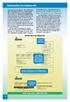 Understanding Troubleshooting Your Telephone Bill Our goal is to provide you with a clear, easy to read billing statement, while ensuring we meet all state and federal guidelines. Each month you will receive
2012 499-A Webinar March 2012. www.usac.org
 2012 499-A Webinar March 2012 Topics What is New for 2012 Completing the 2012 FCC Form 499-A 2012 499 A/Q True Up Navigating E-File What is New For 2012 Non-Interconnected VoIP For Purposes of TRS Contribution
S. 1063. [Report No. 109 211] To promote and enhance public safety and to encourage the rapid deployment of IP-enabled voice services.
![S. 1063. [Report No. 109 211] To promote and enhance public safety and to encourage the rapid deployment of IP-enabled voice services.](/thumbs/28/12703347.jpg "S. 1063. [Report No. 109 211] To promote and enhance public safety and to encourage the rapid deployment of IP-enabled voice services.") II TH CONGRESS 1ST SESSION S. Calendar No. [Report No. ] To promote and enhance public safety and to encourage the rapid deployment of IP-enabled voice services. IN THE SENATE OF THE UNITED STATES MAY
II TH CONGRESS 1ST SESSION S. Calendar No. [Report No. ] To promote and enhance public safety and to encourage the rapid deployment of IP-enabled voice services. IN THE SENATE OF THE UNITED STATES MAY
Voice Over Internet Protocol (VOIP)
 Voice Over Internet Protocol (VOIP) Helping with your telecoms management Voice over Internet Protocol (VoIP) What is VoIP? VoIP is the ability to transmit voice over the Internet VoIP was adopted by the
REGULATORY FEES FACT SHEET
 REGULATORY FEES FACT SHEET Federal Communications Commission 445 12 th St., S.W. Washington, D.C. 20554 September 11, 2015 WHAT YOU OWE INTERSTATE TELECOMMUNICATIONS SERVICE PROVIDERS (ITSP) FOR FY 2015
A1. VoIP-PSTN Traffic CONTENTS. A1.4 Calculation and Application of Percent-VoIP-Usage Factor
 NORTHEAST FLORIDA TELEPHONE COMPANY, INC. Original Page 1 A1. VoIP-PSTN Traffic CONTENTS A1 VoIP-PSTN Index A1.1 General Definitions A1.2 Rating of Toll VoIP-PSTN Traffic A1.3 Call Signaling Signaling
The Effectiveness of Mobile Wireless Service as a Competitive Constraint on Landline Pricing: Was the DOJ Wrong?
 11 December 2008 The Effectiveness of Mobile Wireless Service as a Competitive Constraint on Landline Pricing: Was the DOJ Wrong? William E. Taylor and Harold Ware 1 The US Department of Justice (DOJ)
Be it enacted by the General Assembly of the State of Colorado:
 NOTE: This bill has been prepared for the signatures of the appropriate legislative officers and the Governor. To determine whether the Governor has signed the bill or taken other action on it, please
PUBLIC UTILITY COMMISSION OF OREGON INTEROFFICE CORRESPONDENCE
 PUBLIC UTILITY COMMISSION OF OREGON INTEROFFICE CORRESPONDENCE DATE: January 7, 2009 TO: FROM: SUBJECT: Bryan Conway Celeste Hari Competitive Providers Report to Legislature ORS 759.050(9) requires the
Discounted Telephone Service for Low Income Consumers
 Discounted Telephone Service for Low Income Consumers Pamela Gallant Director, Low Income Programs Universal Service Administrative Company National Energy and Utility Affordability Conference June 17,
Before the FEDERAL COMMUNICATIONS COMMISSION WASHINGTON, DC 20554
 Before the FEDERAL COMMUNICATIONS COMMISSION WASHINGTON, DC 20554 In the Matter of ) ) Modernizing the E-Rate Program ) WC Docket No. 13-184 For Schools and Libraries ) ) COMMENTS OF THE WRITERS GUILD
Before the FEDERAL COMMUNICATIONS COMMISSION Washington, DC 20554 ) ) ) ) COMMENTS OF THE UNITED STATES TELECOM ASSOCIATION
 Before the FEDERAL COMMUNICATIONS COMMISSION Washington, DC 20554 In the Matter of Protecting and Promoting the Open Internet ) ) ) ) GN Docket No. 14-28 COMMENTS OF THE UNITED STATES TELECOM ASSOCIATION
Before the Federal Communications Commission Washington, D.C. 20554 ) ) ) ) ) ) ) ) ) DECLARATORY RULING
 Before the Federal Communications Commission Washington, D.C. 20554 In the Matter of Westfax, Inc. Petition for Consideration and Clarification Rules and Regulations Implementing the Telephone Consumer
Telecommunication Services
 South Dakota Department of Revenue 445 East Capitol Avenue Pierre, South Dakota 57501 Telecommunication Services A p r i l 2 0 1 2 This Tax Facts is designed to explain how sales and use tax applies to
One Hundred Tenth Congress of the United States of America
 H. R. 3403 One Hundred Tenth Congress of the United States of America AT THE SECOND SESSION Begun and held at the City of Washington on Thursday, the third day of January, two thousand and eight An Act
GENERAL TARIFF CRTC 21461
 410 Resale and Sharing 410.1 Service Description GEERAL TARIFF CRTC 21461 Original Page 410-1 TELUS telecommunications services may be shared or resold in accordance with the terms and conditions specified
Telecom Audit Training Module. Understanding Telecom Taxes, Fees, and Surcharges
 Telecom Audit Training Module Understanding Telecom Taxes, Fees, and Surcharges ... can add 20-30% to telecom costs! 6 5 4 Taxes, Fees & Surcharges 3 2 1 Taxes, Fees, Surcharges Monthly Charge 0 General
H. R. 2418. To promote and enhance public safety and to encourage the rapid deployment of IP-enabled voice services. IN THE HOUSE OF REPRESENTATIVES
 I TH CONGRESS 1ST SESSION H. R. 1 To promote and enhance public safety and to encourage the rapid deployment of IP-enabled voice services. IN THE HOUSE OF REPRESENTATIVES MAY 1, 00 Mr. GORDON (for himself,
BEFORE THE FEDERAL COMMUNICATIONS COMMISSION. Washington, D.C. 20554
 BEFORE THE FEDERAL COMMUNICATIONS COMMISSION Washington, D.C. 20554 In the Matter of THE PROVISION OF TELECOMMUNICATIONS SERVICE VIA "CABLE INTERNET" UNITED STATES INTERNET INDUSTRY ASSOCIATION ("USIIA"),
Broadband What is it?
 What is it? FCC Definition 200 kbps is defined as Internet Access 200 kbps in at least one direction is defined as Hi Speed Access (1) 200 kbps in both directions is defined as Advanced Services (1) A
CONSULTATION. National Numbering Plan Review. A short Consultation issued by the Telecommunications Regulatory Authority 28 August 2007
 National Numbering Plan Review A short Consultation issued by the Telecommunications Regulatory Authority 28 August 2007 The address for responses to this document is: The General Director, Telecommunications