
EMERGENCY RESPONSE AND WASTE DISPOSAL GUIDE
|
|
|
- Scot Jacobs
- 9 years ago
- Views:
Transcription

1 EMERGENCY RESPONSE AND WASTE DISPOSAL GUIDE DIAL 777 FROM ANY PACE PHONE IN THE EVENT OF AN EMERGENCY OR PRESS THE SECURITY BUTTON ON YOUR PACE PHONE. Important Telephone New York City: B-Level, East Wing (Schimmel Ent.) (212) Pleasantville: Goldstein Fitness Center Lobby (914) Security Briarcliff: Dow Hall Lobby (914) Graduate Center-White Plains: Lobby (914) School of Law-White Plains: Preston Hall Lobby (914) University Health Care Units New York City: 41 Park Row, Suite 313 (212) Pleasantville: Goldstein Fitness Center, Room 125 (914) Facilities Operations (914) Environmental Health & Safety (914)

2 FIRE / SMOKE The most effective method of fighting fires is to prevent them from occurring. All Pace University students, faculty, and employees are responsible for contributing to the University s fire prevention efforts. Personnel should neither create nor tolerate conditions that could cause or fuel a fire. In the event of a fire, REMEMBER: RACE and PASS RACE (in the event of a fire) R = RESCUE anyone in danger A = ACTIVATE the nearest ALARM C = CONTAIN the fire (close doors as you leave) E = EXTINGUISH small manageable fires or EVACUATE And PASS (for fire extinguisher use) P = PULL the pin A = AIM the nozzle at the base of the fire S = SQUEEZE the handle Protect yourself by remembering these tips: S = SWEEP from side-to-side If in a smoke condition Stay low and go crawl under smoke and head towards exit. Use stairwells to exit 2 floors below the fire DO NOT use elevators. Never assume that a fire alarm is a false alarm. Never enter a room that is filled with smoke or if the door or door handle is warm to the touch. If your clothing is on fire, STOP, DROP and ROLL.

3 FIRE / SMOKE (CONTINUED) A CONTROLLABLE fire is one that can be smothered with one fire extinguisher if properly trained and without evacuation. All other fires are considered to be UNCONTROLLABLE. Procedures for CONTROLLABLE FIRES: Pull the fire alarm for Fire Department response and alert people in immediate area of FIRE. A small fire (e.g. in a container) can be smothered with a nonflammable cover. If the area of the fire is free of other fuels, it can be extinguished with an appropriate fire extinguisher (see table to right). Avoid smoke and/or fumes. Notify Security at 777 from a campus phone after evacuating. Procedures for UNCONTROLLABLE FIRES: DO NOT stay to fight a large or rapidly growing fire. Alert people in the area to evacuate. Activate the nearest fire alarm. If it can be done safely, on your way out of the room, turn off equipment and move any flammable/explosive materials away from ignition sources. Remember to close doors as you leave to confine the fire. Notify Security at 777 from a campus phone after evacuating.

4 BIOLOGICAL WASTE Management Overview waste, also known as regulated medical waste (RMW), must be managed in a manner that protects all University personnel and visitors from laboratory-acquired infections, provides environmental protection to those outside the laboratory and beyond the Campus, and complies with Federal, New York State and New York City regulations. Disposal Media Appropriate Contents Disposable gloves Test tubes, Eppendorf tubes, culture dishes, tissue culture flasks, bench-top liner Cultures/stocks of infectious agents, any items contaminated with blood, body fluids, or any other infectious materials or microbial cultures RED BAGS All used and unused: needles, syringes, scalpel/razor blades, serological / pasteur pipettes (glass & plastic), blood vials, slides and cover slips, micro-pipette tips DO NOT fill sharps containers beyond ¾ of their capacity SHARPS CONTAINERS DO NOT use sharps containers for clean, uncontaminated glassware, scrap paper or any other non-rmw materials RMW containing BL-2 microorganisms should be autoclaved or otherwise decontaminated by laboratory staff prior to disposal. Call EH&S if you need additional information about disinfection methods. If you use an autoclave, be sure that it is functioning properly. Each red bag and sharps container MUST be identified with the room number and name of the Principal Investigator; this information is most easily recorded on a piece of tape affixed to the bag or container. Red bags must be sealed with a "twist tie" or appropriate tape prior to removal. RMW mixed with chemical waste must be handled using special procedures. Please contact EH&S for further information.
5 BIOLOGICAL SPILL Management Overview spills outside of biological safety cabinets (tissue culture hoods) can generate aerosols that can be dispersed throughout the laboratory. Proper Protective Equipment (PPE) required to decontaminate spills involving: BL-1 agents: Safety glasses, disposable gloves, and lab coats. BL-2 agents: Disposable long sleeve gown, booties, safety glasses, dust mask or face shield, and gloves. s Involving a Microorganism Requiring BL-1 or BL-2 Containment Moderate risk agents associated with diseases of varying severity, such as Hepatitis B virus, salmonellae. Includes human blood and body fluids. Alert people in immediate area of spill. Put on protective equipment and double pairs of gloves. Cover spill with paper towels or other absorbent materials. Carefully pour freshly prepared 1 in 10 dilution of household bleach around the edges of the spill and then into the spill. Allow a 20-minute contact period. Wipe down any contaminated equipment or furniture with disinfectant. Use forceps, tongs, or broom to remove broken glass and other items. Discard waste in sharps container or red bag. Use paper towels to wipe up the spill, working from the edges into the center. Clean spill area with fresh towels soaked in disinfectant. Place towels and disposable PPE into a plastic bag and decontaminate in an autoclave.
6 HAZARDOUS WASTE FIRE Management Overview In the laboratory, chemicals with no intended use or re-use are managed as to ensure the protection of faculty and staff, students, the public, and the environment. includes, but is not limited to: spent reagents, unwanted virgin materials, reaction products and spill clean-up materials. Contact EH&S for guidance if you are unsure how to handle any material or need assistance in making a waste determination. Note the following items to properly manage hazardous waste produced in lab operations or activities: Collection All s (any material that is flammable, reactive, corrosive or toxic) must be collected. Pace University labs are not permitted to treat, drain dispose, or evaporate their hazardous waste. Contact EH&S if you need assistance in making a waste determination. Container Choose the correct container for your waste, something both chemically compatible with the material and appropriately sized. Do not put a small amount of waste in a large container unless you know you will be collecting a large amount. Label Every container holding hazardous waste MUST be labeled at the time the waste is first added. The label must have the words hazards waste, list of components (full proper names only. No abbreviations or formulas) and hazards of the material (Ignitable, Corrosive, Reactive, Toxic, etc.) Labels are available from your Lab Director or a template can be found on the EH&S website at Closure s in storage in your work area must meet the following requirements: Unless actively adding materials, waste containers must be kept closed at all times. HPLC machines need tightly fitting specialty caps to maintain a seal and accommodate any tubing. If using safety funnels, ensure they are latched closed after adding materials. Storage s in storage in your work area must meet the following requirements: Secondary Containment for all liquid wastes. Segregation from incompatible wastes Segregation s needed to be stored according to their hazard class, both in lab storage and in the waste area. Proper segregation helps to prevent the mixing of incompatible materials in storage. The general classes for storage include: Inorganic Acids, Organic Acids, Mercury & Metals, Peroxide Formers, Water Reactive Materials, Alkaline Bases, Flammable Bases, Flammable Liquids, Oil, Halogenated Solvents, and Oxidizers. More information on chemical storage and incompatible materials can be found at
7 CHEMICAL SPILL spills are either manageable or unmanageable. A manageable spill is one that will not spread rapidly, does not pose an immediate risk to health, and can be handled safely by trained lab personnel. Labs must maintain a spill kit/spill supplies suitable for use on a manageable spill. All other chemical spills are considered unmanageable. Manageable Procedures Alert people in the area and post a warning sign, if possible. Quickly and safely determine the identity and quantity of spilled material. Consult the Safety Data Sheet for hazardous properties, incompatibilities, and confirm proper spill cleanup procedures & neutralizer. Wear appropriate personal protective equipment (safety glasses, gloves, lab coat). Confine the spill to a small area. Create a dike with absorbent/neutralizer and then mix with spilled material (See chart below for spill cleanup supplies). Ventilate area if necessary. Type of Acid (not HF) Bases Organic Solvents Mercury Metals or metallic hydrides (e.g., sodium) Other chemicals Collect absorbed, neutralized residue in container and label a. Clean spill area repeatedly with detergent and water. Notify your Principal Investigator or Lab Supervisor, and contact EH&S for guidance on proper disposal of contaminated spill cleanup materials. Unmanageable Procedures DO NOT attempt to clean up unmanageable spills. Neutralizing Agent/Clean-Up Supplies Sodium Bicarbonate Citric Acid Absorbent pads, charcoal if available Amalgam sponges Sand, Class D fire extinguishers Absorb with vermiculite, dry sand, diatomaceous earth Note: Pre-packaged spill kits can be ordered through various laboratory supply vendors. If the spilled material is flammable, turn off all ignition and heat sources if it can be done safely. Alert people in the area and tell them to evacuate. Close the doors to the affected area and post a warning sign. From a safe location, Call Security at X777 and EH&S (914) Have a person knowledgeable of the incident and laboratory available when EH&S and Security arrives. Be prepared to offer information on the incident, including: chemical name, volume, location, and other details.
8 PERSONAL INJURY Response Overview While all employees should endeavor to work as safely as possible, personal injury could occur. It is imperative that all employees be prepared to respond to such an occurrence to mitigate the adverse effects of an accident in the workplace. From and campus phone, security can be reached by dialing 777. Dialing 911 from a non-campus phone will reach the Westchester County or New York City emergency services dispatcher, which is less desirable because calling Security will provide faster fire, ambulance and police response. Outside responders will not be familiar with the names, locations or fastest routes to particular buildings. When you call Security, they will send immediate assistance, call outside emergency responders for you and direct them to the scene, and provide escorts as necessary. Westchester Campuses NYC Campus Business Hours After Hours University Health Care Unit Goldstein Fitness Center, Room Bedford Road, Pleasantville Telephone: (914) Phelps Memorial Hospital ER 701 Broadway Sleepy Hollow NY University Health Care Unit 41 park Row, Suite 313 New York, NY Telephone: (212) NY Downtown Hospital Services 170 Williams St New York, NY When Calling About Any : Give your name (confidentiality will be respected). Give your extension. Give the building name and room number or other specific location. Describe the condition clearly and accurately. (Injuries sustained, chemical (w/ Spelling) & volume, etc.) Don't hang up! You may be an important link in an emergency. Other information may be needed and special instructions may be provided. Let the person you are talking to end the conversation. Prepare Before an : Supervisors of laboratories using hazardous materials will assure appropriate emergency preparedness measures are in place. Such measures are detailed in Pace University s Hygiene Plan and include: eyewashes (Labs test weekly) showers (B&G test annually) Access to Safety Data Sheets and emergency contact information Appropriate fire extinguishers & spill kits Evacuation routes
9 PERSONAL INJURY (CONTINUED) Procedures to follow if the incident involves: Splash in the Eye: Immediately flush the eyes with water for 15 minutes. Hold the eyelids away from the eyeball. Move the eye up, down and sideways to wash thoroughly behind the eyelids. Obtain a Safety Data Sheet (SDS). Obtain medical attention (see table below). Report the incident to your supervisor and Security/EH&S. on Body: Do not attempt to wipe or brush hazardous chemicals from clothing or skin. Flush the exposed area with tepid water from the emergency shower, faucet or deluge hose for 15 minutes. Remove contaminated clothing at once. To prevent eye and facial contamination, cut garments away rather than pulling them over the head. Remove shoes to ensure that chemical and contaminated water has not accumulated. Obtain material safety data sheet (MSDS) for hazard information. Obtain medical attention (see table below). Report the incident to your supervisor and Security/EH&S. Report all incidents to your supervisor and notify Security & EH&S. Security X777 - EH&S X Clothing on Fire: If your clothing is on fire, do not run!, STOP, DROP and ROLL. Use an overhead shower, deluge hose, extinguisher or blanket to extinguish fire Obtain medical attention (see table below). Report the incident to your supervisor and Security/EH&S. on Body: Remove contaminated clothing. Vigorously wash exposed area with soap and water for 5 minutes. Obtain medical attention (see table below). Report the incident to supervisor and Security/EH&S. Accidental Inhalation or Ingestion of s: Immediately notify Security X777 and EH&S (914) Try to determine the identity of the inhaled or ingested material. Obtain a Safety Data Sheet and/or call a Poison Control Center (212) or (914) If the employee is conscious and there is no further threat to health, move the employee to fresh air. If an employee is found unconscious in an area of the laboratory where chemical vapors may pose an immediate threat, do not enter the area. Immediately call Security for assistance. Monitor the employee from a safe distance. Obtain medical attention (see previous page)
OESO Ergonomics Division...919-668-ERGO(3746) Duke Police...919-684-2444 Corporate Risk Management... 919-684-6226
 Musculoskeletal Disorders (MSDs) Develop over time and can take a long time to heal Can be quite painful and reduce overall effectiveness and efficiency Occur in any part of the body A variety of risk
CHEMICAL SPILL MANAGEMENT GUIDELINES
 WHS Unit CHEMICAL SPILL MANAGEMENT GUIDELINES Contents 1 Purpose... 2 2 Scope... 2 3 Definitions... 2 4 Roles and Responsibilities... 2 5 General... 2 6 Defining Major or Minor Spill... 3 7 Major Spill
Biological Safety Program
 Risk Management & Safety Main Office, Wyoming Hall Phone: (307) 766-3277 Fax: (307)766-6116 Regulated Materials Management Center Phone: (307)766-3696 Fax: (307)766-3699 Web: www.uwyo.edu/ehs Email: [email protected]
Appendix J IBC Biohazard Spill Management Plan
 OVERVIEW Prevention is the most important part of any spill management plan. Be sure to read and understand standard operating procedures (SOP s) and protocols for safe manipulation of biohazards before
Chemical Spill Response Guideline
 ChemicalSpillResponseGuideline Despite the best efforts of researchers to practice safe science in the laboratory, accidents resulting in the release of chemicals will occur. For this reason, it is essential
Responding to Accidents and Emergencies
 P:NAU:CHM:15 Date: 6/3/2008 Supersedes: none Responding to Accidents and Emergencies 1. General Preparation for Emergencies a. All laboratory personnel should know what to do in case of an emergency. Laboratory
Scott & White Institutional Biosafety Committee Compliance Program Biohazardous Material Spill Clean-Up Procedure Policy #IBC.002
 I. Purpose Biohazardous material usage on the Scott & White campus is regulated by the Scott & White Institutional Biosafety Committee (IBC). Those investigators choosing to perform research with biohazardous
Biosafety Spill Response Guide
 Yale University Office of Environmental Health & Safety Biosafety Spill Response Guide Office of Environmental Health & Safety 135 College Street, 1 st Floor, New Haven, CT 06510 Telephone: 203-785-3550
THE UNIVERSITY OF NEWCASTLE- SCHOOL of BIOMEDICAL SCIENCES
 Page: 1 of 7 1. Purpose: 1.1. To describe the procedures to be used when dealing with chemical or microbiological spills. 2. Equipment: 2.1. Spill Kit 2.2. Miscellaneous items as listed 3. Materials: 3.1.
SPILLS & SPILL KITS. Spills -General Guidelines:
 Spills -General Guidelines: If handled properly, a spill may be nothing more than a nuisance. If handled improperly, a spill can seriously disrupt your activities and the work of your colleagues. At worst,
CHEMICAL SPILL RESPONSE GUIDE
 HEMIAL SPILL RESPONSE GUIDE Revised 2000 TABLE OF ONTENTS Emergency Phone Numbers Introduction - hemical Spill Response Spill Response Procedures - Major Spill Spill Response Procedures - Minor Spill Spills
Laboratory Biosafty In Molecular Biology and its levels
 Laboratory Biosafty In Molecular Biology and its levels Workshop 16-17 Oct..2012 Guidelines Does not mean optional Laboratory Biosafety The Laboratory Biosafety Manual is an important WHO publication
Training on Standard Operating Procedures for Health Care Waste Management Swaziland 12 May, 2011
 Training on Standard Operating Procedures for Health Care Waste Management Swaziland 12 May, 2011 Safe Infectious Waste Handling and Transport Objective Waste Overview Roles and Responsibilities of Waste
Particularly Hazardous Substances (PHS) Standard Operating Procedure (SOP)
 Particularly Hazardous Substances (PHS) Standard Operating Procedure (SOP) Formaldehyde, formalin, paraformaldehyde solutions, and paraformaldehyde solids Principal Investigator: Room & Building #: Department:
HAZARDOUS CHEMICAL SPILL CLEANUP GUIDELINES
 WHO CLEANS UP THE SPILL? You Clean Up the Spill For chemical spills, fuel spills which do not involve injury do not represent a fire or life hazard, are less than one gallon and for which you have the
Standard Operating Procedure for a Chemical Spill
 Standard Operating Procedure for a Chemical Spill Facility: Lab Director: Scope: ERC Clean Room C17 Engineering Research Complex Electrical and Computer Engineering Brian Wright 3234 Engineering 355-5233
Response to Biological Spills in the Laboratory (Intentional or Accidental)
 Response to Biological Spills in the Laboratory (Intentional or Accidental) Exposure Management For splash to eyes, mucous membranes, or broken area of the skin Irrigate eyes with clean water, saline or
Palm Beach State College Florida s First Public Community College CHEMICAL SPILL RESPONSE PLAN
 Palm Beach State College Florida s First Public Community College CHEMICAL SPILL RESPONSE PLAN PALM BEACH STATE COLLEGE CHEMICAL SPILL RESPONSE PLAN 1. Introduction Despite the best efforts of faculty
Carnegie Mellon University s Policy and Procedures for Recombinant and Synthetic Nucleic Acid Materials Spills
 Carnegie Mellon University s Policy and Procedures for Recombinant and Synthetic Nucleic Acid Materials Spills Background In accordance with Section IV-B-2-b-(6) of the NIH Guidelines for Research Involving
IX. EMERGENCY PLANNING
 IX. EMERGENCY PLANNING EMERGENCY PLANNING, SPILL RESPONSE & REPORTING Any unexpected event or accident situation that occurs during the transport, storage or use of hazardous materials constitutes a potential
Biosafety Level 2 (BSL-2) Safety Guidelines
 BLS-4 Biosafety Level 2 (BSL-2) Safety Guidelines BSL-3 BSL-2 BSL-1 BSL-2 builds upon BSL-1. If you work in a lab that is designated a BSL-2, the microbes used pose moderate hazards to laboratory staff
File: Spill Response Plan for Hazard Chemicals and Mercury Spills. Orig. Date: 12/01/2005 Review Date: January Review Date: March 2010
 File: Spill Response Plan for Hazard Chemicals and Mercury Spills Orig. Date: 12/01/2005 Review Date: January Review Date: March 2010 OSHA: 1910.120 EPA: 40CFR 112.7 Messiah College Spill Response Policy
HAZARDOUS WASTE SATELLITE ACCUMULATION MANAGER RESPONSIBILITIES
 INTRODUCTION This program applies to Eastern Washington University (EWU) personnel who work with chemicals and generate chemical waste in performance of their job duties. Chemicals may pose a threat to
Standard Operating Procedure for Dacarbazine in Animals
 Standard Operating Procedure for Dacarbazine in Animals 1. Health hazards Dacarbazine, also known as DTIC, DIC, and Imidazole Carboxamide, is an antineoplastic chemotherapy drug used in the treatment of
Safe Operating Procedure
 Safe Operating Procedure (Revised 12/11) SPILL AND EXPOSURE RESPONSE FOR BIOHAZARDOUS MATERIALS (INCLUDING RECOMBINANT NUCLEIC ACIDS) (For assistance, please contact EHS at (402) 472-4925, or visit our
STANDARD OPERATING PROCEDURES SPILL RESPONSE AND CLEAN-UP OUTSIDE BIOSAFETY CABINET
 BIOLOGICAL SPILL KIT IN A 5 GALLON BUCKET WITH LID Spill response and cleanup procedures (SOP) 1 Notepad 1 Pen 6 Business cards 1 Permanent marker 1 trash bag 6 Biohazard stickers 1 roll duct tape 1 roll
University of Texas-Pan American Environmental Protection Program Regulated Waste Disposal Revised 2010
 University of Texas-Pan American Environmental Protection Program Regulated Waste Disposal Revised 2010 Table of Contents A. Introduction 3 B. Emergency Procedures 1. Emergency Telephone Numbers 4 2. Emergency
EMERGENCIES. Emergencies
 Emergencies A good safety program, training, and use of precautions reduce the number and seriousness of accidents. Laboratory accidents can range from fires to chemical spills to spills and falls. Your
TEXAS TECH UNIVERSITY HAZARDOUS WASTE PROGRAM DEPARTMENT OF ENVIRONMENTAL HEALTH AND SAFETY
 TEXAS TECH UNIVERSITY HAZARDOUS WASTE PROGRAM DEPARTMENT OF ENVIRONMENTAL HEALTH AND SAFETY 1 TABLE OF CONTENTS I II III IV V VI VII INTRODUCTION CHEMICAL HAZARDOUS WASTE 1. Definition 2. Characteristics
Autoclave Safety. Autoclaves are sterilizers using high pressure and high temperature steam. The potential safety risks for the operators are:
 Autoclave Safety Purpose: Sterilization refers to the complete killing of all living organisms, including spores. Common sterilization techniques include the application of wet heat, dry heat, chemicals,
UNH SAFETY AUDIT Office of Environmental Health and Safety
 UNH SAFETY AUDIT Office of Environmental Health and Safety Administrative Information Customized for each location. Ensure contact information on door caution signs is up to date. Doors YES NO N/A 1. The
Chemotherapy Spill Response:
 Chemotherapy Spill Response: Antineoplastic Spills Outside Of A Fume Hood Lisa Hudley, RN Training Coordinator Safety & Environmental Compliance William Guess Director Safety & Environmental Compliance
TEMPLE UNIVERSITY ENVIRONMENTAL HEALTH AND RADIATION SAFETY
 Page 1 of 7 ISSUED: 5/00 REVISED: 08/06 1. Potential Releases of Radioactive Materials to Unrestricted Areas The Environmental Health and Safety Department (EHRS) must be notified immediately if an emergency
Please contact your local Poison Control Centre: Australia 13 11 26 United States 1800 222 1222
 MATERIAL SAFETY DATA SHEET SECTION 1: IDENTIFICATION OF MATERIAL AND SUPPLIER SD169 SYN-1079 1H-indole-5-carboxamide CAS Registry No.: 1670-87-7 Supplier: SYNkinase Level 4, Building 21A, 528 Ruiqing Rd.
TITLE: Storage and Management of Hazardous Medications & Chemicals APPLIES TO: Pharmacy Staff
 Administrative Policies and Procedures for MOH hospitals /PHC Centers NO. OF PAGES: ORIGINAL DATE: REVISION DATE : 1.0 PURPOSE 1.1 To develop a set of safety rules and regulations that address the identification,
College of Biological Science - Standard Operating Procedure Chemical Spills Date: 8-Feb-2008 Prepared by: A Doane Revision: New Supersedes: n/a
 College of Biological Science - Standard Operating Procedure Chemical Spills Date: 8-Feb-2008 Prepared by: A Doane Revision: New Supersedes: n/a Purpose: To provide direction on the proper response to
LABORATORY & CHEMICAL SAFETY GUIDELINES. Dr. Mobin Shaikh Convener SAFETY COMMITTEE DISCIP INE OF CHEMISTRY SCHOOL OF BASIC SCIENCE
 LABORATORY & CHEMICAL SAFETY GUIDELINES Presented by Dr. Mobin Shaikh Convener SAFETY COMMITTEE DISCIP INE OF CHEMISTRY DISCIPLINE SCHOOL OF BASIC SCIENCE INDIAN INSTITUTE OF TECHNOLOGY (IIT) INDORE SAFETY
Spill Clean-up. Flammable Liquids Liquids with flash points below 100 degrees Fahrenheit.
 SUNY Cortland-Environmental Health and Safety Office Spill Clean-up Inception Date : June 16, 2010 Latest Revision/Review Date: July 15, 2015 Last Review/Revision Date: April 30, 2014 Contents I. Introduction
NTU Chemical Spill Guideline
 NTU Chemical Spill Guideline 1. Scope This guideline is for the handling of hazardous solids and liquid spills. It does not cover high risk unintentional release involving : a) any gaseous chemicals; b)
Standard Operating Procedure
 Standard Operating Procedure FLAMMABLE LIQUIDS This standard operating procedure (SOP) is intended to provide general guidance on how to safely work with flammable liquids. This SOP is generic in nature
Biosafety Guidelines. 5. Pipetting Mechanical pipetting devices must be available and used. Mouth pipetting is prohibited.
 Biosafety Guidelines Biosafety Level 1 Laboratory Biosafety Level 1 is suitable for work involving well-characterized agents not known to consistently cause disease in immunocompetent adult humans, and
School Of Medicine & Biomedical Sciences. Waste Management Policy
 School Of Medicine & Biomedical Sciences. Waste Management Policy Introduction The management and disposal of waste has become highly regulated over the past few years. As a result every employee and student
Hazardous Waste Procedures
 Hazardous Waste Procedures Hazardous waste is defined as a waste, or combination of wastes, which because of its quantity, concentration, or physical or chemical characteristics may pose a substantial
INSTITUTIONAL POLICY AND PROCEDURE (IPP) Department: Manual: Section:
 HOSPITAL NAME INSTITUTIONAL POLICY AND PROCEDURE (IPP) Department: Manual: Section: TITLE/DESCRIPTION POLICY NUMBER HANDLING OF H AZARDOUS DRUGS EFFECTIVE DATE REVIEW DUE REPLACES NUMBER NO. OF PAGES APPROVED
Infectious Waste Management Plan
 Infectious Waste Management Plan Infectious Waste Management Plan USC Health & Safety Programs Unit 777-5269 POLICY: A. In keeping with the University of South Carolina's policy of providing protection
BLOODBORNE PATHOGENS EXPOSURE CONTROL PLAN
 BLOODBORNE PATHOGENS EXPOSURE CONTROL PLAN Facility Name: University of Arkansas at Little Rock Date of Preparation: 01-17-06 In accordance with the OSHA Bloodborne Pathogens Standard, 1910.1030, the following
Guidance sheet 4: Chemical Spill Management
 Guidance sheet 4: Chemical Spill Management The purpose of this Guidance sheet is to provide information on how to prevent chemical spills and /or manage and respond to spills in the event that they do
CHEMICAL SPILLS. (revised April, 2013)
 CHEMICAL SPILLS (revised April, 2013) A spill is defined as an uncontrolled release of a chemical. Spills can be categorized into two types: 1. Major spills 2. Minor spills Major spills meet these criteria:
EMERGENCY RESPONSE PLAN
 EMERGENCY RESPONSE PLAN DEPARTMENT: Mechanical Engineering Bio-Mechanics and Bio-Medical Minimum Review Requirements: Annually Creation Date: August 2010 Authorized by: Insert Authorization Authority Table
Waste Management Program
 SUNY Cortland Environmental Health and Safety Office Waste Management Program Inception Date: January 30, 2007 Latest Revision/Review Date October 8, 2015 Previous Revision/Review Date: April 30, 2014
Protocol for Disinfection of Cell Culture and Tissue Culture in Media:
 Protocol for Disinfection of Cell Culture and Tissue Culture in Media: Location: Hickory Hall 001 Director: Dr. Guido Verbeck DECONTAMINATION OF CELL CULTURE WASTE Cell culture has become a common laboratory
UTSC Hazardous Spill Control Procedures Last Revision: May 2011
 Contact UTSC Hazardous Spill Control Procedures Last Revision: May 2011 Number Department Head/Chair Area Manager/Principle Investigator Fire/Police/Ambulance 911 UTSC Campus Police EHS Environmental Protection
BSL 1 Laboratory Biosafety Manual
 BSL 1 Laboratory Biosafety Manual Version 1.0 Idaho State University, Office for Research Institutional Biosafety Committee (IBC) 1651 Alvin Ricken Drive, Pocatello, ID 83201-8046 Phone: 208-282-2179 Fax:
A Guide to Managing Your Biological Waste at the University at Albany
 A Guide to Managing Your Biological Waste at the University at Albany Section 1 - What you need to know: Definition: "Regulated Medical Waste (RMW) shall mean any of the following waste which is generated
Appendix H Managing Biohazardous Waste SOP
 Biohazardous waste is managed under the State of Rhode Island s Regulated Medical Waste Regulations (Regulation DEM-OWM-MW-1-2009, amended July, 2010). http://www.dem.ri.gov/pubs/regs/regs/waste/medwaste10.pdf
This guide is prepared by the Occupational Safety and Health Branch, Labour Department. This edition March 2010
 This guide is prepared by the Occupational Safety and Health Branch, Labour Department This edition March 2010 This guide is issued free of charge and can be obtained from offices of the Occupational Safety
Biohazardous, Medical & Biological Waste Guidance Chart
 CSULA Environmental Health and Safety Biohazardous, Medical & Biological Waste Guidance Chart The chart below provides information on how to handle most, if not all, of the items that frequently are collectively
Beware that ordinary prescription glasses do not provide adequate protection. This is also true with poorly fitting safety glasses.
 Ethidium Bromide Introduction Ethidium bromide (EtBr) is widely used for visualization of nucleic acids in electrophoretic gels. EtBr forms fluorescent complexes, by intercalation of DNA, which are readily
Bloodborne Pathogens Program Revised July, 5 2012
 Bloodborne Pathogens Program Revised July, 5 2012 Page 1 of 16 Table of Contents 1.0 INTRODUCTION...3 1.1 Purpose...3 1.2 Policy.3 2.0 EXPOSURE CONTROL METHODS 4 2.1 Universal Precautions.4 2.2 Engineering
Conservation of Momentum Greg Kifer
 SCIENCE EXPERIMENTS ON FILE Revised Edition 6.7-1 Conservation of Momentum Greg Kifer Topic Conservation of momentum Time 1 hour! Safety Please click on the safety icon to view the safety precautions.
Basic Laboratory Safety
 Basic Laboratory Safety Objectives: Upon completion of the lecture, accompanying video, required readings and clinical rotations, the student will be able to: 1) List and describe the appropriate safety
Standard Operating Procedure for Blood Borne Infectious Disease Control Measures at Calvin College
 Standard Operating Procedure for Blood Borne Infectious Disease Control Measures at Calvin College Clean up should be done by non-student employees and trained personnel only Cleaning Up BODY FLUIDS from
North Carolina State University Emergency Facilities Closure Checklist- Part I
 North Carolina State University Emergency Facilities Closure Checklist- Part I Unplanned or spontaneous events often disrupt daily operations on campus. In the event that an incident may interrupt your
Appendix H IBC Managing Biohazardous Waste SOP
 Biohazardous waste is managed under the State of Rhode Island s Regulated Medical Waste Regulations (Regulation DEM-OWM-MW-1-2009, amended July, 2010). http://www.dem.ri.gov/pubs/regs/regs/waste/medwaste10.pdf
Spill Kits and Incidental Spill Response
 Spill Kits and Incidental Spill Response June 2012 This training is intended to be educational and should not be construed as legal guidance. It is provided as a courtesy to our customers and others who
Chemical Reducing Solution CRS
 Chemical Reducing Solution CRS Material Safety Data Sheet (MSDS) Revised: August 21, 2012 Supplier: Section 1 Supplier Information and Material Identification 1011 Calle Sombra San Clemente, CA 92673 Telephone:
The University of Texas at San Antonio Office of Environmental Health, Safety and Risk Management. Part A. Biological Waste Management Safety Plan
 The University of Texas at San Antonio Office of Environmental Health, Safety and Risk Management Part A Biological Waste Management Safety Plan i. SIGNATURE PAGE This Biological Waste Management Safety
Safety introduction. In the event of fire and accidents, you have a responsibility to know the location of:
 Safety introduction 2011-12-01 1 (7) Safety introduction General safety at the department A laboratory is a place with a lot of potential risks such as dangerous substances, sharp objects and electrical
ST. CLOUD TECHNICAL AND COMMUNITY COLLEGE HAZARDOUS WASTE PROCEDURE
 APPLICABILITY This procedure is applicable to all St. Cloud Technical & Community College faculty, staff and students. GENERAL Federal, state and local governments impose strict regulations concerning
HISTOLOGY LABORATORY EMERGENCY PROCEDURES
 HISTOLOGY LABORATORY EMERGENCY PROCEDURES CONTENTS 1 Chain of command...3 2 Disaster plan...3 2.1 Announcement 2.2 Pathology departmental duties 2.3 Reference 3 Evacuation...4 3.1 Meeting place 3.2 Evacuation
SPILL RESPONSE PROCEDURE
 SPILL RESPONSE PROCEDURE Queen's University Spill Response Procedure May 2000 1 SOP-HAZMAT-01 1.0 Preamble This document outlines emergency spill response procedures as part of the overall Queen's University
GUIDELINES FOR THE CLEANING UP OF BODILY FLUIDS
 GUIDELINES FOR THE CLEANING UP OF BODILY FLUIDS INTRODUCTION This Guidance Note is aimed at employees who may be dealing with or responsible for the cleaning up of bodily fluids as a part of their work
Policies. Prep Room Policies
 Introduction INTRODUCTION The Microbiology Prep Room is located in 531A Life Sciences Building. The telephone number is 372-8609. It is open from 7:30 a.m. to 4:30 p.m. during the fall and spring semesters.
Material Safety Data Sheet
 Material Safety Data Sheet Conforms to ISO 11014:2009 DRAIN CLEANER 1. IDENTIFICATION OF THE SUBSTANCE/PREPARATION AND OF THE COMPANY Product name : DRAIN CLEANER Product code : KC7 Use/description of
Hazardous Waste Generator Training
 presented by Facilities Management and the office of Hazardous Waste Generator Training Environmental Health & Safety RCRA..."It's The Law!" Hazardous Waste is: Spent material that is: READY TO BE THROWN
Union College Campus Safety Emergency Action Guide
 Union College Campus Safety Emergency Action Guide Emergency Telephone Numbers At Union College, for all campus emergencies dial Campus Safety at ext. 911. (If the line is busy on a second try, dial "6911".)
Any other time call the SFASU Police at Emergencies 911 Non-emergencies 468-2608
 Emergency Response to Waste Spills There are numerous different chemical, biological, and radioactive hazardous materials used throughout Stephen F. Austin State University on a daily basis. These chemicals
Blood borne Pathogens
 Blood borne Pathogens What Are Blood borne Pathogens? Blood borne pathogens are microorganisms such as viruses or bacteria that are carried in blood and can cause disease in people. Types of Blood borne
IX. Decontamination and Spills
 IX. Decontamination and Spills IX.1. Definitions Sterilization: the act or process, physical or chemical, which destroys or eliminates all forms of life, especially microorganisms. Decontamination: reduction
Company Name Chemical Spill Prevention & Clean-up Procedures Program. Last Revised On 00/00/0000
 Company Name Chemical Spill Prevention & Clean-up Procedures Program Last Revised On 00/00/0000 PURPOSE The following program will discuss how prevent chemical spills from occurring and setting forth procedures
Spill Prevention and Response Plan
 Spill Prevention and Response Plan September 2011 Prepared by the: Environmental Health and Safety Office Facilities Planning and Management Ball State University 1 Table of Contents 1. Introduction 4
UNIVERSITY OF NORTH FLORIDA BIOMEDICAL WASTE MANAGEMENT PLAN DEVELOPED BY: ENVIRONMENTAL HEALTH, SAFETY, INSURANCE & RISK MANAGEMENT
 UNIVERSITY OF NORTH FLORIDA BIOMEDICAL WASTE MANAGEMENT PLAN DEVELOPED BY: ENVIRONMENTAL HEALTH, SAFETY, INSURANCE & RISK MANAGEMENT June 2008 Table of Contents Section Page Background 1 Definitions 1-2
Safe Handling of Cytotoxic Materials
 Safe Handling of Cytotoxic Materials Kara Henman RN, MN, CON(C) Oncology Practice Consultant Cancer Care Nova Scotia What are hazardous drugs? Chemotherapy Immunosuppressive agents Biological agents Antiviral
EMERGENCY SHOWERS AND EYEWASH STATIONS
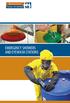 EMERGENCY SHOWERS AND EYEWASH STATIONS EMERGENCY SHOWERS AND EYEWASH STATIONS Thousands of New Brunswickers work near hazardous chemicals every day. Although safety practices have improved over the years,
Introduction BIOMEDICAL WASTE
 Page 1 of 4 Title: Chemical Waste Disposal Guidelines-Research Program or Department: Research Document Type: PROCEDURE Effective Date: January 01,2015 Author Steven Hayes Next Review Date: January 01,2016
Each has the following responsibilities under this SOP:
 Page.: 1 1. Purpose The Standard Operating Procedure (SOP) for sharps disposal was developed by the Department of Environmental Health & Safety in accordance with the University s Policy Statement on Health
EOSMS 204C Effective Date: 12/8/2014 Page 1 of 8
 EOSMS 204C Effective Date: 12/8/2014 Page 1 of 8 1. Purpose This Standard Operating Procedure (SOP) establishes procedures for the safe handling, transportation and storage of (MC), which is also known
Laboratory Safety and Environmental Health Assessment Program
 Laboratory Safety and Environmental Health Assessment Program Principal Investigators and Faculty are vital to the success of safety and environmental compliance programs in Colorado School of Mines research
CHAPTER V: DISPOSAL OF WASTES CONTAMINATED WITH INFECTIOUS AGENTS
 CHAPTER V: DISPOSAL OF WASTES CONTAMINATED WITH INFECTIOUS AGENTS These biohazard waste disposal guidelines are designed to not only protect the public and the environment, but also laboratory and custodial
Living Arts Institute @ School of Communication Arts Emergency Preparedness Plan. - Table of Contents -
 Living Arts Institute @ School of Communication Arts Emergency Preparedness Plan - Table of Contents - Purpose 1 Evacuation Procedures 2 Medical Emergency 3 Accident Report Form 4 Blood and Body Fluid
Leader s Guide E4017. Bloodborne Pathogens: Always Protect Yourself
 E4017 Bloodborne Pathogens: Always Protect Yourself 1 Table of Contents Introduction 3 Video Overview.3 Video Outline.4 Preparing for and Conducting a Presentation. 7 Discussion Ideas..8 Quiz..9 Quiz Answers...11
Waste Management Log Book
 Waste Management Log Book Web address: www.ehs.psu.edu Designated Accumulation Area: Building & Room Number Location in Room Supervisor: E-mail Individual designated to ensure procedures are followed:
STANDARD OPERATING PROCEDURES Safe Autoclave Operations
 Department of Environmental Health & Safety Biosafety & Biosecurity STANDARD OPERATING PROCEDURES Safe Autoclave Operations The purpose of this document is to provide standard operating procedures for
Mechanical Systems Competency 1.20
 Competency 1.20 Mechanical systems personnel shall demonstrate a working level knowledge of the safety and health fundamentals of mechanical systems and/or components. 1. Supporting Knowledge and Skills
Level I Inspection Guidance Document 2014
 Level I Inspection Guidance Document 2014 LEVEL I Required Weekly Checklist Note: Items listed in the Level I Required Weekly Checklist are to be inspected weekly. For Satellite Accumulation Areas, it
Occupational Health and Safety in the Laboratory (Undergraduate Students)
 Occupational Health and Safety in the Laboratory (Undergraduate Students) Introduction and scope of the Guidelines These guidelines have been written for all laboratory practical classes at the University
OCCUPATIONAL SAFETY AND ENVIRONMENTAL HEALTH GUIDELINE
 OSEH Occupational Safety & Environmental Health OCCUPATIONAL SAFETY AND ENVIRONMENTAL HEALTH GUIDELINE Subject: Biohazardous (Medical) Waste Disposal Date: 08/19/09 Revision: 03 Page: 1 of 7 TABLE OF Section
Material Safety Data Sheet Ampicillin, sodium salt MSDS
 Material Safety Data Sheet Ampicillin, sodium salt MSDS Section 1: Chemical Product and Company Identification Product Name: Ampicillin, sodium salt Catalog Codes: SLA1666 CAS#: 69-52-3 RTECS: XH8400000