
Unit 1 Overview of the Mortgage Markets
|
|
|
- Whitney West
- 9 years ago
- Views:
Transcription
1 Unit 1 Overview of the Mortgage Markets Introduction The interaction between the primary and secondary mortgage markets is the foundation of the mortgage lending process and is an essential part of our national economic health. Because of the mortgage markets, the real estate lending industry has expanded to over $5 trillion in outstanding loan balances. In fact, the total real estate debt in the country is the largest in the world, second only to the debt of the United States government. The mortgage markets are made up of the institutions that originate loans (primary mortgage market) and the markets in which they are transferred (secondary mortgage market). The secondary market s main function is to get money to lenders in the primary market so they can loan it to consumers. These markets facilitate the flow of funds for residential financing. Learning Objectives After reading this unit, you should be able to: specify the purpose of the mortgage markets. identify the participants in the mortgage markets. recognize the types of mortgage-backed securities. recall the functions of Fannie Mae. recall the functions of Freddie Mac. recall the functions of Ginnie Mae. Overview of the Mortgage Markets The real estate lending industry is comprised of two distinct markets the primary mortgage market and the secondary mortgage market. The primary mortgage market is the market in which mortgage originators provide loans to borrowers. The secondary mortgage market channels liquidity into the primary market by purchasing loans from the lenders. Unit 1: Overview of the Mortgage Markets Page 1 of 13

2 Purpose The purpose of the mortgage markets is to create a continuous flow of money to borrowers. This stimulates the real estate industry and financial markets. Participants The participants in the mortgage markets are the loan originators, issuers, securities dealers (brokerage firms and investment banks), and investors. The participants will be introduced here and explained more fully later in the unit. Residential Loan Originators Residential mortgage lenders (loan originators) are part of the primary mortgage market. They originate and fund loans to borrowers. Primary mortgage market lenders include commercial banks, thrifts, mortgage bankers, credit unions, and others. A mortgage banker is a direct lender that lends its own money, whose principal business is the origination and funding of loans secured by real property. Once a loan is originated, lenders have a choice. Either they can hold the mortgage in their own portfolios or they can sell the mortgages to secondary market issuers. About half of all new single-family mortgages originated today are sold to secondary market issuers. When lenders sell their mortgages, they replenish their funds so they can turn around and lend more money to home buyers. In contrast, a mortgage broker originates loans with the intention of brokering them to lending institutions. Both mortgage bankers and mortgage brokers are loan originators who take residential mortgage loan applications and offer or negotiate terms of a residential mortgage loan for compensation or gain. Issuers The principal secondary mortgage market issuers are governmental (Ginnie Mae), quasi-governmental (Fannie Mae, Freddie Mac), and private entities such as investment banks. The issuers create mortgagebacked securities from pools of loans that originated in the primary mortgage market. The issuers operate exclusively in the secondary mortgage markets to support lending in the primary market. Brokerage Firms & Investment Banks The mortgage-backed securities created by the issuers are marketed by stock brokerage firms and investment banks such as Goldman Sachs, Merrill Lynch, Morgan Stanley, Lehman Brothers, Credit Suisse, Citigroup, Deutsche Bank, and JP Morgan Chase. The Securities and Exchange Commission (SEC) licenses stock brokerage firms to buy and Unit 1: Overview of the Mortgage Markets Page 2 of 13

3 sell securities for clients and for their own accounts. Investment banks help issuers take new bond issues to market, usually by acting as the intermediary between the issuer and investors. Investors Institutional investors such as pension funds, investment funds, commercial banks, and life insurance companies purchase the mortgagebacked securities. These investors supply the capital needed to make loans that, otherwise, might not be available. Product The investment that is bought and sold in the secondary mortgage market is an asset called a mortgage-backed security. Mortgage-backed securities (MBS) or mortgage-related securities (MRS) are debt issues collateralized by the mortgages. They will be discussed in detail later in the unit. Process The original lender makes loans to borrowers. Rather than keep the loans, the lender sells them to one of the issuers. This gives the original lender more money to make loans to more borrowers while decreasing borrowing costs. Issuers purchase existing mortgages with funds they have acquired by issuing bonds or other types of debt instruments. Through securitization, the mortgages they buy are formed into mortgage pools and used as security for those debt instruments. A mortgage pool is a group of mortgages that usually have the same interest rate and term. The debt instruments, which are known as mortgage-backed securities, are collateralized by the mortgage pool. MBS that represent shares in these pooled mortgages are sold to investors in the capital market by the issuer, securities dealers, or investment bankers. The large companies that deal in mortgage-backed securities include Bear Stearns & Co, Inc.; Cantor Fitzgerald & Co.; Citigroup Global Markets Inc.; Credit Suisse, Lehman Brothers, Inc.; and Morgan Stanley, among others. Originating lenders use the proceeds secured from selling loans to secondary mortgage market to fund new mortgages. This continuously replenishes the funds available for lending to home buyers. Just as the stock market has put investor capital to work for corporations, the secondary mortgage market puts private investor capital to work for home buyers. Repeating this cycle increases the availability, accessibility, and affordability of mortgage funds for low- and middle-income Americans. Unit 1: Overview of the Mortgage Markets Page 3 of 13

4 Primary Mortgage Market The primary mortgage market is the market in which lenders originate real estate loans directly to borrowers. Participants in the primary mortgage market include commercial banks, thrifts, mortgage companies, and other financial intermediaries. These institutions provide money to qualified borrowers. The borrower is seeking financing in order to make a purchase or to refinance an existing loan. Lenders help consumers by identifying the appropriate loan for the borrower, helping to complete the loan application, and gathering the necessary documentation required to underwrite the loan. A loan that meets the lender s criteria is closed and funded. Depository institutions, such as commercial banks and credit unions, make their money by lending at a higher interest rate than the interest rate paid to their depositors or paid to borrow from the Fed. The goal of all lenders is to make a profit. The lender is looking for a loan that is an investment that can be held or sold. Lenders earn income on the loans they originate in several ways up-front finance charges, loan fees, interest from the loan, servicing fees, and selling the loan. Up-front finance charges, such as points and fees, increase the lender s yield on the loan. Points, or discount points, are calculated as a percentage of the loan amount. One point equals one percentage point. Therefore, 2 points on a $100,000 loan is $2,000. Loan origination fees or funding fees are typically one or two points of the amount of the loan. The income the lender derives from this source is called the mortgage yield. Mortgage yield is the amount received or returned from real estate loan portfolios expressed as a percentage. Much of the lenders income is from the loan fees. Some lenders sell their loans as soon as possible to the secondary mortgage market to obtain more money. This enables the lender to make more loans and collect more loan fees. Loan servicing lenders receive fees for collecting payments from the borrower on behalf of the loan originator or subsequent noteholder. A loan servicer collects payments from borrowers, subtracts fees, and sends the balance of the money to investors who own the loans. The servicer is in charge of collecting payments, handling escrows for taxes and insurance, making payments to the mortgage investor, and administering a loan after it has been made. Secondary Mortgage Market In contrast to the primary mortgage market, in which lending institutions make mortgage loans directly to borrowers, the secondary mortgage market can be seen as a resale marketplace for loans, in which existing Unit 1: Overview of the Mortgage Markets Page 4 of 13

5 loans are bought and sold. Participants in the secondary mortgage market do not originate loans. America has a secondary mortgage market that attracts capital from around the world to finance a wide range of mortgage products designed specifically to make homeownership affordable and accessible. No other country has a comparable secondary market. The secondary mortgage market exists because commercial banks and thrifts needed to be able to sell their assets quickly when they needed more money, particularly in a market in which consumers are demanding more home loans. In the past, the bulk of a financial institution s resources consisted of depositor s funds, which were tied up in long-term mortgage loans. These funds were not particularly convenient as a source of quick money because of the perceived risk of default or unsoundness by creditors who might be located a continent away from the collateral of the loan in question. To make matters worse, there were areas of the country with a greater supply of capital in the form of deposits, which resulted in excess money with nowhere to spend it. Another area of the country would have a greater demand for mortgage loans but no money to lend because of lack of deposits. Because lending institutions were unable to buy and sell mortgages easily, the supply and demand for money was always uncoordinated. The solution was to create a mortgage market in which loans could be bought and sold without difficulty. This allowed funds to be moved from capital-surplus areas to capital-needy areas and created a stable market. Mortgage Market Instability The mortgage market experiences instability. For example, in 2008 and 2009, the Mortgage Bankers Association reported that over 2 million foreclosures were filed. This is the highest level reported since the Mortgage Bankers Association started this survey 37 years ago. The victims of this mortgage meltdown are the unsuspecting investors and, ultimately, the American public, who will be forced to pay for the debacle. At this time, the end of the mortgage meltdown is not in sight. However, the culprits are well known. The list starts with borrowers who purchased or refinanced homes with loans for which they did not qualify. Although they should have known better than to get an adjustable-rate loan that they would not be able to afford when interest rates reset at a higher rate, many believed they would be able to refinance the loan as the market prices kept increasing. Next in line are the greedy and unethical mortgage brokers who pushed inappropriate loans on borrowers in order to collect very lucrative fees. They should have explained to borrowers what happens when mortgage rates reset. However, many mortgage brokers were overcome by greed. Unit 1: Overview of the Mortgage Markets Page 5 of 13

6 They kept the money machine moving by offering no doc loans loans that required no verification of income, employment, or assets. Some mortgage loan originators and mortgage brokers did not care if the loans ultimately went bad because by the time they did, the loans were in the hands of unwitting investors. Other culprits that should be mentioned include mortgage lenders who acknowledged the potential risks in the subprime market but chose to compete to maintain market share by using watered-down loan underwriting standards. Once again, their risk ended when they sold these loans to issuers in the secondary mortgage market to be packaged into debt instruments, such as mortgage-backed securities, and sold to investors. Pension fund and portfolio managers who were hungry for higher yields may have been blind to problems with debt instruments backed by subprime mortgages, but their vision was not helped by the credit rating agencies. Rating these debt instruments is big business and the same people who create the debt instruments often pay the ratings agencies for the ratings. As far back as , portfolio managers were aware of questionable underwriting, potential fraud, and limited documentation in the home mortgage industry. With so much money to be earned by originating, securitizing, and rating, there were too many conflicts to take a critical view of the rating process. Mortgage-Backed Securities Securitization provides liquidity to originators of real estate loans. Securitization is the pooling and repackaging of cash flow that turns financial assets into securities that are then sold to investors. Any asset that has a cash flow can be securitized. Before securitization became prevalent, banks funded real estate loans with their customers deposits (savings). The availability of credit was dictated, in part, by the amount of bank deposits. Banks were essentially portfolio lenders. They held loans until they matured or were paid off. However, after World War II, depository institutions simply could not keep pace with the rising demand for housing credit. Asset securitization began with the structured financing of mortgage pools in the 1970s, which are called mortgage-backed securities (MBS). Today, banks and other lenders have the option of retaining the real estate loans they originate or purchase, or they may sell them to issuers in the secondary market where loans are pooled. These pools can be used to back bond issues, package as mortgage-backed securities, or retain as an investment. A mortgage-backed security is a type of asset-backed security that is protected by a collection of mortgages. The mortgages are pooled and secured against the issue of bonds. Most bonds backed by mortgages are classified as mortgage-backed securities (MBS). This can be confusing Unit 1: Overview of the Mortgage Markets Page 6 of 13

7 because some securities derived from MBS are also called MBS. The qualifier pass-through is used to distinguish the basic MBS bond from other mortgage-backed instruments. The value of MBS is based on the underlying pool of residential mortgages. Types of Mortgage-Backed Securities The two most common types of mortgage-backed securities are passthrough securities and collateralized-mortgage obligations. Pass-Through Securities The simplest mortgage-backed securities are pass-through securities. The pass-through or participation certificate represents direct ownership in a pool of mortgages. They are called pass-throughs because the principal and interest of the underlying loans are passed directly through to investors. Each investor owns a pro-rata share of all principal and interest payments made into the pool as the issuer receives monthly payments from borrowers. Pass-through securities are comprised of mortgages with the same maturity and interest rate. A residential mortgage-backed security (RMBS) is a pass-through MBS that is backed by mortgages on residential property. A commercial mortgage-backed security (CMBS) is a pass-through MBS that is backed by mortgages on commercial property. Collateralized Mortgage Obligation A collateralized mortgage obligation (CMO) is a type of MBS in which the mortgages are put into separate pools with varying degrees of risk and maturities (tranches). Each tranche is sold as a separate security. Some CMOs are backed by pools of mortgage-backed securities that are issued by another agency such as Fannie Mae,instead of a mortgage pool. As a result of a change in the 1986 Tax Reform Act, most CMOs are issued in REMIC (Real Estate Mortgage Investment Conduit) form to create certain tax advantages for the issuer. Essentially a REMIC is a way to create many different kinds of bonds from the same mortgage loan to please many different kinds of investors. A REMIC offers regular payments and relative safety. Sequential Pay CMO In a sequential pay CMO, issuers distribute cash flow to bondholders from a series of classes, called tranches. A tranche is a part or segment of a structured security. A security may have more than one tranche, each with different risks and maturities. Each tranche consists of MBS with similar maturity dates or interest rates and is different from the other tranches within the CMO. For example, a CMO can have three tranches with MBS that mature in five, seven, and 20 years each. Unit 1: Overview of the Mortgage Markets Page 7 of 13

8 Stripped Mortgage-Backed Security A stripped mortgage-backed security (SMBS) is a type of CMO in which the interest and principal of the mortgage are separated into principal-only and interest-only bonds. A principal-only stripped mortgage-backed security (PO) is a bond with cash flows that are backed by the principal repayment component of a property owner s mortgage payments. Because principal-only bonds sell at a discount, they are zero coupon bonds. A zero coupon bond is a bond that pays no coupons, is sold at a deep discount to its face value, and matures to its face value. These bonds satisfy investors who are worried that mortgage prepayments might force them to re-invest their money when interest rates are lower. An interest-only stripped mortgage-backed security (IO) is a bond with cash flows that are backed by the interest component of the property owner s mortgage payments. IO bonds change in value based on interest rate movements. Default Risk The risk of mortgage-backed securities depends on the likelihood that the borrower will pay the promised cash flows (principal and interest) on time. Pooling many mortgages with similar characteristics creates a bond with a low risk of default. Default risk is the borrower s inability to meet interest payment obligations on time. Lenders pool mortgages by their interest rate and date of maturity. Additionally, mortgages are pooled by the initial credit quality of the borrower. Pools are comprised of prime, Alt-A, and subprime loans. Prime: Conforming mortgages, prime borrowers, full documentation (such as verification of income and assets), and strong credit scores Alt-A: Non-conforming mortgage (such as vacation home), generally prime borrowers, less documentation Subprime: Non-conforming mortgage, borrowers with weaker credit scores, and no documentation Some MBS issuers, such as Fannie Mae, Freddie Mac, and Ginnie Mae, guarantee against the risk of borrower default. Ginnie Mae MBS are backed with the full faith and credit of the U.S. Federal government. Fannie Mae and Freddie Mac use lines of credit with the U.S. Treasury Department to guarantee the MBS they issue. Unit 1: Overview of the Mortgage Markets Page 8 of 13

9 Participants in the Secondary Mortgage Market There are three major participants in the secondary mortgage market: (1) the Federal National Mortgage Association (Fannie Mae), (2) the Federal Home Loan Mortgage Corporation (Freddie Mac), and (3) the Government National Mortgage Association (Ginnie Mae). They provide stability, liquidity, and affordability to the nation s housing finance system under all economic conditions. They stimulate the housing market, which comprises 10% of the economy. Low and moderateincome families are able to get a higher standard of living in the form of home ownership. Both Fannie Mae and Freddie Mac are congressionally chartered, shareholder-owned corporations commonly known as governmentsponsored enterprises (GSEs). Fannie Mae and Freddie Mac are considered government-sponsored because Congress authorized their creation and established their public purposes. Fannie Mae and Freddie Mac only buy conforming loans to hold in their own portfolios or to issue securities for sale to investors. Each year they set the limit of the size of a conforming loan, which is based on the October-to-October changes in mean home price. Fannie Mae and Freddie Mac are the largest sources of housing finance in the United States. Conversely, Ginnie Mae is a government-owned corporation within the Department of Housing and Urban Development (HUD) and operates under different regulations. GSEs Fannie Mae & Freddie Mac Government-sponsored enterprises (GSEs) are financial services corporations created by the United States Congress. Their purpose is to increase the availability and reduce the cost of credit to the residential finance, agriculture, and education sectors of the economy. The GSEs that deal with residential finance are Fannie Mae, Freddie Mac, and the 12 Federal Home Loan Banks. The residential mortgage segment is the largest of these segments with several trillion dollars in assets. In fact, Fannie Mae and Freddie Mac own or guarantee about half of the $12 trillion mortgage market in the United States. Both GSEs fund residential mortgages by purchasing loans directly from lenders such as mortgage companies and depository institutions and then issuing mortgage-backed securities (MBS) that are sold to a wide variety of investors in the capital markets. Congress Mandated Housing Goals for the GSEs Congress mandated that the GSEs devote a percentage of their business to three specific affordable housing goals each year. Unit 1: Overview of the Mortgage Markets Page 9 of 13

10 1. Low- and Moderate-Income Housing Goal: Targets families with incomes at or below the area median income. (Area median income is defined as the median income of the metropolitan area, or for properties outside of metropolitan areas, the median income of the county or the statewide nonmetropolitan area, whichever is greater.) 2. Special Affordable Housing Goal: Targets very low-income families at or below 60% of area median income, and low-income families at or below 80% of area median income in low-income areas. 3. Underserved Areas Housing Goal: Targets families living in lowincome census tracts or in low- or middle-income census tracts with large minority populations. HUD regulated both Fannie Mae and Freddie Mac from 1968 and 1989, respectively, until September 2008 when regulation was taken over by the Federal Housing Finance Agency. The Federal Housing Finance Agency (FHFA) is an independent agency that was established by the Federal Housing Finance Reform Act of 2007 to regulate the GSEs. On Sunday, September 7, 2008, both Fannie Mae and Freddie Mac (and the $5 trillion in home loans they back) were placed under the conservatorship of the Federal Housing Finance Agency. Under conservatorship, the government will operate Fannie and Freddie until they are on stronger footing. The mission of the FHFA is to ensure that Fannie Mae and Freddie Mac are adequately capitalized and that their businesses operate in a financially sound manner. This will restore confidence in Fannie Mae and Freddie Mac, improve their ability to fulfill their mission, and reduce the problems that contributed to the market instability between 2007 and By the 3 rd quarter of 2008, both Fannie Mae and Freddie Mac had lost 90% of their stock value due to a flood of foreclosures on subprime and Alt-A loans. In the preceding year, they racked up about $12 billion in losses. This subprime disaster wreaked havoc on Fannie Mae and Freddie Mac even though they were responsible for more than 80% of the new, properly underwritten mortgages made in Backed by the U.S. Department of the Treasury, Fannie Mae and Freddie Mac will have the funds to support their mortgage-backed securities. This should provide liquidity in the mortgage market. Mortgage money will continue to flow and will help borrowers meet the underwriting guidelines. The government, as the FHFA, does not plan to operate Fannie Mae and Freddie Mac forever but does want to ensure that investors feel secure enough to buy the mortgage-backed securities. Unit 1: Overview of the Mortgage Markets Page 10 of 13

11 Federal National Mortgage Association The Federal National Mortgage Association (Fannie Mae) was created by Congress in 1938 to bolster the housing industry in the aftermath of the Great Depression. It does not lend money directly to home buyers. Initially, it was authorized to buy and sell FHA-insured loans from lenders, but VA-guaranteed loans were added in This secondary market for the FHA and VA loans helped make sure that affordable mortgage money was available for people in communities all across America and helped fuel the housing boom in the 1950s. Its role was expanded in 1972, when Fannie Mae was permitted to buy and sell conventional mortgages. This made Fannie Mae the largest investor in the secondary mortgage market. In 1968, the Federal National Mortgage Association was divided into two entities the Federal National Mortgage Association and the Government Housing Mortgage Association (Ginnie Mae). Fannie Mae became a stockholder company that operated with private capital on a selfsustaining basis, but Ginnie Mae remained a government agency. Through the years, Fannie Mae has consistently been one of the nation s largest sources of financing for home mortgages. Fannie Mae s common and preferred stock trades on the OTC Bulletin Board under FNMA. Fannie Mae is committed to make the American dream of homeownership possible by expanding opportunities for homeownership and by helping lenders reach out and serve more first-time homebuyers. Fannie Mae s Three-phase American Dream Commitment 1. Expand access to homeownership for millions of first-time home buyers and help to raise the minority homeownership rate to 55% with the ultimate goal of closing the homeownership gaps entirely. 2. Make homeownership and rental housing a success for millions of families at risk of losing their homes. 3. Expand the supply of affordable housing to where it is needed most. Fannie Mae supports the secondary mortgage market by issuing mortgagerelated securities and purchasing mortgages. Fannie Mae buys loans from lenders who conform to FNMA guidelines and, by doing so, puts mortgage money back into the system so lenders can make more loans. Federal Home Loan Mortgage Corporation The Federal Home Loan Mortgage Corporation (FHLMC or Freddie Mac) is a stockholder-owned corporation charted by Congress in 1970 to stabilize the mortgage markets and support homeownership and affordable rental housing. Freddie Mac stock is traded on the OTC Bulletin Board under FMCC. Unit 1: Overview of the Mortgage Markets Page 11 of 13

12 Its mission is to provide liquidity, stability, and affordability by providing secondary mortgage support for conventional mortgages originated by thrift institutions. Since its inception, Freddie Mac has helped finance one out of every six homes in America. Freddie Mac links Main Street to Wall Street by purchasing, securitizing, and investing in home mortgages. Freddie Mac conducts its business by buying mortgages that meet the company s underwriting and product standards from lenders. The loans are pooled, packaged into securities, guaranteed by Freddie Mac, and sold to investors such as insurance companies and pension funds. This provides homeowners and renters with lower housing costs and better access to home financing. Government National Mortgage Association The Government National Mortgage Association (GNMA or Ginnie Mae) is a government-owned corporation within the Department of Housing and Urban Development (HUD). Ginnie Mae was created in 1968 when the Federal National Mortgage Association was split into Fannie Mae and Ginnie Mae. Fannie Mae s focus is to support the secondary market for conventional loans and Ginnie Mae s is to support the market for FHA, VA, and other loans. Unlike Fannie Mae and Freddie Mac, Ginnie Mae does not buy or sell pools of loans. Ginnie Mae does not issue mortgage-backed securities (MBS). Instead, Ginnie Mae guarantees investors the timely payment of principal and interest on MBS backed by federally insured or guaranteed loans mainly loans issued by the FHA and the VA. In fact, the FHA insures approximately two-thirds of the loans backing Ginnie Mae securities. In contrast to the MBS issued by Fannie Mae and Freddie Mac, all Ginnie Mae securities are explicitly backed by the full faith and credit of the U.S. Government. This is because Ginnie Mae is a wholly owned government corporation. Since Ginnie Mae does not actually issue the mortgage-backed securities, it works with approved issuers. Approved issuers are lenders that meet specific requirements and are approved to issue Ginnie Mae MBS. Approved issuers acquire or originate eligible FHA and VA loans. The loans are pooled and securitized into MBS, which are then guaranteed by Ginnie Mae. In fact, Ginnie Mae securitizes more than 90 percent of FHA and VA mortgages. Issuers also market and service the Ginnie Mae MBS. A lender may contract with a service bureau to service the loans in the pool. If approved lenders collect less from the pool of mortgages than is scheduled, they have to cover the shortfall with their own funds. Unit 1: Overview of the Mortgage Markets Page 12 of 13

13 Summary The primary mortgage market is the market in which lenders make mortgage loans by lending directly to borrowers. In contrast to the primary mortgage market, the secondary mortgage market refers to the market that involves the buying and selling of existing mortgage loans from the primary mortgage market or from each other. The secondary mortgage market serves as a source of funds for the loan originators so they can continue to make loans and generate income. The primary market lenders (banks, thrifts, or mortgage bankers) make real estate loans and then sell them to issuers (Fannie Mae, Freddie Mac, or other investors). The issuers package the loans into mortgage-backed securities (MBS), which are sold to investors in the secondary mortgage market. The issuer uses the money from the sale of the MBS to purchase more loans from lenders in the primary market. The loans are packaged and sold in order to get more money to make more loans, and the cycle continues. Although Ginnie Mae is a participant in the secondary market, it does not issue mortgage-backed securities (MBS). Instead, Ginnie Mae guarantees investors the timely payment of principal and interest on MBS backed by federally insured or guaranteed loans. This cycle and flow of capital has made the housing market in the U.S. one of the most robust in the world, as well as a model for other countries. Unit 1: Overview of the Mortgage Markets Page 13 of 13

Mortgage-backed Securities
 MÄLARDALEN UNIVERSITY PROJECT DEPARTMENT OF MATHEMATICS AND PHYSICS ANALYTICAL FINANCE, MT 1411 TEACHER: JAN RÖMAN 2004-12-16 Mortgage-backed Securities GROUP : CAROLINA OLSSON REBECCA NYGÅRDS-KERS ABSTRACT
Chapter 10. The Good Old Days. The New Way. Secondary Markets. Depository Lenders in the Primary Market. Nondepository Lenders in the Primary Market
 The Good Old Days Chapter 10 The Secondary Mortgage Market Banks and Savings and Loans made loans and held these loans in portfolio The interest paid on the loan was use to pay interest to the depositors
Mortgage-Related Securities
 Raymond James Michael West, CFP, WMS Vice President Investments 101 West Camperdown Way Suite 600 Greenville, SC 29601 864-370-2050 x 4544 864-884-3455 [email protected] www.westwealthmanagement.com
A PRIMER ON THE SECONDARY MORTGAGE MARKET
 ONE FANEUIL HALL MARKETPLACE BOSTON, MA 02109 TEL. 617 367-4390 FAX 617 720-0918 WWW.CITYRESEARCH.COM A PRIMER ON THE SECONDARY MORTGAGE MARKET National Community Development Initiative Meetings New York,
Mortgages and Mortgage -Backed Securiti curi es ti Mortgage ort gage securitized mortgage- backed securities (MBSs) Primary Pri mary Mortgage Market
 Mortgages and Mortgage-Backed Securities Mortgage Markets Mortgages are loans to individuals or businesses to purchase homes, land, or other real property Many mortgages are securitized Many mortgages
Chapter 45. Primary and Secondary Mortgage Markets INTRODUCTION
 Chapter 45 Primary and Secondary Mortgage Markets INTRODUCTION The primary mortgage market brings prospective borrowers (market demand) together with individuals, agencies and entities that have money
Answers to Chapter 7 Questions
 Answers to Chapter 7 Questions 1. Mortgage markets are examined separately from bond and stock markets for several reasons. First, mortgages are backed by a specific piece of real property. If the borrower
Assumable mortgage: A mortgage that can be transferred from a seller to a buyer. The buyer then takes over payment of an existing loan.
 MORTGAGE GLOSSARY Adjustable Rate Mortgage (ARM): A mortgage loan with payments usually lower than a fixed rate initially, but is subject to changes in interest rates. There are a variety of ARMs that
6/18/2015. Sources of Funds for Residential Mortgages
 Sources of Funds for Residential Mortgages McGraw-Hill/Irwin Copyright 2013 by The McGraw-Hill Companies, Inc. All rights reserved. 11-2 11-3 11-4 Formerly backbone of home mortgage finance Dominated mortgage
HUD s AFFORDABLE LENDING GOALS FOR FANNIE MAE AND FREDDIE MAC
 Issue Brief HUD s AFFORDABLE LENDING GOALS FOR FANNIE MAE AND FREDDIE MAC Fannie Mae and Freddie Mac, government-sponsored enterprises (GSEs) in the secondary mortgage market, are the two largest sources
Overview of Mortgage Lending
 Chapter 1 Overview of Mortgage Lending 1 Chapter Objectives Identify historical events affecting today s mortgage industry. Contrast the primary mortgage market and secondary mortgage market. Identify
MORTGAGE BANKING TERMS
 MORTGAGE BANKING TERMS Acquisition cost: Add-on interest: In a HUD/FHA transaction, the price the borrower paid for the property plus any of the following costs: closing, repairs, or financing (except
Lecture Notes on MONEY, BANKING, AND FINANCIAL MARKETS. Peter N. Ireland Department of Economics Boston College. [email protected]
 Lecture Notes on MONEY, BANKING, AND FINANCIAL MARKETS Peter N. Ireland Department of Economics Boston College [email protected] http://www2.bc.edu/~irelandp/ec261.html Chapter 2: An Overview of the Financial
MORTGAGE BACKED SECURITIES
 MORTGAGE BACKED SECURITIES A Mortgage-Backed Security is created when the issuing Agency purchases a number of investment quality residential home mortgages from various banks, thrifts, or mortgage companies.
Opening Doors For Muslim Families In America
 Fe r d de i M a c We Open Doors Opening Doors For Muslim Families In America Saber Salam Vice President, Freddie Mac April 2002 Introduction The dream of homeownership is at the core of American society.
Mortgage Lending Basics
 Welcome to PMI s On Demand Training Bootcamp Mortgage Lending Basics PRESENTED BY PMI MORTGAGE INSURANCE CO. Introduction to Mortgage Lending Course Overview Mortgage Lending Basics Origination Process
Structured Financial Products
 Structured Products Structured Financial Products Bond products created through the SECURITIZATION Referred to the collection of Mortgage Backed Securities Asset Backed Securities Characteristics Assets
The Mortgage Market. Concepts and Buzzwords
 The Mortgage Market Concepts and Buzzwords Mortgage lending Loan structures Loan quality Securitization Agencies/GSEs MBS The subprime story Readings Veronesi, Chapters 8 and 12 Tuckman, Chapter 21 Gorton,
Fin 5413: Chapter 8 Mortgage Underwriting
 Fin 5413: Chapter 8 Mortgage Underwriting Some Basic Mortgage Underwriting Questions Who should you grant a loan to? How do we determine the appropriate interest rate for a loan? What is the maximum dollar
Mortgage lending is a profession that requires knowledge of
 1 C h a p t e r 1 An Overview of Mortgage Lending In This Chapter Mortgage lending is a profession that requires knowledge of many disciplines, including real estate, finance, appraisal, and others to
Important Information about Investing in Bonds
 Robert W. Baird & Co. Incorporated Important Information about Investing in Bonds Baird has prepared this document to help you understand the characteristics and risks associated with bonds and other fixed
investor s guide mortgage-backed securities (MBS) and collateralized mortgage obligations
 investor s guide mortgage-backed securities (MBS) and collateralized mortgage obligations (CMOs) C O N T E N T S Securitization: An Overview 1 Mortgage Securities: An Overview 2 The Building Blocks of
Appraiser: a qualified individual who uses his or her experience and knowledge to prepare the appraisal estimate.
 Mortgage Glossary 203(b): FHA program which provides mortgage insurance to protect lenders from default; used to finance the purchase of new or existing one- to four family housing; characterized by low
Ginnie Mae and the Secondary Mortgage Market: an Integral Part of the American Economic Engine
 Ginnie Mae and the Secondary Mortgage Market: an Integral Part of the American Economic Engine Frank J. Fabozzi, Ph.D., CFA Adjunct Professor of Finance School of Management Yale University Government
Chapter 13: Residential and Commercial Property Financing
 Chapter 13 Outline / Page 1 Chapter 13: Residential and Commercial Property Financing Understanding the Mortgage Concept - secured vs. unsecured debt - mortgage pledge of property to secure a debt (See
Financing Residential Real Estate: SAFE Comprehensive 20 Hours
 Financing Residential Real Estate: SAFE Comprehensive 20 Hours COURSE ORGANIZATION and DESIGN Roy L. Ponthier, Ph.D., Ed.D., CDEI, DREI Executive Director Module 1: Finance and Investment Mortgage loans
NCSHA Conference Washington, DC. Ted Tozer January 16, 2014
 NCSHA Conference Washington, DC Ted Tozer January 16, 2014 0 Overview U.S. Government-owned corporation within HUD Guarantee Mortgage-Backed Securities (MBS), which raise funding for virtually all loans
PASS~THROUGH AND COLLATERALIZED
 I N V E S T O R S G U I D E N T A O PASS~THROUGH AND COLLATERALIZED MORTGAGE SECURITIES Long-term income paid monthly, quarterly or semianually. CONTENTS What are mortgage securities? 1 Who issues mortgage
STAFF REPORT: ENHANCING DISCLOSURE IN THE MORTGAGE-BACKED SECURITIES MARKETS
 Department of Office of Federal Housing Securities and Exchange the Treasury Enterprise Oversight Commission STAFF REPORT: ENHANCING DISCLOSURE IN THE MORTGAGE-BACKED SECURITIES MARKETS A Staff Report
The Causes of the Financial Crisis and its Consequences
 The Causes of the Financial Crisis and its Consequences Peter J. Wallison June 18, 2010 Presentation to the IPAA, Colorado Springs What Happened Timeline of the Financial Crisis Timeline of Financial
FHLBanks: The Basics. For more information, visit www.fhlbanks.com.
 FHLBanks: The Basics For more information, visit www.fhlbanks.com. The Federal Home Loan Banks (FHLBanks) are 11 private, wholesale banks regionally based throughout the U.S. They are cooperatively owned
P r i m e r : Agency Bonds
 P r i m e r : Agency Bonds j a n n e y corporat e credit F e b r u a ry 5, 2014 Agencies provide extra yield vs. Treasuries, offer predictable and relatively safe income, and can be a part of a diversified
The Mortgage Market. Concepts and Buzzwords. Readings. Tuckman, chapter 21.
 The Mortgage Market Concepts and Buzzwords The Mortgage Market The Basic Fixed Rate Mortgage Prepayments mortgagor, mortgagee, PTI and LTV ratios, fixed-rate, GPM, ARM, balloon, GNMA, FNMA, FHLMC, Private
Financial Market Instruments
 appendix to chapter 2 Financial Market Instruments Here we examine the securities (instruments) traded in financial markets. We first focus on the instruments traded in the money market and then turn to
R S G U I D E I N T A COLLATERALIZED MORTGAGE OBLIGATIONS. CMOs. Income paid. monthly or quarterly to meet. investment goals.
 I N V E S T O R S G U I D E N T A O COLLATERALIZED MORTGAGE OBLIGATIONS CMOs Income paid monthly or quarterly to meet investment goals. CONTENTS THE CMO: AN OVERVIEW The CMO: An Overview 1 The Building
Collateralized mortgage obligations (CMOs)
 Collateralized mortgage obligations (CMOs) Fixed-income investments secured by mortgage payments An overview of CMOs The goal of CMOs is to provide reliable income passed from mortgage payments. In general,
Managing the Investment Portfolio
 Managing the Investment Portfolio GSBC Executive Development Institute April 26, 2015 Portfolio Purpose & Objectives Tale of Two Balance Sheets o Components of Core Balance Sheet Originated loans Retail
Making Home Affordable Updated Detailed Program Description
 Making Home Affordable Updated Detailed Program Description The deep contraction in the economy and in the housing market has created devastating consequences for homeowners and communities throughout
Mortgage Finance Terms Glossary
 Mortgage Finance Terms Glossary Prepared by: Finance Helpline at C.A.R. 5 2 5 S. V I R G I L A V E N U E L O S A N G E L E S, C A 9 0 0 2 0 20-20 Mortgages A variation of a 40-year mortgage, with the loan
GLOSSARY OF TERMS. Amortization Repayment of a debt in regular installments of principal and interest, rather than interest only payments
 GLOSSARY OF TERMS Ability to Repay (ATR) The Ability to Repay rule protects consumers from taking on mortgages that exceed their financial means, by mandating the documentation / proof of income and assets.
HMBS Overview. Ginnie Mae s Program to Securitize Government Insured Home Equity Conversion Mortgages
 HMBS Overview Ginnie Mae s Program to Securitize Government Insured Home Equity Conversion Mortgages Table of Contents Tab A: Program Overview Tab B: Home Equity Conversion Mortgage (HECM) Trends Tab C:
Commercial Mortgage Securities Association (CMSA) July 2007
 Commercial Mortgage Securities Association (CMSA) July 2007 THE COMMERCIAL MORTGAGE-BACKED SECURITIES INDUSTRY FACTUAL BACKGROUND: Commercial Mortgage-Backed Securities (CMBS) Commercial mortgage-backed
Financing Glossary. A mortgage loan subject to changes in interest rates; when rates change, ARM monthly
 203(b) 203(k) Adjustable Rate Mortgage (ARM) Adjustment Date Adjustment Period Amenity Amortization FHA program which provides mortgage insurance to protect lenders from default; used to finance the purchase
FOR IMMEDIATE RELEASE November 7, 2013 MEDIA CONTACT: Lisa Gagnon 703-903-3385 INVESTOR CONTACT: Robin Phillips 571-382-4732
 FOR IMMEDIATE RELEASE MEDIA CONTACT: Lisa Gagnon 703-903-3385 INVESTOR CONTACT: Robin Phillips 571-382-4732 FREDDIE MAC REPORTS PRE-TAX INCOME OF $6.5 BILLION FOR THIRD QUARTER 2013 Release of Valuation
Title XIV - Mortgage Reform and Anti-Predatory Lending Act. Short title: "Mortgage Reform and Anti-Predatory Lending Act"
 Title XIV - Mortgage Reform and Anti-Predatory Lending Act Short title: "Mortgage Reform and Anti-Predatory Lending Act" Subtitles A, B, C, and E are designated as Enumerated Consumer Law under the Bureau
Glossary of Foreclosure Fairness Mediation Terminology
 Glossary of Foreclosure Fairness Mediation Terminology Adjustable-Rate Mortgage (ARM) Mortgage repaid at the rate of interest that increases or decreases over the life of the loan based on market conditions.
Community Investments Vol. 15, Issue 2 Ginnie Mae Project Loans Maintain Affordability
 Community Investments Vol. 15, Issue 2 Ginnie Mae Project Loans Maintain Affordability August 2003 Introduction Multifamily mortgage-backed securities issued by Ginnie Mae offer investors the opportunity
Mortgage Terms Glossary
 Mortgage Terms Glossary Adjustable-Rate Mortgage (ARM) A mortgage where the interest rate is not fixed, but changes during the life of the loan in line with movements in an index rate. You may also see
FIN 683 Financial Institutions Management Selling Loans
 FIN 683 Financial Institutions Management Selling Loans Professor Robert B.H. Hauswald Kogod School of Business, AU Originate to Distribute New business model financial innovation or financial excess Premise:
New York University Courant Institute of Mathematical Sciences. Syllabus
 New York University Courant Institute of Mathematical Sciences Syllabus Mathematical Finance Seminar Course: A Practical Approach to Risk Assessment of Mortgage-Backed Securities September 8, 2010 December
Chapter 10 6/16/2010. Mortgage Types and Borrower Decisions: Overview Role of the secondary market. Mortgage types:
 Mortgage Types and Borrower Decisions: Overview Role of the secondary market Chapter 10 Residential Mortgage Types and Borrower Decisions Mortgage types: Conventional mortgages FHA mortgages VA mortgages
GLOSSARY COMMONLY USED REAL ESTATE TERMS
 GLOSSARY COMMONLY USED REAL ESTATE TERMS Adjustable-Rate Mortgage (ARM): a mortgage loan with an interest rate that is subject to change and is not fixed at the same level for the life of the loan. These
RBC Money Market Funds Prospectus
 RBC Money Market Funds Prospectus November 25, 2015 Prime Money Market Fund RBC Institutional Class 1: RBC Institutional Class 2: RBC Select Class: RBC Reserve Class: RBC Investor Class: TPNXX TKIXX TKSXX
Lesson 13: Applying for a Mortgage Loan
 1 Real Estate Principles of Georgia Lesson 13: Applying for a Mortgage Loan 2 Choosing a Lender Types of lenders Types of lenders include: savings and loans commercial banks savings banks credit unions
A mortgage is a loan that is used to finance the purchase of your home. It consists of 5 parts: collateral, principal, interest, taxes, and insurance.
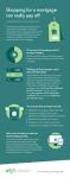 A mortgage is a loan that is used to finance the purchase of your home. It consists of 5 parts: collateral, principal, interest, taxes, and insurance. When you agree to a mortgage, you enter into a legal
Bond Mutual Funds. a guide to. A bond mutual fund is an investment company. that pools money from shareholders and invests
 a guide to Bond Mutual Funds A bond mutual fund is an investment company that pools money from shareholders and invests primarily in a diversified portfolio of bonds. Table of Contents What Is a Bond?...
Mortgage Loan Conduit & Securitization Two Harbors Investment Corp. November 4, 2015
 Two Harbors Investment Corp. November 4, 2015 Two Harbors Investment Corp. is proud to present a webinar titled: Mortgage Loan Conduit and Securitization. Periodic webinars from Two Harbors will provide
RESIDENTIAL MORTGAGE PRODUCT INFORMATION DISCLOSURE
 RESIDENTIAL MORTGAGE PRODUCT INFORMATION DISCLOSURE Whether you are buying a house or refinancing an existing mortgage, this information can help you decide what type of mortgage is right for you. You
Summary of the Housing and Economic Recovery Act of 2008
 Summary of the Housing and Economic Recovery Act of 2008 On July 30, President Bush signed major housing legislation, HR 3221, the Housing and Economic Recovery Act of 2008. The bill restructures regulation
A BRIEF HISTORY OF THE HOUSING GOVERNMENT-SPONSORED ENTERPRISES
 A BRIEF HISTORY OF THE HOUSING GOVERNMENT-SPONSORED ENTERPRISES A Brief History of the Housing Government-Sponsored Enterprises The housing Government-Sponsored Enterprises (GSEs) have a long history.
Special Purpose Entities (SPEs) and the. Securitization Markets
 Special Purpose Entities (SPEs) and the Securitization Markets Prepared by: The Bond Market Association International Swaps & Derivatives Association Securities Industry Association February 1, 2002 Special
Mortgage-Backed Sector of the Bond Market
 1 Mortgage-Backed Sector of the Bond Market LEARNING OUTCOMES 1. Mortgage Loan: a. cash flow characteristics of a fixed-rate, b. level payment, and c. fully amortized mortgage loan; 2. Mortgage Passthrough
JPMorgan Insurance Trust Class 1 Shares
 Prospectus JPMorgan Insurance Trust Class 1 Shares May 1, 2016 JPMorgan Insurance Trust Core Bond Portfolio* * The Portfolio does not have an exchange ticker symbol. The Securities and Exchange Commission
FANNIE MAE AND FREDDIE MAC SINGLE-FAMILY GUARANTEE FEES IN 2012
 FANNIE MAE AND FREDDIE MAC SINGLE-FAMILY GUARANTEE FEES IN 2012 December 2013 1 Contents Page Executive Summary... 4 Introduction... The Single-Family Mortgage Guarantee Business... Financial Performance
US TREASURY SECURITIES - Issued by the U.S. Treasury Department and guaranteed by the full faith and credit of the United States Government.
 Member NASD/SIPC Bond Basics TYPES OF ISSUERS There are essentially five entities that issue bonds: US TREASURY SECURITIES - Issued by the U.S. Treasury Department and guaranteed by the full faith and
Sales Associate Course
 Sales Associate Course Chapter Thirteen Types of Mortgages & Sources of Finance Copyright Gold Coast Schools 1 Types of Mortgages FHA - Federal Housing Administration VA - Veterans Administration Conventional
Basics of Multifamily MBS July 31, 2012
 Basics of Multifamily MBS July 31, 2012 Fannie Mae creates MBS supported by multifamily residential property mortgages. A pool of one or more multifamily mortgages -- which can be either fixed-rate or
Glossary of Common Derivatives Terms
 DRAFT: 10/03/07 Glossary of Common Derivatives Terms American Depository Receipts (ADRs). ADRs are receipts issued by a U.S. bank or trust company evidencing its ownership of underlying foreign securities.
MORTGAGE TERMINOLOGY DEFINED
 MORTGAGE TERMINOLOGY DEFINED 1-year Adjustable Rate Mortgage Mortgage where the annual rate changes yearly. The rate is usually based on movements of a published index plus a specified margin, chosen by
An Overview of Fannie Mae s Multifamily Mortgage Business
 An Overview of Fannie Mae s Multifamily Mortgage Business As of May 1, 2012 EXECUTIVE SUMMARY This Overview describes the core components of Fannie Mae s Multifamily Mortgage Business ( Multifamily ).
MORTGAGE TERMS. Assignment of Mortgage A document used to transfer ownership of a mortgage from one party to another.
 MORTGAGE TERMS Acceleration Clause This is a clause used in a mortgage that can be enforced to make the entire amount of the loan and any interest due immediately. This is usually stipulated if you default
Appendix A: Description of the Data
 Appendix A: Description of the Data This data release presents information by year of origination on the dollar amounts, loan counts, and delinquency experience through year-end 2009 of single-family mortgages
Chapter 10. Fixed Income Markets. Fixed-Income Securities
 Chapter 10 Fixed-Income Securities Bond: Tradable security that promises to make a pre-specified series of payments over time. Straight bond makes fixed coupon and principal payment. Bonds are traded mainly
Ginnie Mae MBS Loan-Level Disclosure Definitions Version 1.4
 The following four sections provide the definitions, calculations, and descriptions of the data elements under Ginnie Mae s MBS Loan-Level Disclosure: Section # Section Name 1 Definition of Terms 2 Definitions