
Full Leadership Development: Building the Vital Forces in Organizations
|
|
|
- Bartholomew Fields
- 9 years ago
- Views:
Transcription
1 Full Leadership Development: Building the Vital Forces in Organizations Notes Critiques Gestion de Ressources Humaines MBA HEC Lausanne By Rute Fernandes

2 Index I. INTRODUCTION... 3 II. AVOLIO S LEADERSHIP PROCESS DEVELOP AND CONSTRUCT LEADERSHIP PROCESSES ARE LEADERS BORN OR MADE? LEADERSHIP AT ALL LEVELS, WITHIN DIFFERENT CULTURES SHARED LEADERSHIP IN TEAMS BUILDING CONTEXT TO EMBED A TRANSFORMATIONAL LEADERSHIP LEADERSHIP DOES NOT AFFECT PERFORMANCE DIRECTLY III. MAIN FINDINGS IV. CONCLUSION Gestion de Ressources Humaines 2

3 I. Introduction Full Leadership Development: Building Vital the Forces in Organizations This book focuses on the leadership concept and framework that Bruno Avolio presents and supports with theories, different experiences that he had the opportunity to deal with and real life examples that he develops and analyzes during the book. B. Avolio is considered as an international expert in the area of assessing and developing transformational leadership, both at an individual, team and strategic level. He is also one of the authors of two leadership measures: the Multifactor Leadership Questionnaire and the Team Multifactor Leadership Questionnaire, being a professor and the director of the Center of Leadership Studies at Binghamton University. In this book, B. Avolio presents what he defines as the full range of leadership. It is interesting as in his book he gives a global approach and explanation about the leadership concept, in terms of the key variables that could intervene within different models/types of leadership/leaders. Avolio considers leadership as a system, not only as a process or person, with particular emphasis on the context which leader and follower interact and are embedded over time. His framework is based on people, timing, resources, the context of interaction, and the expected results in performance and motivation. In my opinion, this framework is an excellent basis of reflection and analysis of personal and professional situations, of people we consider(ed) to be the leaders and of personal characteristics that people could enhance to improve its leadership skills. Avolio also relates the leadership system and its impact in an organization. He defends that when a leadership system is optimized, it in turn optimizes the vital force of each individual, thereby enhancing the collective force of the entire organization. The quality of the relationships among the leaders, their peers, and followers is a source of enrichment for all involved. The author stresses that to lead means to step backwards before moving forward. He also thinks that leaders are surrounded by mirrors: what they do and say is reflected back to them in the behaviour of their followers. As an example, the author suggests that from meeting an organization s second-in-command he learns about the boss. In fact, the importance and the influence of a leader is extremely important and relevant within the development of a team and therefore within an organization. From my experience and regarding the different peoples to whom I worked it is incredible the Gestion de Ressources Humaines 3

4 influence a leader could have in terms of each one working style, communication type, etc. Normally we refer to the followers as the little XPTO leader. With this book the author aims to develop each one s leadership potential by referring to the key variables, principles that leadership is based and by sharing some examples when leadership was enhanced. The author also stresses the leadership development at different hierarchic levels, each one with the same leadership potential. He supports his opinion by giving diverse examples from top management of multinational organizations to staff/common people with no relevant visibility. This report will firstly explain the concept and ideas of the author about the leadership process. Secondly it presents my opinion about his ideas, where I ll give some examples of my experience, my different reflections obtained during the reading period, also related with Human Resources and Change Management subjects. Thirdly the report will focus on the main lessons I learned from the book itself. Gestion de Ressources Humaines 4

5 II. Avolio s Leadership Process 1. Develop and Construct Leadership Processes The author focuses on leadership as a combination of different processes that will lead to the launch of what he calls as the full system. One of the main processes referred by the author is the importance of establishing a clear relationship between the follower and the leader to create a sense of identification, to build trust and commitment. This set of transactions established between the leader and the followers is considered as the Transactional Leadership process, which constitutes an input to the transformational leadership. The transactional form represents one type of leadership system, the articulation of standards, expectations, goals, rules and in many cases the rewards an individual receives for achieving goals. The author distinguishes different forms of transactional leadership: contingent reward; management by exception (either active leader actively monitors deviations - or passive leader waits for deviations to take corrective measures); and laissez faire, where nothing is transacted between the leader and the follower and which is considered to be the most ineffective one, in terms of the performance and motivation levels that could be enhanced. The best transactions referred are those which are constructive what you should do, what you should be encouraged to explore. In the corrective exchange standards are set "of what not to do" leaders just pay attention to the mistakes - and the contingent consequences when errors are made. This type of transaction does not enable to understand how to best develop leadership potential. This is normally common in risk-averse environments, typically quite low in innovation which threatens their survival. Transformational leadership could be considered as a significant expansion of transactional leadership one step ahead. The former would consider the outputs obtained from the transactional leadership - one's beliefs and values, trust constructed, behaviours and would determine a course for change in the future, articulating it as a vision. Because visions cannot always be achieved in one s lifetime, leaders should try for the domino effect: develop leaders who, in turn, develop leaders. Therefore transformational leadership is far more effective than transactional in generating the higher levels of extra effort, commitment, performance and satisfaction of those who Gestion de Ressources Humaines 5

6 led. Transformational leaders stimulate coworkers and oneself to challenge traditional ways of thinking; develop oneself and others to the highest levels of potential; raise the level of identification, moral maturity and perspective of those who lead and overtime develop their followers into leaders.transformational leadership involves motivating others to do more than they originally intended and often even more than they thought possible. As with the transactional leadership the author identifies four components the four I s of transformational leadership: a) Idealized Influence (Leaders are admired, respected, trusted); b) Inspirational motivation (leaders display enthusiasm and optimism; followers are involved in thinking about various attractive future states and different possible scenarios); c) Intellectual Stimulation (leaders incentive followers to be innovative and creative by questioning assumptions, reframing problems); Indivualized consideration (Leaders act as a coach, a mentor, teacher, facilitator, counselor, confidant of the members he led). 2. Are Leaders Born or Made? The author defends that although leadership is to some extent pre determined by the nature of one s personality, intelligence and emotional makeup, there is a tremendous range in which it is possible to work to develop leadership potential to the highest points along the full range of leadership. To support this idea the author states once more that is not only the person that influences leadership potential but also the situation. Therefore both person and situation must be analyzed together. In terms of opportunities of development the first idea the author mentions is the fact that the leader must develop an effort to understand as much as he can about each member s developmental readiness. The developmental readiness of people relates to the perspectives they have built about how to best influence others. This aspect capacity to influence and the person being influenced, the other person in the leadership process - will help to achieve full leadership potential. Another idea the author presents is that each form of influence is related to the experiences people have accumulated on their lives biographies. The life experiences that people accumulate both strategically and beyond his control shape his perspective on how to influence others. For example, individuals who have been extremely challenged, but received support in their failures and constructive advice were often Gestion de Ressources Humaines 6

7 the ones who grew up to be the best developers of people. They learned early what could be derived from failures and successes. They sought mentors who would make them dig deeply, and they reflected when their efforts resulted in failure. Another aspect is that people who exhibit a broader range of learning interests, encourages followers to show innovative thinking at work, stimulates a willingness in others to come to these leaders with ideas that were on the boundaries of acceptability and sometimes even beyond those boundaries. The passion for learning new and different things is a common characteristic of transformational leaders. 3. Leadership at all Levels, within different cultures After studying the leadership within an individual, the author then analyzed the concept within teams or teams system, as leadership in many organizations is often not just vested in a single individual, but in a larger collective. This aspect leads to create and develop shared leadership practices in teams or even a leadership system in an organization. At an individual level, the one who lead will create a set of relationships and interactions with the followers that it will promote a set of expectations that everyone will know about and that will guide the interactions of members in that organization, whether they will be with the leader or with the other members. Therefore what started between a leader and his followers grew into a leadership system and culture. Considering what is mentioned above, to build a leadership system it is essential to understand two basic points: 1. Determine what the system will be by stating up front the ideals, perspectives and then by behaving in a way that is absolutely congruent with those ideals; 2. People come in organizations with preconceived notions or models in their heads. Consistency is crucial to overcome the habits imported from past experiences with other groups and organizations and is proportionately more crucial to the extent that the beliefs one is trying to change are heavily ingrained in the way people already think. Therefore consistency and continuous reinforcement are necessary for it to evolve to a systemic cultural level Team Leadership System In a team leadership system, a shared mental model is needed for guiding team development and performance. Any system out of alignment, human or otherwise, is not able to optimize its performance. The goal is to integrate diversity of the group Gestion de Ressources Humaines 7

8 around a common purpose (e.g. the principles for how members treat each other in the group). The shared in highly effective teams represents a collective understanding of how members want to relate to each other and the purpose of their relationships. Those teams appear to display the type of shared leadership that was described above as transformational. Specifically, high performing teams work collectively towards developing each other's potential, in designing and implementing a shared vision, in stimulating each other to explore new avenues of thinking and in setting high standards and principles of conduct for all members to achieve Teams in Organizational Cultures In terms of cultural aspects, the leadership culture that has become rooted in the organization can be a tremendous impediment to introduce new leadership methods and models. One of the key successes for organizations is to be highly adaptive and get rid or abandon something that doesn t serve the needs of the business in order to move onto something that is more effective: step out of the current context in which organization is embedded and examine what the next potential context will look like: "What systems must we retire or transform? How will this affect the people we select and develop?" This tension and pressure to change should be translated into positive energy to create the desired future scenario. Another important aspect referred is that leadership is migrating to the lowest levels and more and more people have influence in shaping the organization destiny. With these changes comes a need to reengineer relationships in the organization to take into consideration that, increasingly, the formal structures are blurred and the informal structures have more influence on bottom-line performance. Once again consistency and integration of different ideas become keys to develop a leadership system in an organization. 4. Shared leadership in teams The integration mentioned above creates the vital force in highly developed teams and in larger organizational systems; some calls it the shared mental model. Following this idea, the author refers that although the levels of trust and identification are not easy to build, once built they can have dramatic, positive effects on a team s effort, performance and perhaps most important, sustainability. Teams operate at the highest levels on the basis of trust, integrity and identification. Gestion de Ressources Humaines 8

9 To achieve those highest levels, there are different stages of building a team and the basis to build a highly developed team leadership system. Avolio refers that teams must go through adaptive conflict and tension to develop themselves fully. Tasks conflict which focuses on the content in a group s work and goals, was being identified as situational in its impact and showed positive effects under certain conditions. 5. Building Context to embed a transformational leadership Avolio also presents in his book an approach to transform and change a leadership system in an organization. He first states that the context is so crucial to the transformation process that it must be changed first or challenged if any real change is to take place. The reasoning behind is that as context includes the people; thus context must be changed if a full and successful transformation is expected. Taking the context as given is to limit the ability to transform organization. So, first change the context, create positive tension and then worry about getting more specific with altering and adapting styles and behaviors to the new context. To drive these ideas, and as already mentioned before, one of the greatest challenges that leaders have is attacking the habits of the past to replace them with the assumptions on which the future needs to be based. One of the consequences of context and people changes is that leadership development is time-based and does not happen overnight. Avolio refers that boosters are needed to reinforce (revisit) learning and change evolution. Also, if leaders move from being decision-makers to organisational design consultants, they are doing something right. In this sense, Avolio analyses how typical transformational leaders behave, as they tend to be more successful in leading change. The main difference is that these leaders don t accept the context as given. They see opportunities in the context that others see as overwhelming obstacles that cannot be overcome, which led to open channels for input, as opposed to close sources of information. They express their desire to hear more arguments before coming to a conclusion. This transformational vision to know the part, toward which the leader is directing the transformation of the people and context, is essential to bring successful and full transformations. Transformational leaders typically see the elements of the future in the current context and move to capitalize on what they see, before others do, which put them ahead of competition. Gestion de Ressources Humaines 9

10 6. Leadership does not affect Performance Directly Another important idea that the author believes, is that if leaders directly affect performances they are probably not leading well or transformationally, as they are too close to followers work. The leader s challenge is to transform the processes that affect performance. Often a leaders influence is indirect through the follower, through the context or through some interaction between both overtime. The most important aspect of a leader s influence is the impact she or he has overtime and indirectly on performance. This forces to think about leadership as a process and not only as a person s behaviour, style and/or outcomes. This process starts with leader s internal perspective his vision, core values, and understanding - and which overtime is reflected in the organizational system and culture. The leader develops himself and, in turn, develops others to exceed current development and performance capacities. The transformation a leader could drive is the transformation in the perspective of a follower from he tells me I can do it, to I know I can do this and then to I know I can help others do this. The follower takes actions and decision that stretch him and around him; the follower challenges his own thinking and others; and begins to expand his boundaries of vulnerability and moves to positions of increasing challenges and opportunities. Gestion de Ressources Humaines 10

11 III. Main Findings Full Leadership Development: Building Vital the Forces in Organizations 1. Bruce J. Avolio models his theory for leadership through his writing style. The author pulls together his experiences and perspectives from all aspects of his life, providing a rich foundation for his theories. He uses personal examples, anecdotes, and cases to communicate his range of experience as a consultant, trainer, and researcher, as well as a parent. The result is a conversational and accessible book that engages the reader with its interactive style. The author frequently finishes his ideas with open questions that obliges the reader to reflect about situations already lived or that pushes the reader to develop an introspection about his personality, attitudes, values and perspective. Perhaps a general critic refers to the culture of the book: too American in terms of the ideas developed and how some ideas were implemented. 2. An important aspect to comment is the approach of this book. Avolio focuses on presenting his principles and theory, then on demonstrating them with illustrations of real life examples and highlights of empirical study developed by Avolio and other experts in the area. I consider this approach an excellent parallel between reality and theory, due to the examples he gave (e.g. well known companies and personalities, coaching experiences he had in different countries and companies) which is then well supported by different empirical studies. This approach forces the reader to broaden his perspective about leadership, not only as a skill but also as a process, and therefore to help him to develop owns leadership potential. 3. The idea I found particularly interesting, is the structure of leadership types: transactional versus transformational. When he presents these models he clearly defines the frontier/difference between them, by presenting the main characteristics and the main components (e.g. the four I s ). Although conceptually it makes sense to make such clear differentiation, in reality and according to my experience, leadership types are difficult to be pure transactional and/or transformational. The same people could have a different behavior/transaction/transformation impact facing the same situation, just because the interaction is developed with different people/teams. Or otherwise, by interacting with the same people in different situations the leadership style could be quite different. In fact, people usually see inconsistencies in their leaders. That s why the author also stresses that behaviour and the system have to match, which I consider quite impossible to achieve integrally. Many times, Gestion de Ressources Humaines 11

12 leaders adapt to the different environments accordingly and sometimes consistency in their behaviour is not the main issue. Good leaders have core values that followers can relate to; their passion comes from identifying it with their leader. 4. Another interesting aspect to analyze in this book is the potential of each one s to develop its leadership potential. It was interesting to analyze deeply my potential and the different types of leaders I had the opportunity to work for, according to the factors the author mentions. I totally agree that the accumulated experiences, the diversity of interests, the education in which a person is embedded are factors that influence the development of leaders. If we observe two distinct persons, the one s that has more experience in different domains, has more interests and a passion for learning new things become almost the natural leader and a person of having a higher level of influence/dominance and credibility. 5. When the author analyses the leadership at an organization level he mentions about the importance of stating up front the ideals, perspectives and then by behaving in a way that is absolutely congruent with those ideals. When reading this I just thought about the importance that all the companies currently gave to the corporate culture and corporate leadership principles and the alignment of the resources to these ideals. Although not very objectively, resources are becoming evaluated and rewarded not just in terms of their competences to develop their job but also in terms of how they contribute to the development and implementation of the company s values and corporate principles. This is also linked with his second idea that leadership is migrating to the lowest levels of an organization and more and more people have influence in shaping the organization destiny. Another example that came up to my mind, and that reinforces the previous one, is that companies currently give much more emphasis, when selecting and recruiting new resources, to their personality and values regarding the corporate principles of the organization. In my opinion, this trend reflects the companies effort of developing a process that will be naturally selfsustainable and self-controlled in terms of the principles the company wants to have. Following the evaluation system mentioned above, in this book Avolio also refers to the need to adapt the evaluation and reward system once the philosophy has changed (e.g. evaluation of a team member versus the evaluation of the whole team, evaluation of the commitment to corporate principles). Although it is not yet very common to observe shared evaluation systems, the fact people are already evaluated in terms of their contribution to the company s values is already an adaptation to a new Gestion de Ressources Humaines 12

13 philosophy. In my opinion although evaluation systems progressed a lot in the past years there are still many opportunities of improvement. 6. When the author develops the concept of shared leadership he mentions about the importance of building levels of trust and identification within team members, something that is difficult to create but that could have dramatic, positive effects on a team s effort, performance and perhaps most importantly, sustainability. In my opinion, the idea of building trust and identification in teams are developed at different stages of team development, which I think is strongly associated with the number of times and frequency people interact together. The more people are able to know and understand about other s personality and way of thinking the easier these people can develop a relationship of trust and identification. When teams achieve this level, they have a strong feeling of belonging to a team, with a common purpose, and not just to a group. If this is true, one question that came up to my mind, is that if these relationships are so difficult to create but when created they could achieve high levels of team s performance, why do some companies bet on rotating employees and constantly changing them to new teams? Are these companies getting the most out of the potential of team development and performance? In certain sense, it seems that when the team is finally achieving high levels of development and performance, the company tends to change it. In another sense I can also interpret this policy as the company s effort to create the highest number of relationships and transactions between different persons in the company, something that will serve as an input to continue to develop the integration of diversity between team members. To conclude it seems that there is a trade-off in developing a shared leadership system bringing upfront and share the ideals and to achieve the highest stage of team development building identification and trust. 7. Another important aspect referred and I found extremely interesting is the need of changing a leadership system and the main steps involved in changing it context first and then people - and how different leadership styles could better deal with or identify this change needs. Once more, change management appears to be a reality and the person s attitude and personality to face and deal with these changes crucial. The will one s have to drive change, the will one s have to transform change not in an obstacle but in an opportunity, the will one s has to listen to others inputs, are characteristics that increase vision and alignment of perspective between leaders and followers, team s commitment and identification with the leaders. From my Gestion de Ressources Humaines 13

14 experience leaders that spend much time in pushing followers up front, in letting themselves to be challenged, in giving followers support, are leaders that could improve team motivation and energy, as well as, global commitment to results. The positive effects are incredible when compared to those leaders that aimed to block transparency and want to control all the activities within a team. 8. The fact that Avolio stresses that leadership should not affect performance directly, is a consequence of developing a leader, not only as the more experienced and competent person, but as the coach that: a) aims to support different development stages of a follower; b) spends time in transform the followers capability to deal with challenging issues and c) changes followers self-confidence and increases the scope of its comfort zone, through a communication content and style. It is this relation that the leader is able to construct and to develop with the follower that can increase bottom unit performance. According to this analysis and according to my experience I think that there are many leaders did not understand their role as a coach. Many persist to avoid communication, to create environments of stress and uncomfort as they consider there are key inputs to contribute to the people development. 9. As a final positive critic, I considered this book an excellent tool and a good contact to understand What leadership is about?, as everybody mention and uses this word no matter what is the context; and Who are in fact the good leaders?... I recommend its reading to those who want to develop their leadership potential and to understand the type of manager they have in terms of leading (could be a good tool to manage him). Gestion de Ressources Humaines 14

15 IV. Conclusion The book s final thoughts and main lessons learned I consider more relevant for my development is associated with the idea of Step back then forward : to develop our leadership potential we must go inside ourselves and reflect; we must develop a solid understanding of our own vulnerabilities, build trust and be willing, at times, to get out of the way and let those that should lead, lead. The most exemplary leaders, teams and organizations are balanced in how they manage their vulnerabilities. Vulnerabilities are embraced, understood, dealt with and certainly not avoided. Moreover through identification, the greatest force for control is created between leaders and followers, a force that is called commitment. This enable to create a system that forces amazing things to happen and develop innovation: Predictable things happen when people are controlled; amazing things happen when they are committed. Decisiveness seemed to be important too: If you know where you want to go, you ll get there. Leaders should drive the direction to guide followers to achieve results. The difference is knowing what you want and knowing what the end is supposed to look like. If a coach does not know what the end is supposed to look like, he won t know it when he sees it Coach Vince Lombardi Gestion de Ressources Humaines 15

Ph. D. Program in Education Specialization: Educational Leadership School of Education College of Human Sciences Iowa State University
 Ph. D. Program in Education Specialization: Educational Leadership School of Education College of Human Sciences Iowa State University The purpose of the doctoral program in Educational Leadership is to
Running head: LEADERSHIP STYLES 1. Leadership Styles of Master s Students in Counselor Education. Alexis Rae, PC. The Ohio State University
 Running head: LEADERSHIP STYLES 1 Leadership Styles of Master s Students in Counselor Education Alexis Rae, PC The Ohio State University December 2010 LEADERSHIP STYLES 2 Leadership Styles of Master s
EXAMPLE WORKPLACE COMPETENCIES
 EXAMPLE WORKPLACE COMPETENCIES ADAPTABILITY Changes behavioural style or method of approach when necessary to achieve a goal; adjusts style as appropriate to the needs of the situation. Responds to change
Leadership Development Catalogue
 The TrainingFolks Approach The importance of superior management, leadership and interpersonal skills are critical to both individual and organizational success. It is also critical to apply these skills
Leadership Development Handbook
 Leadership Development Handbook Presented by: Langara College Human Resources Prepared by: Jackson Consulting Group Aim of the Handbook is to provide: Leadership Development Handbook - Introduction help
Coaching: bringing out the best. Opinion piece Philip Brew
 Coaching: bringing out the best Opinion piece Philip Brew Coaching: bringing out the best Philip Brew 1/6 Organisations need fully functioning human beings In today s demanding and complex environments,
MODULE 10 CHANGE MANAGEMENT AND COMMUNICATION
 MODULE 10 CHANGE MANAGEMENT AND COMMUNICATION PART OF A MODULAR TRAINING RESOURCE Commonwealth of Australia 2015. With the exception of the Commonwealth Coat of Arms and where otherwise noted all material
Lean Management and Culture Change
 Lean Management and Culture Change Mike Halstead VP Operations Eastern Division Quorum Health Resources Starbucks Video 2 Why Adopt Process Improvement in Healthcare? Cost of Care Increasing $ Inpatient
LEADERSHIP COMPETENCY FRAMEWORK
 LEADERSHIP COMPETENCY FRAMEWORK 1 Introduction to the Leadership Competency Framework The Leadership Competency Framework focuses on three levels of management: Team Leaders/Supervisors responsible for
Internal Marketing from a Marketing Manager s perspective
 Internal Marketing from a Marketing Manager s perspective Date: 28 April 2011 By: To: Assignment: Angela Shaw Student ID 01105264 Penny Robson Massey University Part 1 Individual Assignment Written Report
You've just been assigned to a team with
 PMI Virtual Library 2007 Project Management Institute How's Your Distributed Team Doing? 10 Suggestions From The Field By Mario Bourgault, Ph.D., PMP, and Nathalie Drouin, MBA, Ph.D. You've just been assigned
Middlesbrough Manager Competency Framework. Behaviours Business Skills Middlesbrough Manager
 Middlesbrough Manager Competency Framework + = Behaviours Business Skills Middlesbrough Manager Middlesbrough Manager Competency Framework Background Middlesbrough Council is going through significant
DESCRIBING OUR COMPETENCIES. new thinking at work
 DESCRIBING OUR COMPETENCIES new thinking at work OUR COMPETENCIES - AT A GLANCE 2 PERSONAL EFFECTIVENESS Influencing Communicating Self-development Decision-making PROVIDING EXCELLENT CUSTOMER SERVICE
Assignment 2. by Sheila Y. Grangeiro Rachel M. Vital EDD 9100 CRN 51180 Leadership Seminar
 Assignment 2 by Sheila Y. Grangeiro Rachel M. Vital EDD 9100 CRN 51180 Leadership Seminar Nova Southeastern University July 29, 2012 2 Book Review Overview The Four Obsessions of an Extraordinary Executive
Governance and Support in the Sponsoring of Projects and Programs
 13-16 July 2008 Marriott Warsaw, Poland Governance and Support in the Sponsoring of Projects and Programs Dr Lynn Crawford ESC Lille, France; Bond University, Australia; Human Systems International Ltd,
Reviewed by Anna Lehnen. Introduction
 1 Kouzes, J. M., & Posner, B. Z. (2010). The truth about leadership: The no-fads, heart-of-thematter facts you need to know. San Francisco, CA: Jossey-Bass. Reviewed by Anna Lehnen Introduction James M.
The Four Stages in Building and Sustaining a Service Culture
 The Four Stages in Building and Sustaining a Service Culture A true service culture is a community of leaders at all levels who embrace a service mindset and build lasting relationships with customers
Overview of Leadership Theories By Sue Panighetti
 This is a discussion on various different leadership theories and how they apply to leading others. Use the Leadership Points for Dialogue to help explore each of these theories and how they may or may
- Inside Team Denmark s Sports Psychology support
 The Sport Psychology Professional Model - Inside Team Denmark s Sports Psychology support The sports psychology profession in Denmark has been characterized by a diversity of approaches and has acted as
EFFECTIVE CEM REQUIRES ENGAGED LEADERSHIP
 customer experience / mar 2013 EFFECTIVE CEM REQUIRES ENGAGED LEADERSHIP Driving a customer-centric focus is a continuous journey that calls for commitment and collaboration. By Janet LeBlanc, Janet LeBlanc
The 7 Habits of Highly Effective People. Kun Sun College of William and Mary 02/22/2016
 The 7 Habits of Highly Effective People Kun Sun College of William and Mary 02/22/2016 1 About the Book By Stephen R. Covey Published in 1989 Interviewed the CEOs of Fortune 500s Top Companies 246 Weeks
The Business Case for Online Performance Management
 The Business Case for Online Performance Management The Problem With Paper Based Performance Management Systems They are administratively difficult Cumbersome & administratively intensive Difficulty limits
BC Public Service Competencies
 BC Public Service Competencies Competencies that support LEADING PEOPLE For Executive and Directors: Motivating for Peak Performance Motivating for peak performance involves knowledge and skills in using
Attribute 1: COMMUNICATION
 The positive are intended for use as a guide only and are not exhaustive. Not ALL will be applicable to ALL roles within a grade and in some cases may be appropriate to a Attribute 1: COMMUNICATION Level
Which is why TMI is here to help. We have to admit it. we really love what we do.
 We have to admit it. we really love what we do. We get to work with great brands to create brilliant customer experiences that their customers love and their employees can t wait to deliver. It s not just
Aspects of Leadership
 Aspects of Leadership Mark T. Green MEd, MBA, MS, PhD Chair, Leadership Studies Our Lady of the Lake University http://business.ollusa.edu/leadership www.drmarkgreen.com [email protected] 210.434.6711
Improving Performance by Breaking Down Organizational Silos. Understanding Organizational Barriers
 Select Strategy www.selectstrategy.com 1 877 HR ASSET 1 877 472 7738 Improving Performance by Breaking Down Organizational Silos Understanding Organizational Barriers Restructuring initiatives have become
Onboarding and Engaging New Employees
 Onboarding and Engaging New Employees Onboarding is the process of helping new employees become full contributors to the institution. During onboarding, new employees evolve from institutional outsiders
Samples of Interview Questions
 Human Resources/Payroll Introductory/Warm-Up/Rapport Building How did you find out about this job opening? What attracted you to this position? What do you know about our organization? Why are you considering
Performance Evaluation
 Competency Exceptional Above Meets Partially Meets Overview of Ratings TRANSFORMATIVE work. In addition to exceeding performance goals, the organization (department, unit or program) is fundamentally better
Making the Transition to Management
 Making the Transition to Management Overview Advice on making the move to a management or supervisory position. Mistakes new managers often make The pressures and challenges new managers face Tips for
How to Master Behavioral Interviews. Properly answering these 100 questions will help job seekers make the final candidate list
 B Y H U M A N R E S O U R C E S E X P E R T S H A R O N A R M S T R O N G How to Master Behavioral Interviews Properly answering these 100 questions will help job seekers make the final candidate list
Competency Based Interview Questions
 Competency Based Interview Questions When preparing to interview candidates, first identify the competencies that someone needs in order to be successful in the position. With those identified, you can
LEADERSHIP DEVELOPMENT FRAMEWORK
 LEADERSHIP DEVELOPMENT FRAMEWORK February 13, 2008 LEADERSHJP PERSPECTIVE I consider succession planning to be the most important duty I have as the Director of the NOAA Corps. As I look toward the future,
Presentation. Introduction Basic Leadership Styles Other Leadership Styles Conclusion
 Leadership Styles Presentation Introduction Basic Leadership Styles Other Leadership Styles Conclusion Introduction A groom spent days in combing and rubbing down his horse, But stole oats and sold them
Interview Guide for Hiring Executive Directors. April 2008
 Interview Guide for Hiring Executive Directors April 2008 Introduction This interview guide has been developed to help the Board of Directors of Big Brothers Big Sisters agencies interview candidates for
How To Be A Successful Supervisor
 Quick Guide For Administrators Based on TIP 52 Clinical Supervision and Professional Development of the Substance Abuse Counselor Contents Why a Quick Guide?...2 What Is a TIP?...3 Benefits and Rationale...4
Chapter 1: Health & Safety Management Systems (SMS) Leadership and Organisational Safety Culture
 Chapter 1: Health & Safety Management Systems (SMS) Leadership and Organisational Safety Culture 3 29 Safety Matters! A Guide to Health & Safety at Work Chapter outline Leadership and Organisational Safety
Message from the Chief Executive of the RCM
 Message from the Chief Executive of the RCM The Midwifery Leadership Competency Framework has been derived from both the NHS Leadership Qualities Framework and the Clinical Leadership Competency Framework.
8 Steps for Leading the Change Process to a Paperless Agency July 25, 2013
 8 Steps for Leading the Change Process to a Paperless Agency July 25, 2013 Today s Presenters 2 John P. Kotter & Leading Change John Kotter s Bio Former professor at Harvard Authored 18 books on leadership
Leading Self. Leading Others. Leading Performance and Change. Leading the Coast Guard
 Coast Guard Leadership Competencies Leadership competencies are the knowledge, skills, and expertise the Coast Guard expects of its leaders. The 28 leadership competencies are keys to career success. Developing
KEY CONCEPTS AND IDEAS
 LEAD SELF The domain of the LEADS in a Caring Environment leadership capability framework, consists of four capabilities: a leader (1) Is Self-Aware, (2) Manages Self, (3) Develops Self, and (4) Demonstrates
Re-Definition of Leadership and Its Implications for Educational Administration Daniel C. Jordan
 Re-Definition of Leadership and Its Implications for Educational Administration Daniel C. Jordan Citation: Jordan, D. (1973). Re-definition of leadership and its implications for educational administration.
TALENT MANAGEMENT A LINK TO BUSINESS STRATEGY
 TALENT MANAGEMENT A LINK TO BUSINESS STRATEGY Lets talk strategy Lets talk Value Creation/ Value Drivers 2 The Key Question????? What are the key value drivers/ thematic areas in our organizations? What
15 Most Typically Used Interview Questions and Answers
 15 Most Typically Used Interview Questions and Answers According to the reports of job seekers, made from thousands of job interviews, done at 97 big companies in the United States, we selected the 15
How to Build Better and More Interactive Online Sales Training Programs. Copyright 2013 - www.mindtickle.com
 How to Build Better and More Interactive Online Sales Training Programs About MindTickle MindTickle enables businesses, trainers and individuals to transform their existing online content (PPTs, Videos,
Making a positive difference for energy consumers. Competency Framework Band C
 Making a positive difference for energy consumers Competency Framework 2 Competency framework Indicators of behaviours Strategic Cluster Setting Direction 1. Seeing the Big Picture Seeing the big picture
PERFORMANCE MANAGEMENT COACHING AND PERFORMANCE GEORGIA PERIMETER COLLEGE
 PERFORMANCE MANAGEMENT COACHING AND PERFORMANCE GEORGIA PERIMETER COLLEGE Module 2 Coaching and Performance with the GPC Strategic Plan Agenda 1. Performance Management Process The Next Plateau 2. Aspects
A Relative Gap Moving from Gap to Strength A Relative Strength Organizational Readiness
 A Relative Gap Moving from Gap to Strength A Relative Strength Organizational Readiness Performance history Implementation of new programs historically has not been well planned, and has not had intended
TOOL KIT for RESIDENT EDUCATOR and MENT OR MOVES
 Get to Know My RE Observe Collect Evidence Mentor Moments Reflect Review Respond Tailor Support Provide Provide specific feedback specific Feedback What does my RE need? Practice Habits Of Mind Share Data
ORGANISATIONAL CULTURE. Students what do you all think Organizational Culture is? Can you all define it in your own way.
 Lesson:-35 ORGANISATIONAL CULTURE Students what do you all think Organizational Culture is? Can you all define it in your own way. In the 1980's, we saw an increase in the attention paid to organizational
IMPLEMENTING EMPLOYEE EMPOWERMENT
 61-03-63 IMPLEMENTING EMPLOYEE EMPOWERMENT James A. Ward Total quality management (TQM) is built on the four cornerstones of customer focus, continuous process improvement, management leadership, and employee
WHO GLOBAL COMPETENCY MODEL
 1. Core Competencies WHO GLOBAL COMPETENCY MODEL 1) COMMUNICATING IN A CREDIBLE AND EFFECTIVE WAY Definition: Expresses oneself clearly in conversations and interactions with others; listens actively.
Thank you for taking a leadership role at Gustavus! Best of luck this year!
 G.O.L.D. Gusties In Ongoing Leadership Development Thank you for taking a leadership role at Gustavus! Best of luck this year! 800 West College Avenue Saint Peter, MN 56082 gustavus.edu gustavus adolphus
IT TALENT MANAGEMENT FOR MID-MARKET COMPANIES
 IT TALENT MANAGEMENT FOR MID-MARKET COMPANIES FOR IT DEPARTMENTS, CONNECTING WITH TOP TALENT IS CRITICAL In the rapidly evolving world of business, hiring and maintaining a competent IT department is essential
BEHAVIORAL INTERVIEW QUESTIONS INVENTORY
 ACCOUNTABILITY/DEPENDABILITY Provide a specific example that best illustrates your ability to be counted on. Tell us about a time when you took responsibility for an error and were held personally accountable.
People Management and Leadership Training That Gets Results!
 and Leadership Training That Gets! Welcome to Great Managers! A 5 year Australian Government-funded research report, Leadership, Culture and Management Practices of High Performing Workplaces: The High
Why managers are crucial to increasing engagement
 Ray Baumruk, Hewitt Associates An interview by Bob Gorman Jr., Robert E. Gorman Communication Why managers are crucial to increasing engagement Identifying steps managers can take to engage their workforce
Strategic Plan 2013 2017
 Plan 0 07 Mapping the Library for the Global Network University NYU DIVISION OF LIBRARIES Our Mission New York University Libraries is a global organization that advances learning, research, and scholarly
Talent Management Leadership in Professional Services Firms
 Talent Management Leadership in Professional Services Firms Published by KENNEDY KENNEDY Consulting Research Consulting Research & Advisory & Advisory Sponsored by Table of Contents Introduction.... 3
Leicestershire Partnership Trust. Leadership Development Framework
 Leicestershire Partnership Trust Leadership Development Framework 1 Leadership Development Framework Introduction The NHS in England is facing a period of substantial change in light of the recent Government
Employee Engagement White Paper
 Employee Engagement White Paper Moving Past the Corporate Catch Phrase - Delivering On -Target Results U N I Q U E FA C T O R S Establishing and strengthening emotional bonds between the organization and
PREPARING FOR THE INTERVIEW
 U N I V E R S I T Y C A R E E R S E R V I C E S PREPARING FOR THE INTERVIEW THE INTERVIEW The interview is an opportunity to demonstrate to an employer why you are the best fit for the position. Essentially,
When leaders in healthcare organizations are asked, What s the one word that
 IMPLEMENTNG HEALTHCARE REFORM The Most Effective Leadership Style for the New Landscape of Healthcare John Delmatoff, president, PathFinder Coaching, Murrieta, California, and Ian R. Lazarus, FACHE, managing
ROLE OF HRM & OB IN TODAY S EDUCATIONAL INSTITUTION/UNIVERSITY ADMINISTRATION
 ROLE OF HRM & OB IN TODAY S EDUCATIONAL INSTITUTION/UNIVERSITY ADMINISTRATION Dr. M.L. Vasitha Associate Professor, Department of Business Administration Jai Narain Vyas University, Jodhpur Mr. B.S. Chauhan
Before reading this article, please
 Feature Leadership styles: a powerful model Pierre Casse and Paul Claudel present a way of adjusting leadership to suit the circumstances and people involved Before reading this article, please take this
Practical Jealousy Management
 Florida Poly Retreat 2006 Practical Jealousy Management Part 1: On the Nature of Jealousy Jealousy is an unusual emotion in that it is an emotion rooted in other emotions. Often, the root of jealousy lies
DFID CORE COMPETENCY FRAMEWORK
 DFID CORE COMPETENCY FRAMEWORK DFID s Core Competency Framework presents competencies in three clusters as shown below. The red cluster groups the work-related competencies, the green has peoplerelated
CHANGE MANAGEMENT: HOW TO ACHIEVE A CULTURE OF SAFETY
 CHANGE MANAGEMENT: HOW TO ACHIEVE A CULTURE OF SAFETY SUBSECTIONS Eight Steps of Change Errors Common in Organizational Change Culture Change Comes Last, Not First Change Strategies Roadmap to a Culture
INTERVIEW QUESTIONS GUIDE
 INTERVIEW QUESTIONS GUIDE Prepared by MBA Career Services USC Marshall School of Business March 2016 1 Table of Contents GENERAL QUESTIONS3 TOP TEN MOST ASKED QUESTIONS... 3 CAREER DIRECTION... 3 CORPORATE
Parks, S. D. (2005). Leadership can be taught: A bold approach for a complex world. Boston, MA: Harvard Business Review Press.
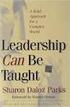 Parks, S. D. (2005). Leadership can be taught: A bold approach for a complex world. Boston, MA: Harvard Business Review Press. Reviewed by Peter DeCrescenzo Introduction Leadership Can Be Taught: A Bold
Change Management. Prepared for the U.S. Department of State Digital Video Conference for New Zealand Institute of Management, 18 June 2004
 Change Management Prepared for the U.S. Department of State Digital Video Conference for New Zealand Institute of Management, 18 June 2004 Jeff Hiatt Founder, Change Management Learning Center and author
Research into competency models in arts education
 Research into competency models in arts education Paper presented at the BMBF Workshop International Perspectives of Research in Arts Education, Nov. 4 th and 5 th, 2013. Folkert Haanstra, Amsterdam School
Getting an Education Schools Leaders Need Specialized Development
 Getting an Education Schools Leaders Need Specialized Development The unique elements in the public school setting in the United States demand a more customized approach to the development of its leaders.
Overview MBA Programme Courses 2015-2016
 Overview MBA Programme Courses 2015-2016 copyright 2016 Stichting Hotelschool The Hague, The Netherlands All rights reserved. No part of this publication may be reproduced, stored in a retrieval system,
"Professional Programs in/and the Liberal Arts University January 25, 2010
 Moderator: Michael R. Halleran, Provost "Professional Programs in/and the Liberal Arts University January 25, 2010 Panel: Pamela Eddy, Associate Professor of Education Bill Geary, Associate Professor of
Leadership Case Study
 Leadership Case Study Inspires and Motivates Others to High Performance Leadership Case Study: Sally and David MTCR is a leading company in the development and manufacturing of a broad range of custom
Discussion paper. Performance management
 Discussion paper Performance management History and foundations of performance management Since 1993 the CIPD has been regularly reviewing and publishing work on performance management. As one of the key
Methodological Issues for Interdisciplinary Research
 J. T. M. Miller, Department of Philosophy, University of Durham 1 Methodological Issues for Interdisciplinary Research Much of the apparent difficulty of interdisciplinary research stems from the nature
The Oxford Handbook of
 The Oxford Handbook of Edited by David W. Cravens, Kenneth Le Meunier-Fitzhugh, Nigel E. Piercy Oxford University Press (2011) ISBN-10: 0199569452, 595 pages Theme of the Book The competitive and rapidly
Leading a Virtual Intercultural Team. Implications for Virtual Team Leaders
 Journal of Intercultural Management Vol. 1, No. 1, April 2009, pp. 82 90 Uniwersytet Ekonomiczny we Wrocławiu Leading a Virtual Intercultural Team. Implications for Virtual Team Leaders 1. Introduction
Questions Employers Might Ask at a Community Counseling Interview
 Questions Employers Might Ask at a Community Counseling Interview What interests you about working with the XYZ (type of client the organization serves) population? Tell me about a case you worked on where
Leadership and Management Competencies
 Leadership and Management Competencies 0 The Saskatchewan Public Service Vision: The Best Public Service in Canada Our Commitment to Excellence Dedicated to service excellence, we demonstrate innovation,
Sales Management Competencies
 Sales Management Competencies John Sergeant Associates, Tel: (02) 9972 9900, Fax: (02) 9972 9800, Email: [email protected] Website: www.jsasolutions.com.au js@ John Sergeant Associates Contents Page
Appendix B: Part 100 and School Counseling Programs
 Appendix B: Part 100 and School Counseling Programs As per the New York State Education Department, listed in Part 100 of the Commissioner s Regulations, school counseling/guidance programs are defined
Organisational Change Management
 Organisational Change Management The only thing that is constant is change in your business, your market, your competitors, and your technology. Remaining competitive and responsive to your customers and
customer experiences Delivering exceptional Customer Service Excellence
 Delivering exceptional customer experiences Customer Service QA can work with you to create customer experiences that consistently reflect the aims, values and aspirations of your organisation. Every organisation
CHANGE MANAGEMENT PRINCIPLES AND PRACTICES IN ORGANISATION
 CHANGE MANAGEMENT PRINCIPLES AND PRACTICES IN ORGANISATION Dr. Mane Vijay Annaso Associate Professor in Commerce Mahatma Phule Mahavidyalaya Pimpri, Pune-17, India. [email protected] ABSTRACT:
How To Manage Social Media Risk
 www.pwc.co.uk/riskassurance Social media governance Harnessing your social media opportunity June 2014 Social media allows organisations to engage with people directly, express their corporate personality
Succession planning for smallto medium-sized family businesses: A succession. planning model
 Introduction: A succession planning model Stage 1: The business case for proactive succession planning Stage 2: Identification of target roles and positions Stage 3: Determination of core competencies
Steps to Becoming an Inclusive Learning-Friendly Environment
 Steps to Becoming an Inclusive Learning-Friendly Environment Description of tool: This tool suggests steps that school staff (or a dedicated team) might take to create a more inclusive, learning-friendly
IMPROVING QUALITY. Quality criteria for global education school visits
 IMPROVING QUALITY Quality criteria for global education school visits Organisations that have worked on these quality criteria: Pro Ethical Trade Finland Kepa Service Centre for Development Cooperation
From Performance Management to Leading Performance. Kati Vilkki and Esther Derby
 From Performance Management to Leading Performance Kati Vilkki and Esther Derby Most companies want to be profitable, adaptable, and sustainable. Agile methods and good people management practices support
Top 3 Reasons To Outsource Product Development By Ralph Paul Director of Product Engineering MPR Product Development
 Top 3 Reasons To Outsource Product Development By Ralph Paul Director of Product Engineering MPR Product Development Copyright 2014 MPR Associates, Inc. All Rights Reserved In today s environment, almost
Stepanova Elina EFFECTIVE LEADERSHIP PhD economic science Siberian Federal University Krasnoyarsk
 Stepanova Elina EFFECTIVE LEADERSHIP PhD economic science Siberian Federal University Krasnoyarsk Leadership styles demonstrated their contribution to leadership effectiveness. Leadership styles is dependant
Executive Leadership MBA Course Descriptions
 Executive Leadership MBA Course Descriptions MBA 608: Interpersonal Leadership and Managing Organizational Behavior (3 credits) This course provides rising stars learning opportunities to take the next
An Organizational Analysis of Leadership Effectiveness and Development Needs
 An Organizational Analysis of Leadership Effectiveness and Development Needs Prepared For LGI Sample Organization All Raters 12 March 2015 Number of Responses = 10 2015 Center for Creative Leadership.