
Andrew K. Wojtanowicz* DOWN-HOLE WATER SINK TECHNOLOGY FOR WATER CONING CONTROL IN WELLS
|
|
|
- Patience Harris
- 9 years ago
- Views:
Transcription
1 WIERTNICTWO NAFTA GAZ TOM 23/ Andrew K. Wojtanowicz* DOWN-HOLE WATER SINK TECHNOLOGY FOR WATER CONING CONTROL IN WELLS 1. INTRODUCTION Several techniques have been used by the petroleum industry to solve the water coning problem; perforating the well as far above the initial oil-water contact (OWC) as possible; keeping production rates low (below critical rate), and creating a low- or non-permeable barrier by injecting resins, polymers or gels above the initial OWC. Although all these methods have shown limited (or no) field applications, they evidence the evolution of taught leading to the water sink technology. The new method, discussed here, increases critical rate by using two well completions with coordinated production rates to suppress water coning [1]. The method is fundamentally different to other techniques for water coning control. In 1991, Wojtanowicz et al. [2] using numerical model and field data evaluated well performance for coning control using dual completion with tailpipe water sink later dubbed: Downhole Water Sink (DWS). They concluded that the tailpipe sink would control water coning and produce more oil with less water than conventional wells. The first publication of DWS concept was followed with field trials, and analytical, experimental, and numerical studies to understand this technique and evaluate its performance in various petroleum wells. 2. DWS DEFINITION AND DESCRIPTION Downhole Water Sink (DWS) is a completion/production technique for producing water-free hydrocarbons from reservoirs with bottom water drive and strong tendency to water coning. DWS eliminates water cutting the hydrocarbon production by employing hydrodynamic mechanism of coning control in-situ at the oil-water or gas-water contact. The mech- * Louisiana State University 575

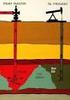
2 anism is based upon a local hydraulic drainage generated by a controlled downhole water sink installed in the aquifer beneath the oil or gas-water contact. Figures 1 and 2 show principles of two basic variants of the DWS systems, drainage-injection (Fig. 1), and drainage-production (Fig. 2). In the system, a well is dual - completed in the oil and water zones and the two completions are separated by a packer set inside the well at depth of the oil-water contact. The water sink (bottom) completion comprises a submersible pump and the water drainage perforations. The submersible pump drains the formation water around the well and controls the water cone growth and it s breaking through the oil column into the oil-producing (top) completion. The fluids produced by the top completion are either free of water or have small water content subject of the drainage rate adjustments. In the result, the well s productivity potential can be fully utilized to maximize oil production. Fig. 1. DWS water drainage-injection Fig. 2. DWS water drainage-production Fate and quality of the drained formation water depend upon configuration of the DWS system. In the drainage-injection systems (Fig. 1) the drained water, free from oil contamination, is re-injected downhole into a deep injection zone. In the drainage-production systems (Fig. 2) the water is lifted to the surface for disposal or beneficial use if applicable.the system applies to the offshore oil wells operating in the clean water range such that the drained water is free of oil and readily discharged overboard. The systems can also be used in gas wells with water coning problem to eliminate liquid loading and maximize gas production. In this application the top completion produces water-free gas and the bottom (water sink) completion drains the water with small amount of gas. The design involves inversing the water cone to create gas breakthrough into the water sink completion. At the completion, the liberated gas is produced to surface while the water pumped into a disposal zone. 576

3 3. FIELD TRIALS OF DWS Following the first publication of the DWS concept, several field trials without rigorous design were carried out. These were short-term projects aimed at testing the principle and feasibility of DWS. Typically, operators would install DWS in old wells that had been producing with high water cut for a very long time. Also, the operators would restrict the information from these projects, so the reports and field histories are far from complete [1]. Some results from these field trials are presented below. A DWS field test was performed in Canada in a completely watered out well that had been inactive for some time. The 2600-foot deep well produced from a sandstone reservoir comprising 60-foot thick oil column underlined by 23 feet of water column. (The reservoir permeability varies from 2 to 9 Darcy.) The well was re-completed for water drainage and re-injection. The re-completion project included squeezing most of the old perforations leaving 10-feet open to flow and perforating the 8-foot interval below the OWC. A bottom open-hole section of the well below the 51/2 -in production casing in the Leduc carbonate zone was used for water injection. Packers separated the three completed intervals. Completion also included two pumps PCP and ESP, for oil production and for water drainage-injection, respectively. Even though the system was not rigorously designed completions and pumping schedules were selected arbitrarily the test was a technical success. The well was produced at the rate 250 BFPD with water drainage-injection rate 5400 BWPD. From the start, the well produced oil. Initially, the oil content in the produced fluid was 6% and it continued increasing daily at the rate of 0.1% per day for the whole duration of the test three weeks. A second DWS case history was reported from a well in East Texas, USA. After re-completion with DWS, the old, watered-out well was recovered and brought up to an average production rate of 24 BOPD - maximum recorded oil rate was up to 47 BOPD. The water drainage rate was 628 BWPD and the total (top and bottom completion) water cut (WC) was 97%. Another case history concerns the first DWS trial in a well in Indonesia that was not a marginal producer. After a five-year long history of water coning and several unsuccessful attempts of water shut-off, the well was producing 240 BOPD with 84% water cut. The operator decided to add another (water sink) completion to this well and to try with ESP for water drainage and possibly - production of additional oil by inversing the water cone. After re-completion with DWS installation comprising PCP and ESP at the top and bottom completions, respectively, the well s oil production rate increased to 298 BOPD (of which 20 BOPD came from the bottom water-sink completion. The test demonstrated the DWS potential for controlling water coning with the bottom water drainage. The inversion of the cone occurred at the rate of water drainage 2,550 BWPD. 4. THEORETICAL DEVELOPMENTS OF DWS TECHNOLOGY A considerable number of R&D studies have been done to understand and evaluate DWS performance and its potential for different application. The work has included analytical modeling, physical experiments, numerical simulation of hypothetical and actual field 577

4 reservoirs, and field projects with rigorous DWS design. The feasibility studies also addressed different well categories such as vertical oil wells, oil wells with gas lift, horizontal oil wells, and gas wells. Feasibility of DWS for vertical oil wells was evaluated using analytical, numerical, and physical models [1, 3]. Evaluated in these studies was the DWS potential to reduce water cut in the produced fluids. The results demonstrate persistence and irreversible nature of water-cut in conventional wells compared to flexibility and ease to control with DWS installation. It was proved that DWS could reduce or eliminate water-cut at the top completion but it cannot reduce the total (top and bottom completion) water cut that includes the volume of drained water. Recovery performance of DWS in oil wells was evaluated using physical and numerical models [4]. The study revealed that DWS could dramatically accelerate and increase oil recovery. A five-fold increase of the oil production rate resulted from increasing the drainage rate at the bottom completion without changing the rate at the top completion. A 70%, and 30% increase of oil recovery was obtained with the physical, and numerical models respectively. Effect of impermeable barriers on performance of conventional and DWS wells was studied using a scaled physical model (radial sand pack) and numerical simulator [5]. The study revealed that in homogeneous reservoirs, DWS would reduce water-cut by draining water from the bottom completion and producing more oil from the top completion. It was also shown that placement of a man-made impermeable barrier around the well bore would not stop the water cone from forming. Water would simply flow around the barrier. However, the barrier would effective eliminate benefits of dual completion with DWS. The study also showed that a continuous low-permeability layer at OWC across the reservoir would merely delay the development of water problem without eliminating it. Water breakthrough will be postponed, and the water-cut will be reduced, but DWS would not be effective. Water coning creates a fluid saturation transition zone around the wellbore (with mobile oil and water). Because of that, sustainable drainage of oil-free water with DWS becomes somewhat difficult as the two completions (top and bottom) may receive co-mingled inflow of the two fluids. To understand the transition zone effect on well performance, a study was carried out using the numerical and pie-shaped physical models [6]. The results show that, in conventional wells with water coning, the transition zone is small and constant away from the well but enlarges towards the wellbore. This transition zone enlargement effect occurs in conventional wells due to diffusion resulting from pressure distribution around the well. In DWS wells the effect is more pronounced, and must be considered in DWS design, particularly when the oil-free water drainage is a desired objective of the design. The conclusions showed limiting application of analytical models for DWS well design and the need for developing reservoir simulator-based design tools. Oil production and water drainage rates are important factors defining operational window for DWS in oil wells. An inflow performance method and software for evaluating DWS was created using VB-Microsoft Excel software coupled with a commercial reservoir simulator [7]. The software captured hydrodynamic interaction between the two completions of the well in terms of pressure interference, water saturation (coning), and producing 578
![Feasibility of DWS for vertical oil wells was evaluated using analytical, numerical, and physical models [1, 3].](/docs-images/49/16665133/images/page_4.jpg "Evaluated in these studies was the DWS potential to reduce water cut in the produced fluids.")
5 water for any combination of top and bottom production rates in presence of heterogeneities, capillary forces, and relative permeabilities. Studies with the software showed that oil productivity index was mostly sensitive to mobility ratio and the bottom flowing pressure drawdown. It also revealed that DWS is most effective in wells producing at high-pressure drawdown from reservoirs with relatively thick water columns. Figure 3 shows a typical IPR curve for the DWS top completion generated by the software. Fig. 3. IPR-Based Analysis for the Top Completion in a DWS well [7] 5. DESIGNED FIELD APPLICATIONS OF DWS The first designed industrial installation of DWS in an oil well was made by Hunt Petroleum Co. in the Nebo Hemphill Field in Louisiana, USA [8]. The pay zone is clean sand located at 2500 ft with permeability between 1 to 4 Darcy. The reservoir has a very strong water drive at the oil-water contact from the bottom water column making up 10 to 90 percent of the reservoir height throughout the field. Initial oil production rate of the well completed with DWS was 30% higher than a typical well in the field. After 17 months of production, the well was making 57 BOPD comparing to BOPD from conventional wells in this field. The top completion s water cut after two years of production was 0.1% compared with 92% for a typical well. However DWS well s bottom completion was draining 1900 BWPD so the total WC was 97% pretty close to the WC value in the conventionally-completed wells in the same field. Another DWS field deployment was performed in Bakersfield, California, USA, where the 10-year-old well was re-completed for separated production of oil and water [9]. Prior to re-completion, the well produced 6 BOPD with WC equal to 99%. In this well the pay zone is located at 4731 ft with 40-ft of net pay containing 32 API gravity oil. Perme- 579

6 ability of the sand is approximately 1 3 Darcy and porosity is 31%. The reservoir pressure of 1750 psia is maintained by an active aquifer. A numerical simulation model including actual reservoir data was used to design the DWS installation. After history matching the model was used to evaluate different DWS scenarios. The well was converted to DWS with a 10-ft long top completion located at the top of the oil zone (4731-ft to 4741-ft). Bottom completion was 5-ft long and located 5-ft below what was believed to be the current oil-water contact. Water was drained using a rod-pumping unit at rate of 900 BWPD, and the top perforated interval was produced at 25 BOPD with a WC of 58%. Production data indicates that the total WC for the well was 97.4%, which is close to the WC the well had before the re-completion. Two DWS installations were placed in two wells in Venezuela in 2001 and The first installation was made by re-completing an old well located in La Victoria field. The reservoir contains undersaturated crude oil with low bubble-point pressure and low solution GOR. The major recovery mechanism is strong water drive from an immense Artesian aquifer supplied from the Andes. The rock is poorly consolidated shaly sand with high porosity (25 30%) and permeability ( md). The well was severely water out and DWS installation was used to reduce water cut at the top completion. Figure 4 shows the water cut results over the for the three-month long water drainage in their well. Note that the actual water-cut reduction was significantly higher than the one predicted theoretically. After three month of operation the well encounter mechanical problems (not related to DWS) and the test was terminated. Fig. 4. DWS application for a well in La Victoria field, Venezuela In 2002, another DWS installation was made in Venezuela in an oil well located in San Silvestre Field [10]. The well was initially a conventional producer with a single completion. However, in 2001, as the initial well production showed very high 96% water cut the well was soon shut-in while producing 100 BOPD. In January 2002 the well was re-completed and converted to DWS. Both completions were equipped with electric submersible pumps (ESP). Oil rate increased from 100 to 295 BOPD (175 BOPD from the top 580

7 completion, and 120 BOPD from the bottom completion), water cut at the top completion decreases from 96 to 65%, and total water ratio was reduced from 25 to 12. After continuous and stable production with water drainage for several months, the well was returned to production as a regular DWS production well. 6. OTHER POTENTIAL APLLICATIONS OF DWS 6.1. Horizontal oil wells with DWS Primary advantage of horizontal wells is long penetration and small pressure drawdown. Thus, horizontal wells have been used for developing reservoirs with severe coning problems. Several field reports, however, indicate that horizontal wells are also not free from the problem of water coning. In some reports, water breakthrough into horizontal wells could be quite dramatic and tend to erode the merit of high deliverability [11]. Evaluation of two possible DWS configurations in horizontal wells has been done using numerical simulator models [11]. The study evaluated two innovative concepts of smart completions for controlling water cresting in horizontal wells: tail pipe water sink (TWS), and bi-lateral water sink (BWS). TWS comprises a vertical well extension into the water zone and an upper horizontal section targeted at the top of the oil pay. BWS includes two horizontal parallel wells drilled laterally on top of each other with the upper section targeted at the top of the oil zone and the lower section targeted a few feet below the original oil-water contact. The results have shown that the BWS variant outperforms the TWS variant by increasing oil recovery. It was also found out that the water sink (bottom) leg could be much shorter than the production (top) leg of the bilateral well. A horizontal section in the water zone equal to one third of the horizontal section in the oil zone was adequate to control water-cresting with BWS DWS oil wells with gas lift Feasibility study and a design method for dual gas lifting in DWS wells were performed using a two-tier nodal analysis, and a numerical simulator model [12]. The study was done using data from actual wells in Venezuela. The results indicate that it is possible to use dual gas lift combined with DWS. Performance of DWS, however, would be controlled by the gas lift design since the water-lifting rate limits the oil inflow rates. Other factors controlling DWS performance included well geometry, gas injection rate, and injection gas pressure. Figure 5 depicts a conceptual design of DWS with dual gas lift. Figure 6 shows an example case for designing a dual gas lift well. The plot presents the family of water cut isolines (for different combination of the top/bottom completion rates) combined with the water-lifting limit (Maximum GL rate) at the bottom completion (horizontal lines) for two different water tubing sizes 3, and 2 7/8. Superimposed are also three isolines of pressure drawdown (at the top completion, 1000 psi, 1150 psi, and 130 psi) and the dotted line representing gas-lifting limit for 2 1/16 oil plus water tubing string. 581

8 Maximum oil rate occurs at the point where the horizontal GL limit line intercepts either the pressure drawdown line or maximum GL top completion line whichever gives smaller rate at the top completion. The point determines gas lift volume requirements. Fig. 5. DWS with dual gas lift wells Fig. 6. Example case design for DWS with dual gas lift wells [12] 582

9 A field trial using DWS with dual gas lift well was performed in a depleted oil field in the coastal region of South Louisiana, USA. The pay zone is homogeneous sand located at 7,339-ft. The pay zone is about 18-ft thick with an underlying 88 feet of the water column. Permeability of the zone is 573 md. Top and bottom completion are located at 7339-ft and 7357-ft, respectively. After the DWS installation, the well produces 20% more oil than a typical well in the field Gas wells with DWS Gas wells are more sensitive to water inflow than oil wells because small inflow may cause liquid loading and kill the well [13]. Conventional techniques for water un-loading enhance water removal mechanism inside the well either by increasing tubing lifting performance (chemical injection, concentric pipes, thermal, gas lift) or by directly removing water from the well s bottom (pumps, plungers, and Downhole Gas Water Separation DGWS). All these techniques do nothing to prevent gas-inflow reduction due to water inflow. They merely improve tubing performance relationship (TPR) without tackling inflow performance relationship (IPR). On the other hand, DWS technique increases tubing performance, while controlling water inflow and, in principle is applicable to the gas wells. Feasibility study of DWS for gas wells was performed using reservoir simulator models [14]. The study qualified the use of DWS in gas reservoirs by comparing simulated performance of the conventional, and DWS wells. The simulation runs were made over a broad range of the initial reservoir pressure and permeability values for a gas reservoir with large associated aquifer. Fig. 7. DWS configuration for gas wells including dual completion with gravity gas/water separation [14] 583

10 The results reveal considerable advantage of dual completion over conventional wells in low-pressure (subnormal) tight (1 md) reservoirs a 2.6 fold recovery increase before killing the well with water. The advantage, however, reduces to 10% for reservoir with normal pore pressure gradient and permeability 10 md. The study also identified a DWS completion design suitable for gas wells shown in Figure 7. In the design, the top completion is used only for gas production, and the bottom completion for water drainage, inverse gas coning, gravity separation and water injection. A comparison of DGWS and DWS well performance has been made for a few selected scenarios (14). (In DGWS wells water is separated and re-injected after entering the well. The DWS gas wells are different from DGWS by inclusion of a second bottom completion that controls water outside the well and prevents commingled inflow of gas and water to the top completion.) The results show that when compared to DGWS wells, the final gas recovery of DWS wells is the same, but DGWS takes 50% more time than DWS to produce the gas DWS in oil reservoirs with edge-water drive In the edge-water-drive oil reservoirs with unfavorable mobility ratios, water tongues may under-run oil. The water tongue commonly conforms to strike far from the well, and then forms a salient (or areal tongue) as it approaches the well; finally, a water cone may form atop the tongue when it reaches the well. The water tongue, salient, and coning interact to affect water breakthrough time and post-breakthrough production, and therefore influence ultimate recovery [15]. To date, the effects of coning and tonguing on production behavior have already been alleviated by placing short well completions at the top of the oil pay zone, letting the well water out, shutting the well and continue production from the next well up dip the reservoir. DWS could delay water invasion to wells, prolong wells life and increase recovery. Recently, a combined effect of water tonguing and water coning on oil recovery in dipping structures has been evaluated [15]. Reservoir simulation model was used to identify well and reservoir conditions that lead to early water production and bypassed oil in comparison with common analytical solutions. (Comparison of simulation results with analytical models for diffuse and segregated flow assesses the severity of tongues, salients, and cones; analytical models cannot consider these mechanisms simultaneously.) The results reveal that displacement conditions with low dipping angle, low vertical to horizontal permeability ratio, high mobility ratio, and low gravity number, leads to bypassed oil when the well attains to its economic limit due to high water cut. Partial penetration delays water breakthrough time and slightly improves recovery factor by postponing water cone buildup and water take over the well. The results demonstrate active water coning and DWS promise for side-water system. Incremental oil recovery with DWS in a side water system was assessed theoretically for a well located in a mature oil reservoir (KE-KF) in Louisiana, USA. [16]. Reservoir simulator model was used in this work. The dipping reservoir has been water-flooded and the well has had a long history of severe water problem resulting on well shut-in when water cut was 90%. The results revealed a two-fold increase in oil recovery when DWS is in place comparing to the case without using DWS. 584

11 7. CONCLUSIONS 1. Downhole Water sink (DWS) technology is a completion/production technique for controlling water inflow to oil and gas wells in reservoirs with water drive and strong tendency to water coning. 2. DWS may reduce or eliminate water from oil/gas production stream by hydrodynamic effect of water drainage in-situ below the oil-water or gas-water contact. 3. DWS also applies to oil wells with gas lift where it requires optimized dual gas lift design. 4. Analytical, numerical, and physical experiments reveal that DWS increases petroleum rates, and enhances/accelerates recovery. The rate increase effect has been demonstrated in the field. The recovery advantage still remains to be seen in field operations. 5. DWS could be used in horizontal oil wells with water cresting problems by adding another short-bilateral section below the long horizontal well and using it as water sink. Simulation studies show enhanced recovery with bilateral water sink completion (BWS). 6. A modified DWS is feasible for low productivity gas reservoir with bottom water. In this case, maximum advantage of DWS can be achieved when the top completion is short (penetrating top 20 40% of the gas zone), bottom completion is long (penetrating the bottom part of the gas zone, or even the top of the aquifer), and the completions are as close as possible. Furthermore, water drainage should be postponed until water breakthrough occurs at the top completion. Then, water should be drained at maximum achievable rate even if an initial inverse gas coning to the bottom completion occurs. 7. The mechanism of water coning is also at work in dipping reservoir structures with side-water invasion due water flooding or structural water drive. 8. Simulation of improved water flooding in a dipping mature reservoir shows a significant two-fold increase of incremental oil from a well recompleted with DWS. REFERENCES [1] Shirman E.I., Wojtanowicz A.K.: More Oil with Less Water Using Downhole Water Sink Technology: A Feasibility Study. SPE 49052, Proc. SPE Annual Technical Conference and Exhibition in New Orleans, LA, USA, October [2] Wojtanowicz A.K., Xu H., Bassiouni Z.: Oilwell Coning Control Using Dual Completion With Tailpipe Water Sink. SPE 21654, Proc. SPE Production Operations Symposium in Oklahoma City, Oklahoma, USA, April [3] Shirman E.I., Wojtanowicz A.K.: Water Cone Histeresis and Reversal for Well Completions Using the Moving Spherical Sink Method. SPE 37467, Proc. SPE Production Operations Symposium in Oklahoma City, Oklahoma, USA, March [4] Wojtanowicz A.K., Shirman E.I., Kurban H.: Downhole Water Sink (DWS) completion Enhance Oil Recovery in Reservoirs with Water Coning Problems. SPE 56721, Proc. SPE Annual Technical Conference and Exhibition in Houston, TX, USA, October

12 [5] Siddiqui S.S., Wojtanowicz A.K.: A Study of Water Coning Control in Oil Wells by Injected or Natural Flow Barriers Using Scaled Physical Model and Numerical Simulator. SPE 77415, Proc. SPE Annual Technical Conference and Exhibition in San Antonio, TX, USA, September 29 October [6] Inikori S.O., Wojtanowicz A.K., Siddiqui S.S.: Water Control in Oil Wells With Downhole Oil-Free Water Drainage and Disposal. SPE 77559, Proc. SPE Annual Technical Conference and Exhibition in San Antonio, TX, USA, September 29 October [7] Arslan O., and Wojtanowicz A.K.: Inflow Performance Methods for Evaluating Downhole Water Sink Completions vs. Conventional Wells in Oil Reservoirs with Water Production Problems. CIPC , Proc. Petroleum Society s Canadian International Petroleum Conference 2003, Calgary, Alberta, Canada, June 10 12, 2003 [8] Swisher M.D., Wojtanowicz A.K.: New Dual Completion Method Eliminates Bottom Water Coning. SPE 30697, Proc. SPE Annual Technical Conference and Exhibition in Dallas, TX, USA, October [9] Bowlin K.R., Chea C.K., Wheeler S.S., Waldo L.A.: Field Application of in-situ Gravity Segregation to Remediate Prior Water Coning. SPE 38296, Proc. SPE Western Regional Meeting in Long Beach, California, USA, June [10] Centrilift: Dual ESP Downhole Water Sink Completion in Venezuela. Proc. SPE Applied Technology Workshop, Houston, TX, USA, March [11] Inikori S.O., Wojtanowicz A.K.: New Concepts of Dual-Completion for Water Cresting Control and Improved Oil Recovery in Horizontal Wells. SPE 77416, Proc. SPE Annual Technical Conference and Exhibition in San Antonio, TX, USA, September 29 October [12] Marcano L., Wojtanowicz A.K.: Dual Gas Lift Wells with Downhole Water Sink Completion. CIPC , Proc. Petroleum Society s Canadian International Petroleum Conference 2002, Calgary, Alberta, Canada, June 11 13, 2002 [13] Armenta M., Wojtanowicz A.K.: Severity of Water Coning in Gas Wells. SPE 75720, Proc. SPE Gas Technology Symposium in Calgary, Canada, April 30 May [14] Armenta M., Wojtanowicz A.K.: Incremental Recovery Using Dual-Completed Wells in Gas Reservoirs with Bottom Water Drive: A Feasibility Study. CIPC , Proc. Petroleum Society s Canadian International Petroleum Conference 2003, Calgary, Alberta, Canada, June 10 12, 2003 [15] Arslan O., Wojtanowicz A.K., White C.D., Kumar A.: Early Production and Bypassed Oil in Edge Water Drive Reservoirs. CIPC , Proc. Petroleum Society s Canadian International Petroleum Conference 2004, Calgary, Alberta, Canada, June 8 10, 2004 [16] Kimbrell C.W., Wojtanowicz A.K.: Identifying Potential in Inactive Wells with Innovative Technology. CIPC , Proc. Petroleum Society s Canadian International Petroleum Conference 2004, Calgary, Alberta, Canada, June
![SPE 77559, Proc. SPE Annual Technical Conference and Exhibition in San Antonio, TX, USA, September 29 October 2 2002 [7] Arslan O., and Wojtanowicz A.K.](/docs-images/49/16665133/images/page_12.jpg ": Inflow Performance Methods for Evaluating Downhole Water Sink Completions vs. Conventional Wells in Oil Reservoirs with Water Production Problems. CIPC 2003-195, Proc.")
Andrew K. Wojtanowicz*, Juan Hernandez* UN-RECOVERED OIL BY VERTICAL WELLS WITH WATER CONING ASSESSMENT, PREDICTION AND REMEDIATION
 WIERTNICTWO NAFTA GAZ TOM 25 ZESZYT 1 2008 Andrew K. Wojtanowicz*, Juan Hernandez* UN-RECOVERED OIL BY VERTICAL WELLS WITH WATER CONING ASSESSMENT, PREDICTION AND REMEDIATION 1. BACKGROUND Oil bypassing
4D reservoir simulation workflow for optimizing inflow control device design a case study from a carbonate reservoir in Saudi Arabia
 4D reservoir simulation workflow for optimizing inflow control device design a case study from a carbonate reservoir in Saudi Arabia O. Ogunsanwo, 1* B. Lee, 2 H. Wahyu, 2 E. Leung, 1 V. Gottumukkala 1
BS PROGRAM IN PETROLEUM ENGINEERING (VERSION 2010) Course Descriptions
 BS PROGRAM IN PETROLEUM ENGINEERING (VERSION 2010) Course Descriptions PETE201 Introduction to Petroleum Engineering (Core) (1-0-1) The course's main goal is to provide the student with an overview of
DEPARTMENT OF PETROLEUM ENGINEERING Graduate Program (Version 2002)
 DEPARTMENT OF PETROLEUM ENGINEERING Graduate Program (Version 2002) COURSE DESCRIPTION PETE 512 Advanced Drilling Engineering I (3-0-3) This course provides the student with a thorough understanding of
SPE-139516 Life beyond 80 A Look at Conventional WAG Recovery beyond 80% HCPV Injection in CO2 Tertiary Floods David Merchant, Merchant Consulting
 CMTC-440075-MS SPE-139516 Life beyond 80 A Look at Conventional WAG Recovery beyond 80% HCPV Injection in CO2 Tertiary Floods David Merchant, Merchant Consulting Copyright 2015, Carbon Management Technology
Introduction. The following is an outline of the contents of this paper: Definition of Artificial Lift Page 2. How an Oil Well is Produced Page 2
 Introduction Canadian Oilwell Systems Company and it s subsidiaries are suppliers of oil well Electric Submersible Pumping systems (ESPs). Such pumps are used to lift oil from oil wells so that the oil
ARPN Journal of Science and Technology 2011-2013. All rights reserved.
 Successful Applied Reservoir Management Tool-Kits in Offshore Khafji Field for Water Conning Problems 1 1 Taha M. Moawad, 2 Abdullah M. Al-Dhafeeri, 3 Tawakol I. Mohamed Petroleum Engineering Department,
Objectives. Describing Waterflooding. Infill Drilling. Reservoir Life Cycle
 Objectives Describing Waterflooding Definition Objectives Candidates Patterns Oil, water, and gas saturations Fractional flow Performance measures Practices and problems Reservoir monitoring 1 2 Reservoir
RESERVOIR EVALUATION. The volume of hydrocarbons in a reservoir can be calculated:
 RESERVOIR EVALUATION The volume of hydrocarbons in a reservoir can be calculated: 1. directly by volumetric methods 2. indirectly by material balance methods Volumetrics provide a static measure of oil
Argentina Tataru*, Marcel Adrian Piteiu*, Dan-Paul Stefanescu*, Ioana Vlasin*
 WIERTNICTWO NAFTA GAZ TOM 24 ZESZYT 1 2007 Argentina Tataru*, Marcel Adrian Piteiu*, Dan-Paul Stefanescu*, Ioana Vlasin* NEW TECHNICAL CONSIDERATIONS OF ROMGAZ COMPANY REGARDING DRILLING, COMPLETION AND
Analysis of Oil Production Behavior for the Fractured Basement Reservoir Using Hybrid Discrete Fractured Network Approach
 Advances in Petroleum Exploration and Development Vol. 5, No. 1, 2013, pp. 63-70 DOI:10.3968/j.aped.1925543820130501.1068 ISSN 1925-542X [Print] ISSN 1925-5438 [Online] www.cscanada.net www.cscanada.org
Enhanced Oil Recovery (EOR) in Tight Oil: Lessons Learned from Pilot Tests in the Bakken
 Enhanced Oil Recovery (EOR) in Tight Oil: Lessons Learned from Pilot Tests in the Bakken Tight Oil Optimization Workshop Calgary, Alberta, Canada March 12, 215 James Sorensen John Hamling 215 University
Selection and Determination of Tubing and Production Casing Sizes
 CHAPTER 3 Selection and Determination of Tubing and Production Casing Sizes OUTLINE 3.1 Overview 3.2 Overview of Nodal Analysis 3.3 Selection and Determination of Tubing and Production Casing Sizes for
A Review of Gel Polymer Treatments in the Arbuckle Formation of Kansas
 A Review of Gel Polymer Treatments in the Arbuckle Formation of Kansas For West Coast PTTC Workshop Hyatt Valencia Conference Center Valencia, California Thursday, January 23, 2003 Rich Pancake Tertiary
OFFSHORE FIELD DEVELOPMENT
 OFFSHORE FIELD DEVELOPMENT OPTIONS & STRATEGY By: Nguyen Ngoc Hoan M.Sc of Petroleum Engineering [email protected] PRESENTATION CONTENT Field Development Consideration Field Development Options & Strategy
HDD High Definition Data. defining a new standard for Open Hole, Cased Hole & Production Logging
 HDD High Definition Data defining a new standard for Open Hole, Cased Hole & Production Logging Get More Accurate Data At No Extra Cost From RECON s Standard Logging Service At 10 samples per foot (33
Graduate Courses in Petroleum Engineering
 Graduate Courses in Petroleum Engineering PEEG 510 ADVANCED WELL TEST ANALYSIS This course will review the fundamentals of fluid flow through porous media and then cover flow and build up test analysis
EVALUATION OF WELL TESTS USING RADIAL COMPOSITE MODEL AND DIETZ SHAPE FACTOR FOR IRREGULAR DRAINAGE AREA. Hana Baarová 1
 The International Journal of TRANSPORT & LOGISTICS Medzinárodný časopis DOPRAVA A LOGISTIKA Mimoriadne číslo 8/2010 ISSN 1451 107X EVALUATION OF WELL TESTS USING RADIAL COMPOSITE MODEL AND DIETZ SHAPE
The ever increasing importance of reservoir geomechanics
 SPE special Interest Reservoir Group, Calgary March 26, 2014 The ever increasing importance of reservoir geomechanics Antonin (Tony) Settari TAURUS Reservoir Solutions Ltd., Calgary Professor Emeritus,
Analysis and Calculation Method for Automatic Water Flooding Technology
 ISSN (Online): 2319-764 Impact Factor (212): 3.38 Analysis and Calculation Method for Automatic Water Flooding Technology Yangfan Li, Guohua Zhang CNOOC Ltd-Shanghai, 91 Room, Offshore Tower, NO. 83 Lingling
In Development. Shale Liquids Production Analysis. Value. Key Deliverables. Principal Investigator: Investment per Sponsor $52K (USD)
 In Development Principal Investigator: Ian Walton, Ph.D. Senior Research Scientist Email: [email protected] Shale Liquids Production Analysis Value Ø Provide a sound method of analyzing and interpreting
Well gauging results LNAPL in Benzol Processing Area
 Well gauging results LNAPL in Benzol Processing Area 3.59 ft 0.62 ft 4.64 ft Context Scope & Methods Onshore Results Offshore Results Summary & Conclusions 13 Page 1 of 4 Underground Storage Tanks Last
Waterflooding. A Tried and True Technique for Secondary Oil Recovery. Houston Bar Association Oil, Gas and Mineral Law Section March 26, 2013
 Waterflooding A Tried and True Technique for Secondary Oil Recovery Houston Bar Association Oil, Gas and Mineral Law Section March 26, 2013 F. J. Deacon Marek, P.E President Dallas, Texas Brian R. Sullivan,
ENHANCED OIL RECOVERY BY HORIZONTAL WATERFLOODING
 ENHANCED OIL RECOVERY BY HORIZONTAL WATERFLOODING Final Report September 6, 2002 September 30, 2005 By Scott Robinowitz Dwight Dauben June Schmeling May 2006 Work Performed Under Contract No. DE-FG26-02NT15452
RESERVOIR GEOSCIENCE AND ENGINEERING
 RESERVOIR GEOSCIENCE AND ENGINEERING APPLIED GRADUATE STUDIES at IFP School from September to December RGE01 Fundamentals of Geoscience I Introduction to Petroleum Geosciences, Sedimentology RGE02 Fundamentals
Drilling Rigs and Well Technology. RAPID RIGS AND WELL TECHNOLOGY Cairn India Limited.
 Drilling Rigs and Well Technology RAPID RIGS AND WELL TECHNOLOGY. 2 3 Cairn India has adopted an innovative approach for its onshore drilling program using state-of-the-art custom made Rapid Rig technology
Importance of water Influx and waterflooding in Gas condensate reservoir
 Importance of water Influx and waterflooding in Gas condensate reservoir Faizan Ali Petroleum Engineering Submission date: June 2014 Supervisor: Curtis Hays Whitson, IPT Norwegian University of Science
Available online at www.vurup.sk/petroleum-coal Petroleum & Coal 55 (4) 261-272, 2013
 Petroleum & Coal ISSN 1337-7027 Available online at www.vurup.sk/petroleum-coal Petroleum & Coal 55 (4) 261-272, 2013 EVALUATION OF OIL RECOVERY AND ECONOMICS OF WATERFLOODING IN NIGERIA Chukwuemeka M.
Well deliverability test of Kailastila gas field (Well no. KTL-01, KTL-02)
 Journal of Petroleum and Gas Exploration Research (ISSN 76-6510) Vol. (10) pp. 188-193, November, 01 Available online http://www.interesjournals.org/jpger Copyright 01 International Research Journals Full
Remediation Services & Technology
 Remediation Services & Technology Miranda Cruttenden- Well Remediation Engineer Todd Studer- Business Development Manager September 2011 Agenda Near wellbore remediation Causes of formations damage Field
Journal of Petroleum Research & Studies. Analytical and Numerical Analysis for Estimation. Hydrocarbon in Place for Fauqi Oil Field
 Analytical and Numerical Analysis for Estimation Hydrocarbon in Place for Fauqi Oil Field Dr. Jalal A. Al-Sudani, Ms. Rwaida K. Abdulmajeed University of Baghdad- College of Engineering-Petroleum Dept.
Geomechanical Effects of Waterflooding
 Geomechanical Effects of Waterflooding II INTERNATIONAL SEMINAR ON OILFIELD WATER MANAGEMENT OCTOBER 16 19, 2007 Dale Walters A. (Tony) Settari Taurus Reservoir Solutions General Outline Characteristics
SPE Distinguished Lecturer Program
 SPE Distinguished Lecturer Program The SPE Distinguished Lecturer Program is funded principally through a grant from the SPE Foundation. The society gratefully acknowledges the companies that support this
72-2 Sasamori, Ukai, Takizawa-mura, Iwate 020-01, JAPAN (original affiliation : Japan Metals and Chemicals Co., Ltd.)
 PROCEEDINGS, Seventeenth Workshop on Geothennal Reservoir Engineering Stanford University, Stanford, California, January 2931, 1992 SGPm141 PREDICTION OF EFFECTS OF HYDRAULIC FRACTURING USING RESERVOIR
SPE 54005. Copyright 1999, Society of Petroleum Engineers Inc.
 SPE 54005 Volatile Oil. Determination of Reservoir Fluid Composition From a Non-Representative Fluid Sample Rafael H. Cobenas, SPE, I.T.B.A. and Marcelo A. Crotti, SPE, Inlab S.A. Copyright 1999, Society
Florinel ªuþoiu*, Argentina Tãtaru*, Bogdan Simescu* RIGLESS JOBS IN GAS WELLS
 AGH DRILLING, OIL, GAS Vol. 30 No. 1 2013 http://dx.doi.org/10.7494/drill.2013.30.1.221 Florinel ªuþoiu*, Argentina Tãtaru*, Bogdan Simescu* RIGLESS JOBS IN GAS WELLS 1. INTRODUCTION At the same time with
APPLICATIONS OF REAL-TIME WELL MONITORING SYSTEMS
 APPLICATIONS OF REAL-TIME WELL MONITORING SYSTEMS Tim Conn, C.E.T., Terry Moffatt, P.Eng. PROMORE Engineering Inc. Introduction It has been an accepted industry practice to utilize continuous measurement
PAKISTANI PROFESSIONAL DEGREE B.E. (PETROLEUM & Natural GAS) with 1 st Class-1 st Position, 1991 Ph.D in PETROLEUM ENGINEERING, 2008 INSTITUTE:
 Curriculum Vitae for Abdul Haque Tunio DR. ABDUL HAQUE TUNIO H.No. C-16, Kahkashan Housing Scheme, Qasimabad Hyderabad, Sindh, Pakistan Phone #. +92-22-3037290, off. 022-2771241 Fax No. +92-22-2772453,
U. S. Army Corps of Engineers Ground Water Extraction System Subsurface Performance Checklist
 U. S. Army Corps of Engineers Ground Water Extraction System Subsurface Performance Checklist Installation Name Site Name / I.D. Evaluation Team Site Visit Date This checklist is meant to aid in evaluating
C O M P L E T I O N S E R V I C E S
 Well Screens Well Screens Contents ProWeld TM ProWeld TM TOP DynoFlo TM DB UniFlo HELICAL Inflow Control Screen UniFlo TM ROI Inflow Control Screen SlimFlo TM Pre-packed CoilFlo TM DB Screen Communication
Groundwater flow systems theory: an unexpected outcome of
 Groundwater flow systems theory: an unexpected outcome of early cable tool drilling in the Turner Valley oil field K. Udo Weyer WDA Consultants Inc. [email protected] Introduction The Theory of
ARTIFICIAL INTELLIGENCE SELECTION WITH CAPABILITY OF EDITING A NEW PARAMETER FOR EOR SCREENING CRITERIA
 Journal of Engineering Science and Technology Vol. 6, No. 5 (2011) 628-638 School of Engineering, Taylor s University ARTIFICIAL INTELLIGENCE SELECTION WITH CAPABILITY OF EDITING A NEW PARAMETER FOR EOR
Water Control. Bill Bailey Mike Crabtree Jeb Tyrie Aberdeen, Scotland. Jon Elphick Cambridge, England. Fikri Kuchuk Dubai, United Arab Emirates
 Control Today, oil companies produce an average of three barrels of water for each barrel of oil from their depleting reservoirs. Every year more than $40 billion is spent dealing with unwanted water.
Technion Israel Institute of Technology Masters of Engineering in Energy Engineering
 Technion Israel Institute of Technology Masters of Engineering in Energy Engineering Curriculum for a Specialization in Natural Gas & Petroleum Engineering (NG&PE) Introduction The Masters in Engineering
SPE 89373. Copyright 2004, Society of Petroleum Engineers Inc.
 SPE 89373 Enhanced Oil Recovery with Horizontal Waterflooding, Osage County, Oklahoma R. V. Westermark SPE, Grand Directions, D. Dauben, SPE, Dauben International Energy Consultants, Inc., S. Robinowitz,
Reservoir Characterization and Initialization at Little Mitchell Creek
 Reservoir Characterization and Initialization at Little Mitchell Creek Shuiquan Li L A R A M I E, W Y, J U LY 2 4 T H, 2 0 1 3 Outline Objectives of the project Geological and geophysical results Progress
The material of which a petroleum reservoir. Effects of the Workover Fluid on Wellbore Permeability. t e c h n o l o g y
 Effects of the Workover Fluid on Wellbore Permeability Workover fluids used to kill oil wells for many subsurface production operations can cause many damaging problems to the formation near the wellbore.
STEVE HENNINGS, M.S., P.E.
 STEVE HENNINGS, M.S., P.E. CITIZEN EDUCATION ASSOCIATIONS EXPERTISE USA M.S. Finance, University of Denver B.S. Petroleum Engineering, University of Wyoming International SPE Petroleum Engineering Certification
Comparison Between Gas Injection and Water Flooding, in Aspect of Secondary Recovery in One of Iranian Oil Reservoirs
 Comparison Between Gas Injection and Water Flooding, in Aspect of Secondary Recovery in One of Iranian Oil Reservoirs BABAK AMINSHAHIDY 1, MEHDI FOROOZANFAR 2 1 Department of Petroleum Engineering,University
Specialist Reservoir Engineering
 Specialist Reservoir Engineering RPS Energy - a global energy consultancy RPS Energy is part of RPS Group, a FTSE 250 company with a turnover of $700m and 4500 employees. It is one of the world s leading
DecisionSpace Well Engineering Software
 DATA SHEET DecisionSpace Well Engineering Software DecisionSpace Drilling & Completions Key features Configure the right tools to drill any type of well Dramatically simple to use, complete complex fluids
Perforating Basics. How the perforating processes work. George E. King Engineering GEKEngineering.com 3/14/2009 1
 Perforating Basics How the perforating processes work 3/14/2009 1 Perforating Methods 1. The vast majority of all perforating work is performed with shaped charge or jet perforating charges. 2. Bullet
The Problem. Enhanced Oil Recovery Research. Research Details. www.equilibar.com. For immediate release: June, 2015
 For immediate release: June, 2015 Equilibar Plays Key Role in Research of Enhanced Oil Recovery Using Carbonated Water Flooding Dome loaded regulator holds pressure under extreme testing conditions at
Continuous Gas Circulation; A New Artificial Lift Method
 Gas Well Deliquification Workshop Adams Mark Hotel, February 25-27, 2008 Continuous Gas Circulation; A New Artificial Lift Method Jim Hacksma - Consultant CGC (continuous gas circulation) Not Really New.
ESP FLOWSHEET SIMULATION APPLICATION BRIEF Downhole Oil/Water Separation
 ESP FLOWSHEET SIMULATION APPLICATION BRIEF Downhole Oil/Water Separation The largest volume waste stream associated with oil and gas production is produced water. Water to gas ratios of 10 to 1 are common
Experimental investigation of use of horizontal wells in waterflooding
 Experimental investigation of use of horizontal wells in waterflooding N. Hadia a, L. Chaudhari a, Sushanta K. Mitra a,, M. Vinjamur b, R. Singh c a Department of Mechanical Engineering, IITB-ONGC Joint
Search and Discovery Article #40356 (2008) Posted October 24, 2008. Abstract
 Quantifying Heterogeneities and Their Impact from Fluid Flow in Fluvial-Deltaic Reservoirs: Lessons Learned from the Ferron Sandstone Outcrop Analogue* Peter E. Deveugle 1, Matthew D. Jackson 1, Gary J.
Certificate Programs in. Program Requirements
 IHRDC Online Certificate Programs in OIL AND GAS MANAGEMENT Program Requirements IHRDC 535 Boylston Street Boston, MA 02116 Tel: 1-617-536-0202 Email: [email protected] Copyright International Human
Effect of Temperature on Wireline Cables Technical Bulletin Ten
 The oil and gas industry exposes manufacturers and service companies to some of the most challenging environments anywhere. During wireline operations, cables are routinely run tens of thousands of feet
Re-Fracturing and Water Flooding Western Canada Tight Oil Reservoir Horizontal Wells
 Re-Fracturing and Water Flooding Western Canada Tight Oil Reservoir Horizontal Wells Andrew Cao *, Tim Stephenson, Robert Jobling, Richard Baker Andrew Cao, Baker Hughes Canada, [email protected]
APPLICATION OF TRANSIENT WELLBORE SIMULATOR TO EVALUATE DELIVERABILITY CURVE ON HYPOTHETICAL WELL-X
 PROCEEDINGS, Thirty-Third Workshop on Geothermal Reservoir Engineering Stanford University, Stanford, California, January 8-30, 008 SGP-TR-185 APPLICATION OF TRANSIENT WELLBORE SIMULATOR TO EVALUATE DELIVERABILITY
Worst Case Discharge (WCD)
 U.S.A. Israel Workshop EIGOA Wohl Center, Bar-Ilan, Ramat-Gan, Israel July 22-25, 2012 Worst Case Discharge (WCD) Thierry M. De Cort United States Department of the Interior Bureau of Ocean Energy Management
Modelling and Simulation Multi-stage Fracturing Propagation in Tight Reservoir through Horizontal Well
 Modelling and Simulation Multi-stage Fracturing Propagation in Tight Reservoir through Horizontal Well Smail ALIOUI (1) (1) Sonatrach First Calgary Petroleums, Association Division, Hassi Messaoud, 30500,
Benchmarking Multi-Dimensional Large Strain Consolidation Analyses D. Priestley 1, M.D. Fredlund 2 and D. van Zyl 3
 Benchmarking Multi-Dimensional Large Strain Consolidation Analyses D. Priestley 1, M.D. Fredlund 2 and D. van Zyl 3 1,3 University of British Columbia 6350 Stores Road Vancouver, BC, V6T 1Z4 2 SoilVision
RPSEA Project Management Plan
 RPSEA Project Management Plan 09123-18.01 Characterization of Potential Sites for Near Miscible CO2 Applications to Improve Oil Recovery in Arbuckle Reservoirs 09123-18 April 15, 2011 Jyun-Syung Tsau Associate
Understanding Porosity and Permeability using High-Pressure MICP Data: Insights into Hydrocarbon Recovery*
 Understanding Porosity and Permeability using High-Pressure MICP Data: Insights into Hydrocarbon Recovery* John S. Sneider 1 and George W. Bolger 2 Search and Discovery Article #40345 (2008) Posted October
Understanding Hydraulic Fracturing
 Understanding Hydraulic Fracturing Natural gas is a safe, abundant and economical source of energy for the planet. North America has relied on natural gas for heating homes and buildings, as a fuel source
University of Cyprus
 University of Cyprus Engineering School A Curriculum for a Master program in Petroleum Engineering TABLE OF CONTENTS THE MASTER IN PETROLEUM ENGINEERING... 2 LIST OF COURSES... 3 A SAMPLE PROGRAM OF MASTER
GAS WELL/WATER WELL SUBSURFACE CONTAMINATION
 GAS WELL/WATER WELL SUBSURFACE CONTAMINATION Rick Railsback Professional Geoscientist CURA Environmental & Emergency Services [email protected] And ye shall know the truth and the truth shall make you free.
Search and Discovery Article #40256 (2007) Posted September 5, 2007. Abstract
 Evaluating Water-Flooding Incremental Oil Recovery Using Experimental Design, Middle Miocene to Paleocene Reservoirs, Deep-Water Gulf of Mexico* By Richard Dessenberger 1, Kenneth McMillen 2, and Joseph
ADX ENERGY. Sidi Dhaher Well test Briefing Live Webcast, 4 July 2012. Wolfgang Zimmer, Paul Fink
 ADX ENERGY Sidi Dhaher Well test Briefing Live Webcast, 4 July 2012 Wolfgang Zimmer, Paul Fink Decision to test ASX announcement, 3 October 2011 2 Decision to test: First Evidence Wellsite geologists (highly
HORIZONTAL PUMPING SYSTEM
 HORIZONTAL PUMPING SYSTEM BORETS U.S. INC. PERFORMANCE TECHNOLOGY INNOVATION Horizontal Pumping System What is HPS? HPS classification, Pumps, Stages, Impellers, Curves/Performance, Components Why use
FRACTURING FLOWBACK: CONTROLS, ANALYSIS & BENEFITS
 FRACTURING FLOWBACK: CONTROLS, ANALYSIS & BENEFITS SPE GCS WESTSIDE STUDY GROUP JANUARY 15, 2015 GEORGE E. KING, P.E. I ll review several presentations from the SPE Workshop on fracturing flowback, 6-7
COAL-SEQ PROJECT UPDATE: FIELD STUDIES OF ECBM RECOVERY/CO 2 SEQUESTRATION IN COALSEAMS
 COAL-SEQ PROJECT UPDATE: FIELD STUDIES OF ECBM RECOVERY/CO 2 SEQUESTRATION IN COALSEAMS Scott Reeves Advanced Resources International, Houston, TX ABSTRACT In October 2, a three-year government-industry
Interview with Vello Kuuskraa
 Recovery of Stranded Oil from the ROZ Advanced Resources International, Inc. Arlington, VA December, 2013 Midland, Texas 1 The Residual Oil Zone In a series of reports and presentations, Steve Melzer convincingly
Abstract. 1. Introduction
 IBP3328_10 IMPROVING HORIZONTAL WELL PLANNING AND EXECUTION USING AN INTEGRATED PLANNING APPROACH AND GEOSTEERING A CASE STUDY EXAMPLE IN BRAZIL DEEP WATER Rajeev Samaroo 1, Gregory Stewart 2, Paolo Ferraris
Smart wells. Figure 1: Artist impression of a smart well with multiple branches, inflow control devices and reservoir imaging functionality.
 Smart wells Contribution to the Jaarboek of the Mijnbouwkundige Vereeniging, February 2001, by J.D. Jansen, Delft University of Technology, Department of Applied Earth Sciences, Section Petroleum Engineering,
Is Practical Reservoir Simulation an Oxymoron?
 Provided by Discovery Capital, L.L.C. 453 S. Webb Rd. Suite 100 Wichita, Kansas 67207 (316) 681-2542 (316) 681-1190 fax www.wellevaluations.com [email protected] May 26, 2004 Is Practical Reservoir
Nexus. Reservoir Simulation Software DATA SHEET
 DATA SHEET Nexus Reservoir Simulation Software OVERVIEW KEY VALUE Compute surface and subsurface fluid flow simultaneously for increased accuracy and stability Build multi-reservoir models by combining
Development of Thermal Recovery Simulator for Hot Water Flooding
 Paper ID 119 ABSTRACT Development of Thermal Recovery Simulator for Hot Water Flooding Shotaro Nihei, Masanori Kurihara Department of Resources and Environmental Engneering, Waseda University, Japan Author
Reservoir Performance Monitor Formation evaluation and reservoir monitoring
 A d v a n c i n g R e s e r v o i r P e r f o r m a n c e Reservoir Performance Monitor Formation evaluation and reservoir monitoring Reservoir Performance Monitor (RPM) Comprehensive reservoir evaluation
Optimization of Reinjection Allocation in Geothermal Fields Using Capacitance-Resistance Models
 PROCEEDINGS, Thirty-Ninth Workshop on Geothermal Reservoir Engineering Stanford University, Stanford, California, February 24-26, 214 SGP-TR-22 Optimization of Reinjection Allocation in Geothermal s Using
GROUNDWATER FLOW NETS Graphical Solutions to the Flow Equations. One family of curves are flow lines Another family of curves are equipotential lines
 GROUNDWTER FLOW NETS Graphical Solutions to the Flow Equations One family of curves are flow lines nother family of curves are equipotential lines B C D E Boundary Conditions B and DE - constant head BC
Gas Well Deliverability Testing
 Gas Well Deliverability Testing What is deliverability testing? The "deliverability" of a gas well can be defined as the well's capacity to produce against the restrictions of the well bore and the system
Pattern Recognition and Data-Driven Analytics for Fast and Accurate Replication of Complex Numerical Reservoir Models at the Grid Block Level
 SPE-167897-MS Pattern Recognition and Data-Driven Analytics for Fast and Accurate Replication of Complex Numerical Reservoir Models at the Grid Block Level S. Amini, S.D. Mohaghegh, West Virginia University;
Fiber Optics in a Bakken Multi-Stage Fractured Well. Montana Tech 2011 SPE Drilling Symposium Presented by: Chelsea Kadler
 Fiber Optics in a Bakken Multi-Stage Fractured Well Montana Tech 2011 SPE Drilling Symposium Presented by: Chelsea Kadler Agenda FracPoint Design FracPoint Real-time Monitoring System Downhole Equipment
Field Office. Real-time Production Optimization Software. A software suite designed for comprehensive production optimization.
 Field Office Real-time Production Optimization Software A software suite designed for comprehensive production optimization. Weatherford recognizes that different types of wells and reservoirs require
Energize your mind. www.halliburton.com April 2007. Lightweight Cement Meets Challenges of Weak Formations and Depleted Zones
 Energize your mind. www.halliburton.com April 2007 Lightweight Cement Meets Challenges of Weak Formations and Depleted Zones Today, operators are forced to drill in increasingly challenging environments
Society of Petroleum Engineers SPE Global Training Committee Training Course Review Process
 Society of Petroleum Engineers SPE Global Training Committee Training Course Review Process The following guideline describes the process of evaluating a proposed training course for consideration by the
Fracture Technologies 9. Frac Candidate Selection
 9. Frac Candidate Selection Tight Gas 19 th Sept 06 Sami Haidar Fracture Technologies Ltd. Hydraulic Fracturing History in Brief Hydraulic fracturing was implemented in the USA as early as the 1940 s without
SAMPLE GUIDE SPECIFICATIONS FOR OSTERBERG CELL LOAD TESTING OF DEEP FOUNDATIONS
 Page 1 of 9 SAMPLE GUIDE SPECIFICATIONS FOR OSTERBERG CELL LOAD TESTING OF DEEP FOUNDATIONS 1. GENERAL REQUIREMENTS 1. Description of Work: This work consists of furnishing all materials, equipment and
WELL LOGGING TECHNIQUES WELL LOGGING DEPARTMENT OIL INDIA LIMITED
 WELL LOGGING TECHNIQUES WELL LOGGING DEPARTMENT OIL INDIA LIMITED The Hydrocarbon E & P Process In the exploration process, a most probable hydrocarbon bearing rock structure is defined based on seismic
Drilling Problems. pull
 Drilling Problems Pipe Sticking Lost Circulation Hole Deviation Pipe Failures Borehole Instability Mud Contamination Formation Damage Hole Cleaning H S General Equipment & Personnel Pipe Sticking Can not
Wellbore Integrity Restoration Services
 Wellbore Integrity Restoration Services New Life for Mature Wells Optimize and extend recovery with cost-effective, integrated services for permanent casing repair and a full range of isolation applications.
Economic and Environmental Benefits. Value of Natural Gas Savings and Additional Production (Mcf/well/year) $2,500 - $46,800 $3,500 - $65,520
 Lessons Learned from Natural Gas STAR Partners Options for Removing Accumulated Fluid and Improving Flow in Gas Wells Executive Summary When first completed, many natural gas wells have sufficient reservoir
Digital core flow simulations accelerate evaluation of multiple recovery scenarios
 Originally appeared in World Oil JUNE 2014 issue, pgs 50-56. Posted with permission. CORE ANALYSIS Digital core flow simulations accelerate evaluation of multiple recovery scenarios Digital core flow simulations
MUDSOLV NG. Integrated filter-cake removal service for optimizing performance of open-hole completions
 MUDSOLV NG Integrated filter-cake removal service for optimizing performance of open-hole completions MUDSOLV NG: Comprehensive filter-cake breaker service A properly formulated and carefully maintained
Investigation of the Effect of Dynamic Capillary Pressure on Waterflooding in Extra Low Permeability Reservoirs
 Copyright 013 Tech Science Press SL, vol.9, no., pp.105-117, 013 Investigation of the Effect of Dynamic Capillary Pressure on Waterflooding in Extra Low Permeability Reservoirs Tian Shubao 1, Lei Gang