
Reserves planning: A step-by-step approach for nonprofit organizations
|
|
|
- Dortha Bishop
- 9 years ago
- Views:
Transcription
1 Reserves planning: A step-by-step approach for nonprofit organizations Paul Klein, Managing Director Joseph Mulligan, Manager Mark Oster, Partner-in-Charge Matt Unterman, Senior Manager In a recent survey of not-for-profit finance executives, nearly 40% of respondents identified maintaining cash reserves and financial flexibility as their organization s primary financial objective for the upcoming fiscal year 1. While there has been increased focus on reserves, many organizations are still unclear as to how to determine appropriate reserve levels or establish an effective reserves policy. Based on insights we have gained from working with industry executives across the country and colleagues in Grant Thornton s Not-for-Profit practice, this white paper addresses the importance of reserves and shares our recommendations and industry best practices to enhance organizational practices. It is also designed to assist the industry as a whole as it transitions to a more sophisticated and standardized reserves planning methodology. A focus on risk reserves This white paper focuses on the concept of risk reserves the amount of net assets that a nonprofit organization should have on hand in order to adequately protect itself against risks that may adversely impact the organization s bottom line. While it is common wisdom within the industry that nonprofit organizations should seek to achieve standard reservelevel targets (e.g., three months, six months or one year of operating expenses in reserves), these generic thresholds underserve organizations and their constituents. Each organization has a unique business model, risk exposure and financial circumstances; therefore, the level of assets that are set aside to mitigate against risks should vary from organization to organization. In this white paper, we recommend a methodology that not-for-profits can use to determine the appropriate level of risk reserves specific to their organization. What are reserves? Over time, the concept of reserves has come to mean different things to various nonprofit professionals. Some define reserves as an organization s assets in excess of its liabilities the textbook definition of net assets. Others solely consider an organization s liquid net assets in their definition of reserves. While liquidity is an important consideration in determining whether an organization s assets can be deployed to offset risks, this definition is challenging because the entirety of an organization s liquid net assets need not be set aside as reserves. Our definition of reserves digs down one layer further: An organization s financial reserves are a discrete subset of its liquid net assets. They are a distinct pool of assets that an organization can access either to mitigate the impact of unbudgeted, undesirable financial events or pursue opportunities of strategic importance that may arise in the future. Reserves can be used as a rainy day fund to help an organization navigate through the risks that may impact financial performance in the months and years ahead. Reserves thus act as an insurance policy to enable an organization to maintain financial solvency and mitigate risk. They can also serve as cash on hand to fund new activities and provide organizations with the financial flexibility and ability to take advantage of strategic opportunities in the marketplace. 1 The Center on Philanthropy at Indiana University. Financial Literacy and Knowledge in the Nonprofit Sector. February Available at

2 4 reasons why your organization should establish appropriate levels of risk reserves 1. Become self-sufficient. Given the uncertainty of formerly stable revenue streams and budgetary belt-tightening at the national and local level, many nonprofits can t count on receiving funds that may have been previously considered a given. Many organizations have already experienced significant reductions on this front, and they should be prepared for potential new cuts. 2. Be prepared for market-related risks. When the S&P 500 plummeted from approximately 1,550 to below 700 in less than 18 months, nonprofits were reminded that the equities markets should not necessarily be relied upon as a form of annuitized income. Management and boards should continue to reassess their organizations financial position and overall financial strategies. 3. Avoid unplanned cost-reduction measures. Throughout the fiscal crisis, due to solvency and liquidity issues, management of many nonprofits were forced to react in a relatively knee-jerk manner by undertaking staff reductions and program cuts. Unfortunately, without adequate reserves, many of these entities were forced to compromise their strategic trajectory and longterm attainment of their mission for the sake of near-term financial savings. 4. Reduce the impact of industry-specific risks. In addition to broad, systemic issues, every notfor-profit organization must establish reserves to mitigate against potential risks specific to their own unique sector, mission and business activities. For example, leadership at many advocacy and religious organizations are concerned about pending litigation costs that their organizations may encounter in the near future. Further, charitable organizations maintain cyclical susceptibility to downturns in public support as a result of high unemployment, declining disposable income and reduced family net worth, as well as increasing competition with other charities. Membership organizations are similarly affected with regard to dues revenue. How to determine the appropriate level of reserves for your organization Regardless of your organization s financial position, determining an appropriate level of reserves should be a key focus for management. Appropriate is an important term since, over the years, some nonprofits have been criticized for maintaining insufficient liquid assets, while others have been under attack for carrying excessive reserves on their balance sheets. Many standards are currently applied to the establishment of reserves in the nonprofit sector. Whether it s a set number of months worth of operating expenses or a predetermined dollar amount, these generic rules of thumb are relatively arbitrary, not organizationspecific, and cannot be proven to be adequate. Given today s economic realities, these relatively unsophisticated approaches are no longer satisfactory. No two organizations business operations and risk profiles are alike. Just as all organizations establish their own unique business plans and associated operating budgets, we recommend that every nonprofit adopt a unique reserves plan to meet its specific needs and circumstances. Highlights from our four-step reserves planning process 1. Develop a baseline long-term financial forecast. Begin the reserves planning process by developing a five-year financial forecast for all aspects of the organization. This forecast will enable management to develop insights into key drivers and see trends that are not evident in annual budgets. 2. Perform a detailed analysis of potential risks. Identify, quantify and assign likelihoods to potential downside performance within the organization s short- and long-term financial plan. 3. Quantify your average annual risk exposure. Evaluate downside performance across all identified one-time or recurring budget line items, and apply probability-weighted, net present value-adjusted averages of risk exposure. 4. Establish your target reserves level and funding approach. In addition to establishing a reserves target, develop a funding plan in order to designate appropriate balance sheet assets to fund the organization s reserves. Our four-step solution will enable you to better determine your nonprofit s target reserves level. 1. Develop a baseline long-term financial forecast. Organizations that can most capably articulate a sound reserves plan typically maintain fairly robust longterm financial planning practices. If reserves are intended to mitigate against adverse financial consequences, it s important to understand what you are insuring against. We recommend beginning the reserves planning process by developing a five-year financial forecast for all aspects of the organization. This forecast will enable management to develop insight into key drivers and see trends that are not evident in annual budgets. 2

3 2. Perform a detailed analysis of potential risks. Understanding the potential financial risks that your organization may encounter in the future is critical to building an appropriate reserves target. For this step, we recommend that management identifies, quantifies and assigns likelihoods to potential downside performance within the organization s short- and long-term financial plan. Example of a financial planning exercise Director of membership: With regard to our projected membership dues revenue for the upcoming fiscal years, I feel that our current five-year forecasts are quite ambitious. Given the realities of the marketplace and our recent performance, my belief is that it s: 25% likely that we will meet or exceed our forecasted performance (i.e., $10 million, $11 million, $12 million, $14 million and $16 million over the next five fiscal years); 15% likely to miss projections by 15% each year; 25% likely to miss projections by 10% each year; or 35% likely to miss projections by 5% each year. Similar evaluations should be performed throughout your organization. In order to conduct a thorough and comprehensive bottom-up risk analysis, we suggest that your finance professionals collaborate with each department head, much like they would as part of the organization s annual budget cycle. An enterprise-wide assessment of financial risks requires a significant level of engagement from department heads because they are the ones closest to the organization s day-to-day activities and strategic initiatives. Any foreseeable shortfalls to your organization s long-term forecast should be documented, including those that are due to: factors beyond management s control within the organization s operating environment, forward-looking predictions regarding the organization s ability to execute against its operating plan, and external influences. This type of financial exercise should be conducted for all key budget line items (i.e., revenues and expenses) where variance from plan may have a material impact on the organization s overall financial performance. Any type of risk that may financially affect the organization s bottom line should be included within the assessment from governance to financial to technology. Recurring (e.g., member/donor income), multiyear (e.g., product/service revenues) and one-time risks (e.g., litigation) should also be inventoried. Building consensus among management on organizational risks and their impact ensures buy-in and integrity within the overall reserves planning process, and creates a shared perspective on the enterprise s long-term direction and operations. Risks to consider in order to identify potential downside financial scenarios Fraud Governance Personnel External Areas of Nonprofit Risk Financial Technology Compliance Operational & Process 3. Quantify your average annual risk exposure. Once the risk universe has been identified based on the various inputs collected from across the organization, the finance function should synthesize this information relative to the organization s long-range financial plan. This can be accomplished by evaluating downside performance across all identified one-time or recurring budget line items, and applying probabilityweighted, net present value-adjusted averages of risk exposure. 3

4 Here s an example that illustrates how this approach would work based on the previously mentioned director of membership s concerns: Membership dues revenue (USD, millions) Baseline performance Perform to plan Downside scenario 1 Off 15% per year Downside scenario 2 Off by 10% per year Downside scenario 3 Off by 5% per year Probability-adjusted outcome for each year Variance from forecast Likelihood 25% 15% 25% 35% Net present value of risk (Using a 7% discount rate.) Net present value of risk per year In summary: $3.3 million is the amount of funding that the organization would need to set aside today in order to protect itself against dues-related risks within the upcoming five fiscal years, and $660,000 is the average annual amount in today s dollars of dues-related risks. As noted, the same calculation should be performed for all organizational risks that management identifies in order to understand the five-year and average annual amounts required to protect the organization against potential risks. Despite the fact that each individual risk may have a nominal margin of error associated with its underlying assumptions, this probabilistic, basket-ofrisks approach is reliable in the aggregate and enables the organization to establish an appropriate level of funding. Through a portfolio approach to risk analysis, management will have a clear understanding of the various factors that may inhibit the organization from achieving its annual budget and the average annual financial resources that are needed to mitigate against organizational risks. Year (0.65) (3.30) (0.66) Year (0.71) Year (0.78) Year (0.91) Year (1.04) 4. Establish your target reserves level and funding approach. In addition to knowing your organization s risks and their financial impact, management must ultimately determine its target reserve level, as well as its approach to setting aside funds for the determined amount. The five-year and annualized net present value calculations that we have described above are a starting point; however, each organization will have different reserves planning practices depending on its own unique situation. Determining the reserves target may vary based on leadership s risk appetite and management s expectations regarding the organization s ability to react to change. For example, if an organization does not feel confident that it can reduce its expenses or enhance revenues in the face of realized risk, then it should adopt a more conservative approach towards reserves planning. Accordingly, while some organizations may elect to establish an institutional target of funding risks for the next five years, others may be more conservative and aspire to fund their risks for a noticeably longer duration. In addition to establishing a reserves target, your institution must also designate appropriate balance sheet assets to fund its reserves. Some organizations have adequate liquid assets on hand to fully fund their reserves target at the outset. Others need to develop a funding plan, which can often be accomplished by taking measured steps to manage the bottom line (and/or relying on investment income) to improve their funding position. Since reserves are a prudent and critical aspect of sustaining ongoing viability, if you don t have the means to either access cash on hand or generate sufficient operating margin, it s critical to make difficult current spending decisions to generate the necessary funds. Further, by instituting improved controls, modifying business plans (e.g., getting out of risky investments or business ventures) or mitigating risk through procurement of insurance policies, organizations can alter their risk profiles and thereby reduce their reserves targets. Adopting and communicating a reserves policy Establishing and documenting a formal reserves policy is a best practice that should be adopted by all not-for-profits. In fact, some institutions have elected to explicitly communicate their reserves policies to constituents via their publicly visible websites. The proactive and transparent sharing of an organization s finances and financial planning practices gives its constituents a greater sense of comfort regarding the nonprofit s financial management. It also offers a clear justification for management s decisionmaking and the level of balance sheet assets. 4

5 If an organization simply seeks to set aside reserves for six months or a year of operating expenses based on a general rule of thumb, it can be challenging for management to defend these reserve levels amidst programmatic needs. However, if reserves are based on projections of risks that probabilistically will happen to the organization, management can more easily justify the allocation of assets for this purpose. Further, communicating the reserves policy and its underlying rationale to an organization s board and management enhances leadership s understanding of and support for the new approach to reserves. As with all major initiatives, appropriate communication planning and change management are critical when successfully launching a new reserves policy. Your organization should also determine the frequency of its risk profile evaluation (e.g., annually or biennially) and formalize this concept within the policy. Reserves policies also commonly specify how and when you should take corrective steps to improve the funding level (e.g., the adoption of reserves replenishment plans) if certain triggers or funding thresholds are reached. Additionally, the policy should identify the people who are responsible for establishing and funding reserve levels, as well as defining processes needed to use reserve funds when risk events occur. Reserves policies versus reserves planning A reserves policy in and of itself doesn t enable you to address the challenges associated with underfunded reserves. Based on our experience with finance professionals across the nonprofit sector, few executives consider their organization to be well-funded ; in fact, most believe that their reserves are significantly underfunded. In such instances, management should work through its budgeting and financial planning processes to make certain that a clear and wellcommunicated reserves funding plan is established and implemented to attain the reserves target level. It is typically challenging to fully fund reserves in the short term; however, many organizations have overcome this obstacle through thoughtful, multiyear planning and a commitment to improving the organization s financial well-being. A sound reserves policy means financial health The ever-increasing pace of change and general uncertainty in today s operating environment requires nonprofit organizations to be proactive, nimble and financially astute. Maintaining sufficient balance sheet health, vis-à-vis an organization-specific designated pool of reserves, enables nonprofits to be prepared for the future, while providing stability and continuity in day-to-day operations. 4 reserves planning considerations to keep in mind 1. Your budgeting process impacts reserves. Your long-range financial plan is the baseline for assessing the organization s risk profile. As a result, management s approach to budgeting and forecasting may significantly affect the specific reserves that an organization may require. For example, if your institution develops very conservative forecasts, it will have a lower financial exposure. Similarly, if it develops more aspirational budgets, the institution will inherently face a higher number of potential downside scenarios and a greater likelihood of missing its forecast. This is a simple example of how two otherwise similar organizations would adopt completely different reserves targets to meet their needs. 2. Benchmarking provides little value. If you choose to research reserves levels within other organizations (a very common request by management and boards when undergoing a reserves planning exercise), we recommend that you perform this benchmarking exercise only for political or change management purposes. While it s not a bad thing to understand other organizations reserve levels, benchmarking is inherently limited, as more or less does not necessarily equate to better or worse. Different nonprofit institutions have different business models, constituent demands and risk profiles, and as such should not necessarily have the same amount of reserves on hand. Therefore, benchmarking gives you limited value when determining appropriate reserve levels for your organization. 3. Drawing upon your reserves should be expected. Our methodology recommends that organizations draw upon reserves to address deviations from budget. As a result, a nonprofit expecting to generate a surplus (with the intent of using it in subsequent year activities) would effectively achieve its budgeted results regardless of actual performance by tapping its risk reserves pool. In contrast, regarding reserves as a means to backfill operating deficits is a less sophisticated approach to reserves planning. 4. Reserves are a subset of your organization s overall liquidity. Beyond setting aside liquid assets to mitigate against potential risk events, management must also ensure that it s maintaining adequate cash on hand and liquidity to fund day-to-day operations. Further, organizations should consider what additional discretionary funds should be set aside to pursue key strategic priorities or capital improvement projects. Determining an appropriate level for these needs tends to be a more qualitative exercise as compared to establishing a riskbased reserves pool, but it s an important process nevertheless. 5

6 About the Not-for-Profit Business Advisory practice at Grant Thornton Grant Thornton has one of the largest nonprofit practices in the country. Our Not-for-Profit and Higher Education Practice serves the audit, tax and business advisory needs of many nonprofit organizations, large and small, public and private. These organizations come to Grant Thornton to find professional advisors with an independent perspective who are knowledgeable about current issues and challenges facing the industry today managing risk, refining strategy, enhancing operations, leveraging technology, improving internal controls, governance, and accountability, and succeeding in the face of changing economic circumstances with operating budgets under pressure. We bring value to our nonprofit clients because we thoroughly understand the issues and challenges they face, drawing upon our years of experience serving a vast base of clients across the nation. Leaders in Business Advisory Services We are thought leaders who provide personalized attention and quality service. Our Business Advisory Services team includes professionals with experience in strategy, governance, operations, technology and risk management services that can increase constituent value, deliver on mission, improve productivity, contain costs and streamline processing. Together we can provide solutions that help you: Increase effectiveness Enhance efficiency Comply with changing legislation Manage risk Improve controls For additional information on the issues discussed, consult a Grant Thornton LLP client service professional. Author contact information Mark Oster National Managing Partner, Not-for-Profit and Higher Education Practice T E [email protected] Paul Klein Managing Director, Not-for-Profit Business Advisory Services Practice T E [email protected] Matt Unterman Senior Manager, Not-for-Profit Business Advisory Services Practice T E [email protected] Joseph Mulligan Manager, Not-for-Profit Business Advisory Services Practice T E [email protected] Content in this publication is not intended to answer specific questions or suggest suitability of action in a particular case. 6

7 Grant Thornton LLP offices National Office 175 West Jackson Boulevard Chicago, IL Kansas Wichita Maryland Baltimore Oregon Portland Pennsylvania Philadelphia National Tax Office 1250 Connecticut Ave. NW, Suite 400 Washington, DC Alaska Anchorage Arizona Phoenix California Irvine Los Angeles Sacramento San Diego San Francisco San Jose Colorado Denver Connecticut Glastonbury Florida Fort Lauderdale Miami Orlando Tampa Georgia Atlanta Illinois Chicago Oakbrook Terrace Schaumburg Massachusetts Boston Westborough Michigan Detroit Minnesota Minneapolis Missouri Kansas City St. Louis Nevada Reno New Jersey Edison New York Albany Long Island Downtown Midtown North Carolina Charlotte Raleigh Ohio Cincinnati Cleveland Oklahoma Oklahoma City Tulsa Rhode Island Providence South Carolina Columbia Texas Austin Dallas Houston San Antonio Utah Salt Lake City Virginia Alexandria McLean Washington Seattle Washington, D.C. Washington, D.C Wisconsin Appleton Madison Milwaukee About Grant Thornton The people in the independent firms of Grant Thornton International Ltd provide personalized attention and the highest-quality service to public and private clients in more than 100 countries. Grant Thornton LLP is the U.S. member firm of Grant Thornton International Ltd, one of the six global audit, tax and advisory organizations. Grant Thornton International Ltd and its member firms are not a worldwide partnership, as each member firm is a separate and distinct legal entity. In the United States, visit Grant Thornton LLP at Content in this publication is not intended to answer specific questions or suggest suitability of action in a particular case. For additional information on the issues discussed, consult a Grant Thornton LLP client service partner or another qualified professional Grant Thornton LLP All rights reserved U.S. member firm of Grant Thornton International Ltd 7

Merchant card and third-party payment network transaction reporting requirements
 Merchant card and third-party payment network transaction reporting requirements Contents 1 Introduction 2 Overview 6 Amount reported 7 Additional application to retailers, restaurants and hospitality
Information About Filing a Case in the United States Tax Court. Attached are the forms to use in filing your case in the United States Tax Court.
 Information About Filing a Case in the United States Tax Court Attached are the forms to use in filing your case in the United States Tax Court. It is very important that you take time to carefully read
Job Market Intelligence:
 March 2014 Job Market Intelligence: Report on the Growth of Cybersecurity Jobs Matching People & Jobs Reemployment & Education Pathways Resume Parsing & Management Real-Time Jobs Intelligence Average #
District of Columbia State Data Center Quarterly Report Summer 2007
 District of Columbia State Data Center Quarterly Report Summer 2007 Commuting to Work: Bike? Walk? Drive? Introduction by Joy Phillips Robert Beasley In 2005, 45 percent of District residents drove to
RECONNECTING OPPORTUNITY YOUTH
 RECONNECTING OPPORTUNITY YOUTH Data Reference Guide March 2015 Patrick Sims Opportunity Youth Opportunity youth are young adults aged 16-24 years who are neither connected to school nor work. These young
2010 Allocations to States of Volume Cap for Qualified School Construction Bonds
 2010 Allocations to States of Volume Cap for Qualified School Construction Bonds Total Dollar Allocation by State/ State/Territory Territory Alabama 140,453,000 Alaska 28,163,000 Arizona 171,115,000 Arkansas
National Price Rankings
 National Price Rankings The links below provide the latest available electric service price data from a July 1, 2010 survey of more than 150 investor-owned utilities. Data source: Edison Electric Institute.
Grant Thornton LLP s 2007 Surety Credit Survey for Construction Contractors: The Bond Producer s Perspective depicts a market that, since digging out
 Grant Thornton LLP s 2007 Surety Credit Survey for Construction Contractors: The Bond Producer s Perspective depicts a market that, since digging out of a trench, is gearing up for a promising future.
List of newspapers in the United States by circulation - Wikipedia, the free encyclopedia
 List of newspapers in the United States by circulation From Wikipedia, the free encyclopedia This is a list of the top 100 newspapers in the United States by daily circulation for the six month period
Construction Initiative: Distribution of $24.8 Billion In Bonding Authority Initial Estimates for H.R. 4094
 Alabama Alaska Arizona Arkansas California SEA Allocation 208,207 Birmingham City 33,463 Mobile County 51,654 Montgomery County 21,960 QZABS 39,638 Total 354,922 SEA Allocation 47,418 Total 53,398 SEA
IRS UNVEILS TOLL-FREE NUMBER, PREPARES FOR PROBLEM SOLVING DAY IN NEW ROUND OF TAXPAYER HELP
 FOR RELEASE: 10/12/98 IR-98-67 IRS UNVEILS TOLL-FREE NUMBER, PREPARES FOR PROBLEM SOLVING DAY IN NEW ROUND OF TAXPAYER HELP WASHINGTON -- The Internal Revenue Service started a new round of taxpayer help
University of Massachusetts School of Law: Career Services Office State-By-State Online Job Search Resources
 University of Massachusetts School of Law: Career Services Office State-By-State Online Job Search Resources Alabama http://www.alabar.org - Alabama Bar Association http://www.judicial.state.al.us - Alabama
Public School Teacher Experience Distribution. Public School Teacher Experience Distribution
 Public School Teacher Experience Distribution Lower Quartile Median Upper Quartile Mode Alabama Percent of Teachers FY Public School Teacher Experience Distribution Lower Quartile Median Upper Quartile
US Department of Health and Human Services Exclusion Program. Thomas Sowinski Special Agent in Charge/ Reviewing Official
 US Department of Health and Human Services Exclusion Program Thomas Sowinski Special Agent in Charge/ Reviewing Official Overview Authority to exclude individuals and entities from Federal Health Care
Centers of Excellence
 Centers of Excellence A program of the NMSDC to enhance corporate minority supplier development through knowledge sharing and excellence in implementing NMSDC best practices. Centers of Excellence enhances
GW Law Alumni Elective Courses Survey
 GW Law Alumni Elective Courses Survey About You 1. Year of graduation (if you hold multiple degrees from GW Law, please select your most recent graduation year) [drop-down list included 1925-2010] 2. Practice
Tuition and Fees. & Room and Board. Costs 2011-12
 National and Regional Comparisons of Tuition and Fees & Room and Board Costs 2011-12 Table of Contents Table of Contents... 1 Comparator Institutions... 3 University of Wyoming Comparator Institutions...
State Charitable Registration
 State Charitable Registration Alabama: AL08-183 Alabama Office of the Attorney General Consumer Affairs Division 11 S. Union St., Montgomery, Alabama 36130 Alaska: TID# 042433182 Alaska Department of Law
MAINE (Augusta) Maryland (Annapolis) MICHIGAN (Lansing) MINNESOTA (St. Paul) MISSISSIPPI (Jackson) MISSOURI (Jefferson City) MONTANA (Helena)
 HAWAII () IDAHO () Illinois () MAINE () Maryland () MASSACHUSETTS () NEBRASKA () NEVADA (Carson ) NEW HAMPSHIRE () OHIO () OKLAHOMA ( ) OREGON () TEXAS () UTAH ( ) VERMONT () ALABAMA () COLORADO () INDIANA
NON-RESIDENT INDEPENDENT, PUBLIC, AND COMPANY ADJUSTER LICENSING CHECKLIST
 NON-RESIDENT INDEPENDENT, PUBLIC, AND COMPANY ADJUSTER LICENSING CHECKLIST ** Utilize this list to determine whether or not a non-resident applicant may waive the Oklahoma examination or become licensed
Three-Year Moving Averages by States % Home Internet Access
 Three-Year Moving Averages by States % Home Internet Access Alabama Alaska Arizona Arkansas California Colorado Connecticut Delaware Florida Georgia Hawaii Idaho Illinois Indiana Iowa Kansas Kentucky Louisiana
Universities classified as "very high research activity"
 Universities classified as "very high research activity" 108 institutions classified as "RU/VH: Research Universities (very high research activity)" in the 2010 Carnegie Classification of Institutions
Online Labor Demand Shows Strong Increases, up 217,900 in December
 News Release Follow The Conference Board For further information: Peter Tulupman 212-339-0231 / [email protected] Release #5640 Jonathan Liu 212-339-0257 / [email protected]
BUSINESS DEVELOPMENT OUTCOMES
 BUSINESS DEVELOPMENT OUTCOMES Small Business Ownership Description Total number of employer firms and self-employment in the state per 100 people in the labor force, 2003. Explanation Business ownership
Median, all 176 cities 21.1%
 with no Internet access Median, all 176 cities 21.1% Laredo city Texas 65,685 26,376 40.2% 1 Detroit city Michigan 255,322 101,923 39.9% 2 Hialeah city Florida 70,280 27,648 39.3% 3 Birmingham city Alabama
NAIC ANNUITY TRAINING Regulations By State
 Select a state below to display the current regulation and requirements, or continue to scroll down. Light grey text signifies states that have not adopted an annuity training program. Alabama Illinois
WWW.IMMIGRANTJUSTICE.ORG/KIDS
 On the following pages you will find addresses for: Dept. of Justice Immigration Courts AND Dept. of Homeland Security Offices of Chief Counsel (OCC) DISCLAIMER: The most current addresses for DOJ Immigration
SCHOOL SCHOOL S WEB ADDRESS. HOURS Tempe Arizona Ph.D. 4-5 54-84 January 15 $60 Not given 550/213
 SCHOOL SCHOOL S WEB ADDRESS 1 Arizona State University http://wpcarey.asu.edu/acc/doctoral.cfm 2 Baruch College CUNY http://zicklin.baruch.cuny.edu/programs/doctoral/areas-of-study/accounting 3 Bentley
FACT SHEET. Language Assistance to Persons with Limited English Proficiency (LEP).
 FACT SHEET Office of Civil Rights Washington, D.C. 20201 (202) 619-0403 Language Assistance to Persons with Limited English Proficiency (LEP). To ensure that persons with limited English skills can effectively
Planning the external audit. The audit committee guide series
 Planning the external audit The audit committee guide series Effective audit committees are critical to the quality of financial reporting and the proper conduct of business. This guide is one of a series
State-Specific Annuity Suitability Requirements
 Alabama Alaska Arizona Arkansas California Colorado Connecticut Delaware District of Columbia Effective 10/16/11: Producers holding a life line of authority on or before 10/16/11 who sell or wish to sell
Local chapter Corporate partnership opportunities
 2014 Local chapter Corporate partnership opportunities Making the American Dream a Reality for Those Who Have Served Us www.varep.net 2014 About VAREP Many real estate and financial service professionals
Vertical Market Selling Guide. Security Systems Services
 Vertical Market Selling Guide Security Systems Services Purpose This guide is provided to you at no charge to create awareness for the needs of a payment terminal solution within a specific vertical market
Impacts of Sequestration on the States
 Impacts of Sequestration on the States Alabama Alabama will lose about $230,000 in Justice Assistance Grants that support law STOP Violence Against Women Program: Alabama could lose up to $102,000 in funds
GROWTH Who We Educate
 WHO WE ARE (www.artinstitutes.edu), a system of more than 50 schools located throughout North America, provides an important source for design, media arts, fashion and culinary professionals. Several institutions
NIH 2009* Total $ Awarded. NIH 2009 Rank
 Organization Name (Schools of Nursing) 2009* Total $ Awarded 2009 2008 Total $ Awarded 2008 2007 UNIVERSITY OF PENNSYLVANIA $10,908,657 1 $7,721,221 2 4 5 UNIVERSITY OF CALIFORNIA SAN FRANCISCO $8,780,469
Workers Compensation State Guidelines & Availability
 ALABAMA Alabama State Specific Release Form Control\Release Forms_pdf\Alabama 1-2 Weeks ALASKA ARIZONA Arizona State Specific Release Form Control\Release Forms_pdf\Arizona 7-8 Weeks by mail By Mail ARKANSAS
Net-Temps Job Distribution Network
 Net-Temps Job Distribution Network The Net-Temps Job Distribution Network is a group of 25,000 employment-related websites with a local, regional, national, industry and niche focus. Net-Temps customers'
State Tax Information
 State Tax Information The information contained in this document is not intended or written as specific legal or tax advice and may not be relied on for purposes of avoiding any state tax penalties. Neither
2015 NFL Annual Selection Meeting R P O CLUB PLAYER POS COLLEGE ROUND 2
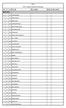 ROUND 2 2 1 33 TENNESSEE 2 2 34 TAMPA BAY 2 3 35 OAKLAND 2 4 36 JACKSONVILLE 2 5 37 NEW YORK JETS 2 6 38 WASHINGTON 2 7 39 CHICAGO 2 8 40 NEW YORK GIANTS 2 9 41 ST. LOUIS 2 10 42 ATLANTA 2 11 43 CLEVELAND
PUBLIC HOUSING AUTHORITY COMPENSATION
 PUBLIC HOUSING AUTHORITY COMPENSATION Background After concerns were raised about the level of compensation being paid to some public housing authority (PHA) leaders, in August 2011 HUD reached out to
http://www.sjsu.edu/hspm/ California Tante Marie's Cooking School http://www.tantemarie.com/
 National Schools Offers credit for State School ProStart certification? Web Link Alabama Auburn University http://www.humsci.auburn.edu/hrmt/ Culinard, The Culinary Institute of Virginia College YES http://www.culinard.com/
Chex Systems, Inc. does not currently charge a fee to place, lift or remove a freeze; however, we reserve the right to apply the following fees:
 Chex Systems, Inc. does not currently charge a fee to place, lift or remove a freeze; however, we reserve the right to apply the following fees: Security Freeze Table AA, AP and AE Military addresses*
NASPAA s Research Universities Report 3/4/16
 NASPAA s Research Universities Report 3/4/16 Data Source: 2014-2015 NASPAA Annual Data Report N= 109 schools, 120 programs 70% of Research Universities Fall 2015 Current Enrollment 15552 students Average
State Tax Information
 State Tax Information The information contained in this document is not intended or written as specific legal or tax advice and may not be relied on for purposes of avoiding any state tax penalties. Neither
THE COST OF OPERATING A DISTRIBUTION WAREHOUSE DETAILED IN BizCosts REPORT
 THE COST OF OPERATING A DISTRIBUTION WAREHOUSE DETAILED IN REPORT A new 2010 Report compares the cost of operating a typical distribution warehouse in 72 U.S locations. is a registered trademark of The
How To Pay Medical Only Claims On Workers Compensation Claims
 Workers Compensation Small Medical-Only Claims: Should an employer pay them or turn them in to the insurance company? by Maureen Gallagher The most common question an insurance agent gets from employers
High Risk Health Pools and Plans by State
 High Risk Health Pools and Plans by State State Program Contact Alabama Alabama Health 1-866-833-3375 Insurance Plan 1-334-263-8311 http://www.alseib.org/healthinsurance/ahip/ Alaska Alaska Comprehensive
STATE-SPECIFIC ANNUITY SUITABILITY REQUIREMENTS
 Alabama Alaska Arizona Arkansas California This jurisdiction has pending annuity training legislation/regulation Annuity Training Requirement Currently Effective Initial 8-Hour Annuity Training Requirement:
University Your selection: 169 universities
 University Your selection: 169 universities Level of study: bachelor, master Regions: United States, compareuni T eaching & Learning Research Knowledge T ransf er International Orientation Regional Engagement
THE FEDERAL BUREAU OF INVESTIGATION FINANCIAL INSTITUTION FRAUD AND FAILURE REPORT
 U.S. Department of Justice Federal Bureau of Investigation FINANCIAL INSTITUTION FRAUD UNIT FINANCIAL CRIMES SECTION FINANCIAL INSTITUTION FRAUD AND FAILURE REPORT FISCAL YEAR 2002 THE FEDERAL BUREAU OF
Job Market Intelligence: Cybersecurity Jobs, 2015. 2015 Burning Glass Technologies
 Job Market Intelligence: Cybersecurity Jobs, 2015 Introduction: Cybersecurity and the Job Market American employers have realized the vital importance of cybersecurity but that realization has created
90-400 APPENDIX B. STATE AGENCY ADDRESSES FOR INTERSTATE UIB CLAIMS
 INTERSTATE UIB CLAIMS Alabama Multi- Unit (#01) Industrial Relations Bldg. Montgomery, AL 31604 Alaska Interstate Unit (#02) P.O. Box 3-7000 Juneau, AK 99801 Arizona Interstate Liable Office (#03) Department
Software as a service: Helping companies make the right decision
 Software as a service: Helping companies make the right decision White Paper 2008 By Audit Partners Immanuel John and Michael Schamberger Contents 1 Introduction 2 Investment-related 4 Operating and management
Low-Profit Limited Liability Company (L3C) Date: July 29, 2013. [Low-Profit Limited Liability Company (L3C)] [July 29, 2013]
![Low-Profit Limited Liability Company (L3C) Date: July 29, 2013. [Low-Profit Limited Liability Company (L3C)] [July 29, 2013]](/thumbs/27/11522934.jpg "Low-Profit Limited Liability Company (L3C) Date: July 29, 2013. [Low-Profit Limited Liability Company (L3C)] [July 29, 2013]") Topic: Question by: : Low-Profit Limited Liability Company (L3C) Kevin Rayburn, Esq., MBA Tennessee Date: July 29, 2013 Manitoba Corporations Canada Alabama Alaska Arizona Arkansas California Colorado
Topic: Question by: : Low-Profit Limited Liability Company (L3C) Kevin Rayburn, Esq., MBA Tennessee Date: July 29, 2013 Manitoba Corporations Canada Alabama Alaska Arizona Arkansas California Colorado
State Specific Annuity Suitability Requirements updated 10/10/11
 Alabama Alaska Ai Arizona Arkansas California This jurisdiction has pending annuity training legislation/regulation Initial 8 Hour Annuity Training Requirement: Prior to selling annuities in California,
Legjobban fizetõ Adsense kulcsszavak toplistája 2008/2009 idõszak - 1. rész
 Legjobban fizetõ Adsense kulcsszavak toplistája 2008/2009 idõszak - 1. rész Szerzõ dezs dezs.extra.hu - tételek gyûjteménye Laser Hair Removal, Laser Hair Removal Prices, Loans Bad Credit Rating, Ohio
ATTORNEYS. Insurance Agents & Brokers Errors & Omissions. LewisBrisbois.com
 ATTORNEYS Insurance Agents & Brokers Errors & Omissions Insurance Agents & Brokers Errors & Omissions The attorneys in our Insurance Agents & Brokers Errors & Omissions Practice Group practice in all our
Marriage Equality Relationships in the States
 Marriage Equality Relationships in the States January 7, 2015 The legal recognition of same-sex relationships has been a divisive issue across the United States, particularly during the past two decades.
Englishinusa.com Positions in MSN under different search terms.
 Englishinusa.com Positions in MSN under different search terms. Search Term Position 1 Accent Reduction Programs in USA 1 2 American English for Business Students 1 3 American English for Graduate Students
How to Change Your Address with the Immigration Court and Government Attorneys
 How to Change Your Address with the Immigration Court and Government Attorneys In this guide, we will review step-by-step how to prepare the forms you need to change your address with the Immigration Court
Project Lead Location Amount Project Description. American Lung Association in Minnesota
 Project Lead Location Amount Project Description American Lung Association in Minnesota St. Paul, MN $248,788 The Accelerating Alternatives for Minnesota Drivers project will provide safety and technical
STATE DATA CENTER. District of Columbia MONTHLY BRIEF
 District of Columbia STATE DATA CENTER MONTHLY BRIEF N o v e m b e r 2 0 1 2 District Residents Health Insurance Coverage 2000-2010 By Minwuyelet Azimeraw Joy Phillips, Ph.D. This report is based on data
********************
 THE SURETY & FIDELITY ASSOCIATION OF AMERICA 1101 Connecticut Avenue, N.W., Suite 800 Washington, D. C. 20036 Phone: (202) 463-0600 Fax: (202) 463-0606 Web page: www.surety.org APPLICATION Application
A Better Solution. Multidimensional Services. Seamless Results.
 John W. Harris WILLIAM C. DUVALL A Better Solution At Lincoln Harris, we are dedicated to providing our clients with superior real estate solutions. It is the reason we opened our doors decades ago, and
National Bureau for Academic Accreditation And Education Quality Assurance PUBLIC HEALTH
 1 GEORGE WASHINGTON UNIVERSITY WASHINGTON DC B Athletic Training 1 MA B 1 BROWN UNIVERSITY PROVIDENCE RI B EAST TENNESSEE STATE UNIVERSITY JOHNSON CITY TN B 3 HUNTER COLLEGE NEW YORK NY B 4 UNIVERSITY
U.S. Department of Labor Office of Workforce Security Division of Fiscal and Actuarial Services
 U.S. Department of Labor Office of Workforce Security Division of Fiscal and Actuarial Services Evaluating State UI Tax Systems using The Significant Tax Measures Report State Summary Tables o State Benefit
The Strategic Assessment of the St. Louis Region
 The Strategic Assessment of the St. Louis Region 7th Edition, 2015 WHERE The 7th Edition of Where We Stand (WWS) presents 222 rankings comparing St. Louis to the 50 most populated metropolitan areas in
Rates are valid through March 31, 2014.
 The data in this chart was compiled from the physician fee schedule information posted on the CMS website as of January 2014. CPT codes and descriptions are copyright 2012 American Medical Association.
LPSC Renewable Energy Pilot y RFPs issued by Utility Companies by Order of Commission, November 2010
 Renewable Energy LPSC Renewable Energy Pilot y RFPs issued by Utility Companies by Order of Commission, November 2010 y Searching for various forms of renewable energy and their actual cost in Louisiana
TAX SERVICES. Grant Thornton guide to Form W-2 reporting of group health insurance cost
 TAX SERVICES Grant Thornton guide to Form W-2 reporting of group health insurance cost Table of contents 1 Introduction 2 Questions addressed in this guide 4 Employers exempt from the reporting requirement
Q1 2009 Homeowner Confidence Survey. May 14, 2009
 Q1 2009 Homeowner Confidence Survey Results May 14, 2009 The Zillow Homeowner Confidence Survey is fielded quarterly to determine the confidence level of American homeowners when it comes to the value
In-state Tuition & Fees at Flagship Universities by State 2014-15 Rank School State In-state Tuition & Fees Penn State University Park Pennsylvania 1
 In-state Tuition & Fees at Flagship Universities by State 2014-15 Rank School State In-state Tuition & Fees Penn State University Park Pennsylvania 1 $18,464 New New Hampshire 2 Hampshire $16,552 3 Vermont
Enterprise risk management: Creating value in a volatile economy
 CorporateGovernor Series: Enterprise risk management: Creating value in a volatile economy Addressing the concerns of the Corporate Governance Community Summer 2009 Contents 2 Introduction 3 ERM frameworks
Aetna s Quality & Total Cost Strategy
 Aetna s Quality & Total Cost Strategy Evidence-based Medicine Enabled by Technology and Aligned Financial Incentives Drives Behavior Change BEHAVIOR CHANGE WITH PROVIDERS HEALTH INFORMATION TECHNOLOGY
Qualified School Construction Bond Allocations for 2010. This Notice sets forth the maximum face amount of qualified school
 Part III - Administrative, Procedural, and Miscellaneous Qualified School Construction Bond Allocations for 2010 Notice 2010-17 SECTION 1. PURPOSE This Notice sets forth the maximum face amount of qualified
2014 INCOME EARNED BY STATE INFORMATION
 BY STATE INFORMATION This information is being provided to assist in your 2014 tax preparations. The information is also mailed to applicable Columbia fund non-corporate shareholders with their year-end
Trade Show Labor Rate Benchmarking Survey
 2011 Trade Show Labor Rate Benchmarking Survey EXHIBITOR COSTS IN 41 U.S. CITIES labor drayage audio visual exhibitor services eventmarketing.com eventmarketing.com Produced by in association with eventmarketing.com
EMBARGOED UNTIL 6:00 AM ET WEDNESDAY, NOVEMBER 30, 2011
 A State-by-State Look at the President s Payroll Tax Cuts for Middle-Class Families An Analysis by the U.S. Department of the Treasury s Office of Tax Policy The President signed into law a 2 percentage