
Supraclavicular Brachial plexus block using Lidocaine with Adrenaline and Dexomethasone as an adjunct A study on 60 cases
|
|
|
- Tiffany Merritt
- 9 years ago
- Views:
Transcription
1 Original Article Supraclavicular Brachial plexus block using Lidocaine with Adrenaline and Dexomethasone as an adjunct A study on 60 cases E.Devandar Reddy 1, S.Srikanth 2 1 Assistant Professor, Department of Anaesthesiology, Mallareddy Institute of Medical Sciences Hyderabad. Telangana, 2 Associate Professor, Department of Pathology, Prathima Institute of Medical Sciences, Karimnagar, Telangana, India. Address for correspondence: Dr.E.Devendar Reddy, Assistant Professor, Department of Anaesthesiology, Mallareddy Institute of Medical Sciences,Hyderabad,Telanagana,India. [email protected] ABSTRACT Introduction: Steroids are very potent anti inflammatory and immunosuppressive agents. They are used in various inflammatory and allergic conditions in various medical and surgical diseases. Study was undertaken to compare the effect of addition of dexamethasone as an adjunct to local anaesthetic in brachial plexus block on the onset time and duration of block. Materials and methods: The study was done on patients undergoing elective upper limb surgeries, aged between years were randomly allocated into two groups of 30 each. Group A were received 7mg/kg of 1.5% lidocaine with adrenaline with 2ml 0.9% normal saline and Group B received 7mg/kg of 1.5% lidocaine with adrenaline with 2ml (8mg) dexamethasone. Sensory and motor blockade were recorded at an interval of 5, 15, 30min, and post operatively every 15min till the complete sensory and motor recovery. Results: Both the onset of sensory and motor blockade was earlier in dexamethasone group than control group (sensory 636 ± sec versus 678 ± seconds, motor ± sec versus 740 ± sec ) and both the duration of sensory and motor block was prolonged in dexamethasone group than control group ( sensory ±13.37 min versus ±12.45 min, motor ±13.49min versus ±13.03 min. Conclusion: We conclude that dexamethasone as an adjunct administered with lidocaine with adrenaline in brachial plexus block produces early onset of sensory and motor blockade, prolongs duration of both sensory and motor blockade, with out any side effects. Key words: Local anaesthetic, lidocaine, dexamethasone, adrenaline, brachial plexus INTRODUCTION Brachial plexus blockade for upper limb surgeries is advantageous as the effect of drug is limited to the part of the body to be operated upon. It is devoid of complications associated with general anaesthesia like nausea, vomiting, aspiration pneumonitis, urinary retention etc. It also provides early oral feeding and ambulation thus reducing post operative complications and hospital stay. It produces dense anaesthesia with good muscle relaxation, thus satisfying surgeon. Supraclavicular brachial plexus block provides anaesthesia for surgeries around elbow, forearm and hand. As it provides dense block and also relieves tourniquet pain, this technique was chosen for upper limb surgeries in our study. Though few potential complications like pneumothorax, injury to vessels, hematoma are described with this technique, it can be minimized with proper technique and strict vigilance. MATERIALS AND METHODS A controlled prospective clinical study was carried out on 60 patients of either sex undergoing various orthopaedic surgeries of upper limb under supraclavicular brachial plexus block using 1.5% lidocaine with adrenaline (1:200000) with and without addition of Dexamethasone was done for a period of 3 years from Surgeries around elbow, forearm and hand were included in the study. The Patients included in the study belonged to American Society of Anaesthesiologista (ASA) physical status I and II. Both elective as well as emergency procedures were included. Patients in the age group of years were included in the study. All patients underwent a thorough pre-anaesthetic check up which included history taking, general and systemic examination. Routine investigations like Hemoglobin, urine examination, blood sugar, blood urea, serum creatinine, bleeding time and clotting time were carried out for all patients. Special investigations like ECG, Chest X-Ray, was asked if required. Patients with known hypersensitivity to local anaesthetic drugs,bleeding disorders,uncontrolled Diabetes mellitus, Renal and Liver diseases,circulatory instability,pregnant women,patients with epilepsy and peptic disease,asa grade III & above were excluded from the study. 6

2 Under aseptic precaution brachial plexus block was performed by supraclavicular approach (classical), the patient was made to lie in supine position with both the arms adducted and straight. Head was turned away from the side to be blocked and the arm adducted with hand extended towards the ipsilateral knee, a small roll of towel placed between the shoulder blades to make the plexus taut. The mid point of the clavicle was identified and marked. The point of entry was the lateral border of anterior scalene muscle, approximately 1.5 to 2 cm posterior to the mid point of clavicle was also marked. One can confirm the land mark by palpating the subclavian artery at this point. After antiseptic painting and draping, a skin wheal was raised with local anaesthetic. 22G needle was inserted at the point of entry above the mid point of clavicle in the caudalposterior- medial (CPM) direction. Paraesthesia in the forearm or hand was elicited. After negative aspiration for air or blood appropriate drugs were injected. Fig.1. Land marks for brachial plexus blockade 1.Clavicle 2.External carotid artery 3.Subclavian artery pulsations Fig.2 Arrow shows site for the entry of needle Fig.3. Procedure for intercostobrachial nerve blockade Group A (n=30) received 7mg/kg of 1.5% lidocaine with adrenaline (1:200000) with 2ml 0.9% normal saline.group B( n=30) received 7mg/kg of 1.5% lidocaine with adrenaline (1:200000) with 2ml(8mg) Dexamethasone. A separate 5ml injection of 1.5% plain lignocaine was made for an intercostobrachial nerve block in the axilla to provide anaesthesia for application of tourniquet.both the groups will be given intravenous Inj.Midazolam mg/kg IV, as sedation. Sensory and motor blockade of radial, median, musculocutaneous and ulnar nerves were recorded at an interval of 5, 10, 15, 30min.Assessment of sensory block was done after completion of drug injection Sensory blockade of each nerve was assessed by pinprick and compared with the same stimulation on the contralateral hand in skin areas corresponding to median nerve, radial nerve, ulnar nerve and musculo- cutaneous nerve. Radial nerve Dorsum of hand at base of index finger,median nerve Palmar base of index finger Ulnar nerve Palmar base of little finger,musculocutaneous nerve Along lateral border of forearm over site of radial artery.sensory blockade was rated by the patient verbal analog scale from 100% (normal sensation) to 0% (no sensation). Rating Scale for Quantification of Muscle Force 6 - Normal muscular force 5 - Slightly reduced muscular force 4 - Pronounced reduction of muscular force 3 - Slightly impaired mobility 2 - Pronounced mobility impairment 1 - Almost complete paralysis 0 - Complete paralysis Thus block was considered completely effective when all segments supplied by median, radial, ulnar and musculocutaneous nerve had anaesthesia (Analgesia + Paralysis).The block was considered incomplete when any of the segments supplied by median, radial, ulnar and musculocutaneous nerve did not had analgesia or anaesthesia even after 30 minutes of drug injection and it was considered Failure when more than one nerve remained unaffected. The onset time of the sensory and motor blockade was defined as the time between the end of last injection and the total abolition of the pinprick response and complete paralysis in all of the nerve distributions.the duration of sensory block was considered as the time interval between the administration of the local anesthetic and the first 7

3 postoperative pain, and the duration of motor block was defined as the time interval between the local anesthetic administration and complete recovery of motor functions. Intra-operatively patients were monitored for hemodynamic variables such as Pulse rate, Blood pressure and Respiratory rate. Assessment of blood loss was done and fluid was administered as per the loss. Duration of surgery was noted.post-operatively pulse, blood pressure, respiratory rate, consciousness and response to verbal commands were noted. Patient were evaluated post operatively every 15min till the complete sensory and motor recovery. The side effects and complications if any like nausea, vomiting, pneumothorax, hematoma and local anaesthetic toxicity were monitored for 6hrs postoperatively in all patients. RESULTS In the present study males contributing 64% in group A and 66% in group B, whereas females are 36% in group-a and 34% in group-b. As shown in table 1 age and weight were comparable in both the groups with no statistically significant difference. Table-1: Demographic Data Parameter Group-A Group-B P value Number of patients Age (years) (mean ± SD) 30.43± ± 7.50 >0.05 Sex (M:F) 19:11 (64%:36%) 20:10(66%:34%) Weight (KGs) ± ± 6.03 >0.05 The mean time for Peak effect of Sensory blockade was 678 ± seconds in group-a and 636 ± seconds in group-b (P <0.05) and thus statistically significant. Group-B patients had marginally significant early Peak effect of Sensory block compared to group-a patients. Table 2& 3 showing results of onset time for sensory and motor block. Table 2: Onset time for Sensory block Time (seconds) Group A Group B P value < > Mean ± SD 678 ± ± <0.05 Table 3: Onset time for Motor block Time (seconds) Group A Group B P value < > Mean ± SD 740 ± ± <0.05 The mean time for peak effect of Motor blockade was 740 ± seconds in group-a and ± seconds in group- B (P <0.05) and thus statistically significant Group-B patients had marginally significant early peak effect of Motor blockade compared to group-a patients. The mean time for total duration of sensory block was ±12.45 min in group-a and ±13.37 min in group- B (P <0.001) and Total duration of motor block was ±13.03 min in group A and ±13.49 min in group B (P <0.001) Thus Group-B patients had statistically significant prolonged duration of both sensory and motor blockade compared to group-a patients. Table 4: Comparison of Duration of Block Study parameters Group-A Group-B P value Total duration of sensory block(min) ± ±13.37 <0.001** Total duration of motor block(min) ± ±13.49 <0.001** DISCUSSION Peripheral nerve blocks with local anaesthetics provides excellent operating conditions with good muscle relaxation but the duration of analgesia is rarely maintained for more than 2-3 hours even with the longest acting local anaesthetics (Bupivacaine, Ropivacaine and levo-bupivacaine).continuous infusion of local anaesthetics into brachial plexus sheath requires an infusion pump and has potential for cumulative toxicity and unpredictable variability in absorption. So there had been search for a method, which can provide longer duration of analgesia without the above side effects and inconvenience to the patient Various studies has shown that addition of various analgesics like Clonidine, tramadol, buprenorphine, fentanyl to local anaesthetic mixture in peripheral nerve blocks significantly prolonged the duration of analgesia 1. Steroids are very potent anti inflammatory and immunosuppressive agents. 8

4 They are used in various inflammatory and allergic conditions in various medical and surgical diseases. Since 1952, Epidural steroids were used for treatment of back pain and sciatica (Robechhi A.et.al). Methyl prednisolone was used intrathecally in treatment of multiple sclerosis (Baker AG) 2 Various steroids have been used for this purpose, but Dexamethasone having a potent anti-inflammatory property without any mineralocorticoid activity and thus has found to be safer and devoid of potential side effects is preferred. Dexamethasone is a 9a-derivative synthetic glucocorticoid with highly potent anti- inflammatory property being times more potent as hydrocortisone and without any mineralocorticoid activity. Pre- operative administration of Dexamethasone by oral and intravenous routes has been shown to reduce overall pain scores and analgesic requirements in the post-operative period without any adverse effects in various oral and general surgical procedures, Dexamethasone is also known to reduce postoperative nausea and vomiting (Baxendale BR.et.al, 3 Bisgaard.et.al 4, Elhakim.et.al 5 The possible mechanism of analgesic and antiemetic actions are due to anti- inflammatory property of Dexamethasone. Corticosteroids are capable of reducing prostaglandin synthesis by inhibiting phospholipase A2 through the production of calcium dependent phospholipid binding proteins called Annexins and by the inhibition of cyclooxygenase-2 during inflammation. Various preliminary studies have demonstrated that addition of corticosteroid micro spheres to local anaesthetics prolonged the duration of blockade of peripheral nerves. One of the prime concerns of anaesthesiologist is the risk of aspiration pneumonitis, which may be a possibility in emergency procedures. Regional anaesthesia of upper limb has a great potential in emergency and out patient departments, where the status of nil per oral is at doubt and thus risk of aspiration likely. It is also useful in high risk patient groups having co-existing Diabetes mellitus, Cardiac, Hepatic, Renal disease and poly-trauma where general anaesthesia may be associated with increased risk of morbidity. Supraclavicular block is a simple, easy to administer and economical technique. It produces an effective block and excellent analgesia. With this technique the land marks are easy to locate and tourniquet pain is better tolerated. Patient remains conscious without any depression of protective airway reflexes. It provides optimal operative conditions to surgeons with good muscle relaxation, excellent surgical field and co-operation of the patient. It permits early ambulation and oral feeding with reduced recovery room admissions. The early onset of action of Dexamethasone may be due to its synergistic action with Local anaesthetics on blockade of nerve fibers. The mechanism of blockade prolonging effect of Dexamethasone is not clearly understood. The block prolonging effect may be due to its local action on nerve fibres and not a systemic one (Drager et.al) 6. The effect might be mediated via glucocorticoid receptors. When steroids were used as sole agent in regional blocks the blockade was not produced. Steroids might bring about this effect by altering the function of potassium channels in excitable cells 7 In our study Dexamethasone produced a relatively rapid onset which cannot be explained by the above mechanism of action. Therefore vasoconstriction the presumed mechanism of action of epinephrine adjuvant effect on local anaesthetics is probably not responsible for block prolonging effect of Dexamethasone Thus the exact mechanism of prolonged duration of analgesia when Dexamethasone is used as an adjuvant to local anaesthetic mixture is uncertain. Proposed possible theories are attributed to anti-inflammatory property and its local action on nerve fibres. Patients were observed for complications like nausea, vomiting, pneumothorax, hematoma, post block neuropathy, local anaesthetic toxicity. No other significant complications were observed in both groups, Steroids are very potent anti inflammatory and immunosuppressive agents. They are used in inflammatory and allergic conditions in various medical and surgical diseases. In conclusion, the addition of dexamethasone as an adjunct to 1.5% Lidocaine with adrenaline (1:200000) in supraclavicular brachial plexus block produces early onset of sensory and motor blockade, prolongs duration of both sensory and motor blockade, with out any side effects. REFERENCES 1. Murphy D.B, MC.Cartney C and Chang C : Novel analgesic adjuvants for brachial plexus block. Anaesthesia Analgesia, 2000;90; Baker AG : Intrathecal methylprednisolone for multiple sclerosis. Evaluation by a standard neurological rating. Amm Allergy 1967; 25; Baxendale BR, Vater M, Lavery KM : Dexamethasone reduces pain and swelling following extraction of third molar teeth. Anaesthesia 1993; 48; Bisgaard T, Klarskov B et.al : Pre-operative dexamethasone improves surgical outcome after laproscopic cholecystectomy. A randomised double blind placebo controlled trial. Ann Surg 2003; 238;

5 5. Elhakim M, Ali NM, Rashed I et.al : Dexamethasone reduces post-operative vomiting and pain after paediatric tonsillectomy. Can.J.Anaesth 2003; 50; Drager C, Benziger D.Goaf, Berde CB : Prolonged intercoastal nerve blockade in sheep using controlled release of bupivacaine and dexamethasone from polymer microspheres. Anaesthesiology 1998; 89; Sharma V, Boqra Jaishree, Chandra Girish, Jain V.K : Clinical evaluation of various techniques of analgesia for post operative pain in upper limb surgery. Indian Journal of Anaesthesia; 1996;44; Please cite this article as: Devander E, Srikanth S. Supraclavicular Brachial plexus block using Lidocaine with Adrenaline and Dexomethasone as an adjunct A study on 60 cases. Perspectives in medical research 2015;3:2:6-10. Sources of Support: Nil,Conflict of interest:none declared 10

Common Regional Nerve Blocks Quick Guide developed by UWHC Acute Pain Service Jan 2011
 Common Regional Nerve Blocks Quick Guide developed by UWHC Acute Pain Service Jan 2011 A single shot nerve block is the injection of local anesthetic to block a specific nerve distribution. It can be placed
Anatomical Consideration and Brachial Plexus Anesthesia. Anatomy
 Brachial Plexus Anesthesia There are four approaches to the brachial plexus. These include the interscalene, supraclavicular, infraclavicular, and axillary approach. For the purposes of this lecture we
Femoral Nerve Block/3-in-1 Nerve Block
 Femoral Nerve Block/3-in-1 Nerve Block Femoral and/or 3-in-1 nerve blocks are used for surgical procedures on the front portion of the thigh down to the knee and postoperative analgesia. Both blocks are
Ankle Block. Indications The ankle block is suitable for the following: Orthopedic and podiatry surgical procedures of the distal foot.
 Ankle Block The ankle block is a common peripheral nerve block. It is useful for procedures of the foot and toes, as long as a tourniquet is not required above the ankle. It is a safe and effective technique.
Recommendations for the Perioperative Care of Patients Selected for Day Care Surgery
 Page 1 of 7 Recommendations for the Perioperative Care of Patients Selected for Day Care Surgery Version Effective Date 1 Feb 1993 (Reviewed Feb 2002) 2 Oct 2012 Document No. HKCA P5 v2 Prepared by College
Significant nerve damage is uncommonly associated with a general anaesthetic
 Risks associated with your anaesthetic Section 10: Nerve damage associated with an operation under general anaesthetic Section 10: Significant nerve damage is uncommonly associated with a general anaesthetic
Bier Block (Intravenous Regional Anesthesia)
 Bier Block (Intravenous Regional Anesthesia) History August Bier introduced this block in 1908. Early methods included the use of two separate tourniquets and procaine was the local anesthetic of choice.
Sign up to receive ATOTW weekly - email [email protected]
 PHARMACOLOGY FOR REGIONAL ANAESTHESIA ANAESTHESIA TUTORIAL OF THE WEEK 49 26 TH MARCH 2007 Dr J. Hyndman Questions 1) List the factors that determine the duration of a local anaesthetic nerve block. 2)
30. BASIC PEDIATRIC REGIONAL ANESTHESIA
 30. BASIC PEDIATRIC REGIONAL ANESTHESIA INTRODUCTION Military anesthesia providers often encounter pediatric patients while delivering medical care in the field. The application of regional anesthesia
How To Treat A Heart Attack
 13 Resuscitation and preparation for anaesthesia and surgery Key Points 13.1 MANAGEMENT OF EMERGENCIES AND CARDIOPULMONARY RESUSCITATION ESSENTIAL HEALTH TECHNOLOGIES The emergency measures that are familiar
Interscalene Block. Nancy A. Brown, MD
 Interscalene Block Nancy A. Brown, MD What is an Interscalene Block? An Interscalene block is a form of regional anesthesia used in conjunction with general anesthesia for surgeries of the shoulder and
INTERSCALENE BLOCK AND OTHER ARTICLES ON ANESTHESIA FOR ARTHROSCOPIC SURGERY NOT QUALIFYING AS EVIDENCE
 INTERSCALENE BLOCK AND OTHER ARTICLES ON ANESTHESIA FOR ARTHROSCOPIC SURGERY NOT QUALIFYING AS EVIDENCE Hughes MS, Matava MJ, et al. Interscalene Brachial Plexus Block for Arthroscopic Shoulder Surgery.
Symptoms and Signs of Irritation of the Brachial Plexus in Whiplash Injuries
 1 Symptoms and Signs of Irritation of the Brachial Plexus in Whiplash Injuries J Bone Joint Surg (Br) 2001 Mar;83(2):226-9 Ide M, Ide J, Yamaga M, Takagi K Department of Orthopaedic Surgery, Kumamoto University
DISCHARGE CRITERIA FOR PHASE I & II- POST ANESTHESIA CARE
 REFERENCES: The Joint Commission Accreditation Manual for Hospitals American Society of Post Anesthesia Nurses: Standards of Post Anesthesia Nursing Practice (1991, 2002). RELATED DOCUMENTS: SHC Administrative
Section 10: nerve damage associated with an operation under general anaesthetic
 Risks associated with your anaesthetic Section 10: associated with an operation under general anaesthetic Significant can be associated with a general anaesthetic. Peripheral nerve damage occurs uncommonly
Making our pets comfortable. A modern approach to pain and analgesia.
 Making our pets comfortable. A modern approach to pain and analgesia. What is pain? Pain is an unpleasant sensory and emotional experience with awareness by an animal to damage or potential damage to its
THORACIC OUTLET SYNDROME
 THORACIC OUTLET SYNDROME The Problem The term thoracic outlet syndrome is used to describe a condition of compression of the nerves and/or blood vessels in the region around the neck and collarbone, called
The Outpatient Knee Replacement Program at Orlando Orthopaedic Center. Jeffrey P. Rosen, MD
 The Outpatient Knee Replacement Program at Orlando Orthopaedic Center Jeffrey P. Rosen, MD Anesthesia Pain Management Post-Op / Discharge Protocols The Orlando Orthopaedic Center Joint Replacement Team
Epidural Continuous Infusion. Patient information Leaflet
 Epidural Continuous Infusion Patient information Leaflet April 2015 Introduction You may already know that epidural s are often used to treat pain during childbirth. This same technique can also used as
Feasibility of an Infraclavicular Block With a Reduced Volume of Lidocaine With Sonographic Guidance
 Technical Advance Feasibility of an Infraclavicular Block With a Reduced Volume of Lidocaine With Sonographic Guidance NavParkash S. Sandhu, MD, Charanjeet S. Bahniwal, MD, Levon M. Capan, MD Objective.
Comparison of the effects between clonidine and epinephrine added with bupivacine in brachial plexus block.
 IOSR Journal of Dental and Medical Sciences (IOSR-JDMS) e-issn: 2279-0853, p-issn: 2279-0861.Volume 13, Issue 11 Ver. I (Nov. 2014), PP 54-58 Comparison of the effects between clonidine and epinephrine
PHARMACOLOGY OF REGIONAL ANAESTHESIA Author John Hyndman
 PHARMACOLOGY OF REGIONAL ANAESTHESIA Author John Hyndman Web Editor Jo Loader - [email protected] Questions 1) List the factors that determine the duration of a local anaesthetic nerve block. 2) How
PRACTICE GUIDELINE TITLE: INTRAVENOUS LINE INSERTION: PERIPHERAL AND CENTRAL
 PRACTICE GUIDELINE Effective Date: 9-17-04 Manual Reference: Deaconess Trauma Services TITLE: INTRAVENOUS LINE INSERTION: PERIPHERAL AND CENTRAL PURPOSE: To outline the indications and options for intravenous
Local Anesthetics Used for Spinal Anesthesia
 Local Anesthetics Used for Spinal Anesthesia Several local anesthetics are used for spinal anesthesia. These include procaine, lidocaine, tetracaine, levobupivacaine, and bupivacaine. Local anesthetics
Your spinal Anaesthetic
 Your spinal Anaesthetic Information for patients Your spinal anaesthetic This information leaflet explains what to expect when you have an operation with a spinal anaesthetic. It has been written by patients,
RGN JOY LAUDE WATFORD GENERAL HOSPITAL, ENGLAND
 RGN JOY LAUDE WATFORD GENERAL HOSPITAL, ENGLAND Monitor patient on the ward to detect trends in vital signs and to manage accordingly To recognise deteriorating trends and request relevant medical/out
Paediatric fluids 13/06/05
 Dr Catharine Wilson Consultant Paediatric Anaesthetist Sheffield Children s Hospital. UK Paediatric fluids 13/06/05 Self assessment: Complete these questions before reading the tutorial. Discuss the answers
1. What Xylocaine with adrenaline is and what it is used for
 Package leaflet: Information for the user Xylocaine 1% and 2% with adrenaline (epinephrine) 1:200,000 Solution for Injection lidocaine, adrenaline (epinephrine) Read all of this leaflet carefully before
Patient Information for Lumbar Spinal Fusion. What is a lumbar spinal fusion? Page 1 of 5
 Patient Information for Lumbar Spinal Fusion What is a lumbar spinal fusion? You have been offered surgery to the lumbar region of your spine, your lower back. The operation is called a lumbar spinal fusion.
Top-up for Cesarean section. Dr. Moira Baeriswyl, Prof. Christian Kern
 Top-up for Cesarean section Dr. Moira Baeriswyl, Prof. Christian Kern In which situations? 2 What exactly is a Top-up? 3 C-section, NOW!! Emergency C-section requires a rapid onset of sustained analgesia
F.E.E.A. FONDATION EUROPEENNE D'ENSEIGNEMENT EN ANESTHESIOLOGIE FOUNDATION FOR EUROPEAN EDUCATION IN ANAESTHESIOLOGY
 créée sous le Patronage de l'union Européenne Detailed plan of the program of six courses 1. RESPIRATORY 1. ESPIRATORY AND THORAX 1.1 Physics and principles of measurement 1.1.1 Physical laws 1.1.2 Vaporizers
Influence of ph Most local anesthetics are weak bases.
 Local anesthetics The agent must depress nerve conduction. The agent must have both lipophilic and hydrophilic properties to be effective by parenteral injection. Structure-activity relationships The typical
Anesthesia Guidelines
 Anesthesia Guidelines Updated April 2012 Anesthesia BlueCross requires anesthesiologists and certified registered nurse anesthetists (CRNAs) to file claims using CPT anesthesia codes. We cover general
Reflex Physiology. Dr. Ali Ebneshahidi. 2009 Ebneshahidi
 Reflex Physiology Dr. Ali Ebneshahidi Reflex Physiology Reflexes are automatic, subconscious response to changes within or outside the body. a. Reflexes maintain homeostasis (autonomic reflexes) heart
Australian and New Zealand College of Anaesthetists (ANZCA) Guidelines for the Management of Major Regional Analgesia
 PS03 2014 Australian and New Zealand College of Anaesthetists (ANZCA) Faculty of Pain Medicine Guidelines for the Management of Major Regional Analgesia 1. OVERVIEW This document is intended to apply to
Informed Patient Tutorial Copyright 2012 by the American Academy of Orthopaedic Surgeons
 Informed Patient Tutorial Copyright 2012 by the American Academy of Orthopaedic Surgeons Informed Patient - Carpal Tunnel Release Surgery Introduction Welcome to the American Academy of Orthopaedic Surgeons'
Herniated Cervical Disc
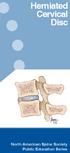 Herniated Cervical Disc North American Spine Society Public Education Series What Is a Herniated Disc? The backbone, or spine, is composed of a series of connected bones called vertebrae. The vertebrae
Passionate concerns about welfare and ethics have created an environment where discussions about
 M e d i c a t i o n s P A I N M A N A G E M E N T Lysa Pam Posner, DVM, Diplomate ACVA North Carolina State University Analgesia for Declaw Patients Onychectomy in cats is controversial both within and
Pain Management after Surgery Patient Information Booklet
 Pain Management after Surgery Patient Information Booklet PATS 509-15-05 Your Health Care Be Involved Be involved in your healthcare. Speak up if you have questions or concerns about your care. Tell a
Biologic Treatments for Rheumatoid Arthritis
 Biologic Treatments Rheumatoid Arthritis (also known as cytokine inhibitors, TNF inhibitors, IL 1 inhibitor, or Biologic Response Modifiers) Description Biologics are new class of drugs that have been
PROCEDURAL SEDATION/ANALGESIA NCBON Position Statement for RN Practice
 PROCEDURAL SEDATION/ANALGESIA NCBON Position Statement for RN Practice P.O. BOX 2129 Raleigh, NC 27602 (919) 782-3211 FAX (919) 781-9461 Nurse Aide II Registry (919) 782-7499 www.ncbon.com Issue: Administration
X-Plain Preparing For Surgery Reference Summary
 X-Plain Preparing For Surgery Reference Summary Introduction More than 25 million surgical procedures are performed each year in the US. This reference summary will help you prepare for surgery. By understanding
YOU AND YOUR ANAESTHETIC
 YOU AND YOUR ANAESTHETIC Information Leaflet Your Health. Our Priority. Page 2 of 8 This leaflet aims to answer some of the questions you may have about your anaesthetic and contains fasting instructions.
Human Clinical Study for Free Testosterone & Muscle Mass Boosting
 Human Clinical Study for Free Testosterone & Muscle Mass Boosting GE Nutrients, Inc. 920 E. Orangethorpe Avenue, Suite B Anaheim, California 92801, USA Phone: +1-714-870-8723 Fax: +1-732-875-0306 Contact
Intraosseous Vascular Access and Lidocaine
 Intraosseous Vascular Access and Lidocaine Intraosseous (IO) needles provide access to the medullary cavity of a bone. It is a technique primarily used in emergency situations to administer fluid and medication
Your anaesthetist may suggest that you have a spinal or epidural injection. These
 Risks associated with your anaesthetic Section 11: Nerve damage associated with a spinal or epidural injection Your anaesthetist may suggest that you have a spinal or epidural injection. These injections
RENAL ANGIOMYOLIPOMA EMBOLIZATION
 RENAL ANGIOMYOLIPOMA EMBOLIZATION The information about renal angiomyolipomas on the next several pages includes questions commonly asked about the embolization procedure. Please take a few moments to
ANESTHESIA - Medicare
 ANESTHESIA - Medicare Policy Number: UM14P0008A2 Effective Date: August 19, 2014 Last Reviewed: January 1, 2016 PAYMENT POLICY HISTORY Version DATE ACTION / DESCRIPTION Version 2 January 1, 2016 Under
Laparoscopic Cholecystectomy
 Laparoscopic Cholecystectomy Gallbladder removal is one of the most commonly performed surgical procedures in the United States. Today,gallbladder surgery is performed laparoscopically. The medical name
Liposuction GUIDELINE
 .goo NON HOSPITAL MEDICAL AND SURGICAL FACILITIES PROGRAM College of Physicians and Surgeons of British Columbia Liposuction GUIDELINE You may download, print or make a copy of this material for your noncommercial
Wrist Fracture. Please stick addressograph here
 ORTHOPAEDIC UNIT: 01-293 8687 /01-293 6602 UPMC BEACON CENTRE FOR ORTHOPAEDICS: 01-2937575 PHYSIOTHERAPY DEPARTMENT: 01-2936692 GUIDELINES FOR PATIENTS FOLLOWING WRIST FRACTURE Please stick addressograph
Spinal Injections. North American Spine Society Public Education Series
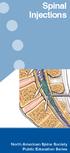 Spinal Injections North American Spine Society Public Education Series What Is a Spinal Injection? Your doctor has suggested that you have a spinal injection to help reduce pain and improve function. This
Equine Sedation, Anesthesia and Analgesia
 Equine Sedation, Anesthesia and Analgesia Janyce Seahorn, DACVAA, DACVIM-LA, DACVECC Lexington Equine Surgery and Sports Medicine Equine Veterinary Specialists Georgetown, KY The need for equine field
The degree of liver inflammation or damage (grade) Presence and extent of fatty liver or other metabolic liver diseases
 ilearning about your health Liver Biopsy www.cpmc.org/learning What is a Liver Biopsy? A liver biopsy is a procedure where a specially trained doctor (typically a hepatologist, radiologist, or gastroenterologist)
Epidurals for pain relief after surgery
 Epidurals for pain relief after surgery This information leaflet is for anyone who may benefit from an epidural for pain relief after surgery. We hope it will help you to ask questions and direct you to
Managing canine osteoarthritis: What has proven benefits?
 Managing canine osteoarthritis: What has proven benefits? B. Duncan X. Lascelles and Denis J. Marcellin-Little North Carolina State University Student Chapter of the IVAPM, Durham, NC 10.10.2006 Osteoarthritis:
Center for Medicaid and State Operations/Survey and Certification Group
 DEPARTMENT OF HEALTH & HUMAN SERVICES Centers for Medicare & Medicaid Services 7500 Security Boulevard, Mail Stop S2-12-25 Baltimore, Maryland 21244-1850 Center for Medicaid and State Operations/Survey
How To Treat Anesthetic With Local Anesthesia
 3. LOCAL ANESTHETICS INTRODUCTION Compared to general anesthesia with opioidbased perioperative pain management, regional anesthesia can provide benefits of superior pain control, improved patient satisfaction,
Feline Anesthesia Richard M. Bednarski, DVM, MSc The Ohio State University College of Veterinary Medicine Current Issues in Feline Anesthesia
 Feline Anesthesia Richard M. Bednarski, DVM, MSc The Ohio State University College of Veterinary Medicine Current Issues in Feline Anesthesia Chemical Restraint Protocols Trap, Neuter, Release Anesthetic
UBISTESIN 1:200,000 and UBISTESIN FORTE 1:100,000
 UBISTESIN 1:200,000 and UBISTESIN FORTE 1:100,000 Articaine hydrochloride and adrenaline hydrochloride Consumer Medicine Information WHAT IS IN THIS LEAFLET Please read this leaflet carefully before you
Multifocal Motor Neuropathy. Jonathan Katz, MD Richard Lewis, MD
 Multifocal Motor Neuropathy Jonathan Katz, MD Richard Lewis, MD What is Multifocal Motor Neuropathy? Multifocal Motor Neuropathy (MMN) is a rare condition in which multiple motor nerves are attacked by
What You Need to know about Your Pet s Upcoming Dentistry and Periodontal Treatment
 What You Need to know about Your Pet s Upcoming Dentistry and Periodontal Treatment We are sending this packet of information in anticipation of your pet s upcoming dental procedure. Many people have questions
A Patient s Guide to PAIN MANAGEMENT. After Surgery
 A Patient s Guide to PAIN MANAGEMENT After Surgery C o m p a s s i o n a n d C o m m i t m e n t A Patient s Guide to Pain Management After Surgery If you re facing an upcoming surgery, it s natural to
James A. Sanfilippo, M.D. CONSENT FOR SPINAL SURGERY PATIENT: DATE:
 James A. Sanfilippo, M.D. CONSENT FOR SPINAL SURGERY PATIENT: DATE: 1. I have been strongly advised to carefully read and consider this operative permit. I realize that it is important that I understand
HOW TO CITE THIS ARTICLE:
 PROSPECTIVE, RANDOMIZED, DOUBLE BLIND STUDY TO COMPARE THE EFFICACY AND SAFETY OF GRANISETRON VERSUS ONDANSETRON IN PREVENTION OF POST OPERATIVE NAUSEA AND VOMITING IN PATIENTS UNDERGOING ELECTIVE LAPAROSCOPIC
Chapter 3. Ulnar nerve infiltration
 Chapter 3 LOCAL ANESTHESIA KEY FIGURES: Digital block/anatomy Sensation to hand Median nerve infiltration Ulnar nerve infiltration Facial block: skeleton Full surgical evaluation of a wound and suture
Aesthetic Facial Plastic Surgery, PLLC 1810 116th Ave NE #102 Bellevue, WA 98004
 Aesthetic Facial Plastic Surgery, PLLC 1810 116th Ave NE #102 Bellevue, WA 98004 GENERAL, HIPAA, PHOTO VIDEO INFORMED CONSENT FORM, AND RELEASE AGREEMENT Aesthetic Facial Plastic Surgery, PLLC s ("AFPS"),
C 2 / C 3 N E RVE BLOCKS AND GREATER OCCIPITAL NERVE BLOCK IN CERV I C O G E N I C HEADACHE TREATMENT
 C 2 / C 3 N E RVE BLOCKS AND GREATER OCCIPITAL NERVE BLOCK IN CERV I C O G E N I C HEADACHE TREATMENT N u rten Inan, Aysegul Ceyhan, Levent Inan*, Ozlem Kavaklioglu, Alp Alptekin, Nurten Unal Ministry
Day Case Unit, Horton General Hospital Information and advice following a surgical procedure under spinal anaesthetic
 Oxford University Hospitals NHS Trust Day Case Unit, Horton General Hospital Information and advice following a surgical procedure under spinal anaesthetic What is a spinal anaesthetic? Spinal anaesthesia
NHSG/PGD/lido_eton/MGPG412 Organisation Wide
 Title: Patient Group Direction For The Administration Of Lidocaine 2% Injection For The Insertion/Removal Of The 68mg Etonogestrel Contraceptive Implant By Nurses And Midwives Working Within NHS Grampian
National Clinical Programme in Surgery (NCPS) Care Pathway for the Management of Day Case Laparoscopic Cholecystectomy
 National Clinical Programme in Surgery (NCPS) Care Pathway for the Management of Day Case Consultant Surgeon DRAFT VERSION 0.5 090415 Table of Contents 1.0 Purpose... 3 2.0 Scope... 3 3.0 Responsibility...
Epidural Anesthesia. Advantages of Epidural Anesthesia
 Epidural Anesthesia Epidural anesthesia involves the use of local anesthetics injected into the epidural space to produce a reversible loss of sensation and motor function. Epidural anesthesia requires
Intravenous Methyl Prednisolone in Multiple Sclerosis
 Intravenous Methyl Prednisolone in Multiple Sclerosis Exceptional healthcare, personally delivered Relapse management in multiple sclerosis Relapses in multiple sclerosis (MS) are common and caused by
Laser Treatment Policy
 Laser Treatment Policy Pursuant to federal law 21 CFR 812.2(c)7 and 812.3(b), physician(s) at this pain center may advise and use unapproved laser s on patients under one or more of the following conditions:
SPINAL STENOSIS Information for Patients WHAT IS SPINAL STENOSIS?
 SPINAL STENOSIS Information for Patients WHAT IS SPINAL STENOSIS? The spinal canal is best imagined as a bony tube through which nerve fibres pass. The tube is interrupted between each pair of adjacent
What You Need to Know About Anesthesia Filing Guidelines
 What You Need to Know About Anesthesia Filing Guidelines 2015 Edition Published by Provider Relations and Education Your Partners in Outstanding Quality, Satisfaction and Service This document provides
Assessment of spinal anaesthetic block
 Assessment of spinal anaesthetic block Dr Graham Hocking Consultant in Anaesthesia and Pain Medicine John Radcliffe Hospital Oxford UK Email: [email protected] Spinal anaesthesia has the advantage
Insulin is a hormone produced by the pancreas to control blood sugar. Diabetes can be caused by too little insulin, resistance to insulin, or both.
 Diabetes Definition Diabetes is a chronic (lifelong) disease marked by high levels of sugar in the blood. Causes Insulin is a hormone produced by the pancreas to control blood sugar. Diabetes can be caused
Patient Information. Lumbar Spine Segmental Decompression. Royal Devon and Exeter NHS Foundation Trust
 Lumbar Spine Segmental Decompression Royal Devon and Exeter NHS Foundation Trust Patient Information Lumbar Spine Segmental Decompression Reference Number: TO 05 004 004 (version date: June 2015) Introduction
INITIATING ORAL AUBAGIO (teriflunomide) THERAPY
 FOR YOUR PATIENTS WITH RELAPSING FORMS OF MS INITIATING ORAL AUBAGIO (teriflunomide) THERAPY WARNING: HEPATOTOXICITY AND RISK OF TERATOGENICITY Severe liver injury including fatal liver failure has been
CODING AND COMPLIANCE NEW APPOINTMENT AND REAPPOINTMENT MODULE FOR ANESTHESIA FACULTY
 CODING AND COMPLIANCE NEW APPOINTMENT AND REAPPOINTMENT MODULE FOR ANESTHESIA FACULTY ANESTHESIA BILLING: MUST BE DOCUMENTED AS: Personally performed: you perform the case without a resident or a CRNA
Sign up to receive ATOTW weekly - email [email protected]
 PERIPHERAL NERVE INJURIES AND POSITIONING FOR GENERAL ANAESTHESIA ANAESTHESIA TUTORIAL OF THE WEEK 258 7 TH MAY 2012 Dr Katrina Webster Royal Hobart Hospital, Australia Correspondence to [email protected]
STANDARD OPERATING PROCEDURE #201 RODENT SURGERY
 STANDARD OPERATING PROCEDURE #201 RODENT SURGERY 1. PURPOSE The intent of this Standard Operating Procedure (SOP) is to describe procedures for survival rodent surgery. 2. RESPONSIBILITY Principal investigators
The Pharmacological Management of Cancer Pain in Adults. Clinical Audit Tool
 The Pharmacological Management of Cancer Pain in Adults Clinical Audit Tool 2015 This clinical audit tool accompanies the Pharmacological Management of Cancer Pain in Adults NCEC National Clinical Guideline
www.ghadialisurgery.com
 P R E S E N T S Dr. Mufa T. Ghadiali is skilled in all aspects of General Surgery. His General Surgery Services include: General Surgery Advanced Laparoscopic Surgery Surgical Oncology Gastrointestinal
IVC Filter Insertion PROCEDURAL CONSENT FORM. A. Interpreter / cultural needs. B. Procedure. C. Risks of the procedure
 DO NOT WRITE IN THIS BINDING MARGIN V4.00-03/2011 SW9264 Facility: A. Interpreter / cultural needs An Interpreter Service is required? Yes No If Yes, is a qualified Interpreter present? Yes No A Cultural
Myelogram PROCEDURAL CONSENT FORM. A. Interpreter / cultural needs. B. Procedure. C. Risks of the procedure
 DO NOT WRITE IN THIS BINDING MARGIN v5.00-03/2011 SW9263 Facility: A. Interpreter / cultural needs An Interpreter Service is required? Yes No If Yes, is a qualified Interpreter present? Yes No A Cultural
Diabetes mellitus. Lecture Outline
 Diabetes mellitus Lecture Outline I. Diagnosis II. Epidemiology III. Causes of diabetes IV. Health Problems and Diabetes V. Treating Diabetes VI. Physical activity and diabetes 1 Diabetes Disorder characterized
Local Anaesthetics. Local anesthetics (LA) Part 1: Basic facts Part 2: Clinical aspects. 1. Reversible. blockade of conduction in peripheral nerves
 Local Anaesthetics Part 1: Basic facts Part 2: Clinical aspects Local anesthetics (LA) 1. Reversible. blockade of conduction in peripheral nerves pain 2. Lowers myocardial excitability Treatment of arythmia
Arthroscopic subacromial decompression and rotator cuff repair
 Further sources of information http://www.patient.co.uk/showdoc/553/ http://www.shoulderdoc.co.uk/article.asp?section=11 http://www.medic8.com/healthguide/articles/painfulshoulder.html http://www.cks.nhs.uk/patientinformationleaflet/shoulderpainarc/st
Corporate Medical Policy
 File Name: anesthesia_services Origination: 8/2007 Last CAP Review: 1/2016 Next CAP Review: 1/2017 Last Review: 1/2016 Corporate Medical Policy Description of Procedure or Service There are three main
X-Plain Subclavian Inserted Central Catheter (SICC Line) Reference Summary
 X-Plain Subclavian Inserted Central Catheter (SICC Line) Reference Summary Introduction A Subclavian Inserted Central Catheter, or subclavian line, is a long thin hollow tube inserted in a vein under the
Hospital Name. Patient Nursing Notes
 PILOT DOCUMENT/ PAC/NCPS DOC /ISSUE/MARCH 4 National Clinical Programme in Surgery PILOT DOCUMENT Hospital Name Patient Nursing Notes FOR DAY CASE ELECTIVE SURGERY PATIENTS UNDERGOING GENERAL OR SPINAL
Acupuncture in Back Pain Management. Victoria Chan Harrison M.D. Assistant Professor of Rehabilitation Medicine Weill Cornell Medical College
 Acupuncture in Back Pain Management Victoria Chan Harrison M.D. Assistant Professor of Rehabilitation Medicine Weill Cornell Medical College Objective Review the roots of acupuncture theory and basic Traditional
X-Plain Inguinal Hernia Repair Reference Summary
 X-Plain Inguinal Hernia Repair Reference Summary Introduction Hernias are common conditions that affect men and women of all ages. Your doctor may recommend a hernia operation. The decision whether or
Practical Pain Management in Animals
 Practical Pain Management in Animals Martin Pearson South Tamworth Animal Hospital Abstract Assessment of the degree of acute pain being suffered by an animal is difficult; diagnosis of chronic pain is
Pain Management for Labour & Delivery
 Pain Management for Labour & Delivery Departments of Anesthesia, Obstetrics, and Obstetrical Nursing December 2008 This pamphlet has been prepared to provide you, members of your family, and others who
PERIPHERAL STEM CELL TRANSPLANT INTRODUCTION
 PERIPHERAL STEM CELL TRANSPLANT INTRODUCTION This booklet was designed to help you and the important people in your life understand the treatment of high dose chemotherapy with stem cell support: a procedure
Pain Management After Knee Replacement
 Pain Management After Knee Replacement Dr Keith Holt Managing pain after knee replacement is key to obtaining better function and earlier recovery from that surgery. With this in mind, it is important
LOCAL ANESTHETIC CONSIDERATIONS IN PODIATRIC SURGERY
 C H A P T E R 4 3 LOCAL ANESTHETIC CONSIDERATIONS IN PODIATRIC SURGERY Carl A. Kihm, DPM INTRODUCTION Local anesthetic (LA) infiltration, first introduced by Karl Schleich in 1892, has allowed surgeons