
UNIFIED SYLLABUS. B.Sc. / B.A COMPUTER APPLICATION. University of Lucknow, Lucknow
|
|
|
- Shona Price
- 9 years ago
- Views:
Transcription
1 UNIFIED SYLLABUS B.Sc. / B.A COMPUTER APPLICATION University of Lucknow, Lucknow

2 B.Sc.-I / BA-I Year Sl No. Paper Paper Name Marks Total 1. I Computer Fundamentals and Internet II Data Communication III C Programming & Data Structure Practical Elaborative MS Office and C programming B.Sc.-II / BA-II Year Sl No. Paper Paper Name Marks Total 1. I System Analysis and Development II DBMS and RDBMS III Object Oriented Programming with C Practical SQL, PL/SQL and C++ Programming 50 B.Sc.-III / BA-III Year Sl No. Paper Paper Name Marks Total 1. I Java II Advanced Topics in Computer III Project Report- Java, Visual Basic, Web Technology and Oracle Practical Java and Oracle 75

3 B.Sc.-I / BA-I (COMPUTER APPLICATION) PAPER- I Computer Fundamentals and Internet UNIT-I Introduction to Computer and Problem Solving-Information and Data Hardware-CPU, Primary and Secondary storage, I/O devices, Bus structure, Computer Peripherals- VDU, Keyboard, Mouse, Printer. Software and Types of Software, Programming Languages- Machine Language, Assembly Language, High Level Language, Object Oriented Language. Problem Solving- Algorithm, Flow charts, Decision tables & Pseudo codes. UNIT-II Number systems and Codes- Number representation- weighted codes, Non-weighted codes, Position, Binary, Octal, Hexadecimal, Binary Coded Decimal (BCD), Conversion of bases, Complement notations, Binary Arithmetic, Binary Codes- Gray, Alphanumeric, ASCII. UNIT-III Microprocessor- Architecture of 8-bit and 16-bit microprocessor, Machine language instructions, Addressing Modes, Instruction formats, Instruction sets, Instruction cycle, Clock cycles, Timing diagrams, Interrupts, Bus standards and Interfacing concepts. Boolean algebra- Fundamentals of Boolean algebra, Switches and inverters, Functionally Complete Gates (AND, OR, NOT), NAND, NOR, switching function and Boolean function, De Morgan s Theorem, Application of Boolean Algebra, Algebraic & K-map. UNIT-IV Internet- Introduction to networks and internet, history, working of Internet, Modes of connecting to internet, ISPs, Internet address, standard address, domain name, Modems. World Wide Web- Introduction, Miscellaneous Web Browsers details, searching the www- Directories search engines and meta search engines, search fundamentals, search engines, working of the search engines, Telnet and FTP. 1. Computer Organization & Architecture Designing & Performance, William Stallings, Prentice Hall of India. 2. Alfred Glkossbrenner- Internet 101 Computing MGH, Microprocessor Architecture and Programming and Applications with the 8085, R.S.Gaonkar, PRI

4 B.Sc.-I / BA-I (COMPUTER APPLICATION) PAPER- II Data Communication UNIT-I Introduction, Data communications, Components, Data representation(ascii, ISO etc.), Direction of data flow(simplex, Half duplex, Full duplex), Networks-Distributed Processing, Network Criteria, Physical structure( type of connection, topology), Types of network. UNIT-II Analog & Digital Transmission, Modulation, Need for Modulation, Modulation Techniques. Transmission media- Twisted pair cable, coaxial cable, fiber optic cable, Microwave and Satellite Communication. Switching and Switching Techniques. UNIT-III Reference Models- OSI and TCP/IP Reference Models. Network Devices- Repeaters, Hubs, Bridges, Switches, Router, Gateway. Multiplexing- TDM, FDM, CDM. UNIT-IV Modern Topics-ISDN services & ATM, Wireless LAN-IEE , Bluetooth, Cellular Mobile Systems, Difference between wireless and fixed telephone networks. 1. B.A. Forouzan- Data Communications and networking (3 rd Ed.)-TMH 2. W. Stallings- Data Computer Communications (5 th Ed.)- PHI 3. Wireless Communications: Theodore S. Rappaport, Pearsons

5 B.Sc.-I / BA-I (COMPUTER APPLICATION) PAPER- III C Programming & Data Structure UNIT - I C Fundamentals- Character set, Identifiers and keywords, Data Types, Constants, Variables and Arrays, Declarations, Operators & Expressions, Library functions, Statements, Symbolic Constants, Preprocessor directives Data Input and Output- getchar(), putchar(), scanf(), printf(), gets(), puts() functions Control Statements- if-else, while, do-while, goto, for statements, nested control structures, switch, break, continue statements, comma operator. UNIT - II Functions- Function prototypes, Passing arguments to a function by value, Recursion, Storage classes, Automatic, External, Static, Register variables in single file environment Arrays- Definition, Processing arrays, Passing arrays to functions, Introduction to multidimensional arrays, arrays and strings Pointers- declaration, referencing and de-referencing, passing pointers to functions, pointer to arrays, operations of files using pointers Structures and Unions. UNIT - III Data Structure- Definition and abstract data types, Stacks- definition, Array based implementation of stacks, Linked list, infix, prefix, postfix representation, Conversions, Applications. Queues, Dqueues and its implementation using C, Trees: Definition of trees and Binary trees : Properties,Implementation,Traversal pre-order,post order,in-order traversal. Graphs & Sorting Algorithms - Graphs- Definition of Undirected and Directed graphs Graph Traversal Breadth first Traversal, Depth First Traversal, Array based implementation using C. UNIT- IV Sorting Algorithm- Introduction of Sorting, Sorting by Exchange, Selection, Insertion- Bubble sort, selection sort, Efficiency of above algorithms Merge sort and algorithms, Quick sort algorithm. 1. Programming in C by Schaum Series 2. Let Us C by Yashwant Kanitkar BPB 3. Data Structure Using C by A.M, LPE 4. Data Structure and Program by Jr. Symour Lipschetz, Schaum s outline by TMH

6 B.Sc.-II / BA-II (COMPUTER APPLICATION) PAPER- I System Analysis and Development UNIT- I a) System Concepts and Information System Environment: Introduction, The system Concept, Definition, Characteristics of system, Types of system- Physical or Abstract System, Elements of a system, System Models. b) System Development Life Cycle- Introduction, SDLC- Recognition of need, Feasibility Study, Analysis, Design, Implementation, Post Implementation and Maintenance. c) The Role of Analyst- Introduction, Definition, Historical Perspective, Academic and Personal Qualification, Multifaceted role of analyst - change Agent, Investigator, Monitor, Architect, and Psychologist. UNIT- II a) System Planning and Initial Investigation - Introduction, Base for planning, Dimension of Planning, Initial Investigation, Need of Investigation, determination of feasibility. b) Information Gathering : Introduction,What kind of information Needed,Where does information originate?tools for information gathering c) Tools for Structured Analysis- DFD, Data Dictionary, Decision Tree and structured English, Decision Tables Pros and cons of each tool. UNIT- III a) Process of Design- Logical and Physical Design, Design Methodologies, Form Driven Methodology-: The IPO charts, Forms, Classification of Forms, Requirements of from Design.Types of Forms. b) System Testing & Quality Assurance- What is Testing? Why Testing?,Nature of Test Data, The Test Plan :Activity, Network for system testing,system testing, Unit, Integration, Alpha Beta, White-box and Black Box testing. Levels of Quality Assurance, Role of Data Auditor, Verification and Validation. UNIT- IV Security, Disaster / Recovery and Ethics in System Development Introduction, System Security- Definitions, Threats to system Security, Control Measures, Disaster/Recovery. Ethics codes and standard of Behavior. 1. System Analysis and Design by Elias M. Awad. 2. Software Engineering by Pressmen.

7 B.Sc.-II / BA-II (COMPUTER APPLICATION) PAPER- II DBMS UNIT-I Introduction to databases-database and its Hierarchies, History of Databases, Types of DBMS, Data Environment Database and DBMS software, Database Architecture, Three layered Architectural /O Functions, Characteristics of database approach. Relational Model Logic Data models, Relational Data Model, Querying Relational Data Model, Relational Algebra, and Relational Calculus. UNIT II SQL SQL Language, SQL Database object, SQL Data Types, DDL, DML, and DCL commands, Deleting data, Retrieving Data, Insertion of Data, Updating Data, Integrity constraint,keys, Creating and altering tables,views, Sequence, Index. UNIT III a) E-R Modeling, Normalization-Database Design, Entity,Attributes, and Entity sets, Relationship and Relation sets, ER Diagram, Features of ER Diagram, Conceptual Database Design with ER model, Anomalies in Database, Redundancy, Inconsistency, Update Anomalies, Good Database Designing. b) Database Security Access Control, Discretionary Access Control, Mandatory Access Control, Additional Issues to Security. File Organization Sequential,Direct,Index Sequential Files Hashing, B-Trees. UNIT IV Data warehousing Definition, usage, trends. DBMS vs Data Warehouse,Data marts, Metadata Multidimensional Data Mode, Data Cubes, Schemas for Multidimensional Database- Star, snowflakes, and fact constellation, Data warehouse process & architecture, OLTP vs OLAP, ROLAP vs MOLAP, types of OLAP, 3-tier Data warehouse architecture, Distributed and Virtual Data warehouses, Data warehouse manager, Data warehouse implementation. Data mining- Definition & Task, KDD vs Data mining, Data mining techniques-association rules, Clustering techniques, Decision tree, Data mining tools and applications, Data mining query languages. 1. Database Systems and Concepts, Henry F. Korth 2. DBMS by Date 3. Database Management System by Bipin Desai

8 B.Sc.-II / BA-II (COMPUTER APPLICATION) PAPER- III Object Oriented Programming with C++ UNIT- I Principals of OOP- Basic Concept of OOP, Benefits of OOP, Object oriented VS Procedural and structured programming, header files, I/O statements, Datatypes- User defined, Basic, Derived Datatypes. Access specifier, this operator, Member variable, Member function, Scope resolution operator. UNIT- II Control statements, Looping, Array, Array Declaration, Array Initialization, Multidimensional Array. UNIT- III Functions in C++ - Call by value, Call by reference, Inline function, Friend function, Function Overloading, Virtual function. Class and object, Constructors and Destructors: Introduction, Multiple Constructors in a class, Operator Overloading, Inheritance- Introduction, types of Inheritance, Abstract class, Virtual base class, Polymorphism, Data Encapsulation. UNIT- IV Working with Files Introduction, Classes for File Stream Operations, Opening and Closing a File, Detecting End-of File. 1. Let Us C++ by Yashwant Kanitkar, BPB 2. Object Oriented Programming, Robert Lafore

9 B.Sc.-III / BA-III (COMPUTER APPLICATION) PAPER- I JAVA UNIT-I Java programming language overview, Referring to applets and applications, The first step in writing Java application, Basic Java application, Primary application components, Class code block, Data, Method code block, Using semicolon and braces, Compiling and running a program, Requirement for your source file, Compiling, Running the program UNIT-II Java Primitive Types and Reference Types- Integral primitive types, Floating point primitive types, Textual primitive types- char, Logical primitive types- Boolean, Variable identifier conventions and rules, using variables in program, how primitives and constants are stored in memory, using a string class as a data type, using string and the new modifier, using string without the new modifier, Using string without using modifier, Value you can assign to string, How string can be stored in memory, Using string reference variables, Using main method. UNIT-III Abstract classes and Inheritance, Java2 Platform Class Library packages, Grouping classes in packages, Coding structure, Source file layout, Filenames, Java Methods and Object Interaction, Java Methods, Declaring Methods, Invoking Methods, Types of method, Passing Arguments, Method Overloading, Arithmetic operators, Operators precedence, Increment and decrement operators, The if construct, The While loop, The for loop, while VS for, The do loop, The switch Construct, The break statement, The continue statement, Java keywords. UNIT- IV Graphical user interface development, Java AWT Package Class Hierarchy, GUI Project, Frame, Adding a button, Creating panels and complex layout, ActiveX Technologies & Implementation, ActiveX-based architecture, ActiveX controls, ActiveX documents, ActiveX code components, Implementing Client-Side Solutions, Introduction to scripting, Client-side scripting, Implementing ActiveX controls, Implementing Server-side solutions, Introducing Server-side scripting, Authoring active server pages(asp), Reading a hypertext transfer protocol(http) request, Creating HTTP response, Saving user information, User ActiveX server components. 1. The Complete Reference, Herbert Schildt, TMH

10 B.Sc.-III / BA-III (COMPUTER APPLICATION) PAPER- II UNIT-I Advanced Topics in Computer Computer Graphics- Introduction, Co-ordinate system, Information handling software, Graphics software, Area of application, translation, rotation, scaling, matrix representation. Homogenous co-ordinate system, composite transformation, inverse transformation, computer art, animation, morphing, projection and clipping, 2D & 3D transformation, lines, curves and their representation UNIT-II Basics of multimedia technology, computers, communication & entertainment, multimedia and introduction, frame work for multimedia systems, multimedia devices like CD- Audio, CDROM, CD-I, Presentation devices and the user interface, multimedia presentation and authoring, professional development tools, LANs and multimedia, internet, WWW and multimedia distribution network- ATM and ADSN, Multimedia servers and databases, vector graphics, video on demand UNIT-III Artificial Intelligence- Introduction to AI, Knowledge base system, Properties of AI, Software of AI, Organization working for AI, Fuzzy logic base machines, Work of cell and their classification. Data Encryption- Coding and Decoding techniques, First stage and second stage decoding, standard for data encryption. Image Processing- Introduction, Digital Image Processing, Various Phases of Image Processing. UNIT-IV Operating System- Introduction, OS concepts, Types of OS, OS Structure, System calls and Types, Processes- Introduction to process, Inter-process Communication, Process Scheduling, Memory Management- Introduction, Swapping, Contiguous Memory Allocation, Paging, Segmentation, Virtual Memory Management- Demand Paging, Page Replacement, Deadlock- Prevention, Avoidance, Detection, Recovery, Algorithms 1. Operating System Principles, Arbraham Silberschatz & Peter Baer Galvin 2. Digital Image Processing & Analysis, B. Chandra, D. Dutta Majumdar

KITES TECHNOLOGY COURSE MODULE (C, C++, DS)
 KITES TECHNOLOGY 360 Degree Solution www.kitestechnology.com/academy.php [email protected] [email protected] Contact: - 8961334776 9433759247 9830639522.NET JAVA WEB DESIGN PHP SQL, PL/SQL
B.Sc. (Computer Science) First Year
 B.Sc. (Computer Science) First Year Paper No. Title of Paper External Internal Assessment Maximum Pass Exam Durations Semester I I Computer Fundamentals & Programming 40 5 45 16 3hrs in C II Logical Organization
Course Name: ADVANCE COURSE IN SOFTWARE DEVELOPMENT (Specialization:.Net Technologies)
 Course Name: ADVANCE COURSE IN SOFTWARE DEVELOPMENT (Specialization:.Net Technologies) Duration of Course: 6 Months Fees: Rs. 25,000/- (including Service Tax) Eligibility: B.E./B.Tech., M.Sc.(IT/ computer
Bachelor of Games and Virtual Worlds (Programming) Subject and Course Summaries
 First Semester Development 1A On completion of this subject students will be able to apply basic programming and problem solving skills in a 3 rd generation object-oriented programming language (such as
2. Advance Certificate Course in Information Technology
 Introduction: 2. Advance Certificate Course in Information Technology In the modern world, information is power. Acquiring information, storing, updating, processing, sharing, distributing etc. are essentials
Course Structure of Three Year Degree B.A Programme in Computer Application under Semester System of Dibrugarh University (General Programme)
 Course Structure of Three Year Degree B.A Programme in Computer Application under Semester System of Dibrugarh University (General Programme) COURSE LECTURE DURATION(LD) /paper SEMESTER-I 1. Course Code:CAN101
Class XII (Theory) C++
 Class XII (Theory) C++ Duration: 3 hours Total Marks: 70 Unit No. Unit Name Marks 1. OBJECT ORIENTED PROGRAMMING IN C++ 30 2. DATA STRUCTURE 14 3. DATABASE MANAGEMENT SYSTEM AND SQL 8 4. BOOLEAN ALGEBRA
THREE YEAR DEGREE (HONS.) COURSE BACHELOR OF COMPUTER APPLICATION (BCA) First Year Paper I Computer Fundamentals
 THREE YEAR DEGREE (HONS.) COURSE BACHELOR OF COMPUTER APPLICATION (BCA) First Year Paper I Computer Fundamentals Full Marks 100 (Theory 75, Practical 25) Introduction to Computers :- What is Computer?
Java Application Developer Certificate Program Competencies
 Java Application Developer Certificate Program Competencies After completing the following units, you will be able to: Basic Programming Logic Explain the steps involved in the program development cycle
2) What is the structure of an organization? Explain how IT support at different organizational levels.
 (PGDIT 01) Paper - I : BASICS OF INFORMATION TECHNOLOGY 1) What is an information technology? Why you need to know about IT. 2) What is the structure of an organization? Explain how IT support at different
The C Programming Language course syllabus associate level
 TECHNOLOGIES The C Programming Language course syllabus associate level Course description The course fully covers the basics of programming in the C programming language and demonstrates fundamental programming
RARITAN VALLEY COMMUNITY COLLEGE ACADEMIC COURSE OUTLINE. CISY 105 Foundations of Computer Science
 I. Basic Course Information RARITAN VALLEY COMMUNITY COLLEGE ACADEMIC COURSE OUTLINE CISY 105 Foundations of Computer Science A. Course Number and Title: CISY-105, Foundations of Computer Science B. New
MSc Information Technology - E521
 MSc Information Technology - E521 1. Aims and Objectives This conversion programme targets non-engineering graduates with a view of preparing them for the employment market where up-to-date IT skills represent
ALLIED PAPER : DISCRETE MATHEMATICS (for B.Sc. Computer Technology & B.Sc. Multimedia and Web Technology)
 ALLIED PAPER : DISCRETE MATHEMATICS (for B.Sc. Computer Technology & B.Sc. Multimedia and Web Technology) Subject Description: This subject deals with discrete structures like set theory, mathematical
SECTION C [short essay] [Not to exceed 120 words, Answer any SIX questions. Each question carries FOUR marks] 6 x 4=24 marks
![SECTION C [short essay] [Not to exceed 120 words, Answer any SIX questions. Each question carries FOUR marks] 6 x 4=24 marks](/thumbs/35/17285180.jpg "SECTION C [short essay] [Not to exceed 120 words, Answer any SIX questions. Each question carries FOUR marks] 6 x 4=24 marks") UNIVERSITY OF KERALA First Degree Programme in Computer Applications Model Question Paper Semester I Course Code- CP 1121 Introduction to Computer Science TIME : 3 hrs Maximum Mark: 80 SECTION A [Very
UNIVERSITY OF KERALA First Degree Programme in Computer Applications Model Question Paper Semester I Course Code- CP 1121 Introduction to Computer Science TIME : 3 hrs Maximum Mark: 80 SECTION A [Very
Bangalore University B.Sc Computer Science Syllabus ( Semester System)
 Bangalore University B.Sc Computer Science Syllabus ( Semester System) First Semester CSIT1: Computer Fundamentals and C Programming CSIP1: C Programming Lab Second Semester CSIIT1: Data Structures and
Assessment Plan for CS and CIS Degree Programs Computer Science Dept. Texas A&M University - Commerce
 Assessment Plan for CS and CIS Degree Programs Computer Science Dept. Texas A&M University - Commerce Program Objective #1 (PO1):Students will be able to demonstrate a broad knowledge of Computer Science
DE 6211 DISTANCE EDUCATION. M.Sc. (IT) DEGREE EXAMINATION, MAY 2013. PRINCIPLES OF INFORMATION TECHNOLOGY. (2002 onwards) PART A (10 3 = 30 marks)
 Ws 20 DE 6211 11 DISTANCE EDUCATION M.Sc. (IT) DEGREE EXAMINATION, MAY 2013. PRINCIPLES OF INFORMATION TECHNOLOGY (2002 onwards) Time : Three hours Maximum : 100 marks PART A (10 3 = 30 marks) Answer ALL
Course Outline. [email protected] Faculty of Applied Sciences University of Sri Jayewardanepura. Information Technology
 Course Outline [email protected] Faculty of Applied Sciences University of Sri Jayewardanepura Information Technology Objectives Outcomes Course outline Examination & Certificate Overview of a Computer System
Core Syllabus. Version 2.6 C OPERATE KNOWLEDGE AREA: OPERATION AND SUPPORT OF INFORMATION SYSTEMS. June 2006
 Core Syllabus C OPERATE KNOWLEDGE AREA: OPERATION AND SUPPORT OF INFORMATION SYSTEMS Version 2.6 June 2006 EUCIP CORE Version 2.6 Syllabus. The following is the Syllabus for EUCIP CORE Version 2.6, which
SYLLABUS. B.Sc. INFORMATION TECHNOLOGY CSJM UNIVERSITY, KANPUR
 B.Sc. INFORMATION TECHNOLOGY CSJM UNIVERSITY, KANPUR B.Sc. - I Year S. No. Paper Paper Name Marks Total 1. I Information Theory and Digital Electronics 50 2. II Discrete Mathematics 50 200 3. III C and
TEACHING AND EXAMINATION SCHEME FOR
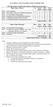 TEACHING AND EXAMINATION SCHEME FOR BACHELOR IN COMPUTER APPLICATIONS III YEAR (2011) Paper Name (Theory) Lec Exam Hours Min Marks Max Marks BCA 19 E-Commerce 3 3 18 50 BCA 20 Computer Networks & Mobile
El Dorado Union High School District Educational Services
 El Dorado Union High School District Course of Study Information Page Course Title: ACE Computer Programming II (#495) Rationale: A continuum of courses, including advanced classes in technology is needed.
Course Description for the Bachelors Degree in Library and Information Science
 Course Description for the Bachelors Degree in Library and Information Science 807120 Introduction to Information Science and Libraries: Information age and knowledge, information society, types of libraries
Thomas Jefferson High School for Science and Technology Program of Studies Foundations of Computer Science. Unit of Study / Textbook Correlation
 Thomas Jefferson High School for Science and Technology Program of Studies Foundations of Computer Science updated 03/08/2012 Unit 1: JKarel 8 weeks http://www.fcps.edu/is/pos/documents/hs/compsci.htm
BCS2B02: OOP Concepts and Data Structures Using C++
 SECOND SEMESTER BCS2B02: OOP Concepts and Data Structures Using C++ Course Number: 10 Contact Hours per Week: 4 (2T + 2P) Number of Credits: 2 Number of Contact Hours: 30 Hrs. Course Evaluation: Internal
OKLAHOMA SUBJECT AREA TESTS (OSAT )
 CERTIFICATION EXAMINATIONS FOR OKLAHOMA EDUCATORS (CEOE ) OKLAHOMA SUBJECT AREA TESTS (OSAT ) FIELD 081: COMPUTER SCIENCE September 2008 Subarea Range of Competencies I. Computer Use in Educational Environments
SCHEME OF EXAMINATION FOR B.A.(COMPUTER SCIENCE) SEMESTER SYSTEM (Regular Course) w.e.f. 2013-14 Scheme for B.A.-I. Semester-I.
 SCHEME OF EXAMINATION FOR B.A.(COMPUTER SCIENCE) SEMESTER SYSTEM (Regular Course) w.e.f. 2013-14 Scheme for B.A.-I Sr. No. Paper 1 Paper-I Computer And Programming Fundamentals Semester-I Internal Assessment
Information and Communications Technology Courses at a Glance
 Information and Communications Technology Courses at a Glance Level 1 Courses ICT121 Introduction to Computer Systems Architecture This is an introductory course on the architecture of modern computer
AGARWAL COLLEGE & WEB SERVICES TRUST. In Collaboration with KARANATAKA STATE OPEN UNIVERSITY
 AGARWAL COLLEGE & WEB SERVICES TRUST In Collaboration with KARANATAKA STATE OPEN UNIVERSITY Syllabus of Post Graduate Diploma in Computer Application (PGDCA) Post Graduate Diploma in Computer Applications:
DATA STRUCTURES USING C
 DATA STRUCTURES USING C QUESTION BANK UNIT I 1. Define data. 2. Define Entity. 3. Define information. 4. Define Array. 5. Define data structure. 6. Give any two applications of data structures. 7. Give
Java (12 Weeks) Introduction to Java Programming Language
 Java (12 Weeks) Topic Lecture No. Introduction to Java Programming Language 1 An Introduction to Java o Java as a Programming Platform, The Java "White Paper" Buzzwords, Java and the Internet, A Short
Fundamentals of Java Programming
 Fundamentals of Java Programming This document is exclusive property of Cisco Systems, Inc. Permission is granted to print and copy this document for non-commercial distribution and exclusive use by instructors
Glossary of Object Oriented Terms
 Appendix E Glossary of Object Oriented Terms abstract class: A class primarily intended to define an instance, but can not be instantiated without additional methods. abstract data type: An abstraction
B.Sc.(Computer Science) and. B.Sc.(IT) Effective From July 2011
 NEW Detailed Syllabus of B.Sc.(Computer Science) and B.Sc.(IT) Effective From July 2011 SEMESTER SYSTEM Scheme & Syllabus for B.Sc. (CS) Pass and Hons. Course Effective from July 2011 and onwards CLASS
BIT Course Description
 BIT Course Description Introduction to Operating Systems BTEC 101 This course follows a systematic approach to operating systems explaining why they are needed and what they do. Topics include the basic
2010-2011 Assessment for Master s Degree Program Fall 2010 - Spring 2011 Computer Science Dept. Texas A&M University - Commerce
 2010-2011 Assessment for Master s Degree Program Fall 2010 - Spring 2011 Computer Science Dept. Texas A&M University - Commerce Program Objective #1 (PO1):Students will be able to demonstrate a broad knowledge
Computing Concepts with Java Essentials
 2008 AGI-Information Management Consultants May be used for personal purporses only or by libraries associated to dandelon.com network. Computing Concepts with Java Essentials 3rd Edition Cay Horstmann
Java EE Web Development Course Program
 Java EE Web Development Course Program Part I Introduction to Programming 1. Introduction to programming. Compilers, interpreters, virtual machines. Primitive types, variables, basic operators, expressions,
INFORMATION TECHNOLOGY PROGRAM
 INFORMATION TECHNOLOGY PROGRAM The School of Information Technology offers a two-year bachelor degree program in Information Technology for students having acquired an advanced vocational certificate.
B.Sc (Computer Science) Database Management Systems UNIT-V
 1 B.Sc (Computer Science) Database Management Systems UNIT-V Business Intelligence? Business intelligence is a term used to describe a comprehensive cohesive and integrated set of tools and process used
INFORMATION TECHNOLOGY
 INFORMATION TECHNOLOGY Scope These program criteria apply to Information Technology, Computer Engineering Technology, and specialities therein, such as computer programming, computer systems analysis,
PROBLEM SOLVING SEVENTH EDITION WALTER SAVITCH UNIVERSITY OF CALIFORNIA, SAN DIEGO CONTRIBUTOR KENRICK MOCK UNIVERSITY OF ALASKA, ANCHORAGE PEARSON
 PROBLEM SOLVING WITH SEVENTH EDITION WALTER SAVITCH UNIVERSITY OF CALIFORNIA, SAN DIEGO CONTRIBUTOR KENRICK MOCK UNIVERSITY OF ALASKA, ANCHORAGE PEARSON Addison Wesley Boston San Francisco New York London
University of Pune Revised Structure for the B. Sc. (Computer Science) Course (Second Year to be implemented from Academic Year 2014-2015)
 University of Pune Revised Structure for the B. Sc. (Computer Science) Course (Second Year to be implemented from Academic Year 2014-2015) S. Y. B. Sc. (Computer Science) No Paper Title: Semester I Title:
Govt. Holkar Science College, Indore Department of Computer Science B.Sc. Computer Science
 Govt. Holkar Science College, Indore Department of Computer Science B.Sc. Computer Science Session- 2014-2017 (Effective from July 2014 session for 2014-16 batch onwards) Marks Distributions B.Sc. I Semester
Division of Mathematical Sciences
 Division of Mathematical Sciences Chair: Mohammad Ladan, Ph.D. The Division of Mathematical Sciences at Haigazian University includes Computer Science and Mathematics. The Bachelor of Science (B.S.) degree
Information Technology Career Field Pathways and Course Structure
 Information Technology Career Field Pathways and Course Structure Courses in Information Support and Services (N0) Computer Hardware 2 145025 Computer Software 145030 Networking 2 145035 Network Operating
B.C.A. DEGREE EXAMINATION, NOVEMBER 2010 Fifth Semester Computer Applications Elective WIRELESS APPLICATION PROTOCOL (CBCS 2008 onwards)
 AF-2415 BCA2EA B.C.A. DEGREE EXAMINATION, NOVEMBER 2010 Fifth Semester Computer Applications Elective WIRELESS APPLICATION PROTOCOL (CBCS 2008 onwards) Duration : 3 Hours Maximum : 75 Marks Part - A (10
Concepts of Database Management Seventh Edition. Chapter 9 Database Management Approaches
 Concepts of Database Management Seventh Edition Chapter 9 Database Management Approaches Objectives Describe distributed database management systems (DDBMSs) Discuss client/server systems Examine the ways
Semester-V. BCA 501-Software Engineering(BCA V) SDLC Models, Exploratory style and modern approaches of programming.
 Semester-V BCA 501-Software Engineering(BCA V) Syllabus for mid terms is italicized and highlighted. SDLC Models, Exploratory style and modern approaches of programming. Requirement Analysis: Statement
DIABLO VALLEY COLLEGE CATALOG 2014-2015
 COMPUTER SCIENCE COMSC The computer science department offers courses in three general areas, each targeted to serve students with specific needs: 1. General education students seeking a computer literacy
SYLLABUS For the trade of COMPUTER OPERATOR AND PROGRAMMING ASSISTANT. Trade skill - I Under
 SYLLABUS For the trade of COMPUTER OPERATOR AND PROGRAMMING ASSISTANT Trade skill - I Under CRAFTS INSTRUCTOR TRAINING SCHEME 2012 Government of India Ministry of Labour and Employment Directorate General
PART-A Questions. 2. How does an enumerated statement differ from a typedef statement?
 1. Distinguish & and && operators. PART-A Questions 2. How does an enumerated statement differ from a typedef statement? 3. What are the various members of a class? 4. Who can access the protected members
CDS and Clearing Limited Thapathali, Kathmandu 7 th Level (Technical) Syllabus
 CDS and Clearing Limited Thapathali, Kathmandu 7 th Level (Technical) Syllabus Modality of Examination: The examination comprises of two papers, each carrying 100 marks. The first paper is General Overview
Java the UML Way: Integrating Object-Oriented Design and Programming
 Java the UML Way: Integrating Object-Oriented Design and Programming by Else Lervik and Vegard B. Havdal ISBN 0-470-84386-1 John Wiley & Sons, Ltd. Table of Contents Preface xi 1 Introduction 1 1.1 Preliminaries
Specialized Programme on Web Application Development using Open Source Tools
 Specialized Programme on Web Application Development using Open Source Tools A. NAME OF INSTITUTE Centre For Development of Advanced Computing B. NAME/TITLE OF THE COURSE C. COURSE DATES WITH DURATION
Bachelor of Science in Information Technology. Course Descriptions
 Bachelor of Science in Information Technology Course Descriptions Year 1 Course Title: Calculus I Course Code: MATH 101 Pre- Requisite(s): This course introduces higher mathematics by examining the fundamental
IT2305 Database Systems I (Compulsory)
 Database Systems I (Compulsory) INTRODUCTION This is one of the 4 modules designed for Semester 2 of Bachelor of Information Technology Degree program. CREDITS: 04 LEARNING OUTCOMES On completion of this
PCCC PCCC Course Description
 Course Description CIS 101 Computer Concepts and Applications 3 credits (formerly Introduction to Computers and Information Processing) Introduces a variety of topics in computers and computing including
C++ Programming Language
 C++ Programming Language Lecturer: Yuri Nefedov 7th and 8th semesters Lectures: 34 hours (7th semester); 32 hours (8th semester). Seminars: 34 hours (7th semester); 32 hours (8th semester). Course abstract
DATA WAREHOUSING AND OLAP TECHNOLOGY
 DATA WAREHOUSING AND OLAP TECHNOLOGY Manya Sethi MCA Final Year Amity University, Uttar Pradesh Under Guidance of Ms. Shruti Nagpal Abstract DATA WAREHOUSING and Online Analytical Processing (OLAP) are
Chapter 6 FOUNDATIONS OF BUSINESS INTELLIGENCE: DATABASES AND INFORMATION MANAGEMENT Learning Objectives
 Chapter 6 FOUNDATIONS OF BUSINESS INTELLIGENCE: DATABASES AND INFORMATION MANAGEMENT Learning Objectives Describe how the problems of managing data resources in a traditional file environment are solved
THE OPEN UNIVERSITY OF TANZANIA
 THE OPEN UNIVERSITY OF TANZANIA FACULTY OF SCIENCE, TECHNOLOGY AND ENVIRONMENTAL STUDIES ODM 103: INTRODUCTION TO COMPUTER PROGRAMMING LANGUAGES Said Ally i ODM 103 INTRODUCTION TO COMPUTER PROGRAMMING
Web Development in Java
 Web Development in Java Detailed Course Brochure @All Rights Reserved. Techcanvass, 265, Powai Plaza, Hiranandani Garden, Powai, Mumbai www.techcanvass.com Tel: +91 22 40155175 Mob: 773 877 3108 P a g
ADVANCED SCHOOL OF SYSTEMS AND DATA STUDIES (ASSDAS) PROGRAM: CTech in Computer Science
 ADVANCED SCHOOL OF SYSTEMS AND DATA STUDIES (ASSDAS) PROGRAM: CTech in Computer Science Program Schedule CTech Computer Science Credits CS101 Computer Science I 3 MATH100 Foundations of Mathematics and
I PUC - Computer Science. Practical s Syllabus. Contents
 I PUC - Computer Science Practical s Syllabus Contents Topics 1 Overview Of a Computer 1.1 Introduction 1.2 Functional Components of a computer (Working of each unit) 1.3 Evolution Of Computers 1.4 Generations
www.gr8ambitionz.com
 Data Base Management Systems (DBMS) Study Material (Objective Type questions with Answers) Shared by Akhil Arora Powered by www. your A to Z competitive exam guide Database Objective type questions Q.1
WORKSPACE WEB DEVELOPMENT & OUTSOURCING TRAINING CENTER
 WORKSPACE WEB DEVELOPMENT & OUTSOURCING TRAINING CENTER Course Outline (2015) Basic Programming With Procedural & Object Oriented Concepts (C, C++) Training Office# Road: 11, House: 1 A, Nikunja 2, Khilkhet,
Syllabus for CS 134 Java Programming
 - Java Programming Syllabus Page 1 Syllabus for CS 134 Java Programming Computer Science Course Catalog 2000-2001: This course is an introduction to objectoriented programming using the Java language.
Foundations of Business Intelligence: Databases and Information Management
 Foundations of Business Intelligence: Databases and Information Management Content Problems of managing data resources in a traditional file environment Capabilities and value of a database management
Course Number: IAC-SOFT-WDAD Web Design and Application Development
 Course Number: IAC-SOFT-WDAD Web Design and Application Development Session 1 (10 Hours) Client Side Scripting Session 2 (10 Hours) Server Side Scripting - I Session 3 (10 hours) Database Session 4 (10
Network Security 網 路 安 全. Lecture 1 February 20, 2012 洪 國 寶
 Network Security 網 路 安 全 Lecture 1 February 20, 2012 洪 國 寶 1 Outline Course information Motivation Introduction to security Basic network concepts Network security models Outline of the course 2 Course
Foundations of Business Intelligence: Databases and Information Management
 Chapter 6 Foundations of Business Intelligence: Databases and Information Management 6.1 2010 by Prentice Hall LEARNING OBJECTIVES Describe how the problems of managing data resources in a traditional
Krishna Institute of Engineering & Technology, Ghaziabad Department of Computer Application MCA-213 : DATA STRUCTURES USING C
 Tutorial#1 Q 1:- Explain the terms data, elementary item, entity, primary key, domain, attribute and information? Also give examples in support of your answer? Q 2:- What is a Data Type? Differentiate
Skills for Employment Investment Project (SEIP)
 Skills for Employment Investment Project (SEIP) Standards/ Curriculum Format for Web Application Development Using DOT Net Course Duration: Three Months 1 Course Structure and Requirements Course Title:
4.1 CD 301 - BSc (Hons) Information Technology (Diploma to Degree Upgrade 1.5 Years Part Time)
 4.1 CD 301 - BSc (Hons) Information Technology (Diploma to Degree Upgrade 1.5 Years Part Time) 1. OBJECTIVES This Programme is geared towards producing computer professionals, with a thorough understanding
BCA 421- Java. Tilak Maharashtra University. Bachelor of Computer Applications (BCA) 1. The Genesis of Java
 Tilak Maharashtra University Bachelor of Computer Applications (BCA) BCA 421- Java 1. The Genesis of Java Creation of Java, Why it is important to Internet, characteristics of Java 2. Basics of Programming
Curriculum for the Bachelor Degree in Computer Information Systems (CIS)
 Curriculum for the Bachelor Degree in Computer Information Systems (CIS) The curriculum for the B.Sc. degree in Computer Information Systems (CIS) consists of (2) credit hours distributed as follows:-
IT2304: Database Systems 1 (DBS 1)
 : Database Systems 1 (DBS 1) (Compulsory) 1. OUTLINE OF SYLLABUS Topic Minimum number of hours Introduction to DBMS 07 Relational Data Model 03 Data manipulation using Relational Algebra 06 Data manipulation
Domains and Competencies
 Domains and Competencies DOMAIN I TECHNOLOGY APPLICATIONS CORE Standards Assessed: Computer Science 8 12 I VII Competency 001: The computer science teacher knows technology terminology and concepts; the
Course Title: Software Development
 Course Title: Software Development Unit: Customer Service Content Standard(s) and Depth of 1. Analyze customer software needs and system requirements to design an information technology-based project plan.
COMPUTER SCIENCE (5651) Test at a Glance
 COMPUTER SCIENCE (5651) Test at a Glance Test Name Computer Science Test Code 5651 Time Number of Questions Test Delivery 3 hours 100 selected-response questions Computer delivered Content Categories Approximate
Introduction to Information Technology Course Number 10009
 Course Name Introduction to Information Technology Course Number 10009 IT1.0 Understand the need for digital technologies within their life IT1.0 Understand the need and impact of technology IT1.1 Define
LAMP [Linux. Apache. MySQL. PHP] Industrial Implementations Module Description
![LAMP [Linux. Apache. MySQL. PHP] Industrial Implementations Module Description](/thumbs/26/9110665.jpg "LAMP [Linux. Apache. MySQL. PHP] Industrial Implementations Module Description") LAMP [Linux. Apache. MySQL. PHP] Industrial Implementations Module Description Mastering LINUX Vikas Debnath Linux Administrator, Red Hat Professional Instructor : Vikas Debnath Contact
LAMP [Linux. Apache. MySQL. PHP] Industrial Implementations Module Description Mastering LINUX Vikas Debnath Linux Administrator, Red Hat Professional Instructor : Vikas Debnath Contact
Overview of Computer Networks
 Overview of Computer Networks Client-Server Transaction Client process 4. Client processes response 1. Client sends request 3. Server sends response Server process 2. Server processes request Resource
Demystified CONTENTS Acknowledgments xvii Introduction xix CHAPTER 1 Database Fundamentals CHAPTER 2 Exploring Relational Database Components
 Acknowledgments xvii Introduction xix CHAPTER 1 Database Fundamentals 1 Properties of a Database 1 The Database Management System (DBMS) 2 Layers of Data Abstraction 3 Physical Data Independence 5 Logical
ARIZONA CTE CAREER PREPARATION STANDARDS & MEASUREMENT CRITERIA SOFTWARE DEVELOPMENT, 15.1200.40
 SOFTWARE DEVELOPMENT, 15.1200.40 1.0 APPLY PROBLEM-SOLVING AND CRITICAL THINKING SKILLS TO INFORMATION TECHNOLOGY 1.1 Describe methods and considerations for prioritizing and scheduling software development
AP Computer Science AB Syllabus 1
 AP Computer Science AB Syllabus 1 Course Resources Java Software Solutions for AP Computer Science, J. Lewis, W. Loftus, and C. Cocking, First Edition, 2004, Prentice Hall. Video: Sorting Out Sorting,
Canadian Technology Accreditation Criteria (CTAC) INFORMATION TECHNOLOGY - TECHNOLOGIST Technology Accreditation Canada (TAC)
 Canadian Technology Accreditation Criteria (CTAC) INFORMATION TECHNOLOGY - TECHNOLOGIST Technology Accreditation Canada (TAC) Preamble These CTAC are applicable to programs having titles involving Information
Chapter 11 I/O Management and Disk Scheduling
 Operating Systems: Internals and Design Principles, 6/E William Stallings Chapter 11 I/O Management and Disk Scheduling Dave Bremer Otago Polytechnic, NZ 2008, Prentice Hall I/O Devices Roadmap Organization
#820 Computer Programming 1A
 Computer Programming I Levels: 10-12 Units of Credit: 1.0 CIP Code: 11.0201 Core Code: 35-02-00-00-030 Prerequisites: Secondary Math I, Keyboarding Proficiency, Computer Literacy requirement Semester 1
Chapter 5 Business Intelligence: Data Warehousing, Data Acquisition, Data Mining, Business Analytics, and Visualization
 Turban, Aronson, and Liang Decision Support Systems and Intelligent Systems, Seventh Edition Chapter 5 Business Intelligence: Data Warehousing, Data Acquisition, Data Mining, Business Analytics, and Visualization
Please Note: Temporary Graduate 485 skills assessments applicants should only apply for ANZSCO codes listed in the Skilled Occupation List above.
 ANZSCO Descriptions This ANZSCO description document has been created to assist applicants in nominating an occupation for an ICT skill assessment application. The document lists all the ANZSCO codes that
Foundations of Business Intelligence: Databases and Information Management
 Foundations of Business Intelligence: Databases and Information Management Problem: HP s numerous systems unable to deliver the information needed for a complete picture of business operations, lack of
AQA GCSE in Computer Science Computer Science Microsoft IT Academy Mapping
 AQA GCSE in Computer Science Computer Science Microsoft IT Academy Mapping 3.1.1 Constants, variables and data types Understand what is mean by terms data and information Be able to describe the difference
One LAR Course Credits: 3. Page 4
 Course Descriptions Year 1 30 credits Course Title: Calculus I Course Code: COS 101 This course introduces higher mathematics by examining the fundamental principles of calculus-- functions, graphs, limits,
Subject knowledge requirements for entry into computer science teacher training. Expert group s recommendations
 Subject knowledge requirements for entry into computer science teacher training Expert group s recommendations Introduction To start a postgraduate primary specialist or secondary ITE course specialising
Programming and Software Development (PSD)
 Programming and Software Development (PSD) Course Descriptions Fundamentals of Information Systems Technology This course is a survey of computer technologies. This course may include computer history,
CompuScholar, Inc. Alignment to Utah's Computer Programming II Standards
 CompuScholar, Inc. Alignment to Utah's Computer Programming II Standards Course Title: TeenCoder: Java Programming Course ISBN: 978 0 9887070 2 3 Course Year: 2015 Note: Citation(s) listed may represent