
Cycle Network Signing
|
|
|
- Piers O’Neal’
- 10 years ago
- Views:
Transcription
1 Cycle Network Signing Technical Information Note No. 05 October 2012
2 About Sustrans Sustrans makes smarter travel choices possible, desirable and inevitable. We re a leading UK charity enabling people to travel by foot, bike or public transport for more of the journeys we make every day. We work with families, communities, policy-makers and partner organisations so that people are able to choose healthier, cleaner and cheaper journeys, with better places and spaces to move through and live in. It s time we all began making smarter travel choices. Make your move and support Sustrans today. Head Office Sustrans 2 Cathedral Square College Green Bristol BS1 5DD Sustrans October 2012 Registered Charity No (England and Wales) SC (Scotland) VAT Registration No Issue level: 05 Owned by: NCN Development Manager Contact: [email protected] All photos by Sustrans except where noted otherwise. 2 Cycle Network Signing Technical Information Note No. 05 October 2012
3 Table of contents 1. Signing of cycle networks Introduction Signing of cycle networks Health and Safety Legal information Direction Signs Direction signs Types of direction signs Road markings National Cycle Network route numbers EuroVelo Destinations Sign locations Tourism signs Information boards, mileposts and combined route signs Finials Other cycle signs Shared pedestrian and cycle paths Pedestrian Zones Home zones Cycle lanes Cycling against motor traffic flow Junction diagrams Advanced stop lines Give way Cycle parking Warning sign Cycle prohibition Signs not recommended Technical details Locating signs Cycle Network Signing Technical Information Note No. 05 October 2012
4 4.2. Dimension from highway and cycle path Putting up signs Text and sign size Signs with text Adding Sustrans Strap Line Signs without text Sign specification Lighting Sign posts Road markings Additional Information Temporary Diversion Signs Seasonal routes and other fixed route alternatives Cycle events Bilingual signs Sustrans Volunteer signs How to plan and order signs Sign surveys Appendix A - Overview of signs Appendix B Example signing schedule Appendix C - Examples of sign ordering sheets Direction signs Confirmation signs Other signs Appendix C Sample sign surveying sheet Appendix D Sign surveying outcomes References Cycle Network Signing Technical Information Note No. 05 October 2012
5 1. Signing of cycle networks 1.1. Introduction This information has been prepared to provide assistance for people involved with signing cycle and shared use routes and links within a cycle network. In particular, it offers guidance on The recommended standard of signs The signs required and where they should be located The monitoring and maintenance of signs Sign posts and sign board details This information is based on Sustrans extensive experience with developing the National Cycle Network and statutory regulations and guidance Signing of cycle networks One of the key requirements in developing safe and attractive places to cycle is comprehensive direction signing that links paths, tracks, lanes and roads together that make up the network. The attractiveness and utility of any network to potential users will, in part, depend on the quality, coherence, consistency and frequency of the signs. Inadequate, missing or misleading signage is the main concern expressed by users on a network. Visitors and local residents should be able to follow all routes in any direction, without needing a map. Signing advertises the presence of cyclists to other road users and advises them that there is an alternative to using the car. Cohesive and continuous signing of a route or network gives first time users a good impression of the area, and encourages further exploration. Signing should be appropriate to the user and the location. Too many signs or signs that are too large may add little or nothing the cycling experience but clutter views and streetscapes. Cycle path surface painting is a useful alternative to post mounted signing and usually only one or the other is required Health and Safety Good signing of a cycle route can enhance the safety of the cyclist using the route. Signs will warn the user of hidden dangers that are not otherwise perceptible. Obvious dangers need not normally be signed. Signs should help cyclists to safely get from the start of their journey to the desired destination while riding their bicycle, while steering cyclists away from dangerous areas. Signposts too close to a path or signs overhanging a route can form obstacles for cyclists and must be avoided. 5 Cycle Network Signing Technical Information Note No. 05 October 2012
6 1.4. Legal information Signs (called diagrams) for cycle routes on highways are included in the DfT Traffic Signs Regulations & General Directions (TSRGD) 2002 (for England, Wales, Scotland and the Isle of Man), the Traffic Signs Regulations (Northern Ireland) 1997 and the DfT Traffic Signs Manual (for England, Wales, Scotland and Northern Ireland) together subsequently referred to as Highway Sign Regulations. Amendments to TSRGD were published in 2011 along with the results of a major review of traffic signs in Signing the Way. A full revision of TSRGD is expected in TSRGD applies to all public highways (which includes public footpaths and bridleways as well as roads) - to quote Traffic Signs Manual Chapter 1: 1.18 The use on Public highways of nonprescribed signs which have not been authorised by, or on behalf of, the Secretary of State, is illegal and Authorities who so use unauthorised signs act beyond their powers. Additionally, an unauthorised sign in the highway is an obstruction. The possible consequences of erecting or permitting the erection of obstructions may be severe and those responsible could lay themselves open to a claim for damages; for example if the obstruction is the cause of accident or of injury in a collision or if the unauthorised sign injuriously affects a fronting property by blocking light or impairing visual amenity. Usually only signs included in statutory guidance are permitted for use on cycle routes on the public highway however DfT approval can be obtained for using alternative signs for particular locations (the Transport Directorate in Scotland and Transport Wales for Wales will do this in their areas). Some local authorities depart from statutory guidance without obtaining DfT approval on the grounds of safety, using common sense and being specific to local situations. Traffic regulation orders (referred to as TRO ) are sometimes required to implement signs on highways (generally where vehicle restrictions are imposed). These are issued by highway authorities. TROs can be permanent, temporary (usually up to 18 months, e.g. for construction works) or experimental (where the public response to the effects of the order needs to be evaluated). The London Cycling Design Standards (see references) have more information on this procedure. Off-highway, i.e. along canals, in parks or crossing private land, in principle any sign may be used with the approval of the land owner. This gives the opportunity to use standard highway signs or variations or other types of signs like mileposts, local maps etc. Anybody who has approval from the land owner may put up signs away from highways. 6 Cycle Network Signing Technical Information Note No. 05 October 2012
7 2. Direction Signs 2.1. Direction signs It is essential that at frequent locations along any cycle route signs advertise key destinations and distances. Ideally, two main destinations should be given, directing the cyclist to locations close by or to major destinations within a reasonable cycling distance. Typically, these will be the next village and town. In larger urban areas signs should point to known landmarks, which may be parks, squares, public spaces or even pubs or cinemas (see section 2.5). Consistency and clarity in the choice of destination is important. The London Cycle Design Standard includes a list of destinations signs normally point too, and setting up such a list is encouraged for other dense areas as well. Cycling distances should be measured accurately along each leg of the network, and to defined points (e.g. Hyde Park is an area over 1½ miles wide by ¾ miles long and not suitable, whereas Speaker s Corner is a defined location). Where distances are measured to town centre, then a defined landmark (e.g. the main town square or the town hall or railway station) must be determined and consistently used. Points where distances are measured to must be reached by a continuously signed cycle route Types of direction signs TSRGD gives the following key diagrams for cycle routes: Figure 1: Diagram and A (with direction arrow used before junctions) or Figure 2: Diagram and A (with or without text used at junctions), also alternatives of B and C with times in place of distances. Figure 3: Diagram (confirmation sign along routes) All these signs can be adapted to suit various situations by using arrows pointing in all directions, adding pedestrian and horse symbols for shared use routes, and displaying multiple route numbers. If a particular route has a name (e.g. Mendip Cycleway) then this can be added to diagram together with the NCN route number and destinations. Specific trail symbols (EuroVelo routes, Avenue Verte etc) can be added to the signs, however they (technically) require DfT authorisation when used on the highway (many have been done without). 7 Cycle Network Signing Technical Information Note No. 05 October 2012


8 Only the relevant symbols are used for each route, and they appear in the following order (starting at the arrow-end or the left of each sign see examples below): (arrow end of sign) Equestrian Cycle NCN Route number Pedestrian (flat end of sign) Figure 4: Examples of direction signs The sign text can go in line or above the symbols on the sign. Where cycle routes follow highways and to reduce sign clutter, cycle route signs can also be added to other highway signs as in the following examples. This type of sign is used instead of diagrams , and Figure 5: Diagram and diagram Figure 6: Examples of direction signing incorporated into motor vehicle signs 1 All these signs can be used for equestrian, cycle and pedestrian (or combined) routes and should include a National Cycle Network (NCN) route number where applicable. 1 The DfT Traffic Advisory Leaflet 6/05 requires that "Modern signs or symbols, for instance for tourist attractions or cycle routes, must not be added to fingerpost signs, as they detract from their authentic appearance." This motion is also supported by the Campaign for the Protection of Rural England (CPRE). The CPRE however agrees that erecting an additional fingerpost specifically for cycle signs would produce sign clutter and therefore advocates alternative signposts such as those shown in section Cycle Network Signing Technical Information Note No. 05 October 2012
9 2.3. Road markings This method of signing is often overlooked, yet most cyclists and drivers spend much of their time focused on the surface in front of them. Direction arrows used together with cycle symbols can be usefully employed. On Bodmin Moor, where the Council is not permitted to erect sign poles, a system of signing the National Route using carriageway markings was authorised by the Department for Transport. A similar system is also in use in parts of London (see section 6.4 of the London Cycling Design Standard). Figure 7: Examples of direction signing using road markings Road markings on highways are classified as traffic signs and therefore also fall under the same traffic regulations as traffic signs, when used on highways. This also means that they may only be applied by the responsible Highway Authority or their approved contractors. Coloured surfacing that is often used for cycle lanes (typically green and red) is not a traffic sign and therefore does not fall under the TSRGD. An increasing number of local authorities have been using the painted cycle symbol (Diag 1057) to demarcate a cycle route along a road and sometimes to alert drivers to the likely presence of cyclists. Guidance on these is contained in the London Cycling Design Standards. Strictly speaking, each 1057 should be used in conjunction with the 967 sign, otherwise they need authorization from DfT. Use of 1057s is best described as a means to mark the presence of a cycle route; any sense that they are a warning to motorists should be purely incidental as the function of the 1057 is to guide cyclists. Carriageway markings may also be useful for guiding cyclists through complex junctions and residential streets in urban areas (see section 3). 9 Cycle Network Signing Technical Information Note No. 05 October 2012
10 Figure 8: Carriageway marking to guide cyclists through junction area Surface markings can also reduce both sign clutter and vandalism, and can fit in well with designed urban settings (see picture below). Figure 9: Cycle symbol incorporated into feature surface Care must be taken where road markings are located, so that they are not parked upon, covered by street markets or are obstructed. Snow covers road markings until paths are cleared. Some types of road marking are not very effective at night, however most cycling is done during daytime National Cycle Network route numbers The National Cycle Network consists of national and regional routes, indicated by route numbers between 1 and 999 and red (national) and blue (regional) backgrounds. Where two routes meet and follow a shared alignment, the common stretch is signed with the number of the more important route, normally the lower national number. The higher number can be signed with the number in brackets. This is similar to the road network approach to numbering. Figure 10: Route sign where route 22 joins route 2 (core route) for a short section. Signs on link routes pointing towards a National Cycle Network route should also carry the route number in brackets. 10 Cycle Network Signing Technical Information Note No. 05 October 2012
11 2.5. EuroVelo EuroVelo is a European Cyclists Federation (ECF) project to develop a network of high quality cycle routes linking all countries in Europe. It can be used by long distance cycle tourists as well as local people making daily journeys. Sustrans is the EuroVelo coordinator for the UK. National Cycle routes that are also European cycle network routes (EuroVelo routes) should carry the European route symbol or number in front of (and in addition to) the national route number. For EuroVelo signing guidance go to: Figure 11: Example of EuroVelo route symbol and use on direction sign 2.6. Destinations Destination signs typically include one to three lines of text. This can be either one line displaying a particular route name (e.g. Wem Brook Trail) followed by one or two destinations along the route, or up to three destinations along the route without a route name. Route names are printed in upper case letters for signs located on the named route, and with lower case letters for signs pointing towards a named route. It is important that all destinations indicated on the sign can actually be reached along continuously signed cycle routes, and that the indicated destination text does not change until the destination is reached. Figure 12: Signposting towards local streets from cycle route in park In urban areas prominent locations (e.g. George Elliot Hospital or Cathedral ) or districts (e.g. Digbeth or City Centre ) are indicated. It is useful to indicate street names on links from a route that does not otherwise provide mapped orientation points (e.g. parks or canals see example above). In rural areas, destinations would typically be the next village and the next town (e.g. Great Ness and Shrewsbury ). On long-distance routes used by tourists occasionally the endpoint of the route may be indicated (e.g. Lands End ). Distances to particular points of importance may also be given (e.g. Severn Bridge ). 11 Cycle Network Signing Technical Information Note No. 05 October 2012
12 Figure 13: Short and long-distance destinations on rural signpost Distances are given in full miles for any distance greater than 3 miles. Half and quarter fractions are used for distances under 3 miles (eg 1½ or 2¼). Recent changes in TSRGD have permitted use of times instead of mileages on signs. This was in response to feedback that non-cyclists tend to overestimate how long it takes to cycle a trip, but at present there is no evidence on whether use of times actually increases the level of use of a route. A number of issues need to be considered before deciding to use times, for example use of timings approximated for, say, a family cycling the route will overestimate the time for faster commuter cyclists Sign locations It is particularly important that the public know which way to turn at any junction along routes. Along all routes, care must be taken to ensure that satisfactory signing is useful for travelling in any direction along a route, and there should also be signs indicating directions for those cyclists joining a route. The frequency and location of signs should take account of the ability of cyclists to follow the route should any one sign go missing. Care should be taken to locate all signs so that they are clearly visible and legible to approaching cyclists, who can then prepare to make the appropriate manoeuvre. Signs must be free from obstruction by foliage or parked vehicles (unlike in the picture below). Hanging baskets or large parked vehicles (and waiting buses) might also obstruct signs. Figure 14: Overhanging vegetation obscures sign. 12 Cycle Network Signing Technical Information Note No. 05 October 2012
13 In busy urban areas, direction signs are required at every junction where turning is required, indicating the direction the cyclist should take across the junction. Advance warning should be given to allow the cyclist to get into position and indicate to other road users. Confirmation signs are often required after the junction (typically diagram ) to indicate that the correct turn was taken. For quieter urban areas typically diagram is used at junctions. Where a route changes direction but there is no junction, diagram is usefully employed to confirm this direction to the cyclist. In rural areas, using either diagram or once at a junction is often sufficient, particularly where there is little opportunity to take wrong turns. Confirmation sign diagram is normally only used on stretches of road where there is potential for the cyclist to take a wrong turn or where there has not been a sign for a long distance (say every 5 10 minutes cycling). The visual impact of the sign in the landscape should also be carefully considered. Figure 15: Confirmation sign in rural lane Where routes follow main roads with only minor road junctions the use of diagrams , or immediately after the junction is often 13 Cycle Network Signing Technical Information Note No. 05 October 2012
14 sufficient, as long as cyclists can see this sign before they reach the junction area. This has the additional advantage that the sign can be sign by cyclists approaching the junction from any direction (see figure below). A sign before the junction is not necessarily required unless turning is required. Figure 16: This direction sign is sufficient to guide cyclists across the junction. The sign also establishes that cyclists are permitted users for the path. Too many signs contribute to clutter, too few and cyclists get lost. Sign clutter is not only a particular problem of urban areas, but signs can also obstruct scenic views in the countryside. The opportunity should be taken to rationalise existing signing in the process of putting up cycle network signs. Wherever practicable, new cycle directions should be incorporated into existing street signs or fixed to existing utility poles. Figure 17: Shared use of signpost, and example of sign clutter that should be tidied up Tourism signs Cycle signs have a blue background while tourism signs for motorists have a brown background 2. Wherever possible, the two may be combined (see figure 18). 2 This is not technically true as the TSRGD provide for sign diagram 2608 (brown background) which is a direction sign similar to diagram It is a pedestrian / cycle direction sign to a tourist attraction. Sustrans however promotes that all cycle direction signs have a blue background to distinguish them. 14 Cycle Network Signing Technical Information Note No. 05 October 2012


15 Figure 18: Cycle direction signs on blue background can be incorporated onto brown tourist signs for motorists. In cases where a route also has a well known name e.g. Granite Way, Camel Trail etc, the route name can be added to signage to help preserve its local or best-known identity and encourage local community ownership of the route. (see figure 18). As well as adding the name of the route to directional and tourism signage, route names can be added to ranger signage for way marking. An example of way marking signage is currently in use to identify the Pilgrims Way trail between Winchester and Canterbury (see right) Information boards, mileposts and combined route signs As well as formal direction signs, there will be other opportunities for marking the route such as mileposts and information boards. Some local authorities and county councils have used gateway signs on cycle routes, e.g. National Cycle Network: Welcome to Suffolk. Sign diagram is used to direct cyclists to shops, pubs, toilets or information centres. Figure 19: Diagram with tourist information for cyclists Map-based information boards may be placed at key access points to traffic-free networks, to help people appreciate what opportunities they have and to familiarise themselves with the locality. These boards should be positioned to face the direction of travel. Weatherproof leaflet holders may also be provided. Where cyclists share a waymarked trail with other users (equestrians, walkers etc), signs can be combined to eliminate duplication and sign clutter. Figure 20: Map-based information. Sign shared with National Byway. 15 Cycle Network Signing Technical Information Note No. 05 October 2012
16 2.10. Finials Finials are the decorative features added to the top of direction signs. They are often disc shaped, but others can be produced. The most commonly found finials are those identifying the routes as National Cycle Network and promoting the Millennium Commission Project s, or more recently Big Lottery s, funding (see Figures 20a and 20b). Figure 20a Figure 20b Finials installed on the National Cycle Network should be a similar disc shape (unless you really want something else) with National Cycle Network around the perimeter of each side, and with the Sustrans logo in white on a blue background in the centre. Where routes have been funded by local authorities or other bodies, finials are a good opportunity to promote their involvement by adding their logo (white on blue) to one side of the finial in place of the Sustrans logo. Finials are typically made of aluminium and are fixed to a pole by two screws on the collar. Collars can be square or round to match different pole designs. The full diameter of a finial is 300mm, and the diameter of the central circle into which the Sustrans or other logo is inserted is 185mm. The full diameter of the collar is 120mm, and the diameter of the hole into which the pole is inserted is 78mm. the depth of the hole which fits over the pole is 90mm. The white lettering should be painted on, or added by another permanent transfer arrangement. Plastic alternatives are available, which are cheaper but less durable. Connect2 Project In cases where finials are erected to identify new NCN routes that have been created through the Connect2 scheme, National Cycle Network should appear around the perimeter each side, with the Sustrans logo in white on a blue background in the centre on one side, and the Big Lottery logo on the other side. (See also Technical Information Note 27 National Cycle Network Signing and Route Branding for further details). Welsh language versions of both logos are available. 16 Cycle Network Signing Technical Information Note No. 05 October 2012


17 3. Other cycle signs 3.1. Shared pedestrian and cycle paths There are many instances where cyclists and pedestrians share routes where motorised vehicles are not permitted. In most cases it is sufficient to indicate traffic free cycle routes simply by using cycle specific blue direction signs (as shown in section 2). Only where cycle routes follow what might be otherwise mistaken as a highway or footway it might be necessary to put up a sign indicating shared or sole use by pedestrians and / or cyclists as appropriate 3. Diagram 955 is used at the start of a route for use by cyclists only, excluding pedestrians. Where a route is for shared use by pedestrians and cyclists, diagram 956 is used. Figure 21: Diagram 955 and diagram 956. To give more protection to pedestrians and to indicate that cyclists should give priority to pedestrians, alternative signs similar to diagram 956 can be used. These signs would not be permitted on a highway, but are perfectly suitable on traffic-free routes such as through parks. Simple information boards may also suffice. Figure 22: Examples of shared use signs promoting cyclists to be courteous. Sustrans publishes a Sustrans Good Cycling Code which can be used to derive suitable text for such signs. Diagram 957 is similar to diagram 956 but allocates each group one particular side of the path width. The separation is done by using a continuous white line (diagram 1049) or a raised continuous white line which is supposed to be detectable by visually impaired people (diagram ). In practice sign diagram 957 is often not adhered to, as cyclists and pedestrians tend to cycle or walk side by side wherever possible, whereas this sign indicates a sense of priority for cyclists on their part of the 3 Where sign diagram 955 / 956 or 957 is omitted then the permitted use can not be enforced legally. Therefore where nuisance use by motorcyclists etc might be expected then use of these signs is recommended. 17 Cycle Network Signing Technical Information Note No. 05 October 2012


18 route that could put pedestrians in danger. Where there is not enough space for all the pedestrians and cyclists using a route, more space or additional routes should be created. Figure 23: Diagram 957 and example where pedestrians and cyclists stray onto other side of path The most recent amendments to TSRGD require a minimum of one repeater sign, in place of the earlier need to provide them at regular intervals, thus giving designers the flexibility to place only those signs they deem necessary. Where a route is shared between cyclists and buses, diagram 953 is used. Figure 24: Diagram Pedestrian Zones Pedestrian zones in urban areas can often provide vital and safe short-cuts to cyclists where otherwise heavily trafficked roads bypassing centres would need to be used. Use of diagram 956 (see section 3.1) is preferred at shared pedestrian and cycle facilities, as it prominently encourages cyclists to use the route. An alternative is shown on the picture below (from Cambridge) showing a pedestrian zone sign allowing cycle use but highlighting pedestrian priority and vulnerability. 18 Cycle Network Signing Technical Information Note No. 05 October 2012


19 Figure 25: Example of cycle-friendly pedestrian zone signs There are two official pedestrian zone signs, both of which are very large and can be unsightly. Only one of the two sign options (indirectly) permits cycling (diagram 618.2). This variant incorporates sign diagram 619 ( no motor vehicles ) and therefore permits cycle use. To encourage cyclists, direction signs (see section 2) or cycle road markings (see section 3.3) can be used in combination with the pedestrian zone sign. Figure 26: Variant of diagram (incorporating diagram 619) permitting cyclists The other alternative of the pedestrian zone sign diagram incorporating diagram 617 ( no vehicles except mechanically propelled vehicles pushed by pedestrians ) is not normally recommended to be used, other than where pedestrian zones are so crowded at all times that cycling would be impossible and there is a suitable alternative route. 19 Cycle Network Signing Technical Information Note No. 05 October 2012

20 Figure 27: Variant of diagram (incorporating diagram 617) not permitting cyclists Simple road markings (potentially combined with use of bollards) can indicate shared use and motor vehicle free zones without the need any mounted signs 4. Figure 28: Use of bollards and road markings to create cycle route. Signs are not required Home zones Successful home zones create streets where pedestrians, cyclists and vehicles share the space on equal terms - streets which people can socialise and play in or move through without fear of speeding traffic, having as a key element a street design that makes it natural for drivers to proceed slowly and carefully. There are many design issues for home zones beyond the remit of this guidance. Scheme specific names (e.g. Long Street in the example below) can be incorporated into the signs. Figure 29: Home zones start and end with diagrams 881 and 882 (left). In Northern Ireland, an alternative sign may be used (diagram (right). 4 Mounted signs are required to allow for enforcement - see also footnote 3 on page Cycle Network Signing Technical Information Note No. 05 October 2012

21 3.4. Cycle lanes Different types of road markings are used to indicate cycle lanes on highways. The main difference between these markings is whether they are used for mandatory or advisory cycle lanes. Mandatory cycle lanes are lanes reserved solely for the use of pedal cycles, and are indicated by a continuous white line (diagram 1049). To advertise the sole use by cyclists, a road marking showing a bicycle (diagram 1057) is displayed at regular intervals along the route. A variant of this type of lane is the shared use bus / cycle lane (sometimes also allowing taxis). Again the shared use is usually indicated by displaying relevant bus and cycle symbols as road markings (diagram ). Mandatory cycle lanes (of adequate width) give better protection to cyclists on highways than advisory lanes, as cyclists are separated from other forms of transport. Figure 30: Diagrams 1049 (top left), 1057 (bottom left) and (right) Advisory cycle lanes are lanes where other vehicles may straddle the cycle lane. They are indicated by a dashed line road marking (diagram 1004). In practice, advisory cycle lanes are regularly occupied by motor vehicles, and often parked upon. This type of cycle lane should only be used where cycle lanes cross junction areas (and thus other vehicles may need to cross the cycle lane). Advisory cycle lanes do not require a Traffic Regulation Order to be set up. 21 Cycle Network Signing Technical Information Note No. 05 October 2012


22 Figure 31: Parked vehicle on advisory lane, requiring cyclist to swerve around and potentially into traffic Figure 32: Diagram 1004 and use across junction with side road For both types of cycle lane the road surface can be coloured green or red to give the cycle lane more prominence, particularly in junction areas. This colouring is not a road sign and therefore does not follow the TSRGD. In addition to the road marking signs can be used to indicate the lane arrangement. Diagram thus may be used at intervals along cycle lanes to indicate the presence of the cycle lane, however it rarely adds any value 5. There is a sign variant used for shared bus / cycle / taxi lanes (diagram 959). Figure 33: Diagram Where a mandatory cycle lane on the highway starts up diagram (or diagram 958 when the cycle is shared with buses or taxis) is used as an advance warning to motorists. However, in the 5. This view contradicts statutory guidance from the TSRGD. The prescribed typical layout for cycle lanes is shown on page Cycle Network Signing Technical Information Note No. 05 October 2012

23 spirit of reducing sign clutter and in promoting continuous rather than sporadic cycle provision, the use of this sign is limited. Figure 34: Diagrams (left) and 958 (right) Figure 35: Statutory layout of mandatory and advisory cycle lanes according to TSRGD. From Nottingham Cycling Design Guide Cycle Network Signing Technical Information Note No. 05 October 2012


24 3.5. Cycling against motor traffic flow There are a number of cycle facilities on highways where cyclists are given two-way use of a oneway street applicable to all other road users. In some circumstances, cyclists and buses might share a contraflow facility. Contraflow facilities are a good way to enable shortcuts for cyclists in urban areas. Contraflow exist in various different designs: some have marked (advisory or mandatory) cycle lanes, in others cyclists use a lane that in the past had been used by motorists, and in some other designs there is no actual contraflow lane at all the cyclist simply uses available road space. At the start of a contraflow cycle facility a traffic island may be used to provide protection for cyclists along with sign diagram 955 (see section 3.1). Where the lane is shared with buses, sign diagram 953 is used. Alternatively there is now a special direction in England allowing use the No Entry sign with an Except Cycles plate below. The road marking diagram 1057 (cycle symbol) and coloured road surfaces (red or green) are useful to highlight the contraflow lane and make it safer. Figure 36: Contraflow cycle lane signs If at junctions at the start of the contraflow cycle lane turning restrictions need to be revoked for cycles (to allow turning into the contraflow lane) this can be done using a white plate with the text except cycles or except buses and cycles (diagrams or 954.3) as shown on the examples below. Following highway sign regulations the white plate except cycles (diagram 954.4) can only be used with a limited number of signs, namely diagrams 606 and 609 (both indicating that traffic must proceed in direction of arrow), 612 (no right turn), 613 (no left turn), 616 (no entry) and 816 (no through route see below). Figure 37: Diagrams 612 with (left), 606 with (centre) and 816 with (right) To warn vehicles opposing the direction of the contraflow lane (i.e. those vehicles travelling in the normal direction of travel along a stretch of highway), diagram (or in its variant diagram 960 also showing a bus) is used at intervals to indicate a contraflow cycle lane. The 2011 Amendments to 24 Cycle Network Signing Technical Information Note No. 05 October 2012


25 TSRGD (which apply to Great Britain) allow diagram to be used where a contraflow facility with an advisory lane or without a lane marking exists. These signs should be shown at intermediate junctions and where the section of road with the contraflow lane starts. The number of lane arrows can be adapted. Figure 38: Diagram and use of diagram (photo CTC). Where contraflow cycle lanes are used it might be necessary to warn pedestrians and motorists expecting vehicles to arrive only from one direction of the danger of cyclists arriving from the other direction. For pedestrians this will very rarely be the case, as lane layout and other road markings outlined above should already provide enough information to pedestrians, making the contraflow lane obvious. Where, however, this warning may be needed, diagram (or diagram where buses share the use of the contraflow lane) can be used. The text on this sign can read right, left or both ways. Figure 39: Diagram Diagram 950 (see section 3.10) is best used on minor roads just before the junction with the contraflow cycle lane Junction diagrams To highlight cycle lanes or cycle routes across junction areas it is possible to extend cycle routes into the junction area using elephant s footprints. This is not a prescribed highway sign according to the DfT Traffic Signs Regulations & General Directions 2002, but has been used effectively together with coloured highlighting (green or red) of cycle lanes in junction areas. 25 Cycle Network Signing Technical Information Note No. 05 October 2012


26 Figure 40: Elephant footprint 3.7. Advanced stop lines Advanced stop lines (diag ) should normally be used with cycle lanes, as they allow the cyclist to safely negotiate junctions ahead of following traffic. Cycle lanes should be continuous along a section of road until the advanced stop line is safely reached, and should continue on the opposite side of the junction. Cycle journey speeds are accelerated when advanced stop lines are used. Safety at junctions is improved when using advanced stop lines, as cyclists are clear of traffic, however in good view of motorists. Advanced stop lines without a feeder lane are now permitted under the 2011 Amendments, but may be less effective if cyclists struggle getting past other traffic to reach it safely. Feeder lane design needs to be considered carefully, especially where cyclists are required to turn right and therefore need to move away from the left side of the carriageway. Figure 41: Diagram and example 26 Cycle Network Signing Technical Information Note No. 05 October 2012

27 3.8. Give way The standard give way marking on cycle routes should be a double broken line (diagram 1003) on the riding surface. Only in few situations will the triangle marking (diagram 1023) be necessary, or even the vertical red / white give way sign (diagram 602). Where stopping is not required, the word slow (diagram 1024) can be used. Figure 42: Diagram 1003 (give way line) and diagram 1023 (give way marking) Figure 43: Diagram 1024 (slow) and sign 602 (give way) 3.9. Cycle parking Cycle parking facilities are, by their layout and necessary equipment, self-evident. Good cycle parking facilities have good surveillance and are thus easily found. Only in very rare circumstances (e.g. where motorcyclists take up cycle spaces) will it be necessary to erect a sign indicating the parking space using sign diagrams 968 or The difference between the two signs is that for diagram 968 the blue parking symbol and the white bicycle symbol are arranged horizontally, whereas for they are arranged vertically. Figure 44: Diagram The TSRGD also provide direction signs towards cycle parking facilities (diagrams 2603 and 2604), which are basically variants of diagrams and (see section 2.2). These signs would only very rarely be required. 27 Cycle Network Signing Technical Information Note No. 05 October 2012

28 3.10. Warning sign In cases where other vehicles need to be warned of cycle routes, the general warning sign diagram 950 ( cycle route ahead ) can be used once. A white plate adding distance (diag 572) or distance and direction (diagram 573) can be added where required. It is important to ensure that this sign is clearly visible. Other safety measures (e.g. reducing traffic speed, highlighting a cycle crossing through road markings or street furniture etc) should be considered first before putting up this sign. In the picture below, diagram 950 is hidden behind other signs, and has no effect. Figure 45: Diagram 950 (left). Useless (as hidden) diagram 950 (behind brown sign for Mallory Park) on right A white plate reading child cycle test, child cycle training, cycles crossing or cycle event (all diagram 950.1) also can be added to sign diagram 950 where appropriate Cycle prohibition Cyclists prohibited (diagram 951) should only be used where there is an imminent danger to cyclists ahead, e.g. on a road leading only towards a motorway or into a long unlit road tunnel. Alternative routes for cyclists must be signposted in these instances. Sustrans provides guidance on dealing with security and nuisance issues on paths (information note FF21) this sign is not the solution to such problems. Figure 46: Diagram Cycle Network Signing Technical Information Note No. 05 October 2012


29 3.12. Signs not recommended Sign diagram 967 route recommended for pedal cycles is not descriptive and generally only adds to sign cluttering on highways. Use of cycle route direction signs (see section 2) are more useful to cyclists and carry more information than diagram 967, and should be preferred. Lane markings (e.g. diagram 1057 see section 3.3) are equally visible and do not clutter the landscape. Figure 47: Diagram 967 The signs cyclist dismount (a permitted variant of diag 966) and end of cycle route (diag 965) and the cycle lane marking End (diagram 1058) should not normally be used 6. Cyclist dismount usually represents a failure on behalf of the designer, as seen in figure 49 below. In the 2011 Amendments to TSRGD, sign Diag 966 is now shown as cyclists rejoin carriageway, with cyclists dismount as a permitted variant. Figure 48: Diagrams 966 (cyclist dismount) and 965 (end of route) Figure 49: A failed design with diagram 966 Highway designs should be obvious to all users, so that end signs and markings are not necessary. Where some such signing is unavoidable, a Cyclists Rejoin Carriageway sign is now permitted under the 2011 Amendments to TSRGD, this being the new version of Diag 966. Other alternatives that could be considered are cyclists give way to pedestrians or cyclists proceed with caution (these signs would normally require authorisation from DfT / the Scottish Transport 6 According to the Traffic Signs Manual Chapter 3 the cyclist dismount sign should (not must) only be provided where the is a pedestrian crossing facility that cyclists are not legally entitled to cycle over, where the re is low headroom, at the entrance to pedestrian areas or where visibility is very restricted. 29 Cycle Network Signing Technical Information Note No. 05 October 2012

30 Directorate / Transport Wales, however similar diagrams are in use without authorisation in many parts of the country.) Figure 50: New version of Diag 966 Sign Diagram 961 is, according to highway standards, a possible addition to diagrams 958, 958.1, 959 or (shown in section 3.1) and is used to impose time restrictions to the bus or shared bus / cycle lanes. When creating cycle routes or networks, this signs should not normally be used, as it limits the availability of a safe cycle lane outside the hours indicated on the sign. Figure 51: Diagram 961. This sign is fixed to the bottom of diagram Cycle routes through junction areas should be clear and evident to approaching cyclists, and there should be no need to put up signs to further inform cyclists of particular lane layouts. According to highway sign regulations diagram can be used to indicate how cycle routes cross slip roads, and similar signs can be used to describe routes through junction areas. For this type of sign to work however care must be taken to ensure that the information on the sign is easy and quick to understand, and clear to all users, which would provide that the junction area is clear to understand in the first place and the sign not required. Figure 52: Diagrams (left) which is particular to slip roads and (right) Sign diagram is meant to be used in minor roads to highlight a cycle lane adjacent to a major road ahead. Where such a warning is required (i.e. where the cycle lane is not suitably advertised by highlighting of the road surface, street furniture, road layout etc) it should be prominent and improve the safety of cyclists and use of sign diagram 950 (red warning triangle) instead is recommended. However, it may be appropriate to use this sign to alert drivers where a contraflow cycle lane is present on the road they are joining. 30 Cycle Network Signing Technical Information Note No. 05 October 2012
31 4. Technical details 4.1. Locating signs Care should be taken to locate all signs so that they are clearly visible and legible to approaching cyclists, who can then prepare to make the appropriate manoeuvre. Signs must be free from obstruction by foliage, stopping buses or parked vehicles note that this may change with seasons. A balance must be struck between the need for continuous signing and the visual clutter that signing can cause. Within sensitive areas, such as rural settings or forests, care should be taken to ensure that direction signing meets the needs of visitors whilst being sympathetic to the nature of the area. Rural areas may be protected (National Parks, AONBs etc) and special care should be taken to use appropriate signs. Parkland and open spaces might also call for special treatment. Efforts might already have been made to cut road signs to a minimum. Cycle signs should be tailored to the character of the area. Using modern designer signs should be carefully considered what is in fashion now might not be seen as fitting in several years. New highway signs should be set into existing highway signboarding, or fixed to existing columns or walls. New signposts should only be introduced as a last resort. Positioning a sign against a backdrop is an important environmental factor, as it hides the back of the sign, diminishes the visibility of the post and avoids breaking the skyline. Suitable backdrops might include a wall, building, fence, hedge, embankment or tree. Fixing two signs back to back can be a neat solution, so long as the signs are the same size. Locations of signs should be agreed with the Highway Authority and/or landowner. The colour and material for the sign support should be appropriate for the location it does not always need to be a high steel post, it may also be fixed directly to a wall or at another suitable location. Care may be needed to avoid erecting bicycle route signs in locations where they might encourage car drivers to follow the Network as a scenic route to their destination Dimension from highway and cycle path Carriageway and cycle path signs should normally be set back to give a clearance of at least 500mm from the edge of the carriageway or cycle path. Where signs are located closer to or on a cycle route, they reduce the effective path width available for cyclists. The best level to fix a sign in the verge for visibility by cyclists is between 900 and 1500 mm off the ground, although care must be taken not to obstruct the visibility of children on footways adjacent to highways with low level signs. Mounting a sign at this level however reduces its visual intrusion. However, where signs might overhand cycle or walking routes, the mounting height should allow a minimum of 2.1m clearance for pedestrians and 2.3m for a cycle track. The minimum clearance for equestrians is 3.4m. Mounting heights should also have regard to possible vandalism and theft higher posts are recommended where such problems are expected. Sign post extensions are available from sign manufacturers. 31 Cycle Network Signing Technical Information Note No. 05 October 2012
32 4.3. Putting up signs Only the Highway Authority has powers to erect signs and road markings on the public highway, which it can do directly or through an approved contractor. Any organisation with suitable capabilities may apply to become an approved contractor for erecting signs. On cycle routes away from highways, signs may be erected by any party with the permission of the landowner Text and sign size The size of signs is usually dependent on the text that is shown, and therefore dependant on the text size that is used. The normal way to determine the size of text is using the height of the letter x (called the x height ). Standard signs usually have a standard size or size options Signs with text There is no absolute right size. Cycle route signs have a smaller x height than, for example, motorway signs which have to be readable at high speed and distance. For bicycle and pedestrian signs in public highways in urban areas, the x height is usually 30 or 35mm. For signs incorporated onto other highway signs that are mounted at height or on busy roads, the x height can be increased to 40mm so that people can see it more easily. On traffic free cycle routes, in sensitive areas of natural beauty, on rural highways or where there are no other signs around, the x height should be 25mm. On rare occasions smaller text sizes have been used but this should only be done for information that is in addition to the main destination displayed on a sign (e.g. where there are two route options to the same destinations, and additional information is given to describe the different options or see example below). Figure 53: 25mm x-height in rural setting (left). Smaller text to minimise sign size (right) Once the x height has been determined sign manufacturers can produce standardised sign boards using prescribed margins and line spacing. This information is available from sign manufacturers on request or is given in The National Cycle Network: Guidelines and Practical Details (see references). It should be noted that symbols on signs can appear next to or under the text displayed on a sign (see examples below). The choice is up to the person designing the sign. For fingerpost style signs fixed at one end only it is usually best to have a shorter sign, while for centrally mounted (or face mounted) signs longer signs do not present such a problem. 32 Cycle Network Signing Technical Information Note No. 05 October 2012

33 Figure 54: Signs with symbols under and beside text Figure 55: Comparison of different x-heights for same sign text 33 Cycle Network Signing Technical Information Note No. 05 October 2012

34 Adding Sustrans Strap Line Where direction signs are erected on Sustrans managed land we should take the opportunity of adding the wording, Sustrans bringing you the National Cycle Network. Other landowners may also be happy to have signs with this additional line. Figure 57: Comparison of different x-heights for same sign text Signs without text Signs without text (i.e. most signs referred to in section 3 of this guide) have prescribed standard sizes. These vary for round signs from 100mm diameter to 1500mm diameter, and for triangular signs from 600mm height to 1500mm height. The typical height or diameter on highways is 600mm, which is typically what is required for motorists to see. Where signs are intended for use by cyclists only, smaller signs are appropriate, typically between 100mm and 300mm in diameter or height. 34 Cycle Network Signing Technical Information Note No. 05 October 2012
35 Figure 58: Sign mounted on bollard 4.5. Sign specification Standard sign boards have the following specification: Material: Finish: 3mm thick aluminium, double back channels for fitting (or single channel for very small signs) Class 1 (high intensity) background, reflective, with grey reverse and radius corners. Or: S.E.G film provides a compliant but more durable alternative to Class 1 materials. Class 1 is more reflective, but tends to degrade more easily due to the way they are made. Fitting: Signs can be fitted either using banding, buckle and clamp or using antirotational clips. To prevent signs being twisted around (by wind or vandals), it is recommended that screws are tapped through the fitting band into the pole; one per sign. Fitting Option 1 can be done with self-drilling-tapping screws after sign is attached to pole (not on lamp-posts!). Fitting Option 2 requires band to be drilled before being attached to pole. Alternatively square poles can be used. A strip of neoprene can be used between the band and the post to increase grip. Where signs are likely to be prone to vandalism or graffiti, a higher specification sign board made of polycarbon can be used. Sign manufacturers may also have other particularly vandal resistant sign boards available. Polycarbon signs cannot easily be scratched, defaced and can more easily be cleaned. Where graffiti is the only problem, self-adhesive clear protective overlay film may be stuck to the face of the sign and replaced when necessary. This may increase sign cost by 10% 4.6. Lighting Lighting of cycle route signs is not generally required. The TSRGD however specifies lighting for certain types of signs on the highway. 35 Cycle Network Signing Technical Information Note No. 05 October 2012
36 4.7. Sign posts Standard highway signposts have the following specification: Poles Installation metre length, 76mm diameter (or 80mm square), galvanised steel poles, complete with plastic caps (unless manufactured with welded steel cap) This length of pole is used to deter vandalism by making the signs difficult to reach. However, shorter poles can be used where necessary for example, in rural areas where high poles would be unnecessary or visually obtrusive. Use square post only if the sign direction(s) can be indicated accurately. Sign post extensions can be manufactured if necessary. Poles set in 0.5m³ C20 concrete, set 0.7m deep in ground. A baseplate should be fitted to prevent poles being lifted out. A horizontal bar diagonally through the pole cast into the concrete prevents the pole being rotated. Approximately one third of the pole should be buried in the concrete. Alternative designs for sign posts using wooden posts, railway sleepers, fence posts, rock etc can be derived from the following photos. These are generally appropriate for off-highway application only, and may be specified to respond to ecologically or aesthetically sensitive areas. Use of such signs should be encouraged, particularly for nature areas of special protection. 36 Cycle Network Signing Technical Information Note No. 05 October 2012
37 Figure 59: Alternative sign mounting options Signs should be designed and erected in a way that will not require constant maintenance short signs have less leverage for vandals, and diagonal anchor pins through the post foundation prevent turning of the post. When deciding a signpost location, the safety of the access route for construction and maintenance staff shall also be taken into account Road markings The following is extracted from the DfT Traffic Signs Manual, Chapter 5, sections Road markings are applied using thermoplastic, cold plastic, preformed material or paint. They may be laid as permanent markings or as temporary markings. Thermoplastic material is applied hot and sets on laying. It may be applied by a hand or mechanical applicator. It has good durability and is suitable for use on all roads. Mechanical application is most suitable for busy roads, as it can be done fast. 37 Cycle Network Signing Technical Information Note No. 05 October 2012
38 Cold plastics are supplied in single or multicomponent forms. The product is laid on the carriageway and a cohesive film is formed by chemical action. Preformed thermoplastic road markings are applied by heating the material until it bonds to the road surface by melting or fusion. They provide a simple way to apply arrows, lettering etc. and to reinstate short lengths of line without the need for substantial application and support equipment. Preformed cold plastic material is applied to the road surface using an adhesive. Preformed tape is produced in sheet or roll form and is either bonded to the road surface or inlaid. Pressure is applied, but not heat. Preformed markings have good durability, are of uniform thickness and do not spread in hot weather or under the weight of heavy traffic. They can be difficult to apply to some surface dressings and block paviors. They are also manufactured in an easily removable form for use at road works. Paint is best restricted to roads where the markings are not subject to heavy traffic wear. It is particularly suitable for edge lining as, being thinner than thermoplastic material, it will not interfere with drainage. The ease and safety in handling paint compared to thermoplastic material, its suitability for laying with motorised equipment and the material's low initial cost, makes paint an attractive economic proposition for such applications. Where road markings are used, reflectorisation should be used for cycle routes lane markings on highways to give extra protection at night. For routes away from highways reflectorisation is not normally required. Texture can be applied to lane markings, however where cyclists need to cross lanes texture is uncomfortable to the rider and should be avoided. Highway drainage may require lane markings to have texture to allow the flow of water of the carriageway. 38 Cycle Network Signing Technical Information Note No. 05 October 2012
39 5. Additional Information 5.1. Temporary Diversion Signs Temporary diversions of cycle routes may be required while road works are being carried out. For each worksite contractors are required to submit a signing schedule to the overseeing highways authority, according to Chapter 8 of the DfT Traffic Signs Manual (2006). Where cycle routes are affected by street works, these should be diverted on a safe route around the construction works. Principles for diversion route quality should be the same as those for normal other cycle routes (see The National Cycle Network: Guidelines and Practical Details). Figure 60: Cycle route diversion on yellow background Signposting along diversion routes should follow the principles for signposting highway diversion, i.e. using yellow background directional signs in the same style as normal (blue background) directional signs would be. X heights should be the same as normal cycle route signs. At the start of the diversion, the alternative route should be clearly displayed using a sign similar in style to diagram (see section 3.6). At the end of the diversion a Diversion ends signs should be displayed. There is a variant to the cyclist dismount sign that appears in highway signing legislation intended for use temporarily during highway works (diag ). This sign should be avoided and contractors should be encouraged to provide temporary cycle facilities adjacent to their work site. Figure 61: Diagram Cycle Network Signing Technical Information Note No. 05 October 2012

40 5.2. Seasonal routes and other fixed route alternatives Occasionally cycle routes have seasonal or other fixed route alternatives (e.g. a route using a ferry or going round a bay, or alternative illuminated routes). On the National Cycle Network these routes have different route numbers, and are therefore easy to identify. In addition, these routes can be signposted using the normal range of signs, but using additional commentary shown with the x height of 20mm. One example is shown below. Figure 62: Diagram Cycle events Cycle events vary in their requirements for signing depending on the type and size of event taking place. It is recommended for event organisers to make individual arrangements with local highway authorities. The cycle warning sign diagram 950 is the only prescribed warning sign from highway signing legislation. It can be used together with a white plate reading child cycle test, child cycle training, cycles crossing or cycle event (all diagram 950.1) where appropriate. Figure 63: Diagram 950 with additional plate Bilingual signs In areas where bilingual signs are used, cycle signs are should also be adapted to display bilingual messages. Bilingual signing strategies as applied on the highways should be adapted to cycle signs. In the case of directional signs towards towns with a different name in either language it might be necessary to reduce the number of destinations indicated so as not to increase the sign size extraordinarily. The distance to this destination point is only shown once, in a line halfway between the lines of the two town names. 40 Cycle Network Signing Technical Information Note No. 05 October 2012
41 5.5. Sustrans Volunteer signs On routes where permanent signs have not yet been installed Sustrans Volunteer Rangers looking after sections of the National Cycle Network might use a range of temporary signs. Some local authorities also choose these signs for their low environmental impact or where routes are not yet fully open. These signs are either stickers attached to lampposts or small plastic boards attached to suitable signposts. The signing guidelines for application of these signs are the same as for permanent signs. More information can be found in the Sustrans Ranger Handbook (see references). Rangers also have yellow temporary signs available for diversions where paths are under construction. Figure 64: Sustrans' volunteer ranger signs 41 Cycle Network Signing Technical Information Note No. 05 October 2012
42 6. How to plan and order signs 1. Cycle the route in both directions, including all links leading towards the route and links leading away from it. Roads crossing the cycle route or leading towards it probably also require signs or road markings. Cycling along a route will ensure that signs and markings are appropriate to the user, and in useful locations. Driving the route could give you the wrong sense of what is required. 2. Identify all critical locations where signs are required o Junctions / forks o Dangerous areas o Priority arrangements o Permitted user groups, restrictions, prohibitions, instructions o Confirmation sign locations 3. Decide on required signs 4. Draw up list of destinations that appear on signs - identify locations that people can identify on maps. 5. Measure distances between destination points along cycle route so that distances on the signs are accurate for the cyclist 6. Consider additional information area maps, information boards, plaques, finials, shared use codes and suitable locations. 7. Consider the location and its surroundings o Consider the type of sign appropriate to surrounding o Consider size of sign (or x height of text) that is appropriate o Sign post / lamp post availability or any other suitable mounting structure (see section 4.7) 8. Develop signing schedule, then extract information into ordering spreadsheet. Ensure that signing is covered in both directions along the route. Specify sign types, sizes, location, mounting height and fixing method. Ensure that destination signing is consistent, and that destinations can be reached by using the cycle route. o A list of available signs with their sign code is enclosed in appendix A. o An example signing schedule is enclosed in appendix B. o Blank sample spreadsheets for developing a sign order for different types of signs is included in appendix C. 42 Cycle Network Signing Technical Information Note No. 05 October 2012
43 9. Place order with supplier or contractor. Suppliers and contractors need clear information on sign locations, specifications and identification presented in a well illustrated schedule. This should assist the contractor with installing the signs correctly, allow cross checking and also approval by external bodies as required. 7. Sign surveys After a route has initially been signed and at intervals later on, it is vital to check that the signs have been erected as specified and that necessary corrections are made. It is strongly recommend that the adequacy of the signing be reviewed in both directions. It is recommended that cyclists unfamiliar with a route are taken along to signing checks to identify gaps in the signing. This independent assessment by a cyclist may pick up aspects of the signing that should be improved. The sign survey should then be used to amend signs, replace signs, order new signs and update records of signs. Cycle routes may change, and surveys will identify whether signing is still up to date. Before surveying, it is important to check local records, gather up local knowledge of routes local cyclists use (which might be different from those currently signed) and gather up sign defect records (usually held by local councils / highway authorities and sometimes local cycling groups). To avoid duplicate site visits especially to remote areas, it can also be useful to simply take small tools and a sample of temporary signs (stickers) along to the survey to fix small problems while the survey is carried out. Surveys are only successful if useful and good quality information is collected. Photographic records need to be of good quality and linked to locations and field notes, sign locations and orientations need to be recorded accurately, and the surveyor needs to identify locations on maps accurately. Preparing survey sheets to prompt recording the right information may be useful. Sustrans has in the past used digital recording methods for surveys of routes, using GPS based recording equipment that can easily carried on a bicycle. This information can then be linked with digitally held geographic information, field notes, photographs and map locations to form one surveying database. If dictaphones are used to record information, this might need to be transcribed into written records. Information collected during the survey should consider the following points o The cyclists perspective as they approach the sign / location o Where the sign is seen from impacts of x-height/ orientation / mounting o Is the route on-road or traffic-free o Will the cyclist be stationary or moving? o Sign post details is a new post needed or is it sufficient o Is an additional confirmation sign needed? o Vandalism prone areas, and solutions required o Sign clutter are the signs appropriate 43 Cycle Network Signing Technical Information Note No. 05 October 2012
44 o Vegetation encroachment seasonal changes o Is road marking more appropriate than a sign? It is useful to record more information on site rather than less, as this best prevents that the site needs to be revisited. Photos should be taken from various angles to allow viewing the whole site from the office. Take photos at different zoom levels, and use bikes or people for scale. Surveys need adequate time to write up and analyse. Depending on complexity and experience, a day on site will probably require several days in the office to sort out data and develop conclusions from the survey. Surveys that are not followed up by an implementation stage of the outcomes may be useless. Appendix D contains typical sign surveying outcomes. 44 Cycle Network Signing Technical Information Note No. 05 October 2012

45 8. Appendix A - Overview of signs Direction Signs Direction sign Pointing direction Route As As with arrow sign confirmation Cycle paths and shared use Cycles route only Cycles and pedestrian route only Cycles and pedestrian route only Cycle and bus route only Pedestrian zone (cycling not permitted) Pedestrian zone (cycling permitted) Homezones Homezone starts Homezone ends Northern Ireland only - Homezone Parking, warning and temporary signs Cycle Warning of Warning with No cycling Temporary sign parking cyclists particular note with Cycle Network Signing Technical Information Note No. 05 October 2012


46 Signs not recommended Cycle route Road markings Cyclists dismount End of route Time restrictions for routes Cycle route across junction End of cycle lane, track or route Cycle and bus route only Mandatory cycle lane Advisory cycle lane Cycle route Advanced stop line Elephant footprint No number Cycle Lanes Cycle lane Start of cycle lane Contraflow cycle lane Warning of cyclists for pedestrians Cycle route across junction Entry only permitted to cyclists Warning of cycle lane for motorists No right turn except cycles Left turn only expect cycles No through road except cycles No entry except cycles 612 with with with with No motor vehicles 46 Cycle Network Signing Technical Information Note No. 05 October 2012
47 9. Appendix B Example signing schedule 47 Cycle Network Signing Technical Information Note No. 05 October 2012

48 10. Appendix C - Examples of sign ordering sheets To order signs, use the sign material specification (section 4.5 of signing guidance) and the tables below Direction signs The table below can be used for diagrams and Both diagrams can be used with or without text, and with a combination of user symbols and route numbers. Diagram can only point right or left, whereas diagram can point in all directions. Typically three lines or text are used. Reference Diagram number How Many Route name or destinations Distance X height Arrow direction (Right / Top right / top / top left / left or refer to hour on clock) Horse symbol Main route number National / Regional Other route number (in brackets) National / Regional Cycle symbol Pedestrian symbol Example above MENDIP 25mm Left -- 3 National CYCLEWAY Glastonbury Wells Yes --
49 10.2. Confirmation signs Confirmation signs diagram can be ordered with a combination of user symbols and route numbers. Arrows are not shown. Diagram Reference How Many X - height Horse symbol Main route number National / Regional Other route number (in brackets) National / Regional Cycle symbol Pedestrian symbol Example above National Yes Cycle Network Signing Technical Information Note No. 05 October 2012
50 10.3. Other signs Other cycling signs usually have a limited range of options and the table below is suggested to be used Example diagram 950 with Reference Diagram number How Many Dimension Comment Example above mm height -- Example above X height 30mm Text: Child cycle tests 50 Cycle Network Signing Technical Information Note No. 05 October 2012
51 11. Appendix C Sample sign surveying sheet SIGN SURVEY Name Date OS Ref Site ID Location Post type / number Direction Sign type Fixing Sides Sign contents Miles Route number (national / regional) Symbols (ped / cyc / horse) X height Comments Photo reference 51 Cycle Network Signing Technical Information Note No. 05 October 2012
52 12. Appendix D Sign surveying outcomes
53 Vegetation obstructing sign 53 Cycle Network Signing Technical Information Note No. 05 October 2012
54 13. References HMSO (2002) Traffic Signs Regulations and General Directions 2002 < HMSO (2006) Traffic Signs Manual 2006 < Sustrans and Ove Arup & Partners, 1997, The National Cycle Network: Guidelines and Practical Details, Issue 2 < Transport for London, 2005, London Cycling Design Standards < Sustrans Ranger Handbook available from Sustrans < Tel: [email protected] Sustrans, Sustrans Good Cycling Code Information Note FF15. < 54 Cycle Network Signing Technical Information Note No. 05 October 2012
Segregation of Shared Use Routes
 Segregation of Shared Use Routes Technical Information Note No. 19 April 2014 About Sustrans Sustrans makes smarter travel choices possible, desirable and inevitable. We re a leading UK charity enabling
THE TRAFFIC SIGNS REGULATIONS AND GENERAL DIRECTIONS 2002 LIST OF DIAGRAMS AND HOW THEY DIFFER FROM THE TSRGD 1994 SCHEDULE 1 - WARNING SIGNS
 THE TRAFFIC SIGNS REGULATIONS AND GENERAL DIRECTIONS 2002 LIST OF DIAGRAMS AND HOW THEY DIFFER FROM THE TSRGD 1994 SCHEDULE 1 - WARNING SIGNS General Most supplementary plates can now incorporate a distance
Monitoring and evaluation of walking and cycling (draft)
 Sustrans Design Manual Chapter 16 Monitoring and evaluation of walking and cycling (draft) November 2014 September 2014 1 About Sustrans Sustrans makes smarter travel choices possible, desirable and inevitable.
Delineation. Section 4 Longitudinal markings
 Delineation Section 4 Longitudinal markings The delineation guidelines have been developed to assist in designing and maintaining a quality delineation system. The guidelines are to comprise 19 sections
Bicycle riding is a great way to get into shape
 Bicycle riding is a great way to get into shape and have fun. To remain safe on Illinois roads, it is important to follow the same traffic safety laws that govern vehicle drivers. No amount of bicycle
Cycle Safety. Some tips on safer cycling. Údarás Um Shábháilteacht Ar Bhóithre Road Safety Authority
 Cycle Safety Some tips on safer cycling Údarás Um Shábháilteacht Ar Bhóithre Road Safety Authority Be safe For further information on safe cycling, please look at the Rules of the Road website at www.rulesoftheroad.ie
Development Layout Design
 Development Layout Design General Design Considerations for Adoptable Highways Version 1 June 2012 Transportation, Waste and Environment Service Issue and Revisions Record Revision Date Originator Purpose
Madras College Site Traffic Management Plan (South Street) August 2015
 Madras College Site Traffic Management Plan (South Street) August 2015 South Street, St. Andrews, KY16 9EJ Kilrymont Road, St. Andrews, KY16 8DE Telephone (01334) 659402 Telephone (01334) 659401 Email
Joined-Up Cycling. Cycle Links for Horsham Town Centre
 Joined-Up Cycling Cycle Links for Horsham Town Centre 1 4 3 6 2 5 Proposals to improve cycle access to the town at the Albion Way/Bishopric junction and join up some of the fragmented cycle routes in the
TEST ON Driving Safely Among Bicyclists and Pedestrians
 TEST ON Driving Safely Among Bicyclists and Pedestrians Next you will take a 16 question test about driving safely among bicyclists and pedestrians. Please take out a sheet of paper to mark down and score
Maximum speed. Stop and Give way to Manually operated temporary No entry for give way traffic on STOP and GO signs vehicular traffic major road
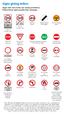 Signs giving orders Signs with red circles are mostly prohibitive. Plates below signs qualify their message. Entry to 20 mph zone End of 20 mph zone Maximum speed National speed limit applies School crossing
Construction Traffic Management Plan
 Introduction This (CTMP) has been prepared in order to discharge Condition 20 of planning permission ref 07/02879/EFUL for the enabling site works associated with the wider Bath Western Riverside development.
Principles of Traffic Management on sites / road network
 IOSH Ireland, Construction Specialist Section Springfield Hotel, Leixlip, County Kildare. 25 March 2015 Principles of Traffic Management on sites / road network Padraig Watters, Chartered Engineer This
Cycle Strategy 2006 2011
 Cycle Strategy 2006 2011 TABLE OF CONTENTS 1 INTRODUCTION... 1 2 POLICY BACKGROUND... 2 3 BACKGROUND... 6 4 MAIN OBJECTIVES... 8 5 TARGETS... 9 6 THE CYCLE NETWORK... 10 7 CONCLUSION... 13 Appendix A:
Reported Road Casualties Great Britain: 2013 Annual Report
 Reported Road Casualties Great Britain: 2013 Annual Report Focus on pedal cyclists Key findings The key findings from this article include: Pedal cyclist deaths have seen a long-term fall, but have fluctuated
Safety Evidence for Bicycling
 Photo: Boegh (Flickr) Cycling in Cities Research Program School of Population & Public Health The University of British Columbia Faculty of Health Sciences Simon Fraser University Driving near bicyclists
INTERIM ADVICE NOTE 179/14
 INTERIM ADVICE NOTE 179/14 Guidance on the Use of Vehicle Mounted High Level to provide advance warning of lane closures for Relaxation Works on Dual Carriageways with a Hard Shoulder Summary Guidance
Foulford Primary School Site Traffic Management Plan. December 2012 (Review date October 2013)
 Foulford Primary School Leuchatsbeath Drive Cowdenbeath Fife KY4 9SN Foulford Primary School Site Traffic Management Plan December 2012 (Review date October 2013) Site Traffic Management Plan Foulford
YOUR GUIDE TO INTRA-TOWN CYCLING
 YOUR GUIDE TO INTRA-TOWN CYCLING Content 04 Introduction 05 Attire Before you set off 06 Safety Checklist for Bicycle 07 Maintenance 08 Preventing Bicycle Theft What to look out for on the way 10 Signs
The State Government recognises. areas, and regulates bicycle
 cycling & THE LAW rules introduction for roads The State Government recognises The cycling South Australian as a legitimate Road Traffic form of Act including transport the Australian and an increasingly
4. Other Information Signs CHAPTER 4
 4. Other Information Signs CHAPTER 4 Traffic Signs Manual Chapter 4 Other Information Signs Contents Page 4.1 Introduction... 4/3 General... 4/3 Types of Information Sign... 4/4 Design of Information
DELIVERY & SERVICING PLAN. REDWOOD PARTNERSHIP Consulting Engineers Transportation Planners
 Redwood Partnership Transportation Limited Maritime House Basin Road North Portslade Brighton BN41 1WR T: 01273 414515 F: 01273 376824 E: [email protected] www.redwoodpartnership.co.uk REDWOOD
Bicycle Safety Quiz Answers Parental Responsibilities
 Bicycle riding is a great way to get into shape and enjoy the outdoors. To remain safe on Illinois roads, it is important to follow the same traffic safety laws that govern vehicle drivers. No amount of
chapter 3 basic driving skills
 chapter 3 basic driving skills When curving to the left, keep the front wheels close to the right edge of the lane to keep your driver s side rear wheels out of the next lane of traffic. Curve ahead slow
Site Traffic Management Plan
 Masterton Primary School Aberdour Road Dunfermline Fife KY11 8HY Telephone: 01383 602455 Email: [email protected] Head Teacher: Mr Stephen Humphries Site Traffic Management Plan Date December
DEPARTMENT OF TRANSPORT CYCLING STRATEGY 29 February 2008
 DEPARTMENT OF TRANSPORT CYCLING STRATEGY 29 February 2008 INTRODUCTION The Department of Transport s Business Plan for the 2007/08 financial year stated the following: Government Aim: Quality Environment
Parking Regulations. Why?
 Parking Regulations Why? The aim is to make the Campus a safer place. Despite there being empty parking spaces available for use most days we still have a minority who regularly park inconsiderately and
Great Britain Road Safety - Plans, Targets and Measures
 A Safer Way: Consultation on making Britain s roads the safest in the world Response from: British Vehicle Rental and Leasing Association River Lodge Badminton Court Amersham BUCKS HP7 0DD Tel: +44 1494
 Walkable Communities Florida Department of Transportation State Safety Office Pedestrian and Bicycle Program April 1995 www.dot.state.fl.us/safety Twelve Steps for an Effective Program Page 1 Twelve Steps
Site Traffic Management Plan
 Pathhead Primary School Cairns Street West Kirkcaldy Fife KY1 2JA Telephone: 01592 583450 Email: [email protected] Headteacher Julie M Anderson Site Traffic Management Plan December 2012
SAFE CYCLING GUIDE. 6th Edition
 SAFE CYCLING GUIDE 6th Edition BEFORE SETTING OUT A WELL-MAINTAINED BICYCLE is key A Check tire pressure B Check that the chain does not slip C Check the brakes D Check lights and reflectors: 3 4 1 5 2
Oxfordshire Local Transport Plan 2011-2030 Revised April 2012. Objective 3 Reduce casualties and the dangers associated with travel
 6. Road Safety Objective 3 Reduce casualties and the dangers associated with travel Road safety continues to be a core priority both nationally and locally reflecting the very high human and other costs
SAFE CYCLING GUIDE. 7th Edition
 SAFE CYCLING GUIDE 7th Edition BEFORE SETTING OUT A Check tire pressure B Check that the chain does not slip C Check the brakes D Check lights and reflectors: 1 A WELL-MAINTAINED BICYCLE is key 3 4 5 Adjust
6. Warning Signs CHAPTER 6
 6. Warning Signs CHAPTER 6 Traffic Signs Manual Chapter 6 Warning Signs Contents 6.1 Introduction... 6/3 General... 6/3 Design of Warning Signs... 6/3 Sign Size and Location... 6/4 Application of Warning
RADAR. 227 www.ncdirect.co.uk
 RADAR solutions RADAR RADAR Key System 228 RADAR Lockset 229 RADAR Cover Plate 229 RADAR Padlock 230 RADAR Automatic Toilet Entry System 231 RADAR Ramp 231 RADAR Ramp Sign 231 227 www.ncdirect.co.uk RADAR
TRAFFIC POLICY NOTE DTP 34/05 LOCAL SPEED LIMITS. Policy. Preamble. Devon Local Transport Plan Objectives. Revisions
 TRAFFIC POLICY NOTE LOCAL SPEED LIMITS DTP 34/05 Policy To work in partnership with local communities and in consultation with the police to: Provide 30 mph speed limits in communities Provide 20mph speed
Temporary Traffic Management
 Temporary Traffic Management Tom Kiddle 4 th July 2012 Temporary Traffic Management Auckland Transport TTM Operation Requirements AT TTM Audits Qualified Persons on site Pedestrian Management 1 AT Temporary
Department of State Development, Infrastructure and Planning. State Planning Policy state interest guideline. State transport infrastructure
 Department of State Development, Infrastructure and Planning State Planning Policy state interest guideline State transport infrastructure July 2014 Great state. Great opportunity. Preface Using this state
Standard PCN Codes v6.6.1 On-Street
 Code General suffix(es) Standard PCN Codes v6.6.1 On-Street Description 01 ajoyz Parked in a restricted street during prescribed hours Higher Suffixes y & z for disabled badge holders only 02 ajo Parked
GUIDELINES FOR WORKING ON ROADS
 GUIDELINES FOR WORKING ON ROADS Guide to the Safety, Health and Welfare at Work (Construction)(Amendment)(No. 2) Regulations 2008 (S.I. No. 423 of 2008) 7 CONTENTS Page Introduction.....................................................
Footpath Seating for Restaurants
 Waverley Development Control Plan 2010 E3 Footpath Seating for Restaurants Contents 1.0 Introduction............................................. 2 1.1 Designated Areas for Footpath Restaurants................
Level Crossings: A guide for managers, designers and operators
 Level Crossings: A guide for managers, designers and operators Railway Safety Publication 7 December 2011 Contents Foreword 4 What is the purpose of this guide? 4 Who is this guide for? 4 Introduction
Ride Safe. How you can avoid the 5 most common motorcycle accidents. Produced with the support of The Department for Transport
 Ride Safe How you can avoid the 5 most common motorcycle accidents Produced with the support of The Department for Transport Ride Safe How you can avoid th Riding a motorbike safely requires both skill
Standard PCN Codes v6.7.3. On-Street
 Standard PCN Codes v6.7.3 Code General suffix(es) On-Street Description 01 aoyz Parked in a restricted street during prescribed hours Suffixes y & z for disabled badge holders only 02 ao Parked or loading
Site Deliverability Statement Development at: Beech Lane, Kislingbury. Persimmon Homes Midlands March 2015
 Site Deliverability Statement Development at: Beech Lane, Kislingbury Persimmon Homes Midlands March 2015 Contents Site Deliverability Statement Development at: Beech Lane, Kislingbury 1.INTRODUCTION 1.1
Construction Traffic Management Plan
 Construction Traffic Management Plan Proposed Additional Classroom Accommodation for Woolacombe Primary School Produced for and on behalf of Built Environments Team Devon County Council NPS South West
ENGINEERING SOLUTIONS FOR DESIGNING YOUR SAFE ROUTES
 How to Get Started ENGINEERING SOLUTIONS FOR DESIGNING YOUR SAFE ROUTES Design Elements Selecting appropriate design treatments for school neighborhoods creates environments that address the needs of all
1. Rules for users of powered wheelchairs and powered mobility scooters
 Jersey Highway Code Introduction The Minister for Transport and Technical Services has issued directions for the guidance of road users, the Highway Code. The Highway Code for Jersey is the Official Highway
INTERIM ADVICE NOTE 65/05 DESIGN OF VEHICLE RECOVERY OPERATIONS AT ROAD WORKS
 INTERIM ADVICE NOTE 65/05 DESIGN OF VEHICLE RECOVERY OPERATIONS AT ROAD WORKS The Purpose of this document is to provide the Project Sponsor / Designer with comprehensive guidance on the range of issues
CHAPTER. Traffic Signs Manual. Part 1: Design. Traffic Safety Measures and Signs for Road Works and Temporary Situations
 Traffic Signs Manual CHAPTER 8 Traffic Safety Measures and Signs for Road Works and Temporary Situations Part 1: Design 2009 Traffic Signs Manual Chapter 8 Traffic Safety Measures and Signs for Road Works
28.0 Development Permit Area #2 (Neighbourhood District)
 28.0 Development Permit Area #2 (Neighbourhood District) Goals and Objectives To provide a guide for infill and new development in the Neighbourhood District. To outline the nature, form and character
All road users. Know Your TRAFFIC SIGNS. Official Edition
 All road users Know Your TRAFFIC SIGNS Official Edition Department for Transport Great Minster House 76 Marsham Street London SW1P 4DR Telephone 0300 330 3000 Website www.dft.gov.uk www.direct.gov.uk/en/travelandtransport/index.htm
HIGHWAY DESIGN REPORT. Appendix 4. Proposed Design Principles for City Passings
 HIGHWAY DESIGN REPORT Appendix 4 Proposed Design Principles for City Passings June 2000 Contents Page 1 Introduction 2 1.1 Purpose 2 1.2 Definition of city passing 2 1.3 Safety Problems 2 1.4 Planning
ROAD SAFETY GUIDELINES FOR TAH ROAD INFRASTRUCTURE SAFETY MANAGEMENT
 I. GENERAL ROAD SAFETY GUIDELINES FOR TAH ROAD INFRASTRUCTURE SAFETY MANAGEMENT ANNEX III B i. The setting up and implementing of appropriate management procedures is an essential tool for improving the
Economic and Social Council
 UNITED NATIONS E Economic and Social Council Distr. GENERAL TRANS/WP.1/2003/1/Rev.4 23 April 2004 ENGLISH Original: ENGLISH, FRENCH and RUSSIAN ECONOMIC COMMISSION FOR EUROPE INLAND TRANSPORT COMMITTEE
BIKE AND PEDESTRIAN CRASH SURVERY
 This survey includes questions regarding biking activity, accidents, and injuries, as well as the answer options provided by the Nashville MPO. Introduction 1. Have you ridden a bicycle within the past
GUIDELINES. for oversize and overmass vehicles and loads MAY 2006. Government of South Australia. Department for Transport, Energy and Infrastructure
 ESCORTING GUIDELINES ESCORTING GUIDELINES SCORTING GUIDELINES ESCORTING GUIDELINES ESCORTING ESCORTING GUIDELINES for oversize and overmass vehicles and loads Government of South Australia Department for
Shoppers and how they travel
 Shoppers and how they travel INFORMATION SHEET LN2 Over ten years ago, retailers in the Austrian city of Graz were asked how they thought their customers travelled to the shop, and shoppers were then interviewed
Department of Transport. Cycling Rules
 Department of Transport Cycling Rules 2 Contents Definition of a bicycle Standard requirements Power-assisted pedal cycles Carrying or towing loads The rider, passenger and helmets Rules affecting cycling
CAMPAIGN ASSETS THINK CYCLIST STAKEHOLDER TOOLKIT
 STAKEHOLDER TOOLKIT INTRODUCTION The Department for Transport s campaign provides road safety information for road users. Our aim is to encourage safer behaviour to reduce the number of people killed and
Sustrans. The Merits of Segregated and Non-Segregated Traffic-Free Paths. A Literature-Based Review. Updated Report, August 2011
 Phil Jones Associates Transport Planning Consultants Sustrans The Merits of Segregated and Non-Segregated Traffic-Free Paths A Literature-Based Review Project Code 836 Phil Jones Associates Ltd The Innovation
CAMPAIGN ASSETS THINK CYCLIST STAKEHOLDER TOOLKIT
 STAKEHOLDER TOOLKIT INTRODUCTION The Department for Transport s campaign provides road safety information for road users. Our aim is to encourage safer behaviour to reduce the number of people killed and
Rural Road Safety Policy in Korea: Lesson Learned
 Regional Seminar on Safe, Climate Adaptive and Disaster Resilient Transport for Sustainable Development Nov. 17 th, Seoul Rural Road Safety Policy in Korea: Lesson Learned Sangjin HAN Korea Transport Institute
Atlanta, Georgia Road Test
 1. When driving your car Into traffic from a parked position, you should: A. Sound your horn and pull Into the other lane. B. Signal and proceed when safe. C. Signal other traffic and pull directly into
Speed Limit Policy Isle of Wight Council
 APPENDIX C - 59 Speed Limit Policy Isle of Wight Council June 2009 Contents Section 1 Introduction 1.1 Links with the Local Transport Plan Section 2 Speed Limits on Urban Roads and Residential Areas 2.1
ACCESS AUDIT OF WESTPORT HOUSE
 ACCESS AUDIT OF WESTPORT HOUSE Large sign on the highway to indicate the entrance to Purbeck District Council Large and wide entrance Entrance showing sign for opening times Entrance sign Main entrance
Ipswich City Council Subordinate Local Law 5.1 (Parking) 2013
 Ipswich City Council Subordinate Local Law 5.1 (Parking) 2013 1 Contents PART 1 PRELIMINARY... 2 1 Short title... 2 2 Authorising local law... 2 3 Object... 2 4 Definitions the dictionary... 2 PART 2 PERMITS...
AUSTRALIAN HUMAN RIGHTS COMMISSION NOTICE OF DECISION ON APPLICATION FOR TEMPORARY EXEMPTIONS: AUSTRALASIAN RAILWAY ASSOCIATION
 AUSTRALIAN HUMAN RIGHTS COMMISSION DISABILITY DISCRIMINATION ACT 1992 (Cth), Section 55 DISABILITY STANDARDS FOR ACCESSIBLE PUBLIC TRANSPORT 2002 (Cth), Section 33A.1 DISABILITY (ACCESS TO PREMISES BUILDINGS)
A new Garden Neighbourhood for West Guildford An opportunity for Smart Growth. university of surrey November 2013
 A new Garden Neighbourhood for West Guildford An opportunity for Smart Growth university of surrey November 2013 A new Garden Neighbourhood for West Guildford Preface Since the County and Borough Councils
The Northumberland Estates Proposed Residential Development, Prudhoe Town Centre D/I/D/63558/603. Framework Residential Travel Plan
 The Northumberland Estates Proposed Residential Development, Prudhoe Town Centre D/I/D/63558/603 Framework Residential Travel Plan September 2013 CONTROL SHEET CLIENT: PROJECT TITLE: REPORT TITLE: THE
ACTIVITY CENTRE ZONE MAPPING STYLE GUIDE. Guidelines for producing Framework Plans and Precinct Maps for the Activity Centre Zone
 ACTIVITY CENTRE ZONE MAPPING STYLE GUIDE Guidelines for producing Framework Plans and Precinct Maps for the Activity Centre Zone Contents Introduction... 3 Preparing maps the basics... 4 Map purpose...4
DRIVING TEST POSSIBLE QUESTIONS & ANSWERS.
 DRIVING TEST POSSIBLE QUESTIONS & ANSWERS. Question 1. What shape and colour is a warning sign? Diamond Shape - Yellow and Black Question 2. When should you not drive? While under the influence of alcohol,
Stop The stop sign, a red octagon with white lettering, means come to a full stop and be sure the way is clear before proceeding.
 Tr a f f i c S i g n s 7 7. TRAFFIC SIGNS Many collisions and near crashes occur as a result of drivers who ignore or fail to respond appropriately to traffic signs. It is essential that the meaning of
VEHICLE CROSSOVER INFORMATION PACK
 VEHICLE CROSSOVER INFORMATION PACK CONTENTS Introduction Section A Section B Section C Section D Section E Criteria for approving a vehicle crossover application (Diagrams to demonstrate measurement criteria)
PART 3 TD 50/04 THE GEOMETRIC LAYOUT OF SIGNAL- CONTROLLED JUNCTIONS AND SIGNALISED ROUNDABOUTS SUMMARY
 DESIGN MANUAL FOR ROADS AND BRIDGES VOLUME 6 SECTION 2 ROAD GEOMETRY JUNCTIONS PART 3 TD 50/04 THE GEOMETRIC LAYOUT OF SIGNAL- CONTROLLED JUNCTIONS AND SIGNALISED ROUNDABOUTS SUMMARY This document sets
A Guide to Safe Bicycling in Hawai i
 A Guide to Safe Bicycling in Hawai i Sharing the Road: A Guide to Safe Bicycling in Hawai i What Motorists & Bicyclists Should Know Everyone has the right to be safe on Hawai i s roads. Law of the Splintered
Trends and issues Lake Te Koutu walkway, Cambridge
 27 Trends and issues Lake Te Koutu walkway, Cambridge 3 Trends 3.1 Journey to work Over the past two to three decades there has been a significant increase in private vehicle ownership and usage and a
HIGHWAY DESIGN GUIDE 1 PRINCIPLES AND RESPONSIBILITES
 1 PRINCIPLES AND RESPONSIBILITES CONTENT 1.1 Purpose and Format 1.2 Role of the Highway Authority 1.3 Road Hierarchy 1.4 Fitting Developments into the existing highway network 1.5 Highway Agreements 1.6
Now Therefore, The Corporation of the City of Peterborough by the Council thereof hereby enacts as follows:
 The Corporation of the City of Peterborough By-Law Number 14-096 Being a By-law to Regulate Bicycles, Skateboards, Inline Skates, Roller Skates, E- bikes, Segways and other conveyances drawn, propelled
Abu Dhabi EHSMS Regulatory Framework (AD EHSMS RF)
 Abu Dhabi EHSMS Regulatory Framework (AD EHSMS RF) EHS Regulatory Instrument Code of Practice EHS RI CoP 44.0 Traffic Management and Logistics Version 2.0 February 2012 ACKNOWLEDGEMENTS With gratitude
Take action on active travel
 Take action on active travel Why a shift from car-dominated transport policy would benefit public health For the first time, the UK s leading organisations working on all areas of public health, including
Economy, Transport and Environment Department. Traffic Management Policy & Guidance
 Economy, Transport and Environment Department Traffic Management Policy & Guidance January 2014 Contents Part 1- Introduction to Traffic Management Traffic Management Strategy Legislation and the Legal
Merton Parking Service CCTV Enforcement Manual
 Merton Parking Service CCTV Enforcement Manual Version 1.3 April 2013 Introduction Legislation Data protection Health & Safety CCCTV camera equipment Mobile CCTV vehicles CCTV control room CCTV evidence
Smart Cycling IN SANTA MONICA SANTA MONICA POLICE DEPARTMENT BE SMART. BE VISIBLE. BE ATTENTIVE. HAVE FUN!
 Smart Cycling IN SANTA MONICA BE SMART. BE VISIBLE. BE ATTENTIVE. HAVE FUN! Safety Tips and Rules of the Road for Cyclists SANTA MONICA POLICE DEPARTMENT Rules of the Road Drivers, bicyclists, and pedestrians
Parking card for people with disabilities in the European Union:
 Parking card for people with disabilities in the European Union: conditions in the Member States European Commission Put the freestanding folder at the window next to your parking card so that language(s)
Claughton Medical Centre Travel Plan
 Claughton Medical Centre Travel Plan June 2011 1 Contents Page 1. Introduction 2 2. Objectives 3 3. Targets 5 4. Site Audit 6 5. Travel Survey 11 6. Marketing strategy 13 7. Monitoring and review 15 8.
Mount Browne (Surrey Police Head Quarters), Sandy Lane, Guildford Vision Statement. November 2013. with
 Mount Browne (Surrey Police Head Quarters), Sandy Lane, Guildford Vision Statement November 2013 with Tibbalds Planning & Urban Design 19 Maltings Place 169 Tower Bridge Road London SE1 3JB Telephone 020
APPENDIX B: TRAIL DEVELOPMENT AND MANAGEMENT STANDARDS
 APPENDIX B: TRAIL DEVELOPMENT AND MANAGEMENT STANDARDS This section provides guidance on a variety of trail issues for planners and developers of the Ice Age NST across the state. It also provides introductory
CONTENTS. References 12
 RESPONSE TO TRANSPORT COMMITTEE INQUIRY INTO CYCLING SAFETY 1 CONTENTS Why Britain has a cycling safety problem 3 Subjective safety 5 Safety by design 6 Separation of cycling and motorised traffic 7 Sustainable
These "rules of the road" are based on Texas Transportation Code statutes. Find the complete bicycle code at the bottom of the page
 Texas Bicycle Laws These "rules of the road" are based on Texas Transportation Code statutes. Find the complete bicycle code at the bottom of the page Bicyclists have the rights and duties of other vehicle
GENERAL GUIDE FOR WORKPLACE TRAFFIC MANAGEMENT
 1 This General Guide provides information on how to manage traffic risks at a workplace. It is supported by specific guidance material on traffic management for shopping centres, construction workplaces,
PEDESTRIAN LAWS OF NORTH CAROLINA
 PEDESTRIAN LAWS OF NORTH CAROLINA Under North Carolina law, pedestrians have the right of way at all intersections and driveways. However, pedestrians must act responsibly, using pedestrian signals where
Repton Primary School. Traffic Management Plan
 Repton Primary School Traffic Management Plan Headteacher: Mrs H Wallis Signature: H Wallis Date: 26 th June 2015 Chair of Governors: Mrs L Eaton Signature: L Eaton Date: 26 th June 2015 8 th June 2015
Planning Policy Statement 17 (PPS 17) Control of Outdoor Advertisements
 Planning Policy Statement 17 (PPS 17) Control of Outdoor Advertisements Planning Policy Statement 17 (PPS 17) Control of Outdoor Advertisements Planning Policy Statements (PPSs) set out the policies of