
Bridging STEM to STEAM: Developing New Frameworks for ART/SCIENCE Pedagogy
|
|
|
- Alexandra Fields
- 10 years ago
- Views:
Transcription
1 Bridging STEM to STEAM: Developing New Frameworks for ART/SCIENCE Pedagogy Project Description Introduction The Rhode Island School of Design (RISD) requests support to plan and carry out a two-day workshop at RISD in January 2011 to develop an innovative educational agenda that forges relationships between art and design disciplines and science, technology, engineering, and mathematics (STEM). The workshop will bring together four constituent communities: scientific researchers; information technology experts and creative technologists; artists and designers; and education researchers interested in enhancing cyber-enabled STEM education through interdisciplinary collaboration with artists and designers (STEAM). This workshop will be designed specifically as a process of inquiry aimed at discovering and communicating shared insights within one intensive event that will provide a platform and a network for the further development of this initiative among the participants and as a replicable model. The long-term goals motivating the event are to: Develop strategies for enhancing STEM education through the integration of art and design thinking (STEM + ART = STEAM). Invent and share techniques that take advantage of simple, freely available IT systems and applications to support enhanced observation, analysis and understanding of pictorial and numerical data. Build new connections between art and design disciplines and scientific fields to advance understanding of complex systems, e.g., through improved strategies and techniques for the shared perception and visualization of scientific data. The proposed workshop will initiate a discussion of how to bridge STEM education practices and creative problem solving (STEM to STEAM) as an innovative educational approach. In addition to this intensive engagement around questions of art/science pedagogy, this workshop will begin to examine quantitative evaluation methods for determining the efficacy of involving creative practices and their associated research strategies in problem-based STEM teaching and research methods. Rationale Artists and designers can make vital contributions to meeting important challenges facing 21 st century educational practices and the STEM agenda. The last decade has seen an explosion in both the quantity and complexity of scientific data in fields ranging from genomics to astronomy. Researchers and educators need new means of visualizing and interrogating scientific information, both to understand data and to communicate the aims, accomplishments, methods and importance of STEM disciplines to broad audiences, including policy makers, educators, K-12 students, and the general public. Artists and designers can play essential roles in improving STEM education and effectively communicating scientific information and ideas. More broadly, the tools and methods of design offer new models for creative problem-solving and interdisciplinary partnership, introducing innovative

2 practices of design thinking into STEM education and research. To realize this potential, scientists, artists, and designers must develop new ways of working together, new modes of research, and a shared language for collaboration. The emerging research on multiple intelligences, 1 the situated and embodied character of learning and cognition 2, and the critical contributions that studio-thinking and studio practice can make to learning in other domains 3 provides a starting point for developing new frameworks for pedagogical approaches that bridge the gulf between art and science and support effective cross-disciplinary research initiatives in art/science pedagogy. The interactions between so-called objective and subjective responses to complex information and bodies of data must be brought out and understood by means of effective art/science collaborations whose aim is to promote trans-disciplinary insights and shared language around questions of teaching, learning, and pedagogy that will promote core research activities and enhance public engagement with science. Pioneering events bringing together scientists, artists, and designers to explore areas of potential collaboration are crucial to developing both the practices of research and inquiry and a language supporting cross-discipline research activities. The creation of temporary events and spaces to promote insights that transcend disciplinary borders is becoming a social, cultural and disciplinary imperative where communities of different researchers need to develop their work, either in parallel with related topics or in new or unexpected conjunctions that can motivate and inspire new developments in research practices. As with the EPSCoR workshop described below, such encounter spaces can have a transforming effect, both in terms of cross-disciplinary communication and research and in terms of public engagement with science. The workshop at RISD for which support is requested will serve as a strategic event advancing these goals, with specific benefit to interdisciplinary research interests. The innovative use of available technologies in the context of cross-disciplinary knowledge building will be central to the success of the art/science collaborations envisioned. RISD is known for exploratory combinations of digital media and visual communication strategies in a wide range of art and design disciplines, each with their own technical specialties. Equally important, information technologies have the potential to network and disseminate interdisciplinary encounters, providing an emergent and continuing feedback and multiplying the potential associations of ideas back to a variety of sources of focus and achievement. For educational institutions interested in developing eventbased teaching and learning strategies that support research, the event proposed here will provide a demonstration of the potential for cross-disciplinary and inter-institutional collaboration. Under the leadership of President John Maeda, a renowned artist and computer scientist, RISD is well positioned to play a leading role in developing new models for art/science collaboration, and brings unique resources to this effort. RISD is one of the premier art and design schools in the United States, and has deep strength in closely relevant fields, including Digital Media, Industrial Design, Graphic Design, and Illustration. The School has a long record of collaboration with leading universities and research centers, including MIT, Brown University, the University of Rhode Island, Harvard, Massachusetts General Hospital, and the Yale School of Medicine. This history of collaboration among leading research centers in the region provides an already existing organizational network for the development and dissemination of the type of research activity proposed here. RISD-based artists and designers currently collaborate successfully with scientists and engineers on a range of innovative projects. For example, RISD illustration professor Fritz Drury has partnered with scientists at Brown to understand how bats fly by developing three-dimensional visualizations of bat

3 flight in a virtual reality environment, incorporating highly complex datasets. RISD was recently selected by Oblong Industries to help beta-test and explore applications for g-speak (gesture speak), the world s first three-dimensional, gesture-based operating system. Using a system of cameras and sensor-equipped gloves, g-speak Studios at RISD are exploring the potential of embodied interaction with highly complex, three-dimensional data arrays. This work has clear implications for the development of new interfaces and new methods of data acquisition and visualization in support of data-intensive scientific research. RISD s Edna Lawrence Nature Lab includes more than 80,000 natural history objects, including live animals, and a computer and camera workstation, with dissecting and compound microscopes. Within the Lab, the Arthur Loeb Design Science Collection comprises hundreds of polyhedra and two-dimensional patterns that permit hands-on investigation by artists and designers of underlying formal and structural relationships inherent in the natural world. RISD s Continuing Education division also offers a certificate program in Natural Science Illustration that helps students develop observational skills needed for the realistic depiction of science information across a variety of media. RISD is one of eight collaborating institutions in the Rhode Island NSF EPSCoR, including the state s pending Research Infrastructure Improvement proposal to the NSF (RII-Track 1). The grant aims to advance research on the effects of climate change and build appropriate institutional, technological and communications infrastructure. RISD s involvement will help develop visual techniques and communication strategies for scientists, and facilitate successful interdisciplinary research at the intersection of science, art and design. In , as part of the School s participation in EPSCoR, RISD pioneered two events of a more general nature under the banner of Making Science Visible 4,5. Attendees and participants were drawn from a variety of scientific, arts, and design disciplines. The current workshop proposal will apply the insights and techniques gained from these multi-discipline events to the problem of developing innovative educational opportunities at the intersections of the arts and sciences. Activities With the requested grant, RISD will plan and carry out a two-day intensive workshop/seminar focused on developing a framework for STEAM pedagogy. This workshop will provide a critical impetus to expanding current discussions taking place and opening new areas of exploration at the interface of art, science, technology and design education. Questions to be explored include: What is the role of creativity in the arts and sciences, and how can these creative practices be translated into educational materials, models, and practices? What common skills, methods, and practices exist in the arts and sciences, and how can their teaching benefit from interdisciplinary, STEAM pedagogies? Similarly, what are the forms of knowledge that exist in one area that could be useful to teach in the other? How can pedagogical approaches in the arts (e.g., the studio critique) and STEM disciplines (e.g., inquiry learning) be combined to produce effective strategies for STEAM instruction? How can informal learning institutions like art museums and science centers contribute to the lifelong pursuit of STEAM learning? What forms of professional development do we need to prepare teachers and other educators to design and enact STEAM curricula? What computational supports can be borrowed and/or need to be created to support STEAM learning?

4 President Maeda and RISD faculty will draw upon RISD networks and existing external partnerships to convene leading researchers, technologists, artists and designers, and educators, and make the event a success. The final participant list and workshop agenda will be developed and approved in consultation with the National Science Foundation sponsoring Program Director as the activities align with CreativeIT, Human Centered Computing and Cyberlearning Transforming Education programs. Participants from the following four constituent communities will represent a national perspective in their respective fields. RISD anticipates approximately 60 participants. 1/ Education researchers providing a foundation for effective methods that bridge STEM and STEAM pedagogical goals; 2/ Artists and designers possessing a high level of observational skills and expertise in the cultural and pedagogical role of critique in processes of teaching and learning; 3/ Scientists working in areas requiring understanding and dissemination of complex structures and processes and with research interests in exploring science pedagogy from a multidisciplinary and process oriented perspective; and 4/ IT and creative technologists. The design of the event will be based on selected knowledge-building strategies and will incorporate appropriate elements derived from aspects of embodied cognition and studio practice to assist crossdisciplinary work. These strategies have been successfully applied previously, the most recent example being Making Science Visible, a broad networking seminar event held at RISD and devised specifically for the occasion by RISD EPSCoR PI, Christopher Rose. The detail design of Making Science Visible was established following a six-week research and preparation period intended to prepare an in-depth understanding of the criteria and objectives for the event. A similar strategy will be used for this workshop. Many faculty from EPSCoR partner institutions who attended Making Science Visible at RISD in April 2010 have already expressed interest in partnering or contributing to the type of work addressed by this project, including David Farmer, Dean, Graduate School of Oceanography (GSO), Dwight Coleman, Director of the Inner Space Center, and David Smith, Associate Dean, GSO, (University of Rhode Island); and Michael Paradiso, Professor of Neuroscience, John Donoghue, Director of the Brain Science program and John Davenport, Associate Director, Bio-Medical Institute for Brain Science (Brown University). Expected Outcomes Building upon RISD s experience of hosting special events, this ambitious model will lay an intellectual foundation for effective art/design and science/technology cross-disciplinary educational research activities (STEM to STEAM) potentially extending beyond the immediate event to other national applications. RISD, the host institution will build capacity in supporting applied research in interdisciplinary domains. The event will also serve as a springboard for developing methods to advance cross-disciplinary insight, and extend the language of discovery across a developing network of researchers, educators, and technologists. Concrete outcomes of the workshop will be a white paper report and web-based publication of

5 presentations and a summary of event outcomes and other resources and their contributors. The report will be disseminated to the National Science Foundation and will be made available for general public dissemination. The workshop is tentatively scheduled for January 2011 and will take place on the RISD campus in downtown Providence. Costs The requested funding will cover the following main activities: detail planning and preparatory stage involving consultation with partners and contributors and the production of briefing materials; identification of and communication with event attendees and participants; event design, facilitation, management and hosting arrangements including space and administrative personnel; gathering of outcomes and resources for post-event dissemination; and establishing online documentation and resource tools for further development. The Principal Investigator for the project is Christopher Rose, Interim Principal Investigator of NSF EPSCoR at RISD. Brian Smith, Dean of Continuing Education at RISD, will assist Professor Rose in planning the workshop and disseminating its findings. Intellectual Merit A primary goal of the workshop is to begin developing educational practices to support interdisciplinary, STEAM learning. This activity will provide participants with direct access to shared processes of inquiry into art/science pedagogy with the immediate goal of achieving a high level of comprehensibility and knowledge sharing, broadening the accessibility and appeal of science, and transforming the discourse on STEM discovery and learning. The proposed activity also has the goal of enhancing observation and analysis techniques and their shared usage with state-of-the-art, freely available IT. Methods and practices that promote shared ideas, insight, and language have the potential to alter STEM education and research practices in formal and informal settings. The availability of low-cost, high-quality means for analysis and dissemination of scientific ideas now promises to revolutionize methods for communicating, disseminating and publishing science. The proposed workshop advances the broad goals of the CreativeIT Program and STEM education initiatives, presenting potentially transformative early-stage work and novel interdisciplinary collaboration. Broader Impacts The proposed event, including the preparatory research and subsequent analysis of outcomes, will broaden participation of individuals bringing new specialties into working in STEM. Results from the workshop will be used to generate educational materials that exemplify interdisciplinary couplings between the arts and sciences. For example, we will develop and run a new prototype course of one semester aimed at graduate students and their research activities provisionally titled Creative Insight: Preparation for effective Arts/Design/Science collaboration. The course design is based on a mixed group drawn from, in the first instance, biology and life sciences and arts and design specialties. Its theme is the challenge of investigation, understanding, representation and communication of examples of complex systems.

6 We will also develop STEAM course offerings for high school students through a Pre-College summer program offered through RISD s Continuing Education division. The broader intention of the prototype course is to provide a tangible example that can prompt parallel developments at other institutions. Possible departure points for such interdisciplinary collaborations were established at the April 2010 Making Science Visible NSF EPSCoR event at RISD. With three or more such developments occurring in parallel there will be sufficient critical mass to develop a STEAM pedagogy. Results from the workshop will be used to develop STEAM education and research models that if successful, will have the potential to be replicated in many educational and scientific communities. As art thinking influences scientific thinking and vice versa, there is potential for an increased public understanding of science and the scientific challenges facing our nation and the world.

Rhode Island School of Design Strategic Plan Summary for 2012 2017. critical making. making critical
 Rhode Island School of Design Strategic Plan Summary for 2012 2017 critical making making critical executive summary This strategic plan serves as a guide for Rhode Island School of Design (RISD) over
RFI Summary: Executive Summary
 RFI Summary: Executive Summary On February 20, 2013, the NIH issued a Request for Information titled Training Needs In Response to Big Data to Knowledge (BD2K) Initiative. The response was large, with
Curricular Vision. I. Introduction:
 Curricular Vision The Olin College Curricular Vision, which served as a guide for curricular development at Olin College, was written in the fall of 2001by David V. Kerns, who was provost of the college
Merit Review Broader Impacts Criterion: Representative Activities
 Merit Review Broader Impacts Criterion: Representative Activities Proposals submitted to the National Science Foundation are evaluated through use of two merit review criteria, which all proposals must
Program Personnel Standards Approval Form. Disciplrne: Nursing. ','J1* )lplll. RTP Committeehair Date i
 Program Personnel Standards Approval Form Disciplrne: Nursing ','J1* )lplll RTP Committeehair Date i Introduction Relationship of Discipline Standards to CSU Channel Islands Program Standards To understand
2012 VISUAL ART STANDARDS GRADES K-1-2
 COGNITIVE & K Critical and Creative Thinking: Students combine and apply artistic and reasoning skills to imagine, create, realize and refine artworks in conventional and innovative ways. The student will
COGNITIVE SCIENCE AND NEUROSCIENCE
 COGNITIVE SCIENCE AND NEUROSCIENCE Overview Cognitive Science and Neuroscience is a multi-year effort that includes NSF s participation in the Administration s Brain Research through Advancing Innovative
B. Scholarly Activity
 B. Scholarly Activity Scholarly Activity is an essential part of University life and development and encompasses the many pursuits that broaden and expand the learning communities in which faculty function
AC 2011-1734: ART2STEM: BUILDING A STEM WORKFORCE AT THE MIDDLE SCHOOL LEVEL
 AC 2011-1734: ART2STEM: BUILDING A STEM WORKFORCE AT THE MIDDLE SCHOOL LEVEL Sydney Rogers, Alignment Nashville Sydney Rogers is the Executive Director of Alignment Nashville, a non-profit dedicated to
A. The master of arts, educational studies program will allow students to do the following.
 PROGRAM OBJECTIVES DEPARTMENT OF EDUCATION DEGREES OFFERED MASTER OF ARTS, EDUCATIONAL STUDIES (M.A.); MASTER OF ARTS, SCIENCE EDUCATION (M.S.); MASTER OF ARTS IN GERMAN WITH TEACHING LICENSURE (M.A.);
Vanderbilt University Biomedical Informatics Graduate Program (VU-BMIP) Proposal Executive Summary
 Vanderbilt University Biomedical Informatics Graduate Program (VU-BMIP) Proposal Executive Summary Unique among academic health centers, Vanderbilt University Medical Center entrusts its Informatics Center
Information Visualization WS 2013/14 11 Visual Analytics
 1 11.1 Definitions and Motivation Lot of research and papers in this emerging field: Visual Analytics: Scope and Challenges of Keim et al. Illuminating the path of Thomas and Cook 2 11.1 Definitions and
Arkansas Teaching Standards
 Arkansas Teaching Standards The Arkansas Department of Education has adopted the 2011 Model Core Teaching Standards developed by Interstate Teacher Assessment and Support Consortium (InTASC) to replace
Strategic Plan 2011. The College of Arts and Sciences. Vision. www.art-sci.udel.edu/ Leading the Way in Academics, Research and Public Engagement
 Strategic Plan 2011 and Sciences Leading the Way in Academics, Research and Public Engagement www.art-sci.udel.edu/ Vision The and Sciences at the University of Delaware will be nationally recognized for
Strategic Plan 2013 2017
 Plan 0 07 Mapping the Library for the Global Network University NYU DIVISION OF LIBRARIES Our Mission New York University Libraries is a global organization that advances learning, research, and scholarly
UMKC STRATEGIC PLAN LIFE AND HEALTH SCIENCES 1. IMPLEMENT ORGANIZATIONAL ENHANCEMENTS TO ADVANCE THE
 UMKC STRATEGIC PLAN LIFE AND HEALTH SCIENCES OBJECTIVES: 1. IMPLEMENT ORGANIZATIONAL ENHANCEMENTS TO ADVANCE THE LIFE AND HEALTH SCIENCES Recruit a Vice Chancellor for Life and Health Sciences Research
Research and Digital Game- based Play: A Review of Martha Madison
 Research and Digital Game- based Play: A Review of Martha Madison White Paper Compiled by Anne Snyder, Ph.D. Second Avenue Learning is a certified women- owned business, specializing in the creation of
The Bennington College Plan Process
 The Bennington College Plan Process April 23, 2012 INTRODUCTION OF THE PLAN PROCESS Central to Bennington s founding vision was the belief that a dynamic, relevant education could best be achieved when
The University of Texas at Austin - Portugal An international partnership in graduate education, research, and technology commercialization
 The University of Texas at Austin - Portugal An international partnership in graduate education, research, and technology commercialization Technical Appendix to the Memorandum of Understanding toward
to encourage, support, monitor, publicize, raise funds for, and administer current and future initiatives in pre-college education;
 CIPCE Center for Initiatives in Pre-College Education Rensselaer Polytechnic Institute Lester Rubenfeld, Director (518) 276-6906; (email) [email protected]; (FAX) 276-2113 110 8th Street, CII 9217, Troy, NY
Is the General Education program purpose congruent with the overall mission of the institution?
 Where do we start? MODELS OF GENERAL EDUCATION The best General Education Program is not based simply on choosing specific goals or finding the perfect model. The best program is one that is aligned with
GEMS-U Program Description
 GEMS-U Program Description (GEMS-U) is an innovative, exclusive statewide program, spearheaded by the Alabama Department of Education. The GEMS-U program is designed to develop and disseminate high-quality
Division of Behavioral and Cognitive Sciences STRATEGIC PLAN
 Division of Behavioral and Cognitive Sciences STRATEGIC PLAN NATIONAL SCIENCE FOUNDATION Directorate for Social, Behavioral, and Economic Sciences November 2011 National Science Foundation Directorate
Multidisciplinary Engineering Systems Graduate Education: Master of Engineering in Mechatronics
 Multidisciplinary Engineering Systems Graduate Education: Master of Engineering in Mechatronics Kevin Craig College of Engineering Marquette University Milwaukee, WI, USA Phil Voglewede College of Engineering
Strategic Plan 2012-2018 University Libraries Virginia Tech
 Strategic Plan 2012-2018 University Libraries Virginia Tech Introduction Our mission is to invent the future of libraries at Virginia Tech. We honor tradition as we excel in our core mission to provide
Proposal for New Program: BS in Data Science: Computational Analytics
 Proposal for New Program: BS in Data Science: Computational Analytics 1. Rationale... The proposed Data Science: Computational Analytics major is designed for students interested in developing expertise
Research into competency models in arts education
 Research into competency models in arts education Paper presented at the BMBF Workshop International Perspectives of Research in Arts Education, Nov. 4 th and 5 th, 2013. Folkert Haanstra, Amsterdam School
A Plan for Supporting Research, Teaching, and Service. The Library. and the Mission of the University
 2013 2018 A Plan for Supporting Research, Teaching, and Service The Library and the Mission of the University The Library and the Mission of the University 2013 2018 University of North Carolina at Chapel
CG: Computer Graphics
 CG: Computer Graphics CG 111 Survey of Computer Graphics 1 credit; 1 lecture hour Students are exposed to a broad array of software environments and concepts that they may encounter in real-world collaborative
Proposal for New Program: Minor in Data Science: Computational Analytics
 Proposal for New Program: Minor in Data Science: Computational Analytics 1. Rationale... The proposed Data Science: Computational Analytics minor is designed for students interested in signaling capability
Strategic Initiatives College of Science, August, 2004
 College of Science Strategic Initiatives College of Science, August, 2004 MISSION: To graduate students who understand and appreciate the art of scholarship, who have an excellent grasp of the fundamental
Section I. Section II
 Minor in Design offered by the College of Architecture + Planning Primary contact: Jim Agutter College of Architecture + Planning 1. 1 The Request: Section I The Minor in Design is a plan of study developed
The Communications Audit NEVER MORE RELEVANT, NEVER MORE VALUABLE:
 WHITE PAPER The Communications Audit NEVER MORE RELEVANT, NEVER MORE VALUABLE: VALUE PROPOSITION OBJECTIVES METHODOLOGY BY GARY DOLZALL CHIEF COMMUNICATIONS OFFICER I. INTRODUCTION: THE VALUE PROPOSITION
The College of Science Graduate Programs integrate the highest level of scholarship across disciplinary boundaries with significant state-of-the-art
 GRADUATE PROGRAMS The College of Science Graduate Programs integrate the highest level of scholarship across disciplinary boundaries with significant state-of-the-art research centers and experiential
Delta Courses. *The College Classroom. The College Classroom: International Students, International Faculty. Diversity in the College Classroom
 COURSE CATALOG Contents Introduction... 3 Delta Courses... 4 The College Classroom... 4 The College Classroom: International Students, International Faculty... 4 Diversity in the College Classroom... 4
DEFINITION OF MENTORSHIP
 1 College of Nursing Mentorship Program The College of Nursing is committed to the career development of members of the faculty. To this end, the College provides mentorship for members of the faculty
THE ASSESSMENT OF GRADUATE PROGRAMS IN ART AND DESIGN. National Association of Schools of Art and Design
 THE ASSESSMENT OF GRADUATE PROGRAMS IN ART AND DESIGN National Association of Schools of Art and Design Copyright 2009, 1992, 1990 by the National Association of Schools of Art and Design Reston, Virginia
Psychology s Role in Student Success Pathways for Diverse Populations
 Psychology s Role in Student Success Pathways for Diverse Populations Dr. Martha Ellis Dr. Robin Hailstorks AACC Annual Convention April 2009 Psychology s Role in Student Success More than 1 million students
DEEPER LEARNING COMPETENCIES April 2013
 DEEPER LEARNING COMPETENCIES April 2013 Deeper learning is an umbrella term for the skills and knowledge that students must possess to succeed in 21 st century jobs and civic life. At its heart is a set
CYBERINFRASTRUCTURE FRAMEWORK FOR 21 ST CENTURY SCIENCE, ENGINEERING, AND EDUCATION (CIF21)
 CYBERINFRASTRUCTURE FRAMEWORK FOR 21 ST CENTURY SCIENCE, ENGINEERING, AND EDUCATION (CIF21) Overview The Cyberinfrastructure Framework for 21 st Century Science, Engineering, and Education (CIF21) investment
The Arts at Virginia Tech
 The Arts at Virginia Tech Strategic Directions and Opportunities Submitted to the Offices of the President and Senior Vice President and Provost by the Chair of the Arts Strategic Planning Team Paul Knox
New Metrics Briefing 2: Feedback to the GELP Metrics co-design group Simon Breakspear, Cambridge University
 New Metrics Briefing 2: Feedback to the GELP Metrics co-design group Simon Breakspear, Cambridge University The paper was prepared by Simon for the new metrics co-design group. We share it with the community
DEAN OF THE COLLEGE OF ARTS AND SCIENCES
 Bethlehem, PA DEAN OF THE COLLEGE OF ARTS AND SCIENCES POSITION SPECIFICATION December 2010 THE OPPORTUNITY Dean of the College of Arts and Sciences Lehigh University Bethlehem, PA Lehigh University seeks
Computational Science and Informatics (Data Science) Programs at GMU
 Computational Science and Informatics (Data Science) Programs at GMU Kirk Borne George Mason University School of Physics, Astronomy, & Computational Sciences http://spacs.gmu.edu/ Outline Graduate Program
GRADUATE EDUCATION AT USM: A STATEMENT OF THE GRADUATE COUNCIL March 2, 2009
 GRADUATE EDUCATION AT USM: A STATEMENT OF THE GRADUATE COUNCIL March 2, 2009 Graduate education is an essential part of the University of Southern Maine. As one of only two universities within the University
Journey to Excellence
 STRATEGIC PLAN: 2010-2015 Journey to Excellence Henry W. Bloch School of Business and Public Administration University of Missouri Kansas City SEPTEMBER 2010 TABLE OF CONTENTS Preface... 3 Where We Are
Strategic Plan Proposal: Learning science by experiencing science: A proposal for new active learning courses in Psychology
 Strategic Plan Proposal: Learning science by experiencing science: A proposal for new active learning courses in Psychology Contacts: Jacob Feldman, ([email protected], 848-445-1621) Eileen Kowler
Albright Digital Media Alumni: Where Are They Now? Combined Major in Digital Media
 Professor Daniel J. Falabella, Ph.D., Chair Associate Professor Matthew Garrison, M.F.A. Assistant Professors Jocelyn Kolb, M.F.A. and Wil Lindsay, M.F.A. Combined Major in Digital Media Interdisciplinary
Interdisciplinary Understanding: What Counts as Quality Work?
 Interdisciplinary Understanding: What Counts as Quality Work? Veronica Boix-Mansilla, Interdisciplinary Studies Project, Harvard University Interdisciplinary understanding I. Definitions Individuals demonstrate
Innovations in Graduate Education 1
 Innovations in Graduate Education 1 New Brunswick Strategic Plan Proposal: RU FIT: GRAD: A New Program for Innovations in Graduate Education Across the Disciplines Contact information: Eileen Kowler, Distinguished
Academic Affairs Working Plan 2014-17
 1 Division of Academic Affairs Academic Affairs Working Plan 2014-17 Strategic planning in Academic Affairs is guided by the five goals of the SJSU Strategic Plan: Vision 2017 and the planning previously
SECURE AND TRUSTWORTHY CYBERSPACE (SaTC)
 SECURE AND TRUSTWORTHY CYBERSPACE (SaTC) Overview The Secure and Trustworthy Cyberspace (SaTC) investment is aimed at building a cybersecure society and providing a strong competitive edge in the Nation
Broad and Integrative Knowledge. Applied and Collaborative Learning. Civic and Global Learning
 1 2 3 4 5 Specialized Knowledge Broad and Integrative Knowledge Intellectual Skills Applied and Collaborative Learning Civic and Global Learning The Degree Qualifications Profile (DQP) provides a baseline
Texas Education Review
 Texas Education Review Leading Change with Technology-enhanced Education at The University of Texas at Austin: Five Guiding Principles William Powers, Jr., JD President, The University of Texas at Austin
Promoting Strategic STEM Education Outreach Programming Using a Systems-based STEM-EO Model
 Promoting Strategic STEM Education Outreach Programming Using a Systems-based STEM-EO Model Annmarie R. Ward Center for Science and the Schools The Pennsylvania State University ABSTRACT In this paper
Faculty of of Science
 Faculty of of Science At Ryerson, we believe science is all about discovery and results. We call our approach connected science an approach that forms unique bonds between disciplines to solve some of
Strategic Plan FY2013 - FY2018. Office of the Vice President for Research University of South Carolina
 Office of the Vice President for Research University of South Carolina Strategic Plan FY2013 - FY2018 A comprehensive strategy for cultivating research, scholarship, creativity, and innovation at the University
Business Operations Leadership Team (BOLT)
 Business Operations Leadership Team (BOLT) Charter Partnership Document Guiding Principles 4/23/2011 [Document includes the BOLT Charter, a statement of the importance of partnering with process owners
Illinois Professional Teaching Standards
 Illinois Professional Teaching Standards Preamble: We believe that all students have the potential to learn rigorous content and achieve high standards. A well-educated citizenry is essential for maintaining
Virginia Commonwealth University School of the Arts GRADUATE PROGRAMS
 Virginia Commonwealth University School of the Arts GRADUATE PROGRAMS ART EDUCATION ART HISTORY CRAFT/MATERIAL STUDIES GRAPHIC DESIGN INTERIOR DESIGN KINETIC IMAGING MUSIC PAINTING + PRINTMAKING PHOTOGRAPHY
Master of Science in Early Childhood Education Singapore, 2004 2005
 Master of Science in Early Childhood Education Singapore, 2004 2005 Sponsored by Wheelock College s Center for International Education, Leadership, and Innovation and RTRC Asia in Singapore Background
Mission and Goals Statement. University of Maryland, College Park. January 7, 2011
 Summary of Mission Statement Mission and Goals Statement University of Maryland, College Park January 7, 2011 The mission of the University of Maryland, College Park is to provide excellence in teaching,
Master of Science in BIOINFORMATICS. > information. > insight. > innovation
 Master of Science in BIOINFORMATICS > information > insight > innovation The Program Master of Science in Bioinformatics The College of Science at Northeastern University is committed to delivering cutting-edge
NASA Explorer Schools Project Rob LaSalvia Glenn Research Center 216-433-8981
 NASA Explorer Schools Project Rob LaSalvia Glenn Research Center 216-433-8981 PROJECT DESCRIPTION NASA Explorer Schools (NES) is NASA s flagship middle and high school national education project focused
Vision 2020 Strategic Plan
 UNIVERSITY OF HOUSTON COLLEGE OF PHARMACY Vision 2020 Strategic Plan A VISION OF THE FUTURE Caring for Texans through health and discovery The college will be a leader in education, research, service and
TAKING DESIGN THINKING TO SCHOOLS
 TAKING DESIGN THINKING TO SCHOOLS TAKING DESIGN THINKING TO SCHOOLS Taking Design Thinking to School is a collaboration of the Hasso Plattner Institute of Design (d.school), the School of Education (SUSE)
Chapter 13 Obtaining a Degree at SUU
 Chapter 13 Obtaining a Degree at SUU Table 13.1 lists the types of degrees and certificates offered at Southern Utah University. Chapter 15, Summary of Programs and Courses, lists the degrees, majors,
Weldon School of Biomedical Engineering Continuous Improvement Guide
 Weldon School of Biomedical Engineering Continuous Improvement Guide The intent of this document is to assist faculty, staff, students, and constituents of the Weldon School of Biomedical Engineering in
Transforming the University. Final Report of the Knowledge Management Technology Task Force
 Transforming the University Final Report of the Knowledge Management Technology Task Force Submitted on behalf of the Task Force by: Debra Olson, MPH, RN, Associate Dean for Public Health Practice Education,
The CS Principles Project 1
 The CS Principles Project 1 Owen Astrachan, Duke University Amy Briggs, Middlebury College Abstract The Computer Science Principles project is part of a national effort to reach a wide and diverse audience
Faculty of Nursing. Master s Project Manual. For Faculty Supervisors and Students
 1 Faculty of Nursing Master s Project Manual For Faculty Supervisors and Students January 2014 2 Table of Contents Overview of the Revised MN Streams in Relation to Project 3 The Importance of Projects
DRAFT Proposed Revisions Texas Essential Knowledge and Skills (TEKS) Fine Arts, High School Art
 Proposed Revisions Texas Essential Knowledge and Skills (TEKS) Fine Arts, High School Art Prepared by the State Board of Education (SBOE) TEKS Review Committees First Draft, These draft proposed revisions
An Assessment of the Proposal. To Create a Department of Engineering. At Indiana University Bloomington
 1 An Assessment of the Proposal To Create a Department of Engineering At Indiana University Bloomington Anita Jones, University Professor Emerita, University of Virginia Eric Grimson, Chancellor, Massachusetts
RWWL 2010-2015 STRATEGIC PLAN: Building a 21st Century Learning Community Advancing the Academic Village
 RWWL 2010-2015 STRATEGIC PLAN: Building a 21st Century Learning Community Advancing the Academic Village Clark Atlanta University Interdenominational Theological Center Morehouse College Spelman College
Successful Grant Writing
 Mathematical Association of America Successful Grant Writing www.maa.org/programs/grantwriting Revised February 2009 Preliminaries Determine your reasons for writing a proposal. Identify the problem. Research
School of Public Health and Health Services. Doctor of Public Health Health Behavior Department of Prevention and Community Health.
 School of Public Health and Health Services Doctor of Public Health Health Behavior Department of Prevention and Community Health 2014 Note: All curriculum revisions will be updated immediately on the
The professional development of physicians is a lifelong. Continuing Medical Education: A New Vision of the Professional Development of Physicians
 A R T I C L E Continuing Medical Education: A New Vision of the Professional Development of Physicians Nancy L. Bennett, PhD, Dave A. Davis, MD, William E. Easterling, Jr., MD, Paul Friedmann, MD, Joseph
Assessment of Student Learning Plan (ASLP): ART Program
 ART Department: Assessment Plans for All ART Programs Assessment of Student Learning Plan (ASLP): ART Program A. College, Department/Program, Date College CAHS Department/Program ART Date May 15, 2015
MA in Visual Arts Education (VAE) Degree Program
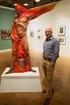 MA in Visual Arts Education (VAE) Degree Program Mission Statement: The Master of Arts in Visual Arts Education (MA-VAE) program is designed for persons currently teaching art or who have earned a teaching