
Guidelines for Occupational Therapy and Physical Therapy for Students Receiving Special Education Services in Alabama
|
|
|
- Stella Freeman
- 10 years ago
- Views:
Transcription
1 Guidelines for Occupational Therapy and Physical Therapy for Students Receiving Special Education Services in Alabama Alabama Department of Education Division of Instructional Services Special Education Services November 2008

2 ACKNOWLEDGEMENTS Special Education Services would like to thank the following professionals for giving their time to provide feedback to this document: Ms. Susan Missildine Cook Special Education Teacher Autauga County Mr. Jimmy C. Matthews Administrative Assistant to the Superintendent Troy City Ms. Patrice Murphy Physical Therapist Ms. Pamela F. Gann Special Education Coordinator DeKalb County Ms. Susan McDonald Occupational Therapist Ms. Linda G. Pearson Occupational Therapist Ms. Mary Hobson Physical Therapist Ms. Harriet Renorda McFarlin Director of Head Start Ms. Darlene H. Phillips Special Education Teacher Conecuh County Ms. Denita Johnson Occupational Therapist Ms. Angela Lindsey Meridith Special Education Teacher Butler County Ms. Donna Wooster Occupational Therapist Ms. Sheree Chapman York Physical Therapist Credit The following manual was adapted and modified for use in the development of this document: Resource Manual for Educationally Related Occupational Therapy and Physical Therapy in Kentucky Public Schools (KY OT/PT Resource Manual)

3 No person shall be denied employment, be excluded from participation in, be denied the benefits of, or be subjected to discrimination in any program or activity on the basis of disability, sex, race, religion, national origin, color, or age. Ref: Sec. 1983, Civil Rights Act, 42 U.S.C.; Title VI and VII, Civil Rights Act of 1964; Rehabilitation Act of 1973, Sec. 504; Age Discrimination in Employment Act; Equal Pay Act of 1963; Title IX of the Education Amendment of 1972: Title IX Coordinator, P.O. Box , Montgomery, Alabama or call (334)

4 Table of Contents Acknowledgements Introduction 1 Individuals With Disabilities Education Act of 2004 (IDEA 2004) Rehabilitation Act of 1973, Section 504 Purpose 2-3 SECTION I 4 Therapy under the Law 5 Background 5 School-Based Therapy 6 Key Considerations 6-7 Administration 8 Knowledge and Experience of a School-Based Therapist 8 Recruitment 9 Employment Options 9-10 Employment 10 Contract Services 10 Liability 11 Licensure Requirements 11 Supervision of Occupational Therapist/Physical Therapist Assistants 11 Orientation of New Therapists 12 Workload Considerations Materials and Equipment 13 Third Party Payment 14 Documentation Confidentiality and Release of Information 15 Occupational Therapy 16 Definition of Occupational Therapy Assessment/Evaluation 17 Components of the Occupational Therapy Evaluation 18 Analysis of Occupational Performance Gathering Background Information 20 Selecting the Appropriate Assessment Tool 21 Intervention Examples of Occupational Therapy Interventions Physical Therapy 24 Definition of Physical Therapy Physician Referral 25 Examination 25-27

5 Evaluation and Diagnosis 28 Prognosis and Plan of Care 28 Intervention Examples of Integrated Intervention in the Educational Setting, Home, and Community How Occupational Therapy and Physical Therapy Fit into the Special Education Process 32 Evaluations 32 Annual Review Termination of Services 35 Transition Services 35 SECTION II 36 Questions & Answers Regarding Occupational Therapy and/or Physical Therapy Provided in Educational Settings Resources 44 State Resources National Resources Acronyms Frequently used in the Special Education Setting 47 Acronyms Frequently used by Occupational Therapists and Physical Therapists 48 Commonly Used Assessments in OT/PT 49

6 Introduction Individuals With Disabilities Education Act The provision of occupational therapy (OT) and physical therapy (PT) as related services in special education was first required with the enactment of Public Law (PL) in This law provided the foundation for the education of children with disabilities. Many changes have occurred in the past three decades in how special education services are provided in school settings. On December 3, 2004, the Individuals With Disabilities Education Act (IDEA 2004) was enacted into law as Public Law IDEA 2004 is intended to help children with disabilities achieve high standards by promoting accountability for results enhancing parental involvement, using proven practices and materials, and providing more flexibility and reducing paperwork burdens for teachers, local school districts, and states. Enactment of the new law provides an opportunity to consider improvements in the current regulations to strengthen the federal effort to ensure every child with a disability has available a free and appropriate public education (FAPE) that is of high quality and designed to achieve high standards. The purpose of the changes in IDEA 2004 is to ensure that all children with disabilities have available to them a FAPE that emphasizes special education and related services designed to meet their unique needs and prepare them for further education, employment, and independent living. IDEA 2004 governs the provision of special education for children with disabilities ages 3 through 21. IDEA 2004 covers children with disabilities from ages 3 through 21 in any of the following thirteen disability areas: Autism Deaf-Blindness Developmental Delay (ages 3 through 9) Emotional Disturbance Hearing Impairment Mental Retardation Multiple Disabilities Orthopedic Impairment Other Health Impairment Specific Learning Disability Speech or Language Impairment Traumatic Brain Injury Visual Impairment 1

7 Section 504 Rehabilitation Act of 1973 The purpose of Section 504 of the Rehabilitation Act of 1973 is to ensure that no student with a disability (handicapped person) will be excluded from participation in, be denied the benefits of, or otherwise be subjected to discrimination under any program or activity that receives or benefits from federal financial assistance. A handicapped person is defined in Section 504 regulations as, any person who has a physical or mental impairment which substantially limits a major life activity, has record of such an impairment, or is regarded as having such an impairment. In 1992, the Office of Civil Rights clarified this definition; unless a person actually has a handicapping condition, the mere fact that he/she has a record of or is regarded as handicapped is insufficient. Also, the word handicap was replaced with disability. Unlike IDEA 2004, Section 504 does not provide a specific list of categories for disabilities with strict eligibility requirements. Section 504 includes short-term and longterm disabilities that may be interfering with the child s ability to access the general curriculum. There may be students who are not eligible for services under IDEA 2004 who may qualify under Section 504. Similar to IDEA 2004, Section 504 regulations provide that students with disabilities be placed with non-disabled peers to the maximum extent appropriate to meet their individual needs. It further requires that students with disabilities be placed in the regular environment unless it is established that a satisfactory education cannot be achieved with supplementary aids and services. If needed by the student with a disability, services, accommodations, and/or modifications must be provided in both academic and non-academic settings, including extracurricular activities. Section 504 does not require an individualized education program (IEP), but it does require its functional equivalent, which is termed a 504 plan or an educational plan. Local education agencies must have procedures for implementing Section 504 services. Purpose The purpose of this handbook is to provide a resource document to guide the provision of school-based OT/PT services to support the participation of students with disabilities in the educational setting. This handbook is not regulatory, but can serve as a source of information and suggestions for implementing OT/PT services. Its intent is to supplement, not replace, local school board policy. This handbook is written for special education administrators, providers of OT/PT services, and school personnel responsible for IEPs, and 504 plans. In addition, this handbook may benefit parents, teachers, and other professionals. 2

8 The document is divided into two sections. The purpose of the first section is to provide a basic understanding of the legal framework for the implementation of OT/PT as related services in special education. Information useful to administrators and therapists when planning and managing school-based therapy services is provided as well as information and resources for the therapists working in the education environment to have as a common framework for the delivery of these services in our state. Frequently asked questions regarding OT and/or PT in educational settings and additional resources are contained in Section II. 3

9 SECTION I 4

10 Therapy Under the Law Background Laws and regulations, both federal and state, mandate that all students have available to them a FAPE. FAPE is a statutory term that includes special education and related services to be provided in accordance with an IEP. A related service is defined as transportation and such developmental, corrective, and other supportive services as are required to assist a child with a disability to benefit from special education and includes speech-language pathology and audiology services; interpreting services; psychological services; physical and occupational therapy; recreation, including therapeutic recreation, early identification and assessment of disabilities in children; counseling services; including rehabilitation counseling; orientation and mobility services; and medical services for diagnostic or evaluation purposes. Related services also include school health services and school nurse services, social work services in schools, and parent counseling and training. Education agencies are mandated to provide the related services of OT/PT when a student requires either or both services to benefit from special education and/or if the IEP Team determines services are necessary for the student to receive a FAPE. The student s school-based therapy is based on academic and functional performance and should directly relate to and support his/her educational program. OT/PT services are provided only when a student is unable to benefit from special education and/or access the general education curriculum without these services. The educational needs of students with disabilities are best served in the least restrictive environment (LRE) by using a variety of instructional strategies, with emphasis on collaborative team models that facilitate learning in the students educational settings. The appropriateness and extent of therapy services must be related to the academic and functional needs rather than the medical needs of the student with disabilities. OT/PT services must be provided when specified in a student s IEP as defined by IDEA 2004 or in an educational plan as defined by Section 504 and its amendment. In order for students to receive OT/PT services under IDEA 2004, students first must be eligible for special education services based on eligibility requirements in the Alabama Administrative Code (AAC). OT and/or PT are considered as a related service that is necessary in order for the child to benefit from special education. In this manner, occupational therapists and physical therapists serve in a supportive role, helping students to participate in and benefit from special education. 5

11 School-Based Therapy OT/PT provided within the educational setting must be educationally relevant and necessary for the student to benefit from Alabama s educational system for all students. Several issues must be considered when determining the appropriate level of schoolbased therapy. School-based therapy involves teaming in which recommendations and decisions are made based on input from all team members in order to determine a student s total educational plan. School-based therapists identify needs of the student and assist in providing strategies on how to best capitalize on abilities and minimize the impact of the disabilities in the educational environment. The school-based therapist evaluates a student to determine abilities as well as disabilities. The school-based therapist provides data for the IEP Team to determine the adverse affect these disabilities may have on the student s performance in the educational environment. Input is gathered from teachers, parents, students, and other educational staff as to how these challenges may influence performance areas within the educational environment. The primary role of a school-based therapist is to assist students in benefiting from their educational program. A general guideline is that therapy must contribute to the development or improvement of the student s academic and functional performance. If a student has an identifiable therapy need that does not affect the student s ability to learn, function, and profit from the educational experience, that therapy is not the responsibility of the school system. Key Considerations It is imperative that therapy services do not prevent students from accessing their academic instruction. The following are key considerations for the delivery of OT/PT services in the school setting: Services are provided to enable the student to benefit from his/her special education program and facilitate access to the general education curriculum. a. Strategies should be integrated into the classroom and school environment to support learning of curriculum content. b. Interventions should support skills needed by the student for graduation with a diploma or certificate and to prepare him/her for further education, employment, and independent living. Services are provided in the student s daily educational routine. a. Skills are taught across all educational settings. 6

12 b. Therapeutic activities occur throughout the school day and are routinely implemented by instructional staff. c. Skills should be taught in naturally occurring environments. d. Skills should be generalized across different school settings, not isolated solely with the therapist in a separate area or in only one classroom. Services are provided through a team approach. a. Team members share information, strategies, and techniques to assure continuity of services. b. Educational strategies and interventions are developed and implemented jointly by team members, including the student when appropriate. Services may vary over time. a. Student therapy needs may differ in intensity and in focus during the student s school years and could differ in intensity within a school calendar year. For example, there might be the need for a therapist to provide more intensive services at the start of the school year to train new teachers and staff on appropriate strategies, with the services of the therapist to decrease when the educational team can implement the strategies with less frequent input from the therapist. b. These fluctuations are reflected in the IEP or 504 plans and should be based on the immediate educational needs at any time during the student s course of study. c. If the student no longer requires the services of an occupational therapist and/or physical therapist to benefit from special education, then services are discontinued through the IEP process. Services are provided using a variety of instructional strategies with an emphasis on an integrated collaborative service model. 7

13 Administration Knowledge and Experience of a School-Based Therapist When an education agency is hiring or contracting for services for an occupational therapist or physical therapist, both parties should discuss expectations for service delivery and distinguish between school-based and non-school-based services. Instructional focus should be on the general curriculum needs of the student. Therapists should be able to provide consultation across all curriculum areas appropriate to the needs of the student. The following knowledge and skills are recommended to ensure appropriate OT/PT services are provided in educational environments and may also be used as topics to guide interview questions: Knowledge of current federal and state regulations, local school system policies and procedures pertaining to special education and Section 504. Knowledge of educational and medical disabilities of students. Ability to select/administer appropriate assessment tools and interpret/report evaluation results correctly. Ability to evaluate the functional performance of students within an educational environment. Ability to participate in group decision making and planning of appropriate intervention strategies. Ability to integrate related services to support the student s educational goals or accommodations/modifications. Knowledge of major theories, intervention strategies, and peer-reviewed research documenting their effectiveness and the ability to relate that knowledge to the educational implications for students. Ability to plan, develop, implement, evaluate, and modify activities for student centered therapeutic intervention within the educational program. Ability to document intervention results and progress toward IEP goals, and communicate this information to the student s IEP Team. Ability to communicate effectively (in writing and orally) and work in teams with educational personnel, administrators, parents, and students. Organizational skills as they relate to documentation, scheduling, and time management. Understanding of the importance of professional growth, confidentiality, and professional ethics. 8

14 Recruitment Sources for locating therapists for school systems include home health agencies, local hospitals or rehabilitation facilities, or private employment therapists. Local Children s Rehabilitation Service (CRS) offices may be able to provide school systems with names of therapists available in the area. Universities and colleges with accredited programs in OT and/or PT may also be sources of contacts. The following schools award degrees for OT/PT: Occupational Therapy University of Alabama Birmingham Alabama State University University of South Alabama Tuskegee University Certified Occupational Therapist Assistant Wallace State Community College Faulkner State Community College Physical Therapy Alabama State University University of Alabama Birmingham University of South Alabama Physical Therapist Assistant Bishop State Community College George C. Wallace Community College Jefferson State Community College South University Wallace State Community College Employment Options Education agencies have a variety of options when acquiring therapists to provide therapy services for students. The education agency may choose to hire the occupational therapist and/or physical therapist through direct employment, either on a full-time or part-time basis, contract for services through another agency, or independently. The education agency may choose a combination of these options to meet their needs. Advantages of directly hiring an OT/PT may be increased contact with school staff, increased availability of the therapist, and flexibility of scheduling. Contracting is an advantage to the public agency when there are few numbers of students who need services. Sufficient time should be allowed for all the responsibilities of the therapist with either method of hiring. Employment In cases of direct employment, the therapist is generally a full-time employee with benefits or a part-time employee with no or limited benefits. Education agencies have the option of sharing a therapist with neighboring education agencies. Education agencies are responsible for recruitment, verification of credentials, retention, and liability of the therapist. The education agency reimburses travel expenses if the therapist travels to different schools and provides access to tools, materials, and tests for the therapist to 9

15 perform his/her work. The therapist is an integral part of the school team for cooperative planning with other staff members and for observation of students during activities. The therapist receives training directly from the education agency generally with other special education teachers and related service providers. Services are provided in educational environments as indicated in the student s IEP or 504 plan. When hiring a therapist, the education agency determines the number of hours per day the therapist will work and the number of days per week. Administrators also decide on the number of months the therapist will work in the contracted year. Additional considerations include providing continuing education, insurance, retirement, and sick leave. In certain situations, therapists salaries and benefits may need to be different from teachers salaries and benefits to attract therapists to these positions. However, school employment is attractive to many therapists because of the shortened work year, breaks during the school year, and shorter work days. Contract Services Contracted services can be provided full-time or part-time based on the education agency s needs at a given time. A contractor negotiates payment with the education agency and is responsible for his/her own taxes, health insurance, and other benefits. A contractor must be willing to make the transition to the provision of services in the educational environment and follow state guidelines for provision of OT and/or PT services. Contractors may be responsible for their own travel expenses and may furnish their own tools, materials, and tests to perform the work. A contracted therapist provides the amount of services as indicated in the student s IEP or 504 plan. A contract for services may limit the number of hours a therapist is able to work, with additional time requiring further contractual negotiations. The contract should specify the obligations of the education agency. The education agency will identify the students to be served, the therapist s work hours, and any therapist assistants that require supervision. Contracted therapists are required to follow education agency policies and procedures and assure student s confidentiality. The contractor must provide documentation of the therapists qualifications and licensure. The therapist should have orientation and training in school-based therapy services. Many aspects of a contract for therapy services are negotiable. Contractual considerations include timelines for completion of evaluations, IEPs, reports, and billing. The contract must specify the fee structure. Parties should consider whether there will be a set hourly fee or separate fees for intervention, travel, documentation, and meetings. Conditions for changing the contract to provide for more or fewer services, as well as termination of the contract, should be indicated. Before final approval, the education agency s attorney and appropriate staff should review the agreement for possible legal issues and hidden costs. 10

16 Liability The contracting therapist should carry professional liability insurance and provide the education agency with proof of coverage. The direct hire therapist may wish to carry additional liability in addition to any coverage the education agency may provide. Information on professional liability insurance can be obtained from national therapy organizations. Licensure Requirements All therapists and therapists assistants must be licensed by the appropriate Alabama State Board of Occupational Therapy or the Alabama Board of Physical Therapy. Administrators should maintain a current copy of the license of each therapist or assistant employed or contracted. Occupational therapists must participate in 30 hours of continuing education and certified occupational therapy assistant s (COTA) must participate in 15 hours of continuing education to renew licensure every two years. Physical therapists and physical therapist assistants (PTA) are required to renew licenses each year with ten hours of continuing education for physical therapist and six hours for PTAs. Therapists must follow the regulations in the OT/PT state practice acts as well as all education laws when working in the school setting. Supervision of Occupational Therapist/Physical Therapist Assistants The Occupational Therapy Practice Act 625-X directs the COTA to assist in the practice of occupational therapy only under the supervision of an occupational therapist. This supervision is to consist of at least 5 percent of work hours per month of one-to-one supervision. Supervision includes the monitoring of a student s progress, evaluation of the student s IEP or 504 plan, and determining the implementation of services by the occupational therapist. Also, the occupational therapist is to ensure that the COTA is assigned only those duties and responsibilities for which the assistant has been specifically educated and is qualified to perform. The PTA is to practice only under the direction of the physical therapist. The Physical Therapy Practice Act 700-X-.03 defines direction as the action of the physical therapist in delegating duties to a physical therapist assistant, maintaining close communication with the physical therapist assistant, and overseeing the physical therapist assistant s activities on a frequent regularly scheduled basis. The PTA may assist with but not perform evaluations of the student s abilities and disabilities. Third party payers may have specific requirements for COTA and PTA supervision. Medicaid requires direct supervision with the therapist co-signing the treatment note every sixth visit. 11

17 Orientation of New Therapists Therapists hired by the education agency will have varying experience and knowledge of the appropriate practice of related services in the school setting. Therapists should be provided with information to understand the educational requirements of providing these services. The following documents and information should be provided and reviewed when orienting new therapists to the local school system: Copy of the AAC. Copy of Mastering the Maze. Copy of Guidelines for OT/PT for Students Receiving Special Education Services in Alabama. Information related to current federal laws and regulations in special education. Detailed job description that complies with federal and state laws to define the role of the therapist and team members. Plan for evaluation of performance. Organizational chart and direct line of supervision. Personnel to contact for equipment and supply requests. Relevant forms, handbooks, and schedules. Policies and procedures, including how therapy referrals are received. Review of emergency procedures. Information regarding confidentiality. Information on access to students IEPs. Information regarding students therapy records. Workload Considerations The AAC does not provide guidance for a maximum caseload number for occupational therapy or physical therapy service providers. A therapist s caseload is determined as the result of the workload. The number of students requiring special education or 504 services that the occupational therapist or physical therapist can adequately serve is influenced by the following workload factors: Program planning and development. Pre-referral interventions. Screenings. Evaluations and re-evaluations. Intervention strategies. Writing classroom and home programs. Providing therapy as indicated in the IEP or 504 plan. Collaboration and training with school personnel, student, and parents. In service training. 12

18 IEP Team meetings. Travel between schools. Equipment and supply ordering, maintenance, and inventory. Documentation and communication of student evaluations, progress and consultations with parents and school staff. Fabrication of equipment, splints, and other assistive technology. Obtaining medical records and referrals. Consultation/planning with the education agency on issues such as evacuation procedures, bus transport of wheel chairs, etc. Consultation with equipment providers and with parent permission, consultation with medical doctors, and other agencies. Supervision of therapist assistants. Third party billing requirements. School closings due to weather or holidays, student field trips or absences, and seasonal fluctuations in workload are all variables in the process of providing services. Typical time should be considered when making schedules (i.e., the amount of time that is available to any student, whether or not the student has a disability). Compensatory services may be required for services not provided in accordance with the IEP, but there is no requirement to replace or compensate for time lost due to any of these typical time variables unless it would result in the need for extended school year services. If a lapse in services results in significant regression in skills, which cannot be recouped within a reasonable period of time, then additional services may be required. Materials and Equipment Materials and equipment to support the provision of therapy services are necessary and their purchase and storage need to be addressed by administrators and therapists. The therapists, or other staff within the education agency, may fabricate some materials that require additional workspace and special purchasing considerations. Materials and equipment should support the goals and accommodations and/or modifications as stated in the student s IEP or 504 plan. Examples of materials and equipment include the following: Positioning equipment (e.g., standards, adapted chairs, potty chairs). Self-help devices (e.g., spoons, scoop plates, zipper pulls). Mobility equipment (e.g., gait training devices, therapy equipment). Supplies for adapting materials and equipment (e.g., velcro, splinting material, strapping). Technology devices (e.g., switches, computers, word processors). Adaptive classroom tools (e.g., pencil grips, slant boards, adapted scissors). Standardized assessments (e.g., test kits and manuals). 13

19 Additionally, therapists play a valuable role in assisting school administrators in planning and implementation issues such as building modifications and new construction, special transportation, curriculum development, safety and injury prevention, and technology. Third Party Payment IDEA 2004 provides only partial federal funding to states to assist with the costs of complex services needed by children in special education. Changes in federal law have made it possible for education agencies to bill third party payers. The Code of Federal Regulations, Section [a] states that school systems may use whatever state, local, federal, and private sources of support are available in the state to meet the requirements of this part. Section [b] states that nothing in this part relieves an insurer or similar third party for an otherwise valid obligation to provide and pay for services provided to a child with a disability. Section [f] specifies that education agencies may access a parent s private insurance only if the parent provides informed consent to the school system and the school system must obtain informed consent each time they access the parent s private insurance. Education agencies must ensure that parents do not incur any expense now or in the future if private insurance is accessed. This can be a concern because of the lifetime cap on many insurance policies, limited therapy coverage, out of pocket expenses such as co-pays or deductibles, or the possibility of insurance cancellation. The school must inform the parents that all required services will be provided to the student even if the parents do not want private insurance billing. Congress has established that while state education agencies are financially responsible for educational services, in the case of a medicaid eligible child, state medicaid agencies remain responsible for the related services identified in a child s IEP if the services are covered under the state s medicaid plan. Detailed procedures and requirements for OT/PT services to be billed through Alabama Medicaid are available in the provider manual at Documentation Documentation is a necessary requirement for OT/PT services provided to students by school-based therapists. All therapy services should be documented, dated, and authenticated by the therapist or therapy assistant who performs the services. If the school system participates in the school-based Medicaid program, specific documentation is required. Specific Documentation should include: Dates and amount of service. Evaluation and plan of care. Reason(s) why therapist or student were not available for services on a scheduled date. Contacts with parents, staff, and other professionals. 14

20 Data that measures progress toward goals. Progress reports. Discharge summary. Every page of student documentation should be properly labeled with the student s name and date of birth for accuracy and identification. All student information, including therapist documentation, is subject to parental and legal review. Student confidentiality is highly regulated by state and federal laws. Therapists must have parental consent prior to releasing any student information, written or verbal, to any outside agency. Discussion with other school staff should be on a need-to-know basis only. Therapists must be knowledgeable of confidentiality requirements. Confidentiality and Release of Information The Family Educational Rights and Privacy Act (FERPA PL ) states, in part: An educational agency or institution may disclose personally identifiable information from an education record of a student without consent if the disclosure is to other school officials, including teachers, within the agency or institution whom the agency or institution has determined to have a legitimate education interest (FERPA Section 99.31). When a therapist is employed or under contract for services to students with disabilities, this creates a legitimate educational interest and allows each school in the district served by the therapist to have access to educational records of individual students. The relationship between the therapist and the education agency gives the therapist the right to have access to educational records of the students they serve without having to get parental consent. Occupational Therapy/Physical Therapy OT/PT are separate professions. Each discipline has specific areas of skill and expertise which defines their scope of practice. In Alabama, the Alabama State Board of Occupational Therapy regulates occupational therapy practices, and the Alabama Board of Physical Therapy regulates physical therapy practices. 15

21 Definition of Occupational Therapy Occupational Therapy (OT) OT means services provided by a qualified occupational therapist; and includes: Improving, developing or restoring functions impaired or lost through illness, injury, or deprivation. Improving ability to perform tasks for independent functioning if functions are impaired or lost. Prevention through early intervention, initial or further impairment or loss of function. The Alabama Practice Act for Occupational Therapy defines occupational therapy as the application of purposeful activity in which one engages for evaluation, treatment, and consultation related to problems interfering with functional performance in persons impaired or threatened by physical illness or injury; psychosocial dysfunction; congenital dysfunction; developmental and learning dysfunction; the aging process; environmental deprivation or anticipated dysfunction; in order to maximize independence, prevent disability, and maintain health. Specific occupational therapy treatment techniques include: Activities of daily living (ADL). The design, fabrication, and application of selected splints or orthotics, or both. Sensorimotor activities and exercise. The use of specifically designed goal oriented arts and crafts. Design, fabrication, selection, and use of adaptive equipment. Therapeutic activities, modalities, and exercises to enhance functional performance. Work readiness evaluation and training. An occupational therapist or occupational therapy assistant is qualified to perform the above activities for which they have received training and any other activities for which appropriate training or education, or both, has been received. No occupational therapy treatment programs to be rendered by an occupational therapist, occupational therapy assistant, or occupational therapy aide shall be initiated without the referral of a licensed physician, a licensed chiropractor, a licensed optometrist, or a licensed dentist who shall establish a diagnosis of the condition for which the individual will receive occupational therapy services. In cases of long-term or chronic disease, disability, or dysfunction, or any combination of the foregoing, requiring continued occupational therapy services, a licensed physician, a licensed chiropractor, a licensed optometrist, or a licensed dentist shall reevaluate the person receiving occupational therapy services at least annually for confirmation or modification of the diagnosis. Occupational therapists employed by state agencies and those employed by the public schools and colleges of this state who provide screening and rehabilitation services for the educationally related needs of the students are exempt from this referral requirement. 16
22 An occupational therapist is defined as a person licensed to practice occupational therapy whose license is in good standing. An occupational therapist assistant is defined as a person who assists in the practices of occupational therapy under the supervision of, or with the consultation of, a licensed occupational therapist whose license is in good standing. Occupational therapists and occupational therapist assistants work in school-based programs with children, parents, caregivers, educators, and other team members to facilitate the child s ability to engage in meaningful occupations. The OT s focus on the performance in the following areas of occupation: ADL, instrumental activities of daily living (IADL), education, leisure, play, social participation, and work. The OT service delivery process includes evaluation, intervention and outcomes. Assessment/Evaluation Once an occupational therapy evaluation is requested by an IEP Team and parental consent is obtained, the occupational therapist may begin the OT evaluation process. The OT evaluation in the school focuses on the student s ability to participate in functional school activities or for the preschool child to participate in developmentally appropriate activities. During the evaluation, the therapist must gain an understanding of the student s priorities and their difficulty engaging in occupations and activities. Evaluations addressing factors that influence occupational performance include: Performance skills (e.g., motor, process, and communication skills). Performance patterns (e.g., as habits, routines, and roles). Context (e.g., physical and social environments). Activity demands (e.g., required actions and body functions). Client factors (e.g., the mental, neuromuscular, sensory, visual, perceptual, digestive, cardiovascular and integumentary systems). Cultural contexts, physical contexts, social contexts, personal contexts, spiritual contexts, temporal contexts, and virtual contexts are all conditions that may exist within or around a child. These conditions have an influence on a child s performance and should be considered in the OT evaluation. 17
23 Components of the Occupational Therapy Evaluation AOTA s Practice Framework (AOTA, 2002) states an OT evaluation should include: 1. Occupational Profile which describes the individual and their occupations. 2. Analysis of Occupational Performance involves examining relevant performance skills and student factors that support occupational performance. The Occupational Profile is developed by gathering data from the student, family, and educational staff. There are several questions the occupational therapist can ask to assist in gathering data for the occupational profile. Who is the student? Why was the student referred to special education and /or for an OT evaluation in the school? What areas of educational occupation (ADL, education, work, play/leisure and/or social participation) are successful and what areas are causing problems? What contexts support engagement in desired educational occupations and what contexts are inhibiting engagement? What is the student s occupational history? What are the student s families and educational staff s priorities and desired target outcomes. Occupational Therapy Practice Framework: Domain and Process (AOTA, 2002) and The Guide to Occupational Therapy Practice (AOTA, 1999) form the foundation for the performance area, component, and context information provided next. Analysis of Occupational Performance (Following completion of the Occupational Profile) The Analysis of Occupational Performance is an exert from the KY OT/PT Resource Manual. A. Areas of School Occupation (Various kinds of educationally-related activities in which students engage) 1. Activities of Daily Living (personal care) 2. Instrumental Activities of Daily Living (interacting with the environment) 3. Education 4. Work 5. Play 6. Leisure 7. Social Participation 18
24 B. Performance Skills (Features of what a student does, not what a student has, related to observable elements of action that have implicit functional purposes) 1. Motor Skills a. Posture b. Mobility c. Coordination d. Strength and Energy 2. Process Skills a. Energy b. Knowledge c. Temporal Organization d. Organizing Space and Objects e. Adaptation 3. Communication/Interaction Skills a. Physicality b. Information Exchange c. Relations C. Performance Patterns (Patterns of behavior related to life activities that are habitual or routine) 1. Habits 2. Routines 3. Roles D. Contexts (Variety of interrelated conditions within and surrounding the student that influence performance) 1. Cultural 2. Physical 3. Social 4. Personal 5. Spiritual E. Activity Demands (Aspects of an activity needed to carry it out) 1. Objects and Their Properties 2. Space Demands 3. Social Demands 4. Sequence and Timing 5. Required Actions 6. Required Body Functions 7. Required Body Structures 19
25 F. Client Factor (Factors that reside within the student and may affect performance in areas of occupation. Knowledge about body functions and structures is considered when determining which functions and structures are needed to carry out an occupation and how the body functions and structures may be changed as a result of engaging in an occupation). 1. Body Functions a. Mental Functions b. Sensory Functions c. Neuromusculoskeletal Functions d. Cardiovascular, Hematological, Immunological, and Respiratory System Functions e. Voice and Speech Functions f. Digestive, Metabolic, and Endocrine System Functions g. Genitourinary and Reproductive Functions h. Skin and Related Structure Functions 2. Body Structure Categories a. Structure of the Nervous System b. Eye, Ear, and Related Structures c. Structures Involved in Voice and Speech d. Structures of the Cardiovascular, Immunological and Respiratory Systems e. Structures Related to the Digestive System f. Structures Related to the Genitourinary and Reproductive Systems g. Structures Related to Movement h. Skin and Related Structures Gathering Background Information The occupational therapist may contact IEP Team members or other relevant school staff to understand the concerns that affect occupational performance and the reasons for a referral. The expected performance as defined by the teachers and the curriculum, must be understood for a comprehensive assessment. Therapists should also review student s records. It is helpful to review work samples, looking at how the student completed the task and type and amount of assistance needed. All of the student s environments should be examined including the classrooms, cafeteria, playground, gymnasium, and other spaces. Areas to be considered may be accessibility or the degree and type of sensory stimulation in the environment. The occupational therapist should determine if any interventions have been provided to improve engagement in occupations. 20
26 Selecting the Appropriate Assessment Tool This step is important to help identify relevant tasks the student is expected to complete throughout the school day. Typical areas of assessment include: 1. Motor performance Some of the standardized tests used to measure motor performance include the Peabody Developmental Motor Scales (2 nd edition) (PDMS) (Folio and Fewell 2000) and the Bruninks Oseretsky Test of Motor Proficiency (BOTMP). Even though both of these tests evaluate a child s motor performance they do not necessarily relate to school function. Cautious interpretation of these scores is necessary. Visual Motor Tests (e.g., Developmental Test of Visual-Motor Integration [Beery, 1997]) require paper and pencil skills related to school functions, such as handwriting and tool use. 2. Sensory responsiveness A child s sensory responsiveness can be assessed using standardized interviews, inventories, or observational tests. Inventories such as the Sensory Profile (Dunn, 1999) rate sensory responsiveness in natural situations. 3. Perceptual processing Important to a child s school function is the assessment of their visual perceptual processing. Standardized assessments to measure visual perception include the Developmental Test of Visual Perception (2 nd Edition)(DTVP-II) (Hammill, Pearson and Voress, 1993) and the Motor-Free Visual Perception Test 3 (Colarusso and Hammill, 2002). The aspects of these assessments (e.g., handwriting, reading) include spatial relations, figure-ground, perception, and form constancy. 4. Psychosocial and cognitive abilities Problem solving, organizational skills, attention, and appropriate interactions with peers and adults are essential performance areas of school function. Behaviors are often the focus of the IEP because they determine the child s ability to function in a structured environment (e.g., classroom), to attend, demonstrate responsibility, positively interact with others, cope with new situations, and fit into the social norms of the classroom. Socially appropriate behavior highly related to the student s academic achievement and their ability to succeed in environments outside school (e.g., community, work) should be reviewed. Important elements of behavior that are often the focus of OT are attention and persistence, task completion, compliance, self-esteem and self-image, peer and adult interaction, problem solving and safety. Intervention School-based OT intervention focuses on the student s educational goals, and supports academic goals (e.g., organizing and manipulating materials). The process of OT includes evaluation, intervention, and outcomes. The process is intended to be dynamic and interactive in nature (AOTA, 2002). The occupational profile is the fixed starting point of the OT process. Evaluation, intervention, and outcome interact with and influence each other throughout the service delivery of OT. 21
27 The intervention process according to the AOTA Practice Framework includes the following components: Intervention plan A plan that will guide actions taken and is developed in collaboration with the student, teaching staff, and parents. It is based on selected theories, frames of reference, and evidence. Outcomes to be targeted are confirmed. Develop objectives and measurable goals with timeframes during this part of the process. Intervention implementation ongoing actions taken to influence and support improved student performance. Interventions are directed at identified outcomes. The student s progress is monitored and documented. Determine types of OT interventions to be used and carry them out. The OT should continue ongoing assessment and reassessment. Intervention review a review of the implementation plan and process as well as its progress toward targeted outcomes. Re-evaluate goals and progress and implement changes as needed. Determine the need for continuation, discontinuation, or referral to another source. The OT analyzes the supports and challenges impacting a student s ability to participate in school occupations and consider future needs to foster independent living and selfsufficiency. The table below is an exert from the KY OT/PT Resource Manual and provides an overview (not meant to be inclusive) of areas of occupation appropriate for occupational therapy intervention within the educational setting, along with examples of potential intervention strategies. Examples of Occupational Therapy Interventions Areas of School Occupation Examples of Occupational Therapy Interventions Daily Living Feeding & eating Dressing Hygiene/grooming Toileting Community living Oral-motor interventions to facilitate sucking, chewing; selection and adaptation of utensils; instruction on skill of bringing food or drink to mouth. Strategies for dressing and undressing; application and removal of personal devices, prostheses. Strategies for developing skills in combing and brushing hair, caring for skin, ears and eyes; brushing teeth; methods to clean and maintain personal care devices. Management of toileting needs (e.g., wiping, management of clothing). Identifying activity demands in the student s community. 22
28 Education & Work Access to & participation in classroom curriculum Attending to Instruction Fine motor/hand Skills Assist with adapting assignments with high or low technology; accommodate or modify specific assignments; adapt environment or child s posture so child can join peers in general education settings. Self-regulatory activities; visual cues for scheduling; strategies to enhance work completion. In-hand manipulation skills; fine motor skill development (scissors, cutting, drawing, dexterity for managing fasteners). Education & Work (continued) Play/Leisure Social Participation Handwriting/written Communication Organizational skills Functional communication Mobility/transitions Pre-vocational Utilizing toys, games and equipment during instruction Social interaction Formation of letters and numbers; use of modifications and accommodations to complete writing; including, access to technology. Management of notebooks, desk, homework assignments, backpack; preparation of work area. Access of equipment such as telephones, assistive Technology, and augmentative communication; oral-motor skills to enhance saliva control. Movement from one position to another; movement through space without bumping into walls/students; transitioning from one activity/place to another. Strategies, modifications and accommodations to match student s skills to job demands. Strategies to match student s interests, skills, and opportunities for play and leisure; assist in accessibility and accommodations in playground. Methods to access opportunities and interactions with peers and adults; skills to appropriately interact with others. 23
29 Physical Therapy (PT) Definition of PT The Alabama State Practice Act for Physical Therapy defines physical therapy as the treatment of a human being by the use of exercise, massage, heat, cold, water, radiant energy, electricity, or sound for the purpose of correcting or alleviating any physical or mental condition or preventing the development of any physical or mental disability, or the performance of neuromuscular-skeletal tests and measurements to determine the existence and extent of body malfunction; provided, that physical therapy shall be practiced only upon the referral of a physician licensed to practice medicine or surgery and a dentist licensed to practice dentistry and shall not include radiology or electrosurgery. (Alabama Physical Therapy Practice Act [1]) A physical therapist is defined as a person licensed to practice physical therapy. (Alabama Physical Therapy Practice Act [2]) A physical therapist assistant is defined as a person who assists in the practice of physical therapy and whose activities require an understanding of physical therapy but do not require professional or advanced training in the anatomical, biological, and physical sciences involved in the practice of physical therapy. The physical therapy assistant shall practice only under the direction of a licensed physical therapist. (Alabama Physical Therapy Practice Act [4]). Regardless of the setting services are to be provided, the role of the physical therapist is in the restoration, maintenance, and promotion of optimal physical function. The Guide to Physical Therapist Practice states that the physical therapist is to: Diagnose and manage movement dysfunction and enhance physical and functional abilities. Restore, maintain, and promote not only optimal physical function but optimal wellness and fitness and optimal quality of life as it relates to movement and health. Prevent the onset, symptoms, and progression of impairments, functional limitations, and disabilities that may result from diseases, disorders, conditions, or injuries. School-based physical therapy focuses on enabling the student to participate fully in his or her educational environment and achieving needed functional skills for current and further education, employment, and independent living. The school physical therapist addresses movement skills, particularly functional mobility, physical fitness to ameliorate secondary impairment and disability and improve endurance for participation, activities of daily living, and other motor needs that may be necessary for the student to benefit from special education. The Guide to Physical Therapy Practice identifies five elements of patient/client (student) care within physical therapy practice that are useful in providing therapy in the school setting. 24
30 Examination - a systematic process of performing pertinent systems review and selecting and administering tests and measurements. Evaluation - clinical judgements based on data gathered during the evaluation process. Diagnosis - assigning a label that encompasses the signs related to the impairments of the four body systems (musculoskeletal, neuromuscular, cardiopulmonary, and integumentary). Prognosis - establishing a plan of care based on the predicted optimal level of functional improvement, determination of service delivery, and frequency of service. Intervention - purposeful and skilled interaction with the patient/client, including coordination, communication, documentation, patient/client related instruction, and procedural interventions. Physician Referral In Alabama, a physician referral is required prior to an evaluation for physical therapy. While a physician referral is not required for an occupational therapy evaluation, an OT may request a referral if in his/her judgment there is such a need. The PTs recommend that the physician referral be obtained annually or earlier if a significant change in medical status such as surgery occurs. Education agency personnel may ask the parents(s) to obtain the physician referral but the education agency is ultimately responsible for obtaining the referral. Once a physical therapy evaluation is requested by an IEP Team and parental consent is obtained, the physical therapist may begin the PT evaluation process. Examination The evaluation process includes: History The history is a systematic gathering of data, from the past and the present, related to why the student may need PT. This should include interviews with teachers, other relevant school personnel, parents and the student, and a review of available records. This information is used to hypothesize possible impairments and functional limitations. Information to be gathered may include: 1. Age 2. Ethnicity 3. School 4. Classroom 5. Concerns/problems related to physical therapy 6. Home and community activities and hobbies 7. Functional status and activity level 8. Social/health habits 25
31 9. General health status 10. Medical/surgical history 11. Medications 12. Growth and development 13. Living environment 14. Family resources Systems Review The systems review is a brief or limited examination of the anatomical and physiological status of the cardiovascular/pulmonary, integumentary, musculoskeletal, and neuromuscular systems and of communication ability, affect, learning style, and cognitive abilities. Tests and Measures The student should be assessed in the educational environment. The school environment and safety considerations must be evaluated. Specific tests and measures should identify functional and developmental needs of the student, including the impairments of body structures that may cause limitations in activities and participation in school performance. Specific functional ability, and the student s strengths and needs within the education setting should be identified. A top down approach should be used. Two examples of standardized tests that would be useful in the school setting are the School Function Assessment (SFA) and the Pediatric Evaluation of Disability (PEDI). The SFA assists in determining the participation level of elementary age children in many areas of the education program such as the tasks supports the student will need, functional abilities in moving around the school environment, manipulating classroom materials, and following the rules. Functional deficits, developmental delays, the level of caregiver assistance, and the type and extent of environmental modifications in the areas of self care, mobility, and social functions can be assessed using the PEDI. Many other tests and measurements are available to determine the developmental level of a student s functioning. School therapists can access the List of Assessment tools used in Pediatric Physical Therapy at for further information on specific tests and measures. Areas of Evaluation for Physical Therapy: (Exert from the KY OT/PT Resource Manual) A. Neuromuscular 1. Developmental Reflexes Integrity 2. Muscle Tone 3. Movement Quality and Movement Patterns 4. Static and Dynamic Balance 5. Locomotion 6. Motor Learning and Motor Planning 7. General Coordination 8. Visual-Motor Integration 9. Oral-Motor Control 26
32 B. Musculoskeletal 1. Joint Range of Motion and Joint Mobility 2. Static Postural Alignment 3. Strength 4. Physical Stature C. Cardiopulmonary 1. Endurance 2. Respiratory Status D. Integumentary 1. Skin Integrity 2. Circulation E. Functional Motor Skills in Educational Environments 1. Mobility a. Functional Movement Skills: Evaluate the student s ability to move within and around the educationally related school, home, and/or community environments. Evaluate all types of mobility (i.e., rolling, crawling, assisted or independent walking, and wheelchair mobility). Assess safety and endurance with these movments. b. Architectural Accessibility: Evaluate architectural barriers within the student s educational environment including the home, school, and/or the community. c. Utilizing appropriate assistive technology: Evaluate the student s need for and use of assistive technology devices (i.e., walkers, wheelchairs, prosthetic, and orthotic devices). Assess fit and safety. d. Transfers: Evaluate the student s ability to perform educationally related transfers (i.e., to and from the desk, chair, toilet, floor, bus, cafeteria seats, and car). 2. Positioning a. Independent sitting, standing, etc.: Evaluate the student s ability to achieve and maintain these positions independently as required to benefit from his/her educational program. b. Assisted alternative positions: Evaluate the student s need for alternative positions and/or assistive positioning devices within the educational environment (i.e., prone standers, side lyers, adapted tables, and chairs). c. Transportation: Evaluate the student s need for specialized and/or adaptive positioning during transportation. Assess ability to negotiate bus steps. 27
33 Evaluation and Diagnosis The physical therapist synthesizes the information gathered during the examination to determine impairments and limitations. The diagnosis is then established to identify the primary dysfunctions the student exhibits. Prognosis and Plan of Care The last two elements of the student s physical therapy assessment require the input of the IEP Team. The participation and functional needs of the student, as related to the educational setting, will be identified during the IEP meeting with information from all team members. Once the student s goals are identified, the team determines what supports are needed and which team members will be responsible. The anticipated frequency of service(s), amount of time, beginning/ending date, and location of service(s) is an IEP Team decision also. The physical therapist is legally obligated to the delivery of therapy as written in the IEP. Any training the PT will provide should be included in the written IEP. The use of assistive devices to provide adequate support, positioning, and function of the student during educational activities should also be documented. The prognosis is the determination of the predicted level of improvement in function the student may achieve and the amount of time needed to reach that level. Physical therapists play an important IEP Team role in this area as they possess unique knowledge concerning the diagnosis and expected functional outcome abilities that may be anticipated for the student. The plan of care will identify expected outcomes and interventions to be used. It will incorporate recommendations of the IEP Team and address the IEP goals in which the therapist shares responsibility. Intervention School-based physical therapy intervention focuses on enabling the student to participate fully in their educational environment and achieving needed functional motor skills for further education, employment, and independent living. Intervention in the educational setting is the purposeful interaction of the physical therapist with the student and members of the IEP Team, as appropriate, using various physical therapy techniques, procedures, and instruction to achieve identified motor skill related goals and participation needs. Intervention involves communication, coordination, documentation, student related instruction, and procedural interventions implemented by the physical therapist. Interventions should occur as much as possible in naturally occurring settings throughout the school day and with the routine implementation by instructional staff. Coordination, communication, and documentation in the educational setting may include: Participation and ongoing communication with other IEP Team members. Reporting required by the education agency. Collaboration and coordination with other agencies and service providers. Data collection. Documentation of student management. Referrals to other professionals and resources. 28
34 Student-related instruction involves the education, instruction and training of the student, other IEP Team members and instructional staff regarding: Information on the current medical condition necessary to provide services to the student (unable to take weight on legs in standing, no movement in legs, etc.). Health, welfare, and fitness issues related to the student s diagnosis. Risk factors educational staff should be aware of as related to the student s diagnosis. Providing assistance and training for functional skills to be implemented by the educational staff, use of adaptive materials and equipment, proper alignment, etc. Transition of skills across settings (home and community). The most common procedural interventions implemented by the physical therapist in the educational setting are therapeutic exercise, functional training, and adaptive devices prescription and/or fabrication. Intervention in the educational environments is usually best delivered in an integrated approach, combining direct physical therapy, consultation with all IEP Team members, and monitoring of the student s needs and abilities. The method of service delivery and the amount of therapy can vary throughout the school year depending on the student s needs. The method and amount of therapy must be reflected in the IEP. Examples of Integrated Intervention in the Educational Setting, Home, and Community: (Adapted from the KY OT/PT Resource Manual) Area of Functional Motor Examples of Integrated Interventions in Education, Home, and Community Settings Daily Living Toileting Transferring on and off toilet. Positioning on the toilet. Environmental lay out for accessibility. Student who is independent in self catherization, using a changing table for support is taught transfer to commode. Student is now able to use community restrooms. Aide taught to assist student in restroom with transfer and clothing management, giving the least needed assistance. Physical therapist works with student weekly, then decreases the level of assistance to monthly. Student becomes independent during the school year. Education & Work Architectural accessibility/safety Adapting the barriers within the student s, educational environment including the home, school, and/or community (i.e. ramps, stairs, curbs, heavy doors, rough ground). Physical therapist provides information to parents on 29
35 home ramp and door knob modifications so student can use independent skills in the home. Positioning Assessing student s ability to achieve and maintain independent sitting. Student is provided with a wedge for floor sitting during circle time to improve posture, stability, and hand use. The walker is positioned around the regular classroom chair and lunchroom seat for safety. A foot support is provided for stability in the lunch room. Standing and need for alternative positions and/or assistive positioning devices (i.e. standers, side layers, adapted tables, and chairs). Student who has limited ability in standing and walking is provided with a standard to use daily in the classroom to provide appropriate stretching, alignment, and an alternate position. Gross motor Mobility/transition Modifying activities so child can join peers in regular education. Assessing the student s ability to move within and around the education related school, home, and/or community environment. Addressing all types of mobility (i.e. assisted or independent walking or moving, wheelchair mobility). Student who is learning to walk without using a walker is initially encouraged to practice walking independently in the classroom. The physical therapist works with the student to improve balance, strength, and alignment so that the student can walk for longer distances in other environments. Transfers Assessing the student s ability to perform educationally related transfers (i.e. to and from desk, chair, toilet, floor, bus, cafeteria seat, car). The physical therapist provides instruction to staff on proper body mechanics, level of support, and safety. 30
36 Assistive devices Pre-vocational Assessing the need and use of assistive devices(i.e. walkers, wheelchairs, prosthetic and orthotic devices). The physical therapist works with physicians, CRS, and third party payers to obtain appropriate walker and wheelchair for student. Suggesting strategies, modifications, accommodations to match student s skills to demands. Transportation Consulting on the need of specialized and/or adaptive positioning during transportation. Physical therapist assesses safety and adequate support of a student s wheelchair for school bus transportation. Play and Leisure Utilizing toys, games, equipment during instruction Physical education or playground Student in power wheelchair practices on/off school bus ramp each day to help prepare for independent use for transportation. Assessing functional abilities. Assisting in accessibility and accommodations on playground. Physical therapist notes drop off on edges of sidewalks, emphasizing potential hazards for students in wheelchairs and for those who use walkers. School maintenance staff is notified to rectify the situation. Physical therapist consults with Physical Education (PE) teacher to incorporate strengthening exercises for upper body for students in wheelchairs. The physical therapist provides accommodations/modifications fro student to participate in PE. 31
37 Evaluations How Occupational Therapy and Physical Therapy Fit into the Special Education Process OT and/or PT evaluations are requested when IEP Teams require additional information concerning student performance in areas that impact their participation in the educational setting. A child may need an OT and/or a PT evaluation if there are reasons to suspect that there may be gross motor, fine motor, self-help, sensory integration problems, etc., that prevent the child from benefiting from special education. School-based therapists are expected to evaluate the student s performance within the educational environment to determine the student s strengths and challenges. The goals of the evaluation are to: Identify desired outcomes as they relate to the student s academic success. Identify functional skills or barriers that impact the student s access to his/her educational program and/or educational environment. Assist the IEP Team in developing strategies to bypass barriers and/or improve performance. Assist the IEP Team in developing an intervention plan with strategies. Parental consent is required prior to initiation of the evaluation. If there is a current evaluation from an outside source that contains educationally relevant data, the IEP Team, including the therapist, must consider the information as part of the evaluation. Educators and parents find it helpful to have OT/PT evaluations and findings reported in layperson terms. Medical terms should be explained by definition or by application to the educational setting. The evaluation may include recommended services, and/or frequency of services. These recommendations should be considered by the IEP Team. However, the IEP Team determines what services are most appropriate during the development of the IEP. If the therapist is one of a team of individuals conducting a comprehensive evaluation, his/her information may be consolidated into an integrated eligibility report along with other team members evaluation results. Annual Review A student s IEP must be reviewed and updated at least once a year by the IEP Team. The IEP Team is composed of the following persons: The parents of a child with a disability. Not less than one regular education teacher of the student (if the student is, or may be, participating in the regular education environment. Not less than one special education teacher of the student, or where appropriate, not less than one special education provider of the student. A representative of the education agency who is qualified to provide, or supervise the provision of, specially designed instruction to meet the unique needs of students with disabilities. Is knowledgeable about the general education curriculum. 32
38 Is knowledgeable about the availability of resources of the education agency. Has the authority to commit agency resources and be able to ensure that IEP services will be provided. An education agency may designate a public agency member of the IEP Team to also serve as the agency representative, if the above criteria is satisfied. An individual who can interpret the instructional implications of evaluation results, who may already be a member of the team that is described under this section of required members of an IEP Team. At the discretion of the parent or the agency, other individuals who have knowledge or special expertise regarding the student, including related services personnel, as appropriate. The determination of the knowledge and special expertise of any individual must be made by the party ( parents or public agency) who invited the individual to be a member of the IEP Team. Whenever appropriate, the student with a disability. The education agency must invite a student with a disability to attend the student s IEP Team meeting if a purpose of the meeting will be the consideration of the postsecondary goals for the student and the transition services needed to assist the student in reaching those goals. To the extent appropriate, with the consent of the parents or a student who has reached the age of majority, the public agency must invite a representative of any agency that is likely to be responsible for providing or paying for transition services. It is the responsibility of the IEP Team to determine the student s special education program and the need for a related service(s). The IEP Team must make the decision as to whether or not a related service is needed in order for the student to benefit from special education. The IEP Team is the only group of people that can make this decision. No one person or one team member can make this decision alone. Occupational therapists and/or physical therapists may be requested to attend the IEP Team meeting when they have been involved in the evaluation of a student and/or when OT and/or PT is a possible recommended service for the student. If the occupational therapist and/or physical therapist is unable to attend the IEP meeting, the evaluation(s) and other written reports supplied by the therapist should be used in the decision-making process. If the IEP Team has determined that a related service(s) is needed to assist the student to benefit from the special education program, the IEP Team should discuss. Anticipated Frequency of Service(s) how often the services will be provided (e.g., annual, bi-monthly, daily). Amount of Time reflects minutes per session. Beginning/Ending Date the start to finish of service(s). Location of Services should list the specific location where the services will be provided (e.g., general education classroom, resource room, school bus, lunch room, and gym). Identification of personnel for delegation of tasks (occupational therapist, physical therapist, COTA, PTA, classroom teacher, paraprofessional, physical education teacher, adapted physical education teacher, etc.) The IEP Team determines who is responsible for implementing the goals in the student s IEP. There may be, and usually is, more than one person responsible for carrying out activities aimed at achieving the goals and benchmarks. 33
39 The IEP Team must keep in mind that the purpose of therapy provided in an educational setting is to provide the required OT and/or PT services in order for the student to benefit from special education. Some students with disabilities may have a medical condition or disability, identified by a medical doctor or facility, which does not interfere with his/her educational performance. The IEP Team may determine that this student does not require OT and/or PT in order to benefit from the special education program. The student s family may pursue therapy outside of the educational program. Upon request, the IEP Team and/or school personnel may assist the family by providing a list of therapists or information regarding therapy resources. Other students with disabilities may have a medical diagnosis which significantly affects their educational performance. These students may need OT and/or PT services in both medical and educational settings. In such cases, the occupational therapist and/or physical therapist would concentrate on skills necessary to allow the student to benefit from special education. In situations where the student receives educational therapy services through the school system and medical therapy services outside the school system, it would be appropriate for the two therapists to communicate with each other. Related services cannot be determined on a categorical basis, e.g., all students classified as multidisabled automatically receive physical therapy. Instead, the receipt of educationally related services are provided according to the documented needs of the student as determined by the IEP Team, not based on his/her area of disability. 34
40 Termination of Services At any time that there is a need to change the OT and/or PT services being provided by the education agency, the IEP Team should reconvene. There are several reasons why the services being provided may need to be altered. If there is a recommendation to terminate a related service(s) which would possibly constitute a significant change in the student s educational program, the IEP Team must meet to consider the recommendation. The IEP Team determines the termination for a related service. No one person or one team member can make this decision alone. The IEP Team is the only group of people that can make this decision. The IEP team should consider terminating the OT and/or PT services if: 1. The student has accomplished the IEP goals for which the therapy was necessary and therapy will no longer have an impact on the child s functioning in special education, i.e., services are no longer necessary to meet the remaining IEP goals. 2. The student performs at a standard expected of his or her typical peers. 3. The student is no longer making significant progress on established objectives despite changes in intervention strategies. 4. The student continues to make gains but there is no evidence that the OT and/or PT interventions are related to the gains. 5. The identified priority skills are no longer a concern within the student s educational context. 6. The student expresses a desire to discontinue services. 7. The student is no longer eligible for special education and therefore no longer eligible for a related service under IDEA When determining the appropriateness of terminating services the student needs, the context for performance, and the future needs of the student should be considered. Transition Services The transition process from school to adult life begins formally at age 16 and must be addressed in the IEP at this time. Occupational therapists and physical therapists can evaluate the student in their relevant environments and provide input and intervention for mobility, biomechanics, assistive devices, architectural barriers, and public transportation. Students and families should be educated on activities to promote life long fitness, optimum health, and prevention of secondary impairments associated with disability. 35
41 SECTION II 36
42 Questions & Answers Regarding OT and/or PT Provided in Educational Settings 1. When might a student need OT and/or PT services? OT and/or PT may be needed when the IEP Team has a concern about a student s educational program which relates to, but not limited to, any of the following areas: Self-help Skills Environmental Adaptations Gross Motor Skills and Coordination Adaptive Equipment Communication Prevocational and Vocational Skills Functional Mobility Positioning Sensory Processing Behavior and Attention Fine Motor and Visual Motor Skills Physiological Functioning 2. What are the differences between therapy as a related educational service and therapy as a medical rehabilitation service? When occupational therapy, physical therapy, and other therapies are related educational services, decisions regarding what therapy is provided, how it is provided, and who is to provide the therapy are directly tied to the student s overall educational program. The IEP Team members and school staff responsible for IEP implementation support foster the attainment of these educational goals. Therapy and other related services thus become a means or method to attain educational goals rather than the focus of separate goals. School-based therapy is then integrated into the student s educational program as a means to enhance functioning and attain educational goals. Clinic-/hospital-based therapy is based on a medical model of intervention. Intervention is aimed primarily at improving functioning in skills that may or may not relate to the school setting. Historically, medical rehabilitation services have not been directed toward educational goals or the natural environment in which the individual must function. Using this isolated therapy model for students with more severe and multiple disabilities often does not emphasize the carryover and/or generalization needed by the student for daily functioning or attainment of educational goals. 37
43 3. What if a special education student could benefit from both educationally related and medically related therapy services? Is the school system required to provide both under IDEA 2004? The school system is required to provide those therapy services that the IEP Team determines are necessary to benefit from special education. 4. If a physician states that a student is eligible for a particular service, does that make the student eligible in the educational setting? The education agency must consider reports from sources outside the school system. These reports should be submitted to the IEP Team. The IEP Team/Eligibility Committee is the only group that can determine a student eligible for special education services. The IEP Team determines the need for a particular related service(s). 5. How does the IEP Team determine if the need for a particular related service(s) is educationally related? If a related service is needed in order for the student to benefit from special education, then it is considered to be educationally relevant. 6. May the parent be held responsible for payment of a related service? No. The education agency is responsible for providing a FAPE and may utilize available resources to do so. For those education agencies participating in the Medicaid/Third-Party Billing Program, Medicaid and other third-party resources may be utilized to pay for services provided. If a related service is identified on the IEP, the education agency must be responsible for provision of the service(s). 7. How do I answer parent s demands for the school system to pay for OT and/or PT? The education agency is required to provide therapy if needed to support the IEP goals. If the parent chooses to seek additional services outside of school, the education agency is not obligated to pay for these services. 8. What do I need to know if the school system bills Medicaid for OT and/or PT services? Check with your education agency for procedures to follow if they are billing Medicaid for therapy. You can find further information on the Medicaid Website at 9. Can the IEP Team avoid recommending a related service if that service is not available in the education agency? 38
44 No. Services deemed necessary by the IEP Team must be provided. The education agency should contract for services if they are not provided within the education agency. 10. Should an OT and/or PT evaluation be included in the profile section of the IEP? The profile section of the IEP should include educational assessment data to support the need for a particular related service. The assessment data may include information from the evaluation(s) completed by the occupational therapist and/or physical therapist, teacher input, and any other relevant information. 11. Should OT and/or PT be listed as separate areas with goals and benchmarks? No. Therapy and other related services are considered to be a means or method to attain educational goals rather than the focus of separate goals and benchmarks. 12. Do goals need to be written for physical therapy or occupational therapy? No. OT/PT are related services that are needed to assist the student to benefit from special education. Related services are documented on the goals page of the IEP in the Related Services section. Anticipated Frequency of Service(s), Amount of Time, Beginning/Ending Date, and Location must be listed for each related service. 13. Must the IEP specify the amount of time services are provided or may it simply list the services to be provided? The amount of time services are to be provided must be stated in the IEP so that the level of the education agency s commitment of resources will be clear to parents and other IEP Team members. The amount of time to be committed to each of the various services to be provided must be appropriate to the specific service and stated in the IEP in a manner that is clear to all who are involved in both the development and implementation of the IEP. The amount of a special education or related service to be provided to a child may be stated in the IEP as a range (e.g., occupational therapy to be provided three times per week for minutes per session) only if the IEP Team determines that stating the amount of services as a range is necessary to meet the unique needs of the child. For example, it would be appropriate for the IEP to specify, based upon the IEP Team s determination of the student s unique needs, that particular services are needed only under specific circumstances, such as the occurrence of a seizure or of a particular behavior. A range may not be used because of personnel shortages or uncertainty regarding the availability of staff. 39
45 14. What is meant by the terms Anticipated Frequency of Services, Amount of Time Beginning/Ending Date, and Location of Service(s)? Anticipated Frequency of Service(s) defines how often the service(s) will be provided (e.g., annual, bi-monthly, daily). Amount of Time is the minutes per session. Beginning/Ending Date is the start to finish of service(s). Location of Service(s) is where the services will be provided (e.g., general education classroom, resource room, school bus, lunch room, and gym). 15. How does the IEP Team know how much OT and/or PT is appropriate? The IEP Team should set a goal(s) which is a reasonable expectation and determine what related service(s) the student needs in order to achieve the expected goal. The IEP Team then looks at the student s total program, including the amount and type of related services, in order to reasonably calculate the amount of service(s) needed to achieve the goal. 16. Can an education agency change from providing direct services to a student to a consultative model for that particular student? The IEP Team must make that decision. No one person can unilaterally make that decision. If a student needs one-on-one therapy by a licensed occupational therapist or physical therapist and the school system has a policy that all students would be served on a consultative model, the policy would violate IDEA If a student is receiving OT and/or PT through a monitoring status, how often would that occur? The frequency of services should be individualized and stated in the IEP. 18. Can education agencies provide OT and/or PT to only certain disability areas? No. Related services may not be determined on a categorical basis. Related services must be determined on an individual basis by the IEP Team. Any special education student may receive a related service(s) if the IEP Team determines that the service is needed to assist the student to benefit from special education. 19. May education agencies establish required prerequisite skills for receiving related services? No. The Office of Special Education Programs (OSEP) states, Any policy or procedure which interferes with the authority of the IEP Team to determine a student s need for related services in a manner consistent with the requirements of IDEA 2004 would be in conflict with federal law. For example, an education agency may not have a policy that states only multidisabled students may receive OT and/or PT. 40
46 20. Must related services(s) personnel attend IEP meetings? No, it is not required that they attend, but education agencies are encouraged to involve related service personnel in IEP development to the greatest extent possible. 21. Does special education services have a specific state required form or format for OT and/or PT evaluations? No. 22. Does the education agency have to implement services provided under Part C (e.g., a two-year-old who has physical therapy written into his/her Individualized Family Service Plan [IFSP]) once the student qualifies under Part B, IDEA 2004? No. Part C (birth-3) and Part B (3-21) regulations differ. Part B of IDEA 2004 says that a student must be determined eligible for special education before a related service(s) may be provided. Once eligibility has been determined, it is the responsibility of the IEP Team to determine the services needed based on the individual needs of the student. 23. Can a three- or four-year old student receive only a related service(s)? No. Part B of IDEA 2004 says a student must be determined eligible for special education before a related service(s) may be provided. 24. What happens if an education agency loses a therapist? The education agency must locate another therapist to provide the services to meet the needs of students who are to receive services. 25. If therapy services are contracted, who supervises the therapists? Each education agency will need to make that decision. The state licensure boards have rules requiring who can supervise and the amount of supervision required for COTA s and PTA s. 26. What guidelines do occupational therapists and physical therapists follow? They are required to follow the federal and state rules and regulations for special education. They are also required to abide by the rules and regulations of their practice acts. This document is provided as another tool in interpreting rules and regulations for Alabama. 41
47 27. What is a COTA? The acronym COTA stands for a Certified Occupational Therapy Assistant. They have an associate s degree as an occupational therapy assistant. They must be supervised by a licensed occupational therapist. 28. What is a PTA? The acronym PTA stands for a Physical Therapy Assistant. They have an associate s degree as a physical therapy assistant. They must be supervised by a licensed physical therapist. 29. Can there be occupational therapy/physical therapy forms with an assessment area to be given to the teacher in order to officially notate progress on midquarter, quarterly reports as well as end of year progress? There are no state mandated forms for therapy progress. 30. Can a classroom teacher be responsible for carrying out OT and/or PT goals and objectives? OT and/or PT are considered to be a means or method to attain educational goals rather than the focus of separate goals. The IEP Team determines the person responsible for implementing the goals. Classroom staff can carry out recommended activities that will assist the student to benefit from special education; however, it is not considered to be direct OT and/or PT when carried out by someone other than the occupational therapist, occupational therapist assistant, physical therapist, or physical therapist assistant. 31. If an occupational therapist and/or a physical therapist wants a teacher to continue daily therapeutic exercises with a student, is there anything the teacher should not do from a legal standpoint? First, the therapist should provide documented training for the teacher regarding any activities they may request of the teacher. If a teacher is not comfortable with any procedure or exercise the teacher should request additional training before implementing any activities. 32. What if a student is accidently injured during therapy or classroom activities? Follow the education agencies procedures on how to handle accidents or injuries on the school campus. 42
48 33. Can a student receive OT for handwriting problems only? If there is no other disability and the student does not qualify for special education, the student cannot receive OT for handwriting. 34. When parents request to have their child receive a particular treatment technique or methodology, such as sensory integration, how should the IEP Team respond? Sensory integration and other treatment methodologies such as neurodevelopmental treatment (NDT) are just particular frames of reference or treatment perspectives which might be used by an occupational therapist or a physical therapist in the intervention process. In education agencies, the focus of OT/PT is on the child s ability to function in the educational environment. As long as the child s educational needs are being appropriately met, the school-based occupational therapist/physical therapist is operating within their scope of practice and training. Therapists use their professional judgment, evaluation data, and expected outcomes to select the particular frame of reference, which will guide the intervention. 43
49 RESOURCES State Resources AIDB: Alabama Institute for the Deaf and Blind Alabama Department of Mental Health and Mental Retardation Alabama Head Injury Foundation ASBOT: Alabama State Board of Occupational Therapy Alabama State Department of Special Education ALOTA: Alabama Occupational Therapy Association ALAPTA: Alabama Physical Therapy Association Children s Health System (Children s Hospital Birmingham) CRS: Children s Rehabilitation Services Civitan International Research Center Birmingham DHR: Department of Human Resources Easter Seals of Alabama Glenwood School Head Start Kiwanis Club Lions Club Medicaid Respite Care Shriner s STAR: Statewide Technical Access and Response for Alabamians with Disabilities State of Alabama Board of Physical Therapy 44
50 TASC: Technological Assistance for Specialized Consumers VRS: Vocational Rehabilitation Services National Resources: ALPHASMART This Web site has information on writing tools and accessories to meet individuals unique needs. AOTA: American Occupational Therapy Association This Web site provides news updates, conference information, publications, continuing education, leadership, governance, and more. APTA: American Physical Therapy Association This Web site provides information on membership, leadership, practice, professional development, education programs, advocacy, and more. Cerebral Palsy Centers United Cerebral Palsy (UCP) is the leading source of information on cerebral palsy and is a pivotal advocate for the rights of persons with any disability. As one of the largest health charities in America, the UCP mission is to advance the independence, productivity and full citizenship of people with disabilities through an affiliate network. CLOSING THE GAP Closing the Gap is an organization started by parents. There is a yearly conference in Minneapolis. This site has a resource catalog and the listing of vendors for software and hardware, prices, and more. COUNCIL FOR EXCEPTIONAL CHILDREN The Council for Exceptional Children is the largest international organization dedicated to improving educational outcomes for individuals with disabilities. DISABILITY SOLUTIONS This free publication is a good resource for families and others interested in Downs Syndrome and related disabilities. DRAGON SYSTEMS This Web site provides solutions for speech. EVIDENCE-BASED PRACTICE The APTA Hooked on Evidence Web site represents a "grassroots" effort to develop a database containing current research evidence on the effectiveness of physical therapy interventions. INCLUDING YOUR CHILD This document is published by the U.S. Department of Education to assist parents of children with disabilities. 45
51 LDONLINE LDOnline is an interactive guide to learning disabilities for parents, teachers, and children. Subscribe to its free newsletter. MICROSOFT Microsoft s Accessibility Web site has information regarding accessibility in Microsoft products, a listing of assistive technology products, and case studies and articles. OSEP The Office of Special Education The Office of Special Education Programs (OSEP) is dedicated to improving results for infants, toddlers, children, and youth with disabilities ages Birth through 21 by providing leadership and financial support to assist states and local systems. OSERS The Office of Special Education and Rehabilitative Services is committed to improving results and outcomes for people with disabilities of all ages. PARENT ADVOCACY COALITION FOR EDUCATIONAL RIGHTS (PACER) PACER is a nonprofit organization that helps parents and families of children with disabilities. It has 25 programs assisting individuals with or without disabilities. THE NATIONAL INFORMATION CENTER FOR CHILDREN AND YOUTH WITH DISABILITIES (NICHCY) - NICHCY is the national information and referral center that provides information on disabilities and disability-related issues for families, educators, and other professionals. WRIGHTS LAW Pete Wright is an attorney who has represented children with disabilities for more than 20 years. Pam Wright is a psychotherapist and the editor of The Special Ed Advocate, the online newsletter about special education and advocacy issues published by Wrightslaw. Hundreds of articles, cases, newsletters, and other information about special education law and advocacy in the Wrightslaw libraries can be accessed. Subscribe to the free newsletter at 46
52 Acronyms Frequently used in the Special Education Setting AAC Alabama Administrative Code ADA American with Disabilities Act ADRS Alabama Department of Rehabilitation Services AOD Alabama Occupational Diploma APE Adaptive Physical Education AT Assistive Technology BBSST Building-Based Student Support Team CFR Code of Federal Regulations COTA Certified Occupational Therapy Assistant CRS Children s Rehabilitation Service CTIP Career Technical Implementation Plan DB Deaf-Blindness DD Developmental Delay ED Emotional Disturbance EI Early Intervention ESL English as a Second Language FACE Functional Assessment of the Classroom Environment FAPE Free Appropriate Public Education HI Hearing Impairment IDEA 2004 Individuals with Disabilities Education Act IEP Individualized Education Program LEA Local Education Agency LEP Limited English Proficiency LRE Least Restrictive Environment MD Multiple Disabilities MR Mental Retardation NCLB No Child Left Behind OHI Other Health Impairment OI Orthopedic Impairment OT Occupational Therapy PT Physical Therapy PTA Physical Therapy Assistant SAT 10 Stanford Achievement Test 10 SDE State Department of Education SES Special Education Services SIG State Improvement Grant SLD Specific Learning Disabilities SLI Speech/Language Impairment SSR Student Services Review TBI Traumatic Brain Injury VI Visual Impairment VRS Vocational Rehabilitation Service 47
53 Acronyms Frequently used by Occupational Therapists and Physical Therapists ADL AFO AROM CP FROM FWB GSW I IADL KAFO L LE LTG Max. MD Min. Mod. MVA PROM PWB R ROM SMO STG UE W W/C WNL W/O X Activities of Daily Living Ankle Foot Orthosis Active Range of Motion Cerebral Palsy Functional Range of Motion Full Weight Bearing Gun Shot Wound Independent Instrumental Activities of Daily Living Knee-Ankle-Foot Orthosis Left Lower Extremity Long Term Goal Maximum Assistance Muscular Dystrophy Minimum Assistance Moderate Assistance Motor Vehicle Accident Passive Range of Motion Partial Weight Bearing Right Range of Motion Supramalleolar Orthotic Short Term Goal Upper Extremity With Wheelchair Within Normal Limits Without Times 48
54 Commonly used Assessments in Occupational Therapy and Physical Therapy BOTMP DTVP ETCH GMFM HELP MAP MMT MVPT PEDI PDMS SFA SIPT SIT TVMS TVPS VMI Bruninks Oseretsky Test of Motor Proficiency Developmental Test of Visual Perception Evaluation Tool of Children s Handwriting Gross Motor Function Measure Hawaii Early Learning Profile Miller Assessment for Preschoolers Manual Muscle Testing Motor-Free Visual Perception Test Pediatric Evaluation of Disability Inventory Peabody Developmental Motor Scales School Function Assessment Sensory Integration and Praxis Test Sensory Integration Test Sensory Profile Test of Visual Motor Skills Test of Visual Perceptual Skills Vineland Berry-Buktenica Developmental Test of Visual-Motor Integration 49
SPECIAL EDUCATION AND RELATED SERVICES
 i SPECIAL EDUCATION AND RELATED SERVICES Updated May 2008 i It is the policy of the South Dakota Department of Education, Office of Educational Services and Supports to provide services to all persons
FREQUENTLY ASKED QUESTIONS ABOUT PHYSICAL THERAPY, OCCUPATIONAL THERAPY, AND ADAPTED PHYSICAL EDUCATION SERVICES
 FREQUENTLY ASKED QUESTIONS ABOUT PHYSICAL THERAPY, OCCUPATIONAL THERAPY, AND ADAPTED PHYSICAL EDUCATION SERVICES 1. What is adapted physical education? Adapted physical education is a diversified program
Lock in Your Team: The Role of the School Nurse in Special Education
 Lock in Your Team: The Role of the School Nurse in Special Education 2009 National Alliance for Medicaid in Education Thursday, October 15, 10:45 AM 12:15 PM Derby Janet Lowe, LSN, CPN, MA Lock In : To
NEW YORK STATE MEDICAID PROGRAM REHABILITATION SERVICES POLICY GUIDELINES
 NEW YORK STATE MEDICAID PROGRAM REHABILITATION SERVICES POLICY GUIDELINES Version 2015-1 Page 1 of 11 Table of Contents SECTION I REQUIREMENTS FOR PARTICIPATION IN MEDICAID 3 QUALIFIED PRACTITIONERS. 3
Related Services: How Do Special Needs Education Relate to Your Child?
 Related Services: How Do Special Needs Education Relate to Your Child? Family Driven Non-Profit 501(c)3 What makes FND unique is that the majority of our Board of Directors, all of our Management Staff
Occupational & Physical Therapy Guidelines for Service Provision within the Schools
 1 Occupational & Physical Therapy Guidelines for Service Provision within the Schools 2012 2 Introduction* Purpose The purpose of this document is to provide guidance regarding school-based Occupational
Q&A: Related Services
 Q&A: Related Services The (MDE), Division of Compliance and Assistance, has developed this document to assist school districts and parents who have raised questions about related services. The intention
OCCUPATIONAL THERAPY AND PHYSICAL THERAPY
 Arizona Department of Education Tom Horne, Superintendent of Public Instruction AZ-TAS OCCUPATIONAL THERAPY AND PHYSICAL THERAPY Processes and Procedures for Services in Public Schools Exceptional Student
EPPING SCHOOL DISTRICT OCCUPATIONAL THERAPIST JOB DESCRIPTION
 EPPING SCHOOL DISTRICT OCCUPATIONAL THERAPIST JOB DESCRIPTION TITLE: OCCUPATIONAL THERAPIST (OT) GENERAL DESCRIPTION: The Occupational Therapist provides services for the purpose of promoting health and
Adaptive Physical Education
 Adaptive Physical Education Adapted Physical Education - APE Adapted physical education is a diverse program of developmental activities, exercises, games, rhythms, and sports designed to meet the unique
September 13, 2011 ASSEMBLY BILL 114: NONPUBLIC AGENCY CERTIFICATION
 Page 1 September 13, 2011 Dear County and District Superintendents, Special Education Local Plan Area Directors, Special Education Administrators at County Offices of Education, Charter School Administrators,
Side-by-side Comparison of Early Intervention and Preschool Special Education
 NM Part C Early Intervention Procedures - Appendix A. Side-by-side Comparison of Early Intervention and Preschool Special Education The following is a side-by-side comparison of: Early intervention services
Annual Public Notice of Special Education Services and Programs for Students with Disabilities
 1 Annual Public Notice of Special Education Services and Programs for Students with Disabilities Mastery Charter School publishes the following Annual Notice in the school s Parent-Student Handbook and
GUIDELINES AND SERVICES FOR OCCUPATIONAL THERAPY AND PHYSICAL THERAPY
 GUIDELINES AND SERVICES FOR OCCUPATIONAL THERAPY AND PHYSICAL THERAPY Linda Paule, Coordinator San Bernardino City Unified School District Dr. Patty Imbiorski, Director Special Education TABLE OF CONTENTS
CHILD FIND POLICY and ANNUAL PUBLIC NOTICE OF SPECIAL EDUCATION STUDENTS AND PROGRAMS FOR STUDENTS WITH DISABILITIES
 CHILD FIND POLICY and ANNUAL PUBLIC NOTICE OF SPECIAL EDUCATION STUDENTS AND PROGRAMS FOR STUDENTS WITH DISABILITIES It is the policy of YouthBuild Philadelphia Charter School that all students with disabilities,
Transition to Early Childhood Special Education A Guide for Parents of Children with Disabilities Who Are Turning Three
 Transition to Early Childhood Special Education A Guide for Parents of Children with Disabilities Who Are Turning Three Originally developed: (1995) Bridging Early Services, Transition Taskforce, Kansas
IAC 7/25/12 Professional Licensure[645] Ch 206, p.1
![IAC 7/25/12 Professional Licensure[645] Ch 206, p.1](/thumbs/24/3369762.jpg "IAC 7/25/12 Professional Licensure[645] Ch 206, p.1") IAC 7/25/12 Professional Licensure[645] Ch 206, p.1 CHAPTER 206 LICENSURE OF OCCUPATIONAL THERAPISTS AND OCCUPATIONAL THERAPY ASSISTANTS [Prior to 3/6/02, see 645 201.3(147,148B,272C) to 645 201.7(147)
IAC 7/25/12 Professional Licensure[645] Ch 206, p.1 CHAPTER 206 LICENSURE OF OCCUPATIONAL THERAPISTS AND OCCUPATIONAL THERAPY ASSISTANTS [Prior to 3/6/02, see 645 201.3(147,148B,272C) to 645 201.7(147)
NEW MEXICO PRIMER ON SPECIAL EDUCATION IN CHARTER SCHOOLS: BACKGROUND SECTION
 NEW MEXICO PRIMER ON SPECIAL EDUCATION IN CHARTER SCHOOLS: BACKGROUND SECTION This section is divided into two parts: a discussion of the legal status of charter schools and their linkage to other local
Resource Manual for Educationally Related Occupational Therapy and Physical Therapy in Kentucky Public Schools. September 2006
 Resource Manual for Educationally Related Occupational Therapy and Physical Therapy in Kentucky Public Schools September 2006 The question that requires an answer is NOT Does the student qualify for occupational
Baden Academy Charter School Special Education Policy. with disabilities appropriate to their needs, abilities and interests and that complies with
 Baden Academy Charter School Special Education Policy Baden Academy Charter School is committed to providing a quality education to children with disabilities appropriate to their needs, abilities and
Comprehensive Special Education Plan. Programs and Services for Students with Disabilities
 Comprehensive Special Education Plan Programs and Services for Students with Disabilities The Pupil Personnel Services of the Corning-Painted Post Area School District is dedicated to work collaboratively
EHOVE/LCCC Occupational Therapy Assistant Program Level II Fieldwork OCTA 205
 EHOVE/LCCC Occupational Therapy Assistant Program Level II Fieldwork OCTA 205 Instructor & Academic Fieldwork Coordinator: Office Hours: Mondays and Wednesdays Phone: 419-499-5283 (Office) Email: Fax:
School Systems SIS Frequently Asked Questions (FAQs)
 School Systems SIS Frequently Asked Questions (FAQs) The following FAQs were developed using effective practice standards, American Occupational Therapy Association (AOTA) documents, and the No Child Left
Occupational and Physical Therapy Policy
 qwertyuiopasdfghjklzxcvbnmqwertyuiopasdfghjklzxcvbnmqwertyuiopasdfghjklzxcvbn mqwertyuiopasdfghjklzxcvbnmqwertyuiopasdfghjklzxcvbnmqwertyuiopasdfghjklzxcv bnmqwertyuiopasdfghjklzxcvbnmqwertyuiopasdfghjklzxcvbnmqwertyuiopasdfghjklzx
NEW HAMPSHIRE CODE OF ADMINISTRATIVE RULES. PART He-M 1301 MEDICAL ASSISTANCE SERVICES PROVIDED BY EDUCATION AGENCIES
 CHAPTER He-M 1300 SPECIALIZED SERVICES PART He-M 1301 MEDICAL ASSISTANCE SERVICES PROVIDED BY EDUCATION AGENCIES Statutory Authority: RSA 186-C:27; I-II He-M 1301.01 Purpose. The purpose of these rules
Understanding Compliance Issues Manual RELATED SERVICES (February 2014)
 Understanding Compliance Issues Manual RELATED SERVICES (February 2014) What the law says: Related services means transportation and such developmental, corrective, and other supportive services as are
REQUEST FOR PROPOSALS Occupational Therapy Services 2014-2015 July 29, 2014
 REQUEST FOR PROPOSALS Occupational Therapy Services 2014-2015 July 29, 2014 RFP 140702 The Delaware City School District is seeking a vendor to provide occupational therapy to students with IEP s for the
Chapter 42a Occupational Therapy Practice Act. Part 1 General Provisions
 Chapter 42a Occupational Therapy Practice Act Part 1 General Provisions 58-42a-101 Title. This chapter is known as the "Occupational Therapy Practice Act." Enacted by Chapter 240, 1994 General Session
CHAPTER 5 - ADAPTED PHYSICAL EDUCATION, OT, AND PT
 CHAPTER 5 - ADAPTED PHYSICAL EDUCATION, OT, AND PT 5.1 KEY PROVISION: Adapted physical education, occupational therapy and physical therapy are all related services but serve different functions. Legal
SCOPE OF PRACTICE. Statement of Purpose The purpose of this document is to define the scope of practice in occupational therapy in order to
 SCOPE OF PRACTICE Statement of Purpose The purpose of this document is to define the scope of practice in occupational therapy in order to 1. delineate the domain of occupational therapy practice that
Glossary of Common Terminology used in Special Education Programming
 Glossary of Common Terminology used in Special Education Programming State Rule: 160-4-7-.21 Definitions Accommodation Changes in instruction that enable children to demonstrate their abilities in the
CALIFORNIA SPECIAL EDUCATION MANAGEMENT INFORMATION SYSTEM (CASEMIS) SERVICE DESCRIPTIONS. San Diego Unified SELPA
 210 Family training, counseling, and home visits(ages 0-2 only): This service includes: services provided by social workers, psychologists, or other qualified personnel to assist the family in understanding
PRESCHOOL PLACEMENT CATEGORIES
 PRESCHOOL PLACEMENT CATEGORIES CASEMIS 20 EARLY CHILDHOOD SPECIAL EDUCATION SETTING Early Childhood Special Education Setting: This is a placement setting where children receive all of their special education
FAIRFAX COUNTY PUBLIC SCHOOLS PROCEDURES REQUIRED FOR IMPLEMENTATION OF SPECIAL EDUCATION REGULATIONS IN VIRGINIA S PUBLIC SCHOOLS
 FAIRFAX COUNTY PUBLIC SCHOOLS PROCEDURES REQUIRED FOR IMPLEMENTATION OF SPECIAL EDUCATION REGULATIONS IN VIRGINIA S PUBLIC SCHOOLS Table of Contents Child Find... 2 Screening... 3 General Screening Procedures...
Catholic Conference of Ohio
 Catholic Conference of Ohio Q&A DOCUMENT TO ASSIST PARENTS OF SPECIAL NEEDS CHILDREN AND SERVE AS A RESOURCE FOR CATHOLIC SCHOOLS ENROLLING CHILDREN WITH DISABILITIES 1. What is the Individual Disability
A GUIDEG EDUCATION FOR CHILDREN SPECIAL PRESCHOOL TRANSITIONING FROM EARLY INTERVENTION
 A GUIDEG TO PRESCHOOL SPECIAL EDUCATION FOR CHILDREN TRANSITIONING FROM EARLY INTERVENTION 2013 1 Early Childhood Direction Center c/o Women & Children s Hospital of Buffalo 219 Bryant Street Buffalo,
Occupational Therapy
 Occupational Therapy I. Policy University Health Alliance (UHA) will reimburse for occupational therapy when it is determined to be medically necessary and when it meets the medical criteria guidelines
Annual Public Notice of Special Education & Early Intervention Services and Programs
 Annual Public Notice of Special Education & Early Intervention Services and Programs It is the responsibility of the Pennsylvania Department of Education to ensure that all children with disabilities residing
(2) Adult student - A student with a disability, age 18 or older, to whom rights have transferred under the IDEA 2004 and Georgia Rule.
 160-4-7-.21 DEFINITIONS. Code: IDDF (21) (1) Accommodation Changes in instruction that enable children to demonstrate their abilities in the classroom or assessment/test setting. Accommodations are designed
Special Education For Preschoolers
 C A L I F O R N I A E A R L Y S T A R T Special Education For Preschoolers A G U I D E F O R P A R E N T S Early Intervention services system encouraging partnerships between families and professionals,
Section 2. Physical Therapy and Occupational Therapy Services
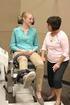 Division of Medicaid and Health Financing Updated July 2015 Section 2 Table of Contents 1 General Information... 2 1-1 General Policy... 2 1-2 Fee-For-Service or Managed Care... 3 1-3 Definitions... 3
IDAPA 2/18/2015. School Based Medicaid Related Services. 16.03.09 School Based Medicaid 24.23.01 - SLP 24.06.01 OT 24.13.01 PT
 School Based Medicaid Related Services Presenters: Shannon Dunstan, Department of Education Frede Trenkle, Department of Health and Welfare What will be presented: Implementation of School Based Medicaid
Occupational and Physical Therapy Policy and Procedure Manual Piedmont Regional Education Program 2014-2015
 Occupational and Physical Therapy Policy and Procedure Manual Piedmont Regional Education Program 2014-2015 0 Information for the completion of this handbook was derived from the sources listed below.
Special Education: Understanding Federal and State Statutory Requirements
 From Policy to Practice Brief Special Education: Understanding Federal and State Statutory Requirements PURPOSE OF THIS BRIEF This brief provides local leaders and educators with an overview of the state
PART I DEPARTMENT OF PERSONNEL SERVICES 6.281 STATE OF HAWAII 6.286... 6.287 6.298 Class Specifications for the
 PART I DEPARTMENT OF PERSONNEL SERVICES 6.281 STATE OF HAWAII 6.286................................................................ 6.287 6.298 Class Specifications for the Series Definition: OCCUPATIONAL
SPECIAL EDUCATION RIGHTS AND RESPONSIBILITIES
 5051.01 English SPECIAL EDUCATION RIGHTS AND RESPONSIBILITIES Chapter 11 Information on Preschool Education Services From a 13-Chapter Manual Available by Chapter and in Manual Form Written by: Community
III. FREE APPROPRIATE PUBLIC EDUCATION (FAPE)
 III. FREE APPROPRIATE PUBLIC EDUCATION (FAPE) Understanding what the law requires in terms of providing a free appropriate public education to students with disabilities is central to understanding the
Title 32: PROFESSIONS AND OCCUPATIONS
 Title 32: PROFESSIONS AND OCCUPATIONS Chapter 32: OCCUPATIONAL THERAPISTS Table of Contents Section 2271. DECLARATION OF PURPOSE... 3 Section 2272. DEFINITIONS... 3 Section 2273. BOARD OF OCCUPATIONAL
03/02/2012. The Role of the School Nurse in Special Education. Child Find. Verification Process- Identification. Verification Process- Identification
 TESH: TelehealthEducation for School Health presents: The Role of the School Nurse in Special Education Jill Weatherly Kathy Karsting September 7, 2011 Objectives 1. Discuss the basic right and responsibilities
STATE OF WYOMING BOARD OF OCCUPATIONAL THERAPY WYOMING OCCUPATIONAL THERAPY PRACTICE ACT W.S. 33-40-101 THROUGH 33-40-117
 STATE OF WYOMING BOARD OF OCCUPATIONAL THERAPY WYOMING OCCUPATIONAL THERAPY PRACTICE ACT W.S. 33-40-101 THROUGH 33-40-117 Draft Statutes April 1, 2013 TABLE OF CONTENTS 33-40-101. Short title... 1 33-40-102.
School Based Medicaid Claiming Program Snapshot
 Occupational Therapy IEP; prescribed by a physician Registered by the American Occupational Therapy Association (now the NBCOT for certification purposes); or a graduate of a program in occupational therapy
Table of Contents. Welcome!... 3. Introduction... 3. Myths About Teacher Assistants... 3. Ethical Considerations for Teacher Assistants...
 Table of Contents Welcome!... 3 Introduction... 3 Myths About Teacher Assistants... 3 Ethical Considerations for Teacher Assistants... 4 A Code of Ethics... 5 Do s and Don ts for Teacher Assistants...
A Guide to Preschool Special Education
 A Guide to Preschool Special Education The Mid-State Early Childhood Direction Center Syracuse University 805 South Crouse Avenue Syracuse, NY 13244-2280 2280 1-800-962-5488 315-443 443-44444444 http://ecdc.syr.edu
A Guide To Special Education for Children Transitioning 1
 A Guide to Special Education for Children Transitioning from Preschool Special Education 2012 The Mid-State Early Childhood Direction Center Syracuse University 805 South Crouse Avenue Syracuse, NY 13244-2280
SPECIAL EDUCATION RIGHTS AND RESPONSIBILITIES
 SPECIAL EDUCATION RIGHTS AND RESPONSIBILITIES Chapter 13 Information on Preschool Education Services TABLE OF CONTENTS Question Page 1. What is the federal law that requires preschool education services?...
Students. With. for. Public. Free. Appropriate. Requirements Under Section 504 of The Rehabilitation Act of 1973
 for Students With Disabilities: Free Appropriate Public Education Requirements Under Section 504 of The Rehabilitation Act of 1973 Free Appropriate Public Education for Students With Disabilities: Requirements
From the 2011 Accreditation Council for Occupational Therapy Education (ACOTE ) Standards and Interpretive Guide:
 From the 2011 Accreditation Council for Occupational Therapy Education (ACOTE ) Standards and Interpretive Guide: FOUNDATIONAL CONTENT REQUIREMENTS: Program content must be based on a broad foundation
A GUIDEG SPECIAL PRESCHOOL EDUCATION FOR CHILDREN TRANSITIONING FROM EARLY INTERVENTION DRAFT
 A GUIDEG TO PRESCHOOL SPECIAL EDUCATION FOR CHILDREN TRANSITIONING FROM EARLY INTERVENTION 2010 Early Childhood Direction Center c/o Women & Children s Hospital of Buffalo 219 Bryant Street Buffalo, New
INDIVIDUALIZED EDUCATION PROGRAM & SPECIAL EDUCATION PROGRAMS & RELATED SERVICES
 INDEX INDIVIDUALIZED EDUCATION PROGRAM & SPECIAL EDUCATION PROGRAMS & RELATED SERVICES 7.1 PURPOSE AND SCOPE..7 1 7.2 INDIVIDUALIZED EDUCATION PROGRAM REQUIREMENTS..7 1 7.2. A. DEVELOPMENT OF IEP......7
Clinical Medical Policy Outpatient Rehab Therapies (PT & OT) for Members With Special Needs
 Benefit Coverage Rehabilitative services, (PT, OT,) are covered for members with neurodevelopmental disorders when recommended by a medical provider to address a specific condition, deficit, or dysfunction,
One step closer to home
 One step closer to home Post-hospital short-term rehabilitation and sub-acute care at The Valley View Center for Nursing Care and Rehabilitation Helping to ensure a smooth transition Prior to discharge,
APPENDIX A GLOSSARY OF TERMS AND ABBREVIATIONS
 APPENDIX A GLOSSARY OF TERMS AND ABBREVIATIONS GLOSSARY OF TERMS AND ABBREVIATIONS Special Education Terms/Legal Terms Annual Goals Educational performance to be achieved by a student within one year.
School-based Support Personnel
 L. SUPPORT SERVICES School-based Support Personnel Yukon Education provides both professional and paraprofessional support to schools to address the diverse learning of students. Learning Assistance Program
PARENT S GUIDE OCCUPATIONAL AND PHYSICAL THERAPY SERVICES IN MONTANA SCHOOLS
 PARENT S GUIDE TO OCCUPATIONAL AND PHYSICAL THERAPY SERVICES IN MONTANA SCHOOLS 2007 Parents Guide to Occupational and Physical Therapy Services in Montana Schools INTRODUCTION This document provides
EARLY LEARNING OCCUPATIONAL THERAPIST (New position)
 Edmonton Catholic Schools is now accepting applications for the position of (10 mth) EARLY LEARNING OCCUPATIONAL THERAPIST (New position) Edmonton Catholic Schools is a large urban school district whose
Perkins Cancellation
 FEDERAL STUDENT AID HANDBOOK Volume 6 Managing Campus-Based Programs, 2011 2012 http://ifap.ed.gov/fsahandbook/attachments/1112fsahbkvol6ch5.pdf THIS IS AN EXCERPT FROM VOLUME 6, CHAPTER 5 CHAPTER 5 Perkins
Henrico County Public Schools Department of Exceptional Education
 Henrico County Public Schools Department of Exceptional Education EDUCATIONAL EVALUATION CRITERIA FOR CONSIDERATION OF PRIVATE EVALUATIONS Revised 06/12/2013 Professionals utilize educational evaluations
10-144 Chapter 101 MAINECARE BENEFITS MANUAL CHAPTER II SECTION 68 OCCUPATIONAL THERAPY SERVICES ESTABLISHED 9/1/87 LAST UPDATED 1/1/14
 MAINECARE BENEFITS MANUAL TABLE OF CONTENTS 68.01 PURPOSE... 1 PAGE 68.02 DEFINITIONS... 1 68.02-1 Functionally Significant Improvement... 1 68.02-2 Long-Term Chronic Pain... 1 68.02-3 Maintenance Care...
A GUIDE TO PRESCHOOL SPECIAL EDUCATION
 A GUIDE TO PRESCHOOL SPECIAL EDUCATION Early Childhood Direction Center c/o Women & Children s Hospital of Buffalo 219 Bryant Street Buffalo, New York 14222 716-880-3875 Toll Free 1 (800) 462-7653 www.wchob.org/ecdc
School Age Services INTERVENTION SERVICES FOR CHILDREN WITH DEVELOPMENTAL DELAYS
 INTERVENTION SERVICES FOR CHILDREN WITH DEVELOPMENTAL DELAYS Feel Good About Giving School Age Services EASTER SEALS SUPERIOR CALIFORNIA 3205 Hurley Way Sacramento, CA 95864 (916) 679-3155 www.myeasterseals.org
SWGUVKQPU"("CPUYGTU"
 SWGUVKQPU(CPUYGTU (Generated after the Allan Blume Video, August 2005) CEEQOOQFCVKQPU(OQFKHKECVKQPU S3
SCHOOL HEALTH SERVICES PROGRAM PROGRAM MANUAL
 SCHOOL HEALTH SERVICES PROGRAM PROGRAM MANUAL Section 2 Covered Services The School Health Services Program is a joint effort between the Colorado Department of Education and Department of Health Care
Florida Medicaid THERAPY SERVICES COVERAGE AND LIMITATIONS HANDBOOK
 Florida Medicaid THERAPY SERVICES COVERAGE AND LIMITATIONS HANDBOOK Agency for Health Care Administration August 2013 How to Use the Update Log UPDATE LOG THERAPY SERVICES COVERAGE AND LIMITATIONS HANDBOOK
Parent s Guide to SPECIAL EDUCATION
 Parent s Guide to SPECIAL EDUCATION in MISSOURI Missouri Department of Elementary and Secondary Education Division of Special Education D. Kent King, Commissioner of Education Revised September 2008 This
Preparation "Speech Language Pathologist Overview"
 Speech Language Pathologist Overview The Field - Preparation - Day in the Life - Earnings - Employment - Career Path Forecast - Professional Organizations The Field Speech-language pathologists, sometimes
Annual Public Notice of Special Education Services and Programs
 Annual Public Notice of Special Education Services and Programs It is the responsibility of the Pennsylvania Department of Education to ensure that all children with disabilities residing in the Commonwealth,
EARLY CHILDHOOD TRANSITION PROCESS
 FALL 2015 EARLY CHILDHOOD TRANSITION PROCESS A guide for helping families of children with special needs prepare for smooth and effective transitions JOHN WHITE STATE SUPERINTENDENT OF EDUCATION Terms
CONSUMER INFORMATION GUIDE: ASSISTED LIVING RESIDENCE
 CONSUMER INFORMATION GUIDE: ASSISTED LIVING RESIDENCE 1 TABLE OF CONTENTS Introduction 3 What is an Assisted Living Residence? 3 Who Operates ALRs? 4 Paying for an ALR 4 Types of ALRs and Resident Qualifications
Supporting Families in Transition between Early Intervention and School Age Programs
 Supporting Families in Transition between Early Intervention and School Age Programs by Cheryl Johnson, Special Education Unit, Colorado Department of Education The transitions between early intervention
Chapter 6: Individualized Education Programs (IEPs)
 33 Chapter 6: Individualized Education Programs (IEPs) In this chapter you will: learn the parts of an IEP learn who is on an IEP team discover tips and things to remember when working on the IEP understand
Letter of Intent. AAS Degree in Occupational Therapy Assistant
 Letter of Intent AAS Degree in Occupational Therapy Assistant Office of the Provost and Department of Nursing Table of Contents 1. Purposes and goals 2. Need for the Curriculum 3. Students 4. Curriculum
QCSD Special Education
 QCSD Special Education April 12, 2012 Lenny Greaney, Director of Pupil Services Shirley Moyer, Supervisor of Special Education Anthony Carty, Teacher IDEA EVERYTHING WE DO IS GOVERNED BY THE LAW PDE Compliance
CHAPTER 457G OCCUPATIONAL THERAPY PRACTICE
 CHAPTER 457G OCCUPATIONAL THERAPY PRACTICE SECTION 457G-1 Definitions 457G-1.2 Occupational therapy program 457G-1.3 Powers and duties of the director 457G-1.4 License required 457G-1.5 Practice of occupational
Special Education Process
 Special Education Process Special education is intended to provide services to students who have disabilities, and who, because of those disabilities, need help to make progress in the general education
Occupational Therapy for People with Learning Disabilities throughout the Life Cycle: Position Paper
 Occupational Therapy for People with Learning Disabilities throughout the Life Cycle: Position Paper Occupational therapy is a health profession that is therapeuticrehabilitative-educational in nature.
Occupational Therapy Services in Early Childhood and School-Based Settings
 The primary purpose of this document is to describe how occupational therapy supports children s and youth s learning and development in early childhood and school-based settings. This document is intended
Edwards-Knox Central School. Special Education District Plan 2013-2014
 Edwards-Knox Central School Special Education District Plan 2013-2014 Page 1 I. Introduction General Description of District and Special Education Services The Edwards-Knox Central School district is dedicated
Cenpatico STRS POLICIES & PROCEDURES. Effective Date: 07/11/11 Review/Revision Date: 07/11/11, 09/21/11
 Page 1 of 14 SCOPE: Clinical Department IMPORTANT REMINDER This Clinical Policy has been developed by appropriately experienced and licensed health care professionals based on a thorough review and consideration
http://www.bls.gov/oco/ocos070.htm Teachers Special Education
 http://www.bls.gov/oco/ocos070.htm Teachers Special Education * Nature of the Work * Training, Other Qualifications, and Advancement * Employment * Job Outlook * Projections Data * Earnings * OES Data
Arkansas Department of Health and Human Services Division of Medical Services P.O. Box 1437, Slot S-295 Little Rock, AR 72203-1437
 Arkansas Department of Health and Human Services Division of Medical Services P.O. Box 1437, Slot S-295 Little Rock, AR 72203-1437 Fax: 501-682-2480 TDD: 501-682-6789 & 1-877-708-8191 Internet Website:
Glossary of Special Education Terminology
 Glossary of Special Education Terminology 1. "A Child with a Disability": A student who has been properly evaluated in accordance with regulations who is found to have a disability which results in the
School Based Health Services Medicaid Policy Manual MODULE 6 OCCUPATIONAL AND PHYSICAL THERAPY SERVICES
 School Based Health Services Medicaid Policy Manual MODULE 6 OCCUPATIONAL AND PHYSICAL THERAPY SERVICES BACKGROUND Administrative Requirements SCHOOL BASED HEALTH SERVICES ARE REGULATED BY THE CENTERS