
Myerson SleepBetter EMA Oral Appliance: Instructions for the Dentist
|
|
|
- Alban Clarke
- 10 years ago
- Views:
Transcription
1 Myerson SleepBetter EMA Oral Appliance: Instructions for the Dentist By Donald E. Frantz, DDS (Houston, TX) & Roy V. Hakala, DDS (Saint Paul, MN) Published: 28 April 2009 Myerson has served dentistry for over 90 years with a special emphasis on removable oral appliances. The Myerson SleepBetter campaign is intended to promote acceptance worldwide of oral appliances to treat snoring and OSA. Myerson, LLC 2009

2 Table of Contents Introduction 1 Patient Assessment 3 Impressions and Bite Registration 5 EMA Delivery 6 EMA elastic strap size and elasticity; vertical dimension 9 Follow-up Appointments 12 Attachment A: Sample consultation form with the patient s physician 14 Attachment B: Sample care instructions to be sent with patient 15 Wear and Care Instructions for your EMA appliance 15 Attachment C: Sample follow-up patient questionnaire 17 Snoring & Sleep Apnea Recheck 17 Assessment: 18 Plan & Procedures: 18 Myerson SleepBetter EMA custom oral appliance photo 19

3 Introduction Obstructive sleep apnea (OSA) afflicts over 40 million Americans. Only a fraction of this number are diagnosed, and even fewer are treated effectively. This is a major health issue, as the consequences of untreated sleep apnea include elevated blood pressure, hypercholesterolemia, increased risk of stroke, elevated blood sugar with risk of diabetes, gastroesophageal reflux, anxiety, irritability, and depression. Excessive daytime sleepiness can be fatal: more people are killed by sleepy drivers than by drunken drivers. It is worth noting that approximately one in four truck drivers is affected by OSA. Besides outright OSA, at least 80 million Americans snore. Snoring is not just an embarrassing or cosmetic concern. Snoring is a sign of restricted airflow during sleep. This restricted airflow and impeded breathing often results in excessive daytime sleepiness, causes a higher rate of headaches in snorers than in non-snorers, diminishes the overall quality of life, and adversely affects the sleep quality of the snorersʼ bed partners. Many snorers are banished to a separate bedroom. Snoring and OSA affect all ages. Even though the prototypical snorer or obstructed airway patient may be an older and overweight male, women and children are affected, too. OSA in children produces symptoms similar to attention deficit or hyperactivity disorder (ADHD) Even slender men, women, and children may have OSA due to an inherited small airway or to tonsils, adenoids, or other airway obstructions. Page 1

4 Compressed Positive Air Pressure (CPAP) devices are considered the gold standard for treatment of OSA and snoring, but CPAP is not always effective or practical. Common problems experienced by CPAP users include nasal congestion, mask leaks with air blowing into the eyes, air leaking out of the mouth, aerophagia (air inflating the stomach), mask dermatitis, and sinusitis. In addition, the noise of a CPAP pump prevents some patients and their bed partners from initiating sleep, and movement during the night can displace the mask. CPAP also requires a dependable and convenient source of 110-volt electricity and distilled water for the humidifier, which are not always available to travelers. OSA patients and snorers need an alternative to use when they are intolerant to CPAP and when CPAP is not practical. The Myerson SleepBetter EMA custom oral appliance ( EMA ) can fill this need. Medical authorities support use of the EMA appliance. The American Academy of Sleep Medicine (AASM) now recommends oral appliances like the EMA as a front line of treatment for snoring and mild to moderate sleep apnea, and in cases where CPAP has not been tolerated. Furthermore, the FDA has approved the EMA for the treatment of both obstructive sleep apnea and snoring. Page 2

5 Patient Assessment Every health history must include questions that can reveal the presence of sleep disorders such as OSA or significant snoring. Particularly relevant questions are: How many hours of sleep do you get per night? Is your usual sleep quality good, fair, or poor? Do you snore? Has anyone noticed you breathing heavily, holding your breath, or gasping during sleep? (i.e., breathing heavily followed by silence and then a gasp for air.) Are you still tired or sleepy when you wake in the morning? Do you remain sleepy during the day? Would you nap during the day if you had the opportunity? Have you ever fallen asleep while driving? Have you had an overnight sleep study? When a sleep disorder is suspected, direct conversation with the patient is essential. Since so many systemic disorders are associated with OSA, consultation with the patientʼs physician is recommended. Depending on your assessment, this type of consultation may be as simple as sending a checkoff form with a self-addressed stamped envelope to the patientʼs physician (see Attachment A ), which confirms the medical necessity for treatment of sleep apnea and M.D. approval for use of an oral sleep appliance. This form can be useful when the patientʼs medical insurance company balks at coverage, and if your professional liability insurance requests proof that you are treating sleep apnea patients only with physician referral or approval. Page 3

6 Obstructive sleep apnea is a medical, rather than dental, disorder and is usually covered by medical insurance when billed on the appropriate medical claim forms with appropriate diagnosis and treatment codes. However, many insurance companies absolutely require prior authorization before any treatment is initiated with an oral sleep apnea appliance treatment plan before they will provide any benefits. Also, be aware that most insurance companies require confirmation of the presence and severity of the disorder with overnight polysomnography before they will authorize payment of benefits. You may need to request a copy of the summary of any previous sleep studies from the patientʼs sleep specialty clinic or sleep laboratory. Basic physical assessment primarily involves measuring the patientʼs range of mandibular motion and quality of jaw movement. If the patient can open smoothly to 40 millimeters interincisally and protrude the jaw 5 millimeters comfortably, and these movements can be performed without significant TMJ clicking or crepitus, it is reasonably likely that the appliance will be tolerated comfortably. Adequate dental retention is essential. The EMA can only be used over intact, nonmobile teeth without periodontal involvement. Dental restorations must be secure, as any removable oral appliance can displace loose crowns, inlays, onlays, or veneers. Having adequate numbers of secure teeth for retention of the EMA is particularly important in the maxillary anterior and premolar region and in the mandibular premolar and molar areas. Page 4

7 Impressions and Bite Registration It is essential to have accurate impressions that extend to cover all surfaces of all erupted teeth, the buccal and labial vestibules of both entire arches, at least two-thirds of the palate, and the lingual surfaces of the mandibular alveolar arch. This may require modifying impression trays by adding compound or wax to the palatal area of the tray to be sure the impression material reaches the vertical extent of a high palate. Mandibular trays may need to be trimmed to fit around bony exostoses ( tori ). Pour the impressions in dental stone, not plaster, and add adequate bases to provide resistance to breakage during shipping and to allow secure mounting in an articulator. A good bite registration will simplify and minimize appliance adjustments at the insertion and follow-up appointments. One excellent technique is to warm a sheet of baseplate wax, roll it tightly, and bend it to match the mandibular arch form. Press the anterior area back lingually to allow visualization of the maxillary and mandibular dental midlines. Have the patient open wide, and then press the wax onto the lower occlusal surfaces. Have the patient close slowly into the wax, keeping the midlines aligned and stopping with approximately 8 to 10 millimeters of anterior open bite. Ask the patient to open wide again, remove the wax carefully and immediately chill it in cold water to avoid distorting it. You may trim the buccal extensions with a very sharp knife and reinsert the bite registration into the mouth, to confirm that the teeth seat fully into the wax and that the midlines remain aligned. Send both stone models and the wax bite registration to an authorized EMA dental laboratory (go to for a complete list of authorized EMA dental laboratories). An EMA laboratory can construct an appliance without a bite registration, but constructing the appliance to such arbitrary dimensions often complicates the construction and extends the time required for the delivery of the appliance. Page 5

8 EMA Delivery When the patient returns for delivery of the appliance, remove the upper and lower components of the appliance from their plastic bag and thoroughly rinse any residual disinfectant from them. Try each section in separately, before attaching elastic straps to either component. Confirm that each component seats fully in both anterior and posterior areas and that each is adequately retentive. Inform the patient that, because of pressure on the periodontal membranes, the appliance may seem uncomfortable for the first 5 minutes or so. Any reported pressure on an individual tooth persisting after 5 to 10 minutes of appliance wear may be due to an inaccurate impression or excessive wedging of acrylic into the occlusal aspect of the interproximal areas. Such areas may be conservatively relieved with an acrylic bur. Remove the appliance components from the mouth and attach #1 yellow straps on both sides. Then reinsert the appliance and check the occlusion on the occlusal pads with articulating paper. An articulating paper plier can be very helpful in positioning the paper over the pads from a lingual approach. Occlusion must be checked in the protruded position. Since the TMJ eminentia are not always symmetric, balanced occlusion in the retruded position may be substantially different from that of the protruded position. Have the patient practice placing and removing the appliance, to be sure that they can do so comfortably. Explain that placement is to be done by pressing the EMA onto the teeth with the fingers, not by popping the appliance into the mouth and biting into it. Careless insertion can break the EMA. Removal is also to be done with the fingers, reaching toward the back on both sides simultaneously, hooking the buccal flanges with the fingertips or fingernails, and pulling both sides off the teeth at once. Forceful removal of the appliance by pulling only one side off the teeth again risks breakage. Page 6

9 If the patient expresses TMJ or muscular discomfort, first check the evenness of occlusion on the bite pads. If discomfort is in the right TMJ, the right bite pad may be too high. Reducing the height should give the patient instant relief. If discomfort persists despite balanced occlusion on the pads, start treatment with #1 white straps instead of the firmer yellow straps. Starting patients with long and soft elastic straps and gradually moving to stiffer and/or shorter straps enhances comfort and acceptance of the appliance. If the appliance is too tight, relieve the interior problem areas with an acrylic bur. If the appliance is too loose, it can be tightened by adding a tiny amount of acrylic to the buccal interproximal areas, seating the appliance in the mouth for one minute, and then removing the appliance and curing it in a pressure pot. Do not attempt a complete inthe-mouth reline of the EMA, as this will thicken the appliance excessively. Demonstrate strap placement to the patient. Explain that gripping the EMA in the palm of the hand can be risky, as inadvertently squeezing the appliance can break it at the midline. Always start by holding the appliance only by the side on which you are working, near to the button. Catch the hole in one end of a strap with the pointed end of the teardrop-shaped lower button. Then stretch the strap anteriorly, along the side of the appliance, until it snaps over the rounded end of the button. Pulling away from the appliance can break the tip of the button or even break the button off the appliance. Be sure to explain this clearly to the patient. Blue or clear straps must be heated in very hot water, preferably in a cup of water that has been microwaved to nearly boiling temperature, to soften the straps and prevent button or appliance breakage. Connect both straps to the mandibular section of the EMA first, and then attach the straps to the maxillary section. Page 7

10 Give the assembled appliance to the patient with the #1 yellow straps (again, #1 white if the #1 yellow straps caused TMJ or muscle pain), and send along a pair of #2 yellow straps, which are shorter than the starter straps. Ask the patient to wear the starter straps each night for a week and then, if comfortable, to change to the #2 yellow straps. You may ask the patient to call your office after the first week to confirm that they have been comfortable with the starter straps before changing them. Instruct the patient in how to clean and take care of the appliance when it is not being worn and reappoint for two to three weeks out. See Attachment B for sample handout care instructions. Tell the patient that their bite may feel different in the morning, after wearing the EMA all night. This is due to muscle stiffness, as the lateral pterygoid muscles remain short during appliance wear and keep the condyles forward in their fossae overnight. The bite change is not a result of tooth movement. If bite changes persist for more than ten minutes or so each morning, have the patient chew sugar-free gum for five to ten minutes to stretch out the muscles and restore the bite. Tell the patient to call your office if their bite does not feel normal a short time after doing this. Page 8

11 EMA elastic strap size and elasticity; vertical dimension EMA elastic straps (see photo below) come in five lengths: EMA Elastic Strap Description Length in mm #1 Extra long 21.0 #2 Long 19.0 #3 Medium 17.0 #4 Short 15.5 #5 Extra short 14.0 Shorter straps provide more protrusion. Unless you specify otherwise, the lab will set the buttons of the EMA appliance 25 mm apart with the models mounted to your wax bite. When placing a #1 strap, (21 mm) on the appliance, the mandible will be advanced 4 mm. With a #5 strap, (14 mm) on the appliance, the EMA produces 11 mm advancement. If the patient has a large range of mandibular advancement, i.e. 9 to 16 mm protrusion, instruct the lab to construct the EMA with the buttons 27 mm apart. This will help avoid having to send the appliance back to the lab to reset the buttons for further protrusion. Page 9

12 EMA elastic straps also come in four levels of elasticity: EMA Elastic Strap Color Description Durometer White Soft 60 Yellow Medium 70 Blue Firm 80 Clear Extra Firm 90 If the patient does well with a particular strap length and stiffness combination, the straps should last from two to six weeks before requiring replacement. If the patient does well the first night or two but sleep quality then diminishes or snoring returns, the strap may have stretched an eighth of an inch or more and may need to be replaced with a stiffer, more durable strap. If sleep quality is not optimal and the strap is not stretched excessively, try a strap that is one step shorter. If this is uncomfortable, go to a stiffer strap but drop back one strap size. For example, if a patient does well with #2 yellow straps for a night or two but strap stretching then reduces sleep quality, try #2 blue straps. If these feel uncomfortable even after wearing the strap for a few minutes, try a #1 blue or clear. It is common to need to increase the stiffness by one or two colors while dropping back to a strap that is one step longer. Try to stay with longer straps whenever possible. Shorter straps increase the vertical vector of force and can pop the appliance off the teeth, and shorter straps tend to stretch out faster than long straps. If the patient requires shorter straps but the appliance continues to pop off during the night or the straps stretch out too quickly, take a new bite in the patientʼs treatment position. Send the bite with the appliance and both of the patientʼs dental models to the laboratory that constructed the appliance. The Page 10

13 laboratory technician can move the buttons farther apart to 21 mm centers or 19 mm centers, to accommodate #1 or #2 straps, as you choose. With jaw pain, TMJ pain, or headaches, always suspect an occlusal imbalance and adjust the bite pads as necessary. Pain usually is on the side where the pad is high. In stubborn cases of pain or appliance ineffectiveness, you may round the occlusal surfaces of the pads to create less surface area for the patient to contact, which can reduce bruxism on the appliance. Vertical opening can be just as important as mandibular advancement. If titration of mandibular protrusion with strap changes does not produce optimal treatment results, add vertical opening by cleaning and roughing up the occlusal surfaces of the mandibular bite pads. Add up to 3 or 4 mm of orthodontic acrylic to the bite pads, pressure cure or soak in very warm water. You may also use light-cure laboratory composite, which will adhere to the pads. The new bite pad does not need to be flat. If the extra height is uncomfortable, round the occlusal surfaces but check the occlusion carefully. Then place longer and/or softer straps on the appliance, to maintain patient comfort. The patient may complain of lip incompetence and nighttime drooling with elevated bite pads. This is usually a very temporary problem as the lips generally relax and regain full closure during sleep after a few weeks. Page 11

14 Follow-up Appointments At the first follow-up appointment, have the patient fill out a follow-up form. See Attachment C. Discuss the patientʼs progress and comfort. Palpate the TMJs for clicking or crepitus. You will often find that preexisting TMJ noises are diminishing with nightly use of the EMA. Check the retention and cleanliness of the appliance. Palpate the TMJs, masseter, temporalis, and sternocleidomastoid muscles for tenderness. Tenderness often indicates unbalanced occlusion or of excessive mandibular protrusion. Some patients can easily protrude several millimeters immediately after delivery of the appliance, while others may find that even small changes are uncomfortable, requiring incremental changes in strap length or stiffness. Select straps and adjust or elevate the bite pads as described on the previous page. Attach the selected straps, reinsert the EMA, and let the patient sit with it for a few minutes to confirm comfort. Confirm that the mandible appears to be adequately protruded. Send several pairs of the selected straps home with the patient and encourage changing to a new pair of straps whenever the button holes have stretched to be oval rather than round, or whenever the old straps have stretched an eighth of an inch or more when compared to new straps of the same number. Patients often go through straps quickly for the first several weeks after starting appliance wear. Straps will last longer after the jaw has become used to the protruded position. If the patient has been doing extremely well, you may reappoint the patient for six months out and ask them to call your office sooner if they have any problems. If you have any concerns about the effectiveness or comfort of the appliance at this point, change the straps and/or adjust the bite pads as described above and reappoint the patient for one or two weeks out for an additional follow-up appointment. Page 12

15 Persistent difficulty with comfort or appliance effectiveness often relates to lingual bulk or contours that interfere with tongue posture. In these cases, coat the lingual surfaces of both upper and lower EMA components with pressure indicating paste, reinsert, and have the patient go through some phonetic exercises. These include counting aloud from sixty to seventy, pronouncing a number of words containing L sounds (e.g., lollipop, little, lilac, lascivious) and G sounds (e.g. garage, garbage, grungy, gradual) and swallowing some water. Explain that you are not concerned with how well they can pronounce these sounds but you want their tongue to go through its full range of movement. Remove the EMA and examine any areas where the paste has been wiped cleanly from the appliance, conservatively relieve these areas with an acrylic bur, and polish. Repeat if necessary. This procedure often results in shortening the distolingual margins, thinning and polishing all lingual and palatal margins, lowering the plastic over the mandibular premolar lingual cusp tips, and trimming away the lingual bulk of the occlusal pads. In especially difficult cases, you may need to paste and adjust two or three times. Some practitioners do this routinely at the first recheck appointment, and doing so may reduce the level of protrusion and vertical dimension necessary for successful treatment. When the patient is comfortable and the appliance appears to be effective, consider a follow-up polysomnogram or home study to provide objective evidence of efficacy. Whether or not a follow-up overnight study is done, the current standard is to see the EMA patient on a six-month interval for the first year and annually after that. It is very important to tell the patient to call you if their bite is not returning to normal within 30 minutes after removal of the appliance in the morning. Page 13

16 Attachment A: Sample consultation form with the patient s physician PATIENT NAME: BIRTH DATE: DOCTOR: Please check one or more, sign and date, and return in the enclosed envelope. Feel free to add comments and any other pertinent information. At this patientʼs most recent examination, no evidence of significant sleep apnea was found. Construction of an intraoral anti-snoring appliance is approved. This patient requires a new examination before approval of an oral anti-snoring or sleep apnea appliance. Please have the patient call my office to schedule an examination appointment. The level of severity of this patientʼs sleep apnea indicates that an intraoral anti-snoring or sleep apnea appliance is a reasonable treatment choice. A follow-up polysomnogram with the appliance in place is indicated to demonstrate efficacy of the appliance and to adjust the appliance to optimize its effect. This patient requires further evaluation by a sleep specialist/pulmonologist/sleep center. I have scheduled/referred her/him as follows for further evaluation. OR Please refer this patient to an appropriate sleep center before with constructing an intraoral anti-snoring appliance. Intraoral anti-snoring or sleep apnea appliances are contraindicated for this patient due to: Additional Comments on Back Signed M.D. Date Page 14

17 Attachment B: Sample care instructions to be sent with patient Wear and Care Instructions for your EMA appliance You may notice an increase in flow of saliva at first, which will subside after a few nightsʼ wear. Later, your mouth may become dry at times. You may sip water while wearing the appliance, so long as the straps have not become loose. You may also experience tooth soreness and jaw muscle fatigue, due to clenching the teeth as well as pulling you lower jaw forward. This is normal, and will subside as your mouth becomes accustomed to the appliance. If one or two teeth are extremely sore or if the gums become sore, please call our office. We will adjust the EMA appliance as needed. The elastic straps on either side of the appliance are the key to the success of your appliance. We will work with you to determine the best strength and size for you. You can help us with this process by telling us when you feel that optimum comfort and effect have been reached. Some patientsʼ jaw muscles relax quickly and do not need the straps changed frequently, but other patients stretch the straps out in one week or less. The straps may need to be changed more frequently during the first month or two. The straps need to be changed if you start holding your breath or gasping in your sleep again, or if snoring worsens. When changing the straps on the appliance it is very important that you hold the appliance only by the side on which you are changing the strap, close to the button. DO NOT hold your appliance in the palm of your hand or squeeze it as you could break it. If you are using blue or clear straps, warm them in very hot water, preferably in a cup of water that has been microvwaved to nearly boiling, before attaching them to your appliance. Hook the strap over the point on the button, then pull forward or backward Page 15

18 ALONG THE SIDE of the appliance to hook it on. DO NOT pull OUTWARD as you attach the straps, or you could pull the buttons from the appliance. Please remember to always BRUSH and FLOSS your teeth every night before placing your appliance in your mouth. Good oral hygiene is very important when wearing an appliance to bed. Clean your appliance every morning in cool or lukewarm water with a denture toothbrush and toothpaste. We suggest using denture toothpaste such as DentuCreme or Fresh ʻN Brite. If white film begins to form on the appliance or if it picks up odors, soak it in a denture cleaning solution such as Polident or Efferdent in warm, not hot, water. Heat can warp your appliance. You may leave the straps on during cleaning. DO NOT soak the appliance in mouthwash or expose it to alcohol in any way. Rinse the appliance, shake it off, and store it dry during the day. If your bite feels off for more than a few minutes in the morning, be aware that this is due to shortening of some of smaller jaw muscles overnight. Chew sugar-free gum for five or ten minutes in the morning to restore your bite. If your bite still feels off, call our office. Take your appliance to every dental appointment, so your dentist can make sure that new dental work does not interfere with the fit of the appliance. If you have major dentistry done, such as crowns, bridges, or veneers, you may need a new sleep appliance. Please call our office if your appliance gets loose and comes off your teeth too easily, especially if it comes off during the night. You can break it if you bite down while it is out of place. Also, call us if your teeth remain sore for more than a half-hour after removing the appliance in the morning or if you develop any sore areas on the soft tissues of your mouth. GOOD LUCK AND SLEEP BETTER! Page 16

19 Attachment C: Sample follow-up patient questionnaire Snoring & Sleep Apnea Recheck SUBJECTIVE: OBJECTIVE: Straps currently in use: #1 #2 #3 #4 #5 White Yellow Blue Clear that produce mm underjet overjet & mm anterior open bite Maxillary appliance is: retentive loose Mandibular appliance is: retentive loose Mandibular Range of Motion: Vertical: Pain/Noise Right lateral: Pain/Noise Left lateral: Pain/Noise Protrusion: Pain/Noise L R B L R B L R B L R B R TMJ Smooth Click Crepitus L TMJ Smooth Click Crepitus R TMJ None Mild Mod Severe L TMJ None Mild Mod Severe R Masseter None Mild Mod Severe L Masseter None Mild Mod Severe R Temporalis None Mild Mod Severe L Temporalis None Mild Mod Severe R SCM None Mild Mod Severe L SCM None Mild Mod Severe Posterior teeth are: intact in full occlusion in light occlusion out of occlusion Comments: Page 17

20 Assessment: Doing well with sleep appliance therapy is not yet at maximum improvement Requires additional mandibular advancement requires additional vertical dimension Firmer straps would provide greater durability and stability of mandibular position Needs repair of the maxillary mandibular section of the appliance Needs tightening of the maxillary mandibular section of the appliance Needs appliance: blocked bonded together Comments: Plan & Procedures: Balanced occlusion Trimmed palatal extension Trimmed lingual peripheries Increased vertical dimension by millimeters Polished Ultrasonically cleaned Tightened the maxillary mandibular Returned the appliance to the laboratory for Changed straps to # White Yellow Blue Clear Gave patient pairs of straps and pairs of straps Pasted lingual surface of appliance with PIP and adjusted Told patient to call in with an update Referred patient back to sleep clinic for follow-up polysomnography Dispensed Watch-PAT and instructed in use Next visit in: Weeks Months Year for a reevaluation appointment. Name: Date: Page: Page 18

21 Myerson SleepBetter EMA custom oral appliance photo Photo courtesy of Glidewell Laboratories (Newport Beach, CA) Page 19
ROLE OF ORAL APPLIANCES TO TREAT OBSTRUCTIVE SLEEP APNEA
 1 ROLE OF ORAL APPLIANCES TO TREAT OBSTRUCTIVE SLEEP APNEA There are three documented ways to treat obstructive sleep apnea: 1. CPAP device 2. Oral Appliances 3. Surgical correction of nasal and oral obstructions
Arlington Dental Associates Ira Stier DDS PC 876 Dutchess Tpk 2 Lafayette Ct. Poughkeepsie, NY 12603 Fishkill, NY 12524 845-454-7023 845-896-4977
 Home Sleep Test Liability Form Study Equipment Due: @ I, accept responsibility for the sleep monitoring device while it is in rny possession. I understand that if I fail to return the device or I return
Treating Sleep Apnea A Review of the Research for Adults
 Treating Sleep Apnea A Review of the Research for Adults Is This Information Right for Me? Yes, if: A doctor said you have mild, moderate, or severe obstructive sleep apnea, or OSA. People with OSA may
About Sleep Apnea ABOUT SLEEP APNEA
 ABOUT SLEEP APNEA About Sleep Apnea What is Sleep Apnea? Sleep Apnea (from Greek, meaning "without breath") is one of the most common sleep disorders in which breathing stops and then restarts again recurrently
USE AND CARE INSTRUCTIONS for your Invisalign aligners
 USE AND CARE INSTRUCTIONS for your Invisalign aligners WEARING AND USING YOURINVISALIGN ALIGNERS - ENGLISH Here are some tips to help ensure proper use and avoid damaging your aligners. Always Remember
What Dental Implants Can Do For You!
 What Dental Implants Can Do For You! Putting Smiles into Motion About Implants 01. What if a Tooth is Lost and the Area is Left Untreated? 02. Do You Want to Restore Confidence in Your Appearance? 03.
Sleep Difficulties. Insomnia. By Thomas Freedom, MD and Johan Samanta, MD
 Sleep Difficulties By Thomas Freedom, MD and Johan Samanta, MD For most people, night is a time of rest and renewal; however, for many people with Parkinson s disease nighttime is a struggle to get the
Obstructive Sleep Apnoea
 Obstructive Sleep Apnoea What is obstructive sleep apnoea? People who suffer from Obstructive Sleep Apnoea (OSA) reduce or stop their breathing for short periods while sleeping. This can happen many times
Lateral pterygoid muscle Medial pterygoid muscle
 PATIENT INFORMATION BOOKLET Trismus Normal Jaw Function The jaw is a pair of bones that form the framework of the mouth and teeth. The upper jaw is called the maxilla. The lower jaw is called the mandible.
Removable appliances II. Functional jaw orthopedics
 Removable appliances II. Functional jaw orthopedics Melinda Madléna DMD, PhD Associate professor Department of Pedodontics and Orthodontics Faculty of Dentistry Semmelweis University Budapest Classification
Denture Trouble Shooting Guide
 Denture Trouble Shooting Guide Comfort Sore spot in vestibuleupper or lower denture 1. Overextended borders 2. Rough spot in base 1. Shorten borders and polish. 2. Refinish borders. Sore spot in upper
What is Obstructive Sleep Apnoea?
 Patient Information Leaflet: Obstructive Sleep Apnoea Greenlane Respiratory Services, Auckland City Hospital & Greenlane Clinical Centre Auckland District Health Board What is Obstructive Sleep Apnoea?
Complete Denture Processing Luther A. Ison, CDT
 Complete Denture Processing Luther A. Ison, CDT Festooning and preparation for processing Flasking Boilout procedures Packing acrylic Recover and divesting Cut wax at an obtuse angle leaving
Page 1 of 10 BDS FINAL PROFESSIONAL EXAMINATION 2007 Prosthodontics (MCQs) Model Paper SECTION I
 Page 1 of 10 COMPLETE DENTURES ANATOMICAL LANDMARKS SECTION I 1. There are many landmarks in the oral cavity which helps in designing complete dentures. One of the important landmarks is fovea palatini.
ABSTRACT INTRODUCTION. Facial Esthetics. Dental Esthetics
 ABSTRACT The FACE philosophy is characterized by clearly defined treatment goals. This increases diagnostic ability and improves the quality and stability of the end result. The objective is to establish
Tooth Replacement Options
 Dr. Jordan Johnson Johnson Dental Associates http://www.beta.mydentalhub.com/ada/test/ (800) 947-4746 Tooth Replacement Options If you re missing one or more teeth, you may be all too aware of their importance
stone model bonding tray improve the accuracy
 indirectbonding Bonding brackets to the patient s stone model and transferring the bonding tray to the patient s mouth Developed to improve the accuracy of bracket placement (especially premolars) advantagesdisadvantages
PREPARATION OF MOUTH FOR REMOVABLE PARTIAL DENTURES Dr. Mazen kanout
 PREPARATION OF MOUTH FOR REMOVABLE PARTIAL DENTURES Dr. Mazen kanout Mouth preparation includes procedures in four categories: 1. Oral Surgical Preparation. 2. Conditioning of Abused and Irritated Tissue.
Understanding Dental Implants
 Understanding Dental Implants Comfort and Confidence Again A new smile It s no fun when you re missing teeth. You may not feel comfortable eating or speaking. You might even avoid smiling in public. Fortunately,
Contents. Cement retained restoration. Screw retained restoration. Overdenture retained restoration. TS Implant System. 70 ComOcta Gold Abutment
 Contents TS Implant System Cement retained restoration Screw retained restoration 06 Cement-retained bridges with the Solid abutment system (non- 72 Screw retained crown with the ComOcta Gold abutment
Preparation guidelines for your Child s Sleep Study
 Preparation guidelines for your Child s Sleep Study Patient Sticker here Maintain your child s regular night sleeping and nap schedule for several days before the study. On the day of the study, do not
TMJ DISEASE TEMPOROMANDIBULAR JOINT DISEASE
 TMJ DISEASE TEMPOROMANDIBULAR JOINT DISEASE The temporomandibular joint is the point at which the mandible (lower jaw) hinges on the skull. Frequently, the pain experienced is ear pain, s o patients are
TMJ Exercises Information for patients
 Oxford University Hospitals NHS Trust Specialist Surgery TMJ Exercises Information for patients What is the Temporomandibular Joint? The temporomandibular joint (TMJ) is located in front of the ear where
Underwriting Sleep Apnea
 Underwriting Sleep Apnea Joel Weiner, MD, FLMI April 29, 2014 WAHLU The Northwestern Mutual Life Insurance Company Milwaukee, WI A Brief Survey Before We Get Started The Weiner Sleepiness Scale How likely
The Importance of Restful Sleep 4. Normal Breathing During Sleep 5. The Impact of Snoring on Sleep 6. Causes of Snoring 7
 Contributing Authors THEODORE M. BERMAN, M.D. is a board certified medical specialist in sleep disorders medicine and pulmcnary medicine. Dr. Berman is a partner of the Minn sota Sleep Institute and practices
A New Beginning with Dental Implants. A Guide to Understanding Your Treatment Options
 A New Beginning with Dental Implants A Guide to Understanding Your Treatment Options Why Should I Replace My Missing Teeth? Usually, when you lose a tooth, it is best for your oral health to have it replaced.
Intraoral Snoring Therapy - Diagnostics - Indications - IST Appliances
 Intraoral Snoring Therapy - Diagnostics - Indications - IST Appliances 2010, www.dr-hinz-dental.de Snoring does not only disturb the partner but also the snorer s health Intraoral appliances are used to
Dentalworkers JOB DESCRIPTIONS Great Team Members make your Office function!
 Dentalworkers JOB DESCRIPTIONS Great Team Members make your Office function! Dental Assistant Registered Dental Assistant with Expanded Function: RDAEF Sterilization Assistant Dental Hygienist General
[PAGE HEADLINE] Improve your Health and Change Your Smile with Complete Dental Services in One [CITYNAME] Location
![[PAGE HEADLINE] Improve your Health and Change Your Smile with Complete Dental Services in One [CITYNAME] Location](/thumbs/31/14971568.jpg "[PAGE HEADLINE] Improve your Health and Change Your Smile with Complete Dental Services in One [CITYNAME] Location") Eddie Stephens//Copywriter Sample: Website copy/internal Dental Services Pages [PAGE HEADLINE] Improve your Health and Change Your Smile with Complete Dental Services in One [CITYNAME] Location [LEAD SENTENCE/PARAGRAPH]
Eddie Stephens//Copywriter Sample: Website copy/internal Dental Services Pages [PAGE HEADLINE] Improve your Health and Change Your Smile with Complete Dental Services in One [CITYNAME] Location [LEAD SENTENCE/PARAGRAPH]
New Mouthpiece Provides Relief for Truckers with Obstructive Sleep Apnea
 For Immediate Release For More Information Contact: Dave Kushin Zebra Communications 805-955-0009 Fax: 805-955-0003 email: [email protected] www.zebracom.net New Mouthpiece Provides Relief for Truckers
LANAP. (Laser Assisted New Attachment Procedure)
 LANAP (Laser Assisted New Attachment Procedure) Marcus Hannah, DDS 970 N. Kalaheo Avenue, Suite A305 Kailua, HI 96734 Tel: 808.254.5454 Fax: 808.254.5427 Dental Laser ANAP Informed Consent and Authorization
ORTHODONTIC TREATMENT
 ORTHODONTIC TREATMENT Informed Consent for the Orthodontic Patient As a general rule, positive orthodontic results can be achieved by informed and cooperative patients. Thus, the following information
X-Plain Temporomandibular Joint Disorders Reference Summary
 X-Plain Temporomandibular Joint Disorders Reference Summary Introduction Temporomandibular joint disorders, or TMJ disorders, are a group of medical problems related to the jaw joint. TMJ disorders can
Understanding Sleep Apnea
 Understanding Sleep Apnea www.sleepmangementsolutions.com What is Obstructive Sleep Apnea (OSA)? OSA afflicts 20 million adult men and women in the U.S. People who have OSA stop breathing repeatedly during
SLEEP AND PARKINSON S DISEASE
 A Practical Guide on SLEEP AND PARKINSON S DISEASE MICHAELJFOX.ORG Introduction Many people with Parkinson s disease (PD) have trouble falling asleep or staying asleep at night. Some sleep problems are
Implant Bar Overdenture Utilizing Locator Attachments
 Utilizing Locator Attachments Step-by-Step Restorative Protocol Implant Bar Overdentures offer a removable implant solution for edentulous patients desiring a stable and esthetic prosthesis that improves
Patient Information. Patient s First and Last name: Preferred Name: Mailing Address: City: State: Zip Code: Date of Birth: Gender:
 Patient Information: Patient Information Patient s First and Last name: Preferred Name: Mailing Address: Date of Birth: Gender: Best Number to Confirm Your Appointments: Alternate Phone Number: Social
There When You Need Them: 10 Principles of Successful RPD Treatment
 There When You Need Them: 10 Principles of Successful RPD Treatment Jeff Scott, DMD [email protected] 239 2 nd Ave South Suite 100 St. Petersburg, FL 33701 The West Coast District Dental
Another Implant Option for Missing Teeth with Challenging Symmetry Patrick Gannon, DDS and Luke Kahng, CDT
 Another Implant Option for Missing Teeth with Challenging Symmetry Patrick Gannon, DDS and Luke Kahng, CDT Introduction A 58 year old male had been missing teeth #7=12 for approximately 28 years. During
No Other Sleep Therapy System Delivers More.
 COMFORT STYLE INNOVATION No Other Sleep Therapy System Delivers More. Only the ResMed S9 Series Gives You More Comfort, Style and Sleep. About sleep apnea Obstructive sleep apnea (OSA) is a common form
Table of Contents Section 6 Table of Contents
 Table of Contents Section Table of Contents Victory Series First Molar Bands...2 Victory Series Second Molar Bands... Unitek General Purpose Molar Bands...10 Unitek Pedodontic Molar Bands...11 Unitek Proportioned
General Information about Sleep Studies and What to Expect
 General Information about Sleep Studies and What to Expect Why do I need a sleep study? Your doctor has ordered a sleep study because your doctor is concerned you may have a sleep disorder that is impacting
Dental care and treatment for patients with head and neck cancer. Department of Restorative Dentistry Information for patients
 Dental care and treatment for patients with head and neck cancer Department of Restorative Dentistry Information for patients i Why have I been referred to the Restorative Dentistry Team? Treatment of
A collection of pus. Usually forms because of infection. A tooth or tooth structure which is responsible for the anchorage of a bridge or a denture.
 Abscess A collection of pus. Usually forms because of infection. Abutment A tooth or tooth structure which is responsible for the anchorage of a bridge or a denture. Amalgam A silver filling material.
USING YOUR CPAP AT HOME
 USING YOUR CPAP AT HOME You have been provided with CPAP equipment to treat your sleep apnoea. The following information aims to answer any questions you may have about sleep apnoea and the use of CPAP
Tooth preparation J. C. Davenport, 1 R. M. Basker, 2 J. R. Heath, 3 J. P. Ralph, 4 P-O. Glantz, 5 and P. Hammond, 6
 12 5 Tooth preparation J. C. Davenport, 1 R. M. Basker, 2 J. R. Heath, 3 J. P. Ralph, 4 P-O. Glantz, 5 and P. Hammond, 6 This final article in the series describes the modification of teeth to improve
Dental Care and Chronic Conditions. Respiratory Disease Cardiovascular Disease Diabetes
 Dental Care and Chronic Conditions Respiratory Disease Cardiovascular Disease Diabetes Shape Up Your Smile and Avoid Some Complications of Chronic Diseases When you take good care of your oral health,
1. Target Keyword: How to care for your toddler's teeth Page Title: How to care for your toddler's teeth
 1. Target Keyword: How to care for your toddler's teeth Page Title: How to care for your toddler's teeth Toddlers are often stubborn when it comes to the essentials of life; as any parent can attest, they
HEALTH SERVICES POLICY & PROCEDURE MANUAL. SUBJECT: Types of Dental Treatments Provided EFFECTIVE DATE: July 2014 SUPERCEDES DATE: January 2014
 PAGE 1 of 5 References Related ACA Standards 4 th Edition Standards for Adult Correctional Institutions 4-4369, 4-4375 PURPOSE To provide guidelines for determining appropriate levels of care and types
Clinical Practice Guideline For Orthodontics
 Clinical Practice Guideline For Orthodontics MOH- Oral Health CSN -Orthodontics -2010 Page 1 of 15 Orthodontic Management Guidelines 1. Definitions: Orthodontics is the branch of dentistry concerned with
Dental Care in Scleroderma
 Dental Care in Scleroderma People living with scleroderma face unique challenges while trying to maintain their oral health. They are more likely to be affected by dental conditions such as small mouth,
CRANIOFACIAL ABNORMALITIES
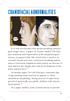 CRANIOFACIAL ABNORMALITIES It is well documented that mouth-breathing children grow longer faces. A paper by Tourne entitled The long face syndrome and impairment of the nasopharyngeal airway, recognised
Oh, 14 C O M M U N I T Y M A G A Z I N E S M A Y / J U N E 2 0 0 8
 14 C O M M U N I T Y M A G A Z I N E S M A Y / J U N E 2 0 0 8 Oh, my aching head NEW DOCTOR TEAM ADDRESSES CHRONIC HEADACHE PROBLEMS SEVERE HEADACHES IN THIS COUNTRY ARE A LEADING CAUSE OF DISRUP- TION
Diseases and Health Conditions that can Lead to Daytime Sleepiness
 October 21, 2014 Diseases and Health Conditions that can Lead to Daytime Sleepiness Indira Gurubhagavatula, MD, MPH Associate Professor Director, Occupational Sleep Medicine University of Pennsylvania,
Managing worn teeth with composites
 6 Managing worn teeth with composites Clinical details A 50-year-old man presents to you complaining about his worn teeth and would like the appearance improved (Fig. 6.1). He complains of regurgitation
Attachments And Their Use In Removable Partial Denture Fabrication
 Unless otherwise noted, the content of this course material is licensed under a Creative Commons Attribution - Non-Commercial - Share Alike 3.0 License. Copyright 2008, Dr. Jeff Shotwell. The following
Nobel Clinician - Quick Guide
 1220 E. Birch St. #201 Brea, CA 92821 (800)750-5004 Haupt Dental Lab Inc. Nobel Clinician - Quick Guide Step #1 - Diagnostics Make impressions of both the upper and lower arches using custom trays. Care
Taking Out a Tooth. Before You Begin: Ask Questions! CHAPTER11
 159 CHAPTER11 Taking Out a Tooth Not every painful tooth needs to come out. You must decide how serious the problem is, and then decide if you can treat and save the tooth. Some problems such as root canal
DENT IMPLANT restoring qualit S: of LIfE
 DENTAL IMPLANTS: restoring quality of life Dental Implants: A Better Treatment Option. What are dental implants? Dental implants are a safe, esthetic alternative to traditional crowns, bridgework, and
National Hospital for Neurology and Neurosurgery. Continuous positive airway pressure (CPAP) Sleep Respiratory Unit
 National Hospital for Neurology and Neurosurgery Continuous positive airway pressure (CPAP) Sleep Respiratory Unit If you would like this document in another language or format or if you require the services
SLEEP THERAPY GUIDE. www.caremedical.com
 SLEEP THERAPY GUIDE What to expect from your Care Medical Team, insurance guidelines, and how to successfully use your equipment to alleviate your sleep apnea symptoms. www.caremedical.com TABLE OF CONTENTS
TIPS and EXERCISES for your knee stiffness. and pain
 TIPS and EXERCISES for your knee stiffness and pain KNEE EXERCISES Range of motion exercise 3 Knee bending exercises 3 Knee straightening exercises 5 STRENGTHENING EXERCISES 6 AEROBIC EXERCISE 10 ADDITIONAL
ANGEL DENTAL CARE Implant Consent
 This information is to help you make an informed decision about having implant treatment. You should take as much time as you wish to make the decision in relation to signing the following consent form.
The Lower Free End Saddle (distal extension saddle)
 Giles Perryer 1997 I The Lower Free End Saddle (distal extension saddle) Free end saddle dentures move Excessive movement of the denture can cause pain, tissue damage, and complaints of instability and
!Financial agreement COST / RISK / BENEFIT
 COMPLETE DENTURES 1 2 Oral Examination, Diagnosis and Treatment Planning Initial Appointment! Get to know your patient! Personally, experiences, expectations! Past medical history! Past dental history!
Raising Sleep Apnea Awareness:
 Raising Sleep Apnea Awareness: Among People with Diabetes in North Carolina, 2012 People with diabetes have more sleep problems than people without diabetes in the same age, sex, and race/ethnicity group.
your talent. our technology. the perfect fit.
 your talent. our technology. the perfect fit. itero - exclusively distributed in Europe by The digital revolution Changing the Face of Dentistry Digital technology ensures a more accurate impression from
OVERVIEW The MetLife Dental Plan for Retirees
 OVERVIEW The MetLife Dental Plan for Retirees IN NETWORK: Staying in network saves you money. 1 Participating dentists have agreed to MetLife s negotiated fees which are typically 15% to 45% below the
The Successful Crown Delivery
 The Successful Crown Delivery Understanding Occlusal and Contact Problems in Crown and Bridge Robert R. Cowie, DDS, FAGD 1/2 point CDT or RG documented scientiþc credit. See Page 44. 38 hen I talk with
Dental care for patients with head and neck cancer
 Dental care for patients with head and neck cancer This leaflet explains why it is important to see a dentist before and after your treatment for head and neck cancer. It also explains what you can expect
Full Crown Module: Learner Level 1
 Full Crown Module Restoration / Tooth # Full Gold Crown (FGC) / 30 Extensions: Porcelain Fused to Metal (PFM) / 12 All Ceramic / 8 Learner Level 1 Mastery of Tooth Preparation Estimated Set Up Time: 30
Dentistry. Dental Services
 Dentistry Dental Services The Department of Dentistry s multi-disciplinary team cares for your oral health and wellness, and provides you with personalised service that is integrated, comprehensive, teambased
IMPLANT CONSENT FORM WHAT ARE DENTAL IMPLANTS?
 IMPLANT CONSENT FORM WHAT ARE DENTAL IMPLANTS? Dental implants are a very successful and accepted treatment option to replace lost or missing teeth. A dental implant is essentially an artificial tooth
Preventive Pediatric Dental Care. Lawrence A. Kotlow DDS Practice Limited to Pediatric Dental Care 340 Fuller Road Albany, New York 12203
 Preventive Pediatric Dental Care Lawrence A. Kotlow DDS Practice Limited to Pediatric Dental Care 340 Fuller Road Albany, New York 12203 Patient comfort and safety 1. All children are treated using the
Flexible dentures an alternate for rigid dentures? Volume 1 Issue 1
 Flexible dentures an alternate for rigid dentures? Dr. Sunitha N Shamnur 1, Dr. Jagadeesh KN 1, Dr. Kalavathi SD 1, Dr. Kashinath KR 2 1 Senior Lecturer, 2 Professor & Head, Department of Prosthodontics,
Acknowledgements. Dental Management of Obstructive Sleep Apnea in a Maxillofacial Prosthodontic Practice. Transfer of Information
 Dental Management of Obstructive Sleep Apnea in a Maxillofacial Prosthodontic Practice Alvin G. Wee, BDS, MS, MPH Associate Professor and Director Division of Oral Facial Prosthetics / Dental Oncology
INTRODUCTION TO OSTEO-TI IMPLANTS; A NURSES MANUAL
 INTRODUCTION TO OSTEO-TI IMPLANTS; A NURSES MANUAL Osteo-Ti INTRODUCTION This handbook has been designed to give you a basic understanding of dental implants and related surgery procedures. As with all
Biliary Drain. What is a biliary drain?
 Biliary Drain What is a biliary drain? A biliary drain is a tube to drain bile from your liver. It is put in by a doctor called an Interventional Radiologist. The tube or catheter is placed through your
CHAPTER 10 RESTS AND PREPARATIONS. 4. Serve as a reference point for evaluating the fit of the framework to the teeth.
 CHAPTER 10 RESTS AND DEFINITIONS A REST is any rigid part of an RPD framework which contacts a properly prepared surface of a tooth. A REST PREPARATION or REST SEAT is any portion of a tooth or restoration
General Dentistry Neuromuscular Dentistry Cosmetic Dentistry Sleep Medicine
 PO Box 297 Hedgesville, WV 25427 304 754-8803 KenBarneydds.com General Dentistry Neuromuscular Dentistry Cosmetic Dentistry Sleep Medicine WELCOME TO OUR PRACTICE Welcome to the office of Dr. Kenneth C.
Resorptive Changes of Maxillary and Mandibular Bone Structures in Removable Denture Wearers
 Resorptive Changes of Maxillary and Mandibular Bone Structures in Removable Denture Wearers Dubravka KnezoviÊ-ZlatariÊ Asja»elebiÊ Biserka LaziÊ Department of Prosthodontics School of Dental Medicine University
Galerie Dental Care. Patient Information. Emergency Contact Relationship: Phone:
 Galerie Dental Care Patient Information Date: Patient Name: Last First Middle Initial (Preferred Name) Gender: Birth Date: Marital/Family Status Address: Street Apartment # City Province Postal Code Phone
Functional rehab after breast reconstruction surgery
 Functional rehab after breast reconstruction surgery UHN A guide for women who had DIEP, latissimus dorsi with a tissue expander or implant, or two-stage implant based breast reconstruction surgery Read
BEST DENTAL ASSOCIATES / DRSTONEDDS.COM THE DENTAL IMPLANT GUIDE
 THE DENTAL IMPLANT GUIDE We specialize in the most advanced technologies in dental restoration, reconstruction and replacement. We d love to help you to improve your comfort, lifestyle, & confidence with
MINI IMPLANTS FOR LOWER DENTURE STABLIZATION
 MINI IMPLANTS FOR LOWER DENTURE STABLIZATION From the Office of Dr. Michael J. Guy 511A Lakeshore Drive, North Bay ON, P1A 2E3 Mini dental implants (MDI) have become increasingly popular in the past decade
The Most Frequently Asked Questions About Dental Implants... A Consumer s Guide to Understanding Implant Treatment
 Number 3 $1.25 The Most Frequently Asked Questions About Dental Implants... A Consumer s Guide to Understanding Implant Treatment If you are like most people considering dental implants, you probably have
What s The Plan? Why Start Now?
 What s The Plan? Just as no two people are exactly alike, no two treatment plans are exactly alike. Dr. Hullings has developed a treatment plan just for you, involving procedures appropriate for your individual
(1) may be provided under contract with another health care insurer;
 Sec. 21.42.385. Dental, vision, and hearing coverage. (a) Except for a fraternal benefit society, a health care insurer that offers, issues for delivery, delivers, or renews in this state a health care
DENTAL FOR EVERYONE SUMMARY OF BENEFITS, LIMITATIONS AND EXCLUSIONS
 DENTAL FOR EVERYONE SUMMARY OF BENEFITS, LIMITATIONS AND EXCLUSIONS DEDUCTIBLE The dental plan features a deductible. This is an amount the Enrollee must pay out-of-pocket before Benefits are paid. The
Waxing up. Waxing up. Crown and bridgework. Friedrich Jetter Christian Pilz. Ideas for dental technology
 Waxing up Waxing up Crown and bridgework Friedrich Jetter Christian Pilz Ideas for dental technology Waxing-up units Waxing-up units Waxlectric II The Waxlectric II is an electrically regulated sculpting
All About Your Peripherally Inserted Central Catheter (PICC)
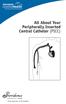 All About Your Peripherally Inserted Central Catheter (PICC) General Information Intravenous (IV) therapy is the delivery of fluid directly into a vein. An intravenous catheter is a hollow tube that is
WHEN THINGS GO WRONG WITH CPAP
 1 The Sleep Center at Rocky Mountain Heart and Lung A Department of Kalispell Regional Medical Center 350 Heritage Way, Suite 2100, Kalispell, Montana 59901 (406) 257 8979 Fax (406) 257 8964 WHEN THINGS
Don t just dream of higher-quality sleep. How health care should be
 Don t just dream of higher-quality sleep. How health care should be Many of our patients with sleep disorders don t realize there s another way of life, a better way, until they are treated. Robert Israel,
Managing Mouth Sores
 Managing Mouth Sores The following information is based on the general experiences of many prostate cancer patients. Your experience may be different. If you have any questions about what prostate cancer
Lesson 2: Save your Smile from Tooth Decay
 Lesson 2: Save your Smile from Tooth Decay OVERVIEW Objectives: By the end of the lesson, the Lay Health Worker will be able to: 1. Describe what tooth decay is and how it happens. 2. State the causes