
Myelopathy Paresis and Paralysis in Cats
|
|
|
- Oscar Felix Merritt
- 10 years ago
- Views:
Transcription
1 Myelopathy Paresis and Paralysis in Cats (Disorder of the Spinal Cord Leading to Weakness and Paralysis in Cats) Basics OVERVIEW Myelopathy any disorder or disease affecting the spinal cord; a myelopathy can cause weakness or partial paralysis (known as paresis ) or complete loss of voluntary movements (known as paralysis ) Paresis or paralysis may affect all four limbs (known as tetraparesis or tetraplegia, respectively), may affect only the rear legs (known as paraparesis or paraplegia, respectively), the front and rear leg on the same side (known as hemiparesis or hemiplegia, respectively) or only one limb (known as monoparesis or monoplegia, respectively) Paresis and paralysis also can be caused by disorders of the nerves and/or muscles to the legs (known as peripheral neuromuscular disorders ) The spine is composed of multiple bones with disks (intervertebral disks) located in between adjacent bones (vertebrae); the disks act as shock absorbers and allow movement of the spine; the vertebrae are named according to their location cervical vertebrae are located in the neck and are numbered as cervical vertebrae one through seven or C1 C7; thoracic vertebrae are located from the area of the shoulders to the end of the ribs and are numbered as thoracic vertebrae one through thirteen or T1 T13; lumbar vertebrae start at the end of the ribs and continue to the pelvis and are numbered as lumbar vertebrae one through seven or L1 L7; the remaining vertebrae are the sacral and coccygeal (tail) vertebrae The brain stem is the part of the brain that is connected to the spinal cord that controls functions like breathing and heart rate GENETICS Lysosomal storage diseases (inherited metabolic diseases in which harmful levels of materials accumulate in the body's cells and tissues) examples include gangliosidosis GM1/GM2, sphingomyelinosis (Niemann-Pick disease), mucopolysaccharidosis type VI, and glycogenosis type IV that cause weakness (paresis) or paralysis autosomal recessive pattern of inheritance Disorder characterized by progressive changes in the part of the nerve that carries impulses away from the nerve

2 cell body and toward the muscles (known as neuroaxonal dystrophy ) and disorder characterized by loss of nerve cell bodies in the brainstem and spinal cord (known as spinal muscular atrophy ) degenerative diseases of the spinal cord reported as autosomal recessive conditions Disorders characterized by a cavity in the spinal cord (known as syringohydromyelia ) or defective development of the spinal cord (known as myelodysplasia ) may be associated with congenital (present at birth) defects of the spine and spinal cord (known as sacrocaudal or sacrococcygeal dysgenesis ), an autosomal dominant condition in the Manx SIGNALMENT/DESCRIPTION OF PET Species Cats Breed Predilections Gangliosidosis GM1/GM2 Siamese, Korat, and domestic shorthair Glycogen storage disease type IV Norwegian Forest cats Syringohydromyelia/myelodysplasia Manx and Manx crosses with sacrocaudal or sacrococcygeal dysgenesis Sphingomyelinosis (Niemann-Pick disease) Siamese, Balinese, and domestic shorthair Mucopolysaccharidosis type VI Siamese and domestic shorthair Idiopathic complex polysaccharide storage disease Abyssinian; idiopathic means of unknown cause Neuroaxonal dystrophy Siamese and domestic shorthair SIGNS/OBSERVED CHANGES IN THE PET Signs vary with location and severity of the spinal cord lesion Cervical syndrome (spinal lesion is located in the neck) weakness of all four legs (tetraparesis) or paralysis of all four legs (tetraplegia); weakness of the front and rear leg on one side of the body (hemiparesis) or paralysis of the front and rear leg on one side of the body (hemiplegia); wobbly, incoordinated or drunken -appearing gait or movement (known as ataxia ); abnormalities in which the normal subconscious awareness of the location of the legs and movement is altered (known as proprioceptive deficits ); normal reflexes or exaggerated reflexes (known as hyperreflexia ); the cat may be overly sensitive to pain or touch (known as hyperesthesia ) around the neck and Horner's syndrome (condition in which one pupil is small or constricted, the eyelid droops, and the eyeball is withdrawn into the socket) also may be present Cervicothoracic syndrome (spinal lesion involves the area of the lower part of the neck and/or the chest) weakness of all four legs (tetraparesis) or paralysis of all four legs (tetraplegia); weakness of the front and rear leg on one side of the body (hemiparesis) or of the front and rear leg on one side of the body (hemiplegia); wobbly, incoordinated or drunken -appearing gait or movement (known as ataxia ); abnormalities in which the normal subconscious awareness of the location of the legs and movement is altered (known as proprioceptive deficits ); decreased reflexes (known as hyporeflexia ) or lack of reflexes (known as areflexia ), decreased muscle tone (known as hypotonus ), and loss of muscle mass (known as muscle atrophy ) on one or both front legs and normal reflexes or exaggerated reflexes (known as hyperreflexia ) and increased muscle tone (known as hypertonus ) of the rear legs; the cat may be overly sensitive to pain or touch (hyperesthesia) along the spine around the area of the junction of the neck and chest; and Horner's syndrome (condition in which one pupil is small or constricted, the eyelid droops, and the eyeball is withdrawn into the socket) also may be present Thoracolumbar syndrome (spinal lesion involves the area of the spine from the end of the ribs to the pelvis) normal front legs; weakness of the rear legs (paraparesis) or paralysis of the rear legs (paraplegia); wobbly, incoordinated or drunken -appearing gait or movement (ataxia) of the rear legs; abnormalities in which the normal subconscious awareness of the location of the rear legs and movement is altered (proprioceptive deficits); increased muscle tone (hypertonus) and normal reflexes or exaggerated reflexes (hyperreflexia) of the rear legs; the cat may be overly sensitive to pain or touch (hyperesthesia) along the spine at the area from the end of the ribs to the pelvis; the cat may have absent or decreased sensation below the spinal lesion; lack of control or urination (known as urinary incontinence ) also may be present urinary incontinence is characterized by a tense bladder that is difficult to express (so-called upper motor neuron bladder ) Lumbosacral syndrome (spinal lesion involves the area of the spine at the pelvis) normal front legs; weakness of the rear legs (paraparesis) or paralysis of the rear legs (paraplegia); weakness of one rear leg (monoparesis) or

3 paralysis of one rear leg (monoplegia); mild rear leg wobbly, incoordinated, or drunken -appearing gait; abnormalities in which the normal subconscious awareness of the location of the rear legs and movement is altered (proprioceptive deficits); decreased reflexes (known as hyporeflexia ) or lack of reflexes (areflexia); decreased muscle tone (hypotonus); and loss of muscle mass (muscle atrophy) of the rear leg(s); the cat may be overly sensitive to pain or touch (hyperesthesia) along the spine around the area of the pelvis; the cat may have decreased or absent sensation below the lesion as well as decreased or absent tail and anal tone; lack of ability to control urination ( urinary incontinence) and bowel movements (known as fecal incontinence ) also may be present urinary incontinence is characterized by large and flaccid bladder that is easy to express (so-called lower motor neuron bladder ) CAUSES Degenerative disease of the spinal cord Inherited disease of the spinal cord Abnormal structural development of the backbones (vertebrae) or spinal cord Metabolic abnormalities Tumors or cancer (such as lymphoma, osteosarcoma, fibrosarcoma, and cancer that has spread to the spine/spinal cord [known as metastatic cancer ]) Inflammatory or infectious disease (such as feline infectious peritonitis [FIP], toxoplasmosis, and feline leukemia virus (FeLV)-associated disorder of the spinal cord [known as FeLV-associated myelopathy ]) Trauma (such as fractures or dislocations of the backbones [vertebrae] and penetrating wounds [bite wounds, BB pellets]) Abnormal blood flow to the spine/spinal cord RISK FACTORS Outdoor cats at risk for traumatic and infectious inflammation of the spinal cord (known as myelitis ) Feline leukemia virus (FeLV)-positive cats at risk for lymphoma and FeLV-associated myelopathy Treatment HEALTH CARE Emergency evaluation and possible surgery when a traumatic cause of weakness (paresis)/paralysis is suspected Inpatient medical management for severe nervous system deficits, such as paralysis and lack of control of urination (urinary incontinence) Cats that cannot walk (known as being non-ambulatory ) should be confined to a soft padded crate or enclosed area, they should be kept dry and clean and turned every 6 hours, if they are unable to stay lying on their chests If the cat has lack of control of urination (urinary incontinence), the bladder should be emptied every 6 8 hours Prevent/treat bed sores (known as decubital ulcers ) and skin lesions that develop due to contact with urine, when the hair and skin remain damp (known as urine scald ) Treat constipation Physical therapy is useful to prevent loss of muscle mass (muscle atrophy) and to keep joints flexible, especially for post-operative rehabilitation ACTIVITY Restricted especially when a traumatic cause of weakness (paresis)/paralysis is suspected, but also to prevent spinal trauma secondary to the paresis/paralysis SURGERY Surgical management for fractures or dislocations of the backbones (vertebrae), intervertebral disk disease, and some tumors or cancer Medications Medications presented in this section are intended to provide general information about possible treatment. The treatment for a particular condition may evolve as medical advances are made; therefore, the medications should not be considered as all inclusive

4 Not recommended until a diagnosis has been established Spinal trauma methylprednisolone administered within 8 hours from the time of injury Antibiotics, if the cat develops a urinary tract infection Follow-Up Care PATIENT MONITORING Repeat nervous system examination at a frequency determined by the severity and progression of the cat's nervous system status PREVENTIONS AND AVOIDANCE Depend on underlying cause Keep cat indoors or on leash when outside to avoid spinal trauma POSSIBLE COMPLICATIONS Urinary tract infection Skin lesions that develop due to contact with urine, when the hair and skin remain damp (urine scald) Constipation or lack of control of bowel movements (fecal incontinence) Loss of muscle mass (muscle atrophy) Bed sores (decubital ulcers) EXPECTED COURSE AND PROGNOSIS Depend on underlying cause Key Points If the cat is treated as an outpatient, it is important to understand all aspects of nursing care and possible complications; discuss the care of your cat with the veterinarian

5 Enter notes here Blackwell's Five-Minute Veterinary Consult: Canine and Feline, Fifth Edition, Larry P. Tilley and Francis W.K. Smith, Jr John Wiley & Sons, Inc.

Spinal Cord Diseases in Bernese Mountain Dogs
 Spinal Cord Diseases in Bernese Mountain Dogs 0 A N O V E R V I E W F O R BERNER O W N E R S O R G A N I Z E D B Y N A N C Y M E L O N E, P H. D. Based on materials obtained from the Berner Garde Foundation
The Anatomy of Spinal Cord Injury (SCI)
 The Anatomy of Spinal Cord Injury (SCI) What is the Spinal Cord? The spinal cord is that part of your central nervous system that transmits messages between your brain and your body. The spinal cord has
ICD-9-CM coding for patients with Spinal Cord Injury*
 ICD-9-CM coding for patients with Spinal Cord Injury* indicates intervening codes have been left out of this list. OTHER DISORDERS OF THE CENTRAL NERVOUS SYSTEM (340-349) 344 Other paralytic syndromes
Urinary Incontinence
 Urinary Incontinence (Involuntary Passage of Urine) Basics OVERVIEW Loss of voluntary control of urination, usually observed as involuntary urine leakage while resting SIGNALMENT/DESCRIPTION OF PET Species
Spinal Cord Injury Education. An Overview for Patients, Families, and Caregivers
 Spinal Cord Injury Education An Overview for Patients, Families, and Caregivers Spinal Cord Anatomy A major component of the Central Nervous System (CNS) It is 15 to 16 inches long, and weighs 1 to 2 ounces
If you or a loved one have suffered because of a negligent error during spinal surgery, you will be going through a difficult time.
 If you or a loved one have suffered because of a negligent error during spinal surgery, you will be going through a difficult time. You may be worried about your future, both in respect of finances and
NEUROLOCALIZATION MADE EASY
 NEUROLOCALIZATION MADE EASY Jared B. Galle, DVM, Diplomate ACVIM (Neurology) Dogwood Veterinary Referral Center 4920 Ann Arbor-Saline Road Ann Arbor, MI 48103 Localizing a neurologic problem to an anatomical
THE SPINAL CORD AND THE INFLUENCE OF ITS DAMAGE ON THE HUMAN BODY
 THE SPINAL CORD AND THE INFLUENCE OF ITS DAMAGE ON THE HUMAN BODY THE SPINAL CORD. A part of the Central Nervous System The nervous system is a vast network of cells, which carry information in the form
Contact your Doctor or Nurse for more information.
 A spinal cord injury is damage to your spinal cord that affects your movement, feeling, or the way your organs work. The injury can happen by cutting, stretching, or swelling of the spinal cord. Injury
VCA Animal Specialty Group 5610 Kearny Mesa Rd., Suite B San Diego, CA 92111 858-560-8006 www.vcaanimalspecialtygroup.com.
 Disk Disease While not limited to small breeds, disc disease is much more prevalent among Dachshunds, Lhasa Apsos, Poodles, Beagles and Pekingese primarily due to genetic factors. These traits result in
Traumatic injuries SPINAL CORD. Causes of Traumatic SCI SYMPTOMS. Spinal Cord trauma can be caused by:
 Traumatic injuries SPINAL CORD Jennie Trkulja RN, BScN, ENC (c) Causes of Traumatic SCI Spinal Cord trauma can be caused by: MVC (most injuries) Gunshots Falls Stabbings Assaults Industrial accidents Sports
Nursing. Management of Spinal Trauma. Content. Objectives. Objectives
 7 cervical vertebrae Content 12 thoracic vertebrae Nursing 5 sacral vertebrae Management of Spinal Trauma Kwai Fung Betty Siu Ward Manager O&T Dept TKOH Date : 22nd April 2007 5 lumbar vertebrae 4 coccygeal
.org. Fractures of the Thoracic and Lumbar Spine. Cause. Description
 Fractures of the Thoracic and Lumbar Spine Page ( 1 ) Spinal fractures can vary widely in severity. While some fractures are very serious injuries that require emergency treatment, other fractures can
CHAPTER 32 QUIZ. Handout 32-1. Write the letter of the best answer in the space provided.
 Handout 32-1 QUIZ Write the letter of the best answer in the space provided. 1. All of the following are signs and symptoms in patients with spinal injuries except A. paralysis. C. hyperglycemia. B. priapism.
A Patient s Guide to Diffuse Idiopathic Skeletal Hyperostosis (DISH)
 A Patient s Guide to Diffuse Idiopathic Skeletal Hyperostosis (DISH) Introduction Diffuse Idiopathic Skeletal Hyperostosis (DISH) is a phenomenon that more commonly affects older males. It is associated
Temple Physical Therapy
 Temple Physical Therapy A General Overview of Common Neck Injuries For current information on Temple Physical Therapy related news and for a healthy and safe return to work, sport and recreation Like Us
Spina Bifida Occulta. Lo-Call 1890 20 22 60. Occulta Means Hidden
 Occulta Means Hidden Spina Bifida Occulta is not easily detected because skin covers the area, such as the spinal cord, spinal bone or nerve roots, which may be affected. Spina Bifida Occulta can affect
Therapeutic Canine Massage
 Meet our Certified Canine Massage Therapist, Stevi Quick After years of competitive grooming and handling several breeds in conformation, I became interested in training and competing with my dogs in the
Neck Injuries and Disorders
 Neck Injuries and Disorders Introduction Any part of your neck can be affected by neck problems. These affect the muscles, bones, joints, tendons, ligaments or nerves in the neck. There are many common
Closed Automobile Insurance Third Party Liability Bodily Injury Claim Study in Ontario
 Page 1 Closed Automobile Insurance Third Party Liability Bodily Injury Claim Study in Ontario Injury Descriptions Developed from Newfoundland claim study injury definitions No injury Death Psychological
ICD-10 Cheat Sheet Frequently Used ICD-10 Codes for Musculoskeletal Conditions *
 ICD-10 Cheat Sheet Frequently Used ICD-10 Codes for Musculoskeletal Conditions * Finding the ICD-10 equivalent for an ICD-9 code can be a challenge. This resource of frequently used codes can help when
Spine Anatomy and Spine General The purpose of the spine is to help us stand and sit straight, move, and provide protection to the spinal cord.
 Spine Anatomy and Spine General The purpose of the spine is to help us stand and sit straight, move, and provide protection to the spinal cord. Normal List Kyphosis The human spine has 7 Cervical vertebra
ICD 10 CM IMPLEMENTATION DATE OCT 1, 2015
 Presented by: Teri Romano, RN, MBA, CPC, CMDP ICD 10 CM IMPLEMENTATION DATE OCT 1, 2015 Source: http://journal.ahima.org/2015/02/04/us house committee to hold hearing on icd 10 implementation/ 2 2015 Web_Non
Acute Oncology Service Patient Information Leaflet
 Spinal cord compression Acute Oncology Service Patient Information Leaflet Introduction If you have been diagnosed with cancer, you need to know about spinal cord compression and the warning signs. What
Spine University s Guide to Cauda Equina Syndrome
 Spine University s Guide to Cauda Equina Syndrome 2 Introduction Your spine is a very complicated part of your body. It s made up of the bones (vertebrae) that keep it aligned, nerves that channel down
How To Write An Icd10
 Crosswalk of Common Spine ICD-9-CM Codes to ICD-10 Codes As of October 1, 2015, all health care entities covered by the Health Insurance Portability and Accountability Act (HIPAA) will be required to use
III./8.4.2: Spinal trauma. III./8.4.2.1 Injury of the spinal cord
 III./8.4.2: Spinal trauma Introduction Causes: motor vehicle accidents, falls, sport injuries, industrial accidents The prevalence of spinal column trauma is 64/100,000, associated with neurological dysfunction
Ongoing Research for Degenerative Myelopathy Protocol for Submission of Spinal Cord Samples
 Ongoing Research for Degenerative Myelopathy Protocol for Submission of Spinal Cord Samples Investigators: JR Coates, K Lindblad-Toh, GS Johnson, GC Johnson, DP O Brien Primary Contact Person: Dr. Joan
Information for the Patient About Surgical
 Information for the Patient About Surgical Decompression and Stabilization of the Spine Aging and the Spine Daily wear and tear, along with disc degeneration due to aging and injury, are common causes
.org. Herniated Disk in the Lower Back. Anatomy. Description
 Herniated Disk in the Lower Back Page ( 1 ) Sometimes called a slipped or ruptured disk, a herniated disk most often occurs in your lower back. It is one of the most common causes of low back pain, as
Referral Form & Instructions Questions? Call 1 888 284 5433 and press 7
 Therapist Name: Phone: Referral Form & Instructions Questions? Call 1 888 284 5433 and press 7 1 2 Indicate all products that might be appropriate for your patient. Please check all products that might
Ancylostoma caninum, Ancylostoma tubaeforme, Ancylostoma braziliense, Uncinaria stenocephala Hookworms
 1020 Green Acres Rd #5 - Eugene, OR 97408 * Phone: (541) 345-7970 * www.deltaoaksvet.com Ancylostoma caninum, Ancylostoma tubaeforme, Ancylostoma braziliense, Uncinaria stenocephala Hookworms Affected
Seizures (Convulsions, Status Epilepticus) in Dogs
 Customer Name, Street Address, City, State, Zip code Phone number, Alt. phone number, Fax number, e-mail address, web site Seizures (Convulsions, Status Epilepticus) in Dogs Basics OVERVIEW Seizures are
SPINAL STENOSIS Information for Patients WHAT IS SPINAL STENOSIS?
 SPINAL STENOSIS Information for Patients WHAT IS SPINAL STENOSIS? The spinal canal is best imagined as a bony tube through which nerve fibres pass. The tube is interrupted between each pair of adjacent
1 REVISOR 5223.0070. (4) Pain associated with rigidity (loss of motion or postural abnormality) or
 1 REVISOR 5223.0070 5223.0070 MUSCULOSKELETAL SCHEDULE; BACK. Subpart 1. Lumbar spine. The spine rating is inclusive of leg symptoms except for gross motor weakness, bladder or bowel dysfunction, or sexual
Management in the pre-hospital setting
 Management in the pre-hospital setting Inflammation of the joints Two main types: Osteoarthritis - cartilage loss from wear and tear Rheumatoid arthritis - autoimmune disorder Affects all age groups,
LYMPHOMA IN DOGS. Diagnosis/Initial evaluation. Treatment and Prognosis
 LYMPHOMA IN DOGS Lymphoma is a relatively common cancer in dogs. It is a cancer of lymphocytes (a type of white blood cell) and lymphoid tissues. Lymphoid tissue is normally present in many places in the
Pain Management Top Diagnosis Codes (Crosswalk)
 Pain Management Top s (Crosswalk) 274.00 Gout arthropathy, M1000 Idiopathic gout, unspecified site unspecified M10011 Idiopathic gout, right shoulder M10012 Idiopathic gout, left shoulder M10019 Idiopathic
What types of scoliosis are there?
 Patient and Family Education Scoliosis About idiopathic scoliosis and its treatment This handout covers the most common type of scoliosis, adolescent idiopathic scoliosis. Other types of scoliosis may
Spine Trauma: When to Transfer. Alexander Ching, MD Director, Orthopaedic Spine Trauma OHSU
 Spine Trauma: When to Transfer Alexander Ching, MD Director, Orthopaedic Spine Trauma OHSU Disclosures Depuy Spine Consultant (teaching and courses) Department education and research funds Atlas Spine
Spinal Cord Injury. North American Spine Society Public Education Series
 Spinal Cord Injury North American Spine Society Public Education Series What Is a Spinal Cord Injury? A spinal cord injury is a condition that results from damage or trauma to the nerve tissue of the spine.
Lumbar Laminectomy and Interspinous Process Fusion
 Lumbar Laminectomy and Interspinous Process Fusion Introduction Low back and leg pain caused by pinched nerves in the back is a common condition that limits your ability to move, walk, and work. This condition
Module 1: The Somato-Motor System: Tendon Tap reflex
 Module 1: The Somato-Motor System: Tendon Tap reflex Module Objectives: 1. Describe the anatomic pathway of a tendon tap reflex. 2. Explain how a tendon tap reflex assessment assists in diagnosis of a
Y O U R S U R G E O N S. choice of. implants F O R Y O U R S U R G E R Y
 Y O U R S U R G E O N S choice of implants F O R Y O U R S U R G E R Y Y O U R S U R G E O N S choice of implants F O R Y O U R S U R G E R Y Your Surgeon Has Chosen the C 2 a-taper Acetabular System The
Multiple Sclerosis (MS)
 Multiple Sclerosis (MS) Purpose/Goal: Care partners will have an understanding of Multiple Sclerosis and will demonstrate safety and promote independence while providing care to the client with MS. Introduction
How To Manage A Catastrophic Injury
 Report #14 CATASTROPHIC INJURIES: Paralysis, Amputation, Burns Overview: A catastrophic injury or illness usually occurs suddenly and without warning. Injuries may be considered catastrophic when they
Herniated Disk. This reference summary explains herniated disks. It discusses symptoms and causes of the condition, as well as treatment options.
 Herniated Disk Introduction Your backbone, or spine, has 24 moveable vertebrae made of bone. Between the bones are soft disks filled with a jelly-like substance. These disks cushion the vertebrae and keep
Quality Measures for Long-stay Residents Percent of residents whose need for help with daily activities has increased.
 Quality Measures for Long-stay Residents Percent of residents whose need for help with daily activities has increased. This graph shows the percent of residents whose need for help doing basic daily tasks
Transmittal 55 Date: MAY 5, 2006. SUBJECT: Changes Conforming to CR3648 for Therapy Services
 CMS Manual System Pub 100-03 Medicare National Coverage Determinations Department of Health & Human Services (DHHS) Centers for Medicare & Medicaid Services (CMS) Transmittal 55 Date: MAY 5, 2006 Change
BACK PAIN PATHWAY DEFINTIONS
 BACK PAIN PATHWAY DEFINTIONS Cauda Equina Syndrome (CES) Current or imminent compression of the sacral nerve roots resulting in neurogenic bladder and bowel dysfunction. Symptoms typically include: severe
Spine University s Guide to Vertebral Osteonecrosis (Kummel's Disease)
 Spine University s Guide to Vertebral Osteonecrosis (Kummel's Disease) 2 Introduction Kummel's disease is a collapse of the vertebrae (the bones that make up the spine). It is also called vertebral osteonecrosis.
Contents. Introduction 1. Anatomy of the Spine 1. 2. Spinal Imaging 7. 3. Spinal Biomechanics 23. 4. History and Physical Examination of the Spine 33
 Contents Introduction 1. Anatomy of the Spine 1 Vertebrae 1 Ligaments 3 Intervertebral Disk 4 Intervertebral Foramen 5 2. Spinal Imaging 7 Imaging Modalities 7 Conventional Radiographs 7 Myelography 9
BACK PAIN: WHAT YOU SHOULD KNOW
 BACK PAIN: WHAT YOU SHOULD KNOW Diane Metzer LOWER BACK PAIN Nearly everyone at some point has back pain that interferes with work, recreation and routine daily activities. Four out of five adults experience
Orthopaedic Spine Center. Anterior Cervical Discectomy and Fusion (ACDF) Normal Discs
 Orthopaedic Spine Center Graham Calvert MD James Woodall MD PhD Anterior Cervical Discectomy and Fusion (ACDF) Normal Discs The cervical spine consists of the bony vertebrae, discs, nerves and other structures.
Herniated Disk in the Lower Back
 Nader M. Hebela, MD Fellow of the American Academy of Orthopaedic Surgeons http://orthodoc.aaos.org/hebela Cleveland Clinic Abu Dhabi Cleveland Clinic Abu Dhabi Neurological Institute Al Maryah Island
Surgery for cervical disc prolapse or cervical osteophyte
 Mr Paul S. D Urso MBBS(Hons), PhD, FRACS Neurosurgeon Provider Nº: 081161DY Epworth Centre Suite 6.1 32 Erin Street Richmond 3121 Tel: 03 9421 5844 Fax: 03 9421 4186 AH: 03 9483 4040 email: [email protected]
Spinal Cord and Bladder Management Male: Intermittent Catheter
 Spinal Cord and Bladder Management Male: Intermittent Catheter The 5 parts of the urinary system work together to get rid of waste and make urine. Urine is made in your kidneys and travels down 2 thin
A Patient s Guide to Artificial Cervical Disc Replacement
 A Patient s Guide to Artificial Cervical Disc Replacement Each year, hundreds of thousands of adults are diagnosed with Cervical Disc Degeneration, an upper spine condition that can cause pain and numbness
The Lewin Group undertook the following steps to identify the guidelines relevant to the 11 targeted procedures:
 Guidelines The following is a list of proposed medical specialty guidelines that have been found for the 11 targeted procedures to be included in the Medicare Imaging Demonstration. The list includes only
REHABILITATION SERVICES
 REHABILITATION SERVICES Table of Contents GENERAL... 2 TERMS AND ABBREVIATIONS... 2 PRIOR AUTHORIZATION REQUIREMENTS FOR MEDICAID REIMBURSEMENT OF INPATIENT REHABILITATION SERVICES (Updated 4/1/11)...
Exercise and FES cycle fact sheet
 Exercise and FES cycle fact sheet FES = Functional Electrical Stimulation. An electrical current is passed through paralysed muscle causing it to contract. The electrical current uses the peripheral nerves
Cervical Spondylosis. Understanding the neck
 Page 1 of 5 Cervical Spondylosis This leaflet is aimed at people who have been told they have cervical spondylosis as a cause of their neck symptoms. Cervical spondylosis is a 'wear and tear' of the vertebrae
Urodynamics in Neuro-Urology
 Urodynamics in Neuro-Urology R Hamid MD (Res), FRCS (Urol) Consultant Urologist London Spinal Injuries Unit, Stanmore & University College London Hospitals Micturition Micturition can be visualized as
Herniated Cervical Disc
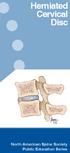 Herniated Cervical Disc North American Spine Society Public Education Series What Is a Herniated Disc? The backbone, or spine, is composed of a series of connected bones called vertebrae. The vertebrae
Request for Designated Doctor Examination Type (or print in black ink) each item on this form
 Texas Department of Insurance Division of Workers Compensation 7551 Metro Center Drive, Suite 100 MS-603 Austin, TX 78744-1645 (512) 804-4380 phone (512) 804-4121 fax Complete, if known: DWC Claim # Carrier
Cerebral palsy can be classified according to the type of abnormal muscle tone or movement, and the distribution of these motor impairments.
 The Face of Cerebral Palsy Segment I Discovering Patterns What is Cerebral Palsy? Cerebral palsy (CP) is an umbrella term for a group of non-progressive but often changing motor impairment syndromes, which
How To Become A Physio And Rehabilitation Medicine Specialist
 EUROPEAN BOARD OF PHYSICAL AND REHABILITATION MEDICINE LOGBOOK EUROPEAN UNION OF MEDICAL SPECIALISTS UEMS IDENTIFICATION... 2 INSTRUCTIONS FOR USE... 3 THE TRAINING COURSE... 3 TRAINING PROGRAMME... 4
Webinar title: Know Your Options for Treating Severe Spasticity
 Webinar title: Know Your Options for Treating Severe Spasticity Presented by: Dr. Gerald Bilsky, Physiatrist Medical Director of Outpatient Services and Associate Medical Director of Acquired Brain Injury
The Petrylaw Lawsuits Settlements and Injury Settlement Report
 The Petrylaw Lawsuits Settlements and Injury Settlement Report BACK INJURIES How Minnesota Juries Decide the Value of Pain and Suffering in Back Injury Cases The Petrylaw Lawsuits Settlements and Injury
THE LUMBAR SPINE (BACK)
 THE LUMBAR SPINE (BACK) At a glance Chronic back pain, especially in the area of the lumbar spine (lower back), is a widespread condition. It can be assumed that 75 % of all people have it sometimes or
Multiple Myeloma. This reference summary will help you understand multiple myeloma and its treatment options.
 Multiple Myeloma Introduction Multiple myeloma is a type of cancer that affects white blood cells. Each year, thousands of people find out that they have multiple myeloma. This reference summary will help
Muscular Dystrophy and Multiple Sclerosis. ultimately lead to the crippling of the muscular system, there are many differences between these
 Battles 1 Becky Battles Instructor s Name English 1013 21 November 2006 Muscular Dystrophy and Multiple Sclerosis Although muscular dystrophy and multiple sclerosis are both progressive diseases that ultimately
C CS. California Children Services Alameda County
 C CS California Children Services Alameda County The California Children Services (CCS) Program strives to assure access to medical services essential to the health and well-being of children with catastrophic
Prevention and Recognition of Obstetric Fistula Training Package. Module 8: Pre-repair Care and Referral for Women with Obstetric Fistula
 Prevention and Recognition of Obstetric Fistula Training Package Module 8: Pre-repair Care and Referral for Women with Obstetric Fistula Early detection and treatment If a woman has recently survived a
Low Back Injury in the Industrial Athlete: An Anatomic Approach
 Low Back Injury in the Industrial Athlete: An Anatomic Approach Earl J. Craig, M.D. Assistant Professor Indiana University School of Medicine Department of Physical Medicine and Rehabilitation Epidemiology
University College Hospital. Metastatic spinal cord compression (MSCC) information for patients at risk of developing MSCC.
 University College Hospital Metastatic spinal cord compression (MSCC) information for patients at risk of developing MSCC Cancer Services 2 If you would like this document in another language or format,
Cerebral Palsy. In order to function, the brain needs a continuous supply of oxygen.
 Cerebral Palsy Introduction Cerebral palsy, or CP, can cause serious neurological symptoms in children. Up to 5000 children in the United States are diagnosed with cerebral palsy every year. This reference
Range of Injury Scale Values
 Range of Injury Scale Values Civil Liability Regulations 2014 SCHEDULE 4 Range of Injury Scale Values (summary) Item Injury ISV Range Part 1-Central Nervous System and Head Injuries 1 Quadriplegia 75 100
.org. Cervical Spondylosis (Arthritis of the Neck) Anatomy. Cause
 Cervical Spondylosis (Arthritis of the Neck) Page ( 1 ) Neck pain can be caused by many things but is most often related to getting older. Like the rest of the body, the disks and joints in the neck (cervical
Cervical Whiplash: Considerations in the Rehabilitation of Cervical Myofascial Injury. Canadian Family Physician
 Cervical Whiplash: Considerations in the Rehabilitation of Cervical Myofascial Injury 1 Canadian Family Physician Volume 32, September 1986 Arthur Ameis, MD Dr. Ames practices physical medicine and rehabilitation,
Anterior Cervical Discectomy and Fusion
 A Patient s Guide to Anterior Cervical Discectomy and Fusion 651 Old Country Road Plainview, NY 11803 Phone: 5166818822 Fax: 5166813332 [email protected] DISCLAIMER: The information in this booklet is
Neck Pain Frequently Asked Questions. Moe R. Lim, MD UNC Orthopaedics (919-96B-ONES) UNC Spine Center (919-957-6789)
 Neck Pain Frequently Asked Questions Moe R. Lim, MD UNC Orthopaedics (919-96B-ONES) UNC Spine Center (919-957-6789) Neck Pain Human Spine 25 bones Cervical (7) Thoracic (12) Lumbar (5) Sacrum Human Spine
Veterinary Specialists of Alaska, P.C. Client Information Sheet: Intervertebral Disc Disease (IVDD)
 Chris Gardner, MA, LVT; Mike Edwards, DVM, MS, DACVS; Dirsko J.F. von Pfeil, Dr.med.vet., DVM, DACVS, DECVS Intervertebral disc disease (IVDD) is a term used to describe herniation or rupture of one or
Electrodiagnostic Testing
 Electrodiagnostic Testing Electromyogram and Nerve Conduction Study North American Spine Society Public Education Series What Is Electrodiagnostic Testing? The term electrodiagnostic testing covers a
SPINE SURGERY - LUMBAR DECOMPRESSION
 SPINE SURGERY - LUMBAR DECOMPRESSION Information Leaflet Your Health. Our Priority. Page 2 of 7 Introduction This booklet has been compiled by the physiotherapy department to help you understand lumbar
GENERAL ADMISSION CRITERIA INPATIENT REHABILITATION PROGRAMS
 Originator: Case Management Original Date: 9/94 Review/Revision: 6/96, 2/98, 1/01, 4/02, 8/04, 3/06, 03/10, 3/11, 3/13 Stakeholders: Case Management, Medical Staff, Nursing, Inpatient Therapy GENERAL ADMISSION
Spinal Cord Injury: Basic Facts... 1. Spinal Column Anatomy: The Basics... 3. ASIA/ISCoS Exam and Grade... 8. Glossary of Terms You May Hear...
 Table of Contents Spinal Cord Injury: Basic Facts... 1 Spinal Column Anatomy: The Basics... 3 Levels of Injury... 4 ASIA/ISCoS Exam and Grade... 8 Glossary of Terms You May Hear... 9 Questions Families
Management of spinal cord compression
 Management of spinal cord compression (SUMMARY) Main points a) On diagnosis, all patients should receive dexamethasone 10mg IV one dose, then 4mg every 6h. then switched to oral dose and tapered as tolerated
Musculoskeletal System
 CHAPTER 3 Impact of SCI on the Musculoskeletal System Voluntary movement of the body is dependent on a number of systems. These include: The brain initiates the movement and receives feedback to assess
Options for Cervical Disc Degeneration A Guide to the Fusion Arm of the M6 -C Artificial Disc Study
 Options for Cervical Disc Degeneration A Guide to the Fusion Arm of the M6 -C Artificial Disc Study Each year, hundreds of thousands of adults are diagnosed with Cervical Disc Degeneration, an upper spine
a guide to understanding facial palsy a publication of children s craniofacial association
 a guide to understanding facial palsy a publication of children s craniofacial association a guide to understanding facial palsy this parent s guide to facial palsy is designed to answer questions that
Sciatica Yuliya Mutsa PTA 236
 Sciatica Yuliya Mutsa PTA 236 Sciatica is a common type of pain affecting the sciatic nerve, which extends from the lower back all the way through the back of the thigh and down through the leg. Depending
St. Luke s MS Center New Patient Questionnaire. Name: Date: Birth date: Right or Left handed? Who is your Primary Doctor?
 St. Luke s MS Center New Patient Questionnaire Name: Date: Birth date: Right or Left handed? Who is your Primary Doctor? Who referred you to the MS Center? List any other doctors you see: Reason you have