
THE IMPACT OF POVERTY ON PREGNANT WOMEN
|
|
|
- Winfred Thompson
- 10 years ago
- Views:
Transcription
1 Best Start: Ontario s Maternal, Newborn and Early Child Development Resource Centre 2003 THE IMPACT OF POVERTY ON PREGNANT WOMEN A Guide for Program Managers

2 This document has been prepared with funds provided by Ontario Early Years. Best Start is a key program of the Ontario Prevention Clearinghouse (OPC) and is funded by the Ontario Ministry of Health and Long-Term Care. The information herein reflects the views of the authors and is not officially endorsed by the government of Ontario.

3 PURPOSE... 1 INTRODUCTION...1 IMPACT OF POVERTY ON PREGNANT WOMEN WHAT EVERY MANAGER NEEDS TO KNOW... 2 Prenatal Care...2 Stress and Lack of Support... 2 Abuse and Violence...2 Depression...2 Smoking and Substance Use... 2 Nutrition and Food Security... 2 Table of Contents RECOMMENDATIONS... 3 Lay the Groundwork Dispel myths Build networks Prepare, train and support staff Gather local statistics Determine local needs...4 Shape the Program Access to prenatal care Culturally sensitive programming Access to other support services Restrictions End of the month programs...6 Critical Considerations Food security Advocacy Rural issues...7 PROGRAM EVALUATION...7 CONCLUSION...7 KEY RESOURCES...8 REFERENCES...8

4 Purpose The purpose of this resource is to assist program managers in supporting their frontline staff who work with pregnant women who live in poverty. This guide briefly highlights key information and guidelines that program managers can use to: Determine the needs in the community, Develop or revise programs intended for pregnant women who live in poverty, Promote awareness of the issues related to poverty and pregnancy, Train staff in addressing risk factors, Prepare program budgets. This resource augments the information provided in Reducing the Impact: working with pregnant women who live in difficult life situations (Best Start, 2002). Reducing the Impact was designed to assist frontline staff to deliver effective strategies for pregnant women of low socio-economic status. It contains a detailed review of the literature, recommendations and program information. Introduction Understanding the issues and effective strategies related to pregnancy and poverty will enhance the delivery of programs geared to pregnant women or those programs that may have pregnant women who live in poverty as a part of the larger participant group. Poor conditions lead to poorer health. An unhealthy material environment and unhealthy behaviour have direct harmful effects, but the worries and insecurities of daily life and the lack of supportive environments also have an influence. (Wilkinson & Marmot, 1998) In spite of universal health care, poverty still negatively affects prenatal, infant and maternal health. Women in the lowest socio-economic group are four times more likely to have pregnancy related complications that require hospitalization (Mustard et al, 1995). Infant mortality rates are 1.6 times greater in the lowest income groups (Health Canada, 2000). Some research shows that pregnant women who live in poverty may not be a special needs group, but are the mainstream maternity population (Braverman et al, 1999). The poverty rate for all single mothers is 54.2%. The poverty rate for single mothers less than 25 years of age is 85.4%. Young single mothers have the greatest depth of poverty, living thousands of dollars beneath the poverty line (National Council of Welfare, 2000). 1

5 Prenatal Care Low income pregnant women who experience other negative life events (poor housing conditions, substance use, lack of social support, child care and transportation) are least likely to seek prenatal care (Marquis & Butler, 2001), Most of these women are aware of the benefits of prenatal care but barriers exist that lead to late or no entry to prenatal care (Omar et al, 1998). Stress and Lack of Support The barriers that prevent access to prenatal care also predict high levels of stress and lack of social support (Marquis & Butler, 2001), People who are extremely stressed are more likely to be young and single, live in poverty and have low social support and smoke heavily (Van De Sande, 1999), They are also more likely to move frequently and are less likely to access available services (Van De Sande, 1999). Abuse and Violence Abuse often starts during pregnancy or if previously existing, the frequency and severity often increases (Marquis & Butler, 2001), Pregnant women who live with the threat of abuse and violence are more likely to be depressed, to use substances and are less likely to eat well (Martin et al, 1998), Many pregnant women do not report domestic abuse (Marquis & Butler, 2001). Depression There are many interconnected issues related to depression among pregnant women: low social support, substance use and poverty, Women with a good social support network report lower levels of depression, before and after delivery (Weber, 1999; Dasilva et al, 1998). Impact of poverty on pregnant women what every manager needs to know There are many factors that contribute to poor birth outcomes such as food security, stress, violence and abuse, lack of support and substance use. When combined with poverty it increases the risks of both the mother and the infant. Smoking and Substance Use Smoking and substance use are not just poor lifestyle choices. They serve many purposes for women: to cope with stress and depression, to relax and to control appetite/weight, Substance use in pregnancy is associated with poverty, with partners who are substance users and with abuse and violence (Centre for Addiction and Mental Health, 1998; Health Canada, 2001), If a pregnant woman cannot quit smoking or using substances, reducing the amount she uses will improve birth outcomes (harm reduction), Pregnant women who use substances need to feel that services offer safety and security, and that providers will not judge them for their substance use. Nutrition and Food Security Most low income pregnant women are aware of the need to eat well during pregnancy but lack sufficient finances to do so (Van De Sande, 1999), Access to good affordable food makes more difference to what women eat than education about nutrition (Wilkinson & Marmot, 1998), Many pregnant women who live in poverty report that food expenses come last in the monthly budget. 2

6 Recommendations These recommendations include information gathered from a variety of sources: current research, interviews with pregnant women living in poverty and their service providers. Lay the Ground Work 1. Dispel myths Misconceptions, values and beliefs about low socio-economic status may interfere with obtaining the support needed to develop effective programs and services. Managers may have to clarify fact from myth as they support the needs of pregnant women of low socio-economic status, whether it is with decision makers, potential funders, politicians or even their own staff. Some common myths include: Low-income women don t know how to budget. The problem is not the mismanagement of money. Most low-income women receive less money than is needed to provide the basic necessities of life. You don t need money to bond with your child. While families living in poverty may raise happy, healthy children, it is much more difficult to be a positive, supportive parent when you are constantly worrying about money. Research shows that the children of parents living in poverty are less healthy than those of higher income families. Teens get pregnant so that they will have enough money for their own apartment. Most pregnant teens do not intend to get pregnant. Many are trying to leave a difficult situation at home or may be fleeing an abusive partner. We managed without, so they can too. It is much more difficult to manage than it used to be. Extended family supports are less common. It takes two incomes for families to make ends meet. Women on welfare are too lazy to work. Most women on welfare are unable to work or can t find work. Program Managers are encouraged to: Explore myths regarding pregnant women who live in poverty with staff. Consult staff for their frontline expertise. Create opportunities for staff to support each other and share ideas. Provide your staff with local statistics and successful approaches to working with women of low socio-economic status. Visit other successful programs. Include frontline staff in program planning and evaluation. Ensure that staff has access to current listing of resources in their community Build networks Network with not only those with similar services, but reach out to broader based programs such as literacy programs, schools and libraries. Consider nontraditional partners such as small businesses or large retail chains. Many private businesses are acknowledging that they have a social responsibility to become involved in health and social issues in their community. Host a networking day/community event with a good speaker. This may get people excited about an issue. Potential speakers could come from a variety of sources: a local food bank, Ontario Works, a grassroots agency, an anti-poverty coalition or a family resource centre.

7 When approaching a potential partner, send a letter of introduction and follow it up by a telephone call. If a potential partner expresses interest, make a personal visit. Make sure you have a list of reasons why you need this person s contribution. 3. Prepare, train and support staff Dealing with complex issues such as poverty, violence and substance use can be overwhelming. Acknowledge this with your staff and follow up regularly. Provide inservice education not only on the issues related to pregnant women living in poverty but ways in which staff can deal with their own stress. You can t write a prescription to fix it all. Try not to get caught up in being solution-focussed all the time. Many times the best thing to do is listen and let the woman tell her story. 4. Gather local statistics Local statistics will be required when applying for funding for programs and services geared to pregnant women who live in poverty. It may be difficult to find local statistics. Many surveys do not collect this information and there is some controversy in the definition of poverty. For information regarding your local area you may contact the following: health units, hospitals, Community Action Programs for Children (CAP-C), Canadian Prenatal Nutrition Programs (CPNP), Better Beginnings/Brighter Futures Programs, municipal social services department, social planning council, district health council, community health centres, urban planning departments, community information centres, Ontario Early Years Centres and researchers at a nearby university or college. 5. Determine local needs Do not make assumptions about the needs of pregnant women who live in poverty. Determine the priority needs of the women in your community. Involve pregnant women in the strategic planning, program design and evaluation. If you are doing a needs assessment/focus group pay the participants for their time. If money is not available provide them with an appropriate gift. Cover child care and transportation costs up front. Do not wait to reimburse them after the session. Give them food during the focus group. Babies First (CPNP, Peterborough, ) consulted women and paid them for their time before the program began. The development of the program and budget followed to meet those needs. This program provides participants with transportation, childcare, a morning snack and lunch, a $15 per week gift certificate for food, access to a pound of frozen ground beef, a bag of frozen vegetables and orange juice from an on site freezer. Shape the Program 6. Access prenatal care Pregnant women who live in poverty face many barriers to accessing prenatal care: structural barriers such as lack of transportation, no telephone, health care provider shortages, cultural and linguistic barriers, and high levels of stress. Provide incentives. Offer transportation, milk, prenatal vitamins, meals/snacks and grocery gift certificates. Address a wide range of issues: substance use, domestic abuse, food security and financial concerns. Utilize harm reduction approaches when necessary. 4

8 Provide in-home supports: home visits, telephone support and services offered through computer technology. Consider offering prenatal classes for adolescents in school settings. This may allow participants to obtain school credits for prenatal class attendance and provides support for new mothers to continue their education. Higgins Method (Montreal Diet Dispensary, Montreal, ) describes its approach as global. In addition to providing food to participants, it also provides support, advice and referrals. Staff receives an initial four weeks of training and continued inservice training in psychology, counselling, substance use and abuse during pregnancy. Breaking the Cycle (pregnancy and substance use program, Toronto, ) utilizes the harm reduction approach. It does not condone substance use but seeks to decrease its incidence and the harm that it causes. Breaking the Cycle evaluations have shown healthier birth outcomes, better maternal health ratings and fewer breakdowns in parenting relationships. 7. Culturally sensitive programming Ensure your program resources are culturally inclusive. Food models, infant and breastfeeding models and pictures on the wall need to reflect the cultural diversity of participants. Reinforce culture sensitivity. Become aware of different cultural practices, but avoid generalizing. Encourage openness and responsiveness. Don t make assumptions about someone s culture. Allocate funding for interpretation services. Utilizing a family member may interfere with confidentiality, especially if family violence is an issue. Toronto Public Health (Healthy Babies Healthy Children Program, ) budgets for interpretation services for its professional staff. Stop 103 (Toronto, ) is a prenatal program that works in partnership with a local literacy program. They assist interested women in learning English, writing letters, preparing resumes and reading to the children. Stop 103 is also linked with an employment service s job registry, and conducts workshops on job readiness. 8. Access other support services Ensure service coordination. Ideally support services should be offered on site: food banks, clothing exchanges, toy lending library, individual counselling, telephone and computer access. If other support services are not available on site, ensure your referral services lists are up to date and encourage frontline staff to assist clients with referrals as necessary. PRISM Discount Card Program (AWARE, Kingston, ) was designed to assist single mothers to access goods and services from participating business partners at discounted rates, similar to student or senior discount cards. Parkdale Primary Prevention Project (CPNP, Toronto, ) obtains donations of flannel material and yarn. This is offered to participants interested in making maternity and baby supplies. 5

9 9. Restrictions Do not exclude women from prenatal programs based on the stage of pregnancy. For example, some programs only admit participants in their first two trimesters of pregnancy. Women at any stage of pregnancy need to be included. Ensure there are services available to the women postnatally. You may want to provide postnatal services at your prenatal program or ensure there is a follow up program available to women once they have given birth. Do not exclude women from using just one service your program may provide. For example, some programs require a woman to attend prenatal classes to qualify for food bank usage. Some women may only feel comfortable in accessing one service. These women may require more time to build trust in the service providers before they feel ready to access all the services they require. 10. End of the month programs Food security needs of pregnant women who live in poverty are greater from the middle to the end of the month. This coincides with the timing of distribution of social assistance cheques. Provide increased food access in the latter half of the month. Approach local businesses for donations of food and/or baby supplies. Incorporate celebrations in your program. Establish ways to celebrate the birth of a baby or a milestone or a success such as a participant quitting smoking. This celebration may be the only one this family will receive. Healthy Mothers Healthy Babies (Sandwich Community Health Centre, Windsor, ) provides a welcome package to all participants. It is a tote bag filled with information about the program s prenatal services, nutrition, parenting and breastfeeding. It includes a baby bath thermometer, safety information, recipes, free samples, coupons to attend prenatal programs, prenatal exercise classes, home visits, cooking classes, milk and egg vouchers, coupons for video rentals, skin and make up demos, prenatal vitamins and a smoke alarm from the local fire department. Critical Considerations 11. Food Security Information about good nutrition is secondary to food security. Do not assume that all pregnant women who live in poverty need education on how to budget, menu plan and follow Canada s Food Guide. They need the money to purchase or alternate ways to obtain healthy, fresh, nutritious food. Spend your program funding where it is needed on food, meals and grocery gift certificates. Utilize innovative means to ensure food security: start a bulk buying club, make monthly visits to farmers markets, open a lending library of cooking equipment, provide spices and condiments. 12. Advocacy Advocacy does not need to be linked to political activity. Small steps can make a difference. Encourage staff to make phone calls on behalf of clients and/or accompany clients to referred services. Share concerns of pregnant women who live in poverty with funders, politicians and other decision-makers. Develop an awareness campaign dispelling myths about pregnant women who live in poverty. 6

10 Think Again (Community Coalition, Barrie) was an anti poverty initiative designed to dispel myths about poverty. It consisted of a media campaign and a public forum. 13. Rural issues Rural pregnant women may be extremely isolated. Lack of transportation, distance and weather conditions can cause barriers as well as, fewer services and options. Provide transportation to and from prenatal programs, community services and prenatal appointments. This is a challenge that many rural services face. There are a number of programs that are attempting to address this issue by approaching taxi companies for discount services or religious organizations that provide transportation to seniors or those with disabilities that may be able to broaden their clientele to include pregnant women who live in poverty. Program Evaluation It is important to show the community, funders, upper management and political representatives that your program is really making a difference. You may be asked why a large portion of the budget goes to food and transportation, and may question their role in improving maternal and newborn health. A few weeks in NICU for one infant has the same cost as an entire pregnancy support program. While most programming uses quantitative evaluation, there is merit in qualitative evaluation. This may include individual interviews, written feedback and group discussions. This will provide a more comprehensive program evaluation. For more detailed information on program evaluation refer to The Guiding Principles for Program Evaluation, or The Health Communication Unit ( at (416) Know where your program fits into the big picture of programs and services for pregnant women. Invite other services to partner with you in providing program evaluation. They may have evaluation methods, which you can adapt to your program. Assess your impact upon the reduction of risk behaviours such as substance use during pregnancy. It is important to track the process of change in your program what went well, what didn t and what you learned along the way. Keep a log or journal for participants to write their comments in. Let the women s voices be heard. Subjective information can go a long way in influencing funders, politicians and other decision-makers. Ensure that your evaluation forms are sample tested for their readability. If necessary, have the forms translated into other languages. Don t over evaluate. Conclusion The experiences of pregnant women who live in poverty, their service providers and managers, combined with the research, demonstrate the impact of low socio-economic status on maternal and newborn health. The impact of poverty can be lessened with innovative interventions. Managers and service providers alike have the capacity to create meaningful change. 7

11 Breaking the Links Between Poverty and Violence Against Women, Health Canada Centre for Social Justice, Child Poverty Profile 1998, National Council of Welfare, Finding Your Way: A Guide to Ontario Works for Single Mothers, video and handbook, [email protected] Guidelines for Partnering and Collaborative Arrangements with the Private Sector and Other Partners, Health Canada, May 2001, Pregnets, Network for the Prevention of Gestational and Neonatal Exposure to Tobacco Smoke, Reducing the Impact: Working with Pregnant Women who Live in Difficult Life Situations, Best Start 2002, Shelternet, Key Resources Best Start, 2002, Reducing the Impact working with pregnant women who live in difficult live situations. Braverman, P., Egerter, S., Marchi, K. (1999). The prevalence of low income among childbearing women in California: implications for the private and public sectors. Am J Public Health, 89(6), Centre for Addiction and Mental Health (1998). The Ontario Adults Survey, Toronto: CAMH. DaSilva, V.A., Moraes-Santos, A.R., Carvalho, M.S., Martins, M.L., and Teixeira, N.A. (1998). Prenatal and postnatal depression among low-income Brazilian women. Braz J Med Biol Res, 31(6), Health Canada (2001). Best Practices: FAS/FAE and the Effects of Other Substance Use during Pregnancy. Ottawa: Minister of Public Works and Government Services Canada. Marquis, S. & Butler, E. (2001). Practice Guidelines for Prenatal and Postnatal Outreach in British Columbia, Canada [draft]. Victoria: BC Ministry for Children and Families. Martin, S.L., Kilgallen, B., Dee, D.L., Dawson, S., & Campbell, J. (1998). Women in prenatal care/substance abuse treatment program: links between domestic violence and mental health. Maternal Child Health J 2(2), Mustard, C., Derksen, S., Berthelot, J-M., Wolfson, M., Roos, L.L., & Carriere, K.C. (1995). Socio-economic Gradients in Mortality and the Use of Health Care Services at Different Stages in the Life Course. Winnipeg: Manitoba Centre for Health Policy and Evaluation. National Council of Welfare (1999). A New Poverty Line: Yes, No or Maybe? A Discussion Paper from the National Council of Welfare Winter, Ottawa: National Council of Welfare. Omar, M.A., Schiffman, R.F., & Bauer P. (1998). Recipient and provider perspectives of barriers to rural prenatal care. Journal of Community Health Nursing, 15(4), Van de Sande, A. [ed.] (1999). Child and Youth Poverty in Sudbury. Sudbury: Social Planning Council of the Region of Sudbury. Weber, M. (1999). She Stands Alone: a Review of the Recent Literature on Women and Social Support. Winnipeg: Prairie Women s Health Centre of Excellence. Wilkinson, R. & Marmot, M. (1998). The Solid Facts: Social Determinants of Health. Geneva: World Health Organization. References 8

12 Acknowledgements Best Start would like to thank the many pregnant women, frontline service providers and program managers who contributed their time and insight into developing this guide for program managers. In particular thanks to Jennifer Reid who drafted the original text of this resource as well as Charlotte Rosenbaum and Beth Fraser for their valuable input. Best Start, Ontario s Maternal, Newborn and Early Child Development Resource Centre c/o OPC 180 Dundas Street West, Suite 1900 Toronto, Ontario, M5G 1Z8 Phone: or Fax: [email protected] Website:

Children s Health and Nursing:
 Children s Health and Nursing: A Summary of the Issues What s the issue? The foundation for healthy growth and development in later years is established to a large degree in the first six years of life.
Chapter 13: Transition and Interagency Agreements
 Healthy Start Standards & Guidelines 2007 Chapter 13: Transition and Interagency Agreements Introduction Transition is movement or change from one environment to another. Transition activities are a critical
Preconception Health: Physician Practices in Ontario
 Preconception Health: Physician Practices in Ontario A collaborative project of Best Start Resource Centre and Motherisk. 2009 The Best Start Resource Centre thanks you for your interest in and support
Food costing in BC 2013. October 2014
 October 2014 Food costing in BC 2013 Sufficient, safe and nutritious food is critical to the health and well-being of the British Columbian population, which is why Provincial Health Services Authority
Alcohol Screening and Brief Interventions of Women
 Alcohol Screening and Brief Interventions of Women Competency #2 Midwest Regional Fetal Alcohol Syndrome Training Center Competency 2: Screening and Brief Interventions This competency addresses preventing
Introduction to WIC. Objectives
 Objectives Introduction to WIC After completing this lesson, you will be able to: Describe the participants served by WIC. Describe how WIC improves the health of participants. Identify the history and
James Smith Community Health Nursing Program
 James Smith Community Health Nursing Program The Nursing Program endeavors to deliver the best quality health care to the Band Membership in a holistic manner, respecting the individual s personality,
Guide to Health Promotion and Disease Prevention
 Family Health Teams Advancing Primary Health Care Guide to Health Promotion and Disease Prevention January 16, 2006 Table of Contents 3 Introduction 3 Purpose 3 Background 4 Developing Health Promotion
EARLY CHILDHOOD DEVELOPMENT ACTIVITIES AND EXPENDITURES EARLY LEARNING AND CHILD CARE ACTIVITIES AND EXPENDITURES
 EARLY CHILDHOOD DEVELOPMENT ACTIVITIES AND EXPENDITURES EARLY LEARNING AND CHILD CARE ACTIVITIES AND EXPENDITURES GOVERNMENT OF CANADA REPORTS 2003 2004 Sections I II Contents may not be reproduced for
Teenage Pregnancy in Inuit Communities: Issues and Perspectives
 Teenage Pregnancy in Inuit Communities: Issues and Perspectives Introduction The paper explores the many complex issues surrounding teenage pregnancy in Inuit communities. Fifty-three individuals participated
How to Support Someone During the Bariatric Surgery Process
 How to Support Someone During the Bariatric Surgery Process UHN Information for family and friends When someone you care about is going to have weight-loss surgery, you may have many questions. Read this
Iowa s Maternal Health, Child Health and Family Planning Business Plan
 Iowa s Maternal Health, Child Health and Family Planning Business Plan CHILD HEALTH Who we are... A public-private partnership that... Promotes access to regular preventive health care services for children
Is there a baby in your future? Plan for it.
 Is there a baby in your future? Plan for it. You plan for school, work, holidays and even your retirement. What about your baby? Parenting begins long before your baby is conceived. Babies begin to develop
How To Get Health Care In Kfl&A
 Toll Free 1-800-267-7875 Quick Reference Active and Safe Routes to School ext. 1102 Babytalk Drop-ins Blind-Low Vision (BLV) ext. 1145 Breastfeeding Buddies Breastfeeding Clinic Breathe Free Child & Babytalk
Chapter 3 Maternal Child Health Subchapter 4. Home Visiting Rule
 Chapter 3 Maternal Child Health Subchapter 4 Home Visiting Rule 1.0 Authority This rule is adopted pursuant to Act No. 66 of the Acts of the 2013 Sess. (2013) (An act relating to home visiting standards.),
Chronic Disease and Nursing:
 Chronic Disease and Nursing: A Summary of the Issues What s the issue? Chronic diseases are now the major global disease problem facing the world and a key barrier to development, to alleviating poverty,
Feasibility Study & Model Development of a Wellness Centre at: The Well / La Source Executive Summary
 Prepared for the Anglican Diocese of Ottawa Feasibility Study & Model Development of a Wellness Centre at: The Well / La Source Executive Summary March 2012 Introduction The staff and Management Board
Healthy Start FAQ: How to Talk with Moms about Breastfeeding: Starting the Conversation
 Healthy Start FAQ: How to Talk with Moms about Breastfeeding: Starting the Conversation On May 12, 2015, Cathy Carothers facilitated the first part of a three-part webinar on breastfeeding. This first
Logic Model for SECCS Grant Program: Florida Early Childhood Comprehensive Systems (ECCS) Statewide Plan INTERVENTION
 TOTAL FUNDS REQUESTED (for GRANTEE/ PROJECT CHARACTERISTICS (i.e., the first year of the project): goals and description of the project, $155,496 Infant Mental Health Association Updated Florida's statewide
Quality Maternity Care: the Role of the Public Health Nurse
 Quality Maternity Care: the Role of the Public Health Nurse Lori Webel-Edgar RN, MN Program Manager-Reproductive Health Simcoe Muskoka District Health Unit Barrie, Ontario session overview quality maternity
Amish Midwifery Care Program
 April 2012 Page 1 of 5 Grant Outcomes Report An Amish Midwifery Care Program in Chautauqua County The Problem: KEY INFORMATION: GRantEe Westfield Memorial Hospital, Inc. grant title Amish Midwifery Care
How To Help A Pregnant Woman In Texas
 Public Health Nurse Home Visiting Programs Presented by Meredith Krugel, RN, LCSW Douglas County Public Health Nurse Home Visiting Oregon currently has four different nurse home visiting programs: Maternity
Alcohol-Related Birth Effects and Aboriginal Peoples: Prevention, Identification and Intervention Services
 Caroline L. Tait National Network for Aboriginal Mental Health Research Alcohol-Related Birth Effects and Aboriginal Peoples: Prevention, Identification and Intervention Services This presentation examines
Response to the Ministry of Education s Consultation on Parent Engagement
 Response to the Ministry of Education s Consultation on Parent Engagement November 2009 Elementary Teachers Federation of Ontario Fédération des enseignantes et des enseignants de l élémentaire de l Ontario
Substance Abuse During Pregnancy
 Substance Abuse During Pregnancy Time for Policy to Catch up with Research Barry M. Lester, Ph.D. Infant Development Center, Brown Medical School National Conference of State Legislators Audio Conference
CenteringParenting, a unique group post-partum care and social-support model, is ready for
 Overall Summary CenteringParenting, a unique group post-partum care and social-support model, is ready for implementation in Calgary. Thanks to the funding provided by the Alberta Center for Child, Family,
Federal Contribution to Reducing Poverty in Canada
 Federal Contribution to Reducing Poverty in Canada Brief to the House of Commons Standing Committee on Human Resources, Skills and Social Development and the Status of Persons with Disabilities (HUMA)
Substance-Exposed Newborns
 Substance-Exposed Newborns State of Oklahoma 2013 Substance-Exposed Newborns State of Oklahoma 2013 Legal Background Federal guidelines in the Child Abuse Prevention and Treatment Act (CAPTA) require states
Collaborative Care for Pregnant Women with Substance Use Disorders
 Collaborative Care for Pregnant Women with Substance Use Disorders Alane O Connor DNP Maine Dartmouth Family Medicine Residency MaineGeneral Medical Center Dartmouth Medical School Vanderbilt University
Preconception Health Strategic Plan
 NORTH CAROLINA Preconception Health Strategic Plan S U P P L E M E N T 2014-2019 Contributing Partners: Special thanks to Christie Adams in the Graphics Arts Unit with the N.C. Department of Health and
3.5 Guidelines, Monitoring and Surveillance of At Risk Groups
 3.5 Guidelines, Monitoring and Surveillance of At Risk Groups 3.5.6 Children of Parents who are Affected by Drug and Alcohol Misuse Background There is overwhelming evidence that the misuse of drugs and
A Guide for Hospitals and Health Care Providers Perinatal Substance Use: Promoting Healthy Outcomes
 A Guide for Hospitals and Health Care Providers Perinatal Substance Use: Promoting Healthy Outcomes Virginia Legal Requirements and Health Care Practice Implications Perinatal Care To promote healthy maternal
Want to know. more. about. midwives? Promoting social change through policy-based research in women s health
 Want to know more midwives? about Promoting social change through policy-based research in women s health What is a midwife? A midwife is a health care professional who provides care to women throughout
AN ELECTRONIC PULBLICATION OF THE UNBC TASK FORCE ON SUBSTANCE ABUSE, THE CENTRE OF EXCELLENCE FOR CHLDREN AND ADOLESCENTS WITH SPECIAL NEEDS
 FEBRUARY, 2007 AN ELECTRONIC PULBLICATION OF THE UNBC TASK FORCE ON SUBSTANCE ABUSE, THE CENTRE OF EXCELLENCE FOR CHLDREN AND ADOLESCENTS WITH SPECIAL NEEDS. WINTER 2007, VOLUME 1, ISSUE 1 IN THIS ISSUE:
Oklahoma county. Community Health Status Assessment
 Oklahoma county Wellness Score 2014 Community Health Status Assessment Mental and Social Health Overall Mental Health score The World Health Organization defines mental health as a state of well-being
The MSACD Prevention Program serves as the state expert on Fetal Alcohol Syndrome (FAS) and other drug related birth defects.
 P R E V E N T I O N Examples of prevention activities conducted by the MSACD Prevention Program include: The MSACD Prevention Program serves as the state expert on Fetal Alcohol Syndrome (FAS) and other
Working Together to Ensure Healthier Families. Nurse-Family Partnership Overview
 Working Together to Ensure Healthier Families Nurse-Family Partnership Overview 2 "There is a magic window during pregnancy it s a time when the desire to be a good mother and raise a healthy, happy child
Southern Grampians & Glenelg Shires COMMUNITY PROFILE
 Southern Grampians & Glenelg Shires COMMUNITY PROFILE Contents: 1. Health Status 2. Health Behaviours 3. Public Health Issues 4. References This information was last updated on 14 February 2007 1. Health
On behalf of the Association of Maternal and Child Health Programs (AMCHP), I am
 Christopher Kus, M.D., M.P.H. Association of Maternal and Child Health Programs, Public Witness Testimony House Labor, Health and Human Services and Education Appropriations Subcommittee March 13, 2013
Chapter 12: Substance Abusing Pregnant Women, Substance Exposed Children and Their Families
 Chapter 12: Substance Abusing Pregnant Women, Substance Exposed Children and Their Families Introduction Substance abuse includes the abuse of alcohol, tobacco and other drugs. Prenatal substance abuse
Top Tips for Involving Fathers in Maternity Care
 Compared with past generations, society s expectations are increasingly for fathers to play a full role throughout pregnancy, labour, childbirth and in the postnatal period. Most expectant mothers want
Submission by the Australian College of Midwives (Inc.) in relation to The Australian Safety and Quality Goals for Health Care
 Submission by the Australian College of Midwives (Inc.) in relation to The Australian Safety and Quality Goals for Health Care The Consultation Paper titled Australian Safety and Quality Goals for Health
30% Opening Prayer. Introduction. About 85% of women give birth at home with untrained attendants; the number is much higher in rural areas.
 This is the second of four studies on maternal health M AT E R N A L a n d C H I L D H E A LT H : A f g h a n i s t a n b y K a r e n B o k m a About 85% of women give birth at home with untrained attendants;
MARIJUANA PREGNANCY AND BREASTFEEDING GUIDANCE FOR COLORADO HEALTH CARE PROVIDERS PRENATAL VISITS SCREENING QUESTIONS WELL WOMAN VISITS:
 MARIJUANA PREGNANCY AND BREASTFEEDING GUIDANCE FOR COLORADO HEALTH CARE PROVIDERS March 18, 2015 SCREENING QUESTIONS In addition to asking about alcohol, tobacco, and other drug use (including prescription
Chapter 3: Healthy Start Risk Screening
 Introduction Healthy Start legislation requires that all pregnant women and infants be offered screening for risk factors that may affect their pregnancy, health, or development. The prenatal and infant
A Homeless Prevention System for London Ontario
 A Homeless Prevention System for London Ontario A Three Year Implementation Plan A coordinated and integrated individual and family centred housing stability approach that is outcome focussed and designed
COMMUNITY HEALTH FORUMS FINAL REPORT. Summary of results from three community forums February through March, 2013
 COMMUNITY HEALTH FORUMS FINAL REPORT Summary of results from three community forums February through March, 2013 CONVENER CHRISTUS St. Vincent Regional Medical Center FACILITATOR New Mexico First Copyright
Income is the most common measure
 Income Goal A healthy standard of living for all Income is the most common measure of socioeconomic status, and a strong predictor of the health of an individual or community. When assessing the health
How To Know More About Fetal Alcohol Spectrum Disorder
 Fetal Alcohol Spectrum Disorder (FASD) What is Fetal Alcohol Spectrum Disorder (FASD)? There's a lot to know about Fetal Alcohol Spectrum Disorder, or FASD. Here are answers to some of the questions often
FOCUSING RESOURCES ON EFFECTIVE SCHOOL HEALTH:
 FOCUSING RESOURCES ON EFFECTIVE SCHOOL HEALTH: a FRESH Start to Enhancing the Quality and Equity of Education. World Education Forum 2000, Final Report To achieve our goal of Education For All, we the
Phoenix Houses of California Adult Residential & Outpatient Services
 s of California s of Los Angeles, Venice - Outpatient - Outpatient 1207 E. Fruit Street s of Los Angeles, Venice - Residential Santa Fe Springs - Residential 11015 South Bloomfield - Residential 1207 E.
OUTCOME: Provide general counseling and local resource information for prenatal care, adoption and pregnancy termination options.
 REVISED: (ORIGINAL: 1/04) Non-Directive Counseling Guidelines for Clinics I. PURPOSE: County Health Department (CHD) clinic staff are to offer pregnant women the opportunity to be provided with non-directive
Health for learning: the Care for Child Development package
 Health for learning: the Care for Child Development package Charlotte Sigurdson Christiansen, Technical Officer, Chiara Servili, Technical Officer, Tarun Dua, Medical Officer, and Bernadette Daelmans,
Free training courses
 Free training courses delivered by the Health Improvement Team feel well be well Health is everyone s business...here s how to make it yours westlothianchcp.org.uk The Health Improvement Team The Health
EEON Environmental Education Ontario
 EEON Environmental Education Ontario EEON Presentation Acting Today, Shaping Tomorrow Greening the Way Ontario Learns: Preparing Environmental Education Teachers for the Sustainability Challenge EEON Process
THE TEXAS GUIDE TO SCHOOL HEALTH PROGRAMS 713. Chapter 13 HEALTH PROMOTION FOR SCHOOL STAFF. Staff Wellness Programs
 THE TEXAS GUIDE TO SCHOOL HEALTH PROGRAMS 713 Chapter 13 HEALTH PROMOTION FOR SCHOOL STAFF Staff Wellness Programs THE TEXAS GUIDE TO SCHOOL HEALTH PROGRAMS 714 THE TEXAS GUIDE TO SCHOOL HEALTH PROGRAMS
Population-Based PHN Programs and Services. Primary Secondary Tertiary PHN Case Management
 The Indian Health Service (IHS) Public Health Nursing (PHN) Scope of Work (SOW) describes population-based program components, goals, objectives and activities. The levels of PHN practice include individual/family,
Online Health Coach Programs. oxfordhealth.com
 Online Health Coach Programs oxfordhealth.com Overview Our online health coach programs create personalized health improvement plans that help activate and encourage you to embrace behaviors that can lead
EASTERN REGION PERSONAL SUPPORT AGENCIES:
 EASTERN REGION PERSONAL SUPPORT AGENCIES: CRISIS INTERVENTION Akwesasne Family Violence Program P.O. Box 579 Cornwall Island, Ontario K6H 5T3 613-937-4322 613-937-4208 Fax 613-937-4979 [email protected]
Children s Protective Services Program
 A Parent s Guide to Working with Children s Protective Services Children s Protective Services Program Michigan Department of Human Services Dear Parent: We know that every parent wants to do the best
It s Not Right! Neighbours, Friends and Families for Older Adults. What You Can Do to Keep Yourself Safe From Abuse
 It s Not Right! Neighbours, Friends and Families for Older Adults What You Can Do to Keep Yourself Safe From Abuse Everyone has the right to be safe and free from abuse. No one should experience abuse.
KEY TAKE-AWAYS In our work, we, on the Teen Advisory Board, have identified several priority concerns and proposed solutions.
 KEY TAKE-AWAYS In our work, we, on the Teen Advisory Board, have identified several priority concerns and proposed solutions. These include: Documentation Youth in foster care must have access to key personal
My name is Ana Maria Alvarez
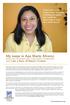 I had come to the United States dreaming of finding my mother but I ended up discovering so much more about myself. My name is Ana Maria Alvarez and I am 20 years old. I am from Guatemala I came to Mary
Healthy Children Iniative
 Healthy Children Iniative Introduction The Departments of Education, Culture and Employment and Health and Social Services are working together to achieve a vision where: Healthy children of healthy parents
Lesson Seventeen: Uncovering the Facts about Adoption, Abortion and Teen Parenthood
 Lesson Seventeen: Uncovering the Facts about Adoption, Abortion and Teen Parenthood Student Learning Objectives: The students will be able to... 1. Identify who can legally consent to have an abortion,
Beth Merriam, M.A., OATR, ATR-BC, CCC Email: [email protected]
 Beth Merriam, M.A., OATR, ATR-BC, CCC Email: [email protected] EDUCATION 1992: M.A in, Art Therapy, Norwich University, Vermont, U.S.A, 1990: B.F.A., with major in art education, Concordia University,
Child Abuse, Child Neglect. What Parents Should Know If They Are Investigated
 Child Abuse, Child Neglect What Parents Should Know If They Are Investigated Written by South Carolina Appleseed Legal Justice Center with editing and assistance from the Children s Law Center and the
Maternal Substance Use & Abuse
 Maternal Substance Use & Abuse A Charged and Complex Problem that Requires a Reasoned and Coordinated Response Across Agencies, Fund Sources & Systems The Scope of the Problem In the US: 9% of all children
Baby on the way? Call us today...
 Baby on the way? Call us today... PRECONCEPTION & PRENATAL SERVICES IN DURHAM What s inside... Baby on the Way?..................... 3 Telephone Information lines............. 4 Prenatal Classes......................
Central Zone Healthy Schools Communiqué
 Central Zone Healthy Schools Communiqué November 2013 Contents TABLE OF CONTENTS CONFERENCES, PD OPPORTUNITIES & EVENTS: Opportunities for administrators, teachers, students, parents, and community members
Texas WIC Nutrition Education Survey Local Agency 067 Report June 2014
 Texas WIC Nutrition Education Survey Local Agency 067 Report June 2014 Note: Due to missing data, rounding, or the ability to mark more than one response (if noted in the question), some percentages may
Selection and Preparation of Foods Management of the Food Budget*
 Selection and Preparation of Foods Management of the Food Budget* Healthy meals on a limited budget! How can you serve healthy meals on a limited budget? It takes some time and planning, but you and your
Common Grant Application User Guide
 Common Grant Application User Guide Welcome to the Washington Regional Association of Grantmakers Common Grant Application (CGA). This user guide was revised in 2012 to reflect the changes in the CGA that
L Sedative - Hypnotic Protocols.
 gnidnats Orders etaipo Protocols REHTO MEDICAL MANAGEMENT ISUES,ycnangerP Adiction and Mental Health FO SUBSTANCES DURING PREGNANCY TABLE OF CONTENTS i",- PREFACE 1 INTRODUCTION NOISIMDA AND DISCHARGE
Scottish Parliament Health and Sport Committee s Inquiry into Teenage Pregnancy in Scotland Evidence from CHILDREN 1 ST
 Scottish Parliament Health and Sport Committee s Inquiry into Teenage Pregnancy in Scotland Evidence from CHILDREN 1 ST February 2013 For over 125 years CHILDREN 1 ST has been working to build a better
Report of Results and Analysis of Parent Survey Data Collected in Southern West Virginia
 Partners in Community Outreach Education Begins at Home Partners in Community Outreach In-Home Family Education Programs Report of Results and Analysis of Parent Survey Data Collected in Southern West
Community Guide to. HRA Public Benefits. for Immigrants
 Community Guide to HRA Public Benefits for Immigrants Please be aware that the purpose of this guide is to provide the public with basic information about HRA programs. To determine eligibility for HRA
Baby Steps To A Healthy Pregnancy
 Preconception Middlesex-London Health Unit 50 King Street, London, ON N6A 5L7 519-663-5317 Published 2015. Copyright of the Middlesex London Health Unit. All rights reserved. Baby Steps To A Healthy Pregnancy
Conwy Children and Young People s Plan Priority Areas
 Conwy Children and Young People s Plan Priority Areas Priority areas as updated in the October 2009 plan review (new and changed priorities are highlighted in blue). For a full copy of the Conwy Children
Established in 1974 Non-Profit Federal Block Grant recipient Accept Medicaid, Private Insurance, and Self-Pay.
 Established in 1974 Non-Profit Federal Block Grant recipient Accept Medicaid, Private Insurance, and Self-Pay. Patients are not denied treatment if they do not have the ability to pay for services Schedule
Toolkit for Immigrant Women Working with a Lawyer
 Toolkit Working with a Lawyer NOVEMBER 2010 www.bwss.org www.theviolencestopshere.ca Toolkit Working with a Lawyer NOVEMBER - 2010 www.bwss.org www.theviolencestopshere.ca This resource is part of Battered