
Effective Use of Time-Out Behavior Home Page
|
|
|
- Philomena Parsons
- 10 years ago
- Views:
Transcription
1 Effective Use of Time-Out Behavior Home Page Behavior Home Page, 1

2 Table of Contents LETTER CONCERNING USE OF TIME-OUT... 3 GUIDELINES FOR EFFECTIVE USE OF TIME-OUT... 5 EFFECTIVE USE OF TIMEOUT... 7 Objectives... 7 What factors are involved in using timeout?... 8 How should timeout be implemented?... 9 How may timeout be abused? RECOMMENDED READINGS Appendix A Time-out Evaluation Checklist Appendix B Teaching Students to Take Time-out Appropriately Appendix C Time-out Record Appendix D Differential Reinforcement Example Behavior Home Page, 2

3 LETTER CONCERNING USE OF TIME-OUT Kentucky Department of Education, 2000 October 13, 2000 Dear Superintendent: Many of you have asked us for guidance in relation to the use of time-out for students. Additionally, the department has been made aware of concerns about the improper use of time-out for students. These concerns cover issues such as leaving a student in a seclusionary time-out setting for excessive amounts of time, placing the student in a seclusionary time-out setting without proper supervision, using spaces for seclusionary time-out that are not safe, and continuing to implement time-out even after repeated use has failed to reduce the student s inappropriate behavior. In an effort to provide assistance and address these concerns in a comprehensive manner, the Kentucky Department of Education is sending this information to school superintendents, directors of special education, principals, and parent resource centers to help promote effective policies for implementing appropriate uses of seclusionary time-out for all students. I encourage you to distribute this information to all staff that work with these students and to the parents of these students so that everyone involved can work cooperatively to ensure the student s educational success. There are no federal or state regulations that address the use of seclusionary time-out; however, suggested below are guidelines and ideas to consider in planning for the use of seclusionary time-out with students. The information provided is based on recent research and practice in the field, guidance from the Office of Special Education Programs, United States Department of Education, and court cases on the subject. Time-out is a procedure that involves denying a student access to all sources of reinforcement (e.g., teacher and peer attention, participation in ongoing activities) as a consequence of undesired behavior. The purpose is to reduce future occurrences of such behavior. Time-out may be implemented on three levels: (a) contingent observation; (b) exclusionary; and (c) seclusionary. Contingent observation requires the student to remain in a position to observe the group without participating or receiving reinforcement for a specified period. Exclusionary time-out denies access to reinforcement by removing a student from an ongoing activity, while seclusionary timeout removes the student from the instructional setting as a means of denying access to reinforcement. The use of all Behavior Home Page, 3

4 October 13, 2000 levels of time out, especially exclusionary or seclusionary must be premised on assurances that the student s behavior is not a reaction to ineffective instruction. First and foremost, the use of seclusionary time-outs should only be considered as part of a continuum of interventions and strategies (e.g., teaching and rewarding positive behavior alternatives, not responding to undesired student behavior that is performed for the purpose of obtaining attention, taking away points or privileges as punishment) used with students who display inappropriate behaviors. The use of seclusionary time-out is a drastic measure that should be used as a last defense measure as part of an overall program to instruct the student in appropriate behaviors. How and when seclusionary time-out may be used with a students with disabilities should be thoroughly discussed and explained at the Admissions and Release Committee (ARC) meeting so that everyone involved with the student has a clear understanding of the topic. Use of any time-out must be documented by the ARC in the Individual Education Program (IEP) along with addressing the use of positive behavior supports. Prior to being placed in such a setting, the student, whether he or she attended the ARC, should fully understand circumstances under which he or she may be put into time-out and what to expect from the experience (e.g., length of time and expectations for release). Prior to the use of seclusionary time-out, the school staff should have knowledge of the student s social and developmental history and any other relevant information about the student s disabilities and background. Additionally, the use of seclusionary time-out should only be used with students when data supports the reduction of the student s inappropriate behavior. The following are guidelines for implementation of effective seclusionary time-out: Behavior Home Page, 4

5 October 13, 2000 GUIDELINES FOR EFFECTIVE USE OF TIME-OUT (For more detailed information on the use of time-out, visit the Behavior Web Page at 1. Obtain Parent/Guardian Permission to Use Time-Out. Schools may want to consider obtaining written consent from parents or caregivers before using seclusionary time-out as an intervention. If the child has a disability, the use of any form of time-out should be a part of the IEP or 504 plan. The discussion of the time-out should include the specific procedures that will be used, including the circumstances leading to the use of time-out and its effect on the student s behavior. Communication should be made with the parents or caregivers whenever seculsionary time-out has been used as a form of intervention. 2. Only Use Time-Out as One Component of an Extensive Array of Behavior Interventions. Time-out, and especially seclusionary time-out, should never be used in isolation as the only behavior intervention being applied. Timeout is only one component of an effective behavior change strategy, and seclusionary time-out is near the end of the spectrum of more restrictive approaches to reducing undesired or challenging student behavior. Time-out must always be used in conjunction with an array of positive reinforcement, and time-out may be implemented on several levels, with the most restrictive version being seclusionary time-out. Procedures should be designed to teach students how to appropriately take a time-out, through role playing and modeling, with a clear understanding of what behaviors can lead to time-out and how the student can avoid this procedure. Seclusionary time-out should only be used when other less restrictive interventions have been attempted and documentation verifies they have been ineffective. Most often when other less extreme procedures are used appropriately, it is not necessary to use seclusionary time-out. 3. Do Not Engage in Power Struggles with Students. Forcing a student through physical means to take a seclusionary time-out should be avoided. When you engage in physical power struggles with a student, it becomes a no-win situation. It has been documented that this typically leads to an escalation of the situation and can also lead to injury of students and staff. If a student is posing physical danger to self or others, a plan of action should be in place and staff should be properly trained on its implementation. Behavior Home Page, 5

6 October 13, Avoid Excessive Use of Time-Out. Children should not be secluded in a time-out setting for more than 5-10 minutes at a time, depending on the age of the child, and never more than 15 total minutes. Repeated applications of time-out that exceed 15- minute maximum would not meet these guidelines. The appropriateness of timeout for children and youth at each end of the age spectrum (3-21) is questionable and should be avoided. The continued use of seclusionary time-out must be based on data supporting its effectiveness in reducing a student s inappropriate behavior, and if this data does not exist, the use of this procedure should not be implemented. If a student is using seclusionary time-out as a way to escape or avoid instruction as determined by a functional behavior assessment (FBA), time-out will not be effective. 5. Never Lock a Student in a Closed Setting and Maintain a View of the Student at All Times. Students should never be placed in a time-out setting secured with locks or latches or in a fully enclosed area that prevents staff observation and access to the student. For more details on physical design of a seclusionary time-out setting, consult the Behavior Web page. 6. Maintain Thorough Written Records. Detailed written records should be kept of use of seclusionary time-out, including the student s name, date, time and incident; prior interventions used, length of time-out and results. 7. Assess When Time-Out is Not Working. Functional behavior assessments (FBA) should be performed whenever data indicated that time-out is not effective. I hope this information will provide assistance to staff on this topic. If additional information is needed, please contact Laura McCullough or Toyah Robey in the Division of Exceptional Children Services at (502) Sincerely, Gene Wilhoit Behavior Home Page, 6

7 EFFECTIVE USE OF TIMEOUT Copyright,1997, C. Michael Nelson Note: The following guidelines are presented to help teachers, educators and other practitioners implement timeout procedures appropriately and effectively. These guidelines are not a comprehensive or a complete explanation of how to use timeout in a given setting. Those who are attempting to implement timeout procedures for the first time should have supervision and consultation by professionals with expertise in behavioral intervention procedures, and who have knowledge of the research literature regarding timeout. Timeout involves removing a student from all sources of positive reinforcement, as a consequence of a specified undesired behavior. Timeout is only one option along a continuum of interventions supporting behavior change. Most teachers think that timeout involves placing the student in an isolated setting (a timeout area) for a period of time. Actually, timeout may be implemented on several alternative levels, ranging from the student taking timeout at his or her desk (contingent observation timeout) to removing the student to a separate area. Timeout is a relatively aversive and intrusive behavior reduction procedure, because it involves the removal of reinforcement and it interrupts the pupil's instructional program. However, its use may be required when the student's behavior impedes his or her learning or that of others. Behavior problems will not be positively affected by use of timeout unless it is used in the context of an appropriate program (e.g., teaching replacement behaviors, high rate of teacher reinforcement for appropriate student behavior, etc.). The age of the student is also a key factor in any decision to utilize time out. Professionals must consider whether timeout is appropriate for children and youth at both ends of the age continuum (3-21). Other strategies or interventions may be more effective for these individuals in supporting appropriate behavior Objectives You should establish a set of procedures for using timeout in your classroom including: 1. A set of classroom rules and consequences for their infraction. 2. A hierarchy of planned consequences for behavior, with timeout as one of several alternatives for consequenting misbehavior. 3. A range of timeout locations that are suited to your classroom, your pupils, and your personal classroom management plan. 4. A set of personal guidelines for deciding when to use timeout and what level of timeout to employ. Behavior Home Page, 7

8 5. Written procedures for applying timeout, including: A warning signal, if appropriate. What you say to pupils when giving them a timeout. Decision rules regarding which level of timeout to impose, and when to go from one level to another. Due process procedures for obtaining administrative and parental consent to use seclusion timeout, if applicable. Specification of the duration of each timeout, how duration is monitored, and decision rules for varying the duration of timeout. Specification of desired student behavior in timeout. Procedures for releasing pupils from timeout. A data sheet for recording instances of timeout. Decision rules for evaluating the effectiveness of timeout with individual students. 6. Alternative interventions when it is concluded that timeout is not effective in a given instance, or in general. 7. Procedures for teaching students to take timeouts appropriately. A professional with expertise in behavioral interventions should supervise your application of these procedures across three periodic classroom observations, using the Timeout Evaluation Checklist (see Appendix A). What factors are involved in using timeout? 1. A warning signal indicating that timeout is imminent if the pupil doesn't alter his/her behavior. 2. A brief verbalized explanation of why the student is being given a timeout if the student did not alter behavior after warning signal was given. 3. Provide instruction (see Appendix B) to the student in taking timeout. 4. The location in which timeout is taken Contingent observation - requires the student to remain in a position to observe the group without participating or receiving reinforcement for a specified period Exclusionary - denies access to reinforcement by removing a student from an ongoing activity Seclusionary - removes the student from the instructional setting as a means of denying access to reinforcement 5. The duration of timeout Behavior Home Page, 8

9 Brief (e.g., 1-5 minutes) timeouts are as effective as longer timeouts if the student hasn't been exposed to long timeouts first. Durations longer than 15 minutes should not be employed. A nonverbal signal indicating the beginning and end of timeout may be used if students have been taught to respond to it. 6. Requirements for release from timeout. Completion of the specified duration of timeout. Appropriate behavior during timeout. End of 15 minute maximum duration of timeout (implement alternate intervention if timeout has not been effective at this point). How should timeout be implemented? 1. Identify reinforcers maintaining the undesired behavior. 2. Conduct a functional assessment to identify the function of the target (undesired) behavior. Behavior has two functions: to obtains something the student wants (e.g., teacher or peer attention), or to escape or avoid something he doesn't want (e.g., undesired task) If timeout serves either of these functions, it will not have the desired effect on behavior (e.g., If the student is able to escape an undesired academic activity by going to timeout, behavior resulting in timeout will continue. Timeout also will not be effective if it provides an opportunity to engage in behavior that is selfreinforcing [e.g., self-stimulation]). Note: In addition to a timeout contingency, a plan should be in place to support desired replacement behaviors [see Appendix D for differential reinforcement examples]. 3. Specify in advance the behaviors which will result in timeout. 4. Use less intrusive behavior reduction procedures first (i.e., differential reinforcement [see Appendix D], extinction, verbal aversives, response cost). Behavior Home Page, 9

10 5. These less intrusive procedures should have been documented as ineffective before timeout is used. 6. Develop a written statement of how timeout is to be implemented. 7. If seclusionary timeout is used, the following requirements should be met: The timeout room should be at least 6' x 6' or larger and based upon the age and size of the student. The room should be properly lighted and ventilated. The room should be free of objects and fixtures with which the student could harm himself. A staff person should be able to see and hear the student in timeout at all times. The area should never be locked. Use of a fully enclosed area limits staff observation and access to student. Confinement in a small area may lead to an escalation of student behavior. At no time shall a student be placed in a locked area alone. 8. Keep written records (see Appendix C) of each occasion when timeout is used including: Student's name and date Episode resulting in timeout Time of entry into and release from timeout The location of timeout (contingent observation, group separation, exclusion) The student's behavior in timeout 9. Always differentially reinforce desired student behavior in time-in environment (classroom or instructional setting). (See Appendix D) 10. Evaluate procedures (see Appendix A) if timeout duration exceeds 15 minutes. Behavior Home Page, 10

11 11. Evaluate the effectiveness of the procedures if timeout is not having the desired impact on student behavior (collect and chart data on the frequency of the target behavior). Note: If timeout does not prove to be an acceptable or effective intervention the Admissions and Release Committee shall determine what interventions are to be utilized to address the behavior(s) of concern. A Functional Behavioral Assessment may be necessary, if not already undertaken, to improve upon or develop a Behavior Intervention Plan. How may timeout be abused? 1. Timeout is overused due to lack of appropriate, proactive, instructional program. 2. The time-in environment (Classroom or instructional setting) is not sufficiently reinforcing (see Appendix D). Should give four times as much positive reinforcement as reductive consequences. Should have a systematic behavior support plan for teaching and reinforcing a replacement behavior that serves the same function as the undesired behavior. 3. Timeout is applied inappropriately. Timeout is the only, or nearly the only, behavior reduction procedure used. Timeout is applied too late---when the student is out of control. Teacher escalates student behavior by lecturing student when in timeout. 4. The teacher does not enforce timeout contingencies. Student is able to avoid timeout by arguing or refusing to take timeout. Teacher is unable to direct physically mature students to utilize timeout if they refuse (Consider age appropriateness). Teacher is inconsistent in following through with timeout after warning (i.e., Using timeout after three (3) warnings, five (5) warnings, etc.) Solution is to teach students to take timeout: (see Appendix B). Behavior Home Page, 11

12 Use systematic teaching procedures (e.g., Model, role play/practice and feedback). Hold timeout training sessions at other occasions than when timeout is needed: reinforce successive approximations. If the teacher is unable or unwilling to enforce timeout, he/she should consider alternate behavior reduction procedures. 5. The effectiveness of timeout is not evaluated Use the Timeout Record (see Appendix C) to monitor the use and results of timeout. If timeout is used excessively (for example, 3 or more times a day for several consecutive days with a single student) the effectiveness of timeout needs to be evaluated and the individual behavior management plan for that student needs to be adjusted. RECOMMENDED READINGS Gast, D. L., and Nelson, C. M. (1977). Legal and ethical considerations for the use of timeout in special education settings. Journal of Special Education, 11, Nelson, C. M., and Rutherford, R. B., Jr. (1983). Timeout revisited: Guidelines for its use in special education. Exceptional Education Quarterly, 3, Rutherford, R. B., Jr., and Nelson, C. M. (1982). Analysis of the response-contingent timeout literature with behaviorally disordered students in classroom settings. In R. B. Rutherford, Jr. (Ed.). Severe behavior disorders of children and youth (Vol. 5). Reston, Virginia: Council for Children with Behavioral Disorders. Twyman, J. S., Johnson, H. Buie, J. D., and Nelson, C. M. (1994). The use of a warning procedure to signal a more intrusive timeout contingency. Behavioral Disorders, 19, Behavior Home Page, 12

13 Appendix A Time-out Evaluation Checklist Behavior Home Page, 13

14 TIME OUT EVALUATION CHECKLIST Copyright,1997, C. Michael Nelson Directions: Qualified supervisors and consultants may use this form to assess teachers' use of timeout and provide appropriate feedback. Observations should be made on at least three separate occasions (different days) and deficiencies in the application of specific procedures should be corrected with appropriate remedial activities (e.g., modeling, direct instruction, discussion, and referral to informational resources. Teacher Evaluation School Date Criterion 1. Classroom rules are appropriate and posted. EVALUATION (Deficient, Satisfactory, Excellent) Comments and Remedial Suggestions 2. Hierarchy of planned consequences is appropriate; location of time out in hierarchy is appropriate. 3. Time out location (s) is/are appropriate. 4. Teacher can explain decisions regarding when time out is used, and which level is employed. 5. Written time out procedures are appropriate (evaluate each separately). Warning signal. Verbalized explanation to student when giving time out. Decision rules (i.e., time out levels). Due process procedures. Duration of each time out, and how duration is monitored. Desired student behavior in time out. Procedures for release from time out. Time out data sheet. Decision rules for evaluating time out. 6. Alternative interventions have been developed and are appropriate. 7. Procedures for training pupils to take time out are appropriate and effective. Behavior Home Page, 14

15 YES NO 8. Teacher observed administering time out. 9. If yes, were procedures specified above followed? 10. If yes, did student take time out appropriately? 11. If yes, was time out successful in controlling student behavior? 12. If yes, was time out the most appropriate intervention? 13. If no, was time out intervention needed, but not used? 14. If no, was classroom management effective? 15. If no, was alternative intervention applied effectively? Comments: Copyright,1997, C. Michael Nelson Behavior Home Page, 15

16 Appendix B Teaching Students to Take Time-out Appropriately Behavior Home Page, 16

17 TEACHING STUDENTS TO TAKE A TIME OUT APPROPRIATELY Copyright,1997, C. Michael Nelson Note: You should not assume that students will comply with directions to take a timeout if they have not been taught how to do so. This task analysis is a generic lesson for teaching students to take timeouts. Task steps should be altered according to the characteristics and needs of individual students. Steps should be practiced systematically several times a day until each is mastered. You may use individual or small group instruction. STEP 1. Imitate correct time out behavior (sitting or standing quietly in designated area), for 10 seconds following demonstration by teacher. 2. Demonstrate correct time out behavior for 10 seconds following teacher instruction during practice sessions. 3. Demonstrate correct time out behavior for 30 seconds following teacher instruction during practice sessions. 4. Same as Step 3, but time out duration is 2 minutes. 5. Take a 5-minute time out within 10 seconds, when instructed to do so by a teacher in a real time out situation. CRITERION 5 consecutive correct trials for 3 consecutive days. Same as above. Same as above. Same as above. 50% of assigned time outs taken correctly over 5 consecutive days. 6. Same as Step % of assigned time outs taken correctly over 5 consecutive days. 7. Take a 5-minute time out within 10 seconds, demonstrating appropriate time out behavior, when instructed to do so by general education teacher. 50% of assigned time outs taken correctly over 5 consecutive days. Note: Provide practice steps 1-5 if criterion is not met. 8. Same as Step % of assigned time outs correctly taken over 5 consecutive days. Comments: Behavior Home Page, 17

18 Appendix C Time-out Record Behavior Home Page, 18

19 TIME OUT RECORD Describe the levels of time out used in your classroom (e.g., Contingent observation) Record for each episode of time out. Date Student Observed Behavior Time Out Level # Time In Time Out By Whom Outcome Copyright,1997, C. Michael Nelson Behavior Home Page, 19

20 Date Student Observed Behavior Time Out Level # Time In Time Out By Whom Outcome Copyright,1997, C. Michael Nelson Behavior Home Page, 20

21 Appendix D Differential Reinforcement Example Webber, J. & Scheuermann, B. (1991, Fall). Accentuate the positive: Eliminate the negative! Teaching Exceptional Children, 24(1), Copyright, 1991, The Council for Exceptional Children ( Behavior Home Page, 21
22 Managing Behavior Problems: Accentuate the Positive Eliminate the Negative! Jo Webber and Brenda Scheuermann Copyright, 1991, by the Council for Exceptional Children. Reprinted with permission. A former student called me yesterday. "I need help. I'm teaching math to sixth, seventh, and eighth graders in a resource room, and my class is out of control. I've got Michael, Selina, Ryan, and Chris--All known for causing trouble--plus five others in this class. Everyone feels sorry for me. I thought teaching was supposed to be fun." "What have you done with your applied behavioral analysis textbook?" I asked with amusement. "I sold it," she said, sighing. "OK" I said in my best professional voice. "Tell me what's going on." "I've tried sending them to the office, calling their parents, giving them detention, and making them sit in the hall. Nothing seems to work. The principal and the parents just scold them and the kids are just as disruptive the next day. One of them called me a mean, mean teacher yesterday and I feel like one." As teachers try to maintain control in their classrooms, they often react initially by punishing undesired behavior (Morgan & Jenson, 1988). Teachers prefer punishment as a means to reduce undesirable behavior because they are reinforced by the immediate nature of its effects (Alberto & Troutman, 1986). However, punishment often fails to create attentive, quiet, compliant students. By definition, it does not teach desirable behavior. Scolding, ridicule, lowering of a grade, loss of privileges, temporary removal from class, suspension, or corporal punishment Behavior Home Page, 22
23 will not guarantee that a student will come to class on time, bring the necessary materials, or begin doing satisfactory schoolwork. One reason for this failure might be that too often teachers only focus on reducing the inappropriate student behavior rather than actively teaching and reinforcing appropriate behavior (Winett & Winkler, 1972). They concentrate on what the student is not to do, as opposed to emphasizing which desired behaviors they want the student to exhibit instead. To remedy this requires a shift in the traditional mindset: Rather than concentrating on the undesired behavior, the teacher should look for a positive alternative that will result in reinforcement for the student. This involves deciding what the student needs to do that she is not doing at the moment, then teaching it and reinforcing it. This positive approach to reducing misbehavior is an easy and effective strategy know as differential reinforcement or positive reductive procedures (Deitz & Repp, 1983). Differential reinforcement, in this context, means that positive behaviors receive reinforcement. The behavior targeted for reduction is not directly addressed. The result is an increase in more appropriate alternative behaviors and a decrease in the undesired behavior. It is an instructionally sound technique and has been used successfully in clinics and classrooms to reduce a variety of behaviors such as aggressive behavior (Knapczyk, 19988; Poling & Ryan, 1982); out-of-seat behavior and talking (Ayllon & Roberts, 1974); in-class sleeping, talk-outs, and disruptions (Allen, Gottselig, & Boylan, 1982; Deitz, Repp, & Deitz, 1976); inappropriate speech (Barton, 1970); and hyperactivity (Patterson, 1965; Twardosz & Sajwaj, 1972). "I'm sorry you feel like a mean teacher. Punishment has a way of putting you in that role. Tell me about your reinforcement program." Behavior Home Page, 23
24 " I let students work on the computer or have free time if they finish their work, and if everyone is cooperative all week, we have popcorn on Friday." "Technically, you are using differential reinforcement, which is an effective technique, but you need to 'fine tune' this system so it will work for you. Tell me more about Michael." "He's a bully. He's big and loud and is always picking fights with the other kids. He was in four fights today!" "Why don't you try a DRO technique with him?" "DRO?" Differential Reinforcement of Zero Rates of Behaviors (DRO) DRO means that the student is reinforced for periods of time during which no inappropriate behavior is displayed. For example, if the goal is to reduce fighting, the student may be reinforced for every hour that he or she is not in a fight. Or, if the goal is to reduce cursing in the classroom, the teacher may reinforce the student for every 10 minutes of refraining from cursing. The frequency of the inappropriate behavior before the treatment intervention begins will determine the initial criterion for reinforcement. (During baseline, the teacher counts how much time elapses between instances of the target behavior, the average of all these times becomes the initial criterion.) The time intervals with "zero undesired behavior" will gradually be increased until the student's behavior approximates that of an average peer in a regular classroom setting. For example, the teacher said Michael fights on an average of three times per 6-hour school day. Therefore, he might be reinforced for every 2 hours (6 divided by 3) that he does not fight. At the end of each 2-hour segment that he does not fight, Michael can Behavior Home Page, 24
25 give himself a point on his point card. His points can be turned in daily or weekly for classroom rewards. When using differential reinforcement, it is usually recommended that any instances of the targeted inappropriate behavior be ignored. However, this is not always possible with severe behaviors such as fighting. Punishment for the inappropriate behavior may be necessary if the behavior is dangerous or if it is one that spreads quickly to other students (e.g., running in the school, horseplay, or calling out). However, the teacher should try a DRO procedure before considering punishment. DRO can work well with verbal aggression (e.g., name calling, threats), talking back, destruction of property, and tantrums. "Well, I can see how DRO might work for Michael, but I don't see how it would work for Ryan. He refuses to do anything that I ask him to do. He doesn't work, doesn't pay attention, doesn't look at me, and doesn't answer my questions. He's already doing zero behavior--good behavior, that is." "Why don't you try DRI with Ryan?" "I feel like I'm taking one of your tests! What's DRI?" Differential Reinforcement of Incompatible Behaviors (DRI) With this strategy, the teacher reinforces a specific student behavior (e.g., following directions) that is impossible for the student to perform at the same time as the behavior targeted for reduction (e.g., noncompliance). For instance, if a teacher wishes to reduce name-calling behavior, then calling people by their appropriate names would be systematically reinforced. The student cannot both call people by their appropriate names and name call at the same time. Thus, as calling people by their correct names increases in frequency, name-calling behavior automatically becomes less frequent. As Behavior Home Page, 25
26 another example, if a teacher wishes to reduce talking, it would be wise to heavily reinforce instances when the student's mouth is closed. The two behaviors (mouth closed and talking) are incompatible. The behaviors chosen (the one targeted for reduction and the alternate behavior) should cover 90% to 100% of the possible alternative behaviors (Donnellan, LaVigna, Negri- Shoultz, & Fassbender, 1988). This means that the child will have no other choices for behavior. For example, the child is either off task, quiet or talking, in seat or out of seat, on task. There are few other choices. It would not work well to reinforce "hands-to-self" behavior in order to decrease off-task behavior. The student can keep hands to self and sleep, which would be off task, and still be eligible for reinforcement. Likewise, it would not work well to reinforce task completion to decrease noncompliance. The student could finish the task but not follow the teacher's directions in doing so (noncompliance), the task could be handed in late or done in pencil instead of pen. The student would still be eligible for reinforcement even though the noncompliance was not reduced. If the student can be doing what is asked while still engaging in the undesirable behavior, another incompatible behavior should be chosen for reinforcement. Table 1 provides some examples of appropriate incompatible behaviors. Table 1 Positive Incompatible Alternatives for Common Classroom Behavior Problems UNDESIRED BEHAVIOR Talking back POSITIVE INCOMPATIBLE ALTERNATIVE Positive response such as "Yes Sir" or "OK" or "I understand"; or acceptable questions such as "May I ask you a question about that?" or "May I tell you my side?" Behavior Home Page, 26
27 Cursing Being off-task Being out of seat Noncompliance Talking out Turning in messy papers Hitting, pinching, kicking, pushing/shoving Tardiness Self-injurious or self-stimulatory behaviors Inappropriate use of materials Acceptable exclamations such as "Darn," "Shucks." Any on-task behavior: looking at book, writing, looking at teacher, etc. Sitting in seat (bottom on chair, with body in upright position). Following directions within seconds (time limit will depend upon age of student); following directions by second time direction is given. Raising hand and waiting to be called on. No marks other than answers; no more than erasures; no more than three folds or creases. Using verbal expression of anger; pounding fist into hand; sitting or standing next to other students without touching them. Being in seat when bell rings (or by desired time). Sitting with hands on desk or in lap; hands not touching any part of body; head up and not touching anything (desk, shoulder, etc.) Holding/using materials appropriately (e.g., writing only on appropriate paper, etc.) "Oh, I see I can reinforce Ryan for following directions and probably reduce his refusal to do what I say. Maybe I can use a point system with Ryan, also, where he gets a point for every direction that he follows. I think I may need to prompt Ryan at first so he will know when I'm giving a direction. I think this might work!" Behavior Home Page, 27
28 "Let's talk about what we can do about Selina," I said, encouraged. "Selina wants to dominate the class and shout out things when others are trying to talk. Her comments are often off task, and it really disrupts interactions." "Well, you could use DRO or DRI, but it sounds like a habit and it might be easier for Selina to reduce the behavior gradually, rather than all at once." "Let me guess--another differential reinforcement procedure?" Differential Reinforcement of Lower Rates of Behavior (DRL) For behaviors that do not need to be reduced quickly or reduced to zero occurrence (e.g., calling out for help), or for behaviors that are strong habits (e.g., talk-outs, burping, teeth grinding, self-stimulation), DRL may be the technique of choice. A teacher using this strategy would reinforce progressively lower rates of a behavior. For instance, if a teacher can tolerate some call-outs, then she can reinforce the student for progressively reducing the number of times that she calls out without permission. Or if a teacher wants to reduce teeth grinding, but does not need this to change immediately, he could reinforce the student for grinding his teeth no more than four times during a specific time period. When the student is successful at this level, reinforcement would next be contingent upon grinding teeth no more than three times. This criterion would gradually be lowered until the behavior is at an acceptable level. The initial criterion for reinforcement is set by determining the average frequency or duration of the behavior before starting the procedure. If a student talks out on an average of four times per period, then setting the initial reinforcement criterion at four or less would be appropriate. The criterion for reinforcement is gradually lowered by reasonable intervals until an acceptable level of behavior is achieved. By allowing the student to change a habitual behavior gradually, rather than expecting immediate Behavior Home Page, 28
29 cessation, DRL helps ensure success as the student progresses toward the target level. Dangerous behaviors or contagious behaviors would not be appropriate for reduction with a DRL technique. "Well, I can see that I could individualize my point system for each student. I could let Selina earn a point for every hour that she has fewer than eight call-outs. If she is successful this week, then next week it will have to be fewer than six call-outs until she has an average of only one call-out per hour. But what about Chris? He's a different one. He acts very immature, and anytime something does not go his way he cries and whines and stomps around the room. Even though the other kids make fun of him, he continues the behavior." "You could use DRO, but it sounds like he needs to learn how to express his frustration. There is another technique that might work for him called DRC." Differential Reinforcement of Communicative Behaviors (DRC) Recent literature (Sasso & Riemers, 1988) has proposed that some students may be acting inappropriately in order to communicate something. An analysis of aggressive and noncompliant behavior may reveal that the student is simply attempting to say, "Stop, I don't want to do it," or "I don't like you, " or "I don't know the answer," or "I'm frustrated." Many students have not learned how to say these things directly. If this is the case, then teaching an appropriate alternative method for the student to communicate those thoughts and feelings will result in a reduction of the aggressive and noncompliant behavior. The teacher's task is to analyze the student's inappropriate behavior and attempt to find communicative intent in it. If the teacher suspects communicative intent, then an appropriate communication strategy needs to be determined. For example, how should Behavior Home Page, 29
30 students communicate anger? Students with good language skills may learn to write about the anger or say "Being pushed makes me angry." Lower-functioning students may need to draw a picture of the emotion or use words or sign language. If the teacher demonstrates an alternative style of communication and heavily reinforces the student when appropriate communication is used, aggressive and noncompliant behaviors that have communicative intent should be reduced. "So I could give Chris a point each time he says "I'm frustrated" with no crying, whining, or stomping. Maybe I could also give him points for each day that he has zero tantrums. That's DRO isn't it?" "Yes, good! You can combine any of these techniques to make a more powerful intervention. By George, I think you've got it! Advantages of Differential Reinforcement Differential reinforcement has many advantages. Among them are the following: 1. If the differential reinforcement system reduces the inappropriate behavior, the teacher can avoid punishment and its side effects. Most teachers are not effective punishers. They do not punish consistently, unemotionally, or contingently. Moreover, many students in special education have built up resistance to commonly available punishers such as scolding, being sent to the office, or corporal punishment. They require a much stronger punisher that may not be available to school personnel. Use of differential reinforcement can also help the teacher forestall the rage, avoidance, and anger reactions that often accompany the delivery of punishment. 2. Differential reinforcement is a powerful intervention strategy that will effectively reduce the majority of inappropriate behaviors without the concurrent use of Behavior Home Page, 30
31 punishment. Punishment should be used only after differential reinforcement techniques alone have been found to be inadequate. This may be true in the case of aggressive, dangerous, destructive, self-injurious, or extremely disruptive behaviors which, because of their severity, need to be extinguished immediately. 3. Use of differential reinforcement will help ensure that the teacher is teaching prosocial behavior because the teacher must specify a positive goal, assess the student's current skill level relevant to that goal, provide direct instruction in deficient skill areas, and give the student feedback (e.g., reinforcement) regarding progress toward the goal. 4. Differential reinforcement can be conducted in a variety of settings by a variety of people, thus adding to effective generalization. 5. Differential reinforcement allows the teacher to display and demonstrate prosocial behavior (e.g., praising someone's efforts and giving rewards) as opposed to antisocial behavior (e.g., hurting someone). 6. Once a behavior is targeted for reinforcement, individualized education program (IEP) goals and objectives are easily written in positive terms. 7. Differential reinforcement tends to enhance the student-teacher relationship by setting up positive interactions between the target student and the teacher. It creates a situation in which the teacher delivers positive instead of (or in addition to) negative consequences. Steps for Implementation The following steps are recommended for classroom implementation. Identify the behavior to be reduced or eliminated. This is generally the easiest step. However, a word of caution: Do not try to change every undesired behavior that a Behavior Home Page, 31
32 student exhibits. Start with the behavior this is most intolerable in the school setting or the behavior that is causing the most problems for the student. Identify positive alternatives to the undesired behavior. What would you like for the student to do instead? Provide the student with an alternative behavior that can be reinforced. For example, if the student is talking out without permission, reinforce only when he or she raises a hand to speak; if the student is frequently aggressive, reinforce during the times when he or she is not aggressive. If a student calls out frequently provide reinforcement for calling out less often. If a student acts out feelings, model an appropriate way to communicate feelings. Select a system of differential reinforcement. Use DRL for behaviors that can be reduced gradually; DRO for behaviors that need to be reduced to zero levels; DRI to teach a specific positive behavior as an alternative to the undesirable behavior; and DRC when the goal is to increase functional communication skills. Table 2 lists recommended differential reinforcement systems for common behavior problems. Table 2 Positive Incompatible Alternatives for Common Classroom Behavior Problems PROBLEM BEHAVIOR Talking back Causing property damage Cursing DIFFERENTIAL REINFORCEMENT TECHNIQUE Reinforce each 15- or 30-minute or 1-hour period with no talking back (DRO). Or reinforce each time that the student responds to the teacher without talking back (DRI). For each day that no property is damaged, reinforce the student and/or the class (DRO) Reinforce each 15- or 30-minute or 1-hour period with no cursing (DRO). Reinforce use of appropriate adjectives and Behavior Home Page, 32
33 exclamations (DRC). Being off task Failing to complete tasks Tardiness Being out of seat Fighting Reinforce each 5-, 10-, 15-, or 30-minute period of continuous on-task behavior (DRI). Reinforce each task that is completed, half completed, or started (DRI). Reinforce each day or period that the student is on time (DRI). Reinforce 5-, 10-, 15-, or 30-minute periods of continuous in-seat behavior (DRI). Reinforce the student each time he or she interacts appropriately with another student (DRI). Or reinforce the student each hour that he or she does not tease, pinch, etc.(dro). Noncompliance Reinforce the student for each direction that he or she follows with 5 seconds (DRI). The schedule can be thinned to every 3 directions followed, 8, 10, etc. Talking out Reinforce the student each time that he or she raises a hand and waits to be called on (DRI). Thin the schedule to 3, 5,10 times, etc. Or reinforce progressively less talking out (DRL). Set up a reinforcement system. Pick reinforcers appropriate for the student's age and grade level. The reinforcers can be tangible reinforcers of privileges. Use school-related (natural) reinforcers whenever possible. Social reinforcers (smiles, praise, etc.) should always be used in conjunction with other reinforcers so that other renforcers can be faded eventually. Survey the students, watch them, or ask other teachers and parents for appropriate reinforcer ideas. Make a list of at least 10 possible reinforcers. Behavior Home Page, 33
34 Token reinforcement systems are a convenient way to reinforce systematically in the classroom. Checkmarks, stars, stamps, stickers, or initials can be exchanged for the reinforcers on the list. Tokens make it possible to give heavy reinforcement initially without disrupting lessons and without the danger of satiation. For more information on token systems see Alberto and Troutman (1986); Ayllon and Azrin (1968); Kazdin (1977); Polloway and Polloway (1979); and Stainback, Payne, Stainback, and Payne (1973). Set a success criterion. Determine the final criterion for the desired behavior. For example, how long must the student stay seated? How many tasks must the student complete each day? How long must the student display no teasing? The success criterion will vary according to the age and developmental level of the child, the setting in which the child must operate, and the behavior. One way to decide on a reasonable criterion is to determine how much or how long the same behavior is exhibited by an average student of the same age in a relevant setting. For example, if most students stay in their seats for an average of 40 minutes continuously, then do not stop the reinforcement strategy until this criterion is met by the student and the behavior is exhibited at this level over a substantial period of time. Be specific about setting a success criterion. It should not be decided haphazardly, but should be based on what the student needs to display to be successful in the mainstream setting. Begin by reinforcing small increments or short periods of time, and gradually lengthen these time periods or increase the amount of behavior required for reinforcement. Evaluate results. Count both the inappropriate student behavior and the alternative behavior that had been reinforced. Simply saying that the student is acting "better" does not provide the information necessary for further planning. If either behavior is not progressing in the desired direction, check the intervention for problems. Behavior Home Page, 34
35 Potential Problems The following are possible reasons why the differential reinforcement system is not working. Check these items before and during your intervention. 1. The target behavior has not been specified or assessed well. Pick one behavior at first and count it. Also, analyze it for communicative intent. 2. The reinforcers are not as rewarding to the student and/or are less powerful than the reinforcers the student is receiving for inappropriate behavior (e.g., teacher or peer attention, avoiding tasks, etc.) 3. The reinforcers are not delivered often enough for the student to recognize the value of exhibiting the desired behavior, or they are delivered so often that they cause satiation. 4. The reinforcers are not delivered consistently and contingently. Do not just give reinforcers when you feel like it, or stop the strategy because it "takes too much time." If the strategy is working, do not stop it until the success criterion is met. 5. The alternate behavior is not one that is achievable by the student. If the student does not know how to perform the behavior, then it should be taught using direct instruction and prompting. 6. The reinforcement schedule is thinned too slowly. Fade prompts and thin the reinforcement schedule as the student is successful at each stage. The goal is to eventually get to the point where an intermittent schedule of naturally occurring reinforcers will maintain unprompted behavior. 7. Generalization of the behavior in other settings has not been specifically addressed. Generalization should be taught before instruction is stopped. (See Alberto & Troutman, 1986, or Morgan & Jenson, 1988, for methods of generalization training.) Behavior Home Page, 35
36 8. Instruction in new, appropriate behaviors is not continued. When the student has mastered one new appropriate behavior, teach another one. In this way, the student's access to reinforcers is increased. Furthermore, as the student masters more appropriate behaviors, fewer inappropriate behaviors will be displayed. Summary Differential reinforcement is a positive, relatively easy, and effective method of reducing inappropriate behavior by reinforcing positive alternative to the undesired behavior. It requires a shift from concentration on what the student needs to stop to focusing on what the student needs to do instead. Differential reinforcement may be used alone, or, if necessary, in conjunction with punishment if the undesired behavior is extremely violent, dangerous, self-injurious, or destructive. Differential reinforcement, like any other good behavior management system, places certain requirements on teachers if it is to work. The teacher must be consistent in delivering the reinforcers for the targeted desired behavior. It often is not easy to maintain this level of consistency, and it requires a high degree of commitment on the part of the teacher. However, the rewards resulting from this commitment are great. Time spent administering a system of differential reinforcement is probably less than that which is already being expended in dealing with inappropriate behavior, and the returns are far greater. It not only reduces inappropriate behavior, it teaches and reinforces appropriate behavior. Differential reinforcement is well worth the time and effort it involves. References Alberto, P. A. & Troutman, A. C. (1986). Applied behavior analysis for teachers. Columbus, OH: Charles E. Merrill. Behavior Home Page, 36
37 Allen, L. D., Gottselig, M., & Boylan, S. (1982). A practical mechanism for using free time as a reinforcer in the classroom. Education and Treatment of Children, 5, Ayllon, T., & Azrin, N. (1968). The token economy: A motivational system for therapy and rehabilitation. New York: Appleton-Century-Crofts. Barton, E. S. (1970). Inappropriate speech in a severely retarded child: A case study in language conditioning and generalization. Journal of Applied Behavior Analysis, 3, Deitz, D. E. D., & Repp, A. C. (1983). Reducing behavior through reinforcement. Exceptional Education Quarterly, 3, Deitz, S. M., Repp, A. C., & Deitz, D. E. D. (1976). Reducing inappropriate classroom behavior of retarded students through three procedures of differential reinforcement. Journal of Mental Deficiency Research, 20, Donnellan, A. M., LaVigna, G. W., Negri-Shoultz, N., & Fassbender, L. L. (1988). Progress without punishment: Effective approaches for learners with behavior problems. New York: Teachers College Press. Kazdin, A. E. (1977). The token economy: A review and evaluation. New York: Plenum. Knapczyk, D. R. (1988). Reducing aggressive behaviors in special and regular class settings by training alternative social responses. Behavioral Disorders, 14, Morgan, D. P., & Jenson, W. R. (1988). Teaching behaviorally disordered students. Columbus, OH: Charles E. Merrill. Patterson, G. R. (1965). An application of conditioning techniques to control of a hyperactive child. In L. P. Ullmann & L. Krasner (Eds.), Case studies in behavior modification (pp ). New York: Holt, Rinehart and Winston. Poling, A., & Ryan, C. (1982). Differential reinforcement of other behavior schedules: Therapeutic applications. Behavior Modification, 6, Polloway, E., & Polloway, C. (1979). Auctions: Vitalizing the token economy. Journal for Special Educators, 15, Sasso, G., & Riemers, C. (1988). Assessing the functional properties of behavior: Implications and applications for the classroom. Focus on Autistic Behavior, 3(4), 1-6. Stainback, W., Payne, J., Stainback, S., & Payne, R. (1973). Establishing a token economy in the classroom. Columbus, OH: Charles E. Merrill. Twardosz, S., & Sajwaj, T. (1972). Multiple effects of a procedure to increase sitting in a hyperactive retarded boy. Journal of Applied Behavior Analysis, 5, Behavior Home Page, 37
38 Winett, R. A., & Winkler, R. C. (1972). Current behavior modification in the classroom: Be still, be quiet, be docile. Journal of Applied Behavior Analysis, 5, Webber, J. & Scheuermann, B. (1991, Fall). Accentuate the positive: Eliminate the negative! Teaching Exceptional Children, 24(1), Copyright, 1991, by the Council for Exceptional Children. Reprinted with permission. Behavior Home Page, 38
Differential Reinforcement. Things to Do. Select behaviors to be decreased or increased. Set criterion. Monitor the student s performance.
 Definition D ifferential reinforcement is the reinforcement of one form of behavior and not another, or the reinforcement of a response under one condition but not another. Differential reinforcement uses
Classical vs. Operant Conditioning
 Classical vs. Operant Conditioning Operant conditioning (R S RF ) A voluntary response (R) is followed by a reinforcing stimulus (S RF ) The voluntary response is more likely to be emitted by the organism.
SAN MATEO COUNTY SELPA POSITIVE BEHAVIORAL INTERVENTIONS POLICY
 SAN MATEO COUNTY SELPA POSITIVE BEHAVIORAL INTERVENTIONS POLICY It is the Policy of the San Mateo County Special Education Local Plan Area that all children be provided educational opportunities that promote
Dimensions of ABA. Applied Behavior Analysis for Educational Settings. Underlying Assumptions of ABA
 Applied Behavior Analysis for Educational Settings Christopher Ewing Behavior Intervention Consultant Arkansas Department of Education Underlying Assumptions of ABA Determinism The universe is a lawful
Sample Behavior Intervention Plan for Child With Attention Deficit Disorder and Conduct Problems
 Sample Behavior Intervention Plan for Child With Attention Deficit Disorder and Conduct Problems for Developed by: Date: This behavior intervention plan has been created to support the goals and objectives
Role Plays for Teacher Classroom Management
 Role Plays for Teacher Classroom Management Collaboration, Workshop 1 After Vignette #4 Making connection with quiet child Practice making a connection with a child who is quiet, shy, or sad. Think about
MANAGING BEHAVIOR IN THE CLASSROOM
 MANAGING BEHAVIOR IN THE CLASSROOM Sonja Samek, Ed.S, BCBA District Behavior Analyst Collier County Public Schools OUR ROLE I have come to a frightening conclusion that I am the decisive element in the
A Functional Approach to Functional Analysis. Carla Miller
 A Functional Approach to Functional Analysis Carla Miller Why are we here? What brings us to a session on analyzing behavior? What are we hoping to learn? What do we want to walk away with? Functional
Things to Do. Data Collection. Data collection is collecting specific information about
 Data collection is collecting specific information about a student s academic or behavioral performance. Collecting data helps an instructor determine a program s effectiveness. By collecting and analyzing
Department shall mean the Department of Elementary and Secondary Education.
 603 CMR 46.00: PREVENTION OF PHYSICAL RESTRAINT AND REQUIREMENTS IF USED Section 46.01: Scope, Purpose and Construction 46.02: Definitions 46.03: Use of Restraint 46.04: Policy and Procedures; Training
Disruptive Student Behavior - Use of Physical Restraint and Seclusion
 Disruptive Student Behavior - Use of Physical Restraint and Seclusion This regulation provides guidelines for the use of physical intervention, physical restraint, and seclusion techniques in order for
Practical Principles Using Applied Behavior Analysis
 Practical Principles Using Applied Behavior Analysis Annie Baghdayan, PhD, BCBA-D, LBA [email protected] May 28 th, 2014 The Oklahoma Autism Network The Oklahoma Autism Network Established in October
Bullying. Take Action Against. stealing money. switching seats in the classroom. spreading rumors. pushing & tripping
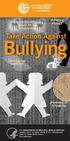 switching seats in the classroom stealing money Take Action Against Bullying spreading rumors pushing & tripping U.S. DEPARTMENT OF HEALTH & HUMAN SERVICES Substance Abuse and Mental Health Services Administration
Date Self-Assessment Evaluator Assessment
 Rubric for BEHAVIOR SPECIALIST/ANALYST (BS/BA) Date Self-Assessment Evaluator Assessment 1a: Demonstrating Knowledge of Behavior Analysis Principles, Laws, Regulations, and Research Domain 1: Planning
Behavior & Classroom Management Strategies for Reading Teachers. Chris Borgmeier, Ph.D. Portland State University cborgmei@pdx.
 Behavior & Classroom Management Strategies for Reading Teachers Chris Borgmeier, Ph.D. Portland State University [email protected] (503)725-5469 Agenda Introduction Behavior & Learning Setting up your Students
When students do not meet your behavioral expectations but are not exactly breaking the rules and may not deserve an official consequence.
 E-4 Diversify responses to various degrees of misbehavior When you re in the middle of instruction, you may encounter an assortment of misbehavior that varies in degrees of severity and warrants different
A Brief Explanation of Applied Behavior Analysis. conditioning to identify the contingencies affecting a student s behavior and the functions of the
 A Brief Explanation of Applied Behavior Analysis Applied Behavior Analysis is the procedure for using the principles of operant conditioning to identify the contingencies affecting a student s behavior
Differential Reinforcement of Other Behaviors: Steps for Implementation
 Differential Reinforcement of Other Behaviors: Steps for Implementation Vismara, L., Bogin, J., & Sullivan, L. (2009). Differential reinforcement of other behaviors: Steps for implementation. Sacramento,
The Flip n Flipping Ticket Systems: Why Classroom or School-wide Response Cost is Not PBIS and How to Put the P Back in Positive
 The Flip n Flipping Ticket Systems: Why Classroom or School-wide Response Cost is Not PBIS and How to Put the P Back in Positive Pat Red University of Southern Maine Maine PBIS LPC November 5, 2013 objectives
Acknowledging Children s Positive Behaviors What Works Brief Series Matt Timm and Sharon Doubet
 Center on the Social and Emotional Foundations for Early Learning Project funded by the Child Care and Head Start Bureaus in the U.S. Department of Health and Human Services Acknowledging Children s Positive
ADD/ADHD in the Classroom
 ADD/ADHD in the Classroom TIPS FOR TEACHERS AND PARENTS At any given time, a teacher can expect to have at least one student with ADHD. The impulsive and hyperactive behavior of such students can be distracting
Emotional/Behavioral Disorders: Understanding the Challenges. Mark D. Nelson. Montana State University Bozeman. Tricia Williamson
 1 Emotional/Behavioral Disorders: Understanding the Challenges Mark D. Nelson Montana State University Bozeman Tricia Williamson Flathead High School Kalispell, Montana Emotional/Behavioral Disorders 2
Individualized Education Program (IEP)
 SECTION 6 matters! inclusion Individualized Education Program (IEP) 44. Inclusion Matters! Individualized Education Program (IEP) The student s IEP is the vehicle that pulls together the work of the team
Classroom Behavior Management Plan
 Haffner 1 Classroom Behavior Management Plan Daniel Haffner November 20, 2009 EDUC 348 Haffner 2 Philosophy of Classroom Management Classroom management is a course taught at every teacher college across
4/25/2014. What is ABA? Do I use ABA? Should I use ABA?
 Using Behavior Analysis to Teach Appropriate Behavior DAVID E. KUHN, PH.D.,., BCBA-D What is ABA? Do I use ABA? Should I use ABA? Applied Behavior Analysis (ABA) A science devoted to the understanding
Questions Related to Implementation
 Questions Related to Implementation Question I work for an online school, and behavior isn't as prominent as in the traditional classroom, but I have experienced a lot of refusal behaviors that impact
4013 Restraint and Seclusion Policy. Introduction
 4013 Restraint and Seclusion Policy Introduction The Mississippi Department of Education and the State Board of Education supports a positive approach to behavior that uses proactive strategies to create
Classroom Management Plan. Be respectful and considerate of classmates.
 Classroom Management Plan 1. Classroom Rules Be on time and be prepared for class. Be respectful and considerate of classmates. Focus on the task at hand. No electronic devices, food or gum. Eye protection,
AN ABA APPROACH TO TEACHING THE DIFFICULT CHILD. By: Lindsay Rice and Stephanie Beaulieu
 AN ABA APPROACH TO TEACHING THE DIFFICULT CHILD By: Lindsay Rice and Stephanie Beaulieu Overview Defining the behavior Data collection and how to begin this process The why : Why is this behavior occurring
Functional Behavioral Assessment and Function-Based Support Developing a Behavior Support Plan based on the Function of Behavior.
 Functional Behavioral Assessment and Function-Based Support Developing a Behavior Support Plan based on the Function of Behavior FBA/BSP forms Guidelines for use included in accompanying Instructional
Contact Information. [email protected] Phone 773-3678
 Contact Information [email protected] Phone 773-3678 Learning Behavior/Changing Behavior Students learn any behavior in the same way they learn to read through instruction/modeling, practice, feedback,
School-Age Child Guidance Technical Assistance Paper #2
 School-Age Child Guidance Technical Assistance Paper #2 School-age Child Guidance High quality out-of-school time programs promote school-age children s emotional and social development as well as their
Tier 3 Individual Behavior Support Plan
 Tier 3 Individual Behavior Support Plan : Dale Bailey School: Washington Elementary Grade: 5 th Age: 10 Teacher: Joyce A Williams, Teacher Date Plan Developed: 9/20/10 Date Plan Implemented: 9/21/10 Target
Classroom Positive Behavior Support June 2007. Data. Practices. Systems. L.Newcomer - UMSL 1. Continuum of Support for ALL. Few. Intensive.
 Intensive Targeted Few Some Continuum of Support for ALL Positive Behavior Support in the Classroom Lisa Hazel & Julie Vollmar Ferguson-Florissant School Dist., Florissant Mo Universal All Positive Behavior
Classroom Management That Works
 Classroom Management That Works Participant Packet Research-Based Strategies for Every Teacher Authors: R. Marzano & D. Pickering Presenter: Mark P. Foseid Marzano and Associates P.A.G.E Session 2, December,
Case Study 1 Tommy (Elementary/Middle School)
 Case Study 1 Tommy (Elementary/Middle School) Background Information Tommy is an 10 year-old boy who enjoys baseball, swimming, and baking. He does not like art activities or large crowds. Tommy has a
Back to School: Working with Teachers and Schools
 Back to School: Working with Teachers and Schools Starting school each fall is a challenge for the student and parents. The following article offers some valuable suggestions as your child starts a new
SWITZERLAND COUNTY School Corporation Policy Anti-Bullying Policy
 SWITZERLAND COUNTY School Corporation Policy Anti-Bullying Policy SCSC POLICY 6.72 The following policy has been established by the school board of Switzerland County School Corporation regarding anti-bullying.
Using Individual Behaviour Support Plans
 Using Individual Behaviour Support Plans An individual behaviour support plan, which documents supports and strategies based on students unique and individual characteristics, will benefit students with
Tips on Building Classroom Procedures and Routines: How to have a well-managed classroom. Teacher Resources
 Teacher Resources Tips on Building Classroom Procedures and Routines: How to have a well-managed classroom Note: The following references and excerpts taken from three sources: 1. How to be an effective
Below is an account of what is or has been done in classrooms to address bullying in our district
 In Class Curriculum and Instruction Relative to Bullying Below is an account of what is or has been done in classrooms to address bullying in our district Classroom Instruction Grade Description of Curriculum/Instruction
Applied Behavior Analysis Reinforcement. Elisabeth (Lisa) Kinney, M.S. September 26, 2007
 Applied Behavior Analysis Reinforcement Elisabeth (Lisa) Kinney, M.S. September 26, 2007 Pairing to Teach New Reinforcers Avoiding satiation Helping child mature Avoiding cavities Creating interest in
Growing Up With Epilepsy
 Teaching Students with Epilepsy: Children with epilepsy often experience learning issues as a result of their seizures. These may include ongoing problems with motor skills or cognitive functions, as well
What does ABA do? TARGET: Manipulating antecedents & consequences to change behavior. 7/25/2013
 An Overview of Applied Behavior Analysis and Principles behind Creating Effective Interventions through Prevent, Replace, and Respond Strategies to Address Challenging Behaviors. Presenter: Robin Palmer
FUNCTIONAL BEHAVIORAL ASSESSMENT
 FUNCTIONAL BEHAVIORAL ASSESSMENT Funded by Safe Schools, Healthy Students and developed at The University of Arizona, College of Education Functional Behavioral Assessment: Online Prevention Module at
EMOTIONAL DISTURBANCE
 I. DEFINITION "Emotional disturbance" means a condition exhibiting one or more of the following characteristics over a long period of time and to a marked degree that adversely affects a child's educational
YUMA PROVING GROUND STANDARD OPERATING PROCEDURES (SOP) Child, Youth & School Services (CYSS) Touch Policy
 YUMA PROVING GROUND STANDARD OPERATING PROCEDURES (SOP) Child, Youth & School Services (CYSS) Touch Policy 1. PURPOSE: To provide guidance in the implementation of Touch Policy based on the understanding
SENECA VALLEY SCHOOL DISTRICT
 No. 113.2 SECTION: PROGRAMS SENECA VALLEY SCHOOL DISTRICT TITLE: BEHAVIORAL MANAGEMENT FOR EXCEPTIONAL STUDENTS ADOPTED: JUNE 8, 1992 REVISED: 113.2. BEHAVIORAL MANAGEMENT FOR EXCEPTIONAL STUDENTS 1. Purpose
ABA & Teaching Methods
 ABA & Teaching Methods C H A P T E R 7 E A S T E R S E A L S S O U T H E A S T W I S C O N S I N S T A R T E A R L Y, S T A R T S T R O N G P R O G R A M ABA ABA = Applied Behavior Analysis Science devoted
Virginia Education Association. Special Education. Frequently Asked Questions
 Virginia Education Association Special Education Frequently Asked Questions Office of Legal Services Office of Teaching and Learning Spring 2010 New Business Item 12 at the 2009 VEA Delegate Assembly called
DEVELOPING A POINT SYSTEM
 CENTER FOR EFFECTIVE PARENTING DEVELOPING A POINT SYSTEM Steps to Using a Point System 1. Parents should pinpoint what they want their children to do. They should then consult with their children. Finally,
Functional Behavior Assessment. Afunctional behavior assessment is a comprehensive
 Afunctional behavior assessment is a comprehensive and individualized strategy to: Identify the purpose or function of a student s problem behavior(s). Develop and implement a plan to modify variables
Frequently Asked Questions about Making Specific Learning Disability (SLD) Eligibility Decisions
 Frequently Asked Questions about Making Specific Learning Disability (SLD) Eligibility Decisions This document is part of the department s guidance on implementing Wisconsin SLD criteria. It provides answers
A. Learning Process through which experience causes permanent change in knowledge or behavior.
 Woolfolk, A. (2010). Chapter 6: Behavioral Views of Learning. In A. Woolfook (Ed.), Educational psychology (11th ed.). Columbus, OH: Pearson/Allyn & Bacon. This chapter begins by defining learning and
Illinois Department of Public Health STATEMENT OF DEFICIENCIES AND PLAN OF CORRECTION. Investigation of Incident Report Investigation of 7/6/13.
 (X1) PROVER/SUPPLIER/CLIA ENTIFICATION NUMBER: (X3) SURVEY D NAME OF PROVER OR SUPPLIER (X4) SUMMARY REGULATORY OR LSC ENTIFYING INFORMATION) PROVER'S PLAN OF CORRECTION Z 000 COMMENTS Z 000 Investigation
The Challenge of Helping Adults Learn: Principles for Teaching Technical Information to Adults
 The Challenge of Helping Adults Learn: Principles for Teaching Technical Information to Adults S. Joseph Levine, Ph.D. Michigan State University [email protected] One of a series of workshop handouts made
Computer Lab Rules. Before you enter the lab: Keep your hands clean. Do not bring food or drinks. Throw away your candy or gum to the trash.
 Computer Lab Rules Before you enter the lab: Keep your hands clean. Do not bring food or drinks. Throw away your candy or gum to the trash. DO NOT ENTER If there is no teacher in the lab do not enter.
Applied Behavior Analysis Provider Treatment Report Guidelines: Initial Authorization Request
 Applied Behavior Analysis Provider Treatment Report Guidelines: Initial Authorization Request The following is a guide to what is expected in the individual assessment treatment plan for members with Autistic
Modifying Curriculum and Instruction
 Modifying Curriculum and Instruction Purpose of Modification: The purpose of modification is to enable an individual to compensate for intellectual, behavioral, or physical disabi1ities. Modifications
Introduction to Applied Behavior Analysis
 Introduction to Applied Behavior Analysis Glenwood, Inc. Teacher Training 2013 We may have gotten into the teaching profession to teach science, music, or foreign language, but pretty soon we discover
GUIDELINES FOR THE IEP TEAM DATA COLLECTION &
 GUIDELINES FOR THE IEP TEAM DATA COLLECTION & Progress Monitoring Decisions about the effectiveness of an intervention must be based on data, not guesswork. Frequent, repeated measures of progress toward
PROFESSIONAL BACKGROUND
 Statement of Benjamin S. Fernandez, MSEd, Lead School Psychologist Loudon County Public Schools, Virginia NASP Briefing: Effective Discipline Policies and Practices Thursday, April 18, 2013 My name is
Positive Behavior Management: Practical Tips for Parents. Jonathan Tarbox, PhD Center for Autism and Related Disorders Temecula, February 2006
 Positive Behavior Management: Practical Tips for Parents Jonathan Tarbox, PhD Center for Autism and Related Disorders Temecula, February 2006 Introductions My name is Jonathan Tarbox I am the co-director
CHAPTER 5: BEHAVIOR INTERVENTION PLANS (BIP)
 CHAPTER 5: BEHAVIOR INTERVENTION PLANS (BIP) Learner Outcomes At the conclusion of this chapter, you will be able to: Identify key components of a Behavior Intervention Plan Develop a competing pathway
SCHOOL DISCIPLINE AND STUDENTS WITH DISABILITIES
 SCHOOL DISCIPLINE AND STUDENTS WITH DISABILITIES IMPORTANT: ELC's publications are intended to give you a general idea of the law. However, each situation is different. If, after reading our publications,
Classroom Management: An Ecological Model Donald F. Perras, Ph.D.
 Classroom Management: An Ecological Model Donald F. Perras, Ph.D. Help Wanted! Teachers prepared to manage students limited behavioral readiness for school. This national dilemma reflects students changing
EMPLOYEE JOB IMPROVEMENT PLANS. This Employee Job Improvement Plan designed by Kielley Management Consultants achieves results because:
 EMPLOYEE JOB IMPROVEMENT PLANS This Employee Job Improvement Plan designed by Kielley Management Consultants achieves results because: it is simple and understandable it keeps supervisors and employees
Effective Classroom Management
 Effective Classroom Management Keys Student behavior won t change until adult behavior changes -- Adults Matter! ALL behavior change is an instructional process -- Instruction Matters! It s all about probability
Safe & Caring Schools Policy Revised 2013
 Safe & Caring Schools Policy Revised 2013 1. Background and Purpose Increased public awareness and concern regarding the societal issues of bullying and violent behaviour among youth prompted the Department
Examining the Structure of your ABA Program William Frea, Ph.D. & Ronit Molko, Ph.D.
 Compliments of Autism Asperger s Digest January-February 2004 issue Examining the Structure of your ABA Program William Frea, Ph.D. & Ronit Molko, Ph.D. One of the most difficult, if not painful processes
National Health Education Standards and Performance Indicators. Interpersonal Communication [4.12.1; 4.12.2; 4.12.3] Self Management [7.12.2; 7.12.
![National Health Education Standards and Performance Indicators. Interpersonal Communication [4.12.1; 4.12.2; 4.12.3] Self Management [7.12.2; 7.12.](/thumbs/27/9539429.jpg "National Health Education Standards and Performance Indicators. Interpersonal Communication [4.12.1; 4.12.2; 4.12.3] Self Management [7.12.2; 7.12.") LESSON 8 Interpersonal Communication and Self Management Student Learning Objectives Identify how interpersonal communication and self management are needed for healthy living. Expand on the definition
LESSON 8 Interpersonal Communication and Self Management Student Learning Objectives Identify how interpersonal communication and self management are needed for healthy living. Expand on the definition
Type of law: CRIMINAL LAW. A 2011 Alberta Guide to the Law IMPAIRED DRIVING. Student Legal Services of Edmonton
 Type of law: CRIMINAL LAW A 2011 Alberta Guide to the Law IMPAIRED DRIVING Student Legal Services of Edmonton COPYRIGHT & DISCLAIMER GENERAL All information is provided for general knowledge purposes only
Development of IEPs for Students with Emotional or Behavioral Disorders: Coordination with Transition Plans
 Development of IEPs for Students with Emotional or Behavioral Disorders: Coordination with Transition Plans James G. Shriner University of Illinois at Urbana-Champaign CEC 2011 Convention National Harbor,
Classroom Behavior Management Packet Extending PBS into the Classroom. Chris Borgmeier, PhD Portland State University cborgmei@pdx.
 1 Classroom Behavior Management Packet Extending PBS into the Classroom Chris Borgmeier, PhD Portland State University [email protected] 503/725-5469 Mapping School-Wide Rules to Classroom Behavioral Expectations
Conducting Emotionally Difficult Conversations. John Banja, PhD Center For Ethics Emory University [email protected]
 Conducting Emotionally Difficult Conversations John Banja, PhD Center For Ethics Emory University [email protected] How To Break Bad News Robert Buckman (with contributions by Yvonne Kason). Baltimore:
Seclusion and Time-out
 This document contains general information for educational purposes and should not be construed as legal advice. This information is intended to provide you with tools to help you advocate for yourself
TIME-OUT AS A DISCIPLINE TECHNIQUE
 CENTER FOR EFFECTIVE PARENTING TIME-OUT AS A DISCIPLINE TECHNIQUE critical. Parents should make sure that all other adults who discipline their children use the same technique. The time-out procedure described
Olathe North High School Accounting I - Syllabus
 Olathe North High Accounting I - Syllabus Course: Accounting I Instructor: Mr. Pollom Room: 801 Email: [email protected] Home Room: 801 (usually available 3:00 4:00 pm) Description: This is the
Common Time-Out Mistakes And Problems
 If Your Child Rebels Against Time-Out Time-out Common Time-Out is not expected Mistakes And to work Problems if parents make more than 2 or 3 time-out mistakes. - Lynn Clark 99 Chapter 12 Common Time-Out
* Use tag F224 for deficiencies concerning mistreatment, neglect, or misappropriation of resident property.
 F223 483.13(b) Abuse The resident has the right to be free from verbal, sexual, physical, and mental abuse, corporal punishment, and involuntary seclusion. Intent 483.13(b) Each resident has the right
How Teacher Positioning in the Classroom. Affects the On-Task Behavior of Students
 How Teacher Positioning in the Classroom Affects the On-Task Behavior of Students Author: Annabelle Myers and Sofia Anderson Editor: Dr. Eucabeth Odhiambo Assessment and Evaluation of Student Behavior
Promoting Generalization of Positive Behavior Change: Practical Tips for Parents and Professionals
 Promoting Generalization of Positive Behavior Change: Practical Tips for Parents and Professionals Jonathan Tarbox, PhD CARD Distinguished Lecturer Series Center for Autism & Related Disorders, Inc. CARD
Possible Interventions for the Function of Escape/Avoidance/Delay
 Possible Interventions for the Function of Escape/Avoidance/Delay 1. A Now/Then poster could be posted showing that a short break of a preferred activity would follow the lesson or seat work. 2. A timer
Positive Behaviour Support Plan for Jane. Brief Summary of the Critical System Strengths and Concerns (for school):
 Brief Summary of Focus Person: Positive Behaviour Support Plan for Jane Jane is a 6 year old girl with ADHD, oppositional defiant disorder, prenatal exposure to cocaine and possible fetal alcohol spectrum
SECLUSION AND RESTRAINT OF STUDENTS WITH DISABILITIES IN PENNSYLVANIA SCHOOLS
 Disability Rights Network of Pennsylvania 1414 N. Cameron Street Second Floor Harrisburg, PA 17103-1049 (800) 692-7443 (Voice) (877) 375-7139 (TDD) www.drnpa.org SECLUSION AND RESTRAINT OF STUDENTS WITH
What is a behavior intervention plan? What should be included in the behavior intervention plan?
 What is a behavior intervention plan? Once the IEP team, of which you are a part, has conducted a functional assessment, the information obtained from that process should be used to develop a behavior
ELEMENTS OF A DISCIPLINE PLAN
 ELEMENTS OF A DISCIPLINE PLAN This outline is explained in detail in class. Experienced teachers will recognize parts of the Lee Canter and Fred Jones approaches. Its purpose is to provide a framework
OFFICE OF MENTAL HEALTH AND SUBSTANCE ABUSE SERVICES BULLETIN
 OFFICE OF MENTAL HEALTH AND SUBSTANCE ABUSE SERVICES BULLETIN ISSUE DATE: EFFECTIVE DATE: NUMBER: January 9, 2009 January 1, 2009 OMHSAS-09-01 SUBJECT: Guidance for Conducting Functional Behavioral Assessments
Helping the Addict or Alcoholic Begin the Journey to Recovery through Intervention:
 Solutions that end addiction. Helping the Addict or Alcoholic Begin the Journey to Recovery through Intervention: It can be challenging to help a loved one struggling with alcoholism or drug addiction.
Selected Readings: NYCTF Guide to NYC Special Education Classroom Settings
 Selected Readings: NYCTF Guide to NYC Special Education Classroom Settings To enhance the observation experience, please find helpful information below on what you can expect to encounter within special
Steps for Implementation: Positive Reinforcement
 Steps for Implementation: Positive Reinforcement Neitzel, J. (2009). Steps for implementation: Positive reinforcement. Chapel Hill, NC: The National Professional Development Center on, Frank Porter Graham