
National Medical Policy
|
|
|
- Monica Owens
- 10 years ago
- Views:
Transcription

1 National Medical Policy Subject: Policy Number: Sacroiliac Joint Injections NMP66 Effective Date*: October 2003 Updated: July 2015 This National Medical Policy is subject to the terms in the IMPORTANT NOTICE at the end of this document For Medicaid Plans: Please refer to the appropriate Medicaid Manuals for coverage guidelines prior to applying Health Net Medical Policies The Centers for Medicare & Medicaid Services (CMS) For Medicare Advantage members please refer to the following for coverage guidelines first: Use Source Reference/Website Link National Coverage Determination (NCD) National Coverage Manual Citation X Local Coverage Determination (LCD)* Article (Local)* Epidural and Transforaminal Epidural Injections; Paravertebral Facet Joint Block and Facet Joint Denervation; Sacroiliac Joint Injections: Other None Use Health Net Policy Instructions Medicare NCDs and National Coverage Manuals apply to ALL Medicare members in ALL regions. Medicare LCDs and Articles apply to members in specific regions. To access your specific region, select the link provided under Reference/Website and follow the Sacroiliac Joint Injections Jul 15 1

2 search instructions. Enter the topic and your specific state to find the coverage determinations for your region. *Note: Health Net must follow local coverage determinations (LCDs) of Medicare Administration Contractors (MACs) located outside their service area when those MACs have exclusive coverage of an item or service. (CMS Manual Chapter 4 Section 90.2) If more than one source is checked, you need to access all sources as, on occasion, an LCD or article contains additional coverage information than contained in the NCD or National Coverage Manual. If there is no NCD, National Coverage Manual or region specific LCD/Article, follow the Health Net Hierarchy of Medical Resources for guidance. Current Policy Statement Sacroiliac joint injections performed under fluoroscopy guidance are considered medically necessary when used either: 1. As a diagnostic trial to determine the origin of the pain; or 2. As a therapeutic injection for temporary relief of lower back pain in conjunction with other noninvasive treatment methods (e.g., to participate in physical therapy), and not as a stand-alone therapy. AND 3. All of the following are met: Patient has either acute or chronic lower back pain Pain is thought to be secondary to suspected sacroiliac joint disturbances Pain and disability are of moderate-to-severe degree Patient has been unresponsive to a 6-week course of conservative measures (e.g., oral medications, rest/limited activity, and/or physical therapy) Contraindications to receiving sacroiliac joint injections include, but are not limited to, the following: 1. Allergy to the medication to be administered 2. Anticoagulation therapy 3. Bleeding disorder 4. Localized infection in the region to be injected 5. Systemic infection 6. Other co-morbidities which could be exacerbated by the procedure/steroid usage (e.g., poorly controlled hypertension, severe congestive heart failure, diabetes, etc.) Codes Related To This Policy NOTE: The codes listed in this policy are for reference purposes only. Listing of a code in this policy does not imply that the service described by this code is a covered or noncovered health service. Coverage is determined by the benefit documents and medical necessity criteria. This list of codes may not be all inclusive. On October 1, 2015, the ICD-9 code sets used to report medical diagnoses and inpatient procedures will be replaced by ICD-10 code sets. Health Net National Medical Policies will now include the preliminary ICD-10 codes in preparation for this Sacroiliac Joint Injections Jul 15 2

3 transition. Please note that these may not be the final versions of the codes and that will not be accepted for billing or payment purposes until the October 1, 2015 implementation date. ICD-9 Codes Sacroiliitis Disorders of sacrum (refers to this code for sacroiliac pain and chronic or old sacroiliac sprain) Sprains and strains of sacroiliac ligament Sprains and strains of other specified sites of sacroiliac region Sprains and strains of unspecified site of sacroiliac region ICD 10 Codes M46.1 Sacroiliitis, not elsewhere classified M53.3 Sacrococcygeal disorders, not elsewhere classified S33.6 Sprain of sacroiliac joint S33.8 Sprain of other parts of lumbar spine and pelvis S33.9 Sprain of unspecified parts of lumbar spine and pelvis CPT Codes Injection procedure for sacroiliac joint, arthrography, and/or anesthetic/steroid Injection(s), diagnostic or therapeutic agent, paravertebral facet (zygapophyseal) joint (or nerves innervating that joint) with image guidance (fluoroscopy or CT), lumbar or sacral, single level Injection(s), diagnostic or therapeutic agent, paravertebral facet (zygapophyseal) joint (or nerves innervating that joint) with image guidance (fluoroscopy or CT), lumbar or sacral, second level Injection(s), diagnostic or therapeutic agent, paravertebral facet (zygapophyseal) joint (or nerves innervating that joint) with image guidance (fluoroscopy or CT), lumbar or sacral, third and any additional level(s) Fluoroscopic guidance for central venous access device placement, replacement (catheter only or complete), or removal (includes fluoroscopic guidance for vascular access and catheter manipulation, any necessary contrast injections through access site or catheter with related venography radiologic supervision and interpretation, and radiographic supervision and interpretation, and radiographic documentation of final catheter position) Fluoroscopic guidance for needle placement (eg. Biopsy, aspiration, injection, localization device) Fluoroscopic guidance and localization of needle or catheter tip for spine or paraspinous diagnostic or therapeutic injection procedures (epidural, subarachnoid, or sacroiliac joint), including neurolytic agent destruction HCPCS Codes J-code For anesthetic agent used J-code For steroid (if used in addition to anesthetic) Scientific Rationale Update July 2015 Sacroiliac Joint Injections Jul 15 3

4 Soneji et al (2015) reported that sacroiliac joint (SIJ) arthritis is a common cause of chronic mechanical low back pain (LBP) that is often treated with injection of local anesthetic and steroids. Ultrasound (US) has emerged as a viable alternative to fluoroscopy (FL) to guide SIJ injections; however, few studies have compared these modalities. In this prospective randomized, controlled trial, we compared both accuracy and efficacy of US and FL guidance for SIJ injections. Forty patients with chronic moderate-to-severe LBP secondary to SIJ arthritis were randomized to receive US- or FL-guided unilateral SIJ injections. Primary outcomes included pain at 1 month measured by numerical rating scale (NRS) scores. Secondary outcomes included NRS scores at 24 hours, 72 hours, 1 week, and 3 months after injection, physical functioning at 1 month after the procedure, procedure time, incidence of intra-articular and peri-articular needle placement, patient discomfort, overall patient satisfaction, and daily opioid consumption. There was no significant difference in NRS pain scores between the 2 groups at 1 month or at any other follow-up points. A significant reduction from baseline mean NRS scores was observed in both groups at 1 month after injection (US 22.7%, P = 0.025; FL 37.3%, P < 0.001). There was no significant difference in procedure-related variables, physical functioning, discomfort, opioid utilization, and patient satisfaction between the 2 groups. The authors concluded ultrasound-guided SIJ injection with fluoroscopic confirmation has similar accuracy and efficacy to fluoroscopy alone for SIJ injections in patients with chronic low back pain secondary to SIJ arthritis. Chou et al (2015) reviewed the current evidence on effectiveness and harms of epidural, facet joint, and sacroiliac corticosteroid injections for low back pain conditions. The authors used predefined criteria, and selected randomized trials of patients with lumbosacral radiculopathy, spinal stenosis, nonradicular back pain, or chronic postsurgical back pain that compared effectiveness or harms of epidural, facet joint, or sacroiliac corticosteroid injections versus placebo or other interventions. They also included randomized trials that compared different injection techniques and large (sample sizes >1000) observational studies of back injections that reported harms. The quality of included studies was assessed, data were extracted, and results were summarized qualitatively and using meta-analysis on outcomes stratified by immediate- (1 week to 2 weeks), short- (2 weeks to 3 months), intermediate- (3 months to <1 year), and long-term (>1 year) follow-up. Seventy-eight randomized trials of epidural injections, 13 trials of facet joint injections, and one trial of sacroiliac injections were included. For epidural corticosteroid injections versus placebo interventions for radiculopathy, the only statistically significant effects were on mean improvement in pain at immediate-term follow-up (weighted mean difference [WMD] 7.55 on a 0 to 100 scale, 95% CI 11.4 to 3.74) (strength of evidence [SOE]: moderate), mean improvement in function at immediate-term follow-up when an outlier trial was excluded (standardized mean difference [SMD] 0.33, 95% CI 0.56 to 0.09) (SOE: low), and risk of surgery at short-term follow-up (relative risk [RR] 0.62, 95% CI 0.41 to 0.92) (SOE: low). The magnitude of effects on pain and function was small, did not meet predefined thresholds for minimum clinically important differences, and there were no differences on outcomes at longer-term follow up. Evidence on effects of different injection techniques, patient characteristics, or comparator interventions estimates was limited and did not show clear effects. Trials of epidural corticosteroid injections for radiculopathy versus nonplacebo interventions did not clearly demonstrate effectiveness (SOE: insufficient to low). Evidence was limited for epidural corticosteroid injections versus placebo interventions for spinal stenosis (SOE: low to moderate) or nonradicular back pain (SOE: low), but showed no differences in pain, function, or likelihood of surgery. Studies found no clear Sacroiliac Joint Injections Jul 15 4

5 differences between various facet joint corticosteroid injections (intra-articular, extra-articular [peri-capsular], or medial branch) and placebo interventions (SOE: low to moderate). There was insufficient evidence from one very small trial to determine effects of peri-articular sacroiliac joint corticosteroid injections injection (SOE: insufficient). Serious harms from injections were rare in randomized trials and observational studies, but harms reporting was suboptimal (SOE: low). The reviewers concluded epidural corticosteroid injections for radiculopathy were associated with immediate improvements in pain and might be associated with immediate improvements in function, but benefits were small and not sustained, and there was no effect on long-term risk of surgery. Evidence did not suggest that effectiveness varies based on injection technique, corticosteroid, dose, or comparator. Limited evidence suggested that epidural corticosteroid injections are not effective for spinal stenosis or nonradicular back pain and that facet joint corticosteroid injections are not effective for presumed facet joint pain. There was insufficient evidence to evaluate effectiveness of sacroiliac joint corticosteroid injections. Scientific Rationale Update July 2014 Facet joint interventions and sacroiliac joint interventions are utilized in managing facet joint and sacroiliac joint pain. According to the American Society of Interventional Pain Physicians (2013), The evidence for diagnostic lumbar facet joint nerve blocks and diagnostic sacroiliac intraarticular injections is good with 75% to 100% pain relief as criterion standard with controlled local anesthetic or placebo blocks. Visser et al (2013) assessed which treatment is successful for sacroiliac joint (SIJ)- related back and leg pain. Using a single-blinded randomised trial, the authors assessed the short-term therapeutic efficacy of physiotherapy, manual therapy, and intra-articular injection with local corticosteroids in the SIJ in 51 patients with SIJrelated leg pain. The effect of the treatment was evaluated after 6 and 12 weeks. Of the 51 patients, 25 (56 %) were successfully treated. Physiotherapy was successful in 3 out of 15 patients (20 %), manual therapy in 13 of the 18 (72 %), and intra-articular injection in 9 of 18 (50 %) patients (p = 0.01). Manual therapy had a significantly better success rate than physiotherapy (p = 0.003). The authors concluded in the small single-blinded prospective study, manual therapy appeared to be the choice of treatment for patients with SIJ-related leg pain. A second choice of treatment to be considered is an intra-articular injection. Manchikanti et al (2013) analyzed the growth patterns of sacroiliac joint injections in Medicare beneficiaries from 2000 to This assessment was performed utilizing Centers for Medicare and Medicaid Services (CMS) Physician/Supplier Procedure Summary (PSPS) Master data from 2000 to The findings of the assessment in Medicare beneficiaries from 2000 to 2011 showed a 331% increase per 100,000 Medicare beneficiaries with an annual increase of 14.2%, compared to an increase in the Medicare population of 23% or annual increase of 1.9%. The number of procedures increased from 49,554 in 2000 to 252,654 in 2011, or a rate of 125 to 539 per 100,000 Medicare beneficiaries. Among the various specialists performing sacroiliac joint injections, physicians specializing in physical medicine and rehabilitation have shown the most increase, followed by neurology with 1,568% and 698%, even though many physicians from both specialties have been enrolling in interventional pain management and pain management. Even though the numbers were small for nonphysician providers including certified registered nurse anesthetists, nurse practitioners, and physician assistants, these numbers increased Sacroiliac Joint Injections Jul 15 5

6 substantially at a rate of 4,526% per 100,000 Medicare beneficiaries with 21 procedures performed in 2000 increasing to 4,953 procedures in The, majority of sacroiliac joint injections were performed in an office setting. The utilization of sacroiliac joint injections by state from 2008 to 2010 showed increases of more than 20% in New Hampshire, Alabama, Minnesota, Vermont, Oregon, Utah, Massachusetts, Kansas, and Maine. Similarly, some states showed significant decreases of 20% or more, including Oklahoma, Louisiana, Maryland, Arkansas, New York, and Hawaii. Overall, there was a 1% increase per 100,000 Medicare population from 2008 to However, 2011 showed significant increases from The limitations of the study included a lack of inclusion of Medicare participants in Medicare Advantage plans, the availability of an identifiable code for only sacroiliac joint injections, and the possibility that state claims data may include claims from other states. The authors concluded the study illustrates the explosive growth of sacroiliac joint injections even more than facet joint interventions. Furthermore, certain groups of providers showed substantial increases. Overall, increases from 2008 to 2010 were nominal with 1%, but some states showed over 20% increases whereas some others showed over 20% decreases. Scientific Rationale - Update January 2014 Jee H, et al (2013) compared the short-term effects and safety of ultrasound (US)- guided sacroiliac joint (SIJ) injections with fluoroscopy (FL)-guided SIJ injections in patients with noninflammatory SIJ dysfunction in a prospective, randomized controlled trial at a single hospital. Patients (N=120) with noninflammatory sacroiliac arthritis were enrolled. All procedures were performed using an FL or US apparatus. Subjects were randomly assigned to either the FL or US group. Immediately after the SIJ injections, fluoroscopy was applied to verify the correct placement of the injected medication and intravascular injections. Main outcomes measured treatment effects and functional improvement were compared at 2 and 12 weeks after the procedures. The verbal numeric pain scale and Oswestry Disability Index improved at 2 and 12 weeks after the injections without statistical significances between groups. Of 55 US-guided injections, 48 (87.3%) were successful and 7 (12.7%) were missed. The FL-guided SIJ approach exhibited a greater accuracy (98.2%) than the US-guided approach. Vascularization around the SIJ was seen in 34 of 55 patients. Among the 34 patients, 7 had vascularization inside the joint, 23 had vascularization around the joint, and 4 had vascularization both inside and around the joint. Three cases of intravascular injections occurred in the FL group. Investigators concluded the US-guided approach may facilitate the identification and avoidance of the critical vessels around or within the SIJ. Function and pain relief significantly improved in both groups without significant differences between groups. The US-guided approach was shown to be as effective as the FLguided approach in treatment effects. However, diagnostic application in the SIJ may be limited because of the significantly lower accuracy rate (87.3%). Visser et al (2013) assessed which treatment is successful for SIJ-related back and leg pain. Using a single-blinded randomized trial, the investigators assessed the short-term therapeutic efficacy of physiotherapy, manual therapy, and intra-articular injection with local corticosteroids in the SIJ in 51 patients with SIJ-related leg pain. The effect of the treatment was evaluated after 6 and 12 weeks. Of the 51 patients, 25 (56 %) were successfully treated. Physiotherapy was successful in 3 out of 15 patients (20 %), manual therapy in 13 of the 18 (72 %), and intra-articular injection in 9 of 18 (50 %) patients. Manual therapy had a significantly better success rate than physiotherapy. Investigators concluded in this small single-blinded prospective Sacroiliac Joint Injections Jul 15 6

7 study, manual therapy appeared to be the choice of treatment for patients with SIJrelated leg pain. A second choice of treatment to be considered is an intra-articular injection. An evidence-based clinical practice guidelines for interventional techniques in the diagnosis and treatment of chronic spinal pain (Manchikanti el al 2013) reported regarding the lumbar spine, The evidence for accuracy of diagnostic selective nerve root blocks is limited; whereas for lumbar provocation discography, it is fair. The evidence for diagnostic lumbar facet joint nerve blocks and diagnostic sacroiliac intraarticular injections is good with 75% to 100% pain relief as criterion standard with controlled local anesthetic or placebo blocks. The reviewers note further, For sacroiliac joint interventions, the evidence for cooled radiofrequency neurotomy is fair; limited for intraarticular injections and periarticular injections; and limited for both pulsed radiofrequency and conventional radiofrequency neurotomy. Scientific Rationale Update January 2013 Simopoulos et al (2012) evaluated the accuracy of diagnostic sacroiliac joint interventions in a systematic review. Methodological quality assessment of included studies was performed using Quality Appraisal of Reliability Studies (QAREL). Only diagnostic accuracy studies meeting at least 50% of the designated inclusion criteria were utilized for analysis. Studies scoring less than 50% are presented descriptively and analyzed critically. The level of evidence was classified as good, fair, or poor based on the quality of evidence developed by the United States Preventive Services Task Force (USPSTF). Data sources included relevant literature identified through searches of PubMed and EMBASE from 1966 to December 2011, and manual searches of the bibliographies of known primary and review articles. In this evaluation the reviewers utilized controlled local anesthetic blocks using at least 50% pain relief as the reference standard. They reported the evidence is good for the diagnosis of sacroiliac joint pain utilizing controlled comparative local anesthetic blocks. The prevalence of sacroiliac joint pain is estimated to range between 10% and 62% based on the setting; however, the majority of analyzed studies suggest a point prevalence of around 25%, with a false-positive rate for uncontrolled blocks of approximately 20%. The evidence for provocative testing to diagnose sacroiliac joint pain was fair. The evidence for the diagnostic accuracy of imaging is limited. Reviewers noted the limitations of this systematic review include a paucity of literature, variations in technique, and variable criterion standards for the diagnosis of sacroiliac joint pain. Hansen et al (2012) performed a systematic review to evaluate the accuracy of therapeutic sacroiliac joint interventions. The available literature on therapeutic sacroiliac joint interventions in managing chronic low back and lower extremity pain was reviewed. The quality assessment and clinical relevance criteria utilized were the Cochrane Musculoskeletal Review Group criteria for randomized trials of interventional techniques and the criteria developed by the Newcastle-Ottawa Scale for observational studies. The level of evidence was classified as good, fair, or poor based on the quality of evidence developed by the U.S. Preventive Services Task Force (USPSTF). Data sources included relevant literature published from 1966 through December 2011 that was identified through searches of PubMed and EMBASE, and manual searches of the bibliographies of known primary and review articles. The primary outcome measure was pain relief (short-term relief = up to 6 months and long-term > 6 months). Secondary outcome measures were improvement in functional status, psychological status, return to work, and reduction in opioid intake. For this systematic review, 56 studies were considered for Sacroiliac Joint Injections Jul 15 7

8 inclusion. Of these, 45 studies were excluded and a total of 11 studies met inclusion criteria for methodological quality assessment with 6 randomized trials and 5 nonrandomized studies. The evidence for cooled radiofrequency neurotomy in managing sacroiliac joint pain is fair.the evidence for effectiveness of intraarticular steroid injections is poor.the evidence for periarticular injections of local anesthetic and steroid or botulinum toxin is poor. The evidence for effectiveness of conventional radiofrequency neurotomy is poor. The evidence for pulsed radiofrequency is poor. Reviewers noted the limitations of this systematic review include a paucity of literature on therapeutic interventions, variations in technique, and variable diagnostic standards for sacroiliac joint pain. They concluded the evidence was fair in favor of cooled radiofrequency neurotomy and poor for short-term and long-term relief from intraarticular steroid injections, periarticular injections with steroids or botulin toxin, pulsed radiofrequency, and conventional radiofrequency neurotomy. Plastaras et al (2012) described the type, incidence, and factors that contribute to adverse events associated with fluoroscopically guided intra-articular sacroiliac joint injections (IASIJ) in a retrospective cohort study at a tertiary, academic, outpatient physical medicine and rehabilitation interventional spine clinic. Included in the study were English-speaking adults aged years who underwent fluoroscopically guided IASIJ injections between March 8, 2004, and April 19, After IASIJ injections, 3 senior researchers recorded the presence and types of adverse events. The relationship of adverse events with age, gender, fluoroscopy time, vital signs, and trainee presence was analyzed with the Fisher exact or the Wilcoxon rank sum 2-sided tests. The frequency of immediate (during or immediately after the procedure) or delayed (within hours after the procedure) adverse events. A total of 162 patients (133 women) underwent 191 procedures. The range of subject age was from 20 to 90 years (15.8 years, standard deviation [SD]). The range (SD) of the preprocedure 11-point Likert Pain Scale was from 1.0 to 10.0 (2.0) and for the postprocedure 11-point Likert Pain Scale was from 0.0 to 9.0 (2.5). Trainees were involved in 57% of the procedures. Reported immediate adverse events were vasovagal reaction (2.1% [n = 4]) and steroid-clogged needle (0.5% [n = 1]). Follow-up data were available for 132 of 191 procedures (69%). There were 32 adverse events reported at a mean follow-up interval of 2 days, of which, the most frequent adverse events were injection-site soreness (12.9% [n = 17]), pain exacerbation (5.3% [n = 7]), and facial flushing and/or sweating (2.3% [n = 3]). Delayed adverse events decreased with older age (P =.0029). The patients who underwent bilateral procedures experienced more delayed adverse events than the patients who underwent unilateral procedures (P =.024). Investigators concluded fluoroscopically guided IASIJ injection is associated with minimal adverse effects. The most common immediate adverse event was vasovagal reaction, and the most common delayed adverse event was injection-site soreness. Younger age is significantly related to reported delayed adverse events. Scientific Rationale The sacroiliac joint is located in the lower spine above the coccyx. To this day there is substantial controversy over the existence and clinical relevance of painful sacroiliac joint dysfunction. It is known that inflammation of the sacroiliac joint can cause lower back and buttock pain, however, it is often overlooked as a source of low back pain. Patient history in most cases fails to reveal a significant primary event, physical examination is difficult because of its anatomical location and many of the provocative tests place mechanical stresses on structures that surround it. The diagnosis remains as one of exclusion. Sacroiliac Joint Injections Jul 15 8

9 The sacroiliac facet joints are small joints in the region of the low back and buttocks where the pelvis actually joins with the spine. Sacroiliac dysfunction, also called sacroiliac joint mechanical pain or sacroiliac joint syndrome, is the most common painful condition of this joint. It is now recognized that the sacroiliac joint possesses widespread neural innervation, anatomic variability, and unique biomechanical properties. Although not usually a primary pain generator, the sacroiliac joint can also be a common area of referred pain and can persist as the primary focus of pain. The typical pain referral pattern is to an area around and just caudal to the posterior superior iliac spine (e.g., buttocks). By placing a local anesthetic into the joint, immediate pain relief experienced will help confirm or deny the joint as a source of pain. Treatment for sacroiliac joint dysfunction is usually conservative (non-surgical) and focuses on trying to restore normal motion in the joint. In patients who have failed 4 to 6 weeks of a comprehensive exercise program, local icing, mobilization/manipulation and oral anti-inflammatory medications (NSAIDS), a sacroiliac joint injection can be helpful for both diagnostic and therapeutic purposes. Sacroiliac joint injections into the synovial sac of the sacroiliac joint may provide immediate and significant pain relief. At least 75% resolution of the patient s pain over the ipsilateral SI joint is considered diagnostic of pain emanating from the sacroiliac joint. Adding a steroid to the solution injected may help to reduce any inflammation that may exist within the joint(s) and result in a prolonged period of freedom from pain. For the treatment to be successful, the injection should be followed by physical therapy and/or chiropractic manipulations to provide mobilization and range of motion exercises. The frequency of these injections should be limited with attention placed on the comprehensive exercise program. Depending on the response to the blockade, patients who experience continued pain may qualify for a more permanent procedure, such as radiofrequency lesioning or the intraarticular injection of phenol 6%. There are no prospective or controlled studies published. No literature is available to show how helpful sacroiliac joint injections are for the differentiation of sacroiliac arthropathy from facet joint disease, myofascial pain, or discogenic pain. One followup series of 35 patients diagnostically injected with local anesthetic reported 7 with persistent improvement of more than 75% pain relief at 6 months after injection of therapeutic corticosteroids. Review History October 16, 2003 April 2006 March 2007 April 2008 April 2011 January 2012 January 2013 January 2014 July 2014 July 2015 Medical Advisory Council Update no revisions Coding Updates Update no revisions Update no revisions. Code Updates Update no revisions Update no revisions. Code updates Update - no revisions Update no revisions Update no revisions This policy is based on the following evidence-based guidelines: 1. Boswell MV, Trescot AM, Datta S. et al. Interventional techniques: evidencebased practice guidelines in the management of chronic spinal pain. Pain Phys Sacroiliac Joint Injections Jul 15 9

10 2007 Jan;10(1): Available at: 2. American Society of Anesthesiologists Task Force on Chronic Pain Management, American Society of Regional Anesthesia and Pain Medicine. Practice guidelines for chronic pain management: an updated report by the American Society of Anesthesiologists Task Force on Chronic Pain Management and the American Society of Regional Anesthesia and Pain Medicine. Anesthesiology 2010 Apr;112(4): Manchikanti L, Abdi S, Atluri S, et al. An update of comprehensive evidencebased guidelines for interventional techniques in chronic spinal pain. Part II: guidance and recommendations. Pain Physician Apr;16(2 Suppl):S Available at: 4. Health Technology Brief. Sacroiliac Joint Injections with Corticosteroids for Treatment of Chronic Low Back Pain. Oct 2014 References Update July Althoff CE, Bollow M, Feist E, et al. CT-guided corticosteroid injection of the sacroiliac joints: quality assurance and standardized prospective evaluation of long-term effectiveness over six months. Clin Rheumatol Jun;34(6): Chou R, Hashimoto R, Friedly J, et al. Pain Management Injection Therapies for Low Back Pain [Internet]. Rockville (MD): Agency for Healthcare Research and Quality (US); 2015 Mar D'Orazio F, Gregori LM, Gallucci M. Spine epidural and sacroiliac joints injections--when and how to perform. Eur J Radiol May;84(5): Manchikanti L, Pampati V, Falco FJ, Hirsch JA. An updated assessment of utilization of interventional pain management techniques in the Medicare population: Pain Physician Mar-Apr;18(2):E Soneji N, Bhatia A, Seib R, et al. Comparison of Fluoroscopy and Ultrasound Guidance for Sacroiliac Joint Injection in Patients with Chronic Low Back Pain. Pain Pract May 19 References Update July Cohen SP, Hameed H, Kurihara C, et al. The effect of sedation on the accuracy and treatment outcomes for diagnostic injections: a randomized, controlled, crossover study. Pain Med Apr;15(4): Jee H, Lee JH, Park KD, et al. Ultrasound-guided versus fluoroscopy-guided sacroiliac joint intra-articular injections in the noninflammatory sacroiliac joint dysfunction: a prospective, randomized, single-blinded study. Arch Phys Med Rehabil Feb;95(2): Manchikanti L, Hansen H, Pampati V, Falco FJ. Utilization and growth patterns of sacroiliac joint injections from 2000 to 2011 in the medicare population. Pain Physician Jul-Aug;16(4):E Visser LH, Woudenberg NP, de Bont J, et al. Treatment of the sacroiliac joint in patients with leg pain: a randomized-controlled trial. Eur Spine J Oct;22(10): Zacchino M, Almolla J, Canepari E, et al. Use of ultrasound-magnetic resonance image fusion to guide sacroiliac joint injections: a preliminary assessment. J Ultrasound Jul 31;16(3): References Update January 2014 Sacroiliac Joint Injections Jul 15 10

11 1. Jee H, Lee JH, Park KD, et al. Ultrasound-Guided Versus Fluoroscopy-Guided Sacroiliac Joint Intra-articular Injections in the Noninflammatory Sacroiliac Joint Dysfunction: A Prospective, Randomized, Single-Blinded Study. Arch Phys Med Rehabil Oct Manchikanti L, Hansen H, Pampati V, Falco FJ. Utilization and growth patterns of sacroiliac joint injections from 2000 to 2011 in the medicare population. Pain Physician Jul-Aug;16(4):E Manchikanti L, Abdi S, Atluri S, et al. An update of comprehensive evidencebased guidelines for interventional techniques in chronic spinal pain. Part II: guidance and recommendations. Pain Physician Apr;16(2 Suppl):S Visser LH, Woudenberg NP, de Bont J, et al. Treatment of the sacroiliac joint in patients with leg pain: a randomized-controlled trial. Eur Spine J Oct;22(10): References Update January Artner J, Cakir B, Reichel H, Lattig F. Radiation dose reduction in CT-guided sacroiliac joint injections to levels of pulsed fluoroscopy: a comparative study with technical considerations. J Pain Res. 2012;5: Hansen H, Manchikanti L, Simopoulos TT, et al. A systematic evaluation of the therapeutic effectiveness of sacroiliac joint interventions. Pain Physician May-Jun;15(3):E Plastaras CT, Joshi AB, Garvan C, et al. Adverse events associated with fluoroscopically guided sacroiliac joint injections. PM R Jul;4(7): Simopoulos TT, Manchikanti L, Singh V, et al. A systematic evaluation of prevalence and diagnostic accuracy of sacroiliac joint interventions. Pain Physician May-Jun;15(3):E References Update January Gupta S. Double needle technique: an alternative method for performing difficult sacroiliac joint injections. Pain Physician May-Jun;14(3): Kim WM, Lee HG, Jeong CW, et al. A randomized controlled trial of intraarticular prolotherapy versus steroid injection for sacroiliac joint pain J Altern Complement Med Dec;16(12): References Update April Manchikanti L, Boswell MV, Singh V, et al. Comprehensive evidence-based guidelines for interventional techniques in the management of chronic spinal pain. Pain Physician Jul-Aug;12(4): Manchikanti L, Datta S, Gupta S, et al. A critical review of the American Pain Society clinical practice guidelines for interventional techniques: part 2. Therapeutic interventions. Pain Physician Jul;13(4):E Poley RE, Borchers JR. Sacroiliac joint dysfunction: evaluation and treatment. Phys Sportsmed Dec;36(1): Rupert MP, Lee M, Manchikanti L, et al. Evaluation of sacroiliac joint interventions: a systematic appraisal of the literature. Pain Physician Mar- Apr;12(2):399-4 References Update April Hansen HC, McKenzie-Brown AM, Cohen SP, et al. Sacroiliac joint interventions: a systematic review. Pain Physician Jan;10(1): McKenzie-Brown AM, Shah RV, Sehgal N, Everett CR. A systematic review of sacroiliac joint interventions. Pain Physician Jan;8(1): Sacroiliac Joint Injections Jul 15 11

12 References 1. Bigos SJ, Bowyer OR, Braen RG, et al. "Acute low back problems in adults. Clinical Practice Guideline. Number 14. Rockville, MD: U.S. Department of Health and Human Services, Public Health Service, Agency for Health Care Policy and Research (AHCPR). AHCPR publication number : December Available at: / Manchikanti L, Singh V, Kloth D. American Society of Interventional Pain Physicians. Interventional Pain Management Practice Policies. Available at: 3. American Society of Anesthesiologists. Task Force on Pain Management, Chronic Pain Section. Practice guidelines for chronic pain management Pekkafahli MZ, Kiralp MZ, Basekim CC, et al. Sacroiliac joint injections performed with sonographic guidance. J Ultrasound Med Jun;22(6): Laslett M, Young SB, Aprill CN, McDonald B. Diagnosing painful sacroiliac joints: A validity study of a McKenzie evaluation and sacroiliac provocation tests. Aust J Physiother. 2003;49(2): Stallmeyer MJ, Ortiz AO. Facet blocks and sacroiliac joint injections. Tech Vasc Interv Radiol Dec;5(4): Saal JS. General principles of diagnostic testing as related to painful lumbar spine disorders: a critical appraisal of current diagnostic techniques. Spine Nov 15;27(22): ; discussion Manchikanti L, Singh V, Kloth D et al. Interventional techniques in the management of chronic pain: Part 2.0. Pain Physician 2001; 4: Slipman CW, Whyte WS, Chow DW et al. Sacroiliac joint syndromes. Pain Physician 2001; 4: Slipman CW, Lipetz JS, Plastaras CT, et al. Fluoroscopically guided therapeutic sacroiliac joint injections for sacroiliac joint syndrome. Am J Phys Med Rehabil Jun;80(6): Calvillo O, Skaribas I, Turnipsee. Anatomy and pathophysiology of the sacroiliac joint. Curr Rev Pain. 2000;4(5): Slipman CW, Jackson HB, Lipetz JS, et al. Sacroiliac joint pain referral zones. Arch Phys Med Rehabil Mar;81(3): Dussault RG, Kaplan PA, Anderson MW. Fluoroscopy-guided sacroiliac joint injections. Radiology Jan;214(1): Fortin JD, Kissling RO, O'Connor BL, Vilensky JA. Sacroiliac joint innervation and pain. Am J Orthop Dec;28(12): Bigot J, Loeuille D, Chary-Valckenaere I, et al. Determination of the best diagnostic criteria of sacroiliitis with MRI. J Radiol Dec;80(12): Fortin JD, Kissling RO, O'Connor BL, Vilensky JA. Sacroiliac joint innervation and pain. Am J Orthop 1999;28: Wybier M, Parlier-Cuau C, Champsaur P, et al. Steroid Injection of the Appendicular Skeleton and Sacroiliac Joints. Semin Musculoskelet Radiol. 1997;1(2): Dreyfuss P, Michaelsen M, Pauza K et al. The value of medical history and physical examination in diagnosing sacroiliac joint pain. Spine 1996; 21: Maigne JY, Aivaliklis A, Pfefer F. Results of sacroiliac joint double block and value of sacroiliac pain provocation tests in 54 patients with low back pain. Spine 1996; 21: Sacroiliac Joint Injections Jul 15 12

13 20. Slipman CW, Plastaras CT, Yang ST et al. Outcomes of therapeutic fluoroscopically guided sacroiliac joint injections for definitive SIJS. Arch Phys Med Rehabil 1996; 77: Fortin JD, Dwyer A, West S et al. Sacroiliac joint pain referral patterns upon application of a new injection/arthrography technique. Part I: Asymptomatic volunteers. Spine 1994; 19: Fortin JD, Dwyer A, Aprill C et al. Sacroiliac joint pain referral patterns. Part II: Clinical evaluation. Spine 1994; 19: Dreyfuss P, Dreyer S, Griffin J et al. Positive sacroiliac screening tests in asymptomatic adults. Spine 1994; 19: Fortin JD. The sacroiliac joint: A new perspective. J Back Musculoskeletal Rehabil 1993; 3: Important Notice General Purpose. Health Net's National Medical Policies (the "Policies") are developed to assist Health Net in administering plan benefits and determining whether a particular procedure, drug, service or supply is medically necessary. The Policies are based upon a review of the available clinical information including clinical outcome studies in the peer-reviewed published medical literature, regulatory status of the drug or device, evidence-based guidelines of governmental bodies, and evidence-based guidelines and positions of select national health professional organizations. Coverage determinations are made on a case-by-case basis and are subject to all of the terms, conditions, limitations, and exclusions of the member's contract, including medical necessity requirements. Health Net may use the Policies to determine whether under the facts and circumstances of a particular case, the proposed procedure, drug, service or supply is medically necessary. The conclusion that a procedure, drug, service or supply is medically necessary does not constitute coverage. The member's contract defines which procedure, drug, service or supply is covered, excluded, limited, or subject to dollar caps. The policy provides for clearly written, reasonable and current criteria that have been approved by Health Net s National Medical Advisory Council (MAC). The clinical criteria and medical policies provide guidelines for determining the medical necessity criteria for specific procedures, equipment, and services. In order to be eligible, all services must be medically necessary and otherwise defined in the member's benefits contract as described this "Important Notice" disclaimer. In all cases, final benefit determinations are based on the applicable contract language. To the extent there are any conflicts between medical policy guidelines and applicable contract language, the contract language prevails. Medical policy is not intended to override the policy that defines the member s benefits, nor is it intended to dictate to providers how to practice medicine. Policy Effective Date and Defined Terms. The date of posting is not the effective date of the Policy. The Policy is effective as of the date determined by Health Net. All policies are subject to applicable legal and regulatory mandates and requirements for prior notification. If there is a discrepancy between the policy effective date and legal mandates and regulatory requirements, the requirements of law and regulation shall govern. * In some states, prior notice or posting on the website is required before a policy is deemed effective. For information regarding the effective dates of Policies, contact your provider representative. The Policies do not include definitions. All terms are defined by Health Net. For information regarding the definitions of terms used in the Policies, contact your provider representative. Policy Amendment without Notice. Health Net reserves the right to amend the Policies without notice to providers or Members. In some states, prior notice or website posting is required before an amendment is deemed effective. No Medical Advice. The Policies do not constitute medical advice. Health Net does not provide or recommend treatment to members. Members should consult with their treating physician in connection with diagnosis and treatment decisions. No Authorization or Guarantee of Coverage. The Policies do not constitute authorization or guarantee of coverage of particular procedure, drug, service or supply. Members and providers should refer to the Member contract to determine if exclusions, limitations, and dollar caps apply to a particular procedure, drug, service or supply. Policy Limitation: Member s Contract Controls Coverage Determinations. Statutory Notice to Members: The materials provided to you are guidelines used by this plan to authorize, modify, or deny care for persons with similar illnesses or conditions. Specific care and treatment may vary Sacroiliac Joint Injections Jul 15 13

14 depending on individual need and the benefits covered under your contract. The determination of coverage for a particular procedure, drug, service or supply is not based upon the Policies, but rather is subject to the facts of the individual clinical case, terms and conditions of the member s contract, and requirements of applicable laws and regulations. The contract language contains specific terms and conditions, including pre-existing conditions, limitations, exclusions, benefit maximums, eligibility, and other relevant terms and conditions of coverage. In the event the Member s contract (also known as the benefit contract, coverage document, or evidence of coverage) conflicts with the Policies, the Member s contract shall govern. The Policies do not replace or amend the Member s contract. Policy Limitation: Legal and Regulatory Mandates and Requirements The determinations of coverage for a particular procedure, drug, service or supply is subject to applicable legal and regulatory mandates and requirements. If there is a discrepancy between the Policies and legal mandates and regulatory requirements, the requirements of law and regulation shall govern. Reconstructive Surgery CA Health and Safety Code requires health care service plans to cover reconstructive surgery. Reconstructive surgery means surgery performed to correct or repair abnormal structures of the body caused by congenital defects, developmental abnormalities, trauma, infection, tumors, or disease to do either of the following: (1) To improve function or (2) To create a normal appearance, to the extent possible. Reconstructive surgery does not mean cosmetic surgery," which is surgery performed to alter or reshape normal structures of the body in order to improve appearance. Requests for reconstructive surgery may be denied, if the proposed procedure offers only a minimal improvement in the appearance of the enrollee, in accordance with the standard of care as practiced by physicians specializing in reconstructive surgery. Reconstructive Surgery after Mastectomy California Health and Safety Code requires treatment for breast cancer to cover prosthetic devices or reconstructive surgery to restore and achieve symmetry for the patient incident to a mastectomy. Coverage for prosthetic devices and reconstructive surgery shall be subject to the co-payment, or deductible and coinsurance conditions, that are applicable to the mastectomy and all other terms and conditions applicable to other benefits. "Mastectomy" means the removal of all or part of the breast for medically necessary reasons, as determined by a licensed physician and surgeon. Policy Limitations: Medicare and Medicaid Policies specifically developed to assist Health Net in administering Medicare or Medicaid plan benefits and determining coverage for a particular procedure, drug, service or supply for Medicare or Medicaid members shall not be construed to apply to any other Health Net plans and members. The Policies shall not be interpreted to limit the benefits afforded Medicare and Medicaid members by law and regulation. Sacroiliac Joint Injections Jul 15 14

(Formerly Sacroiliac Joint Arthrography and Injection)
 Protocol Diagnosis and Treatment of Sacroiliac Joint Pain (Formerly Sacroiliac Joint Arthrography and Injection) Medical Benefit Effective Date: 04/01/12 Next Review Date: 01/13 Preauthorization* Yes Review
Medical Affairs Policy
 Medical Affairs Policy Service: Sacroiliac Joint Treatments and Coccydynia Injections: Sacroiliac Joint Injections, Sacroiliac Joint Ablation, Sacroiliac Neuroablation, Sacroiliac Fusion, Lateral Branch
Local Coverage Determination (LCD): Sacroiliac Joint Injections (L34443)
 Local Coverage Determination (LCD): Sacroiliac Joint Injections (L34443) Contractor Information Contractor Name Wisconsin Physicians Service Insurance Corporation LCD Information Document Information LCD
MEDICAL POLICY SUBJECT: SPINAL INJECTIONS (EPIDURAL AND FACET INJECTIONS) FOR PAIN MANAGEMENT
 MEDICAL POLICY SUBJECT: SPINAL INJECTIONS (EPIDURAL AND PAGE: 1 OF: 9 If a product excludes coverage for a service, it is not covered, and medical policy criteria do not apply. If a commercial product,
Corporate Medical Policy
 Corporate Medical Policy Diagnosis and Treatment of Sacroiliac Joint Pain File Name: Origination: Last CAP Review: Next CAP Review: Last Review: diagnosis_and_treatment_of_sacroiliac_joint_pain 8/2010
National Medical Policy
 National Medical Policy Subject: Policy Number: Vertebral Axial Decompression (VAX-D) NMP42 Effective Date*: October 2003 Updated: November 2015 This National Medical Policy is subject to the terms in
October 3, 2005. RE: Appropriate use of CPT 76003 and 76005. Dear Ms. Kotowicz:
 October 3, 2005 Grace M. Kotowicz, Director CPT Editorial Research and Development American Medical Association 515 North State Street Chicago, IL 60610 RE: Appropriate use of CPT 76003 and 76005 Dear
CMS Imaging Efficiency Measures Included in Hospital Outpatient Quality Data Reporting Program (HOP QDRP) 2009
 CMS Imaging Efficiency Measures Included in Hospital Outpatient Quality Data Reporting Program (HOP QDRP) 2009 OP 8: MRI LUMBAR SPINE FOR LOW BACK PAIN Measure Description: This measure estimates the percentage
DIFFERENTIAL DIAGNOSIS OF LOW BACK PAIN. Arnold J. Weil, M.D., M.B.A. Non-Surgical Orthopaedics, P.C. Atlanta, GA
 DIFFERENTIAL DIAGNOSIS OF LOW BACK PAIN Arnold J. Weil, M.D., M.B.A. Non-Surgical Orthopaedics, P.C. Atlanta, GA MEDICAL ALGORITHM OF REALITY LOWER BACK PAIN Yes Patient will never get better until case
Case Series on Chronic Whiplash Related Neck Pain Treated with Intraarticular Zygapophysial Joint Regeneration Injection Therapy
 Pain Physician 2007; 10:313-318 ISSN 1533-3159 Case Series Case Series on Chronic Whiplash Related Neck Pain Treated with Intraarticular Zygapophysial Joint Regeneration Injection Therapy R. Allen Hooper
Sample Treatment Protocol
 Sample Treatment Protocol 1 Adults with acute episode of LBP Definition: Acute episode Back pain lasting
Spine or Sacrum? Diagnosing S.I. Joint Pain
 Nevada Academy of Family Physicians, Winter CME Meeting Harrah s Lake Tahoe, January 28, 2016 Spine or Sacrum? Diagnosing S.I. Joint Pain To obtain an appropriate pain diagnosis. Direct the patient to
EPIDURAL STEROID AND FACET INJECTIONS FOR SPINAL PAIN
 CLINICAL POLICY EPIDURAL STEROID AND FACET INJECTIONS FOR SPINAL PAIN Policy Number: PAIN 019.16 T2 Effective Date: December 1, 2015 Table of Contents CONDITIONS OF COVERAGE... BENEFIT CONSIDERATIONS..
Measure Title X RAY PRIOR TO MRI OR CAT SCAN IN THE EVAULATION OF LOWER BACK PAIN Disease State Back pain Indicator Classification Utilization
 Client HMSA: PQSR 2009 Measure Title X RAY PRIOR TO MRI OR CAT SCAN IN THE EVAULATION OF LOWER BACK PAIN Disease State Back pain Indicator Classification Utilization Strength of Recommendation Organizations
The ASA defines anesthesiology as the practice of medicine dealing with but not limited to:
 1570 Midway Pl. Menasha, WI 54952 920-720-1300 Procedure 1205- Anesthesia Lines of Business: All Purpose: This guideline describes Network Health s reimbursement of anesthesia services. Procedure: Anesthesia
Protocol. Diagnosis and Treatment of Sacroiliac Joint Pain
 Protocol Diagnosis and Treatment of Sacroiliac Joint Pain Medical Benefit Effective Date: 01/01/16 Next Review Date: 09/16 Preauthorization Yes Review Dates: 09/09, 05/10, 05/11, 01/12, 01/13, 03/13, 01/14,
Cooled RF Systems. Cooled RF Systems. Reimbursement Guide
 Kimberly-Clark* Reimbursement Guide Kimberly-Clark * Pain Management Cooled RF Systems Reimbursement Guide Table of Contents Introduction... 3 Disc Biacuplasty (TransDiscal* System)... 5 SInergy* System...
Report therapeutic hip injection under fluoro with 20610 and 77002
 Report therapeutic hip injection under fluoro with 20610 and 77002 Use the following Q & A to determine how to bill imaging when you provide a hip injection. Question: How do you report an injection of
EPIDURAL STEROID AND FACET INJECTIONS FOR SPINAL PAIN
 MEDICAL POLICY EPIDURAL STEROID AND FACET INJECTIONS FOR SPINAL PAIN Policy Number: 2015T0004W Effective Date: December 1, 2015 Table of Contents BENEFIT CONSIDERATIONS COVERAGE RATIONALE APPLICABLE CODES..
Status Active. Reimbursement Policy Section: Anesthesia Services Policy Number: RP - Anesthesia - 001 Anesthesia Effective Date: June 1, 2015
 Status Active Reimbursement Policy Section: Anesthesia Services Policy Number: RP - Anesthesia - 001 Anesthesia Effective Date: June 1, 2015 Anesthesia Policy Description: Definitions: This policy addresses
Coding and Payment Guide for Anesthesia Services. An essential coding, billing, and reimbursement resource for anesthesiology and pain management
 Coding and Payment Guide for Anesthesia Services An essential coding, billing, and reimbursement resource for anesthesiology and pain management 2011 Contents Introduction...1 Coding Systems... 1 Claim
LOW BACK PAIN; MECHANICAL
 1 ORTHO 16 LOW BACK PAIN; MECHANICAL Background This case definition was developed by the Armed Forces Health Surveillance Center (AFHSC) for the purpose of epidemiological surveillance of a condition
Physician Coding and Payment Guide 2015
 Targeted Drug Delivery Physician Coding and Payment Guide 2015 Flowonix Medical has compiled this coding information for your convenience. This information is gathered from third party sources and is subject
Medicare Diagnosis By Dr. Ron Short, DC, MCS-P
 Medicare Diagnosis By Dr. Ron Short, DC, MCS-P Diagnosis o The diagnosis is one of two codes that you place on the CMS 1500 form when you submit a claim. o The diagnosis communicates the patient s condition
National Medical Policy
 National Medical Policy Subject: Policy Number: Spinal Manipulation Under Anesthesia for Chronic Pain NMP125 Effective Date*: March 2004 Updated: August 2015 This National Medical Policy is subject to
Pain Management. the primary procedure allowable reimbursement; 50% of add-on. Injection/Destruction Procedures
 Pain Management In addition to the General Guidelines, this section applies to the unique guidelines for Pain Management services. I. Reimbursement for Pain Management Services A. Pain Management Base
Spinal Injections. North American Spine Society Public Education Series
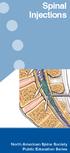 Spinal Injections North American Spine Society Public Education Series What Is a Spinal Injection? Your doctor has suggested that you have a spinal injection to help reduce pain and improve function. This
THE COMMONWEALTH OF MASSACHUSETTS Department of Industrial Accidents
 THE COMMONWEALTH OF MASSACHUSETTS Department of Industrial Accidents 1 Congress Street, Suite 100 Boston, Massachusetts 02114-2017 DEVAL L. PATRICK Governor PHILIP L. HILLMAN Director TIMOTHY P. MURRAY
Medical Policy An independent licensee of the Blue Cross Blue Shield Association
 Diagnosis and Treatment of Sacroiliac Joint Pain Page 1 of 17 Medical Policy An independent licensee of the Blue Cross Blue Shield Association Title: Diagnosis and Treatment of Sacroiliac Joint Pain Professional
How To Treat Pain With Pain Management
 SUTTER PHYSICIANS ALLIANCE (SPA) 2800 L Street, 7 th Floor Sacramento, CA 95816 SPA PCP Treatment & Referral Guidelines Pain Management Developed June 1, 2003 Revised - (Format Revisions) November 13,
Marvel J. Hammer. Radiology codes with a PC/TC indicator of 1 = Diagnostic Tests for Radiology Services
 Ensure Your Ultrasound and Fluoroscopy Claims Stand Up To Auditor Scrutiny Marvel J. Hammer RN CPC CCS-P ACS-PM CPCO Radiology Services: Global l Versus Components CMS Physician Fee Schedule has designated
Intrathecal Baclofen for CNS Spasticity
 Intrathecal Baclofen for CNS Spasticity Last Review Date: November 13, 2015 Number: MG.MM.ME.31bC5 Medical Guideline Disclaimer Property of EmblemHealth. All rights reserved. The treating physician or
Covered CPT Codes: 64490, 64491, 64492, 64493, 64494, 64495, 64622, 64623, 64626, 64627, 77003
 Policy: IEHP UM Subcommittee Approved Authorization Guidelines (Facet Denervation: Neurotomy, Rhizotomy, or Articular Rhizolysis) is considered medically necessary for treatment of Members with intractable
Radiologist Assistant Role Delineation
 Radiologist Assistant Role Delineation January 2005 Background The American Registry of Radiologic Technologists (ARRT) is developing a certification program for a new level of imaging technologist called
BOTOX Injection (Onabotulinumtoxin A) for Migraine Headaches [Preauthorization Required]
![BOTOX Injection (Onabotulinumtoxin A) for Migraine Headaches [Preauthorization Required]](/thumbs/29/13417512.jpg "BOTOX Injection (Onabotulinumtoxin A) for Migraine Headaches [Preauthorization Required]") BOTOX Injection (Onabotulinumtoxin A) for Migraine Headaches [Preauthorization Required] Medical Policy: MP-RX-01-11 Original Effective Date: March 24, 2011 Reviewed: Revised: This policy applies to products
BOTOX Injection (Onabotulinumtoxin A) for Migraine Headaches [Preauthorization Required] Medical Policy: MP-RX-01-11 Original Effective Date: March 24, 2011 Reviewed: Revised: This policy applies to products
Pain Management. Practical Applications in Electrotherapy
 Pain Management Practical Applications in Electrotherapy The TENS Advantage Deliver Immediate Pain Relief using a unique waveform designed to help prevent nerve accommodation. Manage Dynamic Pain by adjusting
How To Get Reimbursed For A Car Accident
 PRAETORIAN INSURANCE COMPANY PERSONAL INJURY PROTECTION IMPORTANT NOTICE TO POLICYHOLDERS MEDICAL PROTOCOLS DECISION POINT REVIEW: Pursuant to N.J.A.C. 11:3-4, the New Jersey Department of Banking and
CODE AUDITING RULES. SAMPLE Medical Policy Rationale
 CODE AUDITING RULES As part of Coventry Health Care of Missouri, Inc s commitment to improve business processes, we are implemented a new payment policy program that applies to claims processed on August
Prerequisites. Authorization, Notification and Referral. Limitations ANESTHESIA SERVICES
 ANESTHESIA SERVICES Policy NHP reimburses participating providers for the administration of general and regional anesthesia, and supportive services performed in conjunction with covered obstetrical, surgical,
Corporate Medical Policy Spinal Manipulation under Anesthesia
 Corporate Medical Policy Spinal Manipulation under Anesthesia File Name: Origination: Last CAP Review: Next CAP Review: Last Review: spinal_manipulation_under_anesthesia 5/1998 1/2015 1/2016 1/2015 Description
6/3/2011. High Prevalence and Incidence. Low back pain is 5 th most common reason for all physician office visits in the U.S.
 High Prevalence and Incidence Prevalence 85% of Americans will experience low back pain at some time in their life. Incidence 5% annual Timothy C. Shen, M.D. Physical Medicine and Rehabilitation Sub-specialty
Local Coverage Determination (LCD) for Epidural (L29165)
 Local Coverage Determination (LCD) for Epidural (L29165) Contractor Information Contractor Name First Coast Service Options, Inc. Back to Top Contractor Number 09102 Contractor Type MAC - Part B LCD Information
MEDICAL POLICY SUBJECT: COGNITIVE REHABILITATION. POLICY NUMBER: 8.01.19 CATEGORY: Therapy/Rehabilitation
 MEDICAL POLICY SUBJECT: COGNITIVE REHABILITATION PAGE: 1 OF: 5 If the member's subscriber contract excludes coverage for a specific service it is not covered under that contract. In such cases, medical
Get Back to the Life You Love! The MedStar Spine Center in Chevy Chase
 Get Back to the Life You Love! The MedStar Spine Center in Chevy Chase The MedStar Spine Center in Chevy Chase Relief from Pain, Restoration of Function Non-surgical, Minimally Invasive and Complex Surgical
Local Coverage Determination (LCD) for Trigger Point Injections (L28310)
 Page 1 of 8 Search Home Medicare Medicaid CHIP About CMS Regulations & Guidance Research, Statistics, Data & Systems Outreach & Education People with Medicare & Medicaid Questions Careers Newsroom Contact
Procedure. 2 29827 $ 3,560 $ 1,476 Arthroscopy, shoulder, surgical; with rotator cuff repair 5.5% 241.1%
 Exhibit 1 Top 50% of Payments for Surgical s (Physician costs) On average, Workers' payments for Surgical s in are 256% the average allowed claim costs for Healthcare in. $6,000 $5,000 $4,000 Allowed Claim
MEDICARE. Nurse Anesthetists Billed for Few Chronic Pain Procedures; Implementation of CMS Payment Policy Inconsistent
 United States Government Accountability Office Report to Congressional Requesters February 2014 MEDICARE Nurse Anesthetists Billed for Few Chronic Pain Procedures; Implementation of CMS Payment Policy
Advanced Practice Provider Academy
 (+)Dean T. Harrison, MPAS,PA C,DFAAPA Director of Mid Level Practitioners; Assistant Medical Director Clinical Evaluation Unit, Division of Emergency Medicine, Department of Surgery, Duke University Medical
Acute Low Back Pain. North American Spine Society Public Education Series
 Acute Low Back Pain North American Spine Society Public Education Series What Is Acute Low Back Pain? Acute low back pain (LBP) is defined as low back pain present for up to six weeks. It may be experienced
CLINICAL PRACTICE GUIDELINES FOR MANAGEMENT OF LOW BACK PAIN
 CLINICAL PRACTICE GUIDELINES FOR MANAGEMENT OF LOW BACK PAIN Low back pain is very common, up to 90+% of people are affected by back pain at some time in their lives. Most often back pain is benign and
WELLCARE CLAIM PAYMENT POLICIES
 WellCare and Harmony Health Plan s claim payment policies are based on publicly distributed guidelines from established industry sources such as the Centers for Medicare and Medicaid Services (CMS), the
Image-guided Spine Procedures for Relief of Severe Lower Back Pain:
 Image-guided Spine Procedures for Relief of Severe Lower Back Pain: A Guide to Epidural Steroid Injection, Facet Joint Injection, and Selective Nerve Root Block. PETER H TAKEYAMA MD HENRY WANG MD PhD SVEN
Contractor Number 11302. Oversight Region Region IV
 Local Coverage Determination (LCD): Spinal Cord Stimulators for Chronic Pain (L32549) Contractor Information Contractor Name Palmetto GBA opens in new window Contractor Number 11302 Contractor Type MAC
Issued and entered this _6th_ day of October 2010 by Ken Ross Commissioner ORDER I PROCEDURAL BACKGROUND
 STATE OF MICHIGAN DEPARTMENT OF ENERGY, LABOR & ECONOMIC GROWTH OFFICE OF FINANCIAL AND INSURANCE REGULATION Before the Commissioner of Financial and Insurance Regulation In the matter of XXXXX Petitioner
MEDICARE PAYMENTS FOR FACET JOINT INJECTION SERVICES
 Department of Health and Human Services OFFICE OF INSPECTOR GENERAL MEDICARE PAYMENTS FOR FACET JOINT INJECTION SERVICES Daniel R. Levinson Inspector General September 2008 OEI-05-07-00200 Office of Inspector
Reimbursement Guide 2011
 Reimbursement Guide 2011 IMPORTANT SAFETY INFORMATION HYALGAN is indicated for the treatment of pain in osteoarthritis (OA) of the knee in patients who have failed to respond adequately to conservative
Advances In Spine Care. James D. Bruffey M.D. Scripps Clinic Division of Orthopaedic Surgery Section of Spinal Surgery
 Advances In Spine Care James D. Bruffey M.D. Scripps Clinic Division of Orthopaedic Surgery Section of Spinal Surgery Introduction The Spine - A common source of problems Back pain is the #2 presenting
Medical Coverage Policy Monitored Anesthesia Care (MAC)
 Medical Coverage Policy Monitored Anesthesia Care (MAC) Device/Equipment Drug Medical Surgery Test Other Effective Date: 9/1/2004 Policy Last Updated: 1/8/2013 Prospective review is recommended/required.
2015 HCPCS CODE ADDITIONS
 2015 HCPCS CODE ADDITIONS Bolded Codes Bolded codes indicate notation of special billing policy. Chemotherapy A9606, C9442, J9267, J9301 A9606 Billing is for males only. C9442 Belinostat is used for the
An Algorithmic Approach to Diagnosis and Management of Low Back Pain
 Manchikanti, Singh An Algorithmic Approach to Diagnosis and Management of Low Back Pain 597 An Algorithmic Approach to Diagnosis and Management of Low Back Pain Laxmaiah Manchikanti, MD Vijay Singh, MD
Mississippi Medicaid. Provider Reference Guide. For Part 203. Physician Services
 Mississippi Medicaid Provider Reference Guide For Part 203 Physician Services This is a companion document to the Mississippi Administrative Code Title 23 and must be utilized as a reference only. January
Chapter 4 Health Care Management Unit 1: Care Management
 Chapter 4 Health Care Unit 1: Care In This Unit Topic See Page Unit 1: Care Care 2 6 Emergency 7 4.1 Care Healthcare Healthcare (HMS), Highmark Blue Shield s medical management division, is responsible
HEALTH EVIDENCE REVIEW COMMISSION (HERC) COVERAGE GUIDANCE: DIAGNOSIS OF SLEEP APNEA IN ADULTS DATE: 5/9/2013 HERC COVERAGE GUIDANCE
 HEALTH EVIDENCE REVIEW COMMISSION (HERC) COVERAGE GUIDANCE: DIAGNOSIS OF SLEEP APNEA IN ADULTS DATE: 5/9/2013 HERC COVERAGE GUIDANCE The following diagnostic tests for Obstructive Sleep Apnea (OSA) should
How To Cover Occupational Therapy
 Guidelines for Medical Necessity Determination for Occupational Therapy These Guidelines for Medical Necessity Determination (Guidelines) identify the clinical information MassHealth needs to determine
Modifier -25 Significant, Separately Identifiable E/M Service
 Manual: Policy Title: Reimbursement Policy Modifier -25 Significant, Separately Identifiable E/M Service Section: Modifiers Subsection: None Date of Origin: 1/1/2000 Policy Number: RPM028 Last Updated:
Low Back Injury in the Industrial Athlete: An Anatomic Approach
 Low Back Injury in the Industrial Athlete: An Anatomic Approach Earl J. Craig, M.D. Assistant Professor Indiana University School of Medicine Department of Physical Medicine and Rehabilitation Epidemiology
PERIODIC TRIGGER POINT INJECTIONS UP TO 4 PER YEAR: Upheld
 Case Number: CM13-0037615 Date Assigned: 12/18/2013 Date of Injury: 05/14/2001 Decision Date: 04/21/2014 UR Denial Date: 10/14/2013 Priority: Standard Application Received: 10/23/2013 HOW THE IMR FINAL
Oregon CPT Preapproval Grid
 * The following grid only identifies items that require preapproval from. Breast Pumps Notes: No preapproval required for 1st month rental; beyond one month rental requires preapproval Genetic Testing
HEADACHES AND THE THIRD OCCIPITAL NERVE
 HEADACHES AND THE THIRD OCCIPITAL NERVE Edward Babigumira M.D. FAAPMR. Interventional Pain Management, Lincoln. B. Pain Clinic, Ltd. Diplomate ABPMR. Board Certified Pain Medicine No disclosures Disclosure
ANESTHESIA - Medicare
 ANESTHESIA - Medicare Policy Number: UM14P0008A2 Effective Date: August 19, 2014 Last Reviewed: January 1, 2016 PAYMENT POLICY HISTORY Version DATE ACTION / DESCRIPTION Version 2 January 1, 2016 Under
OUTLINE. Anatomy Approach to LBP Discogenic LBP. Treatment. Herniated Nucleus Pulposus Annular Tear. Non-Surgical Surgical
 DISCOGENIC PAIN OUTLINE Anatomy Approach to LBP Discogenic LBP Herniated Nucleus Pulposus Annular Tear Treatment Non-Surgical Surgical Facet Joints: bear 20% of weight Discs bear 80% of weight Neural Foramen
Efficacy of Epidural Steroid Injections for Lumbar Radiculopathy. Dr Chris Milne Sports Physician Hamilton
 Efficacy of Epidural Steroid Injections for Lumbar Radiculopathy Dr Chris Milne Sports Physician Hamilton Clinical Background 1-Low back pain is common 2-Early resolution is the usual outcome 3-A small
White Paper: Reducing Utilization Concerns Regarding Spinal Fusion and Artificial Disc Implants
 White Paper: Reducing Utilization Concerns Regarding Spinal Fusion and Artificial Disc Implants For Health Plans, Medical Management Organizations and TPAs Executive Summary Back pain is one of the most
LOW BACK INJURIES PROGRAM OF CARE PROGRAM OF CARE 4TH EDITION 2014
 LOW BACK INJURIES PROGRAM OF CARE PROGRAM OF CARE 4TH EDITION 2014 GUIDE Acknowledgements Acknowledgements The WSIB would like to acknowledge the significant contributions of the following regulated Health
Neck Pain Overview Causes, Diagnosis and Treatment Options
 Neck Pain Overview Causes, Diagnosis and Treatment Options Neck pain is one of the most common forms of pain for which people seek treatment. Most individuals experience neck pain at some point during
Spinal Surgery Functional Status and Quality of Life Outcome Specifications 2015 (01/01/2013 to 12/31/2013 Dates of Procedure) September 2014
 Description Methodology For patients ages 18 years and older who undergo a lumbar discectomy/laminotomy or lumbar spinal fusion procedure during the measurement year, the following measures will be calculated:
Coverage Analysis: The Cornerstone of Clinical Research Billing Presented by: Mary L. Veazie, CPA, MBA, CHC, CHRC Executive Director, Clinical
 Coverage Analysis: The Cornerstone of Clinical Research Billing Presented by: Mary L. Veazie, CPA, MBA, CHC, CHRC Executive Director, Clinical Research Finance The University of Texas MD Anderson Cancer
Name of Policy: Reconstructive versus Cosmetic Surgery
 Name of Policy: Reconstructive versus Cosmetic Surgery Policy #: 106 Latest Review Date: February 2010 Category: Administrative Policy Grade: Background/Definitions: As a general rule, benefits are payable
Dry Needling Corporate Medical Policy
 Dry Needling Corporate Medical Policy File name: Dry Needling File code: UM.REHAB.09 Origination: 04/2015 Last Review: New policy Next Review: 04/2016 Effective Date: 9/1/2015 Description Myofascial pain
Chapter. CPT only copyright 2010 American Medical Association. All rights reserved. 29Physical Medicine and Rehabilitation
 29Physical Medicine and Rehabilitation Chapter 29 29.1 Enrollment..................................................................... 29-2 29.2 Benefits, Limitations, and Authorization Requirements...........................
Coding and Billing Guidelines *Psychiatry and Psychology Services PSYCH-014 - L30489. Contractor Name Wisconsin Physicians Service (WPS)
 Coding and Billing Guidelines *Psychiatry and Psychology Services PSYCH-014 - L30489 Contractor Name Wisconsin Physicians Service (WPS) Contractor Number 00951, 00952, 00953, 00954 05101, 05201, 05301,
Patients with pain in the neck, arm, low back, or leg (sciatica) may benefit from ESI. Specifically, those with the following conditions:
 Overview An epidural steroid injection (ESI) is a minimally invasive procedure that can help relieve neck, arm, back, and leg pain caused by inflamed spinal nerves. ESI may be performed to relieve pain
COOLIEF* Cooled Radiofrequency Systems COOLIEF* COOLED RADIOFREQUENCY REIMBURSEMENT GUIDE
 COOLIEF* COOLED RADIOFREQUENCY REIMBURSEMENT GUIDE HALYARD* Pain Management Cooled RF Systems Reimbursement Guide Table of Contents Introduction... 3 COOLIEF* TRANSDICAL* Disc Biacuplasty Cooled Radiofrequency...
CPT 76977, 77078, 77079, 77080, 77081, 77083, or HCPCS G0130:
 Bone Mass Measurements Coverage Information Noridian Administrative Services (NAS), LLC, is providing coverage information regarding Bone Mass Measurements (BMM) in response to multiple provider inquiries.
Low Back Pain (LBP) Prevalence. Low Back Pain (LBP) Prevalence. Lumbar Fusion: Where is the Evidence?
 15 th Annual Cleveland Clinic Pain Management Symposium Sarasota, Florida Lumbar Fusion: Where is the Evidence? Gordon R. Bell, M.D. Director, Cleveland Clinic Low Back Pain (LBP) Prevalence Lifetime prevalence:
Ambulatory Surgery Center Coding and Payment Guide 2015
 Targeted Drug Delivery Ambulatory Surgery Center Coding and Payment Guide 2015 Flowonix Medical has compiled this coding information for your convenience. This information is gathered from third party
Temple Physical Therapy
 Temple Physical Therapy A General Overview of Common Neck Injuries For current information on Temple Physical Therapy related news and for a healthy and safe return to work, sport and recreation Like Us
TABLE OF CONTENTS CPT
 TABLE OF CONTENTS CPT Coding Basics...1 National Correct Coding Initiative Edits...1 How to Use NCCI Edits...2 Evaluation and Management...3 Integumentary System... 20 Debridement... 20 Surgery/Musculoskeletal...
Nonoperative Management of Herniated Cervical Intervertebral Disc With Radiculopathy. Spine Volume 21(16) August 15, 1996, pp 1877-1883
 Nonoperative Management of Herniated Cervical Intervertebral Disc With Radiculopathy 1 Spine Volume 21(16) August 15, 1996, pp 1877-1883 Saal, Joel S. MD; Saal, Jeffrey A. MD; Yurth, Elizabeth F. MD FROM
Using Large Datasets for Population-based Health Services Research
 Using Large Datasets for Population-based Health Services Research Leighton Chan, MD, MPH Chief, Rehabilitation Medicine Department Clinical Center NIH Disclosures No financial disclosures A new era: BIG
Alaska Workers Compensation Fee Schedule Comparative Survey
 Alaska Workers Compensation Fee Comparative Survey As part of the Division s analysis of workers compensation medical costs in Alaska, we asked the National Council on Compensation Insurance (NCCI) to
Rise in office-based surgery and anesthesia demands vigilance over safety Advances in technology and anesthesia allow invasive
 ECRI Institute Perspectives Rise in office-based surgery and anesthesia demands vigilance over safety Advances in technology and anesthesia allow invasive procedures once done only in hospitals or ambulatory
Chapter. CPT only copyright 2009 American Medical Association. All rights reserved. 29Physical Medicine and Rehabilitation
 Chapter 29Physical Medicine and Rehabilitation 29 29.1 Enrollment...................................................... 29-2 29.2 Benefits, Limitations, and Authorization Requirements......................
IWCC 50 ILLINOIS ADMINISTRATIVE CODE 7110 7110.90. Section 7110.90 Illinois Workers' Compensation Commission Medical Fee Schedule
 Section 7110.90 Illinois Workers' Compensation Commission Medical Fee Schedule a) In accordance with Sections 8(a), 8.2 and 16 of the Workers' Compensation Act [820 ILCS 305/8(a), 8.2 and 16] (the Act),
Explanation of care coordination payments as described in Section 223.000 of the PCMH provider manual
 Explanation of care coordination payments as described in Section 223.000 of the PCMH provider manual Determination of beneficiary risk Per beneficiary amounts Per beneficiary amounts 1 For the first year