
Clinique FOCUS Portfolio: ADHD Assessment for Children
|
|
|
- Holly Johnston
- 10 years ago
- Views:
Transcription
1 Clinique FOCUS Portfolio: ADHD Assessment for Children INSTRUCTIONS Your child is currently being assessed for attention deficit disorder with or without hyperactivity (ADHD). Please complete the following questionnaires. Your participation is very important. This document contains 3 sections. Section 1: To be completed by each parent Section 2: To be completed by your child s teacher Section 3: Useful Information There are no right or wrong answers. If you are not sure about the answer, go with the first one that comes to mind. If your child lives in two homes, it is important for the people in each home to complete these questionnaires. Please read the instructions carefully and bring the completed portfolio to your first appointment. NB: All the questionnaires must be completed before your first appointment. Developed by Clinique FOCUS under the coordination of Dr. Annick Vincent (Revised: September 2014) cliniquefocus.com / attentiondeficit-info.com All rights reserved. Permission to reproduce this material is granted for non-commercial purposes only. 1

2 Clinique FOCUS Portfolio: ADHD Assessment for Children QUESTIONNAIRES Section 1: Parents Have each of the parents complete the following questionnaires. (2 sets of documents are provided with each questionnaire because it is important for each parent to complete a separate questionnaire) SNAP-IV 26 ADHD Checklist Weiss Symptom Record This tool helps identify the types of problems that the child has had during his or her life. Weiss Functional Impairment Rating Scale - P (WFIRS-P) This tool measures the functional impacts associated with the symptoms. Please complete this form if your child is currently taking medication for ADHD. CADDRA Patient ADHD Medication Form Developed by Clinique FOCUS under the coordination of Dr. Annick Vincent (Revised: September 2014) cliniquefocus.com / attentiondeficit-info.com All rights reserved. Permission to reproduce this material is granted for non-commercial purposes only. 2

3 Clinique FOCUS Portfolio: ADHD Assessment for Children QUESTIONNAIRES Section 1, Part A: Parent A Name: Date: It is important to complete each questionnaire. SNAP-IV 26 ADHD Checklist Weiss Symptom Record This tool helps identify the types of problems that the child has had during his or her life. Weiss Functional Impairment Rating Scale - P (WFIRS-P) This tool measures the functional impacts associated with the symptoms. Please complete this form if your child is currently taking medication for ADHD. CADDRA Patient ADHD Medication Form Developed by Clinique FOCUS under the coordination of Dr. Annick Vincent (Revised: September 2014) cliniquefocus.com / attentiondeficit-info.com All rights reserved. Permission to reproduce this material is granted for non-commercial purposes only. 3

4 Patient Name: Date of Birth: Physician Name: MRN/File No: Date: SNAP-IV 26 Teacher and Parent Rating Scale Name: Gender: Age: Grade: Ethnicity: African-American Asian Caucasian Hispanic Other: Completed by: Type of Class: Class size: For each item, check the column which best describes this child: Not At All Just A Little Quite A Bit Very Much 1. Often fails to give close attention to details or makes careless mistakes in schoolwork or tasks 2. Often has difficulty sustaining attention in tasks or play activities 3. Often does not seem to listen when spoken to directly 4. Often does not follow through on instructions and fails to finish schoolwork, chores, or duties 5. Often has difficulty organizing tasks and activities 6. Often avoids, dislikes, or reluctantly engages in tasks requiring sustained mental effort 7. Often loses things necessary for activities (e.g., toys, school assignments, pencils, or books) 8. Often is distracted by extraneous stimuli 9. Often is forgetful in daily activities 10. Often has difficulty maintaining alertness, orienting to requests, or executing directions 11. Often fidgets with hands or feet or squirms in seat 12. Often leaves seat in classroom or in other situations in which remaining seated is expected 13. Often runs about or climbs excessively in situations in which it is inappropriate 14. Often has difficulty playing or engaging in leisure activities quietly 15. Often is on the go or often acts as if driven by a motor 16. Often talks excessively 17. Often blurts out answers before questions have been completed 18. Often has difficulty awaiting turn 19. Often loses temper 20. Often argues with adults 21. Often actively defies or refuses adult requests or rules 22. Often deliberately does things that annoy other people 23. Often blames others for his or her mistakes or misbehavior 24. Often touchy or easily annoyed by others 25. Often is angry and resentful 26. Often is spiteful or vindictive 22 Version: May Refer to for latest updates.

5 Patient Name: Date of Birth: Physician Name: MRN/File No: Date: ADHD CHECKLIST Retrospective assessment of childhood symptoms Current medication: Current symptoms SYMPTOMS: Check the appropriate box Not at all Somewhat Pretty much Very much Diagnoses (0) (1) (2) (3) ATTENTION ( 6/9) SEVERITY TOTAL Fails to give close attention to details, careless mistakes Difficulty sustaining attention in tasks or fun activities Does not seem to listen when spoken to directly Does not follow through on instructions and fails to finish work Difficulting organizing tasks and activities Avoids tasks that require sustained mental effort (boring) Losing things Easily distracted _/9 Forgetful in daily activities 6/9 HYPERACTIVE/IMPULSIVE ( 6/9) Fidgety or squirms in seat Leaves seat when sitting is expected Feels restless Difficulty in doing fun things quietly Always on the go or acts as if "driven by a motor" Talks excessively Blurts answers before questions have been completed Difficulty awaiting turn 6/9 Interrupting or intruding on others _/9 OPPOSITIONAL DEFIANT DISORDER (>4/8) Loses temper Argues with adults Actively defies or refuses to comply with requests or rules Deliberately annoys people Blames others for his or her mistakes or misbehavior Touchy or easily annoyed by others Angry or resentful 4/8 Spiteful or vindictive COMMENTS _/8 106 Version: October Refer to for latest updates.

6 Patient Name: Date of Birth: Physician Name: MRN/File No: Date: Weiss Symptom Record (WSR) Instructions to Informant: Check the box that best # items describes typical behavior scored 2 or 3 Instructions to Physician: Symptoms rated 2 or 3 Not at all Somewhat Pretty much Very much N/A (DSM are positive and total count completed below (0) (1) (2) (3) Criteria) ADHD COMBINED TYPE /9 IA & HI ATTENTION Fails to give close attention to details, careless mistakes Difficulty sustaining attention in tasks or fun activities Does not seem to listen when spoken to directly Does not follow through on instructions and fails to finish work Difficulting organizing tasks and activities Avoids tasks that require sustained mental effort (boring) Losing things Easily distracted Forgetful in daily activities HYPERACTIVE/IMPULSIVE Fidgety or squirms in seat /9 ( 6/9) Leaves seat when sitting is expected Feels restless Difficulty in doing fun things quietly Always on the go or acts as if "driven by a motor" Talks excessively Blurts answers before questions have been completed Difficulty awaiting turn Interrupting or intruding on others OPPOSITIONAL DEFIANT DISORDER Loses temper /9 ( 6/9) Argues with adults Actively defies or refuses to comply with requests or rules Deliberately annoys people Blames others for his or her mistakes or misbehaviour Touchy or easily annoyed by others Angry or resentful Spiteful or vindictive 100 Version: October Refer to for latest updates. /8 ( 4/8) WSR 1/5

7 Not at all Somewhat Pretty much Very much N/A Diagnoses (0) (1) (2) (3) TIC DISORDERS Repetitive involuntary movements (blinking, twitching) SEVERITY Repetitive involuntary noises (throat clearing, sniffing) CONDUCT DISORDER Bullies, threatens, or intimidates others Initiates physical fights Has used a weapon (bat, brick, bottle, knife, gun) Physically cruel to people Physically cruel to animals Stolen while confronting a victim Forced someone into sexual activity Fire setting with the intent of damage Deliberately destroyed others' property Broken into a house, building, or car Often lies to obtain goods or benefits or avoid obligations Stealing items of nontrivial value without confronting victim Stays out at night despite prohibitions Run away from home overnight at least twice Truant from school /15( 3/15) ANXIETY Worries about health, loved ones, catastrophe Unable to relax; nervous Chronic unexplained aches and pains Repetitive thoughts that make no sense Repetitive rituals Sudden panic attacks with intense anxiety Excessively shy Refusal to do things in front of others Refusal to go to school, work or separate from others Unreasonable fears that interfere with activities Pulls out hair, eyebrows Nail biting, picking Refusal to talk in public, but talks at home mutism DEPRESSION (single).3 (recurrent) Has been feeling sad, unhappy or depressed Yes No Must be present No interest or pleasure in life Yes No Must be present Feels worthless Has decreased energy and less productive Hopeless and pessimistic about the future Excessive feelings of guilt or self blame Self-injurious or suicidal thoughts WSR 2/5 101

8 Not at all Somewhat Pretty much Very much N/A Diagnoses (0) (1) (2) (3) DEPRESSION (CONT'D) Social withdrawal SEVERITY Weight loss or weight gain Change in sleep patterns 5/9>2wks Agitated or sluggish, slowed down Decreased concentration or indecisiveness Past suicide attempts # Serious MANIA 296.0(manic).6(mixes).5(depressed) Distinct period of consistent elevated or irritable mood Yes No Must be present Grandiose, sudden increase in self esteem Decreased need for sleep Racing thoughts Too talkative and speech seems pressured Sudden increase in goal directed activity, agitated High risk activities (spending money, promiscuity) 3 >1wk /3 ( 3) SOCIAL SKILLS 299 Makes poor eye contact or unusual body language Failure to make peer relationships Lack of spontaneous sharing of enjoyment Lacks reciprocity or sensitivity to emotional needs of others Language delay or lack of language communication Difficulty communicating, conversing with others Speaks in an odd, idiosyncratic or monotonous speech Lack of creative, imaginative play or social imitation Intensely fixated on one particular interest Rigid sticking to nonfunctional routines or rituals Preoccupied with objects and parts of objects Repetitive motor mannerisms (hand flapping, spinning) PSYCHOSIS 295 Has disorganized, illogical thoughts Hears voices or sees things Conviction that others are against or will hurt them People can read their thoughts, or vice versa Belief that the television is talking specifically to them A fixed belief that is out of touch with reality Thought sequence does not make sense 102 Version: October Refer to for latest updates. WSR 3/5

9 SUBSTANCE ABUSE Not at all Somewhat Pretty much Very much N/A Diagnoses (0) (1) (2) (3) Excessive alcohol (> 2 drinks/day, > 4 drinks at once) 305 Smokes cigarettes Daily marijuana use Use of any other street drugs Abuse of prescription drugs SLEEP DISORDERS Agitated or sluggish, slowed down Has difficulty falling asleep Has difficulty staying asleep Has abnormal sleep patterns during the day 347 SEVERITY Unanticipated falling asleep during the day Sleep walking Has nightmares Falls asleep late and sleeps in late 3.27 Sleep schedule changes from day to day Excessive snoring A feeling of restless legs while trying to sleep Observed to have sudden kicking while asleep Observed to have difficulty breathing at night ELIMINATION DISORDERS 307 Wets the bed at night Wets during the day Soils self EATING DISORDERS 307 Vomits after meals or binging Underweight and refuses to eat Distorted body image Picky eater High junk food diet LEARNING DISABILITIES 315 Delayed expressive language Stuttering Problems articulating words 315 Below grade level in reading Below grade level in math Trouble with writing (messy, tiring, avoids writing) Variable performance in school Underachieves at school relative to potential WSR 4/5 103

10 Not at all Somewhat Pretty much Very much N/A Diagnoses (0) (1) (2) (3) DEVELOPMENTAL COORDINATION DISORDER Difficulty with gross motor skills (i.e. gym, sports, biking) Clumsy Difficulty with fine motor (buttons, shoe laces, cutting) PERSONALITY 301 Unstable interpersonal relationships SEVERITY Frantic efforts to avoid abandonment Recurrent suicidal ideation or attempts Intense anger Major mood swings BPD Impulsive self destructive or self injurious behavior Fragile identity or self image Chronic feelings of emptiness Transient stress related dissociation or paranoia /9 ( 5/9) Self centred or entitled NPD Deceitful, aggressive, or lack of remorse ASP COMMENTS: ADHD=attention deficit hyperactivity disorder; IA=inattentive subtype; HI=hyperactive impulsive subtype; BPD=borderline personality disorder; NPD=narcissistic personality disorder; ASP=antisocial personality disorder. Reprinted with permission from the Diagnostic and Statistical Manual of Mental Health Disorders, Text Revision (Copyright 2000). American Psychiatric Association. University of British Columbia Any part of this document may be freely reproduced without obtaining the permission of the copyright owner, provided that no changes whatsoever are made to the text and provided that this copyright notice is included in its entirety in any and all copies of this document. 104 Version: October Refer to for latest updates. WSR 5/5

11 Patient Name: Date of Birth: Physician Name: MRN/File No: Date: WEISS FUNCTIONAL IMPAIRMENT RATING SCALE PARENT REPORT (WFIRS-P) Your name: Relationship to child: Circle the number for the rating that best describes how your child's emotional or behavioural problems have affected each item in the last month. Never or Sometimes Often or Very often or not at all or somewhat much very much n/a A FAMILY 1 Having problems with brothers & sisters n/a 2 Causing problems between parents n/a 3 Takes time away from family members work or activities n/a 4 Causing fighting in the family n/a 5 Isolating the family from friends and social activities n/a 6 Makes it hard for the family to have fun together n/a 7 Makes parenting difficult n/a 8 Makes it hard to give fair attention to all family members n/a 9 Provokes others to hit or scream at him/her n/a 10 Costs the family more money n/a B SCHOOL Learning 1 Makes it difficult to keep up with schoolwork n/a 2 Needs extra help at school n/a 3 Needs tutoring n/a 4 Receives grades that are not as good as his/her ability n/a Behaviour 1 Causes problems for the teacher in the classroom n/a 2 Receives time-out or removal from the classroom n/a 3 Having problems in the school yard n/a 4 Receives detentions (during or after school) n/a 5 Suspended or expelled from school n/a 6 Misses classes or is late for school n/a C LIFE SKILLS 1 Excessive use of TV, computer, or video games n/a 2 Keeping clean, brushing teeth, brushing hair, bathing, etc n/a 3 Problems getting ready for school n/a WFIRS-P 1/2 115

12 Never or Sometimes Often or Very often or not at all or somewhat much very much n/a 4 Problems getting ready for bed n/a 5 Problems with eating (picky eater, junk food) n/a 6 Problems with sleeping n/a 7 Gets hurt or injured n/a 8 Avoids exercise n/a 9 Needs more medical care n/a 10 Has trouble taking medication, getting needles or visiting the doctor/dentist n/a D CHILD'S SELF-CONCEPT 1 My child feels bad about himself/herself n/a 2 My child does not have enough fun n/a 3 My child is not happy with his/her life n/a E SOCIAL ACTIVITIES 1 Being teased or bullied by other children n/a 2 Teases or bullies other children n/a 3 Problems getting along with other children n/a 4 Problems participating in after-school activities (sports, music, clubs) n/a 5 Problems making new friends n/a 6 Problems keeping friends n/a 7 Difficulty with parties (not invited, avoids them, misbehaves) n/a F RISKY ACTIVITIES 1 Easily led by other children (peer pressure) n/a 2 Breaking or damaging things n/a 3 Doing things that are illegal n/a 4 Being involved with the police n/a 5 Smoking cigarettes n/a 6 Taking illegal drugs n/a 7 Doing dangerous things n/a 8 Causes injury to others n/a 9 Says mean or inappropriate things n/a 10 Sexually inappropriate behaviour n/a SCORING: 1. Number of items scored 2 or 3 or 2. Total score or 3. Mean score DO NOT WRITE IN THIS AREA A. Family B. School Learning Behaviour C. Life skills D. Child's self-concept E. Social activities F. Risky activities Total University of British Columbia Any part of this document may be freely reproduced without obtaining the permission of the copyright owner, provided that no changes whatsoever are made to the text and provided that this copyright notice is included in its entirety in any and all copies of this document 116 Version: October Refer to for latest updates. WFIRS-P 2/2

13 Patient Name: Date of Birth: Physician Name: MRN/File No: Date: CADDRA PATIENT ADHD MEDICATION FORM Please complete and bring to your next appointment Patient name: Date form is completed: Person completing this form (if not the patient): Mother Father Other Medication usage since (decided with doctor): (date) Medication not started yet Takes medication regularly, as prescribed Forgets/skips doses occasionally Takes medication irregularly Medication stopped Current Medication List: Instructions to use the quadrant below: 1. Place a mark on the horizontal black line indicating the level of current symptom control between -3 and Place a mark on the vertical black line indicating current side effect levels, between -3 to Draw an X where lines from the marks made on each line would meet to show current patient status POOR CONTROL - NO SIDE EFFECTS - GOOD QUALITY OF LIFE SIDE EFFECTS WITH IMPACT ON QUALITY OF LIFE + GOOD CONTROL COMMENTS: What changes have occurred since medication started? Not applicable: no medication taken No change Marked Improvement Small deterioration Improvement Deterioration Small improvement Marked deterioration CADDRA PATIENT ADHD MEDICATION FORM 1/2 121

14 Please indicate below the frequency of any side effects experienced since the last medical appointment (mark with an X). Please contact your physician if side effects are significant. SIDE EFFECT FREQUENCY Not at all Sometimes Often All the time Comments Headache Dryness of the skin Dryness of the eyes Dryness of the mouth Thirst Sore throat Dizziness Nausea Stomach aches Vomiting Sweating Appetite reduction Weight loss Weight gain Diarrhea Frequent urination Tics Sleep difficulties Mood instability Irritability Agitation/excitability Sadness Heart palpitations Increased blood pressure Sexual dysfunction Feeling worse or different when the medication wears off (rebound) Other: Things to discuss at the next medical appointment: 122 Version: October Refer to for latest updates. CADDRA PATIENT ADHD MEDICATION FORM 2/2

15 Clinique FOCUS Portfolio: ADHD Assessment for Children QUESTIONNAIRES Section 1, Part B: Parent B Name: Date: It is important to complete each questionnaire. SNAP-IV 26 ADHD Checklist Weiss Symptom Record This tool helps identify the types of problems that the child has had during his or her life. Weiss Functional Impairment Rating Scale - P (WFIRS-P) This tool measures the functional impacts associated with the symptoms. Please complete this form if your child is currently taking medication for ADHD. CADDRA Patient ADHD Medication Form Developed by Clinique FOCUS under the coordination of Dr. Annick Vincent (Revised: September 2014) cliniquefocus.com / attentiondeficit-info.com All rights reserved. Permission to reproduce this material is granted for non-commercial purposes only. 5

16 Patient Name: Date of Birth: Physician Name: MRN/File No: Date: SNAP-IV 26 Teacher and Parent Rating Scale Name: Gender: Age: Grade: Ethnicity: African-American Asian Caucasian Hispanic Other: Completed by: Type of Class: Class size: For each item, check the column which best describes this child: Not At All Just A Little Quite A Bit Very Much 1. Often fails to give close attention to details or makes careless mistakes in schoolwork or tasks 2. Often has difficulty sustaining attention in tasks or play activities 3. Often does not seem to listen when spoken to directly 4. Often does not follow through on instructions and fails to finish schoolwork, chores, or duties 5. Often has difficulty organizing tasks and activities 6. Often avoids, dislikes, or reluctantly engages in tasks requiring sustained mental effort 7. Often loses things necessary for activities (e.g., toys, school assignments, pencils, or books) 8. Often is distracted by extraneous stimuli 9. Often is forgetful in daily activities 10. Often has difficulty maintaining alertness, orienting to requests, or executing directions 11. Often fidgets with hands or feet or squirms in seat 12. Often leaves seat in classroom or in other situations in which remaining seated is expected 13. Often runs about or climbs excessively in situations in which it is inappropriate 14. Often has difficulty playing or engaging in leisure activities quietly 15. Often is on the go or often acts as if driven by a motor 16. Often talks excessively 17. Often blurts out answers before questions have been completed 18. Often has difficulty awaiting turn 19. Often loses temper 20. Often argues with adults 21. Often actively defies or refuses adult requests or rules 22. Often deliberately does things that annoy other people 23. Often blames others for his or her mistakes or misbehavior 24. Often touchy or easily annoyed by others 25. Often is angry and resentful 26. Often is spiteful or vindictive 22 Version: May Refer to for latest updates.

17 Patient Name: Date of Birth: Physician Name: MRN/File No: Date: ADHD CHECKLIST Retrospective assessment of childhood symptoms Current medication: Current symptoms SYMPTOMS: Check the appropriate box Not at all Somewhat Pretty much Very much Diagnoses (0) (1) (2) (3) ATTENTION ( 6/9) SEVERITY TOTAL Fails to give close attention to details, careless mistakes Difficulty sustaining attention in tasks or fun activities Does not seem to listen when spoken to directly Does not follow through on instructions and fails to finish work Difficulting organizing tasks and activities Avoids tasks that require sustained mental effort (boring) Losing things Easily distracted _/9 Forgetful in daily activities 6/9 HYPERACTIVE/IMPULSIVE ( 6/9) Fidgety or squirms in seat Leaves seat when sitting is expected Feels restless Difficulty in doing fun things quietly Always on the go or acts as if "driven by a motor" Talks excessively Blurts answers before questions have been completed Difficulty awaiting turn 6/9 Interrupting or intruding on others _/9 OPPOSITIONAL DEFIANT DISORDER (>4/8) Loses temper Argues with adults Actively defies or refuses to comply with requests or rules Deliberately annoys people Blames others for his or her mistakes or misbehavior Touchy or easily annoyed by others Angry or resentful 4/8 Spiteful or vindictive COMMENTS _/8 106 Version: October Refer to for latest updates.

18 Patient Name: Date of Birth: Physician Name: MRN/File No: Date: Weiss Symptom Record (WSR) Instructions to Informant: Check the box that best # items describes typical behavior scored 2 or 3 Instructions to Physician: Symptoms rated 2 or 3 Not at all Somewhat Pretty much Very much N/A (DSM are positive and total count completed below (0) (1) (2) (3) Criteria) ADHD COMBINED TYPE /9 IA & HI ATTENTION Fails to give close attention to details, careless mistakes Difficulty sustaining attention in tasks or fun activities Does not seem to listen when spoken to directly Does not follow through on instructions and fails to finish work Difficulting organizing tasks and activities Avoids tasks that require sustained mental effort (boring) Losing things Easily distracted Forgetful in daily activities HYPERACTIVE/IMPULSIVE Fidgety or squirms in seat /9 ( 6/9) Leaves seat when sitting is expected Feels restless Difficulty in doing fun things quietly Always on the go or acts as if "driven by a motor" Talks excessively Blurts answers before questions have been completed Difficulty awaiting turn Interrupting or intruding on others OPPOSITIONAL DEFIANT DISORDER Loses temper /9 ( 6/9) Argues with adults Actively defies or refuses to comply with requests or rules Deliberately annoys people Blames others for his or her mistakes or misbehaviour Touchy or easily annoyed by others Angry or resentful Spiteful or vindictive 100 Version: October Refer to for latest updates. /8 ( 4/8) WSR 1/5

19 Not at all Somewhat Pretty much Very much N/A Diagnoses (0) (1) (2) (3) TIC DISORDERS Repetitive involuntary movements (blinking, twitching) SEVERITY Repetitive involuntary noises (throat clearing, sniffing) CONDUCT DISORDER Bullies, threatens, or intimidates others Initiates physical fights Has used a weapon (bat, brick, bottle, knife, gun) Physically cruel to people Physically cruel to animals Stolen while confronting a victim Forced someone into sexual activity Fire setting with the intent of damage Deliberately destroyed others' property Broken into a house, building, or car Often lies to obtain goods or benefits or avoid obligations Stealing items of nontrivial value without confronting victim Stays out at night despite prohibitions Run away from home overnight at least twice Truant from school /15( 3/15) ANXIETY Worries about health, loved ones, catastrophe Unable to relax; nervous Chronic unexplained aches and pains Repetitive thoughts that make no sense Repetitive rituals Sudden panic attacks with intense anxiety Excessively shy Refusal to do things in front of others Refusal to go to school, work or separate from others Unreasonable fears that interfere with activities Pulls out hair, eyebrows Nail biting, picking Refusal to talk in public, but talks at home mutism DEPRESSION (single).3 (recurrent) Has been feeling sad, unhappy or depressed Yes No Must be present No interest or pleasure in life Yes No Must be present Feels worthless Has decreased energy and less productive Hopeless and pessimistic about the future Excessive feelings of guilt or self blame Self-injurious or suicidal thoughts WSR 2/5 101

20 Not at all Somewhat Pretty much Very much N/A Diagnoses (0) (1) (2) (3) DEPRESSION (CONT'D) Social withdrawal SEVERITY Weight loss or weight gain Change in sleep patterns 5/9>2wks Agitated or sluggish, slowed down Decreased concentration or indecisiveness Past suicide attempts # Serious MANIA 296.0(manic).6(mixes).5(depressed) Distinct period of consistent elevated or irritable mood Yes No Must be present Grandiose, sudden increase in self esteem Decreased need for sleep Racing thoughts Too talkative and speech seems pressured Sudden increase in goal directed activity, agitated High risk activities (spending money, promiscuity) 3 >1wk /3 ( 3) SOCIAL SKILLS 299 Makes poor eye contact or unusual body language Failure to make peer relationships Lack of spontaneous sharing of enjoyment Lacks reciprocity or sensitivity to emotional needs of others Language delay or lack of language communication Difficulty communicating, conversing with others Speaks in an odd, idiosyncratic or monotonous speech Lack of creative, imaginative play or social imitation Intensely fixated on one particular interest Rigid sticking to nonfunctional routines or rituals Preoccupied with objects and parts of objects Repetitive motor mannerisms (hand flapping, spinning) PSYCHOSIS 295 Has disorganized, illogical thoughts Hears voices or sees things Conviction that others are against or will hurt them People can read their thoughts, or vice versa Belief that the television is talking specifically to them A fixed belief that is out of touch with reality Thought sequence does not make sense 102 Version: October Refer to for latest updates. WSR 3/5

21 SUBSTANCE ABUSE Not at all Somewhat Pretty much Very much N/A Diagnoses (0) (1) (2) (3) Excessive alcohol (> 2 drinks/day, > 4 drinks at once) 305 Smokes cigarettes Daily marijuana use Use of any other street drugs Abuse of prescription drugs SLEEP DISORDERS Agitated or sluggish, slowed down Has difficulty falling asleep Has difficulty staying asleep Has abnormal sleep patterns during the day 347 SEVERITY Unanticipated falling asleep during the day Sleep walking Has nightmares Falls asleep late and sleeps in late 3.27 Sleep schedule changes from day to day Excessive snoring A feeling of restless legs while trying to sleep Observed to have sudden kicking while asleep Observed to have difficulty breathing at night ELIMINATION DISORDERS 307 Wets the bed at night Wets during the day Soils self EATING DISORDERS 307 Vomits after meals or binging Underweight and refuses to eat Distorted body image Picky eater High junk food diet LEARNING DISABILITIES 315 Delayed expressive language Stuttering Problems articulating words 315 Below grade level in reading Below grade level in math Trouble with writing (messy, tiring, avoids writing) Variable performance in school Underachieves at school relative to potential WSR 4/5 103
22 Not at all Somewhat Pretty much Very much N/A Diagnoses (0) (1) (2) (3) DEVELOPMENTAL COORDINATION DISORDER Difficulty with gross motor skills (i.e. gym, sports, biking) Clumsy Difficulty with fine motor (buttons, shoe laces, cutting) PERSONALITY 301 Unstable interpersonal relationships SEVERITY Frantic efforts to avoid abandonment Recurrent suicidal ideation or attempts Intense anger Major mood swings BPD Impulsive self destructive or self injurious behavior Fragile identity or self image Chronic feelings of emptiness Transient stress related dissociation or paranoia /9 ( 5/9) Self centred or entitled NPD Deceitful, aggressive, or lack of remorse ASP COMMENTS: ADHD=attention deficit hyperactivity disorder; IA=inattentive subtype; HI=hyperactive impulsive subtype; BPD=borderline personality disorder; NPD=narcissistic personality disorder; ASP=antisocial personality disorder. Reprinted with permission from the Diagnostic and Statistical Manual of Mental Health Disorders, Text Revision (Copyright 2000). American Psychiatric Association. University of British Columbia Any part of this document may be freely reproduced without obtaining the permission of the copyright owner, provided that no changes whatsoever are made to the text and provided that this copyright notice is included in its entirety in any and all copies of this document. 104 Version: October Refer to for latest updates. WSR 5/5
23 Patient Name: Date of Birth: Physician Name: MRN/File No: Date: WEISS FUNCTIONAL IMPAIRMENT RATING SCALE PARENT REPORT (WFIRS-P) Your name: Relationship to child: Circle the number for the rating that best describes how your child's emotional or behavioural problems have affected each item in the last month. Never or Sometimes Often or Very often or not at all or somewhat much very much n/a A FAMILY 1 Having problems with brothers & sisters n/a 2 Causing problems between parents n/a 3 Takes time away from family members work or activities n/a 4 Causing fighting in the family n/a 5 Isolating the family from friends and social activities n/a 6 Makes it hard for the family to have fun together n/a 7 Makes parenting difficult n/a 8 Makes it hard to give fair attention to all family members n/a 9 Provokes others to hit or scream at him/her n/a 10 Costs the family more money n/a B SCHOOL Learning 1 Makes it difficult to keep up with schoolwork n/a 2 Needs extra help at school n/a 3 Needs tutoring n/a 4 Receives grades that are not as good as his/her ability n/a Behaviour 1 Causes problems for the teacher in the classroom n/a 2 Receives time-out or removal from the classroom n/a 3 Having problems in the school yard n/a 4 Receives detentions (during or after school) n/a 5 Suspended or expelled from school n/a 6 Misses classes or is late for school n/a C LIFE SKILLS 1 Excessive use of TV, computer, or video games n/a 2 Keeping clean, brushing teeth, brushing hair, bathing, etc n/a 3 Problems getting ready for school n/a WFIRS-P 1/2 115
24 Never or Sometimes Often or Very often or not at all or somewhat much very much n/a 4 Problems getting ready for bed n/a 5 Problems with eating (picky eater, junk food) n/a 6 Problems with sleeping n/a 7 Gets hurt or injured n/a 8 Avoids exercise n/a 9 Needs more medical care n/a 10 Has trouble taking medication, getting needles or visiting the doctor/dentist n/a D CHILD'S SELF-CONCEPT 1 My child feels bad about himself/herself n/a 2 My child does not have enough fun n/a 3 My child is not happy with his/her life n/a E SOCIAL ACTIVITIES 1 Being teased or bullied by other children n/a 2 Teases or bullies other children n/a 3 Problems getting along with other children n/a 4 Problems participating in after-school activities (sports, music, clubs) n/a 5 Problems making new friends n/a 6 Problems keeping friends n/a 7 Difficulty with parties (not invited, avoids them, misbehaves) n/a F RISKY ACTIVITIES 1 Easily led by other children (peer pressure) n/a 2 Breaking or damaging things n/a 3 Doing things that are illegal n/a 4 Being involved with the police n/a 5 Smoking cigarettes n/a 6 Taking illegal drugs n/a 7 Doing dangerous things n/a 8 Causes injury to others n/a 9 Says mean or inappropriate things n/a 10 Sexually inappropriate behaviour n/a SCORING: 1. Number of items scored 2 or 3 or 2. Total score or 3. Mean score DO NOT WRITE IN THIS AREA A. Family B. School Learning Behaviour C. Life skills D. Child's self-concept E. Social activities F. Risky activities Total University of British Columbia Any part of this document may be freely reproduced without obtaining the permission of the copyright owner, provided that no changes whatsoever are made to the text and provided that this copyright notice is included in its entirety in any and all copies of this document 116 Version: October Refer to for latest updates. WFIRS-P 2/2
25 Patient Name: Date of Birth: Physician Name: MRN/File No: Date: CADDRA PATIENT ADHD MEDICATION FORM Please complete and bring to your next appointment Patient name: Date form is completed: Person completing this form (if not the patient): Mother Father Other Medication usage since (decided with doctor): (date) Medication not started yet Takes medication regularly, as prescribed Forgets/skips doses occasionally Takes medication irregularly Medication stopped Current Medication List: Instructions to use the quadrant below: 1. Place a mark on the horizontal black line indicating the level of current symptom control between -3 and Place a mark on the vertical black line indicating current side effect levels, between -3 to Draw an X where lines from the marks made on each line would meet to show current patient status POOR CONTROL - NO SIDE EFFECTS - GOOD QUALITY OF LIFE SIDE EFFECTS WITH IMPACT ON QUALITY OF LIFE + GOOD CONTROL COMMENTS: What changes have occurred since medication started? Not applicable: no medication taken No change Marked Improvement Small deterioration Improvement Deterioration Small improvement Marked deterioration CADDRA PATIENT ADHD MEDICATION FORM 1/2 121
26 Please indicate below the frequency of any side effects experienced since the last medical appointment (mark with an X). Please contact your physician if side effects are significant. SIDE EFFECT FREQUENCY Not at all Sometimes Often All the time Comments Headache Dryness of the skin Dryness of the eyes Dryness of the mouth Thirst Sore throat Dizziness Nausea Stomach aches Vomiting Sweating Appetite reduction Weight loss Weight gain Diarrhea Frequent urination Tics Sleep difficulties Mood instability Irritability Agitation/excitability Sadness Heart palpitations Increased blood pressure Sexual dysfunction Feeling worse or different when the medication wears off (rebound) Other: Things to discuss at the next medical appointment: 122 Version: October Refer to for latest updates. CADDRA PATIENT ADHD MEDICATION FORM 2/2
27 Clinique FOCUS Portfolio: ADHD Assessment for Children QUESTIONNAIRES Section 2: Teacher Have the following questionnaires completed by a teacher who knows the child well. (one copy of each questionnaire is provided in the portfolio) Instructions CADDRA Teacher Assessment Form ADHD Checklist SNAP-IV 26 Developed by Clinique FOCUS under the coordination of Dr. Annick Vincent (Revised: September 2014) cliniquefocus.com / attentiondeficit-info.com All rights reserved. Permission to reproduce this material is granted for non-commercial purposes only. 7
28 Patient Name: Date of Birth: Physician Name: MRN/File No: Date: CADDRA Teacher Instructions Name of the educator: Name of the student: Date: Number of hours spent with the student per week: Time period for which the form was filled out: Hello, Your student,, is presently under medical evaluation. To assist with this process, his/her doctor would appreciate your observations on his/her functioning in class. Your feedback will be important in providing knowledge of the student's functioning in the school setting. As his/her teacher, you are a key part of his/her learning process. We thank you for your input and your assistance in better assessing the needs of this student. The objectives of these forms are to reach an accurate diagnosis and offer interventions and therapeutic solutions that will be individualized for this student. If you are unsure of your response, go with your first instinct. Do not leave any items blank. Questionnaires Please complete: CADDRA Teacher Assessment Form Weiss Symptom Record SNAP-IV 26 or ADHD Checklist Please use this section for other details or comments you would like to provide to your student's doctor: 131
29 Patient Name: Date of Birth: Physician Name: MRN/File No: Date: CADDRA Teacher Assessment Form Adapted from Dr Rosemary Tannock's Teacher Telephone Interview. Reprinted for clinical use only with permission from the BC Provincial ADHD Program. Student's Name: Age: Sex: School: Grade: Educator completing this form: Date completed: How long have you known the student? Time spent each day with student: Student's Placement: Special Ed: Yes No Hrs per week: Student's Educational Designation: None Does this student have an educational plan?: Yes No ACADEMIC PERFORMANCE Well Below Somewhat Below At Grade Somewhat Above Well Above Grade Level Grade Level Level Grade Level Grade Level n/a READING a) Decoding b) Comprehension c) Fluency WRITING d) Handwriting e) Spelling f) Written syntax (sentence level) g) Written composition (text level) MATHEMATICS h) Computation (accuracy) i) Computation (fluency) j) Applied mathematical reasoning CLASSROOM PERFORMANCE Well Below Well Above Average Below Average Average Above Average Average n/a Following directions/instructions Organizational skills Assignment completion Peer relationships Classroom Behaviour CADDRA TEACHER ASSESSMENT FORM 1/3 117
30 CADDRA Teacher Assessment Form Strengths: What are this student's strengths? Education plan: If this student has an education plan, what are the recommendations? Do they work? Accommodations: What accommodations are in place? Are they effective? Class Instructions: How well does this student handle large-group instruction? Does s/he follow instructions well? Can s/he wait for a turn to respond? Would s/he stand out from same-sex peers? In what way? Individual seat work: How well does this student self-regulate attention and behaviour during assignments to be completed as individual seat work? Is the work generally completed? Would s/he stand out from same-sex peers? In what way? Transitions: How does this student handle transitions such as going in and out for recess, changing classes or changing activities? Doe s/he follow routines well? What amount of supervision or reminders does s/he need? Impact on peer relations: How does this student get along with others? Does this student have friends that seek him/ her out? Does s/he initiate play successfully? Conflict and Aggression: Is s/he often in conflict with adults or peers? How does s/he resolve arguments? Is the student verbally or physically aggressive? Is s/he the target of verbal or physical aggression by peers? Academic Abilities: We would like to know about this student's general abilities and academic skills. Does this student appear to learn at a similar rate to others? Does this student appear to have specific weaknesses in learning? Self-help skills, independence, problem solving, activities of daily living: 118 Version: October Refer to for latest updates. CADDRA TEACHER ASSESSMENT FORM 2/3
31 Motor Skills (gross/fine): Does this student have problems with gym, sports, writing? If so, please describe. _ Written output: Does this student have problems putting ideas down in writing? If so, please describe. _ Primary Areas of concern: What are your major areas of concern/worry for this student? How long has this/these been a concern for you? Impact on student: To what extent are these difficulties for the student upsetting or distressing to the student him/ herself, to you and/or the other students? Impact on the class: Does this student make it difficult for you to teach the class? Medications: If this student is on medication, is there anything you would like to highlight about the differences when s/he is on medication compared to off? Parent involvement: What has been the involvement of the parent(s)? Are the problems with attention and/or hyperactivity interfering with the student's learning? Peer relationships? Has the student had any particular problems with homework or handing in assignments? Is there anything else you would like us to know? If you feel the need to contact the student's clinician during this assessment please feel free to do so. CADDRA TEACHER ASSESSMENT FORM 3/3 119
32 Patient Name: Date of Birth: Physician Name: MRN/File No: Date: SNAP-IV 26 Teacher and Parent Rating Scale Name: Gender: Age: Grade: Ethnicity: African-American Asian Caucasian Hispanic Other: Completed by: Type of Class: Class size: For each item, check the column which best describes this child: Not At All Just A Little Quite A Bit Very Much 1. Often fails to give close attention to details or makes careless mistakes in schoolwork or tasks 2. Often has difficulty sustaining attention in tasks or play activities 3. Often does not seem to listen when spoken to directly 4. Often does not follow through on instructions and fails to finish schoolwork, chores, or duties 5. Often has difficulty organizing tasks and activities 6. Often avoids, dislikes, or reluctantly engages in tasks requiring sustained mental effort 7. Often loses things necessary for activities (e.g., toys, school assignments, pencils, or books) 8. Often is distracted by extraneous stimuli 9. Often is forgetful in daily activities 10. Often has difficulty maintaining alertness, orienting to requests, or executing directions 11. Often fidgets with hands or feet or squirms in seat 12. Often leaves seat in classroom or in other situations in which remaining seated is expected 13. Often runs about or climbs excessively in situations in which it is inappropriate 14. Often has difficulty playing or engaging in leisure activities quietly 15. Often is on the go or often acts as if driven by a motor 16. Often talks excessively 17. Often blurts out answers before questions have been completed 18. Often has difficulty awaiting turn 19. Often loses temper 20. Often argues with adults 21. Often actively defies or refuses adult requests or rules 22. Often deliberately does things that annoy other people 23. Often blames others for his or her mistakes or misbehavior 24. Often touchy or easily annoyed by others 25. Often is angry and resentful 26. Often is spiteful or vindictive 22 Version: May Refer to for latest updates.
33 Patient Name: Date of Birth: Physician Name: MRN/File No: Date: ADHD CHECKLIST Retrospective assessment of childhood symptoms Current medication: Current symptoms SYMPTOMS: Check the appropriate box Not at all Somewhat Pretty much Very much Diagnoses (0) (1) (2) (3) ATTENTION ( 6/9) SEVERITY TOTAL Fails to give close attention to details, careless mistakes Difficulty sustaining attention in tasks or fun activities Does not seem to listen when spoken to directly Does not follow through on instructions and fails to finish work Difficulting organizing tasks and activities Avoids tasks that require sustained mental effort (boring) Losing things Easily distracted _/9 Forgetful in daily activities 6/9 HYPERACTIVE/IMPULSIVE ( 6/9) Fidgety or squirms in seat Leaves seat when sitting is expected Feels restless Difficulty in doing fun things quietly Always on the go or acts as if "driven by a motor" Talks excessively Blurts answers before questions have been completed Difficulty awaiting turn 6/9 Interrupting or intruding on others _/9 OPPOSITIONAL DEFIANT DISORDER (>4/8) Loses temper Argues with adults Actively defies or refuses to comply with requests or rules Deliberately annoys people Blames others for his or her mistakes or misbehavior Touchy or easily annoyed by others Angry or resentful 4/8 Spiteful or vindictive COMMENTS _/8 106 Version: October Refer to for latest updates.
34 Clinique FOCUS Portfolio: ADHD Assessment for Children SECTION 3 Handouts Read over these handouts. Please write down any questions you would like to discuss and bring them to your next appointment. CADDRA ADHD Information and Resources Developed by Clinique FOCUS under the coordination of Dr. Annick Vincent (Revised: September 2014) cliniquefocus.com / attentiondeficit-info.com All rights reserved. Permission to reproduce this material is granted for non-commercial purposes only. 9
35 CADDRA ADHD INFORMATION AND RESOURCES Adapted for CADDRA with permission, by Dr Annick Vincent, Centre médical l Hêtrière, Clinique FOCUS, Québec. Description Attention Deficit Hyperactivity Disorder is a neurological condition that leads to difficulty regulating attention, controlling excessive physical activity, and impulsivity. ADHD affects about one in twenty children and follow-up studies have shown that symptoms persist into adulthood for more than half of these. A recent U.S. study estimated that 4% of adults have ADHD. Adults with ADHD suffer from distractibility and mental restlessness, disorganization and procrastination, leading to difficulties beginning and completing tasks and with time management and impulsivity. These symptoms can be as impairing at work as in a person's private life. At times, people suffering from ADHD also have difficulty regulating their emotional responses. They are referred to as being thin-skinned or hypersensitive and as having a short fuse. Often, these individuals deal with their physical restlessness by channelling it into work or sports activities. Some will self-medicate by taking stimulants such as caffeine or nicotine or illicit drugs such as cannabis or cocaine. Due to the impact of their symptoms, many people with ADHD also suffer from poor self esteem and a chronic sense of under-achievement. Causes While we do not know the exact cause of ADHD, science shows that in most cases ADHD has been inherited. Occasionally, ADHD can also be caused by a traumatic brain injury, lack of oxygen, neurological damage or infection, prematurity, or prenatal exposure to substances such as alcohol or nicotine. ADHD is a neurodevelopmental condition. It is not caused by poor parenting or by psychological stress, although raising an ADHD child can be both challenging and stressful. However, environment can impact the expression and progression of ADHD. When ADHD is treated properly, physicians are usually able to decrease the symptoms and improve functioning. Physicians can also recommend adaptations at school, college or in the workplace and empower the patient and/or parents so that they do not feel alone. Scientific research has revealed some dysfunction in particular information neurotransmitters, such as dopamine and noradrenaline. These chemicals help to carry signals across synapses in the brain. Studies of brain function in persons with ADHD have revealed an impairment of the regions responsible for controlling or inhibiting certain behaviours, such as initiating tasks, being able to stop unwanted behaviour, understanding consequences, holding information in the mind and being able to plan for the future. In ADHD, the information transmission network appears to be somewhat impaired - as if the go and stop signals are delayed. 125
36 Why consult a doctor? Patients seek medical attention for many different reasons. If a child or adolescent is experiencing difficulties regulating his/her attention or is demonstrating hyperactivity in the classroom, educators may report to the parents on what they are seeing and recommend assessment. Increased media and online information on ADHD has resulted in a a rise in self-referral among adults. Once a child is diagnosed, parents may seek out an assessment if they recognize ADHD symptoms in themselves. Whatever way a patient comes to a physician, the first task for the individual will be to explain his/her concerns and problems. Assessment Just because a person has difficulty concentrating, or can not sit still, this does not mean that he/she has ADHD. The only way to establish this is through a diagnostic assessment. This takes the form of an interview with the patient or his/her parents where symptoms and impairments are discussed. ADHD is only diagnosed if the symptoms are impairing. If this is the case, the doctor, patient and/or family must decide whether treatment is needed and, if so, what kind. It is essential to also look at any associated problems and conditions in order to establish an effective and personalized treatment plan. Psychological evaluations can assist in assessing whether any learning and/or social impairments exist. This will help to exclude any other possible diagnoses. However, psychological tests and rating scales alone cannot be used to make a diagnosis without a full medical evaluation. While ADHD is a medical diagnosis, there are no laboratory tests to determine if it is present. Diagnosis ADHD treatment begins with the confirmation of the diagnosis. This is followed by an explanation on how the symptoms, which the child, adolescent or adult has been exhibiting, can be explained by the diagnosis. A diagnosis can be bittersweet and acceptance may take time. On one hand, a patient and/or parent is often relieved to know what the problem is and, in the case of parents, that poor parenting is not the cause. However receiving a diagnosis of a chronic condition is generally not perceived as good news. Treatment While medication can dramatically improve symptoms, medication alone is never enough. In the case of a child or adolescent, the parents, child and school must work together to understand that a diagnosis is not an excuse but will require the implementation of learning strategies and new parenting methods. Work place accommodations may be required for adults. Access to resources, such as parent training or (for adults) cognitive behavoural therapy, is slowly becoming more available through the public health care system. When a person continues to be incapacitated by their ADHD symptoms, medication may be helpful and a medication trial should be initiated. A trial of more than one medication and more than one dose may be required in order to find the optimal one. Medication must be evaluated at least twice a year, so no medication decision is forever. Medication for ADHD can work somewhat like glasses for those with vision problems. It can help improve the brain s ability to focus. It improves the flow of signals along synapses allowing better information transmission. There are many different types of medication available. The most common are stimulants of which there are two types, methylphenidate and amphetamines. Each of these medications comes in short-, intermediateand long-acting forms. The most common side effects of stimulants are decreased appetite, trouble sleeping and becoming quiet, sad or irritable when the medication wears off. 126 Version: October Refer to for latest updates.
37 The second type of medication is called a nonstimulant. It works by a completely different mechanism. This medication becomes effective once a certain level is reached in the blood stream. If, after a month of taking the medication at the full dose level, there is a 25% improvement in symptoms, the patient will probably respond well. However, the medication will continue to improve symptom control for up to four months. Your doctor will start all medication at a low dose and slowly increase the dose until maximum symptom control is experienced with the minimum amount of side effects. At this time another evaluation should be carried out to decide if added interventions are required. Any co-existing mood or anxiety disorder must be taken into account in a treatment plan. Stimulant medication can sometimes aggravate certain anxiety disorders. Several antidepressants act on noradrenaline or dopamine and can also assist with ADHD symptoms but clinical studies have not yet studied the effects of these products specifically on ADHD. When ADHD and depression or anxiety disorder exist together, the doctor may begin treatment with a medication used to treat these disorders before implementing an ADHDspecific treatment. Ideally, the final treatment or treatments will consist of a single medication or a mix of medications that will provide the utmost symptom control with the least number of adverse effects. ADHD medications have an effective rate of 50% to 70%. Although generally well tolerated, all drugs can produce side effects. Discuss any treatment being considered beforehand with your doctor and pharmacist. Although your doctor will provide you with research-based information on treatment options, the only way to determine the impact on your child or yourself is to go though a supervised medication trial. Additional information on ADHD medications is available on the CADDAC website ( Select the ADHD Subjects tab along the top menu and scroll down to Treatments for information on children and adolescent or adult medications. List of Resources on ADHD Support Groups Look for support groups in your area on the CADDAC website ( under Resources. Websites Canadian ADHD Resource Alliance (CADDRA) Centre for ADD/ADHD Advocacy, Canada (CADDAC) Attention Deficit Disorder Association (ADDA) - Answers to your questions about ADHD (Patricia O. Quinn, MD and Kathleen Nadeau, PhD) - Online catalogue of ADHD resources Quebec-based Dr Annick Vincent's ADHD website - Children and Adults with Attention Deficit Hyperactivity Disorder Connecting doctors, parents and teachers Online planner - Totally ADD Canadian DVDs on ADHD Portrait of AttentionDeficit / Hyperactivity Disorder Dr. Annick Vincent and the educational department of ISMQ (2007); Quebec City ( ) ADHD Across The Lifespan, Timothy S. Bilkey, Ontario; Various DVDs for patients, parents and educators CADDAC, Toronto: 127
38 Books Adler, L. and Florence, M. (2006) Scattered Minds: Hope and Help for Adults with ADHD, New York: Putnam. Barkley, R. A. (2000). Taking Charge of ADHD: The Complete Authoritative Guide for Parents, New York: Guilford Press. Barkley, R.A., Murphy, K.R. & Fischer, M. (2008) ADHD in Adults: What the Science Says, New York: Guilford Publications Bergh, R. M. (2004). Explaining ADHD: A Paediatrician Talks to Parents, Ottawa: Nicro Publishing Brown, T. E. (2000). Attention-Deficit Disorders and Comorbidities in Children, Adolescents and Adults, Washington DC: American Psychiatric Press. Brown, T. E. (2005) Attention Deficit Disorder: the Unfocused Mind in Children and Adults, New Haven, CT: Yale University Press Hallowell, E. M., and Ratey, J. J. (2005). Delivered from Distraction. New York: Ballantine Books. Kelly, K., and Ramundo, P. (1996). You Mean I'm not Lazy, Stupid or Crazy? A Fireside Book. New York: Simon & Schuster. Kolberg, J and Nadeau, K.G. (2002) ADD-Friendly ways to Organize Your Life. New York: Routledge Kutscher, M. L. ( 2003) ADHD Book: Living Right Now! White Plains, New York: Neurology Press Moghadam, H. (2006). Attention Deficit-Hyperactivity Disorder. Calgary, Alberta, Canada: Detselig Enterprises Ltd. Moulton Sarkis, S. (2005) 10 Simple Solutions to Adult ADD. Oakland: New Harbinger Publications, Inc. Nadeau, K. G. (1996). Adventures in Fast Forward: Life, Love and Work for the ADD Adult. New York: Brunner/Mazel. Nadeau, K. G. (1997). ADD in the Workplace: Choices, Changes and Challenges. New York: Brunner/Mazel. Nadeau, K. G., Littman, E. B., and Quinn, P. (1999). Understanding Girls with AD/HD. Silver Spring: Advantage Books. Nadeau, K. G., Littman, E. B., and Quinn, P. (2002). Understanding Women withad/hd. Silver Spring: Advantage Books. Nadeau, K. (1998) Help4ADD@High School. Silver Spring : Advantage Books Nadeau, K.G. (2006) Survival Guide for College Students with ADHD or LD. New York: Magination Press Pera G. (2008) Is it You, Me, or Adult ADD? Stopping the Roller Coaster When Your Partner has -- Surprise! -- Attention Deficit Disorder, San Francisco, 1201 Alarm Press. Phelan, T. W. (2003) Magic. Glen Ellyn, Illinois: Parent Magic inc. Phelan, T. W. (2000). All about Attention Deficit Disorder: Symptoms, Diagnosis andtreatment: Children and Adults. Glen Ellyn, Illinois: Parent Magic inc. Pinsky, S. C. (2006) Organizing Solutions for People with Attention Deficit Disorder-Tips and Tools to Help you Take Charge of Your Life and Get Organized, Glouchester, Fair Winds Press. Quinn, P.O., Ratey, N.A., Maitland, T.L. (2000) Coaching College Students with AD/HD, Issues and Answers. Washington D.C. : Advantage Books Safren, S. A., Sprich S., Perlman C.A., Otto, M. W. (2005) Mastering Your Adult ADHD, A Cognitive Behavioral Treatment Program, Client Workbook, New York: Oxford. Solden, S. (1995). Women with Attention Deficit Disorder: Embracing Disorganization at Home and in the Workplace. Grass Valley: Underwood Books. Tuckman, A. (2009) More Attention, Less Deficit: Success Strategies for Adults with ADHD, Specialty Press/ A.D.D. Warehouse, U.S. Vincent, A. (2008). My Brain Needs Glasses: Living with Hyperactivity. Québec: Impact!Éditions. French version available: Mon cerveau a besoin de lunettes: Vivre avec l'hyperactivité Vincent, A. (2008). My Brain Still Needs Glasses: AD/HD in Adults. Québec: Impact!Éditions. French version available: Mon cerveau a Encore besoin de lunettes: Vivre avec l'hyperactivité Wender, P. H. (2002) ADHD: Attention-Deficit Hyperactivity Disorder in Children and Adults. Oxford University Press 128 Version: October Refer to for latest updates.
Weiss Symptom Record (WSR)
 Patient Name: Date of Birth: Physician Name: MRN/File No: Date: Weiss Symptom Record (WSR) Instructions to Informant: Check the box that best # items describes typical behavior scored 2 or 3 Instructions
NICHQ Vanderbilt Assessment Scale PARENT Informant
 NICHQ Vanderbilt Assessment Scale PARENT Informant Today s Date: Child s Name: Date of Birth: Parent s Name: Parent s Phone Number: Directions: Each rating should be considered in the context of what is
Self Assessment: Substance Abuse
 Self Assessment: Substance Abuse Please respond TRUE (T) or FALSE (F) to the following items as they apply to you. Part 1 I use or have used alcohol or drugs for recreational purposes. I use alcohol despite
Vanderbilt ADHD Diagnostic Rating Scales
 Vanderbilt ADHD Diagnostic Rating Scales Overview The Vanderbilt ADHD Rating Scales (VADRS) are based on DSM-5 criteria for ADHD diagnosis and include versions specific for parents and teachers. These
Interview for Adult ADHD (Parent or Adult Questionnaire)
 Interview for Adult ADHD (Parent or Adult Questionnaire) (client s name here) is undergoing evaluation for Attention Deficit Hyperactivity Disorder (ADHD). You have been identified as someone who could
Psychological Assessment Intake Form
 Cooper Counseling, LLC 251 Woodford St Portland, ME 04103 (207) 773-2828(p) (207) 761-8150(f) Psychological Assessment Intake Form This form has been designed to ask questions about your history and current
Child s Legal Name: Date of Birth: Age: First, Middle, and Last Name. Nicknames: Social Security #: - - Current address: Apt #:
 Parent Questionnaire Child s Legal Name: Date of Birth: Age: First, Middle, and Last Name Nicknames: Social Security #: - - Current address: Apt #: City: State: Zip Code: Home Phone: Cell/Other #: Parent
What is ADHD/ADD and Do I Have It?
 What is ADHD/ADD and Do I Have It? ADHD Definition and Symptoms Adults with ADHD Possible Coexistent Conditions Medications and Treatments Additional Resources Works Cited What is Attention Deficit Hyperactivity
UCLA-NPI/VA PG-2 Child & Adolescent Psychiatry Course 2004-5. Week 3:Attention Deficit Hyperactivity Disorder
 UCLA-NPI/VA PG-2 Child & Adolescent Psychiatry Course 2004-5 Week 3:Attention Deficit Hyperactivity Disorder ADHD:Epidemiology Point Prevalence 2-18% M:F>= 2:1 ADHD Symptoms Cognitive (attention) Impulsivity
ADHD. & Coexisting Disorders in Children
 ADHD & Coexisting Disorders in Children ADHD AND CHILDREN Attention-deficit/hyperactivity disorder (ADHD) is a recognized medical condition that often requires medical intervention. Establishing a diagnosis
PROBLEM ORIENTED SCREENING INSTRUMENT FOR TEENAGERS (POSIT) Developed by the National Institute on Drug Abuse National Institutes of Health
 PROBLEM ORIENTED SCREENING INSTRUMENT FOR TEENAGERS (POSIT) Developed by the National Institute on Drug Abuse National Institutes of Health Problem Oriented Screening Instrument for Teenagers (POSIT) The
For more than 100 years, extremely hyperactive
 8 WHAT WE KNOW ADHD Predominantly Inattentive Type For more than 100 years, extremely hyperactive children have been recognized as having behavioral problems. In the 1970s, doctors recognized that those
Alcohol and drug abuse
 Alcohol and drug abuse This chapter explores how alcohol abuse affects our families, relationships, and communities, as well as the health risks associated with drug and alcohol abuse. 1. Alcohol abuse
ADHD in Children vs. Adults
 ADHD in Children vs. Adults ADHD Symptoms In Children DSM-IV INATTENTION 1) Often does not give close attention to details or makes careless mistakes in schoolwork, work, or other activities. 2) Often
Welcome New Employees. Clinical Aspects of Mental Health, Developmental Disabilities, Addictive Diseases & Co-Occurring Disorders
 Welcome New Employees Clinical Aspects of Mental Health, Developmental Disabilities, Addictive Diseases & Co-Occurring Disorders After this presentation, you will be able to: Understand the term Serious
Family Counseling Center Children s Questionnaire (to age 10) For Parent/Guardian to Complete. Child s Name: DOB: Age:
 Family Counseling Center Children s Questionnaire (to age 10) For Parent/Guardian to Complete Child s Name: DOB: Age: School: Grade: Race/Ethnic Origin: Religious Preference: Family Members and Other Persons
Dr. Varunee Mekareeya, M.D., FRCPsychT. Attention deficit hyperactivity disorder
 Attention deficit hyperactivity disorder Dr. Varunee Mekareeya, M.D., FRCPsychT Attention deficit hyperactivity disorder (ADHD) is one of the most common psychiatric disorders in childhood. At least half
Depression is a medical illness that causes a persistent feeling of sadness and loss of interest. Depression can cause physical symptoms, too.
 The Family Library DEPRESSION What is depression? Depression is a medical illness that causes a persistent feeling of sadness and loss of interest. Depression can cause physical symptoms, too. Also called
Dr. John Carosso, Psy.D Psychologist Autism Center of Pittsburgh
 Dr. John Carosso, Psy.D Psychologist Autism Center of Pittsburgh Evaluation Date: Client Information Child s Name: Date of Birth: Age: Male Female Eye Color Ethnicity: Insurance: Primary _ ID # Grp # Card
THE EFFECTS OF FAMILY VIOLENCE ON CHILDREN. Where Does It Hurt?
 THE EFFECTS OF FAMILY VIOLENCE ON CHILDREN Where Does It Hurt? Child Abuse Hurts Us All Every child has the right to be nurtured and to be safe. According to: Family Violence in Canada: A Statistical Profile
"Please answer the following questions about the past [two months] in your life?"
![Please answer the following questions about the past [two months] in your life?](/thumbs/20/408891.jpg "Please answer the following questions about the past [two months] in your life?") PROBLEM ORIENTED SCREENING INSTRUMENT FOR TEENAGERS POSIT FOLLOW-UP QUESTIONNAIRE INSTRUCTIONS TO THE RESPONDENT "Please answer the following questions about the past [two months] in your life?" GUIDELINES
PROBLEM ORIENTED SCREENING INSTRUMENT FOR TEENAGERS POSIT FOLLOW-UP QUESTIONNAIRE INSTRUCTIONS TO THE RESPONDENT "Please answer the following questions about the past [two months] in your life?" GUIDELINES
Understanding. Depression. The Road to Feeling Better Helping Yourself. Your Treatment Options A Note for Family Members
 TM Understanding Depression The Road to Feeling Better Helping Yourself Your Treatment Options A Note for Family Members Understanding Depression Depression is a biological illness. It affects more than
SIGNS AND SYMPTOMS OF CHILD ABUSE AND NEGLECT
 SIGNS AND SYMPTOMS OF CHILD ABUSE AND NEGLECT The warning signs and symptoms of child abuse and neglect vary from child to child. Children have different ways of coping with abuse and the signs often depend
Drug Abuse and Addiction
 Drug Abuse and Addiction Introduction A drug is a chemical substance that can change how your body and mind work. People may abuse drugs to get high or change how they feel. Addiction is when a drug user
A Depression Education Toolkit
 A Depression Education Toolkit Facts about Depression in Older Adults What is Depression? Depression is a medical illness. When sadness persists or interferes with everyday life, it may be depression.
Helping your child with Non-verbal Learning Disability
 Helping your child with Non-verbal Learning Disability What is non-verbal learning disability? Non-verbal learning disability (NVLD) is a term used to describe a pattern of strengths and weaknesses in
Cocaine. Like heroin, cocaine is a drug that is illegal in some areas of the world. Cocaine is a commonly abused drug.
 Cocaine Introduction Cocaine is a powerful drug that stimulates the brain. People who use it can form a strong addiction. Addiction is when a drug user can t stop taking a drug, even when he or she wants
Managed Health Care Administration Initial Assessment Child/Adolescent Program Parent Questionnaire Page 1
 Page 1 Date: Patient Name: Date of Birth: / / Age of Patient: Name of person completing this form Relationship to Patient: Dear Parent: The information that you provide is critical in providing an accurate
ADD and/or ADHD Verification Form
 ADD and/or ADHD Verification Form Disability Services for Students (DSS) provides academic services and accommodations for students with diagnosed disabilities. The documentation provided regarding the
SOCIAL AND DEVELOPMENTAL HISTORY. School Attending: Grade: Date of Birth: Telephone: Home: Work: Cell:
 SOCIAL AND DEVELOPMENTAL HISTORY Student s Name: First Middle Last Male Female School Attending: Grade: Date of Birth: Parent s Names: Address: Telephone: Home: Work: Cell: Parent email address: Legal
NEUROPSYCHOLOGY QUESTIONNAIRE. (Please fill this out prior to your appointment and bring it with you.) Name: Date of appointment: Home address:
 NEUROPSYCHOLOGY QUESTIONNAIRE (Please fill this out prior to your appointment and bring it with you.) Name: Date of appointment: Date of birth: Age: _ Home address: _ Home phone: Cell phone: Work phone:
Atlanta Center For Positive Change Karen Kallis, M.Ed., LAPC, NCC 333 Sandy Springs Circle, Atlanta, GA 30328
 Atlanta Center For Positive Change Karen Kallis, M.Ed., LAPC, NCC 333 Sandy Springs Circle, Atlanta, GA 30328 An important part of the helping relationship is understanding the expectations of the relationship.
Thelma F. Lynch, RN, PH.D Psychologist Children, Adolescents, Adults. Child/Adolescent Psychosocial
 Thelma F. Lynch, RN, PH.D Psychologist Children, Adolescents, Adults 1806 Town Plaza Ct. Winter Springs, FL 32708 407-850-8875 Fax: 407-695-3674 Child/Adolescent Psychosocial Identifying Information: Name
Depression Overview. Symptoms
 1 of 6 6/3/2014 10:15 AM Return to Web version Depression Overview What is depression? When doctors talk about depression, they mean the medical illness called major depression. Someone who has major depression
Bullying. Take Action Against. stealing money. switching seats in the classroom. spreading rumors. pushing & tripping
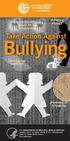 switching seats in the classroom stealing money Take Action Against Bullying spreading rumors pushing & tripping U.S. DEPARTMENT OF HEALTH & HUMAN SERVICES Substance Abuse and Mental Health Services Administration
REFERRAL INFORMATION CHILD, YOUTH AND FAMILY PROGRAM
 Please Note the following information: WE DO NOT OFFER EMERGENCY OR CRISIS SERVICE Please print clearly and ensure contact information is correct. Complete all forms. We will contact the family to set
Depression Assessment & Treatment
 Depressive Symptoms? Administer depression screening tool: PSC Depression Assessment & Treatment Yes Positive screen Safety Screen (see Appendix): Administer every visit Neglect/Abuse? Thoughts of hurting
General Information. Age: Date of Birth: Gender (circle one) Male Female. Address: City: State: Zip Code: Telephone Numbers: (day) (evening)
 Kelly Bernstein, MS, LCDC, LPC Medical Center Psychological Services 7272 Wurzbach Road, Suite 1504 San Antonio, Texas 78240 Office: (210) 522-1187 Fax: (210) 647-7805 Functional Assessment Tool The purpose
written by Harvard Medical School ADHD Attention Deficit Hyperactivity Disorder www.patientedu.org
 written by Harvard Medical School ADHD Attention Deficit Hyperactivity Disorder www.patientedu.org Every child gets restless and fidgety from time to time; in particular, boys are often bursting with energy
ANTISOCIAL PERSONALITY DISORDER
 ANTISOCIAL PERSONALITY DISORDER Antisocial personality disorder is a type of chronic mental illness in which your ways of thinking, perceiving situations and relating to others are dysfunctional. When
Personality Difficulties
 Personality Difficulties The essential features of a personality disorder are impairments in personality (self and interpersonal) functioning and the presence of pathological personality traits. There
Objective: Identify effects of stress on everyday issues and strategies to reduce or control stress.
 Lesson Plan: Dealing with Stress Objective: Identify effects of stress on everyday issues and strategies to reduce or control stress. Time: 45-60 minutes Structure: On-line homework before class (Stress
INVENTORY OF DEPRESSIVE SYMPTOMATOLOGY (SELF-REPORT)
 THIS SECTION FOR USE BY STUDY PERSONNEL ONLY. Did patient (subject) perform self-evaluation? No (provide reason in comments) Evaluation performed on visit date or specify date: Comments: DD-Mon-YYYY Information
Postnatal Depression. A guide for mothers, family and friends
 Postnatal Depression A guide for mothers, family and friends What is it? What is it? After giving birth, most mothers experience some degree of mood swings. There are three main kinds of postnatal mood
Amphetamines Addiction
 Introduction Amphetamines, which are classified as stimulants, work by using the dopamine reward system of the brain. When these drugs are used, the user s central nervous system is simulated which causes
Memorial Hospital Sleep Center. Rock Springs, Wyoming 82901. Sleep lab Phone: 307-352- 8229 (Mon - Wed 5:00 pm 7:00 am)
 Memorial Hospital Sleep Center Rock Springs, Wyoming 82901 Sleep lab Phone: 307-352- 8229 (Mon - Wed 5:00 pm 7:00 am) Office Phone: 307-352- 8390 (Mon Fri 8:00 am 4:00 pm ) Patient Name: Sex Age Date Occupation:
Santa Fe Sage Counseling Center
 Couple/Family Client Intake Date: Names: Partner/Parent/Child (circle one) Partner/Parent/Child (circle one) Parent/Child (circle one) Parent/Child (circle one) Parent/Child (circle one) Insurance ID #:
ADDICTIONS. BEHAVIOURAL Internet Shopping Work Sex Gambling Food. SUBSTANCE - RELATED Alcohol Drugs Medicine Tobacco
 ADDICTIONS BEHAVIOURAL Internet Shopping Work Sex Gambling Food SUBSTANCE - RELATED Alcohol Drugs Medicine Tobacco Addiction is a chronic, relapsing disease affecting the brains's reward, motivation and
ADHD Monitoring System
 ADHD Monitoring System by David Rabiner, Ph.D. Duke University The ADHD Monitoring System is intended to help parents and health care professionals monitoring the ongoing effectiveness of treatment(s)
POSIT Scoring Sheet: Part I
 POSIT Scoring Sheet: Part I This is Part I of scoring the POSIT items in the K-I. The specific Items in the K-I are found in the Page and Question number in the RF column. For each Yes answer that matches
Presently, there are no means of preventing bipolar disorder. However, there are ways of preventing future episodes: 1
 What is bipolar disorder? There are two main types of bipolar illness: bipolar I and bipolar II. In bipolar I, the symptoms include at least one lifetime episode of mania a period of unusually elevated
CADDRA ADHD ASSESSMENT TOOLKIT (CAAT) FORMS
 CADDRA ADHD ASSESSMENT TOOLKIT (CAAT) FORMS It is recommended that physicians complete an assessment form (A), a screener (S) and at least one rating scale (R). For children, the CADDRA Teacher Assessment
Psychiatrists should be aware of the signs of Asperger s Syndrome as they appear in adolescents and adults if diagnostic errors are to be avoided.
 INFORMATION SHEET Age Group: Sheet Title: Adults Depression or Mental Health Problems People with Asperger s Syndrome are particularly vulnerable to mental health problems such as anxiety and depression,
TELEMEDICINE SERVICES Brant Haldimand Norfolk INITIAL MENTAL HEALTH ASSESSMENT NAME: I.D. # D.O.B. REASON FOR REFERRAL:
 TELEMEDICINE SERVICES Brant Haldimand Norfolk TMS INITIAL MENTAL HEALTH ASSESSMENT NAME: I.D. # D.O.B. (OPTINAL) ADDRESS: CITY: P.C. HOME PHONE: ALTERNATE PHONE: G.P: MARITAL STATUS: AGE: ASSSESSMENT DATE:
Sometimes people live in homes where a parent or other family member drinks too
 Alcohol and Drugs What If I'm Concerned About Someone Else's Drinking? Sometimes people live in homes where a parent or other family member drinks too much. This may make you angry, scared, and depressed.
Diagnostic Criteria. Diagnostic Criteria 9/25/2013. What is ADHD? A Fresh Perspective on ADHD: Attention Deficit or Regulation?
 What is ADHD? A Fresh Perspective on ADHD: Attention Deficit or Regulation? The Transition from Disorder to Traits Thor Bergersen M.D. Founder, ADHD Boston www.adhdboston.com Attention Deficit/Hyperactivity
UNDERSTANDING AND LEARNING ABOUT STUDENT HEALTH
 Teacher Workshop Curriculum UNDERSTANDING AND LEARNING ABOUT STUDENT HEALTH Written by Meg Sullivan, MD with help from Marina Catallozzi, MD, Pam Haller MDiv, MPH, and Erica Gibson, MD UNDERSTANDING AND
Antisocial personality disorder
 Page 1 of 7 Diseases and Conditions Antisocial personality disorder By Mayo Clinic Staff Antisocial personality disorder is a type of chronic mental condition in which a person's ways of thinking, perceiving
Using Individual Behaviour Support Plans
 Using Individual Behaviour Support Plans An individual behaviour support plan, which documents supports and strategies based on students unique and individual characteristics, will benefit students with
Traumatic Stress. and Substance Use Problems
 Traumatic Stress and Substance Use Problems The relation between substance use and trauma Research demonstrates a strong link between exposure to traumatic events and substance use problems. Many people
Depression: What You Need to Know
 Depression: What You Need to Know What is a Depressive Illness? A depressive illness is a whole-body illness, involving your body, mood, thoughts, and behavior. It affects the way you eat and sleep, the
Practice Test for Special Education EC-12
 Practice Test for Special Education EC-12 1. The Individualized Educational Program (IEP) includes: A. Written evaluation B. Assessment tests C. Interviews 2. Learning disabilities include: A. Cerebral
Bipolar Disorder. Some people with these symptoms have bipolar disorder, a serious mental illness. Read this brochure to find out more.
 Bipolar Disorder Do you go through intense moods? Do you feel very happy and energized some days, and very sad and depressed on other days? Do these moods last for a week or more? Do your mood changes
Helping Families Deal with Stress Related to Disasters
 Helping Families Deal with Stress Related to Disasters Diana DelCampo, Ph.D., Child Development and Family Life Specialist [email protected] A disaster is an event that: Involves the destruction of property,
Identification and Treatment Manual
 Therapeutic Identification of Depression in Young People Identification and Treatment Manual The TIDY project The Academic Unit of Child and Adolescent Psychiatry, Imperial College London & Lonsdale Medical
Child Welfare Trauma Referral Tool
 Module 4, Activity 4F; Module 4, Activity 4G Child Welfare Trauma Referral Tool This measure is designed to help child welfare workers make more trauma-informed decisions about the need for referral to
USVH Disease of the Week #1: Posttraumatic Stress Disorder (PTSD)
 USVH Disease of the Week #1: Posttraumatic Stress Disorder (PTSD) Effects of Traumatic Experiences A National Center for PTSD Fact Sheet By: Eve B. Carlson, Ph.D. and Josef Ruzek, Ph.D. When people find
WHAT IS PTSD? A HANDOUT FROM THE NATIONAL CENTER FOR PTSD BY JESSICA HAMBLEN, PHD
 WHAT IS PTSD? A HANDOUT FROM THE NATIONAL CENTER FOR PTSD BY JESSICA HAMBLEN, PHD Posttraumatic Stress Disorder (PTSD) is an anxiety disorder that can occur following the experience or witnessing of a
Mental Health Awareness. Haley Berry and Nic Roberts Nottinghamshire Mind Network
 Mental Health Awareness 2015 Haley Berry and Nic Roberts Nottinghamshire Mind Network The aim of this training:! to provide you with a basic understanding of mental health and mental illness. What do you
ADULT INTAKE QUESTIONNAIRE. Today s Date: Home phone: Ok to leave message? Yes No. Work phone: Ok to leave message? Yes No
 ADULT INTAKE QUESTIONNAIRE Name: Today s Date: Age: Date of Birth: Address: Home phone: Ok to leave message? Yes No Work phone: Ok to leave message? Yes No Cell phone: Ok to leave message? Yes No Email:
Stress Assessment questionnaire
 MySkillsProfile Report Stress Assessment questionnaire Dave Smith myskillsprofile.com around the globe Report The SAQ questionnaires are copyright MySkillsProfile.com. MySkillsProfile.com developed and
Symptoms of mania can include: 3
 Bipolar Disorder This factsheet gives information on bipolar disorder. It explains the symptoms of bipolar disorder, treatments and ways to manage symptoms. It also covers what treatment the National Institute
Bipolar Disorder. in Children and Teens. Does your child go through intense mood changes? Does your child have
 Bipolar Disorder in Children and Teens Does your child go through intense mood changes? Does your child have extreme behavior changes too? Does your child get too excited or silly sometimes? Do you notice
NEW PATIENT INFORMATION
 NEW PATIENT INFORMATION Date Patient Name Sex Age DOB / / Address City State Zip Phone Email Emergency Contact: Relationship to patient: Phone #(s) How did you hear about my practice? RESPONSIBLE PARTY
MCPS Special Education Parent Summit
 MCPS Special Education Parent Summit May 17, 2014 Rockville High School 2100 Baltimore Road Rockville, MD 20851 When ADHD Is Not ADHD: ADHD Look-Alikes and Co-occurring Disorders David W. Holdefer MCPS
ADHD WHEN EVERYDAY LIFE IS CHAOS
 ADHD WHEN EVERYDAY LIFE IS CHAOS There s nothing unusual in children finding it hard to sit still, concentrate and control their impulses. But for children with ADHD (Attention Deficit Hyperactivity Disorder),
Methamphetamine. Like heroin, meth is a drug that is illegal in some areas of the world. Meth is a highly addictive drug.
 Methamphetamine Introduction Methamphetamine is a very addictive stimulant drug. People who use it can form a strong addiction. Addiction is when a drug user can t stop taking a drug, even when he or she
Treatment Planning. The Key to Effective Client Documentation. Adapted from OFMQ s 2002 provider training.
 Treatment Planning The Key to Effective Client Documentation Adapted from OFMQ s 2002 provider training. 1 Models Medical Model Diagnosis Psych Eval Problems Symptoms Psycho/Social/Behavioral Model Diagnosis
The Symptoms? What Are. The behaviors often reported include: Guide to Video Game Addiction
 What Are The Symptoms? The behaviors often reported include: For kids Spending non-school hours on the computer or playing video games. Falling asleep in school. Not keeping up with assignments. Worsening
Question Specifications for the Cognitive Test Protocol
 Question Specifications for the Cognitive Test Protocol Core Questions These are the 6 disability questions to be tested in the interview. All of the other questions in the cognitive test protocol are
ADHD DSM Criteria and Evidence-based Treatments
 ADHD DSM Criteria and Evidence-based Treatments DSM-5 Criteria for ADHD A. A persistent pattern of inattention and/or hyperactivity-impulsivity that interferes With functioning or development, as characterized
Intake Form for Testing Services. Last Name First Name Date of Birth. Address City State/ZIP Sex (M/F)
 Intake Form for Testing Services Date Last Name First Name Date of Birth Address City State/ZIP Sex (M/F) Email Address: @ CAN I EMAIL YOU FOR: (CIRCLE ALL THAT APPLY) SCHEDULING SERVICES UPDATES AVAILABLE
Electroconvulsive Therapy - ECT
 Electroconvulsive Therapy - ECT Introduction Electroconvulsive therapy, or ECT, is a safe and effective treatment that may reduce symptoms related to depression or mental illness. During ECT, certain parts
Bipolar Disorder. When people with bipolar disorder feel very happy and "up," they are also much more active than usual. This is called mania.
 Bipolar Disorder Introduction Bipolar disorder is a serious mental disorder. People who have bipolar disorder feel very happy and energized some days, and very sad and depressed on other days. Abnormal
Physical Symptoms Mood Symptoms Behavioral Symptoms
 Prescription drugs are the 3 rd most commonly abused drugs amongst teens in Nebraska, and the same statistic holds true on a national level. The rise in prescription drug abuse is becoming increasingly
Ways to support the person with bipolar disorder
 Ways to support the person with bipolar disorder People differ in what help they need and want from caregivers. Caregivers differ in how involved they are in providing support. Finding ways to provide
For Parents and Families: What to do if a Child is Being Bullied
 WHAT IS BULLYING? For Parents and Families: What to do if a Child is Being Bullied Bullying among children is aggressive behavior that is intentional and that involves an imbalance of power or strength.
Treatment Options for ADHD in Children and Teens. A Review of Research for Parents and Caregivers
 Treatment Options for ADHD in Children and Teens A Review of Research for Parents and Caregivers Is This Summary Right for Me? Yes, if: A doctor said that your child or teen has attention deficit hyperactivity
Brain Injury: Stages of Recovery
 Brain Injury: Stages of Recovery Recovery after brain injury is a process that occurs in stages. Some people move quickly through the stages, while others make slow, but steady gains. The Rancho Los Amigos'
Associates for Life Enhancement, Inc. 505 New Road ~ PO Box 83 ~ Northfield, NJ 08225 Phone (609) 569-1144 ~ Fax (609) 569-1510 ~ 1-800-356-2909
 Parents Names (If Client is a Minor) Client Information Sheet Client s Last Name First M.I.. Social Security No. Date of Birth: Age Sex M / F Home Phone No.( ) Education Level: Marital Status: Home Address:
Michael Simpson, Ph.D. - Clinical Psychologist 954-217-3966 PATIENT INFORMATION
 Michael Simpson, Ph.D. - Clinical Psychologist 954-217-3966 PATIENT INFORMATION PLEASE PRINT CLEARLY DATE NAME ADDRESS DX (OFFICE USE ONLY) CITY STATE ZIP OCCUPATION HOME PHONE EMAIL WORK PHONE CELLULAR
Neuropsychological Testing Appointment
 Neuropsychological Testing Appointment Steven A. Rogers, PhD Kathleen D. Tingus, PhD 1701 Solar Drive, Suite 140 Oxnard, CA 93030 When will it be? Date: Time: Examiner: What will I have to do? Each appointment
Adult Information Form Page 1
 Adult Information Form Page 1 Client Name: Age: DOB: Date: Address: City: State: Zip: Home Phone: ( ) OK to leave message? Yes No Work Phone: ( ) OK to leave message? Yes No Current Employer (or school
SPECIAL EDUCATION & DISCIPLINE POLICIES
 SPECIAL EDUCATION & DISCIPLINE POLICIES SPECIAL EDUCATION AND DISCIPLINE (CONT) It s all about relationships Do they know what is expected? Do they know what it means? (Don t assume a background knowledge
Putting the smiles back. When Something s Wr ng o. Ideas for Families
 Putting the smiles back When Something s Wr ng o Ideas for Families Borderline Personality Disorder (BPD) Disorder is characterized by an overall pattern of instability in interpersonal relationships and
Young people and drugs
 Young people and drugs Many parents worry about whether their son or daughter is taking illegal drugs, how they can tell, and what to do about it. While there s a lot of concern about illegal drugs in
www.education.alberta.ca/mentalhealthmatters Activity
 www.education.alberta.ca/mentalhealthmatters Activity Poster: Manage Level: Junior High Grades 7 9 Taken from the Mental Health Kit: Be Kind to Yourself and Others, developed in partnership with Community
0 3 Months Sensory Motor Checklist
 0 3 Months Sensory Motor Checklist Enjoys playful face-to-face interaction with people Coos in response to playful interaction Notices and responds to sounds Moves legs and arms off of surface when excited
Are You Addicted to Drugs? Do you abuse drugs or alcohol regularly? Do you often use the drug when others are not around?
 Are You Addicted to Drugs? If you are concerned about your drug or alcohol use, then you might want to determine if you are addicted to the substance. Being addicted to drugs is a serious condition that