
Presented by Mike Juarez, M.S, Executive Director, Alternative Action Programs 1
|
|
|
- Shanon Hines
- 10 years ago
- Views:
Transcription
1 Re-Entry Father s SUBSTANCE ABUSE AS RELATED TO CHILD ABUSE & NEGLECT MIKE JUAREZ, M.S. ALTERNATIVE ACTION PROGRAMS Webinar sponsored by: Webinar Presentation Presenter: Mike Juarez, M.S. Executive Director, Alternative action Programs Moderator: Kirsti Thompson Project Manager, Strategies Central Region Technical Support: Laura Everest Event Coordinator, Strategies Central Region Programs 1

2 Presentation Overview Part I: Substance Abuse and Recovery Defining Acronyms Overview of Substance Abuse/Dependence Overview of Recovery Re-entry Father s: SAO s, families, children (A Snapshot) Presentation Overview Part II: The Effects on the Family System How Parental SAO s Affect the Family System The Prevalence and Correlation of AOD, IPV, and Child Maltreatment (Abuse and/or Neglect) Families of Recovery/Re-entry Father s (support, tools, working toward healthier lifestyle, children s and mother s experiences and expectations Presentation Overview Part III: Solution Strategies, Treatment, CBO s Intimate Partner Violence Prevention/Challenges Child Abuse Prevention/Challenges Preventative Strategies Overcoming Challenges Community Based Organizations Programs 2

3 Part I SUBSTANCE ABUSE AND RECOVERY Defining Acronyms ** Operationally Defined AOD: Alcohol and Other Drugs SAO: Substance Abuse/Dependence Offender SA: Substance Abuse IPV: Intimate Partner Violence DV: Domestic Violence CBO: Community Based Organization Overview of Substance Abuse/Dependence Historically, abuse and dependence have been a separation between abuse and dependence. DSM V has moved to diagnosing according to severity (e.g., mild, moderate, severe). A major factor in diagnosing in accordance with the DSM V: Is the use of substance causing significant clinical distress For the purpose of this presentation, we will use substance abuse to cover both abuse and dependence, mild, moderate, and severe Programs 3

4 Overview of Substance Abuse Qualitative: Structured clinical interview, TWEAK, CAGE enmeshed. Quantitative: Evidenced-based measures used to inform the diagnosis: ASI, SASSI, MHSF, MAST AUDIT Assessment tools ml Alcohol and other drug screening questions and assessment tools can be located at the link listed above Screening (CAGE, TWEAK) Assessment tools (ASI, SASSI) Screening with CAGE and TWEAK (Alcohol) Brief and simple screen Can be incorporated into the interview Self-report form Can be used in an intake history form with questions interwoven Programs 4

5 Screening with CAGE (Alcohol) C A G E Have you ever felt you ought to cut down on your drinking or drug use? Y N Have people annoyed you by criticizing your drinking or drug use? Y N Have you ever felt bad or guilty about your drinking or drug use? Y N Have you ever had a drink or used drugs first thing in the morning to steady your nerves or get rid of a hangover? Y N Screening with TWEAK (Alcohol) T Tolerance: A: How many drinks can you hold (6 or more indicates tolerance) or B: How many drinks does it take before you begin to feel the first effect of the alcohol (3 or more drinks indicates tolerance)? A: B: W Worried: Have close friends or relatives worried or complained about your drinking in the past year? E Eye openers: Do you sometimes take a drink in the morning when you first get up? A Amnesia: Has a friend or family member ever told you about things you said or did while you were drinking that you could not remember? K Kut Down: Do you sometimes feel the need to cut down your drinking? Y N Addiction Severity Index (ASI) Seven Domains of Assessment 1) Medical 2) Employment 3) Alcohol 4) Drugs 5) Legal 6) Family/Social 7) Psychiatric/Psychological Programs 5

6 Addiction Severity Index (ASI) Not public domain Gold standard assessment for substance use Allows for depth in each domain (probing and comments) Explores current use and history Determines need for treatment from both the client s perspective and the clinicians perspective Provides an composite graph for easy comparison Has a used for initial intake/assessment and a brief version used for exit/assessment Substance Abuse Subtle Screening Inventory 3 (SASSI-3) Not public domain The stealth assessment Can be used to determine high or low probability of dependence for both alcohol and other drugs Assesses 9 Subscales related to substance dependence Measured in t-score or percentile ** The following information is not true of all high scores. These are just some indicators. You need a scoring manual to help you determine outcomes SASSI-3: Subscales Face-Valid Alcohol (FVA) Face-Valid Other Drugs (FVOD) Symptoms (SYM) Obvious Attributes (OAT) Subtle Attributes (SAT) Defensiveness (DEF) Supplemental Addiction Measures (SAM) Family vs. Controls (FAM) Correctional (COR) Programs 6

7 SASSI-3: Subscales Face-Valid Alcohol (FVA) Face-Valid Alcohol (FVA) FVA: Face-Valid Alcohol measures acknowledged alcohol use, motivation and consequences of usage, and loss of control. SASSI-3: SubscalesFace-Valid Other Drugs (FVOD) Face-Valid Other Drugs (FVOD) FVOD: Face-Valid Alcohol and Other Drugs measures acknowledged drug use, motivation and consequences of usage, and loss of control. SASSI-3: Subscales Symptoms (SYM) Symptoms (SYM) SYM: Symptoms of Substance Misuse measures the extent to which the client acknowledges specific problems associated with substance misuse. Programs 7

8 SASSI-3: Subscales Obvious Attributes (OAT) Obvious Attributes (OAT) Obvious Attributes measures the client s tendency to acknowledge characteristics commonly associated with substance abuse. SASSI-3: Subscales Subtle Attributes (SAT) Subtle Attributes (SAT) SAT: Subtle Attributes measures characteristics of substance dependent people which are less apparent than those measured by OAT SASSI-3: Subscales Defensiveness (DEF) Defensiveness (DEF) DEF: Defensiveness identifies defensiveness Programs 8

9 SASSI-3: Subscales Family vs. Controls (FAM) Family vs. Controls (FAM) FAM: Family vs. Control Subjects identifies individuals with characteristics common among family members of substance dependent persons. SASSI-3: Subscales Correctional (COR) Correctional (COR) COR: Correctional assesses the client s relative level of risk for legal problems. AOD Recovery vs. DV Treatment OCPD Characteristics Denial Affair with the Dysfunctionality Familiarity Submission Loss of Control Relapse No matter how much treatment I always go back to the same kind of guy/girl/friends! WHY? Society gives up on them because they do. Programs 9

10 Why is the Prevalence Between AOD and DV so high? Why do AOD make Violence ok? Lifestyle Risky Behavior Poor Decisions (intoxicated) Effects of AOD i.e. aggressiveness Image to Lifestyle Perpetraitor s Own Repressed Abuse The Cycle Continues Cluster B and the SAO A pattern of traits can be found across the diagnostic criterion of: Antisocial Personality Disorder (ASPD) Borderline Personality Disorder (BPD) Histrionic Personality Disorder (HPD) Narcissistic Personality Disorder (NPD) Obsessive-Compulsive Disorder (OCD) Antisocial Personality Disorder (ASPD) DSM-IV-TR Diagnostic Criterion A. There is a pervasive pattern of disregard for and violation of the rights of others occurring since the age 15 years, as indicated by three (or more) of the following: 1) Failure to conform to social norms with respect to lawful behaviors as indicated by repeatedly performing acts that are grounds for arrest 2) Deceitfulness, as indicated by repeated lying, use of aliases, or conning others for personal profit or pleasure 3) Impulsivity or failure to plan ahead 4) Irritability and aggressiveness, as indicated by repeated physical fights or assaults 5) Reckless disregard for safety of self or others 6) Consistent irresponsibility, as indicted by repeated failure to sustain consistent work behavior or honor financial obligations 7) Lack of remorse, as indicated by being indifferent to or rationalizing having hurt, mistreated, or stolen from another Programs 10

11 Borderline Personality Disorder (BPD) 1) Frantic efforts to avoid real or imagined abandonment 2) A pattern of unstable and intense interpersonal relationships characterized by alternating between extremes of idealization and devaluation 3) Identity disturbance: markedly and persistently unstable self-image or sense of self 4) Impulsivity in at least two areas that are potentially self-damaging (e.g., spending, sex, substance abuse, reckless driving, binge eating) 5) Recurrent suicidal behavior, gestures, or threats, or self-mutilating behavior 6) Affective instability due to a marked reactivity of mood (e.g., intensive episodic dysphonia, irritability, or anxiety) Narcissistic Personality Disorder (NPD) 1) Has a grandiose sense of self-importance (e.g., exaggerates achievements and talents, expects to be recognized as superior or without commensurate achievements) 2) Is preoccupied with fantasies of unlimited success, power, brilliance, beauty, or ideal love 3) Believes that he or she is special and unique and can only be understood by, or should associate with, other special or high-status people or institutions 4) Requires excessive admiration 5) Has a sense of entitlement, i.e., unreasonable expectations of especially favorable treatment or automatic compliance with his or her expectations 6) Is interpersonally exploitative, i.e., takes advantage of others to achieve his or her own ends 7) Lacks empathy: is unwilling to recognize or identify with the feelings and needs of others 8) Is often envious of others or believes others are envious of him or her 9) Shows arrogant, haughty behaviors or attitudes Erickson s Stages Psychosocial of Development 0-2 years Trust 2-4 years Autonomy 4-5 years Initiative 5-12 Years Industry years Identity years Intimacy Mistrust Shame and Doubt Guilt Inferiority Role confusion Isolation Programs 11

12 Kohlberg s Six Stages of Moral Reasoning Level I: Preconventional Morality Stage 1 - Obedience and Punishment The earliest stage of moral development is especially common in young children, but adults are also capable of expressing this type of reasoning. At this stage, children see rules as fixed and absolute. Obeying the rules is important because it is a means to avoid punishment. Stage 2 - Individualism and Exchange At this stage of moral development, children account for individual points of view and judge actions based on how they serve individual needs. In the Heinz dilemma, children argued that the best course of action was the choice that best-served Heinz s needs. Reciprocity is possible at this point in moral development, but only if it serves one's own interests. Kohlberg s Six Stages of Moral Reasoning Level II: Conventional Morality Stage 3 - Interpersonal Relationships Often referred to as the "good boy-good girl" orientation, this stage of moral development is focused on living up to social expectations and roles. There is an emphasis on conformity, being "nice," and consideration of how choices influence relationships. Stage 4 - Maintaining Social Order At this stage of moral development, people begin to consider society as a whole when making judgments. The focus is on maintaining law and order by following the rules, doing one s duty and respecting authority. Kohlberg s Six Stages of Moral Reasoning Level III: Postconventional Morality Stage 5 - Social Contract and Individual Rights At this stage, people begin to account for the differing values, opinions and beliefs of other people. Rules of law are important for maintaining a society, but members of the society should agree upon these standards. Stage 6 - Universal Principles Kohlberg s final level of moral reasoning is based upon universal ethical principles and abstract reasoning. At this stage, people follow these internalized principles of justice, even if they conflict with laws and rules. Programs 12

13 7 Basic Focuses of Treatment 1) Confrontation of Beliefs, Attitudes and Behaviors 2) Assessment of current relationships 3) Reinforcement of Positive Behavior and Habits 4) Positive Identity Formation 5) Enhancement of Self-Concept 6) Decrease in Hedonism and Development of Frustration Tolerance 7) Development of Higher Stages of Moral Reasoning Therapeutic Factors Installation of hope My problems are manageable Universality I m not alone Imparting information Resources, non-clinical tips Altruism Selfish becomes selfless, consideration for others The corrective recapitulation of the primary family group Family dynamics Development of socializing techniques Productive, law abiding, non-dysfunctional or healthy relationships Imitative behavior Mirroring and modeling senior group members Interpersonal learning Intrinsic, who am I, needs, identity Group cohesiveness Strong bond and relationships (functional) Catharsis About the pain and turmoil, safety, non-judgmental Existential factors - Meaning of life, isolation, and freedom Treatment Synopsis Substance abuse treatment significantly reduces the reoffending rates of substance abusing participants. The simple fact is that when treating offenders, their substance abuse is a problematic component of their overall personality. Thus, methods aiming to treat or rehabilitate offender populations must employ effective means that address the thinking patterns and underlying symptomology of their substance abusing behavior. Data from numerous sources show how ingrained substance abuse is in offenders. Drug testing of offenders has shown substance abuse rates among all offender types as high as 80% (Bureau of Justice Statistics, 1992) and Gorski (1993) states that 70% of offenders are chemically dependent while nearly all offenders abuse drugs or alcohol. Little & Robinson s (1994) monograph on antisocial behavior and substance abuse states shows that substance abuse is a symptom of underlying personality disorder centered among a cluster of criminologic factors. Thus, Treatment directly addresses these criminologic factors and thereby appears to concomitantly reduces substance use. Programs 13

14 Treatment Synopsis The specific target areas in need of and amenable to systematic remediation cluster is as follows: antisocial attitudes and thinking and behaviors must be addressed and changed; inappropriate peer associations must be eliminated followed by planning and actions to integrate more normal friendships and relationships; social relationships including family and friends must be enhanced and corrected ; antisocial behavioral patterns (e.g. lying, stealing, victimizing) must be specifically addressed and altered to prosocial behaviors and attitudes; self reliance, dependability, and reliability must be fostered. Andrews and others (Antonowicz & Ross, 1994) have shown that offender targeted cognitive skills, cognitive restructuring, and cognitive behavioral programming can favorably alter criminologic factors of participants. Treatment Synopsis Treatment has shown its effectiveness in directly confronting and favorably altering the criminologic needs of offender participants. Antisocial behaviors, beliefs, and attitudes are the initial target of the approach. Behavioral rehearsal and practice is gained in the group process as offenders must then make an overt commitment to following the rules of their custody or supervision. Relationships are then addressed, followed by appropriate goal setting, identifying additional problem areas and beliefs, and then making refinements on relationships and goals. Group process provides SAO s the opportunity to change inappropriate and selfdefeating beliefs, attitudes, and behaviors. The research and literature have consistently shown treatment successfully reduces recidivism. Components for Successful Treatment Client s are assessed to determine treatment readiness If a client is not a treatment candidate, the clinician should do a referral with a clinical recommendation Attendance Support i.e., family, social, support groups, religious organizations, community, probation, criminal justice system Programs 14

15 Part II THE EFFECTS OF THE FAMILY SYSTEM Intimate Partner Violence Intimate partner violence (IPV) is a serious, preventable public health problem that affects millions of Americans. The term "intimate partner violence" describes physical, sexual, or psychological harm by a current or former partner or spouse. This type of violence can occur among heterosexual or same sex couples and does not require sexual intimacy. (Center For Disease Control And Prevention, 2010) Domestic Violence (DV) Although they are used interchangeably, DV is used in contemporary research and literature as a broader definition to mean all violence related to an intimate partner or the family. Whether current or in the past i.e. child abuse, neglect, inappropriate sexual acts (usually by a trusted family member or close family friend, incest, witnessing DV, and many other forms or violence within the family system, community, or environment. (Center For Disease Control And Prevention, 2010) Programs 15

16 Battered Wife Syndrome A pattern of signs and symptoms, such as a fear and a perceived inability to escape, appearing in women who are physically and mentally abused over an extended period by a husband or other dominate individual Stockholm Syndrome A psychological response sometimes seen in a hostage, in which the hostage exhibits loyalty to the hostage taker, in spite of the danger. In DV the victim, in this case (contrast with survivor), the victim will express empathy, sympathy and have positive feelings toward their perpetrator, to the point of defending and identifying with them. They may see their abuse as acts of kindness and love. Characteristics of an abused woman Reserved Withdrawn Depressed Anxious Low self-esteem Poorly integrated self-image General inability to cope with life s demands Shame Self-blame Hyper-startle response DMPD Programs 16

17 Depressive Masochistic Personality Defined: A pervasive pattern of self-defeating behavior, beginning by early adulthood and present in a variety of contexts. The person may often avoid or undermine pleasurable experiences, be drawn to situations or relationships in which he or she will suffer, and prevent others from helping him or her. Many victims fall into DMP and subsequent negative attachment typology beginning in childhood as a witness to DV or a victim of child abuse in all its forms. (Naud, et. al., 2013) Correlational Factors of Substance Abuse and Domestic Violence The Cycle of Addiction The Cycle of Violence The Effects of Children in the Abusive Cycle Now consider how these manipulations effect the children in this family system What messages are being sent to the child? What might future impact look like? How might this effect his or her own parenting? Programs 17

18 Characteristics of an abused child Signs and Symptomology Control Fear Humiliation Anger Criticism Mistreatment Threats Jealously Unwanted sex Physical, sexual, emotional/mental, neglect, financial Families of Recovery/Re-entry Father s Support While a vital component to a solution, this is often lacking, insincere, biased, conditioned etc. Tools Most re-entry father s receive little or no treatment. If there is treatment it is for SA. There are minimal tools provided for the family system Children s Expectations Role changes, fantasy expectations, reality Mother s Expectations Role changes, fantasy, life and interest changes Father s Expectations No changes Programs 18

19 Part III SOLUTION STRATEGIES TREATMENT COMMUNITY BASED ORGANIZATIONS Intimate Partner Violence Prevention/Challenges Child Abuse Prevention/Challenges Preventative Strategies Overcoming Challenges Community Based Organizations IPV: Prevention/Challenges Domestic violence shelters Court liasons Other CBO s Challenges: Perpetrator tactics to manipulation and DMP Programs 19

20 Perpetrator Tactics to Manipulation Dominance: controlling, only decision makers, tell you what to do, expect obedience, treats you like a servant, child or as their possession Humiliation: Goes out of his/her way to make you feel bad about yourself or like you re a defect or worthless (so you believe no one will want you). Insults, name-calling, shaming are all weapons designed to erode your self-esteem and make you feel powerless Isolation: Will cut you off from the outside world to establish your dependence on him or her (Including home and finances). Will keep you from seeing family, friends, work, school, etc. You must have permission to see anyone Perpetrator Tactics to Manipulation Cont Threats: Threatens to hurt or kill you, your children or other family members. Threatens to commit suicide, file false charges against you and turn you over to child protective services. Intimidation: Designed to scare you into submission. Threatening looks, gestures, smashing things in front of you, destroying property, putting weapons on display etc. Denial and Blame: Will blame their abusive behavior on a bad childhood (and through their master manipulation will make you feel bad for them and protect their behavior). Minimize or deny the abuse. Turn it into the abuse being your fault. Child Abuse Prevention/Challenges School: Communication with teachers and identifying signed of abuse Child Protective Services Challenges: Refer to perpetrator tactics Programs 20

21 Preventative strategies Overcoming Challenges IDDT (Between and within agency collaboration) Learn your agencies policies on mandated reporting Have interagency discussions about adding protocols for your area Have a list or referral manual for CBO s in your area Community Based Organizations: Remember, it is always best practices to refer to specialist who work in the identified area i.e., IVP, child abuse etc. It becomes an ethical question if you are practicing outside your scope. It could save a child s life! Contact Information Mike Juarez, M.S. Programs [email protected] Kirsti Thompson Project Manager, Strategies Central Region [email protected] Laura Everest Event Coordinator, Strategies Central Region [email protected] Thank you! Please complete your evaluations Programs 21
Personality Difficulties
 Personality Difficulties The essential features of a personality disorder are impairments in personality (self and interpersonal) functioning and the presence of pathological personality traits. There
Understanding 5 High Conflict Personality Disorders
 Understanding 5 High Conflict Personality Disorders Bill Eddy, LCSW, Esq. Attorney, Mediator, Therapist, Author Family Law Institute March 19, 2013 - Minneapolis Copyright 2013 High Conflict Institute
Chapter 7. Screening and Assessment
 Chapter 7 Screening and Assessment Screening And Assessment Starting the dialogue and begin relationship Each are sizing each other up Information gathering Listening to their story Asking the questions
Personality Disorders
 Personality s The Good, the Bad and the Really, Really Ugly: Borderline and other Cluster B Personality s BY CHRIS OKIISHI, MD! Long standing! Often life long! Developmental origins! Genetic origins! Resistant
Compiled by Julie Ann Romero AS 91 Spring 2010
 Compiled by Julie Ann Romero AS 91 Spring 2010 Antisocial personality disorder is a psychiatric condition in which a person manipulates, exploits, or violates the rights of others. This behavior is often
What is a personality disorder?
 What is a personality disorder? What is a personality disorder? Everyone has personality traits that characterise them. These are the usual ways that a person thinks and behaves, which make each of us
Antisocial personality disorder
 Page 1 of 7 Diseases and Conditions Antisocial personality disorder By Mayo Clinic Staff Antisocial personality disorder is a type of chronic mental condition in which a person's ways of thinking, perceiving
Personality Disorders
 Personality Disorders Chapter 11 Personality Disorders: An Overview The Nature of Personality and Personality Disorders Enduring and relatively stable predispositions (i.e., ways of relating and thinking)
Study Guide - Borderline Personality Disorder (DSM-IV-TR) 1
 Study Guide - Borderline Personality Disorder (DSM-IV-TR) 1 Pervasive pattern of instability of interpersonal relationships, selfimage, and affects, and marked impulsivity that begins by early adulthood
Personality Disorders
 LP 13BF personality disorders 1 Personality Disorders Personality disorders: Disorders characterized by deeply ingrained, Inflexible patterns of thinking, feeling, or relating to others or controlling
Anti-Social Personality Disorder
 Anti-Social Personality Disorder Definition Anti-Social Personality Disorder is a type of chronic mental condition in which a person's ways of thinking, perceiving situations and relating to others are
Aggression and Borderline Personality Disorder. Michele Galietta, Ph.D. January 15, 2012 NEA.BPD Call-In Series
 Aggression and Borderline Personality Disorder Michele Galietta, Ph.D. January 15, 2012 NEA.BPD Call-In Series Goals for this Presentation Define Aggression Distinguish Anger from Aggression Discuss Evidence-Based
Domestic Violence & Abuse. Signs of Abuse and Abusive Relationships
 Domestic Violence & Abuse Signs of Abuse and Abusive Relationships Domestic violence and abuse can happen to anyone, yet the problem is often overlooked, excused, or denied. This is especially true when
Borderline Personality Disorder and Treatment Options
 Borderline Personality Disorder and Treatment Options MELISSA BUDZINSKI, LCSW VICE PRESIDENT, CLINICAL SERVICES 2014 Horizon Mental Health Management, LLC. All rights reserved. Objectives Define Borderline
Putting the smiles back. When Something s Wr ng o. Ideas for Families
 Putting the smiles back When Something s Wr ng o Ideas for Families Borderline Personality Disorder (BPD) Disorder is characterized by an overall pattern of instability in interpersonal relationships and
Does Non-Suicidal Self-injury Mean Developing Borderline Personality Disorder? Dr Paul Wilkinson University of Cambridge
 Does Non-Suicidal Self-injury Mean Developing Borderline Personality Disorder? Dr Paul Wilkinson University of Cambridge If I see a patient who cuts themself, I just assume they have borderline personality
Contents of This Packet
 Contents of This Packet 1) Overview letter 2) Dialectical Behavior Therapy (DBT) Clinic flyer 3) Diagnostic criteria for borderline personality disorder 4) Guidelines and agreements for participating in
THE EFFECTS OF FAMILY VIOLENCE ON CHILDREN. Where Does It Hurt?
 THE EFFECTS OF FAMILY VIOLENCE ON CHILDREN Where Does It Hurt? Child Abuse Hurts Us All Every child has the right to be nurtured and to be safe. According to: Family Violence in Canada: A Statistical Profile
Co-dependency. Fact Sheet on co-dependency from Mental Health America:
 Co-dependency Fact Sheet on co-dependency from Mental Health America: Co-dependency is a learned behavior that can be passed down from one generation to another. It is an emotional and behavioral condition
Abuse in Same-Sex Relationships
 1 Abuse in Same-Sex Relationships Abuse in relationships is any behavior or pattern of behavior used to coerce, dominate or isolate the other partner. It is the use of any form of power that is imposed
Conceptual Models of Substance Use
 Conceptual Models of Substance Use Different causal factors emphasized Different interventions based on conceptual models 1 Developing a Conceptual Model What is the nature of the disorder? Why causes
FACT SHEET. What is Trauma? TRAUMA-INFORMED CARE FOR WORKING WITH HOMELESS VETERANS
 FACT SHEET TRAUMA-INFORMED CARE FOR WORKING WITH HOMELESS VETERANS According to SAMHSA 1, trauma-informed care includes having a basic understanding of how trauma affects the life of individuals seeking
Preventing Substance Abuse. How to Deal with Chemical Dependency
 Preventing Substance Abuse & How to Deal with Chemical Dependency For every ten people who consume alcohol or drugs in this country, at least one becomes chemically dependent. Addiction has an exponential
Chapter 12 Personality Disorders
 The Nature of Personality Disorders Chapter 12 Personality Disorders Enduring patterns of perceiving, relating to, and thinking about the world and oneself Manifest across many life areas Are inflexible
Domestic Violence, Mental Health and Substance Abuse
 Domestic Violence, Mental Health and Substance Abuse Sue Parry, PhD NYS Office for the Prevention of Domestic Violence Why does domestic violence (DV) have so many mental health effects? Put yourself in
APPENDIX B. ASSESSMENT OF RISK POSED TO CHILDREN BY DOMESTIC VIOLENCE Anne L. Ganley, Ph.D.
 APPENDIX B ASSESSMENT OF RISK POSED TO CHILDREN BY DOMESTIC VIOLENCE Anne L. Ganley, Ph.D. Assessment of Domestic Violence for Child Protective Services (CPS) Decision Making Guidelines for Interviewing
DSM-IV and DSM-5 Criteria for the Personality Disorders
 General Criteria for a Personality Disorder General Criteria for a Personality Disorder DSM-IV DSM-5 Criteria - Revised June 2011 pathological personality traits. To diagnose a personality disorder, the
Definitions of Child Abuse in the State of Oregon
 Definitions of Child Abuse in the State of Oregon Oregon law defines physical abuse as an injury to a child that is not accidental. Most parents do not intend to hurt their children, but abuse is defined
Bullying. Take Action Against. stealing money. switching seats in the classroom. spreading rumors. pushing & tripping
 switching seats in the classroom stealing money Take Action Against Bullying spreading rumors pushing & tripping U.S. DEPARTMENT OF HEALTH & HUMAN SERVICES Substance Abuse and Mental Health Services Administration
Dialectical Behaviour Therapy (DBT) for Borderline Personality Disorder
 Dialectical Behaviour Therapy (DBT) for Borderline Personality Disorder Dr. Kathy Fitch, Psychiatrist Janice Wingrave,, RPN, Clinical Supervisor Janice Wingrave,, RPN Clinical supervisor to comprehensive
30 Minute Lesson: Personality Disorders Participant Version
 30 Minute Lesson: Personality Disorders Participant Version People with personality disorders (PD) display personality traits that are noticeably different from other people, and that show up and cause
Personality disorder. Caring for a person who has a. Case study. What is a personality disorder?
 Caring for a person who has a Personality disorder Case study Kiara is a 23 year old woman who has been brought to the emergency department by her sister after taking an overdose of her antidepressant
ANTISOCIAL PERSONALITY DISORDER: IS IT TREATABLE? JESSICA YAKELEY PORTMAN CLINIC TAVISTOCK AND PORTMAN NHS FOUNDATION TRUST
 ANTISOCIAL PERSONALITY DISORDER: IS IT TREATABLE? JESSICA YAKELEY PORTMAN CLINIC TAVISTOCK AND PORTMAN NHS FOUNDATION TRUST ANTISOCIAL PERSONALITY DISORDER: IS IT TREATABLE? Why care about ASPD? Why care
ANTISOCIAL PERSONALITY DISORDER
 ANTISOCIAL PERSONALITY DISORDER Antisocial personality disorder is a type of chronic mental illness in which your ways of thinking, perceiving situations and relating to others are dysfunctional. When
PERSONALITY DISORDERS
 PERSONALITY DISORDERS UNDERSTANDING THEIR EFFECT ON THE THERAPEUTIC RELATIONSHIP, COMPLIANCE WITH TREATMENT & RECOVERY DR ANDREW ASHLEY-SMITH PSYCHIATRIST SOUTH SHORE NOVA SCOTIA DISCLOSURE Over the past
Co-Occurring Disorders
 Co-Occurring Disorders PACCT 2011 CAROLYN FRANZEN Learning Objectives List common examples of mental health problems associated with substance abuse disorders Describe risk factors that contribute to the
THE ABSENT MOTHER. The Psychological and Emotional Consequences of Childhood Abandonment and Neglect. Dr. Judith Arndell Clinical Psychologist
 THE ABSENT MOTHER. The Psychological and Emotional Consequences of Childhood Abandonment and Neglect Dr. Judith Arndell Clinical Psychologist The Psychological Parent The object of the child s deepest
Personality Disorders
 Abnormal Psychology Clinical Perspectives on Psychological Disorders 5e Personality Disorders Chapter 10 Personality Disorders Chapter 10 Personality trait An enduring pattern of perceiving, relating to,
CHAPTER 6 Diagnosing and Identifying the Need for Trauma Treatment
 CHAPTER 6 Diagnosing and Identifying the Need for Trauma Treatment This chapter offers mental health professionals: information on diagnosing and identifying the need for trauma treatment guidance in determining
Mental Health Needs Assessment Personality Disorder Prevalence and models of care
 Mental Health Needs Assessment Personality Disorder Prevalence and models of care Introduction and definitions Personality disorders are a complex group of conditions identified through how an individual
Developing a Therapeutic Relationship with Clients with Personality Disorders. The Therapeutic Relationship. The Therapeutic Relationship 7/31/15&
 Developing a Therapeutic Relationship with Clients with Personality Disorders Jim Seckman, MAC, CACII, CCS The Therapeutic Relationship The therapeutic relationship, also called the therapeutic alliance,
Sue/Sue/Sue Understanding Abnormal Behavior, 9 th edition 2010 Cengage Learning CHAPTER EIGHT. Personality Disorders
 Sue/Sue/Sue Understanding Abnormal Behavior, 9 th edition 2010 Cengage Learning CHAPTER EIGHT Personality Disorders PERSONALITY DISORDERS Personality Disorder: Sue/Sue/Sue Understanding Abnormal Behavior,
Diagnosis and Assessment of Personality Disorders
 Diagnosis and Assessment of Personality Disorders Michael B. First, M.D. Editor, DSM-IV Text and Criteria Department of Psychiatry, Columbia University What is a Personality Disorder? an enduring pattern
2) Recurrent emotional abuse. 3) Contact sexual abuse. 4) An alcohol and/or drug abuser in the household. 5) An incarcerated household member
 Co Occurring Disorders and the on Children: Effectively Working with Families Affected by Substance Abuse and Mental Illness Definition (Co-Occurring also called Dual Dx) A professional diagnosis of addictive/substance
CATC Exam Practice Questions: 2015
 CATC Exam Practice Questions: 2015 These practice questions are included within the Certified Addictions Treatment Counselor (CATC) Examination Candidate Handbook, presented by California Association for
Walking a Tightrope. Alcohol and other drug use and violence: A guide for families. Alcohol- and Other Drug-related Violence
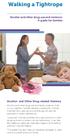 Walking a Tightrope Alcohol and other drug use and violence: A guide for families Alcohol- and Other Drug-related Violence Alcohol and other drug use and family violence often occur together. Families
Forensic Counselor Education Course
 Forensic Counselor Ed Course Exam Questions Packet Part 4 Course No: Course Title: Course Objective: FC-1951P4 Forensic Counselor Education Course Part 4 Includes trauma and domestic violence; anger management;
How To Diagnose And Treat An Alcoholic Problem
 guideline for identification and treatment of alcohol abuse/dependence in primary care This guideline is informational in nature and is not intended to be a substitute for professional clinical judgment.
ce4less.com ce4less.com ce4less.com ce4less.com ce4less.com ce4less.com
 Borderline Personality Disorder: The Latest Assessment and Treatment Strategies Questions from chapter 1 1) The first written work on BPD described these clients as occupying a continuum between a) neurosis
Is someone you know being abused? Do you know the warning signs?
 Is someone you know being abused? Do you know the warning signs? Help, Hope & Healing Are you concerned that someone is being abused, but don t know what to do? You may suspect abuse is happening to a
Working Definitions APPRECIATION OF THE ROLE OF EARLY TRAUMA IN SEVERE PERSONALITY DISORDERS
 Working Definitions PERSONALITY TRAIT a stable, recurring pattern of human behavior - e.g. a tendency to joke in serious situations, hypersensitivity to criticism, talkativeness in groups. PERSONALITY
Self Assessment: Substance Abuse
 Self Assessment: Substance Abuse Please respond TRUE (T) or FALSE (F) to the following items as they apply to you. Part 1 I use or have used alcohol or drugs for recreational purposes. I use alcohol despite
Family Violence. Understanding the Issue. Equay-wuk (Women s Group) 16 Fourth Avenue P.O. Box 1781 Sioux Lookout ON P8T 1C4
 Equay-wuk (Women s Group) Family Violence Understanding the Issue 16 Fourth Avenue P.O. Box 1781 Sioux Lookout ON P8T 1C4 Phone: (807) 737-2214 Toll Free: 1-800-261-8294 Fax: (807) 737-2699 E-Mail: [email protected]
How To Treat An Addiction With Cognitive Behavioral Therapy
 Cognitive Behavioral Therapy Part 1 An Overview Cognitive Behavioral Therapy (CBT) is a general classification of psycho therapy, based on social learning theory, which emphasizes how our thinking interacts
The Dance of Power Frustrating
 The Dance of Power Frustrating the DRAMA! Presented by: Josh Smith, LMSW, BCD Co Owner of The DBT Center of Michigan Owner of The DBT Center of Western Kentucky [email protected] Normal Personality
Antisocial personality disorder
 Understanding NICE guidance Information for people who use NHS services Antisocial personality disorder NICE clinical guidelines advise the NHS on caring for people with specific conditions or diseases
Counseling Antisocial Clients: A Microskills Approach By Norma Gluckstern-Packard and Ralph Packard Produced by Microtraining Associates, Inc.
 Counseling Antisocial Clients: A Microskills Approach By Norma Gluckstern-Packard and Ralph Packard Produced by Microtraining Associates, Inc. Introduction to the Video Purpose: The purpose of this video
Presently, there are no means of preventing bipolar disorder. However, there are ways of preventing future episodes: 1
 What is bipolar disorder? There are two main types of bipolar illness: bipolar I and bipolar II. In bipolar I, the symptoms include at least one lifetime episode of mania a period of unusually elevated
Working at the Intersection: Substance Abuse and Trauma in the Context of Violence Against Women. Patricia J. Bland.
 Presented at the Moving Forward in Challenging Times Conference July 6-8, 2011 SafePlace Austin, TX Working at the Intersection: Substance Abuse and Trauma (Bland, Patricia; April 2012) Working at the
WOMEN S RECOVERY CENTER 25 Beulah Road New Britain, Pennsylvania. 18901 VOLUNTEER APPLICATION NAME: DATE: ADDRESS: TELEPHONE: EDUCATION:
 25 Beulah Road New Britain, Pennsylvania. 18901 VOLUNTEER APPLICATION NAME: DATE: ADDRESS: TELEPHONE: EDUCATION: WORK EXPERIENCE: 1.) Why do you want to become a volunteer in the Recovery Center? 2.) How
Theories, models and perspectives - Cheat sheet for field instructors
 Theories, models and perspectives - Cheat sheet for field instructors Major Theories Used in Social Work Practice Systems Theory Psychodynamic Social Learning Conflict Developmental Theories Theories of
Conduct Disorder: Treatment Recommendations. For Vermont Youth. From the. State Interagency Team
 Conduct Disorder: Treatment Recommendations For Vermont Youth From the State Interagency Team By Bill McMains, Medical Director, Vermont DDMHS Alice Maynard, Mental Health Quality Management Chief, Vermont
It s hard to know what to do when you know or suspect that a friend or family member is living with violence.
 How can you help? A B It s hard to know what to do when you know or suspect that a friend or family member is living with violence. How do I know what is the right thing to do? Should I say something or
Dr. Elizabeth Gruber Dr. Dawn Moeller. California University of PA. ACCA Conference 2012
 Dr. Elizabeth Gruber Dr. Dawn Moeller California University of PA ACCA Conference 2012 http://www.youtube.com/watch?v=9rpisdwsotu Dissociative Identity Disorder- case presentation Diagnostic criteria Recognize
PYSCHOPATHY AND ANTISOCIAL PERSONALITY DISORDER. Lisann Nolte & Justine Paeschen
 PYSCHOPATHY AND ANTISOCIAL PERSONALITY DISORDER Lisann Nolte & Justine Paeschen PSYCHOPATHY THE PSYCHOPATH TEST http://www.youtube.com/watch?v=e_va2tl6czwth E PSYCHOPATH TEST - are you a psychopath? PSYCHOPATHY
Abnormal Psychology Practice Quiz #3
 Abnormal Psychology Practice Quiz #3 1. People with refuse to maintain a minimum, normal body weight, and have an intense fear of gaining weight. a. anorexia nirvana b. anorexia bulimia c. bulimia nervosa
An Overview of Psychological Theories of Crime Causation. Professor James Byrne Nov.2, 2010 Lecture Graduate Criminology Seminar
 An Overview of Psychological Theories of Crime Causation Professor James Byrne Nov.2, 2010 Lecture Graduate Criminology Seminar The Psychology of Crime Psychologically-based criminologists explain criminal
Alcohol & Chemical Dependence. Chisoo Choi, M.D. Internal Medicine Consultant Brookhaven Hospital Tulsa, Oklahoma
 Alcohol & Chemical Dependence Chisoo Choi, M.D. Internal Medicine Consultant Brookhaven Hospital Tulsa, Oklahoma Objectives Increased awareness of alcohol and chemical dependence problems Hallmarks of
Personality Disorders
 Personality Disorders Source: Linda Lebelle, Focus Adolescent Services A Personality Disorder is identified by a pervasive pattern of experience and behaviour that is abnormal with respect to any of the
Depression Assessment & Treatment
 Depressive Symptoms? Administer depression screening tool: PSC Depression Assessment & Treatment Yes Positive screen Safety Screen (see Appendix): Administer every visit Neglect/Abuse? Thoughts of hurting
ALCOHOLISM, ALCOHOL DEPENDENCE AND THE EFFECTS ON YOUR HEALTH.
 ALCOHOLISM, ALCOHOL DEPENDENCE AND THE EFFECTS ON YOUR HEALTH. Alcoholism also known as alcohol dependence is a disabling ADDICTIVE DISORDER. It is characterized by compulsive and uncontrolled consumption
What You Need to Know About Elder Abuse
 What You Need to Know About Elder Abuse What is Elder Abuse? Elder abuse, or the abuse of older adults, is often defined as any act or omission that harms a senior or jeopardizes his or her health or welfare.
Co-Occurring Substance Use and Mental Health Disorders. Joy Chudzynski, PsyD UCLA Integrated Substance Abuse Programs
 Co-Occurring Substance Use and Mental Health Disorders Joy Chudzynski, PsyD UCLA Integrated Substance Abuse Programs Introduction Overview of the evolving field of Co-Occurring Disorders Addiction and
Signs of an Abusive Relationship
 Inside This Issue: 1. Signs of an Abusive Relationship 2. How to Avoid Prescription Drug Misuse or Abuse 3. Anger Management Tips: Taming Your Temper 4. For Your Information EAP Services: 1. How to Use
Borderline Personality Disorder
 Borderline Personality Disorder Borderline Personality Disorder Formerly called latent schizophrenia Added to DSM III (1980) as BPD most commonly diagnosed in females (75%) 70-75% have a history of at
California Society of Addiction Medicine (CSAM) Consumer Q&As
 C o n s u m e r Q & A 1 California Society of Addiction Medicine (CSAM) Consumer Q&As Q: Is addiction a disease? A: Addiction is a chronic disorder, like heart disease or diabetes. A chronic disorder is
TREATING ADOLESCENTS
 TREATING ADOLESCENTS A focus on adolescent substance abuse and addiction Center for Youth, Family, and Community Partnerships Presentation developed by: Christopher Townsend MA, LPC, LCAS,CCS, NCC Learning
USVH Disease of the Week #1: Posttraumatic Stress Disorder (PTSD)
 USVH Disease of the Week #1: Posttraumatic Stress Disorder (PTSD) Effects of Traumatic Experiences A National Center for PTSD Fact Sheet By: Eve B. Carlson, Ph.D. and Josef Ruzek, Ph.D. When people find
Personality Disorders
 Abnormal Psychology PSYCH 40111 s s: An Overview The Nature of Personality and s A personality is all the ways we have of acting, thinking, believing, and feeling that make each of us unique and different
Characteristics of OWI Offenders
 Characteristics of OWI Offenders Sean Corbin, MPA, CCJP December 16, 2009 Characteristics First Time Offender? Scratching the Surface. Recidivist Characteristics. Who Are They? How We Think Is How We Act.
Understanding Suicidal Thinking
 Understanding Suicidal Thinking Suicidal thoughts are temporary. Suicide is permanent. Don t give in to suicidal thoughts you can overcome them. If depression or bipolar disorder (also known as manic depression)
Protection of the Rights of Children and Women Suffering from Drug Addiction in the Family and Society - Shelter Don Bosco, Mumbai, India -
 Protection of the Rights of Children and Women Suffering from Drug Addiction in the Family and Society - Shelter Don Bosco, Mumbai, India - Article 24 of the Convention on the Rights of the Child recognizes
Co-Occurring Disorders
 Co-Occurring Disorders Multiple Choice Identify the choice that best completes the statement or answers the question. 1. Chapter 1: Introduction Early studies conducted in substance abuse programs typically
CAGE. AUDIT-C and the Full AUDIT
 CAGE In the past have you ever: C tried to Cut down or Change your pattern of drinking or drug use? A been Annoyed or Angry because of others concern about your drinking or drug use? G felt Guilty about
Assessment, Case Conceptualization, Diagnosis, and Treatment Planning Overview
 Assessment, Case Conceptualization, Diagnosis, and Treatment Planning Overview The abilities to gather and interpret information, apply counseling and developmental theories, understand diagnostic frameworks,
A Holistic Approach to Family Violence Prevention. Richard Hickson Principal Solicitor Family Violence Prevention Legal Service, Albany
 A Holistic Approach to Family Violence Prevention Richard Hickson Principal Solicitor Family Violence Prevention Legal Service, Albany Holistic Characterized by the treatment of the whole person, taking
Lisa Davies Consultant Forensic Psychologist Malta, October 2012
 Lisa Davies Consultant Forensic Psychologist Malta, October 2012 What is Borderline Personality Disorder How to treat BPD effectively Pink Elephants Principles of Dialectical Behaviour Therapy BPD is:
Assessing families and treating trauma in substance abusing families
 Children, Trauma and the impact of Substance abuse Day One Outpatient (874-1045) Amy Stevenson LCPC CCS ([email protected]) Don Burke LCPC CCS ([email protected]) Assessing families and treating trauma in
Addiction takes a toll not only on the
 FAMILY PROGRAM Addiction takes a toll not only on the individual, but on the family, as well. When using, addicts are selfish and selfcentered; their wants and needs are placed ahead of the ones they love.
SOCIAL WORK PRACTICE AND DOMESTIC VIOLENCE
 SOCIAL WORK PRACTICE AND DOMESTIC VIOLENCE Working with Children and Families Mary Kate Barry, IASW 2015 How are you? Grand Ask me In the hospital Please ask me In the clinic In the church Ask me, ask
Tool kit Domestic Violence
 Tool kit Domestic Violence A self-help resource to help people living with domestic violence Lifeline s domestic violence tool kit provides information about: Understanding what domestic violence is Developing
Military and Substance Abuse Dr. Amy Menna & Gift From Within
 1 Military and Substance Abuse Dr. Amy Menna & Gift From Within This article is meant to assist soldiers and those who support them to identify the differences between substance abuse and addiction. In
RESTRAINING ORDERS IN MASSACHUSETTS Your rights whether you are a Plaintiff or a Defendant
 RESTRAINING ORDERS IN MASSACHUSETTS Your rights whether you are a Plaintiff or a Defendant Prepared by the Mental Health Legal Advisors Committee October 2012 What is a restraining order? A restraining
THE BASICS Custody and Visitation in New York State
 THE BASICS Custody and Visitation in New York State This booklet answers common questions about custody and visitation when the parents cannot agree about who is responsible for taking care of the children.
Voir Dire in Domestic Violence Cases
 Voir Dire in Domestic Violence Cases By Sarah M. Buel, Co-Director, University of Texas School of Law Domestic Violence Clinic Voir dire provides the opportunity to educate jurors while probing for bias,
Substance Abuse and Sexual Violence:
 Substance Abuse and Sexual Violence: The Need for Integration When Treating Survivors Kelli Hood, M.A. Objective To understand the necessity for therapeutic strategies in clients with cooccurring Substance
P. O. Box 1520 Columbia, South Carolina 29202. Effective date of implementation: January 1, 2005. Domestic Violence
 SOUTH CAROLINA DEPARTMENT OF SOCIAL SERVICES P. O. Box 1520 Columbia, South Carolina 29202 STANDARDS OF CARE FOR BATTERERS TREATMENT Effective date of implementation: January 1, 2005 Domestic Violence