
Clinical Commissioning Policy: Haematopoietic Stem Cell Transplantation. April Reference: NHSCB/B04/P/a
|
|
|
- Steven Stone
- 10 years ago
- Views:
Transcription
1 Clinical Commissioning Policy: Haematopoietic Stem Cell Transplantation April 2013 Reference:

2 NHS Commissioning Board Clinical Commissioning Policy: Haematopoietic Stem Cell Transplantation First published: April 2013 Prepared by the NHS Commissioning Board Clinical Reference Group for Blood and Marrow Transplant (BMT) Crown copyright 2013 First published April 2013 Published by the NHS Commissioning Board, in electronic format only. 2

3 Contents Policy Statement... 4 Equality Statement... 4 Plain Language Summary Introduction Definitions Aim and Objectives Criteria for commissioning Patient pathway Governance arrangements Epidemiology and needs assessment Evidence Base Rationale behind the policy statement Mechanism for funding Audit Requirements Documents which have informed this policy Links to other policies Date of Review

4 Policy Statement The NHS Commissioning Board (NHS CB) will commission haematopoietic stem cell transplantation for the clinical conditions and their sub-groups indicated in accordance with the criteria outlined in this document. In creating this policy the NHS CB has reviewed this clinical condition and the options for its treatment. It has considered the place of this treatment in current clinical practice, whether scientific research has shown the treatment to be of benefit to patients, (including how any benefit is balanced against possible risks) and whether its use represents the best use of NHS resources. This policy document outlines the arrangements for funding of this treatment for the population in England. Equality Statement The NHS CB has a duty to have regard to the need to reduce health inequalities in access to health services and health outcomes achieved as enshrined in the Health and Social Care Act 2012.The NHS CB is committed to ensuring equality of access and non-discrimination, irrespective of age, gender, disability (including learning disability), gender reassignment, marriage and civil partnership, pregnancy and maternity, race, religion or belief, sex (gender) or sexual orientation. In carrying out its functions, the NHS CB will have due regard to the different needs of protected equality groups, in line with the Equality Act This document is compliant with the NHS Constitution and the Human Rights Act This applies to all activities for which they are responsible, including policy development, review and implementation. Plain Language Summary Haematopoietic stem cell transplantation is also known as blood and marrow transplantation (BMT). It is used to treat a wide spectrum of disorders. It is broadly divided into two main groups: autologous and allogeneic transplantation. Allogeneic haemopoietic stem cell transplantation (HSCT) is used to treat carefully selected patients with a range of malignant and non-malignant blood-related disorders and other specific disorders of the immune system. It involves replacing the bone marrow stem cells of a patient following high-dose therapy, with stem cells from a tissue-type matched or mismatched donor. Autologous transplantation uses the patient's own stem cells, which are harvested prior to high-dose therapy. It enables the patient to be treated with doses of chemotherapy which are higher than would be possible without subsequent replacement of the harvested cells, because the therapy destroys the patient s remaining stem cell tissue. The scientific evidence for these treatments is not clear cut, relying on clinical expertise and consensus. This policy will promote equity of access to treatment in England. It confirms the indications for which the NHS CB has agreed routine funding and the route for obtaining funding for conditions outside this policy. 4

5 1. Introduction Haematopoietic stem cell transplantation (HSCT), also known as blood and marrow transplantation (BMT) is used to treat wide spectrum of haematological, and increasingly, non-haematological disorders. It is broadly divided into two main groups: autologous and allogeneic transplantation. These are explained in more detail in the next section. Stem cell transplantation, particularly allogeneic transplantation, is a high cost and highly specialised procedure, performed by skilled and experienced transplant teams working in specialist centres. Allogeneic transplantation carries a relatively high mortality and morbidity, and these must be weighed against the potential longer-term survival benefits when considering a patient for transplantation. Rigorous patient selection is of paramount importance. Because of the large number of possible indications for stem cell transplantation, the degree of variation in clinically important patient and disease parameters, and the diversity of conditioning and transplant regimes, it is extremely difficult to evaluate the clinical and cost-effectiveness of transplantation for every potential clinical condition. Moreover, age is an important factor in determining outcomes; thus the management of children and young people is very different to that in older adults. For all these reasons, current clinical practice in stem cell transplantation is largely based on clinical consensus and published case series. For the above reasons, the development of a national commissioning policy requires a degree of pragmatism. Previous attempts to develop evidence-based policies have highlighted the paucity of good quality evidence from randomised controlled trials, and the small size and poor quality of the studies upon which current clinical guidelines are based. There is a broad degree of clinical consensus concerning the BSBMT (British Society of Blood and Marrow Transplantation) recommendations on the clinical indications for BMT in adults, and these have until now formed the basis for most SCG commissioning policies for adult BMT. However, these have frequently been updated over the past 3 years, with the result that there are significant differences between the various Specialised Commissioning Group (SCG) policies. Clinical practice in paediatric transplantation is mainly in line with the UK Paediatric BMT Group HSCT recommendations (November 2011), and in practice individual funding request for paediatric BMT are rarely declined by commissioners. This policy document sets out the clinical indications for which autologous and allogeneic transplants will be commissioned routinely by the NHS Commissioning Board (NHS CB) for adults and children respectively. For a more detailed description of the transplantation services which will be commissioned and the service standards which should be met by transplant centres please refer to the BMT Service Specification. 5

6 The policy does not address the use of extra-corporeal photophoresis (ECP) for the treatment of chronic graft versus host disease (cgvhd), as this therapy is used for conditions other than GvHD, and is included within the scope of Rare Cancers. However, it is emphasised that the development of a commissioning policy for the use of ECP in treating cgvhd is a high priority. 2. Definitions Allogeneic haemopoietic stem cell transplantation (HSCT) is used to treat carefully selected patients with a range of malignant and non-malignant haematological disorders and other specific disorders of the immune system. It involves replacing the bone marrow stem cells of a patient following high-dose therapy, with stem cells from a tissue-type matched or mismatched donor. Patients require detailed pre-transplant assessment and investigations to assess their clinical status and fitness to proceed to transplant. The transplant procedure begins with conditioning therapy (chemotherapy ± total body irradiation [TBI]) at a range of doses depending on the type and severity of disease being treated. The aim of conditioning is to: Kill leukaemia/tumour cells (in malignant diseases) Eradicate existing bone marrow tissue (in order to provide space for engraftment of transplanted donor stem cells) Suppress the patient s immune system, so as to minimise the risk of graft rejection Bone marrow, peripheral blood or umbilical cord blood stem cells may be used as donor stem cell sources. Autologous transplantation uses the patient's own stem cells, which are harvested prior to high-dose therapy. It is performed as part of dose escalation therapy, mainly in patients with lymphoma and myeloma, although it is also used in certain autoimmune and oncology cases. It enables the patient to be treated with doses of chemotherapy which are higher than would be possible without subsequent replacement of the harvested cells, because the therapy destroys the patient s remaining stem cell tissue. 3. Aim and Objectives Aim The policy document aims to specify the clinical indications and their subgroups for which autologous and allogeneic haematopoietic stem cell transplants will be commissioned routinely by the NHS Commissioning Board. 6

7 Objectives To optimise patient outcome after autologous and allogeneic stem cell transplantation To reduce variation in access to BMT To ensure that BMT is commissioned for those conditions for which there is acceptable evidence of clinical benefit and cost-effectiveness To promote the cost-effective use of resources To reduce unacceptable variation in clinical practice To ensure that experimental treatments are offered only in the context of properly conducted research. 4. Criteria for Commissioning Adults The BSBMT (February 2012) recommendations divide indications for BMT into four categories: S = standard of care CO = clinical option, can be considered after assessment of risks and benefits D = developmental, further trials are needed GNR = generally not recommended For the purposes of this commissioning policy first transplants for indications within categories S and CO (standard of care, and clinical option respectively) are accepted as established clinical practice, and will be commissioned routinely, without need for prior approval or Individual Funding Request (IFR). Repeat transplants for failure to engraft will also be commissioned routinely. However, repeat autologous or allogeneic transplants for relapsed disease will not be commissioned routinely unless explicitly recommended by the BSBMT guidelines (eg second autologous transplant for myeloma and POEMS). Transplants for indications within categories D and GNR will not be commissioned routinely, and commissioner agreement will need to be sought for transplantation of all cases falling within these categories BMT is not commissioned for any indication which is not listed below Commissioner agreement will therefore need to be sought for transplantation for all indications not specifically listed in this policy document 7

8 Disease category Commissioning policy CML As per BSBMT indications for transplantation (February 2012) Myeloma As per BSBMT indications for transplantation (February 2012). Second autografts will be commissioned for myeloma, but third or subsequent autografts will not routinely be commissioned. Other plasma cell dyscrasias As per BSBMT indications for transplantation (February 2012). Second autografts will be commissioned for POEMS, but third or subsequent autografts will not routinely be commissioned. AML As per BSBMT indications for transplantation (February 2012) ALL As per BSBMT indications for transplantation (February 2012) Hodgkin s Disease As per BSBMT indications for transplantation (February 2012) Mantle Cell Lymphoma Follicular lymphoma/ lymphoplasmacytoid lymphomas As per BSBMT indications for transplantation (February 2012) As per BSBMT indications for transplantation (February 2012) DLBCL As per BSBMT indications for transplantation (February 2012) Peripheral T Cell As per BSBMT indications for transplantation (February 2012) Lymphoma CLL As per BSBMT indications for transplantation (February 2012) Aplastic Anaemia As per BSBMT indications for transplantation (February 2012) Myelodysplastic As per BSBMT indications for transplantation (February 2012) Syndrome Ewing s Sarcoma As per BSBMT indications for transplantation (February 2012) Neuroblastoma As per BSBMT indications for transplantation (February 2012) Germ Cell Tumour As per BSBMT indications for transplantation (February 2012) Soft tissue sarcoma As per BSBMT indications for transplantation (February 2012) Breast, ovary, lung, Not commissioned routinely. Commissioner agreement must be renal carcinoma sought. Sickle cell disease Not commissioned routinely. Commissioner agreement must be sought. Myelofibrosis As per BSBMT indications for transplantation (February 2012) Multiple sclerosis As per BSBMT indications for transplantation (February 2012) Systemic sclerosis As per BSBMT indications for transplantation (February 2012) Crohn s disease As per BSBMT indications for transplantation (February 2012) Systemic As per BSBMT indications for transplantation (February 2012) lupus erthematosis Rheumatoid arthritis As per BSBMT indications for transplantation (February 2012) Immune cytopenias Not commissioned routinely. Commissioner agreement (ITP, AIHA Evan s must be sought. syndrome) Chronic inflammatory demyelinating polyneuropathy (CIDP) Not commissioned routinely. Commissioner agreement must be sought. 8

9 Children The UK Paediatric BMT Group HSCT recommendations (December 2011) divide indications for BMT into four categories: S = standard of care CO = clinical option, can be considered after assessment of risks and benefits D = developmental, further trials are needed GNR = generally not recommended For the purposes of this commissioning policy first transplants for indications within categories S and CO (standard of care, and clinical option respectively) are accepted as established clinical practice, and will be commissioned routinely, without need for prior approval or Individual Funding Request (IFR). Repeat transplants for failure to engraft will also be commissioned routinely. However, repeat autologous or allogeneic transplants for relapsed disease will not be commissioned routinely, and commissioner agreement must be sought for such procedures Transplants for indications within categories D and GNR will not be commissioned routinely, and commissioner agreement will need to be sought for transplantation of all cases falling within these categories BMT is not commissioned for any indication which is not listed below. Commissioner agreement will therefore need to be sought for transplantation for all indications not specifically listed within this policy document. 9

10 Disease Commissioning Policy Category AML As per UK Paediatric BMT Group recommendations (November 2011) CML As per UK Paediatric BMT Group recommendations (November 2011) CLL As per UK Paediatric BMT Group recommendations (November 2011) T Cell NHL As per UK Paediatric BMT Group recommendations (November 2011) Lymphoblastic As per UK Paediatric BMT Group recommendations (November 2011) B cell NHL Anaplastic Large As per UK Paediatric BMT Group recommendations (November 2011) Cell Lymphoma Burkitt NHL As per UK Paediatric BMT Group recommendations (November 2011) Hodgkin s As per UK Paediatric BMT Group recommendations (November 2011) disease Myelodysplasia As per UK Paediatric BMT Group recommendations (November 2011) Immunodeficiencies recommendations (November 2011) Selected indications; as per UK Paediatric BMT Group Inborn errors of Selected indications; as per UK Paediatric BMT Group metabolism recommendations (November 2011) Haemoglobinopathies 2011) As per UK Paediatric BMT Group recommendations (November Bone marrow As per UK Paediatric BMT Group recommendations (November 2011) failure Acquired aplastic anaemia Constitutional monocytopenia Fanconi anaemia Dyskeratosis congenita Diamond-Blackfan syndrome Solid tumours: Neuroblastoma As per UK Paediatric BMT Group recommendations (November 2011) Primitive neuroectodermal tumour (medulloblastoma) Atypical Teratoid Rhabdoid Tumour (CNS) Germ cell tumour Ewings sarcoma Wilms tumour Multisystem Langerhans cell histiocytosis Autoimmune disease Selected indications; as per UK Paediatric BMT Group recommendations (November 2011) 10

11 Policy development Clinical practice continues to evolve, and it is important that the commissioning policy is reviewed regularly and updated to reflect current evidence. The following topics have been submitted for review as a priority: Planned tandem transplants Repeat transplants following relapse of disease Transplants for solid tumours Transplants for autoimmune diseases ECP for cgvhd Paediatric BMT Double cord transplants (added at the request of the Clinical Assurance Group) In the interim, and for other indications, requests for transplantation of in cases which do not meet the policy criteria will be considered on an individual basis by commissioners. Individual funding requests It is recognised that HSCT is a highly complex clinical area, and that consideration of requests for transplantation in cases which fall outside the commissioning policy requires specialised knowledge and experience. All such requests should be supported by detailed clinical information in order that they may be reviewed by an expert clinical panel including transplant physicians and commissioners. The Specialised Services Clinical Reference Group (CRG) proposes that IFR panels should seek advice from an expert clinical panel when considering requests for HSCT falling outside the commissioning policy. Research It is recognised that involvement in clinical trials is an integral part of high quality service provision in stem cell transplantation. Treatment provided as part of NCRIapproved trials will be commissioned routinely for patients who meet the commissioning policy criteria, provided that there are no excess treatment costs to commissioners. (For example, trials comparing different conditioning regimens will be supported, provided there is no significant cost differential between the treatment arms.) However, pure research will not be funded with resources diverted from the provision of routine transplant services. Transplantation undertaken as part of research into the treatment of conditions not covered by the commissioning policy will not be commissioned routinely, irrespective of whether or not the trial has NCRI approval. Similarly, any excess treatment costs relating to trial participation will not be met by the NHS CB unless prior approval has been given. 9 NHSCB/B4/a/1 V1

12 5. Patient pathway The patient pathway is described in detail in the BMT service specifications for adults and children respectively. The BMT commissioning pathway commences with the decision to transplant, and ends 100 days following the transplantation procedure. This pathway does not preclude shared-care arrangements for post-transplant follow-up between the transplant centre and local haemato-oncology providers, where this has been agreed between providers. Beyond 100 days, commissioning responsibility will automatically return to the patient s Clinical Commissioning Group. 6. Governance arrangements The governance arrangements are described in detail in the BMT service specifications for adults and children respectively. All providers of HSCT must have JACIE accreditation. 7. Epidemiology and needs assessment The data below are taken from the BSBMT Registry for transplants undertaken by UK centres. There are considerable year to year fluctuations in numbers, but an underlying increasing trend. In the ten year period inclusive there has been an apparent 45% increase in the overall number of transplants performed annually. (NB This does not take account of probable improvements in reporting and data capture.) Table 1: Number of transplants by transplant type inclusive Year Allografts Autografts Total % Increase Source: BSBMT Register 10 NHSCB/B4/a/1 V1

13 Table 2 below shows a breakdown of transplants by disease category for Myelomas and lymphomas remain the most common indications for autologous transplantation. Most allogeneic transplants are for acute leukaemias, followed by the lymphomas. This suggests that the great majority of current clinical indications for BMT are covered by the commissioning policy. Table 2: Number of transplants by disease category and transplant type Indication Allograft Autograft Total Plasma Cell Disease Lymphoma Acute Leukaemia MDS/MPS Solid Tumour Chronic Leukaemia Primary Immune Deficiency Bone Marrow Failure Haemoglobinopathy Inherited Disorders of Metabolism Auto Immune Diseases Other Total Source: BSBMT Register 8. Evidence Base Because of the large number of possible indications for stem cell transplantation, the degree of variation in clinically important patient and disease parameters, and the diversity of conditioning and transplant regimes, it is extremely difficult to evaluate the clinical effectiveness of transplantation Total for every potential clinical Year Allografts Autografts condition. The BSBMT and UK Paediatric BMT Group HSCT recommendations are well referenced, although the quality of the evidence is generally poor, being based largely on case series. Transplants There is very little published evidence as to the cost-effectiveness of BMT. The NHS Commissioning Board will include a program of evidence review and policy development for BMT within its work program. 11 NHSCB/B4/a/1 V1

14 9. Rationale behind the policy statement Stem cell transplantation, particularly allogeneic transplantation, is a highly specialised procedure with significant opportunity costs. The evidence base for treatment is not clear cut, as described above, relying on clinical expertise and consensus. This policy will promote equity of access to treatment in England. It confirms the indications for which the NHS CB has agreed routine funding and the route for obtaining funding for conditions outside this policy. 10. Mechanism for funding Funding will be made through the responsible area team. The funding arrangements are described in detail in the BMT service specifications for adults and children respectively. The NHS commissioning board funds all transplanted-related care from the point of decision to transplant until 100 days following transplantation. HSCT is a highly complex clinical area, and consideration of requests for transplantation in cases which fall outside the commissioning policy requires specialised knowledge and experience. All such requests should be supported by detailed clinical information in order that they may be reviewed by an expert clinical panel including transplant physicians and commissioners. 11. Audit Requirements Complete data must be submitted to the BSBMT registry for all transplants carried out by UK centres. This will enable better evaluation of clinical outcomes broken down by patient and disease-related variables. All centres must undergo regular JACIE inspection. Audit requirements are described in more detail in the BMT service specification. 12 NHSCB/B4/a/1 V1

15 12. Documents which have informed this policy Pan Thames CYP Prior Approval Policy Procedure Form: Haematopoietic progenitor cell transplantation Pan Thames Adult Prior Approval Policy Procedure Form: Haematopoietic progenitor cell transplantation SWSCG Prior Approval criteria based access Form CBA SC SCG Adult Haematopoietic Stem Cell Transplant Policy - September 2009 WM SCG Commissioning policy; Adult Haematopoietic Stem Cell Transplant. Draft May 2010 Yorkshire and Humber SCG BMT commissioning policy British Society for Blood and Marrow Transplants. BSBMT Indications for BMT (February 2012) Available from: Accessed 11/08/2012 British Society for Blood and Marrow Transplants. UK Paediatric BMT Group HSCT recommendations (updated July 2012). Available from: Accessed 11/08/2012 NHS Blood and Transplant. The Future of Unrelated Donor Stem Cell Transplantation in the UK. Part 1: Findings and Recommendations. A Report from the UK Stem Cell Strategic Forum, July Accessed 11/08/ Links to other policies To be confirmed the IFR process will be critical to the success of the BMT policy, because we should expect a significant volume of funding requests to fall outside the policy. The CRG has recommended an expert panel to review these, but we need to retain commissioner/public health involvement in order to manage financial risk and identify new areas for policy development 14. Date of Review April NHSCB/B4/a/1 V1

Reference: NHS England B04/P/a
 Clinical Commissioning Policy: Haematopoietic Stem Cell Transplantation (HSCT) (All Ages): Revised Reference: NHS England B04/P/a 1 NHS England Clinical Commissioning Policy: Haematopoietic Stem Cell Transplantation
Cord Cor Blood Banking Scott N. Furlan, MD Ellen S. Plummer, Plummer MD
 Cord Blood Banking Scott N. Furlan, MD Ellen S.Plummer, MD Overview Background Biology of Stem Cell Transplant Opportunities i at Parkland Logistics of Banking Potential Barriers Indications for HCT Cancer
DEPARTMENT OF BONE MARROW AND STEM CELL TRANSPLANT
 www.narayanahealth.org DEPARTMENT OF BONE MARROW AND STEM CELL TRANSPLANT About Narayana Health City Narayana Health, one of India's largest and the world's most economical healthcare service providers
Hematopoietic Stem Cell Transplantation. Imad A. Tabbara, M.D. Professor of Medicine
 Hematopoietic Stem Cell Transplantation Imad A. Tabbara, M.D. Professor of Medicine Hematopoietic Stem Cells Harvested from blood, bone marrow, umbilical cord blood Positive selection of CD34 (+) cells
OUR JOURNEY THROUGH THE YEARS
 The King Faisal Specialist Hospital and Research Centre Experience in Hematology, Oncology and Bone Marrow Transplantation OUR JOURNEY THROUGH THE YEARS REGGIE BELKHEDIM A Brief Overview: King Faisal Specialist
Corporate Medical Policy
 Corporate Medical Policy Hematopoietic Stem-Cell Transplantation for CLL and SLL File Name: Origination: Last CAP Review: Next CAP Review: Last Review: hematopoietic_stem-cell_transplantation_for_cll_and_sll
Cord blood Banking Transplant List for One USA Bank - StemCyte www.stemcyte.com/cordblood-banking-transplant-list
 Cells4Life is the oldest and largest cord blood storage company in the UK. We are governed by some of the world's most stringent medical laws, and are currently the only stem cell storage company in the
What is a Stem Cell Transplantation?
 What is a Stem Cell Transplantation? Guest Expert: Stuart, MD Associate Professor, Medical Oncology www.wnpr.org www.yalecancercenter.org Welcome to Yale Cancer Center Answers with Drs. Ed and Ken. I am
Haematopoietic stem cell transplantation in Hong Kong
 S C I E N T I F I C P A P E R Haematopoietic stem cell transplantation in Hong Kong Albert KW Lie WY Au Raymond Liang 李 國 維 區 永 仁 梁 憲 孫 The first case of haematopoietic stem cell transplant (HSCT) was
Chapter 4 Section 23.1. High Dose Chemotherapy (HDC) And Stem Cell Transplantation
 Surgery Chapter 4 Section 23.1 High Dose Chemotherapy (HDC) And Stem Cell Transplantation Issue Date: November 1, 1983 Authority: 32 CFR 199.4(e)(5) and (g)(15) 1.0 CPT 1 PROCEDURE CODES 38205, 38207,
Stem Cell Banking. Umbilical Cord. The Leading Cell Bank www.stemology.co.uk. Protect your family s future
 Protect your family s future The Leading Cell Bank www.stemology.co.uk Stem Cell Banking Umbilical Cord For women in their 1st, 2nd or 3rd Trimester of Pregnancy Introduction to Stemology Imagine you
STEM CELLS : A THERAPEUTIC REVOLUTION JACQUES KADOCH ROBERT HEMMINGS MARINELA MANDRA
 STEM CELLS : A THERAPEUTIC REVOLUTION JACQUES KADOCH ROBERT HEMMINGS MARINELA MANDRA OVO CLINIC I 8000 BLVD DECARIE, MONTREAL QC H4P 2S4 I 514.798.2000 I OVOCLINIC.COM 2 a therapeutic revolution As the
What we will discuss today
 Umbilical cord blood banking It s Utility? Dr. Nita Radhakrishnan Pediatric Hematology Oncology Unit, Sir Ganga Ram Hospital, New Delhi What we will discuss today What are stem cells? What are the sources
Pros and Cons of Stem Cell Sources and their availability in Africa. Dr Jaimendra Singh Inkosi Albert Luthuli Central Hospital Durban, South Africa
 Pros and Cons of Stem Cell Sources and their availability in Africa Dr Jaimendra Singh Inkosi Albert Luthuli Central Hospital Durban, South Africa Introduction The ability to perform a haematopoietic stem
Clinical Commissioning Policy: Proton Beam Radiotherapy (High Energy) for Paediatric Cancer Treatment
 Clinical Commissioning Policy: Proton Beam Radiotherapy (High Energy) for Paediatric Cancer Treatment Reference: NHS England xxx/x/x 1 Clinical Commissioning Policy: Proton Beam Radiotherapy (High Energy)
Corporate Medical Policy
 Corporate Medical Policy File Name: Origination: Last CAP Review: Next CAP Review: Last Review: hematopoietic_stem-cell_transplantation_for_epithelial_ovarian_cancer 2/2001 11/2015 11/2016 11/2015 Description
Narrator: Transplants using stem cells from the blood, bone marrow or umbilical cord blood
 [Track 2: What Is a Transplant?] Narrator: Transplants using stem cells from the blood, bone marrow or umbilical cord blood can be an effective treatment for people with blood cancers such as leukemia,
Cord Blood Stem Cell Transplantation
 LEUKEMIA LYMPHOMA MYELOMA FACTS Cord Blood Stem Cell Transplantation No. 2 in a series providing the latest information on blood cancers Highlights Umbilical cord blood, like bone marrow and peripheral
CHAPTER 1 BACKGROUND AND CORD BLOOD BANK (CBB) ORGANIZATION
 CHAPTER 1 BACKGROUND AND CORD BLOOD BANK (CBB) ORGANIZATION Chapter 1 BACKGROUND AND CORD BLOOD BANK (CBB) ORGANIZATION 1.1 OVERVIEW OF THE CORD BLOOD TRANSPLANTATION STUDY Bone marrow transplantation
PT CordLife Indonesia Premium Cordblood Bank. PT CordLife Indonesia Premium Cordblood Bank
 Cordblood Stem Cells and The Role of Cordblood Bank in Supporting Stem Cells Research Presentation Overview Company profile Haematopoietic stem cells in cordblood What we can do to help 1 2 PT CordLife
WBMT Global Survey. Helen Baldomero Cape Town November 2014. Worldwide Network for Blood and Marrow Transplantation
 WBMT Global Survey Helen Baldomero Cape Town November 214 NGO in official relations with World Health Organization Leukemias LPD Solid tumors Non - Malignant disorders NGO in official relations with World
The future of unrelated Stem Cell Transplant in the UK: DOH Working Party Findings. Prof. Tony Pagliuca
 The future of unrelated Stem Cell Transplant in the UK: DOH Working Party Findings Prof. Tony Pagliuca UK STEM CELL STRATEGIC FORUM The future of unrelated donor SCT in the UK Antonio Pagliuca, Transplant
Stem Cell Transplantation
 Harmony Behavioral Health, Inc. Harmony Behavioral Health of Florida, Inc. Harmony Health Plan of Illinois, Inc. HealthEase of Florida, Inc. Ohana Health Plan, a plan offered by WellCare Health Insurance
UMBILICAL CORD BLOOD TRANSPLANTATION: KFSH EXPERIENCE
 UMBILICAL CORD BLOOD TRANSPLANTATION: KFSH EXPERIENCE HIND AL HUMAIDAN, MD,FRCPA Director, Blood Bank (Donor & Transfusion Services) and Stem Cell Cord Blood Bank Consultant Hematopathologist INTRODUCTION
Corporate Medical Policy Cord Blood as a Source of Stem Cells
 Corporate Medical Policy Cord Blood as a Source of Stem Cells File Name: Origination: Last CAP Review: Next CAP Review: Last Review cord_blood_as_a_source_of_stem_cells 2/2001 3/2015 3/2016 3/2015 Description
Commissioning Policy: Implementation and funding of NICE guidance. April 2013. Reference : NHSCB/CP/05
 Commissioning Policy: Implementation and funding of NICE guidance April 2013 Reference : NHSCB/CP/05 NHS Commissioning Board Commissioning Policy: Implementation and funding of guidance produced by the
Infosheet. Allogeneic stem cell transplantation in myeloma. What is the principle behind stem cell transplantation?
 Infosheet Allogeneic stem cell transplantation in myeloma High-dose therapy and autologous stem cell transplantation is currently the first-line treatment standard of care for younger/fitter myeloma patients.
A Framework of Competences for the Level 3 Training Special Study Module in Paediatric Oncology
 A Framework of Competences for the Level 3 Training Special Study Module in Paediatric Oncology Feb 2010 Royal College of Paediatrics and Child Health www.rcpch.ac.uk Royal College of Paediatrics and Child
Bone Marrow, Peripheral Blood Stem Cells or Umbilical Cord Blood transplantation? Federica Giannotti, MD Eurocord-Hôpital Saint Louis, Paris
 Bone Marrow, Peripheral Blood Stem Cells or Umbilical Cord Blood transplantation? Federica Giannotti, MD Eurocord-Hôpital Saint Louis, Paris Background Hematopoietic stem cell transplantation (HSCT) is
Bone Marrow Transplantation and Peripheral Blood Stem Cell Transplantation: Questions and Answers. Key Points
 CANCER FACTS N a t i o n a l C a n c e r I n s t i t u t e N a t i o n a l I n s t i t u t e s o f H e a l t h D e p a r t m e n t o f H e a l t h a n d H u m a n S e r v i c e s Bone Marrow Transplantation
Estimated New Cases of Leukemia, Lymphoma, Myeloma 2014
 ABOUT BLOOD CANCERS Leukemia, Hodgkin lymphoma (HL), non-hodgkin lymphoma (NHL), myeloma, myelodysplastic syndromes (MDS) and myeloproliferative neoplasms (MPNs) are types of cancer that can affect the
Bone Marrow Transplant Services in New Zealand for Adults
 Bone Marrow Transplant Services in New Zealand for Adults Citation: Ministry of Health. 2011. Bone Marrow Transplant Services in New Zealand for Adults Service Improvement Plan. Wellington: Ministry of
Commissioning Policy: Defining the boundaries between NHS and Private Healthcare April 2013 Reference : NHSCB/CP/12
 Commissioning Policy: Defining the boundaries between NHS and Private Healthcare April 2013 Reference : NHSCB/CP/12 NHS Commissioning Board Commissioning Policy: Defining the Boundaries between NHS and
Disclosures. I have no disclosures.
 Not Your Own Marrow Jenni Krajewski, MD Clinical Assistant Professor, Rutgers New Jersey Medical School Attending Physician, Pediatric Blood and Marrow Transplantation The Institute for Pediatric Cancer
Not All Stem Cells are the Same
 Cord Blood Banking and Transplantation Jennifer Willert, M.D. Hematology/Oncology Blood and Marrow Transplant Rady Children s Hospital San Diego Clinical Professor UCSD Not All Stem Cells are the Same
UMBILICAL CORD BLOOD BANKING A guide for parents
 UMBILICAL CORD BLOOD BANKING A guide for parents 2 nd EDITION INTRODUCTION The cells contained in the umbilical cord blood have therapeutic value for the treatment of blood disorders and immune diseases.
The Leading Cell Bank www.stemology.co.uk. Protect Your Family s Future. Stem Cell Banking. Umbilical Cord. Only for Expecting Parents
 Protect Your Family s Future The Leading Cell Bank www.stemology.co.uk Stem Cell Banking Umbilical Cord Only for Expecting Parents Introduction to Stemology Imagine you could replace any cells in your
Clinical Commissioning Policy: Disease Modifying Therapies For patients With Multiple Sclerosis (MS) December 2012. Reference : NHSCB/D4/c/1
 Clinical Commissioning Policy: Disease Modifying Therapies For patients With Multiple Sclerosis (MS) December 2012 Reference : NHSCB/D4/c/1 NHS Commissioning Board Clinical Commissioning Policy: Disease
Clinical trials. Patient information. For anyone affected by blood cancer. bloodwise.org.uk
 Clinical trials For anyone affected by blood cancer bloodwise.org.uk Patient information A note about this booklet This booklet has been produced by Bloodwise, the new name for Leukaemia & Lymphoma Research.
Blood-Forming Stem Cell Transplants
 Blood-Forming Stem Cell Transplants What are bone marrow and hematopoietic stem cells? Bone marrow is the soft, sponge-like material found inside bones. It contains immature cells known as hematopoietic
Pr Eliane Gluckman, MD, FRCP, Disclosure of Interest: Nothing to Disclose
 Pr Eliane Gluckman, MD, FRCP, Hospital Saint Louis, University Paris- Diderot, France Should Haplo-identical transplantation be preferred to cord blood in patients without a matched donor? Disclosure of
Diseases Treated by Blood Stem Cells
 Diseases Treated by Blood Stem Cells This is the only website to group hematopoietic (blood) stem cell treatments according to whether they are standard, in trial, or experimental. (Courtesy of Parents
INFORMATION ON STEM CELLS/BONE MARROW AND REINFUSION/TRANSPLANTATION SUR703.002
 INFORMATION ON STEM CELLS/BONE MARROW AND REINFUSION/TRANSPLANTATION SUR703.002 COVERAGE: SPECIAL COMMENT ON POLICY REVIEW: Due to the complexity of the Peripheral and Bone Marrow Stem Cell Transplantation
Bone Marrow/Stem Cell Transplant
 Blue Distinction Centers for Transplants Program Selection Criteria for 2010 Mid-Point Designations To qualify as a Blue Distinction Center for Transplants (), each facility must satisfy s quality based
Blood and Marrow Stem Cell Transplantation
 Blood and Marrow Stem Cell Transplantation Revised 2013 A Message from Louis J. DeGennaro, PhD President and CEO of The Leukemia & Lymphoma Society The Leukemia & Lymphoma Society (LLS) is committed to
The Australian Stem Cell Handbook. What you should know about stem cell therapies: now and in the future
 The Australian Stem Cell Handbook What you should know about stem cell therapies: now and in the future April 2015 The National Stem Cell Foundation of Australia The National Stem Cell Foundation of Australia
Bone Marrow (Stem Cell) Transplant for Sickle Cell Disease
 Bone Marrow (Stem Cell) Transplant for Sickle Cell Disease Bone Marrow (Stem Cell) Transplant for Sickle Cell Disease 1 Produced by St. Jude Children s Research Hospital Departments of Hematology, Patient
Cord Blood: that other stem cell source. Donna Wall, MD Director, Manitoba Blood and Marrow Transplant Program
 Cord Blood: that other stem cell source Donna Wall, MD Director, Manitoba Blood and Marrow Transplant Program CBMTG April 2012 The problem: In order to perform a BMT from one person to another one needs
SEARCHING FOR A BONE MARROW DONOR
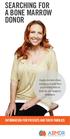 SEARCHING FOR A BONE MARROW DONOR Angela received a bone marrow transplant from an unrelated donor to treat her non-hodgkin s lymphoma. INFORMATION FOR PATIENTS AND THEIR FAMILIES For patients who need
Cancer services children s CSCF v3.2
 Cancer services children s CSCF v3.2 Module overview Please note: This module should be read in conjunction with the Fundamentals of the Framework (including glossary and acronym list), Children s Services
Umbilical Cord Blood Stem Cells Current Status & Future Potential
 Umbilical Cord Blood Stem Cells Current Status & Future Potential Natasha Ali Assistant Professor Haematology Department of Pathology & Laboratory Medicine/Oncology The Aga Khan University Email: [email protected]
MEDICAL COVERAGE POLICY
 Important note Even though this policy may indicate that a particular service or supply is considered covered, this conclusion is not necessarily based upon the terms of your particular benefit plan. Each
4/25/2016. Transplant Journey. Objectives. Reason for Transplantation at Mayo Clinic. Mayo Clinic Model of Care
 Transplant Journey Lynette Fix, RN, BAN, CCTC Objectives Identify key components of transplant evaluation process Identify the patient follow-up process Describe diseases indicated for transplantation
Outcome of Unrelated HSCT in Patients Lacking HLA Matched Related Donors: Iranian Stem Cell Donor Program (ISCDP)
 Outcome of Unrelated HSCT in Patients Lacking HLA Matched Related Donors: Iranian Stem Cell Donor Program (ISCDP) October 18, 2014 19th Congress of APBMT, Hangzhou, China AMIR ALI HAMIDIEH, MD Iranian
Challenges of Hematopoietic Stem Cell Transplantation. Robert J. Soiffer, MD Dana Farber Cancer Institute
 Challenges of Hematopoietic Stem Cell Transplantation Robert J. Soiffer, MD Dana Farber Cancer Institute Hematopoietic Stem Cell Transplantation Objectives Deliver sufficient chemo-radio therapy to destroy
How To Understand The Science Of Cord Blood
 The Future of Unrelated Donor Stem Cell Transplantation in the UK Part 2 Annexes A Report from the UK Stem Cell Strategic Forum July 2010 www.nhsbt.nhs.uk Table of Contents Abbreviations... 6 Glossary...
Stem Cell Transplantation and the Canadian First Nations Community. Becky Luk (PTLS) Tanya Petraszko, MD
 Stem Cell Transplantation and the Canadian First Nations Community Becky Luk (PTLS) Tanya Petraszko, MD Why is there a need for stem cells? Our Story Why are we engaging the First Nations, Metis and Inuit
Collaboration to collect Autologous transplant outcomes in Lymphoma and Myeloma (CALM) Additional Questionnaire (MED C) INCLUSION CRITERIA CALM STUDY
 Additional Questionnaire (MED C) CALM study Inclusion period: 01/01/2008 to 31/12/2011 PATIENT REGISTRATION FORM Disease Diagnosis Lymphoma S Non Hodgkin Lymphoma (NHL) Mature B-cell neoplasm Follicular
5. All cord blood banks should be subject to the same standards, regulations and accreditation requirements.
 WMDA Policy Statement for the Utility of Autologous or Family Cord Blood Unit Storage (This policy statement has been approved and adopted by the WMDA board on the 25 th of May 2006) The Cord Blood Registries
Tράπεζα Αίματος Ομφάλιου Λώρου Umbilical Cord Blood Bank
 Tράπεζα Αίματος Ομφάλιου Λώρου Umbilical Cord Blood Bank The first Stem cell bank in Europe Lifeline was established in the UK in 1994 and has been operating in Cyprus as a regional bank providing cord
4. All cord blood banks should be subject to the same standards, regulations and accreditation requirements.
 WMDA Policy Statement on the Utility of Autologous or Family Cord Blood Unit Storage The WMDA Board adopted this policy on 25 th of May 2006. Policy updated _April 2011 The Cord Blood Working Group and
Bone Marrow or Blood Stem Cell Transplants in Children With Severe Forms of Autoimmune Disorders or Certain Types of Cancer
 Bone Marrow or Blood Stem Cell Transplants in Children With Severe Forms of Autoimmune Disorders or Certain Types of Cancer A Review of the Research for Parents and Caregivers Is This Information Right
Stem Cell Transplantation in Adults
 Recommendation Report Stem Cell Transplantation in Adults K. Imrie, R.B. Rumble, M. Crump, the Advisory Panel on Bone Marrow and Stem Cell Transplantation, and the Hematology Disease Site Group of Cancer
How To Treat Leukaemia With Cord Blood Stem Cell
 Cord blood for the treatment of acute lymphoblastic leukemia in young children By Caitlin McGreevy Kiara Paramjothy Pass with Merit RESEARCH PAPER BASED ON PATHOLOGY LECTURES AT MEDLINK 2011 1 Abstract:
Unrelated Donor Stem Cell Transplantation in the UK
 Unrelated Donor Stem Cell Transplantation in the UK Effective Affordable Sustainable A Report from the UK Stem Cell Strategy Oversight Committee November 2014 www.nhsbt.nhs.uk Contents Introduction 3
Corporate Medical Policy Cord Blood as a Source of Stem Cells
 Corporate Medical Policy Cord Blood as a Source of Stem Cells File Name: Origination: Last CAP Review: Next CAP Review: Last Review cord_blood_as_a_source_of_stem_cells 2/2001 3/2015 3/2016 3/2015 Description
guides BIOLOGY OF AGING STEM CELLS An introduction to aging science brought to you by the American Federation for Aging Research
 infoaging guides BIOLOGY OF AGING STEM CELLS An introduction to aging science brought to you by the American Federation for Aging Research WHAT ARE STEM CELLS? Stem cells are cells that, in cell cultures
New Zealand Bone Marrow Donor Registry
 Title: Authorised by: SECTION 9.0 NZBMDR STANDARDS PROCESS FOR AN UNRELATED STEM CELL DONOR WORKUP & IDENTIFICATION OF CORD BLOOD UNITS Executive Officer Contributing Authors: Sally Gordon Dr Hilary Blacklock
Stem Cell Transplantation In Patients with Fanconi Anemia
 Stem Cell Transplantation In Patients with Fanconi Anemia FARF Annual Family Meeting 6/28/15 Casco, ME Parinda A. Mehta, M.D. Cincinnati Children s Hospital Medical Center Improvements in Unrelated Donor
Careers in Haematology
 Careers in Haematology A Guide for Medical Students and Junior Doctors Haematology is the medical speciality concerned with blood disorders. Your non-medical friends however will always think that you
Graft Failure After HSCT
 Graft Failure After HSCT Vanderson Rocha, MD, PhD Professor of Haematology- Oxford University Bone Marrow Transplant Unit- Sirio Libanes Hospital- Sao Paulo Scientific Director of Eurocord-Paris Clinical
Summary of Advisory Council on Blood Stem Cell Transplantation: Recommendations and Status
 of Advisory Council on Blood Stem Cell Transplantation: Recommendations and Shelley Grant Branch Chief, Blood Stem Cell Transplantation Program September 11, 2015 Overview December 20, 2005 - HRSA began
On April 4, a group of physicians at the 37th annual
 By Ronale Tucker Rhodes, MS Better gene sampling and newer transplant regimens are making stem cell transplantation possible for a host of disease states that previously were rarely considered for this
Umbilical Cord Blood Transplantation
 Umbilical Cord Blood Transplantation V Rocha MD, PhD Hopital Saint Louis, Paris University 7 CIBMTR Milwaukee Umbilical Cord blood transplantation Background History Clinical results in children and adults
Donating stem cells. What s involved?
 Donating stem cells What s involved? Revised February 2012 The diagnosis of a blood cancer can be a devastating event for patients, families and friends. It is therefore vital for everyone to have access
storage and handling of unused stem cell products Swiss consensus?
 storage and handling of unused stem cell products Swiss consensus? 16. Jan. 2015 Panagiotis Samaras, Mario Bargetzi stored units USZ Type of unused product autologous stem cells never transplanted 2nd
Severe Combined Immune Deficiency (SCID)
 Severe Combined Immune Deficiency (SCID) ASCIA EDUCATION RESOURCES (AER) PATIENT INFORMATION Severe combined immune deficiency (SCID) is the most serious form of primary immune deficiency and is usually
Directed/Related Cord Blood Collection by NHS Blood and Transplant
 Directed/Related Cord Blood Collection by Jacqui Thompson Clinical Scientist Section Head of Specialist Procedures Stem Cells and Immunotherapies Department National Blood Service, NHSBT Birmingham Why
Phone: +44 20 8123 2220 Fax: +44 207 900 3970 [email protected] http://marketpublishers.com
 Global Stem Cell Umbilical Cord Blood (UCB) Market (Storage Service, Therapeutics, Application, Geography) - Size, Share, Global Trends, Analysis, Opportunities, Growth, Intelligence and Forecast, 2012-2020
Summary of the risk management plan (RMP) for Accofil (filgrastim)
 EMA/475472/2014 Summary of the risk management plan (RMP) for Accofil (filgrastim) This is a summary of the risk management plan (RMP) for Accofil, which details the measures to be taken in order to ensure
STEM CELLS FROM THE UMBLICAL CORD BLOOD AND UMBLICAL CORD TISSUE
 STEM CELLS FROM THE UMBLICAL CORD BLOOD AND UMBLICAL CORD TISSUE What are Stem Cells? Stem cells are the basic building blocks of all the cells, tissues and organs in the human body. The role of the stem
How do I find the best place to get treatment for my lymphoma?
 Produced November 2010 Next revision due November 2012 How do I find the best place to get treatment for my lymphoma? Introduction Fortunately this is not a question that patients with cancers of the blood
The Infinite Potential of Stem Cell Japan s Cord Blood Bank and Transplant
 The Infinite Potential of Stem Cell Japan s Cord Blood Bank and Transplant Speech by Dr. Tsuneo A. Takahashi Translated by Stella Wang Japan and the United States are the two most experienced countries
Blood and Marrow Stem Cell Transplantation LEUKEMIA LYMPHOMA MYELOMA
 Blood and Marrow Stem Cell Transplantation LEUKEMIA LYMPHOMA MYELOMA Table of Contents Introduction 1 Here to Help 2 Normal Blood and Marrow 4 Overview and Types of Stem Cell Transplantation 6 Stem Cell