
A DATABASE-BACKED CLIENT-SERVER APPLICATION IN JAVA FOR CUSTOMER BOOKINGS
|
|
|
- Dina King
- 10 years ago
- Views:
Transcription
1 Master Thesis, 10 points A DATABASE-BACKED CLIENT-SERVER APPLICATION IN JAVA FOR CUSTOMER BOOKINGS Reg.kod: Oru-Te-EXD088-D101/03 Rolando Ccorahua Corneliosson Programme for Computer Engineering, 160 points Örebro-Sweden Autumn 2003 Supervisor: Thomas Padron-McCarthy Examiner: Lars Karlsson Örebro universitet Örebro University Institutionen för teknik Department of technology Örebro SE Örebro, Sweden

2 Preface This report has been done by Rolando Ccorahua Corneliosson. The report describes a 10- point project in order to complete a masters degree in Computer Engineering at the University of Örebro, Sweden. The project has been done during the autumn term of (35)

3 Abstract This report describes the development of two applications and a database. The first application is a client application and the second application is a server application. The server application will perform the link function between the client and the database source. The aim of this system is to handle the database administration at The Tigers, which is a chain of gyms in Sevilla, Spain. The chain consists of four gyms, located in different places. To develop this system, technologies such as Java, Microsoft Access 2000, Windows 2000 Professional and Windows 2000 Advanced Server were used. 3(35)

4 CONTENTS CONTENTS BACKGROUND INTRODUCTION TASK REQUIREMENTS CLIENT APPLICATION SERVER APPLICATION DATABASE IMPLEMENTATION TOOLS JAVA MICROSOFT ACCESS CONNECTION TO A DATABASE JDBC ODBC JDBC-ODBC Bridge SQL DESIGN OF THE SYSTEM DESIGN TOOLS THE SYSTEM SEEN FROM THE USER S POINT OF VIEW SUBSYSTEM Class diagram for the client application Class diagram for the server application COMMUNICATION CLIENT AND SERVER APPLICATION INTERACTING WITH STREAM SOCKET CONNECTIONS MAKING CONNECTION AND INTERCHANGING DATA TO MANIPULATE THE DATABASE DATABASE Clarifications about certain fields SECURITY CRYPTOGRAPHY INTRANET RESULT CLIENT APPLICATION CUSTOMER Components and their functionalities The file menu The help menu Check layer Search layer Add layer Delete layer Change layer (35)

5 9.2 SERVER APPLICATION 2DB Components and their functionalities Clients connecting The file menu The help menu INSTALLATION CONCLUSION WHAT I LEARNT CURRENT LIMITATIONS AND FUTURE IMPROVEMENTS TERMINOLOGY REFERENCES (35)

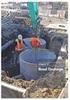
6 1 Background The Tigers is a company, which consists of four different training centers. The company is set up in Sevilla, Spain. The training centers offer people different sort of activities, such as gym, aerobics and spinning. In order to be able to enter the centers you have to be either a member or pay for each running session. 2 Introduction Many companies dealing with a big amount of data are dependent on a database program to store the entries. In this case the company has four different training centers, and in order to handle the membership every training center is supplied with a computer running Windows 2000 Professional as operating system. The information about the members is stored in a database program called Microsoft Access This means that The Tigers have four different databases, each of them for one training center. The members are assigned a unique identification number in order to get in their respective training centers. Since it has becoming more and more popular to stay fit, active and healthy for significantly longer than the preceding generation, the amount of members at The Tigers has increased during the last 2 years. At this moment the amount of members in each center is around Considering the member increase, the company has made the decision to set up an Intranet so that the computers may be able to communicate with each other, and in that way have only one database instead of having four. This solution would enable any member to enter any of the four gyms, which is not possible at this time. For this reason they need a GUI application in order to interact with the database program. Figure 1: The gym 6(35)

7 3 Task The goal is to develop a system consisting of two applications to access and manipulate a database. The first application will be a client application and the other one will be a server application. This second one will perform the link function between the client and the database program. This means that the client to make any request to the database has to go through the server application (server process). In this way you make the communication more secure. Usually if you use a client/server database, such as Oracle or Microsoft SQL Server, the database management systems can store individual SQL statements or sets of SQL statements in a database. Such SQL statements are called stored procedures so that programs accessing that database can invoke them. Stored procedures assist in achieving a consistent implementation of logic across applications. The SQL statements and logic needed to perform a commonly performed task can be designed, coded, and tested once in a stored procedure. Each application (i.e. client application) needing to perform that task can then simply execute the stored procedure. However the Microsoft Access 2000 does not support stored procedures. So that instead of implementing store procedures, SQL statements will be embedded in a set of functions, which will be implemented in the server application. Each client application may then invoke the functions to request information that satisfies given criteria. The following figure shows the system to be developed. Client Application Client Application Server Application Client Application Database Client Application Figure 2: System to be developed 7(35)

8 4 Requirements There are here some basic requirements that must be fulfilled in order to handle the members of the gym in The Tigers: 4.1 Client application An application with a GUI similar to the Windows standard GUI will be developed. The client application will be developed with functionality that will present a userfriendly mechanism for interacting with the server application. The GUI will have components, such as check, search, add, delete and change to easily manipulate data in the database through the server application. The GUI will have menu components, such as file and help. The file menu will contain two sub menus. The first one will be connect and the second one exit. Clicking on connect will activate a dialogue box. The dialogue box will contain three text fields to enter IP-address, user name and password. Clicking on exit will close the application. The help menu will contain two sub menus. The first one will be Help Topics and the second one About. Clicking on Help Topics a help file will be started and clicking on About an information about the program and its developer will appear. The GUI will have a component that will display the connection status to the server application. This means that it will display whether the connection to the server application succeeds or not. The GUI will have a component, which displays whether a certain operation succeeds or not. Such an operation could be check, search, add, delete or change. The application will be run on Windows 2000 Professional. 4.2 Server application An application with a GUI similar to the Windows standard GUI will be developed.. The server application will automatically establish a connection to the database server when it starts. The server application will have a component that will display the connection status to the database server. This means that it will display whether the connection to the database server succeeds or not. 8(35)

9 The server application will contain components, which will display the number of client applications connected to the database server. The server application will show what kind of operation a certain client is making. Such operation may be Search, Add, Delete, Check or Update. The server application will accept only four clients simultaneously. The server application will have menu components, such as file and help. The file menu will contain only one sub menu, exit. Clicking on exit will close the application. The help menu will contain two sub menus. The first one will be Help Topics and the second one About. Clicking on Help Topics a help file will be started and clicking on About an information about the program and its developer will appear. The server application will be run on Windows 2000 Advanced Server. 4.3 Database The database program to store information about the customers will be Microsoft Access A suitable database will be developed to store all the information about the members. The user names and the passwords used by the client applications will also be store in the same database as the information about the members. This means that there will be developed one table for storing information about the members and another table for storing user names and passwords. 5 Implementation tools There are many different programming languages that can be used to develop an application to manipulate data in a database system, such as Oracle, SQL server and Microsoft Access Such languages are C++, Visual Basic and Java. Since the company may change the platform in the future I chose Java to develop both applications. The technologies used in order to implement the system are briefly described in the following sections. Notice that if you would like to know more about these technologies, look at section 12 where you find some sources related to them [1, 4, 6, 7, 9]. 5.1 Java Java is an object-oriented language, which was developed at Sun Microsystems. Java was announced to the world On May 23, 1995 that it was official. Since then Java has become the language of choice for implementing Internet and Intranet-based applications and software for devices that communicate over a network. It is no longer a language used simply to make 9(35)

10 World Wide Web pages. It is one of the languages for meeting many organisations programming needs. This means that you can develop applets and applications with Java. The difference between an application and an applet is that an application is a program, such as an program, a drawing program, which is normally executed from the user s local computer, and an applet is a small program, which is normally stored and loaded from a remote computer into the browser, executed in the browser and discarded when execution completes. A major advantage of Java is its platform independence. The same compiled code can be run on any machine or web browser that supports Java. Java source code is compiled into Java byte code, which is platform independent. At run time, this byte code is executed by a Java interpreter. These interpreters are platform dependent and exist on each machine or within a web browser. For running independent applications, the interpreter can be downloaded and installed onto any machine for free. You can even download the entire JDK (Java Developers Kit), which is also free. This includes all the compilers, libraries, and other tools necessary to develop Java applications. There is of course disadvantage with java as with everything. The major disadvantage of Java, from an applet user s perspective, is the speed of execution. This can be frustratingly slow due to the limited bandwidth of the communications channel and the added delay caused by the network browser translating the byte code. It is also slow when executing an application in comparison with applications developed with C++ or Visual Basic. However, Java continues to grow rapidly and will always have a place in the programming world. 5.2 Microsoft Access 2000 Access 2000 is the fifth version of the successful desktop database from Microsoft. The first version was released in Each release of Access has added features and increased usability, and with Access 2000 you can now have a unified development environment for the whole of the Office 2000 suite of applications. 5.3 Connection to a database A database is an organised collection of data. There are different methods for organising data to facilitate easy access and manipulation. A database management system (DBMS) provides mechanisms for storing and organising data consistently. Today s most popular database systems are relational databases, such as Oracle, Microsoft SQL Server and MySQL. In this project I used Microsoft Access The Java application communicates with the database, and manipulates its data, using the JDBC-ODBC Bridge. 10(35)

11 5.3.1 JDBC JDBC stands for Java Database Connectivity. It is a technology developed at Sun Microsystems, which is used for allowing external access to SQL database manipulation and update commands. This means that a JDBC driver implements the interface to a particular database. Most popular database management systems now include JDBC drivers ODBC ODBC stands for Open Database Connectivity. It is a standard designed by Microsoft, which allows applications to access databases in various platforms. ODBC enabled applications can easily access data in any database that provides an ODBC driver for that particular database. There are two versions of ODBC, ODBC32 and ODBC. The first one is for modern databases and the second one is for old databases JDBC-ODBC Bridge The JDBC-ODBC driver connects Java programs to Microsoft ODBC (Open Database Connectivity) data sources. The Bridge is installed automatically with the Java 2 Software Development Kit (J2SDK), Standard Edition, and is implemented as package sun.jdbc.odbc. The Bridge is used by opening a JDBC connection using an URL with the odbc sub protocol, which is of the form: jdbc:odbc:<data-source-name>[;<attribute-name>=<attribute-value>]* For example: JDBC:ODBC:MYDB;UID=MYID;PWD=MYPASSWORD Before a connection can be established, the bridge driver class, sun.jdbc.odbc.jdbcodbcdriver, must be explicitly loaded using the Java class loader. Explicit loading is done with the following line of code: Class.forName("sun.jdbc.odbc.JdbcOdbcDriver"); The whole Java connection code to a certain database source (i.e. Microsoft Access 2000) may be of the following form: Connection myconnection = null; String url="jdbc:odbc:mydb.mdb"; Class.forName ("sun.jdbc.odbc.jdbcodbcdriver"); myconnection =DriverManager.getConnection (url); 11(35)

12 5.3.4 SQL SQL stands for Structured Query Language. SQL is the standard language used among relational database systems to make queries. SQL statements are used to perform tasks, such as update data on a database, or retrieve data from a database [7]. Some relational database management systems that use SQL language are: Oracle, Microsoft Access 2000 and Microsoft SQL Server. For example a SQL statement in order to select information about a certain person stored in the database may be of the following form: SELECT * FROM customer WHERE customerid = After executing the statement above the retrieved data from the database customer will be all the information about the person who has as customer Id. 6 Design of the system 6.1 Design tools In order to develop the system I used the following software and hardware: A server computer, Intel Pentium 4, processor speed 2000 MHz and memory 1024 MB. Four workstations, Intel Pentium 2, processor speed 266 MHz and memory 128 MB. Microsoft Windows 2000 Professional as operating system in the workstations. Microsoft Windows 2000 Advanced Server as operating system in the server computer. The database program Microsoft Access Borland JBuilder 8.0 for programming. TextPad 4.0.5: 32-bit Edition for programming. Microsoft Word 2000 for writing some documents. 12(35)

13 6.2 The system seen from the user s point of view The figure below is about the architecture of the whole system. It shows how the subsystems are related to one another. Computer one Client application Request Intranet Server computer Response Computer two Client application... Server application (select, update ) Database Computer three Client application... Computer four Client application... Figure 3: Architecture of the whole system 6.3 Subsystem Before a system is validated many tests must be done first. Every single subsystem must work properly. In this case it means that in order to test the server application, a database server must be available, otherwise the server application would not be tested at all. It is the same case with the client application: a server application must be available and work properly before the application can be tested. In order to picture this, look at the figure below. 13(35)

14 Subsystem Server application Subsystem Client application check() search() add() delete() change() Subsystem CustomerDB Figure 4: Architecture of the subsystems Class diagram for the client application In order to implement the client application one designed the class diagram in figure 5. The diagram models the general structure of the application by depicting the classes, or building blocks, of the system. Notice that the diagram only shows the most important classes and their important attributes (variables) and operations (functions). Figure 5: Classes of the client application The diamond on the association lines of figure 5 indicates, for example, that the Client class is built of the ThePanel class. Such relationship is called aggregation. This means that the ThePanel class is an aggregation of one object of class Socket, PrintWriter, BufferedReader and PanelListener. The arrow expressing the relationship between class PanelListener and ActionListener is not solid. It is dashed. This means that the PanelListener realizes, or implements the interface ActionListener. 14(35)

15 6.3.2 Class diagram for the server application In order to implement the server application one designed the class diagram in figure 6. The diagram models the general structure of the application by depicting the classes, or building blocks, of the system. Notice that the diagram only shows the most important classes and their important attributes (variables) and operations (functions). Figure 6: Classes of the server application The diamond on the association lines of figure 6 indicates that the CustomerMain class is built of the ServerSocket and that the CustomerThread class is an aggregation of one object of class Socket, PrintWriter and BufferedReader. The dashed arrow expresses dependency. This means that the CustomerThread class depends on the CustomerFunctions and CustomerMain class. What is more, the CustomerFunctions class depends on CustomerRecord class. 15(35)

16 7 Communication The communication applied between the client and the server application is socket-based communication. An application or program can read from a socket or write to a socket in the same way as when reading from a file or writing to a file. Since the applications interchange information, a stream socket is used. With a stream socket, a process (called the client process) establishes a connection to another process (called server process). While the connection is in place, data flows between the applications in continuous streams. The protocol used for transmission of data is the popular TCP/IP (Transfer Control Protocol/Internet Protocol). TCP moves multiple packets of data between applications and IP moves data between host computers. This means that both go together in order to switch packets from computer systems on any network to another network. Using only IP would be useless without any transportation protocol such as TCP [5]. 7.1 Client and Server application Interacting with Stream Socket connections It is the server application that will create a server-socket object, in order to listen for clients that try to connect to it. It will currently accept only four clients. When the application starts, it creates automatically a Server Socket object. A call to the ServerSocket constructor is made as follows: ServerSocket listening = new ServerSocket(port); The constructor establishes the port where the server waits for connection from clients. The port number is used by the client application to locate the server application. Port numbers between 0 and can be used. The ports below 1024 are reserved for system services (i.e. World Wide Web and FTP servers). In this project a port above 1024 is used. In order to connect to the server application, the client application creates a Socket object as follows: Server connecting = new Server(serverAddress, port); The constructor takes two arguments. The first one is the IP address to the server computer where the server application is run and the second one is the port number where the server application waits for any connection. In this project the port is fixed but the IP address (server address) is not. When trying to connect the client application to the server application, the user must enter in the dialogue box, a user name, a password and an IP address. See section , figure 17. All this means that when the two objects are created, a connection is established between the server application and the client application. A general overview about the whole system using the TCP/IP protocol is showed in the figure below. 16(35)

17 Client host Server host Operating System Operating System Client CUSTOMER Client TELNET Server process 2DB Server TELNET Port Port Port Port TCP TCP IP IP Figure 7: Communication over the Intranet 7.2 Making connection and interchanging data to manipulate the database The applications use a kind of own protocol to communicate to one another. First of all, in order to manipulate the data source a connection between the client and server application must be established. The connection process is shown in the table below. Client application Customer Client number one connects Sends "CONTROL; user name; password" Client number two connects Sends "CONTROL; user name; password" Client number three connects Sends "CONTROL; user name; password" Client number four connects Sends "CONTROL; user name; password" Client number five connects Server application 2DB Accepts Checks the user name and the password in the database. If the client exists, It sends back "ACK", if not, it sends back "NACK" and closes the client. Accepts Checks the user name and the password in the database. If the client exists, It sends back "ACK", if not, it sends back "NACK" and closes the client. Accepts Checks the user name and the password in the database. If the client exists, It sends back "ACK", if not, it sends back "NACK" and closes the client. Accepts Checks the user name and the password in the database. If the client exists, It sends back "ACK", if not, it sends back "NACK" and closes the client. Does not accept and sends back "TRY LATER" Figure 8: Table showing the connection process 17(35)

18 Once a connection has been established between the client and server application, the manipulation of data in the database server can begin. Look at the communication system in the table below: Client application Customer Server application 2DB Request Response Operation Operation suceeds Operation fails Checking "CHECK;customerId" "ACK;name;age;..." NACK Search "S;Idnumber" "ACK;customerId;Name; " NACK Add "A;name;age " "ACK;customerId" NACK Delete "D;Idnumber" "ACK" NACK Update "U;adress;activity..." "ACK" NACK Figure 9: Table showing the interchange of data From the table above you can see that the client only sends strings to the server application. It is the server application that acquires the correct data from the string in order to manipulate the database. If it gets wrong data or the operation fails, it sends back NACK to the client application. When the operation succeeds it sends back ACK, plus a few parameters dependent on what the client application is requesting. For instance if the client application requests information about a certain member it sends the message CHECK, plus the customer-id, and the server application sends back ACK, plus information about the member, such as name, age and address. See figure Database The database program used in this project is Microsoft Access It contains two tables. The first one is for storing the user names and passwords. The user names and passwords are used by the client application in order to connect to the server application. The second table is for storing information about the members. These two tables have the following schemas: Figure 10: Database table, secretdb Figure 11: Database table, customers Clarifications about certain fields In the table secretdb, figure 10, the both fields are unique. This means that in those fields should not be entered the same user name or same password twice. If you want to know more about databases, it is recommended to buy a book about it, because in this report I am just going through, quite briefly, the database used in this project. There is a reference list in section 12 where you may find the name of a suitable book [3]. 18(35)

19 What about the table customer? See figure 12. The field customerid and the field idnumber are indexed. By having this fields indexed you make for example searching operations faster. Indexing also means that the values in these fields are unique. Since the values in field customerid and idnumber are unique, there should not be entered two different members with the same customer-id number or identification number. The field onoff contains the values ON/OFF. When a certain member is not allowed anymore to enter the gym, in such situation this field is set to OFF, otherwise ON. There could be any number of reasons for this. (e.g. not enough credit). Look at the picture below. Figure 12: Some entries In the figure above you see that the field onoff is set to OFF. That is because the member Maria has paid only until , as shown in the field duration in figure 12. She cannot enter the gym until she renews her membership. What the other fields stand for is obvious. 8 Security The security issues arise when communicating in computer networks. Actually breaking into a computer system or sniffing transferred information is a everyday problem. For instance computers joined a network can be protected from intruders by using firewalls. Even if the computer network would be safe, the transferred information in the network would still be unsafe. Therefore one should put more effort to protect data communication across the network systems from revealing its contents. Cryptography and intranet using VPN (Virtual Private Network) technology are methods to increase the security, in order to protect computer networks, their applications and the communication across the network. 8.1 Cryptography This technique is useful to protect the transferring data across the network. The transferred data to be encrypted is called plaintext and the output of the encryption is called ciphertext. Besides the function, which encrypts the plaintext is parameterized by a key. For instance when an intruder captures a packet, he or she does not know what the decryption key is and cannot decrypt the ciphertext easily [5]. Look at the figure below. Intruders Plaintext Encryption function Ciphertext Decryption function Plaintext Encryption key Figure 13: Cryptography process Decryption key 19(35)

20 8.2 Intranet An intranet is a network within an organization that uses Internet technologies to enable users to find, use, and share documents and web pages. When it comes to security the software and the computer system joined by an intranet, are isolated from outsiders. This is because the computers are kept within a firewall. The firewall inspects every incoming or outgoing packet [5]. To increase the security level more one can use VPN hubs integrated firewalls, which provides secure tunnelling over any supported WAN or Internet link so that computers can safely send data across the network. In that way the communications between network computers, applications and users across the intranets will be safe. A solution using a firewall integrated with VPN may be as the figure below. Client Firewall integrated with VPN VPN tunnel Internet Firewall integrated with VPN Server Figure 14: Applying VPN tunnel This project is about a client application and a server application, which are run on computers joined by an intranet. Since the server application accepts remote logins, the user names and the passwords sent by the client application become easy to be tapped. This makes the system more vulnerable. In order to make the system more secure, the user names, the passwords and other transferred data should not be sent as plaintext, instead they should be encrypted first, and decrypted with a suitable method when the encrypted data is received. Since the encryption is not done in this project, The Tigers will use a technique similar to the figure 14, in order to protect the computers, their applications and the communication across the network. 20(35)
![The firewall inspects every incoming or outgoing packet [5].](/docs-images/43/13326357/images/page_20.jpg "To increase the security level more one can use VPN hubs integrated firewalls, which provides secure tunnelling over any supported WAN or Internet link so that computers can safely send data across")
21 9 Result 9.1 Client application Customer This is a GUI (Graphical user Interface) application that is applied in order to administrate the membership at The Tigers.The application contains two menu components, the file menu and the help menu. Furthermore it contains five different tabs, which are labelled with Check, Search, Add, Delete and Change. When starting the program the Check layer is visible. Otherwise when the user clicks a tab (layer), the appropriate layer is displayed. What is more, the application is not connected to the server application, hence the message NOT CONNECTED. Concerning how to connect, see section , figure 17. Once the connection is made, the label changes to CONNECTED, see section , figure 21. The GUI also contains some other labels and text areas, in order to show the information about the members. After starting the application looks like the following picture. Figure 15: Customer application 21(35)
22 9.1.1 Components and their functionalities The file menu The file menu contains two items. The first one is Connect, and the second one is Exit. In order to close the application one clicks Exit. Look at the picture below. Figure 16: File menu When clicking the sub menu Connect, a dialog window is shown. The dialog window contains three text fields, where the user is supposed to enter the name or IP-address of the remote computer (server computer), the user name and the password. Look at the picture below. Figure 17: Dialog box The help menu The help menu contains two items. The first one is Help Topic, and the second one is About. Look at the picture below. Figure 18: Help menu 22(35)
23 When clicking the sub-menu Help Topic, a web browser is started, showing an html file with the help re related to the application s functionality. Look at the picture below. Figure 19: Help file about the client application When clicking the sub-menu About, a separate window is opened, showing the name of the company and the name of the developer of this application. Look at the picture below. Figure 20: About menu Check layer When this layer is visible you see many components, such as labels and text fields. The function of this layer is to display the connection status to the server application and to control the membership. When a customer arrives at the gym, they have to identify themselves by giving their customer-id. This customer-id is entered in the text field. After this operation you click the Search button in order to check if this member exists in the database. For instance if a member with customer-id exists in the database you will get the information about the member according to the picture below (see figure 21). The message ON means that the member has paid in advanced and is allowed to get in the gym, otherwise OFF. The message SUCCESSFUL means that the check operation has succeeded. 23(35)
24 Figure 21: Check layer. Retrieving data. If the member does not exit you will get empty fields according to the picture below, see figure 22. The message UNSUCCESSFUL means that the check operation has failed. In order to make a new check operation, click the New button. Figure 22: Check layer. Operation fails. 24(35)
25 Search layer The function of this layer is to search for a member in the database. It may happen that the customers forget their customer-id. In such situations you enter their identification number in the text field. In this case the customer-id we are looking for is Furthermore you get some other information about the member, such as name, age, address, gender. See figure 23. The message SUCCESSFUL means that the search operation has succeeded. Figure 23: Search layer If the member does not exit you will get empty fields according to the picture below, see figure 24. The message UNSUCCESSFUL means that the search operation has failed. In order to make a new search operation, click the New button. Figure 24: Search layer. Operation fails 25(35)
26 Add layer The function of this layer is to add a member in the database. You fill the fields according to the picture below and click the OK button. Figure 25: Add layer If the add operation goes well you receive a customer-id according to picture below (see figure 26). The customer-id is randomly generated by the server application. In this case the customer-id is This customer-id is used by the member every time the member wants to get into the gym. The message SUCCESSFUL means that the add operation has succeeded. To add a new member, click the New button. Figure 26: Add layer. Getting a customer ID. 26(35)
27 Delete layer The function of this layer is to delete a member in the database. You enter the identification number of the member, as shown in the picture below, and click the Delete button. Figure 27: Delete layer If the delete operation goes well, the message SUCCESSFUL displays, which means that the delete operation has succeeded. See figure 28. To enter a new identification number in order to delete it, click the New button. Figure 28: Delete layer. Deleting a member. 27(35)
28 Change layer The function of this layer is to update the information about a certain member in the database. You enter the identification number and get all the information about the member, as shown in the picture below. Figure 29: Change layer Then you make the changes needed and click the Update button. If the update operation succeeds, a message UPDATED is displayed instead of SUCCESSFUL. See figure 30. To update a new member, click the New button. Figure 30: Change layer. Updating a member. 28(35)
29 9.2 Server application 2DB This application is run on the server computer. When starting this application it will immediately make a connection to the database server. Each client application is handled by this application in order to contact the database server. When starting the application you will see a GUI (Graphical User Interface) according to the picture below. Figure 31: Server application after starting Components and their functionalities The application contains a file menu, a help menu, two labels and four different text areas. Each area displays the commands made by a certain client application. When a connection to the database is established a label, Connected to DB, is displayed. Otherwise, the label Not connected! is displayed. See the picture above, figure Clients connecting When a client is connected to this application, you see that in the text area. What is more, you see the IP address or the name of the client computer, the time of connection of the client computer and what kind of operation a particular client is doing (i.e. check, add, delete, etc). Look at the picture below. 29(35)
30 Figure 32: Displaying operations performed by two clients The file menu The file menu contains just one item, Exit, which closes the application according to the picture below. Figure 33: Exit menu The help menu The help menu contains 2 items. The first one is Help Topic, and the second one is About. Look at the picture below. Figure 34: Help menu 30(35)
31 When clicking the sub-menu Help Topic, a web browser is started, showing an html file with the help re related to the application s functionality. Look at the picture below. Figure 35: Help file about the server application When clicking the sub-menu, About, a separate window is opened, showing the name of the company and the name of the developer of this application. Look at the picture below. Figure 36: About menu 31(35)
32 10 Installation At this time The Tigers is still using the old system. Every training center is supplied with a computer running Windows 2000 Professional as operating system. Each computer has an own database program called Microsoft Access 2000, which the information about the members is stored in. Each database is for each training center. The new system will be setup somewhere in the beginning of the summer As it is written in section 4, the client application will be run on a computer running Windows 2000 Professional, the server application will be run on a computer running Windows 2000 Advanced Server and the database program Microsoft Access 2000 will be installed in the server computer, where the all members at The Tigers will be stored. At the moment they are planning how to set up the intranet. Configuration concerning the database server, the client application and the server application will be done by me once the intranet has been setup. Of course unexpected problems can always occur, in that case those problems will be solved in place (at The Tigers). 32(35)
33 11 Conclusion 11.1 What I learnt There are many methods to develop software. What is more, there are plenty of languages to develop it in. In this case I chose Java in order to develop the applications. The applications fulfil the user requirements needed to administrate the database at the company, The Tigers. I learnt a lot developing these applications. Especially I really improved my skills at Java programming, and my understanding of the communication between two applications running in different computers joined by an Intranet. Another thing I learnt is how important it is to plan before beginning to program or write the source code. By planning one accomplishes any project in more effective way. The time of developing can also be a bit deceptive, for instance if you think that you will finish a certain project in a week, in reality you should multiply this time by three, because that is the time, which will take to finish it Current limitations and future improvements Since these applications are developed with Java, it will not be any problem with running them on another platform, such as Linux. If the company makes the decision to change the platform, they will not have any problem with it. I think the company will use this application at least for a while. Of course as with other small software applications, it will need changes as the entire system keeps changing. When it comes to limitations, three more things should be improved. First, the GUI of the server application should be developed in another way. The current developed GUI contains four text areas to show each client and its performed operations, such as Check, Search, Change, Delete and Add. But what if The Tigers decides to set up one more gym, then they will have a lot of work to do, because some programmer must make a lot of changes in the source code in order to generate one more text area. The solution to this issue would be a GUI with only one text area showing all the connected clients. In this way the programmer would change only the number of clients allowed in the source code. Second, the GUI of the server application should contain a dialog box, in order to enter the user name and the password to connect to the database server, because the current server application connects to the database server without using any user name or password, which is bad for security reasons. At last, an encryption algorithm should be developed to at least encrypt the user names and the passwords sent by the clients, in order to improve the security even more. 33(35)
34 12 Terminology Oracle C++ Database Management System developed by Oracle Corporation. An object-oriented programming language created by Bjarne Stroustrup at Bell Labs during and extensively modified afterwards. It is an extension of C. Visual Basic A graphical programming language developed by Microsoft. Java MySQL An object-oriented programming language developed by Sun Microsystems. An open source database developed by MySQL AB. SQL Server A database program developed by Microsoft. Intranet ODBC JDBC SQL TCP IP VPN An intranet is a network within an organization that uses Internet technologies to enable users to find, use, and share documents and web pages. Intranets use traditional Internet protocols, TCP/IP and HTTP to transfer data. Open Database Connectivity. A standard developed by Microsoft, which allows applications to access databases in a uniform way and across various platforms. JDBC stands for Java Database Connectivity. Sun's official position is that it does not, although that is the generally accepted assumption. Structured Query Language. A standard language to manipulate databases. Transmission Control Protocol. It is used to guarantee end to end delivery of segments of data. This means that it is a connection-oriented service. Internet Protocol. It is a network layer protocol that describes how data is sent across networks. Virtual Private Networking. It provides a secure communication across the Intranet/Internet. 34(35)
35 13 References 1 H. M. Deitel, P. J. Deitel (1999): Java how to program. Prentice Hall. ISBN Jan Skansholm (2002): Java direkt. Studentlitteratur. ISBN X. 3 Thomas Connolly, Carolyn Begg(2002): Database Systems. Addison-Wesley. ISBN: Timothy Buchana, Craig Eddy (1999): Lär dig Access 2000 på 24 timmar. Pagina Förlags AB. ISBN Andrew S. Tanenbaum (2003): Computer Networks. Prentice Hall PTR. ISBN Java 2 Platform, Standard Edition (J2SE), SQL and PL/SQL, Microsoft Access SQL, JDBC-ODBC-Bridge Driver, Java network programming, (35)
Computer Networks/DV2 Lab
 Computer Networks/DV2 Lab Room: BB 219 Additional Information: http://ti.uni-due.de/ti/en/education/teaching/ss13/netlab Equipment for each group: - 1 Server computer (OS: Windows Server 2008 Standard)
FileMaker 11. ODBC and JDBC Guide
 FileMaker 11 ODBC and JDBC Guide 2004 2010 FileMaker, Inc. All Rights Reserved. FileMaker, Inc. 5201 Patrick Henry Drive Santa Clara, California 95054 FileMaker is a trademark of FileMaker, Inc. registered
FileMaker 12. ODBC and JDBC Guide
 FileMaker 12 ODBC and JDBC Guide 2004 2012 FileMaker, Inc. All Rights Reserved. FileMaker, Inc. 5201 Patrick Henry Drive Santa Clara, California 95054 FileMaker and Bento are trademarks of FileMaker, Inc.
intertrax Suite resource MGR Web
 intertrax Suite resource MGR Web Resource Management Installation Guide Version 4 2012 Copyright 2003-2012 by Salamander Technologies, Inc. Protected by US Patents 5,573,278; 5,596,652; 5,793,882; 6,761,312;
FileMaker 13. ODBC and JDBC Guide
 FileMaker 13 ODBC and JDBC Guide 2004 2013 FileMaker, Inc. All Rights Reserved. FileMaker, Inc. 5201 Patrick Henry Drive Santa Clara, California 95054 FileMaker and Bento are trademarks of FileMaker, Inc.
File Transfer And Access (FTP, TFTP, NFS) Chapter 25 By: Sang Oh Spencer Kam Atsuya Takagi
 File Transfer And Access (FTP, TFTP, NFS) Chapter 25 By: Sang Oh Spencer Kam Atsuya Takagi History of FTP The first proposed file transfer mechanisms were developed for implementation on hosts at M.I.T.
Installation Instruction STATISTICA Enterprise Small Business
 Installation Instruction STATISTICA Enterprise Small Business Notes: ❶ The installation of STATISTICA Enterprise Small Business entails two parts: a) a server installation, and b) workstation installations
OpenScape Business V2
 OpenScape Business V2 Description Open Directory Service ODBC-ODBC Bridge Version 1.0 Table of Contents 1. Overview 5 1.1. ODBC-Bridge Client 5 1.2. ODBC-Server 6 1.3. Access Control 6 1.4. Licensing 7
Guideline for setting up a functional VPN
 Guideline for setting up a functional VPN Why do I want a VPN? VPN by definition creates a private, trusted network across an untrusted medium. It allows you to connect offices and people from around the
NEFSIS DEDICATED SERVER
 NEFSIS TRAINING SERIES Nefsis Dedicated Server version 5.2.0.XXX (DRAFT Document) Requirements and Implementation Guide (Rev5-113009) REQUIREMENTS AND INSTALLATION OF THE NEFSIS DEDICATED SERVER Nefsis
STATISTICA VERSION 12 STATISTICA ENTERPRISE SMALL BUSINESS INSTALLATION INSTRUCTIONS
 STATISTICA VERSION 12 STATISTICA ENTERPRISE SMALL BUSINESS INSTALLATION INSTRUCTIONS Notes 1. The installation of STATISTICA Enterprise Small Business entails two parts: a) a server installation, and b)
DiskPulse DISK CHANGE MONITOR
 DiskPulse DISK CHANGE MONITOR User Manual Version 7.9 Oct 2015 www.diskpulse.com [email protected] 1 1 DiskPulse Overview...3 2 DiskPulse Product Versions...5 3 Using Desktop Product Version...6 3.1 Product
Installation Guidelines (MySQL database & Archivists Toolkit client)
 Installation Guidelines (MySQL database & Archivists Toolkit client) Understanding the Toolkit Architecture The Archivists Toolkit requires both a client and database to function. The client is installed
Chapter 17. Transport-Level Security
 Chapter 17 Transport-Level Security Web Security Considerations The World Wide Web is fundamentally a client/server application running over the Internet and TCP/IP intranets The following characteristics
Network FAX Driver. Operation Guide
 Network FAX Driver Operation Guide About this Operation Guide This Operation Guide explains the settings for the Network FAX driver as well as the procedures that are required in order to use the Network
FileMaker 14. ODBC and JDBC Guide
 FileMaker 14 ODBC and JDBC Guide 2004 2015 FileMaker, Inc. All Rights Reserved. FileMaker, Inc. 5201 Patrick Henry Drive Santa Clara, California 95054 FileMaker and FileMaker Go are trademarks of FileMaker,
Sage ERP MAS 90 Sage ERP MAS 200 Sage ERP MAS 200 SQL. Installation and System Administrator's Guide 4MASIN450-08
 Sage ERP MAS 90 Sage ERP MAS 200 Sage ERP MAS 200 SQL Installation and System Administrator's Guide 4MASIN450-08 2011 Sage Software, Inc. All rights reserved. Sage, the Sage logos and the Sage product
PAYMENTVAULT TM LONG TERM DATA STORAGE
 PAYMENTVAULT TM LONG TERM DATA STORAGE Version 3.0 by Auric Systems International 1 July 2010 Copyright c 2010 Auric Systems International. All rights reserved. Contents 1 Overview 1 1.1 Platforms............................
GlobalSCAPE DMZ Gateway, v1. User Guide
 GlobalSCAPE DMZ Gateway, v1 User Guide GlobalSCAPE, Inc. (GSB) Address: 4500 Lockhill-Selma Road, Suite 150 San Antonio, TX (USA) 78249 Sales: (210) 308-8267 Sales (Toll Free): (800) 290-5054 Technical
WEB CONFIGURATION. Configuring and monitoring your VIP-101T from web browser. PLANET VIP-101T Web Configuration Guide
 WEB CONFIGURATION Configuring and monitoring your VIP-101T from web browser The VIP-101T integrates a web-based graphical user interface that can cover most configurations and machine status monitoring.
BlackBerry Enterprise Service 10. Secure Work Space for ios and Android Version: 10.1.1. Security Note
 BlackBerry Enterprise Service 10 Secure Work Space for ios and Android Version: 10.1.1 Security Note Published: 2013-06-21 SWD-20130621110651069 Contents 1 About this guide...4 2 What is BlackBerry Enterprise
Asta Powerproject Enterprise
 Asta Powerproject Enterprise Overview and System Requirements Guide Asta Development plc Kingston House Goodsons Mews Wellington Street Thame Oxfordshire OX9 3BX United Kingdom Tel: +44 (0)1844 261700
CIMHT_006 How to Configure the Database Logger Proficy HMI/SCADA CIMPLICITY
 CIMHT_006 How to Configure the Database Logger Proficy HMI/SCADA CIMPLICITY Outline The Proficy HMI/SCADA CIMPLICITY product has the ability to log point data to a Microsoft SQL Database. This data can
How To Run Eve 5 On A Pc Or Mac Or Ipad (For Pc Or Ipa) On A Network (For Mac) On Your Computer Or Ipro (For Ipro) On An Ipro Or Ipo (For Windows)
 EVE5 Hardware and Software Requirements EVE5 is a Client/Server program. i.e. there are 2 components to the program: 1/ The Server: this controls your database and will be installed on one computer only.
Online Backup Client User Manual
 Online Backup Client User Manual Software version 3.21 For Linux distributions January 2011 Version 2.0 Disclaimer This document is compiled with the greatest possible care. However, errors might have
High Level Design Distributed Network Traffic Controller
 High Level Design Distributed Network Traffic Controller Revision Number: 1.0 Last date of revision: 2/2/05 22c:198 Johnson, Chadwick Hugh Change Record Revision Date Author Changes 1 Contents 1. Introduction
Computer Networks/DV2 Lab
 Computer Networks/DV2 Lab Room: BB 219 Additional Information: http://www.fb9dv.uni-duisburg.de/ti/en/education/teaching/ss08/netlab Equipment for each group: - 1 Server computer (OS: Windows 2000 Advanced
TSM Studio Server User Guide 2.9.0.0
 TSM Studio Server User Guide 2.9.0.0 1 Table of Contents Disclaimer... 4 What is TSM Studio Server?... 5 System Requirements... 6 Database Requirements... 6 Installing TSM Studio Server... 7 TSM Studio
Jetico Central Manager. Administrator Guide
 Jetico Central Manager Administrator Guide Introduction Deployment, updating and control of client software can be a time consuming and expensive task for companies and organizations because of the number
Easy Setup Guide 1&1 CLOUD SERVER. Creating Backups. for Linux
 Easy Setup Guide 1&1 CLOUD SERVER Creating Backups for Linux Legal notice 1&1 Internet Inc. 701 Lee Road, Suite 300 Chesterbrook, PA 19087 USA www.1and1.com [email protected] August 2015 Copyright 2015 1&1
Chapter 5. Data Communication And Internet Technology
 Chapter 5 Data Communication And Internet Technology Purpose Understand the fundamental networking concepts Agenda Network Concepts Communication Protocol TCP/IP-OSI Architecture Network Types LAN WAN
QUANTIFY INSTALLATION GUIDE
 QUANTIFY INSTALLATION GUIDE Thank you for putting your trust in Avontus! This guide reviews the process of installing Quantify software. For Quantify system requirement information, please refer to the
Remote Connectivity to XV, XP and epro units running Visual Designer
 Intro Remote connectivity is one of the major features of Visual Designer and our new operator interface hardware platforms running that software. The ability to monitor, troubleshoot, edit and administer
Installation Instruction STATISTICA Enterprise Server
 Installation Instruction STATISTICA Enterprise Server Notes: ❶ The installation of STATISTICA Enterprise Server entails two parts: a) a server installation, and b) workstation installations on each of
SurfCop for Microsoft ISA Server. System Administrator s Guide
 SurfCop for Microsoft ISA Server System Administrator s Guide Contents INTRODUCTION 5 PROGRAM FEATURES 7 SYSTEM REQUIREMENTS 7 DEPLOYMENT PLANNING 8 AGENTS 10 How It Works 10 What is Important to Know
Server & Workstation Installation of Client Profiles for Windows
 C ase Manag e m e n t by C l i e n t P rofiles Server & Workstation Installation of Client Profiles for Windows T E C H N O L O G Y F O R T H E B U S I N E S S O F L A W General Notes to Prepare for Installing
How To Use A Sas Server On A Java Computer Or A Java.Net Computer (Sas) On A Microsoft Microsoft Server (Sasa) On An Ipo (Sauge) Or A Microsas (Sask
 Exploiting SAS Software Using Java Technology Barbara Walters, SAS Institute Inc., Cary, NC Abstract This paper describes how to use Java technology with SAS software. SAS Institute currently offers several
User Manual. Onsight Management Suite Version 5.1. Another Innovation by Librestream
 User Manual Onsight Management Suite Version 5.1 Another Innovation by Librestream Doc #: 400075-06 May 2012 Information in this document is subject to change without notice. Reproduction in any manner
Astaro Security Gateway V8. Remote Access via SSL Configuring ASG and Client
 Astaro Security Gateway V8 Remote Access via SSL Configuring ASG and Client 1. Introduction This guide contains complementary information on the Administration Guide and the Online Help. If you are not
Division of Informatics, University of Edinburgh
 CS1Bh Lecture Note 20 Client/server computing A modern computing environment consists of not just one computer, but several. When designing such an arrangement of computers it might at first seem that
Cornerstones of Security
 Internet Security Cornerstones of Security Authenticity the sender (either client or server) of a message is who he, she or it claims to be Privacy the contents of a message are secret and only known to
Configuring SSL VPN on the Cisco ISA500 Security Appliance
 Application Note Configuring SSL VPN on the Cisco ISA500 Security Appliance This application note describes how to configure SSL VPN on the Cisco ISA500 security appliance. This document includes these
DB2 Connect for NT and the Microsoft Windows NT Load Balancing Service
 DB2 Connect for NT and the Microsoft Windows NT Load Balancing Service Achieving Scalability and High Availability Abstract DB2 Connect Enterprise Edition for Windows NT provides fast and robust connectivity
v6.1 Websense Enterprise Reporting Administrator s Guide
 v6.1 Websense Enterprise Reporting Administrator s Guide Websense Enterprise Reporting Administrator s Guide 1996 2005, Websense, Inc. All rights reserved. 10240 Sorrento Valley Rd., San Diego, CA 92121,
Equipment Room Database and Web-Based Inventory Management
 Equipment Room Database and Web-Based Inventory Management Project Proposal Sean M. DonCarlos Ryan Learned Advisors: Dr. James H. Irwin Dr. Aleksander Malinowski December 12, 2002 TABLE OF CONTENTS Project
Chapter 15: Advanced Networks
 Chapter 15: Advanced Networks IT Essentials: PC Hardware and Software v4.0 1 Determine a Network Topology A site survey is a physical inspection of the building that will help determine a basic logical
During your session you will have access to the following lab configuration. CLIENT1 (Windows XP Workstation) 192.168.0.2 /24
 Introduction The Network Vulnerabilities module provides you with the instruction and Server hardware to develop your hands on skills in the defined topics. This module includes the following exercises:
Point of Sale 2015 Enterprise. Installation Guide
 Point of Sale 2015 Enterprise Installation Guide Contents About this guide 3 System Requirements - Microsoft SQL Server 2008 R2 Express 3 System Requirements - POS Enterprise 2015 (Administrator) 3 System
Introweb Remote Backup Client for Mac OS X User Manual. Version 3.20
 Introweb Remote Backup Client for Mac OS X User Manual Version 3.20 1. Contents 1. Contents...2 2. Product Information...4 3. Benefits...4 4. Features...5 5. System Requirements...6 6. Setup...7 6.1. Setup
Automation Engine 14. Troubleshooting
 4 Troubleshooting 2-205 Contents. Troubleshooting the Server... 3. Checking the Databases... 3.2 Checking the Containers...4.3 Checking Disks...4.4.5.6.7 Checking the Network...5 Checking System Health...
Before you may use any database in Limnor, you need to create a database connection for it. Select Project menu, select Databases:
 How to connect to Microsoft SQL Server Question: I have a personal version of Microsoft SQL Server. I tried to use Limnor with it and failed. I do not know what to type for the Server Name. I typed local,
Installing The SysAidTM Server Locally
 Installing The SysAidTM Server Locally Document Updated: 17 October 2010 Introduction SysAid is available in two editions: a fully on-demand ASP solution and an installed, in-house solution for your server.
Citrix Access on SonicWALL SSL VPN
 Citrix Access on SonicWALL SSL VPN Document Scope This document describes how to configure and use Citrix bookmarks to access Citrix through SonicWALL SSL VPN 5.0. It also includes information about configuring
Migrating helpdesk to a new server
 Migrating helpdesk to a new server Table of Contents 1. Helpdesk Migration... 2 Configure Virtual Web on IIS 6 Windows 2003 Server:... 2 Role Services required on IIS 7 Windows 2008 / 2012 Server:... 2
Enterprise Manager. Version 6.2. Installation Guide
 Enterprise Manager Version 6.2 Installation Guide Enterprise Manager 6.2 Installation Guide Document Number 680-028-014 Revision Date Description A August 2012 Initial release to support version 6.2.1
Building Java Servlets with Oracle JDeveloper
 Building Java Servlets with Oracle JDeveloper Chris Schalk Oracle Corporation Introduction Developers today face a formidable task. They need to create large, distributed business applications. The actual
Online Fuzzy-C-Means clustering
 Online Fuzzy-C-Means clustering Authors: Author s Addresses: Contact: Dezső Kancsár, Ágnes B. Simon H-1157 Budapest, Nyírpalota u. 79/C 2/8; College of Nyíregyháza, Rákóczi út 69. [email protected], [email protected]
2. Accessing Databases via the Web
 Supporting Web-Based Database Application Development Quan Xia 1 Ling Feng 2 Hongjun Lu 3 1 National University of Singapore, Singapore, [email protected] 2 Hong Kong Polytechnic University, China,
Network Licensing. White Paper 0-15Apr014ks(WP02_Network) Network Licensing with the CRYPTO-BOX. White Paper
 WP2 Subject: with the CRYPTO-BOX Version: Smarx OS PPK 5.90 and higher 0-15Apr014ks(WP02_Network).odt Last Update: 28 April 2014 Target Operating Systems: Windows 8/7/Vista (32 & 64 bit), XP, Linux, OS
Sage MAS 200 ERP Level 3.71 Version 4.30 Supported Platform Matrix
 The information in this document applies to Sage MAS 200 ERP Level 3.71 through version 4.30. Sage generally supports only the current Sage MAS 200 level and one prior major level. As of the version 4.10
Remote Access and Control of the. Programmer/Controller. Version 1.0 9/07/05
 Remote Access and Control of the Programmer/Controller Version 1.0 9/07/05 Remote Access and Control... 3 Introduction... 3 Installing Remote Access Viewer... 4 System Requirements... 4 Activate Java console...
Upgrading from Call Center Reporting to Reporting for Call Center
 Upgrading from Call Center Reporting to Reporting for Call Center www.nortelnetworks.com 2003 Nortel Networks i Table of Contents Table of Contents Change History...1 How to use this guide...2 Introduction...
S y s t e m A r c h i t e c t u r e
 S y s t e m A r c h i t e c t u r e V e r s i o n 5. 0 Page 1 Enterprise etime automates and streamlines the management, collection, and distribution of employee hours, and eliminates the use of manual
Quick Start for Network Agent. 5-Step Quick Start. What is Network Agent?
 What is Network Agent? The Websense Network Agent software component uses sniffer technology to monitor all of the internet traffic on the network machines that you assign to it. Network Agent filters
National Fire Incident Reporting System (NFIRS 5.0) Configuration Tool User's Guide
 National Fire Incident Reporting System (NFIRS 5.0) Configuration Tool User's Guide NFIRS 5.0 Software Version 5.6 1/7/2009 Department of Homeland Security Federal Emergency Management Agency United States
AVG 8.5 Anti-Virus Network Edition
 AVG 8.5 Anti-Virus Network Edition User Manual Document revision 85.2 (23. 4. 2009) Copyright AVG Technologies CZ, s.r.o. All rights reserved. All other trademarks are the property of their respective
CS 326e F2002 Lab 1. Basic Network Setup & Ethereal Time: 2 hrs
 CS 326e F2002 Lab 1. Basic Network Setup & Ethereal Time: 2 hrs Tasks: 1 (10 min) Verify that TCP/IP is installed on each of the computers 2 (10 min) Connect the computers together via a switch 3 (10 min)
Remote login (Telnet):
 SFWR 4C03: Computer Networks and Computer Security Feb 23-26 2004 Lecturer: Kartik Krishnan Lectures 19-21 Remote login (Telnet): Telnet permits a user to connect to an account on a remote machine. A client
Flowlink Pro Server Software Installation Guide
 Flowlink Pro Server Software Installation Guide Part #69-2543-274 ii Flowlink Pro Server Installation Guide COPYRIGHT 2006, 2014 Teledyne Isco, Inc. 4700 Superior St., Lincoln, Nebraska, U.S.A. 68504 Phone:
Wireshark Tutorial INTRODUCTION
 Wireshark Tutorial INTRODUCTION The purpose of this document is to introduce the packet sniffer WIRESHARK. WIRESHARK would be used for the lab experiments. This document introduces the basic operation
Information and Communications Technology Courses at a Glance
 Information and Communications Technology Courses at a Glance Level 1 Courses ICT121 Introduction to Computer Systems Architecture This is an introductory course on the architecture of modern computer
HP Web Jetadmin Database Connector Plug-in reference manual
 HP Web Jetadmin Database Connector Plug-in reference manual Copyright notice 2004 Copyright Hewlett-Packard Development Company, L.P. Reproduction, adaptation or translation without prior written permission
FREQUENTLY ASKED QUESTIONS
 FREQUENTLY ASKED QUESTIONS Secure Bytes, October 2011 This document is confidential and for the use of a Secure Bytes client only. The information contained herein is the property of Secure Bytes and may
Setting Up ALERE with Client/Server Data
 Setting Up ALERE with Client/Server Data TIW Technology, Inc. November 2014 ALERE is a registered trademark of TIW Technology, Inc. The following are registered trademarks or trademarks: FoxPro, SQL Server,
Semester Thesis Traffic Monitoring in Sensor Networks
 Semester Thesis Traffic Monitoring in Sensor Networks Raphael Schmid Departments of Computer Science and Information Technology and Electrical Engineering, ETH Zurich Summer Term 2006 Supervisors: Nicolas
WhatsUp Gold v16.3 Installation and Configuration Guide
 WhatsUp Gold v16.3 Installation and Configuration Guide Contents Installing and Configuring WhatsUp Gold using WhatsUp Setup Installation Overview... 1 Overview... 1 Security considerations... 2 Standard
1. PRODUCT OVERVIEW... 3 2. PRODUCT COMPONENTS... 3
 Contents 1. PRODUCT OVERVIEW... 3 2. PRODUCT COMPONENTS... 3 2.1. SERVER-BASED COMPONENTS:... 3 2.1.1. Interception Server... 3 2.1.2. Database server... 3 2.1.3. Data processing server... 3 2.1.3.1. Search
The full setup includes the server itself, the server control panel, Firebird Database Server, and three sample applications with source code.
 Content Introduction... 2 Data Access Server Control Panel... 2 Running the Sample Client Applications... 4 Sample Applications Code... 7 Server Side Objects... 8 Sample Usage of Server Side Objects...
Basic Network Configuration
 Basic Network Configuration 2 Table of Contents Basic Network Configuration... 25 LAN (local area network) vs WAN (wide area network)... 25 Local Area Network... 25 Wide Area Network... 26 Accessing the
ThinPoint Quick Start Guide
 ThinPoint Quick Start Guide 2 ThinPoint Quick Start Guide Table of Contents Part 1 Introduction 3 Part 2 ThinPoint Windows Host Installation 3 1 Compatibility... list 3 2 Pre-requisites... 3 3 Installation...
Querying Databases Using the DB Query and JDBC Query Nodes
 Querying Databases Using the DB Query and JDBC Query Nodes Lavastorm Desktop Professional supports acquiring data from a variety of databases including SQL Server, Oracle, Teradata, MS Access and MySQL.
WEBCONNECT INSTALLATION GUIDE. Version 1.96
 WEBCONNECT INSTALLATION GUIDE Version 1.96 Copyright 1981-2015 Netop Business Solutions A/S. All Rights Reserved. Portions used under license from third parties. Please send any comments to: Netop Business
Upgrading from Call Center Reporting to Reporting for Contact Center. BCM Contact Center
 Upgrading from Call Center Reporting to Reporting for Contact Center BCM Contact Center Document Number: NN40010-400 Document Status: Standard Document Version: 02.00 Date: June 2006 Copyright Nortel Networks
Configuring Security Features of Session Recording
 Configuring Security Features of Session Recording Summary This article provides information about the security features of Citrix Session Recording and outlines the process of configuring Session Recording
TROUBLESHOOTING GUIDE
 TROUBLESHOOTING GUIDE (When using SQL Server 2008 R2) Third edition, (3 Dec 2013) This manual applies to these networked products: Lucid CoPS, Lucid Rapid, LASS 8-11, LASS 11-15 LADS, LADS Plus, Lucid
MAS 200 Supported Platform Matrix
 The information in this document applies to MAS 200 Level 3.60 and higher. Best Software only supports the current MAS 200 level and one major level back. As of the Level 3.70 release, MAS 200 Levels 3.51
AS/400 System Overview
 Chapter 1 AS/400 System Overview 1.1 Major Characteristics of AS/400 1.1.1 High Level of Integration 1.1.2 Object Orientation 1.1.3 Relational and Integrated Database 1.1.4 Data and Program Independence
Creating a New Database and a Table Owner in SQL Server 2005 for exchange@pam
 Creating a New Database and a Table Owner in SQL Server 2005 for exchange@pam We planning to install exchange@pam an empty database an appropriate database user must be created before running the setup.
Campus VPN. Version 1.0 September 22, 2008
 Campus VPN Version 1.0 September 22, 2008 University of North Texas 1 9/22/2008 Introduction This is a guide on the different ways to connect to the University of North Texas Campus VPN. There are several
Log Analyzer Reference
 IceWarp Unified Communications Log Analyzer Reference Version 10.4 Printed on 27 February, 2012 Contents Log Analyzer 1 Quick Start... 2 Required Steps... 2 Optional Steps... 3 Advanced Configuration...
Chapter 7. Address Translation
 Chapter 7. Address Translation This chapter describes NetDefendOS address translation capabilities. Dynamic Network Address Translation, page 204 NAT Pools, page 207 Static Address Translation, page 210
RemoteTM LAN Server User Guide
 RemoteTM LAN Server User Guide Copyright 2008-2013 Maxprograms Contents 3 Contents Introduction...5 Supported Platforms...5 Requirements...5 LAN Server...7 System Tray Menu...7 Server Status...7 Server
SSL... 2 2.1. 3 2.2. 2.2.1. 2.2.2. SSL VPN
 1. Introduction... 2 2. Remote Access via SSL... 2 2.1. Configuration of the Astaro Security Gateway... 3 2.2. Configuration of the Remote Client...10 2.2.1. Astaro User Portal: Getting Software and Certificates...10
Enterprise Remote Control 5.6 Manual
 Enterprise Remote Control 5.6 Manual Solutions for Network Administrators Copyright 2015, IntelliAdmin, LLC Revision 3/26/2015 http://www.intelliadmin.com Page 1 Table of Contents What is Enterprise Remote
Setting up an MS SQL Server for IGSS
 Setting up an MS SQL Server for IGSS Table of Contents Table of Contents...1 Introduction... 2 The Microsoft SQL Server database...2 Setting up an MS SQL Server...3 Installing the MS SQL Server software...3
AVG Internet Security Business Edition 2012
 AVG Internet Security Business Edition 2012 User Manual Document revision 2012.07 (3/1/2012) C opyright AVG Technologies C Z, s.r.o. All rights reserved. All other trademarks are the property of their
Risks with web programming technologies. Steve Branigan Lucent Technologies
 Risks with web programming technologies Steve Branigan Lucent Technologies Risks with web programming technologies Abstract Java applets and their kind are bringing new life to the World Wide Web. Through
Freshservice Discovery Probe User Guide
 Freshservice Discovery Probe User Guide 1. What is Freshservice Discovery Probe? 1.1 What details does Probe fetch? 1.2 How does Probe fetch the information? 2. What are the minimum system requirements
Projetex 9 Workstation Setup Quick Start Guide 2012 Advanced International Translations
 Projetex 9 Workstation Setup Quick Start Guide 1 Projetex 9 Help Table of Contents Disclaimer 2 System Requirements 2 Registration/Upgrade 3 Projetex Workstation Setup 5 User Login to Projetex Workstation