
Annual Report The global leader in door opening solutions
|
|
|
- Julianna Henry
- 10 years ago
- Views:
Transcription
1 Annual Report 2014 The global leader in door opening solutions

2 The global leader in door opening solutions ASSA ABLOY ANNUAL REPORT 2014 Contents Report on operations The ASSA ABLOY Group Statement by the President and CEO 2 Vision, financial targets and strategy 8 Market presence 10 Product leadership 22 Cost-efficiency 30 Growth and profitability 36 Divisions ASSA ABLOY s divisions 40 EMEA division 42 Americas division 44 Asia Pacific division 46 Global Technologies division 48 Entrance Systems division 52 CSR Sustainable development 54 Report of the Board of Directors Report of the Board of Directors 62 Significant risks and risk management 65 Corporate governance 68 Board of Directors 72 Executive Team 74 Remuneration guidelines for senior 77 management Financial statements Sales and income 78 Consolidated income statement and 79 Statement of comprehensive income Comments by division 80 Results by division 81 Financial position 82 Consolidated balance sheet 83 Cash flow 84 Consolidated cash flow statement 85 Changes in consolidated equity 86 Parent company financial statements 88 Notes 90 Comments on five years in summary 116 Five years in summary 117 Quarterly information 118 Definitions of key ratios 119 Proposed distribution of earnings 120 Auditor s report 121 Shareholder information The ASSA ABLOY share 122 Information for shareholders 125 Annual Report 2014 For further information about the company and its operations visit: Seamless security for new university CUSTOMER: The new Florida Polytechnic University opened for classes in August The 15,000 square-meter Innovation, Science and Technology Building is the first facility on campus, housing offices for the faculty and university administration, along with classrooms and a library. CHALLENGE: School officials wanted to create a safe learning environment anchored by a doorway security system that would seamlessly blend with the overall architectural motif and operate with the designated building control software. SOLUTION: After examining the available access control systems on the market, Florida Polytechnic University chose the Harmony Integrated Wiegand lockset from ASSA ABLOY Group brand Sargent, along with doors and hardware from Corbin Russwin, Curries, Graham, McKinney, Pemko, Rixson, Rockwood and Securitron. The stylish Harmony locks feature an open architecture platform that enables them to integrate with the school s access control system software provider S2. This feature enables school personnel to monitor doors in real time and instantly change access control privileges. In addition, Harmony locks combine all standard access control components the card reader, door position switch and requestto-exit sensor into a single device, instead of installing numerous separate components around the door opening. This integrated approach creates a streamlined aesthetic that blends flawlessly into any environment. Installation of the locksets was further simplified by the use of ElectroLynx quick connect hinges from McKinney and Securitron power supplies.

3 ASSA ABLOY IN BRIEF ASSA ABLOY is the global leader in door opening solutions ASSA ABLOY is represented on both mature and emerging markets worldwide, with leading positions in much of Europe, North America and Asia Pacific. ASSA ABLOY offers a complete range of door opening solutions. Since its formation in 1994, ASSA ABLOY has grown from a regional company into an international Group with around 44,000 employees and sales of close to SEK 57 billion. In the fast-growing electromechanical security segment, the Group has a leading position in areas such as access control, identification technology, entrance automation and hotel security. ASSA ABLOY s product offering satisfies end-user needs for security, safety and convenience.

4

5 ASSA ABLOY s STRATEGY ASSA ABLOY s strategy for profitable growth. Read more on pages Market presence Increasing growth in the core business and expanding into new markets and segments. Product leadership Continuously developing innovative products, offering enhanced customer value and lower product costs. Cost-efficiency Reducing the cost base through improved processes, flexible final assembly close to the customer and production in low-cost countries. ASSA ABLOY FINANCIALS IN BRIEF % Sales increased by 17 percent to SEK 56,843 M (48,481). SEK Earnings per share after full dilution increased to SEK (14.84). SEK 9,257 M Operating income amounted to SEK 9,257 M (7,923). SEK 8,238 M Operating cash flow amounted to SEK 8,238 M (6,803). Investments in product development continued at an accelerated rate and a number of new products were launched. Share of Group sales by region 2014 EUROPE 41% AFRICA 1% NORTH AMERICA 36% SOUTH AMERICA 2% ASIA 16% OCEANIA 4% Key data Change Sales, SEK M 46,619 48,481 56,843 17% of which: Organic growth, % of which: Acquired growth, % of which: Exchange rate effects, % Operating income (EBIT), SEK M 7,501 7, % Operating margin (EBIT), % Income before tax (EBT), SEK M 6,784 7, ,698 18% Operating cash flow, SEK M 2 7,044 6,803 8,238 21% Return on capital employed, % Data per share Change Earnings per share after tax and dilution (EPS), SEK/share % Equity per share after dilution, SEK/share % Dividend, SEK/share % Weighted average number of shares after dilution, thousands 369, , ,259 1 Excluding items affecting comparability. 2 Excluding restructuring payments. 3 As proposed by the Board of Directors. 1

6 Statement by the President and CEO High innovation rate creates value in a weak market 2014 was a record year for ASSA ABLOY. Sales increased 17 percent to SEK 56,843 M with 3 percent organic growth. Operating income increased by 17 percent to SEK 9,257 M. The Group could look back on its first 20 years, with sales growth of 1,500 percent and an increase in operating income of 5,800 percent, an exceptional achievement in modern Swedish industrial history. With successful strategies for increased market presence, product leadership and cost-efficiency, the Group is well positioned for continued long-term profitable growth driven by the major economic trends of our times: urbanization, rapid technological development and increased security requirements. During the year ASSA ABLOY celebrated 20 years and the Group s 44,000 employees in 70 countries have every reason to be proud. We have grown from sales of SEK 3.5 billion to nearly SEK 57 billion, with a global leading position in our industry, and operating income (EBIT) of over SEK 9 billion. With hindsight, my reflection is that it has been a competitive advantage to be a young business in a traditional industry. Consistent strategies for market presence, innovative product leadership and high cost-efficiency have stimulated us to more rapid learning and decision-making, creating global leadership in a very short time. But at the same time it requires long-term and committed owners, good management teams and not least competent employees. And the right control of processes that not only confronts but also drives change, which is decisive now that ASSA ABLOY is entering a dynamic and challenging development phase in the coming years. I shall return to this strategy theme. But first may I provide a slightly more detailed review of our divisions over the past year. The divisions EMEA division. Recent years have seen a divided economic and demand situation in Europe. In 2014 demand was strong in Germany, northern Europe and emerging markets in eastern Europe and Africa, and good in Finland and the UK. In southern Europe, demand remained negative in large countries such as France and Italy, while beginning to turn upward from low levels in Spain. Despite the overall fairly sluggish market development, EMEA had a good year with 3 percent organic growth. The high investment levels of recent years in innovation, product development and market presence are now giving good results. Products launched in the past three years have rapidly increased their share of annual sales to 29 percent. The proportion of staff in direct sales activities has increased considerably, as has the number of specifiers, resulting in an increase of large advanced specification projects. The division s High Impact Products (HIP) continued to be successful, with the launch of another four products increasing the total to 10, which are sold in large volumes in all markets. The Group s latest program for rationalization of the production structure continues according to plan, with significant efficiency gains as a result of fewer plants and offices, increased automation and sustainability. The rate of automation of administrative flows, Seamless Flow, also increased during the year. Other cost-reduction activities contributed positively to stable margin growth. Americas division. The division performed strongly during the year with good organic growth of 4 percent. Despite a slow start following a severe winter in North DEVELOPMENT KEY FIGURES SALES AND OPERATING INCOME INCOME BEFORE TAX AND OPERATING CASH FLOW Sales SEK M Operating income SEK M SEK M 60,000 12,000 Sales Operating income 1 10,000 Income before tax 1 50,000 10,000 8,000 Operating cash flow 2 40,000 8,000 6,000 30,000 20,000 10, ,000 4,000 2, Excluding items affecting comparability 2011 and ,000 2, ¹ Excluding items affecting comparability 2011 and ² Excluding restructuring payments. 2 STATEMENT BY THE PRESIDENT AND CEO ASSA ABLOY ANNUAL REPORT 2014

7 Earnings per share has increased by 1,800 percent since ) Excluding items affecting comparability. America, growth was good in the USA where the important commercial and institutional market improved in the second half of the year, following several years of weak development, while the residential market continued to expand at a good rate for the fourth consecutive year. Sales growth was good in Latin American markets, despite subdued demand in large countries such as Mexico and Brazil. A clear, forward-looking trend is the increasing demand for advanced electronic door opening solutions in both the consumer segment for smart homes and from commercial and institutional customers looking for highly efficient and sustainable total door opening and access control solutions. The trend towards more and more wireless and mobile technologies is striking. ASSA ABLOY has a very competitive range of electronic and electromechanical products and solutions following several years of significant investments in product development. These accounted for 28 percent of total sales during the year. Following several years of rationalization, the division has a well-dimensioned production structure, which is now being further streamlined. Major investments are being made in further automation and more robots, intensified Lean initiatives and increased activity to reduce administrative costs through Seamless Flow. This further strengthened already good margin development. Asia Pacific division. ASSA ABLOY is by far the largest player in the Asian markets for door opening solutions, where well over half the global population lives. This leadership was strengthened further during the year. The previous high growth rate in China slowed, turning negative at the end of the year. Despite a weaker market, ASSA ABLOY won several large project orders, including the total delivery for China s highest building and for a large housing project in a new green city, the division s largest ever order. Australia, New Zealand and Southeast Asia also grew at a good rate, as well as marketing investments in populous emerging markets such as Vietnam, the Philippines and Indonesia. Pakistan was added as a new market. The Indian business performed well with increased distribution networks and new product launches. The first Indian acquisition strengthened the position in the lock segment. In China, one of the country s largest security lock producers was acquired, as well as the country s leading digital door lock company. The Group s hi-tech profile was further enhanced, when new DEVELOPMENT OF EARNINGS PER SHARE 1) SEK products increased to 35 percent of total sales. The trend towards increased sustainability is clear especially in the Chinese market, and the Group has a number of green products in the launch phase in the coming years. A large share of the Group s employees are located at the division s units in China, which are now being consolidated and streamlined. Cost savings also include outsourcing and professionalization of sourcing, as well as efficiencies through various Lean methods to further strengthen weakly positive margin growth. Global Technologies division. The division launched several key products in interesting growth areas such as mobile keys, biometrics and secure identification, creating platforms for future growth. HID Global s focus on emerging markets resulted in substantial growth in Latin America and Africa and good growth in North America and northern Europe, while southern Europe remained weak. ASSA ABLOY Hospitality had another year of good growth with high renovation and upgrade demand and strong interest in technically advanced solutions. Growth was strong for secure identity solutions for institutional customers and biometric solutions, positive for identity and access management, but negative for major project orders. The year s acquisition of Lumidigm in biometric identification rapidly showed its value. The division received a major contract to supply a keyless access control system, in which hotel guests can use their smartphones as keys, from the global hotel group Starwood Hotels & Resorts. Demand was strong for a number of new products and solutions, including mobile access and identity solutions and new access control technology. This is the result of several years of investments in product development, which has increased the share of new products to nearly 40 percent of total sales. The program to restructure and consolidate the production structure proceeded at a high rate, which combined with other efficiency programs increased an already good margin. Entrance Systems division. The division s sales increased with 4 percent organic growth. Growth was particularly strong on the U.S. market, while Europe remained weak. Demand in China was high but slowed during the year, while Australia and emerging markets in Southeast Asia and eastern Europe grew at a good rate. Sales of automatic, overhead sectional and highperform ance doors and logistics solutions to industrial customers rose. The residential segment was weaker particularly in Europe, which showed negative growth. Following several years of high growth and a large number of acquisitions, the division devoted the year to consolidation, internal efficiency initiatives and continued investments in a high innovation rate. The year saw several important product launches, which increased the share of new products to over 25 percent of total sales. New product generations of sliding, swing, revolving, overhead sectional and high-performance doors were launched on newly developed product platforms. Efforts to increase cost-efficiency focused on relocating manufacturing from high-cost to low-cost countries in a smaller number of large factories for common basic ASSA ABLOY ANNUAL REPORT 2014 STATEMENT BY THE PRESIDENT AND CEO 3

8 Statement by the President and CEO components on global, modular platforms. Outsourcing and professional sourcing reduced the number of subcontractors. Development and streamlining of the division s processes continued at an undiminished rate. A stable foundation ASSA ABLOY has grown very rapidly over 20 years into the global market leader. The Group s employees have shown a constant ability to see and interpret the major drivers in urbanization, the increasing rate of technology shift to electromechanical solutions, changes in applications and codes, and the rising demand for increasingly sustainable solutions. These are trends rooted in the + Market presence global growth in prosperity, driving good, very long-term demand for the Group s products and solutions. ASSA ABLOY has a stable foundation, with the world s largest base of lock and door installations providing a significant, growing aftermarket, which accounts for two-thirds of total sales. The commercial and institutional segment, with its higher profitability, accounts for 75 percent of sales. Since 2006 market positioning has also focused on emerging markets. Sales in these markets have risen fourfold in eight years from a 10 percent share of total sales to 25 percent today. At the same time a very deliberate focus on innovation and product development has increased the + share of products launched in the past three years, with ever-better margins, from 16 percent in 2010 to around 30 percent in Market positioning is supported by an active acquisition strategy, which has contributed around 5 percent per year. The Group has made over 120 acquisitions since In this light, I am convinced that ASSA ABLOY has excellent prospects of maintaining good profitable growth and successfully addressing the challenges posed by globalization and rapid technological development. Our consistent, well-tried strategies are a guide in this task. Strengthening market presence ASSA ABLOY s leading market presence is based on the industry s largest and most valuable brand portfolio, the large installed lock base, a strong position in all distribution channels, and the competence of the Group s marketing and sales staff in their day-to-day relationships with customers. This creates high barriers to market entry. Security is increasingly becoming an integrated concept in which technological development is driving new smart electronic and effective solutions in whole systems, increasing complexity. The continued focus on specifiers has been one of this year s successful prioritized marketing activities. We now have over 500 specifiers, with a substantial focus in Asia. These act as advisers in an environment of rapid technical and regulatory changes. They have a key role in the trend for selling solutions and functions rather than components and are supported by a number of tools developed by the Group for drawings and configurations in the design process, which together with e-commerce solutions make it easy to do business with ASSA ABLOY. We see a growing value factor in this consultancy role, which drives demand and strengthens our grip on the end-customer market. We are continuing to increase the number of specifiers in our global expansion. We also see an increased importance for the aftermarket, with good margins, in the wake of technological development with opportunities for increased sales of digital keys and licenses for functions, upgrades and service. Product leadership The focus on emerging markets continues. We have long been the market leader in China, which now accounts for about one-tenth of Group sales. During the year we enjoyed the good results of our marketing investments in Southeast Asia, South America, Africa and eastern Europe, with double-digit growth figures. Brand strength is increasing with a constant flow of new, attractive products, which strengthen the differentiation of our global brands and support the ASSA ABLOY master brand. The latter is now combined with local specialist brands in 70 percent of Group sales. Digital door ASSA ABLOY s DEVELOPMENT ASSA ABLOY is formed through the merger of ASSA (Sweden) and ABLOY (Finland) A French touch The French lock group Vachette is acquired, with units such as Vachette, JPM, Laperche and Bezault in France and Litto in Belgium Increased security The Group acquires the lock manufacturer Mul-T-Lock (Israel). The acquisition of effeff (Germany) gives ASSA ABLOY a good position in the electromechanical lock market Global integration ASSA ABLOY takes part in the Volvo Ocean Race as part of the integration of over 100 companies worldwide Acquisitions show the way The Group increases its product portfolio with the Sargent, McKinney, Curries and Graham brands through the acquisition of ESSEX (USA) Expansion in the USA ASSA ABLOY expands in North America through the acquisition of Medeco. The Group opens an office in China Double size ASSA ABLOY acquires Yale Intruder Security becoming the world s leading lock group almost overnight. HID Corporation (USA) increases the Group s offering with electronic identification products. CLIQ technology is launched New opportunities in door automation The Group acquires Besam (Sweden), a company with door automation products. ASSA ABLOY comes second in the Volvo Ocean Race. 4 STATEMENT BY THE PRESIDENT AND CEO ASSA ABLOY ANNUAL REPORT 2014

9 ASSA ABLOY s Executive Team from left to right: Tzachi Wiesenfeld, Head of EMEA division; Magnus Kagevik, Head of Asia Pacific division; Thanasis Molokotos, Head of Americas division; Ulf Södergren, Chief Technology Officer (CTO); Johan Molin, President and CEO; Carolina Dybeck Happe, Chief Financial Officer (CFO); Tim Shea, Head of ASSA ABLOY Hospitality business unit; Juan Vargues, Head of Entrance Systems division; and Denis Hébert, Head of HID Global business unit. lock sales, including the Yale brand, rose sharply during the year with good prospects of becoming a new major demand trend. Innovation for product leadership Innovation is the single most important driver of organic growth. Over the past nine years, investments in product development have increased by nearly 160 percent and the number of development engineers has risen sharply, particularly employees with electronics expertise. The ambition is to double the innovation rate, radically reduce the costs of each new product, and for products launched in the past three years to account for 25 percent of total sales. This target has been achieved in all divisions and is nearing 30 percent at group level. As a result, ASSA ABLOY has established a high, stable delivery rate for new products for the future, providing customers with increased value at lower cost. Product development processes are constantly being improved. Significant resources are invested in understanding customer needs and behaviors. Cost and functional benefits for the customer are created through many small steps at the Group s more than 80 product development centers. Lean methods are also applied in innovation processes to increase cost-efficiency. Demand for electromechanical and electronic products and solutions is increasing sharply. Since 2004 Group sales of electromechanical products have risen by SEK 22 billion. Their share has increased from 27 to 50 percent of total sales. New electromechanical products 2003 Stronger position Nemef (Netherlands) and Corbin (Italy) strengthen the Group s position in their respective markets Increased presence in China ASSA ABLOY forms a joint venture with Wangli (China), a leading supplier of high-security doors and locks new acquisitions A new brand strategy is launched, with ASSA ABLOY as master brand. The Group acquires irevo (South Korea), a major player in digital door locks Mobile Keys ASSA ABLOY Mobile Keys is launched. The Group strengthens its customer offering in Asia through the acquisition of Pan Pan, China s largest manufacturer of high-security steel doors, and King Door Closers, South Korea s leading manufacturer of door and floor closers cont Hi-O is launched The launch of Hi-O technology involves a new concept for electronic door opening solutions, in which connected devices exchange encrypted information, simplifying both installation and service Secure identities ASSA ABLOY acquires Fargo Electronics, a company developing secure technologies for ID card issuance systems Wireless technology ASSA ABLOY launches the new wireless Aperio technology, which enables customers to upgrade their access control systems simply and smoothly Global leader in entrance automation The acquisition of Crawford and FlexiForce strengthens the customer offering in industrial doors, docking solutions and garage doors. ASSA ABLOY ANNUAL REPORT 2014 STATEMENT BY THE PRESIDENT AND CEO 5

10 Statement by the President and CEO + Costefficiency generally have higher margins, and significant profitability potential is anticipated from increasing aftermarket sales of service and continuous upgrades. ASSA ABLOY has developed a number of unique platform families for hi-tech door and entrance environments. One example is Seos, a complete ecosystem for the use of digital keys on smartphones and other mobile devices. Another is wireless Aperio technology, which is now being launched globally and enables cost-efficient connection of many doors in an existing access control system. In an increasingly digital world, the Group is developing standardized software, combinations of hardware and software for the functions customers want in their door opening solutions. Selling functionality, software, licenses and virtual keys opens up a large aftermarket. An increasingly important driver is the growing demand for sustainable solutions. The Group works with EPDs (Environmental Product Declarations), which have become a prerequisite for market competitiveness. The Group s sustainability initiatives are integrated into all development processes from the concept stage to recycling of worn-out products, and are based on an estimate of life cycle costs and a reduction in energy consumption and other climate impact, as well as economies in materials consumption, packaging and transportation solutions. Increased cost-efficiency ASSA ABLOY s program to radically reduce break-even costs through increased efficiency in all production and process stages continues to deliver good results. For several years the Group has had stable margin growth in line with the EBIT margin target of percent over a business cycle. Despite margin dilution from many acquisitions, we have maintained our margin target due to good cost-efficiency. Rationalization of the production structure is a basis for cost-efficiency initiatives. This is a constantly recurring task, which reflects the Group s active acquisition strategy with over 120 acquisitions since The direction is concentrating assembly to factories close to customers in high-cost countries, relocating production of strategic components to our own production in low-cost countries, and increasing the share of sourcing. As a result of the latest ongoing program, the Group will have closed around 80 factories, converted some 90 plants to assembly and closed 47 office units. The programs result in a staff reduction of nearly 9,000 persons. Resources and costs have consequently been transferred to a low-cost environment with more efficient and more sustainable production processes. At the same time sourcing has increased sharply and has been concentrated to fewer and more competent partners. Process and product development are the focus of cost-efficiency efforts, with Lean methods in all stages and VA/VE analyses to avoid materials waste. The number of components and materials consumption can often be reduced by 20 to 40 percent in new designs. A significant focus is now on Seamless Flow. This involves strong streamlining and automation of the Group s administrative flows, which account for 45 percent of total personnel costs. These flows often concern paper-based and digital information such as orders, invoices, production control and payments. ASSA ABLOY is working on standardization, automation and real-time processing of these information flows, offering significant potential for economies. Integration and consolidation of the Group s different IT environments are an important step in this CONT. ASSA ABLOY S DEVELOPMENT Increased offering of total lock and security solutions ASSA ABLOY launches Seos, the world s first commercial ecosystem for digital keys Focus on innovation ASSA ABLOY is ranked 78th on Forbes list of the world s 100 most innovative companies th anniversary Today the Group is 15 times larger than in ASSA ABLOY has successfully expanded through a combination of organic growth and over 200 acquisitions. During this impressive journey we have grown from a traditional lock company into a global leader in door opening solutions. ASSA ABLOY is again ranked on Forbes list of the world s 100 most innovative companies. Sales, Omsättning SEK M MSEK 60, , , , , , Increased growth and profitability , , ¹ have not been adjusted for IFRS. ² Excluding items affecting comparability. ³ Reclassification has been made. Sales Operating income (EBIT) Rörelseresultat EBIT, SEK M MSEK 12,000 10, ,000 66,000 44,000 22,000 6 STATEMENT BY THE PRESIDENT AND CEO ASSA ABLOY ANNUAL REPORT 2014

11 task. Finally, we have also further developed our should cost methodology, which involves detailed analyses of what our purchases should cost. Responsibility and speed These strategies are the tools with which the management team manages our strictly decentralized divisions. Important guiding themes are own responsibility and speed. Operational responsibility should be close to customers, the market and sales, as well as close to product development and production. A strong trend in the Group s development is the gradual relocation of more and more resources closer to the market where they create customer value. Speed in implementation is an important tool in competition. Fast and early follow-up of processes and rapid problem solving are part of our corporate culture. We are constantly striving for simplification and concentration on what is important for delivering customer value, efficiency and low costs. Outlook My judgment is that the global economic trend is moving sideways, with America showing a positive trend while Europe and emerging markets are stagnating. This is despite significant financial stimuli in the form of record-low interest rates and substantial liquidity injections via the central banking system. However, the U.S. economy expanded considerably during the year and now shows good growth levels in a longer perspective. But Europe remains a disappointment with its slow growth, which is moreover strongly divided. Northern Europe shows good growth, while southern Europe, which has shown low growth for several years, is hardly growing at all. Emerging markets offer good long-term demand even though we can see a weakening in China and parts of South America in the short term. In the long er term, emerging markets in Asia, South America and Africa have very good prospects. Global uncertainty remains high with significant risks regarding the balance between liabilities and assets in various regions and countries between the public, private and household sectors, which may restrain the global economic recovery. However, ASSA ABLOY s strategies have proved able to manage macroeconomic challenges during the crisis years since 2008, while maintaining profitable growth. The course is clear with a shift in emphasis in market presence to fast-growing countries and a relocation of costs from high-cost to low-cost countries. In addition, our product leadership positions us as a winner in the increasingly rapid technological development. We are in an industry with basically stable and good long-term growth. With many thanks to all our employees for their excellent efforts during the year, I want to express my strong confidence in ASSA ABLOY s future as the global leading, most innovative and efficient supplier of door opening solutions. Stockholm, 4 February 2015 Johan Molin President and CEO INCREASE IN SALES INCREASE IN OPERATING INCOME ,500 % +5,800 % ASSA ABLOY ANNUAL REPORT 2014 STATEMENT BY THE PRESIDENT AND CEO 7

12 Value creation strategy Vision To be the true world leader, the most successful and innovative provider of total door opening solutions. To lead in innovation and provide well-designed, convenient, safe and secure solutions that give true added value to our customers. To offer an attractive company to our employees.

13 Strategy and targets Long-term and as an average over a business cycle 10 % annual growth through a combination of organic and acquired growth 16 17% operating margin Strategy for growth and profitability The Group s overall strategic direction is to spearhead the trend towards increased security with a product-driven offering centered on the customer. The strategic action plans are focused on three areas: market presence, product leadership and cost-efficiency. Market presence Product leadership Costefficiency Increasing growth in the core business and expanding into new markets and segments. Continuously developing innovative products offering enhanced customer value and lower product costs. Reducing the cost base through improved processes, flexible final assembly close to the customer and production in low-cost countries. page page page Employees Continuing professional development, skills and values are the basis for the Group s success. Values are based on accountability, equality principles and collaboration for a focused, results-driven company with high business ethics. Sustainability is integrated in all Group processes: innovation, product development, manufacturing, logistics and sales.

14 ASSA ABLOY s strategy 1Market presence #1 Global leader in door opening solutions x 4 25 percent of sales are on emerging markets, a fourfold increase in eight years

15 A world-leading market presence is achieved by increasing customer value and expanding into new markets and segments through organic growth and acquisitions. Customer value is supported by efficient segmentation of sales channels and the strength of the brand portfolio, which includes many of the industry s strongest brands and the global ASSA ABLOY master brand. 50% Electromechanical solutions account for 50 percent of sales

16 Market presence Increased market presence for profitable growth Global drivers Three customer needs Living Living. Another billion people are estimated to have migrated to cities by 2025, where more than 60 percent of the global population will then live, equivalent to around 4.8 billion people, compared with 3.9 billion today. New and upgraded housing with good security is a high-priority welfare factor and residential investment is forecast to grow faster than global GDP. Need for increased security Urbanization Technological development Working Working. Most new jobs are being created in the cities especially in the service sector. The strong growth in sectors such as education, healthcare, and public and private administration requires significant investment in new buildings. A substantial increase in the number of buildings in the 600 largest cities is expected to take place by The need for secure, flexible solutions for entry and exit is increasing rapidly. Shopping Shopping. The global middle class is forecast to have increased from one to two billion by A rapid increase in consumer demand is driving new construction, expansions and upgrades of shopping centers, malls, and convenience stores. Together with an increased flow of goods, this requires major investments and smart, energy-efficient door opening and access control solutions. 12 MARKET PRESENCE ASSA ABLOY ANNUAL REPORT 2014

17 ASSA ABLOY s world-leading market presence is based on three strategies: exploiting the strength of the brand portfolio, increasing growth in the core business and expanding into new markets and segments. These market strategies have been successful through a combination of organic and acquired growth focused on profitable, expanding markets and segments. 75% Institutional and commercial market share of sales. Market segmentation Institutional and commercial market complex, demanding projects The largest, most demanding and dynamic customer segment is institutional and commercial customers. These include corporate workplaces, universities, hospitals, government agencies, airports and shopping malls, buildings with high security requirements where a large number of people and goods enter and exit daily. The segment accounts for around 75 percent of sales and offers a higher profitability potential. Procurement is in the form of large, complex projects, involving many people on the customer side, such as property and security managers. Demand for total electromechanical and advanced door opening and access control solutions is strong. ASSA ABLOY s common sales force has expertise in understanding the multifaceted needs of end-customers and has contact with many stakeholders in the value chain to develop optimal solutions for the customer. Distribution and installation are largely handled by installers and locksmiths. Small and medium-sized customers in the institutional, commercial and residential markets generally have a considerable need for professional advice and installation. ASSA ABLOY has a complete product and service offering, and is actively working to train distributors and to develop more standardized solutions for small and medium-sized businesses, such as stores and offices. Aftermarket Stability, profitability and potential Due to its unique global market penetration and the world s largest installed base of door opening solutions, two-thirds of ASSA ABLOY s sales are to the aftermarket, which is more stable than new construction. The aftermarket is increasing in importance as the electronics content of our products increases. It consists of renovations, refurbishments, extensions, replacements and upgrades. Digital and mobile door opening and access control technologies offer major future potential. ASSA ABLOY s software platforms for flexible solutions enable customers to constantly upgrade their security with more and new functions, such as advanced digital, virtual keys. This results in increased customer sales of licenses and subscriptions for ID credentials and upgrades as technology and customers security needs develop. STABILITY IN THE AFTERMARKET Aftermarket, 67% New construction, 33% 25 % Private customers and residential market share of sales. Consumer market replacement and upgrade with advice and installation The majority of sales are replacements or upgrades of existing security products. However, consumer demand for electromechanical and digital locks is growing very rapidly. Private customers have a considerable need for advice and installation assistance. ASSA ABLOY supports its distribution partners in this work. In some geographical markets, the Group also cooperates with door and window manufacturers or specialist distribution channels such as DIY stores and locksmiths. The aftermarket consists of renovations, refurbishments, extensions, replacements and upgrades. ASSA ABLOY ANNUAL REPORT 2014 MARKET PRESENCE 13

18 Market presence Distribution Distribution is a key factor for ASSA ABLOY s market presence, which is undergoing rapid change in the light of technological development and increased customer demand for total door opening and access control solutions. Depending on customer needs, the product and solution, and national and local requirements and standards, the Group reaches its end-customers through a variety of distribution channels at various stages in the supply chain. The number of customer-facing staff has increased substantially over a number of years. ASSA ABLOY has a competitive edge thanks to its well-developed cooperation with distribution players due to its specialist advisers, the specifiers. The aim is to increase knowledge and demand by offering competence as early as possible in the planning and specification of door opening solutions. Distributors a close partner ASSA ABLOY is increasingly becoming a supplier of integrated concepts for total door environments to endcustomers. This takes place in close collaboration with its distribution channels, which creates good customer relations, market demand and entry barriers for competitors. Distributors also have a key role in providing service and support after installation. The distributor s role may vary between different customer segments. In the commercial segment, distributors in some markets act as consultants and project managers to create good security solutions. They have a good knowledge of customer needs and ensure that the products comply with local regulations. Electromechanical security products mainly reach the end-user through security installers and specialist distributors. These products are also sold through security systems integrators, who offer a total solution for the installation of perimeter protection, access control and increasingly also computer security. Distribution channels for the security market ASSA ABLOY representative Distributor ASSA ABLOY DISTRIBUTORS DISTRIBUTION CHANNELS Security systems integrators, locksmiths and security installers, building and lock wholesalers, retailers, DIY, hardware and security stores, OEMs, door and window manufacturers. Building and lock wholesalers, security consultants and locksmiths have a key role in delivering and installing the products specified for various construction projects. 14 MARKET PRESENCE ASSA ABLOY ANNUAL REPORT 2014

19 Specification of door opening solutions competence increasingly important Rapid technological development, the growing number of requirements and standards, especially in the area of sustainability, are constantly increasing complexity for developers and other end-customers. The trend is from component order to prefabricated door openings and advanced total door opening solutions. This is also increasing the competence required by distributors. A central role in marketing is therefore played by the Group s specifiers, who have increased to around 500 in a few years and continue to increase rapidly, especially in emerging markets. Specification teams work as specialist advisers to customers, to specify products and choice of total, well-functioning and economic security solutions. They also collaborate with other key groups early in the order chain, such as building consultants, architects, security consultants and building standards agencies, to introduce new, innovative security solutions and to create demand with their business-driving competence. They have access to the market s most advanced technology for product configuration and 3D modelling (BIM), which facilitates the work of architects and building consultants. Distributors have constant access to the Group s e-commerce and telephone support. Building and lock wholesalers, security consultants and locksmiths have a key role in delivering the products specified for different construction projects. Many door and window manufacturers install lockcases and hardware in their products before delivering them to customers. ASSA ABLOY also shares competence with locksmiths, a key distributor of mechanical and electromechanical security products in many markets. They buy direct from ASSA ABLOY or through wholesalers and provide advice, delivery, installation and service. Some locksmiths have an increased focus on electronics, while IT integrators are increasingly offering physical security solutions. Electronic security products mainly reach the end-user through security installers and specialist distributors. These products are also sold through security systems integrators, who often offer a total solution for the installation of perimeter protection, access control and increasingly also computer security. ASSA ABLOY representative SPECIFICATION ASSA ABLOY specifies a security solution for major commercial projects jointly with end-customers and other stakeholders. INSTALLERS SPECIFICATION ASSA ABLOY representative END-CUSTOMERS END-CUSTOMERS Large institutional and commercial customers Healthcare Education Retail Hospitality Offices Industry Small and medium-sized customers Offices Stores Residential market Apartments Houses Installer ASSA ABLOY representative STAKEHOLDERS CODES AND SECURITY STANDARDS STAKEHOLDERS Such as architects, security consultants, public authorities responsible for security standards and other stakeholders. ASSA ABLOY has developed close collaboration with architects and security consultants to specify appropriate products and achieve a well-functioning security solution. Many door and window manufacturers install lockcases and hardware in their products before delivering them to customers. ASSA ABLOY ANNUAL REPORT 2014 MARKET PRESENCE 15

20 Market presence Markets The global market for door opening solutions is growing more rapidly than global GDP. ASSA ABLOY is the industry s most global player and is represented in more than 70 countries, with sales worldwide. The Group has been focusing for several years on increased market presence in emerging markets, which have a considerably higher growth rate than mature markets. Their share of sales has increased from 10 to 25 percent in eight years. ASSA ABLOY s global expansion takes place through organic growth and acquisitions. Major differences and globalization advantage for ASSA ABLOY The difference in demand between continents and countries is significant due to different climates, regulations, standards and development level. As the most global player with a regional and local presence on all major markets, this gives ASSA ABLOY competitive advantages. The same applies to the globalization trend, which means a more similar safety approach, especially among global companies with installations in many countries, which seek large-scale smart and cost-efficient corporate solutions. The mature markets of North America, Europe and Australia account for three-quarters of ASSA ABLOY s sales, with demand growth around or just over GDP growth. Demand is now shifting rapidly from mechanical to electromechanical solutions with higher value content. The mature markets share of the Group s total sales will fall in favor of emerging markets, which have considerably faster growth. Demand for mechanical locks is higher in these countries than in mature markets, but the rapid spread of technology and the increase in prosperity result in very high growth figures for electromechanical solutions. The major global shift towards more electromechanical products is mainly driven by the commercial segment, but sharply increased demand has also been seen in the consumer market over the past two years. Among emerging markets, China remains an important expansion area. As a result of organic growth and more than ten acquisitions, ASSA ABLOY s sales in China have risen from SEK 457 M in 2006 to SEK 5,151 M. Today the Group is the country s largest manufacturer and supplier of lock solutions. The profitable aftermarket for maintenance and upgrades already accounts for around one-third of sales, a share that is expected to increase in the future. Africa has high growth and considerable potential. The Group is concentrating its market presence to the 40 largest cities, which account for 90 percent of the continent s GDP. Eastern Europe is also an interesting market in the longer term. The Group has a large part of its production in the region and has recently formed a regional door group. Sales have doubled to nearly SEK 2,500 M since Acquisitions are an important part of the strategy to increase market presence. The ambition is 5 percent acquired growth per year. Since 2006 the Group has made over 120 acquisitions, with a focus on expanding in emerging markets, upgrading technology and complementing existing operations. Fragmented competition continued consolidation The global door opening solutions market remains fragmented, particularly in emerging markets, despite ongoing consolidation over the past 10 years, in which ASSA ABLOY is a driving force. It is still quite common for companies in Europe, for example, to be family owned and have a good position in their respective domestic markets. They are often well established and have strong ties with local distributors. In emerging markets, established lock standards and brands are less common and markets are even more fragmented, such as in Asia where the largest manufacturers have a limited market share. ASSA ABLOY is the global market leader and has five main competitors, which wholly or partly operate in its segments: Allegion (USA), Stanley Black & Decker (USA), Dorma (Germany), Kaba (Switzerland) and Hörmann (Germany). SALES BY PRODUCT GROUP Mechanical locks, lock systems and fittings, 30% Entrance automation, 27% Electromechanical and electronic locks, 23% Security doors and hardware, 20% Mechanical locks, lock systems and fittings are still the largest, and growing, sub-market in door opening solutions. Growth is, however, considerably higher in electromechanical products and entrance automation. ASSA ABLOY is the global product and market leader in all major product segments. 16 MARKET PRESENCE ASSA ABLOY ANNUAL REPORT 2014

21 Growth in Group sales by region 2014 NORTH AMERICA +26 % SOUTH AMERICA EUROPE +6 % +21 % AFRICA +17 % ASIA +3 % Geographical expansion is mainly achieved through acquisitions of leading local companies with well-known brands, in order to build a strong platform on emerging markets in Asia, eastern Europe, the Middle East, Africa and South America. Emerging markets have increased their share of Group sales from 10 percent eight years ago to 25 percent in OCEANIA +7 % SALES BY REGION Europe, 41% Africa, 1% North America, 36% South America, 2% Asia, 16% Oceania, 4% SALES ON EMERGING MARKETS 1 SEK M Oceanien 15,000 Asien 12,000 Sydamerika 9,000 Nordamerika 6,000 Afrika 3,000 0 Europa Emerging markets are Africa, Asia, the Middle East, South America and eastern Europe. ASSA ABLOY ANNUAL REPORT 2014 MARKET PRESENCE 17
22 Market presence Market strategies ASSA ABLOY s world-leading market presence strengthens customer relevance and is a strategic cornerstone in the Group for creating profitable growth. Market strategy is based on long-term technology-driven growth in demand on mature markets in Europe and North America and fast-growing demand on emerging markets driven by urbanization. It has six sub-strategies: developing and exploiting the strength of the brand portfolio, increasing growth in the core business by segmentation, building customer relationships through competence and specification, increasing market share with distributors, expanding in new markets and product segments, and acquiring companies. Increasing growth in the core business by segmentation Over the past seven years ASSA ABLOY has made a significant global strategic shift to an increasingly market-oriented organization in close collaboration with architects, security consultants, major end-users and distributors. The main growth potential is found in existing market channels, partly driven by an increased share of distributors sales. One important initiative is the focus on increased customer relevance through market segmentation. Sales teams are focusing on different customer segments to gain the industry s best understanding of customer needs, build relationships and generate demand, thereby becoming the end-user s door opening solutions expert. Segmentation aims at total door opening solutions customized to the doors applications, security and convenience aspects, special requirements for compliance with standards and regulations, and the need for integration into new or existing security systems and IT networks. This focus includes investments in employees with a clear, direct demand-generating responsibility. In ASSA ABLOY Door Security Solutions, the leading sales organization for the USA and Canada, for example, the share of customer-facing staff has risen from 35 percent in 2004 to 58 percent. In the EMEA division, the share has risen from 42 percent to more than 50 percent. The share is also rising in the other divisions. The number of specifiers is increasing each year and has now reached around 500. This is an ongoing trend. Guest experience enhanced at Starwood Hotels & Resorts Worldwide, Inc. with Mobile Access Solution CUSTOMER: Starwood Hotels & Resorts Worldwide,Inc. based in the US, is one of the world s largest hospitality companies. It owns, manages or franchises over 1,200 properties worldwide. CHALLENGE: Starwood wanted to introduce an entry system using the broadest possible range of smartphones and smart devices as a key for guests to access their hotel rooms. SOLUTION: Starwood installed ASSA ABLOY Mobile Access enabled locks from ASSA ABLOY Hospitality and, in partnership with ASSA ABLOY, designed functionality for seamless customer interaction. ASSA ABLOY Mobile Access uses standard mobile device technologies to create a solution that is universally accessible, easy to deploy, and simple to manage. It can be used with ios and Android-based smartphones and other smart devices and has been showcased working the Apple Watch. Starwood Preferred Guest (SPG) members with Bluetooth Smart-enabled smartphones who have opted-in to the service receive a guest room Seos Mobile ID with their room number via the SPG app before arriving at the hotel allowing them to proceed straight to their room, where available, and gain access by presenting the smartphone to the reader on the hotel room door. Starwood is rapidly rolling out this system and is targeting 30,000 doors in 150 hotels in MARKET PRESENCE ASSA ABLOY ANNUAL REPORT 2014
23 70 % 70 percent of products are co-branded with the local brand and the ASSA ABLOY master brand. ASSA ABLOY s brand strategy The ASSA ABLOY master brand Examples of product brands Well-known product brands benefit from the large installed base and are adapted to comply with local regulations and safety standards. The product brands are combined with the ASSA ABLOY master brand. Global brands with a unique market position Examples of non-endorsed product brands Exploiting the strength of the brand portfolio and the sales force ASSA ABLOY has significant value in its leading wellknown brands, several of which have been acquired through the Group s many acquisitions. To achieve optimal leverage and cross-fertilization on the brand portfolio globally, regionally and locally, the brands are being consolidated in parallel with market and customer segmentation. Significant investments are also being made in marketing and launching new products that add value to the different brands. ASSA ABLOY is the global master brand, which is combined with individual brands well established in local knowledge, regulations and security standards. The Group thus capitalizes on its large global installed base, while increasing the visibility of the ASSA ABLOY master brand, which unites the Group s sales departments and represents innovation, leading technology and total door opening solutions. 70 percent of Group sales are co-branded with the master brand and local brands. The ASSA ABLOY master brand is complemented by global brands, which are all leaders in their respective market segments: HID in access control, secure card issuance and identification technology, Yale in the residential market, Mul-T-Lock for locksmiths, and ABLOY in high-security locks. These brands account for around 18 percent of Group sales. The Group also has non-endorsed product brands, such as Entrematic, FlexiForce and JPM. These brands represent leading expertise in specialty products and service, with a unique market positioning that is important to exploit. In order to compete effectively on a global market, the sales force operates as an integrated organization and represents the ASSA ABLOY master brand. They create solutions for the customer using various products manufactured under established local brands. Consequently, customers can be offered total door opening solutions, while recognizing well-known local brands. During the year a specialist brand organization was established with the task of strengthening brand and design development. The organization is driving the development of the ASSA ABLOY master brand and is intended to systematize product design, brand identity and IP protection. ASSA ABLOY ANNUAL REPORT 2014 MARKET PRESENCE 19
24 Market presence Emerging trends in the security market Demand in the global market for door opening solutions is undergoing a technology shift, with an increase in electromechanical products. ASSA ABLOY is leading this trend and electromechanical products and access control solutions now account for 50 percent of sales, compared with 27 percent in Demand for mechanical products is continuing to increase, but their share of total Group sales is falling. Entrance automation is also growing very rapidly and the Group now has a global market-leading position. EMERGING TRENDS: ELECTROMECHANICAL LOCKS, SECURITY DOORS AND ENTRANCE AUTOMATION Mechanical locks, lock systems and fittings Security doors and hardware Electromechanical locks Entrance automation 20% 23% 20% 27% SEK 57 billion SEK 3.5 billion SEK 26 billion 53% 30% 27% Growing market segments Electromechanical products The increased demand for electromechanical products is a clear trend, with customers looking for total security solutions and flexible door environments with convenient digital and mobile technology. In emerging markets, more and more people are skipping the traditional mechanical stage in favor of electromechanical solutions. Increased technical standardization is driving integration of various components in the security solution. ASSA ABLOY s products aim at open standards to facilitate integration with the customer s other security and administrative systems. The Group s strength in digital and mobile technology is creating interesting new growth areas. Security doors Security doors are a relatively new segment for ASSA ABLOY, which has expanded strongly through acquisitions into a leader on several markets, such as China. The Group has a complete global range of products and services for most environments with exceptional security requirements, with a high innovation and product development rate. Entrance automation Entrance automation is a fast-growing market in which ASSA ABLOY has gained global market leadership through acquisitions, innovation and organic growth. The total market is estimated at EUR 20 billion with a growth rate above global GDP and is still very fragmented. The largest potential is in retail, transportation, logistics and manufacturing in the wake of increased globalization. ASSA ABLOY has a unique offering of total automatic door opening solutions, rapid product development and a comprehensive service concept. 20 MARKET PRESENCE ASSA ABLOY ANNUAL REPORT 2014
25 Anton Grassl/Esto New Beijing landmark secured by ASSA ABLOY CUSTOMER: Funded by leading steel-making company POSCO, the Beijing POSCO Center is designed to be an iconic commercial structure in a new business district in Beijing. It consists of two towers of 31 and 26 floors and houses offices, meeting facilities, shops and restaurants. CHALLENGE: As a landmark commercial building, the Beijing POSCO Center has high standards in terms of functionality and aesthetics. All fire doors and interior doors should fit the usage of designated areas, while being soundproof, airtight and pleasing to the eye. In addition, the sizes of glass partitions need to be tailored to different office areas, and should have appearances to match the environment. All the doors and partitions should reflect the POSCO building s status as a modern multi-functional business center. SOLUTION: ASSA ABLOY Fire Doors in China formed a special project team with members from R&D, sales and specification departments to look into the needs of the customer. The team improved the soundproof and heat-resistance performance of existing fire doors, and used environmentally-sound raw materials and green manufacturing processes. To determine the most suitable sizes and locations of glass partitions, ASSA ABLOY conducted site visits and took measurements to make sure they fit different office areas. Steel interior doors were specified for high quality and durability. Folding-and-lifting shutters were specified for shops and other commercial premises. ASSA ABLOY ANNUAL REPORT 2014 MARKET PRESENCE 21
26 ASSA ABLOY s strategy 2Product leadership No.1 The most innovative supplier of total door opening solutions 50% Electromechanical products and entrance automation have increased from 27 percent to 50 percent of total sales in 10 years
27 Product leadership is achieved through innovation and continuous product development to enhance customer value and reduce product costs. Customer benefits are developed in close cooperation with end-users in a constant process with many small steps. The main objective is to meet or exceed customer expectations. 30% Products launched in the past three years account for 30 percent of total sales
28 Product leadership Continuing focus on innovation increases value of new products ASSA ABLOY s vision is to be the most innovative supplier of total door opening solutions in order to deliver trouble-free, secure and well-designed security solutions that provide real added value to customers. A constant flow of new, innovative and sustainable products to the market is the single most important driver for the Group s target of 5 percent organic growth. Product leadership The Group is well established as the global product leader. R&D investment has increased by 160 percent since 2005, reaching a new record level in The share of products launched in the past three years has accelerated from 16 percent in 2010 to 30 percent of Group sales in The group-wide structured innovation process is under constant development with the ambition of doubling the innovation rate. The overall objective is to meet or exceed customer expectations. Each new product should considerably increase customer value. Identifying and defining customer value as early as possible increases value creation in the development process. The focus on product leadership has been consistent. The number of product development engineers has increased by more than 70 percent to over 1,400 employees in eight years, of whom a growing share have an electronics focus. Sales of products launched in the past three years have increased to 30 percent, exceeding the Group s target of 25 percent. This is a well-considered target in view of the Group s average product life cycle of 10 to 15 years. ASSA ABLOY s innovation strength has been noted for the second consecutive year by the U.S. business magazine Forbes, which ranked the company as one of the world s 100 most innovative companies. The strategy for product leadership is based on four points: Developing and exploiting the advantages of a group-wide, structured 1innovation process. Applying Lean technologies in product development based on product manage- 2ment and customer insight. 3 technologies. 4 close Developing and using common technology platforms and common Continuing to expand the number of R&D competence centers to customers. 24 Product leadership ASSA ABLOY ANNUAL REPORT 2014
29 CHANGE IN PRODUCT MIX 2004 SEK 26 billion Mechanical products, 53% Electromechanical products, 27% Security doors, 20% 2014 SEK 57 billion Mechanical products, 30% Entrance automation, 27% Electromechanical products, 23% Security doors, 20% Since 2004 electromechanical products, including entrance automation, have increased from 27 percent to 50 percent of Group sales. Total door opening solutions are ASSA ABLOY s strength ASSA ABLOY s strength is the wide variety of traditional and new products with which a large number of different door environments can be created and constantly developed. The company can meet requirements for products that function in various climates, different types of buildings, and plants with varied safety and security requirements, without affecting quality, design or cost. Secure door and entrance environments are increasingly being developed into total concepts for buildings in interaction with IT development and sustainability requirements, making demands on suppliers to develop new, secure and convenient solutions. Entrance automation is an area making rapid technological progress within Entrance Systems division, which has market and product leadership. The division develops sensors and electronics that ensure a convenient, energy-saving door environment in stores, hotels and hospitals. It is increasingly important to be able to offer a total solution comprising automatic Legend door opening solutions, industrial doors and high-performance doors. Legend Legend The service offering can then also be expanded to Legend include all automatic entrances for Legend pedestrian traffic at the front of a commercial building Legendand for goods deliveries at the rear of the building, with central control systems monitoring the building s energy efficiency and security. Future security solutions The main driver for innovation and product development is the development of digital technologies and fast-growing demand for electromechanical products and solutions. Since 2004 these have increased from 27 percent to 50 percent of ASSA ABLOY s sales, equivalent to SEK 22 billion growth. Mechanical products continue to increase, but electromechanical products are growing considerably faster. A larger share of electromechanical products also means an increase in the sales value per door, as well as in the recurring revenue from service and upgrades. The number of installed doors fitted with some form of electromechanical solution is estimated at around 5 percent and is forecast to reach 20 percent or more in the future, representing a strongly expanding market for upgrades and new sales. Another important driver is the demand for sustainable solutions. Investments in sustainable buildings are increasing worldwide, with increased demand for energy savings and the choice of renewable or recycled materials. Demand for Environmental Product Declarations (EPD) has shown a marked increase and is already a prerequisite for taking part in much of the market. As a result, the product s environmental impact has to be documented for the whole chain from materials choice, manufacturing processes and transportation to use and recycling. ASSA ABLOY s sustainability program is integrated into the development process from the concept stage to recycling of worn-out products. Specifications for the development of new products and customer solutions may be based on life cycle costs and a reduction in energy consumption in buildings, as well as concrete savings in materials consumption, packaging and transport solutions. Internal process development is intensive with the ambition of increasing the share of new products, halving the development time and considerably reducing the costs of each new product. ASSA ABLOY can standardize materials, reduce the number of components and constantly improve quality by developing common technology platforms and modular systems. Future technology Much indicates that cell phones and wearables will be the main key and identity carriers of the future. The Group s latest technology platform, Seos, enables the creation and distribution of secure digital identities to these mobile units. Its goal is to create an ecosystem for securely managing the digital identities of products from different manufacturers (card readers, digital locks, desk readers, printers etc.) and protecting the identity s integrity. Seos opens up new business opportunities for supporting customer management of different mobile units and access to computers and other workplace equipment, developing new applications, and creating new recurring revenue streams. Central to future access control systems is the capacity to create digital identities, which are represented in mechanical systems by holding a key that fits a lock. ASSA ABLOY has a broad offering for secure identity management and access authentication, with various layers of security and control. Customers subscribe to these solutions, which are offered by the Group through cloud services, making high demands on correct security management. The trend is towards doors and entrances becoming sufficiently intelligent to securely identify people approaching, automatically open and allow access without further action. Access may also be allowed following a simple gesture with a cell phone, biometric scanning of a forefinger, or rapid presentation of an ID card. ASSA ABLOY s innovation and technical expertise are leading this trend. Modular systems A strategy for adopting a modular approach to development work is an important complement to implementing Lean principles in the innovation process. A modular design provides opportunities for reusing a design and substituting parts of a product or solution without needing to redevelop the whole. For a group with ASSA ABLOY s wide product portfolio, it is especially important to benefit from synergies in the development process even between products that have little in common at first sight. ASSA ABLOY ANNUAL REPORT 2014 Product leadership 25
30 Product leadership Innovation management for effective innovation ASSA ABLOY s common innovation process and organization are driven by enhanced customer value, sustainability and lower product costs, based on insight into customer needs and behaviors. The Group aims for a cost-efficient innovation process, which eliminates unnecessary waste, such as waste of time. The product innovation target is that new products should account for at least 25 percent and contribute to higher margins. Innovation efficiency is to be doubled through a combination of more efficient processes and higher product value. Objectives Creating significant customer value Developing more cost-efficient solutions Developing products with minimal environmental impact that help our customers make their buildings more energy efficient Developing products with an attractive, functional design Value creating products Value creating products aim to create as much customer value as possible, while addressing the cost side in the form of more efficient designs, better materials and component choices, better process choices etc. The strategy is to create cost and functional benefits for the customer. All new projects aim to solve an identified customer need and are based on insight into underlying customer needs and requirements. Sustainability at the innovation stage Sustainability is a prerequisite for successful sales and innovation today. ASSA ABLOY s products play an important role in customers energy efficiencies, since the building s various openings can account for up to 20 percent of energy consumption. Today around half of all U.S. buildings already have an energy rating, which affects the prices developers and landlords can charge tenants. Sustainability is therefore one of the most important parameters in the innovation process. The goal is not only to focus on functions that increase energy efficiency on entry and exit and temperature control, but also to reduce energy consumption in the operation of doors and industrial doors. A common design language During the year ASSA ABLOY established a function for development of industrial design and a common design language. In markets with competent competition and professional customers, the importance of smart, attractive and functional design is vital. ASSA ABLOY has a long, successful history of acquisitions and integration of people, products and brands, and there is considerable reason for creating a common identity not only to bring together the different parts, but also to facilitate matters for customers. A common design center is the next step in the development, to create an even clearer expression of ASSA ABLOY s basic values and the physical experience of products with common guidelines for design, location of brand names, colors and visuals. Management PRODUCT MANAGEMENT PRE PRODUCT INNOVATION (PPI) INVESTMENTS IN RESEARCH AND DEVELOPMENT SEK M 1,600 1, CUSTOMER NEEDS Organization and knowledge INNOVATION CULTURE AND PRINCIPLES Product leadership ASSA ABLOY ANNUAL REPORT 2014
31 Innovation management our method Innovation management is ASSA ABLOY s common method for the development of new products and solutions. It is about focusing on the right initiatives and implementing them in the right way to optimize the use of human resources, knowledge and financial resources. Product management focuses on drawing up long-term guidelines for each product group based on an understanding of social trends, technology development and customer needs, as well as our competence and technology portfolio. With the aid of portfolio management, a balanced mix of initiatives is then selected for implementation, based on the resources available. The projects are planned and run on Lean principles with cross-functional participation and visual management. Similarly, all innovation operations are run visually with regular interaction between all decision-makers and those needing information and decisions. This results in high transparency, quality and momentum (pulse) in the innovation process. Customer insight To maintain a leading position in innovation ASSA ABLOY needs a deep understanding of customers and their expressed but also their long-term, non-expressed needs. Broad monitoring and collection of market data and surveys of different customer segments are therefore conducted on an ongoing basis. The Group attaches great importance to ethnographic and market surveys in order to understand non-expressed needs. Many employees take part each year in special programs to systematize customer insight collection. This knowledge is used for both generating product concepts and planning for the future. Product and portfolio management Product management is a critical component of ASSA ABLOY s innovation system. Product managers ensure that each product group has a vision-based, long-term plan founded on input from the market as well as technology development, customer understanding and insight into the particular product s strengths. These plans form the basis for the portfolio balancing that must then take place across all product groups within each unit. This preliminary work is critical for the efficient functioning of the rest of the innovation process. Product development Product development is divided into three categories: pre product innovation, new product innovation and continuous product innovation. All project types are run on Lean principles, focusing on results, cross-functional teams, and visual planning and management. NEW PRODUCT INNOVATION (NPI) CONTINUOUS PRODUCT INNOVATION (CPI) Innovation management our method Innovation management is ASSA ABLOY s common method for the development of new products and solutions. It is about focusing on the right initiatives and implementing them in the right way to optimize the use of human resources, knowledge and financial resources. ASSA ABLOY ANNUAL REPORT 2014 Product leadership 27
32 Product leadership Pulse the system To achieve momentum and effectiveness in the whole innovation process, visual systems and a pulse method based on Lean principles are used. All key functions involved in the innovation process meet regularly each week in the pulse room where all operations are visually presented. The need for decisions is reviewed and escalated to the level necessary to move on. This may concern resource allocation, functionality prioritization etc. As a result, no problems remain unaddressed longer than a week before receiving the management attention necessary. This results in very high participation and effectiveness in the innovation process. Total door opening solutions are ASSA ABLOY s strength Electic strike Automatic door controller Access control reader Electromechanical lock Electronic handle Emergency exit device Magnetic lock Hinge Electromechanical cylinders Complementary products 28 Product leadership ASSA ABLOY ANNUAL REPORT 2014
33 New innovations drive growth ASSA ABLOY is leading development in fast-growing electromechanical and entrance automation technologies for sustainable door opening solutions. New products and solutions that create cost and quality benefits for the customer drive growth. The core of the new, fully electronic ecliq locking system is its unique, innovative locking cylinder technology. ecliq enables keys to be programmed so that they can only be used at certain times. All data and communications are protected by encryption algorithms and the keys can be updated online. The new panic exit device, eped, enables integration of electrically controlled emergency exit technology into the door system using ASSA ABLOY s Hi-O technology. This means that security functions such as electronic locking can easily be added. Yale Real Living is a complete electromechanical outer door lock without any mechanical keys. It can be used as a standalone solution, with a PIN code or be integrated into existing home automation systems. Aperio technology allows mechanical locks to be wirelessly connected to new or existing access control systems. The same card can be used for all doors without the need for cabling or alterations to doors. Crawford OH1042 is a robust, flexible overhead sectional door with optimized design and life. Ideal for warehouses and logistics centers, it can be used in all types of environments due to its extra strong panels, which are Class 3 certified for wind load and air and water permeability. Pan Pan s latest security door with an opening in the center of the door panel. The innovative aluminum opening enhances the door s appearance, while increasing air flow from the outside, efficiently reducing the indoor temperature and saving energy. ASSA ABLOY ANNUAL REPORT 2014 Product leadership 29
34 ASSA ABLOY s strategy 3Cost-efficiency $ Price management for price leadership + Production restructuring program providing significant results
35 ASSA ABLOY aims to radically reduce the cost base through costefficiency and sustainable operations. This is achieved by applying Lean methods in manufacturing, professional sourcing and outsourcing. Production combines final assembly close to the customer with the transfer of standard production to low-cost countries. -27% Number of suppliers reduced by 27 percent since 2006
36 Cost-efficiency Successful efficiency programs ASSA ABLOY is striving to radically reduce the breakeven point through a number of Group programs to increase cost-efficiency. These cover the global production structure, professional sourcing, Lean production methods, constant product cost review, and Seamless Flow, i.e. streamlining and automation of administrative flows. These programs contribute significant cost reductions each year, to achieve the operating margin target of percent and are a condition for the Group being a price leader and contributing to sustainable development. Production structure ASSA ABLOY is continuously streamlining and simplifying the production structure and implementing rationalization programs with the aim of closing factories and offices and switching to assembly. Meanwhile productivity is increasing considerably, with reduced environmental impact. The restructuring programs reflect the Group s active global acquisition strategy. Since 2006 ASSA ABLOY has made over 120 acquisitions and implemented a number of programs to rationalize operations and raise productivity. The production structure has switched from manufacturing everything itself to concentrating efficient assembly plants close to customers, transferring production to low-cost countries, and sourcing more non-critical components. The restructuring programs have been very successful, resulting in considerable savings and increased efficiency in the production units. Since 2006, 61 production units have been closed, 74 have been converted into assembly plants and 29 office units have been closed. The majority of the remaining production units in high-cost countries have switched from full production to mainly final assembly and customization. As a result of this restructuring, 9,000 employees have left the Group. In the Europe-dominated EMEA division, for example, the number of employees in direct production has fallen from 7,700 to 4,700 in eight years, and in indirect production from 3,100 to 1,850, as the number of factories has fallen from 70 to 40. Meanwhile sales have risen from SEK 12,509 M to SEK 14,753 M. The programs are operated across all divisions. Rationalization of the production structure has resulted in the transfer of an increasing share of standard production to internal and external production units in low-cost countries. Today 45 percent of the total number of employees are located in low-cost countries, compared with 36 percent eight years ago. Production processes and sustainable development have been improved through investment in modern, efficient production equipment, while local presence on end-customer markets in both high- and low-cost countries has been strengthened to ensure fast delivery and efficient assembly of customized products. PLANTS IN LOW-COST COUNTRIES 32 Cost-efficiency ASSA ABLOY ANNUAL REPORT 2014
37 Professional sourcing Professional sourcing is an increasingly important strategic activity for reducing costs. The Group has substantially increased sourcing of components and more standardized products as part of production rationalization. The number of suppliers has been reduced by 27 percent since The ambition is to have an increasingly limited number of large, high-quality suppliers, mainly in low-cost countries, as strategic partners. Collaboration is based on low cost, high quality and delivery accuracy. Compliance with the Group s Code of Conduct is a condition, while sustainability initiatives with suppliers are under continuous development. As ASSA ABLOY evolves from a Group with its own full production into a customer- and market-oriented problem solver, with mainly product assembly close to the customer, the importance of sourcing from suppliers is increasing. The latter are increasingly integrated into the Group s processes from product development to transportation and delivery, with ASSA ABLOY contributing competence transfer and production and quality expertise. As a result, material costs are rising as a share of sales, making sourcing one of the most important processes. Fewer, more competent suppliers are a condition for the demands made, and the number of suppliers has been reduced from nearly 12,000 in 2007 to just over 8,000 in 2014, with the target of halving this number in the next few years. This development is driven by a focused purchasing organization, which has moved from call off to strategic sourcing. Suppliers are categorized and segmented according to the strategic role they will play. Today the divisions have specialist purchasing managers for each component category. Focused purchasing in the Divisions efficiently manage different component categories. Suppliers are audited in accordance with certification programs and by our own inspectors to monitor processes, quality, environment and ethical guidelines. ASSA ABLOY has also developed its own competence in what components should really cost, a should cost model, which provides strength and knowledge when conducting cost reduction negotiations. Should cost analysis entails a breakdown of the value chain and a careful analysis of each cost component. Internal benchmarking is then used to compare key factors driving costs and to provide insight into price formation in the market and by suppliers. Since the start the Group has trained around 200 employees in this methodology. NUMBER OF SUPPLIERS Number 12,000 10,000 8,000 6,000 4,000 2,000 SHARE OF TOTAL PURCHASES IN LOW-COST COUNTRIES % Reducing the number of suppliers is important for reducing costs and improving quality. Active efforts have reduced the total number of suppliers by 26 percent over the past five years. Raw materials, components and finished goods from low-cost countries account for 50 percent of the Group s total purchases. ASSA ABLOY ANNUAL REPORT 2014 Cost-efficiency 33
38 Cost-efficiency Process development ASSA ABLOY applies and develops a number of methods and processes to increase costefficiency. The overall Lean methodology includes all processes and results in increased customer value using less resources at all stages. Value Analysis and Value Engineering (VA/ VE) involve in-depth analyses of products and production processes to identify cost savings in existing and new products. A significant focus is now on Seamless Flow. This involves streamlining and automation of the Group s administrative flows, which account for 45 percent of the Group s total personnel costs. Today all ASSA ABLOY s major workplaces have wellfunctioning Lean programs and organization for both production and administrative processes. Ongoing improvements result in more efficient production flows, better material cost control, improved decision-making procedures, shorter development times, and increased collaboration with the marketing and sales organization. In 2014 the Group implemented more Lean projects than in any previous year. Value Analysis (VA) is a structured process for optimizing cost and customer value in existing products. The same applies to Value Engineering (VE), which is part of the product development process. VA/VE is carried out by focused, cross-functional teams, with more than 3,500 employees receiving training in these methods in recent years. Cost savings may amount to percent for individual products, and around 200 projects were implemented in Since the methodology was introduced in 2007, the Group has made savings of nearly SEK 1 billion through VA/VE. ASSA ABLOY aims to reallocate indirect personnel costs towards investments in innovation and sales. Administrative support functions account for around 45 percent of total personnel costs. The most important activity for streamlining these functions across the business is automated and standardized flows, known as Seamless Flow. The process of consolidating the number of IT systems into an integrated and optimized IT infrastructure is fundamental. The most important activities in IT optimization include a reduction in the number of ERP systems, data centers and networks. E-commerce is being developed to facilitate and streamline contact with the Group s customers and suppliers. A global Product Data Management (PDM) system is being introduced to describe and transfer data on the Group s products. Implementation of an integrated and optimized IT infrastructure facilitates seamless flows and enables more efficient coordination of support functions. Seamless Flow automation of administrative flows Seamless Flow concerns automation of all the information intended to control the valuecreating processes from the customer s order to completed delivery and payment. Today these processes involve a very large number of paperbased or digital information flows, with a considerable potential for rationalization. ASSA ABLOY s Seamless Flow program aims to radically accelerate value creation by standardizing flows and processes, which are managed automatically, in real time and with improved quality. The program is striving towards an advanced vision of the future in which customers place their orders on an e-commerce site or are connected to ASSA ABLOY s ERP system, with its modules for handling orders and inventories, ledgers, production planning, project planning, resource planning, sourcing, time recording etc. The information can then flow automatically on to the inventory function and the purchasing organization with information on what should be sourced from whom and when, to the production process, which receives an automatic instruction on what should be produced, how, where and when, and on to transportation and delivery. Another example is a global product database (PDM), which has been implemented to standardize the Group s product descriptions. This vision includes manufacturing using intelligent machinery and robots with reading capacity and sensors for processing and movement of materials. Order management, invoices and payments, recording of revenue and costs, and more advanced bookkeeping will then be handled automatically. Sales processes, marketing activities, customer relationships, innovation and product development, and salaries and human resources can also receive very cost-efficient support from automated information flows. Today many of these flows are still handled by slow, manual paper management, with risks of errors, manual corrections and delays. The basis for efficient Seamless Flow is ASSA ABLOY s long-term program to create a common, structured IT environment based on a global infrastructure of servers, IT networks, systems and integrated data centers, as well as the Group s 25,000 PCs, telephony systems, mobile networks, functions and intranets. Today ASSA ABLOY has some 70 e-commerce sites and websites, which are affected by the Seamless Flow program, as well as a large number of different digital technical systems for drawings and designs of products and solutions. Moreover, over 100 business systems, HR systems and digital business applications are affected. The implementation of Seamless Flow and the integration and optimization of the IT infrastructure will enable more efficient coordination of an increasing number of support functions. By extension, this means that the Group releases resources that can be moved up the value chain closer to the customer to enhance customer value. 34 Cost-efficiency ASSA ABLOY ANNUAL REPORT 2014
39 ecliq is the clear choice for German hospital CUSTOMER: With its 32 clinics and 20 research institutes, University Hospital Frankfurt is the largest hospital in Hesse, Germany. More than 4,500 employees treat around 270,000 patients per year. Extensive new construction, expansion, and renovation in multi-phase construction stages have been in progress since CHALLENGE: HOST GmbH Hospital Service and Technology and its staff of 150 employees are responsible for all technologies in the University Hospital. When it comes to security technology, HOST relies on the expertise of ASSA ABLOY. A CLIQ locking system has already provided several years of faultless operation. Therefore, it was an obvious choice for HOST to install CLIQ in a recently completed new building. SOLUTION: Thanks to the high level of modularity and simple operation, the decision was quickly made to install an ecliq locking system. This system comprises 1,100 cylinders with an equal number of keys, and a specific web system. There are also five wall-mounted programmers, four of which are provided with anti-vandalism protection. Facility management experts at HOST are so impressed with the new ecliq system that various buildings will be equipped with ecliq in the final construction stage of the large hospital project. PDM CAD PRODUCTION PRODUCT CONFIGURATION CUSTOMERS ORDERS SUPPLIERS & PARTNERS SOURCING LOGISTICS & WAREHOUSE FREIGHT ASSA ABLOY s Seamless Flow objective is to achieve an efficient flow in all support functions, an automated flow of information and products across the whole value chain. ASSA ABLOY ANNUAL REPORT 2014 Cost-efficiency 35
40 ASSA ABLOY s strategy Growth and 4profitability ,500% Sales growth since 1994
41 ASSA ABLOY s strategic focus on market presence, product leadership and cost-efficiency has been very successful. The Group s growth and earnings trend have created significant value for customers, shareholders and employees ,800% Increase in operating income since ,300% Earnings per share has increased in 20 years
42 Growth and profitability 20 years of rapid growth and increased profitability Over the past 20 years ASSA ABLOY has grown from a regional lock company on the European periphery into by far the largest global supplier of door opening solutions. Simple, clear and consistent strategies have driven rapid growth, with good profitability and financial stability. Value creation has been very successful. High growth is surpassed by an even better earnings trend, which has created significant value for shareholders and other stakeholders. ASSA ABLOY counts its origin from 8 November 1994 when the recently merged Scandinavian lock companies Abloy (Finland) and ASSA (Sweden) were listed on the Stockholm Stock Exchange. The merger had its background in the crises that hit both the Finnish and Swedish economies in the early 1990s. With a stronger capital base, a broader ownership and a new management, new strategies were drawn up for rapid international growth. Under the clear, long-term and committed ownership of the Swedish industrialist families, Douglas and Schörling, three CEO s have over the past 20 years built up by far the largest global player in total door opening solutions. Group sales have risen 1,500 percent from just over SEK 3 billion to SEK 57 billion in 20 years. From a mainly Scandinavian player with 4,700 employees, today the Group has operations in 70 countries and 44,000 employees. The strategic focus is long-term value creation expressed in two overall targets, which since 2006 have been 10 percent annual growth, half organic and half acquired growth, and an operating margin of percent. Since the start in 1994 ASSA ABLOY has grown by 1,500 percent, while operating income has increased by 5,800 percent. Market leadership and growth The first strategic dimension, market leadership, has been achieved in several stages. Up to 2005 the Group was internationalized through acquisitions mainly on mature markets in Europe and the USA, with integration and development of a common culture. ASSA ABLOY was the main consolidating force in a strongly fragmented industry. A new growth phase began in 2006, with the focus on expansion in emerging markets in Asia, eastern Europe, South America, the Middle East and Africa. Around 120 acquisitions and major investments in marketing led to global leadership. A new growth area arose through rapid growth in entrance automation in the Entrance Systems division. Product leadership and innovation With its product leadership strategy combined with acquisitions of technically leading companies, ASSA ABLOY has become the industry s global technological leader. The first 10 years were dominated by investments in the development of mechanical door opening solutions. Since 2005 investments, R&D and innovation have increased at a high rate each year, with development of competence and processes to achieve considerably faster product development. The ambition has been to double the innovation rate, with the target that products launched in the past three years should account for 25 percent of the Group s total sales. The share has accele rated from 16 percent in 2010 to 30 percent One explanation is the investments in new electronic and digital technologies in the electromechanical product segment. These products, including entrance automation, have increased their share of the Group s total sales from 27 percent to 50 percent in 10 years. Strategy Market presence Product leadership Cost-efficiency Target Target Growth and profitability 38 Growth and profitability ASSA ABLOY ANNUAL REPORT 2014
43 Cost-efficiency and sustainability The cost-efficiency strategy has been emphasized increasingly strongly in the Group s development following the first decade s development of market leadership. It goes hand in hand with sustainability programs based on economic resource utilization across the whole value chain from product development to recycling. The production and factory structure are undergoing constant streamlining. The number of factories and offices has been radically reduced, as the Group focuses on fewer assembly units close to customers and increased sourcing of components. Process development is intensive to achieve cost reductions in all stages. Lean methods are operated across all units, with professional teams and ongoing projects. VA/VE methods are used to constantly cut costs in existing products and product development. Recent years have seen a major investment in Seamless Flow, i.e. automation of administrative processes, which account for nearly 45 percent of the Group s total personnel costs. Acquisitions Acquisitions are an important part of ASSA ABLOY s strategy. Since 2006 ASSA ABLOY has acquired over 120 companies, achieving its ambition of 5 percent acquired growth per year. In 2014 the Group made 20 acquisitions, which are expected to contribute around SEK 2,600 M to annual sales. The acquisition strategy aims to strengthen geographical market coverage, complement the product range and add new technologies in expansive areas. ACQUISITION STRATEGY AND PROCESS STRATEGY EVALUATION TRANSACTION INTEGRATION ASSA ABLOY s DEVELOPMENT AND ACQUISITIONS Acquisitions strengthen customer offering in Asia Acquisition of Pan Pan, China s largest manufacturer of highsecurity steel doors, King Door Closers, South Korea s leading manufacturer of door closers, Paddock, the UK s leading manufacturer of multi-point locks, ActivIdentity, a leader in secure identity solutions (USA), Security Metal Products (USA), and LaserCard (USA). Other acquisitions: Interest in Agta Record (Switzerland) Global leader in entrance automation Acquisition of Crawford Entrance Solutions and FlexiForce, which strengthen the customer offering in industrial doors, docking solutions and garage doors. Other acquisitions: Swesafe (Sweden), Portafeu (France), Metalind (Croatia), Electronic Security Devices (USA), and Angel Metal (South Korea) Acquisitions strengthen Entrance Systems range The acquisition of Albany Door Systems, a global leader in high performance doors, is completed. ASSA ABLOY also acquires 4Front (USA), a leader in docking systems, Securistyle Group Holdings Limited and Traka (UK), Frameworks Manufacturing (USA), and Helton (Canada), which manufactures overhead door hardware. In China, the Group acquires the hardware manufacturer Shandong Guoqiang. Other acquisitions: Dynaco (Belgium) and Shantou Longhu Sanhe Metal Holdings (China). In addition to the acquisitions listed above, ASSA ABLOY has acquired a number of smaller companies Continued expansion in USA Acquisition of Ameristar, a manufacturer of perimeter protection and gates for industrial and high-security purposes, and the fire and security door manufacturer Mercor SA (Poland). ASSA ABLOY also signs an agreement to acquire Amarr, the third largest player in the North American sectional door market. Other acquisitions: Xinmao and Huasheng (China) years as innovative global leader Acquisition of ENOX (India); Jiawei, one of the leading suppliers of security locks in China; IdenTrust (USA), a leading supplier of digital authentication solutions; Lumidigm (USA), a leading manufacturer of biometric readers based on patented multispectral imaging technology; and Turvaykköset, the second largest locksmith in Finland. Other acquisitions: Silvana, one of Brazil s leading lock companies, and Metalika, the leading fire door company in Brazil. ODIS Limitada, a leading supplier of locks, padlocks and steel doors in Chile. Agreement to acquire Digi Electronic Lock, the leading digital door lock manufacturer in China. SALES AND OPERATING INCOME (EBIT) Sales SEK M 60,000 50,000 Operating income SEK M 12,000 10,000 Sales Operating income (EBIT) 40,000 8,000 30,000 6,000 20,000 4,000 10,000 2, , , have not been adjusted for IFRS. 2 Excluding items affecting comparability. 3 Reclassification has been made. ASSA ABLOY ANNUAL REPORT 2014 Growth and profitability 39
44 ASSA ABLOY s divisions ASSA ABLOY is divided into three regional and two global divisions. Regional divisions The regional divisions manufacture and sell mechanical and electromechanical locks, digital door locks, cylinders and security doors adapted to the local market s standards and security requirements. Americas Share of sales 21% Share of operating income 27% EMEA Share of sales Share of operating income 25% 25% Americas Read about the division s operations and performance on pages emea Read about the division s operations and performance on pages Global divisions The global divisions manufacture and sell electronic access control, identification products and entrance automation on the global market. Global Technologies Share of sales 13% Share of operating income global 14 % Read about the division s operations and performance on pages 48 50
45 Share of sales Asia Pacific Share of operating income 14 % 13% 25% ASSA ABLOY is represented on both mature and emerging markets worldwide. Emerging markets have increased their share of Group sales from 10 percent eight years ago to 25 percent in Asia Read about the division s operations and performance on pages Entrance Systems Share of sales Share of operating income 27% 21% entre Read about the division s operations and performance on pages 52 53
46 EMEA Good results in a challenging market The recovery in demand in western Europe continued at an uneven rate during the year. Growth was strong in northern Europe, Africa and eastern Europe, showed an upturn in Spain and was negative in France and Italy. The high investment in product development in recent years has strengthened competitiveness, with new products accounting for 29 percent of annual sales. Investments in increased market presence and intensive work on rationalization and efficiency programs contributed to a continued good result. Report on the year Sales: SEK 14,753 M (13,165) with 3 percent organic growth. Operating income (EBIT) excluding restructuring costs: SEK 2,432 M (2,197). Operating margin: 16.5 percent (16.7). Market development The demand growth rate showed clear differences between the division s various geographical markets. Demand was strong in Scandinavia, Germany and emerging markets in eastern Europe and Africa, and was good in Finland and the UK. Demand showed an upturn from low levels in the Spanish and Israeli markets, while remaining negative in the Benelux countries, France and Italy. The demand trend in recent years away from component sales and towards an increasing number of major projects for total door opening solutions strengthened. During the year sales of digital door locks to the residential market under the Yale brand saw major successes. Marketing investments in recent years in eastern Europe, the Middle East, Turkey and Africa have resulted in significant sales increases. The share of sales to emerging markets is now 19 percent. Demand for electromechanical products was particularly strong. Market presence EMEA s market presence is based on a good knowledge of local building and lock standards and long-term relationships with distributors. The division s markets are very diverse, with major differences in product demand. The aftermarket accounts for a significant proportion of sales, providing stable demand. ASSA ABLOY has the largest installed lock base compared with its competitors. The division s significant investments in strengthened market presence and sales capacity are generating increasingly good results. The proportion of staff in direct sales activities has increased considerably, while sales support has been streamlined. In 2014 the sales force increased by another 100 people and a majority of marketing staff are now employed in customer-facing roles. The ambition is to achieve a ratio of one employee in indirect sales support to two employees in direct sales. Investments in specification sales, with a high consultancy and advanced technology content, strengthen the trend towards an increased share of large projects supplying advanced door opening solutions in sectors such as offices, hospitals, schools and universities. The division now has 250 consultants in these areas. Contacts with key partners, such as architects and security experts, are continuously strengthened with an EMEA Building Information Modelling (BIM) platform launched for these specialists in EMEA s leading residential and consumer products brand, Yale, continued its strong growth in both mature and emerging markets due to product innovation, development of the professional sales channels and increased marketing support. Several large security projects continued and were delivered to global and European telecom operators, hospitals and government agencies. Deliveries included software for electronic door opening solutions and identification systems based on ASSA ABLOY technology such as Aperio and CLIQ Remote. Africa is expected to have major growth potential, with a high urbanization rate and increased living standards. The division is making a significant, long-term investment in the fastest growing sub-sahara markets, FACTS ON EMEA Offering: Mechanical and electromechanical locks, digital door locks, security doors and hardware fittings. Markets: EMEA is the leader in its product areas in Europe, the Middle East and Africa. The commercial segment accounts for around 60 percent of sales and the residential segment for 40 percent. EMEA comprises a large number of group companies with a good knowledge of their local and in many respects diverse markets. Products are sold primarily through a number of distribution channels, but also directly to end-users. Brands: ABLOY, ASSA, ASSA ABLOY, IKON, Mul-T-Lock, TESA, UNION, Vachette and Yale. Acquisitions 2014: Turvaykköset (Finland). 42 ASSA ABLOY S DIVISIONS ASSA ABLOY ANNUAL REPORT 2014
47 resulting in high sales growth. By 2015 EMEA will have its own presence in 40 of the 50 largest cities, which are expected to account for 90 percent of Africa s GDP in the coming years. The year saw the acquisition of Turvaykköset, the second largest locksmith in Finland. The acquisition is a strategic step into an important distribution channel in the Nordic region, which strengthens a more projectoriented offering in hi-tech solutions and advanced service concepts. Product leadership In recent years EMEA has sharply increased investments in innovation and product development, strengthening organic growth and contributing to cost reductions. Products launched in the past three years accounted for 29 percent of total sales, which is more than a twofold increase in four years. Over 200 new products are in the pipeline for the coming years. The high product development rate meets the sharply increasing demand for electromechanical products. These increased their share of total sales from 26 percent to 28 percent during the year. The trend indicates a continuing strong increase in electromechanical products in the coming years. The division s High Impact products (HIP) continued to be successful, with the number increasing to a total of 10 following the launch of four new products. The aim is to develop products that can be sold in large volumes in all EMEA s market areas. Particular importance is placed on a high technical standard and modern design. Marketing is coordinated across the whole division with special competence teams that cooperate closely with local sales teams. The year saw the launch of Watchlock, a smart lock with integrated GPS and a communication module; Traka electronic key cabinets with RFID technology; and One System, a broad range of locks specially developed for central European markets. Demand continued to increase sharply for High Impact products such as Aperio, an electronic cylinder that can be wirelessly connected to networks; CLIQ Remote, an innovative electromechanical cylinder system; Smartair, an access control system; DDL, residential digital door locks; Code Handle, a digital door and window handle; and the innovative ASSA ABLOY door closer product line. Cost-efficiency The division continued implementation of the Group s latest program for rationalization of the production structure with the consolidation of production plants and offices into fewer units and investments in more efficient machinery and automation. Since 2006 these programs have reduced the number of plants from 70 to 40, and the number of employees in direct production from 7,700 to 4,700. During the year the automation of administrative flows, Seamless Flow, accelerated. An important part of intensive cost-reduction efforts during the year was a continued increase in the focus on sourcing. The division now has seven category managers at central level responsible for sourcing materials such as steel and electronics, as well as services such as transportation, communications, and care and maintenance of plants and offices. The centrally coordinated share of sourcing reached 80 percent during the year, with the remainder managed at regional or local level. The share of purchases in low-cost countries exceeded the short-term target of 40 percent and will continue to increase in the coming years. The division has reduced the number of suppliers from 5,250 to 3,100 in 10 years, with several also collaborating in product development. At the same time pricing and payment terms have improved considerably. Supply management and product development aim for major cost savings through a sustainable approach to materials consumption, logistics and packaging, where VA/VE methods in innovation processes generate positive results. The ambition to have fewer components, more common product platforms and less complexity has reduced the number of products by around 35 percent in four years. Efforts to develop and adapt the product offering to EPD (Environmental Product Declaration) standards, so-called green products, continued successfully during the year. EMEA s market presence is based on good knowledge of local building and lock standards and long-term relationship with distributors. KEY FIGURES SEK M Income statement Sales 13,165 14,753 Organic growth, % 1 3 Operating income (EBIT) 1 2,197 2,432 Operating margin (EBIT) 1, % Capital employed Capital employed 10,499 12,299 of which goodwill 6,395 7,247 Return on capital employed 1, % Cash flow Cash flow 2 2,084 2,288 Average number of employees 10,089 10,678 1 Excluding items affecting comparability of SEK 300 M in Excluding restructuring payments. SALES AND OPERATING INCOME Sales SEK M 15,000 14,000 13,000 12,000 11,000 10, Operating income SEK M SALES BY PRODUCT GROUP 3,000 2,600 2,200 1,800 1,400 1,000 Sales Operating income 1 1 Excluding items affecting comparability in 2011 and Mechanical locks, lock systems and fittings, 57% Electromechanical and electronic locks, 27% Security doors and hardware, 15% Säkerhetsd Elekromek Mekaniska ASSA ABLOY ANNUAL REPORT 2014 ASSA ABLOY S DIVISIONS 43
48 Americas Increased marketing initiatives strengthen sales and earnings Sales rose during the year, with 4 percent organic growth. Due to substantial investments in innovation in recent years, the division has a leading position in the very fast-growing markets for wireless electronic door opening solutions. Demand on the important commercial and institutional market improved during the second half of the year, following several years of weak growth. The U.S. residential market continued to show high demand. Sales growth was also positive in Latin American markets, where several important acquisitions were made during the year. Continuing rationalization and efficiency programs contributed to an increase in operating income and an improvement in the operating margin. Report on the year Sales: SEK 12,156 M (10,121) with 4 percent organic growth. Operating income (EBIT) excluding restructuring costs: SEK 2,613 M (2,140). Operating margin: 21.5 percent (21.1). Market development Sales growth in the U.S. was positive during the year, despite a weak start in the wake of a hard winter. The recovery in the residential segment in the U.S. continued for the fourth consecutive year, with good sales growth. ASSA ABLOY s important commercial and institutional market accelerated in both the industrial and office segments, which will positively impact demand next year. Demand continues to grow for advanced electronic solutions for smart homes, and for institutional and commercial customers looking for efficient, energysaving total door opening solutions. Sales of digital door locks are rising very rapidly in both North America and South America. The trend toward more wireless and mobile lock solutions and increased sustainability through energy savings promises to be a growing area and an important feature of future demand growth. The division has a very competitive offering of new products due to a high innovation rate. Sales in Latin America increased, despite the ongoing residential crisis in Mexico and more subdued demand in Brazil. Market presence For several years, a main trend in strengthening market presence has been the focus on segmentation of solutions and specification, initiatives to strengthen brand identity, and new product offerings in the electromechanical segment in all the division s markets. A key role is played by the division s specifiers and specialist teams, who collaborate with the leading architectural firms, integrators and end-customers. They provide training and introduce new products and solutions in their role as the end-customer s door opening solutions experts. ASSA ABLOY has continuously developed new advanced BIM (Building Information Modeling) solutions for architects, which provide support for project cost savings, sustainability and design. In the U.S., customer-facing staff has doubled in 10 years and now accounts for over 60 percent of marketing and sales staff. Additional training, including online programs, has contributed to increased growth and market presence. The Yale brand s positioning in the smart home market, with a number of innovative wireless digital lock products, has been a major success, with fast-accelerating sales over the past two years. The division has established itself as a lock provider to major suppliers of smart home solutions, including AT&T. Today green buildings account for a growing proportion of new construction in the non-residential sector. ASSA ABLOY has the broadest offering of sustainable solutions in the U.S. and Canadian markets. The division is one of the few in the industry FACTS ON AMERICAS Offering: Mechanical and electromechanical locks, digital door locks, cylinders, door fittings, security doors, door frames, and industrial high-security fencing and gates. Markets: U.S., Canada, Mexico, Central America and South America. The majority of sales are in the U.S. and Canada, where ASSA ABLOY has an extensive sales organization and sells its products through distributors. Institutional and commercial customers are the largest end-customer segments. These segments account for 85 percent of sales, while the private residential segment accounts for 15 percent of sales. Sales in South America and Mexico take place mainly through distributors, wholesalers and DIY stores. Sales in these markets are more evenly distributed between the non-residential and residential segments. Brands: Some of the leading brands are: Ameristar, Ceco, Corbin Russwin, Curries, Emtek, Medeco, Phillips, SARGENT and La Fonte. Acquisitions 2014: Metalika and Silvana (Brazil), and ODIS (Chile). 44 ASSA ABLOY S DIVISIONS ASSA ABLOY ANNUAL REPORT 2014
49 able to supply certified door opening solutions that comply with the fastdeveloping regulations and standards for energy efficiency, sound control and emissions. ASSA ABLOY owns many of the industry s leading brands in North America. Brand segmentation and specialization are far advanced. Today all brands are combined with the ASSA ABLOY master brand, signifying total door opening solutions, an increasingly important message in line with demand growth. Expansion in Latin American markets is a priority. Sales of electromechanical products are growing rapidly in these markets. During the year, Latin American electromechanical sales grew 28 percent. The acquisition of Metalika and Silvana strengthened ASSA ABLOY s position in the large Brazilian market, with market-leading fire doors and doors and frames.the acquisition of ODIS in Chile doubles ASSA ABLOY s market presence in the country, with a leading brand in locks, padlocks and steel doors. Product leadership Market leadership is based on a constant flow of new technologies, products and solutions that meet customer demand. The division has increased investments in innovation and product development by nearly 200 percent since 2008, with products launched in the past three years accounting to 27 percent of total sales in Today about 190 new products are in the pipeline. At the 2014 ASIS trade show, the division launched 75 new products, several of which won industry awards for innovation in the strongly expanding wireless and mobile solutions segment. The division has the market s broadest offering in this segment today, and is developing RFID communications solutions in collaboration with ASSA ABLOY s business unit, HID. Sustainability and energy efficiency are other important demand trends. A new platform for electromechanical locks offers a number of products with the potential for significant energy savings. ASSA ABLOY s Securitron brand has received GreenCircle certification for its EcoPower solution, which achieves energy savings of over 99 percent compared with linear and switching power supplies. Similarly, Sargent and Corbin Russwin brands have received Green Circle Certification for their EcoFlex mortise locks which achieve 96 percent energy savings compared with traditional solenoid mortise locks. Americas division has a number of mobile exhibitions on education, health, aesthetics, access control, locksmith solutions and a general exhibition, all of which present and demonstrate total door opening solutions close to the customer. KEY FIGURES SEK M Income statement Sales 10,121 12,156 Organic growth, % 6 4 Operating income (EBIT) 1 2,140 2,613 Operating margin (EBIT) 1, % Capital employed Capital employed 10,475 12,909 of which goodwill 7,319 9,000 Return on capital employed 1, % Cash flow Cash flow 2 1,983 2,637 Average number of employees 6,726 7,193 1 Excluding items affecting comparability of SEK 18 M in Excluding restructuring payments. SALES AND OPERATING INCOME Sales SEK M Operating income SEK M Cost-efficiency Americas division s production structure has been undergoing major rationalization since 2008, resulting in significant cost reductions. Today production plants are an efficient size and operate at good capacity. Efficiency programs continued during the year with investments in a new generation of manufacturing robots, increased automation and further implementation of Lean methods, which are also used to streamline administrative processes. A large number of products have been updated and processes simplified using VA/VE methods. The implementation of Seamless Flow activities continued to generate good results. More efficient supply management and increased outsourcing to low-cost countries is a priority. The number of suppliers has been reduced by 28 percent in five years. More professional sourcing and consolidation to fewer, larger suppliers have helped double cost savings since ,000 12,000 10,000 8,000 6,000 4, SALES BY PRODUCT GROUP 3,000 2,500 2,000 1,500 1, Sales Operating income 1 1 Excluding items affecting comparability in 2011 and Säkerhet Mechanical locks, lock systems and fittings, 41% Electromechanical and electronic locks, 14% Security doors and hardware, 45% Elekrom Mekanis ASSA ABLOY ANNUAL REPORT 2014 ASSA ABLOY S DIVISIONS 45
50 Asia Pacific Continuing expansion with increased sales and earnings Market expansion continued, with 12 percent sales growth. The high growth rate in China slowed, turning negative at the end of the year. The Australian market recovered strongly following a long downturn. South Korea continued to show good growth and demand increased strongly on Southeast Asian markets including India. The division continued to invest in increased market presence, with strategic acquisitions in India and China. Report on the year Sales: SEK 8,336 M (7,420) with 1 percent organic growth. Operating income (EBIT) excluding restructuring costs: SEK 1,187 M (1,032). Operating margin: 14.2 percent (13.9). Market development The previous high growth rate in China slowed, turning negative at the end of the year. Despite a weaker market, the division won several large project orders for infrastructure expansion. ASSA ABLOY is responsible for total delivery of door opening solutions for China s highest building, with a height of 660 meters and a construction start in 2015, as well as hardware for 1.5 million windows for a housing project in a new green city, the division s largest ever order. The underlying growth factors in China, with its strong urbanization, industrialization and large demand for better housing, indicate continued increasing prosperity and good long-term growth in demand for the division s products. Marketing and sales investments continued at a high level in Southeast Asian populous countries such as Vietnam, Indonesia and the Philippines with high growth potential. Pakistan was a new market during the year. The Indian market developed well with increased distribution networks and new product launches. The division won a large project order in the Indian oil sector based on a CLIQ solution. Demand increased strongly in Australia following several years of weak growth, despite a continued downturn in the large mining sector. New Zealand saw strong growth during the year. The South Korean market in which the division has a high market share continued to grow. Export sales by the Group companies irevo and King to countries in the region and other Group companies increased strongly, while there was high domestic demand for advanced digital locks, a segment in which the South Korean Group companies are global leaders. Market presence Market presence in China is gradually being strengthened through expanding marketing investments and acquisitions. ASSA ABLOY is the market leader, but faces tough competition from a very large number of small local companies. Consolidation is in progress in the wake of cost inflation and increased investment requirements in many areas, benefiting a global player like ASSA ABLOY. Demand for fire doors and digital locks is increasing rapidly, while growth in residential security doors has slowed. The division continued to make major investments in sales staff for specification of door opening solutions and in the training of distributors. Expansion on the very large Indian market continues at a high rate. Market presence was strengthened during the year by expanding into new cities and expanding reach by 500 retail sales outlets. In addition, with the acquisition of ENOX, the division now have access to an additional 1,300 new retail outlets. The build-up FACTS ON ASIA PACIFIC Offering: Mechanical and electromechanical locks, digital door locks, high-security- and fire doors and hardware. Markets: China accounts for 50 percent of sales, South Korea and the rest of Asia for 20 percent, Australia and New Zealand for 20 percent, and exports to the rest of the world for 10 percent. The Asian countries are emerging markets without established security standards. New construction accounts for around three-quarters of sales. In China, the same types of lock, handle and hardware are often used in both homes and workplaces. The production units in China also supply ASSA ABLOY s other divisions. Australia and New Zealand are mature markets with established lock standards. Renovations and upgrades account for the majority of sales. Brands: In China: Baodean, Guli, Pan Pan, Liyi (Shenfei), Doormax, Tianming, Guoqiang, Sahne, Longdian, Keylock, Xinmao and Huasheng. In South Korea: Gateman, Angel, King, the global Yale brand and ASSA ABLOY. In Australia and New Zealand, the largest brands are Lockwood and Interlock. Acquisitions 2014: Jiawei (China), Enox (India), Unilock (South Korea), and Digi Electronic Lock (China). 46 ASSA ABLOY S DIVISIONS ASSA ABLOY ANNUAL REPORT 2014
51 of specification teams continues with staff training and has resulted in a rapidly increasing number of contacts and orders from major commercial and institutional customers. Investments in market presence continued at a high rate in the fastgrowing and populous markets in Indonesia, Vietnam and the Philippines, and were complemented by a newly established representative office in Pakistan during the year. The year saw the acquisition of Jiawei, one of China s largest security lock producers. The company had sales of SEK 500 M and 920 employees. The acquisition increases the division s distribution capacity and strengthens its presence in relation to important door manufacturers and on the growing aftermarket. Digi Electronic Lock, the leading Chinese digital door lock manufacturer, was acquired at the end of the year. The company s Keylock brand is the leader in digital door locks in China, with an extensive product range in the low to mid segments, providing a good complement to the division s premium products. ASSA ABLOY also took its first major step in the fast-growing Indian market through its acquisition of ENOX, a lock and lock component company with sales of SEK 130 M, 220 employees and headquarters in Mumbai. Product leadership The regional demand trend for electromechanical and electronic solutions is strong. Digital lock sales are rising by double-digit percentages each year in China and Southeast Asia. The number of digital door lock distributors is also increasing sharply. ASSA ABLOY has clear product leadership with a hi-tech profile, and products launched in the past three years rose to 35 percent of total sales during the year. Investments in product development continue to increase and there are now 15 development centers with nearly 300 development engineers. Another growth trend is the increasing demand for sustainable or green products, and the division will strengthen its product leadership with a number of product launches in the coming years. China s program for green cities and housing is creating strong demand. The division has strengthened its own sustainability competence with a new organization and centralized responsibility for the whole region. A sustainability board monitors developments on the division s markets. The division s own sustainability initiatives have focused on water consumption and carbon emissions, resulting in good improvements during the year. Market presence in China is gradually being strengthened through expanding marketing investments and acquisitions. KEY FIGURES SEK M Income statement Sales 7,420 8,336 Organic growth, % 4 1 Operating income (EBIT) 1 1,032 1,187 Operating margin (EBIT) 1, % Capital employed Capital employed 7,436 9,810 of which goodwill 4,311 7,931 Return on capital employed 1, % Cash flow Cash flow Average number of employees 14,243 13,439 1 Excluding items affecting comparability of SEK 183 M in Excluding restructuring payments. SALES AND OPERATING INCOME Sales SEK M 10,000 8,000 Operating income SEK M 1,400 1,200 Sales Operating income 1 Cost-efficiency The division s Chinese production plants, which employ around 9,000 people, account for a large share of the Group s production and employees. The number of production staff has been reduced by 35 percent over the past three years. The division continues to streamline the production structure with factory consolidation, process outsourcing and a focus on increased professionalization of sourcing. The year saw the continued expansion of organization and management to increase purchase categorization. At the same time the division is investing in increasingly automated production and more efficient flows. The focus on Lean methods and processes was strengthened during the year by a new Lean manager and staff training. These efficiency measures are necessary to meet increased cost pressure particularly from wage rises in China, but also to reduce the division s sensitivity to cyclical fluctuations, thereby improving margin development. 6,000 4,000 2, SALES BY PRODUCT GROUP 1, Excluding items affecting comparability in 2011 and Mechanical locks, lock systems and fittings, 49% Electromechanical and electronic locks, 11% Security doors and hardware, 40% Säkerh Elekrom Mekan ASSA ABLOY ANNUAL REPORT 2014 ASSA ABLOY S DIVISIONS 47
52 Global Technologies Key product launches create growth and profitability The division launched several key products in interesting growth areas such as mobile keys, biometrics and secure identification, creating platforms for future growth. Sales were strong for HID s secure identity solutions for institutional customers and biometric solutions, positive for identity and access management, but negative for project orders. With strong sales growth in Hospitality, together with efficiencies and a cost focus, the division s good earnings and margin trend once again improved. Report on the year Sales: SEK 7,207 M (6,472) with 1 percent organic growth. Operating income (EBIT) excluding restructuring costs: SEK 1,368 M (1,184), a 16 percent increase. Operating margin: (EBIT): 19.0 percent (18.3). Global Technologies division consists of two business units: HID Global and ASSA ABLOY Hospitality. HID GLOBAL Market development Sales continued to increase sharply in emerging markets such as China, Africa and Latin America and accelerated strongly in North America in the second half of the year after a sluggish start in the first half of the year. The European market was divided, with relatively strong demand in northern Europe, while southern Europe was considerably weaker. Following a very strong year for major project orders, demand fell back sharply in Demand from institutional customers in mature markets remains restrained in the light of ongoing budget restrictions, while secure identity sales to governments and institutional customers in Africa, Latin America and parts of Europe were strong. HID Global s solutions are now found in a large number of national programs for various types of ID cards, passports, driving licenses and vehicle registration. In addition, HID Global reader technology is used by the world s five largest electronic document reader suppliers in the government market. HID Global s investments in emerging markets are clearly yielding positive results, with many institutional customers investing in advanced hi-tech secure identity solutions, including biometric solutions. At the same time HID Global is experiencing strong demand for a number of new products and solutions, as a result of innovative product launches in areas such as mobile access and identity solutions, more efficient card printers, and new technology in access solutions combining physical access control with logical access control and other integrated solutions. Market presence HID Global has a strong global position in an increasingly global market for identity and access management. The latter is undergoing very rapid development due to advances particularly in communications technology, where digital mobile solutions are experiencing strong demand. HID Global is investing for the long term in a complete range of secure identity solutions. The emphasis is on unique offerings, a scalable ecosystem of security solutions, and a global partnering program. For several years the market positioning strategy has prioritized significant investments in emerging markets and a sharp increase in the innovation rate. This year s acquisition of the U.S. company Lumidigm, active in biometric identification, has rapidly shown its value, not least in emerging markets where many national ID programs are now focusing on fingerprint identification, often to complement various code systems. The acquisition of the U.S. company IdenTrust has helped strengthen the business offering with world-leading technology in digital authentication solutions for financial institutions, companies, healthcare and government agencies requiring the highest security level. The strategy also includes stronger segmentation, with sales teams that have contact with partners in the FACTS ON GLOBAL TECHNOLOGIES Offering: HID Global is a global leader in secure identity solutions, primarily in identity and access management, and in contactless identification technology solutions. ASSA ABLOY Hospitality is a global leader in electronic lock systems and safes for hotels and cruise ships. Markets: Customers are mainly in the institutional and commercial sectors worldwide. Brands: HID Global and VingCard. Acquisitions 2014: Lumidigm and IdenTrust. 48 ASSA ABLOY S DIVISIONS ASSA ABLOY ANNUAL REPORT 2014
53 sales channels and end-users, and act as close advisers in designing security solutions. Product leadership HID Global has a very high investment rate in new products and solutions in the light of rapid technical developments particularly in communications technology. New products account for nearly 40 percent of annual sales. Development takes place at six Centers of Excellence with category responsibility in three continents and with intensive collaboration with other parts of the Group. HID Global develops complete ecosystems for customer segments such as manufacturing companies, the financial sector, government agencies, healthcare and educational institutions, with solutions for all parts of the value chain. Working with open standards is an important principle, which facilitates the development of new solutions for upgrades of many different systems and adaptation to new technology and new applications. The business unit is an important development partner to many major players in the global IT industry and is actively involved in standards development. HID Global is a market leader in fast-growing mobile access control technology. The hub is the Group s Seos technology, which is the world s first commercial ecosystem for digital identities on various platforms. During the year the business unit took a further step forward by utilizing Bluetooth Smart, which makes it possible to open a door from a distance combined with a patented gesture technology, Twist and Go. A light twist with the cell phone opens an internal or external door. The solution was awarded a prize by a jury comprising both end-users and technology experts in the leading industry organization ASIS and has met with considerable interest, with deliveries to several customers in Europe and the USA during the year. Facilities for personalizing identity and access solutions are an increasingly strong sales argument. HID Global has launched a number of new functions that facilitate customers in creating their own Seos-based solutions for smart cards or cell phones. Other new products and solutions launched during the year included a new, inexpensive card printer in the Fargo range designed for rapid, simple installation and production of various types of ID cards, loyalty cards, charge cards, and membership cards. Cost-efficiency HID Global s implementation of the Group s latest program for restructuring and consolidation of the production structure is in line with budget and ahead of schedule. The closure of five production and distribution plants will be implemented in the first quarter of The North American production center is now located in a newly built plant in Austin, Texas, and headquarters were also relocated there from Irvine, California during the year. The total security solution for the building and all input products and sub-solutions, ranging from internal and external doors and hinges to identity and access management, were supplied by ASSA ABLOY, a total of around 3,000 products. The plant has received several awards for sustainability performance, most recently LEED Platinum Certification from the U.S. Green Building Council. The transition from four production units to a single integrated process in one plant has resulted in significant resource and cost savings. Sustainability initiatives continue to yield positive results, with lower energy, water and materials consumption as well as efficiencies, simplifications and savings due to Lean Production, Seamless Flow and VA/VE programs. Continuous sustainability audits of key suppliers now cover nearly 100 percent of the annual materials flow. The new production plant in Malaysia, which mainly supplies the fast-growing Asian markets, was certified to ISO and now produces 15 million units per month due to high automation. KEY FIGURES SEK M Income statement Sales 6,472 7,207 Organic growth, % 6 1 Operating income (EBIT) 1 1,184 1,368 Operating margin (EBIT) 1, % Capital employed Capital employed 6,114 8,239 of which goodwill 4,511 5,984 Return on capital employed 1, % Cash flow Cash flow ,282 Average number of employees 3,136 3,331 1 Excluding items affecting comparability of SEK 38 M in Excluding restructuring payments. SALES AND OPERATING INCOME Sales SEK M 10,000 8,000 6,000 4,000 2, Operating income SEK M SALES BY PRODUCT GROUP 1,500 1,300 1, Sales Operating income 1 1 Excluding items affecting comparability in 2011 and Access control, 46% Identification technology, 31% Hotel locks, 23% HID GLOBAL HID Global supplies solutions for secure identity creation and management to companies, healthcare, educational and financial institutions as well as government and state institutions. HID Global s open technology platforms provide significant customer benefits. PRODUCT AND SERVICE OFFERING Physical access control: Smart cards, card readers, visitor management, identity management, and HID s mobile access control solutions. Secure issuance: Card printers, printer accessories and software. Identity assurance: Smart cards, readers and software for credential management and digital certificates. Biometrics: Multispectral imaging technology for fingerprint identification. Government ID: Cards, eid cards, card printers, readers, software and professional services for government-issued credentials. Mobil access control, Seos: Digital keys and reader technology for NFC and Bluetooth smartphones. Identification technologies: RFID tags, readers and Trusted Tag services. ASSA ABLOY ANNUAL REPORT 2014 ASSA ABLOY S DIVISIONS 49
54 ASSA ABLOY HOSPITALITY Report on the year ASSA ABLOY Hospitality s sales growth continued in 2014, with improvements in profit and operating margins from a good level. Demand was high in the renovation and upgrade market, with considerable interest in more advanced technical solutions. Customer behavior is a clear example of the rapid market trend towards increasingly advanced electromechanical technology. For several years ASSA ABLOY Hospitality s marketing initiatives have focused on promoting the replacement or upgrade of installed lock systems based on magnetic stripe cards, where online wireless technologies are gaining ground. The new construction market has been more subdued globally, but the rate of increase in the number of new hotel rooms rose during the year, as well as the number of construction starts. The North American market showed good growth, which accelerated in the second half of the year. Europe, the Middle East and Africa continued to show a more mixed trend, with good growth in the Middle East and the United Kingdom. Emerging markets in Latin America showed good sales growth overall. The important Chinese market remained strong, while Australia and New Zealand weakened, partly due to the fall in room demand. RFID (Radio Frequency Identification) locks increased during the year to nearly 90 percent of total deliveries. ASSA ABLOY Hospitality is the industry s global market leader. The technology provides an enhanced customer experience and improved security. Mobile access control solutions launched during the year further strengthen user-friendliness. Market presence Global market presence has gradually strengthened in recent years, with a presence and customers in all important markets. Sales have risen rapidly in new emerging markets due to targeted marketing initiatives. Market presence in China strengthened further during the year. South America is a key emerging market, with increased sales. Global market presence is considerably strengthened by the Group s innovation capacity in electromechanics, with rapidly increasing demand for electronic and mobile solutions. Consequently, the process of building ASSA ABLOY Hospitality as an overall brand is now also being accelerated, linking it to the Group s world-leading technical competence, while VingCard will be a product brand for locks and Elsafe a product brand for in-room safes. Product leadership The Group s common product development is an increasingly important competitive factor in keeping pace with customer demand for convenient hi-tech solutions. ASSA ABLOY Hospitality s contract with Starwood Hotels & Resorts Worldwide, Inc. for a keyless access control system would not have been possible without collaboration with HID and the Group s mobile access development unit, ASSA ABLOY Mobile Keys. The system shell is based on the Group s Seos technology. ASSA ABLOY s mobile access solution is the world s first commercial ecosystem for digital keys on smartphones. The guest can check in and receive their electronic key using their cell phone. On arrival the guest can gain access to their hotel room with their cell phone. ASSA ABLOY Hospitality develops technology roadmaps for several large global hotel chains and has regular technology meetings with major customers, strengthening customer relationships and knowledge sharing. Convenience and design are increasingly important dimensions in the offering. Recently developed Essence is the world s first invisible door lock, with all components embedded in the door, creating totally new opportunities for design-conscious hotels. Essence is well positioned for increased activity in the new construction segment. Another design-focused product is Allure, a hi-tech premium product no lock on the door giving hotel designers extreme aesthetic flexibility in a luxury environment with wireless installation. Last year s launch of Orion for premium hotels was complemented this year by a simpler model for budget hotels. Sensors that can detect guest presence in the room and information from the door lock when the guest enters and exits the room allow Orion to efficiently manage energy consumption. The technology can contribute to energy cost savings of up to percent. Cost-efficiency The relocation in recent years of component production was completed during the year. ASSA ABLOY Hospitality now has no component production in high-cost countries. The next stage is developing operations into a highly efficient, global logistics organization to exploit a continuing large potential for cost reductions. ASSA ABLOY Hospitality has 15 Seamless Flow teams working to streamline all the information flows affecting customers, suppliers, its own production and administration. All business units now use the same business management system, AX ERP, facilitating joint measures to reduce costs. External sourcing has increased sharply in recent years, helping to reduce costs, with the support of VA/VE methods and the application of should cost methods. This work takes place in parallel with sustainability initiatives, and sub-contractors are supported and systematically audited for quality, flow, efficiency, social conditions and environmental projects in a lifecycle perspective. ASSA ABLOY HOSPITALITY ASSA ABLOY Hospitality manufactures and sells electronic lock systems, safes, energy management systems and minibars for hotels and cruise ships under the VingCard Elsafe brand. It is the world s best-known brand for lock systems and in-room safes, with products installed in over seven million hotel rooms in more than 42,000 hotels worldwide. 50 ASSA ABLOY S DIVISIONS ASSA ABLOY ANNUAL REPORT 2014
55 Smartphones open doors at Vanderbilt University CUSTOMER: Vanderbilt University, Nashville, US, has earned many distinctions, including Princeton Review s top ranking for colleges with the happiest students. CHALLENGE: Administrators at Vanderbilt University wanted to understand and assess the value of mobile credentials in the university environment, and experience the process of issuing, managing and revoking mobile IDs to smartphones. The university was interested in the benefits of HID Mobile Access, but also needed to be sure that the solution was easy to use and manage. Plus, while administrators wanted an innovative alternative to existing access cards, it was also important that the solution supported legacy cards and new smart card technology as well as the new mobile IDs. SOLUTION: The HID Mobile Access solution that Vanderbilt piloted supports Bluetooth Smart and includes Mobile IDs, Mobile Apps, mobile-enabled iclass SE readers powered by Seos, and the HID Secure Identity Services portal for provisioning and revoking Mobile IDs to a variety of Apple and Android mobile devices. Mobile-enabled iclass SE readers were deployed at 16 entry points, and the university was also able to use existing iclass smart cards with them. Pilot participants were able to open doors with a tap to the reader, or use their Bluetooth connection and HID Global s patented Twist and Go gesture technology to open doors as well as gates from a distance. Collaboration for complete solution for new Parkland Hospital CUSTOMER: Parkland Memorial Hospital, Dallas, US, was built in It needed a brand new facility to bring it up to modern standards. CHALLENGE: The customer wanted the new 17-floor facility s doors and opening solutions to provide a modern, upscale feel. They also required solutions that would serve the unique requirements of the hospital environment: easy-cleaning doors that contribute to the sterile environment; key systems with long patent lives to eliminate duplication of keys; and secure areas for infants. The project parameters were immense 9,000 openings, including up to 600 exit device openings and 1,200 card readers. SOLUTION: ASSA ABLOY collaborated with two architectural firms, HDR and Corgan, and distributor partner Performance Door & Hardware. Because of the internal collaboration, they were able to ensure that the doors (automatic, hollow, metal and thermal fused), hardware and other solutions worked together. By having a single point of contact working through all the manufacturers, it was easy to solve issues and offer one voice. Working across divisions, ASSA ABLOY was able to offer a complete suite of products that met Parkland s requirements for design aesthetics, durability, sterility and security. ASSA ABLOY ANNUAL REPORT 2014 ASSA ABLOY S DIVISIONS 51
56 Entrance Systems Market focus and product development strengthen growth Organic growth was 4 percent with particularly strong growth on the U.S. market, while Europe remained weak but with signs of an incipient upturn on several markets. Australia and emerging markets in eastern Europe and Southeast Asia showed good sales growth. Demand slowed from a high level in China. Global industrial demand was strong for overhead sectional doors and high-performance doors with increased sales in Europe and North America, while the European residential segment showed negative growth. Following several years of high growth and a large number of acquisitions, 2014 saw a focus on consolidation, internal efficiency initiatives and a continued high innovation rate. Report on the year Sales: SEK 15,409 M (12,237) with 4 percent organic growth. Operating income (EBIT) excluding restructuring costs: SEK 2,054 M (1,733). Operating margin: 13.3 percent (14.2). Market development The U.S. market developed strongly during the year, with very good sales growth in the residential, commercial, industrial and institutional markets. Market investments increased, with new construction and upgrades and rising demand for automatic, industrial and highperform ance doors and loading dock solutions. Europe saw weakly increasing demand in industrial segments from a low levei, while the residential market continued to show negative growth. Europe remains divided with strong growth in eastern Europe except Russia, a growing market in German-speaking countries, the UK and Scandinavia, and stable but continued weak demand in southern Europe. The Chinese market slowed slightly following several years of strong growth. Southeast Asia continued to grow strongly, while growth accelerated in Australia following a few weak years. Nearly one-third of the division s sales are generated by the comprehensive service offering, with its high, regular sales that increased during the year. The division also services competitors products and successfully launched a new service concept, which provides significant cost savings for customers through preventive and improvement measures. Market presence The division has grown very strongly over the past few years, mainly through acquisitions. Sales have more than tripled since As a result, ASSA ABLOY has achieved a world-leading market position in entrance automation. The division is now geographically and technologically positioned for continued rapid global growth. Work continued during the year to integrate the acquisitions and consolidate the organization and the brand structure, to achieve a more market-oriented differentiation and specialization of the customer offering based on three marketing channels. In the direct channel, total solutions for major customer segments such as retail, healthcare, manufacturing, distribution, logistics, transportation and mining are marketed under the ASSA ABLOY brand. Close cooperation with architects and technical consultants drives demand. A number of new, key product launches met with good demand in all business areas, resulting in increased market shares. A common, enhanced concept for the important service business was also launched. This is mainly aimed at upgrading and modernizing existing equipment to optimize performance and energy efficiency. FACTS ON ENTRANCE SYSTEMS Offering: Entrance automation products, components and service. The product range includes automatic swing, sliding and revolving doors, gate automation, hardware for overhead sectional doors, garage doors, high-performance doors, industrial doors, docking solutions and hangar doors. Markets: Entrance Systems is a global leader with sales worldwide. It has sales companies in over 30 countries and distributors in 90 countries. Service operations account for nearly onethird of sales. The products are sold through three channels. In the direct channel, new equipment and comprehensive service are sold direct to end-customers under the ASSA ABLOY brand. The indirect channel caters mainly to large and medium-sized distributors under the Entrematic brand. FlexiForce sells components and hardware for overhead sectional doors in the industrial and residential segments. Brands: Besam, Crawford, TKO, Megadoor, Albany, FlexiForce, Amarr Kelley, Serco, Normstahl, Dynaco, Ditec, and EM. Acquisitions 2014: A number of smaller acquisitions were made during the year to strengthen market presence. 52 ASSA ABLOY S DIVISIONS ASSA ABLOY ANNUAL REPORT 2014
57 Component and hardware sales have been combined under the Flexi- Force brand. The components are mainly for overhead sectional doors in the industrial, commercial and residential segments, which are sold through distributors and installers. The product range is comprehensive. The third channel, indirect sales, targets local distributors and installers under the Entrematic brand. Entrematic has a complete offering in of sectional doors, loading dock solutions, high perfomance doors and entrance automation. Following the acquisition of Amarr (USA) in 2013, the division now has a very effective, broad offering for the important U.S. market. Marketing activities focus on product and customer segmentation, and an emphasis on Entrematic s complete offering to enhance customer value. Prioritized areas are innovative product development, high delivery reliability and an efficient sales process in which e-commerce is set to increase. Strengthening presence in emerging markets, with the ambition of achieving a 25 percent share of the division s total sales, is an important task for the next three years. Investments in an expanded range of modern door opening solutions increased during the year, in order to raise the organic growth rate in these key markets. Product leadership The new product development organization established in recent years in the various business areas has substantially streamlined and increased the rate of new product development. The 2014 launch rate resulted in the division now exceeding the Group target for products launched in the past three years to account for 25 percent of sales. During the year the division launched several new product generations of sliding, swing, revolving, overhead sectional and high-performance doors on newly developed product platforms. These platforms provide great flexibility for differentiating the product range using modular solutions, with increased functionality and at a much more rapid rate. New product platform launches also result in less complexity and shorter lead times, reducing costs. Expertise is being developed through the build-up of technology centers in western Europe and the establishment of R&D capacity in eastern Europe and China. Cost-efficiency Following several years of high growth and a large number of acquisitions, consolidation of the production structure remained the focus of cost-efficiency initiatives. The division is relocating manufacturing from high-cost to low-cost countries, where production is concentrated in a small number of large factories for common basic components on global, modular platforms. Customized final assembly close to the customer takes place in high-cost countries to achieve more flexible and efficient regional distribution. During the year factory consolidation began in China and a new assembly plant was established in Turkey. Relocation of production capacity from the Netherlands to Hungary and from Spain to Romania also began. Development and streamlining of the division s processes continued at an undiminished rate. Coordinated sourcing continues to reduce the number of suppliers and increase efficiency. The application of Lean and Seamless Flow processes is spreading and intensifying, making increasing contributions to cost savings, as are VA/VE methods in product development in close cooperation with the production organization. Sustainability initiatives continued to reduce raw materials and energy consumption. ASSA ABLOY Entrance Systems sliding doors provide convenient and aesthetic solutions. KEY FIGURES SEK M Income statement Sales 12,237 15,409 Organic growth, % 0 4 Operating income (EBIT) 1 1,733 2,054 Operating margin (EBIT) 1, % Capital employed Capital employed 14,592 16,245 of which goodwill 9,282 9,615 Return on capital employed 1, % Cash flow Cash flow 2 1,792 2,007 Average number of employees 8,191 9,420 1 Excluding items affecting comparability of SEK 313 M in Excluding restructuring payments. SALES AND OPERATING INCOME Sales SEK M 16,000 12,800 9,600 6,400 3, Operating income SEK M SALES BY PRODUCT GROUP 2,500 2,000 1,500 1, Sales Operating income 1 1 Excluding items affecting comparability in 2011 and Products, 71% Service, 29% Service Produk ASSA ABLOY ANNUAL REPORT 2014 ASSA ABLOY S DIVISIONS 53
58 An automatic sliding door from ASSA ABLOY is saving energy costs, improving the indoor environment and enhancing comfort, privacy and safety for VIPs traveling through Stockholm s main airport. Sustainable development Demand for sustainable products and solutions is a commercial driver The Group s strategies for growth and profitability underlie ASSA ABLOY s sustainability priorities and initiatives across the whole value chain from product development to recycling. The Group s business opportunities linked to the demand for products and solutions with sustainability performance are growing every year. Sustainability Report 2014 The global leader in door opening solutions The 2014 Sustainability Report, reporting on the Group s prioritized environmental activities and providing other information on sustainable development, is available on the company s website: 1 The historical numbers have been adjusted with proforma data. 2 For comparable units. Total energy consumption amounted to 732 GWh including units acquired during the year and increased reporting. 3 For comparable units. Total consumption amounted to 1.7 tons including units acquired during the year and increased reporting. 4 For comparable units. The total injury rate (IR) was 6.4 including units acquired during the year and increased reporting. 5 For comparable units. The total injury lost day rate (ILDR) was 137 including units acquired during the year and increased reporting. 6 For comparable units. Number of certificates and corresponding certifiable systems for North American units amounted to 111. The change is due to the closure of plants under the restructuring program and to the addition of a number of new plants with certificates. Sales companies with ISO certification are included in reporting from The definition of management positions has been revised during and 2013 have been restated to be comparable with Creating products and solutions with higher sustainability performance that help customers reduce resource consumption, and reducing the Group s own resource consumption through efficient production are very strong drivers for ASSA ABLOY. Sustainability initiatives support the Group s overall objectives. Managing and reducing business risks and managing business opportunities are part of meeting customer expectations. This includes focusing on product leadership, expanding in the market and creating value for the Group and customers. Sustainability control ASSA ABLOY s Group-wide Code of Conduct establishes the principles that the Group has defined for its employees, suppliers and external stakeholders. It is an important support in the Group s decentralized organization where important decisions are made close to the local market. The Code is based on international guidelines and conventions and is available in 22 languages. All employees are included and undertake to comply with the Code SOME OF THE RESULTS OF THE SUSTAINABILITY PROGRAM Target Energy consumtion 1 15 percent reduction in consumption in 2015 compared with 2010, based on normalized values. Organic solvents Phase out all use of perchloroethylene and trichloroethylene. Health and safety 7 Zero vision and targets for improvement: IR, injury rate = number of injuries per million hours worked. ILDR injury lost day rate = number of days lost due to injuries per million hours worked. ISO Compliance at all factories with significant environmental impact. Suppliers Sustainability appraisals Code of Conduct requirement for all suppliers. Sustainability audits of suppliers in risk category. Gender equality 7 Improve current levels of gender equality at senior levels. Results 2010 of Conduct. The Code of Conduct is a compulsory part of the induction of new employees. A new employee shall be introduced to its content within three months and then training should be repeated every three years. Whistleblowing procedures are in place to enable all employees to report suspected infringements. Reported cases are investigated by a special committee headed by the Group s HR director. The procedure is described in detail in the Code of Conduct and on the Group s intranet. Suppliers are informed of the Code of Conduct and and suppliers of direct material in low cost countries undertake in writing to comply with it in their collaboration with the Group. ASSA ABLOY monitors compliance with the Code of Conduct through internal audits and supplier audits. Action is taken in case of non-compliance with the Code. Since 2011 the Group has had a Group-wide anticorruption program including an anti-corruption policy and a number of activities that are implemented continuously, including risk analysis, employee training, and Results 2011 Results 2012 Results 2013 Results GWh 627 GWh 691 GWh 691 GWh 652 GWh 2 32 tons 22 tons 20 tons 14 tons 1.7 tons 3 IR: 7.6 ILDR: 157 IR: 9.2 ILDR: 182 IR: IR: ILDR: ILDR: sustainability audits in China Level 2: 0% Level 3: 16% Level 4: 18% Level 5: 24% 493 sustainability audits in Asia Level 2: 0% Level 3: 15% Level 4: 19% Level 5: 26% 795 sustainability audits in Asia Level 2: 18% Level 3: 16% Level 4: 18% Level 5: 23% Improvement Unchanged Deterioration 885 sustainability audits in Asia Level 2: 27% Level 3: 12% Level 4: 19% Level 5: 24% 812 sustainability audits in LCC Level 2: 27% Level 3: 16% Level 4: 17% Level 5: 24% SUSTAINABLE DEVELOPMENT ASSA ABLOY ANNUAL REPORT 2014 Trend
59 internal control. In 2014 the focus was on implementing a third-party due diligence process for distributors within each division on markets where corruption is perceived to be higher. Further, the Group continued to conduct specific anti-corruption compliance testing at selected operating companies. ASSA ABLOY s way of working The Board of Directors has the overall responsibility, while the Executive Team is responsible for operational management of relevant sustainability issues and the Group s strategies. The divisions and Group companies are responsible for compliance with the Code of Conduct and other policies, and providing feedback to headquarters. Appointed staff at divisional and company level monitor the availability and implementation of environmental guidelines, programs and tools. HR functions at Group and divisional level monitor the management of social and business ethical issues. ASSA ABLOY provides information, guidelines and tools to support the Group companies in their daily work on relevant sustainability issues. A Group-wide database for reporting and monitoring sustainability initiatives collects good practice from Group companies. This database is a knowledge bank for everyone working in the area. In 2013 ASSA ABLOY implemented a new Group-wide reporting system, which has simplified the integration of new companies and improved the quality of information. This has in turn facilitated monitoring, control and knowledge transfer. tion, chemicals management, energy efficiency, emissions of green house gases, sustainability performance in the supply chain, health and safety, employee issues, and overall sustainability control. The Group has been successful in integrating acquired companies, which have to operate in accordance with the Group s targets. In 2014, 331 (327) companies were included in Group reporting, an increase of 1 (12) percent on ASSA ABLOY has gradually increased the accuracy and the level of detail of internal reporting to increase control and ensure continuous progress with the Group s sustainability initiatives. Internal reporting takes place every six months. ASSA ABLOY s customer offering Contributing solutions that create customer value is crucial for retaining a strong market position, while having efficient processes is crucial for maintaining profitable growth. Demand for products and solutions with a sustainability profile is increasing. Customers are turning REPORTING UNITS 2014 Number A target-based activity ASSA ABLOY s current sustainability targets are for the period These targets include the Group s most important sustainability issues: water consump The number of reporting units in the Group has increased to 331 (327). SUSTAINABILITY INITIATIVES ARE INTEGRATED ACROSS THE VALUE CHAIN Innovation Sourcing Manufacturing Market presence Customers Employees Code of Conduct Corporate Governance INNOVATION New products are evaluated using life cycle assessment (LCA) and the result forms the basis of the next development stage. The aim is to improve product performance and reduce resource consumption in manufacturing and transportation. Many new products save energy for customers through more efficient functions and intelligent control of various door opening solutions with advanced electromechanical technology. SOURCING The Group s suppliers in low-cost countries are audited from a sustainability perspective. Suppliers failing to comply with the Group s requirements have to make improvements or will otherwise be phased out. MANUFACTURING The manufacture of the Group s products should be carried out safely and with minimal environmental impact. Hazardous processes are gradually being phased out and replaced by eco-friendly alternatives. MARKET PRESENCE ASSA ABLOY respects the laws and regulations concerning sustainability aspects and business ethics in the countries in which it operates, and requires all partners to do likewise. CUSTOMERS ASSA ABLOY should supply high-quality products that fulfill customer needs, have a long service life and are manufactured with minimal resource consumption and environmental impact over their life cycle. ASSA ABLOY ANNUAL REPORT 2014 SUSTAINABLE DEVELOPMENT 55
60 Sustainable development towards sustainable solutions, particularly in terms of energy savings. Development of energy-efficient products is a central part of product development for ASSA ABLOY. Products that reduce the user s energy consumption, create a better indoor environment and higher security, and reduce total operating costs account for an increasing share of Group sales. The application of certifications strengthens ASSA ABLOY s sustainability initiatives. Increased use of various certifications for sustainable and green construction has driven development and made these products more attractive. At the end of 2014 ASSA ABLOY had developed Environmental Product Declarations (EPD) for all strategic product groups and more than 100 products will have achieved certification by the beginning of The Group has a clear ambition to grow the number of of certified products. Progress towards more sustainable products and solutions ASSA ABLOY has world-class product development. This requires a good knowledge of customer needs today and tomorrow, as well as knowledge of the product s total value chain. ASSA ABLOY takes account of relevant sustainability parameters throughout the development process, which is common to the Group. Product life cycle assessments and value analysis/ value engineering (VA/VE) provide ASSA ABLOY with knowledge that enables modification and development of products, with more efficient use of materials and reduced power consumption. Lower energy consumption is increasingly relevant as digital and electromechanical products and solutions are growing as a share of the Group s business. Product life cycle assessments have also provided ASSA ABLOY with knowledge of where the greatest environmental impact occurs. This is important knowledge when prioritizing resources. ASSA ABLOY can reduce its total environmental impact and costs through a reduced and efficient use of water, chemicals, energy and materials in the production process. The Group s checklist provides a structured review of materials selection, design and manufacturing processes to make processes sustainable and efficient. Moreover, initiatives to reduce the amount of packaging materials for different customer groups and forms of delivery are important for more resource-efficient operations, including fuel consumption in transportation, particularly as transportation needs grow in pace with the Group s expansion. SUSTAINABLE DEVELOPMENT PROGRAM IN BRIEF Code of Conduct with updates Whistle-blowing Internal audits Due diligence directive Tools for supplier control Employee survey Sustainability strategy for product development including checklists Marketing and sales training Training in supplier control 2010 Increased audit of suppliers in low-cost countries Targets for 2015 are defined for all monitored areas 2012 Increased reporting of environmental data on water usage and greenhouse gases 1 15 percent more group companies included in reporting Internal semi-annual reporting for increased control More than 6,000 employees participated in anti-corruption training 2014 EPDs for all strategic product groups 812 sustainability audits Decision to introduce ASSA ABLOY s Sustainability Compass for product development A number of energy-saving products were launched ¹ The increased reporting is presented in ASSA ABLOY s Sustainability Report Sales companies and offices are included in reported figures Increased monitoring of energy consumption and CO 2 Launch of joint recruitment and selection guide 2011 Increased reporting of environmental data 25 percent more group companies included in reporting Improved analysis and benchmarking opportunities between group companies Updated Code of Conduct Implementation of an anticorruption policy across the Group Target of 30 percent women in management positions within ASSA ABLOY percent more group companies included in reporting Introduced new reporting system for increased control Conducted 885 sustainability audits during the year Pilot projects for EPD certification of important product groups 56 SUSTAINABLE DEVELOPMENT ASSA ABLOY ANNUAL REPORT 2014
61 Initiatives at Medeco produce dramatic savings CHALLENGE: ASSA ABLOY s Group company Medeco s plating and finishing department was using about 12,000 gallons of water per day, rising to as much as 15,000 gallons per day based on the number of shifts and production needs. Water supplier costs were high and Medeco was identified as a large producer of wastewater by the state of Virginia. The company had to find a way to reduce wastewater and water usage. SOLUTION : Plating and finishing manager Leslie Samuel has taken a practical approach to sustainability improvements and has reduced water usage and cut costs. By capping overflow tanks, turning the water lines off during non-working hours, and optimizing the plating line s performance so fewer shifts were required, water usage has dramatically reduced from 12,000 gallons per day to just 1,000 gallons. RESULT: A common sense approach has led Medeco to reduce the water used in its plating line by 93 percent. The initiatives have not only reduced water costs but also electricity, which together have reduced the operating costs of the plating line by 58 percent over the past two years. Energy efficient doors for Australian cold store CUSTOMER: Oxford Cold Storage provides temperature-controlled warehouse facilities for food manufacturers and importers. The company occupies a 450m x 510m site in Laverton North, Australia. The facility handles and stores frozen and chilled products at temperatures ranging from 27 C to 18 C. CHALLENGE: With a sharp increase in electricity costs due to the introduction of carbon tax, Oxford was challenged to design and construct a facility that would increase capacity but at the same time minimize increases in power consumption therefore meeting the targets set for an efficient and sustainable facility. The main challenge in a cold store is to prevent the infiltration of warm and humid outside air and the leakage of refrigerated air. The facility has more than 800 truck movements daily. The trucks are loaded and unloaded through 90 dock levelers leading into refrigerated loading docks. SOLUTION: ASSA ABLOY Entrance Systems worked closely with Oxford to identify the best door solutions to meet the performance and sustainability needs of the new cold store extension. The cold store extension has Albany RR300 Clean doors to all freezer openings, meeting the needs for a one-door solution in an extreme environment. Crawford sectional doors were used on all dock entries along with stepdocks, meeting the requirement for a well-sealed and insulated loading/ unloading station. ASSA ABLOY ANNUAL REPORT 2014 SUSTAINABLE DEVELOPMENT 57
62 Sustainable development Development of supplier relations ASSA ABLOY is working systematically with its suppliers to improve sustainability performance across the supply chain. Evaluation and improvement of the supplier base is a continuous process. Supplier selection is based on standardized criteria for both quality and work on relevant sustainability issues. Good supplier control and working in accordance with jointly agreed action plans result in increased product quality and more efficient and sustainable processes. ASSA ABLOY s suppliers are required to comply with its Code of Conduct. Quality and sustainability audits are carried out before new suppliers are approved. Suppliers deemed to be in a risk category are prioritized for audit. The audit program is constantly being upgraded and third-party audit was introduced in 2014, while geographical coverage was increased. Supplier audits are based on the Code of Conduct. Areas monitored include wages, overtime, noise levels, protective equipment, chemicals management, accident reporting, environmental management systems, and health and safety training. Any supplier failing to comply with these requirements is requested to make necessary improvements in accordance with an action plan. The contract is terminated unless this plan is complied with. Supplier selection process The process has three stages: Supplier self-assessment: the supplier assesses its ability to meet ASSA ABLOY s requirements, using a form from ASSA ABLOY. On-site audit: a sustainability audit assesses how well a potential supplier meets ASSA ABLOY s requirements. Extended sustainability audit: this complements the standard audit. The supplier is evaluated and graded using a color coding system. Green means the supplier is approved. Yellow, orange and purple mean that the supplier is underperforming to various extents and needs to improve within a specific time frame, while red means the supplier is not approved. A red, purple, orange or yellow rating can be upgraded, if the supplier improves in line with an action plan. If no action is taken, the supplier is immediately classed as red. Suppliers rated red are put on new business hold. If not improved within agreed period of time, all purchasing is stopped. ASSA ABLOY monitors approved suppliers. Sustainability audit results override quality audit results with respect to non-compliance. This means that a supplier rejected for poor management of relevant sustainability issues is either stopped immediately or must wait for approval until the deficiencies have been addressed. Audits conducted In 2014 ASSA ABLOY conducted 812 (885) sustainability audits. At year-end, 1,053 (994) active suppliers had satisfied the minimum requirements for quality and relevant sustainability issues. This correspond to an audited spend in excess of 95 percent in Asian low-cost countries. 43 (31) suppliers were blacklisted. ASSA ABLOY s supplier database Over 95 (95) percent of the Group s supplier costs in low-cost countries are included in ASSA ABLOY s database. Suppliers are listed, graded and monitored in the supplier database. Audit reports on both quality and relevant sustainability issues are regularly entered into the database. Information on green-rated suppliers is entered to enable delivery to several group companies. The database also lists non-approved and blacklisted suppliers to ensure that they are not used again. SUSTAINABILITY AUDITS OF SUPPLIERS IN LOW-COST COUNTRIES Number 1, SHARE OF TOTAL PURCHASES IN LOW-COST COUNTRIES % In 2014 ASSA ABLOY conducted 812 (885) sustainability audits The share of the Group s total purchases of raw materials, components and finished goods from low-cost countries has risen to 50 percent. 58 SUSTAINABLE DEVELOPMENT ASSA ABLOY ANNUAL REPORT 2014
63 More efficient production Energy and carbon emissions ASSA ABLOY is striving to reduce energy consumption and carbon emissions. The Group is working in several areas to reduce energy consumption. By concentrating manufacturing the Group can maintain full capacity utilization, effective working practices and processes, and high quality. Automation and smarter flows are central for achieving more efficient production. Cooperation with innovation, product design and product development leads to a use of materials and processes with less environmental impact. In addition to energy consumption, materials selection for the product itself and the production process are important for the ability to reduce carbon emissions. Water consumption Efforts to improve water use efficiency have focused on plants with surface treatment processes, which account for the bulk of consumption. Technical improvements in the purification and reuse of water in the production process have reduced water consumption. Increased reporting has been an important tool for better monitoring and clearer priorities. Hazardous chemicals ASSA ABLOY works constantly to reduce the use of hazardous substances in the production process and find substitutes for them. Most production plants have successfully phased out chlorinated organic solvents. Health and safety ASSA ABLOY should offer a safe working environment and has a zero vision for accidents at work. The goal is to create a culture in which each individual contributes to and has a safe workplace and good health. In 2014 the Group s positive trend continued and the number of accidents fell. ASSA ABLOY has defined targets intended to lead to a safer working environment. More stringent safety procedures have been implemented in all units and reporting has been refined. Health and safety audits are included in the internal audits, and risk assessment is carried out routinely. Accident reporting and analysis are used to identify preventive measures. Waste management The Group applies the Reduce, Reuse, Recycle principle. This means that ASSA ABLOY works systematically to reduce the amount of materials in products, select optimal materials, develop products that can be upgraded rather than replaced, and enable recycling of both production waste and the finished products at the end of their life cycle. Monitoring of waste from various types of materials has been refined to better monitor and reduce the amount of waste. The Group has reduced the amount of waste generally and hazardous waste in particular. ENERGY USE GWh represents development for comparable units from USE OF CHLORINATED ORGANIC SOLVENTS (PER AND TRI) INJURIES PER MILLION HOURS WORKED Tons Number represents development for comparable units from represents development for comparable units from ASSA ABLOY ANNUAL REPORT 2014 SUSTAINABLE DEVELOPMENT 59
64 Sustainable development Employees generate success ASSA ABLOY should be an attractive company to work for. The Group has great confidence in its employees. Each employee has responsibility for their professional development. It is important that all employees feel that they contribute. ASSA ABLOY is investing globally and locally to offer stimulating assignments with clear responsibility, good development opportunities, and a positive, engaging work situation. Career and common goals Motivated, competent employees are key prerequisites for an innovative and profitable company. It is up to the individual to take responsibility for their career. A basic principle of ASSA ABLOY s recruitment policy is to give priority to internal candidates provided they have equal qualifications to external applicants. Competition for talent is intensifying and the Group needs to secure competence to support the digitization of both products and production. All job vacancies are advertised on the Group s global intranet to encourage and facilitate internal mobility. Recruitment takes place locally in the majority of cases. A good knowledge of the company and an understanding of how your own efforts contribute to the overall goals build motivation and commitment. In order to create a common consensus on ASSA ABLOY s business and how the goals are to be achieved, all employees undergo an interactive training program Entrance to ASSA ABLOY. This program includes the Group s history, organization, products, strategy, Code of Conduct, and anti-corruption policy. and aiming for at least one person from the underrepresented gender among the final candidates. ASSA ABLOY s global presence, many company acquisitions and local recruitment create diversity. The Group s Code of Conduct states that gender, religion, age, physical disability, sexual orientation, nationality, political opinion or social and ethnic origin must not be the basis for negative discrimination. Growing with care ASSA ABLOY is an acquisition-intensive Group, and it is important to monitor how new units are operating in relation to ASSA ABLOY s Code of Conduct and policies. Third-party social audits are therefore conducted. These audits cover areas such as working conditions, human rights, work environment, workplace culture and skills development. Where warranted the audits lead to improvement measures. In 2014 audits were conducted at production plants in China and Romania. ASSA ABLOY s Employee Survey ASSA ABLOY s Employee Survey was carried out in In a decentralized organization, it is an effective tool for obtaining information on employees opinion of the Group. Areas covered by the survey include: employees views on their work situation, how they perceive ASSA ABLOY as an employer, how they experience health and safety in the workplace, whether they consider they have equal opportunities, and whether a career appraisal has been conducted. The response rate for 2014 was 89 percent. The survey showed a better result Gender equality and diversity ASSA ABLOY s ambition is to achieve a better gender balance at all levels in the organization. In 2011 the Group set a target of 30 percent women in management positions at levels 2 to 5 by In 2014 the share was 22 (22) percent. The Group s gender equality policy serves as guidance. The trend in the share of women at management level is monitored in connection with the Talent Management Process. Other measures include prioritizing the underrepresented gender in the recruitment process provided they have equal qualifications, NUMBER OF EMPLOYEES BY REGION Europe, 15,990 North America, 10,872 South America, 854 Africa, 511 Asia, 14,963 Oceania, 1,079 Pacific Asia Africa Central an North Am Europe AVERAGE NUMBER OF EMPLOYEES Number 50,000 40,000 30,000 20,000 10,000 Women Men WOMEN AT DIFFERENT LEVELS OF THE ORGANIZATION Share of women, % Level reports to CEO reports to level reports to level reports to level Level All employees The definition of management positions has been revised during and 2013 have been restated to be comparable with SUSTAINABLE DEVELOPMENT ASSA ABLOY ANNUAL REPORT 2014
65 for several questions, compared with The results are broken down into over 301 (275) units to enable concrete action plans with relevance for employees. Leadership and management training ASSA ABLOY has a well-established global development process for senior managers, the Talent Management Process. The aim is to support career development in a structured way, optimize the utilization of the Group s total resources, and ensure that the competence needed to meet future requirements is available. Every year ASSA ABLOY offers a number of senior managers the opportunity to take part in one of its two senior management development programs: ASSA ABLOY Management Training (MMT) and ASSA ABLOY Boosting Market Leadership Program in collaboration with IMD. MMT is intended to provide participants with an increased knowledge of all areas of ASSA ABLOY s operations, develop their internal contact network, and contribute to sharing best practices and identifying new business opportunities. The program has three modules based on the Group s three strategic pillars: market presence, product leadership and cost-efficiency. This is of particular importance for ASSA ABLOY, which acquires several companies each year. Over 300 of ASSA ABLOY s senior managers from more than 30 countries have taken part in IMD programs since 2005, when ASSA ABLOY began collaboration with the world-leading Swiss business school IMD in Lausanne. The Boosting Market Leadership Program has been offered since 2011, with around 30 participants per program. This is a tailor-made program developed in collaboration with IMD. Its main aim is to support the implementation of ASSA ABLOY s strategies, with a focus on problem solving, implementation and activities based on an analysis of various case studies. Employee development Annual performance reviews are important for monitoring and planning employee development. They provide a platform for professional development with ongoing feedback. ASSA ABLOY considers that a well-functioning internal labor market and rotation across geographical boundaries and disciplines are key components for employee development. They also contribute to knowledge, experience and values being shared across the Group. ASSA ABLOY will launch two new development initiatives in 2015, targeting all employees. The Group also supports short-term assignments and projects where an exchange competence opportunity exists. External dialogue on sustainability Shareholders, investors, analysts, customers, suppliers, employees, local communities, NGOs and the media are particularly important stakeholders in ASSA ABLOY s sustainability initiatives. The Group s policy of openness means that it listens to these stakeholders and takes on board their views. Since 2005 ASSA ABLOY has held an annual roundtable discussion with investors on ASSA ABLOY s management of relevant sustainability issues. This is a valuable forum for an open discussion. In 2014 requests were made for more externally available information on suppliers in low-cost countries and consideration of sustainability aspects in the acquisition process, and anti-corruption. Interest in how ASSA ABLOY manages sustainability aspects in the innovation process has increased over the years. The commercial value has become both clearer and more relevant. Romanian site looks to develop local skills CHALLENGE: As a major employer in the area, ASSA ABLOY Entrance Systems in Hunedoara, Romania, is looking for ways to be a responsible and approachable member of the community by recruiting employees from the locality. SOLUTION: Recruiting talented young people from the local community is being facilitated thanks to an apprentice program. Fifteen teenagers from a local high school have begun apprenticeships as welders at the Hunedoara manufacturing plant. The three-year program teaches students a marketable trade that will make them highly employable in a variety of manufacturing environments when they complete the program. RESULT: Firstly, students received a guided tour of the factory and an explanation of how products are manufactured, as well as information on workplace health and safety rules that must be followed when they are on site each week. Upon completion of their apprenticeships in three years time, the local students will be certified welders with experience working in a multi-national company and the potential to be hired as employees of ASSA ABLOY Entrance Systems in Hunedoara. ASSA ABLOY ANNUAL REPORT 2014 SUSTAINABLE DEVELOPMENT 61
66 Report of the Board of Directors and Financial statements Contents Report of the Board of Directors 63 Significant risks and risk management 65 Corporate governance 68 Board of Directors 72 Executive Team 74 Remuneration guidelines for senior management 77 Sales and income 78 Consolidated income statement and Statement of comprehensive income 79 Comments by division 80 Results by division 81 Financial position 82 Consolidated balance sheet 83 Cash flow 84 Consolidated cash flow statement 85 Changes in consolidated equity 86 Parent company financial statements 88 Notes 1 Significant accounting and valuation principles 90 2 Sales 96 3 Auditors fees 96 4 Other operating income and expenses 96 5 Share of earnings in associates 96 6 Operating leases 96 7 Expenses by nature 97 8 Depreciation and amortization 97 9 Exchange differences in the income statement Financial income Financial expenses Tax on income Earnings per share Intangible assets Tangible assets Shares in subsidiaries Investments in associates Deferred tax Other financial assets Inventories Trade receivables Parent company s equity Share capital, number of shares and dividend per share Post-employment employee benefits Other provisions Other current liabilities Accrued expenses and deferred income Contingent liabilities Assets pledged against liabilities to credit institutions Business combinations Assets of disposal group classified as held for sale and discontinued operations Cash flow Employees Financial risk management and financial instruments 110 Comments on five years in summary 116 Five years in summary 117 Quarterly information 118 Definitions of key ratios 119 Proposed distribution of earnings 120 Auditor s report report of the board of directors ASSA ABLOY ANNUAL REPORT 2014
67 Report of the Board of Directors The Annual Report of ASSA ABLOY AB (publ.), corporate identity number , contains the consolidated financial statements for the financial year 1 January to 31 December ASSA ABLOY is the global leader in door opening solutions, dedicated to satisfying end-user needs for security, safety and convenience. Significant events Sales and income Sales for the year totaled SEK 56,843 M (48,481), with organic growth of 3 percent (2) and acquired growth of 9 percent (4). The exchange rate impact on sales was 5 percent ( 2). Operating income (EBIT) excluding restructuring costs rose 17 percent to SEK 9,257 M (7,923), equivalent to an operating margin of 16.3 percent (16.3). Net financial items were SEK 559 M ( 542). Income before tax excluding restructuring costs totaled SEK 8,698 M (7,381). Operating cash flow excluding restructuring payments remained strong and amounted to SEK 8,238 M (6,803), an increase of 21 percent. Earnings per share after full dilution excluding restructuring costs amounted to SEK (14.84), an increase of 17 percent. Restructuring The activity level in the restructuring programs launched in previous years remained high during the year. At year-end 2014, 9,414 employees had left the Group as a result of the changes in the production structure since the programs began, of which 1,056 employees left during the year. A total of 64 production plant closures have been implemented, of which seven closures during the year. A large number of plants in high-cost countries have switched from production to final assembly. A total of 36 offices have also closed during the equivalent period, of which eight closures during the year. The Group s production is increasingly concentrated in its own plants in China, central and eastern Europe and to external suppliers in low-cost countries. Payments related to the restructuring programs totaled SEK 453 M (647) for the full year. At year-end 2014, the remaining provisions for restructuring measures amounted to SEK 941 M (1,369). Acquisitions and divestments On 10 February 2014, 100 percent of Lumidigm (USA) was acquired, a leading player in the fast-growing biometric segment. The acquisition significantly advances the Group s position in biometrics and will create further growth opportunities for ASSA ABLOY. The company is headquartered in Albuquerque, New Mexico. On 1 December 2014, 95 percent of the share capital in Jiawei (China) was acquired, one of China s leading security lock suppliers. The company broadens ASSA ABLOY s presence in the OEM channel to door manufacturers and provides complementary access to the growing security lock and cylinder aftermarket in China. Jiawei is another important step in the strategy of increasing market presence in China and on other emerging markets. The company is headquartered in Jinhua, Zhejiang province, eastern China. On 29 December 2014, 51 percent of the share capital in Digi Electronic Lock was acquired, the leading Chinese digital door lock manufacturer. Keylock is the leading digital door lock brand in China, with an extensive product range in the low to mid segments, providing a good complement to ASSA ABLOY s premium products. Digi Electronic Lock is a very good addition to the current offering in the fastgrowing digital door lock segment. The company is headquartered in Guangzhou, southern China. The year also saw continued acquisitions on emerging markets, including ENOX (India) and Metalika and Silvana (Brazil). These acquisitions increase ASSA ABLOY s presence on the Indian and Brazilian markets. A total of 20 acquired businesses, including minor acquisitions, were consolidated during the year. The total purchase price of these acquisitions was SEK 4,669 M, and acquisition analyses indicate that goodwill and other intangible assets with an indefinite useful life amount to SEK 4,151 M. In December 2014, ASSA ABLOY signed an agreement to acquire ODIS (Chile). The acquisition forms part of the general strategy of strengthening the Group s market presence on emerging markets worldwide. Research and development ASSA ABLOY s expenditure on research and development during the year totaled SEK 1,545 M (1,390), equivalent to 2.7 percent (2.9) of sales. ASSA ABLOY has a central function, Shared Technologies, with responsibility for the standardization of electronics in the Group s common platforms. The objective is that standardization should result in lower development costs and a shorter development time for new products. ASSA ABLOY ANNUAL REPORT 2014 REPORT of the board of directors 63
68 Report of the Board of Directors Sustainable development Four of ASSA ABLOY s subsidiaries in Sweden carry on licensable activities in accordance with the Swedish Environmental Code. The Group s licensable and notifiable activities have an impact on the external environment through the subsidiaries ASSA AB and ASSA OEM AB. These companies operate engineering workshops and associated surfacecoating plants, which have an impact on the external environment through emissions to water and air as well as solid waste. The subsidiaries ASSA AB and ASSA OEM AB are actively addressing environmental issues and are certified in accordance with ISO Crawford Entrance Solutions also carries on licensable and notifiable activities in Gothenburg and Strömstad. Most units outside Sweden carry on licensable activities and hold equivalent licenses under local legislation. ASSA ABLOY s units worldwide are working purposefully to reduce greenhouse gas emissions. This applies to units on both mature and emerging markets, and to both existing and newly acquired companies. The 2014 Sustainability Report, reporting on the Group s prioritized environmental activities and providing other information on sustainable development, is available on the company s website: Transactions with related parties No transactions occurred between ASSA ABLOY and related parties that significantly affected the company s financial position and performance. Significant events after the financial year-end No significant events occurred after the financial year-end and up to the date of adoption of the Annual Report of ASSA ABLOY AB. Outlook Long-term outlook ASSA ABLOY anticipates an increase in demand for security solutions in the long term. A focus on customer value and innovations as well as leverage on the Group s strong position will accelerate growth and increase profitability. Organic sales growth is expected to continue at a good rate. The operating margin (EBIT) and operating cash flow are expected to develop well. 64 report of the board of directors ASSA ABLOY ANNUAL REPORT 2014
69 Report of the Board of Directors Significant risks and risk management Risk management Uncertainty about future developments and the course of events is a natural risk for any business. Risk-taking in itself provides opportunities for continued economic growth, but naturally the risks may also have a negative impact on business operations and company goals. It is therefore essential to have a systematic and efficient risk assessment process and an effective risk management program in general. The purpose of risk management at ASSA ABLOY is not to avoid risks, but to take a controlled approach to identifying, managing and minimizing the effects of these risks. This work is based on an assessment of the probability of the risks and their potential impact on the Group. ASSA ABLOY is an international group with a wide geographical spread, involving exposure to various forms of strategic, operational and financial risks. Strategic risks refer to changes in the business environment with potentially significant effects on ASSA ABLOY s operations and business objectives. Operational risks comprise risks directly attributable to business operations, entailing a potential impact on the Group s financial position and performance. Financial risks mainly comprise financing risk, currency risk, interest rate risk, credit risk, and risks associated with the Group s pension obligations. ASSA ABLOY s Board of Directors has overall responsibility for risk management within the Group and determines the Group s strategic focus based on recommendations from the Executive Team. In view of the decentralized structure of the Group, and to keep risk analysis and risk management as close as possible to the actual risks, a large proportion of operational risk management takes place at division and business unit level. Strategic risks The risks of this nature encountered by ASSA ABLOY include various forms of business environment risks with an impact on the security market in general, mainly changes in customer behavior, competitors and brand positioning. In addition, there are country-specific risks. ASSA ABLOY has global market penetration, with sales and production in a large number of countries. The emphasis is on western Europe and North America, but the proportion of sales in Asia and in central and eastern Europe has increased in recent years. The Group is therefore naturally exposed to both general business environment risks and country-specific risks, including political decisions and comprehensive changes in the regulatory framework. Changes in customer behavior in general and the actions of competitors affect demand for different products and their profitability. Customers and suppliers, including the Group s relationships with them, are subject to continuous local review. As regards competitors, risk analyses are carried out both centrally and locally. The Group owns a number of the strongest brands in the industry, including several global brands that complement the ASSA ABLOY master brand. Local product brands are gradually being linked increasingly to the master brand. Activities to maintain and further strengthen ASSA ABLOY s good reputation are constantly ongoing. These include ensuring compliance with ASSA ABLOY s Code of Conduct. The Code is an expression of the Group s high ambitions with regard to social responsibility, commitment and environmental considerations. Operational risks Operational risks comprise risks directly attributable to business operations, with a potential impact on the Group s financial position and performance. They include legal and environmental risks, acquisition of new businesses, restructuring measures, availability and price fluctuations of raw materials, and customer dependence etc. Risks relating to compliance with laws and regulations and to financial reporting and internal control are also included in this category. The table on page 67 describes in more detail the management of these risks. Financial risks Group Treasury at ASSA ABLOY is responsible for the Group s short- and long-term financing, financial cash management, currency risk and other financial risk management. Financial operations are centralized in a Treasury function, which manages most financial transactions as well as financial risks with a group-wide focus. A financial policy, which is approved by the Board of Directors, regulates the allocation of responsibilities and STRATEGIC RISKS OPERATIONAL RISKS FINANCIAL RISKS Changes in the business environment with potentially significant effects on operations and business objectives. Customer behavior Competitors Brand positioning Country-specific risks etc. Risks directly attributable to business operations with a potential impact on financial position and performance. Legal and environmental risks Acquisition of new businesses Restructuring measures Availability and price fluctuations of raw materials Customer dependence etc. Financial risks with a potential impact on financial position and performance. Financing risks Currency risks Interest rate risks Financial credit risks Risks associated with pension obligations ASSA ABLOY ANNUAL REPORT 2014 REPORT of the board of directors 65
70 Report of the Board of Directors Significant risks and risk management control of the Group s financing activities. Group Treasury has the main responsibility for financial risks within the framework established in the financial policy. A large number of financial instruments are used in this work. Accounting principles, risk management and risk exposure are described in more detail in Notes 1 and 34, as well as Note 24 regarding post-employment employee benefits. The Group s financial risks mainly comprise financing risk, currency risk, interest rate risk, credit risk, and risks associated with the Group s pension obligations. Financing risk Financing risk refers to the risk that financing the Group s capital requirements and refinancing outstanding loans become more difficult or more expensive. It can be reduced by maintaining an even maturity profile for borrowing and a high credit rating. The risk is further reduced by substantial unutilized confirmed credit facilities. Currency risk Since ASSA ABLOY sells its products in countries worldwide and has companies in a large number of countries, the Group is exposed to the effects of exchange rate fluctuations. These fluctuations affect Group earnings when the income statements of foreign subsidiaries are translated to Swedish kronor (translation exposure), and when products are exported and sold in countries outside the country of production (transaction exposure). Translation exposure is primarily related to earnings in USD and EUR. This type of exposure is not hedged. Currency risk in the form of transaction exposure, i.e. the relative values of exports and imports of goods, is relatively limited in the Group, even though it is expected to increase over time due to rationalization of production and sourcing. In accordance with financial policy, the Group only hedged a very limited part of current currency flows in As a result, exchange rate fluctuations had a direct impact on business operations. Exchange rate fluctuations also affect the Group s debtequity ratio and equity. The difference between the assets and liabilities of foreign subsidiaries in the respective foreign currency is affected by exchange rate fluctuations and causes a translation difference, which affects the Group s comprehensive income. A general weakening of the Swedish krona leads to an increase in net debt, but at the same time increases the Group s equity. At year-end, the largest foreign net assets were denominated in USD and EUR. Interest rate risk With respect to interest rate risks, interest rate changes have a direct impact on ASSA ABLOY s net interest expense. The net interest expense is also impacted by the size of the Group s net debt and its currency composition. Net debt was SEK 22,327 M (19,595) at year-end Debt was mainly denominated in SEK, USD and EUR. Group Treasury analyzes the Group s interest rate exposure and calculates the impact on income of interest rate changes on a rolling 12-month basis. In addition to raising variable-rate and fixed-rate loans, various interest rate derivatives are used to adjust interest rate sensitivity. Credit risk Credit risk arises in ordinary business operations and as a result of the financial transactions carried out by Group Treasury. Trade receivables are spread across a large number of customers, which reduces the credit risk. Credit risks relating to operational business activities are managed locally at company level and monitored at division level. Financial risk management exposes ASSA ABLOY to certain counterparty risks. Such exposure may arise, for example, as a result of the placement of surplus cash, borrowings and derivative financial instruments. Counterparty limits are set for each financial counterparty and are continuously monitored. Pension obligations At year-end 2014, ASSA ABLOY had obligations for pensions and other post-employment benefits of SEK 7,049 M (5,440). The Group manages pension assets valued at SEK 4,103 M (3,425). Provisions in the balance sheet for defined benefit and defined contribution pension plans and post-employment healthcare benefits totaled SEK 2,946 M (2,015). Changes in the value of assets and liabilities from year to year are due partly to the development of equity and debt capital markets and partly to the actuarial assumptions made. Significant remeasurement of obligations and plan assets is recognized on a current basis in the balance sheet and in other comprehensive income. The assumptions made include discount rates, as well as anticipated inflation and salary increases. 66 report of the board of directors ASSA ABLOY ANNUAL REPORT 2014
71 Operational risks Risk management Comments Legal risks Environmental risks Acquisition of new businesses Restructuring measures The Group is implementing specific restructuring programs, which entail some production units changing direction mainly to final assembly while certain units are closed. Price fluctuations and availability of raw materials Credit losses Insurance risks Risks relating to internal control of financial reporting Risks relating to financial reporting The Group continuously monitors anticipated and implemented changes in legislation in the countries in which it operates. A group-wide legal policy has been implemented, specifying the legal framework in which business operations may be conducted. Ongoing and potential disputes and other legal matters are reported regularly to the Group s central legal function. Guidelines and policies on compliance with current competition, export control and anti-corruption legislation have been implemented. Legal risks associated with property and liability issues are continually evaluated. Ongoing and potential environmental risks are regularly monitored in the operations. External expertise is brought in for environmental assessments when necessary. Acquisitions are carried out by a number of people with considerable acquisition experience and with the support of, for example, legal and financial consultants. Acquisitions are carried out according to a uniform and predefined group-wide process. This consists of four documented phases: strategy, evaluation, implementation and integration. The restructuring programs are carried on as a series of projects with stipulated activities and schedules. The various projects in the respective restructuring program are systematically monitored on a regular basis. Raw materials are purchased and handled primarily at division and business unit level. Regional committees coordinate these activities with the help of senior coordinators for selected material components. Trade receivables are spread across a large number of customers in many markets. No individual customer in the Group accounts for more than 10 percent of sales. Commercial credit risks are managed locally at company level and monitored at division level. A group-wide insurance program is in place, mainly relating to property, business interruption and liability risks. This program covers all business units. The Group s exposure to the risk areas listed above is regulated by means of its own captive insurance company. The organization is considered to be relatively transparent, with a clear allocation of responsibilities. Instructions about the allocation of responsibilities, authorization and other internal control procedures are laid down in an internal control manual. Compliance with internal control is evaluated annually for all operating companies. A well-established Controller organization at both division and Group level analyzes and monitors financial reporting quality. An annual internal audit of financial reporting is performed for selected group companies on a rotating basis. At year-end 2014 there are considered to be no outstanding legal disputes that may lead to significant costs for the Group. Prioritized environmental activities and other information on sustainable development are reported in the Group s Sustainability Report. The Group s acquisitions in 2014 are reported in the Report of the Board of Directors and in Note 30, Business combinations. The scope, costs and savings of the restructuring programs are presented in more detail in the Report of the Board of Directors. For further information about procurement of materials, see Note 7, Expenses by nature. Receivables from each customer are relatively small in relation to total trade receivables. The risk of significant credit losses for the Group is considered to be limited. The Group s insurance cover is considered to be generally adequate, providing a reasonable balance between assessed risk exposure and insurance costs. Internal control and other related issues are reported in more detail in the Report of the Board of Directors, section on Corporate governance. See also the section Basis of preparation in Note 1. Further information on risk management relating to financial reporting can be found in the Report of the Board of Directors, section on Corporate governance. ASSA ABLOY ANNUAL REPORT 2014 REPORT of the board of directors 67
72 Report of the Board of Directors Corporate governance Important external rules and regulations Swedish Companies Act Annual Accounts Act Nasdaq Stockholm Rule Book for Issuers Swedish Code of Corporate Governance ( Important internal rules and regulations Articles of Association Board of Directors rules of procedure Financial Policy Accounting Manual Communication Policy Insider Trading Policy Internal control procedures Code of Conduct and Anti-Corruption Policy ASSA ABLOY is a Swedish public limited liability company, with registered office in Stockholm, Sweden, whose series B share is listed on the Nasdaq Stockholm. The Group s corporate governance is based on the Swedish Companies Act, the Annual Accounts Act, the Nasdaq Stockholm Rule Book for Issuers and the Swedish Code of Corporate Governance, as well as other applicable external laws, regulations and recommendations, and internal rules and regulations. This Corporate Governance Report has been prepared as part of ASSA ABLOY s application of the Swedish Code of Corporate Governance. The report is audited by ASSA ABLOY s auditor. ASSA ABLOY reports no deviations from the Swedish Code of Corporate Governance for ASSA ABLOY s objective is that its activities should generate good long-term returns for its shareholders and other stakeholders. An effective scheme of corporate governance for ASSA ABLOY can be summarized in a number of interacting components, which are described below. ❶ Shareholders At year-end, ASSA ABLOY had 17,720 shareholders (17,199). The principal shareholders are Investment AB Latour (9.5 percent of the share capital and 29.5 percent of the votes) and Melker Schörling AB (3.9 percent of the share capital and 11.5 percent of the votes). Foreign shareholders accounted for around 65 percent (67) of the share capital and around 44 percent (46) of the votes. The ten largest shareholders accounted for around 35 percent (37) of the share capital and 56 percent (57) of the votes. For further information on shareholders, see page 123. A shareholders agreement exists between Gustaf Douglas, Melker Schörling and related companies and includes an agreement on right of first refusal if any party disposes of Series A shares. The Board of Directors of ASSA ABLOY is not aware of any other shareholders agreements or other agreements between shareholders in ASSA ABLOY. Corporate governance structure ❶ ❷ ❹ ❼ ❼ ❽ General Meeting Board of Directors CEO Executive Team Divisions Shareholders Share capital and voting rights ASSA ABLOY s share capital amounted at year-end to SEK 370,858,778 distributed among 19,175,323 Series A shares and 351,683,455 Series B shares. The total number of votes was 543,436,685. Each Series A share carries ten votes and each Series B share one vote. All shares have a par value of SEK 1.00 and give shareholders equal rights to the company s assets and earnings. Repurchase of own shares Since 2010 the Board of Directors has requested and received a mandate from the Annual General Meeting to buy back and transfer ASSA ABLOY shares. The aim has, among other things, been to secure the company s undertakings in connection with its long-term incentive programs (LTI). The 2014 Annual General Meeting authorized the Board of Directors to repurchase, during the period until the next Annual General Meeting, a maximum number of Series B shares so that after each repurchase ASSA ABLOY holds a maximum 10 percent of the total number of shares in the company. ASSA ABLOY holds a total of 600,000 (600,000) Series B shares after repurchase. These shares account for around 0.2 percent (0.2) of the share capital and each share has a par value of SEK The purchase consideration amounted to SEK 103 M (103). No shares were repurchased in Share and dividend policy ASSA ABLOY s Series B share is listed on the Nasdaq Stockholm Large Cap list. At year-end ASSA ABLOY s market capitalization amounted to SEK 153,832 M. The Board of Directors objective is that, in the long term, the dividend should be equivalent to percent of income after standard tax, but always taking into account ASSA ABLOY s long-term financing requirements. ❸ ❾ ❺ ❻ Nomination Committee Auditor Remuneration Committee Audit Committee 68 report of the board of directors ASSA ABLOY ANNUAL REPORT 2014
73 ❷ General Meeting Shareholders rights to decide on the affairs of ASSA ABLOY are exercised at the General Meeting. Shareholders who are registered in the share register on the record date and have duly notified their intention to attend are entitled to take part in the General Meeting, either in person or by proxy. Resolutions at the General Meeting are normally passed by simple majority. For certain matters, however, the Swedish Companies Act prescribes that a proposal should be supported by a higher majority. Individual shareholders who wish to have an issue raised at the General Meeting can apply to ASSA ABLOY s Board of Directors at a special address published on the company s website well before the Meeting. The Annual General Meeting should be held within six months of the end of the company s financial year. Matters considered at the Annual General Meeting include among other things: dividend distribution; adoption of the income statement and balance sheet; discharge of the Board of Directors and the CEO from liability; election of members of the Board of Directors and Chairman of the Board of Directors; appointment of the Nomination Committee and auditors; determination of remuneration guidelines for senior management and fees for the Board of Directors and auditors. An Extraordinary General Meeting may be held if the Board of Directors considers this necessary or if ASSA ABLOY s auditors or shareholders holding at least 10 percent of the shares so request Annual General Meeting The Annual General Meeting in May 2014 was attended by shareholders representing 60.4 percent of the share capital and 73.0 percent of the votes. At the Annual General Meeting, Lars Renström, Carl Douglas, Birgitta Klasén, Eva Lindqvist, Johan Molin, Sven- Christer Nilsson, Jan Svensson and Ulrik Svensson were re-elected as members of the Board of Directors. Further, Lars Renström was re-elected as Chairman of the Board of Directors, and Carl Douglas as Vice Chairman. The 2014 Annual General Meeting approved a dividend of SEK 5.70 per share, in accordance with the proposal of the Board of Directors and the CEO. In addition, the Annual General Meeting passed resolutions on fees payable to the Board of Directors, remuneration guidelines for senior management, authorization of the Board of Directors regarding repurchase and transfers of own Series B shares, and the implementation of a long-term incentive program (LTI 2014) for senior management and other key staff in the Group, as well as appointing members of the Nomination Committee prior to the 2015 Annual General Meeting. ❸ Nomination Committee The Nomination Committee prior to the 2015 Annual General Meeting comprises Gustaf Douglas (Investment AB Latour), Mikael Ekdahl (Melker Schörling AB), Liselott Ledin (Alecta), Marianne Nilsson (Swedbank Robur fonder) and Anders Oscarsson (AMF and AMF fonder). Gustaf Douglas is Chairman of the Nomination Committee. If a shareholder represented by one of the members of the Nomination Committee ceases to be among the major shareholders in ASSA ABLOY, the Committee has the right to appoint another representative of one of the major shareholders to replace such a member. The same applies if a member of the Nomination Committee ceases to be employed by such a shareholder or leaves the Nomination Committee before the 2015 Annual General Meeting for any other reason. The Nomination Committee has the task of preparing, on behalf of the shareholders, resolutions on the election of the Chairman, the Vice Chairman and other members of the Board of Directors, the appointment of the auditor, the election of the Chairman of the Annual General Meeting, the appointment of the Nomination Committee prior to the Annual General Meeting, and fees and associated matters. Prior to the 2015 Annual General Meeting, the Nomination Committee made an assessment of whether the current Board of Directors is appropriately composed and fulfills the demands made on the Board of Directors by the company s present situation and future direction. The annual evaluation of the Board of Directors was part of the basis for this assessment. The search for suitable board members is carried on throughout the year and proposals for new board members are based in each individual case on a profile of requirements established by the Nomination Committee. Shareholders wishing to submit proposals to the Nomination Committee can do so by ing: [email protected]. The Nomination Committee s proposals for the 2015 Annual General Meeting are published at the latest in conjunction with the formal notification of the Annual General Meeting, which is expected to be issued around 1 April ❹ Board of Directors In accordance with the Swedish Companies Act, the Board of Directors is responsible for the organization and administration of the Group and for ensuring satisfactory control of bookkeeping, asset management and other financial circumstances. The Board of Directors decides on the Group s overall objectives, strategies and policies, as well as on acquisitions, divestments and investments. The Board of Directors approves the Annual Report and Interim Reports, proposes dividend and remuneration guidelines for senior management to the Annual General Meeting, and makes decisions concerning the Group s financial structure. The Board of Directors other duties include among other things: continuously evaluating the company s operational management, including the work of the CEO, ensuring that there are effective systems in place for monitoring and control of the company s operations, ensuring that the company s information provision is transparent, accurate, relevant and reliable, ensuring that there is satisfactory control of the company s compliance with laws and other regulations applying to the company s operations, and ensuring that necessary ethical guidelines for the company s conduct are established. ASSA ABLOY ANNUAL REPORT 2014 REPORT of the board of directors 69
74 Report of the Board of Directors Corporate governance The Board of Directors rules of procedure and instructions for the division of duties between the Board of Directors and the CEO are updated and approved at least once a year. The Board of Directors has also issued written instructions specifying how financial reporting to the Board of Directors should be carried out. In addition to leading the work of the Board of Directors, the Chairman should continuously monitor the Group s operations and development through contact with the CEO. The Chairman should consult the CEO on strategic issues and represent the company in matters concerning the ownership structure. The Chairman should also, when necessary, take part in particularly important external discussions and, in consultation with the CEO, in other matters of particular significance. The Chairman should ensure that the work of the Board of Directors is evaluated annually, and that new members of the Board of Directors receive appropriate training. The Board of Directors has at least four scheduled meetings and one statutory meeting per year. The scheduled meetings take place in connection with the company s publication of its year-end or quarterly results. At least once a year the Board of Directors visits one of the Group s businesses, possibly combined with a board meeting. In addition, extra board meetings are held when necessary. All meetings follow an approved agenda. Prior to each meeting, a draft agenda including documentation is sent to all members of the Board of Directors. The Board of Directors has a Remuneration Committee and an Audit Committee. The purpose of these Committees is to deepen and streamline the work of the Board of Directors and to prepare matters in these areas. The Committees have no decision-making powers. The members of the Committees are appointed annually by the Board of Directors at the statutory board meeting. Instructions for the Committees are included in the Board of Directors rules of procedure. Board of Directors composition The Board of Directors is elected annually at the Annual General Meeting for the period until the end of the next Annual General Meeting and shall, according to the articles of association, comprise a minimum of six and a maximum of ten members elected by the Meeting. Two of the members are appointed by the employee organizations in accordance with Swedish law. The employee organizations also appoint two deputies. The Board of Directors currently consists of eight elected members and two employee representatives. With the exception of the CEO, none of the board members are members of the Executive Team. The CEO has no significant shareholdings or partnerships in companies with significant business relationships with ASSA ABLOY. Board of Directors work in 2014 During the year the Board of Directors held nine meetings (five scheduled meetings, one statutory meeting and three extraordinary meetings). One board member was absent at two meetings. All board members were present at the other meetings. At the scheduled board meetings, the CEO reported on the Group s performance and financial position, including the outlook for the coming quarters. Investments, acquisitions and divestments were also discussed. All acquisitions and divestments with a value (on a debtfree basis) exceeding SEK 100 M are decided by the Board of Directors. This amount presumes that the matter relates to acquisitions or divestments within the framework of the strategy agreed by the Board of Directors. More important matters dealt with by the Board of Directors during the year comprised a number of acquisitions, including Jiawei, Digi Electronic Lock and Silvana. During the year, the Board conducted in-depth reviews of the Group s operations in Americas division and Global Technologies division s HID Global business unit, and visited Asia Pacific division s operations in Seoul, South Korea. ❺ Remuneration Committee During 2014 the Remuneration Committee comprised Lars Renström (Chairman), Jan Svensson and Sven-Christer Nilsson. The Remuneration Committee s task is to draw up remuneration guidelines for senior management, which the Board of Directors proposes to the Annual General Meeting for resolution. The Board of Directors proposal for guidelines prior to the 2015 Annual General Meeting is set out on page 77. The Remuneration Committee also prepares, negotiates and evaluates matters regarding salaries, bonus, pension, severance pay and incentive programs for the CEO and other senior executives. The Committee held one meeting in 2014 at which all members were present. The Remuneration Committee s work included, among other things, preparing a proposal for the remuneration of the Executive Team, evaluating existing incentive programs, and preparing a proposal for a long-term incentive program for The meetings of the Committee are minuted and a verbal report is given at board meetings. ❻ Audit Committee During 2014 the Audit Committee comprised Ulrik Svensson (Chairman), Birgitta Klasén and Jan Svensson. The duties of the Audit Committee include the continuous quality assurance of ASSA ABLOY s financial reporting. Regular communication is maintained with the company s auditor on matters including the focus and scope of the audit. The Audit Committee is also responsible for evaluating the audit assignment and informing the Board of Directors and the Nomination Committee of the results, as well as continuously monitoring the current risk status of legal risks in the operations. The Audit Committee held four meetings in 2014 at which all members, the company s auditor and representatives of senior management were present. More important matters dealt with by the Audit Committee during the year included internal control, financial statements and valuation matters, tax matters, insurance and risk management matters, and legal risk areas. The meetings of the Committee are minuted and a verbal report is given at board meetings. 70 report of the board of directors ASSA ABLOY ANNUAL REPORT 2014
75 Remuneration of the Board of Directors The Annual General Meeting passes a resolution on the remuneration to be paid to board members. The 2014 Annual General Meeting passed a resolution on board fees totaling SEK 4,850,000 (excluding remuneration for committee work), to be allocated between the members as follows: SEK 1,600,000 to the Chairman, SEK 750,000 to the Vice Chairman, and SEK 500,000 to each of the other members elected by the Annual General Meeting and not employed by the company. As remuneration for committee work, the Chairman of the Audit Committee is to receive SEK 250,000, the Chairman of the Remuneration Committee SEK 100,000, members of the Audit Committee (except the Chairman) SEK 125,000, and members of the Remuneration Committee (except the Chairman) SEK 50,000. The Chairman and other board members have no pension benefits or severance pay agreements. The CEO and employee representatives do not receive board fees. For further information on the remuneration of board members in 2014, see Note 33. Independence of the Board of Directors ASSA ABLOY s Board of Directors fulfills the requirements for independence in accordance with the Swedish Code of Corporate Governance. Name Position Independent of the company and its management Independent of the company s major shareholders Lars Renström Chairman Yes Yes Carl Douglas Vice Chairman Yes No Birgitta Klasén Board member Yes Yes Eva Lindqvist Board member Yes Yes Johan Molin Board member, President and CEO No Sven-Christer Nilsson Board member Yes Yes Jan Svensson Board member Yes No Ulrik Svensson Board member Yes No The Board of Directors composition and shareholdings Name Position Elected Born Remuneration Committee Audit Committee Series A shares¹ Series B shares¹ Lars Renström Chairman Chairman 10,000 Carl Douglas Vice Chairman ,865,243 21,300,000 Birgitta Klasén Board member Member 7,000 Eva Lindqvist Board member ,300 Johan Molin Board member, President and CEO ,581 Sven-Christer Nilsson Board member Member 5,000 Jan Svensson Board member Member Member 2,000 Ulrik Svensson Board member Chairman 3,000 Kurt Hellström Board member, employee representative Mats Persson Board member, employee representative Rune Hjälm Deputy, employee representative Seppo Liimatainen Deputy, employee representative ,600 1 Including related parties and through companies. Shareholdings as at 31 December This information is updated regularly at ASSA ABLOY ANNUAL REPORT 2014 REPORT of the board of directors 71
76 Report of the Board of Directors Corporate governance Board of Directors Board members elected by the 2014 Annual General Meeting Lars Renström Carl Douglas Birgitta Klasén Eva Lindqvist Johan Molin Lars Renström Chairman. Board member since Born Master of Science in Engineering and Bachelor of Science in Business Administration and Economics. President and CEO of Alfa Laval AB since President and CEO of Seco Tools AB President and Head of Division of Atlas Copco Rock Drilling Tools Prior to that, a number of senior posts at ABB and Ericsson. Other appointments: Board member of Alfa Laval AB and Tetra Laval Group. Shareholdings (including related parties and through companies): 10,000 Series B shares. Carl Douglas Vice Chairman. Board member since Born Bachelor of Arts and D. Litt (h.c.) (Doctor of Letters). Self-employed. Other appointments: Vice Chairman of Securitas AB. Board member of Investment AB Latour and Swegon AB. Shareholdings (including related parties and through companies): 13,865,243 Series A shares and 21,300,000 Series B shares through Investment AB Latour. Birgitta Klasén Board member since Born Master of Science in Engineering. Independent IT consultant (Senior IT Advisor). Chief Information Officer (CIO) and Head of Information Management at EADS (European Aeronautics Defence and Space Company) CIO and Senior Vice President at Pharmacia Prior to that, CIO at Telia. Held various posts at IBM Other appointments: Board member of Acando AB, Avanza AB and IFS AB. Shareholdings (including related parties and through companies): 7,000 Series B shares. Eva Lindqvist Board member since Born Master of Science in Engineering and Bachelor of Science in Business Administration and Economics. Senior Vice President of Mobile Business at TeliaSonera AB Prior to that, several senior posts at TeliaSonera AB, including President and Head of Business Operation International Carrier, and various posts in the Ericsson Group Other appointments: Board member of companies including Tieto Oy, Sweco AB and Bodycote plc. Member of the Royal Swedish Academy of Engineering Sciences (IVA). Shareholdings (including related parties and through companies): 2,300 Series B shares. Johan Molin Board member since Born Bachelor of Science in Business Administration and Economics. President and CEO of ASSA ABLOY AB since CEO of Nilfisk Advance Various senior positions mainly in finance and marketing, later divisional head in the Atlas Copco Group Other appointments: Chairman of Nobia AB. Shareholdings (including related parties and through companies): 575,581 Series B shares. Sven-Christer Nilsson Board member since Born Bachelor of Science. President and CEO of Telefonaktiebolaget LM Ericsson , various executive positions mainly in marketing and general management in the Ericsson Group Other appointments: Chairman of the Swedish Defence Materiel Administration (FMV). Board member of CEVA, Inc. Shareholdings (including related parties and through companies): 5,000 Series B shares. Sven-Christer Nilsson Shareholdings as at 31 December This information is updated regularly at 72 report of the board of directors ASSA ABLOY ANNUAL REPORT 2014
77 Ulrik Svensson Ulrik Svensson Board member since Born Bachelor of Science in Business Administration and Economics. CEO of Melker Schörling AB since CFO of Swiss International Airlines Ltd CFO of Esselte AB , and Controller/CFO of the Stenbeck Group s foreign telecoms ventures Other appointments: Board member of AAK AB, Loomis AB, Hexagon AB, Hexpol AB, Flughafen Zurich AG and Absolent Group AB. Shareholdings (including related parties and through companies): 3,000 Series B shares. Jan Svensson Board member since Born Mechanical Engineer and Bachelor of Science in Business Administration and Economics. President and CEO of Investment AB Latour since Other appointments: Chairman of AB Fagerhult, Nederman Holding AB and Oxeon AB. Board member of Loomis AB, Investment AB Latour and Tomra Systems ASA. Shareholdings (including related parties and through companies): 2,000 Series B shares. Jan Svensson Kurt Hellström Board members appointed by employee organizations Kurt Hellström Board member since Born Employee representative, Federation of Salaried Employees in Industry and Services (PTK). Shareholdings (including related parties and through companies): Mats Persson Board member since Born Employee representative, Swedish Metal Workers Union. Shareholdings (including related parties and through companies): Mats Persson Rune Hjälm Deputy board member since Born Employee representative, Swedish Metal Workers Union. Chairman of European Works Council (EWC) in the ASSA ABLOY Group. Shareholdings (including related parties and through companies): Rune Hjälm Seppo Liimatainen Seppo Liimatainen Deputy board member since Born Employee representative, Federation of Salaried Employees in Industry and Services (PTK). Shareholdings (including related parties and through companies): 2,600 Series B shares Shareholdings as at 31 December This information is updated regularly at ASSA ABLOY ANNUAL REPORT 2014 REPORT of the board of directors 73
78 Report of the Board of Directors Corporate governance Executive Team Executive Team Johan Molin Carolina Dybeck Happe Denis Hébert Magnus Kagevik Tzachi Wiesenfeld Thanasis Molokotos Tim Shea Juan Vargues Johan Molin President and CEO. Head of Global Technologies division. Born Bachelor of Science in Business Administration and Economics. Employed since: Other appointments: Chairman of Nobia AB. Shareholdings (including related parties and through companies): 575,581 Series B shares. Carolina Dybeck Happe Executive Vice President. Chief Financial Officer (CFO). Born Master Degree in Finance. Employed since: Shareholdings: 9,349 Series B shares. Denis Hébert Executive Vice President. Head of Global Technologies business unit HID Global. Born Bachelor of Commerce, MBA. Employed since: Shareholdings: 37,667 Series B shares. Magnus Kagevik Executive Vice President. Head of Asia Pacific division. Born Master of Science in Mechanical Engineering. Employed since: Shareholdings: 9,978 Series B shares. Tzachi Wiesenfeld Executive Vice President. Head of EMEA division. Born Bachelor of Science in Industrial Engineering, MBA. Employed since: Shareholdings: 10,100 Series B shares. Thanasis Molokotos Executive Vice President. Head of Americas division. Born Master of Science in Engineering. Employed since: Shareholdings: 35,153 Series B shares. Tim Shea Executive Vice President. Head of Global Technologies business unit ASSA ABLOY Hospitality. Born Degree in Mechanical Engineering, MBA. Employed since: Shareholdings: 11,749 Series B shares. Juan Vargues Executive Vice President. Head of Entrance Systems division. Born Degree in Mechanical Engineering, MBA. Employed since: Shareholdings: 41,886 Series B shares. Ulf Södergren Ulf Södergren Executive Vice President. Chief Technology Officer (CTO). Born Master of Science in Engineering and Bachelor of Science in Business Administration and Economics. Employed since: Shareholdings: 24,358 Series B shares. Shareholdings as at 31 December This information is updated regularly at 74 report of the board of directors ASSA ABLOY ANNUAL REPORT 2014
79 Organization ❼ CEO and Executive Team The Executive Team consists of the CEO, the heads of the Group s divisions, the Chief Financial Officer and the Chief Technology Officer. For a presentation of the CEO and the other members of the Executive Team, see page 74. ❽ Divisions decentralized organization ASSA ABLOY s operations are decentralized. Operations are organizationally divided into five divisions: EMEA, Americas, Asia Pacific, Global Technologies and Entrance Systems. The fundamental principle is that the divisions should be responsible, as far as possible, for business operations, while various functions at ASSA ABLOY s headquarters are responsible for coordination, monitoring, policies and guidelines at an overall level. Decentralization is a deliberate strategic choice based on the industry s local nature and a conviction of the benefits of a divisional control model. The Group s structure results in a geographical and strategic spread of responsibility ensuring short decision-making paths. ASSA ABLOY s operating structure is designed to create maximum transparency, to facilitate financial and operational monitoring, and to promote the flow of information and communication across the Group. The five divisions are divided into around 40 business units. These consist in turn of a large number of sales and production units, depending on the structure of the business unit concerned. Apart from monitoring by unit, monitoring of products and markets is also carried out. Guidelines and policies The Group s most important guidelines and policies define the product areas in which the Group should operate and describe the principles for market development, growth, product development, organization, cost-efficiency and staff development. These principles are described in the publication Our Road to the Future, which has been provided to all employees in the Group. Other important guidelines and policies concern financial control, communication issues, insider trading issues, the Group s brands, business ethics, export control, and environmental issues. ASSA ABLOY s financial policy and accounting manual provide the framework for financial control and monitoring. The Group s communication policy aims to ensure essential information is provided at the right time and in compliance with applicable rules and regulations. ASSA ABLOY has adopted an insider trading policy to complement applicable Swedish insider trading legislation. This policy applies to all persons reported to the Swedish Financial Supervisory Authority as holding an insider position in ASSA ABLOY AB (including subsidiaries) as well as certain other categories of employees. Brand guidelines aim to protect and develop the major assets that the Group s brands represent. ASSA ABLOY has adopted a Code of Conduct that applies to the whole Group. The Code, which is based on a set of internationally accepted conventions, defines the values and guidelines that should apply within the Group with regard to the environment, health and safety, business ethics, working conditions, human rights and social responsibility. Application of the Code of Conduct in the Group s different units is monitored regularly to ensure compliance and relevance. ASSA ABLOY has also adopted an anti-corruption policy and an export control policy that apply to the whole Group. ❾ Auditor At the 2014 Annual General Meeting, Pricewaterhouse- Coopers (PwC) was re-appointed as the company s external auditor up to the end of the 2015 Annual General Meeting. In connection with the 2014 Annual General Meeting, PwC informed that the authorized public accountant Bo Karlsson would remain the auditor in charge. In addition to ASSA ABLOY, Bo Karlsson, born 1966, is also responsible for auditing SKF and Fagerhult. PwC has been the Group s auditor since its formation in PwC submits the audit report for ASSA ABLOY AB, the Group and a large majority of the subsidiaries worldwide. The audit of ASSA ABLOY AB also includes the administration by the Board of Directors and the CEO. The auditor in charge attends all Audit Committee meetings as well as the February board meeting, at which he reports his observations and recommendations concerning the Group audit for the year. The external audit is conducted in accordance with International Standards in Auditing (ISA), which has been good auditing practice in Sweden since The audit of the financial statements for legal entities outside Sweden is conducted in accordance with statutory requirements and other applicable rules in each country. For information about the fees paid to auditors and other assignments carried out in the Group in the past three financial years, see Note 3 and the Annual Report for 2013, Note 3. Internal control financial reporting ASSA ABLOY s process for internal control of financial reporting is designed to provide reasonable assurance of reliable financial reporting, which is in compliance with generally accepted accounting principles, applicable laws and regulations, and other requirements for listed companies. The process is inspired by the internal control framework issued by the Committee of Sponsoring Organizations of the Treadway Commission (COSO). ASSA ABLOY ANNUAL REPORT 2014 REPORT of the board of directors 75
80 Control environment The Board of Directors is responsible for effective internal control and has therefore established fundamental documents of significance for financial reporting. These documents include, among other things, the Board of Directors rules of procedure and instructions to the CEO, the Code of Conduct, financial policy, and an annual financial evaluation plan. Regular meetings are held with the Audit Committee. The Group has an internal audit function whose primary objective is ensuring reliable financial reporting. ASSA ABLOY s effective decentralized organizational structure makes a substantial contribution to a good control environment. All units in the Group apply uniform accounting and reporting instructions. Minimum levels for internal control of financial reporting have been established and are monitored annually for all operating companies. The Code of Conduct was previously reviewed and updated, and compliance is monitored systematically in operations. Risk assessment Risk assessment includes identifying and evaluating the risk of material errors in accounting and financial reporting at Group, division and local levels. A number of previously established documents govern the procedures to be used for accounting, finalizing accounts, financial reporting and review. The entire Group uses a financial reporting system with pre-defined report templates. Control activities The Group s controller and accounting organization at both central and division level plays a significant role in ensuring reliable financial information. It is responsible for complete, accurate and timely financial reporting. A global financial internal audit function has been established and carries out annual financial evaluations in accordance with the plan annually adopted by the Audit Committee. In 2014 separate compliance testing of the Group s anti-corruption policy was performed at four operating companies. The results of the financial evaluations and the compliance evaluation of the anti-corruption policy are submitted to the Audit Committee and the auditors. Group-wide internal control guidelines are reviewed annually. These guidelines concern various processes such as ordering, sourcing, financial statements, plant management, compliance with various policies, legal matters and HR matters. Information and communication Reporting and accounting manuals as well as other financial reporting guidelines are available to all employees concerned on the Group s intranet. A regular review and analysis of financial outcomes is carried out at both business unit and division level and as part of the Board of Directors established operating structure. The Group also has established procedures for external communication of financial information, in accordance with the rules and regulations for listed companies. Review process The Board of Directors and the Audit Committee evaluate and review the Annual Report and Interim Reports prior to publication. The Audit Committee monitors the financial reporting and other related issues, and regularly discusses these issues with the external auditors. All business units report their financial results monthly in accordance with the Group s accounting principles. This reporting serves as the basis for quarterly reports and a monthly legal and operating review. Operating reviews conform to a structure in which sales, earnings, cash flow, capital employed and other important key figures and trends for the Group are compiled, and form the basis for analysis and actions by management and controllers at different levels. Financial reviews take place quarterly at divisional board meetings, monthly in the form of performance reviews and through more informal analysis. Other important Groupwide components of internal control are the annual business planning process and monthly and quarterly forecasts. The Group-wide internal control guidelines were reviewed during the year in all operating companies through selfassessment and in some cases a second opinion from external auditors. These self-assessments are then reviewed at division and Group level to further improve the reliability of the financial reporting. 76 report of the board of directors ASSA ABLOY ANNUAL REPORT 2014
81 Report of the Board of Directors Remuneration guidelines for senior management The Board of Directors proposal for remuneration guidelines for senior management The Board of Directors of ASSA ABLOY proposes that the Annual General Meeting adopts the following guidelines for the remuneration and other employment conditions of the President and CEO and the other members of the Executive Team. The proposed guidelines below do not involve any material change, compared with the guidelines adopted by the 2014 Annual General Meeting. The basic principle is that remuneration and other employment conditions should be in line with market conditions and competitive. ASSA ABLOY takes into account both global remuneration practice and practice in the home country of each member of the Executive Team. The total remuneration of the Executive Team should consist of basic salary, variable components in the form of annual and long-term variable remuneration, other benefits and pension. The total remuneration of the Executive Team, including previous commitments not yet due for payment, is reported in Note 33. Fixed and variable remuneration The basic salary should be competitive and reflect responsibility and performance. The variable part consists of remuneration paid partly in cash and partly in the form of shares. The Executive Team should be able to receive variable cash remuneration, based on the outcome in relation to financial targets and, when applicable, individual targets. This remuneration should be equivalent to a maximum 75 percent of the basic salary (excluding social security costs). In addition, the Executive Team should, within the framework of the Board of Directors proposal for a long-term incentive program, be able to receive variable remuneration in the form of shares, based on the outcome in relation to a range determined by the Board for the performance of the company s earnings per share in This remuneration model also includes the right, when purchasing shares under certain conditions, to receive free matching shares from the company. This remuneration should, if the share price is unchanged (considering items affecting comparability), be equivalent to a maximum of 75 percent of the basic salary (excluding social security costs). The annual cost of variable remuneration for the Executive Team as above, assuming maximum outcome, totals around SEK 57 M (excluding social security costs and financing cost). This calculation is made on the basis of the current members of the Executive Team. Other benefits and pension Other benefits, such as company car, extra health insurance or occupational healthcare, should be payable to the extent this is considered to be in line with market conditions in the market concerned. All members of the Executive Team should be covered by defined-contribution pension plans, for which pension premiums are allocated from the executive s total remuneration and paid by the company during the period of employment. Notice and severance pay If the CEO is given notice, the company is liable to pay the equivalent of 24 months basic salary and other employment benefits. If one of the other members of the Executive Team is given notice, the company is liable to pay a maximum of six months basic salary and other employment benefits plus an additional 12 months basic salary. Deviation from guidelines The Board of Directors should have the right to deviate from the remuneration guidelines for senior management adopted by the Annual General Meeting, if there are particular reasons for doing so in an individual case. ASSA ABLOY ANNUAL REPORT 2014 REPORT of the board of directors 77
82 Sales and income Organic growth was 3 percent (2), while acquired growth was 9 percent (4). Operating income (EBIT) excluding items affecting comparability increased by 17 percent to SEK 9,257 M (7,923), equivalent to an operating margin of 16.3 percent (16.3). Earnings per share after full dilution, excluding items affecting comparability, increased by 17 percent to SEK (14.84). Sales The Group s sales totaled SEK 56,843 M (48,481). Exchange rate effects had an impact on sales of SEK 2,138 M ( 1,156). Change in sales % Organic growth 2 3 Acquired growth 4 9 Exchange rate effects 2 5 Total 4 17 The total change in sales for 2014 was 17 percent (4). Organic growth was 3 percent (2) and acquired units made a positive contribution of 9 percent (4). Sales by product group Mechanical locks, lock systems and fittings accounted for 30 percent (33) of total sales. Electromechanical and electronic locks rose to 50 percent (49) of sales, of which entrance automation accounted for 27 percentage points (25). Security doors and hardware accounted for 20 percent (18) of sales. Cost structure Total wage costs, including social security expenses and pension expenses, amounted to SEK 16,026 M (13,759), equivalent to 28 percent (28) of sales. The average number of employees was 44,269 (42,556). The Group s material costs amounted to SEK 20,763 M (16,977), equivalent to 37 percent (35) of sales. Other purchasing costs totaled SEK 9,866 M (9,789), equivalent to 17 percent (20) of sales. Depreciation and amortization of non-current assets amounted to SEK 1,163 M (993), equivalent to 2 percent (2) of sales. Operating income Operating income (EBIT) excluding restructuring costs rose to SEK 9,257 M (7,923), due to efficiency savings and continued growth in operations. The corresponding operating margin was 16.3 percent (16.3). Exchange rate effects amounted to SEK 349 M ( 261). Operating income before depreciation and amortization (EBITDA) excluding restructuring costs totaled SEK 10,419 M (8,917). The corresponding margin was 18.3 percent (18.4). Items affecting comparability No items affecting comparability were included in operating income in In 2013 operating income for the year was reduced by restructuring costs of SEK 1,000 M mainly related to impairment of assets and costs in connection with staff cuts and cancellation of lease agreements. Income before tax Income before tax excluding restructuring costs totaled SEK 8,698 M (7,381). The exchange rate effect amounted to SEK 326 M ( 247). Net financial items amounted to SEK 559 M ( 542) and was kept on roughly the same level as last year in spite of an increase in net debt during the year. The profit margin, defined as income before tax in relation to sales, was 15.3 percent (15.2) excluding restructuring costs. The parent company s income before tax was SEK 5,553 M (2,896). Tax The Group s tax expense totaled SEK 2,261 M (1,595), equivalent to an effective tax rate of 26 percent (25). Earnings per share Earnings per share after full dilution, excluding items affecting comparability, amounted to SEK (14.84), an increase of 17 percent. SALES AND OPERATING INCOME SEK M SEK M 60,000 12,000 Sales Sales Operating income ,000 10,000 40,000 8,000 30,000 6,000 20,000 4,000 10, , Excluding items affecting comparability 2011 and Consolidated financial statements ASSA ABLOY ANNUAL REPORT 2014
83 Consolidated income statement and Statement of comprehensive income Income statement, SEK M Note Sales 2 48,481 56,843 Cost of goods sold 30,082 34,921 Gross income 18,399 21,922 Selling expenses 7,575 8,684 Administrative expenses 3 2,470 2,668 Research and development costs 1,390 1,545 Other operating income and expenses Share of earnings in associates Operating income 6 9, 33 6,924 9,257 Financial income Financial expenses 9, Income before tax 6,381 8,698 Tax on income 12 1,595 2,261 Net income from continuing operations 4,786 6,436 Net income of disposal group classified as held for sale and discontinued operations Net income 4,775 6,436 Net income attributable to: Parent company s shareholders 4,772 6,436 Non-controlling interest 2 0 Earnings per share before dilution, SEK after dilution, SEK after dilution and excluding items affecting comparability, SEK Statement of comprehensive income, SEK M Net income 4,775 6,436 Other comprehensive income: Items that will not be reclassified to profit or loss Actuarial gain/loss on post employment benefit obligations Deferred tax from actuarial gain/loss on post-employment benefit obligations Total Items that may be reclassified subsequently to profit or loss Share of other comprehensive income of associates Cashflow hedges 9 3 Net investment hedges Exchange rate differences 143 3,810 Total 134 3,539 Total comprehensive income 5,133 9,433 Total comprehensive income attributable to: Parent company s shareholders 5,129 9,432 Non-controlling interest 4 0 SALES BY PRODUCT GROUP, 2014 EARNINGS PER SHARE AFTER TAX AND DILUTION Mechanical Mechanical locks, locks, lock lock systems systems and fittings, 33% (36) and fittings, 30% (33) Entrance automation, 25% (24) Entrance automation, 27% (25) Electromechanical and Electromechanical electronic locks, and 24% (22) electronic Security locks, doors 23% and (24) Security hardware, doors 18% and (18) hardware, 20% (18) SEK Earnings Earnings per per share share after after tax tax and and dilution dilution Excluding items affecting comparability 2011 and ASSA ABLOY ANNUAL REPORT 2014 Consolidated financial statements 79
84 Comments by division ASSA ABLOY is organized into five divisions. EMEA (Europe, Middle East and Africa) division, Americas (North and South America) division and Asia Pacific (Asia, Australia and New Zealand) division manufacture and sell mechanical and electromechanical locks, security doors and hardware in their respective geographical markets. Global Technologies division operates worldwide in the product areas of access control systems, secure card issuance, identification technology and hotel locks. Entrance Systems division is a global supplier of entrance automation products and service. EMEA Sales totaled SEK 14,753 M (13,165), with organic growth of 3 percent ( 1). Acquired units contributed 5 percent (1) to sales. Operating income excluding restructuring costs amounted to SEK 2,432 M (2,197), with an operating margin (EBIT) of 16.5 percent (16.7). Return on capital employed excluding restructuring costs was 21.0 percent (20.7). Ope r ating cash flow before interest paid was SEK 2,288 M (2,084). Growth in western Europe was stable but unevenly distributed between the different markets during the year. A high share of new products, strengthened market presence and continued cost-efficiency contributed to EMEA s continuing good operating margin. Americas Sales totaled SEK 12,156 M (10,121), with organic growth of 4 percent (6). Acquired units contributed 10 percent (2) to sales. Operating income excluding restructuring costs amounted to SEK 2,613 M (2,140), with an operating margin (EBIT) of 21.5 percent (21.1). Return on capital employed excluding restructuring costs was 23.1 percent (22.7). Operating cash flow before interest paid was SEK 2,637 M (1,983). Demand strengthened in the latter part of the year in the commercial and institutional market in the USA. Growth remained good due to continued investments in innovation and product development in the majority of product lines. Profitability remained good due to continued expansion of market presence and continuous rationalizations. Asia Pacific Sales totaled SEK 8,336 M (7,420), with organic growth of 1 percent (4). Acquired units contributed 6 percent net (2) to sales. Operating income excluding restructuring costs amounted to SEK 1,187 M (1,032), with an operating margin (EBIT) of 14.2 percent (13.9). Return on capital employed excluding restructuring costs was 14.2 percent (16.3). Operating cash flow before interest paid was SEK 931 M (932). The high growth rate in China slowed during the year, while demand in Australia recovered following a period of weaker growth. Investments on emerging markets continued during the year, with strategic acquisitions in both China and India. Operating margin and cash flow were maintained at a good level. Global Technologies Sales totaled SEK 7,207 M (6,472), with organic growth of 1 percent (6). Acquired units contributed 4 percent (0) to sales. Operating income excluding restructuring costs amounted to SEK 1,368 M (1,184), with an operating margin (EBIT) of 19.0 percent (18.3). Return on capital employed excluding restructuring costs was 19.6 percent (19.7). Ope rating cash flow before interest paid was SEK 1,282 M (870). Sales on emerging markets were good and gradually improved during the year in North America for HID Global business unit. Growth was strong for ASSA ABLOY Hospitality, driven by new advanced technological solutions. The operating margin increased and return on capital employed remained at a good level. Entrance Systems Sales totaled SEK 15,409 M (12,237), with organic growth of 4 percent (0). Acquired units contributed 17 percent (14) to sales. Operating income excluding restructuring costs amounted to SEK 2,054 M (1,733), with an operating margin (EBIT) of 13.3 percent (14.2). Return on capital employed excluding restructuring costs was 13.1 percent (12.1). Ope rating cash flow before interest paid was SEK 2,007 M (1,792). Demand was strong on the North American market but more subdued in Europe during the year. A high innovation rate with new product development and continued integration of previous years acquisitions characterized operations during the year. Sales and operating cash flow increased substantially compared with the previous year, while the operating margin remained healthy. Other The costs of group-wide functions, such as corporate management, accounting and finance, supply management and group-wide product development, totaled SEK 398 M (363). Elimination of sales between the Group s segments and restructuring costs are included in Other. EXTERNAL SALES, 2014 EMEA, EMEA, 25% 27% (27)(28) Americas, Americas, 21% 21% (21) (21) Asia Asia Pacific, Pacific, 14% 14% (14) (14) Global Global Technologies, Technologies, 13% 13% (13) (13) Entrance Entrance Systems, Systems, 27% 25% (25)(24) 80 Consolidated financial statements ASSA ABLOY ANNUAL REPORT 2014
85 Results by division EMEA 1 Americas 2 Asia Pacific 3 Technologies 4 Global Entrance Systems Other Total SEK M Sales, external 12,957 14,519 10,074 12,096 6,879 7,755 6,406 7,147 12,166 15, ,481 56,843 Sales, internal ,017 7 Sales 13,165 14,753 10,121 12,156 7,420 8,336 6,472 7,207 12,237 15, ,017 48,481 56,843 Organic growth 1% 3% 6% 4% 4% 1% 6% 1% 0% 4% 2% 3% Share of earnings in associates Operating income (EBIT) excluding items affecting comparability 2,197 2,432 2,140 2,613 1,032 1,187 1,184 1,368 1,733 2, ,923 9,257 Operating margin (EBIT) excluding items affecting comparability 16.7% 16.5% 21.1% 21.5% 13.9% 14.2% 18.3% 19.0% 14.2% 13.3% 16.3% 16.3% Items affecting comparability ,000 Operating income (EBIT) 1,897 2,432 2,121 2, ,187 1,146 1,368 1,420 2, ,924 9,257 Operating margin (EBIT) 14.4% 16.5% 21.0% 21.5% 11.4% 14.2% 17.7% 19.0% 11.6% 13.3% 14.2% 16.3% Net financial items Tax on income 1,595 2,261 Net income from discontinued operations 11 Net income 4,775 6,436 Capital employed 10,499 12,299 10,475 12,909 7,436 9,810 6,114 8,239 14,592 16, ,077 48,408 58,425 of which goodwill 6,395 7,247 7,319 9,000 4,311 7,931 4,511 5,984 9,282 9,615 31,817 39,778 of which other intangible and tangible assets 2,703 3,051 2,384 2,982 2,481 3,137 1,338 1,711 3,850 4, ,854 14,990 of which shares in associates ,296 1,438 1,675 1,861 Return on capital employed excluding items affecting comparability 20.7% 21.0% 22.7% 23.1% 16.3% 14.2% 19.7% 19.6% 12.1% 13.1% 17.1% 16.9% Operating income (EBIT) 1,897 2,432 2,121 2, ,187 1,146 1,368 1,420 2, ,924 9,257 Restructuring costs ,000 Depreciation and amortization ,163 Investments in tangible and intangible assets ,308 1,341 Sales of tangible and intangible assets Change in working capital Cash flow 5 2,084 2,288 1,983 2, ,282 1,792 2, ,218 8,845 Non-cash items Interest paid and received Operating cash flow 5 6,803 8,238 Average number of employees 10,089 10,678 6,726 7,193 14,243 13,439 3,136 3,331 8,191 9, ,556 44,269 1 Europe, Middle East and Africa. 2 North and South America. 3 Asia, Australia and New Zealand. 4 ASSA ABLOY Hospitality and HID Global. 5 Excluding restructuring payments. 6 Items affecting comparability consist of restructuring costs. 7 Of which eliminations SEK 1,017 M ( 935). The segments have been determined on the basis of reporting to the CEO, who monitors the overall performance and makes decisions on resource allocation. The different segments generate their revenue from the manufacture and the sale of mechanical, electromechanical and electronic locks, lock systems and fittings, and security doors and hardware. The breakdown of sales is based on customer sales in the respective country. Sales between segments are carried out at arm s length. For further information on sales, see Note 2. OPERATING INCOME, , 2 AVERAGE NUMBER OF EMPLOYEES, 2014 EMEA, EMEA, 25% 27% (27) (29) Americas, 27% 26% (26) (25) Asia Asia Pacific, Pacific, 13% 12% (12) (12) Global Global Technologies, 14% 14% (14) (14) Entrance Entrance Systems, 21% 21% (21) (20) EMEA, Legend 24% (24) Americas, Legend 16% (16) Asia Legend Pacific, 31% (34) Global LegendTechnologies, 8% (7) Entrance Legend Systems, 21% (19) 1 Operating income excluding items affecting comparability. 2 Other is not included in the calculation. See section Comments by division for what is included in Other. ASSA ABLOY ANNUAL REPORT 2014 Consolidated financial statements 81
86 Financial position Capital employed amounted to SEK 58,425 M (48,408). Return on capital employed remained high at 16.9 percent (17.1). The net debt/equity ratio was 0.62 (0.68). SEK M Capital employed 48,408 58,425 of which goodwill 31,817 39,778 Net debt 19,595 22,327 Equity 28,813 36,098 of which non-controlling interests 0 2 Capital employed Capital employed in the Group, defined as total assets less interest-bearing assets and non-interest-bearing liabilities including deferred tax liabilities, amounted to SEK 58,425 M (48,408). The return on capital employed excluding items affecting comparability was 16.9 percent (17.1). Intangible assets amounted to SEK 47,056 M (38,280). The increase is mainly due to the effects of completed acquisitions. During the year, goodwill and other intangible assets with an indefinite useful life have arisen to a preliminary value of SEK 4,071 M as a result of completed acquisitions and adjustments of acquisitions made in previous years. A valuation model, based on discounted future cash flows, is used for impairment testing of goodwill and other intangible assets with an indefinite useful life. Tangible assets amounted to SEK 7,712 M (6,390). Capital expenditure on tangible and intangible assets, less sales of tangible and intangible assets, totaled SEK 1,271 M (1,202). Depreciation and amortization amounted to SEK 1,163 M (993). Trade receivables amounted to SEK 10,595 M (8,531) and inventories totaled SEK 7,845 M (6,498). The average collection period for trade receivables was 53 days (53). Material throughput time was 91 days (93). The Group is making systematic efforts to increase capital efficiency. Net debt Net debt amounted to SEK 22,327 M (19,595), of which pension commitments and other post-employment benefits accounted for SEK 2,946 M (2,015). Net debt was increased by acquisitions and the dividend to shareholders and reduced by the continued strong positive operating cash flow. The net increase is mainly due to high acquisition activity, deferred considerations paid for acquisitions completed in previous years and exchange rate differences. External financing The Group s long-term loan financing mainly consists of a Private Placement Program in the USA totaling USD 618 M (698), a GMTN program of SEK 8,857 M (8,506), a loan from the European Investment Bank of EUR 110 M (110), and a loan from the Nordic Investment Bank of EUR 110 M (110). During the year, a total of seven issues were made under the GMTN program for a total amount of around SEK 1,900 M. During the year a bilateral bank loan of EUR 90 M was raised. Total financing also increased due to exchange rate fluctuations, particularly USD and EUR. Other changes in long-term loans are mainly due to some of the original long-term loans now having less than one year to maturity. The Group s short-term loan financing mainly consists of two Commercial Paper Programs for a maximum USD 1,000 M (1,000) and SEK 5,000 M (5,000) respectively. At year-end, SEK 1,287 M (1,580) of the Commercial Paper Programs had been utilized. In addition, substantial credit facilities are available, mainly in the form of a Multi-Currency Revolving Credit Facility of EUR 900 M (900), which was wholly unutilized at year-end. The reduction in short-term financing is mainly linked to the increase in long-term capital market issues implemented to extend the Group s maturity structure. The interest coverage ratio, defined as income before tax plus net interest, divided by net interest, was 17.4 (13.5). Fixed interest terms fell somewhat during the year, with an average term of 17 months (21) at year-end. Cash and cash equivalents amounted to SEK 667 M (362) and are invested in banks with high credit ratings. Some of the Group s main financing agreements contain a customary Change of Control clause. This clause means that lenders have the right in certain circumstances to demand the renegotiation of conditions or to terminate the agreements should control of the company change. Equity The Group s equity totaled SEK 36,098 M (28,813) at yearend. The return on equity was 19.8 percent (17.5). The equity ratio was 45.1 percent (43.8). The debt/equity ratio, defined as net debt divided by equity, was 0.62 (0.68). NET DEBT CAPITAL EMPLOYED AND RETURN ON CAPITAL EMPLOYED SEK M SEK M % 25,000 20, Net Net debt Net Net debt/equity / equity 60, , Capital employed Return on on capital employed 1 employed 1 15, , , , , , , Excluding items affecting comparability 2011 and Consolidated financial statements ASSA ABLOY ANNUAL REPORT 2014
87 Consolidated balance sheet SEK M Note ASSETS Non-current assets Intangible assets 14 38,280 47,056 Tangible assets 15 6,390 7,712 Investments in associates 17 1,675 1,861 Other financial assets Deferred tax assets 18 1,677 1,555 Total non-current assets 48,109 58,260 Current assets Inventories 20 6,498 7,845 Trade receivables 21 8,531 10,595 Current tax receivables Other current receivables 869 1,120 Prepaid expenses and accrued income Derivative financial instruments Short-term investments Cash and cash equivalents Total current assets 17,654 21,738 TOTAL ASSETS 65,763 79,998 EQUITY AND LIABILITIES Equity Parent company's shareholders Share capital Other contributed capital 9,675 9,675 Reserves 1,041 2,498 Retained earnings 19,808 23,553 28,812 36,096 Non-controlling interest 0 2 Total equity 28,813 36,098 Non-current liabilities Long-term loans 34 13,329 15,362 Deferred tax liabilities 18 1,416 1,462 Pension provisions 24 2,015 2,946 Other non-current provisions 25 2,373 2,428 Other non-current liabilities ,320 Total non-current liabilities 20,109 24,517 Current liabilities Short-term loans 34 4,875 4,636 Derivative financial instruments Trade payables 4,393 5,699 Current tax liabilities 1, Current provisions Other current liabilities 26 1,754 3,060 Accrued expenses and deferred income 27 3,580 4,282 Total current liabilities 16,842 19,383 TOTAL EQUITY AND LIABILITIES 65,763 79,998 ASSA ABLOY ANNUAL REPORT 2014 Consolidated financial statements 83
88 Cash flow Operating cash flow remained strong and amounted to SEK 8,238 M (6,803). Net capital expenditure totaled SEK 1,271 M (1,202). Operating cash flow SEK M Operating income (EBIT) 6,924 9,257 Restructuring costs 1,000 Depreciation and amortization 993 1,163 Net capital expenditure 1,202 1,271 Change in working capital Interest paid and received Non-cash items Operating cash flow 1 6,803 8,238 Operating cash flow/ Income before tax Excluding restructuring payments. ² Excluding restructuring costs. The Group s operating cash flow amounted to SEK 8,238 M (6,803), equivalent to 95 percent (92) of income before tax excluding restructuring costs. Net capital expenditure Net capital expenditure on intangible assets and tangible assets totaled SEK 1,271 M (1,202), equivalent to 109 percent (121) of amortization and depreciation on intangible and tangible assets. Net investments for the full year were at a comparable level to last year, due to continued major construction investments and increasing investments in information technology. Change in working capital SEK M Inventories Trade receivables Trade payables Other working capital Change in working capital Relationship between cash flow from operating activities and operating cash flow SEK M Cash flow from operating activities 6,224 6,679 Restructuring payments Net capital expenditure 1,202 1,271 Reversal of tax paid 1,134 2,376 Operating cash flow 6,803 8,238 Investments in subsidiaries The total purchase price of investments in subsidiaries amounted to SEK 4,627 M (4,643), of which the cash flow effect was SEK 2,454 M ( 4,783). Acquired cash and cash equivalents totaled SEK 204 M (53). Change in net debt Net debt was mainly affected by the strong positive operating cash flow, the dividend to shareholders, acquisitions and exchange rate differences. SEK M Net debt at 1 January 15,805 19,595 Operating cash flow 6,803 8,238 Restructuring payments Tax paid 1,134 2,376 Acquisitions/Disposals 6,784 2,454 Dividend 2,007 2,110 Actuarial gain/loss on postemployment benefit obligations Exchange rate differences and others 382 2,880 Net debt at 31 December 19,595 22,327 The material throughput time was 91 days (93) at year-end. Capital tied up in working capital increased somewhat during the year, which had an impact on cash flow of SEK 303 M ( 497) overall. INCOME BEFORE TAX AND OPERATING CASH FLOW CAPITAL EXPENDITURE SEK M SEK M % 10,000 8,000 6,000 Income before tax tax 1 1 Operating cash flow 2 2 1,500 1, Net capital expenditure Depreciation Amortization and depreciation Net capital expenditure % of % of sales sales 4, , Excluding items affecting comparability 2011 and Excluding restructuring payments Consolidated financial statements ASSA ABLOY ANNUAL REPORT 2014
89 Consolidated cash flow statement SEK M Note OPERATING ACTIVITIES Operating income 6,924 9,257 Depreciation and amortization ,163 Reversal of restructuring costs 1,000 Restructuring payments Other non-cash items Cash flow before interest and tax 8,286 9,816 Interest paid Interest received Tax paid on income 1,134 2,376 Cash flow before changes in working capital 6,721 6,983 Changes in working capital Cash flow from operating activities 6,224 6,679 INVESTING ACTIVITIES Investments in tangible and intangible assets 14, 15 1,308 1,341 Sales of tangible and intangible assets 14, Investments in subsidiaries 32 4,783 2,454 Investments in associates Disposals of subsidiaries Other investments Cash flow from investing activities 6,030 3,524 FINANCING ACTIVITES Dividends 2,007 2,110 Long-term loans raised 4,000 2,757 Long-term loans repaid 353 2,131 Purchase of shares in subsidiaries from non-controlling interest 2,155 Stock purchase plans Net cash effect of changes in other borrowings 164 1,349 Cash flow from financing activities 731 2,908 CASH FLOW CASH AND CASH EQUIVALENTS Cash and cash equivalents at 1 January Cash flow Effect of exchange rate differences 9 58 Cash and cash equivalents at 31 December ASSA ABLOY ANNUAL REPORT 2014 Consolidated financial statements 85
90 Changes in consolidated equity SEK M Note Share capital Parent company s shareholders Other contributed capital Reserves Retained earnings Non-controlling interest Opening balance 1 January ,675 1,173 16, ,001 Net income 4, ,775 Other comprehensive income Total comprehensive income 132 4, ,133 Dividend for , ,044 Stock purchase plans Total contributions by and distributions to parent company s shareholders 1, ,062 Change in non-controlling interest Total transactions with parent company s shareholders 2, ,322 Closing balance 31 December ,675 1,041 19, ,813 Total Opening balance 1 January ,675 1,041 19, ,813 Net income 6, ,436 Other comprehensive income 3, ,996 Total comprehensive income 3,539 5, ,433 Dividend for ,110 2,110 Stock purchase plans Total contributions by and distributions to parent company s shareholders 2,149 2,149 Change in non-controlling interest 2 2 Total transactions with parent company s shareholders 2, ,147 Closing balance 31 December ,675 2,498 23, ,098 EQUITY PER SHARE AFTER DILUTION AND RETURN ON EQUITY AFTER TAX DIVIDEND SEK % SEK Equity per per share after after dilution, dilution, SEK SEK Return on on equity after tax, tax, %% Dividend per per share share Earnings per per share share after after tax tax and and dilution Excluding items affecting comparability 2011 and Consolidated financial statements ASSA ABLOY ANNUAL REPORT 2014
91 Modern door systems for Hertz CUSTOMER: The Hertz Corporation provides vehicle rental across the world. Hertz prides itself in providing a fast and easy, high-quality customer experience. CHALLENGE: Hertz was looking for a way to streamline and effectively manage its doors from facility entrances, maintenance bays, Gold Plus Rewards booths, as well as doors at its corporate facilities. It was seeking a partner who could effectively install and maintain its door systems throughout North America. Due to the nature of the car and equipment rental industries, a great variety of entrance equipment and types of locations utilize various entrance systems. Locations include airports, neighborhoods, corporate and maintenance facilities. Each of these can have a combination of pedestrian, sectional, and high-performance doors. Hertz needed one provider to support all of their entrance system needs for their wide range of locations, products and services. SOLUTION: ASSA ABLOY Entrance Systems worked with the Hertz Property and Facilities leadership team to build a program to service selected locations across the United States. It was determined that a number of locations were in need of new doors to provide better security and efficiency. ASSA ABLOY Entrance Systems was able to replace high-performance doors along with a number of sectional doors at locations across the US. Hertz also wanted to improve security access at two corporate facilities in Oklahoma City. This project incorporated a variety of doors that included revolving doors (Besam RD4A), sliding doors (Besam SL500) along with swing operators (Besam SW200i). Sustainability prominent feature of new business school building CUSTOMER: The Darla Moore School of Business at the University of South Carolina is a thriving site of academic excellence with approximately 4,000 undergraduate and 800 graduate students. Established in 1919, the school recently expanded its focus to include sustainable enterprise and development attributes that are also featured prominently in the school s new academic building that was designed to LEED Platinum standards by Rafael Vinoly Architects and opened in CHALLENGE: The 251,891 square-foot building was designed to accommodate a free flow of students and staff, thus creating a sense of community and openness that encourages personal interaction. A challenge to achieving this design goal was presented by the number of closed in spaces: the building has more than 400 door openings for various spaces which includes 35 classrooms, 40 meeting rooms, 136 staff offices, a lecture hall, café, electronic trading room and areas for group study. Each opening has its own security, safety and sustainability needs. SOLUTION: The vast number of openings and diversity of applications required a broad range of solutions offered by ASSA ABLOY Group brands Adams Rite, Curries, HES, McKinney, Norton, Pemko, Rixson, Rockwood, Sargent and Securitron. These products including doors, frames, hinges, locks, exit devices, door closers, overhead stops, pivots, wall magnets, floor closers, weather stripping and flat goods come together to create complete openings that add to the facility s design motif, while providing reliable electronic access control and contributing towards the recycled content goals of the building materials. Designed with technical support from the U.S. Dept. of Energy to identify energy efficiency opportunities, exterior openings were selected for their energy efficient contribution in the building. ASSA ABLOY ANNUAL REPORT 2014 Consolidated financial statements 87
92 Parent company financial statements Income statement Parent company SEK M Note Administrative expenses 3, 6, 8, ,129 Research and development costs 6, 8, Other operating income and expenses 4 2,261 3,085 Operating income 9, ,298 Financial income 10 2,418 5,265 Financial expenses 9, ,649 Income before appropriations and tax 2,540 4,914 Appropriations Group contributions Tax on income Net income 2,731 5,201 Statement of comprehensive income Parent company SEK M Net income 2,731 5,201 Other comprehensive income Changes in value of financial instruments Total comprehensive income 2,764 5,575 Balance sheet Parent company SEK M Note ASSETS Non-current assets Intangible assets 14 1,486 1,062 Tangible assets Shares in subsidiaries 16 29,673 33,001 Other financial assets 19 1,619 1,620 Total non-current assets 32,781 35,684 Current assets Receivables from subsidiaries 5,628 7,518 Other current receivables Prepaid expenses and accrued income Cash and cash equivalents 0 0 Total current assets 5,695 7,561 TOTAL ASSETS 38,476 43,245 EQUITY AND LIABILITIES Equity 22 Restricted equity Share capital Revaluation reserve Statutory reserve 8,905 8,905 Fair value reserve Non-restricted equity Share premium reserve Retained earnings incl. Net income for the year 6,926 9,979 Total equity 17,365 20,044 Provisions Other provisions Total provisions 9 0 Non-current liabilities Long-term loans 34 5,973 7,659 Total non-current liabilities 5,973 7,659 Current liabilities Short-term loans 34 2,049 1,518 Trade payables Current liabilities to subsidiaries 12,658 13,637 Current tax liabilities Other current liabilities 4 4 Accrued expenses and deferred income Total current liabilities 15,129 15,542 TOTAL EQUITY AND LIABILITIES 38,476 43,245 Assets pledged 29 Contingent liabilities 28 9,088 9, Parent company financial statements ASSA ABLOY ANNUAL REPORT 2014
93 Cash flow statement Parent company SEK M Note OPERATING ACTIVITIES Operating income 826 1,298 Depreciation and amortization Cash flow before interest and tax 1,255 1,735 Interest paid and received Dividends received 1,831 5,229 Tax paid and received Cash flow before changes in working capital 2,700 6,157 Changes in working capital 404 2,219 Cash flow from operating activities 2,296 3,937 INVESTING ACTIVITIES Investments in tangible and intangible assets Investments in subsidiaries 208 4,541 Other investments Cash flow from investing activities 816 4,553 FINANCING ACTIVITIES Dividends 1,888 2,110 Loans raised 4,797 3,442 Loans repaid 4, Cash flow from financing activities 1, CASH FLOW 4 0 CASH AND CASH EQUIVALENTS Cash and cash equivalents at 1 January 4 0 Cash flow 4 0 Cash and cash equivalents at 31 December 0 0 Change in equity Parent company SEK M Share capital Revaluation reserve Restricted equity Statutory reserve Fair value reserve Share premium reserve Non-restricted equity Retained earnings Opening balance 1 January , ,443 16,507 Net income 2,731 2,731 Hedge accounting Total comprehensive income 33 2,731 2,764 Reclassification Dividend for ,888 1,888 Stock purchase plans Total transactions with parent company s shareholders ,247 1,906 Closing balance 31 December , ,926 17,365 Total Opening balance 1 January , ,926 17,365 Net income 5,201 5,201 Hedge accounting Total comprehensive income 374 5,201 4,828 Dividend for ,110 2,110 Stock purchase plans Total transactions with parent company s shareholders 2,149 2,149 Closing balance 31 December , ,979 20,044 ASSA ABLOY ANNUAL REPORT 2014 Parent company financial statements 89
94 Notes Note 1 Significant accounting and valuation principles The Group ASSA ABLOY applies International Financial Reporting Standards (IFRS) as endorsed by the European Union (EU), the Swedish Annual Accounts Act and the Swedish Financial Reporting Board s RFR 1 Supplementary Accounting Rules for Corporate Groups. The accounting principles are based on IFRS as endorsed by 31 December 2014 and have been applied to all years presented, unless stated otherwise. This Note describes the most significant accounting principles that have been applied in the preparation of the financial statements, which comprise the information provided on pages Basis of preparation ASSA ABLOY s consolidated financial statements have been prepared in accordance with IFRS as endorsed by the EU. The consolidated financial statements have been prepared in accordance with the cost method, except for financial assets and liabilities (including derivatives) measured at fair value through profit or loss and available-for-sale financial assets. Key estimates and assessments for accounting purposes The preparation of financial statements requires estimates and assessments to be made for accounting purposes. The management also makes assessments when applying the Group s accounting principles. Estimates and assessments may affect the income statement and balance sheet as well as the supplementary information provided in the financial statements. Consequently changes in estimates and assessments may lead to changes in the financial statements. Estimates and assessments play an important part in the measurement of items such as identifiable assets and liabilities in acquisitions, in impairment testing of goodwill and other assets, in determining actuarial assumptions for calculating employee benefits, as well as in the valutation of deferred taxes. Estimates and assessments are continually evaluated and are based on both historical experience and reasonable expectations about the future. The Group considers that estimates and assessments relating to impairment testing of goodwill and other intangible assets with indefinite useful life are of material importance to the consolidated financial statements. The Group tests carrying amounts for impairment on an annual basis. The recoverable amounts of cash generating units are determined by calculating their values in use. The calculations are based on certain assumptions about the future which, for the Group, are associated with the risk of material adjustments in carrying amounts during the next financial year. Material assumptions and the effects of reasonable changes in them are described in Note 14. The actuarial assumptions made when calculating postemployment employee benefits also have material importance for the consolidated financial statements. For information on these actuarial assumptions, see Note 24. New and revised standards applied by the Group None of the standards and interpretations to be applied for the first time for the financial year beginning 1 January 2014 had a significant impact on the consolidated financial statementes. New and revised IFRS not yet effective The following IFRS have been published but are not yet effective, and have not been applied in the preparation of the financial statements. IFRS 9 Financial Instruments IFRS 15 Revenue from Contract with Customers Of the above new standards, IFRS 9 is to be applied from the financial year beginning 1 January 2018, while IFRS 15 takes effect on 1 January Earlier application is allowed for both standards. IFRS 9 is not considered to have a significant impact on the consolidated financial statements. The Group has not yet evaluated the effects of the implementation of IFRS 15. Consolidated financial statements The consolidated financial statements include ASSA ABLOY AB (the Parent company) and all companies over which the Group has control. The Group controls an entity when the group is exposed to, or has the rights to, variable returns from its involvement with the entity and has the ability to affect those returns through its power over the entity. Companies acquired during the year are included in the consolidated financial statements with effect from the date when a controlling interest arose. Companies divested during the year are included in the consolidated financial statements up to the date when a controlling interest ceased. The consolidated financial statements have been prepared in accordance with the purchase method, which means that the cost of shares in subsidiaries was eliminated against their equity at the acquisition date. In this context, equity in subsidiaries is determined on the basis of the fair value of assets, liabilities and contingent liabilities at the acquisition date. Consequently only that part of the equity in subsidiaries that has arisen after the acquisition date is included in consolidated equity. The Group determines on an individual basis for each acquisition whether a noncontrolling interest in the acquired company shall be recognized at fair value or at the interest s proportional share of the acquired company s net assets. Any negative difference, negative goodwill, is recognized as revenue immediately after determination. Deferred considerations are classified as financial liabilities and revalued through profit or loss in operating income. Significant deferred considerations are discounted to present value. Acquisition-related transaction costs are expensed as incurred. Intra-group transactions and balance sheet items, and unrealized profits on transactions between Group companies are eliminated in the consolidated financial statements. Non-controlling interests Non-controlling interests are based on the subsidiaries accounts with application of fair value adjustments resulting from a completed acquisition analysis. Non-controlling interests share in subsidiaries earnings is recognized in the income statement, in which net income is attributed to the Parent company s shareholders and to non-controlling interests. Non-controlling interests share in subsidiaries equity is recognized separately in consolidated equity. Transactions with non-controlling interests are recognized as transactions with the Group s shareholders in equity. 90 notes ASSA ABLOY ANNUAL REPORT 2014
95 Note 1 cont. Associates Associates are defined as companies which are not subsidiaries but in which the Group has a significant (but not a controlling) interest. This generally refers to companies in which the Group s shareholding represents between 20 and 50 percent of the voting rights. Investments in associates are accounted for in accordance with the equity method. In the consolidated balance sheet, shareholdings in associates are recognized at cost, and the carrying amount is adjusted for the share of associates earnings after the acquisition date. Dividends from associates are recognized as a reduction in the carrying amount of the holdings. The share of associates earnings is recognized in the consolidated income statement in operating income as the holdings are related to business operations. Segment reporting Operating segments are reported in accordance with internal reporting to the chief operating decision maker. Chief operating decision maker is the function that is responsible for allocation of resources and assessing performance of the operating segments. The divisions form the operational structure for internal control and reporting and also constitute the Group s segments for external financial reporting. The Group s business is divided into five divisions. Three divisions are based on products sold in local markets in the respective division: EMEA, Americas and Asia Pacific. Global Technologies and Entrance Systems consist of products sold worldwide. Foreign currency translation Functional currency corresponds to local currency in each country where group companies operate. Transactions in foreign currencies are translated to functional currency by application of the exchange rates prevailing on the transaction date. Foreign exchange gains and losses arising from the settlement of such transactions are normally recognized in the income statement, as are those arising from translation of monetary balance sheet items in foreign currencies at the year-end rate. Exceptions are transactions relating to qualifying cash flow hedges, which are recognized in other comprehensive income. Receivables and liabilities are measured at the year-end rate. In translating the accounts of foreign subsidiaries prepared in functional currencies other than the Group s presentation currency, all balance sheet items except net income are translated at the year-end rate and net income is translated at the average rate. The income statement is translated at the average rate for the period. Exchange differences arising from the translation of foreign subsidiaries are recognized as translation differences in other comprehensive income. The table below shows the weighted average rate and the closing rate for important currencies used in the Group, relative to the Group s presentation currency (SEK). Average rate Closing rate Country Currency Argentina ARS Australia AUD Brazil BRL Canada CAD Switzerland CHF Chile CLP China CNY Colombia COP Czech Republic CZK Denmark DKK Average rate Closing rate Country Currency Euro zone EUR United Kingdom GBP Hong Kong HKD Hungary HUF Israel ILS India INR Kenya KES South Korea KRW Lithuania LTL Mexico MXN Malaysia MYR Norway NOK New Zealand NZD Poland PLN Romania RON Russia RUB Singapore SGD Thailand THB Turkey TRY USA USD South Africa ZAR Revenue Revenue comprises the fair value of goods sold, excluding VAT and discounts, and after eliminating intra-group sales. The Group s sales revenue mainly consists of product sales. Service related to products sold represents a limited share of revenue. Revenue from sales of the Group s products is recognized when all significant risks and benefits associated with ownership have been transferred to the purchaser in accordance with applicable terms of sale, which is normally upon delivery. If the product requires installation at the customer s premises, revenue is recognized when installation has been completed. Revenue from service contracts is recognized on a continuous basis over the contract period. In the case of installations over a longer period of time, the percentage of completion method is used. Intra-group sales Transactions between group companies are carried out at arm s length and thus at market prices. Intra-group sales are eliminated from the consolidated income statement, and profits on such transactions have been eliminated in their entirety. Government grants Grants and support from governments, public authorities and the like are recognized when there is reasonable assurance that the company will comply with the conditions attaching to the grant and that the grant will be received. Grants relating to assets are recognized after reducing the carrying amount of the asset by the amount of the grant. Research and development Research expenditure is expensed as incurred. Development expenditure is recognized in the balance sheet to the extent that it is expected to generate future economic benefits for the Group and provided such benefits can be reliably measured. Capitalized development expenditure is amortized over the expected useful life. Such intangible assets, which are not yet in use, are tested annually for impairment. Expenditure on the further development of existing products is expensed as incurred. ASSA ABLOY ANNUAL REPORT 2014 NOTES 91
96 Note 1 cont. Borrowing costs Borrowing costs are interest expenses and other expenses directly related to borrowing. Borrowing costs directly attributable to the acquisition, construction or production of a qualifying asset (an asset that necessarily takes a substantial period of time to get ready for its intended use or sale) are included in the cost of the asset. Other borrowing costs are recognized as an expense in the period in which they are incurred. Tax on income The income statement includes all tax that is to be paid or received for the current year, adjustments relating to tax due for previous years, and changes in deferred tax. These taxes have been calculated at nominal amounts, in accordance with the tax regulations in each country, and in accordance with tax rates that have either been decided or have been notified and can confidently be expected to be confirmed. For items recognized in the income statement, associated tax effects are also recognized in the income statement. The tax effects of items recognized directly against equity or in other comprehensive income are themselves recognized against equity or in other comprehensive income. The liability method is used in accounting for deferred tax. This means that deferred tax is recognized on all temporary differences between the carrying amounts of assets and liabilities and their respective tax bases. Deferred tax assets relating to tax losses carried forward or other future tax allowances are recognized to the extent that it is probable that the allowance can be offset against taxable income in future taxation. Deferred tax liabilities for temporary differences relating to investments in subsidiaries are not recognized in the consolidated financial statements, since the Parent company can control the time at which the temporary differences are reversed, and it is not considered likely that such reversal will occur in the foreseeable future. Deferred tax assets and deferred tax liabilities are offset when there is a legal right to do so and when deferred taxes relate to the same tax authority. Cash flow statement The cash flow statement has been prepared according to the indirect method. The recognized cash flow includes only transactions involving cash payments. Cash and cash equivalents Cash and cash equivalents include cash and bank balances, and short-term financial investments that mature within three months of the acquisition date. Goodwill and acquisition-related intangible assets Goodwill represents the positive difference between the acquisition cost and the fair value of the Group s share of the acquired company s identifiable net assets at the acquisition date, and is recognized at cost less accumulated impairment losses. Goodwill is allocated to cash generating units (CGU) and is tested annually to identify any impairment loss. Cash generating units are subject to systematic annual impairment testing using a valuation model based on discounted future cash flows. Deferred tax assets based on local tax rates are recognized in terms of tax-deductible goodwill (with corresponding reduction of the goodwill value). Such deferred tax assets are expensed as the tax deduction is utilized. Other acquisition-related intangible assets consist chiefly of various types of intellectual property rights, such as brands, technology and customer relationships. Identifiable acquisition-related intellectual property rights are initially recognized at fair value at the acquisition date and subsequently at cost less accumulated amortization and impairment losses. Amortization is on a straight-line basis over the estimated useful life. Acquisition-related intangible assets with an indefinite useful life are tested for impairment annually in the same way as goodwill. Other intangible assets An intangible asset that is not acquisition-related is recognized only if it is likely that the future economic benefits associated with the asset will flow to the Group, and if the cost of the asset can be reliably measured. Such an asset is initially recognized at cost and is amortized over its estimated useful life, usually between three and five years. The carrying amount is the cost less accumulated amortization and impairment losses. Tangible assets Tangible assets are recognized at cost less accumulated depreciation and impairment losses. Cost includes expenditure directly attributable to acquisition of the asset. Subsequent expenditure is capitalized if it is probable that economic benefits associated with the asset will flow to the Group, and if the cost can be reliably measured. Expenditure on repairs and maintenance is expensed as incurred. Depreciable amount is the cost of an asset less its estimated residual value. Land is not depreciated. For other assets, cost is depreciated over the estimated useful life, which for the Group results in the following average depreciation periods: Buildings years. Land improvements years. Machinery 7 10 years. Equipment 3 6 years. The residual value and useful life of assets are reviewed at each reporting date and adjusted when necessary. Gain or loss on the disposal of tangible assets is recognized in the income statement as Other operating income or Other operating expenses, and consists of the difference between the selling price and the carrying amount. Leasing The Group s leasing is chiefly operating leasing. The lease payments are expensed on a straight-line basis over the term of the lease and are recognized as operating expenses. Impairment Assets with an indefinite useful life are not amortized but are tested for impairment on an annual basis. For impairment testing purposes, assets are grouped at the lowest organizational level where there are separate identifiable cash flows, so-called cash generating units (CGU). For assets that are depreciated/amortized, impairment testing is carried out when events or circumstances indicate that the carrying amount many not be recoverable. Impairment losses are recognized in the amount by which the carrying amount of the asset exceeds the recoverable amount, which is the higher of the asset s fair value, less selling expenses, and value in use. Inventories Inventories are valued in accordance with the first in, first out principle at the lower of cost and net realizable value at the reporting date. Deductions are made for internal profits arising from deliveries between Group companies. Work in progress and finished goods include both direct costs incurred and a fair allocation of indirect production costs. 92 notes ASSA ABLOY ANNUAL REPORT 2014
97 Note 1 cont. Trade receivables Trade receivables are recognized initially at fair value and subsequently measured at amortized cost using the effective interest method. A provision is recognized when there is objective evidence that the Group will not be able to collect recorded amounts. The year s change in such a provision is recognized in the income statement as selling expenses. Financial assets Financial assets include cash and cash equivalents, trade receivables, short-term investments and derivatives, and are classified in the following categories: financial assets at fair value through profit and loss, available-for-sale financial assets, and loans and receivables. Management determines the classification of financial assets at initial recognition. Financial assets at fair value through the income statement This category is divided into two sub-categories: financial assets held for trading, and those classified on acquisition as financial assets at fair value through profit and loss. A financial asset is classified in this category if acquired principally for the purpose of selling in the short term or if classified as such by management. Derivatives are also classified as held for trading provided they are not defined as hedges. Assets in this category are classified as current assets. Available-for-sale financial assets Available-for-sale financial assets are non-derivative assets that have been identified as available for sale or assets that have not been classified in any other category. They are included in noncurrent assets, unless management intends to sell the asset within 12 months of the end of the reporting period. Changes in fair value are recognized in Other comprehensive income. Loans and receivables Loans and receivables are non-derivative financial assets with fixed or determinable payment streams, which are not quoted in an active market. They are recognized in current assets, except for receivables maturing more than 12 months after the reporting date, which are classified as non-current assets. Loans and receivables are initially recognized at fair value and subsequently carried at amortized cost using the effective interest method. Financial liabilities Financial liabilities include deferred considerations, loan liabilities, trade payables and derivative instruments. Recognition depends on how the liability is classified. Financial liabilities at fair value through the income statement This category includes derivatives with negative fair value that are not used for hedging, deferred considerations, and financial liabilities held for trading. Liabilities are measured at fair value on a continuous basis and changes in value are recognized in the income statement as a financial item. Loan liabilities Loan liabilities are initially valued at fair value, net of transaction costs, and subsequently at amortized cost. Amortized cost is determined based on the effective interest rate calculated when the loan was raised. Accordingly, surplus values and negative surplus values as well a direct issue expenses are allocated over the term of the loan. Non-current loan liabilities have an anticipated term of more than one year, while current loan liabilities have a term of less than one year. Trade payables Trade payables are initially valued at fair value, and subsequently at amortized cost using the effective interest method. Recognition and measurement of financial assets and liabilities Acquisitions and sales of financial assets are recognized on the trade date, the date on which the Group commits to purchase or sell the asset. Transaction costs are initially included in fair value for all financial instruments, except for those recognized at fair value through profit and loss where the transaction cost is recognized through profit and loss. The fair value of quoted investments is based on current bid prices. In the absence of an active market for an investment, the Group applies various measurement techniques to determine fair value. These include use of available information on current arm s length transactions, comparison with equivalent assets and analysis of discounted cash flows. The Group assesses at each reporting date whether there is any objective evidence that a financial asset or a group of financial assets is impaired. A financial asset is derecognized from the balance sheet when the right to receive cash flows from the asset expires or is transferred to another party through the transfer of all the risks and benefits associated with the asset to the other party. A financial liability is derecognized from the balance sheet when the obligation is fulfilled, cancelled or expires, see above. Derivative instruments and hedging Derivative instruments are recognized in the balance sheet at the transaction date and are measured at fair value, both initially and in subsequent revaluations. The method for recognizing profit or loss depends on whether the derivative instrument is designated as a hedging instrument, and if so, the nature of the hedged item. For derivatives not designated as hedging instruments, changes in value are recognized on a continuous basis through profit or loss under financial items, either as income or expense. The Group designates derivatives as follows: i) Fair value hedge: a hedge of the fair value of an identified liability; ii) Cash flow hedge: a hedge of a certain risk associated with a forecast cash flow for a certain transaction; or iii) Net investment hedge: a hedge of a net investment in a foreign subsidiary. When entering into the hedge transaction, the Group documents the relationship between the hedging instrument and hedged items, as well as its risk management strategy for the hedge. The Group also documents its assessment, both on inception and on a regular basis, of whether the derivative instruments used in hedge transactions are effective in offsetting changes in fair value attributable to the hedged items. The fair value of forward exchange contracts is calculated at net present value based on prevailing forward rates on the reporting date, while interest rate swaps are measured by estimating future discounted cash flows. For information on the fair value of derivative instruments, see Note 34, Financial risk management and financial instruments. Derivatives at fair value, with a maturity of more than 12 months, are classified as non-current interest-bearing liabilities or receivables. Other derivatives are classified as current interest-bearing liabilities and investments respectively. ASSA ABLOY ANNUAL REPORT 2014 NOTES 93
98 Note 1 cont. Fair value hedges For derivatives that are designated and qualify as fair value hedges, changes in value of both the hedged item and the hedging instrument are recognized on a continuous basis in the income statement (under financial items). Fair value hedges are used to hedge interest rate risk in borrowing linked to fixed interest terms. If the hedge would no longer qualify for hedge accounting, the fair value adjustment of the carrying amount is dissolved through profit or loss over the remaining term using the effective interest method. Cash flow hedges For derivatives that are designated and qualify as cash flow hedges, changes in value of the hedging instrument are recognized on a continuous basis in other comprehensive income for the part relating to the effective portion of the hedges. Gain or loss arising from ineffective portions of derivatives is recognized directly in the income statement under financial items. When a hedging instrument expires, is sold or no longer qualifies for hedge accounting, and accumulated gains or losses relating to the hedge are recognized in equity, these gains/losses remain in equity and are taken to income, while the forecast transaction is finally recognized in the income statement. When a forecast transaction is no longer expected to occur, the accumulated gain or loss recognized in equity is immediately transferred to Other comprehensive income in the income statement. When a forecast transaction is no longer expected to occur, the gain or loss recognized in Other comprehensive income is recognized directly under financial items. Net investment hedges For derivatives that are designated and qualify as net investment hedges, the portion of value changes in fair value designated as effective is recognized in other comprehensive income. The ineffective portion of the gain or loss is recognized directly in profit or loss for the period under financial items. Accumulated gain or loss in other comprehensive income is recognized in the income statement when the foreign operation, or part thereof, is sold. Provisions A provision is recognized when the Group has a legal or constructive obligation resulting from a past event and it is probable that an outflow of resources will be required to settle the obligation, and that a reliable estimate of the amount can be made. Provisions are recognized at a value equivalent to the outflow of resources that will probably be required to settle the obligation. The amount of a provision is discounted to present value where the effect of time value is considered material. Assets and liabilities of a disposal group classified as held for sale Assets and liabilities are classified as held for sale when their carrying amounts will principally be recovered through a sale and when such a sale is considered highly probable. They are recognized at the lower of carrying amount and fair value less selling expenses. Employee benefits The Group operates both defined contribution and defined benefit pension plans. Comprehensive defined benefit plans are found chiefly in the USA, the UK and Germany. Postemployment medical benefits are also provided, mainly in the USA, and are reported in the same way as defined benefit pension plans. Calculations relating to the Group s defined benefit plans are performed by independent actuaries and are based on a number of actuarial assumptions such as discount rate, future inflation and salary increases. Obligations are valued on the reporting date at their discounted value. For funded plans, obligations are reduced by the fair value of the plan assets. Actuarial gains and losses resulting from experience-based adjustments and changes in actuarial assumptions are recognized in other comprehensive income during the period they arise. The pension expense for defined benefit plans is spread over the employee s service period. The Group s payments relating to defined contribution pension plans are recognized as an expense in the period to which they relate, based on the services performed by the employee. Swedish group companies apply UFR 4, which means that tax on pension costs is calculated on the difference between pension expense determined in accordance with IAS 19 and pension expense determined in accordance with the regulations applicable in the legal entity. Equity-based incentive programs Equity-based remuneration refers to remuneration to employees, including senior executives, in accordance with ASSA ABLOY s long-term incentive program presented for the first time at the 2010 Annual General Meeting. A company must report the personnel costs relating to equitybased incentive programs based on a measure of the value to the company of the services provided by the employees during the programs. Since the value of the employees services cannot be reliably calculated, the cost of the program is based on the value of the assigned share instrument. As the long-term incentive programs mainly are equity settled, an amount equivalent to the personnel cost in the balance sheet is recognized as equity in retained earnings. The personnel cost is also recognized in the income statement, where it is allocated to the respective function. Long-term incentive program ASSA ABLOY has equity-based remuneration plans where settlement is expected in the form of shares. For the longterm incentive program, personnel costs during the vesting period are recognized based on the shares fair value on the allotment date, that is, when the company and the employees entered into an agreement on the terms and conditions for the program. The long-term incentive program comprises two parts: a matching part where the employee receives one share for every share the latter invests during the term of the program, and a performance-based part where the outcome is based on the company s financial results (EPS target) during the period. The program requires that the employee continues to invest in the long-term incentive program and that the latter remains employed in the ASSA ABLOY Group. Fair value is based on the share price on the allotment date; a reduction in fair value relating to the anticipated dividend has not been made as the participants are compensated for this. The employees pay a price equivalent to the share price on the investment date. The vesting terms are not stock market based and affect the number of shares that ASSA ABLOY will give to the employee when matching. If an employee stops investing in the program, all remaining personnel costs are immediately recognized in the income statement. Personnel costs for shares relating to the performance-based program are calculated on each accounting date based on an assessment of the probability 94 notes ASSA ABLOY ANNUAL REPORT 2014
99 Note 1 cont. of the performance targets being achieved. The costs are calculated based on the number of shares that ASSA ABLOY expects to need to settle at the end of the vesting period. When matching shares, social security contributions must be paid in some countries to the value of the employee s benefit. This value is based on fair value on each accounting date and recognized as a provision for social security contributions. Earnings per share Earnings per share before dilution is calculated by dividing the net income attributable to the Parent company s shareholders by the weighted average number of outstanding shares (less treasury shares). Earnings per share after dilution is calculated by dividing the net income attributable to the Parent company s shareholders by the sum of the weighted average number of ordinary shares and potential ordinary shares that may give rise to a dilutive effect. The dilutive effect of potential ordinary shares is only recognized if their conversion to ordinary shares would lead to a reduction in earnings per share after dilution. Dividend Dividend is recognized as a liability after the Annual General Meeting has approved the dividend. The Parent company The Group s Parent company, ASSA ABLOY AB, is responsible for group management and provides group-wide functions. The Parent company s revenue consists of intra-group franchise and royalty revenues. The significant balance sheet items consist of shares in subsidiaries, intra-group receivables and liabilities, and external borrowing. The Parent company has prepared its annual accounts in accordance with the Swedish Annual Accounts Act (1995:1554) and the Swedish Financial Reporting Board s RFR 2 Accounting for Legal Entities. RFR 2 requires the Parent company, in its annual accounts, to apply all the International Financial Reporting Standards (IFRS) endorsed by the EU in so far as this is possible within the framework of the Annual Accounts Act and with regard to the relationship between accounting and taxation. The recommendation states which exceptions from and additions to IFRS should be made. Revenue The Parent company s revenue consists of intra-group franchise and royalty revenues. These are recognized in the income statement as Other operating income to make clear that the Parent company has no product sales like other group companies with external operations. Pension obligations The Parent company s pension obligations are accounted for in accordance with FAR RedR 4 and are covered by taking out insurance with an insurance company. Dividend Dividend revenue is recognized when the right to receive payment is considered certain. Research and development costs Research and development costs are expensed as incurred. Intangible assets Intangible assets comprise patented technology and other intangible assets. They are amortized over 4 5 years. Tangible assets Tangible assets owned by the Parent company are recognized at cost less accumulated depreciation and any impairment losses in the same way as for the Group. They are depreciated over their estimated useful life, which is 5 10 years for equipment and 4 years for IT equipment. Leasing In the Parent company all lease agreements are classified as rental agreements (operating leases) irrespective of whether they are financial or operating leases. Shares in subsidiaries Shares in subsidiaries are recognized at cost less impairment losses. When there is an indication that the value of shares and interests in subsidiaries or associates has fallen, the recoverable amount is calculated. If this is lower than the carrying amount, an impairment loss is recognized. Impairment losses are recognized in Financial expenses in the income statement. Financial instruments Derivative instruments are recognized at fair value. Changes in the value of derivatives are recognized in profit or loss, with the exception of exchange rate changes relating to monetary items that form part of the company s net investment in a foreign operation, which are recognized in the fair value reserve. Group contributions The Parent company recognizes group contributions in accordance with the revised RFR 2. Group contributions received and paid are recognized under appropriations in the income statement. Figures for the comparative year have been adjusted correspondingly. The tax effect of group contributions is recognized in accordance with IAS 12 in the income statement. Contingent liabilities The Parent company has guarantees on behalf of its subsidiaries. Such an obligation is classified as a financial guarantee in accordance with IFRS. For these guarantees, the Parent company applies the alternative rule in RFR 2, reporting these guarantees as a contingent liability. ASSA ABLOY ANNUAL REPORT 2014 NOTES 95
100 Note 2 Sales Customer sales by country Group SEK M USA 12,962 17,589 China 4,806 5,151 Sweden 3,074 3,233 France 2,973 3,164 Germany 2,470 2,768 United Kingdom 2,324 2,621 Canada 1,793 2,005 Australia 1,717 1,798 Netherlands 1,458 1,546 Norway 1,291 1,520 South Korea 931 1,127 Finland 1,070 1,096 Denmark Belgium Mexico Italy Spain Austria Poland Switzerland Czech Republic Brazil New Zealand United Arab Emirates Saudi Arabia South Africa India Russia Turkey Singapore Hong Kong Israel Colombia Portugal Thailand Slovakia Chile Ireland Malaysia Estonia Philippines Japan Indonesia Romania Hungary Angola 0 97 Croatia Kenya Taiwan Latvia Vietnam Macao Egypt Lithuania Other countries 980 1,044 Total 48,481 56,843 Sales by product group Group SEK M Mechanical locks, lock systems and fittings 16,034 16,960 Entrance automation 12,077 15,465 Electromechanical and electronic locks 11,602 13,297 Security doors and hardware 8,768 11,121 Total 48,481 56,843 Note 3 Auditors fees Group Parent company SEK M Audit assignment PwC Other Audit-related services in addition to audit assignment PwC 1 1 Tax advice PwC Other Other services PwC Other Total Note 4 Other operating income and expenses Group SEK M Rental income 11 9 Business-related taxes Transaction expenses from acquisitions Exchange rate differences Other, net Total Parent company Other operating income in the Parent company consists mainly of franchise and royalty revenues from subsidiaries. Note 5 Share of earnings in associates Group SEK M Agta Record AG Goal Co., Ltd Saudi Crawford Doors Factory Ltd 6 5 Låsgruppen Wilhelm Nielsen AS 1 2 Other 0 0 Total The share of earnings in Agta Record AG has been estimated on the basis of the associated company s latest available financial report, which is the published Interim Report for the first half of Note 6 Operating leases Group Parent company SEK M Lease payments during the year Total Nominal value of agreed future lease payments: Due for payment in: (2014) (2015) (2016) (2017) (2018) (2019) 2020 or later Total 1,899 2, Lease payments during the year consist of fees for assets that are held as operating leases such as rented premises, machinery, and computer equipment. The Group has no single substantial operating leases since the lease agreements are spread over a large number of subsidiaries. 96 notes ASSA ABLOY ANNUAL REPORT 2014
101 Note 7 Expenses by nature In the income statement costs are broken down by function. Below, these same costs are broken down by nature: Group SEK M Remuneration of employees (Note 33) 13,759 16,026 Direct material costs 16,977 20,763 Depreciation and amortization (Note 8, 14, 15) 993 1,163 Other purchase expenses 9,789 9,866 Total 41,518 47,818 Note 8 Depreciation and amortization Group Parent company SEK M Intangible assets Machinery Equipment Buildings Land improvements 3 6 Total 993 1, Note 9 Exchange differences in the income statement Group Parent company SEK M Exchange differences recognized in operating income Exchange differences recognized in financial expenses (Note 11) Total Note 10 Financial income Group Parent company SEK M Earnings from investments in subsidiaries 2,109 5,130 Earnings from investments in associates Intra-group interest income Other financial income 10 8 External interest income and similar items Total ,418 5,265 Note 11 Financial expenses Group Parent company SEK M Intra-group interest expenses Interest expenses, other liabilities Interest expenses, interest rate swaps 16 9 Interest expenses, foreign exchange forwards Exchange rate differences on financial instruments Fair value adjustments on derivatives, non-hedge accounting Fair value adjustments on shares and interests 1,150 Other financial expenses Total ,649 Note 12 Tax on income Group Parent company SEK M Current tax 1,863 2, Tax attributable to prior years Foreign Coupon Tax 7 Deferred tax Total 1,595 2, Explanation for the difference between nominal Swedish tax rate and effective tax rate based on income before tax: Group Parent company Percent Swedish rate of tax on income Effect of foreign tax rates 7 8 Non-taxable income/nondeductible expenses, net Deductible goodwill 0 0 Utilized loss carry-forward not recognized in prior period 1 1 Non-deductible restructuring costs 0 Other 0 0 Effective tax rate in income statement Note 13 Earnings per share Earnings per share before dilution Group SEK M Earnings attributable to the Parent company's shareholders 4,772 6,436 Weighted average number of shares issued (thousands) 370, ,259 Earnings per share before dilution (SEK per share) of which from continuing operations of which from discontinued operations Earnings per share after dilution Group SEK M Earnings attributable to the Parent company's shareholders 4,772 6,436 Net profit 4,772 6,436 Weighted average number of shares issued (thousands) 370, ,259 Earnings per share after dilution (SEK per share) of which from continuing operations of which from discontinued operations Earnings per share after dilution and excluding items affecting comparability Group SEK M Earnings attributable to the Parent company's shareholders 4,772 6,436 Items affecting comparability, after tax Net profit 5,493 6,436 Weighted average number of shares issued (thousands) 370, ,259 Earnings per share after dilution and excluding items affecting comparability (SEK per share) of which from continuing operations of which from discontinued operations 1 Items affecting comparability consist of restructuring costs. ASSA ABLOY ANNUAL REPORT 2014 NOTES 97
102 Note 14 Intangible assets 2014, SEK M Goodwill Brands Group Other intangible assets Total Parent company Intangible assets Opening accumulated acquisition cost 31,876 4,909 3,429 40,214 3,114 Purchases Acquisitions of subsidiaries 4, ,169 Sales, disposals and adjustments Reclassifications Exchange rate differences 3, ,920 Closing accumulated acquisition cost 39,842 5,497 4,238 49,577 3,125 Opening accumulated amortization/impairment ,851 1,934 1,627 Sales, disposals and adjustments Reclassifications 9 9 Reversal of impairment 2 2 Amortization Exchange rate differences Closing accumulated amortization/impairment ,424 2,520 2,063 Carrying amount 39,778 5,464 1,814 47,056 1, , SEK M Goodwill Brands Group Other intangible assets Total Parent company Intangible assets Opening accumulated acquisition cost 28,998 4,156 3,020 36,174 2,123 Purchases Acquisitions of subsidiaries 2, ,598 Sales, disposals and adjustments Reclassifications Exchange rate differences Closing accumulated acquisition cost 31,876 4,909 3,429 40,214 3,114 Opening accumulated amortization/impairment ,627 1,752 1,200 Sales, disposals and adjustments Reclassifications Amortization Exchange rate differences Closing accumulated amortization/impairment ,851 1,934 1,627 Carrying amount 31,817 4,885 1,578 38,280 1,486 Other intangible assets consist mainly of customer relations and technology. The carrying amount of intangible assets with an indefinite useful life, excluding goodwill, amounts to SEK 5,419 M (4,840) and relates to brands. Useful life has been defined as indefinite where the time period, during which an asset is deemed to contribute economic benefits, cannot be determined. Amortization and impairment of intangible assets are mainly recognized as cost of goods sold in the income statement. Impairment testing of goodwill and intangible assets with indefinite useful life Goodwill and intangible assets with an indefinite useful life are allocated to the Group s Cash Generating Units (CGUs), which consist of the Group s five divisions. For each cash-generating unit, the Group annually tests goodwill and intangible assets with an indefinite useful life for impairment, in accordance with the accounting principle described in Note 1. Recoverable amounts for Cash Generating Units have been determined by calculating value in use. These calculations are based on estimated future cash flows, which in turn are based on financial budgets for a three-year period approved by management. Cash flows beyond the three-year period are extrapolated using estimated growth rates according to the information below. Material assumptions used to calculate values in use: Budgeted operating margin. Growth rate for extrapolating cash flows beyond the budget period. Discount rate after tax used for estimated future cash flows. Management has determined the budgeted operating margin based on previous results and expectations of future market development. A growth rate of 3 percent (3) has been used for all CGUs to extrapolate cash flows beyond the budget period. This growth rate is considered to be a conservative estimate. Further, an average discount rate in local currency after tax has been used in the calculations. The difference in value compared with using a discount rate before tax is not deemed to be material. The discount rate has been determined by calculating the weighted average cost of capital (WACC) for each division. 98 notes ASSA ABLOY ANNUAL REPORT 2014
103 Note 14 cont Overall, the discount rate after tax used varied between 9.0 and 10.0 percent (EMEA 9.0 percent, Americas 9.0 percent, Asia Pacific 10.0 percent, Global Technologies 10.0 percent and Entrance Systems 9.0 percent). Goodwill and intangible assets with an indefinite useful life were allocated to the Cash Generating Units as summarized in the following table: 2014, SEK M EMEA Americas Asia Pacific Global Technologies Entrance Systems Goodwill 7,247 9,000 7,931 5,984 9,615 39,778 Intangible assets with indefinite useful life , ,677 5,419 Total 7,467 9,701 9,264 6,473 12,292 45,197 Total 2013 Overall, the discount rate after tax used varied between 9.0 and 10.0 percent (EMEA 9.0 percent, Americas 9.0 percent, Asia Pacific 10.0 percent, Global Technologies 10.0 percent and Entrance Systems 9.0 percent). Goodwill and intangible assets with an indefinite useful life were allocated to the Cash Generating Units as summarized in the following table: 2013, SEK M EMEA Americas Asia Pacific Global Technologies Entrance Systems Goodwill 6,395 7,319 4,311 4,511 9,282 31,817 Intangible assets with indefinite useful life , ,547 4,840 Total 6,599 7,905 5,463 4,862 11,828 36,657 Total Sensitivity analysis A sensitivity analysis has been carried out for each cashgenerating unit. The results of this analysis are summarized below If the estimated operating margin after the end of the budg et period had been one percentage point lower than the management s estimate, the total recoverable amount would be 6 percent lower (EMEA 6 percent, Americas 4 percent, Asia Pacific 6 percent, Global Technologies 5 percent, and Entrance Systems 7 percent). If the estimated growth rate used to extrapolate cash flows beyond the budget period had been one percentage point lower than the basic assumption of 3 percent, the total recoverable amount would be 13 percent lower (EMEA 13 percent, Americas 13 percent, Asia Pacific 11 percent, Global Technologies 11 percent, and Entrance Systems 13 percent). If the estimated weighted capital cost used for the Group s discounted cash flows had been one percentage point higher than the basic assumption of 9.0 to 10.0 percent, the total recoverable amount would be 14 percent lower (EMEA 14 percent, Americas 14 percent, Asia Pacific 13 percent, Global Technologies 13 percent, and Entrance Systems 14 percent). These calculations are hypothetical and should not be viewed as an indication that these factors are any more or less likely to change. The sensitivity analysis should therefore be interpreted with caution. None of the hypothetical cases above would lead to an impairment of goodwill in an individual Cash Generating Unit If the estimated operating margin after the end of the budg et period had been one percentage point lower than the management s estimate, the total recoverable amount would be 6 percent lower (EMEA 6 percent, Americas 4 percent, Asia Pacific 7 percent, Global Technologies 5 percent, and Entrance Systems 7 percent). If the estimated growth rate used to extrapolate cash flows beyond the budget period had been one percentage point lower than the basic assumption of 3 percent, the total recoverable amount would be 13 percent lower (EMEA 13 percent, Americas 13 percent, Asia Pacific 11 percent, Global Technologies 11 percent, and Entrance Systems 13 percent). If the estimated weighted capital cost used for the Group s discounted cash flows had been one percentage point higher than the basic assumption of 9.0 to 10.0 percent, the total recoverable amount would be 14 percent lower (EMEA 14 percent, Americas 14 percent, Asia Pacific 13 percent, Global Technologies 13 percent, and Entrance Systems 14 percent). These calculations are hypothetical and should not be viewed as an indication that these factors are any more or less likely to change. The sensitivity analysis should therefore be interpreted with caution. None of the hypothetical cases above would lead to an impairment of goodwill in an individual Cash Generating Unit. ASSA ABLOY ANNUAL REPORT 2014 NOTES 99
104 Note 15 Tangible assets 2014, SEK M Buildings Group Land and land improvements Machinery Equipment Parent company Construction in progress Total Equipment Opening accumulated acquisition cost 4, ,581 2, , Purchases ,163 Acquisitions of subsidiaries Sales and disposals Reclassifications Exchange rate differences , ,325 Closing accumulated acquisition cost 5,210 1,210 8,039 2, , Opening accumulated depreciation and impairment 1, ,742 1,741 8, Sales and disposals Impairment Depreciation _ Reclassifications Exchange rate differences ,483 Closing accumulated depreciation and impairment 2, ,877 2,110 10, Carrying amount 2, , , , SEK M Buildings Group Land and land improvements Machinery Equipment Parent company Construction in progress Total Equipment Opening accumulated acquisition cost 4, ,300 2, , Purchases ,156 1 Acquisitions of subsidiaries Sales and disposals Reclassifications Exchange rate differences Closing accumulated acquisition cost 4, ,581 2, , Opening accumulated depreciation and impairment 1, ,534 1,697 8, Sales and disposals Impairment Depreciation Reclassifications Exchange rate differences Closing accumulated depreciation and impairment 1, ,742 1,741 8, Carrying amount 2, , , notes ASSA ABLOY ANNUAL REPORT 2014
105 Note 16 Shares in subsidiaries Company name Corporate identity number, Registered office Number of shares Parent company Share of equity, % Carrying amount, SEK M ASSA Sverige AB , Eskilstuna Timelox AB , Landskrona 15, ASSA ABLOY Entrance Systems AB , Landskrona 1, ASSA ABLOY Kredit AB , Stockholm ,036 ASSA ABLOY Försäkrings AB , Stockholm 60, ASSA ABLOY Identification Technology Group AB , Stockholm 1, ASSA ABLOY Svensk Fastighets AB , Stockholm 1, ASSA ABLOY Asia Holding AB , Stockholm 1, ASSA ABLOY OY , Joensuu 800, ,257 ASSA ABLOY Norge A/S , Moss 150, ASSA ABLOY Danmark A/S CVR , Herlev 60, ASSA ABLOY Deutschland GmbH HR B 66227, Berlin ,086 ASSA ABLOY Nederland Holding B.V , Raamsdonksveer Pan Pan DOOR Co LTD , Dashiqiao ,228 ASSA ABLOY France SAS , R.C.S. Versailles 15,184, ,964 Interlock Holding AG CH , Zürich 211, HID Global Switzerland S.A. CH , Granges 2, ASSA ABLOY Holding GmbH FN f, A-6175, Kematen ASSA ABLOY Ltd , Willenhall 1,330, ,077 HID Global Ireland Teoranta , Galway 501, Mul-T-Lock Ltd , Yavne 13,787, ASSA ABLOY Holdings (SA) Ltd 1948/030356/06, Roodepoort 100, ASSA ABLOY Inc , Oregon ,237 Fleming Door Products, Ltd , Ontario 25,846, ABLOY Canada Inc RC0002, Vaughn, Ontario AAC Acquisition Inc , Ontario ASSA ABLOY Australia Pacific Pty Ltd ACN , Oakleigh, Victoria 48,190, Grupo Industrial Phillips, S.A de C.V. GIP , Mexico 27,036, Cerraduras de Colombia S.A. Public Deed 2798, Bogota 2,201, WHAIG Limited EC21330, Bermuda 100, ASSA ABLOY Asia Pacific Ltd 53451, Hong Kong 1,000, Cardo AB , Malmö 27,000, ,093 ASSA ABLOY Portugal, Unipessoal, Lda (Portugal) PT , Alfragide ASSA ABLOY Mobile Services AB , Stockholm 50, ASSA ABLOY Holding Italia S.p.A. IT , Rome 650, HID SA (Argentina) CUIT , Buenos Aires 2, ActivIdentity Europe S.A. (France) FR , Nanterre 1,000, Dynaco US Inc , Illinois Total 33,001 1 The Group s holdings amount to 100 percent. Note 17 Investments in associates 2014 Company name Country of registration Number of shares Group Share of equity, % Carrying amount, SEK M Agta Record AG Switzerland 5,166, ,419 Goal Co., Ltd Japan 2,778, SARA Loading Bay Ltd United Kingdom 4, Talleres Agui S.A. Spain 4, Saudi Crawford Doors Ltd Saudi Arabia Other 1 Total 1,861 The share of equity in Agta Record AG has been estimated on the basis of the associated company s latest available financial report, which is the published Interim Report for the first half of For the period January to June, the company s revenue totaled SEK 1,227 M (1,061) and income after tax was SEK 76 M (72). The company s assets totaled SEK 2,482 M (2,160) and total liabilities amounted to SEK 831 M (708). Group 2013 Company name Country of registration Number of shares Share of equity, % Carrying amount, SEK M Agta Record AG Switzerland 5,166, ,277 Goal Co., Ltd Japan 2,778, SARA Loading Bay Ltd United Kingdom 4, Talleres Agui S.A. Spain 4, Saudi Crawford Doors Ltd Saudi Arabia Other 0 Total 1,675 ASSA ABLOY ANNUAL REPORT 2014 NOTES 101
106 Note 18 Deferred tax Group SEK M Deferred tax assets Tangible and intangible assets Pensions Tax losses and other tax credits Other deferred tax assets Deferred tax assets 1,677 1,555 Deferred tax liabilities Tangible and intangible assets 1,350 1,411 Other deferred tax liabilities Deferred tax liabilities 1,416 1,462 Deferred tax assets, net Change in deferred tax Opening balance Acquisitions of subsidiaries, net Recognized in income statement Deferred tax from actuarial gain/loss on post-employment benefit obligations Exchange rate differences Closing balance The Group has tax loss carry forwards and other tax credits of SEK 1,554 M (1,800) for which deferred tax assets have not been recognized, as it is uncertain whether they can be offset against taxable income in future taxation. Note 19 Other financial assets Parent Group company SEK M Investments in associates in parent company 1,619 1,620 Other shares and interests 4 5 Interest-bearing noncurrent receivables Other non-current receivables Total ,619 1,620 Note 20 Inventories Group SEK M Materials and supplies 1,913 2,266 Work in progress 1,542 1,767 Finished goods 2,806 3,453 Advances paid Total 6,498 7,845 Impairment of inventories amounted to SEK 172 M (166). Note 21 Trade receivables Group SEK M Trade receivables 9,073 11,215 Provision for bad debts Total 8,531 10,595 Maturity analysis Trade receivables not due 6,021 7,675 Trade receivables due not impaired: < 3 months 2,199 2, months > 12 months ,052 3,540 Impaired trade receivables: < 3 months months > 12 months Total 8,531 10,595 Trade receivables per currency EUR 2,410 2,534 USD 2,430 3,266 CNY 920 1,533 SEK GBP CAD AUD Other currencies 1,307 1,731 Total 8,531 10,595 Current year change in provision for bad debts Opening balance Acquisitions and disposals Receivables written off Reversal of unused amounts Provision for bad debts Exchange rate differences Closing balance Note 22 Parent company s equity The Parent company s equity is split between restricted and non-restricted equity. Restricted equity consists of share capital and the statutory reserve. The statutory reserve contains premiums (amounts received from share issues that exceed the nominal value of the shares) relating to shares issued up to Non-restricted equity consists of share premium reserves, retained earnings and net income for the year. Note 23 Share capital, number of shares and dividend per share Number of shares (thousands) Series A Series B Total Share capital, SEK K Opening balance at 1 January , , , ,859 Closing balance at 31 December , , , ,859 Number of votes, thousands 191, , ,437 Opening balance at 1 January , , , ,859 Closing balance at 31 December , , , ,859 Number of votes, thousands 191, , ,437 All shares have a par value of SEK 1.00 and give shareholders equal rights to the company s assets and earnings. All shares are entitled to dividends subsequently determined. Each Series A share carries ten votes and each Series B share one vote. All issued shares are fully paid. The weighted average number of shares was 370,259 (370,259) during the year. None of the Group s outstanding long-term incentive programs are expected to result in significant dilution in the future. The total number of treasury shares as at 31 December 2014 amounted to 600,000. No shares have been repurchased during the year. Dividend per share The dividend paid during the financial year totaled SEK 2,110 M (1,888), equivalent to SEK 5.70 (5.10) per share. A dividend for 2014 of SEK 6.50 per share, a total of SEK 2,407 M, will be proposed at the Annual General Meeting on Thursday, 7 May notes ASSA ABLOY ANNUAL REPORT 2014
107 Note 24 Post-employment employee benefits Post-employment employee benefits include pensions and medical benefits. Pension plans are classified as either defined benefit plans or defined contribution plans. Pension obligations in the balance sheet mainly relate to defined benefit plans. ASSA ABLOY has defined benefit pension plans in a number of countries, with those in the USA, the UK and Germany being the most significant. The defined benefit plans in the USA and the UK are secured by assets in pension funds, while the plans in Germany are chiefly unfunded. In the USA, there are also unfunded plans for post-employment medical benefits. The operations of pension funds are regulated by national regulations and practice. The responsibility for monitoring the pension plans and their assets rests mainly with the boards of the pension funds, but can also rest more directly with the company. The Group has an overall policy for the limits within which asset allocation should be made. Each pension fund adjusts its local asset allocation according to the nature of the local pension obligation, particularly the remaining term and the breakdown between active members and pensioners. The Group has not changed the processes used for managing these risks compared with previous periods. The investments are well diversified so that depreciation of an individual investment should not have any material impact on the plan assets. The majority of assets are invested in shares as the Group considers that shares produce the best long-term return at an acceptable risk level. The total allocation to shares should not, however, exceed 60 percent of total assets. Fixed income assets are invested in a combination of ordinary government bonds and corporate bonds but also in inflation-indexed bonds. The average term of these is normally somewhat shorter than the term of the underlying liability. Bonds should not account for less than 30 percent of assets. A small proportion of assets is also invested in real estate and alternative investments, mainly hedge funds. As at 31 December 2014, shares accounted for 46 percent (49) and fixed income securities for 34 percent (31) of plan assets, while other assets accounted for 20 percent (20). The actual return on plan assets in 2014 was SEK 384 M (333). Amounts recognized in the income statement Pension costs, SEK M Defined contribution pension plans Defined benefit pension plans Post-employment medical benefit plans Total of which, included in: Operating income Net financial items Amounts recognized in the balance sheet Pension provisions, SEK M Provisions for defined benefit pension plans 1,567 2,311 Provisions for post-employment medical benefits Provisions for defined contribution pension plans Pension provisions 2,015 2,946 Pensions with Alecta Commitments for old-age pensions and family pensions for salaried employees in Sweden are secured in part through insurance with Alecta. According to UFR 3, this is a defined benefit plan that covers many employers. For the 2014 financial year, the company has not had access to information making it possible to report this plan as a defined benefit plan. Pension plans in accordance with ITP secured through insurance with Alecta are therefore reported as defined contribution plans. The year s pension contributions that are contracted to Alecta total SEK 27 M (25), of which SEK 10 M (9) relates to the Parent company. Pension contributions are expected to remain largely unchanged in Alecta s surplus can be distributed to policyholders and/ or the insured. As at 31 December 2014, Alecta s surplus expressed as the collective consolidation level amounted preliminarily to 144 percent (153 percent as at 30 September 2013). The collective consolidation level consists of the market value of Alecta s assets as a percentage of its insurance commitments calculated according to Alecta s actuarial calculation assumptions, which do not comply with IAS 19. The collective consolidation level is normally allowed to vary between 125 and 155 percent. If the consolidation level deviates from this range, measures in the form of an adjustment of the premium level should be taken to return to the normal range. Specification of defined benefit pension plans, post-employment medical benefits and plan assets by country United Kingdom Germany USA Other countries Total Specification of defined benefits, SEK M Present value of funded obligations 2,072 2, ,536 1, ,044 5,275 Fair value of plan assets 1,874 2, ,323 1, ,425 4,103 Net value of funded plans ,172 Present value of unfunded obligations ,152 Present value of unfunded medical benefits Net value of defined benefit pension plans , ,956 2,877 Provisions for defined contribution pension plans Total , ,015 2,946 ASSA ABLOY ANNUAL REPORT 2014 NOTES 103
108 Note 24 cont. Movement in obligations 2014, SEK M Post-employment medical benefits Defined benefit pension plans Plan assets Total Opening balance at 1 January ,992 3,425 1,956 Acquisitions/disposals 0 0 Reclassifications Recognized in the income statement: Current service cost Past service cost 0 0 Impairment/reversal of pension receivables Interest expense/income Total recognized in the income statement Recognized in other comprehensive income: Return on plan assets, excluding amounts included above Gain/loss from change in demographic assumptions Gain/loss from change in financial assumptions Experience-based gains/losses Remeasurement of net pension obligations Exchange rate differences Total recognized in other comprehensive income 168 1, Contributions and payments: Employer contributions Employee contributions Payments Total payments Closing balance at 31 December ,427 4,103 2, , SEK M Post-employment medical benefits Defined benefit pension plans Plan assets Total Opening balance at 1 January ,021 3,193 2,245 Acquisitions/disposals 1 1 Recognized in the income statement: Current service cost Past service cost Impairment/reversal of pension receivables Curtailments 0 0 Interest expense/income Total recognized in the income statement Recognized in other comprehensive income: Return on plan assets, excluding amounts included above Gain/loss from change in demographic assumptions 9 9 Gain/loss from change in financial assumptions Experience-based gains/losses Remeasurement of net pension obligations Exchange rate differences Total recognized in other comprehensive income Contributions and payments: Employer contributions Employee contributions Payments Total payments Closing balance at 31 December ,992 3,425 1,956 Plan assets allocation Plan assets Publicly traded shares 1,678 1,901 Government bonds Corporate bonds Inflation-linked bonds Property Cash and cash equivalents 0 24 Alternative investments Other assets Total 3,425 4,103 Key actuarial assumptions 104 notes ASSA ABLOY ANNUAL REPORT 2014
109 Note 24 cont. United Kingdom Germany USA Key actuarial assumptions (weighted average), % Discount rate Expected annual salary increases n/a n/a n/a n/a Expected annual pension increases Expected annual medical benefit increases n/a n/a n/a n/a Expected annual inflation Sensitivity analysis of defined benefit obligations and post-employment medical benefits The effect on defined benefit obligations and post-employment medical benefits of a 1 percent change in some actuarial assumptions, change in percent +1.0 % 1.0 % Discount rate 15.2 % 15.5 % Expected annual medical benefit increases 14.3 % 11.8 % Note 25 Other provisions SEK M Group Restructuring reserve Other Total Opening balance at 1 January ,068 2,007 3,075 Provisions for the year ,196 Reclassifications Reversal of non-utilized amounts Payments Exchange rate differences Closing balance at 31 December ,369 1,860 3,229 Group SEK M Restructuring reserve Other Total Opening balance at 1 January ,369 1,860 3,229 Provisions for the year Reversal of non-utilized amounts Payments Utilized during the year, without cash flow impact Exchange rate differences Closing balance at 31 December ,012 2,952 Group Balance sheet breakdown: Other non-current provisions 2,373 2,428 Other current provisions Total 3,229 2,952 The restructuring reserve relates to the ongoing restructuring programs launched in 2008, 2009, 2011 and The closing balance is expected to be chiefly utilized in the next three years and mainly relates to severance payments. The noncurrent part of the restructuring reserve totaled SEK 471 M. For further information on the restructuring programs, see the Report of the Board of Directors. Other provisions relate to taxes and legal obligations including future environmentrelated measures. Note 26 Other current liabilities Group SEK M VAT and excise duties Employee withholding tax Advances received Social security contributions and other taxes Deferred considerations 273 1,313 Other current liabilities Total 1,754 3,060 Note 27 Accrued expenses and deferred income Group Parent company SEK M Personnel-related expenses 1,868 2, Customer-related expenses Deferred income Accrued interest expenses Other Total 3,580 4, Note 28 Contingent liabilities Group Parent company SEK M Guarantees Guarantees on behalf of subsidiaries 9,088 9,789 Total ,088 9,789 In addition to the guarantees shown in the table above, the Group has a large number of minor bank guarantees for performance of obligations in operating activities. No material liabilities are expected as a result of these guarantees. Group Maturity profile guarantees, SEK M <1 year >1<2 years 3 16 >2<5 years >5 years 8 5 Total Note 29 Assets pledged against liabilities to credit institutions Group Parent company SEK M Real estate mortgages Other mortgages Total ASSA ABLOY ANNUAL REPORT 2014 NOTES 105
110 Note 30 Business combinations SEK M Purchase prices Cash paid for acquisitions during the year 3,991 2,478 Holdbacks and deferred consideration for acquisitions during the year 607 2,191 Adjustment of purchase prices for acquisitions in prior years 0 42 Fair value of investments in associates held before the business combination 45 Total 4,643 4,627 Acquired assets and liabilities at fair value Intangible assets Tangible assets Deferred tax assets 23 4 Other financial assets Inventories Current receivables and investments Cash and cash equivalents Non-controlling interest 2 Deferred tax liabilities Pension provisions 1 0 Other non-current liabilities Current liabilities Total 1, Acquired negative goodwill - recognized as other operating income 6 Goodwill 2,684 4,013 Cash paid for acquisitions during the year 3,991 2,478 Cash and cash equivalents in acquired subsidiaries Paid deferred considerations for acquisitions in previous years Change in cash and cash equivalents due to acquisitions 4,783 2,454 Net sales from acquisition date 517 1,097 EBIT from acquisition date Net income from acquisition date The table above includes fair value adjustments of acquired net assets from acquisitions made in previous years. Acquisition analyses have been prepared for all acquisitions in The net sales of acquired units for 2014 totaled SEK 2,373 M (3,702) and net income amounted to SEK 306 M (261). Acquisition-related costs for 2014 totaled SEK 33 M (56) and have been reported as other operating expenses in the income statement. See below for an account of some acquisitions completed in 2014 and Lumidigm On 10 February 2014, 100 percent of Lumidigm (USA) was acquired, a leading player in the fast-growing biometric segment. The acquisition significantly advances the Group s position in biometrics and will create further growth opportunities for ASSA ABLOY. The company is headquartered in Albuquerque, New Mexico. Intangible assets in the form of the brand and technology have been disclosed in the purchase price allocation. Residual goodwill mainly relates to synergies and other intangible assets that do not meet the criteria for separate reporting. Digi Electronic Lock On 29 December 2014 the Group acquired 51 per cent of the share capital of Digi Electronic Lock, the leading digital door lock manufacturer in China. In connection to the acquisition, an agreement was signed on future acquisition of outstanding interests, and the company is therefore consolidated 100 percent from the acquisition date. Keylock is the leading brand in China for digital door locks with a comprehensive product range for the mid to low segments which complements ASSA ABLOY s current premium products. Digi Electronic Lock is a great addition to the current offering within the rapidly growing digital door locks segment. Digi Electronic Lock is headquartered in Guangzhou, southern China. The purchase price allocation is preliminary in terms of valuation of separately acquired intangible assets. Jiawei On 1 December 2014 the Group acquired 95 per cent of the share capital of Jiawei in China, one of the leading suppliers of security locks in China. In connection to the acquisition, an agreement was signed on future acquisition of outstanding interests, and the company is therefore consolidated 100 percent from the acquisition date. Jiawei broadens ASSA ABLOY s presence in the OEM channel for door manufacturers and gives important complementary access to the growing replacement market for security locks and cylinders in China. Jiawei constitutes another important step in the strategy to grow market presence in China and other emerging markets. Jiawei is headquartered in Jinhua, Zhejiang province, eastern China. The purchase price allocation is preliminary in terms of valuation of separately acquired intangible assets. Other acquisitions Other notable acquisitions during the year comprised the Brazilian companies Metalika and Silvana, ENOX (India) and Huasheng and Xinmao (China) Ameristar On 2 November 2013 the Group acquired the assets of Ameristar, the leading US manufacturer of perimeter security solutions. Ameristar offers a comprehensive product range of industrial and high security fencing and gates, complementing the ASSA ABLOY offering of security solutions in the American market. Ameristar brings new valuable competencies to the Group as well as providing an excellent fit with the Group s broad array of security and safety solutions. Ameristar is headquartered in Tulsa, Oklahoma. Intangible assets in the form of the brand and patents have been disclosed. Residual goodwill mainly relates to synergies and other intangible assets that do not meet the criteria for separate reporting. Amarr On 25 November 2013 the Group acquired 100 per cent of the share capital of Amarr (USA), the third largest player in the North American sectional door market, with a very strong and attractive market position. Amarr is another important building block for the ASSA ABLOY Group in building global leadership within Entrance Automation. Amarr s size, product offering and market position give a strong footprint within sectional doors in North America. Amarr is headquartered in Winston-Salem, North Carolina. Intangible assets in the form of brand have been disclosed. Residual goodwill mainly relates to synergies and other intangible assets that do not meet the criteria for separate reporting. Other acquisitions Other notable acquisitions during the year comprised Monterings-service AS Norport (Norway) och Mercor (Poland, Czech Republic and Slovakia). 106 notes ASSA ABLOY ANNUAL REPORT 2014
111 Note 31 Assets of disposal group classified as held for sale and discontinued operations Group SEK M Assets of disposal group classified as held for sale Intangible assets Tangible assets Deferred tax assets Inventories Trade receivables Cash and cash equivalents Total Liabilities of disposal group classified as held for sale Provisions Trade payables Current tax liabilities Other current liabilities Accrued expenses and deferred income Total Net income of disposal group classified as held for sale Sales Costs Income before tax Tax on income Impairment of assets of disposal group classified as held for sale Net income of disposal group classified as held for sale 11 Net income of disposal group classified as held for sale 11 Cash flow from disposal group classified as held for sale Cash flow from operating activities Cash flow from investing activities Cash flow from financing activities Cash flow from disposal group classified as held for sale Note 32 Cash flow Group SEK M Adjustments for non-cash items Profit on sales of non-current assets Change in pension provision Share of earnings in associates Dividend from associates Other Adjustments for non-cash items Change in working capital Inventories increase/decrease ( /+) Trade receivables increase/ decrease ( /+) Trade payables increase/ decrease (+/ ) Other working capital increase/ decrease ( /+) Change in working capital Investments in subsidiaries Total purchase price 4,643 4,627 Adjustment of purchase prices for acquisitions in prior years 42 Fair value of investments in associates held before the business combination 45 Less, acquired cash and cash equivalents Less, unpaid parts of purchase prices 607 2,191 Paid purchase prices relating to acquisitions in prior years Investments in subsidiaries 4,783 2,454 Disposal of subsidiaries Purchase prices received, net Less, disposed cash and cash equivalents Disposal of subsidiaries Other investments Investments in and sales of other shares and interests 4 0 Investments in and sales of other noncurrent receivables 3 Other investments 1 0 Assets of disposal group classified as held for sale In 2012 an agreement was signed to sell the Group s 70 percent interest in the Chinese company Wangli Security Products Ltd. and the business was recognized in the balance sheet as Assets of disposal group classified as held for sale. In 2013 the sale was completed, resulting in a capital loss of SEK 11 M. On completion the Group received a first part payment of SEK 85 M of the purchase price. In 2014 the final payment of SEK 201 M was received. ASSA ABLOY ANNUAL REPORT 2014 NOTES 107
112 Note 33 Employees Salaries, wages, other remuneration and social security costs Group Parent company SEK M Salaries, wages and other remuneration 11,395 12, Social security costs 2,363 3, of which pensions Total 13,759 16, Fees to Board members in 2014 (including committee work), SEK thousand Name and post Board Remuneration Committee Audit Committee Lars Renström, Chairman 1, ,700 Carl Douglas, Vice Chairman Birgitta Klasén, Member Eva Lindqvist, Member Johan Molin, President and CEO Sven-Christer Nilsson, Member Ulrik Svensson, Member Jan Svensson, Member Employee representatives (4) Total 4, ,550 Total fees to Board members amounted to SEK 5.2 M in Total Remuneration and other benefits of the Executive Team in 2014, SEK thousands Name Fixed salary Variable salary Stock-related benefits Other benefits Pension costs Johan Molin, President and CEO 14,646 10,541 7, ,028 Other members of the Executive Team (8) 37,150 17,086 13,606 3,737 9,213 Total remuneration and benefits 51,796 27,627 20,686 3,857 15,241 Total remuneration and other benefits of the Executive Team amounted to SEK 113 M in Salaries and remuneration for the Board of Directors and the parent company s Executive Team Salaries and remuneration for the Board of Directors and the parent company s Executive Team totaled SEK 51 M (48). Social security costs amounted to SEK 39 M (46), of which 30 SEK M (37) were pension costs and tax on pension costs. Long-term incentive programs At the 2010 Annual General Meeting, it was decided to launch a long-term incentive program (LTI 2010) for senior executives and other key staff in the Group. The aim of LTI 2010 is to create the prerequisites for retaining and recruiting competent staff for the Group, providing competitive remuneration and uniting the interests of shareholders, senior executives and key staff. At the 2011, 2012, 2013 and 2014 Annual General Meetings, it was decided to implement further long-term incentive programs for senior executives and other key staff in the Group. The new long-term incentive programs, named LTI 2011, LTI 2012, LTI 2013 and LTI 2014, have been drawn up with similar terms to LTI For each Series B share acquired by the CEO within the framework of LTI 2012, LTI 2013 and LTI 2014, the company awards one matching stock option and four performancebased stock options. For each Series B share acquired by other members of the Executive Team, the company awards one matching stock option and three performance-based stock options. For other participants, the company awards one matching stock option and one performance-based stock option. In accordance with the terms of the incentive programs, employees have acquired a total of 210,375 shares in ASSA ABLOY AB, of which 54,419 shares were acquired in 2014 within the framework of LTI Each matching stock option entitles the holder to receive one free Series B share in the company after three years, provided that the holder, with certain exceptions, is still employed in the Group when the interim report for Q1 2015, 2016 and 2017 for the respective program is published, and has retained the shares acquired within the framework of the long-term incentive programs. Each performance-based stock option entitles the holder to receive one free Series B share in the company three years after allotment, provided that the above conditions have been fulfilled. In addition, the maximum level in a range determined by the Board of Directors for the performance of the company s earnings per share must have been fulfilled. The performance-based condition for each respective year has been fulfilled for all three programs. Outstanding matching and performance-based stock options for LTI 2014 total 158,188. The total number of outstanding matching and performance-based stock options for LTI 2012, LTI 2013 and LTI 2014 amounted to 573,714 on the reporting date of 31 December Fair value is based on the share price on the allotment date. The present value calculation is based on data from an external party. Fair value is adjusted for participants who do not retain their holding of shares for the duration of the program. In the case of performance-based shares, the company assesses the probability of the performance targets being met when calculating the compensation expense. The fair value of ASSA ABLOY s Series B share on the allotment date for LTI 2014 of 21 May 2014 was SEK The fair value of ASSA ABLOY s Series B share on the allotment date for LTI 2013 of 21 May 2013 was SEK The equivalent value on the allotment date for LTI 2012 of 22 May 2012 was SEK notes ASSA ABLOY ANNUAL REPORT 2014
113 Note 33 cont. The total cost of the Group s four long-term incentive programs excluding social security costs amounted to SEK 37 M (34) in In April 2014 a redemption of LTI 2011 took place and 219,350 shares (204,611) at a total market value of SEK 75 M (52) were transferred to the participants of the program. The payment for the transferred shares was recognized in equity. Other equity-based incentive programs ASSA ABLOY has previously issued a number of convertible debentures to employees in the Group. At year-end 2014, there were no outstanding convertible debentures issued to employees in the Group. Notice and severance pay If the CEO is given notice, the company is liable to pay the equivalent of 24 months basic salary and other employment benefits. If one of the other members of the Executive Team is given notice, the company is liable to pay a maximum six months basic salary and other employment benefits plus an additional 12 months basic salary. Average number of employees per country, broken down by gender Total Group of which women of which men Total of which women of which men China 13,475 4,360 9,115 12,596 5,138 7,458 USA 6,851 2,047 4,804 8,662 2,370 6,293 France 2, ,492 2, ,422 Sweden 2, ,511 2, ,539 United Kingdom 1, ,051 1, ,068 Germany 1, ,120 1, ,113 Mexico 1, , Czech Republic 1, , Netherlands 1, , Finland Canada Romania Australia Norway South Korea Malaysia Spain Italy Poland Belgium Denmark Brazil South Africa Israel New Zealand Switzerland Colombia Austria Ireland India Chile Hong Kong Other , Total 42,556 13,192 29,364 44,269 14,244 30,025 Total Parent company of which women of which men Total of which women of which men Sweden Total Gender distribution of Board of Directors and Executive Team Total of which women of which men Total of which women of which men Board of Directors Executive Team of which Parent company's Executive Team Total Excluding employee representatives. ASSA ABLOY ANNUAL REPORT 2014 NOTES 109
114 Maturity profile financial instruments 1 31 December December 2014 Note 34 Financial risk management and financial instruments Financial risk management ASSA ABLOY is exposed to a variety of financial risks due to its international business operations. Financial risk management for ASSA ABLOY s units has been implemented in accordance with the Group s financial policy. The principles for financial risk management are described below. capital to shareholders, issuing new shares or selling assets to reduce debt. The capital requirement is assessed on the basis of factors such as the net debt/equity ratio. Net debt is defined as interest-bearing liabilities, including negative market values of derivatives, plus pension provisions, less cash and cash equivalents, and other interestbearing investments including positive market values of derivatives. The table Net debt and equity shows the position as at 31 December. Organization and activities ASSA ABLOY s financial policy, which is determined by the Board of Directors, provides a framework of guidelines and regulations for the management of financial risks and financial activities. ASSA ABLOY s financial activities are coordinated centrally and the majority of financial transactions are conducted by the subsidiary ASSA ABLOY Financial Services AB, which is the Group s internal bank. External financial transactions are conducted by Treasury. Treasury achieves significant economies of scale when negotiating borrowing agreements, using interest rate derivatives and managing currency flows. Capital structure The objective of the Group s capital structure is to safeguard its ability to continue as a going concern, and to generate good returns for shareholders and benefits for other stakeholders. Maintaining an optimal capital structure enables the Group to keep capital costs as low as possible. The Group can adjust the capital structure based on the requirements that arise by varying the dividend paid to shareholders, returning Net debt and equity Group SEK M Non-current interest-bearing receivables Short-term interest-bearing investments incl. positive market values of derivatives Cash and bank balances Pension provisions 2,015 2,946 Non-current interest-bearing liabilities 13,329 15,362 Current interest-bearing liabilities incl. negative market values of derivatives 4,983 4,887 Total 19,595 22,327 Equity 28,813 36,098 Net debt/equity ratio Another important variable in the assessment of the Group s capital structure is the credit rating assigned by credit rating agencies to the Group s debt. It is essential to maintain a solid credit rating in order to have access to both long-term and short-term financing from the capital markets when needed. ASSA ABLOY maintains both long-term and shortterm credit ratings from Standard & Poor s and a short-term rating from Moody s. SEK M 2 <1 year >1<2 years >2<5 years >5 years <1 year >1<2 years >2<5 years >5 years Long-term bank loans , ,596 1,336 Long-term capital market loans 2,408 2,307 5,858 4,305 2,500 2,207 5,736 5,527 Short-term bank loans 1, Commercial papers and short-term capital market loans 3,662 1,286 Derivatives (outflow) 8, , Total by period 16,080 3,206 7,056 5,870 14,240 2,451 7,934 6,904 Cash and cash equivalents incl. interest-bearing receivables Non-current interest-bearing receivables Derivatives (inflow) 8, , Deferred considerations , ,084 Trade receivables 8,531 10,595 Trade payables 4,393 5,699 Net total 2,522 2,890 6,769 5, ,224 8,380 6,773 Confirmed credit facilities 8,074 8,074 8,575 8,575 Credit facilities maturing < 1 year Adjusted maturity profile¹ 5,004 2,890 14,843 5,716 7,248 3,224 16,955 6,773 1 For maturity structure of guarantees, see Note The amounts in the table are undiscounted and include future known interest payments. The exact amounts are therefore not found in the balance sheet. 110 notes ASSA ABLOY ANNUAL REPORT 2014
115 Note 34 cont. External financing/net debt Credit lines/facilities Amount, SEK M Maturity Carrying amount, SEK M Currency Amount 2013 Amount 2014 Of which Parent company, SEK M US Private Placement Program 591 Dec USD US Private Placement Program 392 Apr USD US Private Placement Program 392 May USD US Private Placement Program 955 Dec USD US Private Placement Program 196 Aug USD US Private Placement Program 548 May USD US Private Placement Program 392 Aug USD US Private Placement Program 782 Aug USD US Private Placement Program 586 Aug USD Multi Currency RCF 8,575 Jun EUR Bank loan NIB 523 Dec EUR Dec EUR Bank loan EIB 1,048 Jul ,048 EUR Global MTN Program 14,292 Jun NOK Jun NOK Aug SEK Nov EUR Nov EUR May SEK Sep CHF Mar EUR Jun SEK Sep USD Oct EUR Aug USD Sep USD Feb EUR Nov EUR Dec EUR Feb USD Oct EUR Mar EUR Nov USD Mar EUR Feb EUR Other long-term loans Total long-term loans/facilities 30,780 15,362 US Private Placement Program 627 May USD Global MTN Program Jan EUR Jul EUR Aug SEK Oct SEK Oct JPY 3,000 3, Global CP Program 7, USD EUR Swedish CP Program 5, SEK Other bank loans Overdraft facility 1, Total short-term loans/facilities 15,571 4,637 Total loans/facilities 46,357 19,999 Cash and bank balances 638 Short-term interest-bearing investments 43 Long-term interest-bearing investments 27 Market value of derivatives 92 Pensions 2,945 Net debt 22,327 1 The loans are subject to hedge accounting. 2 The loan amortizes starting November In the table the average date of maturity of the loan has been stated. Rating Agency Shortterm Outlook Long-term Credit outlook Standard & Poor s A2 Stable A Stable Moody s P2 Stable n/a The Group s credit rating remained unchanged during the year. Financing risk and maturity profile Financing risk is defined as the risk of being unable to meet payment obligations as a result of inadequate liquidity or difficulties in obtaining external financing. ASSA ABLOY manages financing risk at Group level. Treasury is responsible for external borrowings and external investments. ASSA ABLOY strives to have access on every occasion to both short-term and long-term loan facilities. In accordance with financial ASSA ABLOY ANNUAL REPORT 2014 NOTES 111
116 Note 34 cont. policy, the available loan facilities, including available cash and cash equivalents, should include a reserve (facilities available but not utilized) equivalent to 10 percent of the Group s total annual sales. Maturity profile The table Maturity profile on page 110 shows the maturities for ASSA ABLOY s financial instruments, including confirmed credit facilities. The maturities are not concentrated to a particular date in the immediate future. The Group s Multi-Currency Revolving Credit Facility was extended by one year during 2014 in line with an extension option in the original agreement. Originally this facility matured in June 2018, but has now extended to June This credit facility was wholly unutilized at year-end. Moreover, existing financial assets are also taken into account. The table shows undiscounted cash flows relating to the Group s financial instruments at the reporting date, and these amounts are therefore not found in the balance sheet. Interest-bearing liabilities The Group s long-term loan financing mainly consists of a Private Placement Program in the USA totaling USD 698 M, of which USD 618 M (698) is long-term, a GMTN program of SEK 8,857 M (8,506), of which SEK 7,339 M (6,457) is long-term, a loan from the European Investment Bank of EUR 110 M (110), and a loan from the Nordic Investment Bank of EUR 110 M (110). During the year, seven new issues were made under the GMTN program for a total amount of around SEK 1,900 M. A bilateral bank loan of 90 MEUR with an average duration of 6 years was also raised during the year. Other changes in long-term loans are mainly due to some of the originally long-term loans now having less than one year to maturity. The size of the loans has also been affected by currency fluctuations, in particular the strenghtening of the USD and EUR against the SEK. In total SEK 2,757 M was raised in new long term loans while SEK 2,131 M of originally long term loans were repaid during the year. The Group s short term loan financing mainly consists of two Commercial Paper Programs for a maximum USD 1,000 M (1,000) and SEK 5,000 M (5,000) respectively. At year-end, SEK 1,287 M (1,580) of the Commercial Paper Programs had been utilized. In addition, substantial credit facilities are available, mainly in the form of a Multi-Currency Revolving Credit Facility of EUR 900 M (900). The reduction in short-term financing is mainly linked to the increase in long-term capital market issues implemented to extend the Group s maturity profile. At year-end the average time to maturity for the Group s interest-bearing liabilities, excluding the pension provision, was 46 months (45). Some of the Group s main financing agreements contain a customary Change of Control clause. This clause means that lenders have the right in certain circumstances to demand the renegotiation of conditions or to terminate the agreements should control of the company change. Currency composition The currency composition of ASSA ABLOY s borrowing depends on the currency composition of the Group s assets and other liabilities. Currency swaps are used to achieve the desired currency composition. See the table Net debt by currency below. Cash and cash equivalents and other interest-bearing receivables Short-term interest-bearing investments totaled SEK 14 M (204) at year-end. In addition, ASSA ABLOY has non-current interest-bearing receivables of SEK 28 M (27) and financial derivatives with a positive market value of SEK 159 M (138) which, in addition to cash and cash equivalents, are included in the definition of net financial debt. Cash and cash equivalents are mainly invested in bank accounts or interestbearing instruments with high liquidity from issuers with a credit rating of at least A-, according to Standard & Poor s or similar rating agency. The average term for cash and cash equivalents was 1 day (1) at year-end The Parent company s cash and cash equivalents are held in a sub-account to the Group account. Group Parent company SEK M Cash and bank balances Short-term investments with maturity less than 3 months 29 Cash and cash equivalents Short-term investments with maturity more than 3 months Long-term interestbearing receivables Positive market value of derivatives Total Net debt by currency SEK M Net debt excluding currency swaps 31 December December 2014 Net debt including currency swaps Net debt excluding currency swaps Net debt including currency swaps USD 5,894 10,370 8,117 12,009 EUR 8,551 5,165 8,998 6,099 SEK 4,008 2,238 3,282 1,171 AUD NOK CNY CZK DKK Other , Total 19,595 19,595 22,327 22,327 Interest rate risks in interest-bearing assets Treasury manages interest rate risk in interest-bearing assets. Derivative instruments such as interest rate swaps and FRAs (forward rate agreements) may be used to manage interest rate risk. These investments are mostly short-term. The term for the majority of these investments is three months or less. The fixed interest term for these short-term investments was 1 day (1) at year-end A downward change in the yield curve of one percentage point would reduce the Group s interest income by around SEK 0 M (1) and consolidated equity by SEK 0 M (1). 112 notes ASSA ABLOY ANNUAL REPORT 2014
117 Note 34 cont. Interest rate risks in borrowing Changes in interest rates have a direct impact on ASSA ABLOY s net interest expense. Treasury is responsible for identifying and managing the Group s interest rate exposure. Treasury analyzes the Group s interest rate exposure and calculates the impact on income of changes in interest rates on a rolling 12-month basis. The Group strives for a mix of fixed rate and variable rate borrowings, and uses interest rate swaps to adjust the fixed interest term. The financial policy stipulates that the average fixed interest term should normally be 24 months. At year-end, the average fixed interest term on gross debt, excluding pension liabilities, was around 17 months (21). An upward change in the yield curve of one percentage point would increase the Group s interest expense by around SEK 110 M (102) and reduce consolidated equity by SEK 81 M (76). Currency risk Currency risk affects ASSA ABLOY mainly through translation of capital employed and net debt, translation of the income of foreign subsidiaries, and the impact on income of flows of goods between countries with different currencies. Transaction exposure Currency risk in the form of transaction exposure, or exports and imports of goods respectively, is relatively limited in the Group, even though it can be significant for individual business units. The main principle is to allow currency fluctuations to have an impact on the business as quickly as possible. As a result of this strategy, current currency flows are not normally hedged. Transaction flows relating to major currencies (import + and export ) Currency exposure Currency, SEK M AUD CAD CNY 1,069 1,058 DKK EUR 702 1,321 GBP RON SEK 2,413 1,538 USD 1, Translation exposure in income The table below shows the impact on the Group s income before tax of a 10 percent weakening of the Swedish krona (SEK) in relation to the major currencies, with all other variables constant. Impact on income before tax of a 10 percent weakening of SEK Currency, SEK M AUD CAD CNY EUR GBP 9 20 HKD KRW USD Translation exposure in the balance sheet The impact of translation of equity is limited by the fact that a large part of financing is in local currency. The capital structure in each country is optimized based on local legislation. Whenever possible, according to local conditions, gearing per currency should generally aim to be the same as for the Group as a whole to limit the impact of fluctuations in individual currencies. Treasury uses currency derivatives and loans to achieve appropriate financing and to eliminate undesirable currency exposure. The table Net debt by currency on page 112 shows the use of forward exchange contracts in relation to financing in major currencies. Forward exchange contracts are used to neutralize the exposure arising between external debt and internal requirements. Financial credit risk Financial risk management exposes ASSA ABLOY to certain counterparty risks. Such exposure may arise from the investment of surplus cash as well as from investment in debt instruments and derivative instruments. ASSA ABLOY s policy is to minimize the potential credit risk relating to surplus cash by using cash flow from subsidiaries to repay the Group s loans. This is primarily achieved through cash pools put in place by Treasury. Around 88 percent (87) of the Group s sales were settled through cash pools in However, the Group can in the short term invest surplus cash in banks to match borrowing and cash flow. Derivative instruments are allocated between banks based on risk levels defined in the financial policy, in order to limit counterparty risk. Treasury only enters into derivative contracts with banks that have a good credit rating. ISDA agreements (full netting of transactions in case of counterparty default) have been entered into with respect to interest rate and currency derivatives. The table on page 114 shows the impact of this netting. Commercial credit risk The Group s trade receivables are distributed across a large number of customers who are spread globally. No single customer accounts for more than 1 percent of the Group s sales. The concentration of credit risk associated with trade receivables is therefore limited. The fair value of trade receivables is equivalent to the carrying amount. Credit risks relating to operating activities are managed locally at company level and monitored at division level. Commodity risk The Group is exposed to price risks relating to purchases of certain commodities (primarily metals) used in production. Forward contracts are not used to hedge commodity purchases. Fair value of financial instruments Derivative financial instruments such as forward exchange contracts and forward rate agreements are used to the extent necessary. The use of derivative instruments is limited to reducing exposure to financial risks. The positive and negative fair values in the table Outstanding derivative financial instruments on page 114 show the fair values of outstanding instruments at year-end, based on available fair values, and are the same as the carrying amounts in the balance sheet. The nominal value is equivalent to the gross value of the contracts. For accounting purposes, financial instruments are classified into measurement categories in accordance with IAS 39. The table Financial instruments on page 114 provides an overview of financial assets and liabilities, measurement category, and carrying amount and fair value per item. ASSA ABLOY ANNUAL REPORT 2014 NOTES 113
118 Note 34 cont. Disclosures of offsetting of financial assets and liabilities SEK M Gross amount Amounts netted in the balance sheet Net amounts in the balance sheet Amount covered by netting agreement but not offset Net amount Gross amount Amounts netted in the balance sheet Net amounts in the balance sheet Amount covered by netting agreement but not offset Net amount Financial assets Financial liabilities Netted financial assets and financial liabilities only consist of derivative instruments. Outstanding derivative financial instruments at 31 December Instrument, SEK M Positive fair value 31 December December 2014 Negative fair value Nominal value Positive fair value Negative fair value Nominal value Foreign exchange forwards, funding , ,571 Interest rate swaps , ,817 Cross currency swaps , ,045 Total , ,433 1 For interest rate swaps, only one leg is included in nominal value. Financial instruments: carrying amounts and fair values by measurement category SEK M IAS 39 category* Carrying amount Fair value Carrying amount Fair value Financial assets Other shares and interests Other financial assets 1 1,675 1,675 1,861 1,861 Trade receivables 1 8,531 8,531 10,595 10,595 Derivative instruments hedge accounting Derivative instruments held for trading Short-term investments Cash and cash equivalents Financial liabilities Long-term loans hedge accounting 4 2,161 2,161 1,870 1,870 Long-term loans not hedge accounting 4 11,168 11,330 13,492 13,834 Long-term loans, total 13,329 13,491 15,362 15,704 Short-term loans hedge accounting Short-term loans not hedge accounting 4 4,875 4,875 4,000 4,000 Derivative instruments hedge accounting Derivative instruments held for trading Trade payables 4 4,393 4,393 5,699 5,699 Deferred considerations ,239 3,239 * Applicable IAS 39 categories: 1 = Loans and receivables. 2 = Financial instruments at fair value through profit or loss. 3 = Available-for-sale financial assets. 4 = Financial liabilities at amortized cost. 5 = Derivative hedge accounting. The fair value of long-term borrowing is based on observable data by discounting cash flows to market rate, while the fair value of current receivables and current liabilities is considered to correspond to the carrying amount. Financial instruments: measured at fair value SEK M Carrying amounts Quoted prices Observable data Nonobservable data Carrying amounts Quoted prices Observable data Nonobservable data Financial assets Derivative instruments Financial liabilities Derivative instruments Deferred considerations¹ ,239 3,239 1 Deferred considerations often depend on the earnings trend of an acquired business over a certain period. Measurement of the deferred consideration is based on the management s best judgment. Discounting to present value takes place in the case of significant amounts. 114 notes ASSA ABLOY ANNUAL REPORT 2014
119 Entrance solutions from ASSA ABLOY in Canadian innovation center CUSTOMER: MaRS is an innovation center for medical research and development. Since they first opened in 2005, they have built on a rich legacy to create one of world s largest innovation hubs, a 1.5-million-square-foot complex located in the heart of Canada s largest research cluster in downtown Toronto. CHALLENGE: MaRS & B&H Architects were challenged to design and construct a LEED Canada-CS Gold Certified, state of the art technology 20 story facility that would house multiple tenants focused on work & learning, health and energy. SOLUTION: ASSA ABLOY collaborated with B&H Architects and Trillium Architectural Hardware to identify the best solutions to meet the everyday sustainability, clean room and accessibility needs of the various tenants. ASSA ABLOY Entrance Systems provided a range of pedestrian automatic door solutions as part of a sustainable state-of-the-art construction for MaRS Phase 2. Architectural hardware, electromechanical and access control hardware solutions were provided by Group brands Sargent, McKinney, HES, Securitron and Medeco. ASSA ABLOY ANNUAL REPORT 2014 NOTES 115
120 Comments on five years in summary 2010 Organic growth was 3 percent, with Asia and South America reporting strong growth and North America showing good and increasing growth. Europe began the year well but growth gradually slowed. Continued investments in the marketing organization and the launch of new products strengthened the Group s market leadership. Acquired growth was 8 percent. Operating income rose 12 percent and cash flow developed well during the year. A total of 13 acquisitions were completed during the year, including Pan Pan (China), King Door Closers (South Korea), ActivIdentity (USA) and Paddock (UK). These acquisitions increase annual sales by SEK 2,880 M. An agreement was signed to acquire a majority share holding in Cardo, a leading Swedish industrial door company was a successful year for ASSA ABLOY despite challenging market conditions and some slowdown in the second half of the year on mature markets. Organic growth was 4 percent, driven by continued investments in new products and the marketing organization. The year saw high acquisition activity in general, with 18 completed acquisitions, increasing sales by 17 percent. The acquisition of Crawford was the Group s largest ever structural transaction. The year also saw two major disposals of acquired businesses, which were not considered to be a good fit with ASSA ABLOY in the long term. A new restructuring program was launched during the year to further increase the Group s cost-efficiency. The previous programs have proved to be very successful, resulting in major savings and further increased efficiency in the production units. Continued streamlining, a strengthened market position and the launch of innovative new products consolidated ASSA ABLOY s leading position and the Group is well positioned for long-term sustainable growth. Operating income excluding restructuring costs increased 10 percent and cash flow remained strong. Earnings per share after full dilution excluding items affecting comparability increased 13 percent Organic growth was 2 percent, despite the continued weak market conditions globally. The share of sales on emerging markets continued to increase to over 25 percent of total sales. The major investments in product development in recent years have been fruitful. This can be seen from the share of products launched in the past three years, which has increased considerably and currently accounts for around 25 percent of total sales. Operating income excluding items affecting comparability increased by 13 percent during the year and operating cash flow remained very strong. Earnings per share after full dilution, excluding items affecting comparability, increased by 13 percent, compared with A total of 13 acquisitions were completed during the year, which mainly strengthened the position in entrance automation for high-performance doors and docking systems. These acquisitions increase annual sales by a total of around SEK 4,500 M and provide important products and technology. Activities in the ongoing restructuring programs remained at a high level during the year. More than 6,700 employees have left the Group, as a result of these activities since the programs began in In summary, it may be stated that ASSA ABLOY continued gradually to expand and consolidate its leading market position during the year, and showed good earnings capacity under the prevailing economic circumstances Demand remained weak in Europe but leveled off during the year, combined with a continuing recovery in the USA and strong sales growth in emerging markets. Continued substantial investment in innovative new products further consolidated market leadership, with products launched in the past three years accounting for a record 27 percent of sales. Operating income, excluding items affecting comparability, increased by 6 percent compared with 2012, and cash flow showed a positive trend. Earnings per share after full dilution, excluding items affecting comparability, increased 6 percent. A total of 10 acquisitions were consolidated during the year, which mainly strengthened the position in entrance automation for overhead sectional doors and in high- security fencing and gates for the North American market. These acquisitions increase annual sales by a total of around SEK 3,700 M and provide important products and technology. A new restructuring program was launched during the year for the purpose of continuing to increase the costefficiency of all divisions. Some 30 production plants and offices are set to close with an estimated payback period of just over three years. At year-end 2013, more than 8,500 employees had left the Group as a result of restructuring activities since the programs began in ASSA ABLOY continued to grow rapidly during the year, with total sales growth of 17 percent. Demand was strong in the USA, while growth in Europe was more unevenly distributed between the different regions. Emerging markets showed a slowdown, partly due to a credit crunch. The Group s continued focus on market presence and innovation during the year took the form of a strengthened sales force and the launch of many new products. Integration of acquisitions made and continued efficiencies contributed to maintaining good earning capacity. Operating income, excluding items affecting comparability, increased by 17 percent compared with 2013, and cash flow remained strong. Earnings per share after full dilution, excluding items affecting comparability, increased by 17 percent. A total of 20 acquisitions were consolidated during the year, which both strengthened the market position in key emerging markets such as China, India and Brazil, and complemented the customer offering in fast-growing new segments such as biometrics. 116 Comments on five years in summary ASSA ABLOY ANNUAL REPORT 2014
121 Five years in summary Amounts in SEK M unless stated otherwise Sales and income Sales 36,823 41,786 46,619 48,481 56,843 Organic growth, % Acquired growth, % Operating income before depreciation/amortization (EBITDA) 7,041 7, ,536 8, ,419 Depreciation and amortization 995 1,022 1, ,163 Operating income (EBIT) 6,046 6, ,501 7, ,257 Income before tax (EBT) 5,366 4,559 6, ,381 8,698 Net income 4,080 3,869 5, ,775 6,436 Cash flow Cash flow from operating activities 5,729 5,347 5,990 6,224 6,679 Cash flow from investing activities 4,027 7,357 4,738 6,030 3,524 Cash flow from financing activities 2,597 2,326 1, ,908 Cash flow Operating cash flow 3 6,285 6,080 7,044 6,803 8,238 Capital employed and financing Capital employed 31,385 37,942 41, ,408 58,425 of which goodwill 22,279 27,014 28,932 31,817 39,778 of which other intangible and tangible assets 8,336 10,126 11,093 12,854 14,990 of which investments in associates 37 1,211 1,519 1,675 1,861 Assets and liabilities of disposal group classified as held for sale 385 Net debt 10,564 14,207 15, ,595 22,327 Non-controlling interest Shareholders' equity, excluding non-controlling interest 20,652 23,527 25, ,812 36,096 Data per share, SEK Earnings per share after tax and before dilution Earnings per share after tax and dilution (EPS) Shareholders' equity per share after dilution Dividend per share Price of Series B share at year-end Key ratios Operating margin (EBITDA), % Operating margin (EBIT), % Profit margin (EBT), % Return on capital employed, % Return on capital employed excluding items affecting comparability, % Return on shareholders' equity, % Equity ratio, % Net debt/equity ratio, times Interest coverage ratio, times Interest on convertible debentures net after tax Number of shares, thousands 366, , , , ,859 Number of shares after dilution, thousands 372, , , , ,859 Average number of employees 37,279 41,070 42,762 42,556 44,269 1 Excluding items affecting comparability in 2011 and Dividend proposed by the Board of Directors. 3 Excluding restructuring payments has been adjusted due to a change in accounting principles for defined benefit pension plans. RETURN ON CAPITAL EMPLOYED¹ OPERATING MARGIN (EBIT)¹ AVERAGE NUMBER OF EMPLOYEES % % Number , ,000 30, ,000 1 Excluding items affecting comparability 2011 and , ASSA ABLOY ANNUAL REPORT 2014 Five years in summary 117
122 Quarterly information THE GROUP IN SUMMARY Amounts in SEK M unless stated otherwise Q Q Q Sales 10,868 12,239 12,131 13,242 48,481 12,305 13,964 14,727 15,847 56,843 Organic growth 1% 3% 3% 4% 2% 4% 2% 4% 3% 3% Gross income excluding items affecting comparability 4,358 4,786 4,839 5,176 19,159 4,791 5,368 5,689 6,074 21,922 Gross income/ Sales 40.1% 39.1% 39.9% 39.1% 39.5% 38.9% 38.4% 38.6% 38.3% 38.6% Operating income before depreciation (EBITDA) excluding items affecting comparability 1,911 2,226 2,339 2,440 8,917 2,135 2,504 2,791 2,990 10,419 Operating margin (EBITDA) 17.6% 18.2% 19.3% 18.4% 18.4% 17.3% 17.9% 19.0% 18.9% 18.3% Depreciation and amortization ,163 Operating income (EBIT) excluding items affecting comparability 1,662 1,970 2,090 2,202 7,923 1,857 2,219 2,499 2,681 9,257 Operating margin (EBIT) 15.3% 16.1% % 16.3% 15.1% 15.9% 17.0% 16.9% 16.3% Items affecting comparability 1 1,000 1,000 Operating income (EBIT) 1,662 1,970 2,090 1,202 6,924 1,857 2,219 2,499 2,681 9,257 Net financial items Income before tax (EBT) 1,533 1,832 1,966 1,050 6,381 1,709 2,073 2,364 2,552 8,698 Profit margin (EBT) 14.1% 15.0% 16.2% 7.9% 13.2% 13.9% 14.8% 16.0% 16.1% 15.3% Tax , ,261 Net income of disposal group classified as held for sale and discontinued operations Net income 1,138 1,374 1, ,775 1,264 1,534 1,749 1,889 6,436 Allocation of net income: Parent company shareholders 1,138 1,372 1, ,772 1,264 1,534 1,749 1,889 6,436 Non-controlling interests OPERATING CASH FLOW Q Q Q Operating income (EBIT) 1,662 1,970 2,090 1,202 6,924 1,857 2,219 2,499 2,681 9,257 Restructuring costs 1,000 1,000 Depreciation and amortization ,163 Net capital expenditure , ,271 Change in working capital 1, , , Interest paid and received Non-cash items Operating cashflow ,589 2,175 2,541 6, ,963 2,249 3,469 8,238 Operating cash flow / Income before tax CHANGE IN NET DEBT Q Q Q Net debt at start of period 15,805 15,364 16,628 17,356 15,805 19,595 21,375 23,072 22,348 19,595 Operating cash flow 498 1,589 2,175 2,541 6, ,963 2,249 3,469 8,238 Restructuring payments Tax paid ,134 1, ,376 Acquisitions/Disposals ,545 3,957 6, ,213 2,454 Dividend 1, ,007 2,110 2,110 Actuarial gain/loss on post-employment benefit obligations Exchange rate differences and other ,136 2,880 Net debt at end of period 15,364 16,628 17,356 19,595 19,595 21,375 23,072 22,348 22,327 22,327 Net debt / equity ratio NET DEBT Q Q Q Q Q Q Q Full year 2013 Full year 2013 Full year 2013 Q Q Q Q Q Q Q Q Q Q Q Q Q Q Q Q Non-current interest-bearing receivables Current interest-bearing investments including derivatives Cash and cash equivalents Pension provisions 1,972 1,908 1,941 2,015 2,110 2,242 2,400 2,946 Other non-current interest-bearing liabilities 12,265 11,262 11,045 13,329 14,627 14,209 14,272 15,362 Current interest-bearing liabilities including derivatives 2,401 4,806 5,356 4,983 5,311 7,415 6,762 4,887 Total 15,364 16,628 17,356 19,595 21,375 23,072 22,348 22,327 Full year 2014 Full year 2014 Full year Quarterly information ASSA ABLOY ANNUAL REPORT 2014
123 CAPITAL EMPLOYED AND FINANCING Q Q Q Q Q Q Q Q Capital employed 42,170 43,433 44,884 48,408 51,141 53,282 55,359 58,425 of which goodwill 28,742 29,446 28,841 31,817 32,930 34,052 35,423 39,778 of which other intangible and tangible assets 10,937 11,302 11,094 12,854 12,941 13,383 14,055 14,990 of which investments in associates 1,466 1,532 1,613 1,675 1,696 1,805 1,790 1,861 Net debt 15,364 16,628 17,356 19,595 21,375 23,072 22,348 22,327 Non-controlling interests Shareholders' equity, excluding non-controlling interests 26,738 26,805 27,527 28,812 29,766 30,210 33,010 36,096 DATA PER SHARE, SEK Q Q Q Earnings per share after tax and before dilution Earnings per share after tax and dilution Earnings per share after tax and dilution excluding items affecting comparability Shareholders' equity per share after dilution NUMBER OF SHARES Mar 2013 Jun 2013 Sep 2013 Number of shares before dilution, thousands 370, , , , , , , , , ,859 Weighted average number of shares after dilution, thousands 370, , , , , , , , , ,259 1 Items affecting comparability consist of restructuring costs. 2 Excluding restructuring payments. 3 Operating income before tax excluding items affecting comparability. Q Dec 2013 Full year 2013 Full year 2013 Q Mar 2014 Q Jun 2014 Q Sep 2014 Q Dec 2014 Full year 2014 Full year 2014 Definitions of key ratios Organic growth Change in sales for comparable units after adjustments for acquisitions and exchange rate effects. Operating margin (EBITDA) Operating income before depreciation and amortization as a percentage of sales. Operating margin (EBIT) Operating income as a percentage of sales. Profit margin (EBT) Income before tax as a percentage of sales. Operating cash flow See the table on operating cash flow for detailed information. Net capital expenditure Investments in tangible and intangible assets less disposals of tangible and intangible assets. Depreciation Depreciation/amortization of intangible and tangible assets. Net debt Interest-bearing liabilities less interest-bearing assets. Capital employed Total assets less interest-bearing assets and non-interestbearing liabilities including deferred tax liability. Equity ratio Shareholders equity as a percentage of total assets. Interest coverage ratio Income before tax plus net interest divided by net interest. Return on shareholders equity Net income excluding non-controlling interests as a percentage of average shareholders equity (excluding non-controlling interests) after any potential dilution. Return on capital employed Income before tax plus net interest as a percentage of average capital employed. Earnings per share after tax and before dilution Net income excluding non-controlling interests divided by weighted average number of shares before dilution. Earnings per share after tax and dilution Net income excluding non-controlling interests divided by weighted average number of shares after any potential dilution. Shareholders equity per share after dilution Equity excluding non-controlling interests divided by number of shares after any potential dilution. ASSA ABLOY ANNUAL REPORT 2014 Quarterly information 119
124 Proposed distribution of earnings The following earnings are at the disposal of the Annual General Meeting: Share premium reserve: SEK 787 M Retained earnings brought forward: SEK 4,777 M Net income for the year: SEK 5,201 M TOTAL: SEK 10,766 M The Board of Directors and the President and CEO propose that a dividend of SEK 6.50 per share, a total of SEK 2,407 M, be distributed to shareholders and that the remainder, SEK 8,359 M, be carried forward to the new financial year. The dividend amount is calculated on the number of outstanding shares as per 4 February No dividend is payable on ASSA ABLOY AB s holding of treasury shares, the exact number of which is determined on the record date for payment of dividend. ASSA ABLOY AB held 600,000 treasury shares as at 4 February Monday, 11 May 2015 has been proposed as the record date for dividends. If the Annual General Meeting approves this proposal, dividends are expected to be distributed by Euroclear Sweden AB on Friday, 15 May The Board of Directors and the President and CEO declare that the consolidated accounts have been prepared in accordance with International Financial Reporting Standards, IFRS, as adopted by the EU and give a true and fair view of the Group s financial position and results. The Parent company s annual accounts have been prepared in accordance with generally accepted accounting principles in Sweden and give a true and fair view of the Parent company s financial position and results. The Report of the Board of Directors for the Group and the Parent company gives a true and fair view of the development of the Group s and the Parent company s business operations, financial position and results, and describes material risks and uncertainties to which the Parent company and the other companies in the Group are exposed. Stockholm, 4 February 2015 Lars Renström Chairman of the Board Carl Douglas Vice Chairman of the Board Birgitta Klasén Board member Eva Lindqvist Board member Johan Molin President and CEO Sven-Christer Nilsson Board member Jan Svensson Board member Ulrik Svensson Board member Seppo Liimatainen Employee representative Mats Persson Employee representative Our audit report was issued on 4 February 2015 PricewaterhouseCoopers AB Bo Karlsson Authorized Public Accountant Auditor in charge Linda Corneliusson Authorized Public Accountant 120 Proposed distribution of earnings ASSA ABLOY ANNUAL REPORT 2014
125 Auditor s report To the annual meeting of the shareholders of ASSA ABLOY AB, corporate identity number Report on the annual accounts and consolidated accounts We have audited the annual accounts and consolidated accounts of ASSA ABLOY AB for the year The annual accounts and consolidated accounts of the company are included in the printed version of this document on pages Responsibilities of the Board of Directors and the President and CEO for the annual accounts and consolidated accounts The Board of Directors and the President and CEO are responsible for the preparation and fair presentation of these annual accounts in accordance with the Annual Accounts Act and the consolidated accounts in accordance with International Financial Reporting Standards, as adopted by the EU, and the Annual Accounts Act, and for such internal control as the Board of Directors and the President and CEO determine is necessary to enable the preparation of annual accounts and consolidated accounts that are free from material misstatement, whether due to fraud or error. Auditor s responsibility Our responsibility is to express an opinion on these annual accounts and consolidated accounts based on our audit. We conducted our audit in accordance with International Standards on Auditing and generally accepted auditing standards in Sweden. Those standards require that we comply with ethical requirements and plan and perform the audit to obtain reasonable assurance about whether the annual accounts and consolidated accounts are free from material misstatement. An audit involves performing procedures to obtain audit evidence about the amounts and disclosures in the annual accounts and consolidated accounts. The procedures selected depend on the auditor s judgement, including the assessment of the risks of material misstatement of the annual accounts and consolidated accounts, whether due to fraud or error. In making those risk assessments, the auditor considers internal control relevant to the company s preparation and fair presentation of the annual accounts and consolidated accounts in order to design audit procedures that are appropriate in the circumstances, but not for the purpose of expressing an opinion on the effectiveness of the company s internal control. An audit also includes evaluating the appropriateness of accounting policies used and the reasonableness of accounting estimates made by the Board of Directors and the President and CEO, as well as evaluating the overall presentation of the annual accounts and consolidated accounts. We believe that the audit evidence we have obtained is sufficient and appropriate to provide a basis for our audit opinions. Opinions In our opinion, the annual accounts have been prepared in accordance with the Annual Accounts Act and present fairly, in all material respects, the financial position of the parent company as of 31 December 2014 and of its financial performance and its cash flows for the year then ended in accordance with the Annual Accounts Act. The consolidated accounts have been prepared in accordance with the Annual Accounts Act and present fairly, in all material respects, the financial position of the group as of 31 December 2014 and of their financial performance and cash flows for the year then ended in accordance with International Financial Reporting Standards, as adopted by the EU, and the Annual Accounts Act. A corporate governance statement has been prepared. The statutory administration report and the corporate governance statement are consistent with the other parts of the annual accounts and consolidated accounts. We therefore recommend that the annual meeting of shareholders adopt the income statement and balance sheet for the parent company and the group. Report on other legal and regulatory requirements In addition to our audit of the annual accounts and consolidated accounts, we have also audited the proposed appropriations of the company s profit or loss and the administration of the Board of Directors and the President and CEO of ASSA ABLOY AB for the year Responsibilities of the Board of Directors and the President and CEO The Board of Directors is responsible for the proposal for appropriations of the company s profit or loss, and the Board of Directors and the President and CEO are responsible for administration under the Companies Act. Auditor s responsibility Our responsibility is to express an opinion with reasonable assurance on the proposed appropriations of the company s profit or loss and on the administration based on our audit. We conducted the audit in accordance with generally accepted auditing standards in Sweden. As a basis for our opinion on the Board of Directors proposed appropriations of the company s profit or loss, we examined the Board of Directors reasoned statement and a selection of supporting evidence in order to be able to assess whether the proposal is in accordance with the Companies Act. As a basis for our opinion concerning discharge from liability, in addition to our audit of the annual accounts and consolidated accounts, we examined significant decisions, actions taken and circumstances of the company in order to determine whether any member of the Board of Directors or the President and CEO is liable to the company. We also examined whether any member of the Board of Directors or the President and CEO has, in any other way, acted in contravention of the Companies Act, the Annual Accounts Act or the Articles of Association. We believe that the audit evidence we have obtained is sufficient and appropriate to provide a basis for our opinions. Opinions We recommend to the annual meeting of shareholders that the profit be appropriated in accordance with the proposal in the statutory administration report and that the members of the Board of Directors and the President and CEO be discharged from liability for the financial year. Stockholm, 4 February 2015 PricewaterhouseCoopers AB Bo Karlsson Authorized Public Accountant Auditor in charge Linda Corneliusson Authorized Public Accountant ASSA ABLOY ANNUAL REPORT 2014 AUDITOR s report 121
126 The ASSA ABLOY share Share price trend in 2014 In 2014 Nasdaq Stockholm showed a positive trend, and closed up 11.9 percent following a strong end to the year. ASSA ABLOY s Series B share rose 22.1 percent from SEK to SEK The highest closing price during the year was SEK recorded on 29 December, while the lowest closing price was SEK recorded on 13 March. At year-end, market capitalization amounted to SEK 153,832 M (125,814), calculated on both Series A and Series B shares. Listing and trading ASSA ABLOY s Series B share has been listed on Nasdaq Stockholm, Large Cap since 8 November Total turnover of the Series B share on all markets amounted to 596 million shares (585) in 2014, equivalent to a turnover rate of 161 percent (158). Turnover of the Series B share on Nasdaq Stockholm amounted to 207 million shares (202), equivalent to a turnover rate of 56 percent (55). The average turnover rate was 66 percent (67) on Nasdaq Stockholm, and to 67 percent (68) on the Large Cap list. The implementation of the EU s Markets in Financial Instruments Directive (MiFID) in late 2007 has totally changed the structure of equity trading in Europe. Share trading now takes place on both regulated markets and other trading platforms, and has thus become more fragmented. Consequently, an ever-increasing proportion of trading in shares in Swedish companies now takes place on markets other than Nasdaq Stockholm. In 2014 the ASSA ABLOY share was traded on more than 10 different markets, with trading on Nasdaq Stockholm accounting for only around 35 percent of share turnover, compared with 65 percent in The diagram below shows the trend and distribution of trading in ASSA ABLOY s Series B share on various markets over the past five years. SHARE PRICE TREND AND TURNOVER DIVIDEND PER SHARE SEK No. of shares traded, thousands 200, , ,000 80,000 40,000 SEK ASSA ABLOY B OMX Stockholm No. of shares traded, thousands (incl. after hours) ASSA ABLOY B, total return SIX Return Index 2014 proposed dividend SHARE PRICE AND TURNOVER 2014 MARKETS FOR THE SHARE SEK 450 No. of shares traded, thousands 200,000 No. of shares traded, millions 1, , , , J F M A M J J A S O N D Data per share ASSA ABLOY B OMX Stockholm No. of shares traded, thousands (incl. after hours) BATS Chi-X Stockholm London Boat Turquoise Burgundy Others SEK/share Earnings after tax and dilution Dividend Dividend yield, % Dividend, % Share price at year-end Highest share price Lowest share price Equity Number of shares, thousands 6 378, , , , , , , , , ,859 1 Adjustments made for new issues. 2 Excluding items affecting comparability 2006, 2008, 2009, 2011 and Dividend proposed by the Board of Directors. 4 Dividend as percentage of share price at year-end. 5 Dividend as percentage of earnings per share after tax and dilution, excluding items affecting comparability. 6 After full dilution. 122 The ASSA ABLOY share ASSA ABLOY ANNUAL REPORT 2014
127 Ownership structure The number of shareholders at year-end was 17,720 (17,199) and the ten largest shareholders accounted for around 35 percent (37) of the share capital and 56 percent (57) of the votes. Shareholders with more than 50,000 shares, a total of 412 shareholders, accounted for 95 percent (96) of the share capital and 97 percent (97) of the votes. Investors outside Sweden accounted for around 65 percent (67) of the share capital and around 44 percent (46) of the votes, and were mainly in the USA and the United Kingdom. ASSA ABLOY s ten largest shareholders Based on the share register at 30 December Shareholders Series A shares Series B shares Total number of shares Share capital, % Votes, % Investment AB Latour 13,865,243 21,300,000 35,165, Melker Schörling AB 5,310,080 9,222,136 14,532, Capital Group funds 29,408,393 29,408, Swedbank Robur fonder 12,790,158 12,790, Norges Bank 12,232,222 12,232, Alecta 7,349,000 7,349, SHB fonder & livförsäkring 6,337,803 6,337, AMF Försäkring & Fonder 5,179,818 5,179, SEB fonder & SEB Trygg Liv 4,447,071 4,447, Saudi Arabian Monetary Agency 4,000,371 4,000, Other shareholders 239,416, ,416, Total number 19,175, ,683, ,858, Source: SIS Ägarservice AB and Euroclear Sweden AB. OWNERSHIP STRUCTURE (SHARE CAPITAL) OWNERSHIP STRUCTURE (VOTES) Övriga ägare Investment Legend AB SEB Latour, fonder 9.5% & SEB Trygg Liv Melker LegendSchörling AB, 3.9% Capital LegendGroup Saudi funds, Arabian 7.9% Monetary Agency Swedbank Legend Robur fonder, 3.4% SHB fonder Norges LegendBank, 3.3% Alecta, Legend2.0% Alecta SHB fonder & livförsäkring, 1.7% AMF Försäkring & Fonder AMF Försäkringar & Fonder, 1.4% SEB fonder & SEB-Trygg Swedbank Liv, Robur 1.2% fonder Saudi Arabian Monetary Agency, 1.1% Norges Bank Other shareholders, Melker 64.6% Schörling AB Investment AB Latour Capital Group fonder Övriga ägare Investment Legend AB SEB Latour, fonder 29.5% & SEB-Trygg Liv Melker LegendSchörling AB, 11.5% Capital LegendGroup funds, Saudi 5.4% Arabian Monetary Ag Swedbank Legend Robur fonder, 2.4% SHB fonder Norges LegendBank, 2.3% Alecta, Legend1.4% Alecta SHB fonder & livförsäkring, 1.2% AMF Försäkring & Fonder AMF Försäkring & Fonder, 1.0% SEB fonder & SEB-Trygg Swedbank Liv, Robur 0.8% fonder Saudi Arabian Monetary Agency, 0.7% Norges Bank Other shareholders, Capital 43.8% Group fonder Melker Schörling AB Investment AB Latour Share capital and voting rights The share capital amounted to SEK 370,858,778 at year-end, distributed among a total of 370,858,778 shares, comprising 19,175,323 Series A shares and 351,683,455 Series B shares. All shares have a par value of SEK 1.00 and give shareholders equal rights to the company s assets and earnings. The total number of votes amounts to 543,436,685. Each Series A share carries ten votes and each Series B share one vote. Repurchase of own shares Since 2010 the Board of Directors has requested and received a mandate from the Annual General Meeting to repurchase and transfer ASSA ABLOY shares. The aim has been to be able to, among other things, secure the company s obligations in connection with the company s longterm incentive programs (LTI). The 2014 Annual General Meeting authorized the Board of Directors to repurchase, during the period until the next Annual General Meeting, a maximum number of Series B shares so that after each repurchase ASSA ABLOY holds a maximum 10 percent of the total number of shares in the company. ASSA ABLOY holds a total of 600,000 (600,000) Series B shares after repurchase. These shares account for 0.2 percent (0.2) of the share capital and each share has a par value of SEK The purchase consideration amounted to SEK 103 M. No shares were repurchased in Dividend and dividend policy The objective of the dividend policy is that, in the long term, the dividend should be equivalent to percent of income after standard tax, but always taking into account ASSA ABLOY s long-term financing requirements. The Board of Directors and the President and CEO propose that a dividend of SEK 6.50 per share (5.70) be paid to shareholders for the 2014 financial year, equivalent to a dividend yield on the Series B share of 1.6 percent (1.7). In 2014 the total return on the ASSA ABLOY share, defined as market price movement plus reinvested dividends, was 24 percent, compared with the total return SIX Return Index, which was up 16 percent. Over the 10-year period , the total return on the share was 367 percent, compared with a 199 percent rise in the SIX Return Index and a 108 percent rise in OMX Stockholm. ASSA ABLOY ANNUAL REPORT 2014 The ASSA ABLOY share 123
128 The ASSA ABLOY share Changes in share capital Year Transaction Series A shares Series C shares Series B shares Share capital, SEK ,000 2,000, Split 100:1 2,000,000 2,000, Bonus issue 1994 Non-cash issue 1,746,005 1,428,550 50,417,555 53,592, New share issue 2,095,206 1,714,260 60,501,066 64,310, Conversion of Series C shares into Series A shares 3,809,466 60,501,066 64,310, New share issue 4,190,412 66,541,706 70,732, Converted debentures 4,190,412 66,885,571 71,075, Converted debentures before split 4,190,412 67,179,562 71,369, Bonus issue 1999 Split 4:1 16,761, ,718, ,479, New share issue 18,437, ,564, ,002, Converted debentures after split and new share issues 18,437, ,970, ,408, Converted debentures 18,437, ,598, ,036, New share issue 19,175, ,512, ,688, Non-cash issue 19,175, ,277, ,453, Converted debentures 19,175, ,576, ,751, New share issue 19,175, ,576, ,751, Converted debentures 19,175, ,742, ,918, Converted debentures 19,175, ,001, ,177, Converted debentures 19,175, ,075, ,250, Converted debentures 19,175, ,683, ,858,778 Analysts who cover ASSA ABLOY Company Name Telephone ABG Sundal Collier Anders Idborg [email protected] Bank of America Merrill Lynch Ben Maslen [email protected] Barclays Lars Brorson [email protected] BESI Nick Wilson [email protected] Carnegie Johan Wettergren [email protected] Cheuvreux Joakim Höglund [email protected] Citigroup Investment Research Natalia Mamaeva [email protected] Credit Suisse Andre Kukhnin [email protected] Danske Bank Oscar Stjerngren [email protected] Deutsche Bank Andreas Koski [email protected] DNB Bank Johan Sjöberg [email protected] Enskilda Securities Stefan Andersson [email protected] Exane BNP Paribas Olivier Esnou [email protected] Goldman Sachs Daniela Costa [email protected] Handelsbanken Capital Markets Peder Frölén [email protected] HSBC Colin Gibson [email protected] Imperial Capital Jeff Kessler [email protected] J.P. Morgan Andreas Willi [email protected] Jefferies Peter Reilly [email protected] Morgan Stanley Markus Almerud [email protected] Pareto Securities David Jacobsson [email protected] Redburn Partners James Moore [email protected] Sanford C. Bernstein Martin Prozesky [email protected] Société Générale Alasdair Leslie [email protected] Swedbank Markets Anders Roslund [email protected] UBS Guillermo Peigneux [email protected] UBS Fredric Stahl [email protected] 124 The ASSA ABLOY share ASSA ABLOY ANNUAL REPORT 2014
129 Information for shareholders Annual General Meeting The Annual General Meeting of ASSA ABLOY AB will be held at Moderna Museet (Museum of Modern Art), Skeppsholmen, Stockholm at on Thursday, 7 May Share holders wishing to attend the Annual General Meeting should: Be recorded in the share register kept by Euroclear Sweden AB by Thursday, 30 April Notify ASSA ABLOY AB of their intention to attend no later than Thursday, 30 April Registration in the share register In addition to notification of intention to attend, shareholders whose shares are nominee registered must be temporarily registered in their own name in the share register (so-called voting right registration) to be able to attend the Annual General Meeting. In order for this registration to be completed by Thursday, 30 April 2015, the shareholder should contact his/her bank or nominee well in advance of this date. Notification of intention to attend Website Address ASSA ABLOY AB, Annual General Meeting Box 7842, SE Stockholm, Sweden Telephone +46 (0) The notification should state: Name Personal or corporate identity number Address and daytime telephone number Number of shares Any assistants attending A shareholder who is to be represented by a proxy should submit the proxy in connection with the notification of intention to attend the Annual General Meeting and must present the proxy in original at the latest at the Annual General Meeting. Proxy forms are available at: Nomination Committe The Nomination Committee has the task of preparing resolutions on the election of the Chairman, the Vice Chairman and other members of the Board of Directors, the appointment of the auditor, the election of the Chairman of the Annual General Meeting, and fees and associated matters. The Nomination Committee prior to the 2015 Annual General Meeting comprises Gustaf Douglas (Investment AB Latour), Mikael Ekdahl (Melker Schörling AB), Liselott Ledin (Alecta), Marianne Nilsson (Swedbank Robur fonder) and Anders Oscarsson (AMF and AMF fonder). Gustaf Douglas is Chairman of the Nomination Committee. Dividend Monday, 11 May 2015 has been proposed as the record date for dividend. If the Annual General Meeting approves the proposal, dividend are expected to be distributed by Euroclear Sweden AB on Friday, 15 May Further information Niklas Ribbing, Head of Investor Relations Telephone: +46 (0) [email protected] Reports can be ordered from ASSA ABLOY AB Website Telephone +46 (0) Fax +46 (0) Post ASSA ABLOY AB Box SE Stockholm Sweden Financial reporting First quarter: 28 April 2015 Second quarter: 17 July 2015 Third quarter: 20 October 2015 Fourth quarter and Year-end report: February 2016 Annual Report 2015: March 2016 Production: ASSA ABLOY in cooperation with Hallvarsson & Halvarsson. Photo: Peter Hoelstad/Molly & Co, Kristian Älegård, Getty Images, and ASSA ABLOY s image bank etc. Printing: Göteborgstryckeriet in March 2015.
130 ASSA ABLOY is the global leader in door opening solutions, dedicated to satisfying end-user needs for security, safety and convenience ASSA ABLOY AB Box SE Stockholm Sweden Visiting address: Klarabergsviadukten 90 Tel +46 (0) Fax +46 (0) » Future shareholder value is based on organic and acquired growth and a continuing process of rationalization and synergies across the Group «Johan Molin, President and CEO
Interim report April-June 2003
 Interim report April-June 2003 Pre-tax profit for the second quarter amounted to SEK -34m, which is a SEK 30m improvement compared to last year (SEK -64m). Software revenue grew by 5% during the second
Consumer Credit Worldwide at year end 2012
 Consumer Credit Worldwide at year end 2012 Introduction For the fifth consecutive year, Crédit Agricole Consumer Finance has published the Consumer Credit Overview, its yearly report on the international
FTI Consulting +44 (0)20 3727 1340 Richard Mountain / Susanne Yule
 13 October 2015 THIRD QUARTER 2015 INTERIM MANAGEMENT STATEMENT Highlights* 10.2% Group gross profit growth, good contributions from all four regions FX lowered gross profit by c. 7m (c. 18m YTD) Double-digit
Press Release from Securitas AB. Securitas to list three new specialized security companies on the Stockholm Stock Exchange
 Press Release from Securitas AB The Board of Securitas AB proposes: February 9, 2006 Securitas to list three new specialized security companies on the Stockholm Stock Exchange Securitas AB, a world leader
Financial Information
 Financial Information Solid results with in all key financial metrics of 23.6 bn, up 0.4% like-for like Adjusted EBITA margin up 0.3 pt on organic basis Net profit up +4% to 1.9 bn Record Free Cash Flow
Order bookings 48,719 55,565-12 12,835 14,845 Sales 48,331 56,492-14 13,166 17,076
 28 January, 2002 SCANIA YEAR-END REPORT JANUARY - DECEMBER 2001 After the unsatisfactory 2001, our measures to adjust production to lower global demand, structural changes related to cab production and
CEO s address to Nolato s 2011 Annual General Meeting
 CEO s address to Nolato s 2011 Annual General Meeting Dear shareholders, ladies and gentlemen. The dip in our telecommunications operations at the beginning of 2011 which I will return to later does not
Interim Report January 1 st March 31 st, 2003
 Interim Report January 1 st March 31 st, 2003 First Quarter 2003 Earnings before taxes increased by 23 per cent to 70 MSEK. Earnings after taxes increased by 36 per cent to 45 MSEK. Earnings per share
Baader Investment Conference. Dr. Werner Brandt, CFO, SAP AG Munich, September 24, 2013
 Baader Investment Conference Dr. Werner Brandt, CFO, SAP AG Munich, September 24, 2013 Safe Harbor Statement Any statements contained in this document that are not historical facts are forward-looking
Mitsubishi Electric Announces Consolidated and Non-consolidated Financial Results for Fiscal 2016
 MITSUBISHI ELECTRIC CORPORATION PUBLIC RELATIONS DIVISION 7-3, Marunouchi 2-chome, Chiyoda-ku, Tokyo, 100-8310 Japan FOR IMMEDIATE RELEASE No. 3023 Investor Relations Inquiries Investor Relations Group,
Net sales increased with 16% to SEK 76.1 m (65.6). Net sales for the last four quarters totalled SEK 255.0 m (306.6)
 HMS Networks AB (publ) Interim report January-March 2010 First quarter 2010 Net sales increased with 16% to SEK 76.1 m (65.6). Net sales for the last four quarters totalled SEK 255.0 m (306.6) Operating
Makita Corporation. Consolidated Financial Results for the nine months ended December 31, 2007 (U.S. GAAP Financial Information)
 Makita Corporation Consolidated Financial Results for the nine months ended (U.S. GAAP Financial Information) (English translation of "ZAIMU/GYOSEKI NO GAIKYO" originally issued in Japanese language) CONSOLIDATED
METRO GROUP increases sales 2012 in a challenging consumer environment
 METRO GROUP increases sales in a challenging consumer environment Sales rose by 1.2% to 66.7 billion (adjusted for portfolio measures: +2.3%); EBIT before special items reached around 2.0 billion Operating
MEDIA RELEASE SIKA WITH STRONG GROWTH IN EMERGING MARKETS
 DATUM 1 / 6 Zugerstrasse 50 6341 Baar, Switzerland www.sika.com CONTACT TELEPHONE E MAIL Dominik Slappnig Corporate Communications & Investor Relations +41 58 436 68 21 [email protected] SIKA
Commerzbank Sector Conference Week. Rainer Zinow, Senior Vice President Cloud Unit, SAP AG Frankfurt am Main, August 28, 2013
 Commerzbank Sector Conference Week Rainer Zinow, Senior Vice President Cloud Unit, SAP AG Frankfurt am Main, August 28, 2013 Safe Harbor Statement Any statements contained in this document that are not
Slide 1, Opening Matt Ginter, Treasurer and Vice President, Investor Relations
 Q3 2015 Earnings Call Transcript Inge Thulin & Nicholas Gangestad October 22, 2015 Slide 1, Opening Matt Ginter, Treasurer and Vice President, Investor Relations Thank you and good morning everyone. Welcome
Focus on fleet customers SAF-HOLLAND 1st half-year results 2014
 Focus on fleet customers SAF-HOLLAND 1st half-year results 214 Detlef Borghardt, CEO Wilfried Trepels, CFO August 7, 214 Executive Summary 1 Increase in group sales by 1.7% to 482.mn (previous year: 435.6)
Differentiation and profitable growth in a changing environment
 KONE CMD 2015 Differentiation and profitable growth in a changing environment Henrik Ehrnrooth, President & CEO We want to make the coming five years as exciting as the previous five... KONE in 2009 in
Full year results. March 2012
 2 0 1 1 Full year results March 2012 1 DISCLAIMER Safe Harbour Statement This presentation contains forward-looking statements (made pursuant to the safe harbour provisions of the Private Securities Litigation
WORLDWIDE RETAIL ECOMMERCE SALES: EMARKETER S UPDATED ESTIMATES AND FORECAST THROUGH 2019
 WORLDWIDE RETAIL ECOMMERCE SALES: EMARKETER S UPDATED ESTIMATES AND FORECAST THROUGH 2019 Worldwide retail sales including in-store and internet purchases will surpass $22 trillion in 2015, up 5.6% from
Mergers and Acquisitions Trends in the Global Property and Casualty Insurance Industry
 Mergers and Acquisitions Trends in the Global Property and Casualty Insurance Industry Improving Industry Health to Bolster Global Merger Activity in 2014 NC3B-F1 January 2013 Contents Section Slide Number
FOR IMMEDIATE RELEASE
 FOR IMMEDIATE RELEASE O-I REPORTS FULL YEAR AND FOURTH QUARTER 2014 RESULTS O-I generates second highest free cash flow in the Company s history PERRYSBURG, Ohio (February 2, 2015) Owens-Illinois, Inc.
Nokia Conference Call Third Quarter 2004 Financial Results. Jorma Ollila Chairman and CEO Rick Simonson Senior Vice President and CFO
 Nokia Conference Call Third Quarter 2004 Financial Results Jorma Ollila Chairman and CEO Rick Simonson Senior Vice President and CFO Ulla James Vice President, Investor Relations October 14, 2004 15.00
Consolidated sales of 6,347 million euros, up 10% on a like-for-like basis (7% as reported)
 14.18 Order intake surged 25% to 9.1 billion euros Sales came in at 6.3 billion euros, up 10% like for like (7% as reported) Operating margin (1) up 15% to 442 million euros, or 7.0% of sales Net income
Q2 and Half-Year 2010 Results
 Q2 and Half-Year 2010 Results July 27, 2010 27.07.2010 1 Key financials in billions of Q2 2009 Q2 2010 Revenue 19.6 25.1 EBIT Net profit (loss) Earnings (loss) per share (in ) (1.0) (1.1) (0.99) 2.1 1.3
FIRST QUARTER REPORT 2008-04-25
 FIRST QUARTER REPORT This presentation contains forward looking statements. Such statements are based on our current expectations and are subject to certain risks and uncertainties that could negatively
FURTHER PROFIT GROWTH IN FIRST-HALF 2015
 FURTHER PROFIT GROWTH IN FIRST-HALF 2015 Net sales of 37.7bn, up +5.2% (+2.9% on an organic basis) Growth in Recurring Operating Income: 726m, +2.6% at constant rates Strong growth in adjusted net income,
Second Quarter and First Half 2015 Trading Update
 Second Quarter and First Half 2015 Trading Update Trading Performance Year-on-Year Gross Profit Reported ( m) Constant 2015 2014 % % Q2 145.3 137.1 +6.0% +10.6% H1 281.0 263.7 +6.6% +10.8% Q2 Gross Profit
ABB Q3: Solid performance across the business
 ABB Q3: Solid performance across the business Revenues 1 and operational EBITDA 2 higher in all divisions, net income up 10 percent Base orders 3 return to year-on-year growth, large project awards remain
Statement by Kasper Rorsted Chairman of the Management Board Conference-Call November 11, 2015, 10.30 a.m.
 Statement by Kasper Rorsted Chairman of the Management Board Conference-Call November 11, 2015, 10.30 a.m. Welcome to our conference call today. As you will have seen, this morning we sent out our news
FOSSIL GROUP, INC. REPORTS FOURTH QUARTER AND FISCAL YEAR 2014 RESULTS; Fourth Quarter Net Sales of $1.065 Billion; Diluted EPS Increases 12% to $3.
 FOSSIL GROUP, INC. REPORTS FOURTH QUARTER AND FISCAL YEAR 2014 RESULTS; Fourth Quarter Net Sales of $1.065 Billion; Diluted EPS Increases 12% to $3.00 Fiscal Year 2014 Net Sales Increase 8% to $3.510 Billion;
Omni-Channel Logistics
 Omni-Channel Logistics ecommerce has entered the mainstream in force, with the Global ecommerce market now standing at over $1 trillion - so retailers who ignore this growing market segment do so at their
April 1, 2010. Rudi Ludwig, CEO Wilfried Trepels, CFO
 Annual Financial i Statements t t 2009 April 1, 2010 Rudi Ludwig, CEO Wilfried Trepels, CFO 1 Agenda 1. Executive Summary 2. Background Market Performance 3. Business Performance 4. Financials 5. Next
Herzogenaurach, Germany, July 27, 2004 PUMA AG announces its consolidated nd
 P Quarter P Half-Year For immediate release MEDIA CONTACT: INVESTOR CONTACT: U.S.A.: Lisa Beachy, Tel. +1 617 488 2945 Europe: Ulf Santjer, Tel. +49 9132 81 2489 Dieter Bock, Tel. +49 9132 81 2261 Herzogenaurach,
Press Release. 2014 Q1 key figures Q1 14 Q1 13 Change
 ABB reports four divisions on track, "Step change" program in Power Systems Orders stable on a like-for-like 1 basis, early-cycle trends remain positive Operational EBITDA 2 steady, excluding Power Systems
Europe: Growth of +7.8% in Recurring Operating Income France: New half of improved profitability
 2014 FIRST HALF RESULTS: CONTINUED GROWTH Organic sales growth of 4.3% Increase in Recurring Operating Income of +13.8% Strong increase in adjusted net income, Group share of +16.7% Strong profit growth
Earnings conference call. Q4 and Full year 2014
 Earnings conference call Q4 and Full year 2014 Bo Annvik, CEO / Andreas Ekberg, CFO 12 February 2015 1 Agenda Business Highlights Market Update Sales Financials Restructuring Outlook 2 Business Highlights
Data Center Security. Perimeter and Door Opening Solutions
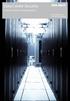 Data Center Security Perimeter and Door Opening Solutions Who We Are ASSA ABLOY is the global leader in door opening solutions, representing leading door and hardware brands. Our goal is to help facilities
FRANKLIN ELECTRIC REPORTS RECORD SECOND QUARTER 2013 SALES AND EARNINGS
 For Immediate Release For Further Information Refer to: John J. Haines 260-824-2900 FRANKLIN ELECTRIC REPORTS RECORD SECOND QUARTER 2013 SALES AND EARNINGS Bluffton, Indiana July 30, 2013 - Franklin Electric
Manpower Employment Outlook Survey Norway
 Manpower Employment Outlook Survey Norway Q2 2015 The Manpower Employment Outlook Survey for the second quarter 2015 was conducted by interviewing a representative sample of 751 employers in Norway. All
OPTION REPORTS FULL YEAR 2013 RESULTS
 OPTION REPORTS FULL YEAR 2013 RESULTS Leuven, Belgium March 13, 2014 Option N.V. (EURONEXT Brussels: OPTI; OTC: OPNVY), a global leader in wireless connectivity, security and experience, today announced
SAP Announces Fourth Quarter and Full Year Results
 SAP Announces Fourth Quarter and Full Year Results 1 of 5 1/21/2014 10:27 AM The Best-Run Businesses Run SAP English Deutsch SAP.com About SAP AG SAP Investor Relations Financial News and Reports SAP Announces
ASSA ABLOY Academy Training Prospectus. The global leader in door opening solutions
 Academy Training Prospectus The global leader in door opening solutions Welcome to the Academy The Academy is a purpose built training and product display centre, sited at the heart of s UK manufacturing
Automation Industry Market Report
 Automation Industry Market Report The Global Industrial Automation Industry After weathering a difficult economic recession, the global automation industry is once again on the upswing, with many industry
ATOSS Software AG Excellence in Workforce Management. 1 Christof Leiber, Member of the Board, ATOSS Software AG
 ATOSS Software AG Excellence in Workforce Management 1 Christof Leiber, Member of the Board, ATOSS Software AG 01 Business model and developments 2006 2014 and first half of 2015 02 ATOSS growth strategy
Integrating Automotive and Financial Services
 Integrating Automotive and Financial Services Frank Witter, CEO Volkswagen Financial Services AG Frank Fiedler, CFO Volkswagen Financial Services AG Ehra-Lessien, 11 March 2009 Agenda Financial Services
State of Mobile Commerce. Q1 2015
 State of Mobile Commerce. Q1 2015 MARCH 2015 Executive Summary Mobile commerce is growing like a weed. Mobile is now 29% of ecommerce transactions in the US and 34% globally. Mobile shopping trends ecommerce
Net income in the second quarter was 1.281 billion, compared to 538 million in the previous quarter and 578 million in the same quarter a year ago.
 Press Presse Prensa For the business and financial press Munich/Erfurt, April 25, 2002 Siemens in the second quarter (January 1 to March 31) of fiscal 2002 Net income in the second quarter was 1.281 billion,
CONFERENCE CALL PRELIMINARY FIGURES FISCAL YEAR 2014
 WELCOME DÜRR AKTIENGESELLSCHAFT CONFERENCE CALL PRELIMINARY FIGURES FISCAL YEAR 2014 Ralf W. Dieter, CEO Ralph Heuwing, CFO Bietigheim-Bissingen, March 9, 2015 www.durr.com DISCLAIMER This presentation
Insurance Market Outlook
 Munich Re Economic Research May 2014 Premium growth is again slowly gathering momentum After a rather restrained 2013 (according to partly preliminary data), we expect growth in global primary insurance
Year-end report. President s comments. The fourth quarter. January - December
 Year-end report The fourth quarter > > Net sales increased by 17 percent during the fourth quarter to SEK 1,758 M (1,504). In local currencies, net sales increased by 7 percent > > Operating profit increased
Interim report for the period April 1 December 31, 2001 (9 months)
 Addtech Group Interim report for the period April 1 December 31, (9 months) Net revenues amounted to MSEK 1 793 (1 784). Operating income, not including items affecting comparability, amounted to MSEK
Competitiveness and the Global Trends Roadmap: 2015-2050
 Competitiveness and the Global Trends Roadmap: 2015-2050 IMD R&D Global Trends are an interesting pedagogical tool to open up the minds of IMD participants, and are commonly used early in an IMD program
To Our Shareholders A Message from the CEO
 To Our Shareholders A Message from the CEO Overview of Fiscal 2007 Performance Looking at consolidated performance during fiscal 2007, or the year ended March 31, 2007, ORIX achieved an 18% rise in net
Chasing growth in a constrained environment
 Chasing growth in a constrained environment Bernard Fontana CEO June 14, 2012 Agenda 1 Drivers of demand growth 2 Allocating the asset footprint according to demand 3 Growth from customer excellence &
PRESS RELEASE. Sales in the third quarter and first nine months of 2015
 PRESS RELEASE Sales in the third quarter and first nine months of 2015 October 19, 2015 Solid organic growth with third-quarter sales up +4.6% [1] Full-year 2015 targets confirmed Q3 sales [2] up +4.6%
Brookfield financial Review q2 2010
 Brookfield financial Review q2 2010 Overview Operating cash flow and gains totalled $327 million in the second quarter or $0.53 per share compared to $294 million in the prior year. This brings operating
ATOSS Software AG Excellence in Workforce Management Presentation January 30, 2015. 1 Christof Leiber, Member of the Board, ATOSS Software AG
 ATOSS Software AG Excellence in Workforce Management Presentation January 30, 2015 1 Christof Leiber, Member of the Board, ATOSS Software AG 01 Business model and developments 2006 2014 02 ATOSS growth
IFS ApplIcAtIonS For ElEctronIc components xxxxxxxxxxxxx
 IFS Applications for ELECTRONIC COMPONENTS xxxxxxxxxxxxx OUR SOLUTION S DNA When we first set out to create IFS Applications over 25 years ago, our goal was to make the most usable business software on
GrandVision reports 2.8 billion Revenue and 449 million EBITDA for 2014
 GrandVision reports 2.8 billion Revenue and 449 million EBITDA for 2014 Schiphol, the Netherlands 18 March 2015. GrandVision N.V. publishes Full Year and Quarter 2014 results. 2014 Highlights Revenue grew
State of Mobile Commerce Growing like a weed
 State of Mobile Commerce Growing like a weed Q1 2015 Executive Summary Mobile commerce is growing like a weed. Mobile is 29% of ecommerce transactions in the US and 34% globally. By the end of 2015, mobile
Forward Looking Statement
 Forward Looking Statement This presentation contains forward-looking statements which are statements that refer to expectations and plans for the future and include, without limitation, statements regarding
Management s Discussion and Analysis
 Management s Discussion and Analysis 6 Financial Policy Sysmex regards increasing its market capitalization to maximize corporate value an important management objective and pays careful attention to stable
MAPFRE in 2014. Antonio Huertas. Presentation of Annual Results February 11, 2015. MAPFRE Chairman & CEO
 MAPFRE in 2014 Presentation of Annual Results February 11, 2015 Antonio Huertas MAPFRE Chairman & CEO 2014 Results MAPFRE's results are excellent: 845 million euros in profits 2013 2014 % Consolidated
Earnings Release Q1 FY 2016 October 1 to December 31, 2015
 Munich, Germany, January 25, 2016 Earnings Release FY 2016 October 1 to December 31, 2015 Strong start into the fiscal year earnings outlook raised»we delivered a strong quarter and are well underway in
TO OUR SHAREHOLDERS A MESSAGE FROM THE CEO. shareholders equity ratio and ROE both rose to over 10%.
 TO OUR SHAREHOLDERS A MESSAGE FROM THE CEO During the fiscal year ended March 31, 2004, attained record-high total revenues, income before income taxes, and net income. We also made steady progress in
Growth in the business area Fingerprint Technology
 LUND, MAY 12 th, 2015 Growth in the business area Fingerprint Technology PRECISE BIOMETRICS AB (PUBL), CORPORATE IDENTIYTY NR 556545-6596 INTERIM REPORT JANUARY-MARCH 2015 The group s net sales for the
Outsourcing: driving efficiency. and growth. Grant Thornton International Business Report 2014
 Outsourcing: driving efficiency and growth Grant Thornton International Business Report 2014 Outsourcing: driving efficiency and growth Contents Introduction Outsourcing today Drivers Encouraging outsourcing
Annual General Meeting of Beiersdorf AG, Hamburg March 31, 2015
 Annual General Meeting of Beiersdorf AG, Hamburg March 31, 2015 Speech by Stefan F. Heidenreich Chairman of the Executive Board Check against delivery Page 1 / 9 Dear shareholders, ladies and gentlemen,
Midyear Presentation 2013. market strategy
 Midyear Higher order Results intake, Presentation lower profitability 2013 focused market strategy THE SAFE HARBOR STATEMENT UNDER THE US PRIVATE SECURITIES LITIGATION REFORM ACT 1995 This presentation
BlackBerry Reports Software and Services Growth of 106 Percent for Q4 and 113 Percent for Fiscal 2016
 April 1, FOR IMMEDIATE RELEASE BlackBerry Reports Software and Services Growth of 106 Percent for Q4 and 113 Percent for Fiscal Company reports positive free cash flow for eighth consecutive quarter and
Interim Report Period: July September 2014
 Interim Report Period: July September 2014 Summary of third quarter, 2014 (Last year's figures in brackets) Net sales for the period amounted to SEK 20.9 million (SEK 0.8 million) Operating profit for
Technology FOUR KEY TRENDS IN THE GLOBAL SMARTPHONE MARKET
 FOUR KEY TRENDS IN THE GLOBAL SMARTPHONE MARKET 1.2 billion smartphones were sold globally in 2014, and in the first quarter of 2015, smartphone unit demand was up +7% on the same period of last year.
Manpower Employment Outlook Survey Ireland
 Manpower Employment Outlook Survey Ireland Q1 215 Country Name Employment Outlook The Manpower Employment Outlook Survey for the first quarter 215 was conducted by interviewing a representative sample
For personal use only GALE PACIFIC LIMITED
 GALE PACIFIC LIMITED RESULTS FOR YEAR ENDED 30 JUNE 2013 FY13 Review FY13 FY12 FY11 A$M S A$M S % Variance A$M S Sales 120.0 110.5 9% 95.6 EBITDA 18.0 18.0 0% 15.8 EBIT 12.9 12.5 4% 9.9 NPAT 9.1 8.5 7%
BoConcept Holding A/S. Full year 2012/13 results 26 June 2013, Danske Markets
 BoConcept Holding A/S Full year 2012/13 results 26 June 2013, Danske Markets Agenda Highlights from Q4 and FY 2012/13 Financial development Q4 and FY 2012/13 Strategic initiatives Outlook for FY 2013/14
LENOVO 1 ST QUARTER FY15-16: TOUGH MARKETS, SOLID RESULTS
 LENOVO 1 ST QUARTER FY15-16: TOUGH MARKETS, SOLID RESULTS Decisive actions being taken to meet challenges and accelerate business transformation Revenue was US$10.7 billion, up 3 percent; excluding foreign
JP Morgan European Capital Goods CEO Conference 2015
 JP Morgan European Capital Goods CEO Conference 2015 Jean-Pascal Tricoire, Chairman and CEO June 11, 2015 1 A technology company with strong foundations 2 We are the global specialist in energy management
Half year results 2011
 Half year results 2011 29 July 2011 Bert De Graeve, Chief Executive Officer Bruno Humblet, Chief Financial Officer Address by Bert De Graeve, Chief Executive Officer Introductory remark The consolidated
PIERRE JEAN SIVIGNON FINANCIAL. Deputy Chief Executive Officer, Chief Financial Officer RESULTS
 FULL YEAR RESULTS FINANCIAL RESULTS PIERRE JEAN SIVIGNON Deputy Chief Executive Officer, Chief Financial Officer FURTHER PROFIT GROWTH IN 2015 Variation at (in m) 2014 2015 (1) constant exch. rates Variation
H & M Hennes & Mauritz AB
 Nine-month report (1 Dec - 31 August ) H & M Hennes & Mauritz AB Nine-month report Nine-months (1 December 31 August ) The H&M Group s sales including VAT increased in local currencies by 15 percent during
SYMANTEC CORPORATION 1Q11 EARNINGS TRANSCRIPT. Introduction Helyn Corcos, Vice President Investor Relations
 Introduction Helyn Corcos, Vice President Investor Relations Good afternoon, and thank you for joining our call to discuss fiscal first quarter 2011 financial results. With me today are Enrique Salem,
A good start to the year, in line with expectations Danone continues to re-balance its model of growth
 First-quarter 206 sales Press release Paris, April 9, 206 A good start to the year, in line with expectations Danone continues to re-balance its model of growth FIRST QUARTER 206 sales growth: +3.5% Solid
Investor Day. Group Strategy. Jean-Pascal Tricoire Chairman & CEO. February 20, 2014
 Investor Day February 20, 2014 Group Strategy Jean-Pascal Tricoire Chairman & CEO Disclaimer All forward-looking statements are Schneider Electric management s present expectations of future events and
Rockwell Automation Supplier Handbook. Meeting Our Customer s Needs Through Supplier Partnerships
 Rockwell Automation Supplier Handbook Meeting Our Customer s Needs Through Supplier Partnerships 3 Doing Business a Better Way As a Rockwell Automation supplier, you are critical to our company s success
Fourth Quarter 2015 Conference Call
 Fourth Quarter 2015 Conference Call E. Scott Santi, Chairman & CEO Michael M. Larsen, Senior Vice President & CFO Aaron H. Hoffman, Vice President, Investor Relations January 27, 2016 Forward Looking Statements
FOR IMMEDIATE RELEASE
 By: EARNINGS RELEASE Expeditors International of Washington, Inc. 1015 Third Avenue, Suite 1200 Seattle, Washington 98104 CONTACTS: R. Jordan Gates Bradley S. Powell President and Chief Operating Officer
Urban Planning and Development Systems Business Strategy
 Urban Planning and Development Systems Business Strategy Hitachi IR Day 2012 June 14, 2012 Toshio Ikemura Vice President and Executive Officer Infrastructure Systems Group President & CEO Urban Planning