
STRONG POLICIES TO BENEFIT YOUNG CHILDREN
|
|
|
- Cory Murphy
- 10 years ago
- Views:
Transcription
1 STRONG POLICIES TO BENEFIT YOUNG CHILDREN Education for All Global Monitoring Report Team Citation Global Monitoring Report Team (2006).Strong Policies to Benefit Young Children, Journal of Education for International Development 2:3. Retrieved from on [insert month], [insert day], [insert year]. Abstract To ensure children strong foundations, early childhood care and education needs to move up the domestic and international agenda. Judging by the figures, however, the case for ECCE is far from universally recognized. Strong Foundations: Early Childhood Care and Education, the new edition of the EFA Global Monitoring Report ( describes how this can happen through strong commitment, the development of national policy frameworks for children from birth to age 8, more public financing and a better trained workforce. Judging by the figures, the case for early childhood care and education is far from universally recognized. Strong Foundations: Early Childhood Care and Education, the new edition of the EFA Global Monitoring Report ( notes that participation at the preprimary level has tripled over the past three decades but remains extremely low in sub-saharan Africa, the Arab States and South and West Asia the three regions farthest from achieving the six Education for All goals set in The situation for children under age 3 who are at a particularly fragile and vulnerable period, is cause for even greater concern: fewer than half of all developing countries have a single formal program for this age group. Restating the Case Policies for early childhood need, first and foremost, to be rooted in the conviction that interventions in the first years of a child s life truly matter. The case is overwhelming, based both on rights early childhood rights are increasingly recognized and on reducing poverty: early childhood programs can offset the disadvantages of being born poor or being a member of a social minority, at much lower cost than programs for older children or adults. Integrated programs that combine health, nutrition and cognitive stimulation can significantly improve a child s immediate well-being. For the most disadvantaged children, in fact, these programs can be a matter of sheer survival. They contribute to the Millennium Development Goals related to child and maternal health. A child born in the developing world has a four-in -ten chance of living in extreme poverty. About 10.5 million children die each year before age 5, most of them from preventable diseases. In short, young children today are under severe threat. Beyond this, programs smooth the transition to the first grade and improve Children s chances of doing well in school, thereby improving the efficiency of education systems. In sub-saharan Africa, over two-thirds of children who start primary school do not reach the last grade much less complete it. This points to severe gaps in educational quality in addition to such perennial obstacles as school fees. Controlling for GDP, the higher an African country s pre-primary enrolment ratio, the higher its primary school completion rate and the lower its primary repetition rate. Gender parity is also advanced through early childhood care and Strong Policies to Benefit Young Children 1
![pdf on [insert month], [insert day], [insert year]. Abstract To ensure children strong foundations, early childhood care and education needs to move up the domestic and international agenda.](/docs-images/52/12947538/images/page_1.jpg "Judging by the figures, however, the case for ECCE is far from universally recognized. Strong Foundations: Early Childhood Care and Education, the new edition of the EFA Global Monitoring Report (www.")
2 education (ECCE) programmes: when young children participate in these programs, they relieve their older sisters or female kin of care-giving responsibilities which often prevents them from going to school. Early childhood programs yield very high economic returns, especially for children from poor families. These findings are not new: the most rigorous study, known as the High/Scope Perry Preschool program, originated in the United States in the early 1960s. In this study, researchers followed a group of low-income African-American children for more than 40 years. The results showed very significant benefits for participants who, compared to the control group, were more successful in schools and enjoyed higher earnings later in life. A growing body of evidence from developing countries points to the high cost/benefit ratios, especially for the most disadvantaged children. Comprehensive ECCE programmes that support children s right to care, protection and education can make a major difference in reducing hunger, child mortality and other health goals. As such, ECCE programmes are a powerful contributor to reducing poverty, the overarching objective of the Millennium Development Goals. Key Policy Dimensions These benefits are not sufficiently recognized in developing countries, nor are they taken seriously by the majority of donors. Countries and the donor community tend to rally behind the goal of universal primary education and to neglect early childhood and adult literacy programs. This is a mistake. The Millennium Development Goals on health, gender quality and education are intricately related to providing quality early childhood programmes because supporting children and their parents during these early years establishes strong foundations for all future learning. What Is Required To Put Early Childhood On The Policy Map? First, political commitment at the highest level must expressly recognize that early childhood care and education is an economic and social priority. This is the case in Senegal, for example, where President Abdoulaye Wade has promoted early childhood programs as a lever for improving children s living conditions. He introduced a national program of community-based centres for 0 to 6 year-olds integrating health, education and nutrition. Another approach was taken in Ghana where is basic education is currently being expanded to include two years of kindergarten. The two-fold motivations for this shift include the fact that too many children are still out of school and too many face enormous difficulties, and that the African extended family system is loosing its hold with urbanization and social change. In Chile, President Michelle Bachelet took measures to improve the early childhood protection system soon after her election in early Under a national plan known as Chile grows up with you, the country is expanding the coverage of early childhood development programs to offer every child and family access to services such as education, early stimulation, maternity and health care. Second, broad stakeholder involvement is an indispensable ingredient for designing a national policy for early childhood. The sector is a complex one: it covers children from birth to age six, typically involves several ministries (women s affairs, social affairs, health, education), private sector organizations, non-governmental organizations and communities themselves. The very process of engaging with these various players is a first step towards ensuring ownership of national policies. Involving parents as advocates is a particularly effective way to promote sustainable programmes. Third, detailed action plans facilitate the implementation of ECCE policies by identifying the division of responsibilities, the allocation of resources and the time-frame for implementation. A Strong Policies to Benefit Young Children 2

3 growing number of countries are consolidating responsibility for all forms of ECCE under one ministry to increase policy coherence. Since the late 1980s, the trend has been towards designating education as the lead ministry for children from birth. Regardless of which ministry takes the lead, coordination is necessary across all institutions and sectors involved in early childhood and family issues. Experiences in several countries suggest that an inter-ministerial body can help promote national coordination of policies and actions, provided it is adequately resourced. Fourth, partnerships with international organizations or aid agencies can generate seed money for projects that can be taken to scale, and also provide technical assistance for national planning. UNICEF has formed partnerships with many countries around the world and assisted a number of governments to elaborate national early childhood policies that cover health, nutrition, education, water, hygiene, sanitation and legal protection for young children. Investment and technical support from the Bernard van Leer Foundation led to Kenya s Preschool Education project focusing on community-based programmes for 3- to 5-year olds. Fifth, aligning ECCE policies with other national and sector development policies is a strategic means to leverage resources for early childhood. Increasingly, in the poorest countries, development funding is focused on broad poverty reduction strategies and on sector-wide programmes. Ghana, Uganda and Zambia, for example, are integrating early childhood into Poverty Reduction Strategy Papers. Sixth, strategic use of public campaigns draws attention to early childhood and provides information to carers. Media campaigns about child-care practices and existing programmes and projects are vital to raise awareness among parents, carers and communities. Financing Choices The diversity of financing sources for early childhood and the low overall level of funding for this sector raises difficult policy choices. Spending on pre-primary is less than 10 percent of public spending on education as a whole. The burden often falls on parents. Even in relatively rich countries the parental share can run as high as 60 percent. The private sector plays a prominent role in sub-saharan Africa, the Arab States, the Caribbean and East Asia. While a diversity of partners is desirable, public policy must ensure that regulations exist and are applied equally to public and private settings. Otherwise, there is a risk of a two-track system developing with children from more advantaged families attending more expensive and higher quality programmes and less fortunate families resorting to low-cost, lower quality public alternatives, if there are any. As it stands today, across most of the developing world, household poverty is the major barrier to access of early childhood programmes. The EFA early childhood goal places special emphasis on reaching the most disadvantaged and vulnerable children. These are the children likely to draw most benefit from ECCE programmes yet those with least access to them. This has implications for policy. Developing a universal policy applicable to all children that clarifies issues related to governance, curriculum, pedagogy, expected outcomes and quality assurance offers an overall framework. But in the context of many developing and low-income countries, this policy may best be implemented through a phase-in approach whereby resources are targeted towards the most disadvantaged children, either geographically or by income group. India s Integrated Child Development Services (ICDS), for example, provides a package of services to vulnerable children under 6 in city slums, tribal areas and remote regions. The federal government has recently renewed its commitment to universalize ICDS in light of its positive, if uneven, impact on children s survival, growth and development. Strong Policies to Benefit Young Children 3

4 More Spending on Training Good early childhood programmes can compensate for disadvantage and strongly influence children s development their health, cognitive and language abilities and social interactions. A particularly interesting and consistent research finding is that the relationship between carers and children is the single most important determinant of quality in these early years, over and above availability of play materials or other inputs. Better training and support to staff whether in communities or formal centres is imperative. Typically early childhood caregivers receive less training than primary school staff both before they start work and less on-the-job support. A starting point is to work with communities to empower community members to support and complement the care that children receive at home. In Colombia, the Hogares Comunitarios program serves more than one million children in both urban and rural areas. Elected community mothers open their home to as many as fifteen children, giving them three meals a day. Community members can also provide play materials and contribute to building play sites, as in Kenya s pastoralist societies or in Pakistan where parents in poor rural communities become resource people, teaching local songs and stories to young children. Staffing policies are under review in a number of countries to develop a more integrated system of provision and regulation from birth to school entry. In Singapore, for example, all child care and pre-school personnel now undergo the same training and accreditation, which has increased the pool of trained staff. In Ghana, all 38 Teacher Training Colleges are offering ECCE as a core compulsory subject. Senegal is creating a masters programme in early childhood development. The Early Childhood Development Virtual University (see article in this JEID Issue) promotes leadership development and builds capacity through online and in-person training across Africa and the Arab States. To ease children s transition from ECCE to primary schooling, several countries are implementing strategies for professional continuity, namely joint training for teachers at both levels to encourage connections and coherence in teaching styles. Finally, the quality of programmes can be measured by the extent to which they promote inclusion. Programmes are more likely to be effective if they are delivered in the child s mother tongue. Countries including Papua New Guinea, Viet Nam, Cambodia and Malaysia have developed effective bilingual early childhood programmes that have influenced practices in the first years of primary education. Programmes should promote positive gender socialization and integrate children with disabilities and other special needs. Assessing program quality should not only focus on easy-to-measure indicators such as class size and child/staff ratios but also the quality of relationships between carers and children, the inclusion of families and respect for children s diverse cultural backgrounds. Several international instruments exist to assess ECCE quality, and include attention to family participation, teacher-child interaction, health and safety and teaching strategies. Governments need to enforce, not just develop, regulations that promote quality. If resources are insufficient to assure inspection and monitoring, accreditation is an alternative. It encourages programme staff to reflect on their practice and to address any limitations before having their work validated by an external expert. Boosting International Support Early childhood is a low priority for international aid. This must change. Most donors allocate less than 10% to pre-primary compared to what they allocate to primary, and these funds tend to be for pre-primary centre-based instruction rather than for children under age 3. Such funding priorities do not necessarily match country needs: less formal and less costly arrangements than centres can often help reach more young children of all ages. Aid to ECCE needs to be considered within the broader aid coordination mechanisms for education and health, including the Fast Track Initiative. Strong Policies to Benefit Young Children 4

5 Conclusion To ensure children strong foundations, ECCE needs to move up the domestic and international agenda. This can happen through strong commitment, the development of national policy frameworks for children from birth to age 8, more public financing and a better trained workforce. For millions of children around the world growing up in extremely difficult circumstances, such programmes are a right and a route out of poverty, leading to improved wellbeing and a much higher chance of benefiting from educational opportunities throughout life. The full report, summary report, background papers commissioned for this report and country profiles on early childhood care and education policies are available on the website at For more information please contact [email protected] Strong Policies to Benefit Young Children 5

Jordan Early Childhood Care and Education (ECCE) programmes
 IBE/2006/EFA/GMR/CP/40 Country profile prepared for the Education for All Global Monitoring Report 2007 Strong Foundations: Early Childhood Care and Education Jordan Early Childhood Care and Education
ANNEX E. Czech Republic
 Czech Republic Population: 10.24 m. Fertility rate: 1.18. GDP per capita: USD 15 100. Children under 6years: 540 000. Female labour force participation: Female labour force participation rate for women
South Africa Early Childhood Care and Education (ECCE) programmes
 IBE/2006/EFA/GMR/CP/78 Country profile prepared for the Education for All Global Monitoring Report 2007 Strong Foundations: Early Childhood Care and Education South Africa Early Childhood Care and Education
Appeal to the Member States of the United Nations Early Childhood Development: The Foundation of Sustainable Human Development for 2015 and Beyond
 UNICEF/NYHQ2006-0450/Pirozzi Appeal to the Member States of the United Nations Early Childhood Development: The Foundation of Sustainable Human Development for 2015 and Beyond We, the undersigned, submit
Girls education the facts
 Education for All Global Monitoring Report Fact Sheet October 2013 Girls education the facts Millions of girls around the world are still being denied an education PRIMARY SCHOOL: There are still 31 million
Proposed post-2015 education goals: Emphasizing equity, measurability and finance
 Education for All Global Monitoring Report Proposed post-2015 education goals: Emphasizing equity, measurability and finance INITIAL DRAFT FOR DISCUSSION March 2013 The six Education for All goals have
Better Life, Better Future
 Better Life, Better Future UNESCO GLOBAL PARTNERSHIP FOR GIRLS AND WOMEN S EDUCATION Educational, Scientific and ABOUT THE PARTNERSHIP Since its creation, UNESCO has been advocating for, promoting and
Jamaica Early Childhood Care and Education (ECCE) programmes
 IBE/2006/EFA/GMR/CP/39 Country profile prepared for the Education for All Global Monitoring Report 2007 Strong Foundations: Early Childhood Care and Education Jamaica Early Childhood Care and Education
Progress and prospects
 Ending CHILD MARRIAGE Progress and prospects UNICEF/BANA213-182/Kiron The current situation Worldwide, more than 7 million women alive today were married before their 18th birthday. More than one in three
Education is the key to lasting development
 Education is the key to lasting development As world leaders prepare to meet in New York later this month to discuss progress on the Millennium Development Goals, UNESCO s Education for All Global Monitoring
Qatar Early Childhood Care and Education (ECCE) programmes
 IBE/2006/EFA/GMR/CP/71 Country profile prepared for the Education for All Global Monitoring Report 2007 Strong Foundations: Early Childhood Care and Education Qatar Early Childhood Care and Education (ECCE)
FINANCIAL INCLUSION OF YOUTH
 FINANCIAL INCLUSION OF YOUTH HIGHLIGHTS 2.5 billion - more than half of the world s working adults- are excluded from financial services. This is most acute among low-income populations in emerging and
Strategic Choices for Education Reforms
 World Bank Institute/UNICEF Strategic Choices for Education Reforms Early Childhood Development in Five South Asian Countries Paper presented as course work by Deepa Das, India Hassan Mohamed, Bangladesh
A personal reflection The SDG Indicator for Early Childhood Development. Andy Dawes
 A personal reflection The SDG Indicator for Early Childhood Development Andy Dawes From MDGs to SDGs: Unpacking the 2030 Development Agenda and its implications for child indicator research and practice
Nigeria Early Childhood Care and Education (ECCE) programmes
 IBE/2006/EFA/GMR/CP/62 Country profile prepared for the Education for All Global Monitoring Report 2007 Strong Foundations: Early Childhood Care and Education Nigeria Early Childhood Care and Education
Nepal Early Childhood Care and Education (ECCE) programmes
 IBE/2006/EFA/GMR/CP/59 Country profile prepared for the Education for All Global Monitoring Report 2007 Strong Foundations: Early Childhood Care and Education Nepal Early Childhood Care and Education (ECCE)
Bangladesh Early Childhood Care and Education (ECCE) programmes
 IBE/2006/EFA/GMR/CP/05 Country profile prepared for the Education for All Global Monitoring Report 2007 Strong Foundations: Early Childhood Care and Education Bangladesh Early Childhood Care and Education
Costa Rica Early Childhood Care and Education (ECCE) programmes
 IBE/2006/EFA/GMR/CP/21 Country profile prepared for the Education for All Global Monitoring Report 2007 Strong Foundations: Early Childhood Care and Education Costa Rica Early Childhood Care and Education
UNICEF in South Africa
 UNICEF in South Africa A message from the Representative 47,900,000 people live in South Africa 20,200,000 are children 294,000 children are HIV-positive 1 in 17 children die before their fifth birthday
Methods. Why does Early Childhood Care and Education matter? Early Childhood Care and Education in Egypt
 Early Childhood Care and Education (ECCE) kindergarten or nursery is available to only some Egyptian children. Expanding ECCE should be a government priority, as ECCE is an excellent investment. ECCE improves
Pricing the right to education: There is a large financing gap for achieving the post-2015 education agenda
 Education for All Global Monitoring Report Policy Paper 18 March 2015 This paper shows there is an annual financing gap of US$22 billion over 2015-2030 for reaching universal pre-primary, primary and lower
Bahrain Early Childhood Care and Education (ECCE) programmes
 IBE/2006/EFA/GMR/CP/04 Country profile prepared for the Education for All Global Monitoring Report 2007 Strong Foundations: Early Childhood Care and Education Bahrain Early Childhood Care and Education
Finland Population: Fertility rate: GDP per capita: Children under 6 years: Female labour force participation:
 Finland Population: 5.21 m. Fertility rate: 1.7. GDP per capita: USD 26 500. Children under 6 years: 399 889. Female labour force participation: 72% of women (15-64 years) are employed, 18.2% of whom are
FOCUSING RESOURCES ON EFFECTIVE SCHOOL HEALTH:
 FOCUSING RESOURCES ON EFFECTIVE SCHOOL HEALTH: a FRESH Start to Enhancing the Quality and Equity of Education. World Education Forum 2000, Final Report To achieve our goal of Education For All, we the
Health for learning: the Care for Child Development package
 Health for learning: the Care for Child Development package Charlotte Sigurdson Christiansen, Technical Officer, Chiara Servili, Technical Officer, Tarun Dua, Medical Officer, and Bernadette Daelmans,
Cameroon Early Childhood Care and Education (ECCE) programmes
 IBE/2006/EFA/GMR/CP/15 Original: French Country profile prepared for the Education for All Global Monitoring Report 2007 Strong Foundations: Early Childhood Care and Education Cameroon Early Childhood
cambodia Maternal, Newborn AND Child Health and Nutrition
 cambodia Maternal, Newborn AND Child Health and Nutrition situation Between 2000 and 2010, Cambodia has made significant progress in improving the health of its children. The infant mortality rate has
The Smartest Targets For The WORLD 2016-2030
 The Smartest Targets For The WORLD 2016-2030 The World s Best Targets Right now, 193 governments negotiating Targets for 2016-2030 Most people don t know Development aid 2016-30: $2.5 trillion The World
Education for All An Achievable Vision
 Education for All An Achievable Vision Education for All Education is a fundamental human right. It provides children, youth and adults with the power to reflect, make choices and enjoy a better life.
ECD the foundation for each child s future learning, well being and prosperity Access to high-quality ECD is the right of the child ECD interventions
 ECD the foundation for each child s future learning, well being and prosperity Access to high-quality ECD is the right of the child ECD interventions necessary For every US$1 spent, the return could be
SECTOR ASSESSMENT (SUMMARY): EDUCATION 1
 Country Partnership Strategy: Bangladesh, 2011 2015 SECTOR ASSESSMENT (SUMMARY): EDUCATION 1 Sector Road Map 1. Sector Performance, Problems, and Opportunities 1. Bangladesh has made considerable progress
2014-2017. UNICEF/NYHQ2012-1868/Noorani
 UNICEF STRATEGIC PLAN 2014-2017 UNICEF/NYHQ2012-1868/Noorani UNICEF s Strategic Plan 2014-2017 is a road map for the realization of the rights of every child. The equity strategy, emphasizing the most
UNICEF, Division of Policy and Practice, Statistics and Monitoring Section, www.childinfo.org, May 2008
 Education statistics: Tajikistan UNICEF, Division of Policy and Practice, Statistics and Monitoring Section, www.childinfo.org, May 28 1 Tajikistan: Pre-primary enrollment 8 NER or GER (%) 6 4 2 198 1982
situation key partnerships in education Millennium Development Goal 2: Achieve universal primary education
 education situation More children in Cambodia are entering school and the gender gap is quickly closing as more girls make their way to the classroom. In the 2010/2011 school year, the overall rate of
Zambia Early Childhood Care and Education (ECCE) programmes
 IBE/2006/EFA/GMR/CP/94 Country profile prepared for the Education for All Global Monitoring Report 2007 Strong Foundations: Early Childhood Care and Education Zambia Early Childhood Care and Education
Launch the Forum, create a web site, and begin a list of stakeholder groups. organizations, and academic institutions
 CONCEPT NOTE Forum on Investing in Young Children Globally An activity of the Board on Children, Youth, and Families and Board on Global Health at Institute of Medicine and National Research Council of
Early Childhood Education and Care Systems: Issue of Tradition and Governance
 Early Childhood Education and Care Systems: Issue of Tradition and Governance JOHN BENNETT, M.Ed., PhD a (Published online July 2008) (Revised February 2011) Topic Child Care - Early Childhood Education
United Nations Educational, Scienti c and Cultural Organization EDUCATION COUNTS. Towards the Millennium Development Goals
 United Nations Educational, Scienti c and Cultural Organization EDUCATION COUNTS Towards the Millennium Development Goals The original artwork presented in the brochure was designed by Zago, New York,
Universal Health Coverage: Concepts and Principles. David B Evans, Director Health Systems Financing
 Universal Health Coverage: Concepts and Principles David B Evans, Director Health Systems Financing Outline Universal Coverage: definitions and the state of the world Health financing systems for Universal
Early Childhood Education and Care
 Early Childhood Education and Care Participation in education by three- and four-year-olds tends now to be high, though coverage is a third or less of the age group in several OECD countries. Early childhood
INDICATOR REGION WORLD
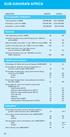 SUB-SAHARAN AFRICA INDICATOR REGION WORLD Demographic indicators Total population (2006) 748,886,000 6,577,236,000 Population under 18 (2006) 376,047,000 2,212,024,000 Population under 5 (2006) 125,254,000
INDICATOR REGION WORLD
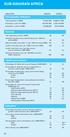 SUB-SAHARAN AFRICA INDICATOR REGION WORLD Demographic indicators Total population (2005) 713,457,000 6,449,371,000 Population under 18 (2005) 361,301,000 2,183,143,000 Population under 5 (2005) 119,555,000
Health Promotion, Prevention, Medical care, Rehabilitation under the CBR Matrix heading of "Health
 Health Promotion, Prevention, Medical care, Rehabilitation under the CBR Matrix heading of "Health Dr Deepthi N Shanbhag Assistant Professor Department of Community Health St. John s Medical College Bangalore
Trinidad and Tobago Strategic Actions for Children and GOTT-UNICEF Work Plan 2013-2014 1
 Trinidad and Tobago Strategic Actions for Children and GOTT-UNICEF Work Plan 2013-2014 1 The Trinidad and Tobago Strategic Actions for Children and the Government of Trinidad and Tobago-UNICEF Work Plan
Bangladesh EFA 2015 National Review: A Summary
 Bangladesh EFA 2015 National Review: A Summary Abstract At the invitation of UNESCO to assess critically EFA progress and challenges, the Bangladesh EFA 2015 review has been undertaken. With the lead given
Types of Good Practices Focusing on Family Poverty Reduction and Social Exclusion
 Types of Good Practices Focusing on Family Poverty Reduction and Social Exclusion Zitha Mokomane Human Sciences Research Council of South Africa Social science that makes a difference Date: 16 May 2012
National ECD Policy in Namibia*
 National ECD Policy in Namibia* Context and Need: Many Namibian children have survived war and many develop today in conditions of poverty, overcrowded housing, inadequate food supply, polluted water,
NATIONAL EARLY CHILDHOOD CARE AND EDUCATION FRAMEWORK. Ministry of Education Government of Vanuatu
 NATIONAL EARLY CHILDHOOD CARE AND EDUCATION FRAMEWORK Ministry of Education Government of Vanuatu ACKNOWLEDGEMENTS Acknowledgement and thanks are due to all the stakeholders who provided input into this
Progress in getting all children to school stalls but some countries show the way forward
 Progress in getting all children to school stalls but some countries show the way forward Policy Paper 14 / Fact Sheet 28 June 214 This paper, jointly released by the Education for All Global Monitoring
Early Childhood Development: Global Priorities and National Development
 Early Childhood Development: Global Priorities and National Development Early Childhood Development for nation building in Jamaica: Retrospective and Prospective, March 25-26, 2013 Susan Walker, PhD Child
Inequality undermining education opportunities for millions of children
 Inequality undermining education opportunities for millions of children UNESCO Press release No.2008-115 Paris, 25 November The failure of governments across the world to tackle deep and persistent inequalities
A TEACHER FOR EVERY CHILD: Projecting Global Teacher Needs from 2015 to 2030
 A TEACHER FOR EVERY CHILD: Projecting Global Teacher Needs from 2015 to 2030 UIS FACT SHEET OCTOBER 2013, No.27 According to new global projections from the UNESCO Institute for Statistics, chronic shortages
Portugal Population: Fertility rate: GDP per capita: Children under 6 years: Female labour force participation: Maternity and parental leave:
 Portugal Population: 10.5 m. Fertility rate: 1.44. GDP per capita: USD 18 400. Children under 6years: 666 762. Female labour force participation: 67% of women (15-64) participated, with 14% in parttime
Rethinking School Feeding EXECUTIVE SUMMARY. Social Safety Nets, Child Development, and the Education Sector. Human Development
 DIRECTIONS IN DEVELOPMENT Human Development EXECUTIVE SUMMARY Rethinking School Feeding Social Safety Nets, Child Development, and the Education Sector Donald Bundy, Carmen Burbano, Margaret Grosh, Aulo
Early Childhood Develoment in Mauritius
 PLENARY III: ECCE Country Best Practices Early Childhood Develoment in Mauritius Nirmala Gobin-Bheenick World Conference on Early Childhood Care and Education 27-29 September 2010 Moscow, Russian Federation
Cyprus Early Childhood Care and Education (ECCE) programmes
 IBE/2006/EFA/GMR/CP/24 Country profile prepared for the Education for All Global Monitoring Report 2007 Strong Foundations: Early Childhood Care and Education Cyprus Early Childhood Care and Education
How to Design and Update School Feeding Programs
 CHAPTER 7 How to Design and Update School Feeding Programs Previous chapters highlight the need to improve the design of new school feeding programs and to revisit existing programs with a view toward
The IBIS Education for Change strategy states the overall objective
 CONCEPT PAPER: YOUTH EDUCATION & TRAINING 1 Concept Paper youth education & training Photo: Ricardo Ramirez The IBIS Education for Change strategy states the overall objective of IBIS work with education
Goal 1: Eradicate extreme poverty and hunger. 1. Proportion of population below $1 (PPP) per day a
 Annex II Revised Millennium Development Goal monitoring framework, including new targets and indicators, as recommended by the Inter-Agency and Expert Group on Millennium Development Goal Indicators At
Child Survival and Equity: A Global Overview
 Child Survival and Equity: A Global Overview Abdelmajid Tibouti, Ph.D. Senior Adviser UNICEF New York Consultation on Equity in Access to Quality Health Care For Women and Children 7 11 April 2008 Halong
What s Happening In Wisconsin In Early Childhood Education and Care?
 What s Happening In Wisconsin In Early Childhood Education and Care? T his chapter is a concise, handy reference of what Wisconsin is doing in child care, Head Start, public school early education, programs
Palestinian Authority Early Childhood Care and Education (ECCE) programmes
 IBE/2006/EFA/GMR/CP/65 Country profile prepared for the Education for All Global Monitoring Report 2007 Strong Foundations: Early Childhood Care and Education Palestinian Authority Early Childhood Care
The Effects of Early Education on Children in Poverty
 The Effects of Early Education on Children in Poverty Anna D. Johnson Doctor of Education Student Developmental Psychology Department of Human Development Teachers College, Columbia University Introduction
Social protection and poverty reduction
 Social protection and poverty reduction Despite the positive economic growth path projected for Africa, the possibility of further global shocks coupled with persistent risks for households make proactive
United Nations Committee on the Rights of the Child Day of Discussion: Implementing Child Rights in Early Childhood 17 September 2004 Palais Wilson
 United Nations Committee on the Rights of the Child Day of Discussion: Implementing Child Rights in Early Childhood 17 September 2004 Palais Wilson RECOMMENDATIONS 1 Introduction 1. The Committee reaffirms
Data Collection and System Monitoring in Early Childhood Programs
 Data Collection and System Monitoring in Early Childhood Programs Patricia P. Olmsted, High/Scope Educational Research Foundation (Ypsilanti, Michigan, USA) U N E S C O Early Childhood and Family Policy
European Reconciliation Package
 European Reconciliation Package On the occasion of the public consultation of the European Commission on possible action addressing the challenges of work-life balance faced by working parents and caregivers,
2.1 Net enrolment ratio in primary education
 2.1 Net enrolment ratio in primary education GOAL AND TARGET ADDRESSED Goal 2: Achieve universal primary education Target 2.A: Ensure that, by 2015, children everywhere, boys and girls alike, will be able
IFPRI logo here. Addressing the Underlying Social Causes of Nutrition in India Reflections from an economist
 IFPRI logo here Addressing the Underlying Social Causes of Nutrition in India Reflections from an economist The 2013 Lancet Nutrition Series estimated that scaling up 10 proven effective nutrition specific
Fact Sheet: Youth and Education
 Fact Sheet: Youth and Education 11% of the world s youth (15-24 years old) are non-literate. Data from 2005-2008 indicates that in developing countries, the percentage of nonliterate youth is 13%, with
A proposal for measures under Norwegian foreign and international development policy to combat the global health workforce crisis
 A proposal for measures under Norwegian foreign and international development policy to combat the global health workforce crisis Report by the workgroup headed by the Ministry of Foreign Affairs, with
Max Foundation plan 2014-2016
 Max Foundation plan 2014-2016 Page1 Content 1. Introduction 3 2. Goal 4 3. Our values 5 4. How we work 6 5. Max-WASH approach 7 6. Were we work 9 7. Ambition 10 Page2 1. Introduction Max Foundation prevents
Promoting Holistic Development of Young Children An Imperative for the Advancement of Nations in Asia-Pacific
 W H I T E PA P E R Promoting Holistic Development of Young Children An Imperative for the Advancement of Nations in Asia-Pacific Holistic Development of Young Children in Asia and the Pacific Preamble
Dementia: A Public Health Priority. Marc Wortmann Executive Director Alzheimer s Disease International
 Dementia: A Public Health Priority Marc Wortmann Executive Director Alzheimer s Disease International Overview About ADI Programmes and activities Advocacy work of ADI and relationship with WHO How can
Logic Model for ECCS Program: The Oklahoma Early Childhood Comprehensive Systems (ECCS) Statewide Plan/Smart Start Oklahoma INTERVENTION
 GRANTEE/ PROJECT CHARACTERISTICS (i.e., goals and description of the project, environment, description of population/case load and partner organizations): TOTAL FUNDS REQUESTED: (for the first year of
FIGHTING AGAINST MATERNAL AND NEONATAL MORTALITY IN DEVELOPING COUNTRIES
 PRESS KIT February 2014 FIGHTING AGAINST MATERNAL AND NEONATAL MORTALITY IN DEVELOPING COUNTRIES WIVES ID M G IN T C E CONN CONTENT 02 Key figures 03 Launch of the international "Connecting Midwives" web
Comprehensive School Safety
 Comprehensive School Safety A global framework in support of The Global Alliance for Disaster Risk Reduction and Resilience in the Education Sector and The Worldwide Initiative for Safe Schools, in preparation
SOCIAL PROTECTION BRIEFING NOTE SERIES NUMBER 4. Social protection and economic growth in poor countries
 A DFID practice paper Briefing SOCIAL PROTECTION BRIEFING NOTE SERIES NUMBER 4 Social protection and economic growth in poor countries Summary Introduction DFID s framework for pro-poor growth sets out
TEACHING AND LEARNING:
 EFA Global Monitoring Report 0 2 1 3/4 TEACHING AND LEARNING: Achieving quality for all Monitoring the Education for All goals Progress towards the six Education for All goals in World Indicator 1999 2011
Reducing Poverty, Improving Lives
 Reducing Poverty, Improving Lives Better Education for Children in Africa: IFC s Unique Combination of Investment and Advisory Services Shows Results The demand for education services is rising at a faster
1. TITLE OF THE PROJECT: Early Child Development Education (ECDE) FOR 2400 POOREST CHILDREN in Bangladesh.
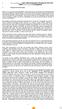 1. TITLE OF THE PROJECT: Early Child Development Education (ECDE) FOR 2400 POOREST CHILDREN in Bangladesh. 2. Background of the project: EAKOK is a non governmental organization, mainly works for the economical
HAVING REGARD to Article 5 b) of the Convention on the Organisation for Economic Cooperation and Development of 14 December 1960;
 THE COUNCIL, HAVING REGARD to Article 5 b) of the Convention on the Organisation for Economic Cooperation and Development of 14 December 1960; HAVING REGARD to the 1976 Recommendation of the Council on
FINAL. World Education Forum. The Dakar Framework for Action. Education For All: Meeting our Collective Commitments. Revised Final Draft
 28/04/2000, 3 P.m. FINAL The Dakar Framework for Action Education For All: Meeting our Collective Commitments Revised Final Draft World Education Forum Dakar, Senegal, 26-28 April 2000 1 1 The Dakar Framework
CORRELATIONAL ANALYSIS BETWEEN TEENAGE PREGNANCY AND MATERNAL MORTALITY IN MALAWI
 CORRELATIONAL ANALYSIS BETWEEN TEENAGE PREGNANCY AND MATERNAL MORTALITY IN MALAWI Abiba Longwe-Ngwira and Nissily Mushani African Institute for Development Policy (AFIDEP) P.O. Box 31024, Lilongwe 3 Malawi
Health in the 2030 Agenda for Sustainable Development
 EXECUTIVE BOARD EB138/CONF./8 138th session 27 January 2016 Agenda item 7.2 Health in the 2030 Agenda for Sustainable Development Draft resolution proposed by Japan, Panama, South Africa, Thailand, United
Literacy Action Plan. An Action Plan to Improve Literacy in Scotland
 Literacy Action Plan An Action Plan to Improve Literacy in Scotland Literacy Action Plan An Action Plan to Improve Literacy in Scotland The Scottish Government, Edinburgh, 2010 Crown copyright 2010 ISBN:
Current challenges in delivering social security health insurance
 International Social Security Association Afric ISSA Meeting of Directors of Social Security Organizations in Asia and the Pacific Seoul, Republic of Korea, 9-11 November 2005 Current challenges in delivering
Thailand Early Childhood Care and Education (ECCE) programmes
 IBE/2006/EFA/GMR/CP/83 Country profile prepared for the Education for All Global Monitoring Report 2007 Strong Foundations: Early Childhood Care and Education Thailand Early Childhood Care and Education