
Interview: NIDA Director Discusses Drug Abuse Among Teens
|
|
|
- Bethanie Murphy
- 10 years ago
- Views:
Transcription
1 Interview: NIDA Director Discusses Drug Abuse Among Teens Nora Volkow, M.D., is the director of the National Institute on Drug Abuse (NIDA). The Challenge interviewed Dr. Volkow to discuss the research being conducted on drug abuse and its consequences on adolescent brains. The interview has been condensed for print. The full text can be found online at NIDA spends a great deal of money on research studies to better understand and prevent drug abuse among children and adolescents. Why is so much attention placed on this period of the lifespan? Adolescents warrant increased attention because they are at heightened risk for drug abuse, they may suffer more severe consequences, and childhood and early adolescence represent times when targeted prevention efforts may have the most impact. NIDA-supported research has shown that the earlier drug abuse is initiated, the more likely an individual will become addicted. In refact, addiction is called a developmental disease because it typically begins during the critical teen years when the brain is still developing not to fully mature until a person is in his or her 20s. This heightened risk adolescents face, therefore, is far more than just a result of social angst or the opportunity to use drugs, though these factors certainly play a role. Rather, adolescents face increased risk because these environmental factors occur during a time of great change in the brain. For example, among the last areas of the brain to mature is the prefrontal cortex the part of the brain that enables us to assess situations, make sound decisions, and keep our emotions and desires under control. The fact that this critical part of an adolescent s brain is still a work-in-progress can help to explain the risk taking that is a characteristic of this time period, and can help us, as adults, recognize more fully the challenges youth face in making decisions that impact their health. How do drugs affect brain functioning during childhood and adolescence?

2 It is important to understand that studies on brain functioning are still relatively new, especially in younger human populations. Innovative research, however, is helping to shed light on the various ways in which drugs can change the course of brain development and behavior. We know that drug abuse affects the brain circuitry involved in reward, motivation, memory, and judgment. Are these effects intensified when a still-developing brain is exposed to drugs? Likely so, given the range of mental and substance abuse problems already linked to early drug abuse. But recent studies are delving into how exposure to drugs at different points along a developmental trajectory changes the brain and leaves individuals more vulnerable to health problems later in life. This research is enhanced by the availability of new technologies, including neuroimaging tools that allow us to study the human brain like never before, literally to see into the brains of people and discover how drugs are affecting its function. The most commonly used drugs among young people are alcohol, tobacco, and marijuana. Can use of these drugs during childhood and adolescence negatively affect brain functioning? If so, what are the long-term implications of such effects? We have learned from our animal and human studies that observe behaviors, a proxy-measure for brain activity, that there are differences between adolescents and adults with regard to the effects of drugs. For example, findings from NIDA-sponsored animal studies suggest that adolescent rats become addicted to nicotine more readily, as they self-administered more often and in higher total doses per session than rats first exposed to nicotine as adults. This early exposure in rats also led to changes in a specific brain receptor that is important in promoting nicotine s rewarding effects. Similar behavioral findings are emerging from our clinical research. Studies show that adolescents that smoke are more likely to become dependent on nicotine compared with adults and are also more likely than non-smoking adolescents to use other drugs. Findings, such as these, suggest that not only may smoking be more addictive if it is initiated during adolescence, but that it may heighten response to other addictive drugs. In addition to nicotine, NIDA-supported research is also looking at how chronic marijuana use during adolescence alters brain function, particularly intellectual functioning, to see if there is an increased vulnerability with adolescents to cognition related changes. To take it a step further, we are studying the consequences of marijuana use on brain development to identify behavioral or cognitive markers for adolescents who progress from use to addiction. This research will help us to better understand why young people are particularly vulnerable to the consequences of drug abuse and how resulting brain changes may influence their overall development. Methamphetamine use has garnered a lot of attention in the popular media. In 2004, 6.2 percent of high school seniors reported having used this drug at least once. How much use of methamphetamine is necessary before deleterious effects on the brain are apparent? The short answer to your question is that no amount of methamphetamine is safe. The extent of the negative effects to the brain and how quickly those effects occur is based on many individual factors, such as genetics, environment, age, gender, amount and duration of use, and route of administration. Each of these factors, individually as well as combined, contributes to the harmful effects of any drug abused. Thus, it is possible that the consequences from the same amount of methamphetamine may differ significantly across individuals, thereby making it

3 difficult, if not impossible, to quantify an amount of exposure at which the brain suffers longterm effects. Similarly, we cannot predict at what point in time or dosage an individual transitions from controlled drug abuse to compulsive addiction. That said, once a person starts using methamphetamine repeatedly, regardless of their initial vulnerability, the consequences can be devastating. Acute consequences of the drug include cardiovascular problems and stroke, hyperthermia (elevated body temperature) and convulsions, and even death. Chronic methamphetamine abusers often exhibit signs of mental distress, including violent behavior, anxiety, depression, confusion, and insomnia. They also can also suffer from psychotic symptoms such as paranoia, auditory hallucinations, and delusions. What other drugs should school staff be aware of? In addition to methamphetamine, alcohol, nicotine, and marijuana, school staff should also be aware of the potential for adolescents to abuse inhalants, prescription drugs, and steroids. In the cases of inhalants and some prescription drugs, the substances are being used in a manner that is dissociated from their intended purposes, and therefore people often do not recognize their potential for abuse. Inhalants are particularly puzzling to adults since the idea of sniffing or snorting the fumes of paint-thinner, cooking spray, or nail polish remover is exceedingly unappealing. However, for a pre-teen or teen with limited access to traditional substances of abuse, inhalants present a means for a quick high that resembles that of alcohol inebriation (e.g. mild stimulations, loss of inhibitions, and distorted perceptions). Data from NIDA s Monitoring the Future Study (a national survey of 8th-, 10th-, and 12th-graders) indicate that in 2005, approximately 17 percent of eighth graders reported ever trying an inhalant. These youths place themselves at risk for a bevy of negative consequences depending on which substance they use. Among them are: dementia, logical and cognitive abnormalities, memory loss, delusions, hallucinations, slurred speech, and loss of hearing or smell. The most serious effect is death, which can occur after even a single session of inhalant abuse, stemming from aspiration, accidental trauma, asphyxia, or cardiac arrythmias. Further, as with other drugs of abuse, inhalant abuse can progress into the chronic and relapsing disease of addiction and may further increase the risk of other drug abuse later in life. Just as adults often do not consider their cleaning solutions under the kitchen sink to be potential substances of abuse, the items in their medicine cabinet are also overlooked. With recent data showing that one in 10 12th-graders reported nonmedical use of Vicodin within the past year, it is clearly time that we move past the perception that the nonmedical use of physician-prescribed drugs is not dangerous. In fact, consequences can be dire whether the adolescent is abusing the prescription drug for the intended purpose, for example as a sleep aide, pain reliever, anxiety reducer or, if they are abusing these drugs as a means of getting high. Stimulants, for example, can elevate blood pressure and cause irregular heartbeat, respiration, and seizures. Sleeping pills and other central nervous system (CNS) depressants, combined with any medication or substance that causes drowsiness, can slow both heartbeat and respiration, which can be fatal; discontinuing prolonged use of high doses of CNS depressants can cause seizures. Painkillers and antianxiety medications can cause depressed respiration and death. Further, the addiction to

4 the prescription drugs is not only a facilitator of other negative consequences; it is itself, a negative consequence. Finally, unlike traditional illicit drugs, prescription drugs can be abused in order to enhance performance or improve appearance. This opens the door for teens that might not otherwise abuse substances and yet, their need to lose weight or heighten their concentration in preparation for an exam, may lead them to adopt a by any means necessary approach. This challenges our notion of what an adolescent substance abuser is, and calls on school staff to learn to recognize the warning signs in students they might otherwise not consider at risk for drug abuse. The same holds true for those adolescents at risk for abusing anabolic steroids. Our recent data show that 2.6 percent of high school seniors reported using steroids at least once. While not as commonly abused as other types of drugs, the side effects of steroids can be particularly damaging to a group that is otherwise health conscience. Major side effects can include liver tumors and cancer, jaundice, high blood pressure, kidney tumors, severe acne, trembling, depression, and if severe enough, suicide. In males, steroids have a feminizing effect and in females, a masculinizing effect. Adolescents that abuse steroids face the possibility that their growth may be halted prematurely and permanently. Research suggests that drug abuse involves multiple factors, including biology, environment, and interactions between the two. One salient environmental influence on children and adolescents is the school context. What are the most important factors in the school environment that either protect or put youths at risk for drug use? Risk factors can occur at different stages of a child s life, in different settings. Early onset risk factors can place children on developmental paths that lead to adolescent drug abuse and related problem behaviors. Within schools, several individual, peer, and environmental factors can place adolescents at risk for drug abuse: inappropriate classroom behavior, such as aggression and impulsivity; academic failure; poor social coping skills; and association with peers involved in high-risk behaviors, including drug abuse. Not all risk factors, however, stem from the students themselves; in fact, misperceptions about the extent and acceptability of drug-abusing behaviors in school held by school staff and the public in general, also can create an environment that increases drug-abuse risk. For example, the belief that most adolescents use drugs when, in fact, most do not, can lead to ambiguous or poorly enforced drug-abuse policies. The effects of these and other environmental risk factors can increase during transitions that occur in the school context such as entrance to a new school, and transitions from elementary to middle school, or middle to high school. These are times when children and adolescents are faced with new academic and social situations. School-based prevention programs that show evidence for protecting adolescents from drug abuse are often integrated with goals for academic success and focus on promoting school bonding. In addition, they may improve social and academic skills; enhance peer relationships; improve self-control, coping skills and drug refusal skills; and correct misperceptions about adolescent drug-use norms. Finally, schools should use caution when grouping high-risk teens in peer group prevention programs, because such

5 groupings have been shown to produce negative outcomes, as the youth may reinforce each other s drug-abuse behaviors. In addition, are there certain biological factors that may interact with school-related risk factors to heighten risk of drug abuse for some youth? Clearly the more risk factors an adolescent has, the greater the likelihood that drug abuse will occur. School staff should take note of factors such as withdrawn or aggressive temperamental styles or early displays of aggression, poor impulse control, and otherwise unexplained academic problems. Among the most common biological risk factors for substance abuse are co-morbid mental conditions. Depression, anxiety, ADHD, and conduct disorder are often present in adolescents prior to their abusing drugs, perhaps as a form of self-treatment, but drug abuse itself may also trigger or worsen co-morbid mental conditions in some adolescents. In addition, biological and environmental risk factors in the family can increase risk for drug abuse in children and adolescents such as a family history of drug or alcohol abuse, physical or sexual abuse, or neglect. Finally, gender is a major factor in assessing risk status of adolescents for specific drugs. For example, while boys report significantly more drug use for most substances (especially alcohol and marijuana), adolescent females show an increased risk for abusing prescription drugs. While not a modifiable risk factor, gender should not be ignored when assessing risk and further, when developing and implementing prevention programs. What are the three most important steps a school can take to help prevent drug abuse? Three steps that schools can take are: Use science-based, proven prevention approaches that are developmentally appropriate and reinforced over time (e.g., provides booster sessions). Implement interventions early, especially with children at early risk for aggression. Research has shown that early intervention can reduce problem behaviors and change negative developmental paths. Create a school environment that emphasizes pro-social activity and responsibility for students, teachers, and administrators, and provides parent-family support. For more information on prevention programs, I direct readers to the 2003 edition of NIDA spreventing Drug Abuse among Children and Adolescents: A Research-Based Guide for Parents, Educators, and Community Leaders. It is available to download at It offers prevention principles that can help parents, educators, and community leaders plan and deliver science-based prevention programs. NIDA also maintains a Web site for teens that provides accurate information about drugs of abuse:

Drug Abuse Prevention Training FTS 2011
 Drug Abuse Prevention Training FTS 2011 Principles of Prevention Prevention programs should enhance protective factors and reverse or reduce risk factors (Hawkins et al. 2002). The risk of becoming a drug
Prescription Drug Abuse
 Prescription Drug Abuse Introduction Most people take medicines only for the reasons their health care providers prescribe them. But millions of people around the world have used prescription drugs for
Teen Misuse and Abuse of Alcohol and Prescription Drugs. Information for Parents
 Teen Misuse and Abuse of Alcohol and Prescription Drugs Information for Parents Terminology Misuse: Using a drug in a way in which it was not intended Example: Using a higher dose of medication than was
And, despite the numbers, for many people, the Facts About Drugs are not clear.
 According to the National Survey on Drug Use and Health (NSDUH), an estimated 20 million Americans aged 12 or older used an illegal drug in the past 30 days. This estimate represents 8% percent of the
34 th Judicial District Substance Abuse Study Guide
 34 th Judicial District Substance Abuse Study Guide What is Drug Addiction? 2 It is characterized by intense and, at times, uncontrollable drug craving, along with compulsive drug seeking and use that
Drug Abuse and Addiction
 Drug Abuse and Addiction Introduction A drug is a chemical substance that can change how your body and mind work. People may abuse drugs to get high or change how they feel. Addiction is when a drug user
Iowa Governor s Office of Drug Control Policy
 Iowa Governor s Office of Drug Control Policy medicines or take them in a manner not prescribed, we increase the risk of negative effects. It is estimated that over 35 million Americans are ages 65 and
The Impact of Alcohol
 Alcohol and Tobacco Smoking cigarettes and drinking alcohol are behaviors that often begin in adolescence. Although tobacco companies are prohibited from advertising, promoting, or marketing their products
Alcohol intervention programs in other countries
 Alcohol intervention programs in other countries Assist. Prof. Dr. Suttiporn Janenawasin Siriraj Hosp. Mahidol Univ. A Major Task for Drug Treatment is Changing Brains Back! The Most Effective Treatment
How To Write A Drug And Alcohol And Drug Free Campus Policy
 DRUG AND ALCOHOL GUIDELINES Information on Biennial Review The Drug Free Schools and Campuses Regulations (34 CFR, Part 86) of the Drug-Free Schools and Communities Act (DFSCA) require an institution of
SUBSTANCE ABUSE. Key Concepts. Types of Drugs
 SUBSTANCE ABUSE You have to choose who you want to be in life. This happens by making lots of decisions every day. Using substances is a choice. This is a big choice, because substances have a very real
opiates alcohol 27 opiates and alcohol 30 April 2016 drug addiction signs 42 Ranked #1 123 Drug Rehab Centers in New Jersey 100 Top 10 380
 opiates alcohol 27 opiates and alcohol 30 April 2016 drug addiction signs 42 ed #1 123 Drug Rehab Centers in New Jersey 100 Top 10 380 effects of alcohol in the brain 100 Top 30 698 heroin addiction 100
Methamphetamine. Like heroin, meth is a drug that is illegal in some areas of the world. Meth is a highly addictive drug.
 Methamphetamine Introduction Methamphetamine is a very addictive stimulant drug. People who use it can form a strong addiction. Addiction is when a drug user can t stop taking a drug, even when he or she
Drug addiction. These factors increase the likelihood of your having an addiction to a legal or an illegal drug:
 Drug addiction You may be hooked emotionally and psychologically. You may have a physical dependence, too. If you're addicted to a drug whether it's legal or illegal you have intense cravings for it. You
Section 5: Methamphetamine Prevention, Intervention and Treatment
 In This Section: Section 5: Methamphetamine Prevention, Intervention and Treatment Early Intervention, Source: This information was accessed in 2011 at www.methresources.gov which now redirects to the
Co-Occurring Substance Use and Mental Health Disorders. Joy Chudzynski, PsyD UCLA Integrated Substance Abuse Programs
 Co-Occurring Substance Use and Mental Health Disorders Joy Chudzynski, PsyD UCLA Integrated Substance Abuse Programs Introduction Overview of the evolving field of Co-Occurring Disorders Addiction and
Tobacco/Marijuana. Tobacco. Short-term effects of smoking
 Tobacco/Marijuana Tobacco Nicotine, one of the more than 4,000 chemicals found in the smoke from tobacco products such as cigarettes, cigars, and pipes, is the primary component in tobacco that acts on
Drug and Alcohol Abuse Prevention Program
 Drug and Alcohol Abuse Prevention Program of Bethany Global University Bethany Global University (BGU) has adopted the following policy in compliance with the Drug Free Workplace Act of 1988 and the subsequent
Conduct Disorder: Treatment Recommendations. For Vermont Youth. From the. State Interagency Team
 Conduct Disorder: Treatment Recommendations For Vermont Youth From the State Interagency Team By Bill McMains, Medical Director, Vermont DDMHS Alice Maynard, Mental Health Quality Management Chief, Vermont
PRESCRIPTION DRUG ABUSE prevention
 PRESCRIPTION DRUG ABUSE prevention Understanding Drug Addiction Many people do not understand how someone could abuse drugs even when their life seems to be falling apart. It is often assumed that those
Karla Ramirez, LCSW Director, Outpatient Services Laurel Ridge Treatment Center
 Karla Ramirez, LCSW Director, Outpatient Services Laurel Ridge Treatment Center 1 in 4 Americans will have an alcohol or drug problems at some point in their lives. The number of alcohol abusers and addicts
Pregnancy and Substance Abuse
 Pregnancy and Substance Abuse Introduction When you are pregnant, you are not just "eating for two." You also breathe and drink for two, so it is important to carefully consider what you put into your
3 DRUG REHAB FOR TEENAGERS
 4 4 5 5 6 7 8 10 11 12 3 DRUG REHAB FOR TEENAGERS Discovering that a teen is taking drugs or alcohol is worrisome. Parents not only worry about the impact on a child s health, but also the possible impact
The University of Toledo - Main Campus Policy
 The University of Toledo - Main Campus Policy IV-12 3360-30-12 Alcohol and Substance Abuse. (A) Alcohol and drug abuse policy statement The University of Toledo is committed to promoting and maintaining
How To Treat A Drug Addiction
 1 About drugs Drugs are substances that change a person s physical or mental state. The vast majority of drugs are used to treat medical conditions, both physical and mental. Some, however, are used outside
DRUGS? NO THANKS! What are some of the leading factors that cause you to. become interested in experimenting with illegal drugs?
 DRUGS? NO THANKS! What are some of the leading factors that cause you to become interested in experimenting with illegal drugs? It is easily available: During adolescence, you are trying to figure out
Eating Disorders. Symptoms and Warning Signs. Anorexia nervosa:
 Eating Disorders Eating disorders are serious conditions that can have life threatening effects on youth. A person with an eating disorder tends to have extreme emotions toward food and behaviors surrounding
THE CAUSES OF DRUG ADDICTION
 1 Statistical facts associated with addiction and substance abuse are concerning, but many men and women choose to ignore the dangers. By understanding the main causes of addiction to drugs, it is possible
Treatment Approaches for Drug Addiction
 Treatment Approaches for Drug Addiction NOTE: This is a fact sheet covering research findings on effective treatment approaches for drug abuse and addiction. If you are seeking treatment, please call the
The Silent Epidemic: Teens and the Use of Inhalants
 http://www.teendrugabuse.us/inhalants.html The Silent Epidemic: Teens and the Use of Inhalants According to the most recent study by the National Household Survey on Drug Abuse, nearly seventeen million
Physical Symptoms Mood Symptoms Behavioral Symptoms
 Prescription drugs are the 3 rd most commonly abused drugs amongst teens in Nebraska, and the same statistic holds true on a national level. The rise in prescription drug abuse is becoming increasingly
Teens and Prescription Drug Abuse
 Teens and Prescription Drug Abuse Information compiled by Communities That Care of Lorain County For more information, please contact Cathy Gabe 440-282-9920 [email protected] www.ctcloraincounty.org
DrugFacts: Treatment Approaches for Drug Addiction
 DrugFacts: Treatment Approaches for Drug Addiction NOTE: This is a fact sheet covering research findings on effective treatment approaches for drug abuse and addiction. If you are seeking treatment, please
The Teen Brain: Still Under ConStrUCtion NATIONAL INSTITUTE OF MENTAL HEALTH
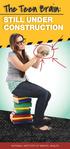 The Teen Brain: Still Under ConStrUCtion NATIONAL INSTITUTE OF MENTAL HEALTH One of the ways that scientists have searched for the causes of mental illness is by studying the development of the brain from
Maternal and Child Health Issue Brief
 Maternal and Child Health Issue Brief Why is substance abuse an issue among youth? December 14 8 Substance Abuse among Youth in Colorado Substance abuse among youth is defined as using alcohol, tobacco,
Essentials about Substance Use, Abuse, Addictions, Divorce, and Divorce Attorneys
 Essentials about Substance Use, Abuse, Addictions, Divorce, and Divorce Attorneys Use, Abuse and Addiction Social use once in a while, take it or leave it, truly no big deal Abuse: Beginning to become
ADDICTIONS. BEHAVIOURAL Internet Shopping Work Sex Gambling Food. SUBSTANCE - RELATED Alcohol Drugs Medicine Tobacco
 ADDICTIONS BEHAVIOURAL Internet Shopping Work Sex Gambling Food SUBSTANCE - RELATED Alcohol Drugs Medicine Tobacco Addiction is a chronic, relapsing disease affecting the brains's reward, motivation and
Psychotic Disorders. 1995-2013, The Patient Education Institute, Inc. www.x-plain.com mhff0101 Last reviewed: 01/10/2013 1
 Psychotic Disorders Introduction Psychotic disorders are severe mental disorders that cause abnormal thinking and perceptions. These disorders cause people to lose touch with reality. As a result, people
OVERVIEW OF COGNITIVE BEHAVIORAL THERAPY. 1 Overview of Cognitive Behavioral Therapy
 OVERVIEW OF COGNITIVE BEHAVIORAL THERAPY 1 Overview of Cognitive Behavioral Therapy TABLE OF CONTENTS Introduction 3 What is Cognitive-Behavioral Therapy? 4 CBT is an Effective Therapy 7 Addictions Treated
Adolescent Substance Abuse: Evidence-Based Programs
 Adolescent Substance Abuse: Evidence-Based Programs Sara McEwen, MD, MPH Governor s Institute on Substance Abuse Janice Petersen, Ph.D., Director Office of Prevention/DMHDDSAS DHHS December 7, 2010 Objectives
Alcohol Addiction. Introduction. Overview and Facts. Symptoms
 Alcohol Addiction Alcohol Addiction Introduction Alcohol is a drug. It is classed as a depressant, meaning that it slows down vital functions -resulting in slurred speech, unsteady movement, disturbed
Drugs and Teens: Current Facts and Recent Trends. Agenda. Adolescent development
 Drugs and Teens: Current Facts and Recent Trends Cheryl Houtekamer Youth Addiction Services Calgary Agenda Adolescent Development Brain Development Adolescent Substance Use - Prevalence How does addiction
Depression in Older Persons
 Depression in Older Persons How common is depression in later life? Depression affects more than 6.5 million of the 35 million Americans aged 65 or older. Most people in this stage of life with depression
Free Additional Resources
 Free Additional Resources Substance Abuse and Mental Health Services Administration Treatment Improvement Protocols The Substance Abuse and Mental Health Services Administration (SAMHSA) offers free Treatment
SUBSTANCE USE DISORDER SOCIAL DETOXIFICATION SERVICES [ASAM LEVEL III.2-D]
![SUBSTANCE USE DISORDER SOCIAL DETOXIFICATION SERVICES [ASAM LEVEL III.2-D]](/thumbs/27/9667060.jpg "SUBSTANCE USE DISORDER SOCIAL DETOXIFICATION SERVICES [ASAM LEVEL III.2-D]") SUBSTANCE USE DISORDER SOCIAL DETOXIFICATION SERVICES [ASAM LEVEL III.2-D] I. Definitions: Detoxification is the process of interrupting the momentum of compulsive drug and/or alcohol use in an individual
SUBSTANCE USE DISORDER SOCIAL DETOXIFICATION SERVICES [ASAM LEVEL III.2-D] I. Definitions: Detoxification is the process of interrupting the momentum of compulsive drug and/or alcohol use in an individual
- UNDERSTANDING - Dual Diagnosis
 - UNDERSTANDING - Dual Diagnosis TABLE OF CONTENTS Introduction 3 The Link Between Mental Illness and Substance Abuse 4 Characteristics of an Effective Dual Diagnosis Treatment Plan 6 Dual Diagnosis Treatment
"BARRIERS TO HIV PREVENTION AND CARE DUE TO CONSUMER SUBSTANCE ABUSE AND CHEMICAL DEPENDENCE PART II.
 "BARRIERS TO HIV PREVENTION AND CARE DUE TO CONSUMER SUBSTANCE ABUSE AND CHEMICAL DEPENDENCE PART II. BY PROFESSOR TERENCE MCPHAUL PSYCHOLOGY TELEVISION NETWORK (PSYCHTV ) Distinct Populations of Youth
DRUG AND ALCOHOL GUIDELINES. Information on MLI s Biennial Review of Its Drug/Alcohol Policies
 METROPOLITAN LEARNING INSTITUTE Licensed by the New York State Education Department Non Profit Educational Organization Innovative Approach Is Our Way to Success www.gettraining.org Main Campus: Extension:
Useful Internet Resources Examples
 G Useful Internet Resources Examples Selected Alcohol and Drug Abuse Websites NIDA Capsules Sample on Methamphetamine Abuse CSAT by Fax: What Makes an Effective Addictions Counselor? Substance Abuse and
Clinical Practice Guidelines: Attention Deficit/Hyperactivity Disorder
 Clinical Practice Guidelines: Attention Deficit/Hyperactivity Disorder AACAP Official Action: OUTLINE OF PRACTICE PARAMETERS FOR THE ASSESSMENT AND TREATMENT OF CHILDREN, ADOLESCENTS, AND ADULTS WITH ADHD
Module 4 Suicide Risk Assessment
 Module 4 Suicide Risk Assessment About 3% of adults (and a much higher percentage of youths) are entertaining thoughts of suicide at any given time; however, there is no certain way to predict who will
Underage Drinking. Underage Drinking Statistics
 Underage Drinking Underage drinking is a serious public health problem in the United States. Alcohol is the most widely used substance of abuse among America s youth, and drinking by young people poses
Workforce Development Online Workshop Descriptions
 Workforce Development Online Workshop Descriptions Behavioral Health Service Delivery Workshops: The Effects of Violence Exposure on Children (1.5 hours) Regretfully, violence against children and youth
Drugs PSYCHOSIS. Depression. Stress Medical Illness. Mania. Schizophrenia
 Drugs Stress Medical Illness PSYCHOSIS Depression Schizophrenia Mania Disorders In preschool children imaginary friends and belief in monsters under the bed is normal (it may be normal in older developmentally
Identifying and Treating Dual-Diagnosed Substance Use and Mental Health Disorders. Presented by: Carrie Terrill, LCDC
 Identifying and Treating Dual-Diagnosed Substance Use and Mental Health Disorders Presented by: Carrie Terrill, LCDC Overview What is Dual Diagnosis? How Common is Dual Diagnosis? What are Substance Use
OTC Abuse. Dr. Eman Said Abd-Elkhalek Lecturer of Pharmacology & Toxicology Faculty of Pharmacy Mansoura University
 OTC Abuse Dr. Eman Said Abd-Elkhalek Lecturer of Pharmacology & Toxicology Faculty of Pharmacy Mansoura University Opiates Abuse Opioids are a group of natural, partially synthetic, or synthetic drugs
Addiction in Adolescents
 Addiction in Adolescents THE BIOLOGICAL, COGNITIVE, AND SOCIAL EMOTIONAL EFFECTS RENEA BEEN, CRISTY BERGER, & TAMMER MALATY Biological Effects Today s Lesson: The Brain Welcome to Biology 101 In order
It makes your heart beat faster and your blood pressure goes up. Smoking marijuana reduces the amount of oxygen in your body. This means every part
 It makes your heart beat faster and your blood pressure goes up. Smoking marijuana reduces the amount of oxygen in your body. This means every part of your body has to work harder just to do its job. Smoking
The Adverse Health Effects of Cannabis
 The Adverse Health Effects of Cannabis Wayne Hall National Addiction Centre Kings College London and Centre for Youth Substance Abuse Research University of Queensland Assessing the Effects of Cannabis
X. Capsules; pills; Stimulants; increased energy powder; rock alertness; extreme anxiety; temporary mental illness
 Cadet Name: Date: 1. (U4C3L1:Q1) Study the table and indicate the type of drugs that are described in rows X, Y and Z. Drug Forms of the Drug Uses and Effects X. Capsules; pills; Stimulants; increased
CHARLES & SUE S SCHOOL OF HAIR DESIGN DRUG AND ALCOHOL POLICY DRUG AND ALCOHOL POLICY; SUBSTANCE ABUSE RESOURCES:
 CHARLES & SUE S SCHOOL OF HAIR DESIGN DRUG AND ALCOHOL POLICY DRUG AND ALCOHOL POLICY; SUBSTANCE ABUSE RESOURCES: At Charles & Sue s School of Hair Design, the illicit use of drugs and/or alcohol by staff
Learning Objectives Review and discuss current research on the basic brain physiology of addiction
 Emerging Trends in Addiction Treatment 1.0 CE NBCC, NAADAC, FCB Dr. Doug Davies, MD, ASAM Medical Director The Refuge A Healing Place, Ocklawaha, FL 14835 SE 85 th Street Ocklawaha, FL 32179 www.therefuge
Development of Chemical Dependency in Adolescents & Young Adults. How to recognize the symptoms, the impact on families, and early recovery
 Development of Chemical Dependency in Adolescents & Young Adults How to recognize the symptoms, the impact on families, and early recovery Tim Portinga, PsyD, LP, Mental Health Clinic Supervisor Tim Portinga
AMPHETAMINE AND COCAINE MECHANISMS AND HAZARDS
 AMPHETAMINE AND COCAINE MECHANISMS AND HAZARDS BARRY J. EVERITT Department of Experimental Psychology, University of Cambridge Stimulant drugs, such as cocaine and amphetamine, interact directly with dopamine
Adult Information Form Page 1
 Adult Information Form Page 1 Client Name: Age: DOB: Date: Address: City: State: Zip: Home Phone: ( ) OK to leave message? Yes No Work Phone: ( ) OK to leave message? Yes No Current Employer (or school
Schizoaffective Disorder
 FACT SHEET 10 What Is? Schizoaffective disorder is a psychiatric disorder that affects about 0.5 percent of the population (one person in every two hundred). Similar to schizophrenia, this disorder is
Principles of Adolescent Substance Use Disorder Treatment: A Research-Based Guide
 Principles of Adolescent Substance Use Disorder Treatment: A Research-Based Guide Principles of Adolescent Substance Use Disorder Treatment: A Research-Based Guide This publication is in the public domain
National Institutes of Health U.S. Department of Health and Human Services
 DRUGS, BRAINS, AND BEHAVIOR DRUGS, BRAINS, AND BEHAVIOR THE SCIENCE OF ADDICTION ADDICTION National Institutes of Health U.S. Department of Health and Human Services This publication is in the public domain
Drug and Alcohol Abuse Prevention Program
 Drug and Alcohol Abuse Prevention Program D. A. Dorsey Educational Center is committed to providing a safe and healthy learning environment for all our faculty, staff, and students. Our institution recognizes
C N, A. National Institutes of Health U.S. Department of Health and Human Services
 V IO R S E TH E I C E C N O N TI D N, A S IN A BR, GS U R D A H BE OF D A D IC National Institutes of Health U.S. Department of Health and Human Services This publication is in the public domain and may
Essential Trauma Informed Practices in Schools. Shannon Cronn, N.C.S.P. Barb Iversen, M.C.
 Essential Trauma Informed Practices in Schools Shannon Cronn, N.C.S.P. Barb Iversen, M.C. Objectives: Participants attending this session will be able to: Define trauma Explain how trauma may impact child/teen
TEENS AND PRESCRIPTION DRUGS An Analysis of Recent Trends on the Emerging Drug Threat
 TEENS AND PRESCRIPTION DRUGS An Analysis of Recent Trends on the Emerging Drug Threat OFFICE OF NATIONAL DRUG CONTROL POLICY EXECUTIVE OFFICE OF THE PRESIDENT FEBRUARY 2007 TABLE OF CONTENTS Introduction
75-09.1-08-02. Program criteria. A social detoxi cation program must provide:
 CHAPTER 75-09.1-08 SOCIAL DETOXIFICATION ASAM LEVEL III.2-D Section 75-09.1-08-01 De nitions 75-09.1-08-02 Program Criteria 75-09.1-08-03 Provider Criteria 75-09.1-08-04 Admission and Continued Stay Criteria
Alcohol and Brain Damage
 Alcohol and Brain Damage By: James L. Holly, MD O God, that men should put an enemy in their mouths to steal away their brains! That we should, with joy, pleasance, revel, and applause, transform ourselves
INFORMATION BRIEF. Overview. Prescription Drug Abuse Among Young People
 Product No. 2002-L0424-004 INFORMATION BRIEF AUGUST 2002 U. S. D E P A R T M E N T O F J U S T I C E NDIC and Stockbyte Overview Prescription drugs, a category of psychotherapeutics that comprises prescription-type
Presently, there are no means of preventing bipolar disorder. However, there are ways of preventing future episodes: 1
 What is bipolar disorder? There are two main types of bipolar illness: bipolar I and bipolar II. In bipolar I, the symptoms include at least one lifetime episode of mania a period of unusually elevated
Naltrexone and Alcoholism Treatment Test
 Naltrexone and Alcoholism Treatment Test Following your reading of the course material found in TIP No. 28. Please read the following statements and indicate the correct answer on the answer sheet. A score
Identifying Individuals with a Dual Diagnosis and Substance Misuse
 Identifying Individuals with a Dual Diagnosis and Substance Misuse Presented by the Dual Diagnosis Substance Misuse Committee 1 Goal of Presentation To raise awareness To assist staff to identify individuals
4/13/2011. 5 Actions to Overcome Addiction. John Fitzgerald, PhD, LPC, CAS. relationships
 5 Actions to Overcome Addiction John Fitzgerald, PhD, LPC, CAS relationships 1 What is addiction? 2 Socially-constructed 3 Risk Factors 80% 15 years-old Addiction Protective Factors Risk Factors Domain
Definition of Terms. nn Mental Illness Facts and Statistics
 nn Mental Illness Facts and Statistics This section contains a brief overview of facts and statistics about mental illness in Australia as well as information that may be useful in countering common myths.
DRUGS OF ABUSE CLASSIFICATION AND EFFECTS
 Drug and Drug use DRUGS OF ABUSE CLASSIFICATION AND EFFECTS A pharmaceutical preparation or a naturally occurring substance used primarily to bring about a change in the existing process or state (physiological,
Cocaine. Like heroin, cocaine is a drug that is illegal in some areas of the world. Cocaine is a commonly abused drug.
 Cocaine Introduction Cocaine is a powerful drug that stimulates the brain. People who use it can form a strong addiction. Addiction is when a drug user can t stop taking a drug, even when he or she wants
Mental Health and Our Schools. Terri L. White, MSW Commissioner Oklahoma Department of Mental Health and Substance Abuse Services
 Mental Health and Our Schools Terri L. White, MSW Commissioner Oklahoma Department of Mental Health and Substance Abuse Services Both mental illness and addiction are real medical conditions, just like
Drug Free Campus Plan
 Baptist University of the Américas, San Antonio, Texas, is committed to maintaining a drug free environment, free of the abuse of alcohol, tobacco and other drugs. Baptist University of the Américas is
CHAPTER 5 MENTAL, BEHAVIOR AND NEURODEVELOPMENT DISORDERS (F01-F99) March 2014. 2014 MVP Health Care, Inc.
 CHAPTER 5 MENTAL, BEHAVIOR AND NEURODEVELOPMENT DISORDERS (F01-F99) March 2014 2014 MVP Health Care, Inc. CHAPTER 5 CHAPTER SPECIFIC CATEGORY CODE BLOCKS F01-F09 Mental disorders due to known physiological
ADOLESCENT BRAIN DEVELOPMENT: IMPLICATIONS FOR DRUG USE PREVENTION. Jessie Breyer, B.A. & Ken C. Winters, Ph.D. Center for Substance Abuse Research
 ADOLESCENT BRAIN DEVELOPMENT: IMPLICATIONS FOR DRUG USE PREVENTION Jessie Breyer, B.A. & Ken C. Winters, Ph.D. Center for Substance Abuse Research Department of Psychiatry, University of Minnesota & Mentor
Obsessive Compulsive Disorder: a pharmacological treatment approach
 Obsessive Compulsive Disorder: a pharmacological treatment approach Professor Alasdair Vance Head, Academic Child Psychiatry Department of Paediatrics University of Melbourne Royal Children s Hospital
Healthy Lifestyle, Tobacco Free and Recovery Lesson for Group or Individual Sessions
 Healthy Lifestyle, Tobacco Free and Recovery Lesson for Group or Individual Sessions This lesson is part of an overall curriculum based program developed by the New York State Office of Alcoholism and
PhD. IN (Psychological and Educational Counseling)
 PhD. IN (Psychological and Educational Counseling) I. GENERAL RULES CONDITIONS: Plan Number 2012 1. This plan conforms to the regulations of the general frame of the programs of graduate studies. 2. Areas
In Brief UTAH. Adolescent Behavioral Health. A Short Report from the Office of Applied Studies
 UTAH Adolescent Behavioral Health In Brief A Short Report from the Office of Applied Studies Adolescence (12 to 17 years) is a critical and vulnerable stage of human development, during which males and
Addiction is a Brain Disease
 Addiction is a Brain Disease By ALAN I. LESHNER, MD A core concept evolving with scientific advances over the past decade is that drug addiction is a brain disease that develops over time as a result of
MENTAL HEALTH & SUBSTANCE USE
 MENTAL HEALTH & SUBSTANCE USE Essential Information for Social Workers A BASW Pocket Guide Supported by: Bedford and Luton Purpose of the guide This guide seeks to support Social Workers in their practice
How To Know If A Teen Is Addicted To Marijuana
 http://www.teendrugabuse.us/marijuana.html Marijuana use among Teens Marijuana is the most widely used illicit drug used by teens today. Approximately 60 percent of the kids who use drugs use only marijuana.
Treatment Approaches for Drug Addiction
 Treatment Approaches for Drug Addiction [NOTE: This is a fact sheet covering research findings on effective treatment approaches for drug abuse and addiction. If you are seeking treatment, please call