
Educating Touch Professionals, Students and the Public. Pregnancy Massage: Positioning and Draping
|
|
|
- Bertina Spencer
- 10 years ago
- Views:
Transcription
1 Educating Touch Professionals, Students and the Public Pregnancy Massage: Positioning and Draping By Cindy McNeely, RMT (Trimesters.ca) With Help from Lisa Ivany and Candace Gerrior Gilmore (Atlantic College of Therapeutic Massage) Photography by Sherri Kuehlein (Babies and Brides.ca) CEU Attribution

2 Table of Contents Gaining Credit... 3 Responsibility Disclaimer and Release... 3 Learning Objectives... 4 Positioning Options... 4 Factors Affecting Positioning Choices... 5 Stage of Pregnancy and Positioning Choices... 5 The Prone Position... 5 Prone in the Second and Third Trimesters?... 6 The Supine Position... 6 Avoiding SupieHypotensive Syndrome... 7 Sidelying Position... 7 Semi Reclining... 8 Forward Leaning... 9 Draping the Pregnant Client in Side Lying... 9 Temperature Regulation...10 Summary...11 Biography...11 References...11 References

3 Gaining Credit Successful completion of this course is demonstrated by a certificate that is awarded when a passing grade is obtained on the quiz. You must score 80% or higher to pass the quiz. This course has been attributed for 2 Category A Continuing Education Units or Credits by the Massage Therapist Association of Alberta, Massage Therapist Association of Saskatchewan, and the Manitoba Massage Therapist Association. The College of Massage Therapists of Ontario has assigned 1.0 Category A CEUs for this course. Application is being made for credit with the Colleges of Massage Therapists of British Columbia and Newfoundland & Labrador. Responsibility Disclaimer and Release Much effort has been taken to ensure the safety and advisability of the information contained in this course; however, it is possible to injure people by performing almost any type of intervention. This is more likely when a procedure is performed without judicious precautions, or when the recipient of the intervention has unique biological or other factors that make them more vulnerable to negative reactions. Additionally, sometimes people have a negative reaction that is wholly unpredictable, or their health becomes compromised at the same time an intervention is performed or shortly thereafter as a result of unrelated factors. By enrolling in this course online you acknowledge that you belong to one of the two groups below. 1. You are a student at a massage therapy school and are practicing only under the direct supervision of a regulated and/or licensed health care professional. 2. You are a health care professional regulated and/or licensed to practice in your geographical region. You further attest that you practice in an evidence based way. This means incorporating the best available scientific evidence and blending that with your client s unique biological factors and needs/desires and your own clinical judgment. You agree that only you are responsible for the actions you take as a result of the learning you do on this web site. You also agree that Massage Therapy Practice.com, TouchU, Doug Alexander, Cathy Ryan and other associated instructors, authors and staff are not responsible for the decisions you make and/or the actions you take. You hereby release Massage Therapy Practice.com, Cathy Ryan, Doug Alexander and other associated instructors, authors and staff from any and all liability of any kind, directly or indirectly related to the learning material provided to you through this website. If you do not agree with this release, do not study this course and do not practice the interventions described. 3

4 Learning Objectives After studying this article you should be able to: Identify your client's trimester according to gestational age. State the advantages of each positioning choice. Position a client optimally for her stage of pregnancy, comfort level(s) and objective signs. Understand that the therapist must position for client well being & that clients may not always be able to clearly identify issues regarding maximal comfort or the issues related to Supine hypotension. Re position a client to alleviate positioninduced discomfort. Negotiate draping for a pregnant client securely and in a boundary conscious way when treating her legs, back and abdomen in side lying and semi reclining positions. Positioning Options Every Massage Therapy client needs to be positioned in a way that supports their needs and the goals of the treatment. The following are common (and not so common!) positions. 1. Prone: most often used for back and neck, and posterior leg massage. 2. Supine: used when massaging arms, legs, abdomen, and head, neck and shoulders. 3. Side lying: used to massage the back, arms, legs, head, neck & shoulders, and abdomen if the client is pregnant. 4. Semi lying/or semi reclining: used to massage the entire anterior body and beneficial for the client who is pregnant, hypertensive, has vestibular (balance) issues, or any time the client is not comfortable in a supine position. 5. Forward leaning: using a massage chair with special adaptation for the pregnant abdomen or using pillowing designed to support the anterior torso and head, neck, and shoulders of the pregnant woman. Treating the pregnant client safely and comfortably is very rewarding!

5 Factors Affecting Positioning Choices Of the 5 options mentioned above, specific consideration must be made to adapt the positioning of the pregnant client relative to the specific trimester of their pregnancy and their physical condition. Factors affecting what position is chosen include: Case history information General health status Trimester of the pregnancy. Health Status related to this pregnancy as well as previous pregnancies. o Including general health & obstetrical history. History of musculo skeletal well being, areas of stress, tension, injury, pain, muscle strain, &/or any overuse or repetitive strain issues. Stage of Pregnancy and Positioning Choices The majority of pregnant women in their 1 st trimester (up to 13 weeks gestational age (GA)), can lie in prone or supine with comfort and safety. In the 1 st trimester breast sensitivity/tenderness or nausea/vomiting may interfere with the client finding comfort in the prone position. As the pregnancy progresses into the 2 nd trimester (14 to 26 weeks GA), and the gravid (pregnant) uterus expands, alterations to positioning must be made for safety and comfort reasons. The third trimester extends from 27 weeks GA to delivery. Let s explore the pros and cons of each position relative to your client s trimester in detail. The Prone Position The prone position generally has many advantages, including: Easy access to structures of the back and posterior legs. Allows maximum use of the therapist s weight for increased depth of pressure. With a face cradle the prone position helps the client maintain symmetrical alignment of upper back, shoulders, and neck which provides more effective care in the event of musculo skeletal issues in these areas. Client preference Clients who are stomach sleepers may have difficulty resting in other positions due to their preference in sleeping face down. As the pregnancy progresses some disadvantages arise with the prone position and need to be considered. They include: As the uterus and baby expand during the 2nd and 3rd trimesters, downward pressure from lying prone creates added stress on the client s body. The increased lordotic curve of the pregnant client along with the anterior shift in gravity due to the expanding pregnant belly can create musculo skeletal issues related to the areas of the lower lumbar, gluteal, and leg regions. Increasing the lordotic curve via the prone position may aggravate pre existing issues. Relaxation of the ligamentous structures due to the hormonal influence of relaxin can influence joint instability and ligament laxity. 5

6 The downward weight of the pregnant woman can increase challenges to the uterosacral ligament which helps to stabilize the uterus in relation to the sacrum in the pelvis. This could also potentially manifest as increased sacral discomfort. Challenges to S I joint stability may also occur in this position. This may increase aggravation to an already irritated S I joint. The weight of the therapist as they apply pressure to the lower back area in conjunction with the factors mentioned above present an increased downward force or load on musculature which may already be challenged by the growing pregnant belly. Prone in the Second and Third Trimesters? Many massage therapists adjust their prone pregnancy work by utilizing cushioning systems or tables which allow the pregnant abdomen to rest prone in a hollowed structure during the 2 nd and 3 rd trimesters. These devices provide a slinglike type of support for the pregnant prone client. The individual therapist who wishes to treat a pregnant client using tables/cushions that incorporate prone positioning to be used in trimesters 2 and 3 of pregnancy must be responsible for determining the physical safety of their clients, and will need to express this in their informed consent with the client. Since side lying and semi reclining are very comfortable positions for the pregnant client, and create no additional challenges to her pregnant body, I recommend these two positions as the safest and most effective positions to utilize when providing massage therapy during a pregnancy without complications. The Supine Position While most clients are comfortable in supine when they aren t pregnant, they become increasingly uncomfortable as the pregnant abdomen grows. The most common issue which impairs client comfort is Supine Hypotension Syndrome. While most clients are comfortable in supine when they aren t pregnant, they become increasingly uncomfortable as the pregnant abdomen grows. The most common issue which impairs client comfort is Supine Hypotension Syndrome. 6

7 Avoiding SupieHypotensive Syndrome Most texts describe the signs of supine hypotension as fairly dramatic. Shortness of breath and dizziness are the most common presentations seen by the massage therapist often result in the client speedily and instinctively needing to change position ie. to sit up or roll onto their side. At what stage of pregnancy does supine hypotension occur with the pregnant client? There is no absolute answer to this question and texts vary in on this point. For example, two midwifery texts give very different guidelines. Mayes edited by Henderson and Macdonald (2004) suggests that the supine position should be avoided throughout the entirety of the 2 nd and 3 rd trimester. Myles textbook edited by Fraser and Cooper (2003) however, suggests avoidance of the supine position only late in the 2 nd trimester. The Society of Obstetricians & Gynecologists of Canada has guidelines for pregnant women and the supine position that are midway between Mayes and Myles. Some women may experience symptomatic hypotension from compression of the vena cava by the pregnant uterus and should modify these (strengthening and weight training) exercises to avoid the supine position after approximately 16 weeks gestation. (SOGC Clinical Practice Guidelines. Exercise in Pregnancy & the Postpartum Period. No June p. 4) Patient comfort, the size of the belly and whether she sleeps in a supine position need to be integrated with these guidelines to help you and the client make an informed decision about her treatment position. There is also a simple adaptation to minimize the risk of supine hypotension during pregnancy. General consensus in obstetrical and midwifery texts suggest that a pillow, rolled towel, or baby wedge pillow can be placed under the right hip. This tilts the gravid uterus off of the inferior vena cava and reduces the possibility of supine hypotension occurring (Henderson 2004). Positioning the entire client in side lying also has the same effect. Most resources state that left or right side lying are equally effective at relieving postural hypotension (Manbit.com) Clients have reported to me that the right hip pillow is effective for procedures like ultrasound where the technician needs access to the abdomen as fully as possible. And I have found that it often works just fine for the pregnant client in 2nd trimester if they prefer it to side lying. However, this position creates some asymmetry in the body. Given that our goal is help create as much musculoskeletal balance as possible, side lying may have more efficacy for minimizing added stress on the body. A great image of the effect of a pregnant woman rolling to a side lying position is viewable at: Sidelying Position Side lying is a natural position for most women during their pregnancy. Sometimes, discomfort can occur on the weight bearing joints particularly the shoulders and hips as a result of lying on the side and with the increased weight gain during pregnancy. Adequate pillowing should, however, alleviate discomfort in this position during massage. I recommend a minimum of 5 pillows as well as a baby wedge for support. One to two pillows placed under the head serve to increase the distance between the ear and shoulder. 7

8 Two to three (or more) pillows between the legs or under the superior leg if the inferior leg is extended. A pillow in the mid torso might also serve to help provide support in the thoracic and waist area while also creating a crevasse of sorts for allowing the shoulder to rest more comfortably. A body cushion for side lying is also often well received by clients. As well, a towel or particularly a baby wedge is wonderful for increasing the support of the side lying abdomen and minimizes lateral twist on the trunk as the baby in 3rd trimester can create torque due to its growing weight. Semi Reclining Women who are well supported within a semireclining position often breathe a sigh of relief and demonstrate a big smile when they experience the comfort of this semi upright position. Mayes Midwifery demonstrates utilization of the 45 degree wedge as valuable for both exercise and relaxation practices (p. 388). For massage clients care should be taken to ensure they are not slumping as they settle into the wedge. I often place an additional 3 pillows on top of the wedge to increase comfort. This increases the angle of recline to closer to 60%. As well, the sacrum and lower lumbar region need to be well supported. For some clients with pain in this area, I will also add a rolled up towel for lumbar support. The client s neck and head should also be supported so that they are not in a hyper extended neck position. Women who have difficulty getting comfortable in bed or on the massage table may find an eggcarton mattress very helpful for alleviating discomfort. This is utilized in some hospitals for clients on prolonged bed rest. Side lying should present no increased risk of harm in the majority of pregnant clients unless they disclose particular issues related to lying in this position. 8

9 Forward Leaning This is an excellent position to teach labour support techniques to the partner or labour support provider/doula. The chair must be well supported with pillows on the seat and in its front. I often have clients straddle the chair (provided no symphysis pubis dysfunction exists!) and lean their arms onto a well pillowed massage table. This provides full access to the back area as well as partial access to the gluteal and hip region. Sitting in this position also gives the client thekinaesthetic sense of opening the pelvis, something she needs to practice in order to birth her baby. The client can also practice this within the massage therapist's office or at home with the use of a physio or birthing ball as we refer to it. Draping the Pregnant Client in Side Lying In reality, draping the pregnant woman is no different than draping any client. Side lying draping can make some massage therapists and students nervous. However, with sufficient practice, this can become a quick and easy activity. Side Lying Draping Protocol (Courtesy of Lisa Ivany, Atlantic College of Therapeutic Massage) Secure pillows under client's head Place another pillow under her arm for comfort and stability Straighten top hip and knee Flex bottom hip and knee Secure the top sheet at the hip level Take the back corner of the top sheet and bring it over the top leg, making sure the sheet undrapes to above the knee Bring the same corner underneath the top leg to create a fan which will be used to cover the gluteals Bring the top sheet upwards to undrape the greater trochanter and posterior superior iliac spine Move the fan under the top sheet and pull the top sheet securely against the gluteals Holding the sheets in place, ask client to flex their top hip and knee and extend the lower hip and knee Readjust the draping and securely tuck the top sheet under the lower gluteal area Place two pillows under the flexed knee for client comfort Undraping Protocol Remove pillows from under knee Ask client to extend top hip and knee and flex lower hip and knee Untuck top part of sheet and pull it and the fan section down over the gluteals Take the bottom part of the sheet and bring it back over the leg. 9

10 10

11 Temperature Regulation For many pregnant women, the realities of pregnancy and the abundance of hormones in play during this time can make for a rather heated experience. Clients who may tend toward being easily chilled, or who enjoy blankets and heating modalities such as hydrocollators, thermaphores, or hot water bottles during their non pregnant M.T. treatments, may find they are just too warm for these additions. Along with ensuring that we do not increase the systemic temperature of the pregnant client, focusing on client comfort may demand that sheets are the primary covering during the session. Summary With these options for effective positioning and draping, there really is no need for a client to be in an uncomfortable situation! Positional and draping comfort is crucial to a satisfactory pregnancy massage experience, and ensuring these preliminary activities are well performed will add much to a pleasant and therapeutic pregnancy treatment. Go Online and Biography Cindy McNeely, R.M.T. has been practicing in Ontario since 1985 and teaching since Trimesters: Massage Therapy Education was created by Cindy and Allison Hines, R.M.T. in 1995 to raise the standards of Perinatal Massage Therapy throughout North America. In 1995 they created the first Canadian Level III Perinatal Hospital Massage Therapy program which has trained R.M.T. s and students from 4 Ontario Massage Therapy colleges to date. This program works within the High Risk Pregnancy Units, Labour & Delivery, Postpartum, and Transitional Care Unit (with infants in the hospital). As well Cindy and Allison have provided in service trainings about Massage Therapy for other Perinatal healthcare professionals. In 2001 Trimesters collaborated with the Atlantic College of Massage Therapy ( to create the most comprehensive College based Perinatal Training available in Canada a 125 hour program devoted entirely to M.T. during Pregnancy, Birth, Postpartum, and Infants & Children. For 2008 training dates or for more information about their trainings, visit their website at Study the Draping Video Clip Take the Quiz Print the Certificate & Keep these Documents in Your CEU Folder! 11

12 References Byrne H: Supine Hypotensive Disorder during Pregnancy. BeFit Mom. at: accessed May 12, College of Massage Therapists of Ontario. Draping Standard available at 12.pdfaccessed May 12, 2008 Engebretson JC, Littleton LY: Maternal, Neonatal, and Women s Health Nursing. Thomson Delmar Learning Fraser DM, Cooper MA Editors: Myles Textbook for Midwives, 14 th Edition. Churchill Livingstone. U.K. 2003, 192. Henderson C, Macdonald S. Editors: Mayes Midwifery: A Textbook for Midwives. 13 th Elsevier Ltd. 2004, 386. Knuppel R, Drukker J: High Risk Pregnancy: A Team Approach, 2 nd Ed. W. B. Saunders Co. USA.. page 19 Society of Obstetricians & Gynecologists of Canada/CSEP Clinical Practice Guideline: Exercise in Pregnancy and the Postpartum Period. June 2003, No Watterson L: Aortocaval Compression. At accessed May 12, World Health Organization: Pre operative Procedures. _C47_C55.html 12

HELPFUL HINTS FOR A HEALTHY BACK
 HELPFUL HINTS FOR A HEALTHY BACK 1. Standing and Walking For correct posture, balance your head above your shoulders, eyes straight ahead, everything else falls into place. Try to point toes straight ahead
Injury Prevention for the Back and Neck
 Injury Prevention for the Back and Neck www.csmr.org We have created this brochure to provide you with information regarding: Common Causes of Back and Neck Injuries and Pain Tips for Avoiding Neck and
by Ellen Saltonstall and Dr. Loren Fishman
 10 Yoga Poses for Low Back Pain Prevention by Ellen Saltonstall and Dr. Loren Fishman Introduction This series of poses is designed to prevent future back pain and also to relieve back pain that you may
Mike s Top Ten Tips for Reducing Back Pain
 Mike s Top Ten Tips for Reducing Back Pain The following article explains ways of preventing, reducing or eliminating back pain. I have found them to be very useful to myself, my clients and my patients.
Stretching the Low Back THERAPIST ASSISTED AND CLIENT SELF-CARE STRETCHES FOR THE LUMBOSACRAL SPINE
 EXPERT CONTENT by Joseph E. Muscolino photos by Yanik Chauvin body mechanics THE ESSENCE OF MOST MANUAL THERAPIES, and certainly clinical orthopedic massage therapy, is to loosen taut soft tissues, thereby
Stretching in the Office
 Stretching in the Office Legs: Quads, Hamstrings, IT band, Hip flexors, Gluts, Calves Quads: Standing @ desk maintaining upright posture, grab one leg @ a time by foot or ankle and bring it towards backside
GENERAL MASSAGE FOR PREGNANCY
 CHAPTER 5 GENERAL MASSAGE FOR PREGNANCY LEARNING OBJECTIVES After reading this chapter, you should be able to: Describe common bodywork needs of pregnant clients. Arrange a massage office space to meet
Massage Therapy: Principles and Practice, 3 rd ed. The Science of Body and Table Mechanics. Introduction. Introduction. Repetitive Motion Injuries
 Massage Therapy: Principles and Practice, 3 rd ed. Chapter 6 The Science of Body and Table Mechanics Susan G. Salvo, BEd, LMT, NTS, CI, NCTMB Susan G. Salvo Co-owner, Co-director, and Instructor, Louisiana
ROTATOR CUFF HOME EXERCISE PROGRAM
 ROTATOR CUFF HOME EXERCISE PROGRAM Contact us! Vanderbilt Sports Medicine Medical Center East, South Tower, Suite 3200 1215 21st Avenue South Nashville, TN 37232-8828 For more information on this and other
Cervical Exercise: How important is it? What can be done? The Backbone of Spine Treatment. North American Spine Society Public Education Series
 Cervical Exercise: The Backbone of Spine Treatment How important is it? What can be done? North American Spine Society Public Education Series Important: If you have had an accident that started your neck
PERFORMANCE RUNNING. Piriformis Syndrome
 Piriformis Syndrome Have you started to experience pain in your hip or down your leg while beginning or advancing your fitness program? This pain may be stemming from the piriformis muscle in your hip.
Sit stand desks and musculo skeletal health. Katharine Metters
 Sit stand desks and musculo skeletal health Katharine Metters Topics Sitting Standing Movement and activity Work and human change Sitting uses less energy Sitting provides support for the body to reduce
Lumbar/Core Strength and Stability Exercises
 Athletic Medicine Lumbar/Core Strength and Stability Exercises Introduction Low back pain can be the result of many different things. Pain can be triggered by some combination of overuse, muscle strain,
Lower Back Pain An Educational Guide
 Lower Back Pain An Educational Guide A publication from the Center of Pain Medicine and Physiatric Rehabilitation 2002 Medical Parkway Ste 150 1630 Main St Ste 215 Annapolis, MD 21401 Chester, MD 21619
CHAPTER 3: BACK & ABDOMINAL STRETCHES. Standing Quad Stretch Athletic Edge - www.athleticedge.biz - (650) 815-6552
 CHAPTER : BACK & ABDOMINAL STRETCHES Standing Quad Stretch ) Stand and grasp right ankle with same hand, use a wall or chair to Lower maintain Back balance with left hand. Maintain an upright Stretches
How to treat your injured neck
 How to treat your injured neck Exceptional healthcare, personally delivered Your neck is made up of a number of bones bound together by strong discs and ligaments. It is also protected by strong muscles.
Exercises for Low Back Injury Prevention
 DIVISION OF AGRICULTURE RESEARCH & EXTENSION University of Arkansas System Family and Consumer Sciences Increasing Physical Activity as We Age Exercises for Low Back Injury Prevention FSFCS38 Lisa Washburn,
Psoas Syndrome. The pain is worse from continued standing and from twisting at the waist without moving the feet.
 Psoas Syndrome The iliopsoas muscle is a major body mover but seldom considered as a source of pain. Chronic lower back pain involving the hips, legs, or thoracic regions can often be traced to an iliopsoas
MOON SHOULDER GROUP. Rotator Cuff Home Exercise Program. MOON Shoulder Group
 MOON Shoulder Group For information regarding the MOON Shoulder Group, talk to your doctor or contact: Rosemary Sanders 1215 21 st Avenue South 6100 Medical Center East Vanderbilt University Medical Center
Hip Conditioning Program. Purpose of Program
 Prepared for: Prepared by: OrthoInfo Purpose of Program After an injury or surgery, an exercise conditioning program will help you return to daily activities and enjoy a more active, healthy lifestyle.
Rotator Cuff Home Exercise Program MOON SHOULDER GROUP
 Rotator Cuff Home Exercise Program MOON SHOULDER GROUP Introduction The MOON Shoulder group is a Multi-center Orthopaedic Outcomes Network. In other words, it is a group of doctors from around the country
Range of Motion. A guide for you after spinal cord injury. Spinal Cord Injury Rehabilitation Program
 Range of Motion A guide for you after spinal cord injury Spinal Cord Injury Rehabilitation Program This booklet has been written by the health care providers who provide care to people who have a spinal
Understand nurse aide skills needed to promote skin integrity.
 Unit B Resident Care Skills Essential Standard NA5.00 Understand nurse aide s role in providing residents hygiene, grooming, and skin care. Indicator Understand nurse aide skills needed to promote skin
he American Physical Therapy Association would like to share a secret with you. It can help you do more with less effort breathe easier feel great.
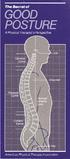 The Secret... T he American Physical Therapy Association would like to share a secret with you. It can help you do more with less effort breathe easier feel great. The secret is about good posture, which
Physical & Occupational Therapy
 In this section you will find our recommendations for exercises and everyday activities around your home. We hope that by following our guidelines your healing process will go faster and there will be
Computer Workstation Ergonomic Self Evaluation
 Computer Workstation Ergonomic Self Evaluation Use this guidance to perform a preliminary evaluation of your workstation, and make any adjustments that are necessary to achieve a correct neutral posture.
Pelvic Girdle Pain (PGP) Fact Sheet
 Pelvic Girdle Pain (PGP) Fact Sheet Physiotherapy PGP describes pain that is experienced in the front (symphysis pubis joint) and/or back (sacroiliac joints) of your pelvis. This is a common problem, affecting
CAPTURE Collaboration and Proactive Teamwork Used to Reduce. Best Practices in Safe Transfers and Mobility to Decrease Fall Risk
 CAPTURE Collaboration and Proactive Teamwork Used to Reduce Falls Best Practices in Safe Transfers and Mobility to Decrease Fall Risk August 20, 2013 10 a.m. CST Dawn M. Venema, PT, PhD Jill Hassel, DPT
Info. from the nurses of the Medical Service. LOWER BACK PAIN Exercise guide
 Info. from the nurses of the Medical Service LOWER BACK PAIN Exercise guide GS/ME 03/2009 EXERCISE GUIDE One of the core messages for people suffering with lower back pain is to REMAIN ACTIVE. This leaflet
Schiffert Health Center www.healthcenter.vt.edu. Neck Pain (Cervical Strain) COMMON CAUSES: QUICK TREATMENT : NECK PAIN TREATING NECK PAIN:
 Schiffert Health Center www.healthcenter.vt.edu Patient Information: Neck Pain (Cervical Strain) COMMON CAUSES: Neck pain may be triggered by a specific event, such a sport injury or motor vehicle accident.
INTRODUCTION TO POSITIONING. MODULE 3: Positioning and Carrying
 MODULE 3: Positioning and Carrying Blankets, pillows and towels, sandbags, carpet on the floor, a doll with floppy limbs that can be positioned i.e. not a hard plastic doll, display materials. Icebreaker
McMaster Spikeyball Therapy Drills
 BODY BLOCKS In sequencing Breathing and Tempo Flexibility / Mobility and Proprioception (feel) Upper body segment Middle body segment Lower body segment Extension / Static Posture Office / Computer Travel
Fact sheet Exercises for older adults undergoing rehabilitation
 Fact sheet Exercises for older adults undergoing rehabilitation Flexibility refers to the amount of movement possible around a joint and is necessary for normal activities of daily living such as stretching,
Preventing Overuse Injuries at Work
 Preventing Overuse Injuries at Work The Optimal Office Work Station Use an adjustable chair with good lumbar support. Keep your feet flat on a supportive surface (floor or foot rest). Your knees should
Symphysis Pubis Dysfunction (SPD)
 Symphysis Pubis Dysfunction (SPD) Symphysis Pubis Dysfunction (SPD) Your health professional has given you this leaflet to explain and advise you about SPD, related to your pregnancy. SPD is a term used
Physiotherapy Database Exercises for people with Spinal Cord Injury
 Physiotherapy Database Exercises for people with Spinal Cord Injury Compiled by the physiotherapists associated with the following Sydney (Australian) spinal units : Last Generated on Mon Mar 29 16:57:20
UPPER QUADRANT PAC. Do only those exercises that I have checked off for you to do independently. THINGS TO AVOID
 UPPER QUADRANT PAC Most common pain / disfunction syndromes occur as a result of a combination of poor posture habit and imbalanced muscle groups. The following exercise protocols will address the most
Exercise 1: Knee to Chest. Exercise 2: Pelvic Tilt. Exercise 3: Hip Rolling. Starting Position: Lie on your back on a table or firm surface.
 Exercise 1: Knee to Chest Starting Position: Lie on your back on a table or firm surface. Action: Clasp your hands behind the thigh and pull it towards your chest. Keep the opposite leg flat on the surface
CORRECTIVE CHIROPRACTIC EXERCISES
 CORRECTIVE CHIROPRACTIC EXERCISES J O W E T T & M O U L T O N C h i r o p r a c t o r s introduction This booklet, presented by Jowett and Moulton Chiropractors, is designed to provide you with a general
For Deep Pressure Massage
 T H E R A C A N E O W N E R S M A N U A L For Deep Pressure Massage Thera Cane is a self massager used to apply pressure to sore muscles. The unique design of the Thera Cane lets you apply deep pressure
Preventing Falls. Strength and balance exercises for healthy ageing
 Preventing Falls Strength and balance exercises for healthy ageing Exercise should be comfortable and fun. To get the most out of your home exercise book, join a class for older people to check your exercises
STANDARD OPERATING PROCEDURES (SOP) FOR COMPUTER WORK, DESK TOP
 STANDARD OPERATING PROCEDURES (SOP) FOR COMPUTER WORK, DESK TOP General Guidelines-Best Practices: The following guidelines are applicable to office workers who sit at a desk and/or work on computers.
Do s and Don ts with Low Back Pain
 Do s and Don ts with Low Back Pain Sitting Sit as little as possible and then only for short periods. Place a supportive towel roll at the belt line of the back especially when sitting in a car. When getting
Injuries from lifting, loading, pulling or pushing can happen to anyone in any industry. It is important to be aware of the risks in your workplace.
 Workplace safety: lifting One of the biggest concerns in the workplace is lifting and loading. When you lift something, the load on your spine increases and your spine can only bear so much before it is
Coccydynia. (Coccyx Pain) Information for patients. Outpatients Physiotherapy Tel: 01473 703312
 Information for patients Coccydynia (Coccyx Pain) Outpatients Physiotherapy Tel: 01473 703312 DPS ref: 4508-12(RP) Issue 1: February 2013 Review date: January 2016 The Ipswich Hospital NHS Trust, 2013.
Rehabilitation after shoulder dislocation
 Physiotherapy Department Rehabilitation after shoulder dislocation Information for patients This information leaflet gives you advice on rehabilitation after your shoulder dislocation. It is not a substitute
What is Separation of the Abdominal Muscles after Childbirth (also known as Divarication of Rectus Abdominis)?
 What is Separation of the Abdominal Muscles after Childbirth (also known as Divarication of Rectus Abdominis)? Following your pregnancy and the birth of your baby your abdominal (tummy) muscles may have
Whiplash Associated Disorder (WAD)
 Information for patients Whiplash Associated Disorder (WAD) Physiotherapy Department Tel: 01473 703312 DPS ref: 05731-14(RP) Issue 3: December 2014 Review date: November 2017 The Ipswich Hospital NHS Trust,
Spinal Exercise Program/Core Stabilization Program Adapted from The Spine in Sports: Robert G. Watkins
 Spinal Exercise Program/Core Stabilization Program Adapted from The Spine in Sports: Robert G. Watkins Below is a description of a Core Stability Program, designed to improve the strength and coordination
COMMON OVERUSE INJURIES ATTRIBUTED TO CYCLING, AND WAYS TO MINIMIZE THESE INJURIES
 COMMON OVERUSE INJURIES ATTRIBUTED TO CYCLING, AND WAYS TO MINIMIZE THESE INJURIES Listed are a few of the most common overuse injuries associated with cycling long distances. 1. Cervical and upper back
KNEE EXERCISE PROGRAM
 KNEE PROGRAM INTRODUCT ION Welcome to your knee exercise program. The exercises in the program are designed to improve your knee stability and strength of the muscles around your knee and hip. The strength
Operating Instructions
 Operating Instructions Table of Contents IMPORTANT INFORMATION 1-2 1 The backrack TM 3-6 Introduction 3 What does it do? 4 How do I use it? 5 How often should I use it? 6 2 Getting On 7-10 3 Basic Exercises
Sheet 1A. Treating short/tight muscles using MET. Pectorals. Upper trapezius. Levator scapula
 Sheet 1A Treating short/tight muscles using MET Pectorals Once daily lie at edge of bed holding a half-kilo can, arm out sideways. Raise arm and hold for 10 seconds, then allow arm to hang down, stretching
Colleen Coulter-O Berry, P.T., M.S., P.C.S., Children s Healthcare of Atlanta Dulcey Lima, C.O., O.T.R./L., Orthomerica Products, Inc.
 Tummy Time ToolsSM Activities to Help You Position, Carry, Hold and Play with Your Baby Colleen Coulter-O Berry, P.T., M.S., P.C.S., Children s Healthcare of Atlanta Dulcey Lima, C.O., O.T.R./L., Orthomerica
SPINE. Postural Malalignments 4/9/2015. Cervical Spine Evaluation. Thoracic Spine Evaluation. Observations. Assess position of head and neck
 SPINE Observations Body type Postural alignments and asymmetries should be observed from all views Assess height differences between anatomical landmarks Figure 25-9 Figure 25-10 Figure 25-11 & 12 Postural
TheraCane. Owner's Manual
 TheraCane Owner's Manual THERA CANE 411 Thera Cane is a therapeutic massager that allows you to apply pressure to treat muscle dysfunction. Benefits of using the Thera Cane Eliminate painful knots in your
ROTATIONAL POSITIONING
 ROTATIONAL POSITIONING A method for rotating posterior babies during labour Problems associated with persistent posterior positioning Prolonged labour 12% for posterior vs. 1.7% Assisted delivery 24.6%
HealthStream Regulatory Script
 HealthStream Regulatory Script Back Safety Version: May 2007 Lesson 1: Introduction Lesson 2: Back Injury Lesson 3: Spinal Anatomy and Physiology Lesson 4: Safe Operation of the Spine Lesson 5: Preventive
THE BENJAMIN INSTITUTE PRESENTS. Excerpt from Listen To Your Pain. Assessment & Treatment of. Low Back Pain. Ben E. Benjamin, Ph.D.
 THE BENJAMIN INSTITUTE PRESENTS Excerpt from Listen To Your Pain Assessment & Treatment of Low Back Pain A B E N J A M I N I N S T I T U T E E B O O K Ben E. Benjamin, Ph.D. 2 THERAPIST/CLIENT MANUAL The
Knee Conditioning Program. Purpose of Program
 Prepared for: Prepared by: OrthoInfo Purpose of Program After an injury or surgery, an exercise conditioning program will help you return to daily activities and enjoy a more active, healthy lifestyle.
ADVICE FOR PATIENTS WITH NECK PAIN
 ADVICE FOR PATIENTS WITH NECK PAIN Patient Information Leaflet Physiotherapy Department (Information sheet code SHOT/SHOA) A SMOKING FREE ENVIRONMENT WAHT-TH-007-1 - Version 1.2 Dear Patient This advice
Care at its Best! Foam Roller Exercise Program
 Foam Roller Exercise Program Foam rollers are a popular new addition the gym, physical therapy clinics or homes. Foam rollers are made of lightweight polyethyline foam. Cylindrical in shape, foam rollers
A guide for employees
 A guide for employees This booklet has been developed as a guide to assist in the prevention of muscular discomfort and strain that can sometimes be associated with computer use. The information provided
Spine Conditioning Program Purpose of Program
 Prepared for: Prepared by: OrthoInfo Purpose of Program After an injury or surgery, an exercise conditioning program will help you return to daily activities and enjoy a more active, healthy lifestyle.
Don t. Hamstrings. Calf Muscles. both legs 2-3 times. stretch is felt in the back of the calf. Repeat with both legs 2-3 times.
 Remember to: Warm-up your muscles first before stretching (e.g. stretch after walking). Stretch until you feel mild discomfort, not pain. Never bounce or force a stretch. Hold the stretch for 10-30 seconds
Self-mobilization methods
 Self-mobilization methods 5 Muscle energy techniques, as outlined in previous chapters, provide us with an excellent series of methods for relaxation and stretching of specific tight, shortened, contracted
X-Plain Neck Exercises Reference Summary
 X-Plain Neck Exercises Reference Summary Introduction Exercising your neck can make it stronger, more flexible and reduce neck pain that is caused by stress and fatigue. This reference summary describes
Stretching for Young Athletes. Shawn P. Anderson, SPT Duke University Doctor of Physical Therapy
 Stretching for Young Athletes Shawn P. Anderson, SPT Duke University Doctor of Physical Therapy Sports and exercise are usually integral parts of many adolescents life. Whether they play at school or in
Australian Centre for Agricultural Health and Safety. Farming with Back Pain
 Australian Centre for Agricultural Health and Safety Farming with Back Pain 2008 Australian Centre for Agricultural Health and Safety All rights reserved Title: Farming with Back Pain Authors: Boughton
Shoulders (free weights)
 Dumbbell Shoulder Raise Dumbbell Shoulder Raise 1) Lie back onto an incline bench (45 or less) with a DB in each hand. (You may rest each DB on the corresponding thigh.) 2) Start position: Bring the DB
INSTRUCTIONAL MATERIALS: REFERENCES: a. PAEC School Safety Manual b. Any locally produced Back Injury pamphlet TRAINING AIDS:
 LESSON TOPIC: AVERAGE TIME: BACK INJURY PREVENTION 30 Minutes INSTRUCTIONAL MATERIALS: REFERENCES: a. PAEC School Safety Manual b. Any locally produced Back Injury pamphlet TRAINING AIDS: a. Handout #1
How To Treat Musculoskeletal Injury In Sonographers
 MUSCULOSKELETAL DISORDERS IN SONOGRAPHERS: ARE WE DOING ENOUGH? Many terms are used to refer to work related injuries among sonographers. Musculosketetal injury (MSI) Repetitive motion injury (RMI) Repetitive
Low Back Pain Exercises Interactive Video Series Transcript July 2013
 Introduction Low Back Pain Exercises Interactive Video Series Transcript July 2013 ** Note: If an exercise causes an increase in your pain, stop the exercise.** [Music introduction; Dr. John Sheehan onscreen]
PILATES Fatigue Posture and the Medical Technology Field
 PILATES Fatigue Posture and the Medical Technology Field Marybeth Kane May 2014 Course: 2014, Pacific Palisades, CA 1 ABSTRACT A medical laboratory scientist (MLS) (also referred to as a medical technologist
Transferring Safety: Prevent Back Injuries
 Transferring Safety: Prevent Back Injuries OBJECTIVES: At the end of this class you will be able to: 1. Describe the back and what it does. 2. List things that you can do everyday in your home and at work
Medial Collateral Ligament Sprain: Exercises
 Medial Collateral Ligament Sprain: Exercises Your Kaiser Permanente Care Instructions Here are some examples of typical rehabilitation exercises for your condition. Start each exercise slowly. Ease off
Back Safety and Lifting
 Back Safety and Lifting Structure of the Back: Spine The spine is the part of the back that supports the trunk and head. It protects the spinal cord as well as giving flexibility to the body. Vertebrae
Pilates for Kyphosis A BASI Pilates program designed to help correct thoracic kyphosis
 Pilates for Kyphosis A BASI Pilates program designed to help correct thoracic kyphosis 1 Lucy Penrose 19/01/2014 Wimbledon UK, April 2013 Abstract Kyphosis refers to an exaggerated curve in the thoracic
Cervical Spine Stretches
 Cervical Spine Stretches Stretching exercises help to restore joint range of motion by lengthening shortened muscles and connective tissue, which helps to reduce pain and tightness. Instructions: 1. Perform
stretches and exercises
 stretches and exercises The enclosed sheets contain stretches and exercises which can be used to delay and minimise the development of contractures and deformities occurring in children with Duchenne muscular
Above Knee Amputee Exercise Program
 Above Knee Amputee Exercise Program It is important that you take an active role in your rehabilitation. The following exercises must be done every day to prevent any complications. After an above the
Routine For: OT - General Guidelines/Energy Conservation (Caregiver)
 GENERAL GUIDELINES - 9 Tips for Exercise: Body Mechanics for Helper - To protect back, stay as upright as possible and keep head in line with trunk. - Always position yourself as close as possible to the
Divarication of the rectus abdominis
 Divarication of the rectus abdominis Advice and exercise What is divarication of the rectus abdominis? Divarication of the rectus abdominis is a condition where the abdominal (tummy) muscles become separated
Exercises for the Hip
 Exercises for the Hip Gluteal Sets: Lie on your back, tighten buttocks and hold for 3-5 seconds. Repeat 20 times. Supine Hip ER/IR: Lie on your back with legs straight. Gently rotate knees out and in limited
How To Stretch Your Body
 Exercise Module A New Leaf Choices for Healthy Living University of North Carolina at Chapel Hill 2007 Center for Health Promotion and Disease Prevention Physical Activity Exercises for Keeping Active
General Guidelines. Neck Stretch: Side. Neck Stretch: Forward. Shoulder Rolls. Side Stretch
 Stretching Exercises General Guidelines Perform stretching exercises at least 2 3 days per week and preferably more Hold each stretch for 15 20 seconds Relax and breathe normally Stretching is most effective
Basic techniques of pulmonary physical therapy (I) 100/04/24
 Basic techniques of pulmonary physical therapy (I) 100/04/24 Evaluation of breathing function Chart review History Chest X ray Blood test Observation/palpation Chest mobility Shape of chest wall Accessory
Low Back Pain: Exercises
 Low Back Pain: Exercises Your Kaiser Permanente Care Instructions Here are some examples of typical rehabilitation exercises for your condition. Start each exercise slowly. Ease off the exercise if you
Bulging Disc Back Pain Relief at Home Using Lumbar Traction Techniques.
 Bulging Disc Back Pain Relief at Home Using Lumbar Traction Techniques. A no-nonsense Guide Written By Tommy Hoffman, P.T. 1 Copyright 2009 by Tommy Hoffman All rights reserved under the Pan-American and
BRUGGER'S POSTURAL RELIEF EXERCISE
 BRUGGER'S POSTURAL RELIEF EXERCISE Brugger's Postural Relief Exercise strengthens your muscles. lt promotes stability and relaxes tight muscles that tighten due to postural stress (see Figure 2). Check
Safe Lifting/Back Safety Training. Presented by Rita Gagnon Occupational Health Outreach Coordinator Benefis Health Systems 406-731-8328
 Safe Lifting/Back Safety Training Presented by Rita Gagnon Occupational Health Outreach Coordinator Benefis Health Systems 406-731-8328 Risk Factors Involved with Manual Handling Tasks: Bending at Trunk
The Process of Strength and Conditioning for Golfers
 The Process of Strength and Conditioning for Golfers The use of different sporting activities and resistance work to develop a strength and conditioning program specific to golf. Many club golfers are
Therapeutic Pilates. Introduction to Pilates. Joseph H. Pilates. Improving Core Stability, Kinesthetic Awareness and Supporting Spinal Integrity
 Therapeutic Pilates Improving Core Stability, Kinesthetic Awareness and Supporting Spinal Integrity Introduction to Pilates Pilates exercise is designed to mobilize and strengthen the body, helping to
Take a few minutes for yourself and incorporate some Office Yoga into your daily routine.
 OFFICE YOGA Working in an office or at a computer for prolonged periods of time can put strain on the neck, shoulder and back muscles which in turn can lead to tension and stiffness. This tension can cause
Welcome to your LOW BACK PAIN treatment guide
 Welcome to your LOW BACK PAIN treatment guide You are receiving this guide because you have recently experienced low back pain. Back pain is one of the most common musculoskeletal problems treated in medicine
Reading, Writing & Posture
 Expert Content body mechanics by Joseph E. Muscolino Healthy posture of the upper body when reading and writing is dependent upon the location and angulation of the surface that we are reading and/or writing
Lifting & Moving Patients. Lesson Goal. Lesson Objectives 9/10/2012
 Lifting & Moving Patients Lesson Goal Learn the correct techniques, equipment, & positioning for moving patients safely and effectively in a variety of situations &locations Lesson Objectives Define body
Hip and Trunk Exercise Program
 Hip and Trunk Exercise Program Hip and Pelvis Exercise Program Gluteus Medius and Minimus (Hip Abductors) Page 2 Lateral Hip Rotators Page 6 Tensor Fascia Lata (TFL) and Illiotibial Band (ITB) Page 7 Lower