
Key and Supporting Messages
|
|
|
- Adela Berry
- 10 years ago
- Views:
Transcription
1 Key and Supporting Messages Counselling Cards For Community Volunteers
2
3 Positive Counselling Skills Positive Counselling Skills are important for all community volunteers. Listening and learning skills 1) Use helpful non-verbal communication: Keep head level with caretaker(s) Pay attention Reduce physical barriers Take time Touch appropriately Positive Counselling Skills Positive Counselling Skills are important for all community volunteers. Listening and learning skills 1) Use helpful non-verbal communication: Keep head level with caretaker(s) Pay attention Reduce physical barriers Take time Touch appropriately 2) Ask open questions 3) Use responses and gestures that show interest 4) Reflect back what the caretaker says 5) Avoid using judging words General counselling guidelines Organise your counselling tools before beginning a counselling session. Use the appropriate counselling cards that are needed. Listen to the concerns of the caretaker(s). Greet the caretaker(s) and establish confidence. Praise what the caretaker(s) are doing right. If the woman is pregnant, refer to counselling cards and leaflet on Identify feeding difficulties, if any, and causes of the difficulties. maternal nutrition (Card 1) and the cards on early initiation (Card 2) and exclusive breastfeeding (Card 4). Observe baby and caretaker(s). All pregnant and lactating women should be counselled with Cards Answer questions that caretaker(s) have (if any). 13 and 14, explaining the risks of passing HIV to the baby. All Discuss with the caretaker(s) different feasible options to overcome mothers should be encouraged to have an HIV-test and to disclose the difficulties. their status. Present options and help the caretaker(s) select one that they are If she has an infant less than 2 years old, ask the caretaker about the willing is most appropriate given her own Special Situation. age of her baby and current feeding practices. Use the counselling cards that correspond with the age of the child and also the cards that discusses the next development stage (Cards 7, 8, 9 and 10). 2) Ask open questions 3) Use responses and gestures that show interest 4) Reflect back what the caretaker says 5) Avoid using judging words General counselling guidelines Organise your counselling tools before beginning a counselling session. Use the appropriate counselling cards that are needed. Greet the caretaker(s) and establish confidence. If the woman is pregnant, refer to counselling cards and leaflet on maternal nutrition (Card 1) and the cards on early initiation (Card 2) and exclusive breastfeeding (Card 4). All pregnant and lactating women should be counselled with Cards 13 and 14, explaining the risks of passing HIV to the baby. All mothers should be encouraged to have an HIV- test and to disclose their status. If she has an infant less than 2 years old, ask the caretaker about the age of her baby and current feeding practices. Use the counselling cards that correspond with the age of the child and also the cards that discusses the next development stage (Cards 7, 8, 9 and 10). Listen to the concerns of the caretaker(s). 1
4 Praise what the caretaker(s) are doing right. Identify feeding difficulties, if any, and causes of the difficulties. Observe baby and caretaker(s). Answer questions that caretaker(s) have (if any). Discuss with the caretaker(s) different feasible options to overcome the difficulties. Present options and help the caretaker(s) select one that she is willing is most appropriate given her own Special Situation. 2
5 Counselling Card 1 Maternal Nutrition during Pregnancy and Breastfeeding Key Messages: Eat one extra meal a day during pregnancy in addition to regular meals, and two extra meals during breastfeeding. Eat plenty of fruits and vegetables with every meal. Card 1 Drink enough liquids every day (8 glasses or 3 full NICE cups). Avoid taking tea or coffee with meals because they interfere with iron absorption and may contribute to aneamia. It is better to drink tea or coffee an hour before or after a meal. Throughout your pregnancy and for at least 3 months after your baby is born you need iron and folic acid to prevent anaemia. It is better to take iron tablets with meals to increase absorption and avoid potential side effects, particularly nausea. Always use iodised salt to prevent poor brain development, poor physical growth and goiter. Iodised salt also protects against unexplained abortions, miscarriages and stillbirths. Get a vitamin A capsule from the nearest health facility and take immediately after delivery or within 8 weeks to help build your baby s immune system through your breast milk. Take de-worming tablets as prescribed to treat worms and to prevent anemia. Do not use alcohol, narcotics or tobacco products. 3
6 Sleep under an insecticide-treated mosquito net to prevent malaria. Take antimalarials as prescribed by a health worker. Attend antenatal care at least four times during pregnancy and always follow your health worker s recommendations. Special note for the adolescent mother: Before the age of 18 your body is still growing. You need extra care, more food and more rest than an older pregnant or breastfeeding mother to enable your body to grow fully and ensure that it produces enough milk for your baby. 4
7 Counselling Card 2 Early Initiation of Breastfeeding Key Messages: Putting a baby on the breast immediately after birth provides the best start for your baby and can save his or her life. Immediate skin to skin contact provides warmth and promotes bonding. As soon as your baby is born, have the midwife put the naked baby between your breasts, cover him or her lightly and keep the baby there for at least one hour. Let the baby on your chest start suckling when he or she starts showing signs of interest. Card 2 Put your baby on the breast within one hour of birth to help expel the placenta and reduce bleeding. Breastfeeding while the breast is still soft helps a baby learn to suckle. The thick yellowish milk known as colostrum is very healthy and helps protect your baby from illness. Colostrum will help to expel your baby s first dark stool. Water or pre-lacteals (sugar water or liquids/fluids) are NOT necessary and dangerous. They cause a delay in your milk coming in (or start flowing). Even though your baby feeds for short periods of time, this small amount of milk is enough. During these early hours, feed your baby often (every 1 1/2 to 2 hours) for short feeding times. Frequent feeding will help your milk to flow sufficiently over the next few days. 5
8 Counselling Card 3 Positioning and Attachment Key Messages: Correct positioning and attachment help to ensure that the baby suckles well and the mother produces a good supply of breast milk. Cradle position Cross cradle for Cross position Lying down Under arm small Infants for twins position Under arm position for twins Correct positioning and attachment help to prevent sore and cracked nipples. Positioning Ensure that your baby is well-positioned by baby s: tummy facing your tummy head and body in line whole body supported nose facing the nipple Your baby should be able to look up at your face. The baby should not be held flat to the mother s chest or abdomen. Card 3 You should hold your breast with your fingers in a C shape, the thumb being above the dark part of the breast (areola) and the other fingers below. Fingers should not be in scissor hold because this method tends to put pressure on the milk ducts and can take the nipple out of the infant s mouth. There are different ways to position the baby: Cradle position (most commonly used) Cross cradle position (suitable for small infants) Side-lying position (can be used right after delivery, to rest while breastfeeding or at night) Under-arm position (best used after a Caesarean section, when the nipples are painful and to breastfeed twins or small infants) 6
9 Attachment When you first begin to breastfeed, you may need to help the baby attach well to the breast to avoid hurting your nipples. Touch the baby s lips with your nipple. When the baby s mouth opens wide, move the baby quickly onto the breast, aiming the lower lip slightly below the nipple. The baby s tongue should be over the bottom gums. If the baby is in a poor position, or if you feel any pain, then gently take the baby off the breast and start again. Check that your baby is feeding well by seeing that the baby s: mouth is wide open and has most of the darker skin (areola) in his or her mouth lower lip is turned outward chin is touching the breast cheeks are rounded taking slow deep sucks, sometimes pausing You may also hear the baby swallowing. Let your baby empty one breast first and come off the breast on his or her own. This will ensure that your baby gets the most nutritious and satisfying milk. If still hungry, offer your baby the other breast. 7
10 Counselling Card 4 Exclusive Breastfeeding for the First 6 Months Card 4 Key Messages: Feeding the baby ONLY breast milk up to 6 months helps a mother to recover from child birth and protects her from getting pregnant too soon. Do not give anything else, NOT even water (nor tea, glucose water, gripe water, other animal milks, infant formula or porridge). Resist pressure from others. Even if you work outside home you can maintain exclusive breastfeeding (Card 17). If the mother is complaining about lack of breast milk go to Card 5. Breast milk provides all the food and water a baby needs during the first 6 months of life. The thick yellowish milk known as colostrum that is produced during the first few days after delivery is very important because it protects your baby from many diseases. Do not give any food or drink to your newborn baby, the yellowish milk is enough. Giving something else than breast milk will interfere with breast milk production. Even during very hot weather, breast milk will satisfy the baby s thirst during the first 6 months. The mother may need additional water to satisfy her own thirst. If the baby takes water or other liquids, she or he suckles the breast less and the mother produces less milk. This leads to poor growth. 8
11 Breastfeeding the baby often, at least 10 times, day and night, helps to produce lots of breast milk to ensure that the baby grows healthy. Breastfeeding protects the baby from diarrhoea and respiratory infections. Breast milk is inexpensive, always available and does not need any preparation. 9
12 Counselling Card 5 Feeding more often Increases Your Breast Milk Supply Key Messages: Card 5 Note for the community volunteer: Many mothers think they are not producing enough breast milk. If a mother expresses this concern, it is important to ask questions to find out the following: (Ask to see the GPM card) Is the baby gaining weight following the growth curve? Is the baby having at least 6 wets in 24 hours? Is the baby relaxed and satisfied after feeds, or frustrated and crying? (If the baby is under 6 months) Is the baby receiving anything else than breast milk? Ask the mother to do the following: Breastfeed frequently, 12 times a day if the baby wants. (If the baby has been receiving other foods) Stop giving the other foods. This will make your baby suckle more and increase your milk production. Breastfeed day and night. Encourage longer breastfeeds If the baby is ill or sleepy, encourage the mother to wake him or her and offer the breast often. Encourage the mother to give the breast for comfort. Observe positioning and attachment of the baby and correct accordingly (Refer to Card 4). Encourage support from the family to perform household chores. Avoid bottles, teats and spouted cups. 10
13 Counselling Card 6 How to Hand Express Breast Milk Key Messages: Wash your hands with soap and running water. Make sure the container you will use to express your breast milk is clean. Sit or stand in a comfortable position, in a quiet place. Use any hand for either breast. Put your thumb on the breast above the dark area around the nipple. Place your first finger below the nipple and the dark area. Support your breast with your remaining fingers. Compress the breast while moving your hand away from the chest wall. This should not hurt. If it does, then you are not doing it right. Press the same way on each side of the dark area around the nipple in order to empty all parts of the breast. Do not squeeze the nipple itself or rub your fingers over the skin Express one breast for 3 to 5 minutes until the flow slows down and then switch to the other breast. Then do each breast again. Change your hands when the one hand gets tired. It usually takes 20 to 30 minutes to express all of the milk. If your milk does not come easily, massage your breasts. A warm cloth or drink, a back massage or thinking about your baby might also help. Store your expressed breast milk in a clean covered container until you are ready to feed your baby. Expressed milk can be stored for up to 8 hours in a cool place. Always feed the baby using a clean open cup. Even a newborn baby learns quickly how to drink from a cup. DO NOT use bottles, teats or cups with a mouth piece. They are difficult to clean and can cause your baby to become sick. 11 Card 6
14 Counselling Card 7 Complementary Feeding 6 months 6 months Key Messages: At about 6 months, your baby is developmentally ready and needs other foods in addition to breast milk. Card 7 Continue breastfeeding your baby on demand, day and night to maintain his or her health and strength as breast milk continues to be the most important part of your baby s diet. Always give breast milk first before giving other foods. HIV positive mothers who have decided to stop breastfeeding should feed their babies at least 1 full NICE cup of milk every day. (A full NICE cup is 500 ml.) Think of the following characteristics when giving complementary foods to your baby: F = Frequency, A = Amount, T = Thickness (consistency), V = Variety (different kinds of foods), A = Active/responsive feeding, and H = Hygiene (FATVAH). F Feed your baby 3 times a day. A Start with 2-3 heaped tablespoons per feed. T/V Introduce soft food (mashed potato, mashed banana, porridge). Be careful not to make the baby s food too thin. A Be patient and actively encourage your young child to eat. Use a separate plate for the child to make sure he or she eats all the food given. H To give water and any liquid foods always use a clean open cup. DO NOT use bottles, teats or spouted cups to feed your baby. They are very difficult to keep clean and can make your baby sick with diarrhoea. Foods given to the baby must be prepared in hygienic conditions to avoid diarrhoea and illness. 12
15 Counselling Card 8 Complementary Feeding 7-8 months Key Messages: 7-8 months Complementary Feeding from Months Continue breastfeeding your baby on demand, day and night to maintain his or her health and strength as breast milk continues to be the most important part of your baby s diet. Card 8 When feeding a baby between 7-8 months old always give breast milk first before giving other foods. HIV positive mothers who have decided to stop breastfeeding should feed their babies at least 1 full NICE cup of milk every day. (A full NICE cup is 500 ml.) Think of the following characteristics when giving complementary foods to your baby: F = Frequency, A = Amount, T = Thickness (consistency), V = Variety (different kinds of foods), A = Active/responsive feeding, and H = Hygiene (FATVAH). F Feed your baby 3 times a day. A Gradually increase the amount of food at least one-third (1/3) of a NICE cup. (A full NICE cup is 500 ml.) Babies have small stomachs and can only eat small amounts at each meal. T Mash and soften the foods so the baby can easily chew and swallow; breastmilk or animal milk can be used to prepare the soft food, do not add water. Be careful not to make the baby s food too thin. T Thicken the baby s food as the baby grows older, making sure that he or she is still able to easily swallow without choking. 13
16 V Every day, or as often as possible, your baby needs at least a small bit of a food from each of the following groups : a) Millet flour, sorghum flour, maize flour, potatoes, matooke etc. b) Fresh or dry beans, peas c) Meat, chicken, fish or eggs d) Vegetables like dark green vegetables (dodo, nakati, buga) and tomato, eggplant, carrot, cabbage etc. e) Fruits like passion fruit, mango, pawpaw, orange, banana, watermelon, pineapple, avocado etc. f) Oil or ghee A Be patient and actively encourage your young child to eat. Use a separate plate for the child to make sure he or she eats all the food given. H To give water and any liquid foods always use a clean open cup. DO NOT use bottles, teats or spouted cups to feed your baby. They are very difficult to keep clean and can make your baby sick with diarrhoea. Foods given to the baby must be prepared in hygienic conditions to avoid diarrhoea and illness. Examples of Balanced Baby Foods A thick porridge is made out of a flour of either maize or cassava or millet or soya. Sugar, oil, milk, groundnuts, eggs and fruits can be mixed into the porridge. Mashed food is a mixture of a food like matooke, potatoes, cassava, posho (maize or millet) and fish, meat, beans or groundnut and/or simsim paste. Also vegetables like greens, pumpkin, carrot, eggplant, avocado or tomato should be mixed in the baby food. 14
17 Counselling Card 9 Complementary Feeding 9-11 months Key Messages: Continue breastfeeding your baby on demand, day and night to maintain his or her health and strength as breast milk continues to be the most important part of your baby s diet months Complementary Feeding from Months Card 9 When feeding a baby between 9-11 months old always give breast milk first before giving other foods. HIV positive mothers who have decided to stop breastfeeding should feed their babies at least 1 full NICE cup of milk every day. (A full NICE cup is 500 ml.) Think of the following characteristics when giving complementary foods to your baby: F = Frequency, A = Amount, T = Thickness (consistency), V = Variety (different kinds of foods), A = Active/responsive feeding, and H = Hygiene (FATVAH). F From 9 months onwards, feed your baby 4 times a day (3 meals and 1 snack). Snacks: extra foods between meals that are easy to prepare these extra foods are in addition to the meals they do not replace meals good snacks provide energy and nutrients (not to be confused with sweets) most snacks can be eaten as finger foods such as pieces of ripe mango, pawpaw, banana and vegetables A Give your baby a little more than one-third (1/3) of a NICE cup at each feed. (A full NICE cup is 500 ml.) Babies have small stomachs and can only eat small amounts at each meal. T Mash and soften the foods so the baby can easily chew and swallow; breastmilk or animal milk can be used to prepare the soft food, do not add water. Be careful not to make the baby s food too thin. 15
18 T Thicken the baby s food as the baby grows older, making sure that he or she is still able to easily swallow without choking. V Every day, or as often as possible, your baby needs at least a small bit of a food from each of the following groups : a) Millet flour, sorghum flour, maize flour, potatoes, matooke etc. b) Fresh or dry beans, peas c) Meat, chicken, fish or eggs d) Vegetables like dark green vegetables (dodo, nakati, buga) and tomato, eggplant, carrot, cabbage etc. e) Fruits like passion fruit, mango, pawpaw, orange, banana, watermelon, pineapple, avocado etc. f) Oil or ghee A Be patient and actively encourage your young child to eat. Use a separate plate for the child to make sure he or she eats all the food given. H To give water and any liquid foods always use a clean open cup. DO NOT use bottles, teats or spouted cups to feed your baby. They are very difficult to keep clean and can make your baby sick with diarrhoea. Foods given to the baby must be prepared in hygienic conditions to avoid diarrhoea and illness. Examples of Balanced Baby Foods A thick porridge is made out of a flour of either maize or cassava or millet or soya. Sugar, oil, milk, groundnuts, eggs and fruits can be mixed into the porridge. Mashed food is a mixture of a food like matooke, potatoes, cassava, posho (maize or millet) and fish, meat, beans or groundnut and/or simsim paste. Also vegetables like greens, pumpkin, carrot, eggplant, avocado or tomato should be mixed in the babyfood. 16
19 Counselling Card 10 Complementary Feeding months Key Messages: Continue breastfeeding your young child on demand, day and night to maintain his or her health and strength months Complementary Feeding from Months Card 10 In your young child s 2nd year, breastmilk continues to make up 1/3 of his or her diet. HIV positive mothers who have decided to stop breastfeeding should feed their babies at least 1 full NICE cup of milk every day. (A full NICE cup is 500 ml.) Think of the following characteristics when giving complementary foods to your baby: F = Frequency, A = Amount, T = Thickness (consistency), V = Variety (different kinds of foods), A = Active/responsive feeding, and H = Hygiene (FATVAH). F From 12 months onwards, feed your young child 5 times a day (3 meals and 2 snacks). Snacks extra foods between meals that are easy to prepare these extra foods are in addition to the meals they do not replace meals good snacks provide energy and nutrients (not to be confused with sweets) most snacks can be eaten as finger foods such as pieces of ripe mango, pawpaw, banana and vegetables A Give your young child one-half (1/2) of a NICE cup at each feed. (A full NICE cup is 500 ml.) T The child can eat family foods but make sure to cut the food into small pieces so that the young child can easily chew and swallow. 17
20 T Thicken the young child s food as the child grows older, making sure that he or she is still able to swallow easily without choking. V Every day, or as often as possible, your baby needs at least a small bit of a food from each of the following groups (V): a) Millet flour, sorghum flour, maize flour, potatoes, matooke etc. b) Fresh or dry beans, peas c) Meat, chicken, fish or eggs d) Vegetables like dark green vegetables (dodo, nakati, buga) and tomato, eggplant, carrot, cabbage etc. e) Fruits like passion fruit, mango, pawpaw, orange, banana, watermelon, pineapple, avocado etc. f) Oil or ghee A Be patient and actively encourage your young child to eat. Use a separate plate for the child to make sure he or she eats all the food given. H To give water and any liquid foods always use a clean open cup. DO NOT use bottles, teats or spouted cups to feed your baby. They are very difficult to keep clean and can make your baby sick with diarrhoea. Foods given to the baby must be prepared in hygienic conditions to avoid diarrhoea and illness. 18
21 Counselling Card 11 Feeding the Sick Child Less than 6 months Less than 6 Months Breastfeed more during illness. This will help your baby to fight sickness, recover more quickly and not lose weight. Breastfeeding also provides comfort Card 11 to a sick baby. If your baby refuses to breastfeed, continue to encourage your baby until he or she takes the breast again. Give only breast milk and prescribed medicines to your baby. If your baby has been very ill, you may need support to re-establish exclusive breastfeeding. If the baby is too weak to suckle, express breastmilk to give the baby, either by cup or by hand expression directly into the baby s mouth. This will also help the mother to keep up her milk supply and prevent breast swelling. Practice exclusive breastfeeding from 0-6 months. NOTE: The mother may need support to re-establish exclusive breastfeeding. Feeding after recovery When a baby is recovering from an illness, he or she will breastfeed more than usual.the baby is replacing what he or she lost during illness. This can be tiresome for the mother. Take enough time to actively encourage your child to breastfeed more frequently when his or her appetite has returned. 19
22 Counselling Card 12 Feeding the Sick Child Above 6 months More than 6 Months Increase the frequency of breastfeeding and offer additional food to your child to maintain his or her strength, reduce weight loss and to recover faster. Card 12 Ecourage your child to breastfeed, eat and drink more. A child needs more food and drinks during illness. DO NOT use bottles, teats or spouted cups, since these are difficult to clean. Take time to patiently encourage your sick child to eat as his or her appetite may be decreased because of the illness. Give your child small frequent meals. Feed your child foods that he or she likes in small quantities throughout the day. Offer your child simple foods like porridge and fruits, even if he or she does not express interest in eating. Avoid spicy or fatty foods. Feeding after recovery When a baby is recovering from an illness, he or she will breastfeed and eat more than usual.the baby is replacing what he or she lost during illness. This can be tiresome for the mother. Give him or her one additional meal of solid food each day during the next two weeks after he or she has recovered. This will help your child regain weight lost during the illness. Take enough time to actively encourage your child to eat this extra food and breastfeed more frequently when his or her appetite has returned. 20
23 Counselling Card 13 Risk of Transmission If a mother is HIV positive what is the chance of HIV passing to her baby when NO preventive actions are taken? Card 13 If a Mother If a mother is is HIV-positive... Postive What is the risk of HIV passing to her baby when NO preventive actions are taken? Think of 100 babies born to women with HIV Did you know that about 40 of these babies will get infected if no actions are taken to prevent the spread of HIV from the mother to her child? However the other 60 will not become infected with HIV. Out of 100 babies born to HIV-positive mothers: The majority of babies (60) Most babies (25) become Other babies (15) are are not infected with HIV, infected with HIV during infected with HIV through but should be protected. pregnancy, labor and birth. breastfeeding. Protect your baby Protect get tested your and babyknow your HIV status! get tested and know your HIV status! Of the 40 HIV infected babies, 25 will be infected during pregnancy, labor and delivery and 15 during breastfeeding. An HIV positive woman can pass HIV to her baby during pregnancy, labor, delivery or through breastfeeding. Not all babies born to women with HIV become infected with HIV. Certain factors can increase the chance of passing HIV through breastfeeding for example if you have been recently infected with HIV or if you have an infection in your breast while you are breastfeeding. Mixed feeding (breastfeeding combined with feeding your baby other types of milk or food at the same time) almost doubles the chance of passing HIV to your baby, compaired to exclusive breast feeding. An HIV positive woman should seek treatment from a health worker if she has any infections and prevent HIV re-infection by making choices for safer sex (e.g. use condoms during pregnancy and during breastfeeding). 21
24 Counselling Card 14 Risk of Transmission Card 14 If a Mother If a mother is is HIV-positive... HIV Postive... but mother and baby take ARV S and practice exclusive breastfeeding, the risk of passing HIV to her baby decreases. Key Messages: If a mother is HIV positive what is the chance of passing HIV to her baby when mother and baby take anti-retrovirals and practice exclusive breastfeeding? Out of 100 babies born to HIV-positive mothers who take ARVs: The majority of babies Most of these babies (10) Breastfed babies (5) (85) are not become infected with HIV can become infected. Exclusive infected with HIV. during pregnancy, labor and and safer breastfeeding birth. reduces the risk. Protect your baby get tested and know your HIV status! Protect your babyget tested and know your HIV status! Think of 100 babies born to women with HIV Did you know that if the mother and baby are given ARV S and she practices exclusive breastfeeding the risk of passing HIV to the baby decreases? 85 out of 100 babies will not be infected. Only 10 of the 100 babies will become infected during pregnancy, labor and delivery. Only 5 of the 100 babies will be infected through breastfeeding. However breastfeeding should be done exclusively. HIV transmission can be reduced even more when other preventative actions, like safer delivery, are practised. 22
25 Counselling Card 15 Infant feeding mode and risk of HIV Transmission Key Messages: If you are HIV-positive What is the risk of HIV transmission when you are using: Only Breast Milk Only Replacement Milk (Formula or Cow s Milk) Practicing Mixed Feeding (Breast milk plus other milk, liquids or foods) It is important for you to know that all feeding options have risks for your baby. The reason for discussing these risks is to help you decide how to feed your baby. Card 14 Card 15 Healthy babies Babies who die from diarrhoea Babies with without HIV infection pneumonia and other infection s HIV-infection Protect your baby- get tested and know your HIV status! It is possible to reduce the risk of illness (such as diarrhoea and respiratory infections like pneumonia). These pictures show the kind of risks associated with the different feeding options. It is important for you to understand these risks. Exclusive Breastfeeding (giving ONLY breast milk for the first 6 months): reduces the chance of passing HIV to your baby by half compared with mixed feeding (giving both breast milk and other milks/foods). Exclusive Replacement Feeding (giving ONLY formula or modified fresh animal milk for the first 6 months): there are no chances of HIV infection through breastfeeding, but there are more chances of your baby dying from diarrhoea, pneumonia and other infections. Mixed Feeding (giving both breast milk and other milks or foods): compared to exclusive breastfeeding, mixed feeding greatly increases the chances of passing HIV to your baby. It also increases the chances of your baby suffering from other illnesses and dying because he or she is not protected through breast milk. 23
26 Counselling Card 16 Feeding a Low Birth Weight Baby Note for the community volunteer: Cross Cradle Position Explain the problem of Low Birth Weight: a Low Birth Weight baby needs special care and feeding Card 16 Under Arm Position Kangaroo Care If very small refer for further management If medium size the mother should breastfeed as much as possible. Babies with difficulties in attachment and sucking should be given additional expressed breast milk in an open cup (Use Card 6 for hand expression). The mother needs support for correct attachment. The cross cradle and underarm positions are good positions for feeding low birth weight babies because they allow the mother to better control the positioning of the baby s mouth on the nipple. Direct breastfeeding may not be possible for several weeks, but the mother should be encouraged to express breast milk and feed the breast milk to the infant using a clean open cup. The baby should be put on the breast frequently to get him or her used to the breast and to keep the milk flowing. If the baby sleeps for too long, the caretaker should unwrap and hold him or her to awaken before feeding. The mother should watch baby s sleep and wake cycle and feed during quiet-alert states. Crying is the last sign of hunger. The mother should recognize earlier signs of hunger (including rooting, licking movements, flexing arms, clenching fists, tensing body and kicking legs) and feed the baby. 24
27 Kangaroo Mother Care Different caretakers can care for the baby using the Kangaroo method Position: place the naked baby on the caretaker s naked chest with his or her legs flexed and secure the baby in a cloth that passes just under the infant s ears and is tied around the caretaker s chest. Warmth is needed: keep skin-to-skin contact, both naked cover the baby s head with a hat 25
28 Counselling Card 17 Working Mother and Sick Mother Working Mother Card 17 Note for a working mother with formal employment: According to the Ugandan law, a mother has the right to paid maternity leave of 60 working days, and a father to 4 days of paternity leave. Get your employer s support to : Note for all working mothers: Even when you go back to work you should continue to breastfeed. You can: Express breast milk to be fed to the baby from a cup while you are away Express breast milk at work to keep the milk flow going and to prevent breast swelling If possible, carry the baby to the place of work or have someone bring the baby when you have a break Take extra time for the feeds before leaving for work and when you come back from work Increase the number of feeds while you are around; e.g. increase night and weekend feedings Get extra support Sick Mother: It is very important for the baby to continue to breastfeed for the baby s health and to prevent breast problems. It is important that you continue to eat, even when you do not have appetite. During illness you have an increased need for nutrients. You also need extra food to produce breast milk. Therefore taked extra care in what you eat and how it is prepared. 26
29 Following nutrition advice can be given to a sick mother: Eat a variety of favorite foods Eat small frequent meals Make sure you take more liquids (e.g. water, juice, porridge, soup) Avoid fried foods or strong smelling foods Prepare foods in other ways than usual (e.g. mashed foods, more soups) Avoid foods that cause stomach discomfort Continue eating, even when you have diarrhoea Get extra support Make sure that the person preparing the food washes his or her hands before food preparation Breastfeeding mothers need to: Eat two extra meals a day in addition to regular meals Eat plenty of fruits and vegetables with every meal Drink plenty of liquids every day (8 glasses or 3 full NICE cups) Avoid taking tea or coffee with meals because they interfere with iron absorption and may contribute to aneamia. It is better to drink tea or coffee an hour before or after a meal. 27
30 Counselling Card 18 Regular Growth Promotion and Monitoring Prevents Malnutrition Note for the community volunteer: A healthy child grows well. Any reduced growth shows that something is wrong. Card 18 Infants and young children should gain a certain amount of weight every month. A child should be weighed once every month from birth until he or she is two years old. It is much easier to take corrective action in an early stage of reduced growth than when the child has already become malnourished. If the child does not gain enough weight, try to find out the cause. Discuss the possibility of continuing frequent breastfeeding or relactation where appropriate (Cards 4, 5, 6). If the baby is older than six months, discuss the appropriate complementary foods/ nutrition education using the appropriate age. (Cards 7, 8, 9, 10). If the child has been or is sick, treat the child and discuss the feeding recommendations. 28
31 Counselling Card 19 Good Hygiene Practices prevent Disease Wash your hands with soap (or ash) and running water before preparing food, before eating, and before feeding young children. Good Hygiene Practices Prevent Disease Wash children s hands with soap (or ash) and water before they eat. Card 19 Wash your children s hand s with soap (or ash) and running water after they have passed stool. Wash your hands with soap (or ash) and water after using the latrine or cleaning the baby s bottom. Feed your baby using clean hands, clean utensils and clean cups. DO NOT use bottles, teats or spouted cups, they are difficult to clean and may cause your baby to get diarrhoea. Keep foods in covered container in a clean, cool and dry place. 29
32 INJECTION INJECTION Methods LAM (Exclusive breastfeeding) Ovulation (Observing vaginal wetness) Abstinence (Avoiding intercourse) If a woman exclusively breastfeeds If a woman observes on a daily ditional or (Observing vaginal wetness) Woman or couples can avoid her baby (day and night), she can basis the changes in her vaginal pregnancy if they completely If a woman exclusively breastfeeds ural methods avoid becoming pregnant IF her wetness (mucous or vaginal flow) If a woman observes on a avoid daily sexual intercourse. This AM vulation bstinence Male Condom rier or one-time methods ale condom iaphragm permicide LAM (Exclusive breastfeeding) Ovulation Abstinence (Avoiding intercourse) her baby (day and night), she can avoid becoming pregnant IF her baby is less than six months old Counselling Card 20 and IF her period does not return. baby is less than six months old and IF her period does not return. This method is very secure only up to 6 months. she and her partner will know the days of the month when she must avoid sexual intercourse (penetration). This method is very secure only up to 6 months. (penetration). vagina with the man s penis. Diaphragm Spermicides How Male Condom achieve Diaphragm Optimal Spermicides Child Spacing This is a flexible hat shaped These are temporary methods This is a thin but resistant latex bag that is place over the man s erect penis before each sexual relationship. It prevents the sperm from entering the uterus. Using condoms also helps to reduce sexually transmitted infections (STIs and HIV/AIDS). This is a thin but resistant device, latex made of rubber that is bag that is place over the inserted man s by a woman herself erect penis before each before sexual sexual intercourse to relationship. It prevents the prevent sperm pregnancy. It covers the from entering the uterus. cervix Using so that sperm cannot enter condoms also helps to reduce the uterus. It should be used sexually transmitted infections together with a special gel. (STIs and HIV/AIDS). basis the changes in her vaginal means avoiding sexual wetness (mucous or vaginal relationships flow) or avoiding she and her partner will know penetration the of the woman s days of the month when she must vagina with the man s penis. avoid sexual intercourse Woman or couples can avoid pregnancy if they completely avoid sexual intercourse. This means avoiding sexual relationships or avoiding penetration of the woman s This is a flexible hat shaped (foam or tablets) that a womanthese are temporary methods device, made of rubber that can isplace within her vagina within (foam or tablets) that a woman inserted by a woman herself one hour before having sexual can place within her vagina within before sexual intercourse to relationships in order to help avoid one hour before having sexual prevent pregnancy. It covers pregnancy. the They also have a relationships in order to help avoid cervix so that sperm cannot protective enter effect against STIs. pregnancy. They also have a the uterus. It should be used protective effect against STIs. together with a special gel. Key Messages: Oral Contraceptives Injectables (Depro-Provera porary Oral Contraceptives Injectables ) Norplant (Depro-Provera ) Norplant This is a pill or tablet that a woman This is a medicine that a nurse or This method consists of 6 thin This is a pill or tablet that a woman monal methods takes everyday to avoid This is a medicine that a nurse or This method consists of 6 thin LAM Male Condom doctor Abstinence injects with a needle into tubes of medicine that prevent takes everyday to avoid (Avoiding intercourse) doctor injects with a needle into pregnancy. They tubes of medicine that prevent (Exclusive also help breastfeeding) to the arm or buttocks of the woman pregnancy. They are inserted in pregnancy. They also help to the arm or buttocks of the woman pregnancy. They are inserted in ral contraceptives regulate menstrual disorders. Oral to avoid pregnancy. Each infection a woman s upper arm by a trained regulate menstrual disorders. Oral to avoid pregnancy. Each infection a woman s upper arm by a trained contraceptives usually come in lasts 3 months. Injectables can health care provider. Protection njectables contraceptives usually come in lasts 3 months. Injectables can health care provider. Protection cartons of 28 pills. Some pills are cartons of 28 pills. Some be pills used are by women who are be used by women who are lasts up to 5 years, but the tubes lasts up to 5 years, but the tubes orplant made for women who are made for women who are breastfeeding. breastfeeding. can be taken out at any time. can be taken out at any time. breastfeeding. breastfeeding. Injectables Oral Contraceptives Implants manent Female or Sterilization Female (Depro-Provera ) Sterilization Male Sterilization Male Sterilization IUCD (Copper T) IUCD (Copper T) This is a simple and very secure This is a simple and very This secure is a simple and very secure This is a simple and very secure This method is a small device This method is a small device g-term methods operation for women who don t operation for women who operation don t for men who don t want operation for men who don t inserted want into the woman s uterus inserted into the woman s uterus want to have any more children. want to have any more to children. have any more children. It takes to have any more children. It takes by a trained service provider. It is emale sterilization by a trained service provider. It is It takes less than 20 minutes. The It takes less than 20 minutes. less than The 15 minutes. The man less than 15 minutes. The made man of plastic and copper, in the made of plastic and copper, in the ale sterilizationwoman goes home within 2 to 6 woman goes home within goes 2 to home 6 within 2 to 4 hours. goes home within 2 to 4 hours. form of a T. It can protect a form of a T. It can protect a hours. Sexual relations do not hours. Sexual relations do Sexual not relations do not change. Sexual relations do not change. woman for up to 10 years or woman for up to 10 years or UCD change and the woman continues change and the woman continues more, but can be removed at any more, again but can be removed at any to have her period. Tubal Ligation to have Vasectomy her period. IUD time. time. Optimal child spacing means: having your children 3 to 5 years apart waiting at least 6 months after stopping to breastfeed to get pregnant Card 20 Optimal child spacing promotes child survival through having: more time to breastfeed and care for your child more money for child care because you will have less school fees to pay, less clothes to buy, less food to buy etc. more time for your body to recover and prepare for the next pregnancy Feeding your baby only breast milk for the first 6 months helps to space births in a way that is healthy for you and your baby. By exclusively breastfeeding your baby for the first six months you can prevent pregnancy only if: you feed the baby only breast milk your baby is less than 6 months old your menstrual period has not returned This child spacing method is called LAM. If any of these three conditions change, you are no longer protected against pregnancy. Note for the community volunteer : When dealing with an HIV-positive mother: She should consider taking care of this child and avoid getting pregnant again. Depending on LAM only is not enough. She should use condoms to prevent re-infection and to prevent infecting her partner. 30
33 Counselling Card 21 When to take your Child to a Health Facility Young children can become suddenly ill and may need to be seen urgently by a health worker. Difficulty breathing Diarrhoea Take your child to a health worker if Refusal to feed Vomiting Fever Malnutrition he or she shows any of the following Card 21 signs: Fever ( possible risk of malaria) Refusal to feed and being very weak Chest infection (cough and difficult breathing) Diarrhoea (more than 3 loose stools in 24 hours and/or blood in the stool, sunken eyes) Vomiting (cannot keep anything down) Malnutrition (loss of weight or swelling of the body) You should also take your child for routine immunizations, Vitamin A supplementation twice yearly and continued growth monitoring until he or she is 2 years of age. If you are HIV positive, your children can be tested at 10 weeks of age so that you can know if they are infected with HIV and they can begin to receive treatment and care. 31
34
35
36 Financial support for these materials was provided by USAID, Cooperative Agreement number 617-A The views expressed in this document do not necessarily reflect those of USAID. NuLife is implemented by University Research Co., LLC, (URC) in collaboration with Save the Children U.S.A. and ACDI/VOCA.
Infant and Young Child Feeding. National Counselling Cards for Health Workers
 Infant and Young Child Feeding National Counselling Cards for Health Workers Acknowledgements The Ministry of Health would like to very sincerely thank the University Research Co., LLC (URC) Nulife Program,
Infant and Young Child Feeding. Malawi National Counselling Cards
 Infant and Young Child Feeding Malawi National Counselling Cards Acknowledgements The Ministry of Health would like to very sincerely thank the University Research Co., LLC (URC) with support from the
Key Messages Booklet
 The Community Infant and Young Child Feeding Counselling Package September 2012 The Community Infant and Young Child Feeding Counselling Package September 2012 i ii Counselling Cards: Key Messages 1.
Maternal, Infant, and Young Child Nutrition in Malawi
 Maternal, Infant, and Young Child Nutrition in Malawi Community Nutrition Workers COUNSELING CARDS DECEMBER 2011 This document was produced through support provided by the United States Agency for International
Off to the best start. Important information about feeding your baby
 Off to the best start Important information about feeding your baby mum s milk the best start for your baby What happens in your baby s first years has a big effect on how healthy he or she will be in
COUNSELING CARDS FOR MATERNAL & NEONATAL HEALTH: NEWBORN AND POSTPARTUM CARE For Community Health Workers
 [email protected] COUNSELING CARDS FOR MATERNAL & NEONATAL HEALTH: NEWBORN AND POSTPARTUM CARE For Community Health Workers Source credit: Images taken from and counseling points adapted from NIPI
How To Care For A Sick Person
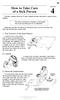 39 How to Take Care of a Sick Person Sickness weakens the body. To gain strength and get well quickly, special care is needed. Medicines are often not necessary. But good care is always important. The
Common Concerns About Breastfeeding
 Patient Education Page 51 Caring for Yourself and Your New Baby Common Concerns About Breastfeeding Breastfeeding is healthy and natural. So are the questions and concerns that come with it. Whether you
Birth Control Options
 1 of 5 6/2/2014 9:46 AM Return to Web version Birth Control Options What is contraception? Contraception means preventing pregnancy, also called birth control. Most people know about options such as birth
Breastfeeding Your Baby
 Getting the Help You Need If you have questions or problems, don t wait. Another nursing mother or mothers support group can often help. Your hospital, WIC office, baby s doctor, midwife, or obstetrician/gynecologist
COMMUNITY HEALTH INFORMATION CARDS. Taking Action for Our Health
 COMMUNITY HEALTH INFORMATION CARDS Taking Action for Our Health COMMUNITY HEALTH INFORMATION CARDS The overall objective of these cards is to: Increase awareness about family planning and postabortion
Family Planning for Women and Couples following Fistula Repair
 Family Planning for Women and Couples following Fistula Repair Fistula Care at EngenderHealth 440 Ninth Avenue, 13th Floor New York, NY, USA 10001 Tel: 212-561-8000 E-mail: [email protected]
Position Statement on Breastfeeding
 ABN 64 005 081 523 RTO 21659 Applies to All ABA staff and volunteers Position statement The Australian Breastfeeding Association (ABA) endorses the following statement from the Joint WHO/ UNICEF Meeting
A guide to infant formula for parents who are bottle feeding
 A guide to infant formula for parents who are bottle feeding Introduction This document is designed to help parents who are not breastfeeding decide which infant formula to use to feed their baby. There
Breastfeeding. The Early Days. Only a Phonecall Away! See your local telephone directory. www.lalecheleagueireland.com
 La Leche Early Days 10/09/2010 15:14 Page 2 Breastfeeding The Early Days BREASTFEEDING HELP AND INFORMATION www.lalecheleagueireland.com Only a Phonecall Away! See your local telephone directory Understanding
With your help, more babies can be healthier.
 With your help, more babies can be healthier. Pregnancy Risk Assessment Monitoring System (PRAMS) Please mark your answers. Follow the directions included with the questions. If no directions are presented,
Tuberculosis and You A Guide to Tuberculosis Treatment and Services
 Tuberculosis and You A Guide to Tuberculosis Treatment and Services Tuberculosis (TB) is a serious disease that can damage the lungs or other parts of the body like the brain, kidneys or spine. There are
You. guide to tuberculosis treatment and services
 Adapted from TB and You: A Guide to Tuberculosis Treatment and Services with permission from Division of Public Health TB Control Program State of North Carolina Department of Health and Human Services
IUD. the IUD. the IUD. the IUD. the IUD. the IUD. the IUD. the IUD. the IUD. the IUD. your guide to
 your guide to Helping you choose the method of contraception that is best for you IUD he the the the 2 3 The intrauterine device (IUD) An IUD is a small plastic and copper device that is put into your
IUD. the IUD. the IUD. the IUD. the IUD. the IUD. the IUD the IUD. the IUD. the the IUD. the IUD. the IUD. the IUD. the IUD. the IUD.
 your guide to Helping you choose the method of contraception that is best for you I the IUD 2 3 The intrauterine device (IUD) An IUD is a small plastic and copper device that is put into your uterus (womb).
BREAST FEEDING TEACHING GUIDE
 BREAST FEEDING TEACHING GUIDE This information was developed to address issues related to breast-feeding and identify problems usually encountered in the first six weeks postpartum after discharge from
Caring for your baby at night A guide for parents
 Caring for your baby at night A guide for parents Caring for your baby at night Becoming a parent is a very special time and can be one of the most rewarding experiences of your life as you get to know
Off to the best start
 Off to the best start Important information about feeding your baby existing In this leaflet What is Start4Life? 3 The best start for your baby 4 What does breastfeeding help protect against? 5 After your
Yes, Tuberculosis is a serious problem all over the world. Between 6 and 10 million in South Africa are infected by the TB germ.
 What is TB? Do many people get tuberculosis (TB)? Yes, Tuberculosis is a serious problem all over the world. Between 6 and 10 million in South Africa are infected by the TB germ. It is infectious, so it
Ear Infections Gastroenteritis gastroenteritis
 Ear Gastroenteritis Infections gastroenteritis Gastroenteritis can be caused by many different germs, and the effects of gastro on babies and children depend on several things including: the age of the
Advising mothers on management of diarrhoea in the home
 CDD193.1 ORIGINAL ENGUSH 1 Advising mothers on management of diarrhoea in the home A GUIDE FOR HEALTH WORKERS Diarrh~eal Disease Control (CDD) Programme World Health Organization CONTENTS PAGE Introduction
Baby Steps To A Healthy Pregnancy
 Preconception Middlesex-London Health Unit 50 King Street, London, ON N6A 5L7 519-663-5317 Published 2015. Copyright of the Middlesex London Health Unit. All rights reserved. Baby Steps To A Healthy Pregnancy
BREASTFEEDING; HOW? January 14 HELEN BORG, INFANT FEEDING MIDWIFE MATER DEI HOSPITAL
 BREASTFEEDING; HOW? January 14 HELEN BORG, INFANT FEEDING MIDWIFE MATER DEI HOSPITAL 1 THE IMMIGRANT MOTHER- BABY DYAD Challenges to Breastfeeding and Bonding Lack of Information How to enhance milk supply
IV. Counseling Cue Cards. ICAP International Center for AIDS Care and Treatment Mailman School of Public Health Columbia University
 IV. Counseling Cue Cards ICAP International Center for AIDS Care and Treatment Mailman School of Public Health Columbia University How to Use These Counseling Cue Cards ABOUT THE CUE CARDS This set of
The symptoms of HIV infection
 2 The symptoms of HIV infection Saleema s story HIV infection and HIV disease The first weeks of HIV infection The quiet stage of HIV infection The beginning of HIV disease Answering Saleema s questions
Weaning learning to like new tastes and textures
 Complementary feeding or weaning is introducing solid foods in addition to your baby s milk feeds. Babies develop at different rates so begin when your baby is ready by six months, but not before four
Effective long-lasting strategy to prevent unintended pregnancy. The intrauterine system for contraception after abortion.
 Effective long-lasting strategy to prevent unintended pregnancy. The intrauterine system for contraception after abortion. After the abortion I started re-thinking my birth control method. I am looking
after you ve had you after you ve had your baby after you ve after you ve had your baby fter you ve had your baby after contraceptive choices
 your guide to contraceptive choices after you ve had your baby Helping you choose the method of contraception that is best for you after you ve had you ve had your bab after you ve had your baby after
Background (cont) World Health Organisation (WHO) and IDF predict that this number will increase to more than 1,3 million in the next 25 years.
 Diabetes Overview Background What is diabetes Non-modifiable risk factors Modifiable risk factors Common symptoms of diabetes Early diagnosis and management of diabetes Non-medical management of diabetes
How To Choose Between A Vaginal Birth Or A Cesarean Section
 Be informed. Know your rights. Protect yourself. Protect your baby. What Every Pregnant Woman Needs to Know About Cesarean Section 2012 Childbirth Connection If you re expecting a baby, there s a good
Community home-based prevention of disability due to lymphatic filariasis
 Community home-based prevention of disability due to lymphatic filariasis World Health Organization Geneva WHO/CDS/CPE/CEE/2003.35 Part 3 Figure 1 Wash your leg, or other part of the body affected by lymphoedema,
MEDICATION GUIDE POMALYST (POM-uh-list) (pomalidomide) capsules. What is the most important information I should know about POMALYST?
 MEDICATION GUIDE POMALYST (POM-uh-list) (pomalidomide) capsules What is the most important information I should know about POMALYST? Before you begin taking POMALYST, you must read and agree to all of
WOMENCARE A Healthy Woman is a Powerful Woman (407) 898-1500. Birth Control Pills
 Birth Control Pills WOMENCARE A Healthy Woman is a Powerful Woman (407) 898-1500 Birth control pills (also called oral contraceptives or "the pill") are used by millions of women in the United States to
the IUD the IUD the IUD the IUD the IUD the IUD the IUD the IUD the IUD the IUD the IUD the IUD the IUD your guide to
 your guide to Helping you choose the method of contraception that is best for you IUD IUD the e IUD IU IUD the IUD 2 The intrauterine device (IUD) An IUD is a small plastic and copper device that is put
Is there a baby in your future? Plan for it.
 Is there a baby in your future? Plan for it. You plan for school, work, holidays and even your retirement. What about your baby? Parenting begins long before your baby is conceived. Babies begin to develop
Liver Disease & Hepatitis Program Providers: Brian McMahon, MD, Steve Livingston, MD, Lisa Townshend, ANP. Primary Care Provider:
 Liver Disease & Hepatitis Program Providers: Brian McMahon, MD, Steve Livingston, MD, Lisa Townshend, ANP Primary Care Provider: If you are considering hepatitis C treatment, please read this treatment
Your Own Teeth and Gums
 Your Own Teeth and Gums CHAPTER1 Next time you look in a mirror, look at your teeth and the skin (gums) around them. Look in your children s mouths, too. Look at both gums and teeth, because the health
All methods of birth control are MUCH SAFER than being pregnant! If 100 women use each method for a year, how many of them get pregnant?
 The Correct Use of Birth Control: In order for any method of birth control to be effective, it must be used correctly ALL THE TIME. This means: One condom every time you have sex One pill every day One
Routine care of a newborn baby
 Routine care of a newborn baby Slide NC-l,2 Introduction All mothers need help, support, and advice in the first few days after delivery to ensure proper care of their newly born babies. The care and help
Making Milk for Your Baby
 Making Milk for Your Baby Mother s milk, time-tested for millions of years, is the best nutrient for babies because it is nature s perfect food. Robert Mendelsohn Making milk for your baby is one of the
High blood sugars caused by steroids
 High blood sugars caused by steroids Your blood sugars are high because you are taking a medication called steroids. Steroids are used to: decrease swelling decrease the natural response of your immune
The challenge of herpes
 The challenge of herpes Herpes is a common and personally challenging disease Herpes is very common. One out of four adults has genital herpes. When people first hear that they are infected, many become
Colon Cancer Surgery and Recovery. A Guide for Patients and Families
 Colon Cancer Surgery and Recovery A Guide for Patients and Families This Booklet You are receiving this booklet because you will be having surgery shortly. This booklet tells you what to do before, during,
HIV/AIDS: General Information & Testing in the Emergency Department
 What Is HIV? HIV/AIDS: General Information & Testing in the Emergency Department HIV is the common name for the Human Immunodeficiency Virus. HIV is a retrovirus. This means it can enter the body s own
Suggested Open Ended Questions Suggested Affirming Statements Suggested Nutrition Education Statements
 Suggested Open Ended Questions Suggested Affirming Statements Suggested Nutrition Education Statements Caregiver: How did your baby s last check-up go? Primary Feeding: Tell me about the kind of formula
VEGETABLES AND FRUIT Help your child to like them. A guide for parents of young children
 VEGETABLES AND FRUIT Help your child to like them A guide for parents of young children Vegetables and fruit: help your child to like them ISBN: 2-7380-1350-3 April 2014 HabEat Project (http://www.habeat.eu/)
The Well Woman Centre. Adult Urinary Incontinence
 The Well Woman Centre Adult Urinary Incontinence 1 Adult Urinary Incontinence... 3 Stress Incontinence Symptoms... 3 Urge Incontinence Symptoms... 4 Mixed Incontinence Symptoms... 5 Where to Start?...
Breastfed Babies in Child Care. Breastfeeding Works! How to Meet the Needs of
 Breastfeeding Works! How to Meet the Needs of Breastfed Babies in Child Care Massachusetts Department of Public Health Bureau of Family and Community Health Nutrition and Physical Activity Unit WIC Nutrition
gestational diabetes my pregnancy, my baby, and me
 gestational diabetes my pregnancy, my baby, and me What is Gestational Diabetes? Gestational diabetes occurs when your body cannot make adequate use of sugar in the blood. It is first found during pregnancy.
Understanding Fertility
 Understanding Fertility 6 Introduction The word fertile means the ability to become pregnant or to cause pregnancy. Basic knowledge of both the male and female reproductive systems is important for understanding
FOLFOX Chemotherapy. This handout provides information about FOLFOX chemotherapy. It is sometimes called as FLOX chemotherapy.
 FOLFOX Chemotherapy This handout provides information about FOLFOX chemotherapy. It is sometimes called as FLOX chemotherapy. What is chemotherapy? Chemotherapy is a method of treating cancer by using
Ear Infections Fever fever
 Ear Infections Fever fever Fever is when the temperature of the body rises above normal, generally above 38 degrees (38ºC) when the temperature is taken under the arm or in the mouth. Fever usually occurs
You will be having surgery to remove a tumour(s) from your liver.
 Liver surgery You will be having surgery to remove a tumour(s) from your liver. This handout will help you learn about the surgery, how to prepare for surgery and your care after surgery. Surgery can be
NUTRITIONAL REHABILITATION CENTRE
 NUTRITIONAL REHABILITATION CENTRE 1. Child under nutrition encompasses stunting (chronic malnutrition), wasting (acute malnutrition) and deficiencies of micronutrients (essential vitamins and minerals).
Pneumonia. Pneumonia is an infection that makes the tiny air sacs in your lungs inflamed (swollen and sore). They then fill with liquid.
 Pneumonia Pneumonia is an infection that makes the tiny air sacs in your lungs inflamed (swollen and sore). They then fill with liquid. People with mild (not so bad) pneumonia can usually be treated at
BREASTFEEDING COUNSELLING A TRAINING COURSE
 WHO/CDR/93.5 UNICEF/NUT/93.3 Distr.: General Original: English BREASTFEEDING COUNSELLING A TRAINING COURSE PARTICIPANTS' MANUAL PART ONE Sessions 1-9 WORLD HEALTH ORGANIZATION CDD PROGRAMME UNICEF CONTENTS
BENEFITS OF BREASTFEEDING
 BENEFITS OF BREASTFEEDING There are many benefits to breastfeeding. Even if you are able to do it for only a short time, your baby's immune system can benefit from breast milk. Here are many other benefits
Pregnancy and Substance Abuse
 Pregnancy and Substance Abuse Introduction When you are pregnant, you are not just "eating for two." You also breathe and drink for two, so it is important to carefully consider what you put into your
Information for you Abortion care
 Information for you Abortion care Published in February 2012 This information is for you if you are considering having an abortion. It tells you: how you can access abortion services the care you can expect
Let s Learn the Basics about Cervical Cancer
 A Publication of the National Center for Farmworker Health October-December 2014 Let s Learn the Basics about Cervical Cancer What is cancer? The body is made up of millions and millions of living cells.
Give Your Baby a Healthy Start
 The dangers of smoking, drinking, and taking drugs Give Your Baby a Healthy Start Tips for Pregnant Women and New Mothers What you do today can stay with your baby forever Your baby needs your love and
Breastfeeding vs. Formula Feeding
 KidsHealth.org The most-visited site devoted to children's health and development Breastfeeding vs. Formula Feeding A Personal Decision Choosing whether to breastfeed or formula feed your baby is one of
Infant and Young Child Feeding Counselling: An Integrated Course
 Infant and Young Child Feeding Counselling: An Integrated Course Infant and Young Child Feeding Counselling: An Integrated Course WHO Library Cataloguing-in-Publication Data Infant and young child feeding
Copper intra-uterine device (IUD)
 Oxford University Hospitals NHS Trust Copper intra-uterine device (IUD) Page What is an inter-uterine device? 3 How does it work? 4 Would an IUD be suitable for me? 5 Are there any risks or complications?
Changes to Your Baby and Your Body During Pregnancy
 Changes to and Your Body During Pregnancy 1st Trimester: Conception to Week 16 Your baby s traits and sex are set when the sperm meets the egg. During this time: The brain, nerves, heart, lungs and bones
The Hepatitis B virus (HBV)
 The Hepatitis B virus (HBV) There are 400 million people in the world who live with chronic hepatitis B, including France. Most people don t even know they are infected. But there are several important
Patient Information Once Weekly FOSAMAX (FOSS-ah-max) (alendronate sodium) Tablets and Oral Solution
 Patient Information Once Weekly FOSAMAX (FOSS-ah-max) (alendronate sodium) Tablets and Oral Solution Read this information before you start taking FOSAMAX *. Also, read the leaflet each time you refill
HIV. Looking after your sexual health
 HIV Looking after your sexual health 2 HIV HIV stands for Human Immunodeficiency Virus. Once someone is infected with HIV the virus will remain in their body for the rest of their life. There is currently
Undergoing an Oesophageal Endoscopic Resection (ER)
 Contact Information If you have an enquiry about your appointment time/date please contact the Booking Office on 0300 422 6350. For medication enquiries please call 0300 422 8232, this is an answer machine
INFANTS AND YOUNG CHILD FEEDING (UPTO 2 YEARS)
 INFANTS AND YOUNG CHILD FEEDING (UPTO 2 YEARS) Breastfeeding is the best way to satisfy the nutritional and psychological needs of the baby. Mother s milk (breast milk, human milk) contains all nutrients
MEDICATION GUIDE ACTOPLUS MET (ak-tō-plus-met) (pioglitazone hydrochloride and metformin hydrochloride) tablets
 MEDICATION GUIDE (ak-tō-plus-met) (pioglitazone hydrochloride and metformin hydrochloride) tablets Read this Medication Guide carefully before you start taking and each time you get a refill. There may
MEDICATION GUIDE KOMBIGLYZE XR (kom-be-glyze X-R) (saxagliptin and metformin HCl extended-release) tablets
 MEDICATION GUIDE KOMBIGLYZE XR (kom-be-glyze X-R) (saxagliptin and metformin HCl extended-release) tablets Read this Medication Guide carefully before you start taking KOMBIGLYZE XR and each time you get
Tell your doctor about all the medicines you take, including prescription and nonprescription medicines, vitamins, and herbal supplements.
 SOMAVERT pegvisomant for injection PATIENT INFORMATION SOMAVERT (SOM-ah-vert) (pegvisomant for injection) Read the patient information that comes with SOMAVERT before you start using it and each time you
Department of Gynaecology Early medically induced termination of pregnancy. Information for patients
 Department of Gynaecology Early medically induced termination of pregnancy Information for patients Medically induced termination of pregnancy In this procedure the termination of pregnancy is brought
Information for people being discharged with a naso-gastric (NG) feeding tube
 Information for people being discharged with a naso-gastric (NG) feeding tube The aim of this leaflet is to provide patients with the relevant information for the use of a nasogastric tube. It will include:
INFLUENZA (FLU) Flu and You
 Influenza (Flu) What is the flu? The flu is an illness caused by flu viruses. The flu may make people cough and have a sore throat and fever. They may also have a runny or stuffy nose, feel tired, have
Safe & Unsafe. abortion
 Safe & Unsafe Facts About abortion WHAT IS THE DIFFERENCE BETWEEN UNSAFE AND SAFE ABORTION? What is unsafe abortion? Unsafe abortion is a procedure for terminating an unplanned pregnancy either by a person
Take Control of Your Health and Reduce Your Cancer Risk
 Take Control of Your Health and Reduce Your Cancer Risk Creation of this material was made possible in part by a pioneering grant from CBCC-USA. Distributed by India Cancer Initiative Take Control of
Healthy Eating During Pregnancy
 Healthy Eating During Pregnancy Pregnancy is a time of great change. Your body is changing to allow your baby to grow and develop. Good nutrition will help you meet the extra demands of pregnancy while
ORAL ANTICOAGULANTS - RIVAROXABAN (XARELTO) FOR DEEP VEIN THROMBOSIS (DVT)
 ORAL ANTICOAGULANTS - RIVAROXABAN (XARELTO) FOR DEEP VEIN THROMBOSIS (DVT) Information Leaflet Your Health. Our Priority. Page 2 of 6 What Are Anticoagulants And What Do They Do? This information leaflet
Sanitary Food Preparation & Safe Food Handling
 70 Feeding Infants 10 Sanitary Food Preparation & Safe Food Handling Babies are more susceptible to bacteria than older children, and unsanitary food conditions can cause serious infections. General cleanliness,
In-Patient Radioactive Iodine ( 131 I) Treatment
 In-Patient Radioactive Iodine ( 131 I) Treatment Information for patients and families Princess Margaret Read this booklet to learn: what radioactive iodine treatment is what to expect instructions to
Diuretics: You may get diuretic medicine to help decrease swelling in your brain. This may help your brain get better blood flow.
 Hemorrhagic Stroke GENERAL INFORMATION: What is a hemorrhagic stroke? A hemorrhagic stroke happens when a blood vessel in the brain bursts. This may happen if the blood vessel wall is weak, or sometimes
Cytotoxic Precautions at Home A Guide for Cancer Patients and Families
 Cytotoxic Precautions at Home A Guide for Cancer Patients and Families Your cancer treatment... 1 What are cytotoxic precautions?... 1 What body fluids are cytotoxic?... 1 How do I handle my body wastes?...
Pupil s Book Grade 4
 Zambian Basic Education Course Government of the Republic of Zambia Ministry of Education NUTRITION EDUCATION Supplementary Material Pupil s Book Grade 4 Zambian Basic Education Course NUTRITION EDUCATION
how to control blood glucose during PREGNANCY?
 how to control blood glucose during PREGNANCY? one HOW THE BODY WORKS DURING PREGNANCY During all pregnancies, the placenta makes a called human placental lactogen which allows the baby to grow and develop.
FAQs HIV & AIDS. What is HIV? A virus that reduces the effectiveness of your immune system, meaning you are less protected against disease.
 HIV & AIDS What is HIV? A virus that reduces the effectiveness of your immune system, meaning you are less protected against disease. What does HIV stand for? Human Immunodeficiency Virus Where did HIV
Patient Information Leaflet
 Patient Information Leaflet METHOTREXATE We hope this fact sheet will provide you with some information about Methotrexate and answer some of the questions you may have. Methotrexate is available in tablet
What Every Pregnant Woman Needs to Know About Cesarean Section. Be informed. Know your rights. Protect yourself. Protect your baby.
 Be informed. Know your rights. Protect yourself. Protect your baby. What Every Pregnant Woman Needs to Know About Cesarean Section 2012 Childbirth Connection If you re expecting a baby, there s a good
& WHEN SHOULD I WORRY?
 WHEN SHOULD I WORRY? - Your guide to Coughs, Colds, Earache & Sore Throats Information For:- Who is this booklet for? Having an ill child can be a very scary experience for parents. If you understand more
Staying Dry: Good bladder habits for your child
 Staying Dry: Good bladder habits for your child Developed by the health care professionals of Urology Department with assistance from the Department of Learning and Development. All rights reserved. No
Frequently asked questions about whooping cough (pertussis)
 Frequently asked questions about whooping cough (pertussis) About whooping cough What is whooping cough? Whooping cough is a highly contagious illness caused by bacteria. It mainly affects the respiratory
Injecting Inside the Mouth
 Injecting Inside the Mouth 135 9 CHAPTER It is possible to treat a tooth without pain. You do this with an injection of local anesthetic. You must inject near the nerve, so to give good injections, you