
Microfinance, Microcredit and Health
|
|
|
- Derrick Cummings
- 10 years ago
- Views:
Transcription
1 Microfinance, Microcredit and Health Kevin Chan, MD, MPH, FRCPC, FAAP Assistant Professor, University of Toronto and Hospital for Sick Children and Fellow, Munk Centre for International Studies May 2008

2 Learning Objectives Describe microfinance and microcredit Describe possible relationship and mechanisms by which microcredit affects health Explore some examples of successful microcredit initiatives, including the Grameen Bank and the Self-Employed Women s Association (SEWA) This module is to examine the role of Microfinance, Microcredit, and health and provides an introduction into how Microfinance and Microcredit are related to health and how they can be integrated and utilized together. We will look at three examples of successful Microcredit Initiatives: the Grameen Bank founded by Muhammad Yunus, the Self-Employed Women s Association (SEWA) in India, and Pro Mujer in Latin America. Page 2

3 Case Study The president of a sub-saharan African country is concerned about achieving the Millennium Development Goals* (for more details, see He has heard about this concept called microfinance, and wonders how it could be implemented in rural areas. You stumble and say: I ll give you a presentation tomorrow *In this module, we will concentrate on MDGs #1, 4, 5, and 6 Page 3

4 Some Basic Facts about Poverty 1 billion people live on less than $1/day. lation_living_on_less_than_1_dollar_day_ png Another 1 billion people live on less than $2/day Lack of income leads to poor access to information, education, health care and political power, and leads people to social exclusion, dependency and diminished capacity. Page 4

5 Notes on: Some Basic Facts about Poverty Before we start examining the concept behind Microcredit and Microfinance, let s examine facts about poverty. The World Development Report 2003 noted that 1 billion people live on less than 1 dollar per day. Another 1 billion people live on less than 2 dollars per day. This map highlights where people are living on less than 1 dollar per day. As Amartya Sen (a Nobel Prize winner in Economics) puts it, poverty minimizes the capabilities of individuals to fully reach the lives that they value. This leads to a decrease in the access to information, education, health care and political participation. Poverty, in turn, leads to social exclusion, dependency, and a diminished capacity to participate. However, things are improving, especially with the growth of China and India. The 2007 World Bank Report Global Economic Perspectives predicts that by 2030 that those who earn less than $1 per day will fall by half to 550 million. Source: United Nations Development Program. Millennium Development Goals: A Compact Among Nations to End Human Poverty. Human Development Report New York: United Nations Development Report, Also: Nancy Krieger. A Glossary for Social Epidemiology. Page 5

6 Some Basic Facts About Microfinance 113 million Microfinance clients 84% are women 72% are below their country s poverty lines Source: Dunford C, Leatherman S, Sinclair MR, Metcalfe M, Gray B, Vor der Bruegge E. How microfinance can work for the poor. Davis: Freedom from Hunger, There are over 100 million people who use Microfinance around the world. Of those that use Microfinance, 84% of them are women, and 72% are very poor, (as defined as living below their country s poverty line or less than $1 per day). Page 6

7 What is Microcredit? Provides small loans to poor families Started back in the 1976 in Bangladesh and Brazil (popularized in the 80s) Subsidized loans with the emphasis on sustainable services for the poor Source: Microcredit is the concept of providing small loans to poor families. Although it has been widely attributed to Muhammad Yunus and his work with the Grameen Bank, starting in 1976, the concept of Microcredit can be traced back to Lysander Spooner in the mid-1800s, and to the Marshall Plan at the end of the Second World War. Microcredit became popular in the 1970s and 1980s through the Grameen. Microcredit gives small loans to entrepreneurs to generate employment, build social cohesion, and build services to the poor. Traditionally, microcredit has been given to women, because of the observation that women s loans tend to benefit the whole family more than men s loans do. Page 7

8 What is Microfinance? Providing poor families with credit, savings, insurance, transfer services and other financial products Source: Microfinance institutions are distributed into two broad categories: 1. A Minimalist Approach: Looking at financial services only. 2. An Integrated approach: Looking and financial services with other additional services, such as health, education and development. The various financial services that can be combined include credit, savings, insurance, transfer services and other products may have a role in Microfinance. More recently, there has been an increase in tying other services with Microfinance, such as health, education and development. Page 8

9 Who uses Microfinance? Low-income individuals without access to formal financial institutions Self-employed Household-based entrepreneurs Rural: Small farms and Income- Generating Activities Urban: Shopkeepers, artisans, street vendors Provides a table source of income Source: Microcredit provides access to low-income entrepreneurs to credit that they would not otherwise have access to obtain. The poor that utilize microfinance include the selfemployed, household-based entrepreneurs, and poor individuals such as farmer, shopkeepers, artisans and street vendors. However, one of the qualities that they require to gain access is that their enterprise must be expected to provide a stable source of income, to allow repayment to occur. Page 9

10 Why Microfinance for the Poor? CATCH-22: Poor cannot access financing Access is expensive and cumbersome to arrange Targets those that can help themselves with cash. If microcredit is successful it can lead to a more diversified range of financial services. Microcredit taps into entrepreneurial talent Increases income, savings and investment Sustains businesses Can empower women There are some reasons for why microfinance is useful for the poor. Microfinance can give the poor access to financing. In general, this access to financing is expensive and cumbersome to arrange, and targets those that can help themselves with available cash. Microfinance, if successful, can help facilitate trials of more financial services. Microfinance can increase income, but it can also be used a tool for savings and investment. In turn, savings and investment can help sustain businesses. This taps into a large pool of entrepreneurial talent. Finally, microfinance has traditionally helped women, who in turn, tend to help families obtain health, education and better social development. Page 10

11 How Microfinance helps development Microfinance Income Build Business Outside Reliance Empower Women Food security Nutrition Education Health Community Development Page 11

12 How does Microcredit work? Receive loan to start business Business should generate income Loan paid back by sustained, regular, significant payments Source: Microcredit s process is relatively simple. 1. Get the loan. 2. Use loan to generate business. 3. Pay back the loan through regular sustained payments. Page 12

13 When is Microcredit Not Useful? Microcredit is not useful for the extremely poor with no stable income. Microcredit requires commitment For Microcredit to work it requires high levels of repayment (>95%) When Microcredit substitutes for public health, welfare and education spending. Men may take the money from loans and saddle the women with the credit risk. Page 13

14 Notes on: When is Microcredit Not Useful? There are times when Microcredit is not useful. For example, when the individuals seeking loans are extremely poor with no stable income. The reason is that Microcredit requires commitment and a high level of repayment to be sustainable. Another concern is that Microcredit may replace needed government investment in public health, welfare and education spending (i.e. a substitution effect). As well, Microcredit loans that preferentially seek women, may be only lending vessels fro men. Thus, instead of a true benefit, women are pushed out of waged work into the informal economy. Also, with the exception of the Grameen Bank, most Microcredit institutions have been poor savings instruments, and the savings component behind Microfinance has helped lower the vulnerability to income shocks, including poor health, natural disaster, or volatility in income generation. (Millar H. The paradox of savings mobilization in microfinance: why microfinance institutions in Bolia have virtually ignored savings. Washington: Development Alternatives Inc and USAID, 2003.) Page 14

15 Microcredit and High Interest Rates Microcredit initiatives have high interest rates to cover the cost of administration. Even low administrative costs should be borne by the lender and makes the fees seem high. However, given the alternatives (higher interest rates and/or no access to credit), Microcredits are preferred. Microcredits simplify the transaction costs involved in retaining loans. Over time, with expansion of the program, loan rates come down with better access to credit. One of the criticisms about Microcredit is the high interest rates that are charged. However, when once considers that there is a fixed cost of administration, no matter what the size of the loan, it could explain some of the high costs. For example, if there is a fixed cost of $10 to administer, create and monitor a loan, a $50 loan would have a 20% cost associated with the loan, while a $1000 loan would have only a 1% cost associated with the loan. Given the alternative of no access to credit, or even higher rates of loan, investors may be willing to take on this burden! Furthermore, Microcredits also lower search, transaction and information costs associated with these loans. With time and experience, these loan rates come down with better access to higher lines of credit and lower rates of interest. Page 15

16 The Face of Microcredit: Muhammad Yunus Started in 1976 (note that Microcredit started before then). I started going to people s houses, talking to them, trying to understand their life. I saw how people suffered for lack of a tiny amount of money. We made a list of 42 people who needed a total of $27, less than $1 apiece How can people suffer for want of such a small sum of money? If there is one name synonymous with Microcredit, it s Muhammad Yunus. Back in 1976, he saw the need for small loans to help the poor. Muhammad Yunus was born in 1940 in Cittagong, British India (which became Bangladesh). Early on, he was an active Boy Scout and attend Jamborees around the world. His education started in Dhaka University (completing a BA in 1960 and a MA in 1961). In 1965, he went to the United States on a Fulbright scholarship, and graduated with a PhD in economics in After the Liberation War in Bangladesh, he returned to work with the Planning Commission. Soon after, he became head of Economics at Chittagong University, and became deeply involved in poverty reduction after the famine in It was during his visits to Jobra near Chittagong University, that he found out the value of small loans could make a large difference to a poor person. His first loan consisted of USD 27 from his own pocket to 42 women in the village. He made 2 cents on each loan. Page 16

17 The Grameen Bank Dec. 1976: Secured a loan from the government Janata Bank Oct. 1983: Full-fledged bank (the Grameen Bank) Wide-spread opposition at start As of February 2008: Issued US $6.82 billion to 7.4 million borrowers, 97% of loans to women, 98.2% recovery rate Uses solidarity groups to ensure repayment Page 17

18 Notes on the Grameen Bank Muhammad Yunus helped found the Grameen Bank in Dec. 1976, with help from the national Janata Bank. The major objectives were as follows: 1) To extend banking facilities to poor men and women; 2) Eliminate the exploitation of the poor by money lenders; 3) Create opportunities for self-employment for unemployed individuals in Bangladesh; 4) To help bring women into an organizational structure to help manage businesses; and 5) To eliminate the cycle of poverty, into a cycle of investment, savings and income. The original project was successful in Jobra, and extended to Tangail district in By October 1983, the Grameen Bank was created by government legislation. The Bank is owned by the rural poor (90% of its shares are owned by borrowers of the bank, and 10% is owned by the government). The Grameen Bank follows 16 key decisions. For the full list, see Page 18

19 Where Credit Goes and The Grameen Umbrella Credit Principles The Grameen Umbrella Focus on the Poorest of the Poor Organize borrowers into groups Make conditions suitable for the poor Social Development Agenda Design and develop organization and management systems Expand loan portfolio to meet diverse development needs Fisheries Agriculture Trust Software Cybernet Knitwear Telecoms: Grameenphone Page 19

20 Notes on: Where Credit Goes and the Grameen Umbrella There are some fundamental principles by which Grameen operates. 1) There is a focus on targeting the poorest of the poor. To achieve this, there are rigorous screening criteria and a preference toward women lenders. 2) One of the core concepts of the Grameen Bank was to organize small groups to help develop capacity of planning and to help generate microlevel decisions. Each group aims to have approximately 5 people. 3) The loans suited the poor. First, the loans were small and did not require any collateral. The loans were repayable every week with installments over the year. Future loan acceptance was dependent on payment of the first loan. It concentrated on projects that were feasible given the skill level of the individual. There was close supervision by bank staff, and peer pressure within the group. There were also forced savings mechanisms. Finally, there was transparency at bank meetings. 4) There was also a social development agenda addressing the needs of the poor. This is reflected in the 16 key decisions (see previous slide). The focus was also on women, and an emphasis was placed on social and physical infrastructure projects (education, water and sanitation, housing). 5) There was also capacity-building of organization management, with skills and techniques, increasingly decentralized and involving the poor. With time, the loans went to broader development projects (water and sanitation, agriculture, equipment such as cell phones, and novel projects). This lead to the broader Grameen Umbrella, with a list of different foci and projects. Page 20

21 The 2006 Nobel Peace Prize In 2005, the UN declared the year, the year of Microcredit In 2006, Muhammad Yunus and the Grameen Bank shared the Nobel Peace Prize Lend the poor money in amounts which suit them, teach them a few sound financial principles, and they manage on their own. In 2005, the United Nations named it the Year of Microcredit. The year following, Muhammad Yunus and the Grameen Bank shared the Nobel Peace Prize for their efforts to create economic and social development from below. As Bill Clinton stated in 2002: Dr. Yunus is a man who long ago should have won the Nobel Prize and I ll keep saying that until they give it to him. The Nobel Peace Prize Committee granted Dr. Yunus the prize for his dialogue with the Muslim world, his unique emphasis on the women s perspective and on the fight against poverty, and the lessons that Bangladesh has taught the West. His Nobel prize winning lecture can be found here: Page 21
22 Microfinance and Health Poor health can lead to: Microfinance to women Poverty Delayed loan repayment or default of loans Poor attendance at microfinance meetings Social cohesion impacts Poor business performance women s demand for quality health care Women seek Traditional Birth Attendants Better clothing for women Page 22
23 Notes on: Microfinance and Health So the natural question, is how is microfinance related to health? The World Bank report, Dying for Change (2002), stated that the number one cause of poverty is illness. Poor health can lead to poverty. This in turn, leads to delayed loan repayments or default of loans. Without comprehensive buy-in, it also leads to poor attendance at microfinance meeting that destroys one of the key elements of successful microfinance: strengthening social cohesion. This leads to poor business performance. So it makes sense to protect health, if we re trying to develop an individual s income. There have been numerous cases that show that access to microcredit improves children s health (Engle, 1995). Microcredit has also been known to be correlated with lower infant mortality rates, deaths from diarrhea, increased immunization coverage for children and women of reproductive age and overall nutrition. (Engle 1995). Microfinance has specific benefits to women. It can increase the desire for quality women s health care, seek traditional birth attendants, and provide better nutrition and clothing for themselves. Page 23
24 Microfinance and Health: Service Delivery Microfinance provides an effective outreach mechanism to help deliver health care services Parallel Service Delivery Unified Service Delivery Linked Service Delivery Strategic Alliances Areas of Commonality Preventative and Primary health care Secondary and Tertiary Health Care Referrals to health care providers Health Education Health Insurance Savings for health Page 24
25 Notes on Microfinance an Health: Service Delivery There are many different ways to deliver a combination of microfinance and health services. 1) Parallel: This is where one organization has different specialized staff (e.g. experts in both microfinance and in health services) 2) Unified: This is where one organization has the same staff deliver all services (i.e. the same staff would deliver both microfinance and health service knowledge.) 3) Linked: This is where there are different organizations with different staff providing separately Microfinance and health services, but there is a common link to the service providers. 4) Strategic Alliances: This is where different organization and staff have distinct service arrangements, but agree to work together Some integrated health and microfinance services could include areas such as preventative and primary health care, secondary and tertiary health care health education, catastrophic health insurance, and saving programs for health. (Source: Dr. Gerry Nobel. Health Wealth and Wise: An Introduction to Microfinance based Group Health Schemes. Available at: Page 25
26 Microfinance and Health Insurance Catastrophic illness Affects savings 30% of households in Kenya at risk of going broke with significant illness Ordinary Illness 10-30% of total expenditures Insurance protects against healthrelated financial crises. This protection, in turn, leads to more income generating activities. A study by Chuma et al. in Kenya showed that the bottom 20% of the socioeconomic scale spent 10% of their expenses on illness, and 30% could become broke if catastrophic illness occurred. (Chuma J, Gilson L, Molyneux C. Treatment-seeking behaviour, cost burden and coping strategies among rural and urban households in Coastal Kenya: an equity analysis. Tropical Medicine and International Health. 2007; 12 (5): ) Freedom from Hunger, a California-based charity, found that in Benin and Burkina Faso that 30% of the income was spent to combat malaria. Microfinance protects against the income shocks of catastrophic illness. This can help prevent against the risk of sudden illness leading to bankruptcy and increases the willingness of individuals to take on loans to help generate income. Source: Page 26
27 Microfinance and HIV/AIDS Poor ability for Microfinance to work in areas with high prevalence of HIV/AIDS Can cause a 50% reduction in family income Hard to build stable incomes with young adult population (ages 20-45) most affected by HIV/AIDS With treatment, new programs couple Microfinance with HIV/AIDS treatment (e.g. Dignitas) Page 27
28 Notes on: Microfinance and HIV/AIDS One of the interesting observation is the failure of Microcredit in sub-saharan Africa. One hypothesis is that HIV/AIDS is detracting from the successful delivery of an organized social community that allows Microcredit to flourish, especially since it attacks young adults, who are the key drivers of the economy. HIV/AIDS has a large impact on the incomes of family, with up to a 48% reduction in family income. (Russell S. The economic burden of illness for households in developing countries: A review of studies focusing on malaria, tuberculosis and HIV/AIDS. American Journal of Tropical Medicine and Hygiene (Suppl 2), pp ) It will be interesting to see if increasing the amounts of anti-retroviral therapies, and improving life expectancies on HIV/AIDS, if microcredit programs couple with HIV/AIDS therapy can flourish in sub-saharan Africa. One organization that is promoting is Dignitas, headed by Dr. James Orbinski, former international president of Medecin Sans Frontieres. For more information, see Page 28
29 Microcredit and the Health Status of Children Credit given to women has a beneficial impact on children. Credit given to men had no impact. More likely to breastfeed. A 10% increase in credit to women increases mid-arm circumference of girls by 6.3%, compared to 3.0% in men. This effect was less in boys. Credit given to women improves height of children. Page 29
30 Notes on: Microcredit and the Health Status of Children Pitt et al. looked at the effect of Credit Programs and the Health Status of Children in Rural Bangladesh using Grameen Bank, Bangladesh Rural Advancement Committee (BRAC) and Bangladesh Rural Development Board (BRDB) Rural Development TD-12 programs. Their focus was on the impact of participation between men and women and the health outcomes on their children. The main conclusion from their study was that credit given to women had a significant impact on key indicators of health, while credit given to men had no effect. For example, women who were given a 10% credit increase, had a 6.25% increase in Mean Arm Circumference (MAC) in girls, and 5.63% reduction in boys, while men who were given a 10% credit increase had a non-significant 3.02% increase in MAC for girls, and a 1.94% decrease in boys. Furthermore, a 10% increase in female credit increase the height of girls and boys by 0.36 and 0.50 centimeters per year at the mean height, while a 10% increase in male credit reduces the height of girls and boys by 0.16 and 0.11 centimeters per year at the mean height. Credit did not have an effect on Body Mass Index (BMI, a nutritional status measurement) for boys and girls. Page 30
31 Self-Employed Women s Association (SEWA) Formed in 1972 as a trade union in Ahmedabad, India Members are manual laborers 70% are rural 270,000 members in 6 states 80 cooperatives, 500 women and children groups and 850 savings and credit groups Runs a cooperative bank, social security program, rural development program, literacy courses and other training programs Page 31
32 Notes on: Self-Employed Women s Association In 1972, the Self-Employed Women s Association (SEWA) was formed in Ahmedabad, India under founder Ela Bhatt. The purpose of the organization was to help women workers without salaried employment gain social benefits similar to those who were employed. The underlying principle is women should be selfreliant and fully employed. The majority were manual laborers such as small businesswomen, home-based workers, agricultural workers, and food vendors. One of the keys behind SEWA is that it not only formed a cooperative, but it also created women and children groups, savings and credit groups, and developed institutions such as literacy and training programs, rural development programs, a cooperative bank, and worked in developing social security. SEWA is run by a committee of 25 elected leaders. The majority of the paid staff and executive members are women, who have come through the membership. Page 32
33 SEWA and Health 1986: Training community health workers and providing basic health care and drugs Provides curative health service; later, health promotion and prevention Opened 5 health centers Revolving drug fund 1990: Health Education 1992: Health Insurance bulk purchased 1995: SEWA takes over health insurance. Source: Page 33
34 Notes on: SEWA and Health From the beginning in 1972, there was an interest in promoting basic health issues, such as hygiene, nutrition, health education, occupational health, and basic knowledge on common diseases. In 1986, SEWA began to train Community Health Workers (CHWs), instituting revolving drug supplies, and promoting basic health. The thought process was to start with curative health services to get buy-in from the communities, and then extending it to health promotion and prevention. SEWA was very much focused not to replace the traditional midwives (dais), who were key in child birth and treatment of common diseases. The concept was to focus on 5 women to help with training: 2 were SEWA staff members and three from the slums of Ahmedabad. This training occurred at CHETNA, the Centre for Health Education, Training and Nutrition Awareness, in Ahmedabad. Over 2 years, women attended 2-3 days per month. At the end, there was a training of trainers course that a SEWA senior staff member attended, and she became the coordinator of the SEWA health team. From there, more training occurred. Originally, it was difficult because the women volunteers had issues about providing health services to their communities. At the start, there were 5 centers opened. SEWA purchased drugs, and allowed members to purchase drugs at 25% of market prices, starting the concept known as a revolving drug fund. The centers expanded from 5 centers in1986 to 95 centers in In 1990, there became an increasing emphasis on health education, including common diseases such as TB, malaria, scabies, and diarrhea. The original course lasted about 2-3 hours per disease topic. In 1992, SEWA started negotiation for health insurance to be available for up to 1,000 Rupees per case. The reason was that there was an increasing recognition that when a worker became ill that it could have catastrophic effects on household assets and income. Furthermore, for maternity leave, 300 Rupees were available during the eighth month of the pregnancy. In addition, there was also asset insurance, and payment for the accidental death of the husband. In 1995, SEWA took responsibility of the health insurance. Page 34
35 Where is Microfinance Going? A tool to help reduce poverty More integrated services Education Health Development Communication and information But is integration feasible for everyone? Microfinance is increasingly being used as tool to help alleviate poverty, and to help address the first Millennium Development Goal: Reducing Poverty. There is evidence that microfinance is an effective poverty reduction strategy. However, there are questions related to other broad social development issues. Can microfinance improve education and health? This hypothesis and the early evidence suggest under the right circumstances, microfinance coupled with education and/or health can lead to better overall outcomes. But the key phrase is under the right circumstances. In particular, the social cohesion and networking provided by microfinance can lead to increased income and assets, and empower women to become decision-makers. However, the conditions should be put in place to allow this fusion nad integration to occur. We ll take a look at a successful organization that has done that in the next slides, Pro Mujer. Page 35
36 Pro Mujer: Integrating Microfinance and Health Founded in Bolivia Sites in Peru, Nicaragua, Mexico and Argentina Purpose is to build better futures for women and their families Started with maternal-child health, and then added microfinance services Sought to integrate health with microfinance Utilized parallel, unified, and linked methods in 3 different countries Page 36
37 Notes on Pro Mujer: Integrating Microfinance and Health Pro Mujer is a program that integrates microfinance and health services to improve the lives of low-income women entrepreneurs in Latin America. They are located in 5 different countries. In 2006, Junkin et al. Highlighted the concept of integrating Microfinance and Health. The main themes of this report were: 1. To do a cost-benefit of the different health and microfinance services that the 3 different Pro Mujer microfinance institutions offer; 2. Highlight differences in client needs, the market conditions and context led to different service provisions. 3. Identifies the key elements needed for a successful integration of microfinance and health services, and how sustainability was achieved. 4. The similarities and differences of health services, and how clients and partners value these services. Source: Page 37
38 Pro Mujer: The Lessons Clients value financial and health services Multiple services utilizing existing infrastructure improves loyalty and strengthens competitive positions Requires significant institutional capacity to deliver both health and microfinance Integration can have a positive and sustainable impact. Page 38
39 Pro Mujer: The Lessons The main conclusion was that most Pro Mujer clients value the financial and health services. In particular, credit and health services were the only services mentioned by 100% of all focus groups. Out of 126 votes, credit services received 100 votes and health services 74 votes. Down the list were savings services (mentioned by 56% of all focus groups, and 34/126 votes) and health education (mention by 44% of all focus groups and 21/126 votes). Furthermore, by integrating health and financial services, the authors felt Pro Mujer leveraged utilizing existing infrastructure, building customer loyalty and strengthening its competitive position. In Bolivia, there was an additional perception that Pro Mujer did not discriminate against the poor. In Nicaragua, the perception was that the standards were higher. In Peru, where the microfinance did not provide services directly, Pro Mujer s clout comes from having the ability to refuse to renew a service agreement. The authors concluded for Pro Mujer s project to be successfully replicated, these suggestion were made: Commitment of top management; Necessary upper management skills to manage a multi-service institution; Capable medical staff available at an affordable cost; Health education and poor access to health services; Willingness to pay for health education and health services; and Legal and regulatory license for multiple service provision. However, on the downside, this does require significant institutional capacity, because finance and health have different managerial requirements. In the cost analysis that was conducted, Pro Mujer s report on Healthy Women, Healthy Business concluded that the Microfinance components were subsidizing the health services. Page 39
40 How can I get involved in Microfinance? Partners donors with individuals/groups who require small loans As little as $25 Loans are repaid One interesting site partners donors with people who requires Microfinance at The site suggests loans of $25, which should get repaid, and allow other sites and places for loans. Disclaimer: The author has not participated in Kiva.org, but the organization comes recommended by colleagues and friends. Page 40
41 Quiz Now we invite you to take the module quiz and test your recent learning. This module quiz includes five questions reviewing some of the key points of this module. Note your answers on paper and then compare them with the answers on the slides following the quiz. After completing your quiz, come back for the summary and references of this module presentation. Page 41
42 1. How many people live on less than $2/day? A B C D E 10 million 100 million 1 billion 2 billion 6 billion 2. What is Microcredit? A B C D E Small credit cards Small loans, usually given to poor people. Financial institutions that deal with poor people. Businesses that provide loans to the poor. Government handouts to the poor. Page 42
43 3. Which of the following groups would not benefit from Microcredit? A B C D E Women Small farmers Self-employed Beggars Street Vendor 4. Which of these is not a credit principle of the Grameen Bank? A B C D E Focus on the poorest of the poor. Make good returns on investment Make conditions suitable for the poor Design and develop organization and management systems Expand loan portfolios to meet diverse development needs. Page 43
44 5. Why are health and poverty closely inter-related? Select the BEST answer. A B C D E Poor health and poverty are correlated Catastrophic illness can lead to bankruptcy People with poor health make poor borrowers of Microcredit. Health is a major component of expenditures for the poor. All of the above. Correct. Page 44
45 And now, compare your answers with those that follow Page 45
46 1. How many people live on less than $2/day? C D 1 billion Incorrect. This refers to those who live on less than $1/day 2 billion -- Correct. 2. What is Microcredit? A Small credit cards -- Incorrect. Microcredit refers to small loans usually given to the poor. B Small loans, usually given to poor people. -- Correct. C Financial institutions that deal with poor people. Incorrect. This could be banks, credit unions, loan sharks, or microfinance institutions D Businesses that provide loans to the poor. Incorrect. Although businesses can sometime provides loans to people, this is incorrect. E Government handouts to the poor. Incorrect. Although governments may get involved in Microcredit endeavors, government handouts are usually a form of social security. Page 46
47 3. Which of the following groups would not benefit from Microcredit? D Beggars Correct. One of the key requirements for Microcredit is a stable income. However, beggars do not have this and would not be good candidates for Microcredit. 4. Which of these is not a credit principle of the Grameen Bank? B Make good returns on investment. -- Correct. This is false. The Grameen Bank is focused on social development. 5. Why are health and poverty closely inter-related? Select the BEST answer. E All of the answers are true. -- Correct Page 47
48 Summary Microfinance is one method to help reduce poverty. Microcredit provides small loans to the poor, while Microfinance includes other financial structure and mechanisms. They target the poor, self-employed, and women. Microcredit gives access to the poor to loans that would not otherwise be available. Microcredit is best used for those with stable income, as it requires high levels of repayment. High interest rates are common because of the high cost of administration. Page 48
49 Summary The Grameen Bank, Self-Employed Women s Association, and Pro Mujer are examples of successful Microfinance Institutions. Microfinance and Health are related, because poor health is the number one cause of poverty. One of the strengths of Microfinance is that it can build social cohesion. When Microfinance and Health are combined, there are different methods of delivery. Integration with education, health, and development is becoming more common. Page 49
50 GENERAL REFERENCES PAPERS 1. Dunford C, Leatherman S, Sinclair MR, Metcalfe M, Gray B, Vor der Bruegge E. How microfinance can work for the poor. Davis: Freedom from Hunger, Hauck K. The Social Security Program of the Self-Employed Women s Association. Geneva: International Labor Organization, Junkin R, Berry J, Perez ME. Healthy Women, Healthy Business: A Comparative Sutdy of Pro Mujer s Integration of Microfinance and Health Services. New York: Pro Mujer, Nanda P. The Impact of Women s Participation in Credit Programs on the Demand for Quality Health Care in Rural Bangladesh. Johns Hopkins School of Hygiene and Public Health (mimeo) Pitt M, Khandker S, Chowdhury O, Millimet D. Credit Programs for the Poor and the Health Status of Children in Rural Bangladesh. International Economic Review (1); World Bank. Dying for Change. Washington DC: World Bank, Change/dyifull2.pdf Page 50
51 GENERAL REFERENCES BOOKS 7. Engle P. Father s Money, Mother s Money and Parental Commitment: Guatemala and Nicaragua. Engendering Wealth and Well-Being. Boulder: Westville Press, Yunus M. Banker to the Poor: Micro-Lending and the Battle Against World Poverty. New York: Public Affairs, pp. 9. Yunus M. Creating a World Without Poverty: Social Business and the Future of Capitalism. New York: Public Affairs, pp. Web Links 10. The Microfinance Gateway. The Microfinance Gateway is the major link for articles and news in the world of Microfinance. 11. Grameen. This is the website for the Grameen institutions, including the Grameen Bank. Page 51
52 Credits Kevin Chan, MD, MPH, FRCPC, FAAP Assistant Professor, University of Toronto and Hospital for Sick Children and Fellow, Munk Centre for International Studies Page 52
53 The Global Health Education Consortium gratefully acknowledges the support provided for developing these teaching modules from: Sponsors Margaret Kendrick Blodgett Foundation The Josiah Macy, Jr. Foundation Arnold P. Gold Foundation This work is licensed under a Creative Commons Attribution-Noncommercial-No Derivative Works 3.0 United States License.
Shaping national health financing systems: can micro-banking contribute?
 Shaping national health financing systems: can micro-banking contribute? Varatharajan Durairaj, Sidhartha R. Sinha, David B. Evans and Guy Carrin World Health Report (2010) Background Paper, 22 HEALTH
USING MONEY TO GOOD ENDS: MICROFINANCE IN CAMBODIA
 129 USING MONEY TO GOOD ENDS: MICROFINANCE IN CAMBODIA Sarah Plas, McMaster Scholar When first thinking about becoming a McMaster Scholar, I heard about a proposed micro-lending project but doubted I could
World Health Organization 2009
 World Health Organization 2009 This document is not a formal publication of the World Health Organization (WHO), and all rights are reserved by the Organization. The document may, however, be freely reviewed,
Microfinance in the Modern World. Janell MacDonald. University of Prince Edward Island
 Microfinance in the Modern World 1 Running Head: Microfinance in the Modern World Microfinance in the Modern World Janell MacDonald University of Prince Edward Island Microfinance in the Modern World 2
Microcredit: A microprimer. Prof. Jay Aronson
 Microcredit: A microprimer Prof. Jay Aronson Buzzzzzzzzzzzzzz Microcredit has become a development buzzwork, just like human capacity, structural capacity, or sustainability 2005 was dubbed the International
2014-2017. UNICEF/NYHQ2012-1868/Noorani
 UNICEF STRATEGIC PLAN 2014-2017 UNICEF/NYHQ2012-1868/Noorani UNICEF s Strategic Plan 2014-2017 is a road map for the realization of the rights of every child. The equity strategy, emphasizing the most
LEARNING CASE 9: GENDER AND RURAL INFORMATION AND COMMUNICATIONS TECHNOLOGY 1
 LEARNING CASE 9: GENDER AND RURAL INFORMATION AND COMMUNICATIONS TECHNOLOGY 1 1. An Information and Communications Technology (ICT) project in Jordan was launched to create an enabling environment that:
Goal 1: Eradicate extreme poverty and hunger. 1. Proportion of population below $1 (PPP) per day a
 Annex II Revised Millennium Development Goal monitoring framework, including new targets and indicators, as recommended by the Inter-Agency and Expert Group on Millennium Development Goal Indicators At
Social protection and poverty reduction
 Social protection and poverty reduction Despite the positive economic growth path projected for Africa, the possibility of further global shocks coupled with persistent risks for households make proactive
The Smartest Targets For The WORLD 2016-2030
 The Smartest Targets For The WORLD 2016-2030 The World s Best Targets Right now, 193 governments negotiating Targets for 2016-2030 Most people don t know Development aid 2016-30: $2.5 trillion The World
VOLUNTARY HEALTH INSURANCE FOR RURAL INDIA* GYAN SINGH** ABSTRACT
 Health and Population - Perspectives and Issues 24(2): 80-87, 2001 VOLUNTARY HEALTH INSURANCE FOR RURAL INDIA* GYAN SINGH** ABSTRACT The rural poor suffer from illness are mainly utilising costly health
The Accessibility of Microfinance for Small Businesses in Mogadishu, Somalia
 172 The Accessibility of Microfinance for Small Businesses in Mogadishu, Somalia Abstract Dr. Abdel Hafiez Ali Associate Professor Department of Business Administration Sudan University of Science and
MICROFINANCE. Orrick, Herrington & Sutcliffe. Legal guide. Type: Published: Last Updated: Keywords: Microfinance; lending; development.
 MICROFINANCE Orrick, Herrington & Sutcliffe Type: Published: Last Updated: Keywords: Legal guide Microfinance; lending; development. This document provides general information and comments on the subject
SECTOR ASSESSMENT (SUMMARY): MICRO, SMALL AND MEDIUM-SIZED ENTERPRISE DEVELOPMENT 1 Sector Road Map 1. Sector Performance, Problems, and Opportunities
 Small Business and Entrepreneurship Development Project (RRP UZB 42007-014) SECTOR ASSESSMENT (SUMMARY): MICRO, SMALL AND MEDIUM-SIZED ENTERPRISE DEVELOPMENT 1 Sector Road Map 1. Sector Performance, Problems,
SOCIAL PROTECTION BRIEFING NOTE SERIES NUMBER 4. Social protection and economic growth in poor countries
 A DFID practice paper Briefing SOCIAL PROTECTION BRIEFING NOTE SERIES NUMBER 4 Social protection and economic growth in poor countries Summary Introduction DFID s framework for pro-poor growth sets out
Global South-South Development EXPO 2014
 Global South-South Development EXPO 2014 ILO Solution Forum: Microinsurance Washington DC, 19 November 2014 What do the working poor need? Opportunity: government policy, action Organisation: Co-ops, MFIs,
FINANCING SMALL AND MICRO ENTERPRISES IN AFRICA 2. THE CHARACTERISTICS OF MICROFINANCE ARRANGEMENTS IN AFRICA
 FINANCING SMALL AND MICRO ENTERPRISES IN AFRICA 1. THE ISSUES There is the perception that the demand for finance by small enterprises far exceeds the supply, but recent research in 4 countries shows that
Village banks: the new generation. How IFAD helped FINCA set its village banking programmes on the road to commercialization
 Village banks: the new generation How IFAD helped FINCA set its village banking programmes on the road to commercialization What is FINCA? FINCA International, Inc. provides financial services to the world
Education is the key to lasting development
 Education is the key to lasting development As world leaders prepare to meet in New York later this month to discuss progress on the Millennium Development Goals, UNESCO s Education for All Global Monitoring
Commercialization of Microfinance
 8/16/2011 1 13 Commercialization of Microfinance Robert Lensink (RUG/WUR) Presentation for the UMM Conference in Frankfurt Schedule 8/16/2011 2 13 Some preliminary remarks Recent trend: commercialization
Current challenges in delivering social security health insurance
 International Social Security Association Afric ISSA Meeting of Directors of Social Security Organizations in Asia and the Pacific Seoul, Republic of Korea, 9-11 November 2005 Current challenges in delivering
Health Promotion, Prevention, Medical care, Rehabilitation under the CBR Matrix heading of "Health
 Health Promotion, Prevention, Medical care, Rehabilitation under the CBR Matrix heading of "Health Dr Deepthi N Shanbhag Assistant Professor Department of Community Health St. John s Medical College Bangalore
Questions and Answers on Universal Health Coverage and the post-2015 Framework
 Questions and Answers on Universal Health Coverage and the post-2015 Framework How does universal health coverage contribute to sustainable development? Universal health coverage (UHC) has a direct impact
Skills for Youth Employment
 Skills for Youth Employment Published on UNESCO (https://en.unesco.org) Home > Call for Proposals - 8th UNESCO Youth Forum > Webform results > Submission #43245 I. INFORMATION ON THE IMPLEMENTING ORGANIZATION
Empowering Women Through Entrepreneurship
 Empowering Women Through Entrepreneurship bb Patricia Foley Hinnen, Founding CEO Capital Sisters International 2010 APEC Women Leaders Network Tokyo Japan September 21, 2010 Empowering Women Through Entrepreneurship
KixiCasa. Housing MicroFinance. Development Workshop. Housing Finance Workshop for. Wits Business School Johannesburg 3-83
 Development Workshop KixiCasa Housing MicroFinance Rebuilding Angolan communities after conflict presented by Allan Cain at the Housing Finance Workshop for Sub-Saharan Saharan Africa Wits Business School
3 Business. and Money
 CHAPTER 3 Business and Money Prosperity is a way of living and thinking, and not just money or things. Poverty is a way of living and thinking, and not just a lack of money or things. Eric Butterworth
VII. IMPACT ON THE HEALTH SECTOR
 VII. IMPACT ON THE HEALTH SECTOR The HIV/AIDS epidemic has posed and will continue to pose tremendous challenges to the health systems of the developing countries, especially in the most severely affected
Universal Health Coverage: Concepts and Principles. David B Evans, Director Health Systems Financing
 Universal Health Coverage: Concepts and Principles David B Evans, Director Health Systems Financing Outline Universal Coverage: definitions and the state of the world Health financing systems for Universal
Social Marketing Lessons from Central Asia
 Social Marketing Lessons from Central Asia Rowan E Wagner Westminster International University in Tashkent Tashkent, Uzbekistan 2008 Prepared as part of an education project of the Global Health Education
INDICATOR REGION WORLD
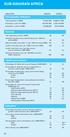 SUB-SAHARAN AFRICA INDICATOR REGION WORLD Demographic indicators Total population (2005) 713,457,000 6,449,371,000 Population under 18 (2005) 361,301,000 2,183,143,000 Population under 5 (2005) 119,555,000
Progress and prospects
 Ending CHILD MARRIAGE Progress and prospects UNICEF/BANA213-182/Kiron The current situation Worldwide, more than 7 million women alive today were married before their 18th birthday. More than one in three
RESOLUTION. (Adopted on Committee Two of CNMUN 2010)
 RESOLUTION (Adopted on Committee Two of CNMUN 2010) Council: UN Human Rights Council Committee Two Topic: the Impact of Financial Crisis on the Universal Realization and Effective Enjoyment of Human Rights
INDICATOR REGION WORLD
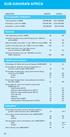 SUB-SAHARAN AFRICA INDICATOR REGION WORLD Demographic indicators Total population (2006) 748,886,000 6,577,236,000 Population under 18 (2006) 376,047,000 2,212,024,000 Population under 5 (2006) 125,254,000
The Impact of Interest Rate Ceilings on Microfinance Industry
 The Impact of Interest Rate Ceilings on Microfinance Industry Ali Saleh Alshebami School of Commerce & Management Science, SRTM University, India E-mail: [email protected] Prof. D. M. Khandare School
Frequently Asked Questions About MicroCredit Enterprises
 Frequently Asked Questions About MicroCredit Enterprises This selection of questions is about MicroCredit Enterprises, its goals and organizational operations. Questions concerning our Guarantors, their
Pioneering Social Health Insurance in Tanzania: The case of the National Health Insurance Fund. (NHIF)
 IMPROVING ACCESS THROUGH EFFECTIVE HEALTH FINANCING Pioneering Social Health Insurance in Tanzania: The case of the National Health Insurance Fund. (NHIF) Presented by the Director General of NHIF Mr.
Progress report: Artisanal and Small-scale Mining over the last 10 years. Presented by Assheton Stewart Carter SVP Global Engagement Pact
 Progress report: Artisanal and Small-scale Mining over the last 10 years Presented by Assheton Stewart Carter SVP Global Engagement Pact Objectives To give a sense of where progress has been made in the
Presented by: Nurjahan Begum Managing Director Grameen Shikkha And Former Acting Managing Director, Grameen Bank
 Empowering the Children of Microentrepreneurs with Primary and Secondary Education, College Scholarships and Loans, and Financial Services for Their Businesses Presented by: Nurjahan Begum Managing Director
Investing in Gender Equality: Ending Violence against Women and Girls. Investing in Gender Equality: Ending Violence against Women and Girls
 Investing in Gender Equality: Ending Violence against Women and Girls Investing in Gender Equality: Ending Violence against Women and Girls Violence against women is a global pandemic: Between and 76 per
MILLENNIUM DEVELOPMENT GOALS
 MILLENNIUM DEVELOPMENT GOALS Time Level Skills Knowledge goal 60 90 minutes intermediate speaking, reading to raise awareness of today s global issues and the UN Millennium Development Goals Materials
Girls education the facts
 Education for All Global Monitoring Report Fact Sheet October 2013 Girls education the facts Millions of girls around the world are still being denied an education PRIMARY SCHOOL: There are still 31 million
Financial Services that Clients Need - The 3.0 Business Models - Reconciling Outreach with Sustainability
 Financial Services that Clients Need - The 3.0 Business Models - Reconciling Outreach with Sustainability Berlin, 29 November 2012 Robert Peck Christen Maxwell School of Citizenship and Public Affairs,
How to End Child Marriage. Action Strategies for Prevention and Protection
 How to End Child Marriage Action Strategies for Prevention and Protection Why Child Marriage Must End Girls who marry as children are often more susceptible to the health risks associated with early sexual
Health in the post-2015 Development Framework: How to meet the needs of the most marginalized and excluded
 Policy briefing Health in the post-2015 Development Framework: How to meet the needs of the most marginalized and excluded Introduction For the past two years, UN Member States, UN agencies, civil society
Community Investing in Canada. Written by: Susannah Cameron, Executive Director Canadian Community Investment Network Cooperative Canada
 Community Investing in Canada Written by: Susannah Cameron, Executive Director Canadian Community Investment Network Cooperative Canada TABLE OF CONTENTS Introduction... 1 Describing the community investing
microcredit toolkit introduction
 microcredit toolkit introduction Contents Microcredit: A powerful tool in your hands 2 Vancity s Peer Lending Program 2 How does a Peer Lending Program work? 3 The Microcredit Toolkit: A way to share our
Arab Republic of Egypt: Commercial Microfinance The National Bank for Development
 Arab Republic of Egypt: Commercial Microfinance The National Bank for Development There is a large unmet demand for microfinance services among the entrepreneurial poor in Egypt. It is estimated that Egypt
MEKELLE. ፼፼፼፼ ፼፼፼፼ ፼፼፼፼፼ ፼፼፼፼ Bright Africa Youth Association
 MEKELLE ፼፼፼፼ ፼፼፼፼ ፼፼፼፼፼ ፼፼፼፼ Bright Africa Youth Association 251-03-44-405787 Email:[email protected], [email protected] Mobile: 251-914-730055, 1765 [email protected] 251-914-733239 [email protected]
Introduction to Comparative Health Systems
 Introduction to Comparative Health Systems Kevin Chan, MD, MPH, FRCPC, FAAP Assistant Professor, Faculty of Medicine, and Fellow, Munk Centre for International Studies, University of Toronto Prepared as
TOWARDS UNIVERSAL HEALTH COVERAGE IN RWANDA
 TOWARDS UNIVERSAL HEALTH COVERAGE IN RWANDA Summary Notes from Briefing by Caroline Kayonga * Permanent Secretary, Ministry of Health, Rwanda 10/22/2007 10/23/2007 OUTLINE 1. A brief history of health
Islamic Republic of Afghanistan Ministry of Public Health. Contents. Health Financing Policy 2012 2020
 Islamic Republic of Afghanistan Ministry of Public Health Contents Health Financing Policy 2012 2020 Table of Content 1. Introduction 1 1.1 Brief County Profile 1 1.2 Health Status Data 1 1.3 Sources
UNICEF in South Africa
 UNICEF in South Africa A message from the Representative 47,900,000 people live in South Africa 20,200,000 are children 294,000 children are HIV-positive 1 in 17 children die before their fifth birthday
Mortgage Lending Basics
 Welcome to PMI s On Demand Training Bootcamp Mortgage Lending Basics PRESENTED BY PMI MORTGAGE INSURANCE CO. Introduction to Mortgage Lending Course Overview Mortgage Lending Basics Origination Process
United Nations Educational, Scienti c and Cultural Organization EDUCATION COUNTS. Towards the Millennium Development Goals
 United Nations Educational, Scienti c and Cultural Organization EDUCATION COUNTS Towards the Millennium Development Goals The original artwork presented in the brochure was designed by Zago, New York,
GRAMEENPHONE & GRAMEEN TELECOM Village Phone Program
 GRAMEENPHONE & GRAMEEN TELECOM Village Phone Program Information & Communication Technology in Africa Harmeet Gill March 1, 2006 The telephone is a weapon against poverty. -GrameenPhone GrameenPhone Created
cambodia Maternal, Newborn AND Child Health and Nutrition
 cambodia Maternal, Newborn AND Child Health and Nutrition situation Between 2000 and 2010, Cambodia has made significant progress in improving the health of its children. The infant mortality rate has
Financial inclusion and poverty reduction: the role of financial inclusion in achieving the Millennium Development Goals.
 Financial inclusion and poverty reduction: the role of financial inclusion in achieving the Millennium Development Goals. 1. It is indeed a source of deep concern that the number of people living in extreme
$100 change. How can. aneconomy. Microfinance and Microcredit. One small loan can change a family.
 How can Microfinance and Microcredit $100 change aneconomy? It could be for a new tool, a machine, or a shop in the marketplace millions of the world s poor and low-income people have taken advantage of
Benjamin Petit for AFD. Agence Française de Développement
 Benjamin Petit for AFD Agence Française de Développement AFD employs new development models to confront shared challenges In an increasingly interdependent world, developed and developing countries share
Building Solidarity and Sisterhood for Economic Empowerment: some experiences of the Self-Employed Women s Association
 Building Solidarity and Sisterhood for Economic Empowerment: some experiences of the Self-Employed Women s Association By : Mirai Chatterjee, Self-Employed Women s Association, (SEWA),India Key note speech
Characteristics and Causes of Extreme Poverty and Hunger. Akhter Ahmed, Ruth Vargas Hill, Lisa Smith, Doris Wiesmann, and Tim Frankenberger
 The World s Most Deprived Characteristics and Causes of Extreme Poverty and Hunger Akhter Ahmed, Ruth Vargas Hill, Lisa Smith, Doris Wiesmann, and Tim Frankenberger Context Report was undertaken as part
INSTITUTIONAL AND ORGANISATIONAL CHANGE j) Mainstreaming a gender equality perspective in the Consolidated Inter-Agency Appeals BACKGROUND
 INSTITUTIONAL AND ORGANISATIONAL CHANGE j) Mainstreaming a gender equality perspective in the Consolidated Inter-Agency Appeals BACKGROUND A gender perspective in humanitarian assistance: what does it
30% Opening Prayer. Introduction. About 85% of women give birth at home with untrained attendants; the number is much higher in rural areas.
 This is the second of four studies on maternal health M AT E R N A L a n d C H I L D H E A LT H : A f g h a n i s t a n b y K a r e n B o k m a About 85% of women give birth at home with untrained attendants;
HEALTH TRANSITION AND ECONOMIC GROWTH IN SRI LANKA LESSONS OF THE PAST AND EMERGING ISSUES
 HEALTH TRANSITION AND ECONOMIC GROWTH IN SRI LANKA LESSONS OF THE PAST AND EMERGING ISSUES Dr. Godfrey Gunatilleke, Sri Lanka How the Presentation is Organized An Overview of the Health Transition in Sri
Human Resources Development for Economic Development examples and lessons from ACP countries
 A presentation to the ACP EU Economic and Social Interest Group, Brussels, 5 March 08 : Human Resources Development for Economic Development examples and lessons from ACP countries Brenda King Member of
IFMSA Policy Statement Human Resources for Health
 IFMSA Policy Statement Human Resources for Health Location: Taipei, Taiwan. Date of Adoption: August 9 th 2014. Date of Expiry: August 9 th 2017. Summary We, the International Federation of Medical Students
6 th African Microfinance Conference
 6 th African Microfinance Conference Presentation by: Mr. Wilson Twamuhabwa CEO, UGAFODE Microfinance Limited (MDI) President AMFIU- Uganda MFI Network Contact: [email protected] About UGAFODE
Gender Impact Strategy for Agricultural Development
 June 2008 Gender Impact Strategy for Agricultural Development Table of Contents Overview... 2 Rationale.......................................... 3 Core Beliefs... 3 An Effective Gender Impact Strategy..................
Briefing note for countries on the 2015 Human Development Report. Burkina Faso
 Human Development Report 2015 Work for human development Briefing note for countries on the 2015 Human Development Report Burkina Faso Introduction The 2015 Human Development Report (HDR) Work for Human
TechnoServe. Strategic Plan 2013-2017 2 INTRODUCTION 4 WHO WE ARE 6 WHAT WE DO 8 WHERE WE WORK
 TechnoServe Strategic Plan 2013-2 INTRODUCTION 4 WHO WE ARE 6 WHAT WE DO 8 WHERE WE WORK 10 OUR JOURNEY TO DATE 12 ON THE GROUND 16 STRATEGIC PRIORITIES Introduction TECHNOSERVE: STRATEGIC PLAN 2013-3
WHO Consultation on the Zero Draft Global Mental Health Action Plan 2013-2020 International Diabetes Federation (IDF) Submission
 WHO Consultation on the Zero Draft Global Mental Health Action Plan 2013-2020 International Diabetes Federation (IDF) Submission The International Diabetes Federation (IDF), an umbrella organisation of
Social Protection in the post-2015 Development Agenda
 Social Protection in the post-2015 Development Agenda armando barrientos and david hulme, brooks world poverty institute, school of environment and development, university of manchester, uk text: Armando
Statement by Dr. Sugiri Syarief, MPA
 Check against delivery_ Commission on Population and Development 45th Session Economic and Social Council Statement by Dr. Sugiri Syarief, MPA Chairperson of the National Population and Family Planning
Promoting the Sexual and Reproductive Rights and Health of Adolescents and Youth:
 August 2011 About the Youth Health and Rights Coalition The Youth Health and Rights Coalition (YHRC) is comprised of advocates and implementers who, in collaboration with young people and adult allies,
The contribution of nurses and midwives to global health
 The contribution of nurses and midwives to global health Pat Hughes Consultant: Nursing, Health & Development C3 Collaborating for Health De Montfort University, 8 May 2015 Outline International Nurses
What is microcredit? Why do poorer people need microcredit? Discuss how the availability of credit might be able to help someone move out of poverty.
 What is microcredit? Why do poorer people need microcredit? Discuss how the availability of credit might be able to help someone move out of poverty. INTRODUCTION WHAT IS MICROCREDIT? Microfinance, comprising
1. Bank Group Support to Health Financing
 1. Bank Group Support to Health Financing Highlights The way that health services are financed affects human welfare because it influences how health systems perform in improving health outcomes, and more
AREAS OF FOCUS POLICY STATEMENTS
 ENGLISH (EN) AREAS OF FOCUS POLICY STATEMENTS With respect to the areas of focus policy statements, The Rotary Foundation notes that 1. The goals of the Foundation are to increase efficiency in grant processing
Summary. Accessibility and utilisation of health services in Ghana 245
 Summary The thesis examines the factors that impact on access and utilisation of health services in Ghana. The utilisation behaviour of residents of a typical urban and a typical rural district are used
WHY THE PRIVATE SECTOR IS SO IMPORTANT IN ALLEVIATING POVERTY
 UNLEASHING ENTREPRENEURSHIP: MAKING BUSINESS WORK FOR THE POOR 5 Photo: Boris Missirkov CHAPTER 1 WHY THE PRIVATE SECTOR IS SO IMPORTANT IN ALLEVIATING POVERTY Ihis report is about walking into the poorest
FAST FACTS Realizing Africa s Wealth - Building Inclusive Businesses for Shared Prosperity
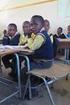 FAST FACTS Realizing Africa s Wealth - Building Inclusive Businesses for Shared Prosperity Inclusive business creates profits and unleashes potential Sub-Saharan Africa has a total population of about
Health insurance for the rural poor?
 Health insurance for the rural poor? For most people living in developing countries health insurance is an unknown word. It is generally assumed that, with the exception of the upper classes, people cannot
Hunger and Poverty: Definitions and Distinctions
 Hunger and Poverty: Definitions and Distinctions The Hunger Project 5 Union Square West New York, NY 10003 www.thp.org Hunger and poverty are powerful but familiar terms. Everyone knows what they mean,
Located downtown at 1250 6 th Avenue, ACCION San Diego is an independent, 501 (c) (3) non-profit organization that provides economic opportunity to
 Located downtown at 1250 6 th Avenue, ACCION San Diego is an independent, 501 (c) (3) non-profit organization that provides economic opportunity to micro-entrepreneurs who lack access to traditional forms
Unconditional Basic Income: Two pilots in Madhya Pradesh
 Background Unconditional Basic Income: Two pilots in Madhya Pradesh A Background Note prepared for the Delhi Conference, May 30-31, 2013. 1 The public debate on cash transfers in India has been highly
Can Entrepreneurship Programs Transform the Economic Lives of the Poor?
 1 Can Entrepreneurship Programs Transform the Economic Lives of the Poor? Oriana Bandiera (LSE) Selim Gulesci (LSE) Munshi Sulaiman (BRAC/LSE) Robin Burgess (LSE) Imran Rasul (UCL) BRAC Conference: March
UNITED NATIONS AND ECONOMIC AND SOCIAL DEVELOPMENT
 OPTIONAL MODULE - 1 Political Science 32 UNITED NATIONS AND ECONOMIC AND SOCIAL DEVELOPMENT T he UN and its affiliated agencies play an important role in the promotion of international co-operation in
MICROINSURANCE. Virginia Tan, Allen & Overy LLP. protection, risk
 MICROINSURANCE Virginia Tan, Allen & Overy LLP Type: Legal Guide Published: June 2012 Last Updated: June 2012 Keywords: Microinsurance, protection, risk This document provides general information and comments
ADS Chapter 219 Microenterprise Development
 Microenterprise Development Document Quality Check Date: 02/08/2013 Partial Revision Date: 07/08/2011 Responsible Office: E3 File Name: 219_020813 Functional Series 200 Programming Policy Microenterprise
MONITOR JOURNAL OF INTERNATIONAL STUDIES
 MONITOR JOURNAL OF INTERNATIONAL STUDIES Volume 12, Number 2 Spring 2007 THE COLLEGE OF WILLIAM AND MARY Microfinance Plus: Non-financial Services Offered by Microfinance Institutions and their Impact
SIERRA LEONE UPDATES FROM THE INSTANBUL PRIORITY AREAS OF ACTION
 SIERRA LEONE UPDATES FROM THE INSTANBUL PRIORITY AREAS OF ACTION 1 OUTLINE OF PRESENTATION Recent Developments Istanbul Priority Areas of Action Poverty Levels Agenda for Prosperity Challenges Conclusion