
Critical Thinking (2) Learner Development Unit
|
|
|
- Eunice Ford
- 10 years ago
- Views:
Transcription
1 Critical Thinking (2) Learner Development Unit

2 Critical Critically Emphasise Serious Salient Brainstorming In depth examination analytical Thorough / thoroughness Rigour / rigorous Attention to detail Detail Evidence Analysis / analyse /

3 Thinking Finding things out implications Noticing connections Working things out Analysing Realising Deciding Summarising underpinnings Solving Hypothesising Noticing i Justifying Evaluating assumptions Remembering Sequencing Testing (Adapted from McGuinness, 1999) Planning Ordering McGuinness, C. (1999). From Thinking Skills to Thinking Arguing g Sorting Classrooms: A Review and Evaluation of Approaches for Identifying Classifying Developing Pupils' Thinking. Nottingham: DfEE Publications. Speculating Grouping Calculating Predicting Comparing Concluding Deducing Distinguishing Realising Noticing exceptions

4 Thinking (1)

5 Thinking (2)

6 Thinking (3)

7 What kind of Thinker are you? (1) I hate talk shows where people p shout their opinions but never give any reasons at all. Figuring out what people really mean is important to me." I always do better in jobs where I'm expected to think things out for myself. I hold off making decisions until I have thought through my options. Rather than relying on someone else's notes, I prefer to read the material myself. lf I try to see the merit in another s opinion, even if I reject it later. Even if a problem is tougher than I expected, I will keep working on it. Making intelligent decisions is more important than winning arguments. Based on Facione, P. (2010). Critical Thinking: What It Is and Why It Counts.

8 What kind of Thinker are you? (2) I prefer jobs where the supervisor says exactly what to do and exactly how to do it. No matter how complex the problem, you can bt bet there will be a simple solution. I don't waste time looking things up. I hate when teachers discuss problems instead of just giving ii the answers. If my belief is truly sincere, evidence to the contrary is irrelevant. Selling an idea is like selling cars, you say whatever works. Based on Facione, P. (2010). Critical Thinking: What It Is and Why It Counts.

9 We Human Beings are S times Poor Thinkers Because We jump to conclusions filt fail to think through h implications focus on the trivial fail to notice contradictions accept inaccurateinformationinformation ask vague / irrelevant questions give / accept vague / irrelevant answers ask loaded questions answer questions we are not competent to answer come to conclusions based on inaccurate or irrelevant information ignore information that does not support our view make unjustified inferences distort data and state it inaccurately fail to notice the inferences we make come to unreasonable conclusions fail to notice our assumptions often make unjustified assumptions miss key ideas use irrelevant tideas form superficial concepts misuse words ignorerelevant relevant viewpoints cannot see issues from other points of view are unaware of our own prejudices think narrowly think imprecisely think illogically think one sidedly think simplistically think hypocritically think superficially think ethnocentrically think egocentrically communicate our thinking poorly have little insight into our own ignorance a critic.cfm

10 More Reasons for Bad Thinking (1) In what ways are our minds influenced by factors within ourselves? Psychologically (our personality and ego) Philosophically (our personal philosophy) Ethically (our ethical character) Biologically (our biology and neurology) Are these factors static or dynamic? Are these factors innate or learned? Are we in control of these factors? To what extent? [Are they really within ourselves?!] Based on ct teaching students study learn p4.cfm

11 More Reasons for Bad Thinking (2) Inwhat ways are ourminds influencedby factors beyond ourselves? Sociologically y( (the social groups to which we belong) Intellectually (the ideas we hold, how we reason) Anthropologically (our cultural practices, mores, and taboos) Ideologically & politically (the structure of power and its use by interest groups around us) Economically (the economic conditions under which we live) Historically (our history and how we recountit) Theologically (our religious beliefs) Are we in control of these factors? To what extent? [Are they really beyond ourselves?!] Based on ct teaching students study learn p4.cfm

12 What is Critical Thinking?... a composite of attitudes, knowledge and skills. This composite includes: (1) attitudes of inquiry that involve an ability to recognize the existence of problems and an acceptance of the general need for evidence in support of what is asserted to be true; (2) knowledge of the nature of valid inferences, abstractions, and generalizations in which the weight or accuracy of different kinds of evidence are logically determined; d and (3) skills in employing and applying the above attitudes and knowledge. Watson Glaser Critical Thinking Appraisal

13 What is Critical Thinking? We understand critical thinking to be purposeful, self regulatory judgment which results in interpretation, analysis, evaluation, and inference, as well as explanation of the evidential, conceptual, methodological, criteriological, or contextual considerations upon which that judgment is based. CT is essential as a tool of inquiry. As such, CT is a liberating force in education and a powerful resource in one's personal and civic life. While not synonymous with good thinking, CT is a pervasive and self rectifying human phenomenon. The ideal critical thinker is habitually inquisitive, well informed informed, trustful ofreason reason, open minded, flexible, fairminded in evaluation, honest in facing personal biases, prudent in making judgments, willing to reconsider, clear about issues, orderly in complex matters, diligent in seeking relevant information, reasonable in the selection of criteria, focused in inquiry, and persistent in seeking results which are as precise as the subject and the circumstances of inquiry permit. Thus, educating good critical thinkers means working toward this ideal. It combines developing CT skills with nurturing those dispositions which consistently yield useful insights and which are the basis of a rational and democratic society. Facione, A. (1990) "Critical Thinking: A Statement of Expert Consensus for Purposes of Educational Facione, A. (1990) Critical Thinking: A Statement of Expert Consensus for Purposes of Educational Assessment and Instruction. A Report for the American Philosophical Association.

14 What is Critical Thinking? Critical thinking is the intellectually disciplined process of actively and skilfully conceptualizing, applying, analyzing, synthesizing, and/or evaluating information gathered from, or generated by, observation, experience, reflection, reasoning, orcommunication communication, as a guide to belief and action. In its exemplary form, it is based on universal intellectual values that transcend subject matter divisions: clarity, accuracy, precision, consistency, relevance, sound evidence, good reasons, depth, breadth, and fairness. It entails the examination of those structures or elements of thought implicit in all reasoning: purpose, problem, or question at issue, t i assumptions, concepts, empirical grounding; reasoning leading to conclusions, implications and consequences, objections from alternative viewpoints, and frame of reference. Michael Scriven and Richard Paul National Council for Excellence in Critical Michael Scriven and Richard Paul, National Council for Excellence in Critical Thinking.

15 What is Critical Thinking? Critical thinking is a desire to seek, patience to doubt, fondness to meditate, slowness to assert, readiness to consider, carefulness to dispose and set in order; and hatred for every kind of imposture. Francis Bacon (1605)

16 Critical Thinking as an Ethical Philosophy Intellectual Humility Intellectual Courage Intellectual lempathy Intellectual Integrity Intellectual Perseverance Faith In Reason Fairmindedness Valuable Intellectual Virtues (June 1996). Foundation For Critical Thinking. intellectual traits.cfm

17 Critical Thinking as an Ethical Philosophy As you read the ideas beneath, consider what the various definitions and understandings imply.» Human nature» Human capacities» Rationality What underlying ideologies, assumptions etc does the author himself hold / make? To what extent do you dis/agree with the To what extent do you dis/agree with the ideas? In what respects? Why?

18 Critical Thinking as an Ethical Philosophy Intellectual Humility: Having a consciousness of the limits of one's knowledge, including a sensitivity to circumstances in which one's native egocentrism is likely to function self deceptively; sensitivity to bias, prejudice and limitations of one's viewpoint. Intellectual Courage: Having a consciousness of the need to face and fairly address ideas, beliefs or viewpoints toward which we have strong negative emotions and to which we have not given a serious hearing. This courage is connected with the recognition that ideas considered dangerous or absurd are sometimes rationally justified (in whole or in part) and that conclusions and beliefs inculcated in us are sometimes false or misleading. Intellectual Empathy: Having a consciousness of the need to imaginatively put oneself in the place of others in order to genuinely understand them, which requires the consciousness of our egocentric tendency to identify truth with our immediate perceptions p of long standing g thought or belief. Valuable Intellectual Virtues (June 1996). Foundation For Critical Thinking. intellectual traits.cfm intellectual traits cfm

19 Critical Thinking as an Ethical Philosophy Intellectual Integrity: Recognition of the need to be true to one's own thinking; to be consistent in the intellectual standards one applies; and to honestly admit discrepancies and inconsistencies in one's own thought and action. Intellectual Perseverance: Having a consciousness of the need to use intellectual insights and truths in spite of difficulties, obstacles, and frustrations; firm adherence to rational principles despite the irrational opposition of others;. FihI Faith In Reason: Confidence that, in the long run, one's ownhigher h interests and those of humankind at large will be best served by giving the freest play to reason, by encouraging people to come to their own conclusions by developing their own rational faculties. Fairmindedness: Having a consciousness of the need to treat all viewpoints alike, without reference to one's own feelings or vested interests, or the feelings orvested interests ofone's ofones friends, communityornation. Valuable Intellectual Virtues (June 1996). Foundation For Critical Thinking. intellectual traits.cfm / ti l / l itll t

20 Critical Thinking as an Ethical Philosophy Intellectual Humility: Having a consciousness of the limits of one's knowledge, including a sensitivity to circumstances in which one's native egocentrism is likely to function self deceptively; sensitivity iii to bias, prejudice and limitations i i of one's viewpoint. Intellectual humility depends on recognizing that one should not claim more than one actually knows. It does not imply spinelessness or submissiveness. It implies the lack of intellectual pretentiousness, boastfulness, or conceit, combined with insight into the logical foundations, or lack of such foundations, of one's beliefs. Valuable Intellectual Virtues (June 1996). Foundation For Critical Thinking intellectual traits.cfm

21 Critical Thinking as an Ethical Philosophy Intellectual Courage: Having a consciousness of the need to face and fairly address ideas, beliefs or viewpoints toward which we have strong negative emotions and to which we have not given a serious hearing. This courage is connected with ihthe recognition ii that ideas considered dangerous or absurd are sometimes rationally justified (in whole or in part) and that conclusions and beliefs inculcated in us are sometimes false or misleading. To determine for ourselves which is which, we must not passively and uncritically ca "accept" what we have "learned." ed Intellectual ectua courage comes into play here, because inevitably we will come to see some truth in some ideas considered dangerous and absurd, and distortionor falsity insome ideas strongly held inour socialgroup group. We need courage to be true to our own thinking in such circumstances. The penalties for non conformity can be severe. Valuable Intellectual Virtues (June 1996). Foundation For Critical Thinking intellectual traits.cfm
22 Critical Thinking as an Ethical Philosophy Intellectual Empathy: Having a consciousness ofthe need to imaginatively put oneself in the place of others in order to genuinely understand them, which requires the consciousness of our egocentric tendency to identify truth with our immediate perceptions of long standing thought or belief. This trait correlates with the ability to reconstruct accurately the viewpoints and reasoning of others and to reason from premises, assumptions, and ideas other than our own. This trait also correlates with the willingness to remember occasions when we were wrong in the past despite an intense conviction that we were right, and with the ability to imagine our being similarly deceived in a case at hand. Valuable Intellectual Virtues (June 1996). Foundation For Critical Thinking intellectual traits.cfm
23 Critical Thinking as an Ethical Philosophy Intellectual Integrity: Recognition of the need to be true to one's own thinking; to be consistent in the intellectual t lstandards d one applies; to hold one's self to the same rigorous standards of evidence and proof to which h one holds one's antagonists; to practice what one advocates for others; and to honestly admit discrepancies and inconsistencies in one's own thought and action. Valuable Intellectual Virtues (June 1996). Foundation For Critical Thinking intellectual traits.cfm
24 Critical Thinking as an Ethical Philosophy IntellectualPerseverance Perseverance: Having a consciousness of the need to use intellectual insights and truths in spite of difficulties, obstacles, and frustrations; firmadherence to rational principles despite the irrational opposition of others; a sense of the need to struggle with confusion and unsettled questions over an extended period of time to achieve deeper understanding or insight. Valuable Intellectual Virtues (June 1996). Foundation For Critical Thinking intellectual traits.cfm
25 Critical Thinking as an Ethical Philosophy Faith In Reason: Confidence that, in the long run, one's own higher interests and those of humankind at large will be best served by giving the freest play to reason, by encouraging people to come to their own conclusions by developing their own rational faculties; faith that, with proper encouragement and cultivation, people can learn to think for themselves, to form rational viewpoints, draw reasonable conclusions, think coherently and logically, persuade each other by reason and become reasonable persons, despite the deep seated obstacles in the native character of the human mind and in society as we know it. Valuable Intellectual Virtues (June 1996). Foundation For Critical Thinking intellectual traits.cfm
26 Critical Thinking as an Ethical Philosophy Fi Fairmindedness: idd Having a consciousness of the need to treat all viewpoints alike, without reference to one's own feelings or vested interests, or the feelings or vested interests of one's friends, community or nation; implies adherence to intellectual standards without reference to one's own advantage or the advantage of one's group. Valuable Intellectual Virtues (June 1996). Foundation For Critical Thinking intellectual traits.cfm
27 Critical Thinking Requires DEPTH BREADTH RIGOUR LOGIC EMPATHY SELF AWARENESS ACCURACY Based on Elder, L. & Paul, R. (1996). Universal Intellectual PRECISION CLARITY RELEVANCE Standards. Available at intellectualstandards.cfm
28 Becoming a Critical Thinker Questioning RELEVANCE: Is this connected to the issue / question? Why / not? In what ways? To what extent? How does this bear on the issue / question? Why?
29 Becoming a Critical Thinker Questioning CLARITY: Could / should I / you elaborate further on that point? If so, how? Could / should I / you express that point in another way? If so, how? Could / should I / you give [me] an illustration? ti Could / should I / you give [me] an example?
30 Becoming a Critical Thinker Questioning ACCURACY: Is that really true? To what extents is that [not] really true? In what ways is that [not] really true? How could we check that? How could I find out if that is true? What information i / source do I need? Is that information / source sound? Can I trust Is that information / source sound? Can I trust it? Why / not? In what ways? To what extent?
31 Becoming a Critical Thinker Questioning PRECISION: Could I / you give more details? Could I / you be more specific? What exactly am I / are you saying? What exactly might I / you be [inadvertently] suggesting / implying? Is that intended / justified? Why / not?
32 Becoming a Critical Thinker Questioning DEPTH: Does my / your statement / answer truly address the complexities in the question? Why / not? Am I / are you taking into account the problems in the issue / question? In what ways? To what extents? Am I / are you dealing with the most significant factors? Why / not? In what ways?
33 Becoming a Critical Thinker Questioning BREADTH: What might this look like from a different viewpoint? Do I need to consider another point of view? Why / not? Whose point of view? Why? To what extents? Are there other way/s to look at this issue / question? What? Why? Are they valid? Why / not? To what extents are they [not] valid? What evidence is there to support me / them?
34 Becoming a Critical Thinker Questioning LOGIC: Does this really make sense? Why / not? To who? In what ways? Does this really follow from what I / you said / wrote before? Why / not? To what extents? How? Have I / you said / written other ideas which contradict this? What? Where? Can both be true? Why / not? To what extents? In what ways? Is there sufficient evidence to support this? Why / not? Is evidence possible here? Why / not? Does a lack of evidence invalidate the argument? Why /not? Is the logic only subjectively logical or is it objectively logical? Why? In what ways? Is this a problem? Why / not?
35 Becoming a Critical Thinker Questioning RIGOUR Is there sufficient evidence to support this? Why / not? Is evidence possible here? Why / not? Does a lack of evidence invalidate the argument? Why /not? Is the logic only subjectively logical or is it objectively logical? Why? In what ways? Is this a problem? Why / not? Has my / your ideology influenced my / your logic? To what extent? Is this a problem? Why / not? Are there any caveats to my / your argument / point ofview? What? Do theyinvalidateanything? anything? Why / not?
36 Becoming a Critical Thinker Questioning EMPATHY & SELF AWARENESS How will my / your point of view seem to other people? Has my / your ideology influenced my / your logic? To what extent? Is this a problem? Why / not?
37 Life is complex A statement may be clear, accurate, precise, and relevant, but superficial (i.e. lack depth). For example, the ant drugs statement, "Just say No!. This is clear, accurate, precise, and relevant. But does it satisfy the criterion of depth? Does it truly deal with the complexities of the issue? Any argument may be clear accurate, precise, relevant, and deep, but lack breadth For example, an argument froma politically conservative or liberal standpoint may satisfy various of these criteria, but is it likely to satisfy the criterion of breadth?
38 These ideas put another way (1) A. Affective Strategies S 1 thinking independently S 2 developing insight into egocentricity or sociocentricity S 3 exercising fairmindedness S 4 exploring thoughtsunderlying underlying feelings and feelings underlying thoughts S 5 developing intellectual humility and suspending judgment S 6 developing intellectual courage S 7 developing intellectual good faith or integrity S 8 developing intellectual perseverance S 9 developing confidence in reason Available at strategy list.cfm#s1
39 These ideas put another way (2) B. Cognitive Strategies Macro Abilities S 10 refining generalizations and avoiding oversimplifications S 11 comparing analogous situations: transferring insights to new contexts S 12 developing one s perspective: creating or exploring beliefs, arguments, or theories S 13 clarifying issues, conclusions, or beliefs S 14 clarifying and analyzing the meanings of words or phrases S 15 developing criteria for evaluation: clarifying values and standards S 16 evaluating the credibility of sources of information S 17 questioning deeply: raising and pursuing root or significant questions S 18 analyzing or evaluating arguments, interpretations, beliefs, or theories S 19 generating or assessing solutions S 20 analyzing or evaluating actions or policies S 21 reading critically: clarifying or critiquing texts S 22 listening critically: the art of silent dialogue S 23 making interdisciplinary i connections S 24 practicing Socratic discussion: clarifying and questioning beliefs, theories, or perspectives S 25 reasoning dialogically: comparing perspectives, interpretations, or theories S 26 reasoning dialectically: evaluatingperspectives perspectives, interpretations, or theories Available at strategy list.cfm#s1
40 These ideas put another way (3) C. Cognitive Strategies Micro Skills S 27 comparing and contrasting ideals with actual practice S 28 thinking precisely about thinking: using critical vocabulary S 29 noting significant similarities and differences S 30 examining or evaluating assumptions S 31 distinguishing relevant from irrelevant facts S 32 making plausible inferences, predictions, or interpretations S 33 giving reasons and evaluating evidence and alleged facts S 34 recognizing contradictions S 35 exploring implications i and consequences Available at strategy list.cfm#s1 p// g/ / gy
41 Bloom s Taxonomy Instructional Strategy Cognitive Domain (Bloom, 1956) Affective Domain (Krathwohl, Bloom, & Masia, 1973) Psychomotor Domain (Simpson, 1972) Lecture, reading, audio/visual, demonstration, or guided 1. Knowledge 1. Receiving 1. Perception 2. observations, question and answer period phenomena Set Discussions, multimedia CBT, Socratic didactic method, reflection. Activities such as surveys, y, role playing, case studies, fishbowls, etc. On the Job Training (OJT), practice by doing (some direction or coaching is required), simulated job settings (to include CBT simulations) Use in real situations. Also may be trained by using several high level activities coupled with OJT. 2. Comprehension 2. Responding to 3. Guided 3. Application phenomena response 4. Mechanism 4. Analysis 3. Valuing 5. Complex response 5. Synthesis 4. Organize values into priorities 6. Adaptation Normally developed onown own (informal learning) through 6. Evaluation 5. Internalizing values 7. Origination self study or learning through mistakes, but mentoring and coaching can speed the process. Table taken from Bloom B. S. (1956). Taxonomy of Educational Objectives, Handbook I: The Cognitive Domain. New York: David McKay Co Inc. Krathwohl, D. R., Bloom, B. S., & Masia, B. B. (1973). Taxonomy of Educational Objectives, the Classification of Educational Goals. Handbook II: Affective Domain. New York: David McKay Co., Inc. Simpson E. J. (1972). The Classification of Educational Objectives in the Psychomotor Domain. Washington, DC: Gryphon House.
42 Types Key Ability of Thinking [again!] Types of Thinking Evaluating Synthesising judge, appraise, choose, rate, assess,estimate, estimate, value, measure, criticise formulate, teach, design, develop, re define, dfi propose, create Analysing Applying Comprehending Knowing distinguish, differentiate, calculate, debate, relate, compare, experiment, contrast, examine demonstrate, schedule, operate, sketch, employ, use, practice restate, identify, discuss, locate, recognise, review, explain, tell, clarify recall, define, state, list, repeat, name, recount, present, find
43 Becoming a Critical Thinker Yourself Find the information you need Digest it grasp the key points, arguments & evidence Analysethese establish how ideas fit together andrelate to eachother; assess similarities & differences between the ideas; assess contradictions etc Try to take ownership of the ideas, arguments etc for yourself move from what someone says to what someone is saying Develop & establish your perspectives based on these ideas Develop your thinking & arguments, and bring together sources of information to support yourself Synthesise your sources bring together different sources of information to give authority to your arguments & ideas you are developing Evaluate always evaluate your ideas andother people s ideas (e.g. relevance, credibility, worth). Evaluate conclusions you are starting to draw Apply demonstrate your thinking, ideas and arguments (in exams, essays, dissertations etc)
44 Is this a fair summary? Why / not? 1. Is open minded and mindful of alternatives 2. Tries to be well informed 3. Judgeswell thecredibility of sources 4. Identifies conclusions, reasons, and assumptions 5. Judges well the quality of an argument, including its reasons, assumptions, and evidence 6. Can well develop & defend a reasonable position 7. Ak Asks appropriate it clarifying i questions 8. Formulates plausible hypotheses; plans experiments well 9. Defines terms in a way appropriate to the context 10. Draws conclusions when warranted cautiously! 11. Integrates all items in this list
45 What is Analysis Being Analytical? In depth depth, close examination of the literature Evidence & its interpretation? Arguments & their solidity? The why, the what & the how of research Connections & links between ideas / theories? [Likewise, Similarly, ] Differences & dissimilarities between ideas / theories? [In contrast,, Conversely, ] Thorough / thoroughness Rigorous / rigour Critical attitude
46 Being Critical Thinking Critically... What is the basis of the author s views does it draw on original research or is it developing the work of others (and if so, who; how; why)? What is the background and experience of the author practising i accountant, t manager, journalist, academic, etc. from which their ideas derive? If the work is research based, what enquiry methods are being used and how was the data collected? How recent is the reference when was it published, when was the research carried out, and is it still relevant?
47 Being Critical Thinking Critically... Logic of the reasoning behind the argument / claim? Quality of evidence to support the argument / claim? Critical Literature Review Appropriacy & rigour of methodology? Who is the author/s? What is their background?
Diagrams Helpful for Understanding Critical Thinking and Its Relationship with Teaching and Learning
 9 Diagrams Helpful for Understanding Critical Thinking and Its Relationship with Teaching and Learning This section entails diagrams which can help you: 1. make connections between the critical thinking
Critical Thinking Competency Standards
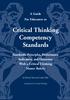 A Guide For Educators to Critical Thinking Competency Standards Standards, Principles, Performance Indicators, and Outcomes With a Critical Thinking Master Rubric by Richard Paul and Linda Elder Foundation
Asking Essential Questions
 The Miniature Guide to The Art of Asking Essential Questions by Dr. Linda Elder and Dr. Richard Paul Based on Critical Thinking Concepts and Socratic Principles The Foundation for Critical Thinking The
I. Thinking and Thinking About Thinking A. Every human being thinks and thinks continually, but we do little thinking about our thinking.
 Philosophy 3304 Introduction to Logic Logic and World Views I. Thinking and Thinking About Thinking A. Every human being thinks and thinks continually, but we do little thinking about our thinking. B.
Cognitive Domain (Bloom)
 Bloom s Taxonomy So what exactly is this thing called Bloom s Taxonomy, and why do education people keep talking about it? Well, Bloom was the head of a group in the 1950 s and 1960 s that created the
How To Be A Critical Thinker
 Building Critical Thinking Skills in General Education and Career Programs Wayne County Community College District Presented By: Mary Mahoney Jo Ann Allen Nyquist College Definition of Critical Thinking
Linda Elder. biographical information
 Linda Elder biographical information Dr. Linda Elder is an educational psychologist and a prominent authority on critical thinking. She is President of the Foundation for Critical Thinking and Executive
Module Five Critical Thinking
 Module Five Critical Thinking Introduction Critical thinking is often perceived as a difficult skill separate from the thinking process as a whole. In fact, it is the essence of thinking. It is not enough
Goals AND Objectives should be student-centered rather than course-centered Goals AND Objectives should reflect successful student performance
 Tips for Writing Goals AND Objectives Goals AND Objectives should be student-centered rather than course-centered Goals AND Objectives should reflect successful student performance Tips for Writing Course
LEARNING TO LEARN. Creative thinking and critical thinking. DCU Student Learning Resources
 LEARNING TO LEARN Creative thinking and critical thinking DCU Student Learning Resources Office of the Vice-President for Learning Innovation and Registrar 2 LEARNING TO LEARN CREATIVE THINKING AND CRITICAL
Critical thinking: what it is and how it can be improved
 1 Critical thinking: what it is and how it can be improved In recent years critical thinking has become something of a buzz word in educational circles. For many reasons, educators have become very interested
A Critical Thinking Model for Engineering
 A Critical Thinking Model for Engineering R. J. Niewoehner 2 nd International CDIO Conference Linkoping University Linkoping, Sweden 13 to 14 June 2006 Aerospace Engineering Department, United States Naval
Ph. D. Program in Education Specialization: Educational Leadership School of Education College of Human Sciences Iowa State University
 Ph. D. Program in Education Specialization: Educational Leadership School of Education College of Human Sciences Iowa State University The purpose of the doctoral program in Educational Leadership is to
Improving Critical Thinking in the College Classroom
 Improving Critical Thinking in the College Classroom Mark Berg, Psychology; Jed Morfit, Art; Bill Reynolds, Social Work The Richard Stockton College of New Jersey Pre-conference workshop for the Conference
Undergraduate Psychology Major Learning Goals and Outcomes i
 Undergraduate Psychology Major Learning Goals and Outcomes i Goal 1: Knowledge Base of Psychology Demonstrate familiarity with the major concepts, theoretical perspectives, empirical findings, and historical
Engineering Reasoning
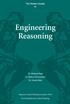 The Thinker s Guide to Engineering Reasoning Dr. Richard Paul Dr. Robert Niewoehner Dr. Linda Elder Based on Critical Thinking Concepts & Tools The Foundation for Critical Thinking The Thinker s Guide
LEARNING OUTCOMES FOR THE PSYCHOLOGY MAJOR
 LEARNING OUTCOMES FOR THE PSYCHOLOGY MAJOR Goal 1. Knowledge Base of Psychology Demonstrate familiarity with the major concepts, theoretical perspectives, empirical findings, and historical trends in psychology.
Designing and Teaching a Course with a Critical Thinking Focus
 Designing and Teaching a Course with a Critical Thinking Focus Centre for Excellence in Teaching and Learning (CETL) Lunch and Learn Seminar Facilitator: Dr Mervin E. Chisholm Manager/Coordinator, CETL
Socratic Questioning
 The Thinker s Guide to The Art of Socratic Questioning Based on Critical Thinking Concepts & Tools By Dr. Richard Paul and Dr. Linda Elder A Companion to: The Thinkers Guide to Analytic Thinking The Art
Resources for Writing Program Learning Outcomes
 Resources for Writing Program Learning Outcomes Supplementary Materials for Writing and Revising Learning Outcomes Workshop Presented Jointly by TLA and Student Affairs LEVEL OF SPECIFICITY AND REACH Learning
College of Arts and Sciences: Social Science and Humanities Outcomes
 College of Arts and Sciences: Social Science and Humanities Outcomes Communication Information Mgt/ Quantitative Skills Valuing/Ethics/ Integrity Critical Thinking Content Knowledge Application/ Internship
The likelihood that students will
 Rethinking College Readiness High schools need to graduate greater numbers of young people prepared for college and careers. But how should readiness be defined? DAVID T. CONLEY The likelihood that students
Brown, H. N., & Sorrell, J. M. (1993). Use of Clinical Journals to Enhance Thinking. Nurse Educator,18(5), 16-19.
 Use of Clinical Journals to Enhance Critical Thinking By: Hazel N. Brown, EdD, RNC, and Jeanne M. Sorrell, DAEd, RN Brown, H. N., & Sorrell, J. M. (1993). Use of Clinical Journals to Enhance Thinking.
CRITICAL THINKING REASONS FOR BELIEF AND DOUBT (VAUGHN CH. 4)
 CRITICAL THINKING REASONS FOR BELIEF AND DOUBT (VAUGHN CH. 4) LECTURE PROFESSOR JULIE YOO Claims Without Arguments When Claims Conflict Conflicting Claims Conflict With Your Background Information Experts
Writing Student Learning Outcomes for an Academic Program
 Writing Student Learning Outcomes for an Academic Program Student learning outcomes (SLOs) are statements of the knowledge, skills, competencies, or attitudes that students are expected to gain through
Assessment Plan Department of Psychology Park University. Preparing learners to think critically. Preparing learners to think
 Assessment Plan Department of Psychology Park University The approach adopted by the Department of Psychology stems from the mission of Park University to prepare learners to think, communicate effectively
Integrating Critical Thinking into the Business Curriculum
 Integrating Critical Thinking into the Business Curriculum Linda L. Miles, Ph.D. Dean of the School of Business Colgate Darden Professor of Finance Chowan University Andrew T. Babyak, Ph.D. Assistant Professor
5. Formally register for INS299 for the number of semester hours indicated on your contract.
 HONORS INDEPENDENT STUDY GUIDELINES: According to the Lake Land College catalog course description, independent study is designed to permit the student to pursue a course of study not typically available
Educational Goals and Objectives A GUIDE TO DEVELOPING LEARNER BASED INSTRUCTION
 Educational Goals and Objectives A GUIDE TO DEVELOPING LEARNER BASED INSTRUCTION Educational Objectives for this Presentation At the end of this presentation you will be able to: Compare and contrast educational
MOUNTAIN VIEW COLLEGE CORE CURRICULUM EVALUATION COMMITTEE STUDENT LEARNING OUTCOMES COURSE LEVEL VICTOR J. SOTO INSTRUCTIONAL DESIGNER PREPARED BY
 1 MOUNTAIN VIEW COLLEGE CORE CURRICULUM EVALUATION COMMITTEE WRITING INSTRUCTIONAL OBJECTIVES STUDENT LEARNING OUTCOMES COURSE LEVEL PREPARED BY VICTOR J. SOTO INSTRUCTIONAL DESIGNER 2 WRITING INSTRUCTIONAL
Program Level Learning Outcomes for the Department of Philosophy Page 1
 Page 1 PHILOSOPHY General Major I. Depth and Breadth of Knowledge. A. Will be able to recall what a worldview is and recognize that we all possess one. B. Should recognize that philosophy is most broadly
Writing learning objectives
 Writing learning objectives This material was excerpted and adapted from the following web site: http://www.utexas.edu/academic/diia/assessment/iar/students/plan/objectives/ What is a learning objective?
Critical Thinking. I m not sure what they expect when they ask us to critically evaluate
 1 Critical Thinking Typical Comments I m not sure what they expect when they ask us to critically evaluate The word critical sounds so negative, as though you have to undermine everything The word analysis
Writing Learning Objectives
 The University of Tennessee, Memphis Writing Learning Objectives A Teaching Resource Document from the Office of the Vice Chancellor for Planning and Prepared by Raoul A. Arreola, Ph.D. Portions of this
Approaches to learning (ATL) across the IB continuum
 Approaches to learning (ATL) across the IB continuum Through approaches to learning in IB programmes, students develop skills that have relevance across the curriculum that help them learn how to learn.
CRITICAL THINKING: AN EXTENDED DEFINITION. Petress, Ken < http://www.findarticles.com/p/articles/mi_qa3673/is_200404/ai_n9345203>
 CRITICAL THINKING: AN EXTENDED DEFINITION Petress, Ken < http://www.findarticles.com/p/articles/mi_qa3673/is_200404/ai_n9345203> Critical thinking is a pervasive academic literature term that is seldom
Philosophical argument
 Michael Lacewing Philosophical argument At the heart of philosophy is philosophical argument. Arguments are different from assertions. Assertions are simply stated; arguments always involve giving reasons.
CFSD 21 ST CENTURY SKILL RUBRIC CRITICAL & CREATIVE THINKING
 Critical and creative thinking (higher order thinking) refer to a set of cognitive skills or strategies that increases the probability of a desired outcome. In an information- rich society, the quality
TAXONOMY OF EDUCATIONAL OBJECTIVES (Excerpts from Linn and Miller Measurement and Assessment in Teaching, 9 th ed)
 TAXONOMY OF EDUCATIONAL OBJECTIVES (Excerpts from Linn and Miller Measurement and Assessment in Teaching, 9 th ed) Table 1 Major categories in the cognitive domain of the taxonomy of educational objectives
From What to Why Reflective Storytelling as Context for Critical Thinking
 Fornreris and Campbell, Critical Thinking and Clinical Reasoning in the Health Sciences, Facione and Facione (eds.), California Academic Press. 1 Measuring Thinking Worldwide This document is a best practices
How to Sell Professional Services
 How to Sell Professional Services By Tony Reiss As the markets for professional services became de-regulated and as partnerships competed more aggressively with each other to win new clients, firms started
LONDON SCHOOL OF COMMERCE. Programme Specifications for the. Cardiff Metropolitan University. MSc in International Hospitality Management
 LONDON SCHOOL OF COMMERCE Programme Specifications for the Cardiff Metropolitan University MSc in International Hospitality Management 1 Contents Programme Aims and Objectives 3 Programme Learning Outcomes
CREATING LEARNING OUTCOMES
 CREATING LEARNING OUTCOMES What Are Student Learning Outcomes? Learning outcomes are statements of the knowledge, skills and abilities individual students should possess and can demonstrate upon completion
THE UNIVERSITY OF EDINBURGH. PROGRAMME SPECIFICATION M.A. Honours in Psychology and Business Studies1
 THE UNIVERSITY OF EDINBURGH PROGRAMME SPECIFICATION M.A. Honours in Psychology and Business Studies1 1) Awarding Institution: University of Edinburgh 2) Teaching Institution: University of Edinburgh 3)
Curriculum Development in 6 easy steps for busy Med-Ed types. Curriculum Development in MedEd
 Curriculum Development in 6 easy steps for busy Med-Ed types Joanne Lynn MD Curriculum Development in MedEd Medical educators are often charged to plan educational experiences without specific training
My Thinking Styles TECHNICAL REPORT. by Judy Chartrand. Copyright 2011 NCS Pearson, Inc. All rights reserved.
 My Thinking Styles TM TECHNICAL REPORT by Judy Chartrand Copyright 2011 NCS Pearson, Inc. All rights reserved. Table of Contents Introduction...1 Purpose...1 Conceptual Origins...1 Scale Development...3
Framework for the Doctoral Transformation: Application of a Taxonomy of Educational Objectives
 Framework for the Doctoral Transformation: Application of a Taxonomy of Educational Objectives The doctoral learning process is life changing. It begins with the decision to seek the doctorate and becomes
PSYCHOLOGY PROGRAM LEARNING GOALS AND OUTCOMES BY COURSE LISTING
 PSYCHOLOGY PROGRAM LEARNING GOALS AND OUTCOMES BY COURSE LISTING Psychology 1010: General Psychology Learning Goals and Outcomes LEARNING GOAL 1: KNOWLEDGE BASE OF PSYCHOLOGY Demonstrate familiarity with
CREDIT TRANSFER: GUIDELINES FOR STUDENT TRANSFER AND ARTICULATION AMONG MISSOURI COLLEGES AND UNIVERSITIES
 CREDIT TRANSFER: GUIDELINES FOR STUDENT TRANSFER AND ARTICULATION AMONG MISSOURI COLLEGES AND UNIVERSITIES With Revisions as Proposed by the General Education Steering Committee [Extracts] A. RATIONALE
Psychology Learning Goals and Outcomes
 Psychology Learning Goals and Outcomes UNDERGRADUATE PSYCHOLOGY MAJOR LEARNING GOALS AND OUTCOMES: A Report (March 2002) American Psychological Association, Task Force Members: Jane S. Halonen, Drew C.
Critical Thinking Reading & Writing Test
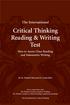 The International Critical Thinking Reading & Writing Test How to Assess Close Reading and Substantive Writing By Dr. Richard Paul and Dr. Linda Elder Use in conjunction with: The Thinker s Guide to Analytic
Online Classes: Improving Critical Thinking Skills
 Online Classes: Improving Critical Thinking Skills Andrea G. Shenkman Kaplan University Palm Beach State College Lake Worth, FL, USA [email protected] [email protected] Purpose Abstract: As
Writing Quality Learning Objectives
 http://captain.park.edu/facultydevelopment/writing_learning_objectives.htm 1 Writing Quality Learning Objectives Learning objectives (often called performance objectives or competencies) are brief, clear,
ASU College of Education Course Syllabus ED 4972, ED 4973, ED 4974, ED 4975 or EDG 5660 Clinical Teaching
 ASU College of Education Course Syllabus ED 4972, ED 4973, ED 4974, ED 4975 or EDG 5660 Clinical Teaching Course: ED 4972, ED 4973, ED 4974, ED 4975 or EDG 5660 Credit: 9 Semester Credit Hours (Undergraduate),
CRITICAL AND CREATIVE THINKING RUBRIC GRADUATE PROGRAMS
 CRITICAL AND CREATIVE THINKING RUBRIC GRADUATE PROGRAMS Adapted from the AACU LEAP rubrics, the Bases of Competence skills, Ontario Council of Academic Vice-Presidents Graduate Degree Level Expectations,
Critical analysis. Be more critical! More analysis needed! That s what my tutors say about my essays. I m not really sure what they mean.
 Critical analysis Be more critical! More analysis needed! That s what my tutors say about my essays. I m not really sure what they mean. I thought I had written a really good assignment this time. I did
GRADE 11 English Language Arts Standards Pacing Guide. 1 st Nine Weeks
 1 st Nine Weeks A. Verify meanings of words by the author s use of definition, restatement, example, comparison, contrast and cause and effect. B. Distinguish the relationship of word meanings between
The General Education Program at Sweet Briar College
 The General Education Program at Sweet Briar College Introduction The purpose of the General Education Program at Sweet Briar College is to provide all students with a common pattern of skills, experiences
Critical Thinking: A Statement of Expert Consensus for Purposes of Educational Assessment and Instruction. The Delphi Report
 Critical Thinking: A Statement of Expert Consensus for Purposes of Educational Assessment and Instruction Executive Summary The Delphi Report By Dr. Peter A. Facione, Dean of the College of Arts and Sciences
9-12 Critical Thinking/Problem Solving Goal A: [Student] will develop inquiry skills (identification and
![9-12 Critical Thinking/Problem Solving Goal A: [Student] will develop inquiry skills (identification and](/thumbs/29/13775677.jpg "9-12 Critical Thinking/Problem Solving Goal A: [Student] will develop inquiry skills (identification and") 9-12 Critical Thinking/Problem Solving Goal A: [Student] will develop inquiry skills (identification and evaluation of evidence, use of analysis and synthesis to guide decision making and communicate clearly
9-12 Critical Thinking/Problem Solving Goal A: [Student] will develop inquiry skills (identification and evaluation of evidence, use of analysis and synthesis to guide decision making and communicate clearly
Reconceptualising Critical Thinking
 0085 LTA Reconceptualising Critical Thinking Critical Thinking and Higher Education The development of critical thinking is widely claimed as a primary goal of higher education (e.g., Barnett, 2000; Halpern,
Overcoming Barriers To Teaching Critical Thinking
 Overcoming Barriers To Teaching Critical Thinking Tayebeh Fani [email protected] Islamic Azad University, Sama technical and vocational training college, Tehran Branch Tehran/ Iran Abstract Critical
Amendment Needed for Critical Thinking in Education
 3735 Tomales-Petaluma Road PO Box 196 Tomales, CA 94971 707.878.9100 criticalthinking.org [email protected] Amendment Needed for Critical Thinking in Education On the Importance of Federal Congressional
Integrating Field Research, Problem Solving, and Design with Education for Enhanced Realization
 Integrating Field Research, Problem Solving, and Design with Education for Enhanced Realization Mohamed El-Sayed Kettering University Mechanical Engineering Flint, MI, 48504 USA and Jacqueline El-Sayed
Application of Motivational Interviewing to College & Career Decision Making
 Application of Motivational Interviewing to College & Career Decision Making Originally developed by William R. Miller in 1983 as a useful set of techniques to use in the treatment of problem drinkers,
Critical and creative thinking
 Critical and creative thinking Introduction In the Australian Curriculum, students develop capability in critical and creative thinking as they learn to generate and evaluate knowledge, clarify concepts
Teaching Non-Philosophy Faculty to Teach Critical Thinking about Ethical Issues. Peter Vallentyne and John Accordino, Virginia Commonwealth University
 Teaching Non-Philosophy Faculty to Teach Critical Thinking about Ethical Issues Peter Vallentyne and John Accordino, Virginia Commonwealth University At various universities across the country, philosophers
TOOL KIT for RESIDENT EDUCATOR and MENT OR MOVES
 Get to Know My RE Observe Collect Evidence Mentor Moments Reflect Review Respond Tailor Support Provide Provide specific feedback specific Feedback What does my RE need? Practice Habits Of Mind Share Data
Section Two: Ohio Standards for the Teaching Profession
 12 Section Two: Ohio Standards for the Teaching Profession 1 Teachers understand student learning and development and respect the diversity of the students they teach. Teachers display knowledge of how
UNIVERSITY OF WEST GEORGIA SCHOOL OF NURSING RN-BSN PROGRAM NURSING 3122-61W - PROFESSIONAL CONCEPTS SPRING 2009
 UNIVERSITY OF WEST GEORGIA SCHOOL OF NURSING RN-BSN PROGRAM NURSING 3122-61W - PROFESSIONAL CONCEPTS SPRING 2009 Credit: 3-0-3 Prerequisites: Admission to the BSN Program or consent of instructor Faculty:
How To Teach Critical Thinking In An Undergraduate Engineering Course
 Cultivation of critical thinking in undergraduate engineering education D. Adair 1 Professor of Mechanical Engineering Nazarbayev University Astana, Republic of Kazakhstan E-mail: [email protected] M.Jaeger
PSYCHOLOGY PROGRAM LEARNING GOALS, LEARNING OUTCOMES AND COURSE ALLIGNMENT MATRIX. 8 Oct. 2010
 PSYCHOLOGY PROGRAM LEARNING GOALS, LEARNING OUTCOMES AND COURSE ALLIGNMENT MATRIX 8 Oct. 2010 Departmental Learning Goals and Outcomes LEARNING GOAL 1: KNOWLEDGE BASE OF PSYCHOLOGY Demonstrate familiarity
Three domains of learning
 Three domains of learning Leslie Owen Wilson all rights reserved Three domains of learning What are the differences between the cognitive, affective, and psychomotor taxonomies? There are three main domains
Critical Thinking in Community Colleges. ERIC. Digest.
 ERIC Identifier: ED348128 Publication Date: 1992-09-00 Author: Hirose, Shannon Source: ERIC Clearinghouse for Junior Colleges Los Angeles CA. Critical Thinking in Community Colleges. ERIC Digest. The issue
Argument Mapping 2: Claims and Reasons
 #2 Claims and Reasons 1 Argument Mapping 2: Claims and Reasons We ll start with the very basics here, so be patient. It becomes far more challenging when we apply these basic rules to real arguments, as
Curriculum Handbook. 7. General Education Requirements
 Curriculum Handbook 7. General Education Requirements Overview This section outlines the standards for courses proposed to meet General Education Requirements for: Napa Valley College General Education
The State of Critical Thinking Today: The Need for a Substantive Concept of Critical Thinking
 The State of Critical Thinking Today: The Need for a Substantive Concept of Critical Thinking As the Organizer in Developing Blueprints for Institutional Change Too many facts, too little conceptualizing,
Developing Critical Thinking Skills with The Colbert Report
 Developing Critical Thinking Skills with The Colbert Report Why Teach Critical Thinking with The Colbert Report? A. Young people receive the majority of their information through popular culture. B. Using
1/9. Locke 1: Critique of Innate Ideas
 1/9 Locke 1: Critique of Innate Ideas This week we are going to begin looking at a new area by turning our attention to the work of John Locke, who is probably the most famous English philosopher of all
Critical Inquiry in Educational Research and Professional Practice
 DOCTOR IN EDUCATION COURSE DESCRIPTIONS A. CORE COURSES NEDD 800 Professionalism, Ethics, and the Self This introductory core course will explore and interrogate ideas surrounding professionalism and professionalization.
Practical Research. Paul D. Leedy Jeanne Ellis Ormrod. Planning and Design. Tenth Edition
 Practical Research Planning and Design Tenth Edition Paul D. Leedy Jeanne Ellis Ormrod 2013, 2010, 2005, 2001, 1997 Pearson Education, Inc. All rights reserved. Chapter 1 The Nature and Tools of Research
Harvard College Program in General Education Faculty of Arts and Sciences Harvard University. A Guide to Writing in Ethical Reasoning 15
 Harvard College Program in General Education Faculty of Arts and Sciences Harvard University A Guide to Writing in Ethical Reasoning 15 A Guide to Writing in Ethical Reasoning 15 Professor Jay M. Harris
G u i d e l i n e s f o r K12 Global C l i m a t e Change Education
 G u i d e l i n e s f o r K12 Global C l i m a t e Change Education Adapted by: by the National Wildlife Federation from the Environmental Education Guidelines for Excellence of the North American Association
School Psychology Program Goals, Objectives, & Competencies
 RUTGERS SCHOOL PSYCHOLOGY PROGRAM PRACTICUM HANDBOOK Introduction School Psychology is a general practice and health service provider specialty of professional psychology that is concerned with the science
Title 5 Sections 55061 55063; Accreditation Standard II.A.3.
 Page 1 of 5 A. Criteria for determining General Education courses 1. Courses appropriate for general education will include the following criteria: 1. Course Integrity and Breadth The course exposes the
Thank you for taking a leadership role at Gustavus! Best of luck this year!
 G.O.L.D. Gusties In Ongoing Leadership Development Thank you for taking a leadership role at Gustavus! Best of luck this year! 800 West College Avenue Saint Peter, MN 56082 gustavus.edu gustavus adolphus
National Assessment of Educational Progress (NAEP)
 Exploring Cognitive Demand in Instruction and Assessment Karin K. Hess Over the past decades, educators and psychologists have attempted to develop models for understanding cognitive complexity as it relates
D R. R O B E R T S M A R T Q U I N N I P I A C U N I V E R S I T Y 3 J U N E 2 0 1 0 S O U T H E R N C O N N E C T I C U T S T A T E U N I V.
 The Double Helix: WAC and Critical Thinking, A History D R. R O B E R T S M A R T Q U I N N I P I A C U N I V E R S I T Y 3 J U N E 2 0 1 0 S O U T H E R N C O N N E C T I C U T S T A T E U N I V. Critical
School of Advanced Studies Doctor Of Management In Organizational Leadership. DM 004 Requirements
 School of Advanced Studies Doctor Of Management In Organizational Leadership The mission of the Doctor of Management in Organizational Leadership degree program is to develop the critical and creative
College of Psychology and Humanistic Studies (PHS) Curriculum Learning Goals and PsyD Program Learning Goals, Objectives and Competencies (GOCs)
 College of Psychology and Humanistic Studies (PHS) Curriculum Learning Goals and PsyD Program Learning Goals, Objectives and Competencies (GOCs) College of PHS Learning Goals PsyD Program Learning Goals
Teaching Critical Thinking Skills to English for Academic Purposes Students
 Teaching Critical Thinking Skills to English for Academic Purposes Students Agenda 1. What is critical thinking? 2. Critical thinking and culture 3. Critical thinking tasks, Bloom s Taxonomy 4. Structuring
Analysing Qualitative Data
 Analysing Qualitative Data Workshop Professor Debra Myhill Philosophical Assumptions It is important to think about the philosophical assumptions that underpin the interpretation of all data. Your ontological
STAGE 1 COMPETENCY STANDARD FOR PROFESSIONAL ENGINEER
 STAGE 1 STANDARD FOR PROFESSIONAL ENGINEER ROLE DESCRIPTION - THE MATURE, PROFESSIONAL ENGINEER The following characterises the senior practice role that the mature, Professional Engineer may be expected
Crosswalk of the Common Core Standards and the Standards for the 21st-Century Learner Writing Standards
 Crosswalk of the Common Core Standards and the Standards for the 21st-Century Learner Writing Standards AASL Standards 1. Inquire, think critically, and gain knowledge. 1.1 Skills 1.1.1 Follow an inquiry-based
W hite. Consequential Validity: Richard Paul [ ] for Critical
![W hite. Consequential Validity: Richard Paul [ ] for Critical](/thumbs/40/20972998.jpg "W hite. Consequential Validity: Richard Paul [ ] for Critical") W hite Paper Consequential Validity: Using Using Assessment to Drive to Drive Instruction Richard Paul and and Linda Elder [ ] F o u n dat i o n for Critical THinking Using Assessment to Drive Instruction
W hite Paper Consequential Validity: Using Using Assessment to Drive to Drive Instruction Richard Paul and and Linda Elder [ ] F o u n dat i o n for Critical THinking Using Assessment to Drive Instruction