
Norwegian Journal of Entomology
|
|
|
- Kelly Harrison
- 10 years ago
- Views:
Transcription
1 Norwegian Journal of Entomology Volume 50 No Published by the Norwegian Entomological Society Oslo and Stavanger

2 NORWEGIAN JOURNAL OF ENTOMOLOGY A continuation offauna Norvegica Serie B ( ), Norwegian Journal ofentomology ( ) and Norsk entomologisk Tidsskrift ( ). Published by The Norwegian Entomological Society (Norsk entomologisk forening). Norwegian Journal ofentomology publishes original papers and reviews on taxonomy, faunistics, zoogeography, general and applied ecology ofinsects and related terrestrial arthropods. Short communications, e.g. one or two printed pages, are also considered. Manuscripts should be sent to the editor. Editor Lauritz Somme, Department ofbiology, University ofoslo, P.O.Box 1050 Blindem, N-0316 Oslo, Norway. E mail: [email protected]. Editorial secretary Lars Ove Hansen, Zoological Museum, University of Oslo, P.O.Box 1172, Blindem, N-0318 Oslo. [email protected]. Editorial board Arne C. Nilssen, Tromso John O. Solem, Trondheim Uta Greve Jensen, Bergen Knut Rognes, Stavanger Arne Fjellberg, Tjome Membership and subscription. Requests about membership should be sent to the secretary: Jan A. Stenlokk, P.O. Box 386, NO-4002 Stavanger, Norway ([email protected]).annual membership fees for The Norwegian Entomological Society are as follows: NOK 200 (juniors NOK 100) for members with addresses in Norway, NOK 250 for members in Denmark, Finland and Sweden, NOK 300 for members outside Fennoscandia and Denmark. Members ofthe Norwegian Entomological Society receive Norwegian Journal ofentomology and Insekt-Nytt free. Institutional and non-member subscription: NOK 250 in Fennoscandia and Denmark, NOK 300 elsewhere. Subscription and membership fees should be transferred in NOK directly to the account ofthe Norwegian Entomological Society, attn.: Per Nedreberg, Jerpefaret 3 D, 1440 Drobak, Norway. Account No SWIFT code: DNBANOKK. Name ofthe bank: Den norske Bank, N-0021 Oslo, Norway. Transfer costs should be covered by the sender. Ifpaying by cheque, NOK 80 must be added to cover the fee of handling in our bank. Medlemskap og abonnement. Foresporsel om medlemskap i NEF sendes sekretreren: Jan A. Stenlokk, Postboks 386, N-4002 Stavanger ([email protected]). Kontingent for medlemskap i Norsk entomologisk forening er folgende: Kr. 200 (junior kr. 100) for personlige medlemmer med adresse i Norge, kr. 250 for medlemmer i Danmark, Finland og Sverige, og kr. 300 for medlemmer utenfor Fennoskandia og Danmark. Medlemmer av Norsk entomologisk forening mortar Norwegian Journal of Entomology og Insekt-Nytt gratis. Abonnement for institusjoner og ikke-medlemmer koster kr. 250 i Fennoskandia og Danmark og kr. 300 for abonnenter i andre land. Kontingent og abonnement betales til Norsk Entomologisk Forening, ved Per Nedreberg, Jerpefaret 3 D, 1440 Drobak. Konto Vennligst benytt giro, ikke sjekk. Husk avsenderadresse. NEF web site: Front cover: Syngrapha interrogationis (L., 1758) (Lepidoptera, Noctuidae). Artist: Hallvard Elven. Printed by: Reprografisk Industri AS, Oslo

3 Norw. J. Entomol. 50, Contribution to the taxonomy of the Holarctic Ula Haliday, 1833 (Diptera, Pediciidae) Jukka Salmela &Tero Piirainen Salmela, J. & Piirainen, T Contribution to the taxonomy of the Holarctic Ula Haliday, 1833 (Diptera, Pediciidae). Norw. J. Entomol. 50, The genus Ula Haliday, 1833 includes 12 Palaearctic and 2 Nearctic species; only U. sylvatica (Meigen, 1818) has Holarctic distribution. Ula kiushiuensis Alexander, 1933 (Palaearctic), U. sylvatica (Holarctic), U. cincta Alexander, 1924 (Palaearctic), U. elegans Osten Sacken, 1869 (Nearctic), U. comes Alexander, 1935 (Palaearctic) and U. provecta Alexander, 1936 (Palaearctic) are redescribed and important morphological characters, male and female terminalia, are illustrated. A key to the European species ofthe genus is presented. Two new synonymes of U. sylvatica are established: Ula paupera Osten Sacken, 1869 (syn. nov.), and U. longicornis Dietz, 1921 (syn. nov.). Ula ciscuncta Stary, 1996 (syn. nov.) is a synonym of U. succincta Alexander, Ula kiushiuensis Alexander, 1933 is reported for the first time from North Korea and from west Palaearctic, Finland and Russian Karelia. Jukka Salmela, Department ofbio- and Environmental Sciences, Po. Box 35(YAj, FIN University ofjyviiskylii, Finland. [Contact: Jukka Salmela, jueesalm@ccjyujij Tero Piirainen, Entomological Society oftampere, Kaarilahdenkuja 11, FIN Tampere, Finland. INTRODUCTION UTa Haliday, 1833 (Diptera, Pediciidae) is a rather small genus: 12 species are knownfromthepalaearctic region (Savchenko et al. 1992) and two species are reported from the Nearctic (this study). According to Alexander & Alexander (1973) 15 Ula species are known from the Oriental region. Ula specimens are medium sized (wing length mm) flies with long legs, as typical within Tipu10morpha. Pubescent ommatidia and the presence of macrotrichia on the wing membrane characterise the species of the genus. Larvae of the genus are known to inhabit fruiting bodies of fungi (eg. Alexander 1915, Yakov1ev 1994). Some of the existing descriptions of the species are rather poor and figures ofimportant characters, like termina1ia, may be totally lacking or inadequate. The European species ofthe genus are relatively well known and diagnostic characters are figured in the following articles: Ula bolitophila Loew, 1869 (Tjeder 1959,Savchenko 1971, Stary 1971, Savchenko 1986); UTa mixta Stary, 1983 (Stary 1983, Stary 1996); Ula mollisima Ha1iday, 1833 (Agrell 1945 as crassicauda, Tjeder 1959 as crassicauda, Hutson & Vane-Wright 1969, Stary 1983, Savchenko 1986) and Ula sylvatica Meigen, 1818 (Agrell1945 as macroptera, Tjeder 1959, Hutson & Vane-Wright 1969, Thomas & Vaillant 1977, Savchenko 1986). According to Reusch and Oosterbroek (1997) U bolitophila, U mixta, U mollisima and U sylvatica have been recorded from Norway. The purpose ofthis paper is to contribute our knowledge on the taxonomy ofthe Holarctic Ula, especially species described byalexander, and pinpoint some issues for further studies. MATERIAL AND METHODS Most ofthe material studied was dry and pinned. Some terminalia (both males and females) were KOH treated and mounted on microscope slides in Euparal. The material is deposited in the follo- 73

4 Salmela & Piirainen: Taxonomy ofthe Holarctic Ula (Diptera, Pediciidae) wing collections, later referred to bythe city only: Academy of Natural Sciences of Philadelphia, Philadelphia; Alexei Polevoi collection, Petrozavodsk; Canadian National Collection of Insects, Ottawa; Jukka Salmela collection, Jyvaskyla; Museum of Comparative Zoology, Cambridge; National Museum of Natural History, Washington DC. GENUS AND SPECIES The genus Ula Haliday Haliday 1833: 153 Macroptera Lioy 1863: 224. Head more or less dark, sometimes grey microtrichose, ommatidia pubescent. Last palpal segment elongated, as long as or longer than the two preceeding segments. Antennae 17-segmented, flagellomeres usually dark, finely pubescent. Pedicel globular, usually pale. Scape/pedicel ratio about 1: 1. Third flagellomere width/length ratio range from 0.6 to 0.2. Verticils as longas orlonger than respective segment. Flagellomeres may be shorter in females. Coloration of thorax yellowish brown to dark brown, coxae and trochanters usually yellowish brown. Spur formula 1:2:2. Legs long, as characteristic intipulomorpha. Coloration oflegs from yellowish brown to dark brown. Wings more or less brown tinged, typical wing venation pattern in Figures 1 and 2. Pterostigma brown, in some species centre of pt not darker than wing membrane. Rather variable wing pattern, at least a more or less dark cloud on R-M. Macrotrichia present on the wing membrane. Length ofwings mm, females usually have longer wings. Abdomen brown, may be paler ventrally than dorsally. Tergite 9 of the male apically truncate and evenly rounded, caudal margin with a number of fine setae. Caudal margin ofsternite 9 with variable shape. Gonostylus rather short and stout, apically pointed (Figure 4) or rounded (Figure 19), bearing number ofdark, stout spines apically and subapically. Female cerci rather strongly upcurved, apically sharply pointed. Margins smooth (Figures 11, 16) or serrated (Figures 7, 24). Vaginal apodeme either bipartite and strongly sclerotized (Figures 6, 12 ) or only moderately sclerotized, unipartite and chitinious structures within peripheral frame (e.g. Figures 17,22), taperingproximally to a rather acute tip. Discussion: StarQ (1992) raised Pediciidae to a family level within the infraorder Tipulomorpha, as the sister group oftipulidae + Cylindrotomidae. Pediciids share the following characters: pubescent ommatidia, spurred tibiae, strongly retracted SC 2 and four-branched media (StarQ 1992). Members ofthe genus Ula are easily distinguished by their macrotrichose wing membrane. In addition, the simple shape of gonostyle (males) and short and stout, apically pointed cerci (females) are typical characters to the Ula within Holarctic pediciids. In phylogenetical terms, the genus Ula is apparently rather isolated within the Pediciidae, and it may form its own tribe within the family (StarQ 1992). Species included: Ula bolitophila Loew, 1869 (Palaearctic), U. cincta Alexander, 1924 (Palaearctic), U. comes Alexander, 1935 (Palaearctic), U. elegans Osten Sacken, 1869 (Nearctic), U. kiushiuensis Alexander, 1933 (Palaearctic), U mixta StarQ, 1983 (Palaearctic), U mollisima Haliday, 1833 (Palaearctic), U. provecta Alexander, 1936 (Palaearctic), U. succincta Alexander, 1933 (Palaearctic), U. sylvatica (Meigen, 1818) (Holarctic). Ula kiushiuensis Alexander Figures 1, 3, 4, 5, 6, 7 Alexander 1933b: 541; Savchenko & Krivolutskaya 1976: 48; Savchenko 1983: 33. Material examined: Holotype, a slide mounted 0': «Ula kiushiuensis Al./ 0' legs: ant.: dist.! Japan (Kyushu)/ Sobosan (Bungo)/ aug / (K. Yasumatsu)/ The Alexander Collection! ofcrane Flies/HOLOTYPE 5219» (in Washington) (white label on a slide, partly hand written; the holotype is apparently partly lost: only a slide including a wing, two legs, part of an antenna, gonocoxite and gonostylus is left). Other material: Shikoku, Mt Sasa m, V6.54 Yano 10' (in Washington); Sapporo, Japan Nov. 21 '32 Okada 74

5 Narw. J. Eniamal. 50, A key to the European species of uta [For the separation ofnearctic species, see Discussion in Ula elegans] Males 1. Gonostylus pointed, bearing 7-11 dark, stout spines (Figures 4, 9) 2 - Gonostylus rounded, bearing ca dark, stout spines (Figure 27) 3 2. Ejaculatory apodeme long and proximally sharply pointed (Figure 5) U kiushiuensis - Ejaculatory apodeme short and not sharply pointed (Figure 10) U sylvatica 3. Wing pattern: dark clouds on fork R1-R s and vein M-M; a continuous dark seam from vein M-Cu via fork ~-R 3 to pterostigma. Caudal margin of9 th sternite with a flap like projection. Hypopygium (Figure 26) U. bolitophila - Wing pattern: pterostigma brown, veins R-M and M-Cu faintly infuscated. Caudal margin of 9 th sternite with distinct median V-shaped notch 4 4. Aedeagus with a membraneous flange (dorsal view); aedeagus sinuous in lateral view (see Starf! 1983, 1996) U mixta - Aedeagus without such a membrane 5 5. V-shaped notch on the caudal margin ofthe 9 th sternite very deep; aedeagus straight in lateral view (see Starf! 1996) U succincta - V -shaped notch on the caudal margin ofthe 9 th sternite moderate (see Starf! 1983, 1996).... U mollisima. Females 1. Vaginal apodeme bipartite, proximal part strongly sclerotised, dark in colour (Figures 6, 12) 2 - Vaginal apodeme different 3 2. Distal portion ofthe cerci ventrally serrated (Figure 7); vaginal apodeme (Figure 6).... U. kiushiuensis - Distal portion ofthe cerci smooth (Figure 11); vaginal apodeme (Figure 12) U sylvatica 3. Wing pattern: dark clouds on fork Rj-R s and vein M-M; a continuous dark seam from vein M-Cu via fork R 2 -R 3 to pterostigma. Vaginal apodeme (see Tjeder 1959) U bolitophila - Wing pattern: pterostigma brown, veins R-M and M-Cu faintly infuscated.4 4. Vaginal apodeme tapering gradually to an acute tip, no darker elements within the peripheral frame (see Starf! 1983) U mixta - The tip ofvaginal apodeme broader, faintly chitinised median structure within the peripheral frame (see Starf! 1983) U mollisima & succincta. 75

6 Salmela & Piirainen: Taxonomy ofthe Holarctic Ula (Diptera, Pediciidae) 19 (in Washington); Iwatu-quni, Iwats-Ken, Honsu~Japan,3000', V17.35 H. Yamamoto, 10' (in Washington); North Korea, Kankyo Nando, Puksu Pyuksan Alt ft VI , A. Yankovsky, 19 (in Washington); North Korea, Ompo 150 ft. V-l , 10' (in Washington); North Korea, Ompo 900 ft. V , 10' (in Washington); North Korea, Ompo 300 ft. V Yankovsky, 10' (in Washington); North Korea, Ompo, 700 ft. V Yankovsky, 10' 399 (in Washington); North Korea, Ompo 200 ft. V Yankovski,19 (in Washington); Finland, Kb: Ilomantsi, Tapionaho Malaise trap, A. Polevoi leg. 19(in Petrozavodsk); Finland, N: Espoo, Pitkasuon laskupuro, Nuuksio National Park Malaise trap, J. Ilmonen leg, 19 (in Jyvaskyla); Ks: Kuusamo, Ampumavaara, Oulanka National Park, Malaise trap, K. Kuusela leg, 19 (in Jyvaskyla); Russia, Kb: Tolvajarvi Tietavainen leg 10' (in Petrozavodsk). Diagnosis: Body generally brownto dark brown. Antennal pedicel pale; scape and flagellomeres dark. Wings with usual macrotrichia on wing membrane, slightly infuscated, vague clouds on forks ~-R3' R,-R s and on veins M-M and M-Cu. Male: ejaculatory apodeme of the aedeagal complex long and proximally sharply pointed and female cerci with serrated ventral tip. Male. Head dark brown to almost black, antennae 17-segmented. Scape dark brown, pedicel distinctly paler; flagellomeres dark brown, decreasing in length towards apex of antenna. Figure Ula kiushiuensis Alexander, wing (Finland); 2. U. comes Alexander, wing (holotype). 76

7 Norw. J. Entomol. 50, Verticils about as long as respective flagellomere; whole flagellum pubescent. Third flagellomere width/length ratio 0.2. Thorax generally brown to dark brown, restictedly patterned with yellowish colour on epimeron. Wings infuscated, membrane coveredwithtypical macrotrichia. Pterostigma brown; centre ofpt not darker than wing membrane. Vague clouds on forks R 2 -R 3, RJ-R S and on veins M-M, M-Cu (Figure I). Wing length ca mm. Coxae and trochanters yellowish, legs light brown to brown. Abdomen brown. Caudal margin of tergite 9 evenly rounded, with a number ofsetae, posterior margin of sternite 9 moderately notched. Hypopygium (Figure 3). Gonostylus (Figure 4) rather pointed and slightly arcuated, bearing eight dark, stout spines. Aedagal complex (Figure 5) apically tripartite, relatively elongated; aedeagus rather long and thin, distally pointed. Ejaculatory apodeme conspicuous, long and proximally sharply pointed. Female. External characters like inthe male. Third flagellomere width/length ratio Wing length mm. Cerci (Figure 7) rather short and stout, strongly up-curved, ventral tip more or less clearly serrated.vaginal apodeme (Figure 6) bipartiteand rather strongly sclerotized. Clearly chitinised median structure within the peripheral frame. Distribution: Palaearctic: Japan,Russian Far East, North Korea, Russian Karelia, Finland. Discussion: Ula kiushiuensis is here reported for the first time from North Korea and from west Palaearctic; RussianKareliaandFinland. The species is easily distinguished by the characters in the abdominal terminalia ofboth sexes: large and elongated aedeagal complex of the male and the / gonostylus gonocoxite 1 aedegal complex ejaculatory apodeme Figure 3. VIa kiushiuensis Alexander, male hypopygium, dorsal view (Finland). 77

8 Salmela & Piirainen: Taxonomy ofthe Holarctic Via (Diptera, Pediciidae) median structure 6. ~ peripheral frame Figure 4-6. uta kiushiuensis Alexander: 4. Male gonostylus (Finland); 5. Male aedeagal complex (Finland). 6. Female vaginal apodeme, dorsal view (Finland). 78

9 Norw. J. EntomoJ. 50, {:~>,: ",.,:...:;: 8. Figure uta kiushiuensisalexander, female cerci, lateral view (Finland); 8. U. sylvatica (Meigen), male hypopygium, dorsal view (Finland); 9. Male gonostylus (Finland); 10. Male aedeagal complex, dorsal view, (Finland)

10 Salmela & Piirainen: Taxonomy ofthe Holarctic Uia (Diptera, Pediciidae) serrated cerci of the female. It, however, should be noted that some females collected from east Palaearctic lack clearly serrated cerci. Instead, the cerci is rather smooth and the identification must be based on the vaginal apodeme. Wing pattern resembles UZa bolitophila Loew, a widely distributed Palaearctic species, but the wing pattern of U. bolitophila is usually somewhat more pronounced than in U. kiushiuensis. Ula sylvatica (Meigen) Figures 8, 9, 10, 11, 12 Meigen 1818: 132; Meijere 1921: 93 (as macroptera = syzvatica); Edwards 1938: 62; Agrell 1945:26 (as macroptera = syzvatica); Tjeder, 1959: 8; Hutson & Vane-Wright 1969:245; Thomas & Vaillant 1977: 389; Savchenko 1986: 127. Limnobia macroptera (Macquart); Maquart 1826: 158. Limnobia pilosa (Schummel); Schummel 1829: 149. Limnobia vagans (Walker); Walker 1848: 43. Macroptera quadrivittata (Lioy); Lioy 1863: 225. UZa paupera Osten Sacken; Osten Sacken 1869: 277; Dietz 1921: 250; Alexander 1966: 344; Alexander 1967: 89. syn. novo UZa Zongicornis Dietz; Dietz 1921: 250. syn.nov. Material examined: Holotype, pinned 9: «0. Sacken» (white card, printed) «u. paupera» (white card, handwritten) «Type/ 10209» (white and red card, partly handwritten). Tip ofthe abdomen and all legs missing. Holotype, pinned O':»Hazleton, Paj Dr. Dietz Coil.! VII 6 '20" (white card, partly handwritten) «Holo/ type» (red card, partly handwritten) «HOLO-TYPE/ Ulallongicornis/ W. G. Dietz/ 6416» (red card, partly handwritten). Left fore and hind leg missing; right mid leg broken; wings not intact. Other material: Nearctic: Alaska, Kenai July 24, 1952, D.L Carson, 20'0' (in Ottawa); Que. Cap. BonAmi , F. Brodo 19 (in Ottawa); Upper Carmanah Valley RC. UTM:IOU CJ IX-29 IX '91 (59) N. Winchester TZ MT5 20' (in Ottawa); Upper Carmanah Valley RC. UTM: IOU CJ VIII-9 IX 1991 (42) N. Winchester TZ MT5 19 (in Ottawa); Laniel, Que. 2 VI 1939 IL. Hitchon 1CJ' (in Ottawa); Lockeport, N.S. 1VIII 1958 IR. Vockeroth 1CJ' (in Ottawa); Roundtop Mt, Sutton Que. 1300'5.VI IR. Vockeroth 1CJ' (in Ottawa); Shelbume, N.S. IO.VIII IR. Vockeroth 10' (in Ottawa); Curry, Alaska 28.VI WR. Mason 1CJ' (in Ottawa); N.S. CBHNt.Pk. Mac Kentzie Mtn. 400m PG VI (in Ottawa); Trout LR B.C. 18.VIII.1937 H. Leech 19 (in Ottawa); Kitsumkalum lake 20mN. Terrace RC. 31.V 1960 C.H. Mann 19 (in Ottawa); Reindeer Depot. Mackenzie Delta 4.VIII 1948 WI Brown 10' (in Ottawa); Massachusetts, Charlement 1500' Alexander 1CJ' (in Washington); Massachusetts, BecketVII Crampton 1CJ' (in Washington); Oregon, Cascades Odell Lake Alexander 1CJ' (in Washington); Palaearctic: Finland. Sb: Savonranta P. Martikainen '0'; Sb (in Jyviiskylii): Savonranta, Muhamiiki P. Martikainen 4 0'0' 299 (in Jyviiskylii); 1nL: Inari, Sarmitunturi J. Salmela 1CJ' (in Jyviiskylii); St: Jiimijiirvi, Uhriliihde Salmela 30'0' 19 (in Jyviiskylii);. Poland. Krosno woj. (=Prov.); Bieszczady Nat'l Pk.; 27.ix.1991; J. Gelhaus, 30'0' (in Philadelphia); Krakow woj. (=Prov.); Mogilany 49 57'N, 19 53'E; l1.ix.1991; 1. Stubbs, 1CJ' (in Philadelphia); Liethuania. Varena distr., Puvociai river Gruda 1997.VII.l, S. Podenas, 19 (in Philadelphia). Diagnosis: Body coloration yellowish brown to dark brown, antennae with dark flagellomeres, scape and pedicel pale. Wings with normal macrotrichia on wing membrane, faintly brown tinged, small cloud on R-M. Male terminalia with pointed gonostylus and ejaculatory apodeme of the aedeagal complex shorth and blunt. Female cerci upcurved, smooth. Male. Head dark brown to black. Scape and pedicel yellowish brown, flagellomeres dark. Verticils generally shorter than respective segment. Flagellomeres relatively long (width/length ratio ofthirdantennal segment ), decreasing in length towards apex of antenna. Whole flagellum with pubescense. Thorax yellowish brown to dark brown, dorsally 80

11 Norw. J. Entomol. 50, darker than laterally. Wings faintly brown tinged, nonnal macrotrichia on membrane. Pterostigma brown, small cloud on R-M. Coxae and trochanters yellow, femora yellowishbrown, tibiaebrown and tarsi dark brown. Halteres yellowish brown, knobs infuscated. Wing length mm. Abdomenbrown. Caudalmarginoftergite 9 evenly rounded, with a number offine setae. Sternite 9 moderately notched. Hypopygium (Figure 8). Gonostylus pointed, slightly arcuated, bearing 7 11 dark, stout spines (Figure 9). Aedeagal complex apically tripartite, relatively small, in length shorter than gonocoxite (Figure 10), ejaculatory apodeme short and blunt. Aedeagus with a membrane like, blunt tip. Female. Externally similar to the male. Wing length mm, width/length ratio ofthird antennal segment ca Cerci (Figure 11) upcurved and smooth on the edges. Faintly chitinised median structures within the peripheral frame of vaginal apodeme (Figure 12). Distribution: Widely distributed in the Holarctic region. Discussion: Ula sylvatica is the only species of the genus with a Holarctic distribution. The species is quite easily distinguished from the other species, especially iftenninalia are dissected. Two new synonyms are established: U paupera Osten-Sacken and U. longicornis Dietz. In the description of U. paupera Osten-Sacken (1869, p. 277) states: «In my fonner publication, I had identified this specimen with Ula pilosa Schum.; I prefer to give it another name now, as experience had taught me that such an identification, based upon a description and not upon an actual comparison ofspecimens, is not always safe.» According to the studied material, it is, however, clear that U. paupera is a synonym of U. sylvatica. Dietz (1921) based his description of U. longicornis on a single male, which he had compared to the U. paupera specimens collected from Hazleton, Pennsylvania. We have studied the U paupera material (three specimens, see U. elegans, Material examined) and it appeared that the specimens actually belong to U. elegans; thus, Dietz (1921) did not compare his U. longicornis type to U paupera but to U elegans. In Alexander's collection one slide mounted Ula, is labelled as «Ula (Ula) longicornis Dtz./ (J ant;.../tennessee,! Great Smoky Mts./.../2000' -V-3.'38/ The Alexander Collection! (... Williams)/ of Crane Flies/ OVER 376x» (in Washington). The terminalia of the specimen are somewhat.~ Figure VIa sylvatica (Meigen): 11. Female cerci, lateral view (Finland). 12. Female vaginal apodeme, dorsal view (Canada). 81

12 Salmela & Piirainen: Taxonomy ofthe Holarctic Via (Diptera, Pediciidae) disformed, but the aedeagus is identical to U. sylvatica. Ula cincta Alexander Figures 13, 14, 15, 16, 17 Alexander 1924: 573; Tokunaga, Ishida & Nobuchi 1954: 4 (see discussion in Ula succincta). Material examined: Holotype: Pinned 9 «Akan,! Hokkaido,! ix / T. Esaki» (white card, handwritten) «/HOLOTYPE/ VIal cinctal C. P. Alexander» (in Washington) (red card, species name hand written). Fore legs missing. A slide: «DIal cinctal Alex. 9 Hokkaido, Japan,! Akan,! Sept. 3, 1922/ (Teiso Esaki)/ The Alexander Collection! of Crane-F1ies/ HOLOTYPE 2572». Left wing is on the slide. The present authors dissected the terminalia on a slide. Paratype, pinned9: «Teppetsu,i Hokkaido/ IX / Teiso Esaki» (white card, handwritten) «PARATYPE/ VIal cinctal C. P. Alexander» (blue card, species name handwritten). Other material: Japan, Shikoku, Mt. Turugi-Awa , I. Ito, lcj'; Japan, Shikoku, Mt. Isizuki , I. Ito 19; Japan No. Honshiu, Mori-Oka 1934 T. Kato 19 (all specimens in Washington). Diagnosis: General coloration reddish brown to almost dark brown. Head dark, flagellomeres brown to dark brown, scape and pedicel light brown. Wings with normal macrotrichia, very slightly infuscated. Pterostigmalightbrown, centre not darker than wing membrane. Faintly indicated clouds onforkr]-r S and on veinr-m. Maleaedeagal complex relatively large, aedeagus sharply pointed. Dististyle pointed, bearing nine dark, stout spines. Female cerci strongly upcurved, sharply pointed. Male. Head dark brown, flagellomeres elongated, pubescent. Verticils longeroras longas respective segment. Third antennal segment width/length ratio is not measured. Thorax reddish brown, somewhat darker dorsally than laterally, coxae and trochanters yellowish brown. Legsunicolorous, lightbrown. Wings with normal macrotrichia, membrane very slightly brown tinged. Pterostigma light brown, median part not darker that wing membrane. Faintly indicated clouds on fork R1-Rs and on vein R-M. Wing length mm. Abdomen brown. Hypopygium (Figure 13). Male aedeagal complex (Figure 14) relatively elongated, longer than gonocoxite and gonostylus together. Aedeagus long and thin, sharply pointed. Gonostylus pointed, bearing nine dark, stout spines (Figure 15). Female. Externalcharacters like inthe male. Third 13. Figure 13. Ula cincta Alexander, male hypopygium, dorsal view (Japan). 82

13 Norw. J. Entomol. 50, Figure Ula cinctaalexander: 14. Male aedeagal complex, dorsal view (Japan); 15. Male gonostylus (Japan); 16. Female cerci, lateral view (Japan); 17. Female vaginal apodeme, dorsal view (Japan). 83

14 Salmela & Piirainen: Taxonomy ofthe Holarctic Ula (Diptera, Pediciidae) antennal segment width/length ratio Wing length mm. Cerci (Figure 16) strongly upcurved, tip rather thin and sharply pointed. Vaginal apodeme (Figure 17). Distribution: Japan (records from Russian Far East need confirmation). Discussion: The type material, two females, of U. cincta is examined and diagnostic characters are figured for the firsttime. An additional female from Alexander's collection was dissected, too, and found identical with the type material. In addition, Alexander (1954) reported U. cincta from Omogo Valley, Japan. We have studied the specimen (19) and it most probably belongs to U. succincta (the females of U. succincta and U. ~ollisima are very similar and practically lllseparable; we assumethatthe latterspecies does not occur in the East Palaearctic). The male examined and figured here is externally very similar to the females of U. cincta (a pinned specimen; head, wing and terminalia slide mounted by C. P. Alexander). It is, however, somewhat uncertain weather the male actually does belong to U. cincta, and hence, one should be careful in the identification ofjapanese specimens. In order to be sure about the identity ofthe male figured here additional material and further studies are needed to find out real female-male associations of the species in question. There are, actually, three insufficently known Japanese Ula species: U.fungicola Nobuchi 1954, U. shiitakea Nobuchi 1954 and U. longicellata Ishida 1954 (Tokunaga et al. 1954). Ulafungicola was redescribed by Savchenko (1983: p. 32, Fig. 3), butthe figure ofthe species presents some other species [(1 Salmela, unpublished) The type of U. fungicola, a male, is slide mounted and in a rather poor condition, and it is not redescribed in this connection. The type of U. fungicola is deposited in the Laboratory ofentomology, Dept. ofagriculture, Kyoto Pref. University, Shimogamo,Kyoto; other type specimens, U. shiitakea and U. longicellata, are missing (H. Takada, pers.comm.)]. Hence, it would be extremely important to see more material from Japan and Russian Far East to solve the remaining taxonomic problems ofthe Palaearctic Ula. uta e/egans Osten Sacken Figures 18, 19,20,21,22 Osten Sacken 1869: 276; Alexander 1966: 343; Alexander 1967: 89. Material examined: Canada. Ont., Bells Corners 45 1TN, 75 48'W F. Brodo, ld' 19 (in \ 18. Figure 18. Uta elegans Osten Sacken, male hypopygium, dorsal view (Canada). 84

15 Norw. J. Entomol. 50, Figure uta elegans Osten Sacken: 19. Male gonostylus (Canada); 20: Male aedeagal complex, dorsal view (Canada). 21. Male aedeagal complex, ventral view (USA); 22. Female vaginal apodeme, dorsal view (Canada). 85

16 Salmela & Piirainen: Taxonomy ofthe Holarctic VIa (Diptera, Pediciidae) Ottawa); P.Q. Gatineau, Pk. Meach L. stream F. Brodo, 299 (in Ottawa); ON Algonquin Pk F. Brodo, 2eJe) (in Ottawa); Laniel, Que. Cage # ,19 (In Ottawa); Curry, Alaska 28.VI WR. Mason, 19 (in Ottawa). USA. Pennsylvania, Philadelphia Co.; Fairmount Park, 8.vi.1998; lk. Ge1haus & W Bouchard, 4d'd' 399 (in Philadelphia). Ithaca, 1912, 19 (in Philadelphia); Hazleton, Pa. DrDietz coli , Id' (in Philadelphia); Haz1eton, Pa. Dr Dietz coli , Id' (in Philadelphia); Haz1eton, Pa. Dr Dietz coli , Id' (in Philadelphia); Forest Hill, NJ, May, 3d'd' 19 (in Philadelphia); Ross1yn, Va, , Id' (in Washington); Beaver Creek, Mont ft. S.l Hunter, August 1913, 19 (in Washington); Sacandaga Park, N.Y. Alexander, 19 (in Washington); Cayuga Lake, Ithaca N.Y. Y.7-12, Id' (in Washington); Wi1mington N.Y. VI C.P. Alexander, Id' (in Washington). Diagnosis: General coloration yellowish brown to dark brown. Antennae with scape and pedicel pale, flagellomeres dark. Wings covered by normal macrotrichia. Membrane only moderately infuscated, vague clouds on fork Rj-R s ' veins R M (continuos to pt), M-M and M-Cu. Centre of pterostigma not darker than wing membrane. Male terminalia with aedeagus arcuated, dististyle rounded, with numerous dark, stout spines. Female cerci less pronouncedly upcurved. Male. Head brown with grey pruinosity, flagellomeres relatively short (eg. compared to U. sylvatica), verticils longer than respective segment. Scape and pedicel yellowish brown, flagellomeres dark brown, pubescent. Third flagellomere width! length ratio 0.4. Thorax generally brown to dark brown, laterally paler than dorsally. Halteres pale yellowish, knobs infuscated. Wings with normal macrotrichia on wing membrane; membrane only moderately infuscated. Pterostigma not darker than membrane, but darkened at either end. More or less dark clouds on fork Rj-R ' S veins R-M (continuos to pt), M-M and M-Cu. Wing length mm Coxae and trochanters yellowish brown, legs brown to dark brown, darkening towards tarsi. Abdomen brown, ventrally palerthan dorsally. Cau 86 dal margin ofsternite 9 with a flap like projection. Caudal margin oftergite 9 straight, with a number of fine hairs. Hypopygium (Figure 18). Aedeagus arcuated (Figure 20, 21), dististylus rounded, bearing dark, stout spines (Figure 19). Female. External characters like in the male. Third flagellomere width/length ratio 0.4. Wing length mm. Cerci less pronouncedly upcurved. Vaginal apodeme (Figure 22). Distribution: Nearctic. Discussion: Ula elegans is easily separated from the other Nearctic species, namely U. sylvatica: the former species has rounded dististyle bearing spines and the latter species pointed gonostyle bearing 7-11 spines. The vaginal apodeme of U. elegans is unipartite and moderately sclerotized, while the vaginal apodeme of U. sylvatica is bipartite and strongly sclerotized. The wing pattern is, however, very variable: some specimens have a clearly indicated dark pattern and some specimens may resemble U. sylvatica. For example, Dietz (specimens in Philadelphia) had misidentified some U. elegans specimens as U. sylvatica (see Discussion in Ula sylvatica). Ula elegans is closely related to U. bolitophila, a Palaearctic species, and for a comparison the male hypopygium (Figure 26) and dististylus (Figure 27) ofthe latter species are figured here. Ula succincta Alexander Alexander 1933a: 400; Tokunaga, Ishida & Nobuchi1954: 4. Ula cincta Alexander; Nobuchi (in Tokunaga, Ishida & Nobuchi 1954): 4 (misidentification). Ula ciscuncta Stary; Stary 1996: 235. syn.nov. Material examined: ho10type, d' dissected on a slide: «Ula/ succincta ALl d' Japan,! Mitake, Honshiu,! May 10, '31/ (B. Oda) # 87/TheAlexander Collection! of Crane-Flies/ HOLOTYPE 5220» (in Washington) (white card on a slide; a wing, a leg, hypopygium and a part ofan antenna are mounted on the slide; other parts of the specimen are probably lost). Other material: Japan, Kyushu, Kunimiake m V-29.52

17 Norw. J. Entomol. 50, Ito-Issiki Id' (in Washington); Sapporo, Japan Nov 9 '35 Okada 3cJ'cJ' 399 (in Washington DC). Diagnosis and description: see StarQ (1996). Distribution: Palaearctic: Japan, Slovakia. Discussion: The species was described by Alexander (1933a) from Japan. Nobuchi in Tokunaga et al. (1954) redescribed uta cincta Alexander, but the species in question must be uta succincta. Inthe key constructed for male genitalia (Tokunaga et al 1954, p. 3) Ula succincta and U cincta are separated on a basis oflobes on the 9 th segment: «Caudal margin of nineth tergite with a pairofsmall dorsal medianlobes...succincta Alex. Caudal margin ofnineth tergite without dorsal lobes, butwith a pair ofsimilar lobes on ventral side...cincta Alex». However, as we have seenthe type ofula succincta, the notion heldbytokunaga et al. (1954) was erraneous: U succincta has small median lobes (or «sternite 9 with deep U-shaped median notch between two well-pronounced lobes» sensu Stary 1996) on the ventral side (sternite 9), not on the dorsal side. Stary (1996) in his description of U ciscuncta suggested that the two species may well be conspecific. Unfortunately, the type of U succincta was not located at that time and Stary (1996) preferred to describe a new species. Discussion. The species is known from the type specimen (a female) only. Male is unknown. Vaginal apodeme is here illustrated for the first time. The shape ofthe apodeme is quite characteristic and there should be no problems to associate male specimens to the females. Ula provecta Alexander Figures 24, 25 Alexander 1936: 243. Material examined: Holotype, pinned 9:»Mt Omei, W Chinal alt ftl aug Graham». (white card, partly handwritten) «HOLOTYPEI Ulal provectal C. P. Alexander» (red card, species name hand written). Left fore and middle legs left, other legs missing; right antennae missing. Abdomen is dissectedon a slide by the present authors. Diagnosis anddescription, see Alexander (1936). Vaginal apodeme (Figure 25) and cerci (Figure 24). Discussion. The species is known from the type Ula comes Alexander Figures 2, 23 Alexander 1935: 552. Material examined: Holotype, pinned 9: «WeiChow65 mil NWChengtul 5000ft 1933» (white card, partly handwritten, 5000ft overlined). «SzcehwanChinal DCGraham/VII-15-2lTI ft» (white card, partly handwritten) «HOLOTYPEI Ulal comesl C. P. Alexander» (red card, species name handwritten). Fore and hind legs missing. Abdomen is dissected on a slide by the present authors. Diagnosis and description: see Alexander (1935). Vaginal apodeme (Figure 23) and wing pattern (Figure 2). Figure 23. Uta comes Alexander, female vaginal apodeme, dorsal view (holotype). 87

18 Salmela & Piirainen: Taxonomy ofthe Holarctic Ula (Diptera, Pediciidae) specimen (a female) only. Vaginal apodeme is here illustrated for the first time. The shape of the apodeme (and the cerci; both ventral and dorsal edges serrated) is quite characteristic and there should be no problems to associate male specimens to the females. Acknowledgements. We would like to thank the following persons for their indispensable help during this study: P. Vilkamaa (Helsinki), F. Brodo, 1. Cummings (Ottawa), 1. Gelhaus, 1. Weintraub (Philadelphia), H. de Jong, P. Oosterbroek (Amsterdam), P. D. Perkins (Cambridge), V. Pilipenko (Moscow), A. Polevoi (Petrozavodsk), V. Sidorenko (Vladivostok), 1. StarQ (Olomouc), H. Takada (Kyoto), H. B. Williams (Washington). Mr. John Loehr (Jyvaskyla) revised the English ofthe manuscript. REFERENCES Agrell, I Notes on new Limnobiidae from Sweden. Opusc. ent. 10, Alexander, C. P The biology ofthe NorthAmerican crane flies (Tipulidae, Diptera). Ill. The genus Ula Haliday. Pomona 1. Ent. Zool. 7, 1-8. Alexander, C. P New and little-known craneflies from northern Japan (Tipulidae, Diptera). Philipp. 1. Sci. 24, Alexander, C. P. 1933a. New or little-known Tipulidae from eastern Asia (Diptera), 13. Philipp. 1. Sci. 51, Alexander, C. P. 1933b. New or little-known Tipulidae from eastern Asia (Diptera), 14. Philipp. 1. Sci. 51, Alexander, C. P New or little-known Tipulidae from eastern Asia (Diptera), 24. Philipp. 1. Sci. 56, Alexander, C. P New or little-known Tipulidae from eastern Asia (Diptera), 29. Philipp. 1. Sci. 59, Alexander, C. P The Tipulidae ofmount Ishizuchi and the Omogo Valley, Iyo, Shikoku, Japan. First supplementary list. Trans. Shikoku Ent. Soc. 4, Alexander, C. P The Diptera or true flies ofconnecticut. Part VI. First Fascicle. Conn. State Geol. and Nat. Hist Survey 64, Alexander, C. P The crane flies of California. Bull. California Insect Survey 8, Alexander, C. P. & Alexander, M. M Family Tipu1idae. pp indelfinado, M. D. & Hardy, D. E. (eds.), A cata10g ofthe Diptera ofthe Orien- tal region, Vol. 1, Suborder Nematocera. The University Press ofhawaii. Meijere, 1. C. H. de Studien iiber pa1aearktische, vorwiegend hollandische, Limnobiiden, insbesondere iiber ihre Kopulationsorgane (Schluss). Tijdschr. Ent. 64, Dietz, W G A list ofcrane-flies taken in the vicinity of Hazleton, Pennsylvania (Diptera). Trans. Am. Ent. Soc. 47, Edwards, F. W British short-palped craneflies. Taxonomy ofadults. Trans. Soc. Br. Ent. 5, Haliday, A. H Catalogue ofthe Diptera occuring about Holywood in Downshire. Ent. Mag. I, Hutson,A. M. & Vane-Wright, R. I Corrections and additions to the list of British Nematocera (Diptera) since Kloet and Hinck's «A check-list of British insects»(1945). Part 1. Introduction and families Tipulidae, Trichoceridae andanisopodidae (Tipuloidea). Entomologist's Gaz. 20, Lioy, P I ditteri distribuiti secondo un nuovo metodo di classificazione naturale. Atti R. 1st. veneto Sci. 9, Macquart, Insectes Dipteres du nord de la France, Tipulaires. Mem. Soc. Sci. Agric. Lille , Meigen, 1. W Systematische Beschreibung der bekannten europaischen zweifliigeligen Insekten. Aachen, 1, XXXXVI Osten Sacken, C. R. 1869: Monographs ofthe Diptera ofnorth America, 4. Smithson. misc. Collns. 8, Reusch, H. & Oosterbroek, P Diptera Limoniidae and Pediciidae, Short-palped Crane Flies. Pp in Nilsson, A. N. (ed.), Aquatic Insects ofnoth Europe - A Taxonomic Handbook. Vol. 2. Savchenko, E. N Supplements to the crane-flies fauna (Diptera, Tipulidae) from the Magadan region (in Ukrainian). Zbirn. Prats Zool. Mus. Kiev 34, Savchenko, E. N Limoniidae ofsouth Primorye (in Russian). Akad. Nauk. ukr. SSR, Kiev, Savchenko, E. N Limoniid-flies (Introduction and and subfamilies Pediciinae and Hexatominae) (in Russian). Fauna Ukrainy 14, Savchenko, E. N. & Krivolutskaya, G. O Limoniidae of the south Kuril Islands and south Sakhalin (in Russian). Akad. Nauk. ukr. SSR, Kiev, Savchenko, E. N., Oosterbroek, P. & StarQ, Family Limoniidae. Pp in SODS, A., Papp, L. & Oosterbroek, P. (eds.), Catalogue of the Palaearctic Diptera, 1. Hungarian Natural History Museum, Budapest. 88

19 Norw. J. Entomol. 50, Figure Via provecta Alexander, 24: Female cerci, lateral view (holotype); 25. Female vaginal apodeme, dorsal view (holotype).....;.-.,. " Figure Via bolitophila Loew: 26. Male hypopygium, dorsal view (Finland); 27. Male gonostylus (Finland). 89

20 Salmela & Piirainen: Taxonomy ofthe Holarctic Ula (Diptera, Pediciidae) Schummel, T. E Beschreibung der in Schlesien einheimischen Arten einiger Dipteren-Gattungen. 1. Lirnnobia. Meigen. Beitr. Ent. Breslau 1, Starf.!, J Einige fur Miihren neue oder wenig bekannte Limoniinen (Tipulidae, Diptera). Cas. slezsk. Muz. Opave (A) 20, StarQ, New taxa oflimoniidae from Czechoslovakia. Annotnes zoo!.- bot. Bratis!. 154, Starf.!, J Phylogeny and classification of Tipulomorpha, with special emphasis on the family Limoniidae, Acta Zoo!. Cracov. 35, Starf.!, J A new Ula from eastern Slovakia (Diptera, Pediciidae). Cas. Slez. Muz. Opava (A). 45, Thomas, A. G. B. & Vaillant, F Limoniidae, Trichoceridae et Ptychopteridae des Alpes Francaises (Diptera, Nematocera). Bull. Soc. Hist. nat. Toulose 113, Tjeder, B A synopsis ofthe Swedish Tipulidae, 2. Subfam. Limoniinae: tribe Pedicini. Opusc. ent. 24, 1-9. Togunaga, M., Ishida, H. & Nobuchi, A Crane flies injuriousto usefulmush-rooms injapan, with revision of the Japanese Ula species and descriptions ofa known and three new species and immature stages oftwo species (Tipulidae, Diptera). Sci. Rep. Saikyo Univ. Agric. 6, Walker, F List ofthe specimens ofdipterous insects in the collection ofthe British Museum. London I, Yakovlev, E. B Palaearctic Diptera associated with fungi and Myxomycetes. 127 pp (in Russian with English summary). Karelian Research Centre, Russian Academy ofsciences, Forest Research Institute, Petrozavodsk. Received 7 October 2003 Accepted 3 November

21 Norw. J. Entomol. 50, Revision of six northern species of the Isotoma viridis Bourlet, 1839 complex (Collembola, Isotomidae) Arne Fjellberg Fjellberg, A Revision of six northern species ofthe Isotoma viridis Bourlet, 1839 complex (Collembola, Isotomidae). Norw. 1. Entomol. 50, New diagnostic characters and an identification key is given to Isotoma viridis Bourlet, 1839, 1. riparia (Nicolet, 1842), I caerulea Bourlet, 1839, I. anglicana Lubbock, 1873, I. mackenziana (Hammer, 1953) n. comb., I arctica SchOtt, Main groups may be recognisedby sensillary and manubrial chaetotaxy in the lst.instar juvenile. Key words: Collembola, Isotoma viridis-complex, taxonomy, identification key. Arne Fjellberg, Mageroveien 168, N-3145 Tjome, Norway ( [email protected]) INTRODUCTION Members of the Isotoma viridis complex are among the most widespread and common species ofcollembola on the northern hemisphere. Their large size, up to about 5 mm, and strong colour make them conspicious, even to the unexperienced collector. They are often observed on snow in winter and are abundant in man-made habitats like gardens and farmlands. The standard handbook on European Collembola, Gisin's (1960) «Collembolenfauna Europas», lists only viridis as the single valid species, but also refers to five named colour varieties and 15 more or less reasonable synonyms. In his monumental work, Stach (1947) lists more than 30 synonyms. Since Palissa (1960) and Yosii (1963) pointed to structural differences in the manubrial teeth, it has been custom to treat the taxon Isotoma anglicana Lubbock, 1862 as a separate species (Fjellberg 1980). Simonsen et al. (1999) provided biochemical, ecological and morphological evidences for giving species status to viridis, anglicana and the characteristically coloured riparia Nicolet, Simonsen et al. (1999) found indications of two biochemical forms of anglicana. The present paper reports further studies ofanglicana, including observations ofthe first instar juveniles and unpublished characters (differentiation in dorsal manubrial macrochaetae). The new evidence clearly demonstrates that there are indeed two different species covered by the present consept of«anglicana». An additional third species ofthe anglicana group was found when the odd North American species Proisotoma mackenziana Hammer, 1953 was re-examined, giving support to Christiansen & Bellinger's (1980 p. 571) statement: «This unique form probably does not belong in the genus Proisotoma». Finally SchOtt's (1893) arctica, originallypublishedas a variety ofviridis, is given species status, following Potapov (2001). The purpose ofthe present paper is to present new morphological characters which discriminates the species most often seen by European workers, and to give a platform for future revisions ofthe viridis-group. The material for the present study was accumulated during many years of collecting activity in the Holarctic Region and also generated from collegial exchange of samples. 91
22 Fjellberg: Revision ofnorthern species of the Isoloma viridis complex (Collembola, Isotomidae) MORPHODlAGNOSTIC CHARACTERS Colour pattern The described colour «varieties» of viridis are numerous and the taxonomic status of most of them are still unclear. Since the discovery ofcarapelli et al. (1995) that colour forms ofisotomurus are indeed good genetic species, it is reason to believe that the same will be true also for colour forms ofisotoma species. Inthe present work only riparia has a well marked colour pattern which alone may identify the species (Figure 8). In general colour pattern and intensity of pigmentation develop during the growth ofthe individual. The colour referes to specimens which have been stored in alcohol for some time. The labral papillae The differentiation ofthe labral papillae has been used to separate viridis and anglicana (Fjellberg 1980, Simonsen et al. 1999, Potapov 2001). In the present study the variation proved to be so large that the diagnostic value of the carater becomes doubtful. The shape of claws All members ofthe viridis-group have two inner teeth on unguis and one corner tooth on unguicu Ius. The shape of the claws develops during growth ofthe individual, and specific differences are best observed in adult specimens. In the presently treated species only riparia and arctica have claw characteristics which are clear enough to be ofdiagnostic value. Manubrial ventroapical teeth The «double» teeth of the manubrial thickening (Figure 2) ofcertain species is a good diagnostic character. Adults should be examined as small juveniles (in particular the 1st. instar) are atypical. Manubrial dorsal macrochaetae The differentiation ofthe dorsal macrochaetae on manubrium is a prime diagnostic character which is already evident in the l.instarjuvenile. Two patterns exist: Either the inner proximal macrochaeta (A) is longer than the outer (B), or the other way around. Also the relative positions ofthe two setae are different (Figures 3-4). The first pattern is displayed byanglicana and mackenziana, while the other species show the second pattern. Manubrial ventroapical setae of 1st. instar juvenile Two patterns exist: Either the 1st. instar juvenile has 1+1 setae (Figure 6) or none. The first condition is displayed by most species, while only anglicana and mackenziana are devoid of setae. The 2.instar of both groups have many pairs of setae ( i.e. anglicana/mackenziana never display 1+1). The diagnostic evidence of the character is also supported by observations from the related genus Isotomurus: Most species ofthepalustris-complex have no ventroapicals in the l.instarjuvenile. Only the odd speciesfucicolus has 1+1. Dental dorsobasal macrochaetae Yosii (1963) was the first to show that the presence of three dorsobasal macrochaetae on dens was a diagnostic character ofanglicana (Figure 3). The present study shows that mackenziana also has three macrochaetae, while other species have two. Sensilla of the tergites The number and position ofsensilla on the tergites is a character of high diagnostic value in Isotomidae (Potapov 1989). In the viridis-group two patters exist: The North American species mackenziana and arctica show a distribution on Th.2-Abd.3 like 77/666 (including the spine-like microsensilla), while other species have 66/555 (Figure 1). The patterns are most easily observed in the l.instar juvenile. In adults the abundant cover ofnormal setae makes observation difficult. Number of sensilla on Abd.4-5 is more irregular and tends to increase in large individuals. DIAGNOSIS OF THE SPECIES Members ofthe viridis-group share the following characteristics: Size up to 3-4 mm or larger, no significant differences between species. Body with long, serrated macrochaetae. Base ofsetae glandular. Ocelli
23 Norw. J. Entomol. 50, \l -~~.-'. J\)~tllJ: ~o 00i!0 o tj_ 1J, ". '0 2 Figures 1-6. Morphology of Isotoma species. 1. anglicana, sensillary chaetotaxy of 1st. instar juvenile (dotted circles indicate position ofadditional sensilla in mackenziana/arctica); 2. anglicana, ventroapical part of manubrium with bispinose teeth; 3. anglicana, primary macrochaeta (A-D) on dorsal side of manubrium, arrow points to the 3rd. dorsobasal macrochaeta on dens; 4. caerulea, ditto; 5. anglicana, chaetotaxy of Abd.5-6 in 1st. instar juvenile; 6. caerulea, ditto, note presence of ventroapical seta on manubrium (arrow). 93
24 Fjellberg: Revision ofnorthern species of the Isoloma viridis complex (Collembola, Isotomidae) PAO roundish, smaller than nearest ocellus. Maxillae with short lamellae which have no long marginal cilia. Maxillary palp bifurcate. Claws with two inner teeth on unguis. Tibiotarsi with 8 apical setae (A 1. 7, TI)' sometimes more in large individuals. Mucro with 3 subequal teeth, a minute fourth tooth often present on the ventral edge. Manubrium with many strong, almost spine-like, smoothsetae inventroapical field. Males generally present. Isotoma viridis Bourlet, 1839 Bourlet 1839: 401. Figure 13. Type locality: Europe (not specified). Colour variable from uniformly green or yellowish to dark brown or red. Posterior edges oftergites often darkened. Labrum with 4 apical folds, lateral pair usually much larger than median. The l.instarjuvenile with 1+1 ventroapical manubrial setae, sensilla ofth.2-abd.3 as 66/555. Teeth of manubrial thickening simple. Manubrial macrochaeta A<B. Dens with two dorsobasal macrochaetae. As defined above, viridis becomes a «residual taxon» without peculiar characteristics. Small juveniles with weak pigmentation and premature manubrial teeth can hardly be separated from juveniles ofriparia and caerulea. The reported distribution ofthe species is worldwide, but future work may well conclude that several species are involved. Potapov (2001) gives a review of the distribution and biology of the species. Isotoma riparia (Nicolet, 1842) Desoria riparia Nicolet, 1842: 62. Figure 8. Type locality: France/Switzerland. Typically pigmented specimens with broad middorsal longitudinal band and large lateral spots on thorax and abdomen (Figure 8). Large indivi- duals with almost confluent pattern. In some populations the dark colour is poorly developed and only traces of the pattern is visible. Small individuals often with middorsal band only, lateral marks not developed. Lateral pair oflabral folds much larger than median. The 1st. instar juvenile with 1+1 ventroapical setae on manubrium, sensilla ofth.2-abd.3 as 66/555. Manubrial teeth simply pointed. Manubrial macrochaeta A<B. Dens with two dorsobasal macrochaetae. Claws in large individuals with lateral lamellae broadly expanded towards base (Figure 12). Apart from colour pattern, the species is very similar to viridis. Simonsen et a1. (1999) found sharp differences in isozyme composition ofviridis andriparia, givingsupportto the speciesstatus of the taxa. I. riparia is more hygrophilous than other species ofthe group, being frequent in wet meadows along seashores and in other wetland, never found in warm and dry sites. The expanded claws may be an adaptation to wet surface, like the pilosity of dens which appears stiffer than in related species. Distribution is incompletely know, but the species appears to be most common in northern Europe (Potapov 2001). Isotoma caerulea Bourlet, 1839 Bourlet 1839: 401 Figure 6. Type locality: Europe (not specified). Colour variable, fullgrown specimens bluish or brownish red. Specimens of medium size (1.0 mm) grayish green. Labral folds variable, laterals usually not much larger than medians. The l.instar juvenile with 1+1 ventroapical setae on manubrium, sensilla ofth.2-abd.3 as 66/555. Manubrial teeth bispinose (Figure 2), indistinct in small juveniles. Manubrial macrochaeta A<B. Dens with two dorsobasal macrochaetae. Apart from the bispinose manubrial teeth, almost inseparable from viridis. The labral folds are not reliable as diagnostic character. Until now caerulea has been regarded as a synonym ofanglicana. 94
25 Norw. J. Entomol. 50, The latter species, however, differs from other European species by a set ofunique characters (see below). Due to the taxonomic confusion the distribution ofcaerulea is incompletely know, but apparently covers a wide range. I have seen specimens from most ofwestem Europe (Norway, Sweden, Denmark, Latvia, Germany, England, Ireland, Belgium) andalso from GreenlandandUSA (Utah, Vermont, Alaska). Norwegian records indicate a preference for dry, sandy meadows along seashores. 8 9 ~ 10 ~ 13 Figures Morphology of Isotoma species. 7. mackenziana, Abd.5-6 of 1s1. instarjuvenile; 8. riparia, colour pattern of specimen from S.Norway; 9. arctica, colour pattern of large specimen (4.5 mm) from interior Alaska (E of Cantwell); 10. arctica, 3rd. leg with enlarged setae on inners side of tibiotarsus; 11. arctica, claw and apical part of tibiotarsus; 12. riparia, claw; 13. viridis, claw. 95
26 Fjellberg: Revision ofnorthern species ofthe Isotoma viridis complex (Collembola, Isotomidae) Isotoma anglicana Lubbock, 1873 Lubbock 1873: 596. Figures 1-3,5. Type locality: England. Colour variable, usually unifonuly blue or violet of variable intensity. Halfgrown individuals (1.0 mm) with distinct bluish pigmentation. Labral papilla variable, laterals often only slightly larger than medians. The 1st. instar juvenile without ventroapical setae on manubrium, dorsal sensilla ofth.2-abd.3 as 66/555 (Figure 1). Sensilla of abdominal tergites slender, setaceous, apart from the lateral pair which are thickened, spine-like. Manubrial teeth bispinose (Figure 2). Manubrium with macrochaetaa>b (Figure 3). Dens with three macrochaeta in dorsobasal part (Figure 3). Small juveniles (1st. instar) with stiff, strongly serrated macrochaeta on tip ofabdomen (Figure 5). The absence ofmanubrial setae in the 1st. instar juvenile and the presence of three dorsobasal macrochaetae on dens are unique characters amongthe Europeanmembersofthe viridis group. The extraordinary spike-like macrochaetae on tip ofabdomen in the juvenile (Figure 5) is probably a «pseudoecomorphic» trait indicating genetic affinity to the N.American mackenziana and unknown European species reported by Potapov (2001). The distribution of anglicana is incompletely known, but the species apparently penetrates further to the north than related species. In Spitsbergen it is the only representative of Isotoma s.str., and it is also common in Greenland (Fjellberg unpubl.). Specimens have otherwise been seen from Norway, Denmark, Russia (Moscow), Germany and England. Norwegian records indicate a preference for humus-rich soils, both in forest and in open land, often in farmland and other cultivated ground. It seems to avoid the dry, sandy habitats ofcaerulea (see above). Isotoma mackenziana (Hammer, 1953) n. comb. Proisotoma mackenziana Hammer, 1953: 50. Figure 7. lype locality: Canada (Mackenzie River delta). Colour ofadults bluish red, juveniles paler. Labral papillae unequal, laterals slightly larger than medians. The 1st. instar juvenile without ventroapical setae on manubrium, Abd.6 with 4 stright spinelike setae (transfonued macrochaetae, Figure 7). Sensilla ofth.2-abd.3 as 66/777. Upper sensilla ofthe abdominaltergites spine-like, notsetaceous. Manubrial teeth bispinose (Figure 2). Manubrium with macrochaeta A>B. Dens with three dorsobasal macrochaetae. The species was originally described from Northem Canada by Hammer (1953) as a Proisotoma. Christiansen & Bellinger (1980) stated that the single type specimen was immature and probably not a Proisotoma. In 1996 I had a sample from Igloolik (Canada), collected ultimo August (K. Niwranski leg.), which contained numerous 1st. instarjuveniles fitting the description ofmackenziana. Specimens in ecdysis from 1st. to 2nd. instar proved that the spines became normal macrochaetae after the moult. Adults and halfgrown specimens in the same sample clearly indicated that mackenziana was almost identical to anglicana, differing only by presence of the Abd.6 spines and one more sensillum on the tergites ofth.2-abd.3. Possibly also the spine-like sensilla of adult mackenziana is a diagnostic character. Distribution of the species is unclear due to taxonomic confusion. Apart from Canada and Alaska, Christiansen & Bellinger (1980) give a record from Iowa. In my collection I have adult «anglicana» from Indiana and Pennsylvania which may actually be mackenziana or related fonus. The basic sensillary chaetotaxy can only be clearly seen in small juvenileswhich are absent in the samples. Note: Potapov (2001: 283) reports juvenile specimens ofthe viridis group from S. Russia which have spines on Abd.6 and no ventral manubrial 96
27 Norw. J. Entomol. 50, setae. They are probably identical to Tetracanthura mirabilis Martynova, Also other species of Tetracanthura are probably juvenile Isotoma related to anglicana/mackenziana. The same applies to juvenile viridis s.lat. bearing 4 spines on Abd.6, reported from Greece by Najt (1982). Isotoma arctica Schott, 1893 Isotoma viridis var. arctica SchOtt, 1893: 61. Figures Type locality: Port Clarence, Alaska. Body with a characteristic pattern ofdark (black) spots and unpigmented fields (Figure 9). Median line of Th.2-3 and anterior abdominal segments unpigmented, in very dark specimens only as a narrow white line. Lateral papillae oflabrum much large than medians. The l.instarjuvenile with 1+1 ventroapical setae on manubrium. Sensilla of Th.2-Abd.3 as 66/777. Manubrium with simple ventroapical teeth, dorsal macrochaetaa<b. Dens with two dorsobasal macrochaetae. Inner side of tibiotarsi with enlarged, spine-like serrated setae. In large specimens these are almost as thick as the very narrow unguiculus (Figures 10-11). Potapov (2001) gave species rank to the old «variety» arctica, stressing the diagnostic value of the narrow unguiculus and the enlarged inner tibiotarsal setae. Small specimens with diffuse colour pattern may be hard to distinguish from viridis. The 1st. instar juvenile is recognised by increased number ofsensilla. Specimens have been recorded from tundra habitats on both sides of the Bering Strait. On the Alaskan side also in forest taiga near Fairbanks, extending south to Talkeetna and Paxon (alpine tundra). Acknowledgements. The diagnostic significance ofthe dorsal manubrial macrochaetae in the viridis group was reported to me several years ago by Michail Potapov, Moscow. It was never published, however, and I am much in debt to Mischa for letting me introduce the character now. Also I want to thank Peter G. Kevan, Guelph, for sending specimens of mackenziana from Igloolik. Key to species 1. Ventroapical manubrial teeth bispinose (Figure 2) 2 - Manubrial teeth simply pointed 4 2. Manubrial seta A>B, dens with 3 dorsobasal macrochaetae (Figure 3) 3 - Manubrial seta A<B, dens with 2 dorsobasal macrochaetae (Figure 4) caerulea 3. Sensilla ofth.2-abd.3 as 66/555 (Figure 1), 1st. instar juvenile without spine-like setae on Abd.6... anglicana - Sensilla ofth.2-abd.3 as 77/666. 1st. instar juvenile with 4 spines on Abd.6 (Figure 7). mackenziana 4. Body with 3-striped pattern (Figure 8), claws expanded at base (Figure 12) riparia - Body uniformly coloured or with different pattern. Claws normal (Figure 13) 5 5. Sensilla ofth.2-abd.3 as 66/555. Inner side oftibiotarsi without enlarged setae. Unguiculus broad... viridis - Sensilla ofth.2-abd.3 as 77/555. Inner side oftibiotarsi with enlarged setae (Figure 10). Claws with very narrow unguiculus (Figure 11) arctica 97
28 Fjellberg: Revision ofnorthern species ofthe Isoloma viridis complex (Collembola, Isotomidae) REFERENCES Bourlet,A Memoire sur les Podures. Mem. Soc. R. Sci.Agric. Lille 1, Carapelli, A., Fanciulli, P.P., Frati F. & Dallai, R The use ofgenetic markers for the diagnosis ofsibling species in the genus Isotomurus (Insecta, Collembola). Bol. Zoologia 62, Christiansen, K.A. & Bellinger P. F The Collembola ofnorth America north of the Rio Grande. Part 2, families Onychiuridae and Isotomidae. Pp Grinnell College, Grinnell. Fjellberg, A Identification keys to Norwegian Collembola. 152 pp. Norsk Entomologisk Forening, As. Gisin, H Collembolenfauna Europas. 312 pp. Museum d'histoire Naturelle, Geneve. Hammer, M Investigations on the microfauna of Northern Canada. Part 11. Collembola. Acta Arctica 6, Lubbock, J Notes on the Thysanura, Part 2: Smynthuridae. Trans. Linn. Soc. London ' Najt, Contribution a l'etude du phenomene d'ecomorphose chez les collemboles Isotomidae. 271 pp. These d'etat. Sciences. Univ. P. Sabatier, Toulouse. Nicolet, H Recherches pour servir a l'histoire des Podurelles. Nouv. Mem. Soc. Helvet. Sci. Nat. 6, Palissa, A Beitrag zur Okologie und Systematik der Collembolen von Salzwiesen, 2. Teil. Deutsche Entomol. Zeitschr., Neue Folge 7, Potapov, M The use of sensorial chaetotaxy of some Isotomidae (Collembola). pp in Dallai, R. (ed.), 3rd. International Seminar on Apterygota. University of Siena, Siena. Potapov, M Isotomidae. Pp in Dunger, W (ed.), Synopses on Palaearctic Collembola, Vol. 3. Staatliches Museum rur Naturkunde, Gorlitz. Schott, H Zur Systematik und Verbreitung palaearktischen Collembolen. K. Sv. Vet. Akad. Handl. 25 (2), Simonsen, v., Filser, J., Krogh, P. H. & Fjellberg, A Three species of Isotoma (Collembola, Isotomidae) based on morphology, isozymes and ecology. Zoologica Scripta 28, Stach, J The Apterygotan fauna ofpoland in relation to the world-fauna of this group of insects. 488 pp. Acta. Mon. Mus. Hist. Nat., Krakow. Yosii, R On some Collembola from Hindukush with notes on Isotoma Bourlet and its allies. Re~ suits of the Kyoto University expedition to the Karakoram and Hindukush IV. Insect Fauna of Afganistan and Hindukush 1: Received 7 November 2003, accepted 20 November
29 Norw. J. Entomol. 50, Description of Eupeodes biciki spec. novo (Diptera, Syrphidae) from northern Norway Tore R. Nielsen Nielsen, T.R Description of Eupeodes biciki spec. noy. (Diptera, Syrphidae) from northern Norway. Norw. J. Entomol. 50, Eupeodes biciki spec.noy. is described from Floyfjell, Tromso, northern Norway. The species is figured and compared with the related species E. lundbecki (Soot-Ryen, 1946) and E. nielseni (Duvlek & Laska, 1976). Key words: Diptera, Syrphidae, Eupeodes, new species, Norway. Tore R. Nielsen, Sandvedhagen 8, NO-4318 Sandnes, Norway. INTRODUCTION The European species of genus Eupeodes Osten Sacken (previously Metasyrphus Matsumura) has recently been revised by Mazanek & al. (1998, 1999 a,b,c), including also a critical study ofthe Norwegian fauna, with a key to the twelve species. The new species, described here, is a result from this revision. METHODS Measurements were made by using ocular micrometer in acari Zeiss Jena Citoval 2 microscope. The width of face was measured at midpoint between antennae and facial tubercle. The length and width of clypeus were measured in middle lines. The length of the third antennal segment was measured on the inner side, from its apex to the mid-apex ofthe second antennal segment. The male terminalia were figured by using a demonstration tube on a Carl Zeiss Jena Laboval 3 microscope. THE SPECIES Eupeodes biciki spec. novo Type: Male dated «Tromso, Floyfjell , A. Fjellberg». Floyfjellisanearly700mhighmountain east oftromso city. Most ofthe Floyfjell area is situated in the low alpine zone. The coordinates are 69 38'N, 19 0'E. The terminalia have been dissected and are stored in glycerol in a plastic microvial on the same pin. The specimen is deposited in the collections of Tromso Museum, University oftromso. Diagnosis: The holotype is medium sized, about the size ofe. corollae (Fabricius, 1794). Face and frons broad, eye angle about 110. Scutum and scutellum with yellowish white hairs. Wing membrane covered bymicrotrichia on apical two thirds, alula with a large bare area in the middle. Tergite 5 yellow with only a black spot in the middle, leaving the lateral margins yellow. Description Male Head: Figure la, B. Angle of approximation of eyes about 110. Eye contiguity rather long, shortest distance between anterior ocellus and posterior point offrontal triangle 0.38 mm. Frons yellow with light greyish dusting, the hairs brownish black. Antennae (Figure le) brownish black, 3 rd joint narrowly reddish brown below, a little longer than wide (0.38 mm/o.35 mm) and distinctly longer than 1sI and 2 nd segment together (
30 Nielsen: DescriPtion ofeupeodes biciki spec. novo (Diptera, Syrphidae) from northern Norway mm). Face very broad, about 55 % of width of head, shiny yellow, yellow haired, with a brownish black median stripe. This colour continues along the mouth-edge. Genae is also brownish black. Clypeus about twice as long as wide. Postocular orbit with greyish yellow dusting, all yellow haired, near vertex a little narrower than half of its maximal width. Vertical triangle blackish, brown haired. Thorax: Scutum shining bluish black with very light brown dusting. The hairs pale yellow. Scutellum dirty yellow, the basal corners bluish black, the hairs pale yellow, about mm long on disc, on margins on scutellum almost two times longer and tortuous in their apical parts. Pleurae shining metallic black with bluish and brassy reflections, the hairs yellow white. Wings: wing membrane covered by microtrichiae, except for about the basal 1/3. About 2/3 of 2 nd basal cell bare and alula with a large central area without microtrichiae. Halters pale yellow. Legs yellow, except for about basal 40% of femora which is black. The long hairs behind on fore and middle femora mainly black, but there are some yellow hairs towards base, and the hairs distinctly (almost two times) longer than width of femora (Figure 2A). Abdomen: Figure 2B. Yellow spots on tergites 3 and 4 separated in mid-line and from lateral margins oftergites. Tergite 4 narrowly yellow on posterior margin. Tergite 5 yellow except for a dark spot in the middle. Stemites yellow, stemite 2-4 with a subrectangular blackish spot in the middle. Terminalia (Figure 3A-D) small, with a very high and dorsally angular base ofaedeagus, and with reduced distallobes ofhypandrium over the paramere connection. Paramere with very small teeth at base, about mm. Hypandrium without lingula. Size: body length (from frons till tip ofabdomen) 8.8 mm, wing length 7.3 mm. Female Unknown. Etymology The species is named after professor, RNDr. Vitezslav Bicik, Ph.D., Olomouc, CzechRepublic, for his generous support and participation in the revision of European Eupeodes. DISCUSSION The present new species is described on the basis ofone male only, which might be disputable. The type specimenofe. biciki differs, however, clearly from similar species in the following way: the male has a very wide frons and may be confused only with E. lundbecki (Soot-Ryen, 1946) and E. nielseni (Dusek & Laska, 1976). When compared with E. lundbecki, E. biciki has a greater part ofthe wing covered by microtrichiae (less than 40% in lundbecki), and in biciki the eye facets are of about the same size (upper half of the eye has an area ofenlarged facets in lundbecki). E. biciki separates from E. nielseni in the yellow hairs of scutellum and postocular orbit, and in the broad yellow lateral margins oftergite 5. In E. nielseni the majority or all hairs on scutellum are black, postocular orbit with a row oflong black hairs near vertex, and also the lateral margins of tergite 5 are black. The male terminalia ofe. biciki has great similarity to those ofe. nielseni, but separates in a very high and angular base of aedeagus and reduced lobes of hypandrium over the paramere connection. Furthermore, E. biciki differs from other species ofthe genus in the presence ofvery long, predominantly black hairs on the hind side ofthe femora, and in all yellow hairs on the scutellum. That combinationis unique withineupeodes (Mazanek pers. comm.). The female ofe. biciki sp.n. is expected to have a broad face and a long clypeus. Only the female of E. tirolensis (Dusek & Laska, 1973) has similar features on the head, but the obliquity ofthe spots on tergite 3 and 4 ofthat species will be different. The presence or absence of dust spots on frons cannot be predicted. 100
31 Norw. J. En/omol. 50, A B Figure 1A-B. Eupeodes biciki spec. novo A: head in frontal view; B: head in dorsal view. 101
32 Nielsen: Description of Eupeodes biciki spec. novo (Dip/era, Syrphidae) from northern Norway 1C Figure 1C. Eupeodes biciki spec. noy.: antenna, with length measurement of3 rd segment. 2A Figure 2. Eupeodes biciki spec. noy. A: right fore femur; B: abdomen
33 Norw. J. Entomol. 50, A Figure 3. Eupeodes biciki spec. nov., terminalia. A: aedeagus; B: hypandrium; C: paramere; 0: surstylus. Acknowledgements. My cordial thanks to Ame Fjellberg, TjfiJme, who collected the specimen and to Ame C. Nilssen, TromsfiJ Museum for allowing me to study it, and for valuable informations. My thanks are also due to Vitezslav Bicik, Pavel L:iska and Libor Mazanek, Olomouc, Czech Republic, for a critical study of the specimen and for decisive discussions. Libor Mazimek made the detailed drawings ofthe E. biciki terminalia. REFERENCES Mazanek, L., Bicik, v., Uska, P Redescription and reinstatement of Eupeodes bucculatus (Rondani, 1857) and its synonymy (Dipt., Syrphidae). Acta Univ. Palac. Olomuc., Fac. rer. natur., Biologica 36, Mazanek, L., Laska, P., Bicik, V a. Two new Palaearctic species ofeupeodes similar to E. bucculatus (Diptera, Syrphidae). Volucella 4, 1 9. Mazanek, L., Uska, P., Bicik, V b. Revision of type material of Metasyrphus chillcotti (Diptera: Syrphidae). Dipt. bohemoslov. 9, Mazanek, L., Uska, P., Bicik, v., Nielsen, T. R c. Key to males ofnorwegian species ofeupeodes (Diptera: Syrphidae). Dipt. bohemoslov. 9, Received 30 September 2003, accepted 24 October
34 Short communication Two introduced species of spiders (Araneae) new to Norway and the first record of Uloborus plumipes Lucas (Uloboridae) from the Faroes Kjetil Aakra & Kjell Magne Olsen Aakra, K & Olsen, K. M Two introduced species of spiders (Araneae) new to Norway and the first record of Uloborus plumipes Lucas (Uloboridae) from the Faroes. Norw. 1. Entomol. 48, 104. The spiders Ostearius melanopygius (O.P.-Cambridge, 1879) (Linyphiidae) and Uloborus plumipes Lucas, 1846 (Uloboridae) are reported for the first time from Norway and the latter for the first time from the Faroes islands. Bothare humanintroductions, 0. melanopygius has been found in two sites near Oslo while U plumipes has been reported from florist shops in Oslo, Akerhus, Aust-Agder and Hordaland as well as Torshavn in the Faroes islands. Key Words: Ostearius melanopygius, Uloborus plumipes, Norway, the Faroes. Kjetil Aakra, Midt-Troms Museum, Box 82, NO-9059 Storsteinnes, Norway. [email protected]. Kjell Magne Olsen, Rislokkfaret 3, NO-0583 Oslo, Norway. Introduced species of spiders in Norway have received comparatively little attention. The second author has recently discovered two such species which are here reported for the first time from Norway. Ostearius melanopygius (O.P.-Cambridge, 1879) is a well-known cosmopolitan species. The Norwegian finds are from Be Hurum: Tofte factory (29 Sept. 2001) ande Fredrikstad: 0ra(17 Sept. 2001). Both places are heavily influenced by human activities, and an anthropogenic mode of dispersal is highly likely. In Swedenthis species is known from Skane and Upland (L. Jonsson pers. comm.) while it has not been found in Finland (Palmgren 1977). Uloborus plumipes Lucas,1846 has been found in a comparatively large number ofsites. Known localities are: AAIEvje & Homes: Evje centre (EIS 5) (14 April 2001); AAY: Arendal: Stoa (EIS 6) (7 April 1998), Kmgenes (EIS 6 (21 July 2001); Grimstad: Berge (EIS 6) (9 July 1999); AKOslo: Veitvetsenteret (EIS 28) (1 June 1999), Alna (EIS 28) (17 April 1999), Linderudsenteret (EIS 28) (22 Aug & 3 February 2001), Ulleval (EIS 28)(21 Jan. 2001), 0kem (EIS 28) (3 Feb. 2001), Storosenteret (EIS 28) (17 April 2001), Oslo S (EIS 28) (10 May 2001), Aker sykehus (EIS 28) (I Feb. 2002), IKEA Furuset (EIS28) (10 March 2003); Skedsmo: Str0mmen (EIS 29) (24 July 1999), Hellerudsletta (EIS 28) (22 April 2001); Brerum: Sandvika (EIS 28) (1 Oct. 2000); L0renskog: L0fenskog Storsenter (EIS 28) (22 Aug. 2000); Aurskog-H01and: Bj0rkelangen(EIS 29) (2 Noy. 2001); Nes: OasenVormsund(EIS 37) (23 Sept. 2002). HOIEtne: Skanevik (EIS 23) (19 July 1999), Jondal: Jondal (EIS 31) (17 July 1999). All finds are from human habitations and consist ofboth females and males (25 specimens collected, large numbers observed in total). In several cases eggsacs were seen. In suitable habitats (i.e. large greenhouses and florist shops) the species is probably able to reproduce and thrive. U. plumipes is currently an expansive species (Jonsson 1998) and it is expected to increase its range in Norway in the near future. In Sweden the species is known north to Uppland (Jonsson 1998). The species has not been recorded from Finland (Palmgren 1977). In addition to the Norwegian records, the second author has one previously unpublished record from the Faroe Islands (Blomuhandilin Fipan, Torshavn, 05 August 2000). References Jonsson, L. F Tofsspindeln - en spindelart som invaderat Europas vaxthus. Fauna Flora 93(3), Palmgren, P Die Spinnenfauna Finnlands und Ostfennoskandiens VIII. Argyronetidae, Agelenidae, Hahniidae, Dictynidae, Amaurobiidae, Titanoecidae, Segestridae, Pholcidae and Sicariidae. Fauna Fennica 30, Received 27 November 2003, Accepted 2 December
35 Norw. J. Entomol. 50, First record of Dendrocerus bifoveatus (Kieffer, 1907) (Hymenoptera: Ceraphronoidea) from Svalbard lan D. Hodkinson, Peter Neerup Buhl, Stephen J. Coulson, & Nigel R. Webb Hodkinson, LD., Buhl, P.N., Coulson, S.l & Webb, N.R First record ofdendrocerus bifoveatus (Kieffer, 1907) (Hymenoptera: Ceraphronoidea) from Svalbard. Norw. I Entomol. 50, The ceraphronid parasitoid Dendrocerus bifoveatus (Kieffer, 1907) (Megaspilidae) is reported for the first time from Svalbard. This represents the first Norwegian record for D. bifoveatus. Key words: Spitsbergen,Arctic, water trap, Dendrocerus bifoveatus, aphid, Acyrthosiphon svalbardicum, Alloxysta. fan D. Hodkinson * & Stephen J. Coulson, School ofbiological and Earth Sciences, Liverpool John Moores University, Liverpool, L3 3Ap, u.k. Peter Neerup Buhl, Troldhojvej 3, DK-33fO 0lsted, Denmark. Nigel R. Webb, C.E.H. Dorset, Winfrith Technology Centre, Dorchester, Dorset, DT2 8ZD, U.K INTRODUCTION AND RECORDS During a study of invertebrate colonisation of proglacial areas adjacent to Ny-Alesund, Kongsfjord, W Spitsbergen during 2000, a species of Megaspilidae, Dendrocerus bifoveatus (Kieffer 1907), was commonly found in water traps at several sites, including the islands ofstorholmen, Midtholmen, and Midtre Lovenbre site 7, as described in Hodkinson et al. (2003) and Coulson et al. (2003). This represents a new record for Svalbard and Norway. D. bifoveatus was invariably associated with the aphid Acyrthosiphon svalbardicum and a cynipidparasitoid (Alloxysta species) on sites withrelativelymature vegetation. A. svalbardicum itselfhas a restricted distribution within the broader range ofits host plant Dryas octopetala and occurs only at well-established marginally warmer sites on Kongsfjord (Strathdee & Bale 1995). DISCUSSION Dendrocerus species are known hyperparasitoids of aphids, including several Acyrthosiphon species, and have previously been found in asso- *Corresponding author. ciation withalloxysta species (Stary 1977, Ferguson 1980, Walker & Cameron 1981, Volkl et al., 1995, Chow 2000, Senoo et al. 2002). Dendrocerus bifoveatus is formerly known from Iceland, Greenland, Sweden, France, and Russia (Dessart 1972, Kozlov 1978). It has been reared from an Aphis sp. on creeping thistle (Cirsium arvense). SPECIES DIAGNOSIS Female antennal segments 2-4 of almost equal length, preapical antennal segments almost twice as long as wide; flagellar segments of male cylindrical, x as long as wide; pterostigma x as long as wide. Mesopleuron smooth. REFERENCES Coulson, S.l, Hodkinson, LD. & Webb, N.R Aerial dispersal ofinvertebrates over a high Arctic glacier foreland: Midtre Lovenbreen, Svalbard. Polar BioI. 26, Coulson, S.l & Refseth, D. (in press). The terrestrial and freshwater invertebrate fauna ofsvalbard including Jan Mayen. In Strom, H. & Goldman, H. (eds), A catalogue ofthe Svalbard terrestrial and marine animals: invertebrates, fishes, birds and mammals. 105
36 Hodkinson et al: First record ofdendrocerus bifoveatus (Hymenoptera: Ceraphronoidea) from Svalbard Skrifter 201, Norwegian Polar Institute, Troms0. Dessart, P., Revision des especes europeennes du geme Dendrocerus Ratzeburg, 1852 (Hymenoptera Ceraphronoidea). Mem. Soc. R. BeIge Entomol. 32, Ferguson, N. D. M A revision ofthe British species ofdendrocerus Ratzeburg (Hym.: Ceraphronoidea); a review oftheir biology as aphid hyperparasites. Bull. Brit. Mus (Nat. Hist.) Entomol. Suppl. 41, Hodkinson, LD., Coulson, S.I & Webb, N.R Community assembly on proglacial chronosequences in the high Arctic: vegetation and soil development in north west Svalbard. J. Ecol. 91, Kozlov, M.A., Superfamily Proctotrupoidea. Pp in Medvedev, G.S. (ed.), Identification Guide to the insects of the European part of the USSR. (In Russian).Vol. 3, part pp. Nauka Publishing House, Leningrad. Senoo, N., Ochiai, Y. & Nakashima, Y Seasonal abundance of primary parasitoids and hyperparasitoids associated with Acyrthosiphon pisum (Harris) and Acyrthosiphon kondoi Shinji (Homoptera: Aphididae) on alfalfa. Jap. I Appl. Entomol. ZooI. 46, Stary, P Dendrocerus - hyperparasites ofaphids in Czechoslovakia (Hymenoptera, Ceraphronoidea). Acta. Entomol. Bohem. 74, 1-9. Strathdee, A.T. & Bale, IS Factors limiting the distribution ofacyrthosiphon svalbardicum (Hemiptera: Aphididae) on Spitsbergen. Polar BioI. 15, Yolk!, w., Kranz, P., Weisser, W. & Hubner, G Patch time allocation and resource exploitation in aphid primary parasitoids and hyperparasitoids searching simultaneously within aphid colonies. Z. Angew. Entomol. 119, Received 30 April 2003, accepted 15 May
37 Norw. J. Entomol. 50, Homoneura consobrina (Zetterstedt, 1847) and Lauxania albomaculata Strobl, 1909 (Diptera, Lauxaniidae) in Norway Uta Greve & Bernhard Merz Greve, L. & Merz, B Homoneura consobrina (Zetterstedt, 1847) and Lauxania albomaculata (Diptera, Lauxaniidae) in Norway. Norw. J. Entomol. 50, Homoneura consobrina (Zetterstedt, 1847) is recorded as a new species to Norway from Hovedoya, Oslo, Akershus (AK) and Porsgrunn, Porsgrunn, outer Telemark (TEY), both South Norway. Lauxania albomaculata Strobl, 1909 is recorded new from Fennoscandia and Denmark from Aamodtdammen, Lorenskog (AK). Key words: Homoneura consobrina, Lauxania albomaculata, Diptera, Lauxaniidae, Fennoscandia and Denmark. Lita Greve, Zoological Museum, University ofbergen, Museplass 3, N Bergen-Univ., Norway. Bernhard Merz, Museum d'histoire naturelle, Geneve, Switzerland. INTRODUCTION The Dipterafamily Lauxaniidae includestwo subfamilies in NW Europe (Papp & Shatalkin 1998), the Homoneurinae and the Lauxaniinae. In the subfamily Homoneurinae the small, thick, black setulae along the costa are extending to vein R4+5, while they stop well before vein R4+5 in the Lauxaniidae. The Homoneurinae are poorly represented in NW Europe with only one species, Homoneura tenera (Loew, 1846) hitherto reported from Norway (Greve 2000). Three species of the genus Homoneura are recorded from Denmark (Merz et al. 2001), four from Finland (Hackman 1980) and three from Sweden (H. Andersson pers.comm.). On the other hand, the Lauxaniinae are quite diverse in Scandinavia. So far, 37 species of the subfamily are recorded from Norway (Greve 2000, 2002a, b ), 45 species from Denmark (Merz et al. 2001) and 38 species from Finland (Hackman 1980), although this list needs to be updated. No checklist from Sweden is available. Two new species for Norway of Lauxaniidae could be identified while studying several samples of material from various localities in Southern Norway. They are both rarely collected, and the present paper allows to get a better idea of their distribution. The material is deposited in the Zoological Museum, University of Bergen. Subfamily Homoneurinae Homoneura consobrina (Zetterstedt, 1847) AK Oslo: Hoved0ya (EIS 28),18 July 1989, 1 cr, leg. A. Fjeldsa. TEY Porsgrunn: Porsgrunn (EIS 18),9 July 1986, 1 cr, leg. A. Fjeldsa. H consobrina, described from specimens collected in Southern Sweden, is widely distributed in Europe from Scandinavia south to Italy. It is, however, fairly rare Merz (2002). H consobrina is closely related to H thalhammeri Papp, 1978, and a revision of the H consobrina species group is in progress (Merz, pers. comm.). Subfamily Lauxaniinae Lauxania albomaculata Strobl, 1909 AK L0renskog: Aamodtdammen (EIS 29), Collision trap, Late May - 21 June 1991, 1 <;:>, leg. B. 0kland. 107
38 Greve & Merz: Homoneura consobrina and Lauxania albomaculata in Norway (Diptera, Lauxaniidae) The locality is an old, natural spruce (Picea abies L.) forest with moderate densities of decaying wood. L. albomaculata is a small, dark fly, and the first flagellomere is notlengthened. The halters are black, the legs are entirely black, and the parafacials dusted with silverbetween the antennal bases and the epistomal margin. L. albomaculata is a rare species which in Europe is recorded only from Austria, Switzerland and the Czech Republic. It is further known from the East Palaearctic, more precisely from Sakhalin and Primorskiy Kray (Shatalkin 1995). The present record is the first for Fennoscandia and Denmark. L. albomaculata was earlier placed in Calliopum (Papp 1984), but Shatalkin (2000) proposed the new subgenus Czernushka in Lauxania for this species based on its white, short, plumose arista. Further studies, however, are needed to prove whether this new combination is justified. flies of Lauxaniidae and Strongylophthalmyiidae (Diptera). Russ. J. Entomol. 4, Shatalkin, A. I Keys to the Palaearctic flies of the family Lauxaniidae (Diptera). Zool. Issledovannia 5, (In Russian). Received 2 July 2003, accepted 27August 2003 Acknowledgements. We wish to express our sincerest thanks to Dr. Bj0ffi 0k1and, SKOGFORSK, As who put material from the programme «Forest ecology and multiple use» at our disposal. References Greve, L New records ofnorwegian Lauxaniidae (Diptera). Norw. J. Entomol. 47, Greve, L. 2002a. Further records ofnorwegian Lauxaniidae (Diptera). Norw. J. Entomol. 49, Greve, L. 2002b. Minettia plumicornis (Fallen, 1820) (Diptera, Lauxaniidae), new to Norway. Dipterists Digest 9, Hackman, W A check list offinnish Diptera.lI. Cyclorrhapha. Not. entomol. 60, Merz, B., Greve, L., Petersen, F. T. & Papp, L Fam. Lauxaniidae. Pp in Petersen, F. T. & Meier, R. (eds.), A preliminary list ofdiptera of Denmark, Steenstrupia 26, Merz, B Einfiihrung in die Familie Lauxaniidae (Diptera, Acalyptrata ) mit angaben zur Fauna der Schweiz. Mitt. Entomol. Ges. Basel 52 (2-3), Papp, L. & Shatalkin, A. I Family Lauxaniidae. Pp , in Papp, L. & Darvas, B. (eds.), Contributions to a Manual of Palaeartic Diptera. Vol. 3, Science Herald, Budapest. Shatalkin, A. I New and little known species of 108
39 Norw. J. Entomol. 50, Checklist of Norwegian spiders (Arachnida: Araneae), including Svalbard and Jan Mayen Kjetil Aakra & Erling Hauge Aakra, K. & Hauge, E Checklist ofnorwegian spiders (Arachnida: Araneae), including Svalbard and Jan Mayen. Norw. 1. Entomol. 50, A new checklist of Norwegian spiders, including the Svalbard archipelago and the island of Jan Mayen, is presented along with taxonomic amendments and updates to the previous checklist. A total of 562 species are currently known from the Norwegian Mainland, 17 from Svalbard and five from Jan Mayen. Keywords: Araneae, Checklist, Norway. Kjetil Aakra, Midt-Troms Museum, Box 82, N-9059, Storsteinnes, Norway. kjetil.aakra@midttrams. museum.no Erling Hauge, Zoological Museum, University ofbergen, Norway. INTRODUCTION Since the publication ofthe last Norwegian checklist (Hauge 1989), there has been tremendous changes in the systematics and taxonomy ofspiders. Also, many new species ofspiders have been reported from Norway since then. A preliminary updated checklist with distribution maps has been available on the Internet (Aakra & Hauge 2002) and a new and updated checklist based upon the net presentation is given below. Separate checklists ofspiders from the Svalbard archipelago and the remote Mid-Atlantic island ofjan Mayen are also included. In addition to the checklists a bibliography of literature ofnorwegian spiders is given, again separately for the Norwegian Mainland and the Svalbard archipelago/janmayen. These bibliographies contain all known papers where records ofspecies from the respective regions are provided. METHODS The present list follow Platnick (2003) in regard to taxonomy and nomenclature, with one noteable exception. We agree with Saaristo (1973) and Saaristo & Koponen (1998) in that Meioneta Hull, 1920 is a junior synonym ofagyneta Hull, Although this has been accepted by several authors the former genus continues to be used in the aforementioned catalogue. Accepting the arguments of Saaristo (1973) and Roberts (1987), all members of<<meioneta» are here listed underagyneta. Several other taxonomic changes have been incorporated into this new checklist compared to Hauge (1989). The most important are, Meta and Metellina transferred to the Tetragnathidae (Metidae not recognised). Zygiella transferred to the Araneidae (Pie1 & Nutt 1997, Scharff & Coddington 1997). - Lepthyphantes split into several new genera (Saaristo & Tanasevitch 1996, 1999). - Argyroneta aquatica transferred to the Cybaeidae (Grothendieck & Kraus 1994, also see Platnick 2003). Cheiracanthium spp. transferred to the Miturgidae (Ramirez et al. 1997). Cicurina cicur (Fabricius, 1793) and Masti- 109
40 Aakra &Hauge: Checklist ofnorwegian spiders (Arachnida: Araneae), including Svalbard and Jan Mayen gusa arietina (Thorell, 1871) transferred from the Age1enidae to the Dictynidae (see Lethinen 1967 and P1atnick 2003). Cryphoeca silvicola transferred from the Agelenidae to the Hahniidae (see Platnick 2003). The family name Eusparassidae (and Heteropodidae) has been changed to Sparassidae (lager 1999). The first author has recently revised some ofthe numerous linyphiid species described by Embrik Strand (see Aakra 2002) that were included in the previous checklist (Hauge 1989). The following taxonomic changes have been made, Ceratinella oculatissima Strand, 1901 = C. wideri (Thorell, 1871) (first and only record ofthis species in Norway) Cnephalocotes dentiger Strand, 1902 = Silometopus reussi (Thoprell, 1871) Cnephalocotes opthalmicus Strand, 1901 = Silometopus ambiguus (O.P.-Cambridge, 1905) (older name suppressed for lack ofusage) - Pseudogonatium fuscomarginatum Strand, 1901 = Zomella cultrigera (L. Koch. 1879). Other synonyms now included in the list are, Araneidae - Araneus sinister (Thorell, 1873) = A. saevus (L. Koch, 1872) (see Tullgren, 1952). Gnaphosidae Gnaphosa intermedia Holm, 1939 = G. sticta Kulczyn'ski, 1908 (Ovtsharenko & Marusik 1988). Zelotes serotinus (L. Koch, 1866) = Z. longipes (L. Koch, 1866) (see Tullgren 1946). Linyphiidae Centromerus granulosus (L. Koch, 1879) = Macrargus multesimus (0. P.-Cambridge, 1875) (see Holm, 1945). Certainopsis pectinata (Tullgren, 1955) = Troxochrota scabra Kulczynski, 1894 (see Lethinen et al. 1979). - Diplocentria replicata Holm, 1950 = Wabasso quaestio (Chamberlin, 1948) (see Millidge 1984). Diplostyla colletti (Strand, 1899) = Kaestneria pullata (0. P.-Cambridge, 1863) (see Eskov & Marusik 1994). - Lepthyphantes zebrinus (Menge, 1866) = Improphantes decolor (Westring, 1861) (see Kronestedt 1975). - Meioneta beata (0. P-Cambridge, 1906) = Agyneta affinis (Ku1czynski, 1898) (see Wunderlich 1973). Oedothorax recurvus (Strand, 1901) = Zornella cultrigera (L. Koch, 1879) (see Holm, 1944). Silometopus laesus (L. Koch, 1879) = S. reussi (Thorell, 1871) (see Denis 1949). Lycosidae - Pirata piccolo Dahl, 1908 = P. insularis Emerton, 1885 (see Hackman 1954). Thomisidae - Xysticus augur Strand, 1900 = X cristatus (Clerck, 1757) (Tambs-Lyche 1942). - Xysticus austerus L. Koch, 1879 = X obscurus Collett, 1877 (Holm 1973). Xysticus norvegicus Strand, 1900 = X bifasciatus C. L. Koch, 1837 (see Tambs-Lyche 1942). - Xysticus sexangulatus Strand, 1900 = X cristatus (C1erck, 1757) (Tambs-Lyche 1942). Salticidae - Attulus cinereus (Westring, 1861) = Sitticus distinguendus (Simon, 1868) (see P1atnick 2003) - Ballus depressus (Walckenaer, 1802) = Ballus chalybeius (Walckenaer, 1802) (see P1atnick 2003). Strand (1900, 1904) described a comparatively large number of Gnaphosa spp. (G. porrecta, G. pseudolapponica, G. limbata, G. nordlandica and 110
41 Norw. J. Entomol. 50, G. norvegica) that were also included in the previous checklist. Preliminary examination of the types of these by the first author have revealed that they all belong to common and widespread species, or in the case of G. limbata (the type of which is lost) must be considered a nomen dubium (Aakra in prep.). They are therefore omitted from the present list. Formal synonymization will be provided in a forthcomming paper. The Norwegian record ofdysdera crocota Cl. L. kloch, 1835 (Dysderidae) mentioned by Bristowe (1939) is highly unlikely and the species has been omitted from the checklist. The species Theridion melanurum Hahn, 1831 has also been removed from the list. Although specimen(s) could not be located in Norwegian collections it is highly likely that this species has been confused with the similar T mystaceum L. Koch, 1870 which has been found in Norway (see Aakra 2000). The lycosid Pardosa arenicola (O.P-Cambridge, 1875) has been removed from the current checklist. This name probably refers to the subspecies p. agrestis purbeckensis F. O. P-Cambridge, 1895, the taxonomic status ofwhich is rather uncertain. It probably warrants species status (T. Blick pers. comm.). Specimens resembling P. a. purbeckensis has been found in both the Oslojord area and in the vicinity oftrondheim (Aakra unpub. data) but the status ofthis taxon will have to await further study. For the time being only the subspecies is listed from Norway. Also omitted is Pardosa thorelli (Collett, 1876), even ifa specimen has not been found and examined. Given the paucity ofmaterial since the origi- nal description we fmd it best to treat this species as a nomen dubium until the type is located. However, surviving original drawings ofthe epigyne of the Holotype indicates that P. thorelli belongs to a species of Acantholycosa, as also mentioned by Tambs-Lyche (1940) and Holm (1950). A formal synonymization will be presented in a later paper. Kronestedt (1990) split the species Alopecosa aculeata (Clerck 1757) into two distinct species, i.e. the parent species A. aculeata and the long overlooked A. taeniata (C. L. Koch, 1835). The latter was reported from Norway by Kronestedt (1990) and has since been found in other Norwegian material (Hauge unpub. data). Diplocephalus semiglobosus (Westring, 1861) is a juniorsynonym (T. Kronestedt pers. comm.) and has been deleted from the present list. The salticid Neon reticulatus (Blackwall, 1853) was inadevertendly omitted from the last checklist. The latest addition to the list is by Aakra & Olsen (2003) which reported Ostearius melanopygius (O.P-Cambridge, 1879) (Linyphiidae) and Uloborus plumipes Lucas, 1846 (Uloboridae). Other details regarding nomenclatorial changes (transfers to other genera, etc.) compared to Hauge (1989) are given in the checklist where relevant. All families and species are presented in alphabetical order. New species discovered since the previous checklist are marked with *. The total number and number ofspecies from each family recorded from Norway is shown in table 1. Table 1. Total number of species and number of species in each family. Family No. of Family No. of Family No. of Family No. of species species species species Agelenidae 4 Hahniidae 7 Oxyopidae 1 Theridiidae 37 Amaurobiidae 3 Linyphiidae 248 Philodromidae 16 Thomisidae 20 Anyphaenidae 1 Liocranidae 10 Pholcidae 2 Titanoecidae 1 Araneidae 33 Lycosidae 50 Pisauridae 2 Uloboridae 2 Clubionidae 18 Mimetidae 1 Salticidae 30 Zoridae 2 Cybaeidae 1 Miturgidae 3 Segestriidae 1 Dictynidae 8 Nesticidae 1 Sparassidae 1 Total species: 562 Gnaphosidae 45 Oonopidae 1 Tetragnathidae
42 Aakra & Hauge: Checklist of Norwegian spiders (Arachnida: Araneae), including Svalbard and Jan Mayen CHECKLIST-NORWEGIAN MAINLAND Agelenidae Agelena labyrinthica (C1erck, 1757) Tegenaria atrica C. L. Koch, 1843 T domestica (C1erck, 1757) Textrix denticulata (Olivier, 1789) Amaurobiidae Amaurobius fenestralis (Stroem, 1768) A. similis (B1ackwall, 1861) Arctobius agelenoides Emerton, 1919* Anyphaenidae Anyphaena accentuata (Wa1ckenaer, 1802) Araneidae Aculepeira ceropegia (Wa1ckenaer, 1802) Agelenatea redii (Scopo1i, 1763) Araneus alsine (Wa1ckenaer, 1802) A. angulatus C1erck, 1757 A. diadematus C1erck, 1757 A. marmoreus C1erck, 1757 A. nordmanni (Thorell, 1870) A. quadratus C1erck, 1757 A. saevus (L. Koch, 1872) A. sturmi (Hahn, 1833)-FormerlyAtea s. (see Levi 1991) Araniella alpica (L. Koch, 1869) A. cucurbitina (C1erck, 1757) A. displicata (Hentz, 1847) A. opisthographa (Ku1czynski, 1905) Cercidia prominens (Westring, 1851) Cyclosa conica (Pallas, 1772) Gibbaranea bituberculata (Wa1ckenaer, 1802) G. omoeda (Thorell, 1870) Hypsosinga albovittata (Westring, 1851) H. pygmaea (Sundevall, 1831) H. sanguinea (C. L. Koch, 1844) Larinioides cornutus (C1erck, 1757) L. patagiatus (C1erck 1757) L. sclopetarius (Clerk, 1757) Mangora acalypha (Wa1ckenaer 1802) Neoscona adianta (Wa1ckenaer, 1802) Nuctenea silvicultrix (C. L. Koch, 1844)-Formerly Araneus s. N. umbratica (C1erck, 1757) Singa hamata (C1erck, 1757) S. nitidula C. L. Koch, 1844* Zygiella atrica (C. L. Koch, 1845) Z. stroemi (Thorell, 1870) Z. x-notata (C1erck, 1757) Clubionidae Clubiona brevipes B1ackwall, 1841 C. caerulescens L. Koch, 1867 C. comta C. L. Koch, 1839 C. diversa O. P.-Cambridge, 1862 C. jrisia Wunderlich & Schuett, 1995*-Norwegian specimens previoius1y reported as C. similis L. Koch, 1867 belong to this species (Aakra unpub. data, also see Wunderlich & Schuett 1995). C. frutetorum L. Koch, 1866 C. germanica Thorell, 1871 C. kulczynskii Lessert, 1905 C. lutescens Westring, 1851 C. neglecta O. P.-Cambridge, 1862 C. norvegica Strand, 1900 C. pallidula (C1erck, 1757) C. phragmitis C. L. Koch, 1843 C. reclusa O. P.-Cambridge, 1863 C. stagnatilis Ku1czynski, 1897 C. subsultans Thorell, 1875 C. terrestris Westring, 1851 C. trivialis L. Koch, 1843 Cybaeidae Argyroneta aquatica (C1erck, 1757) Dictynidae Archaeodictyna consecuta (0. P.-Cambridge, 1872)-FormerlyDictyna c. (see Lethtinen 1967). 112
43 Norw. J. Entomol. 50, Argenna subnigra (0. P-Cambridge, 1861) Cicurina cicur (Fabricius, 1793) Dictyna arundinacea (Linnaeus, 1758) D. latens (Fabricius, 1775) D. pusilla Thorell, 1856 D. uncinata Thorell, 1856 Mastigusa arietina (Thorell, 1871) Gnaphosidae Callilepis nocturna (Linnaeus, 1758) Drassodes cupreus (B1ackwall, 1834) D. lapidosus (Walckenaer, 1802) D. pubescens (Thorell, 1856) D. villosus (Thorell, 1856) Drassyllus lutetianus (L. Koch, 1866) D. praeficus (L. Koch, 1866) D. pumilus (c. L. Koch, 1839) D. pusillus (C. L. Koch, 1833) Echemus angustifrons (Westring, 1861)* Gnaphosa bicolor (Hahn, 1833) G. lapponum (L. Koch, 1866) G. leporina (L. Koch, 1866) G. lucifuga (Walckenaer, 1802) G. microps Holm, 1939 G. montana (L. Koch, 1866) G. muscorum (L. Koch, 1866) G. orites Chamberlin, 1922 G. sticta Holm, 1939 G. intermedia Holm, 1939 Haplodrassus cognatus (Westring, 1861) H. minor (0. P-Cambridge, 1879) H. moderatus (Kulczynski, 1897) H. signifer (C. L. Koch, 1839) H. soerenseni (Strand, 1900) H. sylvestris (B1ackwall, 1833) H. umbratilis (L. Koch, 1866) Micaria aenea Thorell, 1871 M. alpina L. Koch, 1872 M. jormicaria (Sundevall, 1832) M. julgens (Walckenaer, 1802) M. nivosa L. Koch, 1866 M. pulicaria (Sundevall, 1832) M. silesiaca L. Koch, 1875 M. subopaca Westring, 1861 Poecilochroa variana (c. L. Koch, 1839) Scotophaeus blackwalli (Thorell, 1873) S. quadripunctatus (Linnaeus, 1758) Zelotes clivicola (L. Koch, 1870) Z. electus (c. L. Koch, 1839) Z. latreillei (Simon, 1878) Z. longipes (L. Koch, 1866) Z. petrensis (C. L. Koch, 1839) Z. puritanus Chamberlin, 1922* Z. subterraneus (c. L. Koch, 1833) Hahniidae Antistea elegans (B1ackwall, 1841) Cryphoeca silvicola (C. L. Koch, 1834) Hahnia helveola Simon, 1875 H. montana (B1ackwall, 1841) H. nava (Blackwall, 1841) H. ononidum Simon, 1875 H. pusilla C. L. Koch, 1841 Linyphiidae Abacoproeces saltuum (L. Koch, 1872) Abiskoa abiskoensis (Holm, 1945)* Agnyphantes expunctus (O.P-Cambridge, 1875)- Formerly Lepthyphantes e. (see Saaristo & Tanasevitch 1996 and Platnick 2003). Agyneta affinis (Kulczynski, 1898) A. cauta (0. P-Cambridge, 1902) A. conigera (0. P-Cambridge, 1863) A. decora (0. P.-Cambridge, 1870) A. juscipalpus (C.L.Koch, 1836) A. gulosa (L.Koch, 1869) A. innotabilis (O.P-Cambridge, 1863) A. mossica (Schikora 1993)* A. nigripes (Simon, 1884) A. olivacea (Emerton, 1882) A. ramosa Jackson,
44 Aakra & Hauge: Checklist ofnorwegian spiders (Arachnida: Araneae), including Svalbard and Jan Mayen A. rurestris (C.L.Koch, 1836) A. saxatilis (Blackwall, 1844) A. similis (Kulczynski, 1926) A. subtilis (0. P-Cambridge, 1863) A. suecica Holm, 1950-Probably a synonym of A. arietans (O.l~-Cambridge, 1872) (Palmgren 1975). Allomengea scopigera (Grube, 1859) A. vidua (L.Koch, 1879)* Anguliphantes angulipalpis (Westring, 1851)-Formerly Lepthyphantes a. (Saaristo & Tanasevitch 1996). Araeoncus crassiceps (Westring, 1861) Asthenargus paganus (Simon, 1884) Baryphyma trifrons (0. P.-Cambridge, 1863)- Transferred to Minyrioloides by Tanasevitch (1990), but not accepted by Platnick (2003). Bathyphantes approximatus (O.P.-Cambridge, 1871) B. gracilis (Blackwall, 1841) B. nigrinus (Westring, 1851) B. parvulus (Westring, 1851) B. setiger EO. P-Cambridge, 1894 B. similis Kulczynski, 1894-Formerly B. norvegicus Strand, 1902 (Holm 1987, contra Holm 1944 (?), see Hauge 1989) Bolephthyphantes index (Thorell, 1856)-Formerly Bolyphantes i. (see Saaristo & Tanasevitch 1996,2000 and Platnick 2003) Bolyphantes alticeps (Sundevall, 1833) B. luteolus (Blackwall, 1833) Caviphantes saxetorum (Hull, 1916)* Centromerita hicolor (Blackwall, 1833)-Transfer to Centromerus (Saaristo & Tanasevitch 1996) not accepted by Platnick (2003). C. concinna (Thorell, 1875)-Transfer to Centromerus (Saaristo & Tanasevitch 1996) not accepted by Platnick (2003). Centromerus brevivulvatus Dahl, 1912-Formerly C. aequalis (C. L. Koch, 1841)(see Platnick 2003) C. arcanus (O.P.-Cambridge, 1873) C. dilutus (0. P-Cambridge, 1875) C. incillium (L.Koch, 1881) C. pabulator (0. P-Cambridge, 1875) C. prudens (0. P-Cambridge, 1873) C. sylvaticus (Blackwall, 1841) Ceratinella brevipes (Westring, 1851) C. brevis (Wider, 1834) C. scabrosa (0. P-Cambridge, 1871) Ceratinella wideri (Thorell, 1871)*-Formerly C. oculatissima (Strand, 1901) (see Palmgren 1976 andaakra 2002). Cnephalocotes obscurus (Blackwall, 1834) Collinsia holmgreni (Thorell, 1871) C. inerrans (L.Koch, 1879)-FormerlyMilleriana i. (O.l~-Cambridge, 1885) (see Marusik et al and Platnick 2003). C. spetsbergensis (Thorell, 1871) Decipiphantes decipiens (L.Koch, 1879)-FormerlyLepthytphantes d. (see Saaristo & Tanasevtich 1996). Dicymbium nigrum (BlackwallI834)-Specimens have not been checked for D. n. brevisetosum Locket, D. tibiale (Blackwall, 1836) Diplocentria bidentata (Emerton, 1882) D. rectangulata (Emerton, 1915)-Formerly Microcentria pusilla (Schenkel, 1925) Diplocephalus cristatus (Blackwall, 1833) D. latifrons (o.p.-cambridge, 1863) D. permixtus (o.p.-cambridge, 1871) D. picinus (Blackwall, 1841) Diplostyla concolor (Wider, 1834) Dismodicus bifrons (Blackwall, 1841) D. elevatus (C.L.Koch, 1838) Drapetisca socialis (Sundevall, 1833) Drepanotylus uncatus (O.P.-Cambridge, 1873) Entelecara acuminata (Wider, 1834) E. congenera (o.p.-cambridge, 1879) E. erythropus (Westring, 1851) E.jlavipes (Blackwall, 1834)* 114
45 Norw. J. Entomol. 50, E. media Kulczynski, 1887 Erigone arctica (White, 1852) E. atra B1ackwall, 1833 E. dentigera o.p.-cambridge, 1874-Formerly E. capra Simon, 1884 (see Eskov 1994). E. dentipalpis (Wider, 1834) E. longipalpis (Sundevall, 1830) E. promiscua (a.p.-cambridge, 1872) E. psychrophi/a Thorell, 1872 E. tirolensis L.Koch, 1872 Erigonella hiemalis (B1ackwall, 1841) E. ignobilis (a.p.-cambridge, 1871) Evansia merens a.p.-cambridge, 1900 Floronia bucculenta (C1erck, 1757) Gnathonarium dentatum (Wider, 1834) Gonatium paradoxum (L.Koch, 1869) G. rubellum (B1ackwall, 1841) G. rubens (Blackwall, 1833) Gongylidiellum latebricola (a.p.-cambridge, 1871) G. murcidum Simon, 1884 G. vivum (a.p.-cambridge, 1875) Gongylidium rujipes (Linnaeus, 1758) Halorates reprobus (o.p.-cambridge, 1879) Helophora insignis (B1ackwall, 1841) Hi/aira excisa (o.p.-cambridge, 1871) Hfrigida (Thorell, 1872) H herniosa (Thorell, 1875) H nubigena Hull, 1911 H pervicax Hull, 1908 Hypomma bituberculatum (Wider, 1834) H cornutum (B1ackwall, 1833) Hypselistes jacksoni (a.p.-cambridge, 1902) Improphantes complicatus (Emerton, 1882)- Formerly Lepthyphantes c. (see Saaristo & Tanasevitch 1996). I. decolor (Westring, 1861)-Formerly Lepthyphantes d. (Saaristo & Tanasevitch 1996). Incestophantes crucifer (Menge, 1866)-Transferred from Bolyphantes to Lepthyphantes by Tha1er et al. (1994), tranferred to Inceto- phantes by Saaristo & Tanasevitch (2000). I. kochiellus (Strand, 1900)-Formerly Lepthyphantes k. (see Saaristo & Tanasevitch 1996). Jacksonella falconeri (Jackson, 1908) Kaestneria dorsalis (Wider, 1834) K. pullata (a.p.-cambridge, 1863) Labulla thoracica (Wider, 1834) Lasiargus hirsutus (Menge, 1869) Lepthyphantes antroniensis Schenke1, ericaeus (Blackwall, 1853) 1. leprosus (ah1ert, 1867) 1. minutus (B1ackwall, 1833) 1. pallidus (a.p.-cambridge, 1871) Leptorhoptrum robustum (Westring, 1851) Leptothrix hardyi (Blackwall, 1850) Linyphia hortensis Sundevall, tenuipalpis Simon, 1884* L triangularis (C1erck, 1757) Lophomma punctatum (B1ackwall, 1841) Macrargus boreus Holm, 1968 M. carpenteri (a.p.-cambridge, 1894) M. multesimus (a.p.-cambridge, 1875) M. rufus (Wider, 1834) Maro lehtineni Saaristo, 1971 M. lepidus Casemir, 1961 * M. minutus o.p.-cambridge, 1906 M. sublestus Falconer, 1915 Maso sundevalli (Westring, 1851) Mecynargus borealis (Jackson, 1930) M. monticola (Holm, 1943) M. morulus (a.p.-cambridge, 1873) M. paetulus (a.p.-cambridge, 1875) M. sphagnicola (Holm, 1939) Megalepthyphantes nebulosus (Sundevall, 1830)- Formerly Lepthyphantes n. (Saaristoa & Tanasevitch 1996). Metopobactrus prominulus (a. P.-Cambridge, 1872) Micrargus apertus (0. P.-Cambridge, 1871) M. herbigradus (B1ackwall, 1854) 115
46 Aakra &Hauge: Checklist of Norwegian spiders (Arachnida: Araneae), including Svalbard and Jan Mayen M. subaequalis (Westring, 1851) Microctenonyx subitaneus (O.P.-Cambridge, 1875) Microlinyphia pusilla (Sundevall, 1830) Microneta viaria (Blackwall, 1841) Minicia marginella (Wider, 1834) Minyriolus pusillus (Wider, 1834) Mioxena blanda (Simon, 1884) Moebelia penicillata (Westring, 1851) Monocephalus castaneipes (Simon, 1884) Mughiphantes suffusus (Strand, 1901)-Formerly Lepthyphantes s. (Saaristo & Tanasevitch 1999). M. whymperi (Eo.P.-Cambridge, 1894)-Formerly Lepthyphantes w. (Saaristo & Tanasevitch 1996) Neriene clathrata (Sundevall, 1830) N. montana (Clerck, 1757) N. peltata (Wider, 1834) N. radiata (Wa1ckenaer, 1841) Notioscopus sarcinatus (O.P.-Cambridge, 1872) Obscuriphantes obscurus (Blackwall, 1841)-Formerly Lepthyphantes o. (Saaristo & Tanasevitch 2000). Oedothorax agrestis (Blackwall, 1853) 0. apicatus (Blackwall, 1850) 0. fuscus (Blackwall, 1834) O. gibbosus (Blackwall, 1841) 0. retusus (Westring, 1851) Oreonetides vaginatus (Thorell, 1872) Oryphantes angulatus (O.P.-Cambridge, 1881)- Formerly Lepthyphantes a.(saaristo & Tanasevitch 1996) Ostearius melanopygius (O..-Cambridge, 1879) Synantropic Panamomops mengei Simon, 1926 Parapelecopsis nemoralis (Blackwall, 1841)- Formerly Pelecopsis n. (Wunderlich 1992). Pelecopsis elongata (Wider, 1834) P mengei (Simon, 1884) P parallela (Wider, 1834) P radicicola (L.Koch, 1872) Peponocranium ludicrum (O.P.-Cambridge, 1861) Pityohyphantes phrygianus (CL.Koch, 1836) Pocadicnemis pumila (Blackwall, 1841) Poeciloneta variegata (Blackwall, 1841)-Formerly P globosa (Wider, 1834). Porrhomma campbelli Eo.P.-Cambridge, 1894 P convexum (Westring, 1851) P lative/um Tretzel, 1956 P microphthalmum (O.P.-Cambridge, 1871)* P montanum Jackson, 1913 P oblitum (0. P.-Cxambridge, 1871) P pallidum Jackson, 1913 P pygmaeum (Blackwall, 1834) Satilatlas britteni (Jackson, 1913) Saaristoa abnormis (Blackwall, 1841) S. firma (o.p.-cambridge, 1905)* Savignia frontata Blackwall, 1833 Scandichrestus tenuis (Holm, 1943)-Formerly JYphochrestus t. (Wunderlich 1995). Scotinotylus clavatus (Schenkel, 1927)-Probably senior synonym of S. sacer (Crosby, 1929) (see Thaler 1970). S. evansi (o.p'-cambridge, 1894) Semljicola angulatus (Holm, 1963)-Formerly Eboria a. (see Eskov & Marusik 1994). S.faustus (O.P.-Cambridge, 1900)-Formerly Latihtoraxf (see Saaristo & Eskov 1996). S. latus (Holm, 1939)-Formerly Latthorax l. (see Saaristo & Eskov 1996). S. lapponicus (Holm, 1939)* Silometopus ambiguus (O.P.-Cambridge, 1905) S. elegans (o.p.-cambridge, 1872) S. incurvatus (O.P.-Cambridge, 1873) S. reussi (Thorell, 1871) Sintula corniger (Blackwall, 1856) Sisicus apertus (Holm, 1939) Stemonyphantes lineatus (Linnaeus, 1758) Styloctetor stativus (Simon, 1881)-Formerly 116
47 Norw. J. Entomol. 50, Ceratinopsis s. (see Wunderlich 1970 and Marusik & Tanasevitch 1998). Syedra gracilis (Menge, 1869) Tallusia experta (o.p.-cambridge, 1871) Tapinocyba insecta (L.Koch, 1869) T. pallens (O.P.-Cambridge, 1872) Tapinocyboides pygmaeus (Menge, 1869) Tapinopa longidens (Wider, 1834) Taranucnus setosus (O.P.-Cambridge, 1863) Tenuiphantes alacris (Blackwall, 1853)-Formerly Lepthyphantes a. (Saaristo & Tanasevitch 1996). T. cristatus (Menge, 1866)-Formerly Lepthyphantes c. (see Saaristo & Tanasevitch 1996). T. flavipes (Blackwall, 1854)-Formerly Lepthyphantesf (see Sdaaristo & Tanasevitch 1996). T. mengei (Kulczynski, 1887)-Formerly Lepthyphantes m. (Saaristo & Tanasevitch 1996). T. nigriventris (L.Koch, 1879)-Formerly Lepthyphantes n. (Saaristo & Tanasevitch 1996). T. tenebricola (Wider, 1834)-Formerly Lepthyphantes t. (see Saaristo & Tanasevitch 1996). T. tenuis (Blackwall, 1852)-Formerly Lepthyphantes t. (Saaristo & Tanasevitch 1996). T zimmermanni (Bertkau, 1890)-Formerly Lepthyphantes z. (Saaristo & Tanasevitch 1996). Thyreosthenius biovatus (o.p.-cambridge, 1875) T. parasiticus (Westring, 1851) Tiso aestivus (L.Koch, 1872) T. vagans (Blackwall, 1834) Tmeticus affinis (Blackwall, 1855) T. nigriceps (Kulczynski, 1916) Trichoncus vasconicus Denis, 1944 Troxochrota scabra Kulczynski, 1894 Troxochrus nasutus Schenkel, 1925 T. scabriculus (Westring, 1851) 1j;phochrestus digitatus (O.P.-Cambridge, 1872) T. sylviae Hauge, 1968 Wabasso quaestio (Chamberlin, 1948) Walckenaeria acuminata Blackwall, 1833 W antica (Wider, 1834) W atrotibialis (O.P.-Cambridge, 1878) W capito (Westring, 1861) W clavicornis (Emerton, 1882) W cucullata (C.L.Koch, 1836) W cuspidata (Blackwall, 1833) W dysderoides (Wider, 1834) W inflexa (Westring, 1861) (?)-Doubtful species (L. 1. Jonsson pers. comm.), but accepted by Platnick (2003). W karpinskii (O.P.-Cambridge, 1873) W kochi (0. P.-Cambridge, 1872) W mitrata (Menge, 1868) W monoceros (Wider, 1834) W nodosa O. P.-Cambridge, 1873 W nudipalpis (Westring, 1851) W obtusa Blackwall, 1836 W unicornis O. P.-Cambridge, 1861 W vigilax (Blackwall, 1853) Zornella cultrigera (L.Koch, 1879) Liocranidae Agroeca brunnea (Blackwall, 1833) A. cuprea Menge, 1873* A. proxima (0. P.-Cambridge, 1871) Apostenus fuscus Westring, 1851 Liocranum rupicola (Walckenaer, 1830) Phrurolithusfestivus (C. L. Koch, 1835) P minimus C. L. Koch, 1839 Scotina celans (Blackwall, 1841) S. gracilipes (Blackwall, 1859) S. palliardi (L. Koch, 1881) Lycosidae Acantholycosa lignaria (Clerck, 1757) Acantholycosa norvegica (Thorell, 1872) Alopecosa aculeata (Clerck, 1757) A. barbipes (Sundevall, 1833) A. cuneata (Clerck, 1757) A.fabrilis (Clerck, 1757) 117
48 Aakra &Hauge: Checklist ofnorwegian spiders (Arachnida: Araneae), including Svalbard and Jan Mayen A. inquilina (C1erck, 1757) A. pinetorum (Thorell, 1856) A. pulverulenta (C1erck, 1757) A. taeniata (c. L. Koch, 1835)* A. trabalis (C1erck, 1757) Arctosa alpigena (Do1eschall, 1852)-Formerly Tricca a. (see Donda1e & Redner 1983). A. cinerea (Fabricius, 1777) A. leopardus (Sundevall, 1833) A. lutetiana (Simon, 1876)* A. perita (Latreille, 1799) A. stigmosa (Thorell, 1875)* Hygrolycosa rubrofasciata (Oh1ert, 1865) Pardosa agrestis (0. P.-Cambridge, 1875) P agrestis purbeckensis F. O. P.-Cambridge, 1895*-Formerly P arenicola (0. P-Cambridge, 1875) P agricola (Thorell, 1856) P amentata (C1erck, 1757) P atrata (Thorell, 1873) P eiseni (Thorell, 1875) P fulvipes (Collett, 1876) P hyperborea (Thorell, 1872) P lapponica (Thorell, 1872) P lasciva L. Koch, 1879* P lugubris (Wa1ckenaer, 1802) senso 1ato Material has not yet been checked for specimens of P alacris (C. L. Koch, 1833) or P saltans Topfer-Hofman, 2000 (see Topfer Hofman et a ). P monticola (C1erck, 1757) P nigriceps (Thorell, 1856)-Materia1 has not yet been checked for specimens ofp maisa Hippa & Manni1a, 1982 (see Hippa & Manilla 1982). P paludicola (C1erck, 1757) P palustris (Linnaeus, 1758) P prativaga (C. L. Koch, 1870) P pullata (C1erck, 1757) P riparia (c. L. Koch, 1833) P schenkeli Lessert, 1904 P septentrionalis (Westring, 1861) P sphagnicola (Dah1, 1908) P trailli (0. P-Cambridge, 1873) Pirata hygrophilus Thorell, 1872 P insularis Emerton, 1885 P piraticus (C1erck, 1757) P piscatorius (C1erck, 1757) P uliginosus (Thorell, 1856) Trochosa ruricola (De Geer, 1778) T spinipalpis (F. O. P-Cambridge, 1895) T terricola Thorell, Xerolycosa miniata (c. L. Koch, 1834). X nemoralis (Westring, 1861) Mimetidae Ero furcata (Villers, 1789) Miturgidae Cheiracanthium erraticum (Walckenaer, 1802) C. oncognathum Thorell, 1871 C. virescens (Sundevall, 1833) Nesticidae Nesticus cellulanus (C1erck, 1757) Oonopidae Oonops pulcher Temp1eton, 1835 Oxyopidae Oxyopes ramosus (Martini & Goeze, 1879)* Doubtful record, only reported by Collett (1876), specimen(s) apparently lost. Philodromidae Philodromus aureolus (C1erck, 1757) P cespitum (Walckenaer, 1802) P collinus C. L. Koch, 1835 P dispar Walckenaer, 1826 P emarginatus (Schrank, 1803) P fuscomarginatus De Geer, 1778 P histrio (Latreille, 1819)* P margaritatus (C1erck, 1757) P rufus Walckenaer,
49 Norw. J. Entomol. 50, Thanatus arcticus Thorell, 1872 T. arenarius Thorell, 1872 T. atratus Simon, 1875 T. formicinus (Clerck, 1757) T. striatus C. L. Koch, 1845 Tibellus maritimus (Menge, 1875) T. oblongus (Walckenaer, 1802) Pholcidae Psilochorus simoni (Berland, 1911) Pisauridae Dolomedes jimbriatus (Clerck, 1757) Pisaura mirabilis (Clerck, 1757) Salticidae Aelurillus v-insignitus (Clerck, 1757) Ballus chalybeius (Walckenaer, 1802) Bianor aurocinctus (Ohlert, 1865) Dendryphantes hastatus (Clerck, 1757) D. rudis (Sundevall, 1832) Euophrys frontalis (Walckenaer, 1802)* Evarcha arcuata (Clerck, 1757) E. falcata (Clerck, 1757) Heliophanus cupreus (Walckenaer, 1802) H dampji Schenkel, 1923 H dubius C. L. Koch, 1835 Hjlavipes (Hahn, 1832) Marpissa muscosa (Clerck, 1757) Myrmarachne formicaria (De Geer, 1778)* Neon reticulatus (Blackwall, 1853) Pellenes tripuncatus (Walckenaer, 1802) Phlegra fasciata (Hahn, 1826) Pseudoeuophrys erratica (Walckenaer, 1826)- Formerly Euophrys e. (see Zabka 1997) Salticus cingulatus (Panzer, 1797) S scenicus (Clerck, 1757) S zebraneus (c. L. Koch, 1837) Sitticus distinguendus (Simon, 1868) Sjloricola (C. L. Koch, 1837) S inexpectus Logunov & Kronestedt, 1997* -specimens previously reported as S rupicola (c. L. Koch, 1837) probably belong to this species (see Kronestedt & Logunov 1997). S pubescens (Fabricus, 1775) S saltator (Simon, 1868)-FormerlyAttulus s. (see Platnick 2003) S terebratus (Clerck, 1757) Talavera aequipes (0. P-Cambridge, 1871)* -Formerly Euophrys a. (see Logunov 1992) T. petrensis (c. L. Koch, 1837) T. thorelli (Kulczynski, 1891)* Segestriidae Segestria senoculata (Linnaeus, 1758) Sparassidae Micrommata virescens (Clerck, 1757) Tetragnathidae Meta menardi (Latreille, 1804) Metellina mengei (Blackwall, 1869) M merianae (Scopoli, 1763) M segmentata (C1erck, 1757) Pachygnatha clercki Sundevall, 1823 P. degeeri Sundevall, 1830 P. listeri Sundevall, 1830 Tetragnatha dearmata Thorell, 1873 T. extensa (Linnaeus, 1758) T. montana Simon, 1874 T. obtusa C. L. Koch, 1837 T. pinicola L. Koch, 1870 T. striata L. Koch, 1862 Theridiidae Achaearanea lunata (Clerck, 1757) A. ohlerti Thorell, 1870-Formerly Theridion o. (see Heimer & Nentwig 1991). Achaearanea riparia (Blackwall, 1834)* A. tepidariorum (C. L. Koch, l841)-probab1y synanthropic Anelosimus vittatus (C. L. Koch, 1836) 119
50 Aakra &Hauge: Checklist of Norwegian spiders (Arachnida: Araneae), including Svalbard and Jan Mayen Crustulina guttata (Wider, 1834) Dipoena inornata (0. P.-Cambridge, 1861) D. melanogaster (C. L. Koch, 1837) D. torva (Thorell, 1871)* Enoplognatha ovata (Clerck, 1757) E. thoracica (Hahn, 1833) Episinus angulatus (Blackwall, 1853) E. truncatus Latreille, 1809 Euryopisjlavomaculata (c. L. Koch, 1836) Lasaeola tristis (Halm, 1833)-Formerly Dipoena t. Neottiura bimaculata (Linnaeus, 1767)-Formerly Theridion bimaculatum (see Platnick 2003) Paidiscura pallens (Blackwall, 1834)-Formerly Theridion p. (see Wunderlich 1987) Pholcomma gibbum (Westring, 1851) Robertus arundineti (0. P-Cambridge, 1871) R. lividus (Blackwall, 1836) R. lyrifer Holm, 1939 R. neglectus (0. P-Cambridge, 1871) R. scoticus Jackson, 1914 Rugathodes bellicosus (Simon, 1873)-Formerly Theridion b. (see Kronestedt 1993). Simitidion simile (c. L. Koch, 1836)*-Formerly Theridion s. (see Wunderlich 1992). Steatoda albomaculata (De Geer, 1778) S. bipuncata (Linnaeus, 1758) S. phalerata (Panzer, 1801) Theonoe minutissima (0. P-Cambridge, 1879) Theridion impressum L. Koch, 1881 T montanum Emerton, 1882 T mystaceum L. Koch, 1870*-Previously listed as T melanurum Hahn, 1831 (see Aakra 2000). T pictum (Walckenaer, 1802) T pinastri L. Koch, 1862* T sisyphium (Clerck, 1757) T tinctum (Walckenaer, 1802) T varians Hahn, 1833 Thomisidae Coriarachne depressa (c. L. Koch, 1837) Diaea dorsata (Fabricius, 1777). Misumena vatia (Clerck, 1757) Ozyptila arctica Kulczynski, atomaria (Panzer, 1801) O. praticola (c. L. Koch, 1837) 0. rauda Simon, trux (Blackwall, 1846) Xysticus albidus Greese, 1909 X audax (Schrank, 1803) X bifasciatus C. L. Koch, 1837 X cristatus (Clerck, 1757) X erraticus (Blackwall, 1834) X kochi Thorell, 1872 X lanio C. L. Koch, 1835 X lineatus (Westring, 1851) X luctuosus (Blakcwall, 1836) X obscurus Collett, 1876 X sabulosus (Hahn, 1832) X ulmi (Hahn, 1832) Titanoecidae Titanoeca nivalis Simon, 1874 Uloboridae Hyptiotes paradoxsus (C. L. Koch, 1834) Uloborus plumipes Lucas, 1846* -Synantropic Zoridae Zora nemoralis (Blackwall, 1861) Z. spinimana (Sundevall, 1833) CHECKLlST-SVALBARD ARCHIPELAGO Gnaphosidae Micaria eltoni (Jackson 1922) Hahniidae Hahnia helveola Simon, 1875-Probably synanthropic 120
51 Norw. J. Entomol. 50, Linyphiidae Agyneta nigripes (Simon, 1884)-Formerly Meioneta n. (see Saaristo & Tanasevitch 1996). Collinsia holmgreni (Thorell, 1871) C. spetsbergensis (Thorell, 1872) C. thulensis (Jackon, 1934) Erigone arctica palaearctica Braendegaard, 1934 E. psychrophi/a Thorell, 1872 E. tirolensis L.Koch, 1872 Hi/aira glacialis (Thorell, 1871) Improphantes complicatus (Emerton, 1882)-Formerly Lepthyphantes c. (Saaristo & Tanasevitch 1996). Mecynargus borealis (Jackson, 1930) Mughiphantes sobrius (Thorell, 1872)-Formerly Lepthyphantes s. (Saaristo & Tanasevitch 1996). Oreonetides vaginatus (Thorell, 1872) Tapinocyba insecta (L.Koch, 1869)-Probably synanthropic Walckenaeria karpinskii (o.p-cambridge, 1873) Philodromidae Thanatusformicinus (Clerck, 1757)*-Synanthropie. CHECKLlST-JAN MAYEN Linyphiidae Agyneta nigripes (Simon, 1884)-Formerly Meioneta n. (see Saaristo & Tanasevitch 1996). Collinsia holmgreni (Thorell, 1871) Erigone tirolensis L.Koch, 1872 Hi/airafrigida (Thorell, 1872) Walckenaeria clavicornis (Emerton, 1882) BIBLIOGRAPHY-NORWEGIAN MAINLAND Aagaard, K. & Dolmen, D Limnofauna Norvegica. 309 pp. Katalog over norsk ferskvannsfauna. Tapir forlag., Trondheim Aakra, K Epigeic spiders ofthe island ofaskoy, western Norway. Cand. Scient Thesis, Zoological Museum, UniversityofBergen, June pp. Aakra, K. 2000a. New records of spiders (Araneae) from Norway with notes on epigynal characters of Philodromusfuscomarginatus (De Geer) (Philodromidae) and Araneus sturmi (Hahn) (Araneidae). Norw. 1. Entomol. 47, Aakra, K. 2000b. Agyneta mossica (Schikora, 1993) (Araneae, Linyphiidae) in Norway. Norw. 1. Entomol. 47, Aakra, K. 2000c. Noteworthy records ofspiders (Araneae) from central regions of Norway. Norw. J.Entomol. 47, Aakra, K The riparian spider fauna (Araneae) of the river Gaula, Central Norway, implications for conservation efforts. European Arachnology 2000 (S. Toft & N. Scharff eds.). Proceedings of the 19th European Colloquium of Arachnoogy, Arhus, July 2000, Aakra, K Taxonomic notes on some Norwegian linyphiid spiders described by E. Strand (Araneae, Linyphiidae). Bull. Br. Arachnol. Soc 12, Aakra, K. & Dolmen, D Distribution and ecology of the water spider, Argyroneta aquatica (Clerck) (Araneae, Cybaeidae), in Norway. Norw. 1. Entomol. 50, Aakra, K. & Djursvoll, P Terrestre Arthropoder fra Herlandsnesjane Naturreservat pa Osteroy, Hordaland. Fylkesmannen i Hordaland, Miljovernavdelingen. MVA-Rapport 3/2000, Aakra, K. & Hauge, E Provisional List ofrare and Potentially Threatened Spiders (Arachnida, Araneae) in Norway including their Proposed Red List Status. NINA Fagrapport 42, Aakra, K. & Hauge, E Araneae Norvegiae. Checklist and distribution maps ofnorwegian spiders with Taxonomic, zoogeographic and ecological notes. http.llwww.museumsnett.no/midttromsmuseurn/forskningssider/norspider/index.htm Aakra, K., Bretten, A. & Frengen, O Spiders (Araneae) new to Norway. Norw. 1. Entomol. 47, Aakra, K., Hanssen, O. & 0degaard, F A collection of spiders (Araneae) from palsa bogs in the vicinity of Vardo, northern Norway. Fauna norv. 20, Aakra, K & Hauge, E Semljicola lapponicus (Holm, 1939)(Araneae), new to Norway. Norw. 1. Entomol. 48, 288. Aakra, K., Hansen, L. O. & Rinden, H Three species ofspiders (Araneae) new to Norway. Norw. 1. Entomol. 49, Aakra, K & Olsen, K. M Two introduced species ofspiders (Araneae) new to Norway and the first 121
52 Aakra &Hauge: Checklist ofnorwegian spiders (Arachnida: Araneae), including Svalbard and Jan Mayen record of Uloborus plumipes Lucas (Uloboridae) from the Faroes. Norw. 1. Entomol. 48, 104. Alvseike, E Euophrys aequipes (0. P.-Cambridge, 1871)(Araneae, Salticidae) new to Norway. Fauna Norv. Ser. B.38, 90. Andersen, A Spiders in Norwegian spring barely fields and the effects of two insecticides. Norwegian Journal ofagricultural Sciences, 4, Andersen, J. & Hanssen, O Invertebratfaunaen pa e1vebredder-ett oversett element. 1. Biller (Co1eoptera) ved Gau1a i Sor-Trondelag. NINA Oppdragsme1ding 326, Andersen, T. & Hauge, E Pitfall catches of spiders (Araneae) from proposed Nature Reserves on Tjome, Vestfo1d, SE Norway. Fauna Norv. Ser. B 42, Andersen, T., Bakke, B. & K1ausen, F. E Spiders (Araneae) from five damp localities on Osteroy, Western Norway. Fauna norv. Ser. B 27, Arnek1eiv, 1. V Nye funn av vannedderkoppen (Argyroneta aquatica) i Nord1and. Fauna 35, Ashrno1e, N. P. & P1anterose, B. R Spides from arctic Fennoscandia. Fauna Norv. Ser. B, Bretten, A Effekter av vegetasjonsmanipu1ering pa edderkoppfaunaen i 1ava1pin vier/dvergbjorkhei pa Dovrefje1l. Hovedfagsoppgave i oko10gi. Zoologisk institutt, Universitetet i Trondheim, Trondheim. Bristowe, W. S The comity of spiders. 228 pp. Ray Society, London. Collett, R Oversigt overnorgesaraneida I. Forh. VidenskSe1sk. Krist. 1875, Collett, R Oversigt over Norges Araneida n. Forh. VidenskSe1sk. Krist. 1876, Cooke, 1. A. L Spiders from Norway. Entomologists mono Mag. 103, Dolmen, D Vannedderkoppen,Argyroneta aquatica C1erck, i Tronde1agsomriidet. Fauna 30, Dolmen, D Ferskvannbio10giske og hydrografiske undersoke1ser av Vernep1an- IV-vassdrag i Tronde1ag Universitetet i Trondheim. Vitenskapsmuseet. Rapport Zoologisk Serie , Dolmen, D Ferskvannbiologiske og hydrografiske undersokelser av 20 vassdrag i More og Romsdal1988. Verneplan IV. Universitetet i Trondheim. Vitenskapsmuseet. Rapport Zoologisk Serie , Dolmen, D Invertebrat- og amfibiefaunaen i dammer rundt Fjergen og i Teveldalen, Meraker. Vitenskapsmuseet, Rapport Zoologisk Serie , Duffey, E The distribution, status and habitats ofdolomedesjimbriatus (C1erck) and D. plantarius (Clerck) in Europe. In, V. Ruzicka (Editor). Proc. th 15 Eur. Colloq. Arachnol. 1nstitue ofentomology, Ceske Budejovice, 1995, pp Ellefsen, G. E. & Hauge, E Spiders (Araneae) from the Eidanger peninsula, Grenland, Telemark, SE Norway. Fauna norv. Ser. B Fabricius, J. C Reise nach Norwegen, mit Bemerkungen aus der Naturgeschichte und Oekonomie. Hamburg. Folvik, E The spider fauna ofcoastal sand dunes in southwestern Norway. Unpub. Cand. scient. thesis. Museum ofzoology, University ofbergen, Norway. August pp. Folvik, E Porrhomma micropthalmum (0. P. Cambridge, 1891) (Araneae, Linyphiidae) recorded new to Norway. Fauna norv. Ser. B, Greve, L & Hauge, E Insekt- og edderkoppfaunaen pa myrer i Horda1and. Rapport terrestrisk oko10gi nr. 49. Zoologisk museum, Universitet i Bergen, desember pp. Haftorn, S Contribution to the food biology of tits especially about storing ofsurplus food. Part 1. The crestedtit (parus c. cristatus L.). Kgl. N. VidenskSel. Skr Hanssen, O. & Hansen, L. O Verneverdige insekthabitater. Oslofjordomradet. N1NA Oppdragsme1 ding 546, Hauge, E Typhocrestus sylviae n.sp. and Panamomops mengei Simon (Araneae) innorway. Norsk ent. Tidsskr. 15, Hauge, E Six species of spiders (Araneae) new to Norway. Norsk ent. Tidsskr. 16, 1-8. Hauge, E. 1971a. Araneae from Northern Norway. Norsk ent. Tidsskr. 18, Hauge, E. 1971b. Notes on Norwegian spiders I. Norsk ent. Tidsskr. 18, Hauge, E. 1971c. Notes on Norwegian spiders n. Norsk ent. Tidsskr. 18, 138. Hauge, E. 1972a. New records of spiders from Norway. Norsk ent. Tidsskr. 19, Hauge, E. 1972b. Notes onnorwegian spiders Ill. Norsk ent. Tidsskr. 19, 111. Hauge, E. 1972c. Spiders and Harvestmen from More and Romsda1 and Trondelag, Norway. Norsk ent. Tidsskr. 19, Hauge, E. 1974a. Notes on Norwegian spiders IV. Norsk ent. Tidsskr. 21, Hauge, E. 1974b. Notes on little known spiders in Norway. Norsk ent. Tidsskr. 21, Hauge, E Three species ofspiders (Araneae) new to Norway. Norw. 1. Entomol. 22, 81. Hauge, E. 1976a. Notes on eight species of spiders 122
53 Norw. J. Entomol. 50, (Araneae) from the Saltfjelletarea, Nordland.Norw. J. Entomol. 23, Hauge, E. 1976b. Araneae from Finmark, Norway. Norw. 1. Entomol. 23, Hauge, E. 1976c. Spiders (Araneae) ofa West Norwegian Calluna-heath. Lindasprosjektet, Rapp. 20, Hauge, E The spider fauna of two forest habitats in northern Norway. Astarte 10, Hauge, E A contribution to the knowledge to the spider fauna of Norway. Fauna norv. Ser. B, 26, 96. Hauge, E A contribution to the knowledge to the spider fauna ofnorway. Fauna norv. Ser. B, 27, Hauge, E. 1986a. Spiders (Araneae) from Vestfold, South-east Norway. Fauna norv. Ser. B 33, Hauge, E. 1986b. Notes on new and rare spiders in Norway. Fauna norv. Ser B Hauge, E. 1987a. Trichoncus vasconicus Denis (Araneae, Linyphiidae) new to Norway. Fauna norv. Ser. B 34, 93. Hauge, E. 1987b. Additions to the knowledge of the Norwegian spider fauna (Araneae). Fauna norv. Ser. B 34, Hauge, E An annotated check-list ofnorwegian spiders (Araneae). Insecta Norvegiae 4, Hauge, E Faunistical and zoogeographical notes on some Norwegian spider species (Araneae). Fauna norv. Ser. B, 40, Hauge, E Notes on the spatial distribution of some spider species (Araneae) in a north Norwegian birch forest. Fauna norv. Ser. A 19, Hauge, E Spiders (Araneae) from square samples and pitfall traps in coastal heatland, western Norway. Habitat preference, phenology and distribution. Fauna norv. 20, Hauge, E., Bruvoll, A. & Solhoy, T Epigeic spiders (Araneae) from three habitats at Stryn, Nordfjord, Western Norway. Fauna norv. 20, Hauge, E., Bruvoll, A. & Solhoy, T Spiders (Araneae) from islands of 0ygarden, West Norway. Species associations, with ecological and zoogeographical remarks. Fauna norv. Ser. B 38, Hauge, E., Ellingsen, R. & Fremmersvik, M Spiders (Araneae) from three human-influenced habitats in the Golsfjellet mountain area, central southern Norway. Fauna norv. 22, Hauge, E. & Furunes, K. A New localities for three species ofspiders (Araneae) in Norway. Norw. J. Entomol. 25, Hauge, E. & Hansen, L. O Spiders (Araneae) from six small islands in the middle Oslofjord, SE Norway. Fauna Norv. Ser. B 38, Hauge, E. & Hansen, L. O Noteworthy records of spiders (Araneae) from the Oslofjord area, SE Norway. Norw. 1. Entomol. 47, Hauge E., Hagvar, S. & 0stbye, E Pit-fall catches ofsurface-active arthrpods in some high mountain habitats at Finse, south Norway. Ill. The species of Araneida. Norw. 1. Entomol. 25, Hauge, E., Kauri, H. & Solhoy, T Spiders (Araneae) from Stigstuv Hardangervidda (Norway). Fauna ofhardangervidda 20, Hauge, E. & Kvarnme, T Spiders from forestfire areas in southeast Norway. Fauna norv. Ser. B 30, Hauge E., Meidell, B. A. & Solhoy, T Edelovskog pa Vestlandet. I - Ill. Miljoverndepartementet, Rapp., Hauge E., Meidell, B. A. & Solhoy, T Maro minutus (Cbr.) (Araneae) new to Norway. Norw. 1. Entomol. 23, 90. Hauge, E. & Midtgaard, F Spiders (Araneae) in Malaise traps from two islands in the Oslofjord, Norway. Fauna Norv. Ser. B 33, Hauge, E. & Nielsen, T. R Widening the knowledge of Dipoena torva (Thorell, 1875) (Araneae, Theridiidae) in Norway. Norw. J. Entomol. 48, 268. Hauge, E. & Otesen, P. S Spiders (Araneae) in low alpione areas at Finse, Southern Norway. Norw. J. Entomol. 49, Hauge, E. & Refseth, D The spider fauna of 5 alpine and subalpine habitats in the Jotunheimen area, southern Norway. Fauna norv. ser. B 26, Hauge, E., Syvertsen, P. O. & Ronning, A.-H Allomengea vidua (L. Koch, 1879) (Araneae, Linyphiidae) in Norway, Fauna norv. Ser. B 45, Hauge, E & Thingstad, P. G Spiders (Araneae) from the Kvitbergvatnet area in Saltdal, northern Norway. Norw. 1. Entomol. 46, Hauge, E. & Wiger, R The spider fauna (Araneae) from 12 habitats in the Vassfaret region, south-eastern Norway. Fauna norv. Ser. B 27, Helsdingen, P. 1. van, Thaler, K. & deltchev, K The tenuis group ofmenge (Araneae, Linyphiidae). Tijdschr. Ent. 120, Hippa, H., Koponen, S. & Mannila, R Invertebrates ofscandinavian caves 1. Araneae, Opiliones and Pseudoscorpionida (Arachnida). Ann. ent. Fenn. 50, Holm, A Revision einiger norwegischen Spinnearten und Bemerkungen iiber deren Vorkommen in Schweden. Ent. Tidskr. 65, Holm, A Notes on acrtic spiders. Ark. Zool, Ser. 123
54 Aakra & Hauge: Checklist ofnorwegian spiders (Arachnida: Araneae), including Svalbard and Jan Mayen 2. 12, Holm, A Spiders (Araneae) from West-Greenland. Meddr. Gronland 184, Holm, A On the spiders collected during the Swedish expeditions to Novaya Zemlya and Yenisey in 1875 and Zoologica Scr. 2, Holm, A Nagra for Sverige nya spindelarter (Araneae). Ent. Tidskr. 108, Holm, A. & Kronestedt, T A taxonomic study of the wolfspiders ofthe Pardosa pullata-group (Aranea, Lycosidae). Acta ent. bohemslov. 67, Hagvar, S. & Hegstad, A A sample of spiders (Araneida) from Svalbard. Norsk Polarinstitutt Arbok 1969, Hagvar, E. B. & Hagvar, S Studies on the invertebrate fauna on branches of spruce (Picea abies L.) during winter. Norw. 1. Entomol. 22, Jackson, A. R Results ofthe Oxford expedition to lapland in Araneae and Opiliones. Proc. zool. Soc. Lond. 1932, I, Johannessen, O. H Micaria decorata Tullgren 1942 (Clubionidae,Araneae) newto Norway. Norsk ent. Tidsskr. 15, Kauri, H En kolleksjon Araneae and Opiliones fra Sogn. Norsk ent. Tidsskr. 13, Klausen, F.E. 1972a. Physocyclus simoni Berland (Araneae, Pholcidae) new to Norway. Norsk. ent. Tidskr. 19, Klausen, F.E. 1972b. Notes on the distribution of Halorates reprobus (0. P-Cambridge) (Araneae, Linyphiidae) in Norway. Norsk ent. Tidsskr. 19, 172. Klausen, F.E Spiders new to Norway. Norsk ent. Tidsskr. 21, Klausen, F.E Oonops pulchertempleton, 1835 (Araneae) new to Norway. Norw. 1. Entomol. 22, 84. Klausen. F. E En sammenligning av edderkoppfaunaen pa to oyer og nrerliggende fastland i Hordaland. Unpubl. Cand. Scient. Thesis. Univ. Berg. Zool. Mus. Spring pp. Klausen, F. E. & Andersen, T Echemus angustifrons (Westring, 1862) (Araneae, Gnaphosidae) a new spider for Norway. Fauna norv. Ser. B 37, Koponen, S Ground-living spiders in bogs in northern Europe. 1. Arachnol. 30, Krogerus, R Gkologische studien iiber nordische Moorarthropoden. Societas Scientiarum Fennica. Commentationes Biologica XXI, Kronestedt, T Spindlar pa Glands store alvar. Ent. Tidskr. 104, Kronestedt, T Separation of two species stand- ing as Alopecosa aculeata (Clerck) by morphologica' behavioural and ecological characters, with remarks on related species in thepulverulenta group (Araneae, Lycosidae). Zoologica Scr. 19, Logunov, D. V. & Kronestedt, T A new Palearctic species ofthe genus Sitticus Simon, with notes on related species in the floricola group (Araneae, Salticidae). Bull. Br. arachnol. Soc. 10, Martens, T Registrering av landlevende evertebrater pa Karsto og Ognoy i Rogaland. Laboratorium for ferskvannsokologi og innlandsfiske, Zoologisk Museum, Universitetet i Bergen. Rapport Nr pp. Moen, A. & Moksnes, A Forrdalsomradet - nordtrondersk naturperle som trues av kraftutbygging. Norsk natur 6, Moksnes, A Trekk fra dyrelivet i Stjordalsbygdene. Liv og lagnad i Stjordalsbygdene, Vol. 1, pt. 1, Moksnes, A Dyrelivet langs vassdraget. pp i Moksnes,A. (ed.), Verneverdiene i Stjordalsvassdraget. Nord-Trondelag Naturvenr og Sor Trondelag Naturvern. Trondheim. 31 pp. Otto, C. & Svensson, B Structure ofcommunities of ground-living spiders along altitudinal gradients. Holarct. Ecol. 5, Palmgren, P Die Spinnenfauna Finnlands. II. Pisauridae, Oxyopidae, Salticidae, Clubionidae, Anyphaenidae, Sparassidae, Ctenidae, Drassidae. Acta. Zoo1. Fenn. 36, Palmgren, P Nagra spindelprov (Arachnoidea) fran Nordmarka yid Oslo. Norsk ent. Tidsskr. 12, Palmgren, P Die Spinnenfauna Finnlands und Ostfennoskandiens VIII. Argyronetidae, Agelenidae, Hahniidae, Dictynidae, Amaurobiidae, Titanoecidae, Segestridae, Pholcidae and Sicariidae. Fauna Fennica 30, Paulsen Thingstad, G Aktivitetsmonster og klassifisering av den markelvende edderkoppfaunaen i en subalpin fjellbjorkeskog i Sor-Trondelag. Cand. Scient Thesis, University oftrondheim, fall pp. Pedersen, H. C., Bretten, A., Dalen, T., Hanssen, 0., Munkeby Smith, E. & Wilmann, B Viltstelltiltak for lirype, brenning og kutting av heivegetasjon. NINA Oppdragsmelding 283, Platnick, N A revision of the Holarctic spider genus Callilepis (Araneae, Gnaphosidae). Amer. Mus. Novitates 2573, Pommeresche, R Diversitet, samfunnstrukturer og habitatspreferanser hos epigeiske edderkopper i ulike vegetasjonstyper innen Geitaknottane naturreservat, indre Hordaland. Cand. scient. the- 124
55 Norw. J. Entomol. 50, sis. University ofbergen, spring pp. Pommeresche, R. 2002a. Spiders (Araneae) in organically managed ley and pasture, Tingvoll farm, Norway. Norw. J. Entomo! Pommeresche, R. 2002b. Spiders species and communities in bog and forest habitats in Geitaknottane nature Reserve, Western Norway. EuropeanArachnology 2000 (S. Toft & N. Scharff eds.). Proceedings of the 19th European Colloquium ofarachnoogy, Arhus, July 2000, Schenkel, E iller einige Spinnen aus Lappland. Rev. suisse Zoo!. 35. Schikora, H.-B Intraspecific variation in taxonomic characters, and notes on distribution and habitats of Meioneta mossica Schikora and M. Saxatilis (Blackwall), two closely related spiders from northern and central Europe (Araneae, Linyphiidae). Bull. Br. Arachno!. Soc. 10, 65 ~ 74. Simon, E Liste des Arachnides recueillis en 1881, 1884, et 1885 par MM. J. de Guerne et C. Rabot, en Laponie (Norvege, Finlande et Russie). Bul!. Soc. zoo!. Fr., 12,456. Smith, F. P In, Strand, E. Neue Beitdige zur Arthropodenfauna Norwegens. XlV. Nyt Mag. Naturvidensk. B. 50. Solem, J. O. & Hauge, E Araneae and Opiliones inlighttraps at Malsjoen Sor-Trondelag. Norsk ent. Tidsskr. 20, Storm, V Iagtagelser over Arachnider i Trondhjems omegn. K. norske Vdensk. Selsk. Skr (7), Strand, E Zurt Naturgechichte der Araneiden Norwegens. Ber. Naturw. Vereins Regensburg VI., 1-5. Strand, E. 1898a. Einige fundorte fur Araneiden im stidlischen Norwegen. Verh. zoo!.-bot. Ges. Wien 48, Strand, E. 1898b. Oversigt over de Skandinaviske arter av slekten Lycosa (Lat.). Ent. Tidskr. 19, Strand, E Araneae Halingdaliae. Arch. Math. Naturv. 21, Strand, E. 1900a. Zur Kenntnis der Arachniden Norwegens. K. norske Vidensk. Selsk. Skr. 1900, Strand, E. 1900b. Fortegnelser over en del av Sparre Schneider i det arktiske Norge insamlede Araneider. Tromso Mus. Arsberetn. 23, Strand, E. 1900c. Arachnologisches. Nyt. Mag. Naturvid. 38, Strand, E. 1900d. Drei neue Xysticusarten. Zoo!. Anz. B. XXIII Strand, E. 1901a. Bemerkungen tiber Norwegische Laterigraden nebst Beschreibungen drei neuer oder wenig bekannter arten. Abh. naturforsch. Ges. Gorlitz 23, Strand, E b. Theridiiden aus dem nordlichen Norwegen. Arch. Math. Naturv. 24, Strand, E Theridiiden aus dem westlichen Norwegen. Bergens Mus. Arb. 6, Strand, E. 1904a. Die Dictyniden, Dysderiden, Drassiden, Clubioniden, undageleniden der Collett'schen Spinnensamlung. Forh. VidenskSelsk Krist. 1904, Strand, E. 1904b. Theridiidae, Argiopidae und Mimetidae aus der Collet'schen Spinnesamlung. K. norske Vidensk. Selsk. Skr , 1-9. Strand, E Araneae in, E. Strand, Coleoptera, Hymenoptera, Lepidoptera undaraneae. Report of the Second Norwegian Arctic Expedition in the «Fram» No. 3, Strand, E Die arktischen Araneae, Opiliones und Chernetes. Fauna Arctica 4, Strand, E Neue Beitriige zur Arthropodenfauna Norwegens nebst gelegentlischen Bemerkungen tiber deutschearten. XIII - XlV. Nyt Mag. Naturv. 50, Strand, E Arachnologica varia I-IX. Archiv fur Naturgeschicte AIl, Strand, E Catalogue des arachnides que j'ai decrits jusqu'a I'anne Archiv fur Naturgesichte B. 91. Strand, E Spinnen aus Hallingdal in Stidlischen Norwegen. Arch. Naturgesch. 92A, 86-9 Strand, E. 1941a. iller H. Tambs-Lyche's sogennante «Revision» von V. Storm's Spinnensammlung aus der Umgebung von Trondheim, nebst einigen allgemeinen Bemerkungen tiber Literatur, «Spezialisten» und Sammlungen. Folia Zoologica et Hydrobiologica. XI. No. 1, Strand, E b. Kritik der Arbeit des Herrn Hans Tambs-Lyche tiber die norwegischen Pardosa [recte, Lycosa-] Arten. Folia Zoologica et Hydrobiologica. XI. No. 1, Stroem, H Beskrivelser over norske insekter. 1. Trondhjemske Selsk. Skrift., Ill. Stroem, H Beskrivelse over norske insekter. 2. Trondhjemsk. Selsk. Skr. 4, (Araneae, pp ). Tambs-Lyche, H Die Norwegischen Spinnen der Gattung Pardosa Koch. Avh. norske VidensAkad. Oslo 1939, Tambs-Lyche, H Revisionvon Storm's Spinnensamlung aus der Umgebung von Trondheim. Kg!. norske Yid. Selsk. Forh. 13, Tambs-Lyche, H Notes on Norwegian spiders. Norsk. ent. Tidskr. 6, Tambs-Lyche, H Araneae from the Norwegian Finmarken =pedition Norsk ent. Tidsskr. 9, 125
56 Aakra &Hauge: Checklist of Norwegian spiders (Arachnida: Araneae), including Svalbard and Jan Mayen Tambs-Lyche, H A semi-marine spiderhalorates reprobus (o.p.-cambridge) in Norway. Sarsia 17, Tambs-Lyche, H Notes on the distribution of some arctic spiders. Astarte 28, Thorell, T Remarks on synonyms of European spiders. 654 pp. Thorell,T Descriptions on several European and Nord-African spiders. Tveit, L. & Hauge, E Notes on Micrargus herbigradus (Blackwall) and M. apertus (O.P.-Cambridge) in Norway (Araneae). Fauna norv. Ser. B 30, Tveit, L. & Hauge, E The spider fauna ofkristiansand and Setesdalen, S. Norway. Fauna norv. Ser. B 31, Tullgren, A Bidrag till kiinnedomen om den svenska spindelfaunaen. 1. Ent. Tidskr. 63, Tommeriis, B. A. & Breistein, Fragmentation exriments in boreal forest. Purpose, methods and data from the field season NINA Oppdragsmelding 342 (in Norwegian), Tommenls, B. A., Wilmann, B., 0degaard, F., Gjerhaug, J. 0., Breistein, J., Abildsnes, J., Presto, T., Aakra, K. & Krogstad, S Effekter av fragmentering pit biodiversitet i granskog. NINA Fagrapport 40, Waaler, P. F. 1966a. Theridion bellicosum Simon (Araneae, Theridiidae) new to Norway. Norsk ent. Tidsskr. 13, Waaler, P. F. I 966b. Porrhomma campbelli F. O. P. Cambridge (Araneae, Linyphiidae) in Norway, Norsk ent. Tidsskr. 13,407. Waaler, P. F A collection of spiders from Son, Norway. Norsk ent. Tidsskr. 14, Waaler, P. F. 1970a. Spiders (Araneae) from Syd-Varanger, North Norway with a note on gyandromorph Cornicularia. Rhizocrinus I, I - 9. Waaler, P. F. 1970b. Hyptiotes paradoxus (C. L. koch) in Norway. Norsk ent. Tidsskr. 17, Waaler, P. F. 1971a. Spiders new to Norway. Norsk ent. Tidsskr. 18, Waaler, P. F. 1971b. Spiders (Araneae) in mosses from Son, Norway. Norsk ent. Tidsskr. 18, Waaler, P. F Edderkoppene, pp in Frislid, R. & Semb-Johanson,A. (eds.). Norges Dyr 4. J. W. Cappe1en, Oslo. 429 pp. Waaler, P. F Spiders (Araneae) from Ringsaker, Norway. Norsk ent. Tidsskr. 19, Westring, N. F6rteckning 6fver de till niirvarande tid Kiinde, i Sverige forekommande Spindlarter, utg6 rande ett antal af253, deraf132 iiro nya for svenska Faunan. G6tenborg. Kong!. Vet. Hand!. 2, Westring, N Araneae Suecicae descriptae. G6tenburg. Wunderlich, J Zwei fur Norwegen neue Spinnentiere, Nemastoma bimaculatum und Theridion montanum (Arachnida, Opiliones, Nemastomatidae undaraneae, Theridiidae). Senckenb. bioi. 54,177. 0stbye, E., Lauritzen, S.-E., Fjellberg, A., Hauge, E., Leinaas, H. P., Ottesen, P. & Solhoy, T Invertebrates ofnorwegian caves I, Gastropoda, Oligochaeta, Araneae, Acari, Amphipoda, Collembola, Coleoptera, Lepidoptera and Diptera BIBLlOGRAPHY-SVALVARD ARCHIPELAGO AND JAN MAYEN Bengtson, S.-A., Fjellberg,A. & Solhoy, T Abundance of tundra arthropods in Spitsbergen. Ent. Scand. 5, ; Copenhagen. Bengtson, S.-A. Fjellberg, A Summer food of the purple sandpiper (Calidris maritima) in Spitsbergen. Astarte 8, I - 6. Bristowe, W. S The Insects and Arachnids of Jan Mayen.-Proc. Cambridge Phi!. Soc. 21, Bristowe, W. S The fauna ofthe arctic island of Jan Mayen and its probable origin. Ann. Mag. Nat. Hist. 9 (15), ; London. Bristowe, W. S The spiders ofthe Bear Island. Norsk ent. Tidskrift 3 (3) (1935), Bristowe, W. S Spiders from the Arctic Island of Jan Mayen. Proc. Zool. Soc. London 118, Coulson, S. J. A review of the terrestrial and freshwater invertebrate fauna ofthe High Arctic archipelago ofsvalbard. Norw. J. Entomo!' 47, Hinz, W Zur Okologie der Tundra Zentralspitzbergens.-Norsk Polarinst. 163, 1-47; Oslo. Holm, A Zur Kenntnis der Spinnenfauna Spitzbergens und der Biiren rnsel. Ark. Zool. 29 A (18), 1-13; Stockholm. Holm, A The spiders of the Isfjord Region of Spitsbergen.-Zoo!. Bidr. Uppsala 33, 29-67, P!. 1. Huhta, v: Some notes on the spider fauna of Spitsbergen.Ann. Ent. Fenn. 33 (1), 27; Helsinki. Jackson, A. R On the spiders captured by Mr. C.S. Elton at Spitsbergen and Bear Island in Results of the Oxford University expedition to Spitsbergen. 5. Ann. Mag. nat. Hist. (9) 9, ; London. Jackson, A. R On the spiders of Spitsbergen. Results ofthe Merton College expedition to Spitsbergen in Ann. Mag. nat. Hist. 9 (13),77-79; London. 126
57 Norw. J. Entomol. 50, Jackson, A. Randell On the third collection of spiders captured by Mr. C.S. Elton in Spitsbergen. Results of the Oxford University Arctic Expedition, Ann. Mag. nat. Hist. 9 (15), ; London. Jackson, A. R On a collection of spiders made in 1928 by Dr. Sig Thor in Spitsbergen. Norsk ent. Tidsskrift 3 (5), ; Oslo. Koponen, S Spider fauna in the Adventfjorden area, Spitsbergen. Rep. Kevo Subarctic Res. Stat. 16, 13-16; Turku. Kulczynski, V Zoologische Ergebnisse der russischen Expedition nach Spitzbergen. Araneae et Oribatidae. Ann. Mus. Zool. Acad. Imp. Sci. St. Petersburg 7 (3), , pi. VII. Roewer, C. E Arachnoidea. In Thor, S. (1930), Beitriige zur Kenntnis der Invertebratenfauna von Svalbard. Skrifter om Svalbard og Ishavet 27,55 56; Oslo. Strand, Embrik Arachnologica varia. I-IX... VIII. Spinnen von Spitzbergen. Arch. Naturgeschichte 81 A (11), ; Berlin. Strand, E Kritik der Sig Thor'schen «Beitriige» zur Kenntnis der Invertebraten-Fauna von Svalbard. Folia zool. hydrobiol. 11 (1), 1-11; Riga. Summerhaves, V.S., C.S. Elton (1923 & 1928), Contributions to the ecology of Spitsbergen and Bear Island. Further contributions to the ecoolgy of Spitsbergen.-J. Ecolgy 11, ; 16, Thaler, K Uber einige Spinnen aus Spitzbergen (Arachnida, Aranei). Mitt. schweiz. ent. Ges. 48 (3/4), ; Zurich. Tambs-Lyche, H Notes on the distribution of some Arctic spiders. Astarte 28, Toft, S Spiders from Jan Mayen. Faunanorvegica Ser B 26, 24-25; Oslo. REFERENCES Aakra, K New records ofspiders (Araneae) from Norway with notes on epigynal characters ofphilodromus fuscomarginatus (De Geer) (Philodromidae) and Araneus sturmi (Hahn) (Araneidae). Norw. 1. Entomol. 47, Aakra, K Taxonomic notes on some Norwegian linyphiid spiders described by E. Strand (Araneae, Linyphiidae). Bull. Br. Arachnol. Soc 12, Aakra, K. & Hauge, E Araneae Norvegiae. Checklist and distribution maps ofnorwegian spiders with Taxonomic, zoogeographic and ecological notes. http.// /forskningssider/norspider/index.htrn Aakra, K & Olsen, K. M Two introduced species ofspiders (Araneae) new to Norway and the first record of Uloborus plumipes Lucas (Uloboridae) from the Faroes. Norw. 1. Entomol. 48, 104. Bristowe, W. S The comity of spiders. Ray Society, London, 228 pp. Denis, J Notes sur les erigonides. XVI. Essai sur la detennination des femelles d'erigonides. Bull. Soc. Hist. nat. Toulouse 83, Dondale, C. D. & 1. H. Redner Revision of the wolf spiders of the genus Arctosa C. L. Koch in North and Central America (Araneae, Lycosidae). 1. Arachnol. 11, Eskov, K. Y Catalogue of the linyphiid spiders of northern Asia (Arachnida, Araneae, Linyphiidae). Pensoft Publishers, Sofia, 144 pp. Eskov, K. Y. & Marusik. Y. M New data on the taxonomy and faunistics ofnorth Asian linyphiid spiders (Aranei Linyphiidae). Arthropoda Selecta 2(4), Grothendieck, K. & Kraus, Die Wasserspinne Argyroneta aquatica, Verwandtschaft und Spezialisation (Arachnida, Araneae, Agelenidae). Verh. naturwiss. Ver. Hamburg (N. E) 34, Hackman, W The spiders ofnewfoundland. Acta zool. fenn. 79, Hauge, E An annotated check-list ofnorwegian spiders (Araneae). Insecta Norvegiae 4, Heimer, S. & Nentwig, W Spinnen Mitteleuropas, Ein Bestimmungsbuch. 543 pp.verlag Paul Parey, Berlin. Hippa, H. & Mannila, R Pardosa maisa n. sp. (Araneae, Lycosidae) from northern Europe. Bull. Br. arachnol. Soc. 5, Holm, A Revision einiger norwegischen Spinnenarten und Bemerkungen iiber derenvorkommen in Schweden. Ent. Tidskr. 65, Holm, A Zur Kenntnis der Spinnenfauna des Tornetriiskgebietes. Ark. Zool. 36(A 15), Holm, A Studien iiber die Spinnenfauna des Tornetriiskgebietes. Zool. Bidr. Upps. 29, Lehtinen, P. T Classification of the cribellate spiders and some allied families, with notes on the evolution of the suborder Araneomorpha. Ann. Zool. Fenn. 4, Lehtinen, P. T., Koponen, S. & Saaristo, M Studies on the spider fauna of the southwestern archipelago offinland II. Memoranda Soc. Fauna Flora Fennica 55, Levi, H. W The Neotropical and Mexican species ofthe orb-weaver generaaraneus, Dubiepeira, and Aculepeira (Araneae, Araneidae). Bull. Mus. comp. Zool. Harv. 152, Logunov, D. V Definition of the spider genus Talavera (Araneae, Salticidae), with a description ofa new species. Bull. Inst. R. Sci. nat. Belg. (Ent.) 127
58 Aakra & Hauge: Checklist ofnorwegian spiders (Arachnida: Araneae), including Svalbard and Jan Mayen 62, Logunov, D. V. & Kronestedt, T A new Palearctic species ofthe genus Sitticus Simon, with notes on related species in the floricola group (Araneae, Salticidae). Bull. Br. arachnol. Soc. 10, Jager, P Sparassidae-the valid scientific name for the huntsman spiders (Arachnida, Araneae). Arachnol. Mitt. 17,1-10. Kronestedt, T A new species ofthe genus Lepthyphantes from Sweden (Araneae, Linyphiidae). Ent. Tidskr.96, Kronestedt, T Separation of two species standing as Alopecosa aculeata (Clerck) by morphological, behavioural and ecological characters, with remarks on related species in the pulverulenta group (Araneae, Lycosidae). Zoologica Scr. 19, Kronestedt, T On Rugathodes instabilis (0. P. Cambridge) and R. bellicosus (Simon) (Araneae, Theridiidae). Ent. Tidskr. 114, III Marusik, Y. M., Eskov, K., Logunov, D. V. & Basarukin, A. M A check-list of spiders (Arachnida Aranei) from Shakalin and Kurile islands. Arthropoda Selecta 2, Marusik, Y. M. & Tanasevitch, A. V Notes on the spider genus Styloctetor Simon, 1884 and some related genera, with description of two new species from Siberia (Aranei, Linyphiidae). Arthropoda Selecta 7, Millidge, A. F The erigonine spiders of North America. Part 7. Miscellaneous genera. 1. Arachnol. 12, Ovtsharenko, V. I. & Marusik Y. M Spiders of the family Gnaphosidae (Aranei) ofthe north-east of the USSR (the Magadan Province). Ent. Obozr. 67, Palmgren, P Die Spinnenfauna Finnlands und Ostfennoskandiens VI, Linyphiidae 1. Fauna fenn. 28, Palmgren, P Die Spinnenfauna Finnlands und Ostfennoscandiens. VII. Linyphiidae 2. Fauna Fennica 29, Piel, W & Nutt, K Kaira is a likely sister group to Metepeira, and Zygiella is an araneid (Araneae, Araneidae), evidence from mitochondrial DNA. J. Arachnol. 25, Platnick, N The world spider catalog, version 3.5. American Museum ofnatural History, online at http,//research.amnh.org/entomology/spiders/ catalog81-87/index.html Ramirez, M. 1., A. B. Bonaldo, & A. D. Brescovit. Revision del genero Macerio y comentarios sobre la ubicacion de Cheiracanthium, Tecution y Helebiona (Araneae, Miturgidae, Eutichurinae). Iheringia (Zool.) 82, Roberts, M The spiders of Great Britain and Ireland, Volume 2, Linyphiidae and check list. Harley Books, Colchester, England. Roberts, M. J Spinnen Gids. Uitgebreide beschrijving van ruim 500 Europese soorten. 390 pp. Baarn (NL) (Tirion Natuur). Saaristo, M. I Taxonomical analysis ofthe typespecies ofagyneta, Anomalaria, Meioneta, Aprolagus, and Syedrula (Araneae, Linyphiidae). Ann. ZooI. Fenn. 10, Saaristo, M. I. & Eskov, K. Y Taxonomy and zoogeography of the hypoarctic erigonine spider genus Semljicola (Araneae, Linyphidae). ActaZool. Fennica 201, Saaristo, M. I. & S. Koponen A review ofnorthern Canadian spiders of the genus Agyneta (Araneae, Linyphiidae), with descriptions of two new species. Can. J. Zool. 76, Saaristo, M. & A.V. Tanasevitch Redelimitation ofsubfamily Micronetinae Hull, 1920 and the genuslepthyphantes Menge, 1866 with descriptions of some new genera (Aranei, Linyphiidae). Ber. nat.-med. Ver. Innsbruck 83, Saaristo, M.I., TanasevitchA.V Reclassification of the mughi-group of the genus Lepthyphantes Menge, 1866 (sensu lato) (Aranei, Linyphiidae, Micronetinae). Ber. nat.-med. Verein Innsbruck, 87, Saaristo, M. I. & Tanasevitch, A.V Systematics ofthebolyphantes-poeciloneta genus-group ofthe subfamily Micronetinae Hull, 1920 (Arachnida, Araneae, Linyphiidae). Reichenbachia, 33 (32), Scharff, N. & Coddington, 1. A A phylogenetic analysis ofthe orb-weaving spider family Araneidae (Arachnida, Araneae). Zool. 1. Linn. Soc. 120, Strand, E Zur Kenntnis der Arachniden Norwegens. Kong. norsk. Yid. Selsk. Skrift (2),1 46. Strand, E Die dictyniden, dysderiden, drassiden, clubioniden und ageleniden der Collett'schen Spinnensammlung. Forh. Yid. Selsk. Christian 1904 (5), Tambs-Lyche, H Die Norwegischen Spinnen der Gattung Pardosa Koch. Avh. norske VidensAkad. Oslo 1939, Tambs-Lyche, H Notes on Norwegian spiders. Norsk ent. Tidsskr. 6, Tanasevitch, A. V. The spider family Linyphiidae in the fauna ofthe Caucasus (Arachnida, Aranei). Pp in B. R. Striganova (ed.), Fauna nazemnykh bespozvonochnykh Kavkaza. Moscow, Akaedemia 128
59 Norw. J. Entomol. 50, Nauk. Tha1er, K Ober einige wenig bekannte Zwergspinnen aus den A1pen (Arachnida, Araneae, Erigonidae). Ber. nat. -med. Ver. Innsbruck 58, Tha1er, K., P. van He1sdingen & C. Deltshev Vikariante Verbreitung im Artenkomp1ex von Lepthyphantes annulatus in Europa und ihre Deutung (Araneae, Linyphiidae). Zool. Anz. 232, Topfer-Hofman, G., Cordes, D. & He1versen, Otto von, Cryptic species and behavioural isolation in thepardosa lugubris group (Araneae, Lycosidae), with description of two new species. Bull. Br. arachnol. Soc. 11, Tullgren, A Svenska spinde1fauna, 3. Egentliga spind1ar. Araneae. Fam C1ubionidae, Zoridae och Gnaphosidae. Entomo10giska Foreningen, Stockholm, 141 pp. Tullgren, A Zur Kenntnis schwedischer Spinnen. I. Ent. Tidskr. 73, Wunderlich, Zur Spinnefauna Deutsch1ands, Xv. Witere se1tene und bisher unbekannte Arten sowie Anmerkungen zur Taxonomie und Synonymie (Arachnida, Araneae). Senckenberg. BioI. 54, Wunder1ich, Die Spinnen der Kanarischen Inse1n und Madeiras, Adaptive Radiation, Biogeographie, Revisionen und Neubeschreibungen. Triops Verlag, Langen, West Germany. Wunderlich, Die Spinnen-Fauna Makaronesischen Inse1n, Tazonomie, Oko10gie, Biogeographie und Evolution. Beitr. Araneol. 1, Wunderlich, Zur Taxonomie europiiischer Gattungen der Zwergspinnen (Arachnida, Araneae, Linyphiidae). Beitr. Araneol. 4, Wunderlich,1. & Schuett, K Beschreibung der bisher verkannten Sackspinnen-Art Clubionajrisia n. sp. aus Europa (Arachnida, Araneae, C1ubionidae). Ent. Z. Frankf. a. M. 105, Zabka, M Salticidae, Pajaki skaczace (Arachnida, Araneae). Fauna Po1ski 19, Received 22 September 2003, accepted 17 November
60 Short communication Aspistes berolinensis Meigen, 1818 (Diptera, Scatopsidae) rediscovered in Norway Lars Ove Hansen Hansen, L.O Aspistes berolinensis Meigen, 1818 (Diptera, Scatopsidae) rediscovered in Norway. Norw. J. Entomol. 50, 130. A new record of Aspistes berolinensis Meigen, 1818 is reported from Norway. A <;;> was captured in a malaisetrap at 0rekroken on the island Kirkoy (0 Hvaler), in This species is previously recorded once in Norway, from HES Elverum: Grundset in Both recordsare from sandyareas, which is inaccordance with the known biology ofthe species. Keywords: Aspistes berolinensis, Diptera, Scatopsidae, Norway, sandy areas. Lars Ove Hansen, Zoological Museum, University of Oslo, Po. Box 1172 Blindem, NO-0318 Oslo, Norway [L. [email protected]}. The genus Aspistes is a distinctive and easily recognizable genus in the family Scatopsidae. The genus forms the small subfamilyaspistinae together with the genus Arthria in the Holarctic (Cook 1981, Haenni 1997). The subfamily is easily recognized byan elevated u-shaped ridge on scutum (illusterated in Cook 1981, p. 315). The generae may be seaparated by the antennal flagomers, i.e. Aspistes has six or more, Arthria never more than five. Aspistinae is very poor in species in the Palaearctic, and only represented with one species in Arthria, and two in 4spistes (Haenni 1997). One species in each genus are present in Norway (Siebke 1877, Haenni & Greve 1995). Several Norwegian records are present ofarthria analis Kirby, 1837, but Aspistes berolinensis has hitherto only been recorded once in Norway from RES Elverum: Grundset (EIS 55), 198 August 1870 leg. J.H.S. Siebke (see Siebke 1877, Haenni & Greve 1995). The specimen is deposited in the Zoological Museum, University of Oslo. A single 9 was captured in a malaise-trap at {) Hvaler: Kirkoy, 0rekroken (UTM WGS84 32V PL ; EIS 12) 20 June - 16 July 2003, leg. LOH. The trap was situated close to a stream running through an open, sandy, shore area scattered with pines (Pinus sylvestris). The specimen is deposited in the Zoological Museum, University ofoslo. A. berolinensis is widely distributed ineuropa and eastwards into European Russia and Ukraina (Krivosheina & Haenni 1986). The species is associated with sandy areas (Haenni & Greve 1995), and both the norwegian records are from sandy areas. References Cook, E.F Scatopsidae. Pp in McAlpine et al. (eds), Manual ofnearctic Diptera. Volume pp. Research Branch Agriculture, Canada, Monograph No. 27. Haenni, J.-P Family Scatopsidae. Pp in Papp, L. & Darvas, B. (eds.), Manual ofpalaearctic Diptera. Volume 2. Nematocera and Lower Brachycera. 592 pp. Science Herald, Budapest. Haenni, J.-P. & Greve, L Faunistic note about Norwegian Scatopsidae (Diptera), with description ofa new species. Fauna norv. Ser. B 42, Krivosheina, N.P. & Haenni, J.-P Family Scatopsidae. Pp in Soos,A. & Papp, L. (eds.), Catalogue ofpalaearctic Diptera. Volume 4. Sciaridae - Anisopodidae. 441 pp. Akademiai Kiad6, Budapest. Siebke, J.H.S Enumeratio Insectorum Norvegicorum. Fasciculum IV: Catalogum Dipterorum Continentem. 255 pp. A.W Brogger, Christiania. Received 22 November 2003, Accepted 1 December
61 Norw. J. Entomol. 50, Contribution to the knowledge of Norwegian Coleoptera Stefan Olberg &Johan Andersen Olberg, S. & Andersen, J Contribution to the knowledge of Norwegian Coleoptera. Norw. J. Entomol. 50, Microlestes minutulus (Goeze, 1777), Gyrophaenajoyioides Wiisthoff, 1937 andisorhipis marmottani Bonvouloir, 1871 are reported for the first time in Norway. Bledius crassicollis Lacordaire, 1835 is replaced by Bledius occidentalis Bondroit, New provincial records are reported for 12 rare species. Some faunistic and autecological aspects are briefly discussed. Key words: Coleoptera, distribution, Norway. Stefan Olberg & Johan Andersen, Department ofecology/zoology, Faculty ofscience, University of TromstJ, NO-9037 TromstJ, Norway. INTRODUCTION This paper presents records of species not previously published from Norway, or new provincial records of other noteworthy, mostly rare and red listed species from the southern and central parts of the country. Two of the species that we report as new to Norway are mentioned in Muona (1995) and Direktoratet for Naturforvaltning (1999), but without specification of provinces or localities and other details. The collected material is deposited at the Department of Ecology/Zoology, University oftroms0 or in the first author's private collection. The nomenclature of beetles follows Lundberg (1995), that ofpolypores Ryvarden & Gilbertson (1993,1994) and that ofplants Mossberg et al. (1995). The following abbreviations are used in the text: F0: Frode 0degaard JA: Johan Andersen SO: Stefan Olberg *: species new to Norway +: species on the Norwegian red list (Direktoratet for Naturforvaltning 1999). LIST OF SPECIES Carabidae *Microlestes minutulus (Goeze, 1777) AK Oslo: Sognsvann (EIS 28) July One specimen in a pitfall trap situated close to an arable field (leg. & coli. JA). The soil at the place is dry, silt-mixed sand covered by low, but rather dense vegetation of e.g. Rumex acetosella, Cerastium arvense, Sedum telephium, Potentilla argentea, Linaria vulgaris, Hypericum perforatum, Knautia arvensis, Achillea millefolium and different species ofgrasses (Poaceae). The carabid beetle fauna also indicates dry conditions with such species as Notiophilus aestuans Motschulsky, 1864, Amara aenea (De Geer, 1774), A. convexior Stephens, 1828, Harpalus luteicornis (Duftschmid, 1812) and H. rubripes (Duftschmid, 1812). M. minutulus is common in open, dry habitats in South Sweden, e.g. on 0land and Gotland (JA personal observation). The species seems to have expanded north- and westwards in Sweden in recent time, among others to Vr, which is the province most adjacent to South-East Norway (Lindroth 1986). The occurrence in AK was therefore not unexpected. However, despite that the place has been thoroughly investigated after 1999, no further specimens have been collected. It is uncertain, 131
62 Olberg &Andersen: Contributions to the knowledge of Norwegian Coleoptera therefore, whether the species has established within the area. Staphylinidae Bledius occidentalis Bondroit, 1907 The material from Sweden and Denmark that previously had been determined to Bledius crassicollis Lacordaire, 1835 belongs to B. occidentalis (Palm & Lundberg 1993). In Norway B. crassicollis has been published from AK Oslo: Bogstavann and STI Trondheim: Strinda (now Trondheim) (Strand 1961, Andersen 1962). The material from STI has been re-examined and according to the key in Freude et al. (1964), the specimens are undoubtedly B. occidentalis (see also T0mmeras & Breistein 1995). We have not seen the single specimen from AK Oslo, but it is reasonable to believe that it also belongs to B. occidentalis. Thus, B. occidentalis should be added, and B. crassicollis omitted from the Norwegian list of Coleoptera. B. occidentalis previously occurred in numerous quantities on c1ayish soil at the locality in STITrondheim: Trondheim (Andersen 1962). The area is now completely changed, but there are still some small patches with virgin soil where the species is rather abundant (observed May 2000). Habrocerus capillaricornis (Gravenhorst, 1806) + VE Larvik: Kjerringberget (EIS 19) 23 June One specimen was sifted from dead plant material surrounding a dead birch (Betula pendula) (leg. & coli. SO). In Norway previously reported from AK Oslo: Roa (Lindroth 1960). H. capillaricornis is a forest species occurring under dead leaves or twigs or under bark (Palm 1966). *Gyrophaena joyioides Wlisthoff, AK Oslo: Sognsvann (EIS 28) 9 July >250 specimens in a sporocarp ofa mushroom growing on a rotten stub ofa deciduous tree in moist deciduous forest near a brook (leg. JA, coli. SO and JA); 11 August specimens in mushrooms (leg. & coli. F0). VE Larvik: Kjerringberget (EIS 19) 5 June One (J on a living sporocarp of the polypore Fomes fomentarius growing on a fallen log ofbirch (B. pendula) (leg. & coli. SO). HES Asnes: Flisa (EIS 47) 13 July specimen netted in the evening (leg. & coli. F0). According to Palm (1968) G. joyioides has the same mode oflife as G.joyi Windley, 1924, i.e. it lives in mushrooms growing on rotten wood in moist forest. On the other hand Hansen (1954) mentions that the species is very little fastidious regarding host selection, and it also occurs in mushrooms growing on the forest floor. G.joyioides is widely distributed in Sweden from Sk to Nb (Lundberg 1995). Elateridae Athous muti/atus Rosenhauer, AK Ba:rum: Haslum (EIS 28) 14 July A single specimen was caught on a sunny afternoon on a bark-free area ofa standing, hollow Fraxinus exelsior (leg. & coli. SO). The species lives in moist, rotten fungus-infected wood of hollow trees, especially at places previously attacked by other insects. The larva should partly be xylophagous, partly carnivorous (Palm 1959, Koch 1989). A. mutilatus is typical of primeval forests and it seems to be rare at most places. However, the imaginal life span is short and it may be nocturnal (Hansen 1966). The species may therefore have been overlooked to some extent. The only other report ofthe species from Norway is VE Larvik: Bokeskogen (Borgersen 1989). Agriotes sputator (L., 1758) + VE Larvik: Kjerringberget (EIS 19) 27 June One specimen was sweep netted on a blooming pine (Pinus sylvestris) together with several other species ofelateridae (leg. & coli. SO). The species has previously been recorded from (} and AK (Vik 1991). The larvae are soil dwelling and live on plant roots, e.g. of Trifolium (Hansen 1966). 132
63 Norw. J. Entomol. 50, Eucnemidae *Isorhipis marmottani Bonvouloir, VE Larvik: Roysa (EIS 19) 6 July-20 August specimen collected in a window trap (leg. A. Fjellberg, coli. F0). 5 July specimen was found on a large dead stem ofaspen (Populus tremula) (leg. & coli. SO). The species has recently also been collected in window traps in AAY and TEY (S. Ligaard, pers. comm.). This xylophagous species is typical of primeval forest in Central Europe (France, former Czechoslovakia) where the main host should be Carpinus betulus (Koch 1989). This tree species does not occur naturally in Norway (Mossberg et al. 1995) and it is possible that aspen is the usual host in Norway. 1. marmottani has recently also been found in Smaland (Srn) in Sweden (Lundberg 2002) and in Estonia (Muona 1995), but it has, to our knowledge, not been recorded in any other countries in northern Europe. Anobiidae Anobium fulvicorne Sturm, VE Larvik: Kjerringberget (EIS 19) 11 July A single specimen was collected under bark of a deciduous tree in primeval, mixed forest (leg. & coli. SO). The only other Norwegian record is from TEYKragef0: Jomfruland(0degaard 1994). The species lives in dry twigs ofvarious deciduous trees (Koch 1989). Melyridae Nepachys cardiacae (L., 1761) + VE Larvik: Kvelde (EIS 19) 5 July One specimen sweep netted in an old, mixed forest (leg. & coli. SO). The other Norwegian provinces where the species has been recorded are 0,AK, HEN and ON (Vik 1991). As other members of the subfamily Malachiinae the imagines visit flowers. The larvae ofthe Malachiinae are generally carnivorous (Koch 1989) but little seems to be known about the ecology of the larvae ofn. cardiacae. Ciidae Ropalodontus perforatus (Gyllenhal, 1813) + YE Larvik: Kjerringberget(EIS 19) 18 May Some specimens were hatched from a sporocarp of the polypore F. fomentarius (leg. & coli. SO), which is the preferred host of the species (Palm 1959, Koch 1989, own observations). Previous Norwegian records of R. perforatus were from AAY, HOY and AK (Vik 1991, Thunes 1994, Hagvar 1999). Ropalodontus strandi Lohse, ON Nord-Fron: Vinstra (EIS 62) 16 June More than 100 specimens were hatched from a dead sporocarp of F. fomentarius on a stub of Betula pendula (leg. & coli. JA). Contrary to the preceding species R. strandi has a northern distribution. It has previously been found in HEN, TRY,TRI andf0 (Vik 1991). The preferred host is F.fomentarius (Fossli & Andersen 1998). Oedemeridae Ischnomera caerulea (L., 1758) + VE Larvik: Kjerringberget (EIS 19) 14 July A single specimen was found on a flower growing on a rocky beach (leg. & coli. SO). In Norway previously recorded from AK,TEY and AAY (Vik 1991). 1. caerulea is xylophagous, but it does not seem to be specific regarding host selection. Thus Quercus, Ulmus, Fagus as well as Acer are reported as host ofthe species (Palm 1959, Koch 1989). The imagines visit flowers. Aderidae Pseudeuglenes pentatomus (Thomson, 1864) + AK Nesodden: Berger (EIS 28) 2 July One specimen sweep netted on a tree (leg. & coli. SO). The other known province for this species in Norway is TEY (Lindroth 1960). In Sweden P. pentatomus has repeatedly been found on Populus tremula, in one case larvae occurred abundantly in a resupinate polypore on a fallen log (Palm 1959). 133
64 Olberg &Andersen: Contributions to the knowledge ofnorwegian Coleoptera As stated by Larsson (1973) the larvae may therefore be mycetophagous. Melandryidae Orchesia luteipalpis Mulsant & Guillebeau, YE Larvik: Kjerringberget (EIS 19) 24 June One specimen hatched from a sporocarp of the polypore Inonotus radiatus (leg. & coli. SO). This very rare species has previously only been found in two provinces elsewhere in Fennoscandia: VAY in Norway and Bo in Sweden. The closest occurrences are in Latvia and northern Germany (Lindroth 1960, Lundberg 2002). The preferred host ofthis mycetophagous species should be I. radiatus (Koch 1989), which occurs particularly on Alnus (Ryvarden & Gilbertson 1993). According to Koch (1989), O. luteipalpis occurs in primeval forests in Central Europe. Chrysomelidae Crepidodera aurata (Marsham, 1802) + AK Brerum: Drehlivann (EIS 28) 6 July Two specimens were sweep netted in herbaceous vegetation (leg. & coli. SO). Previous Norwegian record was from RES (Vik 1991). Curculionidae Lymantor coryli (Perris, 1855) AK Brerum: Hosle (EIS 28) 30 July One specimen in a twig of a deciduous tree (leg. & coli. SO). Previous Norwegian records were from YE, the south-west coast of Norway and STI (Andersen & Hanssen 1994). The species is polyphagous, but it prefers Corylus avellana and Rhamnus cathalica (Koch 1992). DISCUSSION A majority ofthe species reported here are from Vestfold county (VE). This province certainly has an appreciably higher number of species than known at present, since the sampling effort has been rather low. Contrary to this, Akershus (AK) is among the most thoroughly investigated Norwegian provinces. Nevertheless, a considerable number ofnew species has been reported in this province in recent time. In addition to the six species mentioned in the present paper an examination of literature (0kland & Hagvar 1994, Hansen & Sagvolden 1995, Sagvolden & Hansen 1996, 2001, Zachariassen 1996, Hagvar & 0kland 1997, Hansen et al. 1998, Hagvar 1999, 0degaard 1999, 2001, 0degaard & Ligaard 2000, Sverdrup Thygeson & Ims 2002) revealed that at least 53 species have been reported for the first time in AK in the period These new species may be grouped in the following categories (number ofspecies in brackets): saproxylic species (21 or 22), synanthropic species favoured by, or confined to anthropogenic habitats (10), phytophagous species on trees or herbs (8), aquatic or semi aquatic species (6), species in other habitats (6), species new as a result ofrevision ofpairs of sibling species (7). The new synanthropic species, including Microlestes minutulus, are expanding species and they are no doubt ofrecent origin in our country (0degaard 2001). With increasing human transport and trade, as well as increasing availability and abundance of anthropogenic habitats, there is no reason to believe that the immigration ofnew species will stop (0degaard 1999). Furthermore, with the expected global warming (Schneider 1992) new, thermophilic Coleoptera are expected to invade and establish in Norway. Contrary to this, the saproxylic species are supposed to be of old origin in the country. The fact that a majority ofthe species reported for the first time in AK in the last decade are saproxylic, is no coincidence. The probability ofdetection ofmany tree-living species is low due to e.g. a cryptic mode oflife, low population density or a short imaginal activity period. High sampling effort and new collecting methods (especially window traps) have however, yielded many new species in AK and other provinces in recent time (see e.g. references above). For this reason we find it unlikely that Isorhipis marmottani should be an expanding species as suggested by Muona (1995). Thus, the species is restricted to primeval forests and most 134
65 Norw. J. Entomol. 50, ofthe new finds have been made in window traps. In the future, new species will therefore certainly be added to the list ofbeetle species occurring in AK and also in the remaining country. Aspen is a tree harbouring an exclusive assemblage ofsaproxylic species (Siitonen & Martikainen 1994, Sverdrup-Thygeson & Ims 2002). Some of these species (mostly Buprestidae, Cerambycidae and Scolytidae) are comparatively host specific and seem to use aspen or at least Populus sp. as host within their whole distributional range (Koch 1992). Other species utilizing more decomposed wood are generally less host specific, but some of them seem to be restricted to, or prefer aspen, at least in Fennoscandia (Palm 1959, Koch 1989). Pseudeuglenes pentatomus may be one such species although we have no information about its host selection outside Scandinavia. It is also possible that 1. marmottani may be added to this group, but the knowledge about its host selection in Scandinavia is almost absent. I. marmottani and Orchesia luteipalpis seem to have isolated, northern occurrences in Scandinavia. There is a possibility that these populations represent remainders from the post glacial climatic optimum or from a more recent period when primeval forest in Europe had a much more continuous distribution. Hence, the two species may be regarded as relicts in Scandinavia. These two species, together with a considerable number of others, demonstrate that it is important to protect the few remaining areas with virgin, deciduous forest in the northernmost part ofthe nemoral and boreonemoral zones. Acknowledgement: We would like to thank Frode 0degaard for valuable information about the distribution of some of the species and for allowing us to publish some ofhis data. REFERENCES Andersen, J Billefunn fra forskjellige deler av Norge, spesielt fra indre S0r-Tnmdelag (Coleoptera). Norsk Ent. Tidsskr. 12, Andersen, J. & Hanssen, O Invertebratfaunaen pa elvebredder - et oversett element. 1. Biller (Coleoptera) ved Gaula i S0r-Tmndelag. NINA oppdragsmelding 326, Borgersen, B Coleoptera nye for Norge. Fauna norv. Ser. B 36, 144. Direktoratet for Naturforvaltning Norwegian Red List DN-rapport 3, Fossli, T.-E. & Andersen, Host preference of Cisidae (Coleoptera) on tree-inhabiting fungi in northern Norway. Entomol. Fenn. 9, Freude, H., Harde, KW & Lohse, G.A Die Kiifer Mitteleuropas. Band pp. Goecke & Evers, Krefeld. Hansen, L.O., Ligaard, S. & Sagvolden, B Notes on Norwegian Coleoptera 4. Fauna norv. Ser. B 45, Hansen, L.O. & Sagvolden, B Notes on Norwegian Coleoptera 2. Fauna norv. Ser. B 42, Hansen, V Biller 27. Rovbiller 3. Danmarks Fauna pp. G.E.C. Gads forlag, Kobenhavn. Hansen, V Biller 23. Smreldere og pragtbiller. Danmarks Fauna pp. G.E.C. Gads forlag, Kobenhavn. Hagvar, S Saproxylic beetles visiting living sporocarps of Fomitopsis pinicola and Fomes!omentarius. Norw. 1. Entomol. 46, Hagvar, S. & 0kland, B Saproxylic beetle fauna associated with living sporocarps of Fomitopsis pinicola (Fr.) Karst. in four spruce forests with different management histories. Fauna nary. Ser. B 44, Koch, K Die Kiifer Mitteleuropas. Okologie pp. Goecke & Evers Verlag, Krefeld. Koch, K Die Kiifer Mitteleuropas. Okologie pp. Goecke & Evers Verlag, Krefeld. Larsson, S.G Biller 12. Heteromerer. Larver. Danmarks Fauna pp. G.E.C. Gads forlag, Kobenhavn. Lindroth, C.H Catalogus ColeopterorumFennoscandiae et Daniae. 476 pp. Entomologiska Siillskapet, Lund. Lindroth, C.H The Carabidae (Coleoptera) of Fennoscandia and Denmark. Fauna Ent. Scand. Vol 15 (2) pp. E.J. BrilVScandinavian Science Press, Leiden. Lundberg, S Catalogus Coleopterorum Sueciae. 224 pp. Naturhistoriska riksmuseet & Entomologiska foreningen i Stockholm. Lundberg, S Catalogus Coleopterorum Sueciae. Revised publication on internet. Naturhistoriska riksmuseet & Entomologiska foreningen i Stockholm. Mossberg, B., Stenberg, L. & Ericsson, S Gyldendals store Nordiske Flora. 695 pp. Gyldendal, Oslo. 135
66 Olberg &Andersen: Contributions to the knowledge ofnorwegian Coleoptera Muona, The European Isorhipis species (Coleoptera, Eucnemidae). EntomoL Bliitter 91, degaard, F Nye Coleoptera for Norge (Coleoptera new to Norway). Fauna norv. Ser B 41, degaard, F Invasive beetle species (Coleoptera) assosiated with compost heaps in the Nordic countries. Norw. 1. EntomoL 46, degaard, F Taxonomic status and geographical range of some recently revised complex species of Coleoptera in Norway. Norw. 1. EntomoL 48, degaard, F. & Ligaard, S Contribution to the knowledge of Norwegian Coleoptera. Norw. 1. EntomoL 47, kland, B. & Hagvar, S The insect fauna associated with carpophores ofthe fungus Fomitopsis pinicola (Fr.) Karst. in a southernnorwegian spruce forest. Fauna norv. Ser. B 41, Palm, T Die Holz- und Rindenkiifer der Siidund mittelschwedischen Laubbiiume. Opusc. Ent. SuppL 15, Palm, T Skalbaggar. ColeopteraKortvinger: Fam Staphylinidae. Hiifte 4.91 pp. Svensk Insektfauna 51. Palm, T Skalbaggar. Coleoptera Kortvinger: Fam Staphylinidae. Hiifte pp. Svensk Insektfauna 51. Palm, T. & Lundberg, S Tilliigg til Svensk Insektfauna, kortvinger (Coleoptera, Staphylinidae). Hiifte loch 2. Ent. Tidskr. 114, Ryvarden, L. & Gilbertson, R.L European Polypores. 1. Synopsis Fungorum 6, Fungiflora, Oslo. Ryvarden, L. & Gilbertson, R.L European Polypores. 2. Synopsis Fungorum 7, Fungiflora, Oslo. Sagvolden, B.A. & Hansen, L.O Notes on Norwegian Coleoptera 3. Fauna norv. Ser. B 43, Sagvolden, B.A. & Hansen, L.O Notes on Norwegian Coleoptera 5. Norw. 1. EntomoL 48, Schneider, S.H The climatic response to greenhouse gases. Advances in Ecological Research 22, Siitonen, 1. & Martikainen, P Occurrence ofrare and threatened insects living on decaying Populus tremula: A comparison between Finnish and Russian Karelia. Scand. 1. For. Res. 9, Strand, A Fangst av flygende biller. Norsk Ent. Tidsskr. 11, Sverdrup-Thygeson, A. & Ims, R.A The effect offorest clearcutting in Norway on the community of saproxylic beetles on aspen. BioI. Cons. 106, Thunes, K.H The coleopteran fauna ofpiptoporus betulinus and Fomesfomentarius (Aphyllophorales: Polyporaceae) in western Norway. EntomoL Fennica 5, Tommeras, B.A. & Breistein, J Fragmentforsok i granskog. Problemstillinger og metoder samt resultater fra feltsesongen NINA Oppdragsmelding 342, Vik, A Catalogus Coleopterorum Norvegica. 157 pp. Stig Otto Hansen, Larvik. Zachariassen, K.E Snutebillen Peritelus hirticornis Hbst. ny for Norge. Fauna norv. Ser. B 43, 100. Received 12 August 2003, accepted 16 October
67 Norw. J. Entomol. 50, Notiphila (Dichaeta) caudata Fallen, 1813 (Diptera, Ephydridae) in Norway Uta Greve, Lars Ove Hansen & Knut Rognes Greve, L., Hansen, L.O. & Rogues, K Notiphila (Dichaeta) caudata Fallen, 1813 (Diptera, Ephydridae) in Norway. Norw. J. Entomo!. 50, The norwegian material of Notiphila (Dichaeta) caudata Fallen, 1913 is revised, and records are presentfrom the followingnorwegianlocalities: AKOslo: 0stensjovannet (EIS 28) 1996, RY Sandnes: Espeland (EIS 7) 1988, and HOI Bergen: Asane (EIS 40) Key words: Notiphila (Dichaeta) caudata, Diptera, Ephydridae, Norway. Lita Greve, Zoological Museum, University ofbergen, Museplass 3, NO-5007 Bergen-Univ., Norway Lars Ove Hansen, Zoologisk Museum, University ofoslo, Sarsgt 1, NO-0562 Oslo, Norway Knut Rognes, Havornbrautene 7a, NO-4049 Hafrsfjord, Norway INTRODUCTION The family Ephydridae is well represented in Fennoscandia and Denmark. Hackman (1980) lists 105 species from Finland; Petersen (2001) records 86 species from Denmark and he indicates that several more are likely to occur. The family has not been surveyed in Norway recently, and Ottesen (1993) estimates only 50 species from the country. The genus Notiphila can be recognised among other ephydrids on the three to four long, dorsal setae on the mid tibiae. N caudata is a black fly, the arista with several distinct rays dorsally and the mouth-opening is large. It is placed in the subgenus Dichaeta, see Chandler (1998) and Petersen (2001), which differs externally from Notiphila s.s. in having two to three fairly short, robust facial setae on each side almost as stout as ocellars and verticals, while Notiphila s.s. has only several very fine setae. There is a distinct bend half way along the vein Radius 1. Males of N caudata are atonce distinguishedbythe verylong, stout marginal setae on the fourth tergite, and the unusualupturned, conicalfifthtergite (Dahl1959, Drake 2001). The larvae are aquatic. THE RECORDS AKOslo: 0stensj0vannet, Nothern shore (EIS 28) 4 crcr 1-31 July 1996 (malaise-trap); 0stensj0 vannet, Manglerud (EIS 28) 3 crcr 1-31 July 1996 (malaise-trap), leg. L.O. Hansen & M. Falck,col.: Zoological museum, University of Oslo. RY Sandnes: Espeland (EIS 7), 2 crcr 12 May 1988, leg. K. Rognes, col.: K. Rognes private collection. BOY Bergen (Asane): South edge of Kravatnet (EIS 40), 6 crcr 8W netted on Carex sp. 29 August 2003, leg. L. Greve & G. Bakkerud, col.: Zoological museum, University ofbergen. The malaise-trap run at the northern shore oflake 0stensj0vann was situated only a few meters from the shore, while the trap at Manglerud was situated in a slope about 100 m from the edge. This part of lake 0stensj0vann is a typical freshwater shore dominated byphragmites communis together with other lirnnic shore plants (e.g. Iris, Typhae, Juncus), andsome alderforest (Alnus incana)as well. The records were mentioned by Hansen & Falck (2000). More information about the biology at lake 0stensj0vann is given by Hansen & Falck (2000). 137
68 Greve et al.: Notiphila (Dichaeta) caudata (Diptera, Ephydridae) in Norway Rognes (1996; p. 273) mentions N caudata from Norway with the abbreviation «VL» = Vestlandet (i.e. W Norway), and this refers to the record from Sandnes. The material from Bergen was collected in an insect survey along the Haukas river during the summer A malaise trap, opened in late April and closed in late September, was situated close to the river approximately 75 m east ofthe location where the flies were netted, but no additional specimens were caught. There are also two dry-mounted specimens, one male and one female, ofn caudata in Zoological Museum, University ofoslo. Both have tiny square, black labels, but without any information. This material has been examined by the senior author and the specimens are correctly determined. Rognes, K Ephydridae Vannfluer. Pp in Aagaard, K. & Dolmen, D. (eds.). Limnofauna Norvegica. 310 pp. Tapir forlag, Trondheim. Received 30April 2003, accepted 15 May 2003 Acknowledgement. We wisk to thank Morten Fa1ck, Oslo, for help during the field work at 0stensjovannet, and to Gudrun Bakkerud, Zoological Museum, University ofbergen, for her enthusiastic participating in all the field work during the Haukas-river insect survey. Furthermore thanks to Miljovemavdelinga, Bergen kommune for financial support to the investigation in the Haukas-river, and to 0stensjovannets venner, Oslo, for financial support in the survey at lake 0stensjovann. REFERENCES Chandler, P Checklists ofinsects of the British Isles (New Series). Part 1: Diptera. Handb. Ident. Br. Insects. 12, Dahl, R.G Studies on Scandinavian Ephydridae (Diptera, Brachycera). Opusc. Ent. Suppl. 15, Drake, C. M The British species of Notiphila Fallen (Diptera, Ephydridae), with description ofa new species. Dipterists Digest 8, Hackman, W A check list ofthe Finnish Diptera n. Cyclorrhapha. Not. Entomol. 60, Hansen, L. O. & Fa1ck, M Insektfaunaen ved 0stensjovannet. 61 pages. 0stensjovannetVenner, Oslo. ISBN Petersen, F. T Fam. Ephydridae. Pp in Petersen, ET. & Meier, R. (eds.), A preliminary list ofthe Diptera indenmark. Steenstrupia
69 Norw. J. Entomol. 50, Baranowskiella ehnstromi Sorensson, 1997 (Coleoptera, Ptiliidae), the smallest known beetle in Europe, recorded in Norway Johan Andersen, Oddvar Hanssen & Frode 0degaard Andersen, J., Hanssen, o. & 0degaard, F Baranowskiella ehnstromi S6rensson, 1997 (Co1eoptera, Ptiliidae), the smallest known beetle in Europe, recorded in Norway. Norw. J. Entomo1., 50, Baranowskiella ehnstromi S6rensson, 1997 is reported for the first time from Norway where it has been found in some localities in the southern, western and central parts (AK, MRI, STI). The species was found in the tubes ofthe saproxylic polypore species Phellinus conchatus (Pers.: Fr.) Que!. and P punctatus (Karst.) PiIM. The host choice, habitat selection and distribution of the species are discussed. Key words: Coleoptera, Ptiliidae, Baranowskiella ehnstromi, Norway, host selection Johan Andersen, Department ofecology/zoology, IB, Univ. oftromso, NO-9037 Tromso, Norway. Oddvar Hanssen & Frode 0degaard, Norwegian Institute for Nature Research, Tungasletta 2, NO 7485 Trondheim, Norway. INTRODUCTION The tribe Nanosellini within the family Ptiliidae comprises the smallest beetles in the world regarding length and especially volume (weight) since the species are extremely slender compared with other members of the family (Sorensson 1997). A new genus and species, Baranowskiella ehnstromi S6rensson, 1997, has recently been described from Europe and had until now only been reported from Sweden and Finland (S6rensson 1997). This species has now also been found at some places in Norway. In the following we give a short characterization ofthe species, present the Norwegian records and give new information about the ecology of this unique member of the European beetle fauna. The material collected by 1. Andersen is deposited at the Department of Ecology/Zoology, University oftroms0, whereas the material collected by O. Hanssen and F. 0degaard is deposited in their private collections. THE SPECIES Baranowskiella ehnstromi can be distinguished from all other European Ptiliidae (and Coleoptera) on the following combination of characters: extremely small (length mm) and slender ( X longer than wide; All other European Ptiliidae are < 3.0 X longer than wide); body very pale but head more or less dark brown; antennae lo-segmented, 9-10 segments forming a club (in all othereuropeanptiliidae species the antennae have 11 segments) (information mainly from S6rensson 1997). The extremely slender body shape ofthis and the other species ofnanosellini is an adaptation to live in the tubes of fruiting bodies offungi where they mainly seem to feed on spores. B. ehnstromi was untilnow exclusively reported from the fruiting bodies ofthe saproxylic (tree-inhabiting) polypore Phellinus conchatus (Pers.: Fr.) Quel (Hymenochaetaceae) (S6rensson 1997). 139
70 Andersen et al.: Baranowskiella ehnstromi (Coleoptera, Pti/iidae) in Norway THE NORWEGIAN RECORDS AK Oslo: Bygd0y (EIS 28) 14 October imagines in the tubes ofa living sporocarp ofphellinus conchatus growing on a stump of Salix sp. situated in rather shady, mixed forest (leg. and coli. 1. Andersen); Smestad October imagines in the tubes of a piece of P punctatus (P Karst.) Pihit. growing on a standing, dead stem of Corylus avellana situated in shady, deciduous forest close to a brook (leg. and coli. 1. Andersen); Nannestad: T0mte (EIS 37) 4 June 1994 one specimen on P conchatus (leg. and coli. F. 0degaard, for fungus leg. O. Smith). MRI Nesset: 0vreVike (Eikesdal) (EIS 78) 18 August Some imagines and larvae in dense forest dominated by C. avellana (leg. and coli. 0. Hanssen). STI Trondheim: Skogstad (EIS 92) 25 August 2000 and 25 August Some imagines and larvae in rather exposed position at the edge ofa somewhat moist arable field (leg. and coli. O. Hanssen and F. 0degaard); Trondheim: Trondheim (EIS 92) 2 September 2002 and 23 July Several imagines in a slope with semiexposed deciduous forest (leg. and coli. O. Hanssen). All the specimens from MRI and STI were collected in the tubes of P conchatus growing on Salix caprea. DISCUSSION Sinceall previousrecords ofbaranowskiella ehnstromi has been made in the sporocarps ofphellinus conchatus, it was supposed to be restricted to that polypore species (S6rensson 1997). However, as is evident from our investigations B. ehnstromi is well able to establish in the resupinate polypore Phellinuspunctatus which fonns extensive, thick mats on standing, dead stems ofvarious deciduous trees (Ryvarden & Gilbertson 1994, Olofsson 1996). It is likely that B. ehnstromi lives in other species of the genus as well. Thus, P punctatus belongs to a group of closely related species (the robustus-complex) among which two (P robustus (P. Karst.) Bourdot & Galzin and P hippophiiecola H. Jahn) also arepresentin Scandinavia. We find it less likely that B. ehnstromi discriminates between such closely related species ofthe genus since it seems to be unable to select distinctly between P punctatus and P conchatus 140 which are less closely related to each other (Ryvarden & Gilbertson 1994). The pore size of the fruiting bodies could, perhaps, be one of the detennining factors in the host selection ofb. ehnstromi. However, a wide variety ofphellinus species (including some confined to coniferous trees) have a pore size within the limits of those of P conchatus and P punctatus (Ryvarden & Gilbertson 1994) and pore size alone therefore hardly delimit the host selection ofthe beetles much. Our records of B. ehnstromi indicate that the species has a rather wide habitat amplitude since it has been collected both in dense, moist forest, in semiexposed forest stands and in rather open, although somewhat moist, terrain with single trees. B. ehnstromi was found in 2 of8 investigated Salix caprea trees infected with P. conchatus in Trondheim, so only a comparatively small fraction ofthe hosts within an area may be infected with the beetle. Nevertheless, the occurrences at Smestad in Oslo and in Trondheim show that the species is able to establish in small forest stands in urbanized areas. One of the reasons for this may be that B. ehnstromi lives on long lasting resources. Thus, P conchatus and P punctatus are perennial and long lived species (e. g. Ryman & Holmasen 1992) and fruit bodies may exist on the same unit (stem, stump) for many years. Low spreading capacity is mainly a feature ofspecies living in stable habitats and on resources of long durability (e. g. Southwood 1977, Martin 1989). S6rensson (1997) also found several indications of some sort of reduction of the flight ability of B. ehnstromi, e. g. reduced number ofalar trichia compared with in most other European Ptiliidae species. On the other hand, the capacity for flight ofb. ehnstromi is not known and needs to be tested experimentally (S6rensson 1997). Our impression is that B. ehnstromi has a patchy distribution on a smaller scale. Accordingly, we have investigated several sporocarps ofphellinus conchatus within areas in MRI and STI without finding the beetle species whereas it partly was present in the vicinity. The localities where B. ehstromi has been found in Norway, are situated in the boreonemoral and southern boreal zones (Moen 1999). In Sweden, the species has been found in several provinces
71 Norw. J. Entomo!. 50, from the southernmost part (Sk) north to Nb. Sk is situated in the nemoral zone, most ofnb in the middle boreal zone (Moen 1999). Thus, the species is present in a majority of the vegetational zones in Central and North Europe. At present, B. ehnstromi has only been found in Sweden, Finland (Ab, which is the southemmost province in the country) (Lundberg 2002) and Norway. However, we find it highly unlikely that a species dependent upon forest or at least trees should be a Fennoscandian endemism, considering the pre-history ofthe area (Andersen 1988). Due to its extremely small size, light colour and special mode oflife the species has no doubt previously been completely overlooked, also in Fennoscandia. The species should be searched for not only in Phellinus conchatus and P. punctatus, but also in other species of the genus, including those confined to conifers. In fact, it can not be overlooked that B. ehnstromi also occurs in polypore species ofother genera. Most likely such investigation will reveal a more extended distribution ofb. ehnstromi than known at present. This is also indicated bythe fact that the species occurs in a majority of the vegetational zones that are present in CentraVNorth Europe and that the two known hosts have a wide distribution (Ryvarden & Gilbertson 1994). Ryvarden, L. & Gilbertson, R. L European polypores 2, pp Synopsis Fungorum 7. Fungiflora, Oslo. Sorensson, M Morphological and taxonomical novelties in the world's smallest beetles, and the first old world record of Nanosellini (Coleoptera: Ptilidae). Syst. Entomo!. 22, Southwood, T. R. E Habitat, the templet for ecological strategies? 1. Anim. Eco!. 46, Received 25 September 2003, accepted 28 October 2003 Acknowledgement. We are greatly indepted to Leif Ryvarden for verification or identification ofspecimens ofphellinus conchatus and P. punctatus. REFERENCES Andersen, J Postglacial innvandring av planter og dyr i Norden. Fauna (Oslo) 41, Lundberg, S Catalogus Coleopterorum Sueciae. Naturhistoriska Riksmuseet, Entomologiska Foreningen. Stockholm. Revised Internet-version. Martin, O Click beetles (Coleoptera, Elateridae) from old deciduous forests in Denmark. Ent. Meddr. 57, Moen, A Nasjonalatlas for Norge: Vegetasjon. 199 pp. Statens kartverk, Honefoss. Olofsson, D Tickor i Sverige. 127 pp. WWF. SCA Skog AB, Sundsval!. Ryman, S. & Holmasen, Svampar. En flilthandbok. 718 pp. Interpublishing, Stockholm. 141
72 Bokanmeldelser book reviews Bokanmeldelser book reviews Geller-Grimm, F, 2003: Fotoatlas und Bestimmungsschliissel der Raubfliegen Deutschlands. CD-Rom, Ampyx Verlag, Halle (Saale). ISBN Pris 25 Euro + frakt. Bestilles fra forlaget: Ampyx Verlag, Dr. Andreas Stark, Seebener Str. 190, D Halle (Saale), Deutschland (Germany), [email protected]. Rovfluene (Diptera: Asilidae) er store og i0ynefallende dyr, og man skulle tro de omkring 25 norske artene var godtkartlagt. Men sommed sa mange tovinger: det finnes darlig med tilgjengelig og oppdatert bestemmelseslitteratur, det som finnes er enten ufullstendig nar det gjelder de norske artene - eller sa kostbar at prisen gj0r den utilgjengelig. Da vegrer mange seg for a gi seg i kast med en familie innen en orden som har ry for a vcere problematisk. Hittil har Lyneborgs behandling av rovfluene i serien «Danmarks Fauna» vcert den mest tilgjengelige. Men den mangler viktige norske arter og referanser til norsk fauna. Det britiske entomologmilj0et har utviklet n0kler der tydelige tegninger illustrerer de avgj0rende karakterene i hvert ledd. Og na har den tyske rovflue-eksperten Fritz Geller-Grimm tatt CD-ROMteknologien til hjelp for a utgi en n0kkel gjennomillustrert med fotografier. En CD er billig a produsere, har plass til mange bilder, og det er enkelt a hoppe fram og tilbake mellom helhetog detaljer, sammenligne ncerstaende arter, osv. Den foreliggende CD-rom inneholder bestemmelsesn0kler pa tysk og engelsk til alle de 81 Asilidearter som forekommer i Tyskland. Mer enn 1900 fotografier av bade habitus og detaljer gj0r det mulig 11 sammenligne. Viktige karakterer er vistofte avmerket med en f0d pil eller farget f0dt pa bildet, slik at det skal vcere enkelt a arbeide seg gjennom n0klene, og vcere sikker i bestemmelsen. If01ge forfatter og forlag skal den vcere brukbar til a bestemme alle rovflue-arter som finnes i Belgia, Danmark, Tyskland, Storbritannia, Nederland og Sverige. Det h0res lovende - for vi har ingen arter i norsk fauna som ikke finnes enten i Danmark eller Sverige. Altsa ma vi kunne bruke denne CD'en til a bestemme alle norske rovfluer? 142 La det f0rst vcere sagt at teknikken er et stort framskritt. De mange fotografiene gj0r det mulig a vise mange detaljer og sammenligne karakterer hos arter som ligner. Mens mange bestemmelsesn0kler konsentrerer seg om hannenes genitalier, omfatter disse n0klene ogsa hunnenes eggleggingsf0r, og har bilder som gj0r det mulig a bestemme bade hanner og hunner av de fleste arter med stor grad av sikkerhet. N0klene er gjennomarbeidet og grundige, og i stor utstrekning nye i forhold til eldre litteratur. Noen slekter er fortsatt problematiske, og avgrensning og omfang fortsatt omstridt. Det gjelder vesentlig i underfamilien Asilinae. Dessverre lover reklamen mer enn den holder. Geller-Grimm har mattet melde pass nar det gjelder a skaffe bilder av den svenske arten Cyrtopogon lapponicus, og arten Cyrtopogon luteicornis er overhodet ikke omtalt. Enkelte ganger er de avgj0rende karakterene vanskelige a se tydelig nok pa fotografiene, fordi harkledning og mangel pa tredimensjonalitet i bildet gj0r konturene diffuse. Kanskje har det med opp10sningen i bildene a gj0re - digitalkameraer har ofte en svakhet her i forhold til gammeldags film. Den enkleste 10sningen hadde vcert a komplettere med tydelige strektegninger. Det finnes ingen publisert liste over norske rovfluer. Derfor kan man ikke klandre Geller-Grimm for at han ikke f0rer opp Norge under utbredelsesoversikten for alle de artene som finnes her. Dessverre angir han som norske fire arter som iall-
73 Bokanmeldelser' book reviews fall undertegnede aldri har sett noe norsk eksemplar ay. Det kan naturligvis ikke utelukkes at tyske samlere har vrert pa ferie i Norge og at det star beleggsmateriale i en eller annen tysk samling, men det er ikke publisert i norske tidskrifter. For tre av disse artenes vedkommende er en sannsynlig kilde S06s & Papps katalog over Palearktiske Diptera. Men den inneholder feil innen mange grupper. En erfaren dipterolog burde ha sett det og kontrollert opplysningene. Ikke desto mindre er dette den beste muligheten til a bestemme norske rovfluer. Mange av de problematiske artene finnes ikke i Norge, og dermed er vi spart for mange vanskeligheter. Det understreker kanskje behovet for en oversikt over de norske artene, men vii utvilsomt gj0re det lettere a utarbeide en egen bestemmelsesfi0kkel for vart omrade. CD-ROM'en anbefales varmt, tross de papekte svakhetene. Den har ogsa meget gode forklaringer til terminologi, og gode rad om innsamling og preparering. Men som Geller-Grimm papeker i forordet: Den hjelper til med bestemmelsen, men sier lite om artenes utbredelse, og spennende biologi. Morten Falck billekatalogen. Den srerdeles knappe «Coleopterorum Catalogus Regionis Palaearctica» til Albert Winkler kan sees pa som den seneste separate oversikten. Arbeidet ble pabegynt i 1924 og ferdigstilt Atte ar seinere kom det siste bindet til W Junk og S. Schenklings katalog over verdens biller «Coleopterorum Catalogus». Denne ble pabegynt allerede i 1910, og omfattet tilslutt 31 bind inkludert indeks-bindet. Dette var et meget omfattende arbeid, og betraktelig mer grundig enn Winklers katalog. I de mystiske begrepene «Archostemata- Myxophaga» skjuler det seg kun noen eksotiske smafamilier som ikke er funnet hos oss. Adephaga derimot er betraktelig mer interessant, for her finner vi flere familier som vi ogsa har i Norge. De mest kjente er Gyrinidae, Haliplidae, Dytiscidae, og sist men ikke minst Carabidae. Katalogdelen utgj0r storparten av boka, nrermere bestemt 550 sider. De gyldige artene f01ger alfabetisk under hver slekt eller underslekt der det tinnes. Under hver gyldig art er kjente synonymer angitt. Ogsa utbredelsen for hver art er med. Palearktis strekker seg over tre verdensregioner, og inklu- LobI, I. & Smetana,A. (Eds.) Catalogue of Palaearctic Coleoptera. Volume 1. Archostemata - Myxophaga - Adephaga. Apollo Books. 819 sider. ISBN DKK 900,- fra Apollo Books: apollobooks@vip. cybercity.dk. Ytterligere en stor og ambisi0s katalogserie er startet, og denne gang er det de Palearktiske billene som skal behandles. Dette er f0rste bind i en planlagt serie pa totalt atte bind. Formatet er hendig og boka er god a holde i. Innbindingen er solid og papirkvaliteten god, selv om arkene er noe tynne. Et utrolig viktig arbeide, fordi her har det skjedd enormt mye de seneste arene, spesielt i de 0stlige deler av regionen. Mer enn 60 ar ma vi tilbake i tid for a tinne den siste komplette Palearktiske 143
74 Bokanmeldelser book reviews derer Europa, Nord-Afrika og store deler av Asia. Rele Kina inkluderes av praktiske arsaker forklart i innledninga, og deles enten i syv litt grovere omri'lder elier 33 finere provinser der ogsa Taiwan er med. Tilsvarende er ogsa Bhutan, Nepal og hele den arabiske halvoy med av praktiske arsaker. Svalbard (Spitsbergen) er utskilt som separat del (SR). Vi foretok et sok pa «Carabidae + new species» i Zoological records database, og fikk godt over 2000 treff, mens «Carabidae + Palaearctic» gay mer enn 6700 treff. Mange nyere publikasjoner foreligger, faktisk flere hundre bare de tre siste arene. Srerlig beskrives det mange nye arter fra Kina. I innledninga sier forfatteme at arbeidet strekker seg fram till. januar 2000, men ialifali tre arter publisert i 1999 var ikke kommet med. Dettekan skyldes tregheten i systemet for enartikkel registreres i Zoological records. Utover dette kontrolierte vi rundt tyve artikler med nybeskrivelserfra for 2000, ogalle artene hervarinkludert. Registeret angir som sagt slekter og underslekter, men ikke arter. Dette gjor det htt vanskelig a finne fram i storre slekter som foreksempel Carabus. Det holder ikke med at du kan binomenet, du ma ogsa vite hvilken underslekt arten tilhorer. Man kan derfor bli sittende a bla ganske lenge for man finner den aktuelie arten man er pa leting etter. En lopendetopptekstkunnethjulpetnoe padette. Bokahaddeblittbetraktelig storre skulie mansatt opp hver enkel art med synonymer i registeret ogsa. En annen svakhet ved arbeidet, er at man ikke kan tinne denoriginale stavematentil et artsepitet. Rvis en art er flyttet fra en slekt til en annen og samtidig skiftet kjonn, sa gar ikke dette fram. Originalslekta angis i parentes, men ikke artsepitetet. Under slekta Amara finner vi arten plebeja. Denne er opprinnelig beskrevet i Harpalus, sannsynligvis som plebejus, men det oppgis ikke. I dette tilfeliet kan man resonnere seg fram til den originale stavematen, men for slekter som vi ikke umiddelbart kan se kjonnet til, blir dette vanskehg, noe som er srerdeles uheldig for ustabile slekter. I et arbeid som dette er selvfolgelig den taksonomiske delen det grunnleggende elementet i arbeidet. Nar man likevel ser pa en slik milepel, bor ogsa artenes utbredelse vrere akseptabelt angitt. Norge, som en del av Palaearktis, er selvfolgelig med i oversikten. De arter som er registrert fra Norge, er angitt med «NR». Sa spor vi oss hvor informasjonen fra Norge er hentet fra, siden ingen norsk coleopterolog er oppfort under «acknowledgement». Et standardverk i mange ar var Lindroths katalog fra 1960 «Catalogus Coleopterorum fennoscandiae et Daniae», der Andreas Strand hadde ansvaret for den norske delen. Dette arbeidet er ikke oppfort i referanselista. Et annet standardverk i denne sammenheng er Silfverbergs katalog fra 1992 «Enumeratio Coleopterorum Fennoscandiae, Daniae et Baltiae». Denne angir de nordeuropeiske landene med koder, og har samtidig vrert angivende for nyere taxonomiske endringer. Men nei, denne er helier ikke med. Vi har sjekket egne publikasjoner, samt nyere arbeider av andre norske coleopterologer, men fa av de nyregistrerte artene fra Norge er fort opp med NR. Til og med en art som Carabus monilis, som opptrersom ensrerdeles interessantrelikthos oss, og kjent herfra i mer enn 50 ar, er uteglemt fra Norge. Den framstar med en ren MelIom- og Sor-Europeisk utbredelse. Man burde ha funnet fram til en kontaktperson i hvert land som tok jobben med a sjekke de respektive artenes utbredelse. I et sa ambisiost verk bor slikt vrere et minimum. Dette erutvilsomtenmegetviktigmilepel, ogselv om det papekes visse svakheter, ma disse sees pa som underordnede. Verket bor sta i hylia til enhver biliesamler med respekt for seg sjol. Utgiveren er igjenapolio-books i Danmark. Ros til dem atter en gang, fordi vi tror ikke fortjenesten pa slike arbeider er srerlig stor. Lars Ove Hansen & Bjorn A. Sagvolden 144
75 The EIS-grid system of Norway The EIS-grid system of Norway EIS-grid map of Norway based on 50x50 km squares. 145
76 The division of Norway in geographical regions - «The Strand-system». The division of Norway in geographical regions «The Strand-system». I I I 64' I i I ii I ' I I I 61' The division of Norway in 37 geographical regions. Each region represents part ofa county (except 0, AK and VE which are not divided). Abbreviations ofcounties: 0 = 0stfold, AK = Akershus, HE = Hedmark, 0 = Oppland, B = Buskerud, VE = Vestfold, TE = Telemark, AA =Aust Agder, VA = Vest-Agder, R =Rogaland, HO = Hordaland, SF = Sogn og Fjordane, MR = M0re og Romsdal, ST = S0r-Trelndelag, NT = Nord-Tr0ndelag, N = Nordland, TR = Troms, F = Finnmark. Abbreviations ofsubdivisions: I = interior, Y = coastal, S = southern, N= northern, V= Western, 0 = eastern. 60' 146
77 Norw. J. Entomol. Contents: Vol. 50 Norwegian Journal ofentomology Volume Articles Kurina, O. On the validity ofthe species Exechiopsis aemula Plassmann and Exechiopsis pulchella (Winnertz) (Diptera, Mycetophilidae) 3 Aakra, K. & Dolmen, D Distribution and ecology ofthe water spider, Argyroneta aquatica (Clerck) (Araneae, Cybaeidae), in Norway 11 Kobro, S. On the Norwegian thrips fauna (Thysanoptera) 17 Stol,1. Distribution and ecology ofharvestmen (Opiliones) in the Nordic countries 33 Elverum, F., Johansen, T. 1. & Nilssen, A.C. Life history, egg cold hardiness and diapause ofargyresthia retinella (Lepidoptera: Yponomeutidae) 43 Coulson, S. 1., Jussila, R., Hodkinson, 1.D. & Webb, N.R. Synodites lineiger (Thomson, 1893) (Hymenoptera: Ichneumonidae) new to Svalbard, with an updated list ofichneumonid species from the archipelago.. 55 Andersen, 1. & Olberg, S. New records ofcoleoptera from Northern Norway 57 Salmela, 1. & Piirainen, T. Contribution to the taxonomy ofthe Holarctic uta Haliday, 1833 (Diptera, Pediciidae) 73 Fjellberg, A. Revision ofsix northern species ofthe Isotoma viridis Bourlet, 1839 complex (Collembola, Isotomidae) 91 Nielsen, T.R. Description ofeupeodes biciki spec. novo (Diptera, Syrphidae) from northern Norway 99 Hodkinson, 1.D., Buhl, P.N., Coulson, S.l & Webb, N.R. First record of Dendrocerus bifoveatus (Kieffer, 1907) (Hymenoptera: Ceraphronoidea) from Svalbard 105 Greve, L. & Merz, B. Homoneura consobrina (Zetterstedt, 1847) and Lauxania albomaculata (Diptera, Lauxaniidae) in Norway 107 Aakra, K. & Hauge, E. Checklist ofnorwegian spiders (Arachnida: Araneae), including Svalbard and Jan Mayen 109 Olberg, S. & Andersen, 1. Contributions to the knowledge ofnorwegian Coleoptera 131 Greve, L., Hansen, L. O. & Rognes, K. Notiphila (Dichaeta) caudata Fallen, 1813 (Diptera, Ephydridae) in Norway 137 Andersen, 1., Hanssen, O. & 0degaard, F. Baranowskiella ehnstromi Sorensson, 1997 (Coleoptera, Ptiliidae), the smallest known beetle in Europe, recorded in Norway 139 Short communications Ingebrigtsen, O. & Hauge, E. Pholcus phalangioides (Fuesslin, 1775) (Araneae, Pholcidae) first record from Norway 42 Greve, L. Acrometopia wahlbergi (Zetterstedt, 1846) (Diptera, Chamaemyiidae) in Norway 54 Lennve, O. & Nielsen, T.R. Cheilosia chloris (Meigen, 1822) in Norway (Diptera, Syrphidae) 68 Aakra, K & Olsen, K. M. Two introduced species of spiders (Araneae) new to Norway and the first record of Uloborus plumipes Lucas (Uloboridae) from the Faroes 104 Hansen, L.O. Aspistes berolinensis Meigen, 1818 (Diptera, Scatopsidae) rediscovered in Norway
78 Contents: 2003 Book reviews Bokanmeldelser 69,70, 142, 143 Information The EIS-grid system ofnorway 145 The division ofnorway in geographical regions - «The Strand-system» 146 Contents: Volume 50 (2003) 147 Guide to authors
79 Instructions to authors Instructions to authors with extended information on electronic submittance Manuscripts The language is English or occasionally Norwegian with an extended English summary. Manuscripts, double spaced on one side of the paper must be submitted in duplicate. Separate sheets should be used for (1) title page with authors names, (2) abstract followed by the name(s) and postal address(es) ofthe author(s), (3) tables, (4) numbered figures and (5) legends to figures. Acknowledgements should be gathered under a single heading at the end of the text. All manuscripts will be considered by referees before acceptance. Abstract should not exceed 300 words and should cover the main results and conclusions ofthe paper. A list ofup to five key words should be added on a separate line below the abstract. Running title. Please extract a running title from the original title. This will occur as a top text on each left page ofthe article. Tables are typed on separate sheets and numbered consecutively. Each table must have a heading. Write «Table» in full both in the text and table heading. Avoid vertical lines in the tables. Nomenclature. Scientific names of genera and species should be written in italics. The name of the author and year of description (if appropriate), separated by a comma, should be included the first time the name ofan insect or another terrestrial arthropod is mentioned in the text, e.g. Rhyacophila nubila (Zetterstedt, 1840). Names of authors should be written in full. Localities. In faunistic papers the names ofnorwegian localities should be according to K.A 0kland (1981), Fauna (Oslo) 34, , and preferably the EIS number should be added in brackets. References. Citations in the text should be written as Black (1992), (White 1995) or (Black & White 1998). When a paper has more than two authors, it should be referred to as Smith et al. (1990). Multiple references in the text are given in chronological orders (Smith 1975, Green 1980, Black & White 1998). All references (but not any that has not been cited in the text) should be listed in alphabetical order at the end of the paper. In English reference lists, 0 is equal to 0 and A is equal to Aa. Names of journals are abbreviated according to international standards, e.g. as in BIOSIS (Biological Abstracts). Examples: Journal papers: Chant, D.A. & McMurtry, la A review of the subfamilies Phytoseiinae and Typhlodrominae (Acari: Phytoseiidae). Int. I Acarol. 20, Book: Borror, 0.1, Tripletorn, C.A & Johnson, N.F An introduction to the study ofinsects. Sixth edition. 875 pp. Saunders College Publishing, Philadelphia. Chapter in book: Dennis, R.L.H. & Williams, WR Implications ofbiogeographical structures for the conservation ofeuropean butterflies. Pp in Pullin, AS. (ed.), Ecology and conservation ofbutterflies. Chapman & Hall, London. Computer files Resources. After acceptance the author(s) will be asked to submit a computer disc (3.5") or a compact disc (CD-rom) containing the final version of the paper along with the revised manuscript itself together with figures and tables. We may also accept attachments to , but only in agreement with the editorial secretary. Operating systems and word processing program must be written on the disc. We recommend that the text is saved as RTF «Rich text format». Always separate text and figures in the electronic version. Please be sure when using certain reference pro- 149
80 Instructions to authors grams (e.g. Endnote) thatthe textis savedas «Simple text» before entering style types (e.g. bold, italic). Sex-symbols may be used in the enclosed paper copyofthe article, butshouldbe changedto simple capital-letters (majuscules) in the final electronic version as follows: 0 = M, 9 = F, 9 = V, (} = H. Examples: Male(s): Female(s): Worker(s): Hybrid(s): Figures W=IM 19 = IF 19= IV 1(}= lh BOO = 13MM 1699 = 16FF 1899 = 18VV 12(}(} = 12HH Figures must be numbered consecutively and all figures must be referred to in the text. Write «Figure» in full. Names(s) ofthe author(s) should be written in the margin of each figure. The size of the figure must not exceed 210 x 290 mm (standard A4). The author should take into consideration that most figures have to be reduced. Please take in considerations that the text block is 142 x 205 mm, and the column with is 68.5 mm. In line drawings the line thickness should not be less than 0.25 mm after reduction, and capital letters not smaller than 2.0 mm. Choose contrasting patterns and avoid fine tone rasters. Maps and morphological illustrations, e.g. pictures ofinsects, should include a scale bar. Most art programs give the option to «save as» EPS or TIFF, or «export» the file in EPS or TIFF format. These two formats are far more compatible with image-editing software and supported by more programs than program-specific file formats. We do not accept figures as program-files (e.g. Excel, Power-point). Please use the following file formats: EPS. The Encapsulated PostScript (EPS) language file format cancontainboth «vector-graphics» (i.e. the image is described as lines, curves and lettering in specific fonts) and «bitmap-graphics» (i.e. the image is made up ofpixels) and is supported by virtually all graphic, illustration and desktoppublishing programs. TIFF. The Tagged-Image File Format (TIFF) is used to exchange files between programs and op- erating systems. TIFF is a flexible bitmap image format (i.e. the image is made up ofpixels) supported by virtually all paint, image-editing and desktop-publishing programs. Line drawings. This is the most common type of submitted figures and relates to black and white, simple line figures, e.g histograms and plots that do not contain halftones (photographs or scans). In these figures you may «shade» different regions by using line shading or hatching, or coarse tints of grey. Note that black text should be used over light to mid-greys, and white text over dark grey or black shades. Individual illustrations shouldbe exported or saved as EPS files and given an EPS extension (e.g. Figl.eps). Filenames should not have more than 8 characters with 3 extension letters. These figures should be saved in 1 bit, unless they contain tints, in which case they should be saved in 8 bit. If possible, all fonts should be embedded in the figures and, ifnot, a note should be made ofnonembedded fonts. Iffont embedding is unavailable please use standard system fonts (ideally Arial or Helvetica). Font size should be appropriate to the final product, an indication is that a figure at its final size should have 10 or 12 pt text. Please try to ensure that a PostScript printer driver is used to generate the EPS file. An Adobe EPS driver is recommended. We also accepttiff files which are cropped close to the edge of the figure to minimize the white space surrounding the image. The TIFF should be saved at a resolution of800 d.p.i. (dots per inch) at final size. Supplying uncompressed TIFFs is preferable but ifthe image size is very large compression software can be used. We would then like to know the type ofcompression used (i.e. LZW, WinZip, etc.). For figures consisting ofmore than one element (e.g. parts (a), (b) and (c)), please supply the different parts separately (i.e. (a) supplied in a different file to (b)). Line drawings should be scanned at an original resolution that will permit a final output ofat least 800 d.p.i. (dots per inch). If the figure is to be reduced to 50% ofthe original size the scanning 150
81 Instructions to authors resolution should be at least 400 d.p.i. It would be most helpful ifyou could state ifreduction is necessary. Always enclose high quality paper-copies ofyour figure(s) in case we are not able to use the e1ctronic version(s). Photographs / black-and-white halftones. These must be in black and white and of high quality with good contrasts. It is important that these figures are supplied to the correct resolution as otherwise we will not be able to use them. For printing purposes halftone figures need to have a minimum resolution of 300 d.p.i. (dots per inch) at final size, otherwise the image will be blurred when printed. Computer screens display a resolution ofonly 72 or 96 d.p.i. so it is important to check that the halftone has a high-enough resolution for printing purposes. The minimum shade ofgrey should ideally be 20% (otherwise the minimum greys will reproduce as extremely faint when printed) and the darkest greys should be no greater than 80% (otherwise they will show as black when printed). Try and make the shades as coarse and distinct as possible for maximum clarity. Individual halftones should be exported or saved as TIFF files and given a TIFF extension (e.g. Fig1.tif). Filenames should not have more than 8 characters with 3 extension letters. These figures should be saved in 8 bit. We prefertiff files saved close to the extremity of the figure to minimize the white space surrounding the image. Supplying uncompressed TIFFs is preferable but if the image size is very large compression software can be used. We would like to know the type ofcompression used (i.e. LZW, WinZip, etc.). Ifyou cannot supply figures in TIFF format, we can also accept EPS files of your grey-scales. They should be exported or saved in 8 bit, with an EPS extension (e.g. l-1.eps). Filenames should not have more than 8 characters with 3 extension letters. Each file should be centred on the page and saved at final size with the correct orientation. For figures consisting ofmore than one element (e.g. parts (a), (b) and (c)) Please supply the different parts separately (i.e. (a) sup- plied in a different file to (b)). An Adobe EPS driver is recommended. Always enclose high quality paper-copies ofyour photograph(s) / black-and-white halftone figure(s) in case we are not able to use the e1ctronic version(s). Proofs and reprints The author will receive one set of proofs which must be returned without delay. Extensive alterations will be charged to the authors. An order form for reprints must be returned with the proofs. The journal does not provide free reprints. Ifyou have any queries please contact the editorial secretary: Lars Ove Hansen. [email protected]. 151
82 Short communication Baltic Institute of Coleopterology We cordially invite all coleopterologist colleagues to the Fifth Symposium of Baltic Coleopterologists Szklana Huta, Poland: 8-11 September 2004 The main subject ofthe Symposium will be: «Protection ofcoleoptera in the Baltic Region» In according to tradition offormer Symposia, all oral and poster presentations will be accepted on any topic related to Worlds Coleoptera Language: The official language ofthe Symposium will be English Registration Fee: EUR 40 early registration (students EUR 20) - before May 1,2004 EUR 60 late registration (EUR 40 students) including conference documentation (book ofabstracts, etc.), coffee, light meals, excursions to bog reserve or xerophilic fields. Venue: The conference will take place at «Jodlowy Dwom hotel in small village Szk:lana Huta near Kie1ce. It is located on slope ofold Palaeozoic Mountains «Gory Swietokrzyskie», adjacentto Gory Swietokrzyskie National Park. Organising Committee: Arvids BarJevskis, Stanislaw Huruk, Artur Rutkiewicz and Jaroslaw Sklodowski Correspondence and further information: Jaroslaw Sklodowski [email protected]@delta.sggw.waw.pl phone: +(48) or mobile phone: + (49) Department offorest Protection and Ecology SGGW - Warsaw Agricultural University Rakowiecka 26/30, Warszawa, Poland or Arvids Barsevskis [email protected] University of Daugavpils, Vienibas str. 13, LV-540l, Daugavpils, Latvia 152
83 Instructions to authors The language is English or occasionally Norwegian with an English summary. The authors are advised to consult previous issues for lay-out and fonts. All manuscripts will be considered by referees before acceptance. Manuscripts, «one and a half» spaced on one side ofthe paper, must be submitted in duplicate. Separate sheets should be used for (1) title page with authors names, (2) abstract followed by the name(s) and postal addressees) of the author(s), (3) tables, (4) numbered figures and (5) legends to figures. Acknowledgements should be gathered under a single heading at the end ofthe text. Abstract should not exceed 300 words and should cover the main results and conclusions of the paper. A list of up to five key words may be added on a separate line below the abstract. Authors, year, title of paper and Norw. l Entomol. Vol. No. should be inserted above the abstract. Tables are typed on separate sheets and numbered consecutively. Each table must have a heading. Write «Table» in full both in the text and table heading. Avoid vertical lines in the Table. Figures must be numbered consecutively and all figures must be referred to in the text. Write «Figure» in full. Names(s) of the author(s) should be written in the margin of each figure. The size of the figure must not exceed 210 x 290 mm (standard A4). The author should take into consideration that most figures have to be reduced. In line drawings the line thickness should not be less than 0.25 mm after reduction, and capital letters should not be smaller than 2.0 mm. Choose contrasting patterns and avoid fine tone rasters. Photographs must be ofhigh quality with good contrasts. Maps and morphological illustrations, e.g. pictures of insects, should include a scale bar. Nomenclature. Scientific names of genera and species should be written in italics. The name of the author and year ofdescription (ifappropriate), separated by a comma, should be included the first time the name of an insect or another terrestrial arthropod is mentioned in the text, e.g. Rhyacophila nubila (Zetterstedt, 1840). Names ofauthors should be written in full, except L. for Linnaeus. Localities. In faunistic papers the names ofnorwegian localities should be according to K.A. 0kland (1981), Fauna (Oslo) 34, , and preferably the EIS number should be added. References. Citations in the text should be written as Black (1992), (White 1995) or (Black & White 1998). When a paper has more than two authors, it should be referred to as Smith et al. (1990). Multiple references in the text are given in chronological orders (Smith 1975, Green 1980, Black & White 1998). All references (but not any that has not been cited in the text) should be listed in alphabetical order at the end of the paper. In English reference lists, 0 is equal to 0 and A is equal to Aa. Names of journals are abbreviated according to international standards, e.g. as in BIOSIS (Biological Abstracts). Examples: Journal paper Chant, D.A. & McMurtry, la A review of the subfamilies Phytoseiinae and Typhlodrominae (Acari: Phytoseiidae). Int. l Acarol. 20, Book Borror, DJ.,Tripleton, C.A & Johnson, N.F An introduction to the study ofinsects. Sixth edition. 875 pp. Saunders College Publ., Philadelphia. Chapter in book Dennis, R.L.H. & Williams, W.R Implications ofbiogeographical structures for the conservation ofeuropean butterflies. Pp in Pullin, AS. (ed.), Ecology and conservation ofbutterflies. Chapman & Hall, London. Computer files. After acceptance the author(s) will be asked to submit a computer disc (3.5") containing the final version ofthe paper along with the revised manuscript itself. Operating systems and word processing program must be written on the disc. Further details will be supplied by the editor. Figures submitted electronically must be on separate files in TIFF or EPS formats, with resolution not less than 600 dpi. JPEG formats will not be accepted. Proofs and reprints. The author will receive one set ofproofs which must be returned without delay. Extensive alterations will be charged to the authors. An order form for reprints must be returned with the proofs. The journal does not provide free reprints.
84 CONTENTS Norw. J. Entomol. 50 (2) 2003 ISSN Articles Salmela, 1. & Piirainen, T. Contribution to the taxonomy of the Holarctic Ula Haliday, 1833 (Diptera, Pediciidae) 73 Fjellberg, A. Revision ofsix northern species of the Isotoma viridis Bourlet, 1839 complex (Collembola, Isotomidae) 91 Nielsen, T.R. Description of Eupeodes biciki spec. novo (Diptera, Syrphidae) from northern Norway 99 Hodkinson, I.D., Buhl, P.N., Coulson, SJ. & Webb, N.R. First record of Dendrocerus bifoveatus (Kieffer, 1907) (Hymenoptera: Ceraphronoidea) from Svalbard 105 Greve, L. & Merz, B. Homoneura consobrina (Zetterstedt, 1847) and Lauxania albomaculata (Diptera, Lauxaniidae) in Norway 107 Aakra, K. & Hauge, E. Checklist ofnorwegian spiders (Arachnida: Araneae), including Svalbard and Jan Mayen 109 Olberg, S. & Andersen, 1. Contributions to the knowledge ofnorwegian Co1eoptera 131 Greve, L., Hansen, L. O. & Rognes, K. Notiphila (Dichaeta) caudata Fallen, 1813 (Diptera, Ephydridae) in Norway 137 Andersen, 1., Hanssen, O. & 0degaard, F. Baranowskiella ehnstromi Sorensson, 1997 (Co1eoptera, Pti1iidae), the smallest known beetle in Europe, recorded in Norway 139 Short communications Aakra, K & 01sen, K. M. Two introduced species ofspiders (Araneae) new to Norway and the first record of Uloborus plumipes Lucas (U10boridae) from the Farces 104 Hansen, L.O. Aspistes berolinensis Meigen, 1818 (Diptera, Scatopsidae) rediscovered in Norway 130 Book reviews Bokanmeldelser 142,143 Information The EIS-grid system ofnorway 145 The division ofnorway in geographical regions - «The Strand-system» 146 Contents: Volume 50 (2003) 147 Guide to authors 149 The present journal is a continuation offauna norvegica Series B (Norwegian Journal of Entomology). With Volume 45 (1998) the publication of this journal by the Foundation for Nature Research and Cultural Heritage Research (NINA-NIKU) has been discontinued. Starting with Volume 46, the journal is published as Norwegian Journal ofentomology by the Norwegian Entomological Society. Editor is Professor Lauritz S0mme, University ofoslo.
FOLIA ENTOMOLOGICA HUNGARICA ROVARTANI KÖZLEMÉNYEK Volume 70 2009 pp. 219 224
 FOLIA ENTOMOLOGICA HUNGARICA ROVARTANI KÖZLEMÉNYEK Volume 70 2009 pp. 219 224 Contributions to the knowledge of the scuttle fly fauna of Hungary (Diptera: Phoridae) G. D. LENGYEL Department of Zoology,
The Genus Austroleptis from South Chile and Patagonia (Diptera, Rhagionidae)
 Title The Genus Austroleptis from (Diptera, Rhagionidae) South C Author(s) NAGATOMI, Akira; NAGATOMI, Hisako Citation 南 海 研 紀 要, 8(2): 139-156 Issue Date 1988-02-29 URL http://hdl.handle.net/10232/15696
NEW TAXA OF DIADOCIDIIDAE (DIPTERA) FROM THE ORIENTAL REGION
 Acta Zoologica Academiae Scientiarum Hungaricae 51 (4), pp. 329 341, 2005 NEW TAXA OF DIADOCIDIIDAE (DIPTERA) FROM THE ORIENTAL REGION PAPP, L. 1 and ŠEVČÍK, J. 2 1 Department of Zoology, Hungarian Natural
A NEW GENUS OF THE SPIDER SUBFAMILY GNAPHOSINA E FROM THE VIRGIN ISLANDS (ARANEAE, GNAPHOSIDAE ) Norman I. Platnick and Mohammad U.
 Platnick, N. I., and M. U. Shadab. 1977. A new genus of the spider subfamily Gnaphosinae from th e Virgin Islands (Araneae, Gnaphosidae). J. Arachnol. 3 :191-194. A NEW GENUS OF THE SPIDER SUBFAMILY GNAPHOSINA
ISOPERLA UMPQUA A NEW SPECIES OF WESTERN NEARCTIC STONEFLY (PLECOPTERA: ISOPERLINAE)
 Szczytko, S.W. and K.W. Stewart. 2013. Isoperla umpqua, a new species of western Nearctic stonefly (Plecoptera: Isoperlinae). http://zoobank.org/ urn:lsid:zoobank.org:pub:2dca0e5d-15be-4f6b-af64-3ac7aa19b1f4
Descriptions of two new species of Gyrocarisa (Trichoptera: Petrothrincidae)
 Zootaxa : 15 20 (2005) www.mapress.com/zootaxa/ Copyright 2005 Magnolia Press ISSN 1175-5326 (print edition) ZOOTAXA ISSN 1175-5334 (online edition) Descriptions of two new species of Gyrocarisa (Trichoptera:
FIELD RECOGNITION OF THE LARVAE OF NATIVE COCCINELLIDAE, COMMON TO THE POTATO FIELDS OF AROOSTOOK COUNTY
 FIELD RECOGNITION OF THE LARVAE OF NATIVE COCCINELLIDAE, COMMON TO THE POTATO FIELDS OF AROOSTOOK COUNTY R. H. Storch Department of Entomolgy, University of Maine TECHNICAL BULLETIN 43 MAINE AGRICULTURAL
ANNALES HISTORICO-NATURALES MUSEI NATIONALIS HUNGARICI Volume89. Budapest, 1997 pp. 151-156.
 ANNALES HISTORICO-NATURALES MUSEI NATIONALIS HUNGARICI Volume89. Budapest, 1997 pp. 151-156. Three new species and a new subspecies of Meoneura from the Alps (Diptera, Carnidae) L. PAPP Department of Zoology,
A new araneid genus from the Galapagos Islands (Araneae: Araneidae)
 A new araneid genus from the Galapagos Islands (Araneae: Araneidae) Herbert W. Levi ABSTRACT Contrib. Nat. Hist. 12: 893 898. A new araneid, Galaporella thaleri sp. nov., similar to species of the genus
IDENTIFICATION OF ADULT CORIXIDS 25
 IDENTIFICATION OF ADULT CORIXIDS 25 THE IDENTIFICATION OF BRITISH ADULT SPECIMENS OF SIGARA LATERALIS (LEACH), SIGARA CONCINNA (FIEBER), CALLICORIXA PRAEUSTA (FIEBER) AND CALLICORIXA WOLLASTONI (DOUGLAS
Kaurimyia gen. nov.: discovery of Apsilocephalidae (Diptera: Therevoid clade) in New Zealand
 Zootaxa 1779: 38 44 (2008) www.mapress.com/zootaxa/ Copyright 2008 Magnolia Press ISSN 1175-5326 (print edition) ZOOTAXA ISSN 1175-5334 (online edition) Kaurimyia gen. nov.: discovery of Apsilocephalidae
Updates to the Danish crane fly fauna (Diptera, Tipuloidea) and notes on Tipula crassicornis Zett
 Updates to the Danish crane fly fauna (Diptera, Tipuloidea) and notes on Tipula crassicornis Zett Jukka Salmela 1,2 Salmela, J.: Updates to the Danish crane fly fauna (Diptera Tipuloidea) and notes on
AUSTRALIAN MUSEUM SCIENTIFIC PUBLICATIONS
 AUSTRALIAN MUSEUM SCIENTIFIC PUBLICATIONS Bayly, I. A. E., 1971. A new species of Kelleria (Copepoda: Cyclopoida) from brackish water in Victoria. Records of the Australian Museum 28(6): 111 116. [27 September
A new species of Myrmarachne from Kenya (Araneae: Salticidae)
 Genus Vol. 13 (3): 409-415 Wroc³aw, 30 IX 2002 A new species of Myrmarachne from Kenya (Araneae: Salticidae) WANDA WESO OWSKA 1 and KATHRYN SALM 2 1 Zoological Institute, Wroc³aw University, Sienkiewicza
REFERENCES THOMAS E. DIMOCK. 464 Fairfax Avenue, Ventura, California 93003
 274 JOURNAL OF THE LEPIDOPTERISTS' SOCIETY REFERENCES CLARKE, J. F. GATES. 1958. Catalogue of the Type Specimens of Microlepidoptera in the British Museum (Natural History) described by Edward Meyrick
Ischnura pumilio (Charpentier, 1825) (Odonata, Coenagrionidae) in Norway
 Norwegian Journal of Entomology. 5 December 2012 Ischnura pumilio (Charpentier, 1825) (Odonata, Coenagrionidae) in Norway STEFAN OLBERG & OLE J. LØNNVE Olberg, S. & Lønnve, O.J. 2012. Ischnura pumilio
floridanum Banks, the only species of the genus previously
 1944] Three Species o[ Coleosoma ]rom Florida 51 THREE SPECIES OF COLEOSOMA FROM FLORIDA (ARANE/E; THERIDIID.E) x BY ELIZABETH B. BRYANT Among material recently sent the Museum of Comparative Zoology by
The myrmecophilous fly Microdon myrmicae Schönrogge et al., 2002 (Diptera, Syrphidae) in Norway
 Norw. J. Entomol. 54, 43-48. 31 May 2007 The myrmecophilous fly Microdon myrmicae Schönrogge et al., 2002 (Diptera, Syrphidae) in Norway Øivind Gammelmo & Leif Aarvik Gammelmo, Ø. & Aarvik, L. 2007. The
ZOOLOGISCHE MEDEDELINGEN
 ZOOLOGISCHE MEDEDELINGEN UITGEGEVEN DOOR HET RIJKSMUSEUM VAN NATUURLIJKE HISTORIE TE LEIDEN (MINISTERIE VAN CULTUUR, RECREATIE EN MAATSCHAPPELIJK WERK) Deel 56 no. 1 15 augustus 1980 T H E GENUS ODONTOFROGGATIA
A new genus and species of Tricorythidae (Ephemeroptera : Pannota) from Madagascar
 Annls Limnol. 31 (3) 1995 : 179-183 A new genus and species of Tricorythidae (Ephemeroptera : Pannota) from Madagascar W.P. McCafferty 1 T.-Q. Wang 1 Keywords : Tricorythidae, Madagascar, Provonshaka,
A new species of Ohilimia Strand, 1911 from New Guinea (Araneae: Salticidae)
 Genus Vol. 21(4): 625-629 Wrocław, 27 XII 2010 A new species of Ohilimia Strand, 1911 from New Guinea (Araneae: Salticidae) Joanna Gardzińska 1 & Barbara Patoleta 2 Katedra Zoologii, Uniwersytet Przyrodniczo-Humanistyczny
Key words: Diptera, Mycetophiliformia, Bolitophilidae, check list, Norway.
 Norwegian Journal of Entomology. 28 November 2008 On the family Bolitophilidae (Diptera, Mycetophiliformia) in Norway Eirik Rindal, Geir Søli & Øivind Gammelmo Rindal, E., Søli, G. & Gammelmo, Ø. 2008.
First record of the family Pseudochiridiidae
 Barba ISSN 0065-1737 Díaz & Alegre Barroso: Pseudochiridiidae (Pseudoscorpiones) Acta Zoológica en Cuba Mexicana (n.s.), 29(3): 696-700 (2013) Nota Científica (Short Communication) First record of the
ON A NEW SPECIES OF DENISONIA (REPTILIA, SERPENTES) FROM NEW GUINEA
 ON A NEW SPECIES OF DENISONIA (REPTILIA, SERPENTES) FROM NEW GUINEA by L. D. BRONGERSMA and M. S. KNAAP-VAN MEEUWEN Until now the Elapid genus Denisonia had not been recorded from New Guinea, and this
Description of three new species of Helconichia Sharkey & Wharton (Hymenoptera: Braconidae: Ichneutinae) with a revised key to all species
 Zootaxa 1502: 45 53 (2007) www.mapress.com/zootaxa/ Copyright 2007 Magnolia Press ISSN 1175-5326 (print edition) ZOOTAXA ISSN 1175-5334 (online edition) Description of three new species of Helconichia
New species and subspecies of Octavius from South Africa, with a key and additional distribution records (Coleoptera: Staphylinidae: Euaesthetinae)
 ACTA ENTOMOLOGICA MUSEI NATIONALIS PRAGAE Published 30.iv.2014 Volume 54(1), pp. 195 231 ISSN 0374-1036 http://zoobank.org/urn:lsid:zoobank.org:pub:d94600bd-1221-47b6-9c70-ba8c82b74cec New species and
OLIGOSITA AMERIGANA ASHMEAD SPECIES NOVA, A NEW CHAL- CIDOID OF THE FAMILY TRICHOGRAMMIDAE FROM ILLINOIS.
 106 PSYCHE [October OLIGOSITA AMERIGANA ASHMEAD SPECIES NOVA, A NEW CHAL- CIDOID OF THE FAMILY TRICHOGRAMMIDAE FROM ILLINOIS. BY A. A. GIRAULT UNIVERSITY OF ILLINOIS. I xve been requested to draw up the
Insect identification sheet
 information leaflet Insect identification sheet To enable you to identify the insect you have in your home, we have provided some identification sheets. These depict the most common pest species that you
A new species of Urophora Robineau-Desvoidy, 1830 (Diptera:Tephritidae) from Turkey with a key to the dzieduszyckii group 1
 Türk. entomol. derg., 2014, 38(2): 149-155 ISSN 1010-6960 Orijinal araştırma (Original article) A new species of Urophora Robineau-Desvoidy, 1830 (Diptera:Tephritidae) from Turkey with a key to the dzieduszyckii
Distinguishing characters of Niphargus gebhardti Schellenberg, 1934 and Niphargus molnari Mehely, 1927 (Crustacea: Amphipoda): a clarification
 Opusc. Zool. Budapest, 2013, 44(1): 3 8 Distinguishing characters of Niphargus gebhardti Schellenberg, 1934 and Niphargus molnari Mehely, 1927 (Crustacea: Amphipoda): a clarification D. ANGYAL 1 and G.
SPECIES DESCRIPTION Picture
 SPECIES DESCRIPTION Picture German Cockroach Cockroach egg case & nymphs 12-15mm (Adult Stage)Mid to dark brown body. Lighter area with 2 dark bars behind head. Wings. Very long antennae. Young are smaller
A Key to the Empoasca Solana Complex with Descriptions of New Species
 The Ohio State University Knowledge Bank kb.osu.edu Ohio Journal of Science (Ohio Academy of Science) Ohio Journal of Science: Volume 60, Issue 5 (September, 1960) 1960-09 A Key to the Empoasca Solana
TWO NEW FRESHWATER SPECIES OF THE GENUS JESOGAMMARUS (CRUSTACEA: AMPHIPODA: ANISOGAMMARIDAE) FROM CHINA
 THE RAFFLES BULLETIN OF ZOOLOGY 2004 THE RAFFLES BULLETIN OF ZOOLOGY 2004 52(2): 455-466 National University of Singapore TWO NEW FRESHWATER SPECIES OF THE GENUS JESOGAMMARUS (CRUSTACEA: AMPHIPODA: ANISOGAMMARIDAE)
ON TWO NEW SPECIES OF THE GENUS ACANTHOCHONDRIA OAKLEY (CRUSTACEA COPEPODA) FOUND IN JAPAN
 ON TWO NEW SPECIES OF THE GENUS ACANTHOCHONDRIA OAKLEY (CRUSTACEA COPEPODA) FOUND IN JAPAN by SUEO M. SHIINO Faculty of Fisheries, Prefectural University of Mie, Tsu, Japan Acanthochondria Oakley is a
A new species of Heteropoda (Araneae, Sparassidae, Heteropodinae) from Laos, the largest huntsman spider?
 A new species of Heteropoda (Araneae, Sparassidae, Heteropodinae) from Laos, the largest huntsman spider? Peter JAEGER Johannes Gutenberg-University Institute for Zoology, 55099 Mainz (Germany) [email protected]
CONTRIBUTION TO THE KNOWLEDGE OF DERMESTIDAE (COLEOPTERA) FROM CHILE CONTRIBUCIÓN AL CONOCIMIENTO DE LOS DERMESTIDAE (COLEOPTERA) DE CHILE
 Rev. Chilena Ent. 2012, 37: 17-21 CONTRIBUTION TO THE KNOWLEDGE OF DERMESTIDAE (COLEOPTERA) FROM CHILE CONTRIBUCIÓN AL CONOCIMIENTO DE LOS DERMESTIDAE (COLEOPTERA) DE CHILE Jiří Háva 1 and Jaime Solervicens
A review of Diphuia (Diptera: Ephydridae) with description of two new species from southern Brazil
 doi: 10.1590/S1984-46702010000500017 A review of Diphuia (Diptera: Ephydridae) with description of two new species from southern Brazil Wayne N. Mathis 1 & Luciane Marinoni 2 1 Department of Entomology,
NOTES ON RHOPALOPSOLE KLAPÁLEK (PLECOPTERA: LEUCTRIDAE), WITH DESCRIPTIONS OF THREE NEW SPECIES FROM VIETNAM
 Stark, B.P., I. Sivec, and T. Shimizu. 2012. Notes on Rhopalopsole Klapálek (Plecoptera: Leuctridae), with descriptions of three new species NOTES ON RHOPALOPSOLE KLAPÁLEK (PLECOPTERA: LEUCTRIDAE), WITH
A Morphological Study On Endemic Malabaila lasiocarpa Boiss. (Apiaceae) From Bingol (Turkey)
 Araştırma Makalesi/Research Article A Morphological Study On Endemic Malabaila lasiocarpa Boiss. (Apiaceae) From Bingol (Turkey) Ömer KILIÇ 1 Abstract- In this study morphological characters of Malabaila
TWO NEW SPECIES OF RHYACOPHILA PICTET (TRICHOPTERA, RHYACOPHILIDAE) FROM INDIA INTRODUCTION MATERIAL AND METHODS
 Acta Zoologica Academiae Scientiarum Hungaricae 58 (3), pp. 211 215, 2012 TWO NEW SPECIES OF RHYACOPHILA PICTET (TRICHOPTERA, RHYACOPHILIDAE) FROM INDIA KAUR, L. and SAINI, M. S. Department of Zoology
New Species of Leaf Beetles (Coleoptera, Chrysomelidae) from China: VI
 ISSN 0013-8738, Entomological Review, 2006, Vol. 86, No. 6, pp. 662 669. Pleiades Publishing, Inc., 2006. Original Russian Text I.K. Lopatin, 2006, published in Entomologicheskoe Obozrenie, 2006, Vol.
Specimen Labels v. 09/2002
 Division of Arthropods Museum of Southwestern Biology The University of New Mexico Specimen Labels v. 09/2002 All arthropod museum specimens must be properly labeled as to geographic collection locality,
A new species of tiger beetle from Hong Kong Protocollyris ngaungakshani Wiesner, 2012 P. 2-3
 Insect News Hong Kong Entomological Society Newsletter Protocollyris ngaungakshani Wiesner, 2012 Photo by Vor YIU A new species of tiger beetle from Hong Kong Protocollyris ngaungakshani Wiesner, 2012
REVISION OF THE GENUS THLASPIDULA SPAETH, 1901 (COLEOPTERA: CHRYSOMELIDAE: CASSIDINAE)
 ANNALES ZOOLOGICI (Warszawa), 2001, 51(3): 331-343 REVISION OF THE GENUS THLASPIDULA SPAETH, 1901 (COLEOPTERA: CHRYSOMELIDAE: CASSIDINAE) LECH BOROWIEC and JOLANTA ŒWIÊTOJAÑSKA Zoological Institute, University
A RARE SPECIES RECORD FOR TURKEY: Sisyra nigra (INSECTA, NEUROPTERA, SISYRIDAE)
 SAÜ Fen Edebiyat Dergisi (2009-I) A.A.BERBER, S.CANBULAT A RARE SPECIES RECORD FOR TURKEY: Sisyra nigra (INSECTA, NEUROPTERA, SISYRIDAE) Ahmet Ali BERBER & Savaş CANBULAT Sakarya University, Arts and Science
Comparative Notes on Adaptations for Viviparity Shown
 Vol. XXI. No. 3, Sept. 1974 447 Comparative Notes on Adaptations for Viviparity Shown by Dyscritomyia (Calliphoridae, Diptera) of Hawaii, and Glossina (Glossinidae, Diptera) J. N. Pollock BRUNEL UNIVERSITY
Species diversity, distribution, and conservation status of the Asilidae (Insecta: Diptera) in Denmark
 177 Species diversity, distribution, and conservation status of the Asilidae (Insecta: Diptera) in Denmark MARIE NYKJÆR LARSEN & RUDOLF MEIER Steenstrupia Larsen, M. N. & R. Meier. Species diversity, distribution,
Article. http://dx.doi.org/10.11646/zootaxa.3841.1.7 http://zoobank.org/urn:lsid:zoobank.org:pub:6fb24193-a0db-4494-8c2c-f7591e614e9c
 Zootaxa 3841 (1): 127 134 www.mapress.com/zootaxa/ Copyright 2014 Magnolia Press Article http://dx.doi.org/10.11646/zootaxa.3841.1.7 http://zoobank.org/urn:lsid:zoobank.org:pub:6fb24193-a0db-4494-8c2c-f7591e614e9c
Copyright 2008 OLYMPUS CORPORATION All Rights Reserved. Paper Craft Assembly Manual
 Paper Craft Assembly Manual Before assembly: 1/9 Tips on assembly: Print all the parts (Photo-quality paper is recommended for ink-jet printers and paper of medium thickness (0.20 mm) for laser printers.)
Description of a new Pygopleurus species (Col.: Glaphyridae), with a list of recorded species of the genera Pygopleurus and Eulasia from Iran
 Journal of Entomological Society of Iran 2007, 26(2), 1-6 1 Description of a new Pygopleurus species (Col.: Glaphyridae), with a list of recorded species of the genera Pygopleurus and Eulasia from Iran
Review of the Late Pleistocene Soricidae (Mammalia) fauna of the Vaskapu Cave (North Hungary)
 Hantkeniana 8, 163 169, Budapest, 2013 Review of the Late Pleistocene Soricidae (Mammalia) fauna of the Vaskapu Cave (North Hungary) Lukács MÉSZÁROS 1 (with 2 figures, 2 tables and 1 plate) The summary
New Mites in the Family Caeculidae
 BULLETIN OF THE U N IV E R SIT Y OF UTAH Vol. 35 March 15, 1945 No. 17 New Mites in the Family Caeculidae B Y STANLEY M ULAIK BIOLOGICAL SERIES, Vol. VIII, No. 6 PUBLISHED BY THE UNIVERSITY OF UTAH SALT
United States Bankruptcy Court District of Arizona
 United States Bankruptcy Court District of Arizona NOTICE TO: DEBTOR ATTORNEYS, BANKRUPTCY PETITION PREPARERS AND DEBTORS UPDATED REQUIREMENTS FOR FORMAT OF MASTER MAILING LIST The meeting of creditors
Elachista deriventa sp. n. (Lepidoptera, Elachistidae: Elachistinae), a new species from southern Finland
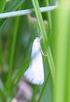 Entomologica Fennica. 11 December 2008 Elachista deriventa sp. n. (Lepidoptera, Elachistidae: Elachistinae), a new species from southern Finland Lauri Kaila, Marko Mutanen, Esko Saarela, Reijo Siloaho,
First Record of the Genus Adolenda Distant (Hemiptera: Fulgoroidea: Kinnaridae) from China, with Description of One New Species
 Zoological Studies 40(4): 365-370 (2001) First Record of the Genus Adolenda Distant (Hemiptera: Fulgoroidea: Kinnaridae) from China, with Description of One New Species Ai-Ping Liang Department of Entomology,
Stanislav Jákl. Geologická 1218, CZ- Praha 5-Hlubočepy, Czech Republic e-mail: [email protected]
 Studies and Reports Taxonomical Series 10 (2): 453-464, 2014 Contribution to knowledge of Cosmiomorpha (Microcosmiomorpha) Mikšič, 1977 (Coleoptera: Scarabaeidae: Cetoniinae: Goliathini) with descriptions
United States Bankruptcy Court District of Arizona NOTICE TO: DEBTOR ATTORNEYS, BANKRUPTCY PETITION PREPARERS AND DEBTORS
 United States Bankruptcy Court District of Arizona NOTICE TO: DEBTOR ATTORNEYS, BANKRUPTCY PETITION PREPARERS AND DEBTORS UPDATED REQUIREMENTS FOR FORMAT OF MASTER MAILING LIST The meeting of creditors
Strawberry Leaf Spot
 Strawberry Leaf Spot Cathy Heidenreich and Bill Turechek Introduction - Leaf spot is one of the most common and widespread diseases of strawberry. Mycosphaerella fragariae is also the cause of black seed
A revision of the Aphthona gracilis species group (Coleoptera: Chrysomelidae) A.S. Konstantinov
 Труды Русского энтомологического общества. С.-Петербург, 2006. Т. 77: 178 188. Proceedings of the Russian Entomological Society. St. Petersburg, 2006. Vol. 77: 178 188. A revision of the Aphthona gracilis
POCKET IDENTIFICATION GUIDE
 The Pennsylvania Native Bee Survey Citizen Scientist Pollinator Monitoring Guide POCKET IDENTIFICATION GUIDE Leo Donovall/Pennsylvania Department of Agriculture Bees vs. Wasps vs. Flies Bees Usually Very
HYDROPHILIDAE: I. Check list and key to Palearctic and Oriental genera of aquatic Hydrophilidae (Coleoptera)
 JÄCII & Jl (eels.): Water Beetles of China Vol. Ill 3S3-395 Wien, April 2003 HYDROPHILIDAE: I. Check list and key to Palearctic and Oriental genera of aquatic Hydrophilidae (Coleoptera) A. KOMAREK Abstract
LAB 11 Drosophila Genetics
 LAB 11 Drosophila Genetics Introduction: Drosophila melanogaster, the fruit fly, is an excellent organism for genetics studies because it has simple food requirements, occupies little space, is hardy,
EcoInformatics International Inc.
 1 von 10 03.08.2010 14:25 EcoInformatics International Inc. Home Services - solutions Projects Concepts Tools Links Contact EXPLORING BEAVER HABITAT AND DISTRIBUTION WITH GOOGLE EARTH: THE LONGEST BEAVER
DESCRIPTION OF A NEW GENUS AND A NEW FAMILY, CIRCUMPHALLIDAE FAM. NOV., OF THE ACALYPTRATE FLIES (DIPTERA)
 Acta Zoologica Academiae Scientiarum Hungaricae 57(4), pp. 315 341, 2011 DESCRIPTION OF A NEW GENUS AND A NEW FAMILY, CIRCUMPHALLIDAE FAM. NOV., OF THE ACALYPTRATE FLIES (DIPTERA) L. PAPP Department of
A New Species of the Genus Synersaga Gozmány (Lepidoptera, Lecithoceridae) From China
 A New Species of the Genus Synersaga Gozmány (Lepidoptera, Lecithoceridae) From China Author(s): Hai-Ming Xu, Hou-Shuai Wang and Min Wang Source: Florida Entomologist, 97(1):262-265. Published By: Florida
Host specificity and the probability of discovering species of helminth parasites
 Host specificity and the probability of discovering species of helminth parasites 79 R. POULIN * and D. MOUILLOT Department of Zoology, University of Otago, P.O. Box 6, Dunedin, New Zealand UMR CNRS-UMII
SILVANUS MUTICUS SHARP, 1899: AN AMERICAN SILVANID FOUND OUT-OF-DOORS IN TWO GREEK ISLANDS (Coleoptera Cucujoidea Silvanidae)
 Boll. Mus. Civ. St. nat. Venezia, 53 (2002) 2002: 207-211. Enrico Ratti SILVANUS MUTICUS SHARP, 1899: AN AMERICAN SILVANID FOUND OUT-OF-DOORS IN TWO GREEK ISLANDS (Coleoptera Cucujoidea Silvanidae) Riassunto.
THE MEXICAN FRANKLINIELLA AUREA
 Acta Zoologica Mexicana (n.s.) 89: 201-240 (2003) THE MEXICAN FRANKLINIELLA AUREA MOULTON, F. BISAETAEVENUSTA SP. NOV., AND F. PROTHORACIGLABRA SP. NOV. SPECIES ASSEMBLAGES IN THE "INTONSA GROUP" (INSECTA,
Activity: Can You Identify the Age?
 Activity: Can You Identify the Age? Skeletons are good age markers because teeth and bones mature at fairly predictable rates. How Teeth Reveal Age For toddler to age 21, teeth are the most accurate age
Munsell Soil Color. Munsell Gradient No. Code
 Munsell Gradient No. Munsell Soil Color Code Munsell Soil Color Description 10.0 10R 2.5/1 Reddish Black 10.0 10R 2.5/2 Very Dusky Red 10.0 10R 3/1 Dark Reddish 10.0 10R 3/2 Dusky Red 10.0 10R 3/3 Dusky
Norwegian Foreign Visitor Survey 2010
 Summary: TØI Report 1135/2011 Author(s): Eivind Farstad, Arne Rideng, and Iratxe Landa Mata Oslo 2010, 66 pages Norwegian Foreign Visitor Survey 2010 In 2010 a total of 4.8 million foreign guests stayed
Two new species of Lachesilla of Pedicularia group (Psocodea: Psocoptera ), from Valle del Cauca, Colombia
 Revista Colombiana de Entomología 39 (2): 237-242 (Julio - Diciembre 2013) 237 Two new species of Lachesilla of Pedicularia group (Psocodea: Psocoptera ), from Valle del Cauca, Colombia Dos especies nuevas
Laboratory Broadleaf Weed Identification
 1 Tips for Identifying Broadleaf Weeds Laboratory Broadleaf Weed Identification The cotyledon is an important identifying characteristic for broadleaf weeds. Shape and position of leaves, presence of pubescence
Exercise V. Bacterial Cultural Characteristics or Morphology
 Exercise V Bacterial Cultural Characteristics or Morphology When a single bacterial cell is deposited on a solid or in a liquid medium, it begins to divide. One cell produces two, two produce four, four
THREE NEW SPECIES OF MYRABOLIA REITTER (COLEOPTERA: CUCUJOIDEA: MYRABOLIIDAE)
 A N N A L E S Z O O L O G I C I (Warszawa), 2011, 61(2): 367-374 THREE NEW SPECIES OF MYRABOLIA REITTER (COLEOPTERA: CUCUJOIDEA: MYRABOLIIDAE) KAROL SZAWARYN 1 and WIOLETTA TOMASZEWSKA 2 Museum and Institute
Sexual Dimorphism in the Tooth-Crown Diameters of the Deciduous Teeth
 Sexual Dimorphism in the Tooth-Crown Diameters of the Deciduous Teeth THOMAS K. BLACK 111 Museum ofanthropology, The university of Michigan, Ann Arbor, Michigan 48109 KEY WORDS Deciduous dentition criminant
Satellite Weather And Climate (SWAC) Satellite and cloud interpretation
 Satellite Weather And Climate (SWAC) Satellite and cloud interpretation Vermont State Climatologist s Office University of Vermont Dr. Lesley-Ann Dupigny-Giroux Vermont State Climatologist [email protected]
Exhibit Inquiry. Rainforest. Aug 11
 Exhibit Inquiry Exhibit Inquiry Have students look for the following exhibits related to living things during their visit to the Ontario Science Centre: Where to go: (Level 6) What it's about: Tropical
NEW CARRIER SIGN UP REQUEST FORM
 Instructions: (Please fax or email the completed documents) [email protected] Fax: 1-855-631-4174 o Fill o Copy o Copy o initial o Insurance out Carrier profile of Common Carrier Authority Company
How to identify (or misidentify) the hobo spider Rick Vetter 1 and Art Antonelli 2
 How to identify (or misidentify) the hobo spider Rick Vetter 1 and Art Antonelli 2 PLS 116 Page 1 Since the late 1980s, many people in Washington have been concerned about the hobo spider because it has
30 August 1985. PROC. BIOL. SOC. WASH. 98(3), 1985, pp. 615-621
 30 August 1985 PROC. BIOL. SOC. WASH. 98(3), 1985, pp. 615-621 FRESHWATER SHRIMPS FROM VENEZUELA III: MACROBRACHIUM QUELCHI (DE MAN) AND EURYRHYNCHUS PEMONI, N. SP.; (CRUSTACEA: DECAPODA: PALAEMONIDAE)
CHEM 107. Hair handout. Basic Structure of Hair. 3-22-05 and 3-24-05
 CHEM 107 Hair handout. 3-22-05 and 3-24-05 Basic Structure of Hair A hair can be defined as a slender, thread-like outgrowth from a follicle in the skin of mammals. Composed mainly of keratin, it has three
The Genetics of Drosophila melanogaster
 The Genetics of Drosophila melanogaster Thomas Hunt Morgan, a geneticist who worked in the early part of the twentieth century, pioneered the use of the common fruit fly as a model organism for genetic
Chyliza leguminicola Melander, 1920 (Diptera: Psilidae) new to the Palaearctic fauna
 Chyliza leguminicola Melander, 1920 (Diptera: Psilidae) new to the Palaearctic fauna Rune Bygebjerg, Thorkild Munk & Jes Elnif Bygebjerg, R., Munk, T. & J. Elnif: Chyliza leguminicola Melander, 1920 (Diptera:
3.1 Measuring Biodiversity
 3.1 Measuring Biodiversity Every year, a news headline reads, New species discovered in. For example, in 2006, scientists discovered 36 new species of fish, corals, and shrimp in the warm ocean waters
The Survey of Undergraduate and Graduate Programs in Communication. Sciences and Disorders has been conducted since 1982-83. Surveys were conducted in
 Introduction The Survey of Undergraduate and Graduate Programs in Communication Sciences and Disorders has been conducted since 1982-83. Surveys were conducted in 1982-83, 1983-84, 1984-85, 1985-86, 1986-87,
Comparing Plant and Animal Cells
 1.2 Comparing Plant and Animal Cells Here is a summary of what you will learn in this section: Plant and animal cell structures are called organelles. Plant and animal cells perform some similar functions,
How to Age Golden Eagles
 ADVANCES IN BIRD IDENTIFICATION How to Age Golden Eagles Techniques for Birds Observed in Flight Hawk identification has advanced considerably in recent years. With the arrival of new field guides, new
How To Taxonize Isoperla Banks
 Sandberg, J.B. & B.C. Kondratieff. 2013. The Isoperla of California (Plecoptera: Perlodidae); Updated Male Descriptions and Adult Keys for 18 Western Nearctic Species. Illiesia, 9(05):34-64. Available
A new species of Fissiphalliidae from Brazilian Amazon Rain Forest (Arachnida: Opiliones)
 Zootaxa : 1 6 (2004) www.mapress.com/zootaxa/ Copyright 2004 Magnolia Press ISSN 1175-5326 (print edition) ISSN 1175-5334 (online edition) A new species of Fissiphalliidae from Brazilian Amazon Rain Forest
The Song Relationships of Four Species of Ground Crickets (Orthoptera: Gryllidae: Nemobius)
 The Ohio State University Knowledge Bank kb.osu.edu Ohio Journal of Science (Ohio Academy of Science) Ohio Journal of Science: Volume 57, Issue 3 (May, 1957) 1957-05 The Song Relationships of Four Species
Apocephalus borealis Brues, 1924 (Diptera: Phoridae) a fly that attacks honey bees.
 Apocephalus borealis Brues, 1924 (Diptera: Phoridae) a fly that attacks honey bees. Nickname: The Zombie Fly. Summary of: Core A., Runckel C., Ivers J., Quock C., Siapno T., DeNault S., Brown B.[Phorids],