
SAFETY ACTIVITIES Technology Overview NISSAN S APPROACH TO SAFETY
|
|
|
- Sarah Griffith
- 10 years ago
- Views:
Transcription
1 SAFETY ACTIVITIES Technology Overview NISSAN S APPROACH TO SAFETY

2 Nissan has set the goal of halving the number of automobile accident fatalities or serious injuries by developing safety technology based on real-world data Nissan s Approach to Safety The automobile represents a fun and convenient form of mobility that can be operated by an individual. At Nissan, we seek to make vehicles that provide a rich and joyful driving experience, while offering outstanding dependability and safety to assure peace of mind. To achieve a safer automobile society, we are not only building safer vehicles, but also improving the environment surrounding cars and their drivers through ITS (Intelligent Transport Systems) applications and enhancing people s awareness of safety issues through educational activities. Vehicles Nissan s Safety Technology Development Concept Based on the concept of Real World Safety, Nissan is working to create safer automobiles with the goal of halving the number of automobile accident fatalities or serious injuries involving its vehicles by 2015 as compared to Already, Nissan has made significant progress with occupant protection technologies such as SRS airbag systems and Zone Body construction, hazard evasion technologies such as ABS and VDC, and driving support technologies such as AFS reflected in a 27% reduction in fatal and serious injuries involving Nissan vehicles in 2004 compared to However, further work is needed to counter an upward trend in the total number of accidents and create a safer automobile society. Real World Safety: Nissan s concept of analyzing the causes of actual accidents to develop and adopt effective technologies to combat each problem. *ABS: Anti-lock Braking System *VDC: Vehicle Dynamics Control *AFS: Adaptive Front Lighting System Number of fatal and serious injuries per 10,000 Nissan vehicles in Japanese market Individuals Society % reduction Virtually zero Source: Institute for Traffi c Accident Research and Data Analysis (Involvement of Nissan Vehicles in Traffi c Accidents) contents SAFETY SHIELD Nissan s concept of the vehicle that helps protect people. 4 Helps the driver to maintain comfortable driving 6 Helps the driver to recover from dangerous conditions to safe driving 10 Helps minimize the damage when a collision is unavoidable 13 Improving the road-transport environment 17 People-oriented activities Index Source: Institute for Traffi c Accident Research and Data Analysis (Involvement of Nissan Vehicles in Traffi c Accidents) Total number of accidents Number of accidents causing fatal and serious injuries Ratio of accidents causing fatal and serious injuries to total number of accidents 2

3 Safety Activities Technology Overview Safety Technology Development Process Investigation and verification are essential for technological innovation. Nissan re-creates accidents through simulation and experiments based on analysis of accident data collected from around the world. In this way, Nissan identifies the issues and develops new technologies while improving existing safety technologies. This process is key to the continuous evolution of safety performance at Nissan. Accident analysis Nissan noticed that analysis of actual accidents revealed the primary human factor to be recognition error. This means that to reduce accidents we must not stop at developing conventional safety technology. A further step of technological innovation is also necessary to support the human factors that help maintain safe driving conditions. Analysis of human factors in accidents where a Nissan vehicle was the striking vehicle Accident re-creation Simulation Crash test Human research Driver behavior Injury mechanisms Operation error 6.6% Other 1.2% Judgement error 17.7% Safety technology development Recognition error 74.4% Source: Institute for Traffi c Accident Research and Data Analysis (2000) Performance verifi cation Against this background, Nissan created the original approach to safety technology development called Safety Shield. SAFETY SHIELD Nissan s concept of "the vehicle that helps protect people." Various barriers around the vehicle help the driver and passengers avoid dangers from normal driving conditions through post accident conditions. 3

4 SAFETY SHIELD Nissan s concept of the vehicle that helps protect people. In the area of safety technology, Nissan pursues innovation as part of its Safety Shield concept, an advanced, proactive approach to safety issues based on the idea that cars should help protect people. This approach provides various measures to help the driver and passengers better avoid dangers in ways that are optimized to each of a wide range of circumstances that the vehicle may be in, from risk has not yet appeared to post-crash. Risk has not yet appeared Distance Control Assist System Intelligent Cruise Control with low-speed following capability Adaptive Front Lighting System (AFS) Xenon Headlamps Around View Monitor Helps the driver to maintain comfortable driving Risk has appeared Lane Departure Warning Lane Departure Prevention 4 Wheel Active Steer Crash may occur Anti-lock Braking System (ABS) Brake Assist Vehicle Dynamic Control (VDC) Helps the driver to recover from dangerous conditions to safe driving Crash is unavoidable Intelligent Brake Assist Front Pre-Crash Seat Belts Crash Zone Body construction SRS Airbag Systems Front-seat Active Head Restraints Helps minimize the damage when a collision is unavoidable Post crash HELPNET (Emergency call service) 4

5 Safety Activities Technology Overview Recognizing that people are the key actors in the activity of driving, Nissan develops technology with a view toward supporting the driver in control of the car. This means developing systems that provide the driver with appropriate information in a timely fashion and respond to driver inputs according to the driver's intentions. It also means development of vehicle systems that may intervene to help reduce injuries and damage in case a crash becomes unavoidable. Based on this Safety Shield approach, Nissan targets ongoing innovation toward the realization of a safer automobile society. 5

6 Helps the driver to maintain comfortable driving Even when risk has not appeared, Nissan technologies make it easier for the driver to maintain safe driving conditions. Some of these innovations reduce the driver s burden, while others enhance visibility and awareness of the immediate surroundings at night and when parking, for example. Distance Control Assist System (under development) Using a radar sensor installed in the front bumper, this system helps drivers control the distance between themselves and the vehicle in front. For example, if the driver releases or is not pressing the accelerator pedal, the system automatically applies the brakes to help control the distance from the vehicle in front. Or, if the preceding vehicle slows down and the system determines that braking is required, visual and aural indicators prompt the driver to take action. The accelerator pedal also lifts up to assist the driver in switching to the brakes. These functions alleviate the burden on the driver, particularly under traffi c conditions that require frequent braking. Too close to preceding vehicle If the driver releases the accelerator, the system automatically applies the brakes. * * Brakes are applied automatically only when the driver is not pressing the accelerator. Indicator Control switch Audible buzzer Actuator controller Braking is required by driver (when preceding driver slows down, etc.) Along with an audible warning and an indicator display, the accelerator pedal rises to assist the driver in switching to the brake pedal. Brake actuator Radar sensor with main controller Accelerator pedal actuator The Distance Control Assist System in operation 6

7 Safety Activities Technology Overview Intelligent Cruise Control with low-speed following capability If there is a vehicle in the lane ahead, the system uses data from a radar sensor installed in the front bumper to control following distance appropriately in accordance with the preset cruising speed (about 40 to 100km/h). If there is no vehicle ahead, the preset cruising speed is maintained. The low-speed following mode operates at speeds under about 40km/h to maintain an appropriate following distance in congested traffi c, thereby helping reduce the driver s workload. The system provides further convenience by switching automatically between Intelligent Cruise Control mode and low-speed following mode. Indicator Control switch Audible buzzer Actuator controller Low-speed following capability If the sensor detects a vehicle in the lane ahead and the driver turns on the system while driving between about 10 and 40km/h, this will maintain a following distance in accordance with vehicle speed, up to about 40km/h. System operation is suspended when the lane ahead is clear. Maintains inter-vehicle distance If the preceding vehicle slows down, the system slows the car and, when necessary, an audible warning and visual indication prompt the driver to perform braking. Below about 5km/h, system operation is suspended and the audible warning and visual indication prompt the driver to perform braking on his or her own. Brake actuator When inter-vehicle distance shortens, the system slows the vehicle and informs the driver by sight and sound Radar sensor with main controller Automatically switches between Intelligent Cruise Control mode and low-speed following mode. When using Intelligent Cruise Control to follow a vehicle, the low-speed following mode activates automatically if vehicle speed drops below about 35km/h. When inter-vehicle distance shortens, the system slows the vehicle and maintains an optimum distance appropriate to speed During low-speed following, if speed rises above about 40km to keep pace with a preceding vehicle, Intelligent Cruise Control will take over if the driver has preset a cruise control speed. When inter-vehicle distance lengthens, the system speeds up the vehicle and maintains an optimum distance appropriate to speed The Intelligent Cruise Control System with low-speed following capability in operation 7

8 Adaptive Front Lighting System (AFS) Most pedestrian fatalities occur at night, so improved visibility is vital to help avoid such accidents. Nissan s AFS automatically swivels the angle of AFS lamps (located in the headlamps) in the direction the vehicle is turning, based on steering angle and vehicle speed, thereby helping to reveal obstacles in the vehicle path. Curve Lighting pattern adjusts to match the vehicle s path through a curve, thereby improving visibility in the direction of travel. AFS Headlamp Vehicle speed Steering angle Headlamp status, etc. Data Controller Headlamp Intersection Helps illuminate the direction of travel when turning, enabling the driver to better detect pedestrians or other obstacles in the crosswalk. AFS In the INFINITI M35/45 With AFS lamp off With AFS lamp on AFS lamps do not operate when the vehicle is stopped. Effect of Adaptive Front Lighting System In the INFINITI M35/45 Vehicle speed Steering angle Data Vehicle speed Steering angle Data Headlamp Headlamp Headlamp Headlamp status, etc. status, etc. Controller Controller In the Nissan Tiida System configuration Xenon headlamps For improved visibility, Xenon headlamps produce bright white light that is close to sunlight in color. This powerful yet natural looking illumination enhances confidence for night driving safety. Halogen headlamps Xenon headlamps Headlamp on Nissan Tiida Headlamp illumination comparison 8

9 Safety Activities Technology Overview Rear View Monitor A dashboard monitor shows the area behind the vehicle using a rear-mounted camera. This helps makes parking easier and helps avoid collisions with fixed objects while backing Blind spots cited by customers in order of frequency (Nissan data) Camera Monitor display Side View Monitor For greater confidence when pulling over and parking, this shows the area ahead of the passenger side mirror, using a camera mounted on the mirror and a dashboard monitor. Infrared LED illumination increases visibility at night. 2 3 Camera Monitor display 4 1 Blind spots cited by customers in order of frequency (Nissan data) Around View Monitor (under development) Images from front, side and rear cameras combine to form an overhead view of the vehicle relative to a parking space. A further evolution of Nissan's industry-leading adoption of rear-view and side blind spot monitor technologies, this delivers real-time information on the vehicle s periphery in an easy-tounderstand format. Cameras Monitor display Monitor 9

10 Helps the driver to recover from dangerous conditions to safe driving When a risk appears, warnings and automatic countermeasures help the driver avoid it. Lane Departure Warning Using a front-mounted camera to detect lane divider lines, this system warns the driver via sound and an indicator display when the vehicle is unintentionally drifting out of its lane. In 2004, Nissan became the first to adopt Lane Departure Warning technology in passenger vehicles in North America. Lane marker detection Operation is suspended if the appropriate turn signal has been turned on. Indicator Camera Audible buzzer Switch Lane Departure Prevention (under development) In case of unintentional lane departure, this technology not only warns the driver via sound and an indicator display, but also generates a turning force to help the driver return the vehicle to its lane. System control System control System control Warning Warning Warning Indicator Brake actuator Camera The Lane Departure Prevention System in operation Audible buzzer 10

11 Safety Activities Technology Overview 4 Wheel Active Steer (under development) This technology controls the steering angle of each wheel independently according to conditions. For example, in case of high-speed avoidance maneuvers, it helps improve stability and responsiveness, so the driver can better follow the intended path. At slower speeds, it adjusts the steering gear ratio to make it easier to steer the vehicle with less effort. Example of emergency maneuver in expressway driving The driver can follow the intended line while maintaining vehicle stability 4 Wheel Active Steer vehicle (More responsive & stable) Target driving line Front-wheel steering vehicle The 4 Wheel Active Steer System in operation Steering angle sensor Controller Actuator for front wheel active steering Actuator for rear wheel active steering Electronic Brakeforce Distribution (EBD) An application of anti-lock braking system (ABS) technology, EBD controls rear-wheel braking based on detection of loss of traction at the front and rear wheels when the brakes are applied. By controlling distribution of braking force to the front and rear wheels according to the passenger and luggage load, EBD minimizes differences in braking performance whether the vehicle load is light or heavy. Stopping distance Driver only Multiple occupants (with EBD) Multiple occupants (without EBD) Rear braking force Rear braking force (Increases) Front braking force Front braking force (Unchanged) Braking begins Rear braking force (Unchanged) Front braking force (Unchanged) EBD effect 11

12 If it does appear likely a crash may occur, these systems help the driver to return the vehicle to safe conditions by assisting in braking and maintaining control of the vehicle. Anti-lock Braking System (ABS) ABS electronically controls hydraulic brake pressure to prevent wheel lockup when braking suddenly on wet, snowy or other low-traction surfaces. This helps preserve vehicle stability and steering control in emergency braking situations. Braking action With ABS Without ABS ABS effect Brake Assist This system supports the driver by providing the strong braking needed in emergency braking situations but with less force on the brake pedal than would ordinarily be necessary. Brake Assist comes into action when the driver presses on the brake pedal with force that exceeds a certain threshold. While enjoying normal braking response under normal driving conditions, the driver can easily achieve powerful braking in emergencies and effectively activate ABS, which can further contribute to accident avoidance performance. Nissan led the world in commercializing Brake Assist technology since its introduction in Braking force With Brake Assist Normal braking ABS range Brake Assist effect Without Brake Assist Emergency braking With Brake Assist, less brake pedal force is needed to activate ABS. Brake pedal force Vehicle Dynamic Control (VDC) Adding to the functions of ABS and TCS (Traction Control System), VDC automatically controls brakes and engine output to help enhance stability when sensors detect that the vehicle may slip sideways, based on steering, braking and accelerator pedal operation. with VDC without VDC VDC effect 12

13 Safety Activities Technology Overview Helps minimize the damage when a collision is unavoidable In cases where a crash cannot be avoided, additional Nissan technology helps reduce injuries and damage by activating the brakes, restraining passengers, and applying other measures. Intelligent Brake Assist Using a radar sensor, this system measures the distance from a vehicle being followed and gives an audible and visual warning if it determines that the driver should take evasive measures to help avoid a direct rear-end collision. In addition, if the system judges that a collision remains unavoidable even after driver action, brakes are applied to slow the vehicle and help reduce injuries and mitigate damage. Brake fl uid pressure Buzzer or other audible warning Elapsed time Buzzer prompts driver to act to help avoid rear-end collision Indicator Control switch Brake actuator Audible buzzer Actuator controller Brake fl uid pressure Braking action Elapsed time If danger remains, brakes activate to help reduce damage Radar sensor with main controller The Intelligent Brake Assist System in operation Brake Assist (with preview function) Brake fl uid pressure Braking force Elapsed time If emergency braking will be needed because of the distance from the vehicle ahead, the system increases brake responsiveness by reducing play in the brake system. The Brake Assist with Preview System in operation Front Pre-Crash Seat Belts A motor tightens the front seatbelts if the system determines that the driver is performing emergency braking or if Intelligent Brake Assist is activated. This helps keep the driver in a posture conducive to performing evasive maneuvers. If a collision cannot be avoided, this technology also helps reduce occupant motion so airbags and other safety measures can operate optimally. Nissan holds the basic patent on this technology, but is providing the license to other automakers to promote safer vehicle performance. Radar sensor Control unit Brake pedal stroke sensor Electronic Control Unit Front Pre-Crash Seat Belts configuration Motorized retractor (with pre-tensioner and load limiter) 13

14 If a crash does occur, the Zone Body, SRS airbag systems and other measures help mitigate injury. After a crash, systems such as HELPNET can hasten assistance to diminish the danger of secondary damage. Zone Body construction Nissan s Zone Body combines impact-absorbing structures (crushable zones) with a high-strength cabin (occupant zone) to help protect occupants. With the version of the Nissan March (Japan model name) launched in 2002, Nissan introduced a more advanced crash-compatible Zone Body that not only enhances occupant protection of the host vehicle, but also reduces aggressiveness to the other vehicle involved in an accident. In case of pedestrian involvement, energy-absorbing construction in areas of the vehicle s hood, fenders and cowl help mitigate head injuries, while energy-absorbing material in the front bumper helps reduce impact to the legs. Crushable zone (Tiida) Triangular-shaped support structure Dash cross-member Straight shaped front side members Large bumper reinforcement Triangular-shaped support structure Door waist beam Crushable zone Absorbs energy of impact Occupant zone Reinforced to protect passengers Crushable zone Absorbs energy of impact Larger Smaller Energy of impact Zone Body construction Smaller Larger Energy of impact Floorboard member Tunnel member Multi-frame structure Occupant zone (Tiida) Compatibility body Impact-absorbing fender & hinge structure Impact-absorbing cowl structure Impact-absorbing hood structure Impact-absorbing bumper structure Pedestrian injuries reduction body 14

15 Safety Activities Technology Overview Nissan Advanced Crash Laboratory These advanced facilities in Japan are used for testing safety performance in vehicle-to-vehicle crashes and occupant protection performance in rollover accidents. The lab tests head-on collisions at speeds of up to 120km/h for each vehicle, as well as offset collisions at angles of between 185 and 85 degrees in 5-degree intervals. Based on analysis of a vast number of accidents, this laboratory enables accident re-creation with a greater degree of fidelity to the original circumstances. Exterior Testing capabilities Maximum collision speed (vehicle mass) Collision angles (vehicle-to-vehicle) Vehicle-to-vehicle, each vehicle: 120km/h (2,000 kg) Single vehicle: 140km/h (3,000 kg) 80km/h (9000kg) 5, 10, 15, 30, 45, 60,75 85~185 (5-degree pitch) Vehicle-to-vehicle speed ratios 1:1.5 1:2 1:3 Barrier crash tests Movable barrier Rollover tests 4 types: Trip-over Corkscrew Ditch rollover FMVSS 208 dolly rollover Rollover course 180º course 165º course Crash test area interior Crash test area Vehicle-to-vehicle crash test Movable barrier Shoot-through pit Control room Static rollover test machine Working area -5º course 0º course 5º course 150º course 135º course 120º course Facility diagram 105º course 90º course SRS* Airbag Systems In addition to the SRS dual airbag system, Nissan offers SRS side airbags for chest protection of front seat occupants and SRS curtain airbags for head protection of front- and rear-seat passengers in case of side impact. Nissan was fi rst to install a driver s seat SRS airbag system as a standard feature in Japan and has led the industry with adoption of SRS curtain airbag systems, previously considered a luxury car feature, even on small passenger cars, such as the March, since SRS Airbag Systems in Nissan March *SRS: Supplemental Restraint System 15

16 Front-seat Active Head Restraints The Active Head Restraint instantly moves forward to support the head and reduce sudden backward movement in case the occupant s vehicle is struck from the rear. This is designed to help minimize stress on the neck and thereby help mitigate the risk of whiplash and related injuries. Since about half of Japan s traffic accidents are rear-end collisions and about 90% of those result in neck injuries, Nissan is moving forward with the adoption of Active Head Restraint systems in its vehicles. Front-seat Active Head Restraints operation Seatbelts Seatbelts raise the effectiveness of SRS airbag systems and other safety measures. In a frontal collision, a pre-tensioner prepares for impact and a load limiter reduces post-impact stress on the chest. A two-stage load limiter matched to front-seat airbag deployment and deflation characteristics lowers the belt load, while a lap belt pre-tensioner complements the shoulder belt. These systems work with Nissan s Front Pre-Crash Seat Belts and other systems for more effective passenger restraint optimized to individual vehicle characteristics. Pre-tensioner mechanism Hastens restraint Takes up slack in seatbelt. Load limiter mechanism Reduces stress on chest Limits load on occupant's body during rapid deceleration. Seatbelt system with pre-tensioner and load limiter HELPNET (Emergency call service) In case of injury, illness or other emergency on the road, the driver simply presses a Help button to connect to the HELPNET operation center and automatically send navigation system data pinpointing the vehicle s location. No handset is used, so the driver simply answers questions from the HELPNET operator, who contacts emergency services, as necessary. Helpnet reporting sequence Emergency occurs Help button pressed to report emergency Location and other data transmitted to HELPNET operation center automatically Call received by HELPNET operation center Contact police, ambulance or other emergency services according to conditions based on location data and conversation with caller *HELPNET is a trademark of Japan Mayday Service Co., Ltd. Emergency services receive report HELPNET operation center transmits information to emergency services and then switches connection to enable direct conversation with reporter of incident Police and/or other emergency vehicle and/or tow truck is dispatched to scene 16

17 Safety Activities Technology Overview Improving the road-transport environment In addition to enhancing safety of the cars themselves, Nissan is applying ITS (Intelligent Transport Systems) concepts and pursuing research to provide drivers with information about other vehicles and pedestrians beyond the range of sight. Examples are the ITS Project in Kanagawa Prefecture and the Nissan ASV-3. ITS Project in Kanagawa Prefecture In 2006, the ITS Project in Kanagawa Prefecture was launched with the aim of reducing traffic accidents and traffic congestion using advanced communication technology through the application of ITS concepts that regard people, roads and vehicles as an integrated system. The project focuses on reducing intersection accidents, improving school zone safety, mitigating traffic congestion and presenting drivers with information on the fastest routes. Nissan has made significant progress in enhancing safety based on vehicle capabilities, including building more crashworthy vehicles and the introduction of our CARWINGS system, which helps predict traffic congestion and suggests optimal routes on the basis of historical data together with realtime traffic information from VICS, the Vehicle Information and Communication System. The ITS Project in Kanagawa Prefecture takes the additional step of linking vehicles with infrastructure that will enhance safety and mitigate congestion by enabling communication of roadtraffic conditions and alerting drivers to the presence of other vehicles in the immediate vicinity. After verifying the effectiveness of the ITS Project in Kanagawa Prefecture, coverage is planned to expand nationwide and, eventually, beyond Japan. Information system for reduction of intersection collisions Road-vehicle communication technology to warn drivers of accident risks at dangerous intersections Vehicle detector Object blocking view Roadside signal Speeding information system Tells the driver to slow down if exceeding the speed limit in restricted areas such as school zones. Display image School School zone PROBE-based Vehicle Routing System Individual vehicles automatically transmit vehicle speed and other data, which is used by the system to detect congestion, compute travel times and offer routing information with greater accuracy than current systems. Japan s current VICS traffic information system Screen Audio Screen Audio Display image Car approaching from your left Car approaching from your left Go slow School ahead. Go slow Traffic information system using PROBE Amount of traffic information obtainable ZENRIN CO., LTD All Rights Reserved. (Z06A-No.2285) Pedestrain protection initiative From December 2005 through March 2006 in Yokohama City, Nissan and telecommunications companies tested a new service designed to help prevent accidents involving children at pedestrian crossings. IC tags were distributed to children and vehicles, and receivers were installed at crossings with poor visibility and near public parks in the experimental zone. Based on signals from the respective IC tags, the system can tell when children are near vehicles and warn drivers to proceed with caution. Nissan is proceeding with this and further initiatives aimed at reducing accidents involving children and pedestrians. Speeding information system Tells the driver to slow down if exceeding the speed limit in restricted areas such as school zones. Information transmitted to car s information device IC signal receiver Telematics service center Position detection device Database Information analysis device IC signals picked up from child and car Children nearby. Please drive carefully. IC tag Signals analyzed Position detection device IC tag 17

18 Nissan ASV-3 The ASV-3, Nissan s third-generation Advanced Safety Vehicle, aims to help reduce accidents by using vehicle-to-vehicle communications and Nissan s human-machine-interface (HMI). The ASV-3 participated in trials sponsored by Japan s Ministry of Land, Infrastructure and Transport promoting research & development and popularization of automotive safety technologies. The system indicates the vehicle s position based on vehicle-to-vehicle communication and supports the driver with icon indication and audio alert in each of five scenarios, including accidents at junctions with poor visibility and collisions with oncoming vehicles when turning across a traffic lane. Feedback from these tests will be incorporated in future Nissan vehicles. Accidents at junction with poor visibility Monitor display and audio alert If an approaching vehicle poses a danger, its color changes from blue to yellow on the display. Simultaneously, an icon appears and an audio alert is sounded. Technologies featured in the Nissan ASV-3 Monitor display Nissan Safety Milestones In 1996, Nissan announced an original program called Triple Safey. Together with progress in safety technology, Nissan s safety philosophy has since evolved with the concept of Real-world Safety and now Safety Shield. Safety concepts Technologies for safety and peace of mind ~1995 Nissan NRV-II vehicle Cornering lamps Rear center high-mounted stoplight ABS Auto-dimming rear view mirror Auto-dimming sideview mirrors 1996~2000 Triple Safety ( 96~) Approach to safety technology based on dividing safety considerations into information safety, control safety and impact safety. 2001~ Real World Safety ( 02~) Development of safety technology based on analysis of real-world accident data Safety Shield ( 05~) The vehicle that helps protect people concept of having various barriers around the vehicle help the driver and passengers avoid dangers from normal driving conditions through post accident conditions. ABS first installed as standard equipment (1996) Zone Body construction Front seat-mounted side-impact supplemental air bags Long-life water repellent glass Xenon headlamps Rear View Monitor Collision detecting auto door lock release system Extendable sideview mirror Rear seatbelts with a Child Seat Locking Mechanism in the Outboard Positions Lane-keeping Support System Roof-mounted curtain side-impact supplemental air bags HELPNET (Emergency call service) Side View Monitor Front-seat Active Head Restraint first installed as standard equipment (2002) SRS curtain airbag system installation (2002) Slide-away brake pedal assembly and energyabsorbing pad 18

19 Safety Activities Technology Overview People-oriented activities Nissan approaches safety not only from the standpoint of vehicle safety and the traffic environment, but also from the standpoint of the individual, through educational activities and driver training. Safety promotion efforts Since 1972, the Nissan Hello Safety Campaign has distributed safety education books to children in nursery schools and kindergartens, and provided videos for group screenings in Japan. In 2005 Nissan expanded the program to citizens aged 65 and over. Since 1998, Nissan North America has provided the Quest for Safety program, a free educational seminar to enhance the safety of children in vehicles by informing caregivers of the importance of child seats and other safety matters. In addition, the Nissan Snug Kids program presents information to help choose child seats. These ongoing programs are intended as a response to the fact that, in the USA, traffic accidents are one of the leading causes of child mortality and about 80% of child seats are used incorrectly. Traffi c safety picture books Sponsorship of planetarium screening of educational programs Educational programs on traffi c safety Distribution of refl ective safety straps Traffi c safety classroom on the Internet Educational activities Side door guard beams Driver s seat SRS airbag system Front-passenger s seat SRS airbag system Seat belts with pre-tensioners Energy-absorbing steering column Driver's side SRS airbag system first installed as standard equipment (1995) SRS dual airbag system first installed as standard equipment (1995) Seatbelts with pre-tensioners and load limiters Brake Assist Vehicle Dynamic Control Front-seat SRS side airbags Titanium clear sideview mirror 3-point ELR rear seatbelts Electronic Brake force Distribution Front-seat Active Head Restraints Cruise Control Award for traffi c safety activities received from Japanese government (1968) First Hello Safety Campaign (1972) Enhanced and expanded yearly Hello Safety Campaign (1990) Nissan Driving Park safe driving course held in 5 prefectures of Japan (1991) Donation of 40,000 copies of seatbelt wearing promotion leafl et to Traffi c Safety Association branches throughout Japan (1995) Ichiro Nissan safety pamphlet (1996) Nissan Driving Park permanent exhibition (1998) Nissan Driving Park with child seat program (1999) Child seat popularization program video (2000) Quest for Safety program (N. America, 1998) Pedestrian injuries reduction body Adaptive Front Lighting System Intelligent Brake Assist Front Pre-Crash Seat Belts Compatibility body Intelligent Cruise Control with low-speed following capability Lane Departure Warning (N. America) Began traffi c safety activities aimed at aged people as part of 32nd Hello Safety Campaign (2003) Began local grassroots movement linked to traffi c safety public policy as part of 33rd Hello Safety Campaign (2004) Produced and distributed picture book aimed at aged people and grandchildren Donated educational picture books and refl ective straps to 28th Traffi c Safety Fair (sponsored by Prime Minister s Offi ce) Award for traffi c safety activities received from Japanese government (2005) 34th Hello Safety Campaign (2005) *Safety educational program shown at planetariums in 10 prefectures with worst traffi c fatality rates (as of end of June 2006) Snug Kids program, industry fi rst (N. America, 2002) 19

20 Nissan Motor Co., Ltd. Global Communications, CSR and IR Division Communications CSR Department August Nissan Motor Co., Ltd. All Rights Reserved

UNDERSTANDING YOUR VEHICLE S. What every driver and passenger should know
 UNDERSTANDING YOUR VEHICLE S What every driver and passenger should know This booklet was prepared to answer questions about seat belts, airbags, and other safety equipment in newer Honda and Acura vehicles.
Operating Vehicle Control Devices
 Module 2 Topic 3 Operating Vehicle Control Devices 1. Identify the vehicle controls in the pictures below: 1. 2. 3. 4. 7. 7. 5. 6. 1. accelerator 2. parking brake 3. foot brake 4. gear shift lever_ 5.
ACCIDENTS AND NEAR-MISSES ANALYSIS BY USING VIDEO DRIVE-RECORDERS IN A FLEET TEST
 ACCIDENTS AND NEAR-MISSES ANALYSIS BY USING VIDEO DRIVE-RECORDERS IN A FLEET TEST Yuji Arai Tetsuya Nishimoto apan Automobile Research Institute apan Yukihiro Ezaka Ministry of Land, Infrastructure and
The SIPS (Side Impact Protection System) includes side and Inflatable Curtain (IC) airbags that protect both front and rear occupants.
 SAFETY In brief: Volvo s commitment to safety is as old as the company itself, and the Volvo S60 has been extensively crash tested in the award winning Volvo Safety Centre in Gothenburg, Sweden and features
Suzuki Vitara SPECIFICATION SAFETY EQUIPMENT TEST RESULTS. Supermini. Year Of Publication 2015. Driver Passenger Rear FRONTAL CRASH PROTECTION
 Suzuki Vitara Supermini Adult Occupant Child Occupant Pedestrian Safety Assist SPECIFICATION Tested Model Suzuki Vitara 1.6 GL+, LHD Body Type 5 door hatchback Year Of Publication 2015 Kerb Weight 1114kg
Smart features like these are why Ford F-Series has been America s best-selling truck for 37 years and America s best-selling vehicle for 32 years
 Sep 24, 2014 Dearborn, Mich. 10 Awesome Driver-Assist Features That Help 2015 Ford F-150 Customers Drive Smarter The all-new Ford F-150, the smartest F-150 yet, is available with the following class-exclusive
Testimony of Ann Wilson House Energy & Commerce Committee Subcommittee on Commerce, Manufacturing and Trade, October 21, 2015
 House Energy & Commerce Committee Subcommittee on Commerce, Manufacturing and Trade, October 21, 2015 Introduction Chairman Burgess, Ranking Member Schakowsky, members of the subcommittee: Thank you for
Make the right choice. Vehicle safety advice for older drivers
 Make the right choice Vehicle safety advice for older drivers Why is it important to buy a safe car? Older drivers are the most likely of all driver age groups to sustain serious or life threatening injuries
Technical Trends of Driver Assistance/ Automated Driving
 Technical Trends of Driver Assistance/ Automated Driving Presented by Tjark Kreuzinger Senior Manager, Safety research and Technical Affairs Toyota Motor Europe NV/SV TOYOTA MOTOR CORPORATION Topics 1.
Event Data Recorder - Reference Document
 Event Data Recorder - Reference Document An Event Data Recorder (EDR) is a part of the Supplemental Restraint System (SRS) ECU that records data for some types of collision events for future safety research
Does the Federal government require them? No, the Federal government does not require manufacturers to install EDRs.
 EDR Q&As THE BASICS What is an EDR? What is its purpose? An Event Data Recorder (EDR) is a function or device installed in a motor vehicle to record technical vehicle and occupant information for a brief
Development of an Automotive Active Safety System Using a 24 GHz-band High Resolution Multi-Mode Radar
 Special Issue Automobile Electronics Development of an Automotive Active Safety System Using a 24 GHz-band High Resolution Multi-Mode Yasushi Aoyagi* 1, Keisuke Morii* 1, Yoshiyuki Ishida* 1, Takashi Kawate*
Mercedes-Benz C-Class
 Mercedes-Benz C-Class Mercedes-Benz C-Class C220 'Avantgarde', LHD 92% 84% 77% 70% DETAILS OF TESTED CAR SPECIFICATIONS Tested model Mercedes-Benz C-Class C220 'Avantgarde', LHD Body type 4 door sedan
Driver (Single Stage), Passenger (Single Stage) Driver (double), Passenger (single)
 Nissan X Trail Nissan X Trail 1.6 diesel Acenta, LHD 86% 83% 75% 75% DETAILS OF TESTED CAR SPECIFICATIONS Tested model Nissan X Trail 1.6 diesel Acenta, LHD Body type 5 door SUV Year of publication 2014
Mazda MX-5 84% 80% 64% 93% SPECIFICATION SAFETY EQUIPMENT TEST RESULTS. Roadster sports. Child Occupant. Adult Occupant. Safety Assist.
 Mazda MX-5 Roadster Sport 2015 Adult Occupant Child Occupant 84% 80% Pedestrian Safety Assist 93% 64% SPECIFICATION Tested Model Body Type Mazda MX-5 1.5 SE-L, RHD 2 door roadster Year Of Publication 2015
BMW 2 Series Active Tourer
 BMW 2 Series Active Tourer BMW 2 Series Active Tourer 1.5 Base, LHD 84% 85% 60% 70% DETAILS OF TESTED CAR SPECIFICATIONS Tested model BMW 2 Series Active Tourer 1.5 Base, LHD Body type 5 door hatchback
Adaptive cruise control (ACC)
 Adaptive cruise control (ACC) PRINCIPLE OF OPERATION The Adaptive Cruise Control (ACC) system is designed to assist the driver in maintaining a gap from the vehicle ahead, or maintaining a set road speed,
Bicycle Safety Quiz Answers Parental Responsibilities
 Bicycle riding is a great way to get into shape and enjoy the outdoors. To remain safe on Illinois roads, it is important to follow the same traffic safety laws that govern vehicle drivers. No amount of
Motorcycle Airbag System
 PRESS INFORMATION September 2005 Motorcycle Airbag System Honda Motor Co., Ltd. Introduction Honda has been proactive in fostering driver and rider training as well as developing and implementing active
Volvo Trucks view on Truck Rollover Accidents
 Volvo Trucks view on Truck Rollover Accidents Mario Ligovic, Volvo Truck Corporation, Göteborg, Sweden INTRODUCTION Rollover is the most common heavy truck accident type. Experiencing a rollover is like
Analysis of Accidents by Older Drivers in Japan
 Analysis of Accidents by Older Drivers in Japan Kazumoto Morita 1, Michiaki Sekine 1 1 National Traffic Safety and Environment Laboratory, Japan Abstract Since Japan is a rapidly aging society, ensuring
AUDI A3 Sportback e-tron
 AUDI A3 Sportback e-tron AUDI A3 Sportback e-tron 1.4 TFSI + e-engine 'Ambition', RHD 82% 78% 66% 68% DETAILS OF TESTED CAR SPECIFICATIONS Tested model AUDI A3 Sportback e-tron 1.4 TFSI + e-engine 'Ambition',
Mazda CX-3 79% 85% 84% 64% SPECIFICATION SAFETY EQUIPMENT TEST RESULTS. Supermini. Child Occupant. Adult Occupant. Safety Assist.
 Mazda CX-3 Supermini 2015 Adult Occupant Child Occupant 85% 79% Pedestrian Safety Assist 84% 64% SPECIFICATION Tested Model Body Type Mazda CX-3 2.0 'Core', LHD 5 door wagon Year Of Publication 2015 Kerb
Supplementary restraints system
 Supplementary restraints system PRINCIPLE OF OPERATION High speed impacts may cause serious injury or death irrespective of safety features fitted to the vehicle. Always drive with caution and consideration
Safety-conscious Drivers Prevent Crashes. Defensive Driving: Managing Visibility, Time and Space. Improve Your Defensive Driving Skills
 Defensive Driving: Managing Visibility, Time and Space Motor vehicle travel is the primary means of travel in the United States. With all the benefits that come along with mobility, there are thousands
Collision Avoidance. The car we couldn t crash! The future for drivers. Compare the technologies. research news
 special edition volume three, issue two February, 2008 research news Collision Avoidance The car we couldn t crash! During the low speed bumper crash test of the new Volvo, its automatic braking system
ON THE WAY TOWARDS ZERO ACCIDENTS
 VOLVO TRUCKS. DRIVING PROGRESS ON THE WAY TOWARDS ZERO ACCIDENTS Volvo Trucks and Traffic Safety www.volvotrucks.com RSP 20100110001 English. Printed in Sweden. An automobile conveys and is driven by people.
MOTOR VEHICLE COLLISION/PERSONAL INJURY QUESTIONNAIRE
 MOTOR VEHICLE COLLISION/PERSONAL INJURY QUESTIONNAIRE Please answer all questions completely: 1. Your name and address: 2. Phone Number: 3. Please describe the collision in your own words: 4. Where did
Increased cooperation for the future of electrification
 Increased cooperation for the future of electrification Robert Eriksson Hans Göran Milding Swedish Hybrid Center Conference Roads To The Future 2014-03-13 Robert Eriksson, Hans Göran Milding Volvo Car
Bicycle riding is a great way to get into shape
 Bicycle riding is a great way to get into shape and have fun. To remain safe on Illinois roads, it is important to follow the same traffic safety laws that govern vehicle drivers. No amount of bicycle
Driver (Single Stage), Passenger (Single Stage) Driver (single), Passenger (single)
 Citroen C1 Tested Model: Toyota Aygo 1 x-play, LHD 80% 80% 62% 56% DETAILS OF TESTED CAR SPECIFICATIONS Tested model Tested Model: Toyota Aygo 1 x-play, LHD Body type 5 door hatchback Year of publication
Vehicle Safety Systems
 Vehicle Safety Systems 11-12 September 2009 SECC and Glasgow Science Centre The UKRO authorises the use of the educational information contained within this document, however reference must be given to
general, accidents caused by misjudging
 Unit 3: The Effect of Natural Forces on your Vehicle Page 1 of 11 Purpose: Acquaint the student with some of the natural forces acting on a vehicle while stopping, maneuvering, and during a crash. Explain
Existing safety technology is the driverless vehicle already here? Matthew Avery Safety Research Director
 Existing safety technology is the driverless vehicle already here? Matthew Avery Safety Research Director Automotive Safety Primary vs Secondary Safety Primary Safety Secondary Safety Tertiary Safety Pre-crash
MOTOR VEHICLE COLLISION/PERSONAL INJURY QUESTIONNAIRE
 MOTOR VEHICLE COLLISION/PERSONAL INJURY QUESTIONNAIRE Please answer all questions completely: 1. Your name and address: 2. Phone Number: 3. In your own words, please describe the accident: 4. Where did
SAMPLE VEHICLE FLEET SAFETY & USAGE POLICY
 SAMPLE VEHICLE FLEET SAFETY & USAGE POLICY Policy The purpose of this policy is to ensure the safety of those individuals who drive company vehicles and to provide guidance on the proper use of company
Driver (Single Stage), Passenger (Single Stage) Driver (single), Passenger (single)
 Skoda Fabia Skoda Fabia 1.2 TSI 'Ambition', LHD 81% 81% 69% 69% DETAILS OF TESTED CAR SPECIFICATIONS Tested model Skoda Fabia 1.2 TSI 'Ambition', LHD Body type 5 door hatchback Year of publication 2014
DEFENSIVE DRIVING. It s an Attitude
 DEFENSIVE DRIVING It s an Attitude RLI Design Professionals Design Professionals Learning Event DPLE 155 July 15, 2015 RLI Design Professionals RLI Design Professionals is a Registered Provider with The
Tips and Technology For Bosch Partners
 Tips and Technology For Bosch Partners Current information for the successful workshop No. 04/2015 Electrics / Elektronics Driver Assistance Systems In this issue, we are continuing our series on automated
HOW TO PREPARE FOR YOUR MARYLAND NONCOMMERCIAL CLASS C DRIVER S TEST
 ` HOW TO PREPARE FOR YOUR MARYLAND NONCOMMERCIAL CLASS C DRIVER S TEST A portion of your noncommercial driving test will be conducted on a closed course to test your basic control of the vehicle, and a
A name a commitment! These are the criteria which have characterized the development of dependable everyday cars up to the present time.
 A name a commitment! Automobile development has been a ŠKODA commitment since 1905. Even in those days, the trade press wrote enthusiastically above the Laurin & Klement Model A: Solidly built, dependable
SEAT BELTS AND AIRBAGS
 SEAT BELTS AND AIRBAGS Competence in Safety. A pioneer in automotive safety. Mercedes-Benz has been passionate about making cars each one even better than the last from day one. Since the first models
Talking Points. About Roadway Users
 General facts regarding the driver: Talking Points About Roadway Users Motor vehicle crashes are the leading cause of death in the U.S. for people ages 6-33. They annually account for more than 1 million
FMCSA Webinar Nov.18th to Examine Large Truck Crash Fatalities Involving Pedestrians & Bicyclists. New Technology for Better Fleet Management
 In This Issue: FMCSA Webinar Nov.18th to Examine Large Truck Crash Fatalities Involving Pedestrians & Bicyclists Help Prevent Roadway Accidents involving Pedestrians How to Steer Clear of Accidents with
Adaptive Cruise Control
 33 Adaptive Cruise Control Adaptive Cruise Control Adaptive Cruise Control is a driving support system intended to allow more comfortable driving on expressways, freeways and interstate highways. The vehicle
Atlanta, Georgia Road Test
 1. When driving your car Into traffic from a parked position, you should: A. Sound your horn and pull Into the other lane. B. Signal and proceed when safe. C. Signal other traffic and pull directly into
NATIONAL TRANSPORTATION SAFETY BOARD Public Meeting of August 11, 2015 (Information subject to editing)
 NATIONAL TRANSPORTATION SAFETY BOARD Public Meeting of August 11, 2015 (Information subject to editing) Multivehicle Work Zone Crash on Interstate 95 Cranbury, New Jersey June 7, 2014 This is a synopsis
Chapter 4 DEFENSIVE DRIVING
 Chapter 4 DEFENSIVE DRIVING Chapter 4 Table of Contents Chapter 4 DEFENSIVE DRIVING... 4-1 DEFENSIVE DRIVING... 4-3 Positioning The Bus... 4-3 When Making a Turn at an Intersection... 4-3 Making the perfect
USING THE MOBILE PHONE WHILE DRIVING. Using a mobile phone while driving can significantly impair a driver s:
 USING THE MOBILE PHONE WHILE DRIVING Is it dangerous to use the phone while driving? Driving is a complex task, requiring drivers to use and coordinate a number of skills. Any lapse in concentration increases
AAA AUTOMOTIVE ENGINEERING
 AAA AUTOMOTIVE ENGINEERING Evaluation of Blind Spot Monitoring and Blind Spot Intervention Technologies 2014 AAA conducted research on blind-spot monitoring systems in the third quarter of 2014. The research
Skoda Octavia 66% 82% ADULT OCCUPANT. Total 34 pts 93% Skoda Octavia 1.6 'Ambition', LHD SIDE IMPACT REAR IMPACT (WHIPLASH) 2,6 pts WHIPLASH
 Skoda Octavia Skoda Octavia 1.6 'Ambition', LHD 93% 86% 82% 66% ADULT OCCUPANT Total 34 pts 93% 15,9 pts HEAD Driver airbag contact Passenger airbag contact CHEST Driver Passenger CAR 8 pts POLE 6,4 pts
Ways to Reduce to Motorcycle Accidents
 4th. Asia Automobile Institute Summit 24-25 September 2015, Chongqing Ways to Reduce to Motorcycle Accidents Yuji Arai Safety Research Division Japan Automobile Research Institute 1 Contents 1. Historical
Commentary Drive Assessment
 Commentary Drive Assessment Time start: Time finish: Candidate s Name: Candidate s Email: Date of Assessment: Location: Candidate s Supervisor: Supervisors Contact Number: Supervisors Email: Assessor s
Automated Driving Activities in Japan
 Automated Driving Activities in Japan Takumi Yamamoto Abstract Industry, government, and academia are collaborating on various projects to develop automated driving technologies in Japan. Major automobile
A Guide to Safe Bicycling in Hawai i
 A Guide to Safe Bicycling in Hawai i Sharing the Road: A Guide to Safe Bicycling in Hawai i What Motorists & Bicyclists Should Know Everyone has the right to be safe on Hawai i s roads. Law of the Splintered
Automotive Collision Injury Form
 Automotive Collision Injury Form Billing Information Patient name: Date of Injury: Time of injury: AM PM City and street where crash occurred: What is the estimated damage to your vehicle? $ Do you have
15-Passenger Van Safety Awareness Program. Environmental Health & Safety Department 570-662-4906
 15-Passenger Van Safety Awareness Program Environmental Health & Safety Department 570-662-4906 Course Objective The objective of this presentation is to increase the safety awareness of passenger van
Cycle Safety. Some tips on safer cycling. Údarás Um Shábháilteacht Ar Bhóithre Road Safety Authority
 Cycle Safety Some tips on safer cycling Údarás Um Shábháilteacht Ar Bhóithre Road Safety Authority Be safe For further information on safe cycling, please look at the Rules of the Road website at www.rulesoftheroad.ie
NEW CAR SAFETY INNOVATIONS ANCAP RATINGS. Michael Paine - ANCAP Technical Manager
 NEW CAR SAFETY INNOVATIONS ANCAP RATINGS Michael Paine - ANCAP Technical Manager Outline Background on crash testing by ANCAP Improvements in vehicle occupant protection Technologies to avoid serious crashes
Adaptive Driver-assistance Systems
 Adaptive Driver-assistance Systems 212 Adaptive Driver-assistance Systems Tatsuya Yoshida Hiroshi Kuroda Takaomi Nishigaito OVERVIEW: An (adaptive cruise control) system and a pre-crash braking system
CHAPTER 1 Land Transport
 Section 1 Road Transport - PART I - Summary of the Present Situation 1 Road Traffic Accident Trends 1-1 Long-term trends fell to below 6,000 for the first time in 54 years since 1953 Number of road traffic
European New Car Assessment Program (EuroNCAP) and Crash Test Ratings of New Vehicles
 European New Car Assessment Program (EuroNCAP) and Crash Test Ratings of New Vehicles Car safety is now an important issue that many people consider when buying a new car. There are crash test standards
Mercedes-Benz Vito. Specifications
 Mercedes-Benz Vito Specifications Mercedes-Benz Technical Data Panel Van Specification Body Style Rated output (kw @ rpm) Max torque (Nm @ rpm) Injection Fuel consumption 1 (litres/100km) Front axle load
ASK THE CAR WHAT HAPPENED
 ASK THE CAR WHAT HAPPENED Reconstructing traffic accidents through the use of a vehicle s black box technology. Christie Swiss Attorney at Law Collins Collins Muir + Stewart LLP Oakland South Pasadena
 Think Before You Drive is a global road safety initiative of the FIA Foundation, Bridgestone Corporation and motoring clubs worldwide. FIA Foundation for the Automobile and Society www.fiafoundation.com
AHIS Road safety project Student Council THINK!
 AHIS Road safety project Student Council 2013 THINK! Today, we drive safer cars on safer roads; decades of advertisements and public information campaigns have made most of us safer drivers. Improvements
20 Tips for Safe Driving
 20 Tips for Safe Driving www.libertymutualinsurance.com Liberty Mutual 20 Tips What s Your Driving Skill Level? As you can see, this national survey 1 found that drivers rated themselves highly. The tendency
2009 QUICK REFERENCE GUIDE GET INFORMED. ROLL.
 xb 2009 QUICK REFERENCE GUIDE GET INFORMED. ROLL. 2009 Scion xb This Quick Reference Guide is a summary of basic vehicle operations. It contains brief descriptions of fundamental operations so you can
20 Tips for Safe Driving
 Helping People Live Safer, More Secure Lives Since 1912 Thank you for considering Liberty Mutual for your insurance needs. As one of the leading providers of auto, home and life insurance in the United
Red Oak Fire Rescue SECTION: 3000. New Car Technology
 New Car Technology PURPOSE The purpose of this section is to; give basic knowledge of, and to set basic guidelines for handling a response to an incident pertaining to new car technologies including: Supplemental
RCAR Low-speed structural crash test protocol
 RCAR Low-speed structural crash test protocol Issue 2.2 July 2011 1 / 15 INDEX 1.0 INTRODUCTION 2.0 SCOPE 3.0 DEFINITIONS 4.0 TEST FACILITY AND TEST VEHICLE PREPARATION - FRONT IMPACT 5.0 TEST FACILITY
SAFE CYCLING GUIDE. 6th Edition
 SAFE CYCLING GUIDE 6th Edition BEFORE SETTING OUT A WELL-MAINTAINED BICYCLE is key A Check tire pressure B Check that the chain does not slip C Check the brakes D Check lights and reflectors: 3 4 1 5 2
2014 Annual General Meeting
 2014 Annual General Meeting Jan Carlson CEO and President May 6, 2014 Driven for Life. Our vision To substantially reduce traffic accidents, fatalities and injuries Our mission To create, manufacture and
TEST ON Driving Safely Among Bicyclists and Pedestrians
 TEST ON Driving Safely Among Bicyclists and Pedestrians Next you will take a 16 question test about driving safely among bicyclists and pedestrians. Please take out a sheet of paper to mark down and score
Broward County Public Schools Core Curriculum Department. Driver s Education Basic Driving Skills: Study Guide
 Broward County Public Schools Core Curriculum Department Driver s Education Basic Driving Skills: Study Guide 5 th Edition 2 nd Edition K.C. Wright Administrative Building 600 Southeast Third Avenue Fort
This owner s manual should be considered a permanent part of the vehicle and should remain with the vehicle when it is sold.
 10/10/25 18:28:46 32TF0630_001 This owner s manual should be considered a permanent part of the vehicle and should remain with the vehicle when it is sold. This owner s manual covers all versions. Therefore,
20XX. Car safety rating 2015 by Folksam
 20XX Car safety rating 2015 by Folksam Preface Folksam has a long tradition in the area of traffic safety research. We have been collecting and analyzing information about road traffic crashes and injuries
What Every Young Michigan Bicyclist Must Know
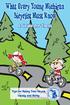 What Every Young Michigan Bicyclist Must Know A Guide for Youth Tips for Riding Your Bicycle Legally and Safely Meet the LMB Safety Kids Sprocket Madison Hub Spokes Chase Ryder What Every Young Michigan
Digges 1 INJURIES TO RESTRAINED OCCUPANTS IN FAR-SIDE CRASHES. Kennerly Digges The Automotive Safety Research Institute Charlottesville, Virginia, USA
 INJURIES TO RESTRAINED OCCUPANTS IN FAR-SIDE CRASHES Kennerly Digges The Automotive Safety Research Institute Charlottesville, Virginia, USA Dainius Dalmotas Transport Canada Ottawa, Canada Paper Number
2005 Chevrolet Cavalier Owner Manual M
 2005 Chevrolet Cavalier Owner Manual M Seats and Restraint Systems... 1-1 Front Seats... 1-2 Rear Seats... 1-7 Safety Belts... 1-8 Child Restraints... 1-27 Airbag System... 1-46 Restraint System Check...
Bicycle Safety Enforcement Action Guidelines
 Introduction Bicycle Safety Enforcement Action Guidelines People ride bicycles for many different reasons: fitness, recreation, or for transportation. Regardless of the reason for riding, bicyclists young
Advanced Vehicle Safety Control System
 Hitachi Review Vol. 63 (2014), No. 2 116 Advanced Vehicle Safety Control System Hiroshi Kuroda, Dr. Eng. Atsushi Yokoyama Taisetsu Tanimichi Yuji Otsuka OVERVIEW: Hitachi has been working on the development
A STUDY ON WARNING TIMING FOR LANE CHANGE DECISION AID SYSTEMS BASED ON DRIVER S LANE CHANGE MANEUVER
 A STUDY ON WARNING TIMING FOR LANE CHANGE DECISION AID SYSTEMS BASED ON DRIVER S LANE CHANGE MANEUVER Takashi Wakasugi Japan Automobile Research Institute Japan Paper Number 5-29 ABSTRACT The purpose of
Appendix A In-Car Lessons
 Driver Education Classroom and In-Car Curriculum Appendix A In-Car Lessons Table of Contents In-Car Lessons Introduction..... A-4 Overview and Objectives Teacher Information and Resources Lesson #1 Developing
Cat Detect. for Surface Mining Applications
 Cat Detect for Surface Mining Applications Enhance Your Site s Safety through Increased Operator Awareness Configurable to suit your operation s needs, Cat MineStar System is the industry s broadest suite
Field Accident Data Analysis of 2 nd Row Children and Individual Case Reviews
 Field Accident Data Analysis of 2 nd Row Children and Individual Case Reviews David C Viano, Chantal S Parenteau ProBiomechanics LLC SAE 2008-01 01-18511851 CSS 38% U 50% Front 45% Background Children
The State Government recognises. areas, and regulates bicycle
 cycling & THE LAW rules introduction for roads The State Government recognises The cycling South Australian as a legitimate Road Traffic form of Act including transport the Australian and an increasingly
Advanced Safety. Driver Vehicle Interface Collision Avoidance & Mitigation Vehicle Communications. Helping industry engineer safe vehicles
 SAE INTERNATIONAL Advanced Safety Standards & Resources Driver Vehicle Interface Collision Avoidance & Mitigation Vehicle Communications Helping industry engineer safe vehicles Driver Vehicle Interface,
2015 Scion tc Quick Reference Guide
 2015 Scion tc Quick Reference Guide 2015 Scion tc This Quick Reference Guide is a summary of basic vehicle operations. It contains brief descriptions of fundamental operations so you can locate and use
Bicycle Riding. WHAT ARE the. One Final Note... It is against the law to ride a bicycle under the influence of alcohol and/or drugs. (21200.
 One Final Note... It is against the law to ride a bicycle under the influence of alcohol and/or drugs. (21200.0 VC) Bicycle Riding WHAT ARE the CALIFORNIA HIGHWAY PATROL CHP 909 (12/11) OPI 013 94 75015
Adaptive Cruise Control System Overview
 5th Meeting of the U.S. Software System Safety Working Group April 12th-14th 2005 @ Anaheim, California USA 1 Introduction Adaptive Cruise System Overview Adaptive Cruise () is an automotive feature that
Bendix Wingman Fusion
 Protect Your Fleet with Our Most Advanced Safety System Ever Bendix Wingman Fusion The integration of camera, radar, and brakes delivers a new level of performance in North America. OUR NEW FLAGSHIP DRIVER
3.1 Convenience Systems. CHAPTER 3 IV Application Areas
 CHAPTER 3 IV Application Areas The range of applications for IV systems is quite broad and applies to all types of road vehicles cars, heavy trucks, and transit buses. While there is some overlap between
Frost & Sullivan s Research and Market Consulting Group. Global Trends, Technology Roadmaps and Strategic Market Analysis AUTOMOTIVE SAFETY & DAS
 Frost & Sullivan s Research and Market Consulting Group Global Trends, Technology Roadmaps and Strategic Market Analysis AUTOMOTIVE SAFETY & DAS Presentation to Automotive World Briefing 14 th May 2008