
Medicare Part B Billing Specialists
|
|
|
- Annis Oliver
- 10 years ago
- Views:
Transcription
1 Medicare Part B Billing Specialists PROFESSIONAL MEDICAL, INC.
2 Getting Started 2 Medicare Part B Billing Specialists Fax promedsupply.com 2
3 What is Medicare? 1 Medicare is a federally funded health insurance program available to: People 65 years of age or older People under 65 with certain disabilities People with end-stage renal disease (ESRD) Medicare is managed by the Centers for Medicare & Medicaid Services (CMS), a division of the United States Department of Health and Human Services. Medicare is divided into three distinct parts: Part A Hospital Insurance Hospital inpatient care Skilled nursing facility (SNF) inpatient services Some home health care Hospice care Part A may cover up to 120 days of medically necessary costs for hospitalization with coinsurance. Part B Medical Insurance Certain doctors' services Medical supplies Outpatient care Preventive services Part B covers non-hospital costs for certain specified product categories. Application must be made and a monthly premium paid to obtain and keep coverage. (Part B pays 80% of the "reasonable charge" allowed by Medicare with a yearly deductible.) Part D Medicare Prescription Drug Coverage Prescription drug option run by Medicare-approved private insurance companies Helps cover prescription drug costs Fax promedsupply.com 3
4 How does ProMedB work? In nursing homes, Medicare Part B coverage is limited primarily to prosthetic devices. These include: Enteral therapy Urologicals Ostomy Tracheostomy Surgical and wound dressings (not part of the prosthetic device coverage) How do invoices get paid? Medicare sets an allowed charge (fee schedule) for any given justified service and pays 80% of that charge. The outstanding 20% is billed to either: Medicaid state aid for the financially qualified Coinsurance secondary insurance carrier Resident, family, responsible party or person with power of attorney We are required, by federal regulation, to make collection attempts on the outstanding 20% balance. Featured service for certified Medicare providers At Professional Medical (ProMed), we understand the difficulty of providing quality health care while running a viable business. We created the ProMedB Medicare Part B billing service to allow our partner facilities more time to devote to resident care. Our account managers are among the most progressive in the fields of public aid and Medicare billing. They have a vast knowledge of consolidated billing, PPS and managed care. They are dedicated to ethical billing practices and a high level of ongoing customer service satisfaction, including: Resident-specific product ordering and billing to Medicare Part B for the contracted facility Retrospective billing cycle for Medicare Part B ProMedB features include: Tracking of Medicare supply usage via rosters that move between ProMed and facility before every delivery Delivery of supplies scheduled according to the provider's/supplier's storage area Emergency supplies available 24 hours a day, seven days a week Medicare Part B billing via electronic claim submission directly to a regional carrier All filed claims comply with Medicare Part B standards using Uniform Electronic Data Transmission Standards and Privacy Standards of individually identifiable Protected Health Information with a signed HIPAA agreement between the facility and ProMed If no 20% coinsurance is available, ProMed will print an itemized statement reflecting the coinsurance balance and bill the resident Preparation of Medicare-mandated Certificate of Medical Necessity Prosthetic devices A prosthetic device is described in the Part B carrier manual as that which replaces "all or part of an internal body organ or all or part of the function of a permanently inoperative or malfunctioning internal body organ, including replacement or repair of such devices." 2 If the clinical record, including the judgment of the attending physician, indicated the condition will be long and of an indefinite duration, the test of permanence will be considered met. Therefore, tubes for feeding purposes, urinary catheters, traches and colostomy products are reimbursable only when used in place of or because of a dysfunctioning body part. 4 Medicare Part B Billing Specialists Fax promedsupply.com 4
5 Claim filing A great concern for CMS and the Office of Inspector General (OIG) is the need of all healthcare providers to have in place a Compliance Plan that meets all HIPAA regulations. The purpose of the Compliance Plan is to establish the basis that every healthcare provider participating in federal programs (such as Medciate and Medicaid) should eagerly embrace the concept of voluntary compliance programs. Goals of the Compliance Plan include: Speed and proper payment of claims Minimal billing mistakes Reduced chances of an audit by CMS or OIG Evidence of a good faith attempt to bill appropriately Self-auditing procedures Prior to submitting any claim, files are put through an internal auditing system to guarantee that ProMed has all the necessary documentation to file a successful claim. These audits are conducted by our billing specialists and are reviewed on a routine basis. In addition to re-verifying that all of the required information is completed and accurate, there are a few additional steps we take: 1. Validate products, diagnoses and modifiers (numeric and alpha numeric). 2. Check that dates of service are within normal limits. 3. Check that products billed match diagnosis to justify medical necessity of products provided. We utilize a custom-built database to ensure minimal denials. 4. We use various sources to obtain vital resident information such as ID numbers, etc. Examples include insurance companies, help lines and IVR systems. The following is a list of the categories billed under Medicare Part B medical supplies: Enteral therapy Urologicals Ostomy Tracheostomy Surgicial and wound dressings Medical services Enteral feedings Digital pumps N.G. tubes Feeding containers Syringe pole holders 35 cc syringes Urologicals Foley catheters Urethral trays Leg bags External catheters Ostomy care Stoma care items Ileostomy supplies Ostomy belts Skin cleansers Deodorizers Tracheostomy care Trach care trays Inner cannula G-tubes Administration sets "Y" connectors 60 cc syringes I.V. poles Insertion trays Drain bags Foley irrigation trays Straight cath kits Colostomy pouches Urostomy supplies Karaya products Drainable bags Pastes/adhesives Trach tubes Wound care Surgical and wound dressings (primary and secondary) Electronic billing service ProMed's online electronic billing uses uniform electronic data transmission standards and privacy standards of individually identifiable protected health information Fax promedsupply.com 5
6 What support documentation is required? In order to bill in a proper and timely fashion, ProMed's territory managers and billing specialists work closely with our customers to obtain the following required information: Face sheet Signed and dated doctor's orders Copy of Medicare card Copy of any secondary insurance card Signed assignment of benefits Signed monthly roster Signed Patient Acceptance Packet Survey A resident roster will be sent to a designated person at the facility. This roster contains eligible residents who received qualified supplies. The facility needs to verify the information and make any changes to the roster and then return it to ProMedB. The facility will receive their product order based on the information supplied on the resident roster. After receiving all of the necessary documentation, Medicare Part B will be billed for the qualified list of residents. Any Medicare Part B product used in excess of the eligible amount will be billed to the facility's house account, under the residents' names. This is to ensure that there is no overutilization billed to Medicare. Enteral tube feeding allowables What is covered? Nutrient As prescribed by the physician, calories per day per kg of body weight Nasogastric tubes One per month Gastrostomy tubes One every 90 days Administration kits Generally include the following: Pump supply kit 1 spike set or bag per day; 1 syringe per day Gravity supply kit 1 spike set or feeding bag/day; 1 syringe per day Pumps Rental up to 15 months *covered when medical justification is documented I.V. poles Rental for gravity or pump residents Definitions: Enteral nutrition is the provision of nutritional requirements through a tube into the stomach or small intestine. Indications: Enteral nutrition is covered for a resident with normal gastrointestinal (G.I.) absorptive capacity who, due to permanent nonfunction or disease of the structures that normally permit food to reach the small bowel, requires tube feeding to provide sufficient nutrients to maintain weight and strength commensurate with the resident's overall health status. Coverage and payment rules General: The resident must have a permanent impairment. Permanence does not require that the impairment necessitating therapy will persist through the resident's remaining life. If the judgment of the attending physician, substantiated in the medical record, is that the impairment can reasonably be expected to exceed three months (90 days), the test of permanence is considered met. Enteral nutrition will be denied as non-covered in situations with temporary impairments. The resident must have a condition involving the gastrointestinal tract somewhere between the mouth and duodenum, inclusive, that prevents adequate ingestion. This condition could be either anatomic (e.g., obstruction due to head and neck cancer or reconstructive surgery, etc.) or due to a motility disorder (e.g., severe dysphasia following a stroke, etc.). Enteral nutrition is non-covered for residents with a functioning G.I. tract whose need for enteral nutrition is due to a lack of appetite or a cognitive problem. The resident must require tube feedings to sustain life. Adequate nutrition must not be possible by dietary adjustment and/or oral supplements. The resident must experience sufficient nutritional benefit and rehabilitation so that the therapy makes sense for both the resident and family. 6 Medicare Part B Billing Specialists Fax promedsupply.com 6
7 Covered enteral nutrition services provided by SNFs to Part A residents are billed by the SNF to the fiscal intermediary. No payment from Part B is available to a SNF when the SNF furnished enteral nutrition services to a beneficiary in a stay covered by Part A. Enteral nutrients are classified as food and are included as a component of the SNF's routine costs. If a beneficiary is not covered by Part A, but is eligible for Part B coverage, enteral nutrition services are covered under Part B regardless of whether they are furnished by a SNF or an outside supplier. Nutrients: Enteral formula consisting of semi-synthetic intact protein/protein isolates (B4150) is appropriate for the majority of residents requiring enteral nutrition. Formula consisting of natural intact protein/protein isolates (B4149) is covered for residents with an allergy or intolerance to semi-synthetic formula (B4150). Calorically dense formulas (B4152) are covered if they are needed. The medical necessity for special enteral formula (B ) will need to be justified for each resident. If the medical necessity for codes B4149 or B is not substantiated, payment could be denied. A total daily caloric intake of cal/kg/day is considered sufficient to achieve or maintain appropriate body weight for most residents. The ordering physician must document the medical necessity for a caloric intake outside this range in an individual resident. The feeding supply kit (B4034-B4036) must correspond to the method of administration. If a pump supply kit (B4035) is ordered and the medical necessity of the pump is not documented, payment will be based in the allowance for the least costly alternative, B4036. More than three nasogastric tubes (B4081-B4083), or one gastrostomy or jejunostomy tube (B4087) every 90 days is rarely medically necessary. Documentation: An order for all nutrients, equipment and supplies that has been signed and dated by the ordering physician must be kept on file by the facility. The prescription (order) for the nutrients must include the brand name of the product, the amount to be administered, the frequency of administration and the duration of administration. The CMN for enteral nutrition must be completed. After the initial certification of enteral nutrition items, recertification is required only where there is a change to the calorie amount or change in supplement type. If enteral nutrition services are not medically required for two consecutive months, a new initial certification would be required. A revised certification would be required when (1) different nutrients are ordered, or (2) calories per day are changed, or (3) number of days per week administered, or (4) the method of infusion (syringe, gravity, pump) changes. Equipment and supplies: Enteral nutrition may be administered by syringe, gravity or pump. Some enteral residents may experience complications associated with the syringe or gravity method of administration. If a pump (B9000-B9002) is ordered, there must be documentation on the accompanying Certificate of Medical Necessity (CMN) to justify its use (e.g., gravity feeding is not satisfactory due to aspiration, severe diarrhea, dumping syndrome, etc.). If the medical necessity of the pump is not documented, the pump will be denied as not medically necessary Fax promedsupply.com 7
8 What support documentation is required? Urological allowables What is covered? Catheters (all types) Insertion trays Drain bags Leg bags Irrigation trays Catheter leg straps Male external catheters Sterile intermittent catheters One per month One per month Two per month Two per month Per prescription One per month 35 per month Per prescription Permanency: The physician must certify that the condition resulting in the need for the device is of long and indefinite duration (at least three months). Coverage and payment rules Indwelling catheters, Foley-type, two-way: No more than one catheter per month is covered for routine catheter maintenance. Non-routine catheter changes are covered when documentation substantiates medical necessity, such as for the following indications: 1. Catheter is accidentally removed (e.g., pulled out by resident) 2. Malfunction of catheter (e.g., balloon does not stay inflated, hole in catheter) 3. Urine leaks around catheter 4. Catheter is obstructed by encrustation or mucous plug 5. Urinary tract infection 6. Hematuria with obstruction due to clots 7. History of recurrent obstruction of infection of which it has been established that an acute event is prevented by a scheduled change at less than monthly intervals 8 Medicare Part B Billing Specialists Fax promedsupply.com 8
9 Ostomy allowables What is covered? Adhesive liquid Appliance cleaner Bedside drainage bag Catheter for continent stoma Continent plug Ostomy lubricant Ostomy pouch, drainable w/faceplate Ostomy pouch, open (drainable) Ostomy pouch, closed (non-drainable) Ostomy ring Skin barrier solid 4x4 Skin barrier Skin barrier with flange Stoma cap Tape 4 oz per month 16 oz per month 2 per month 1 per month 30 per month 4 oz per month 10 per month 20 per month 60 per month 10 per month 20 per month 4 oz per month 20 per month 31 per month 720 inches A barrier with built-in convexity (e.g., A4407) is one in which an outward curve is usually achieved with plastic embedded in the barrier, allowing better protrusion of the stoma and adherence to the skin. There are distinct codes for barriers with built-in convexity compared to flat barriers. Ostomy skin barriers greater than 4x4 inches (e.g., A4408) refer to the size of the skin barriers themselves, and not to the area of any surrounding tape. Faceplates: A faceplate is a solid interface between the resident's skin and the pouch. It is usually made of plastic, rubber or encased metal. It does not have an adhesive property and there is no pectin-based or karaya material that is an integral part of the faceplate. It can be taken off the skin and reattached repeatedly. It is held on by means of a separate adhesive and/ or an elastic belt. The clips for attaching the belt are usually a part of the faceplate. There is no coding distinction between flat and convex faceplates. Definitions: Ostomy supplies are covered for use on residents with a surgically created opening (stoma) to divert urine or fecal contents outside the body. Ostomy supplies are appropriately used for colostomies , V44.3, V55.3, ileostomies V44.2, V55.2 or urinary ostomies V44.6, V55.6. Use for other conditions will be denied as non-covered. Barriers: A solid barrier (wafer) is an interface between the resident's skin and the pouching system, has measurable thickness and has an adhesive property. Barriers may be integrated into a one-piece pouch, they may be manufactured with a flange and be part of a two-piece pouch system (skin barrier with flange, e.g., A4414) or they may be used independently (e.g., A4362), usually with a pouch that does not have its own integral skin barrier. An extended-wear barrier (e.g., A4409) is a pectin-based barrier with special additives that achieve a stronger adhesive seal, resist breakdown by urine or bowel effluent and permit longer wear times between changes and normal wear times for those who cannot achieve them with standard barriers. There are distinct codes for extended-wear compared to standard-wear barriers. Pouches: A pouch is a device for collecting stomal output. A pouch for collecting bowel effluent may be either "drainable" with an opening at the bottom through which the fecal contents are emptied, or "closed" with a sealed bottom and no outlet. A urinary pouch normally incorporates anti-reflux devices and a tap or spigot to empty the urine contents. A pouch with barrier attached is one type of onepiece system in which a solid barrier is part of the pouch. There are distinct codes for one-piece pouches with convex barriers and extended-wear barriers (see "Barriers" on left). A pouch without a barrier attached is a pouch with or without a thin adhesive coating that is applied either directly to the skin or to a separate barrier. It is also described as a one-piece system. A pouch that is part of a two-piece system has a flange that enables it to be coupled to a skin barrier with flange. A pouch with a faceplate attached or for use on a faceplate is generally rubber or heavy plastic. It is drainable, cleanable and reusable for periods of weeks to months, depending on the product Fax promedsupply.com 9
10 What support documentation is required? (Ostomy allowables continued) A high output pouch (A4412, A4413) has a capacity of greater than or equal to 0.75 liters, is drainable with a large bore solid spout with cap or plug and is part of a two-piece system. Codes for pouches with filters (e.g., A4416) describe pouches that have an opening that allows venting of trapped gas. They typically include materials such as charcoal to deodorize the vented gas. Code A4368 describes replacement filter material. Code A4366 describes a separate ostomy vent that can be added by the resident to a pouch to allow the release of gas. This code must not be used for pouches in which a vent with a filter is incorporated in the pouch by the manufacturer. Those products are described by the codes for ostomy pouches with a filter (A4416-A4419, A4423-A4425, A4427). Absorbent material (A4422) that is added to the ostomy pouch may come as sheets, pads or crystals. An ostomy pouch with faucet-type tap with valve (e.g., A4429) has a valve for draining urine. A locking flange (e.g., A4420) is a lever-type flange locking mechanism. It differs from simple push-on pouch-securing mechanisms. The mechanism may be incorporated either in the pouch flange or skin barrier flange (two-piece system). Pastes: A paste is used as a protective layer and sealant beneath ostomy appliances and is applied directly on the skin. It may be primarily pectin-based (A4406), or non-pectin based, e.g., karaya (A4405). Code A4400 (ostomy irrigation set), for an irrigation kit, is not valid for claims submitted to the durable medical equipment regional carrier (DMERC). If an irrigation kit is supplied, the individual components should be billed using individual codes A4397, A4398 and A4399. Ostomy clamps (A4364) are used with drainable pouches and are not used with urinary pouches. Ostomy clamps are only payable when ordered as a replacement. Claims for ostomy clamps billed with ostomy pouches will be denied as not separately payable with ostomy pouches. Coverage and payment rules The quantity of ostomy supplies needed by a resident is determined to a great extent by the type of ostomy, its location, its construction and the condition of the skin surface surrounding the stoma. There will be variation according to individual resident needs, and their needs may vary over time. The medical necessity for use of a grater quantity of supplies than the amounts listed on page 9 must be clearly documented in the resident's medical record and may be requested by the DMERC. If adequate documentation is not provided when requested, the excess quantities will be denied as not medically necessary. Provision of ostomy supplies should be limited to a one (1) month supply for a resident in a nursing facility and a three (3) month supply for a resident at home. When a liquid barrier is necessary, either liquid, spray, individual wipes or swabs are appropriate. The use of both is not medically necessary. Residents with continent stomas may use the following means to prevent/manage drainage: stoma cap, stoma plug or gauze pads. No more than one (1) type of supply would be medically necessary on a given day. Residents with urinary ostomies may either use a bag or bottle for drainage at night. It is not medically necessary to have both. ICD-9 codes that are covered Note: The presence of an ICD-9 code listed in this section is not sufficient by itself to assure coverage. ICD-9 codes Mechanical complication of colostomy and enterostomy V44.2 Ileostomy status V44.3 Colostomy status V44.6 Status of other artificial opening of urinary tract V55.6 Attention to ileostomy V55.3 Attention to colostomy V55.6 Attention to other artificial opening of urinary tract 10 Medicare Part B Billing Specialists
11 Tracheostomy allowables What is covered? Trache tube Trache care kit Inner cannula 1 every 3 months 1 per day Per prescription Definitions: Tracheostomy care kits are covered for a resident following an open surgical tracheostomy that has been open or is expected to remain open for at least three months. ICD-9 codes that are covered Note: The presence of an ICD-9 code listed in this section is not sufficient by itself to assure coverage. ICD-9 codes Tracheostomy complication unspecified Infection of tracheostomy Mechanical complication of tracheostomy Other tracheostomy complications V44.0 Tracheostomy status V55.0 Attention to tracheostomy Coverage and payment rules A tracheostomy care or cleaning starter kit (A4625) is covered following an open surgical tracheostomy. One tracheostomy care kit (A4625, A4629) per day is considered necessary for routine care of a tracheostomy. Claims for additional kits for nonroutine tracheostomy care must have substantiating documentation available to the DMERC on request. When billing for more than one tracheostomy care kit per day, documentation must be submitted explaining the medical necessity for the greater amount Fax promedsupply.com 11
12 What support documentation is required? Surgical allowables What is covered? Primary Dressings Approved for Stage Frequency Impregnated gauze: all sizes Daily Hydrocolloid: all styles and shapes Every 3 days Transparent films: all sizes Every 3 days Packing strips: plain, all widths btis/mo Packing strips: impregnated, all widths btis/mo *Hydrogel is covered for Stage 2 wounds when wound site is in sacral area only Hydrogel: 2x2, 3-4 surgical Daily 4x4 impregnated dressing Hydrogel: tubes or packets 3-4 surgical 3 oz/mo Foam dressing: 3-4 Every 3 days all sizes and shapes Alginates: all sizes and shapes 3-4 Daily ABD pads: all sizes Bordered gauze: all sizes Gauzes: 2x2, 4x4 Heel-it: specialty heel application Island dressings/film plus pad Roll gauze: all widths Telfa pads: any size surgical Daily surgical Daily surgical 6/day surgical Daily surgical Every 3 days surgical 15 rolls/mo surgical 6/day Definitions: Surgical dressings are covered for as long as they are medically necessary. Those dressings used in conjunction with investigational wound healing therapy may be covered if all applicable coverage criteria are met based on the number and type of surgical dressings that are appropriate to treat the wound if the investigational therapy was not being used. Coverage and payment rules An order for surgical dressings must specify the type of dressing, the size of the dressing, the number/amount to be used at one time (if more than one), the frequency of dressing change and the expected duration of need. A new order is needed if a new dressing is added or if the quantity of an existing dressing to be used is increased. A new order is not routinely needed if the quantity of dressings used is decreased. However, a new order is required every three months for each dressing being used, even if the quantity used has remained the same or decreased. Information defining the number of surgical/debrided wounds being treated with a dressing, the reason for dressing use (i.e., surgical wound, debrided wound, etc.) and whether the dressing is being used as a primary or secondary dressing for some noncovered use (i.e., wound cleansing) should be obtained from the physician, nursing home or nurse. The source of that information and the date obtained should be documented in the supplier's records. Current clinical information that supports the reasonableness and necessity of the type and quantity of surgical dressings provided must be present in the resident's medical record. When a wound cover with an adhesive border is being used, no other dressing is needed on top of it and additional tape is not usually required. Reasons for the use of additional tape must be well documented. An adhesive border is usually more binding than separate taping and is therefore indicated for use with wounds requiring less frequent dressing changes. Use of more than one type of wound filler or more than one type of wound cover in a single wound is rarely medically necessary and the reasons must be well documented. An exception is an alginate or other fiber gelling dressing wound cover or a saline, water or hydrogel impregnated gauze dressing that might need an additional wound cover. It may not be appropriate to use some combinations of a hydrating dressing on the same wound at the same time as an absorptive dressing (e.g., hydrogel and alginate). 12 Medicare Part B Billing Specialists
13 Because composite dressings, foam and hydrocolloid wound covers and transparent film, when used as secondary dressings, are meant to be changed at frequencies less than daily, appropriate clinical judgment should be used to avoid their use with primary dressings that require more frequent dressing changes. When claims are submitted for these dressings for changes greater than once every other day, the quantity in excess of that amount will be denied as not medically necessary. While a highly exudative wound might require such a combination initially, with continued proper management the wound usually progresses to a point where the appropriate selection of these products results in less frequent dressing changes. An example of an inappropriate combination is the use of a specialty absorptive dressing on top of nonimpregnated gauze being used as a primary dressing. Dressing size must be based on and appropriate to the size of the wound. For wound covers, the pad size is usually about two inches greater than the dimensions of the wound. For example, a 5 cm x 5 cm (2 in x 2 in) wound requires a 4 in x 4 in pad size. The quantity and type of dressings dispensed at any one time must take into account the current status of the wound(s), the likelihood of change and the recent use of dressings. Dressing needs may change frequently (e.g., weekly) in the early phases of wound treatment and/or with heavily draining wounds. Suppliers are also expected to have a mechanism for determining the quantity of dressings that the resident is actually using and to adjust their provision of dressings accordingly. No more than a one month's supply of dressings may be provided at one time, unless there is documentation to support the necessity of greater quantities in the home setting in an individual case. An even smaller quantity may be appropriate in the situations described above. Surgical dressings must be tailored to the specific needs of an individual resident. Alginate or other fiber gelling dressing (A6196-A6199) covers are covered for moderately to highly exudative full thickness wounds (e.g., Stage III or IV ulcers) and alginate or other fiber gelling dressing fillers for moderately to highly exudative full-thickness wound cavities (e.g., Stage III or IV ulcers). They are not medically necessary on dry wounds or wounds covered with eschar. Usual dressing change is up to once per day. One wound cover sheet of the approximate size of the wound or up to two units of wound filler (one unit = six inches of alginate or other fiber gelling dressing rope) is usually used at each dressing change. It is usually inappropriate to use alginates or other fiber gelling dressings in combination with hydrogels. Composite dressing (A6203-A6205): Usual composite dressing change is up to three times per week, one wound cover per dressing change. Contact layer dressings (A6207) are used to line the entire wound; they are not intended to be changed with each dressing change. Usual dressing change is up to once per week. Foam dressings (A6209-A6215) are covered when used on full-thickness wounds (e.g., Stage III or IV ulcers) with moderate to heavy exudate. Usual dressing change for a foam wound cover used as a primary dressing is up to three times per week. When a foam wound cover is used as a secondary dressing for wounds with very heavy exudate, dressing change may be up to three times per week. Usual dressing change for foam wound fillers is up to once per day. Gauze, non-impregnated (A6216-A6221, A6402-A6404, A6407): Usual non-impregnated gauze dressing change is up to three times per day for a dressing without a border and once per day for a dressing with a border. It is usually not necessary to stack more than two gauze pads on top of each other in any one area Fax promedsupply.com 13
14 What support documentation is required? (Surgical allowables continued) Gauze, impregnated, with other than water, normal saline, hydrogel or zinc paste (A6222-A6224, A6266): Usual dressing change for gauze dressings impregnated with other than water, normal saline or hydrogel is up to once per day. Gauze, impregnated, water or normal saline (A6228-A6230): There is no medical necessity for these dressings compared to non-impregnated gauze that is moistened with bulk saline or sterile water. When these dressings are billed, payment will be based on the least costly medically appropriate alternative, sterile non-impregnated gauze. Hydrocolloid dressings (A6234-A6241) are covered for use on wounds with light to moderate exudate. Usual dressing change for hydrocolloid wound covers or hydrocolloid wound fillers is up to three times per week. Hydrogel dressings (A6231-A6233, A6242-A6248) are covered when used on full-thickness wounds with minimal or no exudate (e.g., Stage III or IV ulcers). Hydrogel dressings are not usually medically necessary for Stage II ulcers. Documentation must substantiate the medical necessity for use of hydrogel dressings for Stage II ulcers (e.g., location of ulcer is sacrococcygeal area). Usual dressing change for hydrogel wound covers without adhesive border or hydrogel wound fillers is up to once per day. Usual dressing change for hydrogel wound covers with adhesive border is up to three times per week. The quantity of hydrogel filler used for each wound must not exceed the amount needed to line the surface of the wound. Additional amounts used to fill a cavity are not medically necessary. Documentation must substantiate the medical necessity for code A6248 billed in excess of three units (fluid ounces) per wound in 30 days. Use of more than one type of hydrogel dressing (filler, cover or impregnated gauze) on the same wound at the same time is not medically necessary. Transparent films (A6257-A6259) are covered when used on open partial-thickness wounds with minimal exudate or closed wounds. Usual dressing change is up to three times per week. Wound filler, not elsewhere classified (A6261-A6262): Usual dressing change is up to once per day. Wound pouch (A6154): Usual dressing change is up to three times per week. Tape (A4450, A4452) is covered when needed to hold on a wound cover, elastic roll gauze or non-elastic roll gauze. Additional tape is usually not required when a wound cover with an adhesive border is used. The medical necessity for tape in these situations must be documented. Tape change is determined by the frequency of change of the wound cover. Quantities of tape submitted must reasonably reflect the size of the wound cover being secured. Usual use for wound covers measuring 16 square inches or less is up to two units per dressing change; for wound covers measuring 16 to 48 square inches, up to three units per dressing change; for wound covers measuring greater than 48 square inches, up to four units per dressing change. Light compression bandage (A6448-A6450), moderate/high compression bandage (A6451, A6452), self-adherent bandage (A ), conforming bandage (A6442-A6447), padding bandage (A6441): Most compression bandages are reusable. Usual frequency of replacement would be no more than one per week unless they are part of a multi-layer compression bandage system. Conforming bandage dressing change is determined by the frequency of change of the selected underlying dressing. Documentation requirements Current clinical information that supports the reasonableness and necessity of the type and quantity of surgical dressings provided must be present in the resident's medical records. Evaluation of a resident's wound(s) must be performed at least on a monthly basis 14 Medicare Part B Billing Specialists
15 unless there is documentation in the medical record that justifies why an evaluation could not be done within this timeframe and what other monitoring methods were used to evaluate the resident's need for dressings. Evaluation is expected on a more frequent basis (e.g., weekly) in residents in a nursing facility or in residents with heavily draining or infected wounds. The evaluation may be performed by a nurse, physician or other healthcare professional. This evaluation must include the type of each wound (e.g., surgical wound, pressure ulcer, burn, etc.), its location, its size (length x width in cm) and depth, the amount of drainage and any other relevant information. This information does not have to be routinely submitted with each claim. However, a brief statement documenting the medical necessity of any quantity billed that exceeds the quantity needed for the usual dressing change frequency stated in the policy must be submitted with the claim. Surgical dressings are covered when either of the following criteria are met: 1. They are required for the treatment of a wound caused by, or treated by, a surgical procedure or 2. They are required after debridement of a wound Surgical dressings include both primary dressings (i.e., therapeutic or protective coverings applied directly to wounds or lesions either on the skin or caused by an opening to the skin) and secondary dressings (i.e., materials that serve a therapeutic or protective function and that are needed to secure a primary dressing). Compression burn garments (A6501-A6513) are covered under the Surgical Dressings benefit when they are used to reduce hypertrophic scarring and joint contractures following a burn injury. The surgical procedure or debridement must be performed by a physician or other healthcare professional to the extent permissible under state law. Debridement of a wound may be any type of debridement (examples given are not all-inclusive): surgical (e.g., sharp instrument or laser), mechanical (e.g., irrigation or wet-to-dry dressings), chemical (e.g., topical application of enzymes) or autolytic (e.g., application of occlusive dressings to an open wound). Dressings used for mechanical debridement, to cover chemical debriding agents or to cover wounds to allow for autolytic debridement are covered, although the agents themselves are non-covered. Light compression bandage (A6448-A6450), moderate/high compression bandage (A6451, A6452), self-adherent bandage (A ), conforming bandage (A6442-A6447), padding bandage (A6441): Light compression bandages, self-adherent bandages and conforming bandages are covered when they are used to hold wound cover dressings in place over any wound type. Moderate or high compression bandages, conforming bandages, self-adherent bandages and padding bandages are covered when they are part of a multi-layer compression bandage system used in the treatment of a venous stasis ulcer. Coding guidelines Composite dressings (A6203) are products combining physically distinct components into a single dressing that provides multiple functions. These functions must include, but are not limited to: (a) a bacterial barrier, (b) an absorptive layer other than an alginate or other fiber gelling dressing, foam, hydrocolloid, or hydrogel and (c) either a semi-adherent or non-adherent property over the wound site. Contact layers (A6207) are thin non-adherent sheets placed directly on an open wound bed to protect the wound tissue from direct contact with other agents or dressings applied to the wound. They are porous to allow wound fluid to pass through for absorption by an overlying dressing. Impregnated gauze dressings (A6222-A6223, A6266, A6456) are woven or non-woven materials into which substances such as iodinated agents, petrolatum, zinc paste, crystalline sodium chloride, chlorhexadine gluconate (CHG), bismuthtribromophenate (BTP), water, aqueous saline, hydrogel or other agents have been incorporated into the dressing material by the manufacturer Fax promedsupply.com 15
16 What support documentation is required? (Surgical allowables continued) Specialty absorptive dressings (A6251-A6256) are unitized multi-layer dressings that provide (a) either a semi-adherent quality or non-adherent layer, and (b) highly absorptive layers of fibers such as absorbent cellulose, cotton or rayon. These may or may not have an adhesive border. A wound pouch (A6451) is a waterproof collection device with a drainable port that adheres to the skin around a wound. Code A6025 should only be used for gel sheets used for the treatment of keloids or other scars. Hydrogel sheets used in the treatment of wounds are billed with codes A6242-A6247. When dressings are covered under other benefits e.g., durable medical equipment (infusion pumps) or prosthetic devices (parenteral and enteral nutrition, tracheostomy) and are included in supply allowance codes e.g., A4221 with a covered infusion pump, B4224 with parenteral nutrition, B4034-B4036 with enteral nutrition, A4625 or A4629 with a tracheostomy they may not be separately billed using the surgical dressing codes. Dressings over infusion access entry sites not used in conjunction with covered use of infusion pumps or over catheter/tube entry sites into a body cavity (other than tracheostomy) are billed separately using the appropriate surgical dressing code. Wound fillers are dressing materials that are placed into open wounds to eliminate dead space, absorb exudate or maintain a moist wound surface. Wound fillers come in hydrated forms (e.g., pastes, gels), dry forms (e.g., powder, granules, beads) or other forms such as rope, spiral, pillows, etc. For certain materials, unique codes have been established i.e., collagen wound filler (A6010, A6011, A6024), alginate or other fiber gelling wound filler (A6199), foam wound filler (A6215), hydrocolloid wound filler (A6240, A6241), hydrogel wound filler (A6248) and non-impregnated packing strips (A6407). Wound fillers not falling into any of these categories are coded as A6261 or A6262. The units of service for wound fillers are 1 gram, 1 fluid ounce, 6 inch length or one yard depending on the product. If the individual product is packaged as a fraction of a unit (e.g., 0.5 fluid ounce), determine the units billed by multiplying the number dispensed times the individual product size and rounding to the nearest whole number. For example, if eleven (11) 0.5 oz tubes of a wound filler are dispensed, bill 6 units (11 x 0.5 = 5.5 round to 6). For some wound fillers, the units on the package do not correspond to the units of the code. For example, some pastes or gels are labeled as grams (instead of fluid ounces), some wound fillers are labeled as cc or ml (instead of fluid ounces or grams), some are described by linear dimensions (instead of grams). In these situations, the supplier must contact the manufacturer to determine the appropriate conversion factor or unit of service that corresponds to the code. Wound covers are flat dressing pads. A wound cover with adhesive border is one which has an integrated cover and distinct adhesive border designed to adhere tightly to the skin. Some wound covers are available both with and without an adhesive border. For wound covers with an adhesive border, the code to be used is determined by they pad size, not by the outside adhesive border dimensions. For example, a hydrocolloid dressing with outside dimensions of 6 in x 6 in, which has a 4 in x 4 in pad surrounded by a 1 in border on each side, is coded as A6237, "...pad size 16 sq. inch or less..." Products containing multiple materials are categorized according to the clinically predominant component (e.g., alginate, collagen, foam, gauze, hydrocolloid, hydrogel). Other multi-component wound dressings not containing these specified components may be classified as composite or specialty absorptive dressings if the definition of these categories has been met. 16 Medicare Part B Billing Specialists
17 Technology drives effieciencies Professional Medical's exclusive Service Bureau Ancillary Systems can help you streamline the ancillary billing and tracking process. This unique alternative is ideal for customers seeking the benefits of an ancillary tracking system without the commitment of purchasing hardware and software licenses or dedicating time to teaching staff how to utilize the system. Service Bureau Ancillary Systems can help by: Making implemenation recommendations Maintaining resident census information, including Medicare Part B assignments Providing resident-specific ancillary charge sheets and labels Developing resident charge history Processing end-of-month billing and individual (discharged) billing as needed Professional Medical Supply R1 Adams, John Id: 1001 Qty. Init. Date Qty. Init. Date Bar Code Charge Card Category: Intermed Qty. Init. Date Qty. Init. Date For more information, please contact your territory manager or give us a call at (800) There are a variety of Service Bureau packages available to fit your facility's specific requirements! Fax promedsupply.com 17
18 Medicare DMEPOS Supplier Standards Note: This is an abbreviated version of the supplier standards every Medicare DMEPOS supplier must meet in order to obtain and retain their billing privileges. These standards, in their entirety, are listed in 42 C.F.R (c). Effective July A supplier must be in compliance with all applicable Federal and State licensure and regulatory requirements. 2. A supplier must provide complete and accurate information on the DMEPOS supplier application. Any changes to this information must be reported to the National Supplier Clearinghouse within 30 days. 3. An authorized individual (one whose signature is binding) must sign the application for billing privileges. 4. A supplier must fill orders from its own inventory, or must contract with other companies for the purchase of items necessary to fill the order. A supplier may not contract with any entity that is currently excluded from the Medicare program, any State health care programs, or from any other Federal procurement or non-procurement programs. 5. A supplier must advise beneficiaries that they may rent or purchase inexpensive or routinely purchased durable medical equipment, and of the purchase option for capped rental equipment. 6. A supplier must notify beneficiaries of warranty coverage and honor all warranties under applicable State law, and repair or replace free of charge Medicare covered items that are under warranty. 7. A supplier must maintain a physical facility on an appropriate site. This standard requires that the location is accessible to the public and staffed during posted hours of business. The location must be at least 200 square feet and contain space for storing records. 8. A supplier must permit CMS, or its agents to conduct on-site inspections to ascertain the supplier s compliance with these standards. The supplier location must be accessible to beneficiaries during reasonable business hours, and must maintain a visible sign and posted hours of operation. 9. A supplier must maintain a primary business telephone listed under the name of the business in a local directory or a toll free number available through directory assistance. The exclusive use of a beeper, answering machine, answering service or cell phone during posted business hours is prohibited. 10. A supplier must have comprehensive liability insurance in the amount of at least $300,000 that covers both the supplier s place of business and all customers and employees of the supplier. If the supplier manufactures its own items, this insurance must also cover product liability and completed operations. 11. A supplier must agree not to initiate telephone contact with beneficiaries. For complete details on this prohibition see 42 CFR (c) (11). 12. A supplier is responsible for delivery and must instruct beneficiaries on use of Medicare covered items, and maintain proof of delivery. 13. A supplier must answer questions and respond to complaints of beneficiaries, and maintain documentation of such contacts. 14. A supplier must maintain and replace at no charge or repair directly, or through a service contract with another company, Medicare-covered items it has rented to beneficiaries. 15. A supplier must accept returns of substandard (less than full quality for the particular item) or unsuitable items (inappropriate for the beneficiary at the time it was fitted and rented or sold) from beneficiaries. 18 Medicare Part B Billing Specialists
19 16. A supplier must disclose these supplier standards to each beneficiary to whom it supplies a Medicare-covered item. 17. A supplier must disclose to the government any person having ownership, financial, or control interest in the supplier. 18. A supplier must not convey or reassign a supplier number; i.e., the supplier may not sell or allow another entity to use its Medicare billing number. 19. A supplier must have a complaint resolution protocol established to address beneficiary complaints that relate to these standards. A record of these complaints must be maintained at the physical facility. 20. Complaint records must include: the name, address, telephone number and health insurance claim number of the beneficiary, a summary of the complaint, and any actions taken to resolve it. 25. All suppliers must disclose upon enrollment all products and services, including the addition of new product lines for which they are seeking accreditation. 26. Must meet the surety bond requirements specified in 42 C.F.R (c). 27. A supplier must obtain oxygen from a statelicensed oxygen supplier. 28. A supplier must maintain ordering and referring documentation consistent with provisions found in 42 C.F.R (f). 29. DMEPOS suppliers are prohibited from sharing a practice location with certain other Medicare providers and suppliers. 30. DMEPOS suppliers must remain open to the public for a minimum of 30 hours per week with certain exceptions. 21. A supplier must agree to furnish CMS any information required by the Medicare statute and implementing regulations. 22. All suppliers must be accredited by a CMSapproved accreditation organization in order to receive and retain a supplier billing number. The accreditation must indicate the specific products and services, for which the supplier is accredited in order for the supplier to receive payment of those specific products and services (except for certain exempt pharmaceuticals). 23. All suppliers must notify their accreditation organization when a new DMEPOS location is opened. 24. All supplier locations, whether owned or subcontracted, must meet the DMEPOS quality standards and be separately accredited in order to bill Medicare Fax promedsupply.com 19
20 We Make Improving Care Easier! 1917 Garnet Ct. New Lenox, IL fax promedsupply.com References 1 Medicare.gov. What is Medicare? Available at: Accessed April 1, Centers for Medicare and Medicaid Services. Medicare Claims Processing Manual. Available at: Guidance/Manuals/downloads/clm104c07.pdf. Accessed April 1, Professional Medical, Inc. We reserve the right to correct any errors that may occur within this brochure. ProMed, Professional Medical, Inc., and ProMedB are trademarks of Professional Medical, Inc. 700-MedB_LGS [03/14]
HCPCS AMERIGEL HYDROGEL DRESSINGS CODING GUIDANCE FOR:
 HCPCS CODING GUIDANCE FOR: AMERIGEL HYDROGEL DRESSINGS FORM 1500 MUST HAVE THE FOLLOWING: APPROPRIATE HCPCS CODE APPROPRIATE A MODIFIER ACCURATE POS = 12 The Centers for Medicare and Medicaid Services
ORDERING PROCEDURE for Asept Drainage Kit
 ORDERING PROCEDURE for Asept Drainage Kit 1. All patients must submit completed forms listed below to (AMS): Letter of Medical Necessity (To be completed by Physician) Patient Information form Assignment
Special payment rules for items furnished by DMEPOS suppliers and issuance of DMEPOS supplier billing privileges.
 Special payment rules for items furnished by DMEPOS suppliers and issuance of DMEPOS supplier billing privileges. All Medicare DMEPOS suppliers must be in compliance with these Supplier Standards in order
Reimbursement guide. IODOSORB and IODOFLEX are Cadexomer Iodine Dressings which are available in a gel or pad format.
 Reimbursement guide IODOSORB and IODOFLEX are Cadexomer Iodine Dressings which are available in a gel or pad format. IODOSORB and IODOFLEX remove barriers to healing and reduce pain and odor associated
NEW PATIENTINFORMATION INSURANCE INFORMATION PLEASE PROVIDE OUR OFFICE WITH A COPY OF YOUR INSURANCE CARD EMERGENCY CONTACT THIRD PARTY BILLING
 NEW PATIENTINFORMATION Patient : of Birth: Address: City: State: Zip: SSN: Phone #: Work #: INSURANCE INFORMATION PLEASE PROVIDE OUR OFFICE WITH A COPY OF YOUR INSURANCE CARD Primary Insurance: of Insured:
Procedure Code A4215 22 Insulin pen needles A4230 Infusion set for external insulin pump, non needle cannula type A4231 Infusion set for external
 A4215 22 Insulin pen needles A4230 Infusion set for external insulin pump, non needle cannula type A4231 Infusion set for external insulin pump, needle type A4232 Syringe with needle for external insulin
Insurance Intake Form, Authorization and Assignment of Benefits
 Recipient Information Insurance Intake Form, Authorization and Assignment of Benefits Return completed and signed form with copies of insurance card(s), front and back, to: Fax: (303) 200-5441 E-mail:
Clinic 1407 South 4 th St 1850 Gateway Dr Suite A DeKalb, IL 60115 Sycamore, IL 60178
 Lehan Drugs & Home Medical Equipment Lehan Drugs @ the DeKalb Clinic 1407 South 4 th St 1850 Gateway Dr Suite A DeKalb, IL 60115 Sycamore, IL 60178 THIS NOTICE DECRIBES HOW MEDICAL INFORMATION ABOUT YOU
MEDICAL POLICY No. 91502-R1 INCONTINENCE SUPPLIES FOR MEDICAID MEMBERS
 INCONTINENCE SUPPLIES FOR MEDICAID MEMBERS Effective Date: December 23, 2013 Review Dates: 1/05, 12/05, 12/06, 12/07, 12/08, 12/09, 12/10, 12/11, 12/12, 12/13, 2/15 Date Of Origin: January 19, 2005 Status:
HCPCS Coding Information 3M Health Care Products
 Revised February 2015 Coding Information 3M Health Care Products Ostomy Products Professional Skin Care Products Dressings and Bandages Medical Tapes Rehabilitation Products Disclaimer: The reimbursement
KANSAS MEDICAL ASSISTANCE PROGRAM. Fee-for-Service Provider Manual. Home Health Agency
 Fee-for-Service Provider Manual Home Health Agency Updated 09.2013 Introduction PART II Section BILLING INSTRUCTIONS Page 7000 Home Health Agency Billing Instructions............ 7-1 Submission of Claim..................
Use of a Pressure Ulcer Protocol: Benefits and Recommendations
 Use of a Pressure Ulcer Protocol: Benefits and Recommendations Elizabeth L. Enriquez RN,BSN,MPH,CWOCN Wound Care Specialist/Infection Control Morningiside House 1000 Pellham Parkway, Bronx, NY 10461 Wound
Suppliers are to follow The Health Plan requirements for precertification, as applicable.
 Urological Supplies Adopted from National Government Services website For any item to be covered by The Health Plan, it must: 1. Be eligible for a defined Medicare or Health Plan benefit category 2. Be
Fact Sheet. Caring for and Changing your Supra-Pubic Catheter (SPC) Queensland Spinal Cord Injuries Service
 and Caring for and Changing your Supra-Pubic Catheter (SPC) What is a Suprapubic Catheter? A supra-pubic catheter is a tube that goes into your bladder through your abdominal wall which continuously drains
MEDICAL POLICY No. 91502-R1 INCONTINENCE SUPPLIES FOR MEDICAID MEMBERS
 INCONTINENCE SUPPLIES FOR MEDICAID MEMBERS Effective Date: December 23, 2013 Review Dates: 1/05, 12/05, 12/06, 12/07, 12/08, 12/09, 12/10, 12/11, 12/12, 12/13, 2/15, 2/16 Date Of Origin: January 19, 2005
DURABLE MEDICAL EQUIPMENT DURABLE MEDICAL EQUIPMENT. DME Coverage, Guidelines and Payment Methods
 DURABLE MEDICAL EQUIPMENT DME Coverage, Guidelines and Payment Methods Durable Medical Equipment (DME) is any equipment that provides therapeutic benefits or enables the beneficiary to perform certain
APPLICATION OF DRY DRESSING
 G-100 APPLICATION OF DRY DRESSING PURPOSE To aid in the management of a wound with minimal drainage. To protect the wound from injury, prevent introduction of bacteria, reduce discomfort, and assist with
Corporate Medical Policy
 Corporate Medical Policy File Name: Origination: Last CAP Review: Next CAP Review: Last Review: skilled_nursing_facility_care 02/2008 2/2015 2/2016 2/2015 Description of Procedure or Service A skilled
Red rubber all-purpose urethral. Catheters. Bard Clean-Cath Intermittent catheter: 802408-22 8-22 Fr. 100/case
 BARDIA Urethral Catheters Red rubber all-purpose urethral catheters: Radiopaque red rubber catheter with a round, hollow tip Can be used as a Robinson or a Nelaton catheter Two opposing drainage eyes 16
Coloplast Product Guide Ostomy, Continence, Wound & Skin Care. Effective March 2010
 Coloplast Guide Ostomy, Continence, Wound & Skin Care Effective March 2010 SpeediCath TM Intermittent Catheters The only ready-to-use hydrophilic catheter. Clinical research indicated that twice as many
Medical Supply Coverage Guide Page 1 of 116 last revised:7/22/2015
 Medical Supply Coverage Guide Page 1 of 116 HCPCS code Description of Code Category A4206 A4207 A4208 A4209 A4210 A4211 Syringe with needle, sterile, 1cc or less, each Syringe with needle, sterile, 2cc,
Medicare Claims Benefit Manual Chapter 15 Covered Medical and Other Health Services Incident To
 Medicare Claims Benefit Manual Chapter 15 Covered Medical and Other Health Services Incident To Revision Date 11/18/11 60 - Services and Supplies 60.1 - Incident To Physician s Professional Services 60.2
Urinary Diversion: Ileovesicostomy/Ileal Loop/Colon Loop
 Urinary Diversion: Ileovesicostomy/Ileal Loop/Colon Loop Why do I need this surgery? A urinary diversion is a surgical procedure that is performed to allow urine to safely pass from the kidneys into a
2. Does the patient have one of the following appropriate indications for placing indwelling urinary catheters?
 A. Decision to Insert a Urinary Catheter: 1. Before placing an indwelling catheter, please consider if these alternatives would be more appropriate: Bladder scanner: to assess and confirm urinary retention,
Medicaid Revocation of Medicare DME Suppliers
 OFFICE OF INSPECTOR GENERAL Office of Inspector General The mission of the Office of Inspector General (OIG), as mandated by Public Law 95-452, as amended, is to protect the integrity of the Department
CMS Form 485 - Home Health Certification And Plan Of Care (POC) Data Elements
 Chapter 12 TRICARE Reimbursement Manual 6010.58-M, February 1, 2008 Home Health Care (HHC) Addendum D CMS Form 485 - Home Health Certification And Plan Of Care (POC) Data Elements Standardized data collection
Medicare Coverage of Enteral Nutrition Therapy
 Medicare Coverage of Enteral Nutrition Therapy an informational primer Reimbursement information provided by Nestlé HealthCare Nutrition, Inc., (HCN) is gathered from third party sources and is presented
Medicare Coverage of Durable Medical Equipment and Other Devices. This official government booklet explains the following:
 CENTERS FOR MEDICARE & MEDICAID SERVICES Medicare Coverage of Durable Medical Equipment and Other Devices This official government booklet explains the following: What durable medical equipment is Which
BC PALLIATIVE CARE BENEFITS PRESCRIBER GUIDE
 BC PALLIATIVE CARE BENEFITS PRESCRIBER GUIDE VERSION 2.5 OCTOBER 29, 2015 BC PALLIATIVE CARE BENEFITS PRESCRIBER GUIDE CHANGE RECORD DATE VERSION CHANGE DETAILS Dec 1, 2009 1.0 Original version Jun 21,
III-701 Urinary Catheterization/Bladder Irrigation Original Date: 3/1/1977 Last Review Date: 10/28/2004
 III-701 Urinary Catheterization/Bladder Irrigation Original Date: 3/1/1977 Last Review Date: 10/28/2004 Purpose A. Allow for precise measurement of urine output. B. Collect a sterile urine specimen. C.
VUMC Guidelines for Management of Indwelling Urinary Catheters. UC Access/ Maintenance
 VUMC Guidelines for Management of Indwelling Urinary Catheters UC Insertion Preparation & Procedure Indications for insertion and continued use of indwelling urinary catheters include: Urinary retention
Contractor Information. LCD Information. Local Coverage Determination (LCD): Enteral Nutrition (L5041) Contract Number 16003
 Local Coverage Determination (LCD): Enteral Nutrition (L5041) Contractor Information Contractor Name NHIC, Corp. opens in new window Contract Number 16003 Contract Type DME MAC LCD Information Document
Incident To Services
 Policy Number INT04242013RP Approved By Incident To Services UnitedHealthcare Medicare Committee Current Approval Date 11/18/2015 IMPORTANT NOTE ABOUT THIS REIMBURSEMENT POLICY This policy is applicable
NEW YORK STATE MEDICAID PROGRAM DURABLE MEDICAL EQUIPMENT, ORTHOTICS, PROSTHETICS, AND SUPPLIES PROCEDURE CODES AND COVERAGE GUIDELINES
 NEW YORK STATE MEDICAID PROGRAM DURABLE MEDICAL EQUIPMENT, ORTHOTICS, PROSTHETICS, AND SUPPLIES PROCEDURE CODES AND COVERAGE GUIDELINES Table of Contents What s New for the 2015 Manual 3 Version 2? 4.0
Wound Care: The Basics
 Wound Care: The Basics Suzann Williams-Rosenthal, RN, MSN, WOC, GNP Norma Branham, RN, MSN, WOC, GNP University of Virginia May, 2010 What Type of Wound is it? How long has it been there? Acute-generally
ENTERAL FORMULAE AND PARENTERAL NUTRITIONAL SOLUTIONS, DME
 ENTERAL FORMULAE AND PARENTERAL NUTRITIONAL SOLUTIONS, DME Policy NHP only reimburses participating DME vendors for the provision of medically necessary enteral and parenteral formulae and nutritional
Central Venous Catheter (CVC) Sterile Dressing Change - The James
 PATIENT EDUCATION patienteducation.osumc.edu Central Venous Catheter (CVC) Sterile Dressing Change - The James A dressing protects your catheter site and helps reduce the risk of infection. You will need
online version Understanding Indwelling Urinary Catheters and Drainage Systems Useful information When to call for help
 When to call for help This will depend on the individual situation, but usually help should be sought if any of the following occurs: 1. The catheter does not start to drain, despite trying the problem
WOUND MANAGEMENT PROTOCOLS WOUND CLEANSING: REMOVING WOUND DEBRIS FROM WOUND BASE
 WOUND MANAGEMENT PROTOCOLS PURPOSE: Provide nursing personnel with simple guidance regarding appropriate dressing selection in the absence of wound specialist expertise Identify appropriate interventions
Clinical Guideline for: Aseptic Technique
 Clinical Guideline for: Technique Summary This guideline provides the principles of, Non Touch, and Clean Techniques to be implemented in the hospital environment. Key Points The essential elements of
Care for your child s Central Venous Catheter (CVC)
 Care for your child s Central Venous Catheter (CVC) This booklet is intended for general informational purposes only. You should consult your doctor for medical advice. Please call the clinic or your home
Caring for a Tenckhoff Catheter
 Caring for a Tenckhoff Catheter UHN A Patient s Guide What is a Pleural Effusion? There is a small space between the outside of your lung and the chest wall (ribs). This space is called the pleural space.
Blue Cross Blue Shield of Michigan
 Medicare Plus Blue Home infusion therapy Applies to: Medicare Plus Blue PPO SM Medicare Plus Blue Group PPO SM X Both Home infusion therapy Home infusion therapy is the continuous, slow administration
Urology Extended Care
 Urology Extended Care Urology Extended Care Covidien s mission is to provide quality urological devices delivering powerful benefits to physicians, caregivers, and patients. Covidien offers a comprehensive
Medicare Policy Regarding Pressure Reducing Support Surfaces JA1014
 Medicare Policy Regarding Pressure Reducing Support Surfaces JA1014 Note: JA1014 was revised and re-issued in its entirety. Related CR Release Date: N/A Date Job Aid Revised: August 24, 2010 Effective
CUESTA COLLEGE REGISTERED NURSING PROGRAM CRITICAL ELEMENTS
 CUESTA COLLEGE REGISTERED NURSING PROGRAM CRITICAL ELEMENTS LEVELS I through IV A. OVERRIDING CRITICAL ELEMENTS Violation of an overriding area will result in termination and failure of the particular
Coding and Payment Guide for the Physical Therapist. An essential coding, billing, and payment resource for the physical therapist
 Coding and Payment Guide for the Physical Therapist An essential coding, billing, and payment resource for the physical therapist 2014 Contents Introduction...1 Coding Systems... 1 Claim Forms... 3 Contents
REV. OCTOBER 15, 2003 NEBRASKA HHS FINANCE NMAP SERVICES MANUAL LETTER # 59-2003 AND SUPPORT MANUAL 471 NAC 13-000
 REV. OCTOBER 15, 2003 NEBRASKA HHS FINANCE NMAP SERVICES MANUAL LETTER # 59-2003 AND SUPPORT MANUAL 471 NAC 13-000 CHAPTER 13-000 NURSING SERVICES 13-001 Standards for Participation: Providers of private-duty
INCIDENT TO A PHYSICIAN'S PROFESSIONAL SERVICE
 INCIDENT TO A PHYSICIAN'S PROFESSIONAL SERVICE To qualify as incident to, services must be part of your patient s normal course of treatment, during which a physician personally performed an initial service
Policies & Procedures. Care of
 Policies & Procedures Title: SUPRAPUBIC CATHETER Care of Changing Removal Authorization: [x] SHR Nursing Practice Committee I.D. Number: 1021 Source: Nursing Date Revised: November 2014 Date Effective:
Managing your bladder with a suprapubic catheter at home
 Managing your bladder with a suprapubic catheter at home Gateshead Primary Care Trust South Tyneside Primary Care Trust Sunderland Teaching Primary Care Trust What is a suprapubic catheter? A suprapubic
Medicare Drug Coverage Under Part A, Part B, and Part D
 Medicare Drug Coverage Under Part A, Part B, and Part D Medicare Part A and Part B generally do not cover outpatient prescription drugs, most of which are now covered under Part D. This document and the
Form CMS-485, Home Health Certification and Plan of Care
 Form CMS-485, Home Health Certification and Plan of Care Completion of Form CMS-485, Home Health Certification and Plan of Care.--Form CMS-485 meets the regulatory requirements (State and Federal) for
Clinical Coverage Criteria Extended Care Facility
 Clinical Coverage Criteria Extended Care Facility Document Number: 018 Commercial MassHealth* Commonwealth Care Authorization required X X X Notification within 24 hours of service or next business day
8.470 HOSPITAL BACK UP LEVEL OF CARE PAGE 1 OF 10. Complex wound care means that the client meets the following criteria:
 8.470 HOSPITAL BACK UP LEVEL OF CARE PAGE 1 OF 10 8.470 HOSPITAL BACK UP LEVEL OF CARE 8.470.1 DEFINITIONS Complex wound care means that the client meets the following criteria: 1. Has at least one of
BARD MEDICAL DIVISION UROLOGICAL DRAINAGE. Foley Catheter Care & Maintenance. Patient Education Guide
 BARD MEDICAL DIVISION Foley Catheter Care & Maintenance Patient Education Guide WHAT IS A FOLEY CATHETER? Because of your medical problem, your body is having trouble completely emptying your bladder of
Care of Gastrostomy Tubes for Adults with IDD in Community Settings: The Nurse s Role. Lillian Khalil, BSN, RN Volunteers of America, Chesapeake
 Care of Gastrostomy Tubes for Adults with IDD in Community Settings: The Nurse s Role Lillian Khalil, BSN, RN Volunteers of America, Chesapeake Objectives The participants will be able to identify the
How To Care For A Stoma
 People who have a stoma often share many of the same questions and concerns. This best practice document provides answers to some of the common questions that people ask about the day to day care of the
X-Plain Foley Catheter Male Reference Summary
 X-Plain Foley Catheter Male Reference Summary Introduction A Foley catheter is a tube that is put through the urinary opening and into your bladder to drain urine. Your doctor may have placed or may ask
Bard: Intermittent Catheters. A guide to. Bard: Pelvic Organ Prolapse. An REIMBURSEMENT. overview of OF INTERMITTENT. Prolapse CATHETERS
 Bard: Intermittent Catheters A guide to Bard: Pelvic Organ Prolapse An REIMBURSEMENT overview of Pelvic OF INTERMITTENT Organ Prolapse CATHETERS 1 Intermittent catheterization is a covered Medicare benefit
(6) Administrative Bulletins. The Division may issue administrative bulletins to clarify its policy on substantive provisions of 114.3 CMR 22.00.
 114.3 CMR 22.00: DURABLE MEDICAL EQUIPMENT, OXYGEN AND RESPIRATORY THERAPY EQUIPMENT Section 22.01: General Provisions 22.02: General Definitions 22.03: General Provisions 22.04: Reporting Requirements
Safety FIRST: Infection Prevention Tips
 Reading Hospital Safety FIRST: Infection Prevention Tips Reading Hospital is committed to providing high quality care to our patients. Your healthcare team does many things to help prevent infections.
How To Recover From A Surgical Wound From A Cast
 Care of Your Wounds After Amputation Surgery by Paddy Rossbach, RN Depending on the reason for your amputation and the state of your limb at the time of surgery, definitive closure of the wound may take
A Pocket Guide. Application and Cutting Guide
 A Pocket Guide Application and Cutting Guide Developed by Pia Carlsen, RN, Denmark Jacqui Fletcher, Principal Lecturer, MSc BSc (Hons) PG Dip (ED) RN ILT, UK Maria Mousley, AHP, Consultant Podiatrist,
Medications or therapeutic solutions may be injected directly into the bloodstream
 Intravenous Therapy Medications or therapeutic solutions may be injected directly into the bloodstream for immediate circulation and use by the body. State practice acts designate which health care professionals
Final. National Health Care Billing Audit Guidelines. as amended by. The American Association of Medical Audit Specialists (AAMAS)
 Final National Health Care Billing Audit Guidelines as amended by The American Association of Medical Audit Specialists (AAMAS) May 1, 2009 Preface Billing audits serve as a check and balance to help ensure
GJ TUBE (GASTROJEJUNOSTOMY TUBE) Daily Care
 GJ TUBE (GASTROJEJUNOSTOMY TUBE) Daily Care Your child has a Picture 1 The GJ Tube inside the body. gastrojejunostomy (GJ) tube Disc (Picture 1). This set of tubes lets food or medicine go into either
eskbook Emerging Life Sciences Companies second edition Chapter 18 Medicare Reimbursement for Drugs and Devices
 eskbook Emerging Life Sciences Companies second edition Chapter 18 Medicare Reimbursement for Drugs and Devices Chapter 18 MEDICARE REIMBURSEMENT FOR DRUGS AND DEVICES Coverage Coding There is no reimbursement
Catheter Associated Urinary Tract Infection (CAUTI) Prevention. System CAUTI Prevention Team
 Catheter Associated Urinary Tract Infection (CAUTI) Prevention System CAUTI Prevention Team 1 Objectives At the end of this module, the participant will be able to: Identify risk factors for CAUTI Explain
CHAPTER V CONCLUSION AND RECOMMENDATIONS. findings are presented, implications for nursing practice and education are discussed,
 CHAPTER V CONCLUSION AND RECOMMENDATIONS In this chapter, a summary of the findings and conclusion drawn from the findings are presented, implications for nursing practice and education are discussed,
Care of a Foley Catheter
 Care of a Foley Catheter A Foley catheter is a tube that is put into the bladder to drain urine out of the body. A Foley catheter can stay in the bladder for hours or weeks. Having the catheter put in
FUNCTIONS OF THE SKIN
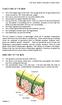 FUNCTIONS OF THE SKIN Skin is the largest organ of the body. The average adult has 18 square feet of skin which account for 16% of the total body weight. Skin acts as a physical barrier for you to the
Status: Standard Procedure: specifies the procedures to be followed, only in exceptional circumstances should these not be followed
 Page 1 of 6 Status: Standard Procedure: specifies the procedures to be followed, only in exceptional circumstances should these not be followed Title: Standard Procedure for the Irrigating (flushing) of
CITY OF COLORADO SPRINGS TAX GUIDE MEDICAL EXEMPTIONS
 CITY OF COLORADO SPRINGS TAX GUIDE MEDICAL EXEMPTIONS The City of Colorado Springs Sales and Use Tax Ordinance contains a medical exemption and definitions that, when combined, provide a variety of exemptions
Delivering nutrition, fluids & medication via a PEG. By Julia Pointer & Caroline Ross, Staff Nurses, Hospice Day Service
 Delivering nutrition, fluids & medication via a PEG By Julia Pointer & Caroline Ross, Staff Nurses, Hospice Day Service Aims of this session? To give an explanation of the theory and practice of a Percutaneous
Location: Clinical Practice Manual
 Subject: Area: Classification: Relevant to: Bladder Management Clinical Practice All Clinical Staff Implementation Date: March 2001 Review Date: March 2004 Responsible for Review: Approved by: Distribution:
Guide to Delegation for Colorado School Nurses
 School district s responsibility for the student with special health needs All students attending public schools must have access to health care during the school day and for extra curricular school activities,
Section 6. Medical Management Program
 Section 6. Medical Management Program Introduction Molina Healthcare maintains a medical management program to ensure patient safety as well as detect and prevent fraud, waste and abuse in its programs.
X-Plain Subclavian Inserted Central Catheter (SICC Line) Reference Summary
 X-Plain Subclavian Inserted Central Catheter (SICC Line) Reference Summary Introduction A Subclavian Inserted Central Catheter, or subclavian line, is a long thin hollow tube inserted in a vein under the
MAD-MR: 10-28 LONG TERM CARE SERVICES-WAIVER EFF:
 INDEX 8.314.4 RELATED CONDITION HOME AND COMMUNITY-BASED SERVICES WAIVER RESPONSIBILITY AND DELEGATION OF AUTHORITY 8.314.4.1 ISSUING AGENCY...1 8.314.4.2 SCOPE...1 8.314.4.3 STATUTORY AUTHORITY...1 8.314.4.4
Demystifying the Medicare Provider Enrollment Process
 Demystifying the Medicare Provider Enrollment Process Christine Bachrach, Esq. Vice President & Chief Compliance Officer, University of Maryland Medical System Heidi A. Sorensen, Esq., Foley & Lardner,
Coverage Basics. Your Guide to Understanding Medicare and Medicaid
 Coverage Basics Your Guide to Understanding Medicare and Medicaid Understanding your Medicare or Medicaid coverage can be one of the most challenging and sometimes confusing aspects of planning your stay
TREATMENT 1. Control bleeding by applying pressure over wound with Gauze Pads (Surgical Supply-4). 2. Contact Surgeon for laceration repair options.
 Page 1 of 8 pages NOTE Contact Surgeon before giving any medication marked with an asterisk. In an emergency or during Loss of Signal, begin appropriate treatment; then call Surgeon as soon as possible.
Medicare Coverage of Kidney Dialysis and Kidney Transplant Services
 CENTERS FOR MEDICARE & MEDICAID SERVICES Medicare Coverage of Kidney Dialysis and Kidney Transplant Services If you have permanent kidney failure, this official government booklet explains the following:
Kaiser Oakland Urology
 Kaiser Oakland Urology The Main Purpose of Bladder Catheterization Complete Bladder Emptying! Help maintain a healthy bladder Help maintain healthy kidneys Reduce the chances of significant urinary tract
SKILLED NURSING FACILITY (SNF)
 MEDICARE REIMBURSEMENT REFERENCE GUIDE SKILLED NURSING FACILITY (SNF) EFFECTIVE JANUARY 1, 2016 Overview This guide includes an overview of Medicare reimbursement methodologies and potential coding options
Male Urinary Catheterisation & Catheter Care
 Male Urinary Catheterisation & Catheter Care Mark Jones, Martin Steggall & Marsh Gelbart City University, London. Good practice Consent gain informed consent. Who can catheterise any Registered Nurse who
Sterile Dressing Change with Tegaderm CHG for Central Venous Catheter (CVC)
 Sterile Dressing Change with Tegaderm CHG for Central Venous Catheter (CVC) The dressing protects your catheter site. It also helps prevent infection at the site. Keep your dressing clean and dry at all
10-144 Chapter 101 MAINECARE BENEFITS MANUAL CHAPTER II SECTION 7 FREE-STANDING DIALYSIS SERVICES Effective 10/1/09 TABLE OF CONTENTS
 TABLE OF CONTENTS 7.01 DEFINITIONS... 1 7.01-1 Continuous Ambulatory Peritoneal Dialysis... 1 7.01-2 Continuous Cycling-Assisted Peritoneal Dialysis... 1 7.01-3 Dialysis... 1 7.01-4 End Stage Renal Disease...
Global Surgery Fact Sheet
 DEPARTMENT OF HEALTH AND HUMAN SERVICES Centers for Medicare & Medicaid Services R Global Surgery Fact Sheet Fact Sheet Definition of a Global Surgical Package Medicare established a national definition
Cutimed PROTECT Medical skin protection. Protect Preserve Prevent
 PROTECT Medical skin protection Protect Preserve Prevent PROTECT Ordering information PROTECT is available in foam applicators and spray bottle PROTECT REF No. Size Unit of Measure HCPCS Spray 7265300
Medicare Claims Processing Manual Chapter 20 - Durable Medical Equipment, Prosthetics, Orthotics, and Supplies (DMEPOS)
 Medicare Claims Processing Manual Chapter 20 - Durable Medical Equipment, Prosthetics, Orthotics, and Supplies (DMEPOS) Table of Contents (Rev. 3416, 11-23-15) Transmittals for Chapter 20 01 - Foreword
Ontario Disability Support Program - Income Support Directives
 Ontario Disability Support Program - Income Support Directives 9.12 - Mandatory Special Necessities Summary of Legislation The costs of the following items can be covered for members of the benefit unit
A Guide to Help You Manage Your Catheter and Drainage Bags
 A Guide to Help You Manage Your Catheter and Drainage Bags A catheter can make a difference to your health and quality of life. We understand that it can be a big adjustment for you. This information will
2016 Medicare Supplement Pre-Enrollment Kit
 2016 Medicare Supplement Pre-Enrollment Kit Coverage underwritten by HNE Coverage Insurance underwritten Company, by an HNE affiliate Insurance of Health Company, New England, affiliate Inc. of Health
KANSAS MEDICAL ASSISTANCE PROGRAM. Provider Manual. Psychiatric Residential Treatment Facility
 Provider Manual Psychiatric Residential Treatment Facility Updated 11/2011 PART II Introduction Section 7000 7010 7020 8100 8300 8400 BILLING INSTRUCTIONS Introduction to the CMS-1500 Claim Form......
Preferred Home Health Manual. January 2011
 Preferred Home Health Manual Table of Contents Home Health Benefits...3. Introduction...3. Filing a Home Health Claim...3. Conditions of Coverage for All Contracts...3. Reimbursement...3. Contract Exclusions...3.