
Master of Arts in Teaching Internship Handbook for Interns and Mentors
|
|
|
- Roy Andrews
- 10 years ago
- Views:
Transcription

1 College of Education Master of Arts in Teaching Internship Handbook for Interns and Mentors Secondary Education English, Social Studies, Math, Science, World Languages

2 Master of Arts in Teaching Program Internship Handbook Secondary Education Table of Contents Overview of the Internship 3 Requirements for Entry into the Internship (EDUC 798) 4 Professional Year Program Requirements 6 MAT Graduation Requirements 7 Resources 8 Conceptual Framework for Professional Education 8 Internship I (EDUC 797) 10 MAT Internship Professional and Performance Competencies (IPPC) 12 Internship II (EDUC 798) 13 Removal from Internship 16 Policy on Substitute Teaching 17 Role of the Intern 18 Snapshot of a Successful Internship 19 Advice from Recent MAT Graduates 21 The Mentor Teacher 23 Words of Wisdom from Experienced Mentors 24 Child Abuse and Neglect 25 Phase-In Sequence 27 Internship Activity List 28 Lesson Plan Format (Narrative) 31 Lesson Plan Format (Template) 34 Co-Teaching Strategies 37 Request for Internship 44 Towson University College of Education Professional Behavior Policy 45 InTASC and COE Standards 51 EVALUATION INSTRUMENTS EDUC 797: Fall Internship Evaluation 52 Classroom Observation Form 54 MAT Internship Evaluations 57 All official communication between the MAT Program and candidates will be handled via TU . Candidates should visit the MAT current student web page at for up-to-date information about program policies, requirements, and course offerings. 2

3 Welcome to the Professional Year internship, the final phase of pre-service training as a teacher. Each internship experience allows the intern to make extensive and immediate connections between the theory and practice of teaching. The goal of these field experiences is to provide a valuable and productive experience in which there are many opportunities to implement the methods and ideas that have been acquired from the professional education courses. This is an opportunity for experimentation, analysis of technique, and practice of teaching skills. Guidance for making the internship as successful as possible is provided in this handbook. The internship is the capstone experience in the MAT Program. Through a gradual induction process, MAT interns ultimately assume complete responsibility for all the professional responsibilities of their mentor teachers. University faculty and school-based faculty provide support for interns during the internship. The internship is a demanding and exciting experience. Interns are expected to demonstrate full mastery of MAT program standards, the InTASC and COE standards, by the end of the internship experience. Attaining mastery of the standards requires interns to fulfill professional responsibilities ethically and dependably, work throughout and beyond the regular school day, and reflect on their performance and make adjustments recommended by mentors and supervisors. Course work, including the EDUC 797 Internship I Seminar and the EDUC 798 Internship II Seminar, provides support and guidance for interns throughout the Professional Year. Successful completion of the internship is mandatory for completion of the MAT degree. In order to meet state certification requirements, MAT students must complete a minimum of 100 days of successful field experience during the final two semesters of the MAT Program. The internship calendar is aligned with the public school calendar, so interns need to be prepared to be in schools as required according to the public school system calendar for the school partnership in which they are placed. During the Professional Year, interns complete EDUC 797 (fall semester) and EDUC 798 (spring semester). Extended Year students completing EDUC 797 are required to complete a minimum of 22 days of observation and participation in a school placement. All MAT interns will be expected to become full-time interns for the final semester in the program, in which EDUC 798 Internship II is completed for a minimum of 18 weeks/90 days (spring). The Professional Year The MAT Professional Year is comprised of consecutive fall, mini and spring semesters. Fall Semester One-Year (full-time) interns begin their Internship I placements (EDUC 797) when teachers report to their schools in August and are in school with their mentor all day, every day during the teacher preparation days. One-Year interns are also required to work with their mentors for the first five days of the new school year for students. (In the event that on-campus courses are held at a time that conflicts with the first five days of the new school year, interns are required to attend their campus courses unless other arrangements have been communicated by the course instructor.) After the first week of school, One-Year interns report to their school placements two full days each week, usually Monday and Tuesday, until the end of the fall semester. In early October and late November, One-Year interns complete two intensive teaching experiences (ITE). During each ITE week, One-Year interns report to school for the entire week (five days). Interns will teach three consecutive lessons to one group of students in one content area and evaluate the effectiveness of their teaching as evidenced by student learning. (Depending on the school s schedule, it may be necessary to extend the ITE into the next week in order to teach the same class three times.) 3

4 Extended Year interns are expected to be in school with their mentor at least one full day during the teacher preparation days. They are also required to be in their school on opening day for students and one additional day during the first week of school. If possible, additional days during teacher preparation and/or the first week of school are highly recommended. After the first week of school, Extended Year interns are required to be at their school placements one day each week, usually Monday or Tuesday. Extended Year interns will complete two intensive teaching experiences (ITE), one during early October and the second in late November. Extended Year interns are required to report to their classrooms three consecutive days during each ITE week. Interns will teach three consecutive lessons to one group of students in one content area and evaluate the effectiveness of their teaching as evidenced by student learning. (Depending on the school s schedule, it may be necessary to extend the ITE into the next week in order to teach the same class three times.) All interns will have a lab fee added to tuition for Internship I (EDUC 797). Interns must successfully complete the field experience and all course requirements for EDUC 797 in order to meet eligibility requirements for entrance to EDUC 798 in the spring semester. Mini and Spring Semesters Internship II (EDUC 798) begins in January immediately following the winter holiday. During the January minimester, all MAT SCED interns will participate in an extended orientation to their second internship experience. Interns will report to their second placement two days each week and work with their mentor teacher. Interns and mentors will discuss expectations, review curriculum, and set goals for the coming internship. Interns will also have the opportunity to meet the students they will be teaching during the second half of the spring semester. MAT SCED interns will return to their A placement and begin their full time internship at the start of the Towson University spring semester. (Depending on school system calendars, some clusters may begin full time internships prior to the start of the TU spring semester. Supervisors will announce the starting date for their cluster.) All interns will have a lab fee added to tuition for Internship II (EDUC 798). Demonstration of effective teaching, as evidenced by student learning, is required in order to successfully complete EDUC 798. Interns who have commitments that would require them to miss school days should not request placement for EDUC 798: Internship II with Seminar. Requirements for Entry into the Internship (EDUC 798) A. Completion of a Criminal Background Check. The Criminal Background check must be received by the Center for Professional Practice (CPP) prior to entry into EDUC 797 in the fall semester. The Criminal Background Check must be on file before the interns first visits to their fall school placements. The first visit usually occurs the week prior to the start of teacher pre-school preparation days. B. Completion of a Teacher Internship Management System (TIMS) application prior to entry into EDUC 797 in the fall semester. (For questions about TIMS, contact Gary Caldwell at [email protected].) 4

5 C. Minimum GPA of 3.00 in MAT course work; no more than 2 C grades allowed in graduate courses to be counted toward the MAT degree. Students with more than 2 C grades in MAT course work will not be allowed to enter EDUC 798 until one of the courses with a grade of C is repeated for a grade of A or B. D. Submission and presentation of a Midpoint Portfolio in November (SPED) or December (SCED). Early Childhood (ECED) and Elementary (ELED) interns are required to present their Midpoint Portfolios in February as a condition for continuation in EDUC 798. Feedback will be provided by the portfolio review team. Interns should make suggested or required revisions prior to presentation of the Summative Portfolio. E. Completion of all prerequisite content courses as identified on the initial transcript analysis. Documentation of completed courses must be given to the MAT Program Coordinator before the first day of Towson University s spring semester. There are no exceptions to this requirement. F. Completion of all MAT course requirements with the exception of SCED 561: Teaching Reading in the Secondary Content Areas (3 credits). This course is taken concurrent with EDUC 798: Internship II with Seminar. G. Successful completion of EDUC 797: Internship I with Seminar with a grade of C or better. Successful completion of EDUC 797 requires satisfactory assessments on the Evidence of Student Learning (ESL) and Internship Professional and Performance Competencies (IPPC). H. Teacher candidates pursuing initial certification as world language teachers must provide the MAT office with documentation of a passing score on the ACTFL Oral Proficiency Interview (OPI) prior to enrolling in EDUC 798. A score of Advanced Low is required for French and Spanish interns. A score of Intermediate High is required for interns seeking certification as Chinese language teachers. Statement from the Teacher Education Executive Board of Towson University The Teacher Education Executive Board (TEEB) of Towson University reserves the right for each department/program to refuse, deny, or revoke the application for admission to professional education programs or continuation in professional education programs of any student whose observed conduct is deemed incongruent with established guidelines of professional behavior. As a professional discipline, education is vested by the public with a trust and responsibility requiring the highest ideals of professional service. All teacher education students agree to accept the responsibility to adhere to the highest ethical standards of professional behavior. Placing the importance of professional behavior and duties above one s own convenience is the cornerstone of professionalism. All teacher education students are responsible for understanding department- and program-specific professional expectations. In addition to fulfilling all academic requirements, successful completion of 5

6 all field experiences requires demonstrated professional behavior including, but not limited to, punctuality, attendance, professional attire, discretion, respect for confidentiality, effective and appropriate communication with University and school-based students and personnel, and acceptance of diversity. All teacher education students must exhibit behavior that is consistent with the University's Code of Conduct and established professional practice in educational and clinical settings. Successful completion of all field experiences is a requirement for continuation in the education program. MAT Program Requirements Completed During the Professional Year A. Professional Portfolio Midpoint and Summative The Professional Portfolio documents the interns progress during their professional preparation and provides evidence of attainment of national performance standards, the InTASC and COE standards (ECED, ELED, SCED) or the CEC standards (SPED). The portfolio is an MAT degree requirement that is necessary for successful completion of the program. All SPED interns present their Midpoint Portfolio for feedback in November; SCED interns present their Midpoint Portfolio for feedback in December; ECED and ELED interns present their Midpoint Portfolio in February. All interns are expected to make recommended or required revisions prior to the Summative Portfolio review in May. Artifacts used in the Midpoint Portfolio should be replaced in the Summative Portfolio by those showcasing the intern s progress throughout the internship. The Summative Portfolio must earn scores of 3 or better on a five-point scale for every InTASC and COE or CEC standard in order to meet MAT degree requirements. B. Essential Dispositions for Educators At Towson University, we recognize the importance of preparing candidates who are worthy to join the education profession. All students enrolled in the Professional Education Unit programs are expected to develop a professional conscience by demonstrating important human characteristics and dispositions necessary to work with diverse and inclusive communities of learners. Following is a list of dispositions, including important diversity proficiencies, which have been identified as core behaviors expected of all graduates of all Unit programs. As candidates progress through coursework and field experiences, they are expected to demonstrate increased understanding and eventual mastery of these dispositions. In the Professional Year, evidence of dispositions will be formatively and summatively assessed and candidates will engage in reflection activities. Commitment to Professional Practice The successful candidate: Respects and models high academic standards, and demonstrates proficiency in academic writing and professional oral presentation. Demonstrates a repertoire of pedagogical skills that develop all students critical and independent thinking, and performance capabilities. Uses ongoing assessment as an integral part of the instructional process. Reflects on practice regularly in order to improve student learning. Makes decisions based on ethical and legal principles, including respect for confidentiality. 6

7 Caring for the Success and Well-being of All Students The successful candidate: Believes that all students can learn and persists in facilitating their success. Accepts and demonstrates responsibility for improving learning for all students. Values co-operation with colleagues, students, and families by respecting their views on improving student achievement. Models the virtues of an educated person, including the drive to work hard and become flexible. Demonstrates culturally responsive teaching and celebrates cultural differences. Collaboration with Colleagues and Stakeholders The successful candidate: Establishes and contributes to a positive learning climate for all students. Engages in continual learning and discussion with other professionals. Recognizes families, colleagues, and supervisors as partners in teaching and learning by creating opportunities to involve them in instructional decisions. Seeks expert knowledge in order to improve teaching and learning. Accepts suggestions and implements changes to improve professional practice. C. Service Project All MAT Program PDS interns must complete a service project of at least 15 hours of additional work during their Professional Year. The service project provides interns with an opportunity to serve the needs of a particular school, partnership or community, interact with learners in small group or individual sessions, and make a positive impact on student learning and the instructional environment in the school. Interns submit a Service Project Proposal for approval prior to beginning their project. A reflective review that includes data/feedback regarding the effectiveness of the service project is a required component. An artifact showing the service project may be included in the Summative Portfolio. MAT Graduation Requirements In order to successfully complete the Master of Arts in Teaching program and graduate, students are required to: Maintain a 3.00 GPA in the MAT graduate program Earn no more than two grades of C in MAT course work Complete all content prerequisites as identified on the transcript analysis with satisfactory grades Complete all courses in their MAT program of study Successfully complete the internship experience and receive a grade of S for EDUC 798: Internship II with Seminar Submit and present a Summative Portfolio and receive scores of 3 or higher in each of the InTASC, COE or CEC standards prior to exit from EDUC 798 Passing scores on the Praxis II Content Knowledge and Principles of Learning and Teaching tests are not requirements for graduation. However, they are requirements for certification in the state of 7

8 Maryland. While interns use their discretion regarding the scheduling of the tests, Praxis II: Content Knowledge is usually taken before the start of the full-time internship in the spring semester. Praxis II: Principles of Learning and Teaching is usually taken early in the spring semester. Interns should make every attempt to have passing scores on both Praxis exams before beginning their job search. Information regarding the Praxis II requirements for the state of Maryland can be found at: The Maryland State Department of Education makes occasional revisions to the Praxis II testing requirements. Be sure to reference the website to make certain that you have up-to-date information. Resources Should you have questions or need guidance during the internship, please confer with your mentor teacher and university supervisor. For additional support, the following resources are available to help you: Dr. Janese Daniels Hawkins Hall 009 Early Childhood Education Ms. Lisa Mason Hawkins Hall 010 Early Childhood Education Dr. Xiaoming (Sarah) Liu Hawkins Hall 413C Elementary Education Mr. R. Mark Herzog Hawkins Hall 413A Secondary Education Ms. Andrea Parrish Psychology 305 Special Education The Center for Professional Practice Hawkins Hall Conceptual Framework for Professional Education The mission of Teacher Education at Towson University is to inspire, educate, and prepare teachers and education specialists as facilitators of active learning for diverse and inclusive communities of learners in environments that are technologically advanced. In order to achieve this mission, Teacher Education at Towson University is committed to seven integrated themes. 1. Ensuring the mastery of appropriate content in general studies in the liberal arts and sciences as well as in the specific academic discipline. 2. Reflecting upon and refining best practices (professional knowledge and skills) to develop a repertoire of instructional and assessment strategies. 3. Preparing educators for diverse and inclusive communities of learners, including systematic exposure to heterogeneous populations. 8

9 4. Utilizing appropriate technologies that reflect best practices in education. 5. Helping develop, internalize, and display professional conscience (a commitment to ethical practice, inquiry, knowledge, competence, caring, and social justice in a democratic society). 6. Developing collaborative partnerships with the public/private sector. 7. Playing a leadership role in teacher education through scholarly endeavors. The Conceptual Framework for Professional Education at Towson University is based upon a foundation of shared beliefs that are performance-based, describing what educators should know and be able to do, and are specifically focused on professional knowledge, skills, and attitudes/dispositions. Each initial and advanced level education program operationalizes the mission and the themes and standards through a planned sequence of content, professional and pedagogical studies, integrated field experiences, and student outcomes required of candidates. 9

10 EDUC 797: Internship I with Seminar The focus of Internship I is on learning to design and deliver effective instruction as evidenced by student learning. University faculty will provide instruction on classroom teaching and management and act as liaisons during the internship, providing opportunities for interns to share experiences and strategies and providing support that is appropriate to the individual placement. Interns in the One-Year program begin their internship in August when the teachers return to school. The interns work with their mentors each day of the preparation period and assist in setting up the classroom. They attend faculty meetings, make initial short and long range plans and observe how effective teachers begin the school year with their students. One-Year interns are in school the first five days of the new school year. An inside look at this crucial getting started period in the school provides invaluable professional experience. Interns in the Extended Year program complete a minimum of 22 days of observation and participation in the classroom to which they have been assigned. Extended Year interns are required to spend at least one full day each week in school with the mentor teacher, beginning with the first week that teachers return to school. During the opening week of school for students, Extended Year interns attend school on opening day and one additional day. After the first week of school, interns will follow an Internship I calendar provided by the appropriate MAT university supervisor in order to complete field experience and course work requirements during the Internship I semester. During Internship I, interns will gradually assume classroom tasks and responsibilities that range from simple assistance to the planning and delivery of lessons. Two intensive teaching experiences (ITE) will provide all interns with an opportunity to plan, deliver, and assess three consecutive days of instruction. During the first ITE, all interns will complete the EDUC 797 requirement, Evidence of Student Learning. For both ITE weeks, interns in the One-Year program are required to report to their classrooms for the entire five-day week. Interns in the Extended Year program are required to report to their classroom for three consecutive days. Upon completion of EDUC 797: Internship I, the mentor teacher will evaluate the intern s performance in the classroom. This assessment should be shared with the intern and the university supervisor in a three-way conference so that goals may be set and a plan of action developed for the continuing internship experience. Each university supervisor/course instructor will communicate specific requirements for successful completion of EDUC 797: Internship I with Seminar. All MAT interns are required to meet the following expectations. (Additional course requirements will be provided by each instructor.) Attendance - It is critical that interns are punctual and regular in their attendance. The intern is expected to be in attendance at all sessions of the school day for the entire assignment to a school, including field trips, professional development programs, parent conferences, faculty meetings, etc. The mentor teacher may not excuse an intern from school activities except in the case of illness or extreme emergency. In all cases, the intern is responsible for notifying both the mentor teacher and the university supervisor of the absence following procedures established by the university supervisor. 10

11 Absences must be made up during scheduled school or university vacation time or at the conclusion of the semester. All interns must complete the required amount of time for the experience or they will receive a grade of Incomplete. Evidence of Student Learning All interns are required to complete the Evidence of Student Learning (ESL) project during the first Initial Teaching Experience. The ESL project requires interns to demonstrate the effects of their teaching on student learning. In completing this project, interns document their proficiency in facilitating student learning by addressing these standards: Contextual Factors, Learning Objectives, Assessment Plan, Lesson Plan, Instructional Decision-making, Analysis of Student Learning, Classroom Management, and Reflection and Self-Evaluation. The expectations for the ESL appear in the document entitled Evidence of Student Learning: Performance Prompt/Project Description. Interns are required to submit written documentation of their project and achieve a minimum score of 75% on each of the standards and a composite score of 80%. In the event that the ESL is not assessed at the satisfactory level, the intern will meet with the university supervisor to discuss the area(s) of concern. The intern will receive one opportunity to revise the ESL and resubmit for scoring. The ESL must be assessed at the satisfactory level in order for the intern to achieve a passing grade for EDUC 797 and receive permission to enroll in EDUC 798. MAT Internship Professional and Performance Competencies (IPPC) - Throughout the fall semester, interns will receive formative feedback from their university supervisor regarding their professionalism and classroom performance using the MAT Internship Professional and Performance Competencies (IPPC) rubric. At the end of the fall semester, students will receive an IPPC Summative Assessment. Successful completion of EDUC 797: Internship I with Seminar requires students to receive 28, 29 or 30 points on the IPPC summative assessment. All competencies must receive a minimum of one point. Final scores of 27 or less on the IPPC Summative Assessment will be considered unsatisfactory. Final scores of 27 or less will result in students receiving zero points toward their final grade for EDUC 797. Students receiving scores of 28 or 29 on the IPPC Summative Assessment will be required to develop and implement an Improvement Plan to address the indicator(s) that are not consistently evident. The IPPC must be assessed at the satisfactory level in order for the intern to achieve a passing grade for EDUC 797 and receive permission to enroll in EDUC

12 EDUC 797: Internship I with Seminar MAT Internship Professional and Performance Competencies SUMMATIVE ASSESSMENT MAT Intern: School: Grade: Fall: 20 Internship Professional and Performance Competencies Consistently Evident (2 points) Sometimes Evident (1 point) Not Evident (0 points) 1. The intern attends all required days and experiences for the entire assignment to the school. Any absence is excused and approved in advance by the university supervisor. 2. The intern adheres to the faculty arrival and departure times. 3. The intern dresses in professionally appropriate attire. 4. The intern interacts with all students in a professional manner. 5. The intern interacts with Towson University faculty, staff and colleagues in a professional manner. 6. The intern interacts with all school faculty and staff in a professional manner. 7. The intern demonstrates promptness and punctuality in meeting classroom responsibilities. 8. The intern is completely prepared for assigned responsibilities. 9. The intern submits complete lesson plans according to the established protocol. 10. The intern proactively seeks and accepts suggestions in a professional manner. 11. The intern implements suggestions from the mentor and/or supervisor. 12. The intern maintains frequent and timely communications with the mentor. 13. The intern reflects on his/her classroom instruction, practices and responsibilities and implements needed improvements. 14. The intern demonstrates appropriate use of the English language (oral). 15. The intern demonstrates appropriate use of the English language (written). TOTAL SCORE Successful completion of EDUC 797: Internship I with Seminar requires 28, 29 or 30 points on the Summative MAT Internship Professional and Performance Competencies Assessment. All competencies must receive a minimum of one point. Final scores of 27 or less on the Summative Assessment will be considered unsatisfactory. Students receiving scores of 28 or 29 on the Summative Assessment will be required to develop and implement an Improvement Plan to address the indicator(s) that are not Consistently Evident. The Improvement Plan must be written within one week following the receipt of the Summative Assessment and approved by the supervisor before the end of the fall semester. It is the intern s responsibility to schedule an appointment with the supervisor to discuss the plan. Successful completion of EDUC 797 is a required prerequisite for admission to EDUC 798: Internship II with Seminar. Intern: Supervisor: Date: 12

13 EDUC 798: Internship II with Seminar Internship II begins with an extended orientation to the school and classroom where the second internship rotation will occur. During the January minimester, secondary interns will spend two days each week working with their B placement mentor and gaining familiarity with the school, community, curriculum and students. At the end of the minimester, interns will return to their A placement and begin their full time internship on the first day of Towson University s spring semester. Internship II requires interns to be in school five days per week, gradually assuming responsibility for the mentor teacher s entire schedule of responsibility. Many interns, already familiar with school and classroom routines, begin Internship II with immediate instructional responsibility. Because each intern and classroom is unique, there is not an exact formula for how quickly an intern should assume a mentor s schedule. It is recommended that the assumption be gradual, culminating in a two week block of full responsibility, when the intern is responsible for all the roles and duties normally fulfilled by the mentor. After successfully completing one rotation of the internship, MAT interns complete a second placement at a different grade level, often in a different school from the first placement. In accordance with state licensure and teacher education accreditation requirements, both internship experiences are completed in a public professional development school partnered with the MAT Program. Feedback becomes increasingly important as the intern grows in competence and takes on more roles and responsibilities. Pending approval of the school administrators, the mentor teacher is encouraged to occasionally allow the intern to take sole responsibility for the classroom while the mentor is elsewhere in the school building. However, it is crucial for the mentor teacher to frequently observe the intern s teaching and provide written feedback and conferences that will highlight strengths and areas needing improvement. In addition, the university supervisor will visit each intern regularly during Internship II to observe classroom instruction and provide feedback. Supervisors will observe approximately three lessons during each internship rotation. Interns are encouraged to identify opportunities to implement co-teaching strategies during classroom instruction. These strategies will enable the mentor and intern to work collaboratively to positively impact student learning. Examples of co-teaching strategies can be found on pages Additional information is available in the MAT Internship Handbook Mentor s Addendum. At the mid-point of each placement, the mentor teacher will complete an assessment of the intern s teaching performance. This assessment will be shared with the intern. The intern will sign the original midpoint assessment and receive a copy of the document. Each mentor teacher and university supervisor will compose a final written evaluation at the end of each placement. Whenever possible, the university supervisor will join the mentor and intern for a three-way conference to discuss the evaluations. The intern should sign the original final evaluations and receive a copy of the documents. Each university supervisor may communicate individual expectations for successful completion of Internship II. It is required that all MAT interns meet the following minimum expectations: Attendance - The intern is expected to be in attendance at all sessions of every school day for the entire assignment to a school, including field trips, professional development programs, parent conferences, and faculty meetings. The mentor teacher may not excuse an intern from 13

14 school activities except in the case of illness or extreme emergency. In all cases, the intern is responsible for using the established protocol to notify both the mentor teacher and the university supervisor of the absence. Absences must be made up during scheduled school or university vacation time or at the conclusion of the semester if the mentor agrees to extend the internship; otherwise, the intern must accept a grade of incomplete and repeat the internship in a future semester. All interns must complete the required amount of time for the experience or they will receive a grade of incomplete. Professionalism - Attention to daily duties, assigned by the mentor teacher, is a matter of professional responsibility as well as of academic expectancy. The internship is a full time responsibility and it must take precedence over other commitments. The internship encompasses a full teaching day. Each intern is expected to report to and depart from the school on the same schedule required of the mentor teacher. Because of the value to professional growth, interns are expected to attend parent-teacher conferences, professional development programs, faculty meetings, and other activities. The intern is expected to behave ethically and professionally at all times. Conversation, dress, manner, appearance, and relationships with administrators, teachers, staff and students in the school must be maintained on a professional level. Intern expectations described on the EDUC 797 MAT Internship Professional and Performance Competencies (IPPC) rubric will be maintained throughout the EDUC 798: Internship II semester. Planning - The intern is expected to compose detailed, written lesson plans for each period of instruction and keep lesson and unit plans in a binder that both the mentor teacher and university supervisor may easily access. A suggested lesson plan format is included in this handbook. The intern may not teach a lesson until the mentor teacher has reviewed and approved the lesson plan. Plans must be submitted in a timely manner as required by the university supervisor and mentor teacher or at least two days in advance of teaching the lesson to allow an opportunity for discussion, exchange of ideas and revisions as necessary. Lesson plans should include a copy of all written resources that are part of the lesson including worksheets, homework assignments, and instructional materials. Writing lesson plans must be done outside of school time. Interns who fail to submit plans to the mentor for review in a timely manner, who fail to plan appropriately for instruction, or who fail to implement requested changes to plans in advance of instruction will not be allowed to deliver instruction until final plans are approved by the mentor. Days that the intern does not teach due to failure to plan adequate instruction will be counted as absences that must be made up. Interns who consistently fail to meet expectations for effective planning will be removed from the placement and will receive a grade of U for EDUC

15 Evidence of Student Learning - All interns are required to complete an Evidence of Student Learning (ESL) during the spring full time internship. The ESL completed during the spring semester is based on standards and expectations similar to those required of the ESL completed in EDUC 797. However, there are a few differences: The spring ESL must be based on a unit of instruction that encompasses a minimum of five consecutive lessons. Interns are required to submit written documentation of their project and achieve a minimum score of 80% on each of the standards and a composite score of 85%. The ESL is a required component of the Summative Portfolio. The ESL must be assessed at the satisfactory level by the university supervisor before the intern will receive permission to include the ESL in his/her Summative Portfolio. Reflection - The intern will compose reflections that highlight discoveries made, plans for the future, and problems that need to be solved. Self-evaluation is an important component of the internship experience. It is through reflection, the intern s personal analysis of situations, reactions and procedures, that optimal progress is realized. Lesson Plan Section IV: Reflecting on the Lesson provides critical questions that guide the reflective process. Alternate forms for composing reflections may be assigned at the discretion of the instructor/supervisor. The mentor teacher and/or university supervisor may request copies on the reflections in order to provide responsive feedback. 15

16 Policy Regarding the Removal of Interns from Field Experiences and Concurrent Course Work Interns must be aware of their direct impact on the quality of school experiences for children. Supervisors and mentor teachers are required to make a good faith effort to provide guidance and support in order to ensure the success of each intern. Mentor teachers and supervisors will provide interns with feedback and opportunities to improve performance. Most MAT interns are successful during the professional year internship and complete program requirements as expected. However, interns who consistently fail to meet expectations for attendance, timely and effective lesson planning, lesson implementation, professionalism and/or reflection will be removed from the field placement and will receive a failing grade for EDUC 797 or a grade of Unsatisfactory for EDUC 798. University interns are guests in public school placements. IF at any time the mentor teacher or a school administrator requests that an intern be removed from the school setting, the university supervisor will immediately notify the intern of the decision and ask the intern to leave the school building. The intern will meet with the supervisor and the MAT Program Director in order to determine appropriate next steps, including, but not limited to, termination of the internship or continuation of the internship in a new setting. The MAT Program Director may, upon review of the information, recommend that the intern be reassigned to a new placement in the current or a future semester, may recommend that the intern withdraw from the program, or may recommend that the intern be removed from the program by the Dean of the College of Education. A due process review consistent with university policy will occur before the decisions are finalized. Interns removed from the internship setting and not allowed to continue the internship that semester must withdraw from concurrent course work that requires an internship placement to complete course requirements. Interns must be mindful of the university calendar regarding withdrawal deadlines. Interns who are removed from internship placements after the deadline to withdraw from classes will receive a failing grade for the internship and may also fail concurrent course work if the intern has not successfully completed course assessments that require field placement. 16

17 Policy on Using MAT Interns as Substitutes The extensive field experiences required of the internship provide MAT interns with the close supervision of an experienced mentor teacher. Supervised field experiences are crucial to the development of a repertoire of teaching strategies and professional knowledge. School system policy typically requires that an approved substitute teacher be on duty in the classroom when the mentor teacher is absent. Therefore, the MAT program strongly discourages the use of MAT students as substitutes. In the event that one s mentor teacher is absent, a qualified substitute teacher must be assigned to his/her duties. Interns should not be assigned to cover another teacher s classroom schedule (lunch, hall, bus, or study hall duty) nor should mentor teachers be used as substitutes in other classes while they have an intern. However, the intern should assist their mentor teacher with these duties when requested to do so. The mentor teacher may be released for a short period of time for staff development or planning while the intern is in charge of the classroom if the mentor teacher, school principal and university supervisor feel that it is appropriate. A substitute is not needed for these short periods of time. During the EDUC 797: Internship I semester, some interns gain classroom experience through employment as substitute teachers. MAT interns may not be employed as substitutes in schools where they are completing their internships. University policy prohibits the release of the student intern to accept a long-term substitute position or full time teaching position prior to successful completion of the internship experience. Receiving compensation while completing the internship is also prohibited. 17

18 The Role of the Intern You are the key person who will decide your success in learning to teach. Learning to teach is a developmentally constructive process based upon your background experiences, professional preparation, effort and professional attitude. You will be helped along the way by a team of professionals, but the ultimate person responsible for your success is you. You must take the initiative in meeting your own goals. The following guidelines are offered as a means to assist you in your growth and development as a teacher. 1. Attend seminars and staff development meetings provided by the school district. 2. Become acquainted with, and follow, school district policies. 3. Become familiar with the legal responsibilities of an intern. 4. Regard information received about students and school personnel as confidential. 5. Become aware of, respect, and value students from all cultural, socioeconomic, and language backgrounds. 6. Plan and implement instruction based on students needs. 7. Consistently plan lessons in advance following the established protocol. 8. Adopt a self-improvement learning philosophy. Request constructive suggestions and feedback, and incorporate them into instruction. 9. Attend and participate in parent-teacher conferences, if permitted. 10. Seek out multiple approaches and materials for meeting diverse student needs. 11. Develop an awareness of student strengths and needs. 12. Observe the teaching of the mentor teacher and help to prepare materials. 13. Assume the attendance and daily schedule of the school staff. 14. Be discreet in conversations about students, teachers and other staff members. 15. Limit discussions about problems that arise to the mentor and the university supervisor. 16. Demonstrate a positive, professional attitude. 17. Take an early initiative in assuming responsibility. When teaching, attempt alternate teaching techniques to discover and to develop an individual style. 18. Seek the advice of the mentor teacher. Schedule regular conferences to discuss progress. 19. Be on time and be prepared. Demonstrate responsibility by accepting and completing tasks. 20. Notify the mentor teacher and the university supervisor of absence. Be certain that the mentor teacher has everything necessary to teach in the event of an absence. 21. Notify the university supervisor of any difficulties in the experience. 22. Provide a copy of the weekly teaching schedule to the university supervisor. 23. Make lesson plans available during the university supervisor s visits in the classroom. 18

19 Snapshot of a Successful Internship 1. Stay positive. Take every experience and expectation and use it as an opportunity to grow. Your attitude is the key to your success. 2. Reach out. Be sure to ask questions. Smile a lot! Extend yourself to meet new people, including cafeteria workers, custodians, administrative assistants, specialists, administrators and parents. 3. Be flexible. There is a lot going on in the schools. Do not allow yourself to become frustrated with things that you cannot change. Remind yourself that learning comes in a variety of experiences. Teachers organize and use time differently. Respect differences. Take the best from your mentor and your situation. Appreciation means taking what you value in others and making it your own. 4. Be prompt and courteous. You are leaving an impression in everything you do and say. 5. Try new ideas. Most schools and mentors will warmly welcome you, your talents, and all you have to share. Be willing to take risks. 6. Compliment and reinforce your mentor teacher as well as your students. 7. Dress to impress. You are entering the professional world. Dress appropriately for the classroom. On your first day at the school, over dress. Then look at what the teachers are wearing and dress appropriately. Consult your supervisor if you have questions about the appropriate dress for an intern. 8. Avoid prejudging. Be open to your situation and learn from it. Absorb what you hear and see and trust that people have reasons for their actions. Ask your mentor teacher to explain...listen...and reflect. 9. Be responsible. You have the same building responsibilities as your mentor--conferences, meetings, duties, etc. Plan ahead and discuss these responsibilities with your mentor. Always call regarding absences or tardiness. 10. Take initiative. Become involved in the classroom immediately. Let your needs be known if they are not being met. Your mentor and supervisor will do their best to be sensitive to you. Help them if they overlook something. Keep communications open. 11. Learn for a lifetime. Know your subject matter and seek new knowledge. Be constantly aware of all changes and developments in the field of education. Read, confer with colleagues, seek information, and share. 12. Have a sense of humor. Do not be afraid of making a mistake. Be willing to grow from it and laugh with your students. 13. Set goals for yourself. Believe in yourself and your potential, and keep your expectations high, yet reasonable. Never be afraid to use your resources and consult with others to accomplish your goals. 19

20 14. Set goals for your students. Make your students feel valued and important as you build their selfesteem. Give them responsibility toward achieving mutually determined goals. Teach internalized discipline and rewards. Expect all students to perform every day. Provide opportunities for success. 15. Be a team player. Establish good interpersonal relationships with all school personnel. Become a team member and learn how the school works as a community. Attend PTA meetings, faculty meetings and professional development sessions. Nothing impresses a teacher or principal more than to see interns volunteer their own time for special events, to go beyond the expected or the ordinary. 16. Be prepared to work hard and complete all assignments on time. Remember that the children will not forgive you if you come to class unprepared. 17. Don t wait until the last minute. Make sure that your mentor receives your lesson plans in time to review the content and offer suggestions. Remember that you will need time to make any revisions that are necessary. Plan on giving your lesson plans to your mentor at least two days prior to teaching the lesson. 18. Respond to constructive criticism in a positive manner. As an educator, you will spend a lifetime giving constructive criticism to your students and receiving it from your peers and supervisors. Learning to deal with constructive criticism now will help you to use it in a positive manner. 19. Don t be a clock watcher. Arrive at school early enough to prepare for the day but no later than the scheduled arrival time for teachers. Leave school after you have prepared for your next visit, but no earlier than the scheduled dismissal time for teachers. On your days at school, you have one objective, to fulfill all responsibilities to your classroom. This objective takes precedence over all other activities or commitments. 20. Expect to get sick. Expect that you will catch almost every disease that is carried through the school doors and that you will have to make sure that you are extremely ill and unable to perform your classroom responsibilities in order to miss a day of school. 21. Keep a healthy balance. This is much easier said than done! The internship requires a lot of work, constant effort and hours of commitment. Take time to enjoy family and friends and don t forget to celebrate your many successes. Remember that this time next year, you may be the one standing in front of your first classroom full of students! 20

21 Remain professional at all times! Everyone in the school will remember your attitude and how you presented yourself and you want it to be a positive memory. Make a positive first impression... You only get one chance! Keep a calendar and stick to it. You will be very busy. It will be essential that you keep an organized calendar with all assignment due dates. Stay on top of your assignments. It is too hard to play catch up during this program. Arrive at school at least fifteen minutes prior to when teachers are required to report. This will give you a chance to get papers copied before other faculty members arrive. This way, you aren t spending your morning waiting in line. Being prepared in the morning makes the day run SO much smoother. Take photos! They were a huge highlight in my portfolio reviews. Both my reviewers and principal loved that they could see exactly what my students were doing in the classroom. Eat a healthy lunch. That mid-day energy drop can be brutal. The soda and candy in the vending machines are not good substitutes. Support each other! One thing that helped me during the program was the support of the other interns. You are in this together, so support and encourage each other. Your family and friends may not understand what you are going through, but the other interns in your cluster will. Let your loved ones and friends know in advance that, unfortunately, you will be very busy and not have a lot of free time. Just remember it will be worth it in the end. Leave your personal life at home. When you are in the classroom, it is all about the students. Have fun! This year will be what you make of it. My advice would be to see the positive in every situation and enjoy your time in the schools. Check your several times each day. If your supervisor asks you for a response to a question, reply immediately. It s easy to forget. Advice from Some Recent MAT Graduates for Interns Entering their Professional Year PRIORITIZE! The MAT program can seem overwhelming at first (even to those of you who are planners and very organized), but the workload in and out of the classroom is manageable as long as you PRIORITIZE your assignments. I tend to be a perfectionist, and one of the hardest parts about the program at the beginning was figuring out how to make sure everything was accomplished on time. It s true... people notice how you look. The students, teachers, and principals will notice that you look put-together and professional. Wear clothes that are comfortable, but not sloppy. Save everything! It will be critical that you save lessons, worksheets, assessments, and samples of students work. It is equally important that you back up saved documents on your computer. Stay ahead of the game. Never, ever leave anything to the last minute. 21
22 Keep a communication log with your mentor and be open to suggestions. The school day gets very busy and there isn t always time to sit down and talk. The log can include suggestions on ways to improve your instructional strategies, ideas for instruction, or praise for a job well done. MORE Advice from MAT Grads ASK QUESTIONS It is not seen as a weakness to be unsure of something. It is always better to ask! KEEP A POSITIVE ATTITUDE Your mentor teachers will know if you are frustrated and, more importantly, the kids will know! Remember, it is all constructive criticism. You are going to learn so much this year. You are not always going to be perfect and you are going to make mistakes. This is a learning process and you will grow so much throughout the year. Do not be hard on yourself. If something doesn t work, think about how you can make it better the next time and move on. Collaborate with other teachers. When writing lesson plans, ask other teachers on the team for advice or suggestions. They are more than willing to help and oftentimes have a different perspective than your mentor. Talk to the students. They love to feel like they know you and that you are not a random person coming in the classroom once or twice a week. Make a schedule. Keeping yourself organized is VERY important. Utilize the time given to you during the school day. Spend teacher planning periods writing lesson plans, meeting with your mentor or making copies. Find an organizational system that works for you. There will be a lot of paper work to keep organized. Be a good listener. Believe it or not, it doesn t only apply to your students. Having the opportunity to work with experienced teachers (including your TU professors, supervisor, mentor teachers and other faculty/staff members at your internship sites) is an invaluable part of the MAT program. Again, don t get involved with gossip, but do have genuine conversations with the staff, especially those on your team. It makes the experience much more rewarding and I found that they are accepting and eager to help. BE PROFESSIONAL! When I initially saw that professionalism was included on the evaluation from supervisors and mentors, I assumed that it meant dressing appropriately, treating others with respect, remaining gossip free at school, etc. Although all of these things are part of being a professional, a large component of this is also arriving to your internship on time on a consistent basis and not calling out sick/missing any days in the classroom unless it is an absolute must. 22
23 The Mentor Teacher Your relationship with your mentor teacher will be the most important and influential factor of your internship. The teacher whose classroom you will join has been chosen by a principal or supervisor because of his/her mastery of the many demands of teaching. It is important to communicate early and often with your mentor so that you both share expectations and a vision for your participation in the classroom. While it is a challenge to be an intern, it is also challenging to guide an intern. As a guest in your mentor s classroom, look for ways to support your mentor and work together as a team. Make the most of the opportunity to share a classroom and all the responsibilities of teaching with another educator. Meeting your Mentor Teacher Getting Off to a Good Start! Take time to get to know each other. Engage in conversations that encourage the discovery of common connections. Chat about family, the teaching profession, spare time activities, recreation, etc. Be prepared to talk about yourself. What is your background? What are your passions? Where do you want to be in five years? What are your strengths? Do your homework and ask questions. Before the first meeting with your mentor, access available resources and learn about the school and its community. Ask about the impact of community demographics on school programs and classroom instruction. Begin to gather information that will be important to your work in the classroom. Some possible questions to ask your mentor include: What types of diversity are represented by the students in your class? What is the general range of ability in the class? How are the identified special needs students served? Do you co-teach with a special educator? What are the learning characteristics of the students who do not make satisfactory progress? Is there a specific curriculum plan/guide for each subject or content area? Are there guides that I can review? Do you use any particular grouping strategies? May I receive a copy of the daily schedule? What can I do to prepare myself for teaching with you? What do I need to know about the students and school culture that will help me be successful? In addition to teaching your students, what other responsibilities do you have at school? If your mentor asks, What can I do to help? have an answer ready. Do not leave the first meeting without having answers to important questions. What is the best way of communicating with you? ? Telephone? Text? When is the best time to contact you? How should I prepare for my next day in your classroom? Say thanks and follow up with a note letting your mentor know you appreciate his/her willingness to guide you through your internship. 23

24 A Few Words of Wisdom from Experienced Mentors Common Mistakes to Avoid During Your Internship 1. You want your students to like you and, therefore, you hesitate to discipline students accordingly. 2. You refrain from asking questions or seeking assistance. 3. You act in a less-than-professional manner in an attempt to relate to your students. This could include the use of slang, cool conversations, overly casual dress, and sharing of too personal information. 4. You become involved in school politics. 5. You ignore small behavior problems in hopes they will go away. 6. You are inconsistent in communicating and followingthrough with your expectations for student behavior. 7. You do not schedule adequate planning time with your mentor. 8. You are not ready for the instructional day by the time the students arrive. 9. Lesson plans are not given to the mentor in time for them to be reviewed and revised if necessary. 10. You do not take advantage of opportunities to showcase your talents and receive feedback from administrators, mentors, and/or other instructional specialists. 11. You lose sight of your goal. Your internship makes many demands on your time and energy. Teaching is an awesome profession but it requires a personal commitment to bringing your best to your students. Nothing less will do. 24
25 Child Abuse and Neglect Know Your Responsibility Child abuse and neglect is a serious problem that requires the involvement of all citizens and professionals in the community for the purposes of prevention, identification, and treatment. In Maryland, the child abuse and neglect law requires anyone who suspects a child has been or is being maltreated to report the matter to the Department of Social Services. In cases of child abuse a report may be made to the Department of Social Services or the police. Any professional who knowingly fails to make a required report may be subjected to certain professional sanctions. The professionals identified in Maryland law include health practitioners, police officers, educators, and social workers. Any person who, in good faith, makes a report of abuse or neglect is immune from any civil liability or criminal penalty. The following information is provided so that you will be familiar with the physical and behavioral indicators of child abuse and neglect. Please note that the presence of any of these indicators does not necessarily mean a child is being abused or neglected. They may, however, lead you to suspect abuse or neglect and therefore report it. Physical Abuse Physical Indicators Behavioral Indicators Bruises Child * on any young child * overly compliant, shy, or aggressive behavior * on facial area; * avoids parents * in unusual patterns * inhibited crying * clustered in one area of the body; * hyperactive * in various stages of healing * avoids physical contact * both eyes "blackened" with no injury to nose * low tolerance for frustration * distrustful Burns Parents * caused by immersion in hot liquid * hold unrealistic expectations for the child's * cigarette burns usually on palms of hands, physical or emotional development leaving "crater" shaped burns *"immature" * caused by hot implement, such as electric * dependent curling iron, leaving burn marks in the shape * aggressive of the implement * low sense of self-esteem * caused by ropes that indicate confinement * sees the child as "bad", "different", or "evil" * low tolerance for frustration Other * inappropriate coping skills Welts, cuts, abrasions, fractures and internal injuries may also indicate abuse. Since these injuries may occur through normal childhood experiences, they should only cause concern when coupled with some other physical or behavioral indicator. You should also be concerned if the injury does not seem likely to have 25
26 resulted from normal activity, given the child's age and physical development. Neglect Physical Indicators Behavioral Indicators Child Child * extremely dirty and unkempt * withdrawn * left unattended or inadequately supervised * shy for long periods of time * passive * receiving inadequate medical or dental treatment * always tired * wearing inadequate or weather-inappropriate * developmentally slow clothing * denied an adequate education due to parental Parent action or inaction * apathetic * ignored or badgered by caretaker * shows little concern or awareness of the child's * forced to engage in criminal behavior at the needs direction of the caretaker * shows anger when questioned about child's care * impulsive in making decisions * inconsistent disciplinary practices * overwhelming personal needs Sexual Abuse Physical Indicators Behavioral Indicators Child Child * difficulty in sitting or walking * unusual sexual behavior or knowledge * repeated symptoms of medical problems with * nightmares the genitals or digestive system * poor peer relationships * sexually transmitted diseases * few social skills * pregnancy * extremely isolated * repeated "runaways" * depression Parent * extremely overprotective * overly interested in child's social and sexual life * sees child as highly sexualized * jealous 26
27 Internship Phase-In Sequence The following guidelines are intended to help mentors and interns establish a framework for increasing responsibility throughout the internship. Please consult the Activity List on pages for additional responsibilities that interns may gradually assume during the internship. Phase I: Orientation/Intense Participation and Observation Become familiar with rules, regulations, and procedures of the classroom. Develop skills in communicating rules to students. Become familiar with the physical features of building(s). Become acquainted with and learn the names of students. Become aware of friendships and sub-groups and the unique needs of individuals. Observe instruction, following lesson plans prepared by the mentor teacher. Identify evidence of improved student learning. Participate in classroom routines (attendance, recording grades, supervision outside of the classroom distributing/collecting materials). Learn daily schedule. Instruct in a limited sense: administer tests, tutor, and conduct short informal segments of a lesson. Participate to some extent in related activities; i.e., faculty meetings, athletic events, student clubs, after school activities. Tutor individual students or small groups as assigned by mentor teacher. Become familiar with content to be taught later in the placement. Plan and implement co-teaching strategies with your mentor. Phase II: Assuming Partial Responsibility and Assisting Manage all routine tasks. Plan instruction for students whose work is evidence of a need for more or enriched instruction. Gradually assume larger responsibility for instruction by accumulating teaching responsibilities, adding one subject or group of students as teaching proficiency increases. Continue to develop instructional materials for lessons. Participate in faculty meetings, parent-teacher conferences, etc. Continue to plan and implement co-teaching strategies with your mentor. Phase III: Full Responsibility Assume primary responsibility for planning, preparing materials, delivering instruction, monitoring student progress, and evaluating student learning. Implement an effective classroom management plan. Assume primary responsibility for developing the instruments for student evaluation. Based on assessment data and analysis of student work, provide instruction that recognizes individual student needs. Assume the role of lead teacher and continue to plan and implement co-teaching strategies. 27
28 Ask school administrator(s) to observe lesson and provide feedback. EDUC 797 and EDUC 798: Internship Activity List The following is a comprehensive list of experiences and responsibilities that every intern should undertake during the Professional Year. Discuss these activities with your mentor to decide which experiences should be completed independently and which experiences should be pursued through teaming with your mentor or other school faculty. School Procedures Learn about local school policies and procedures by reviewing a copy of the faculty handbook. Learn the school s crisis emergency plan. Take attendance, maintain records, collect money and forms. Supervise a fire drill. Proctor or observe the administration of a standardized test. Assist with the completion of report cards. Monitor the hallway during change of classes. Prepare a set of plans for a substitute. Prepare a set of emergency substitute plans. Examine students permanent records with your mentor. Participate in parent conferences. Learn the expectations for faculty arrival and dismissal times, lunchtime, and team planning times. Refer a student to the nurse. Learn to use the school intercom and/or telephone systems. Locate the teacher workroom, copy machine, mailboxes, nurse s office, media center, faculty room, and where supplies are kept and how they are distributed. Relationships with Students Look for opportunities to talk and interact with students on a professional basis. Identify the students in your classroom with IEPs or 504 plans. Discuss any instructional or assessment accommodations with your mentor or the special education teacher. Use a creative approach to introduce yourself to the students. Eat lunch with the students in the cafeteria. Use a variety of strategies to learn about the students in your class. If appropriate, implement the school-wide management system (Ex. PBIS) Develop and implement a positive reinforcement management strategy. Learn the procedures for suspected child abuse. Report suspected abuse if needed. Contacts with Colleagues Work collaboratively with other teachers during team planning meetings. Share materials and ideas with colleagues. Be positive and receptive to suggestions for personal and professional growth. Be discrete about discussing information related to students. Be discrete in discussing other interns, teachers, school policies, personnel. Willingly share routine classroom and school duties. 28
29 Protect the confidentiality of each child s information. Attend a School Improvement Team (SIT) meeting. Attend an IEP meeting. Consult with faculty resources to assist with lesson preparation (Ex. reading specialist, math resource teacher, special education teacher) Instruction Purchase a teacher plan book and use it to organize your instructional day. Keep a record of all meetings, conferences and important activities in your plan book. Assist with small group activities. Survey classroom and school instructional resources. Prepare and evaluate homework assignments. Construct, administer, and evaluate test results related to a unit of instruction. Include proactive teaching strategies in your lesson plans that differentiate instruction for specific students or small groups.. Model good handwriting on the chalkboard, overhead and other visual displays. Create an instructional bulletin board and various learning materials. Participate in the organization of a field trip that includes pre and post activities. Vary the room arrangement. Use various grouping strategies for instructional purposes. Evaluate student progress and record grades. Provide specific and timely feedback to students. Create a display of students work. Have enrichment activities planned for emergency and/or fill-in time slots. Prepare make-up work for absent students. Establish and implement a plan for students who have missed work. If appropriate, access a community resource to support a lesson. Technology Use a digital camera to enhance a lesson, display or parent communication. Identify and use an interactive website as part of your instructional sequence. Integrate the use of appropriate software with your instruction. Identify and use information from a website to build students background knowledge. Use a word processing program or scanner to create instructional materials. Provide remedial or enrichment opportunities for a student by accessing appropriate software. Create an interactive Power Point presentation and use it as an instructional tool. Incorporate the school s latest technology into a lesson (Ex. Interactive white boards). Use available school system data collection and analysis technology to monitor student achievement. Professional Activities and Responsibilities Write a letter of introduction to the parents/guardians of students in your class. Attend a PTA meeting. Observe other grades and/or subject areas. Participate in extracurricular student activities. Attend all team meetings, professional development workshops and faculty meetings. Invite the principal, assistant principal, department chairperson and/or instructional facilitator to observe a lesson. (Spring semester) 29
30 Establish and utilize a consistent means of communication with your mentor to discuss your progress. Serve on a school committee. Maintain good attendance and punctuality. Willingly come in early and/or stay late to prepare materials, lessons, assist. Keep your lesson plans in a well-organized internship notebook or bin. Schedule and maintain a weekly conference/planning time with your mentor. Learn the procedures/expectations for working with paraprofessionals. Take steps to establish positive relationships with parents. 30
31 Planning for Effective Instruction ~ Lesson Plan Format (Narrative) I. Purpose of the Lesson: What will the students learn? Why is this learning meaningful, important and appropriate? What will the students say or do that will serve as evidence of learning? Subject, Unit, Topic, Date, Grade, Class size, Time, Mentor, School, Intern Standard: Identify the Maryland College and Career-Ready Standard (or other content standard) that is aligned with your lesson objective. Big Idea or Essential Question: Identify the over-arching theme or broad-based question that is being addressed in this lesson. Alignment with the Summative Assessment: Examine the summative assessment and identify the complexity of learning that students will need to demonstrate in order to be successful on the summative assessment. This would include the format of the question and response, any unique or unusual vocabulary and the level of content rigor. BE SPECIFIC. Your formative assessment should align with this level of complexity. Lesson Objective: Clearly identify the intended learning (what you expect students to know or be able to do by the end of the lesson). Use wording appropriate to the development, prerequisite knowledge, skills and experiences of the students. Formative Assessment: Align directly with the learning objective. This assessment documents the extent to which students have acquired the learning identified by the objective. It should match expectations of the summative assessment. II. The Context for Learning: What factors will influence my instructional decisions? How will my instruction remove barriers to learning and/or build on students strengths? Knowledge of Learners and Instructional Decisions based on Knowledge of Learners: List any formal or informal data that is directly related to your learning objective. Describe the instructional decisions you made as a result of knowing this information about your students. The instructional decisions must relate specifically to this lesson. (Required) Individual or Small Group Needs Specific to this Lesson and Differentiated Practices Specific to this Lesson (Instruction and/or Assessment): Identify the students who will require differentiated instructional and/or assessment procedures and briefly describe their needs. This can include, but is not limited to, students with IEPs or 504 Plans, English Language Learners or gifted/talented students. It may also include students with behavioral concerns or multicultural measures that you will address. Describe the practices you will use to respond to students needs that are specific to this lesson. (Required) III. The Instructional Procedure: What instructional strategies will I use to ensure that every child is a successful learner? Instructional Materials/Resources: List materials and/or resources that are needed for the teacher and students. Technology Integration: List any specific technology tools that you or the students will use during the lesson. Cross-curricular Connections: Briefly describe how you will integrate content and/or skills from other subjects into this lesson. Management Considerations: Identify any new classroom procedures, potential transition difficulties and/or materials use and distribution problems that may impact the success of the 31
32 lesson. Describe how you will proactively respond to these potential problems. Identify the strategies you will use to engage ALL students during lesson implementation. (Required) Instructional Sequence: Planned Beginning o Warm-Up Activity: Describe the procedures you will use to settle or focus the class, signal the end of a transition or involve the students while routine class duties are being handled. o Motivation/Bridge/Anticipatory Set: Describe how you will provide initial motivation and focus for the lesson. The purposes of this section are to review prior learning, connect new learning to students prior knowledge, share the lesson objective and motivate students interest in the lesson. Development of Learning o Developmental Activities: List, in sequence, the instructional procedures that will actively engage and guide students toward the learning objective. The steps in your sequence will vary with the instructional model you are using (Ex. 5E lesson plan, teacher/student modeling, guided discovery, scientific inquiry, cooperative learning, strategic reading, etc.) Each step in the instructional sequence should be fully explained with clearly articulated transitions, questions and instructions. Include the informal assessment strategies that you will use throughout the lesson to monitor students progress toward the objective. Your developmental activities must actively engage students in the learning process. o Extension/Remediation Activity (as appropriate to lesson): Identify activities directly related to the objective that you will use to extend students learning or provide additional practice. o Formative Assessment: Administer your formative assessment. Planned Ending (Closure) o Summary: Describe your procedure(s) for guiding students to reflect and evaluate their attainment of the objective. Your procedure should not be limited to asking the question, What did we learn today? o Review/Reinforcement (Homework): Provide practice activities that reinforce the lesson objective, review previous skills, or prepare students for the next lesson. IV. Analysis and Reflection: To what extent are my students learning? How have I improved my professional skills? Analysis: Analyze the data/feedback from the students formative assessments. Did your lesson accomplish its goal did the students acquire the intended learning? Cite objective data that supports your conclusion. Identify any trends or patterns that are evident through your analysis of the data. Describe how the results of your analysis will impact your future instruction. Reflection: Think critically and honestly about the effectiveness of your instructional decisions. Consider the following questions: o What instructional and/or assessment activities were effective? Why? 32
33 o What instructional and/or assessment activities were less effective? Why? o What changes would you make to your instructional and/or assessment procedures that would improve student learning? o How did you think on your feet to make instructional decisions while you were teaching the lesson? What worked or did not work about these decisions? o How did the oral or written feedback you gave students address their needs in relation to meeting the lesson objective? o What multicultural considerations emerged during this lesson that you had not anticipated? How would you address those in the future? o What insights have you gained from teaching this lesson? V. InTASC or COE Standard and Rationale: How does this lesson represent my progress toward gaining mastery of the skills of an effective teacher? Identify the InTASC or COE standard that is best represented by your lesson. Explain your reasons for selecting this standard. 33
34 MAT Instructional Lesson Plan I. Purpose of the Lesson What will the students learn? Why is this learning meaningful, important and appropriate? What will the students say or do that will serve as evidence of learning? Subject Unit Topic Date Grade Class Size Time Mentor School Intern Standard(s): MCCRS Other: Big Idea or Essential Question Alignment with Summative Assessment Lesson Objective Formative Assessment II. Context for Learning What knowledge of students will influence my instructional decisions in this lesson? How will my instruction remove barriers to learning and/or build on students strengths? Knowledge of Learners Instructional Decisions Based on (What prior knowledge of learners are you Knowledge of Learners using to plan this lesson? DATA RESPONSE TO DATA (required) Formal data - Pretest, formative assessment, checklists, etc. Informal data - Observations of students, reflections from previous lesson(s), anecdotal records, etc. Individual or Small Group Needs Specific Differentiated Practices Specific to this Lesson to this Lesson (Ex. IEP/504 accommodations, ELL, social concerns, (Instruction and/or Assessment) gifted/talented, multicultural/equity measures, etc.) 34
35 III. Instructional Procedures What instructional strategies will I use to ensure that every child is a successful learner? Instructional Materials/Resources Technology Integration Cross-curricular Connections Management Considerations (Procedures, Transitions, Materials) and Student Engagement (required) Instructional Sequence Planned Beginning Warm-up Motivation Bridge Approximate Time Procedure Development of the New Learning (Procedure will vary with the instructional model used. Ex. 5E lesson plan, scientific inquiry, teacher/student modeling, cooperative learning, before, during and after strategic reading, etc. Focus on active student engagement.) Enrichment or Remediation (As appropriate to students and lesson) Assessment/ Evaluation Planned Ending (Closure) Summary Homework 35
36 IV. Analysis and Reflection To what extent are my students learning? How have I improved my professional skills? Analysis What does the data from the formative assessment indicate about the extent to which students acquired the intended learning? (Cite specific numbers or percentages of students.) What trends or patterns do you notice that indicate strengths and/or areas of need for the class as a whole, subgroups or individuals? What will be your next steps based on this analysis? Reflection What instructional and/or assessment activities were effective? Why? What instructional and/or assessment activities were less effective? Why? What changes would you make to your instructional and/or assessment procedures that would improve student learning? How did you think on your feet to make instructional decisions while you were teaching the lesson? What worked or did not work about these decisions? How did the oral or written feedback you gave students address their needs in relation to meeting the lesson objective? What multicultural considerations emerged during this lesson that you had not anticipated? How would you address those in the future? What insights have you gained from teaching this lesson? V. InTASC or COE Standard and Rationale - How does this lesson represent my progress toward gaining mastery of the skills of an effective teacher? This lesson is a good example of InTASC or COE standard because... 36

37 Co-Teaching... What, Why and How? What is co-teaching? Co-teaching is defined as the collaboration between the mentor and intern in the planning of instruction, delivery of instruction, and assessment of student learning. In a co-teaching arrangement, both the mentor and intern remain engaged in instruction throughout the internship experience. Co-teaching is not the mentor and the intern taking turns teaching lessons. It is not the intern taking responsibility for classroom instruction on a set timeline nor is it the mentor disengaging from classroom instruction after a week or two of modeling. Coteaching is a process where the mentor and intern develop a collaborative teaching partnership where each has specific roles and responsibilities in the planning, delivery and assessment of instruction. Why co-teach? The purpose of the internship is to prepare the next generation of teachers while simultaneously increasing the achievement of current PreK 12 students. In a co-teaching classroom, both mentor and intern remain engaged in the instructional process throughout the internship experience thus establishing a classroom environment that facilitates increased student learning. Students benefit from two teachers engaged simultaneously in the instructional process. Benefits of co-teaching include: Lower student-to-teacher ratio Increased ability to differentiate instruction Decrease in classroom management issues Professional growth for the intern and mentor Opportunity for more creative, complex or innovative lessons What does co-teaching look like? There are four basic models of co-teaching that allow the mentor and the intern to assume various roles during instruction: 1. Supportive Teaching When either the mentor or intern is the lead instructor while the other provides support for individual students, observes classroom behaviors and intervenes as necessary 2. Complementary Teaching When one co-teacher enhances the instruction provided by the other co-teacher 3. Parallel Teaching When two or more co-teachers work with different groups of students in different sections of the classroom 4. Team Teaching When both the intern and mentor are actively engaged in instruction and management of the class 37
38 Co-Teaching Strategies Salisbury University Professional Development Schools Program Co-teaching: Mentoring in a Collaborative School Setting, 2009 Co-teaching Models Supportive Teaching Strategies 1. Graze and Tag The lead teacher role shifts between co-teachers during instruction. While one co-teacher leads instruction the other grazes, assisting students and maintaining order. 2. Cognitive Apprenticeship Modeling One co-teacher assumes the role of a student and models appropriate learner behavior: sitting among learners, demonstrating on-task attentiveness, asking questions, making suggestions and simulating information acquisition while the lead teacher conducts the class. 3. Conferencing Co-teaching affords one co-teacher opportunities for small group conferencing to support learners while the other co-teacher provides large-group instruction. 4. Strategic Pull Out As the lead teacher provides instruction, the co-teacher may use an adjacent room, lab or media center for small group instruction or to remove one or more learners for individual attention or behavior correction. 5. One-On-One While the lead teacher provides whole-group instruction, the co-teacher supports student learning through individually administered assessments, tutoring, book conferences, make-up work or enrichment. 6. Proximity/Grazing The mere physical presence of a co-teacher near a learner often has a positive effect on engagement and compliance with behavior expectations. While one co-teacher is providing the lead voice in instruction, the other can graze the room to use proximity with potential management challenges and to offer quiet assistance and support as needed. 7. Demonstrative modeling While one co-teacher provides instruction in the lead voice, the second co-teacher demonstrates skills and procedures for the benefit of learners. Complementary Teaching 8. Record and Edit The lead teacher elicits responses from students during a brainstorming session while the co-teacher paraphrases and records responses on an overhead, whiteboard, chalkboard or poster allowing the lead teacher to focus on the lesson s instructional tempo and student engagement. 9. Games/Simulations Co-teachers organize, monitor and manage games and simulations, especially activities that might prove too complex or unwieldy for one teacher alone. 10. Experiments As with stations, centers, games and simulations, the active involvement of co-teachers facilitates the assembly, management, assessment and clean-up associated with lab and classroom experiments. 11. Eavesdropping When co-teachers engage in teacher talk that learners are subtly permitted to overhear, this strategy can enhance student attention and motivation. Learners are all ears when they listen in on teachers staged whispered conversations such as, Do you think we should put this on the test next week? 12. Technology Assistance When technology functions properly, it can be an effective way to meet diverse learner needs. When it doesn t, having a coteacher enables the lesson to continue while adjustments are made. Co- 38
39 teachers are also able to set up and better utilize the available technology. 13. Fake-a-Mistake PreK- 12 students love to catch their teachers making a mistake. If rehearsed and set up carefully, one co-teacher can submit a flawed piece of work for review by the students, knowing that they will be able to identify the errors. An essay that lacks text support or a math problem s solution that takes a wrong turn are common examples. 14. Planted Questions Teachers often hope that students will ask questions in class in order to clarify or reinforce key points of a lesson. Too often, those questions don t emerge from students in the form or at the time most appropriate. In co-teaching, one teacher can be supplied in advance with key questions to ask at the optimal moment if students fail to do so. 15. Cooperative Learning During any cooperative learning activity, coteachers are involved in the planning, preparation and monitoring aspects increasing the effectiveness and manageability of the activity. Parallel Teaching 16. Parallel Teaching Co-teachers conduct similar lessons simultaneously with smaller groups. Sometimes instruction may take place in the same classroom; at other times, a nearby teaching space may be utilized to minimize distractions. 17. Literature Circles Teachers assign roles to students in groups who then conduct book study discussions monitored by co-teachers. 18. Stations Co-teachers assemble, structure, monitor and assess student learning at multiple learning stations. 19. Learning Centers Similar to stations but not requiring the rotation of all learners, centers are designed, equipped and monitored by co-teachers to facilitate individual and small group learning. 20. Tiered Instruction Used in conjunction with other strategies, co-teachers can meet the needs of different levels of students by appropriately combining and redistributing classes. 21. Think-Alouds Co-teachers contribute alternative solutions and approaches during instruction offering students different ways to solve problems by thinking out loud. Team Teaching 22. Staged Arguments Student attention is never higher than when learners believe that co-teachers are embroiled in a verbal disagreement. Careful scripting of arguments can be an effective way of presenting the pros and cons of an issue. 23. Role Play Co-teachers prepare in advance to assume roles that will enrich instruction such as story-telling, historical characterizations, debates and problem-solving scenarios. Alternatively, co-teachers may assign roles to learners for discussions, simulations or demonstrations that are managed more easily by co-teaching colleagues. 24. Mock Debates When both co-teachers are available for instruction, they can take opposing sides of an issue an dramatize the pros and cons for PreK 12 students. The debate format can be used to deliver instruction directly or to serve as a model for PreK 12 student debating in subsequent lessons. 39
40 Collaborative/Co-Teaching Daily Lesson Plan Salisbury University Professional Development Schools Program Co-teaching: Mentoring in a Collaborative School Setting, 2009 Date: Co-Teachers: Subject: Lesson Objective: Content Standards Addressed: Circle the Collaborative/Co-teaching Model(s) used: Supportive Teaching Alternate Teaching Parallel Teaching Team Teaching What is the room arrangement? Will other spaces outside of the classroom be used? What materials do the co-teachers need? How is student learning assessed by co-teachers? What specific supports, aids, or services are needed by select students? What does each co-teacher do before, during, and after the lesson? 40
41 What are the specific tasks that I do before the lesson? Co-Teacher 1: Co-Teacher 2: What are the specific tasks that I do during the lesson? What are the specific tasks that I do after the lesson? 41
42 Adapted & modified from A Guide to Co-Teaching: Practical Tips for Facilitating Student Learning, by Richard A. Villa, Jacqueline S. Thousand, & Ann I. Nevin. Thousand Oaks, CA: Corwin Press, Co-Teaching Issues for Discussion & Planning Salisbury University Professional Development Schools Program Co-teaching: Mentoring in a Collaborative School Setting, 2009 Time for Planning How much time do we need? Where will we find the time that we need? How will we use our time together? What records can we keep to facilitate our planning? Instruction What content will we include? How will we share teaching responsibility? Who adapts the curriculum & instructional and assessment procedures for select students? What are our strengths in the area of instruction & assessment? How will the content of the lesson be presented will one person teach and the other arrange & facilitate follow-up activities, or will all members share in the teaching of the lesson? How will we arrange to share our expertise? How can we arrange to observe one another & practice peer coaching? Do we rotate responsibilities? How will we assess the effectiveness of our instruction? Student Behavior What are our class guidelines and rules? Who determines the disciplinary procedures? Who carries out the disciplinary procedures & delivers the consequences? How will we be consistent in dealing with behavior? How will we proactively address behavior? Communication What types & frequency of communication do we like to have with parents? How will we explain this co-teaching arrangement to parents? Who will communicate with parents? Will there be shared responsibility for communication with parents of students who have identified special education or other specialized needs, or will particular members of the co-teaching team have this responsibility? Which types of communication do we each like to have with students? With what frequency do we like to communicate with students? Who will communicate with students? How will we ensure regular communication with each other? Who communicates with administrators? Evaluation How will we monitor students progress? How will we assess and grade student performance? Who evaluates which group of students do co-teachers collaborate in evaluating all students performance, or is each co-teacher primarily responsible for evaluating a subset of students? Logistics How will we explain our co-teaching arrangement to the students and convey that we are equals in the classroom? How will we refer to each other in front of the students? How will teacher space be shared? How will the room be arranged? How is paper work completed for students identified as eligible for special education? 42
43 How will a balance of decision-making power be maintained among co-teachers? Adapted & modified from A Guide to Co-Teaching: Practical Tips for Facilitating Student Learning, by Richard A. Villa, Jacqueline S. Thousand, & Ann I. Nevin. Thousand Oaks, CA: Corwin Press, Self- Assessment: Are We Really Co-teachers? Directions: Check Yes or No for each of the following statements to determine your co-teaching score. Yes No In our co-teaching partnership 1. we decide which co-teaching model we are going to use in a lesson based on the benefits to the students and the intern/co-teachers. 2. we share ideas, information, and materials. 3. we identify the resources and talents of the intern/co-teachers. 4. we teach different groups of students at the same time. 5. we are aware of what our partner is doing even when we are not directly in one another s presence. 6. we share responsibility for deciding what to teach. 7. we agree on the curriculum standards that will be addressed in a lesson. 8. we share responsibility for deciding how to teach. 9. we share responsibility for deciding who teaches which part of a lesson. 10. we are flexible and make changes as needed during a lesson. 11. we identify student strengths and needs. 12. we share responsibility for differentiating instruction. 13. we include other people when their expertise or experience is needed. 14. we share responsibility for how student learning is assessed. 15. we can show that students are learning when we co-teach. 16. we agree on discipline procedures and carry them out jointly. 17. we give feedback to one another on what goes on in the classroom (gym). 18. we make improvements in our lessons based on what happens in the classroom (gym). 19. we communicate freely our concerns. 20. we have a process for resolving our disagreements and use it when faced with problems and conflicts. 21. we celebrate the process of co-teaching and the outcomes and successes. 22. we have fun with the students and with each other when we co-teach. 23. we have regularly scheduled times to meet and discuss our work. 24. we use our meeting time productively. 25. we can effectively co-teach even when we do not have time to plan. 26. we explain the benefits of co-teaching to the students and their families. 27. we model collaboration and teamwork for our students. 28. we are both viewed by our students as their teacher. 29. we include students in the collaboration/co-teaching role. 30. we depend on one another to follow through on tasks and responsibilities. 31. we seek & enjoy additional training to make our co-teaching better. 32. we are mentors to others who want to co-teach. 33. we can use a variety of co-teaching approaches (i.e. supportive, alternate, parallel, team). 34. we communicate our need for logistical support & resources to our administrators. 43
44 Total Adapted & modified from A Guide to Co-Teaching: Practical Tips for Facilitating Student Learning, by Richard A. Villa, Jacqueline S. Thousand, and Ann I. Nevin. Thousand Oaks, CA: Corwin Press, 2004 Towson University Master of Arts in Teaching Program Request for Internship EDUC 797/EDUC 798 The Professional Year As part of my request to enroll in and fulfill the requirements for EDUC 797/EDUC 798 the Professional Year and thereby complete the MAT degree, I understand that: 1. As part of my Professional Year Internship, I will be placed in a PDS in the school and school system that is designated by the University as part of the College of Education s (COE) ongoing and systematic PDS partnership agreements reflecting Towson s state and national accreditation requirements. These agreements between the COE and the schools/school system, our accreditation requirements, and the size and scope of our education program do not permit personal preference or geographic convenience. 2. The dates of the Professional Year Internship are aligned with the school system calendar and include all teacher workdays prior to the beginning of the school year. Placements used for fulfillment of the internship must be in the candidate s area of intended licensure. 3. The internship is a full time commitment that mirrors the expectations of an in-service teacher role, and takes precedence over any other commitments. As an intern, I will fulfill all of the expectations of my mentor teacher, including but not limited to reporting to and departing from the school on the same schedule required of the mentor teacher, attending parent-teacher conferences, field trips, teacher workdays, faculty meetings, and other activities. I acknowledge that I am required to attend all sessions of every school day for the entire assignment at the school, and that absences must be made up during scheduled school hours or university vacation time or at the conclusion of the semester. If I am unable to complete the required amount of time for the experience I understand that I will receive a grade of Incomplete for EDUC 797 and/or EDUC In addition to the hours in the classroom, fulfilling requirements of the Professional Year requires that I attend the seminar and required MAT course(s), confer with my supervisors, and spend any needed hours preparing lessons and materials. I pledge to make my internship my priority, attending all sessions of every school day for the entire assignment at the school as explained in the MAT Internship Handbook and Internship Calendar. 5. I also understand that all placements are dependent upon my continuous satisfactory performance. Unsatisfactory performance in areas such as attendance, attitude, cooperation, professionalism, or instruction may lead to early termination of my placement(s). Movement to the second placement is contingent upon satisfactory evaluation of my progress. Graduation from the MAT and recommendation to the state for certification requires successful completion of the internship. 6. I understand that I must be discreet about discussing information related to children, and that I must demonstrate discretion in discussing other interns, teachers, school policies, and personnel. The Teacher Education Executive Board (TEEB) reserves the right to refuse, deny or revoke the application for admission to professional education programs or entry into student teaching for any student whose conduct is deemed incongruent with established guidelines of student demeanor for those planning to enter the teaching profession. I have read and fully understand all of the information in this document, have received a copy of this document, and agree to abide by the expectations that have been outlined. Failure to fulfill the requirements will lead to dismissal from the MAT program. Signature Date 44
45 Printed name Introduction and Rationale TOWSON UNIVERSITY EDUCATION PROGRAM PROFESSIONAL BEHAVIOR POLICY¹ The Teacher Education Executive Board (TEEB) has a responsibility to the education community to ensure that individuals whom Towson University recommends to the State of Maryland for certification are highly qualified to join the education profession. The teaching profession requires strong academic preparation, mastery of pedagogy, and other professional competencies. The profession also requires non-academic professional behaviors, such as interpersonal skills, which are as critical to success as those in the academic domain. The goal of this Professional Behavior Policy is to help candidates demonstrate professional behaviors in a school environment. This document sets forth those essential professional behaviors for the entire education unit. A professional behavior policy serves several important functions, including, but not limited to: (a) providing information to those considering teaching careers that will help such students in their career decision-making; (b) serving as the basis for feedback provided to students throughout their teaching program regarding their progress toward mastery of all program objectives; and (c) serving as the basis for the final assessment of attainment of graduation requirements and recommendation for certification. All candidates in education programs are expected to demonstrate they are prepared to work with students and adults in educational settings. This preparation results from the combination of successful completion of Towson University coursework, field/internship experiences, and the demonstration of professional behavior that all educators should possess. These professional behaviors are outlined below. EDUCATION PROFESSIONAL BEHAVIOR STATEMENT The Teacher Education Executive Board (TEEB) reserves the right for each department/program to refuse, deny, or revoke the application for admission to professional education programs or continuation in professional education programs of any student whose observed behavior is deemed incongruent with established guidelines of professional behavior. As a professional discipline, education is vested by the public with a trust and responsibility requiring the highest ideals of professional service. All teacher education students agree to accept the responsibility to adhere to the highest ethical standards of professional behavior. Placing the importance of professional behavior and duties above one s own convenience is the cornerstone of professionalism. All teacher education students are responsible for understanding department- and program-specific professional expectations. In addition to fulfilling all academic requirements, successful completion of all field experiences requires demonstrated professional behavior including, but not limited to, punctuality, attendance, professional attire, discretion, respect for confidentiality, effective and appropriate communication with University and school-based students and personnel, and acceptance of diversity. All teacher education students must exhibit behaviors consistent with the University's Code of Behavior and established professional practice in educational and clinical settings. Successful completion of all field experiences is a requirement for continuation in the education program. 45
46 ¹Adapted from the University of Maryland, College Park (2005) College of Education Technical Standards Policy. Used with permission Program Expectations of Behavior The Education Program s Expectations of Professional Behavior are grouped into three categories: Communication/Interpersonal Skills, Emotional and Physical Abilities, and Personal and Professional Behavior. Candidates enrolled in an education program must: Communication/Interpersonal Skills express themselves effectively in standard written and oral English in order to communicate concepts, assignments, evaluations, and expectations with members of the learning community such as University faculty, students, parents, administrators, and other staff o Candidates write clearly and use correct grammar and spelling. They demonstrate sufficient skills in written Standard English to understand content presented in the program and to adequately complete all written assignments, as specified by faculty. o Candidates communicate effectively with other students, faculty, staff, and professionals. They express ideas and feelings clearly and demonstrate a willingness and an ability to listen to others. o Candidates demonstrate sufficient skills in spoken Standard English to understand content presented in the program, to adequately complete all oral assignments, and to meet the objectives of field placement experiences, as specified by faculty. have communication skills that are responsive to a variety of perspectives represented in diverse classrooms and/or other professional environments o Candidates appreciate the value of diversity and look beyond self in interactions with others. They must not impose personal, religious, sexual, and/or cultural values on others. o Candidates demonstrate their awareness of appropriate social boundaries between students and educators and their readiness to observe those boundaries. have the necessary interpersonal competencies to function effectively with students and parents/guardians, and to function collaboratively as part of a professional team o Candidates demonstrate positive social skills in professional and social interactions with faculty, colleagues, parents/guardians, and students. o Candidates demonstrate the ability to express their viewpoints and negotiate difficulties appropriately, without behaving unprofessionally with instructors, peers, or students. Emotional and Physical Abilities be able to work appropriately with time constraints and deadlines, to concentrate in distracting situations, to make subjective judgments to best serve the needs of students, and to ensure safety in the classroom and in emergency situations 46
47 o Candidates demonstrate the ability to work with frequent interruptions, to respond appropriately to unexpected situations, and to cope with variations in workload and stress levels. o Candidates demonstrate the ability to multi-task and to adapt to and display flexibility in changing situations. o Candidates possess the ability to make and execute quick, appropriate, and accurate decisions in a complex, stressful environment. o Candidates maintain composure and continue to function well in a myriad of situations. have the physical stamina to work a contractual day and perform extended and additional duties of a school professional such as parent conferences, after-school events, and other assigned duties o Candidates exhibit motor and sensory abilities to attend and participate in class and practicum placements. o Candidates tolerate physically demanding workloads and to function effectively under stress. Personal and Professional Behavior arrive on time for professional commitments, including classes and field experiences o Candidates meet deadlines for course assignments and program requirements. A pattern of repeated absences, lateness, and failure to meet deadlines in courses or fieldwork is not acceptable. seek assistance and follow supervision in a timely manner, and accept and respond appropriately to constructive reviews of their work from supervisors o Candidates reflect on their practice and accept constructive feedback in a professional manner. They demonstrate the ability to act upon appropriate suggestions and reasonable criticism. o Candidates are flexible, open to new ideas and willing to modify their beliefs and practices to best serve the needs of their students. demonstrate attitudes of integrity, responsibility, and tolerance o Candidates demonstrate honesty and integrity by being truthful about background, experiences, and qualifications; doing their own work; giving credit for the ideas of others; and providing proper citation of source materials. o Candidates interact courteously, fairly, and professionally with people from diverse racial, cultural, and social backgrounds and of different genders or sexual preferences. o Candidates must not make verbal or physical threats; engage in sexual harassment; become involved in sexual relationships with their students, supervisors, or faculty; or abuse others in physical, emotional, verbal, or sexual ways. o Candidates demonstrate the ability to understand the perspectives of others and the ability to separate personal and professional issues. o Candidates exhibit acceptance of and are able to make appropriate adjustments for exceptional learners. o Candidates protect the confidentiality of student and colleague information unless disclosure serves professional purposes or is required by law. 47
48 show respect for self and others o Candidates exhibit respect for all Towson University and school personnel, peers/colleagues, students, their parents/guardians, and community members. o Candidates know cell phone use is prohibited during class hours (inc.texting). o Candidates are free of the influence of illegal drugs and alcoholic beverages on university premises and field placements. They are expected to abide by the Towson University Code of Student Behavior. o Candidates demonstrate the ability to deal with personal and professional stressors through the use of appropriate coping mechanisms. They handle stress effectively by using appropriate self-care and by developing supportive relationships with colleagues, peers, and others. o Candidates use sound judgment. They seek and effectively use help for medical and emotional problems that may interfere with scholastic and/or professional performance. o Candidates realize their representations on the internet will be considered within the scope of their professional demeanor. project an image of professionalism o Candidates demonstrate appropriate personal hygiene. o Candidates dress appropriately for their professional contexts. o Candidates possess maturity, self-discipline, and appropriate professional judgment. o Candidates attend and assist as needed in lessons being observed. o Candidates demonstrate good attendance, integrity, honesty, conscientiousness in work, and teamwork. social media policy o The same principles and guidelines that apply to students activities in general also apply to their activities online. This includes all forms of online publishing and discussion, including blogs, user-generated video and audio, social networks and other social media applications. The Internet is neither anonymous nor forgetful, and there is no clear line between one s professional life and personal life on a social media site. Teacher candidates need to weigh every posting for how it affects their effectiveness as teachers. Implementation and Review Procedures Each program of education will introduce this policy, and candidates will receive a copy of the Program s Professional Behavior Policy and sign a Professional Behavior Policy Acknowledgement Form prior to the entry of the clinical experiences. Candidates in the programs will be required to submit an updated Professional Behavior Policy Acknowledgment Form prior to entry into the Professional Year. At various points (e.g., field experiences) candidates will be notified of Professional Behavior inadequacies that may prevent them from progressing through their program. Documentation and consensus regarding the student's functioning will be sought before any action is taken. Candidates who experience deficiencies in any 48
49 areas will be encouraged to seek appropriate professional help from Towson University or other sources. If the problem seems to be beyond remediation, the candidate s continuation in professional programs, graduation, or recommendation for certification may be denied. Assistance for Individuals with Disabilities Professional behavior may be met with or without accommodations. The University complies with the requirements of Section 504 of the Rehabilitation Act and the Americans with Disabilities Act of Therefore, Towson University will endeavor to make reasonable accommodations with respect to its behavior standards for an applicant with a disability who is otherwise qualified. "Disability" shall mean, with respect to an individual, (1) a physical or mental impairment that substantially limits one or more of the major life functions of such individual; (2) a record of such an impairment; or (3) being regarded as having such an impairment. The University reserves the right to reject any requests for accommodations that are unreasonable, including those that would involve the use of an intermediary that would require a student to rely on someone else's power of selection and observation, fundamentally alter the nature of the University's educational program, lower academic standards, cause an undue hardship on the University, or endanger the safety of students or others. For all requests for accommodations, students should contact Towson University's Disability Support Services ( ) and follow established university policy and procedures. Unless a student has expressly waived his or her privilege to confidentiality of medical records provided to substantiate either a disability or a recommendation for an accommodation, program administrators to which such information has been communicated shall maintain such information in a manner that preserves its confidentiality. Under no circumstances shall such information become part of a student's academic records. 49
50 TOWSON UNIVERSITY PROFESSIONAL BEHAVIOR POLICY EDUCATION STUDENT ACKNOWLEDGEMENT FORM Within the professional context to which each candidate aspires, all candidates must: Communication/Interpersonal Skills be able to express themselves effectively in standard written and oral English in order to communicate concepts, assignments, evaluations, and expectations with members of the learning community such as University faculty, students, parents, administrators, and other staff have communication skills that are responsive to different perspectives represented in diverse classrooms and/or other professional environments have the necessary interpersonal competencies to function effectively with students and parents, and to function collaboratively as part of a professional team Emotional and Physical Abilities be able to work under time constraints, concentrate in distracting situations, make subjective judgments, and ensure safety in emergencies have the physical stamina to work a contractual day and perform extended and additional duties of a school professional such as parent conferences, after-school events, and other assigned duties Personal and Professional Requirements arrive (and be on time) for professional commitments, including classes and field experiences seek assistance and follow supervision in a timely manner, and accept and respond appropriately to constructive review of their work from supervisors demonstrate attitudes of integrity, responsibility, and tolerance show respect for self and others project an image of professionalism adhere to social media policy I have read and acknowledge receipt of the Professional Behavior Policy. I understand that if the criteria listed above are not met satisfactorily, I may be recommended for dismissal from the Teaching Program and/or denied the opportunity to complete the internship and student teaching component of the curriculum. Candidate Signature PRINTED Name Date This document should be given to the Department Chair. 50
51 NOTE: The University has a legal obligation to provide appropriate accommodations for students with documented disabilities. Documented disability students seeking accommodations, should register with the University's Office of Disability Support Services and notify your course instructor, and/or academic advisor prior to the start of classes and/or field experience Program Standards: The InTASC and COE Standards The InTASC and COE standards articulate what all teachers should know and be able to do to teach effectively. They are the standards that guide MAT course content and the standards by which interns classroom performance and portfolios are assessed Interstate Teacher Assessment and Support Consortium (InTASC) Standards COE Assessed InTASC Professional Practice Standard 1. Learner Development. The teacher understands how learners grow and develop, recognizing that patterns of learning and development vary individually within and across the cognitive, linguistic, social, emotional, and physical areas, and designs and implements developmentally appropriate and challenging learning experiences. 2. Learning Differences. The teacher uses understanding of individual differences and diverse cultures and communities to ensure inclusive learning environments that enable each learner to meet high standards. 3. Learning Environments. The teacher works with others (learners, families, colleagues) to create effective learning environments that support individual and collaborative learning, and that encourage positive social interaction, active engagement in learning, and self motivation. 4. Content Knowledge. The teacher understands the central concepts, tools of inquiry, and structures of the discipline(s) he or she teaches and creates learning experiences that make these aspects of the discipline accessible and meaningful for learners to assure mastery of the content. 5. Application of Content. The teacher understands how to connect concepts and use differing perspectives to engage learners in critical thinking, creativity, and collaborative problem solving related to authentic local and global issues. 6. Assessment to Prove and Improve Student Learning*. The teacher understands and uses multiple methods of formative and summative assessment to engage learners in their own growth, to monitor learner progress, and to guide the teacher s and learner s decision making. (*Required Evidence of student learning artifact) 7. Planning for Instruction. The teacher plans instruction that supports every student in meeting rigorous learning goals by drawing upon knowledge of content, curriculum, cross-disciplinary skills, and pedagogy, as well as knowledge of learners and the community context. 8. Instructional Strategies. The teacher understands and uses a variety of instructional strategies to encourage learners to develop deep understanding of content areas and their connections, and to build skills to apply knowledge in meaningful ways. 9. Professional Learning and Ethical Practice. The teacher engages in ongoing professional learning and uses evidence to continually evaluate his/her practice, particularly the effects of his/her choices and actions on others (learners, families, other professionals, and the community), and adapts practice to meet the needs of each learner. 10. Leadership and Collaboration. The teacher seeks appropriate leadership roles and opportunities to take responsibility for student learning, to collaborate with learners, families, colleagues, other school professionals (including resource personnel), and community members to ensure learner growth, and to advance the profession. 51
52 11. COE Standard. Use of Technology. The teacher views technology not as an end in itself, but as a tool for learning and communication, integrating its use in all facets of professional practice, and for adapting instruction to meet the needs of each learner. EDUC 797: FALL INTERNSHIP EVALUATION FORM MASTER OF ARTS IN TEACHING TOWSON UNIVERSITY INTERN SCHOOL MENTOR TEACHER SUBJECT/GRADE(S) TAUGHT Early Childhood and Elementary MAT A Rotation August to October, 201 Total Days in School: B Rotation October to December, 201 Total Days in School: Secondary MAT A Rotation August to December, 201 Total Days in School: Ratings should be based on the performance expectations for an effective first year teacher. InTASC/COE Performance Indicators Interacts appropriately with students (InTASC 1, 2) Uses effective classroom management strategies (InTASC 3) Demonstrates knowledge of subject matter (InTASC 4) Assesses student learning and adapts instruction (InTASC 6) Effectively plans and implements small segments of instruction (InTASC 7, 8) Distinguished (Consistently) Proficient (Frequently) Basic (Sometimes) Emergent (Rarely) Not Observed 52
53 Self-assesses and reflects on classroom performance (InTASC 9) Collaborates and interacts professionally with faculty and school personnel (InTASC 10) Demonstrates knowledge of available instructional technology (COE 11) Professionalism Indicators Distinguished (Consistently) Proficient (Frequently) Basic (Sometimes) Emergent (Rarely) Not Observed Flexibility Organizational Skills Professional Attitude Professional Appearance Punctuality Time Management Initiative COMMENDATIONS: RECOMMENDATIONS: MENTOR TEACHER (Signature) DATE INTERN (Signature) DATE 53
54 NOTE: Please provide a signed copy of this evaluation to the intern and the university supervisor before the end of the internship rotation. Towson University Classroom Observation Intern: School: Mentor: Subject: Date: Time: Grade: Class Size: Planning Observed In Progress Lesson is aligned with appropriate College and Career Ready Standard or other content standard. Lesson is aligned with appropriate InTASC or COE standard. Lesson objective identifies intended learning. Lesson objective is worded in student terms. Formative assessment is directly aligned with the objective. Instructional materials are attractive and readily available. Comments: Not Observed NA Context for Learning Students demonstrate adequate prior knowledge to be successful learners. Grouping techniques are appropriate for intended learning. Comments: Motivation for Learning Connections are made between students experiences and the new learning. Strategies are used to promote excitement and stimulate thinking. Positive reinforcement is used when appropriate. Comments: Implementing the Lesson An appropriate review/drill/warm-up/motivation is conducted. Objective is posted, shared with students, discussed and clarified as needed. Instructional activities are meaningful and relate to the objective. Instructional activities are appropriately sequenced. Instructional activities are varied to address different learning styles. There is a balance between teacher-directed and student-centered learning experiences. 54
55 Students are actively engaged during instruction. Teacher/student modeling sequence is appropriate to intended learning. Expectations/standards for student work are clearly communicated. Class begins and ends on time. Pacing is appropriate and adjusted based on student feedback. Transitions between activities are efficient and effective. Levels of questions are varied and support the objective. Content is accurate. Instruction makes cross-curricular connections (as appropriate) Instruction integrates the use of technology (as appropriate). Homework assignment is appropriate. Comments: Assessing Student Learning/Differentiation Observed In Student data (as available) is used to inform instructional decisions. Informal assessment strategies are utilized throughout the lesson. Instruction is adjusted based on informal assessments of student understanding. Instructional modifications (interventions/enrichment) are provided and based on needs of students (individual and/or small group). Students practice new learning independently. Formative assessment is completed during the class period. Future instructional planning is based on formative data (Post observation discussion). Comments: Progress Not Observed NA Summarizing the Lesson Summary provides connections to past and/or future lessons. Students demonstrate, reflect and evaluate attainment of the objective. Comments: Classroom Management Student behavior is managed effectively. A positive and supportive atmosphere is maintained. Classroom routines and procedures are evident. Appropriate feedback and reinforcement are used consistently. Instructional space, equipment, and materials are organized. Comments: Professionalism The intern uses correct English. The intern demonstrates knowledge of instructional strategies. The intern appears sensitive to individual needs and differences. The intern uses available technology appropriately. 55
56 All written materials are clear and legible. The intern uses a clear voice which is appropriately adjusted in volume and inflection. The intern uses non-verbal communication effectively. Comments Action Plan 56
57 Signature of Observer: Signature of Intern: Date: Date: 57
58 EDUC 798: Internship II with Seminar MAT Internship Evaluations Secondary Education All MAT interns in Secondary Education programs receive evaluations of their internship performance from their university supervisor and mentors during the final EDUC 798 semester of their Professional Year. The MAT program uses the Interstate New Teacher Assessment and Support Consortium (InTASC) and Towson University College of Education (COE) standards as part of the evaluation process for students in all secondary programs (English, social studies, math, science, world languages). In addition, secondary education students are evaluated by the standards established by the appropriate professional organizations. Below are the links to the evaluation standards for students pursuing initial certification as secondary educators: Secondary English InTASC/National Council for the Teacher of English (NCTE) Secondary Social Sciences InTASC/National Council for the Social Studies (NCSS) Secondary Math InTASC/National Council of Teachers of Mathematics (NCTM) Secondary Foreign Languages InTASC/American Council on the Teaching of Foreign Languages (ACTFL) Secondary Science INTASC/National Science Teachers Association (NSTA) 58
59
MAT /M.Ed. Graduate Handbook
 MAT /M.Ed. Graduate Handbook Special Education College of Education Department of Special Education Revised 9/9/2014 Table of Contents SECTION I: GENERAL INFORMATION page Definition of Terms.. 5 Introduction..
Supervised Student Teaching Experience for All Education Majors
 Supervised Student Teaching Experience for All Education Majors Additional requirements may be expected in each individual education program. Please see your University Supervisor for more information.
Student Teaching Handbook
 Framingham State University Framingham, Massachusetts Student Teaching Handbook to be used in conjunction with MA DESE Candidate Assessment of Performance (CAP) for the following Initial licensure programs:
Cooperating Teacher s Role
 Student Teaching in Elementary School Education Program Brandeis University Waltham, MA 02454 Brandeis student teachers are given the opportunity to teach classes and groups of students, design curriculum
455-11 (2 455-14 (1 455-16- - (4 457 10 ( 1 ) EDEE
 ` College of Charleston EDEE 455-11 Early Childhood (2 undergraduate students) EDEE 455-14 Early Childhood (1 undergraduate student) EDEE 455-16- - Early Childhood (4 undergraduate students) EDEE 457 10
Department of Education School of Education & Human Services Master of Education Policy Manual
 Department of Education School of Education & Human Services Master of Education Policy Manual Prepared by: Elizabeth C. Monahan, Director MED Programs Dr. Stacey Brown Hobbs, PDS Liaison AY 2015-2016
St. Joseph s College Education Department Handbook for Student Teachers Cooperating Teachers College Supervisors
 St. Joseph s College Education Department Handbook for Student Teachers Cooperating Teachers College Supervisors Brooklyn Campus Long Island Campus 245 Clinton Avenue 155 West Roe Boulevard Brooklyn, NY
Radford University TEACHER EDUCATION PROGRAM
 Radford University TEACHER EDUCATION PROGRAM POLICIES AND PROCEDURES GOVERNING ADMISSION/READMISSION, FIELD PLACEMENT, RETENTION, and PROGRAM COMPLETION Students have a professional obligation to abide
First-Time Licensure. SECONDARY EDUCATION Master s Degree Program M.Ed.
 SECONDARY EDUCATION Master s Degree Program M.Ed. First-Time Licensure College of Education Secondary Ed. Program University of Nevada, Reno 1664 N. Virginia St. Mailstop 280 Reno, NV 89557 The M.Ed. program
The Elementary Education Program Brandeis University Waltham, MA 02454
 The Elementary Education Program Brandeis University Waltham, MA 02454 The Brandeis Education Program seeks to prepare teachers with a strong liberal arts background who possess the knowledge, point of
Department of Education School of Education & Human Services Master of Arts in Teaching Policy Manual
 Department of Education School of Education & Human Services Master of Arts in Teaching Policy Manual Prepared by: Dr. Stacey Brown Hobbs, PDS Liaison AY 2015-2016 TABLE OF CONTENTS Introduction... 2 Program
Field Placement Handbook
 Field Placement Handbook Fall 2010 Spring 2011 Undergraduate Program Early Childhood Education University of Arkansas at Little Rock The Department of Teacher Education offers the Bachelor of Science in
Internship Guide. M.Ed. in Special Education
 Internship Guide M.Ed. in Special Education Together We Shape the Future College of Education Qatar University Draft - December 2007 The conceptual framework of the College of Education at Qatar University
School Counseling Internship Manual 1. Internship Manual. Master s Degree in School Counseling. Professional Counseling Program
 School Counseling Internship Manual 1 Internship Manual Master s Degree in School Counseling Professional Counseling Program Revised August, 2012 School Counseling Internship Manual 2 GRADUATE INTERNSHIP
College of Charleston EDEE 455/457 / FALL 2015 Clinical Practice in Early Childhood and Elementary Education
 College of Charleston EDEE 455/457 / FALL Clinical Practice in Early Childhood and Elementary Education Dr. Melody Wilt [email protected] Cell: 610-291-2665 Course Description In this course, candidates
Wichita State University School Psychologist, Narrative Describing the Operation of the Program Assessment Plan Approved 11-15-05
 School Psychologist, Narrative Describing the Operation of the Program Assessment Plan Approved 11-15-05 Program evaluation in the Program occurs both (a) to make decisions about individual candidates
Advising Manual. For. Undergraduate Programs. Teacher Licensure
 College of Education University of Nevada, Reno Advising Manual For Undergraduate Programs In Teacher Licensure Undergraduate Teacher Licensure Programs The College of Education offers two teacher preparation
Professional Education Unit Early Childhood, Elementary, and Special Education
 Professional Education Unit Early Childhood, Elementary, and Special Education Clinical Practice: Infants & Toddlers and Preschool for 3-5 Year Olds IECE 425-001 Spring 2013 Dr. Elizabeth McLaren 301 B
All students are admitted during the summer and begin their coursework in the fall. Students must commit to completing these courses in sequence.
 Department of Special Education Initial Licensure and Added Endorsement the Special Education Generalist Overview and Assessment Plan Purpose for Program Change In the Fall of 2013 the Department of Special
Supervision Manual SCHOOL COUNSELING INTERNSHIP
 Supervision Manual SCHOOL COUNSELING INTERNSHIP SCOUN-789/790 School of Education UW-Stout Rev. 9/2009 TABLE OF CONTENTS INTRODUCTION...1 RESPONSIBILITIES AND COMMITMENTS Site Supervisor Responsibilities...2
Student Handbook 2015-2016
 Graduate Certification in Mathematics 7-12 Student Handbook 2015-2016 An overview of CALL and the four gates SOUTHERN CONNECTICUT STATE UNIVERSITY Revised by Dr. Martin Hartog Certification Coordinator
Bachelor of Education Dual Degree Programs (Secondary & MYS) Introduction to Professional Practice. Professional Experience Handbook
 Bachelor of Education Dual Degree Programs (Secondary & MYS) Introduction to Professional Practice Professional Experience Handbook The University of Queensland 2015 B Ed Dual Degree Secondary Introduction
Master of Library and Information Science (MLIS)
 St. Catherine University 1 Master of Library and Information Science (MLIS) Mission The Master of Library and Information Science (MLIS) program at St. Catherine educates students in the principles, practices
M.A. Counseling Psychology 2015 2016 Program Guidebook
 M.A. Counseling Psychology 2015 2016 Program Guidebook NOTE: 1) This guidebook is subject to change. If it does, students will be notified via email and will be provided with the revised version. 2) Policies
B.A. in Education Specialization: Early Childhood Education (P-3) Student Handbook
 B.A. in Education Specialization: Early Childhood Education (P-3) Student Handbook Rowan University College of Education Teacher Education Department 1 Table of Contents Program Description 3 ECED Program
School Counseling Program. Practicum Handbook
 University of Massachusetts Boston College of Education and Human Development Department of Counseling and School Psychology School Counseling Program Practicum Handbook PRACTICUM IN SCHOOL COUNSELING
Teaching MAT ADMISSION REQUIREMENTS APPLICATION PROCEDURES. Towson University 1
 Towson University Teaching MAT Degree: Master of Arts in Teaching MAT Program Director: Judith Reber 40-704-495 [email protected] MAT Program Coordinator: Kim McGlaughlin 40-704-569 [email protected]
Bachelor of Education Dual Degree Program or Graduate Diploma in Education (Secondary) (EDUC4715 or EDUC6615) Professional Practice
 Bachelor of Education Dual Degree Program or Graduate Diploma in Education (Secondary) (EDUC4715 or EDUC6615) Professional Practice Professional Experience Handbook The University of Queensland 2016 Preface
Preschool to 3rd Grade (P-3) Early Childhood Education Teacher Preparation Program
 Preschool to 3rd Grade (P-3) Early Childhood Education Teacher Preparation Program The Preschool to Third Grade Early Childhood Education Teacher Preparation (P-3) program prepares students for a career
Elementary and Early Childhood Education
 Elementary and Early Childhood Education-1 Elementary and Early Childhood Education Faculty: Beyers, Chair; Ammentorp, Burroughs, Carroll, Conte, Dell Angelo, Eberly, Heddy, Hinitz, Hornberger, Joshi,
WATSON COLLEGE OF EDUCATION UNIVERSITY OF NORTH CAROLINA WILMINGTON MASTER OF ARTS IN TEACHING IN SECONDARY EDUCATION
 WATSON COLLEGE OF EDUCATION UNIVERSITY OF NORTH CAROLINA WILMINGTON MASTER OF ARTS IN TEACHING IN SECONDARY EDUCATION The M.A.T. in Secondary Education addresses the North Professional Teaching Standards,
Handbook for Special Education: Deaf/Hard of Hearing Master s Degree Students
 Handbook for Special Education: Deaf/Hard of Hearing Master s Degree Students Revised May 2009 This Handbook provides information for master's students in the School of Special Education: Specialist Deaf/Hard
Educators of Excellence Teacher Preparation Program Handbook
 Educators of Excellence Teacher Preparation Program Handbook Page 1 of 6 Program Background The Alternative Teacher Certification Program of Educators of Excellence (e 2 ) is approved by the State Board
PreK 12 Practicum and Internship. School Counseling. Overview
 PreK 12 Practicum and Internship School Counseling Overview Counseling and Development Program Mission Statement The Counseling and Development program is committed to prepare counselors who promote the
Master of Teaching (Primary) Primary Professional Experience 1. Professional Experience Handbook
 Master of Teaching (Primary) Primary Professional Experience 1 Professional Experience Handbook The University of Queensland 2015 The University of Queensland - School of Education M Teach - Primary Professional
MASTER OF SCIENCE IN EDUCATION AND CERTIFICATION OPTIONS
 Overview MASTER OF SCIENCE IN EDUCATION (INSTRUCTIONAL LEADERSHIP) AND CERTIFICATION OPTIONS Neumann University s graduate program leading to the Master of Science in Education: Instructional Leadership
Assessment Coordinator: Bill Freese 214 Reid Hall 994 3072
 MSU Departmental Assessment Plan 2009 2010 Department: Education Department Head: Dr. Joanne Erickson Assessment Coordinator: Bill Freese 214 Reid Hall 994 3072 Degrees/Majors/Options Offered by Department
ON-THE-JOB INTERNSHIP APPLICATIONS MUST MEET THE FOLLOWING CONDITIONS
 ON-THE-JOB INTERNSHIP APPLICATION PAGE 1 ON-THE-JOB INTERNSHIP APPLICATION Towson University Department of Special Education, Hawkins Hall 404 8000 York Road, Towson, MD 21252 410.704.4984 (Phone) 410.704.4985
Advanced Program Decision Points. Table of Contents
 Advanced Program Decision Points Table of Contents Adaptive Special Education 2 Building Leader Master s Degree 4 Building Leader Nondegree 5 Curriculum & Instruction 6 District Leader 7 Instructional
National Standards. Council for Standards in Human Service Education. http://www.cshse.org 2013 (2010, 1980, 2005, 2009)
 Council for Standards in Human Service Education National Standards ASSOCIATE DEGREE IN HUMAN SERVICES http://www.cshse.org 2013 (2010, 1980, 2005, 2009) I. GENERAL PROGRAM CHARACTERISTICS A. Institutional
Graduate Programs in Education and Human Development
 Graduate Programs in Education and Human Development Department of Curriculum and Instruction Two master s degree options and a doctorate degree are offered in Curriculum and Instruction. The Master of
MASTER OF EDUCATION 1. MASTER OF EDUCATION DEGREE (M.ED.) (845) 575-3028 [email protected]
 MASTER OF EDUCATION 1 MASTER OF EDUCATION DEGREE (M.ED.) (845) 575-3028 [email protected] MISSION AND OBJECTIVES The Teacher Education programs offered by Marist College are integrally linked
School of Education MASTER OF ARTS IN TEACHING. Master of Arts in Teaching
 School of Education MASTER OF ARTS IN TEACHING Master of Arts in Teaching 2012-2014 The Master of Arts in Teaching Program The Master of Arts in Teaching program is designed for: 1. A person with an appropriate
College. Of Education
 College Of Education Contact Us 00971-2-5993111 (Abu Dhabi) 00971-4-4021111 (Dubai) 00971-2- 5993783 (College of Education) @Zayed_U www.facebook.com/zayeduniversity www.zu.ac.ae Introduction and Mission
Ch. 354 PROFESSIONAL EDUCATORS 22 CHAPTER 354. PREPARATION OF PROFESSIONAL EDUCATORS GENERAL PROVISIONS GENERAL CATEGORY PROGRAM DESIGN
 Ch. 354 PROFESSIONAL EDUCATORS 22 CHAPTER 354. PREPARATION OF PROFESSIONAL EDUCATORS Sec. 354.1. Definitions. 354.2. Purpose. GENERAL PROVISIONS GENERAL 354.11. Minimum requirements for approval. 354.12.
Student Teaching Handbook
 Office of Teacher Advisement & Field Placement The Teacher as a Reflective Decision-Maker ARK: Action, Reflection, Knowledge Student Teaching Handbook Revised Summer 2015 Swain Hall 218 500 University
Library Media Endorsement Program Handbook
 Graduate School of Education Library Media Endorsement Program Handbook Graduate School of Education PO Box 751 Portland, OR 97207-0751 www.pdx.edu/ceed/library Graduate School of Education Mission Preparing
Elementary MEd I. The Relationship of the Program with the Unit s Conceptual Framework
 Elementary MEd I. The Relationship of the Program with the Unit s Conceptual Framework Shaping Tomorrow: Ideas to Action The Early Elementary Education program for prospective elementary education candidates
EDUC 4004 Internship and Seminar: Birth Kindergarten Course Syllabus: Spring 2016
 1 Catawba College Department of Teacher Education Birth to Kindergarten Preparing Teachers as Reflective Practitioners EDUC 4004 Internship and Seminar: Birth Kindergarten Course Syllabus: Spring 2016
National Standards. Council for Standards in Human Service Education. http://www.cshse.org 2013 (2010, 1980, 2005, 2009)
 Council for Standards in Human Service Education National Standards BACCALAUREATE DEGREE IN HUMAN SERVICES http://www.cshse.org 2013 (2010, 1980, 2005, 2009) I. GENERAL PROGRAM CHARACTERISTICS A. Institutional
STUDENT HANDBOOK Graduate Programs in Special Education
 STUDENT HANDBOOK Graduate Programs in Special Education Masters Degree Programs Leading to Initial/Professional Certification & Post-Masters Advanced Certification Programs Graduate Programs in Special
The ESOL and Bilingual/ESOL Graduate Program Endorsement
 The ESOL and Bilingual/ESOL Graduate Program Endorsement Western Oregon University s ESOL/Bilingual Education program prepares teachers to ensure that students succeed in all aspects of their schooling:
Elementary Master s Degree First-Time Licensure Program
 Elementary Master s Degree First-Time Licensure Program College of Education Mailstop 0280 University of Nevada, Reno Reno 89557 (775) 784-4961 (775) 327-5220 (Fax) 2/21/2012 Elementary Education Master
ASU College of Education Course Syllabus ED 4972, ED 4973, ED 4974, ED 4975 or EDG 5660 Clinical Teaching
 ASU College of Education Course Syllabus ED 4972, ED 4973, ED 4974, ED 4975 or EDG 5660 Clinical Teaching Course: ED 4972, ED 4973, ED 4974, ED 4975 or EDG 5660 Credit: 9 Semester Credit Hours (Undergraduate),
UW-MADISON CRIMINAL JUSTICE CERTIFICATE PROGRAM CRIMINAL JUSTICE FIELD OBSERVATION HANDBOOK
 UW-MADISON CRIMINAL JUSTICE CERTIFICATE PROGRAM CRIMINAL JUSTICE FIELD OBSERVATION HANDBOOK The Criminal Justice Field Observation is an internship opportunity that combines community engagement with classroom
Philadelphia Center Information
 Students who wish to student teach in an urban setting, may find the perfect opportunity in Philadelphia. Hope College manages a consortium of colleges that arranges for student teaching placements in
CPSY 585 School Psychology Practicum, 2
 CPSY 585 School Psychology Practicum, 1 COURSE SYLLABUS COVER SHEET Lewis & Clark College Graduate School of Education and Counseling Course Name Practicum in School Psychology Course Number CPSY 585 Term
EXAMPLE FIELD EXPERIENCE PLANNING TEMPLATE CCSU MAT Program
 EXAMPLE FIELD EXPERIENCE PLANNING TEMPLATE CCSU MAT Program Secondary Education (Math, History/Social Studies, Science, World Languages) and Special Education (K-12) Goal: The MAT program focuses on preparing
CHAPTER 77 STANDARDS FOR TEACHER INTERN PREPARATION PROGRAMS
 Ch 77, p.1 CHAPTER 77 STANDARDS FOR TEACHER INTERN PREPARATION PROGRAMS 281 77.1(256) General statement. Programs of teacher intern preparation leading to licensure in Iowa are subject to approval by the
ADMISSION REQUIREMENTS BY PROGRAM
 ADMISSION REQUIREMENTS BY PROGRAM MASTER OF ARTS IN COUNSELING Candidates for admission to the Master of Arts in Counseling program must meet the following criteria: 1. Have earned an undergraduate degree
ECE 420: Practicum in Early Childhood Education (Preschool and Kindergarten) 4 hours field work/1 hour lecture per week
 ECE 420: Practicum in Early Childhood Education (Preschool and Kindergarten) 4 hours field work/1 hour lecture per week Instructor: Office: Office Phone: Office Hours: Email: Prerequisites: EDUC 320, EDUC
Graduate Certification Field Guide
 Learning for Tomorrow Teaching for Today School/University Collaboration Graduate Certification Field Guide Block II Student Teaching Boise State University College of Education Fall 2007 2 Table of Contents
Standard 2: The program shall have an explicit philosophical statement and clearly defined knowledge base.
 Council for Standards in Human Service Education National Standards MASTER S DEGREE IN HUMAN SERVICES http://www.cshse.org 2013 (2010, 2009) I. GENERALPROGRAM CHARACTERISTICS A. Institutional Requirements
A grade of C or above in all education courses, major courses, and in all courses that count toward licensure or endorsement is required.
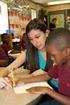 EDUCATION The Education Unit draws upon a Biblically-based perspective to prepare pre-service teachers to embody Christ-like servanthood. We prepare teachers to cultivate relational peace, educational
WILLIAMS TEACHER EDUCATION PROGRAM CONCEPTUAL FRAMEWORK Preparing Professional Educators
 Pre-Clinical Internship Handbook 2015-2016 WILLIAMS TEACHER EDUCATION PROGRAM CONCEPTUAL FRAMEWORK Preparing Professional Educators Through facilitation of the educational process, we prepare professional
MASTER OF SCIENCE IN EDUCATION Educational Leadership Technology Online www.hsu.edu
 MASTER OF SCIENCE IN EDUCATION Educational Leadership Technology Online www.hsu.edu The HSU Master of Science in Education (M.S.E.) in educational leadership and technology as well as building level leader
COLLEGE OF EDUCATION
 COLLEGE OF EDUCATION 77 COLLEGE OF EDUCATION The mission of the College of Education is to prepare educators, counselors, administrators, and other professionals to be lifelong, innovative, informed, reflective
A Guide to Completing the Application for the University of Hawai i at Hilo Master of Arts in Teaching
 A Guide to Completing the Application for the University of Hawai i at Hilo Master of Arts in Teaching MAT Application Checklist UH Hilo application form $50 Application fee Personal statement: Interest
1. Department of Curriculum and Instruction ELE 499 Course Title: Supervised Student Teaching in Primary Through Fifth Grade Credit Hours: 12
 1. Department of Curriculum and Instruction ELE 499 Course Title: Supervised Student Teaching in Primary Through Fifth Grade Credit Hours: 12 2. Course Description: Prerequisites: Admission to student
Grace College School of Education Policy Handbook
 Grace College School of Education Policy Handbook A Guide for Teacher Education Students School of Education Grace College 200 Seminary Drive Winona Lake, IN 46590 574-372-5100 www.grace.edu revised fall
Part I Overview of Teacher Education Program
 Part I Overview of Teacher Education Program Today s beginning professionals join practicing professionals in the awesome responsibility of preparing successive generations for life in the 21 st century.
College of Education University of Nevada, Reno Special Education Professional Degree Program ADVISEMENT & APPLICATION MANUAL
 College of Education University of Nevada, Reno Special Education Professional Degree Program ADVISEMENT & APPLICATION MANUAL Thank you for your interest in our Professional Degree Program in Special Education.
Master of Education in Educational Psychology With Elementary Licensure through the Urban Institute for Teacher Education 2015-2016
 University of Utah, College of Education Master of Education in Educational Psychology With Elementary Licensure through the Urban Institute for Teacher Education 2015-2016 Program Information is subject
THE MASTER OF EDUCATION DEGREE IN EDUCATIONAL LEADERSHIP AND THE PRINCIPAL CERTIFICATION PROGRAM
 THE MASTER OF EDUCATION DEGREE IN EDUCATIONAL LEADERSHIP AND THE PRINCIPAL CERTIFICATION PROGRAM Student Handbook Lincoln University Graduate Education Program 3020 Market Street Philadelphia, PA 19104
Master of Education in Special Education with Elementary Licensure through the Urban Institute for Teacher Education 2015-2016
 University of Utah, College of Education Master of Education in Special Education with Elementary Licensure through the Urban Institute for Teacher Education 2015-2016 Program information is subject to
PRIORITY REVIEW GIVEN TO THOSE WHO SUBMIT APPLICATIONS BY JANUARY 5, 2009. (EI AND LD ONLY.)
 SPECIAL EDUCATION Emotionally Impaired/Learning Disabled/Deaf Education Master of Arts Application Deadlines: EMOTIONALLY IMPAIRED FEBRUARY 15. LEARNING DISABLED FEBRUARY 15. DEAF EDUCATION FEBRUARY 15.
The UNIVERSITY. of VERMONT
 The UNIVERSITY of VERMONT Licensure Master of Arts in Teaching in Curriculum and Instruction Secondary Education Teacher Preparation Program Grades 7-12 College of Education and Social Services Department
Table 6 Unit Assessment System: Transition Point Assessments
 Admission Entry to clinical practice Exit from clinical practice Program completion After program completion Initial Teacher Preparation Programs Early Childhood, Elementary, Special Education & History
INFORMATION PACKET FOR PROSPECTIVE STUDENTS
 SPECIALIST-LEVEL PROGRAM IN SCHOOL PSYCHOLOGY INFORMATION PACKET FOR PROSPECTIVE STUDENTS Updated: October 2013 College of Social Justice and Human Service Department of School Psychology, Higher Education
The University of Mississippi School of Education
 The University of Mississippi School of Education Master s Degree in Literacy Education Department of Teacher Education Educators as Reflective Professionals Graduate Handbook Revised Fall 2012 1 Table
What is a FRCC College School Transcript?
 Criminal Justice Careers Exploration College Now Career Pathways Program Front Range Community College 2014-2015 Program Syllabus Career Pathways The Career Pathways program at Front Range Community College
Post-Baccalaureate Certificate Program
 Post-Baccalaureate Certificate Program ACT PROGRAM 47 Accelerated Certification for Teaching (ACT) Program ACT is an online certificate program designed for individuals who hold a bachelor s degree and
THIS POLICY APPLIES TO THE STUDENTS ENROLLED IN UNDERGRADUATE AND GRADUATE SOCIAL WORK PROGRAMS AT SALISBURY UNIVERSITY
 POLICY AND PROCEDURES CONCERNING TECHNICAL STANDARDS FOR ADMISSION, ACADEMIC MATRICULATION, AND GRADUATION IN THE SALISBURY UNIVERSITY SOCIAL WORK PROGRAM THIS POLICY APPLIES TO THE STUDENTS ENROLLED IN
Human Development and Learning in Social and Educational Contexts (EDP 201) Spring 2012 Syllabus
 Human Development and Learning in Social and Educational Contexts (EDP 201) Spring 2012 Syllabus Course Instructor Darrel Davis Ph.D. Teaching Assistants Jennifer Ewing Ms. Claire Kunesh Ms. Offices Posted