
HUMAN MICROCHIP IMPLANTATION
|
|
|
- Peter Lambert
- 10 years ago
- Views:
Transcription
1 Received March 3, 2008/ Accepted July 14, 2008 J. Technol. Manag. Innov. 2008, Volume 3, Issue 3 HUMAN MICROCHIP IMPLANTATION Charles Smith (1) Abstract Radio Frequency Identification (RFID) has generated a lot of attention in recent years as a method of replacing the barcode. This paper will begin by examining some of the origins of RFID technology. From there it will look at several applications of RFID technology within the health care industry. Next, privacy and legal issues will be examined. Lastly the result of a survey of local students Keywords: Microchip Implantation, Privacy, RFID, Electronic Product Code (EPC) (1) Mesa State College. [email protected]. Phone Number (970) JOURNAL OF TECHNOLOGY MANAGEMENT & INNOVATION JOTMI Research Group 151
2 Introduction: RFID technology had humble beginnings in WWII to identify Allied airplanes. From there, RFID technology was used to track nuclear material and animals. The technology took another jump and is currently used to track items through the supply chain. A RFID chip is a microchip that can transmit a static identifier or serial number for a short distance. Research is being done to help people medically with RFID technology. Microchips can help advance prosthetics use, help people hear better, or possibly even help paralyzed people move. The technology is available and being used to implant people with microchips. Some issues arise with implanting people with microchips though. Issues include, being able to track a person s previous and current location, their purchasing habits, legal and privacy concerns, as well as hacking their personal and financial information. Problem: There are both potential problems and benefits associated with human microchipping. One problem is that a person s privacy could be severely infringed upon. This could happen because the person s movements, both physically and financially, could be tracked. Personal data about a person could be sold or hacked into. A third potential problem could be who would have access to the information, and who stores the information. There are potential health problems as well. For example Non- Ionizing Radiation from microwave radio frequency and magnetic fields could cause various health issues. (Covacio, 2003) A potential benefit could include storing a person s complete medical history, or at the bare minimal the drugs that they are taking or are allergic to. (Fuhrer & Guinard, 2006) History: RFID technology began in World War II with an Early Identification Friend or Foe (IFF) systems where it was possible for Allied fighters and anti-aircraft systems to distinguish their own returning bombers from aircraft sent by the enemy. (Garfinkel & Holtzman, 2005, p. 15) Then shortly after WWII, Henry Stockman, who was an engineer, had a paper published called Communication by Means of Reflected Power where he came up with the idea for passive RFID chips. (Garfinkel & Holtzman, 2005, p. 16) In 1960, RFID technology was used to identify and monitor hazardous material and nuclear power. (Miller, 2007) The first commercial application with RFID was the Electronic Article Surveillance for anti-theft purposes. There were early attempts in 1960 in RFID technology. For example, in 1963 Robert Richardson created remotely activated radio frequency powered devices. In 1968 J. H. Vogelman was working on Passive Data Transmission Techniques Utilizing Radar Beams. Then in 1969 Otto Rittenback was working on Communication by Radar Beams. Even more work on RFID chips started in the 1970 s. In 1972, Kriofsky and Kaplan filed a patent application for an inductively coupled transmitter-responder arrangement. (Garfinkel & Holtzman, 2005, p. 16) The system had two separate coils, one to receive power and another one to send the signal. In 1979 Beigel filed a new patent combining the two coils, which allowed for the small size of an RFID chip. The tag could be implanted into any item that is for sale. Chips would hold a single bit, if the bit was turned off the alarm system wouldn t go off, but if the bit was left on then an alarm would go off. (Jechlitschek, 2006) In the 1970 s and 1980 s researchers, universities, and even government agencies worked on RFID technology to make the chips smaller, cheaper, and able to transmit the frequency farther. Each tag could be preprogrammed with some basic functions that may include: A kill command- disables the tag permanently A sleep command- the tag no longer responds to queries, except upon receipt of a wake command. Read- sends ID to a reader J. Technol. Manag. Innov. 2008, Volume 3, Issue 3 Write- takes information from reader and stores it. (Francom, 2007, pg. 337) In the 1970 s the Lawrence Livermore Laboratory created a handheld receiver that could receive encoded messages from the chip. It is said that the technology was secure because it was so obscure. One of the first uses for RFID technology was in the agriculture industry. Tags were implanted into cattle. There were two main reasons for implanting cattle. The first was approximately onethird of the hide was damaged when the cattle were branded, which meant less usable leather. The chips allowed the farm to track and distinguish their animals from other people s cattle with the instead of branding. Second was for automated feeding. With the chip, automated feeding was allowed without worrying about if the cattle would be overfed. (Miller, 2007) RFID went from implanting animals to the railroad industry. Originally railroad cars were tracked with barcode on the side JOURNAL OF TECHNOLOGY MANAGEMENT & INNOVATION JOTMI Research Group 152
3 J. Technol. Manag. Innov. 2008, Volume 3, Issue 3 of the cars but were difficult to read in adverse weather or if the barcodes became dirty. RFID chips were put on cars and antennas were put along tracks. With the RFID chips railroad companies could better track the cars, which in turned help with scheduling of the cars and whatever they needed to ship, as well as reducing congestion along the tracks. (Miller, 2007) In the 1980 s RFID took off with automated payments. For example, Norway and several U.S. states used RFID chips for toll collections on the road, with systems like EZ-Pass. The toll collection system in turn led to collection systems for the ski industry, purchasing gas, money cards, and more. (Jechlitschek, 2006) Health Care: Within the medical field there are different ways that RFID can be incorporated. For example RFID chips can be used to track equipment within a hospital. Plus, with RFID tags drug manufacturers can better manage the drugs through the supply chain, for the simple fact that the pharmaceutical industry loses between $10 and $30 billion per year to counterfeit versions of drugs. (Castro & Wamba, 2007, p. 4) Pharmaceutical companies can embed RFID chips into prescription bottle caps, cases or pallets to track the drug through the supply chain. For example, CVS Corporation, in 2002, teamed up with the Auto-ID center at MIT and started a project in 2003 called Jump Start, (Hildebrandt & Meints, 2006) for a full scale trial of RFID implementation. The following list contains some of the main reasons that CVS wanted to include RFID: Pharmaceuticals are high valued goods, Pharmaceuticals may have a long shelf life (depending on turnover rate), In the United States tamper-proofness of pharmaceuticals in the logistic chain and the shops is an issue since the Tylenol scandal in 1982, where Tylenol was adulterated with cyanide and as a consequence a number of consumers died. CVS is using RFID on a per item basis. CVS is tagging both individual bottles and the packing that the bottles are shipped in. There are a number of potential improvements in processes at CVS. Some include: Improvement of drug management at the manufacturer and in the distribution centres of CVS; errors in the delivery such as wrong types or numbers of drugs can be detected easily; Improvement in drug management in the stores; the central systems know how many goods are left in the smart shelves even in cases where they are at the wrong place in the shelf (supply management); Improved handling of outdates, recalls, returns and damages; EPC stored on RFID can be used to detect certain types of mistakes or manipulations of drugs for example in cases where already used or cloned RFID tags are used. (Hildebrandt & Meints 2006, pg ) Wristbands with an RFID chip embedded can help hospitals with patient safety requirements. Medical personnel can read the chip to get instant access to the patients medical history, such has medication allergies, medications prescribed and dosage, and specimen results. (Castro & Wamba, 2007) Hospitals can also use RFID to implant chips into people with forms of dementia or newborn babies, that way if the people leave a certain area, it will trigger an alarm alerting the staff. Medical staff would be able to react and stop the person before they left the hospital or specific ward. The person with dementia would not be able to leave the ward, or a baby would not be abducted. With an RFID chip there would be a much smaller chance of babies being swapped by mistake. An added benefit is an embedded chip or RFID wristband can include both patient information, allergies, and medication the patient is currently taking or medication a doctor will prescribe to the patient. With the wristband, an RFID reader, and a wireless connection, a doctor or nurse can pull up the patient s information, or even update the patient information in real time. Some benefits of this include less patient mix-up, being able to access the patient information in real time, and fewer mistakes due to human error in entering the data at a nurse s station. A scanner device could be used to enter in the updated information. Productivity would increase since the doctors and nurses would not have to go to a computer to enter in the updated information. This would allow doctors and nurses can see more patients. There is a wide array of medical uses for microchip implants. One example is using the implants with prosthetics. An RFID chip could be placed on top of the brain to improve movement or functionality of the prosthetic. With the implant, the person would have both input and output capabilities. The downside to the brain implant is that the operation is more invasive. As an alternative, doctors could place an electrode on the limb itself that would act on electrical impulses from the brain. The operation is less invasive, but the electrode would have very limited input capabilities. JOURNAL OF TECHNOLOGY MANAGEMENT & INNOVATION JOTMI Research Group 153
4 J. Technol. Manag. Innov. 2008, Volume 3, Issue 3 Figure 1. Figure of an RFID Chip(Feder & Zeller, 2004) * Myoelectrical limbs are another possible use of RFID. With a myoelectrical limb, the limb can detect and amplify electrical signals. The limb then deciphers the signals and movements of the muscles to determine how the limb should react. For example the signals indicate if the limb should move horizontally or vertically, or if the hand should open or close. A third possibility is to control prosthetic limbs or give commands for computers is with electroencephalogram (EEG). Electrodes are placed on many different areas of the brain that are used to sense activity from the brain. When the user is trained they could move the cursor across the screen. With this application, patients have to be trained to control their neural activity to achieve the intended result. With neuroelectronic interface chips that are implanted directly onto the top of the brain, the users don t have to be trained. The chip can translate the neural activity into the desired result. One example of the Neuroelectronic Interface being used is with a paraplegic named John Nagle. Nagle showed an ability to perform a number of tasks with his mind: control a TV, move a mouse cursor on a screen, and command an artificial hand to open and close grip. (Chan, 2007, p. 13) There are limitations at this time for the Neuroelectronic Interface. The first is the amount of neurons available for the device. The less amount of neurons there are, the less likely that the device will work. Also the devices are not wireless, which means that there are wires coming out of the brain. There are health risks associated with being implanted with a microchip. Some health issues include adverse tissue reaction, migration of implanted transponder, electromagnetic interference, electrical hazards, and magnetic resonance imaging incompatibility. (Gad, 2006, p. 1) Laws: There are legal and legislative issues as well dealing with RFID technology. Even though the scanner that reads the sensor has to be close to the body to read the chip, there still is the possibility of identity theft. Having the chip implanted has been compared to carrying your Social Security Number under your skin. Legal issues with neuroelectronic interface enhancements have risen as well. Currently there is no governmental agency that control neuroelectronic interface enhancements. As it stands today, the one agency that could control RFID and neuroelectronic interface devices is the FDA, because it has broad regulatory jurisdiction over medical devices. The FDA defines a medical device as the diagnosis... treatment or prevention of disease or as something used to affect the structure or any function of the body. (Chan, 2007, p. 24) Within the FDA, the Center for Devices and Radiological Health (CDRH) regulates the approval and manufacturing of all medical devices within the U.S. which includes the post market period. Issues lawmaker s would have to keep in mind could include: What information should be placed on a device to be able to identify the person * Figure Description: Figure one is a picture showing the size of an RFID chip. JOURNAL OF TECHNOLOGY MANAGEMENT & INNOVATION JOTMI Research Group 154
5 J. Technol. Manag. Innov. 2008, Volume 3, Issue 3 Who would have access to the personal information Who would be able to read the information with a scanner What would be a punishment with people stealing the information with a scanner At what level of government should the laws should be enacted o Local laws may be too narrow to include all the problems with RFID o National laws may be too broad, or be too cumbersome for business and stifle innovation Constitutional restrictions apply only to governmental actions but not to private enterprises or individuals. One thing that lawmakers need to keep in mind is to enact laws that encompass both the government and private sectors. Take for example the Privacy Act of 1974, the most comprehensive U.S. law pertaining to privacy applies only to government actors. Therefore, private corporations are not bound by the fair information practices, open-access rules, and data-ownership principles embodied in the Act. (Peek, 2006 pg. 136) The U.S. Federal Government does not have a comprehensive privacy law; instead there are privacy laws for specific industries. For example there is the Fair Credit Reporting Act (FCRA), the Graham-Leach-Bliley Act (GLBA) for financial data, and the Health Insurance Portability and Accountability Act (HIPAA). The Fourth, Fifth, and Fourteenth Amendment dealing with privacy are not much help either. At present the Supreme Court has not interpreted the Fourth Amendment to include things like GPS, RFID, or real time cell site monitoring. (Herbert, 2006, pg. 417) There are four reasons given by the ACLU and Consumers Against Supermarket Privacy Invasion and Numbering (CASPIAN) on the ethical concerns of RFID: 1. The tags are hidden and unknown. 2. Tags provide an id system of every item purchased, thus allowing a universal product registration system. 3. Aggregation of massive personal amounts of data. 4. Allows tracking of individuals. (Francom, 2007, pg 337) Part of the problem is security, confidentiality and data integrity. The system storing the data and the tag have to be secure. The person s information cannot be disclosed to unauthorized people or entities. There has to be data integrity or that the data has to be complete and consistent. Federal, state, or local laws have to ensure the security, confidentiality, and integrity of the personal information. Conclusion: This paper presented the timeline for RFID advancements. It also discussed how RFID can be used within the health care industry. Privacy issues and laws surrounding RFID were looked at. There is a need for more laws dealing with RFID to protect privacy and protecting consumer s information. The hard part will be to enact laws that protect consumers while not stifling innovation of RFID technology. From the survey results a majority of the respondents believe that if people got implanted with a RFID chip, that their right s to privacy, and not to incriminate themselves would be violated. A majority of the respondents would not get implanted with an RFID chip either. References: CASTRO, L., Wamba, S.F. (2007) An Inside Look At RFID Technology. Journal of Technology and Innovation, Volume 2, Issue I. Pg. 4. CHAN, E. (2007) The FDA and the Future of the Brain-Computer Interface: Adapting FDA Device Law to the Challenges of Human-Machine Enhancement. John Marshall Journal of Computer & Information Law Volume 25 Issue 1. Pg. 13, 16, Retrieved COVACIO, S. (2003) Technological Problems Associated with Subcutaneous Microchips for Human Identification (SMHId). Informing Science. FEDER, B., Zeller Jr., T. (2004) Identity Badge Worn Under Skin Approved for Use in Health Care. New York Times. Retrieved FRANCOM, Joseph (2007) RFID: A Survey Of Ethical And Privacy Concerns. Issues in Information Systems. V3 Issue 2i. Pg FUHRER, P., Guinard D. (2006) Building a Smart Hospital using RFID technologies. European Conference on ehealth. Pg Retrieved GAD, L. (2006) Human Microchip Implantation. Wisconsin Legislative Reference Bureau. Pg Retrieved JOURNAL OF TECHNOLOGY MANAGEMENT & INNOVATION JOTMI Research Group 155
6 J. Technol. Manag. Innov. 2008, Volume 3, Issue 3 GARFINKEL, S., Holtzman, H. (2005) Understanding RFID Technology. Pg Garfinkel Book HERBERT, W. (2006) No Direction Home: Will The Law Keep Pace With Human Tracking Technology to Protect Individual Privacy and Stop Geoslavery? I/S: A Journal Of Law And Policy Volume 2 Issue 2. Pg Retrieved HILDEBRANDT, M., Meints, M. (2006) FIDIS Future of Identity in the Information Society. pg FIDIS Consortium. JECHLITSCHEK, C. (2006) A Survey Paper on Radio Frequency Identification (RFID) Trends. Pg ~jain/cse574-06/ftp/rfid/index.html. Retrieved MILLER, S. (2007) What is RFID? (Dissertation, Purdue University, 2007) Retrieved PEEK, M. (2006) Information Privacy and Corporate Power: Towards a Re-Imagination of Information Privacy Law. Seton Hall Law Review Vol. 37 Issue 127. Pg Retrieved JOURNAL OF TECHNOLOGY MANAGEMENT & INNOVATION JOTMI Research Group 156
7 Appendix A J. Technol. Manag. Innov. 2008, Volume 3, Issue 3 RFID Implantation Questionnaire You are being asked to complete this survey as part of a of a research study by a Computer Information System student. Participation is this survey is voluntary. The survey is anonymous. Please do not put your name anywhere on this survey. While we would like you to answer all of the questions on this survey, you are not required to do so. You may end your participation in this survey at any time. By completing this survey, you give your consent to participate in this research project. Your responses will be held confidential. Data will be reported only in aggregate. A Radio Frequency Identification (RFID) chip can be implanted into people. If an RFID chip is implanted, personal information can be collected and stored, some examples include previous or current location, and medical history. What is your level of knowledge about RFID Technology? Not Familiar Very Familiar Please rank who should control the data collected? (Rank 1-4) Governmental agency Company who collected data Implanted person Data should not be collected at all Please rank who should have access to the data? (Rank 1-4) Governmental Agency Company who collected data Implanted person Data should not be collected at all Please rank how law enforcement should be able to access the data? (Rank 1-4) Court order Company turns over data Implanted person consent Data should not be accessed at all Would an RFID chip violate a person s right to privacy? (Check One) Yes No Would an RFID chip violate a person s right not to incriminate themselves? (Check One) Yes No Should RFID chips be implanted in people? (Check One) Yes No Would you get implanted with an RFID Chip? (Check One) Yes No What is your major? Age Gender (Circle One) Male Female Thank you for your time and cooperation. Please return to H106 or person administering survey. JOURNAL OF TECHNOLOGY MANAGEMENT & INNOVATION JOTMI Research Group 157
8 Appendix B J. Technol. Manag. Innov. 2008, Volume 3, Issue 3 Survey Statistics The survey respondent s are a sample population of business faculty and students. From the survey though it cannot be determined the factors contributing to the way the questions were answered. Possible factors could familiarity with technology in general, education level, or degree earned, to name a few. From the respondents, the average age of professors is 50 years old, and for students the average age is 27 years old. Question 1. What is your level of knowledge about RFID Technology? On average professors ranked 3 or being in the middle on their familiarity on RFID. Students, males and females ranked 2 on being familiar with RFID. Question 5. Would an RFID chip violate a person s right to privacy? A majority of the survey population believes that implanting people with RFID chips would be an invasion of their privacy. Again from the survey though it cannot be determined the factors contributing to the knowledge of RFID. Possible factors could familiarity with technology in general, education level, or degree earned, to name a few. Question 6. Would an RFID chip violate a person s right not to incriminate themselves? JOURNAL OF TECHNOLOGY MANAGEMENT & INNOVATION JOTMI Research Group 158
9 J. Technol. Manag. Innov. 2008, Volume 3, Issue 3 Over half of the professors and students believe that RFID technology would incriminate themselves. Where as there is a bigger split between males and females. Where more females believe that the technology would incriminate them. Question 7. Should RFID chips be implanted in people? JOURNAL OF TECHNOLOGY MANAGEMENT & INNOVATION JOTMI Research Group 159
10 A majority of the survey population believes that people should not be implanted with RFID chips. The student population was the only ones that are nearly evenly split between answering yes and no on the question. Question 8. Would you get implanted with an RFID Chip? J. Technol. Manag. Innov. 2008, Volume 3, Issue 3 A majority of the survey respondents would no get implanted with an RFID chip. Even with professors being more familiar with the technology they are more likely not to get implanted with a chip. JOURNAL OF TECHNOLOGY MANAGEMENT & INNOVATION JOTMI Research Group 160
Evolving Bar Codes. Y398 Internship. William Holmes
 Evolving Bar Codes Y398 Internship By William Holmes Table of contents Introduction: What is RFID? Types of Tags: Advantages of Tags: RFID applications Conclusion: Introduction: Bar codes have evolved
RFID Security. April 10, 2006. Martin Dam Pedersen Department of Mathematics and Computer Science University Of Southern Denmark
 April 10, 2006 Martin Dam Pedersen Department of Mathematics and Computer Science University Of Southern Denmark 1 Outline What is RFID RFID usage Security threats Threat examples Protection Schemes for
RF ID Security and Privacy
 RF ID Security and Privacy EJ Jung 11/15/10 What is RFID?! Radio-Frequency Identification Tag Antenna Chip How Does RFID Work? 02.3DFEX4.78AF51 EasyToll card #816 Radio signal (contactless) Range: from
Radio Frequency Identification (RFID) An Overview
 Radio Frequency Identification (RFID) An Overview How RFID Is Changing the Business Environment Today Radio frequency identification (RFID) technology has been in use for several decades to track and identify
RFID the next step in consumer-product relations or Orwellian nightmare?
 RFID the next step in consumer-product relations or Orwellian nightmare? Nordic Consumer Policy Research Conference 2007 TOWARDS A NEW CONSUMER? TOWARDS A NEW CONSUMER POLICY? Helsinki, October 3-5, 2007
ASSET TRACKING USING RFID SRAVANI.P(07241A12A7) DEEPTHI.B(07241A1262) SRUTHI.B(07241A12A3)
 ASSET TRACKING USING RFID BY SRAVANI.P(07241A12A7) DEEPTHI.B(07241A1262) SRUTHI.B(07241A12A3) OBJECTIVE Our main objective is to acquire an asset tracking system. This keeps track of all the assets you
RFID 101: Using RFID to Manage School Assets and Achieve Huge Savings
 RFID 101: Using RFID to Manage School Assets and Achieve Huge Savings Are You Missing Out On Huge Savings through Better Asset Management? Many schools around the country have implemented wireless networking
WHITE PAPER. ABCs of RFID
 WHITE PAPER ABCs of RFID Understanding and using Radio Frequency Identification Basics - Part 1 B.Muthukumaran Chief Consultant Innovation & Leadership Gemini Communication Ltd #1, Dr.Ranga Road, 2nd Street,
RFID BASED VEHICLE TRACKING SYSTEM
 RFID BASED VEHICLE TRACKING SYSTEM Operating a managed, busy parking lot can pose significant challenges, especially to a government organization that also owns some of the vehicles in the lot. The parking
Small Tech, Big Issues
 Small Tech, Big Issues How It Works Advantages of RFID History of the RFID Proposed Uses Identification Medical Records Immigration Security Authentication Ethical Issues Purchase tracking Lack of encryption
Radio Frequency Identification (RFID)
 Radio Frequency Identification (RFID) Raj Jain Washington University in Saint Louis Saint Louis, MO 63130 [email protected] These slides are available on-line at: http://www.cse.wustl.edu/~jain/cse574-06/
Patient Safety Applications for Bar Code and RFID Technology APPLICATION WHITE PAPER
 Patient Safety Applications for Bar Code and RFID Technology APPLICATION WHITE PAPER Copyrights 2006 ZIH Corp. All product names and numbers are Zebra trademarks, and Zebra and the Zebra head graphic are
Health Care 2.0: How Technology is Transforming Health Care
 Health Care 2.0: How Technology is Transforming Health Care Matthew Kaiser, CEBS, SPHR Director, HR Technology and Outsourcing Lockton Kansas City, Missouri The opinions expressed in this presentation
CHAPTER 1 Introduction 1
 Contents CHAPTER 1 Introduction 1 CHAPTER 2 Short-Range Communications Systems 3 2.1 Radio-Frequency Spectrum and Propagation 3 2.1.1 Theory of Electromagnetism and Maxwell s Equations 3 2.1.2 RF Propagation
RFID in a nutshell. Colin Jervis, Director, Kinetic Consulting Ltd
 Colin Jervis, Director, Kinetic Consulting Ltd Enthusiasts in healthcare fields suggest that one day a tiny RFID (or radio-frequency identification) tag implanted under your skin could transmit your NHS
Michael I. Shamos, Ph.D., J.D. School of Computer Science Carnegie Mellon University
 Michael I. Shamos, Ph.D., J.D. School of Computer Science Carnegie Mellon University Background Ph.D., Yale University (computer science, 1978) J.D., Duquesne University (law, 1981) Carnegie Mellon computer
Enabling the secure use of RFID
 Enabling the secure use of RFID BLACK ME/FOTOLIA.com Enhancing security of radio frequency identification to connect safely to the Internet of Things UHF radio frequency identification (RFID) promises
Automated Meter Reading Frequently Asked Questions. What is AMR?
 Automated Meter Reading Frequently Asked Questions What is AMR? AMR stands for Automated Meter Reading. It is a method of using advanced communications technology to read meters remotely. It reduces human
Data Protection Technical Guidance Radio Frequency Identification
 Data Protection Technical Guidance Radio Frequency Identification This technical guidance note is aimed at those using or contemplating using RFID technology. It gives a brief summary of the technology
Asset Tracking & Radio Frequency Identification White Paper
 2012 Asset Tracking & Radio Frequency Identification White Paper National Office Systems, Inc. 7621 Rickenbacker Drive, Suite 400 Gaithersburg, MD 20879 T 301.840.6264 F 301.840.0243 www.nosinc.com [email protected]
The Place of Emerging RFID Technology in National Security and Development
 The Place of Emerging RFID Technology in National Security and Development Akintola K.G. Boyinbode O.K. Computer Science Department, Computer Science Department, University of Houston-Victoria, University
Modern Multipurpose Security Management System
 Modern Multipurpose Security Management System Swaranambigai 1,Sabari 2 Dhanabal 3 1 Assistant Professor, 2,3 PG Scholar Department of Electronics and Communication Engineering Jay Shriram Group of Institutions
RFID System Description for Logistics & Inventory
 RFID System Description for Logistics & Inventory 1. General The Vizbee platform is a flexible rule based solution for RFID based applications that can adapt to the customer s needs and evolve with them.
CONSUMER PERSPECTIVES OF IMPLANTED RADIO FREQUENCY IDENTIFICATION (RFID) DEVICES FOR MEDICAL INFORMATION RETRIEVAL
 CONSUMER PERSPECTIVES OF IMPLANTED RADIO FREQUENCY IDENTIFICATION (RFID) DEVICES FOR MEDICAL INFORMATION RETRIEVAL Andrew S. Jensen Department of Computer Science College of Computing and Informatics University
Volume 3, Issue 3, March 2015 International Journal of Advance Research in Computer Science and Management Studies
 Volume 3, Issue 3, March 2015 International Journal of Advance Research in Computer Science and Management Studies Research Article / Survey Paper / Case Study Available online at: www.ijarcsms.com Hospital
RFID Design Principles
 RFID Design Principles Second Edition Harvey Lehpamer ARTECH HOUSE BOSTON LONDON artechhouse.com Contents CHAPTER 1 Introduction CHAPTER 2 Short-Range Communications Systems 2.1 Radio-Frequency Spectrum
Privacy is the ability of an individual or group to keep their lives and
 Privacy Versus Security in the Workplace ALAN L. PEPPER AND BETHANIE F. THAU An important challenge facing employers today is balancing the security of the workplace versus the privacy rights of employees.
How To Understand The Power Of An Freddi Tag (Rfid) System
 Radio Frequency Identification Done by: Haitham Habli. Table of contents Definition of RFID. Do they need license? RFID vs other identification systems. Classification of RFID systems. Emerge of passive
RFID Applications in the Healthcare and Pharmaceutical Industries
 RFID Applications in the Healthcare and Pharmaceutical Industries White Paper Revolutionizing Asset Management and the Supply Chain Document Revision: 1.0 Release Date: February 7, 2005 Written by: Johnny
ELECTROMAGNETIC FIELDS AND PUBLIC HEALTH HEALTH AND SAFETY GUIDELINES #1
 SINGAPORE, 16 AUGUST 2001 HEALTH SCIENCES AUTHORITY PRESS RELEASE ELECTROMAGNETIC FIELDS AND PUBLIC HEALTH HEALTH AND SAFETY GUIDELINES #1 THE EMF HEALTH ISSUE 1 Over the past years a large number of scientific
RFID, RTLS and NFC in Healthcare
 RFID, RTLS and NFC in Healthcare Stephane Pique, VP EMEA, RFID in Healthcare Consortium (www.rfidinhealthcare.org) Introduction Every day, healthcare services become more and more complex. This complexity
The U.S. FDA s Regulation and Oversight of Mobile Medical Applications
 The U.S. FDA s Regulation and Oversight of Mobile Medical Applications The U.S. FDA s Regulation and Oversight of Mobile Medical Applications As smart phones and portable tablet computers become the preferred
Microchip FAQ's All you wanted to know about microchips but were afraid to ask!
 Microchip FAQ's All you wanted to know about microchips but were afraid to ask! International Committee for Animal Recording (ICAR) ICAR Newsletter - March 1999 Electronic Identification Special Edition
RFID TECHNOLOGY: A PARADIGM SHIFT IN BUSINESS PROCESSES. Alp ÜSTÜNDAĞ. Istanbul Technical University Industrial Engineering Department
 RFID TECHNOLOGY: A PARADIGM SHIFT IN BUSINESS PROCESSES Alp ÜSTÜNDAĞ Istanbul Technical University Industrial Engineering Department ABSTRACT: Radio Frequency Identification (RFID) is fast becoming an
RFID Design Principles
 RFID Design Principles Harvey Lehpamer ARTECH HOUSE BOSTON LONDON artechhouse.com Contents Introduction 2 2.1 2.1.1 2.1.2 2.1. 2.1.4 2.2 2.2.1 2.2.2 2. 2..1 2..2 2.4 2.4.1 2.4.2 2.5 2.5.1 2.5.2 Comparison
OpenWay Radio Frequency FAQ
 OpenWay Radio Frequency FAQ March 10, 2010 2010, Itron Inc. All rights reserved. 1 Overview This document provides general information about radiofrequency (RF) electromagnetic fields from OpenWay wireless
RFID Basics HEGRO Belgium nv - Assesteenweg 25-29 - 1740 Ternat Tel.: +32 (0)2/582.31.97 Fax : +32 (0)2/582.11.24 email : info@hegrobelgium.
 RFID Basics RFID Basics Introduction Radio Frequency Identification (RFID) technology has been attracting considerable attention with the expectation of improved supply chain visibility for both suppliers
A Study of the Design of Wireless Medical Sensor Network based u- Healthcare System
 , pp.91-96 http://dx.doi.org/10.14257/ijbsbt.2014.6.3.11 A Study of the Design of Wireless Medical Sensor Network based u- Healthcare System Ronnie D. Caytiles and Sungwon Park 1* 1 Hannam University 133
Ethical Use of RFID in for the Surveillance of People and the Tracking of Things in Healthcare Delivery
 Ethical Use of RFID in for the Surveillance of People and the Tracking of Things in Healthcare Delivery By Michael J. Wilson M.Sc. ehealth Candidate McMaster University Canadian Bioethics Society Conference
NerdHerd. Inventory Managment. Written by Cora Holt, Madison Klutts, Madison Aldendifer, Eva Hafermann, Olivia Hines, and Katie Rhodes
 NerdHerd Inventory Managment Written by Cora Holt, Madison Klutts, Madison Aldendifer, Eva Hafermann, Olivia Hines, and Katie Rhodes GEM M9 3/5/2012 When you walk into a store like Wal-Mart or Hy-Vee,
Military Usage of Passive RFID 1
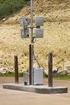 Military Usage of Passive RFID The Initiative The DoD, which is larger than most of the world s businesses, has an annual budget of almost US$343 billion with logistics accounting for nearly one third
Cloud RFID UHF Gen 2
 Cloud RFID UHF Gen 2 Supply chain visibility In store stock management and security. - Stock take by RFID - Stock search - Reorder report, - Dynamic reorder, Security. Introduction The Adilam RFID system
RFID Survives Sterilization to Deliver Medical Device Tracking Solution
 RFID Survives Sterilization to Deliver Medical Device Tracking Solution and UDI Compliance Introduction Healthcare providers are increasingly turning to technology solutions to help improve patient outcomes,
RFID. Radio Frequency IDentification: Concepts, Application Domains and Implementation LOGO SPEAKER S COMPANY
 RFID Radio Frequency IDentification: Concepts, Application Domains and Implementation Dominique Guinard, Patrik Fuhrer and Olivier Liechti University of Fribourg, Switzerland Submission ID: 863 2 Agenda
Location-Aware and Safer Cards: Enhancing RFID Security and Privacy
 Location-Aware and Safer Cards: Enhancing RFID Security and Privacy 1 K.Anudeep, 2 Mrs. T.V.Anantha Lakshmi 1 Student, 2 Assistant Professor ECE Department, SRM University, Kattankulathur-603203 1 [email protected],
RESOLUTION ON RADIO-FREQUENCY IDENTIFICATION (RFID)
 DOC NO. INTERNET-31-05 DATE ISSUED: APRIL, 2005 RESOLUTION ON RADIO-FREQUENCY IDENTIFICATION (RFID) Introduction The Trans Atlantic Consumer Dialogue (TACD) believes action is urgently needed to address
WHAT IS RFID & HOW WILL IT IMPACT MY BUSINESS?
 WHAT IS RFID & HOW WILL IT IMPACT MY BUSINESS? TABLE OF CONTENTS What is RFID? 1 Will RFID replace Barcodes? 1 How does RFID work? 1 What is an RFID Tag? 3 What are Smart Labels? 4 Why use RFID? 5 Why
TECHNOLOGY BRIEF. Business Benefits from Radio Frequency Identification (RFID)
 TECHNOLOGY BRIEF Business Benefits from Radio Frequency Identification (RFID) Executive summary Today the largest government and business enterprises in the world are developing plans to deploy electronic
ACTA UNIVERSITATIS APULENSIS No 9/2005. Burja Lucian and Tanase Mihai
 ACTA UNIVERSITATIS APULENSIS No 9/2005 IMPLEMENTING A DOCUMENT MANAGEMENT SYSTEM USING RFID TECHNOLOGY Burja Lucian and Tanase Mihai Abstract.With strong support in the industry from important players
The Drug Quality & Security Act
 The Drug Quality & Security Act Drug Traceability & Interoperable Exchange of Transaction Information, History & Statement Mujadala Abdul-Majid 3E Company February 20, 2014 About 3E Company About 3E Supply
whitepaper How RFID Technology Can Enhance Your Asset Management Program
 whitepaper How RFID Technology Can Enhance Your Asset Management Program TABLE OF CONTENTS: PAGE Introduction...3 How RFID Technology Works...4 RFID Versus Barcode...6 RFID Technology in Real-world Applications...7
Identitovigilance technologies
 Identitovigilance technologies Typologies and future developments Séverine Dewerpe, Healthcare & Barcodes Manager, GS1 Belgilux Tuesday, 10 th of March 2015 100 000 130 270 million 3 30 years 4 Agenda
Radio Frequency Identification (RFID) Vs Barcodes
 Radio Frequency Identification (RFID) Vs Barcodes Which one to choose? Which one is the better technology? Why choose one over the other? Answer: It really depends on the application, and what you want
BOARDING SCHOOL STUDENTS MONITORING SYSTEMS (E-ID) USING RFID
 267 BOARDING SCHOOL STUDENTS MONITORING SYSTEMS (E-ID) USING RFID Herdawatie binti Abdul Kadir, Siti Nurul Aqmariah binti Mohd Kanafiah and Mohd Helmy bin Abd. Wahab Faculty of Electrical and Electronic
RFID AND YOUR PRIVACY Myths and Facts
 RFID AND YOUR PRIVACY Myths and Facts EXECUTIVE SUMMARY Businesses and consumers today are asking, Does radio frequency identification (RFID) invade the public s right to privacy? With any emerging technology,
Contactless Smart Cards vs. EPC Gen 2 RFID Tags: Frequently Asked Questions. July, 2006. Developed by: Smart Card Alliance Identity Council
 Contactless Smart Cards vs. EPC Gen 2 RFID Tags: Frequently Asked Questions July, 2006 Developed by: Smart Card Alliance Identity Council Contactless Smart Cards vs. EPC Gen 2 RFID Tags: Frequently Asked
NAIT DEVICE STANDARD FOR CATTLE 25 SEPTEMBER 2014
 NAIT DEVICE STANDARD FOR CATTLE 25 SEPTEMBER 2014 CONTENTS 1. INTRODUCTION... 1 2. UPDATES TO THIS STANDARD... 1 3. REQUIRED PHYSICAL STANDARDS... 1 4. REQUIRED PERFORMANCE STANDARDS... 2 5. LICENSEE
RF-Enabled Applications and Technology: Comparing and Contrasting RFID and RF-Enabled Smart Cards
 RF-Enabled Applications and Technology: Comparing and Contrasting RFID and RF-Enabled Smart Cards January 2007 Developed by: Smart Card Alliance Identity Council RF-Enabled Applications and Technology:
Active RFID Solutions for Asset Tracking and Inventory Management
 Active RFID Solutions for Asset Tracking and Inventory Management Introduction RFID (Radio Frequency Identification) technology is fast replacing ScanCode technology for asset tracking and inventory management.
Energy Harvesting Powered Wireless Sensor Node and Asset Tracking Solutions in Random Vibration Environments
 White Paper Energy Harvesting Powered Wireless Sensor Node and Asset Tracking Solutions in Random Vibration Environments by Anurag Kasyap, Ph.D. April 2009 Copyright 2009 AdaptivEnergy LLC. All rights
Automated Identification Technologies
 Spec 2000 ebusiness Forum Automated Identification Technologies Jon Andresen President Technology Solutions [email protected] Budapest, Hungry 23 October 2008 Agenda 1. AIT Chapter 9 Intro - Jon A. AIT
RFID in the Hospital Environment
 RFID in the Health Care Industry RFID in the Hospital Environment Speaker: Daniel Engels, Ph.D. Director of Research MIT Auto-ID Labs I. Mun, Ph.D. Director, Bio-Medical Research Aventura Hospital & Medical
How To Track A Vehicle With A Smart Vehicle Tracking System
 SMART VEHICLE TRACKING SYSTEM Mrs. K.P.Kamble 1 Lecturer 1 Department of Electronics and Telecommunication Engineering, YCCE, Nagpur [email protected] ABSTRACT It is amazing to know how simple
Efficient Data Sharing in Healthcare
 Efficient Data Sharing in Healthcare More and more efforts are underway in different countries on sharing data among doctors and hospitals in healthcare for achieving higher quality and efficiency of clinical
W.A.R.N. Passive Biometric ID Card Solution
 W.A.R.N. Passive Biometric ID Card Solution Updated November, 2007 Biometric technology has advanced so quickly in the last decade that questions and facts about its cost, use, and accuracy are often confused
REAL TIME MONITORING AND TRACKING SYSTEM FOR AN ITEM USING THE RFID TECHNOLOGY
 Review of the Air Force Academy No 3 (30) 2015 REAL TIME MONITORING AND TRACKING SYSTEM FOR AN ITEM USING THE RFID TECHNOLOGY For the past few years, location systems have become a major studying field,
Intelligent Home Automation and Security System
 Intelligent Home Automation and Security System Ms. Radhamani N Department of Electronics and communication, VVIET, Mysore, India ABSTRACT: In todays scenario safer home security is required, As the technology
SATO RFID White Paper
 SATO RFID White Paper Rev_0710 1 Overview This white paper describes the basic components of a Radio Frequency Identification (RFID) system and explores the technology, applications, and competitive advantages
RFID in HEALTH-CARE WHITE PAPER. Ver 1.0 (March 2013) IAITO INFOTECH All Right Reserved
 RFID in HEALTH-CARE WHITE PAPER Ver 1.0 (March 2013) The Healthcare Industry has undergone a wide range of regulatory changes, patient safety challenges to improve identifying patients, medications and
The Marriage of Passive and Active Technologies in Healthcare. Authors: Dr. Erick C. Jones, Angela Garza, Gowthaman Anatakrishnan, and Jaikrit Kandari
 The Marriage of Passive and Active Technologies in Healthcare Authors: Dr. Erick C. Jones, Angela Garza, Gowthaman Anatakrishnan, and Jaikrit Kandari Automated Identification Technologies in Healthcare
Mona Osman MD, MPH, MBA
 Mona Osman MD, MPH, MBA Objectives To define an Electronic Medical Record (EMR) To demonstrate the benefits of EMR To introduce the Lebanese Society of Family Medicine- EMR Reality Check The healthcare
What are radio signals?
 Mobile phones and other wireless technologies have become an integral part of everyday life. But does using a mobile phone regularly, or living near a base station, have any implications for our health?
RFID Based Centralized Patient Monitoring System and Tracking (RPMST)
 IOSR Journal of Computer Engineering (IOSR-JCE) e-issn: 2278-0661, p- ISSN: 2278-8727Volume 16, Issue 2, Ver. III (Mar-Apr. 2014), PP 08-15 RFID Based Centralized Patient Monitoring System and Tracking
Asset Tracking System
 Asset Tracking System System Description Asset & Person Tracking 1. General The Vizbee platform is a flexible rule based solution for RFID based applications that can adapt to the customer s needs and
Design And Implementation Of Bank Locker Security System Based On Fingerprint Sensing Circuit And RFID Reader
 Design And Implementation Of Bank Locker Security System Based On Sensing Circuit And RFID Reader Khaing Mar Htwe, Zaw Min Min Htun, Hla Myo Tun Abstract: The main goal of this system is to design a locker
A. Background. In this Communication we can read:
 On RFID The Next Step to THE INTERNET OF THINGS Information of the Presidency 2832nd Council meeting, Competitiveness (Internal Market, Industry and Research), Brussels, 22-23 November 2007 A. Background
Report On. Environment. Lecture delivered by. Mr. Sanjeev Bhatt, Chief Executive officer, NESA Radiation solutions. Organized By
 Report On Cell tower radiation and its impact on human beings and Environment Lecture delivered by Mr. Sanjeev Bhatt, Chief Executive officer, NESA Radiation solutions. Organized By DEPARTMENT OF TELECOMMUNICATION
Cinerva & Vestige Technologies Pvt Ltd. Cinerva & Vestige. HealthCare Management System Using RFID
 Cinerva & Vestige HealthCare Management System Using RFID Contents Introduction to Cinerva & Vestige Technologies Who we are Our business model Overview of RFID Technology Principle of Operation Components
RFID Security and Privacy. Simson L. Garfinkel, Ph.D. Center for Research on Computation and Society Harvard University October 5, 2005
 RFID Security and Privacy Simson L. Garfinkel, Ph.D. Center for Research on Computation and Society Harvard University October 5, 2005 1 RFID: The Industry s Vision. Distribution Center Consumer Docks
IBM Solution for Pharmaceutical Track & Trace
 Secure and responsive supply chains IBM Solution for Pharmaceutical Track & Trace The underlying problem: Complexity in the pharmaceutical supply chain At its core, the pharmaceutical industry is about
Control and Surveillance Secure System on Entrance Gate Based on Wireless Control and Internet
 Research Journal of Applied Sciences, Engineering and Technology 10(4): 443-453, 2015 ISSN: 2040-7459; e-issn: 2040-7467 Maxwell Scientific Organization, 2015 Submitted: February 13, 2015 Accepted: March
The IT Guide to RFID Solutions for Schools. UHF RFID Technology: The Basics. The Technology, Applications, and Benefits
 The IT Guide to RFID Solutions for Schools The Technology, Applications, and Benefits Radio frequency identification, or RFID, has become a leading technology in providing automated and reliable location
RESEARCH OF IOT CONCEPT IN MONITORING THE ACTIVITIES OF THE ELDERLY PERSON
 Proceedings of the 7 th International Conference Day of New technologies (DoNT 2015), 12. November 2015, Žilina, Slovakia republic, p. 66-75. ISBN 978-80-554-0932-0 University of Žilina, the Faculty of
Asset and Inventory Management in the Hotel Industry using RFID technology: An Experimental Study with Economic Analysis ABSTRACT
 Asset and Inventory Management in the Hotel Industry using RFID technology: An Experimental Study with Economic Analysis Ajay Aluri School of Hotel and Restaurant Administration Oklahoma State University
tags Figure D-1 Components of a Passive RFID System
 Attachment D: RFID Technology Overview The following sections provide an overview to RFID technology, the applications in which they are currently used and other considerations of RFID technology as it