
Guidelines for Percutaneous Endoscopic Spinal Surgery
|
|
|
- Eugene McCarthy
- 10 years ago
- Views:
Transcription
1 I N T E R N A T I O N A L S O C I E T Y F O R M I N I M A L I N T E R V E N T I O N I N S P I N A L S U R G E R Y - I S M I S S / w w w. i s m i s s. c o m Guidelines for Percutaneous Endoscopic Spinal Surgery Issue 2, February 2010 C. Birkenmaier, J. Chiu, A. Fontanella, H. Leu & S. Ruetten for ISMISS Foreword To The Second Issue Since these guidelines were first published in 2008, we have seen remarkable technical advances in our field. But also and in our view more importantly, a number of well-designed clinical trials have been published, that truly have expanded our knowledge about endoscopic spinal surgery. This certainly doesn t mean, that there are no questions left unanswered. But with regards to several important issues, we now have knowledge based on quality studies where only 2 years ago we had to rely mostly on expert opinion. These guidelines have been adapted to reflect the technical advances as well as the increase in knowledge that has accumulated during the past 2 years. We recommend that you also read the Evidence section at the end of these guidelines, where we discuss some important knowledge vs. belief issues and where we address some of the resulting problems. Background Endoscopic spine surgery aims to reduce tissue trauma, prevent iatrogenic problems and preserve spinal motion and stability. While some proof is still lacking, the most obvious advantages of endoscopic procedures over open surgery are: Smaller incisions and less tissue trauma Minimal blood loss Improved illumination and visibility Earlier return to activities and work Easier operative approach in obese patients Easier revision surgery because of less scar tissue in the access portal Lower complication rates ISMISS 2010 Page 1 of 14

2 Local or regional anesthesia combined with conscious sedation can be used In most cases, less postoperative pain medication is required As a consequence, outpatient procedures are possible Lower costs due to shorter operating times and shorter inpatient stay Mission Statement The International Society for Minimal Intervention in Spinal Surgery (ISMISS) is an association of spine care professionals from all continents with the common goal to reduce access trauma and iatrogenic problems in spinal procedures. While the membership comprises experts in all fields of spinal therapies, from minimally invasive pain interventions to disc arthroplasty and fusion surgery, the founding members are pioneers of endoscopic spinal surgery. Since its inception in 1989, ISMISS has worked to advance the tools and techniques of endoscopic spinal surgery as well as the understanding of the underlying pathological conditions. ISMISS is affiliated to SICOT (International Society of Orthopaedic Surgery and Traumatology) and supports the SICOT aims of promoting science, clinical skills and education in the field of spinal procedures. With new procedures, devices and techniques being invented, published and marketed at an ever-faster pace, ISMISS has recognized that the adequate evaluation of this wide range of treatments has become increasingly difficult. In order to offer some orientation for spine care professionals aiming to base their clinical practice on the best available knowledge, ISMISS has begun to develop nonbinding guidelines for a variety of minimally invasive spinal procedures. These guidelines are based on thorough evaluations of the available literature and the cumulated expertise of select ISMISS members worldwide, which are considered experts in their respective fields. The focus of this first issue of ISMISS guidelines is endoscopic spinal surgery. Disclaimer The field of endoscopic spinal surgery is still young and rapidly evolving. As a consequence, experience and views may differ significantly between cultures, world regions and individual surgeons. We therefore claim neither completeness nor exclusiveness of these guidelines. This is a work in process and regular updates will follow as new techniques and technologies are being introduced, studied and evaluated. We have set biannual update intervals, but earlier updates may be issued. You are encouraged to join the effort and to communicate your clinical experience or research to us, using the contact at the end of this document. ISMISS 2010 Page 2 of 14

3 Gold Standards The majority of endoscopic spinal procedures is concerned with the surgical treatment of lumbar and cervical disc herniations, for which microsurgical intervention using an operating microscope currently is the gold standard when conservative treatment fails or when it is not indicated. Microsurgical microscopic disc surgery, also termed microdiscectomy therefore has to be the reference to which endoscopic disc surgery is compared. With regards to posterior cervical foraminotomies (key hole foraminotomy), the microsurgical microscopic technique is also considered the reference procedure. With regards to anterior cervical disc surgery, the currently accepted standards are either anterior cervical decompression and fusion (ACDF) or, more recently, decompression followed by disc arthroplasty. For many other conditions, such as spinal canal stenosis or painful degenerative disc disease, no undisputed gold standard treatment has yet been established. In either case, the technical advancements of endoscopic spinal surgery need to maintain patient safety as the core issue. As a direct consequence, all endoscopic spinal procedures aiming to improve patient comfort and to reduce invasivity need do so while not increasing complication rates and risk profiles, when compared to the traditional procedures for the same indication. This entails, that a surgeon who indicates for and performs endoscopic spinal procedures must know and be able to perform the corresponding open or microsurgical procedures. Indications Endoscopic strategies have been and are being employed predominantly for the treatment of the following conditions: 1. Lumbar, thoracic and cervical disc herniations with radicular symptoms 2. Lateral spinal canal (recess) and foraminal stenoses with radicular symptoms 3. Degenerative facet joint cysts with radicular symptoms 4. In experienced hands also central spinal canal stenosis with claudication or radicular symptoms Contraindications Cauda equina syndrome Clinically relevant instabilities, deformities or back pain that is not due to neural compression are contraindications for endoscopic spine surgery as they are for microdiscectomy. Very large disc herniations with or without a fresh motor deficit may be contraindications for less experienced endoscopic surgeons. ISMISS 2010 Page 3 of 14

4 Diagnostic Standards For Establishing An Indication With each of the above-mentioned conditions, a clear clinical picture complemented by the patient history and a thorough physical and neurological examination is the minimum standard. Given the prevalence of degenerative changes seen on radiographs and magnetic resonance imaging (MRI) in asymptomatic individuals, imaging studies alone can be extremely misleading when the pathological findings on such studies are not clearly matched to specific clinical symptoms. With cervical as well as with lumbar spinal pain syndromes, the clinical examination needs to also cover the shoulder girdle and the upper extremity or the pelvis, the sacroiliac joint and the hip joints, respectively. It is not rare, that painful conditions in these adjacent regions mimic symptoms caused by spinal conditions. In equivocal situations, we advocate the use of fluoroscopy-guided, contrast-enhanced diagnostic injections in order to ascertain a diagnosis that is amenable to endoscopic spinal surgery. Adequate and recent diagnostic imaging studies are required (see below) and an up-todate spinal MRI or computed tomography (CT) wherever MRI is not an option no older than 3 months should be available for surgery. In cases with changing symptoms, a repeat study prior to surgery is recommended. Supplemental neurophysiologic studies (electromyography, neurography, etc.) may be helpful if the diagnosis of a monoradicular lesion is still uncertain based on patient history, clinical examination and imaging studies. Considerations For Imaging Studies Plain Radiographs Plain radiographs in 2 planes and performed in the upright position are still considered a standard for 2 reasons: On the one hand, they allow for a quick assessment of spinal alignment, osseous integrity and potential instabilities. On the other hand, they will permit for the detection of transitional vertebrae in situations where radicular symptoms do not match the level of an affected nerve root in MRI or CT and thus prevent wrong-level surgery. With suspected or demonstrated instabilities, functional radiographs may also be required. In select cases, functional myelography may still be an extremely valuable study, even today (see below). Computed Tomography (CT) While MRI has largely replaced CT for the imaging of soft tissues and the detection of edema, infection, cysts and other fluid-related conditions, there are some diagnostic ISMISS 2010 Page 4 of 14

5 situations where CT still is of importance, especially when MRI is not applicable (e.g.: patients with pacemakers). Other than MRI, it allows for the reconstruction of alternative and also of non-standard planes from the original data set, which may be of help in assessing foraminal situations. Many foraminal problems are based on osseous structures, which frequently cannot be adequately visualized by the resolutions currently available with MRI. This is especially apparent in the cervical spine. Whenever an MRI cannot be performed, post-myelography CT is an extremely valuable imaging study with a resolution that is superior to MRI. For cervical problems, filling from a lumbar puncture using hyperbaric contrast is an alternative option to suboccipital puncture. Magnetic Resonance Imaging (MRI) Most modern magnets will yield images that give very good detail when it comes to disc tissue, ligaments, fluids, neural structures and structural fat, depending on the selected sequences. However, sagittal sequences frequently are not being performed far enough laterally beyond the foramina in order to visualize extraforaminal disc sequestrations. In combination with axial images that have not been acquired exactly parallel to the affected disc level, this may result in extraforaminal sequestrations to be overlooked. With the exception of very few centers where functional MRI is available, CT and MRI are performed in a supine or sometimes in a prone position with no axial load and with no positional effects acting upon the spine. In some cases, as an effect of body weight, instability and postural changes, the situation in an upright position may look considerably different than in the CT or the MRI that was performed in a supine position. Whenever this is suspected, a standard myelogram with functional views and a subsequent post-myelography CT should be considered. The alternative of functional MRI seems promising in the future. For now, some limits of position-tolerance in pain-afflicted patients may introduce artifacts and hence adversely affect image quality. Anesthesia While many surgeons will prefer general anesthesia as for the traditional techniques, local anesthesia with or without conscious sedation is an option for most endoscopic approaches. However, one consideration should be that in a patient in the prone position, a conversion from local to general anesthesia would require to completely abandon the procedure, perform endotracheal intubation, reposition the patient and prepare the operative field again. Especially with cervical procedures, unconscious head and neck movement are difficult to control and may incur additional risks. ISMISS 2010 Page 5 of 14

6 Anatomical And Technical Considerations Endoscopic spine surgery utilizes dilation technology to create the surgical access through the soft tissue (including skin, subcutaneous fat and muscle/fascia) instead of cutting, in order to minimize access trauma. Beyond the reduced access trauma, the main difference between the endoscopic and the microsurgical microscopic techniques are 2-dimensional versus 3- dimensional vision and an angulated, close-up perspective versus a straight but remote optical perspective. A number of instrument sets for endoscopic spine surgery are available on the market and they vary considerably in their technical specifications as well as in the indications they are designed for. It is each individual surgeon s responsibility to ascertain that she or he is using an instrument set that is well suited for the procedure that is being planned. While an endoscopic approach to the spine reduces the (visible) trauma of the surgical approach, this minimal invasiveness comes at a price reduced and two-dimensional visibility in and limited expandability of the surgical field. The approach and the trajectory chosen in combination with the local anatomy to a large extent define the entry into the spinal canal or the foramen. These anatomical limitations are mostly caused by osseous structures such as the facet joints, the pedicles and the laminae, but also by the exiting nerve root for foraminal approaches and the vertebral arteries for cervical approaches. Together with the characteristics of the optical system (angle of view, magnification, etc.), the size of the working channel and the tools available, this imparts clear limitations as to which places can be viewed and which lesions can be treated safely. There are burrs, trephines and rongeurs available that allow for the endoscopic resection of bone in order to expand the operative field and to enlarge access. However, whenever repositioning of instruments through additional access portals, blind reaming with trephines and excessive bony resection is necessary, the advantages of the minimally invasive procedure over a traditional microsurgical approach are reduced and in some cases may even turn into a disadvantage. A clear surgical strategy and precise targeting are therefore essential. Biplanar fluoroscopy for accurate planning of the approach and for intraoperative control and documentation of instrument position is a prerequisite. When, as it is often the case, tissue modulation technologies such as laser and radiofrequency bipolar devices are utilized in endoscopic spinal surgery, these devices and their potential complications need to be fully understood. ISMISS 2010 Page 6 of 14

7 Endoscopic Approaches To The Lumbar Spine Interlaminar Approach This approach is very similar to the traditional microsurgical approach. The spinal canal is entered by means of a limited flavotomy and the risks of damaging the dura or neural structures are similar to the microsurgical approach. Depending on the angle of entry into the interlaminar window in the sagittal plane and the level treated, it may be easy or difficult to actually reach the posterior aspect of the disc. The interpedicular region is very difficult to reach if at all, as is the contralateral side of the ventral epidural space. Whenever the interlaminar window is very small, this approach may not be feasible without resection of the laminar edge and/or the medial aspect of the facet joint, especially with some of the more modern endoscopes that have a larger working channel, but also a larger outer diameter. One clear advantage is the easy convertibility to an open approach. Posterolateral Approach This is the best-known foraminal approach to the lumbar spine and it can be used for foraminal and extraforaminal disc herniations as well as for intradiscal procedures. It uses an angle of about 60 degrees to the sagittal plane and approaches the foramen either in the horizontal plane or via a slightly descending trajectory. It can be performed with the patient in a prone or in a lateral decubitus position. The main intraoperative risks are damage to the exiting nerve root (especially when there is advanced loss of disc height) and to blood vessels. Especially in patients with short pedicles and even without the presence of osteophytes at the facet joint, reaming of the lateral aspect of the superior articular process is often required in order to achieve adequate access. The ventral epidural space cannot be reached in its full width. Far Or Extreme Lateral Approach This approach is a more recent development and has largely been pioneered by Ruetten. Using this approach, the ventral epidural space with the exception of the interpedicular area can be reached in addition to the foraminal and the extraforaminal areas. ISMISS 2010 Page 7 of 14

8 It approaches the foramen at an angle of slightly less than 90 degrees to the sagittal plane, penetrating the skin at about the level of the facet joints in the coronal plane and requires a prone position. Because of that, there is less interference with the facet joint than with the posterolateral approach, but short pedicles and a large bulging disc can still make the access to the ventral epidural space difficult. The operative risks are much the same as with the posterolateral approach with a higher risk of injury to the dura and the added risk of injury to retroperitoneal organs at the upper lumbar levels. The retroperitoneal anatomy at the level of interest therefore needs to be looked at by means of CT or MRI prior to performing this approach at higher lumbar levels. Endoscopic Approaches To The Cervical Spine Anterior Approach The anterior approach is very similar to the traditional microsurgical approach with the neurovascular sheath being positioned lateral to the working channel and the visceral structures medial to the working channel. The tip of the working sleeve is positioned against the anterior longitudinal ligament and the edge of the anterior part of the adjacent vertebral bodies. While traditional microsurgery requires a discectomy, traversing the disc space with an endoscope requires the resection of only a small amount of disc tissue. Sequestrectomy and when required removal of osteophytes is achieved by using a wide range of special instruments including burrs, trephines, microresectors, various types of forceps, drills, hooks and bipolar microelectrodes. By means of this approach, the foraminal areas and the spinal canal, but not the interpedicular space can be reached with excellent control of the operating field. More so than in the other segments of the spine, the anterior endoscopic approach facilitates the effective anatomical decompression of the spinal canal and/or the nerve roots (plus in select cases even the vertebral artery) without the requirement to replace the disc by means of a fusion or an arthroplasty. In general, there is no need for a drain or for postoperative immobilization. Posterior Approach The posterior approach is very similar to the traditional microscopic-assisted keyhole-foraminotomy approach, just that it is performed using endoscopic equipment and through a smaller approach. ISMISS 2010 Page 8 of 14

9 Indications are predominantly lateral soft disc herniations with radicular symptoms, most of which can be addresed with this technique. However, adequate experience in endoscopy and bone resection with drills is necessary due to the risks and consequences of damaging the central nervous system. After insertion of the working sheath and the endoscope, preparation of the medial aspect of the facet joint and of the ligamentum flavum is performed to clearly identify the anatomical landmarks. The foraminotomy is begun by bone resection at the medial aspect of the facet joint, resection of the lateral ligamentum flavum. Then, the lateral edge of the spinal cord and the branching spinal nerve are identified. Bone resection is necessary in nearly all cases and is performed under direct visual control using drills and bone punches, inserted through the endoscope s working channel. Bipolar radiofrequency coagulation of the epidural venous plexus and preparation of the spinal nerve under particular attention to possibly separate motor and sensory fascicles comes next. Depending on the pathology in the individual case, the foraminotomy can be extended towards lateral or cranio-caudal. At the ends of the procedure, direct closure of the skin is done and no drain is required. Complications While recent studies have shown that endoscopic spinal surgery can be performed with lower complication rates than microsurgical spine surgery, the complications of minimally invasive spine surgery are not necessarily minimal when they do occurr. Also, the learning curve for endoscopic spinal surgery tends to be flatter and longer than for traditional approaches. Dural tears, nerve root damage, bleeding and infection, operating on the wrong level or on the wrong side are as real with endoscopic techniques as they are with open techniques. With thoracic approaches, pneumothorax is also a possibility. In addition, some injuries may be underestimated or even go unnoticed, such as a dural tear under the low-pressure irrigation of an endoscopic system. Meticulous selection of suitable cases, careful surgical technique, perioperative singleshot antibiotics [1] and careful postoperative follow-up are therefore strongly recommended when a surgeon begins to perform endoscopic spinal surgery. When complications occur, they need to be addressed in the same way as with open surgery and, if required, by conversion to an open technique. ISMISS 2010 Page 9 of 14

10 Surgeon Qualification Only surgeons who have sufficient experience with the traditional techniques for each respective indication should begin performing endoscopic procedures. On the one hand, such experience is required for being able to manage potential complications in an adequate fashion. On the other hand, surgeons experienced in both techniques will be able to appropriately decide in which individual cases an open approach might be better and safer than an endoscopic approach and vice versa. Adequate training in endoscopic techniques and technical versatility with the instruments to be used need to be acquired prior to independently performing such procedures in a clinical situation. Evidence Why We Need It Considering the great interest in this key question, there is surprisingly little hard proof, that minimally invasive spine surgery not only produces smaller incisions, but that it has measurable and clinically relevant advantages over more invasive, more open procedures that serve the same goal. While some evidence to that effect has accumulated during recent years, most if not all of the observed advantages relate to perioperative and early postoperative parameters. As of yet, no study has shown an advantage in mid- or long-term outcome, which runs parallel to what has been observed with the minimally invasive techniques in hip arthroplasty surgery. Still, less tissue damage, less blood loss, less postoperative pain, early mobilization and smaller incisions are advantages as long as they do not come at the cost of increased risks. Some proponents of the standard techniques are making the case, that because endoscopic spine surgery is currently very much en vogue, long and flat learning curves aren t openly mentioned and complications are underreported [2]. The easy reply would be, that such claims can be made against any new or established surgical technique, many of which don t rest on a solid basis of evidence. However, in the best of our patients interest and while further developing endoscopic spine surgery, we must objectively evaluate its value against standard techniques. And amongst the parameters studied, the rates and the gravity of complications if they occur are at least as important as pain scales and functional scores. Systematic Reviews A 2002 systematic review by Maroon concluded that none of the minimally invasive techniques that have been developed for the treatment of symptomatic lumbar disc disease has yet been demonstrated as being superior to microdiscectomy [3]. ISMISS 2010 Page 10 of 14

11 It also states that there is insufficient evidence on all forms of percutaneous discectomy to draw firm conclusions (with the exception of chemonucleolysis). The 2007 update of the Cochrane Collaboration s systematic review on surgical interventions for lumbar disc prolapse found that surgical discectomy (open and microsurgical) for carefully selected patients with sciatica provides faster pain relief than conservative treatment [4]. For this review, there were no qualifying randomized controlled trials (RCTs) on endoscopic disc surgery available and hence no statement as to its value could be made. The most recent systematic review on the topic was published in 2009 and it found the open, the microscopic and the endoscopic posterior discectomy surgical techniques equally effective [5]. However, this review considered only 1 RCT published in 2007 and none published in 2008 or 2009, so it had virtually the identical data available as the 2007 update of the Cochrane Collaboration s systematic review. The same systematic review also criticized that no conclusions could be drawn from the RCTs regarding the safety of all 3 surgical techniques, due to insufficient reporting on postoperative complications. So clearly there is a need for well-designed randomized trials comparing endoscopic techniques to the respective standard techniques, where possible. Randomized Controlled Trials A large number of clinical papers on endoscopic spinal procedures report on case series, technical innovations or personal experience. In recent years, however, several controlled and randomized controlled studies have been published which provide evidence on endoscopic spine surgery. One RCT with selected patients (single-level lumbar herniations not exceeding ½ of the sagittal spinal canal diameter, no canal stenosis) found similar clinical outcomes for endoscopic and for open discectomy with reduced postoperative pain and shorter rehabilitation in the endoscopic group [6]. Comparing interlaminar or transforaminal endoscopic discectomy to standard microsurgical technique in lumbar disc herniations, a RCT on 178 patients (follow-up 2 years) found no difference with regards to outcome and recurrence rates, but demonstrated less pain, faster rehabilitation and a lower complication rate for the endoscopy group [7]. In lumbar lateral recess stenosis, a RCT compared microsurgical decompression with interlaminar endoscopic decompression in 161 patients and found no difference in clinical outcome, but a reduced complication rate with the endoscopic technique [10]. In 175 patients with unilateral arm radiculopathy due to foraminal or lateral cervical disc herniation, a RCT (follow-up 2 years) found no differences in outcome between ACDF and endoscopic posterior foraminotomy, but reduced trauma and operating time with the endoscopic procedure [8]. ISMISS 2010 Page 11 of 14
![patients with sciatica provides faster pain relief than conservative treatment [4].](/docs-images/54/10120588/images/page_11.jpg "For this review, there were no qualifying randomized controlled trials (RCTs) on endoscopic disc surgery available and hence no statement as to its value could be made.")
12 A RCT on 175 patients with mediolateral cervical disc herniations and unilateral arm radiculopathy compared ACDF to anterior endoscopic decompression without fusion and found no difference in clinical outcome for up to 2 years [9]. It should also be noted, that a recently published RCT comparing micro-tubular discectomy (using a mm METRx tube) to standard microdiscectomy (25 30 mm incision) found small advantages for microdiscectomy, some of which were significant [11]. Physiological and Biological Studies On Minimal Invasiveness An early study on 15 patients compared pulmonary function and body temperature in patients undergoing open laminectomy and discectomy to that of patients undergoing microdiscectomy [13]. It found significantly depressed pulmonary function for 20 hours post surgery and febrile temperatures for 48 hours post surgery in patients operated on with the open technique but not in patients undergoing microdiscectomy. A small RCT comparing an endoscopic technique (using a mini retractor system with 17 mm external diameter) to standard open surgery (incisions averaged 6.3 cm) found less tissue damage, less blood loss and a lower systemic inflammatory response with the endoscopic technique [14]. A controlled trial comparing endoscopic and open technique found significantly less intraoperative nerve root irritation with endoscopy by means of intraoperative electromyographic monitoring [15]. Summary Randomized controlled trials have demonstrated equal effectiveness of the endoscopic procedures compared to the microsurgical reference procedures in cervical as well as in lumbar applications. Some of these studies also showed lower complication rates with endoscopy and none had higher complication rates with endoscopy. In these trials, spinal endoscopy generated less postoperative pain and faster rehabilitation than the microsurgical procedures. However, all these trials with one exception were performed by the same team of highly experienced endoscopic spinal surgeons. It is conceivable, that surgeons with less experience may not necessarily be able to achieve the same results. RCTs from other groups will have to prove or disprove this assumption. Sofar, no long-lasting advantages of endoscopic spine surgery over the microsurgical technique have been demonstrated. There is some experimental evidence that the effects of reduced access trauma can be measured, but interestingly, there seems to be no advantage of using a microtubular retractor system over standard microsurgical technique and instruments. ISMISS 2010 Page 12 of 14

13 References 1. Dimick JB, Lipsett PA, Kostuik JP (2000) Spine update: antimicrobial prophylaxis in spine surgery: basic principles and recent advances. Spine 25: Epstein NE (2009) Minimally invasive/endoscopic vs "open" posterior cervical laminoforaminotomy: do the risks outweigh the benefits? Surg Neurol 71: Maroon JC (2002) Current concepts in minimally invasive discectomy. Neurosurgery 51:S Gibson JN, Waddell G (2007) Surgical interventions for lumbar disc prolapse. Cochrane Database Syst Rev:CD Gotfryd A, Avanzi O (2009) A systematic review of randomised clinical trials using posterior discectomy to treat lumbar disc herniations. Int Orthop 33: Hermantin FU, Peters T, Quartararo L, Kambin P (1999) A prospective, randomized study comparing the results of open discectomy with those of videoassisted arthroscopic microdiscectomy. J Bone Joint Surg Am 81: Ruetten S, Komp M, Merk H, Godolias G (2008) Full-endoscopic interlaminar and transforaminal lumbar discectomy versus conventional microsurgical technique: a prospective, randomized, controlled study. Spine (Phila Pa 1976) 33: Ruetten S, Komp M, Merk H, Godolias G (2008) Full-endoscopic cervical posterior foraminotomy for the operation of lateral disc herniations using 5.9-mm endoscopes: a prospective, randomized, controlled study. Spine (Phila Pa 1976) 33: Ruetten S, Komp M, Merk H, Godolias G (2009) Full-endoscopic anterior decompression versus conventional anterior decompression and fusion in cervical disc herniations. Int Orthop 33: Ruetten S, Komp M, Merk H, Godolias G (2009) Surgical treatment for lumbar lateral recess stenosis with the full-endoscopic interlaminar approach versus conventional microsurgical technique: a prospective, randomized, controlled study. J Neurosurg Spine 10: Arts MP, Brand R, van den Akker ME, Koes BW, Bartels RH, Peul WC, Leiden- The Hague Spine Intervention Prognostic Study G (2009) Tubular diskectomy vs conventional microdiskectomy for sciatica: a randomized controlled trial. JAMA 302: Mayer HM, Brock M (1993) Percutaneous endoscopic discectomy: surgical technique and preliminary results compared to microsurgical discectomy. J Neurosurg 78: Kelly RE, Dinner MH, Lavyne MH, Andrews DW (1993) The effect of lumbar disc surgery on postoperative pulmonary function and temperature. A comparison study of microsurgical lumbar discectomy with standard lumbar discectomy. Spine (Phila Pa 1976) 18: Huang TJ, Hsu RW, Li YY, Cheng CC (2005) Less systemic cytokine response in patients following microendoscopic versus open lumbar discectomy. J Orthop Res 23: Schick U, Dohnert J, Richter A, Konig A, Vitzthum HE (2002) Microendoscopic lumbar discectomy versus open surgery: an intraoperative EMG study. Eur Spine J 11: ISMISS 2010 Page 13 of 14

14 Additional Literature 1. Chiu JC, Hansraj KK, Akiyama C, Greenspan M. Percutaneous (endoscopic) decompression discectomy for non-extruded cervical herniated nucleus pulposus. Surg Technol Int. 1997;6: Chiu JC, Clifford TJ, Greenspan M, Richley RC, Lohman G, Sison RB. Percutaneous microdecompressive endoscopic cervical discectomy with laser thermodiskoplasty. The Mount Sinai journal of medicine, New York Sep;67(4): Chiu JC. Anterior Endoscopic Cervical Microdiscectomy. In: Kim D, Fessler R, Regan J, editors. Endoscopic Spine Surgery and Instrumentation. New York: Thieme Medical Publisher; p Fontanella A. Endoscopic microsurgery in herniated cervical discs. Neurol Res Jan;21(1): Kambin P. Arthroscopic microdiskectomy. The Mount Sinai journal of medicine, New York Mar;58(2): Kambin P. Arthroscopic microdiscectomy. Arthroscopy. 1992;8(3): Kambin P. (Editor) Arthroscopic and Endoscopic Spinal Surgery Text and Atlas, Second Edition, Humana Press, Totowa, NJ 8. Ahn Y, Lee SH, Chung SE, et al. Percutaneous endoscopic cervical discectomy for discogenic cervical headache due to soft disc herniation. Neuroradiology 2005;47: Ahn Y, Lee SH, Lee JH, et al. Transforaminal percutaneous endoscopic lumbar discectomy for upper lumbar disc herniation: clinical outcome, prognostic factors, and technical consideration. Acta Neurochir (Wien) 2009;151: Leu H, Schreiber A. [9]. Revue medicale de la Suisse romande Jun;109(6): Ruetten S, Meyer O, Godolias G. Endoscopic surgery of the lumbar epidural space (epiduroscopy): results of therapeutic intervention in 93 patients. Minim Invasive Neurosurg Feb;46(1): Ruetten S, Komp M, Godolias G. An extreme lateral access for the surgery of lumbar disc herniations inside the spinal canal using the full-endoscopic uniportal transforaminal approach-technique and prospective results of 463 patients. Spine Nov 15;30(22): Schreiber A, Suezawa Y, Leu H. Does percutaneous nucleotomy with discoscopy replace conventional discectomy? Eight years of experience and results in treatment of herniated lumbar disc. Clinical orthopaedics and related research Jan(238): ISMISS Contact Christof Birkenmaier, MD ISMISS 2010 Page 14 of 14

Guidelines for Endoscopic Spinal Surgery
 Guidelines for Endoscopic Spinal Surgery Issue 1, February 2008 C. Birkenmaier, J. Chiu, A. Fontanella & H. Leu for ISMISS Background Endoscopic spine surgery aims to reduce tissue trauma, prevent iatrogenic
Minimally Invasive Spine Surgery For Your Patients
 Minimally Invasive Spine Surgery For Your Patients Lukas P. Zebala, M.D. Assistant Professor Orthopaedic and Neurological Spine Surgery Department of Orthopaedic Surgery Washington University School of
Minimally Invasive Spine Surgery
 Chapter 1 Minimally Invasive Spine Surgery 1 H.M. Mayer Primum non nocere First do no harm In the long history of surgery it always has been a basic principle to restrict the iatrogenic trauma done to
Cervical Spine Surgery. Orthopaedic Nursing Seminar. Dr Michelle Atkinson. Friday October 21 st 2011. Cervical Disc Herniation
 Cervical Spine Surgery Dr Michelle Atkinson The Sydney and Dalcross Adventist Hospitals Orthopaedic Nursing Seminar Friday October 21 st 2011 Cervical disc herniation The most frequently treated surgical
Advances In Spine Care. James D. Bruffey M.D. Scripps Clinic Division of Orthopaedic Surgery Section of Spinal Surgery
 Advances In Spine Care James D. Bruffey M.D. Scripps Clinic Division of Orthopaedic Surgery Section of Spinal Surgery Introduction The Spine - A common source of problems Back pain is the #2 presenting
Minimally Invasive Spine Surgery What is it and how will it benefit patients?
 Minimally Invasive Spine Surgery What is it and how will it benefit patients? Dr Raoul Pope MBChB, FRACS, Neurosurgeon and Minimally Invasive Spine Surgeon Concord Hospital and Mater Private Hospital Sydney
Surgical Procedures and Clinical Results of Endoscopic Decompression for Lumbar Canal Stenosis
 Surgical Procedures and Clinical Results of Endoscopic Decompression for Lumbar Canal Stenosis Munehito Yoshida, Akitaka Ueyoshi, Kazuhiro Maio, Masaki Kawai, and Yukihiro Nakagawa Summary. The purpose
The Furcal nerve. Ronald L L Collins,MB,BS(UWI),FRCS(Edin.),FICS (Fort Lee Surgical Center, Fort Lee,NJ)
 The Furcal nerve. Ronald L L Collins,MB,BS(UWI),FRCS(Edin.),FICS (Fort Lee Surgical Center, Fort Lee,NJ) The furcal nerve is regarded as an anomalous nerve root, and has been found with significant frequency
Title: Interspinous Process Decompression with the X-Stop Device for Lumbar Spinal Stenosis: A Retrospective Review. Authors: Jennifer R.
 Title: Interspinous Process Decompression with the X-Stop Device for Lumbar Spinal Stenosis: A Retrospective Review. Authors: Jennifer R. Madonia-Barr, MS, PA-C and David L. Kramer, MD Institution: Connecticut
X Stop Spinal Stenosis Decompression
 X Stop Spinal Stenosis Decompression Am I a candidate for X Stop spinal surgery? You may be a candidate for the X Stop spinal surgery if you have primarily leg pain rather than mostly back pain and your
MINIMAL ACCESS SPINE SURGERY
 MINIMAL ACCESS SPINE SURGERY Spinal ailments are amongst the most common ailments that afflict mankind. Back pain, for example, has achieved epidemic proportions worldwide in the last two decades and is
OUTLINE. Anatomy Approach to LBP Discogenic LBP. Treatment. Herniated Nucleus Pulposus Annular Tear. Non-Surgical Surgical
 DISCOGENIC PAIN OUTLINE Anatomy Approach to LBP Discogenic LBP Herniated Nucleus Pulposus Annular Tear Treatment Non-Surgical Surgical Facet Joints: bear 20% of weight Discs bear 80% of weight Neural Foramen
https://www.laserspineinstitute.com/back_problems/foraminal_stenosis/e...
 Questions? Call toll free 1-866-249-1627 Contact us today. We're here for you seven days a week. MRI Review Consultation Live help Call 1-866-249-1627 Chat Live Home Laser Spine Institute Laser Spine Institute's
Does the pain radiating down your legs, buttocks or lower back prevent you from walking long distances?
 Does the pain radiating down your legs, buttocks or lower back prevent you from walking long distances? Do you experience weakness, tingling, numbness, stiffness, or cramping in your legs, buttocks or
Effective Date: 01/01/2012 Revision Date: 07/24/2013 Comments: Policy Accepted during 2013 Annual Review with no changes.
 Health Plan Coverage Policy ARBenefits Approval: 01/01/2012 Effective Date: 01/01/2012 Revision Date: 07/24/2013 Comments: Policy Accepted during 2013 Annual Review with no changes. Title: Minimally Invasive,
How To Understand The Anatomy Of A Lumbar Spine
 Sciatica: Low back and Leg Pain Diagnosis and Treatment Options Presented by Devesh Ramnath, MD Orthopaedic Associates Of Dallas Baylor Spine Center Sciatica Compression of the spinal nerves in the back
Nonoperative Management of Herniated Cervical Intervertebral Disc With Radiculopathy. Spine Volume 21(16) August 15, 1996, pp 1877-1883
 Nonoperative Management of Herniated Cervical Intervertebral Disc With Radiculopathy 1 Spine Volume 21(16) August 15, 1996, pp 1877-1883 Saal, Joel S. MD; Saal, Jeffrey A. MD; Yurth, Elizabeth F. MD FROM
Open Discectomy. North American Spine Society Public Education Series
 Open Discectomy North American Spine Society Public Education Series What Is Open Discectomy? Open discectomy is the most common surgical treatment for ruptured or herniated discs of the lumbar spine.
SPINAL STENOSIS Information for Patients WHAT IS SPINAL STENOSIS?
 SPINAL STENOSIS Information for Patients WHAT IS SPINAL STENOSIS? The spinal canal is best imagined as a bony tube through which nerve fibres pass. The tube is interrupted between each pair of adjacent
ISPI Newsletter Archive Lumbar Spine Surgery
 ISPI Newsletter Archive Lumbar Spine Surgery January 2005 Effects of Charite Artificial Disc on the Implanted and Adjacent Spinal Segments Mechanics Using a Hybrid Testing Protocol Spine. 30(24):2755-2764,
Surgery for cervical disc prolapse or cervical osteophyte
 Mr Paul S. D Urso MBBS(Hons), PhD, FRACS Neurosurgeon Provider Nº: 081161DY Epworth Centre Suite 6.1 32 Erin Street Richmond 3121 Tel: 03 9421 5844 Fax: 03 9421 4186 AH: 03 9483 4040 email: [email protected]
Image-guided Spine Procedures for Relief of Severe Lower Back Pain:
 Image-guided Spine Procedures for Relief of Severe Lower Back Pain: A Guide to Epidural Steroid Injection, Facet Joint Injection, and Selective Nerve Root Block. PETER H TAKEYAMA MD HENRY WANG MD PhD SVEN
Transforaminal endoscopic surgery for lumbar stenosis: a systematic review
 DOI 10.1007/s00586-009-1272-6 REVIEW ARTICLE Transforaminal endoscopic surgery for lumbar stenosis: a systematic review Jorm Nellensteijn Raymond Ostelo Ronald Bartels Wilco Peul Barend van Royen Maurits
.org. Fractures of the Thoracic and Lumbar Spine. Cause. Description
 Fractures of the Thoracic and Lumbar Spine Page ( 1 ) Spinal fractures can vary widely in severity. While some fractures are very serious injuries that require emergency treatment, other fractures can
Spinal Surgery 2. Teaching Aims. Common Spinal Pathologies. Disc Degeneration. Disc Degeneration. Causes of LBP 8/2/13. Common Spinal Conditions
 Teaching Aims Spinal Surgery 2 Mr Mushtaque A. Ishaque BSc(Hons) BChir(Cantab) DM FRCS FRCS(Ed) FRCS(Orth) Hunterian Professor at The Royal College of Surgeons of England Consultant Orthopaedic Spinal
If you or a loved one have suffered because of a negligent error during spinal surgery, you will be going through a difficult time.
 If you or a loved one have suffered because of a negligent error during spinal surgery, you will be going through a difficult time. You may be worried about your future, both in respect of finances and
SPINE ANATOMY AND PROCEDURES. Tulsa Spine & Specialty Hospital 6901 S. Olympia Avenue Tulsa, Oklahoma 74132
 SPINE ANATOMY AND PROCEDURES Tulsa Spine & Specialty Hospital 6901 S. Olympia Avenue Tulsa, Oklahoma 74132 SPINE ANATOMY The spine consists of 33 bones called vertebrae. The top 7 are cervical, or neck
ANTERIOR CERVICAL DISCECTOMY AND FUSION. Basic Anatomical Landmarks: Anterior Cervical Spine
 Anterior In the human anatomy, referring to the front surface of the body or position of one structure relative to another Cervical Relating to the neck, in the spine relating to the first seven vertebrae
Review Article Minimal Invasive Decompression for Lumbar Spinal Stenosis
 Advances in Orthopedics Volume 2012, Article ID 645321, 5 pages doi:10.1155/2012/645321 Review Article Minimal Invasive Decompression for Lumbar Spinal Stenosis Victor Popov 1 and David G. Anderson 1,
A review of spinal problems
 Dr Ulrich R Hähnle MD, FCS Orthopaedic Surgeon, Wits Facharzt für Orthopädie, Berlin Phone: +27 11 485 3236 Fax: +27 11 485 2446 Suite 102, Medical Centre, Linksfield Park Clinic P.O. Box 949, Johannesburg
Treating Bulging Discs & Sciatica. Alexander Ching, MD
 Treating Bulging Discs & Sciatica Alexander Ching, MD Disclosures Depuy Spine Teaching and courses K2 Spine Complex Spine Study Group Disclosures Take 2 I am a spine surgeon I like spine surgery I believe
CLINICAL ARTICLE Korean J Spine 8(1):31-35, 2011
 CLINICAL ARTICLE Korean J Spine 8(1):31-35, 2011 Clinical Results of Interlaminar Approach for Endoscopic Discectomy in the Herniated Lumbar Disc at L5-S1 Jin-Kyu Choi, Kyeong-Sik Ryu, Chun-Kun Park Department
1 REVISOR 5223.0070. (4) Pain associated with rigidity (loss of motion or postural abnormality) or
 1 REVISOR 5223.0070 5223.0070 MUSCULOSKELETAL SCHEDULE; BACK. Subpart 1. Lumbar spine. The spine rating is inclusive of leg symptoms except for gross motor weakness, bladder or bowel dysfunction, or sexual
Herniated Lumbar Disc
 Herniated Lumbar Disc North American Spine Society Public Education Series What Is a Herniated Disc? The spine is made up of a series of connected bones called vertebrae. The disc is a combination of strong
Minimally Invasive Techniques for the Management of Lumbar Disc Herniation
 Orthop Clin N Am 38 (2007) 363 372 Minimally Invasive Techniques for the Management of Lumbar Disc Herniation Anthony T. Yeung, MD a,b, *, Christopher A. Yeung, MD a,b a Arizona Institute for Minimally
enspire Interventional, Novel approach in Percutaneous Discectomy in Percutaneous Discectomy Samyadev Datta, MD, FRCA Center for Pain Management
 enspire Interventional, Novel approach in Percutaneous Discectomy in Percutaneous Discectomy Samyadev Datta, MD, FRCA Center for Pain Management Anatomy Intervertebral Disc: Fibrocartilaginous joint Makes
Low Back Injury in the Industrial Athlete: An Anatomic Approach
 Low Back Injury in the Industrial Athlete: An Anatomic Approach Earl J. Craig, M.D. Assistant Professor Indiana University School of Medicine Department of Physical Medicine and Rehabilitation Epidemiology
Update to the Treatment of Degenerative Cervical Disc Disease
 Update to the Treatment of Degenerative Cervical Disc Disease Michael Lynn, MD Neurosurgeon, Southeastern Neurosurgical & Spine Institute Adjunct Assistant Clinical Professor of Bioengineering, Clemson
Research Article Partial Facetectomy for Lumbar Foraminal Stenosis
 Advances in Orthopedics, Article ID 534658, 4 pages http://dx.doi.org/10.1155/2014/534658 Research Article Partial Facetectomy for Lumbar Foraminal Stenosis Kevin Kang, 1 Juan Carlos Rodriguez-Olaverri,
Anatomy of the Spine. Figure 1. (left) The spine has three natural curves that form an S-shape; strong muscles keep our spine in alignment.
 1 2 Anatomy of the Spine Overview The spine is made of 33 individual bony vertebrae stacked one on top of the other. This spinal column provides the main support for your body, allowing you to stand upright,
.org. Herniated Disk in the Lower Back. Anatomy. Description
 Herniated Disk in the Lower Back Page ( 1 ) Sometimes called a slipped or ruptured disk, a herniated disk most often occurs in your lower back. It is one of the most common causes of low back pain, as
.org. Cervical Spondylosis (Arthritis of the Neck) Anatomy. Cause
 Cervical Spondylosis (Arthritis of the Neck) Page ( 1 ) Neck pain can be caused by many things but is most often related to getting older. Like the rest of the body, the disks and joints in the neck (cervical
Aetna Injection Policy For Back Pain
 Aetna Injection Policy For Back Pain Number: 0016 Policy Aetna considers any of the following injections or procedures medically necessary for the treatment of back pain; provided, however, that only 1
Spine Trauma: When to Transfer. Alexander Ching, MD Director, Orthopaedic Spine Trauma OHSU
 Spine Trauma: When to Transfer Alexander Ching, MD Director, Orthopaedic Spine Trauma OHSU Disclosures Depuy Spine Consultant (teaching and courses) Department education and research funds Atlas Spine
Options for Cervical Disc Degeneration A Guide to the Fusion Arm of the M6 -C Artificial Disc Study
 Options for Cervical Disc Degeneration A Guide to the Fusion Arm of the M6 -C Artificial Disc Study Each year, hundreds of thousands of adults are diagnosed with Cervical Disc Degeneration, an upper spine
Clinical guidance for MRI referral
 MRI for cervical radiculopathy Referral by a medical practitioner (excluding a specialist or consultant physician) for a scan of spine for a patient 16 years or older for suspected: cervical radiculopathy
Orthopaedic Spine Center. Anterior Cervical Discectomy and Fusion (ACDF) Normal Discs
 Orthopaedic Spine Center Graham Calvert MD James Woodall MD PhD Anterior Cervical Discectomy and Fusion (ACDF) Normal Discs The cervical spine consists of the bony vertebrae, discs, nerves and other structures.
ICD-10-PCS Documentation and Coding for Spinal Procedures October 22, 2015
 Questions and Answers 1. We have a question regarding a spinal surgical procedure. The diagnosis was bilateral lateral recess stenosis and central stenosis from L2-L5. The procedure was an open lumbar
THE LUMBAR SPINE (BACK)
 THE LUMBAR SPINE (BACK) At a glance Chronic back pain, especially in the area of the lumbar spine (lower back), is a widespread condition. It can be assumed that 75 % of all people have it sometimes or
Lumbar Spine Anatomy. eorthopod.com 228 West Main St., Suite D Missoula, MT 59802-4345 Phone: 406-721-3072 Fax: 406-721-2619 info@eorthopod.
 A Patient s Guide to Lumbar Spine Anatomy 228 West Main St., Suite D Missoula, MT 59802-4345 Phone: 406-721-3072 Fax: 406-721-2619 [email protected] DISCLAIMER: The information in this booklet is compiled
Balloon Kyphoplasty. Balloon Kyphoplasty is a minimally invasive procedure to treat vertebral body compression fractures.
 Balloon Kyphoplasty Overview Balloon Kyphoplasty is a minimally invasive procedure to treat vertebral body compression fractures. The technique is designed to: Reduce and stabilise the fracture in a controlled
Each year, hundreds of thousands of adults are diagnosed with Cervical Disc Degeneration, The Cervical Spine. What is the Cervical Spine?
 Each year, hundreds of thousands of adults are diagnosed with Cervical Disc Degeneration, an upper spine condition that can cause pain and numbness in the neck, shoulders, arms, and even hands. This patient
SPINE SERVICE ROTATION ROTATION SPECIFIC OBJECTIVES (RSO) DEPT. OF ORTHOPEDICS AND PHYSICAL REHABILITATION UNIVERSITY OF MASSACHUSETTS
 SPINE SERVICE ROTATION ROTATION SPECIFIC OBJECTIVES (RSO) DEPT. OF ORTHOPEDICS AND PHYSICAL REHABILITATION UNIVERSITY OF MASSACHUSETTS The purpose of this RSO is to outline and clarify the objectives of
Surgical Procedures of the Spine
 Surgical Procedures of the Spine Jaideep Chunduri, M.D. Orthopaedic Spine Surgeon Beacon Orthopaedics and Sports Medicine Beacon Spine Center Objectives Discuss the 4 most common procedures performed in
Cervical Spondylotic Myelopathy Associated with Kyphosis or Sagittal Sigmoid Alignment: Outcome after Anterior or Posterior Decompression
 Cervical Spondylotic Myelopathy Associated with Kyphosis or Sagittal Sigmoid Alignment: Outcome after Anterior or Posterior Decompression 1 Journal of Neurosurgery: Spine November 2009, Volume 11, pp.
BRYAN. Cervical Disc System. Patient Information
 BRYAN Cervical Disc System Patient Information 3 BRYAN Cervical Disc System PATIENT INFORMATION BRYAN Cervical Disc System PATIENT INFORMATION 1 BRYAN Cervical Disc System This patient information brochure
Patient Guide to Lower Back Surgery
 The following is a sampling of products offered by Zimmer Spine for use in Open Lumbar Fusion procedures. Patient Guide to Lower Back Surgery Open Lumbar Fusion Dynesys The Dynesys Dynamic Stabilization
Options for Cervical Disc Degeneration A Guide to the M6-C. clinical study
 Options for Cervical Disc Degeneration A Guide to the M6-C clinical study Each year, hundreds of thousands of adults are diagnosed with Cervical Disc Degeneration, an upper spine condition that can cause
Cervical Spine Radiculopathy: Convervative Treatment. Christos K. Yiannakopoulos, MD Orthopaedic Surgeon
 Cervical Spine Radiculopathy: Convervative Treatment Christos K. Yiannakopoulos, MD Orthopaedic Surgeon Laboratory for the Research of the Musculoskeletal System, University of Athens & IASO General Hospital,
Temple Physical Therapy
 Temple Physical Therapy A General Overview of Common Neck Injuries For current information on Temple Physical Therapy related news and for a healthy and safe return to work, sport and recreation Like Us
Lumbar Spinal Stenosis
 Copyright 2009 American Academy of Orthopaedic Surgeons Lumbar Spinal Stenosis Almost everyone will experience low back pain at some point in their lives. A common cause of low back pain is lumbar spinal
Patient Information. Anterior Cervical Discectomy and Fusion Surgery (ACDF).
 Patient Information. Anterior Cervical Discectomy and Fusion Surgery (ACDF). Understanding your spine Disc Between each pair of vertebrae there is a disc that acts as a cushion to protect the vertebra,
Nomenclature and Standard Reporting Terminology of Intervertebral Disk Herniation
 167 Nomenclature and Standard Reporting Terminology of Intervertebral Disk Herniation Richard F. Costello, DO a, *, Douglas P. Beall, MD a,b MAGNETIC RESONANCE IMAGING CLINICS Magn Reson Imaging Clin N
MEDICAL POLICY No. 91591-R2 LUMBAR LAMINECTOMY Including Discectomy or Microdiscectomy, Foraminotomy, Laminotomy
 LUMBAR LAMINECTOMY Effective Date: June 4, 2015 Review Dates: 4/11, 4/12, 4/13, 5/14, 5/15 Date Of Origin: April 13, 2011 Status: Current Note: The prior authorization requirement was removed effective
White Paper: Cervical Disc Replacement: When is the Mobi-C Cervical Disc Medically Necessary?
 White Paper: Cervical Disc Replacement: When is the Mobi-C Cervical Disc Medically Necessary? For Health Plans, Medical Management Organizations and TPAs Cervical Disc Disease: An Overview The cervical
Herniated Cervical Disc
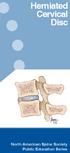 Herniated Cervical Disc North American Spine Society Public Education Series What Is a Herniated Disc? The backbone, or spine, is composed of a series of connected bones called vertebrae. The vertebrae
Minimally Invasive Lumbar Fusion
 Minimally Invasive Lumbar Fusion Biomechanical Evaluation (1) coflex-f screw Biomechanical Evaluation (1) coflex-f intact Primary Stability intact Primary Stability Extension Neutral Position Flexion Coflex
LUMBAR LAMINECTOMY AND DISCECTOMY. Basic Anatomical Landmarks: Posterior View Lumbar Spine
 Lumbar Relating to the loins or the section of the back and sides between the ribs and the pelvis. In the spinal column, the last five vertebrae (from superior to inferior, L1-L5) Laminectomy Surgical
Quantitative Comparison of Conventional and Oblique MRI for Detection of Herniated Spinal Discs
 Quantitative Comparison of Conventional and Oblique MRI for Detection of Herniated Spinal Discs Doug Dean ENGN 2500: Medical Image Analysis Final Project Outline Introduction to the problem Based on paper:
A Patient s Guide to Diffuse Idiopathic Skeletal Hyperostosis (DISH)
 A Patient s Guide to Diffuse Idiopathic Skeletal Hyperostosis (DISH) Introduction Diffuse Idiopathic Skeletal Hyperostosis (DISH) is a phenomenon that more commonly affects older males. It is associated
Patient Guide to Neck Surgery
 The following is a sampling of products offered by Zimmer Spine for use in Anterior Cervical Fusion procedures. Patient Guide to Neck Surgery Anterior Cervical Fusion Trinica Select With the Trinica and
Spinal Injections. North American Spine Society Public Education Series
 Spinal Injections North American Spine Society Public Education Series What Is a Spinal Injection? Your doctor has suggested that you have a spinal injection to help reduce pain and improve function. This
Lower Back Pain. Introduction. Anatomy
 Lower Back Pain Introduction Back pain is the number one problem facing the workforce in the United States today. To illustrate just how big a problem low back pain is, consider these facts: Low back pain
Spine conditionsnew treatments. Ben Okafor FRCS FRCS.orth Consultant Orthopaedic Surgeon
 Spine conditionsnew treatments Ben Okafor FRCS FRCS.orth Consultant Orthopaedic Surgeon Certainties of life Death Taxes Back pain New Advances Minimal access surgery Indirect Lumbar decompression Dynamic
Spine Clinic Neurospine Specialists, Orthopaedics and Neurosurgery
 Spine Clinic Neurospine Specialists, Orthopaedics and Neurosurgery REVISION SPINE SURGERY Revision surgery is a very complex field which requires experience, training and evaluation in a very individual
EXPERIMENTAL AND THERAPEUTIC MEDICINE 5: 567-571, 2013
 EXPERIMENTAL AND THERAPEUTIC MEDICINE 5: 567-571, 2013 Treatment of multilevel degenerative lumbar spinal stenosis with spondylolisthesis using a combination of microendoscopic discectomy and minimally
White Paper: Reducing Utilization Concerns Regarding Spinal Fusion and Artificial Disc Implants
 White Paper: Reducing Utilization Concerns Regarding Spinal Fusion and Artificial Disc Implants For Health Plans, Medical Management Organizations and TPAs Executive Summary Back pain is one of the most
Cervical Spondylosis (Arthritis of the Neck)
 Copyright 2009 American Academy of Orthopaedic Surgeons Cervical Spondylosis (Arthritis of the Neck) Neck pain is extremely common. It can be caused by many things, and is most often related to getting
DIFFERENTIAL DIAGNOSIS OF LOW BACK PAIN. Arnold J. Weil, M.D., M.B.A. Non-Surgical Orthopaedics, P.C. Atlanta, GA
 DIFFERENTIAL DIAGNOSIS OF LOW BACK PAIN Arnold J. Weil, M.D., M.B.A. Non-Surgical Orthopaedics, P.C. Atlanta, GA MEDICAL ALGORITHM OF REALITY LOWER BACK PAIN Yes Patient will never get better until case
A Patient s Guide to Artificial Cervical Disc Replacement
 A Patient s Guide to Artificial Cervical Disc Replacement Each year, hundreds of thousands of adults are diagnosed with Cervical Disc Degeneration, an upper spine condition that can cause pain and numbness
Surgical Treatment for Lumbar Spinal Stenosis Dynamic Interspinous Distraction Interlaminar Stabilization Implant - Coflex
 International 31st Course For Percutaneous Endoscopic Spinal Surgery And Complementary Minimal Invasive Techniques Zurich, Switzerland January 24-25, 2013 Surgical Treatment for Lumbar Spinal Stenosis
Whiplash and Whiplash- Associated Disorders
 Whiplash and Whiplash- Associated Disorders North American Spine Society Public Education Series What Is Whiplash? The term whiplash might be confusing because it describes both a mechanism of injury and
SPINAL FUSION. North American Spine Society Public Education Series
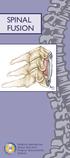 SPINAL FUSION North American Spine Society Public Education Series WHAT IS SPINAL FUSION? The spine is made up of a series of bones called vertebrae ; between each vertebra are strong connective tissues
Spinal Decompression
 Spinal Decompression Spinal decompression is just one more tool we have to treat radiculopathy. With appropriate education and exercises, this modality has been proven to assist in the resolution of symptoms
The Petrylaw Lawsuits Settlements and Injury Settlement Report
 The Petrylaw Lawsuits Settlements and Injury Settlement Report BACK INJURIES How Minnesota Juries Decide the Value of Pain and Suffering in Back Injury Cases The Petrylaw Lawsuits Settlements and Injury
Thoracic Spine Anatomy
 A Patient s Guide to Thoracic Spine Anatomy 228 West Main, Suite C Missoula, MT 59802 Phone: [email protected] DISCLAIMER: The information in this booklet is compiled from a variety of sources.
Vivian Gonzalez Gillian Lieberman, MD. January 2002. Lumbar Spine Trauma. Vivian Gonzalez, Harvard Medical School Year III Gillian Lieberman, MD
 January 2002 Lumbar Spine Trauma Vivian Gonzalez, Harvard Medical School Year III Agenda Anatomy and Biomechanics of Lumbar Spine Three-Column Concept Classification of Fractures Our Patient Imaging Modalities
Lumbar Spinal Stenosis
 Lumbar Spinal Stenosis Introduction Lumbar spinal stenosis is defined as reduction in the diameter of the spinal canal, lateral nerve canals or neural foramina. The stenosis may involve multiple level
Spine Anatomy and Spine General The purpose of the spine is to help us stand and sit straight, move, and provide protection to the spinal cord.
 Spine Anatomy and Spine General The purpose of the spine is to help us stand and sit straight, move, and provide protection to the spinal cord. Normal List Kyphosis The human spine has 7 Cervical vertebra
Presented by Zoran Maric, M.D. Orthopaedic Spine Surgeon May 22, 2010
 Presented by Zoran Maric, M.D. Orthopaedic Spine Surgeon May 22, 2010 1 cervical area thoracic area lumbar area sacrum coccyx Mayfield Clinic 2 3 4 5 Zoran Maric, MD Spine Surgery Procedures How to Document
IMPAIRMENT RATING 5 TH EDITION MODULE II
 IMPAIRMENT RATING 5 TH EDITION MODULE II THE SPINE AND ALTERATION OF MOTION SEGMENT INTEGRITY (AOMSI) PRESENTED BY: RONALD J. WELLIKOFF, D.C., FACC, FICC In conjuction with: The chapter on the spine includes
Primary and revision lumbar discectomy. (nerve root decompression)
 Primary and revision lumbar discectomy (nerve root decompression) The aim of this leaflet is to help answer some of the questions you may have about having a lumbar discectomy. It explains the benefits,
Measure Title X RAY PRIOR TO MRI OR CAT SCAN IN THE EVAULATION OF LOWER BACK PAIN Disease State Back pain Indicator Classification Utilization
 Client HMSA: PQSR 2009 Measure Title X RAY PRIOR TO MRI OR CAT SCAN IN THE EVAULATION OF LOWER BACK PAIN Disease State Back pain Indicator Classification Utilization Strength of Recommendation Organizations
Ben Okafor FRCS FRCS.orth Consultant Orthopaedic & Spine Surgeon Whipps Cross University Hospital
 Ben Okafor FRCS FRCS.orth Consultant Orthopaedic & Spine Surgeon Whipps Cross University Hospital Classification Pathology Clinical features Imaging Treatment Options Outcomes Definition: 1. Narrowing
visualized. The correct level is then identified again. With the use of a microscope and
 SURGERY FOR SPINAL STENOSIS Laminectomy A one inch (or longer for extensive stenosis) incision is made in the middle of the back over the effected region of the spine. The muscles over the bone are moved
Neck Pain Overview Causes, Diagnosis and Treatment Options
 Neck Pain Overview Causes, Diagnosis and Treatment Options Neck pain is one of the most common forms of pain for which people seek treatment. Most individuals experience neck pain at some point during
Magnetic Resonance Imaging
 Magnetic Resonance Imaging North American Spine Society Public Education Series What Is Magnetic Resonance Imaging (MRI)? Magnetic resonance imaging (MRI) is a valuable diagnostic study that has been used
10801 Sixth St, Suite 120 Rancho Cucamonga, CA 91730 Tel (909) 890-2000 Fax (909) 890-2003 Visit our web site at: www.iehp.org.
 Percutaneous Image-Guided Lumbar Decompression for Lumbar Spinal Stenosis (PILD), Including the Commercial Procedure Known as Minimally Invasive Lumbar Decompression (mild -Vertos Medical) Policy: Based
Patient Information. Lateral Lumbar Interbody Fusion Surgery (LLIF).
 Patient Information. Lateral Lumbar Interbody Fusion Surgery (LLIF). Understanding your spine Disc Between each pair of vertebrae there is a disc that acts as a cushion to protect the vertebra, allows
Anterior Approach Burn s Space Esophagus
 Cervical Complications Complications after Cervical Spine Surgery Dr. Rock Patel University of Michigan, Ann Arbor APPROACH RELATED Anterior Posterior PROCEDURE RELATED ACDF Disc Arthroplasty Laminectomy/Fusion