
Manual for Pig Rearing In Uganda
|
|
|
- Elmer Bell
- 10 years ago
- Views:
Transcription
1 Manual for Pig Rearing In Uganda Drs. Linda Nelson and John Carr Daktari Animal Health 1

2 2

3 Smallholder Pigs The wean to finish period This short manual provides for a start in pig production in Uganda This first booklet indicates how to succeed in finishing pigs. Once your stockmanship skills have encompassed the wean to finish pig, the stockperson can move towards keeping adult breeding stock. When read on the computer each page is hyperlinked The pig weaning to finish Page Introduction to Pigs Basic pig breeds 5 Basic terms in pig farming 6 The surface landmarks 8 The pig s life cycle 9 Products from pig production 10 Handling and moving pigs 11 Sustainability 3 year plan 14 Basic Housing Smallholder finishing house plan 15 What if I decide I do not like pigs? 19 Areas and volumes 20 Measurements the basics 21 The basic tools builder and adviser 22 Composting manure 26 Security Fencing 28 Feed and water for the growing pig 29 Feed ingredients 30 Feed dietary requirements for pigs 32 Swill feeding collection and distribution 33 Building a pig feeder 35 Feed balancing the diet and the pig s requirements 37 Mixing dry feed for the pig 39 Which of these food stuffs can be used to feed pigs? 40 Obtaining pigs Selecting the pig 44 Introducing the pig to the farm 46 Introduction to medication and vaccinations 48 Keeping pigs healthy Biosecurity handwashing 49 Normal pig behavior: Lying patterns 50 Defecation patterns 51 Play behaviour 52 Daily routines 53 Weekly routines 56 Recognising health: Stockmanship 57 Stockmanship the basics 58 3

4 Medicine and needles the basics 59 Clinical signs of health and ill health 60 Disorders of the pig by age an introduction 61 Monitoring the pigs Weight estimation of pigs 63 Growth rates 64 Moving the pigs to market 65 Cleaning the building after the pigs go Cleaning the house 66 Lime washing 67 Budget examples Building costs 68 Wean to finish budget 69 Adopt a pig concept 70 Notes 71 Index 72 4

5 Flopped ears. Roman nose White body Basic Breeds of Pigs Pointed ears. Dished face Landrace Red colour Large White/Yorkshire Duroc Belted colour Tamworth Saddleback Other Hampshire Large Black Berkshire (6 white points) Remember that most commercial pigs will be a cross breed of Landrace/Large White and Duroc 5

6 Swine, Pigs and Hogs The basics Animal terms: Boar entire male pig Castrate/ Barrow male pig castrated Gilt female from birth to having her first piglets Sow a female who has had piglets Piglet young pig which has not been weaned Weaning Removing the piglets from the lactating sow Weaner a pig after weaning generally days of age until 30 kg (66 lbs) Grower a pig older than 30 kg (66 lbs) feeder pig Finisher a pig older than 60 kg (120 lbs) Farrowing giving birth - parturition Lactating producing milk Gestating the period from weaning to giving birth (dry sow period elsewhere) Litter each group of piglets from a sow Parity each parity refers to each separate farrowing a 3 rd parity sow has had three litters Mummified piglet fetus which died during gestation born in a state of mummification Stillborn piglet born dead but otherwise normal Fostering moving piglets between sows to assist them getting enough milk Colostrum the first milk after farrowing full of antibodies Processing the variety of procedures carried out on piglets castration, tail docking, teeth clipping, ear notching and an iron injection. Pre-weaning mortality the number of piglets who die in the farrowing house Post-weaning mortality the number of weaners/grower or finishers who die in the postweaning period until slaughter Breeding/service the mating process Weaning to breeding interval the days between weaning until the next breeding Repeat a sow or gilt who fails to conceive Conceive to become pregnant Farrowing rate number of animals bred / number of animals who actually farrow Culling removal of an animal from the farm Body condition score a method of estimating amount of body fat 5 point scale 1-5 Food conversion ration FCR the rate of growth (g) / amount of dry food eaten (g) Growth rate number of grams increase in bodyweight per day Types of production: Farrowing house the room where sows and gilts give birth and lactate Gestation barn / dry sow house where the sows live while pregnant Nursery the room where pigs live from weaning to about 30 kg Grow/finish the room where pigs live from 30 kg until slaughter Wean to finish a room where pigs live from weaning to slaughter All-in/all-out the process where buildings are emptied of one group of pigs, thoroughly cleaned and then populated with a new group of pigs Batch one group of pigs Batch farrowing a group of sows and gilts breed to farrow in a group 6

7 Three site production a system where pigs are reared on three separate farms classically gestation and farrowing on one farm/site : nursery on another and grow/finish on a third site. Two site production a system where pigs are reared on two separate farms classically two forms a) gestation, farrowing and nursery on one farm/site and the grower/finisher on another farm/site. b) gestation and farrowing on one farm and wean to finish on another Some variations in gestation housing: Crates/stalls, ESF (Electronic sow feeding), trickle feeding (feeding small amounts over a short period of time), outdoor housed outside in arcs. Some basic facts: Age at breeding varies: for a gilt 220 days; for a boar about 7 months Estrus cycle days three weeks Gestation 115 days three months, three weeks and three days Breeding season generally year-round poorer in the summer and early autumn Slaughter weight about 114 kg ( lbs) at about 26 weeks of age Weaning Farrowing Grow/finish Basic Pig Life Cycle Gestation 115 days Selection Slaughter Breeding Nucleus farm 7

8 KNOW YOUR WAY AROUND YOUR PIG View of the pig neck The head view of the pig The major surface landmarks of the rear of the female pig: The hind view of a female gilt Detail of the vulva opened The sow has mammae each with a nipple The major surface hind quarter landmarks of the rear of the male: The entire male: The castrated male: Remember that the male also has the prepuce on the ventral surface. 8

9 Introduction to the Pig The Basic Economic Life Cycle of the pig Where is money generated? Compost from faeces Meat from finishing pigs Gilts for sale Weaners Also note pigs are useful to clear land and plough the fields. The stages of the life cycle are simplified Finishing depends on weight 40 kg by 12 weeks of age, 100 kg by 22 weeks of age Gestation lasts 115 days 3 months, 3 weeks, 3 days Weaning can successfully occur between 3 weeks to 3 months of age 9

10 Pig Products in Uganda What are the four main products that pigs produce and how long can it take before I get any return on my investment? 1. Manure or Compost Pigs produce faeces, this combined with plant material and any wasted feed can be placed into a compost pile. Pig manure can be solid or liquid depending on the type of plant that requires the manure. Within 4 weeks even young pigs will start producing manure/compost for sale or use in your own garden produce. 2. Meat The second purpose of pigs is to produce meat. Weaned pigs at 15 kg will cost around 25,000 shillings and a 70 kg meat pig can raise about 150,000 shillings. But note this difference is not all profit there is feed, labour and possible medicines to pay for. However, how long does it take to go from a weaned pig to a sale pig? With the proper feeding routines this can be as short as 5 months but will poor feeding this can take 12 months. We are going to assume good feeding routines. Good pigs growing well Emaciated pigs on a poor diet Ready for the Pork joint 3. Weaned piglets The ultimate goal is to produce your own piglets! But while this seems extremely high value if you wean 10 piglets each worth 25,000 shillings this is 250,000 shillings!! But it takes around a year before you get this money - can you wait that long before earning? Lots of babies Lots of weaned pigs Why does it take this long? Weaner purchased 2 months old Gilt mated 8 months old Gilt farrowed 13 months old Piglets weaned 1 month later. Thus from purchasing your weaners it will take 12 months And the weaners are sold some 5 months later this is months after your initial purchase! 4. Labour Pigs can be utilized to help clear land of trees and till the soil. This was a traditional use of pigs. 10

11 Handling and Moving Pigs Most pigs are not used to being handled. They become very vocal when caught and will not settle easily. Pigs will work as a herd or as individuals, before moving a group of pigs think of escape routes you would take and then try to block them. Handling Young pigs may be picked up and will generally settle Older pigs examine within a crate or restrain using a loop around the upper jaw behind the canines Moving Pigs can be moved as a group Design passageway to prevent escapes. Walls 850 mm high Young pigs may be easier to move in a barrow Pigs have a wide angle 310 degree vision which allows them to see behind themselves without turning their heads. They are easily distracted by objects to the front and sides and sharp changes in floor texture and appearance. A shaft of sunlight is sufficient to affect pig movement. 11

12 When moving growers pigs use a pig boards, hands and your voice. Avoid electric prods There is never any need to use violence - the pig will object Pigs move much easier in a quiet controlled environment Pigs can be trained to a harness. This is how they are used to hunt truffles. Boars can be trained to walk to heel and follow a route Take special care with boars or lactating sows. Pigs are armed with razor blades Walkway 2 pig wide Offset entrance Loading finishing pig can be a particularly stressful time for a pig. It is essential to carefully design the loading area. Avoid steps and any rise over 20 o. Ensure the area is well lit without corners. The use of hydraulic lifts (right) is to be encouraged. With ramps they should be constructed with at least 850 mm high to prevent distraction. The passageway should allow 2 pigs to move at the same time, allowing physical contact. Have an offset panel at ramp entrances, rather than a funnel. A catwalk along the outside of the ramp will allow staff easy access to the pigs on the ramp to improve pig movement. 12

13 Mixing pigs Care is needed because: 1 Pigs will fight whilst they establish their pecking order. This happens whenever the group is disturbed. 2 It takes 1-2 days to establish the pecking order, and performance may be compromised during this period. 3 Pigs need time and space to work out their pecking order. After this, the weaker pig will back down. For all pigs; 1 Pigs should be kept as much as possible in stable social groups, and mixing at any stage between accommodation types should be kept to a minimum. 2 Avoid mixing in pens where sharp edges to feed troughs and drinkers protrude, and can injure the pigs. 3 Always mix pigs of similar size. 4 As a general rule, never introduce less than 3 pigs into an established larger group. However, it may be necessary to introduce 1 or 2 sows to dynamic service groups. 5 Low levels of lighting can reduce aggression when mixing. This must not be used for longer than 1-2 days. 6 Resorting to the use of tranquilisers and masking sprays may indicate that the mixing methods and facilities on your farm are inadequate. For sows: 1 Allow plenty of space (eg if mixing sows, you need 3.5 m 2 per sow) so that there is enough space to get away if chased or threatened. Sows will mostly chase for less than 2.5 m. 2 Ideally only mix sows at weaning. Avoid mixing sows 5-21 days after service as this is when the eggs implant and stress can result in high numbers of returns. 3 Use physical barriers in the pen such as big bales or plastic sheeting suspended from the roof. This allows a beaten pig to get out of sight and quickly ends the fight. 4 Time mixing to fit in with management routines to best allow supervision, however mixing in the evening may be best if you can arrange to be there to oversee this. 5 Use fresh straw at mixing it acts as a cushion if fighting occurs and increases surface grip. 6 Consider ad lib feeding when mixing. 7 Consider allowing physical contact eg through a gate, between a dynamic main group and a sup-group to be mixed into it, prior to mixing. This may reduce fighting when they are introduced. 8 Avoid re-mixing groups. If practical mix sows back into their original groups post weaning. 9 Avoid mixing in any form of cubicle system. Sows can be trapped easily and injured consider a specialist mixing pen. 10 Consider breaking up the edge of the lying area with divisions so that sub-groups can have their own areas. 11 Try closing off a section of a large yard system for a few days then penning the sub-group in this area when mixing. This helps to establish a new territory for the smaller group. 13

14 Small holder s sustainability plan for 3 years Year 1 10 pig finishing shed 5 x 10 finishing unit 10 pigs every 4 weeks 5 sows farrowing every 3 weeks breeding farm supplying weaners Year 2 3 x 50 finishing units different communities 10 pigs per week Year 3 14

15 Sustainable pig farming making a start If you are not used to raising pigs from scratch breeding, farrowing, looking after piglets- it is best to start just learning about the animal its habits, feed, water and cooling requirements. Start with weaners and aim to produce good compost and excellent finished pigs. Along the way, some farmers will start wanting to produce their own pigs but that is the topic for a different day. Basic pig building Once we have decided not to have big sows and boars, we can radically simplify the building design. The building will be 3m wide and 7m long- thus providing 21 m 2 enough room for 10 pigs. Floor plan view: Sleeping Exercise Wallow Feed and water Bedded with step Inside area Outside area Side plan view Wooden retainer to sleeping area Thatch under Roof for insulation 2.5m high 1.5m high Gate Water collection Wall Sleeping area Sloping exercise Monopitch Outside Feed/water Insulated floor 1-2 degree Wallow Fence 15

16 The building design can be modulated making expansion easy. Compost area West Wind direction 3.5 m 3.5 m 7 m in total length 3 m wide Example of this style of building: Orientation In Uganda the big issue is hot pigs. Orientate the building so that the sleeping area is at the west end of the building thus providing shade from the afternoon sun. The other consideration is the wind direction to provide maximum ventilation. Water collection Collecting water from the roof can significantly reduce the amount of water which needs to be brought to the pigs. Ideally keep the water high so that it can flow to the individual pens and have an over flow tank anyway for long term storage. The tanks should be sealed to reduce algae growth. Ensure the gutter and pipes are well maintained Biosecurity Ensure that there is a 2 metre clear walkway around the building to reduce rodent and other vermin/pests from entering the unit. 16

17 Timber protection All timber which is placed in the ground should be protected from being eaten and rooting, particularly from termites. Peel back the bark Carefully cover the end in burnt engine oil. Use a rag to rub the oil into the wood Cover the protected timber with a plastic Place in the ground sheet This will greatly increase the life of the post. Without this protection the termites will eat the post in around 6 months. Pigs and wood posts Pigs will also eat any wood posts. Be particularly careful of any post which is supporting the roof. Protect such posts with metal sheets (although this can become sharp) and/or concrete. Observation area and Sow modification The building could be used for sow and farrowing accommodation The sleeping area is slightly modified so that wooden beams can be placed across the sleeping area restraining the pigs either for treatment or as a farrowing area 17

18 Example of a similar building although thatch roof is used in this example Side view of the entire house. Note the 2 metre biosecurity zone around the building The rear of the house From inside the outside area 18

19 How does this fit into a three year plan for the community? Year 1 Month 1 Build building for 10 finishing pigs learn the ropes of pig production Income from composting. Months 2 to 6 Build four more 10 finishing pig buildings this provides 5 buildings each with one month supply of pigs. Thus income now coming in every month from pigs. 10x 150,000 shillings per month net 15,000,000 shillings a year. Year 2 Build 4 more community finishing units Income now 10x 150,000 shillings per week net 65,000,000 shillings a year Year 3 Build a 5 sows a week breeding unit- supplying 50 pigs a week to one of the community finishing units. Control the cost of producing the piglets net 78,000,000 shillings a year What if I decide I don t like pigs? The buildings are designed to be able to accommodate other animals chickens, turkeys or goats for example. They could be modified for older pigs also. 19

20 AREAS AND VOLUMES H V = BW (H/3) W B B B W W A = BW V = BW H D H V = 0.262DDH H D A = 0.785DD D H V = 0.785DDH V = (BW H)/2 B W H W H A = (W H)/2 20

21 BASIC MEASUREMENTS When on the farm, it can be useful to make estimates about the size of objects. However, there are times when a tape measure is not easily available Within reason it is possible to make some assessment using your own body features For example: 2.5 cm (1 ) is approximately from the tip of your thumb to the knuckle 5 cm (2 ) inches is approximately the length of the thumb 10 cm (4 ) is the width of the hand hence the term hand in horse measure 20 cm (8 ) inches is the spread of your hand 30 cm (12 ) inches is the approximate length of a foot 1 m (1 yard) is approximately the length of one stride Get to know your own measurements and note the exact measurement. However, on a day to day basis using these simple measures will help you estimate depth of water, length of a feeder or the rough dimensions of a pen 21
22 Basic tools required to build and run the unit Builder tools The essential tools to building the building Spade Dibbler iron bar Machete/Panga Saw Measuring rope Plumb line Tape measure Trowel 22
23 Hammer Chalk Small blackboard or other record Burnt engine oil Wheelbarrow ready with useful equipment Green Warrior s minimal equipment Tape measure Chalk, pen and paper Animal marker Soap to wash hand - biosecurity 23
24 Basic materials to build the structure Stones Bricks Posts Bamboo or sticks Iron sheets Gutter and downpipe Water butt Thatch Nails String Concrete Sand/aggregate 24
25 Equipment in daily use Boiling pan Buckets Measure Brush and pan Boots Basic medicinal supplies syringe and needles 25
26 Forms Solid Site selection Equipment Method Pit 1 Preparation Pit 2 Maturation Pit 3 Aeration Pit 4 Storage Note Solid Liquid Composting manure The area needs to be well drained Under shade Protect from wind, sun and running water Four pits 1 x 2 metres and 15 cm deep. Can be built up to any height Ensure that the bottom of the pit soil is loosened to ensure good contact between composting material and organisms Run four pits Vital to get the initial mixture right working to a carbon/nitrogen ratio of 30:1 Ensure all plastic materials are removed from anything going into the compost heap Move pit 1 contents to pit 2(once system in progress) Place the following layers onto the loosened soil Hard plant materials maize corn stalks Green grass materials Soil plus ash (to neutralize acid in faeces) Dry grass waste animal bedding Animal manure and animal feed wastes Green grass materials Soil plus ash Repeat the next day for one month. After making each days compost cover heap with grass to stop drying After one month move pit 2 contents to pit 3 Fill pit 2 with the contents of pit 1 Add water to the pit Cover with grasses After one month move pit 2 contents to pit 3 Each day turn pit 3 and add water each day. Cover with grasses to stop compost drying out After one month move pit 3 contents to pit 4 Pit 4 is a storage pit. Prepare the solid compost for use or sale. If you have large amounts of faeces the compost piles may have to work once a week rather than monthly. 26
27 Initial layers Covering Soil Manure Water Dry grass Soil/ash Green Grass Covering Repeat Pit 1 Prepare compost in layers month 1 Pit 2 Allow compost to mature month 2 Pit 3 Aerate the compost each day month 3 Pit 4 Store and prepare for sale/use Liquid Method Obtain a large water container cleaned drum Liquid manure will be made with a ratio of 3:1 water to faeces Place manure into a sisal sac Tie the sac top with a rope Suspend the sisal sack in a container full of water Leave for 2 weeks Prepare liquid manure for use or sale Pole String Water Faeces in Sisal sac Container Uses Solid Liquid For all crops. Ideally place before crops grown Very useful for Banana crops Apply to fruit crops at the roots. Do not apply to the leaves Ideal for tomatoes, peppers etc Ideal for restricted environments ie pots or plastic bags 27
28 Security fencing Making your farm secure is important. Not only to keep unwanted human visitors but also to reduce animal visitors and to stop your animals from straying, essential to maintain biosecurity. The type of fencing may vary with species. Pigs for example will burrow under fencing if required and therefore the fence must go into the ground. Birds will obviously fly over a fence. Basic Fencing - Natural products Wicker fencing Thorn fencing Close hedge To stop animals Electric fencing here powered by solar power to protect bee hives. Electric fencing can be extremely useful in the farming of pigs Fox and other small predators Note the above fence is not placed into the ground and will not stop pigs. To stop pigs place the fence 0.5m underground Stopping human Humans are extremely difficult to stop. In general the fence will be extremely expensive. Barb wire is not a real deterrent to people Razor wire will reduce humans 28
29 Feed and water for growing pigs The provision of food and water is an obvious essential for production animals. In pig the average daily feed intake dry matter can be estimate to be 4% of the bodyweight of the pig. The pig s average daily water use can be estimated to be 10% of its bodyweight. There are two main types of pigs feed a dry feed whose water content will be below 20% and a wet fed where water is added deliberately and/or the water content is high initially for example vegetables or swill is being fed. With these guides expected intake can be calculated per pig in the group. Body weight Kg live weight Dry matter feed intake kg per day Daily water intake Litres per day Wet feed intake Kg per day Daily water intake Litres per day How often should the pigs be fed? Dry feed With dry feed after weaning the food is placed in a feeder and food is made available all day. Thus the entire day s feed for the whole group of pigs is added to the feeder once daily. Wet fed With wet fed, the feed is offered to the pigs around 5 times a day. All the pigs eat at the same time. Therefore, the trough length needs to be long enough for all the pigs (at the end of finishing) to be able to eat at the same time. The pigs will rapidly become accustomed to this type of feeding regime. One additional feed time should be provided which is just plain water. Keep a record of each feeding time as shown below: How long a feeder is required? Body weight Kg live weight Ad lib feed pig -dry cm For 10 pigs metres Restricted feed pig - wet cm For 10 pigs metres At the end of the feeders have a slope so that the feeder is easier to clean. Food preparation If swill feed is used, it is essential to boil the food thoroughly for at least 30 minutes. This is to kill any viruses that might be present in the feed potentially African and Classical Swine Fever virus both which can result in extremely high mortality in pigs. Feed should be used within 48 hours of collection. Swill being boiled for a minimum of 30 minutes Feeding records for wet feeding 5 times a day and one additional water only feed 29
30 Northern Uganda Feed Ingredients Food Cassava - Meal Cassava - leaves Sweet Potato meal Sweet Potato leaves Positive characteristics Good energy source Good protein 21% Rich in lysine Good minerals Energy high Good minerals Good protein 20% Silage good for sows Maize bran Low in protein High in fibre Rice bran Low in protein High in fibre Ground nuts Good fat 2x soya Good energy Good protein Good lac sow Beans Mukene little dried fish Blood meal Brewers waste Greens Dodo, boo, Cabbage, napier, lablab, mucina, callandra, lukoko High protein 20% Good lysine Negative characteristics Weaner Grow finish Very low minerals No 40% Very low protein 1% of Cyanide in tubers need ration processing roasting and drying Low sulphur aminoacids Cyanogenic compounds Sun drying wilting, chopping removes 90% of these compounds High fiber Protein low Low in sulphur aminoacids Lysine low Trypsin inhibitor heat treat Low in methionine, lysine and tryptophan Tannins Roasting and grinding help Low B vitamins Trypsin inhibitors Tannins Haemaglutinins Steaming helps 75 minutes Adult 40% of ration No 10% 40% 5% of grain 5% roast High in protein Watch salt levels 15% Rich in leucine Rich in lysine High in fibre High in water content Minerals low Low in isoleucine May contain high salt 50% of grain 40% grain 50% of grain 40% grain 10% 10% 50% of soya 50% of soya 2% 5% 5% 30
31 Bones, hooves, horns Millet Sorghum Sunflower meal Sunflower leaves Banana (not many in Northern Uganda) Good protein Good energy High in energy Medium protein Rich potassium Good B6 Ascorbic acid 30% protein Better ripe Poor lysine Supplement sulpha and tryptophan 100% soya 2/3 soya 100% soya High fiber 17% 15% 10% 25% Protein low (peeling helps but not time element) Poor minerals Green should be chopped or crushed 50% 50% 50% Banana silage Per day: Growing pigs will eat 5-6kg Finishers 9kg Sows in lactation 20kg Made in 4 days and lasts 6 months 50% diet 50% grain 50% grain 31
32 GUIDE TO THE BASIC MAKEUP REQUIREMENTS OF PIG DIETS Diet Body weight Energy DE Crude protein Total lysine Dig lysine Crude Fibre NDF Ash Vit A Vit D3 Vit E Units kg MJ/Kg % % % mg/kg 1 st Creep ,000 2, nd Creep ,000 2, Weaner ,000 2, Grower ,000 2, Finisher ,500 1, Gilt rearer ,000 2, Gestating ,000 2, sow Lactating sow ,000 2, Boar ,000 2,
33 Swill collection and distribution Swill is made from kitchen byproducts this can be from the home or from restaurants. Hospital waste should be avoided due to the possible contamination by human diseases and pathogens. All feed from kitchens can be collected this can include alcohol products. Include all vegetable peelings, egg shells and bones. Ideally food not containing pig meat is preferred but this option is not always available. Therefore, it is best to assume that all kitchen feed contains pork products. It is then essential absolutely essential-- that the kitchen wastes are thoroughly boiled for at least 30 minutes before it can be fed to the pigs. The kitchen wastes should be as fresh as possible. Ideally do not use food over 48 hours old. Boiling also helps to preserve the kitchen wastes. Rodents and other vermin will also eat this kitchen waste and the storage of the prepared products needs to be clean and secure. Any feed not eaten by the pigs must be cleaned up thoroughly and disposed. Ideally any feed not eaten should be included in the composting pile. Collection 2 or 3 x a week Motor bike collection Small trailer for a bike Truck for larger amounts Preparation Food Collect waste feed Remove all plastics, glass and metals Collect Boil for 30 minutes Add a small amount of water to help boiling Store before use 33
34 Feeding Ideally feed 5 times a day little and often. Have one additional meal as water only each day. Record eat feeding time With swill feeding it is fed as a restricted feeding option, therefore all the pigs need to eat at the same time. This requires a long feed trough. Feed trough size with age of pig How long a feeder is required? Body weight Kg live weight Restricted feed pig - wet Cm per pig For 10 pigs (as an example) metres Commercial liquid/wet feeding with sufficient room highly efficient Watch the pigs eating. Ensure there is sufficient space for all to eat. Note any pig which is reluctant to eat (as shown) and then check to ensure the pig is healthy 34
35 Building a feeder 1 Calculate: The number of pigs in the pen The type of feeding system adlib or restricted Final weight of the pigs 2 Determine the length of feeder required. For examine for 10 pigs 70kg on restricted feed- they require 3 metres 3 Place the feeder in the pen so that the pigs can be fed from outside the pen 4 Layout the position of the feeder on the ground 5 Ensure that the ground is level 6 Lay the bricks. For a 3 metre feeder 27 bricks will be required as shown 35
36 12 bricks in length 3 metres 1.5 bricks cm wide 7 Concrete the feeder 8 Make a ramp at both ends to assist cleaning Cross-section of the feeder showing ramp at each end not to scale 9 For the unit system the pigs will walk over the feed when entering or leaving the pen 10 Ensure the feeder is managed to maximize hygiene and minimize feed wastage. This is essential both to minimize cost, but just as important to reduce the risk of encouraging rodents and other vermin including other pigs to your unit. 36
37 Variety of pig diet specs which might be of use in Uganda How to use these tables: Four different diets are presented Creep for weaned pigs, Grower diets for growing and finishing pigs and sow diets. The fourth category is a general pig diet In each category if the reader follows each column different options are given for ingredients in % of the diet making a total of 100%. These diets come from various sources and farmer s opinions. They are presented in order to provide the reader with feeding options depending on what food stuffs are available in the locality. The diets are chosen to provide a range from a more commercial maize, soya, fat and mineral diets to a more local by-product range of diets. Creep diets high in protein and lysine Grower diets moderate protein Sow and weaner diets General pig diet recommendations Bananas Barley Blood meal Bone Ash Brewers Residue Cassava dry Cassava leaves Cotton seed cake Field beans Fish meal Ground nut cake Lucerne meal Maize Maize bran Meat and Bone meal Oat Red Ant hill soil Restaurant waste
38 Creep diets high in protein and lysine Grower diets moderate protein Sow and weaner diets General pig diet recommendations Rice bran polish Salt Shells Soya fat Soya meal Sunflower meal Sunflower meal Sweet Potato leaves Sweet potato meal Vitamin premix Wheat Wheat bran/pollard Wood Ash
39 Dry feed mixing Mixing the complete feed When mixing feed, mix the smaller quantities first and then move to the larger quantities Thus for example when making a diet for sows Place feed in the centre of the floor Mix first feeds with your hands Then mix with a small scoop Finally mix the larger ingredients using a shovel. Vitamin premix 0.25 kg Add the salt and mix thoroughly 0.25 kg Fish meal. add half the volume, mix. Add the second 4 kg + 4 kg half and mix thoroughly Shells - As the fish meal mix in two halves 4.5 kg kg Cotton seed cake As the fish meal mix in two halves 15kg + 15 kg Maize bran As the fish meal mix in two halves 50 kg + 50 kg Once the feed has been mixed, place the completed feed into 25 kg bags. 39
40 Which of these feed stuffs can be fed to pigs? Irish Potatoes Sweet Potatoes Bitter tomatoes NO OK OK + NO OK OK+ NO OK OK+ Tomatoes Irish Potato peelings Banana Leaves NO OK OK + NO OK OK+ NO OK OK+ Banana fruit Cassava leaves Sweet Potatoes leaves NO OK OK + NO OK OK+ NO OK OK+ Cassava root Animal Bones Milk powder NO OK OK + NO OK OK+ NO OK OK+ Eggs Maize Maize husks NO OK OK + NO OK OK+ NO OK OK+ 40
41 Home brew residue Meckene - fish Egg shells NO OK OK + NO OK OK+ NO OK OK+ Soya Beans Cabbage NO OK OK + NO OK OK+ NO OK OK+ Fish heads and remains Ground Nuts Sugar Cane and Molasses NO OK OK + NO OK OK+ NO OK OK+ Silage grass, banana Salt (NaCl) Shells NO OK OK + NO OK OK+ NO OK OK+ Lemon/limes/oranges Maize, Wheat or Rice bran Meat and Blood meal NO OK OK + NO OK OK+ NO OK OK+ Sorghum Sunflower Banana peelings 41
42 NO OK OK + NO OK OK+ NO OK OK+ Egg plant Margarine/butter/cheese Avocado NO OK OK + NO OK OK+ NO OK OK+ Matooke Beer Cotton seed the white seeds NO OK OK + NO OK OK+ NO OK OK+ Milk liquid Soap Bottle tops NO OK OK + NO OK OK+ NO OK OK+ Plastic pieces Carrots Papaya NO OK OK + NO OK OK+ NO OK OK+ Restaurant food Rice Lupins NO OK OK + NO OK OK+ NO OK OK+ 42
43 Sycamore fig fruit Maize cobs Wheat, Barley, Oats NO OK OK + NO OK OK+ NO OK OK+ Pineapple, melon, grape, mango Insect larvae and grubs Grass NO OK OK + NO OK OK+ NO OK OK+ Acorns and nuts from trees Apples Bread/bakery waste/chapatti/injera NO OK OK + NO OK OK+ NO OK OK+ This photomontage aims to illustrate the wide variety of items that can go into a pig s diet and a few items which cannot. Many items need further processing- but boiling for 30 minutes is a great general start. Consult your local advisor or Green Warrior if you are concerned about a particular food product or how to process the food to make it suitable for your pigs. 43
44 Obtaining the pigs Which pig to take home? It is human nature to feel sorry for the weak and defenseless. However, it is nature s way to remove the weak and defenseless from the genetic pool Do not buy someone else s problem Do not buy a sick or sorry pig Avoid pigs with a listless manner which hang back into the group Only examine the pig in a well-lit area. Walk the pig on an even coloured floor. Pigs do not like to cross lines, shades or wet areas. What to look for: Pigs with exceptionally long and coarse hair coats Pigs with heads that appear too big for their bodies Pigs which are stunted, compared with their litter mates Look for bright clear open eyes avoid small shrunken eyes Avoid pigs which are excessively dirty housed too hot Avoid groups of pigs who are too huddled housed too cold What to listen for: Note any sniffling and sneezing in the pigs Avoid groups of pigs which present with discharges from the eyes and noses Avoid groups of pigs who are coughing, particularly when they first rise up Touch the prospective pigs Examine the head carefully avoid any pigs with twisted, swollen or misshapen snouts Examine the jaw line in detail, looking for knots or swellings. Do not think you can easily lance an abscess. This will only result in a scar and may release the causal agents onto your farm Examine the skin, looking for lice, a greasy feel and lots of wax in the ears while treatable this is probably a sign of mange. Examine the legs watch the pig in motion which should be free Note if the pig is housed in deep bedding, move the animal to a solid concrete floor and if necessary hose off the feet so they can be easily examined. Don t take a pig with a stiff gait Avoid front legs which are too straight Avoid hind legs which are too tucked under the body Avoid knocked knees Avoid front legs which are too close together Run your hands down over all four legs looking for swellings in the joints, muscles and feet which may indicate injury or arthritis Examine the feet do not select pigs with toes of uneven size. Examine the feet for lines, cracks, under run heels or bruised soles Length of the pig note 3 nipples in front of the prepuce in males and note position and number of the teats Ensure the gilt has an anus If the boar is intended for breeding examine the testes, size, shape and consistency. Any defect you note in a weaner or young grower is not going to be missed by the butcher 20 weeks later. 44
45 Take a breath Stand back and consider your prospective pig Leg at each corner Good loin development Ideally a line dipping along the back indicating lean Ideally a hollow in front of the tail and shape of the ham Good growth for its age Does it look like its breed, note its colour distribution and markings Hair coat bright and clean Additional questions to ask: Date of birth? Diarrhoea as a piglet? Vaccine programme? mother and piglets In-feed and water medication programme What is it currently being fed on? Can you have 5kg to help settle the pig at its new home? Movement form available? Required blood tests have been completed? Check list for the visual examination of your pig 45
46 Settling your Pig into its New Home Biosecurity Always review the biosecurity arrangements for the pig particularly if there are already pigs in the household isolation and acclimatisation will be required. Treat the pig for mange (Sarcoptes scabiei). Unless told otherwise, it is always wise to assume the pig is positive. Two injections of ivermectin 7-14 days apart should eliminate this and other parasites. (except tapeworms) Preparing the pen The pig will want to sleep in a dry draught free area. Allow the pig to select this area. Place a loosely broken bale of straw and allow the pig to make its own nest. Even newly weaned pigs will make their own nest. In the area designated as the toilet area, make the area damp with some damp straw. Observe the pig over the first few days to ensure it agrees with you regarding the layout of the pen. Healthy pigs are determined by minimizing stress. Ideally the source farm should supply 5kg of food to reduce the risk of digestive upset. Ensure the water supply is clean and accessible. In the hot months, with pigs over 30 kg, the provision of a wallow or other cooling aid will be necessary. First day Plenty of dry straw Provide water as soon as the pig settles in the pen Provide food at the end of the day make sure the pig knows the position of the feeder. The addition of milk to the feed (2:1) may help encourage appetite. If the pig is over 30 kg the addition of a 0.5 litre of beer/ale to the food will assist the pig to sleep. Remove the feeding bowl Turn all the lights out 1 hour after feeding. Allow the pig to get a good night s sleep. Get to know the pig Give him or her a name and use it. Gentle handling will equate to tender pork Get to know his (her) eating and other behaviours. Make the pig your friend As a stockperson you can still enjoy pork and the company of pigs 46
47 What is not suitable? Dirty poorly prepared accommodation The floor is dirty and broken Damp bedding full of mould which was intended for sleeping Unclean polluted water supplies with water from the cleaning programme Contaminated (rodent droppings) old feed from the last pigs who left 3 weeks ago!! Draughty accommodation Use of old needles and syringes Neglect the pig cannot be saved the kindest treatment is euthanasia. Abuse (staged photo). If the pig will not do what it asked it s our fault not the pig s. They have the right to be difficult 47
48 Introduction and medication for your pigs Bringing new pigs to the farm is always a worry. If there are no other pigs on the property then this worry is less. But if there are other pigs already there it is always best to keep the new pigs separate for the first 2 weeks at least. This obviously causes problems, especially when the pigs are very young, with housing. Separation for 2 weeks why Two main reasons: 1. It allows for the new pigs to develop any clinical signs of ill health before meeting your other stock. They can then be treated for the disease 2. It allows the new pigs to become accustomed to you and the property before meeting your other stock. Where should this isolation building be placed? The building should be placed around a minimum 50 metres away from the main buildings. The further the better but within the same ownership. Requirements All new stock should be healthy on arrival. You should not buy any pigs which look sick see selecting pigs. Separate boots and ideally covers for your clothing should be worn in the isolation area Ideally these boots and overalls should be a different colour to normal. Suggested injections on arrival Two injections of ivermectin 0.3mg/kg on arrival and 7 days later This is to remove the risk of Mange (Sarcoptes scabiei var suis and other internal parasites (not tapeworms). (Details on Mange - ) Consult with your local veterinarian regarding any specific pathogens that might be present in the area and take necessary precautions. 48
49 Hand Washing Instructions Before and After handling the Pigs Ensure your finger nails are short Turn on the tap and allow the flow of warm water Rub your hands vigorously together for at least 15 to 20 seconds under the water Apply soap Scrub all surfaces, including the backs of your hands, wrists, between your fingers and under your fingernails Rinse well Dry your hands with a disposable towel Use a towel to turn off the tap Why is it vital to wash your hands? To reduce the risk of spread of pathogens between farms To protect yourself from zoonotic pathogens In pigs this is primarily to reduce infection from Streptococcus suis and Erysipelothrix rhusiopathiae 49
50 Lying pattern as an indicator of comfort Too cold Lie on the floor with their legs tucked under their body to reduce floor contact. Lie huddles with other pigs. Lie close to a wall Pigs may shiver, The pigs may become hairy With larger pigs they seen unable to adopt this tucked position for very long and tend to lie semi-recumbent with their legs tucked into their body., Chilled piglets Chilled weaners Chilled finishing pigs Comfortable Within a group of pigs there will be a selection of lying patterns. The main group of pigs will sleep together in a pile, however, other pigs will be lying spread out but with maximum contact with the floor. These separated pigs will be the more dominant pigs. The lower order pigs will lie on the edge of the main group. Pigs sleep with legs stretched out from the body. Too hot Pigs will be panting > 40 per minute Pigs are generally dirty. Lie away from other pigs, sometimes against a cold wall. They do not pile Lie in any wet/cooler area Pigs will dig into earth/bedded floors. 50
51 Defecation behaviour Pigs are inherently clean animals and avoid lying in feaces. From a few days of age pigs will become toilet trained to defecation in a specific area of the environment. The defecation pattern of the pen provides a good long term indicator of comfort. The veterinarian can see the area even without the pig s presence. Abnormal defecation patterns indicate a chronic reduction in optimal environment. Pig s defection area can be expected to be either Where the pen is coolest Where the pen has a draught the pigs will defecate under the cold dropping air (blue in the picture) Where the pen is wettest note the faeces under the drinker Hot pigs will specifically choose to wallow in faeces and slurry to assist cooling. Sometimes, this is unavoidable, but its occurrence should be minimised. Once pigs become dirty they can be extremely difficult to retrain even when provided with ideal environments. Note the pigs in the picture are lying by the drinkers another abnormal position Where the pen is darkest Where the pen is most private this can lead to a blocked feeder Abnormal defecation patterns can also limit other pen resources creating additional stressors for example when pigs defecate into feeders, waters or over lying areas. 51
52 Pigs at Play Any stockperson watching a group of pigs will soon be amused to observe their play activities. Play prepares them for situations and teaches survival skills. Pigs are extremely intelligent animals with a degree of complex behaviours that match and may even surpass a domestic dog. Unlike cattle and sheep, pigs exhibit greater inquisitiveness and individualist behaviour patterns. This can be practically demonstrated when moving a group of pigs. In many ways pigs are more like people than they would wish to admit. Providing an environment where pigs can explore their play behaviour can help relieve stress and allow the pig to cope better if their environment is temporarily adverse. Company Pigs will gain comfort and support from other pigs and other animals. Pigs should not be kept in isolation. There may be obvious exceptions when the pig is under treatment for meningitis or a severe lameness. However, once the pig is over the critical stage of the condition it should be housed with other pigs of a similar weight and age. Environmental enrichment Adult pigs Adult pigs have a generally lower requirement to play with items placed in their pen. However, playing music to adult sows can have a calming effect and has been used to reduce savaging of piglets by gilts. Farrowing sows can be provided with chopped paper, straw and hay to allow them to act out their nesting behavioural requirements. Adult sows can be provided with some chopped straw even while being housed in stall accommodation. Note that the bedding materials can cause disturbance to the slurry system which if blocked would lead to other significant problems. Picture shows shredded paper 52
53 Wean to finish pigs All wean to finish pigs should be provided with toys within the pen. The simplest toys are often the most effective. Pigs love to play with chains, rattles, large plastic bottles, rubber belting, old boots and feedbags. Large balls became popular in the 1990 s and while these can be useful pigs can also become bored with them. In addition they can be placed in feeders and block feed access. Balls Chains Purpose built Car tires should be avoided as they have metal supports which can be swallowed by the pigs resulting in intestinal rupture. Pen layout/shape Pen layout can encourage play behaviour. However, note that in pens which are long and narrow this can result in a running game with large numbers of pigs running at high speeds. As the pigs attempt to turn at the end of the pens individuals may slip and become injured including long bone fractures. When designing the pen ensure that this running behaviour is catered for by providing chicanes which will slow the pigs down. 53
54 Daily job list 1 Say hello to the pigs 2 Observe their behaviour 3 Enter pen 4 Clean up all faeces place outside the pen 5 Clean up any spilt feed place outside the pen 6 It may be necessary to wash down urine areas if urine pools evident 7 Feed the pigs 8 Watch pigs behaviour when eating 9 Watch pig s defecation and urination behaviour 10 Ensure the pig s bed has plenty of bedding. Replace any bedding moved by the pigs. 11 Fill water only bowl 12 Mark chalk board for first feed. 13 Move faeces and waste food to the compost pile. Turn compost pile 3 14 Prepare feed for the day 15 Ensure all utensils are thoroughly cleaned 16 Check the outside run including the wallow 17 Repeat from point 7 5 times during the day 18 At around midday provide a water only feed 19 At the end of the day provide last feed 20 Look at the behaviour of the pigs 21 Say good night to the pigs 54
55 Daily Checks the basics Say hello Observe behaviour Clean up faeces Clean up any spilt food Prepare the food and feed the pigs Watch pigs eating Watch pigs defecate and urinate Check bedding Mark up work board Place faeces and food in compost check compost pile Clean all utensils Check outside run and repair as required 55
56 Friday Weekly job list 1 Do normal daily tasks 2 After the feed has been prepared ensure all the utensils are cleaned 3 Ensure there is no split feed to clear up 4 Move compost piles to next week 5 Clear up any rubbish around buildings 6 Ensure that there will be sufficient water for next week 7 Check the roof 8 Check the walls and buildings from any issues 9 Repair any issues where possible 10 Check the outside area and clean if necessary 11 Check the week completed section on the chalk board 56
57 Stockmanship the basics Take time to scratch their ears There is nothing more important that a stockperson can do than simply go out and look and listen to the pigs Early in the morning and late in the day (around sunrise and sunset) are excellent times to take a really hard look at the animals under your care Seeing the pigs well fed and content at the end of the day can take the edge of all the aches and pains of the day Remember there is not one pig producer who is caught up with all the chores, there is always something else to do. But do not let the job get in the way of caring for the pigs themselves The pigs are your hopes and dreams of the future 57
58 Stockmanship the basic signs of ill-health Animal Behaviour Stage of the disease Action required Does not get up quickly Early Caution Stomach not full Early Look further Agitated Early Look further Rapid breathing Fairly early Look further Looks gaunt Fairly early Intervene Does not come to eat Fairly early Intervene Remains at back of group Fairly early Intervene Arched back Fairly early Intervene Hair stands on end Fairly early Intervene Pale, long hair Fairly late Intervene Straggler Late Intervene Losing weight Very late Improve process Slow growth Very late Improve process Small in the group Very late Improve process 58
59 Medicines and treatment of pigs Basics Consult with your veterinarian regarding what medications to administer to the pigs Note needles are very sharp and care needs to be taken so that medicines and needles are not used or stored casually so any person may become hurt Where do you inject pigs? In the neck as this area is the cheapest joint Keep medicines out of the reach of children Never use dirty needles and syringes. Never use needles which are blunt Inject in neck After treating any sick pig, ensure the needle and syringe is cleaned and boiled before re-use. Never use a used needle on healthy pigs Dirty syringe and needle do not use If necessary place sick pigs in isolation These simple wicker baskets come in a variety of sizes A sick pig boil the equipment afterwards Dispose of needles, syringes and bottles safely for example in inside a plastic bottle. Ideally return them to your veterinarian for safe disposal Unsafe medicine and needle disposal 59
60 Stockpeople basics Normal and Abnormal Clinical Signs Normal expected signs Signs which should raise concern 60
61 Major Disorders of the Pig by Age/Group Piglet Nursery weaning to 30 kg 61
62 Grow/finish 30 to 110 kg Gilt, Sow or boar 62


63 Monitoring the pigs Pig Weight Estimation To estimate the weight of the pig in pounds: 1. Measure the heart/girth in inches 2. Multiply this measure by itself 3. Then multiply that times the length of your pig (ears to beginning of tail) Divide by 400 and you will have the approximate weight of the pig Summary imperial weight = [(girth) 2 x length] / 400 This is accurate to within 3% of actual weight 2 1 Girth Only - metric If we just do the girth measurement 1 in cm the weight will be calculated by: Weight (kg) = 4.07 x (girth) To convert into metric: 1 pound = g 1 inch is 2.54 centimetres. Monitoring the growth of the pigs Measure the girth of the pigs weekly or monthly If any pig appears to slow down, examine the pig in detail. If necessary feed separately. Plot on a convenient surface note pig Maria was 3 weeks younger than Blessing 63

64 Growth Rate Weight kg Age in weeks Age of the pig Daily Liveweight Gain Weight Weeks Days g/day (kg)
65 Transportation of pigs 1 Follow the rules 2 Inform the authorities get clearance In Uganda a livestock permit from the government veterinary department is required to transport livestock or livestock products 3 Use only a permitted vehicle- open vehicle ie a truck or pickup These provide maximum ventilation to the animals. It also allows for easy inspection Truck Motor bike truck Avoid motorbikes 4 Transport pigs when the weather is not too hot Early morning or late evening is favourable time. Splashing water over the pigs helps in warm weather. But do not overdo it do not get the floor of the vehicle wet so the pigs slip on the flooring. Have a non-slip floor, with good grip If preparing the pigs for slaughter do not allow them to get too hot 5 Do not over load 6 Pregnant sows should be carefully transported and should not be transported on the roads after day 80 of pregnancy 7 Carefully avoid pot holes. Bruising and cuts on the pig will reduce its value 65
66 Cleaning a building after the pigs leave 1 Pigs leave the building 2 Remove all faeces, left feed, bedding and other easily removed materials 3 Compost all of the removed materials 4 Wash water down over all the surfaces 5 Leave for 30 minutes 6 Examine the outside area 7 Remove all faecal materials from the outside area 8 If the outside area has been dug up, replace the soil as required. 9 It may be necessary to turn-over the soil surface 10 Repair the wallow area if required. Drain if possible and allow to dry 11 After allowing the floor area 30 minutes to soak 12 Brush the floor thoroughly with hot/warm water with soap added to the water 13 Clean thoroughly the floor, bedded area, feeders and waterers 14 Allow the floor to dry 15 Examine the building and repair where necessary 16 Make up lime-wash 3:1 Calcium carbonate 17 Wash all the floor and wall surfaces to 1 metre high with lime wash 18 Allow the floor to dry 19 The new pigs are not to enter the building until the lime wash is totally dry minimum 24 hours Successful pig farming batch after batch 66
67 Application of Lime Washing 1 Wear goggles and gloves 2 Obtain a large plastic bucket 3 Mix Burnt or Builders Lime (CaCO 3 ) with 6 litres of water into a pasty liquid. Mix one third lime with 2/3 water 4 Add lysol (a disinfectant) to the mixture 5 Brush onto the surface using a soft household brush 6 It is possible to dedicate a pressure washer to assist the painting of lime, use the washer as a spray gun 7 Leave to dry for 24 hours. If this time span is not available, do not lime wash any surface the pig is going to lie on as this will result in burns Limewashing to control scour in the farrowing house and a splayleg problem Lime-wash used as the terminal disinfectant in a grower house 67
68 Building costs Estimation of the building costs. The excel spreadsheet is embedded, double click to customize. Water collection Wall Sleeping area Sloping exercise Monopitch Outside Feed/water Insulated floor 1-2 degree Wallow Fence Building costs - small building The yellow boxes can be customised Number required Cost per unit Total costs Floor Stone/bricks Concrete bags String Walls Posts Bamboo Gates Nails kg Roof Wood supports Thatch Metal piece Guttering 28g Water container Large water store Outside run Posts Bamboo Feeder and drinkers Bricks Concrete Utensils Boiling pot Plastic containers Plastic measures Brushes Boots Soap Lime wash Total costs $ US Other tools which will be required Iron bar Hammer Saw Trowel Spade Wheel barrow 1 90,000 Plum line 1 5,000 Measuring tape 1 5,000 Total others
69 Budget- wean to finish Small holder budget costs Wean to finish costs Number of pigs 10 pigs Unit cost Total costs Cost of purchasing the pigs shs shs Movement licence 2000 shs per pig shs Total Running cost Based on a single pig Weeks on the farm 18 weeks Sale weight 80 kg Water usage 4 litres per day 504 litres water costs 100 sh per 10 litres 5040 shs shs Feed per day 400 sh shs shs Labour costs 1000 sh per day per 10 pigs shs Health costs 100 sh 1000 shs Building cost returns 69,231 sh 69,231 Building paid off in 2 years Total costs Total building cost shs Income Compost per week shs Sale income shs per pig shs Total income Profit (Income - cost) shs Equivalent 2000 shs/dollars $ dollars 69
70 Adopt a pig These pig farms are intended to be a community effort. It is essential that the community takes ownership in the pigs and enjoy the profits of their venture. One suggestion is that when 10 pigs are purchased, the pigs are adopted by individual homes or individuals. It will then be expected that these people will then pay for the pigs initially and help with the care, management, feed and watering of their pigs. When the pigs are slaughtered or sold for future breeding, the money is divided between the whole team. Note this should include any group whose pig unfortunately died during the growing phase. Note sufficient money should be set aside to purchase 10 more pigs (or whatever the group size is) to perpetuate the project. Planning the project as a community All hands to help build and run the project Enjoying the rewards 70
71 Notes 71
72 Index Adopt, 70 All-in/all-out, 6 Areas, 20 Banana, 31 Batch, 6 Beans, 30 Berkshire, 5 Biosecurity, 46 Blood meal, 30, 37 Boards, 12 Breeds, 5 Brewers waste, 30 Budget, 69 Building, 48, 66 Cassava, 30, 37 Cleaning, 66 Clinical, 60 Community, 70 Compost, 9, 10, 66 Cost, 10 Daily tasks, 29, 54, 64 Defecation, 51 Diets, 32, 37, 38 Disorders, 61 Duroc, 5 Energy, 30, 32 Equipment, 24, 25, 26, 59 Feed, 29, 30, 34, 40, 54 Fencing, 28 Finishing, 9 Gestation, 6, 7, 9 Gilts, 9 Ground nuts, 30 Growth, 6, 64 Hampshire, 5 Handling, 11 Home, 46 Housing, 7, 48 Inject, 59 Introduction, 9, 48 Landrace, 5 Large Black, 5 Large White, 5 Life Cycle, 9 Lime-washing, 67 Lying, 50 Lysine, 30, 31, 32, 37, 38 Maize bran, 30, 37, 39 Manure, 9, 10,66 Measurements, 21 Meat, 9, 10, 37 Medication, 45, 48, 59 Millet, 31 Mixing, 13, 39 Moving, 11 Mukene, 30 Needles, 47, 59 Obtaining pigs, 44 Play, 52 Plough, 9 Production, 6 Products, 10 Protein, 30, 31, 32, 37, 38 Rice bran, 30, 38 Saddleback, 5 Security, 28 Signs, 60 Sorghum, 31, 41 Stockmanship, 57, 58 Sunflower meal, 31 Sustainability, 14 Sweet Potato, 30, 38 Swill, 33 Syringes, 47, 59 Tamworth, 5 Terms, 6 Tools, 22 Transportation, 65 Trough, 29, 34 Volumes, 20 Water, 29, 33, 34, 45, 46, 47, 49, 54, 56, 65, 66, 67 Weaners, 9 Weaning, 9 Weekly tasks, 56 Weight, 63, 64 Yorkshire, 5 72
73 73
A diet fit for a pig: seven basic rules
 A diet fit for a pig: seven basic rules June 2013 Primefact 1292 1 st edition Jayce Morgan, Livestock Officer Pigs, Tamworth NSW Introduction When a pig is fed a proper diet there are benefits to the pig
SWINE QUIZ BOWL QUESTIONS
 SWINE QUIZ BOWL QUESTIONS Swine 1 Questions 1. Name this black bodied pig that has six white points, including their nose, tail and feet. They have erect ears and dished snouts. a. Berkshire 2. Name this
How to Raise and Show Pigs
 How to Raise and Show Pigs Producing a champion show pig requires a lot of hard work, careful selection, a good home and feeding program, and effective fitting and showing. All six steps must be followed
SKIN CONDITIONS IN PIGS
 DEPARTMENT: AGRICULTURE SKIN CONDITIONS IN PIGS Jenny Turton 2001 Compiled by Directorate Communication, Department of Agriculture in cooperation with the ARC-Onderstepoort Veterinary Institute Printed
How Pigs are. Raised
 How Pigs are Raised This little piggy went to market. Pig farmers care for their animals 365 days a year. Farmers know that responsible and humane care is important to the well-being of pigs. They know
Selecting 4-H pigs. By: Ryan Harrell
 By: Ryan Harrell Selecting 4-H pigs There are several things to consider when selecting a 4-H pig project. You need to consider the health of the pig, the breed you want to show, your housing and feeding
Four more traditional breed systems
 Animal Welfare Aspects of Good Agricultural Practice: pig production - ciwf.org/gap 135 Pig Case Study Hungary 2 Four more traditional breed systems Extensive rare breed Mangalica systems (see also Pig
TEMPERATURE REQUIREMENTS FOR PIGS
 TEMPERATURE REQUIREMENTS FOR PIGS DEFINITIONS OF AMBIENT TEMPERATURE REQUIREMENTS FOR PIGS: A REVIEW Mark L. Lorschy SUMMARY Pigs, like all animals, have an ability to live in a variety of thermal environments.
SUPPLIER APPLICATION TO POOLED PRODUCT OPERATOR: FOR PIG OPERATIONS
 TO BE COMPLETED IN FULL SUPPLIER/FARM NAME: ON-FARM CONTACT SUPPLIER APPLICATION TO POOLED PRODUCT OPERATOR: FOR PIG OPERATIONS FARM ADDRESS MAILING ADDRESS (IF DIFFERENT) ORGANIZATIONAL STRUCTURE (ISO
PIG WELFARE REQUIREMENTS. On Farm and In Transit
 PIG WELFARE REQUIREMENTS On Farm and In Transit European Communities (Welfare of Calves and Pigs) Regulations, 2003. (S.I. No. 48 of 2003). European Communities (Protection of Animals kept for Farming
This Little Piggy Math in the Pig Barn
 Area This Little Piggy Math in the Pig Barn Math Background Math is very important in agriculture when determining weights of animals. It is neded for marketing; administration of vacines, determining
Attachment G-1: Pit Latrine Diagram. Fig E.1a: Pit Latrine. Fig E.1b: Plan View of Twin Pits
 Attachment G-1: Pit Latrine Diagram Fig E.1a: Pit Latrine Fig E.1b: Plan View of Twin Pits Fig E.1c: Section of a water-sealed pan Fig E.1d: 3D view of Overflow Pipe Fig E.1e: 2D view of Overflow Pipe
What to Do About Rats or Mice in Your Home or Business
 Janel Heinrich, MPH, MA, Director City-County Building, Room 507 608 266-4821 210 Martin Luther King, Jr. Boulevard 608 266-4858 fax Madison, WI 53703 www.publichealthmdc.com What to Do About Rats or Mice
USER GUIDE ON PIG HUS- BANDRY
 Ministry of Agriculture, Animal Industry and Fisheries August 2011 USER GUIDE ON PIG HUS- BANDRY National Agricultural Advisory Services Pig Husbandry NAADS - July 2011 PIG HUSBANDRY Pigs are kept for
Optimizing Herd Health in Niche Production. Ines Rodriguez, V.M.D., M.S. New Bolton Center University of Pennsylvania School of Veterinary Medicine
 Optimizing Herd Health in Niche Production Ines Rodriguez, V.M.D., M.S. New Bolton Center University of Pennsylvania School of Veterinary Medicine My goals Encourage a relationship with a veterinarian
Small-scale poultry keeping housing layers
 NOVEMBER 2007 PRIMEFACT 603 (REPLACES AGFACT A5.7.9) Small-scale poultry keeping housing layers Intensive Livestock Industries Development Introduction Poultry of all types require housing that will protect
Show Pig Care. Drill holes in the back of the feeder to wire to fence so they can t bump.
 Show Pig Care Supplies you need to properly care for your show pig: Feed and feeder/pan Clip on plastic feeders hung on the fence work the best Make sure they are hung at the right height where it is not
RAISING LAMBS ON MILK REPLACER
 RAISING LAMBS ON MILK REPLACER Yves M. Berger and Richard A. Schlapper Spooner Agricultural Research Station University of Wisconsin-Madison Introduction It is well known that the number of lambs born
Hygiene and Infection. Control advice in the home
 Introduction The Infection Control Department Mid-Western Regional Hospital, Ennis, wrote this booklet with Clare Primary Community and Continuing Care and C-Diff Patients and Families Group. This booklet
How To Care For A Sick Person
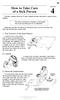 39 How to Take Care of a Sick Person Sickness weakens the body. To gain strength and get well quickly, special care is needed. Medicines are often not necessary. But good care is always important. The
Cholera Prevention and Control: Introduction and Community Engagement. Module 1
 Cholera Prevention and Control: Introduction and Community Engagement Module 1 Introduction This guide instructs how to prevent cholera illnesses and deaths in your communities. These slides and modules
Swine Feeding and Fitting Guidelines. Ryan Harrell Dec. 2008
 Swine Feeding and Fitting Guidelines Ryan Harrell Dec. 2008 Know What You Are Feeding For?! Barrows should be fed differently from Gilts.! Market Gilts should be fed differently from Breeding Gilts! Market
Yorketown Community Children s Centre. Food Safety and Healthy Eating Policy
 Yorketown Community Children s Centre Food Safety and Healthy Eating Policy Policy Number 1 Link to CCQA Principles Family Day Care Quality Assurance (FDCQA) Quality Practices Guide (2004) Principle 4.2
Swine Health. Beth Ferry MSU Extension Pork Educator
 Swine Health Beth Ferry MSU Extension Pork Educator What Affects Pig Health? Resources Environment Nutrition Management Animal Care What is your job? Good Observation Key to managing health, production
BASIC SHOW STEER FEEDING and CARE. Darrell Rothlisberger Rich County Agent Utah State University Extension
 September 2005 (pr) A6/4HLivestock/2005-05 BASIC SHOW STEER FEEDING and CARE Darrell Rothlisberger Rich County Agent Utah State University Extension WHY SHOW JUNIOR LIVESTOCK? The junior livestock program
Science of Life Explorations
 Science of Life Explorations Celebrate the Growing Year: The Farmer s Year A Farmer s Year While you are in school or on a vacation, farmers are working hard to provide us with the foods we eat and the
Controlling rats and mice. A guide to preventing infestations and getting rid of them
 Controlling rats and mice A guide to preventing infestations and getting rid of them General information about rats and mice The house mouse and the brown rat are common rodent pests. We all have a responsibility
Caring for guinea pigs
 Caring for guinea pigs YOUR GUIDE TO KEEPING GUINEA PIGS HEALTHY AND HAPPY Animal Welfare Foundation www.bva-awf.org.uk AWF is the charity led by the veterinary profession Registered Charity No. 287118
Let s see if I can convince you
 Chapter 33: Page 328 How many times have you been sick in the past year? Once, twice, three times? What if I told you there are ways to keep from getting sick so many times? Would you do it? Let s see
SEE HOW TO MAKE LIME PLASTER WHY USE LIME? PATTI STOUTER, BUILD SIMPLE INC. FEBRUARY 2013
 SEE HOW TO MAKE LIME PLASTER PATTI STOUTER, BUILD SIMPLE INC. FEBRUARY 2013 WHY USE LIME? Lime plaster forms a light, clean, and durable surface that is resistant to weather and mold. A thin layer attaches
How. are. raised. A guide offering clarity on the facts of pork production
 pigs How are raised A guide offering clarity on the facts of pork production Page 4 Page 6 Page 8 Page 10 Page 12 How Pigs Were Raised Until the 1950s, most farmers produced a little of everything, including
How to prepare your baby s bottle
 How to prepare your baby s bottle Cleaning and Sterilising Using or storing sterilised bottles Preparing a bottle feed Storing and warming feeds Feeding your baby Crèches, childminders and other childcare
THE BACKYARD PIG DPIPWE s guide for hobby farmers
 Biosecurity fact sheet Current as at December 2010 THE BACKYARD PIG DPIPWE s guide for hobby farmers Before you get your pig Check whether your local council has any restrictions on having a pig on your
Your Own Teeth and Gums
 Your Own Teeth and Gums CHAPTER1 Next time you look in a mirror, look at your teeth and the skin (gums) around them. Look in your children s mouths, too. Look at both gums and teeth, because the health
Composting is one of the healthiest means of Organic Gardening.
 Master Gardeners Nearly 30 years ago Washington State University began a program of training volunteers to help instruct members of their communities about proper gardening practices. That program has
SUCCESSFUL FITTING AND GROOMING OF BEEF CATTLE Celina R. Johnson
 SUCCESSFUL FITTING AND GROOMING OF BEEF CATTLE Celina R. Johnson To be successful at fitting and grooming beef cattle for show requires hard work, dedication, and patience. Additionally, exhibitors must
Biosecurity - keep health high and diseases out. Rikke Skrubel and Kirsten Pihl SPF, Health control and Diagnostics - Veterinarians
 Biosecurity - keep health high and diseases out Rikke Skrubel and Kirsten Pihl SPF, Health control and Diagnostics - Veterinarians Disposition PED and ASF - serious diseases a threat to DK Export Delivery
Raising Show Rabbits from Start to Finish
 Raising Show Rabbits from Start to Finish I. Introduction A. Raising market rabbits can be a very enjoyable & rewarding SAE for the exhibitor. B. Many exhibitors use market rabbits as a way to fund their
Your Cholesterol Lowering Guide
 1 Your Cholesterol Lowering Guide Cholesterol plays a vital role in the day-to-day functioning of your body. However, too much cholesterol in the blood can affect your heart health. The good news is that
1. About dairy cows. Breed of dairy cows
 1. About dairy cows Breed of dairy cows Holstein Holstein is a typical dairy cow, and 99% of dairy cows in Japan are Holsteins. They are originally from the Netherlands and Holstein region of Germany.
Injecting Inside the Mouth
 Injecting Inside the Mouth 135 9 CHAPTER It is possible to treat a tooth without pain. You do this with an injection of local anesthetic. You must inject near the nerve, so to give good injections, you
Background (cont) World Health Organisation (WHO) and IDF predict that this number will increase to more than 1,3 million in the next 25 years.
 Diabetes Overview Background What is diabetes Non-modifiable risk factors Modifiable risk factors Common symptoms of diabetes Early diagnosis and management of diabetes Non-medical management of diabetes
BANANA PRODUCTION. ARC-Institute for Tropical and Subtropical Crops. Banana Production - English
 BANANA PRODUCTION ARC-Institute for Tropical and Subtropical Crops Banana Production - English BANANA PRODUCTION Compiled by Directorate Communication National Department of Agriculture and W. Willemse,
Your guide to home maintenance. Flat Roofs
 Your guide to home maintenance Flat Roofs Your guide to home maintenance is a series of information leaflets that gives you all the information you need to keep your home in tiptop condition. Flat Roofs
For more information on biosecurity and PED: pork.org or contact a veterinarian.
 NATIONAL nppc.org COUNCIL ^P^^k aasv.org * * A i ^ pork.org checkoff. Swine Health Guide Background: PEDV is caused by a virus (Coronavirus) that is related to transmissible gastroenteritis (TGE) virus.
wheeled bin recycling service
 October 2012 for Runnymede Your guide to the new fortnightly wheeled bin recycling service Your new recycling service made easy From October 2012 your waste services will include: fortnightly recycling
Manage cancer related fatigue:
 Manage cancer related fatigue: For People Affected by Cancer In this pamphlet: What can I do to manage fatigue? What is cancer related fatigue? What causes cancer related fatigue? How can my health care
HUMANE CHOICE True Free Range STANDARDS - PIGS
 HUMANE CHOICE True Free Range STANDARDS - PIGS 2011 Version 1.1 The purpose of the Humane Choice True Free Range (Humane C hoice) program is to provide a credible, monitored and verified for the humane
Head Lice Fact Sheet
 Head Lice Fact Sheet What are head lice? Head lice are tiny insects that live on the human scalp. These insects lay eggs (nits) which stick to the hair close to the scalp. Head lice are not a health risk,
Project Pig Production Planner
 December 2012 4H/Livestock/2012-04pr Project Pig Production Planner Scott Williams, Cache County, and Darrell Rothlisberger, Rich County Start by Selecting the Appropriate Age/Weight Hog There are many
o d Propagation and Moon Planting Fact Sheet
 o d Propagation and Moon Planting Fact Sheet Propagation Propagation is actually quite simple and requires very little effort on your part. Most seeds are ready to go, complete with all the nutrients and
BUILDING WITH STONE AND EARTH
 BUILDING WITH STONE AND EARTH PART 1 Earth is a popular building material all over the world. It can be used by itself, but if there is stone available, then the two can be used together to make very good
Nutritious & Hearty Recipes
 Nutritious & Hearty Recipes Nutrition Tips Pork is a leading dietary source of Thiamin, or vitamin B1. Thiamin builds and repairs nerves and muscles, maintains an appetite and helps to release energy from
INTRODUCTION TO POSITIONING. MODULE 3: Positioning and Carrying
 MODULE 3: Positioning and Carrying Blankets, pillows and towels, sandbags, carpet on the floor, a doll with floppy limbs that can be positioned i.e. not a hard plastic doll, display materials. Icebreaker
Meat Goats. January 2005. Kent Orrell Extension Educator, Kiowa Co. Okla.
 Meat Goats 4-H livestock projects January 2005 Kent Orrell Extension Educator, Kiowa Co. Okla. Oklahoma State University, U.S. Department of Agriculture, State and local governments cooperating. The Oklahoma
A guide for handling for cabbage, carrot, hot pepper, lettuce, sweet potato and tomato. Food and Agriculture Organization of the United Nations
 A guide for handling for cabbage, carrot, hot pepper, lettuce, sweet potato and tomato Food and Agriculture Organization of the United Nations A guide for handling for cabbage 1. HARVESTING Harvesting
Material AICLE. 5º de Primaria.: Food and nutrition (Solucionario)
 Material AICLE. 5º de Primaria.: Food and nutrition (Solucionario) 3 SOLUTIONS Activity 3. Listen to the following audio and complete this chart. Then, check your answers using the information in activity
Keeping Show Pigs Healthy
 L-5392 10-02 Keeping Show Pigs Healthy Bruce Lawhorn Associate Professor and Extension Swine Veterinarian The Texas A&M University System Show pigs can bring many disease organisms into a farm and spread
Breeds of Swine. Berkshire. Chester White
 Breeds of Swine Picture Provided by Prairie State Berkshire The Berkshire breed has long been known for its efficiency in gaining weight. Berkshire hogs have possessed their excellent carcass quality since
COLD STRESS IN COWS. Brian Tarr, Ruminant Nutritionist Shur Gain, Nutreco Canada Inc.
 COLD STRESS IN COWS Brian Tarr, Ruminant Nutritionist Shur Gain, Nutreco Canada Inc. Cold Stress in Cows Brian Tarr, Ruminant Nutritionist Shur Gain, Nutreco Canada Inc. Getting cows through the winter
Can you do this in less than 12 seconds? YES NO
 Why is falling a problem for farmers over 55? The risk of falling and being injured from a fall increases as people age. Preventing falls in older people is important because falls often result in serious
Taking Out a Tooth. Before You Begin: Ask Questions! CHAPTER11
 159 CHAPTER11 Taking Out a Tooth Not every painful tooth needs to come out. You must decide how serious the problem is, and then decide if you can treat and save the tooth. Some problems such as root canal
How to make a Solitary Bee Box
 How to make a Solitary Bee Box **Note: The following instructions include the use of tools that may be dangerous. Ensure there is adult supervision with children. Time: 1 hour People: 1-2+ Materials: Wood
Healthy Grocery Shopping on a Budget. Tips for smart spending at the grocery store
 Healthy Grocery Shopping on a Budget Tips for smart spending at the grocery store Re c ipe e! In d si Grocery Store Science Eating well does not need to cost a lot of money. Here are some ways to choose
What You Will Learn in This Module: Testing for Pullorum-Typhoid Disease
 Module 5-B: Testing Poultry for Pullorum-Typhoid Disease This module applies only to individuals who have attended and successfully completed an Indiana State Poultry Association NPIP Blood Testing School
0 3 Months Sensory Motor Checklist
 0 3 Months Sensory Motor Checklist Enjoys playful face-to-face interaction with people Coos in response to playful interaction Notices and responds to sounds Moves legs and arms off of surface when excited
Caring for your perineum and pelvic floor after a 3rd or 4th degree tear
 Caring for your perineum and pelvic floor after a 3rd or 4th degree tear Most women, up to nine in ten (90%), tear to some extent during childbirth. Most tears occur in the perineum, the area between the
Increasing Profitability Through an Accelerated Heifer Replacement Program
 Increasing Profitability Through an Accelerated Heifer Replacement Program Robert B. Corbett, D.V.M Dairy Health Consultation Accelerating heifer growth has been a very controversial subject in recent
How To Make Money From Farming
 Limited Versus Intensive Management of Sheep & Goats Jodie Pennington and Helen Swartz Lincoln University, Neosho and Jefferson City, MO Husbandry defined--- varies with management level The cultivation
Black Hills Healthcare System
 Black Hills Healthcare System Methicillin Resistant Staphylococcal Aureus (MRSA) Patient and Family Information What is MRSA? Staphylococcus Aureus, often referred to simply as staph, is a bacteria commonly
Livestock Budget Estimates for Kentucky - 2000
 Livestock Budget Estimates for Kentucky - 2000 Agricultural Economics Extension No. 2000-17 October 2000 By: RICHARD L. TRIMBLE, STEVE ISAACS, LAURA POWERS, AND A. LEE MEYER University of Kentucky Department
GUIDELINES FOR THE CLEANING UP OF BODILY FLUIDS
 GUIDELINES FOR THE CLEANING UP OF BODILY FLUIDS INTRODUCTION This Guidance Note is aimed at employees who may be dealing with or responsible for the cleaning up of bodily fluids as a part of their work
BIOSECURITY PROCEDURES IN POULTRY PRODUCTION
 1 Annex VII CHAPTER 6.4. BIOSECURITY PROCEDURES IN POULTRY PRODUCTION Article 6.4.1. Introduction This chapter provides recommended biosecurity procedures in poultry production and is not specifically
VEGETABLES AND FRUIT Help your child to like them. A guide for parents of young children
 VEGETABLES AND FRUIT Help your child to like them A guide for parents of young children Vegetables and fruit: help your child to like them ISBN: 2-7380-1350-3 April 2014 HabEat Project (http://www.habeat.eu/)
ADVICE FOR OWNERS OF PET PIGS AND MICRO PIGS
 ADVICE FOR OWNERS OF PET PIGS AND MICRO PIGS General guidance for keeping your pig ADVICE AND GUIDANCE Keeping pigs or micro pigs animals specially bred to be smaller in adulthood than most other pig species
Swine production has long been a
 A3858-03 R A I S I N G A N I M A L S E Guide to Raising Healthy Pigs E N R I C H I N G R U L R A Livestock Team L F I For more information contact: Steve Huntzicker Extension agriculture agent 608-785-9593
Safety FIRST: Infection Prevention Tips
 Reading Hospital Safety FIRST: Infection Prevention Tips Reading Hospital is committed to providing high quality care to our patients. Your healthcare team does many things to help prevent infections.
Sanitary Food Preparation & Safe Food Handling
 70 Feeding Infants 10 Sanitary Food Preparation & Safe Food Handling Babies are more susceptible to bacteria than older children, and unsanitary food conditions can cause serious infections. General cleanliness,
Check that you have the correct paper. Please complete the information above. You do not need to use complete sentences for the reading assessment.
 Learner name Learner registration number Learner signature Centre Assessment date Functional Skills English Assessment Reading Level 1 NOCN USE ONLY Question Mark 1 2 3 4 5 6 7 Total Instructions to candidates
CHILD CARE DIPLOMA. Course Sample
 CHILD CARE DIPLOMA Course Sample Unit CHP2 Providing for children s physical needs inclusive of health and safety The Statutory framework for the EYFS is a requirement for all registered early years providers.
Virginia Gardener http://www.hort.vt.edu/envirohort
 The Virginia Gardener http://www.hort.vt.edu/envirohort Name Help Sheets: Things Plants Need There are certain things that every living thing needs in order to live and grow. Just like you, plants need
PAINT REMOVAL SYSTEM PAINT REMOVAL SPECIFICATION SAFE WORK METHOD STATEMENT FOR LEAD PAINT REMOVAL
 PAINT REMOVAL SYSTEM PAINT REMOVAL SPECIFICATION SAFE WORK METHOD STATEMENT FOR LEAD PAINT REMOVAL CONTENTS: 1.0 AWARENESS AND PRECAUTION 2.0 TEST SAMPLING & REMOVAL EVALUATION 3.0 SITE EVALUATION 4.0
Protection Against Hantavirus. How to safely clean-up rodent droppings, dead rodents, and nests
 Protection Against Hantavirus How to safely clean-up rodent droppings, dead rodents, and nests 1 Hantavirus Carriers Other culprits include: the white-footed mouse, the rice rat, and the cotton rat Deer
X-Plain Foley Catheter Male Reference Summary
 X-Plain Foley Catheter Male Reference Summary Introduction A Foley catheter is a tube that is put through the urinary opening and into your bladder to drain urine. Your doctor may have placed or may ask
Calculations Application
 Calculations deo schema Secondo liveo Terzo liveoof of disinfectants Quarto liveo Yoni Segal FAO Consultant Calculations Application & [email protected] org 1 Objectives deo schema Secondo liveo q Terzo
FOOD HYGIENE & KITCHEN SAFETY
 FOOD HYGIENE & KITCHEN SAFETY [These are as collated for use at Union Baptist Church. We acknowledge the excellent work done by the Galashiels Presbytery in preparing the original document from which much
How to prepare your baby s bottle feed
 How to prepare your baby s bottle feed New Safety Advice Powdered infant formula is not sterile. It may contain bacteria that can make your baby sick. You can reduce the risk to your baby if you prepare
A STUDY OF FACTORS INFLUENCING PRODUCTIVITY, AND ECONOMICS OF INTERVENTIONS IN SMALLHOLDER PIG FARMS IN KIKUYU DIVISION, KIAMBU
 ( \ A STUDY OF FACTORS INFLUENCING PIG HEALTH, PRODUCTIVITY, AND ECONOMICS OF INTERVENTIONS IN SMALLHOLDER PIG FARMS IN KIKUYU DIVISION, KIAMBU DISTRICT, KENYA JAMES KIHANG'A WABACHA I' BVM (University
HOME FREEZING GUIDE FOR FRESH VEGETABLES
 HOME FREEZING GUIDE F FRESH VEGETABLES Freezing most vegetables at home is a fast, convenient way to preserve produce at their peak maturity and nutritional quality. The following links provide information
Faecal Incontinence Patient advice and information leaflet on the management of faecal incontinence
 Oxford University Hospitals NHS Trust Oxford Pelvic Floor Service Faecal Incontinence Patient advice and information leaflet on the management of faecal incontinence What is faecal incontinence? Faecal
EVERYTHING YOU WANTED TO KNOW ABOUT SHOWPIGS BUT WERE AFRAID TO ASK. ELITE SWINE INC. www.eliteswineinc.com
 EVERYTHING YOU WANTED TO KNOW ABOUT SHOWPIGS BUT WERE AFRAID TO ASK ELITE SWINE INC. www.eliteswineinc.com There are many things to be considered when deciding on your next project. In this article we
Moving to a hospital or skilled nursing facility
 H Moving to a hospital or skilled nursing facility What to expect when you have MRSA (Methicillin-resistant Staphylococcus aureus) A booklet for patients, residents, family members, and caregivers About
Fruits, seeds and their dispersal
 Introducing fruits, seeds and their dispersal After fertilisation, seeds will form. It is important for the seeds to be spread (dispersed) away from each other and from the parent plant. This helps to
Dietary Sources of Iron in Uganda
 Dietary Sources of Iron in Uganda Data from the 2009/2010 Uganda National Panel Survey Jack Fiedler, Leanne Dougherty, Celeste Sununtnasuk Uganda National Panel Survey 2009/10 UNPS A national survey representative
Radiation Therapy To the Arms or Legs
 Radiation Therapy To the Arms or Legs You will be receiving two to six weeks of radiation to the arms or legs. It will describe how your treatments are given. It will also describe how to take care of
Animal Life Cycles. Background. Procedure
 Purpose: This lesson introduces students to the six major livestock species raised in Minnesota. Students will learn terms for mothers, fathers, and young and explore the life cycle of a typical farm animal.