
Risk Management in. Almenni Collective Pension Fund
|
|
|
- Kelley Holmes
- 10 years ago
- Views:
Transcription
1 Risk Management in Almenni Collective Pension Fund By Birgir Rafn Gunnarsson Thesis of 30 ECTS credits Master of Science in Financial Engineering May 2012
2 Risk Management in Almenni Collective Pension Fund Birgir Rafn Gunnarsson Thesis of 30 ECTS credits submitted to the School of Science and Engineering at Reykjavík University in partial fulfillment of the requirements for the degree of Master of Science in Financial Engineering Supervisor(s): Examiner(s): May 2013 Ph.D. Haraldur Óskar Haraldsson, Supervisor Professor, Reykjavík University, Iceland M.Sc. Svana Helen Björnsdóttir, Supervisor Ph.D. Hrafnkell Kárason, Examiner i
3 Risk management in Almenni Collective Pension Fund Birgir Rafn Gunnarsson 30 ECTS thesis submitted to the School of Science and Engineering At Reykjavík University in partial fulfillment Of the requirements for the degree of Master of Science in Financial Engineering May 2013 Student: Birgir Rafn Gunnarsson Supervisor(s): Ph.D. Haraldur Óskar Haraldsson M.Sc. Svana Helen Björnsdóttir Examiner: Ph.D. Hrafnkell Kárason ii
4 Abstract The aim of this thesis was to assess and measure the risk profile of Almenni collective pension fund following the format of ORSA report and guidelines on risk management in collective department of pension funds. Prospects in the funds economic environment and emission of capital controls are reviewed. The funds actuarial position is assessed and stress tested and subsequently, the risk of the fund not being able pay its future pension obligations measured. Keywords: Own risk and solvency assessment (ORSA), Almenni collective pension fund (ACPF), pension contribution, pension benefits, risk analysis, actuarial position, stress testing. iii
5 Útdráttur Markmið verkefnisins var að gera úttekt á helstu áhættum í rekstri samtryggingadeildar Almenna lífeyrissjóðsins. Áhættu úttektin er byggð á innra matsferli tryggingafélaga á eiginfjárþörf samkvæmt alþjóðlegu Solvency II reglugerð Evrópusambandsins (Own risk and solvency Assessment) og lagað að rekstri lífeyrissjóðs. Framkvæmt er álagspróf á tryggingafræðilega stöðu sjóðsins og skoðað hvort auknar líkur séu á því að sjóðurinn geti ekki greitt út lífeyri í framtíðinni. Verkefnið er ætlað til að auka yfirsýn yfir áhættur í rekstri lífeyrissjóðsins. Lykilorð: Eigin áhætta og mat á greiðsluhæfi, Samtryggingadeild Almenna lífeyrissjóðsins, lífeyrisiðgjald, lífeyrisréttindi, áhættugreining, tryggingafræðileg staða, álagspróf. iv
6 Acknowledgements I would like to thank my supervisors, Haraldur Óskar Haraldsson and Svana Helen Björnsdóttir for good guidance and valuable input during the course of this thesis as well as suggesting the topic. I would also like to thank Almenni pension fund for their helpful suggestions and gathering of data. v
7 Table of Contents 1 Introduction The Icelandic Pension System Methodologies Solvency II and ORSA Guidelines on risk management in collective department of pension funds Main findings of the risk report Background of Almenni Pension Fund Business Operations Historical Milestones Corporate Governance and Organizational Structure Financial Overview of ACPF Earnings Pension Actuarial Position Income Statement and Balance Sheet of ACPF Economic Developments and Prospects Economical Position Fixed Income Securities Stocks Capital Controls Expected Changes Investment Plan Changes for The Funds Actuarial Position Capital controls and their removal Economic Forecast Risk Analysis Risks Market Risk vi
8 5.1.2 Counterparty Risk Pension Risk Operational Risk Risk Assessment Market Risk Counterparty Risk Pension Risk Operational Risk Investment Performance and Risk Metrics Returns Sharpe ratio Domestic and Foreign Stocks Stress Testing and Scenario Analysis Sensitivity Analysis of ACPFs Actuarial Position Scenario Analysis with several variables Conclusion Next Steps and Improvements Bibliography Appendix Data used to implement this thesis vii
9 List of figures Figure 1: ORSA framework [16] Figure 2: Organizational Chart of Almenni Pension Fund Figure 3: Annual real return of ACPF Figure 4: Real return of OECD countries and ACPF in 2011 [28] Figure 5: Net assets of ACPF compared to the number of beneficiaries Figure 6: Increase in net assets of the Icelandic pension system compared to increase in net assets of ACPF [28] Figure 7: Net assets of the pension system and GDP in OECD countries [28] Figure 8: ACPF contributions and benefits [23] Figure 9: Pension burden of ACPF [23] Figure 10: Development of ACPF actuarial position Figure 11: Actuarial position of ACPF and the 5 largest pension funds in Iceland in 2011 [28].. 26 Figure 12: Operating and investment cost as percentage of net assets [23] [28] Figure 13: Operational cost as percentage of net assets in 2011 [28] Figure 14: Development of the pension index, the wage index and the CPI [28] Figure 15: Development of 12 month inflation and the wage index [2] Figure 16: Asset weights of ACPF in 2012 [29] Figure 17: Asset side duration of ACPF [Years] Figure 18: Exchange rates of main currencies against ISK [41] Figure 19: Price development of ACPF and its benchmarks between 2002 and 2012 [30] [40] Figure 20: Histogram of ACPF daily returns from Figure 21: Monthly price developments of domestic and foreign stocks in ACPF and its benchmarks in Figure 22: The sensitivity of a change in one variable in ACPFs actuarial position, while other variables remain unchanged viii
10 List of tables Table 1: The Icelandic pension system [6]... 4 Table 2: Main findings of stress testing ACPF actuarial position Table 3: Almenni pension funds historical milestones [21] Table 4: The Board of Directors [21] Table 5: Executive Management [21] Table 6: Key figures for ACPF [23] [26] [27] Table 7: ACPF actuarial position 2012 [29] Table 8: Developments of ACPF actuarial position Table 9: ACPFs income statement and balance sheet for the years 2012, 2011 and 2010 [26] [23] [29] Table 10: Investment policy and current position in fixed income securities in 2012 [31] [29] Table 11: Investment policy and current position in stocks in 2012 [31] [29] Table 12: ACPF market interest rate sensitivity Table 13: Annual change in exchange rates Table 14: Credit rating criteria Table 15: Main categories of operational risk [40] Table 16: Operational risk factors listed by the FME [18] Table 17: Return of ACPF and its benchmarks in Table 18: Returns of ACPF and its benchmarks in Table 19: Sharpe ratio of ACPF and its benchmarks in Table 20: Sharpe ratio of ACPF and its benchmarks in Table 21: Monthly return of stocks in ACPF and its benchmarks in Table 22: Main operational factors assessed in pension fund stress tests [18] Table 23: Stress test of cuts in benefits Table 24: Stress test of the Consumer Price Index Table 25: Stress test of the Exchange Rate Index Table 26: Stress test of domestic stocks Table 27: Stress test of foreign stocks Table 28: Stress test of domestic bonds Table 29: Stress test of foreign bonds Table 30: Stress test of loans to fund members Table 31: Stress testing both domestic stocks and the CPI Table 32: Stress testing both foreign assets and the CPI Table 33: Summary of ACPF actuarial position under 5% stress testing Table 34: Summary of ACPF actuarial position under 10% stress testing Table 35: Summary of ACPF actuarial position under 15% stress testing Table 36: Data used to implement this thesis ix
11 1 Introduction Pension funds play essential role in the Icelandic economy both socially and financially due to their massive amount of assets. In January 2013 assets of the Icelandic pension funds were 2.400,illion ISK exceeding the Gross Domestic Product (GDP) in Iceland by 140% [1]. Upon retirement pension benefits are often the biggest asset people own and therefore it is essential that pension funds are efficiently managed so beneficiaries do not get their benefits cut. After the financial crisis in 2008 the financial system has become more aware of the complex risks financial businesses are facing. Pension funds are no exception in that matter so risk management in the pension system has become of great importance. In beginning of 2013 the Financial Supervisory Authority in Iceland (FME) issued guidelines no. 1/2013 on risk management in the collective department of pension funds [3]. These guidelines were issued to illustrate the minimum risk management requirements pension funds should fulfill. In this paper these guidelines and the Own Risk and Solvency Assessment (ORSA), part of the Solvency II directive for insurance undertakings, is applied to the collective department of Almenni pension fund. ORSA is at the heart of the Solvency II directive and is defined as a process for decision making and strategic analysis of the risk profile of an insurance undertaking. With increased life expectancy for men and women, pension funds need to make appropriate and efficient alteration to their operation. Statistics Iceland predicts that ratio between working people and pension beneficiaries will decrease in the next decades. In 2012 the ratio was 5.3 but prediction says that it will become 3.2 in 2030 and 2.5 in 2050 [4]. This indicates that when life expectancy and average age of the Icelandic people increases, pension benefits paid out of the funds also increase. This should encourage funds to develop their own risk measurement models that enable them to better manage financial risk and implement efficient investment policy. It is useful to perform an ORSA to better understand own financial condition and solvency position. The objective of this thesis is to assess and measure the risk of Almenni collective pension fund, from now on called ACPF, not meeting its pension obligations in the future. To implement this thesis, methodologies of ORSA and guidelines on risk management in collective department of pension funds are applied to ACPF profile. Financial and actuarial 1
12 position of ACPF is assessed. Prospects in the funds economic environment and lifting of capital controls are reviewed. The analysis of ACPF investment performance and stress testing of the funds actuarial position are key factors in assessing the risk of the fund not meeting its pension obligations in the future. Data used in this thesis are time series from Almenni collective pension fund, the Icelandic stock index ICEX6, MSCI world index, the Icelandic Consumer Price Index (CPI), the Icelandic Wage Index and the Icelandic Pension Index in the period Other data is collected from Almenni pension funds annual reports from the period and sources cited in the bibliography. Chapter 1 discusses methodologies used to implement this thesis. Solvency II and the ORSA structure are explained and illustrated how they are applied to pension funds operation. The guidelines on risk management in the collective department of pension funds are presented, the risks they emphasize and how they should be assessed. Main findings of the report are introduced and illustrated how successful the results are relative to initial objectives. Chapter 2 starts with coverage of Almenni pension funds corporate governance and organizational structure. Then the history of Almenni pension fund is traced and Board and executive management introduced. Chapter 0 covers ACPF financial position and asset returns since Development of pension contributions, benefits and actuarial position of the fund since 2002 are reviewed. Financial position of ACPF is then compared to the pension systems in the OECD countries. Chapter 4 covers development and prospects of economic and monetary conditions. Development of the CPI and other econometrics is traced and how asset position of ACPF has developed in comparison. Prospects on capital controls and the Icelandic financial market are viewed and what affect these prospects will have on ACPF. Chapter 5 is the risk analysis part where the risk of ACPF is measured and assessed. The main risk categories are market risk, counterparty risk, pension and liquidity risk and operational risk. The risk of ACPF not being able to meet its pension obligation in the future is addressed as the 2
13 actuarial position of the fund. Stress tests are applied to the funds actuarial position and measured if and when the fund needs to cut benefits. Chapter 6 summarizes main results of this thesis. 1.1 The Icelandic Pension System Pension fund is a company or organization that accepts contributions for pension benefits up on retirement, disability or death. In Iceland, all employees, employers or self-employed persons are required to ensure their pension benefits through pension fund membership from 16 to 70 years of age. Pension fund guarantees minimum insurance benefits for monthly pension up on retirement. This minimum insurance benefit is 56% of monthly income compared to 40 years contribution to a pension fund [5]. The two main types of pension plans are DB and DC. In a DC plan the benefit received at retirement is not predetermined but based on benefits gained at time of retirement. DC plan is based on fixed percentage of individual s income and offers the option to build a portfolio meeting beneficiaries risk tolerance and investment goals. Pension benefit in DC funds also depends on the actuarial position and contributions made to the fund. There is no guarantee if the returns are not sufficient and benefits may be cut due to deficit in the funds actuarial position [7]. In a DB system employees benefit is determined by years of service and wage history. Average income is used as a benchmark for pension benefits up on retirement and income at retirement is the basis for benefit [8]. The main difference between these funds is who bears the risk of return. In a DB fund the employer bears this risk and in Iceland this is the case of the government pension fund (LSR). In public pension funds in Iceland fund members bear this risk together. The collective department of the Icelandic pension funds is a DB system but the supplementary pension is a DC system. The Icelandic pension system is divided into 3 pillars. The first pillar is a social insurance system which is funded through tax. The second pillar is a collective pension system which is compulsory. The third pillar is voluntary supplementary pension system [6]. There are two types of pension funds operating in Iceland, public pension funds and government pension funds. Public pension funds are based on each beneficiary saving funds to cover pension upon 3
14 retirement. These contributions consist of a fixed percentage of 4% of pension fund member salary and an 8% matching contribution from employer [5]. Supplementary pension is a system where employees and self-employed can pay 2% of their salary as additional contribution to the pension fund or bank. Beneficiaries can withdraw their supplementary pension after 60 years of age [5]. Government pension funds are state guaranteed and therefore if actuarial position of a government fund is negative tax-payers bear the cost. Public pension funds are not state guaranteed so if actuarial position of public funds is negative, cuts have to be made to benefits [7]. Table 1: The Icelandic pension system [6] System Type Funding 1. Pillar Social insurance system Tax 2. Pillar compulsory pension defined benefit 4% of beneficiaries income system Public and government pension funds 8% matching contribution from employer Investment income 3. Pillar Supplementary pension Defined contribution 2% of beneficiaries income system pension funds and banks 2% matching contribution from employer Investment income The legal framework for Icelandic pension funds is implemented and controlled by the Ministry of Finance and the FME monitors pension funds activities in accordance with applicable laws, regulations and rules set under the approved and certified funds [10]. 1.2 Methodologies Solvency II and ORSA The Solvency II is a new and stronger requirement on capital adequacy and risk management for insurance undertakings, with the aim of increasing protection for policyholders. The reason for upgrade from Solvency I to Solvency II is mainly the insurance regulation in Europe. In Solvency I, regulations were different between countries leading to problems in application. It also did not emphasize requirements on risk management and governance within insurer undertaking but focused solely on insurer undertaking capital adequacy. The aim of Solvency II is to keep up with progress in insurance, risk management, finance techniques, international financial reporting and practical standards, etc. It focuses on supervision of insurance groups and how they operate in 4
15 economic sense [11]. This can be transferred on to the Icelandic pension system. In Solvency II, transferred to the pension system, the responsibility of the administrative, management or supervisory body is to lower risk of loss for beneficiaries and reduce market disruption in the pension system. On June Solvency II will be adopted by supervisors and the European Insurance and Occupational Pensions Authority (EIOPA) [11]. Solvency II will be entirely replacing the Solvency I requirements on the first of January All the 27 European Union (EU) Member states and 3 of the European Economic Area (EEA) countries or EFTA States will adopt Solvency II. Iceland is not in the EU but it is a member of the EEA EFTA states with Liechtenstein and Norway and will therefore also adopt the Solvency II requirements [12] [13]. The main thread in Solvency II is the risk and capital management. It s a requirement for insurance companies to perform their own risk and solvency assessment (ORSA) and provide a framework where risk and capital management include active involvement from senior management. ORSA is the methodology used to implement Solvency II parallel to Enterprise Risk Management (ERM). ORSA is a step towards fully functioning ERM framework through an insurer or pension fund can combine their risk measurement and management to support business decisions. The ORSA approach is not prescriptive. It requires companies to decide on their own how they implement the methodology [14]. ORSA is implemented to influence operational activities such as strategy, business planning and asset and liability management, and for the Board and other management teams to make decisions. The ORSA policy includes details on governance, processes and procedures, stress and sensitivity testing, links between the risk profile and solvency needs of the company, risk aggregation, data quality and frequency which depends on the nature and complexity of risks the company is facing [15]. 5
![Figure 1: ORSA framework [16]. Figure 1 shows the ORSA framework and categorization of the key components in the framework. The risk governance is important for the management risk awareness.](/docs-images/27/9888323/images/16-0.png "The management determines the company s risk appetite and structures a response plan when risk becomes intolerable.")
16 Figure 1: ORSA framework [16]. Figure 1 shows the ORSA framework and categorization of the key components in the framework. The risk governance is important for the management risk awareness. The management determines the company s risk appetite and structures a response plan when risk becomes intolerable. Risk management in ORSA includes a very thorough risk identification and assessment and stress testing of these risks. Chapter IV of the Solvency II Directive covers system of governance. I.e. governance requirements, risk management, ORSA, internal control and audit, actuarial audit and implementation of measures. The governance requirement states that each undertaking should have an effective system of governance which enforces solid management of business. The nature and scale of governance shall be proportionate to the operation of the undertaking. Also the undertaking shall implement policies, reviewed annually, on risk management, internal control and internal audit. These policies shall be approved by the administrative and supervisory 6
17 body. The administrative body shall be professionally adequate, in knowledge and experience and have proper repute and integrity to manage the undertaking. The risk management requirement states that undertakings shall have effective risk management systems. I.e. strategies, processes and reporting procedures necessary to identify, measure, monitor, manage and report, on a continuous basis the risk to which they could be and are exposed to. The organizational structure and the decision making process shall be effective and well integrated into the risk management system. The minimum requirement of the risk management system is that it should cover the asset-liability management, investments, liquidity and concentration risk, operational risk and other risk mitigation techniques, design and implement the internal model, test and validate the internal model, document the internal model and any changes made to it, analyze the performance of the internal model and produce summary reports thereof and inform the administrative about the performance of the internal model. In every undertaking the risk management system states that own risk and solvency assessment should be implemented and it should at least entail the overall solvency needs, the compliance with the capital requirement, and technical provision requirement as stated in chapter VI of the directive. ORSA shall be an integral part of the business and have a significant role in decision making and the ORSA report shall be sent to the supervisory authorities at predefined periods [17]. Article 46 of the directive states that undertakings shall have effective internal control system in their operation. This includes administrative and accounting procedures, internal control framework and reporting procedures at all levels of the undertaking. Undertakings are supposed to include a compliance function to its operation. This includes advice on implementation on compliance to administrative body due to this directive. To make sure that the internal control system is effective and adequate the internal audit function evaluates its progress objectively and independently on a regular basis [17]. Actuarial function in an insurance undertaking is a significant aspect of operation. As in the pension scheme insurance undertakings are restricted to match their assets with their liabilities. Therefore undertakings shall coordinate calculations for technical provisions, ensure appropriate methods and models are used for calculations, inform the administrative and supervisory body of how reliable and adequate the calculations are and contribute to the risk management and 7
18 modeling underlying the calculation of the capital requirements. The actuarial function is supposed to be in the hands of actuaries and financial mathematicians [17]. When undertakings report on solvency and financial conditions of business the report should contain performance measurements of the undertaking, system of governance and assessment of its adequacy for the risk profile. For every category of risk there should be a description of risk exposure, concentration, mitigation and sensitivity. Bases and methods for valuation of assets, technical provisions, and other liabilities should be stated in the report among description of capital management as structure and amount of funds, Solvency Capital Management and how it is calculated. The undertakings are preferred to give proper information on main differences between assumptions of the standard formula and assumption of the internal model used by the undertaking of Solvency Capital Requirement (SCR) calculations [18] [17]. ORSA is a process and procedures to identify, assess, monitor, manage, and report the short term and long term risks a (re)insurance undertaking faces. It also ensures that the undertakings overall solvency needs are met at all times. It aims at enhancing awareness between risk that the undertaking is exposed to and the internal capital needs that follow from that exposure. The ORSA represents the undertaking s opinion and understanding of its risks, overall solvency needs and own funds held [19]. The ORSA does not give direct guidelines on how risk is measured and reported but it requires the insurers to form their own view of their risk analysis, capital needs and solvency assessment in their daily operations. This minimizes potential loss, capital needs and for management to take action before it is too late. Supervisors also assess the insurer s risk management and use ORSA to form an opinion of solvency Guidelines on risk management in collective department of pension funds The Financial Supervisory Authority in Iceland (FME) issued guidelines on risk management in the collective department of pension funds in beginning of year The aim of these guidelines is to build sufficient risk management and supervision of Icelandic pension funds. Pension funds risk is defined as event that increases the likelihood of benefit cuts in the short or long term. With effective pension fund risk management and internal control benefits are better kept and actuarial position of the funds is more likely to be in acceptable position. For this reason 8
19 the FME issued guidelines on risk management in the collective department of pension funds. These guidelines are issued for instructive and explanatory reasons according to the minimum requirements stated legally. FME objective is to strengthen the risk management segment in pension funds operation with emphasis placed on responsibilities and obligations of the Board and the CEO of pension funds. Structuring these guidelines the FME relied on information and guidelines from CEIOPS 1, OECD/IOPS 2 and GARP 3 [18]. The guideline coverage is on the collective department of pension fund. Emphasis is on the responsibility and obligations of the Board and CEO of pension funds to implement effective risk management according to law and regulation. The Board and executive management is supposed to build control systems that enable the fund to identify measure and manage risk in their operations, and also, to formulate investment strategies while considering risk tolerance of fund members. It is important that clear objectives and guidelines are in place for effective pension fund operations. The Board is ultimately responsible for adequate risk management and its effective processes and procedures and also to ensure that the CEO monitors efficiency of those processes. It is important that the Board and CEO promote good morals and good practice within the fund because they emphasize the importance of risk management and internal control and the overall risk culture. Every employee within the fund must know its role and responsibility in the risk management and supervision and fully participate [18]. Investment policy in pension funds is implemented by the Board of each fund. This is one of the Boards main responsibilities. Parallel to the investment policy it is important to frame some regulations and long term investment and risk strategy. It is recommended that long term strategy is three years or longer. The FME desires to be presented the investment policy of each pension fund including explanatory statement, according to regulation 916/2009 of investment policy and appraisal on pension fund return. When investment policy is implemented it is vital that the Board defines its tolerance and appetite for risk in each asset category. The Investment policy needs to specify which asset category it is authorized to invest in and at what ratio. As previously 1 Committee of European Insurance and Occupational Pensions Supervisors (CEIOPS) 2 The Organisation for Economic Co-operation and Development (OECD)/ International Organisation of Pension Supervisors (IOPS) 3 Global Association of Risk Professionals (GARP) 9
20 stated it is the Boards responsibility to make sure that investments are in line with the investment policy and compliance [18]. The final risk of a pension fund is the likelihood of not being able to meet its pension obligation. Therefore the guidelines state that pension funds need to perform stress testing on the funds actuarial position and report to the FME [18]. 1.3 Main findings of the risk report This report takes two risk management methodologies, ORSA and the guidelines on risk management in the collective department of pension funds, and applies them to ACPF profile. The main thread is analysis of asset and liability mismatch in ACPF. It identifies, assesses and measures the risks that ACPF faces in its daily operations. Actuarial position of the fund is the most important part when assessing the financial condition of the fund. Deficit in the pension system and ACPF actuarial position has to be improved. The main operational factors that have most impact on the funds actuarial position are cuts in the funds pension benefits and domestic bonds. Further identification on stress testing and scenario analysis is assessed in chapter 5.3. Table 2: Main findings of stress testing ACPF actuarial position Stress shock Actuarial position Δ Actuarial position Actuarial position in % Stress testing factors: Cuts in pension benefits -15% 5.1% 229% Domestic bonds -15% -10.3% 161% Consumer Price Index 15% -6.2% 58% Exchange Rate Index -15% -5.7% 44% The main results of stress testing ACPFs actuarial position are listed in Table 2. That is if pension benefits are cut by 15% then the fund has a positive actuarial position. If domestic bonds decrease in value by 15% actuarial position becomes -10.3% and the fund is then obligated to cut benefits to adjust the deficit of the actuarial position. To improve the deficit existing in ACPF and the Icelandic pension system there are three ways. Increasing pension contributions, cut pension benefits and to increase the pension age from 67 10
21 years. These choices all have their downside and impact beneficiaries in a negative way but at the same time are an acceptable solution to the ACPF and the Icelandic pension system [20]. This is of course only under consideration. 11
22 2 Background of Almenni Pension Fund 2.1 Business Operations Almenni pension fund holds benefit plan for beneficiaries. The fund is divided in two units, collective pension fund and supplementary pension fund. Assets of ACPF are invested in one portfolio and assets of supplementary pension benefits are invested in seven different portfolios. Almenni is a public pension fund which is open to everyone to join. It is also a professional workers fund for architects, guides, medical doctors, musicians and technologist [21]. Pension funds for these professions have consolidated with Almenni and their beneficiaries now deposit a minimum pension contribution to Almenni. Almenni offers members the option of selecting their own investment plan that suits their needs. Almenni pension fund seeks the best return relative to beneficiaries risk tolerance while efficiently managing its operation. In 1974 legislation on minimum pension contribution to pension funds was set. This legislation states that every employer and employee is obligated to secure their pension rights through membership in a pension fund from the age of 16 to 67. Every wage earner pays 12% minimum pension contribution, that is 4% from employee and 8% from its employer [22]. Almenni offers supplementary pension benefits which is a DC plan and is invested accordingly. This supplementary pension fee is 2% of peoples wage with a 2% complementary contribution from employer [23]. Almenni is the sixth largest pension fund in Iceland in And employs a staff of 20 people in its headquarters in Borgartún 25, 105 Reykjavík [21] [24]. The company s business objectives as listed on Almenni webpage are [21]. 1. Offer beneficiaries different investment options, different asset composition and risk. a. Four different portfolios for different age groups, that is Life Portfolios 1, 2, 3 and 4 and index linked savings account. b. Lifetime track is an investment option where holdings are transferred between the Life Portfolios in accordance with the beneficiary s age. c. Other investment options in cooperation with Íslandsbanki as securities and deposits. 2. Achieve the best return with regard to investment and risk. 12
23 a. Specific asset management strategies. b. Investment plan reviewed once a year and active asset management. c. Regular measurements of risk and return. 3. Operational efficiencies to deliver as much of the return to the beneficiaries. a. Effective internal control, reporting and information to those who are involved. b. Costs remain under the defined cost criteria. c. Expansion of the fund to achieve further economies of scale. 4. Provide conditions for members to receive good guarantees and supplementary pension of their choice. a. Increase the number of beneficiaries in the collective pension fund including using market operations to ensure better diversification. b. Give members the option of flexibility in the withdrawal of pensions. c. Active participation in shaping the legal environment for pension funds and pensioners. 13
24 2.2 Historical Milestones Almenni pension fund consists of eight pension funds that have merged with Almenni over a long period. The pension funds that have merged with Almenni are ALVÍB (Public Pension Fund, VÍB), Pension Fund for Architects, Pension Fund for SÍF employees, Pension Fund for musicians, Pension Fund for guides. Pension Fund for medical doctors and Pension Fund for Icelandic technologists. Almenni is a pension fund open for everyone to join [21]. Table 3: Almenni pension funds historical milestones [21]. Year Highlights 1965 Pension Fund for technologist is established 1967 Pension Fund for architects and Pension fund for medical doctors established 1968 Pension Fund for SÍF employees established 1970 Pension Fund for musicians established 1977 Pension Fund for guides established 1990 Pension Fund ALVÍB (Almenni Pension Fund, VÍB) established 1995 Pension Fund ALVÍB and Pension Fund for guides merge under the ALVÍB name 1996 Pension Fund for musicians merges with ALVÍB 1997 Pension Fund for SÍF employees merges with ALVÍB 1998 Pension Funds for architects and technologists merge under Pension Fund for architects and technologists or LAT 1998 ALVÍB offers beneficiaries new ways in pension planning through different portfolios 1999 ALVÍB establishes a defined contribution plan 2000 Pension Fund for medical doctors establishes age connected benefit plan 2002 ALVÍB expends the number of portfolios in its defined benefit plan 2003 ALVÍB and LAT merge and become Almenni Pension Fund 2006 Pension Fund for medical doctors and Almenni Pension Fund merge under Almenni Pension Fund 14
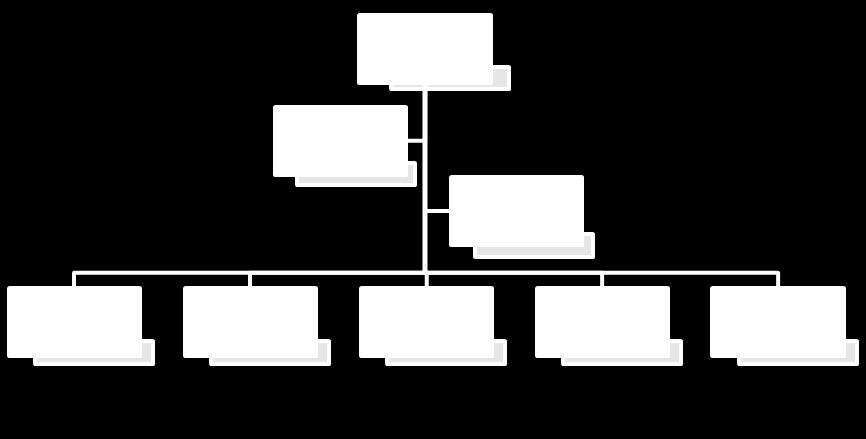
25 2.3 Corporate Governance and Organizational Structure Almenni is a qualified pension fund validated by the Ministry of Finance according to the Act on mandatory pension insurance and operations. The organizational structure of Almenni consists of management in each sector responsible for decisions. Almenni Board of directors has certain role in managing its operation in accordance to its resolutions 4. The operation involves receiving, preserving and investing the contributions and pay out pensions benefits to beneficiaries. The Board assigns Chief Executive Officer (CEO) which handles daily operations, investment strategies, disposal of the fund s assets and debt management. The Board of directors consists of six fund members elected to serve for three years at a time. Substitutes are also elected simultaneously. The Board chooses its chairman and divides other tasks [21] [5]. Figure 2 shows the organization chart of Almenni pension fund with an additional risk management sector. Although Almenni has not defined specific risk management department in their operations it is recommended that such division will be established in the near future. Figure 2: Organizational Chart of Almenni Pension Fund
26 Table 4: The Board of Directors [21]. Members Position Páll Á. Pálsson Chairman of the board Sigurbjörn Sveinsson Vice chairman Eiríkur K. Þorbjörnsson Board member Oddur Ingimarsson Board member Sigríður Sigurðardóttir Board member Vilhelmína Haraldsdóttir Board member Gunnar Einarsson Hrönn Sveinsdóttir Substitute Substitute Table 5: Executive Management [21]. Members Position Gunnar Baldvinsson Chief Executive Officer Daníel Arason Operation Manager Kristjana Sigurðardóttir Investment Manager Helga Indriðadóttir Fund Manager Ólafur Heimir Guðmundsson Fund Manager Sigríður Ómarsdóttir Office Manager 16
27 3 Financial Overview of ACPF 3.1 Earnings Annual real return on ACPF was 4.2% in In 2012 the annual real return was 9.8%. This is good considering both real long term return which is 4.5% since 1990 and the 3.5% pension funds required rate of return. The financial crisis in 2008 and 2009 had a big impact on the fund s long term return. In 2008 the annual real return was negative by 26.7% which made real long term return decline from 6.8%. In Table 6 it is shown that average annual return in the past five years is -3.2% in 2012 increasing from -5.3% in Average annual return from 2002 to 2011 was 2.9% which is not sufficient to the 3.5% required rate of return. The reason why we look at long term return is because pension funds are long term investors and it is important to look at return in contrast to investment strategy. Although it is important to look at the funds return performance, the main objective of the fund is asset and liability matching, i.e. if the pension fund is not able to fund its future pension obligations. Figure 3: Annual real return of ACPF 17
28 Table 6: Key figures for ACPF [23] [26] [27]. ACPF Real annual return 13.4% (1.5%) (26.7%) 0.0% 1.5% 4.2% 9.8% Average real annual return over the past five years 8.7% 9.4% 0.3% (1.8%) (3.7%) (5.3%) (3.2%) Icelandic collective fund pension system Real annual return % 0.695% (21.784%) (0.017%) 2.352% 2.320% * * No data In 2011 return of ACPF is better than the return of the collective department of the Icelandic pension system. Table 6 shows that in the performance of ACPF is rocky and the Icelandic pension system is outperforming ACPF. Due to lack of performance data of ACPF is not compared to the Icelandic pension system and the OECD countries in MSCI world index declined by 5.5% in 2011 but at the same time the Icelandic Exchange Rate Index (ERI) increased by 6.7% so foreign assets increased in ISK. Overall, increase in return of ACPF investments is mainly due to increase in ERI and the CPI. Figure 4: Real return of OECD countries and ACPF in 2011 [28]. 18
29 When comparing ACPF performance to the pension system in Iceland and the OECD countries, ACPF is doing quite well. In Figure 4 we see the 2011 annual real return of all the countries listed in the OECD including the annual real return of ACPF. ACPF return is well above the OECD average of -1.74% and is outperforming annual return of the Icelandic pension scheme by 1.87%. Net assets of ACPF in 2011 were million ISK which is an increase of million ISK from the previous year. Figure 5 shows that net assets have steadily increased since 2002 apart from a sharp increase in 2006 due to merger with the pension fund of Medical Doctors and increase in the minimum pension contribution from 10% to 12%. Following the financial crisis of 2008 net assets declined by 9.7% but recuperated in 2009 and onwards. During this steady increase in net assets, there has also been a steady increase in number of beneficiaries in the fund. Figure 5: Net assets of ACPF compared to the number of beneficiaries In comparison of return and net assets of the collective department of the Icelandic pension system and ACPF we see that ACPF is competitive to other Icelandic pension funds. Figure 6 shows that net assets of ACPF have increased proportionately more than the Icelandic pension system all together. The ratio of increase from in ACPF net assets is 2724% in 19
30 proportion to 225% increase in the collective department of the Icelandic pension system net assets. This increase in net assets of ACPF is of course including the merger with the pension fund of Medical Doctors which brought million ISK into the funds balance sheet. Due to lack of data Net assets of ACPF is not compared to net assets of the pension scheme in Iceland in Figure 6: Increase in net assets of the Icelandic pension system compared to increase in net assets of ACPF [28] 20
31 Figure 7: Net assets of the pension system and GDP in OECD countries [28]. Figure 7 shows the ratio between assets of the countries pension system and the GDP at year end In the Icelandic pension system assets are 129% of GDP which is very high compared to other OECD countries where the average is only 34%. The Netherlands are the only country which has a higher ratio of assets vs. GDP than Iceland. Due to lack of data assets as a percentage of GDP in the OECD countries in 2012 is not addressed. 3.2 Pension In 2012 ACPF paid out 972 million ISK in benefits which is an increase from 2011 where 893 million ISK were paid out as benefits. Although benefits were cut by 5%, benefit payments increased between years mainly because of 5.3% inflation in Contributions paid to ACPF were million ISK in 2012 compared to million ISK in Number of beneficiaries that paid contributions to ACPF in 2012 was compared to in 2011 which is a 0.3% increase between years. Figure 8 shows the development of contributions and benefits of ACPF from 2002 to The ratio between contributions paid to the fund and benefits paid out of the fund has been increasing rapidly since The increase in contributions in 2006 is driven by increase in obligated minimum pension contribution from 10% to 12% and the merger with the pension fund of Medical Doctors. Figure 8 also shows how the number of beneficiaries receiving benefits has increased steadily by 10.95% on average each year from 2005 compared to increase 21
32 in contribution paying beneficiaries by 5.2% on average since Those numbers indicate that ACPF is getting older and benefits paid out of the fund are increasing more rapidly than contributions paid into the fund [23]. Figure 8: ACPF contributions and benefits [23]. Pension burden is a good indicator of the development of pension fund contributions and benefits. This indicator is calculated as the ratio between contributions paid to the fund vs. benefits paid out to beneficiaries. That is when age composition of fund members is low the ratio is low in comparison to when age composition of fund members is high the ratio gets higher. The pension burden of ACPF in 2012 is 30.07% which is an increase from 28.90% in The average pension burden from 2006 to 2012 is 27.79% compared to 2.21% from 2002 to Figure 9 shows how pension burden of ACPF increases substantially in This can be traced directly to the merger with the Medical Doctors pension fund which is a much older pension fund than Almenni. In 2002 until 2005 the pension burden in ACPF is quite low and following the major increase in 2006 it has been increasing with some variability, as in 2009 it increased from 24.88% to 31.95% but it has decreased since as Figure 9 shows. 22
33 Figure 9: Pension burden of ACPF [23] 3.3 Actuarial Position Act 129/1997 on mandatory pension insurance and operations states that pension funds guarantees its obligations with its assets, and therefore beneficiaries are not responsible for the pension funds liabilities in any other way than with their pension contributions. The Act also states that the board of a pension fund shall conduct an actuarial audit of the funds financial position every year. In assessment of the financial position of ACPF, assets and liabilities are compared. This is called Actuarial audit and it is divided into two parts. Accrued position, this is where current assets are compared to accrued benefits members have acquired, and Future position, which is the present value of contributions that active members pay until 67 years of age compared to future benefits that these contributions generate. Total liabilities are the sum of accrued liabilities and future obligations which are compared to the sum of current assets and present value of future contributions [23]. Act 129/1997 states that if actuarial audit shows deficit by more than -10% or -5% for the last 5 years, the fund is obligated to make appropriate arrangement in the funds articles and cut benefits. Directive 391/1998 on mandatory pension insurance and operations states that when discounting expected benefits and future contributions, pension funds shall use 3.5% required rate of return [10]. 23
34 In Table 7 the actuarial position of ACPF in 2012 is presented. It shows that total assets of ACPF were million ISK and total liabilities were million ISK. That is total liabilities exceed total assets by 3.9%. Table 7: ACPF actuarial position 2012 [29]. Accrued position Future position Total balance Assets: Net assets for pension benefits Revaluation of securities (218) 0 (218) Investment costs (1.595) 0 (1.595) PV of future pension contributions Total Assets Liabilities: Pension benefits Disability pension benefits Spouse s pension benefits Children s pension benefits Operating costs Total Liabilities Net assets in excess of liabilities (4.723) 508 (4.215) The percentage of commitments (7.6%) 1.1% (3.9%) All amounts in thousands of ISK In Figure 10 the development in the actuarial position of ACPF from 2002 to 2012 is reviewed. From 2002 until 2007 net asset are positive. Then following the financial crisis of 2008 net asset became negative by million ISK and negative by million ISK in In 2009 the deficit in the funds actuarial position became -11.1% and cuts were made to benefits by 10%. In 2010 net asset began to increase and its negative position was million ISK, in 2011 negative by million ISK and negative by million ISK in 2012 so the funds actuarial position is getting better after the financial crisis. This improvement in the actuarial position in 2011 can be traced to 5% cuts in accrued benefits, and the fact that pension benefits are indexed to the consumer price index (e. CPI), therefore the liabilities increase in sync with increase in the CPI which was 5.2% in 2011 [23]. In 2012 actuarial position of ACPF was -3.93% and has steadily improved since Table 8 shows development of ACPF actuarial position since
35 Figure 10: Development of ACPF actuarial position Table 8: Developments of ACPF actuarial position % 4.6% 13.4% 10.6% 2.7% 1.2% (4.23%) (11.1%) (5.4%) (4.5%) (3.9%) In Figure 11 actuarial position of ACPF is compared to the actuarial position of the 5 largest pension funds in the Icelandic pension system. Deficit of ACPF is lower than of Stapi, the Consolidated, Commerce, Government and Gildi pension funds. The Commerce pension fund has a lower deficit than ACPF but Stapi, the Consolidated, Gildi and the Government pension fund all have a greater deficit. Due to lack of data deficit in ACPF actuarial position is not compared to deficit of the 5 largest pension funds in
36 -45% -40% -35% -30% -25% -20% -15% -10% -5% 0% ACPF Government pension fund (LSR) Consolidated pension fund (Sameinaði) Gildi pension fund Commerce pension fund (Live) Stapi pension fund Figure 11: Actuarial position of ACPF and the 5 largest pension funds in Iceland in 2011 [28] There is temporary provision in act 129/1997 on pension funds, stating that deficit in actuarial position is allowed to be -13% in 2012 and -11% in 2013 [4]. This is although not implemented in this thesis because it is only temporary. 3.4 Income Statement and Balance Sheet of ACPF The income statement is a good indicator of the financial position of the fund at year end. It shows how profitable the fund has been over the past year. The income statement of ACPF provides a snapshot of the fund s assets at the end of year and the sources used to buy those assets. The performance, pension contributions and benefits, operational cost and net assets of ACPF in 2010, 2011 and 2012 are listed in Table 9. In 2012 pension contributions increased by 4.6% and pension benefits by 8.9% from In 2011 pension contributions increased by 7.2% and pension benefits increased by 1.2% from Investment income was million ISK in 2012 which is an increase from 2011 where investment income was million ISK. Investment cost decreased between years. In 2011 investment cost was billion ISK and in 2012 it decreased to billion ISK. ACPF operating expenses decreased by 10.3% in 2012 [23]. 26
37 Table 9: ACPFs income statement and balance sheet for the years 2012, 2011 and 2010 [26] [23] [29] Income statement Contributions Transfer of benefits (6.786) (6.436) 0 Benefit payments ( ) ( ) ( ) Investment income Investment cost (71.577) (79.339) (61.865) Operational cost ( ) ( ) (92.206) Increase in total assets Total assets from the year before Total asset for pension benefits Balance sheet Investments Other assets Liabilities ( ) ( ) ( ) Total assets for pension benefits All amounts in thousands of ISK Figure 12: Operating and investment cost as percentage of net assets [23] [28] In Figure 12 operational cost of ACPF is compared to the operational cost in the Icelandic pension system as a percentage of net assets. Operational cost of ACPF is lower than that of the Icelandic pension system, although it has increased steadily since
38 Figure 13: Operational cost as percentage of net assets in 2011 [28] In Figure 13 it is shown where ACPF and the Icelandic pension system stand in contrast to other OECD countries in Operational cost of ACPF is not high in comparison; in fact it is quite low. Due to lack of data the funds operational cost is not compared to the Icelandic pension system in
39 4 Economic Developments and Prospects 4.1 Economical Position Since pension is the beneficiary s biggest asset upon retirement it is important that it is inflation protected. Therefore liabilities of pension funds are indexed to the CPI but on the other hand assets are only partly CPI indexed. Pension funds need to invest their assets accordingly and make sure there is minimum mismatch between assets and liabilities. In Figure 14 development of the CPI, the pension index and wage index is shown. Since 1988 the wage index has increased by far more than the CPI and the pension index. The pension index shows the change in the ten largest pension funds at any time. The weight of each fund depends on the net assets of the collective pension department [28]. Figure 14: Development of the pension index, the wage index and the CPI [28] 29
40 Figure 15: Development of 12 month inflation and the wage index [2] After the financial crisis in 2008 investment opportunities have been scarce because of capital controls and limited investment opportunities in corporate bonds and equity. The main investment opportunities available are treasury bonds and deposits. Other investment opportunities are bonds issued by the Municipal Loan Fund, Municipalities and corporate bonds with government guarantee. In risk management perspective, diversification is not optimal under capital controls. According to the size of the Icelandic pension system it is highly recommended that assets are diversified and invested in other countries. As stated in the in ACPF investment policy the funds foreign assets allocation should follow the MSCI world index [31]. Figure 16 shows asset allocation of ACPF in
41 Figure 16: Asset weights of ACPF in 2012 [29] Fixed Income Securities The financial market in Iceland has been slow since the financial crisis of Investors have kept their money in treasury bonds and other safe investments like deposits. Pension funds, foreign investors and investment funds are the main owners of marketable treasury bonds in Iceland. In the beginning of year 2012 foreign investors owned 94% of RIKB 12, 13 and 16 and pension funds 3.3% [32]. In 2011, treasury bonds weight 43.9% of ACPF assets [23]. In 2012 treasury bonds weight 44.1% of the fund s assets [29]. Pension funds are also the main owners of housing bonds (HFF) in Iceland. They hold about 67%, foreign investors hold about 8.6% and investment funds hold about 13.8% of marketable HFF bonds in beginning of The housing bonds market in Iceland is all CPI indexed [32]. In 2012, loans to fund members weighed 14.6% of ACPF assets which is a decrease by 0.2% from The main reason for this high proportion is that loans to fund members provide higher return than marketable bonds and individuals rarely default [23]. 31
42 In 2012, municipal bonds weighed 11.3% of ACPF assets [29]. Issuance of corporate bonds in Iceland has solely been in the hands of Arion Banki and Íslandsbanki. Arion Banki has issued bonds for million ISK and Íslandsbanki has issued bonds worth million ISK [32]. In 2012, corporate bonds weight 4.8% of ACPF assets [29]. In beginning of year 2012 pension funds owned million ISK in deposits. These deposits are mainly CPI indexed [32]. ACPF had 0.4% of its assets in deposits and short term investments in 2012 [29]. Table 10: Investment policy and current position in fixed income securities in 2012 [31] [29] Deviation from investment policy Tolerance in deviation from investment policy[%] ACPF in 2012 Current position Investment policy Fixed income securities 76.5% 60% 16.5% +30/-10 Treasury bonds 44.1% 28% 16.1% +35/-11 Bonds guaranteed by financial institutions 0.7% 1% -0.3% +10/-1 Municipal bonds 11.3% 9% 2.3% +15/-5 Corporate bonds 4.8% 3% 1.8% +25/-3 Loans to fund members 14.6% 12% 2.6% +25/-9 Foreign bonds 0.5% 4% -3.5% +10/-4 Deposits 0.4% 3% -2.6% +25/-3 In 2012 ACPF investments in fixed incomes securities were somewhat above the fund s investment policy although keeping within limits. As Table 10 shows investment in treasury bonds are well above the 28% aim. This is due to lack of investment choices in the Icelandic financial market [23]. Now when the market value of the Icelandic stock market is increasing it is reasonable to assume that pension funds and other investors will move their capital partly from treasury bonds and deposits to stocks in the near future Stocks In beginning of year 2013 market value of the Icelandic stock market was million ISK. This is about 40% increase from The number of stocks listed on the Icelandic stock exchange has also increased in 2012 from 5 in to 8. In April of 2013 the Icelandic insurance company (VÍS) was listed in the Icelandic stock exchange making the number of listed 32
43 companies 9. The increase in market value of the Icelandic stock market is largely due to movements in personal savings from deposits to investment funds which then move to the stock market. While this demand for domestic stocks prevails, stock prices are likely to increase in 2013 [32]. Table 11: Investment policy and current position in stocks in 2012 [31] [29] Deviation from investment policy Tolerance in deviation from investment policy[%] ACPF in 2012 Current position Investment policy Stocks 23.5% 40% -16.5% +10/-30 Domestic stocks 2.8% 5% -2.2% +2/-4 Foreign stocks 16% 33% -17% +15/-27 Shares and units of other funds for collective investments 4.7% 2% 2.7% +8/-2 Table 11 shows that ACPF investment in domestic stocks during 2012 was well below the aim of the investment policy although keeping within limits. It also shows that the fund s investment in foreign stocks is still well under the aim set in the fund s investment policy. ACPF has not changed its investment policy despite market development. This can be traced to the fact that the government has stated the capital controls are for short term and therefore the fund has not changed its investment policy Capital Controls After the financial crisis in 2008 the Icelandic government established capital controls. These controls where implemented to provide the government and the economy with the flexibility needed for monetary easing and investment stimulation by preventing transport of capital out of Iceland. These capital controls have great impact on the Icelandic economy and compromise free trade and industry. The Icelandic capital controls include quantitative restrictions on capital movements; this is the strictest form of capital controls. It is considered to be very harmful to the economy in the long run and is only to distort investment, reduce efficiency and prevent value creation in the Icelandic economy. There is correlation between capital controls and a lower real interest rate, and also capital controls and high inflation. This suggests that capital controls tend to increase the cost of financing of small and medium size companies, and discourage foreign investment [33] [34]. 33
44 Considerable investment capacity of domestic and foreign investors, not able to take their capital out of Iceland, might create risk of asset price bubbles. Cumulative investment need of Icelandic pension funds over the next 12 years is about million ISK [33]. This is indicates that asset prices will increase beyond reason and maybe that is what is happening in the stock market during the first months of Icelandic pension funds are vulnerable to risk when investment opportunities are limited and foreign investment is prohibited. When foreign investment is prohibited, domestic assets can become too high proportion of the fund s total assets considering normal risk diversification. The Icelandic Central Bank selling of foreign currency to reduce circulation of offshore krona has the effect of increasing the domestic assets of pension funds, and at the same time their need to invest abroad is growing fast [34] [33] [34]. 4.2 Expected Changes Investment Plan Changes for 2013 Almenni pension funds main objective is to invest for beneficiaries in the safest way possible and to ensure the best return in consideration to risk. ACPF seeks to minimize asset losses and increase transparency in the funds investments. After the financial crisis the fund s investment policy has become more detailed than ever. I.e. policy for choosing domestic investments not issued by the Icelandic government is extremely strict. The Icelandic economy doesn t offer many investment opportunities and that is why Almenni is increasingly investing in unlisted securities. Accordingly, policy for choosing unlisted investments is much more detailed. The Fund is though not allowed to invest more than 20% in that asset category. The Icelandic Ministry of Finance and Economic Affairs is reconsidering the investment authorization of pension funds in contrast to investment opportunities available and the relief of capital controls. The main subject in reconsideration of the investment authorization is a 5% increase in unlisted securities from 20% to 25% [35]. This increase will probably increase risk in pension fund s portfolio. Other possibilities are that the government allows Icelandic pension funds to invest in foreign markets. 34
45 In the investment plan for 2013 for ACPF there some changes from The main changes made are the weights of domestic stocks increase to 5% and weights of foreign stocks decrease due to capital controls. The plan is still that bonds weigh 60% and stocks 40% of total assets. These ratios are calculated with the speculation that pension contributions exceed pension payments at least until the year 2022 [31] The Funds Actuarial Position There is a -3.93% deficit in the ACPF actuarial position in If annual return development continues in the same way deficit is expected to be in a better condition. ACPF asset allocation is 71% in CPI indexed bonds and in settlement of actuarial position, values of these bonds are based on a 3.5% required return. As a result in settlement of actuarial position fluctuation in bond prices do not exist. This might lead to miscalculation in the asset part of the funds actuarial position. If assets would be settled at market value, instead of 3.5% required rate of return, fluctuations in actuarial position would increase. If capital controls are not lifted risk diversification will not be optimal. Ratio of foreign assets is decreasing and is expected to decrease as contributions to the fund are greater than pension benefits paid out of the fund. This is a risk factor that could have substantial affect in the funds actuarial position if another financial crisis occurred in Iceland and asset value of domestic assets declined Capital controls and their removal Capital controls are the main restriction to investment diversification of ACPF. Therefore emission of these controls is vital for future investments and diversification of the fund s assets. It has taken more time than expected to lift the capital controls. The main reasons are delay on implementing economic bail-out program in part because of foreign investors holdings in ISK, Icesave, balance sheet restructuring of the new banks, solutions to debt problems of households and firms have taken a long time, conditions in international credit markets have long been unfavorable and a low credit rating has meant that the Treasury s access to international capital markets has been scarce [37]. The main threats in lifting the capital controls are weakening of the ISK, lowering credit rating of the Icelandic treasury and the effect on loan portfolios and the 35
46 liquidity of the Icelandic banks. In the end of March 2013 holdings of foreign investors in ISK were 367 billion ISK [38]. This amount is expected to move out of the Icelandic economy if capital controls were lifted today. The Icelandic Central Bank issued emission plan for the capital controls in Emission of capital controls without threatening financial and economic stability is although the main objective of the Icelandic economic administration. Since 2011 the Icelandic Central Bank has worked steadily on removing these controls. In 2013 emission of capital controls has been postponed. The Icelandic parliament approved laws that delayed emission indefinitely. In this legislation it is expected that capital controls will be removed in contrast to economic condition and financial stability. The Minister of Finance and Economy will publish a report on the progress of release. This arrangement is intended to ensure continuous review of the need for restrictions on capital movements and foreign exchange and when there is flexibility for removal of those restrictions [36]. Lifting of capital controls is vital for Icelandic pension funds because of risk diversification and lack of investment opportunities. When capital controls are removed it is expected the Icelandic economy is to be fragile because of the ISK currency. That is, when Icelandic investors start moving their capital to foreign markets, fluctuations in the ISK could increase substantially. This can do more harm than good to the Icelandic economy and lead to asset losses for investors like pension funds. Therefore it is vital that pension funds as well as other investors promote the restructuring of the Icelandic economy in an appropriate timing [37] Economic Forecast The CPI increased by 5.2% in 2012 and according to the Icelandic Central Bank inflation is expected to decrease in 2013 and reach 2.5 inflation target of the Central Bank in beginning of year 2015 [38]. Statistic Iceland forecasts that increase in the CPI will be 4.1% in 2013, 3.1% in 2014 and 2.6% in The exchange rate index (ERI) has strengthened sharply in the first months of Uncertainty in inflation development is substantial and is mainly due to uncertainty in the ISK. The forecast assumes that the ERI will weaken rest of the year. The policy rate increased by 0.25% to 6% in 36
47 November of 2012 and has remained unchanged since. Government bonds have been the main investment choice for ACPF due to low risk and the capital controls [38]. The equity market seems to be picking up, which will increase investment opportunities. Yield on nominal Treasury notes and indexed housing bonds have risen since January This reduced the funds asset value in this asset class [4]. The GDP was billion ISK in December 2012 [2]. According to Statistics Iceland the GDP is expected to increase by 1.9% in 2013, 2.7% in 2014 and 2.9% in If this will be the case it will have positive effect for the Icelandic economy. This increase in GDP will probably encourage relief of capital controls and therefore increase investment opportunities for the Icelandic pension funds [39]. 37
48 5 Risk Analysis Almenni pension fund needs to efficiently manage risks the fund faces in its daily operations and the risk of not being able to meet its pension obligations in the future. In this regard, actuarial position of ACPF is the best indicator of its financial condition. When assessing the risk of ACPF, stress test are applied to the actuarial position and reviewed what scenario might lead to cuts in benefits. ACPF investment policy describes the overall perspective and the main objectives the Board has to risk and return. The investment policy is implemented according to combination of fund members, objectives and risk tolerance of the fund. It defines main types of risk, scale of assessment as well as strategies of daily risk management. Aim of investment and risk policy is to ensure good performance for beneficiaries with professional and systematic procedures in asset and liability management to be able to meet future pension obligations. ACPF divides risk into four main categories. That is market risk, counterparty/credit risk, pension/liquidity risk and operational risk. Market risk is risk of a financial loss because of changes in market price of assets due to changes in interest rates, exchange rates or share value. Counterparty/credit risk is the risk that a counterparty of a financial instrument doesn t fulfill its obligations. Pension/liquidity risk is risk of pension fund not being able to pay its future pension obligations. Operational risk is the risk of loss as a result of inadequate or unusable internal processes, personnel, systems or external events in business environment of pension funds [3]. This chapter identifies, assesses and measures the risk profile of ACPF. Analysis is conducted on ACPF investment performance in comparison to its benchmarks in the period and stress tests applied to ACPF actuarial position. 5.1 Risks Market Risk Market risk or financial risk in a pension fund is the risk of changes in financial market prices and rates will reduce the value of the pension fund assets. Market risk for a pension fund is often measured relative to a benchmark index or a portfolio, often called risk of tracking error. This benchmark is the funds liabilities for if a pension fund is not able to meet its obligation the fund 38
49 is has to cut benefits. Market risk also includes basis risk, which is the relationship between the price of a product, i.e. a bond, and the price of an instrument used to hedge that price exposure [40]. Since the values of shares are volatile, market risk and specific risk such as the work environment and the compliance with the growth of the economy has to be accounted for. Individual market shares and the standard deviation need to be assessed with regard to the equity portfolio as a whole. When the yield of a share deviates greatly from the average portfolio performance it should be assessed whether that share meets the risk criteria of the fund [3]. It is important that Almenni pension fund defines clearly risk factors in the funds liabilities, i.e. duration of liabilities. The mismatch between duration in a pension funds assets and liabilities is an indicator of interest rate sensitivity. If this mismatch is extensive, interest rate movements can affect benefits substantially [9] Interest Rate Risk Interest rate risk arises when a change in interest rate affects the value of investment. Changes in the yield curve will change price of a fixed income security. When market rates increase, price of fixed income security falls as a result and vice versa. Change in market rates or yield curve affects all interest bearing financial instruments [31]. In pension funds asset and liability matching the objective is to hedge the liabilities by putting together a portfolio of assets that replicates the liability cash flow of the fund. In Iceland, pension funds are able to match their CPI indexed liabilities with CPI indexed bonds. Therefore a fundamental factor in risk analysis is duration of both the asset side and the liability side of the fund. In Iceland, liabilities of pension funds are not valued at market value; instead they are valued at a fixed rate of 3.5% [10]. This means that liabilities do not change with market movements of interest rates in the actuarial audit. 39
50 Figure 17: Asset side duration of ACPF [Years] Duration development of ACPF is shown in Figure 17. The asset side duration of ACPF in 2011 was 7 years and has increased from 6 years in 2003 [23]. This indicates that the duration of the liability side of ACPF should be 7 years as well to immunize the fund to changes in interest rates. Due to lack of data analysis of interest rate sensitivity in the funds liabilities is not implemented. Investment plan targets acceptable interest rate sensitivity and tolerance for duration in each portfolio. Duration is calculated monthly for each portfolio and compared to determined standards [31] Prepayment risk The risk of fixed income bonds being paid up before maturity and that the investor will not receive expected cash flow. This risk increases if bond issuers can finance themselves at lower interest rates with a new issue [31] Market risk - varying income securities, stocks and mutual funds Market risk is the risk of financial loss due to price changes of financial instruments listed on the market or have a direct connection to marketable securities. This includes changes in interest rates, exchange rates or share value. Variations on share value lead to consideration of both 40
51 market risk and specific risk where the company its self is valuated and its correlation with the growth of the economy [3]. Almenni assesses this risk by monthly calculating the value at risk (VaR) and Sharpe ratio for ACPF. Value at risk indicates the statistical potential of decreasing market value in ISK in a given period based on historical volatility of return, normal distribution of return and 5% significance level. Sharpe ratio is a measure of return above risk free rate adjusted for risk (standard deviation of return) [31] Foreign exchange risk Foreign exchange risk or currency risk is the risk that changes in exchange rates weakens the value of the funds foreign assets measured in local currency. In the current environment where capital controls prevail the fund cannot hedge the FX risk with derivatives in the Icelandic krona [31]. Imperfect correlation in currency price movements and fluctuations in international interest rates are the major drivers of foreign exchange risk [40]. Pension funds should plan their risk taking in foreign assets. Every three months they calculate covariance between the main currencies and risk following assets in foreign currencies, i.e. value at risk as a proportion of the portfolio [3]. Almenni assesses this risk by looking into the development of the Icelandic exchange rate index last semesters and from that future expected development assessed [31] Inconsistency risk Inconsistency risk is the risk of inconsistency in market price changes of asset and liabilities. Indexation to the CPI is an example of risk factors. Pension funds liability is indexed fully but the funds assets are not to its fullest [31] Inflation risk Inflation risk is risk of inflation causes CPI indexed liabilities to exceed assets. Pension liabilities of ACPF are all indexed, but due to limited supply of indexed assets and the perspective of asset management, only part of ACPF assets is indexed to the CPI [31]. Almenni assesses inflation risk monthly by measuring ratio of CPI indexed assets in each investment plan [31]. 41
52 Risk off balance sheet Risk off balance sheet is the risk of changes in the underlying assets or liabilities of the funds off balance sheet. Examples of off balance sheet commitments are binding agreements for payments to venture capital funds [31] Counterparty Risk Counterparty risk is the risk that a counterparty of a financial instrument not fulfilling its obligations [3] Credit Risk Credit risk is risk of a counterparty defaulting on its obligation affecting the value of the pension funds assets. Credit risk is usually measured by the degree of solvency or creditworthiness [31]. Credit risk associated with loans to fund members is, on one hand that the counterparty doesn t fulfill its obligation because of a breach of contract, and on the other hand a major decline in real estate value leading to a higher loan to value(ltv) ratio so the likelihood of default of the counterparty increases. Probability of default and the expected recovery rate are the main factors in assessing credit risk. The expected recovery rate depends on severity of the default, i.e. whether it leads to financial reorganization, delay on payments or bankruptcy and how good the collateral is for the debt [25]. Issuers must fulfill the investment criteria when the fund decides on investments. The credit risk of the largest issuers is assessed with respect to probability of default. Fund managers monitor the settlement of the largest issuers in the portfolio and calculate the reference rate for them. Mortgage loans to members are collected through Íslandsbanki and in every three months defaults are specifically reviewed [31] Concentration Risk Concentration risk is the risk that the fund purchases substantial quantities of bonds and shares of the same counterparty. Law restrictions reduce the concentration risk, but it does not prevent counterparty risk on one issuer, sector or region [31]. There is one issuer in Iceland that is having financial problems and this is the Icelandic Housing Financing Fund (HFH). The HFH is guaranteed by the government which has already financed the funds deficit with 50 billion ISK but still the capital adequacy ratio is 1.4% which is well under specified limit of 4%. The Icelandic pension funds own most of the HFH loans so there is reason to suspect that the HFH 42
53 and the government pressures the loan owners to correct the deficit of HFH. If this becomes a reality then pension benefits need to be cut [42] Country Risk Country risk is the risk that the fund s investments are too related to one country or region. Currency policy, economic growth, fiscal policy and the likelihood of conflicts on labor markets, civil war or war between neighboring states are examples of risk factors affecting country risk. Political situation, tax environment and competition legislation are also major factor. The general regulatory environment and the protection of property, i.e. the nationalization of assets may have a significant impact on assets Delivery Risk Delivery risk is the risk that counterparty does not deliver securities in accordance with the provisions of a financial agreement [31] Settlement Risk Settlement risk is the risk that the counterparty in a transaction not delivering the financial instrument or its cash value as previously agreed and after the pension fund has fulfilled its part of the contract [40] Pension Risk Pension risk is the risk that the pension fund cannot meet its obligations, that is pay benefits to pensioners [3] Reduction Risk The risk of pension funds liabilities exceeding pension funds assets leading to cuts in benefits. If actuarial audit reveals a deficit of more than -10% between assets and liabilities of a pension fund, necessary amendments need to be made. Also, if this deficit has been -5% or more for 5 years in a row, the same applies [25] Premium Payment Risk The risk of premium payments to a pension fund decreases. Rapid reduction can affect projected future value and cause that funds cannot fulfill their legal standards for balance between asset and liability and therefor compromising pension benefits. Assessment of recruitment and wage development is essential for measuring this risk [25]. 43
54 Crisis Risk The risk of economic and social circumstances increasing pension funds liabilities. Long term unemployment increases the probability of disability which has a major effect on demographical risk [25] Demographical Risk The Demographical risk is the risk of demographical change in members composition in such a way that the funds liability increase beyond assets Transfer Risk Transfer risk is the risk of beneficiaries moving their supplementary pension premium to another portfolio or another fund with supplementary pension plan. Pension funds have 2 months to respond to such requests according to laws on pension funds, which limit this risk [25] Liquidity Risk Liquidity risk is the risk of the fund not having sufficient liquid assets to meet short term liabilities. Liquidity risk divides into two different risks, funding liquidity risk and trading-related liquidity risk. Funding liquidity risk is the risk that pension payment occur sooner than expected or beneficiaries move their supplementary pension to other funds or portfolios [25]. Tradingrelated risk is the risk that marketable securities can t be sold or traded except under market value which leads to loss for the fund [31] Operational Risk Operational risk is the risk of losses caused by insufficient systems, failure in management, fraud, human errors and faulty controls [40] [25] Employee Risk The risk of employee s resignation or illness will result in operating difficulties. Systematic training of employees and their substitutes are examples of actions to reduce this risk [25] Risk of Fraud The risk of fraud is the risk that leads to financial loss, i.e. money laundering or employee fraud. Separation of functions and systemic access control are representative response to potential fraud, including reconciliation of accounts and general assets count [25]. 44
55 Information Technology Risk IT risk is the risk of hardware and software failure. The hardware and software that pension funds use in daily business operations must meet standards for information security and there must be contingency plans to ensure continued operation if the information funds will be disabled [25] Reputational Risk Reputational risk is the risk of financial loss due to reputational damage. Premium payment risk and reputational risk are connected in a way that if a pension fund loses its reputation premium payment could decrease due to recruitment problems. Also beneficiaries could move their supplementary pension to another fund and that increases liquidity risk [25] Political Risk/Legislation Political risk is the risk of violating provisions of law, regulations or governmental orders, contracts and incomplete preparation of legislation. An example of this risk is the terms of loans with foreign exchange rate connection that did not pass laws and probably lead to losses for the fund [25] Decision Risk Decision risk is the risk of pension determination not being under the pension s articles. Systematic error in the determination can lead to incorrect current state of the fund. Interpretation of the funds articles also includes risk [25] Outsourcing Risk Often part of the operation is outsourced; this is usually done for economical purposes. Outsourcing follows some risk. I.e. oversight is compromised, reduced access to procedure and organization, competence of staff is inadequate, insufficient supervision and control and winkle with confidential information [25] Information Risk Information risk is the risk of misleading information given by the fund. Misleading information can cause beneficiaries changing funds. According to Act no. 129/1997 on pension funds, pension funds should inform beneficiaries at least every six months [25]. 45
56 5.2 Risk Assessment Market Risk Interest Rate Risk Assessment The market value of assets and market value of liabilities change as a result of shifts in interest rates. Immunization strategy attempts to match the duration of assets to that of liabilities and therefore to eliminate their total sensitivity to the term structure. That is portfolio of assets and liabilities should have zero duration as can be seen by equation (1.1.1) where D π is the duration of the portfolio, D k is the duration of assets, D j is the duration of liabilities and x k and y j are the weights of each component. D x D y D 0 (1.1.1) k Assets k k j j j Liabilities Since the asset side of ACPF is partly CPI indexed bonds we can split it up into two parts. First part is CPI indexed bonds and the second part is non-indexed bonds and investments in stocks and other investments. The asset side is 71% CPI indexed bonds and 29% non-indexed. While the liability side is all 100% CPI indexed. Changes in price are then calculated by equation (1.1.2) where dp is change in price, P is principal, D is duration and dy is change in yield. dp PDdy (1.1.2) We consider parallel hypothetical instantaneous change in interest rate of ±1% and ±2%. Table 12: ACPF market interest rate sensitivity Shift in interest 0% 1% -1% 2% -2% ACPF total value in CPI indexed bonds Non-indexed bonds Stocks Total change in value Total value after shift All amounts in million ISK As we can see in Table 12 a small change in interests can change the asset value of ACPF by a large amount. For a 1% upward shift in interest rates the value of the collective funds shifts down 46
57 by million ISK and vice versa. For a 2% upward shift in interest rates the asset value of ACPF shifts down by million ISK. Pension funds assets and liabilities are valued at a fixed 3.5% required rate of return [9]. Therefore interest rate risk is not evaluated correctly. Due to lack of data, analysis of asset and liability mismatch is not implemented, although it is an important factor in asset and liability risk assessment Foreign Exchange Risk Assessment ACPF faces FX risk through its foreign assets. Assets in foreign currencies weighed 16.5% of ACPF total assets in end of year 2012 [29]. Therefore the total FX risk of ACPF is 9.5 billion ISK. Due to capital controls the fund is unable to hedge against this FX risk. Therefore if the ISK strengthens against other currencies by 10% the fund loses 950 million ISK in foreign assets. Figure 18: Exchange rates of main currencies against ISK [41]. The Icelandic krona has weakened substantially since As Figure 18 shows the Exchange rate index has been quite volatile in recent years. In 2007 the ISK Exchange rate index (ERI) started to rise in contrast to crisis in the financial markets. Following these incredible weakening of ISK the Icelandic government set capital controls to better control the recovery of the economy. 47
58 Table 13: Annual change in exchange rates Annual change USD/ISK GBP/ISK DKK/ISK NOK/ISK SEK/ISK CHF/ISK EUR/ISK ERI Average 1.67% 2.17% 4.96% 5.52% 5.90% 6.70% 4.99% 3.31% Variance 1.94% 1.42% 1.43% 1.37% 1.49% 1.82% 1.42% 1.47% Std. dev % 11.94% 11.94% 11.72% 12.20% 13.50% 11.93% 12.14% In Table 13 annual change and standard deviation of the main currencies and the ERI are listed. The ERI increased on average by 3.31% annually and standard deviation of the ERI on an annual basis is 12.14% Inflation Risk Assessment ACPF is meeting its inflation indexed pension obligations by partly inflation indexed asset portfolio. Proportion of CPI indexed bonds has increased in recent years and in year end of 2012 CPI indexed assets weighed 71%. ACPF measures its inflation risk by the proportion of CPI indexed assets in the portfolio [38]. Consequently inflation risk is getting lower due to lack of investment opportunities Prepayment Risk Assessment Almenni takes into account the prepayment risk when pricing callable bonds. Mortgage loans to fund members can be prepaid, but are however not priced in that way. So when a decision has been made to invest in a callable bond, prepayment risk is considered. The interest rate environment is evaluated every year and assessed whether probability of prepayment in callable bonds has increased [31] [3]. Almenni pension fund monitors this risk by measuring market interest rates and if there is high probability of prepayment of loans to fund members [31] Inconsistency Risk Assessment Measurement is done once a year pursuant to actuarial assessment of the fund. Stress testing and scenario analysis are typical for inconsistency in assets and liabilities. This testing is done once a year by measuring its sensitivity to changes in interest rates, inflation and other factors related to both assets and liabilities [31] Off Balance Sheet Risk Assessment Every year during the investment planning, total investment in venture capital funds is valued and compared to investment the year before [31]. 48
59 5.2.2 Counterparty Risk Credit Risk Assessment Credit risk of ACPF is assessed every three months. Íslandsbanki handles collection of loans to beneficiaries from the fund and assessment of default rate on these loans. Government bonds and municipal bonds are considered very low risk. In % of ACPF investments were loans to beneficiaries, 4.5% were corporate bonds and 2.3% were deposits. To reduce this counterparty risk ACPF set a maximum weight of each issuer in its investment plan. Also, the fund s investment managers have specific benchmarks when considering securities for investment. This process is done to reduce the risk of loss as much as possible. When ACPF is investing in corporate bonds its main criteria is strong capital position and good operating result. When corporate bonds have public credit rating the criteria is as shown in Table 14. Table 14: Credit rating criteria Credit period <2 years 2-5 years >5 years Credit rating (S&P) BBB A- A When assessing quantifiable factors of bond issuers the following key ratios are measured. For the capital structure the capital adequacy and total debt as a ratio of EBITDA is assessed. For payment capability the interest coverage ratio, working capital ratio and liquidity ratio is assessed. For investment return, return on equity (ROE), EBITDA margin and EBIT margin are measured [38]. Due to lack of data, this counterparty analysis is not detailed in this thesis Concentration Risk Assessment Stocks and bonds are classified monthly by issuers, industries and regions. In evaluating investment options issuers relation to other issuers of securities is considered [31]. The risk of purchasing substantial amount of securities issued by the same counterparty is growing for ACPF Country Risk Assessment Almenni pension fund assesses monthly information of regional distribution of assets. The objective is that the funds foreign assets reflect the national regionalization of the MSCI world index. For domestic assets the ratio is compared with the investment plans maximum ratio [31]. 49
60 Due to capital controls country risk is getting extensive for ACPF Delivery Risk Assessment When Almenni invests in a bond the bond is purchased but not paid for until delivery [31] Settlement Risk Assessment Almenni follows up on every transaction the fund makes and it only trades with and through parties subject to official supervision [31] Pension Risk Reduction Risk Assessment Almenni pension fund conducts actuarial audit every year and from that makes amendments accordingly [38] Premium Payment Risk Assessment Almenni pension fund needs to make assessment of recruitment of new fund members, wage development and level of employment each year to measure the contribution payment risk of the fund [38] Crisis Risk Assessment Almenni pension fund needs to monitor social and economic position in Iceland. I.e. if unemployment rate increases and prolongs the funds disability pension can increase accordingly so the funds operation is at risk [38] Demographical Risk Assessment Regulation 391/1998 for pension funds, actuaries should assess the life and disability probability and the likelihood of a member getting married and having a child. If the probability of this happening increases, the funds liability increases accordingly [25] Transfer Risk Assessment This type of risk is hard to assess because of difficulty in projecting future transfers of fund members [38] Liquidity Risk Assessment Almenni pension fund makes sure that assets are liquid when assessing investment choices. The fund measures ratio of liquid assets in each investment plan [31]. Almenni assesses monthly the ratio of liquid assets in the collective fund [38]. 50
61 5.2.4 Operational Risk It is difficult to define operational risk let alone to quantify it. This does not mean it should not be addressed. Management should always understand this risk and from what aspects of the organization it comes from. Operational risk is often categorized in two main types of risk, Operational failure risk, which is an internal operational risk, and operational strategic risk, which is an external operational risk. Operational failure risk is due to people, processes and technology. Operational strategic risk is due to politics, taxation, regulation, government and etc. [40]. Table 15: Main categories of operational risk [40] Operational Failure Risk People Processes Technology Operational Strategic Risk Politics Taxation Regulation Government Societal Competition In assessing Operational risk it is important to keep track of loss events and analyze what went wrong in the process. This is preventive for further mishaps in the fund s operation. The board of Directors and senior management is responsible for setting policies on operational risk in Almenni pension fund. According to the FME the fund is obligated to assess the following Operational risk factors. Table 16: Operational risk factors listed by the FME [18] Employee Risk Fraud Risk Reputational Risk Information Technology Risk Regulation/Legislation Risk Outsourcing Risk Dismissals or absences of staff and shortage of staff can lead to operational difficulties. Employee fraud can occur. Consideration should be given to segregation of duties and access to control systems. There is a risk of financial loss if the funds reputation is damaged. The fund s managers should be aware of the key elements of reputational risk and relation to other risk factors of the fund. Risk of both software and hardware brake-down or malfunction. Actions made by judicial and regulatory authorities. The fund estimates the risk including outsourcing activity or specific tasks. Due to lack of data and difficulty to address operational risk numerically, this risk will not be further assessed. 51
62 5.3 Investment Performance and Risk Metrics This chapter covers investment performance of ACPF and its benchmarks. Sharpe ratio of the funds return is analyzed and domestic and foreign stock part of ACPF is compared to its benchmarks. Price movements of ACPF in comparison to its benchmarks, the Icelandic stock index ICEX6 and MSCI world index and 3.5% required rate of return is shown in Figure 19. Important benchmark used for risk measurement of a pension fund is the 3.5% required rate of return, also used as the risk free rate in this thesis. This is because pension funds are required to account present value of future pension benefits using 3.5% required rate of return as a benchmarks [10]. Due to lack of data ICEX6 and MSCI are not compared to the investment performance of ACPF in Also, data on the Icelandic stock index ICEX15 was not available for the period Returns Figure 19: Price development of ACPF and its benchmarks between 2002 and 2012 [30] [40]. ACPF generated average annual return of 9.65% since 2002 until year end 2008 outperforming the 3.5% required rate of return. Annual standard deviation of returns is 11.65%. In ACPF generated average annual return of 10.1% which also outperforms 3.5% required rate of return. 52
63 The Icelandic stock index ICEX15 was discontinued in 2008 and then restructured and continued as ICEX6 in beginning of year 2009 with starting value Since start ICEX6 has been volatile with a standard deviation of 30.5% annually. In March of 2009 it had fallen to a value of or -57% since start. This is the main reason for this high standard deviation. Price movements of MSCI world index in Icelandic currency ISK have been very volatile when looking at the period Annual standard deviation was 29.78% but average annual return 8.13%. The volatility can somewhat be blamed on fluctuations in the ISK/USD exchange rate, see Table 13. Table 17 shows annual return, variance and standard deviation of ACPF and its benchmarks in the period This shows that ACPF is less risky than both ICEX6 and MSCI and has generated higher return. Table 17: Return of ACPF and its benchmarks in Daily returns ACPF ICEX6 MSCI Average return 0.03% -0.01% 0.02% Variance of returns 0.00% 0.03% 0.02% Standard deviation of returns 0.61% 1.60% 1.56% Annual return Required rate of return 3.5% Average annual return 9.65% -4.56% 8.13% Variance of returns 1.36% 9.30% 8.87% Standard deviation of returns 11.65% 30.50% 29.78% Table 18 shows annual return, variance and standard deviation of ACPF and its benchmarks in the period MSCI has generated higher return than ACPF and ICEX6 in this period, but ACPF is less risky. Table 18: Returns of ACPF and its benchmarks in Daily returns ACPF ICEX6 MSCI Average return 0.03% -0.01% 0.05% Variance of returns 0.00% 0.03% 0.02% Standard deviation of returns 0.28% 1.6% 1.37% Annual return Required rate of return 3.5% Average annual return 10.1% -4.4% 18.3% Variance of returns 0.3% 9.4% 6.9% Standard deviation of returns 5.3% 30.6% 26.3% 53
64 Figure 20: Histogram of ACPF daily returns from Figure 20 is a histogram of ACPF daily returns. We see that standard deviation is low and it s rare that returns are -23%, as happened after the financial crisis of 2008, therefore it is not shown in Figure 20. ACPF daily returns are close to being log-normally distributed with µ=0.03% and σ=0.53%. Comparing investment performance of ACPF to stock indices is not fair. This nevertheless shows how portfolio of stocks, bonds and other securities like ACPF is far more stable in return and volatility than the stock market Sharpe ratio The Sharpe ratio is a measurement of return in consideration of risk. In comparison to different investment portfolios a higher Sharpe ratio indicates that returns on a portfolio are expected to be higher than the risk free rate. Table 19 shows the Sharpe ratio of ACPF, ICEX6 and MSCI in The Sharpe ratio demonstrates that ACPF outperformed the 3.5% required rate of return times. MSCI outperformed the 3.5% required rate of return times. Due to lack of data Sharpe ratio is not calculated for ICEX6 in
65 Table 19: Sharpe ratio of ACPF and its benchmarks in ACPF ICEX6 MSCI Sharpe ratio * *No data Table 20 shows the Sharpe ratio of ACPF, ICEX6 and MSCI in ACPF outperformed the 3.5% required rate of return times, ICEX6 underperformed the required rate of return by times and MSCI outperformed the risk-free rate times. Table 20: Sharpe ratio of ACPF and its benchmarks in ACPF ICEX6 MSCI Sharpe ratio Domestic and Foreign Stocks Figure 21: Monthly price developments of domestic and foreign stocks in ACPF and its benchmarks in ACPF compares investment performance of domestic stocks in its portfolio to the Icelandic stock index ICEX6 and investment performance of foreign stocks to the MSCI world stock index [38]. In Figure 21 monthly price movements of domestic and foreign stocks is shown in accordance to their benchmarks in the period Although investment in domestic stocks is only 2% of 55
66 ACPF portfolio in 2012 it is expected to increase in the next few years as developments of the equity market in Iceland suggests. Foreign stocks are 16% of ACPF portfolio in 2012 and are expected to decline due to capital controls in the next few years. Table 21: Monthly return of stocks in ACPF and its benchmarks in Monthly return ACPF Domestic stocks in Foreign stocks in ICEX6 MSCI ACPF ACPF Average return 0.55% 0.47% 0.36% -0.35% 0.85% Variance of returns 0.02% 1.45% 0.70% 0.49% 0.48% Standard deviation of returns 1.27% 12.03% 8.38% 7.01% 6.93% Annual return Required rate of return 3,5% Average annual return 6.63% 5.69% 4.33% -4.22% 10.15% Variance of returns 0.19% 17.37% 8.43% 5.90% 5.77% Standard deviation of returns 4.39% 41.68% 29.03% 24.29% 24.02% In Table 21 it is shown that domestic stocks in ACPF generated higher return than its benchmark ICEX6 and foreign stocks in ACPF generated lower return than its benchmark MSCI in Domestic stocks in ACPF generated 5.7% annual average return while ICEX6 generated - 4.2%. Foreign stocks in ACPF generated 4.3% annual average return while MSCI generated 10.2%. Both domestic and foreign stocks generated higher return than pension funds 3.5% required rate of return. Domestic stocks and foreign stocks in ACPF are more volatile than their benchmarks, where annual standard deviation of domestic stocks is 41.7% and 29% of foreign stocks. Annual standard deviation of ICEX6 is 24.3% and of MSCI 24%. Performance measurements of pension funds are not only focused on return. Return by itself is not a good indicator of a pension funds performance. Pension funds have various liabilities and therefore different investment policies. Again these investment policies differ in regard to risk tolerance. When measuring pension funds performance one needs to assess the fund s actuarial position. A deficit in a funds actuarial position can be increasing although the funds return is acceptable [9]. Therefore stress testing of the funds actuarial position is the best indicator of risk the fund is facing. The main risk is whether pension funds assets are able to fulfill its obligations. The best indicators in this regard are interest rate risk and inflation risk. 56
67 5.4 Stress Testing and Scenario Analysis The most important risk in a pension funds operation is whether there is a substantial likelihood of not fulfilling its pension obligations to beneficiaries. If actuarial position of a pension fund is negative by 10% or more the pension fund is obligated by law cut benefits. This is also the case if actuarial position has been negative by 5% for the last 5 years or more. In accordance to guidelines on risk management in collective department of pension funds, stress testing should be applied at least once a year to its main operational factors. The main operational factors that should be assessed are listed in Table 22. Not all factors listed in Table 22 are assessed in this thesis due to lack of data. Table 22: Main operational factors assessed in pension fund stress tests [18] Stress testing factors Asset value of listed/unlisted domestic stocks. Asset value of listed/unlisted foreign stocks. Asset value of listed/unlisted marketable bonds. Asset value of mortgage loans to beneficiaries. Icelandic exchange rate index (ERI). Inflation (Increase in CPI). Increase in pension funds liabilities due to decrease in interest rates. Increase in pension funds liabilities due to changes in actuarial assumptions. Cut in pension benefits Definition Impact on the deficit of the funds actuarial position if asset value of listed and unlisted domestic stocks declined. Impact on the deficit of the funds actuarial position if asset value of listed and unlisted foreign stocks declined. Impact on the deficit of the funds actuarial position if asset value of listed and unlisted marketable bonds declined. Impact on the funds actuarial position if default on the funds mortgage loans would increase. Impact on the funds assets if the Icelandic krona would weaken. Impact on the deficit of the funds actuarial position if inflation increased severely. Impact on the deficit of the funds actuarial position if liabilities increased. Impact on the deficit of the funds actuarial position if liabilities increased. If i.e. life expectancy increased. Impact on the deficit of the funds actuarial position if pension benefits of fund members were to be cut It is important that pension funds will acquire sensitivity models for different risk factors. These stress tests are used i.e. on asset and liability portfolios to measure their reactions to different financial situations. Assessment of factors mentioned in Table 22 is applied on ACPFs actuarial position. Then it is examined if increase/decrease of each factor will lead to deficit of 15% or more in the funds actuarial position. 57
68 5.4.1 Sensitivity Analysis of ACPFs Actuarial Position Figure 22 shows the sensitivity of ACPFs actuarial position for up to 15% increase or decrease for the main operational factors from the actuarial position presented in the funds 2012 annual report. Sensitivity of each factor is measured while others remain unchanged on a yearly basis. Figure 22: The sensitivity of a change in one variable in ACPFs actuarial position, while other variables remain unchanged. The factor that is most sensitive in the funds actuarial position is cut in pension benefits shown as the dark blue line in Figure 22. Domestic bonds and change in the CPI are also quite sensitive factors in the funds actuarial position. Other operational factors like foreign bonds, foreign stocks, domestic stocks and loans to fund members have little impact on sensitivity of the funds actuarial position Stress Testing of ACPFs Actuarial Position The following tables show the results from stressing ACPF actuarial position. The left most column states the stress shock on each factor in the funds actuarial position, the middle column shows the funds actuarial position post shock and the right most column states the change in the funds actuarial position post shock. 58
69 Table 23: Stress test of cuts in benefits Stress shock Actuarial position Δ Actuarial position 0% -3.9% 0% -5% -1.1% 72% -10% 1.9% 148% -15% 5.1% 229% Table 23 shows stress testing of cuts in ACPF pension benefits and what affect it has on the funds actuarial position. That is if the fund s cuts pension benefits i.e. by 5%, the deficit of the funds actuarial position becomes -1.1% from -3.93%. If the fund cuts pension benefits by 10%, while other factors remain unchanged, the deficit of the funds actuarial position becomes 1.9% and that is acceptable stated by law. To remove deficit in ACPF actuarial position the fund needs to cut benefits by 6.87%. Table 24: Stress test of the Consumer Price Index Stress shock Actuarial position Δ Actuarial position 0% -3.9% 0% 5% -4.7% 20% 10% -5.5% 40% 15% -6.2% 58% Table 24 shows stress testing of changes in CPI and what affect it has on ACPF actuarial position leaving other factors unchanged. If the CPI i.e. increase by 5% the deficit of the funds actuarial position becomes -4.7% from -3.93%. If the CPI increases by -15%, while other factors remain unchanged, the deficit of the funds actuarial position becomes -6.2% which leads to cuts in benefits. Table 25: Stress test of the Exchange Rate Index Stress shock Actuarial position Δ Actuarial position 0% -3.9% 0% -5% -4.5% 15% -10% -5.1% 30% -15% -5.7% 44% Table 25 show stress testing of decrease in ERI and what affect is has on ACPF actuarial position. If the ERI i.e. decrease by 5% the deficit of the funds actuarial position becomes -4.5% from -3.93%. If the ERI decreases by 15%, while other factors remain unchanged, the deficit of the funds actuarial position becomes 5.7% which leads to cuts in benefits. 59
70 Table 26: Stress test of domestic stocks Stress shock Actuarial position Δ Actuarial position 0% -3.9% 0% -5% -4% 1% -10% -4% 3% -15% -4.1% 4% Table 26 shows stress testing of decrease in value of ACPFs domestic stocks and what affect it has on the funds actuarial position. If the funds domestic stocks i.e. decrease by 5% the deficit of the funds actuarial position becomes -4% from -3.93%. Sensitivity of domestic stock is minor due to its 2% weight in ACPF assets. If the funds domestic stocks decreases by 15%, while other factors remain unchanged, the deficit of the funds actuarial position becomes -4.1%. This does not lead to cuts in benefits but the fund will have to make adjustments so this deficit will be less than 5% because if this deficit remains for 5 years cuts have to be made to pension benefits. Table 27: Stress test of foreign stocks Stress shock Actuarial position Δ Actuarial position 0% -3.9% 0% -5% -4.5% 13.4% -10% -5% 26.8% -15% -5.5% 40.2% Table 27 shows stress testing of decrease in value of ACPFs foreign stocks and its effect on the funds actuarial position. If the funds foreign assets i.e. decrease by 5% the deficit of the funds actuarial position becomes -4.5% from -3.93%. If the funds foreign stocks decrease by 15%, while other factors remain unchanged, the deficit of the funds actuarial position becomes -5.5%. This leads to cuts in benefits. Table 28: Stress test of domestic bonds Stress shock Actuarial position Δ Actuarial position 0% -3.9% 0% -5% -6% 54% -10% -8.1% 107% -15% -10.3% 161% 60
71 Table 28 shows stress testing of decrease in value of ACPFs domestic bonds and what effect it has on the funds actuarial position. If the funds domestic bonds i.e. decrease by 5% the deficit of the funds actuarial position becomes -6% from 3.93%. If the funds domestic bonds decrease by 15%, while other factors remain unchanged, the deficit becomes -10.3%. This leads to immediate cuts in benefits. Table 29: Stress test of foreign bonds Stress shock Actuarial position Δ Actuarial position 0% -3.9% 0% -5% -4% 1% -10% -4% 3% -15% -4.1% 4% Table 29 shows stress testing of decrease in value of ACPFs foreign bonds and what effect it has on the funds actuarial position. If the funds foreign bonds i.e. decreases by 5% the deficit of the funds actuarial position becomes -4% from -3.93%. If the funds operational cost increases by 15%, while other factors remain unchanged, the deficit becomes -4.1%. This does not lead to cuts in benefits. Table 30: Stress test of loans to fund members Stress shock Actuarial position Δ Actuarial position 0% -3.9% 0% 5% -4.3% 10% 10% -4.7% 21% 15% -5.1% 31% Table 30 shows stress testing of decrease in value of ACPF loans to fund members and what effect it has on the funds actuarial position. If loans to fund members decreases by 5% the deficit of the funds actuarial position becomes -4.3%. If loans to fund members decrease by 15%, while other factors remain unchanged, the deficit of the funds actuarial position becomes 5.1% which leads to cuts in benefits Scenario Analysis with several variables In Table 31 and Table 32 sensitivity of change in how two factors simultaneously affect the funds actuarial position while keeping other factors unchanged. 61
72 Table 31: Stress testing both domestic stocks and the CPI Domestic stocks Inflation Stress shock Actuarial position Δ Actuarial position Stress shock 0% 0% -3.9% 0% -5% 5% -4.8% 22% -10% 10% -5.6% 43% -15% 15% -6.4% 62% Table 31 shows stress testing of decrease in value of ACPF domestic stocks and increase in CPI and what effect it has on the funds actuarial position. If the funds domestic stocks decrease by 5% and CPI i.e. increases by 5% the deficit of the funds actuarial position becomes -4.8%. If the funds domestic stocks decrease by -15% and CPI increases by 15% simultaneously the deficit of the funds actuarial position becomes -6.4%. This might lead to cut in benefits if this position varies for 5 years. Table 32: Stress testing both foreign assets and the CPI Foreign assets Inflation Stress shock Actuarial position Δ Actuarial position Stress shock 0% 0% -3.9% 0% -5% 5% -5.3% 34% -10% 10% -6.6% 67% -15% 15% -7.8% 99% Table 32 shows stress testing of increase in CPI and simultaneously decrease in foreign assets and what effect it has on ACPF actuarial position. If the impact on these factors are 5% increase in CPI and 5% decrease in foreign assets the deficit of the funds actuarial position becomes -5.3% from -3.93%. If the funds foreign assets and CPI increase simultaneously by 10%, the deficit of the funds actuarial position becomes -6.6%. This might lead to cut in benefits if this position varies for 5 years. 62
73 6 Conclusion Pension funds operate with one purpose only, to receive contributions and pay out pension benefits. If pension funds are not able to pay out pension benefits, beneficiaries are left with reduced benefits. Therefore it is important that pension funds operate efficiently and responsibly. Pension funds can invest contributions in different kinds of securities. These securities entail different kinds of risk. Stocks are usually more risky than bonds; therefore the market expects greater return on stocks than on bonds. ACPF is a long-term investor and therefore needs a responsible combination of risk and return in its portfolio. Performance of ACPF investment return was stable in In 2007, the year before the financial crisis, the fund showed negative return by -1.5%. And in 2008 the fund showed negative return by -26.7%. After the financial crisis of 2008 ACPF started showing positive return and in 2012 net real return of the fund was 9.8%. When comparing this to pension funds 3.5% required rate of return it is quite impressive. In comparison to the collective department of the Icelandic pension system in 2011, ACPF outperformed the Icelandic pension system by 1.8%. Return of ACPF in comparison to the countries listed in the OECD in 2011 shows that only Denmark (12.3%) and the Netherlands (8.24%) outperformed ACPF (4.2%). Pension funds return is important but the main objective is asset and liability matching. Pension funds must be able to fund their liabilities. In 2012 ACPF paid out 972 million ISK in benefits and received 3.2 billion ISK in contributions. The pension burden of ACPF in 2012 was 30.07% which is an increase from 28.90% in The ratio between working people and pension beneficiaries in 2012 was 5.3. According to Statistics Iceland that ratio is getting smaller and in 2050 it will become 2.5. Actuarial position of ACPF in 2012 was -3.93%. This is acceptable in comparison to the Icelandic pension fund Act which states that if actuarial position is -5% for 5 years or more benefits need to be cut, also if actuarial position is -10% benefits need to be cut. In 2011 benefits were cut by 5% which partly explains improvement in the funds actuarial position. If development of the funds actuarial position continuous in the same manner the fund will not cut benefits in the near future. 63
74 Weights of CPI-indexed bonds in ACPF have increased in recent years and were about 71% in This can be good considering the fact that pension benefits are all CPI-indexed. Pension funds with beneficiaries that are all retired has less tolerance against shifts in return than pension fund were beneficiaries are young. Therefore a pension fund with all retired beneficiaries can and should have all assets in bonds similar to the funds liabilities where cash flows are similar. If a pension funds asset portfolio differs from the funds liabilities probability of cut in pension benefits increases. In 2012 ACPF invested 76% of its assets in fixed income securities. Investment policy states that 60% should be fixed income securities. This difference from the investment policy is mainly due to lack of investment choices and capital controls. Current weights of fixed income securities are inside allowed deviation from the investment policy. In % of ACPF is invested in stocks. Investment policy states that 40% should be invested in stocks but due to capital controls and lack of investment choices ACPF invests most in CPI-indexed bonds and deposits. Current weights of stocks are inside allowed deviation from the investment policy. Investment in domestic bonds is increasing after the financial crisis and is now 2% of ACPF portfolio, if this development continues diversification in ACPF portfolio is expected to improve. Investment needs of the Icelandic pension system are growing fast. Cumulative investment needs over the next 12 years is million ISK. If capital controls remain for the unforeseeable future, investment need of Icelandic pension funds might increase asset prices beyond reason. This also affects risk diversification of pension funds not being able to invest in foreign markets. This shows that capital controls and condition in financial markets prohibits efficient investments and diversification of ACPF. The main risk ACPF is facing is whether or not it is able to fulfill its pension obligations to beneficiaries. Stress testing and scenario analysis of the funds actuarial position is important part in analyzing the funds financial position. Stress testing shows that the funds actuarial position is most sensitive to cut in benefits, domestic bonds and changes in the CPI. Table 35 summarizes the most sensitive factors under stress test and their effect on the funds actuarial position. 64
75 Table 33: Summary of ACPF actuarial position under 5% stress testing Stress shock Actuarial position Δ Actuarial position Actuarial position in % Stress testing factors: Cuts in pension benefits -5% -1.1% +72% Domestic bonds -5% -6% -54% Consumer Price Index (CPI) 5% -4.7% -20% Exchange Rate Index (ERI) -5% -4.5% -15% Foreign stocks -5% -4.5% -13% Loans to fund members -5% -4.3% -10% Foreign bonds -5% -4% -1% Domestic stocks -5% -4% -1% Table 34: Summary of ACPF actuarial position under 10% stress testing Stress shock Actuarial position Δ Actuarial position Actuarial position in % Stress testing factors: Cuts in pension benefits -10% 1.9% +148% Domestic bonds -10% -8.1% -107% Consumer Price Index (CPI) 10% -5.5% -40% Exchange Rate Index (ERI) -10% -5.1% -30% Foreign stocks -10% -5% -26.8% Loans to fund members -10% -4.7% -21% Foreign bonds -10% -4% -3% Domestic stocks -10% -4% -3% Table 35: Summary of ACPF actuarial position under 15% stress testing Stress shock Actuarial position Δ Actuarial position Actuarial position in % Stress testing factors: Cuts in pension benefits -15% 5.1% +229% Domestic bonds -15% -10.3% -161% Consumer Price Index (CPI) 15% -6.2% -58% Exchange Rate Index (ERI) -15% -5.7% -44% Foreign stocks -15% -5.5% -40% Loans to fund members -15% -5.1% -31% Foreign bonds -15% -4.1% -4% Domestic stocks -15% -4.1% -4% If benefits are cut by 15%, keeping all other factors constant, deficit in the funds actuarial position becomes positive by 5.1%. If domestic bonds decrease in value by 15%, keeping all other factors constant, deficit in the funds actuarial position becomes -10.3%. This leads to immediate cuts in benefits. 65
76 If the CPI increases by 15%, keeping all other factors constant, deficit in the funds actuarial position becomes -6.2%. This might lead to cut in benefits if this position varies for 5 years. If the ERI decreases by 15%, keeping all other factors constant, deficit in the funds actuarial position becomes -5.7%. This might lead to cut in benefits if this position varies for 5 years. If foreign stocks decrease in value by 15%, keeping all other factors constant, deficit in the funds actuarial position becomes -5.5%. This might lead to cut in benefits if this position varies for 5 years. If loans to fund members decrease in value by 15%, keeping all other factors constant, deficit in the funds actuarial position becomes -5.1%. This might lead to cut in benefits if this position varies for 5 years. If foreign bonds decrease in value by 15%, keeping all other factors constant, deficit in the funds actuarial position becomes -4.1%. This does not lead to cut in benefits. If domestic stocks decrease in value by 15%, keeping all other factors constant, deficit in the funds actuarial position becomes -4.1%. This does not lead to cut in benefits. Stress test is implemented of the funds actuarial position with two factors simultaneously. On the one hand, domestic socks decreasing in value and increase in the CPI, and on the other hand decrease in value of foreign assets and increase in the CPI. If the impact on these factors are 5% increase in CPI and 5% decrease in foreign assets the deficit of the funds actuarial position becomes -5.3%. This might lead to cut in benefits. If the funds domestic stocks decrease by 5% and CPI i.e. increases by 5% the deficit of the funds actuarial position becomes -4.8%. This does not lead to cut in benefits. Due to capital controls country risk and concentration risk of ACPF is increasing. That is investments in Iceland and in assets by one issuer are becoming a much bigger part of ACPF portfolio than the investment policy intends. For this risk to decrease, controls have to be lifted and/or investment opportunities in Iceland to increase. If another financial crisis were to hit the Icelandic economy, asset value of ACPF is likely to decrease by more extent than if investments in foreign markets are as the investment policy states. 66
77 Actuarial position of the fund is improving year by year after the financial crisis and if this development continuous no further cuts have to be made to ACPF pension benefits. ACPF has to keep good track of investment diversification and developments in relief of the capital controls. These factors are very important when looking at future position of the funds investments and the Icelandic economy. 67
78 7 Next Steps and Improvements To better implement the risk analysis done in this thesis, further information is needed. It is also important to do more comprehensive risk analysis with simulation of the operational factors stated in chapter 5.2. Actuaries calculate total liabilities of pension funds with actuarial assumptions and therefore pension funds can estimate their expected liability cash flow in the future with simulations. This thesis does linear stress testing of the funds actuarial position and to further assess this topic simulations are in order. In Iceland settlement of pension fund s liabilities is not at market value. Assets are partially settled at market value, all assets besides bonds, and liabilities are settled at 3.5% required rate of return. This is not suitable because with this system credit risk is not assessed correctly, buying a bond with required rate of return lower than 3.5% is unfavorable and it creates a mismatch between settlement of assets and liabilities. Therefore it is important that the Icelandic pension system reconsiders the system in settlement of its assets and liabilities and perhaps start using market interest rates instead of fixed required rate of return of 3.5%. 68
79 8 Bibliography [1] Seðlabanki Íslands, Efnahagsyfirlit lífeyrissjóða, Seðlabanki Íslands, [2] Hagstofa Íslands, "Hagstofa Íslands," 17 April [Online]. Available: [3] The Financial Supervisory Authority in Iceland, "Guidelines on risk management in pension funds," The Financial Supervisory Authority in Iceland, Reykjavík, [4] Statistics Iceland, "Economic forecast," Statistics Iceland, Reykjavik, [5] Alþingi, Lög nr. 129/1997 um skyldutryggingu lífeyrisréttinda og starfsemi lífeyrissjóða, Reykjaík: Alþingi, [6] Þ. S. Þórðardóttir, "Lífeyriskerfið - okkar eign," in Lífeyriskerfið - okkar eign og áhætta, Reykjavík, [7] Alþýðusamband Íslands, "Alþýðusamband Íslands," [Online]. Available: [Accessed 10 May 2013]. [8] S. Guðjónsdóttir, "Áhættur í lífeyrissjóðakerfinu," in Lífeyriskerfið - Okkar eign og áhætta, Reykjavík, [9] Kaupþing, Lífeyrisbókin, handbók fyrir stjórnendur lífeyrissjóða, Reykjavík: Kaupþing, [10] Alþingi, Reglugerð nr 391/1998 um skyldutryggingu lífeyrisréttinda og starfsemi lífeyrissjóða, Alþingi, [11] The Financial Services Authority (FME), "The Financial Services Authority," 2 August [Online]. Available: [Accessed 15 January 2013]. [12] European Union, "European Union," [Online]. Available: [Accessed 16 January 2013]. [13] The European Free Trade Association, "The European Free Trade Association," [Online]. Available: [Accessed 16 January 2013]. 69
80 [14] The European Parliament, "The taking-up and pursuit of the business of Insurance and Reinsurance (Solvency II)," Official Journal of the European Union, [15] Tower Watson Limited, "Insights, Own risk and solvency assessment - Engaging the business in Solvency II," Tower Watson Limited, [16] Deloitte, "Solvency II How to conduct the ORSA - Requirements, EIOPA responses and Industry views," Deloitte, Belgium, [17] E. Union, "DIRECTIVE 2009/138/EC OF THE EUROPEAN PARLIAMENT AND OF THE COUNCIL on the taking-up and pursuit of the business of Insurance and Reinsurance (Solvency II)". European Union Patent 2009/138/EC, 25 November [18] Financial Supervisory Authority in Iceland, "Guidelines on risk management in mutual insurance pension fund," Financial Supervisory Authority in Iceland, Reykjavík, [19] CEIOPS, "Own Risk and Solvency Assessment (ORSA)," Committee of European Insurance and Occupational Pensions Supervisors, [20] Financial Supervisory Authority, "Staða lífeyrissjóða 2011," in Kynning fyrir fjölmiðla, Reykjavík, [21] Almenni Lífeyrissjóðurinn, "Almenni Lífeyrissjóðurinn," [Online]. Available: [Accessed 28 February 2012]. [22] Landssamtök lífeyrissjóða, "Spurt og svarað - Greiðslur í lífeyrissjóði," Landssamtök lífeyrissjóða, Reykjavík, [23] Almenni Pension Fund, "Annual Report," Almenni Pension Fund, Reykjavik, [24] Héðinn Eyjólfsson, Guðmundur Heiðar Frímansson og Hrafn Bragason, "Úttekt á fjárfestingarstefnu, ákvarðanatöku og lagalegu umhverfi lífeyrissjóðanna í aðdraganda bankahrunsins 2008," Úttektarnefnd Landssamtaka lífeyrissjóða, Reykjavík, [25] Landssamtök Lífeyrissjóða, "Landssamtök Lífeyrissjóða," December [Online]. Available: [26] Almenni Pension Fund, "Annual Report," Almenni Pension Fund, Reykjavík, [27] Almenni Pension Fund, "Annual Report," Almenni Pension Fund, Reykjavik, [28] Landssamtök lífeyrissjóða, "Landssamtök lífeyrissjóða," [Online]. Available: 70
81 [Accessed 2013]. [29] Almenni Pension Fund, "Annual Report," Almenni Pension Fund, Reykjavík, [30] Almenni Pension Fund, Gögn frá Almenna lífeyrissjóðnum, Reykjavík, [31] Almenni Lífeyrissjóður, "Fjárfestingarstefna 2012," Almenni Lífeyrissjóður, Reykjavík, [32] Íslandsbanki, "Fixed Income Securities and lond term interest rates," Íslandsbanki, Reykjavík, [33] Arion Banki, "Áhrif gjaldeyrishafta á fagfjárfesta," in Morgunfundur Arion Banka, Reykjavik, [34] Iceland Chamber of Commerce, "Capital Controls: Cost and Economic Effect," Iceland Chamber of Commerce, Reykjavik, [35] G. R. Gíslason, "Nefnd skipuð til að greina fjárfestingarkosti lífeyrissjóða og hvort breyta þurfi fjárfestingarheimildum þeirra," Viðskiptablaðið, 22 January [36] Almenni Pension Fund, "Fjárfestingarstefna," ACPF, Reykjavík, [37] The Central Bank of Iceland, "Gjaldeyrishöft og áætlun um losun þeirra," The Central Bank of Iceland, Reykjavik, [38] Seðlabanki Íslands, "Fjármálastöðugleiki," Seðlabanki Íslands, Reykjavík, [39] Hagstofa Íslands, "Þjóðhagsspá ," Hagstofa Íslands, Reykjavík, [40] Dan Galai, Robert Mark and Michel Crouhy, Risk Management, McGraw-Hill, [41] The Central Bank of Iceland, "Central Bank of Iceland," 3 April [Online]. Available: [42] E. Philip Davis and Yu-Wei Hu, Should Pension Investing be Regulated?, K. Ambachtsheer, Ed., Toronto: Keith Ambachtsheer, [43] Oracle Financial Services, "Oracle," [Online]. Available: [44] Hato Schmeiser, Joan T. Schmidt Martin Eling, "The Solvency II Process: Overview and Critical Analysis," Risk Management and Insurance Review,
82 72
83 9 Appendix 9.1 Data used to implement this thesis Table 36: Data used to implement this thesis Data Period Source Icelandic stock Index ICEX NASDAQ OMX Nordic MSCI world index Almenni pension fund ACPF price index Almenni pension fund Monthly weights of ACPF assets Almenni pension fund Duration of ACPF assets Almenni pension fund Yearly weights of ACPF assets Almenni pension fund Economic statistics of Icelandic pension funds The Icelandic pension funds association Economic statistics of OECD pension funds Statistic Iceland Consumer Price index (CPI) Statistic Iceland Forecast of Gross Domestic Product (GDP) Statistic Iceland Forecast of Consumer price index Statistic Iceland Investment Plan for ACPF Almenni pension fund Exchange rates of main currencies Icelandic Central Bank 73
Regulations in General Insurance. Solvency II
 Regulations in General Insurance Solvency II Solvency II What is it? Solvency II is a new risk-based regulatory requirement for insurance, reinsurance and bancassurance (insurance) organisations that operate
Life Insurance Corporation (Singapore)Pte Ltd UEN 201210695E MANAGEMENT REPORT 31/12/2014
 Life Insurance Corporation (Singapore)Pte Ltd UEN 201210695E MANAGEMENT REPORT 31/12/2014 LIFE INSURANCE CORPORATION (SINGAPORE) PTE. LTD. For the financial year from 1 January 2014 to 31 December 2014
Life Insurance Corporation (Singapore)Pte Ltd UEN 201210695E MANAGEMENT REPORT 31/12/2013
 Life Insurance Corporation (Singapore)Pte Ltd UEN 201210695E MANAGEMENT REPORT 31/12/2013 LIFE INSURANCE CORPORATION (SINGAPORE) PTE. LTD. For the financial period from 1 January 2013 to 31 December 2013
Actuarial Risk Management
 ARA syllabus Actuarial Risk Management Aim: To provide the technical skills to apply the principles and methodologies studied under actuarial technical subjects for the identification, quantification and
Guidelines on preparation for and management of a financial crisis
 CEIOPS-DOC-15/09 26 March 2009 Guidelines on preparation for and management of a financial crisis in the Context of Supplementary Supervision as defined by the Insurance Groups Directive (98/78/EC) and
Insurance Guidance Note No. 14 System of Governance - Insurance Transition to Governance Requirements established under the Solvency II Directive
 Insurance Guidance Note No. 14 Transition to Governance Requirements established under the Solvency II Directive Date of Paper : 31 December 2013 Version Number : V1.00 Table of Contents General governance
COMMISSION DELEGATED DECISION (EU) / of 5.6.2015
 EUROPEAN COMMISSION Brussels, 5.6.2015 C(2015) 3740 final COMMISSION DELEGATED DECISION (EU) / of 5.6.2015 on the provisional equivalence of the solvency regimes in force in Australia, Bermuda, Brazil,
 SCHEDULE TO INSURANCE GROUP SUPERVISION AMENDMENT RULES 2015 SCHEDULE 3 (Paragraph 30) SCHEDULE OF FINANCIAL CONDITION REPORT OF INSURANCE GROUP [blank] name of Parent The schedule of Financial Condition
MERCHANT NAVY OFFICERS PENSION FUND STATEMENT OF INVESTMENT PRINCIPLES
 MERCHANT NAVY OFFICERS PENSION FUND STATEMENT OF INVESTMENT PRINCIPLES Introduction The main purpose of the MNOPF is the provision of pensions for Officers in the British Merchant Navy on retirement at
Consultation Paper on the Proposal for Guidelines on submission of information to national competent authorities
 EIOPA-CP-13/010 27 March 2013 Consultation Paper on the Proposal for Guidelines on submission of information to national competent authorities Page 1 of 268 Table of Contents Responding to this paper...
Solvency II for Beginners 16.05.2013
 Solvency II for Beginners 16.05.2013 Agenda Why has Solvency II been created? Structure of Solvency II The Solvency II Balance Sheet Pillar II & III Aspects Where are we now? Solvency II & Actuaries Why
INTERNATIONAL ASSOCIATION OF INSURANCE SUPERVISORS
 Standard No. 13 INTERNATIONAL ASSOCIATION OF INSURANCE SUPERVISORS STANDARD ON ASSET-LIABILITY MANAGEMENT OCTOBER 2006 This document was prepared by the Solvency and Actuarial Issues Subcommittee in consultation
THE PENSION SYSTEM IN ROMANIA
 THE PENSION SYSTEM IN ROMANIA 1. THE PENSION SYSTEM MAIN FEATURES The pension system in Romania has undergone numerous reforms over the recent years, aimed at improving the sustainability of the system
Solvency II. Solvency II implemented on 1 January 2016. Why replace Solvency I? To which insurance companies does the new framework apply?
 Solvency II A new framework for prudential supervision of insurance companies 1 Solvency II implemented on 1 January 2016. 1 January 2016 marks the introduction of Solvency II, a new framework for the
ORSA for Dummies. Institute of Risk Management Solvency II Group April 17th 2012. Peter Taylor
 ORSA for Dummies Institute of Risk Management Solvency II Group April 17th 2012 Peter Taylor ORSA for - the Dummies heart of Solvency II Institute of Risk Management Solvency II Group April 17th 2012 Peter
OWN RISK AND SOLVENCY ASSESSMENT AND ENTERPRISE RISK MANAGEMENT
 OWN RISK AND SOLVENCY ASSESSMENT AND ENTERPRISE RISK MANAGEMENT ERM as the foundation for regulatory compliance and strategic business decision making CONTENTS Introduction... 3 Steps to developing an
List of legislative acts
 List of legislative acts BRRd : d irective 2014/59/EU of the European Parliament and of the Council of 15 May 2014 establishing a framework for the recovery and resolution of credit institutions and investment
Retirement Benefits in Hong Kong
 Retirement Benefits in Hong Kong Introduction In Hong Kong, there are several types of retirement benefits sponsored by different parties as shown below. Government-sponsor - Old Age Allowances from the
SCHEDULE A TO THE REGINA CIVIC EMPLOYEES SUPERANNUATION AND BENEFIT PLAN
 SCHEDULE A TO THE REGINA CIVIC EMPLOYEES SUPERANNUATION AND BENEFIT PLAN FUNDING POLICY as of January 1, 2015 TABLE OF CONTENTS Page I. BACKGROUND...1 II. FUNDING OBJECTIVES...3 III. RISK MANAGEMENT...5
Controls and accounting policies
 Controls and accounting policies Controls and procedures Management s responsibility for financial information contained in this Annual Report is described on page 92. In addition, the Bank s Audit and
IOPS Member country or territory pension system profile: TRINIDAD AND TOBAGO. Update as of 15 February 2013
 IOPS Member country or territory pension system profile: TRINIDAD AND TOBAGO Report 1 issued on September 2011, validated by the Central Bank of Trinidad and Tobago Update as of 15 February 2013 1 This
August 10, 2015. Many of these principles will be familiar to U.S. readers, but these are global principles that would be new to many countries.
 August 10, 2015 Author: David W. Powell If you have questions, please contact your regular Groom attorney or one of the attorneys listed below: Louis T. Mazawey [email protected] (202) 861-6608 David
Basel II, Pillar 3 Disclosure for Sun Life Financial Trust Inc.
 Basel II, Pillar 3 Disclosure for Sun Life Financial Trust Inc. Introduction Basel II is an international framework on capital that applies to deposit taking institutions in many countries, including Canada.
Solvency II Standard Model for Health Insurance Business
 Solvency II Standard Model for Health Insurance Business Hanno Reich KPMG AG, Germany kpmg Agenda 1. Solvency II Project 2. Future regulatory framework (Solvency II) 3. Calculation of Solvency Capital
Preparing for ORSA - Some practical issues Speaker:
 2013 Seminar for the Appointed Actuary Colloque pour l actuaire désigné 2013 Session 13: Preparing for ORSA - Some practical issues Speaker: André Racine, Principal Eckler Ltd. Context of ORSA Agenda Place
The Cypriot Pension System: Adequacy and Sustainability
 Cyprus Economic Policy Review, Vol. 6, No. 2, pp. 49-58 (2012) 1450-4561 49 The Cypriot Pension System: Adequacy and Sustainability Philippos Mannaris Aon Hewitt Abstract The fundamental objective of pension
DEMOGRAPHICS AND MACROECONOMICS
 1 IRELAND DEMOGRAPHICS AND MACROECONOMICS Nominal GDP (EUR bn) 181 815 GDP per capita (USD) 59 944 Population (000s) 4 422 Labour force (000s) 2 224 Employment rate 94.82 Population over 65 (%) 10.9 Dependency
GUIDELINES ON RISK MANAGEMENT AND INTERNAL CONTROLS FOR INSURANCE AND REINSURANCE COMPANIES
 20 th February, 2013 To Insurance Companies Reinsurance Companies GUIDELINES ON RISK MANAGEMENT AND INTERNAL CONTROLS FOR INSURANCE AND REINSURANCE COMPANIES These guidelines on Risk Management and Internal
This section outlines the Solvency II requirements for a syndicate s own risk and solvency assessment (ORSA).
 Section 9: ORSA Overview This section outlines the Solvency II requirements for a syndicate s own risk and solvency assessment (ORSA). The ORSA can be defined as the entirety of the processes and procedures
Table Of Contents. iii
 GASB Statement 45 Table Of Contents Overview...1 Compliance with GASB 45...2 GASB 45 Compared to Pension Requirements...2 Retiree Health Benefits: Potential Ramifications of GASB 45...3 Addressing Retiree
Solvency II Detailed guidance notes
 Solvency II Detailed guidance notes March 2010 Section 1 - System of governance Section 1: System of Governance Overview This section outlines the Solvency II requirements for an effective system of governance,
AFRICAN DEVELOPMENT BANK STAFF RETIREMENT PLAN
 AFRICAN DEVELOPMENT BANK STAFF RETIREMENT PLAN FINANCIAL SUSTAINABILITY OF THE SRP December 2009 2 Contents Executive Summary 5 1 Introduction.. 7 2. Current and projected financial status of the SRP.8
Operative Account 2011. Collective life insurance.
 Operative Account 2011. Collective life insurance. 2 011 So simple. Just ask us. T 058 280 1000 (24 h), www.helvetia.ch 2011: A year marked by consolidation, expansion and innovation. for other reasons.
Reinforcing the Foundations of the Individually Funded Pension System to ensure its Sustainability
 Reinforcing the Foundations of the Individually Funded Pension System to ensure its Sustainability Pension Funds Investment Returns and Risk Management Graham Goodhew - Director & Conducting Officer JPMorgan
Dumfries Mutual Insurance Company Financial Statements For the year ended December 31, 2010
 Dumfries Mutual Insurance Company Financial Statements For the year ended December 31, 2010 Contents Independent Auditors' Report 2 Financial Statements Balance Sheet 3 Statement of Operations and Unappropriated
ORSA for Insurers A Global Concept
 ORSA for Insurers A Global Concept Stuart Wason, FSA, FCIA, MAAA, CERA Senior Director, Actuarial Division Office of the Superintendent of Financial Institutions Canada (OSFI) Table of Contents Early developments
Generic Local School District, Ohio Notes to the Basic Financial Statements For the Fiscal Year Ended June 30, 2015
 Note 2 - Summary of Significant Accounting Policies Pensions For purposes of measuring the net pension liability, information about the fiduciary net position of the pension plans and additions to/deductions
Financial Reporting by Superannuation Plans
 Australian Accounting Standard AAS 25 March 1993 Financial Reporting by Superannuation Plans Prepared by the Public Sector Accounting Standards Board of the Australian Accounting Research Foundation and
Guidelines on ring-fenced funds
 EIOPA-BoS-14/169 EN Guidelines on ring-fenced funds EIOPA Westhafen Tower, Westhafenplatz 1-60327 Frankfurt Germany - Tel. + 49 69-951119-20; Fax. + 49 69-951119-19; email: [email protected] site: https://eiopa.europa.eu/
This document introduces the principles behind LDI, how LDI strategies work and how to decide on an appropriate approach for your pension scheme.
 for professional clients only. NOT TO BE DISTRIBUTED TO RETAIL CLIENTS. An introduction TO Liability driven INVESTMENT HELPING PENSION SCHEMES ACHIEVE THEIR ULTIMATE GOAL Every defined benefit pension
Civil Service Retirement System Reform in Taiwan- Viewpoint from Public Service Pension Fund Operation
 Civil Service Retirement System Reform in Taiwan- Viewpoint from Public Service Pension Fund Operation Presented by Chang, Che-Shen Minister, Ministry of Civil Service April 24, 2012 1 Agenda 1 Introduction
PART A AUTHORISATION FOR CARRYING ON BUSINESS OF INSURANCE
 PART A AUTHORISATION FOR CARRYING ON BUSINESS OF INSURANCE Chapter 1: The Application Process 1.1 Introduction 1.1.1 The application for authorisation to carry on business of insurance shall be considered
Capital Market, Insurance and Savings Division. Annual Report
 Capital Market, Insurance and Savings Division Annual Report 2002 Preface Preface Preface Like its predecessors, the 7th Annual Report of the Capital Market, Insurance and Savings Division reviews the
Financial Statements. Nova Scotia Association of Health Organizations (Group Insurance Fund) March 31, 2015
 Financial Statements Nova Scotia Association of Health Organizations INDEPENDENT AUDITORS REPORT To the Members of the Nova Scotia Association of Health Organizations We have audited the accompanying financial
Investment options and risk
 Investment options and risk Issued 1 November 2013 The information in this document forms part of the Product Disclosure Statement for the Commonwealth Superannuation Scheme (CSS), sixth edition, issued
Guidelines on Investment in Shares, Interest-in-Shares and Collective Investment Schemes
 Interest-in-Shares and Collective BNM/RH/GL 001-30 Prudential Financial Policy Department PART A INTRODUCTION AND OVERVIEW... 1 1. Overview of the Guidelines... 1 2. Definitions... 1 3. Legal Enforceability
This chapter assesses the risks that were identified in the first chapter and elaborated in the earlier chapters of this report.
 5. Risk assessment This chapter assesses the risks that were identified in the first chapter and elaborated in the earlier chapters of this report. 5.1. Qualitative risk assessment Qualitative risk assessment
Financial Review. 16 Selected Financial Data 18 Management s Discussion and Analysis of Financial Condition and Results of Operations
 2011 Financial Review 16 Selected Financial Data 18 Management s Discussion and Analysis of Financial Condition and Results of Operations 82 Quantitative and Qualitative Disclosures About Market Risk 90
Policy Brief June 2010
 Policy Brief June 2010 Pension Tension: Understanding Arizona s Public Employee Retirement Plans The Arizona Chamber Foundation (501(c)3) is a non-partisan, objective educational and research foundation.
NOVEMBER 2010 (REVISED)
 CENTRAL BANK OF CYPRUS BANKING SUPERVISION AND REGULATION DIVISION DIRECTIVE TO BANKS ON THE COMPUTATION OF PRUDENTIAL LIQUIDITY IN ALL CURRENCIES NOVEMBER 2010 (REVISED) DIRECTIVE TO BANKS ON THE COMPUTATION
The Economists Voice
 The Economists Voice Volume 2, Issue 1 2005 Article 8 A Special Issue on Social Security Saving Social Security: The Diamond-Orszag Plan Peter A. Diamond Peter R. Orszag Summary Social Security is one
NEW YORK STATE DEPARTMENT OF FINANCIAL SERVICES 11 NYCRR 82 (INSURANCE REGULATION 203) ENTERPRISE RISK MANAGEMENT AND OWN RISK AND SOLVENCY ASSESSMENT
 NEW YORK STATE DEPARTMENT OF FINANCIAL SERVICES 11 NYCRR 82 (INSURANCE REGULATION 203) ENTERPRISE RISK MANAGEMENT AND OWN RISK AND SOLVENCY ASSESSMENT I, Benjamin M. Lawsky, Superintendent of Financial
Rating Methodology for Domestic Life Insurance Companies
 Rating Methodology for Domestic Life Insurance Companies Introduction ICRA Lanka s Claim Paying Ability Ratings (CPRs) are opinions on the ability of life insurance companies to pay claims and policyholder
Ministry of Labour and Social Policy LAW ON VOLUNTARY FULLY FUNDED PENSION INSURANCE (189347.11)
 Ministry of Labour and Social Policy LAW ON VOLUNTARY FULLY FUNDED PENSION INSURANCE 1 Table of Contents CHAPTER 1 GENERAL PROVISIONS... 3 CHAPTER 2 VOLUNTARY PENSION FUNDS... 7 CHAPTER 3 PENSION COMPANIES
Audits of Financial Statements that Contain Amounts that Have Been Determined Using Actuarial Calculations
 Audits of Financial Statements that Contain Amounts that Have Been Determined Using Actuarial Calculations January 2011 Canadian Institute of Chartered Accountants Canadian Institute of Actuaries Audits
The package of measures to avoid artificial volatility and pro-cyclicality
 The package of measures to avoid artificial volatility and pro-cyclicality Explanation of the measures and the need to include them in the Solvency II framework Contents 1. Key messages 2. Why the package
General Protocol relating to the collaboration of the insurance supervisory authorities of the Member States of the European Union March 2008
 CEIOPS-DOC-07/08 General Protocol relating to the collaboration of the insurance supervisory authorities of the Member States of the European Union March 2008 CEIOPS e.v. - Westhafenplatz 1 60327 Frankfurt
Pursuant to Article 95, item 3 of the Constitution of Montenegro I hereby pass the ENACTMENT PROCLAIMING THE LAW ON BANKS
 Pursuant to Article 95, item 3 of the Constitution of Montenegro I hereby pass the ENACTMENT PROCLAIMING THE LAW ON BANKS I hereby proclaim the Law on Banks, adopted by the Parliament of Montenegro at
ARION BANK S H1 2015 FINANCIAL RESULTS
 Press release, 26 August 2015 ARION BANK S H1 2015 FINANCIAL RESULTS Arion Bank reported net earnings of ISK 19.3 billion for the first six months of 2015, compared with ISK 17.4 billion for the same period
An insight into Pensioenfonds Zorg en Welzijn
 An insight into Pensioenfonds Zorg en Welzijn Profile This is Pensioenfonds Zorg en Welzijn Pensioenfonds Zorg en Welzijn (PFZW) provides a compulsory collective pension scheme for the care and welfare
ORSA and Economic Modeling Choices. Bert Kramer, André van Vliet, Wendy Montulet
 ORSA and Economic Modeling Choices Bert Kramer, André van Vliet, Wendy Montulet OFRC Applied Paper No. 2011-04 May 2011 OFRC WORKING PAPER SERIES ORSA and Economic Modeling Choices Bert Kramer, André van
Are Defined Benefit Funds still Beneficial?
 Are Defined Benefit Funds still Beneficial? Prepared by Greg Einfeld Presented to the Actuaries Institute Financial Services Forum 30 April 1 May 2012 Melbourne This paper has been prepared for Actuaries
THE INSURANCE BUSINESS (SOLVENCY) RULES 2015
 THE INSURANCE BUSINESS (SOLVENCY) RULES 2015 Table of Contents Part 1 Introduction... 2 Part 2 Capital Adequacy... 4 Part 3 MCR... 7 Part 4 PCR... 10 Part 5 - Internal Model... 23 Part 6 Valuation... 34
EIOPA Risk Dashboard March 2015 Q4 2014 data PUBLIC. EIOPA-FS-15/209 Frankfurt, 20th March 2015
 EIOPA Risk Dashboard March 2015 Q4 2014 data PUBLIC EIOPA-FS-15/209 Frankfurt, 20th March 2015 Summary The release of this EIOPA Risk Dashboard is based on 2014- Q4 indicators submitted on a best effort
Regulatory Solvency Assessment of Property/Casualty Insurance Companies in the United States
 Regulatory Solvency Assessment of Property/Casualty Insurance Companies in the United States A presentation by Robert F. Conger Past-President, Casualty Actuarial Society September 2013 Regulatory Solvency
Disclosure of European Embedded Value as of March 31, 2015
 UNOFFICIAL TRANSLATION Although the Company pays close attention to provide English translation of the information disclosed in Japanese, the Japanese original prevails over its English translation in
NOTICE 158 OF 2014 FINANCIAL SERVICES BOARD REGISTRAR OF LONG-TERM INSURANCE AND SHORT-TERM INSURANCE
 STAATSKOERANT, 19 DESEMBER 2014 No. 38357 3 BOARD NOTICE NOTICE 158 OF 2014 FINANCIAL SERVICES BOARD REGISTRAR OF LONG-TERM INSURANCE AND SHORT-TERM INSURANCE LONG-TERM INSURANCE ACT, 1998 (ACT NO. 52
An update on QIS5. Agenda 4/27/2010. Context, scope and timelines The draft Technical Specification Getting into gear Questions
 A Closer Look at Solvency II Eleanor Beamond-Pepler, FSA An update on QIS5 2010 The Actuarial Profession www.actuaries.org.uk Agenda Context, scope and timelines The draft Technical Specification Getting
As of July 1, 2013. Risk Management and Administration
 Risk Management Risk Control The ORIX Group allocates management resources by taking into account Group-wide risk preference based on management strategies and the strategy of individual business units.
on Asset Management Management
 2008 Guidelines for for Insurance Insurance Undertakings Undertakings on Asset on Asset Management Management 2 Contents Context...3 1. General...3 2. Introduction...3 3. Regulations and guidelines for
CEIOPS-DOC-33/09. (former CP 39) October 2009
 CEIOPS-DOC-33/09 CEIOPS Advice for Level 2 Implementing Measures on Solvency II: Technical provisions Article 86 a Actuarial and statistical methodologies to calculate the best estimate (former CP 39)
Risk Management. Trends for Insurance Companies. Jeffrey Lovern Genworth Financial VP, Enterprise Risk Management Global Mortgage Insurance
 Risk Management Trends for Insurance Companies Jeffrey Lovern Genworth Financial VP, Enterprise Risk Management Global Mortgage Insurance Global Association of Risk Professionals March, 2014 Agenda Global
FORCES NON-PUBLIC FUNDS EMPLOYEES PENSION PLAN
 F I N A N C I A L S T A T E M E N T S For CANADIAN FORCES NON-PUBLIC FUNDS EMPLOYEES PENSION PLAN For year ended DECEMBER 31, 2009 AUDITORS' REPORT To the Chairperson and Members of the Employee Pension
What Is the Funding Status of Corporate Defined-Benefit Pension Plans in Canada?
 Financial System Review What Is the Funding Status of Corporate Defined-Benefit Pension Plans in Canada? Jim Armstrong Chart 1 Participation in Pension Plans Number of Plans Number of Members Thousands
The Dutch Pension System. an overview of the key aspects
 The Dutch Pension System an overview of the key aspects The Dutch Pension System an overview of the key aspects Dutch Association of Industry-wide Pension Funds (VB) Contents 1 Introduction 6 2 The Three
Preparing for Solvency II Time for asset managers and asset servicers to act. Thierry Flamand Partner Advisory & Consulting Deloitte
 Preparing for Solvency II Time for asset managers and asset servicers to act Thierry Flamand Partner Advisory & Consulting Deloitte Michael Cravatte Director Advisory & Consulting Deloitte The insurance
Implementation of Solvency II: The dos and the don ts
 KEYNOTE SPEECH Gabriel Bernardino Chairman of EIOPA Implementation of Solvency II: The dos and the don ts International conference Solvency II: What Can Go Wrong? Ljubljana, 2 September 2015 Page 2 of
Official Journal of the European Union
 L 235/10 23.9.2003 DIRECTIVE 2003/41/EC OF THE EUROPEAN PARLIAMT AND OF THE COUNCIL of 3 June 2003 on the activities and supervision of institutions for occupational retirement provision THE EUROPEAN PARLIAMT
Guidance for the Development of a Models-Based Solvency Framework for Canadian Life Insurance Companies
 Guidance for the Development of a Models-Based Solvency Framework for Canadian Life Insurance Companies January 2010 Background The MCCSR Advisory Committee was established to develop proposals for a new
The Standard Life Assurance Company 2006
 The Standard Life Assurance Company 2006 Annual PRA Insurance Returns for the financial year ended 31 December 2014 Prepared in accordance with the Accounts and Statements Rules (Appendices 9.1, 9.3, 9.4
A 10-year Investment Performance Review of. the MPF System. (1 December 2000 31 December 2010)
 A 10-year Investment Performance Review of the MPF System (1 December 2000 31 December 2010) Acknowledgement The methodology and analysis of this report have been reviewed by Prof Kalok Chan, Synergis-Geoffrey
Retirement savings adequacy. Measurement in Iceland
 Retirement savings adequacy Measurement in Iceland DECEMBER 2014 Retirement Savings Adequacy in Iceland Reykjavik, 2014 Project team: Bjarni Guðmundsson Actuary at TBG ehf. Björn Bennewitz Mathematician
Actuary s Guide to Reporting on Insurers of Persons Policy Liabilities. Senior Direction, Supervision of Insurers and Control of Right to Practice
 Actuary s Guide to Reporting on Insurers of Persons Policy Liabilities Senior Direction, Supervision of Insurers and Control of Right to Practice September 2015 Legal deposit - Bibliothèque et Archives
Enterprise Risk Management A View. Clive Kelly CRO Zurich Insurance plc/zfs Europe (GI)
 Enterprise Risk Management A View Clive Kelly CRO Zurich Insurance plc/zfs Europe (GI) Topics ERM some basics Responsibilities CRO evolution Challenges and priorities Conclusion Introduction 3 Zurich s
Measuring performance Update to Insurance Key Performance Indicators
 Measuring performance Update to Insurance Key Performance Indicators John Hele Member of Executive Board and CFO of ING Group Madrid 19 September 2008 www.ing.com Agenda Performance Indicators: Background
LIQUIDITY RISK MANAGEMENT GUIDELINE
 LIQUIDITY RISK MANAGEMENT GUIDELINE April 2009 Table of Contents Preamble... 3 Introduction... 4 Scope... 5 Coming into effect and updating... 6 1. Liquidity risk... 7 2. Sound and prudent liquidity risk