
National Medical Policy
|
|
|
- Eleanore Bishop
- 10 years ago
- Views:
Transcription

1 National Medical Policy Subject: Nerve Conduction Studies Policy Number: NMP237 Effective Date*: September 2005 Updated: September 2015 This National Medical Policy is subject to the terms in the IMPORTANT NOTICE at the end of this document For Medicaid Plans: Please refer to the appropriate Medicaid Manuals for coverage guidelines prior to applying Health Net Medical Policies The Centers for Medicare & Medicaid Services (CMS) For Medicare Advantage members please refer to the following for coverage guidelines first: Use Source Reference/Website Link National Coverage Determination (NCD) National Coverage Manual Citation X Local Coverage Determination (LCD)* Nerve Conduction Studies (NCS) and Electromyography (EMG); Nervous System Studies - Autonomic Function: Article (Local)* X Other MLN Matters Number: MM3339. June 18, Updated April 5, 2013 NCD: Sensory Nerve Conduction Threshold Test: Education/Medicare-Learning-Network- MLN/MLNMattersArticles/downloads/MM3339.pdf CMS Manual System. Department of Health & Human Services (DHHS). Pub Medicare National Coverage Determinations. Transmittal : and- Guidance/Guidance/Transmittals/downloads/r10 ncd.pdf Nerve Conduction Studies Sep 15 1
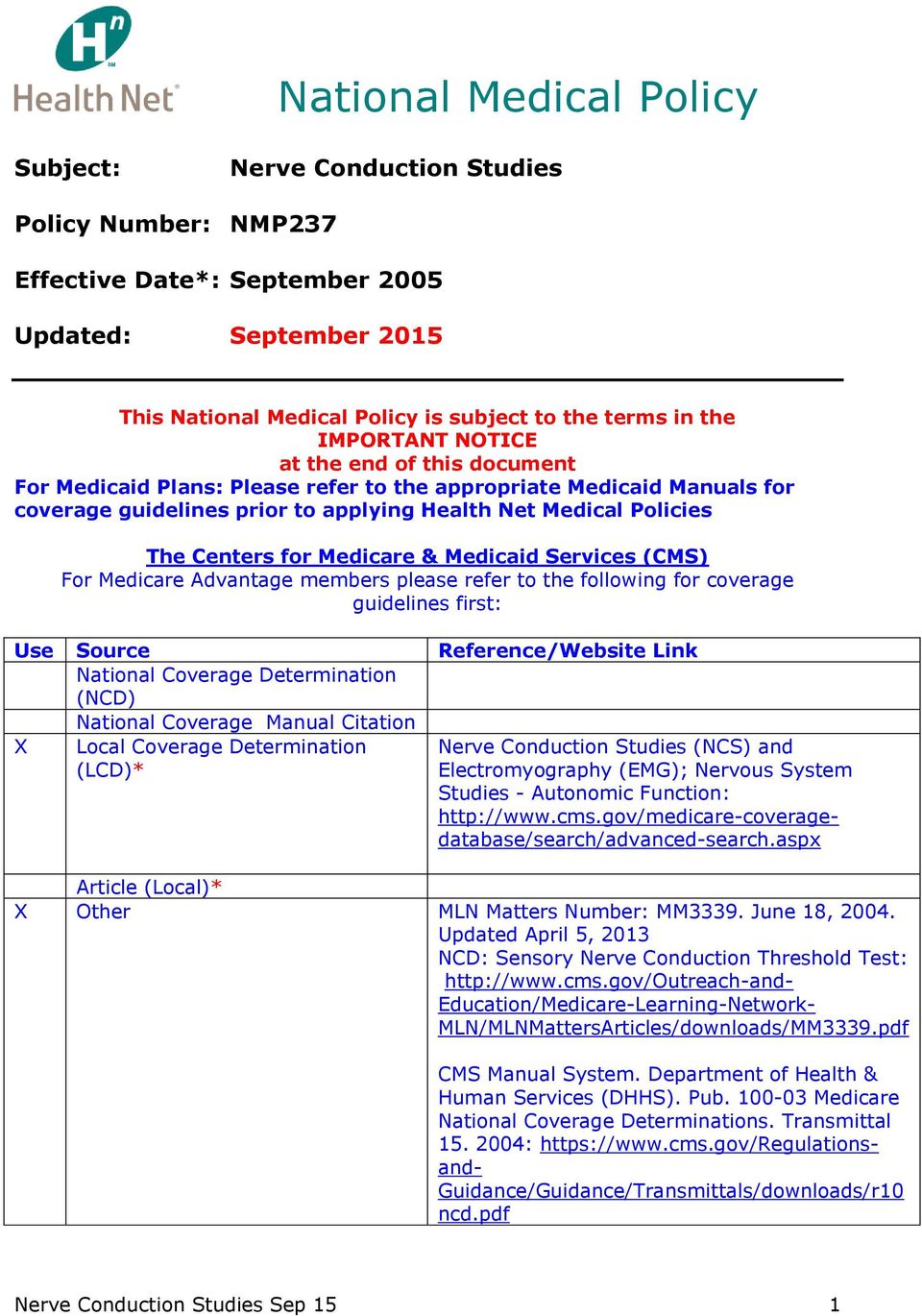
2 None Use Health Net Policy Instructions Medicare NCDs and National Coverage Manuals apply to ALL Medicare members in ALL regions. Medicare LCDs and Articles apply to members in specific regions. To access your specific region, select the link provided under Reference/Website and follow the search instructions. Enter the topic and your specific state to find the coverage determinations for your region. *Note: Health Net must follow local coverage determinations (LCDs) of Medicare Administration Contractors (MACs) located outside their service area when those MACs have exclusive coverage of an item or service. (CMS Manual Chapter 4 Section 90.2) If more than one source is checked, you need to access all sources as, on occasion, an LCD or article contains additional coverage information than contained in the NCD or National Coverage Manual. If there is no NCD, National Coverage Manual or region specific LCD/Article, follow the Health Net Hierarchy of Medical Resources for guidance. Current Policy Statement Health Net, Inc. considers nerve conduction studies medically necessary for any of the following: 1. Focal neuropathies or compressive lesions such as carpal tunnel syndrome, ulnar neuropathies or root lesions, for localization. 2. Traumatic nerve lesions, for diagnosis and prognosis. 3. Diagnosis or confirmation of suspected generalized neuropathies, such as diabetic, uremic, metabolic or immune. 4. Repetitive nerve stimulation in diagnosis of neuromuscular junction disorders such as myasthenia gravis, myasthenic syndrome. 5. For differential diagnosis of symptom-based complaints (e.g., pain in limb, weakness, disturbance in skin sensation or paresthesia) provided the clinical assessment supports the need for a study. 6. Radiculopathy - cervical, lumbosacral. 7. Polyneuropathy - metabolic, degenerative, hereditary. 8. Plexopathy - idiopathic, trauma, infiltration. 9. Myopathy - including polymyositis and dermatomyositis, myotonic, and congenital myopathies. 10. Precise muscle location for injections such as botulinum toxin, phenol, etc. Nerve conduction studies have been found to be medically necessary for any of the following diseases or conditions: Nerve Conduction Studies Sep 15 2
3 Alcoholic neuropathy Carpal tunnel syndrome Chronic inflammatory polyneuropathy Diabetic neuropathy Disorders of peripheral nervous system Distal median nerve dysfunction Fasciculation Friedreich's ataxia Guillain-Barre syndrome Lambert-Eaton Syndrome Muscle weakness Myositis Nerve root compression Pain in limb Primary amyloid Sciatic nerve dysfunction Sensorimotor polyneuropathy Swelling and cramps Traumatic injury to a nerve Brachial plexopathy Charcot-Marie-Tooth disease (hereditary) Common peroneal nerve dysfunction Diphtheria Disturbance of skin sensation Femoral nerve dysfunction General paresis Joint pain Mononeuritis multiplex Myopathy Nerve effects of uremia Neuritis Plexopathy Radial nerve dysfunction Secondary systemic amyloid Spinal cord injury Tibial nerve dysfunction Ulnar nerve dysfunction Note: Nerve conduction velocity studies are essential in evaluating neuromuscular disorders. They are usually performed in conjunction with needle electromyography. In limited cases only, nerve conduction velocity studies may be done without needle electromyography, if the specific criterion noted below is met. Nerve Conduction Velocity Studies Health Net, Inc. considers the limited use of nerve conduction studies (NCS) or nerve conduction velocity studies (NCV) done alone as medically necessary, only in any of the following specific situations: Established diagnosis of carpal tunnel syndrome; or Current use of anticoagulants; or As a follow-up study of neuromuscular structures that have undergone previous electrodiagnostic evaluation; or Presence of lymphedema; or Contraindication to the needle electromyography (NEMG) procedure. Not Medically Necessary Health Net, Inc. considers any of the following not medically necessary: Nerve conduction velocity (NCV) studies performed without needle EMG, other than when performed for the specific indications noted above; or Automated or hand-held portable noninvasive nerve conduction devices (E.g., NC Stat device, Brevio NCS-Monitor) since the diagnostic ability and clinical use of this type of testing has not been determined. Nerve Conduction Studies Sep 15 3

4 Investigational Health Net, Inc. considers surface electromyography (EMG) as a diagnostic tool for the evaluation of patients with neuromuscular diseases and low back pain investigational. Codes Related To This Policy NOTE: The codes listed in this policy are for reference purposes only. Listing of a code in this policy does not imply that the service described by this code is a covered or noncovered health service. Coverage is determined by the benefit documents and medical necessity criteria. This list of codes may not be all inclusive. On October 1, 2015, the ICD-9 code sets used to report medical diagnoses and inpatient procedures will be replaced by ICD-10 code sets. Health Net National Medical Policies will now include the preliminary ICD-10 codes in preparation for this transition. Please note that these may not be the final versions of the codes and that will not be accepted for billing or payment purposes until the October 1, 2015 implementation date. ICD-9 Codes Botulism 037 Tetanus 138 Late effects of acute poliomyelitis Malignant neoplasm of cranial nerves Malignant neoplasm of spinal cord Malignant neoplasm of spinal meninges Malignant neoplasm of other specified sites of nervous system Secondary malignant neoplasm, brain, and spinal cord Secondary malignant neoplasm, other parts of nervous system Benign neoplasm of cranial nerve Benign neoplasm of spinal cord Benign neoplasm of spinal meninges Benign neoplasm of other sites of nervous system Neurofibromatosis Diabetes with neurological manifestations; type II [non-insulin dependent type] [NIDDM type] [adult-onset type] or unspecified type, not stated as uncontrolled type I [insulin dependent type] [IDDM] [juvenile type], not stated as uncontrolled type II [non-insulin dependent type] [NIDDM] [adult-onset type] or unspecified type, uncontrolled type I [insulin dependent type] [IDDM] [juvenile type], uncontrolled Other and unspecified manifestations of thiamine deficiency Deficiency of other vitamins Lipoprotein deficiencies Myoclonus Idiopathic torsion dystonia Nerve Conduction Studies Sep 15 4

5 333.7 Symptomatic torsion dystonia Blepharospasm Orofacial dyskinesia Spasmodic torticollis Organic writer s cramp Fragments of torsions dystonia, other Spinocerebellar disease Werdnig-Hoffmann disease Spinal muscular atrophy, unspecified Kugelberg-Welander disease Other spinal muscular atrophy Motor neuron disease Other anterior horn cell diseases Anterior horn cell disease, unspecified Other diseases of spinal cord Disorders of the autonomic nervous system (Includes: disorders of peripheral autonomic, sympathetic, parasympathetic, or vegetative system) 340 Multiple sclerosis Neuromyelitis optica Schilder's disease Other demyelinating diseases of central nervous system Demyelinating disease of central nervous system, unspecified Hemiplegia Infantile cerebral palsy Monoplegia Cauda equina syndrome; without mention of neurogenic bladder with neurogenic bladder Other specified paralytic syndromes, locked in state Other specified paralytic syndrome Paralysis, unspecified Trigeminal neuralgia Atypical face pain Other trigeminal nerve disorders Bell's palsy Geniculate ganglionitis Other facial nerve disorders Facial nerve disorder, unspecified Disorders of pneumogastric (10th) nerve Disorders of accessory (11th) nerve Disorders of hypoglossal (12th) nerve Multiple cranial nerve palsies Unspecified disorder of cranial nerves Nerve Conduction Studies Sep 15 5
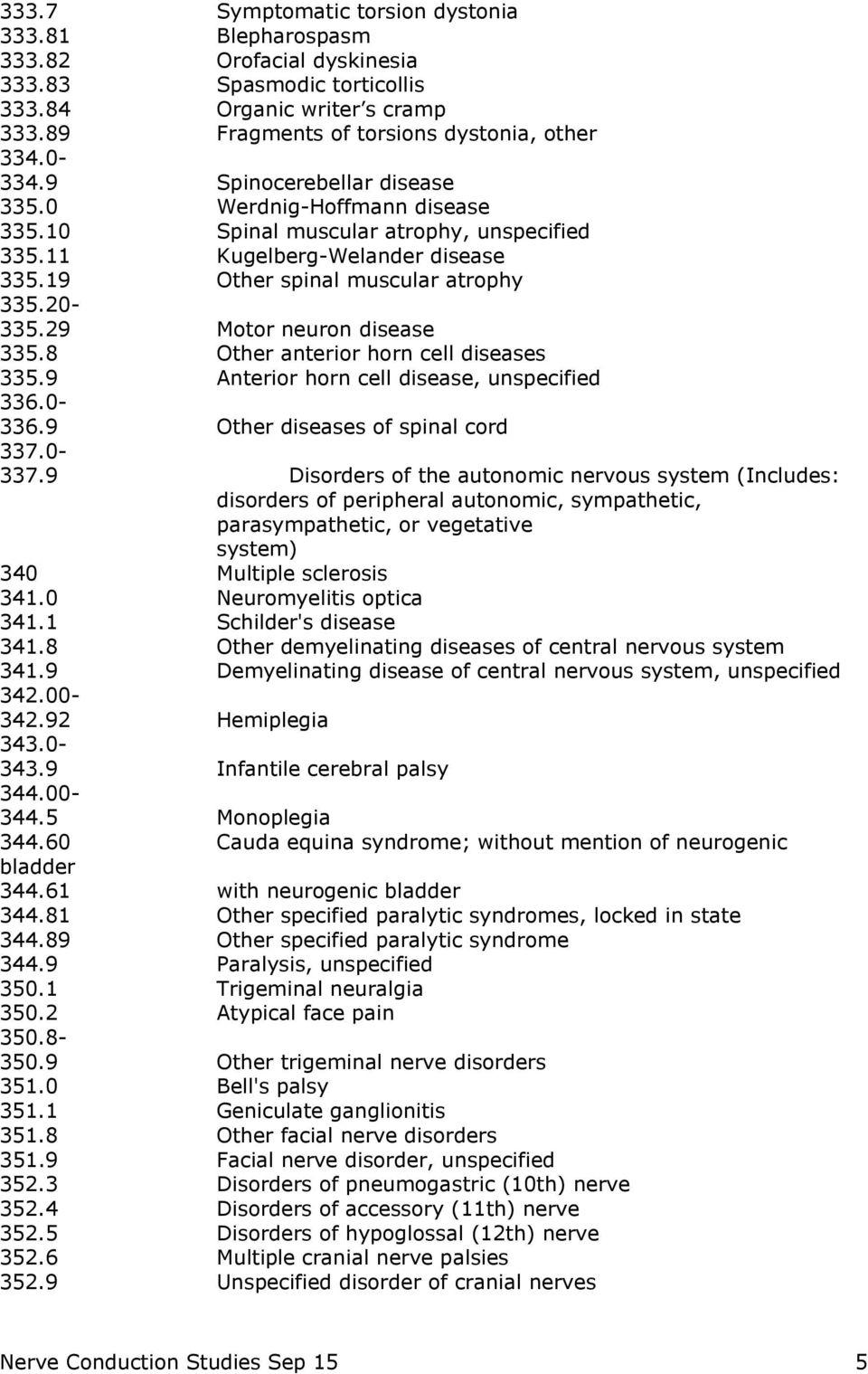
6 353.0 Brachial plexus lesions Lumbosacral plexus lesions Cervical root lesions, not elsewhere classified Thoracic root lesions, not elsewhere classified Lumbosacral root lesions, not elsewhere classified Neuralgic amyotrophy Other nerve root and plexus disorders Unspecified nerve root and plexus disorder Mononeuritis of upper limb and mononeuritis multiplex Mononeuritis of lower limb and unspecified site Hereditary and idiopathic peripheral neuropathy Inflammatory and toxic neuropathy Myoneural disorders Myopathy, unspecified Strabismus and other disorders of binocular eye movements Orthostatic hypotension Paralysis of vocal cords or larynx Laryngeal spasm Achalasia and cardiospasm 585 Polyneuropathy in uremia Stress incontinence, female Peripheral neuritis in pregnancy Dermatomyositis Polymyositis Eosinophilia myalgia syndrome Cervical spondylosis without myelopathy Cervical spondylosis with myelopathy Thoracic spondylosis without myelopathy Lumbosacral spondylosis without myelopathy Spondylosis with myelopathy, thoracic region Spondylosis with myelopathy, lumbar region Other spondylopathies Displacement of cervical, thoracic, or lumbar intervertebral disc without myelopathy Displacement of intervertebral disc, site unspecified, without myelopathy Schmorl s nodes Degeneration of cervical intervertebral disc Degeneration of thoracic or thoracolumbar intervertebral disc Degeneration of lumbar or lumbosacral intervertebral disc Degeneration of intervertebral disc, site unspecified Nerve Conduction Studies Sep 15 6
7 Invertebral disc disorder with myelopathy Postlaminectomy syndrome Other and unspecified disc disorder, unspecified region Other specified disc disorder Spinal stenosis in cervical region Cervicalgia Brachial neuritis or radiculitis NOS Torticollis, unspecified Spinal stenosis, other than cervical Pain in thoracic spine Lumbago Sciatica Thoracic or lumbosacral neuritis or radiculitis, unspecified Backache, unspecified Compression of spinal nerve root 725 Polymyalgia rheumatica Infective myositis Muscular wasting and disuse atrophy, not elsewhere classified Spasm of muscle Myalgia and myositis, unspecified Neuralgia, neuritis, and radiculitis, unspecified Pain in limb Other musculoskeletal symptoms referable to limbs, cramps Wrist drop (acquired) Claw hand (acquired) Other acquired deformities of forearm, excluding fingers Acquired deformities of ankle and foot Other acquired deformities of ankle and foot Spina bifida without mention of hydrocephalus Diastematomyelia Other malaise and fatigue Abnormal involuntary movements Abnormality of gait, lack of coordination Transient paralysis of limb Tetany Disturbance of skin sensation Other disturbance, including spasmodic dysphonia Incontinence of feces Incomplete bladder emptying Incontinence of urine Abnormal electromyogram Fracture of vertebral column with spinal cord injury Injury to facial nerve Injury to other specified cranial nerve Nerve Conduction Studies Sep 15 7

8 Spinal cord injury without evidence of spinal bone injury, cervical Spinal cord injury without evidence of spinal bone injury, dorsal thoracic Lumbar spinal cord injury without spinal bone injury Sacral spinal cord injury without spinal bone injury Cauda equina spinal cord injury without spinal bone injury Multiple sites of spinal cord injury without spinal bone injury Unspecified site of spinal cord injury without spinal bone injury Injury to nerve roots and spinal plexus Injury to other nerve(s) of trunk, excluding shoulder and pelvic girdles Injury to peripheral nerve(s) of shoulder girdle and upper limb Injury to peripheral nerve(s) of pelvic girdle and lower limb Injury to other and unspecified nerves Electrocution and nonfatal effects of electric current ICD-10 Codes A05.1 Botulism food poisoning A35 Other tetanus B91 Sequelae of poliomyelitis C72.0- C72.9 Malignant neoplasm of spinal cord, cranial nerves and other parts of central nervous system C79.31 Secondary malignant neoplasm of brain C79.32 Secondary malignant neoplasm of cerebral meninges C79.49 Secondary malignant neoplasm of other parts of nervous system D32.0- D32.9 Benign neoplasm of meninges D33.3 Benign neoplasm of cranial nerves D33.4 Benign neoplasm of spinal cord D33.7 Benign neoplasm of other specified parts of central nervous system E10.40-E10.49 Type 1 diabetes mellitus with neurological complications E11.40-E11.49 Type 2 diabetes mellitus with neurological complications E51.8 Other manifestations of thiamine deficiency E51.9 Thiamine deficiency, unspecified E56.0-E56.9 Other vitamin deficiencies E78.6 Lipoprotein deficiency G11.0-G11.9 Hereditary ataxia G12.0 Infantile spinal muscular atrophy, type I [Werdnig-Hoffman] G12.1 Other inherited spinal muscular atrophy G12.20-G12.29 Motor neuron disease G12.8 Other spinal muscular atrophies and related syndromes G12.9 Spinal muscular atrophy, unspecified G14 Postpolio syndrome G24.1 Genetic torsion dystonia Nerve Conduction Studies Sep 15 8

9 G24.3 Spasmodic torticollis G24.4 Idiopathic orofacial dystonia G24.5 Blepharospasm G24.9 Dystonia, unspecified G25.3 Myoclonus G25.89 Other specified extrapyramidal and movement disorders G35 Multiple sclerosis G36.0 Neuromyelitis optica [Devic] G37.0 Diffuse sclerosis of central nervous system G37.5 Concentric sclerosis [Balo] of central nervous system G37.9 Demyelinating disease of central nervous system, unspecified G50.0-G50.9 Disorders of trigeminal nerve G51.0-G51.9 Facial nerve disorders G52.2 Disorders of vagus nerve G52.3 Disorders of hypoglossal nerve G52.7 Disorders of multiple cranial nerves G52.8 Disorders of other specified cranial nerves G52.9 Cranial nerve disorder, unspecified G54.0-G54.9 Nerve root and plexus disorders G56.00-G56.92 Mononeuropathies of upper limb G57.00-G57.92 Mononeuropathies of lower limb G60.0-G65.2 Polyneuropathies and other disorders of the peripheral nervous system G70.00-G73.9 Diseases of myoneural junction and muscle G80.0-G80.9 Cerebral palsy G81.00-G81.94 Hemiplegia and hemiparesis G83.0-G83.9 Other paralytic syndromes G90.01-G90.9 Disorders of autonomic nervous system G95.0-G95.9 Other and unspecified diseases of spinal cord H50.00-H50.9 Other strabismus H51.0-H51.9 Other disorders of binocular movement I95.1 Orthostatic hypotension J38.00-J38.02 Paralysis of vocal cords and larynx J38.5 Laryngeal spasm K22.0 Achalasia of cardia M M Wrist or foot drop (aquired) M M Acquired clawhand M21.6X1- M21.6X9 Other acquired deformities of foot M M Other specified acquired deformities of unspecified forearm M M Unspecified acquired deformity of lower leg M33.00-M33.99 Dermatopolymyositis M35.3 Polymyalgia rheumatica M35.8 Other specified systemic involvement of connective tissue M47.01-M47.9 Spondylosis M50.00-M50.93 Cervical Disc disorders M51.04-M51.9 Thoracic, thoracolumbar, and lumbosacral intervertebral disc disorders M53.0-M53.9 Other and unspecified dorsopathies, not elsewhere classified M54.10 Radiculopathy, site unspecified M Infective myositis, unspecified site M60.9 Myositis, unspecified M62.40 Contracture of muscle, unspecified site Nerve Conduction Studies Sep 15 9
![5 Concentric sclerosis [Balo] of central nervous system G37.9 Demyelinating disease of central nervous system, unspecified G50.0-G50.9 Disorders of trigeminal nerve G51.0-G51.](/docs-images/42/5512317/images/page_9.jpg "9 Facial nerve disorders G52.2 Disorders of vagus nerve G52.3 Disorders of hypoglossal nerve G52.7 Disorders of multiple cranial nerves G52.8 Disorders of other specified cranial nerves G52.")
10 M62.50 Muscle wasting and atrophy, not elsewhere classified, unspecified site M Other muscle spasm M79.1 Myalgia M79.2 Neuralgia and neuritis, unspecified M Pain in unspecified limb M79.7 Fibromyalgia N18.9 Chronic Kidney disease, unspecified N39.3 Stress incontinence (female) (male) N39.41 Urge incontinence N39.42 Incontinence without sensory awareness N39.43 Post-void dribbling N39.44 Nocturnal enuresis N39.45 Continuous leakage N39.46 Mixed incontinence N Overflow incontinence N Other specified urinary incontinence Q05.5 Cervical spina bifida without hydrocephalus Q05.6 Thoracic spina bifida without hydrocephalus QØ5.7 Lumbar spina bifida without hydrocephalus Q05.8 Sacral spina bifida without hydrocephalus Q06.2 Diastematomyelia O O Pregnancy related peripheral neuritis Q85.00 Neurofibromatosis, unspecified Q85.01 Neurofibromatosis, type 1 Q85.02 Neurofibromatosis, type 2 R15.0-R51.9 Fecal incontinence R20.0-R20.9 Disturbance of skin sensation R25.0-R25.9 Abnormal involuntary movements R26.0-R26.9 Abnormalities of gait and mobility R27.0-R27.9 Other lack of coordination R29.0 Tetany R29.5 Transient paralysis R32 Unspecified urinary incontinence R39.14 Feeling of incomplete bladder emptying R49.8 Other voice and resonance disorders R53.81-R53.83 Other malaise and fatigue R Abnormal electromyogram [EMG] S04.5-S04.52 Injury of facial nerve S S04.9 Injury of other cranial nerves S S12.9 Fracture of cervical vertebra and othe parts of the neck S13.0-S13.9 Dislocation and sprain of joints and ligaments at neck level S S14.9 Injury of nerves and spinal cord at neck level S S Fracture of thoracic vertebra S24.0-S24.9 Injury of nerves and spinal cord at thorax level S S Fracture of lumbar vertebra S32.10-S32.19 Fracture of sacrum S32.2 Fracture of coccyx S34.01-S34.9 Injury of lumbar and sacral spinal cord and nerves at abdomen, lower back and pelvis level S44.00-S44.92 Injury of nerves at shoulder and upper arm level S74.00-S74.92 Injury of nerves at hip and thigh level S84.00-S84.92 Injury of nerves at lower leg level Nerve Conduction Studies Sep 15 10

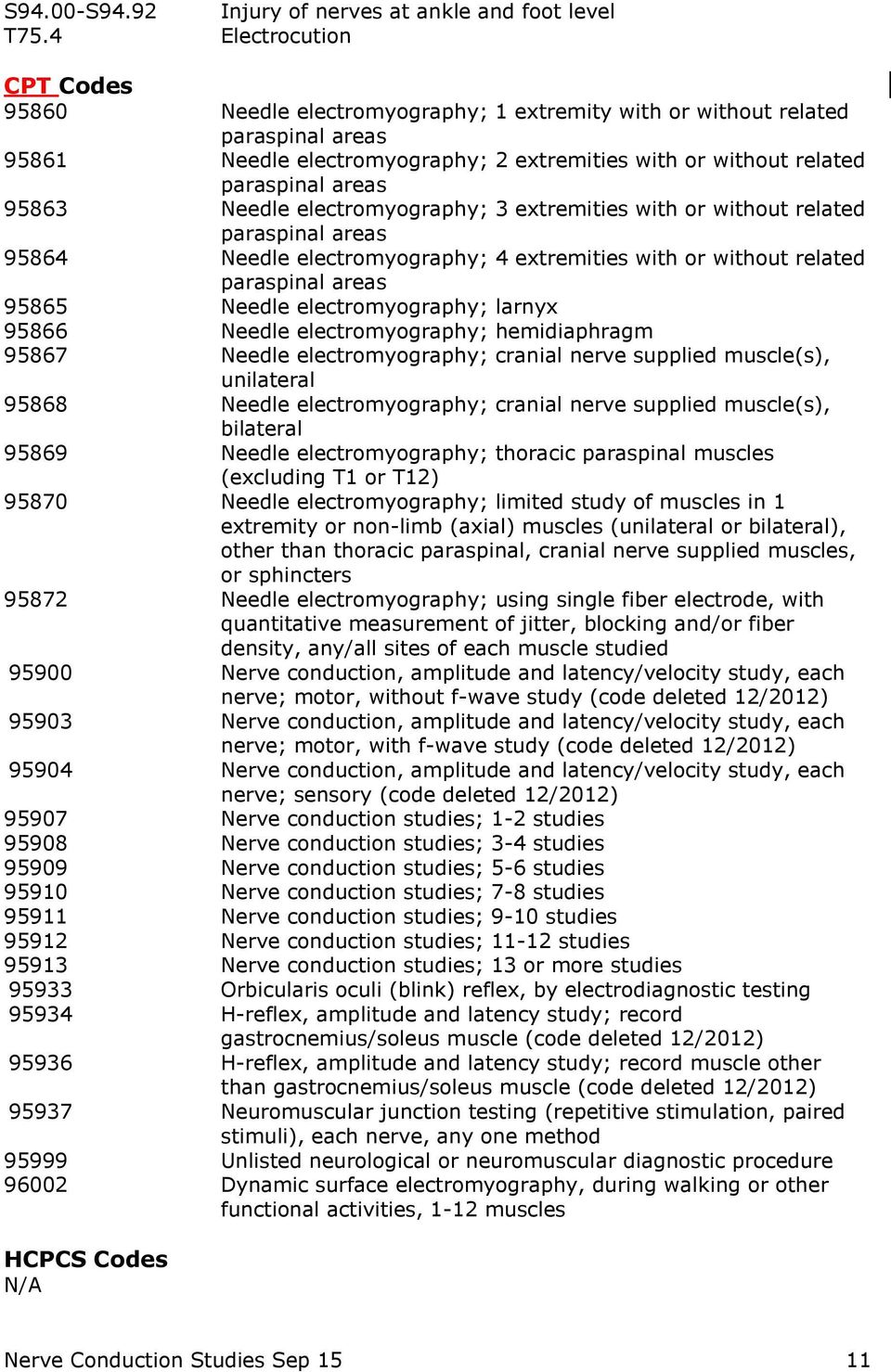
11 S94.00-S94.92 Injury of nerves at ankle and foot level T75.4 Electrocution CPT Codes Needle electromyography; 1 extremity with or without related paraspinal areas Needle electromyography; 2 extremities with or without related paraspinal areas Needle electromyography; 3 extremities with or without related paraspinal areas Needle electromyography; 4 extremities with or without related paraspinal areas Needle electromyography; larnyx Needle electromyography; hemidiaphragm Needle electromyography; cranial nerve supplied muscle(s), unilateral Needle electromyography; cranial nerve supplied muscle(s), bilateral Needle electromyography; thoracic paraspinal muscles (excluding T1 or T12) Needle electromyography; limited study of muscles in 1 extremity or non-limb (axial) muscles (unilateral or bilateral), other than thoracic paraspinal, cranial nerve supplied muscles, or sphincters Needle electromyography; using single fiber electrode, with quantitative measurement of jitter, blocking and/or fiber density, any/all sites of each muscle studied Nerve conduction, amplitude and latency/velocity study, each nerve; motor, without f-wave study (code deleted 12/2012) Nerve conduction, amplitude and latency/velocity study, each nerve; motor, with f-wave study (code deleted 12/2012) Nerve conduction, amplitude and latency/velocity study, each nerve; sensory (code deleted 12/2012) Nerve conduction studies; 1-2 studies Nerve conduction studies; 3-4 studies Nerve conduction studies; 5-6 studies Nerve conduction studies; 7-8 studies Nerve conduction studies; 9-10 studies Nerve conduction studies; studies Nerve conduction studies; 13 or more studies Orbicularis oculi (blink) reflex, by electrodiagnostic testing H-reflex, amplitude and latency study; record gastrocnemius/soleus muscle (code deleted 12/2012) H-reflex, amplitude and latency study; record muscle other than gastrocnemius/soleus muscle (code deleted 12/2012) Neuromuscular junction testing (repetitive stimulation, paired stimuli), each nerve, any one method Unlisted neurological or neuromuscular diagnostic procedure Dynamic surface electromyography, during walking or other functional activities, 1-12 muscles HCPCS Codes N/A Nerve Conduction Studies Sep 15 11
12 Scientific Rationale Update September 2013 The American Association of Neuromuscular and Electrodiagnostic Medicine (AANEM) recommends that nerve conduction studies and electromyography should be performed and interpreted at the same time in the majority of situations. This is critically important in patients with suspected radiculopathy, plexopathy, myopathy, motor neuropathy, or motor neuron disease. In addition, the complementary information derived from electromyography is useful to ensure that an underlying disease process is not missed (eg, radiculopathy in a patient with suspected carpal tunnel syndrome). Scientific Rationale Update September 2012 There are two main types of electromyography (EMG), needle EMG (NEMG) and surface EMG (SEMG). NEMG, in combination with nerve conduction studies, is considered the gold standard methodology for assessing the neurophysiologic characteristics of neuromuscular diseases. SEMG is being investigated as a noninvasive alternative modality to NEMG. SEMG, also referred to as scanning EMG or surface scanning EMG, is a technique to measure muscle activity noninvasively using surface electrodes placed on the skin overlying the muscle. Unlike NEMG, SEMG electrodes record from a wide area of muscle territory, have a relatively narrow frequency band, have low-signal resolution, and are highly susceptible to movement artifact. SEMG can be conducted with the patient standing or lying down or performing an isometric hold, contraction, or exertion (static SEMG); performing a movement such as flexion and reextension (dynamic SEMG); responding to an increase or decrease of a physical challenge or undergoing combined static and dynamic investigations. A report on the clinical utility of surface EMG from the American Academy of Neurology (2000) concluded: Based on Class II data, SEMG is considered unacceptable as a clinical tool in the diagnosis of neuromuscular disease. Based on Class III and inconclusive or inadequate Class II data, SEMG is considered unacceptable as a clinical tool in the evaluation of patients with low back pain. Based on Class III data, SEMG is considered an acceptable tool for kinesiologic analysis of movement disorders; for differentiating types of tremors, myoclonus, and dystonia; for evaluating gait and posture disturbances; and for evaluating psychophysical measures of reaction and movement time. The AAN recommends further studies comparing specificity and sensitivity of fine wire EMG with SEMG are to be encouraged. Peer review literature is very limited. Enomoto et al (2012) measured paravertebral muscle activity SEMG in lumbar degenerative patients and healthy volunteers. Muscle activity was tested in the standing position, and the influence of low back pain and alignment of the lumbar spine was assessed in the patients with lumbar kyphosis or canal stenosis. The subjects were kyphosis patients who were 60 years of age or older, age-matched lumbar spinal canal stenosis patients and healthy volunteers. Muscular activity at the L1-2 and L4-5 intervertebral areas was recorded by surface EMG in the resting standing position and also with a weight load held in Nerve Conduction Studies Sep 15 12

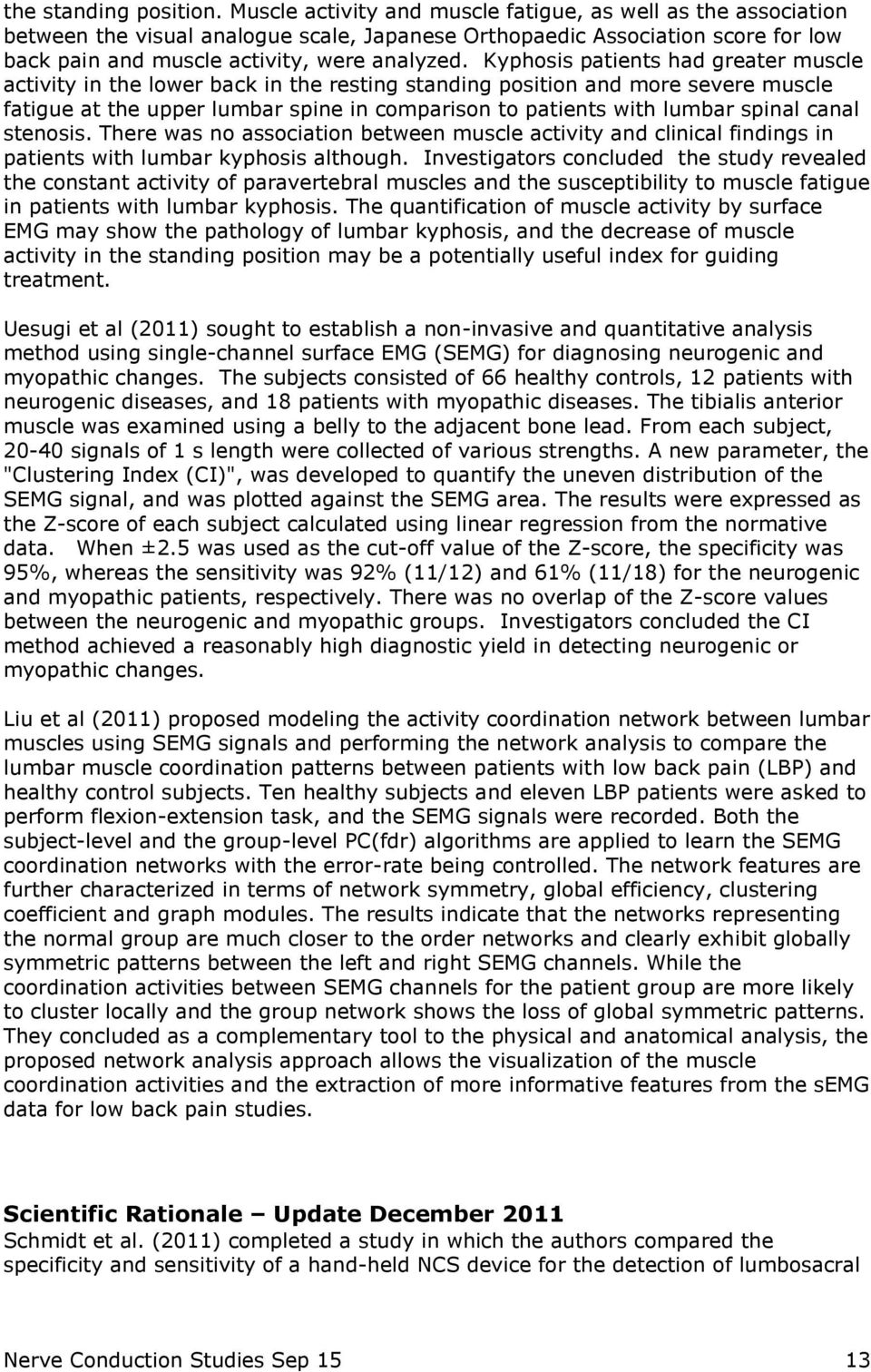
13 the standing position. Muscle activity and muscle fatigue, as well as the association between the visual analogue scale, Japanese Orthopaedic Association score for low back pain and muscle activity, were analyzed. Kyphosis patients had greater muscle activity in the lower back in the resting standing position and more severe muscle fatigue at the upper lumbar spine in comparison to patients with lumbar spinal canal stenosis. There was no association between muscle activity and clinical findings in patients with lumbar kyphosis although. Investigators concluded the study revealed the constant activity of paravertebral muscles and the susceptibility to muscle fatigue in patients with lumbar kyphosis. The quantification of muscle activity by surface EMG may show the pathology of lumbar kyphosis, and the decrease of muscle activity in the standing position may be a potentially useful index for guiding treatment. Uesugi et al (2011) sought to establish a non-invasive and quantitative analysis method using single-channel surface EMG (SEMG) for diagnosing neurogenic and myopathic changes. The subjects consisted of 66 healthy controls, 12 patients with neurogenic diseases, and 18 patients with myopathic diseases. The tibialis anterior muscle was examined using a belly to the adjacent bone lead. From each subject, signals of 1 s length were collected of various strengths. A new parameter, the "Clustering Index (CI)", was developed to quantify the uneven distribution of the SEMG signal, and was plotted against the SEMG area. The results were expressed as the Z-score of each subject calculated using linear regression from the normative data. When ±2.5 was used as the cut-off value of the Z-score, the specificity was 95%, whereas the sensitivity was 92% (11/12) and 61% (11/18) for the neurogenic and myopathic patients, respectively. There was no overlap of the Z-score values between the neurogenic and myopathic groups. Investigators concluded the CI method achieved a reasonably high diagnostic yield in detecting neurogenic or myopathic changes. Liu et al (2011) proposed modeling the activity coordination network between lumbar muscles using SEMG signals and performing the network analysis to compare the lumbar muscle coordination patterns between patients with low back pain (LBP) and healthy control subjects. Ten healthy subjects and eleven LBP patients were asked to perform flexion-extension task, and the SEMG signals were recorded. Both the subject-level and the group-level PC(fdr) algorithms are applied to learn the SEMG coordination networks with the error-rate being controlled. The network features are further characterized in terms of network symmetry, global efficiency, clustering coefficient and graph modules. The results indicate that the networks representing the normal group are much closer to the order networks and clearly exhibit globally symmetric patterns between the left and right SEMG channels. While the coordination activities between SEMG channels for the patient group are more likely to cluster locally and the group network shows the loss of global symmetric patterns. They concluded as a complementary tool to the physical and anatomical analysis, the proposed network analysis approach allows the visualization of the muscle coordination activities and the extraction of more informative features from the semg data for low back pain studies. Scientific Rationale Update December 2011 Schmidt et al. (2011) completed a study in which the authors compared the specificity and sensitivity of a hand-held NCS device for the detection of lumbosacral Nerve Conduction Studies Sep 15 13
14 radiculopathy with standard electrodiagnostic study (EDX). Fifty patients referred to a tertiary referral electromyography (EMG) laboratory for testing of predominantly unilateral leg symptoms (weakness, sensory complaints, and/or pain) were included in the investigation. Twenty-five normal "control" subjects were later recruited to calculate the specificity of the automated protocol. All patients underwent standard EDX and automated testing. Raw NCS data were comparable for both techniques; however, computer-generated interpretations delivered by the automated device showed high sensitivity with low specificity (i.e., many false positives) in both symptomatic patients and normal controls. The automated device accurately recorded raw data, but the interpretations provided were overly sensitive and lacked the specificity necessary for a screening or diagnostic examination. The official medical journal of the American Association of Neuromuscular and Electrodiagnostic Medicine (AANEM) Muscle & Nerve, compared the specificity and sensitivity of the handheld NCS device for the detection of lumbosacral radiculopathy (LSR) with a standard electrodiagnostic study. The results showed the raw NCS data was comparable for both techniques; however, computer-generated interpretations delivered by the automated device showed high sensitivity with low specificity (i.e., many false positives) in both symptomatic patients and normal controls. The study noted above by Dr. Schmidt, results suggest the hand-held NCS device tested significantly over-diagnoses LSR in both symptomatic and asymptomatic subjects, which may lead to unnecessary intervention or repeated testing. The findings of the study do not support the clinical application of automated testing in the diagnosis of LSR. Scientific Rationale Update March 2011 Because nerve conduction studies performed with devices that use fixed anatomic templates and computer-generated reports (such as the NC-Stat device), are a local Medicare covered service in specific situations only, as dictated by certain local Medicare carriers, it must be covered for all Medicare Advantage members who reside in the local area in which coverage is applicable, subject to the relevant Medicare criteria and/or guidelines. Medicare does not expect this testing to be used routinely on all patients. For Local Medicare coverage determination, please go to the individual local Medicare website. Nerve Conduction Studies (NCS) (including Nerve Conduction Velocity Studies (NCV) and needle electromyography (EMG), typically performed together, and by a trained practitioner continue to be considered the gold standard of electrodiagnostic testing. Both NCVs and EMGs are used for a clinical diagnosis of peripheral nervous system disorders. Asad et al. (2010) compared the nerve conduction studies in clinically undetectable and detectable sensorimotor polyneuropathy in type 2 diabetics. Diagnosed diabetics (n = 60) were divided in two groups. Group 1 (n1 = 30) with clinically undetectable and group 2 (n2 = 30) with clinically detectable Diabetic Polyneuropathy. Detection of the sensorimotor neuropathy was done according to Diabetic Neuropathy Symptom Score and Diabetic Neuropathy Examination scores. The simplified nerve conduction studies protocol was followed in recording amplitudes, velocities and latencies of minimum two (Sural, Peroneal) and maximum six i.e. three sensory (Sural, Ulnar, Median) and three motor (Peroneal, Ulnar, Tibial) nerves. The comparisons were done between different parameters of nerve conduction studies with the neurological scores in undetectable and detectable groups using Pearson's chi square test. The amplitudes, velocities, latencies, outcome and grading of Nerve Conduction Studies Sep 15 14

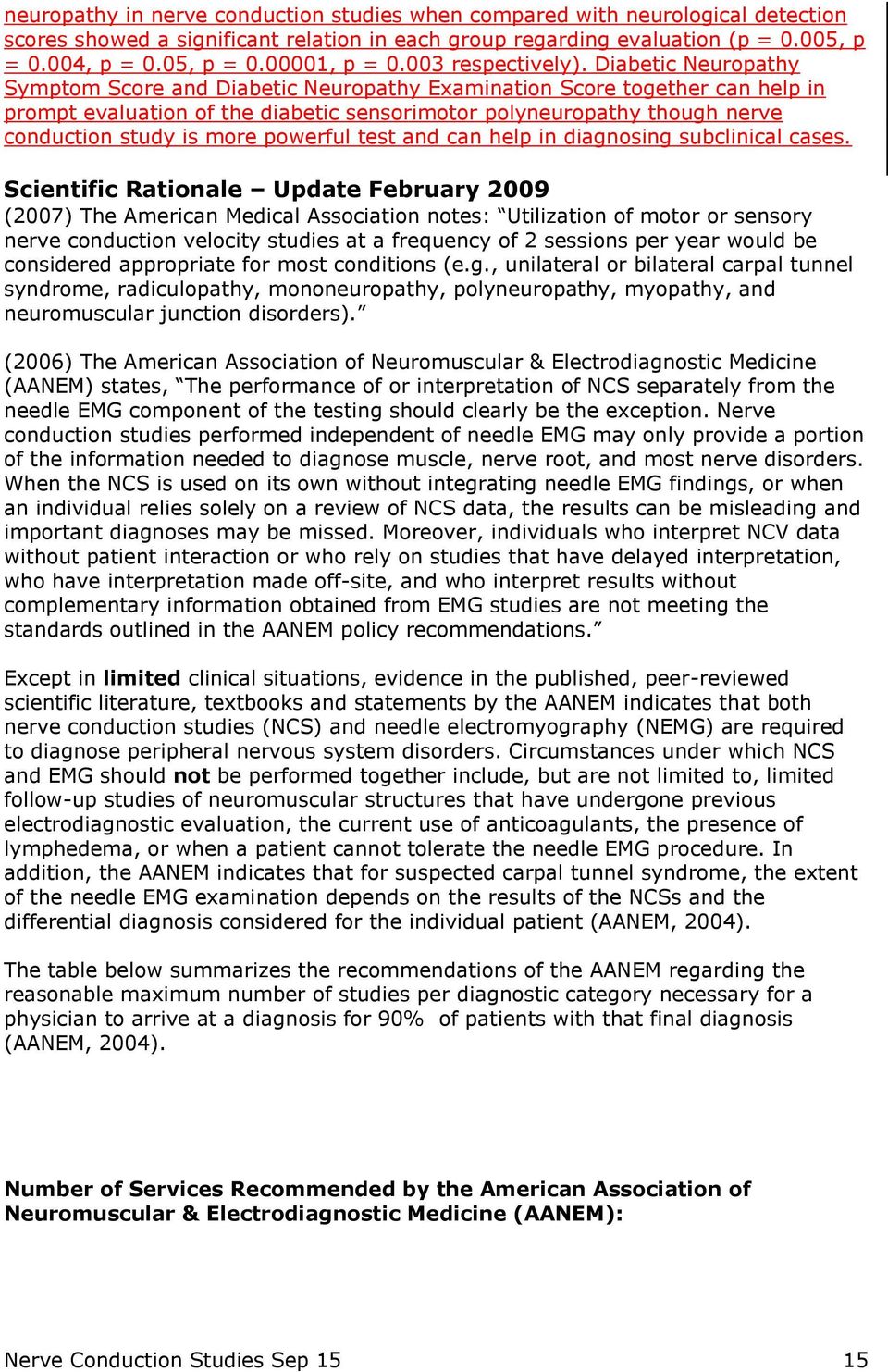
15 neuropathy in nerve conduction studies when compared with neurological detection scores showed a significant relation in each group regarding evaluation (p = 0.005, p = 0.004, p = 0.05, p = , p = respectively). Diabetic Neuropathy Symptom Score and Diabetic Neuropathy Examination Score together can help in prompt evaluation of the diabetic sensorimotor polyneuropathy though nerve conduction study is more powerful test and can help in diagnosing subclinical cases. Scientific Rationale Update February 2009 (2007) The American Medical Association notes: Utilization of motor or sensory nerve conduction velocity studies at a frequency of 2 sessions per year would be considered appropriate for most conditions (e.g., unilateral or bilateral carpal tunnel syndrome, radiculopathy, mononeuropathy, polyneuropathy, myopathy, and neuromuscular junction disorders). (2006) The American Association of Neuromuscular & Electrodiagnostic Medicine (AANEM) states, The performance of or interpretation of NCS separately from the needle EMG component of the testing should clearly be the exception. Nerve conduction studies performed independent of needle EMG may only provide a portion of the information needed to diagnose muscle, nerve root, and most nerve disorders. When the NCS is used on its own without integrating needle EMG findings, or when an individual relies solely on a review of NCS data, the results can be misleading and important diagnoses may be missed. Moreover, individuals who interpret NCV data without patient interaction or who rely on studies that have delayed interpretation, who have interpretation made off-site, and who interpret results without complementary information obtained from EMG studies are not meeting the standards outlined in the AANEM policy recommendations. Except in limited clinical situations, evidence in the published, peer-reviewed scientific literature, textbooks and statements by the AANEM indicates that both nerve conduction studies (NCS) and needle electromyography (NEMG) are required to diagnose peripheral nervous system disorders. Circumstances under which NCS and EMG should not be performed together include, but are not limited to, limited follow-up studies of neuromuscular structures that have undergone previous electrodiagnostic evaluation, the current use of anticoagulants, the presence of lymphedema, or when a patient cannot tolerate the needle EMG procedure. In addition, the AANEM indicates that for suspected carpal tunnel syndrome, the extent of the needle EMG examination depends on the results of the NCSs and the differential diagnosis considered for the individual patient (AANEM, 2004). The table below summarizes the recommendations of the AANEM regarding the reasonable maximum number of studies per diagnostic category necessary for a physician to arrive at a diagnosis for 90% of patients with that final diagnosis (AANEM, 2004). Number of Services Recommended by the American Association of Neuromuscular & Electrodiagnostic Medicine (AANEM): Nerve Conduction Studies Sep 15 15
16 Nerve Conduction Studies Other EMG Studies Indications Needle EMG Motor NCV studies with and/or without F-wave Sensory NCV studies H- Reflex Neuromuscular Junction Testing (Repetitive Stimulation) Carpal tunnel (unilateral) Carpal tunnel (bilateral) Radiculopathy Mononeuropathy Polyneuropathy/Mononeuropathy Multiplex Myopathy Motor Neuropathy Plexopathy Neuromuscular junction Tarsal tunnel syndrome (unilateral) Tarsal tunnel syndrome (bilateral) Weakness, fatigue, cramps, or twitching (focal) Weakness, fatigue, cramps, or twitching (general) Pain, numbness, or tingling (unilateral) Pain, numbness, or tingling (bilateral) Nerve Conduction Studies Sep 15 16

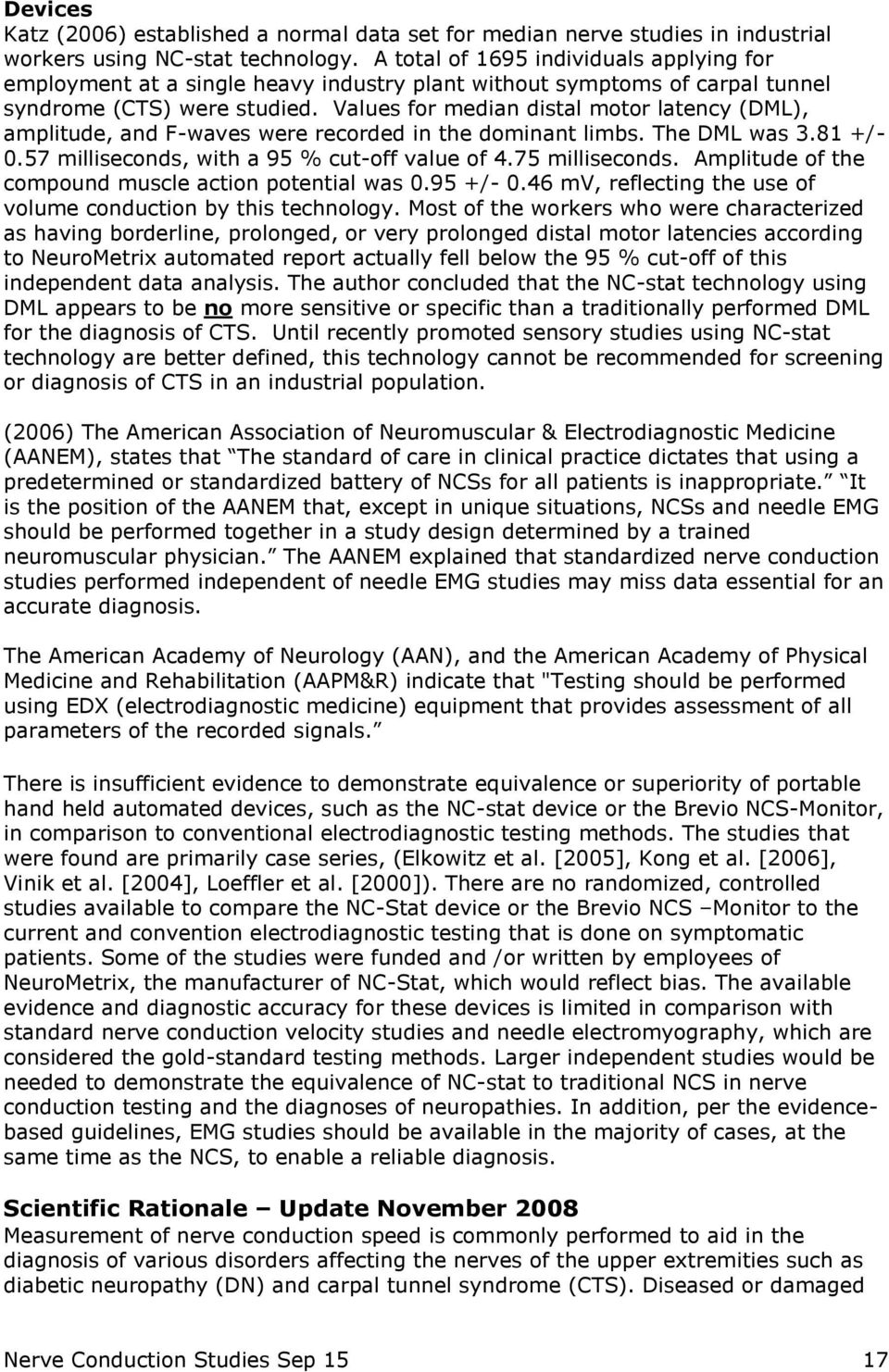
17 Devices Katz (2006) established a normal data set for median nerve studies in industrial workers using NC-stat technology. A total of 1695 individuals applying for employment at a single heavy industry plant without symptoms of carpal tunnel syndrome (CTS) were studied. Values for median distal motor latency (DML), amplitude, and F-waves were recorded in the dominant limbs. The DML was / milliseconds, with a 95 % cut-off value of 4.75 milliseconds. Amplitude of the compound muscle action potential was / mv, reflecting the use of volume conduction by this technology. Most of the workers who were characterized as having borderline, prolonged, or very prolonged distal motor latencies according to NeuroMetrix automated report actually fell below the 95 % cut-off of this independent data analysis. The author concluded that the NC-stat technology using DML appears to be no more sensitive or specific than a traditionally performed DML for the diagnosis of CTS. Until recently promoted sensory studies using NC-stat technology are better defined, this technology cannot be recommended for screening or diagnosis of CTS in an industrial population. (2006) The American Association of Neuromuscular & Electrodiagnostic Medicine (AANEM), states that The standard of care in clinical practice dictates that using a predetermined or standardized battery of NCSs for all patients is inappropriate. It is the position of the AANEM that, except in unique situations, NCSs and needle EMG should be performed together in a study design determined by a trained neuromuscular physician. The AANEM explained that standardized nerve conduction studies performed independent of needle EMG studies may miss data essential for an accurate diagnosis. The American Academy of Neurology (AAN), and the American Academy of Physical Medicine and Rehabilitation (AAPM&R) indicate that "Testing should be performed using EDX (electrodiagnostic medicine) equipment that provides assessment of all parameters of the recorded signals. There is insufficient evidence to demonstrate equivalence or superiority of portable hand held automated devices, such as the NC-stat device or the Brevio NCS-Monitor, in comparison to conventional electrodiagnostic testing methods. The studies that were found are primarily case series, (Elkowitz et al. [2005], Kong et al. [2006], Vinik et al. [2004], Loeffler et al. [2000]). There are no randomized, controlled studies available to compare the NC-Stat device or the Brevio NCS Monitor to the current and convention electrodiagnostic testing that is done on symptomatic patients. Some of the studies were funded and /or written by employees of NeuroMetrix, the manufacturer of NC-Stat, which would reflect bias. The available evidence and diagnostic accuracy for these devices is limited in comparison with standard nerve conduction velocity studies and needle electromyography, which are considered the gold-standard testing methods. Larger independent studies would be needed to demonstrate the equivalence of NC-stat to traditional NCS in nerve conduction testing and the diagnoses of neuropathies. In addition, per the evidencebased guidelines, EMG studies should be available in the majority of cases, at the same time as the NCS, to enable a reliable diagnosis. Scientific Rationale Update November 2008 Measurement of nerve conduction speed is commonly performed to aid in the diagnosis of various disorders affecting the nerves of the upper extremities such as diabetic neuropathy (DN) and carpal tunnel syndrome (CTS). Diseased or damaged Nerve Conduction Studies Sep 15 17
18 nerves show decreased conduction speed or smaller-sized electrical signals. These are detected by stimulating the nerve with an electrode placed on the skin and capturing the time it takes for the nerve impulse to travel to a recording electrode. These types of nerve conduction studies (NCS) are traditionally carried out by a neurologist or other specialist in a specialized electromyographic laboratory, where other procedures such as electromyography (EMG; recording electrical activity directly within muscles through needle electrodes) are often necessary for diagnosis. A comprehensive diagnosis also relies on a variety of physical examinations, and may also involve imaging. Some examples of the automated nerve conduction studies (NCS) using hand held units being used without EMG's include the NC-Stat Monitor, the Brevio NCS-Monitor and the Neural-Scan Nerve Conduction Study sensory (NCSs) exam. A description of these devices is listed below: The NC-Stat Monitor (NeuroMetrix Inc.) is an automated handheld device using proprietary technology for conducting NCS. The available evidence for the NCstat monitor is limited in comparison with standard nerve conduction velocity studies and needle electromyography. NC-stat technology using distal motor latency (DML) appears to be no more sensitive or specific than a traditionally performed DML for the diagnosis of carpal tunnel syndrome. The Brevio NCS-Monitor (NeuMed Inc.) is a hand-held automated device designed to assess peripheral nerves for conditions such as carpal tunnel syndrome, diabetic peripheral neuropathy, and tarsal tunnel syndrome. There is insufficient evidence to establish the clinical value of this automated NCV studies device. This is not FDA approved. The Neural-Scan Nerve Conduction Study sensory (NCSs) exam helps to diagnose severity, location & distribution of radiculopathy or neuropathy. Noninvasive method. Measures sensory threshold using neuroselective frequency to test Type A-delta fibers. Abnormally high NCS measures indicate significant nerve conduction loss. Abnormally low NCS indicate hyperesthetic state that corresponds with inflamed, irritated or regenerating nerves. This is not FDA approved. (2006) The American Association of Neuromuscular & Electrodiagnostic Medicine (AANEM) has developed the following position statement in response to inquiries about: (1) physicians interpreting NCS data without any direct patient contact and without providing direct oversight over the performance of nerve conduction studies (NCSs); and (2) NCSs being utilized to diagnose patients without a complementary needle electromyography (EMG) study. The AANEM believes that electrodiagnostic studies should be performed by physicians properly trained in electrodiagnostic medicine, that interpretation of NCS data alone absent face-to-face patient interaction and control over the process provides substandard care, and that the performance of NCSs without needle EMG has the potential of compromising patient care. It is the AANEM s opinion that it is in the best interest of patients, in the majority of situations, for the needle EMG and the NCS examination to be conducted and interpreted at the same time. Nerve Conduction Studies Sep 15 18

19 Standard Nerve Conduction Velocity Testing Automated Nerve Testing Systems Includes safeguards and procedures to assure proper performance and interpretation. Involves electrical stimulation of peripheral nerves, and recording of electrical responses from the same peripheral nerve or from a muscle. Many of the safeguards used with standard nerve conduction studies are not used in these systems. Similar to standard nerve conduction velocity testing in that both involve electrical stimulation of peripheral nerves, and recording of electrical responses from the same peripheral nerve or from a muscle. However, these devices have a number of differences with standard nerve conduction velocity tests. Done in the office by office staff The physician specialist and a registered technologist perform the testing. Velocity tests can stimulate and record Only several specific nerves can be both proximally and distally. tested. Orthodromic and antidromic conduction Only one direction of conduction is is available. available. The technique of standard nerve A single specific technique is conduction velocity tests varies predetermined. according to the patient's situation. EMG is always available. Standard nerve conduction velocity testing, stimulator and recording sites can be moved around to find optimal locations. The clinician assesses latencies, amplitudes, configurations, and conduction velocities. The clinician critiques tracings, and determines if repeat recordings needed. The clinician takes into account the patient s history, physical, nerve conduction velocities and EMG as needed when interpreting the results. The clinician also considers normal variants. EMG is generally not available at the point of service. Stimulator and recording sites are placed at predetermined anatomic locations with automated devices. By contrast, a computer scores amplitudes and latencies, and determines if tests are normal according to a look-up table. The computer prints an automated interpretation statement for the physician to sign; the computer s statement is taken from a programmed list of statements. Test preset nerves only. Nerve Conduction Studies Sep 15 19
20 Standard Nerve Conduction Velocity Automated Nerve Testing Testing Systems A trained clinician scores peaks, A computer scores amplitudes and latencies, determines if tests are latencies, and determines if tests are normal, adjusted to clinically relevant normal according to a look-up table. factors. The clinician assesses latencies, The computer prints an automated amplitudes, configurations, and interpretation statement for the conduction velocities. The clinician physician to sign; the computer s critiques tracings, and determines if statement is taken from a repeat recordings needed. The clinician programmed list of statements. takes into account the patient s history, physical, nerve conduction velocities and EMG as needed when interpreting the results. The clinician also considers normal variants. Velocity testing, stimulator and Stimulator and recording sites are recording sites can be moved around to placed at predetermined anatomic find optimal locations. locations. (2008) No studies were identified that addressed the utility of automated nerve conduction tests in a clinical setting. Particularly needed are data on the sensitivity and specificity of automated nerve conduction tests performed at the point-of-care in comparison with the gold standard of laboratory EMG. Overall, evidence remains insufficient to evaluate the effect of point-of-care automated nerve conduction tests on health outcomes. Scientific Rationale Update June 2007 The NC-stat System (NeuroMetrix Inc.) is a portable, hand-held, noninvasive, automated nerve conduction-testing device that has been marketed for use in an office or clinic setting. The device was originally approved for testing of motor conduction in the median and ulnar nerves in the wrist; approval was subsequently expanded to include sensory testing in the wrist as well as for NCS in the lower limbs. The purpose of the NC-stat System is to assist in the diagnosis of peripheral nerve disorders, such as carpal tunnel syndrome and diabetic peripheral neuropathy. This device consists of four components which include single-use biosensors, a battery powered monitor that connects to the sensors and stores information, a docking station for the monitor, and the on Call Information System, (which is a remote report generation system to which test data are transmitted for analysis). A computerized system interprets the data, which is capable of being transmitted to the treating physician within minutes. The NC-stat System received FDA approval in 1998, through the 510(k) approval process, for measurement of neuromuscular signals that are useful in diagnosing and evaluating systemic and entrapment neuropathies. This original approval was for use as an adjunct to, and not as a replacement for, conventional electrodiagnostic testing. In an updated position statement on the proper performance and interpretation of electrodiagnostic studies from the American Association of Neuromuscular and Electrodiagnostic Medicine (AANEM, 2006), although no specific reference to portable, automated nerve conduction testing devices, (i.e., the NC-stat device) is made, the following comments were noted: Nerve Conduction Studies Sep 15 20
21 1. Nerve conduction studies performed independent of needle electromyography (EMG) may only provide a portion of the information needed to diagnose muscle, nerve root, and most nerve disorders; 2. When the nerve conduction study (NCS) is used on its own without integrating needle EMG findings or when an individual relies solely on a review of NCS data, the results can be misleading, and important diagnoses may be missed; 3. Individuals without medical education in neuromuscular disorders and without special training in electrodiagnostic procedures typically are not qualified to interpret the waveforms generated by NCS and needle EMG or to correlate the findings with other clinical information to reach a diagnosis. In 2005, the Washington State Department of Labor and Industries conducted a technology assessment of the NC-stat System to evaluate the available peerreviewed literature on this device, following inquiries from physicians in the local practice community, as well as from staff of the Department of Labor and Industries. This technology assessment reviewed results from six articles in May of 2005, and an additional two articles were reviewed in 2006 to update the review. The report concluded that the NC-stat System is not equivalent to conventional methods for nerve conduction velocity testing (Morse, 2006). To date, there has been very limited published evidence to demonstrate the safety and efficacy of automated, noninvasive nerve conduction testing devices, such as the NC-stat device, as compared to conventional Gold standard electrodiagnostic testing using needle electromyography (EMG) and nerve conduction velocity studies (NCS). There is little evidence evaluating the efficacy of the NC-stat and most of the published clinical studies have only evaluated use of the device for assessment of median and ulnar nerves (Katz, 2006; Kong, 2006). Katz et al (2006) have reported Nc-stat is no more sensitive or specific than a traditionally performed distal motor latency for the diagnosis of carpal tunnel syndrome. In addition, the diagnostic accuracy for other conditions involving the lower extremities has not been demonstrated. Most of the published literature on the NC-stat device, involved unblinded assessments where persons affiliated with the manufacturer were principal investigators or co-authors (Leffler et al, 2000; Vinik et al, 2004; Kong et al, 2006; Megerian and Gozani, 2006). Larger, independent, controlled studies would be needed to demonstrate the equivalence of NC-stat to traditional NCS in nerve conduction testing and the diagnoses of neuropathies; data from these trials are needed to demonstrate its safety and efficacy in the long-term. Scientific Rationale - Initial Nerve Conduction Studies (NCS), or Nerve Conduction Velocity (NCV), is a test of the speed of conduction of impulses through a nerve. They measure action potentials resulting from peripheral nerve stimulation recordable over the nerve or from an innervated muscle. The nerve is stimulated, usually with surface electrodes, which are patch-like electrodes (similar to those used for ECG) placed on the skin over the nerve at various locations. One electrode stimulates the nerve with a very mild Nerve Conduction Studies Sep 15 21
22 electrical impulse. The resulting electrical activity is recorded by the other electrodes. The distance between electrodes and the time it takes for electrical impulses to travel between electrodes are used to calculate the nerve conduction velocity. Often the nerve conduction test is followed by electromyography (EMG) which involves needles being placed into the muscle and asking the patient to contract that muscle. Nerve conduction studies are typically performed together with electromyography (EMG). EMG is often used to encompass a NCS. Results of this test reflect on the integrity and function of: (1) the myelin sheath (Schwann cell-derived insulation covering an axon); and (2) the axon (an extension of neuronal cell body) of a nerve. Most often, abnormal results are caused by some sort of neuropathy (nerve damage or destruction) including: (1) demyelination (destruction of the myelin sheath); (2) conduction block (the impulse is blocked somewhere along the nerve pathway); or (3) axonopathy (damage to the nerve axon). Any peripheral neuropathy can cause abnormal results, as can damage to the spinal cord and disc herniation (herniated nucleus pulposus) with nerve root compression. A NCV test shows the condition of the best surviving nerve fibers and may remain normal if even a few fibers are unaffected by a disease process. A normal NCV test result can occur despite extensive nerve damage. Nerve conduction studies (NCS) are of two broad types: sensory and motor. Either surface or needle electrodes can be used to stimulate the nerve or record the response. Axonal damage or dysfunction generally results in loss of nerve or muscle potential amplitude; whereas, demyelination leads to prolongation of conduction time. It is often valuable to test conduction status in proximal segments of peripheral nerves. These segments include the first several centimeters of a compound nerve emerging from the spinal cord or brainstem. H-reflex, F- waves, and Blink reflex testing accomplish this task better than distal NCS. Sensory conduction studies are done by initiating an electrical stimulation from the skin's surface to a nerve site. As the impulse travels along the nerve pathway, the conduction characteristics of the impulse are recorded and assessed. The parameters measured consist of: (1) amplitude (the size of the waveform on the graph); (2) latency (the length of time the impulse takes to make a waveform change); and (3) conduction velocity (usually a calculated measurement). Motor conduction studies are accomplished by applying skin surface stimulation to various points along the course of a motor nerve while recording from its attached muscle or the muscle supplied by it. Tracings of the muscle's reaction to the electrical stimulation are recorded and assessed. The parameters measured are the same as sensory conduction studies, and these tests are commonly performed together. F-waves are confined to the motor pathways. The number of F-wave tests performed are dependent on the previous electrodiagnostic findings. Bilateral testing is used for comparison purposes. H-reflexes are studies that provide an evaluation of the proximal (closer to the spine) portion of the nerve. The H-reflex measures both sensory and motor pathways. The parameters measured are oriented to the latency of responses. H-reflex studies may be performed bilaterally in response to abnormal pathology in the symptomatic limb. It is covered when done with the motor conduction test. Diagnoses covered are those associated with lumbar radiculopathy/plexopathy, cervical or brachial neuropathy or demyelinating myelopathy. Neuromuscular junction testing consists of obtaining a direct motor response, then repeating the impulses to the same nerves at various frequencies and before and after enervation. The blink reflex study evaluates conduction from the Nerve Conduction Studies Sep 15 22
23 proximal facial nerves and brainstem. Visual-evoked potential (VEP) testing central nervous system, checkerboard of flash. This test is generally used to show latency changes in demyelinating conditions and amplitude changes in axonal loss. Review History September 2005 Medical Advisory Council Initial Approval June 2007 Nc-Stat System (NeuroMetrix Inc.) added to policy as investigational and therefore not medically necessary, due to inadequate scientific evidence in the peer-reviewed medical literature to support its safety and efficacy November 2008 Updated policy. No changes. Codes reviewed. February 2009 Update. Added local Medicare criteria in which NCS done without EMG is covered in specific areas, with criteria. At times, local Medicare covers NC Stat. Added criteria for NCVS done alone without EMG. March 2011 Update. Added Medicare Table with link to LCD. No revisions. December 2011 Update. No revisions. September 2012 Update Added surface electromyography (EMG) as a diagnostic tool for the evaluation of patients with neuromuscular diseases and low back pain as investigational. September 2013 Update. Added to the policy statement criteria #6-10 as medically necessary. These criteria are already represented in the list of medically necessary indications in the policy statement. Code updates. September 2014 Update. No revisions. Code updates. September 2015 Update. No revisions. Code updates. This policy is based on the following evidence-based guidelines: 1. American Association of Neuromuscular & Electrodiagnostic Medicine / American Academy of Neurology / American Academy of Physical Medicine and Rehabilitation. Recommended Policy for Electrodiagnostic Medicine American Association of Electrodiagnostic Medicine, American Academy of Neurology, American Academy of Physical Medicine and Rehabilitation. Practice parameter for electrodiagnostic studies in carpal tunnel syndrome: summary statement. Muscle Nerve 2002 June;25: Megerian JT, Kong X, Gozani SN. Utility of Nerve Conduction Studies for Carpal Tunnel Syndrome by Family Medicine, Primary Care, and Internal Medicine Physicians. Evidence-Based Clinical Medicine. Journal of the American Board of Family Medicine. 20 (1): (2007). Available at: 4. American Association of Neuromuscular & Electrodiagnostic Medicine (AANEM). Proper performance and interpretation of electrodiagnostic studies. Muscle Nerve. 2006;33(3): American Association of Neuromuscular and Electrodiagnostic Medicine (AANEM). Proper performance and interpretation of electrodiagnostic studies. Position statement. Approved September American Association of Neuromuscular and Electrodiagnostic Medicine (AANEM). Recommended policy for electrodiagnostic medicine. Endorsed by the American Academy of Neurology, The American Academy of Physical Medicine and Rehabilitation and The American Association of Neuromuscular and Electrodiagnostic Medicine. Updated Nerve Conduction Studies Sep 15 23
24 7. American Association of Neuromuscular and Electrodiagnostic Medicine (AANEM). Model policy for needle electromyography and nerve conduction velocity studies. June Updated December Pullman SL, Goodin DL, Marquinez AI et al. Clinical utility of surface EMG. Report of the Therapeutics and Technology Assessment Subcommittee of the American Academy of Neurology. Neurology 2000;55: Hayes Medical Technology Directory. Surface Electromyography for Evaluation of Low Back Pain. Dec Archived Jan 2011 References Update September Rota E, Cocito D. Electrodiagnostic testing in diabetic neuropathy: Which limb? Diabetes Res Clin Pract Aug 1. pii: S (15) doi: /j.diabres [Epub ahead of print] 2. Weinberg DH. Electrodiagnostic testing of the neuromuscular junction. UpToDate. April References Update September Gertken JT, Patel AT, Boon AJ. Electromyography and anticoagulation. PM R 2013; 5:S3. 2. Karami-Mohajeri S, Nikfar S, Abdollahi M. A systematic review on the nervemuscle electrophysiology in human organophosphorus pesticide exposure. Hum Exp Toxicol. 2014;33(1): Nandedkar SD, Sheridan C, Bertoni S, et al. Deep brain stimulator artifact in needle electromyography: effects and distribution in paraspinal and upper limb muscle. Muscle Nerve 2013; 47: Preston DC, Shapiro BE. Electrical safety and iatrogenic complications. In: Electromyography and Neuromuscular Disorders: Clinical Electrophysiologic Correlations, Third edition, Elsevier, New York p.614. References Update September Becker SJ, Makanji HS, Ring D. Changes in treatment plan for carpal tunnel syndrome based on electrodiagnostic test results. J Hand Surg Eur Vol Aug 1 2. Gasca-Salas C, Arcocha J, Artieda J, Pastor P. Orthostatic myoclonus: An underrecognized cause of unsteadiness? Parkinsonism Relat Disord Aug Hakimi K, Spanier D. Electrodiagnosis of cervical radiculopathy. Phys Med Rehabil Clin N Am Feb;24(1): Inal EE, Eser F, Aktekin LA, Oksüz E, Bodur H. Comparison of clinical and electrophysiological findings in patients with suspected radiculopathies. J Back Musculoskelet Rehabil Jan 1;26(2): Jiang CF, Lin YC, Yu NY. Multi-scale surface electromyography modeling to identify changes in neuromuscular activation with myofascial pain. IEEE Trans Neural Syst Rehabil Eng Jan;21(1): Kumar DK, Poosapadi Arjunan S, Singh VP. Towards identification of finger flexions using single channel surface electromyography--able bodied and amputee subjects. J Neuroeng Rehabil Jun 7;10: Nandedkar SD. Emerging techniques in the electrodiagnostic laboratory. PM R May;5(5 Suppl):S Sivadasan A, Sanjay M, Alexander M, et al. Utility of multi-channel surface electromyography in assessment of focal hand dystonia. Muscle Nerve Dec 18. doi: /mus Nerve Conduction Studies Sep 15 24
25 References Update September Enomoto M, Ukegawa D, Sakaki K, et al. Increase of Paravertebral Muscle Activity in Lumbar Kyphosis Patients by Surface Electromyography Compared With Lumbar Spinal Canal Stenosis Patients and Healthy Volunteers. J Spinal Disord Tech May Liu A, Wang ZJ, Hu Y. Network modeling and analysis of lumbar muscle surface EMG signals during flexion-extension in individuals with and without low back pain. J Electromyogr Kinesiol Dec;21(6): Uesugi H, Sonoo M, Stålberg E, et al. Clustering Index method": a new technique for differentiation between neurogenic and myopathic changes using surface EMG. Clin Neurophysiol May;122(5): References Update December England JD, Franklin GM. Automated hand-held nerve conduction devices: raw data, raw interpretations. Muscle Nerve Jan;43(1):6-8. doi: /mus Kong X, Lesser EA, Gozani SN. Repeatability of nerve conduction measurements derived entirely by computer methods. Biomed Eng Online. 2009;8: Schmidt K, Chinea NM, Sorenson EJ, et al. Accuracy of diagnoses delivered by an automated hand-held nerve conduction device in comparison to standard electrophysiological testing in patients with unilateral leg symptoms. Muscle Nerve Jan;43(1):9-13. References Update March Baum P, Bercker S, Villmann T, et al. Nervenarzt. Critical illness myopathy and neuropathy (CRIMYN) : Electroneurographic classification Feb 23. [Epub ahead of print] 2. Gazioglu S, Boz C, Cakmak VA. Electrodiagnosis of carpal tunnel syndrome in patients with diabetic polyneuropathy. Clin Neurophysiol Feb 15. [Epub ahead of print] 3. Friedrich JM, Robinson LR. Prognostic indicators from electrodiagnostic studies for ulnar neuropathy at the elbow. Muscle Nerve Feb 11. doi: /mus [Epub ahead of print] 4. Horowitz SH. Overview of nerve conduction studies. UpToDate. February 4, Updated February 17, Asad A. Comparison of nerve conduction studies with diabetic neuropathy symptom score and diabetic neuropathy examination score in type-2 diabetics for detection of sensorimotor polyneuropathy. J Pak Med Assoc. 01-SEP-2009; 59(9): References Update February Centers for Medicare and Medicaid Services, (CMS). LCD for Nervous System STUDIES - Autonomic Function, NERVE CONDUCTION and ELECTROMYOGRAPHY (L28282). Palmetta GBA ( MAC - Part B) (Northern California). Updated 1/15/ Centers for Medicare and Medicaid Services, (CMS). LCD for Nervous System STUDIES - Autonomic Function, NERVE CONDUCTION and ELECTROMYOGRAPHY (L28282) Palmetta GBA ( MAC - Part B) (Southern California). Updated 1/15/ Neal PJ, Katirji B. Performance standards of the nerve conduction study technologist. Am J Electroneurodiagnostic Technol Jun; 48 (2): Nerve Conduction Studies Sep 15 25
26 4. Lesser EA, Starr J, Kong X, Megerian JT, et al. Point-of-service nerve conduction studies: an example of industry-driven disruptive innovation in health care. Perspect Biol Med Winter;50(1): Jabre JF, Salzsieder BT, Gnemi KE. Criterion validity of the NC-stat automated nerve conduction measurement instrument. Neurology Service, Boston VA Healthcare System. Physiol Meas Jan;28(1): Epub 2006 Nov Washington State Department of Labor and Industries. Coverage Decision: NC- Stat conduction Testing System February 2006; 2P. Available at: 7. Kong X, Gozani SN, Hayes MT, Weinberg DH. NC-stat sensory nerve conduction studies in the median and ulnar nerves of symptomatic patients. Clin Neurophysiol. 2006;117(2): Elkowitz SJ, Dubin NH, Richards BE, Wilgis EF. Clinical utility of portable versus traditional electrodiagnostic testing for diagnosing, evaluating, and treating carpal tunnel syndrome. Am J Orthop. 2005;34(8): Vinik AI, Emley MS, Megerian JT, Gozani SN. Median and ulnar nerve conduction measurements in patients with symptoms of diabetic peripheral neuropathy using the NC-stat system. Diabetes Technol Ther. 2004;6(6): Leffler CT, Gozani SN, Cros D. Median neuropathy at the wrist: diagnostic utility of clinical findings and an automated electrodiagnostic device. J Occup Environ Med. 2000;42(4): References Update November Hayes Medical Technology Brief. Nc-stat System (NeuroMetrix Inc.) for Noninvasive Nerve Conduction Testing of Upper Extremity Neuropathy. November Morse J. NC-stat System, NeuroMetrix Inc. (Nerve Conduction Testing System). Technology Assessment. Olympia, WA: Office of the Medical Director, Washington State Department of Labor and Industries; June 8, American Association of Neuromuscular & Electrodiagnostic Medicine (AANEM). Proper performance and interpretation of electrodiagnostic studies. Muscle Nerve. 2006; 33 (3): References Update June Jabre JF, Salzsieder BT, Gnemi KE. Criterion validity of the NC-stat automated nerve conduction measurement instrument. Physiol Meas. 2007; 28(1): Morse, J. Office of the Medical Director, Department of Labor and Industries. Washington State Department of Labor and Industries. Technology Assessment: NC-stat System, NeuroMetrix, Inc. June 8, Available at: 3. American Association of Neuromuscular and Electrodiagnostic Medicine (AANEM). Proper performance and interpretation of electrodiagnostic studies. Position statement. Approved September Muscle Nerve. 2006; 33: Avitzur O. Neurologists respond as new neurodiagnostic test invades the general market. Neurology Today. 2006;6(14):4-5. American Academy of Neurology. 5. Kong X, Lesser EA, Megerian JT, et al. Repeatability of nerve conduction measurements using automation. J Clin Monit Comput. 2006;20(6): Kong X, Gozani SN, Hayes MT, et al. NC-stat sensory nerve conduction studies in the median and ulnar nerves of symptomatic patients. Clin Neurophysiol. 2006;117(2): Nerve Conduction Studies Sep 15 26
27 7. Elkowitz SJ, Dubin NH, Richards BE, et al. Clinical utility of portable versus traditional electrodiagnostic testing for diagnosing, evaluating and treating carpal tunnel syndrome. Am J Orthop. 2005; 34(8): References - Initial 1. Bland JD. Carpal tunnel syndrome. Curr Opin Neurol Oct;18(5): Rider DA. Functional tests to quantify recovery following carpal tunnel release. J Hand Ther Jul-Sep;18(3): Mallik A, Weir AI. Nerve conduction studies: essentials and pitfalls in practice. J Neurol Neurosurg Psychiatry Jun;76 Suppl 2:ii Perry JD. Electrodiagnosis in musculo-skeletal disease. Best Pract Res Clin Rheumatol Jun;19(3): Fuller G. How to get the most out of nerve conduction studies and electromyography. J Neurol Neurosurg Psychiatry Jun;76 Suppl 2:ii Van Asseldonk JT, Franssen H, Van den Berg-Vos RM, et al. Multifocal motor neuropathy. Lancet Neurol May;4(5): Lee DH, Claussen GC, Oh S. Clinical nerve conduction and needle electromyography studies. J Am Acad Orthop Surg Jul-Aug;12(4): Barboi AC, Barkhaus PE. Electrodiagnostic testing in neuromuscular disorders. Neurol Clin Aug;22(3):619-41, vi. 9. Chang MH, Wei SJ, Chiang HL, et al. Comparison of motor conduction techniques in the diagnosis of carpal tunnel syndrome. Neurology. 2002;58(11): Aramideh M, Ongerboer de Visser BW. Brainstem reflexes: Electrodiagnostic techniques, physiology, normative data, and clinical applications. Muscle Nerve. 2002;26(1): Wilbourn AJ, Aminoff MJ. AAEE Minimonograph #32: The electrophysiologic examination in patients with radiculopathies. Muscle Nerve. 1998;21(12): Braune HJ. Testing of the refractory period in sensory nerve fibers is the most sensitive method to assess beginning polyneuropathy in diabetics. Electromyogr Clin Neurophysiol. 1999;39(6): Esteban A. A neurophysiological approach to brainstem reflexes. Blink reflex. Neurophysiol Clin. 1999;29(1): Kaufman MA. Differential diagnosis and pitfalls in electrodiagnostic studies and special tests for diagnosing compressive neuropathies. Orthop Clin North Am. 1996;27(2): Hilburn JW. General principles and use of electrodiagnostic studies in carpal and cubital tunnel syndrome. With special attention to pitfalls and interpretation. Hand Clin. 1996;12(2): Agency for Health Care Policy and Research. Laboratory Tests in End-Stage Renal Disease Patients Undergoing Dialysis. AHCPR Publication No Health Technology Assessment Publication No. 2. Rockville, MD: AHCPR, May Thomas RJ. Blinking and the release reflexes: Are they clinically useful? J Am Geriatr Soc. 1994;42(6): No authors listed. Practice parameter for electrodiagnostic studies in carpal tunnel syndrome. American Academy of Neurology, American Association of Electrodiagnostic Medicine, and American Academy of Physical Medicine and Rehabilitation. Neurology. 1993;43(11): Iyer VG. Understanding nerve conduction and electromyographic studies. Hand Clin. 1993;9(2): Levin KH. Common focal mononeuropathies and their electrodiagnosis. J Clin Neurophysiol. 1993;10(2): Nerve Conduction Studies Sep 15 27
28 21. Wertsch JJ, Park TA. Electrodiagnostic medicine. Occup Med. 1992;7(4): Weber GA. Nerve conduction studies and their clinical applications. Clin Podiatr Med Surg. 1990;7(1): Kincaid JC. AAEE Minimonograph #31: The electrodiagnosis of ulnar neuropathy at the elbow. Muscle Nerve. 1988;11(10): Wilbourn AJ. Electrodiagnosis of plexopathies. Neurol Clin. 1985;3(3): Important Notice General Purpose. Health Net's National Medical Policies (the "Policies") are developed to assist Health Net in administering plan benefits and determining whether a particular procedure, drug, service or supply is medically necessary. The Policies are based upon a review of the available clinical information including clinical outcome studies in the peer-reviewed published medical literature, regulatory status of the drug or device, evidence-based guidelines of governmental bodies, and evidence-based guidelines and positions of select national health professional organizations. Coverage determinations are made on a case-by-case basis and are subject to all of the terms, conditions, limitations, and exclusions of the member's contract, including medical necessity requirements. Health Net may use the Policies to determine whether under the facts and circumstances of a particular case, the proposed procedure, drug, service or supply is medically necessary. The conclusion that a procedure, drug, service or supply is medically necessary does not constitute coverage. The member's contract defines which procedure, drug, service or supply is covered, excluded, limited, or subject to dollar caps. The policy provides for clearly written, reasonable and current criteria that have been approved by Health Net s National Medical Advisory Council (MAC). The clinical criteria and medical policies provide guidelines for determining the medical necessity criteria for specific procedures, equipment, and services. In order to be eligible, all services must be medically necessary and otherwise defined in the member's benefits contract as described this "Important Notice" disclaimer. In all cases, final benefit determinations are based on the applicable contract language. To the extent there are any conflicts between medical policy guidelines and applicable contract language, the contract language prevails. Medical policy is not intended to override the policy that defines the member s benefits, nor is it intended to dictate to providers how to practice medicine. Policy Effective Date and Defined Terms. The date of posting is not the effective date of the Policy. The Policy is effective as of the date determined by Health Net. All policies are subject to applicable legal and regulatory mandates and requirements for prior notification. If there is a discrepancy between the policy effective date and legal mandates and regulatory requirements, the requirements of law and regulation shall govern. * In some states, prior notice or posting on the website is required before a policy is deemed effective. For information regarding the effective dates of Policies, contact your provider representative. The Policies do not include definitions. All terms are defined by Health Net. For information regarding the definitions of terms used in the Policies, contact your provider representative. Policy Amendment without Notice. Health Net reserves the right to amend the Policies without notice to providers or Members. In some states, prior notice or website posting is required before an amendment is deemed effective. No Medical Advice. The Policies do not constitute medical advice. Health Net does not provide or recommend treatment to members. Members should consult with their treating physician in connection with diagnosis and treatment decisions. No Authorization or Guarantee of Coverage. The Policies do not constitute authorization or guarantee of coverage of particular procedure, drug, service or supply. Members and providers should refer to the Member contract to determine if exclusions, limitations, and dollar caps apply to a particular procedure, drug, service or supply. Policy Limitation: Member s Contract Controls Coverage Determinations. Statutory Notice to Members: The materials provided to you are guidelines used by this plan to authorize, modify, or deny care for persons with similar illnesses or conditions. Specific care and treatment may vary depending on individual need and the benefits covered under your contract. The determination of coverage for a particular procedure, drug, service or supply is not based upon the Policies, but rather is subject to the facts of the individual clinical case, terms and conditions of the member s contract, and requirements of applicable laws and regulations. The contract language contains specific terms and conditions, including pre-existing conditions, limitations, exclusions, benefit maximums, eligibility, and other relevant terms and conditions of coverage. In the event the Member s contract (also known as the Nerve Conduction Studies Sep 15 28
29 benefit contract, coverage document, or evidence of coverage) conflicts with the Policies, the Member s contract shall govern. The Policies do not replace or amend the Member s contract. Policy Limitation: Legal and Regulatory Mandates and Requirements The determinations of coverage for a particular procedure, drug, service or supply is subject to applicable legal and regulatory mandates and requirements. If there is a discrepancy between the Policies and legal mandates and regulatory requirements, the requirements of law and regulation shall govern. Reconstructive Surgery CA Health and Safety Code requires health care service plans to cover reconstructive surgery. Reconstructive surgery means surgery performed to correct or repair abnormal structures of the body caused by congenital defects, developmental abnormalities, trauma, infection, tumors, or disease to do either of the following: (1) To improve function or (2) To create a normal appearance, to the extent possible. Reconstructive surgery does not mean cosmetic surgery," which is surgery performed to alter or reshape normal structures of the body in order to improve appearance. Requests for reconstructive surgery may be denied, if the proposed procedure offers only a minimal improvement in the appearance of the enrollee, in accordance with the standard of care as practiced by physicians specializing in reconstructive surgery. Reconstructive Surgery after Mastectomy California Health and Safety Code requires treatment for breast cancer to cover prosthetic devices or reconstructive surgery to restore and achieve symmetry for the patient incident to a mastectomy. Coverage for prosthetic devices and reconstructive surgery shall be subject to the co-payment, or deductible and coinsurance conditions, that are applicable to the mastectomy and all other terms and conditions applicable to other benefits. "Mastectomy" means the removal of all or part of the breast for medically necessary reasons, as determined by a licensed physician and surgeon. Policy Limitations: Medicare and Medicaid Policies specifically developed to assist Health Net in administering Medicare or Medicaid plan benefits and determining coverage for a particular procedure, drug, service or supply for Medicare or Medicaid members shall not be construed to apply to any other Health Net plans and members. The Policies shall not be interpreted to limit the benefits afforded Medicare and Medicaid members by law and regulation. Nerve Conduction Studies Sep 15 29
Nerve Conduction Velocity (NCV) & Electromyography (EMG) Studies
 Nerve Conduction Velocity (NCV) & Electromyography (EMG) Studies [Preauthorization Required] Medical Policy: MP-ME-09-09 Original Effective Date: November 5, 2010 Reviewed: November 5, 2010 Reviewed: November
Aetna Nerve Conduction Study Policy
 Aetna Nerve Conduction Study Policy Policy Aetna considers nerve conduction velocity (NCV) studies medically necessary when both of the following criteria are met: 1. Member has any of the following indications:
a) Nerve conduction studies (NCS) test the peripheral nervous system for:
 Health Plan Coverage Policy ARBenefits Approval: 11/02/2011 Effective Date: 01/01/2012 Revision Date: 09/18/2013 Comments: Code additions only. Title: Electrodiagnostic Testing Document: ARB0256 Public
EMG and the Electrodiagnostic Consultation for the Family Physician
 EMG and the Electrodiagnostic Consultation for the Family Physician Stephanie Kopey, D.O., P.T. 9/27/15 The American Association of Neuromuscular & Electrodiagnostic Medicine (AANEM) Marketing Committee
Name of Policy: Neuromuscular and Electrodiagnostic Testing (EDX): Nerve Conduction Studies (NCS) and Electromyography (EMG) Studies
 Name of Policy: Neuromuscular and Electrodiagnostic Testing (EDX): Nerve Conduction Studies (NCS) and Electromyography (EMG) Studies Policy #: 228 Latest Review Date: August 2015 Category: Medicine Policy
3nd Biennial Contemporary Clinical Neurophysiological Symposium October 12, 2013 Fundamentals of NCS and NMJ Testing
 3nd Biennial Contemporary Clinical Neurophysiological Symposium October 12, 2013 Fundamentals of NCS and NMJ Testing Peter D. Donofrio, M.D. Professor of Neurology Vanderbilt University Medical Center
Neuromuscular Medicine Fellowship Curriculum
 Neuromuscular Medicine Fellowship Curriculum General Review Goals and Objectives Attend weekly EMG sessions as assigned Take a Directed History and Exam of each EMG patient Attend every other week Muscle
MedStar Health, Inc. POLICY AND PROCEDURE MANUAL
 MedStar Health, Inc. POLICY AND PROCEDURE MANUAL SUBJECT: Nerve Conduction Velocity Studies/Electrodiagnostic INDEX TITLE: Studies/Neuromuscular Medical Management Junction Testing ORIGINAL DATE: March
Billing and Coding Guidelines: NEURO-005 Nerve Conduction Studies and Electromyography. Contractor Name Wisconsin Physicians Service (WPS)
 Billing and Coding Guidelines: NEURO-005 Nerve Conduction Studies and Electromyography Contractor Name Wisconsin Physicians Service (WPS) Contractor Number 00951, 00952, 00953, 00954 05101, 05201, 05301,
LCD for Nerve Conduction Studies (NCS)/Electromyography (EMG) (L26869) Contractor Information
 Page 1 of 24 Deborah Rondeau From: Saved by Windows Internet Explorer 7 Sent: Saturday, August 23, 2008 7:49 PM Subject: FUTURE LCD : Nerve Conduction Studies (NCS)/Electromyography (EMG) (L26869) LCD
Pain Management Top Diagnosis Codes (Crosswalk)
 Pain Management Top s (Crosswalk) 274.00 Gout arthropathy, M1000 Idiopathic gout, unspecified site unspecified M10011 Idiopathic gout, right shoulder M10012 Idiopathic gout, left shoulder M10019 Idiopathic
Recommended Policy for Electrodiagnostic Medicine American Association of Neuromuscular & Electrodiagnostic Medicine
 Recommended Policy for Electrodiagnostic Medicine American Association of Neuromuscular & Electrodiagnostic Medicine Executive Summary The electrodiagnostic medicine (EDX) evaluation is an important and
Electrodiagnostic Testing
 Electrodiagnostic Testing Table of Contents Related Policies Policy Number 359 Policy Statement Purpose.. 1 2 Competency in Electrophysiologic Testing Original Effective Date: Current Approval Date: 1/1997
How To Perform Nerve Conduction Velocity Studies
 Nerve Conduction Velocity (NCV) & Electromyography (EMG) Studies [For the list of services and procedures that need preauthorization, please refer to www.mcs.com.pr Go to Comunicados a Proveedores, and
ICD10 Chiropractic Diagnosis Codes
 ICD10 Chiropractic Diagnosis Codes Disclaimer: When the ICD-10 code requires a 7th character, the code shown assumes "initial." Disclaimer: This information is based on the General Equivalency Mapping
Chiropractic ICD 9 Code List
 Use of valid ICD 9 codes, billed with appropriate and corresponding CPT codes, benefits providers by facilitating treatment authorization and claims payment. The use of valid and appropriate codes also
How To Write An Icd10
 Crosswalk of Common Spine ICD-9-CM Codes to ICD-10 Codes As of October 1, 2015, all health care entities covered by the Health Insurance Portability and Accountability Act (HIPAA) will be required to use
EPIDURAL STEROID AND FACET INJECTIONS FOR SPINAL PAIN
 MEDICAL POLICY EPIDURAL STEROID AND FACET INJECTIONS FOR SPINAL PAIN Policy Number: 2015T0004W Effective Date: December 1, 2015 Table of Contents BENEFIT CONSIDERATIONS COVERAGE RATIONALE APPLICABLE CODES..
Ms. Jackson is the Manager of Health Finance and Reimbursement, Division of Health Policy and Practice Services, Washington, DC.
 Electrodiagnostic Testing with Same Day Evaluation Management By: Shane J. Burr, MD; Scott I. Horn, DO; Jenny J. Jackson, MPH, CPC; Joseph P. Purcell, DO Dr. Burr practices general inpatient and outpatient
ICD-10 Cheat Sheet Frequently Used ICD-10 Codes for Musculoskeletal Conditions *
 ICD-10 Cheat Sheet Frequently Used ICD-10 Codes for Musculoskeletal Conditions * Finding the ICD-10 equivalent for an ICD-9 code can be a challenge. This resource of frequently used codes can help when
ELECTROMYOGRAPHY (EMG), NEEDLE, NERVE CONDUCTION STUDIES (NCS) AND QUANTITATIVE SENSORY TESTING (QST)
 AND QUANTITATIVE SENSORY TESTING (QST) Coverage for services, procedures, medical devices and drugs are dependent upon benefit eligibility as outlined in the member's specific benefit plan. This Medical
Electromyography and Nerve Conduction Studies
 Electromyography and Nerve Conduction Studies Policy Number: 2.01.95 Last Review: 10/2015 Origination: 10/2015 Next Review: 10/2016 Policy Blue Cross and Blue Shield of Kansas City (Blue KC) will provide
ICD-9-CM coding for patients with Spinal Cord Injury*
 ICD-9-CM coding for patients with Spinal Cord Injury* indicates intervening codes have been left out of this list. OTHER DISORDERS OF THE CENTRAL NERVOUS SYSTEM (340-349) 344 Other paralytic syndromes
LOW BACK PAIN; MECHANICAL
 1 ORTHO 16 LOW BACK PAIN; MECHANICAL Background This case definition was developed by the Armed Forces Health Surveillance Center (AFHSC) for the purpose of epidemiological surveillance of a condition
Chiropractic ICD-10 Common Codes List
 Chiropractic ICD-10 Common Codes List This is a preliminary list of common ICD-10 codes for chiropractic diagnoses. This is a common code list to be used as a guide for coding and is not intended to represent
6. 7. 8. 9. 10. 11. An overview EDX studies 12. 13. and inappropriate 14. 15. 16. 17. publication, EDX. from
 Recommendedd Policy for Electrodiagnostic Medicine Executive Summary The electrodiagnostic medicine (EDX) evaluation is an important and useful extensionn of the clinical evaluation of patients with disorders
ELECTRODIAGNOSTIC MEDICINE
 ELECTRODIAGNOSTIC MEDICINE OBJECTIVES BEGINNER Patient Care Perform a comprehensive electrodiagnostic evaluation of each patient and to provide a concise diagnosis and plan for further treatment Describe
Update: The Care of the Patient with Amyotrophic Lateral Sclerosis
 Update: The Care of the Patient with Amyotrophic Lateral Sclerosis Case Presentation: Part I A 54-year-old woman presents to the neurology clinic referred by her primary care physician for evaluation of
Clinical Policy Title: Electrodiagnostic Studies: Electromyography and Nerve Conduction Studies
 Clinical Policy Title: Electrodiagnostic Studies: Electromyography and Nerve Conduction Studies Clinical Policy Number: 09.01.04 Effective Date: June 1 st, 2014 Initial Review Date: Jan. 15th, 2014 Most
ICD 10 CM IMPLEMENTATION DATE OCT 1, 2015
 Presented by: Teri Romano, RN, MBA, CPC, CMDP ICD 10 CM IMPLEMENTATION DATE OCT 1, 2015 Source: http://journal.ahima.org/2015/02/04/us house committee to hold hearing on icd 10 implementation/ 2 2015 Web_Non
Local Coverage Determination (LCD) for Nervous System Studies - Autonomic Function, Nerve Conduction and Electromyography (L28282)
 Search Home Medicare Medicaid CHIP About CMS Regulations & Guidance Research, Statistics, Data & Systems Outreach & Education People with Medicare & Medicaid Questions Careers Newsroom Contact CMS Acronyms
EPIDURAL STEROID AND FACET INJECTIONS FOR SPINAL PAIN
 CLINICAL POLICY EPIDURAL STEROID AND FACET INJECTIONS FOR SPINAL PAIN Policy Number: PAIN 019.16 T2 Effective Date: December 1, 2015 Table of Contents CONDITIONS OF COVERAGE... BENEFIT CONSIDERATIONS..
Role of Electrodiagnostic Tests in Neuromuscular Disease
 Role of Electrodiagnostic Tests in Neuromuscular Disease Electrodiagnostic tests Electroencephalogram (EEG) Electromyography (NCV, EMG) Cerebral evoked potentials (CEP) Motor evoked potentials (MEP) Electronystagmogram
Colossus Important Diagnoses. Instructions for How to List Diagnoses
 1 Colossus Important Diagnoses Instructions for How to List Diagnoses 1. Only list diagnoses on HCFA-1500 or CMS-1500 billing forms 2. Use as many billing forms/pages as necessary (4 diagnoses per billing
EMG AND NCS: A PRACTICAL APPROACH TO ELECTRODIAGNOSTICS
 EMG AND NCS: A PRACTICAL APPROACH TO ELECTRODIAGNOSTICS Dr. Harp Sangha, Dr. Tania R. Bruno Staff Physiatrists Toronto Rehab UHN Lecturers, Department of Medicine University of Toronto February 1, 2013
Local Coverage Determination (LCD) for Epidural (L29165)
 Local Coverage Determination (LCD) for Epidural (L29165) Contractor Information Contractor Name First Coast Service Options, Inc. Back to Top Contractor Number 09102 Contractor Type MAC - Part B LCD Information
Electrodiagnostic Testing
 Electrodiagnostic Testing Electromyogram and Nerve Conduction Study North American Spine Society Public Education Series What Is Electrodiagnostic Testing? The term electrodiagnostic testing covers a
Medical Drug Monitoring ICD-10-CM Sign and Symptom Codes
 Medical Drug Monitoring ICD-10-CM Sign and Symptom s The ICD-10-CM codes listed below are commonly associated with LabCorp and MedTox Laboratories for medical drug monitoring and were selected based on
Anesthesia ICD-10-CM Coding Tip Sheet Overview of Key Chapter Updates for Anesthesia and Top 25 Codes
 Anesthesia ICD-10-CM Coding Tip Sheet Overview of Key Chapter Updates for Anesthesia and Top 25 Codes Chapter 2 Neoplasms (C00-D49) Classification improvements Code expansions Significant expansions or
Coding and Payment Guide for Anesthesia Services. An essential coding, billing, and reimbursement resource for anesthesiology and pain management
 Coding and Payment Guide for Anesthesia Services An essential coding, billing, and reimbursement resource for anesthesiology and pain management 2011 Contents Introduction...1 Coding Systems... 1 Claim
Automated Point-of-Care Nerve Conduction Tests
 MEDICAL POLICY POLICY RELATED POLICIES POLICY GUIDELINES DESCRIPTION SCOPE BENEFIT APPLICATION RATIONALE REFERENCES CODING APPENDIX HISTORY Automated Point-of-Care Nerve Conduction Tests Number 2.01.77
LCD for Chiropractic Services (L29099)
 LCD for Chiropractic Services (L29099) Contractor Information Contractor Name First Coast Service Options, Inc. Contractor Number 09102 Contractor Type MAC - Part B LCD ID Number L29099 LCD Information
Referral Form & Instructions Questions? Call 1 888 284 5433 and press 7
 Therapist Name: Phone: Referral Form & Instructions Questions? Call 1 888 284 5433 and press 7 1 2 Indicate all products that might be appropriate for your patient. Please check all products that might
CLINICAL NEUROPHYSIOLOGY
 CLINICAL NEUROPHYSIOLOGY Barry S. Oken, MD, Carter D. Wray MD Objectives: 1. Know the role of EMG/NCS in evaluating nerve and muscle function 2. Recognize common EEG findings and their significance 3.
eglobaltech CBR201406 Electrodiagnostic Testing Moderator: Molly Wesley July 09, 2014 3:00 p.m. ET
 CBR201406 Electrodiagnostic Testing July 09, 2014 3:00 p.m. ET Contents Miscellaneous Topics... 2 NCS Codes (95905, 95907 95913)... 4 EMG Codes (95860, 95861, 95863 95870)... 4 NCS & EMG Combination Codes
Local Coverage Determination (LCD): Spinal Cord Stimulation (Dorsal Column Stimulation) (L34705)
 Local Coverage Determination (LCD): Spinal Cord Stimulation (Dorsal Column Stimulation) (L34705) Contractor Information Contractor Name Novitas Solutions, Inc. LCD Information Document Information LCD
If you or a loved one have suffered because of a negligent error during spinal surgery, you will be going through a difficult time.
 If you or a loved one have suffered because of a negligent error during spinal surgery, you will be going through a difficult time. You may be worried about your future, both in respect of finances and
NEUROPHYSIOLOGIC TESTING
 NEUROPHYSIOLOGIC TESTING CLINICAL POLICY Policy Number: DIAGNOSTIC 047.11 T2 Effective Date: October 1, 2015 Table of Contents CONDITIONS OF COVERAGE... BENEFIT CONSIDERATIONS... COVERAGE RATIONALE. APPLICABLE
NEUROPHYSIOLOGIC TESTING
 NEUROPHYSIOLOGIC TESTING MEDICAL POLICY Policy Number: 2014T0493L Effective Date: May 1, 2014 Table of Contents COVERAGE RATIONALE... BACKGROUND... CLINICAL EVIDENCE... U.S. FOOD AND DRUG ADMINISTRATION...
Multifocal Motor Neuropathy. Jonathan Katz, MD Richard Lewis, MD
 Multifocal Motor Neuropathy Jonathan Katz, MD Richard Lewis, MD What is Multifocal Motor Neuropathy? Multifocal Motor Neuropathy (MMN) is a rare condition in which multiple motor nerves are attacked by
Links in PDF documents are not guaranteed to work. To follow a web link, please use the MCD Website.
 Local Coverage Determination (LCD): NERVE Blockade for Treatment of Chronic Pain and Neuropathy (L35457) Links in PDF documents are not guaranteed to work. To follow a web link, please use the MCD Website.
Nerve conduction studies
 clinical William Huynh Matthew C Kiernan Nerve conduction studies This article forms part of our Tests and results series for 2011 which aims to provide information about common tests that general practitioners
Consensus & Practice Policy Guidelines July 7, 2015 - Volume 31
 American Association of Sensory Electrodiagnostic Medicine Consensus & Practice Policy Guidelines July 7, 2015 - Volume 31 GOLD STANDARD - PAIN DIAGNOSIS PAIN FIBER NERVE CONDUCTION STUDY (PF- NCS) NATIONAL
MEDICAL POLICY Chiropractic Services & Spinal Manipulation
 POLICY........ PG-0150 EFFECTIVE......01/13/15 LAST REVIEW... 06/14/16 MEDICAL POLICY Chiropractic Services & Spinal Manipulation GUIDELINES This policy does not certify benefits or authorization of benefits,
Billing and Coding Guidelines
 Billing and Coding Guidelines Contractor Name Wisconsin Physicians Service Insurance Corporation Title INJ- 018 Botulinum Toxin Type A & Type B Revision Effective Date 10/01/2011 AMA CPT/ ADA CDT Copyright
Guidelines for Clinical Neurophysiology
 Guidelines for Clinical Neurophysiology These Guidelines have been drawn up along the lines of those of the Department of Clinical Radiology to help referring clinicians make the best use of Clinical Neurophysiology.
Neck and Back Pain in VA Incidence and Prevalence in VA Users
 Neck and Back Pain in VA Incidence and Prevalence in VA Users Spotlight on Pain Management: Patsi Sinnott, PT, PhD, MPH Sharon Dally, MS, Tigran Avoundjian, MPH, Jody Trafton, PhD, Todd Wagner, PhD Dec.
RHEUMATOLOGY ICD-10 CROSSWALK
 RHEUMATOLOGY ICD-10 CROSSWALK ICD is revised periodically and is currently in its tenth edition and will be implemented in the United States on October 1, 2015. There is an annual minor update and three-yearly
Spine Trauma: When to Transfer. Alexander Ching, MD Director, Orthopaedic Spine Trauma OHSU
 Spine Trauma: When to Transfer Alexander Ching, MD Director, Orthopaedic Spine Trauma OHSU Disclosures Depuy Spine Consultant (teaching and courses) Department education and research funds Atlas Spine
Topic: Automated Point-of-Care Nerve Conduction Studies Date of Origin: April 3, 2007. Section: Medicine Last Reviewed Date: December 2014
 Medical Policy Manual Topic: Automated Point-of-Care Nerve Conduction Studies Date of Origin: April 3, 2007 Section: Medicine Last Reviewed Date: December 2014 Policy No: 128 Effective Date: March 1, 2015
Electrodiagnostic Assessment: An Introduction to NCS and EMG
 Electrodiagnostic Assessment: An Introduction to NCS and EMG Barry Bernacki BSc MD FRCPC CSCN (EMG) Clinical Asst. Professor EMG Lab Director Saskatoon City Hospital Objectives Understand technique and
1 REVISOR 5223.0070. (4) Pain associated with rigidity (loss of motion or postural abnormality) or
 1 REVISOR 5223.0070 5223.0070 MUSCULOSKELETAL SCHEDULE; BACK. Subpart 1. Lumbar spine. The spine rating is inclusive of leg symptoms except for gross motor weakness, bladder or bowel dysfunction, or sexual
Temple Physical Therapy
 Temple Physical Therapy A General Overview of Common Neck Injuries For current information on Temple Physical Therapy related news and for a healthy and safe return to work, sport and recreation Like Us
Spinal Surgery Functional Status and Quality of Life Outcome Specifications 2015 (01/01/2013 to 12/31/2013 Dates of Procedure) September 2014
 Description Methodology For patients ages 18 years and older who undergo a lumbar discectomy/laminotomy or lumbar spinal fusion procedure during the measurement year, the following measures will be calculated:
CMS Limitations Guide Mammograms and Bone Density Radiology Services
 CMS Limitations Guide Mammograms and Bone Density Radiology Services Starting July 1, 2008, CMS has placed numerous medical necessity limits on tests and procedures. This reference guide provides you with
Spinal Cord Injury Education. An Overview for Patients, Families, and Caregivers
 Spinal Cord Injury Education An Overview for Patients, Families, and Caregivers Spinal Cord Anatomy A major component of the Central Nervous System (CNS) It is 15 to 16 inches long, and weighs 1 to 2 ounces
Differentiating Cervical Radiculopathy and Peripheral Neuropathy. Adam P. Smith, MD
 Differentiating Cervical Radiculopathy and Peripheral Neuropathy Adam P. Smith, MD I have no financial, personal, or professional conflicts of interest to report Radiculopathy versus Neuropathy Radiculopathy
Herniated Disk. This reference summary explains herniated disks. It discusses symptoms and causes of the condition, as well as treatment options.
 Herniated Disk Introduction Your backbone, or spine, has 24 moveable vertebrae made of bone. Between the bones are soft disks filled with a jelly-like substance. These disks cushion the vertebrae and keep
Low Back Injury in the Industrial Athlete: An Anatomic Approach
 Low Back Injury in the Industrial Athlete: An Anatomic Approach Earl J. Craig, M.D. Assistant Professor Indiana University School of Medicine Department of Physical Medicine and Rehabilitation Epidemiology
CMS Imaging Efficiency Measures Included in Hospital Outpatient Quality Data Reporting Program (HOP QDRP) 2009
 CMS Imaging Efficiency Measures Included in Hospital Outpatient Quality Data Reporting Program (HOP QDRP) 2009 OP 8: MRI LUMBAR SPINE FOR LOW BACK PAIN Measure Description: This measure estimates the percentage
Intrathecal Baclofen for CNS Spasticity
 Intrathecal Baclofen for CNS Spasticity Last Review Date: November 13, 2015 Number: MG.MM.ME.31bC5 Medical Guideline Disclaimer Property of EmblemHealth. All rights reserved. The treating physician or
Symptoms and Signs of Irritation of the Brachial Plexus in Whiplash Injuries
 1 Symptoms and Signs of Irritation of the Brachial Plexus in Whiplash Injuries J Bone Joint Surg (Br) 2001 Mar;83(2):226-9 Ide M, Ide J, Yamaga M, Takagi K Department of Orthopaedic Surgery, Kumamoto University
CAUTION: FOR TRAINING PURPOSES ONLY. ABSOLUTELY NO WARRANTY IMPLIED.
 CAUTION: FOR TRAINING PURPOSES ONLY. ABSOLUTELY NO WARRANTY IMPLIED. DIAGNOSIS CODE LIST: ICD-10's only, Report page# 1 CODE DESCRIPTION -------------------------------------------------------------------
Closed Automobile Insurance Third Party Liability Bodily Injury Claim Study in Ontario
 Page 1 Closed Automobile Insurance Third Party Liability Bodily Injury Claim Study in Ontario Injury Descriptions Developed from Newfoundland claim study injury definitions No injury Death Psychological
DISEASES OF THE MUSKULOSKELETAL SYSTEM AND CONNECTIVE TISSUE
 DISEASES OF THE MUSKULOSKELETAL SYSTEM AND CONNECTIVE TISSUE ARTHROPATHIES AND RELATED DISORDERS (710 719.9) 710 DIFFUSE DISEASES OF CONNECTIVE TISSUE 710.0 SYSTEMIC LUPUS ERYTHEMATOSUS 710.1 SYSTEMIC
THE LUMBAR SPINE (BACK)
 THE LUMBAR SPINE (BACK) At a glance Chronic back pain, especially in the area of the lumbar spine (lower back), is a widespread condition. It can be assumed that 75 % of all people have it sometimes or
Clinical guidance for MRI referral
 MRI for cervical radiculopathy Referral by a medical practitioner (excluding a specialist or consultant physician) for a scan of spine for a patient 16 years or older for suspected: cervical radiculopathy
WHEN TO ORDER; HOW TO INTERPRET
 ELECTROMYOGRAPHY AND 1 NERVE CONDUCTION TESTING: WHEN TO ORDER; HOW TO INTERPRET Ronald N. Kent, M.D., Ph.D. 2 ELECTROMYOGRAPHY AND NERVE CONDUCTION TESTING EMG/NCS Testing is a component of a complete
6/3/2011. High Prevalence and Incidence. Low back pain is 5 th most common reason for all physician office visits in the U.S.
 High Prevalence and Incidence Prevalence 85% of Americans will experience low back pain at some time in their life. Incidence 5% annual Timothy C. Shen, M.D. Physical Medicine and Rehabilitation Sub-specialty
DIFFERENTIAL DIAGNOSIS OF LOW BACK PAIN. Arnold J. Weil, M.D., M.B.A. Non-Surgical Orthopaedics, P.C. Atlanta, GA
 DIFFERENTIAL DIAGNOSIS OF LOW BACK PAIN Arnold J. Weil, M.D., M.B.A. Non-Surgical Orthopaedics, P.C. Atlanta, GA MEDICAL ALGORITHM OF REALITY LOWER BACK PAIN Yes Patient will never get better until case
o Understand the anatomy of the covered areas. This includes bony, muscular and ligamentous anatomy.
 COURSE TITLE Kin 505 Activities, Injuries Disease in the Larger Society On-Line offering Instructor Dr. John Miller [email protected] Course Description. Sports and exercise are a part of American society
BOTOX Injection (Onabotulinumtoxin A) for Migraine Headaches [Preauthorization Required]
![BOTOX Injection (Onabotulinumtoxin A) for Migraine Headaches [Preauthorization Required]](/thumbs/29/13417512.jpg "BOTOX Injection (Onabotulinumtoxin A) for Migraine Headaches [Preauthorization Required]") BOTOX Injection (Onabotulinumtoxin A) for Migraine Headaches [Preauthorization Required] Medical Policy: MP-RX-01-11 Original Effective Date: March 24, 2011 Reviewed: Revised: This policy applies to products
BOTOX Injection (Onabotulinumtoxin A) for Migraine Headaches [Preauthorization Required] Medical Policy: MP-RX-01-11 Original Effective Date: March 24, 2011 Reviewed: Revised: This policy applies to products
The Anatomy of Spinal Cord Injury (SCI)
 The Anatomy of Spinal Cord Injury (SCI) What is the Spinal Cord? The spinal cord is that part of your central nervous system that transmits messages between your brain and your body. The spinal cord has
CPT 76977, 77078, 77079, 77080, 77081, 77083, or HCPCS G0130:
 Bone Mass Measurements Coverage Information Noridian Administrative Services (NAS), LLC, is providing coverage information regarding Bone Mass Measurements (BMM) in response to multiple provider inquiries.
Nerve Conduction Studies
 Nerve Conduction Studies Presenter: Jeff White, Data Analysis Manager Significant contributor: Chad Landtroop, Chief Statistician Advancing Healthcare Integrity 10/9/2009 1:59:33 PM 9858-08 1 Nerve Conduction
Cooled RF Systems. Cooled RF Systems. Reimbursement Guide
 Kimberly-Clark* Reimbursement Guide Kimberly-Clark * Pain Management Cooled RF Systems Reimbursement Guide Table of Contents Introduction... 3 Disc Biacuplasty (TransDiscal* System)... 5 SInergy* System...
UTILIZING STRAPPING AND TAPING CODES FOR HEALTH CARE REIMBURSEMENT:
 UTILIZING STRAPPING AND TAPING CODES FOR HEALTH CARE REIMBURSEMENT: A GUIDE TO BILLING FOR SPIDERTECH PRE-CUT APPLICATIONS AND TAPE Billing and coding taping and strapping services can be a complex issue.
Transmittal 55 Date: MAY 5, 2006. SUBJECT: Changes Conforming to CR3648 for Therapy Services
 CMS Manual System Pub 100-03 Medicare National Coverage Determinations Department of Health & Human Services (DHHS) Centers for Medicare & Medicaid Services (CMS) Transmittal 55 Date: MAY 5, 2006 Change
Standard of Care: Cervical Radiculopathy
 Department of Rehabilitation Services Physical Therapy Diagnosis: Cervical radiculopathy, injury to one or more nerve roots, has multiple presentations. Symptoms may include pain in the cervical spine
Appendix A Partial Pick List of Injury and Sequelae Codes (ICD-10-CA)
 What are ICD-10 and ICD-10-CA? The International Statistical Classification of Diseases and Related Health Problems - Tenth Revision (ICD-10) is an international standard for reporting diseases, injuries,
Spine University s Guide to Cauda Equina Syndrome
 Spine University s Guide to Cauda Equina Syndrome 2 Introduction Your spine is a very complicated part of your body. It s made up of the bones (vertebrae) that keep it aligned, nerves that channel down
UBC Pain Medicine Residency Program: CanMEDS Goals and Objectives of the Neurology Rotation
 UBC Pain Medicine Residency Program: CanMEDS Goals and Objectives of the Neurology Rotation Goals of the Program To acquire the knowledge and skills necessary to assess and provide a management plan for
COOLIEF* Cooled Radiofrequency Systems COOLIEF* COOLED RADIOFREQUENCY REIMBURSEMENT GUIDE
 COOLIEF* COOLED RADIOFREQUENCY REIMBURSEMENT GUIDE HALYARD* Pain Management Cooled RF Systems Reimbursement Guide Table of Contents Introduction... 3 COOLIEF* TRANSDICAL* Disc Biacuplasty Cooled Radiofrequency...
REVIEW OF RADICULOPATHY
 REVIEW OF RADICULOPATHY Ileana Howard, MD Clinical Assistant Professor of Rehabilitation Medicine, University of Washington VA Puget Sound Health Care System March 17, 2015 Overview Introduction Pathophysiology