
Comprehensive Review of Expenditure
|
|
|
- Stuart Carroll
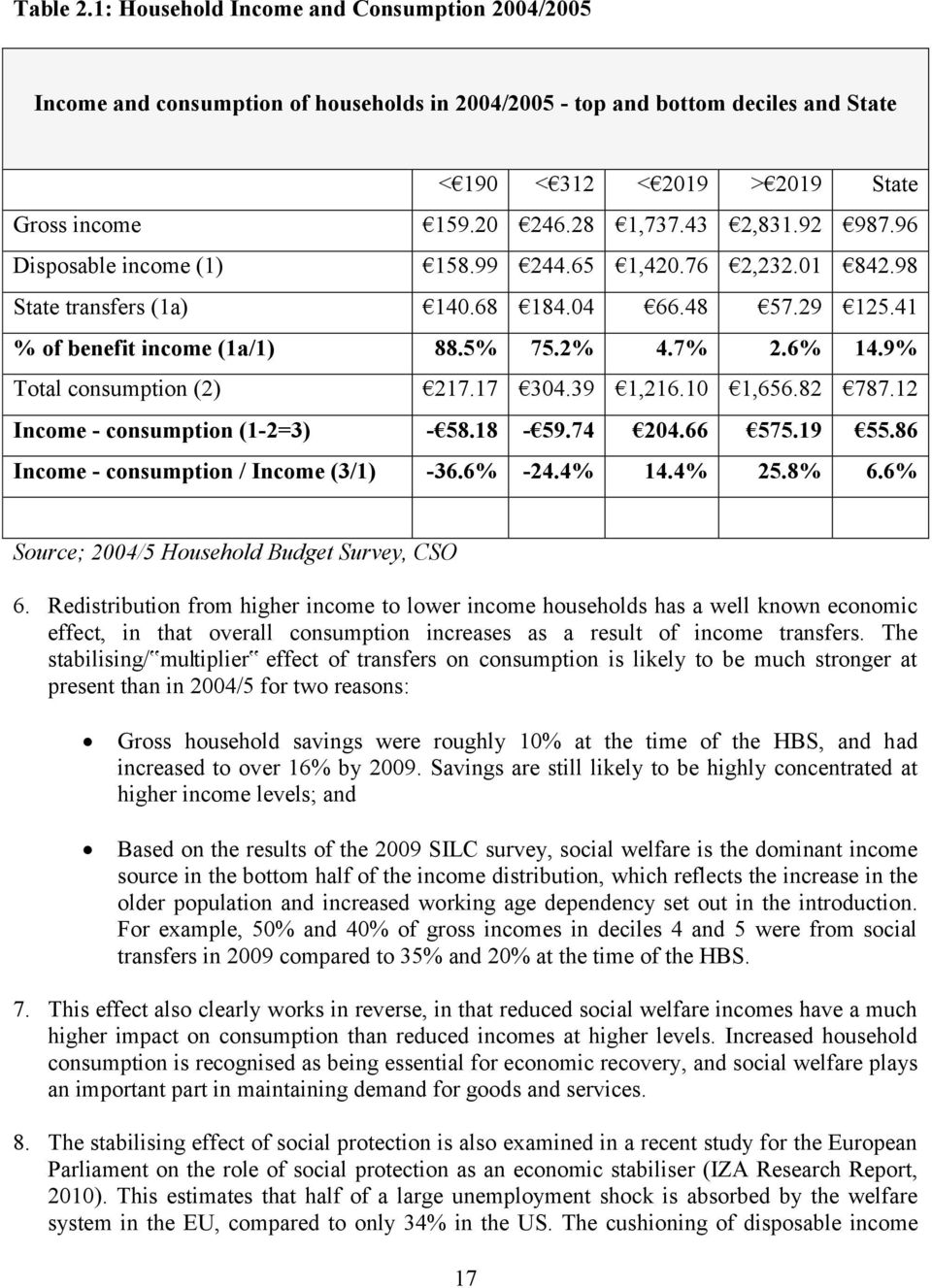
- 10 years ago
- Views:
Transcription
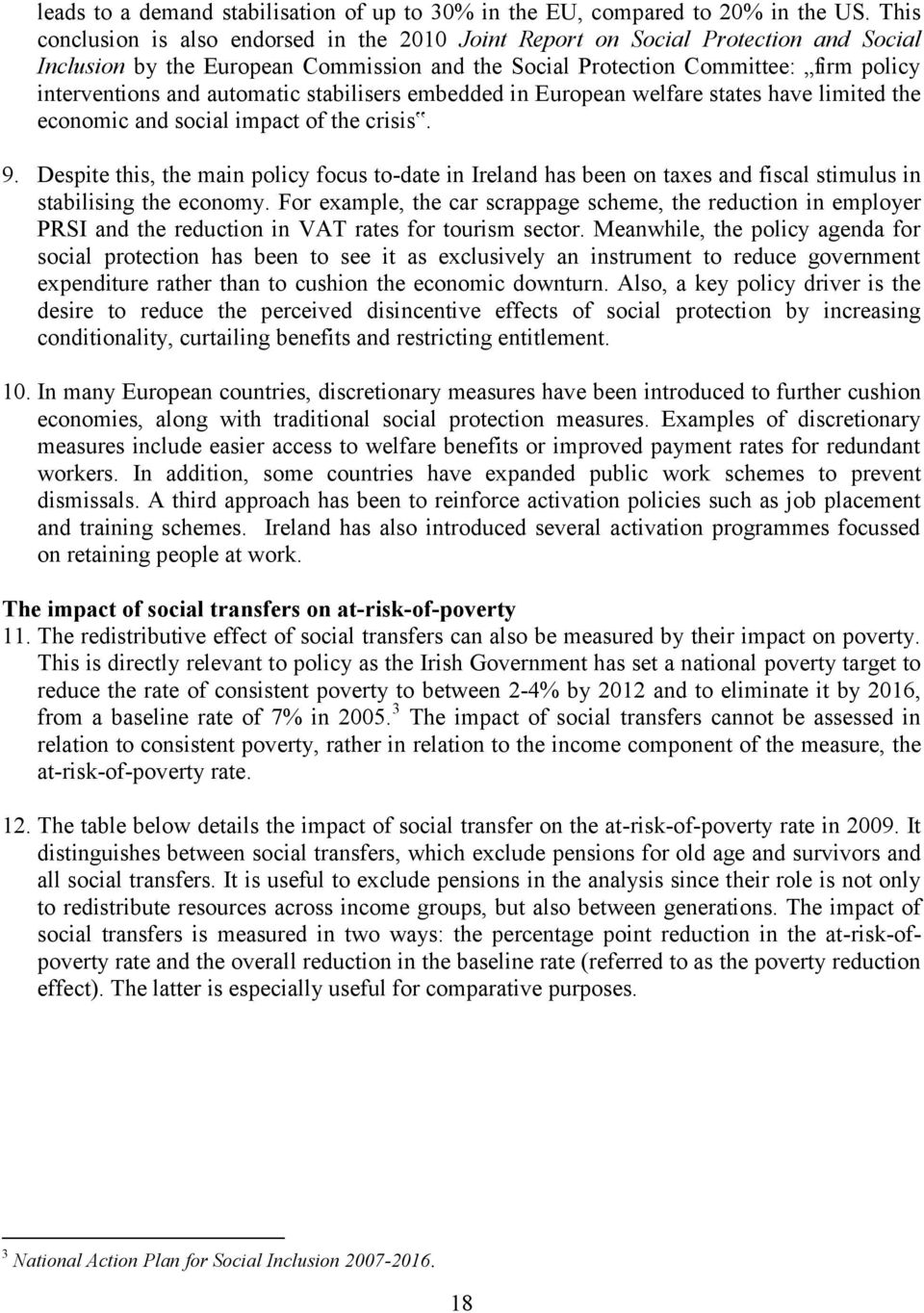
1 Comprehensive Review of Expenditure September 2011

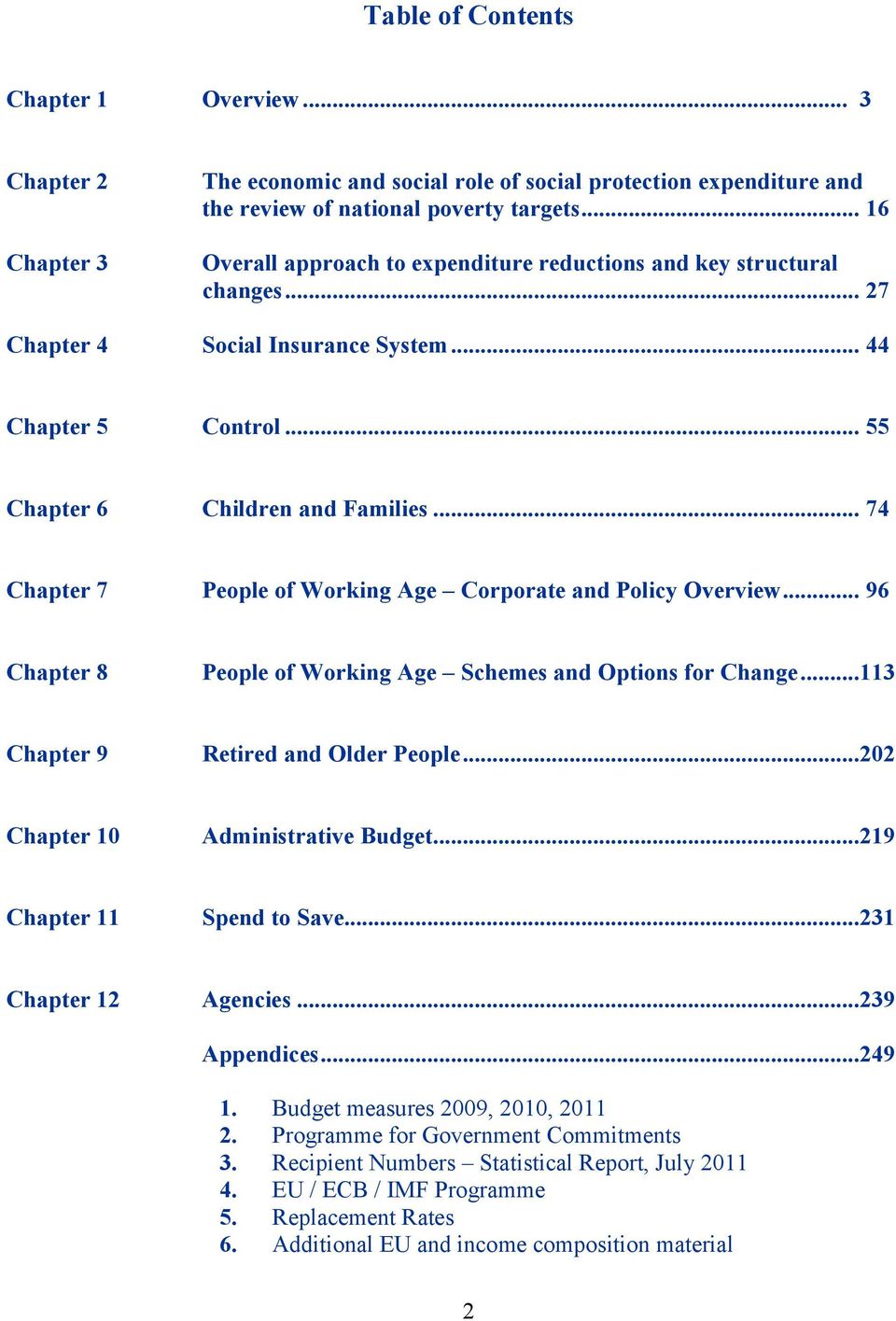
2 Table of Contents Chapter 1 Overview... 3 Chapter 2 Chapter 3 The economic and social role of social protection expenditure and the review of national poverty targets Overall approach to expenditure reductions and key structural changes Chapter 4 Social Insurance System Chapter 5 Control Chapter 6 Children and Families Chapter 7 People of Working Age Corporate and Policy Overview Chapter 8 People of Working Age Schemes and Options for Change Chapter 9 Retired and Older People Chapter 10 Administrative Budget Chapter 11 Spend to Save Chapter 12 Agencies Appendices Budget measures 2009, 2010, Programme for Government Commitments 3. Recipient Numbers Statistical Report, July EU / ECB / IMF Programme 5. Replacement Rates 6. Additional EU and income composition material 2
3 Chapter 1 Overview Introduction 1. The overall purpose of the Comprehensive Review of Expenditure is to assess the effectiveness and value for money of spending programmes across all Departments and Agencies and provide Government with a set of decision options, so it can: i. Meet overall fiscal consolidation objectives, both as regards spending and numbers reduction targets; ii. Re-align spending with the Programme for Government priorities; and iii. Consider new ways of achieving Government objectives in the context of public sector reform. 2. This Review represents the Department of Social Protection s (DSP) contribution to the overall Comprehensive Review of Expenditure. The Review is wide ranging given the scale and complexity of DSP expenditure, the key role it plays in the wider economy and its importance in any consideration of measures which will contribute to fiscal consolidation. A large number of options for changes in schemes and services have been identified by scheme (or blocks of schemes). These are not being advanced as the recommendations of the Department but as items which might be technically feasible within the parameters of given schemes or across schemes. However, options which are consistent with the sustainable structural reform of the system are specifically highlighted. The particular range of measures adopted is, of course, a matter of policy to be decided by Government. 3. The options set out in the report should be seen in the context of the very significant programme of change which has been and is ongoing in DSP, for example: Budgetary Changes 4. A series of changes to Social Welfare schemes have already been introduced in Budgets 2009, 2010 and 2011, for example: Budget 2009 halved the entitlement to Child Benefit for 18 year olds, introduced a new personal rate for Jobseeker claimants aged 18 and 19 years and limited the payment of Illness Benefit to two years duration, Budget 2010 and Budget 2011, respectively provided for a general reduction in weekly payment rates for all recipients aged under 66 (mainly per recipient over the two Budgets). Appendix 1 sets out full details of DSP Measures in Budgets 2009 to Organisational Transformation 5. The merger of DSP with FÁS and the Community Welfare Service is underway and will form a new organisation focusing, not only on income support but also helping clients, on a 3

4 case managed basis, to reduce their dependence on that support. This presents DSP with the opportunity to drive efficiencies, while at the same time building service capability. 6. This will underpin the development of new National Employment and Entitlements Service (NEES) announced by the Minister for Social Protection on 3 rd August 2011 (as provided for in the Programme for Government). The NEES will integrate the employment and benefit payment services within DSP thereby playing a vital role in re-building the economy. In this regard, DSP has also recently launched two new employment related schemes Tús and JobBridge the National Internship Scheme. 7. In 2011, DSP assumed administrative responsibility from the Department of Enterprise, Trade and Innovation (D/ETI) for the Redundancy and Insolvency Payments Scheme. 8. In 2010, DSP assumed responsibility from the Department of Community, Equality and Gaeltacht Affairs for the Rural Social Scheme and Community Services Programme. 9. DSP has responsibility for the Civil Registration Service which provides for the registrations of births, stillbirths, adoptions, deaths and marriages in the State and, from 2011, provides for the registration of civil partnerships. The service is managed by the General Register Office (GRO). 10. DSP is engaged in an ongoing programme of continuous improvement to enable the organisation to work more efficiently and effectively, provide an improved client service and maximise the capabilities of DSP staff. This involves the redesign of office systems, business processes, procedures and work practices and the introduction of new technology solutions. This positions DSP to better adapt to political priorities and changing client needs, and to improve productivity in the administration of welfare schemes and services. These initiatives will also enhance DSP systems for control of fraud and abuse and improve management and reporting capabilities. Policy Commitments 11. Policy commitments in the Programme for Government which are specifically relevant to DSP expenditure are listed in Appendix 2. The critical importance of introducing structural change generally is emphasised in Chapter 3. In particular, the Memorandum of Understanding with the EU/ECB/IMF Funding Group includes a specific commitment that DSP will build on its recent studies on working age payments, child income support and Disability Allowance with a view to producing a comprehensive programme of structured reforms that can help better targeting social support to those on lower incomes, and ensure that work pays for welfare recipients. 1 These issues are dealt with in more detail in Chapters 6 and 7. A progress report will be made by end December 2011 and a programme of reforms will be submitted to Government at the end of the first quarter of 2012, informed by the outcome of this Comprehensive Review of Expenditure. Overview of the Social Welfare System 1 The main commitments in the MOU are detailed in Appendix 4. 4
5 12. Ireland s social welfare system is: contingency based, delivered predominately through statutory schemes supplemented by some administrative schemes and funded very broadly 60:40 through general taxation and contributions to the Social Insurance Fund (SIF), (see Chapter 4 on the Social Insurance System). 13. In general, to qualify for a primary weekly social welfare payment a person must experience a defined contingency, such as unemployment or lone parenthood, and satisfy either a social insurance contribution requirement (for a PRSI based payment) or a means test (for payments funded through general taxation). 14. There is both an insurance-based and a means-tested payment in respect of many contingencies, including unemployment, widowhood, old age etc. The main exceptions to the contingency model are the Child Benefit scheme, which is virtually universal and Supplementary Welfare Allowance (SWA), which is a means tested general guarantee of minimum income not linked to any specific contingency. 15. In addition, the Household Benefits Package is available to all persons aged 70 and over, regardless of social welfare status or the composition of the household. Finally, the Respite Care Grant is payable to all persons providing full time care and attention without a means test or the necessity to be in receipt of a carer s weekly payment from DSP. Typical Payment Rates 16. The most typical social welfare payment rate is the 188 per week personal rate paid on most schemes to people of working age. For example, this is what the majority of people on the Live Register receive in Jobseeker s Benefit or Jobseeker s Allowance payments. It is also the most typical rate of payment issued to people on Disability Allowance, Blind Pension, One-Parent Family Payment, Illness Benefit, Farm Assist, Pre-Retirement Allowance and Widow s, Widower s or Surviving Civil Partner (Non Contributory) Pension. For most social welfare recipients, this comprises their total income from the social welfare system. 17. A wide variety of Employment Supports are operated by DSP, including the Community Employment Programme, Family Income Supplement, Farm Assist, Back to Work Allowance, Back to Work Enterprise Allowance and most recently the JobBridge scheme. See Chapter 8 for full details of all employment supports operated by DSP. 18. In a minority of cases, increases are paid in respect of a dependent adult (spouse or partner), typically per week, and/ or one or more dependent children at a payment rate of per week in respect of each child. Appendix 3 details the numbers of recipients, qualified adults and qualified children by scheme as at July Additional payments, sometimes known as secondary benefits, may also be paid in certain circumstances. These include Household Benefits, Fuel Allowance, Living Alone Allowance, Over 80 Allowance, Rent Supplement and Mortgage Interest Supplement. 5

6 19. A recurring theme in public debate is whether people on the Live Register have a financial incentive to work given the level of wages available in the economy and the level of social welfare payments made to people on the Register. The following information gives some background in that regard. Half (50%) of the people on the Live Register receive less than the maximum personal weekly rate: o 20% or 89,000 receive no payment o 15% or 70,000 receive payment for part of the week only o A further 15% or 70,000 others receive Jobseeker s Allowance or Jobseeker s Benefit of less than the maximum personal rate of People on the Live Register may also qualify for other payments, provided they meet the qualification conditions for those payments, notably Rent Supplement or Mortgage Interest Supplement however, these are a small minority of the totals on the Live Register: o 10% or 46,000 are getting Rent Supplement o 2% or 10,500 are getting Mortgage Interest Supplement 20. The great majority of people on the Live Register have a strong financial incentive to work and significant numbers leave the Register each month. Nonetheless, despite the cash support provided by schemes such as Family Income Supplement, some households perceive particular difficulties in moving off the Register e.g. families who receive Rent or Mortgage Interest Supplement in addition to their weekly Jobseeker s Allowance or Benefit. Replacement rates across a range of family situations are detailed in Appendix 5. Pressures on the Social Welfare System 21. The following charts demonstrate the increasing pressures on the Social Welfare system in terms of increasing demand resulting from the increased numbers of older people and children, and the significant increase in the percentage of the working population in receipt of a weekly primary Social Welfare payment. For example, the average weekly number of recipients of SPC/SPT is estimated to increase by circa 19,500 in 2012 over the projected out-turn for The resultant additional expenditure required is estimated at over 200 million. 6

7

8 Chart 1.3: Births registered by Year Key point; almost all children benefit from Child Benefit and approximately 41% are qualified children on a primary weekly welfare payment. Overview of the Department Scale of Business 22. DSP will spend over 20.6 billion on schemes, services and administration in 2011, accounting for almost 40% of gross current voted expenditure. Despite the increased number of people receiving social welfare payments, DSP expects spending in 2011 to be below the billion 2 spent in The high-level composition of this total is outlined in Tables 1.4 and 1.5 at the end of this Chapter. 23. Some 1.4 million people each week receive a social welfare payment and, when qualified adults and children are included, a total of almost 2.1 million people benefit from weekly payments. Over 600,000 families receive child benefit payments in respect of over 1.2 million children each month. The activities of DSP include: Operating some 72 separate schemes and services; Processing applications: over 2 million applications cleared in 2010; Undertaking control reviews, 935,000 in 2010; Dealing with over 6.5 million telephone calls in 2010; Making over 85 million payments in 2010; Processing applications for Personal Public Service Numbers for clients from some 140 countries and Processing employee PRSI returns (2.97 million in 2010) billion spent in 2010 includes expenditure on FÁS Employment and Integration supports and associated administration costs. 8

9 24. Service is provided from 11 headquarter buildings in Dublin, 9 decentralised offices, 63 Local Offices, 62 Branch Offices (operated by agents on a contract basis) and 61 other offices throughout the country. Statutory Agencies under the aegis of DSP 25. The Citizens Information Board is the national agency responsible for supporting the provision of information, advice and advocacy on social services and for the provision of the Money Advice and Budgeting Service (MABS) The Pensions Board is responsible for overseeing the implementation of the Pensions Act which concerns the regulation of occupational pensions and Personal Retirement Savings Accounts. The Board also advises the Minister in relation to pension policy The Office of the Pensions Ombudsman investigates complaints of financial losses, due to maladministration and disputes of fact or law, in relation to occupational pension schemes and Personal Retirement Savings Accounts. The Pensions Ombudsman is a statutory officer and exercises his functions independently In 2009, DSP integrated the Combat Poverty Agency and the Office for Social Inclusion integrate to form a new Division which has overall responsibility for advising Government on the strategies for social inclusion, and for supporting their implementation. 29. In 2010, the Government reassigned responsibility for the Family Support Agency from DSP to the Department of Community, Equality and Gaeltacht Affairs. Service Delivery 30. Most social welfare payments are delivered directly by DSP. DSP pays agency fees to An Post, in respect of the outsourcing of payment provision at Post Offices, and to the Revenue Commissioners, in respect of the insourcing of collection of the PRSI contributions. 31. The payment of 85 million payments per year is underpinned by DSP s Information Communications Technology (ICT) system which is one of the largest ICT operations in Ireland. 32. The administrative effort undertaken by DSP s staff in carrying out the range of day to day activities set out above is very significant. The majority of that effort is associated with: Processing claims for new clients; Administering schemes which have a high level of churn whereby claimants leave and re enter the scheme (e.g. some workers in the education sector move on and off the Live Register on a number of occasions each year); Maintaining the claimload (claims in payment) for each scheme (e.g. changing client information, managing overpayments, signing clients on the Live Register and reviewing claims); and providing a robust and dynamic information service 9

10 33. DSP s broad-ranging and comprehensive control strategy which aims to minimise fraud and eliminate incorrect payments also requires a very significant administrative effort. Options for Change set out in this report Scaling Back Expenditure on Schemes 34. The types of changes that could be considered tend to fall into a number of categories, including in no particular order of priority: Reductions in the rates of payment. Tightening the eligibility criteria for a scheme such as more stringent social insurance contribution requirements; The introduction of means testing in relation to social insurance based payments; Changes to the means testing arrangements for social assistance payments; Adjustments to allowances other than primary payments, such as the Household Benefits Scheme and Fuel Allowance; A range of changes specific to a particular scheme or groups of schemes. 35. It should be noted that some of the options identified in this Review are mutually exclusive while others interact with each other (often in a complex way). Accordingly, where a number of options are shown in respect of a given scheme, the cumulative savings may not be the sum of the savings shown for each individual measure. Finally, some options may conflict with wider Government policies e.g. to promote employment, education or training. It should be noted that any savings identified in this Review may require revision following the finalisation of the Departmental Existing Level of Service Estimates for Abolishing Schemes 36. Consideration was also given to the possible abolition of schemes. This is, in general, quite a complicated issue for a range of reasons, including, in no particular order of priority: The role of most weekly schemes in providing weekly income maintenance to persons who have no or very little income, the poverty impact of same and the economic stabiliser effect is dealt with in detail in Chapter 2; The underlying and long standing social insurance principle that, on foot of payment of contributions by employees/employers, protection is provided on a non-means tested basis if and when a range of contingencies occur e.g. illness or unemployment; In the event of the abolition of a given social insurance payment, persons would have access to a social assistance payment for the equivalent contingency, e.g. Jobseeker s Allowance in the case of unemployment. While not all would qualify due to means testing, many would; thereby reducing the overall savings quite significantly; Greater reliance on means testing would have significant administrative resource implications, particularly in the context of high unemployment levels; and In the event of the abolition of a social assistance payment, it is probable that all potential recipients of the given scheme would qualify under another contingency or for Supplementary Welfare Allowance (SWA). Savings, accordingly, are likely to be very limited. 10

11 37. Other options include the merging of schemes or adjustment of the range of application of certain schemes, for example by merging Blind Pension with Disability Allowance or by the introduction of a Single Working Age payment. Public Submissions 38. The Minister for Public Expenditure & Reform initiated a public consultation process to provide input into the Comprehensive Review of Expenditure. Members of the public were invited to submit proposals for potential savings, reform and efficiencies in the delivery of public services. Proposals in relation to DSP schemes and services were considered by the respective scheme and policy areas in the department as part of this Review process. Cross Cutting Issues 39. The already wide ranging responsibilities of DSP mean that any changes to programmes operated by other Government Departments may impact on DSP. DSP is committed to working with other Departments to explore cross cutting issues in particular to ensure that where any transfer of functions is involved, savings identified in one area take account of costs incurred in the other. Examples of these issues are: Procurement policy; Implementation of shared services / outsourcing; Implementation of egovernment; Coordination / synergies the area of debt collection; Centralised identity management; Assessment of means for public service purposes; Subsidised publicly provided transport; Regional structures and services delivery; Examination of agency funding multiple exchequer sources grant shopping ; Social housing supports (including tax-related); and Identification and elimination of disincentives to labour activation. 40. It is important to note that any savings arising in one Department / Agency from transferring a specific function will likely be offset by the costs incurred by the Department into which the function transfers. Consideration of DSP taking on additional functions should be mindful of the transformation programme already underway to fully integrate a large number of programmes and schemes which transferred to DSP in 2010 and Specifically, the NEES will integrate the provision of employment services and benefit payment services within DSP and in so doing to ensure that the payment of income supports to people who do not have a job is directly linked to the equally, if not more important, task of supporting people in their pursuit of employment and related opportunities and improving their life chances. 41. Managing the change process required to develop the NEES, in such a manner so as to maintain the continuity of existing services while building new service capability, will present a key challenge to DSP management and staff involved in implementing the change process and will require additional administrative resources in order to fully realise the synergies to be derived from merging three streams into an entirely new service. 11

12 42. There is also a range of cross cutting issues for which DSP would have primary responsibility and which are or will be addressed in this report, including the Cross Cutting Issues provided by DSP to the Department of Public Expenditure and Reform (DPER), namely: i. Payment to carers; ii. iii. iv. Rent and Mortgage Interest Supplement; Fuel Allowance; and Means testing arrangements. Deliverability of Change 43. The deliverability of changes is critical, both in terms of the legislative and logistic requirements and public acceptability generally. The withdrawal of payments from individuals and households that are currently receiving payments may be perceived as unfair even by those who accept the necessity for a policy change in that the change may involve a very significant reduction in income for affected persons. For example, a discontinuation of entitlement to a half-rate illness or jobseeker s payment (payable at the moment in conjunction with another full rate payment) which applied to persons already benefiting from this arrangement would mean a weekly loss of up to 94 per week for up to 12 months. 44. Applying changes to new entrants only reduces the savings in the period immediately after implementation. The proportion of claims eventually affected, and the length of time that elapses before they are affected, varies considerably from scheme to scheme. Some schemes e.g. pensions and disability related schemes, have a relatively low level of turnover. On the other hand, there is a considerable level of churn in many schemes and consequently, rules affecting new entrants only will affect most or all recipients within a reasonable period. This is particularly so in schemes with prescribed end points (such as Jobseeker s Benefit, Illness Benefit and most obviously Maternity Benefit) but is also true in schemes with no prescribed end points, such as Jobseeker s Allowance, Supplementary Welfare Allowance and Rent Supplement. However, of critical importance in this regard is the definition of what constitutes a new entrant. The implications of applying changes to new entrants only is further discussed in Chapter 3 in the context of introductory new lower rates of payment for new entrants. 45. However, the saving or preservation of existing levels of entitlement for existing recipients in the latter type schemes means that, effectively, two different sub-schemes would exist often for a considerable period. This is undesirable from an administrative and equity point of view and therefore, consideration should be given to prescribing an end-date (or sunset clause) for any interim arrangements that preserve the entitlements of existing recipients. In addition, changes that are difficult to implement for logistics reasons, however, apparently desirable from a policy or other perspective, will simply not deliver savings in the short term. 12

13 Format of this Report 46. This Review has examined the scope for change both in individual schemes, grouped by Programme, and in relation to issues which transcend individual schemes and Programmes. With regard to the latter, Chapter 2 deals with the economic and social role of social protection expenditure. 47. Chapter 3 sets out the broad principles which should underpin the review of DSP expenditure and the development of options to curtail such expenditure. It also deals with a number of specific issues which transcend individual schemes such as: Changes in rates of payment; Taxation and/or income testing of payments not currently subject to either (mainly Child Benefit, but other possibilities also including the taxation of the Illness Benefit and Jobseeker s Benefit where such does not currently apply); Concurrent receipt of more than one primary payment e.g. half-rate Carer s Allowance, half-rate Jobseeker s Benefit or Illness Benefit paid with One-Parent Family Payment or Widow/er s payments; The payment of Family Income Supplement concurrently with some primary welfare payments as well as the concurrent entitlement to some primary welfare payments for persons in receipt of schemes operated by other bodies such as the Community Employment scheme; Means testing issues; and Non primary (secondary) payments e.g. Household Benefits, Rent Supplement, Fuel Allowance, Treatment Benefits, Respite Care Grant and Bereavement Grant. 48. PRSI and the Social Insurance Fund are dealt with in Chapter Issues relating to the control of fraud and abuse are dealt with in Chapter Issues relating to the child income support Programme are dealt with in Chapter Issues relating to Working Age schemes policy are dealt with in Chapter Chapter 8 describes Working Age schemes and puts forward possible options for change. This comprises the majority of DSP s schemes. This Working Age programme is divided into sub-programmes to facilitate consideration of the range of issues arising in this complex and diverse programme. 53. Issues relating to supports for retired and older people are dealt with in Chapter Issues relating to administrative expenditure are dealt with in Chapter Spend to Save options are outlined in Chapter The Department s agencies are considered in Chapter
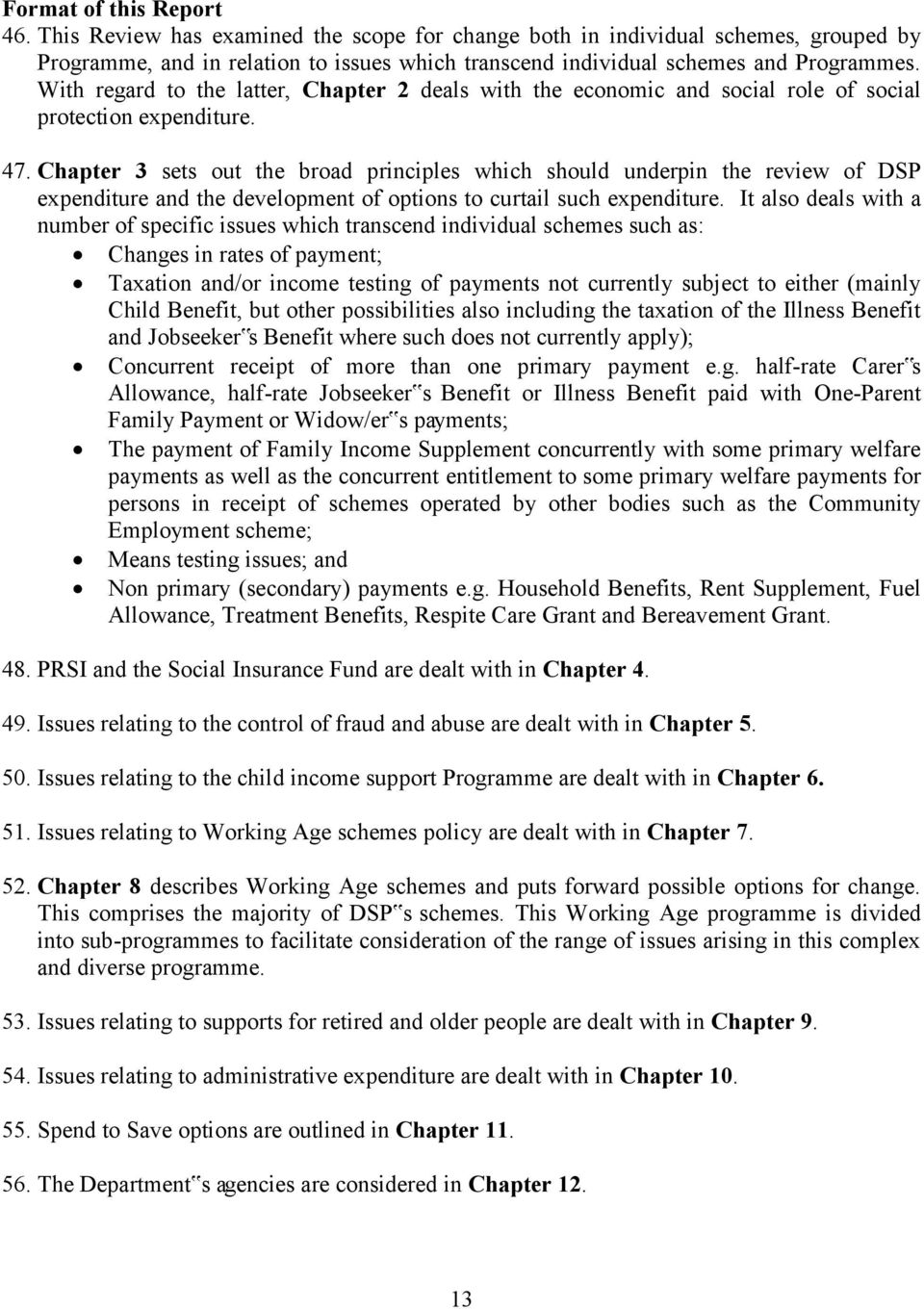
14 Table 1.4: Gross expenditure for Vote 38 and Social Insurance Fund % change Provisional REV Estimate on 2010 Provisional Outturn million Outturn million Gross Vote 38 expenditure 13, , % Less Social Insurance Fund (SIF) transfers: Subvention to SIF 1, , % -.0.5% Administration expenses recovered from SIF Adjusted Vote 38 expenditure 11, , % Social Insurance Fund Expenditure 9, , % Total DSP Gross Expenditure 21, , % Appropriations in Aid % (other than DSP Social Insurance Fund Admin) Net DSP Expenditure 21, , % Of which Exchequer Pay % No of public service employees included in Exchequer pay above. (full time equivalent number) - Department 4,949 - Agencies 86 14
15 Table 1.5: Breakdown of Gross Expenditure by Programme. Programme Name % change Provisional REV in 2011 on Outturn Estimate 2010 million million outturn 2011 % of overall DSP Gross Expenditure 1. Children 3, , % 14.9% 2. People of working age 12, , % 54.8% 3. Retired and older people 6, , % 29.5% 4. Customer Information Management % 0.1% 5. Operational Capabilities % 0.7% Gross DSP Expenditure 21, , % 100% 15

16 Chapter 2 The economic and social role of social protection expenditure and the review of national poverty targets Introduction 1. Social protection, along with the tax system, plays a key role in redistributing resources between income groups and over the lifecycle The design of social transfers is crucial in determining the way, and the extent to which, income inequalities are moderated and resources are distributed to those in poverty. Important features include the composition of social transfers and the degree of targeting. This role is intensified during a period of economic recession, when social transfers help to cushion households against the effects of unemployment and falling incomes. 2. Accordingly, the necessity to reduce overall Government current expenditure must be balanced against the primary redistributive role of the social protection system. While DSP is being transformed into a new organisation focused on helping clients to reduce dependence on income support, it has to be recognised that, in the short to medium term, the income supports provided will play a crucial role in the lives of clients and in helping to partially offset the effect of the downturn on the wider economy. In this regard, the options chosen to reduce overall expenditure will need to be carefully balanced having regard to any potential poverty impacts and the effect on demand in the wider economy. While there are a wide range of options to reduce social protection expenditure, choosing specific policy instruments to achieve that balance presents particular challenges. 3. This chapter begins by examining the role of social protection in stabilising the social and economic impacts of the economic crisis. It then reviews recent poverty trends and progress towards the national poverty target. Finally, it examines the role of social transfers: In reducing income inequality and the differing performance of the components of social transfers in this regard; and In reducing poverty risks, and in a comparative context and over time; The stabilising effect of social protection 4. The economic crisis has had a major impact on disposable household incomes and on private consumption. This is especially evident through the reduction in consumer demand across all sectors of the economy, thereby creating knock-on effects in terms of higher unemployment and reduced government revenue. In this context, expenditure on social protection can play an important role in stabilising the economy by supporting the overall demand for goods and services in the domestic economy. In turn, this supporting role can contribute to mitigating the societal consequences of the recession. 5. The last Household Budget Survey (2004/5) shows that consumption of low income households exceeds income received, while higher income households have an excess of income over disposable income and thus save any remaining balance; 16

17 Table 2.1: Household Income and Consumption 2004/2005 Income and consumption of households in 2004/ top and bottom deciles and State < 190 < 312 < 2019 > 2019 State Gross income , , Disposable income (1) , , State transfers (1a) % of benefit income (1a/1) 88.5% 75.2% 4.7% 2.6% 14.9% Total consumption (2) , , Income - consumption (1-2=3) Income - consumption / Income (3/1) -36.6% -24.4% 14.4% 25.8% 6.6% Source; 2004/5 Household Budget Survey, CSO 6. Redistribution from higher income to lower income households has a well known economic effect, in that overall consumption increases as a result of income transfers. The stabilising/ multiplier effect of transfers on consumption is likely to be much stronger at present than in 2004/5 for two reasons: Gross household savings were roughly 10% at the time of the HBS, and had increased to over 16% by Savings are still likely to be highly concentrated at higher income levels; and Based on the results of the 2009 SILC survey, social welfare is the dominant income source in the bottom half of the income distribution, which reflects the increase in the older population and increased working age dependency set out in the introduction. For example, 50% and 40% of gross incomes in deciles 4 and 5 were from social transfers in 2009 compared to 35% and 20% at the time of the HBS. 7. This effect also clearly works in reverse, in that reduced social welfare incomes have a much higher impact on consumption than reduced incomes at higher levels. Increased household consumption is recognised as being essential for economic recovery, and social welfare plays an important part in maintaining demand for goods and services. 8. The stabilising effect of social protection is also examined in a recent study for the European Parliament on the role of social protection as an economic stabiliser (IZA Research Report, 2010). This estimates that half of a large unemployment shock is absorbed by the welfare system in the EU, compared to only 34% in the US. The cushioning of disposable income 17
18 leads to a demand stabilisation of up to 30% in the EU, compared to 20% in the US. This conclusion is also endorsed in the 2010 Joint Report on Social Protection and Social Inclusion by the European Commission and the Social Protection Committee: firm policy interventions and automatic stabilisers embedded in European welfare states have limited the economic and social impact of the crisis. 9. Despite this, the main policy focus to-date in Ireland has been on taxes and fiscal stimulus in stabilising the economy. For example, the car scrappage scheme, the reduction in employer PRSI and the reduction in VAT rates for tourism sector. Meanwhile, the policy agenda for social protection has been to see it as exclusively an instrument to reduce government expenditure rather than to cushion the economic downturn. Also, a key policy driver is the desire to reduce the perceived disincentive effects of social protection by increasing conditionality, curtailing benefits and restricting entitlement. 10. In many European countries, discretionary measures have been introduced to further cushion economies, along with traditional social protection measures. Examples of discretionary measures include easier access to welfare benefits or improved payment rates for redundant workers. In addition, some countries have expanded public work schemes to prevent dismissals. A third approach has been to reinforce activation policies such as job placement and training schemes. Ireland has also introduced several activation programmes focussed on retaining people at work. The impact of social transfers on at-risk-of-poverty 11. The redistributive effect of social transfers can also be measured by their impact on poverty. This is directly relevant to policy as the Irish Government has set a national poverty target to reduce the rate of consistent poverty to between 2-4% by 2012 and to eliminate it by 2016, from a baseline rate of 7% in The impact of social transfers cannot be assessed in relation to consistent poverty, rather in relation to the income component of the measure, the at-risk-of-poverty rate. 12. The table below details the impact of social transfer on the at-risk-of-poverty rate in It distinguishes between social transfers, which exclude pensions for old age and survivors and all social transfers. It is useful to exclude pensions in the analysis since their role is not only to redistribute resources across income groups, but also between generations. The impact of social transfers is measured in two ways: the percentage point reduction in the at-risk-ofpoverty rate and the overall reduction in the baseline rate (referred to as the poverty reduction effect). The latter is especially useful for comparative purposes. 3 National Action Plan for Social Inclusion
19 Table 2.2: Impact of social transfers on at-risk-of-poverty (ARoP) rate, 2009 (SILC 2009) ARoP rate excluding all STs % ARoP rate including pensions & excluding all other STs, % ARoP rate including all STs % Poverty reduction effect of STs (including pensions) % Poverty reduction effect of STs (excluding pensions) % Total population Children Working age Older people For the whole population, the at-risk-of-poverty rate is reduced from 46.2% (excluding all social transfers) and from 36% (including pensions) to 14.1%. This is a reduction of 32 percentage points including pensions and 22 percentage points excluding pensions. In relative terms, the poverty reduction of social transfers in the state is 69% (with pensions) and 61% (excluding pensions). 14. For children, the at-risk-of-poverty rate is reduced from 47.3%/46.2% to 18.6%, a reduction of percentage points. The poverty reduction of social transfers is thus around 60 per cent, with or without pensions. The at-risk-of-poverty rate for working age people is reduced by between 25 and 21 percentage points, giving a poverty reduction effect of 69% with pensions and 62% without. 15. For older people, the at-risk-of-poverty rate falls from 88% (without pensions) to 9.6% and from 21.7% with pensions to 9.6%. The poverty reduction effect of all social transfers for older people is 89%, or 56% excluding pensions. The evolution of the poverty reduction effect of social transfers The trends in the poverty reduction effect of social transfers between 2001 and 2009 are charted below. This coincides with the significant welfare improvements delivered between 2002 and 2007 under Building an Inclusive Society and the more modest increases in 2008 and 2009 under the National Action Plan for Social Inclusion. 17. In 2001, the poverty reduction effect of social transfers (excluding pensions) was 26%. By 2007, this had increased to 50% and by 2009 had reached 61%. The latter period shows in particular the important role that the welfare system played in cushioning the effect of rising unemployment and falling incomes (as reflected in the underlying increase in the at-risk-ofpoverty rate before social transfers (excluding pensions) in these two years (from 33 to 36%). 19

20

21
22 21. The EU has recently adopted the combination of three indicators to identify the population at risk of poverty and exclusion, for the purposes of setting the EU poverty target in the Europe 2020 Strategy (these are at-risk-of-poverty, material deprivation, and low-work intensity). Ireland has adopted the EU convention of combining its national indicators of poverty for the purposes of the EU target. Both sets of indicators identify the same proportion of the population - 26% - as being at risk of poverty and exclusion. There are some compositional differences between the two sets of indicators. More details on comparisons of the Irish and EU poverty measures are given in Appendix 6. Poverty, lifecycle groups and vulnerable households 22. The consistent poverty rate and the share of the poverty population for lifecycle groups and vulnerable households are set out in Table 2.6. This shows that, among lifecycle groups, children face the highest rate of consistent poverty at 8.7%, 1.6 times the norm. In addition, children represent a large share (42%) of the population in consistent poverty. Of added significance are the negative effects of poverty on childhood development and their legacy into adulthood. The general poverty rate for people of working age is lower than the norm. There are nonetheless two working age groups with higher poverty rates: the unemployed at 11.5% and the disabled unemployed, at 8.8%. Collectively, the unemployed account for almost a quarter of those in consistent poverty. In general, people with a disability have a poverty rate in proportion t with the overall population. Finally, the poverty rate of older people is the lowest at 1.1%, and represents just 2% of the total population. Table 2.6: Consistent poverty rates and poverty share for lifecycle groups and vulnerable households (2009) 4 Poverty Rate % Share of poverty population 5 % Group Rate relative to average Children People of working age unemployed disabled unemployed Older people People with disabilities n/a One- parent families Jobless households Households in social rented housing The poverty rates for categories such as women, minority ethnic groups, the working poor and the regions were also examined, but show less evidence of higher poverty risk. However, there is a link between the high poverty risk for lone parents and that for female-head households. 5 There is an overlap between the household categories, ie lone parents are often jobless households, while lone parents and jobless households frequently live in social rented housing. 6 This is an ad hoc indicator based on people aged 16 and over who self-report a chronic illness or health problem. This does not refer to a discrete section of the population, but overlaps with the three age categories. 22
23 23. Beyond the lifecycle groups, there are households with high rates of consistent poverty due to multiple disadvantages across the lifecycle, including parenting alone, having child dependents, being excluded from the labour market, and reliance on public housing. Lone parent families have a consistent poverty rate of over 16%, three times the norm. Such families account for one fifth of all those in consistent poverty, including half of all children in poverty. Similarly, jobless households are almost three times more likely to be in consistent poverty. Such households account for the vast majority (three-quarters) of all those in consistent poverty. 7 Living in social rented housing is also associated with a high poverty risk, and represents half of those in poverty. Recent Poverty Trends 24. How the national poverty indicators have performed over time is shown in Diagram 2.7. The individual indicators have performed quite differently in the period At-risk-ofpoverty decreased over time from 20% to 14%, a relative fall of 28%, Material deprivation rose over the period from 15% to 17%, a relative increase of 12%. Consistent poverty declined from 8% to 5.5%, a decline of one third, a decline of a third over time. The aggregate poverty population changed only marginally from 27% to 26%. 25. Within these overall trends, 2007 and 2008 were the lowest points for three of the four indicators. Another trend to note is that material deprivation is higher than at-risk-of-poverty since The recent rise in material deprivation is further reflected in the increase in consistent poverty in Diagram 2.7: Trends in poverty using national indicators, at-risk-of-poverty consistent poverty material deprivation combination % 13% - 28% - 33% Source: SILC Progress towards the National Poverty Target 26. The national poverty target in the National Action Plan for Social Inclusion is to reduce the rate of consistent poverty to between 2-4% by 2012 and to eliminate it by 2016, 7 The problem of jobless households correlates with Ireland s high rate of low-work intensity (20%). 23
24 from a baseline rate of 7% in The new Programme for Government contains the objective to eliminate poverty and to achieve the national poverty targets in the National Action Plan for Social Inclusion. Progress on the national poverty target is outlined in Diagram 2.8. This shows that the consistent poverty rate fell continuously from the baseline rate of 7% to 4.2% by 2008, which was just outside the interim poverty target range of 2-4%. Indeed the poverty rate for older people was well within the range (1%). However, in 2009, the poverty rate climbed to 5.5%, which was a return to the previous 2007 figure. This leaves a gap of 1.5 percentage points to be bridged by 2012 if the higher range in the interim target is to be achieved. (One interpretation of the 2012 interim target would be to use 2010 data, which only leaves one year for the 2009 figure to fall by 1.5%.) Diagram 2.8: Progress towards the national poverty target, interim target 2-4% Final target 0% Source: SILC 27. The Government has also set out a national poverty target as part of the National Reform Programme for Europe Taking the 2008 consistent poverty rate of 4.2% as the baseline year, the numerical expression of the national poverty target is to lift 186,000 people out of the risk of poverty and exclusion by Underpinning the national poverty target is the policy of ensuring that the incomes of the poorest families are protected as much as possible during the economic recession and that these families are enabled to benefit from the economic recovery and growth in employment when it arrives. The proposed trajectory for this target and the actual 2009 figure is set out in Diagram The challenge of meeting the national poverty target is considerable, as indicated by the rise in the consistent poverty rate to 245,000 in 2009 and it is possible that the rate may even be higher in The timescale for achieving the poverty target will be influenced by the pace at which economic and employment growth returns to the Irish economy. It is envisaged that in the early years fewer people may be lifted out of poverty or indeed the numbers may increase due to the effects of the economic recession and the implementation of the National 8 The numerical figure is based on the Central Statistics Office estimate of the national population in 2008 (4,422,100). 24
25
26 59. Effectiveness / Social Impact: The risk of poverty has fallen dramatically in Ireland over the last decade, especially for older people. The recent increase in consistent poverty suggests that Ireland is entering a new phase of social impacts, where increasing numbers on welfare are struggling with basic needs, and this has implications for achieving national targets; 60. Risk Groups: Families with children (especially lone parents) and unemployed/jobless households are relatively high risk groups based on consistent poverty, while older people are now a low risk group. 26
27 Chapter 3 Overall approach to expenditure reductions and key structural changes Introduction 1. The social welfare system is complex and is influenced by policy objectives and other factors which transcend individual schemes. The most obvious of these is, of course, the levels of income support weekly rates of payment. The broad principles which should underpin the review of DSP expenditure and the development of options to curtail such expenditure are first outlined. The two main approaches to achieving savings are then detailed. This chapter then goes on to identify the principal structural changes required to ensure a targeted and sustainable social welfare system in the years ahead. Finally, this chapter reviews a range of options which are consistent with the overall structural changes identified. 2. The overall objective underpinning this Review, and in considering Budgetary policy over the years ahead, should be: The refocusing of the corporate structure and activities towards reducing long-term dependence on welfare payments through substantially more intensive interaction with individual clients with the goal of higher employment and participation levels; The introduction of significant structural reform, along the lines proposed in the Value for Money Reviews published in November 2010, in order to facilitate the move from welfare to work; To ensure an adequate and sustainable welfare system in the years ahead, particularly having regard to the challenges faced by demographic pressures; To reduce the complexity of the system in order to simplify it for both clients and staff, particularly in the context of scarce and reducing administrative resources; To ensure that the resources available to DSP in 2012 and later years are directed towards providing targeted support to those who are most at risk of poverty; To ensure that payments are delivered only to those with an underlying entitlement, in the most efficient and effective manner; To maintain, as far as possible, a sustainable social insurance system, based on paid PRSI contributions with an appropriate level of entitlements in due course based on these contributions; and To ensure that any measures adopted should be consistent with the medium to longer term development of the social welfare system or, at a minimum, should not make such progress more difficult. 27
28 3. These objectives can be achieved through: i. Concentrating available resources towards the maintenance of primary weekly and monthly income support; ii. iii. iv. Major structural reform of the schemes and services operated by DSP, including a critical examination of the continuation of entitlement to more than one primary payment as well as the levels of other supplementary payments and benefits in kind; Other structural changes to welfare schemes, such as the relatively generous disregards which apply to certain schemes, contribution conditions for some social insurance payments and arrangements relating to late claims; Ensuring that all Budgetary changes have regard to the cross-cutting impact of the totality of all measures, including taxation and other non-dsp changes, on individuals and families; and v. Delivering the transformation programme and, in particular, operationalising the NEES (outlined in detail in Chapter 7). Delivering Expenditure Reductions 4. The level of the overall DSP expenditure reduction required in 2012 is likely to be very significant. There are two main approaches towards delivering such savings. The first is to reduce weekly and monthly rates of payment while the second is to dramatically reduce (or discontinue entirely) the level of expenditure on supplementary benefits e.g. the Household Benefits Package. Primary Rates of Payment 5. The Programme for Government contains a commitment to maintain welfare rates. The priority, therefore, should be to avoid reducing primary rates of payment and achieve any savings required through structural reform. However, if it becomes necessary to consider some level of reduction in primary rates of payment, such an approach should have regard to: i. Movements in price inflation 10 ; ii. Current rates of payment for different groups of recipients; iii. The potential impact of any change on poverty levels; iv. The role of welfare payments in stabilising the social and economic effects of the downturn; and v. The cumulative impact on recipients who experienced reductions in the level of their primary payments (and Child Benefit, if applicable) in Budgets 2010 and The Consumer Price Index increased by 2.2% over the 12 months to end August
29 6. It is considered more equitable to reduce all payment levels across the board rather than exclude certain groups and, in particular, those groups in receipt of higher levels of payment and those with lower poverty levels. Such an approach will reduce the impact across individual recipients generally, including the most vulnerable. In this regard, it should be noted that the main personal rate of Jobseeker s Benefit ( 188 per week) is equivalent to 81.6% of the maximum rate of State Pension Contributory (SPC) ( per week), a monetary gap of per week. This compares to 2007 when the lowest rate of payment e.g. Disability Allowance, Jobseeker s Benefit etc. was equivalent to almost 90% of the SPC rate. The current differential means that, for example, a person on a long term social welfare payment, such as Disability Allowance, can receive an increase of per week on reaching pension age (an increase of 22.5%) even though there has been no material change in their circumstances. While it is appropriate that there should be a differential between pension and working age rates of payment, it is difficult to justify widening the current differential. 7. Any reductions in rates would, of course, have a negative impact on the households affected. In this regard, it is considered important that poverty impact analyses of the combined effect of potential major welfare and tax packages be carried out prior to the Budget in order to better inform the Government s consideration of possible alternative approaches. 8. The table below sets out the cost of changing primary weekly payments. Up to now, Budget increases or decreases in personal payment rates have been matched by broadly proportionate increases or decreases in payments in respect of dependent adults, which generally are paid at roughly 66% of the value of the relevant full personal rate Changing rates of payment is administratively simple and deliverable almost immediately, thereby quickly realising savings. However, this approach is crude in nature, perpetuates inherent inequities and fails in delivering a more effective sustainable model that can only be achieved through fundamental structural reforms. 11 The rate of the Qualified Adult Increase paid for persons aged 66 or over with the State Pension Contributory / Transition is equivalent to 90% of the personal rate of payment. 29
30 Table 3.1: Cost / Saving of 1 per week change in main rates of payment Change of 1 per week in Weekly Rate of Payment 12 Cost/Saving Full Year Personal Rate of Payment 66 and Over 23.9 Qualified Adult Rate of Payment 66 and over Proportionate 3.0 Decrease Personal Rate of Payment under Qualified Adult Rate of Payment under 66 Proportionate 4.0 Decrease Total Personal and QA Rates 73.7 Qualified Child Increase (QCI) 21.0 Living Alone Allowance 9.3 Over 80 Allowance 6.8 National Fuel Scheme 11.0 Child Benefit ( 1 per month) 13.8 Non-Primary Payments 10. The alternative approach to achieving expenditure reductions in 2012 is to curtail a number of supplementary cash benefits or benefits in kind. If the level of expenditure reduction is significant, this will involve the complete abolition of certain benefits, deep reductions in others and a significant financial effect on certain groups of recipients. A very wide range of measures would be required. On a purely illustrative basis, a package along these lines would include measures such as: i. The abolition of the Free Travel and Free TV Licence schemes ( 136 million); ii. iii. iv. The abolition of the Bereavement Grant ( 13 million); The abolition of the Half-Rate Carer s Allowance scheme for existing and new recipients ( 95 million); The abolition of Half Rate Jobseeker s and Illness Benefits for existing and new recipients (mainly widow/ers and lone parents) ( 23 million); v. Removal of entitlement to concurrent receipt of DCA and any other welfare payment ( 50 million); 12 If rates of primary payments are reduced, there are additional savings from knock-on reductions in CE, RSS, Tús, JobBridge and similar type schemes. 30
31 vi. vii. viii. ix. Reduction in BTSCFA higher rate (for children aged 11 and over) to the Lower rate ( 12 million); Abolition of the Widowed Parent Grant ( 6 million); Abolition of special grants payable in respect of twins and other multiple births ( 4 million); An increase the minimum number of hours worked for entitlement to FIS, from 19 to 24 ( 33 million); x. Rationalisation of earnings disregards for home helps ( 5 million); and xi. Increasing the minimum contribution for Rent and Mortgage Interest Supplement by 5 per week ( 30 million). This package would save approximately 407 million in In the main, persons affected by the illustrative measures outlined above will also be in receipt of a primary rate of payment which would be fully protected under this approach. However, the benefits outlined above which would be discontinued or reduced are regarded by recipients as an integral part of their current income support package. Structural Reform 11. The social welfare system has developed on an incremental basis over the years. While the system has been continuously improved, many of these improvements have been on an adhoc basis and have been targeted at specific groups or sub-groups of recipients. In addition, such an approach has added considerably to complexity generally, thereby consuming administrative and IT resources as well as the impact on clients. Recent structural reform initiatives include the implementation of key features of the National Pensions Framework and the reforms introduced in the One-Parent Family Payment in April DSP is of the view that significant structural reform of the schemes and services operated by DSP is urgently required in order to better utilise scarce resources and, most importantly, produce better outcomes. The provision of targeted income support, training, development and employment services as appropriate, based on individual needs and circumstances, is the priority with the twin aims of reducing the risk of poverty and maximising employability. Accordingly, it is necessary to reform the schemes and services so as to ensure an adequate and sustainable system in the years ahead while ensuring that they are compatible with realising the potential of all. Such structural reform will be complemented by the reform of the Department s organisation. See Chapter 7 in relation to the creation and role of the NEES, in particular. Key areas for structural reform include: 31
32 i. Reform of Working Age payments so as to facilitate activation; ii. Continued implementation of the National Pensions Framework see Chapter 9 for a wider discussion; iii. iv. Reviewing eligibility criteria for access to social welfare schemes, in particular the contributions required for entitlement to Widow(er s)/surviving Civil Partner Contributory Pension and the existing automatic entitlement of certain recipients to a State Pension Contributory; Reform of Child Income Supports so as to facilitate the move from welfare to work see Chapter 6 for more detail; v. Re-focusing housing supports provided by DSP at present into long-term housing solutions to be provided by appropriate bodies; and vi. Rationalisation of employment schemes, in particular, Community Employment, Tús and the Rural Social Scheme. Memorandum of Understanding with the EU/ECB/IMF Key Commitment 12. The Memorandum of Understanding with the EU/ECB/IMF contains the following commitment: The Department of Social Protection will build on their recent studies on working age payments, child income support and disability allowance with a view to producing a comprehensive programme of reforms that can help better targeting social support to those on lower incomes, and ensure that work pays for welfare recipients, after consultation with stakeholders. To this end, the Department will submit a progress report by end-december and will submit to Government the comprehensive programme of reforms that can help better targeting social support... by end Quarter 1, Three key VFM reports 13 were published by DSP in November 2010 and the development of these will provide the foundation for the reforms agreed with the troika. The main features of two of these reviews are outlined in Chapter 7 while the Review of Child Income Supports is described in Chapter In particular, the key findings in the Single Working Age Payment Report highlighted that: The current system has its own set of rules and leads to complexity. Several benefits are not designed to encourage people to work to fulfil the maximum of their potential. Despite a period of economic growth, the numbers in receipt of social assistance 13 Report on the desirability and feasibility of introducing a single social assistance payment for people of working age; A Policy and Value for Money Review of Child Income Support and Associated Spending Programmes; Value for Money Review of the Disability Allowance Scheme. 32
33 payments has remained static over the past number of years although the composition has changed with increases in the numbers in receipt of illness and lone parent payments. People get categorised according to the payment they receive and there is less focus on work related activities resulting in people being left on payments for long periods of time people are seen as being outside the workforce rather than as unemployed members of it. Trends in the social welfare population of working age indicate poor outcomes for this group. Other EU/OECD countries have embarked on reforming their systems characterised by a shift from passive income support to a system of individualised support. In this respect Ireland lags behind. The report identified a possible prototype for a single payment and for the purposes of illustration uses the current rules applying to Jobseeker s Allowance. A key part of this overall approach would be to replace the existing social assistance payments for people of working age with a single payment. Structural Changes to facilitate a Single Working Age Payment 15. The introduction of such a single payment would, of necessity, require significant changes to the current arrangements across schemes, including the removal of concurrent entitlements to a range of payments. Such an approach is also capable of producing a significant level of programme savings while removing layers of complexity. The main concurrent entitlements are now described along with other anomalies which need to be reformed. Concurrent Payments 16. In general, a person is entitled to receive only one primary weekly payment at any given time. However, there are some exceptions to this: (i) Half-rate Carer s Allowance paid with all other personal social welfare payments other than Jobseeker s payments and with all Qualified Adult payments (including Jobseeker s payments); (ii) Half-rate Jobseeker s Benefit or Illness Benefit, paid with Widow s Pensions, One- Parent Family Payment (and associated payments such as Deserted Wife s Benefit which are now closed to new entrants) etc; (iii)full-rate Jobseeker s Benefit, Illness Benefit, Maternity and Adoptive Benefit, Widow/er s Pensions, One-Parent Family Payment and Health and Safety Benefit paid with Blind Pension; and (iv) Half Rate Maternity Benefit paid with certain other welfare payments. 33
34 17. The provisions at items (ii), (iii) and (iv) above are longstanding while the half-rate carers provision (item i) was introduced in September Entitlement to item (ii) was abolished with effect from January 2004 for new claimants but this measure was reversed with full retrospection in April Continuation of these payments re-allocates significant resources to certain groups at the expense of others. Regardless of the original policy objectives for these arrangements, it is debatable whether these can be justified in an environment where spending has to be significantly curtailed and if the alternative is to deepen the level of reductions in rates of primary payments to recipients generally. This can be illustrated, as follows: i. The combined cost of Half-Rate Carer s Allowance payment and the half- Rate Illness/Jobseeker s payment is around 108 million in a full year 14 ; and ii. This is equivalent to a reduction of 1.48 per week for all recipients aged under and over 66 or a 2.33 per week reduction for those aged under However, it is recognised that the abolition of these double payments may have to be confined to new claimants (given the level of reduction which existing beneficiaries would suffer). Such an approach reduces the level of savings achievable in the years immediately after implementation. 20. The estimated total value of the additional half-rate payments paid each year is set out in the following Table: Table 3.2: Savings and recipients affected - half-rate / full rate concurrent payments Cost full Recipients Note re Primary Payment Item year Affected Half-Rate Carer s Allowance ,530 See Chapter 8. Half-Rate Illness Benefit ,130 75% are OFP/DWB recipients, balance on widow/er s payments. Half-Rate Jobseeker s Benefit ,360 One Parent Family Payment, Widow s (Contributory) Pension, Widow s (Non-Contributory) Pension, Deserted Wife s Allowance, Death Benefit Full-Rate Illness Benefit All Blind Pensioners Full-Rate Jobseeker s Benefit Minimal 10 All Blind Pensioners Half-Rate Maternity Benefit in 2012, 1,330 in 2013 and subsequent years Recipients in the main are OFP/ Widow/er s recipients. 14 Of which the half-rate Carer Allowance costs 95 million. 34
35 21. The value of the other additional full rate payments paid to Blind Pensioners is low. One of the options for the Blind Pension is to merge it into the Disability Allowance (DA) scheme for new claimants as recommended in the VFM Review of DA published late in 2010 DA does not attract additional entitlements to full or half-rate payments (other than half-rate Carer s Allowance). Concurrent receipt of primary payments and Family Income Supplement 22. FIS is not payable to a person participating in or in receipt of the Community Employment Scheme payment, Part Time Job Incentive Scheme, the RSS scheme, Tús, Jobseeker's Benefit/Allowance, State Pension (Transition) and Pre-Retirement Allowance. However, it may be payable concurrently to persons in receipt of One-Parent Family Payment, Deserted Wife's Benefit, Widow's or Widower's Contributory Pension and Disability Allowance/Blind Pension. 23. The issue has arisen as to whether concurrent entitlement to a primary payment and FIS acts as a barrier to the take up of full time employment, despite encouraging people to engage in part-time work of 19 hours per week (or slightly in excess of same). 24. An analysis of hours worked based on a random manual sample of 526 FIS recipients conducted in February 2008 found that: 35% of all recipients were recorded as working either 19 or 20 hours weekly with a further 13% working 21 to 25 hours per week giving a combined total of just under half of all FIS recipients who work 25 hours or under per week. 5% of recipients were recorded as working 26 to 30 hours weekly with a further 7% working 31 to 35 hours weekly and 35% working 36 to 40 hours weekly. 32% of all FIS payments were made to persons who were also in receipt of OFP payments. 25. One approach to encourage people to move to full-time employment (or close to full-time employment) might be to discontinue entitlement to a primary SW payment and FIS simultaneously. However, the issues involved are complex for the groups who might be affected (including childcare and personal capacity constraints). As a consequence, such an approach might result in more limited participation than currently exists. An alternative approach might be to confine eligibility to FIS to persons who work 25 hours a week or more. Persons working less than 25 hours per week would continue to benefit from the existing disregards and tapering arrangements which apply to their primary scheme. 26. It may be more appropriate that these issues are further considered in the context of the EU/ECB/IMF commitment to develop proposals that better target social support to those on lower incomes, and ensure that work pays. The examination by the Advisory Group on Tax and Social Welfare as to how employment disincentives can be improved and better poverty outcomes, particularly child poverty outcomes, will also inform future policy decisions. 35
36 Concurrent receipt of primary payments and FÁS schemes 27. What may be perceived as an anomalous situation arises with the Community Employment (CE) scheme operated by FÁS on behalf of the DSP. CE participants receive a personal allowance plus increases for qualified adults and qualified children. The rates of these payments are equivalent to those applying to the main working age payments (an addition weekly top-up of 20 is also payable) As CE is insurable employment, income received from it is assessed against persons on means-tested benefits in the same manner as income received from any other employment. Accordingly in certain circumstances a participant on CE may continue to receive a reduced-rate primary social welfare payment. 28. People on Jobseeker s Benefit / Allowance who take up these opportunities leave the Live Register as they no longer meet the relevant statutory requirements. Parallel payments such as CE do not therefore arise in their case. People on other payments, such as One-Parent Family Payment or Disability Allowance, may continue to receive a reduced rate payment provided they continue to meet the relevant statutory requirements for those schemes. Alternative approaches (which would limit expenditure to a lesser degree) might be to continue entitlement to a CE payment and a primary payment but to assess income from CE based on the disregards and tapers which apply to Jobseeker s Allowance or to assess income from CE on a Euro for Euro basis (the latter approach would remove entitlement to the primary payment). 29. The abolition of continuing entitlement to a primary payment where a person is on CE would potentially yield considerable savings (of the order of 76 million). However, there might be behavioural changes if such a measure was introduced as affected groups might no longer access CE. If such a change occurred, the person would be required to participate as part of the activation process. An alternative proposal is to replace CE, Tús and RSS (schemes with similar objectives) with a single new employment scheme; details are outlined in Chapter 8. This approach may be more appropriate and produce better overall outcomes. Other Structural Issues Income or means disregards/income disregards 30. A range of generous income or means disregards/income disregards apply to a wide range of payments such as Carer s Allowance, One-Parent Family Payment, DA and JA. While these disregards actively encourage part-time work, they may act as a barrier to the take up of full time employment (and, by default, ensure long-term welfare dependency). In any consideration of these disregards, it is important that the existing differentials between schemes are not widened. Any such widening makes the longer term achievement of a single scheme for working age far more difficult and further complicates the welfare system. The assessment of earnings differs across a range of schemes, as outlined in the Table below: 36
37 Table 3.3: Earnings disregards, main schemes Scheme Jobseeker s Allowance Claimant Amount Disregarded 20 per day, maximum 60 per week Qualified Adult Amount Disregarded 20 per day, maximum 60 per week Tapering % (both where applicable) 60% Disability Allowance One-Parent Family Payment State Pension (Non Con) 120 per week 20 per day, maximum 60 per week Claimant: 50% up to 350 per week. Q: 60% per week Not applicable 50%: no entitlement to OFP where earnings exceed 425 per week. 200 per week 200 per week None but means of a couple are halved. 31. The individual scheme disregards were introduced with specified policy objectives e.g. in the case of OFP to recognise that the cost of childcare may be a factor in hindering labour force participation. However, there is an argument that common disregards and tapering arrangements may be appropriate for working age schemes generally with, possibly, better access to childcare services or a specific disregard of the vouched cost of same. In addition, DSP operates certain non-income support schemes e.g. Respite Care Grant and Rent Supplement. These schemes use scarce resources to make up for service deficiencies in the health and housing sectors. The use of direct cash payments to compensate for these deficiencies could be used more effectively to fund direct service provision. Taxation Issues 32. Currently, Illness Benefit is not taxable for the first six weeks of receipt in any given year and is fully taxable thereafter. This can result in a situation (where the employer continues to top-up earnings) in a person having a greater net income when on Illness Benefit than when in employment. The first 20 per week of Jobseeker s Benefit is also not taxable as well as the total amount of a Jobseeker s Benefit payment when the employment is regarded as a Systematic Short Time arrangement. DSP has put forward a proposal to eliminate the special taxation arrangements as they apply to Illness Benefit as an early win in the context of this Review. Administrative Disregard Home Helps 33. The principal and most valuable administrative disregard applies in the case of the assessment of income of a home help. While welfare legislation allows for an amount of earnings as a home help to be disregarded, no amount has ever been prescribed. However, differing administrative disregards are applied on a scheme by scheme basis. In general, 37
38 most or all income from employment as a home help by the HSE (or voluntary bodies funded by the HSE) is disregarded. 34. This was not a major issue when the remuneration of home helps was poor (circa 2 per hour) and the then scheme disregards would have exceeded most or all of the income received from such employment. However, in the early 2000s, the status of home helps changed when they became ordinary HSE employees with enhanced remuneration and pension rights as well as a liability to income tax etc. While most home helps are part-time, some are full time this has resulted in certain social welfare claimants receiving a payment at the maximum rate while earning around 30,000 per annum. 35. There is no apparent objective justification for this position vis a vis the treatment of other income from different employments including other employments in the HSE. Accordingly, one option would be to remove the existing administrative disregards for home help income. In that event, home helps would benefit from the disregards and tapering arrangements, which apply as appropriate (see Table 3.3). Disregard of Income from Specified Sources 36. There are a number of other disregards which apply to all schemes or to a range of schemes. These include: The disregard of income from Sceim na bhfoghlaimeoiri Gaeilge. The disregard of any income arising from a bonus under a scheme administered by the Minister for Community, Rural and Gaeltacht Affairs for the making of special grants to parents or guardians resident in the Gaeltacht or Breac Gaeltacht (as defined in such scheme) of children attending primary schools. The child disregard of 133 per annum where a non-contributory pensioner is self-employed. The disregard of income of up to 1,270 per annum from the collection of seaweed (certain schemes only). The disregard of income from seasonal fishing. Disregard is 153 per annum and half of the balance up to 381 per annum (certain schemes only). 37. The scheme savings from the abolition of the above types of disregards is low. However, a major consequence of these disregards is that they add to the complexity of individual schemes or groups of schemes (both for administrators and for the public). More importantly, the issue arises as to why income from specific activities should be treated differently from income from other sources. In general, there would appear to be no objective reason for same. Late Claims 38. There are currently a range of provisions across welfare schemes whereby certain persons can be awarded a payment on a backdated basis and even posthumously. DSP is of the view that the current arrangements could be amended in order to curtail both programme and administrative expenditure and proposals to curtail the back-dating period for contributory pension entitlement are outlined later in this report. These are capable of yielding 38
39 considerable savings. In the event of any such curtailment, it would be important that clients are informed, in so far as possible, of impending pension age dates. New Reduced Rates of Primary Payments for New Claimants 39. One possible approach to achieving savings which has been considered in recent years is selective reductions in primary rates of payment for defined clients. In general, this would involve the payment of a lower maximum weekly rate (for some or all working age schemes e.g. Jobseeker s Benefit/Allowance, Illness Benefit, Disability Allowance, One-Parent Family Payment etc.) to new claimants after a certain date. The lower rate would apply to both contributory and non-contributory schemes. Existing claimants on the same schemes would continue to be paid at the existing (higher) rate. The main issues arising in relation to such an approach are as follows: i. The possibility of a legal challenge to the payment of different levels of income support - based solely on the date of the relevant claim - to individuals experiencing the same contingency and with no other difference in their circumstances; ii. iii. iv. The definition of a new claimant for the purpose of determining the persons in respect of whom the new reduced rate of payment would apply; The level of savings which would accrue, particularly in the short-term; The administrative impact of operating two sub-schemes within each primary scheme; and v. The timescale involved in the deliverability and implementation of the IT system changes which would be required. Legal Advice 40. xxxxxxxxxxxxxxxxxxxxxxxxxxxxxxxxxxxxxxxxxxxxxxxxxxxxxxxxxxxxxxxxxxxxxxxxxx xxxxxxxxxxxxxxxxxxxxxxxxxxxxxxxxxxxxxxxxxxxxxxxxxxxxxxxxxxxxxxxxxxxxxxxxxx xxxxxxxxxxxxxxxxxxxxxxxxxxxxxxxxxxxxxxxxxxxxxxxxxxxxxxxxxxxxxxxxxxxxxxxxxx xxxxxxxxxxxxxxxxxxxxxxxxxxxxxxxxxxx xxxxxxxxxxxxxxxxxxxxxxxxxxxxxxx xxxxxxxxxxxxxxxxxxxxxxxxxxxxxxxxxxxxxxxxxxxxxxxxxxxxxxxxxxxxxxxxxxxxxxxxxxxxxxxxxxxx xxxxxxxxxxxxxxxxxxxxxxxxxxxxxxxxxxxxxxxxxxxxxxxxxxxxxxxxxxxxxxxxxxxxxxxxxxxxxxxxxxxx xxxxxxxxxxxxxxxxxxxxxxxxxxxxxxxxxxxxxxxxxxxxxxxxxxxxxxxxxxxxxxxxxxxxxxxxxxxxxxxxxxxx xxxxxxxxxxxxxxxxxxxxxxxxxxxxxxxxxxxxxxxxxxxxxxxxxxxxxxxxxxxxxxxxxxxxxxxxxxxxxxxxxxxx xxxxxxxxxxxxxxxxxxxxxxxxxxxxxxxxxxxxxxxxxxxxxxxxxxxxxxxxxxxxxxxxxxxxxxxxxxxxxxxxxxxx xxxxxxxxxxxxxxxxxxxxxxxxxxxxxxxxxxxxxxxxxxxxxxxxxxxxxxxxxxxxxxxxxxxxxxxxxxxxxxxxxxxx xxxxxxxxxxxxxxxxxxxxxxxxxxxxxxxxxxxxxxxxxxxxxxxxxxxxxxxxxxxxxxxxxxxxxxxxxxxxxxxxxxxx xxxxxxxxxxxxxxxxxxxxxxxxxxxxxxxxxxxxxxxxxxxxxxxxxxxxxxxxxxxxxxxxxxxxxxxxxxxxxxxxxxxx 39
40 41. xxxxxxxxxxxxxxxxxxxxxxxxxxxxxxxxxxxxxxxxxxxxxxxxxxxxxxxxxxxxxxxxxxxxxxxxxx xxxxxxxxxxxxxxxxxxxxxxxxxxxxxxxxxxxxxxxxxxxxxxxxxxxxxxxxxxxxxxxxxxxxxxxxxx xxxxxxxxxxxxxxxxxxxxxxxxxxxxxxxxxxxxxxxxxxxxxxxxxxxxx. Definition of a New Claimant 42. Quite apart from any legal issues, it would be necessary to define in legislation the classes of persons who would be regarded as new claimants. While a person making a claim for a welfare payment for the very first time (with no previous claim for any scheme) would clearly be a new claimant, the position in relation to persons who: a) are existing claimants of a given scheme at the date of implementation and then directly without a break make a claim for another scheme subsequent to that date, or b) are existing claimants at implementation and who break their claim for a given period before reapplying for their original scheme or another scheme or c) who were not claimants at the date of implementation but who were claimants at a prior date and who subsequently reapply for any scheme would require careful consideration. 43. One possible approach would be to regard all of these permutations above as new claims. However, this is likely to create perverse outcomes such as the creation of disincentives to take up work for short periods if it resulted in a situation where persons who broke a claim for any reason would, on returning to the welfare system, receive a rate of payment which was less than that which applied to a person who remained on the same welfare payment without a break. There would also be similar type issues if the new reduced rate applied to a person moving from a primary welfare payment to employment/internship/education schemes operated by DSP or a FÁS training course (and, possibly, back on to a primary payment on completion of the relevant scheme or training course). 44. In addition, some persons move from one payment to another e.g. a Jobseeker s Benefit recipient might suffer a short term illness which would require a move from that payment to Illness Benefit. If the consequence was a reduction in the level of income support, clients would be likely to very slow to move to the payment most appropriate to their contingency. In effect, the reduction would be arbitrary and dependent on changing contingencies. 45. An alternative approach would be to link claims for the purposes of determining which rate was payable i.e. that two separate claims made within a specified time period would in effect be treated as a single claim. While the Illness Benefit/JA/JB schemes have a wide range of linking arrangements for different purposes, these are not common across these schemes and no linking arrangements apply to other schemes e.g. OFP and DA. It would appear that some new linking arrangement would have to be introduced this could be a linking period between any scheme of, say, 13 or 26 weeks. This would still give rise to situations where a person who broke a claim and returned after the specified linking period would receive a lower rate of payment. It should be noted that applying any linking arrangements to the proposal would have the effect of reducing the resulting savings while, on the other hand, the absence of linking arrangements would be likely to impair the move from welfare to work, training and education. 40
41 Level of Savings 46. It is not possible to estimate the level of savings which would be achievable from this proposal without a clear definition of who precisely would be regarded as a new client and to which schemes (including employment / training / internship schemes) the new rates would apply to. Administrative Impact 47. This proposal would add to the complexity of the welfare system in that the introduction of any further factor to determining entitlement consumes resources, be they IT resources or those arising from an increased level of direct interactions with clients at claim stage or through appeals. It is likely that implementation of a proposal as outlined would not be implementable at an early stage in 2012 due to the necessity to change ICT systems. Accordingly, savings in 2012 are likely to be limited. Reduced Rates of Primary Payments for Long-Term Claimants 48. Though contrary to the Programme for Government commitment to maintain welfare rates, savings could also be achieved through reducing the rate of payment for long-term recipients of jobseeker s schemes. Options in this regard include reducing Jobseeker s Allowance rates for persons in receipt for over one year or for over two years. 49. However, it may be noted that such reductions would be likely to face similar issues as are discussed above in respect of defining new claimants. Critically, any such measure would need to take account of the fact that the welfare system features a high degree of inflow, outflow and movement across schemes. In this context significant issues of definition, fairness and significant administration overheads would arise with regard to identifying longterm claimants and, if reductions were applied to them, ensuring that they cannot manipulate their status in order to return to a higher rate of payment. 50. Examples of issues arising include: i. Would the reductions apply to claimants on Jobseeker s Allowance for in excess of 12 months or to Jobseeker s Allowance recipients who are in excess of 12 months on social welfare payments generally? ii. iii. iv. In a context where relatively few claimants are unemployed for a continuous period in excess of 12 months, would such a reduction be based on cumulative scheme days over a certain period? If a claimant breaks a claim and then re-applies would they entitled to be regarded as a new claimant? Would duration-based variance apply to JB cases where time on some other scheme, such as Illness Benefit, was a factor earlier in the unemployment spell? 51. As an alternative to reducing payments to long-term jobseeker s recipients a differential between the rates of Jobseeker s Benefit and Allowance could be created. Such a measure 41
42 would be more in keeping with the broad thrust of activation policy by creating a tangible incentive to find employment as the duration of the unemployment spell increases. It would also be much simpler in terms of definitional and administrative issues, and in keeping with OECD recommendations that Ireland introduce some tapering-off of jobseeker s rates at longer durations. If the primary driver behind such a move is to facilitate coherent and robust activation policies, logically some of the savings accruing from such a measure could be used to increase the JB rate in the early spell of unemployment. Thereby an increased rate would apply for the first six months, with an incremental fall until 9 months and then reversion to current level. This would then lead to a further fall to the new JA level at 12 months. 52. For example, provisional costings indicate that reducing Jobseeker s Allowance by 10 for claimants over 12 months duration would yield some 150 million in savings in 2012, while a 10 reduction for all claimants would yield some 170 million 15. If the reduction were applied to all claimants the additional savings could be used in an activation, as well as the broader NEES, context to deliver greater support to short-term claimants and move the Irish Jobseeker s model towards the more mature EU flexicurity model. Such as: Table 3.4: Flexicurity Model Scheme Current rate 2012 Flexicurity rate Jobseeker s Benefit* (0 to 6 months) Jobseeker s Benefit (6 to 9 or 12 months) Jobseeker s Allowance (All claimants) * Provisional costings indicate that the cost of increasing Jobseeker rates by 10 for the first six months of a claim, with an associated 6.60 increase in related adult dependent rates, would cost of the order of 20 million in Similar arrangements can still be applied if a decision was made to reduce long-term rates only. 53. Key to the flexicurity approach, adopted in most EU Member States, is the provision of a higher level of support to persons who first become unemployed. However, in order to incentivise a return to the workforce this level of support reduced as the period of unemployment goes on. It also facilitates increased exits in the unemployment spell as an assurance of a return to a higher rate of benefit is created as participation in work is rewarded. ICT Implications Deployment and Delivery of Change 54. All schemes have some level of ICT support; this can be from stand-alone systems of varying vintage or from three generations of integrated systems; the Penlive system which still supports some 13 schemes and over 30,000 clients, the Integrated Short Term Schemes (ISTS) system which provides support for Jobseeker, Illness and similar schemes and, in 15 The 20 million differential reflects the fact that most JA claimants have linkages to previous claims i.e. while very substantial numbers of Jobseeker s Allowance claimants are in a current period of unemployment of less than 1 year, only 30,000 have cumulative days less than
43 recent years, the implementation of the Business Object Model (BOMi) which supports about 11 schemes representing about two thirds of all claims (mainly Child Benefit and pensions, but moving into illness schemes also). 55. The amount of system development and testing will vary depending on the type of change required. In general, rate changes can be accommodated fairly easily (and an amount of them are typically implemented in a short time each year to reflect budget changes). Across-theboard rate changes would require a bit more effort, though, as every system would have to be modified and tested. 56. The types of change that typically require significant effort are ones that change the basis for scheme entitlement, ones that impact on multiple schemes (other than rate change) and ones that introduce significant new categories of client (e.g. new scheme or a significant amount of savers, where the scheme rules change for new entrants but remain for some category of client, requiring parallel running of old and new variants). 57. It is not possible to give detailed estimates for every possible combination of option presented in this document but it can be assumed that existing resources can handle rate and similar changes in less than three months (if these are extensive, it might require a temporary pause to some other projects). Significant changes to the Jobseeker s area, e.g. changing the work week, currently a 6 day week, to a 7 day week are likely to take longer. It would be prudent to allow 6-9 months for large scale changes from whenever these changes are specified in sufficient detail to start work. Organisational capacity in all areas of DSP would become a major issue if the number of large scale changes was more than one or two. 58. All the above assumes that business areas can release sufficient expert staff to specify changes and work with the development teams. It is assumed that no major increases in capital investment will be required on foot of the changes proposed, although if a new scheme was mooted, this would be likely to require additional investment as it would not displace existing facilities. Reduction in capital budgets, on the other hand, would likely result in the failure of existing systems. Cross-Cutting Impacts 59. An evaluation of the cumulative impact of all welfare measures adopted is critical in the overall decision making process. In this regard, it is considered essential that the key elements of the overall Budget package (including taxation changes) be poverty proofed before a final decision is made and that Government is aware of these impacts (in line with the work programme of the Cabinet Committee on Social Policy). 43
44 Chapter 4 Social Insurance System Introduction 1. The Irish system of social protection is often described as a mixed system. Its primary component is a social insurance system whereby entitlement to contingency-based benefits is secured largely on the basis of paid contributions to the Social Insurance Fund (SIF linked with earnings income, with a subsidiary system of social assistance whereby entitlement for broadly similar contingency-based payments is made on the basis of an assessment of the person s means. 2. Similar systems exist across the EU Member States, generally with highly comprehensive benefits, often pay-related. As a corollary, the rates of social insurance contributions in most countries are generally well in excess of those existing in Ireland. Social insurance systems are generally based on the contributory principle (contributions are directly linked to benefits) and the solidarity principle (low earners do better on an actuarial basis from their contributions), and these two fundamental principles have different weighting across national insurance systems. The Irish system at present has more solidarity elements than in other countries, as benefits are flat rate and are not always clearly linked to the length of contribution records. Features of the System 3. The Irish social insurance system is now relatively comprehensive following the extension of coverage over the period 1988 to 1995 to the self-employed, part-time workers and new civil and public servants. In addition, arrangements were put in place to disregard, for pension purposes, periods spent caring or homemaking. 4. Social insurance contribution rates for employees, employers and the self-employed have generally decreased over the past 15 years. Even when the employer and self-employed annual ceilings were abolished in 2001, this coincided with a reduction in rates. The increase in the employee ceiling, in the Supplementary Budget in April 2009, represented the first significant increase in PRSI in recent times and this process was continued in Budget 2011 where, inter alia, the employee ceiling was abolished and the rate for the self employed was increased by 1%, to 4%. Given the current and future financing pressures on the SIF, upward adjustments in the rates of contribution as well as other revenue raising measures are likely to be necessary to maintain the viability of the system. The Department s View of Social Insurance 5. In general, the social insurance system maintains a relationship between labour force status, earnings from work, contributions made and, finally, entitlement to benefits in the event of certain specified contingencies (such as illness, unemployment or old age). DSP is of the view that the social insurance system is the main pillar of social protection in Ireland and should remain so in light of its social and administrative benefits. 44
45
46 9. The Irish social insurance system provides a basis for pensioners incomes that does not disincentivise private savings and labour market participation of older workers. Given that social welfare is expected to provide pension incomes only up to a minimum level in Ireland, it is important that the social welfare system does not disincentivise pension savings, particularly for middle income groups. Recipients of contributory pensions can also work without impacting on their pension incomes, which has wider economic benefits. 10. The social insurance system provides a basis for flexible labour markets. There is clear evidence of skills mismatches in the labour market in the wake of the economic crisis, and many unemployed workers will be forced to change sector to find employment in future. Social insurance benefits provide a safety net for people to build up skills and experience in the economic recovery, as employees retain access to benefits while taking advantage of new employment opportunities. 11. The social insurance system facilitates social outcomes that would be otherwise difficult to deliver. These outcomes include; links with specific contingencies related to events which reduce income (illness, unemployment, retirement), contributions are less likely to be seen as a tax by citizens given access to entitlements (especially under the total contributions approach), better take up of benefits, reduced stigma for clients and recognition of socially beneficial activities with PRSI credits or disregards (e.g., the Homemakers scheme). Funding Future Benefits 12. Social insurance spending has traditionally been funded on a tripartite basis with contributions coming from the Exchequer, employers and employees. Legally, the Exchequer is the residual financier of the Fund and Exchequer contributions were the norm for over 40 years, for example, in 1967, the State contribution was 38% of SIF expenditure; and almost 29% in However, no Exchequer contribution was required over the period 1997 to 2009 inclusive. An Exchequer subvention was required again in 2010 as the accumulated surplus was exhausted and this requirement will continue (in the absence of revenue raising measures). Actuarial Review of the Social Insurance Fund as at end December, The Social Welfare (Consolidation) Act, 2005, requires regular actuarial reviews of the financial condition of the Social Insurance Fund. The last such review was published in 2007 and had an effective date of 31 December The next actuarial review will completed by end The key objectives of the review were to project future contribution income to, and benefit outgo from, the Fund. The review also considers the adequacy or otherwise of the current contribution rates to the Fund, the impact of a number of possible changes to the Fund s benefit / contribution terms, and the value-for-money provided by the Fund in a range of individual circumstances. 14. The review covered a 56 year period from 2006 to 2061 inclusive. The core output of the review is a series of projections of the Fund s expected income and expenditure, based on an agreed set of assumptions. One of the main conclusions of the last review was that expenditure on social insurance schemes would increase from 2.4% of GNP in 2006 to 3.6% in 2021 see Table 4.2 below. Given the significant decline in national output in recent 46
47 years and other related changes, some of the key assumptions used in the last review are now out of date. However, when the data in the last review are adjusted to take account of the current GNP projection for 2011 (and with no change to any other assumptions), expenditure on social insurances schemes would rise to 4.5% of GNP in 2016 and 5.3% in The Actuarial Review of the Social Insurance Fund 2005 noted that the population projections in the review relating to those aged 65 and over are unlikely to change significantly in the short to medium term. The last review indicates that the number of people aged 65 or over is expected to increase dramatically over the period to 2061, rising by 285% from 472,000 in 2006 to just over 1.8 million by In the short term, the review projects that the numbers of persons aged 65 and over will rise by close to 100,000 over the five years to 2016 and by close to 110,000 over the following five years. This level of increase will pose considerable challenges to achieving the twin objectives of delivering income adequacy in retirement while, at the same time, ensuring that Government finances are sustainable. 16. The Actuarial Review of the Social Insurance Fund 2005 advised that significant increases in contribution income will be required in future years if the policy imperative is to be maintenance of current distributions from the SIF. In line with current pensions policy, DSP supports the view that progressive action is required if future public pension liabilities (and other SIF liabilities) are to be met. This will involve finding an appropriate balance between the three strands of the tripartite funding system but also building a closer relationship between benefit rates/conditions and contribution rates, and gauging the cost of credits. 17. While the last actuarial review of the Social Insurance Fund was undertaken in 2005 when the fund was in surplus, it does provide perspectives on the redistributive nature of the Fund. In particular it found that: Those on lower incomes fare considerably better than those on higher incomes; Those with dependants fare better than those without; Those with short contribution histories have the potential to fare better than those with full contribution histories; The Fund provides better value to female than to male contributors; and The Fund tends to favour the self-employed over the employed when the comparison includes both employer and employee contributions in respect of the employed person. 47
48 Table: 4.2: Actuarial Review, 2005, Income and Expenditure Projections, as amended Contribution Income - billion GNP - billion GNP revised - billion Contributory Pensions - billion Widow/er's Aged 66 and Over- billion Free schemes - billion Old age SI expenditure - billion Expenditure as % of GNP 2.4% 2.6% 3.0% 3.6% Expenditure as % of GNP revised 2.4% 3.9% 4.5% 5.3% No. People aged , , , ,918 No. People Age , , , ,258 Financing of the Social Insurance Fund 18. After a number of years in surplus, the current operating balance of the Social Insurance Fund (SIF) moved into deficit in 2008 when expenditure exceeded income by 231m. This deficit accelerated in 2009 when it reached 2.44 billion. Estimates indicate that the 2010 deficit will be in the region of billion. The projected deficit (which will be subject to review) from 2011 to 2014 indicates that the shortfall in the current operating balance will go from 1.9 billion at the beginning of the period to 1.4 billion by " Options for Change Introduction 19. Changes to PRSI impacting on expenditure are primarily concerned with three elements: 1) payment rates, 2) contribution rates and 3) coverage 20. The Programme for Government is committed to maintaining the existing level of rates of social welfare payments, including social insurance payments. Therefore, the principal means of generating PRSI savings is through changes to the rates of contribution or coverage for social insurance. A number of options for securing savings are provided below. Further examination of the various measures can be considered, once a broad indication is provided 48
49 on the direction of PRSI changes. Each of the options was considered in isolation and would require further consideration if implemented in conjunction with other measures. Option 1 General PRSI Rate Increase 21. A general increase of (i) 0.5% and (ii) 1% in both employers and employees PRSI would yield the savings outlined below. Table 4.3 Option 1 Savings Full year yield 0.5% Increase in PRSI Full Year Yield 1% Increase in PRSI Additional employer PRSI Additional employee PRSI Total Additional PRSI An across the board increase in the rate of PRSI contributions paid by employers and employees would generate significant levels of savings. However, any changes to the rates of employer PRSI would run contrary to the Programme for Government. The Programme guarantees that there will be no increase in the standard 10.75% rate of employers PRSI. An increase in the lower employer rate would partially claw back the benefit of halving the 8.5% rate of employer PRSI to 4.25% for weekly earnings of 356 and under - implemented in July 2011 as part of the Jobs Initiative to meet another of the Programme s commitments. Employee PRSI increases would have to be considered in the context of safeguarding the incentive to work, taking account of the tax wedge (of which PRSI is only one component). 23. A 1 % increase in the rate of PRSI from 4% to 5% paid by the self-employed would yield in the region of 100 million. An increase in the rate of PRSI paid by the self-employed could be considered in conjunction with an increase in PRSI rates payable by employees. Both are currently contributing 4% of their income to their future valuable pension entitlements. (Employers also pay PRSI in respect of their employees.) Option 2 Changes in Social Insurance Coverage 24. Currently access to social insurance provides the contributor with entitlement to valuable pension entitlements and, in the case of employees, to short-term benefits, on the basis of very low entry thresholds. 25. In the case of the self-employed, entitlement to a pension could, over the 22 years from when the self-employed were brought into social insurance system in 1988 up to the 2010 tax year, be built up based on a total PRSI annual payment of as little as 253 or 3% of income in excess of 3,174 (whichever is the greater). In 2008, 90% of self-employed contributors had incomes of less than 50,000. This means that, in building one-tenth of an entitlement to a state pension with an estimated net present value of 250,000, each of these contributors would have paid a yearly maximum PRSI contribution of 1,500 in most cases 49
50 substantially less. The original 3,174 threshold for self-employed social insurance was set in 1988 by reference to the rate of Old Age (Contributory) Pension in 2011 the pension rate stands at per week or 11,976 per annum. While the PRSI entry threshold was increased to 5,000 in the 2011 Budget, full indexation of the original 3,174, would dictate a threshold more in the region of 5, A similarly low threshold pertains to employees. At weekly earnings of 38, the employer begins contributing to the employee s social insurance. (Employees start paying PRSI once weekly earnings exceed 352.) The income threshold for access to social insurance of 38 has remained relatively unchanged since its introduction. An earnings level of 26/ 33 was introduced in 1991 to replace 18 worked hours as the baseline for entry into social insurance. In the early 1990s this was increased to 30. Upon conversion to the euro the 30 threshold became Based on the current minimum hourly rate of 8.65, an employee working under 4 ½ hours per week gains access to the full range of social insurance benefits the original hourly rate was 18 hours. This would entitle a worker to (graduated) weekly rates of short-term benefit such as Jobseeker s Benefit amounting to plus for a qualified adult. If the original contribution level of 38 equivalent had been raised in line with prices since it was first introduced, it would now stand at around 55. If the 38 equivalent had been raised in line with industrial earnings, it would be equivalent to circa 70. Consideration could be given to implementing increases in the employee threshold on a phased basis. 28. Failure to index the entry thresholds for social insurance has eroded the level of engagement in the workforce originally contemplated when the thresholds were set. The current social insurance thresholds for employees and to a lesser extent the self-employed threshold (in the light of the increase to 5,000 in 2011) mean that there is scope for increasing the entry requirements to levels which would adequately reflect the benefits which can accrue from social insurance cover. While raising these thresholds would, initially, entail a slight reduction in income to the SIF, the measures would over time ensure that workers have a more meaningful level of engagement with the labour market and make a more realistic contribution before benefit entitlements are receivable 29. Savings would accrue to short-term schemes as those earning under the new threshold (of say 50/ 70) would not establish entitlement to these benefits. An increase in the 38 employee threshold would have the following slightly negative impact on the SIF with equivalent reduction in PRSI costs for employers affected. 50
51 Table 4.4: Affects of an increase in the 38 employee threshold New Weekly Income Threshold for Social Insurance No. of Contributors Affected Reduction in SIF , , (includes.479 above) Entitlement to short-term payments 30. The threshold for entitlement to full-rate short-term benefits should be reduced to ensure there is a stronger link between contributions and the benefits accruing from those contributions. Once weekly earnings exceed 300 employees qualify for full rate (as opposed to reduced/graduated rate) benefits. The employee does not start to pay PRSI until earnings exceed 352. At earnings of 300 the employer pays PRSI at the rate of 4.25%. Consideration should be given to reducing the employee threshold for payment of PRSI from 352 to 300 the level at which full rates of short-term benefits are payable. 31. It is presumed that the income threshold reduction to 300 will apply to both the employee and employer PRSI. Employers currently pay PRSI at 4.25% on weekly earnings between 38 and 356, and at 10.75% for earnings over 356 per week. It would effectively increase the rate of employer PRSI from 4.25% to 10.75% for earnings between 300 and 356. As signalled earlier, any such increase must be considered in the context of Programme for Government commitments on employer PRSI. Table 4.5: Option 2 Savings Reduction of Income Threshold from 352(ee)/ 356 (er) to 300 No. Employments Affected Full Year Yield Employer PRSI 158, Employee PRSI 147, Total Additional PRSI 80.5 Option 3 Reduction of the PRSI Allowance 32. Employees (Classes A and H) do not pay PRSI on weekly earnings of 352 or below. Once this threshold is exceeded PRSI is payable on all of their income. The PRSI Allowance of 127 is offset before calculating the PRSI liability and has the effect of reducing the amount payable. The Allowance therefore ameliorates the impact of the step effect caused by the imposition of PRSI on all earnings once the threshold is exceeded. For example, on earnings of 350, no PRSI is payable, whereas for earnings of just 10 more 360 the PRSI liability is If the PRSI Allowance was not available the liability would be The PRSI Allowance has the effect of reducing the amount of PRSI paid by 5.08 per week ( 127 x 4%), irrespective of the level of earnings. 16 The reduction in income to the SIF results from the loss of employers PRSI only - at the new lower rate of 4.25%. 51
52 33. Curtailment or abolition of the PRSI Allowance would yield significant savings. It would, however, impose significant hardship as the PRSI charge for workers at all income ranges would increase by 5.08 per week. This would be particularly harsh on those marginally over the threshold. Table 4.6: Option 3 Savings Proposed weekly PRSI Allowance Increase in weekly PRSI paid 52 Full Year yield Abolition of the PRSI Allowance could only be considered in conjunction with a mechanism to ameliorate the impact of step effect caused when earnings exceed the threshold for PRSI. Any mechanism would involve some level of costs but the composite changes of reduction/abolition of the PRSI Allowance combined with a more graduated system of charging PRSI would give rise to savings. Option 4 Targeted PRSI increases 35. As an alternative to general PRSI rate increases, more targeted increases could be considered. These options are being presented as a means of providing indications of the levels of savings which could be achieved. Increase in the standard 10.75% rate of employer PRSI 36. This would apply in respect of earnings in excess of 356. Programme for Government commitments to maintain the standard rate of employer PRSI dictate that this option may not be feasible. Table 4.7: Increase in the standard 10.75% rate of employer PRSI - Savings Full Year Yield Increase the rate of employer PRSI by 0.5%, where employee weekly earnings exceed Increase the rate of employer PRSI by 1%, where employee weekly earnings exceed New low rate employee PRSI 37. The introduction of a new 2% rate of PRSI would apply to those earning between 38 and 352 who currently have access to social insurance without paying employee PRSI contributions (PRSI is paid by their employers). This option could be considered in conjunction with/as an alternative to raising the 38 threshold for employee access to social insurance.
53 38. This new PRSI rate would, however, affect those on the lowest level of earnings and potentially most vulnerable to the disincentive to work. The imposition of the new PRSI charge would also increase the tax wedge for this category of workers and account would have to taken of other possible changes in the components of the tax wedge. Table 4.8: New low rate employee PRSI - Savings New 2% Employee PRSI rate on weekly Earnings Full Year Yield Note: A PRSI Allowance was not applied when costing this measure. New Higher Rate Employee PRSI 39. Introducing a higher 5% rate of employee PRSI to apply only for those earning in excess of (i) 500 per week (ii) 700 would yield savings. The levels of income proposed are justified by reference to (i) 500 was the level at which the (now abolished) rate of the Health Levy was charged at 5% - 4% applied to earnings under 500 (ii) 700 is equivalent to the 2011 weekly rate of the average industrial wage. As with all measures proposed which increase the tax wedge, account would have to taken of other possible changes in USC/taxation which could impact on this particular category of workers. Table 4.9: New Higher Rate Employee PRSI - Savings No. of Contributors Affected Full Year Yield 1% Increase in Employee PRSI for Earnings in excess of 500 1,065, % Increase in Employee PRSI for Earnings in excess of , Conclusion 40. None of the above proposals is being recommended in isolation as the means of securing savings through the PRSI system. A more systemic approach is preferred whereby elements of several proposals could be combined to achieve savings while addressing fundamental deficits in the PRSI system. It may indeed be necessary, and more appropriate, to introduce a combination of measures over of number of years, once the strategic objectives for the PRSI system have been determined. Each of the mechanisms which yield savings involves inherent difficulties: Increases in employer PRSI yield significant savings but would increase the cost of employment. Increases in employee PRSI also yield savings. It would be vital to target the PRSI increases towards those who are in a better position to sustain such increases as compared with other workers, particularly those on low pay. Changes in other 53
54 components of the tax wedge (i.e. taxation and the Universal Social Charge) are also relevant. Structural changes in the coverage of social insurance by changing entry thresholds will strengthen the link between contributions and benefits accrued and generate savings on individual schemes. It will re-enforce the contributory principle in establishing long-term entitlement to pensions. The abolition/reduction of the PRSI Allowance could yield savings as well as contribute to the cost of reducing the step effect whereby PRSI is charged on all income once the employee threshold is exceeded. The cost implications of ameliorating this step in liability to PRSI would be reduced if combined with other measures such as the increase in the 38 entry threshold for social insurance and a reduction in the 352 threshold at which employee PRSI becomes payable. Any change in the rate or structure of employee PRSI which is not exactly mirrored in the system of employer PRSI will introduce a very significant level of complexity into PRSI, with attendant risks of non-compliance. Advance indications would be required to ensure that employers and the software payroll companies fully implement any changes proposed. 54
55 Chapter 5 Fraud and Control Introduction 1. A key priority for DSP is to ensure that fraudulent activity within the social welfare system is vigorously prevented and combated. Fraud undermines public confidence in the entire system as well as being unfair to other recipients of social welfare payments and taxpayers. The control principles underpinning DSP s overall approach in this regard include prevention, detection, deterrence, recovery/debt management, and measuring outcomes (more details below). 2. The Programme for Government contains a number of commitments in relation to Social Welfare fraud, including: A zero tolerance approach to welfare fraud will be underpinned by a major antifraud enforcement drive; A range of measures to tackle the problem of welfare fraud, including a one-stop shop Payments and Entitlements Service will be created to process all major welfare and other entitlements; More regular face-to-face interviews with an integrated employment and entitlements service for those of working age, and; Additional anti-fraud measures using latest available technology and better sharing of data across government Departments and agencies. 3. Following the reorganisation of Departmental responsibilities announced in 2010, DSP now has a much wider role in relation to the provision of activation, employment, and community services and income support. The transfer of functions brings together employment supports and associated income support services into one organisation. 4. The addition of some 1,700 Community Welfare Service (CWS) and FÁS staff, together with responsibility for a wide range of activation programmes at local level, will enhance DSP s ability to interact directly with clients of working age in more effective and innovative ways. This will be achieved in the context of a new service vision and model that provides personalised assistance and co-ordinated/integrated service delivery. Arising from this transfer a more integrated approach to control can now be realised. This will include the creation of a single client view for control purposes. Current Control Strategy 5. DSP processes in excess of two million claims each year and it makes payments to approximately 1.43 million people every week It is important to emphasise that the vast majority of people are receiving the entitlement due to them. 6. The emphasis in the current control strategy is to minimise risks of fraud and eliminate incorrect payments. Ensuring that the right person is paid the right amount of money at the 55
56 right time is an integral part of the day-to-day work of DSP and every staff member in DSP is responsible for the prevention of fraud and error. 7. The current approach adopted to control fraud and abuse of schemes can be summarised as follows: Prevention - having systems and procedures in place that prevent and minimise the risk of fraud, abuse and error; Detection - detecting fraud, abuse and errors at the earliest possible stage, and detecting unpaid Pay-Related Social Insurance (PRSI) contributions by employers and the self-employed; Deterrence to develop an anti-fraud culture among staff and the public by ensuring that the public is aware of the risks and penalties of defrauding the Social Welfare system and dealing decisively with cases of fraud and abuse detected; and Debt Recovery to actively pursue the recovery of all debts. Forthcoming Control Plan 8. DSP s control strategy is currently being updated and enhanced, in the light of the Government commitments outlined above, and the necessity for significant ongoing expenditure control. This update will form the basis for a revised and renewed approach to the challenges posed by social welfare fraud and will help to ensure that scarce resources are utilised for the protection of those who have genuine need and entitlement. The objectives of the new strategy are designed: To ensure an integrated approach to the prevention, deterrence, detection of social welfare abuse across the social welfare system. Where social welfare fraud occurs to develop DSP capabilities to identify and stop it as soon as possible; To work closely and collaboratively with other agencies to ensure that Social Welfare abuse is comprehensively deterred and detected; To police actively the hidden economy and those sectors where there is a prevalence of social welfare fraud and abuse; Where fraud is detected there must be appropriate sanctions and penalties applied so as to promote public confidence in the social welfare system. The new strategy is about reinforcing the rights and responsibilities of clients as well as improving public perceptions about the security of the social welfare system; Where social welfare fraud is committed, the effective and timely recovery of associated overpayments is imperative; and A system for the oversight and measurement of fraud control activity will be put in place in the context of the strategy. 56
57 What will be different on foot of the new Control Plan? 9. The following is a summary of the enhancements being progressed or considered in 2011 and 2012 and these are detailed further in this chapter. Build on current control core activities but work smarter by better targeting based on risk and being more agile. Refocus from claims processing to control activities while bearing in mind the need for balance. Start the roll out of Public Service Card in autumn 2011 to help tackle identity fraud. Arising from the transfer of the Community Welfare Service and FÁS to DSP, realise a more integrated approach to fraud control through creating a single client view. Local Area Activation and Control teams to be established in all Local Office areas Explore other data matches and assess on a VFM basis. SIU to concentrate more on more high end work. More timely fraud and error surveys to improve targeting. Enhanced recovery of over payments. Over the coming months, various options to developing a more active debt recovery approach will also be explored. Enhanced use of technology. Legislative amendments. Increased penalties for those operating in the shadow economy. 10. The new strategy, especially in the current climate and given public concern generally, takes a revised and renewed approach to the challenges posed by social welfare fraud. The ambition is to ensure that DSP s approach to social welfare fraud is seen as tough but fair - with appropriate sanctions in place to those who perpetrate fraud. Finally, the strategy is designed to ensure that the public have confidence in Government s response to combating fraud in the social welfare system. 11. Finalising the new strategy is a priority action for DSP and it will be launched by Minister Burton in September Briefing and feedback on the new Control Plan was also obtained by senior management in August 2011 in the context of a series of 8 regional seminars involving staff in the investigation related areas. The objective is to re-emphasise the importance of this work in DSP and to increase awareness and commitment of all those involved. Social Welfare Fraud and Abuse 12. The principal ways in which social welfare payments are claimed fraudulently are: Concurrent Working and Claiming: Where a person claims a payment, such as Jobseeker s Benefit / Allowance or an illness payment, but takes up employment and does not notify DSP. The fact that people can, in certain circumstances, legitimately work and claim a payment increases the perception of fraud among the public. This is difficult for DSP to address. 57
58 Non-disclosure of Means: Where a person claims a means tested payment, for example Jobseeker s Allowance, Disability Allowance or One-Parent Family Payment, but they do not fully disclose their means to DSP. Non residency in the State: Where a person claims a social welfare payment, such as a jobseeker s or a One-Parent family payment and is not resident in this jurisdiction, without notifying DSP but continues to claim the payment. Cross Jurisdictional Claiming: Where a person claims a social welfare payment in Ireland but also makes or continues a claim in another country e.g. NI or the UK. Multiple claiming or Personation: Where a person makes a claim for more than one social welfare payment by assuming and falsely using the identity and PPSN of another person. Life Events: Where a person continues to claim a payment to which they are no longer entitled such as a lone parent who gets married or someone who continues to Carer s Allowance claim where caring duties have ceased. Co-habitation: In the case of One-Parent family payments, persons may be living as a family unit and fail to notify to DSP of the situation. Social Insurance and Employer Non Compliance: Where employers fail to maintain appropriate employment/wage records and where non-compliance or nonremittance of Pay Related Social Insurance occurs. Current Control Measures to address Fraud and Abuse 13. Standard measures to control fraud and abuse in these areas include desk reviews of claim papers, home visits, the issue of mail-shots to selected clients, database checking, medical reviews in the case of illness payments etc. Controls are exercised at both the initial claim stage and at subsequent stages during the claim life cycle. Claims are reviewed on a regular and targeted basis. Means tested payments are reviewed at certain intervals or when there are indications that changes in circumstances have not been reported to DSP. Those in receipt of illness payments are called for a medical examination by DSP s Medical Assessors. Clients in receipt of unemployment payments are checked on an ongoing basis to verify continued compliance with such requirements as being available for and genuinely seeking employment. 14. DSP also has a programme of employer inspections to ensure that accurate records of employees are kept; the correct class of PRSI is being deducted and remitted, employees are not concurrently working and claiming social welfare payments and that employers are aware of their responsibilities with regard to social welfare and tax legislation and incentives available to employers. 15. DSP accepts that there is scope to work smarter in these standard investigative areas e.g. by better targeting. Other initiatives along these lines include: 58
59 Data Matching 16. DSP has in the last number of years been engaged in data matching with other Government Departments and public bodies for control purposes. Data matching is viewed as a very efficient and effective mechanism to target control related activity. Examples of data matching for control purposes include: Irish Prison Service: Weekly data matches are performed to identify cases where inmates are receiving a payment from DSP /HSE while in custody. Education: third level institutions/colleges supply DSP with details of students registered for full-time day courses of education, including Post Leaving Certificate courses. General Register Office (GRO): provides birth, marriage and death data. Revenue Commissioners: Commencement of employment notifications are received on a systematic basis and are used to ensure no concurrent working and claiming of benefits or allowances have occurred. Other matches which have been undertaken include data held by the Personal Injuries Assessment Board, Commission for Taxi Regulation and Private Residential Tenancies Board. Fraud and Error Surveys 17. These surveys are deliberately undertaken in high risk schemes and assist the DSP in better targeting its control resources. More details are given later in this chapter. Activation and Control Teams 18. As part of the new Control Plan and in order to ensure an integrated approach to fraud control, Activation and Control Teams will be established across DSP s Regional network in each Local Office area. These control teams will be comprised of Social Welfare Inspectors, Special Investigation Unit staff, Community Welfare Officers, FÁS and Social Welfare Local Office staff. They will help to ensure that all control activities, established and new, are being vigorously applied and augment them with targeted specific approaches, based on local knowledge and circumstances. Identity and Payment Checks 19. New claimants for jobseeker s payments are now exclusively paid through post offices. This requires them to attend the post office each week thus confirming their residency in the country. Photographic identification is also required when collecting payments at the post office. DSP has commenced the roll out of stronger identity checks including storage of photographs. Reviews of Entitlement 20. These are systematically undertaken across all social welfare schemes having regard to the level of fraud risk associated with these schemes. Over 900,000 individual social welfare claims were reviewed in
60 Direct Mailshots 21. DSP supplements reviews of entitlement by the frequent use of direct mailshots to validate with clients that the conditions for receipt of benefits, allowances and child related payments are met. Medical Eligibility Assessments 22. In the case of persons receiving illness and disability payments, recipients are reviewed on a systematic basis through medical assessments and examinations to ensure that the medical eligibility entitlement is still fulfilled. Non Residency Checks 23. Residency checks on social welfare claims by non-irish nationals are undertaken nationwide by Departmental Inspectors in order to determine whether their residency status in the State is fulfilled. The frequency of the visits is varied so as not to establish a predictable pattern. Reporting of Social Welfare Fraud 24. Reports of suspected fraudulent social welfare claims can be made by telephone to Central Control Unit or any DSP office. Alternatively, there is an on-line facility for members of the public to report their suspicions of social welfare fraud on Members of the public are asked to provide as much detail about the case they are reporting as possible and with these facilities they can do so totally anonymously. The facility for the public to report suspected social welfare fraud on-line is the most frequently used method of reporting. In 2010, 59% of reports were received on-line. In 2011 (first quarter) 69% of reports were received on-line. Strategic co-operation with the Revenue Commissioners 25. A High Level Group comprising senior representatives of DSP and Revenue are working together with a view to aligning expertise and information across the operations of both organisations. Minister Burton addressed the May 2011 meeting of this Group. Legal Proceedings and Prosecution 26. It is DSP policy to consider for prosecution all cases of welfare fraud. Criminal prosecutions are taken in the main by summary proceedings in the District Courts. The maximum penalty provided for cases taken summarily is a fine not exceeding 2,500 or a term of imprisonment not exceeding six months or both such fine and imprisonment - increased from 1,500 on 4 th January Criminal prosecutions may be taken against persons who defraud the social welfare payments system and employers who fail to carry out their statutory obligations. Multi Agency Vehicle Checkpoints 27. DSP is involved in the multi-agency vehicle checkpoints (MAVCs) with other agencies, including the Gardaí, Traffic Corps and Revenue Commissioners. Each agency has specific control and compliance briefs. The other agencies involved are fully aware of the priority and importance accorded by DSP to cross-border claiming and it forms an integral part of this combined operation. 60
61 Cross-Border Operational Forum 28. The Cross-Border Operational Forum comprises of selected investigators from DSP, the UK Department for Work and Pensions and the Northern Ireland Social Security Agency of the Department for Social Development (DSD). The Forum s remit is to liaise at an operational level, under the aegis of the Memorandum of Understanding between the three Governments concerning matters of mutual interest in the areas of fraud in their respective social security systems. Exchange of Data between jurisdictions 29. Case by case data-matching takes places between DSP and the DSD in Northern Ireland and the DWP in the UK on cases where social welfare fraud or abuse is occurring. Debt Management 30. DSP actively pursues the recovery of debts to maximise recovery levels with due regard to value for money and with particular emphasis on recovery from people no longer dependent on social welfare payments. Public Service Card 31. The new PSC will include a photograph and signature. One of the anticipated advantages of the new card when fully rolled out is that it will help to reduce fraud and error which result from the incorrect identification of benefit (more details below). Special Investigation Unit 32. The function of DSP s Special Investigation Unit (SIU) is to investigate and report on fraud and abuse of social welfare schemes. The Unit s exclusive function is that of fraud investigation. In the context of the new Control Plan, the Unit will: Conduct comprehensive investigations where the risk of concurrent working and claiming social welfare payments is most prevalent; Undertake a series of targeted national projects aimed at the prevention and detection of social welfare fraud in high risk sectors, schemes and client cohorts; and Work closely and collaboratively with other compliance and fraud investigation agencies to ensure that Social Welfare abuse is comprehensively deterred and detected (i.e. Revenue, NERA, and An Garda Síochána). 33. The SIU operates at the cutting edge of fraud. Joint operations have been undertaken in the following sectors thus far in 2011 between DSP and Revenue. The list is not exhaustive but rather illustrative of the sectors being jointly policed: i. A series of joint operations across all Regions have been conducted on once off builds (construction sites); ii. iii. A series of joint operations have been conducted in ethnic restaurants catering and fast food sectors; A JIU operation at a newly completed hospice was carried out in March targeting a team of contract cleaners; 61
62 iv. Reliable good citizen reports on employers and sectors that are received by DSP s Control hotline are generally dealt with by way of JIU operation; v. A JIU operation conducted related to a sex shop business where Revenue were interested in the cash flow of the business and the combined powers of Revenue/DSP were used to good effect; vi. vii. viii. ix. A total of 11 high profile JIU/Taxi Regulator Operations have been carried out involving JIU/Revenue/GNIB/Traffic Corps at night in Cork, Galway, Roscommon, Limerick, Shannon Airport and Dublin; JIU high profile operations have been carried out with the Environmental Section of Cork County Council/DSP and Revenue targeting scrap dealers and illegal dumpers JIU s operated bilateral Multi Agency Vehicle Checkpoints in the Southern, Western Border and Border Midlands Regions; SIU officers have participated in streetscape projects with Revenue in certain Regions. These operations involve visits to all employers in a specific town or location to test and check compliance; x. A major joint investigation was concluded in the Mid West on distribution centres resulting in social welfare fraud detections, new tax registrations and undisclosed VAT liabilities; xi. xii. A joint DSP / Revenue / Garda National Immigration Bureau investigation was undertaken and is ongoing with regard to a major player in the clothes recycling sector; and A high visibility multi agency operation led by An Garda Síochána involving both DSP and Revenue was conducted at the Smithfield Horse Fair on 1 st May and 5 th June Value of Control Work in DSP and Control Targets 34. Control savings arise as a result of control activity on claims in payment and from inspections of employers, as detailed above. These activities also have deterrent or knock-on effects, which are also readily quantifiable in monetary terms. Control savings measure the value of the various activities and are a good indication of how much social welfare expenditure would increase over time if this investigative/control work did not take place. Control savings are not actual monies recovered by DSP but are an estimate of future expenditure that is avoided. The value of the work (some 540 million in 2011 terms see details below) is already built into the estimates and is seen as core control work. This target is monitored on a monthly basis at scheme and regional level. 62
63 35. DSP uses internationally recognised and practiced calculations (called multipliers) to quantify the level of control savings achieved by multiplying the (mainly weekly) value of payments stopped or reduced by pre-set multiplier factors, which vary from scheme to scheme. The savings model is similar to that used in the UK and Australia. Various tracking exercises have been carried out over the years which have validated the multipliers in use, the most recent one in relation to Child Benefit is detailed below Child Benefit Multiplier Review 36. In 2010, Central Control Section in conjunction with the Child Benefit scheme area and DSP s Statistician reviewed the multiplier on the scheme. The Central Statistics Office was consulted to verify the method and process involved. The review involved an examination of a sample of claims stopped between January and November 2006 (over three years at review stage) where savings were reported to control division. The result showed that of 276 non- Irish nationals stopped, over 81% or 224 remained off book. For Irish nationals, the review of 550 terminations showed 419 remained off book - 76%. 37. The result indicated the Child Benefit multiplier was valid and there were grounds for increasing the multiplier from 34 to 40. However, as control savings are a year-on-year internal measure of controls it was decided that CB should continue to operate on the basis of the 34 month multiplier to ensure consistency in the value of the reports. DSP plans to do more work in the area of multipliers across other schemes. Measurement of Control Activity 38. Under the new Control Plan, the effectiveness of control policies and activities will be measured by a range of performance indicators, including fraud and error surveys, number of reviews, number of employer inspections, number and amount of overpayments assessed and recovered, amount of control savings recorded, number of prosecutions, etc. Fraud and Error Surveys 39. Fraud and error surveys are an integral part of the DSP s Control Plan. These surveys provide DSP with an indicator of the estimated risk of non-compliance with scheme rules within the specific schemes surveyed to enable DSP to enhance procedures and processes to build control across the relevant schemes. DSP will establish the risk and exposure of fraud and error within its schemes by conducting fraud and error surveys at regular intervals. DSP is committed to carrying out two Fraud and Error Surveys per year. Two surveys are currently nearing completion one on DA recipients and another on OFP. A medium term programme of surveys is being developed and will be included in the new Control Plan. Number of Reviews 40. These include the number of reviews carried out on the various social welfare schemes every year by all methods including home visit, mail-shots, medical reviews etc. Some cases are selected for review on the basis of risk review rating while others are routine reviews. Number of Employer Inspections 41. The number of employer inspections finalised, the outcome and how these compare with the 63
64 target and with previous year s performance is a useful performance indicator. Many employer inspections are carried out in conjunction with other agencies including Revenue and National Employment Rights Authority (NERA). Estimated Control Savings 42. The estimated savings from control work is also used as an additional measure of performance. It is worth noting that in the first instance, control activity is focused on the prevention of fraud and error at claim application stage. This is the most cost effective mechanism of reducing losses through fraud and error in social welfare schemes. Savings made or expenditure avoided as a result of control work at claim stage are not estimated or recorded by DSP as the claim did not go into payment. Overpayments 43. The number and value of overpayments assessed and recovered are additional performance indicators. In addition, the proportion of debt recoveries will also be monitored on an ongoing basis. The number of cases referred for civil proceedings to recover the debt will also be a useful indicator of performance. Prosecutions 44. The number of cases submitted to Central Prosecutions Service for consideration of prosecution, the number submitted to the Chief State Solicitors Office/DPP, the number referred to the Gardaí and the outcomes of all cases are very useful indicators of the effectiveness of control work. See Tables 5.1 and 5.2 below for further details with regard to control targets and performance in 2010 and to end July These performance indicators will be developed and monitored on an on-going basis. In addition, DSP will conduct research into best practice in other jurisdictions and comparable organisations and will promulgate these as appropriate. This will involve bettering the understanding and analysis of the causes of fraud to ensure that future interventions concentrate on prevention and also to develop more effective measures of return on investments. 46. The cost effectiveness of control activity will also be monitored. There may be little point in engaging in activity which has little or no yield and it is important to get a return on the investment in resources committed to control activities. The outcomes of systematic control reviews or activities will be measured and evaluated as to their success or otherwise. If there is a best practice or activity which generates excellent results in a particular scheme or area, then it will be communicated throughout DSP. 47. While reviews, surveys, savings, prosecutions and debt recovery are important outcomes in the context of this plan, they are not the only ones of relevance. DSP is committed to ensuring that its activities increase public confidence in the social welfare system and that the consequences of fraudulent activity are fully publicised. Qualitative indicators based around public perceptions will also be developed. 64
65 2010 Control Targets and Performance 48. Control targets for savings and reviews are agreed for each scheme and region on an annual basis. The control savings target for 2010 was 533 million. Due to industrial action in early 2010, the total control savings for that year were not fully recorded. Some 483 million control savings (91% target) were recorded as achieved at end 2010 but this underestimates and does not fully represent the total savings that were achieved from all activities undertaken in Table 5.1: 2010 Control Targets and Performance Savings Reviews Scheme Target Achieved % Target Achieved % Jobseeker s , , Illness Benefit , , OFP ,500 54, Pensions (incl HHB) ,800 28, Child Benefit , , Carers ,500 2, FIS ,000 25, SWA n/a PAYE/PRSI ,000 1, Total , , Control Targets and Performance 49. For 2011, DSP has a target of reviewing 780,000 individual welfare claims and to achieve 540 million in control savings. Effectively, if this control work did not take place social welfare expenditure would increase by this level over time. The amount is, therefore, the value of control activities and is taken account of in the estimates of expenditure each year. Table 5.2: 2011 Control Targets and Performance 2011 Targets Performance End July 2011 % of Target Achieved Control Savings 540m million 109% Control Reviews 780,000 cases 350,305 reviews 77% Employer Inspections 4,000 inspections 993 inspections 42% For 2012, DSP will set targets, which are likely to be as follows: 1. Control Savings = 600 million to 625 million 2. Control Reviews = 600,000 to 650, Employer Inspections = 2,500 to 3,500 65
66 Value of Overpayments Assessed in Overpayments are set up by a deciding officer against a client where there is a formal decision based in law and on hard evidence, that a person does not have an entitlement to the payment he/she was claiming. The data and accounts for overpayments set up in 2010 are currently being audited by the Office of the Comptroller and Auditor General as part of its examination of the statutory accounts of DSP. The following are therefore provisional. In 2010: i. Total overpayments amounted to 81.2 million of which departmental error equates to approximately 5 million; ii. Overpayments recorded as fraudulent or suspected fraudulent amount to 25 million; iii. The balance of overpayments was due to client / third party error; and iv million was recovered from outstanding debts in 2010 ( 32.8 in 2009). 51. Departmental error overpayments typically occur where DSP does not act in a timely manner on information that has been provided on the client's entitlement. Due to resource constraints and competing priorities, particularly regarding DSP s aim of paying new claimants as quickly as possible, it is not always possible to act immediately on all information received and, indeed, there was a significant increase in claim-load over the last number of years. In all cases DSP endeavours to recover amounts paid in excess of entitlement. Review of Overpayment Recovery 52. A key aspect of control policy is to ensure that appropriate sanctions are applied in instances where social welfare fraud has been detected. The current system for recovery of fraud overpayments is slow, however. For those on benefits/allowances DSP generally recovers any overpayment by deducting it from their existing payment. However, the rate at which DSP is permitted to recover fraud related overpayments is, in certain social welfare schemes, prescribed. This are set out in more detail below. 53. In light of this and in the context of the new Control Plan outlined earlier in the chapter, it is proposed to review the overall approach to overpayment recovery and especially in the context of repayments that have arisen from social welfare fraud. The details, including in particular legal requirements, will have to be established. The objective will be to establish a situation whereby: All debts are pursued and will remain with a debt holder and are recoverable; The recovery of debt is an intrinsic part of the administration of social welfare schemes irrespective of the type of benefit/allowance on which the overpayment arose; An active debt recovery function is established in each Scheme, Local Office and Community Welfare Service area; Where there is an outstanding debt and the client transfers from one payment to another such overpayments will be pursued; Recovery action is also to be actively pursued when clients take up work and there is an outstanding overpayment; A debt arising from fraudulent activity will not be written off in cases where a debt 66
67 holder is living, as recovery can be pursued up to future pension entitlements and following death where an estate remains; and Recourse to civil action to recover significant debts will be undertaken where appropriate. Options that will be explored include: Removing the current restriction on the recovery of overpayments, including the amount which can be recovered each week; Where persons who have debts/overpayments are in employment, matching earnings data against debt holders with a view to accelerating overpayments or modifying their tax credits; Examining the potential to withhold tax rebates from DSP debt-holders; Recovering overpayments from other payments made by the State e.g. redundancy, student grants, farm payments etc.; and Pursuing overpayments from other Member States where foreign nationals with overpayments assessed against them have returned home. DSP will also look at the possibility of increasing the staff resources devoted to control activities in the context of the transfer of CWO and FÁS staff into DSP and the establishment of the new National Employment and Entitlements Service. Prosecutions Taken in 2010 and Criminal prosecutions are taken against persons who defraud the social welfare payments system and employers who fail to carry out their statutory obligations. A matrix was developed and deployed in 2010 which allows a focus on more serious and better value cases. It is already clear that the use of the matrix has achieved the desired results. Examination of the statistics indicates that the average value of overpayments relating to criminal cases finalised in court for the six months ended June 2011 was 8,213 compared to 6,531 for the year In 2010: 209 criminal cases and 9 civil cases were referred to the Chief State Solicitor s Office (CSSO) to initiate legal proceedings; 254 cases were finalised in court; and 806 cases were on hands with the CSSO/Local state solicitors at various stages of the prosecution process. 55. In addition to the 209 criminal cases sent to the CSSO in 2010, a further 132 cases of possible personation cases were referred by Social Welfare Inspectors to the Gardaí for consideration of criminal proceedings to be taken under the Criminal Justice (Fraud and Theft) Act This compares to 42 case referrals in To end-june criminal cases and one civil case have been forwarded to the CSSO to initiate legal proceedings; 143 cases have been finalised in court; and 700 cases were on hands with the CSSO/Local state solicitors at various stages of the prosecution process. 67
68 Levels of Social Welfare Fraud 57. The social welfare system is contingency based and provides a range of benefit/allowances in respect of support for children, persons of working age, and retired and older people. The level of fraud associated with particular schemes across these programmes differs according to the type of scheme being claimed. Some schemes exhibit higher levels of fraud incidence and risk than others. 58. Given the current economic climate and pressures, there is a very significant focus on fraud and a public view that it is high. As stated earlier, DSP has to ensure that that the social welfare system is credible and that taxpayers and the public generally have confidence in it. DSP endeavours through fraud and error surveys to examine the evidence in this regard. The plan is to do more of this work and in as timely a way as possible. 59. Two surveys are nearing completion- one on DA recipients and another on OFP. A survey of JSB cases will commence in the last quarter of Taking account of the views of and discussions with the C&AG cases are now followed through to the appeals stage, which adds to the timeline for the surveys but gives a truer (or net) position. 60. This survey methodology is used by many other countries as a determinant of fraud risks. The process involves social welfare inspectors reviewing a random representative sample of claims (typically 1,000) to assess the underlying levels of fraud and error and actions being taken to address the fraud and error risks identified. 61. Based on the fraud and error surveys conducted by DSP, working age schemes have been found to exhibit higher levels of fraud than others. In particular, the Jobseeker s Allowance, One-Parent Family and Disability Allowance have a higher incidence of fraud risks compared to other schemes. Conversely, schemes such as the State Contributory Pension have shown exceedingly low rates of fraud or exposure to fraud risks. Based on these findings, DSP s control activity is deliberately focused on high risk schemes. Jobseeker s Allowance Fraud and Error Survey A representative sample of 1,000 was examined. The cases were referred to Social Welfare Inspectors for investigation and 969 claims were reported on. The results of the survey were as follows: Table 5.3: 2009 Jobseeker s Allowance survey - reported results in 2010 Cases % Expenditure % Fraud 2.9% 2.1% Client error 8% 0.5% DSP error 4.1% 0.3% *Unassigned 0.3% 0.2% Total 15.4% 3.1% 68
69 Control Resources 63. Approximately 620 staff are directly assigned to control activities. Some 200 of these work full time on control work, while the other staff are responsible for routine investigations under the various schemes and for following up suspected cases of fraud. There are approximately 400 social welfare inspectors (including approximately 89 Special Investigation Unit (SIU) inspectors) and the remainder of the staff are based in the Local Offices and Scheme Headquarters. 64. There is a Central Control Division which includes a Central Prosecution Section and a Central Overpayments and Debt Management Unit. This Division promotes control as an essential element of scheme administration, co-ordinates and reports on all control activities across DSP. This year, the provision of training and support to business areas continued including to managers and staff in local offices in the control of fraud, abuse and error on social welfare schemes and the taking of prosecutions, and client identity and debt management. Following from an intensive training programme in 2010, additional training has been provided to four regions so far this year. 65. The Division also carry out validation exercises as part of the overall effort to standardise control savings. These involve an examination of the various control savings of Scheme Sections and Local Offices to ensure that savings are being compiled and calculated in accordance with the guidelines for determining control savings. 66. A major aspect of work that the Division deal with is anonymous reports via DSP s website and its Lo-call confidential number. Comparative figures show the increased number of reports in 2011 versus 2010: Table 5.4: Anonymous Reports - comparative figures for first six months of 2010 and 2011 Type of report Jan Jun 2010 Type of report Jan Jun 2011 Working and Claiming 2,139 Working and Claiming 3241 Cohabitation 1,430 Cohabitation 1987 Outside ROI 294 Outside ROI 398 Employer issue 143 Employer issue 180 Other 1,111 Other 1480 Total 5,117 Total 7286 Recent Challenges and DSP Response 67. The rapidly changing economic environment with large increases in the levels of unemployment poses challenges for the prevention and effective management of fraud and control. DSP s response to these challenges has been to introduce new measures to target control activity at high risk categories of claimants: 69
70 New anti-fraud measures in the Social Welfare and Pensions Act This Act contains a number of measures for strengthening and clarifying various control measures as follows: i. Extension of the powers of Social Welfare Inspectors: To investigate employers, contractors and sub-contractors who are found to be employing people and to investigate the people concerned and Also provides for more practical arrangements where Social Welfare Inspectors form part of multi-agency checkpoints with the Gardaí and Customs Officers. ii. With regard to the repayment of amounts due to be deferred, suspended or cancelled, currently where a person is required to repay an overpayment of any social welfare payment, an officer of the Minister appointed for the purpose may defer, suspend, reduce or cancel repayment of the amount involved in circumstances that shall be prescribed. For these purposes, the amount of any other social welfare payment that the person could have qualified for during the period in which the overpayment occurred can be offset against the amount of that overpayment. 69. Repayment of amounts due arising from false or misleading statements or willful concealment of facts: A new section 342A is being inserted, which provides that the offsetting of other potential social welfare entitlements during the period in which an overpayment occurred will not be allowed in cases where that overpayment arose due to false or misleading statements having being given or where relevant facts were wilfully concealed. The purpose of the new provision is to limit this offsetting arrangement to situations where the overpayment has not arisen due to fraud or abuse of the social welfare system. 70. While this offsetting provision was included in the 2011 SW Act, Regulations have yet to be signed before it can be implemented. The AG s office is currently considering the draft Regulations. Recovery of Overpayments 71. DSP has the authority to reduce a debt holder s benefit to the SWA rate applicable to their family circumstances (and/or age for those under 24). However, up to the 2011 budget, the SWA rate was the same as that of most other social welfare payments. Therefore, there was no scope for overpayment recovery from persons who had no other income or means. Since the introduction of the amendment to the benefit rates in the 2011 budget, there is now a 2 difference between most social welfare payment rates and the SWA rates. As a result, every client on a social welfare payment with a debt can now be deducted a minimum of 2 per week in cases where no deduction is in place. This deduction can be implemented without written consent from the debt holder. 72. It is expected, that the new Control Plan will contain a number of proposals for tougher sanctions where fraud has taken place, including a more stringent recovery process. DSP proposes to review the overall approach to debt recovery, particularly in the context of overpayments that have arisen from suspected social welfare fraud. While the details, 70
71 including possible legislative changes and requirements, will have to be established, a range of options including those outlined above will be explored. 73. However, until these procedures are legislated for and fully implemented, it is expected that the recovery of overpayments will remain in line with previous years (i.e. increasing slightly year on year). The 2009 and 2010 recovery rates were 32.9 million and 34.5 million respectively so recoveries in 2011 are anticipated to be in excess of 37 million. Identity Fraud and the Public Services Card 74. DSP will begin the phased introduction of the new Public Services Card (PSC) later in The PSC has key security features, including a photograph and signature, which will be used to authenticate individuals thus making it harder for people to use false identities. As part of this project, new functionality aimed at further improving the identity registration and verification process is being introduced. The Public Service Card will contain personal information inscribed on the face of the card for visual inspection and also electronically encoded on the card for access by a secure card reader. In addition, the PSC is designed so that it can replace insecure cards currently in use by various public bodies with a highly secure card. Control Initiatives Enabled by New Information Systems Technology 75. Significant advances have also been made to reduce the risk of overpayment through systems talking to each other. With the introduction of the new Service Delivery Modernisation (SDM) via the Business Object Model implementation (BOMi), a greater number of DSP s claims and payments are sharing a single technical platform and this has enabled fraud control activity to be enhanced and integrated. The following schemes are currently administered on the BOMi: Child Benefit, State Pension Contributory, State Pension Transition, Widows Contributory Pension, Domiciliary Care Allowance, Respite Care Grants, Bereavement Grant, Free Travel and Household Benefits. A project is also underway to put Redundancy and Insolvency Payments Scheme on the BOMi system by October As well as the schemes listed, the BOMi has implemented additional functionality including the following: Contribution History Object (unified view of all social insurance contributions per client); Overpayments and Debt Management; Issue of communications to clients via various channels including by letter and electronic channels such as and SMS Text message; Scanning and automated dealing with items of incoming correspondence; Customer Object implementing the functionality of DSP s Central Records system on the BOMi Platform; Medical referral and Case Management; and Activation Profiling and Case Management. 71
72 77. New technologies allow DSP to run specially designed programs which interrogate internal stand-alone systems and report on cases where there may be duplicate payments. 78. The introduction of a series of certification processes further enhanced the control functions of DSP. Certificates issue to the client for completion, for example, to targeted client groups by age, payment method, location or country. Certificates which are not returned or which indicate changes in circumstances may result in suspension and/or termination of payment. Certificates are issued on a four monthly basis since August 2010 for the Child Benefit scheme. A total of 330,739 Residency/Employment certificates were issued in The savings figure for 2010 amounted to 56.6 million. 79. The enhanced control features provided by BOMi include: Client s record must exist on Central Records; Extensive system validations e.g. client must have Contributions History (with valid date of entry); Valid relationship must exist on system for Qualified Adults; Payment methods validated and system calculates entitlement dates; Overlaps with other BOMi schemes not allowed; Arrears must be authorised by appropriate Officer (limits on system); Duplicate data entries not permitted; System controls do not allow the duplicate award of Household Benefits Package to another person at the same address for overlapping periods; Notifications are received directly from the various utilities identifying Household Benefit cases for follow-up action where a change has occurred on a client s bill, such as change of address or account closed; Recorded Actions (RAs) for all significant system activities and Certain RAs require digital signatures; Cases automatically referred for quality checking based on risk assessment; Powerful reporting capacity using Business Objects; System alerts Officer where there may be process issues (e.g. client is in receipt of Qualified Adult Allowance on another claim); BOMi claim processing system fully linked to Overpayment and Debt Management system; Certification functionality such as continuing eligibility certification for pensions and child education certification for pensions and Child Benefit payments; Claim initiation reduces risk of error; Scanning improves the quality of data captured and reduces the risk of error; and Publish and Subscribe functionality i.e. events on GRO and other changes to client details are published on BOMi and subscribed to by any scheme that has an interest in the information e.g. claim and payment automatically stopped if death registered on GRO, change of address notifications, etc.). 72
73 Risk Analysis 80. A new control review policy for the Disability Allowance scheme was introduced in January 2009, which involves assigning and recording a risk rating at the award and review stage of all claims. Client Profiling 81. The profiling system is currently being piloted in a small number of local offices throughout the country, This approach is being used as part of the development and implementation of profiling as the means of deciding on the appropriate activation case management approach to those on the Live Register. In total, 24 characteristics are being captured as part of the unemployed client profile and these are used to statistically determine a person s probability of exiting the Live Register. Critically, profiling facilitates referral for intervention early in the claim cycle. Client profiling for new claimants is currently being rolled out. 73
74 Chapter 6 Objective 1: Children and Families Programme Overview Objective: High-level strategy: Key Outcomes: High-level indicators: To contribute to the well-being of children, especially their economic security, through the provision of income and other supports. To provide well-designed income supports to households with children so as to ensure their economic security in line with the objectives of the National Children s Strategy. Such supports to include universal financial support to families with children as a contribution to the cost of raising children and further targeted support to those who are at risk of poverty in a way that minimises disincentives for parents to take up paid work. To reduce the risk of child poverty for households with children and to support parents on low income to take up or remain in paid work. Extent to which financial support for families with children at risk of poverty reaches National Anti Poverty Strategy (NAPS) inclusion target. 1. Tables 6.1 to 6.3 outline expenditure on schemes in this programme in recent years and Table 6.4 gives details of consistent poverty rates for families with children, Table 6.1: Level of Child Income Support, 2007 to 2010 Year Child Benefit (Weekly Equivalent) 17 Qualified Child Increase (Weekly) Total Child Income Support (CIS) CIS as a % of the lowest rate of social welfare payment Based on the Lower Rate of Child Benefit. 18 Low income families may also be entitled to the Back to School Clothing and Footwear Allowance. 74
75 Table 6.2: Children and Families - Inputs 2010 and Provisional Outturn million 2011 REV Estimate million % change in 2011 on 2010 outturn Programme Expenditure Current 3, , Programme Administration - Pay Non-pay Gross programme expenditure 3, , Number of staff employed on programme (whole time equivalents) as at end of year. - Department Table 6.3: Programme Expenditure by Scheme, 2010 and 2011 Scheme Spend 2010 Estimate 2011 Child Benefit 2, ,066.7 Qualified Child Increase : Working Age Schemes Qualified Child Increase : Retired and Older People Schemes Back to School Clothing and Footwear School Meals Schemes Widowed Parent Grant Family Income Supplement Guardian s Payment (Contributory and Non- Contributory) Total Scheme Expenditure 3, , Recipients of certain social protection schemes qualify for an increase in their payment in respect of qualifying children. The qualifying child increase is included in the expenditure and estimate for the underlying scheme 75
76 Table 6.4: Consistent Poverty Rates for Families with Children, Year All Children 0-17 % One Adult with Child % Two Adults 1-3 Children % Other households with children % Source: CSO: Survey on Income and Living Conditions (SILC) 2009 Overall Policy Context Child Income Supports 2. The following sections of this chapter addresses the main financial supports to households with children both in the context of measures to address: the overall need for reductions in current expenditure through programme savings, and the ongoing desirability of structural reform to improve the effectiveness and efficiency of programmes. 3. Ideally any measures to be considered under the Comprehensive Review of Expenditure would simultaneously address both the savings and the structural reform agenda. However, as structural reform measures can take a number of years to design and implement (including putting in place supporting information systems and processes) a reliance on structural reform may not deliver the required savings at the required time. By facilitating a better balance between universal and selective spending, structural reform measures would be expected to improve the chances of protecting recent improvement in outcomes (notably child poverty outcomes) while delivering sustainable savings. Where possible short and medium term measures identified in this Review would be broadly consistent with such a rebalancing. However, particularly in relation to FIS, the implications of such measures on structural reform would be more complex (and this is addressed in the section on FIS). 4. The expenditure on the various programmes in a multi-annual and multi-payment context is detailed in various tables below. The wider policy context in recent years is then outlined and, in particular, the result of earlier reviews of this spending line. The chapter goes on to examine the context for spending control/reform measures; firstly in relation to broader strategic options for reform that might be implemented over the medium-term; secondly in relation to specific measures which would be considered in the context of a specific budget. Spending Context 5. At the core of social protection spending on income supports to families with children are two significant spending programmes (Child Benefit (CB) and Family Income Supplement (FIS)) and a comprehensive system of supplementary increases paid with the main adult payments (Qualified Child Increases (QCIs)). While these payment programmes can be considered separately, it makes sense to view them as a single spending area given their 76
77 shared objectives of providing financial assistance to families with children in a way that minimises disincentives to parental employment. 6. Expenditure under Child Income Support programmes forms a significant proportion of Social Welfare expenditure and has risen considerably since the late 1990s. Figure 6.5 shows the trend in combined annual spending on CB, QCIs, FIS, Early Childcare Supplement 20 and the Back to School Clothing and Footwear Allowance (BSCFA) over the period 1997 to In 1997, total annual spending amounted to just under 900 million and this rose to just over 3.1 billion in The Figure also shows that much of this increase occurred in the period after 2000 when large increases in CB spending, particularly in 2001 and 2002 drove up the total. There were further significant increases between 2006 and 2008 largely driven by the Early Childcare Supplement. FIS has also shown strong increases since 2006 although from a lower base. Figure 6.5: Total spending on Child Income Support programmes and associated programmes Previous Policy Reviews 7. Child Income Support policy has been the subject of a considerable number of reviews by various commissions, working groups and statutory bodies. In 2007, the National Economic and Social Council (NESC) secretariat produced a report arguing for a new approach to child 20 This payment was introduced in 2005 and was replaced in January 2010 by the Early Childhood Care and Education Scheme. 77
78 income supports based on combining a universal payment for all with a second-tier supplement for lower income households. All of these reviews have accepted the continuing relevance of child income support expenditure in itself and most of the analysis and recommendations have tended to focus on the balance between universal and targeted instruments. These reports tended not to question the existence of payments to households with children but emphasised instead the need to reform the range of selective instruments as a second tier of payments to produce better child poverty outcomes. Most recently, the tax treatment of the Child Benefit payment was considered by the Commission on Taxation (2009) and a Policy and a Value for Money Review of CIS policies and associated programmes took place in 2009 and Commission on Taxation The report of the Commission on Taxation (COT) classified the non-taxation of Child Benefit as a tax-expenditure, the benefits of which go disproportionately to higher-income households. This formed the basis of a recommendation by the Commission to tax Child Benefit but to introduce a child tax credit for families in the bottom half of the income distribution. The then Government considered the feasibility of taxing or means-testing Child Benefit and the issue was considered in some detail before Budget However, that Government did not implement either approach because of a range of legal and logistical reasons. Policy/Value for Money Review (2010) 9. The review examined the objectives of CIS policy, considered if they remain valid, if programme spending and associated administrative costs are well configured to meet these objectives, and if alternative approaches would achieve better outcomes and impacts. The review identified that the objectives of child income support payments are: To provide some assistance to all households with children, and Supplementary assistance to low-income households in a manner that minimises disincentives to parents taking up employment. 10. The review concluded that the CIS package overall was moderately efficient at targeting resources at the lower half of the income distribution and that CIS spending contributed to the reduction in child poverty over the period of review ( ). 11. However, in view of the significant level of spending and the current fiscal circumstances, it is unlikely that better outcomes would be attained with more spending, and that while less spending of itself will not lead to better outcomes, these might be secured if it resulted in better child-related services or in a rebalancing between universal and selective spending. The review found that there is a need to rationalise the current system of CIS payments and selective programmes in particular in order to provide more consistent assistance to low income families and to encourage parental employment. This would lead to the replacement of the existing separate payments (CB, QCIs, FIS) with an integrated and unified payment per child combining both universal and selective components. 78
79 Current Government Commitments 12. The CIS Review was referenced in The National Recovery Plan, , within the context of identifying key areas of structural reform for the social welfare system. The Plan states that structured reform measures could include The development of a rebalanced and integrated child income support payment system. This would provide for a universal component to replace Child Benefit with one single payment rate per child. This payment will be supplemented with a further payment in the case of children of families in receipt of a social welfare payment or in low income employment. These supplements will replace qualified child payments and family income supplement as appropriate. 13. The recently agreed EU/ECB/IMF Programme of Financial Support for Ireland contains specific commitments in the context of structural reforms and to better target income support expenditure, as follows: that the Department of Social Protection will build on their recent studies on working age payments, child income support and Disability Allowance with a view to producing a comprehensive programme of reforms that can help better targeting social support to those on lower incomes, and ensure that work pays for welfare recipients, after consultations with stakeholders. To this end the Department will submit a progress report by end-december The Programme goes to state that by the end of Quarter 1, 2012, The Department of Social Protection will submit to Government the comprehensive programme of reforms that can help better targeting social support to those on lower incomes, and ensure that work pays for welfare recipients. 15. The Minister for Social Protection recently announced the establishment of an Advisory Group on Tax and Social Welfare in line with a commitment in the Programme for Government. The group will address the issue of family and child income supports as a matter of urgency. It is envisaged that the Advisory Group would propose a work programme based where possible on producing modular reports on the priority areas identified earlier in line with a timetable agreed by the Minister for Social Protection in consultation with the Ministers for Finance and Public Expenditure and Reform. Where possible, the aim is to provide recommendations that can be acted upon in time for the annual budget/estimates and legislative cycle and to allow the Government to best address its commitments under the EU/IMF Programme of Financial Support agreed on 28 th April In this connection, it is intended that the Advisory Group would prioritise the area of family and child income supports by completing its work in time for the 2012 Budget and in order for the Government to report under the terms of the EU/IMF programme by the end of December In early 2012, the Advisory Group will put forward a programme of rolling reviews in order to address the remaining priority items. 16. Therefore it should be concluded that while a range of strategic reform options have been identified (see below), the precise policy context in which spending measures can be identified remains to be determined by the Government. 79
80 Strategic Reform Options 17. The two broad approaches to identifying expenditure savings/structural reform considered here are: a) income testing or taxation of the Child Benefit payment or b) moving to an integrated child income support payment. While both could have the effect of facilitating increased targeting of support to lowerincome households, they vary considerably in their effects and practical implementation and these are now discussed. Income Testing or Taxing Child Benefit 18. Income/means testing or taxing of Child Benefit have been identified as possible approaches to making this payment more selective and thereby limiting the cost to the State. Both approaches were considered in the context of the CIS Review and a summary of the merits and principal difficulties associated with these approaches are set out in Tables 6.6 and 6.7 below. Table 6.6: Taxing Child Benefit Merits 1. Taxing Child Benefit would have a positive impact on the public finance as it would increase tax revenue. 2. Taxing Child Benefit would still provide a level of payment to all families with children. 3. The impact of taxing or means testing of Child Benefit could have a favourable distributional consequences for those on lower incomes, although this would be dependent on the assumption that the resources raised were ploughed back into targeted payments. Difficulties a) The difficulties around taxation of CB relate to the definition of and aggregation of income which would determine the appropriate tax treatment including the differences in the treatment of married and cohabiting couples in the tax system).. Another key issue is how tax would be collected i.e. through deduction of CB through claw back on other income ( coding-in ) or through deduction of tax from CB payment at source. b) Taxing Child Benefit could also affect financial incentives but this would largely depend on whether reform in other areas of CIS were combined with taxation of CB without which marginal tax rates would be added to especially for second-earners. If the correct balance is not achieved there is potential to worsen employment disincentives. c) Taxation of Child Benefit would only address one of the main child income support payments and have no benefit in terms of a better design of the overall child income support system. 80
81 Table 6.7: Income/means testing Child Benefit Merits 1. Means testing Child Benefit would still provide a level of payment to all families with children. However, this would depend on the design of the means test and the extent to which specific elements associated with the cost of child raising are factored into the means test. 2. Means testing Child Benefit would have the potential to improve the targeting available resources to those on low income and therefore most at risk of poverty. Difficulties a) There would be considerable uncertainties about the precise impact on the public finances with regard to income/means testing Child Benefit. The specific implications for the level of spending would depend on the various design features associated with how assessable income is defined, the threshold at which payments are reduced and the rate at which this takes place. Other important issues such as how to treat households with different numbers of children would need to be decided upon as would how to address the issue of changed income or household circumstances within the assessment period. Issues around the likelihood of establishing all relevant income and the collection of arrears and repayment of underpayments would also need to be taken into account. b) Means testing Child Benefit could have dynamic effects insofar as persons may adjust their behaviour (such as hours worked) in order to minimise the reduction in their Child Benefit payment. There would therefore be the potential for very significant disincentive effects for income earners as it would add to marginal tax rates especially for secondearners in households. c) If an income/means test was introduced for Child Benefit, it would have to be introduced as a new mechanism with very considerable administrative consequences, as the scale (circa 600,000 claims) would be significantly greater than anything required by the current system (around 200,000 tests annually). An exercise undertaken by DSP in 2009 estimated that it could take between staff to administer a means tested CB payment system. d) Using income data from the Revenue Commissioners as a basis for an income test would prove to be difficult as these data are gathered on a tax unit basis (or on a joint basis for most married couples) rather than household basis. As the Tax Code currently requires it to be submitted to Revenue after the end of the year in which it is earned (e.g. almost twelve months after the year end for the self-employed), further work would be needed to make it usable for the purpose of an income test. e) There would be significant difficulties in collecting household income data and keeping these up to date. 81
82 These issues would be compounded by the scale of Child Benefit payments and the fact that many payments are in respect of children living outside the state. In many cases One-Parent may also be living and/or earning income outside the state. This approach also raises issues around control procedures. f) Adding a further means-tested payment to the social welfare code runs the risk of adding to the complexity of the system as a whole. The current social assistance system is often criticised as being overly complex and often results in people making poor decisions adding another means-tested payment to this system would only serve to compound this situation, particularly for people who are in receipt of another means-tested payment. g) For the client there is also a potential stigma associated with means tested payments. h) Means testing of Child Benefit would only address one of the main child income support payments and have no benefit in terms of a better design of the overall child income support system. An Integrated Child Income Support Payment 19. The Policy/VFM review of CIS payments identified an alternative approach based on an integrated and unified payment per child combining both universal and selective components, which would replace the existing separate CIS payments (CB, QCIs and FIS). Such an integrated approach would have the following features: i. A reformed Child Benefit payment would provide the basic universal platform on which selective supports would be built; ii. A successor to the current QCIs could be paid as automatic supplements to households in receipt of a social welfare payment; iii. Full coverage of all other low-income families could then be provided through an income tested supplement to remaining low-income households (i.e. those not receiving a social welfare payment). This latter payment would replace the FIS payment; and iv. The BSCFA could at some future stage be integrated into the selective element by paying an extra amount in August/September. 20. In this way, the various parts of the current system of child income supports would be brought together to ensure a better balance between its various components and ensure flexibility into the future for the balance between universal and selective supports; a balance that is not provided by the current system. This approach could be considered as a move in a similar direction as the second-tier child income support payment but reusing the existing payments to have a more integrated approach between payments. Furthermore, such an approach would neither preclude nor pre-empt a second-tier payment along the lines 82
83 proposed by NESC or indeed a refundable tax credit if it was decided at a future stage to pursue these options. Indeed, the integrated CIS payment could be portrayed as a first step towards an increased integration with the tax system. Specific Budgetary / Technical Measures 21. Specific measures which could be used to reduce total spending without necessarily undermining structural reform on the lines discussed above are outlined in the Options for Change tables set out later in this chapter. However, it might be better to consider these specific measures as part of a broader package as other elements in a structural reform package may offset some of the disadvantages of specific measures. Child Benefit Scheme Overview 22. Child Benefit (CB) is a monthly payment made to families with children in respect of all qualified children. It is a universal payment (that is not relying on a means test or a social insurance contribution), paid in respect of qualified children up to the age of 16 years. The payment continues to be paid in respect of children up to their 18 th birthday who are in fulltime education, or who have a physical or mental disability. CB is normally paid directly to mothers although it may be paid to fathers in certain circumstances. Provisions in the tax code mean that the benefit is not taxed. 23. Between 2000 and 2009, there were significant increases in CB payments. The monthly rates of payment for CB increased from just for the first child and for the third and subsequent children to 166 and 203 respectively. In the same period, overall expenditure on CB grew from just 638 million to approximately 2.5 billion per year. Overall, the lower rate of CB has been reduced by 15.7% since Table 6.8: Child Benefit monthly rates of payment for selected years Year 1 st and 2 nd child 3 rd and subsequent children Table 6.9: Child Benefit Expenditure and Recipient Trends 21 In 2011, a new rate of Child Benefit was introduced in respect of the third child. 83
84 Child Benefit Expenditure Recipients (Children) ,463 1,015, ,233 1,119, ,506 1,149, ,067 1,120,200 % Change 2002 to % 10.4% % Change 2007 to % 2.7% % Change 2009 to % -2.5% Recent Changes 24. In the supplementary Budget of April 2009, the rate of CB for children aged 18 years was halved and entitlement for that age of child was abolished from January CB rates were reduced in both Budgets 2010 and With effect from Budget 2011, the lower and higher rates of CB were reduced to 140 and 177 respectively. Budget 2011 also introduced a third CB rate of 167 per month. It was decided to introduce a third rate so as to limit the effect of the 20 reduction to the third child and thereby maintaining a higher rate of CB for larger families, with four or more children. Payment of Child Benefit in respect of children resident elsewhere in the EU 25. The social security rights of people moving around the EU are governed by EU Regulations 883/2004 and 987/2009. These Regulations, which have been in existence in one form or another since 1959, are designed to co-ordinate the social security systems of the various Member States so that people and their families are not disadvantaged when they move within the EU. 26. A key principle of the coordination system is that persons moving to different Member States are subject to the same obligations and enjoy the same benefits as the nationals of those Member States. With few exceptions, it is the country of employment which receives the social security contributions and which is generally responsible for the payment of benefits. 27. Irish Child Benefit is classed as a family benefit under EU Regulations and there are specific rules governing the payment of these benefits. EU nationals who come to work in Ireland, and who pay Irish social security contributions, are entitled to receive child benefit in respect of their families, even if the family resides in another EU Member State. The equality provisions of the Regulations require that these payments are made at the same rates applicable to a person whose family is resident in Ireland. These provisions are seen as important in an EU context for the role they play in encouraging and facilitating the free movement of EU citizens. 28. Currently, over 592,000 families are receiving Child Benefit in respect of some 1.12 million children at an annual cost of over 2.1 billion. Child Benefit is being paid in respect of 7, Part of the savings were used to protect children in families in receipt of welfare. 84
85 non-resident children of 4,904 families. In 2008, the cost relating to non-resident children was a total of 20.9 million. This level of expenditure continues to decline and is expected to be 13.1 million in 2011 (or less than 1% of the total Child Benefit expenditure). Table 6.10: Cost of paying Child Benefit in respect of children residing in other EU countries Year Commitment in Programme for Government: 29. The Programme for Government contains the commitment that: We will raise the issue of payment of Child Benefit in respect of non-resident children at EU level, and seek to have the entitlement modified to reflect the cost of living where a child is resident. We will examine all possible flexibility within European legislation to reduce the cost of this payment. 30. For the EU Regulation to be changed, it is necessary for the Commission to present a formal proposal. This is then discussed and refined at various working parties and groups before being approved by a Council of Ministers. The proposal is then considered by the European Parliament in consultation with the Council. A key point is that the Commission alone has the legal right to propose legislation. Secondly, even if the Commission were to propose the change, it would need to be agreed by a qualified majority of Member States. 31. The current rules relating to the payment of Child Benefit have been raised at EU level. The Commission see this as an issue of equality of treatment and a fundamental part of the free movement of workers. Accordingly, it is unlikely that the Commission will favour any change to the current arrangements. 85
86 Table 6.11: Child Benefit Options for Change Options Recipients affected Savings 2013 Savings 2014 Savings Income / Means test the payment. See Table 6.7. Reduce the current rates of payment by 10 per month per child. 1,134, Discontinue the higher rate payments in respect of families with 3 or more children. This can be done in one go or phased in over time. Discontinue premia paid to families with multiple births; Each twin currently receives payment at one and a half times the normal monthly rate for each child while all other multiple births are paid double the normal monthly rate. Discontinue payment of once-off Grants ( 635 per child) payable at birth and at ages 4 and 12 in respect of all multiple births (two children or more). 190, ,500 (27,480 twins and 1,020 multiples) 25.7 (if full year) ,935 in total Taxation of Child Benefit. See Table 6.6. Qualified Child Increase Overview 32. Most weekly social welfare payments include an additional payment in respect of each qualified child up to age 18, which is extended to encompass older school/college going children to age 22 under certain circumstances. These are referred to as QCIs. 33. The rates of payment of QCIs were maintained at the same level for a considerable period of time from the mid 1990s to 2006 at a lower rate of 16.80, a middle rate of and a higher rate of per week. During this period child income support policy focused on targeting additional resources towards the provision of substantial increases in Child Benefit, on the basis that the loss of QCIs could act as a disincentive to taking up available work opportunities. 23 Average weekly recipients affected in 2012, unless otherwise stated. 86
87
88 Back to School Clothing and Footwear Allowance (BSCFA) Scheme Overview 35. The Back to School Clothing and Footwear Allowance (BSCFA) is intended to help towards the cost of uniforms and footwear for children at the beginning of the school year. The scheme operates from June to September each year. 36. Budget 2009 increased the income thresholds for entitlement to the Back to School Clothing and Footwear Allowance by 50 per week. The current income limits for the Allowance are outlined in Table 6.14 below. The purpose of the household income limit is to ensure that the Allowance is directed at those with the greatest need. Table 6.14: BSCFA Income Limits Couple with Income limit Lone Parent with Income limit 1 child child children children children children children * children * * Limit is increased by for each additional child. 37. There is a cross cutting element to this expenditure programme; one criticism often raised is that children returning to schools are sometimes faced with what are described as unnecessary costs associated with school policies of requiring children to wear the school uniform with the school crest embossed into the jumper or jacket, whereas other schools use a generic uniform that is less costly. These policies result in significant additional costs for families and to the State, in the form of higher than otherwise necessary BSCFA payment rates. 38. In 2011, administrative savings will be accrued from a radically different approach to the delivery of the scheme. The scheme was in previous years administered by the Community Welfare Division of the HSE on behalf of DSP through the recruitment of temporary staff. In 2011 the scheme is being managed by DSP for the first time. 39. For this year the bulk of the entitlements are fully automated with no application form required from clients. Clients received a letter from DSP in June telling them when and how their payment will be made. It is expected that the majority of clients entitled to the Allowance in 2011 will automatically receive the Allowance, payments to these clients issued from the end of June All others clients were required to complete an application form which was available from 30 th June These applications are being processed from a centralised processing unit within DSP. 88
89 Table 6.15: BSCFA Payment Rates, since 2001 Year Years Years Table 6.16: BSCFA Expenditure and Recipient Trends Back to School Clothing and Expenditure Recipients Footwear Allowance , , , , ,800 % Change 2002 to % 103.3% % Change 2007 to % 54.1% % Change 2009 to % 14.1% Table 6.17: BSCFA Options for Change Options Increase the age at which a child qualifies for the payment from 2 years to 3 years and increase this again in 2013 to 4 years. Increase the age at which a child qualifies for the payment from 2 years to 4 years. Reduce the higher level of BSCFA to that of the lower level, from 305 to 200 Reduce the lower rate and the higher rate by 10%. Reduce the income threshold for entitlement. Recipients affected 21,600 in ,000 in 2013 and subsequent years 2012 Savings 2013 Savings 2014 Savings , , , To be determined when complete data in relation to 2011 payments are available. 89
90 Family Income Supplement 40. The Family Income Supplement (FIS) scheme provides income support to families with children that have employees on low earnings. The payment effectively preserves the incentive to take up or remain in employment in circumstances where the employee might only be marginally better off than if s/he were claiming other social welfare payments. FIS applies equally to one and two-parent families. 41. To qualify for FIS, a family must have a combined total of at least 19 hours employment per week (or 38 hours per fortnight) and have earnings below a specified income limit, which is adjusted by family size. FIS is payable at a rate of 60% of the difference between the weekly income (net of tax and PRSI) and the relevant income limit for that family size. 42. Although policy in the recent past was to provide increases for all families in line with the rise in social welfare rates, with additional increases to larger families, the income limits have been maintained (or increased) in the most recent Budget, despite the reductions in social welfare rates for people of working age. Table 6.18: FIS income limits, since 2006 Family Size Child Children Children Children Children Children Children Children or more Table 6.19: Expenditure and Recipient Trends Family Income Expenditure Recipients Supplement , , , ,180 % Change 2002 to % 138.8% % Change 2007 to % 10.9% % Change 2009 to % 11.4% 90
91 43. Table 6.20 identifies a number of measures that would be expected to generate savings in the short to medium term. There are a number of caveats about these measures that need to be borne in mind particularly in relation to (a) the reliability of the financial estimates, (b) the link between measures to deliver savings and the broader structural reform agenda and (c) the fact that FIS objectives do not simply reflect child poverty outcomes but also parental employment and activation outcomes. 44. Estimates of savings from the FIS scheme are subject to considerable health warnings given data limitations, the complex nature of the scheme and its interaction with labour market behaviour. The estimated savings in relation to increasing the FIS hours worked condition is based on (a) the distribution of hours worked determined from a small 2008 survey of claimants and (b) a maximalist assumption that none of the claimants working between 19 and 24 would then qualify for the scheme. Since 2008, it might be expected that hours worked may have contracted increasing the numbers of potential claimants affected. Against this however, the second round effect of such a change may be to incentivise some lowincome workers to increase their hours worked thereby continuing to qualify (albeit at a reduced rate). The data and assumptions required to model these different effects is not available currently. The amount estimated should be interpreted as the upper bound of savings estimates with a strong likelihood that savings would be considerably less than this depending on second-round effects. It should be also noted that there is a considerable overlap of claimants who are getting concurrent payments and those currently working 19 hours therefore the cumulative savings from introducing the two measures at the same time would be considerably less than the separate estimates. 45. The potential measures are designed with savings in mind rather than address the broader structural reform agenda. As discussed earlier, some of the reform options propose replacement of the main child income support payments (including FIS into a single payment). Therefore any restriction to FIS conditions should be seen as an interim measure to yield savings pending the implementation of a sustainable structural reform. The specific measures may not be wholly consistent with the nature of that reform but would have to be seen as an interim solution. 46. Finally, a key objective of FIS is to incentivise parents with dependent children to take up employment. Restrictions on the payment will most likely reduce those incentives at a time when the need activation is paramount. While it is hoped that incentive effects can be addressed in the context of an overall reform, specific measures around FIS could temporarily worsen the situation for certain household types. 91
92 Table 6.20: Family Income Supplement Options for Change Options Increase the minimum number of hours worked for entitlement from 19 to 24 hours (see notes in text in relation to estimated savings) Discontinue concurrent entitlement to FIS and certain other social welfare payments (notably OFP, DWB, Widow or Widower Pension and DA /BP). Bring maximum age for FIS into line with Child Benefit (18 years). Decrease the multiplier from 60% (to 50%) of the gap between actual income and ceiling. Discontinue disregarding Carer's Benefit and Carer's Allowance payments when calculating entitlement. Recipients affected 31, Savings (savings are nonadditive) 33 (upper bound estimate) 2013 Savings (savings are nonadditive) 66 (upper bound estimate) 2014 Savings (savings are nonadditive) 66 (upper bound estimate) 5, Negligible Negligible Negligible Negligible 31, School Meals Programme Scheme Overview 47. The School Meals Programme gives funding towards the provision of food services for disadvantaged school children through two schemes. The first is the long-standing statutory Urban School Meals Scheme, operated by local authorities and part-financed by DSP. The second is the School Meals Local Projects scheme through which funding is provided directly by this Department to participating schools and local and voluntary community groups who are running their own school meals projects. 48. Funding under the School Meals Local Projects scheme is available for a variety of school meals projects, including breakfast clubs, snack clubs, lunch clubs, dinner clubs and homework clubs. The decision to operate a school meals projects, and responsibility for the actual operation of the project, rests entirely with the school or organisation concerned. 49. Funding under the scheme is to assist participating schools/organisations with their food costs only. Food supplied has to be of good nutritional value and all funds must be directed towards providing food for disadvantaged children. Funding is issued on the basis of a rate per child, per meal, per day. It is the responsibility of the school or project to ensure that food is purchased only for children in attendance. 92
93 Table 6.21: School Meals Scheme Expenditure Trends Year Expenditure School Meals Programme Scheme Context 50. The School Meals Programme aims to provide regular, nutritious food to children who are unable, by reason of lack of good quality food, to take full advantage of the education provided for them. Research has shown that inadequate nutrition impacts negatively on children s ability to learn and benefit from education. Proper nutrition can improve children s ability to concentrate, improve disruptive behaviour and encourage children to attend school. The School Meals Programme is an important component of policies to encourage school attendance and extra educational achievement by children, particularly those from the most disadvantaged background. 51. There is a cross cutting element to this expenditure programme. Priority for funding under the School Meals Local Projects scheme is given to schools which are part of the Department of Education and Skills initiative for disadvantage schools, Delivering Equality of Opportunity in Schools (DEIS). DSP has no function in initiating school meals programmes in schools. The role is confined to reimbursing Local Authorities and approving participation in the scheme. Local Authorities may recoup 50% of their expenditure on the provision of meals for eligible children only. Administration costs are covered in full by the Local Authorities. 52. The focus of the School Meals Programme will remain on disadvantaged children and the inclusion of additional DEIS schools in the scheme will continue to be DSP s main priority. A review of controls in place to monitor the scheme is underway. Table 6.22: School Meals Scheme Options for Change Option Recipients affected 2012 Savings 2013 Savings 2014 Savings Transfer scheme to the Department of Education and Skills. Nil Low but administrative efficiencies might result. A transfer of the scheme would likely result in greater financial controls of the scheme. 93
94 Widowed Parent Grant 53. The Widowed or Surviving Civil Partner Grant is a once off grant available to widows, widowers or surviving civil partners who have one or more dependent children living with them or a widow or surviving civil partner whose child is born within 10 months of the date of death of her spouse or civil partner. The value of the grant is 6,000. This Grant is payable in addition to the Bereavement Grant of 850 for insured persons. Table 6.23: Widowed Parent Grant Rate Rate Year , , , , , , ,000 Table 6.24: Widowed Parent Grant Expenditure Year Expenditure estimate 6.0 Table 6.25: Widowed Parent Grant Options for Change Options Discontinue payment of the Widowed Parent Grant ( 6,000) in respect of deaths from January 1, An alternative approach is to reduce the payment each 1,000 reduction is equivalent to one sixth of the overall savings. Recipients affected 2012 Savings 2013 Savings 2014 Savings
95 Guardian s Payment Contributory and Non-Contributory 54. A Guardian's Payment may be made to a person taking care of an orphan. It is not necessary to be a legally appointed guardian. A guardian's payment may be paid if the orphan lives with the recipient and they are responsible for his or her care. The payment must benefit the orphan. A child is regarded as an orphan if: They are under 18 (or 22 if in full-time education); Both parents are dead, or One parent is either dead or unknown or has abandoned and failed to provide for the child, and The other parent is unknown or has abandoned and failed to provide for the child. 55. If an orphan is attending a full-time education course, is aged between 18 and 22 years of age and is not living with or in the care of a guardian, the payment can be paid directly to the orphan. The payment can be contributory (based on PRSI payments paid by the parent) or non-contributory (based on a means-test). Table 6.26: Guardian s Payment Contributory and Non-Contributory Expenditure and Recipients Year Scheme Recipients Expenditure 2010 Contributory Non-Contributory Contributory Non-Contributory Table 6.27: Guardian s Payment Contributory and Non-Contributory Options for Change Options 24 Recipients affected 2012 Savings 2013 Savings 2014 Savings Discontinue the scheme. Re-establish the original rationale for the scheme - orphans only, approx 10%. Guardian's (Con) Guardian's (Non- Con) Guardian's (Con) Guardian's (Non- Con) Guardian's (Con) Guardian's (Non- Con) Guardian's (Con) Guardian's (Non- Con) Guardian's (Con) Guardian's (Non- Con) Guardian's (Con) Guardian's (Non- Con) Guardian's (Con) Guardian's (Non- Con) Guardian's (Con) Guardian's (Non- Con) Notes: Savings figures are gross and do not take account of the fact that claimants may be entitled to other DSP or Department of Health payments. 95
96 Chapter 7 People of Working Age Corporate and Policy Overview Programme Overview Objective: High-level strategy: Key Outcome: High-level indicators: To provide people of working age with income supports and/or opportunities to enable them to reach their full economic and social potential. To provide income support and other services to people of working age facilitating them to engage in employment, training, education or development opportunities. To raise employment participation levels thereby reducing longterm dependence on social welfare payments. Consistent poverty rates for people of working age. Social Welfare dependency rates among working age population. Employment participation rates. Integrated service delivery. Participation rates in activation measures (employment, training or development opportunities). Meeting the Governments agreed EU employment targets. Table 7.1: People of Working Age - Inputs, 2010 and Provisional Outturn 2011 REV Estimate % change in 2011 on 2010 million million outturn Programme Expenditure - Current 11, , % Programme Administration - Pay % - Non-pay % Gross programme expenditure 12, , % Number of staff employed on programme (whole time equivalents) as at end of year. - Department 96 3,405.0
97 Table 7.2 : Programme Expenditure by Scheme, 2010 and 2011 Scheme Estimate 2010 Spend 2010 Estimate 2011 Jobseeker s Allowance 2, , ,644.6 One Parent Family Payment 1, , ,111.7 Disability Allowance 1, , ,066.2 Jobseeker's Benefit 1, , ,027.1 Illness Benefit Supplementary Welfare Allowances Invalidity Pension Carer's Allowance FÁS Employment and Integration Programmes Redundancy and Insolvency Payments Widow/er s/surviving Civil Partner s Contributory Pension - aged under Employment Support Services Maternity Benefit Fuel Allowance Respite Care Grant Farm Assist Occupational Injuries Benefits Domiciliary Care Allowance Deserted Wife's Benefit Household Benefits Pre-Retirement Allowance Community Services Programme Rural Social Scheme Carer's Benefit Widow/er s/surviving Civil Partner s (Non Contributory) Pension and Guardians Payment (Non Contributory) Treatment Benefits Free Travel Blind Pension Guardian Payment Deserted Wife s Allowance Miscellaneous Services Adoptive Benefit Health and Safety Benefit Less : Qualified Child Increases payable to People of Working Age 26 (623.9) (664.6) (664.6) Programme Expenditure 11, , , Expenditure on Widow/er s/surviving Civil Partner s Contributory Pension where a recipient is aged over 66 is shown under Objective 3 Retired and Older People. 26 Expenditure on Qualified Child Increases is shown under Objective 1 Children. 97
98 Table 7.3: People of Working Age - Consistent Poverty, Year Consistent poverty % Source: CSO, Survey on Income and Living Conditions (SILC), 2009 Table 7.4: Labour Force Participation, Employment and Unemployment Rates, Quarter 4 each year, Year Participation rate % 27 Employment rate % 28 Unemployment rate % Source: CSO, Quarterly National Household Survey - Quarter 4, 2010 Chart 7.5: Social Welfare Recipients as a Percentage of Working Age Population 27 The Participation Rate is the number of persons in the labour force expressed as a percentage of the total population aged 15 or over. 28 The Employment Rate is the number of employed aged 15 to 64 expressed as a percentage of the total population aged 15 to 64 98
99 Table 7.6: Weekly Rate of Payment Jobseeker s Allowance, Jobseeker s Benefit, One-Parent Family Payment, Disability Allowance etc. Year Rate Change % Change % Inflation Rate % 39.5% 13.4% Working Age Overview 1. The Working Age Programme accounts for over 56% of all DSP expenditure. The economic downturn has served to significantly increase pressure on this programme principally, but not exclusively, through higher unemployment levels. 2. The reform of policy and delivery aspects of working age schemes is the subject of a major transformation and change agenda which will be rolled out over the coming years. This chapter includes information in relation to (i) recently published policy reports and reviews that will inform the reform of this element of the social welfare system (ii) new activation measures and scheme reforms being currently introduced as part of the transformation agenda (iii) the transformation and change agenda itself including the introduction of the National Employment and Entitlements Service, and (iv) additional contextual elements. Chapter 8 details Working Age schemes on a sub-programme basis, including options for change. EU IMF Programme of Financial Support 3. The Memorandum of Understanding with the EU/ECB/IMF, includes a specific commitment that DSP will build on its recent studies on working age payments, child income support and Disability Allowance with a view to producing a comprehensive programme of reforms that can help better targeting social support to those on lower incomes, and ensure that work pays for welfare recipients. A progress report will be made by end-december 2011 and a programme of reforms will be submitted to Government at the end of the first quarter of The following sections outline: 99
100 The main recommendations of the Report on the desirability and feasibility of introducing a single social assistance payment for people of working age; The outcome of the Disability Allowance Value for Money Review; The role of the Advisory Group on Tax and Social Welfare; Developments in Activation, Profiling and Case Management; The establishment of the National Employment and Entitlements Service (NEES); and The Partial Capacity Benefit Scheme which will be introduced later this year. The main issues relating to the VFM report on Child Income Support are related and are dealt with in the Chapter 6. Introducing a single social assistance payment for people of working age 5. The report of the review on the desirability and feasibility of introducing a single social assistance payment for people of working age examines the current system of social assistance payments against the background of the broader policy rationale for a single payment, which is based on the policy that people are given or directed to the supports or services that they need in order to return to or take up work or other training or educational opportunities, matched by a requirement that they avail of that support. This approach builds on the NESC report: The Developmental Welfare State. For the purposes of illustration and as a possible approach to reform, a prototype of a single payment, based on the existing rules applying to Jobseeker s Allowance, was explored in the report. Such a prototype would be capable of producing significant expenditure reductions (some of which would have to be offset by the provision of alternate services). 6. Key Findings in the Single Working Age Payment Report The current system has its own set of rules and leads to complexity. Several benefits are not designed to encourage people to work to fulfil the maximum of their potential. Despite a period of economic growth, the numbers in receipt of social assistance payments has remained static over the past number of years - although the composition has changed with increases in the numbers in receipt of illness and lone parent payments. People get categorised according to the payment they receive and there is less focus on work related activities resulting in people being left on payments for long periods of time people are seen as being outside the workforce rather than as unemployed members of it. Trends in the social welfare population of working age indicate poor outcomes for this group. Other EU/OECD countries have embarked on reforming their systems characterised by a shift from passive income support to a system of individualised support. In this respect Ireland lags behind. The report identifies a possible prototype for a single payment and for the purposes of illustration uses the current rules applying to Jobseeker s Allowance. A key part of this overall approach would be to replace the existing social assistance payments for people of working age with a single payment. 100
101 Key aspects need to be addressed in order to progress to the next stage in moving towards the introduction of a single social assistance payment. These include policy, technical, legislative, operational and financial aspects. Next Steps 7. It is envisaged that the immediate work in this area will revolve around, in the first instance, a consultation process with stakeholders which took place on 11 July 2011 which also made a link with the DA VFM Review and the development of a roadmap/s in order to move towards a single payment. A central part of the roadmap will involve identifying issues operational, ICT and policy that may hinder progressing towards the introduction of a single payment. Setting out a plan to deal with any such barriers will be a central part of the roadmap/s. In-Work Support / Incentives 8. The role of in-work support in the context of a single payment for people of working age is a key aspect that will require further consideration. The Integrated CIS feasibility study will assess the feasibility of a FIS replacement payment to address child poverty and also the second objective of FIS of providing a measure of in-work financial support for low income families with children. By its nature the focus of that study is from a child income support perspective and in-work support and incentives for parents that might lose out will also be examined. The issue of extending in-work supports to all working age payments to complement the new disregards will involve considerably more work on conceptualisation and design. Key Issues 9. Following the consultation process a number of key issues identified in the feasibility study need to be addressed. In particular, policy holders of these issues need to advance these in recognition of the progression to a single working age social assistance payment. These issues are set out below. This is intended to highlight key issues but is not an exhaustive list. Policy Aspects 10. In the context of moving to the design of a single payment a number of key policy issues need to be resolved. As identified in Chapter 3 of the report these include: The differences in the treatment of income from employment and self-employment in respect of both the claimant and his/her spouse; The differences in treatment of other elements of the means test in respect of both the claimant and his/her spouse; Access to the Household Benefit Package and Free Travel; The interaction of a single payment with FIS and with Community Employment; The interaction of a single payment with allowances such as Back to Work and Back to Education; The payment of half rate social welfare payment(s) with a single payment; The application of limitation of entitlement ; The application of 3 in 6 rule apply; 101
102 190,500 from the sale of a person s principal residence currently available to DA and Blind Pension recipients should the disregard be extended to all recipients of a single working age payment?; The formula for assessing capital is more generous in the case of DA - should it be aligned to other schemes or should the higher disregard apply to a single working age payment?; DA is payable from age 16 whereas a working age payment should be for those between 18 and 66 the position of year olds must therefore be addressed. There is no lower age limit for OFP the position of single parents under 18 years of age must also be addressed; Implications arising from CIS and Disability Allowance reviews; Implications arising from reform of Lone Parent provisions; and Implications arising from activation measures. Operational and ICT Aspects 11. Rationalisation of the current payment rate structure applying to existing payments to a single payment should not of itself require development work as in principle the single payment could be supported within the current payment structure. However, if the single payment applies to new claimants only, as is envisaged in the report, there will be implications for maintaining two systems into the future 12. It is the intention that all schemes currently administered and paid through ISTS will migrate to the BOMi platform over the coming years. The introduction of a single working age payment scheme on the BOMi would provide the potential for moving at least 40% of the current ISTS claims (ISTS is the IT system currently used), which are assistance based, onto this new scheme over time. 13. An exploratory project will be needed to identify the parameters of the new scheme. The outcome of this exploratory work would form the requirements for a project to develop the required functionality on the Business Objects Model implementation (BOMi) system. The implications of moving the assistance based schemes (e.g. JA) onto the BOMi while leaving the equivalent insurance based scheme (eg JB) on ISTS would need to be addressed as part of this exploratory project. 14. The administration of the payment, including the structure required to implement all aspects of case management. 15. Convergence/Harmonisation: Take the necessary action to ensure that any changes to the underlying payments are in keeping with a single working age payment. This should include the non introduction of changes that increases the divergence between existing payments but should include progressive changes to achieve greater convergence. Disability Allowance Value for Money Review 16. The review of the Disability Allowance (DA) scheme, published in November 2010, was undertaken against a background of a very serious deterioration in the public finances. The decision to reduce the weekly rate of payment of DA, along with all other welfare payments 102
103 for people of working age, in Budgets 2010 and 2011, starkly underlines these changed circumstances. In that context, concerns about the steady rise in the numbers availing of the scheme are inevitably exacerbated and there are legitimate concerns that the scheme should not, in the very difficult prevailing labour market circumstances, be viewed in any way as offering an alternative to unemployment payments. 17. The review explores the range of factors which have contributed to the increase in the scheme claimload from some 36,000 when the DA payment was introduced in 1996 to almost 100,000 by the end of Scheme numbers would have increased in any event in line with population growth. Other factors, including the easing of the means test, the extension of entitlement to those in full-time residential care, greater medicalisation of certain conditions etc. have also played a role. 18. The review demonstrates that the DA scheme includes a hugely diverse range of clients with an equally broad range of needs in terms of activation and other supports. Against a background of a severe rise in unemployment, there is a need to ensure that activation services are directed in the most efficient way possible. The review proposes that a process of identifying capacity and segmentation be introduced at the point of application for DA with a view to better matching services and needs. 19. In the context of the disregard arrangements which facilitate take-up of employment, the review indicates that further efforts are required to emphasise the message that work pays for DA claimants. 20. The review recommends that collection of medical data be enhanced in order to enhance the evidence base for identifying the scope for more effective targeted early interventions and for improving the matching of activation services and client needs. 21. The review recommends that the issue of increasing the minimum qualifying age for DA from 16 to 18 be revisited and also supports the merger of the Blind Pension scheme and the DA scheme. Implementation of Recommendations 22. DSP has been engaged in consultations on the findings of the DA review through the DSP/Disability Sectoral Group, DSP Consultative Forum and National Disability Authority Seminar. DSP is currently engaged in an intensive process through a working group established under the DSP/Disability Sectoral Group which is exploring options for increasing employment of people with disabilities (including key recommendations in the DA review, notably increasing the minimum age for the scheme from 16 to 18.) This exercise will lead to a set of proposals to be presented to the Minister in September 2011, with a view to consideration in the context of Budget It is intended to provide for the rationalisation of means-tested disability schemes involving the merging of the Disability Allowance and Blind Pension schemes by way of legislative provisions to be included in the autumn 2011 Social Welfare Bill. 103
104 24. In line with the requirements of the EU/IMF Programme, a progress report on the implementation of the recommendations of the DA review will be presented in December Similarly, a report setting out a programme of reforms will be provided in March VFM Review on Child Income Support: The main issues relating to the VFM report on Child Income Support are related and are dealt with in the Chapter 6. Partial Capacity Benefit Scheme 25. The OECD has noted that the inherent problem with most public disability schemes is that entitlement is not determined according to a reliable and valid assessment of a person s capacity to engage in the labour market. Instead, a medical practitioner with minimal or no training in the complex task of assessing how various injuries or ailments reduce labour market capacity, is required to estimate globally whether a person is unfit for work, including into the future. In practice, such decision-making will inevitably vary considerably and unreliably across practitioners. The result of such systems is that significant numbers of people with partial work capacity, who are not wholly uncompetitive in the labour market, become deemed unable to work. The lack of planned periodic reassessment effectively seals their fate and any adaptation that they develop over time will not be recognised. Upon receipt of a long-term disability payment, the formal obligation to seek employment ceases. In most benefit systems, they are also indirectly compelled to remain inactive and assert they are incapable of work in order to continue to receive payments. 26. Against the background of rising numbers on illness and disability schemes, a number of countries, including the UK, Denmark, Switzerland, Norway and the Netherlands, have introduced welfare reforms in recent years which aim to address this issue. The introduction of the Partial Capacity Benefit scheme seeks to respond to weaknesses in the current structure of the Irish welfare system, which categorises people only as fit to work or unfit to work, and which does not reflect the reality for many existing welfare clients. 27. The scheme will provide an opportunity for people with disabilities, and assessed to have an employment capacity which is restricted when compared to the norm, to avail of employment opportunities while continuing to receive an income support payment. The scheme will be open to people who are in receipt of Invalidity Pension (IP) or who have been in receipt of Illness Benefit (IB) for a minimum of six months. Participation in the scheme will be voluntary and the scheme is designed in particular to respond to the needs of people who currently seek to avail of exemptions in order to take up employment opportunities. The limitations on hours worked which apply under the existing exemptions arrangements will not apply to the new scheme. 28. IP and IB clients who wish to avail of employment opportunities will be required to undertake a partial capacity assessment by a Medical Assessor. On the basis of advice from the Chief Medical Advisor, they will be categorised into one of four cohorts and will be entitled to a personal rate payment on that basis: 104
105 29. Level of restriction on capacity for work: Profound: Full-rate payment Severe: 75% payment Moderate: 50% payment Mild/Normal: Disallowed for payment 30. The rate of payment will depend on the qualifying scheme from which the person originates and his/ her level of capacity for work. The reduction in payment rates will be applied to the personal rate only. Increases paid in respect of qualified adults and/or children will not be affected. Progress in introducing the Partial Capacity scheme 31. The legislative measures which provide for the introduction of a Partial Capacity scheme in 2011 are contained in the Social Welfare (Miscellaneous Provisions) Act, A programme of work is currently underway to cater for the new scheme. This includes the preparation of Regulations, as required by legislation, to cover, amongst other things, the medical protocols which will determine eligibility for the scheme as well as the rates of payment which will apply to those who apply to participate in the scheme; the development of the necessary medical criteria against which partial employment capacity will be assessed; and the development of the necessary processes and information technology systems to process, record and pay applicants. 32. Every effort is being made to complete these necessary steps as soon as possible in order to allow for the formal introduction of the scheme at the earliest possible date. The intention is that the Regulations will be introduced in the autumn of this year and that the scheme will be formally introduced before the end of the year. 33. Once introduced, the scheme will be regularly reviewed with a view to assessing its effectiveness in enabling people to remain in employment; its impact on facilitating progression to full open market employment; and with a view to analysing the characteristics of those participating in the scheme (e.g. in terms of medical conditions, types of employment, earnings from work etc.). Advisory Group on Tax and Social Welfare 34. This group has recently been established by the Minister for Social Protection. This reflects a key commitment in the Programme for Government which proposed to establish a commission on taxation and social welfare to examine and make recommendations on the interaction between taxation and the welfare system to ensure that work is worthwhile. In particular, it proposes that the Advisory Group will examine family and child income supports and a means by which self-employed persons can be insured against unemployment and sickness. 35. The main rationale for the establishment of the group is to harness expert opinion and experience to address a number of specific issues around the operation and interaction of the tax and social protection systems, recommend cost-effective solutions as to how employment disincentives can be improved and better poverty outcomes, particularly child poverty 105
106 outcomes, achieved and to identify the specific practical institutional and administrative improvements to their operation. A considerable level of analysis has already taken place; therefore, the emphasis of the Advisory Group will be on identifying and solving specific problems within the priority areas bearing in mind that they are interdependent. These priority areas are reflected in the proposed terms of reference and mode of working of the Advisory Group. 36. The Government agreed the following terms of reference for the Advisory Group: To constitute a forum to which the Minister for Social Protection may refer specific issues around the income supports and tax systems so that they provide good incentives to take up work and to contribute to the reduction of poverty and child poverty in particular. In particular, the Advisory Group will examine the following specific issues and make recommendations on: Child and family income supports (in particular child benefit, increases for qualified children and the family income supplement); Working age income supports (including unemployment payments and similar payments made by other agencies, One-Parent family payment, One-Parent family tax credit, back to work tax credit, increases for adult dependents as well as secondary benefits such as medical cards and rent and mortgage supplementary payments); The appropriate unit of assessment in both the tax and social welfare codes How to address identified anomalies in the interaction of tax and social welfare codes. To examine and report on issues involved in providing social insurance cover for selfemployed persons in order to establish whether or not such cover is technically feasible and financially sustainable; To examine and report upon how to improve interaction between the tax, social welfare systems and other supports so as to improve the operation of both in a costeffective way and in the delivery of positive social and economic outcomes. To examine and report upon any other issue that may be referred to the group by the Minister for Social Protection following consultation with the Ministers of Finance and Public Expenditure and Reform and the agreement of the Minister for Finance on taxation matters. It is intended that the Advisory Group should consider any proposals for change to existing arrangements in a cost-neutral or cost-reducing context. 37. It is envisaged that the Advisory Group would propose a work programme based where possible on producing modular reports on the priority areas identified earlier in line with a timetable agreed by the Minister for Social Protection in consultation with the Ministers for Finance and Public Expenditure and Reform. Where possible, the aim is to provide recommendations that can be acted upon in time for the annual budget/estimates and legislative cycle and to allow the Government to best address its commitments under the EU/IMF Programme of Financial Support agreed on 28 th April In this connection, it is intended that the Advisory Group would prioritise the area of family and child income supports by completing its work in time for the 2012 Budget and in order for the Government to report under the terms of the EU/IMF programme by the end of December In early 2012, the Advisory Group will put forward a programme of rolling reviews in order to address the remaining priority items. 106
107 Activation, Profiling and Case Management (APCM) 38. The Activation, Profiling and Case Management Project, which is being undertaken in cooperation with FÁS, aims to deliver interventions to a jobseeker at the point of need in a more personalised and case managed way. 39. The project is playing a key role in the development of an active case management approach that will increase the incentive for people to work and to avail of employment, training and development opportunities. The APCM is intrinsically linked to the Government s employment initiative and to the transformation programme currently underway in DSP as a result of the integration with DSP of the Community Welfare Service, FÁS Employment Services and a number of other activation and employment related schemes leading to the development of the new National Employment and Entitlements Service [NEES]. 40. The project comprises a number of different modules that support the introduction of client profiling, caseload management and enhanced selection and referral systems for job seeking clients. 41. To date, APCM achievements include: Profiling The introduction of new technology that allows DSP to capture profile data from Jobseeker s and to calculate each person s Probability of Exit from the Live Register (PEX) within 12 months. The system will also provide the facility to segment and select clients for referral based on their PEX. o The new functionality has been live in DSP s Social Welfare Local Office (SWLO) in Dún Laoghaire since February The purpose of this phase of the trial is to ensure that the functionality works, that the new business processes were verified and that staff were fully trained up in both; o Rollout of the functionality to other locations commenced with Tullamore Local Office in July and will continue into Sligo and Kings Inns Local Offices during August. This is being done in tandem with a number of Local Office Process Modernisation (LOPM) initiatives. This approach is being taken to maximize the efficient use of resources and manage the impact on local offices. The target is to have profiling fully in use in all DSP local offices by end 2012; o New approaches and interactions with clients are also currently being developed using the profile data. This will result in a new activation model which will enable the more effective and efficient deployment of resources by DSP/NEES, backed up by the imposition of penalties for non-engagement. The objective is to target resources at those most likely to fall into long term unemployment rather than the current one size fits all approach. New Employment Action Plan IT System A new IT system has been introduced to replace the current EAP selection and referral system. It includes the facility to schedule individual or group appointments with FÁS, LES etc. 107
108 The system is also being tested in Dún Laoghaire Social Welfare Local Office and is scheduled for roll out, in conjunction with the profiling system, from July Target for full deployment is by end 2012 Caseload Management A new caseload management system, providing for the automatic scheduling and caseload management of interactions with Jobseeker s, has been developed for DSP Facilitators. The new system was deployed in December 2010, to the facilitator group in DSP s Dublin North region and the central Facilitators Support Team (based in Carrick-on- Shannon) for testing. This caseload management system will be progressively extended to all facilitators across DSP starting from quarter 3, Clearly, the Facilitator system will serve as a starting point for the development of an integrated case management system for use by all areas of DSP/NEES in its engagements with Jobseeker s. As well as facilitating a one stop shop approach to service delivery, an integrated case management system will enable enhanced control and reporting mechanisms to be put in place including the evaluation of outcomes. Group Engagement Sessions Since October 2010, a group engagement (GE) process has been rolled out on a trial basis in three areas Galway, Dublin North and Dublin South. Under this initiative, Jobseeker s are initially referred, in groups of 20+, to ensure attendance of 20, to a single location, facilitated by a joint DSP and FÁS team. This facilitates engagement with increased numbers of unemployed people in the initial period of unemployment. At the presentation, attendees are given an appointment for a one-to-one interview with a FÁS Employment Support Officer (ESO). Those who do not attend a GE session are followed up as part of the new, intensive activation approach which includes the imposition of penalties (reduced rate of Jobseeker s payments) for non-engagement with the activation process. An evaluation of the trial indicated that an important outcome of the new approach is that attendance rates at the one-to-one FÁS interview have increased significantly from an average of 66% under the previous arrangements to 94% following attendance at a Group Engagement session. The evaluation also highlighted the fact that there is a greater level of awareness among clients of their obligations as Jobseeker s and that clients are better informed and focused on what their needs are with the result that the interviews are more productive Since May 2011 the GE process has been rolled out to Waterford, Sligo, Tallaght and Newbridge. It is intended to have the process fully roll out nationally by the end of the year. FÁS Lookup Webservice Prototype This strand of the APCM project involves giving relevant DSP staff access to FÁS case management information, thereby further supporting DSP deciding officers in any decisions they 108
109 may have to make, particularly in applying reduced rates of payment of JA/JB to a jobseeker for non-engagement with the NEAP. A prototype web-service giving access to FÁS case management information on individual clients has been developed by a joint DSP and FÁS team. This provides access to a basic set of information that will continue to be refined and enhanced to meet business requirements. This service has been tested and evaluated and work on improvements has begun. National Employment and Entitlements Service 42. DSP is establishing a new National Employment and Entitlements Service, as provided for in the Programme for Government, which will integrate employment and benefit payment services within DSP. 43. In establishing and developing the National Employment and Entitlements Service DSP has set out to design the new service based on a case management approach with the objective of providing a more customised and personal service to clients. In line with international good practice, this new service will focus primarily on activation. The objective is to encourage and enable clients to embark on developmental pathways appropriate to their needs; pathways to employment and/or training and/or personal development. A key feature of the new service will be that clients will be expected to engage with these options in order to retain their entitlement to full benefit payments. The overall objective is to improve the life outcomes for clients by reducing their distance from the labour market. 44. As part of the process of developing and implementing this new business model DSP has commenced a major and comprehensive programme of change management entailing the integration of services previously, or currently, provided by other agencies including both the Employment Services and Community Employment Programmes of FÁS and the Community Welfare Services (CWS) of the HSE. 45. With regard to the timeline for the development of the National Employment and Entitlements Service the assignment and integration of functions and the full transformation to a case management approach focussed on activation, will be a multi-annual programme of work. However, significant progress has already been made and many aspects of the new service will be delivered within the coming twelve months. 46. The administration of the Supplementary Welfare Allowance scheme has already been transferred to DSP with the secondment of the Community Welfare Service from the Health Service Executive at the beginning of this year. The intention is to have the staff fully transferred into DSP by the end of September this year. This will enable DSP to integrate the payment of all benefits into one organisation simplifying client processes. 47. Planning for the transfer and integration of the Employment Services and Community Employment Services of FÁS to DSP has already commenced and it is envisaged that the transfer of staff will commence later this year. Again this will enable DSP to simplify and integrate the delivery of employment support services to clients. 109
110 48. Even in advance of integration, FÁS and DSP are already working on a number of pilot projects in relation to the development of case management, the identification of those who are most at risk of falling into long-term unemployment, and the provision of appropriately tailored responses to their needs. These pilot projects will be completed and evaluated in the coming months after which approaches will be developed for their rollout nationwide as part of the National Employment and Entitlements Service. A key objective of the Government in relation to the new service is that it will offer users a high level of personalised employment support and prioritise the provision of more intensive support for those on the Live Register who are identified as being most at risk of long-term unemployment. This will be achieved through the use of proactive approaches and modern case management systems. 49. As part of such an approach, FÁS and DSP are collaborating on the development the National Internship Scheme. This scheme which will provide 5,000 internships of up to nine months duration will be launched on 1st July Participants will retain their social welfare entitlements and will also receive a top-up of 50 per week. The scheme, which will be the first public manifestation of the National Employment and Entitlements Service, is already receiving strong support from the business community and potential participants. 50. The project plan for the National Employment and Entitlements Service was published by the Minister on 3 rd August Key Milestones to be delivered during the next eighteen months of the project plan include: Table 7.7: Key Milestones in the National Employment and Entitlements Service Milestone Target Date Status Approval of proposed NEES Scope and project July, 2011 Complete plan proposal by Minister and Government Establishment of Project Governance Board Sept, 2011 On target Approval of detailed project plan by project Sept, 2011 On target governance board Project business plan complete (including Cost Oct, 2011 On target Benefit Analysis) Service Agreement with Further Education Oct, 2011 On Target Sector defined in association with Dept. Education/SOLAS Transfer of CWS completed Oct 2011 On target Transfer of FÁS completed Jan 2012 On target Financial provisions included in 2012 estimates Dec 2011 On target One stop shop trial commenced May 2012 On target Caseload management process and system May 2012 On target deployed nationwide First phase one stop shop roll-out commenced Sept 2012 On target Profiling process and system deployed nationwide Dec On target 110
111 FÁS Transfer 51. From 1 st January 2011 policy and funding responsibility for FÁS functions in relation to employment and community services was transferred to this Department in accordance with the provisions of the Social Welfare (Miscellaneous Provisions) Act This is a transitional arrangement only. The Social Welfare and Pensions Act 2010 provides for the transfer of all employment and community services including staff and other resources from FÁS to this Department. The relevant provisions will be subject to a Commencement Order. A Service Level Understanding is in place to govern the provision of services by FÁS to DSP during the transition period. 53. Appropriate Governance arrangements have been established to oversee the process including a Programme Board (comprising the SGs of DSP and Education & Skills and the DG of FÁS) and a Steering Group of Assistant Secretaries from DSP, D/Finance, D/Education and Skills and Assistant Director Generals of FÁS. 54. A Communications Strategy has commenced. An information pack will be prepared for FÁS staff giving an outline of DSP and the transfer. In addition a communications video has been distributed which gives staff the opportunity to see the SG of DSP and the DG of FÁS outlining plans for the future. 55. On the Ground co-operation between the staff of FÁS and DSP is continuing with regard, for example, to the enhancement of the National Employment Action Plan (NEAP) and the dissemination of information regarding employment supports for disabled people and their employers. 56. A senior manager at Assistant Secretary level and nine FÁS managers at Principal Officer level have been assigned to DSP and are now working with the DSP Senior Management Team. CWS Transfer 57. Legislation providing for the integration of the CWS with DSP, including the transfer of staff and buildings was passed in the Social Welfare and Pensions Act It is subject to a Commencement Order. 58. In practice, the Service transferred to DSP with effect from 1 st January 2011 with the secondment of staff for a period of nine months. This is to allow for the various HR and administrative systems (such as payroll records) to be put in place and for the conclusion of IR negotiations. During this time CWS staff will remain employees of the HSE and retain their current terms and conditions of employment. 59. All CWS staff were issued with a welcome pack at the beginning of January. In addition Meet and Greet" sessions for all CWS staff have been held in six locations (Dublin, Cork, Sligo, Galway, Waterford and Limerick). 111
112 60. The current IR processes are continuing with a view to achieving full agreement on the definitive transfer by end September An interim management structure has been put in place for the CWS with the majority of the service reporting to Regional Managers. Six temporary Transition Management posts have also been established to assist DSP in the transition period. 112
113 Chapter 8 People of Working Age Schemes and Options for Change Introduction 1. This Chapter describes Working Age schemes and puts forward possible options for change. The chapter is laid out on a sub-programme basis as follows: Sub-programme 1 Jobseeker s Sub-programme 2 One Parent Family Payments (including Widower/er s Non-Contributory Pension) Sub-programme 3 Employment Support Services Sub-programme 4 Illness Sub-programme 5 Disability Sub-programme 6 Carers Sub-programme 7 Redundancy and Insolvency Payments Sub-programme 8 Supplementary Welfare Allowance Sub-programme 9 Other schemes Sub-programme 1 Jobseeker s Overview 2. The schemes included in this sub-programme are: Jobseeker s Allowance Estimated expenditure of 2,645 million in 2011 Jobseeker s Benefit Estimated expenditure of 1,027 million in The Jobseeker s scheme comprises two strands contributory based Jobseeker s Benefit and the means tested Jobseeker s Allowance. The maximum duration on Jobseeker s Benefit is one year 29. Jobseeker clients can claim for a qualified adult and qualified children on both schemes. Clients must satisfy the conditions of the scheme which include being available for work and genuinely seeking work. 29 Nine months if claimant hase less than 260 contributions. 113
114 Table 8.1: Jobseeker s Allowance Expenditure and Recipient Trends Jobseeker s Allowance Expenditure 114 Recipients Adult and Child Dependents ,470 56, ,640 53, , , , , , ,110 % Change 2002 to % 220.5% 175.9% % Change 2007 to % 99.1% 95.5% % Change 2009 to % 52.4% 48.9% Jobseeker s Allowance (JA) 4. JA is a means tested payment payable in respect of any week of unemployment. To qualify, a person must be unemployed at least 3 days within 6 days, under age 66, capable of work, available for full-time work and genuinely seeking work. Any 3 days of unemployment within a period of 6 consecutive days is treated as a week of unemployment. Any two such weeks not separated by more than 52 weeks are treated as part of the same claim. The weekly rate of payment depends on the amount of weekly means assessed. Jobseeker s Benefit (JB) 5. JB is a social insurance payment. It is paid weekly to insured persons who are out of work. To qualify a person must at all times be unemployed at least 3 days within 6 days, under age 66, capable of work, available for full-time work and genuinely seeking work. For Benefit a person must have suffered a loss of employment, that is, s/he must have lost at least one day's insurable employment including a loss of income. Any 3 days of unemployment within a period of 6 consecutive days is treated as a week of unemployment. Any two such weeks not separated by more than 13 weeks are treated as part of the same claim. Scheme Context 6. The Jobseeker s schemes have been the subject of very significant change over recent years. These changes include: 7. A reduced personal rate of payment of 100 per week was introduced for new Jobseeker's Allowance claimants aged 18 and 19 years of age in This was extended to 20 and 21 year olds in Budget In addition, a reduced personal rate of payment of 150 per week was introduced for new Jobseeker's Allowance claimants aged 22 to 24 years of age, inclusive in Budget Significant changes to the JB scheme were introduced in These changes are as follows: i. Entitlement was reduced from 15 to 12 months for recipients with 260 or more 30 Based on REV 2011.
115 contributions. ii. The duration was reduced from 12 months to 9 months where a person has less than 260 contributions paid. iii. The current weekly earnings threshold for the payment of reduced rates was increased from 150 to 300. iv. The underlying number of paid contributions for entitlement was doubled from 52 to 104. v. A condition was introduced whereby 13 paid contributions are required in the relevant tax year (or certain other tax years) for eligibility for JB and Health and Safety Benefit. Penalty Rates of Payment 9. The Social Welfare Act 2010 provided for a reduction in Jobseeker s Benefit, Jobseeker s Allowance and Supplementary Welfare Allowance where a person: i. Has, without good cause refused to participate or to agree to participate in a course of training which is considered appropriate; ii. Has, without good cause, refused or failed to avail of any reasonable offer of training provided or approved of by FÁS; or iii. Has, without good cause, refused or failed to avail of an opportunity of participating in the National Employment Action Plan, a programme administered by FÁS. There were no further changes to JB in Budget 2010 and Budget However, as outlined above in relation to JA, the Penalty Rates of Payment also apply to JB. Table 8.2: Jobseeker s Benefit Expenditure and Recipient Trends Expenditure Recipients Adult and Child Jobseeker s Benefit Dependents ,300 64, ,970 17, , ,120 54, , ,480 46,760 % Change 2002 to % 74.5% -28.0% % Change 2007 to % 182.2% 207.8% % Change 2009 to % -28.8% -14.3% Jobseeker s Scheme Options for Change 10. Scope for further structural reform of the schemes would include the implementation of the recommendations of the Review of the Application of the Unemployment Benefit and Assistance Schemes (2007) report. Since 1997, the Quarterly National Household Surveys (QNHS) have shown both a continuing increase in the number of people opting to work solely on a part-time basis and a significant decrease in the number of people in involuntary part-time employment. In addition, a changing labour market has resulted in a move away 115
116 from the more traditional work patterns, with a consequent increase in the number of atypical workers. 11. The review examined the application of the Jobseeker s schemes conditions to workers who are not employed on a full-time basis, i.e. part-time, casual and systematic short-time workers. It made a number of recommendations which, if implemented, could significantly modernise the delivery of these key social welfare schemes and bring them further into line with current realities in the Irish workplace. 12. Among these are recommendations that: JB conditions should be broadened to provide compensation for loss of employment in the case of part-time and other atypical workers. Heretofore, full-time availability for employment has been a condition for the receipt of an unemployment payment. Sunday be included as a day of employment/unemployment. Heretofore, payment of Jobseeker s Benefit / Assistance has been based on a five/six day week, with Sunday excluded. The unemployment week be aligned with the calendar week. 13. Implementation of these recommendations will involve very significant administrative and IT infrastructure change. As a result, full implementation will not be possible in However, reform in this area may have the potential to deliver savings in Another option to curtail expenditure on JA might be to limit entitlement e.g. to 2/3 years (including an entitlement to Fuel Allowance). Affected persons would then have to access SWA which has a lower rate of payment and a stricter means test. Table 8.3: Jobseeker s Schemes Options for Change Options Recipients affected Savings 2013 Savings 2014 Savings Discontinue, for new claimants, entitlement to concurrent payment of half-rate Jobseeker's Benefit to persons also in receipt of Widow/er's, One-Parent Family Payment and associated payments. 1,200 in 2011, 2,360 in Introduce tapered JA payment rates, for new and existing (a) 252,870 personal rate (a)154 and (a)154 and (a)154 and 31 Average weekly recipients affected in 2012, unless otherwise stated. 116
117 claimants, with a claim duration of (a) 12 months or (b) 24 months, with a proportionate reduction for all qualified adults 32. Base the payment week for Jobseeker s Benefit on a five day week, currently based on a 6 day week 33. Count Sunday as a day of employment for Jobseeker s Benefit and Allowance purposes. Currently payment is based in the main on a 6 day week with Sunday excluded 34. Increase the number of paid contributions required to qualify for Jobseeker s Benefit from 104 to 156. Reduce the duration for which Jobseeker s Benefit is paid from (a) 12 months to 9 and (b) 9 to 6 months (above / below 260 contributions). Introduce stricter contribution conditions for re-qualification for Jobseeker s Benefit to 156 days (currently 13 contributions after 104 days). recipients and 65,490 qualified adults (b) 176,260 personal rate recipients and 45,140 qualified adults (b) (b) (b) , % of casual workers (8,000) 16 (JB only) 16 (JB only) 16 (JB only) 2, (a) 29,530 (b) 8,600 (a) 45 (b) 7.8 (a) 73.3 (b) 21.3 (a) 73.3 (b) 21.3 Low Very Low Very Low Very Low 32 The recipient numbers affected and the associated savings are based on the claim duration data held on the relevant DSP system. This does not imply that a recipient has been in continuous receipt of JA for the periods in question but that the duration of the current claim is linked to the duration of a previous claim or claims. JA claims are linked where the break between two claims is up to one year. 33 Net savings having allowed for the fact that some of those affected (27%) may move to JA. It is important to note that the 27% estimate for potential switching is based on a very general analysis of claimants a case by case analysis would be required to determine exact numbers for whom switching would be an option. 34 The arrangements relating to JA are complex where a recipient is working on a Sunday. This arises as a consequence of the means assessment being based on a 7 day week while the payment is based on a 6 day week. 117
118 Sub-Programme 2 - One-Parent Family Payments (including Widow/er s Non-Contributory Pension) Overview 14. The schemes included in this sub-programme are: One Parent Family Payment Estimated expenditure of 1,112 million in 2011 Widow/er s Pension Estimated expenditure of 26 million in 2011 One Parent Family Payment (OFP) 15. The OFP is a means-tested payment for men and women who are bringing up a child or children without the support of a partner. A claimant must be widowed, a surviving civil partner, separated, divorced, have a dissolved civil partnership, be unmarried, a person who is not party to a civil partnership, or a prisoner s spouse or civil partner. The person must also have main care and charge of at least one child who is residing with them as well as not be co-habiting with someone and have made efforts to seek maintenance. 16. The OFP is made up of a personal rate for the parent and of extra amounts for dependent children. The current payment rate is per week with a further for each additional qualified child. The amount of the payment depends on the weekly means of the parent. For those whose weekly means are less than per week, the full rate of the OFP may be paid. Earnings above this limit are assessed at 50% up to a maximum of per week. Those in receipt of the payment, and whose earnings subsequently exceed per week, will continue to receive a transitional half-rate payment for six months. Reform of OFP 17. The reformed OFP scheme puts in place a model that: Prevents long-term dependence on social welfare support and facilitates financial independence among parents; Recognises parental choice with regard to the care of young children, but with the expectation that parents will not remain outside of the labour force indefinitely, and Includes an expectation of participation in education, training and employment initiatives, with the appropriate social welfare supports provided in this regard. 18. The changes to the OFP scheme that came into effect on 27th April 2011 are contained in the Social Welfare (Miscellaneous Provisions) Act, 2010, and will help the Government to meet these social policy objectives. The Government Discussion Paper of February 2006, informed deliberations regarding the reform of the scheme. 19. The estimated savings that will arise from the changes to the OFP will be mainly long-term and will amount to some 0.9 million in Under the reformed OFP scheme, for new clients: Payment is made until the youngest child reaches the age of 14; There is a special provision to allow for the continuation of the OFP for lone parents who are in receipt of the Domiciliary Care Allowance payable until the child reaches the age of 16; 118
119 There is a special provision for those who are recently bereaved (married, cohabiting, in a civil partnership), with no children under the age of 14 (or within two years of reaching the age of 14), to claim the OFP for a period of up to 2 years from the date of death of their spouse/partner/co-habitant, or until their youngest child reaches the age of 18, in order to enable them to come to terms with their changed circumstances; and The Back to School Clothing and Footwear Allowance is paid in the year that the OFP claim ceases, subject to the client meeting the other qualifying conditions for the receipt of that payment e.g. the means test. 21. When the youngest child reaches the age of 14, if the parent is still in need of income support, they can claim the Jobseeker s Allowance and receive the activation supports attached to that payment. If they are in low-paid employment of more than 19 hours per week and earning below the relevant income threshold, they can claim the Family Income Supplement. 22. New recipients of the payment will henceforth be written to when their youngest child reaches the age of 11 and informed of the educational, training and back-to-work opportunities available to them. 23. Under the reformed scheme, for existing recipients: existing payments will be phased out over a six-year period, with entitlement to the OFP being maintained at the age of 18 for 2011 and 2012, and then being reduced on a yearly basis from the age of 17 in 2013 to 16 in 2014, to 15 in 2015 and to 14 in 2016; a saver, up to the end of the academic year, are provided for recipients with a child in full-time education, and to encourage participation in education and employment, recipients who leave the scheme during the six-year phasing-out period to participate in the Back-to-Education Allowance scheme, or where their earnings exceed the qualifying earnings limit for the scheme, can re-apply for the OFP based on the age conditions within the saver period only (to end 2016). 24. Written notification was issued to existing clients at the end of March, 2011, to advise them of the changes to the scheme. A reminder will be issued to relevant clients as they approach the end of their entitlement to the payment, advising them of education, training and employment opportunities that they can avail of. It is planned, over time and as resources permit, to provide more structured interventions from DSP, FÁS and the Local Employment Service to support lone parents into education, training and employment from the claimaward stage. An appropriate notice, including a Frequently Asked Questions document, is also displayed on DSP s Website. The relevant NGOs (One Family, OPEN, Treoir and the National Women s Council) were notified of the commencement date. 119
120 Estimated savings arising from OFP Reforms 25. The estimated savings that will arise from the qualification age change to the OFP scheme, which came into effect on 27 April, 2011, will be mainly long-term and will range from some 0.9 million during the current year up to 27.8 million in Table 8.4: Estimated savings from age 14 cut-off Note: These figures take into account the fact that the clients who are not entitled to the OFP payment will move onto the Jobseeker s Allowance. International Comparisons The changes outlined in the Social Welfare (Miscellaneous Provisions) Act, 2010, will bring Ireland s support for lone parents more in line with international provisions where there is a general movement away from long-term and passive income support. Ireland s new age 14 cut-off point remains higher than that in other western countries: United Kingdom: Lone parents are obliged to seek work when their youngest child reaches the age of 7. Northern Ireland: There is a work obligation when the youngest child reaches the age of 7. Lone parents with a youngest child aged 12 or under have the right to restrict the hours that they are available to work when claiming the Jobseeker s Allowance (i.e. they are not expected to work outside the child s normal school hours). If in employment, lone parents must be working 16 hours or more per week in order to claim a childcare tax credit (the maximum help available varies e.g per week for one child in registered childcare). Canada: There is a work obligation when the youngest child reaches the age of 6. The Netherlands, Australia and New Zealand: There is a work obligation when the youngest child reaches the age of 5. Finland: There is a work obligation when the youngest child reaches the age of 4. Germany, Italy, Sweden and Norway: There is a work obligation when the youngest child reaches the age of 3. Supports currently provided to One-Parent Families 26. Many lone parents need access to education, training and activation measures in order to acquire the skills that they will need in order to acquire the skills that they will need in order to gain employment. There are a range of education and training opportunities available through the DSP, the Department of Education and Skills and FÁS for lone parents to assist them to improve their qualifications and skills base. 120
121 Table 8.5: One-Parent Family Payment Expenditure and Recipient Trends One-Parent Family Payment Expenditure Recipients Child Dependents , , , , ,118 89, , ,112 90, ,070 % Change 2002 to % 15.1% 20.3% % Change 2007 to % 6.3% 5.8% % Change 2009 to % 0.8% 1.4% Table 8.6: One-Parent Family Payment Options for Change Options Reduce age (of youngest child) for eligibility purposes from 14 to 7 progressively over the period 2012 to 2014 inclusive - April 2012 Recipients affected 170 in in ,210 in ,510 in 2015 and 11,340 in a full year Savings 2013 Savings 2014 Savings Discontinue payment of an increase for a qualified child with Community Employment where OFP is also in payment. Discontinue the 6 months Transitional payment of OFP payment (payable where earnings exceed 425 per week). 2012: 4, : Reduce earnings disregard from to 60 per week. 36, Discontinue concurrent payment of half rate Jobseeker s Benefit, Illness Benefit, Maternity Benefit for new claimants. See Chapter 3 121
122 Widow/er s Non-Contributory Pension (WNCP) 27. WNCP is a means-tested payment payable to a widow or widower whose income falls below a certain limit and who does not satisfy the contribution conditions for Contributory Widow/er s payment. WNCP is a payment for widow/ers who do not have dependent children. A widow/er with dependent children may qualify for OFP. Table 8.7: Widow/er s Non-Contributory Pension Expenditure and Recipient Trends Widow/er s Non-Contributory Pension Expenditure Recipients , , , ,160 % Change 2002 to % -86.9% % Change 2007 to % -6.9% % Change 2009 to % 7.5% Widow/er s Non-Contributory Pension Options for Change 28. There are no options for change proposed for this scheme at this time. 122
123 Sub-Programme 3 Employment Support Schemes Overview The schemes included in this sub-programme are detailed in the following table. Table 8.8: Employment Support Schemes Estimated Expenditure 2011 Scheme Back to Education Allowance Back to Work Enterprise Allowance Employer Job PRSI Incentive Scheme 1.01 Community Employment Programme Job Initiative Wage Subsidy Scheme (includes Employment Support Scheme) Supported Employment Programme 8.80 Drugs Task Force 0.61 Disability Support Awareness 0.70 FÁS Local Employment Service 5.65 FÁS Special Initiative for Traveller's 0.75 Programme FÁS CSU Special Projects 0.20 Rural Social Scheme Community Services Programme Tús FASS Note: A new National Internship Scheme, JobBridge, was launched on 29 th June JobBridge will run for two years; the duration of individual internship positions will be from six months to a maximum of nine months. JobBridge is available to individuals who are on the Live Register and have been in receipt of Jobseeker s Allowance/Benefit or signing on for credits for at least three months. Back to Education Allowance Scheme (BTEA) Overview 29. BTEA is a scheme which encourages and facilitates people on certain social welfare payments to improve their skills and qualifications and, therefore, their prospects of returning to the active work force. 123
124 30. Participants are paid a weekly allowance equivalent to the maximum standard rate of the social welfare payment they were receiving prior to starting an approved course of study. In addition, participants are entitled to an annual cost of education allowance of The allowance can be paid to people who wish to participate in approved second or third level courses of education. In general, an applicant must be in receipt of a relevant social welfare payment for three months if pursuing a second level course or 9 months if pursuing a third level course. However, people who are awarded statutory redundancy may access the scheme immediately, provided an entitlement to a relevant social welfare payment is established prior to commencing an approved course of study. 32. Under the part-time education option unemployed persons may attend part-time courses of education or training and retain their Jobseeker s Allowance or Benefit provided that they continue to satisfy the conditions of being available for and genuinely seeking employment on an on-going basis. Scheme Changes 33. The BTEA was modified from 19 th July 2010 to allow greater flexibility. Qualifying period for partaking in a full-time third level course was reduced from 12 months to 9 months for those on certain social welfare payments and the condition that participants must be entering the first year of an approved full time course was also relaxed. 34. Most recent figures indicate in the region of 25,000 participants (85% of whom originate from Jobseeker s payments) have been awarded BTEA for the 2010/2011 academic year which represents a 20% increase on the 2009/2010 academic year. The 2009/2010 academic year saw an increase of 79% on the previous academic year. Table 8.9: Back to Education Allowance Expenditure and Recipient Trends Back to Education Allowance Expenditure Recipients 35 Adult and Child Dependents ,040 2, ,680 3, ,000 6, ,000 7,730 % Change 2002 to % 237.3% 219.4% % Change 2007 to % 111.3% 111.4% % Change 2009 to % 41.7% 12.8% 35 Recipient numbers shown are the average number of recipients per annum, given that most BTEA participants do not get paid the allowance during the summer the actual number of persons benefiting is higher. 124
125 Table 8.10: Back to Education Allowance Options for Change Options Reduce the 500 Cost of Education Allowance to 250. Recipients affected 2012 Savings 2013 Savings 2014 Savings 2012: 27,000 (Annualised figure) Back to Work Enterprise Allowance (BTWEA) Overview The scheme encourages people getting certain social welfare payments to become self-employed. People taking part in the scheme can keep a percentage of their social welfare payment for up to 2 years. From 1 st May 2009, the qualifying period required for BTWEA is reduced from 2 years to 12 months provided you have an underlying entitlement to Jobseekers Allowance. Scheme Changes 35. Prior to the 1 st May 2009, the BTWEA was a four year scheme under which eligible participants who set up a business retained 100% of their social welfare payment in year one, 75% in year two, 50% in year three and 25% in year four. 36. From the 1 st May 2009, the duration of the BTWEA was reduced from 4 years to 2 years at 100% of existing social welfare entitlement in the first year and 75% in the second year. The qualifying period was reduced from 24 months to 12 months, provided a person has an underlying entitlement to Jobseeker s Allowance. Further changes to the scheme allow for someone with a business idea who previously availed of the back to work enterprise allowance scheme and exhausted their entitlement, to participate a second time after a period of at least five years has elapsed. 37. On the 18 th February 2011 there were 8,399 participants in the back to work enterprise allowance scheme; 5,730 under the 2-year scheme and 2,669 carried over from the 4-year scheme. There were 739 people still availing of the back to work allowance (employee strand) which was closed to new applicants on 1 st May Table 8.11: Back to Work Enterprise Allowance Expenditure and Recipient Trends Back to Work Enterprise Allowance Expenditure Recipients Adult and Child Dependents ,990 33, ,070 11, ,150 8, ,900 12,360 % Change 2002 to % -60.4% -63.0% % Change 2007 to % -11.4% -23.7% % Change 2009 to % 38.5% 45.6% 125
126 Options for Change 38. There are no options proposed at this time. Short Term Enterprise Allowance (STEA) 39. The STEA is payable to a person who qualifies for Jobseeker s Benefit and who wishes to commence in self-employment. It was introduced from 1 st May This allowance is payable for the duration and rate of their Jobseeker s Benefit entitlement. 40. On the 18 th February 2011 there were 1,197 participants in the scheme. Options for Change 41. There are no options proposed at this time. Employer Job PRSI Incentive Scheme 42. The employer job PRSI incentive scheme was launched on the 20 th June Under the scheme, if an employer took on an additional member of staff in 2010, who had been unemployed for six months or more, s/he would be exempted from paying employers' PRSI for 12 months. The job must be new and additional, be for at least 30 hours a week and last for at least six months. 43. The previous Government agreed the extension of the employer job PRSI incentive scheme to end 2011 in the context of the Budget and National Recovery Plan. For 2011, latest estimates indicate that the scheme could support up to 5,000 employments. The cost, in terms of PRSI forgone, is estimated at 2.6 million per 1,000 employments. This cost does not, however, take account of increased income tax intake to the exchequer as a result of the additional jobs. Beneficiary Trends 44. Aggregate statistics from June 2010 to 24 th June 2011 indicate applications were received from 1,430 employers in respect of 2,549 employees employers have been awarded exemptions in respect of 1,710 employees. 527 employers have had claims in respect of 805 employees rejected. Employers have been contacted to provide further information or clarifications in relation to 45 employees and applications in respect of 34 employees are on hands. 45. From 1 st January 2011 to the 24 th June 2011, applications have been received from 520 Employers in respect of 788 employees. 352 employers have been awarded exemptions in respect of 475 employees. 174 employers have had claims in respect of 234 employees rejected. Employers have been contacted to provide further information in relation to 45 employees to allow their claims to be progressed and applications in respect of 34 employees are on hands. Community Employment Scheme (CE) Overview 46. CE is an employment and training programme which helps long-term unemployed people to re-enter the active workforce by breaking their experience of unemployment through a return 126
127 to work routine. The programme assists them to enhance and develop both their technical and personal skills which can then be used in the workplace. The CE programme is sponsored by groups wishing to benefit the local community, namely voluntary organisations and public bodies involved in not-for-profit activities. In the main, participants on CE must be in receipt of a qualifying social welfare payment for 12 months or more to participate on CE but there are some exceptions given to some socially marginalised groups. 47. Sponsors are funded by FÁS to pay the following allowances to participants on their scheme. These include a 20 per week bonus paid to the participant for participation on the CE Programme. Table 8.12: Weekly Participant Allowances, 2011 and 2010 Weekly Participant Allowances* Participants without an adult dependant Participants with an adult dependant Each child dependant (Full Rate) Each child dependant (Half Rate) Sponsors are also funded to provide for materials used by the participants in the course of their placement. This amounts to 20 per participant per week. Grant aid is also provided to the Sponsors to cover supervision of the project. 49. A training budget of 500 per place is also provided to train the participants with preference given to training leading to nationally accredited awards. 50. All CE training funding is based on actual receipted expenditure and agreed with the FÁS Community Development Officer (CDO) in advance. FÁS may fund Statutory and Enhanced Redundancy for CE Supervisors when the decision to close a CE scheme is as a result of a FÁS decision. Recent Policy Changes 51. The number of places on CE increased by 500 to 23,300 (including supervisors) by the end of These additional 500 places will be funded in 2011 from savings due to the reductions in participant allowances (the allowances are linked to the social welfare rates). There was no change to the CE Supervisor salary rates in 2010 but there is an outstanding Labour Court recommendation in respect of the provision of an agreed pension scheme for CE Supervisors. Expenditure Trends 52. Numbers participating in Community Employment has risen by 4.95% from 21,982 FTE places in 2005 to a budgeted participant rate of 23,300 places in Over the same period 36 Some participants can continue to receive all or part of their Social Welfare payments while on Community Employment in addition to their FÁS allowances. 127
128 expenditure on the scheme has risen from circa million in 2005 to circa million in This represents an increase of 24.5% due to the increased participant and supervisor allowance costs as outlined in Table Allowances represent approx 91% of the overall budget of million in Other CE costs have remained constant. Figure 8.13: Trends in participation in Community Employment Average Participants on CE Participants 22,746 22,786 22,725 23,071 23,300 22,361 21, * 2011 * Budgeted Community Employment participation rate 2011 Table 8.14: Trends in expenditure on Community Employment since 2004 Year Expenditure Rationalisation of Community Employment and similar employment schemes 54. Currently CE, Tús and the Rural Social Scheme (RSS) are capped by reference to number of places. In general, FÁS and DSP are not involved directly in recruitment or placement of people onto schemes and access is governed by durations on specified social welfare payments that differ according to scheme. Tús has a preliminary stage whereby persons are contacted by DSP to identify interest in placement and details are passed on to local development companies. However, the groups have ultimate control over selection of participants. 128
129 55. Participation on the schemes is insurable at Class A for employment purposes and management of the schemes, while also different, is characterised by devolution downwards to outside groups who are the actual employers of individuals. Employment rights, including those accrued, are a feature of the schemes. 56. Currently, places on the schemes are with reference to caps that are placed on numbers. In the current climate there may be no consideration to reducing the overall caps but it would be possible to use the existing framework to increase the number of people that benefit from participation on these programmes. Future Developments 57. Under DSP/NEES developments, the provision of appropriate interventions to people of working age will become a keystone of the new activation landscape. For some persons this may involve a developmental period on a scheme that enhances employability. The introduction of Profiling as an activation management tool will facilitate early identification of people most likely to remain in unemployment. Profiling, which is based on a range of personal and circumstantial characteristics, along with the potential to develop, should be the main driver for appropriate placement on a scheme in the future. 58. In this context, the rationale for the separate existence of three schemes within the new activation environment may not tenable in longer term as, ultimately, they have the same goals and are, essentially, dealing with people in similar circumstances with regard to employability and exclusion. 59. As the schemes have a history and existing participants, precipitate changes may not be possible. However, on an interim basis, all three schemes should migrate towards a common duration cap of one year, selection from a common pool and have similar developmental and financial arrangements. 60. From a DSP/NEES point of view, a developed case management process should allow the case manager have a right of mediated referral and placement to a position on a scheme where this is deemed appropriate to the client s needs. This can be affected on a rolling basis as Profiling and case management are deployed in an incremental fashion. As profiling is predicated on earlier deployment of appropriate interventions for those furthest from labour market; earlier placement should be a feature of the new dispensation as appropriate and Profiling should be the key selection tool. 61. Traditionally, placement on a scheme has been for a number of years and there have been problems with roll-overs and maintaining original limits on duration. However, more flexible and dynamic placements for less than a common duration cap may be appropriate for some and should be a feature of any changes as required. Consideration can also be given to the use of Internship or Work Placement Programme for placements as appropriate. 62. At present, once a person goes on a scheme they are no longer generally engaged with FÁS or DSP. As the aim of a case-management process is to advance people along the continuum of employability and inclusion there should be closer monitoring of a person s progress post- 129
130 placement. Information flow between employers/hosts and the operators of the case management process should be an essential feature of future placements. Rationalisation of CE earnings disregard 63. As part of the process of aligning the schemes, and in anticipation of a Single Working Age Payment, it would be possible to commence moves towards a common disregard for earnings from insurable income received while on a scheme. The phasing and applicability of this may warrant further consideration but the weekly disregard that applies to One-Parent Family Payment and the 120 weekly disregard applying to Disability Allowance should move towards the 60 weekly disregard that applies to JA. The timing of this and whether it will apply to new or existing clients can be considered but indicative figures for the results are available. Table 8.15: Savings - Apply a 60 income disregard to OFP recipients on CE Number of OFP recipients on CE 4,582 Number of child dependents 7,832 Average payment to OFP recipients on CE Average reduction in OFP payment with income disregard Average reduction in OFP payment with income disregard Savings from applying the 60 income disregard to all OFP recipients on CE from 1/1/12 Savings from applying 60 disregard to new OFP entrants to CE only (based on 29 new entrants a week) per week per week per week 198,171 per week million per annum End m End m 64. Similarly, OFP clients are the only cohort that receives a specific payment from FÁS in addition to the standard CE rates; as part of the pre-alignment arrangements this arrangement can be ceased. Based on a full-year application from 1 st January 2012 the figures would look as in Table 8.16 below for an average number of 4,582 OFP clients throughout the year. The option to confine the new arrangements to new clients also exists. 130
131 Table 8.16: Savings obtained from ending payment of an increase for a child dependent both on OFP and CE Number of OFP recipients on CE 4,582 Number of child dependents 7,832 Expenditure on CE Child dependents (OFP participants) 6 million per annum Additional Measures 65. Aside from the measures detailed above, it is possible to make current changes to the existing scheme that would not be incongruent with the intended future design. These include changes to materials grants etc as set out in Table 8.17 below. Table 8.17: Community Employment Other Options for Change Options Discontinue the concurrent payment of Community Employment and another DSP payment for new and existing claimants. Reduce the Training and Materials Grant from 1500 to 750. Reduce expenditure by 20% through a reduction in CE places. Recipients affected 2012 Savings 2013 Savings 2014 Savings 2012: 8, , , reduction in the rate of Community Employment. 21, per 1 reduction. 1.2 per 1 reduction. 1.2 per 1 reduction. Job Initiative (JI) Overview 66. The JI is a programme providing full-time employment for people who are 35 years of age or over, unemployed for five years or more, and in receipt of social welfare payments over that period. The main purpose of the programme is to assist long-term unemployed people to prepare for work opportunities. The programme achieves this by providing participants with work experience, training and development opportunities. The programme is sponsored by groups wishing to benefit the local community, namely voluntary organisations, public bodies and those involved in not-for-profit activities. 67. Following changes introduced to the Job Initiative scheme by the Minister for Enterprise Trade and Employment in late 2004, there is currently no recruitment onto the scheme while existing participants will have their contracts renewed. 131
132 68. A grant of per week per participant place is paid to JI Sponsors. This equates to 88% for Allowances, 8% for Materials and 4% for training. JI allowances are based on the rate for the job but the minimum weekly payment to a Job Initiative participant is (exactly twice the CE rate for a full 39 hr week). Grant aid is also provided to the sponsors to cover supervision of the project on the same scale as CE Supervisors. Recent Policy Developments 69. The Wage Grant was reduced by 16 in 2010 to keep JI payments in line with CE and Social Welfare payments. Those employed at that time have been allowed to remain on the programme until they reach retirement age or leave the programme. Recipient and Expenditure Trends 70. As outlined in the following chart, numbers participating in Job Initiative have decreased by 30.8% from 1,879 FTE participants in 2005 to a budgeted participation rate of 1,300 in Over the same period, expenditure on the scheme has decreased by 19.5%. The variation in the correlation between the reduction in the activity and expenditure trends is as a result of the increase in allowance costs linked to CE and Social Welfare. Allowances represent approx 95% of the overall budget of circa 28.5 million in Figure 8.18: Trends in participation in Job Initiative since 2004 Average Participants on JI Participants 1,879 1,724 1,607 1,518 1,432 1,349 1, * * Budgeted participant rate
133 Table 8.19: Trends in expenditure on Job Initiative, since 2004 Year Expenditure Job Clubs Overview 71. Job Clubs provide training to assist participants who are ready for work, to develop skills which they can use to find a job. To achieve this the Job Club provides a structured opportunity for unemployed jobseekers, who have had one-to-one guidance or vocational training/education and who would benefit from attending group based, non formal, part-time job search training modules to help them to learn the skills required for job search and exploration of career options. The Jobs Club services enable participants to evaluate their options in relation to progression within the labour market, to take positive steps towards realising their career plans and to explore and follow-up employment opportunities in the labour market. This active, practical and participative process takes place under the guidance and supervision of the Job Club leader. Some of these Job Clubs are located within the FÁS Training centres. 72. Clients may receive 20 per week in addition to their Social welfare payments while participating on a structured 3 week training programme within the Job Club. Clients using the Job club drop in-service receive no additional payment to their current social welfare payment. 73. Payments to providers are based on actual expenditure, in line with their regionally approved Business Plans, and include staff costs, overheads, rent, and other operational costs. Recent Policy Developments 74. Following the implementation of the requirements for improved efficiencies and flexibility under recent national wage agreements, a number of Job Clubs which did not meet the validation requirements were closed. FÁS continues to review the operation and throughput of all Job Clubs on a monthly and annual basis with a view to ensuring all targets are met. Job Clubs that do not meet such targets are closed and alternative services are provided at local level. Recipient and Expenditure Trends 75. Expenditure in Job Clubs has risen from million in 2005 to million in This represents an increase of 6.4% over the period. The main reason for the increase in costs was as a result of national pay awards. FÁS is currently funding 53 Job Clubs in 2011, with 133
134 approximately 7,800 clients planned to attend a 3 week structured training programme, and numerous others using the drop-in services. The expenditure budget for 2011 is million. Table 8.20: Participation on Job Clubs * Year Participants , , Target** 7,800 *(3 week training programme only, one-to-one drop in services provided by jobs clubs are not included) ** Based on 53 jobs clubs doing 10, 3 week structured courses with between participants per course. Figure 8.21: Trends in expenditure on Job Clubs since Job Clubs Expenditure 'm * * Budgeted expenditure 2011 Total Expenditure 'm Supported Employment Programme Overview 76. The Supported Employment Service is a labour market initiative, which aims to assist people with a disability to secure and maintain a job in the open labour market. The Programme provides a range of supports to employers and people with a disability, through Job Coaches. The range of supports include: Individual Needs Assessment, Vocational Profiling and Career Planning, Individual Employment Plan, Job Sourcing and Job Matching, On-the-Job Support and Coaching, Advice and Support to Employers and Follow-up Support and Mentoring to both Employers and Employees. Clients may receive 20 per week in addition to their Social welfare payments if participating on a 7 week work experience phase on Supported Employment. During other phases of the programme participants receive no payment other than Social Welfare. The duration of the programme is 18 months. Payments to providers are based on actual expenditure, in line with their regionally approved Business Plans and Performance Appraisal, and include staff costs, overheads, rent, and other 134
135 operational costs. Participants do not receive any allowances specifically under this programme but may be in receipt of allowances from other initiatives. Recent Policy Developments 77. The Service is delivered on behalf of FÁS by 23 local Supported Employment Organisations. There are currently over 2,700 participants availing of Job Coach supports, an increase of 20% since Job Coach to participant ratios has also increased from 18:1 to 25:1 in the same period, with a corresponding reduction in the cost per participant. 38% of participants receiving the service are in paid employment an increase of 2% since The Workplace budget was amalgamated into the Supported Employment budget in Recipient and Expenditure Trends 78. Expenditure on Supported Employment Programme has increased by 28.7% from million in 2005 to million in The main reason for the increase in costs was as a result of national pay awards and overall the actual cost per participant has reduced by over 24% from 3,988 in 2008 to 3,215 in The expenditure budget for 2011 is million. Including 90,000 which was funded under the Workplace budget in previous years. Table 8.22: Trends in participation on Supported Employment Year Participants , , ,704 Figure 8.23: Trends in expenditure on Supported Employment, since Supported Employment Programme Expenditure 'm * Total Expenditure 'm * Budgeted expenditure
136 Drugs Task Force Overview 79. Under the National Drugs Strategy for the reintegration of people recovering from substance misuse into the labour market, FÁS acts as a channel funder for 23 Community, Equality and Gaeltacht Affairs drugs projects and funds an additional six mainstreamed projects. Funding is based on actual receipted expenditure, in line with the Business Plans approved by the National Drugs Task Force. Payments to providers are based on actual expenditure, in line with their Office of the Minister of Drugs approved Business Plans, and may include staff costs, overheads, and other operational costs. Circa 1.4 million of the 2.0 million budget for 2011 is channel funded through FÁS by the Department of Health. 1,000 drugs ring fenced places are provided under Community Employment as part of the National Drugs Strategy. Recent Policy Changes 80. FÁS has participated in the development of the National Drugs Strategy which identifies the Community Employment dedicated places as an important part of the rehabilitation process. The criteria for the implementation of these places was recently revised and agreed with the sector representatives, (9 points). As part of FÁS s participation in the National Drug Rehabilitation framework a referral protocol has been developed and piloted and a working group is developing an agreed process for the identification and allocating of these places. Recipient and Expenditure Trends 81. Expenditure on Drugs Task force has increased by 14.3 % from million in 2005 to million in The Drugs Task Force budget for 2011 is 2.0 million. Figure 8.24: Trends in expenditure on Drugs Task Force, since Drugs Task Force Expenditure 'm * Total Expenditure 'm * Budgeted expenditure
137 Special Projects including Traveller Initiative Programme Overview 82. The Special Initiative for Travellers is an active labour market initiative which aims to deliver practical approaches to redressing the imbalance in traveller unemployment, supports travellers already engaged in the traveller economy and provides a special training fund to address the training needs of adult travellers. The funding is used exclusively to support projects emerging from the County Development Boards (CDB) Inter-Agency Strategies for Members of the Travelling Community, by seeking to enhance local implementation and delivery of employment support to travellers. In 2010, 13 CDB areas were supported through an open call for funding and approved by a National Steering Committee, with representation including FÁS, Pobal, VEC, Pavee Point, ICTU, South Dublin Co. Co. 83. Job Ready travellers and travellers seeking support for their enterprise are eligible for the service. The range of supports include, employment mentoring, job coaching, job matching, job sampling, on-the-job support or entrepreneurial development such as business planning, marketing, etc. A support structure for Centres for the Unemployed which are themselves mainly operated as CE projects is funded as part of Special Projects. 84. Under the Travellers Initiative payments to providers are based on actual expenditure, in line with their regionally approved Business Plans and Performance Appraisal, and include staff costs, overheads, rent, and other operational costs. Participants do not receive any allowances specifically under this programme but may be in receipt of allowances from other initiatives. Recent Policy Changes 85. The Special Initiative for Travellers is currently being mainstreamed. A number of Special Projects have now been mainstreamed. Recipient and Expenditure Trends 86. Expenditure on Special Projects including Special Initiative for Travellers has reduced by 15.4% from million in 2005 to million in Expenditure on the Special Initiative for Travellers Programme has increased by 130.4% from million in 2005 to million in 2010 (Figure 8.25). Expenditure on Special Projects excluding Travellers has reduced by 70.9% from million in 2005 to million in 2010 (Figure 8.26). The Special Projects budget for 2011 is million. There were 131 clients at the end of April The project is currently being mainstreamed. 137
138 Figure 8.25: Trends in expenditure on SIT, since Special Initiatives on Travellers Expenditure 'm * Total Expenditure 'm * Budgeted expenditure 2011 Figure 8.26: Trends in expenditure on Special Projects, since Special Projects Expenditure 'm * Total Expenditure 'm * Budgeted expenditure 2011 Local Employment Services Network (LESN) Overview 87. The LESN exists as a parallel strand, with FÁS Employment Services, in a dual stranded National Employment Services (NES). The LESN currently operates through a network of offices and outreach clinic locations in 24 designated areas. There are (approx.) 300 full-time equivalent staff members within the LESN of whom approximately 150 are Mediators. It is the role of these Mediators to provide career / vocational guidance and support to clients of the service, particularly those who are most distant from the labour market. Local 138
139 Employment Services aim to assist those clients, most disadvantaged, in obtaining employment through the provision of intensive support and locally responsive services. Disadvantaged groups, to whom the LES may offer services, include people who are longterm unemployed, people who have a disability, lone parents, ex-offenders, members of the travelling community etc. All LESN clients are also tracked through the FÁS case-load management system. FÁS Employment Services will continue to contract annually for the provision of a Local Employment Service with 24 Local Development Companies across the country. The contract will identify activity and targets for both non-eap clients and EAP clients. Recent Policy Changes 88. In 2009, in response to the changing economic environment, FÁS sought and obtained agreement with the companies for the LES to participate in the National Employment Action Plan (NEAP) process. This involves the direct referral and activation of unemployed persons by DSP for career guidance and vocational support, when the unemployed person reaches three months on the Live Register. The aim of this process is to assist persons referred through NEAP to return to employment, by the provision of a vocational /career guidance service within the context of an agreed career action plan. Recipient and Expenditure Trends 89. As outlined in Figure 8.27 below, expenditure on Local Employment Services has increased by 11.8% from million in 2005 to million in The budget for 2011 is 19.1 million. Figure 8.27: Trends in expenditure on LESN, since Local Employment Services Network Expenditure 'm * Total Expenditure 'm * Budgeted expenditure 2011 Technical Employment Services Grant (TESG) Overview 90. TESG is a grant available to implement a range of interventions, including training, for Jobseeker s who are experiencing barriers in progressing from unemployment to the workforce as part of an agreed career/path plan with the Employment Services Officer (ESO). A grant of up to 500 per jobseeker or 100% of the cost of the intervention, 139
140 whichever is the lesser amount, may be available for the purchase of the required TESG support. Clients who are being supported under the High Support Process (those who are experiencing extreme employability barriers) may be grant aided up to 2,500. These funding limits are on a 12 month basis, i.e. if a jobseeker avails of the maximum grant level, a period of 12 months must elapse before the grant can be accessed again. A number of interventions can be purchased for a jobseeker provided the maximum limit per jobseeker is not exceeded. 91. TESG is for individuals in receipt of a broad range of DSP allowances. Training may be supported where the programme is accredited up to and including FETAC Level 6 or equivalent awards within Ireland s National Framework of Qualifications (NFQ) and in a limited number of other circumstances Recipient and Expenditure Trends 92. As outlined in Figure 8.28 below, expenditure on the Technical Employment Support Grant (TESG) has increased by 62.8% from million in 2008 to million The Technical Employment Support Grant (TESG) budget for 2011 is 6.0 million. Note: The TESG budget of 6.0 million was funded under the Department of Education vote in 2011 but this budget will need to be provided by DSP from 2012 onwards due to the transfer of the FÁS Employment Services and the TESG programme to DSP at the end of the year. Figure 8.28: Trends in participation in TESG, since 2008 TESG Interventions Completed 12,000 10,000 8,000 6,000 4,000 2, * No. of Grants Issued *2011 data is YTD Apr Note: the data above refers to the numbers of Grants issued; individuals may have received more than one Grant up to the maximum amount available. Source: ESPU Section FÁS. 140
141 Figure 8.29: Trends in expenditure on TESG, since Technical Employment Support Expenditure 'm * *Figure Shown is Budget Allocated for 2011 TESG. Source: ESPU Section FÁS EURES Programme Overview 93. EURES is the European job mobility portal which gives access to all Public Employment Service vacancies throughout EU/ EEA. EURES has a network of highly trained EURES Advisers based in the Public Employment Offices in every city and town in EU/EEA. Its role is to help Jobseeker s to find work in 31 European Countries and help employers to recruit workers from Europe. Partners in the network include Public Employment Services, Trade Unions and Employers' Organisations. EURES has a human network of more than 800 EURES Advisers that are in daily contact with Jobseeker s and employers across Europe. Payments are for the provision of the service and are based on actual receipted expenditure. The EU fund 95% of the cost of the EURES co-ordination unit. Recipient and Expenditure Trends 94. The average cost of the EURES programme in previous years is approximately 350,000 and this includes the costs of the Northern partners in the EURES network. The EU fund 95% of these costs on submission of the annual EURES claim. The EURES budget for 2011 is 0.3 million. Other Employment Services Initiatives Total Expenditure 'm Overview 95. The Employment Services unit is also engaged in a number of career and guidance. Examples are the Employers Programme which provides technical support for the redevelopment and programming of the Job Bank project; essential refurbishment and maintenance of WATIS machines throughout the Regions and promotional expenses to 141
142 promote the re-launch of the Job Bank and the Open Access Project which acts as a support mechanism for Employment Services Officers to conduct virtual interviews with clients who may be located in remote locations or unable to attend the FÁS Employment Services offices. Payments are for the provision of the service. Recipient and Expenditure Trends 96. Employment Services Other Initiatives has risen by 15.9% from million in 2005 to million in The budget for 2011 is million. Figure 8.30: Trends in participation in Employment Services Other Initiatives, since Employment Services Other Initiatives Expenditure 'm * * Budgeted expenditure 2011 Total Expenditure 'm Wage Subsidy Scheme (WSS) Overview 97. The scheme aims to increasing the employment of people with disabilities by providing financial incentives to employers, outside the public sector, to employ disabled people who work more than 20 hours per week. Subsidies available through this scheme are structured under three separate strands and employers can benefit under one or all, simultaneously. Strand I subsidy is a general subsidy for any perceived productivity shortfall in excess of 20% for a disabled person, in comparison to a non disabled peer. The rate of subsidy is 5.30 per hour and is based on the number of hours worked, giving a total annual subsidy available of 10,748 per annum based on 39 hour week. Strand 2 applies where a company employs more than two disabled people. The company can avail of a grant to cover the additional supervisory, management and other work based costs. This top-up is based on the overall number of disabled employees employed and will range on a sliding scale from an additional 10% of wage subsidy for 3 to six disabled employees to a maximum of 50% of wage subsidy for 23+ disabled employees. 142
143 Strand 3 is where an employer employs 30 or more disabled workers. The employer can avail of a grant of 30,000 pa towards the expense of employing an Employment Assistance Officer. Recent Policy Changes 98. On 1 st October 2008, the permanent WSS was introduced incorporating the relevant recommendations of the Goodbody Review as agreed by the Department of Enterprise, Trade & Innovation. In the April 2009 Supplementary Budget, the employee strand of the Back To Work Allowance was withdrawn on 1 st May At launch of the WSS, the BTWA was used as the incentive to move people from primary benefit on to the Wage Subsidy Scheme. Since its withdrawal in 2009, participants on the WSS have increased by approx 200 each year. It should be noted that the number of participants on the frozen Employment Support Scheme (which was replaced by the WSS in 2005) numbers 238 at the end of 2010 and have been declining steadily since The cost of these has been included in the WSS expenditure budget. Recipient and Expenditure Trends 99. Contrary to expectations following the withdrawal of the BTWA and the adverse economic conditions in the labour market, total registrants on the WSS have increased to 833 at the end of Since launch, the WSS has increased by approx 200 registrants per year. Expenditure per annum has increased by 62.4% from million in 2006 to million in The Wage subsidy Scheme budget for 2011 is million. Table 8.31: Trends in participation on WSS, since 2006 Year Participants Source: FÁS Table 8.32: Trends in expenditure on WSS, since 2004 Expenditure Year is the number of registrants at December 2010 allowing for exits from the scheme (net figure). Total cumulative registrants at December 2010 is
144 Source: FÁS Disability Awareness Support Scheme Overview 100. The scheme assists the integration of people with disabilities into the workforce by eliminating mistaken perceptions about people with disabilities and their capacity to be productive and effective colleagues and employees. The scheme was developed to address the concerns that employers and employees may have about working with people with disabilities. It is available to all companies in the private sector who are interested in employing, retaining or relating to people with disabilities. The Grant Scheme is demand-led by private sector employers. This programme includes the reasonable Accommodation which is a term used to cover a series of FÁS funded private sector employment supports to assist disabled people to access and progress in employment. Employee Retention Grant Scheme (ERGS) is available to private sector employers when an employee develops a disability whether occupational or not. It provides funding to identify accommodation or training to enable the employee to remain in their current position or to re-train them to take up another position within the organisation. There are two stages to the scheme; - Assessment, 90% of the costs of developing a retention strategy can be funded to a max of 2, Implementation, 90% of eligible programme costs can be funded to a max of 12,500. Workplace Equipment Adaptation Grant (WEAG) is available to employers in the private sector who need to adapt equipment or the workplace to accommodate a disabled employee. The Grant provided covers minor building modifications such as ramps or accessible toilets; assistive technology; amplifiers for telephones, etc. The maximum Grant provided is 6,350. Job Interview/Induction Interpreter Grant (JIIG) is available to cover the costs of an interpreter for interview and induction purposes where an interviewee or new staff member is deaf, hard of hearing or has a speech impediment. FÁS funds the costs of an interpreter up to a maximum of 126 for a three hour period (Based on Irish Sign Link Current Rates). Personal Reader Grant (PRGS) is available to blind or visually impaired persons who are in employment and who need a Personal Reader to assist them with job related reading. Such reading is part of the employee s duties but due to the nature of their visual impairment they cannot perform reading duties themselves The Disability Awareness Support Scheme funds up to 90% of training costs in the first year, and up to 80% of costs in subsequent years with an annual limit of 20,000 payable to an organisation. To avail of this funding, however, training must be carried out by a FÁS approved training organisation. The Grant to be paid will be based on a fee per hour, in line 144
145 with minimum wage. Where there is a requirement for technically qualified readers, the fee to be paid will be looked at on an individual basis and may be higher. It is limited to 640 hours per annum. Recent Policy Changes 102. Due to the development of nationally recognised awards it was decided to remove the training element and re-brand as the Disability Awareness Support Scheme. The limited take up of demand-led grant schemes (Reasonable Accommodation) has been considered in FÁS in the past. Awareness raising activities have shown no discernible impact on same and it is the FÁS view that take up of such FÁS programmes could only be influenced significantly by a formal Activation Programme for People with Disabilities. The economic down turn had mitigated against this option in that the FÁS emphasis is on the Live Register, and maintaining services for people with disabilities in a tight budgetary situation with reduced staff levels due to the Public Service Recruitment Embargo. Recipient and Expenditure Trends 103. As outlined below, expenditure on the Disability Awareness Support Scheme has decreased by 89.4% from million in 2007 to million in The Disability Awareness Support Scheme budget for 2011 is 0.7 million. Take up of this programme has been falling over the last numbers of years and reflects interest and general economic conditions. There is a strong case for these grants to be incorporated into a systematic activation plan for people with disabilities to access the labour market. However, the issue of retention of secondary benefits such as medical cards has to be addressed first in order to launch a coherent plan The expenditure on the Reasonable Accommodation Fund has decreased by 38.4% - from million in 2009 to million in 2010 (Figure 8.34). The Reasonable Accommodation Fund budget for 2011 is 0.2 million Figure 8.33: Trends in expenditure on Disability Support Programme, since Disability Support Awareness Scheme Expenditure 'm * Total Expenditure 'm * Budgeted expenditure
146 Figure 8.34: Trends in expenditure on the Reasonable Accommodation Fund Reasonable Accommodation Fund Expenditure ' * Total Expenditure '000 * Budgeted expenditure 2011 Disability and Social Inclusion Initiatives Overview 105. The Disability and Social Inclusion Unit is engaged in the Disability and Social Inclusion Innovatory Project and the Childcare Initiative Project. Recipient and Expenditure Trends 106. Expenditure on Disability and Social Inclusion has increased by 183% from million in 2005 to million in The budget in 2011 is million. Figure 8.35: Trends in expenditure on Disability and Social Inclusion, since 2004 Disability and Social Inclusion Expenditure 'm * Total Expenditure 'm 146
147 Rural Social Scheme (RSS) Overview 107. The RSS provides income support for farmers and fishermen/women who are getting certain social welfare payments. In return, those participating in the RSS provide certain services that benefit rural communities. DSP sets overall policy, monitors the implementation and supports the various bodies that manage the RSS locally. At a local level, the Scheme is managed by Local Development Companies in 34 rural areas and by Údarás na Gaeltachta in the Gaeltacht areas. Table 8.36: RSS Expenditure and Recipients 2010 Outturn 2011 Estimate Change Over % Total expenditure 46,022 46, % Average number of participants 2,513 2, % Average weekly cost of scheme per participant % It should be noted that a reduction in the rates of primary welfare payment for persons aged under 66 will result in knock on savings for RSS as a similar reduction would apply. Community Services Programme Overview 108. The Community Services Programme is designed to address locally identified gaps in the provision of services to communities and to exploit the potential of community assets and resources already in place to support the delivery of services to improve community wellbeing. The Programme can play an important role in addressing disadvantage and provides long term employment opportunities for certain groups of people who have been previously unemployed. It focuses on communities where public and private sector services are lacking, either through geographical or social isolation or because demand levels are not sufficient. The Programme also enables the benefit of other public investment to be realised (as in the case of investment in community centres and resources). Grants are awarded for specific levels of employment by way of a contribution to agreed levels of employment. This amounts to 32,000 per annum in respect of manager positions and 18,288 in respect of full-time equivalent positions (this relates to the minimum wage plus the employer PRSI) A core requirement of the Programme is that the service provider generate non-public revenue from their operations by trading, charging fees for services delivered or fundraising. Companies in contract with the Programme must be not for profit, social enterprise or community business in nature. The services provided are wide ranging and include facilities 147
148 and activities for older people and those with disabilities, rural transport, community media, childcare, leisure facilities, home insulation and environmental projects. The Programme is managed for DSP by Pobal, a not-for-profit company that manages programmes on behalf of the Irish Government and the EU Access to the Programme is managed by public calls for proposals made by DSP from time to time. Following assessment, contracts of up to three years duration are typically issued to successful community companies and co-operatives that meet the criteria for the Programme. In general, applicants must be not-for-profit companies, possess sufficient capacity to undertake service delivery and the management of staff, have sufficient financial resources and opportunity to generate revenue to maintain the service proposed, and where necessary, prepare a business plan acceptable to the Programme. Table 8.37: Community Services Programme Expenditure and Recipients Tús 2010 Outturn 2011 Estimate Change Over % Total expenditure 45,086 47,240 2, Average number of participants 2,680 2, Overview 111. Tús is a new initiative introduced in Budget 2011, with the aim of providing short-term, quality work opportunities for those who are unemployed and to provide certain services of benefit to communities. While responsibility for the operation of Tús rests with DSP, it is managed at a local level by Local Development Companies and in the Gaeltacht by Údarás na Gaeltachta Participants must satisfy the following conditions: Continuously unemployed for at least 12 months and signing on a full-time basis, In receipt of a Jobseeker s payment from DSP for at least 12 months, In receipt of Jobseeker s Allowance. It should be noted that a reduction in the rates of primary welfare payment for persons aged under 66 will result in knock on savings for Tús as a similar reduction would apply. 148
149 Table 8.38: Employment Supports - Options for Change Options Recipients affected Savings 2013 Savings 2014 Savings 2015 Savings Job Initiative 1 reduction in the rate. 1, per 1 reduction Discontinue payment of the training budget for participants and reduce the Materials Allowance by 50%. Consider closing the scheme and paying redundancy to the remaining participants per 1 reduction 0.07 per 1 reduction 0.07 per 1 reduction 1, ,288 A cost in 2012 but a saving over time might result Reduce Programme expenditure by 10% by 1) Increasing the ratio of job coaches to participants and reduce the number of job coaches, 2) Reduce the number of participants, 3) eliminate the long term unemployment bonus for all training and employment programmes (in conjunction with Dept Ed & Skills for training programmes run by FÁS, VECs and Skillsnet. Supported Employment Programme Up to 2, (a reduction of 100 places would yield 0.3 per annum) Reduce Programme expenditure by 10% through a reduction under Strand 1 of the hourly subsidy and under Strands 2 and 3 reduce the grants available to employers. Approx 1,000 per annum Wage Subsidy Scheme (a reduction of 100 places would yield 0.3 per annum) 0.9 (a reduction of 100 places would yield 0.3 per annum) 0.9 (a reduction of 100 places would yield 0.3 per annum) 149
150 Reduce the grants available to employers under the scheme. Do not commit to any further projects in this area. Reduce Programme expenditure by 10% by not renewing contracts and reducing the number of places on the scheme. Disability Awareness Support Programme Nil Disability and Social Inclusion Initiatives Local Employment Services Network Technical Employment Services Grant Reduce the Grant from 500 to 300 per Grant. 10, Consider merging the TESG with the Technical Assistance Training Fund Reduce expenditure by 20% through a reduction in places. Tús Reduce expenditure by 20% through a reduction in places. Rural Social Scheme
151 Farm Assist Overview 113. Farm Assist is a social assistance means tested scheme for low-income farmers, which was introduced with effect from April, 1999 to replace Smallholders Unemployment Assistance. To qualify, a person must be a farmer, aged between 18 and 66, and satisfy a means test. Means from self-employment (on and off-farm) of the claimant or spouse or partner are assessed at a reduced rate and there are also disregards for children. Table 8.39: Farm Assist Options for Change Options Increase assessment of means from all selfemployment for Farm Assist cases (currently 70%, also applies to spouse/partner) Discontinue means testing disregards for Child Dependants. Recipients affected Savings 2013 Savings 2014 Savings 2015 Savings 1, ,
152 Sub-Programme 4 Illness Overview Illness 114. The schemes included in this section are: Illness Benefit Estimated expenditure of 855 million in Injury Benefit Estimated expenditure of 16.2 million in Illness Benefit (IB) 115. IB is an insurance based scheme that provides income support to individuals who are unable to work due to illness/incapacity. Claimants must have a minimum of 104 paid PRSI contributions in order to qualify for payment. Where a claimant s spouse or partner is not a Qualified Adult, any increases in respect of Qualified Children are payable at half-rate. However, where the income of the spouse/partner exceeds 400 per week, no Qualified Child Increase is payable. Graduated Rates of Payment 116. Where the claimant s average weekly earnings are below 300 in the Relevant Tax Year (RTY), the personal rate of IB and the increase in respect of a Qualified Adult are payable at reduced rates (known as graduated rates). Full-rate IB is payable where the claimant s average weekly earnings are 300 or over. Clients who are ill but who do not qualify for IB due to insufficient PRSI contributions can apply to the Community Welfare service for a basic payment under the supplementary welfare allowance (SWA) scheme. At 3 rd June 2011, there were just under 35,000 recipients of a weekly basic SWA payment of whom 3,229 were classified as Sick No Benefit. Income Tax 117. Payments (excluding any increases for Qualified Children) are liable. However, payments for the first 36 days (6 weeks) in each tax year are exempt from tax. Exemption Scheme 118. Recipients for six months or more may receive permission to engage in one of the following: Part-time employment (including self-employment) for not more than 20 hours per week; A CE scheme or FÁS training course; An Educational Course Entitlement to IB is retained for the duration of the employment/training or education. The aim of these arrangements (known as an Exemption ) is for rehabilitative and occupational therapy purposes. The overall objective is that this will enable them, subsequently, to return to the workforce on a full time basis. All exemptions are subject to the approval of a Departmental Medical Assessor, can vary in duration and can be extended. There were approximately 2,320 Exemption cases as at end July The Partial Capacity Benefit Scheme which will be introduced later this year will replace the Exemption Scheme for those who wish to engage in employment. 152
153 Overlapping Benefits 120. If a person is in receipt of a One-Parent Family Payment, a Widow/er s Pension or an analogous payment, then IB can be paid in addition for a period of up to 15 months. IB is paid at ½ the personal rate in these circumstances and no increase in IB is payable in respect of children. In addition, if a person is getting either Blind Pension or Guardian s Pension, then Illness Benefit can also be paid in full for the duration of the illness. Recent Changes 121. Prior to January 2009, if a client had 260 weeks PRSI contributions paid since they first began work, they were entitled to IB for as long as they were unfit for work and were under 66 (referred to as continuous duration). Since January 2009, if a claimant has 260 or more PRSI contributions they can get IB for a maximum of two years. Claimants who were already in receipt of IB on a continuous duration basis at that time continue to qualify for IB provided that they continue to satisfy the medical conditions and do not break their claim. Medical Certification 122. For the purposes of the IB scheme, illness is certified by the recipient s own doctor. Recipients are required to provide medical certificates weekly, monthly or twice yearly. The certification frequency for any client is determined by the nature of their illness. When a person makes a claim for IB, they are assigned to a particular illness group (A, B, C or D) depending on the nature of the illness. These groupings determine the point at which a claim will be referred to a Medical Assessor (MA) for review and they also serve as a guideline to determine the point at which the person will be moved from weekly to monthly certification Groups A and B are generally illnesses that either are short term in nature (i.e. cold/ flu) or that may be short term or long term in nature depending on the severity (e.g. mental health conditions such as anxiety/depression). Group C would be more chronic conditions (e.g. chronic respiratory infection, Crohns Disease) and Group D would include the most severe conditions (e.g. Coronary/Cancer/Stroke/ Renal Failure). The guidelines currently applied to determine the certification frequency are as follows: Group A, B: Certify weekly up to six months duration. Then monthly. Group C: Certify weekly up two months duration. Then monthly. Group D: Certify monthly or twice yearly regardless of duration. There are over 3 million medical certificates processed per annum. Table 8.40: Summary of IB claims in payment and certificate frequency (2 nd September 2011) Scheme Weekly Monthly Twice Yearly Total IB 18,532 41,961 16,916 77,409 Medical Referral (Control) 124. Clients are referred for medical assessment as part of the branch s control procedures. 153
154 3,897 Illness Benefit (includes some Injury Benefit) clients had appointments in July 2011 for an in-person assessment by DSP Medical Assessors. Of these 3,103 (80%) attended and 794 (20%) did not attend. 585 (c 19% of those who attended assessments) were found to be capable of work and 2,518 (81%) were found incapable (i.e. still eligible for Benefit). Role of Medical Assessors 125. Medical Assessors play a critical role in the operation of the Medical Review and Assessment Service (MRAS) whose function is to confirm the eligibility for illness, disability and carer schemes, based on medical certification and reports provided by the claimant s medical practitioner, or based on medical examination undertaken by a Medical Assessor. Desk assessments are currently carried out mainly in Dublin and Longford while in person assessments (medical examinations) are carried in 54 centres located around the country There are currently 27 Medical assessors of whom 15 including the Chief Medical Adviser are based in Dublin with the remainder located in the following regional centres Cork (3), Longford (2), Galway (2), Waterford (1) Kilkenny (1), Limerick (1), Letterkenny (1) and Birr (1) Table 8.41: Illness Benefit Expenditure and Recipient Trends Expenditure Recipients QAs/QCs Illness Benefit ,400 50, ,160 40, ,900 40, ,420 37,000 % Change 2002 to % 48.7% -27.2% % Change 2007 to % 10.9% 1.0% % Change 2009 to % 0.7% -9.0% The weekly Personal and Qualified Adult rates of payment have increased by 58% since 2002, and by 1.2% since The rate however, has been reduced by 8% since
155 Table 8.42: Illness Benefit Options for Change Options Recipients affected 2012 Savings 2013 Savings 2014 Savings Introduce Statutory Sick Pay (payable by employers) for a specified initial period of illness. Option submitted to Dept PE/R as early win Proposal 1, in May Discontinue paying Illness Benefit for the first 3 / 6 months of illness, for public and civil servants. See note below for more information. Discontinue entitlement, for new claimants, to Half-Rate Illness and Injury Benefits for persons also in receipt of Widow/er's, One-Parent Family and associated payments. 1 wk: 300,000 2 wks 242,308 3 wks: 162,656 60,000 per annum 1,160 in 2012, 2,130 in 2013 Dependent on when implementable. 1 week: 32, 2 wks: 83.5, 4 wks: week: 32, 2 weeks: 83.5, 4 weeks: Discontinue the special tax treatment of Illness Benefit payment. Option submitted to Dept PE/R as early win Proposal 2 in May Recoup collateral Benefits from court awards made to recipients of illness / disability payments. All Matter for Revenue / Dept of Finance. This option is currently being examined by DSP - the issues are complex 38 Costing based on 2010 rates of Illness Benefit. 155
156 Description of Early Wins submitted to the D/PE&R in May 2011 Proposal 1: Abolish the special tax treatment of Illness Benefit (IB) payment. Background and Rationale: 127. The Commission on Taxation (COT) 2009 examined the special IB taxation arrangements in detail and recommended abolition It pointed out, in particular, that at certain times of the year, the combination of IB and tax rebates could mean that a person was financially better off by taking a period of sick leave or by not returning to work after a period of illness, as follows: Illness Benefit is tax free for the first six weeks in any year. The effect of this treatment is that there is a net gain to such employees for the first six weeks in any year in which they claim Illness Benefit. The personal rate of Illness Benefit is per week 39. For those paying tax at 41%, the gain is about 83 per week and for those paying tax at 20% the gain is about 40 per week. For those who claim an increase in their Illness Benefit in respect of a qualified adult ( ), these gains rise to about 139 and 67 respectively. In the case of a married person paying tax at 41%, the potential gain over a six week period is 836. This would appear to be an entirely unintended impact of the operation of the exemption, is inequitable and could operate as a serious incentive to take sick leave. Benefits / Savings This measure does not produce direct DSP savings but would increase income tax yield. There may also be some indirect DSP savings if the financial incentive to take sick leave for six weeks each year no longer exists (as there might be a reduction in claims). Implementation 129. This measure could be implemented immediately. Any taxation liability relating to persons who have already benefitted from this tax break in 2011 could be resolved at end year. It s probably preferable to introduce this measure at the start of the tax year. Proposal 2: Statutory Sick Pay for employees 130. A system of Statutory Sick Pay (SSP) would require employers to pay employees who are absent from work through sickness or illness so as to replace the initial period of IB. Description of SSP 131. A scheme, known as Statutory Sick Pay (SSP) has been considered on a number of occasions in the past. Such a scheme would mean the abolition of entitlement to IB in respect of an initial period of illness and its replacement with a requirement that employers continue to pay employees through this period. IB would continue to be paid in some cases during the initial period of illness where a person was not an employee but had an underlying entitlement to a payment e.g. some Jobseeker s etc. 39 The current rate is lower at 188 per week. This would reduce the taxation gain but it is still substantial. 156
157 132. Such a system would lead to savings to the Social Insurance Fund and to administrative savings within the DSP. The level of savings would depend on the duration of SSP. Additional costs would arise for employers through higher payroll costs and administration costs. A critical issue which would need to be addressed is whether compensation would be offered to employers and, if so, in what manner and to what extent Several advantages have been cited in favour of the transfer of responsibility for shortterm illness to employers, including: A reduction in the duplication of provision between the State and occupational sick pay schemes, with resulting savings on IB expenditure; An increased tax and PRSI yield; A reduction in absenteeism; and Administrative savings for DSP A range of difficulties and issues were raised by employers and the trade unions in the past. The associated increase in the compliance costs for small and medium sized enterprises and particularly for those firms which did not already operate a sick pay scheme; The additional costs for firms or industries with a higher incidence of absenteeism; Resistance from some employers who are generally opposed to an increase in the regulatory environment; Possibility of lower SSP payments in the case of employees with children compared with their IB payment; and The appropriate method, if any, of compensating employers for the additional costs involved. The implementation of SSP would result in some convergence in social security provision with the United Kingdom, where a system of SSP for the first 28 weeks of illness is operated. Variations of the SSP approach are used in a number of other EU countries. Issues Arising 135. There are a number of potentially contentious issues which need to be addressed in considering the introduction of SSP. These are primarily within the responsibility of the Minister for Social Protection but there are a number of issues, such as taxation issues and employment rights issues, which have significant cross-departmental implications and would require input from other government departments. The main policy issues which the Government would need to decide upon are as follows: Coverage 136. The issue of coverage arises at a number of levels. The key issue is whether all employers should be included or whether smaller employers might be excluded. It would also need to be decided if all employees should be included or only those with a certain minimum service.. Consideration would also need to be given to the implications that SSP might have on the Occupational Injury Benefit scheme 157
158 Duration of Payment 137. A critical issue which would need to be addressed is the duration of the initial period of illness for which employers would have an obligation to pay. Clearly a longer period would maximise savings in public spending, but would also lead to higher costs for employers. The table below provides estimates of the savings on IB expenditure of different SSP duration levels. Table 8.43: Indicative estimates of savings on IB expenditure of different SSP duration levels Duration of SSP Number of IB Claims Affected Indicative Annual Savings Arising on IB Claims 1 week 300, weeks 242, weeks 162, Other issues related to duration would need to be addressed - in particular the interaction of the period of SSP with the current 3 day waiting period for Illness Benefit and how to address issues arising from the accumulation of periods of illness. Minimum Rate of Payment 138. The current payment rate structure for IB involves the calculation of a flat personal rate with additions for adult and child dependants 41. As a replacement for the first two weeks of IB payment, it would be necessary to regulate the amount that an employer pays his employees under SSP. This could be related to basic salary, normal earnings or to a fixed percentage of earnings. Alternatively, it could relate to a certain minimum standard of sick pay. In this regard, a number of options have been identified in the past for a minimum rate of payment: A fixed percentage of pay (up to and including 100%); The current social welfare rates with increases for dependants; A flat-rate payment based on average social welfare payment levels; and A rate related to the statutory minimum wage The most straightforward approach would be to mandate employers to pay the equivalent of 100% of either basic salary or normal wages for an initial period. If a longer duration of SSP were to be considered, then it might be necessary to consider alternative approaches. 40 Despite the fact that more claims are affected, the savings for an SSP scheme with a duration of one week only are less than half those achievable if the duration was two weeks. This arises as Illness Benefit is not currently payable for the first 3 days of incapacity for work. 41 For people on low incomes, the personal and qualified adult rates of IB are paid at reduced rates so as to avoid potential employment disincentives, by relating the rates of benefit payable to the level of earnings. 158
159 Consultation with the social partners 140. It is likely that employers and unions would have considerable interest in submitting comments on any proposal to introduce SSP Employers are likely to have strong reservations particularly when businesses are already facing severe difficulties. Compensation of employers for increased costs 141. Employers and their representative organisations may seek compensatory measures to be introduced for any additional costs incurred under SSP. Possible mechanisms that have been considered range from a compensatory reduction in employer PRSI rates, refunds to employers from the social insurance fund, or the deduction by employers of SSP payments from their PRSI returns. However, given that Irish employer PRSI rates are relatively low in an international context, and also taking account of the proposed halving of the Lower Employer rate it would be arguable that employer benefits under PRSI (including the payment by the State of IB to their employees) should be reduced. In addition given the substantial deficit in Social Insurance Fund, the scope for any further such reductions is now clearly limited. Employee Contributions to Enterprise Sick Pay Schemes 142. Some enterprises currently operate a contribution based system for payment to sick pay schemes. To the extent that the Government would now be mandating what was up to now a purely private arrangement, it might be necessary to consider if these contributions by employees should be regulated. Legislative Mechanisms 143. The introduction of SSP would require an amendment to social welfare legislation to limit entitlement to IB during the SSP period. The changes to the IB scheme could be achieved through the annual Social Welfare Bill. In addition, any consequential changes in the taxation arrangements for IB would presumably be carried out through the Finance Bill. It would be necessary to review employment rights legislation to assess whether the measure had any implications in this area. Enforcement and Control Mechanisms 144. Imposing an obligation on employers to pay SSP would require a statutory basis. In addition, a mechanism for ensuring that employers comply with their obligations under SSP would need to be put in place, as would an appeals mechanism for employees who are dissatisfied with any aspect of the SSP decision. While social welfare legislation may also provide an appropriate vehicle for imposing requirements on employers to pay SSP, there may be a case for alternative approaches. This would ultimately depend on whether the new SSP system was still seen as part of the social security system or if it was more appropriately seen as an employment rights issue. It would be necessary, therefore, to decide which agency or agencies should be responsible for ensuring that the legislation was being correctly implemented. International Obligations 145. Under international agreements to which Ireland is a signatory (in particular the European Code of Social Security), it is required that protection is given where incapacity for work 159
160 involves a suspension of earnings. 42 Therefore the introduction of SSP instead of IB for a limited period would not per se conflict with these international obligations, provided that protection through SSP is adequate. However, it is probable that the measure would be scrutinised at international level to ensure that there is no breach of the relevant obligations. In particular, that scrutiny would be likely to focus on whether the proposed SSP arrangements could lead to people with health problems being discriminated against when accessing or retaining employment. Next Steps 146. In the event of a decision to proceed, in principle, with the introduction of a SSP scheme, it would be necessary to engage in an extensive consultation process (with employers and unions) and Regulatory Impact Assessment; assess the implications for economic competitiveness, with particular attention to the position of smaller firms with tight margins; research the impact on enterprises; gather data on current occupational sick arrangements by employers assess the wider administrative and policy issues arising, including interactions with employment rights legislation. Reform of Illness Benefit entitlement for Civil and Public Servants 147. Another approach to achieving savings on the IB scheme would be to cease the arrangements whereby Civil and Public servants claim Illness Benefit while they are in receipt of full pay from their employer. Effectively this proposal means that Civil and Public servants could not claim Illness Benefit for the first six months of their illness i.e. while they are in receipt of full pay. The period of Illness Benefit would be reduced from 624 days (2 years) to 468 days (18 months) or from 312 days (1 year) to 156 days (6 months) depending on PRSI contributions. In the case of Widows and One-Parent family cases the period would drop from 390 days (15 months) to 234 days (9 months). Background 148. Currently Civil and Public servants are allowed six months sick leave at full pay with reduced rates of sick pay thereafter. Those Civil and Public Servants who are paying Class A (full rate) PRSI have entitlement to Illness Benefit when they are unfit for work. In these cases, the relevant employee makes a claim for Illness Benefit in the normal way and mandates that the payments should be made directly to the employer. Accordingly, the net effect is a transfer of money from one arm of the state to another with significant administrative costs. The overall purpose of the proposal is to eliminate the circular transfers of money with associated administrative savings and tax/prsi/usc gains It is estimated that the administrative savings from realising this proposal would be: 42 The European Code of Social Security is a Council of Europe convention which is used as a benchmark to show that Member States, who have ratified the Revised European Social Charter, are complying with the provisions of Article 12.2 of the Charter relating to social security. 160
161 1.81 million in DSP administrative costs (arising from the necessity to process a lower number of Illness Benefit claims and a reduction in fees paid to GPs for Illness Benefit certification). 1.3 million in the administrative costs in HR and Finance Units in public service organisations In addition the following incremental exchequer receipts would be realised. 1.5 million in additional PRSI million in income tax 1.7 million in Universal Social Charge (USC), (the latter three savings reflect the fact that Illness Benefit is not taxable for the first six weeks each year and is not liable to PRSI or the USC). There would also be savings of 37.2 million in the Illness Benefit scheme. However, this would be offset by an increase in pay expenditure in the relevant organisations. Issues Arising 151. It could be argued that the proposal above introduces discrimination against a particular group of social insurance contributors, namely certain Civil and Public servants. However, this is not the case as public servants will continue to receive the same amount of income while out sick as they received while in work. The period of time that they are on full pay while out sick would be regarded as equivalent to a period of Illness Benefit Issues also arise in relation to liabilities for Tax/PRSI/USC in that the affected group would be treated less favourably than private sector workers in receipt of Illness Benefit. This arises as income tax is not applied to the first six weeks of Illness Benefit in a given tax year. This taxation issue has already been highlighted by DSP as an early win under this Review and this early win proposal would need to be progressed, if the disparity of treatment between public and private sector workers is to be avoided. However, even if the disparity with the private sector is not addressed it is to be noted that the proposal would ensure that civil servants on Class A and other Classes of PRSI would receive the same net benefits thus equalising terms within the civil and public service. Occupational Injuries Benefits Scheme (OIB) 153. An insured person in Ireland who is injured at work, on an unbroken journey to/from work or who contracts a prescribed occupational disease is entitled to Benefits under the Scheme. Injury Benefit provides income support for a maximum period of six months. The average duration of a claim is six weeks. As in the case of Illness Benefit, Injury Benefit is not normally paid for the first 3 days (known as waiting days ). Payment can last for a maximum of 26 weeks from the date of the accident or the onset of the disease. If a person is still incapable of work after 26 weeks, they may be entitled to Illness Benefit or, if they do not qualify for Illness Benefit or Invalidity Pension and are permanently incapable of work, Incapacity Supplement. Unlike Illness Benefit, there are no graduated rates of Injury Benefit. 161
162 154. If a person is getting a One-Parent Family Payment, a Widow/er s Pension or other analogous payment, then Injury Benefit can be paid in addition. Injury Benefit is paid at ½ the personal rate in these circumstances and no increase in Injury Benefit is payable in respect of child dependants. In addition, if a person is getting either Blind Pension or Orphan s Pension, then Injury Benefit can also be paid in full for the duration of the illness or 26 weeks, whichever is the shorter. Injury Benefit is taxable on the same basis as Illness Benefit The weekly personal and Qualified Adult rates of payment are equivalent to Illness Benefit rates and have increased by 58% since 2002, and by 1.2% since The rate however, has been reduced by 8% since Medical Care covers the cost of certain medical expenses that are not covered by the HSE or the Treatment Benefit scheme. In 2010, there were just over 1,700 claims for Medical Care Disablement Benefit may be payable to persons who suffer a loss of physical or mental faculty as a result of an occupational accident or prescribed occupational disease whilst they were in insurable (occupational injuries) employment. DB is not considered to be a primary income support payment and may be payable while a client is in employment or on another social welfare payment. It is a compensation payment for the assessed percentage loss of faculty. A feature of the scheme is the high level of reviews, dependent on the variation/deterioration in medical condition of the client. All medical assessments are currently carried out via in-person examination. Payment may be made by weekly pension or a one-off gratuity and in certain circumstances, a choice between both. Table 8.44: Occupational Injuries Benefits Scheme Expenditure and Recipients Trends Injury Benefit Expenditure Recipients , ,250 % Change 2002 to % 50.6% % Change 2007 to % 36.7% % Change 2009 to % 1.6% 162
163 Table 8.45: Occupational Injuries Benefits Scheme Options for Change Options Injuries Benefit: Abolish Scheme (with access to Illness Benefit in the event of occupational accident without IB contribution requirements). Recipients affected 2012 Savings 2013 Savings 2014 Savings Very low Very low Very low Very low 158. Other options are similar to those already outlined for Illness Benefit. Given the relatively low levels of expenditure on this scheme, savings from the measures outlined above (other than the SSP proposal) would not be significant. However, in the event of amendments to conditionality for analogous schemes, it would be appropriate from an administrative and consistency aspect to extend these to Injury Benefit at the same time. Sub-Programme 5 - Disability Overview - Disability The schemes included in this section are: Invalidity Pension Estimated expenditure of 628 million in 2011 Disability Allowance Estimated expenditure of 1,066million in 2011 Blind Pension Estimated expenditure of 15 million in 2011 Disablement Benefit Estimated expenditure of 82 million in 2011 Invalidity Pension (IP) 159. IP is a payment for people who are permanently incapable of work because of illness or incapacity. The claimant must satisfy two tests to establish entitlement (i) That they have made a sufficient number of PRSI contributions and (ii) that their illness or disability is such that they are incapable of work. IP is payable as long as a person is permanently incapable of work up to the 66 th birthday. Invalidity pensioners are automatically transferred to the State Pension (Contributory) at that stage The rules of behaviour governing entitlement to IP provide that claimants may, subject to securing prior written approval from DSP, undertake work of a rehabilitative nature (up to a maximum 20 hours per week) and retain their IP payment. These arrangements, known as exemptions will be largely replaced by the new Partial Capacity Benefit Scheme, due to be introduced by year end Income from IP is assessable for income tax purposes. Recipients are automatically transferred to the State Pension (Contributory) at 66 years of age The weekly personal and Qualified Adult rates of payment are equivalent to Illness 163
164 Benefit and increased by 70% between 2002 and 2007, and by 10% between 2007 and The rates have decreased by 8.2% since Table 8.46: Invalidity Pension Expenditure and Recipients Trends Expenditure Recipients Adult and Child Invalidity Pension Dependents ,650 31, ,860 27, ,400 25, ,010 24,360 % Change 2002 to % 4.6% -23.7% % Change 2007 to % 1.0% -6.8% % Change 2009 to % 1.1% -5.7% Table 8.47: Invalidity Pension Options for Change Options Recipients affected 2012 Savings 2013 Savings 2014 Savings A number of options are being considered in the context of the National Pensions Framework, specifically the current automatic transfer of IP recipients at pension age to SPC. Disability Allowance (DA) 163. DA is a means-tested payment for people with a specified disability whose income falls below certain limits and who are aged at least 16 and are under 66. A considerable number of changes to the scheme were implemented between particularly in relation to the means test and payment of DA to persons who are resident in institutions where part of their maintenance was being paid by the Health Boards or the Health Service Executive. These improvements have increased numbers on DA and/or retained persons on DA who would have been refused or stopped if the means improvements had not taken place DA recipients are entitled to the Household Benefits Package, subject to the usual conditions, Fuel Allowance, the Living Alone Allowance and the Island Allowance The scheme provides that DA recipients may earn up to 120 per week without affecting their payment. Thereafter, earnings between 120 and 350 per week are assessed at 50%, the effect being that claimants can have a total income of some 435 per week before entitlement to DA ceases entirely (in the case of a single person) The weekly personal and Qualified Adult rates of payment increased by 72% between 164
165
166 Table 8.50: Disability Allowance Expenditure and Recipient Trends Expenditure Recipients Adult and Child Disability Allowance Dependents ,000 19, ,160 27, ,140 98,100 30, , ,000 33,430 % Change 2002 to % 66.7% 72.5% % Change 2007 to % 13.9% 11.9% % Change 2009 to % 1.9% 8.7% Table 8.51: Disability Allowance - Options for Change Options Reintroduce, for new claimants, the limitation for couples between DA and other SW payments. Recipients affected To be determined Savings To be determined Savings To be determined Savings To be determined. Increase eligibility age for new claimants from 16 to 18 years in line with other welfare payments. This would necessitate a corresponding increase in the age limit for receipt of Domiciliary Care Allowance. Recommendation of the DA VFM Review as payment of a primary SW payment at a very young age is believed to increase the risk of SW dependency. Align the rate of payment for new claimants aged under 25 with Job Seeker s Allowance arrangements. For consideration in conjunction with the above proposal regarding eligibility age. 530 in ,470 in ,710 in ,710 in ,710 in a full year 1,470 in ,240 in ,290 in ,750 in ,170 in a full year
167 Blind Pension (BP) 169. BP is a means tested payment paid to blind people and certain people with low vision, aged 18 and up to the age of 66 who are habitually resident in the State. Recipients who have sufficient PRSI contributions may also be entitled to receive Illness Benefit, Jobseeker s Benefit, Maternity Benefit, Adoptive Benefit or Health and Safety Benefit in full. Recipients can also receive Widow/er s and Guardian s Payment Contributory or Non- Contributory or One-Parent Family Payment in full. Recipient numbers are declining due to the transfer of those aged 66 and over to State Pension (Non-Contributory) from Table 8.52: Blind Pension Recipient and Expenditure Trends Blind Pension Expenditure Recipients , , , ,500 % Change 2002 to % -28.6% % Change 2007 to % 0.0% % Change 2009 to % 2.0% Table 8.53: Blind Pension Options for Change Options Recipients affected 2012 Savings 2013 Savings 2014 Savings Amalgamate Blind Pension with Disability Allowance. Note: Recommendation of the DA VFM Review, Chapter 7. 1,511 Nil Nil Nil Discontinue concurrent entitlement, for new claimants, to full rate Blind Pension and another full rate DSP payment (DB, JB, WCP, WP, OFP and Health and Safety Benefit). 100 in 2012, 200 in Illness Benefit Minimal - Jobseeker's Benefit Illness Benefit Minimal - Jobseeker's Benefit Illness Benefit Minimal - Jobseeker's Benefit 167
168 Disablement Benefit (DB) and associated Occupational Injury Schemes 170. DB may be payable to persons who suffer a loss of physical or mental faculty as a result of an occupational accident or prescribed occupational disease whilst they were in insurable (occupational injuries) employment. It differs fundamentally from other social welfare income support payments in that it is not an income maintenance payment. Accordingly, DB can be paid in addition to all other social welfare payments such as Illness Benefit, Invalidity Pension and can also be paid where a person continues to work It is a compensation payment for the assessed percentage loss of faculty. The level of the payment awarded depends on the degree of loss of faculty, which is medically assessed. Assessments of less than 20% are generally paid by way of a lump sum (a Disablement Gratuity) and assessments of 20% or more are paid by way of a pension (a Disablement Pension) All claimants for DB must be examined by a Medical Assessor to determine the degree of disablement. Even if the person is not immediately incapacitated as a result of the occupational accident or disease, claimants can safeguard their future right to DB by notifying their employers about the accident or disease and by applying to the DSP for a declaration that the accident or disease is an occupational one Increases in DB (known as Incapacity Supplement) can be paid where a Disablement Pensioner is permanently incapable of work and does not qualify for IB or IP 43. There were 896 Incapacity Supplement payments at end December Disablement Gratuity payments are exempt from tax. However, income from Disablement Pension is fully taxable In September 2003, the Report of the Working Group on the Review of the Illness and Disability Payment Schemes recommended: In principle, where efficiencies can be achieved through the merger of Occupational Injury Benefit payments with corresponding social insurance payments, such mergers should be pursued. In this regard, the Injury Benefit and Unemployability Supplement schemes should be retained, but merged into a single scheme catering for short-term and long-term incapacity in cases of occupational accidents, where the claimant does not have an entitlement to either DB or Invalidity Pension About 11,314 persons whose degree of disablement is less than 40% are currently in receipt of Disablement Pension or 82% of all recipients. 43 Further increases may be paid in respect of a Qualified Ad ult and Children. The rate of payment for US is the same as for Disability Benefit 168
169 Table 8.54: Disablement Benefit Expenditure and Recipient Trends Expenditure Recipients Disablement Benefit , , , ,970 % Change 2002 to % 22.8% % Change 2007 to % 5.1% % Change 2009 to % 4.3% Table 8.55: Disablement Pension by degree of disablement and by sex, December 2010 Rate of Payment Male Female Total Under 20% 1, ,226 20% 2, ,260 30% 2, ,769 40% 1, ,059 50% % % % % % Total 10,815 2,906 13,721 Table 8.56: Disablement Benefit Options for Change OPTIONS Remove entitlement, for new claimants, where % disability is assessed at less than 15%. At present, claimants assessed with less than 20% disability are entitled to DB. Recipients affected 2012 Savings 2013 Savings 2014 Savings
170 Sub-Programme 6 Carers Overview 177. The schemes included in this sub-programme are: Carer s Allowance Estimated expenditure of 499 million in 2011 Carer s Benefit Estimated expenditure of 28 million in 2011 Respite Care Grant Estimated expenditure of 131 million in 2011 Domiciliary Care Allowance Estimated expenditure of 104 million in 2011 Carer s Allowance (CA) 178. CA is a means tested payment for people who are providing full time care and attention to a person who needs it. Increases are paid in respect of Qualified Children but not Qualified Adults. Carers providing care to more than one person are entitled to a 50% additional payment The means test for CA is significantly less onerous than that which applies to all other means tested welfare payments. Weekly means of are disregarded in the case of a single person and 665 in the case of a couple. 44 As a result, a couple (aged under 66) with two children, earning a joint annual income of up to 35,400 can qualify for the maximum rate while such a couple earning 59,300 per annum will still qualify for the minimum rate plus the Household Benefits Package and the Respite Care Grant In the case of a similar type household, where, say, one applies for Jobseeker s Allowance and the second of the couple is in employment, JA at the maximum rate will only be payable where earnings are less than 3,120 per annum and there is no entitlement once earnings exceed 36, Treatment of Carer s Allowance in other social welfare means tests 181. Unlike other weekly social welfare payments, CA is not assessed (or is partially assessed) for the purposes of certain other means tests. For example, CA is not assessed for FIS purposes (unlike most other welfare payments) and is partially assessed for Rent and Mortgage Interest Supplement. 46 These aspects are further dealt with in the sections dealing with the specific schemes where these arrangements apply. Overlapping Payments Half-Rate CA 182. Where a carer has an underlying entitlement to another social welfare payment (except for a personal rate of Jobseeker s Benefit or Allowance) or is the Qualified Adult of another person who is receiving any welfare payment, that entitlement, since September2007, can be retained and CA is payable at half the rate it would be payable at if there was no other welfare entitlement. 44 Includes means from all sources, including non-welfare pensions, property, capital and self-employment. 45 Gross income 46 These arrangements are mirrored in certain other schemes operated by other Departments, e.g. Third Level Education Grants and Medical Cards. 170
171 183. For example, in the case of a contributory pension couple, the contributory pension continues to be payable ( 22,703 per annum) plus half-rate CA ( 6,032) bringing combined annual income to 28, In the case of a carer who is the Qualified Adult of a JA recipient, the combined income from JA and half-rate CA is 21,570 per annum. 48 Both households also would automatically receive the Respite Care Grant of 1,700 per annum Supplementary Payments A Respite Care Grant of 1,700 is payable once a year on the designated date in June. Fuel Allowance are not payable. Household Benefits are payable regardless of household composition. The Household Benefits Package is made up of three allowances, Electricity or Gas Allowance, Telephone Allowance and Free Television License. These allowances provide contributions towards your electricity or natural gas or bottled gas refill bill and telephone bill and cover the cost of your Television License each year. The rate (over 66) has increased by 73.4% to 239 since 2002 while the rate (66 and under) has increased by 66.4% to over the same period. 49 The respective weekly rates of CA are now the highest weekly rates of any social welfare income maintenance payment payable to pensioners or those of working age. 50 Table 8.57: Carer s Allowance Expenditure and Recipient Trends Expenditure Recipients Child Dependents Carer s Allowance * 20,000 18, ,070 27, ,500 35, ,820 36,530 % Change 2002 to % 154.1% 97.0% % Change 2007 to % 54.6% 29.5% % Change 2009 to % 9.3% 1.9% * Data for 2002 includes expenditure on the Respite Care Grant While the above table shows a small decrease in expenditure since 2007, the overall level of income support for carers has, continued to increase. The introduction of an entitlement to a half-rate CA payment in conjunction with another primary welfare payment had a relatively complex impact of the number of recipients and overall expenditure. Recipient 47 The figures are based on a couple where both are aged 66 or more, one being a Qualified Adult, and do not take into account the value of the Household Benefits Package and Fuel Allowance (if eligible). 48 Based on a couple with no children. Fuel Allowance is are automatically payable to those on JA (subject to household composition). 49 These increases included increases of over 17% in Other than in the latter case - Carer s Benefit which is 1 per week higher. 171
172 numbers increased as persons on another welfare payment gained entitlement to a (partial) carer s payment for the first time. This meant, for example, that some CA recipients moved from a full rate CA to a half-rate but, at the same time, gained entitlement to another full welfare payment. This effect reduced direct expenditure on CA but increased expenditure on other non-caring schemes. Table 8.58: Carer s Allowance recipients by age and rate, June 2008 and 2011 June 2008 % of Total June st Jun 2011 % of Total June 2011 Change 2008 to 2011 % Change 2008 to 2011 Under 66 Full Rate 24, , , Under 66 Half Rate 7, , , Over 66 Full Rate 1, , Over 66 Half Rate 4, , , Total in receipt of Carer s Allowance 38,362 51,140 12, % of all recipients are now on a half-rate payment. 16.6% of all recipients are aged 66 or over and the vast majority of these are in receipt of a half-rate payment. The numbers of pensioners in receipt of CA has grown to 8,493 from about an average of 1,150 in Given the projected increases in the numbers of pensioners in the short to medium term, this will have resource implications (over and above increased pension costs). Table 8.59: Recipients of Half-Rate Carer s Allowance by primary payment, end May 2011 No of Primary Payment claimants One Parent Family Payment 4231 State Pension Transition/State Pension Contributory 2931 State Pension Non Contributory 1952 Qualified Adult State Pension Transition/State Pension Contributory 1795 Qualified Adult Disability Allowance 1356 Jobseeker s Allowance Qualified Adult 1193 Widow/er s Contributory Pension 1143 Invalidity Pension 1127 Disability Allowance 1112 Qualified Adult Invalidity Pension 1100 Illness Benefit 1080 Other Unspecified Claim
173 Jobseeker s Benefit Qualified Adult 420 Qualified Adult Illness Benefit 335 Deserted Wife s Benefit 308 Qualified Adult State Pension Non Contributory 277 Farm Assist 117 Pre Retirement Allowance 113 Qualified Adult Farm Assist 94 Widows Non Contributory Pension 77 Maternity Benefit 35 Qualified Adult Preta 29 Qualified Adult Blind Pension 25 Blind Pension 18 Injury Benefit 18 Btw Qualified Adult 16 Other Claims 29 Total 21,528 Carer s Benefit 187. Carer s Benefit is a social insurance payment for people who take time out from the workforce to provide full time care and attention it can be paid for up to two years. Increases are paid in respect of Qualified Children but not Qualified Adults. Carers providing care to more than one person are entitled to a 50% additional payment (a double Respite Care s Grant is payable) A Respite Care Grant of 1,700 per care recipient is payable once a year on the designated date in June. Fuel Allowance is not payable. Household Benefits are not payable with Carer s Benefit (unlike Carer s Allowance) The rate has increased by 55% since 2002 and by 2.1% since However, the rate has been reduced by 7% since Table 8.60: Carer s Benefit Expenditure and Recipient Trends Expenditure Recipients Child Dependents Carer s Benefit ,820 2, ,260 2, ,680 2,010 % Change 2002 to % 180.0% 171.6% % Change 2007 to % 24.2% 9.8% % Change 2009 to % -25.7% -22.1% * Data for 2002 includes expenditure on the Respite Care Grant 173
174 Options for Change 190. There are no options for change being put forward at this time. Respite Care Grant (RCG) 191. The RCG is an annual payment ( 1,700) for full time carers who look after certain people who require full time care and attention. The payment is made regardless of the carer s means but is subject to certain conditions. It is payable automatically (without application) to persons in receipt of Carer s Benefit or Allowance (including the half rate) and Domiciliary Care Allowance. The rate of Respite Care Grant has increased by 168% to 1,700 since Table 8.61: Respite Care Grant Expenditure and Recipient Trends Respite Care Grant Expenditure 51 Grants , , ,150 % Change 2007 to % 19.9% % Change 2009 to % 32.3% Recent Policy Developments 192. There have been very significant changes to the Carer s Allowance and Benefit and Respite Care Grant schemes since 2002: The income disregard for CA increased by 74%; Half Rate CA was introduced in 2007, under which people in receipt of a social welfare payment who are also providing someone with full time care and attention can retain their main welfare payment and also receive a Half Rate Carer s Allowance. Similarly, people currently in receipt of a carer s allowance, who may have an underlying eligibility for another social welfare payment, can transfer to that other payment and continue to receive up to a half rate carer s allowance. Up to the introduction of these arrangements, concurrent payment of two primary weekly social welfare payments was not normally available within the welfare system (with certain limited exceptions); Carer s Allowance and Benefit recipients may engage in employment or selfemployment for up to 15 hours per week (up from 10) provided their income does not exceed per week (increased from 95.23); The duration of Carer s Benefit extended to 24 months, up from 15; The RCG has increased from 635 per week to 1,700 per week and extended to all carers providing full time care and attention regardless of their means or social insurance contributions (i.e. they do not have to be receiving Carer s Allowance or 51 The increase in expenditure since 2007 is mainly due to the transfer of Domiciliary Care Allowance to DSP in
175 Carer s Benefit); and The condition requiring recipients of Carer's Benefit to be in employment in the three months prior to commencement of full-time caring was abolished. Domiciliary Care Allowance (DCA) 193. DCA is a monthly payment to parents of children with a disability that require a substantial level of additional and continuous care, it is paid in recognition of additional burden involved in caring for children with a severe disability in the child s home. The scheme is not means tested, is paid at per month and the Respite Care Grant of 1,700 is also payable The DCA scheme transferred from the HSE to the DSP in This transfer took place in two stages; from Apr 2009 new claims have been processed by the DSP, from 1 st September 2010 claims previously paid by the HSE became the responsibility of the DSP DCA is payable in respect of children from birth to the age of 16 who are living at home and who have a severe disability requiring continual or continuous care and attention which is substantially in excess of that normally required by a child of the same age may qualify. This care and attention must be given by another person (but not necessarily the DCA beneficiary), effectively full-time so that the child can deal with the activities of daily living. The child must be likely to require this level of care and attention for at least 12 months The qualifying conditions are the same now as they were previously in the HSE. However, their application has become more consistent and this has lead to an increase in the refusal rate 197. A review of the approximately 25,000 claims migrated from the HSE in September 2009 (around half of which had a review date entered) will be initiated to ensure consistency of qualifying criteria. Census Data on Carers 198. According to Census 2006 there are approximately 160,000 people providing at least one hour of unpaid help per week for a friend or family member with a long term illness, health problem or disability. This is an increase of over 12,000 people, or 8%, since Census 2002 was conducted According to Census 2006, the number of hours of care being provided is as follows: 40, people provide 43 hours or more unpaid personal help per week, or over 6 hours per day. 9,600 people provide hours unpaid personal help per week, or between 4 and 6 hours per day. 17,100 people provide hours unpaid personal help per week, or between 2 and 4 hours per day. 93,400 people provide 1-14 hours unpaid personal help per week, or up to 2 hours per day. 52 Numbers rounded for clarity. 175
176 200. There were approximately 50,400 people providing care for more than 29 hours per week (just over four hours per day). Of these, approximately 19,600 people were classified (by principal economic status) as being at work The CSO undertook a special module on caring as part of the Quarterly National Household Survey in Quarter 3 of The focus of the module was on those providing unpaid informal care. The questions asked about the extent and nature of the caring provided as well as the impact of the caring on the life of the carer. Overall 21,500 persons answered the module The key findings in terms of carers in the overall population were: Overall, 8% of adults said they provided unpaid help or assistance to someone, 10% of women and 6% of men. 3% of adults aged were carers In each group up to age 65 the higher proportion of women were carers than men. Half of all carers cared for someone in the same household Almost half of all carers (47%) spent more than 15 hours per week providing care for the main person they cared for, with one in five carers (21%) spending more than 57 hours per week on caring activities. Half of carers who shared a household with the person they cared for spent 57 hours or more per week on caring. Where carers were looking after someone in another household almost three-quarters (72%) spent less than 15 hours per week on caring. Table 8.62: Hours caring per week Hours per week Caring for someone Caring for someone in Total in same household another household < 15 19% (4,085) 72% (15,450) 52% (11,180) % (4,730) 23% (4,945) 22% (4,730) % (10,750) 3% (645) 21% (4319) Varies 15 hrs + 10% (2150) 3% (645) 5% (1075) National Carers Strategy 204. The Programme for Government contains a commitment to develop a National Carers Strategy. This commitment is contained in the chapter Fairness and under the heading Other Health Priorities. To date no Department has been assigned responsibility for this commitment As the income supports for carers offered by DSP are available to all those carers who meet the qualifying criteria and on a country-wide basis, the input of DSP into a carer s strategy is relatively straightforward. Given the complexity of the other issues which affect carers, it would not be in DSP s interests to have the lead role in developing a new strategy The interdepartmental working group which undertook to develop a strategy in 2008 was chaired by the Department of the Taoiseach. The role of secretariat was to have been shared 176
177 between DSP and the Department of Health. In the event, however, the Department of Health did not contribute as expected and DSP acted as sole secretariat to the group. DSP had a significant role in progressing the strategy, in preparing texts with input from group members and undertaking the public consultation process. By default, DSP also took responsibility for any Memos for Government and Parliamentary Questions on the strategy. This role has continued to date despite the fact that it has no specific responsibility for the commitment in the current Programme for Government where the strategy is identified as a health priority In the previous work to develop a strategy, the main and most pressing issues highlighted by carers related to services provided by the Department of Health and the HSE. These were the issues where it was most difficult to make progress, as they tended to have significant cost and administrative implications which the Department of Health was unwilling to accept, particularly in the declining economic environment. It proved impossible for the working group to progress the strategy in this context The issues of concern in the health area remain unchanged while the economic situation has worsened. In trying to develop a new strategy, it is important that the work is led by a Department in the best position to respond to the needs and concerns of carers and their advocate groups with appropriate support and input from other relevant Departments and Agencies, including DSP. Table 8.63: Carer s Allowance Options for Change Options Reduce or eliminate, for new claimants, the current entitlement to a 50% increase in the level of payment in respect of a second or subsequent care recipient. Recipients affected 2012: : 1, : 3, : Savings 2013 Savings 2014 Savings Discontinue concurrent entitlement, for new claimants, to a Half-Rate Carer s Allowance and another DSP payment. 21,530 over time Discontinue entitlement to HHB, for new claimants, in respect of recipients of Carer's Allowance who do not reside with the care recipient. 890 in ,620 in ,360 in ,090 in ,950 in a full year
178 Table 8.64: Respite Care Grant Options for Change Options Recipients affected 2012 Savings 2013 Savings 2014 Savings Discontinue the Grant. Reduce the value of the Grant from 1,700 per annum. 2012: 74, or 7.45 per 100 reduction or 7.45 per 100 reduction or 7.45 per 100 reduction. Discontinue payment of the Grant for second or subsequent care recipient or reduce rate by 50%. 670 in ,980 in ,300 in ,610 in or or or 9.6 Discontinue payment of the Grant for those who are not on an SW scheme. 2012: 6, Cease paying RCG on DCA, only pay if on Carers unless applied for and awarded as a standalone payment. 40% of DCA recipients also qualify for Carers. RCG in paid automatically even though there is no requirement for the DCA recipient to be actually personally caring for the child, they could be working fulltime. 14, Gross (some claimants may qualify for standalone RCG) Gross (some claimants may qualify for standalone RCG) Gross (some claimants may qualify for standalone RCG). Introduce a condition whereby a person must be in receipt of Carer's Allowance, Carer's Benefit or DCA for a minimum of six months for entitlement to a Respite Care Grant. 6,
179 Table 8.65: Domiciliary Care Allowance Options for Change Options Recipients affected 2012 Savings 2013 Savings 2014 Savings Undertake review of entitlement of cases that migrated from HSE in September Estimate 50% of reviewed cases would be disallowed. 23,500 cases transferred 13 including associated RCG and Carer's Allowance savings. 13 including associated RCG and Carer's Allowance savings. 13 including associated RCG and Carer's Allowance savings. Sub-programme 7 - Redundancy and Insolvency Payments Sub-programme overview 209. The schemes included in this sub-programme are: Redundancy Payments Scheme Insolvency Payments Scheme Estimated expenditure of 402 million in 2011 Overview 210. On 1 st January 2011, DSP assumed administrative responsibility from the Department of Enterprise, Trade and Innovation (D/ETI) for the Redundancy and Insolvency Payments Scheme. The cost of these schemes has always been met by the SIF, including administration costs. Redundancy Payments Scheme 211. The Redundancy Payments Scheme compensates workers, under the Redundancy Payments Acts, 1967 to 2007, for the loss of their jobs by reason of redundancy. Compensation is based on the workers length of reckonable service and reckonable weekly remuneration, subject to a ceiling of per week. There are two types of paymentrebates to those employers who have paid statutory redundancy to eligible employees, and lump sum payments to employees whose employers are insolvent. 179
180 Table 8.66: Redundancy Claims Received and Expenditure, since 2002 Year Claims Received Claims Processed Expenditure , , , , ,684 22, ,459 25, ,607 29, ,001 50, provisional 58,731 73, Insolvency Payments Scheme 212. The Insolvency Payments Scheme operates under the Protection of Employees (Employers Insolvency) Act, 1984, and is designed to protect certain outstanding payrelated entitlements due to employees in the event of the insolvency of their employer. Such entitlements include wages, holiday pay, sick pay, payment in lieu of minimum notice due under the Minimum Notice & Terms of Employment Act and certain pension contributions. Various other statutory awards made by the Employment Appeals Tribunal, Rights Commissioners, etc., are also covered by the scheme. The legislation derives from EU Council Directive 987/80. Payments calculated by reference to an employee s wages are subject to a limit of per week (applicable from 1 st January 2005); and arrears of wages, sick pay, holiday pay and minimum notice are limited to 8 weeks. Table 8.67: Insolvency Claims and Expenditure, since 2002 Year Claims Received Claims Processed Expenditure , , , , , , ,058 9, ,411 20, provisional 23,263 21,
181 Table 8.68: Redundancy and Insolvency Payments Schemes Options for Change Options Reduce employer rebate from 60% to 50% of redundancy payment in respect of redundancies from 1 st January Redundancy Payments are based on workers' length of service and reckonable weekly remuneration, subject to a ceiling of 600 per week. Reduce the ceiling from 600 to 500 per week in respect of redundancies from 1 st January Insolvency Payments are based on workers' length of service and reckonable weekly remuneration, subject to a ceiling of 600 per week. Reduce the ceiling from 600 to 500 per week in respect of insolvencies from 1 st January Discontinue the payment of a bonus week. Under the Redundancy Payments Act 2003 an eligible employee is entitled to two weeks statutory redundancy for every year of service, plus one bonus week. End the payment of fees to employer representatives from the Social Insurance Fund. Employer representatives (liquidators) are currently paid a fee on a sliding scale ( to 6.35) in respect of each employee. Minimum payment of Recipients affected Nil. Impact will be on employers. 2012: 9,000, 2013: 7,000, 2014: 6,000, 2015: 6, Savings 2013 Savings 2014 Savings , : 45,000, 2013: 35,000, 2014: 30,000, 2015: 30,000 Nil. Impact will be on liquidators (900 registered in total, approx 400 of whom are active) <.05k <.05k <.05k 181
182 Sub-Programme 8 Supplementary Welfare Allowance Sub-programme overview 213. The schemes included in this sub-programme are: Rent Supplement Estimated expenditure of 465 million in 2011 Mortgage Interest Supplement Estimated expenditure of 77 million in 2011 Basic Supplementary Welfare Allowance Estimated expenditure of 166 million in 2011 Exceptional and Urgent Needs Payments Estimated expenditure of 72 million in Subject to the legislation, every person in the State whose means are insufficient to meet his/her needs and the needs of his/her adult or child dependants(s) may be entitled to Supplementary Welfare Allowance (SWA). Payment is subject to a means test (income from employment as Home Help is disregarded in full) SWA may be paid in a once-off payment to meet exceptional non-recurring needs or in recurring weekly or monthly payments to meet ongoing needs. There are currently over 165,000 recurring payments made each week. 130,000 of these are supplements in respect of particular needs, such as rent (97,000 cases) mortgage interest (18,000 cases) diet costs (8,000 cases) and 7,000 cases in respect of a variety of other needs. The other 35,000 recurring payments are primary weekly payments to meet a person s basic day to day need. These are known as Basic SWA payments and are similar to mainstream DSP primary payments such as Jobseeker s Allowance i.e. a similar payment structure and a slightly reduced rate of payment applying. Rent Supplement 216. The purpose of Rent Supplement is to assist eligible persons living in private rented accommodation who cannot provide for the cost of that accommodation from their own resources and who do not have alternative accommodation available to them. The payment of Rent Supplement can only be made to assist with reasonable accommodation costs. To that end, the maximum amount of rent that may be incurred is prescribed in Regulations, by household type and county (to reflect local housing market rent levels) The objective of the scheme is to ensure that eligible tenants in the private rented sector have sufficient income to meet their basic day to day needs after they pay their rent. In general, Rent Supplement is paid at a rate that results in the recipient s total post-rent income being 24 below the relevant primary weekly social welfare payment for a household in their circumstances. 182
183 Table 8.69: Rent Supplement Expenditure and Recipient Trends Rent Supplement Expenditure Recipients , , , (Estimated) ,200 % Change 2002 to % 81.1% % Change 2007 to % 55.8% % Change 2009 to % 4.1% 218. There are currently over 96,000 (August 2011) people in receipt of a Rent Supplement. Over the last year, there has been a significant increase in the number of recipients over what was previously a stable client base Recent Changes From 1 st January 2009, Budget 2009 provided for an increase in the minimum personal contribution to Rent Supplement from 13 to 18 a week. From 1 st June 2009, the April 2009 Supplementary Budget provided for o A further increase in the minimum personal contribution to Rent Supplement from 18 to 24 per week and o A reduction in all existing Rent Supplement payments of 8%. From 1 st June 2009, the maximum rent limits were reduced by 7% on average, ranging up to 10%, depending on the geographical area and household size. From 27 th April 2009, Rent Supplement was restricted to individuals who have been an existing tenant for six months. Individuals who have not been a tenant for six months or are forming new households must have been placed on a Local Authority housing list following a full housing assessment before they are eligible for a Rent Supplement payment. From 16 th June 2010, the maximum rent limits were reduced by an average of 4%. New rent limits for County Fingal have been created to reflect the different rent levels in the north Dublin area. From 1 st January 2011, Budget 2010 introduces a 2 differential between the weekly personal rate of basic supplementary welfare allowance and other Social Welfare schemes resulting in a downward adjustment of 2 per week for the majority of Rent Supplement claimants. From 1 st January 2011, the landlord s tax reference number must be supplied prior to award of Rent Supplement. Where landlords do not have such a tax reference number, e.g. non-resident landlords, confirmation from the landlord to that effect is now required before Rent Supplement is payable. All Rent Supplement claims must be compliant with this requirement from 31 st March
184 Recent Policy Developments 220. Discussions are ongoing between DSP, Environment, Community and Local Government and the Local Authorities with a view to introducing a significant change in the way in which individual s housing needs are met. The details of which are set out below. New Applicants 221. It is proposed that under the new arrangements Rent Supplement would continue to be paid to households who are already in the private rented sector but who, because of a loss of income through unemployment, require a short term income support to pay their rent. This cohort would not normally require an assessment of housing need as it would be expected that a return to employment would obviate the requirement for long term support For households with no history of renting who are assessed as having a housing need, these individuals will be dealt with by the local authority from day one rather than applying for Rent Supplement. The applicant would source their own accommodation within the private rented market [as they do at present for Rent Supplement] but with the authority making a contribution towards the rent. Existing Clients 223. For those who are in receipt of Rent Supplement for a period in the region of month a pathway to housing support will be put in place. This would see housing support being provided by the housing authority and not through Rent Supplement In this context what is proposed is twofold: a. In the case of Rent Supplement recipients [being more than 18 months on Rent Supplement] where a tenant seeks to change accommodation the applicant would source their own accommodation within the private rented market [as they do at present for Rent Supplement] but rather than Rent Supplement continuing the authority would make the contribution towards the rent. b. Where recipients are 18 months on Rent Supplement, they will be informed that it is the intention to transfer them from RS to a local authority solution and they will be given the option of securing their own accommodation [which of course is most likely to be in their existing dwelling] or, in the event that they do not wish to or don t succeed in securing a suitable dwelling, the housing authority will seek to accommodate them under RAS To do this local authorities are seeking to have their differential rents deducted directly from welfare payments. The IT commitment from DSP would be significant and costly, and this commitment is not deliverable in the short term in view of existing IT priority commitments. There would be IT work also required on the local authority side (88 housing authorities). This aside, work is still progressing in the local authorities to see how best they can bring about this change. 184
185 Table 8.70: Rent Supplement Options for Change Options 53 Partially transfer scheme to Local Authorities (see additional text above) Exclude single persons under a prescribed age (e.g. 25) from claiming Rent Supplement. Only allow single persons under 25 shared accommodation. Recipients affected 2012 Savings 2013 Savings 2014 Savings Nil Nil , , Generally increase the Minimum Contribution including increases for couples. Increase the minimum contribution by 1. a) 96,800 all households b) 24,200 couples a) 5 per 1 increase in minimum contribution b) 1.25 per 1 contribution for coupled households a) 5 per 1 increase in minimum contribution b) 1.25 per 1 contribution for coupled households a) 5 per 1 increase in minimum contribution b) 1.25 per 1 contribution for coupled households Increase the differential between the basic rate of SWA and other social welfare payment these results in an increased contribution and a reduction in Rent Supplement expenditure. 83, per 1 change in differential personal rate per 1 change in differential in QA Rate (based on 4.3 per 1 change in differential personal rate per 1 change in differential in QA Rate (based on 4.3 per 1 change in differential personal rate per 1 change in differential in QA Rate (based on 25% of the 53 The impact of any changes to this scheme need to be considered in the context of any changes to other welfare schemes that Rent Supplement tenants may also be receiving. 54 Transfer to LAs will have minimal benefit to Exchequer as any reduction in the DSP vote will be compensated for by an increase in the DoECLG Housing vote. 185
186 25% of the above) 25% of the above) above) 186
187 Mortgage Interest Supplement 226. The mortgage interest supplement scheme is designed to help those who have difficulty meeting their mortgage repayment schedule where their means are insufficient to meet their needs. The scheme provides a short-term safety net within the overall social welfare scheme to ensure that people do not suffer hardship due to loss of employment. A supplement may be paid in respect of mortgage interest only to eligible people who are unable to meet their mortgage interest repayments in respect of a house which is their sole place of residence The assessment for mortgage interest supplement s provides for a gradual withdrawal of payment as hours of employment or earnings increase. Those availing of part-time employment and/or training opportunities can continue to receive mortgage interest supplement subject to their satisfying the standard means assessment rules. The mortgage interest supplement scheme is administered by the community welfare service.. Table 8.71: Mortgage Interest Supplement Expenditure and Recipient Trends Mortgage Interest Supplement Expenditure Recipients , , , ,720 % Change 2002 to % 497.6% % Change 2007 to % 297.8% % Change 2009 to % 34.0% 228. At the end of December 2010 there were 18,567 people in receipt of mortgage interest supplement, an increase of almost 350% % in the last three years. There are currently 55 18,634 households benefiting from the scheme. Based on current profile and assuming no change in interest rates expenditure for 2011 will be 66 million or less than the amount estimated. Recent Policy Developments 229. DSP s review of the administrative, policy and legal aspects of the mortgage interest supplement scheme was published in July 2010 in conjunction with the interim report of the Mortgage Arrears and Personal Debt Review Group. The final review of the Mortgage Arrears and Personal Debt Review Group was published in November These reports set out set out a number of recommendations. These recommendations are centered on the delivery of significant client service improvement by ensuring that State support for those unable to deal with mortgage arrears is better targeted, consistent and easily understood th August
188 Allied with the focus on client service improvement are recommendations that seek to ensure that lending institutions, borrowers and the Exchequer share responsibilities and commitments in a balanced way The key recommendations of the reviews are as follows: Mortgage interest supplement will become a time bound payment. To remove the 30 hour rule this will allow couples / single people who, due to the economic downturn, have suffered a significant loss of income and now find themselves in a distressed mortgage and require MIS support. Under current rules, due to these people working a full working week they would not be entitled to MIS. The rule excluding mortgage interest supplement where a property is offered for sale is unduly restrictive in the current market and should be suspended and re-introduced when the housing market recovers. Mortgage interest supplement should not be provided where repayments of the capital element of the loan are being made to the lender. This will ensure the borrower is not placed under additional financial stress. The applicant should be afforded a six month period of forbearance with the lender before the State intervenes in providing mortgage interest supplement. Mortgage interest supplement should not be payable in respect of any housing loans of other State agencies or housing authorities. Successful applicants must be assisted to ensure that their long term housing support needs, if any, are met prior to the cessation of mortgage interest supplement payment These recommendations will have considerable cost and staffing implications for DSP and will require changes to both primary and secondary legislation. These recommendations need to be considered in the context of other commitments contained in the Programme for Government in relation to mortgage holders. The issue of mortgage over-indebtedness is also being examined by the non-ministerial Economic Management Council which is due to report to Government at the end of September. Programme for Government 232. The programme for Government contained a number of proposals in relation to mortgage holders as follows: Government will examine a number of such proposals, including: Increasing mortgage interest relief to 30% for First Time Buyers in (from the current sliding scale of 20% to 25% depending on the year the mortgage was taken out), financed in part by bringing forward the abolition of relief for new buyers from June Directing any mortgage provider in receipt of State support to present Government with a plan of how intends to reduce its costs, over and above existing plans, in a fair manner by a sufficient amount to forego a 25 basis point increase on their variable rate mortgage. Introducing a two year moratorium on repossessions of modest family homes where a family makes an honest effort to pay their mortgage. Fast-tracking personal bankruptcy reform needed to bring Ireland into line with best 188
189 international standards, such as introducing a flexible discharge period for honest bankrupts, defined as one that has materially complied with the Tax, NAMA and Companies Acts among others. Converting the Money Advice and Budgeting Service into a strengthened Personal Debt Management Agency with strong legal powers. The agency will support families who make an honest effort to deal with their debts, including non-mortgage debt, providing protection from their creditors where appropriate, so that they have time to sort out their affairs. In order to do so, the Personal Debt Management Agency will have quasi-judicial status. Making greater use of Mortgage Interest Supplement to support families who cannot meet their mortgage payments, which is a better and cheaper option than paying Rent Supplement after a family loses their home. The impact of any changes to this scheme need to be considered in the context of any changes to other welfare schemes that mortgage interest supplement recipients may also be receiving. Table 8.72: Mortgage Interest Supplement Options for Change Options 2012 Savings 2013 Savings 2014 Savings Generally increase the Minimum Contribution including increases for couples. Increase the minimum contribution by per 1 increase in Min. Con per 1 increase in Minimum Contribution for coupled households 0.98 per 1 increase in Min. Con per 1 increase in Minimum Contribution for coupled households 0.98 per 1 increase in Min. Con per 1 increase in Minimum Contribution for coupled households Increase the differential between the basic rate of SWA and other social welfare payment these results in an increased contribution and a reduction in MIS expenditure per 1 change in differential personal rate per 1 change in differential in QA Rate (based on 50% of the above) 0.82 per 1 change in differential personal rate per 1 change in differential in QA Rate (based on 50% of the above) 0.82 per 1 change in differential personal rate per 1 change in differential in QA Rate (based on 50% of the above) 189
190 Basic Supplementary Welfare Allowance 114. There are two categories of recipients of Basic SWA. The first category is people who fail to meet the conditions for entitlement to a weekly social welfare or health board payment. The second category (currently the majority) is people who have applied for a social welfare payment and are getting a basic SWA payment pending a decision on their claim. Table 8.73: Basic Supplementary Welfare Allowance Expenditure and Recipient Trends Basic Supplementary Welfare Expenditure Recipients Allowance , , , ,820 % Change 2002 to % 29.2% % Change 2007 to % 21.1% % Change 2009 to % 24.9% 233. At 12 th August 2011, there were just over 36,000 recipients of a weekly basic SWA payment. Over 72% of these are awaiting another Social Welfare Payment (37% are awaiting JA or JB). A further 3,912 are payments to Non Nationals with the remainder made up of payments to persons in the Sick No Benefit category (3,355) with homeless persons and persons just out of prison making up the bulk of the remainder Over the past 12 months DSP has devoted significant time and effort in reducing the number of individuals who have had recourse to SWA while awaiting their social welfare payment. This is an area where DSP plans to carry out more work in the coming 12 months with a view to minimising the time taken to put Jobseeker s claims into payment. While this will not reduce overall DSP scheme costs to any significant level as SWA paid while awaiting a jobseekers payment is recovered from any arrears of the jobseekers payment, administrative savings will accrue. 190
191 Table 8.74: Basic Supplementary Welfare Allowance Options for Change Options Increase the differential between the basic SWA rate and other assistance schemes Recipients affected 26, Savings 1.38 per 1 differential in personal rate 2013 Savings 1.38 per 1 differential in personal rate 2014 Savings 1.38 per 1 differential in personal rate Introduce medical reviews for persons claiming SWA Sick No Benefit. In line with persons claiming other Illness and Disability related payments. Low but there may be a cost implication if cases SNB claims migrate to DA which is a higher rate of payment and has associated Household Benefits Package. There would also be an increased administrative burden on DSP s Medical Assessors. Increase the differential between the basic SWA rate and other assistance schemes 26, per 1 differential in personal rate 1.38 per 1 differential in personal rate 1.38 per 1 differential in personal rate Exceptional and Urgent Needs Payments (ENPs) 235. Under the Supplementary Welfare Allowance (SWA) scheme, the Health Service Executive (HSE) may make a single payment to help meet essential, once-off, exceptional expenditure, which a person could not reasonably be expected to meet out of their weekly income. These ENP payments are a vital component of the SWA scheme and link the income support function of the scheme with the wider welfare role of the Community Welfare Service (CWS) of the HSE. Those who qualify are normally in receipt of a social welfare or HSE payment Examples of the main types of needs that are met under this provision are: assistance towards the purchase of household appliances, bedding, clothing and child related items such as cots and prams household repair and maintenance, rent deposits and rent/mortgage interest arrears clothing (includes adult clothing and child clothing) funeral and burial expenses illness includes confinement costs and hospital requirements travel costs financial hardship includes household, insufficient means, lost/stolen money, household budget and heating 191
192 Qualifying Conditions 237. The principal consideration in making a single payment of SWA to address a particular need is that the need to be met must be exceptional. Thus, an exceptional needs payment should be a single payment to meet an unforeseen and/or special need which cannot be met from a client s basic income In addition to the payment of ENPs, SWA legislation also provides for assistance in the form of an urgent needs payment. In certain circumstances, this payment can be made to persons who would not normally be entitled to SWA. Examples of situations where such assistance may be provided would be in the aftermath of flooding or a domestic fire where the immediate needs, such as food, clothing, fuel, household goods and perhaps shelter, of the people affected may be met by a UNP in cash or in kind. Consideration is given to whether such people have access to commercial credit, for example a credit card or an overdraft facility, or insurance cover. The legislation also provides that a payment may be recovered in whole or in part where it is made to a person in full-time remunerative employment if the HSE is satisfied that, in all the circumstances of the case, it would be equitable to do so. No such provision applies in relation to ENPs The discretionary elements of SWA i.e. ENPs, UNPs and other supplements remain a key support for disadvantaged persons who are at risk during critical life transitions. However, the use of ENPs and every such decision must be based on the careful consideration of all the circumstances of an individual case. Recipients and Expenditure Trends 240. Approximately 220,000 exceptional needs payments are made each year million has been provided for all exceptional needs payments in 2011, 2010 expenditure was 70.5 million. Table 8.75: Exceptional and Urgent Needs Payments Expenditure Trends Exceptional and Urgent Needs Payments Expenditure % Change 2002 to % % Change 2007 to % % Change 2009 to % The table below gives an outline of the type of expenditure incurred in ENPs in
193 Table 8.76: Expenditure on Exceptional Needs Payments, Other Exceptional Supplementary Welfare Allowance Payments and Urgent Needs Payments, End 2010 Expenditure 000 Total Expenditure 000 Type of Payment Exceptional needs Payments and other Exceptional SWA Payments Housing New Accommodation Kit 10,192 Household Appliances 5,580 Rent Deposit 4,500 Furniture 2,559 Floor Covering 1,887 Bedding 1,422 Repair/maintenance 1,389 27,529 Clothing Adult Clothing 7,132 Children Clothing 7,364 14,946 Funeral Funeral Expenses 1,143 Burial Expenses 1,025 5,349 Child Related Pram/Buggy 5,091 Cot 2,921 2,168 Bills Rent/Mortgage Interest Arrears 966 Household 376 8,012 Illness Confinement Costs 1,143 Hospital Requirements 1,025 1,342 General Other(1) 4,243 Travel Costs 2,298 Insufficient Means 2,491 Heating 1,474 Lost/Stolen Money 168 Household Budget ,825 Urgent Needs Payments Grand Total 69,909 69,
194 Options for Change 241. There are no options being put forward at this time. Ongoing Issues - Humanitarian Assistance 242. In recognition of the devastation suffered by people in many areas of the country as a result of the flooding from November 2009 onwards, the previous Government set up a Humanitarian Assistance Scheme. Over 3,400 payments, with a total value of over 1.6 million, were made to some 1,310 individuals throughout the country Humanitarian Aid payments were made, both in the immediate aftermath of the flooding and subsequently to enable eligible households to resume living at their home. Flood relief works were undertaken by OPW and the local authorities in some of the affected areas and other works are at an advanced state of preparation. Discussions took place with representatives of the insurance industry and the Department of Finance in relation to allowing households who suffered from the floods access to appropriate house insurance A very small number of people have been unable to resume living at their home and others, while they have resumed living at their home, are still faced with significant problems arising from the flooding. Some of these householders who are continuing to experience significant housing problems as a result of the November 2009 flooding are considering the possibility of relocating rather than resuming living at their original home In light of this, the previous Government has decided in November 2010 that further support may be available in such cases where: Serious and permanent damage has been caused to the family home by the November 2009 flooding; There is a high probability of a recurrence of serious flooding because of flood depth, duration or frequency on a scale that could further damage the family home; The house cannot be protected from flooding at an economically feasible cost; The household is unable to secure insurance against flooding as a result of the November 2009 floods. Assistance towards the relocation of these households will only be considered in cases where the cost of remedial works would exceed the cost of relocation, as determined by the Office of Public Works The following considerations will also apply: The gross cost of relocation underpinning the level of support provided will not exceed the cost of providing a reasonable home in the area in question, as determined by the local authority; The existing house must be demolished and the site must be rehabilitated, which may require planning permission from the local authority; If the household has settled a claim with their insurance company, the funds provided in settlement of that claim will be taken into account in determining the amount of funding, if any, provided for relocation. Beneficiaries will be required to instruct their insurance company to provide information in that regard. 194
195 Visits by Departmental Officials to these households began in February 2011 and relocation claims are currently being finalised in conjunction with the OPW. Sub-Programme 9 Other Schemes Overview 247. The schemes included in this sub-programme are: Fuel Allowance Estimated expenditure of 228 million in 2011 Maternity Benefit Estimated expenditure of 303 million in 2011 Adoptive Benefit Estimated expenditure of 0.9 million in 2011 Health and Safety Benefit Estimated expenditure of 0.7 million in 2011 Treatment Benefit Estimated expenditure of 23.4 million in 2011 Fuel Allowance 248. The National Fuel Scheme is intended to help households that depend on long-term social welfare or Health Service Executive payments and are unable to provide for their own heating needs. The Scheme Operates for 32 weeks from September to April. A household may receive only one Fuel Allowance. Table 8.77: Fuel Allowance Scheme Trends Fuel Allowance Expenditure Recipients , , , ,910 % Change 2002 to % 20% % Change 2007 to % 5% % Change 2009 to % 55% 56 Smokeless Allowance Nos; 132,500 in 2009 and a projected 141,100 in
196 Table 8.78: Improvements in the National Fuel Scheme, since 2004 Year Rate Duration Change Change % % Inflation Rate weeks weeks weeks weeks weeks weeks weeks % 122.2% 12.3% 249. The rate of the National Fuel Scheme has increased by 122% since 2002, from 9 to 20 per week. There was no change in Smokeless rate in the same period. From September 2011 the Fuel Allowance is standardised at 20 per week, the rate currently received by the majority of clients, with no additional allowance for living in a smokeless area Eligibility for Fuel Allowance is subject to a means test. Eligible people on means tested payments do not undergo a second means test they are deemed to satisfy the means condition for payment of Fuel Allowance. The means limit for people on PRSI-based contributory payments is the relevant weekly primary payment rate plus 100 per week (increased from 51 per week to 100 per week from January 2007). Table 8.79: Fuel Allowance Scheme - Options for Change Options Pay Fuel Allowance only to those aged 66 over and those on long term illness schemes. Discontinue Fuel Allowance for those in receipt of Household Benefits. Reduce the duration of the fuel season, for example by four weeks (expenditure reduces by 1/32 for each week). Recipients affected 2012 Savings 2013 Savings 2014 Savings 175, , ,
197 Reduce the Fuel Allowance by half. 340, Pay Fuel Allowance only to people who have been in receipt of a qualifying DSP payment (Disability Allowance, Invalidity Pension, One-Parent Family Payment) for more than 15 months, in line with the current arrangements for Jobseeker's Allowance. 12, Table 8.80: Estimated Fuel Allowance Recipients at April 2011 Fuel Allowance only Fuel Allowance & Smog Scheme Smog Total Allowance State Pension (Contributory) 33,505 25, ,414 State Pension (Non-Contributory) 42,888 9, ,451 State Pension (Transition) 1, ,583 Widow s Pension (Contributory) 24,630 18, ,129 Widow/er s (Non-Con) Pension ,350 Type 16 (UK Pensions) 1, ,275 Guardian s Payment (Contributory) Guardian s Payment (Non- Con) Invalidity Pension 8,332 6, ,033 Deserted Wife s Benefit 1,787 3, ,040 Deserted Wife s Allowance One Parent Family Payment 33,837 31, ,935 Occupational Injuries Benefit Back to Work Allowance Penlive Back to Work Allowance ISTS 1, ,531 Blind Pension Disability Allowance 28,671 19, ,182 Supplementary Welfare Allowance ,151 Long-term JA/PRETA/Farm Assist 59,325 26,655 2,257 88,237 Illness Benefit 0 0 2,742 2,742 Jobseeker s Benefit Family Income Support TOTAL 238, ,851 6, ,
198 Maternity, Adoptive and Health and Safety Benefit 251. These schemes are unique within the Irish social welfare system as they are the only payment which is linked to earnings. All other social welfare payments are flat-rate, comprising a personal rate for the claimant and additional increases for their dependants. However, the schemes are not a fully earnings-related payment as they are subject to upper and lower limits. The operation of the minimum payment is designed to ensure that the claimant has an adequate income during the maternity leave period. The operation of the maximum payment is designed to ensure a reasonable level of social welfare support for women having regard to the level of PRSI paid and recognising at the same time that women in the middle and upper income brackets generally tend to be in employments where the employer continues to pay wages during the maternity leave period. Health and Safety Benefit 252. Health and Safety Benefit is a weekly payment for employed women who are pregnant or breastfeeding, and who are granted health and safety leave by their employer. Such leave is granted if an employer cannot remove a risk to health while a claimant is pregnant, or breastfeeding, or assign them alternative "risk-free" duties. Claimants must satisfy certain PRSI contribution conditions. The employer pays the first 21 days of health and safety leave, and DSP pays the remainder. The estimated number of recipients in 2011 is 250 and the estimated expenditure is 0.64 million. Adoptive Benefit 253. Adoptive Benefit is a payment to an adopting mother or a single male who adopts a child. It is available to both employees and self-employed people who satisfy certain PRSI contribution conditions on their own insurance record. Adoptive Benefit is paid for a continuous period of 24 weeks from the date of placement of a child. The estimated number of recipients in 2011 is 190 and the estimated expenditure is million. Maternity Benefit 254. Maternity Benefit is a payment for employed and self-employed women who satisfy certain PRSI contribution conditions on their own insurance record. Maternity Benefit is payable for a continuous period of 26 weeks. The weekly rate is calculated by dividing gross income in the Relevant Tax Year by the number of weeks worked in that year. 80% of this amount is payable, subject to a minimum (equivalent to the personal rate of Illness Benefit plus one Qualified Child Increase) and a maximum ( ). Table 8.81: Maternity Benefit Expenditure and Recipient Trends Maternity Benefit Expenditure Recipients , , , ,666 % Change 2002 to % 129.5% % Change 2007 to % 26.7% % Change 2009 to % -4.5% 198
199 Table 8.82: Maternity Benefit Options for Change Options Discontinue entitlement, for new claimants, to half rate Maternity Benefit for persons also in receipt of another DSP payment. Recipients affected 690 in 2012 and 1,330 in 2013 and subsequent years 2012 Savings 2013 Savings 2014 Savings Remove minimum / maximum rates and pay all claims at the minimum rate. 19, Treatment Benefits 255. The Treatment Benefit Scheme provides a range of Benefits in the areas of dental, optical and aural treatment for qualified PRSI contributors, who are over 16 years of age, and their dependent spouses. There has been a discontinuation of many elements of the schemes in recent years which has led to significant savings. Since January 2011 the scheme consists of a free optical and dental examination only. Table 8.83: Treatment Benefit Expenditure and Recipient Trends Expenditure Recipients Treatment Benefit , , ,150, ,100 % Change 2002 to % -11.0% % Change 2007 to % 35.7% % Change 2009 to % -52.9% 199
200 Table 8.84: Treatment Benefits Options for Change Options Recipients affected 2012 Savings 16.3 (4 - Optical and Dental) 2013 Savings 16.3 (4 - Optical and Dental) 2014 Savings 16.3 (4 - Optical and Dental) Discontinue the free optical and dental examination. Dental fee 33; Optical fee 22, per annum. 172,600 - Optical 362,000 - Dental Extend the frequency of the Hearing Aid Grant from the current 2 years to 3 or 4 years. Cap the Hearing Aid Grant for repairs to 70 per device per year. Reduce the Hearing Aid Grant for the second hearing aid to 570. Eliminate the entitlement (which 40% have) to get hearing aids from both the HSE and DSP. 7, Eliminate the prescribing of analogue devices (Hearing Aids). Insist that warranties on devices sold equal the Hearing Aid Grant frequency period. Hearing Aid Grant - Options for Change 256. In 2009 a total of 7.5 million was expended on 7,500 claims for Hearing Aids, with an average claim value of There was no reduction in the Grant payable or changes to other conditions of the scheme introduced in budget The 8% reduction in fees announced under the FEMPI legislation in 2009 was applied to Hearing Aids in common with the other Treatment Benefit schemes. As part of the annual review of the FEMPI legislation in June 2010, a number of submissions in relation to Hearing Aid supply under the TB scheme were received, these included submissions from the representative body of audiologists in Ireland (ISHAA), 200
201 Deafhear who represent the hard of hearing and have a commercial relationship with a hearing aid provider and Advance hearing, a commercial hearing aid provider. All three submissions suggest ways in which efficiency and cost savings could be achieved. The main options are: 257. Option for Change 1 Extend the frequency of the Grant from the current 2 years to 3 or 4 years. The vast majority of hearing aids supplied to DSP clients are digital, these are highly advanced and reliable devices once correctly set-up and adjusted to suit the individual. The logic is that a replacement device is not required on a 2 yearly cycle as may have been the case with the older lower spec analogue devices of a few years ago. Approximately 33% of clients replace their device in the 2-3 year cycle, another third in 3-5 years and the remainder every 5 or more years. Industry norms in Europe operate on a 4-5 years replacement cycle. Applying a four year cycle will reduce expenditure by approximately 2.4 million on average per annum Option for Change 2 Cap the Grant for repairs to 70 per device per year. The total number of repairs in 2009 was 1078 at an average cost of 93. The proposal would potentially save a relatively modest 24,000 per annum Option for Change 3 Reduce the Grant for the second hearing aid to 570. It is considered by the Audiology industry that 80% of clients need two aids, the uptake for two aids is over 60%. This proposal to pay a reduced sum for the second aid would save approximately 850, Options for Change 4 and 5 Eliminate the entitlement (which 40% have) to get hearing aids from HSE and DSP. Eliminate the prescribing of analogue devices Approximately 40% of PRSI qualified clients also have an entitlement to a medical card. Hearing Aid suppliers contend that many clients are applying to both the HSE and DSP for hearing aids, as the HSE have a waiting list and generally only supply the inferior quality analogue devices, many clients get the DSF aid first and then the HSE one, which they keep as a spare, which is never used. There is no checking process in place to prevent application to both schemes. Analogue hearing aids are considered old technology, they are larger, less reliable, and give a poorer quality result for the user. The cost difference between the analogue and digital devices is also much closer than previously. This suggestion is more for the benefit of the HSE as DSF rarely pay (under 1%) for analogue hearing aids Option for Change 6 Insist that warranties on devices sold equal the Grant frequency period. Currently the contract requires the audiologist to provide a one year warranty with a device, most manufacturers offer 2 years warranty. It may require a change in the contract to enforce an increased warranty period, unless hearing aid dispensers were in a position to obtain this directly from the manufacturers. 201
202 Chapter 9 Retired and Older People Programme Overview Objective: High-level strategy: Key Outcomes: High-level indicators: To provide income and other supports to retired and older people to enable them to participate fully in society. To provide and promote adequate, secure and sustainable pensions and other appropriate supports for retired and older people in line with the Government s National Pensions Framework To reduce pensioner poverty. Poverty rates for older people and supplementary pension coverage rates. 1. Tables 9.1 and 9.2 outline expenditure on schemes in this programme in recent years and Tables 9.3 and 9.4 give details of supplementary pension coverage and consistent poverty rates for older people in recent years. Table 9.1: Retired and Older People Programme, Expenditure by Scheme, 2010 and 2011 Scheme Spend 2010 Estimate 2011 State Pension (Contributory) 3, ,567.9 State Pension (Non - Contributory) Widow/er s/surviving Civil Partner s Contributory Pension - aged 66 and over Household Benefits Package State Pension (Transition) Fuel Allowance Free Travel Bereavement Grant Office of the Pensions Ombudsman Grant - Information and Welfare Rights Recoupment of Superannuation expenses to the Pensions Board Expenditure on Widow/er s/surviving Civil Partner s Contributory Pension where a recipient is aged under 66 is shown under Objective 2 People of Working Age. 58 Expenditure on the Household Benefits Package, Fuel Allowance and Free Travel shown in this table is that which relates to persons aged 66 and over. The balance of expenditure on these schemes is shown in Objective 2 People of Working Age. 202
203 Table 9.2: Retired and Older People Programme, Inputs 2010 and Provisional Outturn million 2011 REV Estimate million % change in 2011 on 2010 Outturn Programme Expenditure - Current 5, , Programme Administration Pay Non-pay Gross programme expenditure 6, , Number of staff employed on programme (whole time equivalents) as at end of year. Department Pensions Board Pensions Ombudsman 9.8 Less Qualified Child Increases paid to Retired and Older People 60 (4.3) (4.3) Total Scheme Expenditure 5, ,016.4 Table 9.3: Supplementary Pension Coverage, since 2007 (Source: Pensions Board) Year Defined Benefit Scheme members Defined Contribution Scheme member Personal Retirement Savings accounts (PRSAs) , , , , , , , , ,114 Table 9.4: Consistent and Risk of Poverty rates for older people (aged 65+), 2007 to 2009 Year Consistent poverty % Risk of Poverty % Source: Survey on Income and Living Conditions (SILC), Pension Board Salary costs are funded from fees collected by the Pensions Board 60 Expenditure on Qualified Child Increases is shown under Objective 1 Children. 203
204 Policy Overview - The National Pensions Framework 1. The National Pensions Framework (NPF), published in March 2010, is the key policy initiative to address reform of the Irish pension system so as to ensure income adequacy in retirement while addressing the challenges arising from demographic pressures and the sustainability of Government finances. It sets out plans for future pension reform and it encompasses all aspects of pensions, from social welfare to private occupational pensions and public sector pension reform. Development of the framework was informed by the range of views raised during the consultation process which followed publication of the Green Paper on Pensions in The aim of the framework is to deliver security, equity, choice and clarity for the individual, the employer and the State. It also aims to increase pension coverage, particularly among low to middle income groups and to ensure that state support for pensions is equitable and sustainable. The reforms set out in the framework may be summarised as follows: Maintain and reform the State Pension as the fundamental basis of the pension system; Develop an auto-enrolment system for employees, with mandatory employer contributions and a matching State contribution to facilitate increased coverage and adequacy; Change the current system of tax relief for existing occupational and personal pensions; Introduce new arrangements for the drawdown of retirement benefits (this was implemented in Budget 2011); Strengthen the regulatory regime for defined benefit pension schemes; Reform public service pension provision; and Develop mechanisms to facilitate people in tracing pension rights accrued in former employments. 3. In May 2010, an inter-departmental/agency group (chaired by DSP) was established to develop the legislative, regulatory and administrative infrastructure required to implement the various elements of the framework. The work of this group is ongoing. State Pension Reforms in NPF 4. A State Pension (Contributory) is a very valuable benefit and it is important to ensure that those qualifying have made a sustained contribution to the Social Insurance Fund over their working lives. The State Pension (Non-Contributory) is available for those who do not qualify for a contributory pension and who satisfy a means test. The framework includes a commitment to seek to sustain the value of the State Pension at 35% of average weekly earnings and supporting this through the PRSI contribution system. It also includes a range of measures as outlined in Table 9.5 below. 204
205 Table 9.5: NPF Timeline Increase contribution for state pension to 520 paid contributions (proceeding as 2012 planned in line with legislation in place since 1997). Replace homemakers disregards with credits for new pension claimants Abolish State Pension (Transition) thereby increasing state pension age to Introduce a total contributions approach for State Pension (Contributory) Increase State Pension age to Increase State Pension age to 68. Pension Rates of Payment, since While weekly rates of payment for persons under the age of 66 were decreased in Budgets 2010 and 2011, pension rates of payment were unchanged. Increases in the weekly personal rate of State Pensions have been well ahead of inflation and earnings inflation over the period since 2005 as outlined in the following tables: Table 9.6: State Pension (Contributory) Weekly Payment Rates, since 2004 Year Rate Change % Change % Inflation Rate % 37.7% 13.4% 205
206 Table 9.7: State Pension (Non-Contributory) - Weekly Payment Rates, since 2004 Year Rate Change % Change % Inflation Rate % 42.2% 13.4% 6. The maximum personal weekly rates of Invalidity Pension (aged 65), Widow/er s Contributory Pension (aged 66 and over) are equivalent to the maximum weekly rate of the State Pension (Contributory). These rates are currently equivalent to 34.14% of average weekly earnings, or less than 1% less that the commitment in the NPF to seek to maintain the value of the State Pension at 35% of average weekly earnings. In addition to increases in personal rates of payment, the rate of increase for qualified adults has also been significantly improved, particularly the rate applicable to contributory qualified adults aged 66 and over, as follows: Table 9.8: State Pension (Contributory) Qualified Adult (aged over 66) - Weekly Payment Rates, since 2004 Year Rate Change Change % % Inflation Rate %
207 7. This means that a contributory pensioner couple where both are aged 66 or over and one is a qualified adult now receive a total weekly payment of This is an increase of or 47% over what they were in receipt of in 2004 ( ). 8. The level of increases in recent years has contributed to the sharp decline in both consistent and relative poverty rates for pensioners in see Table 8.4. In addition, poorer pensioners have benefitted from increases in Fuel Allowance see Fuel Allowance section in Chapter 7 as well as improvements in the Electricity/Gas Allowances which came into effect in The Government decided in July 2011, to revert these arrangements to those which applied prior to 2007, in order to achieve the savings from various Budget 2011 measures which were not specified or announced. Poverty impact on pensioners of recent budgets 9. The DSP, with the assistance of the Social Inclusion Division of the then Department of Community, Equality and Gaeltacht Affairs, has examined the distributive and poverty impacts of (i) Budget 2011 and (ii) the four Budgets over the period since Budget 2009 (including the April 2009 Supplementary Budget). In so far as it related to pensioners, the following were the findings: Budget 2011 While the average income loss for families of the tax/welfare package was 2.3% or c 13 per week, the smallest losses were in deciles 3, 4 and 10 at 2% or less. This outcome reflects on one hand the maintenance of the State Pension at its current rate (3 rd and 4 th deciles) and on the other, the introduction of the Universal Social Charge (USC) which benefits the top decile. The poverty rate for the total population fell by half of a percentage point on an indexed 2010 policy, which is the equivalent to a 3% decline. The poverty rate falls for all lifecycle groups, with the largest fall for older people, at almost 2 percentage points (twothirds in percentage terms). The results for people of working age and children are in line with the overall decrease in the poverty rate. Budgets 2009 to 2011 Two deciles do not lose under the package: deciles 2 and 3. Otherwise, the bottom decile and the top 7 deciles all lose. The poverty rate for the total population falls by three percentage points on an indexed 2010 policy, which is the equivalent to a 16% decline. The poverty rate falls for all lifecycle groups, with the largest fall for older people, at almost 16 percentage points (94 per cent). ESRI Analysis A similar analysis was carried out by the ESRI and published in the Irish Times after Budget 2011 was announced. It shows similar findings to the analysis carried out by DSP. In particular, the authors state the following in relation to pensioners - 61 The number of units covered by the Electricity Allowance increased by 33 1/3 % with analogous improvements in the Gas Allowance. 207
208 Elderly persons have, for some years, been at a lower risk of poverty, whether measured simply in terms of income or using measures of deprivation as well to examine consistent poverty. Public perceptions seem to lag somewhat behind this reality, and may be a factor in decisions regarding the level of the State Pensions. State Pension (Contributory) and State Pension (Transition) Scheme Overview 10. The State Pension (Contributory) was introduced in 1961 (then termed the Old Age Contributory Pension) and is a social insurance pension payable at age State Pension (Transition) is also an insurance payment which was introduced in 1970 and is payable at age 65 to persons who have retired from employment Currently, in order to qualify a person must have: Have commenced paying insurance 10 years before pension age; Have paid at least 260 contributions at the appropriate rate. This was increased from 156 with effect from April 2002; and Achieve a yearly average of at least 10 contributions (24 for State Pension Transition)Retirement Pension) paid or credited from 1953 or the date they entered insurance, if later. A yearly average of 48 contributions is required for a maximum pension. The average can also be calculated from 1979 if this is more beneficial. If the yearly average number of contributions is between 20 (24 in the case of SPT) and 48, the pension rate payable is equivalent to approximately 98% of the maximum personal rate. 12. The NPF contains a range of reforms relating to both of these payments, as follows: i. Increasing State Pension Age The Social Welfare and Pension Act provided for the abolition of the SPT in This will standardise State Pension age at 66 for all and remove the associated retirement condition which has been criticised as a barrier to older people remaining in employment. State Pension age will be increased to 67 in 2021 and to 68 in These changes fulfil the commitment in the most recent Memorandum of Understanding with the EU/ECB/IMF to increase pension age. The savings arising from this measure and other measures outlined below) will need to be incorporated into the Estimates for the relevant years in question. Arrangements are also being examined which would enable people to postpone receipt of State Pension and receive an actuarially increased pension at a later date as well as allowing people with contribution shortfalls at pension age to continue to make contributions beyond State Pension age if they continue in employment or self employment. ii. Introduction of Homemakers Credits in 2012 The scheme will not, of itself, qualify a person for a pension. The standard qualifying conditions, which require a person to enter insurance ten years before pension age, pay a 62 OACP was payable from aged 70 when first introduced; the qualifying age was progressively reduced to 66 during the 1970s. 63 No such restriction applies to SPC. 208
209 minimum of 260 contributions at the correct rate and achieve a yearly average of at least 10 contributions on their record from the time they enter insurance until they reach pension age, must also be satisfied. The National Pensions Framework which was launched in March 2010 proposes the introduction of a system of homemaker s credits to replace the current system of disregards from 2012 and allow backdating to 1994 for the purpose of the averaging system that will continue until This means that people reaching pension age after the credits are introduced will have credits rather than disregards applied to their records to cover periods of care since 1994 (up to a maximum of 20 years). Upon introduction of the total contributions approach in 2020, the maximum number of credits applicable for pension purposes will be 520 (i.e. 10 years). An implementation group chaired by the Department of Social Protection has been established to develop the legislative, regulatory and administrative infrastructure required to put the necessary changes into operation. iii. Increasing the minimum paid requirement in 2012 In 1997, legislation was passed to provide for an increase in the minimum number of paid contributions for State Pension (Contributory) from 260 to 520 for persons who reach 65 years (for State Pension (Transition)) or 66 years of age (for State Pension (Contributory)) on or after 6 th April This change will proceed as planned and will mean that some persons will not qualify for a contributory pension (they will have access to the means tested State Pension (Non-Contributory)). iv. Introduction of a Total Contributions approach to State Pension (Contributory) in 2020 The average contributions test has been in existence since 1961 when contributory pensions were first introduced. In a scenario where social insurance is long established and is now very comprehensive in terms of the workforce covered, this system is no longer suitable. In 2020, a total contributions approach will be adopted to replace the current averaging system. The level of pension paid will be directly proportionate to the number of social insurance contributions made by a person over his or her working life. This will remove the current anomaly whereby some people qualify for higher pension payments even though they have fewer contributions (but a higher average) than others who do not qualify, or qualify for a lower pension, due to the average contributions test. A total contributions requirement of 30 years contributions for a maximum pension will be introduced. Under the new approach, a minimum rate of State Pension (Contributory) will be payable at one third (10/30ths) of the maximum rate. A person will accumulate 1/30 th of a pension for each year of contributions up to a maximum of 30/30ths. Upon introduction of the total contributions approach, the maximum number of credits applicable for pension purposes will be 520 (i.e. 10 years). The overall effect will mean that some people will qualify for a lower rate of pension than would apply under the current arrangements. 209
210 Table 9.9: SPC and SPT Expenditure and Recipients, selected years State Pension (Contributory) / State Pension (Transition) Expenditure Recipients QAs / QCs , ,000 54, , ,860 64, , ,500 72, , ,320 73,180 % Change 2002 to % 61% 34% % Change 2007 to % 12% 12% % Change 2009 to % 10% 2% The following table includes a number of options which, if implemented, would contribute to helping to sustain the affordability of the contributory pension system in the years ahead and, inter alia, to better relate the level of entitlement to the level of contributions paid. Currently, the rate of contributory pension payable where a person has an incomplete contribution history is generous. In particular, a pension equivalent to approximately 98% of the maximum rate is payable where the yearly average number of contributions paid or credited is between 20 and The first option below envisages that the rate payable would be more closely related to the yearly average through the replacement of the current single band into 3 new contribution bands. This option is consistent with the overall objective of the proposed introduction, in 2020, of the total contributions approach contained in the NPF i.e. better relating pensions entitlement to contribution history. The increase, from April next, in the number of paid contributions for access to an SPC/SPT from 260 to 520 raises a number of knock-on issues, principally relating to entitlement to Invalidity Pension. Currently, 260 paid contributions are required to qualify for Invalidity Pension. Invalidity pensioners are automatically transferred to the SPC at age 66 with having to satisfy the contribution conditions for that scheme. This will mean that, from April next, Invalidity Pensioners will qualify for an SPC at the maximum rate whereas all others will have to have at least 520 contributions paid. The appropriateness of these arrangements is currently being examined by DSP in the case of SPT. 210
211 Table 9.10: State Pension Contributory (SPC) and State Pension Transition (SPT) Options for Change Options Recipients affected Saving s 2013 Savings 2014 Savings 2015 Savings Introduce new reduced rates of payment where new recipients have a yearly average of less than 48 contributions. This includes the introduction of 3 new contribution bands (40 to 47, 30 to 39 and 20 to 29). [July 2012]. 66 1,117 in ,421 in ,725 in ,029 in plus small qualifie d adult saving. 9.7 plus small qualified adult saving plus small qualified adult saving. 25 plus small qualified adult saving. Reduce the statutory backdating arrangements for "late" claims, from 12 months to six months for full entitlement and remove proportionate provisions. SPC/SPC: approx 1000 per annum WSCPCP: Approx: 350. SPC/SP C: 21.3 WSCP CP 5.9 SPC/SPC: 21.3 WSCPCP 5.10 SPC/SPC: 21.3 WSCPCP 5.11 SPC/SPC: 21.3 WSCPCP 5.12 A number of options are under consideration in the context of the National Pensions Framework, relating to the automatic entitlement of INVP recipients to the SPC at age 66. State Pension (Non-Contributory) - Scheme Overview 13. The State Pension (Non-Contributory) was first introduced in the early part of the last century. It is a social assistance payment for those over 66 years of age who are not in a position to qualify for a contributory based pension and who satisfy a means test. 14. The rate of State Pension Non Contributory increased by 63% over the period since 2002 and by 9% since The rate has been maintained at since Average weekly recipients affected in 2012, unless otherwise stated. 66 Savings are indicative only and would depend on the precise level of the new rates introduced. 211
212 Table 9.11: SPNC Expenditure and Recipients 2002, 2007, 2009, 2011 State Pension Expenditure Recipients QAs / QCs (Non-Contributory) ,400 4, ,380 3, ,000 97,800 3, ,030 3,460 % Change 2002 to % 9% -29% % Change 2007 to % 0.4% -2% % Change 2009 to % -1.8% -5% Recent Changes 15. Up until the late 1980s, the Non-Contributory Pension was the largest income support scheme for those over 66 years of age. However, consequent on the expansion of social insurance cover and other social and economic factors, more and more people are qualifying for contributory schemes as outlined in the following chart. No specific options for change to this scheme are being put forward at this stage. Chart 9.12: Number of state pensioners, 2001 to
213 Widow/er s Contributory Pension Scheme Overview 16. Widow s Pensions have been in operation since the 1930s. At the time, widows were required to be 60 years of age in order to qualify for a payment or, if under that age, to have at least one dependent child. Neither of these conditions now applies. 17. Qualification for the contributory pension can be based on the insurance record of the deceased or the claimant. A total of 156 contributions must be paid and an average of 39 contributions achieved over the 3 or 5 years before the deceased reached pension age or died. Alternatively, a yearly average of 24 must be achieved since the claimant/deceased commenced work. An average of 48 contributions is required for a maximum pension. Table 9.13: WSCPCP Expenditure and Recipients, selected years Widow/er s Contributory Expenditure Recipients QAs / QCs Pension ,470 15, , ,640 13, , ,800 13, , ,570 12,570 % Change 2002 to % 12% -17% % Change 2007 to % 2% -3% % Change 2009 to % 0.7% -5% 18. In general, overall numbers are growing relatively slowly. However, increased longevity, greater labour force participation and the wider scope of social insurance generally means that more persons now qualify for the State Pension (Contributory) in their own right. 19. Successive Government Programmes/Partnership agreements have sought to improve payments for widow/ers. The qualifying conditions have not been adjusted for many years (unlike the strengthening for eligibility conditions for short term social insurance schemes such as Jobseekers Benefit and Illness Benefit). Payment rates (aged 66 and over) are equivalent to personal rate of the State Pension (Contributory). In terms of international comparisons the scheme is already out of line with those in other countries which, in general, will not offer support to younger widow/ers without dependent children. 213
214 Table 9.14: Widow/er s (Contributory) Pension Options for Change Options Recipients affected 2012 Savings 2013 Savings 2014 Savings 2015 Savings Reduce the statutory backdating arrangements for "late" claims, from 12 months to six months for full entitlement and remove proportionate provisions. SPC/SPC: approx 1000 per annum WSCPCP: Approx: 350. SPC/SPC: 21.3 WSCPCP 5.9 SPC/SPC: 21.3 WSCPCP 5.10 SPC/SPC: 21.3 WSCPCP 5.11 SPC/SPC: 21.3 WSCPCP 5.12 Increase the total contributions required to qualify to 260, and then to 520 in two years [July 2012] in in in in in Free Travel and Household Benefits Package Scheme Overview Free Travel Scheme 20. The Free Travel scheme is available to all people living in the State aged 66 years, or over, to all carers in receipt of Carer's Allowance 68 and persons in receipt of Disability Allowance and Invalidity Pension The Free Travel Scheme provides free travel on the main public and private transport services for those eligible under the scheme. These include road, rail and ferry services provided by semi state companies as well as services provided by over 80 private transport operators. The vast majority of these private contractors operate in rural areas. The Household Benefits Package 22. The Household Benefits Package comprises the Electricity Allowance, Telephone Allowance and Free Television Licence schemes. This Package is generally available to people living in the State, aged 66 years or over, who are in receipt of a social welfare type payment or who fulfil a means test. The Package is also available to carers and people with disabilities under the age of 66 who are in receipt of certain welfare type payments. People aged over 70 years of age can qualify regardless of their income or household composition Savings relate to an increase to 520 cons. 68 And to carers of people in receipt of Constant Attendance or Prescribed Relative's Allowance. 69 Widows and widowers aged from 60 to 65 whose late spouses had been in receipt of the Free Travel retain that entitlement to ensure that households do not suffer a loss of entitlements following the death of a spouse. 70 Widows and widowers aged from 60 to 65 whose late spouses had been in receipt of the Household Benefit Package retain that entitlement to ensure that households do not suffer a loss of entitlements following the death of a spouse. 214
215 Electricity Allowance 23. The Electricity Allowance comprises 1,800 units of electricity per annum from September 2011, in addition to normal standing charges and PSO levy. The VAT on both the units and the standing charges is covered. A Gas Allowance is available as an alternative. Telephone Allowance 24. The Telephone Allowance is per month from September Free TV Licence Persons who qualify for the Household Benefits Package are entitled to a Free Television Licence. Table 9.15: Value of the Free Schemes effective from 1 st September 2011 Allowance Type Annual Value Electricity Urban Electricity Rural Gas Allowance Telephone Allowance Fee Travel 104 (average) Table 9.16: Free Travel and Household Benefits Expenditure 2002, 2007, 2009, % Change % Change % Change Telephone Rental Electricity Allowance Free Travel TV Licence Natural Gas Bottled Gas Total
216 Table 9.17: Free Travel and Household Benefits Recipients 2002, 2007, 2009, 2011 End 2002 End 2007 End % Change % Change % Change Telephone Rental 269, , , , Electricity 278, , , , Allowance Free Travel 636, , , , TV Licence 264, , , , Natural Gas 20,680 31,710 38,180 44, Bottled Gas ,030 1, The increase in the number of persons in receipt of Free Schemes has been driven by the increase in the number of older persons in the population, including the extension of entitlement to groups previously excluded (including all persons over 70 regardless of household composition), increased utility costs and increases in the number of electricity units covered by the scheme. Table 9.18: Household Benefits Package Options for Change Options Apply, for new claimants, qualifying payment requirements / means test and household composition rules to HHB applicants over 70 years, thereby bringing eligibility into line with those aged under 70. Discontinue entitlement to HHB, for new claimants, in respect of recipients of Carer's Allowance who do Recipients affected Qualifying payment requirements/means test and household composition rules applied 7,700 in ,400 in ,100 in ,800 in 2015 Household composition rule only is applied 2,930 in ,850 in ,780 in ,700 in in ,620 in ,360 in ,090 in Savings 2013 Savings 2014 Savings 2015 Savings
217 not reside with the care recipient. Apply, for new claimants, the household composition rule to Carer s Allowance recipients under 70 years of age. Discontinue entitlement to Household Benefits for Invalidity Pension, Disability Allowance and Blind Pension recipients. Defer entitlement, for new claimants, to HHB for Invalidity Pension, Disability Allowance and Blind Pension for a defined period of time, for example 12 months. 6,950 in a full year 2,780 in ,250 in ,710 in ,810 in ,650 in a full year 4,000 in ,000 in ,000 in ,000 in in 2012 and 13,730 each year thereafter Table 9.19: Free Television License Options for Change Options Discontinue the Free TV License for HHB clients. Recipients affected 2012 Savings 2013 Savings 2014 Savings 2015 Savings 370, Table 9.20: Free Travel Options for Change Options Recipients affected 2012 Savings 2013 Savings 2014 Savings 2015 Savings Discontinue Free Travel. Discontinue entitlement to Free Travel in respect of a spouse/partner aged under 66. Reduce level of payments to transport operators by 8%. 705, This option is currently being examined by DSP. Nil. Impact would be on transport operators
218 Bereavement Grant 26. The Bereavement Grant is a social insurance benefit based on the PRSI contributions of the deceased or their spouse. It is paid to the person responsible for paying for the funeral. The scheme covers both the insured person and their spouse and dependent children under age 18 (or under age 22 if in full time education). It can be claimed up to 12 months after a death. Persons who fail to qualify for a Bereavement Grant can apply for an Exceptional Needs Payment under the SWA scheme. 27. In 2002, the rate of the Bereavement Grant was 635. In Budget 2007, the rate was increased by 215 (33.8%) to 850 and since then there have been no further changes to the rate. Table 9.21: Bereavement Grant Expenditure and Recipients Trends, selected years Expenditure Recipients Bereavement Grant , , , ,000 % Change 2002 to % 1.2% % Change 2007 to % 11% % Change 2009 to % 1.1% Table 9.22: Bereavement Grant Options for Change Options Discontinue payment of the 850 Bereavement Grant for deaths on or after 1 st January Recipients affected 16,500 in 2012 and 22,000 in 2013 and subsequent years Savings 2013 Savings 2014 Savings 2015 Savings
219 Chapter 10 DSP Administration Budget Administrative Budget 1. The DSP administrative budget allocation in 2011 is 380 million. Almost 98% of the DSP s administrative budget is current expenditure, mainly salaries (62%) and agency services (16%), the latter relating to the cost of making social assistance payments at Post Offices and the cost of paying doctors for medical certificates in connection with claims under the DSP s illness and disability schemes. DSP has a small but critically important capital allocation of 8 million in About half of this is for computer equipment (hardware and software) and the balance is for office premises. The payment of 85 million payments per year is underpinned by DSP s ICT system which is one of the largest ICT operations in Ireland while 141 offices 71 are operated throughout the country. 2. In common with other Departments, the Administrative Budget is governed by an agreement between DSP and the Department of Finance under the delegated administrative budget initiative. The objective of the initiative is to improve efficiency and effectiveness in Government Departments. The present agreement covers the period 2011 to 2014 and is currently being re-drafted to take account of changes which have arisen with the transfer of functions to and from other departments and also changes in the Employment Control Framework (ECF). 3. In addition to the administrative budget itself, other expenditure is incurred on administration. 66 million is provided for in the SWA administration while 44 million is provided for the administration of FÁS employment and integration services. These administrative expenditures will be incorporated into the DSP administrative budget shortly (from October 1 st in the case of the CWS and January 1 st in the case of FÁS). The Social Insurance Fund also incurs administration expenditure of 100 million including payment to Revenue for the collection of PRSI, payment to An Post for delivering social insurance based payments, superannuation costs and to the Office of Public Works (OPW). Total administrative expenditure in 2011 is estimated at 590 million or 2.9% of total expenditure. Subheads 4. DSP s administrative budget is allocated across nine subheads as in the following table. 71 Not including FÁS and CWS offices. 219
220 Table 10.1: Summary of Administration Budget Subheads Subheads 2010 Provisional Outturn Estimate 000 Change 000 Change % A.1 Salaries, Wages and Allowances 230, ,279 4,343 2 A.2 Travel and Subsistence 3,107 3, A.3 Training and development of staff 7,318 11,131 3, and incidental expenses A.4 Postal and Telecommunications 18,621 21,080 2, Services A.5 Office Equipment and External IT 27,449 27, Services A.6 Office Premises Expenses 12,059 11, A.7 Consultancy Services and Value for 863 1, Money and Policy Reviews A.8 Payments for Agency Services 63,398 61,527-1,871-3 A.9 egovernment Related Projects 1,876 7,500 5, Total Administration Budget , ,127 14,500 4 A brief outline of each heading follows. Subhead A.1 - Salaries, Wages And Allowances 5. Provides for the remuneration of: The Minister, her advisors and the staff of DSP; 62 Branch Managers appointed on a Contract for Service basis. Branch Managers operate branch offices in certain locations which deal with Jobseeker s claims; Specialist s fees and remuneration of Nurse Attendants; Overtime; and Employer s PRSI (Social Insurance Employer s contribution). Subhead A.2 - Travel And Subsistence 6. Provides for the payment of travel and subsistence allowances to DSP staff. The majority of home travel costs are incurred by staff working in the regional structure, e.g. investigation staff, Local Office staff and staff engaged in income support reviews, control and anti-fraud activities both in the course of their duties and for travelling to training courses. The balance of the costs is incurred by Appeals Officers, headquarters staff, and members of the public attending medical referee examinations and appeal hearings. 7. Home Travel accounts for 95% of the Travel and Subsistence allocation and the balance relates to foreign travel related to DSP s representation at EU and other meetings abroad, e.g. meetings of EU Council of Ministers, Council Working Groups on Social Questions and
221 European Commission Working Groups on the co-ordination and implementation of EU Regulations on Social Security. Other foreign travel arises from Ireland's obligations as a member of the Council of Europe and of other social security bodies, e.g. International Social Security Association (ISSA), and in negotiating bilateral agreements with other countries. Some of the costs incurred in attending EU and Council of Europe meetings are refunded by those bodies. Subhead A.3 Training And Development And Incidental Expenses 8. Provides for Staff Training and Development along with what are called Incidental Expenses. Incidental expenses includes costs such as Cleaning, Carriage, Legal Fees, Security, Waste Deposal and other miscellaneous items including the Departmental Contingency Fund. It also includes a provision of 10,000 for Official Entertainment. The purpose of the Departmental Contingency Fund is to ensure that DSP is capable of meeting unforeseeable pressures on administrative resources during the course of the year. Subhead A.4 Postal And Telecommunications 9. The postage part of this budget covers all postal expenditure on services provided by An Post (e.g., franking, business reply, express mail, bulk postage etc.) in relation to social assistance payments. The telecommunications part of this budget covers the cost of local, trunk and mobile calls, LoCall, rental charges for telephone lines, telephonist services, leased lines (links supplied for the computer and telephone systems) and miscellaneous related charges. Subhead A.5 Office Machinery And External ICT Services 10. On the Capital side this covers the purchase of Information and Communications Technology (ICT) equipment which is required for the delivery of the social welfare services. This includes the purchase of computer hardware and software, data storage, desktop equipment such as PCs, printers, faxes, laptops and a range of network infrastructure equipment such as telephone switchboard and routers. While some of the capital expenditure is targeted at new business initiatives, most of it is required to maintain the current infrastructure (e.g. replacing obsolete and broken equipment) and to cater for increases in workload (e.g. storage expenditure). 11. The subhead also includes the purchase of photocopiers and other non-it office machinery and the replacement of out of date equipment. DSP has found that ICT capital assets have a life span of around five years. This replacement policy also meets health and safety requirements. 12. On the non-capital side this subhead caters for running costs. The majority of these are contractual commitments for ongoing maintenance and support of all existing hardware and the licensing of software. It also includes the purchase of computer ancillaries, the cost of printing and binding, paper, publications and other stationery services. 13. A separate subdivision covers expenditure on the engagement of specialist ICT services mainly on ICT software development and maintenance. DSP is effectively running two full production environments and the majority of ICT staff are still necessarily engaged in supporting the older production systems. In order to deal with this and with significantly 221
222 expanded business requirements, DSP employs external resources to help develop and support systems. These resources are employed in the analysis, design, specification, programming, testing, implementation and post-production support for new computer systems. DSP is particularly conscious of the need to develop internal capacity in this regard. DSP is engaged in a migration programme to move to the newer production environment as resources allow. This includes re-organisation, staff training and development and closing down older systems. Subhead A.6 Office Premises Expenses 14. Covers the purchase of new and refurbished buildings, the maintenance of buildings, the cost of heating, fuel, lighting and the supply of furniture and fittings to all 206 buildings. Subhead A.7 Consultancy Services and Value for Money Policy Reviews 15. Provides for the fees and expenses in respect of certain consultancy assignments. It also covers the fees and expenses relating to intellectual advice and knowledge based services including the commissioning of reports, strategies and recommendations. Subhead A.8 - Payments for Agency Services 16. Provides for fees to An Post in for the payment services provided to Social Welfare clients and payments to Medical Practitioners for the issue of medical certificates for Illness Benefit and the completion of medical reports for various schemes. Table 10.2: Estimate for 2011 and corresponding outturn figures for 2010 Subhead A Provisional Outturn vs 2011 Estimate Variation 000 % Payments to certifiers for certificates issued under 28,739 29, Section 280 of the Social Welfare (Consolidation) Act 2005 Payment to An Post in respect of encashment of 34,659 32,027-2,632-8 social assistance pensions and allowances Subtotal 63,398 61,527-1, The decrease of million on payments to An Post is due to the reduction in the percentage of transactions on the Vote side and the lower overall fee agreed for The increase of million in payments to certifiers for 2011 is due primarily to the increase in the number of people in receipt of Illness Benefit. Payment to Medical Certifiers under Section 280 of the Social Welfare (Consolidation) Act DSP pays fees to medical certifiers (mainly GPs) for the issue of medical certificates for Illness Benefit and the completion of medical reports for various schemes. The fees are paid for the completion and issue of certificates and reports. These fees are in addition to whatever fees are charged by doctors for the clinical examination and treatment of patients. 222
223 Agreements with Medical Certifiers 19. Traditionally DSP negotiated fees with the Irish Medical Organisation (IMO) who acted on behalf of the Medical Certifiers. The last agreement with the IMO expired on 30 June Negotiations on a new agreement commenced in 2004 but were suspended following legal advice to the effect that the negotiations could be in breach of Irish competition law and, perhaps, EU Treaty provisions. Fees have remained unchanged since then. Table 10.3 Fees from 2000 to date From To Certificate Report 1/5/ /6/ /7/ /6/ ( 6.35) ( 31.74) 1/7/ /6/ /7/2003 To Date Financial Emergency Measures in the Public Interest Act, 2009 (FEMPI) 20. Regulations made under the above act provided for the reduction of fees payable for services rendered on behalf of the Minister. While fees to dentists, opticians etc. under the Treatment Benefit scheme were reduced, no reduction was applied to the fees paid to medical certifiers given that there had been no increase in fees since the agreement expired in xxxxxxxxxxxxxxxxxxxxxxxxxxxxxxxxxxxxxxxxxxxxxxxxxxxxxxxxxxxxxxxxxxxxxxxxxxx xxxxxxxxxxxxxxxxxxxxxxxxxxxxxxxxxxxxxxxxxxxxxxxxxxxxxxxxxxxxxxxxxxxxxxxxxxx xxxxxxxxxxxxxxxxxxxxxxxxxxxxxxxxxxxxxxxxxxxxxxxxxxxxxxxxxxxxxxxxxxxxxxxxxxx xxxxxxxxxxxxxxxxxxxxxxxxxxxxxxxxxxxxxxxxxxxxxxxxxxxxxxxxxxxxxxxxxxxxxxxxxxx xxxxxxxxxxxxxxxxxxxxxxxxxxxxxxxxxxxxxxxxxxxxxxxxxxxxxxxxxxxxxxxxxx DSP is currently examining the fee situation for 2011/12 in the context of the necessity to reduce operating costs by 3 million. Table 10.4: Certificates and Reports issued by certifiers, since 2010 Year Certificates Reports ,491,772 2,117,773 50, ,134,080 2,349,951 59, ,631,000 2,506,307 51, ,754,330 2,703,908 55, ,555,406 2,527,950 60, ,304,000 2,703,470 66, ,858,416 2,920,275 61, ,371,000 3,323,406 65, ,143,065 3, , ,738,670 3,127,687 65,
224 22. xxxxxxxxxxxxxxxxxxxxxxxxxxxxxxxxxxxxxxxxxxxxxxxxxxxxxxxxxxxxxxxxxxxxxxxxxxx xxxxxxxxxxxxxxxxxxxxxxxxxxxxxxxxxxxxxxxxxxxxxxxxxxxxxxxxxxxxxxxxxxxxxxxxxxx xxxxxxxxxxxxxxxxxxxxxxxxxxxxxxxxxxxxxxxxxxxxxxxxxxxxxxxxxxxxxxxxxxxxxxxxxxx xxxxxxxxxxxxxxxxxxxxxxxxxxxxxxxxxxxxxxxxxxxxxxxxxxxxx 23. DSP pays fees to medical certifiers (mainly GPs) for the issue of medical certificates for Illness and Injury Benefit and the completion of medical reports for various schemes. The fee paid for issuing Illness and Injury Benefit medical certificates (MC1 and MC2) is 8.25 while the fee paid for completing a medical report is These fees have remained the same since the last agreement between DSP and IMO expired on 30 June The fees were not reduced in 2009 under FEMPI as a quid pro quo for no increases since agreement expired in There are some 2,800 active medical certifiers on the DSP panel. The 2011 budget for fees is 29.5 million. Expenditure in 2010 was 28.7 million. xxxxxxxxxxxxxxxxxxxxxxxxxx 24. xxxxxxxxxxxxxxxxxxxxxxxxxxxxxxxxxxxxxxxxxxxxxxxxxxxxxxxxxxxxxxxxxxxxxxxxxxx xxxxxxxxxxxxxxxxxxxxxxxxxxxxxxxxxxxxxxxxxxxxxxxxxxxxxxxxxxxxxxxxxxxxxxxxxxx xxxxxxxxxxxxxxxxxxx xxxxxxxxxxxxxxxxxxxxxxxxxxxxxxxxxxxxxxxxxxxxxxxxxxxxxxxxxxxxxxxxx 25. xxxxxxxxxxxxxxxxxxxxxxxxxxxxxxxxxxxxxxxxxxxxxxxxxxxxxxxxxxxxxxxxxxxxxxxxxxx xxxxxxxxxxxxxxxxxxxxxxxxxxxxxxxxxxxxxxxxxxxxxxxxxxxxxxxxxxxxxxxxxxxxxxxxxxx xxxxxxxxxxxxxxxxxxxxxxxxxxxxxxxxxxxxxxxxxxxxxxxxxxxxxxxxxxxxxxxxxxxxxxxxxxx xxxxxxxxxxxxxxxxxxxxxxxxxxxxxxxxxxxxxxxxxxxxxxxxxxxxxxxxxxxxxxxxxxxxxxxxxxx xxxxxxxxxxxxxxxxxxxxxxxxxxxxxxxxxxxxxxxxxxxxxxxxxxxxxxxxxxxxxxxxxxxxxxxxxxx xxxxxxxxxxxxxxxxxxxxxxxxxxxxxxxxxxxxxxxxxxxxxxxxxxxxxxxxxxxxxxxxxxxxxxxxxxx xxxxxxxxxxxxxxxxxxxxxxxxxxxxxxxxxxxxxxxxxxxxxxxxxxxxxxxxxxxxxxxxxxxxxxxxxxx xxxxxxxxxxxxxxxxxxxxxxxxxxxxxxxxxxxxxxxxxxxxxxxxxxxxxxxxxxxxxxxxxxxxxxxxxxx xxxxxxxxxxxxxxxxxxxxxxxxxxxxxxxxxxxxxxxxxxxxxxxxxxxxxxx xxxxxxxxxxxxxxxxxxxxxxxxxxxxxxxxxxxxxx 26. xxxxxxxxxxxxxxxxxxxxxxxxxxxxxxxxxxxxxxxxxxxxxxxxxxxxxxxxxxxxxxxxxxxxxxxxxxx xxxxxxxxxxxxxxxxxxxxxxxxxxxxxxxxxxxxxxxxxxxxxxxxxxxxxxxxxxxxxxxxxxxxxxxxxxx xxxxxxxxxxxxxxxxxxxxxxxxxxxxxxxxxxxxxxxxxxxxxxxxxxxxxxxxxxxxxxxxxxxxxxxxxxx xxxxxxxxxxxxxxxxxxxxxxxxxxxxxxxxxxxxxxxxxxxxxxxxxxxxxxxxxxxxxxxxxxxxxxxxxxx xxxxxxxxxxxxxxxxxxxxxxxxxxxxxxxxxxxxxxxxxxxxxxxxxxxxxxxxxxxxxxxxxxxxxxx xxxxxxxxxxxxxxxxxxxxxxxxxx 27. xxxxxxxxxxxxxxxxxxxxxxxxxxxxxxxxxxxxxxxxxxxxxxxxxxxxxxxxxxxxxxxxxxxxxxxxxxx xxxxxxxxxxxxxxxxxxxxxxxxxxxxxxxxxxxxxxxxxxxxxxxxxxxxxxxxxxxxxxxxxxxxxxxxxxx xxxxxxxxxxxxxxxxxxxxxxxxxxxxxxxxxxxxxxxxxxxxxxxxxxxxxxxxxxxxxxxxxxxxxxxxxxx xxxxxxxxxxxxxxxxxxxxxxxxxxxxxxxxxxxxxxxxxxxxxxxxx 224
225 28. xxxxxxxxxxxxxxxxxxxxxxxxxxxxxxxxxxxxxxxxxxxxxxxxxxxxxxxxxxxxxxxxxxxxxxxxxxx xxxxxxxxxxxxxxxxxxxxxxxxxxxxxxxxxxxxxxxxxxxxxxxxxxxxxxxxxxxxxxxxxxxxxxxxxxx xxxxxxxxxxxxxxxxxxxxxxxxxxxxxxxxxxxxxxxxxxxxxxxxxxxxxxxxxxxxxxxxxxxxxxxxxxx xxxxxxxxxxxxxxxxxxxxxxxxxxxxxxxxxxxxxxxxxxxxxxxxxxxxxxxx 29. xxxxxxxxxxxxxxxxxxxxxxxxxxxxxxxxxxxxxxxxxxxxxxxxxxxxxxxxxxxxxxxxxxxxxxxxxxx xxxxxxxxxxxxxxxxxxxxxxxxxxxxxxxxxxxxxxxxxxxxxxxxxxxxxxxxxxxxxxxxxxxxxxxxxxx xxxxxxxxxxxxxxxxxxxxxxxxxxxxxxxxxxxxxxxxxxxxxxxxxxxxxxxxxxxxxxxxxxxxxxxxxxx xxxxxxxxxxxxxxxxxxxxxxxxxxxxxxxxxxxxxxxxxxxxxxxxxxxxxxxxxxxxxxxxxxxxxxxxxxx xxxxxxxxxxxxxxxxxxxxxxxxxxxxxxxxxxxxxxxxxxxxxxxxxxxxxxxxxxxxxxxxxxxxxxxxxxx xxxxxxxxxxxxxxxxxxxxxxxxxxxxxxxxxxxxxxxxxxxxxxxxxxxxxxxxxxxxxxxxxxxxxxxxxxx xxxxxxxxxxxxxxxxxxxxxxxxxxxxxxxxxxxxxxxxxxxxxxxxxxxxxxxxxxxxxxxxxxxxxxxxxxx xxxxxxxxxxxxxxxxxxxxxxxxxxxxxxxxxxxxxxxxxxxxxxxxxxxxxxxxxxxxxxxxxxxxxxxxxxx xxxxxxxxxxxxxxxxxxxxxxxxxxxxxxxxxxxxxxxxxxxxxxx 30. xxxxxxxxxxxxxxxxxxxxxxxxxxxxxxxxxxxxxxxxxxxxxxxxxxxxxxxxxxxxxxxxxxxxxxxxxxx xxxxxxxxxxxxxxxxxxxxxxxxxxxxxxxxxxxxxxxxxxxxxxxxxxxxxxxxxxxxxxxxxxxxxxxxxxx xxxxxxxxxxxxxxxxxxxx Payment to An Post in respect of the encashment of Social Welfare Payments 31. Fees are paid to An Post for the payment services provided to Social Welfare clients. The agency fee payable to An Post is calculated on the basis of transaction numbers incurred two years previously. The fee for 2011 is determined by the transactions agreed between An Post and DSP for The total due to An Post in 2011 is million. However, due to budgetary restrictions, DSP agreed to pay 54 million to An Post initially and pay the remainder when funds became available. The fee is split on a percentage basis between the Vote and Social Insurance Fund. The current variance of million on the Vote Estimate is due to the lower fee paid to An Post and the reduction in the percentage of transactions on the Vote side. An Post Price Matrix 32. The tables below set out the current pricing structure for the payment delivery service provided by An Post. Table 10.5: Transaction costs for the payment delivery service provided by An Post An Post Transactions Cost Per transaction First 35 million transactions 1.46 Next 5 million transactions 1.03 Next 5 million transactions 0.66 Next each additional transaction
226 Table 10.6: Pricing structure for the payment delivery service provided by An Post Transactions and Cost Per Transaction For Each Payment Method Current Cost per Transaction Transaction Numbers at 31 st April 2011 An Post transactions (EIT and Postal Voucher) ,632, Cheques (including postage at current rate) ,117 8 Electronic Fund Transfer (EFT) ,023, TOTALS - 7,066, An Post Contract 33. The further extension of the An Post contract in 2000 became the subject of complaints to the European Commission under competition law and procurement law. On 13 th November 2007 the European Court of Justice ruled in Ireland s favour. However, the case was won on the basis of lack of proofs rather than on legal principle. The judgement also indicated that the services must be subject to advertising if they may be of interest to undertakings within the Member State concerned or in other Member States. xxxxxxxxxxxxxxxxxxxxxxxxxxxxxxxxxxxxxxxxxxxxxxxxxxxxxxxxxxxxxxxxxxxxx xxxxxxxxxxxxxxxxxxxxxxxxxxxxxxxxxxxxxxxxxxxxxxxxxxxxxxxxxxxxxxxxxxxxx xxxxxxxxxxxxxxxxxxxxxxxxxxxxxxxxxxxxxxxxxxxxxxxx The existing contract with An Post was extended for five years in December 2008 to the end of December The award of public sector contracts with a significant financial value is subject to various EU Directives. Because of the financial value of this particular service, DSPis required to tender for any new contract for the delivery of social welfare payments when the current contract with An Post expires in It will of course be open to the current provider to bid for the business for the next period. The procurement process will be completed in advance of the termination of the contract, in order to ensure continuity of payments to DSP clients. Payment Strategy 34. DSP is currently finalising a new payment strategy through which DSP will continue to modernise the payment of welfare benefits and is compatible with national Government policies and objectives such as better public services, more effective e-payments and the National Payments Implementation Programme. The strategy sets out DSP s vision for the future where 100% of welfare benefit payments will be made electronically, recognising the needs of the DSP and its clients. The strategy, which takes into account international % 72 Figures developed in the context of devising a Payment Strategy they include cost per transaction and internal administration costs. 73 No transaction costs for EFT. Figure represents internal admin charges. 226
227 developments in delivering welfare payments, the need for good and effective controls and the costs associated with making these payments, will be published later this year. Subhead A.9 E-Government Related Projects 35. This Subhead caters for egovernment projects which have a Public Sector wide impact. Standard Authentication Framework Environment (SAFE) Programme 36. The major programme in this area at present is the Public Service Card (PSC) and its use. As a result of a cross-departmental programme called the Standard Authentication Framework Environment (SAFE) Programme, DSP was charged with the development and issue of a PSC. 37. After some delays due to scoping changes and financial uncertainty, the main project to deliver a managed service around card production and issue commenced at the start of A prototype card was produced in December 2010 from a purpose built personalisation facility in Bray. This facility delivers the capability to issue and manage the new Public Services Card. 38. Another part of the SAFE programme is the development of DSP s internal systems to register DSP s clients to the various SAFE levels (degrees of trust in their identity) and to interface with the facility referred to above. This project was procured separately and is now in initial testing phase with a view to delivery in Q3 of this year. At that stage, DSP will commence public issue of the PSC. Subsequent speed of issue will depend on how quickly recipients can be reliably registered. There are some other related procurements (e.g. facial matching and registration equipment) yet to be completed in this area Electronic Exchange of Social Security Information (EESSI) 39. Another major project is the Electronic Exchange of Social Security Information (EESSI) Project. This is mandated by EU Directive and aims to deliver the capability to allow EU member states to exchange social security information on EU citizens electronically. When complete the system will replace current paper-based systems. This will improve the speed of the exchange of information and enhance service delivery to the client. DSP are working with Centre for Management and Organisation Development (CMOD) in delivering the basic communications-related aspects of the project but will need significant development in most business areas of DSP over the next year or so. 40. As an early part of the National Pensions Framework and to facilitate some of the EESSI requirements, DSP are internally undertaking the Client Eligibility Services (CES) - Homemakers project to deliver the capability to capture and store Homemakers Credits on DSP s computer system. Once complete the system will allow periods of homemaking and associated credits to be recorded for use in pensions processing and information provision to other member states. DSP are also in early stages of planning for further Client Eligibility related development to enable modernisation of business functions and to provide further client related information to other parts of the Public Sector (e.g. provision of means information). 227
228 Service Delivery Modernisation (SDM) via the Business Object Model implementation (BOMi) 82. With the introduction of the new Service Delivery Modernisation (SDM) via the Business Object Model implementation (BOMi), a greater number of DSP s claims and payments are sharing a single technical platform and this has enabled fraud control activity to be enhanced and integrated. 83. The following schemes are currently administered on the BOMi: Child Benefit, State Pension Contributory, State Pension Transition, Widows Contributory Pension, Domiciliary Care Allowance, Respite Care Grants, Bereavement Grant, Free Travel and Household Benefits. A project is also underway to put Redundancy and Insolvency Payments Scheme on the BOMi system by October The objective of the Service Delivery Modernisation (SDM) programme is to make the BOMi the strategic platform for the delivery of all of the Department s claim administration and payment systems. The BOMi is a critical system which enables the Department to manage its business and to deliver a high quality personalised and integrated service to its clients. At the end of 2011 the BOMi can directly administer in excess of 75% of claims in payment in DSP. Facilities such as electronic application forms, scanning and certification are being used to transform the way in which business areas carry out claim administration and other functions. 85. Considerable control and resource savings have been achieved through the use of these features of the system and the process and structural reorganisation of the areas business through use of the BOMi. In State Pension contributory a 35% claim base increase since 2006 has been catered for without any additional resource and actively managed control reviews achieve over 20 million in savings per year. The table below shows the average number of weeks from date of receipt of claim to date of award for State Pension Contributory since Similar improvements have been gained on other schemes Table 10.7: Improvement in processing times arising from BOMi Average weeks to award State Pension (Contributory) As the role of DSP evolves as part of the transformation agenda currently underway, the role of the BOMi will continue to be expanded to meet the wider mandate of DSP. Outsourcing 41. Previous paragraphs illustrate a number of areas where DSP outsources certain functions. In addition to the above examples, DSP outsourcing includes Branch Offices who operate certain services for Jobseeker s, An Post who deliver payments to clients, Revenue who provide batch printing of cheques and correspondence and some ICT development which is 228
229 provided by the private sector. While outsourcing needs to be considered for any investment, it does not automatically yield savings. Capital Expenditure Budget Options for Change 42. As mentioned above, DSP s capital allocation is spent in two areas, namely office premises ( 3.5 million, of which 1 million is in respect of FÁS premises) and computer equipment ( 4.5 million). In line with other Departments, DSP has considered the potential impact of a 30% reduction in its capital allocation and has prioritised how it would spend that 70% if it were provided. 43. In relation to the capital allocation for accommodation, DSP relies on the Office of Public Works (OPW) for the acquisition and maintenance of its Local Office network. The OPW provides financial support to supplement DSP s financial contribution and also provides technical input from its architectural, engineering and project management resources. DSP and the OPW have agreed a programme for the development of 17 new Local Offices over the next three years. Key priorities in 2011 and 2012 include new local offices in five locations: Swords, Balbriggan, Castlebar, Newbridge and Loughrea. 44. These locations were prioritised because of the gross inadequacy of the current premises in those locations from a client service perspective. At present, it is not possible to provide a satisfactory service to DSP clients in these locations for a number of reasons. For example: Clients in Swords and Balbriggan have to attend DSP office in Nth Cumberland St. to sign on the Live Register as only a limited service (claim acceptance and information service) can currently be provided from the existing premises. This gives rise to extra travel costs for these clients. In the Newbridge office, it is no longer possible to deliver a full service to the 17,500 clients. Unemployed people (15,000) have to regularly attend a local Boxing Club to sign-on the Live Register. At present social welfare services for Castlebar are currently provided from a Portacabin structure in the Government complex. 45. The inadequacy of the current premises also raises concerns regarding the duty of care owed to staff in the context of DSP s obligations under the Safety, Health and Welfare at Work Act, DSP is currently working with OPW in progressing the acquisition of suitable accommodation in these locations. It is estimated that the overall cost of providing new offices in these locations could amount to 5.5 million. 46. It is intended that these new offices would be capable of providing a fully integrated service to the public (NEES) comprising all employment and entitlement support services, in line with the commitment in the Programme for Government. 47. The impact of a reduction in relation to office premises would be to defer plans for the acquisition of a number of offices where improvements are required. A 30% reduction would also impact on DSP s ability for the refurbishment of existing local offices to ensure adequate health and safety of the staff and to facilitate the integration of the community welfare and employment services staff at local level. Some 1.85 million refurbishment 229
230 costs have been identified for The selection and precise extent of those deferrals would have to be worked out with the OPW, having regard to the extent to which legal commitments had already been entered into, logistics at each location and the extent to which the OPW itself has had to re-prioritise in light of reductions in its allocation. 48. In relation to the capital allocation for computer hardware and software, the impact of a reduction would be fatal to DSP s capacity to deliver its services. While DSP could conceivably stop any business development, although most are in response to external mandate, DSP would not even be able to support current operations (e.g. replace broken equipment). The ICT area is not static and as a consequence, significant historical investments in hardware and software become inadequate to current needs after a short number of years. It is simply impossible to avoid continuous investment to maintain a minimally adequate, reasonably manageable and responsive ICT platform to support staff in their administration of DSP s annual spend, which is of the order of 20 billion. 49. The impact of a reduction in relation to ICT hardware and software would be to risk dependence on obsolete ICT systems which would be increasingly difficult to maintain as the major international supplier corporations, such as Hewlett Packard, Oracle and Microsoft retire the products in question. 50. DSP, including the merged elements of FÁS and the CWS, is faced with a significant challenge over the next few years to create a totally new organisation which will interact more intensively and in a more outcome oriented way with its clients. This cannot be achieved without a commensurate increase in capital resources for ICT and accommodation. 230
231 Chapter 11 Spend to Save Introduction 1. The relationship between administrative expenditure and programme expenditure in DSP is complex. The bulk of expenditure is on schemes and services provided for on a statutory basis and is demand led. Ensuring the expenditure only goes to those who have n underlying entitlement consumes significant administrative resources. The recent economic crisis has increased the number of DSP clients and as a result additional administration expenditure has been required specifically at the claim processing stage and in combating control and fraud. 2. Additional administrative spending can, in fact, lead to reduced overall expenditure for DSP if it leads to lower programme expenditure. For example, additional expenditure on control activities can lead to programme savings far in excess of the administration cost. In this chapter a number of examples of spend to save initiatives are outlined. Combating Fraud and Control The recruitment of additional Medical Assessors alternatively, the outsourcing of some medical review activity, in order to reduce spend on disability, illness and caring programmes Additional ICT Development Public Services Card GRO Genealogical Access Fuel Allowance Combating Fraud and Control 3. DSP believes that if the value and output from current control work is considered, there is a strong case for greater investment on a value for money basis in this overall area. Increased Savings 4. The work of DSP s Special Investigation Unit (SIU) is outlined in Chapter 5. If additional resources were assigned to the SIU, DSP believes that would lead to higher levels of fraud investigation and activity, thus increasing both preventative and detection controls. 5. The SIU cadre has remained relatively static (currently 89 posts) in spite of the very significant increase in the Live Register in recent years. One of the key metrics that DSP looks at in terms of measuring activity is the savings and overpayments generated by SIU officers. These are aggregated on a regional basis. In 2010, this amounted to approximately 50 million in savings. Although an extrapolation is somewhat crude, if the Unit were to be increased with additional resources it would unquestionably generate further and additional control savings. Moreover, additional resources could be targeted in the areas and sectors where social welfare fraud and abuse is most pronounced. 231
232 6. On average, it is estimated that a SIU officer generates savings in the region of 625,000 per annum. An additional 10 officers would, therefore, realise 6.25 million whereas: Another 20 personnel would yield in the region of 12.5 million; or An additional 45 personnel (a 50% increase in the current cadre) would yield savings in the region of 28 million. 7. Increased resources would give the Unit greater on the ground visibility and the opportunity to engage in more dedicated and focused projects with other agencies such as the Revenue Commissioners, An Garda Siochána, the Commission on Taxi Regulation and the National Employment Rights Authority. 8. As outlined in Chapter 5, a key priority for the SIU under the forthcoming Control Plan will be the active policing of the hidden economy sector where there is a prevalence of social welfare fraud. In this context, a number of sectors will be targeted including haulage, security, couriers, clothes recycling, restaurants and the fast food sector and once-off builds in the construction sector. In addition, the Unit will be involved in a number of case reviews which will be directed towards individuals whose lifestyle and display of wealth or assets are not commensurate with social welfare dependency. This work will be undertaken jointly with Revenue. Increased resources within the SIU would allow for all of this work to be intensified thus maximizing any potential savings to DSP in the short to medium-term. Multiple Claiming / Identity Fraud 9. Additional SIU resources could also productively be used to establish a specialised unit to deal with the issues of multiple claiming and identity fraud. They would also act as a liaison point to deal with cross-jurisdictional claiming and intelligence gathering. 10. The incidence of multiple claiming and identity fraud is increasingly prevalent and it now represents a very major challenge. In the first six months of 2011, there have been 136 cases of identity and multiple claiming detected involving 1.9 million. 11. These are no longer cases involving two claims but multiples of that and these frauds are increasingly becoming more organised and sophisticated. By its nature, such fraud requires very intensive investigation and collation of evidence. It also requires a mobile approach which is not impeded by boundaries. Such a unit would consist of both administrative and investigative staff whose focus would be to solely concentrate on the identification, investigation and detection of identity fraud and multiple claims. 12. DSP will begin the phased introduction of the new Public Services Card (PSC) in autumn The PSC has key security features, including a photograph and signature which will be used to authenticate individuals thus making it harder for people to use false identities. The proposed specialised unit could also feed into and service fall-out from the introduction of the PSC, where there are suspected fraud cases. 232
233 xxxxxxxxxxxxxxxxxxxxxxxxxxxxxxxxxxxxxxxxxxxxxxxxxxxxxxxxxxxxxxxxxxxxxxxxxxxxxx xxxxxxxxxxxxxxxxxxxxxxxxxxxxxxxxxxxxxxxxxxxxxxx 13. Expenditure on disability and illness schemes operated by DSP in 2010 amounted to some 2.81 billion. From 2001 to 2010, the numbers of claimants of the main illness and disability payments has increased significantly e.g. from 50,715 to 81,253 in the case of Illness Benefit and from 57,655 to 101,111 in the case of Disability Allowance. The Value for Money review of the Disability Allowance Scheme indicates that the primary driver of this increase is the increase in the working age population but that a further key issue relates to improved diagnosis and recognition as illnesses, of cognitive and nervous disorders. In aggregate, over 230,000 claimants were in receipt of an illness or disability related payment at end Over that same 10 year period, the number of Medical Assessors employed by DSP to assess the medical entitlements of claimants to welfare payments has largely remained static, and it is envisaged that the current complement will reduced by some 33% over the next year by virtue of natural retirements. 15. A critical aspect of controlling expenditure of illness and disability schemes centres on the capacity to undertake early and regular reviews of the medical status of claimants considered to be medium or high risk (i.e. those who are not suffering from chronic/fatal illnesses and disabilities). Due to the high claimload, and notwithstanding ongoing enhancements to the IT platform, which supports the Medical Review and Case Management system, the capacity of the Medical Assessors to fulfil that role remains severely constrained. 16. Against that background, the potential to recruit additional medical assessors or to engage third-party providers of medical services to undertake reviews of the existing client base (and, specifically, the medium and high risk cases) is now being examined. An external review (2006) of the Medical Review and Assessment Service noted that there were no precluding factors regarding the use of external medical staff, whether they are independent GPs or doctors employed by a contractor such as an outsourcing service provider. Clear regulations would need to be put into effect with regard to the avoidance of conflicts of interest, and any external doctors would require appropriate training. 17. In advance of the examination of the implications of the proposal being completed, it is difficult to provide robust estimates of the savings which might be expected to arise. It is recognised for instance that an increase in resourcing of medical assessors, by whatever means, would have significant implications for the administrative areas responsible for the operation of the schemes (in light of the increased volume of revised decisions and the considerable follow up including notification of decisions, phone queries, dealing with additional medical evidence, preparing appeals submissions etc.) and would also have very significant implications for the appeals process (since the volume of appeals would increase in line with disallowals). The level of net savings would also be affected by a likely increase in the numbers availing of Jobseeker s payments if entitlement to an illness/disability payment is refused on medical grounds. 233
234 18. xxxxxxxxxxxxxxxxxxxxxxxxxxxxxxxxxxxxxxxxxxxxxxxxxxxxxxxxxxxxxxxxxxxxxxxxxxx xxxxxxxxxxxxxxxxxxxxxxxxxxxxxxxxxxxxxxxxxxxxxxxxxxxxxxxxxxxxxxxxxxxxxxxxxxx xxxxxxxxxxxxxxxxxxxxxxxxxxxxxxxxxxxxxxxxxxxxxxxxxxxxxxxxxxxxxxxxxxxxxxxxxxx xxxxxxxxxxxxxxxxxxxxxxxxxxxxxxxxxxxxxxxxxxxxxxxxxxxxxxxxxxxxxxxxxxxxxxxxxxx xxxxxxxxxxxxxxxxxxxxxxxxxxxxxxxxxxxxxxxxxxxxxxxxxxxxxxxxxxxxxxxxxxxxxxxxxxx xxxxxxxxxxxxxxxxxxxxxxxxxxxxxxxxxxxxxxxxxxxxxxxxxxxxxxxxxxxxxxxxxxxxxxxxxxx xxxxxxxxxxxxxxxxxxxxxxxxxxxxxxxxxxxxxxxxxxxxxxxxxxxxxxxxxxxxxxxxxxxxxxxxxxx xxxxxxxxxxxxxxxxxxxxxxxxxxxxxxxxxxxxxxxxxxxxxxxxxxxxxxxxxxxxxxxxxxxxxxxxxxx xxxxxxxxxxxxxxxxxxxxxxxxxxxxxxxxxxxxxxxxxxxxxxxxxxxxxxxxxxxxxxxxxxxxxxxxxxx xxxxxxxxxxxxxxxxxxxxxxxxxxxxxxxxxxxxxxxxxxxxxxxxxxxxxxxxxxxxxxxxxx 19. xxxxxxxxxxxxxxxxxxxxxxxxxxxxxxxxxxxxxxxxxxxxxxxxxxxxxxxxxxxxxxxxxxxxxxxxxxx xxxxxxxxxxxxxxxxxxxxxxxxxxxxxxxxxxxxxxxxxxxxxxxxxxxxxxxxxxxxxxxxxxxxxxxxxxx xxxxxxxxxxxxxxxxxxxxxxxxxxxxxxxxxxxxxxxxxxxxxxxxxxxxxxxxxxxxxxxxxxxxxxxxxxx xxxxxxxxxxxxxxxxxxxxxxxxxxxxxxxxxxxxxxxxxxxxxxxxxxxxxxxxxxxxxxxxxxxxxxxxxxx xxxxxxxxxxxxxxxxxxxxxxxxxxxxxxxxxxxxxxxxxxxxxxxxxxxxxxxxxxxxxxxxxxxxxxxxxxx xxxxxxxxxxxxxxxxxxxxxxxxxxxxxxxxxxxxxxxxxxxxxxxxxxxxxxxxxxxxxxxxxxxxxxxxxxx xxxxxxxxxxxxxxxxxxxxxxxxxxxxxxxxxxxxxxxxxxxxxxxxxxxxxxxxxxxxxxxxxxxxxxxxxxx xxxxxxxxxxxxxxxxxxxxxxxxxxxxxxxxxxxxxxxxxxxxxxxxxxxxxxxxxxxxxxxxxxxxxxxxxxx xxxxxxxxxxxxxxxxxxxxxxxxxxxxxxxxxxxxxxxxxxxxxxxxxxxxxxxxxxxxxxxxxxxxxxxxxxx xxxxxxxxxxxxxxxxxxxxxxxxxxxxxxxxxxxxxxxxxxxxxxxxxxxxxxxxxxxxxxxxxxxxxxxxxxx xxxxxxxxxxxxxxxxxxxxxxxxxxxxxxxxxxxxxxxxxxxxxxxxxxxxxxxxxxxxxxxxxxxxxxxxxxx xxxxxxxxxxxxxxxxxxxxxxxxxxxxxxxxxxxxxxxxxxxxxxxxxxxxxxxxxxxxxxxxxxxxxxxxxxx xxxxxxxxxxxxxxxxxxxxxxxxxxxxxxxxxxxxxxxxxxxxxxxxxxxxxxxxxxxxxxxxxxxxxxxxxxx xxxxxxxxxxxxxxxxxxxxxxxxxxxxxxxxxxxxxxxxxxxxxxxxxxxxxxxxxxxxxxxxxxxxxxxxxxx xxxxxxxxxxxxxxxxxxxxxxxxxxxxxxxxxxxxxxxxxxxxxxxxxxxxxxxxxxxxx 20. xxxxxxxxxxxxxxxxxxxxxxxxxxxxxxxxxxxxxxxxxxxxxxxxxxxxxxxxxxxxxxxxxxxxxxxxxxx xxxxxxxxxxxxxxxxxxxxxxxxxxxxxxxxxxxxxxxxxxxxxxxxxxxxxxxxxxxxxxxxxxxxxxxxxxx xxxxxxxxxxxxxxxxxxxxxxxxxxxxxxxxxxxxxxxxxxxxxxxxxxxxxxxxxxxxxxxxxxxxxxxxxxx xxxxxxxxxxxxxxxxxxxxxxxxxxxxxxxxxxxxxxxxxxxxxxxxxxxxxxxxxxxxxxxxxxxxxxxxxxx xxxxxxx The Public Services Card 21. The Public Services Card (PSC) has key security features, including a photograph and signature, which will be used to authenticate individuals thus making it harder for people to use false identities. The investment here will generate potential fraud savings and enhanced controls. 22. The card will provide public service providers with verification of an individual s identity thus reducing the resources currently required to do so each time a member of the public tries to access a public service while at the same time making it harder for people to use false identities. 234
235 23. From DSP s perspective, as well as combating identity fraud and improving client service, the PSC will replace cards currently in use, such as the Social Services Card and the Free Travel Card, with a highly secure card. 24. In order to issue a Public Services Card, the client must be registered to SAFE level 2. This involves a face-to-face meeting, the capture of a photograph and an electronic signature and the examination and validation of documents supporting identity. High levels of specialisation and expertise in the establishment of identity will be required in order to achieve this. Consequently it is considered preferable to limit the number of SAFE contact points to specialised stations rather than open up the process to all client contact points. 25. The initial focus of rollout is to clients on the Live Register. It is proposed to establish a number of SAFE stations in Social Welfare Local Offices proportionate to claimload. The annual national claimload for JA/JB is currently 500,000. In order to accommodate these numbers, a minimum of 100 SAFE stations will be required. Most SWLOs will require one station while the larger SWLOs will require proportionately more. These numbers will have to be increased if other client cohorts are to be registered in the short term. However, the numbers of JA/JB clients requiring SAFE 2 registration will diminish over time due to claim churn thus freeing up capacity to register other cohorts. 26. The envisaged structure to support SAFE registration is a three tier one with Low risk registrations being done in SWLOs Medium risk registrations being escalated to PPSN centres High risk registrations being escalated to Client Identity Services The recommended rollout strategy is to implement in each SWLO containing a PPSN centre and extend to other offices on a phased basis with consideration to be given to the use of the Branch Office network. 27. Rollout will require setting up of the physical environments, training of staff and provision of on the ground support during implementation. These requirements are currently being determined through the roll-out of SAFE 2 pilots in three SWLOs which are due to be completed at the end of October. The pilots are tasked with designing procedures, estimating timings involved and making recommendations on the resources required for a national rollout. 28. This element of the roll-out will require significant staff resourcing which is not available due to the pressures of claim processing in DSP. The roll out will be enhanced to the extent that the data of other public agencies (e.g. passport data) can be used. In addition, it is envisaged that other public bodies may be able to act as agents in the registration process; clearly security issues are paramount here. Discussions are currently taking place with a number of public bodies in this regard 29. Correspondence from the Minister for Public Expenditure and Reform to the Minister for Social Protection states that he is keen to agree ambitious targets for the roll-out of the Card to the fullest extent, and to agree a special resource package to underpin this. 235
236 Officials from both Departments have met and will jointly develop proposals over the next few weeks. Information and Communications Technology (ICT) Investment 30. All schemes have some level of ICT support; this can be from stand-alone systems of varying vintage or from three generations of integrated systems; the Penlive system which still supports some 13 schemes and over 30,000 clients, the Integrated Short Term Schemes (ISTS) system which provides support for Jobseeker, Illness and similar schemes and, in recent years, the implementation of the Business Object Model (BOMi) which supports about 11 schemes representing about 2/3 of all claims (mainly Child Benefit and pensions, but moving into illness schemes also). 31. The amount of staff available in the IS Division has shrunk in the last 10 years by over 20% while the workload has more than doubled. The only realistic option available has been to supplement the remaining expertise with external assistance. The IS Division is in the process of being re-organised to maximise productivity and re-skilling but, given the level of transformational change expected of the organisation, it will have to significantly increase its dependence on external resources to meet business objectives or find a way to increase its internal resources. In the short term, developing systems to cater for the type of options presented will require additional external effort. 32. It is not considered reasonable to aim to increase ICT staff resources to the extent that all possible contingencies and plans can be undertaken internally. DSP currently uses a systems development framework agreement to source external resources on a per project basis and this approach has worked very well to date in terms of speed of delivery and savings achieved. DSP will be seeking approval for a further framework agreement but would like to replace at least the support and maintenance aspects of it with a combination of additional internal ICT staff and directly managed external contractors. This would have the benefit of reducing costs, increasing internal capacity and making the operation of the new framework more equitable. 33. Investment will be required for the proposed projects to support structural reform of the welfare system itself (e.g. new Working Age Scheme) and transformation of the organization to deliver new functionality (e.g. enhanced case management and job matching for NEES). 34. In addition to these types of projects, there are a number of developments that could deliver information, functionality and savings to other agencies. Projects in this area include Enhancement/redevelopment of payment and debt recovery facilities to support savings in other agencies (e.g. debt recovery for other agencies). Very tentative estimates indicate that a software development project of around 1 million would provide significant functionality although providing the service would also require investment in infrastructure and staff to run the ensuing systems. 236
237 Development of better data sharing arrangements with other agencies (e.g. more dynamic data sharing with Revenue, supply of means information as required by other agencies). 35. As well as the business systems mentioned, DSP needs to invest in its infrastructure to avoid greater costs. For example: An estimated 1 million investment in IP telephony in the next three years will yield that amount of saving every year thereafter Appropriate investment in virtualisation is required if DSP is to realise benefits from cloud computing some progress has been made in this area in relation to servers and storage but investment in device/desktop virtualisation will be required in the next year, to avoid a massive desktop renewal exercise and to provide more functional and more manageable remote access environment to DSP staff, agents and customers. Spend to Save - GRO Genealogical Access 36. Providing better access to historic (genealogical) records is an area that is worth considering as an investment. The current system, whereby people wishing to access these records must present in the GRO offices in Dublin and Roscommon, is very paper-based and would benefit from further modernization. 37. The records available from the General Register Office only go back to the mid-1800s and, in lots of cases, people would be interested in further research among church records, etc. Access to GRO historic records could have a payback to the state as a whole, particularly by providing a service to those people abroad with a connection to the country. Providing evidence of that connection could provide an additional incentive to visit the country. 38. Two projects are required in this area one to capture additional historic record information and one to develop the ICT supports to make this information more widely available. DSP are in discussion with other agencies with an interest in this area and will bring forward proposals later this year. Fuel Allowance and Household Benefits Package 39. If the energy efficiency of housing stock generally was improved this could support a reduction in expenditure and rates of Fuel Allowance and the Household Benefits Package. 40. This is a longer term proposal which would link the availability of the Fuel Allowance / Household Benefits Package to the Building Energy Rating (BER) of an individual house. Recipients (or applicants) for Fuel Allowance / Household Benefits Package could be assessed on the basis of their BER. If the rating is low, they would be prioritised for support to improve the energy efficiency of their home with a view to reducing or eliminating the Fuel Allowance / Household Benefits Package they receive. 41. Improving the thermal efficiency of homes is the most cost-effective way of increasing energy affordability and reducing energy poverty. Since 2004, over 2 billion has been spent on Fuel Allowance and Household Benefits. Over the same period 60 million has been 237
238 provided for thermal efficiency measures in the private sector, with a further 183 million spent on central heating upgrades and retrofits in public sector housing. 42. It is clear that proposals would require considerable developmental work and the measure could only be implemented in the longer term. 238
239 Chapter 12 Agencies Statutory Agencies under the aegis of the Department of Social Protection Introduction 1. There are three such agencies, as follows: The Citizens Information Board (CIB) is the national agency responsible for supporting the provision of information, advice and advocacy on social services and for the provision of the Money Advice and Budgeting Service (MABS). The Pensions Board is responsible for overseeing the implementation of the Pensions Act which concerns the regulation of occupational pensions and Personal Retirement Savings Accounts. The Board also advises the Minister for Social Protection in relation to pension policy. The Office of the Pensions Ombudsman investigates complaints of financial losses, due to maladministration and disputes of fact or law, in relation to occupational pension schemes and Personal Retirement Savings Accounts. The Pensions Ombudsman (PRSAs) is a statutory officer and exercises his functions independently. Rationalisation of agencies under the auspices of DSP has taken place in recent years: In 2009, DSP integrated the Combat Poverty Agency and the Office for Social Inclusion integrate to form a new Division which has overall responsibility for advising Government on the strategies for social inclusion, and for supporting their implementation. In 2010, the Government reassigned responsibility for the Family Support Agency from DSP to the Department of Community, Equality and Gaeltacht Affairs. Agency Expenditure 2. Citizen s Information Board: Estimated m in 2011 The Pensions Board Estimated 0.4m in 2011 * The Office of the Pensions Ombudsman Estimated 1.09m in 2011 * The Pensions Board is self-financing through the receipt of fees levied on occupational pension schemes and PRSAs. The Board receives an allocation from DSP for National Pension Awareness Campaign costs. The allocation for this campaign was reduced from 1 million to 0.5 million in 2009 and 2010 and to 0.4 million in
240 THE CITIZENS INFORMATION BOARD (CIB) 3. The main functions of CIB, as defined in the Comhairle Act 2000, the Citizens Information Act 2007, and the Social Welfare (Miscellaneous Provisions) Act 2008 and the Social Welfare and Pensions Act are to: Ensure that individuals have access to accurate, comprehensive and clear information relating to social services; Assist and support individuals, in particular those with disabilities, in identifying and understanding their needs and options; Promote greater accessibility, coordination and public awareness of social services; Support, promote and develop the provision of information on the effectiveness of current social policy and services and to highlight issues which are of concern to users of those services; and Support the provision of, or directly provide, advocacy services for people with disabilities. Support the provision of advice on personal debt and money management through the Money Advice and Budgeting Service. 4. Services are delivered through: - Citizens Information Services (CIS) - Money, Advice and Budgeting Service (MABS) - National Advocacy Service - Sign Language Interpreting Service (SLIS) 5. The CIB Strategic Plan provides a single, overarching framework for the development of services provided by the CIB. The main principles of the framework are to maintain a citizen-centred approach and to become more proactive and anticipate changes in the service environment and in citizens needs. Financing Total funding provided m 2010 Total funding provided m 2011 Total allocation is m Responsibility for MABS transferred to the CIB in July Citizens Information Services 7. Three channels of information, advice and advocacy services are supported: The Citizens Information website 74 The Social Welfare and Pensions Act 2011 contains provisions amending the Citizens Information Acts, to preclude elected public representatives on or after 1 July 2011, from sitting on, or being nominated to, the board of the Citizens Information Board. Such amendments reflect those contained in other governing legislation in respect of other state agencies. 240
241 The Citizens Information Phone Service (CIPS) which operates Monday Friday 9am 9pm (LoCall ) and Face-to-face services to the public: The network of 42 Citizens Information Services (CISs) operate from 259 locations nationwide comprising 111 centres and 148 outreach services (located in community centres, hospitals etc. Each CIS has a full time manager and at least one information officer. There are also 1,171 volunteers and 173 employment scheme workers across the network. Money Advice and Budgeting Service 8. The Money Advice and Budgeting Service (MABS) provide assistance to people who are over-indebted and need help and advice in coping with debt problems. There are 52 independent MABS companies operating the local MABS services from 65 locations throughout the country. In addition, the MABS National Telephone Helpline is available from 9am to 8pm Monday to Friday and the MABS website can be accessed 24 hours a day at 9. The Government assigned responsibility for the MABS to the Citizens Information Board in July The transfer of responsibility provides strong management support to the local voluntary MABS companies in the provision of a high quality service to meet the needs of people encountering debt difficulties. 10. There were no significant immediate savings or additional costs arising from the assignment of the provisions of the MABS to the CIB. It is intended that cost efficiencies will be realised in the medium to longer term through the integration of support services such as administration and Information and Communications Technology (ICT). 11. The number of new clients presenting to MABS in 2011, to the end of June, was some 11,658. This represents a 5% increase on the number of new clients presenting in the same period in 2010 (11,104) and a 19% on 2009 (9,790). On a full year basis, some 19,094 new clients presented to MABS services in 2009 whilst 21,653 (a 13.4% increase) new clients presented to MABS in Based on the current trend, it is anticipated that the full year figures in respect of new clients in 2011 will represent a significant increase on 2010 levels. 12. The CIB compiles information on the waiting times in each MABS office on a quarterly basis and posts it to the website. Based on the latest information available, at the end of June 2011 the average waiting time from first point of contact to first appointment with a money adviser is some 5.6 weeks. This is the average nationally and there are fluctuations between offices. 13. The level of engagement required on behalf of a client varies considerably depending on client capacity; however, a typical MABS client would require assistance with completing a basic budget, the production of a Financial Statement and negotiation with creditors. 14. The Government for National Recovery document laid out commitments in relation to the future delivery of MABS to: 241
242 Convert the Money Advice and Budgeting Service into a strengthened Personal Debt Management Agency with strong legal powers. The agency will support families who make an honest effort to deal with their debts, including non-mortgage debt, providing protection from their creditors where appropriate, so that they have time to sort out their affairs. In order to do so, the Personal Debt Management Agency will have quasi-judicial status. 15. The main recommendations of the Final Report of the Expert Group on Mortgage Arrears and Personal Debt (published November 2010) focused on maintaining a person in their home and empowering that person to resolve his or her own financial difficulties. Specifically in relation to the MABS, the report acknowledges the role of MABS in providing information and advice to assist in the increasing numbers of people with debt problems and endorses the continued utilisation of the informal methods of debt settlement currently employed by MABS 16. The Final Report of the Law Reform Commissions (LRC) on Personal Debt Management and Debt Enforcement (published December 2010) makes 200 recommendations for reform, and also contains a draft Personal Insolvency Bill. Relevant recommendations include the establishment of a Debt Enforcement Office to oversee new non-judicial debt settlement arrangements and two new non-judicial debt settlement processes: Debt Settlement Arrangement and Debt Relief Order. 17. The Department of Justice and Equality is currently engaged in a consultation process with Departments and stakeholders with a view to reforming personal insolvency law as required under the IMF programme and as signalled in the Law Reform Commission report. Publication of reform legislation of current personal insolvency law is required by spring 2012 to comply with the commitment in the programme. 18. The following additional commitment was agreed with the EU/IMF in their July 2011 review: Reform the personal insolvency regime. We will continue to facilitate efforts by individuals and lenders to address issues of significant over-indebtedness. We intend to have in place by end December 2011 a strategy covering the key policy issues and parameters for the development of broader legal reforms, including significant amendments to the Bankruptcy Act 1988 and creation of a new structured non-judicial debt settlement and enforcement system (proposed structural benchmark). The objective is to permit efficient and effective insolvency proceedings while minimising moral hazard. 19. In the context of an organisational review, the CIB has undertaken a review of the future shape of MABS in the context of the recommendations of the LRC, the Expert Group, and commitments in the Programme for Government. CIB completed the review and submitted a position paper to the Minister. DSP is currently considering the position paper submitted, however, DSP are not in a position to move forward on these until such time as the Department of Justice and Equality has put in place systems and legislation associated with their envisaged four tiered system including Bankruptcy, Debt Settlement Arrangements, Debt Relief Orders and Voluntary Arrangements. It will be necessary then to establish 242
243 MABS position within this system, with due regard to the capacity and resources available to the MABS network. 20. In the meantime CIB/MABS has been putting new processes in place to support the Central Bank Code of Conduct on Mortgage Arrears (CCMA) and the MARP standard financial statement MARP processes must be in place in all lenders from 1st July. CIB has also commissioned a piece of work to develop a standardised approach to managing client demand for MABS services, based on best practice waiting time management. This work will conclude in September and standardised practices and processes will be implemented across all MABS companies by year end. 21. Thus far, the CCMA has not had a significant impact on MABS clients. However, since the beginning of Q3 2011, there has been a noticeable increase in referrals to MABS by lenders and requests for MABS assistance by clients who would, ordinarily be in a position to help themselves, but who find themselves without the necessary financial literacy to complete the MARP SFS. National Advocacy Service 22. The Citizens Information Act 2007 provided for the development of advocacy services through the CIB. A National Advocacy Service (NAS) was set up in January 2011 to provide independent, representative advocacy services for people with disabilities. It is organised and managed on a regional basis by five CIS companies and is supported by the CIB. In order to enhance advocacy services for all citizens - including people with disabilities; five Advocacy Support Workers (ASW) were recruited to work with Citizens Information Services (CIS) across the country. Each one is based in one CIS but works with staff in all CIS within a specific region. Sign Language Interpreting Service 23. The SLIS was established in 2007 to provide a booking service for public service providers through sign language interpreters who are independent sub contractors. SLIS booking staff source interpreters for booking clients and puts them in touch with one another. The sign language interpreter then invoices the booking client directly for payment. Citizens Information Board - Options for Change 24. Consideration can be given to the further examination of the feasibility and desirability of options, including: Review the role and funding of CIB / CIS; Review the role and functions of MABS; Merge the Citizens Information Service and MABS companies; Identify efficiencies in the CIB and Outsource of some shared services. 25. The Information Unit carried out a Value for Money Review on information provision by the Department of Social and Family Affairs and the provision of social welfare information by the Citizen Information Board. This VFM Review covered a period of three years,
244 2007. The scope of the VFM did not extend to other functions of the CIB such as their role in social policy and advocacy provision. 26. The integration of the CIB functions into the Department was not examined as part of the VFM Review. It should also be noted that responsibility for the MABS function transferred subsequent to the period of the Review, in order that the CIB could provide strengthened management functions to MABS. As CIB is now responsible for more than 110 limited companies any consideration to integrating the CIB services into the Department would need considerable examination. THE PENSIONS BOARD 27. The main functions of the Board are: To monitor and supervise the operation of the Pensions Act and pensions development generally, including Personal Retirement Savings Accounts (PRSAs); To issue guidelines, codes of practice and advice on training for trustees of occupational pensions and providers of PRSAs; and To advise the Minister for Social Protection on all matters relating to functions assigned to the Board under the Pensions Act and on pensions generally. 28. Total membership of defined benefit and defined contribution schemes regulated by the Pensions Board in 2010 was just under 810,000. The overall number of defined benefit schemes registered with the Board during 2010 was just over 1,100. The number of active members in these schemes in 2010 was just over 550, The number of defined contribution schemes registered with the Board decreased by just under 8,000 to approximately 75,000 in The total membership of defined contribution schemes at the end of 2010 was almost 260, The number of PRSA contracts in force at 31 December 2010 was just over 187,000 of which 77% were standard contracts and 23% non-standard contracts. This represented an increase of over 16,000 contracts compared to The value of assets under management at 31 December 2010 was 2.74 billion. 31. The Board currently has 40 full-time equivalent posts. The Board received sanction for 12 additional posts and the recruitment process is underway. 32. The Board has made savings during 2010 in relation to: Fees paid to Board members, 5% reduction from 1 st January 2010 following a 10% reduction from 1 st May 2009; and Fees paid by occupational schemes to the Board, reduced by 9.1% from 1 st January 2011 following a 7.5% reduction from 1 st January The Board has operated below its budgeted spend over the last few years. 244
245 The Pensions Board Options for Change Rationalisation 33. The Report of Special Group on Public Service Numbers and Expenditure Programmes proposed an amalgamation of the Pensions Board with the Financial Regulator. It suggested this would deliver an estimated 1.1 million in savings to the Exchequer. However, this was incorrect as the Pensions Board is self-financing and there is no cost to the Exchequer, apart from the National Pensions Awareness Campaign. Roles of the Pension Board and the Financial Regulator 34. The main functions of the Pensions Board are: to monitor and supervise the operation of the Pensions Act (involving the oversight of occupational and private pension schemes) to issue guidelines, codes of practice and advice on training for trustees of occupational pensions and providers of PRSAs and to advise the Minister for Social Protection on pensions generally. 35. The Financial Regulator is charged with helping consumers to make informed financial decisions in a safe and fair market and fostering sound dynamic financial institutions and markets in Ireland, thereby contributing to financial stability. 36. There are already strong connections between the Board and Financial Regulator - the Pensions Board regulates occupational pension schemes and Personal Retirement Savings Accounts (PRSAs) while the Financial Regulator regulates the companies (such as banks and life assurance companies) that provide personal pension plans and PRSA's. 37. Arguments in favour of an amalgamation: Potential efficiencies in shared corporate services and shared procurement. However, since the Pension Board is self-financing, no overall Exchequer savings would be realised. A larger pool of supervisory expertise. A reduction in the need to procure external policy and technical expertise. A reduction in overall management and administration. Reduction in overlap and potential duplication e.g. both agencies are now providing public information on pensions. A single point of contact would provide greater transparency for the public. 38. Arguments against an amalgamation: No savings would be achieved as the Pensions Board is self-financing through the receipt of fees levied on occupational pension schemes. Given the ongoing implementation of the National Pensions Framework, any move in this area might be precipitous and take up valuable staff resources. The current turbulence in the financial and pensions sectors make this an inappropriate time to make fundamental changes to the pensions' supervisory environment. The major changes taking place in the regulatory environment of the financial sector also indicate that the time is inappropriate to seek further organisational change. Pension policy and regulation includes both social welfare and occupational/personal pensions and there are strong interdependencies between the two. The current 245
246 arrangement whereby overall responsibility for pensions policy rests with the Minister for Social Protection ensures that a coherent policy approach is maintained. Any changes would require legislative amendments to the Pensions Act. 39. Other points which would need to be considered include: The role of the Pensions Ombudsman in any new organisation structure: both the Pensions Board and the Pensions Ombudsman have strong linkages, work closely together and share relevant information; The role of the Pensions Board which is representative of various sectors in the pensions industry and other stakeholders; and As provided for in the Pensions Act 1990, the current Board has been appointed for a five year term commencing in December While DSP has committed to considering the option of amalgamation, it is recommended that the Pensions Board should not be amalgamated with the Office of the Financial Regulator at this time. Attempting to introduce such changes in these organisations which are currently grappling with major difficulties in both the pensions and the financial sectors would not be appropriate and could actually be very detrimental. 41. Any consideration of such an amalgamation would have to have regard to the major difficulties in both the pensions and financial sectors arising from the economic and financial crisis. PENSION OMBUDSMAN 42. The Pensions Ombudsman is a statutory office established in 2002 to investigate complaints of financial loss due to maladministration and disputes of fact or law in relation to occupational pension schemes and Personal Retirement Savings Accounts. The Pensions Ombudsman is completely independent in the performance of these functions and acts as an impartial adjudicator. Table 12.1: Pensions Ombudsman Inputs 2009 Outturn million 2010 Outturn million 2011 Estimate million Programme Expenditure: Nil Nil Nil Administration and Other Support Pay Non-Pay Total Gross Expenditure Public service numbers for Programme (Whole Time Equivalents): Civil Servants Other Public Servants 246
247 Pension Ombudsman Options for Change Rationalisation 43. The Pensions Ombudsman is fully funded by the State. At present, staffing levels consist of the Pensions Ombudsman and nine other staff. These nine posts consist of one Director, four investigators, one EO support for the investigators, an office manager at HEO level and two support staff. There is limited capacity to reduce these numbers given the workload of the Office. 44. The latest published figures indicate that the Office received 1,766 new complaints during 2009, an increase of 71% new cases over complaints were carried forward from 2008, giving a total of 2,239 complaints for 2009, an increase of almost 50% over ,841 cases were closed during the year, an increase of 288%, on the previous year. There were 398 cases on hand at the end of This represents a decrease of almost 16% on hand at the end of the year. Central support services in relation to salaries and accounts are provided by DSP. Abolishing / amalgamating this Agency, or assimilating back into DSP 45. Issues raised with the Pensions Ombudsman can involve interaction with the Financial Services Ombudsman and the Financial Regulator as elements of a complaint can involve issues relevant to the remit of both. Both Ombudsmen each have sole responsibility for deciding whether a complaint falls within their jurisdiction. If either decides that a complaint received does not come within his jurisdiction and therefore cannot be accepted for investigation, he will consider whether the complaint seems to come within the remit of the other Ombudsman. Broader issues of consumer protection are the responsibility of the Financial Regulator. A Memorandum of Understanding is in place between the two Ombudsmen and the Financial Regulator to promote cooperation and direction. 41. Arguments in favour of an amalgamation include: A single point of contact for members of the public seeking redress especially in cases where it is not currently clear which Agency has responsibility. While there could be efficiencies in shared corporate services and shared procurement, this would not deliver significant savings since the central support services for the Pensions Ombudsman are already provided by DSP. A larger pool of investigative expertise A single Ombudsman dealing with both pensions and financial services would deliver cost savings but this would require careful consideration in terms of reporting to the two respective Ministers and Departments. A reduction in overall management and administration. 46. Arguments against an amalgamation include: The role of the Pensions Ombudsman is specific to pensions and provides members of the public with a recognisable point of contact for complaints. Given the current pensions environment, having a separate Pensions Ombudsman sends out a strong signal about the importance of protecting pensions scheme members and personal pension holders. 247
248 The question of overall responsibility for pensions would need further consideration if the Pensions Ombudsman was merged with another agency currently reporting to Minister for Finance. In such a case, the lines of reporting to the Minister for Social Protection in relation to pensions would need to be clearly set out. 47. DSP agrees that there is scope for some savings and efficiencies through the amalgamation of the Office of the Pensions Ombudsman with the Financial Services Ombudsman. The existence of a separate Pensions Ombudsman, however, is a specific service and a recognisable location for client protection in the pensions area. 48. The Pensions Ombudsman has been appointed for a further four-year term commencing in DSP could consider further the options for the amalgamation of the Office in the future. A single point of contact for all financial services complaints may assist in ensuring that complaints would find a home more quickly. This should be done, however, in the context of a full review of the roles of the various Ombudsmen, seeking to find efficiencies and greater effectiveness, while continuing to maintain the primary role of the ombudsman service to protect the interests of consumers through proper investigation of complaints and disputes. 49. The issue of policy responsibility for pensions would also need to be clarified to ensure that the Minister for Social Protection retains responsibilities in this area. 248
249 Appendix 1: DSP Measures in Budgets 2009 to 2011 Table A.1: Details of DSP Budget Package 2011 Budget Measure Child Benefit 10 per month reduction on both lower and higher Child Benefits rates with an additional 10 per month reduction for 3rd child only. New rates of 140 (first and second child), 167 (third child only) and 177 (fourth and subsequent children). 2. Weekly Rates of Payment a reduction of 8 per week in most payments to people aged under 66 with proportionate reductions for qualified adults. However, the rate of Supplementary Welfare Allowance was reduced by 10 per week and the rate of Jobseeker s Allowance for those aged 22 to 24 years was reduced by 6 per week. The rate of Jobseeker s Allowance for those aged 18 to 21 years was maintained at 100 per week. 3. Treatment Benefit the discontinuation of most elements of the Treatment Benefit scheme was extended over the period up to Energy and Communications efficiency savings in the energy and communications elements of the Household Benefits Package Rent Supplement - reform of the Rent Supplement scheme including 2 per week increase in the minimum contribution for all non SWA basic recipients - consequent on the extra 2 reduction in SWA. 6. Activation Measures enhanced activation Other Measures various other measures Savings from efficiencies in administration FÁS Employment Programmes Savings on FÁS Employment Programmes. These savings are consequential on social welfare rates Overall Total
250 Table A.2: Savings Measures - Budget 2010 Summary description of adjustment Effect of Measure 2010 Full Year 1. Child Income Support Child Benefit A reduction of 16 per month in both the Lower Rate and the Higher Rate, bringing the Lower Rate from 166 to 150 per month and the Higher Rate from 203 to 187 per month Less Compensatory measures: Qualified Child Increase An increase of 3.80 per week in the rate of Qualified Child Increase, from 26 per week to Family Income Supplement An increase of 6 per week per child in all Family Income Supplement weekly earnings thresholds Child Income Support Total Weekly Rates of Payment Weekly Personal Rates of Payment A reduction of 8.30 in the weekly personal rate of Jobseeker's Benefit and Allowance, Invalidity Pension (under 65 years), Widow/er's (Contributory) Pension (aged under 66 years), Widow/er's Non-Contributory Pension, Deserted Wife's Benefit (under 66 years) and Allowance, Illness Benefit, Incapacity Supplement, Health and Safety Benefit, Injury Benefit, Pre Retirement Allowance, Disability Allowance, Blind Pension, Farm Assist, One- Parent Family Payment, Supplementary Welfare Allowance, Back to Work Allowance and Back to Education Allowance. Lowest rate of 196 per week down from Reduction of 8.20 per week in the rates of Death Benefit Pension (aged under 66) and Carer's Benefit. A reduction of 8.40 per week in Disablement Pension and a reduction of 8.50 per week in the rate of Carer's Allowance. A 7.50 (4.2%) reduction in the rate of Guardian's Payment (both Con and Non-Con) Weekly Qualified Adult Rates of Payment A reduction of 5.90 per week for Invalidity Pension qualified adults aged under 66, from to per week. A reduction of 5.50 per week for all other qualified adults of working age schemes. Proportionate reductions for all persons in receipt of reduced rates Maternity & Adoptive Benefit Reduction of 10 (3.6%) in the maximum rate of Maternity and Adoptive Benefit from 280 per week to 270 and a as well as an 4.50 reduction in the minimum rate, from to per week. Reduction in the minimum rate takes account of the increase in the QCI Weekly Rates of Payment Total Activation Measures Jobseeker's Allowance & Supplementary Welfare Allowance Introduce a new rate of 100 per week for new recipients of Jobseeker s
251 Allowance & Supplementary Welfare Allowance for persons aged 20 and 21 years of age. Jobseeker's Allowance & Supplementary Welfare Allowance Introduce a new rate of 150 per week for new recipients of Jobseeker s Allowance & Supplementary Welfare Allowance for persons aged 22 to 24 years of age, inclusive Jobseeker's Allowance & Supplementary Welfare Allowance Introduce a lower rate of 150 for Jobseeker's Allowance/SWA for persons who do not avail of labour activation measures and training courses Activation Measures Total Rent Supplement Savings arising from a review of maximum rent levels Rent Supplement Total Treatment Benefit Limit entitlements under the Treatment Benefit scheme in 2010 to the Medical and Surgical Appliances Scheme and the free examination elements of Dental and Optical Benefits Treatment Benefit Total Control Savings Additional Control Savings Control Savings Total Agencies Family Support Agency Reduction in grant to the Family Support Agency Citizen's Information Board Reduction in grant to the Citizen's Information Board Agencies Total Overall Total
252 Table A.3: Savings Measures - Budget 2009 and Supplementary Budget Summary description of adjustment Effect of Measure 2009 Effect of Measure 2010 Full Year 1. (a) Reduce Jobseeker s Benefit entitlement from 15 to 12 months for recipients with 260 or more contributions and (b) Reduce duration of Jobseeker's Benefit from 12 months to 9 months where a person has less than 260 contributions paid Increase the current weekly earnings threshold for the payment of reduced rates of Illness Benefit, Jobseeker s Benefit and Health and Safety Benefit (known as graduated rates) from 150 to Increase underlying number of paid contributions for entitlement to Jobseeker s Benefit, Illness Benefit and Health & Safety Benefit, from 52 to 104 and introduce a condition whereby 13 paid contributions are required in the relevant tax year (and certain other tax years) for eligibility for Jobseeker s Benefit and Health and Safety Benefit Limit Illness Benefit to two years duration for new claimants Halve entitlement to Child Benefit for 18 year olds; Abolish in 2010 and recycle some CB savings for offsetting measures on children to protect social welfare families Discontinue provision for the Christmas Bonus. 7. Introduce a reduced personal rate of payment of 100 per week for new Jobseeker's Allowance claimants aged 18 and 19 years and new Basic SWA claimants aged under 20 years Rent/Mortgage Interest Supplement measures including: Increase minimum contribution for Rent and Mortgage Interest Supplement by 11 per week to 24 and Reduce maximum rent limits where appropriate by up to 10% for all new tenancies/renewals and reduce all existing Rent Supplements by 8% Total
253 Appendix 2 Commitments in the Programme for Government The Programme for Government contains a wide range of commitments relevant in full or part to the Department as set out below. o Halve the lower 8.5% rate of PRSI up to end 2013 on jobs paying up to 356 per week announced in the Jobs Initiative; o Expand eligibility for the Back To Education Allowance. o The development of a new graduate and apprentice internship scheme, work placement programmes and further education opportunities for our young unemployed providing an additional 60,000 places across a range of schemes and initiatives announced in the Jobs Initiative. o Provision of a range of initiatives to increase access to further higher level education for the unemployed. o Replacing FÁS with a new National Employment and Entitlements Service so that all employment and benefit support services will be integrated in a single delivery unit managed by the Department of Social Protection. o Maintaining the standard 10.75% rate of employers PRSI; o Introduce a range of measures to tackle the problem of welfare fraud. o Establish a Tax and Social Welfare Commission to examine entitlements of self employed and the elimination of disincentives to employment including the interaction between the taxation and the welfare systems to ensure that work is worthwhile. In particular, it will examine family and child income supports, and a means by which self-employed people can be insured against unemployment and sickness. o Convert the Money Advice and Budgeting Service into a strengthened Personal Debt Management Agency with strong legal powers. o Maintain social welfare rates. o Make greater use of Mortgage Interest Supplement to support families who cannot meet their mortgage payments. o Progressively reduce reliance on Rent Supplement, with eligible recipients moving to the Rental Accommodation Scheme. 253
254 o Amend the 30 hour rule for Rent Supplement and Mortgage Interest Supplement for people moving from welfare to work. o Review the operation of the Rent Supplement Scheme and introduce a code of conduct for Rent Supplement eligibility similar to that which operates for local authority tenants. o Pay Rent Supplement to tax-compliant landlords registered with the PRTB and offering decent quality accommodation, to root out fraud. o Over time, One-Parent Family Payment will be replaced with a parental allowance that does not discourage marriage, cohabitation or work. o Divert staff from elsewhere in public service to clear the social welfare appeals backlog, and introduce a consolidated appeals process. o Put the Household Benefits Packages out to tender, so that the Exchequer benefits from reduced prices. o Complete and implement the National Positive Ageing Strategy so that older people are recognised, supported and enabled to live independent full lives. o Reform the pension system to progressively achieve universal coverage, with particular focus on lower-paid workers, to achieve better risk sharing, and to provide for greater flexibility for those who wish to retire on a phased basis. o Achieve the national poverty targets in the National Action Plan for Social Inclusion to reduce the number of people experiencing poverty. o Break the cycle of child poverty where it is most deeply entrenched. o Complete and publish a strategy to tackle fuel poverty. 254
255 Appendix 3 Table A.4: Recipient Numbers - Monthly Statistical Report, July 2011 Type of Payment Recipients Adults Qualified Children Qualified Other Total Full Rate Half Rate (1) Child ren Benefici aries State Pension (Contributory) 290,474 66,005 1,208 1, ,865 State Pension (Transition) 11,113 2, ,816 State Pension (Non-Contributory) 95,903 2, ,318 Pre-Retirement Allowance 5,323 1, ,098 Total Older People 402,813 72,837 1,991 1, ,097 Widow/er's or Surviving Civil Partner's Contributory Pension 115, , ,777 Widow/er's or Surviving Civil Partner's Non-Contributory Pension 1, ,982 Deserted Wife's Benefit 8, , ,407 Deserted Wife's Allowance One Parent Family Payment 92, , ,905 Total Widow/ers or Surviving Civil Partner's & One-Parent Families 218, , ,519 Maternity Benefit 22, ,832 Adoptive Benefit Health and Safety Benefit Guardian's Payment (Contributory) ,107 1,990 Guardian's Payment (Non-Contributory) Total Child Related Payments 24, ,673 25,956 Illness Benefit 77,257 8,217 9,760 16, ,333 Interim Illness Benefit Injury Benefit ,217 Invalidity Pension 50,368 7,797 4,264 9, ,214 Disablement Pension 13, ,065 Death Benefit (OIB Widows) Disability Allowance 102,042 8,642 5,352 7, ,600 Carer's Benefit 1, , ,963 Carer's Allowance 51, ,694 28, ,332 Blind Pension 1, ,010 Total Illness, Disability and Caring 299,757 25,798 22,883 64, ,
256 Jobseeker's Benefit 112,052 10,790 16,646 Jobseeker's Allowance 296,233 66, ,438 Total Jobseeker's Supports 408,285 76, ,084 16, ,046 36, ,127 52, ,173 Back To Work Allowance Employee Back To Work Enterprise Allowance - Self Employed First Year 5,486 1,933 3,771 1, ,239 - Self Employed Years 2-4 4,441 1,393 3, ,870 Back To Education Allowance (2) 2, , ,810 Part-Time Job Incentive Scheme Family Income Supplement 26, ,935 86,789 Farm Assist 11,204 5,167 7,981 2, ,483 Total Employment Supports 51,424 8,708 17,635 4,443 59, ,145 Supplementary Welfare Allowance (3) 36,155 8,015 23, ,359 Total Supplementary Welfare Allowance ,359 Rent Allowance Total Miscellaneous Payments Grand Total (4) & (5) 1,405, , , , ,608 2,176,263 Comprising:- Total Insurance 705,188 96,302 44,162 46,28 1 1, ,933 Total Assistance 700,138 87, ,177 77, ,501 1,284,330 (1) A Qualified Child increase is payable at half rate where a spouse living with a recipient is not a Qualified Adult. Each spouse may receive half the Qualified Child increase where both spouses are in receipt of a Social Welfare Payment. (2) Back to Education ISTS figures only (3) Includes basic weekly payments only. (4) The total figures include a small element of double counting as some persons could be in receipt of more than one payment, the second of which might be, for example, Disablement Pension, Rent Allowance or Family Income Supplement. (5) The totals for other children and beneficiaries are not directly comparable with reports prior to October 2009 as both the recipients and children are now being shown in respect of both Guardians Payments. 256
257 Appendix 4: EU / IMF Programme of Financial Support Memorandum of Understanding on Specific Economic Policy Conditionality May 2011 The main actions in the MOU relating to DSP are: 1. Actions for the third review (actions to be completed by end Q2-2011) iii. Structural reforms To enhance long-term fiscal sustainability Government will introduce legislation to increase the age at which one qualifies for a Social Welfare pension. Under the National Pension Framework the age at which people will qualify for the Social Welfare pension will be increased to 66 years on 2014, 67 in 2021 and 68 in Actions for the fourth review (actions to be completed by end Q3-2011) iv. Structural fiscal reforms To put the public service pension system on a more sustainable basis Pension entitlements for new entrants to the public service will be reformed with effect from This will include a review of accelerated retirement for certain categories of public servants and an indexation of pensions to consumer prices. Pensions will be based on career average earnings. New public service entrants will also see a 10% pay reduction. New entrants retirement age will also be linked to the Social Welfare pension retirement age. 3. Actions for the fifth review (actions to be completed by end Q4-2011) i. Fiscal consolidation The budget will provide for a reduction of expenditure in 2012 of 2,100 million including: - Social expenditure reductions. - Reduction of public service numbers and public service pension adjustments. - Other programme expenditure, and reductions in capital expenditure. The Comprehensive Review of Expenditure (CRE) underway will be completed in September The budgetary measures outlined above will be examined by the Government in the light of the findings of the Review and the Programme for Government. Based on CRE and in consultation with the European Commission, the IMF and the ECB, the government will introduce budgetary changes which will aim to fully realise efficiencies identified, while remaining fiscally neutral. iii. Structural reforms To better target social support expenditure DSP will build on their recent studies on working age payments, child income support and Disability Allowance with a view to producing a comprehensive programme of reforms that can help better targeting social support to those on lower incomes, and ensure that work pays for welfare recipients, after consultation with stakeholders. To this end, DSP will submit a progress report by end-december Actions for the sixth review (actions to be completed by end Q1-2012) iii. Structural reforms 257
258 To better target social support expenditure DSP will submit to Government the comprehensive programme of reforms that can help better targeting social support to those on lower incomes, and ensure that work pays for welfare recipients. 7. Actions for the ninth review (actions to be completed by end Q4-2012) i. Fiscal consolidation The budget will provide for a reduction of expenditure in 2013 of no less than 2,000 million including: - Social expenditure reductions. - Reduction of public service numbers and public service pension adjustments. - Other programme expenditure, and reductions in capital expenditure. Reporting Requirements There are significant monthly and quarterly reporting requirements under the EU/IMF Programme, as follows: Table A.5: To be provided by the Department of Finance in consultation with the Department of Public Expenditure and Reform as appropriate Ref. Report Frequency F.1 Monthly data on adherence to budget targets (Exchequer statement, details on Exchequer revenues and expenditure with information on Social Insurance Fund to follow as soon as Practicable). F.11 Assessment report of the management of activation policies and on the outcome of Jobseeker s search activities and participation in labour market programmes. Monthly, 10 days after the end of each month. Quarterly, 30 working days after the end of each quarter. 258
259 Appendix 5: Replacement Rates Return to work patterns are often a function of more than financial rewards and include such considerations as work availability, family commitments, travel to work time and the type of available employment. However, financial incentives are important and these depend on the balance between the individual/family s disposable incomes when employed and when unemployed. The replacement rate for given income levels measures the proportion of out-of-work benefits received when unemployed against take home pay if in work. While there is no pre-determined level of replacement rate which would influence every individual s decision to work, clearly the higher the replacement rate, the lower the incentive to work. A replacement rate in excess of 70% is considered to be excessive. High replacement rates are usually considered to be unsustainable in the absence of relevant and timely labour activation such as appropriate education, training or job placement measures and where sanctions are imposed where such are not availed of. Replacement Rates measure unemployment traps and are calculated as follows. Replacement Rate = 100 x Out of work family disposableincome In work family disposableincome The higher the replacement rate the greater the disincentive to take up offers of employment. Poverty Traps occur for those in employment when an increase in an employed person s gross income results in a reduction in net income, thereby resulting in disincentives to work for higher earnings or work for increased hours. This can arise because of a move into a higher tax bracket or because of withdrawal of social benefits as gross income crosses certain thresholds. The analysis of replacement rates at various in-work income levels can highlight poverty trap issues. Analysis of Replacement Rates within Live Register Live Register data for February 2011 was analysed to determine the extent to which replacement rates reflected the actual position of those on the Jobseeker s Allowance and Benefit. All Jobseeker s Allowance and Benefit claims that are currently in payment were analysed (305,899). The above figure excludes all casual claimants, who are working for part of the week; as well as claims that have not been authorised and are awaiting payment. It should be noted that the analysis of single, married and co-habituating families for this exercise is based on extraction from the adult dependant data field which determines whether an increase for a spouse or child is payable. This does not necessarily reflect a person s marital status but can be taken as indicative of their family status. Entitlement to particular rates of Jobseeker s Allowance and Benefit cases, as well as secondary payments, can be affected by the presence of spousal earnings, household composition and duration of payment. Because of these factors people may experience differential replacement rates at different stages during the lifecycle of their claims. As it is not feasible to map all individual rates this exercise identifies the more typical examples of households and individuals. The replacement rates for these typical scenarios are identified and the incidence of these scenarios is mapped against the Live Register cohort mentioned above. 259
260 Definition of income Included in the calculation of in-work income are income from employment, Taxation, PRSI, Universal Social Charge and Child Benefit. For a couple with children the more beneficial of either Family Income Supplement or Spouse s Jobseeker s Assistance is included. For a One- Parent family One-Parent Family Payment (OFP) and FIS are included if applicable. Included in the calculation of out-of-work income are the main Social Welfare payments (maximum rate payable of Jobseeker s Assistance, One-Parent Family Payment including personal, adult dependent and child dependent rates as applicable), Fuel Allowance, Smokeless Fuel Allowance and Child Benefit. Rent Supplement and Local Authority Differential Rent were included for the analysis of specific situations. Family Types being examined Single Claimants Married and co-habitation couples - Couple with no Children - Couple with 1 Child - Couple with 2 Children - Couple with 4 Children One-parent family - OFP with 1 Child - OFP with 3 Children Income levels analysed National Minimum Wage (NMW) Two thirds of the Average Industrial Earnings (67% AIE) Casual cases on the Live Register can work between 1 and 3 days in any week. Accordingly, the replacement rate for this category of claim is variable depending on the level of social welfare payment (and associated secondary benefits) received in any given week. As a result of this, casual cases are not included in the analysis. However, as casuals receive less than a full weekly rate the relevant replacement rate would tend to be less than the pertaining rate for their family category. Main Findings from February Extract This analysis is derived from the ISTS and RENT/MIS extracts for February All awarded Jobseeker s Allowance and Benefit claims were analysed (305,899). The above figure excludes all casual claimants and claim awaiting payment. Claims Examined 305,899(100%) Of these: Local authority mortgage 124 (0%) Mortgage Interest Relief 8,899 (3%) Rent Supplement 37,857 (12%) Means Assessed 41,004 (13%) 260
261 For each of the above family types a replacement rate was calculated. The addition of means and rent to the analysis pushes some claimants below or above the standard replacement rate for their category. From detailed analysis of the awarded claims on the Live Register: 72% of all claims are at the exact replacement rate for their respective category; 13% have a lower replacement rate than indicated as means are assessed against their basic payment. The average means assessed against a person on the Live Register is 124; 15% have a higher replacement rate due to the value of supplementary payments (Rent, Mortgage Interest, Local authority interest). Of the 305,788 total on the LR, 258,908 (85%) are not in receipt of a supplementary payment (Rent, mortgage, Local Authority mortgage). Of these, the central analysis relates to 256,160 based on an analysis of only certain family types. Of this 256,160 the following may be noted: When compared to National Minimum Wage income: 82% have an RR less than 70% 18% have an RR between 70% and 80% When compared to 67% of Average Industrial Earnings income: 82% have an RR less than 60% 12% have an RR between 60% and 70% 6% have an RR between 70% and 80% Where higher replacement rates occur they tend to be associated with higher numbers of child dependents in family households. Conclusions In the Economic Survey of Ireland 2009, the OECD notes that there is a risk that the high rate of unemployment could be sustained due to a combination of weaknesses in activation policies and replacement rates from Unemployment Benefit for those with below average wages that are likely to become even higher as wages fall. This statement should be read in the context of the existence of the NMW. It is clear from the analysis that a relatively small subset of people on the Live Register are in a position where the difference between in-work income and out of work income reduces the incentive to work. The degree of financial disincentive varies very significantly depending on individual circumstances. However, it should be noted that for the overwhelming majority of social welfare recipients, replacement rates are relatively low. High replacement rates are generally associated with a relatively high number of dependent children and receipt of rent or mortgage supplement but the overall percentage of individuals on rent/mortgage supplement is only 14% of total JA/JB numbers in payment. From the latter the imperative to move as many people as possible on to RAS (Rental Accommodation Scheme) is clear. RAS, like local authority differential rent, is assessed on a percentage of income basis and is neutral from a Replacement Rate point of view. 261
262 Table A.6: Basic Replacement Rates - Jobseeker s Families RR 2011 (Basic RR) NMW 67% AIE AIE 150% AIE 200% AIE Single 62.79% 53.25% 38.64% 29.82% 24.28% Couple 69.21% 65.50% 58.52% 43.79% 36.26% Couple + 1Child 72.78% 69.31% 63.81% 48.96% 40.97% Couple + 2 Children 75.61% 72.37% 67.16% 54.55% 45.94% Couple + 4 Children 76.80% 73.84% 68.01% 63.69% 55.59% Table A.7: Replacement Rates including Dublin City Rent Supplement - Jobseeker s Families RR 2011 including Dublin City Rent Supplement NMW 67% AIE AIE 150% AIE 200% AIE Single 95.64% 79.00% 57.32% 44.23% 36.01% Couple % 97.70% 87.29% 65.32% 54.09% Couple + 1Child % % 95.10% 72.96% 61.05% Couple + 2 Children % % 99.56% 80.88% 68.11% Couple + 4 Children % % 94.50% 88.49% 77.23% Table A.8: Replacement Rates including Galway City Rent Supplement RR 2011 including Galway City Rent Supplement NMW 67% AIE AIE 150% AIE 200% AIE Single 88.81% 75.32% 54.66% 42.18% 34.33% Couple 90.97% 86.10% 76.92% 57.56% 47.67% Couple + 1Child 98.56% 93.86% 86.42% 66.30% 55.48% Couple + 2 Children % 96.24% 89.31% 72.55% 61.09% Couple + 4 Children 96.43% 92.72% 85.40% 79.97% 69.80% Table A.9: Basic Replacement Rates - One-Parent Families RR 2011 One-Parent Family (Basic RR) NMW 67% AIE AIE 150% AIE 200% AIE OPF 1 Child 50.44% 53.23% 44.73% 34.84% 28.93% OFP 2 Children 53.91% 57.58% 52.78% 47.57% 40.08% 262
263
264 Diagram A.11: Population at risk of poverty and exclusion for EU27, 2009 (EU indicators) BU RO LV HU LT PL EL IE PT IT EE ES EU CY UK MA BE DE SK FR LU DK SI AU FI SE NT CZ Source: EU SILC An initial national poverty target based on the EU framework is contained in the National Reform Programme for Europe 2020, based on the target in the National Action Plan for Social Inclusion For the purposes of aligning the national poverty target with the EU target and the target reduction (4.2% to 0%) is expressed in a numerical format using 2008 as the baseline year, which equates to 186,000 people being lifted out of consistent poverty by Similarly, the interim target is to lift between 9,000 and 97,000 out of consistent poverty. The choice of baseline year is especially important in the Irish context, as the 2009 poverty rate of 5.5% requires 250,000 people to be lifted out of consistent poverty, though only 186,000 will be counted towards the EU target. The 186,000 figure represents 17.5% of the Irish population at risk of poverty and exclusion, which is similar to the EU poverty target expressed in proportionate terms: 17%. However, two caveats can be entered about the transposition of the national target into the EU target. This depends on how closely the national and EU indicators correspond and the extent to which the reduction in consistent poverty is due to the reduction in its two components or to a reduction in the overlap of its components 75 The numerical figure is based on Central Statistics Office estimate of the national population in 2008 of 4,422,100 people. 264
265
266
267
268 benefits are 25% and 15% respectively. The distribution of other social transfers is similar to family benefits. Finally, housing allowances show the most distinct distributive pattern. It is the second quintile which gets the largest share at 40%, with between 22 and 26% for the 1 st and 3 quintiles. Only 23% of housing allowances are shared by the 4 th and 5 th quintiles. 03/10/
TAX STRATEGY GROUP PAY RELATED SOCIAL INSURANCE CHANGES
 TSG 12/07 TAX STRATEGY GROUP PAY RELATED SOCIAL INSURANCE CHANGES Introduction 1. This paper sets the principal policy issues relating to any consideration of PRSI changes in Budget 2013. It reviews developments
EXPLANATORY MEMORANDUM TO THE UNIVERSAL CREDIT (CONSEQUENTIAL, SUPPLEMENTARY, INCIDENTAL AND MISCELLANEOUS PROVISIONS) REGULATIONS 2013. 2013 No.
 EXPLANATORY MEMORANDUM TO THE UNIVERSAL CREDIT (CONSEQUENTIAL, SUPPLEMENTARY, INCIDENTAL AND MISCELLANEOUS PROVISIONS) REGULATIONS 2013 2013 No. 630 1. This explanatory memorandum has been prepared by
Social insurance and the self-employed
 Social insurance and the self-employed 1 Who pays self-employed Pay Related Social Insurance (PRSI)? All self-employed people aged 16 or over, and under pensionable age (currently 66) with reckonable income
Back to Education Programme 3. A Back to Education Allowance (BTEA)
 Contents Back to Education Programme 3 A Back to Education Allowance (BTEA) 1. What is the Back to Education Allowance (BTEA)? 4 2. What are the study options? 4 3. How do I qualify for BTEA? 6 4. How
Review of Section 481 Film Relief. Department of Finance Consultation Paper
 Review of Section 481 Film Relief Department of Finance Consultation Paper May 2012 Tax Policy Unit Department of Finance Government Buildings, Upper Merrion Street, Dublin 2 Ireland Tel: +353 1 6767571
An Roinn Coimirce Sóisialaí Department of Social Protection www.welfare.ie. Department of Social Protection
 An Roinn Coimirce Sóisialaí Department of Social Protection www.welfare.ie Department of Social Protection CUSTOMER CHARTER AND ACTION PLAN 2013-2015 Contents Foreword from the Minister 4 Preface from
APRIL 2015 CARE AND SUPPORT CHARGING POLICY
 APRIL 2015 CARE AND SUPPORT CHARGING POLICY London Borough of Barking and Dagenham Care and Support Fairer Charging Policy 1.0 Introduction 1.1 The Care and Support Charging Policy is designed that the
The Impact of Social Protection on the Distribution of Income in Ireland
 The Impact of Social Protection on the Distribution of Income in Ireland Submission Oireachtas Joint Committee on Education and Social Protection Cormac Staunn, TASC 15 th January 2015 Summary: Understanding
Fairer Contributions Policy
 Appendix 6 Fairer Contributions Policy July 2011 Adult and Community Services Fairer Contributions Policy 1. Introduction 1.1 The Fairer Contributions Policy is designed to ensure that people pay a fair
Comprehensive Expenditure Report 2012-14
 Comprehensive Expenditure Report 2012-14 Le ceannach díreach ón OIFIG DHÍOLTA FOILSEACHÁN RIALTAIS TEACH SUN ALLIANCE, SRÁID THEACH LAIGHEAN, BAILE ÁTHA CLIATH 2, nó tríd an bpost ó FOILSEACHÁIN RIALTAIS,
STATUTORY INSTRUMENTS. S.I. No. 155 of 2015 STUDENT GRANT SCHEME 2015
 STATUTORY INSTRUMENTS. S.I. No. 155 of 2015 STUDENT GRANT SCHEME 2015 2 [155] S.I. No. 155 of 2015 STUDENT GRANT SCHEME 2015 ARRANGEMENT OF SCHEME Part 1 Preliminary and general 1. Citation. 2. Commencement
The Social Dimensions of the Crisis: The Evidence and its Implications
 The Social Dimensions of the Crisis: The Evidence and its Implications Executive Summary ii Executive Summary iii The economic crash of 2008 has had profound social impacts, exacerbated by the subsequent
Nursing Homes Support Scheme Bill 2008 Regulatory Impact Analysis
 Nursing Homes Support Scheme Bill 2008 Regulatory Impact Analysis 1. Policy Context Government Policy on Long-term Care for Older People 1.1 Government policy in relation to older people is to support
Economic impacts of expanding the National Insurance Contributions holiday scheme Federation of Small Businesses policy paper
 Economic impacts of expanding the National Insurance Contributions holiday scheme Federation of Small Businesses policy paper Overview This research paper sets out estimates for the economic and employment
Relate. Contributory State pensions. May 2012. Contents. The journal of developments in social services, policy and legislation in Ireland
 May 2012 Volume 39: Issue 5 ISSN 0790-4290 Contents Relate The journal of developments in social services, policy and legislation in Ireland Page No. 2 Who qualifies for a State Pension? 2 Social insurance
Number 22 of 2008 SOCIAL WELFARE (MISCELLANEOUS PROVISIONS) ACT 2008 ARRANGEMENT OF SECTIONS PART 1 PRELIMINARY AND GENERAL
 Number 22 of 2008 SOCIAL WELFARE (MISCELLANEOUS PROVISIONS) ACT 2008 ARRANGEMENT OF SECTIONS PART 1 PRELIMINARY AND GENERAL Section 1. Short title, construction, collective citations and commencement.
Page 7. London Borough of Sutton
 Page 7 Agenda Item 3 London Borough of Sutton The Executive - 5 July 2011 Joint Report of the Strategic Director Resources and Executive Head of Policy and Customer Services BUSINESS AND FINANCIAL PLANNING
AN BILLE LEASA SHÓISIALAIGH AGUS PINSEAN, 2013 SOCIAL WELFARE AND PENSIONS BILL 2013 EXPLANATORY MEMORANDUM
 AN BILLE LEASA SHÓISIALAIGH AGUS PINSEAN, 2013 SOCIAL WELFARE AND PENSIONS BILL 2013 EXPLANATORY MEMORANDUM Introduction Main Provisions The Bill is designed to give legislative effect to a range of Social
2 Social security and welfare expenses
 2 Social security and welfare expenses Total spending on social security and welfare was $131.9 billion in 2012-13, or around one third of total government spending. The composition of this spending is
Integrating the operation of income tax and National Insurance contributions. A call for evidence
 Integrating the operation of income tax and National Insurance contributions A call for evidence July 2011 Integrating the operation of income tax and National Insurance contributions A call for evidence
UHI Explained. Frequently asked questions on the proposed new model of Universal Health Insurance
 UHI Explained Frequently asked questions on the proposed new model of Universal Health Insurance Overview of Universal Health Insurance What kind of health system does Ireland currently have? At the moment
Big Lottery Fund Research Issue 24. Out of School Hours Childcare: lessons learnt and themes for the future
 Big Lottery Fund Research Issue 24 Out of School Hours Childcare: lessons learnt and themes for the future 1 Out of School Hours Childcare: lessons learnt and themes for the future Stock code BIG-OSHCHILD
Impact on households: distributional analysis to accompany Spending Review and Autumn Statement 2015
 Impact on households: distributional analysis to accompany Spending Review and Autumn Statement 2015 November 2015 Impact on households: distributional analysis to accompany Spending Review and Autumn
A SIMPLE GUIDE TO UNDERSTANDING DAILY RATE CONTRACTING
 A SIMPLE GUIDE TO UNDERSTANDING DAILY RATE CONTRACTING 2016 TABLE OF CONTENT SECTION 1. WHAT IS DAILY RATE CONTRACTING? SECTION 2. MOVING FROM PERMANENT TO CONTRACT WORK SECTION 3. SOCIAL WELFARE ENTILEMENTS
How To Get A Childminder Tax Break In European Tax Law
 for childminders 2009 This document was originally developed by Kerry County Childcare Committee. This edition was produced by the County Childcare Committees of Donegal, Leitrim, Roscommon and Sligo INTRODUCTION
Social Security for Scotland: Benefits being devolved to the Scottish Parliament. March 2014
 Social Security for Scotland: Benefits being devolved to the Scottish Parliament March 2014 Ministerial Foreword I welcome the new social security powers coming to Scotland and this publication helps us
Council Tax Abolition and Service Tax Introduction (Scotland) Bill. Written Submission to the Transport and Local Government Committee
 Council Tax Abolition and Service Tax Introduction (Scotland) Bill Written Submission to the Transport and Local Government Committee 1. Introduction 1.1 The Poverty Alliance acts as the national anti-poverty
Hungary. 1. Economic situation
 2. COUNTRY NOTES: HUNGARY 125 1. Economic situation has faced considerable challenges to regain fiscal credibility. After almost a decade of persistent, high fiscal deficits and the building up of external
Disability Living Allowance Reform. Equality Impact Assessment May 2012
 Disability Living Allowance Reform Equality Impact Assessment May 2012 Reform of Disability Living Allowance Brief outline of the policy 1. Disability Living Allowance is a benefit that provides a cash
EXPLANATORY MEMORANDUM TO THE SOCIAL SECURITY BENEFITS UP-RATING ORDER 2010. No.793
 EXPLANATORY MEMORANDUM TO THE SOCIAL SECURITY BENEFITS UP-RATING ORDER 2010 No.793 1. This explanatory memorandum has been prepared by the Department for Work and Pensions and is laid before Parliament
An explanation of social assistance, pension schemes, insurance schemes and similar concepts
 From: OECD Framework for Statistics on the Distribution of Household Income, Consumption and Wealth Access the complete publication at: http://dx.doi.org/10.1787/9789264194830-en An explanation of social
Council tax support: the story continues. January 2015 www.local.gov.uk
 Council tax support: the story continues January 2015 www.local.gov.uk Contents Introduction 3 Funding and scheme sesign 4 The transitional grant 6 Collection rates 8 Hardship funds 11 Incentives to reduce
What are my Pension Options?
 What are my Pension Options? The types of pension plans you can use to save for your retirement www.pensionsboard.ie www.pensionsboard.ie Verschoyle House 28/30 Lower Mount Street Dublin 2 Tel 01 613 1900
Summary. Developing with Jobs
 Do not publish or DiStribute before 00:01 Gmt on tuesday 27 may 2014 Summary Developing with Jobs World of Work Report 2014 Developing with jobs Executive Summary INTERNATIONAL LABOUR ORGANIZATION RESEARCH
Household Finance and Consumption Survey
 An Phríomh-Oifig Staidrimh Central Statistics Office Household Finance and Consumption Survey 2013 Published by the Stationery Office, Dublin, Ireland. Available from: Central Statistics Office, Information
[15.1.32] Revenue Job Assist
![[15.1.32] Revenue Job Assist](/thumbs/25/4652406.jpg "[15.1.32] Revenue Job Assist") [15.1.32] Revenue Job Assist Reviewed June 2015 NOTE: The Revenue Job Assist Scheme and the Employer Job (PRSI) Incentive Scheme ceased permanently in respect of all employments commencing on or after
[15.1.32] Revenue Job Assist Reviewed June 2015 NOTE: The Revenue Job Assist Scheme and the Employer Job (PRSI) Incentive Scheme ceased permanently in respect of all employments commencing on or after
Project LINK Meeting New York, 20-22 October 2010. Country Report: Australia
 Project LINK Meeting New York, - October 1 Country Report: Australia Prepared by Peter Brain: National Institute of Economic and Industry Research, and Duncan Ironmonger: Department of Economics, University
UNITED NATIONS INDEPENDENT EXPERT ON THE QUESTION OF HUMAN RIGHTS AND EXTREME POVERTY
 UNITED NATIONS INDEPENDENT EXPERT ON THE QUESTION OF HUMAN RIGHTS AND EXTREME POVERTY Questionnaire JAN/2011 Post-crisis adjustment and fiscal consolidation processes (2010 onwards) 1. Has your country
Contents. Injury Benefit
 Injury Benefit Contents 1 What is Injury Benefit? 3 2 How do I qualify? 4 3 How much can I get? 5 4 How do I get my payment? 8 5 How long does payment last? 9 6 When and how do I apply? 9 7 Can I get Injury
United Kingdom. Old Age, Disability, and Survivors. United Kingdom. Exchange rate: US$1.00 = 0.64 pounds ( ). Qualifying Conditions
 United Kingdom Exchange rate: US$1.00 = 0.64 pounds ( ). Old Age, Disability, and Survivors First laws: 1908 (old-age pension), 1911 (disability insurance), and 1925 (old-age and survivors insurance).
If instalments are not paid as they are due a reminder will be sent requiring payments to be brought up to date within 7 days.
 APPENDIX 1 DEBT RECOVERY POLICY This debt recovery policy of South Lakeland District Council aims to maximise income from all revenue generating sources whilst incorporating a sympathetic approach to the
Contact us. Hoa Bui T: + 61 (02) 9335 8938 E: [email protected]. Briallen Cummings T: + 61 (02) 9335 7940 E: [email protected]. www.kpmg.com.
 Contact us Hoa Bui T: + 61 (02) 9335 8938 E: [email protected] Briallen Cummings T: + 61 (02) 9335 7940 E: [email protected] www.kpmg.com.au No reliance This report should not be regarded as suitable
CARE ACT: FEES, CHARGING AND DEFERRED PAYMENTS SCHEME
 Committee and Date Council 14 th May 2015 10.00 am Item 14 Public CARE ACT: FEES, CHARGING AND DEFERRED PAYMENTS SCHEME Responsible Officer: Stephen Chandler E-mail: [email protected]
[05.05.19] Payments on Termination of an Office or Employment or a Change in its Functions
![[05.05.19] Payments on Termination of an Office or Employment or a Change in its Functions](/thumbs/26/8602141.jpg "[05.05.19] Payments on Termination of an Office or Employment or a Change in its Functions") [05.05.19] Payments on Termination of an Office or Employment or a Change in its Functions Contents Sections 123 and 201, and Schedule 3 of the Taxes Consolidation Act, 1997 Updated April 2014 1. Introduction...3
[05.05.19] Payments on Termination of an Office or Employment or a Change in its Functions Contents Sections 123 and 201, and Schedule 3 of the Taxes Consolidation Act, 1997 Updated April 2014 1. Introduction...3
Warmer Healthier Homes: A Consultation Paper on a new Fuel Poverty Strategy for Northern Ireland
 Warmer Healthier Homes: A Consultation Paper on a new Fuel Poverty Strategy for Northern Ireland A Response by the Chartered Institute of Housing in Northern Ireland September 2010 The Chartered Institute
9. Options for reducing spending on social security
 9. Options for reducing spending on social security James Browne and Andrew Hood (IFS) Summary Total social security spending is forecast to be 220 billion in 2015- -16, around 30% of total government
STATUTORY INSTRUMENTS. S.I. No. 582 of 2014 RULES FOR PRE-EXISTING PUBLIC SERVICE PENSION SCHEME MEMBERS REGULATIONS 2014
 STATUTORY INSTRUMENTS. S.I. No. 582 of 2014 RULES FOR PRE-EXISTING PUBLIC SERVICE PENSION SCHEME MEMBERS REGULATIONS 2014 2 [582] S.I. No. 582 of 2014 RULES FOR PRE-EXISTING PUBLIC SERVICE PENSION SCHEME
STATEMENT FROM THE NATIONAL REFORM SUMMIT
 STATEMENT FROM THE NATIONAL REFORM SUMMIT Australia is a wealthy country that can have an even more prosperous future shared by everyone. We believe in sustainable economic growth and the creation of high-quality
List of legislative acts
 List of legislative acts BRRd : d irective 2014/59/EU of the European Parliament and of the Council of 15 May 2014 establishing a framework for the recovery and resolution of credit institutions and investment
Therefore, AGE Platform Europe would be pleased if the Committee could take into account the following amendments.
 Suggestions for amending the Draft General Comment on the Right to just and favourable conditions of work (article 7 of the International Covenant on Economic, Social and Cultural Rights) (E/C.12/54/R.2)
Chapter 4: Ageing pressures and spending
 Chapter : Ageing pressures and spending Overview Ageing of the Australian population will contribute to substantial pressure on government spending over the next years. Total spending is projected to increase
Contents. Illness Benefit
 Contents 1. What is Illness Benefit? 3 2. How do I qualify? 3 3. What are the PRSI conditions for Illness Benefit? 3 4. Does social insurance outside Ireland count? 5 5. Can I still receive Illness Benefit
EAST AYRSHIRE COUNCIL CABINET 21 OCTOBER 2009 TREASURY MANAGEMENT ANNUAL REPORT FOR 2008/2009 AND UPDATE ON 2009/10 STRATEGY
 EAST AYRSHIRE COUNCIL CABINET 21 OCTOBER 2009 TREASURY MANAGEMENT ANNUAL REPORT FOR 2008/2009 AND UPDATE ON 2009/10 STRATEGY Report by Executive Head of Finance and Asset Management 1 PURPOSE OF REPORT
Expenditure Report 2013
 Expenditure Report 2013 Le ceannach tríd an bpost ó FOILSEACHÁIN RIALTAIS, AN RANNÓG POST-TRÁCHTA, AONAD 20 PÁIRC MIONDÍOLA COIS LOCHA, CLÁR CHLAINNE MHUIRIS, CONTAE MHUIGH EO, (Tel; 01 6476834/37 nó 1890
UNDERSTANDING PARITY DEPARTMENTAL BRIEFING PAPER
 UNDERSTANDING PARITY DEPARTMENTAL BRIEFING PAPER Summary Fundamentally, the policy of parity ensures that a person in Northern Ireland has the same benefit entitlements as his or her counterpart in England,
Community Employment Drug Rehabilitation Places. Department of Social Protection April 2013
 Community Employment Drug Rehabilitation Places Department of Social Protection April 2013 Table of Contents Page No. 1. The Context 3 1.1 Dedicated Drugs Schemes 3 2. Nine Special Conditions to support
council tax support The story so far
 council tax support The story so far Background Background 1 Funding 3 Collection rates and collection costs 7 Wider impacts and the future 9 Conclusions and recommendations 12 This report draws on emerging
LCAO Principles on Social Security Adopted November 16, 2010
 Barbara B. Kennelly, Chair LCAO Principles on Social Security Adopted November 16, 2010 INTRODUCTION Social Security Protects Nearly All American Workers and Their Families Social Security has been the
Higher Education Student Support in Scotland 2014-15
 Higher Education Student Support in Scotland 2014-15 Statistical summary of financial support provided to students by the Student Awards Agency for Scotland in academic session 2014-15 October 2015 A National
Universal Credit: Frequently Asked Questions October 2012
 Universal Credit: Frequently Asked Questions October 2012 Introduction Universal Credit (UC) is the Government s new, simplified working age welfare system, rolling several benefits and tax credits into
Statistical Bulletin. The Effects of Taxes and Benefits on Household Income, 2011/12. Key points
 Statistical Bulletin The Effects of Taxes and Benefits on Household Income, 2011/12 Coverage: UK Date: 10 July 2013 Geographical Area: UK and GB Theme: Economy Theme: People and Places Key points There
Impact of the recession
 Regional Trends 43 21/11 Impact of the recession By Cecilia Campos, Alistair Dent, Robert Fry and Alice Reid, Office for National Statistics Abstract This report looks at the impact that the most recent
PENSIONS POLICY INSTITUTE. Case studies for the Runnymede Trust
 Case studies for the Runnymede Trust Case studies for the Runnymede Trust Introduction 1 Case studies 4 Appendix 16 Acknowledgements and contact details 17 A PPI Technical Paper Published by the Pensions
A Policy and Value for Money Review of Child Income Support and Associated Spending Programmes November 2010
 A Policy and Value for Money Review of Child Income Support and Associated Spending Programmes November 2010 [PRN A10/1642] 1 2 Table of Contents Glossary... 6 Executive summary... 8 Introduction... 8
Rother District Council Agenda Item: 6.1
 Rother District Council Agenda Item: 6.1 Report to - Overview and Scrutiny Committee Date - 19 October 2015 Report of the - Executive Director of Resources Subject - Council Tax Reduction Scheme 2016-2017
Annuities - A Brief Guide
 Verschoyle House 28/30 Lower Mount Street Dublin 2 Tel 01 613 1900 Fax 01 631 8602 Email [email protected] www.pensionsboard.ie The Pensions Board has prepared this booklet to help people understand
NERI Quarterly Economic Facts Summer 2012. 4 Distribution of Income and Wealth
 4 Distribution of Income and Wealth 53 54 Indicator 4.1 Income per capita in the EU Indicator defined National income (GDP) in per capita (per head of population) terms expressed in Euro and adjusted for
Time limiting contributory Employment and Support Allowance to one year for those in the work-related activity group
 Time limiting contributory Employment and Support Allowance to one year for those in the work-related activity group Equality impact assessment October 2011 Equality impact assessment for time limiting
Medical Card/GP Visit Card National Assessment Guidelines for People aged 70 years and over
 Medical Card/GP Visit Card National Assessment Guidelines for People aged 70 years and over February 2015 1 Contents 1 PREFACE 3 2 INTRODUCTION 5 2.1 MEDICAL CARD ENTITLEMENT 5 2.1.1 GP VISIT CARD ENTITLEMENT
University of Limerick Income Continuance Plan
 University of Limerick Income Continuance Plan Introduction This explanatory booklet was produced by Willis Risk Services (Ireland) Limited and provides a brief outline only of the main benefits of the
University College Dublin UCD Income Continuance Plan. Member s Booklet
 University College Dublin UCD Income Continuance Plan Member s Booklet September 2014 2 UCD Income Continuance Plan INTRODUCTION This explanatory booklet was produced by Friends First and provides a brief
The Cypriot Pension System: Adequacy and Sustainability
 Cyprus Economic Policy Review, Vol. 6, No. 2, pp. 49-58 (2012) 1450-4561 49 The Cypriot Pension System: Adequacy and Sustainability Philippos Mannaris Aon Hewitt Abstract The fundamental objective of pension
Getting There: Transport and Access to Social Services
 Getting There: Transport and Access to Social Services Executive Summary 1 Focus of Report The purpose of this social policy report is to highlight issues related to travel and transport and access to
WELFARE REFORM COMMITTEE WELFARE FUNDS (SCOTLAND) BILL SUBMISSION FROM COMMUNITY RESOURCES NETWORK SCOTLAND
 WELFARE REFORM COMMITTEE WELFARE FUNDS (SCOTLAND) BILL SUBMISSION FROM COMMUNITY RESOURCES NETWORK SCOTLAND A. Background to CRNS 1. Community Resources Network Scotland (CRNS) represents re-use, recycling