
At Home After Your TAVR
|
|
|
- Joshua Henderson
- 9 years ago
- Views:
Transcription
1 UW MEDICINE PATIENT EDUCATION At Home After Your TAVR Self-care and what to expect This handout explains what to expect after your transcatheter aortic valve replacement (TAVR) and how to care for yourself at home. It includes fluid management, pain management, incision care, exercising safely, emotional issues, and more. Plan Ahead for Your Return Home A successful TAVR means that you return home to live a better, longer life. Planning ahead is the most important thing you and your family can do to help make your TAVR a success. Start planning for your return home as soon as you know you will be having TAVR. You will need help when you first go home. We suggest that you arrange to have someone stay with you for 1 week after you return home. Plan ahead so you are sure you have the help you need at home. It is hard to know how much help you will need or how long you will need it. Coping with aortic stenosis may have affected your overall health. You may need 1 to 2 months to fully recover after a successful TAVR. If you are not sure you will have the help and support you need at home, you may need home health care or even a skilled nursing or rehabilitation facility after TAVR. Please ask to talk with one of our social workers for help. Care Timeline The First 30 Days after TAVR Plan ahead so you are sure you have the help you need at home after your TAVR. The UWMC TAVR team will manage your care for the first 30 days after your surgery. After you go home, our team will monitor you closely to make sure your recovery is going well so that you do not need to be readmitted to the hospital. Page 1 of 12 At Home After Your TAVR

2 In the first few days after discharge: A cardiac surgery nurse will call you to follow up on your symptoms, medicines, and well-being. 2 weeks after discharge: You will have a follow-up visit with your cardiac surgeon. 30 days after TAVR: You will have a follow-up visit with a cardiac surgery nurse practitioner or physician s assistant. At this visit, you will have an echocardiogram (ultrasound of the heart) to check how well your valve is working. You will also do a walk test and fill out a symptom/quality of life questionnaire. 6 Weeks after TAVR Usually 6 weeks after TAVR, our team will transfer your care back to your primary health care provider and primary cardiologist. When this occurs, follow up with your primary care provider and primary cardiologist. Keep in mind that you may need to see your usual local health care providers sooner than 6 weeks. Every Year after TAVR Once a year, you will be scheduled with your UWMC TAVR Team (cardiologist, cardiac surgeon, and nurse practitioner) for a follow-up visit, echocardiogram, a walk test, and a symptom/quality of life questionnaire. Research Study Participants If you are part of a research study, you may have follow-up appointments more often. Aortic Stenosis and Congestive Heart Failure People with aortic stenosis often have congestive heart failure, which is when your heart does not pump blood as well as it should. This occurs because the heart muscle has to work hard to pump blood through the narrow aortic valve, which makes the muscle thick and stiff. Some symptoms of congestive heart failure are: Ankle and leg swelling Shortness of breath Fatigue After TAVR, these changes in your heart muscle will take time to resolve. Your medicines may be changed to help ease symptoms. Your Fluid Balance Congestive heart failure can cause you to have too much fluid in your body after TAVR. We manage this fluid buildup with medicines called diuretics (water pills). Page 2 of 12 At Home After Your TAVR

3 Weight gain is one sign of having too much fluid buildup in your body. At home, you will weigh yourself every day and keep a record of your weight. You received a handout called Heart Failure Daily Weight Log to record your weight and vital signs before you left the hospital, and it is also attached to this handout. Please bring this log to your follow-up visits. If you gain more than 2 pounds over what you weighed when you went home from the hospital, or if you have symptoms of congestive heart failure (see symptoms on page 2 and below), call and ask for the Cardiac Surgery Nurse or Nurse Practitioner on call to be paged. Symptoms of Congestive Heart Failure and What to Do OK I am OK if I can do my normal activities without a problem: No shortness of breath Weight is stable No new swelling Normal appetite Warning Emergency! I need to call my health care provider if my symptoms are getting worse: Gained 3 pounds in 1 day or 5 pounds in 2 days New or increased swelling in my legs or ankles Harder time breathing, new cough, or I need to use more pillows to breathe while sleeping Nausea that will not go away, or I cannot eat Fatigue that is getting worse Increased heart rate (palpitations) I need to call right away if my symptoms are very bad or get worse quickly: Chest pain that does not go away Severe dizzy spells or have fainted Severe or sudden shortness of breath New confusion or I cannot think clearly Page 3 of 12 At Home After Your TAVR

4 Even though you may have too much fluid in your body, you still must stay hydrated. The right amount of liquid to have each day will vary, but most people need to drink about 1 to 2 liters of liquid a day. If you are retaining more fluid or having more symptoms, you may be placed on a fluid-restricted diet. We will review this with you in follow-up phone calls and office visits. Managing Your Pain and Changes in Sensations You can expect to have some aches and pains after TAVR. These are part of the normal healing process and may last up to a month. You may have pain in your back, shoulders, neck, and chest. There may also be changes in how your body feels heat and cold, how your body regulates your temperature, and how things taste. These symptoms will go away over time. You may leave the hospital with a prescription for pain medicine. If you are sore or uncomfortable, please take this medicine as directed. If you do not take your pain medicine, you may not be as active as you should be. If your pain medicine is not working well, call and ask for the Cardiac Surgery Nurse or Nurse Practitioner on call to be paged. Showering and Bathing You may shower when you get home unless your doctor tells you not to. When you shower: Gently wash your incisions with mild, unscented soap and water. Pat your incisions dry (do not rub them). You may take a bath after your incisions heal fully, about 4 weeks after your surgery. Do not soak your incisions for longer than 5 minutes until all the scabs have fallen off and your incisions are completely closed. This will help prevent infection. Do not take very hot showers or baths or soak in hot tubs. Hot water may lower your blood pressure and make you weak or dizzy. This could cause you to faint. (Please note that fainting may also occur from the medicines you are taking.) Incision Care Call and ask to speak with the Cardiac Surgery Nurse Practitioner on call right away if you have any of these signs of infection: Redness around the incision New drainage Page 4 of 12 At Home After Your TAVR

5 Warmth or heat at the incision Fever of 101ºF (38.5ºC) or higher If your incisions are still draining when you leave the hospital, your nurse will give you instructions and supplies to care for them at home. If your incisions are not draining, it is best to leave them open to the air. If your clothing rubs or irritates them, you can cover the area with dry gauze. Remove the gauze at night. Do not put any medicine or lotion on your incisions until they are completely healed and the scabs have fallen off, unless your health care team has told you to. Leg Swelling Some people have a lot of swelling in their legs after TAVR surgery. If you do, we may recommend wearing antiembolic hose. These are supportive stockings that lessen swelling and improve blood flow. Wearing them will help keep blood clots from forming in your legs. Wear the stockings for 3 weeks after your surgery when you are out of bed. Take them off at night. After 3 weeks, keep wearing them only if you still have swelling in your legs. If you get new or increased swelling, see Warning section on page 3. Activities After you get home, you can expect to slowly return to a normal lifestyle. But, be careful not to do things that make your heart work too hard. How active you are and what type of activities you can do after you leave the hospital will depend on: Your condition before surgery The type of surgery you had How your recovery is going As soon as you wish, you may: Shower, shave, and wash your hair. Walk on level ground at an easy pace. Remember to slow down when you walk up hills. Walk up and down stairs at a normal pace going up takes more energy. Slow down or stop when you become short of breath. Use a stationary bicycle. Ride in a car, go out for meals, or visit friends. Page 5 of 12 At Home After Your TAVR

6 Prepare meals. Wash dishes and clothes, following lifting restrictions under Precautions below. Do light housekeeping, such as dusting. See Precautions below. Resume sexual activity (see pages 9 and 10). Precautions For 2 weeks after TAVR, do not: Lift, push, or pull anything heavier than 10 pounds, including pets, groceries, children, garbage, etc. (A gallon of water weighs 8 pounds.) Garden, including lawn mowing and raking. Excessively bear down or strain when having a bowel movement. Drive. For 30 days after TAVR (until you are seen at your 30-day follow-up visit), do not: Run, jog, swim, or bike. Play sports like golf, tennis, bowling, or softball. For transapical TAVR patients: Do not reach your arms behind your back or above shoulder level for 2 weeks. This will keep your skin and muscle from stretching, and will help your incision heal faster. Driving Do not drive for 2 to 4 weeks after TAVR. Your cardiac surgeon will check your progress at your 2-week follow-up visit and tell you if you can resume driving. If your surgeon feels you are not yet ready to drive, your readiness to drive may be reviewed again at your 30-day follow-up visit. Some people have other medical reasons to restrict driving. If this is true for you, your primary doctor(s) may need to make the decision about when you can drive. Exercise Safely Daily exercise is vital to your healing. Regular exercise may help strengthen your heart muscle and allow it to pump blood better. Exercise also improves overall muscle tone and blood flow in your body, helps with Page 6 of 12 At Home After Your TAVR

7 When you go walking, wear comfortable, flat shoes and loose clothing. weight loss or maintaining your weight, and may create a general sense of well-being. When you exercise: If your doctor or physical therapist recommends that you use an assistive device such as a cane or walker, be sure to use the right device needed to keep you safe and prevent falls. It is important to stay active, but staying safe is more important than walking on your own without a cane or walker. Take your pulse to see how hard your heart is working. Do not let your pulse get higher than 20 to 30 beats per minute over your resting heart rate. See How to Take Your Pulse below. Stretch your muscles before and after exercising. This will help you get the most from your exercise and will help prevent injuries. Wait 1 hour after eating before you exercise. This includes walking. When you are walking long distances, stay on level ground. Going up hills and stairs is OK if you go slowly and keep your heart rate within your safe guidelines. Wear comfortable, flat shoes and loose clothing. Any clothes that restrict your movements may affect your breathing. Avoid being outside on very hot or very cold days during your recovery. Very high and very low temperatures stress your heart. In the winter, walk in the afternoon or during the warmest part of the day. During the summer, walk in the morning or during the coolest part of the day. How to Take Your Pulse Your best guide to how hard your heart is working is your pulse (also called your heart rate). When you feel your pulse, you are actually feeling your heart pushing blood through your arteries. To take your pulse: Use your fingers (not your thumb, which has a pulse of its own) to find your pulse on the inner part of your other wrist, just below your thumb. If you cannot find your wrist pulse, gently find the pulse in your neck. (Do not press hard or you could reduce blood flow to your head, making you dizzy or faint.) Start with 0, and count your pulse for 1 minute (or count your pulse for 15 seconds and multiply that number by 4). Check your pulse: When you are at rest During exercise At the end of exercise Page 7 of 12 At Home After Your TAVR

8 If you have symptoms such as hard or thumping heartbeats, palpitations (rapid, fluttering heartbeats), dizziness, or shortness of breath that does not go away when you rest Slow-Down Signals Your body will tell you if the exercise you are doing is too hard for you. Slow down or stop what you are doing, write down what happened, and talk with your nurse or doctor if: Your heart rate or pulse is more than 20 to 30 beats above your resting heart rate. You cannot talk while exercising. Slow down your activity until you have control of your breathing and can keep up a conversation without being breathless. Your heart rate or pulse stays high for 10 minutes after you stop exercising. You cannot catch your breath for longer than 10 minutes after you stop exercising. You are tired for up to 24 hours after exercising. You have pain in your joints, shins, or heels. You have pain or cramping in your calf muscles. When to Stop Exercising Stop exercising and talk with your doctor before you start your exercise program again if you: Have an abnormal heart rhythm, such as: An irregular pulse or palpitations Pulse suddenly gets very slow A sudden burst of rapid heartbeats Have new pain, pain that lasts a long time, or pressure in your chest, arms, or throat Are dizzy, confused, or lightheaded Lose control of your muscles or faint Have cold sweats or become pale Feel sick to your stomach or are vomiting Do not exercise if you have: Page 8 of 12 At Home After Your TAVR

9 A bad cold, flu, or fever Extreme tiredness Warm-up Exercises Warm-up exercises help your body get ready for activity. Do your warmup exercises twice each day once in the morning and once in the afternoon. Do them slowly and steadily, and keep breathing slowly (do not hold your breath). Warm-up exercises include: Marching in place Leg stretches (if you learned these in physical therapy after TAVR) Begin by doing each warm-up exercise 5 times. Each time you do an exercise is called a repetition. Over time, you can increase the number of repetitions, but do not do more than 20 repetitions at a time. Do not add more repetitions if you have any of the symptoms listed in the Slow-Down Signals section on page 8 and Warning Signs on page 12. Your Walking Program How long and how far you walk will depend on how well you are handling the exercise. Remember to use your pulse rate as your guide to tell you how hard your heart is working. As you get stronger, you will begin to walk a little farther and a little faster. At first, it is best to increase the distance you walk before increasing how fast you walk. Resuming Sexual Activity It is normal to have some concerns about returning to sexual activity after heart surgery. The best way to deal with your concerns is to talk openly with your partner. Ask your doctor or nurse any questions you may have. You do not need to be embarrassed. This is a common area of concern. There is no reason to avoid sexual activity. Increased heart rate and rapid breathing are normal during arousal. During orgasm, the heart rate may increase about the same as briskly climbing 2 flights of stairs. Sexual intimacy can take many forms, and it can provide important physical and emotional satisfaction. Touching, holding, and caressing without intercourse are ways to share intimacy during the early weeks of recovery if you are afraid or still feel very tired. As your daily activities, exercise, and endurance increase, you can judge for yourself when you are ready to return to full sexual activity. Page 9 of 12 At Home After Your TAVR

10 Here are some tips for resuming sexual activity: Resume sexual activity when you are comfortable and ready to do so. Sexual activity will be less stressful when both partners are relaxed. If you are upset, tired, or stressed, it is probably best to wait. Talking with your partner about any fears or concerns may help you relax and get in touch again. Wait 1 hour after eating meals or drinking alcohol before you begin sexual activity. This gives your digestive system and other body processes time to work without competing for blood and oxygen. Returning to Work When you can return to work will depend on your recovery and what kind of work you do. Talk about your return to work with your health care provider at your 30-day follow-up visit. Most patients are able to return to full-time work within 3 months after surgery, and many return earlier. Common Responses to Surgery It may take a while for you to feel like yourself again after surgery. Here are some common areas of concern after TAVR: Sleep Disturbances As you recover after surgery, it is common to: Sleep more Have a hard time falling asleep Wake during the night Have nightmares or very intense dreams These changes are probably due to many things, such as not sleeping well during your hospital stay, anesthesia, and medicines you are taking. As you catch up on your sleep at home and get back to your normal sleep patterns, these problems should go away. Even if sleep problems make you feel tired and weak, try to get dressed every day and do your normal activities. Go for a walk, have lunch, then take a nap. Rest between your activities. You will sleep better at night if you are physically active during the day. Try not to sleep all day and then lie awake at night. Depression and Mood Swings People who are recovering from heart surgery sometimes become depressed. You may find yourself crying for no clear reason, or feeling more emotional or sentimental than normal. Page 10 of 12 At Home After Your TAVR

11 We do not know exactly why this happens. Some people find that being more active and doing things that interest them help ease this depression. If mood changes occur, it may help you and your loved ones to know that it is common and will not last. If you want to consider medicine to help with depression after cardiac surgery, please talk with your UWMC team at your 30-day follow-up visit. Being Restless and Not Able to Concentrate After surgery, it is common to be irritable and restless, and you may have a hard time concentrating. You may find that things you thought you would look forward to doing during recovery hold little or no interest. This is common after any major surgery and will not last. As time passes, you should return to your normal interests. Short-term Memory Loss It is common for people to have a short attention span and poor shortterm memory after surgery. Many things may cause this, including anesthesia and medicines you are taking. Over time, your memory should return to normal. Decreased Appetite You may not feel like eating much after your heart surgery, and food may taste different than it did before your surgery. But, your body needs extra calories for healing. Because of this, we advise that: You eat what tastes good to you in the first weeks after surgery so that you get enough calories. After 6 to 8 weeks, you may need to make changes in your diet, such as lowering the fat, cholesterol, and salt you may be eating. If you have had coronary artery bypass surgery or have a history of coronary artery disease, follow a heart-healthy diet. If you have a history of congestive heart failure, keep eating a lowsodium diet (less than 2 grams of sodium a day). Becoming More Independent After Surgery Before surgery, you may have become more dependent on loved ones as your health got worse. After successful heart surgery, you will start Page 11 of 12 At Home After Your TAVR

12 becoming more independent and need less help from others. For your safety and well-being, you and your loved ones will have to decide how to balance your independence with having help available when you need it. Warning Signs These symptoms are warning signs: Chest pain when you are active Shortness of breath that does not improve with rest Palpitations, fluttering in the chest, or a hard, thumping heart beat Dizziness, feeling faint or like you may pass out Unexpected, sudden changes in your vision, strength, or coordination If you have any of the warning signs listed above: Sit down or lie down and rest. Then take your blood pressure and pulse. If your symptoms do not improve after a few minutes of rest, call and ask for the Cardiac Surgery Nurse or Nurse Practitioner on call to be paged. If you have any urgent concerns, you may need to call Questions? Your questions are important. Call your doctor or health care provider if you have questions or concerns. If You Have More Questions It is normal to feel anxious about going home after your TAVR surgery. If you have questions or concerns about any issues that come up, please let us know. Regional Heart Center Clinic: Call during clinic hours After clinic hours or on holidays or weekends: Call and ask for the Cardiac Surgery Clinic RN, Nurse Practitioner, or Cardiac Surgeon on call to be paged TAVR Patient Care Coordinator: Call University of Washington Medical Center Published PFES: 01/2014 Clinician Review: 01/2014 Reprints on Health Online: Page 12 of 12 At Home After Your TAVR

GOING HOME AFTER YOUR TAVR PROCEDURE
 GOING HOME AFTER YOUR TAVR PROCEDURE HENRY FORD HOSPITAL CENTER FOR STRUCTURAL HEART DISEASE GOING HOME After your TAVR procedure, you will need help when you go home. It is hard to predict how much help
CARDIAC REHABILITATION Follow-up Options & Dismissal Instructions Open Heart Surgery
 CARDIAC REHABILITATION Follow-up Options & Dismissal Instructions Open Heart Surgery For patients of Jeffrey Kramer, MD As you re discharged from the hospital, you may have questions about your continuing
CorCap Cardiac Support Device Patient Information Booklet
 What is Heart Failure? CorCap Cardiac Support Device Patient Information Booklet Heart failure is a condition in which the heart is unable to pump enough blood to meet the needs of the body. To compensate
After Your Abdominal Surgery
 UW MEDICINE PATIENT EDUCATION After Your Abdominal Surgery Self-care and follow-up You recently had abdominal surgery. This handout explains what to expect during your recovery. Please read these instructions
You will be having surgery to remove a tumour(s) from your liver.
 Liver surgery You will be having surgery to remove a tumour(s) from your liver. This handout will help you learn about the surgery, how to prepare for surgery and your care after surgery. Surgery can be
Hysterectomy Vaginal hysterectomy Abdominal hysterectomy
 Hysterectomy A hysterectomy is a surgery to remove a woman s uterus. The uterus is one of the organs of the female reproductive system and is about the size of a closed hand. You can no longer have children
CORONARY ARTERY BYPASS GRAFT & HEART VALVE SURGERY
 CORONARY ARTERY BYPASS GRAFT & HEART VALVE SURGERY www.cpmc.org/learning i learning about your health What to Expect During Your Hospital Stay 1 Our Team: Our cardiac surgery specialty team includes nurses,
Congestive Heart Failure
 Healthy People 2010 Conference Health Education on the Internet Welcome Mr. System Administrator Congestive Heart Failure What is congestive heart failure? How does it occur? What are the symptoms? How
After Your Gastrectomy
 After Your Gastrectomy UHN Information for patients and families Read this information to learn: what a gastrectomy is how to care for yourself what problems to look out for who to call if you have any
Gallbladder Surgery with an Incision (Cholecystectomy)
 Gallbladder Surgery with an Incision (Cholecystectomy) It is normal to have questions about your surgery. This handout gives you information about what will happen to you before, during and after your
General Home Activity and Exercise Guidelines
 General Home Activity and Exercise Guidelines After a Heart Attack / Angina Angioplasty / Stent Heart Failure Heart Health Risk Reduction Program Vancouver Island Health Authority Created January 2002;
UW MEDICINE PATIENT EDUCATION. Aortic Stenosis. What is heart valve disease? What is aortic stenosis?
 UW MEDICINE PATIENT EDUCATION Aortic Stenosis Causes, symptoms, diagnosis, and treatment This handout describes aortic stenosis, a narrowing of the aortic valve in your heart. It also explains how this
Total Abdominal Hysterectomy
 What is a total abdominal hysterectomy? Is the removal of the uterus and cervix through an abdominal incision (either an up and down or bikini cut). Removal of the ovaries and tubes depends on the patient.
Discharge Information after a Coronary Angiogram or Coronary Angioplasty/ Stent Procedure
 Discharge Information after a Coronary Angiogram or Coronary Angioplasty/ Stent Procedure FORM # W-00500 June 2014 Discharge Information after a Coronary Angiogram or Coronary Angioplasty/ Stent Procedure
Heart Attack. Going Home after Your
 Going Home after Your Heart Attack Following a heart attack, which is often unexpected, life can suddenly change. Now you are looking to find the new normal to your life. You are probably wondering what
Total Hip Replacement Surgery Home Care Instructions
 Total Hip Replacement Surgery Home Care Instructions Surgery: Date: Doctor: This handout will review the care you need to follow once you are home. If you have any questions or concerns, please ask your
Department of Surgery
 Thoracic Surgery After Your Lung Surgery Patient Education Discharge Information You have just had lung surgery. The following are definitions of terms you may hear in connection with your surgery: THORACOTOMY
Going home after an AV Fistula or AV Graft
 Going home after an AV Fistula or AV Graft TGH Information for patients and families During your hospital stay, your surgeon created an: AV Fistula AV Graft Read this booklet to learn: how to care for
CARDIAC REHABILITATION HOME EXERCISE ADVICE
 CARDIAC REHABILITATION HOME EXERCISE ADVICE Introduction Exercise is a very important as part of your rehabilitation and your future health. You will need to exercise at least three times per week, minimum,
Cardiac Catheterization Lab Procedures
 UW MEDICINE PATIENT EDUCATION Cardiac Catheterization Lab Procedures This handout describes how cardiac catheterization works. It also explains how to prepare for your procedure and the self-care needed
Surgical removal of fibroids through an abdominal incision-either up and down or bikini cut. The uterus and cervix are left in place.
 What is an abdominal myomectomy? Surgical removal of fibroids through an abdominal incision-either up and down or bikini cut. The uterus and cervix are left in place. When is this surgery used? Treatment
Total Vaginal Hysterectomy
 What is a total vaginal hysterectomy? Is the removal of the uterus and cervix through the vagina. Removal of the ovaries and tubes depends on the patient. Why is this surgery used? To treat disease of
Colon Cancer Surgery and Recovery. A Guide for Patients and Families
 Colon Cancer Surgery and Recovery A Guide for Patients and Families This Booklet You are receiving this booklet because you will be having surgery shortly. This booklet tells you what to do before, during,
Recto-vaginal Fistula Repair
 What is a recto-vaginal fistula repair? Rectovaginal fistula repair is a procedure in which the healthy tissue between the rectum and vagina is closed in multiple tissue layers. An incision is made either
Diuretics: You may get diuretic medicine to help decrease swelling in your brain. This may help your brain get better blood flow.
 Hemorrhagic Stroke GENERAL INFORMATION: What is a hemorrhagic stroke? A hemorrhagic stroke happens when a blood vessel in the brain bursts. This may happen if the blood vessel wall is weak, or sometimes
My Spinal Surgery: Going Home
 My Spinal Surgery: Going Home The Spinal Surgery Team has prepared this insert containing information to help prepare you and your family for going home after your spinal surgery. Please visit the UHN
How To Care For A Heart Transplant
 what to expect after heart surgery the society of thoracic surgeons This guide is presented as a service by The Society of Thoracic Surgeons to help answer questions patients and their families have about
Benefits of exercise:
 Exercise makes your blood sugar go down! Your body needs to be active! Exercise is a part of good diabetes care Benefits of exercise: Exercise makes your blood sugar go down Helps to keep your blood pressure
Total Vaginal Hysterectomy with an Anterior and Posterior Repair
 Total Vaginal Hysterectomy with an Anterior and Posterior Repair What is a total vaginal hysterectomy with an anterior and posterior repair? Total vaginal hysterectomy is the removal of the uterus and
Excision of Vaginal Mesh
 What is excision of vaginal mesh? This procedure is done to remove mesh from the vagina. When is this surgery used? If mesh has eroded into the vagina, bladder, urethra, or bowel If there is pain associated
Manage cancer related fatigue:
 Manage cancer related fatigue: For People Affected by Cancer In this pamphlet: What can I do to manage fatigue? What is cancer related fatigue? What causes cancer related fatigue? How can my health care
Cardiac Catheterization
 Thank you for choosing Rose Medical Center for your cardiac care. Our goal is to make your stay as comfortable and pleasant as possible. Please let our knowledgeable and friendly staff know if there is
Cardiac Rehabilitation. Exercise and Education Program
 Cardiac Rehabilitation Exercise and Education Program Cardiac Rehabilitation Dear Patient: Cardiac rehabilitation is an important part of your recovery. Our progressive cardiac rehabilitation program
Cardiac Rehabilitation
 Cardiac Rehabilitation Exercise and Education Program Always thinking. Always caring. Cardiac Rehabilitation Dear Patient: Cardiac rehabilitation is an important part of your recovery. Our progressive
Clinical Care Program
 Clinical Care Program Therapy for the Cardiac Patient What s CHF? Not a kind of heart disease o Heart disease is called cardiomyopathy o Heart failure occurs when the heart can t pump enough blood to meet
You and your doctor will talk about your condition and the treatment that is best for you.
 PATIENT EDUCATION patienteducation.osumc.edu It is normal to have questions about your surgery. This handout gives you information about what will happen to you before, during and after your surgery. If
Your Recovery After a Cesarean Delivery
 Your Recovery After a Cesarean Delivery It is normal to have many questions about your care after delivery. Cesarean delivery is surgery and your body needs time to heal and recover for the next 6 weeks,
POSTOPERATIVE INSTRUCTION FOR ANTERIOR/POSTERIOR LUMBAR SPINE FUSION
 www.southerarizonaspine.com POSTOPERATIVE INSTRUCTION FOR ANTERIOR/POSTERIOR LUMBAR SPINE FUSION This handout will review the care you need to follow once you are home. If you have any questions or concerns,
Hysteroscopy. What is a hysteroscopy? When is this surgery used? How do I prepare for surgery?
 What is a hysteroscopy? This is a procedure where a doctor uses a thin tube with a tiny camera to look inside the uterus. There are no incisions. Saline solution is used to expand the uterus in order to
All About Your Peripherally Inserted Central Catheter (PICC)
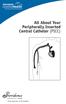 All About Your Peripherally Inserted Central Catheter (PICC) General Information Intravenous (IV) therapy is the delivery of fluid directly into a vein. An intravenous catheter is a hollow tube that is
Activity and Exercise Guide for Heart Patients
 Template: After Surgery Heart Health Program Activity and Exercise Guide for Heart Patients A guide for people recovering from heart attack, angina, angioplasty or cardiac stent insertion Your name: 01-05
Treating your abdominal aortic aneurysm by open repair (surgery)
 Patient information Abdominal aortic aneurysm open surgery Treating your abdominal aortic aneurysm by open repair (surgery) Introduction This leaflet tells you about open repair of abdominal aortic aneurysm,
Fainting - Syncope. This reference summary explains fainting. It discusses the causes and treatment options for the condition.
 Fainting - Syncope Introduction Fainting, also known as syncope, is a temporary loss of consciousness. It is caused by a drop in blood flow to the brain. You may feel dizzy, lightheaded or nauseous before
Returning to fitness after heart surgery
 Returning to fitness after heart surgery A patient s guide 1 Increasing activity After your operation, your heart function should be improved and so your ability to exercise will also be improved. However,
DaVinci Robotic Hysterectomy
 UW MEDICINE PATIENT EDUCATION DaVinci Robotic Hysterectomy How to prepare This handout gives instructions to follow for patients who are scheduled for a DaVinci robotic hysterectomy. To learn more about
X-Plain Preparing For Surgery Reference Summary
 X-Plain Preparing For Surgery Reference Summary Introduction More than 25 million surgical procedures are performed each year in the US. This reference summary will help you prepare for surgery. By understanding
Before Surgery You will likely be asked to see your family physician or an internal medicine doctor for a thorough medical evaluation.
 Anterior Hip Replacement - Before and After Surgery Your Hip Evaluation An orthopaedic surgeon specializes in problems affecting bones and joints. The surgeon will ask you many questions about your hip
Femoral artery bypass graft (Including femoral crossover graft)
 Femoral artery bypass graft (Including femoral crossover graft) Why do I need the operation? You have a blockage or narrowing of the arteries supplying blood to your leg. This reduces the blood flow to
Preoperative Education: CERVICAL SPINE SURGERY
 Preoperative Education: CERVICAL SPINE SURGERY 1 Dear Patient, In order to make your hospital stay as comfortable as possible, we have prepared this informational packet for you designed to outline and
After Your Gastric Bypass Surgery
 After Your Gastric Bypass Surgery UHN Information for patients and families Read this information to learn: what problems to look out for how to care for yourself at home about your follow-up appointment
CONGESTIVE HEART FAILURE PATIENT TEACHING
 CONGESTIVE HEART FAILURE PATIENT TEACHING What is Heart Failure? Congestive Heart Failure occurs when the heart loses its ability to pump enough blood to meet the body s needs. Because the heart is not
Low Blood Pressure. This reference summary explains low blood pressure and how it can be prevented and controlled.
 Low Blood Pressure Introduction Low blood pressure, or hypotension, is when your blood pressure reading is 90/60 or lower. Some people have low blood pressure all of the time. In other people, blood pressure
Functional rehab after breast reconstruction surgery
 Functional rehab after breast reconstruction surgery UHN A guide for women who had DIEP, latissimus dorsi with a tissue expander or implant, or two-stage implant based breast reconstruction surgery Read
(Atrial Fibrillation) What You and Your Family Should Know
 Afib (Atrial Fibrillation) What You and Your Family Should Know BRING THIS BOOKLET TO YOUR NEXT DOCTOR S VISIT. Getting Started This guide will: 1. Provide you with information to help you and your family
Electrical Cardioversion
 Electrical Cardioversion This handout will help you get ready for and recover from your electrical cardioversion at the Royal Jubilee Hospital. What is an electrical cardioversion? Electrical cardioversion
Stem cell transplant, you and your rehabilitation Information for patients and their carers
 Oxford University Hospitals NHS Trust Physiotherapy department Stem cell transplant, you and your rehabilitation Information for patients and their carers Stem cell transplant exercise handout Thank you
Pulmonary Rehabilitation Program - Home Exercise Program
 Pulmonary Rehabilitation Program - Home Exercise Program Getting Started Regular exercise should be a part of life for everyone. Exercise improves the body's tolerance to activity and work, and strengthens
Laparoscopic Bilateral Salpingo-Oophorectomy
 Laparoscopic Bilateral Salpingo-Oophorectomy What is a? This is a surgery where your doctor uses a thin, lighted camera and small surgical tool placed through a small (1/2 inch) incision usually in the
Caring for the Client with Heart Failure
 Peak Development Resources, LLC P.O. Box 13267 Richmond, VA 23225 Phone: (804) 233-3707 Fax: (804) 233-3705 After reading the newsletter, the home health aide should be able to: 1. Define heart failure.
Cardioversion for. Atrial Fibrillation. Your Heart s Electrical System Cardioversion Living with Atrial Fibrillation
 Cardioversion for Atrial Fibrillation Your Heart s Electrical System Cardioversion Living with Atrial Fibrillation When You Have Atrial Fibrillation You ve been told you have a heart condition called atrial
PHYSICAL ACTIVITY & EXERCISE STRATEGIES FOR BARIATRIC SURGERY PATIENTS
 PHYSICAL ACTIVITY & EXERCISE STRATEGIES FOR BARIATRIC SURGERY PATIENTS The University of Chicago Hospitals Center for the Surgical Treatment of Obesity (March 2005) BENEFITS OF PHYSICAL ACTIVITY In order
Patient Information. and Physical Activity Diary. Wythenshawe Hospital Cardiac Rehabilitation. Name:... The ticker club Registered Charity No.
 Wythenshawe Hospital Cardiac Rehabilitation Patient Information Remember : Lifelong regular physical activity - 0 minutes, five times per week is important for your general health. I feel so much better
Dizziness and Vertigo
 Dizziness and Vertigo Introduction When you are dizzy, you may feel lightheaded or lose your balance. If you also feel that the room is spinning, you may have vertigo. Vertigo is a type of severe dizziness.
Thyroid Surgery at Massachusetts General Hospital Frequently Asked Questions
 Thyroid Surgery at Massachusetts General Hospital Frequently Asked Questions Q: What is the thyroid gland? A: The thyroid is a butterfly-shaped gland located in the front of the neck. It is one of the
Orthopaedic Surgery Center of Joint Preservation and Replacement After Total Hip Replacement Discharge Instructions
 Congratulations on your new hip! You are going home after a successful total hip replacement. Although there is still much work to do, we have already achieved a lot. So, when you get home, take a deep
Rehabilitation. Rehabilitation. Walkers, Crutches, Canes
 Walkers, Crutches, Canes These devices provide support through your arms to limit the amount of weight on your operated hip. Initially, after a total hip replacement you will use a walker to get around.
Endovascular Abdominal Aortic Aneurysm Repair Surgery
 Endovascular Abdominal Aortic Aneurysm Repair Surgery You are scheduled for an admission to Cooper University Hospital for Endovascular Abdominal Aortic Aneurysm surgery (EVAR). Please read this handout,
Get the Facts About Tuberculosis Disease
 TB Get the Facts About Tuberculosis Disease What s Inside: Read this brochure today to learn how to protect your family and friends from TB. Then share it with people in your life. 2 Contents Get the facts,
Living With Your Pacemaker
 2012 Living With Your Pacemaker Living With Your Pacemaker The pamphlet will help you learn what your new pacemaker can do for you. The heart s natural pacemaker Your heart s natural pacemaker controls
Preoperative Education: LUMBAR SPINE SURGERY
 Preoperative Education: LUMBAR SPINE SURGERY 1 Dear Patient, In order to make your hospital stay as comfortable as possible, we have prepared this informational packet for you designed to outline and explain
Biliary Drain. What is a biliary drain?
 Biliary Drain What is a biliary drain? A biliary drain is a tube to drain bile from your liver. It is put in by a doctor called an Interventional Radiologist. The tube or catheter is placed through your
What to Do When Receiving Radiation Therapy to the Pelvis
 What to Do When Receiving Radiation Therapy to the Pelvis UHN For patients with gynecological cancer Learn the main steps in planning radiation treatment and how to manage side effects during radiation
Abdominal Wall (Ventral, Incisional, Umbilical) Hernia Repair Postoperative Instructions
 Abdominal Wall (Ventral, Incisional, Umbilical) Hernia Repair Postoperative Instructions No lifting greater than 10 15 lbs for the first three weeks following your surgery. Walking around the house, office
Living With Congestive Heart Failure
 Living With Congestive Heart Failure Information for patients and their families Patient information developed by EPICORE Centre, Division of Cardiology, University of Alberta The REACT study: supported
Axillary Lymph Node Dissection: Instructions/Exercises
 Axillary Lymph Node Dissection: Instructions/Exercises The following activities have been approved by your physician to help you increase the motion and strength of your shoulder and improve your posture
Heart Failure Clinical Pathway
 Patient & Family Guide 2016 Heart Failure Clinical Pathway www.nshealth.ca Heart Failure Clinical Pathway Your hospital stay will follow a written care plan called a Clinical Pathway. The pathway is a
Low Back Surgery. Remember to bring this handout to the hospital with you.
 Remember to bring this handout to the hospital with you. Table of contents Page Why do I need low back surgery?... 1 What kinds of low back surgeries are there?... 2 Before your surgery... 3 After your
Cataract Information for Patients
 Cataract Information for Patients http://www.gov.pe.ca/health and click on Wait Times tab Page 1 What is a Cataract? A cataract is a clouding of the eye s naturally clear lens. When the lens becomes cloudy,
The following document includes information about:
 Patient information WHAT TO EXPECT WHILE RECEIVING RADIATION THERAPY FOR PROSTATE CANCER Oncology Vitalité Zone : 1B 4 5 6 Facility : Dr. Léon-Richard Oncology Centre The following document includes information
Knee Arthroscopy Post-operative Instructions
 Amon T. Ferry, MD Orthopedic Surgery Sports Medicine Knee Arthroscopy Post-operative Instructions PLEASE READ ALL OF THESE INSTRUCTIONS CAREFULLY. THEY WILL ANSWER MOST OF YOUR QUESTIONS. 1. You may walk
Fatigue Beyond Tiredness
 Fatigue Beyond Tiredness The development and printing of this booklet was sponsored by Roche Products Ltd and Chugai Pharma UK Ltd. Editorial control remains with NRAS. Have you ever: Got all dressed up
Extreme Heat: A Prevention Guide to Promote Your Personal Health and Safety
 Extreme Heat: A Prevention Guide to Promote Your Personal Health and Safety Heat-related deaths and illness are preventable yet annually many people succumb to extreme heat. Historically, from 1979-2003,
Before and After Your Cardioversion
 2013 Before and After Your Cardioversion Before and After Your Cardioversion Preparing for your cardioversion Your doctor has recommended cardioversion to treat your heart rhythm problem. This booklet
Heart Attack: What You Need to Know
 A WorkLife4You Guide Heart Attack: What You Need to Know What is a Heart Attack? The heart works 24 hours a day, pumping oxygen and nutrient-rich blood to the body. Blood is supplied to the heart through
call 811 to get advice from a nurse, or have someone drive the patient to a hospital Emergency Department. Patients should NOT drive themselves.
 Taking Care at Home After Surgery This checklist is to help you and your support person know what to do after you go home following your surgery. If you are given instructions verbally or in writing by
SLEEP QUESTIONNAIRE AND WAKEFULNESS
 SLEEP QUESTIONNAIRE AND WAKEFULNESS (SQAW) PATIENT: DOCTOR: DATE COMPLETED: Must Be Completed by Appointment Date 7423-029-W-BKLT 11-1-09 For questions to be answered on a scale of 1 to 5, please circle
Aquatic Exercises: Upper Body Strengthening
 Aquatic Exercises: Upper Body Strengthening These exercises will strengthen your muscles in your arms, shoulders, chest and neck. Exercising in water allows you to have less stress on your joints. When
Orthopaedic Surgery Center of Joint Preservation and Replacement After Total Knee Replacement Discharge Instructions
 Congratulations! You are going home after a successful total knee replacement. Although there is still much work to do, we have already achieved a lot. So, when you get home, take a deep breath and relax.
Physical and Occupational Therapy Exercises
 UW MEDICINE PATIENT EDUCATION Physical and Occupational Therapy Exercises For weight loss surgery patients This section of the Guide to Your Weight Loss Surgery explains exercises that are recommended
PATIENT HANDBOOK AND JOURNAL POST SURGERY
 PATIENT HANDBOOK AND JOURNAL POST SURGERY POST ANESTHESIA CARE UNIT (PACU) After surgery you will be moved from the Operating Room directly to a special recovery room, called the Post Anesthesia Care Unit
Caregivers and Stroke
 Caregivers and Stroke Taking care of your loved one and yourself The Caregiver s Role As the primary caregiver for a stroke survivor, you are a very important part of the recovery process. While this role
Shoulder Replacement Surgery
 In What Activities May I Participate After I Recover? Shoulder Replacement Surgery After undergoing shoulder replacement surgery, it is important to have realistic expectations about the types of activities
Peripheral Vascular Bypass Surgery
 Name: Peripheral Vascular Bypass Surgery You are about to have the blockages in your peripheral arteries repaired. This handout gives you information about your surgery, what to expect from surgery, how
SYMPTOMS Heart failure symptoms may vary and can be hard to detect. Symptoms may include:
 Heart Failure Heart failure is a condition in which the heart has trouble pumping blood. This means your heart does not pump blood efficiently for your body to work well. In some cases of heart failure,
Physical Activity and Weight Control
 Physical Activity and Weight Control WIN Weight-control Information Network U.S. Department of Health and Human Services NATIONAL INSTITUTES OF HEALTH Physical Activity and Weight Control Physical activity